
Digestive 5.0 Full-Spectrum Hemp Extract Ingredients & Drug Interactions
by Hemp Fusion
What is this page for?
First and foremost: checking Digestive 5.0 Full-Spectrum Hemp Extract against your medications. The heart of this page is the interaction checker and the full interaction report — how this product’s ingredients may interact with prescription and over-the-counter medicines you may be taking.
Around that, we add a pharmacist’s high-level view of the product as a whole — what’s inside, the evidence for its stated use, how transparent the label is, and what safety data exists — so you can see the full picture in one place. It’s educational information from our licensed clinical databases and the clinical staff at HelloPharmacist — not medical advice — and we don’t sell or endorse products. Our editorial policy
Digestive 5.0 Full-Spectrum Hemp Extract is a dietary supplement by Hemp Fusion with 9 active ingredients. Its ingredients are commonly taken for constipation and regularity, prebiotic gut health, blood sugar support.Based on those ingredients, 1,308 medications have a known interaction with it, the most serious rated moderate. The ingredients most likely to interact are Black Pepper extract, Clove Oil extract, Hemp Oil extract. Use the checker below to test your specific medication, or read the full HelloPharmacist Interaction Report.
Check Your Meds Against Digestive 5.0 Full-Spectrum Hemp Extract by Hemp Fusion
Ask about any prescription or over-the-counter medication and we check it for interactions with Digestive 5.0 Full-Spectrum Hemp Extract by Hemp Fusion — and tell you which ingredient is responsible.
AI summaries are generated from our interaction database for education only — always confirm with your pharmacist. How we use AI
Ask the Pharmacist
A licensed pharmacist will answer your question by email — free, usually within 24 hours.
Got it — thank you!
A licensed pharmacist will answer within 24 hours. Keep an eye on your email (worth checking spam, just in case).
HelloPharmacist Scorecard of Digestive 5.0 Full-Spectrum Hemp Extract by Hemp Fusion
Our pharmacy team’s full take, with four database checks built into the cards below — a summary of what is known, not a grade of the product itself.
What’s inside
Low disclosure
Digestive 5.0 contains 18 ingredients total. The active components include inulin (a fiber), multiple probiotic species (Lactobacillus and Bifidobacterium strains), hemp oil extract, black pepper extract, clove oil extract, and sunflower seed oil.
The probiotics are live organisms intended to support digestive and gut health. Inulin is a prebiotic fiber that may feed beneficial bacteria in your gut.
The inactive ingredients—complex marine polysaccharides, capsule shell, maltodextrin, tricalcium phosphate, sodium chloride, and potassium chloride—are excipients that help form and stabilize the capsule.
Does it work?
Moderate evidence
The evidence for this product's individual ingredients is mixed. Inulin is possibly effective for obesity, constipation, and diabetes, though the evidence isn't conclusive.
Several of the probiotic strains—L. acidophilus, L. helveticus, Bifidobacterium bifidum, and others—show possibly effective ratings for conditions like irritable bowel syndrome (IBS), antibiotic-associated diarrhea, and respiratory tract infections. However, most of the probiotics here have insufficient evidence for many of their proposed uses.
Black pepper extract, clove oil extract, hemp oil extract, and sunflower seed oil all lack reliable evidence for the conditions listed in their data. Overall, while the probiotics and inulin have some supportive research, the blend as a whole hasn't been tested as a complete product, and many individual ingredients lack strong evidence for digestive support specifically.
How safe is it?
Well-documented data
This product is generally well tolerated in healthy people, but several cautions apply. Inulin commonly causes gas, bloating, diarrhea, constipation, and cramping—especially at higher doses—and safety at supplement levels isn't well studied.
The probiotic strains may cause mild gastrointestinal upset (bloating, flatulence, abdominal discomfort), though this is uncommon. Because these are live organisms, there is theoretical concern they could cause serious infection in people who are critically ill or severely immunocompromised, though such cases are rare.
Black pepper extract is well tolerated in food amounts but may cause burning, heartburn, or reduced taste at supplement doses. Clove oil in concentrated form can be toxic even in small amounts (5–10 mL can be toxic in children).
Hemp oil extract is generally well tolerated, though rare cases of allergic reaction and anaphylaxis have been reported, and one case of elevated liver enzymes was reported with very high doses in an infant. Sunflower seed oil is considered safe in food amounts but may trigger allergy in people sensitive to ragweed and related plants.
Meds to double-check
Moderate interaction found
Before you start this product, double-check these medication types with your pharmacist or doctor: any medications your liver breaks down (since hemp and clove may speed this up), blood pressure or heart medications (including propranolol, ACE inhibitors, antihypertensives), seizure medications (especially phenytoin), antibiotic drugs (which can kill the live probiotics in the capsule), antidiabetes drugs (inulin, clove, and sunflower seed oil may lower blood sugar), anticoagulants or blood thinners, hormone therapy (estrogens), and theophylline. Black pepper extract alone can raise levels of several specific drugs—propranolol, nevirapine, rifampin, phenytoin, cyclosporine, pentobarbital, atorvastatin, and theophylline—potentially causing toxicity.
The bottom line
Scorecard at a glanceFormula with limited ingredient disclosure with some supporting evidence behind its ingredients' uses. Moderate medication interactions have been identified, and safety information is well characterized.
Digestive 5.0 may help support digestive health through its probiotics and inulin, though the overall evidence for the complete product is not established. If you take any medications—especially blood pressure drugs, antidiabetes medications, anticoagulants, antibiotics, or seizure or heart medications—you need to check your specific drugs against the interactions listed on this page before starting.
Those who are very ill or have weakened immune systems should discuss this product with their doctor. Talk with your own doctor or pharmacist before adding it to your routine, particularly if you are pregnant, breastfeeding, or managing a chronic condition.
Educational only — not medical advice; always confirm with your pharmacist. Our editorial policy · How we use AI
Assessment coverage: 12 of 18 active ingredients matched to our full ingredient reviews (monographs). Based on the product label dated Feb 25, 2019.
This Scorecard evaluates available label information, ingredient evidence, and known medication-safety considerations. It does not independently verify product identity, purity, potency, contamination, or manufacturing quality. How these ratings are computed
General information
Key facts about Digestive 5.0 Full-Spectrum Hemp Extract, straight from the product label.
| Brand | Hemp Fusion |
|---|---|
| Barcode (UPC) | 816179020400 |
| Net contents | 30 Vegetarian Liquid Capsule(s) |
| Market status | On market |
| Date entered into DSLD | Feb 25, 2019 |
| DSLD ID | 185243 |
| Product type | Other Combinations |
| Supplement form | Capsule |
| Dietary claims / uses | All Other, Structure/Function |
| Intended target group(s) | Adult (18 - 50 Years), Gluten Free, Dairy Free |
Everything in this section is reproduced from the manufacturer’s own product label — it’s the label speaking, not HelloPharmacist. We show it so you can see exactly what the maker states; we don’t verify or endorse those statements.
Supplement Facts
The label details for Digestive 5.0 Full-Spectrum Hemp Extract by Hemp Fusion, sourced from the NIH Dietary Supplement Label Database.
Supplement Facts
| Ingredient | Amount | % DV |
|---|---|---|
| Inulin | 50 mg | -- |
| Lactobacillus plantarum | 0 NP | -- |
| Lactobacillus acidophilus | 0 NP | -- |
| Lactobacillus rhamnosus | 0 NP | -- |
| Lactobacillus casei | 0 NP | -- |
| Proprietary Whole Food Hemp Complex | 215 mg | -- |
| Hemp Oil extract | 0 NP | -- |
| Black Pepper extract | 0 NP | -- |
| Clove Oil extract | 0 NP | -- |
| organic MCT Oil | 100 mg | -- |
| Sunflower seed Oil | 100 mg | -- |
| Lactobacillus bulgaricus | 0 NP | -- |
| Lactobacillus helveticus | 0 NP | -- |
| Bifidobacteria lactis | 0 NP | -- |
| Bifidobacteria infantis | 0 NP | -- |
| Bifidobacteria longum | 0 NP | -- |
| Bifidobacteria breve | 0 NP | -- |
| Bifidobacteria bifidum | 0 NP | -- |
| Colon Support Probiotic Blend | 0 NP | -- |
| Bifidobacteria Blend | 0 NP | -- |
| Lactobacillus Blend | 0 NP | -- |
| S. thermophilus | 0 NP | -- |
Other ingredients: Complex Marine Polysaccharides, Capsule Shell, Maltodextrin, Tricalcium Phosphate, Sodium Chloride, Potassium Chloride
Tap any ingredient to jump to its full detail below.
These statements are the manufacturer’s wording, reproduced from the product label — the label is saying it, not HelloPharmacist. We don’t verify or endorse them.
Precautions
Warning: Consult your physician before use if you are pregnant, lactating, have a medical condition or are taking any medication.
Keep out of reach of children.
As a reminder, always discuss the supplements and medications you take with your health care provider.
Contains Coconut
FDA Disclaimer Statement
These statements have not been evaluated by the Food and Drug Administration. This product is not intended to diagnose, treat, cure, or prevent any disease.
Suggested/Recommended/Usage/Directions
Directions for Use: Take one liquid capsule daily with food or as directed by a health care professional. As a reminder, always discuss the supplements and medications you take with your health care provider.
Formulation
Contains No: Soy, Gluten, Wheat, Milk, Dairy, Eggs, Shellfish, Magnesium Stearate, Artificial Colors, Artificial Flavors, Chemical Processing Aids.
Non-GMO
Brand IP Statement(s)
Full spectrum Verdant Oasis Certified VO Genuine Whole food European Hemp
Powered by Probulin Phospholivery
Formula
Whole food hemp complex
Contains Coconut
FDA Statement of Identity
Dietary Supplement
Is this label outdated? Report a formula or label change and our pharmacy team will review it.
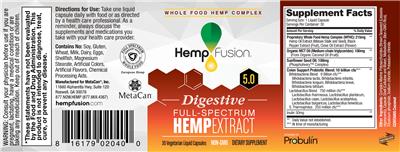
Digestive 5.0 Full-Spectrum Hemp Extract by Hemp Fusion label
The label scan from the NIH Dietary Supplement Label Database. Tap to enlarge.
Label images are published by the NIH Dietary Supplement Label Database for the version of this product on file. Always read your actual product label.
View the full label (PDF)The Ingredients in Digestive 5.0 Full-Spectrum Hemp Extract by Hemp Fusion
These are the 9 active ingredients this product is made of. Select any to open its full monograph.
Serving size1 Liquid Capsule(s) Dosage formCapsule Servings per container30 Amounts shown are per serving.
Most supplement products combine several ingredients, and a medication can interact with the product through any one of them. Each ingredient below shows whether it has known drug interactions.
Inulin
Interacts with86 drugs
Inulin is a type of plant fiber (a prebiotic) found naturally in foods like chicory root, onions, and garlic, and it is widely added to supplements an...
Inulin monograph & interactionsProprietary Whole Food Hemp Complex
Organic MCT Oil
Sunflower seed Oil
Interacts with86 drugs
Sunflower oil is a common edible vegetable oil rich in unsaturated fats and vitamin E that most people can use safely as part of a normal diet. As a f...
Sunflower seed Oil monograph & interactionsColon Support Probiotic Blend
- › Bifidobacteria Blend
- › Lactobacillus Blend
- › S. thermophilus
Other (inactive) ingredients: Complex Marine Polysaccharides, Capsule Shell, Maltodextrin, Tricalcium Phosphate, Sodium Chloride, Potassium Chloride. These complete the product’s ingredient list but are not active constituents.
Digestive 5.0 Full-Spectrum Hemp Extract by Hemp Fusion Drug Interactions
HelloPharmacist Interaction Report
Digestive 5.0 Full-Spectrum Hemp Extract contains several ingredients with documented interactions: inulin, Lactobacillus acidophilus, hemp oil extract, black pepper extract, clove oil extract, sunflower seed oil, and several Bifidobacterium and Lactobacillus species.
The most serious interaction is a Moderate severity effect from black pepper extract, which can substantially raise blood levels of specific medications including propranolol, nevirapine, rifampin, phenytoin, cyclosporine, pentobarbital, atorvastatin, and theophylline—potentially making them too strong or causing side effects.
Read the full breakdown — every affected drug type, severity by severity
Hemp oil extract interacts with estrogens (Moderate—may interfere with hormone therapy), antihypertensive drugs, ACE inhibitors, and blood thinners (anticoagulants/antiplatelets), all Minor severity; it may also speed up how your liver breaks down certain other medications. Clove oil extract has Moderate interactions with antidiabetes drugs (risk of low blood sugar), and several liver enzymes (CYP2D6, CYP1A2, CYP3A4, CYP2C9 substrates) that metabolize many common medications.
Inulin carries a Minor interaction with antidiabetes drugs and theoretically increases low blood sugar risk. All the probiotic species (Lactobacillus acidophilus, helveticus, and bulgaricus; Bifidobacterium longum, breve, and bifidum) interact with antibiotic drugs at Moderate severity—antibiotics may kill the live organisms in the supplement, reducing its effectiveness.
Sunflower seed oil has a Moderate interaction with antidiabetes medications.
We could not check interaction data for Lactobacillus plantarum, L. casei, L. rhamnosus, organic MCT oil, or Bifidobacteria lactis and infantis. Additionally, S. thermophilus was checked and no interactions are documented in our data.
Altogether, these interactions span 1,308 individual medications. If you're on any prescription medications, check your exact drugs with the search tool on this page before starting.
Check your own medications below · Editorial policy · How we use AI
Want to check YOUR meds against Digestive 5.0 Full-Spectrum Hemp Extract?
Ask about interactions with your drugs in plain English — “Can I take it with lisinopril?” — and we find you the answer in seconds, ingredient by ingredient.
Go to the checkerIngredients driving the most interactions
Individual Drug Interactions
The ingredients in Digestive 5.0 Full-Spectrum Hemp Extract interact with 1,308 drugs. Click any drug to see the details.
5 of the 9 ingredients in Digestive 5.0 Full-Spectrum Hemp Extract interact with drugs. Each result below shows which ingredient is responsible. Black Pepper extract Clove Oil extract Hemp Oil extract Inulin Sunflower seed Oil
Ado-trastuzumab EmtansineKadcyla
How Ado-trastuzumab Emtansine interacts with Digestive 5.0 Full-Spectrum Hemp Extract — through 3 ingredients. Tap an ingredient for the detail:
Clove Oil ExtractCytochrome P450 3a4 (cyp3a4) Substrates Moderate
Interaction Summary
Theoretically, concomitant use of clove may increase levels of drugs metabolized by CYP3A4.
Read the full Clove Oil Extract + Ado-trastuzumab Emtansine interactionBlack Pepper ExtractCytochrome P450 3a4 (cyp3a4) Substrates Moderate
Interaction Summary
Theoretically, black pepper might increase levels of drugs metabolized by CYP3A4.
Read the full Black Pepper Extract + Ado-trastuzumab Emtansine interactionHemp Oil ExtractCytochrome P450 3a4 (cyp3a4) Substrates Minor
Interaction Summary
Theoretically, hemp might decrease the levels and clinical effects of CYP3A4 substrates.
Read the full Hemp Oil Extract + Ado-trastuzumab Emtansine interactionAbciximabReoPro
How Abciximab interacts with Digestive 5.0 Full-Spectrum Hemp Extract — through 3 ingredients. Tap an ingredient for the detail:
Black Pepper ExtractAnticoagulant/antiplatelet Drugs Moderate
Interaction Summary
Theoretically, black pepper might increase the risk of bleeding when taken with antiplatelet or anticoagulant drugs.
Read the full Black Pepper Extract + Abciximab interactionHemp Oil ExtractAnticoagulant/antiplatelet Drugs Minor
Interaction Summary
Theoretically, hemp seed might increase the risk of bleeding when used concomitantly with anticoagulant/antiplatelet drugs.
Read the full Hemp Oil Extract + Abciximab interactionClove Oil ExtractAnticoagulant/antiplatelet Drugs Minor
Interaction Summary
Theoretically, clove oil may increase the risk of bleeding if used with anticoagulant or antiplatelet drugs.
Read the full Clove Oil Extract + Abciximab interactionAbemaciclibVerzenio
How Abemaciclib interacts with Digestive 5.0 Full-Spectrum Hemp Extract — through 3 ingredients. Tap an ingredient for the detail:
Black Pepper ExtractCytochrome P450 3a4 (cyp3a4) Substrates Moderate
Interaction Summary
Theoretically, black pepper might increase levels of drugs metabolized by CYP3A4.
Read the full Black Pepper Extract + Abemaciclib interactionClove Oil ExtractCytochrome P450 3a4 (cyp3a4) Substrates Moderate
Interaction Summary
Theoretically, concomitant use of clove may increase levels of drugs metabolized by CYP3A4.
Read the full Clove Oil Extract + Abemaciclib interactionHemp Oil ExtractCytochrome P450 3a4 (cyp3a4) Substrates Minor
Interaction Summary
Theoretically, hemp might decrease the levels and clinical effects of CYP3A4 substrates.
Read the full Hemp Oil Extract + Abemaciclib interactionAbiraterone
How Abiraterone interacts with Digestive 5.0 Full-Spectrum Hemp Extract — through 3 ingredients. Tap an ingredient for the detail:
Clove Oil ExtractCytochrome P450 3a4 (cyp3a4) Substrates Moderate
Interaction Summary
Theoretically, concomitant use of clove may increase levels of drugs metabolized by CYP3A4.
Read the full Clove Oil Extract + Abiraterone interactionBlack Pepper ExtractCytochrome P450 3a4 (cyp3a4) Substrates Moderate
Interaction Summary
Theoretically, black pepper might increase levels of drugs metabolized by CYP3A4.
Read the full Black Pepper Extract + Abiraterone interactionHemp Oil ExtractCytochrome P450 3a4 (cyp3a4) Substrates Minor
Interaction Summary
Theoretically, hemp might decrease the levels and clinical effects of CYP3A4 substrates.
Read the full Hemp Oil Extract + Abiraterone interactionAbiraterone AcetateYonsa, Zytiga
How Abiraterone Acetate interacts with Digestive 5.0 Full-Spectrum Hemp Extract — through 3 ingredients. Tap an ingredient for the detail:
Clove Oil ExtractCytochrome P450 3a4 (cyp3a4) Substrates Moderate
Interaction Summary
Theoretically, concomitant use of clove may increase levels of drugs metabolized by CYP3A4.
Read the full Clove Oil Extract + Abiraterone Acetate interactionBlack Pepper ExtractCytochrome P450 3a4 (cyp3a4) Substrates Moderate
Interaction Summary
Theoretically, black pepper might increase levels of drugs metabolized by CYP3A4.
Read the full Black Pepper Extract + Abiraterone Acetate interactionHemp Oil ExtractCytochrome P450 3a4 (cyp3a4) Substrates Minor
Interaction Summary
Theoretically, hemp might decrease the levels and clinical effects of CYP3A4 substrates.
Read the full Hemp Oil Extract + Abiraterone Acetate interactionAbrocitinibCibinqo
How Abrocitinib interacts with Digestive 5.0 Full-Spectrum Hemp Extract — through 3 ingredients. Tap an ingredient for the detail:
Black Pepper ExtractAnticoagulant/antiplatelet Drugs Moderate
Interaction Summary
Theoretically, black pepper might increase the risk of bleeding when taken with antiplatelet or anticoagulant drugs.
Read the full Black Pepper Extract + Abrocitinib interactionClove Oil ExtractAnticoagulant/antiplatelet Drugs, Cytochrome P450 2c9 (cyp2c9) Substrates Moderate
Interaction Summary
Theoretically, clove oil may increase the risk of bleeding if used with anticoagulant or antiplatelet drugs.
Read the full Clove Oil Extract + Abrocitinib interactionHemp Oil ExtractAnticoagulant/antiplatelet Drugs Minor
Interaction Summary
Theoretically, hemp seed might increase the risk of bleeding when used concomitantly with anticoagulant/antiplatelet drugs.
Read the full Hemp Oil Extract + Abrocitinib interactionAcalabrutinibCalquence
How Acalabrutinib interacts with Digestive 5.0 Full-Spectrum Hemp Extract — through 3 ingredients. Tap an ingredient for the detail:
Clove Oil ExtractCytochrome P450 3a4 (cyp3a4) Substrates Moderate
Interaction Summary
Theoretically, concomitant use of clove may increase levels of drugs metabolized by CYP3A4.
Read the full Clove Oil Extract + Acalabrutinib interactionBlack Pepper ExtractP-glycoprotein Substrates, Cytochrome P450 3a4 (cyp3a4) Substrates Moderate
Interaction Summary
Theoretically, black pepper might increase levels of P-glycoprotein substrates.
Read the full Black Pepper Extract + Acalabrutinib interactionHemp Oil ExtractCytochrome P450 3a4 (cyp3a4) Substrates Minor
Interaction Summary
Theoretically, hemp might decrease the levels and clinical effects of CYP3A4 substrates.
Read the full Hemp Oil Extract + Acalabrutinib interactionAcarboseGlucobay, Prandase, Precose
How Acarbose interacts with Digestive 5.0 Full-Spectrum Hemp Extract — through 4 ingredients. Tap an ingredient for the detail:
Sunflower Seed OilAntidiabetes Drugs Moderate
Interaction Summary
Theoretically, sunflower oil might decrease the effectiveness of antidiabetes medications.
Read the full Sunflower Seed Oil + Acarbose interactionClove Oil ExtractAntidiabetes Drugs Moderate
Interaction Summary
Theoretically, concomitant use of clove extracts with antidiabetes drugs might increase the risk of hypoglycemia.
Read the full Clove Oil Extract + Acarbose interactionBlack Pepper ExtractAntidiabetes Drugs Moderate
Interaction Summary
Theoretically, black pepper might increase the risk of hypoglycemia when taken with antidiabetes drugs.
Read the full Black Pepper Extract + Acarbose interactionInulinAntidiabetes Drugs Minor
Interaction Summary
Theoretically, inulin might increase the risk of hypoglycemia with antidiabetes drugs.
Read the full Inulin + Acarbose interactionAcenocoumarolSintrom
How Acenocoumarol interacts with Digestive 5.0 Full-Spectrum Hemp Extract — through 3 ingredients. Tap an ingredient for the detail:
Black Pepper ExtractAnticoagulant/antiplatelet Drugs Moderate
Interaction Summary
Theoretically, black pepper might increase the risk of bleeding when taken with antiplatelet or anticoagulant drugs.
Read the full Black Pepper Extract + Acenocoumarol interactionHemp Oil ExtractAnticoagulant/antiplatelet Drugs Minor
Interaction Summary
Theoretically, hemp seed might increase the risk of bleeding when used concomitantly with anticoagulant/antiplatelet drugs.
Read the full Hemp Oil Extract + Acenocoumarol interactionClove Oil ExtractAnticoagulant/antiplatelet Drugs Minor
Interaction Summary
Theoretically, clove oil may increase the risk of bleeding if used with anticoagulant or antiplatelet drugs.
Read the full Clove Oil Extract + Acenocoumarol interactionAcetaminophenChildren's Tylenol, Children's Tylenol Meltaways, Tylenol, Tylenol Ex Strength
How Acetaminophen interacts with Digestive 5.0 Full-Spectrum Hemp Extract — through 3 ingredients. Tap an ingredient for the detail:
Clove Oil ExtractCytochrome P450 1a2 (cyp1a2) Substrates Moderate
Interaction Summary
Theoretically, concomitant use of clove may increase levels of drugs metabolized by CYP1A2.
Read the full Clove Oil Extract + Acetaminophen interactionHemp Oil ExtractCytochrome P450 1a2 (cyp1a2) Substrates Minor
Interaction Summary
Theoretically, hemp might decrease the levels and clinical effects of CYP1A2 substrates.
Read the full Hemp Oil Extract + Acetaminophen interactionBlack Pepper ExtractCytochrome P450 1a2 (cyp1a2) Substrates Minor
Interaction Summary
Theoretically, black pepper might decrease levels and clinical effects of drugs metabolized by CYP1A2.
Read the full Black Pepper Extract + Acetaminophen interactionAcetaminophen, AspirinGemnisyn
How Acetaminophen, Aspirin interacts with Digestive 5.0 Full-Spectrum Hemp Extract — through 3 ingredients. Tap an ingredient for the detail:
Black Pepper ExtractCytochrome P450 1a2 (cyp1a2) Substrates, Anticoagulant/antiplatelet Drugs Moderate
Interaction Summary
Theoretically, black pepper might decrease levels and clinical effects of drugs metabolized by CYP1A2.
Read the full Black Pepper Extract + Acetaminophen, Aspirin interactionClove Oil ExtractCytochrome P450 1a2 (cyp1a2) Substrates, Anticoagulant/antiplatelet Drugs Moderate
Interaction Summary
Theoretically, concomitant use of clove may increase levels of drugs metabolized by CYP1A2.
Read the full Clove Oil Extract + Acetaminophen, Aspirin interactionHemp Oil ExtractAnticoagulant/antiplatelet Drugs, Cytochrome P450 1a2 (cyp1a2) Substrates Minor
Interaction Summary
Theoretically, hemp seed might increase the risk of bleeding when used concomitantly with anticoagulant/antiplatelet drugs.
Read the full Hemp Oil Extract + Acetaminophen, Aspirin interactionAcetaminophen, Aspirin, CaffeineExcedrin, Excedrin Extra Strength, Excedrin Migraine
How Acetaminophen, Aspirin, Caffeine interacts with Digestive 5.0 Full-Spectrum Hemp Extract — through 3 ingredients. Tap an ingredient for the detail:
Black Pepper ExtractAnticoagulant/antiplatelet Drugs, Cytochrome P450 1a2 (cyp1a2) Substrates +1 Moderate
Interaction Summary
Theoretically, black pepper might increase the risk of bleeding when taken with antiplatelet or anticoagulant drugs.
Read the full Black Pepper Extract + Acetaminophen, Aspirin, Caffeine interactionClove Oil ExtractAnticoagulant/antiplatelet Drugs, Cytochrome P450 3a4 (cyp3a4) Substrates +1 Moderate
Interaction Summary
Theoretically, clove oil may increase the risk of bleeding if used with anticoagulant or antiplatelet drugs.
Read the full Clove Oil Extract + Acetaminophen, Aspirin, Caffeine interactionHemp Oil ExtractCytochrome P450 3a4 (cyp3a4) Substrates, Anticoagulant/antiplatelet Drugs +1 Minor
Interaction Summary
Theoretically, hemp might decrease the levels and clinical effects of CYP3A4 substrates.
Read the full Hemp Oil Extract + Acetaminophen, Aspirin, Caffeine interactionAcetaminophen, Brompheniramine, PhenylpropanolamineDimetapp Cold and Flu
How Acetaminophen, Brompheniramine, Phenylpropanolamine interacts with Digestive 5.0 Full-Spectrum Hemp Extract — through 3 ingredients. Tap an ingredient for the detail:
Clove Oil ExtractCytochrome P450 1a2 (cyp1a2) Substrates Moderate
Interaction Summary
Theoretically, concomitant use of clove may increase levels of drugs metabolized by CYP1A2.
Read the full Clove Oil Extract + Acetaminophen, Brompheniramine, Phenylpropanolamine interactionHemp Oil ExtractCytochrome P450 1a2 (cyp1a2) Substrates Minor
Interaction Summary
Theoretically, hemp might decrease the levels and clinical effects of CYP1A2 substrates.
Read the full Hemp Oil Extract + Acetaminophen, Brompheniramine, Phenylpropanolamine interactionBlack Pepper ExtractCytochrome P450 1a2 (cyp1a2) Substrates Minor
Interaction Summary
Theoretically, black pepper might decrease levels and clinical effects of drugs metabolized by CYP1A2.
Read the full Black Pepper Extract + Acetaminophen, Brompheniramine, Phenylpropanolamine interactionAcetaminophen, ButalbitalAxocet, Bancap, Bucet, Butex Forte, Esgic CF, Orbivan CF +5 more
How Acetaminophen, Butalbital interacts with Digestive 5.0 Full-Spectrum Hemp Extract — through 3 ingredients. Tap an ingredient for the detail:
Clove Oil ExtractCytochrome P450 1a2 (cyp1a2) Substrates Moderate
Interaction Summary
Theoretically, concomitant use of clove may increase levels of drugs metabolized by CYP1A2.
Read the full Clove Oil Extract + Acetaminophen, Butalbital interactionBlack Pepper ExtractCytochrome P450 1a2 (cyp1a2) Substrates Minor
Interaction Summary
Theoretically, black pepper might decrease levels and clinical effects of drugs metabolized by CYP1A2.
Read the full Black Pepper Extract + Acetaminophen, Butalbital interactionHemp Oil ExtractCytochrome P450 1a2 (cyp1a2) Substrates Minor
Interaction Summary
Theoretically, hemp might decrease the levels and clinical effects of CYP1A2 substrates.
Read the full Hemp Oil Extract + Acetaminophen, Butalbital interactionAcetaminophen, Butalbital, CaffeineEsgic, Esgic Plus, Fiogesic, Fioricet, Repan, Tecnal +1 more
How Acetaminophen, Butalbital, Caffeine interacts with Digestive 5.0 Full-Spectrum Hemp Extract — through 3 ingredients. Tap an ingredient for the detail:
Black Pepper ExtractCytochrome P450 1a2 (cyp1a2) Substrates, Cytochrome P450 3a4 (cyp3a4) Substrates Moderate
Interaction Summary
Theoretically, black pepper might decrease levels and clinical effects of drugs metabolized by CYP1A2.
Read the full Black Pepper Extract + Acetaminophen, Butalbital, Caffeine interactionClove Oil ExtractCytochrome P450 1a2 (cyp1a2) Substrates, Cytochrome P450 3a4 (cyp3a4) Substrates Moderate
Interaction Summary
Theoretically, concomitant use of clove may increase levels of drugs metabolized by CYP1A2.
Read the full Clove Oil Extract + Acetaminophen, Butalbital, Caffeine interactionHemp Oil ExtractCytochrome P450 1a2 (cyp1a2) Substrates, Cytochrome P450 3a4 (cyp3a4) Substrates Minor
Interaction Summary
Theoretically, hemp might decrease the levels and clinical effects of CYP1A2 substrates.
Read the full Hemp Oil Extract + Acetaminophen, Butalbital, Caffeine interactionAcetaminophen, Butalbital, Caffeine, CodeineEsgic with Codeine, Fioricet w/ Codeine
How Acetaminophen, Butalbital, Caffeine, Codeine interacts with Digestive 5.0 Full-Spectrum Hemp Extract — through 3 ingredients. Tap an ingredient for the detail:
Clove Oil ExtractCytochrome P450 3a4 (cyp3a4) Substrates, Cytochrome P450 2d6 (cyp2d6) Substrates +1 Moderate
Interaction Summary
Theoretically, concomitant use of clove may increase levels of drugs metabolized by CYP3A4.
Read the full Clove Oil Extract + Acetaminophen, Butalbital, Caffeine, Codeine interactionBlack Pepper ExtractCytochrome P450 3a4 (cyp3a4) Substrates, Cytochrome P450 2d6 (cyp2d6) Substrates +1 Moderate
Interaction Summary
Theoretically, black pepper might increase levels of drugs metabolized by CYP3A4.
Read the full Black Pepper Extract + Acetaminophen, Butalbital, Caffeine, Codeine interactionHemp Oil ExtractCytochrome P450 1a2 (cyp1a2) Substrates, Cytochrome P450 3a4 (cyp3a4) Substrates Minor
Interaction Summary
Theoretically, hemp might decrease the levels and clinical effects of CYP1A2 substrates.
Read the full Hemp Oil Extract + Acetaminophen, Butalbital, Caffeine, Codeine interactionAcetaminophen, Butalbital, CodeineBancap w/ Codeine
How Acetaminophen, Butalbital, Codeine interacts with Digestive 5.0 Full-Spectrum Hemp Extract — through 3 ingredients. Tap an ingredient for the detail:
Black Pepper ExtractCytochrome P450 1a2 (cyp1a2) Substrates, Cytochrome P450 2d6 (cyp2d6) Substrates Moderate
Interaction Summary
Theoretically, black pepper might decrease levels and clinical effects of drugs metabolized by CYP1A2.
Read the full Black Pepper Extract + Acetaminophen, Butalbital, Codeine interactionClove Oil ExtractCytochrome P450 1a2 (cyp1a2) Substrates, Cytochrome P450 2d6 (cyp2d6) Substrates Moderate
Interaction Summary
Theoretically, concomitant use of clove may increase levels of drugs metabolized by CYP1A2.
Read the full Clove Oil Extract + Acetaminophen, Butalbital, Codeine interactionHemp Oil ExtractCytochrome P450 1a2 (cyp1a2) Substrates Minor
Interaction Summary
Theoretically, hemp might decrease the levels and clinical effects of CYP1A2 substrates.
Read the full Hemp Oil Extract + Acetaminophen, Butalbital, Codeine interactionAcetaminophen, Butalbital, Codeine PhosphatePhrenilin #3
How Acetaminophen, Butalbital, Codeine Phosphate interacts with Digestive 5.0 Full-Spectrum Hemp Extract — through 3 ingredients. Tap an ingredient for the detail:
Black Pepper ExtractCytochrome P450 2d6 (cyp2d6) Substrates, Cytochrome P450 1a2 (cyp1a2) Substrates Moderate
Interaction Summary
Theoretically, black pepper might increase levels of drugs metabolized by CYP2D6.
Read the full Black Pepper Extract + Acetaminophen, Butalbital, Codeine Phosphate interactionClove Oil ExtractCytochrome P450 2d6 (cyp2d6) Substrates, Cytochrome P450 1a2 (cyp1a2) Substrates Moderate
Interaction Summary
Theoretically, concomitant use of clove may increase levels of drugs metabolized by CYP2D6.
Read the full Clove Oil Extract + Acetaminophen, Butalbital, Codeine Phosphate interactionHemp Oil ExtractCytochrome P450 1a2 (cyp1a2) Substrates Minor
Interaction Summary
Theoretically, hemp might decrease the levels and clinical effects of CYP1A2 substrates.
Read the full Hemp Oil Extract + Acetaminophen, Butalbital, Codeine Phosphate interactionAcetaminophen, Caffeine, Chlorpheniramine, Hydrocodone, PhenylephrineHycomine Compound
How Acetaminophen, Caffeine, Chlorpheniramine, Hydrocodone, Phenylephrine interacts with Digestive 5.0 Full-Spectrum Hemp Extract — through 3 ingredients. Tap an ingredient for the detail:
Clove Oil ExtractCytochrome P450 1a2 (cyp1a2) Substrates, Cytochrome P450 3a4 (cyp3a4) Substrates +1 Moderate
Interaction Summary
Theoretically, concomitant use of clove may increase levels of drugs metabolized by CYP1A2.
Read the full Clove Oil Extract + Acetaminophen, Caffeine, Chlorpheniramine, Hydrocodone, Phenylephrine interactionBlack Pepper ExtractCytochrome P450 1a2 (cyp1a2) Substrates, Cytochrome P450 3a4 (cyp3a4) Substrates +1 Moderate
Interaction Summary
Theoretically, black pepper might decrease levels and clinical effects of drugs metabolized by CYP1A2.
Read the full Black Pepper Extract + Acetaminophen, Caffeine, Chlorpheniramine, Hydrocodone, Phenylephrine interactionHemp Oil ExtractCytochrome P450 3a4 (cyp3a4) Substrates, Cytochrome P450 1a2 (cyp1a2) Substrates Minor
Interaction Summary
Theoretically, hemp might decrease the levels and clinical effects of CYP3A4 substrates.
Read the full Hemp Oil Extract + Acetaminophen, Caffeine, Chlorpheniramine, Hydrocodone, Phenylephrine interactionAcetaminophen, Caffeine, CodeineGesic C15, Gesic C30, Gesic C8, Lenoltec 1, Lenoltec 2, Lenoltec 3 +1 more
How Acetaminophen, Caffeine, Codeine interacts with Digestive 5.0 Full-Spectrum Hemp Extract — through 3 ingredients. Tap an ingredient for the detail:
Black Pepper ExtractCytochrome P450 2d6 (cyp2d6) Substrates, Cytochrome P450 1a2 (cyp1a2) Substrates +1 Moderate
Interaction Summary
Theoretically, black pepper might increase levels of drugs metabolized by CYP2D6.
Read the full Black Pepper Extract + Acetaminophen, Caffeine, Codeine interactionClove Oil ExtractCytochrome P450 2d6 (cyp2d6) Substrates, Cytochrome P450 1a2 (cyp1a2) Substrates +1 Moderate
Interaction Summary
Theoretically, concomitant use of clove may increase levels of drugs metabolized by CYP2D6.
Read the full Clove Oil Extract + Acetaminophen, Caffeine, Codeine interactionHemp Oil ExtractCytochrome P450 1a2 (cyp1a2) Substrates, Cytochrome P450 3a4 (cyp3a4) Substrates Minor
Interaction Summary
Theoretically, hemp might decrease the levels and clinical effects of CYP1A2 substrates.
Read the full Hemp Oil Extract + Acetaminophen, Caffeine, Codeine interactionAcetaminophen, Caffeine, Codeine, SalicylamideCodalan No.1, Codalan No.2, Codalan No.3
How Acetaminophen, Caffeine, Codeine, Salicylamide interacts with Digestive 5.0 Full-Spectrum Hemp Extract — through 3 ingredients. Tap an ingredient for the detail:
Black Pepper ExtractCytochrome P450 3a4 (cyp3a4) Substrates, Cytochrome P450 2d6 (cyp2d6) Substrates +1 Moderate
Interaction Summary
Theoretically, black pepper might increase levels of drugs metabolized by CYP3A4.
Read the full Black Pepper Extract + Acetaminophen, Caffeine, Codeine, Salicylamide interactionClove Oil ExtractCytochrome P450 3a4 (cyp3a4) Substrates, Cytochrome P450 2d6 (cyp2d6) Substrates +1 Moderate
Interaction Summary
Theoretically, concomitant use of clove may increase levels of drugs metabolized by CYP3A4.
Read the full Clove Oil Extract + Acetaminophen, Caffeine, Codeine, Salicylamide interactionHemp Oil ExtractCytochrome P450 1a2 (cyp1a2) Substrates, Cytochrome P450 3a4 (cyp3a4) Substrates Minor
Interaction Summary
Theoretically, hemp might decrease the levels and clinical effects of CYP1A2 substrates.
Read the full Hemp Oil Extract + Acetaminophen, Caffeine, Codeine, Salicylamide interactionAcetaminophen, Caffeine, DihydrocodeineDHC Plus, Panlor DC, Panlor SS
How Acetaminophen, Caffeine, Dihydrocodeine interacts with Digestive 5.0 Full-Spectrum Hemp Extract — through 3 ingredients. Tap an ingredient for the detail:
Clove Oil ExtractCytochrome P450 1a2 (cyp1a2) Substrates, Cytochrome P450 3a4 (cyp3a4) Substrates +1 Moderate
Interaction Summary
Theoretically, concomitant use of clove may increase levels of drugs metabolized by CYP1A2.
Read the full Clove Oil Extract + Acetaminophen, Caffeine, Dihydrocodeine interactionBlack Pepper ExtractCytochrome P450 1a2 (cyp1a2) Substrates, Cytochrome P450 3a4 (cyp3a4) Substrates +1 Moderate
Interaction Summary
Theoretically, black pepper might decrease levels and clinical effects of drugs metabolized by CYP1A2.
Read the full Black Pepper Extract + Acetaminophen, Caffeine, Dihydrocodeine interactionHemp Oil ExtractCytochrome P450 3a4 (cyp3a4) Substrates, Cytochrome P450 1a2 (cyp1a2) Substrates Minor
Interaction Summary
Theoretically, hemp might decrease the levels and clinical effects of CYP3A4 substrates.
Read the full Hemp Oil Extract + Acetaminophen, Caffeine, Dihydrocodeine interactionAcetaminophen, Caffeine, IsomethepteneMigralam
How Acetaminophen, Caffeine, Isometheptene interacts with Digestive 5.0 Full-Spectrum Hemp Extract — through 3 ingredients. Tap an ingredient for the detail:
Black Pepper ExtractCytochrome P450 1a2 (cyp1a2) Substrates, Cytochrome P450 3a4 (cyp3a4) Substrates Moderate
Interaction Summary
Theoretically, black pepper might decrease levels and clinical effects of drugs metabolized by CYP1A2.
Read the full Black Pepper Extract + Acetaminophen, Caffeine, Isometheptene interactionClove Oil ExtractCytochrome P450 1a2 (cyp1a2) Substrates, Cytochrome P450 3a4 (cyp3a4) Substrates Moderate
Interaction Summary
Theoretically, concomitant use of clove may increase levels of drugs metabolized by CYP1A2.
Read the full Clove Oil Extract + Acetaminophen, Caffeine, Isometheptene interactionHemp Oil ExtractCytochrome P450 1a2 (cyp1a2) Substrates, Cytochrome P450 3a4 (cyp3a4) Substrates Minor
Interaction Summary
Theoretically, hemp might decrease the levels and clinical effects of CYP1A2 substrates.
Read the full Hemp Oil Extract + Acetaminophen, Caffeine, Isometheptene interactionAcetaminophen, Caffeine, PyrilamineMidol Max Strength Menstrual
How Acetaminophen, Caffeine, Pyrilamine interacts with Digestive 5.0 Full-Spectrum Hemp Extract — through 3 ingredients. Tap an ingredient for the detail:
Black Pepper ExtractCytochrome P450 3a4 (cyp3a4) Substrates, Cytochrome P450 1a2 (cyp1a2) Substrates Moderate
Interaction Summary
Theoretically, black pepper might increase levels of drugs metabolized by CYP3A4.
Read the full Black Pepper Extract + Acetaminophen, Caffeine, Pyrilamine interactionClove Oil ExtractCytochrome P450 3a4 (cyp3a4) Substrates, Cytochrome P450 1a2 (cyp1a2) Substrates Moderate
Interaction Summary
Theoretically, concomitant use of clove may increase levels of drugs metabolized by CYP3A4.
Read the full Clove Oil Extract + Acetaminophen, Caffeine, Pyrilamine interactionHemp Oil ExtractCytochrome P450 3a4 (cyp3a4) Substrates, Cytochrome P450 1a2 (cyp1a2) Substrates Minor
Interaction Summary
Theoretically, hemp might decrease the levels and clinical effects of CYP3A4 substrates.
Read the full Hemp Oil Extract + Acetaminophen, Caffeine, Pyrilamine interactionAcetaminophen, Chlorpheniramine Maleate, Dextromethorphan HbrVicks Formula 44M Cough, Cold & Flu Relief
How Acetaminophen, Chlorpheniramine Maleate, Dextromethorphan Hbr interacts with Digestive 5.0 Full-Spectrum Hemp Extract — through 3 ingredients. Tap an ingredient for the detail:
Clove Oil ExtractCytochrome P450 1a2 (cyp1a2) Substrates, Cytochrome P450 2d6 (cyp2d6) Substrates +1 Moderate
Interaction Summary
Theoretically, concomitant use of clove may increase levels of drugs metabolized by CYP1A2.
Read the full Clove Oil Extract + Acetaminophen, Chlorpheniramine Maleate, Dextromethorphan Hbr interactionBlack Pepper ExtractCytochrome P450 1a2 (cyp1a2) Substrates, Cytochrome P450 2d6 (cyp2d6) Substrates +1 Moderate
Interaction Summary
Theoretically, black pepper might decrease levels and clinical effects of drugs metabolized by CYP1A2.
Read the full Black Pepper Extract + Acetaminophen, Chlorpheniramine Maleate, Dextromethorphan Hbr interactionHemp Oil ExtractCytochrome P450 3a4 (cyp3a4) Substrates, Cytochrome P450 1a2 (cyp1a2) Substrates Minor
Interaction Summary
Theoretically, hemp might decrease the levels and clinical effects of CYP3A4 substrates.
Read the full Hemp Oil Extract + Acetaminophen, Chlorpheniramine Maleate, Dextromethorphan Hbr interactionAcetaminophen, Chlorpheniramine, Codeine, PhenylephrineColrex
How Acetaminophen, Chlorpheniramine, Codeine, Phenylephrine interacts with Digestive 5.0 Full-Spectrum Hemp Extract — through 3 ingredients. Tap an ingredient for the detail:
Black Pepper ExtractCytochrome P450 2d6 (cyp2d6) Substrates, Cytochrome P450 1a2 (cyp1a2) Substrates +1 Moderate
Interaction Summary
Theoretically, black pepper might increase levels of drugs metabolized by CYP2D6.
Read the full Black Pepper Extract + Acetaminophen, Chlorpheniramine, Codeine, Phenylephrine interactionClove Oil ExtractCytochrome P450 2d6 (cyp2d6) Substrates, Cytochrome P450 1a2 (cyp1a2) Substrates +1 Moderate
Interaction Summary
Theoretically, concomitant use of clove may increase levels of drugs metabolized by CYP2D6.
Read the full Clove Oil Extract + Acetaminophen, Chlorpheniramine, Codeine, Phenylephrine interactionHemp Oil ExtractCytochrome P450 3a4 (cyp3a4) Substrates, Cytochrome P450 1a2 (cyp1a2) Substrates Minor
Interaction Summary
Theoretically, hemp might decrease the levels and clinical effects of CYP3A4 substrates.
Read the full Hemp Oil Extract + Acetaminophen, Chlorpheniramine, Codeine, Phenylephrine interactionAcetaminophen, Chlorpheniramine, DextromethorphanCoricidin II Extra Strength Cold and Flu
How Acetaminophen, Chlorpheniramine, Dextromethorphan interacts with Digestive 5.0 Full-Spectrum Hemp Extract — through 3 ingredients. Tap an ingredient for the detail:
Black Pepper ExtractCytochrome P450 2d6 (cyp2d6) Substrates, Cytochrome P450 3a4 (cyp3a4) Substrates +1 Moderate
Interaction Summary
Theoretically, black pepper might increase levels of drugs metabolized by CYP2D6.
Read the full Black Pepper Extract + Acetaminophen, Chlorpheniramine, Dextromethorphan interactionClove Oil ExtractCytochrome P450 2d6 (cyp2d6) Substrates, Cytochrome P450 3a4 (cyp3a4) Substrates +1 Moderate
Interaction Summary
Theoretically, concomitant use of clove may increase levels of drugs metabolized by CYP2D6.
Read the full Clove Oil Extract + Acetaminophen, Chlorpheniramine, Dextromethorphan interactionHemp Oil ExtractCytochrome P450 1a2 (cyp1a2) Substrates, Cytochrome P450 3a4 (cyp3a4) Substrates Minor
Interaction Summary
Theoretically, hemp might decrease the levels and clinical effects of CYP1A2 substrates.
Read the full Hemp Oil Extract + Acetaminophen, Chlorpheniramine, Dextromethorphan interactionAcetaminophen, Chlorpheniramine, Dextromethorphan HydrobromideCoricidin HBP Maximum Strength Flu
How Acetaminophen, Chlorpheniramine, Dextromethorphan Hydrobromide interacts with Digestive 5.0 Full-Spectrum Hemp Extract — through 3 ingredients. Tap an ingredient for the detail:
Clove Oil ExtractCytochrome P450 1a2 (cyp1a2) Substrates, Cytochrome P450 2d6 (cyp2d6) Substrates +1 Moderate
Interaction Summary
Theoretically, concomitant use of clove may increase levels of drugs metabolized by CYP1A2.
Read the full Clove Oil Extract + Acetaminophen, Chlorpheniramine, Dextromethorphan Hydrobromide interactionBlack Pepper ExtractCytochrome P450 1a2 (cyp1a2) Substrates, Cytochrome P450 2d6 (cyp2d6) Substrates +1 Moderate
Interaction Summary
Theoretically, black pepper might decrease levels and clinical effects of drugs metabolized by CYP1A2.
Read the full Black Pepper Extract + Acetaminophen, Chlorpheniramine, Dextromethorphan Hydrobromide interactionHemp Oil ExtractCytochrome P450 3a4 (cyp3a4) Substrates, Cytochrome P450 1a2 (cyp1a2) Substrates Minor
Interaction Summary
Theoretically, hemp might decrease the levels and clinical effects of CYP3A4 substrates.
Read the full Hemp Oil Extract + Acetaminophen, Chlorpheniramine, Dextromethorphan Hydrobromide interactionAcetaminophen, Chlorpheniramine, Dextromethorphan, PhenylpropanolamineMulti Symptom Cold Relief
How Acetaminophen, Chlorpheniramine, Dextromethorphan, Phenylpropanolamine interacts with Digestive 5.0 Full-Spectrum Hemp Extract — through 3 ingredients. Tap an ingredient for the detail:
Black Pepper ExtractCytochrome P450 1a2 (cyp1a2) Substrates, Cytochrome P450 3a4 (cyp3a4) Substrates +1 Moderate
Interaction Summary
Theoretically, black pepper might decrease levels and clinical effects of drugs metabolized by CYP1A2.
Read the full Black Pepper Extract + Acetaminophen, Chlorpheniramine, Dextromethorphan, Phenylpropanolamine interactionClove Oil ExtractCytochrome P450 1a2 (cyp1a2) Substrates, Cytochrome P450 3a4 (cyp3a4) Substrates +1 Moderate
Interaction Summary
Theoretically, concomitant use of clove may increase levels of drugs metabolized by CYP1A2.
Read the full Clove Oil Extract + Acetaminophen, Chlorpheniramine, Dextromethorphan, Phenylpropanolamine interactionHemp Oil ExtractCytochrome P450 3a4 (cyp3a4) Substrates, Cytochrome P450 1a2 (cyp1a2) Substrates Minor
Interaction Summary
Theoretically, hemp might decrease the levels and clinical effects of CYP3A4 substrates.
Read the full Hemp Oil Extract + Acetaminophen, Chlorpheniramine, Dextromethorphan, Phenylpropanolamine interactionAcetaminophen, Chlorpheniramine, Dextromethorphan, PseudoephedrineChildren's Tylenol Cold Plus Cough, Tylenol Cold Ex Strength
How Acetaminophen, Chlorpheniramine, Dextromethorphan, Pseudoephedrine interacts with Digestive 5.0 Full-Spectrum Hemp Extract — through 3 ingredients. Tap an ingredient for the detail:
Black Pepper ExtractCytochrome P450 2d6 (cyp2d6) Substrates, Cytochrome P450 1a2 (cyp1a2) Substrates +1 Moderate
Interaction Summary
Theoretically, black pepper might increase levels of drugs metabolized by CYP2D6.
Read the full Black Pepper Extract + Acetaminophen, Chlorpheniramine, Dextromethorphan, Pseudoephedrine interactionClove Oil ExtractCytochrome P450 2d6 (cyp2d6) Substrates, Cytochrome P450 1a2 (cyp1a2) Substrates +1 Moderate
Interaction Summary
Theoretically, concomitant use of clove may increase levels of drugs metabolized by CYP2D6.
Read the full Clove Oil Extract + Acetaminophen, Chlorpheniramine, Dextromethorphan, Pseudoephedrine interactionHemp Oil ExtractCytochrome P450 1a2 (cyp1a2) Substrates, Cytochrome P450 3a4 (cyp3a4) Substrates Minor
Interaction Summary
Theoretically, hemp might decrease the levels and clinical effects of CYP1A2 substrates.
Read the full Hemp Oil Extract + Acetaminophen, Chlorpheniramine, Dextromethorphan, Pseudoephedrine interactionEach ingredient & the kinds of drugs it affects
For each ingredient in Digestive 5.0 Full-Spectrum Hemp Extract with known interactions, here are the types of medications they can affect. Open any type for the detail — or search your exact drug in the checker above.
Black Pepper extract
Anticoagulant/Antiplatelet Drugs
Theoretically, black pepper might increase the risk of bleeding when taken with antiplatelet or anticoagulant drugs.
In vitro research shows that piperine, a constituent of black pepper, seems to inhibit platelet aggregation. This has not been reported in humans.
Antidiabetes Drugs
Theoretically, black pepper might increase the risk of hypoglycemia when taken with antidiabetes drugs.
Animal research shows that piperine, a constituent of black pepper, can reduce blood glucose levels. Monitor blood glucose levels closely. Dose adjustments might be necessary.
Atorvastatin (Lipitor)
Theoretically, black pepper might increase blood levels of atorvastatin.
Animal research shows that taking piperine, a constituent of black pepper, 35 mg/kg can increase the maximum serum concentration of atorvastatin three-fold. This has not been reported in humans.
Cyclosporine (Neoral, Sandimmune)
Theoretically, black pepper might increase the effects and side effects of cyclosporine.
In vitro research shows that piperine, a constituent of black pepper, increases the bioavailability of cyclosporine. This has not been reported in humans.
Cytochrome P450 2D6 (Cyp2D6) Substrates
Theoretically, black pepper might increase levels of drugs metabolized by CYP2D6.
In vitro research suggests that some constituents of black pepper inhibit CYP2D6. This has not been reported in humans.
Cytochrome P450 3A4 (Cyp3A4) Substrates
Theoretically, black pepper might increase levels of drugs metabolized by CYP3A4.
In vitro research and pharmacokinetic simulation data suggest that piperine, a constituent of black pepper, as well as the pepper fruit seem to inhibit CYP3A4. This has not been reported in humans.
Lithium
Theoretically, black pepper might increase blood levels of lithium due to its diuretic effects. The dose of lithium might need to be reduced.
Black pepper is thought to have diuretic properties.
Nevirapine (Viramune)
Black pepper might increase blood levels of nevirapine.
Clinical research shows that piperine, a constituent of black pepper, increases the plasma concentration of nevirapine. However, no adverse effects were observed in this study.
P-Glycoprotein Substrates
Theoretically, black pepper might increase levels of P-glycoprotein substrates.
In vitro research shows that piperine, a constituent of black pepper, seems to inhibit P-glycoprotein.
Pentobarbital (Nembutal)
Theoretically, black pepper might increase the sedative effects of pentobarbital.
Animal research shows that piperine, a constituent of black pepper, increases pentobarbital-induced sleeping time.
Phenytoin (Dilantin)
Black pepper might increase blood levels of phenytoin.
Clinical research shows that piperine, a constituent of black pepper, seems to increase absorption, slow elimination, and increase levels of phenytoin. Taking a single dose of black pepper 1 gram along with phenytoin seems to double the serum concentration of phenytoin. Consuming a soup with black pepper providing piperine 44 mg/200 mL of soup along with phenytoin also seems to increase phenytoin levels when compared with consuming the same soup without black pepper.
Propranolol (Inderal)
Black pepper might increase blood levels of propranolol.
Clinical research shows that piperine, a constituent of black pepper, seems to increase absorption and slow elimination of propranolol.
Rifampin (Rifadin)
Black pepper might increase blood levels of rifampin.
Clinical research shows that piperine, a constituent of black pepper, seems to increase absorption and serum levels of rifampin.
Theophylline
Black pepper might increase blood levels of theophylline.
Clinical research shows that piperine, a constituent of black pepper, seems to increase absorption and slow elimination of theophylline.
Amoxicillin (Amoxil, Trimox)
Theoretically, black pepper might increase the effects and side effects of amoxicillin.
Animal research shows that taking piperine, a constituent of black pepper, with amoxicillin increases plasma levels of amoxicillin. This has not been reported in humans.
Carbamazepine (Tegretol)
Theoretically, black pepper might increase blood levels of carbamazepine, potentially increasing the effects and side effects of carbamazepine.
One clinical study in patients taking carbamazepine 300 mg or 500 mg twice daily shows that taking a single 20 mg dose of purified piperine, a constituent of black pepper, increases carbamazepine levels. Piperine may increase carbamazepine absorption by increasing blood flow to the GI tract, increasing the surface area of the small intestine, or inhibiting cytochrome P450 3A4 (CYP3A4) in the gut wall. Absorption was significantly increased by 7-10 mcg/mL/hour. The time to eliminate carbamazepine was also increased by 4-8 hours. Although carbamazepine levels were increased, this did not appear to increase side effects. In vitro research also shows that piperine can increase carbamazepine levels by 11% in a time-dependent manner.
Cytochrome P450 1A2 (Cyp1A2) Substrates
Theoretically, black pepper might decrease levels and clinical effects of drugs metabolized by CYP1A2.
In vitro research suggests that black pepper induces CYP1A2. This has not been reported in humans.
Clove Oil extract
Antidiabetes Drugs
Theoretically, concomitant use of clove extracts with antidiabetes drugs might increase the risk of hypoglycemia.
Clinical and laboratory research suggest that polyphenol extracts from clove flower buds might lower blood glucose levels. Dosing adjustments for insulin or oral hypoglycemic agents may be necessary when taken with clove. Monitor blood glucose levels closely.
Cytochrome P450 1A2 (Cyp1A2) Substrates
Theoretically, concomitant use of clove may increase levels of drugs metabolized by CYP1A2.
In vitro research shows that eugenol, the principal constituent of clove, can inhibit CYP1A2 in a dose-dependent manner,. This effect has not been reported in humans.
Cytochrome P450 2C9 (Cyp2C9) Substrates
Theoretically, concomitant use of clove may increase levels of drugs metabolized by CYP2C9.
In vitro research shows that eugenol, the principal constituent of clove, inhibits CYP2C9 in a dose-dependent manner. This effect has not been reported in humans.
Cytochrome P450 2D6 (Cyp2D6) Substrates
Theoretically, concomitant use of clove may increase levels of drugs metabolized by CYP2D6.
In vitro research shows that eugenol, the principal constituent of clove, can inhibit CYP2D6 in a dose-dependent manner. This effect has not been reported in humans.
Cytochrome P450 3A4 (Cyp3A4) Substrates
Theoretically, concomitant use of clove may increase levels of drugs metabolized by CYP3A4.
In vitro research shows that eugenol, the principal constituent of clove, can inhibit CYP3A4 in a dose-dependent manner. This effect has not been reported in humans.
Anticoagulant/Antiplatelet Drugs
Theoretically, clove oil may increase the risk of bleeding if used with anticoagulant or antiplatelet drugs.
Laboratory research suggests that eugenol, a constituent of clove, has antiplatelet activity. This interaction has not been reported in humans.
Ibuprofen (Advil, Others)
Theoretically, topical application of clove oil with ibuprofen might increase the absorption and side effects of topical ibuprofen.
Laboratory research shows that topical application of clove oil increases the absorption of topical ibuprofen. This interaction has not been reported in humans.
Hemp Oil extract
Estrogens
Theoretically, hemp might interfere with hormone therapy due to its estrogenic effects.
In an ovariectomized animal model, a diet containing hemp seed 1%, 2%, or 10% resulted in normalized plasma levels of 17-beta-estradiol. The mechanism of action for this effect is unclear.
Ace Inhibitors (Aceis)
Theoretically, consuming hemp seed protein isolate with ACE inhibitors might have additive effects and increase the risk of hypotension.
Hemp seed protein hydrolysate has shown ACE inhibitor-like effects in a hypertensive animal model. However, hempseed oil consumption does not seem to reduce blood pressure in humans. Until more is known, monitor blood pressure and potassium levels.
Anticoagulant/Antiplatelet Drugs
Theoretically, hemp seed might increase the risk of bleeding when used concomitantly with anticoagulant/antiplatelet drugs.
In animal research, hemp seed at 5% of the diet inhibits platelet aggregation in vitro. However, in human research, taking hemp seed oil 2 grams daily for 12 weeks does not inhibit the aggregation of platelets in vitro.
Antihypertensive Drugs
Theoretically, hemp seed protein may have additive effects with antihypertensive drugs.
In a hypertensive animal model, hemp seed protein hydrolysate reduced systolic blood pressure by a mechanism possibly involving the inhibition of renin and angiotensin converting enzyme (ACE) activities. However, there was no effect of hemp seed protein on blood pressure in normotensive animals. Furthermore, hempseed oil consumption does not seem to reduce blood pressure in humans.
Cytochrome P450 1A2 (Cyp1A2) Substrates
Theoretically, hemp might decrease the levels and clinical effects of CYP1A2 substrates.
In vitro research shows that hemp induces CYP1A2 enzymes.
Cytochrome P450 3A4 (Cyp3A4) Substrates
Theoretically, hemp might decrease the levels and clinical effects of CYP3A4 substrates.
In vitro research shows that hemp induces CYP3A4 enzymes.
Inulin
Antidiabetes Drugs
Theoretically, inulin might increase the risk of hypoglycemia with antidiabetes drugs.
Some clinical research shows that inulin improves glycemic control in patients with diabetes; however, it is unclear if it has hypoglycemic effects.
Sunflower seed Oil
Antidiabetes Drugs
Theoretically, sunflower oil might decrease the effectiveness of antidiabetes medications.
A diet using sunflower oil as a fat source can cause increased fasting blood glucose levels in patients with type 2 diabetes. Dose adjustments to diabetes medications might be necessary.
Brand information
Manufacturer and brand details for Digestive 5.0 Full-Spectrum Hemp Extract, from the product label.
Hemp Fusion
See all Hemp Fusion products- Name
- MetaCan, Inc.
- Street Address
- 11660 Alpharetta Hwy, Suite 120
- City
- Roswell
- State
- GA
- ZipCode
- 30076
- Phone Number
- 877-669-4367
- Web Address
- hempfusion.com
Digestive 5.0 Full-Spectrum Hemp Extract by Hemp Fusion: Common Questions
Does Digestive 5.0 Full-Spectrum Hemp Extract by Hemp Fusion interact with any medications?
How can one product interact with so many drugs?
Where does this information come from?
Can I take this if I'm on antibiotics?
Will this help my IBS or digestive problems?
What's the clove oil extract in here for?
Is it safe to take this while pregnant?
Will this cause bloating or gas?
Is it okay to take this long-term?
Written and reviewed by the HelloPharmacist editorial staff. Our editorial policy
Not sure if Digestive 5.0 Full-Spectrum Hemp Extract is safe with your meds?
Our pharmacists answer your medication & supplement questions — free.
Label information is sourced from the NIH Dietary Supplement Label Database and reflects the product version on file; always read your actual product label. This page is for education only and is not a substitute for professional medical advice. Confirm with your pharmacist or doctor before combining supplements and medications.
The Full Monographs Behind Digestive 5.0 Full-Spectrum Hemp Extract’s Ingredients
Every ingredient we hold a full HelloPharmacist monograph for — uses, evidence, safety, and the complete interaction list.
Inulin
Interacts with 86 drugsInulin is a type of plant fiber (a prebiotic) found naturally in foods like chicory root, onions, and garlic, and it is widely added to supplements and processed foods. It may help with regu...
Read the full Inulin monograph → Herb & supplement monographHemp
Interacts with 940 drugsHemp seeds and hemp seed oil are nutritious foods rich in protein, fiber, and healthy omega-3 and omega-6 fatty acids, and they are generally safe for most people as part of the diet. While...
Read the full Hemp monograph → Herb & supplement monographBlack Pepper
Interacts with 1,020 drugsBlack pepper is a common kitchen spice that is generally safe in the amounts used in food. Its extract, piperine, is mostly added to supplements to help the body absorb other ingredients (li...
Read the full Black Pepper monograph → Herb & supplement monographClove
Interacts with 979 drugsClove is a common cooking spice that is also used in traditional medicine, especially as a topical numbing agent for tooth pain thanks to its main compound, eugenol. Food amounts are general...
Read the full Clove monograph → Herb & supplement monographSunflower Oil
Interacts with 86 drugsSunflower oil is a common edible vegetable oil rich in unsaturated fats and vitamin E that most people can use safely as part of a normal diet. As a food it is generally regarded as safe, an...
Read the full Sunflower Oil monograph → Herb & supplement monographStreptococcus Thermophilus
Streptococcus thermophilus is a friendly bacterium used as a probiotic, often combined with other strains in yogurt and supplements. It is generally well tolerated in healthy people and may...
Read the full Streptococcus Thermophilus monograph →Sources & How We Checked
Digestive 5.0 Full-Spectrum Hemp Extract's label data comes from the NIH Dietary Supplement Label Database; the ingredient interaction data is from the Natural Medicines database, reviewed by our pharmacists.
- NIH Dietary Supplement Label Database (DSLD) — The official product label on file for this supplement.
- Natural Medicines (Therapeutic Research Center) — Evidence-graded clinical reference behind the ingredient interaction data.
Content is written and reviewed by licensed HelloPharmacist pharmacists. See our data sources and editorial standards for how this information is built and checked.
The 170 references behind this product’s interaction data
Every citation that drives the interaction findings for this product’s ingredients, from the evidence-graded Natural Medicines (TRC Healthcare) database. Open an ingredient to browse its citations — links open the study on PubMed or the publisher’s site.
Inulin 17 references
- Williams CM. Effects of inulin on lipid parameters in humans. J Nutr 1999 Jul;129(7 Suppl):1471S-3S. PubMed
- Pedersen A, Sandstrom B, Van Amelsvoort JM. The effect of ingestion of inulin on blood lipids and gastrointestinal symptoms in healthy females. Br J Nutr 1997;78:215-22. PubMed
- Cummings JH, Macfarlane GT, Englyst HN. Prebiotic digestion and fermentation. Am J Clin Nutr 2001;73:415S-420S. PubMed
- Bonnema AL, Kolberg LW, Thomas W, Slavin JL. Gastrointestinal tolerance of chicory inulin products. J Am Diet Assoc 2010;110(6):865-8. PubMed
- Dehghan P, Gargari BP, Jafar-Abadi MA, Aliasgharzadeh A. Inulin controls inflammation and metabolic endotoxemia in women with type 2 diabetes mellitus: a randomized-controlled clinical trial. Int J Food Sci Nutr 2014;65(1):117-23. PubMed
- Guess ND, Dornhorst A, Oliver N, Frost GS. A randomised crossover trial: the effect of inulin on glucose homeostasis in subtypes of prediabetes. Ann Nutr Metab 2016;68(1):26-34. PubMed
- Marteau P, Jacobs H, Cazaubiel M, Signoret C, Prevel JM, Housez B. Effects of chicory inulin in constipated elderly people: a double-blind controlled trial. Int J Food Sci Nutr 2011;62(2):164-70. PubMed
- Mensink MA, Frijlink HW, van der Voort Maarschalk K, Hinrichs WL. Inulin, a flexible oligosaccharide I: review of its physicochemical characteristics. Carbohydr Polym 2015;130:405-19. PubMed
- Slavin J, Feirtag J. Chicory inulin does not increase stool weight or speed up intestinal transit time in healthy male subjects. Food Funct. 2011;2(1):72-7. PubMed
- Micka A, Siepelmeyer A, Holz A, Theis S, Schön C. Effect of consumption of chicory inulin on bowel function in healthy subjects with constipation: a randomized, double-blind, placebo-controlled trial. Int J Food Sci Nutr. 2017;68(1):82-89. PubMed
- Smiljanec K, Mitchell CM, Privitera OF, Neilson AP, Davy KP, Davy BM. Pre-meal inulin consumption does not affect acute energy intake in overweight and obese middle-aged and older adults: A randomized controlled crossover pilot trial. Nutr Health. 2017;23 PubMed
- Cai X, Yu H, Liu L, et al. Milk powder co-supplemented with inulin and resistant dextrin improves glycemic control and insulin resistance in elderly type 2 diabetes mellitus: a 12-week randomized, double-blind, placebo-controlled trial. Mol Nutr Food Res PubMed
- Rao M, Gao C, Xu L, et al. Effect of inulin-type carbohydrates on insulin resistance in patients with type 2 diabetes and obesity: a systematic review and meta-analysis. J Diabetes Res. 2019;2019:5101423. PubMed
- Mitchell CM, Davy BM, Ponder MA, et al. Prebiotic Inulin Supplementation and Peripheral Insulin Sensitivity in adults at Elevated Risk for Type 2 Diabetes: A Pilot Randomized Controlled Trial. Nutrients 2021;13(9):3235. PubMed
- Li L, Li P, Xu L. Assessing the effects of inulin-type fructan intake on body weight, blood glucose, and lipid profile: A systematic review and meta-analysis of randomized controlled trials. Food Sci Nutr 2021;9(8):4598-4616. PubMed
- Ziaei R, Shahshahan Z, Ghasemi-Tehrani H, Heidari Z, Ghiasvand R. Effects of inulin-type fructans with different degrees of polymerization on inflammation, oxidative stress and endothelial dysfunction in women with polycystic ovary syndrome: A randomized,
- Risso D, Kaczmarczyk M, Laurie I, et al. Moderate intakes of soluble corn fibre or inulin do not cause gastrointestinal discomfort and are well tolerated in healthy children. Int J Food Sci Nutr 2022;73(8):1104-1115. PubMed
Lactobacillus Acidophilus 15 references
- Pierce A. The American Pharmaceutical Association Practical Guide to Natural Medicines. New York: The Stonesong Press, 1999:19.
- Begtrup LM, de Muckadell OB, Kjeldsen J, Christensen RD, Jarbøl DE. Long-term treatment with probiotics in primary care patients with irritable bowel syndrome--a randomised, double-blind, placebo controlled trial. Scand J Gastroenterol 2013;48(10):1127-35 PubMed
- Chatterjee S, Kar P, Das T, Ray S, Gangulyt S, Rajendiran C, Mitra M. Randomised placebo-controlled double blind multicentric trial on efficacy and safety of Lactobacillus acidophilus LA-5 and Bifidobacterium BB-12 for prevention of antibiotic-associated
- Shavakhi A, Tabesh E, Yaghoutkar A, Hashemi H, Tabesh F, Khodadoostan M,Minakari M, Shavakhi S, Gholamrezaei A. The effects of multistrain probiotic compound on bismuth-containing quadruple therapy for Helicobacter pylori infection: a randomized placebo-c
- Karamali M, Dadkhah F, Sadrkhanlou M, et al. Effects of probiotic supplementation on glycaemic control and lipid profiles in gestational diabetes: a randomized, double-blind, placebo-controlled trial. Diabetes Metab 2016;42(4):234-41. PubMed
- Badehnoosh B, Karamali M, Zarrati M, et al. The effects of probiotic supplementation on biomarkers of inflammation, oxidative stress and pregnancy outcomes in gestational diabetes. J Matern Fetal Neonatal Med. 2018 May;31(9):1128-1136.
- Kumar S, Kumar R, Rohilla L, Jacob N, Yadav J, Sachdeva N. A high potency multi-strain probiotic improves glycemic control in children with new-onset type 1 diabetes mellitus: A randomized, double-blind, and placebo-controlled pilot study. Pediatr Diabete
- Shahriari A, Karimi E, Shahriari M, Aslani N, Khooshideh M, Arab A. The effect of probiotic supplementation on the risk of gestational diabetes mellitus among high-risk pregnant women: A parallel double-blind, randomized, placebo-controlled clinical trial PubMed
- Xiao SD, Zhang DZ, Lu H, et al. Multicenter, randomized, controlled trial of heat-killed Lactobacillus acidophilus LB in patients with chronic diarrhea. Adv Ther. 2003;20(5):253-60.
- Rossi F, Amadoro C, Gasperi M, Colavita G. Lactobacilli infection case reports in the last three years and safety implications. Nutrients. 2022;14(6):1178. PubMed
- Ozer M, Goksu SY, Shahverdiani A, Mustafa M. Lactobacillus acidophilus-induced endocarditis and associated splenic abscess. Case Rep Infect Dis 2020;2020:1382709.
- Sadrin S, Sennoune S, Gout B, et al. A 2-strain mixture of Lactobacillus acidophilus in the treatment of irritable bowel syndrome: A placebo-controlled randomized clinical trial. Dig Liver Dis 2020;52(5):534-540. PubMed
- Stoffer JN, Slingsby TJ, Giuliari GP. Lactobacillus acidophilus endophthalmitis after intravitreal bevacizumab injection requiring intraocular lens explantation. Can J Ophthalmol 2022;57(1):e21-e22. PubMed
- Cukovic-Cavka S, Likic R, Francetic I, Rustemovic N, Opacic M, Vucelic B. Lactobacillus acidophilus as a cause of liver abscess in a NOD2/CARD15-positive patient with Crohn's disease. Digestion 2006;73(2-3):107-10.
- Hui J, Ren Y, Wang Y, Han Q. Lactobacillus acidophilus endophthalmitis postcataract operation: A case report with a literature review. Ocul Immunol Inflamm 2023.
See these in context on the Lactobacillus Acidophilus monograph →
Hemp 12 references
- Kaul N, Kreml R, Austria JA, et al. A comparison of fish oil, flaxseed oil and hempseed oil supplementation on selected parameters of cardiovascular health in healthy volunteers. J Am Coll Nutr 2008;27:51-8. PubMed
- Saberivand A, Karimi I, Becker LA, et al. The effects of Cannabis sativa L. seed (hempseed) in the ovariectomized rat model of menopause. Methods Find Exp Clin Pharmacol. 2010;32(7):467-73. PubMed
- Girgih AT, Alashi A, He R, Malomo S, Aluko RE. Preventive and treatment effects of a hemp seed (Cannabis sativa L.) meal protein hydrolysate against high blood pressure in spontaneously hypertensive rats. Eur J Nutr. 2014;53(5):1237-46. PubMed
- Richard MN, Ganguly R, Steigerwald SN, Al-Khalifa A, Pierce GN. Dietary hempseed reduces platelet aggregation. J Thromb Haemost. 2007;5(2):424-5. PubMed
- Stadtmauer G, Beyer K, Bardina L, Sicherer SH. Anaphylaxis to ingestion of hempseed (Cannabis sativa). J Allergy Clin Immunol. 2003;112(1):216-7. PubMed
- Del Bo' C, Deon V, Abello F, et al. Eight-week hempseed oil intervention improves the fatty acid composition of erythrocyte phospholipids and the omega-3 index, but does not affect the lipid profile in children and adolescents with primary hyperlipidemia. PubMed
- Alkhammash S, Tsui H, Thomson DMP. Cannabis and hemp seed allergy. J Allergy Clin Immunol Pract. 2019;7(7):2429-2430.e1. PubMed
- Stokes JR, Hartel R, Ford LB, Casale TB. Cannabis (hemp) positive skin tests and respiratory symptoms. Ann Allergy Asthma Immunol. 2000;85(3):238-40. PubMed
- Déléaval M, Burri H, Bakelants E. Harmless herbs? A case report of acquired long QT syndrome and torsades de pointes in a patient taking herbal supplements. HeartRhythm Case Rep 2022;8(5):309-12. PubMed
- Singh M, Sehgal M, Yacoub M, et al. Severe liver dysfunction in a toddler receiving nonprescription phytocannabinoid. J Am Pharm Assoc (2003) 2022;62(4):1438-1440. PubMed
- Clark E, Nilsson U, Samaran Q, Raison-Peyron N. Allergic contact dermatitis from Cannabis sativa (hemp) seed oil. Contact Dermatitis 2022;87(3):292-293.
- Haron MH, Dale O, Martin K, et al. Evaluation of the Herb-Drug Interaction Potential of Commonly Used Botanicals on the US Market with Regard to PXR- and AhR-Mediated Influences on CYP3A4 and CYP1A2. J Diet Suppl 2022. PubMed
Black Pepper 29 references
- Leung AY, Foster S. Encyclopedia of Common Natural Ingredients Used in Food, Drugs and Cosmetics. 2nd ed. New York, NY: John Wiley & Sons, 1996.
- Brinker F. Herb Contraindications and Drug Interactions. 2nd ed. Sandy, OR: Eclectic Medical Publications, 1998.
- Bano G, Amla V, Raina RK, et al. The effect of piperine on pharmacokinetics of phenytoin in healthy volunteers. Planta Med 1987;53:568-9. PubMed
- Bano G, et al. Effect of piperine on bioavailability and pharmacokinetics of propranolol and theophylline in healthy volunteers. Eur J Clin Pharmacol 1991;41;615-7. PubMed
- Cohle SD, Trestrail JD III, Graham MA, et al. Fatal pepper aspiration. Am J Dis Child 1988;142:633-6. PubMed
- Bhardwaj RK, Glaeser H, Becquemont L, et al. Piperine, a major constituent of black pepper, inhibits human P-glycoprotein and CYP3A4. J Pharmacol Exp Ther 2002;302:645-50. PubMed
- Velpandian T, Jasuja R, Bhardwaj RK, et al. Piperine in food: interference in the pharmacokinetics of phenytoin. Eur J Drug Metab Pharmacokinet 2001;26:241-7. PubMed
- Pattanaik S, Hota D, Prabhakar S, et al. Pharmacokinetic interaction of a single dose of piperine with steady-state carbamazepine in epilepsy patients. Phytother Res 2009;23:1281-6.
- Munakata, M., Kobayashi, K., Niisato-Nezu, J., Tanaka, S., Kakisaka, Y., Ebihara, T., Ebihara, S., Haginoya, K., Tsuchiya, S., and Onuma, A. Olfactory stimulation using black pepper oil facilitates oral feeding in pediatric patients receiving long-term en
- Myers, B. M., Smith, J. L., and Graham, D. Y. Effect of red pepper and black pepper on the stomach. Am J Gastroenterol 1987;82(3):211-214.
- Raghavendra, R. H. and Naidu, K. A. Spice active principles as the inhibitors of human platelet aggregation and thromboxane biosynthesis. Prostaglandins Leukot.Essent.Fatty Acids 2009;81(1):73-78. PubMed
- Subehan, Usia, T., Kadota, S., and Tezuka, Y. Mechanism-based inhibition of human liver microsomal cytochrome P450 2D6 (CYP2D6) by alkamides of Piper nigrum. Planta Med 2006;72(6):527-532.
- Kasibhatta, R. and Naidu, M. U. Influence of piperine on the pharmacokinetics of nevirapine under fasting conditions: a randomised, crossover, placebo-controlled study. Drugs R.D. 2007;8(6):383-391. PubMed
- Usia, T., Iwata, H., Hiratsuka, A., Watabe, T., Kadota, S., and Tezuka, Y. CYP3A4 and CYP2D6 inhibitory activities of Indonesian medicinal plants. Phytomedicine. 2006;13(1-2):67-73. PubMed
- Mujumdar, A. M., Dhuley, J. N., Deshmukh, V. K., Raman, P. H., Thorat, S. L., and Naik, S. R. Effect of piperine on pentobarbitone induced hypnosis in rats. Indian J Exp.Biol. 1990;28(5):486-487.
- Panda, S. and Kar, A. Piperine lowers the serum concentrations of thyroid hormones, glucose and hepatic 5'D activity in adult male mice. Horm.Metab Res. 2003;35(9):523-526. PubMed
- Lawless, H. and Stevens, D. A. Effects of oral chemical irritation on taste. Physiol Behav. 1984;32(6):995-998. PubMed
- Hiwale, A. R., Dhuley, J. N., and Naik, S. R. Effect of co-administration of piperine on pharmacokinetics of beta-lactam antibiotics in rats. Indian J Exp.Biol. 2002;40(3):277-281.
- Han, Y., Chin Tan, T. M., and Lim, L. Y. In vitro and in vivo evaluation of the effects of piperine on P-gp function and expression. Toxicol.Appl.Pharmacol. 8-1-2008;230(3):283-289. PubMed
- Sharma, P., Varma, M. V., Chawla, H. P., and Panchagnula, R. In situ and in vivo efficacy of peroral absorption enhancers in rats and correlation to in vitro mechanistic studies. Farmaco 2005;60(11-12):874-883. PubMed
- Aher, S., Biradar, S., Gopu, C. L., and Paradkar, A. Novel pepper extract for enhanced P-glycoprotein inhibition. J Pharm.Pharmacol. 2009;61(9):1179-1186. PubMed
- Zutshi, R. K., Singh, R., Zutshi, U., Johri, R. K., and Atal, C. K. Influence of piperine on rifampicin blood levels in patients of pulmonary tuberculosis. J Assoc.Physicians India 1985;33(3):223-224.
- Marotta, R. B. and Floch, M. H. Diet and nutrition in ulcer disease. Med Clin North Am 1991;75(4):967-979. PubMed
- Subehan, Usia, T., Iwata, H., Kadota, S., and Tezuka, Y. Mechanism-based inhibition of CYP3A4 and CYP2D6 by Indonesian medicinal plants. J Ethnopharmacol. 5-24-2006;105(3):449-455. PubMed
- Gimenez L, Zacharisen M. Severe pepper allergy in a young child. WMJ. 2011 Jun;110(3):138-9.
- Ren T, Yang M, Xiao M, Zhu J, Xie W, Zuo Z. Time-dependent inhibition of carbamazepine metabolism by piperine in anti-epileptic treatment. Life Sci. 2019;218:314-323. PubMed
- Thomas AB, Choudhary DC, Raje A, Nagrik SS. Pharmacokinetics and pharmacodynamic herb-drug interaction of piperine with atorvastatin in rats. J Chromatogr Sci 2021;59(4):371-80. PubMed
- Haron MH, Dale O, Martin K, et al. Evaluation of the Herb-Drug Interaction Potential of Commonly Used Botanicals on the US Market with Regard to PXR- and AhR-Mediated Influences on CYP3A4 and CYP1A2. J Diet Suppl 2022. PubMed
- Lin F, Hu Y, Zhang Y, Zhao L, Zhong D, Liu J. Predicting Food-Drug Interactions between Piperine and CYP3A4 Substrate Drugs Using PBPK Modeling. Int J Mol Sci 2024;25(20):10955. PubMed
Clove 26 references
- The Review of Natural Products by Facts and Comparisons. St. Louis, MO: Wolters Kluwer Co., 1999.
- Electronic Code of Federal Regulations. Title 21. Part 182 -- Substances Generally Recognized As Safe. Available at: https://www.accessdata.fda.gov/scripts/cdrh/cfdocs/cfcfr/CFRSearch.cfm?CFRPart=182
- Kanerva L, Estlander T, Jolanki R. Occupational allergic contact dermatitis from spices. Contact Dermatitis 1996;35:157-62. PubMed
- Chen SJ, Wang MH, Chen IJ. Antiplatelet and calcium inhibitory properties of eugenol and sodium eugenol acetate. Gen Pharmacol 1996;27:629-33. PubMed
- Malson JL, Lee EM, Murty R, et al. Clove cigarette smoking: biochemical, physiological, and subjective effects. Pharmacol Biochem Behav 2003;74:739-45. PubMed
- Kirsch CM, Yenokida GG, Jensen WA, et al. Non-cardiogenic pulmonary oedema due to the intravenous administration of clove oil. Thorax 1990;45:235-6. PubMed
- Pallares, D. E. Link between clove cigarettes and urticaria? Postgrad.Med 10-1-1999;106(4):153. PubMed
- Barnard, D. R. Repellency of essential oils to mosquitoes (Diptera: Culicidae). J Med Entomol. 1999;36(5):625-629. PubMed
- Sanchez-Perez, J. and Garcia-Diez, A. Occupational allergic contact dermatitis from eugenol, oil of cinnamon and oil of cloves in a physiotherapist. Contact Dermatitis 1999;41(6):346-347. PubMed
- Andersen, K. E., Johansen, J. D., Bruze, M., Frosch, P. J., Goossens, A., Lepoittevin, J. P., Rastogi, S., White, I., and Menne, T. The time-dose-response relationship for elicitation of contact dermatitis in isoeugenol allergic individuals. Toxicol.Appl PubMed
- Alqareer, A., Alyahya, A., and Andersson, L. The effect of clove and benzocaine versus placebo as topical anesthetics. J Dent 2006;34(10):747-750. PubMed
- Lane, B. W., Ellenhorn, M. J., Hulbert, T. V., and McCarron, M. Clove oil ingestion in an infant. Hum.Exp Toxicol. 1991;10(4):291-294. PubMed
- Quirce, S., Fernandez-Nieto, M., del, Pozo, V, Sastre, B., and Sastre, J. Occupational asthma and rhinitis caused by eugenol in a hairdresser. Allergy 2008;63(1):137-138. PubMed
- Srivastava, K. C. and Malhotra, N. Acetyl eugenol, a component of oil of cloves (Syzygium aromaticum L.) inhibits aggregation and alters arachidonic acid metabolism in human blood platelets. Prostaglandins Leukot.Essent.Fatty Acids 1991;42(1):73-81. PubMed
- Dyrbye, B. A., Dubois, L., Vink, R., and Horn, J. A patient with clove oil intoxication. Anaesth.Intensive Care 2012;40(2):365-366.
- Guidotti, T. L., Laing, L., and Prakash, U. B. Clove cigarettes. The basis for concern regarding health effects. West J Med 1989;151(2):220-228.
- Anonymous. Evaluation of the health hazard of clove cigarettes. Council on Scientific Affairs. JAMA 12-23-1988;260(24):3641-3644. DOI
- Romaguera, C., Alomar, A., Camarasa, J. M., Garcia, Bravo B., Garcia, Perez A., Grimalt, F., Guerra, P., Lopez, Gorretcher B., Pascual, A. M., Miranda, A., and . Contact dermatitis in children. Contact Dermatitis 1985;12(5):283-284. PubMed
- Hackett, P. H., Rodriguez, G., and Roach, R. C. Clove cigarettes and high-altitude pulmonary edema. JAMA 6-28-1985;253(24):3551-3552. DOI
- Isaacs, G. Permanent local anaesthesia and anhidrosis after clove oil spillage. Lancet 4-16-1983;1(8329):882. PubMed
- Saeed, S. A. and Gilani, A. H. Antithrombotic activity of clove oil. J Pak Med Assoc 1994;44(5):112-115.
- Hartnoll, G., Moore, D., and Douek, D. Near fatal ingestion of oil of cloves. Arch.Dis Child 1993;69(3):392-393. PubMed
- Srivastava, K. C. Antiplatelet principles from a food spice clove (Syzygium aromaticum L) [corrected]. Prostaglandins Leukot.Essent.Fatty Acids 1993;48(5):363-372.
- Jiang Q, Wu Y, Zhang H, et al. Development of essential oils as skin permeation enhancers: penetration enhancement effect and mechanism of action. Pharmaceutical Biol. 2017;55(1):1592-1600. PubMed
- Mohan R, Jose S, Mulakkal J, Karpinsky-Semper D, Swick AG, Krishnakumar IM. Water-soluble polyphenol-rich clove extract lowers pre- and post-prandial blood glucose levels in healthy and prediabetic volunteers: an open label pilot study. BMC Complement Alt PubMed
- Alharbi NFM, Ahad A, Bin Jardan YA, Al-Jenoobi FI. Effect of eugenol on cytochrome P450 1A2, 2C9, 2D6, and 3A4 activity in human liver microsomes. Saudi Pharm J 2024;32(7):102118. PubMed
Sunflower Oil 2 references
- Madigan C, Ryan M, Owens D, et al. Dietary unsaturated fatty acids in type 2 diabetes: higher levels of postprandial lipoprotein on a linoleic acid-rich sunflower oil diet compared with an oleic acid-rich olive oil diet. Diabetes Care 2000;23:1472-7. PubMed
- An J. Anaphylaxis to sunflower seed with tolerance to sunflower oil: A case report. Medicina (Kaunas) 2021;57(7):661. PubMed
Lactobacillus Delbrueckii 9 references
- Pierce A. The American Pharmaceutical Association Practical Guide to Natural Medicines. New York: The Stonesong Press, 1999:19.
- Rossi F, Amadoro C, Gasperi M, Colavita G. Lactobacilli infection case reports in the last three years and safety implications. Nutrients. 2022;14(6):1178. PubMed
- Ranchal P, Gupta R, Goldberg R, A Lobo S, Pascual A, El Khoury MY. Penicillin-sensitive Lactobacillus jensenii bacteremia. Am J Ther 2021;28(2):e250-e252. PubMed
- Grazioli-Gauthier L, Rigamonti E, Leo LA, Martinetti Lucchini G, Lo Priore E, Bernasconi E. Lactobacillus jensenii mitral valve endocarditis: Case report, literature review and new perspectives. IDCases 2022;27:e01401. PubMed
- Toprak NU, Bozan T, Yilmaz S, Buyukbayrak EE, Tigen ET. Polymicrobial bacteremia due to Lactobacillus jensenii and Veillonella montpellierensis in a pregnant patient; case report and review of literature. Anaerobe 2022;75:102576. PubMed
- Chazan B, Raz R, Shental Y, Sprecher H, Colodner R. Bacteremia and pyelonephritis caused by Lactobacillus jensenii in a patient with urolithiasis. Isr Med Assoc J 2008;10(2):164-5.
- Neonakis IK, Skamagkas I, Stafylaki D, Maraki S. Lactobacillus delbrueckii urinary tract infection in a male patient: a case report. Germs 2022;12(2):304-307. PubMed
- Maillet F, Passeron A, Podglajen I, Ranque B, Pouchot J. Lactobacillus delbrueckii urinary tract infection in a male patient. Med Mal Infect 2019;49(3):226-228. PubMed
- Darbro BW, Petroelje BK, Doern GV. Lactobacillus delbrueckii as the cause of urinary tract infection. J Clin Microbiol 2009;47(1):275-7.
See these in context on the Lactobacillus Delbrueckii monograph →
Lactobacillus Helveticus 2 references
- Pierce A. The American Pharmaceutical Association Practical Guide to Natural Medicines. New York: The Stonesong Press, 1999:19.
- Rossi F, Amadoro C, Gasperi M, Colavita G. Lactobacilli infection case reports in the last three years and safety implications. Nutrients. 2022;14(6):1178. PubMed
See these in context on the Lactobacillus Helveticus monograph →
Bifidobacterium Longum 21 references
- Ha GY, Yang CH, Kim H, Chong Y. Case of sepsis caused by Bifidobacterium longum. J Clin Microbiol 1999;37:1227-8.
- Pierce A. The American Pharmaceutical Association Practical Guide to Natural Medicines. New York: The Stonesong Press, 1999:19.
- Xiao JZ, Takahashi S, Odamaki T, et al. Antibiotic susceptibility of bifidobacterial strains distributed in the Japanese market. Biosci Biotechnol Biochem. 2010;74(2):336-42. PubMed
- Rautava S, Kainonen E, Salminen S, Isolauri E. Maternal probiotic supplementation during pregnancy and breast-feeding reduces the risk of eczema in the infant. J Allergy Clin Immunol. 2012;130(6):1355-60. PubMed
- Pruccoli G, Silvestro E, Pace Napoleone C, Aidala E, Garazzino S, Scolfaro C. Are probiotics safe? Bifidobacterium bacteremia in a child with severe heart failure. Infez Med. 2019;27(2):175-178.
- Pellonperä O, Vahlberg T, Mokkala K, et al. Weight gain and body composition during pregnancy: a randomised pilot trial with probiotics and/or fish oil. Br J Nutr. 2020 Nov 4:1-11. PubMed
- Pellonperä O, Mokkala K, Houttu N, et al. Efficacy of fish oil and/or probiotic intervention on the incidence of gestational diabetes mellitus in an at-risk group of overweight and obese women: A randomized, placebo-controlled, double-blind clinical trial PubMed
- Shahriari A, Karimi E, Shahriari M, Aslani N, Khooshideh M, Arab A. The effect of probiotic supplementation on the risk of gestational diabetes mellitus among high-risk pregnant women: A parallel double-blind, randomized, placebo-controlled clinical trial PubMed
- Esaiassen E, Hjerde E, Cavanagh JP, Simonsen GS, Klingenberg C; Norwegian Study Group on Invasive Bifidobacterial Infections. Bifidobacterium bacteremia: Clinical characteristics and a genomic approach to assess pathogenicity. J Clin Microbiol. 2017;55(7) PubMed
- Enomoto T, Sowa M, Nishimori K, et al. Effects of bifidobacterial supplementation to pregnant women and infants in the prevention of allergy development in infants and on fecal microbiota. Allergol Int 2014;63(4):575-85. PubMed
- US Food and Drug Administration (FDA). Dear Healthcare Provider Letter: Warning Regarding Use of Probiotics in Preterm Infants. September 2023. Available at: https://www.fda.gov/media/172606/download?attachment. Accessed November 1, 2023.
- Pillai A, Tan J, Paquette V, Panczuk J. Does probiotic bacteremia in premature infants impact clinically relevant outcomes? A case report and updated review of literature. Clin Nutr ESPEN. 2020;39:255-259. PubMed
- Sabaté JM, Iglicki F. Effect of Bifidobacterium longum 35624 on disease severity and quality of life in patients with irritable bowel syndrome. World J Gastroenterol 2022;28(7):732-744.
- Malaguarnera M, Greco F, Barone G, Gargante MP, Malaguarnera M, Toscano MA. Bifidobacterium longum with fructo-oligosaccharide (FOS) treatment in minimal hepatic encephalopathy: a randomized, double-blind, placebo-controlled study. Dig Dis Sci 2007;52(11) PubMed
- Zbinden A, Zbinden R, Berger C, Arlettaz R. Case series of Bifidobacterium longum bacteremia in three preterm infants on probiotic therapy. Neonatology 2015;107(1):56-9.
- Tamaki H, Nakase H, Inoue S, et al. Efficacy of probiotic treatment with Bifidobacterium longum 536 for induction of remission in active ulcerative colitis: A randomized, double-blinded, placebo-controlled multicenter trial. Dig Endosc 2016;28(1):67-74.
- Bertelli C, Pillonel T, Torregrossa A, et al. Bifidobacterium longum bacteremia in preterm infants receiving probiotics. Clin Infect Dis 2015;60(6):924-7. PubMed
- Esaiassen E, Cavanagh P, Hjerde E, Simonsen GS, Støen R, Klingenberg C. Bifidobacterium longum subspecies infantis bacteremia in 3 extremely preterm infants receiving probiotics. Emerg Infect Dis 2016;22(9):1664-6.
- Tena D, Losa C, Medina MJ, Sáez-Nieto JA. Peritonitis caused by Bifidobacterium longum: case report and literature review. Anaerobe 2014;27:27-30. PubMed
- Sangkanjanavanich S, Pradubpongsa P, Mitthamsiri W, Sangasapaviliya A, Boonpiyathad T. Bifidobacterium infantis 35624 efficacy in patients with uncontrolled asthma: A randomized placebo-controlled trial. Ann Allergy Asthma Immunol 2022;129(6):790-792. PubMed
- Wilson HL, Ong CW. Bifidobacterium longum vertebrodiscitis in a patient with cirrhosis and prostate cancer. Anaerobe 2017;47:47-50. PubMed
See these in context on the Bifidobacterium Longum monograph →
Bifidobacterium Breve 9 references
- Pierce A. The American Pharmaceutical Association Practical Guide to Natural Medicines. New York: The Stonesong Press, 1999:19.
- Xiao JZ, Takahashi S, Odamaki T, et al. Antibiotic susceptibility of bifidobacterial strains distributed in the Japanese market. Biosci Biotechnol Biochem. 2010;74(2):336-42. PubMed
- Pruccoli G, Silvestro E, Pace Napoleone C, Aidala E, Garazzino S, Scolfaro C. Are probiotics safe? Bifidobacterium bacteremia in a child with severe heart failure. Infez Med. 2019;27(2):175-178.
- Ohishi A, Takahashi S, Ito Y, et al. Bifidobacterium septicemia associated with postoperative probiotic therapy in a neonate with omphalocele. J Pediatr. 2010;156(4):679-81. PubMed
- Sakurai Y, Watanabe T, Miura Y, et al. Clinical and bacteriologic characteristics of six cases of Bifidobacterium breve bacteremia due to probiotic administration in the neonatal intensive care unit. Pediatr Infect Dis J 2022;41(1):62-65. PubMed
- Esaiassen E, Hjerde E, Cavanagh JP, Simonsen GS, Klingenberg C; Norwegian Study Group on Invasive Bifidobacterial Infections. Bifidobacterium bacteremia: Clinical characteristics and a genomic approach to assess pathogenicity. J Clin Microbiol. 2017;55(7) PubMed
- Wakabayashi Y, Nakayama S, Yamamoto A, et al. First case of necrotizing fasciitis and bacteremia caused by Bifidobacteriumbreve. Anaerobe 2022;76:102613.
- Takeda Y, Ota K, Kondo A, et al. A case of necrotizing fasciitis caused by Bifidobacterium breve. IDCases 2022;31:e01667. PubMed
- Suwantarat N, Romagnoli M, Wakefield T, Carroll KC. Ventriculoperitoneal shunt infection caused by Bifidobacterium breve. Anaerobe 2014;28:1-3. PubMed
See these in context on the Bifidobacterium Breve monograph →
Bifidobacterium Bifidum 7 references
- Pierce A. The American Pharmaceutical Association Practical Guide to Natural Medicines. New York: The Stonesong Press, 1999:19.
- Xiao JZ, Takahashi S, Odamaki T, et al. Antibiotic susceptibility of bifidobacterial strains distributed in the Japanese market. Biosci Biotechnol Biochem. 2010;74(2):336-42. PubMed
- Rerksuppaphol S, Rerksuppaphol L. Randomized controlled trial of probiotics to reduce common cold in schoolchildren. Pediatr Int. 2012;54(5):682-7. PubMed
- Karamali M, Dadkhah F, Sadrkhanlou M, et al. Effects of probiotic supplementation on glycaemic control and lipid profiles in gestational diabetes: a randomized, double-blind, placebo-controlled trial. Diabetes Metab 2016;42(4):234-41. PubMed
- Badehnoosh B, Karamali M, Zarrati M, et al. The effects of probiotic supplementation on biomarkers of inflammation, oxidative stress and pregnancy outcomes in gestational diabetes. J Matern Fetal Neonatal Med. 2018 May;31(9):1128-1136.
- Pruccoli G, Silvestro E, Pace Napoleone C, Aidala E, Garazzino S, Scolfaro C. Are probiotics safe? Bifidobacterium bacteremia in a child with severe heart failure. Infez Med. 2019;27(2):175-178.
- Esaiassen E, Hjerde E, Cavanagh JP, Simonsen GS, Klingenberg C; Norwegian Study Group on Invasive Bifidobacterial Infections. Bifidobacterium bacteremia: Clinical characteristics and a genomic approach to assess pathogenicity. J Clin Microbiol. 2017;55(7) PubMed
See these in context on the Bifidobacterium Bifidum monograph →
Streptococcus Thermophilus 21 references
- Saxelin M, Chuang NH, Chassy B, et al. Lactobacilli and bacteremia in southern Finland 1989-1992. Clin Infect Dis 1996;22:564-6. PubMed
- Tynkkynen S, Singh KV, Varmanen P. Vancomycin resistance factor of Lactobacillus rhamnosus GG in relation to enterococcal vancomycin resistance (van) genes. Int J Food Microbiol 1998;41:195-204. PubMed
- Klein G, Zill E, Schindler R, et al. Peritonitis associated with vancomycin-resistant Lactobacillus rhamnosus in a continuous ambulatory peritoneal dialysis patient; organism identification, antibiotic therapy, and case report. J Clin Microbiol 1998;36:
- Kalima P, Masterton RG, Roddie PH, et al. Lactobacillus rhamnosus infection in a child following bone marrow transplant. J Infect 1996;32:165-7. PubMed
- Goldin BR. Health Benefits of probiotics. Br J Nutr 1998;80:S203-7. DOI
- Rautio M, Jousimies-Somer H, Kauma H, et al. Liver abscess due to Lactobacillus rhamnosus strain indistinguishable from L. rhamnosus strain GG. Clin Infect Dis 1999;28:1159-60.
- MacGregor G, Smith AJ, Thakker B, Kinsella J. Yoghurt biotherapy: contraindicated in immunosuppressed patients? Postgrad Med J 2002;78:366-7. PubMed
- Land MH, Rouster-Stevens K, Woods CR, et al. Lactobacillus sepsis associated with probiotic therapy. Pediatrics 2005;115:178-81.
- De Groote MA, Frank DN, Dowell E, et al. Lactobacillus rhamnosus GG bacteremia associated with probiotic use in a child with short gut syndrome. Pediatr Infect Dis J 2005;24:278-80. PubMed
- Vahabnezhad E, Mochon AB, Wozniak LJ, Ziring DA. Lactobacillus bacteremia associated with probiotic use in a pediatric patient with ulcerative colitis. J Clin Gastroenterol. 2013;47(5):437-9. PubMed
- Dolatkhah N, Hajifaraji M, Abbasalizadeh F, Aghamohammadzadeh N, Mehrabi Y, Abbasi MM. Is there a value for probiotic supplements in gestational diabetes mellitus? A randomized clinical trial. J Health Popul Nutr. 2015;33:25. PubMed
- Pruccoli G, Silvestro E, Pace Napoleone C, Aidala E, Garazzino S, Scolfaro C. Are probiotics safe? Bifidobacterium bacteremia in a child with severe heart failure. Infez Med. 2019;27(2):175-178.
- Sendil S, Shrimanker I, Mansoora Q, Goldman J, Nookala VK. Lactobacillus rhamnosus bacteremia in an immunocompromised renal transplant patient. Cureus. 2020;12(2):e6887. PubMed
- Albarillo FS, Shah U, Joyce C, Slade D. Lactobacillus rhamnosus Infection: A single-center 4-year descriptive analysis. J Glob Infect Dis. 2020;12(3):119-123. PubMed
- Pasala S, Singer L, Arshad T, Roach K. Lactobacillus endocarditis in a healthy patient with probiotic use. IDCases. 2020;22:e00915. PubMed
- Agrawal S, Tuchman ES, Bruce MJ, Theodorou ME. Fatal Lactobacillus endocarditis in a patient with transcatheter aortic valve replacement. BMJ Case Rep. 2020;13(11):e236835.
- Antoun M, Hattab Y, Akhrass FA, Hamilton LD. Uncommon pathogen, Lactobacillus, causing infective endocarditis: Case report and review. Case Rep Infect Dis. 2020;2020:8833948. PubMed
- Rossi F, Amadoro C, Gasperi M, Colavita G. Lactobacilli infection case reports in the last three years and safety implications. Nutrients. 2022;14(6):1178. PubMed
- Franko B, Vaillant M, Recule C, Vautrin E, et al. Lactobacillus paracasei endocarditis in a consumer of probiotics. Med Mal Infect. 2013;43(4):171-3. PubMed
- Campbell RE, Miller A, Afroze A. Native valve endocarditis secondary to Lactobacillus paracasei bacteremia. Consultant. 2020;60(9):27-8. DOI
- Kato K, Funabashi N, Takaoka H, et al. Lactobacillus paracasei endocarditis in a consumer of probiotics with advanced and severe bicuspid aortic valve stenosis complicated with diffuse left ventricular mid-layer fibrosis. Int J Cardiol. 2016;224:157-161. PubMed
See these in context on the Streptococcus Thermophilus monograph →
Parts of this content are provided by the Therapeutic Research Center, LLC.
DISCLAIMER: Currently this does not check for drug-drug interactions. This is not an all-inclusive comprehensive list of potential interactions and is for informational purposes only. Not all interactions are known or well-reported in the scientific literature, and new interactions are continually being reported. Input is needed from a qualified healthcare provider including a pharmacist before starting any therapy. Application of clinical judgment is necessary.
© 2021 Therapeutic Research Center, LLC