
Maharasnadi Powder Ingredients & Drug Interactions
by Herbal Hills
What is this page for?
First and foremost: checking Maharasnadi Powder against your medications. The heart of this page is the interaction checker and the full interaction report — how this product’s ingredients may interact with prescription and over-the-counter medicines you may be taking.
Around that, we add a pharmacist’s high-level view of the product as a whole — what’s inside, the evidence for its stated use, how transparent the label is, and what safety data exists — so you can see the full picture in one place. It’s educational information from our licensed clinical databases and the clinical staff at HelloPharmacist — not medical advice — and we don’t sell or endorse products. Our editorial policy
Maharasnadi Powder is a dietary supplement by Herbal Hills with 26 active ingredients. Its ingredients are commonly taken for stress and anxiety, sleep problems, fatigue and low energy.Based on those ingredients, 1,721 medications have a known interaction with it, the most serious rated major. The ingredients most likely to interact are Ashwagandha, Vacha, Sunthee. Use the checker below to test your specific medication, or read the full HelloPharmacist Interaction Report.
Check Your Meds Against Maharasnadi Powder by Herbal Hills
Ask about any prescription or over-the-counter medication and we check it for interactions with Maharasnadi Powder by Herbal Hills — and tell you which ingredient is responsible.
AI summaries are generated from our interaction database for education only — always confirm with your pharmacist. How we use AI
Ask the Pharmacist
A licensed pharmacist will answer your question by email — free, usually within 24 hours.
Got it — thank you!
A licensed pharmacist will answer within 24 hours. Keep an eye on your email (worth checking spam, just in case).
HelloPharmacist Scorecard of Maharasnadi Powder by Herbal Hills
Our pharmacy team’s full take, with four database checks built into the cards below — a summary of what is known, not a grade of the product itself.
What’s inside
Full disclosure
Maharasnadi Powder contains 26 ingredients total. The ones we have data for include ashwagandha, ginger (sunthee), Indian long pepper (pippali), tinospora cordifolia (guduchi), coriander (dhania), asparagus racemosus (shatavari), fennel (saunf), tribulus (gokshur), zedoary (kachoor), malabar nut (adulsa), aconite (atisha), calamus (vacha), and sida cordifolia (baldana).
Several others—nagarmotha, harada, punarnava, badi kateri, amaltas, damasa, devdaru, chava, vardharo, choti kateri, erand, and sachar—are also included but lack available interaction or safety data in our files. The product contains no listed inactive ingredients.
Does it work?
Moderate evidence
The evidence for this product's effectiveness is mixed and mostly limited. Ashwagandha is possibly effective for insomnia, generalized anxiety, and stress, though the data on ADHD is insufficient.
Ginger is possibly effective for pregnancy-related nausea, menstrual cramps, and osteoarthritis, but possibly ineffective for exercise-related muscle soreness and chemotherapy nausea. Tinospora cordifolia is possibly effective for type 2 diabetes but rated insufficient for hay fever, asthma, athletic performance, cancer, and hepatitis.
For most of the other ingredients—coriander, fennel, tribulus, zedoary, malabar nut, aconite, and calamus—the evidence is insufficient to establish whether they work for their traditional uses. We hold no effectiveness data for asparagus racemosus, Indian long pepper, and several other components.
How safe is it?
Well-documented data
Ashwagandha is generally well tolerated short-term in healthy adults but has triggered rare cases of serious liver injury, and in one case, reversible cerebral vasoconstriction syndrome. It should not be used in pregnancy and is not recommended while breastfeeding.
Ginger is generally well tolerated at typical food and supplement amounts, though doses above 5 grams daily increase side effects; it is likely safe in pregnancy and likely safe while breastfeeding, though you should keep amounts moderate and check with your doctor first. Indian long pepper lacks strong safety data and traditionally is discouraged at medicinal doses during pregnancy and breastfeeding.
Tinospora cordifolia is linked to autoimmune and acute liver injury in rare cases and should be avoided in pregnancy and breastfeeding. Coriander is generally safe in normal food amounts but should be used cautiously at medicinal doses during pregnancy and breastfeeding.
Asparagus racemosus and fennel both have limited safety data and should be avoided at medicinal doses in pregnancy; fennel constituents have hormone-like effects. Tribulus should be avoided in pregnancy and breastfeeding due to hormonal effects and lack of safety data.
Zedoary is likely unsafe in pregnancy and lacks breastfeeding data. Malabar nut is unsafe in pregnancy and breastfeeding.
Aconite is extremely toxic and can be fatal even in small amounts—it should never be used in pregnancy or while breastfeeding. Calamus may contain beta-asarone, a possible carcinogen, and is likely unsafe in both pregnancy and lactation.
Sida cordifolia contains ephedrine and is linked to serious cardiovascular risks; it is likely unsafe in pregnancy and while breastfeeding.
Meds to double-check
Major interaction found
If you take any of the following, double-check with your doctor or pharmacist before using this product: QT interval-prolonging heart rhythm drugs, stimulant medications, caffeine or methylxanthines (including theophylline), sedating drugs (benzodiazepines and other CNS depressants), blood pressure medications, blood thinners (anticoagulants and antiplatelet drugs), diabetes medications, thyroid hormone, immunosuppressants, diuretics, lithium, estrogen or hormonal contraceptives, and any drug metabolized by cytochrome P450 enzymes (a wide class including many cancer medications, heart drugs, and psychiatric medications). No interactions are documented for the ingredients we could not check.
The bottom line
Scorecard at a glanceFully disclosed formula with some supporting evidence for its stated purpose. Major medication interactions have been identified, and safety information is well characterized.
This is a complex traditional formula with 26 ingredients, several of which carry significant safety and interaction concerns—particularly sida cordifolia (which contains the stimulant ephedrine) and aconite (which is toxic). If you take any prescription medications—especially heart medications, blood thinners, diabetes drugs, blood pressure drugs, or sedating medications—you need to check this product against your specific medications before starting it.
Talk with your doctor or pharmacist about whether Maharasnadi Powder is right for you and whether it could interfere with anything you're currently taking.
Educational only — not medical advice; always confirm with your pharmacist. Our editorial policy · How we use AI
Assessment coverage: 14 of 26 active ingredients matched to our full ingredient reviews (monographs). Based on the product label dated Jun 24, 2019.
This Scorecard evaluates available label information, ingredient evidence, and known medication-safety considerations. It does not independently verify product identity, purity, potency, contamination, or manufacturing quality. How these ratings are computed
General information
Key facts about Maharasnadi Powder, straight from the product label.
| Brand | Herbal Hills |
|---|---|
| Barcode (UPC) | 8906068410756 |
| Net contents | 1 kg |
| Market status | On market |
| Date entered into DSLD | Jun 24, 2019 |
| DSLD ID | 203750 |
| Product type | Botanical |
| Supplement form | Powder |
| Dietary claims / uses | All Other, Structure/Function |
| Intended target group(s) | Adult (18 - 50 Years), Halal |
Everything in this section is reproduced from the manufacturer’s own product label — it’s the label speaking, not HelloPharmacist. We show it so you can see exactly what the maker states; we don’t verify or endorse those statements.
Supplement Facts
The label details for Maharasnadi Powder by Herbal Hills, sourced from the NIH Dietary Supplement Label Database.
Supplement Facts
| Ingredient | Amount | % DV |
|---|---|---|
| Ashwagandha | 3.845 Gram(s) | -- |
| Sunthee | 3.845 Gram(s) | -- |
| Pippali | 3.845 Gram(s) | -- |
| Nagarmotha | 3.845 Gram(s) | -- |
| Guduchi | 3.845 Gram(s) | -- |
| Harada | 3.845 Gram(s) | -- |
| Dhania | 3.845 Gram(s) | -- |
| Shatavari | 3.845 Gram(s) | -- |
| Saunf | 3.845 Gram(s) | -- |
| Gokshur | 3.845 Gram(s) | -- |
| Punarnava | 3.845 Gram(s) | -- |
| Badi Kateri | 3.845 Gram(s) | -- |
| Amaltas | 3.845 Gram(s) | -- |
| Damasa | 3.845 Gram(s) | -- |
| Devdaru | 3.845 Gram(s) | -- |
| Kachoor | 3.845 Gram(s) | -- |
| Adulsa | 3.845 Gram(s) | -- |
| Atisha | 3.845 Gram(s) | -- |
| Chava | 3.845 Gram(s) | -- |
| Vardharo | 3.845 Gram(s) | -- |
| Choti Kateri | 3.845 Gram(s) | -- |
| Erand | 3.845 Gram(s) | -- |
| Vacha | 3.845 Gram(s) | -- |
| Baldana | 3.845 Gram(s) | -- |
| Sachar | 3.845 Gram(s) | -- |
| Rasna | 3.845 Gram(s) | -- |
Tap any ingredient to jump to its full detail below.
These statements are the manufacturer’s wording, reproduced from the product label — the label is saying it, not HelloPharmacist. We don’t verify or endorse them.
General Statements
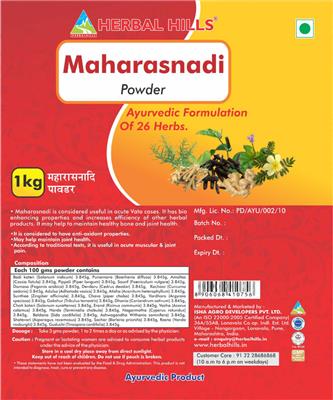
Ayurvedic Formulation Of 26 Herbs.
Mfg. Lic. No.: PD/AYU/002/10 (An ISO 22000:2005 Certified Company) Customer Care: 91 22 28686868 (10 a.m to 6 p.m on weekdays)
Formula
Maharasnadi is considered useful in acute Vata cases. It has bio enhancing properties and increases efficiency of other herbal products. It may help to maintain healthy bone and joint health. It is considered to have anti-oxidant properties. May help maintain joint health. According to traditional texts, it is useful in acute muscular & joint pain.
Halal India www.Halalindia.com S No. 001548
Suggested/Recommended/Usage/Directions
Dosage: Take 3 gms powder, 1 to 2 times a day or as advised by the physician.
Precautions
Caution: Pregnant or lactating women are advised to consume herbal products under the advice of the physician.
Keep out of reach of children.
Do not use if pouch is broken.
Storage
Store in a cool dry place away from direct sunlight.
FDA Disclaimer Statement
These statements have not been evaluated by the Food & Drug Administration. This product is not intended to diagnose, treat, cure or prevent any disease.
FDA Statement of Identity
Ayurvedic Product
Seals/Symbols
ISO Certified Company 22000:2005 Halal India www.Halalindia.com S No. 001548 GMP Good Manufacturing Practice
Is this label outdated? Report a formula or label change and our pharmacy team will review it.
Maharasnadi Powder by Herbal Hills label
The label scan from the NIH Dietary Supplement Label Database. Tap to enlarge.
Label images are published by the NIH Dietary Supplement Label Database for the version of this product on file. Always read your actual product label.
View the full label (PDF)The Ingredients in Maharasnadi Powder by Herbal Hills
These are the 26 active ingredients this product is made of. Select any to open its full monograph.
Serving size3 Not Present Dosage formPowder Amounts shown are per serving.
Most supplement products combine several ingredients, and a medication can interact with the product through any one of them. Each ingredient below shows whether it has known drug interactions.
Ashwagandha
Interacts with1,373 drugs
Ashwagandha is an Ayurvedic herb most often taken to help with stress, anxiety, and sleep, and some small studies suggest it may help, though the evid...
Ashwagandha monograph & interactionsSunthee
Interacts with1,008 drugs
Ginger is a widely used culinary spice with a long history in traditional medicine, and it has the strongest evidence for helping with nausea and vomi...
Sunthee monograph & interactionsPippali
Interacts with897 drugs
Indian long pepper (pippali) is a spice long used in Ayurvedic medicine and is best known for its piperine content, which may increase how well the bo...
Pippali monograph & interactionsNagarmotha
Guduchi
Interacts with614 drugs
Tinospora cordifolia, known as Guduchi or Giloy in Ayurvedic medicine, is a climbing plant traditionally used to support immunity and treat fevers. Ea...
Guduchi monograph & interactionsHarada
Dhania
Interacts with717 drugs
Coriander (also called cilantro) is a common cooking herb and spice that has long been used in traditional medicine for digestive complaints. As a foo...
Dhania monograph & interactionsShatavari
Interacts with76 drugs
Asparagus racemosus, often called shatavari, is an Ayurvedic herb traditionally used to support women's health, digestion, and overall vitality. Human...
Shatavari monograph & interactionsSaunf
Interacts with742 drugs
Fennel is a Mediterranean herb widely used as a food and spice, and traditionally taken for digestive complaints, colic, and menstrual cramps. Some sm...
Saunf monograph & interactionsGokshur
Interacts with259 drugs
Tribulus is a plant supplement most often marketed to boost libido, testosterone, and athletic performance, but the human evidence behind these claims...
Gokshur monograph & interactionsPunarnava
Badi Kateri
Amaltas
Damasa
Devdaru
Kachoor
Interacts with645 drugs
Zedoary is a ginger-family root used in traditional Asian and Indian medicine, mostly for digestion and as a spice. Scientific evidence in humans is v...
Kachoor monograph & interactionsAdulsa
No knowninteractions
Malabar nut (vasaka) is a traditional Ayurvedic herb used mostly for coughs and other breathing problems. Lab and animal studies suggest its compounds...
Adulsa monograph & interactionsAtisha
Interacts with278 drugs
Aconite is a highly poisonous plant, and even small amounts of the raw or improperly processed root can cause severe, life-threatening reactions. Ther...
Atisha monograph & interactionsChava
Vardharo
Choti Kateri
Erand
Vacha
Interacts with1,119 drugs
Calamus is a swamp plant with a long history in Ayurvedic and traditional Chinese medicine, mostly for digestive and nervous-system complaints. Howeve...
Vacha monograph & interactionsBaldana
Interacts with445 drugs
Sida cordifolia (bala or country mallow) is a traditional Ayurvedic plant that naturally contains ephedrine, a powerful stimulant. Because of this, ma...
Baldana monograph & interactionsSachar
Rasna
Interacts with37 drugs
Alpinia (lesser galangal) is a ginger-family root long used in Asian cooking and traditional medicine, mainly for digestive and inflammatory complaint...
Rasna monograph & interactionsMaharasnadi Powder by Herbal Hills Drug Interactions
HelloPharmacist Interaction Report
Maharasnadi Powder by Herbal Hills contains 26 ingredients, of which 13 have been checked for interactions.
Through its ashwagandha, ginger, Indian long pepper, tinospora cordifolia, coriander, asparagus racemosus, fennel, tribulus, zedoary, aconite, calamus, and sida cordifolia content, this product interacts with a wide range of medications. The most serious interaction is with QT interval-prolonging drugs (Major severity) due to sida cordifolia's ephedrine content, which can dangerously prolong the heart's electrical cycle.
Read the full breakdown — every affected drug type, severity by severity
Major interactions also exist with stimulant drugs and methylxanthines through sida cordifolia. Several ingredients affect sedating medications (CNS depressants and benzodiazepines), blood pressure drugs (antihypertensive drugs), and blood thinners (anticoagulant and antiplatelet drugs).
Ashwagandha, ginger, and tribulus all interact with medications for diabetes, raising the risk of low blood sugar (hypoglycemia). Additionally, multiple ingredients affect how your liver processes certain drugs through cytochrome P450 enzymes—ashwagandha, ginger, Indian long pepper, tinospora cordifolia, fennel, zedoary, and calamus all play a role here.
Other moderate interactions span antidiabetes drugs, thyroid hormone, hepatotoxic drugs, immunosuppressants, diuretics, lithium, estrogens and contraceptives, and several enzyme-metabolized drug classes. A handful of ingredients—nagarmotha, harada, punarnava, badi kateri, amaltas, damasa, devdaru, chava, vardharo, choti kateri, erand, and sachar—could not be checked because we hold no interaction data for them.
Altogether, these interactions span 1,722 individual medications. Before you take this product, use the medication checker below to see if any of your prescriptions are affected, and talk with your doctor or pharmacist about whether it's appropriate for you.
Check your own medications below · Editorial policy · How we use AI
Want to check YOUR meds against Maharasnadi Powder?
Ask about interactions with your drugs in plain English — “Can I take it with lisinopril?” — and we find you the answer in seconds, ingredient by ingredient.
Go to the checkerIngredients driving the most interactions
Individual Drug Interactions
The ingredients in Maharasnadi Powder interact with 1,721 drugs. Click any drug to see the details.
13 of the 26 ingredients in Maharasnadi Powder interact with drugs. Each result below shows which ingredient is responsible. Ashwagandha Vacha Sunthee Pippali Saunf Dhania Kachoor Guduchi Baldana Atisha Gokshur Shatavari Rasna
Acetaminophen, Aspirin, CaffeineExcedrin, Excedrin Extra Strength, Excedrin Migraine
How Acetaminophen, Aspirin, Caffeine interacts with Maharasnadi Powder — through 9 ingredients. Tap an ingredient for the detail:
BaldanaMethylxanthines, Stimulant Drugs Major
Interaction Summary
Theoretically, Sida cordifolia might increase the risk of serious adverse effects when taken with methylxanthines.
Read the full Baldana + Acetaminophen, Aspirin, Caffeine interactionGuduchiCytochrome P450 1a2 (cyp1a2) Substrates Moderate
Interaction Summary
Theoretically, Tinospora cordifolia might increase levels of drugs metabolized by CYP1A2.
Read the full Guduchi + Acetaminophen, Aspirin, Caffeine interactionAtishaAnticoagulant/antiplatelet Drugs, Stimulant Drugs Moderate
Interaction Summary
Theoretically, combining aconite with other antiplatelet or anticoagulant drugs might increase the risk of bruising and bleeding.
Read the full Atisha + Acetaminophen, Aspirin, Caffeine interactionPippaliAnticoagulant/antiplatelet Drugs, Cytochrome P450 3a4 (cyp3a4) Substrates Moderate
Interaction Summary
Theoretically, Indian long pepper might increase the risk of bleeding when taken with anticoagulant/antiplatelet drugs.
Read the full Pippali + Acetaminophen, Aspirin, Caffeine interactionVachaCytochrome P450 3a4 (cyp3a4) Substrates Moderate
Interaction Summary
Theoretically, taking calamus with drugs metabolized by CYP3A4 might increase drug levels and potentially increase the risk of adverse effects.
Read the full Vacha + Acetaminophen, Aspirin, Caffeine interactionSuntheeCytochrome P450 1a2 (cyp1a2) Substrates, Anticoagulant/antiplatelet Drugs +1 Moderate
Interaction Summary
Theoretically, ginger might increase the levels of CYP1A2 substrates.
Read the full Sunthee + Acetaminophen, Aspirin, Caffeine interactionAshwagandhaHepatotoxic Drugs, Cytochrome P450 3a4 (cyp3a4) Substrates +1 Moderate
Interaction Summary
Theoretically, taking ashwagandha with hepatotoxic drugs might increase the risk of liver damage.
Read the full Ashwagandha + Acetaminophen, Aspirin, Caffeine interactionSaunfCytochrome P450 3a4 (cyp3a4) Substrates, Anticoagulant/antiplatelet Drugs Moderate
Interaction Summary
Theoretically, fennel might increase levels of drugs metabolized by CYP3A4.
Read the full Saunf + Acetaminophen, Aspirin, Caffeine interactionKachoorCytochrome P450 3a4 (cyp3a4) Substrates Moderate
Interaction Summary
Theoretically, zedoary might increase levels of drugs metabolized by CYP3A4.
Read the full Kachoor + Acetaminophen, Aspirin, Caffeine interactionAcetaminophen, Brompheniramine, PhenylpropanolamineDimetapp Cold and Flu
How Acetaminophen, Brompheniramine, Phenylpropanolamine interacts with Maharasnadi Powder — through 6 ingredients. Tap an ingredient for the detail:
BaldanaStimulant Drugs Major
Interaction Summary
Theoretically, Sida cordifolia might increase the risk of adverse cardiovascular effects when taken with stimulant drugs.
Read the full Baldana + Acetaminophen, Brompheniramine, Phenylpropanolamine interactionGuduchiCytochrome P450 1a2 (cyp1a2) Substrates Moderate
Interaction Summary
Theoretically, Tinospora cordifolia might increase levels of drugs metabolized by CYP1A2.
Read the full Guduchi + Acetaminophen, Brompheniramine, Phenylpropanolamine interactionAtishaStimulant Drugs Moderate
Interaction Summary
Theoretically, combining aconite with other stimulant drugs might alter the effects of the stimulant drug or increase the risk of cardiovascular toxicity.
Read the full Atisha + Acetaminophen, Brompheniramine, Phenylpropanolamine interactionDhaniaPhotosensitizing Drugs Moderate
Interaction Summary
Theoretically, coriander might increase the risk of photosensitivity when taken with photosensitizing drugs.
Read the full Dhania + Acetaminophen, Brompheniramine, Phenylpropanolamine interactionAshwagandhaCytochrome P450 1a2 (cyp1a2) Substrates, Hepatotoxic Drugs Moderate
Interaction Summary
Theoretically, ashwagandha might decrease the levels and clinical effects of CYP1A2 substrates.
Read the full Ashwagandha + Acetaminophen, Brompheniramine, Phenylpropanolamine interactionSuntheeCytochrome P450 1a2 (cyp1a2) Substrates Minor
Interaction Summary
Theoretically, ginger might increase the levels of CYP1A2 substrates.
Read the full Sunthee + Acetaminophen, Brompheniramine, Phenylpropanolamine interactionAcetaminophen, Butalbital, CaffeineEsgic, Esgic Plus, Fiogesic, Fioricet, Repan, Tecnal +1 more
How Acetaminophen, Butalbital, Caffeine interacts with Maharasnadi Powder — through 9 ingredients. Tap an ingredient for the detail:
BaldanaStimulant Drugs, Methylxanthines Major
Interaction Summary
Theoretically, Sida cordifolia might increase the risk of adverse cardiovascular effects when taken with stimulant drugs.
Read the full Baldana + Acetaminophen, Butalbital, Caffeine interactionSuntheeCytochrome P450 1a2 (cyp1a2) Substrates, Cytochrome P450 3a4 (cyp3a4) Substrates Moderate
Interaction Summary
Theoretically, ginger might increase the levels of CYP1A2 substrates.
Read the full Sunthee + Acetaminophen, Butalbital, Caffeine interactionAshwagandhaCytochrome P450 1a2 (cyp1a2) Substrates, Hepatotoxic Drugs +1 Moderate
Interaction Summary
Theoretically, ashwagandha might decrease the levels and clinical effects of CYP1A2 substrates.
Read the full Ashwagandha + Acetaminophen, Butalbital, Caffeine interactionPippaliCytochrome P450 3a4 (cyp3a4) Substrates Moderate
Interaction Summary
Theoretically, Indian long pepper might increase the effects and adverse effects of CYP3A4 substrates.
Read the full Pippali + Acetaminophen, Butalbital, Caffeine interactionKachoorCytochrome P450 3a4 (cyp3a4) Substrates Moderate
Interaction Summary
Theoretically, zedoary might increase levels of drugs metabolized by CYP3A4.
Read the full Kachoor + Acetaminophen, Butalbital, Caffeine interactionGuduchiCytochrome P450 1a2 (cyp1a2) Substrates Moderate
Interaction Summary
Theoretically, Tinospora cordifolia might increase levels of drugs metabolized by CYP1A2.
Read the full Guduchi + Acetaminophen, Butalbital, Caffeine interactionAtishaStimulant Drugs Moderate
Interaction Summary
Theoretically, combining aconite with other stimulant drugs might alter the effects of the stimulant drug or increase the risk of cardiovascular toxicity.
Read the full Atisha + Acetaminophen, Butalbital, Caffeine interactionVachaCytochrome P450 3a4 (cyp3a4) Substrates Moderate
Interaction Summary
Theoretically, taking calamus with drugs metabolized by CYP3A4 might increase drug levels and potentially increase the risk of adverse effects.
Read the full Vacha + Acetaminophen, Butalbital, Caffeine interactionSaunfCytochrome P450 3a4 (cyp3a4) Substrates Moderate
Interaction Summary
Theoretically, fennel might increase levels of drugs metabolized by CYP3A4.
Read the full Saunf + Acetaminophen, Butalbital, Caffeine interactionAcetaminophen, Butalbital, Caffeine, CodeineEsgic with Codeine, Fioricet w/ Codeine
How Acetaminophen, Butalbital, Caffeine, Codeine interacts with Maharasnadi Powder — through 10 ingredients. Tap an ingredient for the detail:
BaldanaMethylxanthines, Stimulant Drugs Major
Interaction Summary
Theoretically, Sida cordifolia might increase the risk of serious adverse effects when taken with methylxanthines.
Read the full Baldana + Acetaminophen, Butalbital, Caffeine, Codeine interactionSaunfCytochrome P450 3a4 (cyp3a4) Substrates Moderate
Interaction Summary
Theoretically, fennel might increase levels of drugs metabolized by CYP3A4.
Read the full Saunf + Acetaminophen, Butalbital, Caffeine, Codeine interactionDhaniaCns Depressants Moderate
Interaction Summary
Theoretically, coriander might cause additive sedative effects when taken with CNS depressants.
Read the full Dhania + Acetaminophen, Butalbital, Caffeine, Codeine interactionKachoorCytochrome P450 3a4 (cyp3a4) Substrates Moderate
Interaction Summary
Theoretically, zedoary might increase levels of drugs metabolized by CYP3A4.
Read the full Kachoor + Acetaminophen, Butalbital, Caffeine, Codeine interactionPippaliCytochrome P450 3a4 (cyp3a4) Substrates Moderate
Interaction Summary
Theoretically, Indian long pepper might increase the effects and adverse effects of CYP3A4 substrates.
Read the full Pippali + Acetaminophen, Butalbital, Caffeine, Codeine interactionSuntheeCytochrome P450 3a4 (cyp3a4) Substrates, Cytochrome P450 1a2 (cyp1a2) Substrates Moderate
Interaction Summary
Ginger might increase or decrease the levels of CYP3A4 substrates.
Read the full Sunthee + Acetaminophen, Butalbital, Caffeine, Codeine interactionAshwagandhaCytochrome P450 3a4 (cyp3a4) Substrates, Cytochrome P450 1a2 (cyp1a2) Substrates +2 Moderate
Interaction Summary
Theoretically, ashwagandha might decrease the levels and clinical effects of CYP3A4 substrates.
Read the full Ashwagandha + Acetaminophen, Butalbital, Caffeine, Codeine interactionVachaCytochrome P450 3a4 (cyp3a4) Substrates, Cns Depressants +1 Moderate
Interaction Summary
Theoretically, taking calamus with drugs metabolized by CYP3A4 might increase drug levels and potentially increase the risk of adverse effects.
Read the full Vacha + Acetaminophen, Butalbital, Caffeine, Codeine interactionAtishaStimulant Drugs Moderate
Interaction Summary
Theoretically, combining aconite with other stimulant drugs might alter the effects of the stimulant drug or increase the risk of cardiovascular toxicity.
Read the full Atisha + Acetaminophen, Butalbital, Caffeine, Codeine interactionGuduchiCytochrome P450 1a2 (cyp1a2) Substrates, Cytochrome P450 2d6 (cyp2d6) Substrates Moderate
Interaction Summary
Theoretically, Tinospora cordifolia might increase levels of drugs metabolized by CYP1A2.
Read the full Guduchi + Acetaminophen, Butalbital, Caffeine, Codeine interactionAcetaminophen, Caffeine, Chlorpheniramine, Hydrocodone, PhenylephrineHycomine Compound
How Acetaminophen, Caffeine, Chlorpheniramine, Hydrocodone, Phenylephrine interacts with Maharasnadi Powder — through 10 ingredients. Tap an ingredient for the detail:
BaldanaMethylxanthines, Stimulant Drugs Major
Interaction Summary
Theoretically, Sida cordifolia might increase the risk of serious adverse effects when taken with methylxanthines.
Read the full Baldana + Acetaminophen, Caffeine, Chlorpheniramine, Hydrocodone, Phenylephrine interactionAshwagandhaCns Depressants, Hepatotoxic Drugs +2 Moderate
Interaction Summary
Theoretically, taking ashwagandha might increase the sedative effects of CNS depressants.
Read the full Ashwagandha + Acetaminophen, Caffeine, Chlorpheniramine, Hydrocodone, Phenylephrine interactionVachaAnticholinergic Drugs, Cytochrome P450 3a4 (cyp3a4) Substrates +2 Moderate
Interaction Summary
Theoretically, concurrent use of anticholinergic drugs and calamus might decrease the effectiveness of the anticholinergic drug.
Read the full Vacha + Acetaminophen, Caffeine, Chlorpheniramine, Hydrocodone, Phenylephrine interactionSuntheeCytochrome P450 1a2 (cyp1a2) Substrates, Cytochrome P450 3a4 (cyp3a4) Substrates Moderate
Interaction Summary
Theoretically, ginger might increase the levels of CYP1A2 substrates.
Read the full Sunthee + Acetaminophen, Caffeine, Chlorpheniramine, Hydrocodone, Phenylephrine interactionAtishaStimulant Drugs Moderate
Interaction Summary
Theoretically, combining aconite with other stimulant drugs might alter the effects of the stimulant drug or increase the risk of cardiovascular toxicity.
Read the full Atisha + Acetaminophen, Caffeine, Chlorpheniramine, Hydrocodone, Phenylephrine interactionPippaliCytochrome P450 3a4 (cyp3a4) Substrates Moderate
Interaction Summary
Theoretically, Indian long pepper might increase the effects and adverse effects of CYP3A4 substrates.
Read the full Pippali + Acetaminophen, Caffeine, Chlorpheniramine, Hydrocodone, Phenylephrine interactionKachoorCytochrome P450 3a4 (cyp3a4) Substrates Moderate
Interaction Summary
Theoretically, zedoary might increase levels of drugs metabolized by CYP3A4.
Read the full Kachoor + Acetaminophen, Caffeine, Chlorpheniramine, Hydrocodone, Phenylephrine interactionDhaniaCns Depressants, Photosensitizing Drugs Moderate
Interaction Summary
Theoretically, coriander might cause additive sedative effects when taken with CNS depressants.
Read the full Dhania + Acetaminophen, Caffeine, Chlorpheniramine, Hydrocodone, Phenylephrine interactionSaunfCytochrome P450 3a4 (cyp3a4) Substrates Moderate
Interaction Summary
Theoretically, fennel might increase levels of drugs metabolized by CYP3A4.
Read the full Saunf + Acetaminophen, Caffeine, Chlorpheniramine, Hydrocodone, Phenylephrine interactionGuduchiCytochrome P450 2d6 (cyp2d6) Substrates, Cytochrome P450 1a2 (cyp1a2) Substrates Moderate
Interaction Summary
Theoretically, Tinospora cordifolia might increase levels of drugs metabolized by CYP2D6.
Read the full Guduchi + Acetaminophen, Caffeine, Chlorpheniramine, Hydrocodone, Phenylephrine interactionAcetaminophen, Caffeine, CodeineGesic C15, Gesic C30, Gesic C8, Lenoltec 1, Lenoltec 2, Lenoltec 3 +1 more
How Acetaminophen, Caffeine, Codeine interacts with Maharasnadi Powder — through 10 ingredients. Tap an ingredient for the detail:
BaldanaStimulant Drugs, Methylxanthines Major
Interaction Summary
Theoretically, Sida cordifolia might increase the risk of adverse cardiovascular effects when taken with stimulant drugs.
Read the full Baldana + Acetaminophen, Caffeine, Codeine interactionAshwagandhaCytochrome P450 3a4 (cyp3a4) Substrates, Hepatotoxic Drugs +2 Moderate
Interaction Summary
Theoretically, ashwagandha might decrease the levels and clinical effects of CYP3A4 substrates.
Read the full Ashwagandha + Acetaminophen, Caffeine, Codeine interactionAtishaStimulant Drugs Moderate
Interaction Summary
Theoretically, combining aconite with other stimulant drugs might alter the effects of the stimulant drug or increase the risk of cardiovascular toxicity.
Read the full Atisha + Acetaminophen, Caffeine, Codeine interactionVachaCns Depressants, Cytochrome P450 2d6 (cyp2d6) Substrates +1 Moderate
Interaction Summary
Theoretically, concurrent use of CNS depressants and calamus might have an additive effect and increase the risk of sedative effects.
Read the full Vacha + Acetaminophen, Caffeine, Codeine interactionSuntheeCytochrome P450 3a4 (cyp3a4) Substrates, Cytochrome P450 1a2 (cyp1a2) Substrates Moderate
Interaction Summary
Ginger might increase or decrease the levels of CYP3A4 substrates.
Read the full Sunthee + Acetaminophen, Caffeine, Codeine interactionGuduchiCytochrome P450 1a2 (cyp1a2) Substrates, Cytochrome P450 2d6 (cyp2d6) Substrates Moderate
Interaction Summary
Theoretically, Tinospora cordifolia might increase levels of drugs metabolized by CYP1A2.
Read the full Guduchi + Acetaminophen, Caffeine, Codeine interactionKachoorCytochrome P450 3a4 (cyp3a4) Substrates Moderate
Interaction Summary
Theoretically, zedoary might increase levels of drugs metabolized by CYP3A4.
Read the full Kachoor + Acetaminophen, Caffeine, Codeine interactionPippaliCytochrome P450 3a4 (cyp3a4) Substrates Moderate
Interaction Summary
Theoretically, Indian long pepper might increase the effects and adverse effects of CYP3A4 substrates.
Read the full Pippali + Acetaminophen, Caffeine, Codeine interactionDhaniaCns Depressants Moderate
Interaction Summary
Theoretically, coriander might cause additive sedative effects when taken with CNS depressants.
Read the full Dhania + Acetaminophen, Caffeine, Codeine interactionSaunfCytochrome P450 3a4 (cyp3a4) Substrates Moderate
Interaction Summary
Theoretically, fennel might increase levels of drugs metabolized by CYP3A4.
Read the full Saunf + Acetaminophen, Caffeine, Codeine interactionAcetaminophen, Caffeine, Codeine, SalicylamideCodalan No.1, Codalan No.2, Codalan No.3
How Acetaminophen, Caffeine, Codeine, Salicylamide interacts with Maharasnadi Powder — through 10 ingredients. Tap an ingredient for the detail:
BaldanaStimulant Drugs, Methylxanthines Major
Interaction Summary
Theoretically, Sida cordifolia might increase the risk of adverse cardiovascular effects when taken with stimulant drugs.
Read the full Baldana + Acetaminophen, Caffeine, Codeine, Salicylamide interactionSaunfCytochrome P450 3a4 (cyp3a4) Substrates Moderate
Interaction Summary
Theoretically, fennel might increase levels of drugs metabolized by CYP3A4.
Read the full Saunf + Acetaminophen, Caffeine, Codeine, Salicylamide interactionDhaniaCns Depressants Moderate
Interaction Summary
Theoretically, coriander might cause additive sedative effects when taken with CNS depressants.
Read the full Dhania + Acetaminophen, Caffeine, Codeine, Salicylamide interactionVachaCytochrome P450 3a4 (cyp3a4) Substrates, Cns Depressants +1 Moderate
Interaction Summary
Theoretically, taking calamus with drugs metabolized by CYP3A4 might increase drug levels and potentially increase the risk of adverse effects.
Read the full Vacha + Acetaminophen, Caffeine, Codeine, Salicylamide interactionAshwagandhaCns Depressants, Cytochrome P450 3a4 (cyp3a4) Substrates +2 Moderate
Interaction Summary
Theoretically, taking ashwagandha might increase the sedative effects of CNS depressants.
Read the full Ashwagandha + Acetaminophen, Caffeine, Codeine, Salicylamide interactionAtishaStimulant Drugs Moderate
Interaction Summary
Theoretically, combining aconite with other stimulant drugs might alter the effects of the stimulant drug or increase the risk of cardiovascular toxicity.
Read the full Atisha + Acetaminophen, Caffeine, Codeine, Salicylamide interactionKachoorCytochrome P450 3a4 (cyp3a4) Substrates Moderate
Interaction Summary
Theoretically, zedoary might increase levels of drugs metabolized by CYP3A4.
Read the full Kachoor + Acetaminophen, Caffeine, Codeine, Salicylamide interactionPippaliCytochrome P450 3a4 (cyp3a4) Substrates Moderate
Interaction Summary
Theoretically, Indian long pepper might increase the effects and adverse effects of CYP3A4 substrates.
Read the full Pippali + Acetaminophen, Caffeine, Codeine, Salicylamide interactionSuntheeCytochrome P450 1a2 (cyp1a2) Substrates, Cytochrome P450 3a4 (cyp3a4) Substrates Moderate
Interaction Summary
Theoretically, ginger might increase the levels of CYP1A2 substrates.
Read the full Sunthee + Acetaminophen, Caffeine, Codeine, Salicylamide interactionGuduchiCytochrome P450 2d6 (cyp2d6) Substrates, Cytochrome P450 1a2 (cyp1a2) Substrates Moderate
Interaction Summary
Theoretically, Tinospora cordifolia might increase levels of drugs metabolized by CYP2D6.
Read the full Guduchi + Acetaminophen, Caffeine, Codeine, Salicylamide interactionAcetaminophen, Caffeine, DihydrocodeineDHC Plus, Panlor DC, Panlor SS
How Acetaminophen, Caffeine, Dihydrocodeine interacts with Maharasnadi Powder — through 10 ingredients. Tap an ingredient for the detail:
BaldanaMethylxanthines, Stimulant Drugs Major
Interaction Summary
Theoretically, Sida cordifolia might increase the risk of serious adverse effects when taken with methylxanthines.
Read the full Baldana + Acetaminophen, Caffeine, Dihydrocodeine interactionGuduchiCytochrome P450 1a2 (cyp1a2) Substrates, Cytochrome P450 2d6 (cyp2d6) Substrates Moderate
Interaction Summary
Theoretically, Tinospora cordifolia might increase levels of drugs metabolized by CYP1A2.
Read the full Guduchi + Acetaminophen, Caffeine, Dihydrocodeine interactionAshwagandhaHepatotoxic Drugs, Cytochrome P450 1a2 (cyp1a2) Substrates +2 Moderate
Interaction Summary
Theoretically, taking ashwagandha with hepatotoxic drugs might increase the risk of liver damage.
Read the full Ashwagandha + Acetaminophen, Caffeine, Dihydrocodeine interactionDhaniaCns Depressants Moderate
Interaction Summary
Theoretically, coriander might cause additive sedative effects when taken with CNS depressants.
Read the full Dhania + Acetaminophen, Caffeine, Dihydrocodeine interactionSaunfCytochrome P450 3a4 (cyp3a4) Substrates Moderate
Interaction Summary
Theoretically, fennel might increase levels of drugs metabolized by CYP3A4.
Read the full Saunf + Acetaminophen, Caffeine, Dihydrocodeine interactionSuntheeCytochrome P450 3a4 (cyp3a4) Substrates, Cytochrome P450 1a2 (cyp1a2) Substrates Moderate
Interaction Summary
Ginger might increase or decrease the levels of CYP3A4 substrates.
Read the full Sunthee + Acetaminophen, Caffeine, Dihydrocodeine interactionAtishaStimulant Drugs Moderate
Interaction Summary
Theoretically, combining aconite with other stimulant drugs might alter the effects of the stimulant drug or increase the risk of cardiovascular toxicity.
Read the full Atisha + Acetaminophen, Caffeine, Dihydrocodeine interactionVachaCns Depressants, Cytochrome P450 3a4 (cyp3a4) Substrates +1 Moderate
Interaction Summary
Theoretically, concurrent use of CNS depressants and calamus might have an additive effect and increase the risk of sedative effects.
Read the full Vacha + Acetaminophen, Caffeine, Dihydrocodeine interactionKachoorCytochrome P450 3a4 (cyp3a4) Substrates Moderate
Interaction Summary
Theoretically, zedoary might increase levels of drugs metabolized by CYP3A4.
Read the full Kachoor + Acetaminophen, Caffeine, Dihydrocodeine interactionPippaliCytochrome P450 3a4 (cyp3a4) Substrates Moderate
Interaction Summary
Theoretically, Indian long pepper might increase the effects and adverse effects of CYP3A4 substrates.
Read the full Pippali + Acetaminophen, Caffeine, Dihydrocodeine interactionAcetaminophen, Caffeine, IsomethepteneMigralam
How Acetaminophen, Caffeine, Isometheptene interacts with Maharasnadi Powder — through 9 ingredients. Tap an ingredient for the detail:
BaldanaStimulant Drugs, Methylxanthines Major
Interaction Summary
Theoretically, Sida cordifolia might increase the risk of adverse cardiovascular effects when taken with stimulant drugs.
Read the full Baldana + Acetaminophen, Caffeine, Isometheptene interactionPippaliCytochrome P450 3a4 (cyp3a4) Substrates Moderate
Interaction Summary
Theoretically, Indian long pepper might increase the effects and adverse effects of CYP3A4 substrates.
Read the full Pippali + Acetaminophen, Caffeine, Isometheptene interactionKachoorCytochrome P450 3a4 (cyp3a4) Substrates Moderate
Interaction Summary
Theoretically, zedoary might increase levels of drugs metabolized by CYP3A4.
Read the full Kachoor + Acetaminophen, Caffeine, Isometheptene interactionSaunfCytochrome P450 3a4 (cyp3a4) Substrates Moderate
Interaction Summary
Theoretically, fennel might increase levels of drugs metabolized by CYP3A4.
Read the full Saunf + Acetaminophen, Caffeine, Isometheptene interactionGuduchiCytochrome P450 1a2 (cyp1a2) Substrates Moderate
Interaction Summary
Theoretically, Tinospora cordifolia might increase levels of drugs metabolized by CYP1A2.
Read the full Guduchi + Acetaminophen, Caffeine, Isometheptene interactionAshwagandhaCytochrome P450 3a4 (cyp3a4) Substrates, Hepatotoxic Drugs +1 Moderate
Interaction Summary
Theoretically, ashwagandha might decrease the levels and clinical effects of CYP3A4 substrates.
Read the full Ashwagandha + Acetaminophen, Caffeine, Isometheptene interactionAtishaStimulant Drugs Moderate
Interaction Summary
Theoretically, combining aconite with other stimulant drugs might alter the effects of the stimulant drug or increase the risk of cardiovascular toxicity.
Read the full Atisha + Acetaminophen, Caffeine, Isometheptene interactionVachaCytochrome P450 3a4 (cyp3a4) Substrates Moderate
Interaction Summary
Theoretically, taking calamus with drugs metabolized by CYP3A4 might increase drug levels and potentially increase the risk of adverse effects.
Read the full Vacha + Acetaminophen, Caffeine, Isometheptene interactionSuntheeCytochrome P450 1a2 (cyp1a2) Substrates, Cytochrome P450 3a4 (cyp3a4) Substrates Moderate
Interaction Summary
Theoretically, ginger might increase the levels of CYP1A2 substrates.
Read the full Sunthee + Acetaminophen, Caffeine, Isometheptene interactionAcetaminophen, Caffeine, PyrilamineMidol Max Strength Menstrual
How Acetaminophen, Caffeine, Pyrilamine interacts with Maharasnadi Powder — through 10 ingredients. Tap an ingredient for the detail:
BaldanaMethylxanthines, Stimulant Drugs Major
Interaction Summary
Theoretically, Sida cordifolia might increase the risk of serious adverse effects when taken with methylxanthines.
Read the full Baldana + Acetaminophen, Caffeine, Pyrilamine interactionSuntheeCytochrome P450 3a4 (cyp3a4) Substrates, Cytochrome P450 1a2 (cyp1a2) Substrates Moderate
Interaction Summary
Ginger might increase or decrease the levels of CYP3A4 substrates.
Read the full Sunthee + Acetaminophen, Caffeine, Pyrilamine interactionGuduchiCytochrome P450 1a2 (cyp1a2) Substrates Moderate
Interaction Summary
Theoretically, Tinospora cordifolia might increase levels of drugs metabolized by CYP1A2.
Read the full Guduchi + Acetaminophen, Caffeine, Pyrilamine interactionShatavariDiuretic Drugs Moderate
Interaction Summary
Theoretically, asparagus racemosus root might increase diuresis and electrolyte loss when used with diuretic drugs.
Read the full Shatavari + Acetaminophen, Caffeine, Pyrilamine interactionKachoorCytochrome P450 3a4 (cyp3a4) Substrates Moderate
Interaction Summary
Theoretically, zedoary might increase levels of drugs metabolized by CYP3A4.
Read the full Kachoor + Acetaminophen, Caffeine, Pyrilamine interactionPippaliCytochrome P450 3a4 (cyp3a4) Substrates Moderate
Interaction Summary
Theoretically, Indian long pepper might increase the effects and adverse effects of CYP3A4 substrates.
Read the full Pippali + Acetaminophen, Caffeine, Pyrilamine interactionSaunfCytochrome P450 3a4 (cyp3a4) Substrates Moderate
Interaction Summary
Theoretically, fennel might increase levels of drugs metabolized by CYP3A4.
Read the full Saunf + Acetaminophen, Caffeine, Pyrilamine interactionVachaAnticholinergic Drugs, Cytochrome P450 3a4 (cyp3a4) Substrates Moderate
Interaction Summary
Theoretically, concurrent use of anticholinergic drugs and calamus might decrease the effectiveness of the anticholinergic drug.
Read the full Vacha + Acetaminophen, Caffeine, Pyrilamine interactionAshwagandhaCytochrome P450 1a2 (cyp1a2) Substrates, Cytochrome P450 3a4 (cyp3a4) Substrates +1 Moderate
Interaction Summary
Theoretically, ashwagandha might decrease the levels and clinical effects of CYP1A2 substrates.
Read the full Ashwagandha + Acetaminophen, Caffeine, Pyrilamine interactionAtishaStimulant Drugs Moderate
Interaction Summary
Theoretically, combining aconite with other stimulant drugs might alter the effects of the stimulant drug or increase the risk of cardiovascular toxicity.
Read the full Atisha + Acetaminophen, Caffeine, Pyrilamine interactionAcetaminophen, Chlorpheniramine, Codeine, PhenylephrineColrex
How Acetaminophen, Chlorpheniramine, Codeine, Phenylephrine interacts with Maharasnadi Powder — through 10 ingredients. Tap an ingredient for the detail:
BaldanaStimulant Drugs Major
Interaction Summary
Theoretically, Sida cordifolia might increase the risk of adverse cardiovascular effects when taken with stimulant drugs.
Read the full Baldana + Acetaminophen, Chlorpheniramine, Codeine, Phenylephrine interactionVachaAnticholinergic Drugs, Cytochrome P450 3a4 (cyp3a4) Substrates +2 Moderate
Interaction Summary
Theoretically, concurrent use of anticholinergic drugs and calamus might decrease the effectiveness of the anticholinergic drug.
Read the full Vacha + Acetaminophen, Chlorpheniramine, Codeine, Phenylephrine interactionAshwagandhaCns Depressants, Serotonergic Drugs +3 Moderate
Interaction Summary
Theoretically, taking ashwagandha might increase the sedative effects of CNS depressants.
Read the full Ashwagandha + Acetaminophen, Chlorpheniramine, Codeine, Phenylephrine interactionSuntheeCytochrome P450 1a2 (cyp1a2) Substrates, Cytochrome P450 3a4 (cyp3a4) Substrates Moderate
Interaction Summary
Theoretically, ginger might increase the levels of CYP1A2 substrates.
Read the full Sunthee + Acetaminophen, Chlorpheniramine, Codeine, Phenylephrine interactionAtishaStimulant Drugs Moderate
Interaction Summary
Theoretically, combining aconite with other stimulant drugs might alter the effects of the stimulant drug or increase the risk of cardiovascular toxicity.
Read the full Atisha + Acetaminophen, Chlorpheniramine, Codeine, Phenylephrine interactionPippaliCytochrome P450 3a4 (cyp3a4) Substrates Moderate
Interaction Summary
Theoretically, Indian long pepper might increase the effects and adverse effects of CYP3A4 substrates.
Read the full Pippali + Acetaminophen, Chlorpheniramine, Codeine, Phenylephrine interactionKachoorCytochrome P450 3a4 (cyp3a4) Substrates Moderate
Interaction Summary
Theoretically, zedoary might increase levels of drugs metabolized by CYP3A4.
Read the full Kachoor + Acetaminophen, Chlorpheniramine, Codeine, Phenylephrine interactionSaunfCytochrome P450 3a4 (cyp3a4) Substrates Moderate
Interaction Summary
Theoretically, fennel might increase levels of drugs metabolized by CYP3A4.
Read the full Saunf + Acetaminophen, Chlorpheniramine, Codeine, Phenylephrine interactionDhaniaPhotosensitizing Drugs, Cns Depressants Moderate
Interaction Summary
Theoretically, coriander might increase the risk of photosensitivity when taken with photosensitizing drugs.
Read the full Dhania + Acetaminophen, Chlorpheniramine, Codeine, Phenylephrine interactionGuduchiCytochrome P450 2d6 (cyp2d6) Substrates, Cytochrome P450 1a2 (cyp1a2) Substrates Moderate
Interaction Summary
Theoretically, Tinospora cordifolia might increase levels of drugs metabolized by CYP2D6.
Read the full Guduchi + Acetaminophen, Chlorpheniramine, Codeine, Phenylephrine interactionAcetaminophen, Chlorpheniramine, Dextromethorphan, PhenylpropanolamineMulti Symptom Cold Relief
How Acetaminophen, Chlorpheniramine, Dextromethorphan, Phenylpropanolamine interacts with Maharasnadi Powder — through 10 ingredients. Tap an ingredient for the detail:
BaldanaStimulant Drugs Major
Interaction Summary
Theoretically, Sida cordifolia might increase the risk of adverse cardiovascular effects when taken with stimulant drugs.
Read the full Baldana + Acetaminophen, Chlorpheniramine, Dextromethorphan, Phenylpropanolamine interactionGuduchiCytochrome P450 1a2 (cyp1a2) Substrates, Cytochrome P450 2d6 (cyp2d6) Substrates Moderate
Interaction Summary
Theoretically, Tinospora cordifolia might increase levels of drugs metabolized by CYP1A2.
Read the full Guduchi + Acetaminophen, Chlorpheniramine, Dextromethorphan, Phenylpropanolamine interactionAshwagandhaCytochrome P450 3a4 (cyp3a4) Substrates, Hepatotoxic Drugs +2 Moderate
Interaction Summary
Theoretically, ashwagandha might decrease the levels and clinical effects of CYP3A4 substrates.
Read the full Ashwagandha + Acetaminophen, Chlorpheniramine, Dextromethorphan, Phenylpropanolamine interactionSaunfCytochrome P450 3a4 (cyp3a4) Substrates Moderate
Interaction Summary
Theoretically, fennel might increase levels of drugs metabolized by CYP3A4.
Read the full Saunf + Acetaminophen, Chlorpheniramine, Dextromethorphan, Phenylpropanolamine interactionDhaniaPhotosensitizing Drugs Moderate
Interaction Summary
Theoretically, coriander might increase the risk of photosensitivity when taken with photosensitizing drugs.
Read the full Dhania + Acetaminophen, Chlorpheniramine, Dextromethorphan, Phenylpropanolamine interactionVachaAnticholinergic Drugs, Cytochrome P450 3a4 (cyp3a4) Substrates +1 Moderate
Interaction Summary
Theoretically, concurrent use of anticholinergic drugs and calamus might decrease the effectiveness of the anticholinergic drug.
Read the full Vacha + Acetaminophen, Chlorpheniramine, Dextromethorphan, Phenylpropanolamine interactionSuntheeCytochrome P450 3a4 (cyp3a4) Substrates, Cytochrome P450 1a2 (cyp1a2) Substrates Moderate
Interaction Summary
Ginger might increase or decrease the levels of CYP3A4 substrates.
Read the full Sunthee + Acetaminophen, Chlorpheniramine, Dextromethorphan, Phenylpropanolamine interactionAtishaStimulant Drugs Moderate
Interaction Summary
Theoretically, combining aconite with other stimulant drugs might alter the effects of the stimulant drug or increase the risk of cardiovascular toxicity.
Read the full Atisha + Acetaminophen, Chlorpheniramine, Dextromethorphan, Phenylpropanolamine interactionKachoorCytochrome P450 3a4 (cyp3a4) Substrates Moderate
Interaction Summary
Theoretically, zedoary might increase levels of drugs metabolized by CYP3A4.
Read the full Kachoor + Acetaminophen, Chlorpheniramine, Dextromethorphan, Phenylpropanolamine interactionPippaliCytochrome P450 3a4 (cyp3a4) Substrates Moderate
Interaction Summary
Theoretically, Indian long pepper might increase the effects and adverse effects of CYP3A4 substrates.
Read the full Pippali + Acetaminophen, Chlorpheniramine, Dextromethorphan, Phenylpropanolamine interactionAcetaminophen, Chlorpheniramine, Dextromethorphan, PseudoephedrineChildren's Tylenol Cold Plus Cough, Tylenol Cold Ex Strength
How Acetaminophen, Chlorpheniramine, Dextromethorphan, Pseudoephedrine interacts with Maharasnadi Powder — through 10 ingredients. Tap an ingredient for the detail:
BaldanaStimulant Drugs Major
Interaction Summary
Theoretically, Sida cordifolia might increase the risk of adverse cardiovascular effects when taken with stimulant drugs.
Read the full Baldana + Acetaminophen, Chlorpheniramine, Dextromethorphan, Pseudoephedrine interactionPippaliCytochrome P450 3a4 (cyp3a4) Substrates Moderate
Interaction Summary
Theoretically, Indian long pepper might increase the effects and adverse effects of CYP3A4 substrates.
Read the full Pippali + Acetaminophen, Chlorpheniramine, Dextromethorphan, Pseudoephedrine interactionKachoorCytochrome P450 3a4 (cyp3a4) Substrates Moderate
Interaction Summary
Theoretically, zedoary might increase levels of drugs metabolized by CYP3A4.
Read the full Kachoor + Acetaminophen, Chlorpheniramine, Dextromethorphan, Pseudoephedrine interactionDhaniaPhotosensitizing Drugs Moderate
Interaction Summary
Theoretically, coriander might increase the risk of photosensitivity when taken with photosensitizing drugs.
Read the full Dhania + Acetaminophen, Chlorpheniramine, Dextromethorphan, Pseudoephedrine interactionSaunfCytochrome P450 3a4 (cyp3a4) Substrates Moderate
Interaction Summary
Theoretically, fennel might increase levels of drugs metabolized by CYP3A4.
Read the full Saunf + Acetaminophen, Chlorpheniramine, Dextromethorphan, Pseudoephedrine interactionGuduchiCytochrome P450 2d6 (cyp2d6) Substrates, Cytochrome P450 1a2 (cyp1a2) Substrates Moderate
Interaction Summary
Theoretically, Tinospora cordifolia might increase levels of drugs metabolized by CYP2D6.
Read the full Guduchi + Acetaminophen, Chlorpheniramine, Dextromethorphan, Pseudoephedrine interactionAshwagandhaCytochrome P450 1a2 (cyp1a2) Substrates, Hepatotoxic Drugs +2 Moderate
Interaction Summary
Theoretically, ashwagandha might decrease the levels and clinical effects of CYP1A2 substrates.
Read the full Ashwagandha + Acetaminophen, Chlorpheniramine, Dextromethorphan, Pseudoephedrine interactionVachaCytochrome P450 2d6 (cyp2d6) Substrates, Cytochrome P450 3a4 (cyp3a4) Substrates +1 Moderate
Interaction Summary
Theoretically, taking calamus with drugs metabolized by CYP2D6 might increase drug levels and potentially increase the risk of adverse effects.
Read the full Vacha + Acetaminophen, Chlorpheniramine, Dextromethorphan, Pseudoephedrine interactionAtishaStimulant Drugs Moderate
Interaction Summary
Theoretically, combining aconite with other stimulant drugs might alter the effects of the stimulant drug or increase the risk of cardiovascular toxicity.
Read the full Atisha + Acetaminophen, Chlorpheniramine, Dextromethorphan, Pseudoephedrine interactionSuntheeCytochrome P450 1a2 (cyp1a2) Substrates, Cytochrome P450 3a4 (cyp3a4) Substrates Moderate
Interaction Summary
Theoretically, ginger might increase the levels of CYP1A2 substrates.
Read the full Sunthee + Acetaminophen, Chlorpheniramine, Dextromethorphan, Pseudoephedrine interactionAcetaminophen, Chlorpheniramine, Guaifenesin, Phenylephrine, SalicylamideRhinogesic GG
How Acetaminophen, Chlorpheniramine, Guaifenesin, Phenylephrine, Salicylamide interacts with Maharasnadi Powder — through 10 ingredients. Tap an ingredient for the detail:
BaldanaStimulant Drugs Major
Interaction Summary
Theoretically, Sida cordifolia might increase the risk of adverse cardiovascular effects when taken with stimulant drugs.
Read the full Baldana + Acetaminophen, Chlorpheniramine, Guaifenesin, Phenylephrine, Salicylamide interactionSuntheeCytochrome P450 1a2 (cyp1a2) Substrates, Cytochrome P450 3a4 (cyp3a4) Substrates Moderate
Interaction Summary
Theoretically, ginger might increase the levels of CYP1A2 substrates.
Read the full Sunthee + Acetaminophen, Chlorpheniramine, Guaifenesin, Phenylephrine, Salicylamide interactionAshwagandhaSerotonergic Drugs, Cytochrome P450 3a4 (cyp3a4) Substrates +2 Moderate
Interaction Summary
Some animal studies have reported that ashwagandha can enhance serotonergic transmission by altering certain serotonin (5-HT) receptors.
Read the full Ashwagandha + Acetaminophen, Chlorpheniramine, Guaifenesin, Phenylephrine, Salicylamide interactionGuduchiCytochrome P450 1a2 (cyp1a2) Substrates Moderate
Interaction Summary
Theoretically, Tinospora cordifolia might increase levels of drugs metabolized by CYP1A2.
Read the full Guduchi + Acetaminophen, Chlorpheniramine, Guaifenesin, Phenylephrine, Salicylamide interactionPippaliCytochrome P450 3a4 (cyp3a4) Substrates Moderate
Interaction Summary
Theoretically, Indian long pepper might increase the effects and adverse effects of CYP3A4 substrates.
Read the full Pippali + Acetaminophen, Chlorpheniramine, Guaifenesin, Phenylephrine, Salicylamide interactionKachoorCytochrome P450 3a4 (cyp3a4) Substrates Moderate
Interaction Summary
Theoretically, zedoary might increase levels of drugs metabolized by CYP3A4.
Read the full Kachoor + Acetaminophen, Chlorpheniramine, Guaifenesin, Phenylephrine, Salicylamide interactionSaunfCytochrome P450 3a4 (cyp3a4) Substrates Moderate
Interaction Summary
Theoretically, fennel might increase levels of drugs metabolized by CYP3A4.
Read the full Saunf + Acetaminophen, Chlorpheniramine, Guaifenesin, Phenylephrine, Salicylamide interactionDhaniaPhotosensitizing Drugs Moderate
Interaction Summary
Theoretically, coriander might increase the risk of photosensitivity when taken with photosensitizing drugs.
Read the full Dhania + Acetaminophen, Chlorpheniramine, Guaifenesin, Phenylephrine, Salicylamide interactionVachaAnticholinergic Drugs, Cytochrome P450 3a4 (cyp3a4) Substrates Moderate
Interaction Summary
Theoretically, concurrent use of anticholinergic drugs and calamus might decrease the effectiveness of the anticholinergic drug.
Read the full Vacha + Acetaminophen, Chlorpheniramine, Guaifenesin, Phenylephrine, Salicylamide interactionAtishaStimulant Drugs Moderate
Interaction Summary
Theoretically, combining aconite with other stimulant drugs might alter the effects of the stimulant drug or increase the risk of cardiovascular toxicity.
Read the full Atisha + Acetaminophen, Chlorpheniramine, Guaifenesin, Phenylephrine, Salicylamide interactionAcetaminophen, Chlorpheniramine, PhenylephrineAlka-Seltzer PLUS, Histex SR, Protid
How Acetaminophen, Chlorpheniramine, Phenylephrine interacts with Maharasnadi Powder — through 10 ingredients. Tap an ingredient for the detail:
BaldanaStimulant Drugs Major
Interaction Summary
Theoretically, Sida cordifolia might increase the risk of adverse cardiovascular effects when taken with stimulant drugs.
Read the full Baldana + Acetaminophen, Chlorpheniramine, Phenylephrine interactionAtishaStimulant Drugs Moderate
Interaction Summary
Theoretically, combining aconite with other stimulant drugs might alter the effects of the stimulant drug or increase the risk of cardiovascular toxicity.
Read the full Atisha + Acetaminophen, Chlorpheniramine, Phenylephrine interactionVachaCytochrome P450 3a4 (cyp3a4) Substrates, Anticholinergic Drugs Moderate
Interaction Summary
Theoretically, taking calamus with drugs metabolized by CYP3A4 might increase drug levels and potentially increase the risk of adverse effects.
Read the full Vacha + Acetaminophen, Chlorpheniramine, Phenylephrine interactionKachoorCytochrome P450 3a4 (cyp3a4) Substrates Moderate
Interaction Summary
Theoretically, zedoary might increase levels of drugs metabolized by CYP3A4.
Read the full Kachoor + Acetaminophen, Chlorpheniramine, Phenylephrine interactionPippaliCytochrome P450 3a4 (cyp3a4) Substrates Moderate
Interaction Summary
Theoretically, Indian long pepper might increase the effects and adverse effects of CYP3A4 substrates.
Read the full Pippali + Acetaminophen, Chlorpheniramine, Phenylephrine interactionSuntheeCytochrome P450 3a4 (cyp3a4) Substrates, Cytochrome P450 1a2 (cyp1a2) Substrates Moderate
Interaction Summary
Ginger might increase or decrease the levels of CYP3A4 substrates.
Read the full Sunthee + Acetaminophen, Chlorpheniramine, Phenylephrine interactionAshwagandhaSerotonergic Drugs, Hepatotoxic Drugs +2 Moderate
Interaction Summary
Some animal studies have reported that ashwagandha can enhance serotonergic transmission by altering certain serotonin (5-HT) receptors.
Read the full Ashwagandha + Acetaminophen, Chlorpheniramine, Phenylephrine interactionGuduchiCytochrome P450 1a2 (cyp1a2) Substrates Moderate
Interaction Summary
Theoretically, Tinospora cordifolia might increase levels of drugs metabolized by CYP1A2.
Read the full Guduchi + Acetaminophen, Chlorpheniramine, Phenylephrine interactionDhaniaPhotosensitizing Drugs Moderate
Interaction Summary
Theoretically, coriander might increase the risk of photosensitivity when taken with photosensitizing drugs.
Read the full Dhania + Acetaminophen, Chlorpheniramine, Phenylephrine interactionSaunfCytochrome P450 3a4 (cyp3a4) Substrates Moderate
Interaction Summary
Theoretically, fennel might increase levels of drugs metabolized by CYP3A4.
Read the full Saunf + Acetaminophen, Chlorpheniramine, Phenylephrine interactionAcetaminophen, Chlorpheniramine, Phenylephrine, SalicylamideRhinogesic, Rhinogesic JR
How Acetaminophen, Chlorpheniramine, Phenylephrine, Salicylamide interacts with Maharasnadi Powder — through 10 ingredients. Tap an ingredient for the detail:
BaldanaStimulant Drugs Major
Interaction Summary
Theoretically, Sida cordifolia might increase the risk of adverse cardiovascular effects when taken with stimulant drugs.
Read the full Baldana + Acetaminophen, Chlorpheniramine, Phenylephrine, Salicylamide interactionVachaAnticholinergic Drugs, Cytochrome P450 3a4 (cyp3a4) Substrates Moderate
Interaction Summary
Theoretically, concurrent use of anticholinergic drugs and calamus might decrease the effectiveness of the anticholinergic drug.
Read the full Vacha + Acetaminophen, Chlorpheniramine, Phenylephrine, Salicylamide interactionSuntheeCytochrome P450 1a2 (cyp1a2) Substrates, Cytochrome P450 3a4 (cyp3a4) Substrates Moderate
Interaction Summary
Theoretically, ginger might increase the levels of CYP1A2 substrates.
Read the full Sunthee + Acetaminophen, Chlorpheniramine, Phenylephrine, Salicylamide interactionAshwagandhaSerotonergic Drugs, Cytochrome P450 1a2 (cyp1a2) Substrates +2 Moderate
Interaction Summary
Some animal studies have reported that ashwagandha can enhance serotonergic transmission by altering certain serotonin (5-HT) receptors.
Read the full Ashwagandha + Acetaminophen, Chlorpheniramine, Phenylephrine, Salicylamide interactionAtishaStimulant Drugs Moderate
Interaction Summary
Theoretically, combining aconite with other stimulant drugs might alter the effects of the stimulant drug or increase the risk of cardiovascular toxicity.
Read the full Atisha + Acetaminophen, Chlorpheniramine, Phenylephrine, Salicylamide interactionKachoorCytochrome P450 3a4 (cyp3a4) Substrates Moderate
Interaction Summary
Theoretically, zedoary might increase levels of drugs metabolized by CYP3A4.
Read the full Kachoor + Acetaminophen, Chlorpheniramine, Phenylephrine, Salicylamide interactionPippaliCytochrome P450 3a4 (cyp3a4) Substrates Moderate
Interaction Summary
Theoretically, Indian long pepper might increase the effects and adverse effects of CYP3A4 substrates.
Read the full Pippali + Acetaminophen, Chlorpheniramine, Phenylephrine, Salicylamide interactionDhaniaPhotosensitizing Drugs Moderate
Interaction Summary
Theoretically, coriander might increase the risk of photosensitivity when taken with photosensitizing drugs.
Read the full Dhania + Acetaminophen, Chlorpheniramine, Phenylephrine, Salicylamide interactionSaunfCytochrome P450 3a4 (cyp3a4) Substrates Moderate
Interaction Summary
Theoretically, fennel might increase levels of drugs metabolized by CYP3A4.
Read the full Saunf + Acetaminophen, Chlorpheniramine, Phenylephrine, Salicylamide interactionGuduchiCytochrome P450 1a2 (cyp1a2) Substrates Moderate
Interaction Summary
Theoretically, Tinospora cordifolia might increase levels of drugs metabolized by CYP1A2.
Read the full Guduchi + Acetaminophen, Chlorpheniramine, Phenylephrine, Salicylamide interactionAcetaminophen, Chlorpheniramine, PhenylpropanolamineAlumadrine, Conex, Sinadrin Max Strength, Sinulin
How Acetaminophen, Chlorpheniramine, Phenylpropanolamine interacts with Maharasnadi Powder — through 10 ingredients. Tap an ingredient for the detail:
BaldanaStimulant Drugs Major
Interaction Summary
Theoretically, Sida cordifolia might increase the risk of adverse cardiovascular effects when taken with stimulant drugs.
Read the full Baldana + Acetaminophen, Chlorpheniramine, Phenylpropanolamine interactionAshwagandhaHepatotoxic Drugs, Cytochrome P450 1a2 (cyp1a2) Substrates +2 Moderate
Interaction Summary
Theoretically, taking ashwagandha with hepatotoxic drugs might increase the risk of liver damage.
Read the full Ashwagandha + Acetaminophen, Chlorpheniramine, Phenylpropanolamine interactionAtishaStimulant Drugs Moderate
Interaction Summary
Theoretically, combining aconite with other stimulant drugs might alter the effects of the stimulant drug or increase the risk of cardiovascular toxicity.
Read the full Atisha + Acetaminophen, Chlorpheniramine, Phenylpropanolamine interactionVachaCytochrome P450 3a4 (cyp3a4) Substrates, Anticholinergic Drugs Moderate
Interaction Summary
Theoretically, taking calamus with drugs metabolized by CYP3A4 might increase drug levels and potentially increase the risk of adverse effects.
Read the full Vacha + Acetaminophen, Chlorpheniramine, Phenylpropanolamine interactionSuntheeCytochrome P450 1a2 (cyp1a2) Substrates, Cytochrome P450 3a4 (cyp3a4) Substrates Moderate
Interaction Summary
Theoretically, ginger might increase the levels of CYP1A2 substrates.
Read the full Sunthee + Acetaminophen, Chlorpheniramine, Phenylpropanolamine interactionGuduchiCytochrome P450 1a2 (cyp1a2) Substrates Moderate
Interaction Summary
Theoretically, Tinospora cordifolia might increase levels of drugs metabolized by CYP1A2.
Read the full Guduchi + Acetaminophen, Chlorpheniramine, Phenylpropanolamine interactionPippaliCytochrome P450 3a4 (cyp3a4) Substrates Moderate
Interaction Summary
Theoretically, Indian long pepper might increase the effects and adverse effects of CYP3A4 substrates.
Read the full Pippali + Acetaminophen, Chlorpheniramine, Phenylpropanolamine interactionKachoorCytochrome P450 3a4 (cyp3a4) Substrates Moderate
Interaction Summary
Theoretically, zedoary might increase levels of drugs metabolized by CYP3A4.
Read the full Kachoor + Acetaminophen, Chlorpheniramine, Phenylpropanolamine interactionSaunfCytochrome P450 3a4 (cyp3a4) Substrates Moderate
Interaction Summary
Theoretically, fennel might increase levels of drugs metabolized by CYP3A4.
Read the full Saunf + Acetaminophen, Chlorpheniramine, Phenylpropanolamine interactionDhaniaPhotosensitizing Drugs Moderate
Interaction Summary
Theoretically, coriander might increase the risk of photosensitivity when taken with photosensitizing drugs.
Read the full Dhania + Acetaminophen, Chlorpheniramine, Phenylpropanolamine interactionAcetaminophen, Chlorpheniramine, Phenylpropanolamine, OpiumHista-Derfule
How Acetaminophen, Chlorpheniramine, Phenylpropanolamine, Opium interacts with Maharasnadi Powder — through 10 ingredients. Tap an ingredient for the detail:
BaldanaStimulant Drugs Major
Interaction Summary
Theoretically, Sida cordifolia might increase the risk of adverse cardiovascular effects when taken with stimulant drugs.
Read the full Baldana + Acetaminophen, Chlorpheniramine, Phenylpropanolamine, Opium interactionDhaniaPhotosensitizing Drugs, Cns Depressants Moderate
Interaction Summary
Theoretically, coriander might increase the risk of photosensitivity when taken with photosensitizing drugs.
Read the full Dhania + Acetaminophen, Chlorpheniramine, Phenylpropanolamine, Opium interactionSaunfCytochrome P450 3a4 (cyp3a4) Substrates Moderate
Interaction Summary
Theoretically, fennel might increase levels of drugs metabolized by CYP3A4.
Read the full Saunf + Acetaminophen, Chlorpheniramine, Phenylpropanolamine, Opium interactionAshwagandhaCns Depressants, Cytochrome P450 3a4 (cyp3a4) Substrates +3 Moderate
Interaction Summary
Theoretically, taking ashwagandha might increase the sedative effects of CNS depressants.
Read the full Ashwagandha + Acetaminophen, Chlorpheniramine, Phenylpropanolamine, Opium interactionVachaAnticholinergic Drugs, Cytochrome P450 3a4 (cyp3a4) Substrates +1 Moderate
Interaction Summary
Theoretically, concurrent use of anticholinergic drugs and calamus might decrease the effectiveness of the anticholinergic drug.
Read the full Vacha + Acetaminophen, Chlorpheniramine, Phenylpropanolamine, Opium interactionAtishaStimulant Drugs Moderate
Interaction Summary
Theoretically, combining aconite with other stimulant drugs might alter the effects of the stimulant drug or increase the risk of cardiovascular toxicity.
Read the full Atisha + Acetaminophen, Chlorpheniramine, Phenylpropanolamine, Opium interactionPippaliCytochrome P450 3a4 (cyp3a4) Substrates Moderate
Interaction Summary
Theoretically, Indian long pepper might increase the effects and adverse effects of CYP3A4 substrates.
Read the full Pippali + Acetaminophen, Chlorpheniramine, Phenylpropanolamine, Opium interactionKachoorCytochrome P450 3a4 (cyp3a4) Substrates Moderate
Interaction Summary
Theoretically, zedoary might increase levels of drugs metabolized by CYP3A4.
Read the full Kachoor + Acetaminophen, Chlorpheniramine, Phenylpropanolamine, Opium interactionSuntheeCytochrome P450 3a4 (cyp3a4) Substrates, Cytochrome P450 1a2 (cyp1a2) Substrates Moderate
Interaction Summary
Ginger might increase or decrease the levels of CYP3A4 substrates.
Read the full Sunthee + Acetaminophen, Chlorpheniramine, Phenylpropanolamine, Opium interactionGuduchiCytochrome P450 1a2 (cyp1a2) Substrates Moderate
Interaction Summary
Theoretically, Tinospora cordifolia might increase levels of drugs metabolized by CYP1A2.
Read the full Guduchi + Acetaminophen, Chlorpheniramine, Phenylpropanolamine, Opium interactionAcetaminophen, Chlorpheniramine, Phenylpropanolamine, PhenyltoloxamineNorel Plus
How Acetaminophen, Chlorpheniramine, Phenylpropanolamine, Phenyltoloxamine interacts with Maharasnadi Powder — through 10 ingredients. Tap an ingredient for the detail:
BaldanaStimulant Drugs Major
Interaction Summary
Theoretically, Sida cordifolia might increase the risk of adverse cardiovascular effects when taken with stimulant drugs.
Read the full Baldana + Acetaminophen, Chlorpheniramine, Phenylpropanolamine, Phenyltoloxamine interactionGuduchiCytochrome P450 1a2 (cyp1a2) Substrates Moderate
Interaction Summary
Theoretically, Tinospora cordifolia might increase levels of drugs metabolized by CYP1A2.
Read the full Guduchi + Acetaminophen, Chlorpheniramine, Phenylpropanolamine, Phenyltoloxamine interactionAshwagandhaHepatotoxic Drugs, Cytochrome P450 3a4 (cyp3a4) Substrates +2 Moderate
Interaction Summary
Theoretically, taking ashwagandha with hepatotoxic drugs might increase the risk of liver damage.
Read the full Ashwagandha + Acetaminophen, Chlorpheniramine, Phenylpropanolamine, Phenyltoloxamine interactionSaunfCytochrome P450 3a4 (cyp3a4) Substrates Moderate
Interaction Summary
Theoretically, fennel might increase levels of drugs metabolized by CYP3A4.
Read the full Saunf + Acetaminophen, Chlorpheniramine, Phenylpropanolamine, Phenyltoloxamine interactionDhaniaPhotosensitizing Drugs Moderate
Interaction Summary
Theoretically, coriander might increase the risk of photosensitivity when taken with photosensitizing drugs.
Read the full Dhania + Acetaminophen, Chlorpheniramine, Phenylpropanolamine, Phenyltoloxamine interactionVachaAnticholinergic Drugs, Cytochrome P450 3a4 (cyp3a4) Substrates Moderate
Interaction Summary
Theoretically, concurrent use of anticholinergic drugs and calamus might decrease the effectiveness of the anticholinergic drug.
Read the full Vacha + Acetaminophen, Chlorpheniramine, Phenylpropanolamine, Phenyltoloxamine interactionSuntheeCytochrome P450 1a2 (cyp1a2) Substrates, Cytochrome P450 3a4 (cyp3a4) Substrates Moderate
Interaction Summary
Theoretically, ginger might increase the levels of CYP1A2 substrates.
Read the full Sunthee + Acetaminophen, Chlorpheniramine, Phenylpropanolamine, Phenyltoloxamine interactionAtishaStimulant Drugs Moderate
Interaction Summary
Theoretically, combining aconite with other stimulant drugs might alter the effects of the stimulant drug or increase the risk of cardiovascular toxicity.
Read the full Atisha + Acetaminophen, Chlorpheniramine, Phenylpropanolamine, Phenyltoloxamine interactionKachoorCytochrome P450 3a4 (cyp3a4) Substrates Moderate
Interaction Summary
Theoretically, zedoary might increase levels of drugs metabolized by CYP3A4.
Read the full Kachoor + Acetaminophen, Chlorpheniramine, Phenylpropanolamine, Phenyltoloxamine interactionPippaliCytochrome P450 3a4 (cyp3a4) Substrates Moderate
Interaction Summary
Theoretically, Indian long pepper might increase the effects and adverse effects of CYP3A4 substrates.
Read the full Pippali + Acetaminophen, Chlorpheniramine, Phenylpropanolamine, Phenyltoloxamine interactionAcetaminophen, Chlorpheniramine, PseudoephedrineAlka-Seltzer PLUS Liquid Gels, Children's Tylenol Cold, Codimal, Comtrex, Extra Strength Tylenol Allergy Sinus, Lorsin +3 more
How Acetaminophen, Chlorpheniramine, Pseudoephedrine interacts with Maharasnadi Powder — through 10 ingredients. Tap an ingredient for the detail:
BaldanaStimulant Drugs Major
Interaction Summary
Theoretically, Sida cordifolia might increase the risk of adverse cardiovascular effects when taken with stimulant drugs.
Read the full Baldana + Acetaminophen, Chlorpheniramine, Pseudoephedrine interactionPippaliCytochrome P450 3a4 (cyp3a4) Substrates Moderate
Interaction Summary
Theoretically, Indian long pepper might increase the effects and adverse effects of CYP3A4 substrates.
Read the full Pippali + Acetaminophen, Chlorpheniramine, Pseudoephedrine interactionKachoorCytochrome P450 3a4 (cyp3a4) Substrates Moderate
Interaction Summary
Theoretically, zedoary might increase levels of drugs metabolized by CYP3A4.
Read the full Kachoor + Acetaminophen, Chlorpheniramine, Pseudoephedrine interactionDhaniaPhotosensitizing Drugs Moderate
Interaction Summary
Theoretically, coriander might increase the risk of photosensitivity when taken with photosensitizing drugs.
Read the full Dhania + Acetaminophen, Chlorpheniramine, Pseudoephedrine interactionSaunfCytochrome P450 3a4 (cyp3a4) Substrates Moderate
Interaction Summary
Theoretically, fennel might increase levels of drugs metabolized by CYP3A4.
Read the full Saunf + Acetaminophen, Chlorpheniramine, Pseudoephedrine interactionGuduchiCytochrome P450 1a2 (cyp1a2) Substrates Moderate
Interaction Summary
Theoretically, Tinospora cordifolia might increase levels of drugs metabolized by CYP1A2.
Read the full Guduchi + Acetaminophen, Chlorpheniramine, Pseudoephedrine interactionAshwagandhaCytochrome P450 1a2 (cyp1a2) Substrates, Hepatotoxic Drugs +2 Moderate
Interaction Summary
Theoretically, ashwagandha might decrease the levels and clinical effects of CYP1A2 substrates.
Read the full Ashwagandha + Acetaminophen, Chlorpheniramine, Pseudoephedrine interactionVachaCytochrome P450 3a4 (cyp3a4) Substrates, Anticholinergic Drugs Moderate
Interaction Summary
Theoretically, taking calamus with drugs metabolized by CYP3A4 might increase drug levels and potentially increase the risk of adverse effects.
Read the full Vacha + Acetaminophen, Chlorpheniramine, Pseudoephedrine interactionAtishaStimulant Drugs Moderate
Interaction Summary
Theoretically, combining aconite with other stimulant drugs might alter the effects of the stimulant drug or increase the risk of cardiovascular toxicity.
Read the full Atisha + Acetaminophen, Chlorpheniramine, Pseudoephedrine interactionSuntheeCytochrome P450 1a2 (cyp1a2) Substrates, Cytochrome P450 3a4 (cyp3a4) Substrates Moderate
Interaction Summary
Theoretically, ginger might increase the levels of CYP1A2 substrates.
Read the full Sunthee + Acetaminophen, Chlorpheniramine, Pseudoephedrine interactionAcetaminophen, Dexbrompheniramine, PseudoephedrineSinadrin Plus
How Acetaminophen, Dexbrompheniramine, Pseudoephedrine interacts with Maharasnadi Powder — through 6 ingredients. Tap an ingredient for the detail:
BaldanaStimulant Drugs Major
Interaction Summary
Theoretically, Sida cordifolia might increase the risk of adverse cardiovascular effects when taken with stimulant drugs.
Read the full Baldana + Acetaminophen, Dexbrompheniramine, Pseudoephedrine interactionDhaniaPhotosensitizing Drugs Moderate
Interaction Summary
Theoretically, coriander might increase the risk of photosensitivity when taken with photosensitizing drugs.
Read the full Dhania + Acetaminophen, Dexbrompheniramine, Pseudoephedrine interactionAtishaStimulant Drugs Moderate
Interaction Summary
Theoretically, combining aconite with other stimulant drugs might alter the effects of the stimulant drug or increase the risk of cardiovascular toxicity.
Read the full Atisha + Acetaminophen, Dexbrompheniramine, Pseudoephedrine interactionGuduchiCytochrome P450 1a2 (cyp1a2) Substrates Moderate
Interaction Summary
Theoretically, Tinospora cordifolia might increase levels of drugs metabolized by CYP1A2.
Read the full Guduchi + Acetaminophen, Dexbrompheniramine, Pseudoephedrine interactionAshwagandhaHepatotoxic Drugs, Cytochrome P450 1a2 (cyp1a2) Substrates Moderate
Interaction Summary
Theoretically, taking ashwagandha with hepatotoxic drugs might increase the risk of liver damage.
Read the full Ashwagandha + Acetaminophen, Dexbrompheniramine, Pseudoephedrine interactionSuntheeCytochrome P450 1a2 (cyp1a2) Substrates Minor
Interaction Summary
Theoretically, ginger might increase the levels of CYP1A2 substrates.
Read the full Sunthee + Acetaminophen, Dexbrompheniramine, Pseudoephedrine interactionAcetaminophen, Dextromethorphan, Doxylamine, PseudoephedrineVicks NyQuil
How Acetaminophen, Dextromethorphan, Doxylamine, Pseudoephedrine interacts with Maharasnadi Powder — through 9 ingredients. Tap an ingredient for the detail:
BaldanaStimulant Drugs Major
Interaction Summary
Theoretically, Sida cordifolia might increase the risk of adverse cardiovascular effects when taken with stimulant drugs.
Read the full Baldana + Acetaminophen, Dextromethorphan, Doxylamine, Pseudoephedrine interactionSaunfCytochrome P450 3a4 (cyp3a4) Substrates Moderate
Interaction Summary
Theoretically, fennel might increase levels of drugs metabolized by CYP3A4.
Read the full Saunf + Acetaminophen, Dextromethorphan, Doxylamine, Pseudoephedrine interactionKachoorCytochrome P450 3a4 (cyp3a4) Substrates Moderate
Interaction Summary
Theoretically, zedoary might increase levels of drugs metabolized by CYP3A4.
Read the full Kachoor + Acetaminophen, Dextromethorphan, Doxylamine, Pseudoephedrine interactionPippaliCytochrome P450 3a4 (cyp3a4) Substrates Moderate
Interaction Summary
Theoretically, Indian long pepper might increase the effects and adverse effects of CYP3A4 substrates.
Read the full Pippali + Acetaminophen, Dextromethorphan, Doxylamine, Pseudoephedrine interactionAshwagandhaCytochrome P450 1a2 (cyp1a2) Substrates, Hepatotoxic Drugs +2 Moderate
Interaction Summary
Theoretically, ashwagandha might decrease the levels and clinical effects of CYP1A2 substrates.
Read the full Ashwagandha + Acetaminophen, Dextromethorphan, Doxylamine, Pseudoephedrine interactionSuntheeCytochrome P450 1a2 (cyp1a2) Substrates, Cytochrome P450 3a4 (cyp3a4) Substrates Moderate
Interaction Summary
Theoretically, ginger might increase the levels of CYP1A2 substrates.
Read the full Sunthee + Acetaminophen, Dextromethorphan, Doxylamine, Pseudoephedrine interactionVachaAnticholinergic Drugs, Cytochrome P450 3a4 (cyp3a4) Substrates +1 Moderate
Interaction Summary
Theoretically, concurrent use of anticholinergic drugs and calamus might decrease the effectiveness of the anticholinergic drug.
Read the full Vacha + Acetaminophen, Dextromethorphan, Doxylamine, Pseudoephedrine interactionGuduchiCytochrome P450 2d6 (cyp2d6) Substrates, Cytochrome P450 1a2 (cyp1a2) Substrates Moderate
Interaction Summary
Theoretically, Tinospora cordifolia might increase levels of drugs metabolized by CYP2D6.
Read the full Guduchi + Acetaminophen, Dextromethorphan, Doxylamine, Pseudoephedrine interactionAtishaStimulant Drugs Moderate
Interaction Summary
Theoretically, combining aconite with other stimulant drugs might alter the effects of the stimulant drug or increase the risk of cardiovascular toxicity.
Read the full Atisha + Acetaminophen, Dextromethorphan, Doxylamine, Pseudoephedrine interactionAcetaminophen, Dextromethorphan, Guaifenesin, PhenylephrineConar-A
How Acetaminophen, Dextromethorphan, Guaifenesin, Phenylephrine interacts with Maharasnadi Powder — through 9 ingredients. Tap an ingredient for the detail:
BaldanaStimulant Drugs Major
Interaction Summary
Theoretically, Sida cordifolia might increase the risk of adverse cardiovascular effects when taken with stimulant drugs.
Read the full Baldana + Acetaminophen, Dextromethorphan, Guaifenesin, Phenylephrine interactionVachaCytochrome P450 2d6 (cyp2d6) Substrates, Cytochrome P450 3a4 (cyp3a4) Substrates Moderate
Interaction Summary
Theoretically, taking calamus with drugs metabolized by CYP2D6 might increase drug levels and potentially increase the risk of adverse effects.
Read the full Vacha + Acetaminophen, Dextromethorphan, Guaifenesin, Phenylephrine interactionAtishaStimulant Drugs Moderate
Interaction Summary
Theoretically, combining aconite with other stimulant drugs might alter the effects of the stimulant drug or increase the risk of cardiovascular toxicity.
Read the full Atisha + Acetaminophen, Dextromethorphan, Guaifenesin, Phenylephrine interactionAshwagandhaCytochrome P450 3a4 (cyp3a4) Substrates, Cytochrome P450 1a2 (cyp1a2) Substrates +2 Moderate
Interaction Summary
Theoretically, ashwagandha might decrease the levels and clinical effects of CYP3A4 substrates.
Read the full Ashwagandha + Acetaminophen, Dextromethorphan, Guaifenesin, Phenylephrine interactionSaunfCytochrome P450 3a4 (cyp3a4) Substrates Moderate
Interaction Summary
Theoretically, fennel might increase levels of drugs metabolized by CYP3A4.
Read the full Saunf + Acetaminophen, Dextromethorphan, Guaifenesin, Phenylephrine interactionPippaliCytochrome P450 3a4 (cyp3a4) Substrates Moderate
Interaction Summary
Theoretically, Indian long pepper might increase the effects and adverse effects of CYP3A4 substrates.
Read the full Pippali + Acetaminophen, Dextromethorphan, Guaifenesin, Phenylephrine interactionKachoorCytochrome P450 3a4 (cyp3a4) Substrates Moderate
Interaction Summary
Theoretically, zedoary might increase levels of drugs metabolized by CYP3A4.
Read the full Kachoor + Acetaminophen, Dextromethorphan, Guaifenesin, Phenylephrine interactionGuduchiCytochrome P450 2d6 (cyp2d6) Substrates, Cytochrome P450 1a2 (cyp1a2) Substrates Moderate
Interaction Summary
Theoretically, Tinospora cordifolia might increase levels of drugs metabolized by CYP2D6.
Read the full Guduchi + Acetaminophen, Dextromethorphan, Guaifenesin, Phenylephrine interactionSuntheeCytochrome P450 3a4 (cyp3a4) Substrates, Cytochrome P450 1a2 (cyp1a2) Substrates Moderate
Interaction Summary
Ginger might increase or decrease the levels of CYP3A4 substrates.
Read the full Sunthee + Acetaminophen, Dextromethorphan, Guaifenesin, Phenylephrine interactionAcetaminophen, Dextromethorphan, Guaifenesin, PhenylpropanolamineAnatuss
How Acetaminophen, Dextromethorphan, Guaifenesin, Phenylpropanolamine interacts with Maharasnadi Powder — through 9 ingredients. Tap an ingredient for the detail:
BaldanaStimulant Drugs Major
Interaction Summary
Theoretically, Sida cordifolia might increase the risk of adverse cardiovascular effects when taken with stimulant drugs.
Read the full Baldana + Acetaminophen, Dextromethorphan, Guaifenesin, Phenylpropanolamine interactionSaunfCytochrome P450 3a4 (cyp3a4) Substrates Moderate
Interaction Summary
Theoretically, fennel might increase levels of drugs metabolized by CYP3A4.
Read the full Saunf + Acetaminophen, Dextromethorphan, Guaifenesin, Phenylpropanolamine interactionAtishaStimulant Drugs Moderate
Interaction Summary
Theoretically, combining aconite with other stimulant drugs might alter the effects of the stimulant drug or increase the risk of cardiovascular toxicity.
Read the full Atisha + Acetaminophen, Dextromethorphan, Guaifenesin, Phenylpropanolamine interactionVachaCytochrome P450 3a4 (cyp3a4) Substrates, Cytochrome P450 2d6 (cyp2d6) Substrates Moderate
Interaction Summary
Theoretically, taking calamus with drugs metabolized by CYP3A4 might increase drug levels and potentially increase the risk of adverse effects.
Read the full Vacha + Acetaminophen, Dextromethorphan, Guaifenesin, Phenylpropanolamine interactionAshwagandhaCytochrome P450 1a2 (cyp1a2) Substrates, Hepatotoxic Drugs +2 Moderate
Interaction Summary
Theoretically, ashwagandha might decrease the levels and clinical effects of CYP1A2 substrates.
Read the full Ashwagandha + Acetaminophen, Dextromethorphan, Guaifenesin, Phenylpropanolamine interactionSuntheeCytochrome P450 1a2 (cyp1a2) Substrates, Cytochrome P450 3a4 (cyp3a4) Substrates Moderate
Interaction Summary
Theoretically, ginger might increase the levels of CYP1A2 substrates.
Read the full Sunthee + Acetaminophen, Dextromethorphan, Guaifenesin, Phenylpropanolamine interactionPippaliCytochrome P450 3a4 (cyp3a4) Substrates Moderate
Interaction Summary
Theoretically, Indian long pepper might increase the effects and adverse effects of CYP3A4 substrates.
Read the full Pippali + Acetaminophen, Dextromethorphan, Guaifenesin, Phenylpropanolamine interactionKachoorCytochrome P450 3a4 (cyp3a4) Substrates Moderate
Interaction Summary
Theoretically, zedoary might increase levels of drugs metabolized by CYP3A4.
Read the full Kachoor + Acetaminophen, Dextromethorphan, Guaifenesin, Phenylpropanolamine interactionGuduchiCytochrome P450 1a2 (cyp1a2) Substrates, Cytochrome P450 2d6 (cyp2d6) Substrates Moderate
Interaction Summary
Theoretically, Tinospora cordifolia might increase levels of drugs metabolized by CYP1A2.
Read the full Guduchi + Acetaminophen, Dextromethorphan, Guaifenesin, Phenylpropanolamine interactionAcetaminophen, Dextromethorphan, Guaifenesin, PseudoephedrineRobitussin Cold, Severe Cold, Suphedrine Cold/Cough
How Acetaminophen, Dextromethorphan, Guaifenesin, Pseudoephedrine interacts with Maharasnadi Powder — through 9 ingredients. Tap an ingredient for the detail:
BaldanaStimulant Drugs Major
Interaction Summary
Theoretically, Sida cordifolia might increase the risk of adverse cardiovascular effects when taken with stimulant drugs.
Read the full Baldana + Acetaminophen, Dextromethorphan, Guaifenesin, Pseudoephedrine interactionGuduchiCytochrome P450 2d6 (cyp2d6) Substrates, Cytochrome P450 1a2 (cyp1a2) Substrates Moderate
Interaction Summary
Theoretically, Tinospora cordifolia might increase levels of drugs metabolized by CYP2D6.
Read the full Guduchi + Acetaminophen, Dextromethorphan, Guaifenesin, Pseudoephedrine interactionVachaCytochrome P450 2d6 (cyp2d6) Substrates, Cytochrome P450 3a4 (cyp3a4) Substrates Moderate
Interaction Summary
Theoretically, taking calamus with drugs metabolized by CYP2D6 might increase drug levels and potentially increase the risk of adverse effects.
Read the full Vacha + Acetaminophen, Dextromethorphan, Guaifenesin, Pseudoephedrine interactionAtishaStimulant Drugs Moderate
Interaction Summary
Theoretically, combining aconite with other stimulant drugs might alter the effects of the stimulant drug or increase the risk of cardiovascular toxicity.
Read the full Atisha + Acetaminophen, Dextromethorphan, Guaifenesin, Pseudoephedrine interactionSaunfCytochrome P450 3a4 (cyp3a4) Substrates Moderate
Interaction Summary
Theoretically, fennel might increase levels of drugs metabolized by CYP3A4.
Read the full Saunf + Acetaminophen, Dextromethorphan, Guaifenesin, Pseudoephedrine interactionKachoorCytochrome P450 3a4 (cyp3a4) Substrates Moderate
Interaction Summary
Theoretically, zedoary might increase levels of drugs metabolized by CYP3A4.
Read the full Kachoor + Acetaminophen, Dextromethorphan, Guaifenesin, Pseudoephedrine interactionPippaliCytochrome P450 3a4 (cyp3a4) Substrates Moderate
Interaction Summary
Theoretically, Indian long pepper might increase the effects and adverse effects of CYP3A4 substrates.
Read the full Pippali + Acetaminophen, Dextromethorphan, Guaifenesin, Pseudoephedrine interactionAshwagandhaCytochrome P450 3a4 (cyp3a4) Substrates, Cytochrome P450 1a2 (cyp1a2) Substrates +2 Moderate
Interaction Summary
Theoretically, ashwagandha might decrease the levels and clinical effects of CYP3A4 substrates.
Read the full Ashwagandha + Acetaminophen, Dextromethorphan, Guaifenesin, Pseudoephedrine interactionSuntheeCytochrome P450 1a2 (cyp1a2) Substrates, Cytochrome P450 3a4 (cyp3a4) Substrates Moderate
Interaction Summary
Theoretically, ginger might increase the levels of CYP1A2 substrates.
Read the full Sunthee + Acetaminophen, Dextromethorphan, Guaifenesin, Pseudoephedrine interactionAcetaminophen, Dextromethorphan, Phenylpropanolamine, PyrilamineTheracaps
How Acetaminophen, Dextromethorphan, Phenylpropanolamine, Pyrilamine interacts with Maharasnadi Powder — through 9 ingredients. Tap an ingredient for the detail:
BaldanaStimulant Drugs Major
Interaction Summary
Theoretically, Sida cordifolia might increase the risk of adverse cardiovascular effects when taken with stimulant drugs.
Read the full Baldana + Acetaminophen, Dextromethorphan, Phenylpropanolamine, Pyrilamine interactionAshwagandhaSerotonergic Drugs, Hepatotoxic Drugs +2 Moderate
Interaction Summary
Some animal studies have reported that ashwagandha can enhance serotonergic transmission by altering certain serotonin (5-HT) receptors.
Read the full Ashwagandha + Acetaminophen, Dextromethorphan, Phenylpropanolamine, Pyrilamine interactionSuntheeCytochrome P450 1a2 (cyp1a2) Substrates, Cytochrome P450 3a4 (cyp3a4) Substrates Moderate
Interaction Summary
Theoretically, ginger might increase the levels of CYP1A2 substrates.
Read the full Sunthee + Acetaminophen, Dextromethorphan, Phenylpropanolamine, Pyrilamine interactionVachaAnticholinergic Drugs, Cytochrome P450 2d6 (cyp2d6) Substrates +1 Moderate
Interaction Summary
Theoretically, concurrent use of anticholinergic drugs and calamus might decrease the effectiveness of the anticholinergic drug.
Read the full Vacha + Acetaminophen, Dextromethorphan, Phenylpropanolamine, Pyrilamine interactionGuduchiCytochrome P450 1a2 (cyp1a2) Substrates, Cytochrome P450 2d6 (cyp2d6) Substrates Moderate
Interaction Summary
Theoretically, Tinospora cordifolia might increase levels of drugs metabolized by CYP1A2.
Read the full Guduchi + Acetaminophen, Dextromethorphan, Phenylpropanolamine, Pyrilamine interactionAtishaStimulant Drugs Moderate
Interaction Summary
Theoretically, combining aconite with other stimulant drugs might alter the effects of the stimulant drug or increase the risk of cardiovascular toxicity.
Read the full Atisha + Acetaminophen, Dextromethorphan, Phenylpropanolamine, Pyrilamine interactionSaunfCytochrome P450 3a4 (cyp3a4) Substrates Moderate
Interaction Summary
Theoretically, fennel might increase levels of drugs metabolized by CYP3A4.
Read the full Saunf + Acetaminophen, Dextromethorphan, Phenylpropanolamine, Pyrilamine interactionKachoorCytochrome P450 3a4 (cyp3a4) Substrates Moderate
Interaction Summary
Theoretically, zedoary might increase levels of drugs metabolized by CYP3A4.
Read the full Kachoor + Acetaminophen, Dextromethorphan, Phenylpropanolamine, Pyrilamine interactionPippaliCytochrome P450 3a4 (cyp3a4) Substrates Moderate
Interaction Summary
Theoretically, Indian long pepper might increase the effects and adverse effects of CYP3A4 substrates.
Read the full Pippali + Acetaminophen, Dextromethorphan, Phenylpropanolamine, Pyrilamine interactionAcetaminophen, Dextromethorphan, PseudoephedrineAlka-Seltzer PLUS Flu Liquid Gels, Non Aspirin Cold Caps, Tylenol Cold, Tylenol Flu Daytime Ex Strength, Tylenol Flu Ex Strength
How Acetaminophen, Dextromethorphan, Pseudoephedrine interacts with Maharasnadi Powder — through 9 ingredients. Tap an ingredient for the detail:
BaldanaStimulant Drugs Major
Interaction Summary
Theoretically, Sida cordifolia might increase the risk of adverse cardiovascular effects when taken with stimulant drugs.
Read the full Baldana + Acetaminophen, Dextromethorphan, Pseudoephedrine interactionPippaliCytochrome P450 3a4 (cyp3a4) Substrates Moderate
Interaction Summary
Theoretically, Indian long pepper might increase the effects and adverse effects of CYP3A4 substrates.
Read the full Pippali + Acetaminophen, Dextromethorphan, Pseudoephedrine interactionKachoorCytochrome P450 3a4 (cyp3a4) Substrates Moderate
Interaction Summary
Theoretically, zedoary might increase levels of drugs metabolized by CYP3A4.
Read the full Kachoor + Acetaminophen, Dextromethorphan, Pseudoephedrine interactionGuduchiCytochrome P450 2d6 (cyp2d6) Substrates, Cytochrome P450 1a2 (cyp1a2) Substrates Moderate
Interaction Summary
Theoretically, Tinospora cordifolia might increase levels of drugs metabolized by CYP2D6.
Read the full Guduchi + Acetaminophen, Dextromethorphan, Pseudoephedrine interactionSuntheeCytochrome P450 3a4 (cyp3a4) Substrates, Cytochrome P450 1a2 (cyp1a2) Substrates Moderate
Interaction Summary
Ginger might increase or decrease the levels of CYP3A4 substrates.
Read the full Sunthee + Acetaminophen, Dextromethorphan, Pseudoephedrine interactionAshwagandhaSerotonergic Drugs, Cytochrome P450 1a2 (cyp1a2) Substrates +2 Moderate
Interaction Summary
Some animal studies have reported that ashwagandha can enhance serotonergic transmission by altering certain serotonin (5-HT) receptors.
Read the full Ashwagandha + Acetaminophen, Dextromethorphan, Pseudoephedrine interactionSaunfCytochrome P450 3a4 (cyp3a4) Substrates Moderate
Interaction Summary
Theoretically, fennel might increase levels of drugs metabolized by CYP3A4.
Read the full Saunf + Acetaminophen, Dextromethorphan, Pseudoephedrine interactionVachaCytochrome P450 3a4 (cyp3a4) Substrates, Cytochrome P450 2d6 (cyp2d6) Substrates Moderate
Interaction Summary
Theoretically, taking calamus with drugs metabolized by CYP3A4 might increase drug levels and potentially increase the risk of adverse effects.
Read the full Vacha + Acetaminophen, Dextromethorphan, Pseudoephedrine interactionAtishaStimulant Drugs Moderate
Interaction Summary
Theoretically, combining aconite with other stimulant drugs might alter the effects of the stimulant drug or increase the risk of cardiovascular toxicity.
Read the full Atisha + Acetaminophen, Dextromethorphan, Pseudoephedrine interactionAcetaminophen, Dichloralantipyrine, IsomethepteneAmidrine, Midchlor, Migquin, Migratine
How Acetaminophen, Dichloralantipyrine, Isometheptene interacts with Maharasnadi Powder — through 7 ingredients. Tap an ingredient for the detail:
BaldanaStimulant Drugs Major
Interaction Summary
Theoretically, Sida cordifolia might increase the risk of adverse cardiovascular effects when taken with stimulant drugs.
Read the full Baldana + Acetaminophen, Dichloralantipyrine, Isometheptene interactionAshwagandhaHepatotoxic Drugs, Cytochrome P450 1a2 (cyp1a2) Substrates +1 Moderate
Interaction Summary
Theoretically, taking ashwagandha with hepatotoxic drugs might increase the risk of liver damage.
Read the full Ashwagandha + Acetaminophen, Dichloralantipyrine, Isometheptene interactionGuduchiCytochrome P450 1a2 (cyp1a2) Substrates Moderate
Interaction Summary
Theoretically, Tinospora cordifolia might increase levels of drugs metabolized by CYP1A2.
Read the full Guduchi + Acetaminophen, Dichloralantipyrine, Isometheptene interactionAtishaStimulant Drugs Moderate
Interaction Summary
Theoretically, combining aconite with other stimulant drugs might alter the effects of the stimulant drug or increase the risk of cardiovascular toxicity.
Read the full Atisha + Acetaminophen, Dichloralantipyrine, Isometheptene interactionVachaCns Depressants Moderate
Interaction Summary
Theoretically, concurrent use of CNS depressants and calamus might have an additive effect and increase the risk of sedative effects.
Read the full Vacha + Acetaminophen, Dichloralantipyrine, Isometheptene interactionDhaniaCns Depressants Moderate
Interaction Summary
Theoretically, coriander might cause additive sedative effects when taken with CNS depressants.
Read the full Dhania + Acetaminophen, Dichloralantipyrine, Isometheptene interactionSuntheeCytochrome P450 1a2 (cyp1a2) Substrates Minor
Interaction Summary
Theoretically, ginger might increase the levels of CYP1A2 substrates.
Read the full Sunthee + Acetaminophen, Dichloralantipyrine, Isometheptene interactionAcetaminophen, Dichloralphenazone, IsomethepteneMidrin
How Acetaminophen, Dichloralphenazone, Isometheptene interacts with Maharasnadi Powder — through 7 ingredients. Tap an ingredient for the detail:
BaldanaStimulant Drugs Major
Interaction Summary
Theoretically, Sida cordifolia might increase the risk of adverse cardiovascular effects when taken with stimulant drugs.
Read the full Baldana + Acetaminophen, Dichloralphenazone, Isometheptene interactionDhaniaCns Depressants Moderate
Interaction Summary
Theoretically, coriander might cause additive sedative effects when taken with CNS depressants.
Read the full Dhania + Acetaminophen, Dichloralphenazone, Isometheptene interactionAshwagandhaHepatotoxic Drugs, Cytochrome P450 1a2 (cyp1a2) Substrates +1 Moderate
Interaction Summary
Theoretically, taking ashwagandha with hepatotoxic drugs might increase the risk of liver damage.
Read the full Ashwagandha + Acetaminophen, Dichloralphenazone, Isometheptene interactionGuduchiCytochrome P450 1a2 (cyp1a2) Substrates Moderate
Interaction Summary
Theoretically, Tinospora cordifolia might increase levels of drugs metabolized by CYP1A2.
Read the full Guduchi + Acetaminophen, Dichloralphenazone, Isometheptene interactionAtishaStimulant Drugs Moderate
Interaction Summary
Theoretically, combining aconite with other stimulant drugs might alter the effects of the stimulant drug or increase the risk of cardiovascular toxicity.
Read the full Atisha + Acetaminophen, Dichloralphenazone, Isometheptene interactionVachaCns Depressants Moderate
Interaction Summary
Theoretically, concurrent use of CNS depressants and calamus might have an additive effect and increase the risk of sedative effects.
Read the full Vacha + Acetaminophen, Dichloralphenazone, Isometheptene interactionSuntheeCytochrome P450 1a2 (cyp1a2) Substrates Minor
Interaction Summary
Theoretically, ginger might increase the levels of CYP1A2 substrates.
Read the full Sunthee + Acetaminophen, Dichloralphenazone, Isometheptene interactionAcetaminophen, Dichlorophenazone, IsometheptaneIsocom
How Acetaminophen, Dichlorophenazone, Isometheptane interacts with Maharasnadi Powder — through 7 ingredients. Tap an ingredient for the detail:
BaldanaStimulant Drugs Major
Interaction Summary
Theoretically, Sida cordifolia might increase the risk of adverse cardiovascular effects when taken with stimulant drugs.
Read the full Baldana + Acetaminophen, Dichlorophenazone, Isometheptane interactionVachaCns Depressants Moderate
Interaction Summary
Theoretically, concurrent use of CNS depressants and calamus might have an additive effect and increase the risk of sedative effects.
Read the full Vacha + Acetaminophen, Dichlorophenazone, Isometheptane interactionAtishaStimulant Drugs Moderate
Interaction Summary
Theoretically, combining aconite with other stimulant drugs might alter the effects of the stimulant drug or increase the risk of cardiovascular toxicity.
Read the full Atisha + Acetaminophen, Dichlorophenazone, Isometheptane interactionDhaniaCns Depressants Moderate
Interaction Summary
Theoretically, coriander might cause additive sedative effects when taken with CNS depressants.
Read the full Dhania + Acetaminophen, Dichlorophenazone, Isometheptane interactionGuduchiCytochrome P450 1a2 (cyp1a2) Substrates Moderate
Interaction Summary
Theoretically, Tinospora cordifolia might increase levels of drugs metabolized by CYP1A2.
Read the full Guduchi + Acetaminophen, Dichlorophenazone, Isometheptane interactionAshwagandhaCytochrome P450 1a2 (cyp1a2) Substrates, Hepatotoxic Drugs +1 Moderate
Interaction Summary
Theoretically, ashwagandha might decrease the levels and clinical effects of CYP1A2 substrates.
Read the full Ashwagandha + Acetaminophen, Dichlorophenazone, Isometheptane interactionSuntheeCytochrome P450 1a2 (cyp1a2) Substrates Minor
Interaction Summary
Theoretically, ginger might increase the levels of CYP1A2 substrates.
Read the full Sunthee + Acetaminophen, Dichlorophenazone, Isometheptane interactionEach ingredient & the kinds of drugs it affects
For each ingredient in Maharasnadi Powder with known interactions, here are the types of medications they can affect. Open any type for the detail — or search your exact drug in the checker above.
Ashwagandha
Antidiabetes Drugs
Theoretically, taking ashwagandha with antidiabetes drugs might increase the risk of hypoglycemia.
There is preliminary clinical evidence suggesting that ashwagandha might lower blood glucose levels. Theoretically, ashwagandha might have additive effects when used with antidiabetes drugs and increase the risk of hypoglycemia.
Antihypertensive Drugs
Theoretically, taking ashwagandha with antihypertensive drugs might increase the risk of hypotension.
Animal research suggests that ashwagandha might lower systolic and diastolic blood pressure. Theoretically, ashwagandha might have additive effects when used with antihypertensive drugs and increase the risk of hypotension.
Benzodiazepines
Theoretically, taking ashwagandha might increase the sedative effects of benzodiazepines.
There is preliminary evidence that ashwagandha might have an additive effect with diazepam (Valium) and clonazepam (Klonopin). This may also occur with other benzodiazepines.
Cns Depressants
Theoretically, taking ashwagandha might increase the sedative effects of CNS depressants.
Ashwagandha seems to have sedative effects. Theoretically, this may potentiate the effects of barbiturates, other sedatives, and anxiolytics.
Hepatotoxic Drugs
Theoretically, taking ashwagandha with hepatotoxic drugs might increase the risk of liver damage.
Ashwagandha has been linked to cases of acute hepatitis, liver failure, hepatic encephalopathy, autoimmune hepatitis, the need for liver transplantation, and death due to liver failure.
Immunosuppressants
Theoretically, taking ashwagandha might decrease the effects of immunosuppressants.
Ashwagandha has demonstrated immunostimulant effects in humans. Animal research has shown that ashwagandha can attenuate the immunosuppression caused by cyclophosphamide.
Thyroid Hormone
Ashwagandha might increase the effects and adverse effects of thyroid hormone.
Concomitant use of ashwagandha with thyroid hormones may cause additive therapeutic and adverse effects. Preliminary clinical research and animal studies suggest that ashwagandha boosts thyroid hormone synthesis and secretion. In one clinical study, ashwagandha increased triiodothyronine (T3) and thyroxine (T4) levels by 41.5% and 19.6%, respectively, and reduced serum TSH levels by 17.4% from baseline in adults with subclinical hypothyroidism.
Cytochrome P450 1A2 (Cyp1A2) Substrates
Theoretically, ashwagandha might decrease the levels and clinical effects of CYP1A2 substrates.
In vitro research shows that ashwagandha extract induces CYP1A2 enzymes.
Cytochrome P450 3A4 (Cyp3A4) Substrates
Theoretically, ashwagandha might decrease the levels and clinical effects of CYP3A4 substrates.
In vitro research shows that ashwagandha extract induces CYP3A4 enzymes.
Serotonergic Drugs
Some animal studies have reported that ashwagandha can enhance serotonergic transmission by altering certain serotonin (5-HT) receptors. However, there is no evidence to suggest that ashwagandha increases the risk of serotonin-related effects, and there have been no published case reports of serotonin syndrome when combined with other serotonergic drugs. Nevertheless, due to the lack of extensive studies on the matter and the fact that ashwagandha appears to affect serotonergic pathways, it would be prudent to exercise caution when combining it with drugs that affect serotonin. [References: - Effects of Withania somnifera (Ashwaga ndha) on Stress and the Stress-Related Neuropsychiatric Disorders Anxiety, Depression, and Insomnia. Curr Neuropharmacol. 2021 Sep 14; 19: 1468–1495. - A Prospective, Randomized Double-Blind, Placebo-Controlled Study of Safety and Efficacy of a High-Concentration Full-Spectrum Extract of Ashwagandha Root in Reducing Stress and Anxiety in Adults. https://www.ncbi.nlm.nih.gov/pmc/articles/PMC3573577/]
Vacha
Anticholinergic Drugs
Theoretically, concurrent use of anticholinergic drugs and calamus might decrease the effectiveness of the anticholinergic drug.
In vitro evidence shows that calamus can inhibit acetylcholinesterase (AChE).
Antihypertensive Drugs
Theoretically, taking calamus with other antihypertensive medications might increase the risk of hypotension.
Animal research shows that calamus decreases the rate and strength of the heartbeat, which might lower blood pressure. use with caution.
Cholinergic Drugs
Theoretically, concurrent use of cholinergic drugs and calamus might have an additive effect and increase the risk of cholinergic effects.
In vitro evidence shows that calamus can inhibit acetylcholinesterase (AChE).
Cns Depressants
Theoretically, concurrent use of CNS depressants and calamus might have an additive effect and increase the risk of sedative effects.
Animal research shows that calamus is a CNS depressant and increases gamma-aminobutyric acid levels.
Cytochrome P450 2D6 (Cyp2D6) Substrates
Theoretically, taking calamus with drugs metabolized by CYP2D6 might increase drug levels and potentially increase the risk of adverse effects.
In vitro research shows that calamus extract inhibits CYP2D6 enzyme.
Cytochrome P450 3A4 (Cyp3A4) Substrates
Theoretically, taking calamus with drugs metabolized by CYP3A4 might increase drug levels and potentially increase the risk of adverse effects.
In vitro research shows that calamus extract inhibits CYP3A4 enzyme.
Monoamine Oxidase Inhibitors (Maois)
Theoretically, calamus might potentiate the effects and adverse effects of MAOIs.
Some reports suggest that calamus increases the effects of MAOIs.
Antacids
Theoretically, taking calamus might reduce the effectiveness of antacids.
Some research suggests that calamus lowers gastric pH.
H2-Blockers
Theoretically, taking calamus might reduce the effectiveness of H2-blockers.
Some research suggests that calamus lowers gastric pH.
Proton Pump Inhibitors (Ppis)
Theoretically, taking calamus might reduce the effectiveness of PPIs.
Some research suggests that calamus lowers gastric pH.
Sunthee
Anticoagulant/Antiplatelet Drugs
Ginger may have antiplatelet effects and may increase the risk of bleeding if used with anticoagulant or antiplatelet drugs. However, research is conflicting.
Laboratory research suggests that ginger inhibits thromboxane synthetase and decreases platelet aggregation. However, this has not been demonstrated unequivocally in humans, with mixed results from clinical trials. Theoretically, excessive amounts of ginger might increase the risk of bleeding when used with anticoagulant/antiplatelet drugs.
Antidiabetes Drugs
Theoretically, taking ginger with antidiabetes drugs might increase the risk of hypoglycemia.
Animal and human research suggests that ginger might increase insulin levels and/or decrease blood glucose levels.
Cytochrome P450 3A4 (Cyp3A4) Substrates
Ginger might increase or decrease the levels of CYP3A4 substrates.
In vitro research and some case reports suggest that ginger inhibits CYP3A4 activity. Three case reports from the World Health Organization (WHO) adverse drug reaction database describe increased toxicity in patients taking ginger and cancer medications that are CYP3A4 substrates (imatinib, dabrafenib, and crizotinib). However, the causality of this interaction is unclear due to the presence of multiple interacting drugs and routes of administration.
Conversely, other in vitro research suggests that ginger induces CYP3A4 activity, leading to reduced levels of CYP3A4 substrates. However, this interaction has not been reported in humans.
Losartan (Cozaar)
Theoretically, ginger might increase levels of losartan and the risk of hypotension.
In animal research, ginger increased the levels and hypotensive effects of a single dose of losartan. It is not clear if ginger alters the concentration or effects of losartan when taken continuously. Additionally, this interaction has not been shown in humans.
Nifedipine (Procardia)
Ginger may have antiplatelet effects and increase the risk of bleeding if used with nifedipine.
Clinical research shows that combined treatment with ginger 1 gram plus nifedipine 10 mg significantly inhibits platelet aggregation when compared to nifedipine or ginger alone.
P-Glycoprotein Substrates
Ginger might increase the absorption and blood levels of P-glycoprotein (P-gp) substrates.
In vitro research and case reports suggest that ginger inhibits drug efflux by P-gp, potentially increasing absorption and serum levels of P-gp substrates. Two case reports from the World Health Organization (WHO) adverse drug reaction database describe increased toxicity in patients taking ginger and cancer medications that are P-gp substrates (trametinib, crizotinib). However, the causality of this interaction is unclear due to the presence of multiple interacting drugs and routes of administration.
Phenprocoumon (Marcoumar, Others)
Ginger might increase the risk of bleeding with phenprocoumon.
Phenprocoumon, a warfarin-related anticoagulant, might increase the international normalized ratio (INR) when taken with ginger. There is one case report of a 76-year-old woman with a stable INR on phenprocoumon that increased to greater than 10 when she began consuming dried ginger and ginger tea.
Warfarin (Coumadin)
Ginger might increase the risk of bleeding with warfarin.
Laboratory research suggests that ginger might inhibit thromboxane synthetase and decrease platelet aggregation. In one case report, ginger increased the INR when taken with phenprocoumon, which has similar pharmacological effects as warfarin. In another case report, ginger increased the INR when taken with a combination of warfarin, hydrochlorothiazide, and acetaminophen. A longitudinal analysis suggests that taking ginger increases the risk of bleeding in patients taking warfarin for at least 4 months. However, research in healthy people suggests that ginger has no effect on INR, or the pharmacokinetics or pharmacodynamics of warfarin. Until more is known, monitor INRs closely in patients taking large amounts of ginger.
Calcium Channel Blockers
Theoretically, taking ginger with calcium channel blockers might increase the risk of hypotension.
Some animal and in vitro research suggests that ginger has hypotensive and calcium channel-blocking effects. Another animal study shows that concomitant administration of ginger and the calcium channel blocker amlodipine leads to greater reductions in blood pressure when compared with amlodipine alone.
Cyclosporine (Neoral, Sandimmune)
Theoretically, when taken prior to cyclosporine, ginger might decrease cyclosporine levels.
In an animal model, ginger juice taken 2 hours prior to cyclosporine administration reduced the maximum concentration and area under the curve of cyclosporine by 51% and 40%, respectively. This effect was not observed when ginger juice and cyclosporine were administered at the same time.
Cytochrome P450 1A2 (Cyp1A2) Substrates
Theoretically, ginger might increase the levels of CYP1A2 substrates.
In vitro research shows that ginger inhibits CYP1A2 activity. However, this interaction has not been reported in humans.
Cytochrome P450 2B6 (Cyp2B6) Substrates
Theoretically, ginger might increase the levels of CYP2B6 substrates.
In vitro research shows that ginger inhibits CYP2B6 activity. However, this interaction has not been reported in humans.
Cytochrome P450 2C9 (Cyp2C9) Substrates
Theoretically, ginger might increase the levels of CYP2C9 substrates.
In vitro research shows that ginger inhibits CYP2C9 activity. However, this interaction has not been reported in humans.
Metronidazole (Flagyl)
Theoretically, ginger might increase levels of metronidazole.
In an animal model, ginger increased the absorption and plasma half-life of metronidazole. In addition, the elimination rate and clearance of metronidazole was significantly reduced.
Pippali
Anticoagulant/Antiplatelet Drugs
Theoretically, Indian long pepper might increase the risk of bleeding when taken with anticoagulant/antiplatelet drugs.
In vitro research shows that Indian long pepper extract inhibits platelet aggregation.
Antidiabetes Drugs
Theoretically, Indian long pepper might increase the risk of hypoglycemia when taken with antidiabetes drugs.
Animal research shows that piperine, a constituent of Indian long pepper, can reduce blood glucose levels. Monitor blood glucose levels closely. Dose adjustments might be necessary.
Cyclosporine (Neoral, Sandimmune)
Theoretically, Indian long pepper might increase the effects and adverse effects of cyclosporine.
In vitro research shows that piperine, a constituent of Indian long pepper, increases the bioavailability of cyclosporine.
Cytochrome P450 3A4 (Cyp3A4) Substrates
Theoretically, Indian long pepper might increase the effects and adverse effects of CYP3A4 substrates.
In vitro research shows that piperine, a constituent of Indian long pepper, inhibits CYP3A4.
Nevirapine (Viramune)
Theoretically, Indian long pepper might increase blood levels of nevirapine.
A small pharmacokinetic study shows that piperine, a constituent of Indian long pepper, increases the plasma concentration and systemic exposure of nevirapine. However, no adverse effects were associated with the elevated plasma levels of nevirapine.
P-Glycoprotein Substrates
Theoretically, Indian long pepper might increase levels of P-glycoprotein substrates.
In vitro research shows that piperine, a constituent of Indian long pepper, can inhibit P-glycoprotein.
Pentobarbital (Nembutal)
Theoretically, Indian long pepper might increase the sedative effects of pentobarbital.
Animal research shows that piperine, a constituent of Indian long pepper, can increase pentobarbitone-induced sleeping time.
Phenytoin (Dilantin)
Theoretically, Indian long pepper might increase blood levels of phenytoin.
A small pharmacokinetic study shows that piperine, a constituent of Indian long pepper, increases phenytoin serum levels and slows its elimination.
Propranolol (Inderal)
Theoretically, Indian long pepper might increase blood levels of propranolol.
A small pharmacokinetic study shows that piperine, a constituent of Indian long pepper, accelerates absorption and increases serum concentrations of propranolol.
Rifampin (Rifadin)
Theoretically, Indian long pepper might increase blood levels of rifampin.
Piperine, a constituent of Indian long pepper, seems to increase absorption and serum levels of rifampin.
Theophylline
Indian long pepper might increase blood levels of theophylline.
A small pharmacokinetic study shows that piperine, a constituent of Indian long pepper, increases serum concentrations and slows elimination of theophylline.
Amoxicillin (Amoxil, Trimox)
Theoretically, Indian long pepper might increase the effects and adverse effects of amoxicillin.
Evidence from animal research shows that piperine, a constituent of Indian long pepper, increases the plasma levels of amoxicillin when taken concomitantly.
Carbamazepine (Tegretol)
Theoretically, Indian long pepper might increase blood levels of carbamazepine.
A small pharmacokinetic study in patients taking carbamazepine 300 mg or 500 mg twice daily shows that a single 20 mg dose of purified piperine, which is a constituent of Indian long pepper, increases carbamazepine levels. Piperine may increase absorption by increasing blood flow to the GI tract, increasing the surface area of the small intestine, or by cytochrome P450 3A4 (CYP3A4) inhibition in the gut wall. Absorption was significantly increased by 7-10 mcg/mL/hour. The time to eliminate carbamazepine was also increased by 4-8 hours. Although carbamazepine levels were increased, this did not appear to increase side effects.
Cefotaxime (Claforan)
Theoretically, Indian long pepper might increase the effects and adverse effects of cefotaxime.
Animal research shows that piperine, a constituent of Indian long pepper, increases the plasma levels of cefotaxime when taken concomitantly.
Saunf
Anticoagulant/Antiplatelet Drugs
Theoretically, fennel might increase the risk of bleeding when used with antiplatelet or anticoagulant drugs.
Animal research suggests that fennel oil has antithrombotic and antiplatelet effects.
Ciprofloxacin (Cipro)
Theoretically, fennel might decrease the levels and clinical effects of ciprofloxacin.
Animal research shows that fennel reduces ciprofloxacin bioavailability by nearly 50%, possibly due to the metal cations such as calcium, iron, and magnesium contained in fennel. This study also found that fennel increased tissue distribution and slowed elimination of ciprofloxacin.
Contraceptive Drugs
Theoretically, taking large amounts of fennel might decrease the effects of contraceptive drugs due to competition for estrogen receptors.
Some constituents of fennel have estrogenic activity.
Cytochrome P450 3A4 (Cyp3A4) Substrates
Theoretically, fennel might increase levels of drugs metabolized by CYP3A4.
In vitro research suggests that fennel inhibits CYP3A4 enzyme activity. This effect has not been reported in humans.
Estrogens
Theoretically, taking large amounts of fennel might interfere with hormone replacement therapy due to competition for estrogen receptors.
Some constituents of fennel have estrogenic activity.
Tamoxifen (Nolvadex)
Theoretically, taking large amounts of fennel might decrease the antiestrogenic effect of tamoxifen.
Some constituents of fennel have estrogenic activity, which may interfere with the antiestrogenic activity of tamoxifen.
Dhania
Antidiabetes Drugs
Theoretically, coriander might increase the risk of hypoglycemia when taken with antidiabetes drugs.
Evidence from animal research suggests that coriander fruit and coriander extract can reduce blood glucose levels. Monitor blood glucose levels closely. Dose adjustments might be necessary.
Antihypertensive Drugs
Theoretically, coriander might increase the risk of hypotension when taken with antihypertensive drugs.
Evidence from animal research suggests that coriander fruit can lower blood pressure.
Cns Depressants
Theoretically, coriander might cause additive sedative effects when taken with CNS depressants.
Evidence from animal research suggests that coriander fruit extract has sedative effects.
Photosensitizing Drugs
Theoretically, coriander might increase the risk of photosensitivity when taken with photosensitizing drugs.
Evidence from in vitro research suggests that coriandrin, a constituent of coriander, has photosensitizing effects.
Kachoor
Cytochrome P450 3A4 (Cyp3A4) Substrates
Theoretically, zedoary might increase levels of drugs metabolized by CYP3A4.
In-vitro research shows that a methanol extract of zedoary strongly inhibits the CYP3A4 metabolism of the tyrosine kinase inhibitors lapatinib and sorafenib, and to a lesser extent, gefitinib.
Guduchi
Antidiabetes Drugs
Theoretically, Tinospora cordifolia might increase the risk of hypoglycemia when taken with antidiabetes drugs.
Clinical research in adults with type 2 diabetes shows that Tinospora cordifolia can reduce fasting blood glucose and glycated hemoglobin. Additionally, animal research shows that Tinospora cordifolia has hypoglycemic effects.
Cytochrome P450 1A2 (Cyp1A2) Substrates
Theoretically, Tinospora cordifolia might increase levels of drugs metabolized by CYP1A2.
In vitro research shows that Tinospora cordifolia extract inhibits CYP1A2 at high concentrations. However, this interaction has not been reported in humans.
Cytochrome P450 2C19 (Cyp2C19) Substrates
Theoretically, Tinospora cordifolia might increase levels of drugs metabolized by CYP2C19.
In vitro research shows that Tinospora cordifolia extract inhibits CYP2C19 at high concentrations. However, this interaction has not been reported in humans.
Cytochrome P450 2C9 (Cyp2C9) Substrates
Theoretically, Tinospora cordifolia might increase levels of drugs metabolized by CYP2C9.
In vitro research shows that Tinospora cordifolia extract inhibits CYP2C9. Animal research shows that Tinospora cordifolia extract 400 mg/kg twice daily for 14 days reduces the clearance and increases plasma levels of glyburide, a CYP2C9 substrate. However, this interaction has not been reported in humans.
Cytochrome P450 2D6 (Cyp2D6) Substrates
Theoretically, Tinospora cordifolia might increase levels of drugs metabolized by CYP2D6.
In vitro research shows that Tinospora cordifolia extract inhibits CYP2D6 at high concentrations. However, this interaction has not been reported in humans.
Immunosuppressants
Theoretically, Tinospora cordifolia might reduce the effectiveness of immunosuppressants.
In vitro and animal research shows that Tinospora cordifolia has immunostimulant effects.
Baldana
Methylxanthines
Theoretically, Sida cordifolia might increase the risk of serious adverse effects when taken with methylxanthines.
Sida cordifolia contains ephedrine. Use of ephedrine-containing herbs with caffeine or other methylxanthines such as theophylline might increase the risk of stimulatory adverse effects. Some clinical research and case reports suggest that using ephedrine with caffeine might increase the risk of serious life-threatening or debilitating adverse effects such as hypertension, myocardial infarction (MI), stroke, seizures, and death.
Qt Interval-Prolonging Drugs
Theoretically, Sida cordifolia might increase the risk of additive QT interval prolongation when taken with QT interval-prolonging drugs.
Sida cordifolia contains ephedrine. Clinical research shows that ephedrine from another herb, ephedra, can prolong the QT interval.
Stimulant Drugs
Theoretically, Sida cordifolia might increase the risk of adverse cardiovascular effects when taken with stimulant drugs.
Sida cordifolia contains ephedrine. Drugs with CNS stimulant properties, such as phenylpropanolamine, pseudoephedrine, and diethylpropion, and many others can increase the risk of hypertension and adverse cardiovascular effects when taken with ephedrine.
Antidiabetes Drugs
Theoretically, Sida cordifolia might reduce the effectiveness of antidiabetes drugs.
Sida cordifolia contains ephedrine. Clinical research shows that ephedrine can increase blood glucose levels.
Dexamethasone (Decadron)
Theoretically, Sida cordifolia might reduce the effectiveness of dexamethasone.
Sida cordifolia contains ephedrine. Clinical research shows that ephedrine can increase the clearance rate of dexamethasone.
Ergot Derivatives
Theoretically, Sida cordifolia might increase the risk of additive hypertension when taken with ergot derivatives.
Sida cordifolia contains ephedrine, which can cause vasoconstriction. This can lead to significant elevations in blood pressure when taken with ergot derivatives.
Monoamine Oxidase Inhibitors (Maois)
Theoretically, Sida cordifolia might increase the risk of hypertension when taken with MAOIs.
Sida cordifolia contains ephedrine. Clinical research shows that ephedrine can increase blood pressure.
Atisha
Anticoagulant/Antiplatelet Drugs
Theoretically, combining aconite with other antiplatelet or anticoagulant drugs might increase the risk of bruising and bleeding.
Higenamine, a constituent of aconite, is thought to have antiplatelet and antithrombotic effects. In an animal model of thrombosis, higenamine inhibited platelet aggregation and reduced the size of thrombus formation.
Stimulant Drugs
Theoretically, combining aconite with other stimulant drugs might alter the effects of the stimulant drug or increase the risk of cardiovascular toxicity.
Aconite and its constituents have stimulant effects due to agonist activity at beta-2-adrenoreceptors. In cardiac muscle, aconite appears to have a positive inotropic effect and increases heart rate and blood pressure. However, some constituents of aconite can reduce heart rate and blood pressure.
Gokshur
Antidiabetes Drugs
Taking tribulus with antidiabetes drugs might increase the risk of hypoglycemia.
Clinical research shows that Tribulus can lower blood glucose levels in adults with type 2 diabetes who are taking antidiabetes medications.
Antihypertensive Drugs
Theoretically, taking tribulus with antihypertensive drugs might increase the risk of hypotension.
Animal research shows that tribulus can lower blood pressure by inhibiting angiotensin-converting enzyme (ACE). Tribulus has also demonstrated hypotensive effects in pre-hypertensive adults.
Lithium
Theoretically, tribulus might increase the levels and clinical effects of lithium.
Tribulus is thought to have diuretic properties. Due to these potential diuretic effects, tribulus might reduce excretion and increase levels of lithium. The dose of lithium might need to be decreased.
Shatavari
Diuretic Drugs
Theoretically, asparagus racemosus root might increase diuresis and electrolyte loss when used with diuretic drugs.
Animal studies show that asparagus racemosus root has diuretic effects when used in high doses. This effect has not been reported in humans.
Lithium
Theoretically, Asparagus racemosus root could reduce excretion and increase levels of lithium.
Animal research suggests that Asparagus racemosus root has diuretic properties when used in high doses. Therefore, it might reduce excretion and increase levels of lithium. The dose of lithium might need to be decreased.
Rasna
Antacids
Theoretically, alpinia might decrease the effectiveness of antacids.
There are some reports suggesting that alpinia increases stomach acid.
H2-Blockers
Theoretically, alpinia might decrease the effectiveness of H2-blockers.
There are some reports suggesting that alpinia increases stomach acid.
Indomethacin (Tivorbex)
Theoretically, alpinia might reduce the levels and clinical effects of indomethacin.
In animals, giving an alpinia extract orally reduces systemic exposure to indomethacin, reduces its retention time in plasma, and accelerates its elimination in the bile and feces. This interaction has not been reported in humans.
Proton Pump Inhibitors (Ppis)
Theoretically, alpinia might decrease the effectiveness of PPIs.
There are some reports suggesting that alpinia increases stomach acid.
Brand information
Manufacturer and brand details for Maharasnadi Powder, from the product label.
Herbal Hills
See all Herbal Hills products- Name
- Isha Agro Developers Pvt. Ltd.
- Street Address
- 36A/55AB, Lonavala Co.op. Indl. Est. Ltd.
- City
- Village - Nangargaon, Lonavala, Pune
- State
- Maharashtra
- Phone Number
- 91 22 28686868
- Web Address
- www.herbalhills.in
Maharasnadi Powder by Herbal Hills: Common Questions
Does Maharasnadi Powder by Herbal Hills interact with any medications?
How can one product interact with so many drugs?
Where does this information come from?
Is ashwagandha in this product safe to take with my anxiety medication?
Can I take this if I'm on a blood thinner like warfarin?
Will this help my diabetes if I'm already on medication?
Is it safe to take while pregnant?
Can I take this if I'm breastfeeding?
What are the most common side effects?
Written and reviewed by the HelloPharmacist editorial staff. Our editorial policy
Not sure if Maharasnadi Powder is safe with your meds?
Our pharmacists answer your medication & supplement questions — free.
Label information is sourced from the NIH Dietary Supplement Label Database and reflects the product version on file; always read your actual product label. This page is for education only and is not a substitute for professional medical advice. Confirm with your pharmacist or doctor before combining supplements and medications.
The Full Monographs Behind Maharasnadi Powder’s Ingredients
Every ingredient we hold a full HelloPharmacist monograph for — uses, evidence, safety, and the complete interaction list.
Ashwagandha
Interacts with 1,373 drugsAshwagandha is an Ayurvedic herb most often taken to help with stress, anxiety, and sleep, and some small studies suggest it may help, though the evidence is still limited. It is generally w...
Read the full Ashwagandha monograph → Herb & supplement monographGinger
Interacts with 1,008 drugsGinger is a widely used culinary spice with a long history in traditional medicine, and it has the strongest evidence for helping with nausea and vomiting, including from motion sickness, pr...
Read the full Ginger monograph → Herb & supplement monographIndian Long Pepper
Interacts with 897 drugsIndian long pepper (pippali) is a spice long used in Ayurvedic medicine and is best known for its piperine content, which may increase how well the body absorbs certain other substances. Mod...
Read the full Indian Long Pepper monograph → Herb & supplement monographTinospora Cordifolia
Interacts with 614 drugsTinospora cordifolia, known as Guduchi or Giloy in Ayurvedic medicine, is a climbing plant traditionally used to support immunity and treat fevers. Early laboratory and small human studies s...
Read the full Tinospora Cordifolia monograph → Herb & supplement monographCoriander
Interacts with 717 drugsCoriander (also called cilantro) is a common cooking herb and spice that has long been used in traditional medicine for digestive complaints. As a food it is generally safe for most people,...
Read the full Coriander monograph → Herb & supplement monographAsparagus Racemosus
Interacts with 76 drugsAsparagus racemosus, often called shatavari, is an Ayurvedic herb traditionally used to support women's health, digestion, and overall vitality. Human evidence for most of these uses is limi...
Read the full Asparagus Racemosus monograph → Herb & supplement monographFennel
Interacts with 742 drugsFennel is a Mediterranean herb widely used as a food and spice, and traditionally taken for digestive complaints, colic, and menstrual cramps. Some small studies suggest possible benefit for...
Read the full Fennel monograph → Herb & supplement monographTribulus
Interacts with 259 drugsTribulus is a plant supplement most often marketed to boost libido, testosterone, and athletic performance, but the human evidence behind these claims is weak and inconsistent. It is general...
Read the full Tribulus monograph → Herb & supplement monographZedoary
Interacts with 645 drugsZedoary is a ginger-family root used in traditional Asian and Indian medicine, mostly for digestion and as a spice. Scientific evidence in humans is very limited, so its benefits are not wel...
Read the full Zedoary monograph → Herb & supplement monographMalabar Nut
Malabar nut (vasaka) is a traditional Ayurvedic herb used mostly for coughs and other breathing problems. Lab and animal studies suggest its compounds may help loosen mucus and relax airways...
Read the full Malabar Nut monograph → Herb & supplement monographAconite
Interacts with 278 drugsAconite is a highly poisonous plant, and even small amounts of the raw or improperly processed root can cause severe, life-threatening reactions. There is no good scientific evidence that it...
Read the full Aconite monograph → Herb & supplement monographCalamus
Interacts with 1,119 drugsCalamus is a swamp plant with a long history in Ayurvedic and traditional Chinese medicine, mostly for digestive and nervous-system complaints. However, it contains beta-asarone, a compound...
Read the full Calamus monograph → Herb & supplement monographSida Cordifolia
Interacts with 445 drugsSida cordifolia (bala or country mallow) is a traditional Ayurvedic plant that naturally contains ephedrine, a powerful stimulant. Because of this, many supplements containing it have been b...
Read the full Sida Cordifolia monograph → Herb & supplement monographAlpinia
Interacts with 37 drugsAlpinia (lesser galangal) is a ginger-family root long used in Asian cooking and traditional medicine, mainly for digestive and inflammatory complaints. Most of its proposed health benefits...
Read the full Alpinia monograph →Sources & How We Checked
Maharasnadi Powder's label data comes from the NIH Dietary Supplement Label Database; the ingredient interaction data is from the Natural Medicines database, reviewed by our pharmacists.
- NIH Dietary Supplement Label Database (DSLD) — The official product label on file for this supplement.
- Natural Medicines (Therapeutic Research Center) — Evidence-graded clinical reference behind the ingredient interaction data.
Content is written and reviewed by licensed HelloPharmacist pharmacists. See our data sources and editorial standards for how this information is built and checked.
The 252 references behind this product’s interaction data
Every citation that drives the interaction findings for this product’s ingredients, from the evidence-graded Natural Medicines (TRC Healthcare) database. Open an ingredient to browse its citations — links open the study on PubMed or the publisher’s site.
Ashwagandha 32 references
- McGuffin M, Hobbs C, Upton R, Goldberg A, eds. American Herbal Products Association's Botanical Safety Handbook. Boca Raton, FL: CRC Press, LLC 1997.
- Upton R, ed. Ashwagandha Root (Withania somnifera): Analytical, quality control, and therapuetic monograph. Santa Cruz, CA: American Herbal Pharmacopoeia 2000:1-25.
- Davis L, Kuttan G. Effect of Withania somnifera on cyclophosphamide-induced urotoxicity. Cancer Lett 2000;148:9-17. PubMed
- Davis L, Kuttan G. Suppressive effect of cyclophosphamide-induced toxicity by Withania somnifera extract in mice. J Ethnopharmacol 1998;62:209-14. PubMed
- Mishra LC, Singh BB, Dagenais S. Scientific basis for the therapeutic use of Withania somnifera (ashwagandha): a review. Altern Med Rev 2000;5:334-46. DOI
- Andallu B, Radhika B. Hypoglycemic, diuretic and hypocholesterolemic effect of winter cherry (Withania somnifera, Dunal) root. Indian J Exp Biol 2000;38:607-9.
- Kulkarni RR, Patki PS, Jog VP, et al. Treatment of osteoarthritis with a herbomineral formulation: a double-blind, placebo-controlled, cross-over study. J Ethnopharmacol 1991;33:91-5. PubMed
- Ahumada F, Aspee F, Wikman G, Hancke J. Withania somnifera exract. Its effects on arterial blood pressure in anaesthetized dogs. Phytother Res 1991;5:111-14.
- Panda S, Kar A. Withania somnifera and Bauhinia purpurea in the regulation of circulating thyroid hormone concentrations in female mice. J Ethnopharmacol 1999;67:233-39. PubMed
- Panda S, Kar A. Changes in thyroid hormone concentrations after administration of ashwagandha root extract to adult male mice. J Pharm Pharmacol 1998;50:1065-68. PubMed
- Sehgal, V. N., Verma, P., and Bhattacharya, S. N. Fixed-drug eruption caused by ashwagandha (Withania somnifera): a widely used Ayurvedic drug. Skinmed. 2012;10(1):48-49.
- Agnihotri AP, Sontakke SD, Thawani VR, Saoji A, Goswami VS. Effects of Withania somnifera in patients of schizophrenia: a randomized, double blind, placebo controlled pilot trial study. Indian J Pharmacol. 2013;45(4):417-8. PubMed
- Biswal BM, Sulaiman SA, Ismail HC, Zakaria H, Musa KI. Effect of Withania somnifera (Ashwagandha) on the development of chemotherapy-induced fatigue and quality of life in breast cancer patients. Integr Cancer Ther. 2013;12(4):312-22.
- Sharma AK, Basu I, Singh S. Efficacy and safety of Ashwagandha root extract in subclinical hypothyroid patients: a double-blind, randomized placebo-controlled trial. J Altern Complement Med. 2018 Mar;24(3):243-248. PubMed
- Durg S, Bavage S, Shivaram SB. Withania somnifera (Indian ginseng) in diabetes mellitus: A systematic review and meta-analysis of scientific evidence from experimental research to clinical application. Phytother Res. 2020;34(5):1041-1059.
- Björnsson HK, Björnsson ES, Avula B, et al. Ashwagandha-induced liver injury: A case series from Iceland and the US Drug-Induced Liver Injury Network. Liver Int. 2020;40(4):825-829. PubMed
- Tharakan A, Shukla H, Benny IR, Tharakan M, George L, Koshy S. Immunomodulatory Effect of Withania somnifera (Ashwagandha) Extract-A Randomized, Double-Blind, Placebo Controlled Trial with an Open Label Extension on Healthy Participants. J Clin Med 2021;1 PubMed
- Ireland PJ, Hardy T, Burt AD, Donnelly MC. Drug-induced hepatocellular injury due to herbal supplement ashwagandha. J R Coll Physicians Edinb. 2021;51(4):363-365. PubMed
- Kamal HI, Patel K, Brdak A, Heffernan J, Ahmad N. Ashwagandha as a unique cause of thyrotoxicosis presenting with supraventricular tachycardia. Cureus. 2022 Mar 25;14(3):e23494. PubMed
- Suryawanshi G, Abdallah M, Thomson M, Desai N, Chauhan A, Lim N. Ashwagandha-Associated Acute Liver Failure Requiring Liver Transplantation. Am J Ther 2023;30(1):e80-e83. PubMed
- Pusec CM, Wolsky R, Llerena C, Sura P. A Case of Supplement-Induced Hepatitis. Cureus 2022;14(10):e30433. PubMed
- Ajgaonkar A, Jain M, Debnath K. Efficacy and Safety of Ashwagandha (Withania somnifera) Root Extract for Improvement of Sexual Health in Healthy Women: A Prospective, Randomized, Placebo-Controlled Study. Cureus 2022;14(10):e30787. PubMed
- Haron MH, Dale O, Martin K, et al. Evaluation of the Herb-Drug Interaction Potential of Commonly Used Botanicals on the US Market with Regard to PXR- and AhR-Mediated Influences on CYP3A4 and CYP1A2. J Diet Suppl 2022. PubMed
- Lubarska M, Halasinski P, Hryhorowicz S, et al. Liver Dangers of Herbal Products: A Case Report of Ashwagandha-Induced Liver Injury. Int J Environ Res Public Health 2023;20(5):3921. PubMed
- Tóth M, Benedek AE, Longerich T, Seitz HK. Ashwagandha-induced acute liver injury: A case report. Clin Case Rep 2023;11(3):e7078.
- Bokan G, Glamocanin T, Mavija Z, et al. Herb-Induced Liver Injury by Ayurvedic Ashwagandha as Assessed for Causality by the Updated RUCAM: An Emerging Cause. Pharmaceuticals (Basel) 2023;16(8):1129. PubMed
- Patel PA, Sanborn E, Then R, Williams DM. Recurrent Reversible Cerebral Vasoconstriction Syndrome: A Report of Two Cases. Cureus 2023;15(8):e42992. PubMed
- Majeed M, Nagabhushanam K, Murali A, Vishwanathan DT, Mamidala RV, Mundkur L. A Standardized Withania somniferra (Linn.) Root Extract with Piperine Alleviates the Symptoms of Anxiety and Depression by Increasing Serotonin Levels: A Double-Blind, Randomize
- Philips CA, Valsan A, Theruvath AH, et al. Ashwagandha-induced liver injury-A case series from India and literature review. Hepatol Commun 2023;7(10):e0270. PubMed
- Hayashi M, Hamada H, Azuma SI, Hayashi K. Painless Thyroiditis by Withania somnifera (Ashwagandha). Cureus 2024;16(3):e55352. PubMed
- Vazirani S, Kothari A, Fujimoto J, Gomez M. Supplements Are Not a Synonym for Safe: Suspected Liver Injury From Ashwagandha. Fed Pract 2023;40(9):315-319. PubMed
- Patel M, Newell R, Hillier M, Ramalingam R. Herbal remedies as a potential cause of hypoadrenalism. Br J Hosp Med (Lond) 2024;85(6):1-4. PubMed
Ginger 64 references
- Fischer-Rasmussen W, Kjaer SK, Dahl C, Asping U. Ginger treatment of hyperemesis gravidarum. Eur J Obstet Gynecol Reprod Biol 1991;38:19-24. PubMed
- Jewell D, Young G. Interventions for nausea and vomiting in early pregnancy. Cochrane Database Syst Rev 2000;(2):CD000145. PubMed
- Vutyavanich T, Kraisarin T, Ruangsri R. Ginger for nausea and vomiting in pregnancy: randomized, double-masked, placebo-controlled trial. Obstet Gynecol 2001;97:577-82. DOI
- Backon J. Ginger in preventing nausea and vomiting of pregnancy; a caveat due to its thromboxane synthetase activity and effect on testosterone binding. Eur J Obstet Gynecol Reprod Biol 1991;42:163-4. PubMed
- Srivastava KC. Effect of onion and ginger consumption on platelet thromboxane production in humans. Prostaglandins Leukot Essent Fatty Acids 1989;35:183-5. PubMed
- Stewart JJ, Wood MJ, Wood CD, Mims ME. Effects of ginger on motion sickness susceptibility and gastric function. Pharmacology 1991;42:111-20. PubMed
- Smith C, Crowther C, Willson K, et al. A randomized controlled trial of ginger to treat nausea and vomiting in pregnancy. Obstet Gynecol 2004;103:639-45. PubMed
- Portnoi G, Chng LA, Karimi-Tabesh L, et al. Prospective comparative study of the safety and effectiveness of ginger for the treatment of nausea and vomiting in pregnancy. Am J Obstet Gynecol 2003;189:1374-7.. PubMed
- Wigler I, Grotto I, Caspi D, Yaron M. The effects of Zintona EC (a ginger extract) on symptomatic gonarthritis. Osteoarthritis Cartilage 2003;11:783-9. PubMed
- Ghayur MN, Gilani AH. Ginger lowers blood pressure through blockade of voltage-dependent calcium channels. J Cardiovasc Pharmacol 2005;45:74-80. PubMed
- Thomson M, Al-Qattan KK, Al-Sawan SM, et al. The use of ginger (Zingiber officinale Rosc.) as a potential anti-inflammatory and antithrombotic agent. Prostaglandins Leukot Essent Fatty Acids 2002;67:475-8. PubMed
- Kanerva L, Estlander T, Jolanki R. Occupational allergic contact dermatitis from spices. Contact Dermatitis 1996;35:157-62. PubMed
- Akhani SP, Vishwakarma SL, Goyal RK. Anti-diabetic activity of Zingiber officinale in streptozotocin-induced type I diabetic rats. J Pharm Pharmacol 2004;56:101-5.
- Kruth P, Brosi E, Fux R, et al. Ginger-associated overanticoagulation by phenprocoumon. Ann Pharmacother 2004;38:257-60. PubMed
- Jiang X, Williams KM, Liauw WS, et al. Effect of ginkgo and ginger on the pharmacokinetics and pharmacodynamics of warfarin in healthy subjects. Br J Clin Pharmacol 2005;59:425-32. PubMed
- Borrelli F, Capasso R, Aviello G, et al. Effectiveness and safety of ginger in the treatment of pregnancy-induced nausea and vomiting. Obstet Gynecol 2005;105:849-56. PubMed
- Smith C, Crowther C, Wilson K et al. A randomized controlled trial of ginger to treat nausea and vomiting in pregnancy. Obstet Gynecol 2004;103:639-45. PubMed
- Jiang X, Blair EY, McLachlan AJ. Investigation of the effects of herbal medicines on warfarin response in healthy subjects: a population pharmacokinetic-pharmacodynamic modeling approach. J Clin Pharmacol 2006;46:1370-8. PubMed
- Chittumma P, Kaewkiattikun K, Wiriyasiriwach B. Comparison of the effectiveness of ginger and vitamin B6 for treatment of nausea and vomiting in early pregnancy: a randomized double-blind controlled trial. J Med Assoc Thai 2007;90:15-20.
- Ozgoli G, Goli M, Moattar F. Comparison of effects of ginger, mefenamic acid, and ibuprofen on pain in women with primary dysmenorrhea. J Altern Complement Med 2009;15:129-32. PubMed
- Black CD, Herring MP, Hurley DJ, O'Connor PJ. Ginger (Zingiber officinale) reduces muscle pain caused by eccentric exercise. J Pain 2010;11:894-903. PubMed
- Heitmann K, Nordeng H, Holst L. Safety of ginger use in pregnancy: results from a large population-based cohort study. Eur J Clin Pharmacol 2012 Jun 17. PubMed
- Ryan JL, Heckler CE, Roscoe JA, et al. Ginger (Zingiber officinale) reduces acute chemotherapy-induced nausea: a URCC CCOP study of 576 patients. Support Care Cancer. 2012;20:1479-89. PubMed
- Backon J. Ginger as an antiemetic: possible side effects due to its thromboxane synthetase activity. Anaesthesia. 1991;46(8):705-6.. PubMed
- Abebe W. Herbal medication: potential for adverse interactions with analgesic drugs. J Clin Pharm Ther. 2002;27:391-401. PubMed
- Argento A, Tiraferri E, Marzaloni M. [Oral anticoagulants and medicinal plants. An emerging interaction]. Ann Ital Med Int. 2000;15:139-43.
- Young HY, Liao JC, Chang YS, et al. Synergistic effect of ginger and nifedipine on human platelet aggregation: a study in hypertensive patients and normal volunteers. Am J Chin Med. 2006;34:545-51. PubMed
- Greenway FL, Liu Z, Martin CK, et al. Safety and efficacy of NT, an herbal supplement, in treating human obesity. Int J Obes (Lond). 2006;30:1737-41. PubMed
- Shalansky S, Lynd L, Richardson K, et al. Risk of warfarin-related bleeding events and supratherapeutic international normalized ratios associated with complementary and alternative medicine: a longitudinal analysis. Pharmacotherapy. 2007;27:1237-47. PubMed
- Lesho EP, Saullo L, Udvari-Nagy S. A 76-year-old woman with erratic anticoagulation. Cleve Clin J Med. 2004;71:651-6. PubMed
- Okonta JM, Uboh M, Obonga WO. Herb-Drug Interaction: A Case Study of Effect of Ginger on the Pharmacokinetic of Metronidazole in Rabbit. Indian Journal of Pharmaceutical Sciences (India) 2008;70(230):232. PubMed
- Chiang HM, Chao PD, Hsiu SL, et al. Ginger significantly decreased the oral bioavailability of cyclosporine in rats. Am J Chin Med. 2006;34:845-55. PubMed
- Bhandari U, Kanojia R, Pillai KK. Effect of ethanolic extract of Zingiber officinale on dyslipidaemia in diabetic rats. J Ethnopharmacol. 2005;97:227-30. PubMed
- Ojewole JA. Analgesic, antiinflammatory and hypoglycaemic effects of ethanol extract of Zingiber officinale (Roscoe) rhizomes (Zingiberaceae) in mice and rats. Phytother Res. 2006;20:764-72.
- Al-Amin ZM, Thomson M, Al-Qattan KK, et al. Anti-diabetic and hypolipidaemic properties of ginger (Zingiber officinale) in streptozotocin-induced diabetic rats. Br J Nutr. 2006;96:660-6.
- Islam MS, Choi H. Comparative effects of dietary ginger (Zingiber officinale) and garlic (Allium sativum) investigated in a type 2 diabetes model of rats. J Med Food. 2008;11:152-9.
- Cady RK, Goldstein J, Nett R, et al. A double-blind placebo-controlled pilot study of sublingual feverfew and ginger (LipiGesic M) in the treatment of migraine. Headache 2011;51:1078-86.
- Futrell, J. M. and Rietschel, R. L. Spice allergy evaluated by results of patch tests. Cutis 1993;52(5):288-290.
- Sripramote, M. and Lekhyananda, N. A randomized comparison of ginger and vitamin B6 in the treatment of nausea and vomiting of pregnancy. J Med Assoc.Thai. 2003;86(9):846-853.
- Lohsiriwat, S., Rukkiat, M., Chaikomin, R., and Leelakusolvong, S. Effect of ginger on lower esophageal sphincter pressure. J.Med.Assoc.Thai. 2010;93(3):366-372.
- Liu, P. H. and Ho, H. L. Ginger and drug bezoar induced small bowel obstruction. J R.Coll.Surg.Edinb. 1983;28(6):397-398.
- Maghbooli M, Golipour F, Moghimi Esfandabadi A, Yousefi M. Comparison between the efficacy of ginger and sumatriptan in the ablative treatment of the common migraine. Phytother Res 2014;28(3):412-5. PubMed
- Mahluji S, Attari VE, Mobasseri M, Payahoo L, Ostadrahimi A, Golzari SE. Effects of ginger (Zingiber officinale) on plasma glucose level, HbA1c and insulin sensitivity in type 2 diabetic patients. Int J Food Sci Nutr 2013;64(6):682-6.
- Mozaffari-Khosravi H, Talaei B, Jalali BA, Najarzadeh A, Mozayan MR. The effect of ginger powder supplementation on insulin resistance and glycemic indices in patients with type 2 diabetes: a randomized, double-blind, placebo-controlled trial. Complement PubMed
- Paramdeep G. Efficacy and tolerability of ginger (Zingiber officinale) in patients of osteoarthritis of knee. Indian J Physiol Pharmacol 2013;57(2):177-83.
- Rahnama P, Montazeri A, Huseini HF, Kianbakht S, Naseri M. Effect of Zingiber officinale R. rhizomes (ginger) on pain relief in primary dysmenorrhea: a placebo randomized trial. BMC Complement Altern Med 2012;12:92. PubMed
- Viljoen E, Visser J, Koen N, Musekiwa A. A systematic review and meta-analysis of the effect and safety of ginger in the treatment of pregnancy-associated nausea and vomiting. Nutr J 2014;13:20. PubMed
- Bartels EM, Folmer VN, Bliddal H, et al. Efficacy and safety of ginger in osteoarthritis patients: a meta-analysis of randomized placebo-controlled trials. Osteoarthritis Cartilage. 2015;23(1):13-21. PubMed
- Choi JS, Han JY, Ahn HK, et al. Assessment of fetal and neonatal outcomes in the offspring of women who had been treated with dried ginger (Zingiberis rhizoma siccus) for a variety of illnesses during pregnancy. J Obstet Gynaecol. 2015;35(2):125-30.
- Marx W, McKavanagh D, McCarthy AL, Bird R, Ried K, Chan A, Isenring L. The effect of ginger (Zingiber officinale) on platelet aggregation: A systematic literature review. PLoS One. 2015;10(10):e0141119. PubMed
- Crichton M, Marshall S, Marx W, McCarthy AL, Isenring E. Efficacy of ginger (Zingiber officinale) in ameliorating chemotherapy-induced nausea and vomiting and chemotherapy-related outcomes: A systematic review update and meta-analysis. J Acad Nutr Diet. 2 PubMed
- Martins LB, Rodrigues AMDS, Monteze NM, et al. Double-blind placebo-controlled randomized clinical trial of ginger (Zingiber officinale Rosc.) in the prophylactic treatment of migraine. Cephalalgia. 2020;40(1):88-95.
- Martins LB, Rodrigues AMDS, Rodrigues DF, Dos Santos LC, Teixeira AL, Ferreira AVM. Double-blind placebo-controlled randomized clinical trial of ginger (Zingiber officinale Rosc.) addition in migraine acute treatment. Cephalalgia. 2019;39(1):68-76.
- Ahad A, Raish M, Bin Jardan YA, Alam MA, Al-Mohizea AM, Al-Jenoobi FI. Effect of Hibiscus sabdariffa and Zingiber officinale on the antihypertensive activity and pharmacokinetic of losartan in hypertensive rats. Xenobiotica. 2020:1-11.
- Okuhira H, Nakatani Y, Furukawa F, Kanazawa N. Anaphylaxis to ginger induced by herbal medicine. Allergol Int. 2020;69(1):159-160. PubMed
- Yamprasert R, Chanvimalueng W, Mukkasombut N, Itharat A. Ginger extract versus Loratadine in the treatment of allergic rhinitis: a randomized controlled trial. BMC Complement Med Ther. 2020;20(1):116. PubMed
- Ebrahimzadeh A, Ebrahimzadeh A, Mirghazanfari SM, Hazrati E, Hadi S, Milajerdi A. The effect of ginger supplementation on metabolic profiles in patients with type 2 diabetes mellitus: a systematic review and meta-analysis of randomized controlled trials. PubMed
- Alam MA, Bin Jardan YA, Alzenaidy B, et al. Effect of Hibiscus sabdariffa and Zingiber officinale on pharmacokinetics and pharmacodynamics of amlodipine. J Pharm Pharmacol 2021;73(9):1151-60.
- Akbarzadeh E, Heydari M, Atarzadeh F, Jaladat AM. Chronic dysuria following ginger (Zingiber officinale) use: a case report. Galen Med J 2018;7:e1086. DOI
- Haron MH, Dale O, Martin K, et al. Evaluation of the Herb-Drug Interaction Potential of Commonly Used Botanicals on the US Market with Regard to PXR- and AhR-Mediated Influences on CYP3A4 and CYP1A2. J Diet Suppl 2022. PubMed
- Rostamkhani H, Veisi P, Niknafs B, Jafarabadi MA, Ghoreishi Z. The effect of zingiber officinale on prooxidant-antioxidant balance and glycemic control in diabetic patients with ESRD undergoing hemodialysis: a double-blind randomized control trial. BMC Co PubMed
- Husain I, Dale OR, Idrisi M, et al. Evaluation of the Herb-Drug Interaction (HDI) Potential of Zingiber officinale and Its Major Phytoconstituents. J Agric Food Chem. 2023;71(19):7521-7534.
- Committee on Practice Bulletins-Obstetrics. ACOG Practice Bulletin No. 189: Nausea And Vomiting Of Pregnancy. Obstet Gynecol. 2018;131(1):e15-e30. PubMed
- Pochet S, Lechon AS, Lescrainier C, et al. Herb-anticancer drug interactions in real life based on VigiBase, the WHO global database. Sci Rep 2022;12(1):14178. PubMed
Indian Long Pepper 12 references
- Bano G, Amla V, Raina RK, et al. The effect of piperine on pharmacokinetics of phenytoin in healthy volunteers. Planta Med 1987;53:568-9. PubMed
- Bano G, et al. Effect of piperine on bioavailability and pharmacokinetics of propranolol and theophylline in healthy volunteers. Eur J Clin Pharmacol 1991;41;615-7. PubMed
- Bhardwaj RK, Glaeser H, Becquemont L, et al. Piperine, a major constituent of black pepper, inhibits human P-glycoprotein and CYP3A4. J Pharmacol Exp Ther 2002;302:645-50. PubMed
- Pattanaik S, Hota D, Prabhakar S, et al. Pharmacokinetic interaction of a single dose of piperine with steady-state carbamazepine in epilepsy patients. Phytother Res 2009;23:1281-6.
- Kasibhatta, R. and Naidu, M. U. Influence of piperine on the pharmacokinetics of nevirapine under fasting conditions: a randomised, crossover, placebo-controlled study. Drugs R.D. 2007;8(6):383-391. PubMed
- Mujumdar, A. M., Dhuley, J. N., Deshmukh, V. K., Raman, P. H., Thorat, S. L., and Naik, S. R. Effect of piperine on pentobarbitone induced hypnosis in rats. Indian J Exp.Biol. 1990;28(5):486-487.
- Panda, S. and Kar, A. Piperine lowers the serum concentrations of thyroid hormones, glucose and hepatic 5'D activity in adult male mice. Horm.Metab Res. 2003;35(9):523-526. PubMed
- Hiwale, A. R., Dhuley, J. N., and Naik, S. R. Effect of co-administration of piperine on pharmacokinetics of beta-lactam antibiotics in rats. Indian J Exp.Biol. 2002;40(3):277-281.
- Han, Y., Chin Tan, T. M., and Lim, L. Y. In vitro and in vivo evaluation of the effects of piperine on P-gp function and expression. Toxicol.Appl.Pharmacol. 8-1-2008;230(3):283-289. PubMed
- Sharma, P., Varma, M. V., Chawla, H. P., and Panchagnula, R. In situ and in vivo efficacy of peroral absorption enhancers in rats and correlation to in vitro mechanistic studies. Farmaco 2005;60(11-12):874-883. PubMed
- Zutshi, R. K., Singh, R., Zutshi, U., Johri, R. K., and Atal, C. K. Influence of piperine on rifampicin blood levels in patients of pulmonary tuberculosis. J Assoc.Physicians India 1985;33(3):223-224.
- Yadav V, Krishnan A, Vohora D. A systematic review on Piper longum L.: Bridging traditional knowledge and pharmacological evidence for future translational research. J Ethnopharmacol. 2020;247:112255. PubMed
Tinospora Cordifolia 16 references
- Stanely Mainzen Prince P, Menon VP. Hypoglycaemic and hypolipidaemic action of alcohol extract of Tinospora cordifolia roots in chemical induced diabetes in rats. Phytother Res 2003;17:410-3.
- Grover JK, Vats V, Rathi SS. Anti-hyperglycemic effect of Eugenia jambolana and Tinospora cordifolia in experimental diabetes and their effects on key metabolic enzymes involved in carbohydrate metabolism. J Ethnopharmacol 2000;73:461-70. PubMed
- Manjrekar PN, Jolly CI, Narayanan S. Comparative studies of the immunomodulatory activity of Tinospora cordifolia and Tinospora sinensis. Fitoterapia 2000;71:254-7. PubMed
- Prince PS, Menon VP. Antioxidant activity of Tinospora cordifolia roots in experimental diabetes. J Ethnopharmacol 1999;65:277-81. PubMed
- Stanely Mainzen Prince P, Menon VP, Gunasekaran G. Hypolipidaemic action of Tinospora cordifolia roots in alloxan diabetic rats. J Ethnopharmacol 1999;64:53-7. PubMed
- Badar VA, Thawani VR, Wakode PT, et al. Efficacy of Tinospora cordifolia in allergic rhinitis. J Ethnopharmacol 2005;96:445-9. PubMed
- Kapil A, Sharma S. Immunopotentiating compounds from Tinospora cordifolia. J Ethnopharmacol 1997;58:89-95. PubMed
- Nair PK, Rodriguez S, Ramachandran R, et al. Immune stimulating properties of a novel polysaccharide from the medicinal plant Tinospora cordifolia. Int Immunopharmacol 2004;4:1645-59. PubMed
- Castillo AL, Osi MO, Ramos JD, De Francia JL, Dujunco MU, Quilala PF. Efficacy and safety of Tinospora cordifolia lotion in Sarcoptes scabiei var hominis-infected pediatric patients: A single blind, randomized controlled trial. J Pharmacol Pharmacother. 2 PubMed
- Sahu R, Ahmed T, Sangana R, Punde R, Subudhi BB. Effect of Tinospora cordifolia aqua-alcoholic extract on pharmacokinetic of glibenclamide in rat: an herb-drug interaction study. J Pharm Biomed Anal. 2018;151:310-6. doi: 10.1016/j.jpba.2018.01.010. PubMed
- Patial V, Katoch S, Chhimwal J, Singh PP, Suresh PS, Padwad Y. Tinospora cordifolia activates PPAR? pathway and mitigates glomerular and tubular cell injury in diabetic kidney disease. Phytomedicine 2021;91:153663. PubMed
- Kulkarni AV, Hanchanale P, Prakash V, et al. Tinospora Cordifolia (Giloy)-Induced Liver Injury During the COVID-19 Pandemic-Multicenter Nationwide Study From India. Hepatol Commun 2022;6(6):1289-1300. PubMed
- Nagral A, Adhyaru K, Rudra OS, Gharat A, Bhandare S. Herbal Immune Booster-Induced Liver Injury in the COVID-19 Pandemic - A Case Series. J Clin Exp Hepatol. 2021;11(6):732-738. PubMed
- Chattopadhyay K, Wang H, Kaur J, et al. Effectiveness and Safety of Ayurvedic Medicines in Type 2 Diabetes Mellitus Management: A Systematic Review and Meta-Analysis. Front Pharmacol. 2022;13:821810. Published 2022 Jun 8. PubMed
- Nnamani I, Tolu-Akinnawo O, Dufera RR, Akintunde A, Maliakkal B. Tinospora cordifolia (Guduchi/Giloy)-Induced Liver Injury: A Case Review. Cureus 2023;15(5):e39793. PubMed
- May K, Jeitler M, Murthy V, Stapelfeldt E, Kessler CS. A Case Report of Acute Hepatitis Involving the Medicinal Herb Tinospora cordifolia Along with Other Variables. J Integr Complement Med 2023;29(5):327-333.
See these in context on the Tinospora Cordifolia monograph →
Coriander 12 references
- Brinker F. Herb Contraindications and Drug Interactions. 2nd ed. Sandy, OR: Eclectic Medical Publications, 1998.
- Swanston-Flatt SK, Day C, Bailey CJ, Flatt PR. Traditional plant treatments for diabetes. Studies in normal and streptozotocin diabetic mice. Diabetologia 1990;33:462-4. PubMed
- Gray, A. M. and Flatt, P. R. Insulin-releasing and insulin-like activity of the traditional anti-diabetic plant Coriandrum sativum (coriander). Br.J Nutr. 1999;81(3):203-209.
- Kanerva, L. and Soini, M. Occupational protein contact dermatitis from coriander. Contact Dermatitis 2001;45(6):354-355. PubMed
- Emamghoreishi, M., Khasaki, M., and Aazam, M. F. Coriandrum sativum: evaluation of its anxiolytic effect in the elevated plus-maze. J Ethnopharmacol. 1-15-2005;96(3):365-370. PubMed
- Ebo, D. G., Bridts, C. H., Mertens, M. H., and Stevens, W. J. Coriander anaphylaxis in a spice grinder with undetected occupational allergy. Acta Clin Belg. 2006;61(3):152-156. PubMed
- Eidi, M., Eidi, A., Saeidi, A., Molanaei, S., Sadeghipour, A., Bahar, M., and Bahar, K. Effect of coriander seed (Coriandrum sativum L.) ethanol extract on insulin release from pancreatic beta cells in streptozotocin-induced diabetic rats. Phytother.Res
- Jabeen, Q., Bashir, S., Lyoussi, B., and Gilani, A. H. Coriander fruit exhibits gut modulatory, blood pressure lowering and diuretic activities. J Ethnopharmacol. 2-25-2009;122(1):123-130. PubMed
- van Toorenenbergen, A. W. and Dieges, P. H. Immunoglobulin E antibodies against coriander and other spices. J Allergy Clin Immunol. 1985;76(3):477-481. PubMed
- Ashwood-Smith, M. J., Warrington, P. J., Jenkins, M., Ceska, O., and Romaniuk, P. J. Photobiological properties of a novel, naturally occurring furoisocoumarin, coriandrin. Photochem.Photobiol. 1989;50(6):745-751. PubMed
- Sastre, J., Olmo, M., Novalvos, A., Ibanez, D., and Lahoz, C. Occupational asthma due to different spices. Allergy 1996;51(2):117-120. PubMed
- Beikert FC, Anastasiadou Z, Fritzen B, Frank U, Augustin M. Topical treatment of tinea pedis using 6% coriander oil in unguentum leniens: a randomized, controlled, comparative pilot study. Dermatology. 2013;226(1):47-51. PubMed
Asparagus Racemosus 1 reference
- Satish Kumar MC, Udupa AL, Sammodavardhana K, Rathnakar UP, Shvetha U, Kodancha GP. Acute toxicity and diuretic studies of the roots of Asparagus racemosus Willd in rats. West Indian Med J. 2010;59(1):3-6.
Fennel 17 references
- Leung AY, Foster S. Encyclopedia of Common Natural Ingredients Used in Food, Drugs and Cosmetics. 2nd ed. New York, NY: John Wiley & Sons, 1996.
- Brinker F. Herb Contraindications and Drug Interactions. 2nd ed. Sandy, OR: Eclectic Medical Publications, 1998.
- Zhu M, Wong PY, Li RC. Effect of oral administration of fennel (Foeniculum vulgare) on ciprofloxacin absorption and disposition in the rat. J Pharm Pharmacol 1999;51:1391-6.
- Gral N, Beani JC, Bonnot D, et al. [Plasma levels of psoralens after celery ingestion]. Ann Dermatol Venereol 1993;120:599-603.
- Burkhard PR, Burkhardt K, Haenggeli CA, Landis T. Plant-induced seizures: reappearance of an old problem. J Neurol 1999;246:667-70. PubMed
- Rosti L, Nardini A, Bettinelli ME, Rosti D. Toxic effects of a herbal tea mixture in two newborns. Acta Paediatrica 1994;83:683. PubMed
- Cuzzolin L, Zaffani S, and Benoni G. Safety implications regarding use of phytomedicines. Eur.J Clin Pharmacol. 2006;62:37-42. PubMed
- Tognolini, M., Ballabeni, V., Bertoni, S., Bruni, R., Impicciatore, M., and Barocelli, E. Protective effect of Foeniculum vulgare essential oil and anethole in an experimental model of thrombosis. Pharmacol.Res 2007;56(3):254-260. PubMed
- Subehan, Usia, T., Iwata, H., Kadota, S., and Tezuka, Y. Mechanism-based inhibition of CYP3A4 and CYP2D6 by Indonesian medicinal plants. J Ethnopharmacol. 5-24-2006;105(3):449-455. PubMed
- Tognolini, M., Barocelli, E., Ballabeni, V., Bruni, R., Bianchi, A., Chiavarini, M., and Impicciatore, M. Comparative screening of plant essential oils: phenylpropanoid moiety as basic core for antiplatelet activity. Life Sci. 2-23-2006;78(13):1419-1432. PubMed
- Subehan, Zaidi, S. F., Kadota, S., and Tezuka, Y. Inhibition on human liver cytochrome P450 3A4 by constituents of fennel (Foeniculum vulgare): identification and characterization of a mechanism-based inactivator. J Agric.Food Chem. 12-12-2007;55(25):101 PubMed
- LEVY, S. B. Bronchial asthma due to ingestion of fennel and fennel seed. Ann.Allergy 1948;6(4):415.
- Ottolenghi, A., De Chiara, A., Arrigoni, S., Terracciano, L., and De Amici, M. [Diagnosis of food allergy caused by fruit and vegetables in children with atopic dermatitis]. Pediatr Med Chir 1995;17(6):525-530.
- Trabace L, Tucci P, Ciuffreda L, et al. "Natural" relief of pregnancy-related symptoms and neonatal outcomes: above all do no harm. J Ethnopharmacol. 2015;174:396-402. PubMed
- Denaxa D, Arkwright PD. Fennel as a cause of immediate hypersensitivity to toothpaste. Ann Allergy Asthma Immunol. 2020;125(1):99-100. PubMed
- Lee HW, Ang L, Lee MS, Alimoradi Z, Kim E. Fennel for reducing pain in primary dysmenorrhea: a systematic review and meta-analysis of randomized controlled trials. Nutrients 2020;12(11):3438. PubMed
- Mathew T, John SK, Javali M, Vasireddy M, Nadig R, Sarma GRK. Substance use related cluster headache: A case series. Headache 2022;62(7):908-910. PubMed
Tribulus 10 references
- Sharifi AM, Darabi R, Akbarloo N. Study of antihypertensive mechanism of Tribulus terrestris in 2K1C hypertensive rats: role of tissue ACE activity. Life Sci 2003;73:2963-71. PubMed
- Walker D, Bird A, Flora T, O'Sullivan B. Some effects of feeding Tribulus terrestris, Ipomoea lonchophylla and the seed of Abelmoschus ficulneus on fetal development and the outcome of pregnancy in sheep. Reprod Fertil Dev 1992;4:135-44. PubMed
- Al-Ali M, Wahbi S, Twaij H, Al-Badr A. Tribulus terrestris: preliminary study of its diuretic and contractile effects and comparison with Zea mays. J Ethnopharmacol 2003;85:257-60. PubMed
- Tabakova, P., Dimitrov, M., Ognyanov, K., and et al. Clinical study of Tribestan in females with endocrine sterility. Documentation for Registration (unpublished) 1999.
- Akhtari E, Raisi F, Keshavarz M, et al. Tribulus terrestris for treatment of sexual dysfunction in women: randomized double-blind placebo-controlled study. Daru 2014;22:40. PubMed
- Ryan M, Lazar I, Nadasdy GM, et al. Acute kidney injury and hyperbilirubinemia in a young male after ingestion of Tribulus terrestris. Clin Nephrol 2015;83(3):177-83. PubMed
- Postigo S, Lima SM, Yamada SS, et al. Assessment of the effects of Tribulus terrestris on sexual function of menopausal women. Rev Bras Ginecol Obstet 2016;38(3):140-6. PubMed
- Talasaz AH, Abbasi MR, Abkhiz S, Dashti-Khavidaki S. Tribulus terrestris-induced severe nephrotoxicity in a young healthy male. Nephrol Dial Tranplant 2010;25(11):3792-3. PubMed
- Samani NB, Jokar A, Soveid M, Heydari M, Mosavat SH. Efficacy of the hydroalcoholic extract of Tribulus terrestris on the serum glucose and lipid profile of women with diabetes mellitus: a double-blind randomized placebo-controlled clinical trial. J Evid
- Siddiqui MA, Itrat M, Mobeen A, Khan MI. Efficacy of khar-i-khasak (Tribulus terrestris Linn.) in prehypertension: a randomized, double-blind, placebo-controlled trial. J Complement Integr Med. 2021.
Zedoary 5 references
- McGuffin M, Hobbs C, Upton R, Goldberg A, eds. American Herbal Products Association's Botanical Safety Handbook. Boca Raton, FL: CRC Press, LLC 1997.
- Brinker F. Herb Contraindications and Drug Interactions. 2nd ed. Sandy, OR: Eclectic Medical Publications, 1998.
- Tariq S, Imran M, Mushtaq Z, Asghar N. Phytopreventive antihypercholesterolemic and antilipidemic perspectives of zedoary (Curcuma Zedoaria Roscoe) herbal tea. Lipids Health Dis 2016;15:39. doi: 10.1186/s12944-016-0210-y.
- Rodseeda C, Yamanont P, Pinthong D, Korprasertthaworn P. Inhibitory effects of Thai herbal extracts on the cytochrome P450 3A-mediated the metabolism of gefitinib, lapatinib and sorafenib. Toxicol Rep 2022;9:1846-1852. PubMed
- Niu LQ, Xiao L, Cai QH, et al. Comparative effectiveness of Chinese herbal injections treating for rotavirus enteritis in children: A systematic review and Bayesian network meta-analysis. Integr Med Res 2023;12(2):100944. PubMed
Malabar Nut 5 references
- Gruenwald J, Brendler T, Jaenicke C. PDR for Herbal Medicines. 1st ed. Montvale, NJ: Medical Economics Company, Inc., 1998.
- Jayashankar, S., Panagoda, G. J., Amaratunga, E. A., Perera, K., and Rajapakse, P. S. A randomised double-blind placebo-controlled study on the effects of a herbal toothpaste on gingival bleeding, oral hygiene and microbial variables. Ceylon Med.J 2011;5 PubMed
- Narimanian, M., Badalyan, M., Panosyan, V., Gabrielyan, E., Panossian, A., Wikman, G., and Wagner, H. Randomized trial of a fixed combination (KanJang) of herbal extracts containing Adhatoda vasica, Echinacea purpurea and Eleutherococcus senticosus in pa
- Barth A, Hovhannisyan A, Jamalyan K, Narimanyan M. Antitussive effect of a fixed combination of Justicia adhatoda, Echinacea purpurea and Eleutherococcus senticosus extracts in patients with acute upper respiratory tract infection: A comparative, randomiz
- Howshigan J, Perera K, Samita S, Rajapakse PS. The effects of an Ayurvedic medicinal toothpaste on clinical, microbiological and oral hygiene parameters in patients with chronic gingivitis: a double-blind, randomised, placebo-controlled, parallel allocati
Aconite 33 references
- Tai YT. Adverse effects from traditional Chinese medicine. Lancet 1993;341:892.
- Tai YT, But PP, Young K, et al. Cardiotoxicity after accidental herb-induced aconite poisoning. Lancet 1992;340:1254-6. PubMed
- Fatovich DM. Aconite: a lethal Chinese herb. Ann Emerg Med 1992;21:309-11. PubMed
- Tomlinson B, Chan TY, Chan JC, Critchley JA. Herb-induced aconite poisoning. Lancet 1993;341:370-1. .
- Chan TY, Tomlinson B, Critchley JA. Aconitine poisoning following the ingestion of Chinese herbal medicines: a report of eight cases. Aust N Z J Med 1993;23:268-71. PubMed
- Yeih DF, Chiang FT, Huang SKS. Successful treatment of aconitine induced life threatening ventricular tachyarrhythmia with amiodarone. Heart 2000;84:E8. PubMed
- But PP, Tai YT, Young K. Three fatal cases of herbal aconite poisoning. Vet Hum Toxicol 1994;36:212-5.
- Feldkamp A, Koster B, Weber HP. [Fatal poisoning caused by aconite monk's hood]. Monatsschr Kinderheilkd 1991;139:366-7.
- Lin CC, Chan TY, Deng JF. Clinical features and management of herb-induced aconitine poisoning. Ann Emerg Med 2004;43:574-9. PubMed
- Poon WT, Lai CK, Ching CK, et al. Aconite poisoning in camouflage. Hong Kong Med J 2006;12:456-9.
- Guha, S., Dawn, B., Dutta, G., Chakraborty, T., and Pain, S. Bradycardia, reversible panconduction defect and syncope following self-medication with a homeopathic medicine. Cardiology 1999;91(4):268-271. PubMed
- Imazio, M., Belli, R., Pomari, F., Cecchi, E., Chinaglia, A., Gaschino, G., Ghisio, A., Trinchero, R., and Brusca, A. Malignant ventricular arrhythmias due to Aconitum napellus seeds. Circulation 12-5-2000;102(23):2907-2908.
- Telang, B. V. and Ng'ang'a, J. N. Involvement of Central adrenergic mechanisms in the induction of cardiac arrhythmias by aconitine nitrate administered intraventricularly. Indian J Physiol Pharmacol. 1975;19(1):1-10.
- Lin, C. C., Chou, H. L., and Lin, J. L. Acute aconitine poisoned patients with ventricular arrhythmias successfully reversed by charcoal hemoperfusion. Am J Emerg.Med 2002;20(1):66-67. PubMed
- Gaibazzi, N., Gelmini, G. P., Montresor, G., Canel, D., Comini, T., Fracalossi, C., Martinetti, C., Poeta, M. L., and Ziacchi, V. [Long QRS tachycardia secondary to Aconitum napellus alkaloid ingestion]. Ital.Heart J.Suppl 2002;3(8):874-877.
- Sorensen, B. [Poisoning with Aconitum napellus (monkshood)]. Ugeskr.Laeger 5-12-2003;165(20):2109-2110.
- Tai, Y. T., Lau, C. P., But, P. P., Fong, P. C., and Li, J. P. Bidirectional tachycardia induced by herbal aconite poisoning. Pacing Clin.Electrophysiol. 1992;15(5):831-839. PubMed
- Agarwal, B. L., Agarwal, R. K., and Misra, D. N. Malignant Arrhythmias Induced by Accidental Aconite Poisoning. Indian Heart J 1977;29(5):246-248.
- Dickens, P., Tai, Y. T., But, P. P., Tomlinson, B., Ng, H. K., and Yan, K. W. Fatal accidental aconitine poisoning following ingestion of Chinese herbal medicine: a report of two cases. Forensic Sci Int 6-28-1994;67(1):55-58. PubMed
- Chan, T. Y., Tomlinson, B., Critchley, J. A., and Cockram, C. S. Herb-induced aconitine poisoning presenting as tetraplegia. Vet.Hum.Toxicol. 1994;36(2):133-134. PubMed
- Chan, T. Y., Tomlinson, B., Chan, W. W., Yeung, V. T., and Tse, L. K. A case of acute aconitine poisoning caused by chuanwu and caowu. J Trop.Med Hyg. 1993;96(1):62-63.
- Yoshioka, N., Gonmori, K., Tagashira, A., Boonhooi, O., Hayashi, M., Saito, Y., and Mizugaki, M. A case of aconitine poisoning with analysis of aconitine alkaloids by GC/SIM. Forensic Sci.Int. 8-15-1996;81(2-3):117-123. PubMed
- Kimura, I., Takada, M., and Nojima, H. Aconitine induces bradycardia through a transmission pathway including the anterior hypothalamus in conscious mice. Biol.Pharm Bull. 1997;20(8):856-860. PubMed
- Chan TY. Aconite poisoning following the percutaneous absorption of Aconitum alkaloids. Forensic Sci Int. 2012 Nov 30;223(1-3):25-7. PubMed
- Chan TY. Aconitum Alkaloid Poisoning Because of Contamination of Herbs by Aconite Roots. Phytother Res. 2016 Jan;30(1):3-8.
- Li H, Liu L, Zhu S, Liu Q. Case reports of aconite poisoning in mainland China from 2004 to 2015: A retrospective analysis. J Forensic Leg Med. 2016 May 25;42:68-73. PubMed
- Zhao D, Wang J, Cui Y, Wu X. Pharmacological effects of Chinese herb aconite (fuzi) on cardiovascular system. J Tradit Chin Med. 2012 Sep;32(3):308-13. PubMed
- Wood C, Coulson J, Thompson J, Bonner S. An intentional aconite overdose: a case report. J Crit Care Med (Targu Mures) 2020;6(2):124-9. PubMed
- Bonanno G, Ippolito M, Moscarelli A, et al. Accidental poisoning with aconitum: case report and review of the literature. Clin Case Rep 2020;8(4):696-8. PubMed
- Blasco Mariño R, Pacheco Reyes A, Canel Micheloud C, Soteras Martínez I. Cardiac Arrest by Aconite Poisoning. Wilderness Environ Med 2021;32(3):415-417. PubMed
- Zhou C, Luo S, Tang J, Quick L, Liu H, Zhao Y. Poisoning Associated with Consumption of a Homemade Medicinal Liquor - Chongqing, China, 2018. MMWR Morb Mortal Wkly Rep 2022;71(16):569-573. PubMed
- Loo G, Yong TH, Yeo C. A case report of bidirectional ventricular tachycardia secondary to aconitum toxicity. J Arrhythm 2022;38(3):451-453. PubMed
- Majumder MI, Mahadi AR, Rahman OU, Roy BK, Shihab HM. Accidental poisoning with aconite overdose: A case report and resuscitative emergency management in a tertiary level hospital of Bangladesh. Clin Case Rep 2023;11(9):e7845. PubMed
Calamus 13 references
- Newall CA, Anderson LA, Philpson JD. Herbal Medicine: A Guide for Healthcare Professionals. London, UK: The Pharmaceutical Press, 1996.
- Brinker F. Herb Contraindications and Drug Interactions. 2nd ed. Sandy, OR: Eclectic Medical Publications, 1998.
- Brinker F. Herb Contraindications and Drug Interactions. Sandy, OR: Eclectic Medical Publ, 1997.
- Shoba, F. G. and Thomas, M. Study of antidiarrhoeal activity of four medicinal plants in castor-oil induced diarrhoea. J Ethnopharmacol 2001;76(1):73-76. PubMed
- Koo, B. S., Park, K. S., Ha, J. H., Park, J. H., Lim, J. C., and Lee, D. U. Inhibitory effects of the fragrance inhalation of essential oil from Acorus gramineus on central nervous system. Biol Pharm.Bull. 2003;26(7):978-982. PubMed
- Oh, M. H., Houghton, P. J., Whang, W. K., and Cho, J. H. Screening of Korean herbal medicines used to improve cognitive function for anti-cholinesterase activity. Phytomedicine 2004;11(6):544-548. PubMed
- Panchal, G. M., Venkatakrishna-Bhatt, H., Doctor, R. B., and Vajpayee, S. Pharmacology of Acorus calamus L. Indian J Exp.Biol 1989;27(6):561-567.
- Vargas, C. P., Wolf, L. R., Gamm, S. R., and Koontz, K. Getting to the root (Acorus calamus) of the problem. J Toxicol Clin Toxicol 1998;36(3):259-260.
- Pandit S, Mukherjee PK, Ponnusankar S, Venkatesh M, Srikanth N. Metabolism mediated interaction of a-asarone and Acorus calamus with CYP3A4 and CYP2D6. Fitoterapia 2011;82(3):369-74.
- Sharma V, Singh I, Chaudhary P. Acorus calamus (The Healing Plant): a review on its medicinal potential, micropropagation and conservation. Nat Prod Res. 2014;28(18):1454-66.
- Björnstad K, Helander A, Hultén P, Beck O. Bioanalytical investigation of asarone in connection with Acorus calamus oil intoxications. J Anal Toxicol 2009;33(9):604-9. PubMed
- Federal Register. Volume 33, Page 6967. U.S. Government Publishing Office. http://api.fdsys.gov/link?collection=fr&volume=33&page=6967. Accessed May 23, 2018.
- Electronic Code of Federal Regulations. Title 21. Part 189 - Substances Prohibited From Use in Human Food. Available at: https://www.ecfr.gov/cgi-bin/text-idx?SID=259fa8a1284cad42676075c8425c7333&mc=true&node=pt21.3.189&rgn=div5.
Sida Cordifolia 29 references
- Okada S, Rohan PJ, Miller FW, et al. Myopathies following ingestion of special nutritional products. Arthritis Rheum 1996;39:349.
- Zaacks SM, Klein L, Tan CD, et al. Hypersensitivity myocarditis associated with ephedra use. J Toxicol Clin Toxicol 1999;37:485-9. PubMed
- Powell T, Hsu FF, Turk J, Hruska K. Ma-huang strikes again: ephedrine nephrolithiasis. Am J Kidney Dis 1998;32:153-9. PubMed
- Theoharides TC. Sudden death of a healthy college student related to ephedrine toxicity from a ma-huang containing drink. J Clin Psychopharmacol 1997;17:437-9. PubMed
- Vahedi K, Domingo V, Amarenco P, Bousser MG. Ischemic stroke in a sportsman who consumed MaHuang extract and creatine monohydrate for bodybuilding. J Neurol Neurosurg Psychiatr 2000;68:112-3.
- Doyle H, Kargin M. Herbal stimulant containing ephedrine has also caused psychosis. BMJ 1996;313:756. PubMed
- For Dieter, Nearly the Ultimate Loss. The Washington Post. Available at: http://www.washingtonpost.com/archive/politics/2000/03/19/for-dieter-nearly-the-ultimate-loss/c0f07474-489d-4f44-bc17-1f1367c956ae/ (Accessed 19 March 2000).
- FDA Takes Aim at Ephedra. The Washington Post. Available at: http://www.washingtonpost.com/archive/politics/2000/03/19/fda-takes-aim-at-ephedra/4ce534a7-d291-44ec-88a8-38e97ff27e3b/ (Accessed 19 March 2000).
- FDA. Proposed rule: dietary supplements containing ephedrine alkaloids. Available at: www.verity.fda.gov (Accessed 25 January 2000).
- Boozer CN, Nasser JA, Heymsfield SB, et al. An herbal supplement containing Ma Huang-Guarana for weight loss: a randomized, double-blind trial. Int J Obes Relat Metab Disord 2001;25:316-24. PubMed
- Anon. Sida Cordifolia. Metro Marketing, Inc. Available at: http://metromkt.net/viable/1sidacor.shtml (Accessed 9 March 2000).
- Gurley BJ, Gardner SF, Hubbard MA. Content versus label claims in ephedra-containing dietary supplements. Am J Health Syst Pharm 2000;57:963-9. PubMed
- White LM, Gardner SF, Gurley BJ, et al. Pharmacokinetics and Cardiovascular Effects of Ma-Huang (Ephedra sinica) in Normotensive Adults. J Clin Pharmacol 1997;37:116-22.
- Haller CA, Benowitz NL. Adverse cardiovascular and central nervous system events associated with dietary supplements containing ephedra alkaloids. N Engl J Med 2000;343:1833-8. PubMed
- Leikin JB, Klein L. Ephedra causes myocarditis. Clin Toxicol 2000;38:353-4.
- Jacobs KM, Hirsch KA. Psychiatric complications of Ma-huang. Psychosomatics 2000;41:58-62. PubMed
- Dulloo AG. Herbal simulation of ephedrine and caffeine in treatment of obesity. Int J Obes Relat Metab Disord 2002;26:590-2. PubMed
- Samenuk D, Link MS, Homoud MK, et al. Adverse cardiovascular events temporally associated with ma huang, an herbal source of ephedrine. Mayo Clin Proc 2002;77:12-6. PubMed
- Boozer CN, Daly PA, Homel P, et al. Herbal ephedra/caffeine for weight loss: a 6-month randomized safety and efficacy trial. Int J Obes Relat Metab Disord 2002;26:593-604. PubMed
- Morgenstern LB, Viscoli CM, Kernan WN, et al. Use of Ephedra-containing products and risk for hemorrhagic stroke. Neurology 2003;60:132-5. .
- Kalman D, Incledon T, Gaunaurd I, et al. An acute clinical trial evaluating the cardiovascular effects of an herbal ephedra-caffeine weight loss product in healthy overweight adults. Int J Obes 2002;26:1363-66.. PubMed
- Kockler DR, McCarthy MW, Lawson CL. Seizure activity and unresponsiveness after hydroxycut ingestion. Pharmacotherapy 2001;21:647-51.. PubMed
- Yates KM, O'Connor A, Horsley CA. "Herbal Ecstasy": a case series of adverse reactions. N Z Med J 2000;113:315-7..
- Walton R, Manos GH. Psychosis related to ephedra-containing herbal supplement use. South Med J 2003;96:718-20.. PubMed
- Jenkins DJ, Wesson V, Wolever TM, et al. Wholemeal versus wholegrain breads: proportion of whole or cracked grain and the glycaemic response. BMJ 1988;297:958-60. PubMed
- McBride BF, Karapanos AK, Krudysz A, et al. Electrocardiographic and hemodynamic effects of a multicomponent dietary supplement containing ephedra and caffeine: a randomized controlled trial. JAMA 2004;291:216-21. PubMed
- Brooks SM, Sholiton LJ, Werk EE Jr, Altenau P. The effects of ephedrine and theophylline on dexamethasone metabolism in bronchial asthma. J Clin Pharmacol 1977;17:308-18. PubMed
- Gardner SF, Franks AM, Gurley BJ, et al. Effect of a multicomponent, ephedra-containing dietary supplement (Metabolife 356) on Holter monitoring and hemostatic parameters in healthy volunteers. Am J Cardiol 2003;91:1510-3, A9. PubMed
- Haller CA, Jacob P 3rd, Benowitz NL. Enhanced stimulant and metabolic effects of combined ephedrine and caffeine. Clin Pharmacol Ther 2004;75:259-73.
Alpinia 3 references
- Brinker F. Herb Contraindications and Drug Interactions. 2nd ed. Sandy, OR: Eclectic Medical Publications, 1998.
- Kolangi F, Shafi H, Memariani Z, et al. Effect of Alpinia officinarum Hance rhizome extract on spermatogram factors in men with idiopathic infertility: a prospective double-blinded randomised clinical trial. Andrologia 2019;51(1):e13172.
- Zhang X, Xie Z, Chen X, et al. Herb-drug interaction in the protective effect of Alpinia officinarum against gastric injury induced by indomethacin based on pharmacokinetic, tissue distribution and excretion studies in rats. J Pharm Anal. 2021;11(2):200-9 PubMed
Parts of this content are provided by the Therapeutic Research Center, LLC.
DISCLAIMER: Currently this does not check for drug-drug interactions. This is not an all-inclusive comprehensive list of potential interactions and is for informational purposes only. Not all interactions are known or well-reported in the scientific literature, and new interactions are continually being reported. Input is needed from a qualified healthcare provider including a pharmacist before starting any therapy. Application of clinical judgment is necessary.
© 2021 Therapeutic Research Center, LLC