
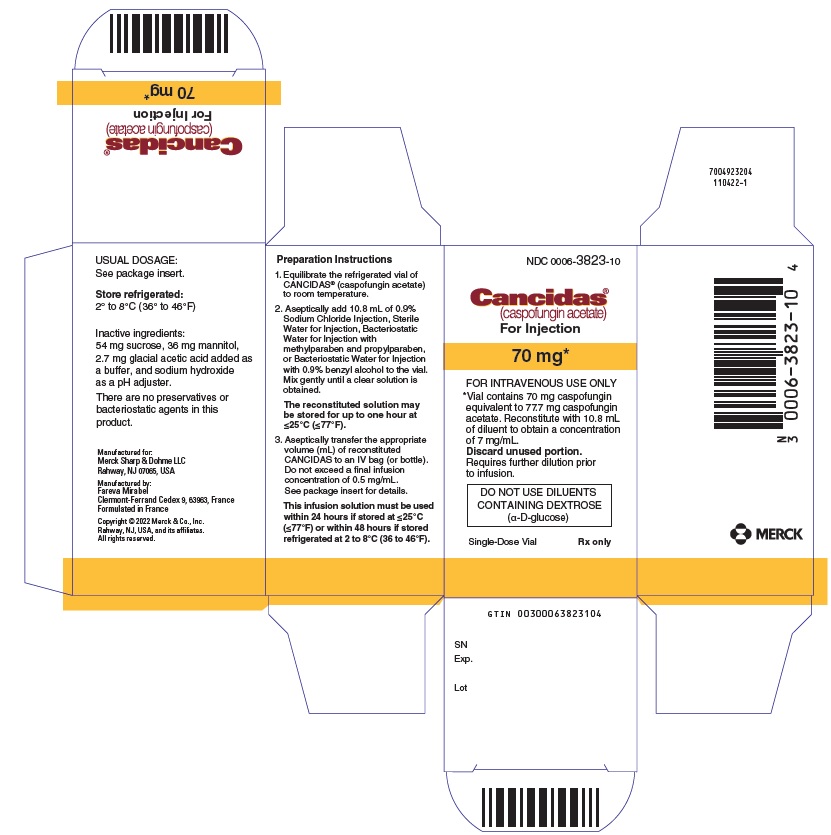
CANCIDAS CASPOFUNGIN ACETATE 7 mg/mL Injection, Powder, Lyophilized, For Solution, 1 vial — NDC 0006-3823-10 (Billing 00006-3823-10)
This is a package of 1 vial of CANCIDAS CASPOFUNGIN ACETATE 7 mg/mL Injection, Powder, Lyophilized, For Solution from Merck Sharp & Dohme LLC, marketed since Jan 2001 and currently FDA-listed. It is this product's only package size.
NDC database record
One package, one record: these facts belong to NDC 0006-3823-10 alone.
- Record
- FDA NDC Directory package listing · Human prescription drug
- Code segments
- 0006 labeler · 3823 product · 10 package
- Package marketed since
- Jan 26, 2001
- Sample package
- No — commercial package
- Listing certified through
- Dec 31, 2026
- Billing quantity
- 1 EA per package
- Barcode (UPC-A, from the NDC)
- 3 0006382310 4
- Medicaid fills, this package
- 31 prescriptions in the last four reported quarters
- FDA record last changed
- Jul 24, 2026
Identity & classification
Regulatory identifiers FDA, NLM and CMS codes for this package
Drug-database identifiers Medi-Span GPI and First Databank GCN / HICL / AHFS classification
- GSN (GCN sequence number): 047689
- GCN: 12613
- GPI-14 (Medi-Span): 11500025102130
- HICL (First Databank): 021909
- AHFS class code: 08:14.16.00
- RxCUI (RxNorm): 828539
Where does this data come from?
- FDA openFDA NDC Directory · synced Oct 8, 2026
- FDA label on DailyMed · label index refreshed Oct 6, 2026
- RxNorm (NLM RxNav) · catalog refreshed Oct 1, 2026
- Medi-Span GPI (licensed)
- First Databank (licensed) · refreshed Oct 8, 2026
RxNorm drug class
This medicine belongs to the Echinocandin Antifungal class.
Where does this data come from?
- RxClass (NLM) · catalog refreshed Oct 1, 2026
Clinical
- Caspofungin targets serious fungal infections, not bacterial or viral ones. Most commonly it's used for Candida infections — these can be in the bloodstream, inside the abdomen, or...
- What is caspofungin actually treating — what kind of infection do I have?
- Caspofungin is only available as an IV infusion — there's no oral (pill or liquid) form. It has to be given slowly over about an hour into a vein, always in a clinical setting by a...
- Why does this have to be given through an IV? Can I take it as a pill at home?
Patient education
Supplement & herbal interactions
Where does this data come from?
- MedlinePlus (NLM) · refreshed Oct 1, 2026
- FDA label on DailyMed · label index refreshed Oct 6, 2026
Ask a licensed pharmacist directly — free, answered by our team.
Pricing
A drug doesn't have one price. Each row is a different public payment system, and none is what you'd pay at the counter — that depends on your insurance. The ⓘ on each row explains what it measures.
| Price system | Per mL | Per package |
|---|---|---|
| Retail pharmacies payNADAC · weekly | Not in the retail survey — common for institutional, discontinued, or low-volume packs. | |
| Medicaid paysCMS SDUD · 12 mo | $14.40 | $155.54 / 10.8 ml |
| Medicare drug plans payPart D · quarterly | No Part D plan price is available for this NDC in our data. | |
| Medicare Part B allowsASP · J0637 | $2.879 / J0637 unit | — |
Where does this data come from?
- CMS NADAC weekly file
- CMS ASP pricing files · refreshed Sep 20, 2026
- CMS Medicaid State Drug Utilization Data · through Q2 2025
- CMS Part D plan pricing files · refreshed Sep 24, 2026
- VA National Acquisition Center price file
Billing & reimbursement
Where does this data come from?
- CMS ASP NDC-HCPCS crosswalk · refreshed Sep 22, 2026
- DMEPDAC NDC-HCPCS crosswalk
- openFDA NSDE billing units · refreshed Oct 7, 2026
Packaging — all sizes for this product
| Package NDC | Description | Marketing start | Marketing end | Status |
|---|---|---|---|---|
| 00006-3823-10 You're viewing this Main listing | 1 VIAL, SINGLE-USE in 1 CARTON / 10.8 mL in 1 VIAL, SINGLE-USE | 2001-01-26 | — | Active |
Therapeutic equivalents
| Product | Labeler | Pack | NADAC/unit | TE | Status | Price vs. this |
|---|---|---|---|---|---|---|
| Cancidas 7 mg/mLthis 00006-3823-10 | Merck | 1 vial | — | — | FDA listed | — |
| Caspofungin Acetate 7 mg/mL 00781-3423-94 | Sandoz | 1 vial | — | — | FDA listed | — |
| Caspofungin Acetate 7 mg/mL 25021-0195-10 | Sagent | 1 vial | — | AP | FDA listed | — |
| Caspofungin Acetate 7 mg/mL 63323-0358-10 | Fresenius | 10 vials | — | AP | FDA listed | — |
| Caspofungin Acetate 7 mg/mL 65897-0004-01 | Hangzhou | 1 vial | — | AP | FDA listed | — |
| Caspofungin Acetate 7 mg/mL 68083-0159-01 | Gland | 1 vial | — | AP | FDA listed | — |
| Caspofungin Acetate 7 mg/mL 72266-0107-01 | Fosun | 1 vial | — | AP | FDA listed | — |
Where does this data come from?
- FDA openFDA NDC Directory · synced Oct 8, 2026
- FDA Orange Book · refreshed Oct 3, 2026
- CMS NADAC weekly file
Availability & generic status
The FDA lists approved generic versions of this medicine, but that does not always mean a pharmacy can get one today. Patent rules, launch agreements, supply and pricing can affect when generics actually arrive.
Where does this data come from?
- FDA Orange Book · refreshed Oct 3, 2026
Inactive Ingredients / Excipients
Inactive ingredients, also called excipients, are components of the drug product other than the active ingredient. They may include fillers, dyes, coatings, preservatives, flavors, or other formulation ingredients.
🧪 Avoiding an ingredient? See Caspofungin Injection inactive ingredients by manufacturer: every current product's list side by side, so you can ask your pharmacy for the version that does not list it.
💡 Tap an ingredient (hover on desktop) to see what it is and why it’s used.
-
UNII Q40Q9N063P
Acetic acid is a weak organic acid commonly used in medicines as a buffer and pH adjuster. It helps maintain the proper acidity level to ensure the drug remains stable and effective in its formulation.
-
3.3 mg / 1 mL
UNII 3OWL53L36A
A natural sugar alcohol derived from seaweed or synthesized in the lab. It's used as a filler to add bulk, a sweetener in sugar-free formulas, and a disintegrant to help tablets break apart in the stomach.
-
UNII 55X04QC32I
A strong alkaline chemical used to adjust and maintain the pH balance of liquid medicines. It helps keep the medicine stable and ensures it stays effective during storage.
-
5.0 mg / 1 mL
UNII C151H8M554
A natural sugar derived from sugar cane or sugar beets. It's used as a sweetener, filler, and binder to improve taste, add bulk, and help hold tablet or capsule ingredients together.
4 inactive ingredients listed in the exact product block matched to this NDC.
Where does this data come from?
ingredient classCode="IACT" elements from the exact product block matched by this NDC. Label-section narrative from DailyMed / the openFDA label index is shown separately when available.- FDA label on DailyMed · label index refreshed Oct 6, 2026
- FDA openFDA NDC Directory · synced Oct 8, 2026
Inactive ingredient FAQ
Are inactive ingredients the same for every manufacturer?
Why might an inactive ingredient be missing?
Can inactive ingredients matter?
Manufacturer & labeler
More NDCs from Merck Sharp & Dohme LLC labeler code 00006
- Prevymis Letermovir 480 mg Tablet, Film Coated NDC 0006-3076-02
- Isentress Raltegravir 600 mg Tablet, Film Coated NDC 0006-3080-01
- KEYTRUDA QLEX pembrolizumab and berahyaluronidase alfa-pmph 165 mg/mL; 2000 U/mL Injection, Solution NDC 0006-3083-01
- PRIMAXIN IV imipenem and cilastatin sodium 500 mg/100mL; 500 mg/100mL Injection, Powder, For Solution NDC 0006-3516-59
- Isentress Raltegravir 100 mg Granule, For Suspension NDC 0006-3603-60
- CANCIDAS CASPOFUNGIN ACETATE 5 mg/mL Injection, Powder, Lyophilized, For Solution NDC 0006-3822-10
- Invanz ertapenem sodium 1 g Injection, Powder, Lyophilized, For Solution NDC 0006-3843-71
- RECARBRIO imipenem anhydrous, cilastatin, and relebactam anhydrous 500 mg/100mL; 500 mg/100mL; 250 mg/100mL Injection, Powder, For Solution NDC 0006-3856-02
- EMEND aprepitant Kit NDC 0006-3862-03
- GARDASIL Human Papillomavirus Quadrivalent (Types 6, 11, 16, and 18) Vaccine, Recombinant 6 L1 CAPSID PROTEIN ANTIGEN 20 ug/.5mL; 11 L1 CAPSID PROTEIN ANTIGEN 40 ug/.5mL; 16 L1 CAPSID PROTEIN ANTIGEN 40 ug/.5mL; 18 L1 CAPSID PROTEIN ANTIGEN Injection, Suspension NDC 0006-4045-00
- RotaTeq Rotavirus Vaccine, Live, Oral, Pentavalent 2200000 [iU]/2mL; 2800000 [iU]/2mL; 2200000 [iU]/2mL Solution NDC 0006-4047-20
- RECOMBIVAX HB Hepatitis B Vaccine (Recombinant) 5 ug/.5mL Injection, Suspension NDC 0006-4093-02
Where does this data come from?
- FDA openFDA NDC Directory · synced Oct 8, 2026
- Drugs@FDA
Full prescribing information FDA SPL
🎯 Indications and Usage ▾
1 INDICATIONS AND USAGE CANCIDAS is an echinocandin antifungal indicated in adults and pediatric patients (3 months of age and older) for: Empirical therapy for presumed fungal infections in febrile, neutropenic patients. ( 1 ) Treatment of candidemia and the following Candida infections: intra-abdominal abscesses, peritonitis and pleural space infections. ( 1 ) Treatment of esophageal candidiasis.
( 1 ) Treatment of invasive aspergillosis in patients who are refractory to or intolerant of other therapies. ( 1 )
1.1Empirical Therapy for Presumed Fungal Infections in Febrile, Neutropenic Patients CANCIDAS ® is indicated as empirical therapy for presumed fungal infections in febrile, neutropenic adult and pediatric patients (3 months of age and older) [see Clinical Studies (14.1 , 14.5) ].
1.2Treatment of Candidemia and Other Candida Infections CANCIDAS is indicated for the treatment of candidemia and the following candida infections: intra-abdominal abscesses, peritonitis, and pleural space infections in adult and pediatric patients (3 months of age and older) [see Clinical Studies (14.2 , 14.5) ]. Limitations of Use: CANCIDAS has not been studied in endocarditis, osteomyelitis, and meningitis due to Candida .
1.3Treatment of Esophageal Candidiasis CANCIDAS is indicated for the treatment of esophageal candidiasis in adult and pediatric patients (3 months of age and older) [see Clinical Studies (14.3 , 14.5) ]. Limitations of Use: CANCIDAS has not been approved for the treatment of oropharyngeal candidiasis (OPC). In the study that evaluated the efficacy of caspofungin in the treatment of esophageal candidiasis, patients with concomitant OPC had higher relapse rate of the OPC [see Clinical Studies (14.3) ].
1.4Treatment of Invasive Aspergillosis in Patients Who Are Refractory to or Intolerant of Other Therapies CANCIDAS is indicated for the treatment of invasive aspergillosis in adult and pediatric patients (3 months of age and older) who are refractory to or intolerant of other therapies [see Clinical Studies (14.4 , 14.5) ]. Limitations of Use: CANCIDAS has not been studied as initial therapy for invasive aspergillosis.
⏱️ Dosage and Administration ▾
2 DOSAGE AND ADMINISTRATION Important Administration Instructions for All Patients ( 2.1 ): Administer by slow intravenous (IV) infusion over approximately 1 hour. Do not administer by IV bolus administration. Do not mix or co-infuse CANCIDAS with other medications.
Do not use diluents containing dextrose (α–D-glucose). Dosage in Adults [18 years of age and older] ( 2.2 ): Administer a single 70-mg loading dose on Day 1, followed by 50 mg once daily for all indications except esophageal candidiasis. For esophageal candidiasis, use 50 mg once daily with no loading dose.
Dosage in Pediatric Patients [3 months to 17 years of age] ( 2.3 ): Dosing should be based on the patient's body surface area. For all indications, administer a single 70-mg/m 2 loading dose on Day 1, followed by 50 mg/m 2 once daily thereafter. Maximum loading dose and daily maintenance dose should not exceed 70 mg, regardless of the patient's calculated dose.
Dosage Adjustments in Patients with Hepatic Impairment ( 2.4 ): Reduce dosage for adult patients with moderate hepatic impairment (35 mg once daily, with a 70 mg loading dose on Day 1 where appropriate). Dosage Adjustment in Patients Receiving Concomitant Inducers of Hepatic CYP Enzymes ( 2.5 ): Use 70-mg once daily dose for adult patients on rifampin. Consider dose increase to 70 mg once daily for adult patients on nevirapine, efavirenz, carbamazepine, dexamethasone, or phenytoin.
Pediatric patients receiving these same concomitant medications may also require an increase in dose to 70 mg/m 2 once daily (maximum daily dose not to exceed 70 mg).
2.1Important Administration Instructions for Use in All Patients Administer CANCIDAS by slow intravenous (IV) infusion over approximately 1 hour. Do not administer CANCIDAS by IV bolus administration.
2.2Recommended Dosage in Adult Patients [18 years of age and older] The dosage and duration of CANCIDAS treatment for each indication are as follows: Empirical Therapy for Presumed Fungal Infections in Febrile Neutropenic Patients Administer a single 70-mg loading dose on Day 1, followed by 50 mg once daily thereafter. Duration of treatment should be based on the patient's clinical response. Continue empirical therapy until resolution of neutropenia.
In general, treat patients found to have a fungal infection for a minimum of 14 days after the last positive culture and continue treatment for at least 7 days after both neutropenia and clinical symptoms are resolved. If the 50-mg dose is well tolerated but does not provide an adequate clinical response, the daily dose can be increased to 70 mg. Candidemia and Other Candida Infections Administer a single 70-mg loading dose on Day 1, followed by 50 mg once daily thereafter.
Duration of treatment should be dictated by the patient's clinical and microbiological response. In general, continue antifungal therapy for at least 14 days after the last positive culture. Patients with neutropenia who remain persistently neutropenic may warrant a longer course of therapy pending resolution of the neutropenia.
Esophageal Candidiasis The dose is 50 mg once daily for 7 to 14 days after symptom resolution. A 70-mg loading dose has not been studied for this indication. Because of the risk of relapse of oropharyngeal candidiasis in patients with HIV infections, suppressive oral therapy could be considered [see Clinical Studies (14.3) ].
Invasive Aspergillosis Administer a single 70-mg loading dose on Day 1, followed by 50 mg once daily thereafter. Duration of treatment should be based upon the severity of the patient's underlying disease, recovery from immunosuppression, and clinical response.
2.3Recommended Dosing in Pediatric Patients [3 months to 17 years of age] For all indications, administer a single 70 mg/m 2 loading dose on Day 1, followed by 50 mg/m 2 once daily thereafter. The maximum loading dose and the daily maintenance dose should not exceed 70 mg, regardless of the patient's calculated dose. Dosing in pediatric patients… [Excerpted — this section continues on DailyMed.]
💊 Dosage Forms and Strengths ▾
3 DOSAGE FORMS AND STRENGTHS CANCIDAS 50 mg is a white to off-white lyophilized cake or powder for reconstitution in a single-dose glass vial with a red aluminum band and a plastic cap. CANCIDAS 50-mg vial contains 50 mg of caspofungin equivalent to 55.5 mg of caspofungin acetate. CANCIDAS 70 mg is a white to off-white lyophilized cake or powder for reconstitution in a single-dose glass vial with a yellow/orange aluminum band and a plastic cap.
CANCIDAS 70-mg vial contains 70 mg of caspofungin equivalent to 77.7 mg of caspofungin acetate. For Injection: 50 or 70 mg lyophilized powder (plus allowance for overfill) in a single-dose vial for reconstitution ( 3 )
⛔ Contraindications ▾
4 CONTRAINDICATIONS CANCIDAS is contraindicated in patients with known hypersensitivity (e.g., anaphylaxis) to any component of this product [see Adverse Reactions (6) ] . CANCIDAS is contraindicated in patients with known hypersensitivity to any component of this product. ( 4 )
⚠️ Warnings and Cautions ▾
5 WARNINGS AND PRECAUTIONS Hypersensitivity : Anaphylaxis, possible histamine-mediated adverse reactions, including rash, facial swelling, angioedema, pruritus, sensation of warmth or bronchospasm, and cases of Stevens-Johnson syndrome (SJS) and toxic epidermal necrolysis (TEN) have been reported with use of CANCIDAS. Discontinue CANCIDAS at the first sign or symptom of a hypersensitivity reaction and administer appropriate treatment. ( 5.1 ) Hepatic Effects: Can cause abnormalities in liver enzymes.
Isolated cases of hepatic dysfunction, hepatitis, or hepatic failure have been reported. Monitor patients who develop abnormal liver enzymes for evidence of worsening hepatic function, and evaluate risk/benefit of continuing CANCIDAS. ( 5.2 ) Elevated Liver Enzymes During Concomitant Use with Cyclosporine : Limit use to patients for whom potential benefit outweighs potential risk.
Monitor patients who develop abnormal liver function tests (LFTs) during concomitant use with CANCIDAS. ( 5.3 )
5.1Hypersensitivity Anaphylaxis and other hypersensitivity reactions have been reported during administration of CANCIDAS. Possible histamine-mediated adverse reactions, including rash, facial swelling, angioedema, pruritus, sensation of warmth or bronchospasm have been reported. Cases of Stevens-Johnson syndrome (SJS) and toxic epidermal necrolysis (TEN), some with a fatal outcome, have been reported with use of CANCIDAS [see Adverse Reactions (6.2) ] .
Discontinue CANCIDAS at the first sign or symptom of a hypersensitivity reaction and administer appropriate treatment.
5.2Hepatic Effects Laboratory abnormalities in liver function tests have been seen in healthy volunteers and in adult and pediatric patients treated with CANCIDAS. In some adult and pediatric patients with serious underlying conditions who were receiving multiple concomitant medications with CANCIDAS, isolated cases of clinically significant hepatic dysfunction, hepatitis, and hepatic failure have been reported; a causal relationship to CANCIDAS has not been established. Monitor patients who develop abnormal liver function tests during CANCIDAS therapy for evidence of worsening hepatic function and evaluated for risk/benefit of continuing CANCIDAS therapy.
5.3Elevated Liver Enzymes During Concomitant Use With Cyclosporine Elevated liver enzymes have occurred in patients receiving CANCIDAS and cyclosporine concomitantly. Only use CANCIDAS and cyclosporine in those patients for whom the potential benefit outweighs the potential risk. Patients who develop abnormal liver enzymes during concomitant therapy should be monitored and the risk/benefit of continuing therapy should be evaluated.
🤒 Adverse Reactions ▾
6 ADVERSE REACTIONS The following serious adverse reactions are discussed in detail in another section of the labeling: Hypersensitivity [see Warnings and Precautions (5.1) ] Hepatic Effects [see Warnings and Precautions (5.2) ] Elevated Liver Enzymes During Concomitant Use With Cyclosporine [see Warnings and Precautions (5.3) ] Adults: Most common adverse reactions (incidence 10% or greater) are diarrhea, pyrexia, ALT/AST increased, blood alkaline phosphatase increased, and blood potassium decreased. ( 6.1 ) Pediatric Patients: Most common adverse reactions (incidence ≥10%) are pyrexia, diarrhea, rash, ALT/AST increased, blood potassium decreased, hypotension, and chills.
( 6.1 ) To report SUSPECTED ADVERSE REACTIONS, contact Merck Sharp & Dohme LLC at 1-877-888-4231 or FDA at 1-800-FDA-1088 or www.fda.gov/medwatch .
6.1Clinical Trials Experience Because clinical trials are conducted under widely varying conditions, adverse reaction rates observed in clinical trials of CANCIDAS cannot be directly compared to rates in clinical trials of another drug and may not reflect the rates observed in practice. Clinical Trials Experience in Adults The overall safety of CANCIDAS was assessed in 1865 adult individuals who received single or multiple doses of CANCIDAS: 564 febrile, neutropenic patients (empirical therapy study); 382 patients with candidemia and/or intra-abdominal abscesses, peritonitis, or pleural space infections (including 4 patients with chronic disseminated candidiasis); 297 patients with esophageal and/or oropharyngeal candidiasis; 228 patients with invasive aspergillosis; and 394 individuals in phase I studies.
In the empirical therapy study patients had undergone hematopoietic stem-cell transplantation or chemotherapy. In the studies involving patients with documented Candida infections, the majority of the patients had serious underlying medical conditions (e.g., hematologic or other malignancy, recent major surgery, HIV) requiring multiple concomitant medications. Patients in the noncomparative Aspergillus studies often had serious predisposing medical conditions (e.g., bone marrow or peripheral stem cell transplants, hematologic malignancy, solid tumors or organ transplants) requiring multiple concomitant medications.
Empirical Therapy for Presumed Fungal Infections in Febrile Neutropenic Patients In the randomized, double-blinded empirical therapy study, patients received either CANCIDAS 50 mg/day (following a 70-mg loading dose) or AmBisome ® (amphotericin B liposome for injection, 3 mg/kg/day). In this study clinical or laboratory hepatic adverse reactions were reported in 39% and 45% of patients in the CANCIDAS and AmBisome groups, respectively. Also reported was an isolated, serious adverse reaction of hyperbilirubinemia.
Adverse reactions occurring in 7.5% or greater of the patients in either treatment group are presented in Table 2. Table 2: Adverse Reactions Among Patients with Persistent Fever and Neutropenia Incidence 7.5% or greater for at Least One Treatment Group Adverse Reactions CANCIDAS 70 mg on Day 1, then 50 mg once daily for the remainder of treatment; daily dose was increased to 70 mg for 73 patients. N=564 (percent) AmBisome 3 mg/kg/day; daily dose was increased to 5 mg/kg for 74 patients.
N=547 (percent) Within any system organ class, individuals may experience more than 1 adverse reaction. All Systems, Any Adverse Reaction 95 97 Investigations 58 63 Alanine Aminotransferase Increased 18 20 Blood Alkaline Phosphatase Increased 15 23 Blood Potassium Decreased 15 23 Aspartate Aminotransferase Increased 14 17 Blood Bilirubin Increased 10 14 Blood Magnesium Decreased 7 9 Blood Glucose Increased 6 9 Bilirubin Conjugated Increased 5 9 Blood Urea Increased 4 8 Blood Creatinine Increased 3 11 General Disorders and Administration Site Conditions 57 63 Pyrexia 27 29 Chills 23 31 Edema Peripheral 11 12 Mucosal Inflammation 6 8 Gastrointestinal Disorders 50 55 Diarrhea 20 16 Nausea 11 20 Abdominal Pain… [Excerpted — this section continues on DailyMed.]
🔄 Drug Interactions ▾
7 DRUG INTERACTIONS Cyclosporine: In two adult clinical studies, cyclosporine (one 4 mg/kg dose or two 3 mg/kg doses) increased the AUC of CANCIDAS. CANCIDAS did not increase the plasma levels of cyclosporine. There were transient increases in liver ALT and AST when CANCIDAS and cyclosporine were co-administered .
Monitor patients who develop abnormal liver enzymes during concomitant therapy and evaluate the risk/benefit of continuing therapy [see Warnings and Precautions (5.2) and Clinical Pharmacology (12.3) ]. Tacrolimus: For patients receiving CANCIDAS and tacrolimus, standard monitoring of tacrolimus trough whole blood concentrations and appropriate tacrolimus dosage adjustments are recommended. Inducers of Hepatic CYP Enzymes Rifampin: Rifampin is a potent CYP3A4 inducer and concomitant administration with CANCIDAS is expected to reduce the plasma concentrations of CANCIDAS.
Therefore, adult patients on rifampin should receive 70 mg of CANCIDAS daily and pediatric patients on rifampin should receive 70 mg/m 2 of CANCIDAS daily (not to exceed an actual daily dose of 70 mg) [see Dosage and Administration (2.5) and Clinical Pharmacology (12.3) ] . Other Inducers of Hepatic CYP Enzymes Adults: When CANCIDAS is co-administered to adult patients with other inducers of hepatic CYP enzymes, such as efavirenz, nevirapine, phenytoin, dexamethasone, or carbamazepine, administration of a daily dose of 70 mg of CANCIDAS should be considered [see Dosage and Administration (2.5) and Clinical Pharmacology (12.3) ] .
Pediatric Patients: When CANCIDAS is co-administered to pediatric patients with other inducers of hepatic CYP enzymes, such as efavirenz, nevirapine, phenytoin, dexamethasone, or carbamazepine, administration of a daily dose of 70 mg/m 2 CANCIDAS (not to exceed an actual daily dose of 70 mg) should be considered [see Dosage and Administration (2.5) and Clinical Pharmacology (12.3) ] .
👥 Use in Specific Populations ▾
8 USE IN SPECIFIC POPULATIONS Pregnancy: Based on animal data, may cause fetal harm. ( 8.1 ) Pediatric Use: Safety and efficacy in neonates and infants less than 3 months old have not been established. ( 8.4 ) Hepatic Impairment: Reduce dose for adult patients with moderate hepatic impairment (35 mg once daily, with a 70-mg loading dose on Day 1 where appropriate).
No data are available in adults with severe impairment or in pediatric patients with any degree of hepatic impairment. ( 2.4 , 8.6 , 12.3 )
8.1Pregnancy Risk Summary Based on animal data, CANCIDAS may cause fetal harm (see Data ) . There are insufficient human data to establish whether there is a drug-associated risk for major birth defects, miscarriage, or adverse maternal or fetal outcomes with CANCIDAS use in pregnant women. In animal studies, caspofungin caused embryofetal toxicity, including increased resorptions, increased peri-implantation loss, and incomplete ossification at multiple fetal sites when administered intravenously to pregnant rats and rabbits during organogenesis at doses up to 0.8 and 2 times the clinical dose, respectively ( see Data ).
Advise patients of the potential risk to the fetus. The estimated background risk of major birth defects and miscarriage for the indicated population is unknown. All pregnancies have a background risk of birth defect, loss, or other adverse outcomes.
In the U.S. general population, the estimated background risk of major birth defects and miscarriage in clinically recognized pregnancies is 2 to 4% and 15 to 20%, respectively. Data Animal Data In animal reproduction studies, pregnant rats dosed intravenously with caspofungin during organogenesis (gestational days [GD] 6 to 20) at 0.5, 2, or 5 mg/kg/day (up to 0.8 times the clinical dose based on body surface area comparison) showed increased resorptions and peri-implantation losses at 5 mg/kg/day. Incomplete ossification of the skull and torso and increased incidences of cervical rib were noted in offspring born to pregnant rats treated at doses up to 5 mg/kg/day.
In pregnant rabbits treated with intravenous caspofungin during organogenesis (GD 7 to 20) at doses of 1, 3, or 6 mg/kg/day (approximately 2 times the clinical dose based on body surface area comparison), increased fetal resorptions and increased incidence of incomplete ossification of the talus/calcaneus in offspring were observed at the highest dose tested. Caspofungin crossed the placenta in rats and rabbits and was detectable in fetal plasma. In peri- and postnatal development study in rats, intravenous caspofungin administered at 0.5, 2 or 5 mg/kg/day from Day 6 of gestation through Day 20 of lactation was not associated with any adverse effects on reproductive performance or subsequent development of first generation (F1) offspring or malformations in second generation (F2) offspring.
8.2Lactation Risk Summary There are no data on the presence of caspofungin in human milk, the effects on the breast-fed child, or the effects on milk production. Caspofungin was found in the milk of lactating, drug-treated rats. The developmental and health benefits of breastfeeding should be considered along with the mother's clinical need for CANCIDAS and any potential adverse effects on the breastfed child from CANCIDAS or from the underlying maternal condition.
8.4Pediatric Use The safety and effectiveness of CANCIDAS in pediatric patients 3 months to 17 years of age are supported by evidence from adequate and well-controlled studies in adults, pharmacokinetic data in pediatric patients, and additional data from prospective studies in pediatric patients 3 months to 17 years of age for the following indications [see Indications and Usage (1) ]: Empirical therapy for presumed fungal infections in febrile, neutropenic patients. Treatment of candidemia and the following Candida infections: intra-abdominal abscesses, peritonitis, and pleural space infections.
Treatment of esophageal candidiasis. Treatment of invasi… [Excerpted — this section continues on DailyMed.]
🤰 Pregnancy ▾
8.1Pregnancy Risk Summary Based on animal data, CANCIDAS may cause fetal harm (see Data ) . There are insufficient human data to establish whether there is a drug-associated risk for major birth defects, miscarriage, or adverse maternal or fetal outcomes with CANCIDAS use in pregnant women. In animal studies, caspofungin caused embryofetal toxicity, including increased resorptions, increased peri-implantation loss, and incomplete ossification at multiple fetal sites when administered intravenously to pregnant rats and rabbits during organogenesis at doses up to 0.8 and 2 times the clinical dose, respectively ( see Data ).
Advise patients of the potential risk to the fetus. The estimated background risk of major birth defects and miscarriage for the indicated population is unknown. All pregnancies have a background risk of birth defect, loss, or other adverse outcomes.
In the U.S. general population, the estimated background risk of major birth defects and miscarriage in clinically recognized pregnancies is 2 to 4% and 15 to 20%, respectively. Data Animal Data In animal reproduction studies, pregnant rats dosed intravenously with caspofungin during organogenesis (gestational days [GD] 6 to 20) at 0.5, 2, or 5 mg/kg/day (up to 0.8 times the clinical dose based on body surface area comparison) showed increased resorptions and peri-implantation losses at 5 mg/kg/day. Incomplete ossification of the skull and torso and increased incidences of cervical rib were noted in offspring born to pregnant rats treated at doses up to 5 mg/kg/day.
In pregnant rabbits treated with intravenous caspofungin during organogenesis (GD 7 to 20) at doses of 1, 3, or 6 mg/kg/day (approximately 2 times the clinical dose based on body surface area comparison), increased fetal resorptions and increased incidence of incomplete ossification of the talus/calcaneus in offspring were observed at the highest dose tested. Caspofungin crossed the placenta in rats and rabbits and was detectable in fetal plasma. In peri- and postnatal development study in rats, intravenous caspofungin administered at 0.5, 2 or 5 mg/kg/day from Day 6 of gestation through Day 20 of lactation was not associated with any adverse effects on reproductive performance or subsequent development of first generation (F1) offspring or malformations in second generation (F2) offspring.
🧒 Pediatric Use ▾
8.4Pediatric Use The safety and effectiveness of CANCIDAS in pediatric patients 3 months to 17 years of age are supported by evidence from adequate and well-controlled studies in adults, pharmacokinetic data in pediatric patients, and additional data from prospective studies in pediatric patients 3 months to 17 years of age for the following indications [see Indications and Usage (1) ]: Empirical therapy for presumed fungal infections in febrile, neutropenic patients. Treatment of candidemia and the following Candida infections: intra-abdominal abscesses, peritonitis, and pleural space infections.
Treatment of esophageal candidiasis. Treatment of invasive aspergillosis in patients who are refractory to or intolerant of other therapies (e.g., amphotericin B, lipid formulations of amphotericin B, itraconazole). The efficacy and safety of CANCIDAS has not been adequately studied in prospective clinical trials involving neonates and infants under 3 months of age.
Although limited pharmacokinetic data were collected in neonates and infants below 3 months of age, these data are insufficient to establish a safe and effective dose of caspofungin in the treatment of neonatal candidiasis. Invasive candidiasis in neonates has a higher rate of CNS and multi-organ involvement than in older patients; the ability of CANCIDAS to penetrate the blood-brain barrier and to treat patients with meningitis and endocarditis is unknown. CANCIDAS has not been studied in pediatric patients with endocarditis, osteomyelitis, and meningitis due to Candida .
CANCIDAS has also not been studied as initial therapy for invasive aspergillosis in pediatric patients. In clinical trials, 171 pediatric patients (0 months to 17 years of age), including 18 patients who were less than 3 months of age, were given intravenous CANCIDAS. Pharmacokinetic studies enrolled a total of 66 pediatric patients, and an additional 105 pediatric patients received CANCIDAS in safety and efficacy studies [see Clinical Pharmacology (12.3) and Clinical Studies (14.5) ].
The majority of the pediatric patients received CANCIDAS at a once-daily maintenance dose of 50 mg/m 2 for a mean duration of 12 days (median 9, range 1-87 days). In all studies, safety was assessed by the investigator throughout study therapy and for 14 days following cessation of study therapy. The most common adverse reactions in pediatric patients treated with CANCIDAS were pyrexia (29%), blood potassium decreased (15%), diarrhea (14%), increased aspartate aminotransferase (12%), rash (12%), increased alanine aminotransferase (11%), hypotension (11%), and chills (11%) [see Adverse Reactions (6.2) ].
Postmarketing hepatobiliary adverse reactions have been reported in pediatric patients with serious underlying medical conditions [see Warnings and Precautions (5.3) ] .
🧓 Geriatric Use ▾
8.5Geriatric Use Clinical studies of CANCIDAS did not include sufficient numbers of patients aged 65 and over to determine whether they respond differently from younger patients. Although the number of elderly patients was not large enough for a statistical analysis, no overall differences in safety or efficacy were observed between these and younger patients. Plasma concentrations of caspofungin in healthy older men and women (65 years of age and older) were increased slightly (approximately 28% in AUC) compared to young healthy men.
A similar effect of age on pharmacokinetics was seen in patients with candidemia or other Candida infections (intra-abdominal abscesses, peritonitis, or pleural space infections). No dose adjustment is recommended for the elderly; however, greater sensitivity of some older individuals cannot be ruled out.
🆘 Overdosage ▾
10 OVERDOSAGE In 6 healthy subjects who received a single 210-mg dose, no significant adverse reactions were reported. Multiple doses above 150 mg daily have not been studied. Caspofungin is not dialyzable. In clinical trials, one pediatric patient (16 years of age) unintentionally received a single dose of caspofungin of 113 mg (on Day 1), followed by 80 mg daily for an additional 7 days. No clinically significant adverse reactions were reported.
🧬 Clinical Pharmacology ▾
12 CLINICAL PHARMACOLOGY
12.1Mechanism of Action Caspofungin is an echinocandin antifungal drug [see Microbiology (12.4) ].
12.3Pharmacokinetics Adult and pediatric pharmacokinetic parameters are presented in Table 8. Distribution Plasma concentrations of caspofungin decline in a polyphasic manner following single 1-hour IV infusions. A short α-phase occurs immediately postinfusion, followed by a β-phase (half-life of 9 to 11 hours) that characterizes much of the profile and exhibits clear log-linear behavior from 6 to 48 hours postdose during which the plasma concentration decreases 10-fold.
An additional, longer half-life phase, γ-phase, (half-life of 40-50 hours), also occurs. Distribution, rather than excretion or biotransformation, is the dominant mechanism influencing plasma clearance. Caspofungin is extensively bound to albumin (~97%), and distribution into red blood cells is minimal.
Mass balance results showed that approximately 92% of the administered radioactivity was distributed to tissues by 36 to 48 hours after a single 70-mg dose of [ 3 H] CANCIDAS. There is little excretion or biotransformation of caspofungin during the first 30 hours after administration. Metabolism Caspofungin is slowly metabolized by hydrolysis and N-acetylation.
Caspofungin also undergoes spontaneous chemical degradation to an open-ring peptide compound, L-747969. At later time points (≥5 days postdose), there is a low level (≤7 picomoles/mg protein, or ≤1.3% of administered dose) of covalent binding of radiolabel in plasma following single-dose administration of [ 3 H] CANCIDAS, which may be due to two reactive intermediates formed during the chemical degradation of caspofungin to L-747969. Additional metabolism involves hydrolysis into constitutive amino acids and their degradates, including dihydroxyhomotyrosine and N-acetyl-dihydroxyhomotyrosine.
These two tyrosine derivatives are found only in urine, suggesting rapid clearance of these derivatives by the kidneys. Excretion Two single-dose radiolabeled pharmacokinetic studies were conducted. In one study, plasma, urine, and feces were collected over 27 days, and in the second study plasma was collected over 6 months.
Plasma concentrations of radioactivity and of caspofungin were similar during the first 24 to 48 hours postdose; thereafter drug levels fell more rapidly. In plasma, caspofungin concentrations fell below the limit of quantitation after 6 to 8 days postdose, while radiolabel fell below the limit of quantitation at 22.3 weeks postdose. After single intravenous administration of [ 3 H] CANCIDAS, excretion of caspofungin and its metabolites in humans was 35% of dose in feces and 41% of dose in urine.
A small amount of caspofungin is excreted unchanged in urine (~1.4% of dose). Renal clearance of parent drug is low (~0.15 mL/min) and total clearance of caspofungin is 12 mL/min. Special Populations Renal Impairment In a clinical study of single 70-mg doses, caspofungin pharmacokinetics were similar in healthy adult volunteers with mild renal impairment (creatinine clearance 50 to 80 mL/min) and control subjects.
Moderate (creatinine clearance 31 to 49 mL/min), severe (creatinine clearance 5 to 30 mL/min), and end-stage (creatinine clearance less than 10 mL/min and dialysis dependent) renal impairment moderately increased caspofungin plasma concentrations after single-dose administration (range: 30 to 49% for AUC). However, in adult patients with invasive aspergillosis, candidemia, or other Candida infections (intra-abdominal abscesses, peritonitis, or pleural space infections) who received multiple daily doses of CANCIDAS 50 mg, there was no significant effect of mild to end-stage renal impairment on caspofungin concentrations.
No dosage adjustment is necessary for patients with renal impairment. Caspofungin is not dialyzable, thus supplementary dosing is not required following hemodialysis. Hepatic Impairment Plasma concentrations of caspofungin after a single 70-mg dose in ad… [Excerpted — this section continues on DailyMed.]
🧬 Mechanism of Action ▾
12.1Mechanism of Action Caspofungin is an echinocandin antifungal drug [see Microbiology (12.4) ].
📦 How Supplied / Storage and Handling ▾
16 HOW SUPPLIED/STORAGE AND HANDLING How Supplied CANCIDAS 50 mg is a lyophilized white to off-white cake or powder for intravenous infusion supplied in single-dose vials with a red aluminum band and a plastic cap. NDC 0006-3822-10 supplied as one single-dose vial. CANCIDAS 70 mg is a white to off-white powder/cake for infusion in a vial with a yellow/orange aluminum band and a plastic cap.
NDC 0006-3823-10 supplied as one single-dose vial. Storage and Handling The lyophilized vials should be stored refrigerated at 2° to 8°C (36° to 46°F).
📦 Storage and Handling ▾
Storage and Handling The lyophilized vials should be stored refrigerated at 2° to 8°C (36° to 46°F).
📋 Description ▾
11 DESCRIPTION CANCIDAS is a sterile, lyophilized product for intravenous (IV) infusion that contains a semisynthetic lipopeptide (echinocandin) compound synthesized from a fermentation product of Glarea lozoyensis. CANCIDAS is an echinocandin antifungal that inhibits the synthesis of β (1,3)-D-glucan, an integral component of the fungal cell wall. CANCIDAS (caspofungin acetate) is 1-[(4 R ,5 S )-5-[(2-aminoethyl)amino]- N 2 -(10,12-dimethyl-1-oxotetradecyl)-4-hydroxy-L-ornithine]-5-[(3 R )-3-hydroxy-L-ornithine] pneumocandin B 0 diacetate (salt).
CANCIDAS 50 mg contains 50 mg of caspofungin equivalent to 55.5 mg of caspofungin acetate. CANCIDAS 50 mg also contains: 39 mg sucrose, 26 mg mannitol, 2 mg glacial acetic acid added as a buffering agent, and sodium hydroxide added as a pH adjuster ingredient. CANCIDAS 70 mg contains 70 mg of caspofungin equivalent to 77.7 mg of caspofungin acetate.
CANCIDAS 70 mg also contains 54 mg sucrose, 36 mg mannitol, 2.7 mg glacial acetic acid added as a buffering agent, and sodium hydroxide added as a pH adjuster ingredient. Caspofungin acetate is a hygroscopic, white to off-white powder. It is freely soluble in water and methanol, and slightly soluble in ethanol.
The pH of a saturated aqueous solution of caspofungin acetate is approximately 6.6. The empirical formula is C 52 H 88 N 10 O 15 ∙2C 2 H 4 O 2 and the formula weight is 1213.42. The structural formula is: Chemical Structure
💬 Information for Patients ▾
17 PATIENT COUNSELING INFORMATION Hypersensitivity Inform patients that anaphylactic reactions have been reported during administration of CANCIDAS. CANCIDAS can cause hypersensitivity reactions, including rash, facial swelling, angioedema, pruritus, sensation of warmth, or bronchospasm. Inform patients to report these signs or symptoms to their healthcare providers.
Hepatic Effects Inform patients that there have been isolated reports of serious hepatic effects from CANCIDAS therapy. Use in Pregnancy and Breastfeeding Mothers Advise female patients of the potential risks to a fetus. Instruct patients to tell their healthcare provider if they are pregnant, become pregnant, or are thinking about becoming pregnant.
Instruct patients to tell their healthcare provider if they plan to breastfeed their infant.
🧬 Pharmacokinetics ▾
12.3Pharmacokinetics Adult and pediatric pharmacokinetic parameters are presented in Table 8. Distribution Plasma concentrations of caspofungin decline in a polyphasic manner following single 1-hour IV infusions. A short α-phase occurs immediately postinfusion, followed by a β-phase (half-life of 9 to 11 hours) that characterizes much of the profile and exhibits clear log-linear behavior from 6 to 48 hours postdose during which the plasma concentration decreases 10-fold.
An additional, longer half-life phase, γ-phase, (half-life of 40-50 hours), also occurs. Distribution, rather than excretion or biotransformation, is the dominant mechanism influencing plasma clearance. Caspofungin is extensively bound to albumin (~97%), and distribution into red blood cells is minimal.
Mass balance results showed that approximately 92% of the administered radioactivity was distributed to tissues by 36 to 48 hours after a single 70-mg dose of [ 3 H] CANCIDAS. There is little excretion or biotransformation of caspofungin during the first 30 hours after administration. Metabolism Caspofungin is slowly metabolized by hydrolysis and N-acetylation.
Caspofungin also undergoes spontaneous chemical degradation to an open-ring peptide compound, L-747969. At later time points (≥5 days postdose), there is a low level (≤7 picomoles/mg protein, or ≤1.3% of administered dose) of covalent binding of radiolabel in plasma following single-dose administration of [ 3 H] CANCIDAS, which may be due to two reactive intermediates formed during the chemical degradation of caspofungin to L-747969. Additional metabolism involves hydrolysis into constitutive amino acids and their degradates, including dihydroxyhomotyrosine and N-acetyl-dihydroxyhomotyrosine.
These two tyrosine derivatives are found only in urine, suggesting rapid clearance of these derivatives by the kidneys. Excretion Two single-dose radiolabeled pharmacokinetic studies were conducted. In one study, plasma, urine, and feces were collected over 27 days, and in the second study plasma was collected over 6 months.
Plasma concentrations of radioactivity and of caspofungin were similar during the first 24 to 48 hours postdose; thereafter drug levels fell more rapidly. In plasma, caspofungin concentrations fell below the limit of quantitation after 6 to 8 days postdose, while radiolabel fell below the limit of quantitation at 22.3 weeks postdose. After single intravenous administration of [ 3 H] CANCIDAS, excretion of caspofungin and its metabolites in humans was 35% of dose in feces and 41% of dose in urine.
A small amount of caspofungin is excreted unchanged in urine (~1.4% of dose). Renal clearance of parent drug is low (~0.15 mL/min) and total clearance of caspofungin is 12 mL/min. Special Populations Renal Impairment In a clinical study of single 70-mg doses, caspofungin pharmacokinetics were similar in healthy adult volunteers with mild renal impairment (creatinine clearance 50 to 80 mL/min) and control subjects.
Moderate (creatinine clearance 31 to 49 mL/min), severe (creatinine clearance 5 to 30 mL/min), and end-stage (creatinine clearance less than 10 mL/min and dialysis dependent) renal impairment moderately increased caspofungin plasma concentrations after single-dose administration (range: 30 to 49% for AUC). However, in adult patients with invasive aspergillosis, candidemia, or other Candida infections (intra-abdominal abscesses, peritonitis, or pleural space infections) who received multiple daily doses of CANCIDAS 50 mg, there was no significant effect of mild to end-stage renal impairment on caspofungin concentrations.
No dosage adjustment is necessary for patients with renal impairment. Caspofungin is not dialyzable, thus supplementary dosing is not required following hemodialysis. Hepatic Impairment Plasma concentrations of caspofungin after a single 70-mg dose in adult patients with mild hepatic impairment (Child-Pugh score 5 to 6) were increased by approximately 55% in AUC compared to he… [Excerpted — this section continues on DailyMed.]
🔬 Clinical Studies ▾
14 CLINICAL STUDIES
14.1Empirical Therapy in Febrile, Neutropenic Patients A double-blind study enrolled 1111 febrile, neutropenic (<500 cells/mm 3 ) patients who were randomized to treatment with daily doses of CANCIDAS (50 mg/day following a 70-mg loading dose on Day 1) or AmBisome (3 mg/kg/day). Patients were stratified based on risk category (high-risk patients had undergone allogeneic stem cell transplantation or had relapsed acute leukemia) and on receipt of prior antifungal prophylaxis. Twenty-four percent of patients were high risk and 56% had received prior antifungal prophylaxis.
Patients who remained febrile or clinically deteriorated following 5 days of therapy could receive 70 mg/day of CANCIDAS or 5 mg/kg/day of AmBisome. Treatment was continued to resolution of neutropenia (but not beyond 28 days unless a fungal infection was documented). An overall favorable response required meeting each of the following criteria: no documented breakthrough fungal infections up to 7 days after completion of treatment, survival for 7 days after completion of study therapy, no discontinuation of the study drug because of drug-related toxicity or lack of efficacy, resolution of fever during the period of neutropenia, and successful treatment of any documented baseline fungal infection.
Based on the composite response rates, CANCIDAS was as effective as AmBisome in empirical therapy of persistent febrile neutropenia (see Table 9 ). Table 9: Favorable Response of Patients with Persistent Fever and Neutropenia CANCIDAS CANCIDAS: 70 mg on Day 1, then 50 mg once daily for the remainder of treatment (daily dose increased to 70 mg for 73 patients); AmBisome: 3 mg/kg/day (daily dose increased to 5 mg/kg for 74 patients). AmBisome % Difference (Confidence Interval) Overall Response: estimated % difference adjusted for strata and expressed as CANCIDAS – AmBisome (95.2% CI); Individual criteria presented above are not mutually exclusive.
The percent difference calculated as CANCIDAS – AmBisome. Number of Patients Analysis population excluded subjects who did not have fever or neutropenia at study entry. 556 539 Overall Favorable Response 190 (33.9%) 181 (33.7%) 0.2 (-5.6, 6.0) No documented breakthrough fungal infection 527 (94.8%) 515 (95.5%) -0.8 Survival 7 days after end of treatment 515 (92.6%) 481 (89.2%)
3.4No discontinuation due to toxicity or lack of efficacy 499 (89.7%) 461 (85.5%)
4.2Resolution of fever during neutropenia 229 (41.2%) 223 (41.4%) -0.2 The rate of successful treatment of documented baseline infections, a component of the primary endpoint, was not statistically different between treatment groups. The response rates did not differ between treatment groups based on either of the stratification variables: risk category or prior antifungal prophylaxis.
14.2Candidemia and the Following other Candida Infections: Intra-Abdominal Abscesses, Peritonitis and Pleural Space Infections In a randomized, double-blind study, patients with a proven diagnosis of invasive candidiasis received daily doses of CANCIDAS (50 mg/day following a 70-mg loading dose on Day 1) or amphotericin B deoxycholate (0.6 to 0.7 mg/kg/day for non-neutropenic patients and 0.7 to 1 mg/kg/day for neutropenic patients). Patients were stratified by both neutropenic status and APACHE II score. Patients with Candida endocarditis, meningitis, or osteomyelitis were excluded from this study.
Patients who met the entry criteria and received one or more doses of IV study therapy were included in the modified intention-to-treat [MITT] analysis of response at the end of IV study therapy. A favorable response at this time point required both symptom/sign resolution/improvement and microbiological clearance of the Candida infection. Two hundred thirty-nine patients were enrolled.
Patient disposition is shown in Table 10. Table 10: Disposition in Candidemia and Other Candida Infections (Intra-abdominal abscesses, peritonitis, and pleural space infections) CANCIDAS Pat… [Excerpted — this section continues on DailyMed.]
🧪 Nonclinical Toxicology ▾
13 NONCLINICAL TOXICOLOGY
13.1Carcinogenesis, Mutagenesis, Impairment of Fertility No long-term studies in animals have been performed to evaluate the carcinogenic potential of caspofungin. Caspofungin did not show evidence of mutagenic or genotoxic potential when evaluated in the following in vitro assays: bacterial (Ames) and mammalian cell (V79 Chinese hamster lung fibroblasts) mutagenesis assays, the alkaline elution/rat hepatocyte DNA strand break test, and the chromosome aberration assay in Chinese hamster ovary cells. Caspofungin was not genotoxic when assessed in the mouse bone marrow chromosomal test at doses up to 12.5 mg/kg (equivalent to a human dose of 1 mg/kg based on body surface area comparisons), administered intravenously.
Fertility and reproductive performance were not affected by the intravenous administration of caspofungin to rats at doses up to 5 mg/kg. At 5 mg/kg exposures were similar to those seen in patients treated with the 70-mg dose.
13.2Animal Toxicology and/or Pharmacology In one 5-week study in monkeys at doses which produced exposures approximately 4 to 6 times those seen in adult patients treated with a 70-mg dose, scattered small foci of subcapsular necrosis were observed microscopically in the livers of some animals (2/8 monkeys at 5 mg/kg and 4/8 monkeys at 8 mg/kg); however, this histopathological finding was not seen in another study of 27 weeks duration at similar doses. No treatment-related findings were seen in a 5-week study in infant monkeys at doses which produced exposures approximately 3 times those achieved in pediatric patients receiving a maintenance dose of 50 mg/m 2 daily.
📄 Carcinogenesis, Mutagenesis, Impairment of Fertility ▾
13.1Carcinogenesis, Mutagenesis, Impairment of Fertility No long-term studies in animals have been performed to evaluate the carcinogenic potential of caspofungin. Caspofungin did not show evidence of mutagenic or genotoxic potential when evaluated in the following in vitro assays: bacterial (Ames) and mammalian cell (V79 Chinese hamster lung fibroblasts) mutagenesis assays, the alkaline elution/rat hepatocyte DNA strand break test, and the chromosome aberration assay in Chinese hamster ovary cells. Caspofungin was not genotoxic when assessed in the mouse bone marrow chromosomal test at doses up to 12.5 mg/kg (equivalent to a human dose of 1 mg/kg based on body surface area comparisons), administered intravenously.
Fertility and reproductive performance were not affected by the intravenous administration of caspofungin to rats at doses up to 5 mg/kg. At 5 mg/kg exposures were similar to those seen in patients treated with the 70-mg dose.
📚 References ▾
15 REFERENCES Mosteller RD: Simplified Calculation of Body Surface Area. N Engl J Med 1987 Oct 22;317(17): 1098 (letter).
📄 Package Label / Principal Display Panel ▾
PRINCIPAL DISPLAY PANEL - 50 mg Vial Carton NDC 0006-3822-10 Cancidas ® (caspofungin acetate) For Injection 50 mg* FOR INTRAVENOUS USE ONLY *Vial contains 50 mg caspofungin equivalent to 55.5 mg caspofungin acetate. Reconstitute with 10.8 mL of diluent to obtain a concentration of 5 mg/mL. Discard unused portion.
Requires further dilution prior to infusion. DO NOT USE DILUENTS CONTAINING DEXTROSE (α-D-glucose) Single-Dose Vial Rx only Principal Display Panel - 50 mg Vial Carton
PRINCIPAL DISPLAY PANEL - 70 mg Vial Carton NDC 0006-3823-10 Cancidas ® (caspofungin acetate) For Injection 70 mg* FOR INTRAVENOUS USE ONLY *Vial contains 70 mg caspofungin equivalent to 77.7 mg caspofungin acetate. Reconstitute with 10.8 mL of diluent to obtain a concentration of 7 mg/mL. Discard unused portion.
Requires further dilution prior to infusion. DO NOT USE DILUENTS CONTAINING DEXTROSE (α-D-glucose) Single-Dose Vial Rx only Principal Display Panel - 70 mg Vial Carton
Medicaid utilization & spend
Medicare Part D spend CMS · PART D · 2026 (Q1)
Reported adverse events (FAERS)
Top reported reactions
Age at onset
Reporter sex
Serious outcomes
Where does this data come from?
About this NDC listing & data coverage
What data is (and isn’t) available for this NDC — tap to expand
| NDC identity (package / product / labeler codes) | ✓ Available |
| Labeler | ✓ Available |
| Product & package description | ✓ Available |
| Marketing category & status | ✓ Available |
| Active ingredient / dosage form / route | ✓ Available |
| FDA label (SPL via DailyMed) | ✓ Available |
| Package photos | ✓ Available |
| Inactive ingredients (structured) | ✓ Available |
| NADAC pharmacy acquisition price (CMS) | — Not published for this NDC CMS publishes NADAC only for NDCs reported in its retail-pharmacy survey. |
| Orange Book / therapeutic-equivalence data | — Not published for this NDC Applies only to products approved under an NDA/ANDA; many listings are out of scope. |
| HCPCS J-code billing crosswalk | ✓ Available |
| Medicaid utilization (CMS SDUD) | ✓ Available |