
999 Gastro Instant Granules Ingredients & Drug Interactions
by Ron Teeguarden's Dragon Herbs
What is this page for?
First and foremost: checking 999 Gastro Instant Granules against your medications. The heart of this page is the interaction checker and the full interaction report — how this product’s ingredients may interact with prescription and over-the-counter medicines you may be taking.
Around that, we add a pharmacist’s high-level view of the product as a whole — what’s inside, the evidence for its stated use, how transparent the label is, and what safety data exists — so you can see the full picture in one place. It’s educational information from our licensed clinical databases and the clinical staff at HelloPharmacist — not medical advice — and we don’t sell or endorse products. Our editorial policy
999 Gastro Instant Granules is a dietary supplement by Ron Teeguarden's Dragon Herbs with 8 active ingredients. Its ingredients are commonly taken for kidney and adrenal support, anemia and blood building (traditional), inflammatory conditions.Based on those ingredients, 1,429 medications have a known interaction with it, the most serious rated moderate. The ingredients most likely to interact are Evodia lepta, Scutellaria baicalensis, White Peony. Use the checker below to test your specific medication, or read the full HelloPharmacist Interaction Report.
Check Your Meds Against 999 Gastro Instant Granules by Ron Teeguarden's Dragon Herbs
Ask about any prescription or over-the-counter medication and we check it for interactions with 999 Gastro Instant Granules by Ron Teeguarden's Dragon Herbs — and tell you which ingredient is responsible.
AI summaries are generated from our interaction database for education only — always confirm with your pharmacist. How we use AI
Ask the Pharmacist
A licensed pharmacist will answer your question by email — free, usually within 24 hours.
Got it — thank you!
A licensed pharmacist will answer within 24 hours. Keep an eye on your email (worth checking spam, just in case).
HelloPharmacist Scorecard of 999 Gastro Instant Granules by Ron Teeguarden's Dragon Herbs
Our pharmacy team’s full take, with four database checks built into the cards below — a summary of what is known, not a grade of the product itself.
What’s inside
Low disclosure
999 Gastro Instant Granules contains 8 ingredients, of which we identify 5 active herbal components: Rehmannia, White Peony, Poria mushroom, Scutellaria baicalensis (Baikal skullcap), and Evodia lepta. The product also contains three other herbs — Murraya exotica, Zanthorplum nitidum, and Common Vladmiria — for which we lack detailed information.
These are mixed into a powder base of sucrose and other inactive ingredients.
Does it work?
Not established
The effectiveness evidence for most ingredients in this product is not established in the data we hold. Rehmannia is rated possibly effective for chronic kidney disease, but rated as having insufficient evidence for aplastic anemia, atopic disease, osteoporosis, diabetes, and diabetic nephropathy.
White Peony, Poria mushroom, Scutellaria baicalensis, and Evodia lepta all have insufficient evidence for the conditions we reviewed — meaning their benefits haven't been reliably demonstrated in the studies available to us. If you're considering this product for a specific digestive or health concern, talk with your pharmacist or doctor about whether the evidence supports its use for your situation.
How safe is it?
Well-documented data
Human safety data for most ingredients in this formula are limited. White Peony seems generally well tolerated when used short-term, though it can cause gastrointestinal side effects including abdominal bloating, loss of appetite, diarrhea, nausea, and discomfort in some people — diarrhea was reported in 5% of study participants taking a related compound at high dose.
Baikal skullcap is also generally well tolerated but may cause abdominal pain, constipation, diarrhea, nausea, vomiting, or skin reactions. Poria mushroom has caused rare allergic reactions including allergic rhinitis and asthma.
Evodia has no reliable safety data from human trials; animal studies show it can prolong the QT interval (a heart rhythm measure) and cause dangerous arrhythmias at high doses, though it's unclear what dose matters in humans. Rehmannia, Poria, and Baikal skullcap are all advised against during pregnancy and breastfeeding due to insufficient safety information.
Evodia is rated possibly unsafe in pregnancy and lacks breastfeeding data. White Peony is rated possibly unsafe in pregnancy with no reliable breastfeeding data.
There is no safety data on file for Murraya exotica, Zanthorplum nitidum, or Common Vladmiria.
Meds to double-check
Moderate interaction found
Before taking 999 Gastro Instant Granules, check with your pharmacist if you're on any of these: blood pressure medications (antihypertensives); diabetes medications; blood thinners or antiplatelet drugs like aspirin or warfarin; hormone-based contraceptives or estrogen replacement therapy; theophylline or other respiratory drugs; sedatives or sleep aids; antipsychotics like clozapine; seizure medications like phenytoin; lithium; antithyroid drugs; or any medication that prolongs the QT interval (a heart rhythm measure). Additionally, if you take drugs metabolized by liver enzymes (CYP1A2, CYP3A4, or CYP2C19), mention this product to your pharmacist.
The bottom line
Scorecard at a glanceFormula with limited ingredient disclosure with no established evidence rating for its marketed use. Moderate medication interactions have been identified, and safety information is well characterized.
This is a traditional herbal formula with multiple documented interactions, especially with blood pressure, diabetes, and heart medications, as well as blood thinners and hormonal contraceptives. If you take any prescription medications, use the checker on this page before starting.
Pregnant or breastfeeding individuals should talk with their doctor or pharmacist — the safety data don't support use. Anyone with a heart rhythm condition should be cautious and consult their healthcare provider first.
Educational only — not medical advice; always confirm with your pharmacist. Our editorial policy · How we use AI
Assessment coverage: 5 of 8 active ingredients matched to our full ingredient reviews (monographs). Based on the product label dated Sep 25, 2024.
This Scorecard evaluates available label information, ingredient evidence, and known medication-safety considerations. It does not independently verify product identity, purity, potency, contamination, or manufacturing quality. How these ratings are computed
General information
Key facts about 999 Gastro Instant Granules, straight from the product label.
| Brand | Ron Teeguarden's Dragon Herbs |
|---|---|
| Barcode (UPC) | 679372006165 |
| Net contents | 7.05 Ounce(s); 200 Gram(s) |
| Market status | On market |
| Date entered into DSLD | Sep 25, 2024 |
| DSLD ID | 316724 |
| Product type | Botanical |
| Supplement form | Powder |
| Dietary claims / uses | All Other, Structure/Function |
| Intended target group(s) | Adult (18 - 50 Years), Children (All) |
Everything in this section is reproduced from the manufacturer’s own product label — it’s the label speaking, not HelloPharmacist. We show it so you can see exactly what the maker states; we don’t verify or endorse those statements.
Supplement Facts
The label details for 999 Gastro Instant Granules by Ron Teeguarden's Dragon Herbs, sourced from the NIH Dietary Supplement Label Database.
Supplement Facts
| Ingredient | Amount | % DV |
|---|---|---|
| Rehmannia | 0 NP | -- |
| White Peony | 0 NP | -- |
| Poria | 0 NP | -- |
| Scutellaria baicalensis | 0 NP | -- |
| Evodia lepta | 0 NP | -- |
| Murraya exotica | 0 NP | -- |
| Zanthorplum nitidum | 0 NP | -- |
| Common Vladmiria | 0 NP | -- |
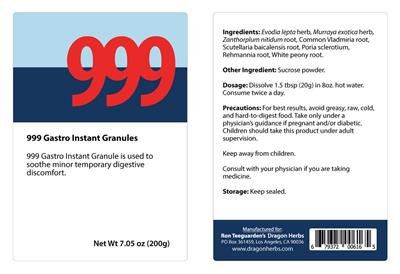
Other ingredients: Sucrose, Powder
Tap any ingredient to jump to its full detail below.
These statements are the manufacturer’s wording, reproduced from the product label — the label is saying it, not HelloPharmacist. We don’t verify or endorse them.
Formulation
999 Gastro instant granule is used to sooth minor temporary digestive discomfort.
Suggested/Recommended/Usage/Directions
Dosage: Dissolve 1.5 tbsp (20 g) in 8 oz. hot water. Consume twice a day.
Precautions
Precautions: For best results, avoid greasy, raw, cold, and hard-to-digest food.
Take only under a physicians guidance if pregnant and/or diabetic.
Children should take this product under adult supervision.
Keep away from children.
Consult with your physician if you are taking medicine.
Storage
Storage: Keep sealed.
Is this label outdated? Report a formula or label change and our pharmacy team will review it.
999 Gastro Instant Granules by Ron Teeguarden's Dragon Herbs label
The label scan from the NIH Dietary Supplement Label Database. Tap to enlarge.
Label images are published by the NIH Dietary Supplement Label Database for the version of this product on file. Always read your actual product label.
View the full label (PDF)The Ingredients in 999 Gastro Instant Granules by Ron Teeguarden's Dragon Herbs
These are the 8 active ingredients this product is made of. Select any to open its full monograph.
Serving size20 Gram(s) Dosage formPowder Amounts shown are per serving.
Most supplement products combine several ingredients, and a medication can interact with the product through any one of them. Each ingredient below shows whether it has known drug interactions.
Rehmannia
Interacts with258 drugs
Rehmannia is a root used for centuries in Traditional Chinese Medicine, often to 'tonify' the kidneys and support energy or blood health. Human eviden...
Rehmannia monograph & interactionsWhite Peony
Interacts with813 drugs
Peony root is a traditional Chinese medicine herb often used for menstrual problems, cramps, and inflammation, frequently as part of combination formu...
White Peony monograph & interactionsPoria
Interacts with417 drugs
Poria mushroom (Fu Ling) is a fungus long used in Traditional Chinese Medicine, mainly as a mild diuretic and digestive and calming aid. Modern scient...
Poria monograph & interactionsScutellaria baicalensis
Interacts with948 drugs
Baikal skullcap is a traditional Chinese herb (Huang Qin) used for inflammation, allergies, and infections, with active compounds like baicalin and ba...
Scutellaria baicalensis monograph & interactionsEvodia lepta
Interacts with951 drugs
Evodia is a fruit used in traditional Chinese medicine, most often for digestive complaints, headaches, and menstrual pain. Human evidence for these u...
Evodia lepta monograph & interactionsMurraya exotica
Zanthorplum nitidum
Common Vladmiria
Other (inactive) ingredients: Sucrose, Powder. These complete the product’s ingredient list but are not active constituents.
999 Gastro Instant Granules by Ron Teeguarden's Dragon Herbs Drug Interactions
HelloPharmacist Interaction Report
999 Gastro Instant Granules by Ron Teeguarden's Dragon Herbs contains several ingredients with documented interactions with medications.
The most serious concern is Evodia lepta, which can reduce the effectiveness of drugs metabolized by CYP1A2 enzymes — including theophylline, a respiratory medication — by as much as 70% in animal studies. This is a Moderate-severity interaction, though it hasn't been confirmed in humans yet.
Read the full breakdown — every affected drug type, severity by severity
Rehmannia and Scutellaria baicalensis (Baikal skullcap) both theoretically increase the risk of low blood pressure (hypotension) when combined with blood pressure medications (antihypertensives). Rehmannia may also increase the risk of low blood sugar (hypoglycemia) with diabetes medications.
White Peony and Baikal skullcap can both theoretically interfere with blood thinners (anticoagulants) and antiplatelet drugs by raising bleeding risk. White Peony may also interfere with hormone-based contraceptives and estrogen replacement therapy, and can slow the breakdown of certain psychiatric and other medications by inhibiting liver enzymes (CYP1A2 and CYP3A4 substrates).
Baikal skullcap similarly affects multiple liver enzymes and may interact with lithium (a mood stabilizer) and antithyroid medications. Poria mushroom may enhance the effects of sedatives and potentially interfere with anticholinergic or cholinergic drugs.
We could not check three other ingredients — Murraya exotica, Zanthorplum nitidum, and Common Vladmiria — because we hold no data for them. Altogether, these interactions span 1,413 individual medications.
Use the medication checker on this page to look up your specific prescriptions before starting this product.
Check your own medications below · Editorial policy · How we use AI
Want to check YOUR meds against 999 Gastro Instant Granules?
Ask about interactions with your drugs in plain English — “Can I take it with lisinopril?” — and we find you the answer in seconds, ingredient by ingredient.
Go to the checkerIngredients driving the most interactions
Individual Drug Interactions
The ingredients in 999 Gastro Instant Granules interact with 1,429 drugs. Click any drug to see the details.
5 of the 8 ingredients in 999 Gastro Instant Granules interact with drugs. Each result below shows which ingredient is responsible. Evodia lepta Scutellaria baicalensis White Peony Poria Rehmannia
Ado-trastuzumab EmtansineKadcyla
How Ado-trastuzumab Emtansine interacts with 999 Gastro Instant Granules — through 2 ingredients. Tap an ingredient for the detail:
White PeonyCytochrome P450 3a4 (cyp3a4) Substrates Moderate
Interaction Summary
Theoretically, use of peony may increase the levels and clinical effects of drugs metabolized by CYP3A4.
Read the full White Peony + Ado-trastuzumab Emtansine interactionEvodia LeptaCytochrome P450 3a4 (cyp3a4) Substrates Moderate
Interaction Summary
Theoretically, evodia might increase the levels and clinical effects of CYP3A4 substrates.
Read the full Evodia Lepta + Ado-trastuzumab Emtansine interactionAbametapirXeglyze
How Abametapir interacts with 999 Gastro Instant Granules — through 1 ingredient. Tap an ingredient for the detail:
Evodia LeptaCytochrome P450 1a2 (cyp1a2) Inhibitors, Cytochrome P450 3a4 (cyp3a4) Inhibitors Moderate
Interaction Summary
Theoretically, drugs that inhibit CYP1A2 might increase the levels and clinical effects of evodia.
Read the full Evodia Lepta + Abametapir interactionAbciximabReoPro
How Abciximab interacts with 999 Gastro Instant Granules — through 3 ingredients. Tap an ingredient for the detail:
Evodia LeptaAnticoagulant/antiplatelet Drugs Moderate
Interaction Summary
Theoretically, taking evodia with antiplatelet or anticoagulant drugs might increase the risk of bruising and bleeding.
Read the full Evodia Lepta + Abciximab interactionWhite PeonyAnticoagulant/antiplatelet Drugs Moderate
Interaction Summary
Theoretically, combining peony with anticoagulant or antiplatelet drugs might increase the risk of bleeding.
Read the full White Peony + Abciximab interactionScutellaria BaicalensisAnticoagulant/antiplatelet Drugs Moderate
Interaction Summary
Theoretically, Baikal skullcap might increase the risk of bleeding when used concomitantly with anticoagulant and antiplatelet drugs.
Read the full Scutellaria Baicalensis + Abciximab interactionAbemaciclibVerzenio
How Abemaciclib interacts with 999 Gastro Instant Granules — through 2 ingredients. Tap an ingredient for the detail:
Evodia LeptaCytochrome P450 3a4 (cyp3a4) Substrates Moderate
Interaction Summary
Theoretically, evodia might increase the levels and clinical effects of CYP3A4 substrates.
Read the full Evodia Lepta + Abemaciclib interactionWhite PeonyCytochrome P450 3a4 (cyp3a4) Substrates Moderate
Interaction Summary
Theoretically, use of peony may increase the levels and clinical effects of drugs metabolized by CYP3A4.
Read the full White Peony + Abemaciclib interactionAbiraterone
How Abiraterone interacts with 999 Gastro Instant Granules — through 2 ingredients. Tap an ingredient for the detail:
White PeonyCytochrome P450 3a4 (cyp3a4) Substrates Moderate
Interaction Summary
Theoretically, use of peony may increase the levels and clinical effects of drugs metabolized by CYP3A4.
Read the full White Peony + Abiraterone interactionEvodia LeptaCytochrome P450 3a4 (cyp3a4) Substrates, Cytochrome P450 3a4 (cyp3a4) Inhibitors +1 Moderate
Interaction Summary
Theoretically, evodia might increase the levels and clinical effects of CYP3A4 substrates.
Read the full Evodia Lepta + Abiraterone interactionAbiraterone AcetateYonsa, Zytiga
How Abiraterone Acetate interacts with 999 Gastro Instant Granules — through 2 ingredients. Tap an ingredient for the detail:
Evodia LeptaCytochrome P450 3a4 (cyp3a4) Substrates Moderate
Interaction Summary
Theoretically, evodia might increase the levels and clinical effects of CYP3A4 substrates.
Read the full Evodia Lepta + Abiraterone Acetate interactionWhite PeonyCytochrome P450 3a4 (cyp3a4) Substrates Moderate
Interaction Summary
Theoretically, use of peony may increase the levels and clinical effects of drugs metabolized by CYP3A4.
Read the full White Peony + Abiraterone Acetate interactionAbrocitinibCibinqo
How Abrocitinib interacts with 999 Gastro Instant Granules — through 3 ingredients. Tap an ingredient for the detail:
White PeonyAnticoagulant/antiplatelet Drugs Moderate
Interaction Summary
Theoretically, combining peony with anticoagulant or antiplatelet drugs might increase the risk of bleeding.
Read the full White Peony + Abrocitinib interactionScutellaria BaicalensisAnticoagulant/antiplatelet Drugs, Cytochrome P450 2c19 (cyp2c19) Substrates Moderate
Interaction Summary
Theoretically, Baikal skullcap might increase the risk of bleeding when used concomitantly with anticoagulant and antiplatelet drugs.
Read the full Scutellaria Baicalensis + Abrocitinib interactionEvodia LeptaAnticoagulant/antiplatelet Drugs Moderate
Interaction Summary
Theoretically, taking evodia with antiplatelet or anticoagulant drugs might increase the risk of bruising and bleeding.
Read the full Evodia Lepta + Abrocitinib interactionAcalabrutinibCalquence
How Acalabrutinib interacts with 999 Gastro Instant Granules — through 3 ingredients. Tap an ingredient for the detail:
Evodia LeptaCytochrome P450 3a4 (cyp3a4) Substrates Moderate
Interaction Summary
Theoretically, evodia might increase the levels and clinical effects of CYP3A4 substrates.
Read the full Evodia Lepta + Acalabrutinib interactionWhite PeonyCytochrome P450 3a4 (cyp3a4) Substrates Moderate
Interaction Summary
Theoretically, use of peony may increase the levels and clinical effects of drugs metabolized by CYP3A4.
Read the full White Peony + Acalabrutinib interactionScutellaria BaicalensisP-glycoprotein Substrates Minor
Interaction Summary
Theoretically, Baikal skullcap might increase levels of drugs transported by P-glycoprotein.
Read the full Scutellaria Baicalensis + Acalabrutinib interactionAcarboseGlucobay, Prandase, Precose
How Acarbose interacts with 999 Gastro Instant Granules — through 2 ingredients. Tap an ingredient for the detail:
Scutellaria BaicalensisAntidiabetes Drugs Moderate
Interaction Summary
Theoretically, concomitant use of Baikal skullcap with antidiabetes drugs might enhance blood glucose lowering effects.
Read the full Scutellaria Baicalensis + Acarbose interactionRehmanniaAntidiabetes Drugs Moderate
Interaction Summary
Theoretically, rehmannia might increase the risk of hypoglycemia when taken with antidiabetes drugs.
Read the full Rehmannia + Acarbose interactionAcebutololRhotral, Sectral
How Acebutolol interacts with 999 Gastro Instant Granules — through 2 ingredients. Tap an ingredient for the detail:
Scutellaria BaicalensisAntihypertensive Drugs Moderate
Interaction Summary
Theoretically, concomitant use of Baikal skullcap with antihypertensive drugs might have additive effects and increase the risk of hypotension.
Read the full Scutellaria Baicalensis + Acebutolol interactionRehmanniaAntihypertensive Drugs Moderate
Interaction Summary
Theoretically, rehmannia might increase the risk of hypotension when taken with antihypertensive drugs.
Read the full Rehmannia + Acebutolol interactionAcenocoumarolSintrom
How Acenocoumarol interacts with 999 Gastro Instant Granules — through 3 ingredients. Tap an ingredient for the detail:
Scutellaria BaicalensisAnticoagulant/antiplatelet Drugs Moderate
Interaction Summary
Theoretically, Baikal skullcap might increase the risk of bleeding when used concomitantly with anticoagulant and antiplatelet drugs.
Read the full Scutellaria Baicalensis + Acenocoumarol interactionEvodia LeptaAnticoagulant/antiplatelet Drugs Moderate
Interaction Summary
Theoretically, taking evodia with antiplatelet or anticoagulant drugs might increase the risk of bruising and bleeding.
Read the full Evodia Lepta + Acenocoumarol interactionWhite PeonyAnticoagulant/antiplatelet Drugs Moderate
Interaction Summary
Theoretically, combining peony with anticoagulant or antiplatelet drugs might increase the risk of bleeding.
Read the full White Peony + Acenocoumarol interactionAcepromazineAtravet
How Acepromazine interacts with 999 Gastro Instant Granules — through 2 ingredients. Tap an ingredient for the detail:
PoriaCns Depressants, Anticholinergic Drugs Moderate
Interaction Summary
Theoretically, taking poria mushroom extract may enhance the therapeutic and adverse effects of sedatives.
Read the full Poria + Acepromazine interactionScutellaria BaicalensisCns Depressants Minor
Interaction Summary
Theoretically, Baikal skullcap might cause additive therapeutic and adverse effects when used concomitantly with drugs with sedative properties.
Read the full Scutellaria Baicalensis + Acepromazine interactionAcetaminophenChildren's Tylenol, Children's Tylenol Meltaways, Tylenol, Tylenol Ex Strength
How Acetaminophen interacts with 999 Gastro Instant Granules — through 3 ingredients. Tap an ingredient for the detail:
White PeonyCytochrome P450 1a2 (cyp1a2) Substrates Moderate
Interaction Summary
Theoretically, use of peony may increase the levels and clinical effects of drugs metabolized by CYP1A2.
Read the full White Peony + Acetaminophen interactionScutellaria BaicalensisCytochrome P450 1a2 (cyp1a2) Substrates Moderate
Interaction Summary
Theoretically, Baikal skullcap may increase levels of drugs metabolized by CYP1A2 enzymes.
Read the full Scutellaria Baicalensis + Acetaminophen interactionEvodia LeptaCytochrome P450 1a2 (cyp1a2) Substrates, Cytochrome P450 2e1 (cyp2e1) Substrates Moderate
Interaction Summary
Evodia might reduce the levels and clinical effects of CYP1A2 substrates through induction of CYP1A2.
Read the full Evodia Lepta + Acetaminophen interactionAcetaminophen, AspirinGemnisyn
How Acetaminophen, Aspirin interacts with 999 Gastro Instant Granules — through 3 ingredients. Tap an ingredient for the detail:
Evodia LeptaCytochrome P450 2e1 (cyp2e1) Substrates, Anticoagulant/antiplatelet Drugs +1 Moderate
Interaction Summary
Theoretically, evodia might reduce the levels and clinical effects of CYP2E1 substrates through induction of CYP2E1.
Read the full Evodia Lepta + Acetaminophen, Aspirin interactionWhite PeonyCytochrome P450 1a2 (cyp1a2) Substrates, Anticoagulant/antiplatelet Drugs Moderate
Interaction Summary
Theoretically, use of peony may increase the levels and clinical effects of drugs metabolized by CYP1A2.
Read the full White Peony + Acetaminophen, Aspirin interactionScutellaria BaicalensisAnticoagulant/antiplatelet Drugs, Cytochrome P450 1a2 (cyp1a2) Substrates Moderate
Interaction Summary
Theoretically, Baikal skullcap might increase the risk of bleeding when used concomitantly with anticoagulant and antiplatelet drugs.
Read the full Scutellaria Baicalensis + Acetaminophen, Aspirin interactionAcetaminophen, Aspirin, CaffeineExcedrin, Excedrin Extra Strength, Excedrin Migraine
How Acetaminophen, Aspirin, Caffeine interacts with 999 Gastro Instant Granules — through 3 ingredients. Tap an ingredient for the detail:
Evodia LeptaCytochrome P450 1a2 (cyp1a2) Substrates, Anticoagulant/antiplatelet Drugs +3 Moderate
Interaction Summary
Evodia might reduce the levels and clinical effects of CYP1A2 substrates through induction of CYP1A2.
Read the full Evodia Lepta + Acetaminophen, Aspirin, Caffeine interactionScutellaria BaicalensisAnticoagulant/antiplatelet Drugs, Cytochrome P450 1a2 (cyp1a2) Substrates Moderate
Interaction Summary
Theoretically, Baikal skullcap might increase the risk of bleeding when used concomitantly with anticoagulant and antiplatelet drugs.
Read the full Scutellaria Baicalensis + Acetaminophen, Aspirin, Caffeine interactionWhite PeonyAnticoagulant/antiplatelet Drugs, Cytochrome P450 3a4 (cyp3a4) Substrates +1 Moderate
Interaction Summary
Theoretically, combining peony with anticoagulant or antiplatelet drugs might increase the risk of bleeding.
Read the full White Peony + Acetaminophen, Aspirin, Caffeine interactionAcetaminophen, Brompheniramine, PhenylpropanolamineDimetapp Cold and Flu
How Acetaminophen, Brompheniramine, Phenylpropanolamine interacts with 999 Gastro Instant Granules — through 3 ingredients. Tap an ingredient for the detail:
White PeonyCytochrome P450 1a2 (cyp1a2) Substrates Moderate
Interaction Summary
Theoretically, use of peony may increase the levels and clinical effects of drugs metabolized by CYP1A2.
Read the full White Peony + Acetaminophen, Brompheniramine, Phenylpropanolamine interactionScutellaria BaicalensisCytochrome P450 1a2 (cyp1a2) Substrates Moderate
Interaction Summary
Theoretically, Baikal skullcap may increase levels of drugs metabolized by CYP1A2 enzymes.
Read the full Scutellaria Baicalensis + Acetaminophen, Brompheniramine, Phenylpropanolamine interactionEvodia LeptaCytochrome P450 1a2 (cyp1a2) Substrates, Cytochrome P450 2e1 (cyp2e1) Substrates Moderate
Interaction Summary
Evodia might reduce the levels and clinical effects of CYP1A2 substrates through induction of CYP1A2.
Read the full Evodia Lepta + Acetaminophen, Brompheniramine, Phenylpropanolamine interactionAcetaminophen, ButalbitalAxocet, Bancap, Bucet, Butex Forte, Esgic CF, Orbivan CF +5 more
How Acetaminophen, Butalbital interacts with 999 Gastro Instant Granules — through 3 ingredients. Tap an ingredient for the detail:
Evodia LeptaCytochrome P450 2e1 (cyp2e1) Substrates, Cytochrome P450 1a2 (cyp1a2) Substrates Moderate
Interaction Summary
Theoretically, evodia might reduce the levels and clinical effects of CYP2E1 substrates through induction of CYP2E1.
Read the full Evodia Lepta + Acetaminophen, Butalbital interactionWhite PeonyCytochrome P450 1a2 (cyp1a2) Substrates Moderate
Interaction Summary
Theoretically, use of peony may increase the levels and clinical effects of drugs metabolized by CYP1A2.
Read the full White Peony + Acetaminophen, Butalbital interactionScutellaria BaicalensisCytochrome P450 1a2 (cyp1a2) Substrates Moderate
Interaction Summary
Theoretically, Baikal skullcap may increase levels of drugs metabolized by CYP1A2 enzymes.
Read the full Scutellaria Baicalensis + Acetaminophen, Butalbital interactionAcetaminophen, Butalbital, CaffeineEsgic, Esgic Plus, Fiogesic, Fioricet, Repan, Tecnal +1 more
How Acetaminophen, Butalbital, Caffeine interacts with 999 Gastro Instant Granules — through 3 ingredients. Tap an ingredient for the detail:
Evodia LeptaCytochrome P450 1a2 (cyp1a2) Substrates, Cytochrome P450 2e1 (cyp2e1) Substrates +2 Moderate
Interaction Summary
Evodia might reduce the levels and clinical effects of CYP1A2 substrates through induction of CYP1A2.
Read the full Evodia Lepta + Acetaminophen, Butalbital, Caffeine interactionScutellaria BaicalensisCytochrome P450 1a2 (cyp1a2) Substrates Moderate
Interaction Summary
Theoretically, Baikal skullcap may increase levels of drugs metabolized by CYP1A2 enzymes.
Read the full Scutellaria Baicalensis + Acetaminophen, Butalbital, Caffeine interactionWhite PeonyCytochrome P450 1a2 (cyp1a2) Substrates, Cytochrome P450 3a4 (cyp3a4) Substrates Moderate
Interaction Summary
Theoretically, use of peony may increase the levels and clinical effects of drugs metabolized by CYP1A2.
Read the full White Peony + Acetaminophen, Butalbital, Caffeine interactionAcetaminophen, Butalbital, Caffeine, CodeineEsgic with Codeine, Fioricet w/ Codeine
How Acetaminophen, Butalbital, Caffeine, Codeine interacts with 999 Gastro Instant Granules — through 4 ingredients. Tap an ingredient for the detail:
White PeonyCytochrome P450 3a4 (cyp3a4) Substrates, Cytochrome P450 1a2 (cyp1a2) Substrates Moderate
Interaction Summary
Theoretically, use of peony may increase the levels and clinical effects of drugs metabolized by CYP3A4.
Read the full White Peony + Acetaminophen, Butalbital, Caffeine, Codeine interactionPoriaCns Depressants Moderate
Interaction Summary
Theoretically, taking poria mushroom extract may enhance the therapeutic and adverse effects of sedatives.
Read the full Poria + Acetaminophen, Butalbital, Caffeine, Codeine interactionScutellaria BaicalensisCns Depressants, Cytochrome P450 1a2 (cyp1a2) Substrates Moderate
Interaction Summary
Theoretically, Baikal skullcap might cause additive therapeutic and adverse effects when used concomitantly with drugs with sedative properties.
Read the full Scutellaria Baicalensis + Acetaminophen, Butalbital, Caffeine, Codeine interactionEvodia LeptaCytochrome P450 1a2 (cyp1a2) Substrates, Cytochrome P450 2e1 (cyp2e1) Substrates +2 Moderate
Interaction Summary
Evodia might reduce the levels and clinical effects of CYP1A2 substrates through induction of CYP1A2.
Read the full Evodia Lepta + Acetaminophen, Butalbital, Caffeine, Codeine interactionAcetaminophen, Butalbital, CodeineBancap w/ Codeine
How Acetaminophen, Butalbital, Codeine interacts with 999 Gastro Instant Granules — through 4 ingredients. Tap an ingredient for the detail:
Evodia LeptaCytochrome P450 2e1 (cyp2e1) Substrates, Cytochrome P450 1a2 (cyp1a2) Substrates Moderate
Interaction Summary
Theoretically, evodia might reduce the levels and clinical effects of CYP2E1 substrates through induction of CYP2E1.
Read the full Evodia Lepta + Acetaminophen, Butalbital, Codeine interactionScutellaria BaicalensisCns Depressants, Cytochrome P450 1a2 (cyp1a2) Substrates Moderate
Interaction Summary
Theoretically, Baikal skullcap might cause additive therapeutic and adverse effects when used concomitantly with drugs with sedative properties.
Read the full Scutellaria Baicalensis + Acetaminophen, Butalbital, Codeine interactionWhite PeonyCytochrome P450 1a2 (cyp1a2) Substrates Moderate
Interaction Summary
Theoretically, use of peony may increase the levels and clinical effects of drugs metabolized by CYP1A2.
Read the full White Peony + Acetaminophen, Butalbital, Codeine interactionPoriaCns Depressants Moderate
Interaction Summary
Theoretically, taking poria mushroom extract may enhance the therapeutic and adverse effects of sedatives.
Read the full Poria + Acetaminophen, Butalbital, Codeine interactionAcetaminophen, Butalbital, Codeine PhosphatePhrenilin #3
How Acetaminophen, Butalbital, Codeine Phosphate interacts with 999 Gastro Instant Granules — through 4 ingredients. Tap an ingredient for the detail:
Evodia LeptaCytochrome P450 1a2 (cyp1a2) Substrates, Cytochrome P450 2e1 (cyp2e1) Substrates Moderate
Interaction Summary
Evodia might reduce the levels and clinical effects of CYP1A2 substrates through induction of CYP1A2.
Read the full Evodia Lepta + Acetaminophen, Butalbital, Codeine Phosphate interactionScutellaria BaicalensisCytochrome P450 1a2 (cyp1a2) Substrates, Cns Depressants Moderate
Interaction Summary
Theoretically, Baikal skullcap may increase levels of drugs metabolized by CYP1A2 enzymes.
Read the full Scutellaria Baicalensis + Acetaminophen, Butalbital, Codeine Phosphate interactionPoriaCns Depressants Moderate
Interaction Summary
Theoretically, taking poria mushroom extract may enhance the therapeutic and adverse effects of sedatives.
Read the full Poria + Acetaminophen, Butalbital, Codeine Phosphate interactionWhite PeonyCytochrome P450 1a2 (cyp1a2) Substrates Moderate
Interaction Summary
Theoretically, use of peony may increase the levels and clinical effects of drugs metabolized by CYP1A2.
Read the full White Peony + Acetaminophen, Butalbital, Codeine Phosphate interactionAcetaminophen, Caffeine, Chlorpheniramine, Hydrocodone, PhenylephrineHycomine Compound
How Acetaminophen, Caffeine, Chlorpheniramine, Hydrocodone, Phenylephrine interacts with 999 Gastro Instant Granules — through 4 ingredients. Tap an ingredient for the detail:
Scutellaria BaicalensisCns Depressants, Cytochrome P450 1a2 (cyp1a2) Substrates Moderate
Interaction Summary
Theoretically, Baikal skullcap might cause additive therapeutic and adverse effects when used concomitantly with drugs with sedative properties.
Read the full Scutellaria Baicalensis + Acetaminophen, Caffeine, Chlorpheniramine, Hydrocodone, Phenylephrine interactionWhite PeonyCytochrome P450 3a4 (cyp3a4) Substrates, Cytochrome P450 1a2 (cyp1a2) Substrates Moderate
Interaction Summary
Theoretically, use of peony may increase the levels and clinical effects of drugs metabolized by CYP3A4.
Read the full White Peony + Acetaminophen, Caffeine, Chlorpheniramine, Hydrocodone, Phenylephrine interactionPoriaAnticholinergic Drugs, Cns Depressants Moderate
Interaction Summary
Theoretically, poria mushroom might decrease the clinical effects of anticholinergic drugs.
Read the full Poria + Acetaminophen, Caffeine, Chlorpheniramine, Hydrocodone, Phenylephrine interactionEvodia LeptaCytochrome P450 1a2 (cyp1a2) Substrates, Cytochrome P450 2e1 (cyp2e1) Substrates +2 Moderate
Interaction Summary
Evodia might reduce the levels and clinical effects of CYP1A2 substrates through induction of CYP1A2.
Read the full Evodia Lepta + Acetaminophen, Caffeine, Chlorpheniramine, Hydrocodone, Phenylephrine interactionAcetaminophen, Caffeine, CodeineGesic C15, Gesic C30, Gesic C8, Lenoltec 1, Lenoltec 2, Lenoltec 3 +1 more
How Acetaminophen, Caffeine, Codeine interacts with 999 Gastro Instant Granules — through 4 ingredients. Tap an ingredient for the detail:
Evodia LeptaCytochrome P450 3a4 (cyp3a4) Substrates, Cytochrome P450 2e1 (cyp2e1) Substrates +2 Moderate
Interaction Summary
Theoretically, evodia might increase the levels and clinical effects of CYP3A4 substrates.
Read the full Evodia Lepta + Acetaminophen, Caffeine, Codeine interactionPoriaCns Depressants Moderate
Interaction Summary
Theoretically, taking poria mushroom extract may enhance the therapeutic and adverse effects of sedatives.
Read the full Poria + Acetaminophen, Caffeine, Codeine interactionWhite PeonyCytochrome P450 3a4 (cyp3a4) Substrates, Cytochrome P450 1a2 (cyp1a2) Substrates Moderate
Interaction Summary
Theoretically, use of peony may increase the levels and clinical effects of drugs metabolized by CYP3A4.
Read the full White Peony + Acetaminophen, Caffeine, Codeine interactionScutellaria BaicalensisCns Depressants, Cytochrome P450 1a2 (cyp1a2) Substrates Moderate
Interaction Summary
Theoretically, Baikal skullcap might cause additive therapeutic and adverse effects when used concomitantly with drugs with sedative properties.
Read the full Scutellaria Baicalensis + Acetaminophen, Caffeine, Codeine interactionAcetaminophen, Caffeine, Codeine, SalicylamideCodalan No.1, Codalan No.2, Codalan No.3
How Acetaminophen, Caffeine, Codeine, Salicylamide interacts with 999 Gastro Instant Granules — through 4 ingredients. Tap an ingredient for the detail:
Scutellaria BaicalensisCytochrome P450 1a2 (cyp1a2) Substrates, Cns Depressants Moderate
Interaction Summary
Theoretically, Baikal skullcap may increase levels of drugs metabolized by CYP1A2 enzymes.
Read the full Scutellaria Baicalensis + Acetaminophen, Caffeine, Codeine, Salicylamide interactionEvodia LeptaCytochrome P450 1a2 (cyp1a2) Substrates, Cytochrome P450 2e1 (cyp2e1) Substrates +2 Moderate
Interaction Summary
Evodia might reduce the levels and clinical effects of CYP1A2 substrates through induction of CYP1A2.
Read the full Evodia Lepta + Acetaminophen, Caffeine, Codeine, Salicylamide interactionWhite PeonyCytochrome P450 1a2 (cyp1a2) Substrates, Cytochrome P450 3a4 (cyp3a4) Substrates Moderate
Interaction Summary
Theoretically, use of peony may increase the levels and clinical effects of drugs metabolized by CYP1A2.
Read the full White Peony + Acetaminophen, Caffeine, Codeine, Salicylamide interactionPoriaCns Depressants Moderate
Interaction Summary
Theoretically, taking poria mushroom extract may enhance the therapeutic and adverse effects of sedatives.
Read the full Poria + Acetaminophen, Caffeine, Codeine, Salicylamide interactionAcetaminophen, Caffeine, DihydrocodeineDHC Plus, Panlor DC, Panlor SS
How Acetaminophen, Caffeine, Dihydrocodeine interacts with 999 Gastro Instant Granules — through 4 ingredients. Tap an ingredient for the detail:
Scutellaria BaicalensisCns Depressants, Cytochrome P450 1a2 (cyp1a2) Substrates Moderate
Interaction Summary
Theoretically, Baikal skullcap might cause additive therapeutic and adverse effects when used concomitantly with drugs with sedative properties.
Read the full Scutellaria Baicalensis + Acetaminophen, Caffeine, Dihydrocodeine interactionWhite PeonyCytochrome P450 3a4 (cyp3a4) Substrates, Cytochrome P450 1a2 (cyp1a2) Substrates Moderate
Interaction Summary
Theoretically, use of peony may increase the levels and clinical effects of drugs metabolized by CYP3A4.
Read the full White Peony + Acetaminophen, Caffeine, Dihydrocodeine interactionPoriaCns Depressants Moderate
Interaction Summary
Theoretically, taking poria mushroom extract may enhance the therapeutic and adverse effects of sedatives.
Read the full Poria + Acetaminophen, Caffeine, Dihydrocodeine interactionEvodia LeptaCytochrome P450 1a2 (cyp1a2) Substrates, Cytochrome P450 2e1 (cyp2e1) Substrates +2 Moderate
Interaction Summary
Evodia might reduce the levels and clinical effects of CYP1A2 substrates through induction of CYP1A2.
Read the full Evodia Lepta + Acetaminophen, Caffeine, Dihydrocodeine interactionAcetaminophen, Caffeine, IsomethepteneMigralam
How Acetaminophen, Caffeine, Isometheptene interacts with 999 Gastro Instant Granules — through 3 ingredients. Tap an ingredient for the detail:
Evodia LeptaCytochrome P450 3a4 (cyp3a4) Substrates, Cytochrome P450 2e1 (cyp2e1) Substrates +2 Moderate
Interaction Summary
Theoretically, evodia might increase the levels and clinical effects of CYP3A4 substrates.
Read the full Evodia Lepta + Acetaminophen, Caffeine, Isometheptene interactionWhite PeonyCytochrome P450 3a4 (cyp3a4) Substrates, Cytochrome P450 1a2 (cyp1a2) Substrates Moderate
Interaction Summary
Theoretically, use of peony may increase the levels and clinical effects of drugs metabolized by CYP3A4.
Read the full White Peony + Acetaminophen, Caffeine, Isometheptene interactionScutellaria BaicalensisCytochrome P450 1a2 (cyp1a2) Substrates Moderate
Interaction Summary
Theoretically, Baikal skullcap may increase levels of drugs metabolized by CYP1A2 enzymes.
Read the full Scutellaria Baicalensis + Acetaminophen, Caffeine, Isometheptene interactionAcetaminophen, Caffeine, PyrilamineMidol Max Strength Menstrual
How Acetaminophen, Caffeine, Pyrilamine interacts with 999 Gastro Instant Granules — through 4 ingredients. Tap an ingredient for the detail:
Evodia LeptaCytochrome P450 1a2 (cyp1a2) Substrates, Cytochrome P450 2e1 (cyp2e1) Substrates +2 Moderate
Interaction Summary
Evodia might reduce the levels and clinical effects of CYP1A2 substrates through induction of CYP1A2.
Read the full Evodia Lepta + Acetaminophen, Caffeine, Pyrilamine interactionScutellaria BaicalensisCytochrome P450 1a2 (cyp1a2) Substrates Moderate
Interaction Summary
Theoretically, Baikal skullcap may increase levels of drugs metabolized by CYP1A2 enzymes.
Read the full Scutellaria Baicalensis + Acetaminophen, Caffeine, Pyrilamine interactionWhite PeonyCytochrome P450 1a2 (cyp1a2) Substrates, Cytochrome P450 3a4 (cyp3a4) Substrates Moderate
Interaction Summary
Theoretically, use of peony may increase the levels and clinical effects of drugs metabolized by CYP1A2.
Read the full White Peony + Acetaminophen, Caffeine, Pyrilamine interactionPoriaAnticholinergic Drugs Moderate
Interaction Summary
Theoretically, poria mushroom might decrease the clinical effects of anticholinergic drugs.
Read the full Poria + Acetaminophen, Caffeine, Pyrilamine interactionAcetaminophen, Chlorpheniramine Maleate, Dextromethorphan HbrVicks Formula 44M Cough, Cold & Flu Relief
How Acetaminophen, Chlorpheniramine Maleate, Dextromethorphan Hbr interacts with 999 Gastro Instant Granules — through 4 ingredients. Tap an ingredient for the detail:
PoriaAnticholinergic Drugs Moderate
Interaction Summary
Theoretically, poria mushroom might decrease the clinical effects of anticholinergic drugs.
Read the full Poria + Acetaminophen, Chlorpheniramine Maleate, Dextromethorphan Hbr interactionWhite PeonyCytochrome P450 3a4 (cyp3a4) Substrates, Cytochrome P450 1a2 (cyp1a2) Substrates Moderate
Interaction Summary
Theoretically, use of peony may increase the levels and clinical effects of drugs metabolized by CYP3A4.
Read the full White Peony + Acetaminophen, Chlorpheniramine Maleate, Dextromethorphan Hbr interactionScutellaria BaicalensisCytochrome P450 1a2 (cyp1a2) Substrates Moderate
Interaction Summary
Theoretically, Baikal skullcap may increase levels of drugs metabolized by CYP1A2 enzymes.
Read the full Scutellaria Baicalensis + Acetaminophen, Chlorpheniramine Maleate, Dextromethorphan Hbr interactionEvodia LeptaCytochrome P450 1a2 (cyp1a2) Substrates, Cytochrome P450 3a4 (cyp3a4) Substrates +1 Moderate
Interaction Summary
Evodia might reduce the levels and clinical effects of CYP1A2 substrates through induction of CYP1A2.
Read the full Evodia Lepta + Acetaminophen, Chlorpheniramine Maleate, Dextromethorphan Hbr interactionAcetaminophen, Chlorpheniramine, Codeine, PhenylephrineColrex
How Acetaminophen, Chlorpheniramine, Codeine, Phenylephrine interacts with 999 Gastro Instant Granules — through 4 ingredients. Tap an ingredient for the detail:
Evodia LeptaCytochrome P450 2e1 (cyp2e1) Substrates, Cytochrome P450 3a4 (cyp3a4) Substrates +1 Moderate
Interaction Summary
Theoretically, evodia might reduce the levels and clinical effects of CYP2E1 substrates through induction of CYP2E1.
Read the full Evodia Lepta + Acetaminophen, Chlorpheniramine, Codeine, Phenylephrine interactionWhite PeonyCytochrome P450 1a2 (cyp1a2) Substrates, Cytochrome P450 3a4 (cyp3a4) Substrates Moderate
Interaction Summary
Theoretically, use of peony may increase the levels and clinical effects of drugs metabolized by CYP1A2.
Read the full White Peony + Acetaminophen, Chlorpheniramine, Codeine, Phenylephrine interactionPoriaAnticholinergic Drugs, Cns Depressants Moderate
Interaction Summary
Theoretically, poria mushroom might decrease the clinical effects of anticholinergic drugs.
Read the full Poria + Acetaminophen, Chlorpheniramine, Codeine, Phenylephrine interactionScutellaria BaicalensisCns Depressants, Cytochrome P450 1a2 (cyp1a2) Substrates Moderate
Interaction Summary
Theoretically, Baikal skullcap might cause additive therapeutic and adverse effects when used concomitantly with drugs with sedative properties.
Read the full Scutellaria Baicalensis + Acetaminophen, Chlorpheniramine, Codeine, Phenylephrine interactionAcetaminophen, Chlorpheniramine, DextromethorphanCoricidin II Extra Strength Cold and Flu
How Acetaminophen, Chlorpheniramine, Dextromethorphan interacts with 999 Gastro Instant Granules — through 4 ingredients. Tap an ingredient for the detail:
Evodia LeptaCytochrome P450 1a2 (cyp1a2) Substrates, Cytochrome P450 2e1 (cyp2e1) Substrates +1 Moderate
Interaction Summary
Evodia might reduce the levels and clinical effects of CYP1A2 substrates through induction of CYP1A2.
Read the full Evodia Lepta + Acetaminophen, Chlorpheniramine, Dextromethorphan interactionScutellaria BaicalensisCytochrome P450 1a2 (cyp1a2) Substrates Moderate
Interaction Summary
Theoretically, Baikal skullcap may increase levels of drugs metabolized by CYP1A2 enzymes.
Read the full Scutellaria Baicalensis + Acetaminophen, Chlorpheniramine, Dextromethorphan interactionPoriaAnticholinergic Drugs Moderate
Interaction Summary
Theoretically, poria mushroom might decrease the clinical effects of anticholinergic drugs.
Read the full Poria + Acetaminophen, Chlorpheniramine, Dextromethorphan interactionWhite PeonyCytochrome P450 1a2 (cyp1a2) Substrates, Cytochrome P450 3a4 (cyp3a4) Substrates Moderate
Interaction Summary
Theoretically, use of peony may increase the levels and clinical effects of drugs metabolized by CYP1A2.
Read the full White Peony + Acetaminophen, Chlorpheniramine, Dextromethorphan interactionEach ingredient & the kinds of drugs it affects
For each ingredient in 999 Gastro Instant Granules with known interactions, here are the types of medications they can affect. Open any type for the detail — or search your exact drug in the checker above.
Evodia lepta
Anticoagulant/Antiplatelet Drugs
Theoretically, taking evodia with antiplatelet or anticoagulant drugs might increase the risk of bruising and bleeding.
In vitro and animal studies show that rutaecarpine, a constituent of evodia, inhibits platelet aggregation.
Caffeine
Theoretically, evodia might decrease the levels and clinical effects of caffeine.
In animal models, evodia extract decreases caffeine levels by up to 71%. Evodia extract induces hepatic cytochrome P450 1A2 (CYP1A2) enzyme, of which caffeine is a substrate.
Chlorzoxazone (Parafon Forte, Paraflex)
Theoretically, evodia might decrease the levels and clinical effects of chlorzoxazone.
Animal research shows that administration of rutaecarpine, a constituent of evodia, with chlorzoxazone reduces the area under the curve (AUC) of chlorzoxazone by 84% and increases its clearance by 646%. This interaction is likely due to induction of cytochrome P450 2E1 (CYP2E1) by rutaecarpine .
Cytochrome P450 1A2 (Cyp1A2) Inhibitors
Theoretically, drugs that inhibit CYP1A2 might increase the levels and clinical effects of evodia.
The evodia constituent rutaecarpine is metabolized by CYP1A2.
Cytochrome P450 1A2 (Cyp1A2) Substrates
Evodia might reduce the levels and clinical effects of CYP1A2 substrates through induction of CYP1A2.
Evodia extract and the evodia constituent rutaecarpine induce hepatic CYP1A2 enzyme activity. Evodia decreases levels of theophylline and caffeine, CYP1A2 substrates, by about 70% in animal models.
Cytochrome P450 2E1 (Cyp2E1) Substrates
Theoretically, evodia might reduce the levels and clinical effects of CYP2E1 substrates through induction of CYP2E1.
Animal research suggests that rutaecarpine, a constituent of evodia, induces CYP2E1 activity. In rats, rutaecarpine increases markers of CYP2E1 activity, and administration of rutaecarpine with chlorzoxazone, a known CYP2E1 substrate, reduces the area under the curve (AUC) of chlorzoxazone by 84% and increases its clearance by 646%.
Cytochrome P450 3A4 (Cyp3A4) Inducers
Theoretically, taking CYP3A4 inducers might decrease the levels and clinical effects of evodia.
Animal research shows that concomitant administration of dexamethasone, a known CYP3A4 inducer, with the alkaloid constituents of evodia significantly reduces the area under the curve (AUC), maximum concentration (Cmax), and half-life of these constituents.
Cytochrome P450 3A4 (Cyp3A4) Inhibitors
Theoretically, CYP3A4 inhibitors might increase the levels and clinical effects of evodia.
Animal research shows that concomitant administration of ketoconazole, a known CYP3A4 inhibitor, with the alkaloid constituents of evodia significantly increases the area under the curve (AUC), maximum concentration (Cmax), and half-life of these constituents.
Cytochrome P450 3A4 (Cyp3A4) Substrates
Theoretically, evodia might increase the levels and clinical effects of CYP3A4 substrates.
In vitro research shows that evodia extract inhibits hepatic CYP3A4. This effect has not been reported in humans.
Qt Interval-Prolonging Drugs
Theoretically, evodia might have an additive effect with drugs that prolong the QT interval, potentially increasing the risk of ventricular arrhythmias.
Evodia has demonstrated dose-dependent activity as a proarrhythmic agent in animal and in vitro studies. Evodia infusion in animals extends the action duration potential and induces prolongation of the QT interval and Torsade de pointes.
Theophylline
Theoretically, evodia might decrease the levels and clinical effects of theophylline.
The evodia constituent rutaecarpine decreases theophylline levels and half-life by about 70% in animal models. This constituent appears to induce hepatic cytochrome P450 1A2 (CYP1A2) enzyme activity, of which theophylline is a substrate. Rutaecarpine is the primary active constituent of evodia; however, it is not known if the whole crude extract of evodia also causes this interaction.
Scutellaria baicalensis
Anticoagulant/Antiplatelet Drugs
Theoretically, Baikal skullcap might increase the risk of bleeding when used concomitantly with anticoagulant and antiplatelet drugs.
Preliminary clinical research suggests that taking capsules containing a combination of astragalus, goldthread, and Baikal skullcap daily for 4 weeks inhibits platelet aggregation; the effect seems to be similar to that of aspirin 50 mg daily. It is unclear if this effect is due to Baikal skullcap, other ingredients, or the combination.
Antidiabetes Drugs
Theoretically, concomitant use of Baikal skullcap with antidiabetes drugs might enhance blood glucose lowering effects.
Baicalein, a constituent of Baikal skullcap, has alpha-glucosidase inhibitory activity in vitro. Animal research also suggests that Baikal skullcap enhances the antidiabetic effects of metformin. However, in a small human study, taking Baikal skullcap extract did not enhance the antidiabetic effects of metformin, although it did modestly lower glucose levels during an oral glucose tolerance test (OGTT). Until more is known, use cautiously.
Antihypertensive Drugs
Theoretically, concomitant use of Baikal skullcap with antihypertensive drugs might have additive effects and increase the risk of hypotension.
Animal research suggests that baicalein, a constituent of Baikal skullcap, might lower blood pressure.
Antithyroid Drugs
Theoretically, concomitant use of Baikal skullcap and antithyroid drugs may result in additive activity and increase the risk of hypothyroidism.
In an animal hyperthyroid model, Baikal skullcap improved levels of triiodothyronine (T3), thyroxine (T4), and thyroid stimulating hormone (TSH). The clinical significance of this effect is unclear.
Cytochrome P450 1A2 (Cyp1A2) Substrates
Theoretically, Baikal skullcap may increase levels of drugs metabolized by CYP1A2 enzymes.
In vitro evidence suggests that constituents of Baikal skullcap inhibit the activity of CYP1A2. This effect has not been reported in humans.
Cytochrome P450 2C19 (Cyp2C19) Substrates
Theoretically, Baikal skullcap might increase levels of drugs metabolized by CYP2C19 enzymes.
In vitro evidence suggest that wogonin, a constituent of Baikal skullcap, modestly inhibits the activity of CYP2C19 enzymes. This effect has not been reported in humans.
Estrogens
Theoretically, concomitant use of large amounts of Baikal skullcap might interfere with hormone replacement therapy, due to competition for estrogen receptors.
In vitro evidence suggests that Baikal skullcap has estrogenic activity.
Lithium
Theoretically, Baikal skullcap might reduce lithium excretion and increase serum levels of lithium.
Baikal skullcap is thought to have diuretic properties, which may reduce lithium excretion. The dose of lithium might need to be decreased.
Alcohol (Ethanol)
Theoretically, Baikal skullcap might potentiate the sedative effects of alcohol.
In vitro and animal research suggests that Baikal skullcap binds to GABA-A receptors and causes sedation. Theoretically, Baikal skullcap might potentiate the sedative effects of alcohol. Preliminary clinical research has not identified clinically relevant sedation after use of Baikal skullcap; however, a thorough evaluation of safety outcomes has not been conducted.
Cns Depressants
Theoretically, Baikal skullcap might cause additive therapeutic and adverse effects when used concomitantly with drugs with sedative properties.
In vitro and animal research suggests that Baikal skullcap binds to GABA-A receptors and causes sedation. Theoretically, Baikal skullcap might cause additive therapeutic and adverse effects when used concomitantly with drugs with sedative properties. Preliminary clinical research has not identified clinically relevant sedation after use of Baikal skullcap; however, a thorough evaluation of safety outcomes has not been conducted.
Organic Anion-Transporting Polypeptide Substrates (Oatp)
Theoretically, Baikal skullcap might alter the levels and clinical effects of OATP substrates.
Some pharmacokinetic research shows that baicalin, a constituent of Baikal skullcap, can decrease plasma levels of rosuvastatin. The mechanism is thought to involve stimulation of the activity of the organic anion-transporting polypeptide 1B1 (OATP1B1), which transports rosuvastatin into the liver. This decreases plasma levels of the drug, but increases levels at the site of action in the liver. The degree to which rosuvastatin levels are affected depends on the OATP1B1 haplotype of the individual. Baikal skullcap might also affect other OATP1B1 substrates.
P-Glycoprotein Substrates
Theoretically, Baikal skullcap might increase levels of drugs transported by P-glycoprotein.
In vitro and animal research suggests that baicalein, oroxylin A, and wogonin, constituents of Baikal skullcap, can inhibit P-glycoprotein. This effect has not been reported in humans.
White Peony
Anticoagulant/Antiplatelet Drugs
Theoretically, combining peony with anticoagulant or antiplatelet drugs might increase the risk of bleeding.
In vitro research suggests that peony might have antiplatelet, anticoagulant, and antithrombotic effects.
Clozapine (Clozaril)
Theoretically, peony might increase the levels and clinical effects of clozapine.
In vitro research shows that peony suppresses the metabolism of clozapine via weak-to-moderate inhibitory effects on cytochromes P450 (CYP) 1A2 and CYP3A4. This effect has not been reported in humans.
Contraceptive Drugs
Theoretically, peony might interfere with contraceptive drugs due to competition for estrogen receptors.
In vitro and animal research shows that peony extract has estrogenic activity. Concomitant use might also increase the risk for estrogen-related adverse effects.
Cytochrome P450 1A2 (Cyp1A2) Substrates
Theoretically, use of peony may increase the levels and clinical effects of drugs metabolized by CYP1A2.
In vitro research shows that peony suppresses the metabolism of clozapine via weak-to-moderate inhibitory effects on CYP1A2 and CYP3A4. This effect has not been reported in humans.
Cytochrome P450 3A4 (Cyp3A4) Substrates
Theoretically, use of peony may increase the levels and clinical effects of drugs metabolized by CYP3A4.
In vitro research shows that peony suppresses the metabolism of clozapine via weak-to-moderate inhibitory effects on CYP1A2 and CYP3A4. This effect has not been reported in humans.
Estrogens
Theoretically, concomitant use of large amounts of peony might interfere with hormone replacement therapy and/or increase the risk for estrogen-related adverse effects.
In vitro and animal research shows that peony extract has estrogenic activity. Theoretically, peony might compete for estrogen receptors and/or cause additive estrogenic effects.
Phenytoin (Dilantin)
Theoretically, peony might reduce the levels and clinical effects of phenytoin.
Animal research shows that taking peony root reduces levels of phenytoin. Some researchers suggest that peony root might affect cytochrome P450 (CYP) 2C9, which metabolizes phenytoin. However, preliminary research in humans shows that peony root does not alter levels of losartan (Cozaar), which is also metabolized by CYP2C9.
Poria
Anticholinergic Drugs
Theoretically, poria mushroom might decrease the clinical effects of anticholinergic drugs.
In animal research, poria mushroom essential oil reduces acetylcholinesterase activity. This interaction has not been shown in humans.
Cholinergic Drugs
Theoretically, poria mushroom might have additive effects when used with cholinergic drugs.
In animal research, poria mushroom essential oil reduces acetylcholinesterase activity. This interaction has not been shown in humans.
Cns Depressants
Theoretically, taking poria mushroom extract may enhance the therapeutic and adverse effects of sedatives.
Animal research shows that poria mushroom extract has sedative properties. This interaction has not been shown in humans.
Rehmannia
Antidiabetes Drugs
Theoretically, rehmannia might increase the risk of hypoglycemia when taken with antidiabetes drugs.
Animal research shows that rehmannia may have hypoglycemic effects.
Antihypertensive Drugs
Theoretically, rehmannia might increase the risk of hypotension when taken with antihypertensive drugs.
Animal research shows that rehmannia may have hypotensive effects. Laboratory research shows that formulations of dried and processed rehmannia root inhibit angiotensin-converting enzyme (ACE).
Brand information
Manufacturer and brand details for 999 Gastro Instant Granules, from the product label.
Ron Teeguarden's Dragon Herbs
See all Ron Teeguarden's Dragon Herbs products- Name
- Ron Teeguarden's Dragon Herbs
- Street Address
- PO Box 361459
- City
- Los Angeles
- State
- CA
- ZipCode
- 90036
- Web Address
- www.dragonherbs.com
999 Gastro Instant Granules by Ron Teeguarden's Dragon Herbs: Common Questions
Does 999 Gastro Instant Granules by Ron Teeguarden's Dragon Herbs interact with any medications?
How can one product interact with so many drugs?
Where does this information come from?
What is Rehmannia used for in this product?
Can I take this if I'm on blood pressure medication?
Is this safe during pregnancy or breastfeeding?
Does White Peony interfere with birth control?
What are the most common side effects?
Can this slow down or speed up how my medications work?
Written and reviewed by the HelloPharmacist editorial staff. Our editorial policy
Not sure if 999 Gastro Instant Granules is safe with your meds?
Our pharmacists answer your medication & supplement questions — free.
Label information is sourced from the NIH Dietary Supplement Label Database and reflects the product version on file; always read your actual product label. This page is for education only and is not a substitute for professional medical advice. Confirm with your pharmacist or doctor before combining supplements and medications.
The Full Monographs Behind 999 Gastro Instant Granules’s Ingredients
Every ingredient we hold a full HelloPharmacist monograph for — uses, evidence, safety, and the complete interaction list.
Rehmannia
Interacts with 258 drugsRehmannia is a root used for centuries in Traditional Chinese Medicine, often to 'tonify' the kidneys and support energy or blood health. Human evidence for most modern uses is limited, so i...
Read the full Rehmannia monograph → Herb & supplement monographPeony
Interacts with 813 drugsPeony root is a traditional Chinese medicine herb often used for menstrual problems, cramps, and inflammation, frequently as part of combination formulas. Human evidence for most uses is lim...
Read the full Peony monograph → Herb & supplement monographPoria Mushroom
Interacts with 417 drugsPoria mushroom (Fu Ling) is a fungus long used in Traditional Chinese Medicine, mainly as a mild diuretic and digestive and calming aid. Modern scientific evidence in humans is very limited,...
Read the full Poria Mushroom monograph → Herb & supplement monographBaikal Skullcap
Interacts with 948 drugsBaikal skullcap is a traditional Chinese herb (Huang Qin) used for inflammation, allergies, and infections, with active compounds like baicalin and baicalein studied mostly in the lab. Human...
Read the full Baikal Skullcap monograph → Herb & supplement monographEvodia
Interacts with 951 drugsEvodia is a fruit used in traditional Chinese medicine, most often for digestive complaints, headaches, and menstrual pain. Human evidence for these uses is very limited, and it is mostly st...
Read the full Evodia monograph →Sources & How We Checked
999 Gastro Instant Granules's label data comes from the NIH Dietary Supplement Label Database; the ingredient interaction data is from the Natural Medicines database, reviewed by our pharmacists.
- NIH Dietary Supplement Label Database (DSLD) — The official product label on file for this supplement.
- Natural Medicines (Therapeutic Research Center) — Evidence-graded clinical reference behind the ingredient interaction data.
Content is written and reviewed by licensed HelloPharmacist pharmacists. See our data sources and editorial standards for how this information is built and checked.
The 68 references behind this product’s interaction data
Every citation that drives the interaction findings for this product’s ingredients, from the evidence-graded Natural Medicines (TRC Healthcare) database. Open an ingredient to browse its citations — links open the study on PubMed or the publisher’s site.
Rehmannia 3 references
- Zhang R, Zhou J, Jia Z, et al. Hypoglycemic effect of Rehmannia glutinosa oligosaccharide in hyperglycemic and alloxan-induced diabetic rats and its mechanism. J Ethnopharmacol 2004;90:39-43. PubMed
- Zhang RX, Li MX, Jia ZP. Rehmannia glutinosa: review of botany, chemistry and pharmacology. J Ethnopharmacol 2008;117(2):199-214. PubMed
- Chao CH, Hsu JL, Chen MF, et al. Anti-hypertensive effects of Radix Rehmanniae and its active ingredients. Nat Prod Res. 2020;34(11):1547-1552.
Peony 15 references
- Chen LC, Chou MH, Lin MF, Yang LL. Effects of Paeoniae Radix, a traditional Chinese medicine, on the pharmacokinetics of phenytoin. J Clin Pharm Ther 2001;26:271-8. PubMed
- Guo TL, Zhou XW. [Clinical observations on the treatment of the gestational hypertension syndrome with Angelica and Paeonia powder]. Zhong Xi Yi Jie He Za Zhi 1986;6:714-6, 707.
- Xie HJ, Yasar U, Sandberg M, Rane A. Paeoniae Radix, a traditional Chinese medicine, and CYP2C9 activity. J Clin Pharm Ther 2002;27:229-30. . PubMed
- Harada M, Suzuki M, Ozaki Y. Effect of Japanese Angelica root and peony root on uterine contraction in the rabbit in situ. J Pharmacobiodyn 1984;7:304-11. PubMed
- Anon. Monograph. Peony (Paeonia spp). Alt Med Rev 2001;6:495-9.
- Bruynzeel DP. Contact Dermatitis Due to Paeonia (Peony). Contact Dermatitis 1989; 20:152-3..
- Bian, X., Xu, Y., Zhu, L., Gao, P., Liu, X., Liu, S., Qian, M., Gai, M., Yang, J., and Wu, Y. Prevention of maternal-fetal blood group incompatibility with traditional Chinese herbal medicine. Chin Med J (Engl.) 1998;111(7):585-587.
- Wong, A. L. and Chan, T. Y. Interaction between warfarin and the herbal product quilinggao. Ann Pharmacother 2003;37(6):836-838.
- Cai Y, Yuan Q, Xu K, et al. Assessment of the therapeutic effect of total glycosides of peony for juvenile idiopathic arthritis: a systematic review and meta-analysis. Evid Based Complement Alternat Med 2016;2016:8292486.
- Koo YK, Kim JM, Koo JY, et al. Platelet anti-aggregatory and blood anti-coagulant effects of compounds isolated from Paeonia lactiflora and Paeonia suffruticosa. Pharmazie 2010;65(8):624-8.
- Wang W, Tian DD, Zheng B, et al. Peony-glycyrrhiza decoction, an herbal preparation, inhibits clozapine metabolism via cytochrome P450s, but not flavin-containing monooxygenase in in vitro models. Drug Metab Dispos 2015;43(7):1147-53. PubMed
- Zhou Y, Jin L, Kong F, et al. Clinical and immunological consequences of total glucosides of paeony treatment in Sjögren's syndrome: A randomized controlled pilot trial. Int Immunopharmacol. 2016 Oct;39:314-319. doi: 10.1016/j.intimp.2016.08.006. PubMed
- Zhu Q, Qi X, Wu Y, Wang K. Clinical study of total glucosides of paeony for the treatment of diabetic kidney disease in patients with diabetes mellitus. Int Urol Nephrol. 2016 Nov;48(11):1873-1880. doi: 10.1007/s11255-016-1345-5. PubMed
- Xu Y, Li X, Chen T, et al. Radix Paeoniae Alba increases serum estrogen level and up-regulates estrogen receptor expression in uterus and vagina of immature/ovariectomized mice. Phytother Res. 2019;33(1):117-29. [RETRACTED].
- Liu X, Li X, Li X, et al. The efficacy and safety of total glucosides of peony in the treatment of primary Sjögren's syndrome: a multi-center, randomized, double-blinded, placebo-controlled clinical trial. Clin Rheumatol. 2019;38(3):657-64. Erratum i
Poria Mushroom 3 references
- McGuffin M, Hobbs C, Upton R, Goldberg A, eds. American Herbal Products Association's Botanical Safety Handbook. Boca Raton, FL: CRC Press, LLC 1997.
- Kim H, Park I, Park K, Park S, Kim YI, Park BG. The positive effects of Poria cocos extract on quality of sleep in insomnia rat models. Int J Environ Res Public Health 2022;19(11):6629. PubMed
- Lv Q, Di X, Bian B, Li K, Guo J. Neuroprotective effects of Poria cocos (Agaricomycetes) essential oil on Aß1-40-induced learning and memory deficit in rats. Int J Med Mushrooms 2022;24(10):73-82.
Baikal Skullcap 34 references
- Huang KC. The pharmacology of Chinese herbs. 2nd ed. New York, NY: CRC Press LLC. 1999;385-6, 400-1.
- Hui KM, Wang XH, Xue H. Interaction of flavones from the roots of Scutellaria baicalensis with the benzodiazepine site. Planta Med 2000;66:91-3.
- Liao JF, Wang HH, Chen MC, et al. Benzodiazepine binding site-interactive flavones from Scutellaria baicalensis root. Planta Med 1998;64:571-2.
- Nishioka T, Kawabata J, Aoyama Y. Baicalein, an alpha-glucosidase inhibitor from Scutellaria baicalensis. J Nat Prod 1998;61:1413-5.
- Zhang CZ, Wang SX, Zhang Y, et al. In vitro estrogenic activities of Chinese medicinal plants traditionally used for the management of menopausal symptoms. J Ethnopharmacol 2005;98:295-300. PubMed
- Fan L, Zhang W, Guo D, et al. The effect of herbal medicine baicalin on pharmacokinetics of rosuvastatin, substrate of organic anion-transporting polypeptide 1B1. Clin Pharmacol Ther 2007;83:471-6. PubMed
- Chen C, Mireles RJ, Campbell SD, et al. Differential interaction of 3-hydroxy-3-methylglutaryl-CoA reductase inhibitors with ABCB1, ABCC2, and OATP1B1. Drug Metab Dispos 2005;33:537-46. PubMed
- Pasanen MK, Fredrikson H, Neuvonen PJ, Niemi M. Different effects of SLCO1B1 polymorphism on the pharmacokinetics of atorvastatin and rosuvastatin. Clin Pharmacol Ther 2007;82:726-33. PubMed
- Konig J, Seithel A, Gradhand U, Fromm MF. Pharmacogenomics of human OATP transporters. Naunyn-Schmiedeberg Arch Pharmacol 2006;372:432-43. PubMed
- Chalasani N, Vuppalanchi R, Navarro V, et al. Acute liver injury due to flavocoxid (Limbrel), a medical food for osteoarthritis: a case series. Ann Intern Med 2012;156:857-60. PubMed
- Reichenbach S, Juni P. Medical food and food supplements: not always as safe as generally assumed. Ann Intern Med 2012;156:894-5. PubMed
- Huang, W. M., Yan, J., and Xu, J. [Clinical and experimental study on inhibitory effect of sanhuang mixture on platelet aggregation]. Zhongguo Zhong.Xi.Yi.Jie.He.Za Zhi. 1995;15(8):465-467.
- Kim, B. R., Kim, D. H., Park, R., Kwon, K. B., Ryu, D. G., Kim, Y. C., Kim, N. Y., Jeong, S., Kang, B. K., and Kim, K. S. Effect of an extract of the root of Scutellaria baicalensis and its flavonoids on aflatoxin B1 oxidizing cytochrome P450 enzymes. Pl PubMed
- Lee, Y., Yeo, H., Liu, S. H., Jiang, Z., Savizky, R. M., Austin, D. J., and Cheng, Y. C. Increased anti-P-glycoprotein activity of baicalein by alkylation on the A ring. J Med Chem 10-21-2004;47(22):5555-5566. PubMed
- Huang, Y., Tsang, S. Y., Yao, X., and Chen, Z. Y. Biological properties of baicalein in cardiovascular system. Curr Drug Targets.Cardiovasc.Haematol.Disord 2005;5(2):177-184. PubMed
- Lee, E., Enomoto, R., Suzuki, C., Ohno, M., Ohashi, T., Miyauchi, A., Tanimoto, E., Maeda, K., Hirano, H., Yokoi, T., and Sugahara, C. Wogonin, a plant flavone, potentiates etoposide-induced apoptosis in cancer cells. Ann N Y Acad Sci 2007;1095:521-526. PubMed
- Waisundara, V. Y., Hsu, A., Huang, D., and Tan, B. K. Scutellaria baicalensis enhances the anti-diabetic activity of metformin in streptozotocin-induced diabetic Wistar rats. Am J Chin Med 2008;36(3):517-540.
- Go, W. J., Ryu, J. H., Qiang, F., and Han, H. K. Evaluation of the flavonoid oroxylin A as an inhibitor of P-glycoprotein-mediated cellular efflux. J Nat Prod 2009;72(9):1616-1619. PubMed
- Linnebur, S. A., Rapacchietta, O. C., and Vejar, M. Hepatotoxicity associated with chinese skullcap contained in Move Free Advanced dietary supplement: two case reports and review of the literature. Pharmacotherapy 2010;30(7):750, 258e-750, 262e. PubMed
- Enomoto, R., Koshiba, C., Suzuki, C., and Lee, E. Wogonin potentiates the antitumor action of etoposide and ameliorates its adverse effects. Cancer Chemother.Pharmacol 2011;67(5):1063-1072. PubMed
- Chang, H. H., Yi, P. L., Cheng, C. H., Lu, C. Y., Hsiao, Y. T., Tsai, Y. F., Li, C. L., and Chang, F. C. Biphasic effects of baicalin, an active constituent of Scutellaria baicalensis Georgi, in the spontaneous sleep-wake regulation. J Ethnopharmacol. 5- PubMed
- Li, T., Li, N., Guo, Q., Ji, H., Zhao, D., Xie, S., Li, X., Qiu, Z., Han, D., Chen, X., and You, Q. Inhibitory effects of wogonin on catalytic activity of cytochrome P450 enzyme in human liver microsomes. Eur J Drug Metab Pharmacokinet. 6-29-2011; PubMed
- Lin H, Zhou J, Lin K, et al. Efficacy of Scutellaria baicalensis for the treatment of hand, foot, and mouth disease associated with encephalitis in patients infected with EV71: a multicenter, retrospective analysis. Biomed Res Int 2016;2016:5697571.
- Papafragkakis C, Ona MA, Reddy M, Anand S. Acute hepatitis after ingestion of a preparation of Chinese skullcap and black catechu for joint pain. Case Reports Heptal 2016;2016:4356749. PubMed
- Kim M, Lee BC. Therapeutic effect of Scutellaria baicalensis on L-thyroxine-induced hyperthyroidism rats. Evid Based Complement Alternat Med. 2019;2019:3239649.
- Braude MR, Bassily R. Drug-induced liver injury secondary to Scutellaria baicalensis (Chinese skullcap). Intern Med J. 2019;49(4):544-546. PubMed
- Shin NR, Gu N, Choi HS, Kim H. Combined effects of Scutellaria baicalensis with metformin on glucose tolerance of patients with type 2 diabetes via gut microbiota modulation. Am J Physiol Endocrinol Metab. 2020;318(1):E52-E61.
- Li WJ, Bao J, Zheng DC, et al. Treatments of Peyronie's disease with Scutellaria baicalensis and surgery according to the disease course: a single-center retrospective study of 261 patients. Ann Palliat Med. 2021 Mar;10(3):2979-2989. PubMed
- Adam T, Bursztejn AC, Schmutz JL. Facial eczema from a sunscreen: Scutellaria baicalensis, a novel allergen beginning to attract attention. Contact Dermatitis. 2020 Apr;82(4):253-254.
- Luna-Bastante L, Gatica-Ortega ME, Pastor-Nieto MA, et al. Allergic contact dermatitis to Tinosorb S, Scutellaria baicalensis, and other emerging allergens in cosmetics. Contact Dermatitis. 2020 May;82(5):307-309.
- US Food and Drug Administration (FDA). FDA Alerts Consumers About Potentially Life-Threatening Health Problems Linked to Limbrel. December 19, 2017. Available at: https://www.fda.gov/food/alerts-advisories-safety-information/fda-alerts-consumers-about-pot
- Li L, Gao H, Lou K, et al. Safety, tolerability, and pharmacokinetics of oral baicalein tablets in healthy Chinese subjects: A single-center, randomized, double-blind, placebo-controlled multiple-ascending-dose study. Clin Transl Sci 2021;14(5):2017-2024. PubMed
- Badaoui A. Allergic contact dermatitis to resveratrol and Scutellaria baicalensis root extract in a cosmetic product. Contact Dermatitis 2022.
- Nogami T, Arai M. Incidence of Herb-induced Liver Injury Caused by Kampo Formulae Containing Scutellariae Radix. Tokai J Exp Clin Med 2022;47(3):94-98.
Evodia 13 references
- Sheu JR, Kan YC, Hung WC, et al. The antiplatelet activity of rutaecarpine, an alkaloid isolated from Evodia rutaecarpa, is mediated through inhibition of phospholipase C. Thromb Res 1998;92:53-64. PubMed
- Sheu JR, Hung WC, Lee YM, Yen MH. Mechanism of inhibition of platelet aggregation by rutaecarpine, an alkaloid isolated from Evodia rutaecarpa. Eur J Pharmacol 1996;318:469-75. PubMed
- Ueng YF, Tsai TH, Don MJ, et al. Alteration of the pharmacokinetics of theophylline by rutaecarpine, an alkaloid of the medicinal herb Evodia rutaecarpa, in rats. J Pharm Pharmacol 2005;57:227-32.
- King CL, Kong YC, Wong NS, et al. Uterotonic effect of Evodia rutaecarpa alkaloids. J Nat Prod 1980;43:577-82. PubMed
- Ueng YF, Jan WC, Lin LC, et al. The alkaloid rutaecarpine is a selective inhibitor of cytochrome P450 1A in mouse and human liver microsomes. Drug Metab Dispos 2002;30:349-53. PubMed
- Iwata H, Tezuka Y, Kadota S, et al. Mechanism-based inactivation of human liver microsomal CYP3A4 by rutaecarpine and limonin from Evodia fruit extract. Drug Metab Pharmacokinet 2005;20:34-45. PubMed
- Sheu JR, Hung WC, Wu CH, et al. Antithrombotic effect of rutaecarpine, an alkaloid isolated from Evodia rutaecarpa, on platelet plug formation in in vivo experiments. Br J Haematol 2000;110:110-5.
- Tsai TH, Chang CH, Lin LC. Effects of Evodia rutaecarpa and rutaecarpine on the pharmacokinetics of caffeine in rats. Planta Med 2005;71:640-5.
- Lee SK, Kim NH, Lee J, et al. Induction of cytochrome P450s by rutaecarpine and metabolism of rutaecarpine by cytochrome P450s. Planta Med 2004;70:753-7. PubMed
- Baburin I, Varkvisser R, Schramm A, et al. Dehydroevodiamine and hortiamine, alkaloids from the traditional Chinese herbal drug Evodia rutaecarpa, are IKr blockers with proarrhythmic effects in vitro and in vivo. Pharmacol Res. 2018 May;131:150-163. DOI
- Zhang W, Guo J, Wang D, et al. Effect of CYP3A inducer/inhibitor on pharmacokinetics of five alkaloids in Evodiae Fructus. Chem Biol Interact 2020;327:109146. PubMed
- Huang CJ, Huang WC, Lin WT, et al. Rutaecarpine, an alkaloid from Evodia rutaecarpa, can prevent platelet activation in humans and reduce microvascular thrombosis in mice: crucial role of the PI3K/Akt/GSK3ß signal axis through a cyclic nucleotides/VASP-in
- Bista SR, Lee SK, Thapa D, et al. Effects of oral rutaecarpine on the pharmacokinetics of intravenous chlorzoxazone in rats. Toxicol Res 2008;24(3):195-9. PubMed
Parts of this content are provided by the Therapeutic Research Center, LLC.
DISCLAIMER: Currently this does not check for drug-drug interactions. This is not an all-inclusive comprehensive list of potential interactions and is for informational purposes only. Not all interactions are known or well-reported in the scientific literature, and new interactions are continually being reported. Input is needed from a qualified healthcare provider including a pharmacist before starting any therapy. Application of clinical judgment is necessary.
© 2021 Therapeutic Research Center, LLC