
Aloe Digest Ingredients & Drug Interactions
by Purium
What is this page for?
First and foremost: checking Aloe Digest against your medications. The heart of this page is the interaction checker and the full interaction report — how this product’s ingredients may interact with prescription and over-the-counter medicines you may be taking.
Around that, we add a pharmacist’s high-level view of the product as a whole — what’s inside, the evidence for its stated use, how transparent the label is, and what safety data exists — so you can see the full picture in one place. It’s educational information from our licensed clinical databases and the clinical staff at HelloPharmacist — not medical advice — and we don’t sell or endorse products. Our editorial policy
Aloe Digest is a dietary supplement by Purium with 2 active ingredients. Its ingredients are commonly taken for replacing fluids and electrolytes, preventing dehydration during exercise or illness, treating low blood sodium (under medical care).Based on those ingredients, 2,202 medications have a known interaction with it, the most serious rated major. The ingredients most likely to interact are Aloe Digest Proprietary Blend, Sodium. Use the checker below to test your specific medication, or read the full HelloPharmacist Interaction Report.
Check Your Meds Against Aloe Digest by Purium
Ask about any prescription or over-the-counter medication and we check it for interactions with Aloe Digest by Purium — and tell you which ingredient is responsible.
AI summaries are generated from our interaction database for education only — always confirm with your pharmacist. How we use AI
Ask the Pharmacist
A licensed pharmacist will answer your question by email — free, usually within 24 hours.
Got it — thank you!
A licensed pharmacist will answer within 24 hours. Keep an eye on your email (worth checking spam, just in case).
HelloPharmacist Scorecard of Aloe Digest by Purium
Our pharmacy team’s full take, with four database checks built into the cards below — a summary of what is known, not a grade of the product itself.
What’s inside
Low disclosure
Aloe Digest is a 16-ingredient powder blend. Its active ingredients include sodium, tapioca dextrin (a carbohydrate), stevia extract (a sweetener), ginger, coconut water powder, apple flavor, lactospore (a probiotic), pea fiber, lemon, aloe vera gel, inulin (a prebiotic fiber), malic acid, acacia gum, and three others we cannot fully evaluate: monk fruit extract, digezyme, and rice fiber.
The product also contains inactive ingredients (fillers and binders) to hold the powder together.
Does it work?
Moderate evidence
The evidence for this product's ingredients is mixed and often limited. Aloe vera gel is possibly effective for acne, burns, constipation, and diabetes support, but evidence for other uses is insufficient.
Ginger is possibly effective for pregnancy nausea and dysmenorrhea (menstrual pain), and possibly ineffective for exercise soreness. Inulin is possibly effective for constipation, obesity, and diabetes.
Lactospore (Bacillus coagulans) is possibly effective for constipation and irritable bowel syndrome. Sodium, tapioca, stevia, coconut, apple, lemon, malic acid, acacia gum, and the proprietary blend all lack sufficient reliable evidence to establish their effectiveness for any condition in our data.
How safe is it?
Well-documented data
Aloe Digest contains sodium, which the safety notes caution against in high amounts—normal dietary sodium is fine, but avoiding sodium supplements or excess intake without medical advice is wise. Sodium is generally well tolerated at intakes up to the recommended limit, though excess intake is linked to high blood pressure, heart strain, and kidney disease risk.
Most other ingredients are generally well tolerated in typical amounts. However, higher doses of ginger (5 grams daily or more) increase the risk of side effects like heartburn, diarrhea, and abdominal discomfort.
Aloe latex (the yellow sap, distinct from the gel) can cause serious effects with long-term use. Inulin commonly causes bloating, gas, and digestive cramping, especially above 30 grams.
Lactospore has limited safety data and should not be used in severely immunocompromised or critically ill patients due to rare reports of infection.
Meds to double-check
Major interaction found
Before taking Aloe Digest, check with your doctor or pharmacist if you take any of these: organic anion-transporting polypeptide substrates (like fexofenadine, atenolol, or aliskiren)—the apple flavor significantly reduces how much your body absorbs them; digoxin or other heart glycosides; blood thinners or antiplatelet drugs (warfarin, aspirin, clopidogrel); antihypertensive (blood pressure) drugs; antidiabetes drugs; lithium; or corticosteroids. The sodium and ginger content pose additional concerns with several of these drug classes.
The bottom line
Scorecard at a glanceFormula with limited ingredient disclosure with some supporting evidence for its stated purpose. Major medication interactions have been identified, and safety information is well characterized.
Aloe Digest may appeal to people seeking digestive support through probiotics, fiber, and traditional digestive herbs like ginger and aloe. However, the apple flavor and sodium content mean you need to check your medications carefully before starting—especially if you take blood pressure drugs, heart medications, diabetes drugs, or blood thinners.
Talk with your doctor or pharmacist about whether this product fits your health profile and medications.
Educational only — not medical advice; always confirm with your pharmacist. Our editorial policy · How we use AI
Assessment coverage: 12 of 16 active ingredients matched to our full ingredient reviews (monographs). Based on the product label dated Jun 20, 2024.
This Scorecard evaluates available label information, ingredient evidence, and known medication-safety considerations. It does not independently verify product identity, purity, potency, contamination, or manufacturing quality. How these ratings are computed
General information
Key facts about Aloe Digest, straight from the product label.
| Brand | Purium |
|---|---|
| Barcode (UPC) | 764934027525 |
| Net contents | 160 Gram(s); 5.64 Ounce(s) |
| Market status | On market |
| Date entered into DSLD | Jun 20, 2024 |
| DSLD ID | 313457 |
| Product type | Other Combinations |
| Supplement form | Powder |
| Dietary claims / uses | All Other, Structure/Function |
| Intended target group(s) | Vegan, Vegetarian, Adult (18 - 50 Years), Organic, Gluten Free, Dairy Free |
Everything in this section is reproduced from the manufacturer’s own product label — it’s the label speaking, not HelloPharmacist. We show it so you can see exactly what the maker states; we don’t verify or endorse those statements.
Supplement Facts
The label details for Aloe Digest by Purium, sourced from the NIH Dietary Supplement Label Database.
Supplement Facts
| Ingredient | Amount | % DV |
|---|---|---|
| Calories | 10 Calorie(s) | -- |
| Total Carbohydrates | 3 Gram(s) | 1% |
| Sodium | 5 mg | 1% |
| Tapioca Dextrin | 0 NP | -- |
| Total Sugars | 2 Gram(s) | -- |
| Stevia Extract | 0 NP | -- |
| Ginger | 0 NP | -- |
| Coconut Water, Powder | 0 NP | -- |
| Apple Flavor, Natural | 0 NP | -- |
| Monk Fruit Extract | 0 NP | -- |
| Lactospore | 0 NP | -- |
| Pea Fiber | 0 NP | -- |
| Lemon | 0 NP | -- |
| Aloe Vera Gel, Powder | 0 NP | -- |
| Aloe Digest Proprietary Blend | 8 Gram(s) | -- |
| Inulin | 0 NP | -- |
| L-Malic Acid | 0 NP | -- |
| Digezyme | 0 NP | -- |
| Rice Fiber | 0 NP | -- |
| Acacia Gum | 0 NP | -- |
Tap any ingredient to jump to its full detail below.
These statements are the manufacturer’s wording, reproduced from the product label — the label is saying it, not HelloPharmacist. We don’t verify or endorse them.
Formulation
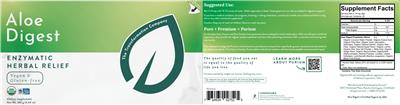
Enzymatic herbal relief
Vegan & gluten-free
Vegan & gluten-free
USDA Organic Quality Assurance International Certified Organic If it's organic it's non GMO
Quality Assurance International Certified Organic If it's organic it's non GMO
Their decision safeguards Purium's commitment to provide pure and premium superfoods; grown, manufactured and tested to the highest standards. From farm to family, Purium delivers the finest nutrition with the lowest possible environmental impact.
Aloe Digest is Certified Organic by QAI.
Seals/Symbols
USDA Organic Quality Assurance International Certified Organic If it's organic it's non GMO
FDA Statement of Identity
Dietary Supplement
General Statements
The Transformation Company Peel back for more info
Pure + Premium = Purium Co-founders Amy Venner and Dave Sandoval are passionate about making the world a better place. With over 60 years combined experience, they provide the highest quality superfood nutrition while practicing commerce with a conscience and serving their community. The quality of food you eat is equal to the quality of life you live. Learn more about Purium Compostable Materials meet ASTM D6400 standards. Committed to freeing our planet from plastic pollution! Remove and discard the label prior to composting.
Suggested/Recommended/Usage/Directions
Suggested use: Mix 2 1/4 tsp with 10-12 ounces of water. Shake vigorously or blend. Tastes great over ice. Use as needed for digestive support.
Precautions
If you have a medical condition, are pregnant, lactating or taking medication, consult your health care professional before using this or any other nutritional supplement.
Caution: Keep out of reach of children.
Contains tree nuts (coconut).
Storage
Store in a cool, dry place.
Contents packed by weight not volume. Settling may occur.
FDA Disclaimer Statement
This statement has not been evaluated by the Food and Drug Administration. This product is not intended to diagnose, treat, cure or prevent any disease.
Brand IP Statement(s)
DigeZyme and LactoSpore are registered trademarks of Sabinsa Corporation, USA.
Is this label outdated? Report a formula or label change and our pharmacy team will review it.
Aloe Digest by Purium label
The label scan from the NIH Dietary Supplement Label Database. Tap to enlarge.
Label images are published by the NIH Dietary Supplement Label Database for the version of this product on file. Always read your actual product label.
View the full label (PDF)The Ingredients in Aloe Digest by Purium
These are the 2 active ingredients this product is made of. Select any to open its full monograph.
Serving size8 Gram(s) Dosage formPowder Servings per container20 Amounts shown are per serving.
Most supplement products combine several ingredients, and a medication can interact with the product through any one of them. Each ingredient below shows whether it has known drug interactions.
Sodium
Interacts with205 drugs
Sodium is an essential mineral and electrolyte your body needs to balance fluids, support nerves, and help muscles work. Most people in modern diets g...
Sodium monograph & interactionsAloe Digest Proprietary Blend
Interacts with461 drugs
Aloe vera gel is widely used on the skin for minor burns and irritation, and some research suggests it may help. Aloe latex (the yellow part) is a str...
Aloe Digest Proprietary Blend monograph & interactions- › Tapioca Dextrin
- › Stevia Extract
- › Ginger
- › Coconut Water, Powder
- › Apple Flavor, Natural
- › Monk Fruit Extract
- › Lactospore
- › Pea Fiber
- › Lemon
- › Aloe Vera Gel, Powder
- › Inulin
- › L-Malic Acid
- › Digezyme
- › Rice Fiber
- › Acacia Gum
Aloe Digest by Purium Drug Interactions
HelloPharmacist Interaction Report
Aloe Digest by Purium contains several ingredients with documented interactions.
Through its sodium, apple flavor, ginger, aloe vera gel, and stevia extract content, this product interacts with a range of medications. The most serious interaction is between the apple flavor and organic anion-transporting polypeptide (OATP) substrates—a Major severity concern where apple can drastically reduce absorption of drugs like fexofenadine, atenolol, and aliskiren by up to 78%, compromising their effectiveness.
Read the full breakdown — every affected drug type, severity by severity
Sodium in this product affects blood pressure medications (antihypertensives), lithium levels, corticosteroids, and several other drug types at Moderate severity. Ginger poses Moderate risks with blood thinners (anticoagulants and antiplatelet drugs), diabetes medications, warfarin, and certain heart and cancer drugs through enzyme interactions.
Aloe vera gel carries Moderate interactions with blood thinners, diabetes drugs, diuretics, and warfarin, plus a Major concern with digoxin (a heart medication). Stevia extract shows Moderate interactions with lithium and Minor interactions with blood pressure and diabetes medications.
Other ingredients we could not check for interactions include Monk Fruit Extract, Pea Fiber, Digezyme, and Rice Fiber. The remaining active ingredients—tapioca, coconut water powder, lactospore, lemon, inulin, malic acid, and gum arabic—either have no interactions documented or only Minor ones.
Altogether, these interactions span 2,203 individual medications. Use the search tool below to check your exact medications before starting.
Check your own medications below · Editorial policy · How we use AI
Want to check YOUR meds against Aloe Digest?
Ask about interactions with your drugs in plain English — “Can I take it with lisinopril?” — and we find you the answer in seconds, ingredient by ingredient.
Go to the checkerIngredients driving the most interactions
Individual Drug Interactions
The ingredients in Aloe Digest interact with 2,202 drugs. Click any drug to see the details.
2 of the 2 ingredients in Aloe Digest interact with drugs. Each result below shows which ingredient is responsible. Aloe Digest Proprietary Blend Sodium
AtorvastatinAtorvaliq
How Atorvastatin interacts with Aloe Digest — through 3 ingredients. Tap an ingredient for the detail:
Apple Flavor, NaturalOrganic Anion-transporting Polypeptide Substrates (oatp) Major
Interaction Summary
Concomitant consumption of apple juice can significantly decrease oral absorption and blood levels of OATP substrates.
Read the full Apple Flavor, Natural + Atorvastatin interactionAcacia GumOral Drugs Moderate
Interaction Summary
Theoretically, gum arabic can alter the absorption of oral drugs due to its fiber content.
Read the full Acacia Gum + Atorvastatin interactionGingerCytochrome P450 3a4 (cyp3a4) Substrates Moderate
Interaction Summary
Ginger might increase or decrease the levels of CYP3A4 substrates.
Read the full Ginger + Atorvastatin interactionAtorvastatin CalciumLipitor
How Atorvastatin Calcium interacts with Aloe Digest — through 3 ingredients. Tap an ingredient for the detail:
Apple Flavor, NaturalOrganic Anion-transporting Polypeptide Substrates (oatp) Major
Interaction Summary
Concomitant consumption of apple juice can significantly decrease oral absorption and blood levels of OATP substrates.
Read the full Apple Flavor, Natural + Atorvastatin Calcium interactionGingerCytochrome P450 3a4 (cyp3a4) Substrates Moderate
Interaction Summary
Ginger might increase or decrease the levels of CYP3A4 substrates.
Read the full Ginger + Atorvastatin Calcium interactionAcacia GumOral Drugs Moderate
Interaction Summary
Theoretically, gum arabic can alter the absorption of oral drugs due to its fiber content.
Read the full Acacia Gum + Atorvastatin Calcium interactionBosentanTracleer
How Bosentan interacts with Aloe Digest — through 6 ingredients. Tap an ingredient for the detail:
Apple Flavor, NaturalOrganic Anion-transporting Polypeptide Substrates (oatp), Antihypertensive Drugs Major
Interaction Summary
Concomitant consumption of apple juice can significantly decrease oral absorption and blood levels of OATP substrates.
Read the full Apple Flavor, Natural + Bosentan interactionAcacia GumOral Drugs Moderate
Interaction Summary
Theoretically, gum arabic can alter the absorption of oral drugs due to its fiber content.
Read the full Acacia Gum + Bosentan interactionL-malic AcidAntihypertensive Drugs Moderate
Interaction Summary
Theoretically, malic acid might increase the risk of hypotension when taken with antihypertensive drugs.
Read the full L-malic Acid + Bosentan interactionSodiumAntihypertensive Drugs Moderate
Interaction Summary
Theoretically, a high intake of dietary sodium might reduce the effectiveness of antihypertensive drugs.
Read the full Sodium + Bosentan interactionGingerCytochrome P450 2c9 (cyp2c9) Substrates, Cytochrome P450 3a4 (cyp3a4) Substrates Moderate
Interaction Summary
Theoretically, ginger might increase the levels of CYP2C9 substrates.
Read the full Ginger + Bosentan interactionStevia ExtractAntihypertensive Drugs Minor
Interaction Summary
Theoretically, combining stevia or stevia constituents with antihypertensive agents might increase the risk of hypotension.
Read the full Stevia Extract + Bosentan interactionBrincidofovirTembexa
How Brincidofovir interacts with Aloe Digest — through 2 ingredients. Tap an ingredient for the detail:
Apple Flavor, NaturalOrganic Anion-transporting Polypeptide Substrates (oatp) Major
Interaction Summary
Concomitant consumption of apple juice can significantly decrease oral absorption and blood levels of OATP substrates.
Read the full Apple Flavor, Natural + Brincidofovir interactionAcacia GumOral Drugs Moderate
Interaction Summary
Theoretically, gum arabic can alter the absorption of oral drugs due to its fiber content.
Read the full Acacia Gum + Brincidofovir interactionCeliprololCelicard
How Celiprolol interacts with Aloe Digest — through 6 ingredients. Tap an ingredient for the detail:
Apple Flavor, NaturalOrganic Anion-transporting Polypeptide Substrates (oatp), Antihypertensive Drugs Major
Interaction Summary
Concomitant consumption of apple juice can significantly decrease oral absorption and blood levels of OATP substrates.
Read the full Apple Flavor, Natural + Celiprolol interactionSodiumAntihypertensive Drugs Moderate
Interaction Summary
Theoretically, a high intake of dietary sodium might reduce the effectiveness of antihypertensive drugs.
Read the full Sodium + Celiprolol interactionL-malic AcidAntihypertensive Drugs Moderate
Interaction Summary
Theoretically, malic acid might increase the risk of hypotension when taken with antihypertensive drugs.
Read the full L-malic Acid + Celiprolol interactionGingerP-glycoprotein Substrates Moderate
Interaction Summary
Ginger might increase the absorption and blood levels of P-glycoprotein (P-gp) substrates.
Read the full Ginger + Celiprolol interactionAcacia GumOral Drugs Moderate
Interaction Summary
Theoretically, gum arabic can alter the absorption of oral drugs due to its fiber content.
Read the full Acacia Gum + Celiprolol interactionStevia ExtractAntihypertensive Drugs Minor
Interaction Summary
Theoretically, combining stevia or stevia constituents with antihypertensive agents might increase the risk of hypotension.
Read the full Stevia Extract + Celiprolol interactionCerivastatin SodiumBaycol
How Cerivastatin Sodium interacts with Aloe Digest — through 2 ingredients. Tap an ingredient for the detail:
Apple Flavor, NaturalOrganic Anion-transporting Polypeptide Substrates (oatp) Major
Interaction Summary
Concomitant consumption of apple juice can significantly decrease oral absorption and blood levels of OATP substrates.
Read the full Apple Flavor, Natural + Cerivastatin Sodium interactionAcacia GumOral Drugs Moderate
Interaction Summary
Theoretically, gum arabic can alter the absorption of oral drugs due to its fiber content.
Read the full Acacia Gum + Cerivastatin Sodium interactionCinoxacinCinobac
How Cinoxacin interacts with Aloe Digest — through 3 ingredients. Tap an ingredient for the detail:
Apple Flavor, NaturalOrganic Anion-transporting Polypeptide Substrates (oatp) Major
Interaction Summary
Concomitant consumption of apple juice can significantly decrease oral absorption and blood levels of OATP substrates.
Read the full Apple Flavor, Natural + Cinoxacin interactionAcacia GumOral Drugs Moderate
Interaction Summary
Theoretically, gum arabic can alter the absorption of oral drugs due to its fiber content.
Read the full Acacia Gum + Cinoxacin interactionLactosporeAntibiotic Drugs Moderate
Interaction Summary
Theoretically, taking antibiotics with Bacillus coagulans might decrease the effectiveness of B.
Read the full Lactospore + Cinoxacin interactionCiprofloxacinCiloxan, Cipro, Cipro IV, Cipro XR, Ciprobay, Otiprio
How Ciprofloxacin interacts with Aloe Digest — through 3 ingredients. Tap an ingredient for the detail:
Apple Flavor, NaturalOrganic Anion-transporting Polypeptide Substrates (oatp) Major
Interaction Summary
Concomitant consumption of apple juice can significantly decrease oral absorption and blood levels of OATP substrates.
Read the full Apple Flavor, Natural + Ciprofloxacin interactionLactosporeAntibiotic Drugs Moderate
Interaction Summary
Theoretically, taking antibiotics with Bacillus coagulans might decrease the effectiveness of B.
Read the full Lactospore + Ciprofloxacin interactionAcacia GumOral Drugs Moderate
Interaction Summary
Theoretically, gum arabic can alter the absorption of oral drugs due to its fiber content.
Read the full Acacia Gum + Ciprofloxacin interactionCiprofloxacin, HydrocortisoneCipro HC Otic
How Ciprofloxacin, Hydrocortisone interacts with Aloe Digest — through 1 ingredient. Tap an ingredient for the detail:
Apple Flavor, NaturalOrganic Anion-transporting Polypeptide Substrates (oatp) Major
Interaction Summary
Concomitant consumption of apple juice can significantly decrease oral absorption and blood levels of OATP substrates.
Read the full Apple Flavor, Natural + Ciprofloxacin, Hydrocortisone interactionClinafloxacinClinafloxacin
How Clinafloxacin interacts with Aloe Digest — through 3 ingredients. Tap an ingredient for the detail:
Apple Flavor, NaturalOrganic Anion-transporting Polypeptide Substrates (oatp) Major
Interaction Summary
Concomitant consumption of apple juice can significantly decrease oral absorption and blood levels of OATP substrates.
Read the full Apple Flavor, Natural + Clinafloxacin interactionLactosporeAntibiotic Drugs Moderate
Interaction Summary
Theoretically, taking antibiotics with Bacillus coagulans might decrease the effectiveness of B.
Read the full Lactospore + Clinafloxacin interactionAcacia GumOral Drugs Moderate
Interaction Summary
Theoretically, gum arabic can alter the absorption of oral drugs due to its fiber content.
Read the full Acacia Gum + Clinafloxacin interactionDigoxinDigitek, Lanoxicaps, Lanoxin
How Digoxin interacts with Aloe Digest — through 3 ingredients. Tap an ingredient for the detail:
Aloe Digest Proprietary BlendDigoxin (lanoxin) Major
Interaction Summary
Theoretically, aloe latex might increase the risk of adverse effects when taken with cardiac glycosides.
Read the full Aloe Digest Proprietary Blend + Digoxin interactionAcacia GumOral Drugs Moderate
Interaction Summary
Theoretically, gum arabic can alter the absorption of oral drugs due to its fiber content.
Read the full Acacia Gum + Digoxin interactionGingerP-glycoprotein Substrates Moderate
Interaction Summary
Ginger might increase the absorption and blood levels of P-glycoprotein (P-gp) substrates.
Read the full Ginger + Digoxin interactionEnoxacinPenetrex
How Enoxacin interacts with Aloe Digest — through 3 ingredients. Tap an ingredient for the detail:
Apple Flavor, NaturalOrganic Anion-transporting Polypeptide Substrates (oatp) Major
Interaction Summary
Concomitant consumption of apple juice can significantly decrease oral absorption and blood levels of OATP substrates.
Read the full Apple Flavor, Natural + Enoxacin interactionLactosporeAntibiotic Drugs Moderate
Interaction Summary
Theoretically, taking antibiotics with Bacillus coagulans might decrease the effectiveness of B.
Read the full Lactospore + Enoxacin interactionAcacia GumOral Drugs Moderate
Interaction Summary
Theoretically, gum arabic can alter the absorption of oral drugs due to its fiber content.
Read the full Acacia Gum + Enoxacin interactionEtoposideEtopophos, VePesid, VP16
How Etoposide interacts with Aloe Digest — through 3 ingredients. Tap an ingredient for the detail:
Apple Flavor, NaturalOrganic Anion-transporting Polypeptide Substrates (oatp) Major
Interaction Summary
Concomitant consumption of apple juice can significantly decrease oral absorption and blood levels of OATP substrates.
Read the full Apple Flavor, Natural + Etoposide interactionAcacia GumOral Drugs Moderate
Interaction Summary
Theoretically, gum arabic can alter the absorption of oral drugs due to its fiber content.
Read the full Acacia Gum + Etoposide interactionGingerCytochrome P450 3a4 (cyp3a4) Substrates, P-glycoprotein Substrates Moderate
Interaction Summary
Ginger might increase or decrease the levels of CYP3A4 substrates.
Read the full Ginger + Etoposide interactionEzetimibe, AtorvastatinLiptruzet
How Ezetimibe, Atorvastatin interacts with Aloe Digest — through 3 ingredients. Tap an ingredient for the detail:
Apple Flavor, NaturalOrganic Anion-transporting Polypeptide Substrates (oatp) Major
Interaction Summary
Concomitant consumption of apple juice can significantly decrease oral absorption and blood levels of OATP substrates.
Read the full Apple Flavor, Natural + Ezetimibe, Atorvastatin interactionAcacia GumOral Drugs Moderate
Interaction Summary
Theoretically, gum arabic can alter the absorption of oral drugs due to its fiber content.
Read the full Acacia Gum + Ezetimibe, Atorvastatin interactionGingerCytochrome P450 3a4 (cyp3a4) Substrates Moderate
Interaction Summary
Ginger might increase or decrease the levels of CYP3A4 substrates.
Read the full Ginger + Ezetimibe, Atorvastatin interactionFexofenadineAllegra
How Fexofenadine interacts with Aloe Digest — through 3 ingredients. Tap an ingredient for the detail:
Apple Flavor, NaturalOrganic Anion-transporting Polypeptide Substrates (oatp), Fexofenadine (allegra) Major
Interaction Summary
Concomitant consumption of apple juice can significantly decrease oral absorption and blood levels of OATP substrates.
Read the full Apple Flavor, Natural + Fexofenadine interactionGingerP-glycoprotein Substrates, Cytochrome P450 3a4 (cyp3a4) Substrates Moderate
Interaction Summary
Ginger might increase the absorption and blood levels of P-glycoprotein (P-gp) substrates.
Read the full Ginger + Fexofenadine interactionAcacia GumOral Drugs Moderate
Interaction Summary
Theoretically, gum arabic can alter the absorption of oral drugs due to its fiber content.
Read the full Acacia Gum + Fexofenadine interactionFexofenadine, PseudoephedrineAllegra D
How Fexofenadine, Pseudoephedrine interacts with Aloe Digest — through 3 ingredients. Tap an ingredient for the detail:
Apple Flavor, NaturalOrganic Anion-transporting Polypeptide Substrates (oatp), Fexofenadine (allegra) Major
Interaction Summary
Concomitant consumption of apple juice can significantly decrease oral absorption and blood levels of OATP substrates.
Read the full Apple Flavor, Natural + Fexofenadine, Pseudoephedrine interactionAcacia GumOral Drugs Moderate
Interaction Summary
Theoretically, gum arabic can alter the absorption of oral drugs due to its fiber content.
Read the full Acacia Gum + Fexofenadine, Pseudoephedrine interactionGingerCytochrome P450 3a4 (cyp3a4) Substrates, P-glycoprotein Substrates Moderate
Interaction Summary
Ginger might increase or decrease the levels of CYP3A4 substrates.
Read the full Ginger + Fexofenadine, Pseudoephedrine interactionFluvastatinLescol, Lescol XL
How Fluvastatin interacts with Aloe Digest — through 3 ingredients. Tap an ingredient for the detail:
Apple Flavor, NaturalOrganic Anion-transporting Polypeptide Substrates (oatp) Major
Interaction Summary
Concomitant consumption of apple juice can significantly decrease oral absorption and blood levels of OATP substrates.
Read the full Apple Flavor, Natural + Fluvastatin interactionAcacia GumOral Drugs Moderate
Interaction Summary
Theoretically, gum arabic can alter the absorption of oral drugs due to its fiber content.
Read the full Acacia Gum + Fluvastatin interactionGingerCytochrome P450 2c9 (cyp2c9) Substrates Minor
Interaction Summary
Theoretically, ginger might increase the levels of CYP2C9 substrates.
Read the full Ginger + Fluvastatin interactionGatifloxacinTequin, Tequin Injection
How Gatifloxacin interacts with Aloe Digest — through 3 ingredients. Tap an ingredient for the detail:
Apple Flavor, NaturalOrganic Anion-transporting Polypeptide Substrates (oatp) Major
Interaction Summary
Concomitant consumption of apple juice can significantly decrease oral absorption and blood levels of OATP substrates.
Read the full Apple Flavor, Natural + Gatifloxacin interactionAcacia GumOral Drugs Moderate
Interaction Summary
Theoretically, gum arabic can alter the absorption of oral drugs due to its fiber content.
Read the full Acacia Gum + Gatifloxacin interactionLactosporeAntibiotic Drugs Moderate
Interaction Summary
Theoretically, taking antibiotics with Bacillus coagulans might decrease the effectiveness of B.
Read the full Lactospore + Gatifloxacin interactionGemifloxacinFactive
How Gemifloxacin interacts with Aloe Digest — through 3 ingredients. Tap an ingredient for the detail:
Apple Flavor, NaturalOrganic Anion-transporting Polypeptide Substrates (oatp) Major
Interaction Summary
Concomitant consumption of apple juice can significantly decrease oral absorption and blood levels of OATP substrates.
Read the full Apple Flavor, Natural + Gemifloxacin interactionAcacia GumOral Drugs Moderate
Interaction Summary
Theoretically, gum arabic can alter the absorption of oral drugs due to its fiber content.
Read the full Acacia Gum + Gemifloxacin interactionLactosporeAntibiotic Drugs Moderate
Interaction Summary
Theoretically, taking antibiotics with Bacillus coagulans might decrease the effectiveness of B.
Read the full Lactospore + Gemifloxacin interactionGlyburideAlbert Glyburide, Diabeta, Glycron, Glynase, Glynase PresTab, Micronase +1 more
How Glyburide interacts with Aloe Digest — through 7 ingredients. Tap an ingredient for the detail:
Apple Flavor, NaturalOrganic Anion-transporting Polypeptide Substrates (oatp), Antidiabetes Drugs Major
Interaction Summary
Concomitant consumption of apple juice can significantly decrease oral absorption and blood levels of OATP substrates.
Read the full Apple Flavor, Natural + Glyburide interactionAcacia GumOral Drugs Moderate
Interaction Summary
Theoretically, gum arabic can alter the absorption of oral drugs due to its fiber content.
Read the full Acacia Gum + Glyburide interactionAloe Digest Proprietary BlendAntidiabetes Drugs Moderate
Interaction Summary
Aloe might increase the risk of hypoglycemia when taken with antidiabetes drugs.
Read the full Aloe Digest Proprietary Blend + Glyburide interactionGingerCytochrome P450 2c9 (cyp2c9) Substrates, Antidiabetes Drugs Moderate
Interaction Summary
Theoretically, ginger might increase the levels of CYP2C9 substrates.
Read the full Ginger + Glyburide interactionStevia ExtractAntidiabetes Drugs Minor
Interaction Summary
Theoretically, stevia might increase the risk for hypoglycemia when combined with antidiabetes drugs.
Read the full Stevia Extract + Glyburide interactionCoconut Water, PowderAntidiabetes Drugs Minor
Interaction Summary
Theoretically, taking coconut with antidiabetes drugs might increase the risk of hypoglycemia.
Read the full Coconut Water, Powder + Glyburide interactionInulinAntidiabetes Drugs Minor
Interaction Summary
Theoretically, inulin might increase the risk of hypoglycemia with antidiabetes drugs.
Read the full Inulin + Glyburide interactionGlyburide, MetforminGlucovance
How Glyburide, Metformin interacts with Aloe Digest — through 7 ingredients. Tap an ingredient for the detail:
Apple Flavor, NaturalAntidiabetes Drugs, Organic Anion-transporting Polypeptide Substrates (oatp) Major
Interaction Summary
Theoretically, consuming apple juice with antidiabetes drugs might interfere with blood glucose control.
Read the full Apple Flavor, Natural + Glyburide, Metformin interactionGingerAntidiabetes Drugs, Cytochrome P450 2c9 (cyp2c9) Substrates Moderate
Interaction Summary
Theoretically, taking ginger with antidiabetes drugs might increase the risk of hypoglycemia.
Read the full Ginger + Glyburide, Metformin interactionAcacia GumOral Drugs Moderate
Interaction Summary
Theoretically, gum arabic can alter the absorption of oral drugs due to its fiber content.
Read the full Acacia Gum + Glyburide, Metformin interactionAloe Digest Proprietary BlendAntidiabetes Drugs Moderate
Interaction Summary
Aloe might increase the risk of hypoglycemia when taken with antidiabetes drugs.
Read the full Aloe Digest Proprietary Blend + Glyburide, Metformin interactionCoconut Water, PowderAntidiabetes Drugs Minor
Interaction Summary
Theoretically, taking coconut with antidiabetes drugs might increase the risk of hypoglycemia.
Read the full Coconut Water, Powder + Glyburide, Metformin interactionInulinAntidiabetes Drugs Minor
Interaction Summary
Theoretically, inulin might increase the risk of hypoglycemia with antidiabetes drugs.
Read the full Inulin + Glyburide, Metformin interactionStevia ExtractAntidiabetes Drugs Minor
Interaction Summary
Theoretically, stevia might increase the risk for hypoglycemia when combined with antidiabetes drugs.
Read the full Stevia Extract + Glyburide, Metformin interactionGrepafloxacinRaxar
How Grepafloxacin interacts with Aloe Digest — through 5 ingredients. Tap an ingredient for the detail:
Apple Flavor, NaturalOrganic Anion-transporting Polypeptide Substrates (oatp) Major
Interaction Summary
Concomitant consumption of apple juice can significantly decrease oral absorption and blood levels of OATP substrates.
Read the full Apple Flavor, Natural + Grepafloxacin interactionAcacia GumOral Drugs Moderate
Interaction Summary
Theoretically, gum arabic can alter the absorption of oral drugs due to its fiber content.
Read the full Acacia Gum + Grepafloxacin interactionLactosporeAntibiotic Drugs Moderate
Interaction Summary
Theoretically, taking antibiotics with Bacillus coagulans might decrease the effectiveness of B.
Read the full Lactospore + Grepafloxacin interactionGingerCytochrome P450 1a2 (cyp1a2) Substrates Minor
Interaction Summary
Theoretically, ginger might increase the levels of CYP1A2 substrates.
Read the full Ginger + Grepafloxacin interactionAloe Digest Proprietary BlendCytochrome P450 1a2 (cyp1a2) Substrates Minor
Interaction Summary
Theoretically, aloe might decrease the levels and clinical effects of CYP1A2 substrates.
Read the full Aloe Digest Proprietary Blend + Grepafloxacin interactionIrinotecanCamptosar, Onivyde
How Irinotecan interacts with Aloe Digest — through 3 ingredients. Tap an ingredient for the detail:
Apple Flavor, NaturalOrganic Anion-transporting Polypeptide Substrates (oatp) Major
Interaction Summary
Concomitant consumption of apple juice can significantly decrease oral absorption and blood levels of OATP substrates.
Read the full Apple Flavor, Natural + Irinotecan interactionGingerCytochrome P450 3a4 (cyp3a4) Substrates Moderate
Interaction Summary
Ginger might increase or decrease the levels of CYP3A4 substrates.
Read the full Ginger + Irinotecan interactionAcacia GumOral Drugs Moderate
Interaction Summary
Theoretically, gum arabic can alter the absorption of oral drugs due to its fiber content.
Read the full Acacia Gum + Irinotecan interactionIrinotecan Hydrochloride
How Irinotecan Hydrochloride interacts with Aloe Digest — through 2 ingredients. Tap an ingredient for the detail:
Apple Flavor, NaturalOrganic Anion-transporting Polypeptide Substrates (oatp) Major
Interaction Summary
Concomitant consumption of apple juice can significantly decrease oral absorption and blood levels of OATP substrates.
Read the full Apple Flavor, Natural + Irinotecan Hydrochloride interactionGingerCytochrome P450 3a4 (cyp3a4) Substrates Moderate
Interaction Summary
Ginger might increase or decrease the levels of CYP3A4 substrates.
Read the full Ginger + Irinotecan Hydrochloride interactionIsoniazid, Pyrazinamide, RifampinRifater
How Isoniazid, Pyrazinamide, Rifampin interacts with Aloe Digest — through 2 ingredients. Tap an ingredient for the detail:
Apple Flavor, NaturalOrganic Anion-transporting Polypeptide Substrates (oatp) Major
Interaction Summary
Concomitant consumption of apple juice can significantly decrease oral absorption and blood levels of OATP substrates.
Read the full Apple Flavor, Natural + Isoniazid, Pyrazinamide, Rifampin interactionAcacia GumOral Drugs Moderate
Interaction Summary
Theoretically, gum arabic can alter the absorption of oral drugs due to its fiber content.
Read the full Acacia Gum + Isoniazid, Pyrazinamide, Rifampin interactionIsoniazid, RifampinRifamate
How Isoniazid, Rifampin interacts with Aloe Digest — through 3 ingredients. Tap an ingredient for the detail:
Apple Flavor, NaturalOrganic Anion-transporting Polypeptide Substrates (oatp) Major
Interaction Summary
Concomitant consumption of apple juice can significantly decrease oral absorption and blood levels of OATP substrates.
Read the full Apple Flavor, Natural + Isoniazid, Rifampin interactionLactosporeAntibiotic Drugs Moderate
Interaction Summary
Theoretically, taking antibiotics with Bacillus coagulans might decrease the effectiveness of B.
Read the full Lactospore + Isoniazid, Rifampin interactionAcacia GumOral Drugs Moderate
Interaction Summary
Theoretically, gum arabic can alter the absorption of oral drugs due to its fiber content.
Read the full Acacia Gum + Isoniazid, Rifampin interactionLevofloxacinLeva-pak, Levaquin, Levaquin Injection
How Levofloxacin interacts with Aloe Digest — through 3 ingredients. Tap an ingredient for the detail:
Apple Flavor, NaturalOrganic Anion-transporting Polypeptide Substrates (oatp) Major
Interaction Summary
Concomitant consumption of apple juice can significantly decrease oral absorption and blood levels of OATP substrates.
Read the full Apple Flavor, Natural + Levofloxacin interactionAcacia GumOral Drugs Moderate
Interaction Summary
Theoretically, gum arabic can alter the absorption of oral drugs due to its fiber content.
Read the full Acacia Gum + Levofloxacin interactionLactosporeAntibiotic Drugs Moderate
Interaction Summary
Theoretically, taking antibiotics with Bacillus coagulans might decrease the effectiveness of B.
Read the full Lactospore + Levofloxacin interactionLevofloxacin (ophthalmic)Levofloxacin
How Levofloxacin (ophthalmic) interacts with Aloe Digest — through 2 ingredients. Tap an ingredient for the detail:
Apple Flavor, NaturalOrganic Anion-transporting Polypeptide Substrates (oatp) Major
Interaction Summary
Concomitant consumption of apple juice can significantly decrease oral absorption and blood levels of OATP substrates.
Read the full Apple Flavor, Natural + Levofloxacin (ophthalmic) interactionLactosporeAntibiotic Drugs Moderate
Interaction Summary
Theoretically, taking antibiotics with Bacillus coagulans might decrease the effectiveness of B.
Read the full Lactospore + Levofloxacin (ophthalmic) interactionLomefloxacinMaxaquin
How Lomefloxacin interacts with Aloe Digest — through 3 ingredients. Tap an ingredient for the detail:
Apple Flavor, NaturalOrganic Anion-transporting Polypeptide Substrates (oatp) Major
Interaction Summary
Concomitant consumption of apple juice can significantly decrease oral absorption and blood levels of OATP substrates.
Read the full Apple Flavor, Natural + Lomefloxacin interactionAcacia GumOral Drugs Moderate
Interaction Summary
Theoretically, gum arabic can alter the absorption of oral drugs due to its fiber content.
Read the full Acacia Gum + Lomefloxacin interactionLactosporeAntibiotic Drugs Moderate
Interaction Summary
Theoretically, taking antibiotics with Bacillus coagulans might decrease the effectiveness of B.
Read the full Lactospore + Lomefloxacin interactionLovastatinAltocor, Mevacor
How Lovastatin interacts with Aloe Digest — through 3 ingredients. Tap an ingredient for the detail:
Apple Flavor, NaturalOrganic Anion-transporting Polypeptide Substrates (oatp) Major
Interaction Summary
Concomitant consumption of apple juice can significantly decrease oral absorption and blood levels of OATP substrates.
Read the full Apple Flavor, Natural + Lovastatin interactionGingerCytochrome P450 3a4 (cyp3a4) Substrates Moderate
Interaction Summary
Ginger might increase or decrease the levels of CYP3A4 substrates.
Read the full Ginger + Lovastatin interactionAcacia GumOral Drugs Moderate
Interaction Summary
Theoretically, gum arabic can alter the absorption of oral drugs due to its fiber content.
Read the full Acacia Gum + Lovastatin interactionEach ingredient & the kinds of drugs it affects
For each ingredient in Aloe Digest with known interactions, here are the types of medications they can affect. Open any type for the detail — or search your exact drug in the checker above.
Aloe Digest Proprietary Blend
Digoxin (Lanoxin)
Theoretically, aloe latex might increase the risk of adverse effects when taken with cardiac glycosides.
Overuse of aloe latex can increase the risk of adverse effects from cardiac glycoside drugs, such as digoxin, due to potassium depletion. Overuse of aloe, along with cardiac glycoside drugs, can increase the risk of toxicity.
Anticoagulant/Antiplatelet Drugs
Theoretically, aloe gel might increase the risk of bleeding when taken with anticoagulant or antiplatelet drugs.
In vitro research shows that aloe gel can inhibit platelet aggregation. This inhibition was greater than that seen with celecoxib, but less than that seen with aspirin.
Antidiabetes Drugs
Aloe might increase the risk of hypoglycemia when taken with antidiabetes drugs.
Preliminary clinical research suggests aloe gel might lower blood glucose levels and have additive effects when used with antidiabetes drugs. Monitor blood glucose levels closely.
Diuretic Drugs
Theoretically, aloe latex might increase the risk of hypokalemia when taken with diuretic drugs.
Overuse of aloe latex might compound diuretic-induced potassium loss, increasing the risk of hypokalemia.
Stimulant Laxatives
Theoretically, aloe latex might increase the risk for fluid and electrolyte loss when taken with stimulant laxatives.
Due to cathartic laxative effects of aloe latex, concomitant use with other stimulant laxatives might compound fluid and electrolyte loss.
Warfarin (Coumadin)
Theoretically, aloe latex might increase the risk of bleeding when taken with warfarin.
Aloe latex has stimulant laxative effects. In some people aloe latex can cause diarrhea. Diarrhea can increase the effects of warfarin, increase international normalized ratio (INR), and increase the risk of bleeding. Advise patients who take warfarin not to take excessive amounts of aloe vera.
Cytochrome P450 1A2 (Cyp1A2) Substrates
Theoretically, aloe might decrease the levels and clinical effects of CYP1A2 substrates.
In vitro research shows that aloe extract induces CYP1A2 enzymes.
Sodium
Antihypertensive Drugs
Theoretically, a high intake of dietary sodium might reduce the effectiveness of antihypertensive drugs.
High intake of dietary sodium can increase systolic and diastolic blood pressure. Also, high intake of sodium may necessitate increased use of antihypertensive medications to achieve blood pressure control in some patients, such as those with chronic kidney disease.
Corticosteroids
Concomitant use of mineralocorticoids and some glucocorticoids with sodium supplements might increase the risk of hypernatremia.
Mineralocorticoids and some glucocorticoids (corticosteroids) cause sodium retention. This effect is dose-related and depends on mineralocorticoid potency. It is most common with hydrocortisone, cortisone, and fludrocortisone, followed by prednisone and prednisolone.
Didanosine (Videx)
Concomitant use of didanosine with additional sodium from dietary or supplemental sources may increase the risk of hypernatremia.
Didanosine formulations contain a significant amount of sodium.
Lithium
Altering dietary intake of sodium might alter the levels and clinical effects of lithium.
High sodium intake can reduce plasma concentrations of lithium by increasing lithium excretion. Reducing sodium intake can significantly increase plasma concentrations of lithium and cause lithium toxicity in patients being treated with lithium carbonate. Stabilizing sodium intake is shown to reduce the percentage of patients with lithium level fluctuations above 0.8 mEq/L. Patients taking lithium should avoid significant alterations in their dietary intake of sodium.
Sodium Phosphates
Theoretically, concomitant use of sodium phosphate with sodium supplements might increase the risk of hypernatremia.
Use of high doses (> 45 mL in 24 hours) of sodium phosphate, such as those used for bowel cleansing before surgery, can lead to serious electrolyte disturbances, including hypernatremia. The risk of hypernatremia is highest in the elderly and people with other risk factors for electrolyte disturbances.
Sodium-Containing Drugs
Concomitant use of sodium-containing drugs with additional sodium from dietary or supplemental sources may increase the risk of hypernatremia and long-term sodium-related complications.
The Chronic Disease Risk Reduction (CDRR) intake level of 2.3 grams of sodium daily indicates the intake at which it is believed that chronic disease risk increases for the apparently healthy population. Some medications contain high quantities of sodium. When used in conjunction with sodium supplements or high-sodium diets, the CDRR may be exceeded. Additionally, concomitant use may increase the risk for hypernatremia; this risk is highest in the elderly and people with other risk factors for electrolyte disturbances.
Tolvaptan (Samsca)
Theoretically, concomitant use of tolvaptan with sodium might increase the risk of hypernatremia.
Tolvaptan is a vasopressin receptor 2 antagonist that is used to increase sodium levels in patients with hyponatremia. Patients taking tolvaptan should use caution with the use of sodium salts such as sodium chloride.
Brand information
Manufacturer and brand details for Aloe Digest, from the product label.
Purium
See all Purium products- Name
- Purium
- Street Address
- 2610 Homestead Place
- City
- Rancho Dominguez
- State
- CA
- ZipCode
- 90220
- Phone Number
- 1-888-747-6733
- Web Address
- ishoppurium.com
Aloe Digest by Purium: Common Questions
Does Aloe Digest by Purium interact with any medications?
How can one product interact with so many drugs?
Where does this information come from?
Will this help with my digestion?
Is this safe during pregnancy?
Can I take this while breastfeeding?
What side effects might I experience?
Does this product contain any common allergens?
Will this interact with antibiotics?
Written and reviewed by the HelloPharmacist editorial staff. Our editorial policy
Not sure if Aloe Digest is safe with your meds?
Our pharmacists answer your medication & supplement questions — free.
Label information is sourced from the NIH Dietary Supplement Label Database and reflects the product version on file; always read your actual product label. This page is for education only and is not a substitute for professional medical advice. Confirm with your pharmacist or doctor before combining supplements and medications.
The Full Monographs Behind Aloe Digest’s Ingredients
Every ingredient we hold a full HelloPharmacist monograph for — uses, evidence, safety, and the complete interaction list.
Sodium
Interacts with 205 drugsSodium is an essential mineral and electrolyte your body needs to balance fluids, support nerves, and help muscles work. Most people in modern diets get more than enough—often too much—from...
Read the full Sodium monograph → Herb & supplement monographAloe
Interacts with 461 drugsAloe vera gel is widely used on the skin for minor burns and irritation, and some research suggests it may help. Aloe latex (the yellow part) is a strong laxative that can cause cramping and...
Read the full Aloe monograph → Herb & supplement monographTapioca
Tapioca is a starch made from the root of the cassava plant and is mainly used as a food ingredient and gluten-free thickener, not as a medicinal supplement. It is generally safe to eat in n...
Read the full Tapioca monograph → Herb & supplement monographStevia
Interacts with 259 drugsStevia is a plant-based, calorie-free sweetener that is widely used as a sugar alternative and is considered safe in normal food amounts by major regulators. Purified stevia extracts have a...
Read the full Stevia monograph → Herb & supplement monographGinger
Interacts with 1,008 drugsGinger is a widely used culinary spice with a long history in traditional medicine, and it has the strongest evidence for helping with nausea and vomiting, including from motion sickness, pr...
Read the full Ginger monograph → Herb & supplement monographCoconut
Interacts with 86 drugsCoconut is a nutritious tropical food enjoyed as oil, water, milk, and flesh, and it is generally safe to eat in normal food amounts. While some uses (like skin moisturizing and hydration) h...
Read the full Coconut monograph → Herb & supplement monographApple
Interacts with 300 drugsApples are a nutritious whole food that provides fiber, vitamins, and antioxidant plant compounds, and eating them regularly fits well into a healthy diet. While research suggests apples may...
Read the full Apple monograph → Herb & supplement monographBacillus Coagulans
Interacts with 182 drugsBacillus coagulans is a spore-forming probiotic that survives stomach acid well and may help with some digestive problems such as IBS, constipation, and certain types of diarrhea. The eviden...
Read the full Bacillus Coagulans monograph → Herb & supplement monographLemon
Interacts with 1 drugLemon is a common citrus fruit that is a good source of vitamin C and citric acid, and it is widely used in food, drinks, and home remedies. While it can support hydration and a healthy diet...
Read the full Lemon monograph → Herb & supplement monographInulin
Interacts with 86 drugsInulin is a type of plant fiber (a prebiotic) found naturally in foods like chicory root, onions, and garlic, and it is widely added to supplements and processed foods. It may help with regu...
Read the full Inulin monograph → Herb & supplement monographMalic Acid
Interacts with 172 drugsMalic acid is a natural acid found in apples and other fruits, often combined with magnesium in supplements marketed for fibromyalgia and muscle pain. The evidence for its health benefits is...
Read the full Malic Acid monograph → Herb & supplement monographGum Arabic
Interacts with 2,022 drugsGum arabic is a soluble dietary fiber from the acacia tree that is widely used as a safe food additive and is sometimes taken as a supplement for digestive health and as a prebiotic. Early s...
Read the full Gum Arabic monograph →Sources & How We Checked
Aloe Digest's label data comes from the NIH Dietary Supplement Label Database; the ingredient interaction data is from the Natural Medicines database, reviewed by our pharmacists.
- NIH Dietary Supplement Label Database (DSLD) — The official product label on file for this supplement.
- Natural Medicines (Therapeutic Research Center) — Evidence-graded clinical reference behind the ingredient interaction data.
Content is written and reviewed by licensed HelloPharmacist pharmacists. See our data sources and editorial standards for how this information is built and checked.
The 237 references behind this product’s interaction data
Every citation that drives the interaction findings for this product’s ingredients, from the evidence-graded Natural Medicines (TRC Healthcare) database. Open an ingredient to browse its citations — links open the study on PubMed or the publisher’s site.
Sodium 38 references
- Garabedian-Ruffalo SM, Ruffalo RL. Drug and nutrient interactions. Am Fam Physician 1986;33:165-74.
- Food and Drug Administration Science Background: Safety of Sodium Phosphates Oral Solution. September 17, 2001. Available at: http://www.fda.gov/cder/drug/safety/sodiumphospate.htm
- Coton T, Mallaret C, Coilliot C, Carre D, Guisset M. Severe acute ulcerated gastritis induced by salt. Presse Med 2009;38(3):499-500. PubMed
- Frings-Meuthen P, Buehlmeier J, Baecker N, et al. High sodium chloride intake exacerbates immobilization-induced bone resorption and protein losses. J Appl Physiol 2011;111(2):537-542. PubMed
- Frings-Meuthen P, Baecker N, Heer M. Low-grade metabolic acidosis may be the cause of sodium chloride-induced exaggerated bone resorption. J Bone Miner Res 2008;23(4):517-524. PubMed
- Alam S, Johnson AG. A meta-analysis of randomised controlled trials (RCT) among healthy normotensive and essential hypertensive elderly patients to determine the effect of high salt (NaCl) diet of blood pressure. J Hum Hypertens 1999;13(6):367-74.
- Boudville N, Ward S, Benaroia M, House AA. Increased sodium intake correlates with greater use of antihypertensive agents by subjects with chronic kidney disease. Am J Hypertens 2005;18(10):1300-5. PubMed
- Bennett WM. Drug interactions and consequences of sodium restriction. Am J Clin Nutr 1997;65(2 Suppl):678S-681S. PubMed
- Okusa MD, Crystal LJ. Clinical manifestations and management of acute lithium intoxication. Am J Med 1994;97(4):383-9. PubMed
- Food and Nutrition Board, Institute of Medicine. Dietary reference intakes for water, potassium, sodium, chloride, and sulfate. Washington, DC: National Academy Press, 2005. Available at: http://www.nap.edu/openbook.php?record_id=10925. DOI
- D'Elia L, Rossi G, Ippolito R, Cappuccio FP, Strazzullo P. Habitual salt intake and risk of gastric cancer: a meta-analysis of prospective studies. Clin Nutr 2012;31(4):489-98. PubMed
- Goldsmith SR. Hyponatremia in heart failure: time for a trial. J Card Fail 2013;19(6):398-400. PubMed
- Willocks L, Brettle R, Keen J, Valentine C, Pinching AJ. Formulations of didanosine (ddI) and salt overload. Lancet 1992;339(8786):190.
- Chen L, Zhang Z, Chen W, Whelton PK, Appel LJ. Lower Sodium Intake and Risk of Headaches: Results From the Trial of Nonpharmacologic Interventions in the Elderly. Am J Public Health. 2016;106(7):1270-5. PubMed
- Cook NR, Appel LJ, Whelton PK. Lower levels of sodium intake and reduced cardiovascular risk. Circulation. 2014;129(9):981-9. PubMed
- Cook NR, Appel LJ, Whelton PK. Sodium Intake and All-Cause Mortality Over 20 Years in the Trials of Hypertension Prevention. J Am Coll Cardiol. 2016;68(15):1609-1617. PubMed
- Mente A, O'Donnell M, Rangarajan S, et al. Associations of urinary sodium excretion with cardiovascular events in individuals with and without hypertension: a pooled analysis of data from four studies. Lancet. 2016;388(10043):465-75. PubMed
- Moosavian SP, Haghighatdoost F, Surkan PJ, Azadbakht L. Salt and obesity: a systematic review and meta-analysis of observational studies. Int J Food Sci Nutr. 2017;68(3):265-277. PubMed
- O'Donnell M, Mente A, Rangarajan S, et al. Urinary sodium and potassium excretion, mortality, and cardiovascular events. N Engl J Med. 2014;371(7):612-23. DOI
- Poggio R, Gutierrez L, Matta MG, Elorriaga N, Irazola V, Rubinstein A. Daily sodium consumption and CVD mortality in the general population: systematic review and meta-analysis of prospective studies. Public Health Nutr. 2015;18(4):695-704. PubMed
- Stallings VA, Harrison M, Oria M; Committee to Review the Dietary Reference Intakes for Sodium and Potassium, Food and Nutrition Board, Health and Medicine Division, National Academies of Sciences, Engineering, and Medicine. Washington (DC): National Acad
- Mahtani KR, Heneghan C, Onakpoya I, et al. Reduced Salt Intake for Heart Failure: A Systematic Review. JAMA Intern Med. 2018 Dec 1;178(12):1693-1700. PubMed
- Yancy CW. Sodium Restriction in Heart Failure: Too Much Uncertainty-Do the Trials. JAMA Intern Med. 2018 Dec 1;178(12):1700-1701. PubMed
- He FJ, Campbell NRC, Ma Y, MacGregor GA, Cogswell ME, Cook NR. Errors in estimating usual sodium intake by the Kawasaki formula alter its relationship with mortality: implications for public health. Int J Epidemiol. 2018;47(6):1784-1795. PubMed
- Murthy K, Ondrey GJ, Malkani N, et al. THE EFFECTS OF HYPONATREMIA ON BONE DENSITY AND FRACTURES: A SYSTEMATIC REVIEW AND META-ANALYSIS. Endocr Pract. 2019;25(4):366-378. PubMed
- Messerli FH, Hofstetter L, Syrogiannouli L, et al. Sodium intake, life expectancy, and all-cause mortality. Eur Heart J 2021;42(21):2103-2112. PubMed
- Graudal NA, Hubeck-Graudal T, Jurgens G. Effects of low sodium diet versus high sodium diet on blood pressure, renin, aldosterone, catecholamines, cholesterol, and triglyceride. Cochrane Database Syst Rev 2020;12(12):CD004022. PubMed
- Giatti S, Santos RB, Aielo AN, et al. Association of sodium with obstructive sleep apnea. The ELSA-Brasil study. Ann Am Thorac Soc 2021;18(3):502-510. PubMed
- Nan X, Lu H, Wu J, et al. The interactive association between sodium intake, alcohol consumption and hypertension among elderly in northern China: a cross-sectional study. BMC Geriatr 2021;21(1):135. PubMed
- Kyozuka H, Fukusda T, Murata T, et al. Impact of preconception sodium intake on hypertensive disorders of pregnancy: The Japan Environment and Children's study. Pregnancy Hypertens 2021;23:66-72. PubMed
- Zhao L, Ogden CL, Yang Q, et al. Association of usual sodium intake with obesity among US children and adolescents, NHANES 2009-2016. Obesity (Silver Spring) 2021;29(3):587-594. PubMed
- Ma Y, He FJ, Sun Q, et al. 24-Hour urinary sodium and potassium excretion and cardiovascular risk. N Engl J Med 2022;386(3):252-263. PubMed
- Liu J, Yang X, Zhang P, et al. Association of urinary sodium excretion and left ventricular hypertrophy in people with type 2 diabetes mellitus: A cross-sectional study. Front Endocrinol (Lausanne) 2021;12:728493. PubMed
- Filippini T, Malavolti M, Whelton PK, Vinceti M. Sodium intake and risk of hypertension: A systematic review and dose-response meta-analysis of observational cohort studies. Curr Hypertens Rep 2022;24(5):133-144. PubMed
- Wang DD, Li Y, Nguyen XT, et al. Dietary sodium and potassium intake and risk of non-fatal cardiovascular diseases: The million veteran program. Nutrients 2022;14(5):1121. PubMed
- Kwak JH, Park CH, Eun CS, et al. The associations of dietary intake of high sodium and low zinc with gastric cancer mortality: A prospective cohort study in Korea. Nutr Cancer 2022;74(10):3501-3508. PubMed
- George S, Maiti R, Mishra BR, Jena M, Mohapatra D. Effect of regulated add-on sodium chloride intake on stabilization of serum lithium concentration in bipolar disorder: A randomized controlled trial. Bipolar Disord 2023;25(1):66-75. PubMed
- Zhou TL, Schütten MTJ, Kroon AA, et al. Urinary Sodium Excretion and Salt Intake Are Not Associated With Blood Pressure Variability in a White General Population. J Am Heart Assoc 2023;12(1):e026578. PubMed
Tapioca 4 references
- Kehoe SH, Chopra H, Sahariah SA, et al. Effects of a food-based intervention on markers of micronutrient status among Indian women of low socio-economic status. Br J Nutr. 2015;113(5):813-21. PubMed
- Yamada Y, Hosoya S, Nishimura S, et al. Effect of bread containing resistant starch on postprandial blood glucose levels in humans. Biosci Biotechnol Biochem. 2005;69(3):559-66. PubMed
- Astina J, Sapwarobol S. Attenuation of glycaemic and insulin responses following tapioca resistant maltodextrin consumption in healthy subjects: a randomised cross-over controlled trial. J Nutr Sci 2020;9:e29. PubMed
- Astina J, Saphyakhajorn W, Borompichaichartkul C, Sapwarobol S. Tapioca resistant maltodextrin as a carbohydrate source of oral nutrition supplement (ONS) on metabolic indicators: a clinical trial. Nutrients 2022;14(5):916. PubMed
Stevia 10 references
- Chan P, Xu DY, Liu JC, et al. The effect of stevioside on blood pressure and plasma catecholamines in spontaneously hypertensive rats. Life Sci 1998;63:1679-84. PubMed
- Melis MS. A crude extract of Stevia rebaudiana increases the renal plasma flow of normal and hypertensive rats. Braz J Med Biol Res 1996;29:669-75.
- Melis MS. Chronic administration of aqueous extract of Stevia rebaudiana in rats: renal effects. J Ethnopharmacol 1995;47:129-34. PubMed
- Melis MS, Sainati AR. Effect of calcium and verapamil on renal function of rats during treatment with stevioside. J Ethnopharmacol 1991;33:257-622. PubMed
- Hsieh MH, Chan P, Sue YM, et al. Efficacy and tolerability of oral stevioside in patients with mild essential hypertension: a two-year, randomized, placebo-controlled study. Clin Ther 2003;25:2797-808. PubMed
- Chan P, Tomlinson B, Chen YJ, et al. A double-blind placebo-controlled study of the effectiveness and tolerability of oral stevioside in human hypertension. Br J Clin Pharmacol 2000;50:215-20. PubMed
- Gregersen S, Jeppesen PB, Holst JJ, Hermansen K. Antihyperglycemic effects of stevioside in type 2 diabetic subjects. Metabolism 2004;53:73-6. PubMed
- Barriocanal LA, Palacios M, Benitez G, et al. Apparent lack of pharmacological effect of steviol glycosides used as sweeteners in humans. A pilot study of repeated exposures in some normotensive and hypotensive individuals and in Type 1 and Type 2 diabeti
- Ferri LA, Alves-Do-Prado W, Yamada SS, et al. Investigation of the antihypertensive effect of oral crude stevioside in patients with mild essential hypertension. Phytother Res 2006;20:732-6. PubMed
- Almiron-Roig E, Navas-Carretero S, Castelnuovo G, et al. Impact of acute consumption of beverages containing plant-based or alternative sweetener blends on postprandial appetite, food intake, metabolism, and gastro-intestinal symptoms: Results of the SWEE
Ginger 64 references
- Fischer-Rasmussen W, Kjaer SK, Dahl C, Asping U. Ginger treatment of hyperemesis gravidarum. Eur J Obstet Gynecol Reprod Biol 1991;38:19-24. PubMed
- Jewell D, Young G. Interventions for nausea and vomiting in early pregnancy. Cochrane Database Syst Rev 2000;(2):CD000145. PubMed
- Vutyavanich T, Kraisarin T, Ruangsri R. Ginger for nausea and vomiting in pregnancy: randomized, double-masked, placebo-controlled trial. Obstet Gynecol 2001;97:577-82. DOI
- Backon J. Ginger in preventing nausea and vomiting of pregnancy; a caveat due to its thromboxane synthetase activity and effect on testosterone binding. Eur J Obstet Gynecol Reprod Biol 1991;42:163-4. PubMed
- Srivastava KC. Effect of onion and ginger consumption on platelet thromboxane production in humans. Prostaglandins Leukot Essent Fatty Acids 1989;35:183-5. PubMed
- Stewart JJ, Wood MJ, Wood CD, Mims ME. Effects of ginger on motion sickness susceptibility and gastric function. Pharmacology 1991;42:111-20. PubMed
- Smith C, Crowther C, Willson K, et al. A randomized controlled trial of ginger to treat nausea and vomiting in pregnancy. Obstet Gynecol 2004;103:639-45. PubMed
- Portnoi G, Chng LA, Karimi-Tabesh L, et al. Prospective comparative study of the safety and effectiveness of ginger for the treatment of nausea and vomiting in pregnancy. Am J Obstet Gynecol 2003;189:1374-7.. PubMed
- Wigler I, Grotto I, Caspi D, Yaron M. The effects of Zintona EC (a ginger extract) on symptomatic gonarthritis. Osteoarthritis Cartilage 2003;11:783-9. PubMed
- Ghayur MN, Gilani AH. Ginger lowers blood pressure through blockade of voltage-dependent calcium channels. J Cardiovasc Pharmacol 2005;45:74-80. PubMed
- Thomson M, Al-Qattan KK, Al-Sawan SM, et al. The use of ginger (Zingiber officinale Rosc.) as a potential anti-inflammatory and antithrombotic agent. Prostaglandins Leukot Essent Fatty Acids 2002;67:475-8. PubMed
- Kanerva L, Estlander T, Jolanki R. Occupational allergic contact dermatitis from spices. Contact Dermatitis 1996;35:157-62. PubMed
- Akhani SP, Vishwakarma SL, Goyal RK. Anti-diabetic activity of Zingiber officinale in streptozotocin-induced type I diabetic rats. J Pharm Pharmacol 2004;56:101-5.
- Kruth P, Brosi E, Fux R, et al. Ginger-associated overanticoagulation by phenprocoumon. Ann Pharmacother 2004;38:257-60. PubMed
- Jiang X, Williams KM, Liauw WS, et al. Effect of ginkgo and ginger on the pharmacokinetics and pharmacodynamics of warfarin in healthy subjects. Br J Clin Pharmacol 2005;59:425-32. PubMed
- Borrelli F, Capasso R, Aviello G, et al. Effectiveness and safety of ginger in the treatment of pregnancy-induced nausea and vomiting. Obstet Gynecol 2005;105:849-56. PubMed
- Smith C, Crowther C, Wilson K et al. A randomized controlled trial of ginger to treat nausea and vomiting in pregnancy. Obstet Gynecol 2004;103:639-45. PubMed
- Jiang X, Blair EY, McLachlan AJ. Investigation of the effects of herbal medicines on warfarin response in healthy subjects: a population pharmacokinetic-pharmacodynamic modeling approach. J Clin Pharmacol 2006;46:1370-8. PubMed
- Chittumma P, Kaewkiattikun K, Wiriyasiriwach B. Comparison of the effectiveness of ginger and vitamin B6 for treatment of nausea and vomiting in early pregnancy: a randomized double-blind controlled trial. J Med Assoc Thai 2007;90:15-20.
- Ozgoli G, Goli M, Moattar F. Comparison of effects of ginger, mefenamic acid, and ibuprofen on pain in women with primary dysmenorrhea. J Altern Complement Med 2009;15:129-32. PubMed
- Black CD, Herring MP, Hurley DJ, O'Connor PJ. Ginger (Zingiber officinale) reduces muscle pain caused by eccentric exercise. J Pain 2010;11:894-903. PubMed
- Heitmann K, Nordeng H, Holst L. Safety of ginger use in pregnancy: results from a large population-based cohort study. Eur J Clin Pharmacol 2012 Jun 17. PubMed
- Ryan JL, Heckler CE, Roscoe JA, et al. Ginger (Zingiber officinale) reduces acute chemotherapy-induced nausea: a URCC CCOP study of 576 patients. Support Care Cancer. 2012;20:1479-89. PubMed
- Backon J. Ginger as an antiemetic: possible side effects due to its thromboxane synthetase activity. Anaesthesia. 1991;46(8):705-6.. PubMed
- Abebe W. Herbal medication: potential for adverse interactions with analgesic drugs. J Clin Pharm Ther. 2002;27:391-401. PubMed
- Argento A, Tiraferri E, Marzaloni M. [Oral anticoagulants and medicinal plants. An emerging interaction]. Ann Ital Med Int. 2000;15:139-43.
- Young HY, Liao JC, Chang YS, et al. Synergistic effect of ginger and nifedipine on human platelet aggregation: a study in hypertensive patients and normal volunteers. Am J Chin Med. 2006;34:545-51. PubMed
- Greenway FL, Liu Z, Martin CK, et al. Safety and efficacy of NT, an herbal supplement, in treating human obesity. Int J Obes (Lond). 2006;30:1737-41. PubMed
- Shalansky S, Lynd L, Richardson K, et al. Risk of warfarin-related bleeding events and supratherapeutic international normalized ratios associated with complementary and alternative medicine: a longitudinal analysis. Pharmacotherapy. 2007;27:1237-47. PubMed
- Lesho EP, Saullo L, Udvari-Nagy S. A 76-year-old woman with erratic anticoagulation. Cleve Clin J Med. 2004;71:651-6. PubMed
- Okonta JM, Uboh M, Obonga WO. Herb-Drug Interaction: A Case Study of Effect of Ginger on the Pharmacokinetic of Metronidazole in Rabbit. Indian Journal of Pharmaceutical Sciences (India) 2008;70(230):232. PubMed
- Chiang HM, Chao PD, Hsiu SL, et al. Ginger significantly decreased the oral bioavailability of cyclosporine in rats. Am J Chin Med. 2006;34:845-55. PubMed
- Bhandari U, Kanojia R, Pillai KK. Effect of ethanolic extract of Zingiber officinale on dyslipidaemia in diabetic rats. J Ethnopharmacol. 2005;97:227-30. PubMed
- Ojewole JA. Analgesic, antiinflammatory and hypoglycaemic effects of ethanol extract of Zingiber officinale (Roscoe) rhizomes (Zingiberaceae) in mice and rats. Phytother Res. 2006;20:764-72.
- Al-Amin ZM, Thomson M, Al-Qattan KK, et al. Anti-diabetic and hypolipidaemic properties of ginger (Zingiber officinale) in streptozotocin-induced diabetic rats. Br J Nutr. 2006;96:660-6.
- Islam MS, Choi H. Comparative effects of dietary ginger (Zingiber officinale) and garlic (Allium sativum) investigated in a type 2 diabetes model of rats. J Med Food. 2008;11:152-9.
- Cady RK, Goldstein J, Nett R, et al. A double-blind placebo-controlled pilot study of sublingual feverfew and ginger (LipiGesic M) in the treatment of migraine. Headache 2011;51:1078-86.
- Futrell, J. M. and Rietschel, R. L. Spice allergy evaluated by results of patch tests. Cutis 1993;52(5):288-290.
- Sripramote, M. and Lekhyananda, N. A randomized comparison of ginger and vitamin B6 in the treatment of nausea and vomiting of pregnancy. J Med Assoc.Thai. 2003;86(9):846-853.
- Lohsiriwat, S., Rukkiat, M., Chaikomin, R., and Leelakusolvong, S. Effect of ginger on lower esophageal sphincter pressure. J.Med.Assoc.Thai. 2010;93(3):366-372.
- Liu, P. H. and Ho, H. L. Ginger and drug bezoar induced small bowel obstruction. J R.Coll.Surg.Edinb. 1983;28(6):397-398.
- Maghbooli M, Golipour F, Moghimi Esfandabadi A, Yousefi M. Comparison between the efficacy of ginger and sumatriptan in the ablative treatment of the common migraine. Phytother Res 2014;28(3):412-5. PubMed
- Mahluji S, Attari VE, Mobasseri M, Payahoo L, Ostadrahimi A, Golzari SE. Effects of ginger (Zingiber officinale) on plasma glucose level, HbA1c and insulin sensitivity in type 2 diabetic patients. Int J Food Sci Nutr 2013;64(6):682-6.
- Mozaffari-Khosravi H, Talaei B, Jalali BA, Najarzadeh A, Mozayan MR. The effect of ginger powder supplementation on insulin resistance and glycemic indices in patients with type 2 diabetes: a randomized, double-blind, placebo-controlled trial. Complement PubMed
- Paramdeep G. Efficacy and tolerability of ginger (Zingiber officinale) in patients of osteoarthritis of knee. Indian J Physiol Pharmacol 2013;57(2):177-83.
- Rahnama P, Montazeri A, Huseini HF, Kianbakht S, Naseri M. Effect of Zingiber officinale R. rhizomes (ginger) on pain relief in primary dysmenorrhea: a placebo randomized trial. BMC Complement Altern Med 2012;12:92. PubMed
- Viljoen E, Visser J, Koen N, Musekiwa A. A systematic review and meta-analysis of the effect and safety of ginger in the treatment of pregnancy-associated nausea and vomiting. Nutr J 2014;13:20. PubMed
- Bartels EM, Folmer VN, Bliddal H, et al. Efficacy and safety of ginger in osteoarthritis patients: a meta-analysis of randomized placebo-controlled trials. Osteoarthritis Cartilage. 2015;23(1):13-21. PubMed
- Choi JS, Han JY, Ahn HK, et al. Assessment of fetal and neonatal outcomes in the offspring of women who had been treated with dried ginger (Zingiberis rhizoma siccus) for a variety of illnesses during pregnancy. J Obstet Gynaecol. 2015;35(2):125-30.
- Marx W, McKavanagh D, McCarthy AL, Bird R, Ried K, Chan A, Isenring L. The effect of ginger (Zingiber officinale) on platelet aggregation: A systematic literature review. PLoS One. 2015;10(10):e0141119. PubMed
- Crichton M, Marshall S, Marx W, McCarthy AL, Isenring E. Efficacy of ginger (Zingiber officinale) in ameliorating chemotherapy-induced nausea and vomiting and chemotherapy-related outcomes: A systematic review update and meta-analysis. J Acad Nutr Diet. 2 PubMed
- Martins LB, Rodrigues AMDS, Monteze NM, et al. Double-blind placebo-controlled randomized clinical trial of ginger (Zingiber officinale Rosc.) in the prophylactic treatment of migraine. Cephalalgia. 2020;40(1):88-95.
- Martins LB, Rodrigues AMDS, Rodrigues DF, Dos Santos LC, Teixeira AL, Ferreira AVM. Double-blind placebo-controlled randomized clinical trial of ginger (Zingiber officinale Rosc.) addition in migraine acute treatment. Cephalalgia. 2019;39(1):68-76.
- Ahad A, Raish M, Bin Jardan YA, Alam MA, Al-Mohizea AM, Al-Jenoobi FI. Effect of Hibiscus sabdariffa and Zingiber officinale on the antihypertensive activity and pharmacokinetic of losartan in hypertensive rats. Xenobiotica. 2020:1-11.
- Okuhira H, Nakatani Y, Furukawa F, Kanazawa N. Anaphylaxis to ginger induced by herbal medicine. Allergol Int. 2020;69(1):159-160. PubMed
- Yamprasert R, Chanvimalueng W, Mukkasombut N, Itharat A. Ginger extract versus Loratadine in the treatment of allergic rhinitis: a randomized controlled trial. BMC Complement Med Ther. 2020;20(1):116. PubMed
- Ebrahimzadeh A, Ebrahimzadeh A, Mirghazanfari SM, Hazrati E, Hadi S, Milajerdi A. The effect of ginger supplementation on metabolic profiles in patients with type 2 diabetes mellitus: a systematic review and meta-analysis of randomized controlled trials. PubMed
- Alam MA, Bin Jardan YA, Alzenaidy B, et al. Effect of Hibiscus sabdariffa and Zingiber officinale on pharmacokinetics and pharmacodynamics of amlodipine. J Pharm Pharmacol 2021;73(9):1151-60.
- Akbarzadeh E, Heydari M, Atarzadeh F, Jaladat AM. Chronic dysuria following ginger (Zingiber officinale) use: a case report. Galen Med J 2018;7:e1086. DOI
- Haron MH, Dale O, Martin K, et al. Evaluation of the Herb-Drug Interaction Potential of Commonly Used Botanicals on the US Market with Regard to PXR- and AhR-Mediated Influences on CYP3A4 and CYP1A2. J Diet Suppl 2022. PubMed
- Rostamkhani H, Veisi P, Niknafs B, Jafarabadi MA, Ghoreishi Z. The effect of zingiber officinale on prooxidant-antioxidant balance and glycemic control in diabetic patients with ESRD undergoing hemodialysis: a double-blind randomized control trial. BMC Co PubMed
- Husain I, Dale OR, Idrisi M, et al. Evaluation of the Herb-Drug Interaction (HDI) Potential of Zingiber officinale and Its Major Phytoconstituents. J Agric Food Chem. 2023;71(19):7521-7534.
- Committee on Practice Bulletins-Obstetrics. ACOG Practice Bulletin No. 189: Nausea And Vomiting Of Pregnancy. Obstet Gynecol. 2018;131(1):e15-e30. PubMed
- Pochet S, Lechon AS, Lescrainier C, et al. Herb-anticancer drug interactions in real life based on VigiBase, the WHO global database. Sci Rep 2022;12(1):14178. PubMed
Coconut 10 references
- Teuber SS, Peterson WR. Systemic allergic reaction to coconut (Cocos nucifera) in 2 subjects with hypersensitivity to tree nut and demonstration of cross-reactivity to legumin-like seed storage proteins: new coconut and walnut food allergens. J Allergy Cl PubMed
- Rosado A, Fernandez-Rivas M, Gonzalez-Mancebo E, et al. Anaphylaxis to coconut. Allergy 2002;57(2):182-3. PubMed
- Karmakar PR, Das A, Chatterjee BP. Placebo-controlled immunotherapy with Cocos nucifera pollen extract. Int Arch Allergy Immunol 1994;103(2):194-201. PubMed
- Anagnostou K. Coconut Allergy Revisited. Children (Basel). 2017;4(10). pii: E85. PubMed
- Cifuentes L, Mistrello G, Amato S, et al. Identification of cross-reactivity between buckwheat and coconut. Ann Allergy Asthma Immunol. 2015;115(6):530-2. PubMed
- Michavila Gomez A, Amat Bou M, Gonzalez Cortés MV, Segura Navas L, Moreno Palanques MA, Bartolomé B. Coconut anaphylaxis: Case report and review. Allergol Immunopathol (Madr). 2015;43(2):219-20. PubMed
- 21CFR170.3. U.S. Food and Drug Administration Department of Health and Human Services. Updated April 1, 2017. https://www.accessdata.fda.gov/scripts/cdrh/cfdocs/cfcfr/CFRSearch.cfm?fr=170.3
- Alatawi KA, Alshubaily FA. Coconut products alleviate hyperglycaemic, hyperlipidimic and nephropathy indices in streptozotocin-induced diabetic wistar rats. Saudi J Biol Sci. 2021;28(8):4224-4231. PubMed
- Kruse L, Lor J, Yousif R, Pongracic JA, Fishbein AB. Coconut allergy: Characteristics of reactions and diagnostic predictors in a pediatric tertiary care center. Ann Allergy Asthma Immunol 2021;126(5):562-568.
- Pathmanandavel K, Kaur N, Joshi P, Ford LS. Anaphylaxis and allergy to coconut: An Australian pediatric case series. J Allergy Clin Immunol Pract 2020;8(10):3657-3659. PubMed
Apple 16 references
- The Review of Natural Products by Facts and Comparisons. St. Louis, MO: Wolters Kluwer Co., 1999.
- Bailey DG, Dresser GK, Munoz C, et al. Reduction of fexofenadine bioavailability by fruit juices. Clin Pharmacol Ther 2001;69:P21.
- Rodriguez J, Crespo JF, Lopez-Rubio A, et al. Clinical cross-reactivity among foods of the Rosaceae family. J Allergy Clin Immunol 2000;106:183-189. PubMed
- Greenblatt DJ. Analysis of drug interactions involving fruit beverages and organic anion-transporting polypeptides. J Clin Pharmacol 2009;49:1403-7. PubMed
- Bailey DG. Fruit juice inhibition of uptake transport: a new type of food-drug interaction. Br J Clin Pharmacol 2010;70:645-55. PubMed
- Kamath AV, Yao M, Zhang Y, Chong S. Effect of fruit juices on the oral bioavailability of fexofenadine in rats. J Pharm Sci 2005;94:233-9. PubMed
- Tapaninen T, Neuvonen PJ, Niemi M. Orange and apple juice greatly reduce the plasma concentrations of the OATP2B1 substrate aliskiren. Br J Clin Pharmacol 2011;71:718-26. PubMed
- Jeon H, Jang IJ, Lee S, et al. Apple juice greatly reduces systemic exposure to atenolol. Br J Clin Pharmacol 2012 May 11. doi: 10.1111/j.1365-2125.2012.04324.x. [Epub ahead of print]. PubMed
- Visvanathan, R., Chen, R., Horowitz, M., and Chapman, I. Blood pressure responses in healthy older people to 50 g carbohydrate drinks with differing glycaemic effects. Br J Nutr 2004;92(2):335-340. PubMed
- Asp, N. G., Agardh, C. D., Ahren, B., Dencker, I., Johansson, C. G., Lundquist, I., Nyman, M., Sartor, G., and Schersten, B. Dietary fibre in type II diabetes. Acta Med Scand Suppl 1981;656:47-50. PubMed
- Akamine Y, Miura M, Komori H, et al. Effects of one-time apple juice ingestion on the pharmacokinetics of fexofenadine enantiomers. Eur J Clin Pharmacol. 2014 Sep;70(9):1087-95. PubMed
- Luo J, Imai H, Ohyama T, et al. The Pharmacokinetic Exposure to Fexofenadine is Volume-Dependently Reduced in Healthy Subjects Following Oral Administration With Apple Juice. Clin Transl Sci. 2016 Aug;9(4):201-6. PubMed
- Tsiougkos N, Vovolis V. Repeated anaphylactic episodes to orange and apple. Eur Ann Allergy Clin Immunol. 2013 May;45(3):113-5.
- Rubido S, García-Caballero L, Abeleira MT, Limeres J, García M, Diz P. Effect of chewing an apple on dental plaque removal and on salivary bacterial viability. PLoS One. 2018;13(7):e0199812. PubMed
- Krishnasamy S, Lomer MCE, Marciani L, et al. Processing apples to puree or juice speeds gastric emptying and reduces postprandial intestinal volumes and satiety in healthy adults. J Nutr 2020;150(11):2890-9. PubMed
- Awan S, Abelleira A, Khehra L, Hieber R. Undetectable serum lithium concentrations after coadministration of liquid lithium citrate and apple juice: A case report. Ment Health Clin. 2021;11(1):27-30. PubMed
Bacillus Coagulans 20 references
- Saxelin M, Chuang NH, Chassy B, et al. Lactobacilli and bacteremia in southern Finland 1989-1992. Clin Infect Dis 1996;22:564-6. PubMed
- Tynkkynen S, Singh KV, Varmanen P. Vancomycin resistance factor of Lactobacillus rhamnosus GG in relation to enterococcal vancomycin resistance (van) genes. Int J Food Microbiol 1998;41:195-204. PubMed
- Klein G, Zill E, Schindler R, et al. Peritonitis associated with vancomycin-resistant Lactobacillus rhamnosus in a continuous ambulatory peritoneal dialysis patient; organism identification, antibiotic therapy, and case report. J Clin Microbiol 1998;36:
- Kalima P, Masterton RG, Roddie PH, et al. Lactobacillus rhamnosus infection in a child following bone marrow transplant. J Infect 1996;32:165-7. PubMed
- Goldin BR. Health Benefits of probiotics. Br J Nutr 1998;80:S203-7. DOI
- Rautio M, Jousimies-Somer H, Kauma H, et al. Liver abscess due to Lactobacillus rhamnosus strain indistinguishable from L. rhamnosus strain GG. Clin Infect Dis 1999;28:1159-60.
- MacGregor G, Smith AJ, Thakker B, Kinsella J. Yoghurt biotherapy: contraindicated in immunosuppressed patients? Postgrad Med J 2002;78:366-7. PubMed
- Land MH, Rouster-Stevens K, Woods CR, et al. Lactobacillus sepsis associated with probiotic therapy. Pediatrics 2005;115:178-81.
- De Groote MA, Frank DN, Dowell E, et al. Lactobacillus rhamnosus GG bacteremia associated with probiotic use in a child with short gut syndrome. Pediatr Infect Dis J 2005;24:278-80. PubMed
- Vahabnezhad E, Mochon AB, Wozniak LJ, Ziring DA. Lactobacillus bacteremia associated with probiotic use in a pediatric patient with ulcerative colitis. J Clin Gastroenterol. 2013;47(5):437-9. PubMed
- Pruccoli G, Silvestro E, Pace Napoleone C, Aidala E, Garazzino S, Scolfaro C. Are probiotics safe? Bifidobacterium bacteremia in a child with severe heart failure. Infez Med. 2019;27(2):175-178.
- Sendil S, Shrimanker I, Mansoora Q, Goldman J, Nookala VK. Lactobacillus rhamnosus bacteremia in an immunocompromised renal transplant patient. Cureus. 2020;12(2):e6887. PubMed
- Albarillo FS, Shah U, Joyce C, Slade D. Lactobacillus rhamnosus Infection: A single-center 4-year descriptive analysis. J Glob Infect Dis. 2020;12(3):119-123. PubMed
- Pasala S, Singer L, Arshad T, Roach K. Lactobacillus endocarditis in a healthy patient with probiotic use. IDCases. 2020;22:e00915. PubMed
- Agrawal S, Tuchman ES, Bruce MJ, Theodorou ME. Fatal Lactobacillus endocarditis in a patient with transcatheter aortic valve replacement. BMJ Case Rep. 2020;13(11):e236835.
- Antoun M, Hattab Y, Akhrass FA, Hamilton LD. Uncommon pathogen, Lactobacillus, causing infective endocarditis: Case report and review. Case Rep Infect Dis. 2020;2020:8833948. PubMed
- Rossi F, Amadoro C, Gasperi M, Colavita G. Lactobacilli infection case reports in the last three years and safety implications. Nutrients. 2022;14(6):1178. PubMed
- Franko B, Vaillant M, Recule C, Vautrin E, et al. Lactobacillus paracasei endocarditis in a consumer of probiotics. Med Mal Infect. 2013;43(4):171-3. PubMed
- Campbell RE, Miller A, Afroze A. Native valve endocarditis secondary to Lactobacillus paracasei bacteremia. Consultant. 2020;60(9):27-8. DOI
- Kato K, Funabashi N, Takaoka H, et al. Lactobacillus paracasei endocarditis in a consumer of probiotics with advanced and severe bicuspid aortic valve stenosis complicated with diffuse left ventricular mid-layer fibrosis. Int J Cardiol. 2016;224:157-161. PubMed
Lemon 2 references
- Ruggenenti P, Caruso MR, Cortinovis M, et al. Fresh lemon juice supplementation for the prevention of recurrent stones in calcium oxalate nephrolithiasis: A pragmatic, prospective, randomised, open, blinded endpoint (PROBE) trial. EClinicalMedicine 2021;4 PubMed
- Umemura K, Katada Y, Nakagawa S, et al. Improved absorption of itraconazole tablet by co-administration with lemon beverages in a lung transplant recipient: A case report. J Infect Chemother 2022;28(8):1203-1207. PubMed
Aloe 41 references
- Newall CA, Anderson LA, Philpson JD. Herbal Medicine: A Guide for Healthcare Professionals. London, UK: The Pharmaceutical Press, 1996.
- Wichtl MW. Herbal Drugs and Phytopharmaceuticals. Ed. N.M. Bisset. Stuttgart: Medpharm GmbH Scientific Publishers, 1994.
- Brinker F. Herb Contraindications and Drug Interactions. 2nd ed. Sandy, OR: Eclectic Medical Publications, 1998.
- Nusko G, Schneider B, Schneider I, et al. Anthranoid laxative use is not a risk factor for colorectal neoplasia: results of a prospective case control study. Gut 2000;46:651-5. PubMed
- Luyckx VA, Ballantine R, Claeys M, et al. Herbal remedy-associated acute renal failure secondary to Cape aloes. Am J Kidney Dis 2002;39:E13. PubMed
- Rajasekaran S, Sivagnanam K, Ravi K, Subramanian S. Hypoglycemic effect of Aloe vera gel on streptozotocin-induced diabetes in experimental rats. J Med Food 2004;7:61-6.
- Williams MS, Burk M, Loprinzi CL, et al. Phase III double-blind evaluation of an aloe vera gel as a prophylactic agent for radiation-induced skin toxicity. Int J Radiat Oncol Biol Phys 1996;36:345-9. PubMed
- Vogler BK, Ernst E. Aloe vera: a systematic review of its clinical effectiveness. Br J Gen Pract 1999;49:823-8.
- Bottenberg MM, Wall GC, Harvey RL, Habib S. Oral aloe vera-induced hepatitis. Ann Pharmacother 2007;41:1740-3. PubMed
- Rabe C, Musch A, Schirmacher P, et al. Acute hepatitis induced by an Aloe vera preparation: a case report. World J Gastroenterol 2005;11:303-4. PubMed
- Kanat O, Ozet A, Ataergin S. Aloe vera-induced acute toxic hepatitis in a healthy young man. Eur J Int Med 2006;17:589. PubMed
- Mueller SO, Stopper H. Characterization of the genotoxicity of anthraquinones in mammalian cells. Biochim Biophys Acta 1999;1428:406-14. PubMed
- Schorkhuber M, Richter M, Dutter A, et al. Effect of anthraquinone laxatives on the proliferation and urokinase secretion of normal, premalignant and malignant colonic epithelial cells. Eur J Cancer 1998;34:1091-8. PubMed
- Yang HN, Kim DJ, Kim YM, et al. Aloe-induced toxic hepatitis. J Korean Med Sci 2010;25:492-5. PubMed
- Choonhakarn C, Busaracome P, Sripanidkulchai B, et al. A prospective, randomized clinical trial comparing topical aloe vera with 0.1% triamcinolone acetonide in mild to moderate plaque psoriasis. J.Eur.Acad.Dermatol.Venereol. 2010;24:168-72. PubMed
- Ishii Y, Tanizawa H, Takino Y. Studies of aloe. IV. Mechanism of cathartic effect. (3). Biol Pharm Bull. 1994;17:495-7. PubMed
- Ishii Y, Tanizawa H, Takino Y. Studies of aloe. V. Mechanism of cathartic effect. (4). Biol Pharm Bull. 1994;17:651-3. PubMed
- Nelemans FA. Clinical and toxicological aspects of anthraquinone laxatives. Pharmacology. 1976;14 Suppl 1:73-7. PubMed
- Paulsen E, Korsholm L, Brandrup F. A double-blind, placebo-controlled study of a commercial Aloe vera gel in the treatment of slight to moderate psoriasis vulgaris. J Eur Acad Dermatol Venereol. 2005;19:326-31.
- Huseini HF, Kianbakht S, Hajiaghaee R, et al. Anti-hyperglycemic and anti-hypercholesterolemic effects of Aloe vera leaf gel in hyperlipidemic type 2 diabetic patients: a randomized double-blind placebo-controlled clinical trial. Planta Med. 2012;78:311-6
- Ferreira, M., Teixeira, M., Silva, E., and Selores, M. Allergic contact dermatitis to Aloe vera. Contact Dermatitis 2007;57(4):278-279.
- Choonhakarn, C., Busaracome, P., Sripanidkulchai, B., and Sarakarn, P. The efficacy of aloe vera gel in the treatment of oral lichen planus: a randomized controlled trial. Br J Dermatol 2008;158(3):573-577. PubMed
- Baretta, Z., Ghiotto, C., Marino, D., and Jirillo, A. Aloe-induced hypokalemia in a patient with breast cancer during chemotherapy. Ann.Oncol. 2009;20(8):1445-1446. PubMed
- Hunter, D. and Frumkin, A. Adverse reactions to vitamin E and aloe vera preparations after dermabrasion and chemical peel. Cutis 1991;47(3):193-196.
- Alvarez-Perea, A., Garcia, A. P., Hernandez, A. L., de, Barrio M., and Baeza, M. L. Urticaria due to aloe vera: a new sensitizer? Ann.Allergy Asthma Immunol. 2010;105(5):404-405. PubMed
- Hogan, D. J. Widespread dermatitis after topical treatment of chronic leg ulcers and stasis dermatitis. CMAJ. 2-15-1988;138(4):336-338.
- Savchak VI. Acute bullous allergic dermatitis due to local application of aloe leaves. Vestnik Dermatologii i Venerologii 1977;12:44-45.
- Nakamura, T. and Kotajima, S. Contact dermatitis from aloe arborescens. Contact Dermatitis 1984;11(1):51. PubMed
- Shoji, A. Contact dermatitis to Aloe arborescens. Contact Dermatitis 1982;8(3):164-167. PubMed
- Morrow, D. M., Rapaport, M. J., and Strick, R. A. Hypersensitivity to aloe. Arch Dermatol. 1980;116(9):1064-1065. DOI
- Cosmetic Ingredient Review Expert Panel. Final report on the safety assessment of AloeAndongensis Extract, Aloe Andongensis Leaf Juice,aloe Arborescens Leaf Extract, Aloe Arborescens Leaf Juice, Aloe Arborescens Leaf Protoplasts, Aloe Barbadensis Flower E
- Bhalang K, Thunyakitpisal P, Rungsirisatean N. Acemannan, a polysaccharide extracted from Aloe vera, is effective in the treatment of oral aphthous ulceration. J Altern Complement Med 2013;19(5):429-34.
- Hajheydari Z, Saeedi M, Morteza-Semnani K, Soltani A. Effect of Aloe vera topical gel combined with tretinoin in treatment of mild and moderate acne vulgaris: a randomized, double-blind, prospective trial. J Dermatolog Treat 2014;25(2):123-9.
- Jiménez-Encarnación E, Ríos G, Muñoz-Mirabal A, Vilá LM. Euforia-induced acute hepatitis in a patient with scleroderma. BMJ Case Rep 2012;2012. PubMed
- Lee J, Lee MS, Nam KW. Acute toxic hepatitis caused by an aloe vera preparation in a young patient: a case report with a literature review. Korean J Gastroenterol 2014;64(1):54-8. PubMed
- Guo X, Mei N. Aloe Vera - A Review of Toxicity and Adverse Clinical Effects. J Environ Sci Health C Environ Carcinog Ecotoxicol Rev 2016;34(2):77-96.
- Hoogenboom TCH, Patel N, Cook NA, Williams R, Taylor-Robinson SD, Lim AKP. The effect of Aloe vera juice on liver enzymes and hepatic structure in a healthy population. Integr Med (Encinitas) 2020;19(3):30-4.
- Mushtaq S, Mushtaq Z, Sarfraz J, et al. Comparison of effect of aloe vera gel with aspirin and celecoxib on platelet aggregation. Professional Med J. 2020; 27(5):973-978. DOI
- Haron MH, Dale O, Martin K, et al. Evaluation of the Herb-Drug Interaction Potential of Commonly Used Botanicals on the US Market with Regard to PXR- and AhR-Mediated Influences on CYP3A4 and CYP1A2. J Diet Suppl 2022. PubMed
- Sabbaghzadegan S, Soltani MH, Kamalinejad M, Bahrami M, Kabir A, Dadmehr M. The effect of a standardized capsule of Aloe vera gel on the quality of life in patients with systolic heart failure: A randomized double-blind placebo-controlled clinical trial.
- Lewis ED, Crowley DC, Guthrie N, Evans M. Healthy adults supplemented with a nutraceutical formulation containing Aloe vera gel, rosemary and Poria cocos enhances the effect of influenza vaccination in a randomized, triple-blind, placebo-controlled trial. PubMed
Inulin 17 references
- Williams CM. Effects of inulin on lipid parameters in humans. J Nutr 1999 Jul;129(7 Suppl):1471S-3S. PubMed
- Pedersen A, Sandstrom B, Van Amelsvoort JM. The effect of ingestion of inulin on blood lipids and gastrointestinal symptoms in healthy females. Br J Nutr 1997;78:215-22. PubMed
- Cummings JH, Macfarlane GT, Englyst HN. Prebiotic digestion and fermentation. Am J Clin Nutr 2001;73:415S-420S. PubMed
- Bonnema AL, Kolberg LW, Thomas W, Slavin JL. Gastrointestinal tolerance of chicory inulin products. J Am Diet Assoc 2010;110(6):865-8. PubMed
- Dehghan P, Gargari BP, Jafar-Abadi MA, Aliasgharzadeh A. Inulin controls inflammation and metabolic endotoxemia in women with type 2 diabetes mellitus: a randomized-controlled clinical trial. Int J Food Sci Nutr 2014;65(1):117-23. PubMed
- Guess ND, Dornhorst A, Oliver N, Frost GS. A randomised crossover trial: the effect of inulin on glucose homeostasis in subtypes of prediabetes. Ann Nutr Metab 2016;68(1):26-34. PubMed
- Marteau P, Jacobs H, Cazaubiel M, Signoret C, Prevel JM, Housez B. Effects of chicory inulin in constipated elderly people: a double-blind controlled trial. Int J Food Sci Nutr 2011;62(2):164-70. PubMed
- Mensink MA, Frijlink HW, van der Voort Maarschalk K, Hinrichs WL. Inulin, a flexible oligosaccharide I: review of its physicochemical characteristics. Carbohydr Polym 2015;130:405-19. PubMed
- Slavin J, Feirtag J. Chicory inulin does not increase stool weight or speed up intestinal transit time in healthy male subjects. Food Funct. 2011;2(1):72-7. PubMed
- Micka A, Siepelmeyer A, Holz A, Theis S, Schön C. Effect of consumption of chicory inulin on bowel function in healthy subjects with constipation: a randomized, double-blind, placebo-controlled trial. Int J Food Sci Nutr. 2017;68(1):82-89. PubMed
- Smiljanec K, Mitchell CM, Privitera OF, Neilson AP, Davy KP, Davy BM. Pre-meal inulin consumption does not affect acute energy intake in overweight and obese middle-aged and older adults: A randomized controlled crossover pilot trial. Nutr Health. 2017;23 PubMed
- Cai X, Yu H, Liu L, et al. Milk powder co-supplemented with inulin and resistant dextrin improves glycemic control and insulin resistance in elderly type 2 diabetes mellitus: a 12-week randomized, double-blind, placebo-controlled trial. Mol Nutr Food Res PubMed
- Rao M, Gao C, Xu L, et al. Effect of inulin-type carbohydrates on insulin resistance in patients with type 2 diabetes and obesity: a systematic review and meta-analysis. J Diabetes Res. 2019;2019:5101423. PubMed
- Mitchell CM, Davy BM, Ponder MA, et al. Prebiotic Inulin Supplementation and Peripheral Insulin Sensitivity in adults at Elevated Risk for Type 2 Diabetes: A Pilot Randomized Controlled Trial. Nutrients 2021;13(9):3235. PubMed
- Li L, Li P, Xu L. Assessing the effects of inulin-type fructan intake on body weight, blood glucose, and lipid profile: A systematic review and meta-analysis of randomized controlled trials. Food Sci Nutr 2021;9(8):4598-4616. PubMed
- Ziaei R, Shahshahan Z, Ghasemi-Tehrani H, Heidari Z, Ghiasvand R. Effects of inulin-type fructans with different degrees of polymerization on inflammation, oxidative stress and endothelial dysfunction in women with polycystic ovary syndrome: A randomized,
- Risso D, Kaczmarczyk M, Laurie I, et al. Moderate intakes of soluble corn fibre or inulin do not cause gastrointestinal discomfort and are well tolerated in healthy children. Int J Food Sci Nutr 2022;73(8):1104-1115. PubMed
Malic Acid 7 references
- Russell IJ, Michalek JE, Flechas JD, Abraham GE. Treatment of fibromyalgia syndrome with Super Malic: a randomized, double blind, placebo controlled, crossover pilot study. J Rheumatol 1995;22:953-8.
- Fiume, Z. Final report on the safety assessment of malic acid and sodium malate. Int J Toxicol 2001;20 Suppl 1:47-55. PubMed
- Electronic Code of Federal Regulations. Title 21. Part 184 - Direct Food Substances Affirmed as Generally Recognized as Safe. Available at: http://www.ecfr.gov/cgi-bin/text-idx?c=ecfr&sid=786bafc6f6343634fbf79fcdca7061e1&rgn=div5&view=text&node=21:3.0.1.1
- Saleem R, Ahmad M, Naz A, et al. Hypotensive and toxicological study of citric acid and other constituents from Tagetes patula roots. Arch Pharm Res 2004;27(10):1037-42.
- Chiriac A, Brzezinski P. Topical malic acid in combination with citric acid: an option to treat recalcitrant warts. Dermatol Ther. 2015;28(6):336-8. PubMed
- CFR - Code of Federal Regulations Title 21 SUBCHAPTER B. 184.1069 Malic Acid. Food and Drug Administration Department Of Health And Human Services. Updated April 1, 2017. https://www.accessdata.fda.gov/scripts/cdrh/cfdocs/cfcfr/CFRSearch.cfm?fr=184.1069.
- Amended Safety Assessment of Malic Acid and Sodium Malate as Used in Cosmetics. Cosmetic Ingredient Review Expert Panel. Updated May 19, 2017. http://www.cir-safety.org/sites/default/files/malic%20acid.pdf. Accessed January 24, 2018.
Gum Arabic 8 references
- Jensen CD, Spiller GA, Gates JE, et al. The effect of acacia gum and a water-soluble dietary fiber mixture on blood lipids in humans. J Am Coll Nutr 1993;12:147-54. PubMed
- Eltayeb IB, Awad AI, Elderbi MA, Shadad SA. Effect of gum arabic on the absorption of a single oral dose of amoxicillin in healthy Sudanese volunteers. J Antimicrob Chemother 2004;54:577-8. PubMed
- Babiker R, Merghani TH, Elmusharaf K, et al. Effects of gum Arabic ingestion on body mass index and body fat percentage in healthy adult females: two-arm randomized, placebo controlled, double-blind trial. Nutr J 2012;11:111. PubMed
- Babiker R, Elmusharaf K, Keogh MB, Banaga AS, Saeed AM. Metabolic effect of gum Arabic (Acacia senegal) in patients with type 2 diabetes mellitus (T2DM): randomized, placebo controlled double blind trial. Functional Foods in Health and Disease. 2017;7(3): DOI
- Beneke CE, Viljoen AM, Hamman JH. Polymeric plant-derived excipients in drug delivery. Molecules. 2009;14(7):2602-20. PubMed
- Ali NE, Kaddam LA, Alkarib SY, et al. Gum Arabic (Acacia Senegal) Augmented Total Antioxidant Capacity and Reduced C-Reactive Protein among Haemodialysis Patients in Phase II Trial. Int J Nephrol. 2020;2020:7214673.
- Mortensen A, Aguilar F, Crebelli R, et al. Re-evaluation of acacia gum (E 414) as a food additive. EFSA J. 2017;15(4):e04741. PubMed
- Larson R, Nelson C, Korczak R, et al. Acacia Gum Is Well Tolerated While Increasing Satiety and Lowering Peak Blood Glucose Response in Healthy Human Subjects. Nutrients 2021;13(2):618. PubMed
Parts of this content are provided by the Therapeutic Research Center, LLC.
DISCLAIMER: Currently this does not check for drug-drug interactions. This is not an all-inclusive comprehensive list of potential interactions and is for informational purposes only. Not all interactions are known or well-reported in the scientific literature, and new interactions are continually being reported. Input is needed from a qualified healthcare provider including a pharmacist before starting any therapy. Application of clinical judgment is necessary.
© 2021 Therapeutic Research Center, LLC