
CoQ10 100 mg Ingredients & Drug Interactions
What is this page for?
First and foremost: checking CoQ10 100 mg against your medications. The heart of this page is the interaction checker and the full interaction report — how this product’s ingredients may interact with prescription and over-the-counter medicines you may be taking.
Around that, we add a pharmacist’s high-level view of the product as a whole — what’s inside, the evidence for its stated use, how transparent the label is, and what safety data exists — so you can see the full picture in one place. It’s educational information from our licensed clinical databases and the clinical staff at HelloPharmacist — not medical advice — and we don’t sell or endorse products. Our editorial policy
CoQ10 100 mg is a dietary supplement by Innate Response Formulas with 5 active ingredients. Its ingredients are commonly taken for heart health, statin-related muscle aches, migraine prevention.Based on those ingredients, 985 medications have a known interaction with it, the most serious rated major. The ingredients most likely to interact are Beet Fiber, Apple Fiber, Coenzyme Q-10. Use the checker below to test your specific medication, or read the full HelloPharmacist Interaction Report.
Check Your Meds Against CoQ10 100 mg by Innate Response Formulas
Ask about any prescription or over-the-counter medication and we check it for interactions with CoQ10 100 mg by Innate Response Formulas — and tell you which ingredient is responsible.
AI summaries are generated from our interaction database for education only — always confirm with your pharmacist. How we use AI
Ask the Pharmacist
A licensed pharmacist will answer your question by email — free, usually within 24 hours.
Got it — thank you!
A licensed pharmacist will answer within 24 hours. Keep an eye on your email (worth checking spam, just in case).
HelloPharmacist Scorecard of CoQ10 100 mg by Innate Response Formulas
Our pharmacy team’s full take, with four database checks built into the cards below — a summary of what is known, not a grade of the product itself.
What’s inside
Full disclosure
This product contains 5 active ingredients. Coenzyme Q10 (CoQ10) is a compound your body makes naturally and uses to produce energy in your cells.
The other four—spinach, apple fiber, broccoli, and beet fiber—are whole-food concentrates. The product also contains inactive ingredients (rice bran, silica, stearic acid, and cellulose) that serve as fillers and binders to hold the capsule together.
Does it work?
Strong evidence
CoQ10 is rated likely effective for CoQ10 deficiency and possibly effective for fibromyalgia, migraine headaches, congestive heart failure, and diabetic neuropathy. The evidence for spinach, apple fiber, broccoli, and beet fiber for the health claims in supplements is insufficient or not well established in the data we hold.
Broccoli is rated possibly effective for colorectal cancer prevention, and beet is rated possibly effective for athletic performance and exercise-induced muscle soreness.
How safe is it?
Well-documented data
CoQ10 is generally well tolerated. The most common side effects—when they occur at all—are mild gastrointestinal complaints like nausea, diarrhea, and heartburn, reported in less than 1% of people.
Headache, dizziness, and insomnia have been reported rarely. Spinach, apple, broccoli, and beet are all safe as foods during pregnancy and breastfeeding in normal amounts.
However, because this product contains concentrated supplements of some of these ingredients, there is not enough reliable safety data on concentrated broccoli and beet supplements in pregnancy and breastfeeding, so talk with your doctor before use if you're pregnant or nursing.
Meds to double-check
Major interaction found
Before you start, check whether you take any blood thinners (especially warfarin), blood pressure medications, diabetes drugs, drugs for allergies or heart rhythm (like fexofenadine or atenolol), lithium, chemotherapy drugs, or any medication metabolized by your liver. These are the main drug types documented to interact with ingredients in this product—some Major, most Moderate.
Use the search tool below to verify your specific medications.
The bottom line
Scorecard at a glanceFully disclosed formula with clinical evidence supporting its stated purpose. Major medication interactions have been identified, and safety information is well characterized.
This product may help with CoQ10 deficiency, migraines, heart health, or fibromyalgia, but it interacts with a very large number of medications—especially blood thinners, blood pressure drugs, diabetes medications, and chemotherapy. If you take any prescription medications at all, use the medication checker on this page before starting.
Talk to your pharmacist to make sure it's safe for you.
Educational only — not medical advice; always confirm with your pharmacist. Our editorial policy · How we use AI
Assessment coverage: 5 of 5 active ingredients matched to our full ingredient reviews (monographs). Based on the product label dated Oct 24, 2024.
This Scorecard evaluates available label information, ingredient evidence, and known medication-safety considerations. It does not independently verify product identity, purity, potency, contamination, or manufacturing quality. How these ratings are computed
General information
Key facts about CoQ10 100 mg, straight from the product label.
| Brand | Innate Response Formulas |
|---|---|
| Barcode (UPC) | 051494700471 |
| Net contents | 60 Capsule(s) |
| Market status | On market |
| Date entered into DSLD | Oct 24, 2024 |
| DSLD ID | 308994 |
| Product type | Other Combinations |
| Supplement form | Capsule |
| Dietary claims / uses | All Other, Structure/Function |
| Intended target group(s) | Adult (18 - 50 Years), Gluten Free, Dairy Free |
Everything in this section is reproduced from the manufacturer’s own product label — it’s the label speaking, not HelloPharmacist. We show it so you can see exactly what the maker states; we don’t verify or endorse those statements.
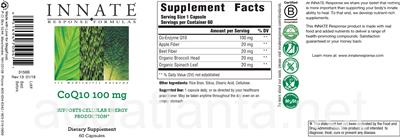
Supplement Facts
The label details for CoQ10 100 mg by Innate Response Formulas, sourced from the NIH Dietary Supplement Label Database.
Supplement Facts
| Ingredient | Amount | % DV |
|---|---|---|
| Coenzyme Q-10 | 100 mg | -- |
| Spinach | 20 mg | -- |
| Apple Fiber | 20 mg | -- |
| Broccoli | 20 mg | -- |
| Beet Fiber | 20 mg | -- |
Other ingredients: Rice Bran, Silica, Stearic Acid, Cellulose
Tap any ingredient to jump to its full detail below.
These statements are the manufacturer’s wording, reproduced from the product label — the label is saying it, not HelloPharmacist. We don’t verify or endorse them.
General Statements
Please recycle
Vis medicatrix naturae
To learn about our seal, please visit innateresponse.com/standards. Acuatlanta.net
At Innate Response we share your belief that nothing is more important than supporting your body's innate ability to heal. To that end, we develop nutrient-rich supplements. Learn more at: www.innateresponse.com
Formulation
Supports cellular energy production
Glyphosate Residue Free detoxfreeproject.org Tested 125+ Pesticides & Herbicides Tested Gluten Free Dairy Free Soy Free No Magnesium Stearate
This Innate Response product is made with real food and added nutrients to deliver a range of health-promoting compounds. Satisfaction guaranteed or your money back.
FDA Statement of Identity
Dietary Supplement
Suggested/Recommended/Usage/Directions
Suggested Use: 1 capsule daily, or as directed by your healthcare practitioner. May be taken anytime throughout the day even on an empty stomach.
Seals/Symbols
Certified B Corporations Glyphosate Residue Free detoxfreeproject.org Tested 125+ Pesticides & Herbicides Tested Gluten Free
FDA Disclaimer Statement
This statement has not been evaluated by the Food and Drug Administration. This product is not intended to diagnose, treat, cure or prevent any disease.
Is this label outdated? Report a formula or label change and our pharmacy team will review it.
CoQ10 100 mg by Innate Response Formulas label
The label scan from the NIH Dietary Supplement Label Database. Tap to enlarge.
Label images are published by the NIH Dietary Supplement Label Database for the version of this product on file. Always read your actual product label.
View the full label (PDF)The Ingredients in CoQ10 100 mg by Innate Response Formulas
These are the 5 active ingredients this product is made of. Select any to open its full monograph.
Serving size1 Capsule(s) Dosage formCapsule Amounts shown are per serving.
Most supplement products combine several ingredients, and a medication can interact with the product through any one of them. Each ingredient below shows whether it has known drug interactions.
Coenzyme Q-10
Interacts with198 drugs
CoQ10 is a vitamin-like substance your body makes naturally that helps cells produce energy and acts as an antioxidant. It is generally well tolerated...
Coenzyme Q-10 monograph & interactionsSpinach
Interacts with88 drugs
Spinach is a nutrient-dense leafy green that is a healthy part of a balanced diet, providing vitamins, minerals, fiber, and antioxidants. While it is...
Spinach monograph & interactionsApple Fiber
Interacts with300 drugs
Apples are a nutritious whole food that provides fiber, vitamins, and antioxidant plant compounds, and eating them regularly fits well into a healthy...
Apple Fiber monograph & interactionsBroccoli
Interacts with187 drugs
Broccoli is a nutritious cruciferous vegetable rich in fiber, vitamins, and plant compounds like sulforaphane that have drawn scientific interest for...
Broccoli monograph & interactionsBeet Fiber
Interacts with863 drugs
Beet, especially beetroot juice, is a nitrate-rich food that may modestly lower blood pressure and slightly improve exercise performance in some peopl...
Beet Fiber monograph & interactionsOther (inactive) ingredients: Rice Bran, Silica, Stearic Acid, Cellulose. These complete the product’s ingredient list but are not active constituents.
CoQ10 100 mg by Innate Response Formulas Drug Interactions
HelloPharmacist Interaction Report
CoQ10 100 mg by Innate Response Formulas does interact with several medication types.
The most serious concern is with drugs that move through cells via a transporter called OATP (organic anion-transporting polypeptide)—apple fiber in this product can significantly reduce how much of those drugs your body absorbs, which may make them less effective. This is a Major severity interaction and includes medications like fexofenadine (an allergy drug), atenolol (a blood pressure and heart medication), and aliskiren (a blood pressure drug).
Read the full breakdown — every affected drug type, severity by severity
Moderate interactions are documented with blood thinners like warfarin, where both CoQ10 and spinach can interfere with how the drug works and may require dose adjustment. CoQ10 and apple fiber also interact with blood pressure medications (antihypertensive drugs) in different ways—CoQ10 may add to their effect, while apple fiber may raise blood pressure.
Spinach and apple fiber can both affect blood sugar control if you're on diabetes medications. Broccoli can speed up how your liver breaks down certain drugs that are metabolized by enzymes called CYP1A2 and CYP2A6.
Beet fiber may increase levels of drugs metabolized by CYP3A4 and theoretically affect blood pressure and blood sugar control as well. CoQ10 also has a Moderate interaction with chemotherapy drugs (alkylating agents) and a Minor interaction with lithium.
Altogether, these interactions span 971 individual medications. Because this product contains multiple ingredients with documented interactions, it's essential to check your exact medications using the tool on this page before you start.
Check your own medications below · Editorial policy · How we use AI
Want to check YOUR meds against CoQ10 100 mg?
Ask about interactions with your drugs in plain English — “Can I take it with lisinopril?” — and we find you the answer in seconds, ingredient by ingredient.
Go to the checkerIngredients driving the most interactions
Individual Drug Interactions
The ingredients in CoQ10 100 mg interact with 985 drugs. Click any drug to see the details.
5 of the 5 ingredients in CoQ10 100 mg interact with drugs. Each result below shows which ingredient is responsible. Beet Fiber Apple Fiber Coenzyme Q-10 Broccoli Spinach
AtorvastatinAtorvaliq
How Atorvastatin interacts with CoQ10 100 mg — through 2 ingredients. Tap an ingredient for the detail:
Apple FiberOrganic Anion-transporting Polypeptide Substrates (oatp) Major
Interaction Summary
Concomitant consumption of apple juice can significantly decrease oral absorption and blood levels of OATP substrates.
Read the full Apple Fiber + Atorvastatin interactionBeet FiberCytochrome P450 3a4 (cyp3a4) Substrates Moderate
Interaction Summary
Theoretically, beet might increase the levels of CYP3A4 substrates.
Read the full Beet Fiber + Atorvastatin interactionAtorvastatin CalciumLipitor
How Atorvastatin Calcium interacts with CoQ10 100 mg — through 2 ingredients. Tap an ingredient for the detail:
Apple FiberOrganic Anion-transporting Polypeptide Substrates (oatp) Major
Interaction Summary
Concomitant consumption of apple juice can significantly decrease oral absorption and blood levels of OATP substrates.
Read the full Apple Fiber + Atorvastatin Calcium interactionBeet FiberCytochrome P450 3a4 (cyp3a4) Substrates Moderate
Interaction Summary
Theoretically, beet might increase the levels of CYP3A4 substrates.
Read the full Beet Fiber + Atorvastatin Calcium interactionBosentanTracleer
How Bosentan interacts with CoQ10 100 mg — through 3 ingredients. Tap an ingredient for the detail:
Apple FiberOrganic Anion-transporting Polypeptide Substrates (oatp), Antihypertensive Drugs Major
Interaction Summary
Concomitant consumption of apple juice can significantly decrease oral absorption and blood levels of OATP substrates.
Read the full Apple Fiber + Bosentan interactionBeet FiberAntihypertensive Drugs, Cytochrome P450 3a4 (cyp3a4) Substrates Moderate
Interaction Summary
Beet and beetroot contain nitrates, which can cause vasodilation, potentially leading to lower blood pressure.
Read the full Beet Fiber + Bosentan interactionCoenzyme Q-10Antihypertensive Drugs Minor
Interaction Summary
Theoretically, coenzyme Q10 might have additive effects with antihypertensive drugs.
Read the full Coenzyme Q-10 + Bosentan interactionBrincidofovirTembexa
How Brincidofovir interacts with CoQ10 100 mg — through 1 ingredient. Tap an ingredient for the detail:
Apple FiberOrganic Anion-transporting Polypeptide Substrates (oatp) Major
Interaction Summary
Concomitant consumption of apple juice can significantly decrease oral absorption and blood levels of OATP substrates.
Read the full Apple Fiber + Brincidofovir interactionCeliprololCelicard
How Celiprolol interacts with CoQ10 100 mg — through 3 ingredients. Tap an ingredient for the detail:
Apple FiberAntihypertensive Drugs, Organic Anion-transporting Polypeptide Substrates (oatp) Major
Interaction Summary
Consuming apple juice with antihypertensive drugs might interfere with blood pressure control.
Read the full Apple Fiber + Celiprolol interactionCoenzyme Q-10Antihypertensive Drugs Minor
Interaction Summary
Theoretically, coenzyme Q10 might have additive effects with antihypertensive drugs.
Read the full Coenzyme Q-10 + Celiprolol interactionBeet FiberAntihypertensive Drugs Minor
Interaction Summary
Beet and beetroot contain nitrates, which can cause vasodilation, potentially leading to lower blood pressure.
Read the full Beet Fiber + Celiprolol interactionCerivastatin SodiumBaycol
How Cerivastatin Sodium interacts with CoQ10 100 mg — through 1 ingredient. Tap an ingredient for the detail:
Apple FiberOrganic Anion-transporting Polypeptide Substrates (oatp) Major
Interaction Summary
Concomitant consumption of apple juice can significantly decrease oral absorption and blood levels of OATP substrates.
Read the full Apple Fiber + Cerivastatin Sodium interactionCinoxacinCinobac
How Cinoxacin interacts with CoQ10 100 mg — through 1 ingredient. Tap an ingredient for the detail:
Apple FiberOrganic Anion-transporting Polypeptide Substrates (oatp) Major
Interaction Summary
Concomitant consumption of apple juice can significantly decrease oral absorption and blood levels of OATP substrates.
Read the full Apple Fiber + Cinoxacin interactionCiprofloxacinCiloxan, Cipro, Cipro IV, Cipro XR, Ciprobay, Otiprio
How Ciprofloxacin interacts with CoQ10 100 mg — through 1 ingredient. Tap an ingredient for the detail:
Apple FiberOrganic Anion-transporting Polypeptide Substrates (oatp) Major
Interaction Summary
Concomitant consumption of apple juice can significantly decrease oral absorption and blood levels of OATP substrates.
Read the full Apple Fiber + Ciprofloxacin interactionCiprofloxacin, HydrocortisoneCipro HC Otic
How Ciprofloxacin, Hydrocortisone interacts with CoQ10 100 mg — through 1 ingredient. Tap an ingredient for the detail:
Apple FiberOrganic Anion-transporting Polypeptide Substrates (oatp) Major
Interaction Summary
Concomitant consumption of apple juice can significantly decrease oral absorption and blood levels of OATP substrates.
Read the full Apple Fiber + Ciprofloxacin, Hydrocortisone interactionClinafloxacinClinafloxacin
How Clinafloxacin interacts with CoQ10 100 mg — through 1 ingredient. Tap an ingredient for the detail:
Apple FiberOrganic Anion-transporting Polypeptide Substrates (oatp) Major
Interaction Summary
Concomitant consumption of apple juice can significantly decrease oral absorption and blood levels of OATP substrates.
Read the full Apple Fiber + Clinafloxacin interactionEnoxacinPenetrex
How Enoxacin interacts with CoQ10 100 mg — through 1 ingredient. Tap an ingredient for the detail:
Apple FiberOrganic Anion-transporting Polypeptide Substrates (oatp) Major
Interaction Summary
Concomitant consumption of apple juice can significantly decrease oral absorption and blood levels of OATP substrates.
Read the full Apple Fiber + Enoxacin interactionEtoposideEtopophos, VePesid, VP16
How Etoposide interacts with CoQ10 100 mg — through 2 ingredients. Tap an ingredient for the detail:
Apple FiberOrganic Anion-transporting Polypeptide Substrates (oatp) Major
Interaction Summary
Concomitant consumption of apple juice can significantly decrease oral absorption and blood levels of OATP substrates.
Read the full Apple Fiber + Etoposide interactionBeet FiberCytochrome P450 3a4 (cyp3a4) Substrates Moderate
Interaction Summary
Theoretically, beet might increase the levels of CYP3A4 substrates.
Read the full Beet Fiber + Etoposide interactionEzetimibe, AtorvastatinLiptruzet
How Ezetimibe, Atorvastatin interacts with CoQ10 100 mg — through 2 ingredients. Tap an ingredient for the detail:
Apple FiberOrganic Anion-transporting Polypeptide Substrates (oatp) Major
Interaction Summary
Concomitant consumption of apple juice can significantly decrease oral absorption and blood levels of OATP substrates.
Read the full Apple Fiber + Ezetimibe, Atorvastatin interactionBeet FiberCytochrome P450 3a4 (cyp3a4) Substrates Moderate
Interaction Summary
Theoretically, beet might increase the levels of CYP3A4 substrates.
Read the full Beet Fiber + Ezetimibe, Atorvastatin interactionFexofenadineAllegra
How Fexofenadine interacts with CoQ10 100 mg — through 2 ingredients. Tap an ingredient for the detail:
Apple FiberOrganic Anion-transporting Polypeptide Substrates (oatp), Fexofenadine (allegra) Major
Interaction Summary
Concomitant consumption of apple juice can significantly decrease oral absorption and blood levels of OATP substrates.
Read the full Apple Fiber + Fexofenadine interactionBeet FiberCytochrome P450 3a4 (cyp3a4) Substrates Moderate
Interaction Summary
Theoretically, beet might increase the levels of CYP3A4 substrates.
Read the full Beet Fiber + Fexofenadine interactionFexofenadine, PseudoephedrineAllegra D
How Fexofenadine, Pseudoephedrine interacts with CoQ10 100 mg — through 2 ingredients. Tap an ingredient for the detail:
Apple FiberOrganic Anion-transporting Polypeptide Substrates (oatp), Fexofenadine (allegra) Major
Interaction Summary
Concomitant consumption of apple juice can significantly decrease oral absorption and blood levels of OATP substrates.
Read the full Apple Fiber + Fexofenadine, Pseudoephedrine interactionBeet FiberCytochrome P450 3a4 (cyp3a4) Substrates Moderate
Interaction Summary
Theoretically, beet might increase the levels of CYP3A4 substrates.
Read the full Beet Fiber + Fexofenadine, Pseudoephedrine interactionFluvastatinLescol, Lescol XL
How Fluvastatin interacts with CoQ10 100 mg — through 1 ingredient. Tap an ingredient for the detail:
Apple FiberOrganic Anion-transporting Polypeptide Substrates (oatp) Major
Interaction Summary
Concomitant consumption of apple juice can significantly decrease oral absorption and blood levels of OATP substrates.
Read the full Apple Fiber + Fluvastatin interactionGatifloxacinTequin, Tequin Injection
How Gatifloxacin interacts with CoQ10 100 mg — through 1 ingredient. Tap an ingredient for the detail:
Apple FiberOrganic Anion-transporting Polypeptide Substrates (oatp) Major
Interaction Summary
Concomitant consumption of apple juice can significantly decrease oral absorption and blood levels of OATP substrates.
Read the full Apple Fiber + Gatifloxacin interactionGemifloxacinFactive
How Gemifloxacin interacts with CoQ10 100 mg — through 1 ingredient. Tap an ingredient for the detail:
Apple FiberOrganic Anion-transporting Polypeptide Substrates (oatp) Major
Interaction Summary
Concomitant consumption of apple juice can significantly decrease oral absorption and blood levels of OATP substrates.
Read the full Apple Fiber + Gemifloxacin interactionGlyburideAlbert Glyburide, Diabeta, Glycron, Glynase, Glynase PresTab, Micronase +1 more
How Glyburide interacts with CoQ10 100 mg — through 2 ingredients. Tap an ingredient for the detail:
Apple FiberOrganic Anion-transporting Polypeptide Substrates (oatp), Antidiabetes Drugs Major
Interaction Summary
Concomitant consumption of apple juice can significantly decrease oral absorption and blood levels of OATP substrates.
Read the full Apple Fiber + Glyburide interactionSpinachAntidiabetes Drugs Moderate
Interaction Summary
There are claims that spinach leaves have hypoglycemic effects.
Read the full Spinach + Glyburide interactionGlyburide, MetforminGlucovance
How Glyburide, Metformin interacts with CoQ10 100 mg — through 2 ingredients. Tap an ingredient for the detail:
Apple FiberAntidiabetes Drugs, Organic Anion-transporting Polypeptide Substrates (oatp) Major
Interaction Summary
Theoretically, consuming apple juice with antidiabetes drugs might interfere with blood glucose control.
Read the full Apple Fiber + Glyburide, Metformin interactionSpinachAntidiabetes Drugs Moderate
Interaction Summary
There are claims that spinach leaves have hypoglycemic effects.
Read the full Spinach + Glyburide, Metformin interactionGrepafloxacinRaxar
How Grepafloxacin interacts with CoQ10 100 mg — through 3 ingredients. Tap an ingredient for the detail:
Apple FiberOrganic Anion-transporting Polypeptide Substrates (oatp) Major
Interaction Summary
Concomitant consumption of apple juice can significantly decrease oral absorption and blood levels of OATP substrates.
Read the full Apple Fiber + Grepafloxacin interactionBroccoliCytochrome P450 1a2 (cyp1a2) Substrates Moderate
Interaction Summary
Theoretically, broccoli might reduce the levels and effects of drugs metabolized by CYP1A2.
Read the full Broccoli + Grepafloxacin interactionBeet FiberCytochrome P450 1a2 (cyp1a2) Substrates Minor
Interaction Summary
Theoretically, beet might decrease the levels and clinical effects of CYP1A2 substrates.
Read the full Beet Fiber + Grepafloxacin interactionIrinotecanCamptosar, Onivyde
How Irinotecan interacts with CoQ10 100 mg — through 2 ingredients. Tap an ingredient for the detail:
Apple FiberOrganic Anion-transporting Polypeptide Substrates (oatp) Major
Interaction Summary
Concomitant consumption of apple juice can significantly decrease oral absorption and blood levels of OATP substrates.
Read the full Apple Fiber + Irinotecan interactionBeet FiberCytochrome P450 3a4 (cyp3a4) Substrates Moderate
Interaction Summary
Theoretically, beet might increase the levels of CYP3A4 substrates.
Read the full Beet Fiber + Irinotecan interactionIrinotecan Hydrochloride
How Irinotecan Hydrochloride interacts with CoQ10 100 mg — through 2 ingredients. Tap an ingredient for the detail:
Apple FiberOrganic Anion-transporting Polypeptide Substrates (oatp) Major
Interaction Summary
Concomitant consumption of apple juice can significantly decrease oral absorption and blood levels of OATP substrates.
Read the full Apple Fiber + Irinotecan Hydrochloride interactionBeet FiberCytochrome P450 3a4 (cyp3a4) Substrates Moderate
Interaction Summary
Theoretically, beet might increase the levels of CYP3A4 substrates.
Read the full Beet Fiber + Irinotecan Hydrochloride interactionIsoniazid, Pyrazinamide, RifampinRifater
How Isoniazid, Pyrazinamide, Rifampin interacts with CoQ10 100 mg — through 1 ingredient. Tap an ingredient for the detail:
Apple FiberOrganic Anion-transporting Polypeptide Substrates (oatp) Major
Interaction Summary
Concomitant consumption of apple juice can significantly decrease oral absorption and blood levels of OATP substrates.
Read the full Apple Fiber + Isoniazid, Pyrazinamide, Rifampin interactionIsoniazid, RifampinRifamate
How Isoniazid, Rifampin interacts with CoQ10 100 mg — through 1 ingredient. Tap an ingredient for the detail:
Apple FiberOrganic Anion-transporting Polypeptide Substrates (oatp) Major
Interaction Summary
Concomitant consumption of apple juice can significantly decrease oral absorption and blood levels of OATP substrates.
Read the full Apple Fiber + Isoniazid, Rifampin interactionLevofloxacinLeva-pak, Levaquin, Levaquin Injection
How Levofloxacin interacts with CoQ10 100 mg — through 1 ingredient. Tap an ingredient for the detail:
Apple FiberOrganic Anion-transporting Polypeptide Substrates (oatp) Major
Interaction Summary
Concomitant consumption of apple juice can significantly decrease oral absorption and blood levels of OATP substrates.
Read the full Apple Fiber + Levofloxacin interactionLevofloxacin (ophthalmic)Levofloxacin
How Levofloxacin (ophthalmic) interacts with CoQ10 100 mg — through 1 ingredient. Tap an ingredient for the detail:
Apple FiberOrganic Anion-transporting Polypeptide Substrates (oatp) Major
Interaction Summary
Concomitant consumption of apple juice can significantly decrease oral absorption and blood levels of OATP substrates.
Read the full Apple Fiber + Levofloxacin (ophthalmic) interactionLomefloxacinMaxaquin
How Lomefloxacin interacts with CoQ10 100 mg — through 1 ingredient. Tap an ingredient for the detail:
Apple FiberOrganic Anion-transporting Polypeptide Substrates (oatp) Major
Interaction Summary
Concomitant consumption of apple juice can significantly decrease oral absorption and blood levels of OATP substrates.
Read the full Apple Fiber + Lomefloxacin interactionLovastatinAltocor, Mevacor
How Lovastatin interacts with CoQ10 100 mg — through 2 ingredients. Tap an ingredient for the detail:
Apple FiberOrganic Anion-transporting Polypeptide Substrates (oatp) Major
Interaction Summary
Concomitant consumption of apple juice can significantly decrease oral absorption and blood levels of OATP substrates.
Read the full Apple Fiber + Lovastatin interactionBeet FiberCytochrome P450 3a4 (cyp3a4) Substrates Moderate
Interaction Summary
Theoretically, beet might increase the levels of CYP3A4 substrates.
Read the full Beet Fiber + Lovastatin interactionMethotrexateOtrexup, Rasuvo, Reditrex, Rheumatrex
How Methotrexate interacts with CoQ10 100 mg — through 1 ingredient. Tap an ingredient for the detail:
Apple FiberOrganic Anion-transporting Polypeptide Substrates (oatp) Major
Interaction Summary
Concomitant consumption of apple juice can significantly decrease oral absorption and blood levels of OATP substrates.
Read the full Apple Fiber + Methotrexate interactionEach ingredient & the kinds of drugs it affects
For each ingredient in CoQ10 100 mg with known interactions, here are the types of medications they can affect. Open any type for the detail — or search your exact drug in the checker above.
Beet Fiber
Cytochrome P450 3A4 (Cyp3A4) Substrates
Theoretically, beet might increase the levels of CYP3A4 substrates.
In vitro research suggests that betanin, the major pigment in beet, competitively inhibits CYP3A4 in a dose-dependent manner similarly to strong CYP3A4 inhibitor ketoconazole.
Antihypertensive Drugs
Beet and beetroot contain nitrates, which can cause vasodilation, potentially leading to lower blood pressure. However, a study published in the European Journal of Clinical Nutrition using concentrated beetroot juice found no significant impact on blood pressure or heart rate in different age groups. Other small clinical studies suggest that while beet consumption might transiently lower blood pressure due to vessel dilation, there's no consistent evidence of a lasting effect. Overall, the theoretical risk of reduced blood pressure due to beet's nitrate content exists, but studies generally indicate a low and temporary impact rather than a sustained decrease.
Cytochrome P450 1A2 (Cyp1A2) Substrates
Theoretically, beet might decrease the levels and clinical effects of CYP1A2 substrates.
In vitro research suggests that beet induces CYP1A2 enzymes.
Apple Fiber
Organic Anion-Transporting Polypeptide Substrates (Oatp)
Concomitant consumption of apple juice can significantly decrease oral absorption and blood levels of OATP substrates.
Research shows that consuming apple juice inhibits OATP, which reduces bioavailability of oral drugs that are substrates of OATP. Fexofenadine, atenolol, and aliskiren are substrates of OATP. Clinical research shows that coadministration of apple juice decreases bioavailability of fexofenadine by up to 78%, aliskiren by 63%, and atenolol by up to 82%. These effects appear to increase with larger quantities of apple juice. It is thought that apple juice might affect OATP for only a short time. Therefore, separating drug administration and consumption of apple juice by at least 4 hours might avoid this interaction.
Aliskiren (Tekturna, Rasilez)
Concomitant consumption of apple juice can significantly decrease oral absorption and blood levels of aliskiren.
Pharmacokinetic research shows that coadministration of apple juice 200 mL along with aliskiren 150 mg decreases the bioavailability of aliskiren by 63%. Apple juice seems to inhibit organic anion transporting polypeptide (OATP), which is involved in drug uptake in the gut, liver, and kidney. It is thought that apple juice might affect OATP for only a short time. Therefore, separating drug administration and consumption of apple juice by at least 4 hours might avoid this interaction.
Antidiabetes Drugs
Theoretically, consuming apple juice with antidiabetes drugs might interfere with blood glucose control.
Clinical research suggests that consuming apples or drinking apple juice can raise blood glucose levels, with the effects of drinking apple juice being more significant than consuming apples.
Antihypertensive Drugs
Consuming apple juice with antihypertensive drugs might interfere with blood pressure control.
Some clinical evidence suggests that consuming apple and cherry juice can increase blood pressure in elderly patients.
Atenolol (Tenormin)
Concomitant consumption of apple juice can significantly decrease oral absorption and blood levels of atenolol.
Pharmacokinetic research shows that coadministration of apple juice 600-1200 mL decreases levels of atenolol by 58% to 82% in a dose-dependent manner. Apple juice seems to inhibit organic anion transporting polypeptide (OATP), which is involved in drug uptake in the gut, liver, and kidney. It is thought that apple juice might affect OATP for only a short time. Therefore, separating drug administration and consumption of apple juice by at least 4 hours might avoid this interaction.
Fexofenadine (Allegra)
Concomitant consumption of apple juice can significantly decrease oral absorption and blood levels of fexofenadine.
Pharmacokinetic research shows that coadministration of apple juice 400-1200 mL along with fexofenadine 60-120 mg decreases bioavailability of fexofenadine by up to 78%. Coadministration with smaller quantities of apple juice (150 mL or less) does not appear to affect the bioavailability of fexofenadine. Apple juice seems to inhibit organic anion transporting polypeptide (OATP), which is involved in drug uptake in the gut, liver, and kidney. It is thought that apple juice might affect OATP for only a short time. Therefore, separating drug administration and consumption of apple juice by at least 4 hours might avoid this interaction.
Lithium
There is some concern that concomitant consumption of apple juice might decrease oral absorption and blood levels of lithium.
In one case report, a patient had an undetectable serum lithium level when lithium citrate was administered with apple juice. When lithium was administered with an alternative beverage, the lithium level became detectable and the patient demonstrated clinical improvement.
Coenzyme Q-10
Alkylating Agents
Coenzyme Q10 has antioxidant effects. Theoretically, this may reduce the activity of chemotherapy drugs that generate free radicals.
Theoretically, antioxidants such as coenzyme Q10 might protect tumor cells from chemotherapeutic agents that work by inducing oxidative stress, such as alkylating agents (e.g., cyclophosphamide) and radiation therapy. The clinical importance of this interaction is unknown.
Warfarin (Coumadin)
Coenzyme Q10 is chemically similar to menaquinone and might have vitamin K-like procoagulant effects, which could decrease the effects of warfarin.
Concomitant use of coenzyme Q10 and warfarin might reduce the anticoagulant effects of warfarin. Four cases of decreased warfarin efficacy thought to be due to coenzyme Q10 have been reported. However, there is some preliminary clinical research that suggests coenzyme Q10 might not significantly decrease the effects of warfarin in patients who have a stable INR.
Antihypertensive Drugs
Theoretically, coenzyme Q10 might have additive effects with antihypertensive drugs.
Some clinical research shows that coenzyme Q10 can significantly lower blood pressure, although other studies have shown conflicting results.
Broccoli
Cytochrome P450 1A2 (Cyp1A2) Substrates
Theoretically, broccoli might reduce the levels and effects of drugs metabolized by CYP1A2.
Pharmacokinetic research in humans shows that eating 500 grams of fresh broccoli daily for 6-12 days can increase CYP1A2 activity by 10% to 200%. Induction of CYP1A2 activity by broccoli is attributed to its glucosinolate constituents.
Cytochrome P450 2A6 (Cyp2A6) Substrates
Theoretically, broccoli might reduce the levels and effects of drugs metabolized by CYP2A6.
Pharmacokinetic research in humans shows that eating 500 grams of broccoli daily for 6 days increases CYP2A6 activity by 135% to 550%. Induction of CYP2A6 activity is attributed to its glucosinolate constituents.
Spinach
Antidiabetes Drugs
There are claims that spinach leaves have hypoglycemic effects. Evidence from clinical research suggests that consumption of a spinach-rich meal reduces post-meal blood glucose levels. Theoretically, spinach might have additive effects with antidiabetes drugs and increase the risk of hypoglycemia. Monitor blood glucose levels closely. Dose adjustments might be necessary. Some antidiabetes drugs include glimepiride (Amaryl), glyburide (DiaBeta, Glynase PresTab, Micronase), insulin, pioglitazone (Actos), rosiglitazone (Avandia), and others.
Warfarin (Coumadin)
Spinach contains vitamin K, which can interfere with the activity of warfarin.
In human research, although eating spinach with one meal does not result in coagulation test results outside the therapeutic range, daily consumption for one week necessitates dose adjustment of warfarin. Individuals using anticoagulants should consume a consistent daily amount of spinach to maintain the effect of anticoagulant therapy.
Brand information
Manufacturer and brand details for CoQ10 100 mg, from the product label.
Innate Response Formulas
See all Innate Response Formulas products- Name
- MegaFood
- Street Address
- P.O. Box 5244
- City
- Manchester
- State
- NH
- ZipCode
- 03108
- Phone Number
- 800-634-6342
- Web Address
- www.innateresponse.com
CoQ10 100 mg by Innate Response Formulas: Common Questions
Does CoQ10 100 mg by Innate Response Formulas interact with any medications?
How can one product interact with so many drugs?
Where does this information come from?
What is CoQ10 and why would I take it?
Are there side effects?
Is it safe to take while I'm pregnant or breastfeeding?
Can I take this with my blood pressure or heart medication?
What if I take warfarin or another blood thinner?
What are the inactive ingredients?
Written and reviewed by the HelloPharmacist editorial staff. Our editorial policy
Not sure if CoQ10 100 mg is safe with your meds?
Our pharmacists answer your medication & supplement questions — free.
Label information is sourced from the NIH Dietary Supplement Label Database and reflects the product version on file; always read your actual product label. This page is for education only and is not a substitute for professional medical advice. Confirm with your pharmacist or doctor before combining supplements and medications.
The Full Monographs Behind CoQ10 100 mg’s Ingredients
Every ingredient we hold a full HelloPharmacist monograph for — uses, evidence, safety, and the complete interaction list.
Coenzyme Q10
Interacts with 198 drugsCoQ10 is a vitamin-like substance your body makes naturally that helps cells produce energy and acts as an antioxidant. It is generally well tolerated and is most studied for heart condition...
Read the full Coenzyme Q10 monograph → Herb & supplement monographSpinach
Interacts with 88 drugsSpinach is a nutrient-dense leafy green that is a healthy part of a balanced diet, providing vitamins, minerals, fiber, and antioxidants. While it is very safe as a food, concentrated supple...
Read the full Spinach monograph → Herb & supplement monographApple
Interacts with 300 drugsApples are a nutritious whole food that provides fiber, vitamins, and antioxidant plant compounds, and eating them regularly fits well into a healthy diet. While research suggests apples may...
Read the full Apple monograph → Herb & supplement monographBroccoli
Interacts with 187 drugsBroccoli is a nutritious cruciferous vegetable rich in fiber, vitamins, and plant compounds like sulforaphane that have drawn scientific interest for health benefits. Eating broccoli as food...
Read the full Broccoli monograph → Herb & supplement monographBeet
Interacts with 863 drugsBeet, especially beetroot juice, is a nitrate-rich food that may modestly lower blood pressure and slightly improve exercise performance in some people. It is generally safe as a food, but s...
Read the full Beet monograph →Sources & How We Checked
CoQ10 100 mg's label data comes from the NIH Dietary Supplement Label Database; the ingredient interaction data is from the Natural Medicines database, reviewed by our pharmacists.
- NIH Dietary Supplement Label Database (DSLD) — The official product label on file for this supplement.
- Natural Medicines (Therapeutic Research Center) — Evidence-graded clinical reference behind the ingredient interaction data.
Content is written and reviewed by licensed HelloPharmacist pharmacists. See our data sources and editorial standards for how this information is built and checked.
The 77 references behind this product’s interaction data
Every citation that drives the interaction findings for this product’s ingredients, from the evidence-graded Natural Medicines (TRC Healthcare) database. Open an ingredient to browse its citations — links open the study on PubMed or the publisher’s site.
Coenzyme Q10 40 references
- Kamikawa T, Kobayashi A, Yamashita T, et al. Effects of coenzyme Q10 on exercise tolerance in chronic stable angina pectoris. Am J Cardiol 1985;56:247-51. PubMed
- Langsjoen P, Willis R, Folkers K. Treatment of essential hypertension with coenzyme Q10. Mol Aspects Med 1994;S265-72. PubMed
- Spigset O. Reduced effect of warfarin caused by ubidecarenone. Lancet 1994;334:1372-3. PubMed
- Singh RB, Niaz MA, Rastogi SS, et al. Effect of hydrosoluble coenzyme Q10 on blood pressures and insulin resistance in hypertensive patients with coronary artery disease. J Hum Hypertens 1999;13:203-8. PubMed
- Portakal O, Ozkaya O, Erden Inal M, et al. Coenzyme Q10 concentrations and antioxidant status in tissues of breast cancer patients. Clin Biochem 2000;33:279-84. PubMed
- Lund EL, Quistorff B, Spang-Thomsen M, Kristjansen PE. Effect of radiation therapy on small-cell lung cancer is reduced by ubiquinone intake. Folia Microbiol (Praha) 1998;43:505-6. PubMed
- Langsjoen PH, Langsjoen PH, Folkers K. Long-term efficacy and safety of coenzyme Q10 therapy for idiopathic dilated cardiomyopathy. Am J Cardiol 1990;65:521-3. PubMed
- Heck AM, DeWitt BA, Lukes AL. Potential interactions between alternative therapies and warfarin. Am J Health Syst Pharm 2000;57:1221-7. DOI
- Landbo C, Almdal TP. [Interaction between warfarin and coenzyme Q10]. Ugeskr Laeger 1998;160:3226-7.
- Baggio E, Gandini R, Plauncher AC, et al. Italian multicenter study on the safety and efficacy of coenzyme Q10 as adjunctive therapy in heart failure. CoQ10 Drug Surveillance Investigators. Mol Aspects Med 1994;15 Suppl:S287-94. PubMed
- Burke BE, Neuenschwander R, Olson RD. Randomized, double-blind, placebo-controlled trial of coenzyme Q10 in isolated systolic hypertension. South Med J 2001;94:1112-7. PubMed
- The Huntington Study Group. A randomized, placebo-controlled trial of coenzyme Q10 and remacemide in Huntington's disease. Neurology 2001;57:397-404.
- Hodgson JM, Watts GF, Playford DA, et al. Coenzyme Q10 improves blood pressure and glycaemic control: a controlled trial in subjects with type 2 diabetes. Eur J Clin Nutr 2002;56:1137-42. PubMed
- Singh RB, Neki NS, Kartikey K, et al. Effect of coenzyme Q10 on risk of atherosclerosis in patients with recent myocardial infarction. Mol Cell Biochem 2003;246:75-82. DOI
- Porterfield LM. Why did the response to warfarin change? RN 2000;63:107.
- Sandor PS, Di Clemente L, Coppola G, et al. Efficacy of coenzyme Q10 in migraine prophylaxis: A randomized controlled trial. Neurology 2005;64:713-5. PubMed
- Engelsen J, Nielsen JD, Winther K. Effect of coenzyme Q10 and Ginkgo biloba on warfarin dosage in stable, long-term warfarin treated outpatients. A randomised, double blind, placebo-crossover trial. Thromb Haemost 2002;87:1075-6. DOI
- Berman M, Erman A, Ben-Gal T, et al. Coenzyme Q10 in patients with end-stage heart failure awaiting cardiac transplantation: a randomized, placebo-controlled study. Clin Cardiol 2004;27:295–9. PubMed
- Storch A, Jost WH, Vieregge P, et al. Randomized, double-blind, placebo-controlled trial on symptomatic effects of coenzyme Q10 in Parkinson disease. Arch Neurol 2007;64:938-44. DOI
- Digiesi V, Cantini F, Oradei A, et al. Coenzyme Q10 in essential hypertension. Mol Aspects Med 1994;15 Suppl:s257-63. PubMed
- Yamagami T, Takagi M, Akagami H, et al. Effect of coenzyme Q10 on essential hypertension, a double blind controlled study. In: Folkers KA, Yamamura Y, eds. Biomedical and Clinical Aspects of Coenzyme Q, Vol. 5. Amsterdam: Elsevier Science Publications, 19
- Ho MJ, Bellusci A, Wright JM. Blood pressure lowering efficacy of coenzyme Q10 for primary hypertension (review). Cochrane Database Syst Rev 2009;(4):CD007435. PubMed
- Rosenfeldt, F. L., Haas, S. J., Krum, H., Hadj, A., Ng, K., Leong, J. Y., and Watts, G. F. Coenzyme Q10 in the treatment of hypertension: a meta-analysis of the clinical trials. J Hum.Hypertens. 2007;21(4):297-306. PubMed
- Stamelou, M., Reuss, A., Pilatus, U., Magerkurth, J., Niklowitz, P., Eggert, K. M., Krisp, A., Menke, T., Schade-Brittinger, C., Oertel, W. H., and Hoglinger, G. U. Short-term effects of coenzyme Q10 in progressive supranuclear palsy: a randomized, place DOI
- Keogh A, Fenton S, Leslie C, et al. Randomised double-blind, placebo-controlled trial of coenzyme Q, therapy in class II and III systolic heart failure. Heart Lung Circ. 2003;12:135-41.
- Gane, E. J., Weilert, F., Orr, D. W., Keogh, G. F., Gibson, M., Lockhart, M. M., Frampton, C. M., Taylor, K. M., Smith, R. A., and Murphy, M. P. The mitochondria-targeted anti-oxidant mitoquinone decreases liver damage in a phase II study of hepatitis C
- Lynch, D. R., Perlman, S. L., and Meier, T. A phase 3, double-blind, placebo-controlled trial of idebenone in friedreich ataxia. Arch Neurol. 2010;67(8):941-947. PubMed
- Young, J. M., Florkowski, C. M., Molyneux, S. L., McEwan, R. G., Frampton, C. M., Nicholls, M. G., Scott, R. S., and George, P. M. A randomized, double-blind, placebo-controlled crossover study of coenzyme Q10 therapy in hypertensive patients with the me
- Ishiyama, T., Morita, Y., Toyama, S., Yamagami, T., and Tsukamoto, N. A clinical study of the effect of coenzyme Q on congestive heart failure. Jpn.Heart J 1976;17(1):32-42. PubMed
- Matthews, P. M., Ford, B., Dandurand, R. J., Eidelman, D. H., O'Connor, D., Sherwin, A., Karpati, G., Andermann, F., and Arnold, D. L. Coenzyme Q10 with multiple vitamins is generally ineffective in treatment of mitochondrial disease. Neurology 1993;43(5
- Malm, C., Svensson, M., Sjoberg, B., Ekblom, B., and Sjodin, B. Supplementation with ubiquinone-10 causes cellular damage during intense exercise. Acta Physiol Scand. 1996;157(4):511-512. PubMed
- Singh, R. B., Wander, G. S., Rastogi, A., Shukla, P. K., Mittal, A., Sharma, J. P., Mehrotra, S. K., Kapoor, R., and Chopra, R. K. Randomized, double-blind placebo-controlled trial of coenzyme Q10 in patients with acute myocardial infarction. Cardiovasc. PubMed
- Digiesi V, Cantini F, and Brodbeck B. Effect of coenzyme Q10 on essential arterial hypertension. Current Therapeutic Research 1990;47(5):841-845.
- Parkinson Study Group QE3 Investigators, Beal MF, Oakes D, et al. A randomized clinical trial of high-dosage coenzyme Q10 in early Parkinson disease: no evidence of benefit. JAMA Neurol. 2014;71(5):543-52.
- Alehagen U, Johansson P, Bjornstedt M, et al. Cardiovascular mortality and N-terminal-proBNP reduced after combined selenium and coenzyme Q10 supplementation: A 5-year prospective randomized double-blind placebo-controlled trial among elderly Swedish citi
- Ho MJ, Li EC, Wright JM. Blood pressure lowering efficacy of coenzyme Q10 for primary hypertension. Cochrane Database Syst Rev. 2016 Mar 3;3:CD007435. doi: 10.1002/14651858.CD007435.pub3. PubMed
- Tabrizi R, Akbari M, Sharifi N, Lankarani KB, Moosazadeh M, Kolahdooz F, et al. The effects of coenzyme Q10 supplementation on blood pressures among patients with metabolic diseases: a systematic review and meta-analysis of randomized controlled trials. PubMed
- Tsai IC, Hsu CW, Chang CH, Tseng PT, Chang KV. Effectiveness of coenzyme Q10 supplementation for reducing fatigue: A systematic review and meta-analysis of randomized controlled trials. Front Pharmacol 2022;13:883251. PubMed
- Yaghini O, Hoseini N, Ghazavi MR, et al. A comparative study on the efficacy of coenzyme Q10 and amitriptyline in the prophylactic treatment of migraine headaches in children: A randomized controlled trial. Adv Biomed Res 2022;11:43. PubMed
- Hansen KS, Mogensen TH, Agergaard J, et al. High-dose coenzyme Q10 therapy versus placebo in patients with post COVID-19 condition: A randomized, phase 2, crossover trial. Lancet Reg Health Eur 2022. PubMed
Spinach 6 references
- Brinker F. Herb Contraindications and Drug Interactions. 2nd ed. Sandy, OR: Eclectic Medical Publications, 1998.
- Karlson, B., Leijd, B., and Hellstrom, K. On the influence of vitamin K-rich vegetables and wine on the effectiveness of warfarin treatment. Acta Med Scand. 1986;220(4):347-350. PubMed
- Roller, E., Meller, S., Homey, B., Ruzicka, T., and Neumann, N. J. [Contact dermatitis caused by spinach, hedge mustard and chives]. Hautarzt 2003;54(4):374-375.
- Schuller, A., Morisset, M., Maadi, F., Kolopp Sarda, M. N., Fremont, S., Parisot, L., Kanny, G., and Moneret-Vautrin, D. A. Occupational asthma due to allergy to spinach powder in a pasta factory. Allergy 2005;60(3):408-409. PubMed
- Gustafsson, K., Asp, N. G., Hagander, B., and Nyman, M. Satiety effects of spinach in mixed meals: comparison with other vegetables. Int.J.Food Sci.Nutr. 1995;46(4):327-334. PubMed
- Schreiber, J., Muller, E., Becker, W. M., Zabel, P., Schlaak, M., and Amthor, M. [Spinach powder-induced exogenous allergic alveolitis]. Pneumologie 1998;52(1):61-65.
Apple 16 references
- The Review of Natural Products by Facts and Comparisons. St. Louis, MO: Wolters Kluwer Co., 1999.
- Bailey DG, Dresser GK, Munoz C, et al. Reduction of fexofenadine bioavailability by fruit juices. Clin Pharmacol Ther 2001;69:P21.
- Rodriguez J, Crespo JF, Lopez-Rubio A, et al. Clinical cross-reactivity among foods of the Rosaceae family. J Allergy Clin Immunol 2000;106:183-189. PubMed
- Greenblatt DJ. Analysis of drug interactions involving fruit beverages and organic anion-transporting polypeptides. J Clin Pharmacol 2009;49:1403-7. PubMed
- Bailey DG. Fruit juice inhibition of uptake transport: a new type of food-drug interaction. Br J Clin Pharmacol 2010;70:645-55. PubMed
- Kamath AV, Yao M, Zhang Y, Chong S. Effect of fruit juices on the oral bioavailability of fexofenadine in rats. J Pharm Sci 2005;94:233-9. PubMed
- Tapaninen T, Neuvonen PJ, Niemi M. Orange and apple juice greatly reduce the plasma concentrations of the OATP2B1 substrate aliskiren. Br J Clin Pharmacol 2011;71:718-26. PubMed
- Jeon H, Jang IJ, Lee S, et al. Apple juice greatly reduces systemic exposure to atenolol. Br J Clin Pharmacol 2012 May 11. doi: 10.1111/j.1365-2125.2012.04324.x. [Epub ahead of print]. PubMed
- Visvanathan, R., Chen, R., Horowitz, M., and Chapman, I. Blood pressure responses in healthy older people to 50 g carbohydrate drinks with differing glycaemic effects. Br J Nutr 2004;92(2):335-340. PubMed
- Asp, N. G., Agardh, C. D., Ahren, B., Dencker, I., Johansson, C. G., Lundquist, I., Nyman, M., Sartor, G., and Schersten, B. Dietary fibre in type II diabetes. Acta Med Scand Suppl 1981;656:47-50. PubMed
- Akamine Y, Miura M, Komori H, et al. Effects of one-time apple juice ingestion on the pharmacokinetics of fexofenadine enantiomers. Eur J Clin Pharmacol. 2014 Sep;70(9):1087-95. PubMed
- Luo J, Imai H, Ohyama T, et al. The Pharmacokinetic Exposure to Fexofenadine is Volume-Dependently Reduced in Healthy Subjects Following Oral Administration With Apple Juice. Clin Transl Sci. 2016 Aug;9(4):201-6. PubMed
- Tsiougkos N, Vovolis V. Repeated anaphylactic episodes to orange and apple. Eur Ann Allergy Clin Immunol. 2013 May;45(3):113-5.
- Rubido S, García-Caballero L, Abeleira MT, Limeres J, García M, Diz P. Effect of chewing an apple on dental plaque removal and on salivary bacterial viability. PLoS One. 2018;13(7):e0199812. PubMed
- Krishnasamy S, Lomer MCE, Marciani L, et al. Processing apples to puree or juice speeds gastric emptying and reduces postprandial intestinal volumes and satiety in healthy adults. J Nutr 2020;150(11):2890-9. PubMed
- Awan S, Abelleira A, Khehra L, Hieber R. Undetectable serum lithium concentrations after coadministration of liquid lithium citrate and apple juice: A case report. Ment Health Clin. 2021;11(1):27-30. PubMed
Broccoli 5 references
- Kristal AR, Lampe JW. Brassica vegetables and prostate cancer risk: a review of the epidemiological evidence. Nutr Cancer 2002;42:1-9. PubMed
- Chakrabarti A, Prais L, Foulds IS. Allergic contact dermatitis to broccoli. Br J Dermatol 2003;148:172-3. PubMed
- Hakooz, N. and Hamdan, I. Effects of dietary broccoli on human in vivo caffeine metabolism: a pilot study on a group of Jordanian volunteers. Curr Drug Metab 2007;8(1):9-15. PubMed
- Kall MA, Vang O, Clausen J. Effects of dietary broccoli on human drug metabolising activity. Cancer Lett. 1997;114(1-2):169-70. PubMed
- Bauman JE, Hsu CH, Centuori S, et al. Randomized Crossover Trial Evaluating Detoxification of Tobacco Carcinogens by Broccoli Seed and Sprout Extract in Current Smokers. Cancers (Basel). 2022;14(9):2129. Published 2022 Apr 24. PubMed
Beet 10 references
- Gruenwald J, Brendler T, Jaenicke C. PDR for Herbal Medicines. 1st ed. Montvale, NJ: Medical Economics Company, Inc., 1998.
- Siervo M, Lara J, Ogbonmwan I, Mathers JC. Inorganic nitrate and beetroot juice supplementation reduces blood pressure in adults: a systematic review and meta-analysis. J Nutr 2013;143:818-26. PubMed
- Wylie LJ, Kelly J, Bailey SJ, et al. Beetroot juice and exercise: pharmacodynamic and dose-response relationships. J Appl Physiol (1985). 2013;115(3):325-36. PubMed
- Garnacho-Castaño MV, Palau-Salvà G, Cuenca E, et al. Effects of a single dose of beetroot juice on cycling time trial performance at ventilatory thresholds intensity in male triathletes. J Int Soc Sports Nutr. 2018;15(1):49. PubMed
- Rasica L, Porcelli S, Marzorati M, et al. Ergogenic effects of beetroot juice supplementation during severe-intensity exercise in obese adolescents. Am J Physiol Regul Integr Comp Physiol. 2018;315(3):R453-R460. PubMed
- Henrohn D, Björkstrand K, Lundberg JO, et al. Effects of oral supplementation with nitrate-rich beetroot juice in patients with pulmonary arterial hypertension-results from BEET-PAH, an exploratory randomized, double-blind, placebo-controlled, crosso
- Serra-Payá N, Garnacho-Castaño MV, Sánchez-Nuño S, et al. The relationship between resistance exercise performance and ventilatory efficiency after beetroot juice intake in well-trained athletes. Nutrients 2021;13(4):1094. PubMed
- Haron MH, Dale O, Martin K, et al. Evaluation of the Herb-Drug Interaction Potential of Commonly Used Botanicals on the US Market with Regard to PXR- and AhR-Mediated Influences on CYP3A4 and CYP1A2. J Diet Suppl 2022. PubMed
- Lim SH, Bae S, Lee HS, Han HK, Choi CI. Effect of Betanin, the Major Pigment of Red Beetroot (Beta vulgaris L.), on the Activity of Recombinant Human Cytochrome P450 Enzymes. Pharmaceuticals (Basel) 2023;16(9):1224. PubMed
- Oscherwitz M, Tamayo RM, Heudebert A, Centor R. A Case of Pseudo-Hematochezia from Beet Supplement Ingestion. Am J Med 2023;136(9):e177-e178. PubMed
Parts of this content are provided by the Therapeutic Research Center, LLC.
DISCLAIMER: Currently this does not check for drug-drug interactions. This is not an all-inclusive comprehensive list of potential interactions and is for informational purposes only. Not all interactions are known or well-reported in the scientific literature, and new interactions are continually being reported. Input is needed from a qualified healthcare provider including a pharmacist before starting any therapy. Application of clinical judgment is necessary.
© 2021 Therapeutic Research Center, LLC