
Fiber Benefits Lemon-Lime Flavor Ingredients & Drug Interactions
What is this page for?
First and foremost: checking Fiber Benefits Lemon-Lime Flavor against your medications. The heart of this page is the interaction checker and the full interaction report — how this product’s ingredients may interact with prescription and over-the-counter medicines you may be taking.
Around that, we add a pharmacist’s high-level view of the product as a whole — what’s inside, the evidence for its stated use, how transparent the label is, and what safety data exists — so you can see the full picture in one place. It’s educational information from our licensed clinical databases and the clinical staff at HelloPharmacist — not medical advice — and we don’t sell or endorse products. Our editorial policy
Fiber Benefits Lemon-Lime Flavor is a dietary supplement by ProCaps Laboratories with 7 active ingredients. Its ingredients are commonly taken for constipation, diarrhea, high cholesterol.Based on those ingredients, 2,120 medications have a known interaction with it, the most serious rated major. The ingredients most likely to interact are Dietary Fiber, Guar Gum, Apple Fiber and Pectin. Use the checker below to test your specific medication, or read the full HelloPharmacist Interaction Report.
Check Your Meds Against Fiber Benefits Lemon-Lime Flavor by ProCaps Laboratories
Ask about any prescription or over-the-counter medication and we check it for interactions with Fiber Benefits Lemon-Lime Flavor by ProCaps Laboratories — and tell you which ingredient is responsible.
AI summaries are generated from our interaction database for education only — always confirm with your pharmacist. How we use AI
Ask the Pharmacist
A licensed pharmacist will answer your question by email — free, usually within 24 hours.
Got it — thank you!
A licensed pharmacist will answer within 24 hours. Keep an eye on your email (worth checking spam, just in case).
HelloPharmacist Scorecard of Fiber Benefits Lemon-Lime Flavor by ProCaps Laboratories
Our pharmacy team’s full take, with four database checks built into the cards below — a summary of what is known, not a grade of the product itself.
What’s inside
Partial disclosure
Fiber Benefits Lemon-Lime Flavor contains 9 ingredients, of which the active ones are the fiber sources and probiotic culture: Psyllium Powder, Soluble Fiber, Lactobacillus sporogenes (a beneficial bacterium), Pectin, Guar Gum, Apple Fiber, Insoluble Fiber, Oat Fiber, and Grapefruit Pectin. These work together as a blend to support digestive function.
The product also contains inactive ingredients—fructose, natural Lemon-Lime flavoring, and citric acid—that serve as sweetener, flavor, and acidity control.
Does it work?
Strong evidence
The individual fiber and probiotic ingredients in this product have evidence for different digestive concerns. Bacillus Coagulans (the probiotic) is possibly effective for constipation and irritable bowel syndrome (IBS), though the evidence for antibiotic-associated diarrhea is insufficient.
Guar Gum is possibly effective for high cholesterol, high blood pressure, IBS, and constipation. Pectin is possibly effective for high cholesterol.
The other fiber ingredients—Psyllium, Apple Fiber, and the soluble and insoluble fiber sources—do not have effectiveness ratings in our data, meaning we don't hold established evidence for their specific uses in supplement form.
How safe is it?
Well-documented data
The fiber and probiotic ingredients are generally well tolerated in healthy adults, though the evidence and quality of probiotic products can vary. Common side effects from the fibers include bloating, gas, diarrhea, loose stools, mild cramps, and flatulence—these are more likely when you start and can be reduced by beginning with small doses and drinking plenty of water.
Guar Gum in particular requires adequate fluid intake to avoid serious bowel blockage. Pectin and Apple Fiber can rarely trigger allergic reactions, including severe ones (anaphylaxis), in sensitive people.
The probiotic Bacillus Coagulans carries a theoretical risk of infection in people who are severely ill, immunocompromised, or have central catheters, though healthy people with intact immune systems are at very low risk. Safety data for concentrated supplement doses during pregnancy and breastfeeding is limited; talk to your doctor before use if you're pregnant or nursing.
Meds to double-check
Major interaction found
Before starting this product, double-check with your pharmacist if you take any of the following: organic anion-transporting polypeptide substrates (a drug group that includes the allergy medication fexofenadine and blood pressure medications like atenolol)—Major severity; antibiotics (especially penicillin and tetracycline types), blood pressure medications, diabetes drugs, the heart medication digoxin, the cholesterol drug lovastatin, metformin, the oral contraceptive ethinyl estradiol, or lithium. Taking guar gum 30–60 minutes after oral medications may help reduce absorption problems.
The bottom line
Scorecard at a glancePartially disclosed formula with clinical evidence supporting its stated purpose. Major medication interactions have been identified, and safety information is well characterized.
This is a multi-ingredient fiber and probiotic blend aimed at digestive support, constipation, and IBS. If you take any prescription medications—especially heart drugs, blood pressure medications, diabetes drugs, antibiotics, cholesterol medications, antidepressants, or lithium—check your specific drugs with the tool on this page before starting, because the fiber and fruit components interact with a wide range of medications.
Take it with plenty of water to avoid blockage. Talk to your pharmacist if you have any questions about timing or your personal medications.
Educational only — not medical advice; always confirm with your pharmacist. Our editorial policy · How we use AI
Assessment coverage: 6 of 8 active ingredients matched to our full ingredient reviews (monographs). Based on the product label dated Oct 24, 2024.
This Scorecard evaluates available label information, ingredient evidence, and known medication-safety considerations. It does not independently verify product identity, purity, potency, contamination, or manufacturing quality. How these ratings are computed
General information
Key facts about Fiber Benefits Lemon-Lime Flavor, straight from the product label.
| Brand | ProCaps Laboratories |
|---|---|
| Barcode (UPC) | 492072 |
| Net contents | 25.4 Ounce(s); 1.6 Pound(s); 720 Gram(s) |
| Market status | On market |
| Date entered into DSLD | Oct 24, 2024 |
| DSLD ID | 320111 |
| Product type | Other Combinations |
| Supplement form | Powder |
| Dietary claims / uses | Nutrient, All Other, Structure/Function |
| Intended target group(s) | Adult (18 - 50 Years), No Allergies, Gluten Free, Dairy Free |
Everything in this section is reproduced from the manufacturer’s own product label — it’s the label speaking, not HelloPharmacist. We show it so you can see exactly what the maker states; we don’t verify or endorse those statements.
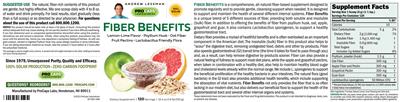
Supplement Facts
The label details for Fiber Benefits Lemon-Lime Flavor by ProCaps Laboratories, sourced from the NIH Dietary Supplement Label Database.
Supplement Facts
| Ingredient | Amount | % DV |
|---|---|---|
| Calories | 10 Calorie(s) | -- |
| Total Carbohydrates | 5 Gram(s) | 2% |
| Added Sugars | 3 Gram(s) | 6% |
| Total Sugars | 3 Gram(s) | -- |
| Dietary Fiber | 2 Gram(s) | 7% |
| Psyllium, Powder | 1.5 Gram(s) | -- |
| Soluble Fiber | 1.4 Gram(s) | -- |
| Lactobacillus sporogenes | 0 NP | -- |
| Pectin | 0 NP | -- |
| Guar Gum | 300 mg | -- |
| Apple Fiber | 0 NP | -- |
| Insoluble Fiber | 0.6 Gram(s) | -- |
| Oat Fiber | 300 mg | -- |
| Grapefruit Pectin | 300 mg | -- |
| Apple Fiber and Pectin | 300 mg | -- |
Other ingredients: Fructose, natural Lemon-Lime flavoring, Citric Acid
Tap any ingredient to jump to its full detail below.
These statements are the manufacturer’s wording, reproduced from the product label — the label is saying it, not HelloPharmacist. We don’t verify or endorse them.
Suggested/Recommended/Usage/Directions
Suggested Use The natural, fiber-rich contents of this product are gently, but highly effective. Mix one scoop daily with 4 to 8 oz. of water and drink promptly. For best results, start gradually (less than a full scoop) or as directed by your physician. For questions about the use of this product call 800.800.1200.
General Statements
Questions? Reorders? 800.800.1200 procaps.com Andrew Lessman
Precautions
Notice This product should be taken with at least a full glass of liquid. Consuming this product without adequate fluid may cause choking. Do not use this product if you have difficulty swallowing. If you feel abdominal pain or unexpected gastrointestinal discomfort when using this product, discontinue use and consult a physician. Initially, when using this product, evacuations may not occur until the second day, hence you may experience a temporary feeling of fullness.
As with any grain product, inhaled or ingested Psyllium Husk may cause allergic reactions in some individuals.
If you are taking prescription medicine by mouth, take this product 2 hours before or 2 hours after the prescribed medicine.
Storage
This package is sold by weight not by volume. It contains the full weight indicated on the label. Settling of contents can occur during shipment.
Formulation
Since 1979, Unsurpassed purity, quality and efficacy. 100% Solar production Zero-carbon footprint 100% Solar
Contains no milk, soy, yeast, wheat, gluten, sodium, salt, starch, fat, cholesterol, oil, emulsifier, wax, binder, filler, excipient, lubricant, coating, diluent, flowing agent, common allergens, color, preservative or genetically modified (GMO) ingredients.
Brand IP Statement(s)
Copyright 2023 ProCaps Laboratories
Formula
Lemon-lime flavor Psyllium husk Oat fiber Fruit pectins Lactobacillus friendly flora
Fiber Benefits is a comprehensive, all-natural fiber-based supplement designed to promote regularity and to provide gentle, cleansing support when needed. It is designed to support and maintain the health of several different internal systems. Fiber Benefits is a unique blend of 5 different sources of fiber, providing both soluble and insoluble (bulk) fiber. In addition to offering the benefits of fiber from psyllium husk, oat, apple, grapefruit and guar, it also contains Lactobacillus sporogenes, to support a healthy gastrointestinal tract. Dietary fiber provides a myriad of healthful benefits and is often overlooked as an important component in the American diet. The insoluble (bulk) fiber in this product also helps to “scour” the digestive tract, removing undigested food, debris and other by-products. Fiber also speeds gastrointestinal (GI) transit time (the time it takes for food to pass through you) and, as a result, can help remove digestive by-products sooner. Fiber can also provide a natural feeling of fullness to support most diet plans, while the apple and grapefruit pectins, when taken in combination with a healthy diet, also help to maintain healthy blood sugar and cholesterol levels already within the normal range. We include L. sporogenes to support the beneficial proliferation of the healthy bacteria in your intestines. The natural flora (good bacteria) in the GI tract also provides additional health benefits, which include supporting the absorption of vital nutrients. Fiber Benefits not only provides the fiber that is so often lacking in our modern diet, but also delivers our beneficial flora to support the health of the gastrointestinal tract and several other internal organs and systems.
FDA Statement of Identity
Dietary Supplement
FDA Disclaimer Statement
These statements have not been evaluated by the Food and Drug Administration. This product is not intended to diagnose, treat, cure, or prevent any disease.
Is this label outdated? Report a formula or label change and our pharmacy team will review it.
Fiber Benefits Lemon-Lime Flavor by ProCaps Laboratories label
The label scan from the NIH Dietary Supplement Label Database. Tap to enlarge.
Label images are published by the NIH Dietary Supplement Label Database for the version of this product on file. Always read your actual product label.
View the full label (PDF)The Ingredients in Fiber Benefits Lemon-Lime Flavor by ProCaps Laboratories
These are the 7 active ingredients this product is made of. Select any to open its full monograph.
Serving size6 Gram(s) Dosage formPowder Servings per container120 Amounts shown are per serving.
Most supplement products combine several ingredients, and a medication can interact with the product through any one of them. Each ingredient below shows whether it has known drug interactions.
Dietary Fiber
Interacts with2,025 drugs
Black psyllium is a soluble-fiber supplement made from the seeds of a Plantago plant, used mostly to ease constipation and support digestive health. I...
Dietary Fiber monograph & interactions- › Soluble Fiber
- › Insoluble Fiber
Psyllium, Powder
Lactobacillus sporogenes
Interacts with182 drugs
Bacillus coagulans is a spore-forming probiotic that survives stomach acid well and may help with some digestive problems such as IBS, constipation, a...
Lactobacillus sporogenes monograph & interactionsGuar Gum
Interacts with2,025 drugs
Guar gum is a soluble, gel-forming fiber from the guar bean that may modestly help with cholesterol, blood sugar, and bowel regularity. It is generall...
Guar Gum monograph & interactionsOat Fiber
Grapefruit Pectin
Interacts with23 drugs
Pectin is a natural soluble fiber found in fruits like apples and citrus, and it is widely used in foods and as a fiber supplement. It may modestly he...
Grapefruit Pectin monograph & interactionsApple Fiber and Pectin
Interacts with300 drugs
Apples are a nutritious whole food that provides fiber, vitamins, and antioxidant plant compounds, and eating them regularly fits well into a healthy...
Apple Fiber and Pectin monograph & interactions- › Pectin
- › Apple Fiber
Other (inactive) ingredients: Fructose, Natural Lemon-Lime flavoring, Citric Acid. These complete the product’s ingredient list but are not active constituents.
Fiber Benefits Lemon-Lime Flavor by ProCaps Laboratories Drug Interactions
HelloPharmacist Interaction Report
Fiber Benefits Lemon-Lime Flavor by ProCaps Laboratories has documented interactions with medications across several ingredients.
The most serious concern is Apple Fiber, which contains compounds that significantly reduce absorption of certain heart and allergy medications—including a Major-severity interaction with organic anion-transporting polypeptide substrates (a group of drugs that includes the allergy medication fexofenadine and the blood pressure drug atenolol). Research shows apple juice can cut atenolol levels by 58% to 82%.
Read the full breakdown — every affected drug type, severity by severity
Guar Gum in this product interacts with broad groups of oral medications (Moderate severity), including specific concerns with penicillin antibiotics, metformin (a diabetes drug), the heart medication digoxin, and the oral contraceptive ethinyl estradiol. Pectin (present as both Pectin and Grapefruit Pectin) can reduce absorption of lovastatin (a cholesterol drug), tetracycline antibiotics, and digoxin, all at Moderate severity.
Bacillus Coagulans (listed as Lactobacillus sporogenes) may reduce its own effectiveness if taken at the same time as antibiotics (Moderate).
Apple Fiber also has Moderate-severity interactions with antihypertensive drugs (blood pressure medications), antidiabetes drugs, and lithium, a psychiatric medication with a narrow safety window. Additionally, we could not check interaction data for Psyllium Powder, Soluble Fiber, Insoluble Fiber, and Oat Fiber—these ingredients were not held in our database.
Altogether, these interactions span 2,101 individual medications. Use the medication checker on this page with your exact drug names before starting this product.
Check your own medications below · Editorial policy · How we use AI
Want to check YOUR meds against Fiber Benefits Lemon-Lime Flavor?
Ask about interactions with your drugs in plain English — “Can I take it with lisinopril?” — and we find you the answer in seconds, ingredient by ingredient.
Go to the checkerIngredients driving the most interactions
Individual Drug Interactions
The ingredients in Fiber Benefits Lemon-Lime Flavor interact with 2,120 drugs. Click any drug to see the details.
5 of the 7 ingredients in Fiber Benefits Lemon-Lime Flavor interact with drugs. Each result below shows which ingredient is responsible. Dietary Fiber Guar Gum Apple Fiber and Pectin Lactobacillus sporogenes Grapefruit Pectin
AtorvastatinAtorvaliq
How Atorvastatin interacts with Fiber Benefits Lemon-Lime Flavor — through 3 ingredients. Tap an ingredient for the detail:
Apple Fiber And PectinOrganic Anion-transporting Polypeptide Substrates (oatp) Major
Interaction Summary
Concomitant consumption of apple juice can significantly decrease oral absorption and blood levels of OATP substrates.
Read the full Apple Fiber And Pectin + Atorvastatin interactionGuar GumOral Drugs Moderate
Interaction Summary
Guar gum might reduce the absorption of some oral drugs, potentially decreasing their effectiveness.
Read the full Guar Gum + Atorvastatin interactionDietary FiberOral Drugs Minor
Interaction Summary
Theoretically, psyllium might increase, decrease, or have no effect on the absorption of oral drugs.
Read the full Dietary Fiber + Atorvastatin interactionAtorvastatin CalciumLipitor
How Atorvastatin Calcium interacts with Fiber Benefits Lemon-Lime Flavor — through 3 ingredients. Tap an ingredient for the detail:
Apple Fiber And PectinOrganic Anion-transporting Polypeptide Substrates (oatp) Major
Interaction Summary
Concomitant consumption of apple juice can significantly decrease oral absorption and blood levels of OATP substrates.
Read the full Apple Fiber And Pectin + Atorvastatin Calcium interactionGuar GumOral Drugs Moderate
Interaction Summary
Guar gum might reduce the absorption of some oral drugs, potentially decreasing their effectiveness.
Read the full Guar Gum + Atorvastatin Calcium interactionDietary FiberOral Drugs Minor
Interaction Summary
Theoretically, psyllium might increase, decrease, or have no effect on the absorption of oral drugs.
Read the full Dietary Fiber + Atorvastatin Calcium interactionBosentanTracleer
How Bosentan interacts with Fiber Benefits Lemon-Lime Flavor — through 3 ingredients. Tap an ingredient for the detail:
Apple Fiber And PectinAntihypertensive Drugs, Organic Anion-transporting Polypeptide Substrates (oatp) Major
Interaction Summary
Consuming apple juice with antihypertensive drugs might interfere with blood pressure control.
Read the full Apple Fiber And Pectin + Bosentan interactionGuar GumOral Drugs Moderate
Interaction Summary
Guar gum might reduce the absorption of some oral drugs, potentially decreasing their effectiveness.
Read the full Guar Gum + Bosentan interactionDietary FiberOral Drugs Minor
Interaction Summary
Theoretically, psyllium might increase, decrease, or have no effect on the absorption of oral drugs.
Read the full Dietary Fiber + Bosentan interactionBrincidofovirTembexa
How Brincidofovir interacts with Fiber Benefits Lemon-Lime Flavor — through 3 ingredients. Tap an ingredient for the detail:
Apple Fiber And PectinOrganic Anion-transporting Polypeptide Substrates (oatp) Major
Interaction Summary
Concomitant consumption of apple juice can significantly decrease oral absorption and blood levels of OATP substrates.
Read the full Apple Fiber And Pectin + Brincidofovir interactionGuar GumOral Drugs Moderate
Interaction Summary
Guar gum might reduce the absorption of some oral drugs, potentially decreasing their effectiveness.
Read the full Guar Gum + Brincidofovir interactionDietary FiberOral Drugs Minor
Interaction Summary
Theoretically, psyllium might increase, decrease, or have no effect on the absorption of oral drugs.
Read the full Dietary Fiber + Brincidofovir interactionCeliprololCelicard
How Celiprolol interacts with Fiber Benefits Lemon-Lime Flavor — through 3 ingredients. Tap an ingredient for the detail:
Apple Fiber And PectinOrganic Anion-transporting Polypeptide Substrates (oatp), Antihypertensive Drugs Major
Interaction Summary
Concomitant consumption of apple juice can significantly decrease oral absorption and blood levels of OATP substrates.
Read the full Apple Fiber And Pectin + Celiprolol interactionGuar GumOral Drugs Moderate
Interaction Summary
Guar gum might reduce the absorption of some oral drugs, potentially decreasing their effectiveness.
Read the full Guar Gum + Celiprolol interactionDietary FiberOral Drugs Minor
Interaction Summary
Theoretically, psyllium might increase, decrease, or have no effect on the absorption of oral drugs.
Read the full Dietary Fiber + Celiprolol interactionCerivastatin SodiumBaycol
How Cerivastatin Sodium interacts with Fiber Benefits Lemon-Lime Flavor — through 3 ingredients. Tap an ingredient for the detail:
Apple Fiber And PectinOrganic Anion-transporting Polypeptide Substrates (oatp) Major
Interaction Summary
Concomitant consumption of apple juice can significantly decrease oral absorption and blood levels of OATP substrates.
Read the full Apple Fiber And Pectin + Cerivastatin Sodium interactionGuar GumOral Drugs Moderate
Interaction Summary
Guar gum might reduce the absorption of some oral drugs, potentially decreasing their effectiveness.
Read the full Guar Gum + Cerivastatin Sodium interactionDietary FiberOral Drugs Minor
Interaction Summary
Theoretically, psyllium might increase, decrease, or have no effect on the absorption of oral drugs.
Read the full Dietary Fiber + Cerivastatin Sodium interactionCinoxacinCinobac
How Cinoxacin interacts with Fiber Benefits Lemon-Lime Flavor — through 4 ingredients. Tap an ingredient for the detail:
Apple Fiber And PectinOrganic Anion-transporting Polypeptide Substrates (oatp) Major
Interaction Summary
Concomitant consumption of apple juice can significantly decrease oral absorption and blood levels of OATP substrates.
Read the full Apple Fiber And Pectin + Cinoxacin interactionLactobacillus SporogenesAntibiotic Drugs Moderate
Interaction Summary
Theoretically, taking antibiotics with Bacillus coagulans might decrease the effectiveness of B.
Read the full Lactobacillus Sporogenes + Cinoxacin interactionGuar GumOral Drugs Moderate
Interaction Summary
Guar gum might reduce the absorption of some oral drugs, potentially decreasing their effectiveness.
Read the full Guar Gum + Cinoxacin interactionDietary FiberOral Drugs Minor
Interaction Summary
Theoretically, psyllium might increase, decrease, or have no effect on the absorption of oral drugs.
Read the full Dietary Fiber + Cinoxacin interactionCiprofloxacinCiloxan, Cipro, Cipro IV, Cipro XR, Ciprobay, Otiprio
How Ciprofloxacin interacts with Fiber Benefits Lemon-Lime Flavor — through 4 ingredients. Tap an ingredient for the detail:
Apple Fiber And PectinOrganic Anion-transporting Polypeptide Substrates (oatp) Major
Interaction Summary
Concomitant consumption of apple juice can significantly decrease oral absorption and blood levels of OATP substrates.
Read the full Apple Fiber And Pectin + Ciprofloxacin interactionGuar GumOral Drugs Moderate
Interaction Summary
Guar gum might reduce the absorption of some oral drugs, potentially decreasing their effectiveness.
Read the full Guar Gum + Ciprofloxacin interactionLactobacillus SporogenesAntibiotic Drugs Moderate
Interaction Summary
Theoretically, taking antibiotics with Bacillus coagulans might decrease the effectiveness of B.
Read the full Lactobacillus Sporogenes + Ciprofloxacin interactionDietary FiberOral Drugs Minor
Interaction Summary
Theoretically, psyllium might increase, decrease, or have no effect on the absorption of oral drugs.
Read the full Dietary Fiber + Ciprofloxacin interactionCiprofloxacin, HydrocortisoneCipro HC Otic
How Ciprofloxacin, Hydrocortisone interacts with Fiber Benefits Lemon-Lime Flavor — through 1 ingredient. Tap an ingredient for the detail:
Apple Fiber And PectinOrganic Anion-transporting Polypeptide Substrates (oatp) Major
Interaction Summary
Concomitant consumption of apple juice can significantly decrease oral absorption and blood levels of OATP substrates.
Read the full Apple Fiber And Pectin + Ciprofloxacin, Hydrocortisone interactionClinafloxacinClinafloxacin
How Clinafloxacin interacts with Fiber Benefits Lemon-Lime Flavor — through 4 ingredients. Tap an ingredient for the detail:
Apple Fiber And PectinOrganic Anion-transporting Polypeptide Substrates (oatp) Major
Interaction Summary
Concomitant consumption of apple juice can significantly decrease oral absorption and blood levels of OATP substrates.
Read the full Apple Fiber And Pectin + Clinafloxacin interactionGuar GumOral Drugs Moderate
Interaction Summary
Guar gum might reduce the absorption of some oral drugs, potentially decreasing their effectiveness.
Read the full Guar Gum + Clinafloxacin interactionLactobacillus SporogenesAntibiotic Drugs Moderate
Interaction Summary
Theoretically, taking antibiotics with Bacillus coagulans might decrease the effectiveness of B.
Read the full Lactobacillus Sporogenes + Clinafloxacin interactionDietary FiberOral Drugs Minor
Interaction Summary
Theoretically, psyllium might increase, decrease, or have no effect on the absorption of oral drugs.
Read the full Dietary Fiber + Clinafloxacin interactionEnoxacinPenetrex
How Enoxacin interacts with Fiber Benefits Lemon-Lime Flavor — through 4 ingredients. Tap an ingredient for the detail:
Apple Fiber And PectinOrganic Anion-transporting Polypeptide Substrates (oatp) Major
Interaction Summary
Concomitant consumption of apple juice can significantly decrease oral absorption and blood levels of OATP substrates.
Read the full Apple Fiber And Pectin + Enoxacin interactionGuar GumOral Drugs Moderate
Interaction Summary
Guar gum might reduce the absorption of some oral drugs, potentially decreasing their effectiveness.
Read the full Guar Gum + Enoxacin interactionLactobacillus SporogenesAntibiotic Drugs Moderate
Interaction Summary
Theoretically, taking antibiotics with Bacillus coagulans might decrease the effectiveness of B.
Read the full Lactobacillus Sporogenes + Enoxacin interactionDietary FiberOral Drugs Minor
Interaction Summary
Theoretically, psyllium might increase, decrease, or have no effect on the absorption of oral drugs.
Read the full Dietary Fiber + Enoxacin interactionEtoposideEtopophos, VePesid, VP16
How Etoposide interacts with Fiber Benefits Lemon-Lime Flavor — through 3 ingredients. Tap an ingredient for the detail:
Apple Fiber And PectinOrganic Anion-transporting Polypeptide Substrates (oatp) Major
Interaction Summary
Concomitant consumption of apple juice can significantly decrease oral absorption and blood levels of OATP substrates.
Read the full Apple Fiber And Pectin + Etoposide interactionGuar GumOral Drugs Moderate
Interaction Summary
Guar gum might reduce the absorption of some oral drugs, potentially decreasing their effectiveness.
Read the full Guar Gum + Etoposide interactionDietary FiberOral Drugs Minor
Interaction Summary
Theoretically, psyllium might increase, decrease, or have no effect on the absorption of oral drugs.
Read the full Dietary Fiber + Etoposide interactionEzetimibe, AtorvastatinLiptruzet
How Ezetimibe, Atorvastatin interacts with Fiber Benefits Lemon-Lime Flavor — through 3 ingredients. Tap an ingredient for the detail:
Apple Fiber And PectinOrganic Anion-transporting Polypeptide Substrates (oatp) Major
Interaction Summary
Concomitant consumption of apple juice can significantly decrease oral absorption and blood levels of OATP substrates.
Read the full Apple Fiber And Pectin + Ezetimibe, Atorvastatin interactionGuar GumOral Drugs Moderate
Interaction Summary
Guar gum might reduce the absorption of some oral drugs, potentially decreasing their effectiveness.
Read the full Guar Gum + Ezetimibe, Atorvastatin interactionDietary FiberOral Drugs Minor
Interaction Summary
Theoretically, psyllium might increase, decrease, or have no effect on the absorption of oral drugs.
Read the full Dietary Fiber + Ezetimibe, Atorvastatin interactionFexofenadineAllegra
How Fexofenadine interacts with Fiber Benefits Lemon-Lime Flavor — through 3 ingredients. Tap an ingredient for the detail:
Apple Fiber And PectinOrganic Anion-transporting Polypeptide Substrates (oatp), Fexofenadine (allegra) Major
Interaction Summary
Concomitant consumption of apple juice can significantly decrease oral absorption and blood levels of OATP substrates.
Read the full Apple Fiber And Pectin + Fexofenadine interactionGuar GumOral Drugs Moderate
Interaction Summary
Guar gum might reduce the absorption of some oral drugs, potentially decreasing their effectiveness.
Read the full Guar Gum + Fexofenadine interactionDietary FiberOral Drugs Minor
Interaction Summary
Theoretically, psyllium might increase, decrease, or have no effect on the absorption of oral drugs.
Read the full Dietary Fiber + Fexofenadine interactionFexofenadine, PseudoephedrineAllegra D
How Fexofenadine, Pseudoephedrine interacts with Fiber Benefits Lemon-Lime Flavor — through 3 ingredients. Tap an ingredient for the detail:
Apple Fiber And PectinOrganic Anion-transporting Polypeptide Substrates (oatp), Fexofenadine (allegra) Major
Interaction Summary
Concomitant consumption of apple juice can significantly decrease oral absorption and blood levels of OATP substrates.
Read the full Apple Fiber And Pectin + Fexofenadine, Pseudoephedrine interactionGuar GumOral Drugs Moderate
Interaction Summary
Guar gum might reduce the absorption of some oral drugs, potentially decreasing their effectiveness.
Read the full Guar Gum + Fexofenadine, Pseudoephedrine interactionDietary FiberOral Drugs Minor
Interaction Summary
Theoretically, psyllium might increase, decrease, or have no effect on the absorption of oral drugs.
Read the full Dietary Fiber + Fexofenadine, Pseudoephedrine interactionFluvastatinLescol, Lescol XL
How Fluvastatin interacts with Fiber Benefits Lemon-Lime Flavor — through 3 ingredients. Tap an ingredient for the detail:
Apple Fiber And PectinOrganic Anion-transporting Polypeptide Substrates (oatp) Major
Interaction Summary
Concomitant consumption of apple juice can significantly decrease oral absorption and blood levels of OATP substrates.
Read the full Apple Fiber And Pectin + Fluvastatin interactionGuar GumOral Drugs Moderate
Interaction Summary
Guar gum might reduce the absorption of some oral drugs, potentially decreasing their effectiveness.
Read the full Guar Gum + Fluvastatin interactionDietary FiberOral Drugs Minor
Interaction Summary
Theoretically, psyllium might increase, decrease, or have no effect on the absorption of oral drugs.
Read the full Dietary Fiber + Fluvastatin interactionGatifloxacinTequin, Tequin Injection
How Gatifloxacin interacts with Fiber Benefits Lemon-Lime Flavor — through 4 ingredients. Tap an ingredient for the detail:
Apple Fiber And PectinOrganic Anion-transporting Polypeptide Substrates (oatp) Major
Interaction Summary
Concomitant consumption of apple juice can significantly decrease oral absorption and blood levels of OATP substrates.
Read the full Apple Fiber And Pectin + Gatifloxacin interactionLactobacillus SporogenesAntibiotic Drugs Moderate
Interaction Summary
Theoretically, taking antibiotics with Bacillus coagulans might decrease the effectiveness of B.
Read the full Lactobacillus Sporogenes + Gatifloxacin interactionGuar GumOral Drugs Moderate
Interaction Summary
Guar gum might reduce the absorption of some oral drugs, potentially decreasing their effectiveness.
Read the full Guar Gum + Gatifloxacin interactionDietary FiberOral Drugs Minor
Interaction Summary
Theoretically, psyllium might increase, decrease, or have no effect on the absorption of oral drugs.
Read the full Dietary Fiber + Gatifloxacin interactionGemifloxacinFactive
How Gemifloxacin interacts with Fiber Benefits Lemon-Lime Flavor — through 4 ingredients. Tap an ingredient for the detail:
Apple Fiber And PectinOrganic Anion-transporting Polypeptide Substrates (oatp) Major
Interaction Summary
Concomitant consumption of apple juice can significantly decrease oral absorption and blood levels of OATP substrates.
Read the full Apple Fiber And Pectin + Gemifloxacin interactionGuar GumOral Drugs Moderate
Interaction Summary
Guar gum might reduce the absorption of some oral drugs, potentially decreasing their effectiveness.
Read the full Guar Gum + Gemifloxacin interactionLactobacillus SporogenesAntibiotic Drugs Moderate
Interaction Summary
Theoretically, taking antibiotics with Bacillus coagulans might decrease the effectiveness of B.
Read the full Lactobacillus Sporogenes + Gemifloxacin interactionDietary FiberOral Drugs Minor
Interaction Summary
Theoretically, psyllium might increase, decrease, or have no effect on the absorption of oral drugs.
Read the full Dietary Fiber + Gemifloxacin interactionGlyburideAlbert Glyburide, Diabeta, Glycron, Glynase, Glynase PresTab, Micronase +1 more
How Glyburide interacts with Fiber Benefits Lemon-Lime Flavor — through 3 ingredients. Tap an ingredient for the detail:
Apple Fiber And PectinAntidiabetes Drugs, Organic Anion-transporting Polypeptide Substrates (oatp) Major
Interaction Summary
Theoretically, consuming apple juice with antidiabetes drugs might interfere with blood glucose control.
Read the full Apple Fiber And Pectin + Glyburide interactionGuar GumOral Drugs Moderate
Interaction Summary
Guar gum might reduce the absorption of some oral drugs, potentially decreasing their effectiveness.
Read the full Guar Gum + Glyburide interactionDietary FiberOral Drugs Minor
Interaction Summary
Theoretically, psyllium might increase, decrease, or have no effect on the absorption of oral drugs.
Read the full Dietary Fiber + Glyburide interactionGlyburide, MetforminGlucovance
How Glyburide, Metformin interacts with Fiber Benefits Lemon-Lime Flavor — through 3 ingredients. Tap an ingredient for the detail:
Apple Fiber And PectinOrganic Anion-transporting Polypeptide Substrates (oatp), Antidiabetes Drugs Major
Interaction Summary
Concomitant consumption of apple juice can significantly decrease oral absorption and blood levels of OATP substrates.
Read the full Apple Fiber And Pectin + Glyburide, Metformin interactionDietary FiberMetformin (glucophage), Oral Drugs Moderate
Interaction Summary
Theoretically, black psyllium might increase the therapeutic and adverse effects of metformin.
Read the full Dietary Fiber + Glyburide, Metformin interactionGuar GumOral Drugs, Metformin (glucophage) Moderate
Interaction Summary
Guar gum might reduce the absorption of some oral drugs, potentially decreasing their effectiveness.
Read the full Guar Gum + Glyburide, Metformin interactionGrepafloxacinRaxar
How Grepafloxacin interacts with Fiber Benefits Lemon-Lime Flavor — through 4 ingredients. Tap an ingredient for the detail:
Apple Fiber And PectinOrganic Anion-transporting Polypeptide Substrates (oatp) Major
Interaction Summary
Concomitant consumption of apple juice can significantly decrease oral absorption and blood levels of OATP substrates.
Read the full Apple Fiber And Pectin + Grepafloxacin interactionLactobacillus SporogenesAntibiotic Drugs Moderate
Interaction Summary
Theoretically, taking antibiotics with Bacillus coagulans might decrease the effectiveness of B.
Read the full Lactobacillus Sporogenes + Grepafloxacin interactionGuar GumOral Drugs Moderate
Interaction Summary
Guar gum might reduce the absorption of some oral drugs, potentially decreasing their effectiveness.
Read the full Guar Gum + Grepafloxacin interactionDietary FiberOral Drugs Minor
Interaction Summary
Theoretically, psyllium might increase, decrease, or have no effect on the absorption of oral drugs.
Read the full Dietary Fiber + Grepafloxacin interactionIrinotecanCamptosar, Onivyde
How Irinotecan interacts with Fiber Benefits Lemon-Lime Flavor — through 3 ingredients. Tap an ingredient for the detail:
Apple Fiber And PectinOrganic Anion-transporting Polypeptide Substrates (oatp) Major
Interaction Summary
Concomitant consumption of apple juice can significantly decrease oral absorption and blood levels of OATP substrates.
Read the full Apple Fiber And Pectin + Irinotecan interactionGuar GumOral Drugs Moderate
Interaction Summary
Guar gum might reduce the absorption of some oral drugs, potentially decreasing their effectiveness.
Read the full Guar Gum + Irinotecan interactionDietary FiberOral Drugs Minor
Interaction Summary
Theoretically, psyllium might increase, decrease, or have no effect on the absorption of oral drugs.
Read the full Dietary Fiber + Irinotecan interactionIrinotecan Hydrochloride
How Irinotecan Hydrochloride interacts with Fiber Benefits Lemon-Lime Flavor — through 1 ingredient. Tap an ingredient for the detail:
Apple Fiber And PectinOrganic Anion-transporting Polypeptide Substrates (oatp) Major
Interaction Summary
Concomitant consumption of apple juice can significantly decrease oral absorption and blood levels of OATP substrates.
Read the full Apple Fiber And Pectin + Irinotecan Hydrochloride interactionIsoniazid, Pyrazinamide, RifampinRifater
How Isoniazid, Pyrazinamide, Rifampin interacts with Fiber Benefits Lemon-Lime Flavor — through 3 ingredients. Tap an ingredient for the detail:
Apple Fiber And PectinOrganic Anion-transporting Polypeptide Substrates (oatp) Major
Interaction Summary
Concomitant consumption of apple juice can significantly decrease oral absorption and blood levels of OATP substrates.
Read the full Apple Fiber And Pectin + Isoniazid, Pyrazinamide, Rifampin interactionGuar GumOral Drugs Moderate
Interaction Summary
Guar gum might reduce the absorption of some oral drugs, potentially decreasing their effectiveness.
Read the full Guar Gum + Isoniazid, Pyrazinamide, Rifampin interactionDietary FiberOral Drugs Minor
Interaction Summary
Theoretically, psyllium might increase, decrease, or have no effect on the absorption of oral drugs.
Read the full Dietary Fiber + Isoniazid, Pyrazinamide, Rifampin interactionIsoniazid, RifampinRifamate
How Isoniazid, Rifampin interacts with Fiber Benefits Lemon-Lime Flavor — through 4 ingredients. Tap an ingredient for the detail:
Apple Fiber And PectinOrganic Anion-transporting Polypeptide Substrates (oatp) Major
Interaction Summary
Concomitant consumption of apple juice can significantly decrease oral absorption and blood levels of OATP substrates.
Read the full Apple Fiber And Pectin + Isoniazid, Rifampin interactionLactobacillus SporogenesAntibiotic Drugs Moderate
Interaction Summary
Theoretically, taking antibiotics with Bacillus coagulans might decrease the effectiveness of B.
Read the full Lactobacillus Sporogenes + Isoniazid, Rifampin interactionGuar GumOral Drugs Moderate
Interaction Summary
Guar gum might reduce the absorption of some oral drugs, potentially decreasing their effectiveness.
Read the full Guar Gum + Isoniazid, Rifampin interactionDietary FiberOral Drugs Minor
Interaction Summary
Theoretically, psyllium might increase, decrease, or have no effect on the absorption of oral drugs.
Read the full Dietary Fiber + Isoniazid, Rifampin interactionLevofloxacinLeva-pak, Levaquin, Levaquin Injection
How Levofloxacin interacts with Fiber Benefits Lemon-Lime Flavor — through 4 ingredients. Tap an ingredient for the detail:
Apple Fiber And PectinOrganic Anion-transporting Polypeptide Substrates (oatp) Major
Interaction Summary
Concomitant consumption of apple juice can significantly decrease oral absorption and blood levels of OATP substrates.
Read the full Apple Fiber And Pectin + Levofloxacin interactionLactobacillus SporogenesAntibiotic Drugs Moderate
Interaction Summary
Theoretically, taking antibiotics with Bacillus coagulans might decrease the effectiveness of B.
Read the full Lactobacillus Sporogenes + Levofloxacin interactionGuar GumOral Drugs Moderate
Interaction Summary
Guar gum might reduce the absorption of some oral drugs, potentially decreasing their effectiveness.
Read the full Guar Gum + Levofloxacin interactionDietary FiberOral Drugs Minor
Interaction Summary
Theoretically, psyllium might increase, decrease, or have no effect on the absorption of oral drugs.
Read the full Dietary Fiber + Levofloxacin interactionLevofloxacin (ophthalmic)Levofloxacin
How Levofloxacin (ophthalmic) interacts with Fiber Benefits Lemon-Lime Flavor — through 2 ingredients. Tap an ingredient for the detail:
Apple Fiber And PectinOrganic Anion-transporting Polypeptide Substrates (oatp) Major
Interaction Summary
Concomitant consumption of apple juice can significantly decrease oral absorption and blood levels of OATP substrates.
Read the full Apple Fiber And Pectin + Levofloxacin (ophthalmic) interactionLactobacillus SporogenesAntibiotic Drugs Moderate
Interaction Summary
Theoretically, taking antibiotics with Bacillus coagulans might decrease the effectiveness of B.
Read the full Lactobacillus Sporogenes + Levofloxacin (ophthalmic) interactionLomefloxacinMaxaquin
How Lomefloxacin interacts with Fiber Benefits Lemon-Lime Flavor — through 4 ingredients. Tap an ingredient for the detail:
Apple Fiber And PectinOrganic Anion-transporting Polypeptide Substrates (oatp) Major
Interaction Summary
Concomitant consumption of apple juice can significantly decrease oral absorption and blood levels of OATP substrates.
Read the full Apple Fiber And Pectin + Lomefloxacin interactionGuar GumOral Drugs Moderate
Interaction Summary
Guar gum might reduce the absorption of some oral drugs, potentially decreasing their effectiveness.
Read the full Guar Gum + Lomefloxacin interactionLactobacillus SporogenesAntibiotic Drugs Moderate
Interaction Summary
Theoretically, taking antibiotics with Bacillus coagulans might decrease the effectiveness of B.
Read the full Lactobacillus Sporogenes + Lomefloxacin interactionDietary FiberOral Drugs Minor
Interaction Summary
Theoretically, psyllium might increase, decrease, or have no effect on the absorption of oral drugs.
Read the full Dietary Fiber + Lomefloxacin interactionLovastatinAltocor, Mevacor
How Lovastatin interacts with Fiber Benefits Lemon-Lime Flavor — through 4 ingredients. Tap an ingredient for the detail:
Apple Fiber And PectinOrganic Anion-transporting Polypeptide Substrates (oatp) Major
Interaction Summary
Concomitant consumption of apple juice can significantly decrease oral absorption and blood levels of OATP substrates.
Read the full Apple Fiber And Pectin + Lovastatin interactionGrapefruit PectinLovastatin (mevacor) Moderate
Interaction Summary
Theoretically, pectin might reduce the absorption of lovastatin, potentially decreasing its effectiveness.
Read the full Grapefruit Pectin + Lovastatin interactionGuar GumOral Drugs Moderate
Interaction Summary
Guar gum might reduce the absorption of some oral drugs, potentially decreasing their effectiveness.
Read the full Guar Gum + Lovastatin interactionDietary FiberOral Drugs Minor
Interaction Summary
Theoretically, psyllium might increase, decrease, or have no effect on the absorption of oral drugs.
Read the full Dietary Fiber + Lovastatin interactionMethotrexateOtrexup, Rasuvo, Reditrex, Rheumatrex
How Methotrexate interacts with Fiber Benefits Lemon-Lime Flavor — through 3 ingredients. Tap an ingredient for the detail:
Apple Fiber And PectinOrganic Anion-transporting Polypeptide Substrates (oatp) Major
Interaction Summary
Concomitant consumption of apple juice can significantly decrease oral absorption and blood levels of OATP substrates.
Read the full Apple Fiber And Pectin + Methotrexate interactionGuar GumOral Drugs Moderate
Interaction Summary
Guar gum might reduce the absorption of some oral drugs, potentially decreasing their effectiveness.
Read the full Guar Gum + Methotrexate interactionDietary FiberOral Drugs Minor
Interaction Summary
Theoretically, psyllium might increase, decrease, or have no effect on the absorption of oral drugs.
Read the full Dietary Fiber + Methotrexate interactionEach ingredient & the kinds of drugs it affects
For each ingredient in Fiber Benefits Lemon-Lime Flavor with known interactions, here are the types of medications they can affect. Open any type for the detail — or search your exact drug in the checker above.
Dietary Fiber
Carbamazepine (Tegretol)
Theoretically, black psyllium might reduce the effects of carbamazepine and increase the risk for convulsions.
Theoretically, black psyllium might reduce carbamazepine absorption. A preliminary study using blond psyllium reported decreased carbamazepine bioavailability due to binding of the drug to psyllium, as well as reduction of available fluid in the gut for dissolution of the drug. This interaction may also occur with black psyllium.
Lithium
Theoretically, taking black psyllium at the same time as lithium might reduce lithium absorption.
The fiber in black psyllium might reduce lithium absorption and plasma levels. Some case reports describe a reduction in plasma lithium levels with concomitant administration of blond psyllium. This was reversed when psyllium was stopped. This interaction may also occur with black psyllium.
Metformin (Glucophage)
Theoretically, black psyllium might increase the therapeutic and adverse effects of metformin.
Animal research shows that concurrent consumption of blond psyllium with metformin slows and increases the absorption of metformin. This interaction may also occur with black psyllium. To avoid changes in absorption, take psyllium 30-60 minutes after metformin.
Olanzapine (Zyprexa)
Theoretically, taking black psyllium at the same time as olanzapine might reduce olanzapine absorption.
The fiber in black psyllium might decrease the absorption of olanzapine. A single case report describes a reduction in the effectiveness of olanzapine when it was concomitantly administered with an unspecified type of psyllium 3 grams orally twice daily. This effect was reversed when psyllium was stopped.
Digoxin (Lanoxin)
Theoretically, taking black psyllium at the same time as digoxin might reduce digoxin absorption and decrease digoxin levels.
Psyllium might bind digoxin in the gut. However, some clinical evidence suggests that psyllium does not impact digoxin absorption.
Ethinyl Estradiol
Theoretically, taking black psyllium at the same time as ethinyl estradiol might alter levels of estradiol.
Concurrent use of blond psyllium with ethinyl estradiol results in a slight increase in the extent of ethinyl estradiol absorption and a slower rate of absorption. This is unlikely to be clinically significant.
Oral Drugs
Theoretically, psyllium might increase, decrease, or have no effect on the absorption of oral drugs.
Psyllium seems to have variable effects on drug absorption. To avoid changes in absorption, take psyllium 30-60 minutes after oral medications. Animal research shows that blond psyllium delays and increases the absorption of metformin and ethinyl estradiol. Case reports and animal research suggest that blond psyllium might reduce absorption of lithium, digoxin, olanzapine, and carbamazepine. Finally, some pharmacokinetic studies show that psyllium does not affect the absorption of levothyroxine or warfarin. Although many of these studies evaluated blond psyllium, the fiber content in black psyllium may have similar effects.
Guar Gum
Ethinyl Estradiol
Theoretically, guar gum might reduce the absorption of ethinyl estradiol, potentially decreasing its effectiveness.
Animal research shows that taking guar gum with ethinyl estradiol decreases ethinyl estradiol absorption. However, this effect has not been reported in humans.
Metformin (Glucophage)
Guar gum might reduce the absorption of metformin, potentially decreasing its effectiveness.
A small study in healthy volunteers shows that guar gum reduces the absorption rate of metformin.
Oral Drugs
Guar gum might reduce the absorption of some oral drugs, potentially decreasing their effectiveness.
Clinical research shows that guar gum reduces or slows absorption of medications such as penicillin and metformin. To avoid changes in absorption, take guar gum 30-60 minutes after oral medications.
Penicillin
Guar gum might reduce the absorption of penicillin, potentially decreasing its effectiveness.
A small clinical study in healthy volunteers shows that taking guar gum with penicillin results in decreased penicillin absorption and reduced penicillin levels.
Digoxin (Lanoxin)
Guar gum might slow digoxin absorption, but it does not seem to impact how much digoxin is absorbed overall.
Two small studies in healthy volunteers show no change in the overall extent of digoxin absorption, although early absorption was slowed, when taken with guar gum.
Apple Fiber and Pectin
Organic Anion-Transporting Polypeptide Substrates (Oatp)
Concomitant consumption of apple juice can significantly decrease oral absorption and blood levels of OATP substrates.
Research shows that consuming apple juice inhibits OATP, which reduces bioavailability of oral drugs that are substrates of OATP. Fexofenadine, atenolol, and aliskiren are substrates of OATP. Clinical research shows that coadministration of apple juice decreases bioavailability of fexofenadine by up to 78%, aliskiren by 63%, and atenolol by up to 82%. These effects appear to increase with larger quantities of apple juice. It is thought that apple juice might affect OATP for only a short time. Therefore, separating drug administration and consumption of apple juice by at least 4 hours might avoid this interaction.
Aliskiren (Tekturna, Rasilez)
Concomitant consumption of apple juice can significantly decrease oral absorption and blood levels of aliskiren.
Pharmacokinetic research shows that coadministration of apple juice 200 mL along with aliskiren 150 mg decreases the bioavailability of aliskiren by 63%. Apple juice seems to inhibit organic anion transporting polypeptide (OATP), which is involved in drug uptake in the gut, liver, and kidney. It is thought that apple juice might affect OATP for only a short time. Therefore, separating drug administration and consumption of apple juice by at least 4 hours might avoid this interaction.
Antidiabetes Drugs
Theoretically, consuming apple juice with antidiabetes drugs might interfere with blood glucose control.
Clinical research suggests that consuming apples or drinking apple juice can raise blood glucose levels, with the effects of drinking apple juice being more significant than consuming apples.
Antihypertensive Drugs
Consuming apple juice with antihypertensive drugs might interfere with blood pressure control.
Some clinical evidence suggests that consuming apple and cherry juice can increase blood pressure in elderly patients.
Atenolol (Tenormin)
Concomitant consumption of apple juice can significantly decrease oral absorption and blood levels of atenolol.
Pharmacokinetic research shows that coadministration of apple juice 600-1200 mL decreases levels of atenolol by 58% to 82% in a dose-dependent manner. Apple juice seems to inhibit organic anion transporting polypeptide (OATP), which is involved in drug uptake in the gut, liver, and kidney. It is thought that apple juice might affect OATP for only a short time. Therefore, separating drug administration and consumption of apple juice by at least 4 hours might avoid this interaction.
Fexofenadine (Allegra)
Concomitant consumption of apple juice can significantly decrease oral absorption and blood levels of fexofenadine.
Pharmacokinetic research shows that coadministration of apple juice 400-1200 mL along with fexofenadine 60-120 mg decreases bioavailability of fexofenadine by up to 78%. Coadministration with smaller quantities of apple juice (150 mL or less) does not appear to affect the bioavailability of fexofenadine. Apple juice seems to inhibit organic anion transporting polypeptide (OATP), which is involved in drug uptake in the gut, liver, and kidney. It is thought that apple juice might affect OATP for only a short time. Therefore, separating drug administration and consumption of apple juice by at least 4 hours might avoid this interaction.
Lithium
There is some concern that concomitant consumption of apple juice might decrease oral absorption and blood levels of lithium.
In one case report, a patient had an undetectable serum lithium level when lithium citrate was administered with apple juice. When lithium was administered with an alternative beverage, the lithium level became detectable and the patient demonstrated clinical improvement.
Lactobacillus sporogenes
Antibiotic Drugs
Theoretically, taking antibiotics with Bacillus coagulans might decrease the effectiveness of B. coagulans.
B. coagulans preparations usually contain live and active organisms. Therefore, simultaneously taking antibiotics might kill a significant number of the organisms. Tell patients to separate administration of antibiotics and B. coagulans preparations by at least two hours.
Grapefruit Pectin
Digoxin (Lanoxin)
Theoretically, pectin might reduce the absorption of digoxin, potentially decreasing its effectiveness.
A small clinical study shows that taking digoxin with a kaolin-pectin suspension reduces the absorption of digoxin by about 62%. It is unclear if these effects are due to pectin, kaolin, or the combination.
Lovastatin (Mevacor)
Theoretically, pectin might reduce the absorption of lovastatin, potentially decreasing its effectiveness.
Case reports suggest that concomitant use of pectin and lovastatin might reduce the cholesterol-lowering effect of lovastatin, possibly due to reduced intestinal absorption of lovastatin.
Tetracycline Antibiotics
Theoretically, pectin might reduce the absorption of tetracycline antibiotics, potentially decreasing their effectiveness.
A small clinical study shows that taking tetracycline with bismuth subsalicylate in a kaolin-pectin suspension reduces the absorption of tetracycline by about 34%. It is unclear if these effects are due to pectin, kaolin, bismuth subsalicylate, or the combination.
Brand information
Manufacturer and brand details for Fiber Benefits Lemon-Lime Flavor, from the product label.
ProCaps Laboratories
See all ProCaps Laboratories products- Name
- ProCaps Labs
- City
- Henderson
- State
- NV
- ZipCode
- 89011
- Phone Number
- 800.800.1200
- Web Address
- ProCaps.com
Fiber Benefits Lemon-Lime Flavor by ProCaps Laboratories: Common Questions
Does Fiber Benefits Lemon-Lime Flavor by ProCaps Laboratories interact with any medications?
How can one product interact with so many drugs?
Where does this information come from?
Will this help my constipation?
Is it safe to take if I'm pregnant?
What are the most common side effects?
Can I take this with my antibiotics?
Does this help with IBS?
What happens if I take it with my heart or blood pressure medication?
Written and reviewed by the HelloPharmacist editorial staff. Our editorial policy
Not sure if Fiber Benefits Lemon-Lime Flavor is safe with your meds?
Our pharmacists answer your medication & supplement questions — free.
Label information is sourced from the NIH Dietary Supplement Label Database and reflects the product version on file; always read your actual product label. This page is for education only and is not a substitute for professional medical advice. Confirm with your pharmacist or doctor before combining supplements and medications.
The Full Monographs Behind Fiber Benefits Lemon-Lime Flavor’s Ingredients
Every ingredient we hold a full HelloPharmacist monograph for — uses, evidence, safety, and the complete interaction list.
Black Psyllium
Interacts with 2,025 drugsBlack psyllium is a soluble-fiber supplement made from the seeds of a Plantago plant, used mostly to ease constipation and support digestive health. It is best known and most studied for rel...
Read the full Black Psyllium monograph → Herb & supplement monographBacillus Coagulans
Interacts with 182 drugsBacillus coagulans is a spore-forming probiotic that survives stomach acid well and may help with some digestive problems such as IBS, constipation, and certain types of diarrhea. The eviden...
Read the full Bacillus Coagulans monograph → Herb & supplement monographGuar Gum
Interacts with 2,025 drugsGuar gum is a soluble, gel-forming fiber from the guar bean that may modestly help with cholesterol, blood sugar, and bowel regularity. It is generally safe in food amounts, but concentrated...
Read the full Guar Gum monograph → Herb & supplement monographPectin
Interacts with 23 drugsPectin is a natural soluble fiber found in fruits like apples and citrus, and it is widely used in foods and as a fiber supplement. It may modestly help with cholesterol, blood sugar, and di...
Read the full Pectin monograph → Herb & supplement monographApple
Interacts with 300 drugsApples are a nutritious whole food that provides fiber, vitamins, and antioxidant plant compounds, and eating them regularly fits well into a healthy diet. While research suggests apples may...
Read the full Apple monograph →Sources & How We Checked
Fiber Benefits Lemon-Lime Flavor's label data comes from the NIH Dietary Supplement Label Database; the ingredient interaction data is from the Natural Medicines database, reviewed by our pharmacists.
- NIH Dietary Supplement Label Database (DSLD) — The official product label on file for this supplement.
- Natural Medicines (Therapeutic Research Center) — Evidence-graded clinical reference behind the ingredient interaction data.
Content is written and reviewed by licensed HelloPharmacist pharmacists. See our data sources and editorial standards for how this information is built and checked.
The 91 references behind this product’s interaction data
Every citation that drives the interaction findings for this product’s ingredients, from the evidence-graded Natural Medicines (TRC Healthcare) database. Open an ingredient to browse its citations — links open the study on PubMed or the publisher’s site.
Black Psyllium 18 references
- McGuffin M, Hobbs C, Upton R, Goldberg A, eds. American Herbal Products Association's Botanical Safety Handbook. Boca Raton, FL: CRC Press, LLC 1997.
- Gruenwald J, Brendler T, Jaenicke C. PDR for Herbal Medicines. 1st ed. Montvale, NJ: Medical Economics Company, Inc., 1998.
- Covington TR, et al. Handbook of Nonprescription Drugs. 11th ed. Washington, DC: American Pharmaceutical Association, 1996.
- Etman M. Effect of a bulk forming laxative on the bioavailablility of carbamazepine in man. Drug Dev Ind Pharm 1995;21:1901-6.
- Perlman BB. Interaction between lithium salts and ispaghula husk. Lancet 1990;335:416.
- Vaswani SK, Hamilton RG, Valentine MD, Adkinson NF. Psyllium laxative-induced anaphylaxis, asthma, and rhinitis. Allergy 1996;51:266-8. PubMed
- Lantner RR, Espiritu BR, Zumerchik P, Tobin MC. Anaphylaxis following ingestion of a psyllium-containing cereal. JAMA 1990;264:2534-6. DOI
- Kaplan MJ. Anaphylactic reaction to "Heartwise." N Engl J Med 1990;323:1072-3. DOI
- Nordstrom M, Melander A, Robertsson E, Steen B. Influence of wheat bran and of a bulk-forming ispaghula cathartic on the bioavailability of digoxin in geriatric in-patients. Drug Nutr Interact 1987;5:67-9..
- Robinson DS, Benjamin DM, McCormack JJ. Interaction of warfarin and nonsystemic gastrointestinal drugs. Clin Pharmacol Ther 1971;12:491-5. PubMed
- Garcia JJ, Fernandez N, Diez MJ, et al. Influence of two dietary fibers in the oral bioavailability and other pharmacokinetic parameters of ethinyloestradiol. Contraception 2000;62:253-7. PubMed
- Fernandez N, Lopez C, Díez R, et al. Drug interactions with the dietary fiber Plantago ovata husk. Expert Opin Drug Metab Toxicol 2012;8(11):1377-86.
- Semen plantaginis in: WHO Monographs on Selected Medicinal Plants, volume 1. World Health Organization, Geneva, 1999. Available at http://apps.who.int/medicinedocs/en/d/Js2200e/. Accessed November 26, 1026.
- Code of Federal Regulations, Title 21 (21CFR 101.17). Food labeling warning, notice, and safe handling statements. Available at www.ecfr.gov/cgi-bin/text-idx?SID=20f647d3b74161501f46564b915b4048&mc=true&node=se21.2.101_117&rgn=div8. Accessed December 3, 2
- Code of Federal Regulations, Title 21 (21CFR 201.319). Specific labeling requirements - water-soluble gums, hydrophilic gums, and hydrophilic mucilloids. Available at www.accessdata.fda.gov/scripts/cdrh/cfdocs/cfcfr/CFRSearch.cfm?fr=201.319. Accessed Dece
- Diez R, Garcia JJ, Diez MJ, Sierra M, Sahagun AM, Fernandez N. Influence of Plantago ovata husk (dietary fiber) on the bioavailability and other pharmacokinetic parameters of metformin in diabetic rabbits. BMC Complement Altern Med. 2017 Jun 7;17(1):298. PubMed
- Chiu AC, Sherman SI. Effects of pharmacological fiber supplements on levothyroxine absorption. Thyroid. 1998;8(8):667-71. PubMed
- Merrick C, Madden CA, Capurso NA. A Case of Blunted Orally Disintegrating Olanzapine Effect Due to Coadministered Psyllium. J Clin Psychiatry 2021;82(2):20cr13633. PubMed
Bacillus Coagulans 20 references
- Saxelin M, Chuang NH, Chassy B, et al. Lactobacilli and bacteremia in southern Finland 1989-1992. Clin Infect Dis 1996;22:564-6. PubMed
- Tynkkynen S, Singh KV, Varmanen P. Vancomycin resistance factor of Lactobacillus rhamnosus GG in relation to enterococcal vancomycin resistance (van) genes. Int J Food Microbiol 1998;41:195-204. PubMed
- Klein G, Zill E, Schindler R, et al. Peritonitis associated with vancomycin-resistant Lactobacillus rhamnosus in a continuous ambulatory peritoneal dialysis patient; organism identification, antibiotic therapy, and case report. J Clin Microbiol 1998;36:
- Kalima P, Masterton RG, Roddie PH, et al. Lactobacillus rhamnosus infection in a child following bone marrow transplant. J Infect 1996;32:165-7. PubMed
- Goldin BR. Health Benefits of probiotics. Br J Nutr 1998;80:S203-7. DOI
- Rautio M, Jousimies-Somer H, Kauma H, et al. Liver abscess due to Lactobacillus rhamnosus strain indistinguishable from L. rhamnosus strain GG. Clin Infect Dis 1999;28:1159-60.
- MacGregor G, Smith AJ, Thakker B, Kinsella J. Yoghurt biotherapy: contraindicated in immunosuppressed patients? Postgrad Med J 2002;78:366-7. PubMed
- Land MH, Rouster-Stevens K, Woods CR, et al. Lactobacillus sepsis associated with probiotic therapy. Pediatrics 2005;115:178-81.
- De Groote MA, Frank DN, Dowell E, et al. Lactobacillus rhamnosus GG bacteremia associated with probiotic use in a child with short gut syndrome. Pediatr Infect Dis J 2005;24:278-80. PubMed
- Vahabnezhad E, Mochon AB, Wozniak LJ, Ziring DA. Lactobacillus bacteremia associated with probiotic use in a pediatric patient with ulcerative colitis. J Clin Gastroenterol. 2013;47(5):437-9. PubMed
- Pruccoli G, Silvestro E, Pace Napoleone C, Aidala E, Garazzino S, Scolfaro C. Are probiotics safe? Bifidobacterium bacteremia in a child with severe heart failure. Infez Med. 2019;27(2):175-178.
- Sendil S, Shrimanker I, Mansoora Q, Goldman J, Nookala VK. Lactobacillus rhamnosus bacteremia in an immunocompromised renal transplant patient. Cureus. 2020;12(2):e6887. PubMed
- Albarillo FS, Shah U, Joyce C, Slade D. Lactobacillus rhamnosus Infection: A single-center 4-year descriptive analysis. J Glob Infect Dis. 2020;12(3):119-123. PubMed
- Pasala S, Singer L, Arshad T, Roach K. Lactobacillus endocarditis in a healthy patient with probiotic use. IDCases. 2020;22:e00915. PubMed
- Agrawal S, Tuchman ES, Bruce MJ, Theodorou ME. Fatal Lactobacillus endocarditis in a patient with transcatheter aortic valve replacement. BMJ Case Rep. 2020;13(11):e236835.
- Antoun M, Hattab Y, Akhrass FA, Hamilton LD. Uncommon pathogen, Lactobacillus, causing infective endocarditis: Case report and review. Case Rep Infect Dis. 2020;2020:8833948. PubMed
- Rossi F, Amadoro C, Gasperi M, Colavita G. Lactobacilli infection case reports in the last three years and safety implications. Nutrients. 2022;14(6):1178. PubMed
- Franko B, Vaillant M, Recule C, Vautrin E, et al. Lactobacillus paracasei endocarditis in a consumer of probiotics. Med Mal Infect. 2013;43(4):171-3. PubMed
- Campbell RE, Miller A, Afroze A. Native valve endocarditis secondary to Lactobacillus paracasei bacteremia. Consultant. 2020;60(9):27-8. DOI
- Kato K, Funabashi N, Takaoka H, et al. Lactobacillus paracasei endocarditis in a consumer of probiotics with advanced and severe bicuspid aortic valve stenosis complicated with diffuse left ventricular mid-layer fibrosis. Int J Cardiol. 2016;224:157-161. PubMed
Pectin 11 references
- Jaakkola MS, et al. Asthma caused by occupational exposure to pectin. J Allergy Clin Immunol 1997;100:575-6. PubMed
- Westphal W, et al. [Exogenous allergic asthma following pectin exposure-a new occupational allergen]. Pneumologie 1990;44(Suppl 1):337-8.
- Baldwin JL, et al. Pectin-induced occupational asthma. Chest 1993;104:1936-7. PubMed
- Cohen AJ, Forse MS, Tarlo SM. Occupational asthma caused by pectin inhalation during the manufacture of jam. Chest 1993;103:309-11.
- Kraut A, et al. Christmas candy maker's asthma. IgG4-mediated pectin allergy. Chest 1992;102:1605-7. PubMed
- Richter WO, Jacob BG, Schwandt P. Interaction between fibre and lovastatin. Lancet 1991;338:706.
- Albert KS, Ayres JW, DiSanto AR, et al. Influence of kaolin-pectin suspension on digoxin bioavailability. J Pharm Sci 1978;67:1582-6. PubMed
- Albert KS, Welch RD, DeSante KA, et al. Decreased tetracycline bioavailability caused by a bismuth subsalicylate antidiarrheal mixture. J Pharm Sci 1979;68:586-8. PubMed
- Electronic Code of Federal Regulations. Title 21. Part 182 -- Substances Generally Recognized As Safe. Available at: https://www.accessdata.fda.gov/scripts/cdrh/cfdocs/cfcfr/CFRSearch.cfm?CFRPart=182
- Federal Register April 17,2003. Anti-Diarrheal Products for over-the-counter human use; final monograph. Available at: http://www.fda.gov/OHRMS/DOCKETS/98fr/03-9380.pdf (Accessed 27 December 2004).
- Washio K, Nakamura M, Sato N, et al. Anaphylaxis in a pectin- and cashew nut-allergic child caused by a citrus bath. Allergol Int 2022;71(1):155-157. PubMed
Guar Gum 26 references
- Gin H, Orgerie MB, Aubertin J. The influence of Guar gum on absorption of metformin from the gut in healthy volunteers. Horm Metab Res 1989;21:81-3.
- Huupponen R, Seppala P, Iisalo E. Effect of guar gum, a fibre preparation, on digoxin and penicillin absorption in man. Eur J Clin Pharmacol 1984;26:279-81. PubMed
- Malo JL, Cartier A, L'Archeveque J, et al. Prevalence of occupational asthma and immunologic sensitization to guar gum among employees at a carpet-manufacturing plant. J Allergy Clin Immunol 1990;86:562-9. PubMed
- Lagier F, Cartier A, Somer J, et al. Occupational asthma caused by guar gum. J Allergy Clin Immunol 1990;85:785-90.
- Lewis JH. Esophageal and small bowel obstruction from guar gum-containing diet pills: analysis of 26 cases reported to the FDA. Am J Gastroenterol 1992;87:1424-8.
- Vuorinen-Markkola H, Sinisalo M, Koivisto VA. Guar gum in insulin-dependent diabetes: effects on glycemic control and serum lipoproteins. Am J Clin Nutr 1992;56:1056-1060. PubMed
- Superko HR, Haskell WL, Sawrey-Kubicek L, Farquhar JW. Effects of solid and liquid guar gum on plasma cholesterol and triglyceride concentrations in moderate hypercholesterolemia. Am J Cardiol 1988;62:51-5. PubMed
- Garcia JJ, Fernandez N, Diez MJ, et al. Influence of two dietary fibers in the oral bioavailability and other pharmacokinetic parameters of ethinyloestradiol. Contraception 2000;62:253-7. PubMed
- Groop PH, Aro A, Stenman S, Groop L. Long-term effects of guar gum in subjects with non-insulin-dependent diabetes mellitus. Am J Clin Nutr 1993;58:513-8. PubMed
- Chuang LM, Jou TS, Yang WS, et al. Therapeutic effect of guar gum in patients with non-insulin-dependent diabetes mellitus. J Formos Med Assoc 1992;91:15-9.
- Ebeling P, Yki-Jarvinen H, Aro A, et al. Glucose and lipid metabolism and insulin sensitivity in type 1 diabetes: the effect of guar gum. Am J Clin Nutr 1988;48:98-103. PubMed
- Scheen AJ. Clinical pharmacokinetics of metformin. Clin Pharmacokinet 1996;30:359-71. PubMed
- Knopp RH, Superko HR, Davidson M, et al. Long-term blood cholesterol-lowering effects of a dietary fiber supplement. Am J Prev Med 1999;17:18-23. PubMed
- Patrick PG, Gohman SM, Marx SC, et al. Effect of supplements of partially hydrolyzed guar gum on the occurrence of constipation and use of laxative agents. J Am Diet Assoc 1998;98:912-4. PubMed
- Osterlund P, Ruotsalainen T, Korpela R, et al. Lactobacillus supplementation for diarrhoea related to chemotherapy of colorectal cancer: a randomised study. Br J Cancer 2007;97:1028-34. PubMed
- Lembcke B, Hasler K, Kramer P, et al. Plasma digoxin concentrations during administration of dietary fibre (guar gum) in man. Z Gastroenterol 1982;20;164-7.
- Riikonen, S., Savonius, H., Gylling, H., Nikkila, K., Tuomi, A. M., and Miettinen, T. A. Oral guar gum, a gel-forming dietary fiber relieves pruritus in intrahepatic cholestasis of pregnancy. Acta Obstet.Gynecol.Scand. 2000;79(4):260-264. DOI
- Kovacs, E. M., Westerterp-Plantenga, M. S., Saris, W. H., Goossens, I., Geurten, P., and Brouns, F. The effect of addition of modified guar gum to a low-energy semisolid meal on appetite and body weight loss. Int.J.Obes.Relat Metab Disord. 2001;25(3):307 PubMed
- Halama, W. H. and Mauldin, J. L. Distal esophageal obstruction due to a guar gum preparation (Cal-Ban 3000). South.Med.J. 1992;85(6):642-645. PubMed
- Landin, K., Holm, G., Tengborn, L., and Smith, U. Guar gum improves insulin sensitivity, blood lipids, blood pressure, and fibrinolysis in healthy men. Am.J.Clin.Nutr. 1992;56(6):1061-1065. PubMed
- Cicero, A. F., Derosa, G., Manca, M., Bove, M., Borghi, C., and Gaddi, A. V. Different effect of psyllium and guar dietary supplementation on blood pressure control in hypertensive overweight patients: a six-month, randomized clinical trial. Clin.Exp.Hyp PubMed
- Simons LA, Gayst S, Balasubramaniam S, Ruys J. Long-term treatment of hypercholesterolaemia with a new palatable formulation of guar gum. Atherosclerosis 1982;45:101-108. PubMed
- Salenius JP, Harju E, Jokela H, et al. Long term effects of guar gum on lipid metabolism after carotid endarterectomy. BMJ 1-14-1995;310:95-96. PubMed
- Gylling, H., Riikonen, S., Nikkila, K., Savonius, H., and Miettinen, T. A. Oral guar gum treatment of intrahepatic cholestasis and pruritus in pregnant women: effects on serum cholestanol and other non-cholesterol sterols. Eur.J.Clin.Invest 1998;28(5):35 PubMed
- Brillantino A, Iacobellis F, Izzo G, et al. Maintenance therapy with partially hydrolyzed guar gum in the conservative treatment of chronic anal fissure: results of a prospective, randomized study. Biomed Res Int 2014;2014:964942. PubMed
- Polymeros D, Beintaris I, Gaglia A, et al. Partially hydrolyzed guar gum accelerates colonic transit time and improves symptoms in adults with chronic constipation. Dig Dis Sci 2014;59(9):2207-14. PubMed
Apple 16 references
- The Review of Natural Products by Facts and Comparisons. St. Louis, MO: Wolters Kluwer Co., 1999.
- Bailey DG, Dresser GK, Munoz C, et al. Reduction of fexofenadine bioavailability by fruit juices. Clin Pharmacol Ther 2001;69:P21.
- Rodriguez J, Crespo JF, Lopez-Rubio A, et al. Clinical cross-reactivity among foods of the Rosaceae family. J Allergy Clin Immunol 2000;106:183-189. PubMed
- Greenblatt DJ. Analysis of drug interactions involving fruit beverages and organic anion-transporting polypeptides. J Clin Pharmacol 2009;49:1403-7. PubMed
- Bailey DG. Fruit juice inhibition of uptake transport: a new type of food-drug interaction. Br J Clin Pharmacol 2010;70:645-55. PubMed
- Kamath AV, Yao M, Zhang Y, Chong S. Effect of fruit juices on the oral bioavailability of fexofenadine in rats. J Pharm Sci 2005;94:233-9. PubMed
- Tapaninen T, Neuvonen PJ, Niemi M. Orange and apple juice greatly reduce the plasma concentrations of the OATP2B1 substrate aliskiren. Br J Clin Pharmacol 2011;71:718-26. PubMed
- Jeon H, Jang IJ, Lee S, et al. Apple juice greatly reduces systemic exposure to atenolol. Br J Clin Pharmacol 2012 May 11. doi: 10.1111/j.1365-2125.2012.04324.x. [Epub ahead of print]. PubMed
- Visvanathan, R., Chen, R., Horowitz, M., and Chapman, I. Blood pressure responses in healthy older people to 50 g carbohydrate drinks with differing glycaemic effects. Br J Nutr 2004;92(2):335-340. PubMed
- Asp, N. G., Agardh, C. D., Ahren, B., Dencker, I., Johansson, C. G., Lundquist, I., Nyman, M., Sartor, G., and Schersten, B. Dietary fibre in type II diabetes. Acta Med Scand Suppl 1981;656:47-50. PubMed
- Akamine Y, Miura M, Komori H, et al. Effects of one-time apple juice ingestion on the pharmacokinetics of fexofenadine enantiomers. Eur J Clin Pharmacol. 2014 Sep;70(9):1087-95. PubMed
- Luo J, Imai H, Ohyama T, et al. The Pharmacokinetic Exposure to Fexofenadine is Volume-Dependently Reduced in Healthy Subjects Following Oral Administration With Apple Juice. Clin Transl Sci. 2016 Aug;9(4):201-6. PubMed
- Tsiougkos N, Vovolis V. Repeated anaphylactic episodes to orange and apple. Eur Ann Allergy Clin Immunol. 2013 May;45(3):113-5.
- Rubido S, García-Caballero L, Abeleira MT, Limeres J, García M, Diz P. Effect of chewing an apple on dental plaque removal and on salivary bacterial viability. PLoS One. 2018;13(7):e0199812. PubMed
- Krishnasamy S, Lomer MCE, Marciani L, et al. Processing apples to puree or juice speeds gastric emptying and reduces postprandial intestinal volumes and satiety in healthy adults. J Nutr 2020;150(11):2890-9. PubMed
- Awan S, Abelleira A, Khehra L, Hieber R. Undetectable serum lithium concentrations after coadministration of liquid lithium citrate and apple juice: A case report. Ment Health Clin. 2021;11(1):27-30. PubMed
Parts of this content are provided by the Therapeutic Research Center, LLC.
DISCLAIMER: Currently this does not check for drug-drug interactions. This is not an all-inclusive comprehensive list of potential interactions and is for informational purposes only. Not all interactions are known or well-reported in the scientific literature, and new interactions are continually being reported. Input is needed from a qualified healthcare provider including a pharmacist before starting any therapy. Application of clinical judgment is necessary.
© 2021 Therapeutic Research Center, LLC