
Fiber Citrus by AdvoCare Ingredients, Side Effects and Drug Interactions
Dietary Supplement Powder Other Combinations

Medically reviewed by Dr. Brian Staiger, PharmD, BCPS
Also reviewed by the HelloPharmacist Editorial Team
Updated Details about this page
- Label on file from the NIH Dietary Supplement Label Database, dated Jun 25, 2018.
- The interaction, evidence and safety records come from the Natural Medicines database, which we license, read against this label by our own system; the pharmacy team’s sections are written from those records.
- Dr. Brian Staiger, PharmD, BCPS, is a clinical pharmacist and pharmacotherapy specialist.
- Editorial policy Our sources
AI is used only to summarize verified clinical information, never the open internet. Our AI policy
Summary: The HelloPharmacist Team’s Take
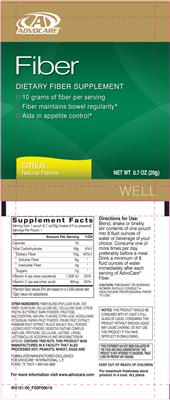
- Form
- Powder
- Serving Size
- 20 g
- Servings
- 1 per container
- Container Holds
- 0.7 oz.; 20 g
What’s in it, whether it interacts with your drugs, its side effects, whether it works, and what our pharmacists would want you to know before you start it.
- What is Fiber Citrus?A supplement from AdvoCare with three active ingredients, in powder form.
- Active Ingredients Dietary Fiber 10 gVitamin A 1000 IUVitamin C 30 mg Three active ingredients. Each one can interact with drugs or cause side effects on its own, so we check every one. The full Supplement Facts
- Drug Interactions 2,096 drugs have a documented interaction with this supplement; the most serious is rated major. Of those, 1,570 are single drugs and 526 are combination products (two or more drugs in one), each listed under its own name. Ask your pharmacist first if you take a drug in any of these categories, the most serious of the 23 on record:
- RetinoidsMajor · 9 drugs
- Moderate · 372 drugs
- Moderate · 41 drugs
- Moderate · 24 drugs
- Possible Side EffectsStomach cramps bothGasUpset stomachBloatingNauseaFeeling of fullness +5 moreCombined from the ingredients we have records for, Black Psyllium and Vitamin C. Not studied in this exact product.
- Well documented Why
Does Fiber Citrus work?
What It Is Marketed For
Bowel regularity and appetite control
From the claims on the product’s label.
The Closest Use the Research Grades
Black Psyllium
Strong studies support it.
Its ingredients have research behind other uses too:
- Vitamin A deficiency Vitamin A
- Vitamin C deficiency Vitamin C
- Black Psyllium
- Vitamin A
- Vitamin C
- Postpartum complications Vitamin A
These grades are for each ingredient, not this exact product, and never a promise it will work for you.
And 10 more graded uses, in what the research says- Full Why
- AllergensThe label says it contains tree nuts
Who Might Consider It
- People looking for bowel regularity and appetite control, which is what it is marketed for. The closest use the research grades is constipation, rated Effective.
- People who want it for vitamin A deficiency, vitamin C deficiency, coronary heart disease (CHD), ulcerative colitis or another graded use: the other uses with research behind them. See each grade
- This powder may suit people who want to add vitamins A and C and fiber to their routine, and who take no medications that interact with it.
Who Should Be Careful
- People who take warfarin, estrogen products, tetracyclines, chemotherapy drugs, levothyroxine, or other medications on our list should be careful.
- Talk it over with your own doctor or pharmacist before starting, especially if you have liver or kidney disease or are pregnant or breastfeeding.
More Before You Take It Show all three answersHide Its Ingredient Amounts vs. Other Supplements Pregnancy and Breastfeeding The Label’s Directions
-
How do its ingredient amounts compare with other supplements?
- Dietary Fiber10 gNot compared yet.
- Vitamin A1000 IUNot compared yet.
- Vitamin C30 mgLess than most of the 580 recent Vitamin C products in our database that state an amount; 90 mg is the most common.
We compare an amount once at least 10 recent products in our database state one for that ingredient. A label’s amount is what the product holds, not a recommended dose.
See each comparison -
Pregnant or breastfeeding?
- Pregnancy and Breastfeeding Vitamin A
- ! When used orally or intramuscularly in excessive doses.
- Pregnancy and Breastfeeding Vitamin C
- ! When used orally in excessive doses.
- Pregnancy and Breastfeeding Black Psyllium
- When used orally with appropriate fluid intake.
-
How does the label say to take it?
“Directions for use: Blend, shake or briskly stir contents of one pouch into 8 fluid ounces of water or beverage of your choice. Consume one or more times per day, preferably before a meal. …”
The maker’s words. Your pharmacist or doctor may advise differently.
Everything the label says
From the label dated Jun 25, 2018: all three of its active ingredients were checked against our records. A summary of what is known, not a grade or a test of the product. How these ratings are computed
Ask Anything About This Supplement
Name a drug you take, or ask about side effects, ingredients or pregnancy.
AI answers come from this label and our own records, never the open internet. AI can make mistakes, so always check with your doctor or pharmacist. How we use AI
Ask the Pharmacist
A licensed pharmacist will answer your question by email — free, usually within 24 hours.
Got it — thank you!
A licensed pharmacist will answer within 24 hours. Keep an eye on your email (worth checking spam, just in case).
What’s Inside Fiber Citrus by AdvoCare
Three Active Ingredients, Each Checked on Its Own
A supplement is often several ingredients in one bottle, and each one can interact with drugs or cause side effects on its own. We check every one of them against our records.
Why this rating?
The label gives an exact amount for every one of its three active ingredients, so you know how much of each you get in each serving. This rates what the label tells you, not the quality of the product.
Supplement Facts
| Amount Per Serving | % Daily Value | |
|---|---|---|
| Calories | 70 Calories | † |
| Total Carbohydrates | 18 g | 6% |
| Dietary Fiber | 10 g | 40% |
| Soluble Fiber | 6 g | † |
| Insoluble Fiber | 4 g | † |
| Sugar | 7 g | † |
| Vitamin A | 1000 IU | 20% |
| Vitamin C | 30 mg | 50% |
Other ingredients: Fiber Blend:, Fructose, Maltodextrin, Natural Flavors, Citric Acid, Acesulfame Potassium, Papaya fruit powder, Prune fruit extract, Rhubarb root extract, Black Walnut hull powder, Licorice root powder, Digestive Enzyme Complex:, Lactobacillus acidophilus, Bifidobacterium bifidum
† Daily Value not established.
Daily Values for adults and children 4 or more years of age.
As the label prints it, from the NIH Dietary Supplement Label Database.
Each Ingredient and Its Drug Interactions
Tap one for more about it and its full guide. A drug can interact with this supplement through any one of them.
Vitamin A and vitamin C are the vitamins in the formula, and both are well known for their roles in the body.
-
Dietary Fiber 10 g Interacts with 2,025 drugs
Black psyllium is a soluble-fiber supplement made from the seeds of a Plantago plant, used mostly to ease constipation and support digestive health.
- It is best known and most studied for relieving constipation and may modestly help lower cholesterol, but it must always be taken with plenty of water.
- Talk with your pharmacist or doctor before starting, especially if you have swallowing problems or bowel disorders.
The full Black Psyllium guide: uses, dosage and safety Every Black Psyllium drug interaction
- Soluble Fiber 6 g
- Insoluble Fiber 4 g
-
Vitamin A 1000 IU Interacts with 389 drugs
Form on the label: Beta-Carotene
Vitamin A is an essential nutrient important for vision, skin, immune function, and growth.
- Most people get enough from a balanced diet, and supplements are mainly useful for correcting a true deficiency.
- Because vitamin A is fat-soluble and can build up to harmful levels, more is not better, and high doses are especially risky in pregnancy.
The full Vitamin A guide: uses, dosage and safety Every Vitamin A drug interaction
-
Vitamin C 30 mg Interacts with 207 drugs
Form on the label: Ascorbic Acid
Vitamin C (ascorbic acid) is an essential nutrient your body needs but cannot make, so you must get it from food or supplements.
- It's important for immune function, collagen, and acts as an antioxidant, but taking large doses doesn't prevent colds for most people and may cause stomach upset.
- Most people get enough from a balanced diet, so check with your pharmacist or doctor before taking high-dose supplements.
The full Vitamin C guide: uses, dosage and safety Every Vitamin C drug interaction
How Much Vitamin C Is in It, Compared With Other Supplements
Each bar is an amount that other recent supplements list for the same ingredient. The taller the bar, the more of them state it.
-
30 mg in a serving of this product
Less than most products
- Most common amount
- 90 mg (about 8 in 100 products)
- Most products state
- 27 mg to 500 mg
- Compared with
- 580 recent products
Other Ingredients (Inactive)
The capsule or tablet itself, fillers, coatings and flavors. Not part of the drug interaction check; the allergen check below reads them.
- Fiber Blend:
- Fructose
- Maltodextrin
- Natural Flavors
- Citric Acid
- Acesulfame Potassium
- Papaya fruit powder
- Prune fruit extract
- Rhubarb root extract
- Black Walnut hull powder
- Licorice root powder
- Digestive Enzyme Complex:
- Lactobacillus acidophilus
- Bifidobacterium bifidum
Allergens in Fiber Citrus
The label says it contains tree nuts.
Named on this label
- Tree nutsThe label says it contains it; in the ingredients: Black Walnut hull powder
Not named in the ingredients
- Milk
- Egg
- Fish
- Shellfish
- Peanuts
- Wheat or other gluten grains
- Soy
- Sesame
- The label’s allergen statement“Contains: Tree nuts. This product was manufactured in a facility that also processes soy, peanuts, wheat, eggs and”
From the label text and ingredient names on file; we do not test products. With a serious allergy, check your bottle and ask the maker or your pharmacist.
What the Label Says
The maker’s own words, from the label. We do not verify or endorse them.
- FDA Statement of Identity
-
“Dietary Fiber Supplement”
- General statements
-
“Fiber maintains bowel regularity Aids in appetite control Natural flavors Well”
- Directions
-
“Directions for use: Blend, shake or briskly stir contents of one pouch into 8 fluid ounces of water or beverage of your choice. Consume one or more times per day, preferably before a meal. Drink a minimum of 8 fluid ounces of water immediately after each serving of AdvoCare Fiber.”
- Storage
-
“For maximum freshness store product in a cool, dry place.”
- Formulation
-
“10 grams of fiber per serving”
“Contains: Tree nuts.”
The Fiber Citrus Label on File
The label scan on file at the NIH Dietary Supplement Label Database, dated June 2018. Always read the label on the bottle you have.
Product Facts
- Brand
- AdvoCare
- Barcode (UPC)
- W4161/00_F00P06616
- Net contents
- 0.7 oz.; 20 g
- Market status
- On market
- Date entered into DSLD
- Jun 25, 2018
- DSLD ID
- 177717
- Product type
- Other Combinations
- Supplement form
- Powder
- Dietary claims / uses
- Nutrient, All Other, Structure/Function
- Intended target group(s)
- Adult (18 - 50 Years)
Is this label outdated? Report a formula or label change and our pharmacy team will review it.
Fiber Citrus by AdvoCare Side Effects
Why this rating?
We look for three kinds of safety information on each ingredient: side effects reported in studies, a pregnancy and breastfeeding rating, and a safety write-up from our pharmacy team. All three are on file for each of the three ingredients we could check.
So this rates how much is known, not whether Fiber Citrus is right for you.
Reported with Black Psyllium, Vitamin A and Vitamin C
- Most often
- Stomach cramps, gas, upset stomach, bloating, nausea and feeling of fullness
- !Rare but serious
- Bowel obstruction See details
HelloPharmacist Team Summary: Fiber Citrus by AdvoCare Side Effects
Most people tolerate the ingredients in this powder generally well, especially at normal doses.
- The side effects you are most likely to notice are upset stomach, nausea, or stomach cramps, diarrhea, heartburn, and headache, and much of this comes from the vitamin C.
- A rare but serious concern is kidney stones, which can follow very high or long-term high doses, so call your doctor if you have severe pain or trouble urinating.
- People with kidney disease, a history of kidney stones, hemochromatosis, or G6PD deficiency should talk with their own doctor or pharmacist before starting.
Side Effects, Ingredient by Ingredient
A supplement’s side effects come from its ingredients. Here is what is reported with each one.
Black Psyllium
Most reported
- Gas
- Bloating
- Stomach cramps
- Feeling of fullness
Vitamin C
Most reported
- Upset stomach, nausea, or stomach cramps
- Diarrhea
- Heartburn
- Headache
Vitamin A has side-effect reports, but no list of the most common ones. Read them in the Vitamin A guide
Fiber Citrus Warnings: Who Should Be Careful
Fiber Citrus has three active ingredients, and each can carry warnings of its own. We checked all three, and each warning below names the ingredient it comes from. If any of these apply to you, talk to your doctor or pharmacist before you start it.
- Black Psyllium3 warnings below
- Vitamin A2 warnings below
- Vitamin C4 warnings below
-
Diabetes or Low Blood Sugar
- Black PsylliumPeople with diabetes should monitor their blood sugar, since fiber can affect how food and sugar are absorbed.
-
Liver Disease
- Vitamin APeople with liver disease, those who drink alcohol heavily, and people taking other vitamin A-related medicines should be especially careful and talk with a clinician first.
-
Kidney Disease or Kidney Stones
- Vitamin CVery high doses (often several grams a day) are more likely to cause side effects and may raise the risk of kidney stones in some people.
- Vitamin CPeople with kidney disease, a history of kidney stones, or a condition called hemochromatosis (iron overload) should be cautious and talk to a doctor before taking high doses.
- Vitamin CVitamin C is generally well tolerated at normal doses, but high doses can cause side effects and may raise the risk of kidney stones in some people.
-
Stomach or Bowel Problems
- Black PsylliumDo not use psyllium if you have trouble swallowing, a narrowing of the gut, an unexplained change in bowel habits, or a possible bowel obstruction, unless your doctor tells you to.
-
Other Cautions
- Black PsylliumPeople with these conditions should be especially careful.
- Vitamin AWhen in doubt, choose food sources and your prenatal vitamin, and check with a pharmacist or doctor.
- Vitamin CPeople with a rare condition called G6PD deficiency should also use caution with very high doses.
-
What the Label Warns
- “Caution: Pregnant or nursing women should consult a healthcare professional prior to use.”
- “Notice: This product should be consumed with at least a full glass of liquid. Consuming this product without enough liquid may cause choking. Do not use this product if you have difficulty in swallowing.”
- “Keep out of reach of children.”
The maker’s wording, from the product label.
-
Pregnant or Breastfeeding
Each ingredient’s rating for pregnancy and for breastfeeding, and what it covers.
Pregnancy and Breastfeeding The record rates both the same
-
When used orally or intramuscularly and appropriately.
Vitamin A, as pre-formed vitamin A (retinol or retinyl ester), is safe during pregnancy and lactation when used in doses less than 10,000 IU (3000 mcg) per day in adults 19 years of age and older and 2800 mcg daily in those 14-18 years of age.
4 more points on this rating
- Vitamin A is available in two different forms: pre-formed vitamin A (retinol or retinyl ester) and provitamin A (carotenoids).
- The safety concerns associated with high vitamin A intake occur with pre-formed vitamin A only.
- Some supplements contain vitamin A in both pre-formed and provitamin A forms.
- For these supplements, the amount of pre-formed vitamin A should be used as the reference amount to determine safety.
-
When used orally or intramuscularly in excessive doses.
Daily intake of greater than 10,000 IU (3000 mcg) can cause fetal malformations.
4 more points on this rating
- Excessive dietary intake of vitamin A has also been associated with teratogenicity.
- The first trimester of pregnancy seems to be the critical period for susceptibility to vitamin A-associated birth defects such as craniofacial abnormalities and abnormalities of the central nervous system.
- Pregnant patients should monitor their intake of pre-formed vitamin A (retinol or retinyl ester).
- This form of vitamin A is found in several foods including animal products, particularly fish and animal liver, some fortified breakfast cereals, and dietary supplements.
Pregnancy and Breastfeeding The record rates both the same
-
When used orally and appropriately.
-
When used orally in excessive doses.
Tell patients over age 19 not to use doses exceeding the UL of 2000 mg daily when pregnant or breast-feeding and for those 14-18 years of age not to use doses exceeding 1800 mg daily when pregnant or breast-feeding.
2 more points on this rating
- Higher doses can cause osmotic diarrhea and gastrointestinal upset.
- Large doses of vitamin C during pregnancy can also cause newborn scurvy; avoid using.
Pregnancy and Breastfeeding The record rates both the same
-
When used orally with appropriate fluid intake.
Our pharmacy team’s notes
- We have no pregnancy or breastfeeding information for the fiber ingredients.
Ratings and the words beside them are from the Natural Medicines database, which we license.
-
Rare but Serious Side Effects
-
!
Black Psyllium
More serious problems are rare but can happen if it is taken with too little water.
Orally: Bowel obstruction, esophageal obstruction.
-
!
Vitamin A
Very high single doses can cause more sudden symptoms like severe headache, blurred vision, and vomiting.
Very high doses may cause pseudotumor cerebri, liver toxicity, and, rarely, more serious harm.
Orally: In very high doses, vitamin A can cause pseudotumor cerebri, pain, liver toxicity, coma, and even death.
-
!
Vitamin C
Rare but more serious concerns with very high or long-term high doses include kidney stones and, in people with iron-overload conditions, too much iron buildup.
Orally: There have been rare case reports of carotid inner wall thickening after large doses of vitamin C.
When to get help: a serious allergic reaction, with trouble breathing or swelling of the face, lips or throat, needs emergency care: call 911. For any other side effect that worries you, call your doctor or pharmacist.
These reports describe each ingredient, not studies of this exact product. Not medical advice: a side effect you notice after starting a supplement is worth a word with your pharmacist or doctor.
Fiber Citrus by AdvoCare Drug Interactions
We checked all three active ingredients in this supplement against every drug in our records. A drug can interact with it through any one of them.
A major interaction on record
3 of 3, on a scale from Minor or none to Major.Why this rating?
We rate this by the most serious interaction on record, not by how many there are. For Black Psyllium, Vitamin A and Vitamin C, the most serious is rated major, which means the combination is best avoided, or used only under close supervision. Some involve kinds of drugs where a small change can matter, such as blood thinners, cancer treatments and heart-rhythm drugs.
2,097 drugs are on the full list. What matters is whether one you take is on it, so check yours with the interaction checker on this page.
All three of its active ingredients have drug interactions on record: Black Psyllium, Vitamin A and Vitamin C.
- Interacts with
- 389 drugs
- Most serious
- Major
- The most serious interaction is with retinoids (medicines derived from vitamin A), rated Major.
- Taking them with vitamin A supplements may push vitamin A to supratherapeutic levels and add up toxic effects.
- Vitamin A may also raise the risk of pseudotumor cerebri (pressure inside the skull) with tetracycline antibiotics (Moderate), and of liver disease with other potentially liver-toxic drugs (hepatotoxic drugs, Moderate).
- Interacts with
- 207 drugs
- Most serious
- Moderate
- Vitamin C may raise estrogen levels, including with birth control pills or hormone replacement therapy (Moderate).
- It may also reduce the effect of alkylating agents and antitumor antibiotics used in chemotherapy (Moderate), increase aluminum absorption from aluminum compounds (Moderate), lower levels of fluphenazine and indinavir (Moderate), and increase levothyroxine absorption (Moderate).
- Interacts with
- 2,025 drugs
- Most serious
- Moderate
- Most of its records involve Oral Drugs, Ethinyl Estradiol and Metformin (Glucophage).
From the HelloPharmacist Team
Put every ingredient together and a few things stand out.
- AdvoCare Fiber Citrus powder can interact with medications through its vitamin A and vitamin C content.
- Several other drug types are rated Moderate.
- Warfarin (a blood thinner, or anticoagulant) is affected by both ingredients: high-dose vitamin A may increase bleeding risk, and high-dose vitamin C may reduce warfarin levels and effectiveness.
Summarized by the HelloPharmacist pharmacy team from the interaction records below. How it is written How we use AI
Why Fiber Citrus Interacts, Ingredient by Ingredient
A product interacts through its ingredients. Each card: how many drugs, the most serious rating, and the kinds of drugs it affects most (tap a kind for what it means).
The ingredients driving the most interactions
-
Dietary Fiber 2,025 drugs
Most serious: Moderate7 interaction records on file
The kinds of drugs it affects most
- 2,022 drugs
- Ethinyl Estradiol 33 drugs
- 20 drugs
- Carbamazepine (Tegretol) 1 drug
Every Black Psyllium drug interaction, 7 records The Black Psyllium records cite 18 references, listed in the Black Psyllium guide.
-
Vitamin A 389 drugs
Most serious: Major4 interaction records on file
The kinds of drugs it affects most
- 372 drugs
- 20 drugs
- Retinoids 9 drugs
- 2 drugs
Every Vitamin A drug interaction, 4 records The Vitamin A records cite 31 references, listed in the Vitamin A guide.
-
Vitamin C 207 drugs
Most serious: Moderate13 interaction records on file
The kinds of drugs it affects most
- 69 drugs
- 41 drugs
- 35 drugs
- 24 drugs
Every Vitamin C drug interaction, 13 records The Vitamin C records cite 51 references, listed in the Vitamin C guide.
The Breakdown by Severity
Each drug counted once, at its most serious rating. Tap a tile to list those drugs.
Find Your Drug
Type a drug or brand name to see whether it is on the list.
- Only drugs with a documented interaction are listed, the most serious first.
- A drug with no known interaction is not listed, but searching its name tells you so.
- Open a drug to see which ingredient is responsible. Of those, 1,570 are single drugs and 526 are combination products (two or more drugs in one), each listed under its own name.
-
IsotretinoinAbsorica, Accutane, Amnesteem, Claravis, Roaccutane and 1 more Major
The 2 ingredients responsible:
-
Vitamin A Major Isotretinoin is in the Retinoids category.
Concomitant use of retinoids with vitamin A supplements might produce supratherapeutic vitamin A levels.
The full Vitamin A + Isotretinoin interaction -
Dietary Fiber Minor Isotretinoin is in the Oral Drugs category.
Theoretically, psyllium might increase, decrease, or have no effect on the absorption of oral drugs.
The full Dietary Fiber + Isotretinoin interaction
-
-
BexaroteneTargretin Major
The 2 ingredients responsible:
-
Vitamin A Major Bexarotene is in the Retinoids category.
Concomitant use of retinoids with vitamin A supplements might produce supratherapeutic vitamin A levels.
The full Vitamin A + Bexarotene interaction -
Dietary Fiber Minor Bexarotene is in the Oral Drugs category.
Theoretically, psyllium might increase, decrease, or have no effect on the absorption of oral drugs.
The full Dietary Fiber + Bexarotene interaction
-
-
TretinoinAltreno, Renova, Retin-A, Vesanoid Major
The 2 ingredients responsible:
-
Vitamin A Major Tretinoin is in the Retinoids category.
Concomitant use of retinoids with vitamin A supplements might produce supratherapeutic vitamin A levels.
The full Vitamin A + Tretinoin interaction -
Dietary Fiber Minor Tretinoin is in the Oral Drugs category.
Theoretically, psyllium might increase, decrease, or have no effect on the absorption of oral drugs.
The full Dietary Fiber + Tretinoin interaction
-
-
AcitretinSoriatane Major
The 2 ingredients responsible:
-
Vitamin A Major Acitretin is in the Retinoids category.
Concomitant use of retinoids with vitamin A supplements might produce supratherapeutic vitamin A levels.
The full Vitamin A + Acitretin interaction -
Dietary Fiber Minor Acitretin is in the Oral Drugs category.
Theoretically, psyllium might increase, decrease, or have no effect on the absorption of oral drugs.
The full Dietary Fiber + Acitretin interaction
-
-
EtretinateTegison Major
The 2 ingredients responsible:
-
Vitamin A Major Etretinate is in the Retinoids category.
Concomitant use of retinoids with vitamin A supplements might produce supratherapeutic vitamin A levels.
The full Vitamin A + Etretinate interaction -
Dietary Fiber Minor Etretinate is in the Oral Drugs category.
Theoretically, psyllium might increase, decrease, or have no effect on the absorption of oral drugs.
The full Dietary Fiber + Etretinate interaction
-
-
TazaroteneArazlo, Avage, Fabior, Tazorotene, Zorac Major
The ingredient responsible:
-
Vitamin A Major Tazarotene is in the Retinoids category.
Concomitant use of retinoids with vitamin A supplements might produce supratherapeutic vitamin A levels.
The full Vitamin A + Tazarotene interaction
-
-
AlitretinoinPanretin Major
The 2 ingredients responsible:
-
Vitamin A Major Alitretinoin is in the Retinoids category.
Concomitant use of retinoids with vitamin A supplements might produce supratherapeutic vitamin A levels.
The full Vitamin A + Alitretinoin interaction -
Dietary Fiber Minor Alitretinoin is in the Oral Drugs category.
Theoretically, psyllium might increase, decrease, or have no effect on the absorption of oral drugs.
The full Dietary Fiber + Alitretinoin interaction
-
-
Tretinoin and Benzoyl PeroxideTwyneo Major
The ingredient responsible:
-
Vitamin A Major Tretinoin and Benzoyl Peroxide is in the Retinoids category.
Concomitant use of retinoids with vitamin A supplements might produce supratherapeutic vitamin A levels.
The full Vitamin A + Tretinoin and Benzoyl Peroxide interaction
-
-
Halobetasol Propionate and tazaroteneDuobrii Major
The ingredient responsible:
-
Vitamin A Major Halobetasol Propionate and tazarotene is in the Retinoids category.
Concomitant use of retinoids with vitamin A supplements might produce supratherapeutic vitamin A levels.
The full Vitamin A + Halobetasol Propionate and tazarotene interaction
-
-
WarfarinWarfarin Moderate
The 3 ingredients responsible:
-
Vitamin A Moderate
Theoretically, high doses of vitamin A could increase the risk of bleeding with warfarin.
The full Vitamin A + Warfarin interaction -
Vitamin C Moderate
High-dose vitamin C might reduce the levels and effectiveness of warfarin.
The full Vitamin C + Warfarin interaction -
Dietary Fiber Minor Warfarin is in the Oral Drugs category.
Theoretically, psyllium might increase, decrease, or have no effect on the absorption of oral drugs.
The full Dietary Fiber + Warfarin interaction
-
-
LevothyroxineEltroxin, Estre, Euthyrox, Levo-T, Levolet and 6 more Moderate
The 2 ingredients responsible:
-
Vitamin C Moderate
Vitamin C can increase levothyroxine absorption.
The full Vitamin C + Levothyroxine interaction -
Dietary Fiber Minor Levothyroxine is in the Oral Drugs category.
Theoretically, psyllium might increase, decrease, or have no effect on the absorption of oral drugs.
The full Dietary Fiber + Levothyroxine interaction
-
-
RosuvastatinCrestor, Ezallor Moderate
The 2 ingredients responsible:
-
Vitamin A Moderate Rosuvastatin is in the Hepatotoxic Drugs category.
Theoretically, taking high doses of vitamin A in combination with other potentially hepatotoxic drugs might increase the risk of liver disease.
The full Vitamin A + Rosuvastatin interaction -
Dietary Fiber Minor Rosuvastatin is in the Oral Drugs category.
Theoretically, psyllium might increase, decrease, or have no effect on the absorption of oral drugs.
The full Dietary Fiber + Rosuvastatin interaction
-
-
AtorvastatinAtorvaliq Moderate
The 2 ingredients responsible:
-
Vitamin A Moderate Atorvastatin is in the Hepatotoxic Drugs category.
Theoretically, taking high doses of vitamin A in combination with other potentially hepatotoxic drugs might increase the risk of liver disease.
The full Vitamin A + Atorvastatin interaction -
Dietary Fiber Minor Atorvastatin is in the Oral Drugs category.
Theoretically, psyllium might increase, decrease, or have no effect on the absorption of oral drugs.
The full Dietary Fiber + Atorvastatin interaction
-
-
Warfarin SodiumCoumadin, Panwarfin, Sofarin Moderate
The 3 ingredients responsible:
-
Vitamin C Moderate
High-dose vitamin C might reduce the levels and effectiveness of warfarin.
The full Vitamin C + Warfarin Sodium interaction -
Vitamin A Moderate
Theoretically, high doses of vitamin A could increase the risk of bleeding with warfarin.
The full Vitamin A + Warfarin Sodium interaction -
Dietary Fiber Minor Warfarin Sodium is in the Oral Drugs category.
Theoretically, psyllium might increase, decrease, or have no effect on the absorption of oral drugs.
The full Dietary Fiber + Warfarin Sodium interaction
-
-
MetforminGlucophage, Metformin Moderate
The ingredient responsible:
-
Dietary Fiber Moderate Metformin is in the Oral Drugs category.
Theoretically, psyllium might increase, decrease, or have no effect on the absorption of oral drugs.
The full Dietary Fiber + Metformin interaction
-
-
TestosteroneAndrogel, Andropatch, Delatestryl, Intrinsa, Natesto and 4 more Moderate
The ingredient responsible:
-
Vitamin A Moderate Testosterone is in the Hepatotoxic Drugs category.
Theoretically, taking high doses of vitamin A in combination with other potentially hepatotoxic drugs might increase the risk of liver disease.
The full Vitamin A + Testosterone interaction
-
-
AmoxicillinAmix, Amoram, Amoxident, Amoxil Capsules, Amoxil Injection and 4 more Moderate
The 2 ingredients responsible:
-
Vitamin A Moderate Amoxicillin is in the Hepatotoxic Drugs category.
Theoretically, taking high doses of vitamin A in combination with other potentially hepatotoxic drugs might increase the risk of liver disease.
The full Vitamin A + Amoxicillin interaction -
Dietary Fiber Minor Amoxicillin is in the Oral Drugs category.
Theoretically, psyllium might increase, decrease, or have no effect on the absorption of oral drugs.
The full Dietary Fiber + Amoxicillin interaction
-
-
AcetaminophenChildren's Tylenol, Children's Tylenol Meltaways, Tylenol, Tylenol Ex Strength Moderate
The 3 ingredients responsible:
-
Vitamin A Moderate Acetaminophen is in the Hepatotoxic Drugs category.
Theoretically, taking high doses of vitamin A in combination with other potentially hepatotoxic drugs might increase the risk of liver disease.
The full Vitamin A + Acetaminophen interaction -
Dietary Fiber Minor Acetaminophen is in the Oral Drugs category.
Theoretically, psyllium might increase, decrease, or have no effect on the absorption of oral drugs.
The full Dietary Fiber + Acetaminophen interaction -
Vitamin C Minor
High-dose vitamin C might slightly prolong the clearance of acetaminophen.
The full Vitamin C + Acetaminophen interaction
-
-
MethotrexateOtrexup, Rasuvo, Reditrex, Rheumatrex Moderate
The 2 ingredients responsible:
-
Vitamin A Moderate Methotrexate is in the Hepatotoxic Drugs category.
Theoretically, taking high doses of vitamin A in combination with other potentially hepatotoxic drugs might increase the risk of liver disease.
The full Vitamin A + Methotrexate interaction -
Dietary Fiber Minor Methotrexate is in the Oral Drugs category.
Theoretically, psyllium might increase, decrease, or have no effect on the absorption of oral drugs.
The full Dietary Fiber + Methotrexate interaction
-
-
DoxycyclineDoryx, Doxy, Doxy-D, Doxycin, Doxycycline Injection and 7 more Moderate
The 2 ingredients responsible:
-
Vitamin A Moderate Doxycycline is in these Tetracycline Antibiotics, Hepatotoxic Drugs categories.
Theoretically, taking tetracycline antibiotics with high doses of vitamin A can increase the risk of pseudotumor cerebri.
The full Vitamin A + Doxycycline interaction -
Dietary Fiber Minor Doxycycline is in the Oral Drugs category.
Theoretically, psyllium might increase, decrease, or have no effect on the absorption of oral drugs.
The full Dietary Fiber + Doxycycline interaction
-
-
Levothyroxine SodiumErmez, Thyquidity, Tirosint-Sol Moderate
The 2 ingredients responsible:
-
Vitamin C Moderate
Vitamin C can increase levothyroxine absorption.
The full Vitamin C + Levothyroxine Sodium interaction -
Dietary Fiber Minor Levothyroxine Sodium is in the Oral Drugs category.
Theoretically, psyllium might increase, decrease, or have no effect on the absorption of oral drugs.
The full Dietary Fiber + Levothyroxine Sodium interaction
-
-
DuloxetineCymbalta, Drizalma Sprinkle, Irenka Moderate
The 2 ingredients responsible:
-
Vitamin A Moderate Duloxetine is in the Hepatotoxic Drugs category.
Theoretically, taking high doses of vitamin A in combination with other potentially hepatotoxic drugs might increase the risk of liver disease.
The full Vitamin A + Duloxetine interaction -
Dietary Fiber Minor Duloxetine is in the Oral Drugs category.
Theoretically, psyllium might increase, decrease, or have no effect on the absorption of oral drugs.
The full Dietary Fiber + Duloxetine interaction
-
-
EstrogenEstrogen Moderate
The 2 ingredients responsible:
-
Vitamin C Moderate Estrogen is in the Estrogens category.
Vitamin C might increase blood levels of estrogens.
The full Vitamin C + Estrogen interaction -
Dietary Fiber Minor Estrogen is in the Oral Drugs category.
Theoretically, psyllium might increase, decrease, or have no effect on the absorption of oral drugs.
The full Dietary Fiber + Estrogen interaction
-
-
CiprofloxacinCiloxan, Cipro, Cipro IV, Cipro XR, Ciprobay and 1 more Moderate
The 2 ingredients responsible:
-
Vitamin A Moderate Ciprofloxacin is in the Hepatotoxic Drugs category.
Theoretically, taking high doses of vitamin A in combination with other potentially hepatotoxic drugs might increase the risk of liver disease.
The full Vitamin A + Ciprofloxacin interaction -
Dietary Fiber Minor Ciprofloxacin is in the Oral Drugs category.
Theoretically, psyllium might increase, decrease, or have no effect on the absorption of oral drugs.
The full Dietary Fiber + Ciprofloxacin interaction
-
-
Tamoxifen CitrateNolvadex, Soltamox Moderate
The 2 ingredients responsible:
-
Vitamin A Moderate Tamoxifen Citrate is in the Hepatotoxic Drugs category.
Theoretically, taking high doses of vitamin A in combination with other potentially hepatotoxic drugs might increase the risk of liver disease.
The full Vitamin A + Tamoxifen Citrate interaction -
Dietary Fiber Minor Tamoxifen Citrate is in the Oral Drugs category.
Theoretically, psyllium might increase, decrease, or have no effect on the absorption of oral drugs.
The full Dietary Fiber + Tamoxifen Citrate interaction
-
-
Atorvastatin CalciumLipitor Moderate
The 2 ingredients responsible:
-
Vitamin A Moderate Atorvastatin Calcium is in the Hepatotoxic Drugs category.
Theoretically, taking high doses of vitamin A in combination with other potentially hepatotoxic drugs might increase the risk of liver disease.
The full Vitamin A + Atorvastatin Calcium interaction -
Dietary Fiber Minor Atorvastatin Calcium is in the Oral Drugs category.
Theoretically, psyllium might increase, decrease, or have no effect on the absorption of oral drugs.
The full Dietary Fiber + Atorvastatin Calcium interaction
-
-
Metformin HydrochlorideRiomet ER Moderate
The ingredient responsible:
-
Dietary Fiber Moderate Metformin Hydrochloride is in the Oral Drugs category.
Theoretically, black psyllium might increase the therapeutic and adverse effects of metformin.
The full Dietary Fiber + Metformin Hydrochloride interaction
-
-
ParacetamolPanadol Moderate
The 3 ingredients responsible:
-
Vitamin A Moderate Paracetamol is in the Hepatotoxic Drugs category.
Theoretically, taking high doses of vitamin A in combination with other potentially hepatotoxic drugs might increase the risk of liver disease.
The full Vitamin A + Paracetamol interaction -
Dietary Fiber Minor Paracetamol is in the Oral Drugs category.
Theoretically, psyllium might increase, decrease, or have no effect on the absorption of oral drugs.
The full Dietary Fiber + Paracetamol interaction -
Vitamin C Minor
High-dose vitamin C might slightly prolong the clearance of acetaminophen.
The full Vitamin C + Paracetamol interaction
-
-
Doxycycline HyclateActiclate, Acticlate Cap, Lymepak Moderate
The 2 ingredients responsible:
-
Vitamin A Moderate Doxycycline Hyclate is in these Hepatotoxic Drugs, Tetracycline Antibiotics categories.
Theoretically, taking high doses of vitamin A in combination with other potentially hepatotoxic drugs might increase the risk of liver disease.
The full Vitamin A + Doxycycline Hyclate interaction -
Dietary Fiber Minor Doxycycline Hyclate is in the Oral Drugs category.
Theoretically, psyllium might increase, decrease, or have no effect on the absorption of oral drugs.
The full Dietary Fiber + Doxycycline Hyclate interaction
-
-
BendamustineBelrapzo, Treanda, Vivimusta Moderate
The ingredient responsible:
-
Vitamin C Moderate Bendamustine is in the Alkylating Agents category.
Theoretically, antioxidant effects of vitamin C might reduce the effectiveness of alkylating agents.
The full Vitamin C + Bendamustine interaction
-
Does It Work? Fiber Citrus by AdvoCare
How it rates in the research so far, then each ingredient on its own. A grade is the research so far, never an endorsement.
What It Is Marketed For
Bowel regularity and appetite control
From the claims on the product’s label.
Closest match for what it is marketed for
Black Psyllium for constipation
Strong studies support it.
Two uses we did not count
- HIV/AIDS-related diarrhea and chemotherapy-induced diarrhea: they are treated by a doctor or in a hospital.
Our pharmacy team’s notes on this supplement
- Our ratings apply to each ingredient, not to the powder as a whole.
- We have no effectiveness rating for either fiber ingredient, so the evidence for their benefits isn't established.
The Evidence, Ingredient by Ingredient
Each card holds our notes on one ingredient, then its uses graded effective, likely effective or possibly effective.
Black Psyllium
From our Black Psyllium guide
- The strongest and most accepted use for psyllium fiber is relieving constipation.
- As a bulk-forming fiber, it adds water and bulk to the stool, which can make bowel movements easier and more regular.
Research suggests a benefit for
- Constipation (the use on its label)
- Coronary heart disease (CHD)
Vitamin A
From our Vitamin A guide
- The strongest, best-supported use of vitamin A is correcting or preventing a deficiency.
- In people who are truly low in vitamin A, supplementing clearly helps prevent problems like night blindness and supports normal growth and immune function.
Research suggests a benefit for
- Vitamin A deficiency
- Ulcerative colitis, postpartum complications, oral leukoplakia, retinitis pigmentosa, measles and night vision
Not counted here: three graded uses are for Vitamin A injected or put on the skin (aging skin, bronchopulmonary dysplasia and wrinkled skin), not for a product like this one.
Every graded use, in the Vitamin A guideVitamin C
From our Vitamin C guide
- Preventing and treating scurvy: This is the clearest, best-proven use.
- Scurvy is a disease caused by vitamin C deficiency.
Research suggests a benefit for
- Vitamin C deficiency
- Hypercholesterolemia, hypertension, cataracts, exercise-induced respiratory infections, anemia of chronic disease, complex regional pain syndrome and nitrate tolerance
Not counted here: two graded uses are for Vitamin C injected or put on the skin (wrinkled skin and laser skin resurfacing), not for a product like this one. Four more are for conditions treated by a doctor or in a hospital (atrial fibrillation, lead toxicity, bowel preparation and others).
Every graded use, in the Vitamin C guideThe grades are the Natural Medicines database’s, which we license; tap a grade for what it means. They are about each ingredient, not this exact product.
About AdvoCare
Manufacturer and brand details for Fiber Citrus, from the product label.
AdvoCare has 164 products in our supplement database, 122 of them on the market, with labels on file since 2012. Our database is built from the NIH’s Dietary Supplement Label Database and our pharmacy team’s own additions, so it covers the labels filed there, not every product the brand sells.
- Name
- AdvoCare International L.P.
- City
- Plano
- State
- TX
- ZipCode
- 75074
- Phone Number
- 800-542-4800
- Web Address
- www.advocare.com
Fiber Citrus by AdvoCare: Common Questions
Does Fiber Citrus by AdvoCare interact with any drugs?
What are the side effects of Fiber Citrus by AdvoCare?
Who should be careful taking Fiber Citrus by AdvoCare?
Can Fiber Citrus by AdvoCare affect the liver?
Can Fiber Citrus by AdvoCare affect the kidneys?
Does Fiber Citrus by AdvoCare contain any common allergens?
How can Fiber Citrus by AdvoCare interact with so many drugs?
Where does the information about Fiber Citrus by AdvoCare come from?
Can Fiber Citrus by AdvoCare help with cataracts?
Is Fiber Citrus by AdvoCare safe during pregnancy?
What is vitamin A used for?
Written and reviewed by the HelloPharmacist Editorial Team. Our editorial policy
Still Have a Question About Fiber Citrus?
Our pharmacists answer drug and supplement questions, free, by email.
Label information is sourced from the NIH Dietary Supplement Label Database and reflects the product version on file; always read your actual product label. This page is for education only and is not a substitute for professional medical advice. Confirm with your pharmacist or doctor before combining supplements and drugs.
Who Reviews This Page
The pharmacist behind it, and how it is checked.
Dr. Brian Staiger, PharmD, BCPS
Clinical pharmacist and founder of HelloPharmacist
A licensed pharmacist for more than 13 years, he built the system behind this page: it reads the label on file, matches each active ingredient to its record in the Natural Medicines database, checks those records against every drug we cover, and our pharmacy team writes the take and the interaction summary from those records.
- 13+ Years in PharmacyRetail and clinical pharmacy, medication safety and healthcare administration.
- Board Certified (BCPS)A pharmacotherapy specialist, certified by the Board of Pharmacy Specialties.
- Herbalist TrainingCertificates in medical ethnobotany, for the herbs and supplements people take.
Where This Page Comes From
Fiber Citrus’s label data comes from the NIH Dietary Supplement Label Database; the ingredient interaction data is from the Natural Medicines database, reviewed by our pharmacists.
- NIH Dietary Supplement Label Database (DSLD)
- The official product label on file for this supplement.
- Natural Medicines (Therapeutic Research Center)
- The evidence-graded clinical reference behind the ingredient interaction, evidence and safety records, which we license.
- HelloPharmacist Editorial Team
- Content is reviewed by the HelloPharmacist Editorial Team, the pharmacists on our staff and those we contract. See our data sources and editorial standards for how this information is built and checked.
- The Pharmacy Team’s Take and Summaries
- Generated from HelloPharmacist’s pharmacist-curated databases and editorial rules. Clinical methodology reviewed by Dr. Brian Staiger, PharmD, BCPS. Last generated Oct 31, 2026. How we use AI
- The ratings in the Quick Summary
- They summarize available label information, ingredient evidence and known drug-safety records: a summary of what is known, not a grade of the product itself. They do not verify product identity, purity, potency, contamination or manufacturing quality. How these ratings are computed
The References Behind the Interaction Records
Every citation the ingredients’ records rest on is listed in that ingredient’s guide, in context: Black Psyllium, 18 references; Vitamin A, 31 references; Vitamin C, 51 references .
Parts of this content are provided by the Therapeutic Research Center, LLC.
DISCLAIMER: Currently this does not check for drug-drug interactions. This is not an all-inclusive comprehensive list of potential interactions and is for informational purposes only. Not all interactions are known or well-reported in the scientific literature, and new interactions are continually being reported. Input is needed from a qualified healthcare provider including a pharmacist before starting any therapy. Application of clinical judgment is necessary.
© 2021 Therapeutic Research Center, LLC
Keep Exploring
- Supplement interaction checkerCheck any supplement or product against your drugs
- Drug–drug interactionsCheck two or more of your drugs against each other
- Browse drugs A to ZEvery drug we have checked against herbs and supplements
- NDC and pricing lookupFind a drug’s NDCs, packaging and costs
- Ask a pharmacistA free, personal answer from our licensed team