
Kratom + Erythromycin, Sulfisoxazole
Erythromycin, Sulfisoxazole brand name: Eryzole.
Erythromycin, Sulfisoxazole falls into 2 drug categories that Kratom can interact with; the most serious is rated moderate. Kratom might increase the levels and clinical effects of drugs metabolized by CYP3A4.
Read the full interaction reportKratom and Erythromycin, Sulfisoxazole
These two interact in 2 distinct ways. Each one is explained separately below.
Why Are There 2 Interactions?
Kratom interacts with whole categories of medication. Erythromycin, Sulfisoxazole falls into 2 of those categories, so it can interact with Kratom in 2 different ways. We’ve listed each one below — your overall risk is driven by the most serious of them (Moderate).
CYTOCHROME P450 3A4 (CYP3A4) SUBSTRATES
1 of 2Why this applies to Erythromycin, Sulfisoxazole
Erythromycin, Sulfisoxazole falls under CYTOCHROME P450 3A4 (CYP3A4) SUBSTRATES — the group Kratom interacts with.
In vitro research shows that kratom extract inhibits CYP3A4 enzyme activity. A pharmacokinetic study in adults shows that taking kratom tea 2 grams modestly increases the plasma concentration time-curve (AUC) and maximum concentration (Cmax) of CYP3A4 probe midazolam by 40-50% and its CYP3A4-mediated metabolites 18-27%. However, a lack of change in the half-life of midazolam and a simulation of the kratom-midazolam interaction suggest that kratom inhibits CYP3A4 enzymes in the small intestine but not the liver. Additionally, there is one case report of a 27-year-old male who died from neuroleptic malignant-like symptoms after concomitant use of kratom and quetiapine, a CYP3A4 substrate. Although it did not appear that the patient had consumed large quantities of quetiapine, postmortem plasma levels were in the lethal range, indicating possible inhibition of CYP3A4 by kratom. In another case report, a 63-year-old male presented with possible serotonin syndrome after taking an unknown dose of kratom for up to 3 months along with serotonergic prescription medications bupropion, buspirone, desvenlafaxine, trazodone, and ziprasidone. It is hypothesized that CYP3A4 inhibition by kratom reduced metabolism of desvenlafaxine, trazodone, and ziprasidone and consequently increased systemic exposure to serotonin.
Interaction has been documented in animal or in lab research, or the interaction has been documented in humans but is limited to case reports or conflicting clinical research exists.

Here's the situation with Eryzole, which combines erythromycin (an antibiotic) and sulfisoxazole (a sulfa antibiotic). The erythromycin part is handled in your body partly by an enzyme called CYP3A4. Kratom appears to slow that enzyme down a bit, mostly in the gut. In theory, that could let a little more erythromycin build up than usual, which may nudge up its common side effects like nausea, stomach cramping, or diarrhea.
I want to be honest about the strength of this: it's based on lab and pharmacology reasoning, not solid human studies with this exact combo, so the real-world risk is likely modest. Still, with kratom carrying its own safety concerns, it's worth a quick chat with your pharmacist or doctor before mixing the two. Please don't stop your antibiotic on your own.
- Kong WM, Chik Z, Ramachandra M, et al. Evaluation of the effects of Mitragyna speciosa alkaloid extract on cytochrome P450 enzymes using a high throughput assay. Molecules. 2011;16(9):7344-7356. PubMed
- Hughes RL. Fatal combination of mitragynine and quetiapine - a case report with discussion of a potential herb-drug interaction. Forensic Sci Med Pathol. 2019 Mar;15(1):110-113. PubMed
- Eudaley ST, Brooks SP, Hamilton LA. Case Report: Possible Serotonin Syndrome in a Patient Taking Kratom and Multiple Serotonergic Agents. J Pharm Pract 2022. PubMed
- Tanna RS, Nguyen JT, Hadi DL, et al. Clinical Assessment of the Drug Interaction Potential of the Psychotropic Natural Product Kratom. Clin Pharmacol Ther 2023;113(6):1315-1325. PubMed
CYTOCHROME P450 3A4 (CYP3A4) INHIBITORS
2 of 2Erythromycin, Sulfisoxazole also falls under CYTOCHROME P450 3A4 (CYP3A4) INHIBITORS.
A pharmacokinetic study in healthy adults suggests that CYP3A4 inhibition with itraconazole increases the peak plasma concentration (Cmax) of mitragynine by about 1.5-fold. However, CYP3A4 inhibition reduces the Cmax and area under the plasma concentration time curve (AUC) over 72 hours of 7-hydroxymitragynine, one of kratom's active constituents, by about 3-fold, possibly by decreasing the metabolism of mitragynine to 7-hydroxymitragynin.
Animal research suggests that CYP3A4 inhibition with ketoconazole reduces the metabolism and clearance of kratom, increasing the Cmax of the active metabolite mitragynine by 130%, time to reach maximum plasma concentration (Tmax) from 1 to 2.6 hours, and AUC by 120%. Additionally, CYP3A4-mediated conversion of mitragynine into 7-hydroxymitragynine increases systematic exposure by 130%. However, other CYP isoforms are likely involved in this conversion. CYP3A4 inhibition could lead to increased adverse effects and mu-opioid-receptor-mediated behavioral effects associated with kratom and its metabolites.
Interaction has been documented in animal or in lab research, or the interaction has been documented in humans but is limited to case reports or conflicting clinical research exists.
Here's the connection worth knowing: the erythromycin part of Eryzole slows down a liver enzyme called CYP3A4, and that same enzyme helps your body process kratom. When erythromycin blocks it, the main kratom compound (mitragynine) can build up higher than usual. In plain terms, your dose of kratom may hit harder than you expect.
That could mean stronger opioid-like effects, things like deeper drowsiness, slowed breathing, dizziness, constipation, or nausea. The evidence here comes from small drug studies and animal data, so it's a real but moderate concern, not a guarantee. Because kratom itself carries serious risks, please loop in your pharmacist or doctor before combining it with this antibiotic.
- Kamble SH, Obeng S, León F, et al. Pharmacokinetic and Pharmacodynamic Consequences of Cytochrome P450 3A Inhibition on Mitragynine Metabolism in Rats. J Pharmacol Exp Ther 2023;385(3):180-192. PubMed
- Mongar P, Jaisi A, Inkviya T, Wungsintaweekul J, Wiwattanawongsa K. Effects of Itraconazole on Pharmacokinetics of Mitragynine and 7-Hydroxymitragynine in Healthy Volunteers. ACS Pharmacol Transl Sci 2024;7(3):823-833. PubMed
What These Ratings Mean
Every interaction above is graded three ways — here’s the key to each label.
Clinically significant. Avoid the combination, or use only under close professional supervision.
Usually worth avoiding or managing — may need monitoring, a dose change, or timing apart.
Generally not serious. Be aware of it and mention it to your pharmacist.
- LikelyWell-controlled human studies have demonstrated the likely existence of this interaction.
- ProbableInteraction has not been documented in well-controlled studies, however, the interaction has been demonstrated in some small human studies or in controlled animal studies in conjunction with multiple case reports.
- PossibleInteraction has been documented in animal or in lab research, or the interaction has been documented in humans but is limited to case reports or conflicting clinical research exists.
- UnlikelyInteraction has been demonstrated in animal or in lab research but has been shown not to occur in humans.
- AHigh-quality meta-analysis (quantitative systematic review).
- BCase-control study.
- CConsensus.
- DAnecdotal evidence.
These ratings are for information only. Never start, stop, or otherwise change your therapy before speaking with your provider.
Kratom Also Interacts With Other Medications
Kratom has 983 moderate, 12 minor known drug interactions in our database — the Erythromycin, Sulfisoxazole one above is among them. If you take anything else, check it against the full list below.
Check Another of Your Medications Against Kratom
We haven’t checked that one against Kratom yet — ask our pharmacists directly.
Covers the 2,830 medications we’ve checked against Kratom. Pick one to open its full report.
Questions About Kratom or Erythromycin, Sulfisoxazole
These are real questions from readers, answered by the pharmacists at HelloPharmacist — written by a person, not generated from a database. Each one covers Kratom or Erythromycin, Sulfisoxazole, not necessarily both, but if one is close to what you were about to ask it will usually go further than a database entry can:
Not quite your question? Ask our pharmacists directly — it is free, there is no account required, and answers usually come back within 24 hours.
See Every Supplement That Interacts With Erythromycin, Sulfisoxazole
This page covers Kratom only. If you take other supplements — a multivitamin, a sleep aid, something for joints — the Erythromycin, Sulfisoxazole page lists 248 supplements it has a documented interaction with, worst first, each one explained.
The most serious there right now: Activated Charcoal (major), American Hellebore (major), Arsenic (major), Beer (major) and Cesium (major).
By severity: 13 major · 196 moderate · 39 minor.
From our pharmacist’s overview on the Erythromycin, Sulfisoxazole page
“Eryzole combines two antibiotics, erythromycin and sulfisoxazole, and its supplement list calls for genuine care, especially the small set of major-rated pairings. Erythromycin interferes with a liver enzyme called CYP3A4, and nearly half of the flagged ingredients travel that same pathway, so levels can swing in ways that matter.”
Reviewed by 2 · Jul 18, 2026
Taking Kratom as Part of a Dietary Supplement Product? Check It for Interactions
We hold 8 real supplement products containing Kratom, each one broken down to its full ingredient list — and combination products often carry several ingredients besides Kratom. Your product may carry other ingredients that interact with Erythromycin, Sulfisoxazole too, on top of Kratom — and those would not show on this page. Find your product and we’ll check every ingredient on its label:
Where Kratom and Erythromycin, Sulfisoxazole Sit Against Everything Else
Out of every supplement and medication people look up on HelloPharmacist, here is where these two land this week — and which way each has been moving.
#355 of 1,452 supplements looked up here in the last 7 days
#791 of 2,830 medications looked up here in the last 7 days
Position among everything looked up on this site, not a measure of how commonly either one is used or how important it is. A supplement can climb this list because of a news story. It counts every request to the page, automated ones included, and nothing here identifies anyone.
About Kratom
What is Kratom?
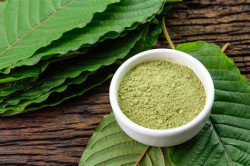
- Pain relief
- Opioid withdrawal symptoms
- Anxiety and stress
- Low energy or fatigue
- Mood enhancement
Kratom is a Southeast Asian plant whose leaves act on the brain's opioid receptors and can produce both stimulant-like and opioid-like effects. It is not approved or proven safe by health regulators, carries real risks of dependence and serious harm, and its legal status varies widely. Talk to a pharmacist or doctor before considering it.
Other Drugs & Kratom
Browse every other medication we’ve checked against Kratom — both the ones with a known interaction and the ones without. Select any drug for the full detail.
No drugs match “”.
983 interactions
- Diltiazem ›
- Theophylline ›
- Nifedipine ›
- Metronidazole ›
- Diphenhydramine ›
- Hydrocortisone ›
- Methylphenidate ›
- Naproxen ›
- Erythromycin ›
- Estradiol ›
- Propranolol ›
- Lidocaine ›
- Norethindrone ›
- Testosterone ›
- Verapamil ›
- Levonorgestrel ›
- Prednisone ›
- Quinidine ›
- Cyclosporine ›
- Dexamethasone ›
- Flurazepam ›
- Triazolam ›
- Zopiclone ›
- Ciprofloxacin ›
- Colchicine ›
- Fentanyl ›
- Oxybutynin ›
- Oxycodone ›
- Phenytoin ›
- Prednisolone ›
- Tacrolimus ›
- Temazepam ›
- Budesonide ›
- Carbamazepine ›
- Clindamycin ›
- Dextromethorphan ›
- Doxorubicin ›
- Fluticasone ›
- Formoterol ›
- Miconazole ›
- Morphine Sulfate ›
- Nitrazepam ›
- Phenylephrine ›
- Trimipramine ›
- Acetaminophen ›
- Amphetamine ›
- Buprenorphine ›
- Conjugated Estrogens ›
- Diazepam ›
- Everolimus ›
- Ivabradine ›
- Lofepramine ›
- Medroxyprogesterone ›
- Medroxyprogesterone Acetate ›
- Meprobamate ›
- Nortriptyline ›
- Oxymorphone ›
- Propoxyphene ›
- Rifampin ›
- Selegiline ›
Showing 60 of 983 moderate interactions — see all 983 on the Kratom page.
12 interactions
No interaction 1,834 drugs checked — show the list
We also checked Kratom against these medications and found no known interaction in our sources. Open any page to confirm.
- Levothyroxine ›
- Ivermectin ›
- Rosuvastatin ›
- Aspirin ›
- Levothyroxine, Liothyronine ›
- Tirzepatide ›
- Ibuprofen ›
- Isotretinoin ›
- Metformin ›
- Docusate ›
- Semaglutide ›
- Amoxicillin ›
- Lisinopril ›
- Valacyclovir ›
- Hydroxyurea ›
- Bupropion ›
- Methotrexate ›
- Azithromycin ›
- Doxycycline ›
- Acyclovir ›
- Candesartan Cilexetil ›
- Amoxicillin, Clavulanate Potassium ›
- Aluminum Hydroxide, Aspirin, Magnesium Hydroxide ›
- Acetylsalicylic Acid ›
- Insulin Degludec, Liraglutide ›
- Calcium Oxybate, Magnesium Oxybate, Potassium Oxybate, Sodium Oxybate ›
- Aspirin, Butalbital ›
- Atenolol, Chlorthalidone ›
- Enalapril Maleate ›
- Bismuth Subcarbonate, Calcium Carbonate, Opium ›
- Ezetimibe ›
- Bendroflumethiazide, Rauwolfia Serpentina ›
- Cephalexin ›
- Rosiglitazone Maleate ›
- Sacubitril, Valsartan ›
- Canagliflozin, Metformin ›
- Insulin Aspart, Insulin Degludec ›
- Candesartan Cilexetil, Hydrochlorothiazide ›
- Sulfamethoxazole, Trimethoprim ›
- Daunorubicin, Cytarabine ›
- Levodopa ›
- Atenolol ›
- Saxagliptin, Metformin Xr ›
- Carbidopa, Levodopa ›
- Hydrocortisone, Clioquinol, Pramoxine ›
- Sodium Bicarbonate (otc Drug) ›
- Atropine Methyl Nitrate, Digestive Enzymes ›
- Cytomegalovirus Immune Globulin ›
- Famotidine, Ibuprofen ›
- Cyclopentolate ›
- Efgartigimod Alfa-fcab ›
- Ceftolozane Sulfate, Tazobactam Sodium ›
- Fosinopril, Hydrochlorothiazide ›
- Measles, Mumps, Rubella Virus Live ›
- Thyroid Hormone ›
- Aminolevulinic Acid Hydrochloride ›
- Alginic Acid, Aluminum Hydroxide ›
- Pyrilamine Maleate ›
- Vestronidase Alfa-vjbk ›
- Glycerol Phenylbutyrate ›
Showing the 60 most looked-up of 1,834 medications checked with no known interaction — see the full Kratom list.
Sources & How We Checked
Interaction details are evidence-graded and sourced from the Natural Medicines database. The medication overview comes from MedlinePlus.
- Natural Medicines (Therapeutic Research Center) — Evidence-graded clinical reference for vitamins, herbs and supplements — the basis for our interaction data.
- MedlinePlus, U.S. National Library of Medicine — NIH consumer drug information, used for the medication overviews.
- NIH Dietary Supplement Label Database (DSLD) — Official supplement product labels.
Content is written and reviewed by licensed HelloPharmacist pharmacists. See our data sources and editorial standards for how this information is built and checked.
Parts of this content are provided by the Therapeutic Research Center, LLC.
DISCLAIMER: Currently this does not check for drug-drug interactions. This is not an all-inclusive comprehensive list of potential interactions and is for informational purposes only. Not all interactions are known or well-reported in the scientific literature, and new interactions are continually being reported. Input is needed from a qualified healthcare provider including a pharmacist before starting any therapy. Application of clinical judgment is necessary.
© 2021 Therapeutic Research Center, LLC
Erythromycin, Sulfisoxazole Is Linked to Lower Levels of 7 Nutrients
Natural Medicines records Erythromycin, Sulfisoxazole as a medicine that can lower these. This is not an interaction with Kratom — it is a separate effect of the medicine, and it is a reason some people are advised to supplement rather than to avoid one:
Read the full Erythromycin, Sulfisoxazole nutrient depletion report ›
Depletion records come from the licensed Natural Medicines database. Do not start a supplement on the strength of this page — ask your pharmacist or doctor whether it applies to you.
Taking Kratom and Erythromycin, Sulfisoxazole Together: Common Questions
Can you take Kratom with Erythromycin, Sulfisoxazole?
Why are there 2 interactions listed for Kratom and Erythromycin, Sulfisoxazole?
How serious is the Kratom and Erythromycin, Sulfisoxazole interaction?
Written and reviewed by the HelloPharmacist editorial staff. Our editorial policy
Still Have a Question About Erythromycin, Sulfisoxazole and Kratom?
Our pharmacists answer your medication & supplement questions — free.
This information is for education only and is not a substitute for professional medical advice. Always check with your pharmacist or doctor before starting, stopping, or combining supplements and medications.