
Amore Ingredients & Drug Interactions
What is this page for?
First and foremost: checking Amore against your medications. The heart of this page is the interaction checker and the full interaction report — how this product’s ingredients may interact with prescription and over-the-counter medicines you may be taking.
Around that, we add a pharmacist’s high-level view of the product as a whole — what’s inside, the evidence for its stated use, how transparent the label is, and what safety data exists — so you can see the full picture in one place. It’s educational information from our licensed clinical databases and the clinical staff at HelloPharmacist — not medical advice — and we don’t sell or endorse products. Our editorial policy
Amore is a dietary supplement by Herbally Grounded with 8 active ingredients. Its ingredients are commonly taken for low libido / aphrodisiac, anxiety and stress, mood and mild low energy.Based on those ingredients, 1,237 medications have a known interaction with it, the most serious rated major. The ingredients most likely to interact are Yerba mate, Horny Goat Weed, Red Clover. Use the checker below to test your specific medication, or read the full HelloPharmacist Interaction Report.
Check Your Meds Against Amore by Herbally Grounded
Ask about any prescription or over-the-counter medication and we check it for interactions with Amore by Herbally Grounded — and tell you which ingredient is responsible.
AI summaries are generated from our interaction database for education only — always confirm with your pharmacist. How we use AI
Ask the Pharmacist
A licensed pharmacist will answer your question by email — free, usually within 24 hours.
Got it — thank you!
A licensed pharmacist will answer within 24 hours. Keep an eye on your email (worth checking spam, just in case).
HelloPharmacist Scorecard of Amore by Herbally Grounded
Our pharmacy team’s full take, with four database checks built into the cards below — a summary of what is known, not a grade of the product itself.
What’s inside
Low disclosure
Amore contains eight ingredients: damiana, rehmannia, yerba mate, maca, muira puama, red clover, horny goat weed, and lu jiao shuang (gelatin). The product also contains cellulose as an inactive ingredient.
Most of these are traditional botanical ingredients used in supplements for sexual function and vitality, though the evidence for their effectiveness in humans is generally limited or not yet established. Yerba mate contributes caffeine, which acts as a stimulant.
Gelatin (lu jiao shuang) is a protein derived from animal collagen.
Does it work?
Not established
The evidence supporting these ingredients is sparse. For the conditions the data covers—sexual dysfunction, erectile dysfunction, asthma, headache, cognitive function, constipation, depression, chronic kidney disease, aplastic anemia, athletic performance, and osteoporosis—we have insufficient reliable evidence to rate most of them.
The single exception is rehmannia for chronic kidney disease, which is rated possibly effective. Otherwise, effectiveness ratings are not established in our data for the other ingredients and uses.
How safe is it?
Well-documented data
Most of these ingredients are generally well tolerated in short-term use, though human safety data are often limited. Damiana and rehmannia carry caution labels due to limited human safety information.
Yerba mate contains caffeine and may cause insomnia, nervousness, nausea, jitteriness, or tremors in some people; a small number of trial participants in one study reported insomnia. In very high doses, yerba mate has caused serious effects like convulsions and metabolic issues, though these are rare.
Red clover is generally well tolerated but may cause nausea, muscle aches, or vaginal spotting. Horny goat weed may cause dizziness, dry mouth, nosebleed, thirst, or vomiting; a rare case of heart rhythm problems was reported, though causality was unclear.
Maca may cause stomach pain if fresh and uncooked. Gelatin is widely consumed as a food and generally well tolerated; it can cause belching, bloating, or indigestion, and rarely, allergic reactions including anaphylaxis in sensitive individuals.
None of these ingredients should be used during pregnancy or while breastfeeding — there isn't enough safety data for any of them.
Meds to double-check
Major interaction found
Before taking Amore, double-check with your pharmacist if you use ephedrine or any stimulants (Major severity); antidiabetes drugs or blood pressure medications (Moderate); blood thinners or antiplatelet drugs like warfarin or aspirin (Moderate); estrogen therapy or tamoxifen for breast cancer (Moderate); methotrexate (Moderate); antipsychotics like clozapine, antidepressants like fluvoxamine, seizure medications like valproate or felbamate, disulfiram (Antabuse), dipyridamole (Persantine), or quinolone antibiotics (Moderate); or any medications metabolized by your liver's enzyme systems (Moderate). No interactions are documented for maca and muira puama in our data.
The bottom line
Scorecard at a glanceFormula with limited ingredient disclosure with no established evidence rating for its marketed use. Major medication interactions have been identified, and safety information is well characterized.
This is a multi-ingredient supplement with a complex interaction profile, especially with blood sugar and blood pressure medications, antidepressants, anticonvulsants, and estrogen therapy. If you take any prescription medications, check them against the medication search tool on this page before starting.
Talk to your pharmacist or doctor first if you have diabetes, high blood pressure, take any psychiatric or cardiac medications, or are pregnant or nursing.
Educational only — not medical advice; always confirm with your pharmacist. Our editorial policy · How we use AI
Assessment coverage: 8 of 8 active ingredients matched to our full ingredient reviews (monographs). Based on the product label dated Aug 22, 2024.
This Scorecard evaluates available label information, ingredient evidence, and known medication-safety considerations. It does not independently verify product identity, purity, potency, contamination, or manufacturing quality. How these ratings are computed
General information
Key facts about Amore, straight from the product label.
| Brand | Herbally Grounded |
|---|---|
| Barcode (UPC) | 718122291120 |
| Net contents | 120 Capsule(s) |
| Market status | On market |
| Date entered into DSLD | Aug 22, 2024 |
| DSLD ID | 318497 |
| Product type | Botanical |
| Supplement form | Capsule |
| Dietary claims / uses | All Other, Structure/Function |
| Intended target group(s) | Adult (18 - 50 Years) |
Everything in this section is reproduced from the manufacturer’s own product label — it’s the label speaking, not HelloPharmacist. We show it so you can see exactly what the maker states; we don’t verify or endorse those statements.
Supplement Facts
The label details for Amore by Herbally Grounded, sourced from the NIH Dietary Supplement Label Database.
Supplement Facts
| Ingredient | Amount | % DV |
|---|---|---|
| Damiana | 0 NP | -- |
| Rehmannia | 0 NP | -- |
| Yerba mate | 0 NP | -- |
| Maca | 0 NP | -- |
| Muira Puama | 0 NP | -- |
| Red Clover | 0 NP | -- |
| Proprietary Blend | 1040 mg | -- |
| Horny Goat Weed | 0 NP | -- |
| Lu Jiao Shuang | 0 NP | -- |
Other ingredients: Cellulose
Tap any ingredient to jump to its full detail below.
These statements are the manufacturer’s wording, reproduced from the product label — the label is saying it, not HelloPharmacist. We don’t verify or endorse them.
Suggested/Recommended/Usage/Directions
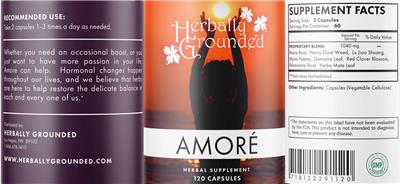
Recommended use: Take 2 capsules 1-3 times a day as needed.
Formulation
Whether you need an occasional boost, or you just want to have more passion in your life, Amore can help. Hormonal changes happen throughout our lives, and we believe that herbs are here to help restore the delicate balance in each and every one of us.
FDA Statement of Identity
Herbal Supplement
FDA Disclaimer Statement
The statements on this label have not been evaluated by the FDA. This product is not intended to diagnose, treat, cure or prevent any disease.
Seals/Symbols
GMP High-Quality Products Certified
Is this label outdated? Report a formula or label change and our pharmacy team will review it.
Amore by Herbally Grounded label
The label scan from the NIH Dietary Supplement Label Database. Tap to enlarge.
Label images are published by the NIH Dietary Supplement Label Database for the version of this product on file. Always read your actual product label.
View the full label (PDF)The Ingredients in Amore by Herbally Grounded
These are the 8 active ingredients this product is made of. Select any to open its full monograph.
Serving size2 Capsule(s) Dosage formCapsule Servings per container60 Amounts shown are per serving.
Most supplement products combine several ingredients, and a medication can interact with the product through any one of them. Each ingredient below shows whether it has known drug interactions.
Proprietary Blend
- › Damiana
- › Rehmannia
- › Yerba mate
- › Maca
- › Muira Puama
- › Red Clover
- › Horny Goat Weed
- › Lu Jiao Shuang
Other (inactive) ingredients: Cellulose. These complete the product’s ingredient list but are not active constituents.
Amore by Herbally Grounded Drug Interactions
HelloPharmacist Interaction Report
Amore by Herbally Grounded contains eight ingredients, and several of them interact with a range of medications.
The most serious interaction is with ephedrine — yerba mate's caffeine content may significantly increase the risk of serious stimulatory adverse effects when taken together.
Read the full breakdown — every affected drug type, severity by severity
Yerba mate also interacts with multiple other drug types due to its caffeine. It may reduce the anticonvulsant effects of valproate and felbamate, raising seizure risk.
Caffeine can increase levels and side effects of clozapine (an antipsychotic), fluvoxamine (an antidepressant), and disulfiram (used for alcohol dependence), and it may also interfere with dipyridamole's effects during cardiac stress testing. Quinolone antibiotics can increase caffeine levels in your body.
Damiana and rehmannia both carry Moderate interactions with antidiabetes drugs — they may lower blood sugar further and increase the risk of low blood sugar (hypoglycemia). Rehmannia additionally interacts with blood pressure medications (antihypertensive drugs) and may lower blood pressure further.
Red clover has Moderate interactions with estrogen therapy, methotrexate (a cancer and autoimmune drug), and tamoxifen (a breast cancer drug), plus Minor interactions with several enzyme systems. Horny goat weed interacts with blood pressure medications, estrogens, blood thinners (anticoagulant/antiplatelet drugs), and several enzyme systems — all Moderate severity.
Maca and muira puama have no known interactions documented in our data. Altogether, these interactions span 1,225 individual medications.
Use the medication checker on this page to see if any of your prescriptions are affected.
Check your own medications below · Editorial policy · How we use AI
Want to check YOUR meds against Amore?
Ask about interactions with your drugs in plain English — “Can I take it with lisinopril?” — and we find you the answer in seconds, ingredient by ingredient.
Go to the checkerIngredients driving the most interactions
Individual Drug Interactions
The ingredients in Amore interact with 1,237 drugs. Click any drug to see the details.
5 of the 8 ingredients in Amore interact with drugs. Each result below shows which ingredient is responsible. Yerba mate Horny Goat Weed Red Clover Rehmannia Damiana
Aminophylline, Amobarbital, EphedrineAmesec
How Aminophylline, Amobarbital, Ephedrine interacts with Amore — through 1 ingredient. Tap an ingredient for the detail:
Yerba MateEphedrine, Stimulant Drugs Major
Interaction Summary
Theoretically, the caffeine in yerba mate might increase the risk for stimulant adverse effects when used concomitantly with ephedrine.
Read the full Yerba Mate + Aminophylline, Amobarbital, Ephedrine interactionCarbetapentane Tannate, Chlorpheniramine Tannate, Ephedrine Tannate, Phenylephrine TannateQuadratuss, Ry Tuss, Rynatuss, Tri Tannate Plus
How Carbetapentane Tannate, Chlorpheniramine Tannate, Ephedrine Tannate, Phenylephrine Tannate interacts with Amore — through 3 ingredients. Tap an ingredient for the detail:
Yerba MateCytochrome P450 3a4 (cyp3a4) Substrates, Stimulant Drugs +1 Major
Interaction Summary
Theoretically, yerba mate might increase the levels and clinical effects of CYP3A4 substrates.
Read the full Yerba Mate + Carbetapentane Tannate, Chlorpheniramine Tannate, Ephedrine Tannate, Phenylephrine Tannate interactionHorny Goat WeedCytochrome P450 3a4 (cyp3a4) Substrates Moderate
Interaction Summary
Theoretically, horny goat weed might increase the effects and side effects of CYP3A4 substrates.
Read the full Horny Goat Weed + Carbetapentane Tannate, Chlorpheniramine Tannate, Ephedrine Tannate, Phenylephrine Tannate interactionRed CloverCytochrome P450 3a4 (cyp3a4) Substrates Minor
Interaction Summary
Theoretically, red clover might increase levels of drugs metabolized by CYP3A4; however, a small clinical study found no effect.
Read the full Red Clover + Carbetapentane Tannate, Chlorpheniramine Tannate, Ephedrine Tannate, Phenylephrine Tannate interactionDyphylline, Ephedrine, Guaifenesin, PhenobarbitalLufyllin-EPG
How Dyphylline, Ephedrine, Guaifenesin, Phenobarbital interacts with Amore — through 1 ingredient. Tap an ingredient for the detail:
Yerba MatePhenobarbital (luminal), Ephedrine +1 Major
Interaction Summary
Theoretically, the caffeine in yerba mate might reduce the effects of phenobarbital and increase the risk for convulsions.
Read the full Yerba Mate + Dyphylline, Ephedrine, Guaifenesin, Phenobarbital interactionEphedrine, Guaifenesin (otc Drug)Ephedrine Formula 400, Ephedrine Plus Tabs
How Ephedrine, Guaifenesin (otc Drug) interacts with Amore — through 1 ingredient. Tap an ingredient for the detail:
Yerba MateStimulant Drugs, Ephedrine Major
Interaction Summary
Theoretically, concomitant use of stimulant drugs and yerba mate might increase stimulant adverse effects.
Read the full Yerba Mate + Ephedrine, Guaifenesin (otc Drug) interactionEphedrine, Guaifenesin, Phenobarbital, TheophyllineMudrane GG
How Ephedrine, Guaifenesin, Phenobarbital, Theophylline interacts with Amore — through 3 ingredients. Tap an ingredient for the detail:
Yerba MateTheophylline, Phenobarbital (luminal) +2 Major
Interaction Summary
Theoretically, the caffeine in yerba mate might increase the levels and adverse effects of theophylline.
Read the full Yerba Mate + Ephedrine, Guaifenesin, Phenobarbital, Theophylline interactionHorny Goat WeedCytochrome P450 1a2 (cyp1a2) Substrates Moderate
Interaction Summary
Theoretically, horny goat weed might increase the effects and side effects of CYP1A2 substrates.
Read the full Horny Goat Weed + Ephedrine, Guaifenesin, Phenobarbital, Theophylline interactionRed CloverCytochrome P450 1a2 (cyp1a2) Substrates Minor
Interaction Summary
Theoretically, red clover might increase levels of drugs metabolized by CYP1A2; however, a small clinical study found no effect.
Read the full Red Clover + Ephedrine, Guaifenesin, Phenobarbital, Theophylline interactionEphedrine, Hydroxyzine, TheophyllineAmi Rax, Marax
How Ephedrine, Hydroxyzine, Theophylline interacts with Amore — through 3 ingredients. Tap an ingredient for the detail:
Yerba MateStimulant Drugs, Theophylline +1 Major
Interaction Summary
Theoretically, concomitant use of stimulant drugs and yerba mate might increase stimulant adverse effects.
Read the full Yerba Mate + Ephedrine, Hydroxyzine, Theophylline interactionHorny Goat WeedCytochrome P450 1a2 (cyp1a2) Substrates Moderate
Interaction Summary
Theoretically, horny goat weed might increase the effects and side effects of CYP1A2 substrates.
Read the full Horny Goat Weed + Ephedrine, Hydroxyzine, Theophylline interactionRed CloverCytochrome P450 1a2 (cyp1a2) Substrates Minor
Interaction Summary
Theoretically, red clover might increase levels of drugs metabolized by CYP1A2; however, a small clinical study found no effect.
Read the full Red Clover + Ephedrine, Hydroxyzine, Theophylline interactionEphedrine, Phenobarbital, Potassium Iodide, TheophyllineMudrane, Quadrinal
How Ephedrine, Phenobarbital, Potassium Iodide, Theophylline interacts with Amore — through 1 ingredient. Tap an ingredient for the detail:
Yerba MateTheophylline, Phenobarbital (luminal) +2 Major
Interaction Summary
Theoretically, the caffeine in yerba mate might increase the levels and adverse effects of theophylline.
Read the full Yerba Mate + Ephedrine, Phenobarbital, Potassium Iodide, Theophylline interactionEphedrine, Phenobarbital, TheophyllineTedral
How Ephedrine, Phenobarbital, Theophylline interacts with Amore — through 1 ingredient. Tap an ingredient for the detail:
Yerba MateStimulant Drugs, Theophylline +2 Major
Interaction Summary
Theoretically, concomitant use of stimulant drugs and yerba mate might increase stimulant adverse effects.
Read the full Yerba Mate + Ephedrine, Phenobarbital, Theophylline interactionAdo-trastuzumab EmtansineKadcyla
How Ado-trastuzumab Emtansine interacts with Amore — through 3 ingredients. Tap an ingredient for the detail:
Horny Goat WeedCytochrome P450 3a4 (cyp3a4) Substrates Moderate
Interaction Summary
Theoretically, horny goat weed might increase the effects and side effects of CYP3A4 substrates.
Read the full Horny Goat Weed + Ado-trastuzumab Emtansine interactionRed CloverCytochrome P450 3a4 (cyp3a4) Substrates Minor
Interaction Summary
Theoretically, red clover might increase levels of drugs metabolized by CYP3A4; however, a small clinical study found no effect.
Read the full Red Clover + Ado-trastuzumab Emtansine interactionYerba MateCytochrome P450 3a4 (cyp3a4) Substrates Minor
Interaction Summary
Theoretically, yerba mate might increase the levels and clinical effects of CYP3A4 substrates.
Read the full Yerba Mate + Ado-trastuzumab Emtansine interactionAbciximabReoPro
How Abciximab interacts with Amore — through 3 ingredients. Tap an ingredient for the detail:
Horny Goat WeedAnticoagulant/antiplatelet Drugs Moderate
Interaction Summary
Theoretically, horny goat weed might increase the risk of bleeding.
Read the full Horny Goat Weed + Abciximab interactionYerba MateAnticoagulant/antiplatelet Drugs Moderate
Interaction Summary
Theoretically, the caffeine in yerba mate may increase the risk of bleeding if used with anticoagulant or antiplatelet drugs.
Read the full Yerba Mate + Abciximab interactionRed CloverAnticoagulant/antiplatelet Drugs Minor
Interaction Summary
Although some laboratory research suggests that red clover may have anticoagulant and antiplatelet activity, clinical research has not shown this effect.
Read the full Red Clover + Abciximab interactionAbemaciclibVerzenio
How Abemaciclib interacts with Amore — through 3 ingredients. Tap an ingredient for the detail:
Horny Goat WeedCytochrome P450 3a4 (cyp3a4) Substrates Moderate
Interaction Summary
Theoretically, horny goat weed might increase the effects and side effects of CYP3A4 substrates.
Read the full Horny Goat Weed + Abemaciclib interactionYerba MateCytochrome P450 3a4 (cyp3a4) Substrates Minor
Interaction Summary
Theoretically, yerba mate might increase the levels and clinical effects of CYP3A4 substrates.
Read the full Yerba Mate + Abemaciclib interactionRed CloverCytochrome P450 3a4 (cyp3a4) Substrates Minor
Interaction Summary
Theoretically, red clover might increase levels of drugs metabolized by CYP3A4; however, a small clinical study found no effect.
Read the full Red Clover + Abemaciclib interactionAbiraterone
How Abiraterone interacts with Amore — through 3 ingredients. Tap an ingredient for the detail:
Horny Goat WeedCytochrome P450 3a4 (cyp3a4) Substrates Moderate
Interaction Summary
Theoretically, horny goat weed might increase the effects and side effects of CYP3A4 substrates.
Read the full Horny Goat Weed + Abiraterone interactionRed CloverCytochrome P450 3a4 (cyp3a4) Substrates Minor
Interaction Summary
Theoretically, red clover might increase levels of drugs metabolized by CYP3A4; however, a small clinical study found no effect.
Read the full Red Clover + Abiraterone interactionYerba MateCytochrome P450 3a4 (cyp3a4) Substrates, Cytochrome P450 1a2 (cyp1a2) Inhibitors Minor
Interaction Summary
Theoretically, yerba mate might increase the levels and clinical effects of CYP3A4 substrates.
Read the full Yerba Mate + Abiraterone interactionAbiraterone AcetateYonsa, Zytiga
How Abiraterone Acetate interacts with Amore — through 3 ingredients. Tap an ingredient for the detail:
Horny Goat WeedCytochrome P450 3a4 (cyp3a4) Substrates Moderate
Interaction Summary
Theoretically, horny goat weed might increase the effects and side effects of CYP3A4 substrates.
Read the full Horny Goat Weed + Abiraterone Acetate interactionRed CloverCytochrome P450 3a4 (cyp3a4) Substrates Minor
Interaction Summary
Theoretically, red clover might increase levels of drugs metabolized by CYP3A4; however, a small clinical study found no effect.
Read the full Red Clover + Abiraterone Acetate interactionYerba MateCytochrome P450 3a4 (cyp3a4) Substrates Minor
Interaction Summary
Theoretically, yerba mate might increase the levels and clinical effects of CYP3A4 substrates.
Read the full Yerba Mate + Abiraterone Acetate interactionAbrocitinibCibinqo
How Abrocitinib interacts with Amore — through 3 ingredients. Tap an ingredient for the detail:
Yerba MateAnticoagulant/antiplatelet Drugs Moderate
Interaction Summary
Theoretically, the caffeine in yerba mate may increase the risk of bleeding if used with anticoagulant or antiplatelet drugs.
Read the full Yerba Mate + Abrocitinib interactionHorny Goat WeedAnticoagulant/antiplatelet Drugs Moderate
Interaction Summary
Theoretically, horny goat weed might increase the risk of bleeding.
Read the full Horny Goat Weed + Abrocitinib interactionRed CloverCytochrome P450 2c19 (cyp2c19) Substrates, Cytochrome P450 2c9 (cyp2c9) Substrates +1 Minor
Interaction Summary
Theoretically, red clover might increase the levels and clinical effects of drugs metabolized by CYP2C19.
Read the full Red Clover + Abrocitinib interactionAcalabrutinibCalquence
How Acalabrutinib interacts with Amore — through 3 ingredients. Tap an ingredient for the detail:
Horny Goat WeedCytochrome P450 3a4 (cyp3a4) Substrates Moderate
Interaction Summary
Theoretically, horny goat weed might increase the effects and side effects of CYP3A4 substrates.
Read the full Horny Goat Weed + Acalabrutinib interactionRed CloverCytochrome P450 3a4 (cyp3a4) Substrates Minor
Interaction Summary
Theoretically, red clover might increase levels of drugs metabolized by CYP3A4; however, a small clinical study found no effect.
Read the full Red Clover + Acalabrutinib interactionYerba MateCytochrome P450 3a4 (cyp3a4) Substrates Minor
Interaction Summary
Theoretically, yerba mate might increase the levels and clinical effects of CYP3A4 substrates.
Read the full Yerba Mate + Acalabrutinib interactionAcarboseGlucobay, Prandase, Precose
How Acarbose interacts with Amore — through 3 ingredients. Tap an ingredient for the detail:
DamianaAntidiabetes Drugs Moderate
Interaction Summary
Theoretically, taking damiana with antidiabetes drugs might increase the risk of hypoglycemia.
Read the full Damiana + Acarbose interactionRehmanniaAntidiabetes Drugs Moderate
Interaction Summary
Theoretically, rehmannia might increase the risk of hypoglycemia when taken with antidiabetes drugs.
Read the full Rehmannia + Acarbose interactionYerba MateAntidiabetes Drugs Minor
Interaction Summary
Theoretically, taking yerba mate with antidiabetes drugs might interfere with blood glucose control.
Read the full Yerba Mate + Acarbose interactionAcebutololRhotral, Sectral
How Acebutolol interacts with Amore — through 2 ingredients. Tap an ingredient for the detail:
RehmanniaAntihypertensive Drugs Moderate
Interaction Summary
Theoretically, rehmannia might increase the risk of hypotension when taken with antihypertensive drugs.
Read the full Rehmannia + Acebutolol interactionHorny Goat WeedAntihypertensive Drugs Moderate
Interaction Summary
Theoretically, horny goat weed might increase the risk of hypotension.
Read the full Horny Goat Weed + Acebutolol interactionAcenocoumarolSintrom
How Acenocoumarol interacts with Amore — through 3 ingredients. Tap an ingredient for the detail:
Horny Goat WeedAnticoagulant/antiplatelet Drugs Moderate
Interaction Summary
Theoretically, horny goat weed might increase the risk of bleeding.
Read the full Horny Goat Weed + Acenocoumarol interactionYerba MateAnticoagulant/antiplatelet Drugs Moderate
Interaction Summary
Theoretically, the caffeine in yerba mate may increase the risk of bleeding if used with anticoagulant or antiplatelet drugs.
Read the full Yerba Mate + Acenocoumarol interactionRed CloverAnticoagulant/antiplatelet Drugs Minor
Interaction Summary
Although some laboratory research suggests that red clover may have anticoagulant and antiplatelet activity, clinical research has not shown this effect.
Read the full Red Clover + Acenocoumarol interactionAcetaminophenChildren's Tylenol, Children's Tylenol Meltaways, Tylenol, Tylenol Ex Strength
How Acetaminophen interacts with Amore — through 2 ingredients. Tap an ingredient for the detail:
Horny Goat WeedCytochrome P450 1a2 (cyp1a2) Substrates Moderate
Interaction Summary
Theoretically, horny goat weed might increase the effects and side effects of CYP1A2 substrates.
Read the full Horny Goat Weed + Acetaminophen interactionRed CloverCytochrome P450 1a2 (cyp1a2) Substrates Minor
Interaction Summary
Theoretically, red clover might increase levels of drugs metabolized by CYP1A2; however, a small clinical study found no effect.
Read the full Red Clover + Acetaminophen interactionAcetaminophen, AspirinGemnisyn
How Acetaminophen, Aspirin interacts with Amore — through 3 ingredients. Tap an ingredient for the detail:
Horny Goat WeedCytochrome P450 1a2 (cyp1a2) Substrates, Anticoagulant/antiplatelet Drugs Moderate
Interaction Summary
Theoretically, horny goat weed might increase the effects and side effects of CYP1A2 substrates.
Read the full Horny Goat Weed + Acetaminophen, Aspirin interactionYerba MateAnticoagulant/antiplatelet Drugs Moderate
Interaction Summary
Theoretically, the caffeine in yerba mate may increase the risk of bleeding if used with anticoagulant or antiplatelet drugs.
Read the full Yerba Mate + Acetaminophen, Aspirin interactionRed CloverAnticoagulant/antiplatelet Drugs, Cytochrome P450 1a2 (cyp1a2) Substrates Minor
Interaction Summary
Although some laboratory research suggests that red clover may have anticoagulant and antiplatelet activity, clinical research has not shown this effect.
Read the full Red Clover + Acetaminophen, Aspirin interactionAcetaminophen, Aspirin, CaffeineExcedrin, Excedrin Extra Strength, Excedrin Migraine
How Acetaminophen, Aspirin, Caffeine interacts with Amore — through 3 ingredients. Tap an ingredient for the detail:
Horny Goat WeedAnticoagulant/antiplatelet Drugs, Cytochrome P450 3a4 (cyp3a4) Substrates +1 Moderate
Interaction Summary
Theoretically, horny goat weed might increase the risk of bleeding.
Read the full Horny Goat Weed + Acetaminophen, Aspirin, Caffeine interactionYerba MateCytochrome P450 3a4 (cyp3a4) Substrates, Anticoagulant/antiplatelet Drugs +1 Moderate
Interaction Summary
Theoretically, yerba mate might increase the levels and clinical effects of CYP3A4 substrates.
Read the full Yerba Mate + Acetaminophen, Aspirin, Caffeine interactionRed CloverCytochrome P450 1a2 (cyp1a2) Substrates, Caffeine +2 Minor
Interaction Summary
Theoretically, red clover might increase levels of drugs metabolized by CYP1A2; however, a small clinical study found no effect.
Read the full Red Clover + Acetaminophen, Aspirin, Caffeine interactionAcetaminophen, Brompheniramine, PhenylpropanolamineDimetapp Cold and Flu
How Acetaminophen, Brompheniramine, Phenylpropanolamine interacts with Amore — through 3 ingredients. Tap an ingredient for the detail:
Yerba MateStimulant Drugs, Phenylpropanolamine Moderate
Interaction Summary
Theoretically, concomitant use of stimulant drugs and yerba mate might increase stimulant adverse effects.
Read the full Yerba Mate + Acetaminophen, Brompheniramine, Phenylpropanolamine interactionHorny Goat WeedCytochrome P450 1a2 (cyp1a2) Substrates Moderate
Interaction Summary
Theoretically, horny goat weed might increase the effects and side effects of CYP1A2 substrates.
Read the full Horny Goat Weed + Acetaminophen, Brompheniramine, Phenylpropanolamine interactionRed CloverCytochrome P450 1a2 (cyp1a2) Substrates Minor
Interaction Summary
Theoretically, red clover might increase levels of drugs metabolized by CYP1A2; however, a small clinical study found no effect.
Read the full Red Clover + Acetaminophen, Brompheniramine, Phenylpropanolamine interactionAcetaminophen, ButalbitalAxocet, Bancap, Bucet, Butex Forte, Esgic CF, Orbivan CF +5 more
How Acetaminophen, Butalbital interacts with Amore — through 2 ingredients. Tap an ingredient for the detail:
Horny Goat WeedCytochrome P450 1a2 (cyp1a2) Substrates Moderate
Interaction Summary
Theoretically, horny goat weed might increase the effects and side effects of CYP1A2 substrates.
Read the full Horny Goat Weed + Acetaminophen, Butalbital interactionRed CloverCytochrome P450 1a2 (cyp1a2) Substrates Minor
Interaction Summary
Theoretically, red clover might increase levels of drugs metabolized by CYP1A2; however, a small clinical study found no effect.
Read the full Red Clover + Acetaminophen, Butalbital interactionAcetaminophen, Butalbital, CaffeineEsgic, Esgic Plus, Fiogesic, Fioricet, Repan, Tecnal +1 more
How Acetaminophen, Butalbital, Caffeine interacts with Amore — through 3 ingredients. Tap an ingredient for the detail:
Horny Goat WeedCytochrome P450 1a2 (cyp1a2) Substrates, Cytochrome P450 3a4 (cyp3a4) Substrates Moderate
Interaction Summary
Theoretically, horny goat weed might increase the effects and side effects of CYP1A2 substrates.
Read the full Horny Goat Weed + Acetaminophen, Butalbital, Caffeine interactionYerba MateCytochrome P450 3a4 (cyp3a4) Substrates, Stimulant Drugs Moderate
Interaction Summary
Theoretically, yerba mate might increase the levels and clinical effects of CYP3A4 substrates.
Read the full Yerba Mate + Acetaminophen, Butalbital, Caffeine interactionRed CloverCytochrome P450 1a2 (cyp1a2) Substrates, Cytochrome P450 3a4 (cyp3a4) Substrates +1 Minor
Interaction Summary
Theoretically, red clover might increase levels of drugs metabolized by CYP1A2; however, a small clinical study found no effect.
Read the full Red Clover + Acetaminophen, Butalbital, Caffeine interactionAcetaminophen, Butalbital, Caffeine, CodeineEsgic with Codeine, Fioricet w/ Codeine
How Acetaminophen, Butalbital, Caffeine, Codeine interacts with Amore — through 3 ingredients. Tap an ingredient for the detail:
Yerba MateStimulant Drugs, Cytochrome P450 3a4 (cyp3a4) Substrates Moderate
Interaction Summary
Theoretically, concomitant use of stimulant drugs and yerba mate might increase stimulant adverse effects.
Read the full Yerba Mate + Acetaminophen, Butalbital, Caffeine, Codeine interactionHorny Goat WeedCytochrome P450 1a2 (cyp1a2) Substrates, Cytochrome P450 3a4 (cyp3a4) Substrates Moderate
Interaction Summary
Theoretically, horny goat weed might increase the effects and side effects of CYP1A2 substrates.
Read the full Horny Goat Weed + Acetaminophen, Butalbital, Caffeine, Codeine interactionRed CloverCaffeine, Cytochrome P450 3a4 (cyp3a4) Substrates +1 Minor
Interaction Summary
Theoretically, soy might reduce the clearance of caffeine; however, a small clinical study found no effect.
Read the full Red Clover + Acetaminophen, Butalbital, Caffeine, Codeine interactionAcetaminophen, Butalbital, CodeineBancap w/ Codeine
How Acetaminophen, Butalbital, Codeine interacts with Amore — through 2 ingredients. Tap an ingredient for the detail:
Horny Goat WeedCytochrome P450 1a2 (cyp1a2) Substrates Moderate
Interaction Summary
Theoretically, horny goat weed might increase the effects and side effects of CYP1A2 substrates.
Read the full Horny Goat Weed + Acetaminophen, Butalbital, Codeine interactionRed CloverCytochrome P450 1a2 (cyp1a2) Substrates Minor
Interaction Summary
Theoretically, red clover might increase levels of drugs metabolized by CYP1A2; however, a small clinical study found no effect.
Read the full Red Clover + Acetaminophen, Butalbital, Codeine interactionAcetaminophen, Butalbital, Codeine PhosphatePhrenilin #3
How Acetaminophen, Butalbital, Codeine Phosphate interacts with Amore — through 2 ingredients. Tap an ingredient for the detail:
Horny Goat WeedCytochrome P450 1a2 (cyp1a2) Substrates Moderate
Interaction Summary
Theoretically, horny goat weed might increase the effects and side effects of CYP1A2 substrates.
Read the full Horny Goat Weed + Acetaminophen, Butalbital, Codeine Phosphate interactionRed CloverCytochrome P450 1a2 (cyp1a2) Substrates Minor
Interaction Summary
Theoretically, red clover might increase levels of drugs metabolized by CYP1A2; however, a small clinical study found no effect.
Read the full Red Clover + Acetaminophen, Butalbital, Codeine Phosphate interactionAcetaminophen, Caffeine, Chlorpheniramine, Hydrocodone, PhenylephrineHycomine Compound
How Acetaminophen, Caffeine, Chlorpheniramine, Hydrocodone, Phenylephrine interacts with Amore — through 3 ingredients. Tap an ingredient for the detail:
Horny Goat WeedCytochrome P450 1a2 (cyp1a2) Substrates, Cytochrome P450 3a4 (cyp3a4) Substrates Moderate
Interaction Summary
Theoretically, horny goat weed might increase the effects and side effects of CYP1A2 substrates.
Read the full Horny Goat Weed + Acetaminophen, Caffeine, Chlorpheniramine, Hydrocodone, Phenylephrine interactionYerba MateStimulant Drugs, Cytochrome P450 3a4 (cyp3a4) Substrates Moderate
Interaction Summary
Theoretically, concomitant use of stimulant drugs and yerba mate might increase stimulant adverse effects.
Read the full Yerba Mate + Acetaminophen, Caffeine, Chlorpheniramine, Hydrocodone, Phenylephrine interactionRed CloverCytochrome P450 1a2 (cyp1a2) Substrates, Caffeine +1 Minor
Interaction Summary
Theoretically, red clover might increase levels of drugs metabolized by CYP1A2; however, a small clinical study found no effect.
Read the full Red Clover + Acetaminophen, Caffeine, Chlorpheniramine, Hydrocodone, Phenylephrine interactionAcetaminophen, Caffeine, CodeineGesic C15, Gesic C30, Gesic C8, Lenoltec 1, Lenoltec 2, Lenoltec 3 +1 more
How Acetaminophen, Caffeine, Codeine interacts with Amore — through 3 ingredients. Tap an ingredient for the detail:
Yerba MateCytochrome P450 3a4 (cyp3a4) Substrates, Stimulant Drugs Moderate
Interaction Summary
Theoretically, yerba mate might increase the levels and clinical effects of CYP3A4 substrates.
Read the full Yerba Mate + Acetaminophen, Caffeine, Codeine interactionHorny Goat WeedCytochrome P450 3a4 (cyp3a4) Substrates, Cytochrome P450 1a2 (cyp1a2) Substrates Moderate
Interaction Summary
Theoretically, horny goat weed might increase the effects and side effects of CYP3A4 substrates.
Read the full Horny Goat Weed + Acetaminophen, Caffeine, Codeine interactionRed CloverCaffeine, Cytochrome P450 1a2 (cyp1a2) Substrates +1 Minor
Interaction Summary
Theoretically, soy might reduce the clearance of caffeine; however, a small clinical study found no effect.
Read the full Red Clover + Acetaminophen, Caffeine, Codeine interactionAcetaminophen, Caffeine, Codeine, SalicylamideCodalan No.1, Codalan No.2, Codalan No.3
How Acetaminophen, Caffeine, Codeine, Salicylamide interacts with Amore — through 3 ingredients. Tap an ingredient for the detail:
Yerba MateStimulant Drugs, Cytochrome P450 3a4 (cyp3a4) Substrates Moderate
Interaction Summary
Theoretically, concomitant use of stimulant drugs and yerba mate might increase stimulant adverse effects.
Read the full Yerba Mate + Acetaminophen, Caffeine, Codeine, Salicylamide interactionHorny Goat WeedCytochrome P450 3a4 (cyp3a4) Substrates, Cytochrome P450 1a2 (cyp1a2) Substrates Moderate
Interaction Summary
Theoretically, horny goat weed might increase the effects and side effects of CYP3A4 substrates.
Read the full Horny Goat Weed + Acetaminophen, Caffeine, Codeine, Salicylamide interactionRed CloverCaffeine, Cytochrome P450 1a2 (cyp1a2) Substrates +1 Minor
Interaction Summary
Theoretically, soy might reduce the clearance of caffeine; however, a small clinical study found no effect.
Read the full Red Clover + Acetaminophen, Caffeine, Codeine, Salicylamide interactionEach ingredient & the kinds of drugs it affects
For each ingredient in Amore with known interactions, here are the types of medications they can affect. Open any type for the detail — or search your exact drug in the checker above.
Yerba mate
Ephedrine
Theoretically, the caffeine in yerba mate might increase the risk for stimulant adverse effects when used concomitantly with ephedrine.
Use of ephedrine with caffeine can increase the risk of stimulatory adverse effects. There is evidence that using ephedrine with caffeine might increase the risk of serious life-threatening or debilitating adverse effects such as hypertension, myocardial infarction, stroke, seizures, and death.
Adenosine (Adenocard)
Theoretically, the caffeine in yerba mate might decrease the vasodilatory effects of adenosine and interfere with its use prior to stress testing.
Yerba mate contains caffeine. Some evidence shows that caffeine is a competitive inhibitor of adenosine and can reduce the vasodilatory effects of adenosine in humans. However, other research shows that caffeine does not seem to affect supplemental adenosine because high interstitial levels of adenosine overcome the antagonistic effects of caffeine. Still, some researchers recommend that methylxanthines, such as caffeine, as well as methylxanthine-containing products, should be stopped 24 hours prior to pharmacological stress tests. However, methylxanthines appear more likely to interfere with dipyridamole (Persantine) than adenosine-induced stress testing.
Anticoagulant/Antiplatelet Drugs
Theoretically, the caffeine in yerba mate may increase the risk of bleeding if used with anticoagulant or antiplatelet drugs.
Yerba mate contains caffeine. Caffeine is reported to have antiplatelet activity. Theoretically, it might increase the risk of bleeding when used concomitantly with these agents; however, this interaction has not been reported in humans.
Benzodiazepines
Theoretically, the caffeine in yerba mate might reduce the efficacy of benzodiazepines.
Yerba mate contains caffeine. Caffeine can antagonize the anxiolytic effects of benzodiazepines.
Beta-Adrenergic Agonists
Theoretically, the caffeine in yerba mate might increase the cardiac inotropic effects of beta-agonists, especially if taken in large amounts.
Yerba mate contains caffeine. Caffeine can increase cardiac inotropic effects of beta-agonists.
Carbamazepine (Tegretol)
Theoretically, the caffeine in yerba mate might reduce the effects of carbamazepine and increase the risk for convulsions.
Yerba mate contains caffeine. Animal research suggests that caffeine can lower the anticonvulsant effects of carbamazepine and can induce seizures when taken in doses above 400 mg/kg. Human research has shown that taking caffeine 300 mg in three divided doses along with carbamazepine 200 mg reduces the bioavailability of carbamazepine by 32% and prolongs the plasma half-life of carbamazepine two-fold in healthy individuals.
Cimetidine (Tagamet)
Theoretically, cimetidine might increase the levels and adverse effects of the caffeine contained in yerba mate.
Yerba mate contains caffeine. Cimetidine decreases caffeine clearance by 31% to 42%.
Clozapine (Clozaril)
Theoretically, the caffeine in yerba mate might increase the levels and adverse effects of clozapine and acutely exacerbate psychotic symptoms.
Yerba mate contains caffeine. Caffeine might increase the effects and toxicity of clozapine. Caffeine doses of 400-1000 mg per day inhibit clozapine metabolism. Clozapine is metabolized by cytochrome P450 1A2 (CYP1A2). Although researchers speculate that caffeine might inhibit CYP1A2, there is no reliable evidence that caffeine affects CYP1A2. There is also speculation that genetic factors might make some patients more sensitive to an interaction between clozapine and caffeine.
Dipyridamole (Persantine)
Theoretically, the caffeine in yerba mate might decrease the vasodilatory effects of dipyridamole and interfere with its use prior to stress testing.
Yerba mate contains caffeine. Caffeine inhibits dipyridamole-induced vasodilation. Still, some researchers recommend that methylxanthines, such as caffeine, as well as methylxanthine-containing products, should be stopped 24 hours prior to pharmacological stress. Methylxanthines appear more likely to interfere with dipyridamole (Persantine) than adenosine-induced stress testing.
Disulfiram (Antabuse)
Theoretically, disulfiram might increase the levels and adverse effects of the caffeine in yerba mate.
Yerba mate contains caffeine. Disulfiram decreases the rate of caffeine clearance.
Diuretic Drugs
Theoretically, the caffeine in yerba mate might increase the risk of hypokalemia when used concomitantly with other diuretics.
Yerba mate contains caffeine. Caffeine, especially in excessive amounts, can reduce potassium levels due to stimulation of the sodium-potassium pump. Diuretics can also cause lower potassium levels.
Estrogens
Theoretically, estrogens might increase the levels and adverse effects of the caffeine in yerba mate.
Yerba mate contains caffeine. Estrogen inhibits caffeine metabolism.
Ethosuximide (Zarontin)
Theoretically, the caffeine in yerba mate might reduce the effects of ethosuximide and increase the risk for convulsion.
Yerba mate contains caffeine. Animal research shows that caffeine 92.4 mg/kg can decrease the anticonvulsant activity of ethosuximide. However, this effect has not been reported in humans.
Felbamate (Felbatol)
Theoretically, the caffeine in yerba mate might reduce the effects of felbamate and increase the risk for convulsion.
Yerba mate contains caffeine. Animal research shows that a high dose of caffeine 161.7 mg/kg can decreases the anticonvulsant activity of felbamate. However, this effect has not been reported in humans.
Flutamide (Eulexin)
Theoretically, the caffeine in yerba mate might increase the levels and adverse effects of flutamide.
Yerba mate contains caffeine. In vitro evidence suggests that caffeine can inhibit the metabolism of flutamide. However, this effect has not been reported in humans.
Fluvoxamine (Luvox)
Theoretically, fluvoxamine might increase the levels and adverse effects of the caffeine in yerba mate.
Yerba mate contains caffeine. Fluvoxamine reduces caffeine metabolism.
Lithium
Theoretically, abrupt withdrawal of the caffeine in yerba mate might increase serum lithium levels.
Yerba mate contains caffeine, which has diuretic activity. When abruptly discontinued, it might alter the clearance of lithium. There are two case reports of lithium tremor that worsened upon abrupt coffee withdrawal.
Midazolam (Versed)
Theoretically, use of yerba mate with midazolam might increase midazolam metabolite levels and adverse effects.
In vitro research shows that yerba mate extract containing 6.75% chlorogenic acid significantly inhibits the metabolism of midazolam via inhibition of cytochrome P450 3A4 (CYP3A4).
Monoamine Oxidase Inhibitors (Maois)
Theoretically, the caffeine in yerba mate might increase risk of a hypertensive crisis when used concomitantly with MAOIs.
Yerba mate contains caffeine. Caffeine has been shown to inhibit monoamine oxidase (MAO) A and B in laboratory studies. Concomitant intake of large amounts of caffeine with MAOIs might precipitate a hypertensive crisis. In a case report, a patient that consumed 10-12 cups of caffeinated coffee and took the MAOI tranylcypromine presented with severe hypertension. Hypertension was resolved after the patient switched to drinking decaffeinated coffee.
Nicotine
Theoretically, the caffeine in yerba mate might increase risk of hypertension when used concomitantly with nicotine.
Yerba mate contains caffeine. Concomitant use of caffeine and nicotine has been shown to have additive cardiovascular effects, including increased heart rate and blood pressure. Blood pressure was increased by 10.8/12.4 mmHg when the agents were used concomitantly.
Pentobarbital (Nembutal)
Theoretically, the caffeine in yerba mate might decrease the effects of pentobarbital.
The caffeine in yerba mate might negate the hypnotic effects of pentobarbital.
Phenobarbital (Luminal)
Theoretically, the caffeine in yerba mate might reduce the effects of phenobarbital and increase the risk for convulsions.
Yerba mate contains caffeine. Animal research suggests that caffeine can decrease the anticonvulsant activity of phenobarbital. However, the exact mechanism of this interaction is unclear.
Phenylpropanolamine
Theoretically, phenylpropanolamine might increase the risk of hypertension as well as the levels and adverse effects of the caffeine in yerba mate.
Yerba mate contains caffeine. Concomitant use of phenylpropanolamine and caffeine might cause an additive increase in blood pressure. Phenylpropanolamine also seems to increase caffeine serum levels.
Phenytoin (Dilantin)
Theoretically, the caffeine in yerba mate might reduce the effects of phenytoin and increase the risk for convulsions.
Yerba mate contains caffeine. Animal research suggests that caffeine can decrease the anticonvulsant activity of phenytoin. The effect does not seem to be related to the seizure threshold-lowering effects of caffeine. However, the exact mechanism of this interaction is unclear.
Pioglitazone (Actos)
Theoretically, the caffeine in yerba mate might increase the levels and clinical effects of pioglitazone.
Yerba mate contains caffeine. Animal research suggests that caffeine can modestly increase the maximum concentration, area under the curve, and half-life of pioglitazone, and also reduce its clearance. This increased the antidiabetic effects of pioglitazone. However, the exact mechanism of this interaction is unclear.
Horny Goat Weed
Anticoagulant/Antiplatelet Drugs
Theoretically, horny goat weed might increase the risk of bleeding.
In vitro research and animal research shows that horny goat weed can inhibit platelet aggregation and thrombus formation. This effect has not been reported in humans.
Antihypertensive Drugs
Theoretically, horny goat weed might increase the risk of hypotension.
Laboratory research suggests that horny goat weed might have hypotensive effects. This effect has not been reported in humans.
Cytochrome P450 1A2 (Cyp1A2) Substrates
Theoretically, horny goat weed might increase the effects and side effects of CYP1A2 substrates.
In vitro, horny goat weed leaf extract inhibits CYP1A2. This effect has not been reported in humans.
Cytochrome P450 2B6 (Cyp2B6) Substrates
Theoretically, horny goat weed might increase the effects and side effects of CYP2B6 substrates.
In vitro, horny goat weed leaf extract inhibits CYP2B6. This effect has not been reported in humans.
Cytochrome P450 3A4 (Cyp3A4) Substrates
Theoretically, horny goat weed might increase the effects and side effects of CYP3A4 substrates.
In vitro, horny goat weed extract inhibits CYP3A4 and suppresses CYP3A4 mRNA expression. This effect has not been reported in humans.
Estrogens
Theoretically, concomitant use of horny goat weed with estrogens might increase their therapeutic and adverse effects.
In vitro evidence suggests that horny goat weed has estrogenic activity. In clinical research, horny goat weed has been shown to increase blood levels of estrogen in some females.
Red Clover
Estrogens
Theoretically, concomitant use of large amounts of red clover might interfere with estrogen therapy.
Red clover contains phytoestrogens which might have estrogenic activity in some people. Theoretically, red clover might compete for estrogen receptors and interfere with estrogen-containing drug therapy.
Methotrexate (Trexall, Others)
Theoretically, red clover might increase the risk of methotrexate toxicity.
In a case report, a 52-year-old female receiving weekly methotrexate injections for psoriasis developed symptoms of methotrexate toxicity, including severe vomiting and epigastric pain, after three days of taking red clover 430 mg daily. Toxicity resolved after red clover was discontinued. However, no liver function tests or methotrexate levels were reported.
Tamoxifen (Nolvadex)
Theoretically, the phytoestrogens in red clover might interfere with tamoxifen.
In vitro and animal research suggests that genistein, a constituent of red clover, might antagonize the antitumor effects of tamoxifen. However, there is some evidence from an animal study that red clover does not reduce the efficacy of tamoxifen. Until more is known, tell patients taking tamoxifen to avoid red clover.
Anticoagulant/Antiplatelet Drugs
Although some laboratory research suggests that red clover may have anticoagulant and antiplatelet activity, clinical research has not shown this effect.
In vitro research suggests that genistein in red clover has antiplatelet effects, and historically, red clover was thought to have anticoagulant effects due to its coumarin content. However, some experts state that this is unlikely as most natural coumarins have not been shown to have anticoagulant effects, and their content in red clover is low. Additionally, some clinical research in postmenopausal patients found no effect on coagulation or prothrombin time with the use of red clover flowering tops 378 mg daily for 12 months or red clover isoflavone (Rimostil) 50 mg daily for 2 years.
Caffeine
Theoretically, soy might reduce the clearance of caffeine; however, a small clinical study found no effect.
Red clover contains genistein. Taking genistein 1 gram daily for 14 days seems to inhibit caffeine clearance and metabolism in healthy females. However, this effect does not seem to occur with the lower amounts of genistein found in red clover. A clinical study in healthy postmenopausal individuals shows that taking red clover capsules standardized to contain 60 mg isoflavones twice daily for 14 days does not affect the pharmacokinetics of caffeine.
Cytochrome P450 1A2 (Cyp1A2) Substrates
Theoretically, red clover might increase levels of drugs metabolized by CYP1A2; however, a small clinical study found no effect.
In vitro evidence shows that red clover inhibits CYP1A2. However, a clinical study in healthy postmenopausal individuals shows that taking red clover capsules standardized to contain 60 mg isoflavones twice daily for 14 days does not affect the pharmacokinetics of caffeine, a CYP1A2 probe substrate.
Cytochrome P450 2C19 (Cyp2C19) Substrates
Theoretically, red clover might increase the levels and clinical effects of drugs metabolized by CYP2C19.
In vitro evidence suggests that red clover weakly inhibits CYP2C19. This interaction has not been reported in humans.
Cytochrome P450 2C9 (Cyp2C9) Substrates
Theoretically, red clover might increase levels of drugs metabolized by CYP2C9; however, a small clinical study found no effect.
In vitro evidence suggests that red clover might inhibit CYP2C9. However, a clinical study in healthy postmenopausal individuals shows that taking red clover capsules standardized to contain 60 mg isoflavones twice daily for 14 days does not affect the pharmacokinetics of tolbutamide, a CYP2C9 probe substrate.
Cytochrome P450 3A4 (Cyp3A4) Substrates
Theoretically, red clover might increase levels of drugs metabolized by CYP3A4; however, a small clinical study found no effect.
In vitro evidence shows that red clover might inhibit CYP3A4 isoenzymes. However, a clinical study in healthy postmenopausal individuals shows that taking red clover capsules standardized to contain 60 mg isoflavones twice daily for 14 days does not affect the pharmacokinetics of alprazolam, a CYP3A4 probe substrate.
Rehmannia
Antidiabetes Drugs
Theoretically, rehmannia might increase the risk of hypoglycemia when taken with antidiabetes drugs.
Animal research shows that rehmannia may have hypoglycemic effects.
Antihypertensive Drugs
Theoretically, rehmannia might increase the risk of hypotension when taken with antihypertensive drugs.
Animal research shows that rehmannia may have hypotensive effects. Laboratory research shows that formulations of dried and processed rehmannia root inhibit angiotensin-converting enzyme (ACE).
Damiana
Antidiabetes Drugs
Theoretically, taking damiana with antidiabetes drugs might increase the risk of hypoglycemia.
Animal research shows that taking damiana lowers blood glucose level.
Brand information
Manufacturer and brand details for Amore, from the product label.
Herbally Grounded
See all Herbally Grounded products- Name
- Herbally Grounded
- City
- Las Vegas
- State
- NV
- ZipCode
- 89102
- Phone Number
- 1.866.676.1410
- Web Address
- www.herballygrounded.com
Amore by Herbally Grounded: Common Questions
Does Amore by Herbally Grounded interact with any medications?
How can one product interact with so many drugs?
Where does this information come from?
Can I take this if I'm pregnant or nursing?
Does this product actually work for sexual function?
What's yerba mate doing in here, and should I worry about the caffeine?
Are there any fillers or just the active ingredients?
What are the most common side effects I might experience?
Is this safe if I have diabetes or take blood pressure medication?
Written and reviewed by the HelloPharmacist editorial staff. Our editorial policy
Not sure if Amore is safe with your meds?
Our pharmacists answer your medication & supplement questions — free.
Label information is sourced from the NIH Dietary Supplement Label Database and reflects the product version on file; always read your actual product label. This page is for education only and is not a substitute for professional medical advice. Confirm with your pharmacist or doctor before combining supplements and medications.
The Full Monographs Behind Amore’s Ingredients
Every ingredient we hold a full HelloPharmacist monograph for — uses, evidence, safety, and the complete interaction list.
Damiana
Interacts with 86 drugsDamiana is a traditional herb most famous as an aphrodisiac and mild mood-lifter, but solid human evidence for any of its uses is very limited. It is generally well tolerated in the small am...
Read the full Damiana monograph → Herb & supplement monographRehmannia
Interacts with 258 drugsRehmannia is a root used for centuries in Traditional Chinese Medicine, often to 'tonify' the kidneys and support energy or blood health. Human evidence for most modern uses is limited, so i...
Read the full Rehmannia monograph → Herb & supplement monographYerba Mate
Interacts with 1,086 drugsYerba mate is a caffeine-containing herbal beverage from South America that is widely enjoyed for its stimulating, coffee-like effects. While it is rich in antioxidants and is being studied...
Read the full Yerba Mate monograph → Herb & supplement monographMaca
Maca is a nutrient-rich Andean root often used for energy, libido, and menopause symptoms. Early studies suggest it may modestly help sexual desire and some menopause symptoms, but the evide...
Read the full Maca monograph → Herb & supplement monographMuira Puama
Muira puama is a Brazilian plant traditionally used as an aphrodisiac and general tonic, often nicknamed 'potency wood.' Human research is very limited, so its benefits are not well proven,...
Read the full Muira Puama monograph → Herb & supplement monographRed Clover
Interacts with 867 drugsRed clover is a plant rich in isoflavones (plant compounds with weak estrogen-like activity) that is most often used for menopause symptoms like hot flashes. The evidence is mixed and genera...
Read the full Red Clover monograph → Herb & supplement monographHorny Goat Weed
Interacts with 963 drugsHorny goat weed (Epimedium) is a traditional Chinese herb most often marketed for low libido and erectile problems, but solid human evidence for these uses is lacking. While short-term use s...
Read the full Horny Goat Weed monograph → Herb & supplement monographGelatin
Gelatin is a protein made from animal collagen, used as a food, a capsule ingredient, and a supplement for joint, skin, and bone health. For most health uses, the evidence is limited or mixe...
Read the full Gelatin monograph →Sources & How We Checked
Amore's label data comes from the NIH Dietary Supplement Label Database; the ingredient interaction data is from the Natural Medicines database, reviewed by our pharmacists.
- NIH Dietary Supplement Label Database (DSLD) — The official product label on file for this supplement.
- Natural Medicines (Therapeutic Research Center) — Evidence-graded clinical reference behind the ingredient interaction data.
Content is written and reviewed by licensed HelloPharmacist pharmacists. See our data sources and editorial standards for how this information is built and checked.
The 177 references behind this product’s interaction data
Every citation that drives the interaction findings for this product’s ingredients, from the evidence-graded Natural Medicines (TRC Healthcare) database. Open an ingredient to browse its citations — links open the study on PubMed or the publisher’s site.
Damiana 2 references
- Newall CA, Anderson LA, Philpson JD. Herbal Medicine: A Guide for Healthcare Professionals. London, UK: The Pharmaceutical Press, 1996.
- Alarcon-Aquilar FJ, Roman-Ramos R, Perez-Gutierrez S, et al. Study of the anti-hyperglycemic effect of plants used as antidiabetics. J Ethnopharmacol 1998;61:101-10. PubMed
Rehmannia 3 references
- Zhang R, Zhou J, Jia Z, et al. Hypoglycemic effect of Rehmannia glutinosa oligosaccharide in hyperglycemic and alloxan-induced diabetic rats and its mechanism. J Ethnopharmacol 2004;90:39-43. PubMed
- Zhang RX, Li MX, Jia ZP. Rehmannia glutinosa: review of botany, chemistry and pharmacology. J Ethnopharmacol 2008;117(2):199-214. PubMed
- Chao CH, Hsu JL, Chen MF, et al. Anti-hypertensive effects of Radix Rehmanniae and its active ingredients. Nat Prod Res. 2020;34(11):1547-1552.
Yerba Mate 123 references
- McEvoy GK, ed. AHFS Drug Information. Bethesda, MD: American Society of Health-System Pharmacists, 1998.
- Harder S, Fuhr U, Staib AH, Wolff T. Ciprofloxacin-caffeine: a drug interaction established using in vivo and in vitro investigations. Am J Med 1989;87:89S-91S. PubMed
- Carbo M, Segura J, De la Torre R, et al. Effect of quinolones on caffeine disposition. Clin Pharmacol Ther 1989;45:234-40. PubMed
- Healy DP, Polk RE, Kanawati L, et al. Interaction between oral ciprofloxacin and caffeine in normal volunteers. Antimicrob Agents Chemother 1989;33:474-8. PubMed
- Mester R, Toren P, Mizrachi I, et al. Caffeine withdrawal increases lithium blood levels. Biol Psychiatry 1995;37:348-50. PubMed
- Jefferson JW. Lithium tremor and caffeine intake: two cases of drinking less and shaking more. J Clin Psychiatry 1988;49:72-3.
- Joeres R, Klinker H, Heusler H, et al. Influence of mexiletine on caffeine elimination. Pharmacol Ther 1987;33:163-9. PubMed
- Vahedi K, Domingo V, Amarenco P, Bousser MG. Ischemic stroke in a sportsman who consumed MaHuang extract and creatine monohydrate for bodybuilding. J Neurol Neurosurg Psychiatr 2000;68:112-3.
- Pintos J, Franco EL, Oliveira BV, et al. Mate, coffee, and tea consumption and risk of cancers of the upper aerodigestive tract in southern Brazil. Epidemiology 1994;5:583-90.
- De Stefani E, Fierro L, Mendilaharsu M, et al. Meat intake, 'mate' drinking and renal cell cancer in Uruguay: a case-control study. Br J Cancer 1998;78:1239-43. PubMed
- De Stefani E, Correa P, Fierro L, et al. Black tobacco, mate, and bladder cancer. A case-control study from Uruguay. Cancer 1991;67:536-40.
- De Stefani E, Fierro L, Correa P, et al. Mate drinking and risk of lung cancer in males: a case-control study from Uruguay. Cancer Epidemiol Biomarkers Prev 1996;5:515-9.
- Rapuri PB, Gallagher JC, Kinyamu HK, Ryschon KL. Caffeine intake increases the rate of bone loss in elderly women and interacts with vitamin D receptor genotypes. Am J Clin Nutr 2001;74:694-700. PubMed
- The National Toxicology Program (NTP). Caffeine. Center for the Evaluation of Risks to Human Reproduction (CERHR). Available at: http://cerhr.niehs.nih.gov/common/caffeine.html.
- Klebanoff MA, Levine RJ, DerSimonian R, et al. Maternal serum paraxanthine, a caffeine metabolite, and the risk of spontaneous abortion. N Engl J Med 1999;341:1639-44. PubMed
- Fernandes O, Sabharwal M, Smiley T, et al. Moderate to heavy caffeine consumption during pregnancy and relationship to spontaneous abortion and abnormal fetal growth: a meta-analysis. Reprod Toxicol 1998;12:435-44. PubMed
- Pollock BG, Wylie M, Stack JA, et al. Inhibition of caffeine metabolism by estrogen replacement therapy in postmenopausal women. J Clin Pharmacol 1999;39:936-40. PubMed
- DiPiro JT, Talbert RL, Yee GC, et al; eds. Pharmacotherapy: A pathophysiologic approach. 4th ed. Stamford, CT: Appleton & Lange, 1999.
- Nurminen ML, Niittynen L, Korpela R, Vapaatalo H. Coffee, caffeine and blood pressure: a critical review. Eur J Clin Nutr 1999;53:831-9. PubMed
- Dews PB, Curtis GL, Hanford KJ, O'Brien CP. The frequency of caffeine withdrawal in a population-based survey and in a controlled, blinded pilot experiment. J Clin Pharmacol 1999;39:1221-32. PubMed
- Hagg S, Spigset O, Mjorndal T, Dahlqvist R. Effect of caffeine on clozapine pharmacokinetics in healthy volunteers. Br J Clin Pharmacol 2000;49:59-63. PubMed
- McGee J, Patrick RS, Wood CB, Blumgart LH. A case of veno-occlusive disease of the liver in Britain associated with herbal tea consumption. J Clin Pathol 1976;29:788-94. PubMed
- Watson JM, Jenkins EJ, Hamilton P, et al. Influence of caffeine on the frequency and perception of hypoglycemia in free-living patients with type 1 diabetes. Diabetes Care 2000;23:455-9. PubMed
- Lloyd T, Johnson-Rollings N, Eggli DF, et al. Bone status among postmenopausal women with different habitual caffeine intakes: a longitudinal investigation. J Am Coll Nutr 2000;19:256-61. PubMed
- American Academy of Pediatrics. The transfer of drugs and other chemicals into human milk. Pediatrics 2001;108:776-89. PubMed
- Sinclair CJ, Geiger JD. Caffeine use in sports. A pharmacological review. J Sports Med Phys Fitness 2000;40:71-9.
- Haller CA, Benowitz NL. Adverse cardiovascular and central nervous system events associated with dietary supplements containing ephedra alkaloids. N Engl J Med 2000;343:1833-8. PubMed
- Ali M, Afzal M. A potent inhibitor of thrombin stimulated platelet thromboxane formation from unprocessed tea. Prostaglandins Leukot Med 1987;27:9-13. PubMed
- Ardlie NG, Glew G, Schultz BG, Schwartz CJ. Inhibition and reversal of platelet aggregation by methyl xanthines. Thromb Diath Haemorrh 1967;18:670-3. DOI
- Ferrini RL, Barrett-Connor E. Caffeine intake and endogenous sex steroid levels in postmenopausal women. The Rancho Bernardo Study. Am J Epidemiol 1996:144:642-4. PubMed
- Bell DG, Jacobs I, Ellerington K. Effect of caffeine and ephedrine ingestion on anaerobic exercise performance. Med Sci Sports Exerc 2001;33:1399-403. PubMed
- Horner NK, Lampe JW. Potential mechanisms of diet therapy for fibrocystic breast conditions show inadequate evidence of effectiveness. J Am Diet Assoc 2000;100:1368-80. PubMed
- McGowan JD, Altman RE, Kanto WP Jr. Neonatal withdrawal symptoms after chronic maternal ingestion of caffeine. South Med J 1988;81:1092-4.. PubMed
- Massey LK. Is caffeine a risk factor for bone loss in the elderly? Am J Clin Nutr 2001;74:569-70. PubMed
- Dreher HM. The effect of caffeine reduction on sleep quality and well-being in persons with HIV. J Psychosom Res 2003;54:191-8.. PubMed
- Kockler DR, McCarthy MW, Lawson CL. Seizure activity and unresponsiveness after hydroxycut ingestion. Pharmacotherapy 2001;21:647-51.. PubMed
- Nix D, Zelenitsky S, Symonds W, et al. The effect of fluconazole on the pharmacokinetics of caffeine in young and elderly subjects. Clin Pharmacol Ther 1992;51:183. DOI
- Infante S, Baeza ML, Calvo M, et al. Anaphylaxis due to caffeine. Allergy 2003;58:681-2. PubMed
- Massey LK, Whiting SJ. Caffeine, urinary calcium, calcium metabolism and bone. J Nutr 1993;123:1611-4. PubMed
- Nawrot P, Jordan S, Eastwood J, et al. Effects of caffeine on human health. Food Addit Contam 2003;20:1-30. PubMed
- May DC, Jarboe CH, VanBakel AB, Williams WM. Effects of cimetidine on caffeine disposition in smokers and nonsmokers. Clin Pharmacol Ther 1982;31:656-61. PubMed
- Abernethy DR, Todd EL. Impairment of caffeine clearance by chronic use of low-dose oestrogen-containing oral contraceptives. Eur J Clin Pharmacol 1985;28:425-8. PubMed
- Brown NJ, Ryder D, Branch RA. A pharmacodynamic interaction between caffeine and phenylpropanolamine. Clin Pharmacol Ther 1991;50:363-71. PubMed
- Sanderink GJ, Bournique B, Stevens J, et al. Involvement of human CYP1A isoenzymes in the metabolism and drug interactions of riluzole in vitro. Pharmacol Exp Ther 1997;282:1465-72. DOI
- Wahllander A, Paumgartner G. Effect of ketoconazole and terbinafine on the pharmacokinetics of caffeine in healthy volunteers. Eur J Clin Pharmacol 1989;37:279-83. PubMed
- Carrillo JA, Benitez J. Clinically significant pharmacokinetic interactions between dietary caffeine and medications. Clin Pharmacokinet 2000;39:127-53. PubMed
- Underwood DA. Which medications should be held before a pharmacologic or exercise stress test? Cleve Clin J Med 2002;69:449-50. PubMed
- Aqel RA, Zoghbi GJ, Trimm JR, et al. Effect of caffeine administered intravenously on intracoronary-administered adenosine-induced coronary hemodynamics in patients with coronary artery disease. Am J Cardiol 2004;93:343-6. PubMed
- Zheng XM, Williams RC. Serum caffeine levels after 24-hour abstention: clinical implications on dipyridamole (201)Tl myocardial perfusion imaging. J Nucl Med Technol 2002;30:123-7.
- Institute of Medicine. Caffeine for the Sustainment of Mental Task Performance: Formulations for Military Operations. Washington, DC: National Academy Press, 2001. Available at: http://books.nap.edu/books/0309082587/html/index.html. DOI
- Holmgren P, Norden-Pettersson L, Ahlner J. Caffeine fatalities--four case reports. Forensic Sci Int 2004;139:71-3. PubMed
- Dews PB, O'Brien CP, Bergman J. Caffeine: behavioral effects of withdrawal and related issues. Food Chem Toxicol 2002;40:1257-61. PubMed
- Beach CA, Mays DC, Guiler RC, et al. Inhibition of elimination of caffeine by disulfiram in normal subjects and recovering alcoholics. Clin Pharmacol Ther 1986;39:265-70. PubMed
- Goldenberg D, Golz A, Joachims HZ. The beverage mate: a risk factor for cancer of the head and neck. Head Neck 2003;25:595-601.
- Sewram V, De Stefani E, Brennan P, Boffetta P. Mate consumption and the risk of squamous cell esophageal cancer in uruguay. Cancer Epidemiol Biomarkers Prev 2003;12:508-13.
- Santos IS, Matijasevich A, Valle NC. Mate drinking during pregnancy and risk of preterm and small for gestational age birth. J Nutr 2005;135:1120-3.
- Benowitz NL, Osterloh J, Goldschlager N, et al. Massive catecholamine release from caffeine poisoning. JAMA 1982;248:1097-8. DOI
- Leson CL, McGuigan MA, Bryson SM. Caffeine overdose in an adolescent male. J Toxicol Clin Toxicol 1988;26:407-15. PubMed
- Juliano LM, Griffiths RR. A critical review of caffeine withdrawal: empirical validation of symptoms and signs, incidence, severity, and associated features. Psychopharmacology (Berl) 2004;176:1-29. PubMed
- Winkelmayer WC, Stampfer MJ, Willett WC, Curhan GC. Habitual caffeine intake and the risk of hypertension in women. JAMA 2005;294:2330-5. PubMed
- Raaska K, Raitasuo V, Laitila J, Neuvonen PJ. Effect of caffeine-containing versus decaffeinated coffee on serum clozapine concentrations in hospitalised patients. Basic Clin Pharmacol Toxicol 2004;94:13-8. DOI
- Forrest WH Jr, Bellville JW, Brown BW Jr. The interaction of caffeine with pentobarbital as a nighttime hypnotic. Anesthesiology 1972;36:37-41. PubMed
- Lake CR, Rosenberg DB, Gallant S, et al. Phenylpropanolamine increases plasma caffeine levels. Clin Pharmacol Ther 1990;47:675-85. PubMed
- Shet, M. S., McPhaul, M., Fisher, C. W., Stallings, N. R., and Estabrook, R. W. Metabolism of the antiandrogenic drug (Flutamide) by human CYP1A2. Drug Metab Dispos. 1997;25(11):1298-1303.
- Staib, A. H., Stille, W., Dietlein, G., Shah, P. M., Harder, S., Mieke, S., and Beer, C. Interaction between quinolones and caffeine. Drugs 1987;34 Suppl 1:170-174. PubMed
- Stille, W., Harder, S., Mieke, S., Beer, C., Shah, P. M., Frech, K., and Staib, A. H. Decrease of caffeine elimination in man during co-administration of 4-quinolones. J.Antimicrob.Chemother. 1987;20(5):729-734. PubMed
- Fuhr, U., Strobl, G., Manaut, F., Anders, E. M., Sorgel, F., Lopez-de-Brinas, E., Chu, D. T., Pernet, A. G., Mahr, G., Sanz, F., and . Quinolone antibacterial agents: relationship between structure and in vitro inhibition of the human cytochrome P450 isof
- Kot, M. and Daniel, W. A. Effect of diethyldithiocarbamate (DDC) and ticlopidine on CYP1A2 activity and caffeine metabolism: an in vitro comparative study with human cDNA-expressed CYP1A2 and liver microsomes. Pharmacol Rep. 2009;61(6):1216-1220. PubMed
- Gasior, M., Borowicz, K., Buszewicz, G., Kleinrok, Z., and Czuczwar, S. J. Anticonvulsant activity of phenobarbital and valproate against maximal electroshock in mice during chronic treatment with caffeine and caffeine discontinuation. Epilepsia 1996;37(3 PubMed
- Luszczki, J. J., Zuchora, M., Sawicka, K. M., Kozinska, J., and Czuczwar, S. J. Acute exposure to caffeine decreases the anticonvulsant action of ethosuximide, but not that of clonazepam, phenobarbital and valproate against pentetrazole-induced seizures i
- Chroscinska-Krawczyk, M., Jargiello-Baszak, M., Walek, M., Tylus, B., and Czuczwar, S. J. Caffeine and the anticonvulsant potency of antiepileptic drugs: experimental and clinical data. Pharmacol.Rep. 2011;63(1):12-18. PubMed
- Vaz, J., Kulkarni, C., David, J., and Joseph, T. Influence of caffeine on pharmacokinetic profile of sodium valproate and carbamazepine in normal human volunteers. Indian J.Exp.Biol. 1998;36(1):112-114.
- Gasior, M., Swiader, M., Przybylko, M., Borowicz, K., Turski, W. A., Kleinrok, Z., and Czuczwar, S. J. Felbamate demonstrates low propensity for interaction with methylxanthines and Ca2+ channel modulators against experimental seizures in mice. Eur.J Phar PubMed
- Mohiuddin, M., Azam, A. T., Amran, M. S., and Hossain, M. A. In vive effects of gliclazide and metformin on the plasma concentration of caffeine in healthy rats. Pak.J Biol Sci 5-1-2009;12(9):734-737.
- Mays, D. C., Camisa, C., Cheney, P., Pacula, C. M., Nawoot, S., and Gerber, N. Methoxsalen is a potent inhibitor of the metabolism of caffeine in humans. Clin.Pharmacol.Ther. 1987;42(6):621-626. PubMed
- Norager, C. B., Jensen, M. B., Weimann, A., and Madsen, M. R. Metabolic effects of caffeine ingestion and physical work in 75-year old citizens. A randomized, double-blind, placebo-controlled, cross-over study. Clin Endocrinol (Oxf) 2006;65(2):223-228. PubMed
- Azcona O, Barbanoi MJ, Torrent J, Jane F. Evaluation of the central effects of alcohol and caffeine interaction. Br J Clin Pharmacol 1995;40:393-400. PubMed
- Broughton LJ, Rogers HJ. Decreased systemic clearance of caffeine due to cimetidine. Br J Clin Pharmacol 1981;12:155-9. PubMed
- File SE, Bond AJ, Lister RG. Interaction between effects of caffeine and lorazepam in performance tests and self-ratings. J Clin Psychopharmacol 1982;2:102-6. DOI
- Mattila MJ, Palva E, Savolainen K. Caffeine antagonizes diazepam effects in man. Med Biol 1982;60:121-3.
- Mattila MJ, Nuotto E. Caffeine and theophylline counteract diazepam effects in man. Med Biol 1983;61:337-43.
- Mattila ME, Mattila MJ, Nuotto E. Caffeine moderately antagonizes the effects of triazolam and zopiclone on the psychomotor performance of healthy subjects. Pharmacol Toxicol 1992;70:286-9.
- Mattila MJ, Vainio P, Nurminen ML, et al. Midazolam 12 mg is moderately counteracted by 250 mg caffeine in man. Int J Clin Pharmacol Ther 2000;38:581-7. PubMed
- Zelenitsky SA, Norman A, Nix DE. The effects of fluconazole on the pharmacokinetics of caffeine in young and elderly subjects. J Infect Dis Pharmacother 1995;1:1-11.
- Joeres R, Richter E. Mexiletine and caffeine elimination. N Engl J Med 1987;317:117. PubMed
- ROTH, J. L. Clinical evaluation of the caffeine gastric analysis in duodenal ulcer patients. Gastroenterology 1951;19(2):199-215. DOI
- Smits, P., Temme, L., and Thien, T. The cardiovascular interaction between caffeine and nicotine in humans. Clin Pharmacol Ther 1993;54(2):194-204. PubMed
- MacKenzie, T., Comi, R., Sluss, P., Keisari, R., Manwar, S., Kim, J., Larson, R., and Baron, J. A. Metabolic and hormonal effects of caffeine: randomized, double-blind, placebo-controlled crossover trial. Metabolism 2007;56(12):1694-1698. PubMed
- Lopez-Garcia, E., Rodriguez-Artalejo, F., Rexrode, K. M., Logroscino, G., Hu, F. B., and van Dam, R. M. Coffee consumption and risk of stroke in women. Circulation 3-3-2009;119(8):1116-1123. PubMed
- Zhang, W., Lopez-Garcia, E., Li, T. Y., Hu, F. B., and van Dam, R. M. Coffee consumption and risk of cardiovascular diseases and all-cause mortality among men with type 2 diabetes. Diabetes Care 2009;32(6):1043-1045. PubMed
- Moisey, L. L., Robinson, L. E., and Graham, T. E. Consumption of caffeinated coffee and a high carbohydrate meal affects postprandial metabolism of a subsequent oral glucose tolerance test in young, healthy males. Br.J Nutr. 2010;103(6):833-841. PubMed
- Simmonds, M. J., Minahan, C. L., and Sabapathy, S. Caffeine improves supramaximal cycling but not the rate of anaerobic energy release. Eur.J Appl Physiol 2010;109(2):287-295. PubMed
- Buscemi, S., Verga, S., Batsis, J. A., Donatelli, M., Tranchina, M. R., Belmonte, S., Mattina, A., Re, A., and Cerasola, G. Acute effects of coffee on endothelial function in healthy subjects. Eur.J Clin Nutr. 2010;64(5):483-489. PubMed
- Rigato, I., Blarasin, L., and Kette, F. Severe hypokalemia in 2 young bicycle riders due to massive caffeine intake. Clin J Sport Med. 2010;20(2):128-130. PubMed
- Ernest, D., Chia, M., and Corallo, C. E. Profound hypokalaemia due to Nurofen Plus and Red Bull misuse. Crit Care Resusc. 2010;12(2):109-110. DOI
- Conen, D., Chiuve, S. E., Everett, B. M., Zhang, S. M., Buring, J. E., and Albert, C. M. Caffeine consumption and incident atrial fibrillation in women. Am J Clin Nutr 2010;92(3):509-514. PubMed
- Reis, J. P., Loria, C. M., Steffen, L. M., Zhou, X., van, Horn L., Siscovick, D. S., Jacobs, D. R., Jr., and Carr, J. J. Coffee, decaffeinated coffee, caffeine, and tea consumption in young adulthood and atherosclerosis later in life: the CARDIA study. A PubMed
- Clausen, T. Hormonal and pharmacological modification of plasma potassium homeostasis. Fundam.Clin Pharmacol 2010;24(5):595-605. PubMed
- Gronroos, N. N. and Alonso, A. Diet and risk of atrial fibrillation - epidemiologic and clinical evidence -. Circ.J 2010;74(10):2029-2038. PubMed
- Orozco-Gregorio, H., Mota-Rojas, D., Bonilla-Jaime, H., Trujillo-Ortega, M. E., Becerril-Herrera, M., Hernandez-Gonzalez, R., and Villanueva-Garcia, D. Effects of administration of caffeine on metabolic variables in neonatal pigs with peripartum asphyxia PubMed
- Smits, P., Lenders, J. W., and Thien, T. Caffeine and theophylline attenuate adenosine-induced vasodilation in humans. Clin.Pharmacol.Ther. 1990;48(4):410-418. PubMed
- Jeppesen, U., Loft, S., Poulsen, H. E., and Brsen, K. A fluvoxamine-caffeine interaction study. Pharmacogenetics 1996;6(3):213-222. PubMed
- Bates, M. N., Rey, O. A., Biggs, M. L., Hopenhayn, C., Moore, L. E., Kalman, D., Steinmaus, C., and Smith, A. H. Case-control study of bladder cancer and exposure to arsenic in Argentina. Am J Epidemiol. 2-15-2004;159(4):381-389.
- Bates, M. N., Hopenhayn, C., Rey, O. A., and Moore, L. E. Bladder cancer and mate consumption in Argentina: a case-control study. Cancer Lett. 2-8-2007;246(1-2):268-273. PubMed
- Martin, I., Lopez-Vilchez, M. A., Mur, A., Garcia-Algar, O., Rossi, S., Marchei, E., and Pichini, S. Neonatal withdrawal syndrome after chronic maternal drinking of mate. Ther Drug Monit. 2007;29(1):127-129. PubMed
- de Morais, E. C., Stefanuto, A., Klein, G. A., Boaventura, B. C., de, Andrade F., Wazlawik, E., Di Pietro, P. F., Maraschin, M., and da Silva, E. L. Consumption of yerba mate ( Ilex paraguariensis ) improves serum lipid parameters in healthy dyslipidemic
- De, Stefani E., Correa, P., Oreggia, F., Deneo-Pellegrini, H., Fernandez, G., Zavala, D., Carzoglio, J., Leiva, J., Fontham, E., and Rivero, S. Black tobacco, wine and mate in oropharyngeal cancer. A case-control study from Uruguay. Rev.Epidemiol.Sante P
- Vassallo, A., Correa, P., De, Stefani E., Cendan, M., Zavala, D., Chen, V., Carzoglio, J., and Deneo-Pellegrini, H. Esophageal cancer in Uruguay: a case-control study. J Natl.Cancer Inst. 1985;75(6):1005-1009.
- Caldeira D, Martins C, Alves LB, Pereira H, Ferreira JJ, Costa J. Caffeine does not increase the risk of atrial fibrillation: a systematic review and meta-analysis of observational studies. Heart. 2013;99(19):1383-9. doi: 10.1136/heartjnl-2013-303950. Re PubMed
- Cheng M, Hu Z, Lu X, Huang J, Gu D. Caffeine intake and atrial fibrillation incidence: dose response meta-analysis of prospective cohort studies. Can J Cardiol. 2014 Apr;30(4):448-54. doi: 10.1016/j.cjca.2013.12.026. Epub 2014 2. Review. PubMed
- van der Hoeven N, Visser I, Schene A, van den Born BJ. Severe hypertension related to caffeinated coffee and tranylcypromine: a case report. Ann Intern Med. 2014 May 6;160(9):657-8. doi: 10.7326/L14-5009-8. No abstract available. PubMed
- Dixit S, Stein PK, Dewland TA, Dukes JW, Vittinghoff E, Heckbert SR, Marcus GM. Consumption of Caffeinated Products and Cardiac Ectopy. J Am Heart Assoc. 2016 26;5(1). pii: e002503. doi: 10.1161/JAHA.115.002503. PubMed
- Stefani ED, Moore M, Aune D, Deneo-Pellegrini H, Ronco AL, Boffetta P, et al. Maté consumption and risk of cancer: a multi-site case-control study in Uruguay. Asian Pac J Cancer Prev. 2011;12(4):1089-93.
- International Agency for Research on Cancer (IARC). IARC monographs evaluate drinking coffee, mate, and very hot beverages. https://www.iarc.fr/en/media-centre/pr/2016/pdfs/pr244_E.pdf. Accessed November 1, 2017.
- Zuchinali P, Riberio PA, Pimentel M, da Rosa PR, Zimerman LI, Rohde LE. Effect of caffeine on ventricular arrhythmia: a systematic review and meta-analysis of experimental and clinical studies. Europace 2016 Feb;18(2):257-66. PubMed
- Lagier D, Nee L, Guieu R, et al. Peri-operative oral caffeine does not prevent postoperative atrial fibrillation after heart valve surgery with cardiopulmonary bypass: a randomized controlled clinical trial. Eur J Anaesthesiol. 2018 Apr 26. [Epub ahead of DOI
- Voskoboinik A, Kalman JM, Kistler PM. Caffeine and arrhythmias: time to grind the data. JACC: Clin Electrophysiol. 2018;4(4):425-32. PubMed
- Wikoff D, Welsh BT, Henderson R, et al. Systematic review of the potential adverse effects of caffeine consumption in healthy adults, pregnant women, adolescents, and children. Food Chem Toxicol 2017;109:585-648. PubMed
- Feltrin C, Farias IV, Sandjo LP, Reginatto FH, Simões CMO. Effects of Standardized Medicinal Plant Extracts on Drug Metabolism Mediated by CYP3A4 and CYP2D6 Enzymes. Chem Res Toxicol 2020;33(9):2408-2419. PubMed
- Zheng KH, Zhu K, Wactawski-Wende J, et al. Caffeine intake from coffee and tea and invasive breast cancer incidence among postmenopausal women in the Women's Health Initiative. Int J Cancer 2021;149(12):2032-2044. PubMed
- Wang S, Li X, Yang Y, et al. Does coffee, tea and caffeine consumption reduce the risk of incident breast cancer? A systematic review and network meta-analysis. Public Health Nutr 2021;24(18):6377-6389. PubMed
- Alshabi AM, Alkahtani SA, Shaikh IA, Habeeb MS. Caffeine modulates pharmacokinetic and pharmacodynamic profiles of pioglitazone in diabetic rats: Impact on therapeutics. Saudi Med J 2021;42(2):151-160. PubMed
- Gleason JL, Sundaram R, Mitro SD, et al. Association of maternal caffeine consumption during pregnancy with child growth. JAMA Netw Open. 2022;5(10):e2239609. PubMed
Maca 1 reference
- Valerio, L. G., Jr. and Gonzales, G. F. Toxicological aspects of the South American herbs cat's claw (Uncaria tomentosa) and Maca (Lepidium meyenii) : a critical synopsis. Toxicol.Rev 2005;24(1):11-35. PubMed
Muira Puama 2 references
- Waynberg, J. and Brewer, S. Effects of Herbal vX on libido and sexual activity in premenopausal and postmenopausal women. Adv Ther 2000;17(5):255-262. PubMed
- Nguyen S, Rajfer J, Shaheen M. Safety and efficacy of daily Revactin in men with erectile dysfunction: a 3-month pilot study. Transl Androl Urol. 2018;7(2):266-73. PubMed
Red Clover 24 references
- Kurzer MS, Xu X. Dietary phytoestrogens. Annu Rev Nutr 1997;17:353-81. PubMed
- Electronic Code of Federal Regulations. Title 21. Part 182 -- Substances Generally Recognized As Safe. Available at: https://www.accessdata.fda.gov/scripts/cdrh/cfdocs/cfcfr/CFRSearch.cfm?CFRPart=182
- Budzinski JW, Foster BC, Vandenhoek S, Arnason JT. An in vitro evaluation of human cytochrome P450 3A4 inhibition by selected commercial herbal extracts and tinctures. Phytomedicine 2000;7:273-82. PubMed
- This P, De La Rochefordiere A, Clough K, et al. Phytoestrogens after breast cancer. Endocr Relat Cancer 2001;8:129-34. PubMed
- Tice J, Cummings SR, Ettinger B, et al. Few adverse effects of two red clover extracts rich in phytoestrogens: a multicenter, placebo-controlled trial. Alt Ther 2001;7:S33.
- Ingram DM, Hickling C, West L, et al. A double-blind randomized controlled trial of isoflavones in the treatment of cyclical mastalgia. The Breast 2002;11:170-4. PubMed
- Unger M, Frank A. Simultaneous determination of the inhibitory potency of herbal extracts on the activity of six major cytochrome P450 enzymes using liquid chromatography/mass spectrometry and automated online extraction. Rapid Commun Mass Spectrom 2004;1 PubMed
- Cheong JL, Bucknall R. Retinal vein thrombosis associated with a herbal phytoestrogen preparation in a susceptible patient. Postgrad Med J 2005;81:266-7.. PubMed
- Geller SE, Shulman LP, van Breemen RB, et al. Safety and efficacy of black cohosh and red clover for the management of vasomotor symptoms: a randomized controlled trial. Menopause 2009;16:1156-66. PubMed
- Hidalgo LA, Chedraui PA, Morocho N, et al. The effect of red clover isoflavones on menopausal symptoms, lipids and vaginal cytology in menopausal women: a randomized, double-blind, placebo-controlled study. Gynecol Endocrinol 2005;21(5):257-264. PubMed
- Campbell MJ, Woodside JV, Honour JW, et al. Effect of red clover-derived isoflavone supplementation on insulin-like growth factor, lipid and antioxidant status in healthy female volunteers: a pilot study. Eur J Clin Nutr 2004;58(1):173-179. PubMed
- Guerrero JA, Lozano ML, Castillo J, et al. Flavonoids inhibit platelet function through binding to the thromboxane A2 receptor. J Thromb Haemost 2005;3(2):369-376. PubMed
- Kondo K, Suzuki Y, Ikeda Y, Umemura K. Genistein, an isoflavone included in soy, inhibits thrombotic vessel occlusion in the mouse femoral artery and in vitro platelet aggregation. Eur J Pharmacol 2002;455(1):53-57. PubMed
- Polini N, Rauschemberger MB, Mendiberri J, et al. Effect of genistein and raloxifene on vascular dependent platelet aggregation. Mol Cell Endocrinol 2007;267(1-2):55-62. PubMed
- Wuttke W, Jarry H, Seidlova-Wuttke D. Plant-derived alternative treatments for the aging male: facts and myths. Aging Male 2010;13(2):75-81. PubMed
- Villaseca P. Non-estrogen conventional and phytochemical treatments for vasomotor symptoms: what needs to be known for practice. Climacteric 2012;15(2):115-124. PubMed
- Chen, Y., Xiao, C. Q., He, Y. J., Chen, B. L., Wang, G., Zhou, G., Zhang, W., Tan, Z. R., Cao, S., Wang, L. P., and Zhou, H. H. Genistein alters caffeine exposure in healthy female volunteers. Eur.J Clin.Pharmacol. 2011;67(4):347-353. PubMed
- Friedman, J. A., Taylor, S. A., McDermott, W., and Alikhani, P. Multifocal and recurrent subarachnoid hemorrhage due to an herbal supplement containing natural coumarins. Neurocrit.Care 2007;7(1):76-80. PubMed
- Hooper, L., Madhavan, G., Tice, J. A., Leinster, S. J., and Cassidy, A. Effects of isoflavones on breast density in pre- and post-menopausal women: a systematic review and meta-analysis of randomized controlled trials. Hum.Reprod.Update. 2010;16(6):745-7 PubMed
- Orr A and Parker R. Red clover causing symptoms suggestive of methotrexate toxicity in a patient on high-dose methotrexate. Menopause Int. 2013;19(3):133-134. PubMed
- Clifton-Bligh PB, et al. Red cover isoflavones enriched with formononetin lower serum LDL cholesterol- a randomized, double-blind, placebo-controlled trial. Eur J Clin Nutr. 2015;69(1):134-142.
- Risk assessment for peri- and post-menopausal women taking food supplements containing isolated isoflavones. EFSA Panel on Food Additives and Nutrient Sources added to Food (ANS). 2015. DOI
- Ferraris C, Ballestra B, Listorti C, et al. Red clover and lifestyle changes to contrast menopausal symptoms in premenopausal patients with hormone-sensitive breast cancer receiving tamoxifen. Breast Cancer Res Treat 2020;180(1):157-65. doi: 10.1007/s1054 PubMed
- Chen L, Choi J, Leonard SW, et al. No Clinically Relevant Pharmacokinetic Interactions of a Red Clover Dietary Supplement with Cytochrome P450 Enzymes in Women. J Agric Food Chem. 2020;68(47):13929-13939. PubMed
Horny Goat Weed 11 references
- Cirigliano MD, Szapary PO. Horny goat weed for erectile dysfunction. Alt Med Alert 2001;4:19-22.
- Partin JF, Pushkin YR. Tachyarrhythmia and hypomania with horny goat weed. Psychosomatics 2004;45:536-7. PubMed
- De Naeyer A, Pocock V, Milligan S, De Keukeleire D. Estrogenic activity of a polyphenolic extract of the leaves of Epimedium brevicornum. Fitoterapia 2005;76:35-40. PubMed
- Zhang CZ, Wang SX, Zhang Y, et al. In vitro estrogenic activities of Chinese medicinal plants traditionally used for the management of menopausal symptoms. J Ethnopharmacol 2005;98:295-300. PubMed
- Yap SP, Shen P, Li J, et al. Molecular and pharmacodynamic properties of estrogenic extracts from the traditional Chinese medicinal herb, Epimedium. J Ethnopharmacol 2007;113:218-24. PubMed
- Yan, F. F., Liu, Y., Liu, Y. F., and Zhao, Y. X. Herba Epimedii water extract elevates estrogen level and improves lipid metabolism in postmenopausal women. Phytother.Res. 2008;22(9):1224-1228. PubMed
- Ramanathan VS, Mitropoulos E, Shlopov B, et al. An Enzyte'ing' case of acute hepatitis. J Clin Gastroenterol 2011;45(9):834-5. PubMed
- Zhong Q, Shi Z, Zhang L, et al. The potential of Epimedium koreanum Nakai for herb-drug interaction. J Pharm Pharmacol 2017;69(10):1398-408. doi: 10.1111/jphp.12773.
- Irfan M, Kwon TH, Lee DH, et al. Antiplatelet and Antithrombotic Effects of Epimedium koreanum Nakai. Evid Based Complement Alternat Med. Apr 2021;2021:7071987. PubMed
- Tan K, Yang W, Pang L, Hou F. Differences in clinical characteristics among 726 patients with Chinese herbal medicine- or Western medicine-induced liver injury. Medicine (Baltimore) 2022;101(32):e29909. PubMed
- Li K, Yu XH, Maskey AR, et al. Cytochrome P450 3A4 suppression by epimedium and active compound kaempferol leads to synergistic anti-inflammatory effect with corticosteroid. Front Pharmacol 2023;13:1042756. PubMed
Gelatin 11 references
- Lewis CJ. Letter to reiterate certain public health and safety concerns to firms manufacturing or importing dietary supplements that contain specific bovine tissues. FDA. Available at: www.cfsan.fda.gov/~dms/dspltr05.html.
- Schwick HG, Heide K. Immunochemistry and immunology of collagen and gelatin. Bibl Haematol 1969;33:111-25. PubMed
- Moskowitz RW. Role of collagen hydrolysate in bone and joint disease.Semin Arthritis Rheum 2000;30:87-99. PubMed
- Kelso JM. The gelatin story. J Allergy Clin Immunol 1999;103:200-2.
- Nakayama T, Aizawa C, Kuno-Sakai H. A clinical analysis of gelatin allergy and determination of its causal relationship to the previous administration of gelatin-containing acellular pertussis vaccine combined with diphtheria and tetanus toxoids. J Allerg PubMed
- Sakaguchi M, Inouye S. Anaphylaxis to gelatin-containing rectal suppositories. J Allergy Clin Immunol 2001;108:1033-4. PubMed
- PDR Electronic Library. Montvale, NJ: Medical Economics Company, Inc., 2001.
- de la Fuente Tornero E, Vega Castro A, de Sierra Hernández PÁ, et al. Kounis syndrome during anesthesia: Presentation of indolent systemic mastocytosis: A case report. A Case Rep. 2017;8(9):226-228. PubMed
- Ventura Spagnolo E, Calapai G, Minciullo PL, Mannucci C, Asmundo A, Gangemi S. Lethal anaphylactic reaction to intravenous gelatin in the course of surgery. Am J Ther. 2016;23(6):e1344-e1346. PubMed
- Li Y, He H, Yang L, Li X, Li D, Luo S. Therapeutic effect of Colla corii asini on improving anemia and hemoglobin compositions in pregnant women with thalassemia. Int J Hematol. 2016;104(5):559-565. PubMed
- Coury JR, Skaggs KF, Marciano GF, et al. Intraoperative Anaphylaxis to the Bovine Flowable Gelatin Matrix: A Report of 2 Cases. JBJS Case Connect 2022;12(1). PubMed
Parts of this content are provided by the Therapeutic Research Center, LLC.
DISCLAIMER: Currently this does not check for drug-drug interactions. This is not an all-inclusive comprehensive list of potential interactions and is for informational purposes only. Not all interactions are known or well-reported in the scientific literature, and new interactions are continually being reported. Input is needed from a qualified healthcare provider including a pharmacist before starting any therapy. Application of clinical judgment is necessary.
© 2021 Therapeutic Research Center, LLC