
Blood Pressure Support Ingredients & Drug Interactions
by Herb Pharm
What is this page for?
First and foremost: checking Blood Pressure Support against your medications. The heart of this page is the interaction checker and the full interaction report — how this product’s ingredients may interact with prescription and over-the-counter medicines you may be taking.
Around that, we add a pharmacist’s high-level view of the product as a whole — what’s inside, the evidence for its stated use, how transparent the label is, and what safety data exists — so you can see the full picture in one place. It’s educational information from our licensed clinical databases and the clinical staff at HelloPharmacist — not medical advice — and we don’t sell or endorse products. Our editorial policy
Blood Pressure Support is a dietary supplement by Herb Pharm with 5 active ingredients. Its ingredients are commonly taken for heart failure symptoms, high blood pressure, chest pain (angina).Based on those ingredients, 1,014 medications have a known interaction with it, the most serious rated major. The ingredients most likely to interact are Coleus Forskohlii extract, Mistletoe extract, Hawthorn extract. Use the checker below to test your specific medication, or read the full HelloPharmacist Interaction Report.
Check Your Meds Against Blood Pressure Support by Herb Pharm
Ask about any prescription or over-the-counter medication and we check it for interactions with Blood Pressure Support by Herb Pharm — and tell you which ingredient is responsible.
AI summaries are generated from our interaction database for education only — always confirm with your pharmacist. How we use AI
Ask the Pharmacist
A licensed pharmacist will answer your question by email — free, usually within 24 hours.
Got it — thank you!
A licensed pharmacist will answer within 24 hours. Keep an eye on your email (worth checking spam, just in case).
HelloPharmacist Scorecard of Blood Pressure Support by Herb Pharm
Our pharmacy team’s full take, with four database checks built into the cards below — a summary of what is known, not a grade of the product itself.
What’s inside
Low disclosure
Blood Pressure Support contains 5 active ingredients. Hawthorn extract is the main component, traditionally used for heart and blood vessel support.
Coleus forskohlii extract provides forskolin, a compound studied for blood pressure and circulation. Mistletoe extract, Olive extract, and Linden extract round out the formula, each with traditional roles in herbal cardiovascular support.
The product also contains inactive ingredients — certified organic cane alcohol, distilled water, and certified organic vegetable glycerin — which serve as the liquid base and preservative.
Does it work?
Not established
The evidence we hold doesn't support claims about what this product does. For hawthorn, coleus, and mistletoe, the effectiveness ratings for heart-related conditions — angina, arrhythmia, congestive heart failure, cardiovascular disease — are all listed as insufficient reliable evidence to rate.
For olive and linden, we have no effectiveness ratings on file. In plain terms: the science backing these ingredients for the uses suggested by the product name hasn't been established in the data we hold.
How safe is it?
Well-documented data
Hawthorn and coleus are generally well tolerated in studies, though hawthorn's use requires medical supervision when you have heart conditions — that's the whole reason this product exists. Both ingredients carry warnings against pregnancy and breastfeeding due to insufficient safety data.
Coleus can cause gastrointestinal side effects like diarrhea, nausea, or constipation; some trial participants reported increased bowel movements. Olive extract is fine as food but less studied as a concentrated supplement — headache and stomach discomfort are the most common reported side effects.
Mistletoe requires caution: raw mistletoe is toxic if swallowed, and standardized products should be used only under medical supervision; avoid it during pregnancy due to potential toxicity. Linden is generally well tolerated as a tea, though human safety data are limited, and one person reported an allergic reaction to linden pollen in tea.
Meds to double-check
Major interaction found
Check with your pharmacist before taking this product if you're on nitrates or phosphodiesterase-5 inhibitors (sildenafil, tadalafil) — these carry Major-severity interaction risks. Also double-check beta-blockers, calcium channel blockers, blood thinners (anticoagulants or antiplatelet drugs), digoxin, warfarin, antihypertensive drugs, lithium, immunosuppressants, or any drug metabolized by the liver enzymes CYP2C9 or CYP3A4.
The bottom line
Scorecard at a glanceFormula with limited ingredient disclosure with no established evidence rating for its marketed use. Major medication interactions have been identified, and safety information is well characterized.
This product is intended for people managing blood pressure or heart health, but it's not for solo use — it needs a doctor's oversight because the ingredients interact significantly with common heart medications. If you take nitrates, sildenafil, beta-blockers, blood thinners, calcium channel blockers, digoxin, lithium, immunosuppressants, or warfarin, talk to your pharmacist before starting.
Pregnant or breastfeeding? Skip it.
Educational only — not medical advice; always confirm with your pharmacist. Our editorial policy · How we use AI
Assessment coverage: 5 of 5 active ingredients matched to our full ingredient reviews (monographs). Based on the product label dated May 22, 2020.
This Scorecard evaluates available label information, ingredient evidence, and known medication-safety considerations. It does not independently verify product identity, purity, potency, contamination, or manufacturing quality. How these ratings are computed
General information
Key facts about Blood Pressure Support, straight from the product label.
| Brand | Herb Pharm |
|---|---|
| Barcode (UPC) | 090900000736 |
| Net contents | 4 Fluid Ounce; 120 mL |
| Market status | On market |
| Date entered into DSLD | May 22, 2020 |
| DSLD ID | 220487 |
| Product type | Botanical |
| Supplement form | Liquid |
| Dietary claims / uses | All Other, Structure/Function |
| Intended target group(s) | Adult (18 - 50 Years), Organic, Gluten Free |
Everything in this section is reproduced from the manufacturer’s own product label — it’s the label speaking, not HelloPharmacist. We show it so you can see exactly what the maker states; we don’t verify or endorse those statements.
Supplement Facts
The label details for Blood Pressure Support by Herb Pharm, sourced from the NIH Dietary Supplement Label Database.
Supplement Facts
| Ingredient | Amount | % DV |
|---|---|---|
| Hawthorn extract | 0 NP | -- |
| Olive extract | 0 NP | -- |
| Coleus Forskohlii extract | 0 NP | -- |
| Proprietary Extract Blend | 653 mg | -- |
| Mistletoe extract | 0 NP | -- |
| Linden extract | 0 NP | -- |
Other ingredients: certified organic Cane Alcohol, distilled Water, certified organic Vegetable Glycerin
Tap any ingredient to jump to its full detail below.
These statements are the manufacturer’s wording, reproduced from the product label — the label is saying it, not HelloPharmacist. We don’t verify or endorse them.
Suggested/Recommended/Usage/Directions
Suggested use Shake well before using Add 1 full squeeze of the dropper bulb to 2 oz. of water or juice, 3 or 4 times per day. Best taken between meals.
Precautions
Caution: Seek expert medical advice before taking in pregnancy, nursing or if using medical drugs.
Keep out of the reach of children
Storage
Store away from heat & light
Formulation
System restoration Cardio & Circulatory
Gluten-free
FDA Statement of Identity
Herbal Supplement
Formula
All of the herbs in this formula are individually extracted to ensure a broad spectrum of plant compounds.
FDA Disclaimer Statement
This statement has not been evaluated by the FDA. This product is not intended to diagnose, treat, cure or prevent any disease.
General Statements
Servings: about 168
Is this label outdated? Report a formula or label change and our pharmacy team will review it.
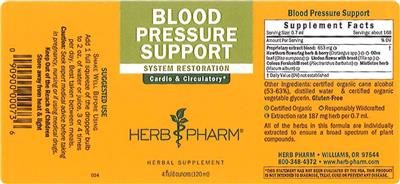
Blood Pressure Support by Herb Pharm label
The label scan from the NIH Dietary Supplement Label Database. Tap to enlarge.
Label images are published by the NIH Dietary Supplement Label Database for the version of this product on file. Always read your actual product label.
View the full label (PDF)The Ingredients in Blood Pressure Support by Herb Pharm
These are the 5 active ingredients this product is made of. Select any to open its full monograph.
Serving size0.7 mL Dosage formLiquid Servings per container168 Amounts shown are per serving.
Most supplement products combine several ingredients, and a medication can interact with the product through any one of them. Each ingredient below shows whether it has known drug interactions.
Proprietary Extract Blend
Other (inactive) ingredients: Certified organic Cane Alcohol, Distilled Water, Certified organic Vegetable Glycerin. These complete the product’s ingredient list but are not active constituents.
Blood Pressure Support by Herb Pharm Drug Interactions
HelloPharmacist Interaction Report
Blood Pressure Support by Herb Pharm contains several active ingredients with documented interactions, most notably with heart medications.
Hawthorn extract — the product's primary ingredient — carries Major-severity interactions with nitrates (drugs like nitroglycerin) and phosphodiesterase-5 inhibitors (like sildenafil), both of which can cause excessive blood vessel relaxation and dangerously low blood pressure when combined with hawthorn's vasodilatory effects.
Read the full breakdown — every affected drug type, severity by severity
Hawthorn also interacts at Moderate severity with beta-blockers, blood thinners (anticoagulants and antiplatelet drugs), calcium channel blockers, and digoxin — a heart medication — potentially causing additive blood pressure drop, increased bleeding risk, or heightened digoxin effects. Coleus forskohlii extract adds Major-severity risks with nitrates and calcium channel blockers for the same reason, and carries Moderate interactions with general blood pressure drugs, warfarin (Coumadin), blood thinners, and drugs metabolized by liver enzymes CYP2C9 and CYP3A4.
Mistletoe extract interacts at Moderate severity with blood pressure medications and immunosuppressants. Linden extract has a Moderate interaction with lithium.
Altogether, these interactions span 1,000 individual medications.
We could not check Olive extract for interactions — we hold no interaction data for it. Use the medication checker below to look up your exact prescriptions before starting this product.
Check your own medications below · Editorial policy · How we use AI
Want to check YOUR meds against Blood Pressure Support?
Ask about interactions with your drugs in plain English — “Can I take it with lisinopril?” — and we find you the answer in seconds, ingredient by ingredient.
Go to the checkerIngredients driving the most interactions
Individual Drug Interactions
The ingredients in Blood Pressure Support interact with 1,014 drugs. Click any drug to see the details.
4 of the 5 ingredients in Blood Pressure Support interact with drugs. Each result below shows which ingredient is responsible. Coleus Forskohlii extract Mistletoe extract Hawthorn extract Linden extract
AmlodipineNorliqva
How Amlodipine interacts with Blood Pressure Support — through 3 ingredients. Tap an ingredient for the detail:
Coleus Forskohlii ExtractAntihypertensive Drugs, Cytochrome P450 3a4 (cyp3a4) Substrates +1 Major
Interaction Summary
Theoretically, combining coleus with antihypertensive drugs might cause additive blood pressure lowering effects and increase the risk of hypotension.
Read the full Coleus Forskohlii Extract + Amlodipine interactionHawthorn ExtractCalcium Channel Blockers Moderate
Interaction Summary
Theoretically, concomitant use might cause additive coronary vasodilation and hypotensive effects.
Read the full Hawthorn Extract + Amlodipine interactionMistletoe ExtractAntihypertensive Drugs Moderate
Interaction Summary
Theoretically, European mistletoe might increase the risk of hypotension when taken with antihypertensive drugs.
Read the full Mistletoe Extract + Amlodipine interactionAmlodipine BenzoateKaterzia
How Amlodipine Benzoate interacts with Blood Pressure Support — through 3 ingredients. Tap an ingredient for the detail:
Coleus Forskohlii ExtractCalcium Channel Blockers, Cytochrome P450 3a4 (cyp3a4) Substrates +1 Major
Interaction Summary
Theoretically, combining coleus with calcium channel blockers might increase the coronary vasodilatory effects.
Read the full Coleus Forskohlii Extract + Amlodipine Benzoate interactionHawthorn ExtractCalcium Channel Blockers Moderate
Interaction Summary
Theoretically, concomitant use might cause additive coronary vasodilation and hypotensive effects.
Read the full Hawthorn Extract + Amlodipine Benzoate interactionMistletoe ExtractAntihypertensive Drugs Moderate
Interaction Summary
Theoretically, European mistletoe might increase the risk of hypotension when taken with antihypertensive drugs.
Read the full Mistletoe Extract + Amlodipine Benzoate interactionAmlodipine BesilateIstin
How Amlodipine Besilate interacts with Blood Pressure Support — through 3 ingredients. Tap an ingredient for the detail:
Coleus Forskohlii ExtractCalcium Channel Blockers, Cytochrome P450 3a4 (cyp3a4) Substrates +1 Major
Interaction Summary
Theoretically, combining coleus with calcium channel blockers might increase the coronary vasodilatory effects.
Read the full Coleus Forskohlii Extract + Amlodipine Besilate interactionMistletoe ExtractAntihypertensive Drugs Moderate
Interaction Summary
Theoretically, European mistletoe might increase the risk of hypotension when taken with antihypertensive drugs.
Read the full Mistletoe Extract + Amlodipine Besilate interactionHawthorn ExtractCalcium Channel Blockers Moderate
Interaction Summary
Theoretically, concomitant use might cause additive coronary vasodilation and hypotensive effects.
Read the full Hawthorn Extract + Amlodipine Besilate interactionAmlodipine BesylateNorvasc
How Amlodipine Besylate interacts with Blood Pressure Support — through 3 ingredients. Tap an ingredient for the detail:
Coleus Forskohlii ExtractCalcium Channel Blockers, Cytochrome P450 3a4 (cyp3a4) Substrates +1 Major
Interaction Summary
Theoretically, combining coleus with calcium channel blockers might increase the coronary vasodilatory effects.
Read the full Coleus Forskohlii Extract + Amlodipine Besylate interactionHawthorn ExtractCalcium Channel Blockers Moderate
Interaction Summary
Theoretically, concomitant use might cause additive coronary vasodilation and hypotensive effects.
Read the full Hawthorn Extract + Amlodipine Besylate interactionMistletoe ExtractAntihypertensive Drugs Moderate
Interaction Summary
Theoretically, European mistletoe might increase the risk of hypotension when taken with antihypertensive drugs.
Read the full Mistletoe Extract + Amlodipine Besylate interactionAmlodipine Besylate, BenazeprilLotrel
How Amlodipine Besylate, Benazepril interacts with Blood Pressure Support — through 3 ingredients. Tap an ingredient for the detail:
Coleus Forskohlii ExtractAntihypertensive Drugs, Calcium Channel Blockers +1 Major
Interaction Summary
Theoretically, combining coleus with antihypertensive drugs might cause additive blood pressure lowering effects and increase the risk of hypotension.
Read the full Coleus Forskohlii Extract + Amlodipine Besylate, Benazepril interactionHawthorn ExtractCalcium Channel Blockers Moderate
Interaction Summary
Theoretically, concomitant use might cause additive coronary vasodilation and hypotensive effects.
Read the full Hawthorn Extract + Amlodipine Besylate, Benazepril interactionMistletoe ExtractAntihypertensive Drugs Moderate
Interaction Summary
Theoretically, European mistletoe might increase the risk of hypotension when taken with antihypertensive drugs.
Read the full Mistletoe Extract + Amlodipine Besylate, Benazepril interactionAmlodipine, CelecoxibConsensi
How Amlodipine, Celecoxib interacts with Blood Pressure Support — through 3 ingredients. Tap an ingredient for the detail:
Coleus Forskohlii ExtractCytochrome P450 2c9 (cyp2c9) Substrates, Calcium Channel Blockers +2 Major
Interaction Summary
Theoretically, taking coleus may affect drugs metabolized by CYP2C9 and increase the risk of adverse effects or reduce the effectiveness.
Read the full Coleus Forskohlii Extract + Amlodipine, Celecoxib interactionMistletoe ExtractAntihypertensive Drugs Moderate
Interaction Summary
Theoretically, European mistletoe might increase the risk of hypotension when taken with antihypertensive drugs.
Read the full Mistletoe Extract + Amlodipine, Celecoxib interactionHawthorn ExtractCalcium Channel Blockers Moderate
Interaction Summary
Theoretically, concomitant use might cause additive coronary vasodilation and hypotensive effects.
Read the full Hawthorn Extract + Amlodipine, Celecoxib interactionAvanafilStendra
How Avanafil interacts with Blood Pressure Support — through 2 ingredients. Tap an ingredient for the detail:
Hawthorn ExtractPhosphodiesterase-5 Inhibitors Major
Interaction Summary
Theoretically, concomitant use might result in additive vasodilation and hypotension.
Read the full Hawthorn Extract + Avanafil interactionColeus Forskohlii ExtractCytochrome P450 3a4 (cyp3a4) Substrates Moderate
Interaction Summary
Theoretically, taking coleus might decrease serum levels of drugs metabolized by CYP3A4.
Read the full Coleus Forskohlii Extract + Avanafil interactionBepridilVascor
How Bepridil interacts with Blood Pressure Support — through 2 ingredients. Tap an ingredient for the detail:
Coleus Forskohlii ExtractCalcium Channel Blockers, Cytochrome P450 3a4 (cyp3a4) Substrates Major
Interaction Summary
Theoretically, combining coleus with calcium channel blockers might increase the coronary vasodilatory effects.
Read the full Coleus Forskohlii Extract + Bepridil interactionHawthorn ExtractCalcium Channel Blockers Moderate
Interaction Summary
Theoretically, concomitant use might cause additive coronary vasodilation and hypotensive effects.
Read the full Hawthorn Extract + Bepridil interactionDiltiazemAdizem-SR, Adizem-XL, Angitil SR, Angitil XL, Calcicard CR, Cardizem +23 more
How Diltiazem interacts with Blood Pressure Support — through 3 ingredients. Tap an ingredient for the detail:
Coleus Forskohlii ExtractCytochrome P450 3a4 (cyp3a4) Substrates, Calcium Channel Blockers +1 Major
Interaction Summary
Theoretically, taking coleus might decrease serum levels of drugs metabolized by CYP3A4.
Read the full Coleus Forskohlii Extract + Diltiazem interactionHawthorn ExtractCalcium Channel Blockers Moderate
Interaction Summary
Theoretically, concomitant use might cause additive coronary vasodilation and hypotensive effects.
Read the full Hawthorn Extract + Diltiazem interactionMistletoe ExtractAntihypertensive Drugs Moderate
Interaction Summary
Theoretically, European mistletoe might increase the risk of hypotension when taken with antihypertensive drugs.
Read the full Mistletoe Extract + Diltiazem interactionDiltiazem, EnalaprilTeczem
How Diltiazem, Enalapril interacts with Blood Pressure Support — through 3 ingredients. Tap an ingredient for the detail:
Coleus Forskohlii ExtractCytochrome P450 3a4 (cyp3a4) Substrates, Antihypertensive Drugs +1 Major
Interaction Summary
Theoretically, taking coleus might decrease serum levels of drugs metabolized by CYP3A4.
Read the full Coleus Forskohlii Extract + Diltiazem, Enalapril interactionMistletoe ExtractAntihypertensive Drugs Moderate
Interaction Summary
Theoretically, European mistletoe might increase the risk of hypotension when taken with antihypertensive drugs.
Read the full Mistletoe Extract + Diltiazem, Enalapril interactionHawthorn ExtractCalcium Channel Blockers Moderate
Interaction Summary
Theoretically, concomitant use might cause additive coronary vasodilation and hypotensive effects.
Read the full Hawthorn Extract + Diltiazem, Enalapril interactionEnalapril Maleate, FelodipineLexxel
How Enalapril Maleate, Felodipine interacts with Blood Pressure Support — through 3 ingredients. Tap an ingredient for the detail:
Coleus Forskohlii ExtractAntihypertensive Drugs, Calcium Channel Blockers +1 Major
Interaction Summary
Theoretically, combining coleus with antihypertensive drugs might cause additive blood pressure lowering effects and increase the risk of hypotension.
Read the full Coleus Forskohlii Extract + Enalapril Maleate, Felodipine interactionMistletoe ExtractAntihypertensive Drugs Moderate
Interaction Summary
Theoretically, European mistletoe might increase the risk of hypotension when taken with antihypertensive drugs.
Read the full Mistletoe Extract + Enalapril Maleate, Felodipine interactionHawthorn ExtractCalcium Channel Blockers Moderate
Interaction Summary
Theoretically, concomitant use might cause additive coronary vasodilation and hypotensive effects.
Read the full Hawthorn Extract + Enalapril Maleate, Felodipine interactionFelodipinePlendil, Renedil
How Felodipine interacts with Blood Pressure Support — through 3 ingredients. Tap an ingredient for the detail:
Coleus Forskohlii ExtractCalcium Channel Blockers, Cytochrome P450 3a4 (cyp3a4) Substrates +1 Major
Interaction Summary
Theoretically, combining coleus with calcium channel blockers might increase the coronary vasodilatory effects.
Read the full Coleus Forskohlii Extract + Felodipine interactionHawthorn ExtractCalcium Channel Blockers Moderate
Interaction Summary
Theoretically, concomitant use might cause additive coronary vasodilation and hypotensive effects.
Read the full Hawthorn Extract + Felodipine interactionMistletoe ExtractAntihypertensive Drugs Moderate
Interaction Summary
Theoretically, European mistletoe might increase the risk of hypotension when taken with antihypertensive drugs.
Read the full Mistletoe Extract + Felodipine interactionFinasteride, TadalafilEntadfi
How Finasteride, Tadalafil interacts with Blood Pressure Support — through 2 ingredients. Tap an ingredient for the detail:
Hawthorn ExtractPhosphodiesterase-5 Inhibitors Major
Interaction Summary
Theoretically, concomitant use might result in additive vasodilation and hypotension.
Read the full Hawthorn Extract + Finasteride, Tadalafil interactionColeus Forskohlii ExtractCytochrome P450 3a4 (cyp3a4) Substrates Moderate
Interaction Summary
Theoretically, taking coleus might decrease serum levels of drugs metabolized by CYP3A4.
Read the full Coleus Forskohlii Extract + Finasteride, Tadalafil interactionGlyceryl TrinitrateNitronal
How Glyceryl Trinitrate interacts with Blood Pressure Support — through 2 ingredients. Tap an ingredient for the detail:
Coleus Forskohlii ExtractNitrates Major
Interaction Summary
Theoretically, combining coleus with nitrates might increase the coronary vasodilatory effects.
Read the full Coleus Forskohlii Extract + Glyceryl Trinitrate interactionHawthorn ExtractNitrates Major
Interaction Summary
Theoretically, concomitant use might cause additive coronary vasodilatory effects.
Read the full Hawthorn Extract + Glyceryl Trinitrate interactionIsosorbide DinitrateAngitak, Cedocard Retard, Isoket, Isoket Retard, Isordil
How Isosorbide Dinitrate interacts with Blood Pressure Support — through 2 ingredients. Tap an ingredient for the detail:
Coleus Forskohlii ExtractNitrates Major
Interaction Summary
Theoretically, combining coleus with nitrates might increase the coronary vasodilatory effects.
Read the full Coleus Forskohlii Extract + Isosorbide Dinitrate interactionHawthorn ExtractNitrates Major
Interaction Summary
Theoretically, concomitant use might cause additive coronary vasodilatory effects.
Read the full Hawthorn Extract + Isosorbide Dinitrate interactionIsosorbide Dinitrate, HydralazineBiDil
How Isosorbide Dinitrate, Hydralazine interacts with Blood Pressure Support — through 3 ingredients. Tap an ingredient for the detail:
Hawthorn ExtractNitrates Major
Interaction Summary
Theoretically, concomitant use might cause additive coronary vasodilatory effects.
Read the full Hawthorn Extract + Isosorbide Dinitrate, Hydralazine interactionColeus Forskohlii ExtractNitrates, Antihypertensive Drugs Major
Interaction Summary
Theoretically, combining coleus with nitrates might increase the coronary vasodilatory effects.
Read the full Coleus Forskohlii Extract + Isosorbide Dinitrate, Hydralazine interactionMistletoe ExtractAntihypertensive Drugs Moderate
Interaction Summary
Theoretically, European mistletoe might increase the risk of hypotension when taken with antihypertensive drugs.
Read the full Mistletoe Extract + Isosorbide Dinitrate, Hydralazine interactionIsosorbide MononitrateAngeze, Angeze SR, Chemydur 60XL, Dynamin, Elantan, Elantan LA +13 more
How Isosorbide Mononitrate interacts with Blood Pressure Support — through 2 ingredients. Tap an ingredient for the detail:
Coleus Forskohlii ExtractNitrates Major
Interaction Summary
Theoretically, combining coleus with nitrates might increase the coronary vasodilatory effects.
Read the full Coleus Forskohlii Extract + Isosorbide Mononitrate interactionHawthorn ExtractNitrates Major
Interaction Summary
Theoretically, concomitant use might cause additive coronary vasodilatory effects.
Read the full Hawthorn Extract + Isosorbide Mononitrate interactionIsradipineDynacirc CR
How Isradipine interacts with Blood Pressure Support — through 3 ingredients. Tap an ingredient for the detail:
Coleus Forskohlii ExtractCalcium Channel Blockers, Antihypertensive Drugs +1 Major
Interaction Summary
Theoretically, combining coleus with calcium channel blockers might increase the coronary vasodilatory effects.
Read the full Coleus Forskohlii Extract + Isradipine interactionHawthorn ExtractCalcium Channel Blockers Moderate
Interaction Summary
Theoretically, concomitant use might cause additive coronary vasodilation and hypotensive effects.
Read the full Hawthorn Extract + Isradipine interactionMistletoe ExtractAntihypertensive Drugs Moderate
Interaction Summary
Theoretically, European mistletoe might increase the risk of hypotension when taken with antihypertensive drugs.
Read the full Mistletoe Extract + Isradipine interactionLercanidipine HydrochlorideZanidip
How Lercanidipine Hydrochloride interacts with Blood Pressure Support — through 3 ingredients. Tap an ingredient for the detail:
Coleus Forskohlii ExtractCytochrome P450 3a4 (cyp3a4) Substrates, Antihypertensive Drugs +1 Major
Interaction Summary
Theoretically, taking coleus might decrease serum levels of drugs metabolized by CYP3A4.
Read the full Coleus Forskohlii Extract + Lercanidipine Hydrochloride interactionHawthorn ExtractCalcium Channel Blockers Moderate
Interaction Summary
Theoretically, concomitant use might cause additive coronary vasodilation and hypotensive effects.
Read the full Hawthorn Extract + Lercanidipine Hydrochloride interactionMistletoe ExtractAntihypertensive Drugs Moderate
Interaction Summary
Theoretically, European mistletoe might increase the risk of hypotension when taken with antihypertensive drugs.
Read the full Mistletoe Extract + Lercanidipine Hydrochloride interactionLevamlodipineConjupri
How Levamlodipine interacts with Blood Pressure Support — through 3 ingredients. Tap an ingredient for the detail:
Coleus Forskohlii ExtractCytochrome P450 3a4 (cyp3a4) Substrates, Calcium Channel Blockers +1 Major
Interaction Summary
Theoretically, taking coleus might decrease serum levels of drugs metabolized by CYP3A4.
Read the full Coleus Forskohlii Extract + Levamlodipine interactionHawthorn ExtractCalcium Channel Blockers Moderate
Interaction Summary
Theoretically, concomitant use might cause additive coronary vasodilation and hypotensive effects.
Read the full Hawthorn Extract + Levamlodipine interactionMistletoe ExtractAntihypertensive Drugs Moderate
Interaction Summary
Theoretically, European mistletoe might increase the risk of hypotension when taken with antihypertensive drugs.
Read the full Mistletoe Extract + Levamlodipine interactionMacitentan, TadalafilOpsynvi
How Macitentan, Tadalafil interacts with Blood Pressure Support — through 3 ingredients. Tap an ingredient for the detail:
Hawthorn ExtractPhosphodiesterase-5 Inhibitors Major
Interaction Summary
Theoretically, concomitant use might result in additive vasodilation and hypotension.
Read the full Hawthorn Extract + Macitentan, Tadalafil interactionMistletoe ExtractAntihypertensive Drugs Moderate
Interaction Summary
Theoretically, European mistletoe might increase the risk of hypotension when taken with antihypertensive drugs.
Read the full Mistletoe Extract + Macitentan, Tadalafil interactionColeus Forskohlii ExtractCytochrome P450 2c9 (cyp2c9) Substrates, Antihypertensive Drugs +1 Moderate
Interaction Summary
Theoretically, taking coleus may affect drugs metabolized by CYP2C9 and increase the risk of adverse effects or reduce the effectiveness.
Read the full Coleus Forskohlii Extract + Macitentan, Tadalafil interactionNicardipineCardene, Cardene IV, Cardene SR
How Nicardipine interacts with Blood Pressure Support — through 3 ingredients. Tap an ingredient for the detail:
Coleus Forskohlii ExtractCytochrome P450 3a4 (cyp3a4) Substrates, Antihypertensive Drugs +1 Major
Interaction Summary
Theoretically, taking coleus might decrease serum levels of drugs metabolized by CYP3A4.
Read the full Coleus Forskohlii Extract + Nicardipine interactionMistletoe ExtractAntihypertensive Drugs Moderate
Interaction Summary
Theoretically, European mistletoe might increase the risk of hypotension when taken with antihypertensive drugs.
Read the full Mistletoe Extract + Nicardipine interactionHawthorn ExtractCalcium Channel Blockers Moderate
Interaction Summary
Theoretically, concomitant use might cause additive coronary vasodilation and hypotensive effects.
Read the full Hawthorn Extract + Nicardipine interactionNicorandilAprior, Dancor, Ikorel, Sigmart, Zynicor
How Nicorandil interacts with Blood Pressure Support — through 2 ingredients. Tap an ingredient for the detail:
Coleus Forskohlii ExtractNitrates Major
Interaction Summary
Theoretically, combining coleus with nitrates might increase the coronary vasodilatory effects.
Read the full Coleus Forskohlii Extract + Nicorandil interactionHawthorn ExtractNitrates Major
Interaction Summary
Theoretically, concomitant use might cause additive coronary vasodilatory effects.
Read the full Hawthorn Extract + Nicorandil interactionNifedipineAdalat, Adalat CC, Adalat LA, Adalat PA, Adalat Retard, Adalat XL +15 more
How Nifedipine interacts with Blood Pressure Support — through 3 ingredients. Tap an ingredient for the detail:
Coleus Forskohlii ExtractAntihypertensive Drugs, Cytochrome P450 3a4 (cyp3a4) Substrates +1 Major
Interaction Summary
Theoretically, combining coleus with antihypertensive drugs might cause additive blood pressure lowering effects and increase the risk of hypotension.
Read the full Coleus Forskohlii Extract + Nifedipine interactionHawthorn ExtractCalcium Channel Blockers Moderate
Interaction Summary
Theoretically, concomitant use might cause additive coronary vasodilation and hypotensive effects.
Read the full Hawthorn Extract + Nifedipine interactionMistletoe ExtractAntihypertensive Drugs Moderate
Interaction Summary
Theoretically, European mistletoe might increase the risk of hypotension when taken with antihypertensive drugs.
Read the full Mistletoe Extract + Nifedipine interactionNisoldipineSular
How Nisoldipine interacts with Blood Pressure Support — through 3 ingredients. Tap an ingredient for the detail:
Coleus Forskohlii ExtractCalcium Channel Blockers, Antihypertensive Drugs +1 Major
Interaction Summary
Theoretically, combining coleus with calcium channel blockers might increase the coronary vasodilatory effects.
Read the full Coleus Forskohlii Extract + Nisoldipine interactionHawthorn ExtractCalcium Channel Blockers Moderate
Interaction Summary
Theoretically, concomitant use might cause additive coronary vasodilation and hypotensive effects.
Read the full Hawthorn Extract + Nisoldipine interactionMistletoe ExtractAntihypertensive Drugs Moderate
Interaction Summary
Theoretically, European mistletoe might increase the risk of hypotension when taken with antihypertensive drugs.
Read the full Mistletoe Extract + Nisoldipine interactionNitrendipineCardif
How Nitrendipine interacts with Blood Pressure Support — through 2 ingredients. Tap an ingredient for the detail:
Coleus Forskohlii ExtractCalcium Channel Blockers, Cytochrome P450 3a4 (cyp3a4) Substrates Major
Interaction Summary
Theoretically, combining coleus with calcium channel blockers might increase the coronary vasodilatory effects.
Read the full Coleus Forskohlii Extract + Nitrendipine interactionHawthorn ExtractCalcium Channel Blockers Moderate
Interaction Summary
Theoretically, concomitant use might cause additive coronary vasodilation and hypotensive effects.
Read the full Hawthorn Extract + Nitrendipine interactionNitroglycerinGonitro, Nitro Time, Nitro-Bid, Nitrocine Timecaps, Nitrogard, Nitrogard SR +7 more
How Nitroglycerin interacts with Blood Pressure Support — through 2 ingredients. Tap an ingredient for the detail:
Hawthorn ExtractNitrates Major
Interaction Summary
Theoretically, concomitant use might cause additive coronary vasodilatory effects.
Read the full Hawthorn Extract + Nitroglycerin interactionColeus Forskohlii ExtractNitrates Major
Interaction Summary
Theoretically, combining coleus with nitrates might increase the coronary vasodilatory effects.
Read the full Coleus Forskohlii Extract + Nitroglycerin interactionPentaerythritol TetranitratePeritrate, Peritrate SA
How Pentaerythritol Tetranitrate interacts with Blood Pressure Support — through 2 ingredients. Tap an ingredient for the detail:
Hawthorn ExtractNitrates Major
Interaction Summary
Theoretically, concomitant use might cause additive coronary vasodilatory effects.
Read the full Hawthorn Extract + Pentaerythritol Tetranitrate interactionColeus Forskohlii ExtractNitrates Major
Interaction Summary
Theoretically, combining coleus with nitrates might increase the coronary vasodilatory effects.
Read the full Coleus Forskohlii Extract + Pentaerythritol Tetranitrate interactionPerindopril Arginine, AmlodipinePrestalia
How Perindopril Arginine, Amlodipine interacts with Blood Pressure Support — through 3 ingredients. Tap an ingredient for the detail:
Coleus Forskohlii ExtractAntihypertensive Drugs, Cytochrome P450 3a4 (cyp3a4) Substrates +1 Major
Interaction Summary
Theoretically, combining coleus with antihypertensive drugs might cause additive blood pressure lowering effects and increase the risk of hypotension.
Read the full Coleus Forskohlii Extract + Perindopril Arginine, Amlodipine interactionHawthorn ExtractCalcium Channel Blockers Moderate
Interaction Summary
Theoretically, concomitant use might cause additive coronary vasodilation and hypotensive effects.
Read the full Hawthorn Extract + Perindopril Arginine, Amlodipine interactionMistletoe ExtractAntihypertensive Drugs Moderate
Interaction Summary
Theoretically, European mistletoe might increase the risk of hypotension when taken with antihypertensive drugs.
Read the full Mistletoe Extract + Perindopril Arginine, Amlodipine interactionSildenafilRevatio
How Sildenafil interacts with Blood Pressure Support — through 2 ingredients. Tap an ingredient for the detail:
Hawthorn ExtractPhosphodiesterase-5 Inhibitors Major
Interaction Summary
Theoretically, concomitant use might result in additive vasodilation and hypotension.
Read the full Hawthorn Extract + Sildenafil interactionColeus Forskohlii ExtractCytochrome P450 3a4 (cyp3a4) Substrates, Cytochrome P450 2c9 (cyp2c9) Substrates Moderate
Interaction Summary
Theoretically, taking coleus might decrease serum levels of drugs metabolized by CYP3A4.
Read the full Coleus Forskohlii Extract + Sildenafil interactionEach ingredient & the kinds of drugs it affects
For each ingredient in Blood Pressure Support with known interactions, here are the types of medications they can affect. Open any type for the detail — or search your exact drug in the checker above.
Coleus Forskohlii extract
Calcium Channel Blockers
Theoretically, combining coleus with calcium channel blockers might increase the coronary vasodilatory effects.
Forskolin, a constituent of coleus, and calcium channel blockers both cause coronary vasodilatory effects.
Nitrates
Theoretically, combining coleus with nitrates might increase the coronary vasodilatory effects.
Forskolin, a constituent of coleus, and nitrates both cause coronary vasodilatory effects.
Anticoagulant/Antiplatelet Drugs
Theoretically, concomitant use of coleus and anticoagulant or antiplatelet drugs might increase the risk of bruising and bleeding.
In vitro and animal research shows that forskolin, a constituent of coleus, can inhibit platelet aggregation and adhesion.
Antihypertensive Drugs
Theoretically, combining coleus with antihypertensive drugs might cause additive blood pressure lowering effects and increase the risk of hypotension.
Animal research shows that forskolin, a constituent of coleus, may lower blood pressure.
Cytochrome P450 2C9 (Cyp2C9) Substrates
Theoretically, taking coleus may affect drugs metabolized by CYP2C9 and increase the risk of adverse effects or reduce the effectiveness.
Research on the effect of coleus on CYP2C9 is conflicting. Some animal research shows that coleus extract can induce CYP2C9, while in vitro research shows that coleus can inhibit CYP2C9. Until more is known, advise patients that taking coleus might increase or decrease levels of drugs metabolized by CYP2C9.
Cytochrome P450 3A4 (Cyp3A4) Substrates
Theoretically, taking coleus might decrease serum levels of drugs metabolized by CYP3A4.
In vitro research shows that coleus can activate the nuclear receptor, pregnane X receptor (PXR), which results in increased expression of CYP3A4. Although the clinical significance of this is not known, use caution when considering concomitant use of coleus and other drugs affected by these enzymes.
Warfarin (Coumadin)
Theoretically, taking coleus may affect the metabolism of warfarin and increase the risk of adverse effects or reduce the effectiveness.
Some animal research shows that coleus extract can induce cytochrome P450 2C9 (CYP2C9), an enzyme that metabolizes warfarin. However, other in vitro research shows that coleus can inhibit CYP2C9. Theoretically, taking coleus with drugs metabolized by CYP2C9 might affect drug levels and the risk of adverse effects. Until more is known, advise patients that taking coleus might increase or decrease levels of warfarin.
Mistletoe extract
Antihypertensive Drugs
Theoretically, European mistletoe might increase the risk of hypotension when taken with antihypertensive drugs.
Animal research suggests that European mistletoe extracts have hypotensive effects.
Immunosuppressants
Theoretically, European mistletoe might decrease the effectiveness of immunosuppressants.
Clinical and in vitro studies suggest that European mistletoe might have immunostimulant effects.
Hawthorn extract
Nitrates
Theoretically, concomitant use might cause additive coronary vasodilatory effects.
Some evidence shows that hawthorn might lower blood pressure due to vasodilatory effects.
Phosphodiesterase-5 Inhibitors
Theoretically, concomitant use might result in additive vasodilation and hypotension.
Hawthorn might inhibit PDE-5 and cause vasodilation.
Anticoagulant/Antiplatelet Drugs
Theoretically, hawthorn may increase the risk of bleeding if used with anticoagulant or antiplatelet drugs.
In vitro and animal research shows that hawthorn can inhibit platelet aggregation. However, its effect in humans is unclear. One observational study shows that patients taking hawthorn shortly before undergoing coronary artery bypass graft (CABG) surgery or valve replacement surgery have a 10% incidence of postoperative bleeding, compared with 1% in those who never consumed hawthorn extract. However, clinical research shows that taking a specific preparation of dried hawthorn leaves and flowers (Crataesor, Soria Natural Lab) 800 mg three times daily for 15 days does not affect platelet aggregation or levels of thromboxane B2, the metabolite of thromboxane A2, in healthy humans.
Beta-Blockers
Theoretically, concomitant use might cause additive effects on blood pressure and heart rate.
Some evidence shows that hawthorn might lower blood pressure and heart rate.
Calcium Channel Blockers
Theoretically, concomitant use might cause additive coronary vasodilation and hypotensive effects.
Some evidence shows that hawthorn might lower blood pressure due to vasodilatory effects.
Digoxin (Lanoxin)
Theoretically, hawthorn might potentiate the effects and adverse effects of digoxin.
Hawthorn appears to improve cardiac output; however, hawthorn does not appear to affect digoxin pharmacokinetics. Case reports suggest that at least one species of hawthorn root extract (Crataegus mexicana) may produce adverse effects similar to digoxin and can cross-react with digoxin assays, leading to falsely elevated plasma digoxin levels.
Linden extract
Lithium
Theoretically, due to its potential diuretic effects, linden might increase the effects and adverse effects of lithium.
Linden is thought to have diuretic properties. The dose of lithium might need to be decreased.
Brand information
Manufacturer and brand details for Blood Pressure Support, from the product label.
Herb Pharm
See all Herb Pharm products- Name
- Herb Pharm
- City
- Williams
- State
- OR
- ZipCode
- 97544
- Phone Number
- 800-348-4372
- Web Address
- www.herb-pharm.com
Blood Pressure Support by Herb Pharm: Common Questions
Does Blood Pressure Support by Herb Pharm interact with any medications?
How can one product interact with so many drugs?
Where does this information come from?
Can I take this if I'm on blood pressure medication?
Is this safe during pregnancy?
Can I take this while breastfeeding?
What are the most common side effects?
Does this actually work for blood pressure?
What's in the liquid besides the herbs?
Written and reviewed by the HelloPharmacist editorial staff. Our editorial policy
Not sure if Blood Pressure Support is safe with your meds?
Our pharmacists answer your medication & supplement questions — free.
Label information is sourced from the NIH Dietary Supplement Label Database and reflects the product version on file; always read your actual product label. This page is for education only and is not a substitute for professional medical advice. Confirm with your pharmacist or doctor before combining supplements and medications.
The Full Monographs Behind Blood Pressure Support’s Ingredients
Every ingredient we hold a full HelloPharmacist monograph for — uses, evidence, safety, and the complete interaction list.
Hawthorn
Interacts with 191 drugsHawthorn is a plant traditionally used for heart-related complaints, and some studies suggest it may modestly help symptoms of mild heart failure when added to standard care. However, the ev...
Read the full Hawthorn monograph → Herb & supplement monographOlive
Olive comes from the same tree that gives us olives and olive oil, and its leaf and fruit contain antioxidant compounds like oleuropein and hydroxytyrosol. Olive oil as part of a Mediterrane...
Read the full Olive monograph → Herb & supplement monographColeus
Interacts with 915 drugsColeus is a plant from the mint family whose root contains a compound called forskolin, often marketed for weight loss, asthma, and heart health. While early lab and small human studies are...
Read the full Coleus monograph → Herb & supplement monographEuropean Mistletoe
Interacts with 293 drugsEuropean mistletoe is a parasitic plant most studied as an injectable extract used alongside conventional cancer care in some European countries, mainly to improve quality of life rather tha...
Read the full European Mistletoe monograph → Herb & supplement monographLinden
Interacts with 1 drugLinden (also called lime flower) is a traditional herbal tea long used to calm nerves, ease cold symptoms, and support restful sleep. Strong human evidence for these uses is lacking, but the...
Read the full Linden monograph →Sources & How We Checked
Blood Pressure Support's label data comes from the NIH Dietary Supplement Label Database; the ingredient interaction data is from the Natural Medicines database, reviewed by our pharmacists.
- NIH Dietary Supplement Label Database (DSLD) — The official product label on file for this supplement.
- Natural Medicines (Therapeutic Research Center) — Evidence-graded clinical reference behind the ingredient interaction data.
Content is written and reviewed by licensed HelloPharmacist pharmacists. See our data sources and editorial standards for how this information is built and checked.
The 80 references behind this product’s interaction data
Every citation that drives the interaction findings for this product’s ingredients, from the evidence-graded Natural Medicines (TRC Healthcare) database. Open an ingredient to browse its citations — links open the study on PubMed or the publisher’s site.
Hawthorn 25 references
- Tauchert M. Efficacy and safety of crataegus extract WS 1442 in comparison with placebo in patients with chronic stable New York Heart Association class-III heart failure. Am Heart J 2002;143:910-5. PubMed
- Pittler MH, Schmidt K, Ernst E. Hawthorn extract for treating chronic heart failure: meta-analysis of randomized trials. Am J Med 2003;114:665-74.. PubMed
- Chang Q, Zuo Z, Harrison F, Chow MS. Hawthorn. J Clin Pharmacol 2002;42:605-12.
- Holubarsch CJ, Colucci WS, Meinertz T, et al. The efficacy and safety of Crataegus extract WS 1442 in patients with heart failure: the SPICE trial. Eur J Heart Fail 2008;10:1255-63. PubMed
- Pittler MH, Guo R, and Ernst E. Hawthorn extract for treating chronic heart failure. Cochrane.Database.Syst Rev 2008:CD005312. PubMed
- Zick SM, Vautaw BM, Gillespie B, Aaronson KD. Hawthorn Extract Randomized Blinded Chronic Heart Failure (HERB CHF) trial. Eur J Heart Fail. 2009;11:990-99. PubMed
- Werner NS, Duschek S, and Schandry R. D-camphor-crataegus berry extract combination increases blood pressure and cognitive functioning in the elderly - a randomized, placebo controlled double blind study. Phytomedicine. 2009;16:1077-82. PubMed
- Dalli E, Colomer E, Tormos MC, et al. Crataegus laevigata decreases neutrophil elastase and has hypolipidemic effect: a randomized, double-blind, placebo-controlled trial. Phytomedicine. 6-15-2011;18:769-75. PubMed
- Maek-a-nantawat W, Phonrat B, Dhitavat J, et al. Safety and efficacy of CKBM-A01, a Chinese herbal medicine, among asymptomatic HIV patients. Southeast Asian J Trop.Med Public Health 2009;40:494-501.
- Asher GN, Viera AJ, Weaver MA, et al. Effect of hawthorn standardized extract on flow mediated dilation in prehypertensive and mildly hypertensive adults: a randomized, controlled cross-over trial. BMC.Complement Altern.Med 2012;12:26. PubMed
- Walker AF, Marakis G, Simpson E, et al. Hypotensive effects of hawthorn for patients with diabetes taking prescription drugs: a randomised controlled trial. Br J Gen.Pract 2006;56:437-43.
- Daniele C, Mazzanti G, Pittler MH, et al. Adverse-event profile of Crataegus spp.: a systematic review. Drug Saf 2006;29:523-35. PubMed
- Tankanow R, Tamer HR, Streetman DS, et al. Interaction study between digoxin and a preparation of hawthorn (Crataegus oxyacantha). J.Clin.Pharmacol. 2003;43:637-42. DOI
- Tauchert, M., Gildor, A., and Lipinski, J. [High-dose Crataegus extract WS 1442 in the treatment of NYHA stage II heart failure]. Herz 1999;24(6):465-474.
- Horoz, M., Gok, E., Genctoy, G., Ozcan, T., Olmaz, R., Akca, M., Kiykim, A., and Gurses, I. Crataegus orientalis associated multiorgan hypersensitivity reaction and acute renal failure. Intern.Med 2008;47(23):2039-2042. PubMed
- Dalli, E., Valles, J., Cosin-Sales, J., Santos, M. T., Moscardo, A., Milara, J., and Sotillo, J. F. Effects of hawthorn (Crataegus laevigata) on platelet aggregation in healthy volunteers. Thromb.Res 2011;128(4):398-400. PubMed
- Rogov VD. [Toxiderma due to the fruits of the hawthorn]. Vestn Dermatol Venerol 1984;7(7):46-47.
- Loew D, Albrecht M, and Podzuweit H. Efficacy and tolerability of a Hawthorn preparation in patients with heart failure Stage I and II according to NYHA - a surveillance study. Phytomedicine 1996;3(Suppl 1):92.
- Rababa'h AM, Altarabsheh SE, Haddad O, Deo SV, Obeidat Y, Al-Azzam S. Hawthorn Herb Increases the Risk of Bleeding after Cardiac Surgery: An Evidence-Based Approach. Heart Surg Forum 2016;19(4):E175-9. PubMed
- Shatoor AS, Soliman H, Al-Hashem F, Gamal BE, Othman A, El-Menshaw N. Effect of hawthorn (Crataegus aronia syn. Azarolus (L)) on platelet function in albino wistar rats. Thromb Res 2012;130(1):75-80. PubMed
- Vibes J, Lasserre B, Gleye J, Declume C. Inhibition of thromboxane A2 biosynthesis in vitro by the main components of Crataegus oxyacantha (hawthorn) flower heads. Prostaglandins Leukot Essent Fatty Acids 1994;50(4):173-5. PubMed
- Rogers KL, Grice ID, Griffiths LR. Inhibition of platelet aggregation and 5-HT release by extracts of Australian plants used traditionally as headache treatments. Eur J Pharm Sci 2000;9(4):355-63. PubMed
- Zhou CC, Huang XX, Gao PY, et al. Two new compounds from Crataegus pinnatifida and their antithrombotic activities. J Asian Nat Prod Res 2014;16(2):169-74.
- Palmer KG, Lebin JA, Cronin MT, Mazor SS, Burns RA. Crataegus mexicana (Tejocote) Exposure Associated with Cardiotoxicity and a Falsely Elevated Digoxin Level. J Med Toxicol. 2019;15(4):295-298. PubMed
- Espinosa J, Bassett R, Lucerna A, Finn D. Hawthorne root (Crataegus mexicana) toxicity. Am J Emerg Med. 2024;78:242.e5-242.e6. PubMed
Olive 2 references
- Liccardi G, D'Amato M, D'Amato G. Oleaceae pollinosis: a review. Int Arch Allergy Immunol 1996;111:210-7. PubMed
- Somerville V, Moore R, Braakhuis A. The effect of olive leaf extract on upper respiratory illness in high school athletes: A randomised control trial. Nutrients. 2019;11(2). pii: E358. PubMed
Coleus 16 references
- Baumann G, Felix S, Sattelberger U, Klein G. Cardiovascular effects of forskolin (HL-362) in patients with idiopathic congestiv cardiomyopathy. A comparative study with dobutamine and sodium nitroprusside. J Cardiovasc Pharmacol 1990;16:93-100.
- Kramer W, Thormann J, Kindler M, Schlepper M. Effects of forskolin on left ventricular function in dilated cardiomyopathy. Arzneimittelforschung 1987;37:364-7.
- Bauer K, Dietersdorfer F, Kaspar S, et al. Pharmacodynamic effects of inhaled dry powder formulations of fenoterol and colforsin in asthma. Clin Pharmacol Ther 1993;53:76-83. PubMed
- Christenson JT, Thulesius O, Nazzal MM. The effect of forskolin on blood flow, platelet metabolism, aggregation and ATP release. Vasa 1995;24:56-61.
- Agarwal KC, Zielinski BA, Maitra RS. Significance of plasma adenosine in the antiplatelet activity of forskolin: potentiation by dipyridamole and dilazep. Thromb Haemost 1989;61:106-10. DOI
- Agarwal KC, Parks RE. Forskolin: a potential antimetastatic agent. Int J Cancer 1983;32:801-4. PubMed
- Almeida, F. C. and Lemonica, I. P. The toxic effects of Coleus barbatus B. on the different periods of pregnancy in rats. J Ethnopharmacol 2000;73(1-2):53-60. PubMed
- Ding, X. and Staudinger, J. L. Induction of drug metabolism by forskolin: the role of the pregnane X receptor and the protein kinase a signal transduction pathway. J Pharmacol Exp Ther 2005;312(2):849-856. PubMed
- Staudinger, J. L., Ding, X., and Lichti, K. Pregnane X receptor and natural products: beyond drug-drug interactions. Expert.Opin Drug Metab Toxicol 2006;2(6):847-857. PubMed
- van Hecke, E., Hindryckx, P., Geuns, J. M., and Devriese, E. Airborne contact dermatitis from coleus in a housewife. Contact Dermatitis 1991;25(2):128-129. PubMed
- Schlepper, M., Thormann, J., and Mitrovic, V. Cardiovascular effects of forskolin and phosphodiesterase-III inhibitors. Basic Res Cardiol 1989;84 Suppl 1:197-212. PubMed
- Dooms-Goossens, A., Borghijs, A., Degreef, H., Devriese, E. G., and Geuns, J. M. Airborne contact dermatitis to Coleus. Contact Dermatitis 1987;17(2):109-110. PubMed
- Lindner, E., Dohadwalla, A. N., and Bhattacharya, B. K. Positive inotropic and blood pressure lowering activity of a diterpene derivative isolated from Coleus forskohli: Forskolin. Arzneimittelforschung 1978;28(2):284-289.
- Loftus HL, Astell KJ, Mathai ML, et al. Coleus forskohlii Extract Supplementation in Conjunction with a Hypocaloric Diet Reduces the Risk Factors of Metabolic Syndrome in Overweight and Obese Subjects: A Randomized Controlled Trial. Nutrients. 2015;7(11): PubMed
- Yokotani K, Chiba T, Sato Y, et al. Hepatic cytochrome P450 mediates interaction between warfarin and Coleus forskohlii extract in vivo and in vitro. J Pharm Pharmacol. 2012;64(12):1793-801.
- Nishijima C, Chiba T, Sato Y, Umegaki K. Nationwide Online Survey Enables the Reevaluation of the Safety of Coleus forskohlii Extract Intake Based on the Adverse Event Frequencies. Nutrients. 2019;11(4). pii: E866. PubMed
European Mistletoe 35 references
- Wichtl MW. Herbal Drugs and Phytopharmaceuticals. Ed. N.M. Bisset. Stuttgart: Medpharm GmbH Scientific Publishers, 1994.
- Gruenwald J, Brendler T, Jaenicke C. PDR for Herbal Medicines. 1st ed. Montvale, NJ: Medical Economics Company, Inc., 1998.
- Brinker F. Herb Contraindications and Drug Interactions. 2nd ed. Sandy, OR: Eclectic Medical Publications, 1998.
- Harvey J, Colin-Jones DG. Mistletoe hepatitis. Br Med J (Clin Res Ed) 1981;282:186-7.
- Natl Cancer Inst. Mistletoe (PDQ). CancerNet. www.cancernet.nci.nih.gov/cam/mistletoe.htm#7 (Accessed 30 March 2001).
- Kaegi E. Unconventional therapies for cancer: 3. Iscador. Task Force on Alternative Therapies of the Canadian Breast Cancer Research Initiative. CMAJ 1998;158:1157-9.
- Grossarth-Matichek R, Kiene H, Baumgartner SM, Ziegler R. Use of Iscador, an extract of European mistletoe (Viscum album), in cancer treatment: prospective nonrandomized and randomized matched-pair studies nested within a cohort study. Altern Ther Health
- Huber R, Barth H, Schmitt-Graff A, Klein R. Hypereosinophilia induced by high-dose intratumoral and peritumoral mistletoe application to a patient with pancreatic carcinoma. J Altern Complement Med 2000;6:305-10. PubMed
- Timoshenko AV, Cherenkevich SN, Gabius HJ. Viscum album agglutinin-induced aggregation of blood cells and the lectin effects on neutrophil function. Biomed Pharmacother 1995;49:153-8.. PubMed
- Bussing A, Regnery A, Schweizer K. Effects of Viscum album L. on cyclophosphamide-treated peripheral blood mononuclear cells in vitro: sister chromatid exchanges and activation/proliferation marker expression. Cancer Lett 1995;94:199-205.. PubMed
- Deliorman D, Calis I, Ergun F. A new acyclic monoterpene glucoside from Viscum album ssp. album. Fitoterapia 2001;72:101-5. PubMed
- Finall AI, McIntosh SA, Thompson WD. Subcutaneous inflammation mimicking metastatic malignancy induced by injection of mistletoe extract. BMJ 2006;333:1293-4. PubMed
- Bauer C, Oppel T, Rueff F, Przybilla B. Anaphylaxis to viscotoxins of mistletoe (Viscum album) extracts. Ann Allergy Asthma Immunol 2005;94:86-9. PubMed
- Schoffski P, Breidenbach I, Krauter J, et al. Weekly 24 h infusion of aviscumine (rViscumin): A phase I study in patients with solid tumours. Eur J Cancer 2005;41:1431-8.
- Chernyshov VP, Omelchenko LI, Heusser P, and et al. Immunomodulatory actions of Viscum album (Iscador) in children with recurrent respiratory disease as a result of the Chernobyl nuclear accident. Complementary Therapies in Medicine 1997;5(3):141-146. DOI
- Chernyshov, V. P., Heusser, P., Omelchenko, L. I., Chernyshova, L. I., Vodyanik, M. A., Vykhovanets, E. V., Galazyuk, L. V., Pochinok, T. V., Gaiday, N. V., Gumenyuk, M. E., Zelinsky, G. M., Schaefermeyer, H., and Schaefermeyer, G. Immunomodulatory and cl
- Kim HJ, Kim H, Ahn JH, Suk JH. Liver injury induced by herbal extracts containing mistletoe and kudzu. J Altern Complement Med 2015;21(3):180-5. PubMed
- Kienle GS, Grugel R, Kiene H. Safety of higher dosages of Viscum album L. in animals and humans--systematic review of immune changes and safety parameters. BMC Complement Altern Med. 2011 Aug 28;11:72. PubMed
- Schad F, Atxner J, Buchwald D, Happe A, Popp S, Kröz M, Matthes H. Intratumoral Mistletoe (Viscum album L) Therapy in Patients With Unresectable Pancreas Carcinoma: A Retrospective Analysis. Integr Cancer Ther. 2014 Jul;13(4):332-40.
- Steele ML, Axtner J, Happe A, Kröz M, Matthes H, Schad F. Adverse Drug Reactions and Expected Effects to Therapy with Subcutaneous Mistletoe Extracts (Viscum album L.) in Cancer Patients. Evid Based Complement Alternat Med. 2014;2014:724258.
- Steele ML, Axtner J, Happe A, Kröz M, Matthes H, Schad F. Safety of Intravenous Application of Mistletoe (Viscum album L.) Preparations in Oncology: An Observational Study. Evid Based Complement Alternat Med. 2014;2014:236310.
- von Schoen-Angerer T, Wilkens J, Kienle GS, Kiene H, Vagedes J. High-Dose Viscum album Extract Treatment in the Prevention of Recurrent Bladder Cancer: A Retrospective Case Series. Perm J. 2015 Fall;19(4):76-83.
- Nazaruk J, Orlikowski P. Phytochemical profile and therapeutic potential of Viscum album L. Nat Prod Res. 2016;30(4):373-85.
- Bussing A, Stumpf C, Troger W, Schietzel M. Course of mitogen-stimulated T lymphocytes in cancer patients treated with Viscum album extracts. Anticancer Res. 2007 Jul-Aug;27(4C):2903-10.
- Noh D, Park JS, Lee DY. Acute respiratory distress syndrome after Viscum album pleurodesis for primary spontaneous pneumothorax. Koren J THorac Cariodvasc Surg. 2017 Feb;50(1):64-67.
- Schad F, Axtner J, Kroz M, Matthes H, Steele ML. Safety of combined treatment with monoclonal antibodies and Viscum album L preparations. Integr Cancer Ther. 2018 Mar;17(1):41-51.
- Thronicke A, Steele ML, Grah C, Matthes B, Schad F. Clinical safety of combined therapy of immune checkpoint inhibitors and Viscum album L. therapy in patients with advanced or metastatic cancer. BMC Complement Altern Med. 2017 Dec 13;17(1):534. PubMed
- Khan T, Ali S, Qayyum R, Hussain I, Wahid F, Shah AJ. Intestinal and vascular smooth muscle relaxant effect of Viscum album explains its medicinal use in hyperactive gut disorders and hypertension. BMC Complement Altern Med. 2016 Jul 27;16:251. PubMed
- Cho SJ, Kim SW, Chang JW. Acute pneumonitis consequent on pleurodesis with Viscum album extract: severe chest images but benign clinical course. Multidiscip Respir Med. 2014 Nov 27;9(1):61. PubMed
- Steele ML, Axtner J, Happe A, Kroz M, Matthes H, Schad F. Use and safety of intratumoral application of European mistletoe (Visum album L) preparations in oncology. Integr Cancer Ther. 2015 Mar;14(2):140-8.
- Zuzak TJ, Wasmuth A, Bernitzki S, Schwermer M, Längler A. Safety of high-dose intravenous mistletoe therapy in pediatric cancer patients: A case series. Complement Ther Med. 2018;40:198-202. PubMed
- Kim JD, Choi JW, Park HO, et al. Chemical pleurodesis with Viscum album L. extract for secondary spontaneous pneumothorax in elderly patients. J Thorac Dis 2020;12(10):5440-5445. PubMed
- Baek JH, Jeon Y, Han KW, Jung DH, Kim KO. Effect of mistletoe extract on tumor response in neoadjuvant chemoradiotherapy for rectal cancer: a cohort study. World J Surg Oncol 2021;19(1):178. PubMed
- Casetti F, Rafei-Shamsabadi D, Müller S. Grade II-anaphylaxis after subcutaneous injection of mistletoe extract. Contact Dermatitis 2021;85(4):462-5.
- Cogo E, Elsayed M, Bhardwaj S, et al. Mistletoe Extracts during the Oncological Perioperative Period: A Systematic Review and Meta-Analysis of Human Randomized Controlled Trials. Curr Oncol 2023;30(9):8196-8219. PubMed
Linden 2 references
- Newall CA, Anderson LA, Philpson JD. Herbal Medicine: A Guide for Healthcare Professionals. London, UK: The Pharmaceutical Press, 1996.
- McGuffin M, Hobbs C, Upton R, Goldberg A, eds. American Herbal Products Association's Botanical Safety Handbook. Boca Raton, FL: CRC Press, LLC 1997.
Parts of this content are provided by the Therapeutic Research Center, LLC.
DISCLAIMER: Currently this does not check for drug-drug interactions. This is not an all-inclusive comprehensive list of potential interactions and is for informational purposes only. Not all interactions are known or well-reported in the scientific literature, and new interactions are continually being reported. Input is needed from a qualified healthcare provider including a pharmacist before starting any therapy. Application of clinical judgment is necessary.
© 2021 Therapeutic Research Center, LLC