
Full Focus Ingredients & Drug Interactions
What is this page for?
First and foremost: checking Full Focus against your medications. The heart of this page is the interaction checker and the full interaction report — how this product’s ingredients may interact with prescription and over-the-counter medicines you may be taking.
Around that, we add a pharmacist’s high-level view of the product as a whole — what’s inside, the evidence for its stated use, how transparent the label is, and what safety data exists — so you can see the full picture in one place. It’s educational information from our licensed clinical databases and the clinical staff at HelloPharmacist — not medical advice — and we don’t sell or endorse products. Our editorial policy
Full Focus is a dietary supplement by Neurobiologix with 9 active ingredients. Its ingredients are commonly taken for high cholesterol, vitamin b3 deficiency (pellagra), heart health support.Based on those ingredients, 1,550 medications have a known interaction with it, the most serious rated major. The ingredients most likely to interact are Bacopa Whole Plant Extract, Niacin, Green Coffee Bean Extract. Use the checker below to test your specific medication, or read the full HelloPharmacist Interaction Report.
Check Your Meds Against Full Focus by Neurobiologix
Ask about any prescription or over-the-counter medication and we check it for interactions with Full Focus by Neurobiologix — and tell you which ingredient is responsible.
AI summaries are generated from our interaction database for education only — always confirm with your pharmacist. How we use AI
Ask the Pharmacist
A licensed pharmacist will answer your question by email — free, usually within 24 hours.
Got it — thank you!
A licensed pharmacist will answer within 24 hours. Keep an eye on your email (worth checking spam, just in case).
HelloPharmacist Scorecard of Full Focus by Neurobiologix
Our pharmacy team’s full take, with four database checks built into the cards below — a summary of what is known, not a grade of the product itself.
What’s inside
Full disclosure
Full Focus contains 10 active ingredients. L-Methionine supports neural development and is possibly effective for preventing neural tube birth defects.
L-Tyrosine is an amino acid that may help with cognitive function and memory and is used to manage phenylketonuria (PKU). Niacinamide (a form of vitamin B3) is likely effective for pellagra and possibly effective for acne, blood sugar control, and joint health.
L-Taurine, a compound made in your body, is possibly effective for heart and liver health. Green Coffee Bean Extract contains caffeine and is likely effective for mental alertness and possibly effective for Parkinson disease and heart health.
Inositol Hexanicotinate is a niacin compound possibly effective for Raynaud syndrome (a circulation disorder). S-Adenosyl Methionine (SAMe) is likely effective for osteoarthritis and possibly effective for depression.
Bacopa whole plant extract is an herbal ingredient with effectiveness ratings that are not well established in the data we hold. The product also contains Magnesium and Niacin listed as blend containers — their component parts are reflected in the individual ingredients above.
Inactive ingredients include microcrystalline cellulose, silicon dioxide, and other excipients.
Does it work?
Moderate evidence
Evidence for Full Focus's ingredients is mixed. Green Coffee Bean Extract is likely effective for mental alertness.
L-Tyrosine and niacinamide are possibly effective for cognitive function, though tyrosine's effect on athletic performance is rated possibly ineffective. S-Adenosyl Methionine (SAMe) is likely effective for osteoarthritis.
L-Taurine is possibly effective for heart and liver health. L-Methionine may help prevent neural tube birth defects (possibly effective) but has insufficient evidence for allergies, asthma, or cancer risk.
Inositol Hexanicotinate is possibly effective for Raynaud syndrome. For Bacopa, the data we hold does not establish effectiveness — ratings are insufficient across the conditions listed (Alzheimer disease, ADHD, cognitive function, and others).
How safe is it?
Well-documented data
Most ingredients in Full Focus are generally well tolerated at typical doses. L-Methionine, L-Tyrosine, Niacinamide, L-Taurine, Magnesium Ascorbate, and S-Adenosyl Methionine are well tolerated orally, though high doses of some can cause side effects.
Common mild effects include headache, nausea, diarrhea, dizziness, and gastrointestinal upset. Green Coffee Bean Extract (caffeine) can cause agitation, anxiety, insomnia, and nervousness, especially at higher intakes or in children and older adults.
Bacopa is generally well tolerated in studies but has limited long-term safety data. For pregnancy and breastfeeding: L-Methionine, L-Taurine, Niacinamide, and Magnesium Ascorbate are rated likely safe or possibly safe in pregnancy at normal to prenatal-vitamin amounts, though high supplement doses should be avoided without medical guidance.
L-Tyrosine, Inositol Hexanicotinate, and Bacopa lack sufficient safety data and should be used only under doctor oversight in pregnancy or while breastfeeding. Green Coffee Bean Extract safety data for pregnancy and lactation is not on file — discuss caffeine intake with your doctor or pharmacist.
Meds to double-check
Major interaction found
Before taking Full Focus, double-check any medications you take with ephedrine (a Major interaction with the caffeine in Green Coffee Bean Extract). Also review blood thinners (anticoagulants/antiplatelets like warfarin), levodopa or levodopa/carbidopa for Parkinson disease, seizure medications (carbamazepine, primidone, lamotrigine), blood-pressure drugs, lithium, thyroid hormone, antipsychotics (clozapine), acid-reflux drugs (cimetidine), and any drug metabolized by liver enzymes.
These carry Moderate interactions with one or more ingredients in this product.
The bottom line
Scorecard at a glanceFully disclosed formula with some supporting evidence for its stated purpose. Major medication interactions have been identified, and safety information is well characterized.
Full Focus may appeal to people seeking support for mental focus and memory, given that several ingredients are possibly effective for cognitive function. However, the product has significant medication interactions, especially with blood pressure drugs, blood thinners, seizure medications, Parkinson's drugs, and mood stabilizers — and a serious interaction with ephedrine.
Check your exact medications with the tool on this page before starting, and talk to your pharmacist if you take any prescription drugs.
Educational only — not medical advice; always confirm with your pharmacist. Our editorial policy · How we use AI
Assessment coverage: 9 of 10 active ingredients matched to our full ingredient reviews (monographs). Based on the product label dated Mar 25, 2025.
This Scorecard evaluates available label information, ingredient evidence, and known medication-safety considerations. It does not independently verify product identity, purity, potency, contamination, or manufacturing quality. How these ratings are computed
General information
Key facts about Full Focus, straight from the product label.
| Brand | Neurobiologix |
|---|---|
| Barcode (UPC) | 854998006137 |
| Net contents | 120 Vegetable Capsule(s) |
| Market status | On market |
| Date entered into DSLD | Mar 25, 2025 |
| DSLD ID | 327674 |
| Product type | Other Combinations |
| Supplement form | Capsule |
| Dietary claims / uses | All Other, Structure/Function |
| Intended target group(s) | Children 4 or More Years of Age, Vegan, Vegetarian, Adult (18 - 50 Years), Gluten Free, Dairy Free |
Everything in this section is reproduced from the manufacturer’s own product label — it’s the label speaking, not HelloPharmacist. We show it so you can see exactly what the maker states; we don’t verify or endorse those statements.
Supplement Facts
The label details for Full Focus by Neurobiologix, sourced from the NIH Dietary Supplement Label Database.
Supplement Facts
| Ingredient | Amount | % DV |
|---|---|---|
| Niacin | 400 mg | 2500% |
| Magnesium | 20 mg | 5% |
| L-Methionine | 150 mg | -- |
| L-Tyrosine | 300 mg | -- |
| Niacinamide | 200 mg | -- |
| L-Taurine | 200 mg | -- |
| Green Coffee Bean Extract | 75 mg | -- |
| Trimethylglycine | 150 mg | -- |
| Magnesium Ascorbate | 100 mg | -- |
| Inositol Hexanicotinate | 200 mg | -- |
| S-Adenosyl Methionine | 50 mg | -- |
| Bacopa Whole Plant Extract | 150 mg | -- |
Other ingredients: Hypromellose, Silicon Dioxide, Microcrystalline Cellulose, Ascorbyl Palmitate, Dicalcium Phosphate, Stevia Leaf Extract, Orange Flavor, Natural
Tap any ingredient to jump to its full detail below.
These statements are the manufacturer’s wording, reproduced from the product label — the label is saying it, not HelloPharmacist. We don’t verify or endorse them.
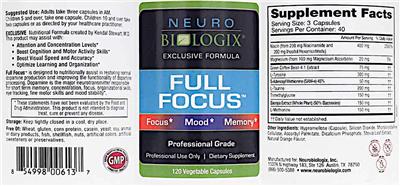
Suggested/Recommended/Usage/Directions
Suggested use: Adults take three capsules in AM. Children 5 and over, take one capsule. Children 10 and over take two capsules or as directed by your healthcare practitioner.
Formulation
Exclusive nutritional formula created by Kendal Stewart M.D. This product may assist with: Attention and concentration levels Boost cognition and motor activity skills Boost visual speed and accuracy Optimize learning and organization Full Focus is designed to nutritionally assist in restoring normal dopamine production and improving the functionality of dopamine processing. Dopamine is the major neurotransmitter responsible for short term memory, concentration, focus, organizational skills, eye tracking, fine motor skills and mood stability.
Free of: wheat, gluten, corn protein, casein, yeast, soy, animal or dairy products, fish, shellfish, nuts, artificial colors, artificial sweeteners or preservatives.
Focus Mood Memory Professional grade
Gluten free Soy free Dairy free
FDA Disclaimer Statement
These statements have not been evaluated by the Food and Drug Administration. This product is not intended to diagnose, treat, cure or prevent any disease.
Storage
Storage: Keep tightly closed in a cool, dry place.
Seals/Symbols
GMP Good Manufacturing Practice Consistent Quality
General Statements
Exclusive formula
Precautions
Professional use only
FDA Statement of Identity
Dietary Supplement
Is this label outdated? Report a formula or label change and our pharmacy team will review it.
Full Focus by Neurobiologix label
The label scan from the NIH Dietary Supplement Label Database. Tap to enlarge.
Label images are published by the NIH Dietary Supplement Label Database for the version of this product on file. Always read your actual product label.
View the full label (PDF)The Ingredients in Full Focus by Neurobiologix
These are the 9 active ingredients this product is made of. Select any to open its full monograph.
Serving size1 Capsule(s) Dosage formCapsule Servings per container40 Amounts shown are per serving.
Most supplement products combine several ingredients, and a medication can interact with the product through any one of them. Each ingredient below shows whether it has known drug interactions.
Niacin
Interacts with727 drugs
Niacin (vitamin B3) is an essential nutrient your body needs for energy and metabolism, and deficiency is uncommon in most developed countries. Prescr...
Niacin monograph & interactionsMagnesium
Interacts with295 drugs
Magnesium is an essential mineral your body needs for muscles, nerves, blood pressure, and many other functions, and supplements are useful for preven...
Magnesium monograph & interactionsL-Methionine
No knowninteractions
Methionine is an essential amino acid that your body needs for protein building and many basic chemical reactions. Most people get enough from a norma...
L-Methionine monograph & interactionsL-Tyrosine
Interacts with21 drugs
L-tyrosine is an amino acid your body uses to make brain chemicals like dopamine and norepinephrine. Some studies suggest it may help mental performan...
L-Tyrosine monograph & interactionsL-Taurine
Interacts with173 drugs
Taurine is an amino acid your body makes naturally and that you also get from animal foods. It is widely used in energy drinks and sports supplements,...
L-Taurine monograph & interactionsGreen Coffee Bean Extract
Interacts with591 drugs
Coffee is a widely consumed beverage made from roasted coffee beans, valued mainly for its caffeine, which boosts alertness and energy. For most healt...
Green Coffee Bean Extract monograph & interactionsTrimethylglycine
S-Adenosyl Methionine
Interacts with189 drugs
SAM-e is a compound your body makes naturally that is sold as a supplement, most often for depression and osteoarthritis. Some research suggests it ma...
S-Adenosyl Methionine monograph & interactionsBacopa Whole Plant Extract
Interacts with930 drugs
Bacopa is an Ayurvedic herb most often used for memory and thinking. Some small studies suggest it may modestly help memory when taken regularly for s...
Bacopa Whole Plant Extract monograph & interactionsOther (inactive) ingredients: Hypromellose, Silicon Dioxide, Microcrystalline Cellulose, Ascorbyl Palmitate, Dicalcium Phosphate, Stevia Leaf Extract, Orange Flavor, Natural. These complete the product’s ingredient list but are not active constituents.
Full Focus by Neurobiologix Drug Interactions
HelloPharmacist Interaction Report
Full Focus by Neurobiologix contains several ingredients with documented interactions with medications.
The most serious is Green Coffee Bean Extract, which contains caffeine and carries a Major interaction with ephedrine — concomitant use can trigger serious life-threatening effects including hypertension, heart attack, stroke, seizures, and death.
Read the full breakdown — every affected drug type, severity by severity
L-Tyrosine interacts moderately with levodopa (used for Parkinson disease), potentially reducing its effectiveness by competing for absorption — separate doses by at least 2 hours. Magnesium Ascorbate also has a Major interaction with levodopa/carbidopa, reducing levodopa bioavailability by 35%.
Niacinamide, inositol nicotinate, and S-Adenosyl Methionine each carry Moderate interactions with blood thinners (anticoagulants/antiplatelets); niacinamide specifically with warfarin. Several ingredients interact with drugs used for seizure control, including niacinamide with carbamazepine and primidone.
Green Coffee Bean Extract has Moderate interactions with antipsychotics (clozapine), mood stabilizers (lamotrigine), and acid-reflux medications (cimetidine), among others. L-Taurine interacts moderately with blood-pressure drugs and lithium.
Bacopa may increase levels of drugs metabolized by liver enzymes (CYP1A2, CYP2C9, CYP2C19, CYP3A4 substrates) and has Moderate interactions with anticholinergic drugs and thyroid hormone.
Altogether, these interactions span 1,425 individual medications. We could not check Trimethylglycine — we hold no data for it.
Run your specific medications through the interaction checker on this page before starting Full Focus.
Check your own medications below · Editorial policy · How we use AI
Want to check YOUR meds against Full Focus?
Ask about interactions with your drugs in plain English — “Can I take it with lisinopril?” — and we find you the answer in seconds, ingredient by ingredient.
Go to the checkerIngredients driving the most interactions
Individual Drug Interactions
The ingredients in Full Focus interact with 1,550 drugs. Click any drug to see the details.
7 of the 9 ingredients in Full Focus interact with drugs. Each result below shows which ingredient is responsible. Bacopa Whole Plant Extract Niacin Green Coffee Bean Extract Magnesium S-Adenosyl Methionine L-Taurine L-Tyrosine
6-mercaptopurinePurinethol
How 6-mercaptopurine interacts with Full Focus — through 1 ingredient. Tap an ingredient for the detail:
NiacinHepatotoxic Drugs Moderate
Interaction Summary
Theoretically, concomitant use of niacin and hepatotoxic drugs might increase the risk of hepatotoxicity.
Read the full Niacin + 6-mercaptopurine interactionAdo-trastuzumab EmtansineKadcyla
How Ado-trastuzumab Emtansine interacts with Full Focus — through 1 ingredient. Tap an ingredient for the detail:
Bacopa Whole Plant ExtractCytochrome P450 3a4 (cyp3a4) Substrates Moderate
Interaction Summary
Theoretically, bacopa might increase the levels and adverse effects of CYP3A4 substrates.
Read the full Bacopa Whole Plant Extract + Ado-trastuzumab Emtansine interactionAbacavir Sulfate, Dolutegravir, LamivudineTriumeq
How Abacavir Sulfate, Dolutegravir, Lamivudine interacts with Full Focus — through 1 ingredient. Tap an ingredient for the detail:
NiacinHepatotoxic Drugs Moderate
Interaction Summary
Theoretically, concomitant use of niacin and hepatotoxic drugs might increase the risk of hepatotoxicity.
Read the full Niacin + Abacavir Sulfate, Dolutegravir, Lamivudine interactionAbacavir, LamivudineEpzicom
How Abacavir, Lamivudine interacts with Full Focus — through 1 ingredient. Tap an ingredient for the detail:
NiacinHepatotoxic Drugs Moderate
Interaction Summary
Theoretically, concomitant use of niacin and hepatotoxic drugs might increase the risk of hepatotoxicity.
Read the full Niacin + Abacavir, Lamivudine interactionAbciximabReoPro
How Abciximab interacts with Full Focus — through 5 ingredients. Tap an ingredient for the detail:
NiacinamideAnticoagulant/antiplatelet Drugs Moderate
Interaction Summary
Theoretically, niacinamide may have additive effects when used with anticoagulant or antiplatelet drugs, especially in patients on hemodialysis.
Read the full Niacinamide + Abciximab interactionGreen Coffee Bean ExtractAnticoagulant/antiplatelet Drugs Moderate
Interaction Summary
Theoretically, coffee may increase the risk of bleeding if used with anticoagulant or antiplatelet drugs.
Read the full Green Coffee Bean Extract + Abciximab interactionNiacinAnticoagulant/antiplatelet Drugs Moderate
Interaction Summary
Theoretically, niacin may have additive effects when used with anticoagulant or antiplatelet drugs.
Read the full Niacin + Abciximab interactionInositol HexanicotinateAnticoagulant/antiplatelet Drugs Moderate
Interaction Summary
Theoretically, concomitant use of inositol nicotinate with anticoagulant or antiplatelet drugs might increase the risk of bleeding.
Read the full Inositol Hexanicotinate + Abciximab interactionMagnesium AscorbateAnticoagulant/antiplatelet Drugs Minor
Interaction Summary
Theoretically, magnesium may have antiplatelet effects, but the evidence is conflicting.
Read the full Magnesium Ascorbate + Abciximab interactionAbemaciclibVerzenio
How Abemaciclib interacts with Full Focus — through 1 ingredient. Tap an ingredient for the detail:
Bacopa Whole Plant ExtractCytochrome P450 3a4 (cyp3a4) Substrates Moderate
Interaction Summary
Theoretically, bacopa might increase the levels and adverse effects of CYP3A4 substrates.
Read the full Bacopa Whole Plant Extract + Abemaciclib interactionAbiraterone
How Abiraterone interacts with Full Focus — through 2 ingredients. Tap an ingredient for the detail:
Bacopa Whole Plant ExtractCytochrome P450 3a4 (cyp3a4) Substrates Moderate
Interaction Summary
Theoretically, bacopa might increase the levels and adverse effects of CYP3A4 substrates.
Read the full Bacopa Whole Plant Extract + Abiraterone interactionNiacinHepatotoxic Drugs Moderate
Interaction Summary
Theoretically, concomitant use of niacin and hepatotoxic drugs might increase the risk of hepatotoxicity.
Read the full Niacin + Abiraterone interactionAbiraterone AcetateYonsa, Zytiga
How Abiraterone Acetate interacts with Full Focus — through 2 ingredients. Tap an ingredient for the detail:
NiacinHepatotoxic Drugs Moderate
Interaction Summary
Theoretically, concomitant use of niacin and hepatotoxic drugs might increase the risk of hepatotoxicity.
Read the full Niacin + Abiraterone Acetate interactionBacopa Whole Plant ExtractCytochrome P450 3a4 (cyp3a4) Substrates Moderate
Interaction Summary
Theoretically, bacopa might increase the levels and adverse effects of CYP3A4 substrates.
Read the full Bacopa Whole Plant Extract + Abiraterone Acetate interactionAbrocitinibCibinqo
How Abrocitinib interacts with Full Focus — through 6 ingredients. Tap an ingredient for the detail:
Inositol HexanicotinateAnticoagulant/antiplatelet Drugs Moderate
Interaction Summary
Theoretically, concomitant use of inositol nicotinate with anticoagulant or antiplatelet drugs might increase the risk of bleeding.
Read the full Inositol Hexanicotinate + Abrocitinib interactionBacopa Whole Plant ExtractCytochrome P450 2c19 (cyp2c19) Substrates, Cytochrome P450 2c9 (cyp2c9) Substrates Moderate
Interaction Summary
Theoretically, bacopa might increase the levels and adverse effects of CYP2C19 substrates.
Read the full Bacopa Whole Plant Extract + Abrocitinib interactionNiacinAnticoagulant/antiplatelet Drugs Moderate
Interaction Summary
Theoretically, niacin may have additive effects when used with anticoagulant or antiplatelet drugs.
Read the full Niacin + Abrocitinib interactionGreen Coffee Bean ExtractAnticoagulant/antiplatelet Drugs Moderate
Interaction Summary
Theoretically, coffee may increase the risk of bleeding if used with anticoagulant or antiplatelet drugs.
Read the full Green Coffee Bean Extract + Abrocitinib interactionNiacinamideAnticoagulant/antiplatelet Drugs Moderate
Interaction Summary
Theoretically, niacinamide may have additive effects when used with anticoagulant or antiplatelet drugs, especially in patients on hemodialysis.
Read the full Niacinamide + Abrocitinib interactionMagnesium AscorbateAnticoagulant/antiplatelet Drugs Minor
Interaction Summary
Theoretically, magnesium may have antiplatelet effects, but the evidence is conflicting.
Read the full Magnesium Ascorbate + Abrocitinib interactionAcalabrutinibCalquence
How Acalabrutinib interacts with Full Focus — through 1 ingredient. Tap an ingredient for the detail:
Bacopa Whole Plant ExtractCytochrome P450 3a4 (cyp3a4) Substrates Moderate
Interaction Summary
Theoretically, bacopa might increase the levels and adverse effects of CYP3A4 substrates.
Read the full Bacopa Whole Plant Extract + Acalabrutinib interactionAcarboseGlucobay, Prandase, Precose
How Acarbose interacts with Full Focus — through 3 ingredients. Tap an ingredient for the detail:
Inositol HexanicotinateAntidiabetes Drugs Moderate
Interaction Summary
Theoretically, inositol nicotinate might increase blood glucose levels and may diminish the effects of antidiabetes drugs.
Read the full Inositol Hexanicotinate + Acarbose interactionNiacinAntidiabetes Drugs, Hepatotoxic Drugs Moderate
Interaction Summary
Niacin can increase blood glucose levels and may diminish the effects of antidiabetes drugs.
Read the full Niacin + Acarbose interactionGreen Coffee Bean ExtractAntidiabetes Drugs Minor
Interaction Summary
Theoretically, concomitant use of coffee and antidiabetes drugs might interfere with blood glucose control.
Read the full Green Coffee Bean Extract + Acarbose interactionAcebutololRhotral, Sectral
How Acebutolol interacts with Full Focus — through 2 ingredients. Tap an ingredient for the detail:
NiacinHepatotoxic Drugs, Antihypertensive Drugs Moderate
Interaction Summary
Theoretically, concomitant use of niacin and hepatotoxic drugs might increase the risk of hepatotoxicity.
Read the full Niacin + Acebutolol interactionL-taurineAntihypertensive Drugs Moderate
Interaction Summary
Theoretically, taurine might increase the risk of hypotension when taken with antihypertensive drugs.
Read the full L-taurine + Acebutolol interactionAcenocoumarolSintrom
How Acenocoumarol interacts with Full Focus — through 5 ingredients. Tap an ingredient for the detail:
Green Coffee Bean ExtractAnticoagulant/antiplatelet Drugs Moderate
Interaction Summary
Theoretically, coffee may increase the risk of bleeding if used with anticoagulant or antiplatelet drugs.
Read the full Green Coffee Bean Extract + Acenocoumarol interactionNiacinamideAnticoagulant/antiplatelet Drugs Moderate
Interaction Summary
Theoretically, niacinamide may have additive effects when used with anticoagulant or antiplatelet drugs, especially in patients on hemodialysis.
Read the full Niacinamide + Acenocoumarol interactionNiacinAnticoagulant/antiplatelet Drugs Moderate
Interaction Summary
Theoretically, niacin may have additive effects when used with anticoagulant or antiplatelet drugs.
Read the full Niacin + Acenocoumarol interactionInositol HexanicotinateAnticoagulant/antiplatelet Drugs Moderate
Interaction Summary
Theoretically, concomitant use of inositol nicotinate with anticoagulant or antiplatelet drugs might increase the risk of bleeding.
Read the full Inositol Hexanicotinate + Acenocoumarol interactionMagnesium AscorbateAnticoagulant/antiplatelet Drugs Minor
Interaction Summary
Theoretically, magnesium may have antiplatelet effects, but the evidence is conflicting.
Read the full Magnesium Ascorbate + Acenocoumarol interactionAcepromazineAtravet
How Acepromazine interacts with Full Focus — through 2 ingredients. Tap an ingredient for the detail:
Bacopa Whole Plant ExtractAnticholinergic Drugs Moderate
Interaction Summary
Theoretically, concurrent use might decrease the effectiveness of both agents.
Read the full Bacopa Whole Plant Extract + Acepromazine interactionGreen Coffee Bean ExtractPhenothiazines Minor
Interaction Summary
Theoretically, phenothiazines might increase the levels and adverse effects of caffeine.
Read the full Green Coffee Bean Extract + Acepromazine interactionAcetaminophenChildren's Tylenol, Children's Tylenol Meltaways, Tylenol, Tylenol Ex Strength
How Acetaminophen interacts with Full Focus — through 2 ingredients. Tap an ingredient for the detail:
NiacinHepatotoxic Drugs Moderate
Interaction Summary
Theoretically, concomitant use of niacin and hepatotoxic drugs might increase the risk of hepatotoxicity.
Read the full Niacin + Acetaminophen interactionBacopa Whole Plant ExtractCytochrome P450 1a2 (cyp1a2) Substrates Moderate
Interaction Summary
Theoretically, bacopa might increase the levels and adverse effects of CYP1A2 substrates.
Read the full Bacopa Whole Plant Extract + Acetaminophen interactionAcetaminophen, AspirinGemnisyn
How Acetaminophen, Aspirin interacts with Full Focus — through 6 ingredients. Tap an ingredient for the detail:
Bacopa Whole Plant ExtractCytochrome P450 1a2 (cyp1a2) Substrates Moderate
Interaction Summary
Theoretically, bacopa might increase the levels and adverse effects of CYP1A2 substrates.
Read the full Bacopa Whole Plant Extract + Acetaminophen, Aspirin interactionInositol HexanicotinateAnticoagulant/antiplatelet Drugs Moderate
Interaction Summary
Theoretically, concomitant use of inositol nicotinate with anticoagulant or antiplatelet drugs might increase the risk of bleeding.
Read the full Inositol Hexanicotinate + Acetaminophen, Aspirin interactionNiacinHepatotoxic Drugs, Anticoagulant/antiplatelet Drugs +1 Moderate
Interaction Summary
Theoretically, concomitant use of niacin and hepatotoxic drugs might increase the risk of hepatotoxicity.
Read the full Niacin + Acetaminophen, Aspirin interactionNiacinamideAnticoagulant/antiplatelet Drugs Moderate
Interaction Summary
Theoretically, niacinamide may have additive effects when used with anticoagulant or antiplatelet drugs, especially in patients on hemodialysis.
Read the full Niacinamide + Acetaminophen, Aspirin interactionGreen Coffee Bean ExtractAnticoagulant/antiplatelet Drugs Moderate
Interaction Summary
Theoretically, coffee may increase the risk of bleeding if used with anticoagulant or antiplatelet drugs.
Read the full Green Coffee Bean Extract + Acetaminophen, Aspirin interactionMagnesium AscorbateAnticoagulant/antiplatelet Drugs Minor
Interaction Summary
Theoretically, magnesium may have antiplatelet effects, but the evidence is conflicting.
Read the full Magnesium Ascorbate + Acetaminophen, Aspirin interactionAcetaminophen, Aspirin, CaffeineExcedrin, Excedrin Extra Strength, Excedrin Migraine
How Acetaminophen, Aspirin, Caffeine interacts with Full Focus — through 6 ingredients. Tap an ingredient for the detail:
NiacinAnticoagulant/antiplatelet Drugs, Hepatotoxic Drugs +1 Moderate
Interaction Summary
Theoretically, niacin may have additive effects when used with anticoagulant or antiplatelet drugs.
Read the full Niacin + Acetaminophen, Aspirin, Caffeine interactionNiacinamideAnticoagulant/antiplatelet Drugs Moderate
Interaction Summary
Theoretically, niacinamide may have additive effects when used with anticoagulant or antiplatelet drugs, especially in patients on hemodialysis.
Read the full Niacinamide + Acetaminophen, Aspirin, Caffeine interactionGreen Coffee Bean ExtractStimulant Drugs, Anticoagulant/antiplatelet Drugs Moderate
Interaction Summary
Theoretically, concomitant use might increase stimulant adverse effects.
Read the full Green Coffee Bean Extract + Acetaminophen, Aspirin, Caffeine interactionInositol HexanicotinateAnticoagulant/antiplatelet Drugs Moderate
Interaction Summary
Theoretically, concomitant use of inositol nicotinate with anticoagulant or antiplatelet drugs might increase the risk of bleeding.
Read the full Inositol Hexanicotinate + Acetaminophen, Aspirin, Caffeine interactionBacopa Whole Plant ExtractCytochrome P450 3a4 (cyp3a4) Substrates, Cytochrome P450 1a2 (cyp1a2) Substrates Moderate
Interaction Summary
Theoretically, bacopa might increase the levels and adverse effects of CYP3A4 substrates.
Read the full Bacopa Whole Plant Extract + Acetaminophen, Aspirin, Caffeine interactionMagnesium AscorbateAnticoagulant/antiplatelet Drugs Minor
Interaction Summary
Theoretically, magnesium may have antiplatelet effects, but the evidence is conflicting.
Read the full Magnesium Ascorbate + Acetaminophen, Aspirin, Caffeine interactionAcetaminophen, Brompheniramine, PhenylpropanolamineDimetapp Cold and Flu
How Acetaminophen, Brompheniramine, Phenylpropanolamine interacts with Full Focus — through 3 ingredients. Tap an ingredient for the detail:
Bacopa Whole Plant ExtractCytochrome P450 1a2 (cyp1a2) Substrates Moderate
Interaction Summary
Theoretically, bacopa might increase the levels and adverse effects of CYP1A2 substrates.
Read the full Bacopa Whole Plant Extract + Acetaminophen, Brompheniramine, Phenylpropanolamine interactionNiacinHepatotoxic Drugs Moderate
Interaction Summary
Theoretically, concomitant use of niacin and hepatotoxic drugs might increase the risk of hepatotoxicity.
Read the full Niacin + Acetaminophen, Brompheniramine, Phenylpropanolamine interactionGreen Coffee Bean ExtractPhenylpropanolamine, Stimulant Drugs Moderate
Interaction Summary
Theoretically, phenylpropanolamine might increase the risk of hypertension, as well as the levels and adverse effects of caffeine.
Read the full Green Coffee Bean Extract + Acetaminophen, Brompheniramine, Phenylpropanolamine interactionAcetaminophen, ButalbitalAxocet, Bancap, Bucet, Butex Forte, Esgic CF, Orbivan CF +5 more
How Acetaminophen, Butalbital interacts with Full Focus — through 2 ingredients. Tap an ingredient for the detail:
NiacinHepatotoxic Drugs Moderate
Interaction Summary
Theoretically, concomitant use of niacin and hepatotoxic drugs might increase the risk of hepatotoxicity.
Read the full Niacin + Acetaminophen, Butalbital interactionBacopa Whole Plant ExtractCytochrome P450 1a2 (cyp1a2) Substrates Moderate
Interaction Summary
Theoretically, bacopa might increase the levels and adverse effects of CYP1A2 substrates.
Read the full Bacopa Whole Plant Extract + Acetaminophen, Butalbital interactionAcetaminophen, Butalbital, CaffeineEsgic, Esgic Plus, Fiogesic, Fioricet, Repan, Tecnal +1 more
How Acetaminophen, Butalbital, Caffeine interacts with Full Focus — through 3 ingredients. Tap an ingredient for the detail:
Bacopa Whole Plant ExtractCytochrome P450 1a2 (cyp1a2) Substrates, Cytochrome P450 3a4 (cyp3a4) Substrates Moderate
Interaction Summary
Theoretically, bacopa might increase the levels and adverse effects of CYP1A2 substrates.
Read the full Bacopa Whole Plant Extract + Acetaminophen, Butalbital, Caffeine interactionNiacinHepatotoxic Drugs Moderate
Interaction Summary
Theoretically, concomitant use of niacin and hepatotoxic drugs might increase the risk of hepatotoxicity.
Read the full Niacin + Acetaminophen, Butalbital, Caffeine interactionGreen Coffee Bean ExtractStimulant Drugs Moderate
Interaction Summary
Theoretically, concomitant use might increase stimulant adverse effects.
Read the full Green Coffee Bean Extract + Acetaminophen, Butalbital, Caffeine interactionAcetaminophen, Butalbital, Caffeine, CodeineEsgic with Codeine, Fioricet w/ Codeine
How Acetaminophen, Butalbital, Caffeine, Codeine interacts with Full Focus — through 3 ingredients. Tap an ingredient for the detail:
Green Coffee Bean ExtractStimulant Drugs Moderate
Interaction Summary
Theoretically, concomitant use might increase stimulant adverse effects.
Read the full Green Coffee Bean Extract + Acetaminophen, Butalbital, Caffeine, Codeine interactionNiacinHepatotoxic Drugs Moderate
Interaction Summary
Theoretically, concomitant use of niacin and hepatotoxic drugs might increase the risk of hepatotoxicity.
Read the full Niacin + Acetaminophen, Butalbital, Caffeine, Codeine interactionBacopa Whole Plant ExtractCytochrome P450 3a4 (cyp3a4) Substrates, Cytochrome P450 1a2 (cyp1a2) Substrates Moderate
Interaction Summary
Theoretically, bacopa might increase the levels and adverse effects of CYP3A4 substrates.
Read the full Bacopa Whole Plant Extract + Acetaminophen, Butalbital, Caffeine, Codeine interactionAcetaminophen, Butalbital, CodeineBancap w/ Codeine
How Acetaminophen, Butalbital, Codeine interacts with Full Focus — through 2 ingredients. Tap an ingredient for the detail:
Bacopa Whole Plant ExtractCytochrome P450 1a2 (cyp1a2) Substrates Moderate
Interaction Summary
Theoretically, bacopa might increase the levels and adverse effects of CYP1A2 substrates.
Read the full Bacopa Whole Plant Extract + Acetaminophen, Butalbital, Codeine interactionNiacinHepatotoxic Drugs Moderate
Interaction Summary
Theoretically, concomitant use of niacin and hepatotoxic drugs might increase the risk of hepatotoxicity.
Read the full Niacin + Acetaminophen, Butalbital, Codeine interactionAcetaminophen, Butalbital, Codeine PhosphatePhrenilin #3
How Acetaminophen, Butalbital, Codeine Phosphate interacts with Full Focus — through 2 ingredients. Tap an ingredient for the detail:
NiacinHepatotoxic Drugs Moderate
Interaction Summary
Theoretically, concomitant use of niacin and hepatotoxic drugs might increase the risk of hepatotoxicity.
Read the full Niacin + Acetaminophen, Butalbital, Codeine Phosphate interactionBacopa Whole Plant ExtractCytochrome P450 1a2 (cyp1a2) Substrates Moderate
Interaction Summary
Theoretically, bacopa might increase the levels and adverse effects of CYP1A2 substrates.
Read the full Bacopa Whole Plant Extract + Acetaminophen, Butalbital, Codeine Phosphate interactionAcetaminophen, Caffeine, Chlorpheniramine, Hydrocodone, PhenylephrineHycomine Compound
How Acetaminophen, Caffeine, Chlorpheniramine, Hydrocodone, Phenylephrine interacts with Full Focus — through 3 ingredients. Tap an ingredient for the detail:
Bacopa Whole Plant ExtractCytochrome P450 1a2 (cyp1a2) Substrates, Cytochrome P450 3a4 (cyp3a4) Substrates +1 Moderate
Interaction Summary
Theoretically, bacopa might increase the levels and adverse effects of CYP1A2 substrates.
Read the full Bacopa Whole Plant Extract + Acetaminophen, Caffeine, Chlorpheniramine, Hydrocodone, Phenylephrine interactionNiacinHepatotoxic Drugs Moderate
Interaction Summary
Theoretically, concomitant use of niacin and hepatotoxic drugs might increase the risk of hepatotoxicity.
Read the full Niacin + Acetaminophen, Caffeine, Chlorpheniramine, Hydrocodone, Phenylephrine interactionGreen Coffee Bean ExtractStimulant Drugs Moderate
Interaction Summary
Theoretically, concomitant use might increase stimulant adverse effects.
Read the full Green Coffee Bean Extract + Acetaminophen, Caffeine, Chlorpheniramine, Hydrocodone, Phenylephrine interactionAcetaminophen, Caffeine, CodeineGesic C15, Gesic C30, Gesic C8, Lenoltec 1, Lenoltec 2, Lenoltec 3 +1 more
How Acetaminophen, Caffeine, Codeine interacts with Full Focus — through 3 ingredients. Tap an ingredient for the detail:
Green Coffee Bean ExtractStimulant Drugs Moderate
Interaction Summary
Theoretically, concomitant use might increase stimulant adverse effects.
Read the full Green Coffee Bean Extract + Acetaminophen, Caffeine, Codeine interactionNiacinHepatotoxic Drugs Moderate
Interaction Summary
Theoretically, concomitant use of niacin and hepatotoxic drugs might increase the risk of hepatotoxicity.
Read the full Niacin + Acetaminophen, Caffeine, Codeine interactionBacopa Whole Plant ExtractCytochrome P450 3a4 (cyp3a4) Substrates, Cytochrome P450 1a2 (cyp1a2) Substrates Moderate
Interaction Summary
Theoretically, bacopa might increase the levels and adverse effects of CYP3A4 substrates.
Read the full Bacopa Whole Plant Extract + Acetaminophen, Caffeine, Codeine interactionAcetaminophen, Caffeine, Codeine, SalicylamideCodalan No.1, Codalan No.2, Codalan No.3
How Acetaminophen, Caffeine, Codeine, Salicylamide interacts with Full Focus — through 3 ingredients. Tap an ingredient for the detail:
Bacopa Whole Plant ExtractCytochrome P450 1a2 (cyp1a2) Substrates, Cytochrome P450 3a4 (cyp3a4) Substrates Moderate
Interaction Summary
Theoretically, bacopa might increase the levels and adverse effects of CYP1A2 substrates.
Read the full Bacopa Whole Plant Extract + Acetaminophen, Caffeine, Codeine, Salicylamide interactionNiacinHepatotoxic Drugs Moderate
Interaction Summary
Theoretically, concomitant use of niacin and hepatotoxic drugs might increase the risk of hepatotoxicity.
Read the full Niacin + Acetaminophen, Caffeine, Codeine, Salicylamide interactionGreen Coffee Bean ExtractStimulant Drugs Moderate
Interaction Summary
Theoretically, concomitant use might increase stimulant adverse effects.
Read the full Green Coffee Bean Extract + Acetaminophen, Caffeine, Codeine, Salicylamide interactionAcetaminophen, Caffeine, DihydrocodeineDHC Plus, Panlor DC, Panlor SS
How Acetaminophen, Caffeine, Dihydrocodeine interacts with Full Focus — through 3 ingredients. Tap an ingredient for the detail:
Green Coffee Bean ExtractStimulant Drugs Moderate
Interaction Summary
Theoretically, concomitant use might increase stimulant adverse effects.
Read the full Green Coffee Bean Extract + Acetaminophen, Caffeine, Dihydrocodeine interactionNiacinHepatotoxic Drugs Moderate
Interaction Summary
Theoretically, concomitant use of niacin and hepatotoxic drugs might increase the risk of hepatotoxicity.
Read the full Niacin + Acetaminophen, Caffeine, Dihydrocodeine interactionBacopa Whole Plant ExtractCytochrome P450 3a4 (cyp3a4) Substrates, Cytochrome P450 1a2 (cyp1a2) Substrates Moderate
Interaction Summary
Theoretically, bacopa might increase the levels and adverse effects of CYP3A4 substrates.
Read the full Bacopa Whole Plant Extract + Acetaminophen, Caffeine, Dihydrocodeine interactionAcetaminophen, Caffeine, IsomethepteneMigralam
How Acetaminophen, Caffeine, Isometheptene interacts with Full Focus — through 3 ingredients. Tap an ingredient for the detail:
Bacopa Whole Plant ExtractCytochrome P450 1a2 (cyp1a2) Substrates, Cytochrome P450 3a4 (cyp3a4) Substrates Moderate
Interaction Summary
Theoretically, bacopa might increase the levels and adverse effects of CYP1A2 substrates.
Read the full Bacopa Whole Plant Extract + Acetaminophen, Caffeine, Isometheptene interactionNiacinHepatotoxic Drugs Moderate
Interaction Summary
Theoretically, concomitant use of niacin and hepatotoxic drugs might increase the risk of hepatotoxicity.
Read the full Niacin + Acetaminophen, Caffeine, Isometheptene interactionGreen Coffee Bean ExtractStimulant Drugs Moderate
Interaction Summary
Theoretically, concomitant use might increase stimulant adverse effects.
Read the full Green Coffee Bean Extract + Acetaminophen, Caffeine, Isometheptene interactionAcetaminophen, Caffeine, PyrilamineMidol Max Strength Menstrual
How Acetaminophen, Caffeine, Pyrilamine interacts with Full Focus — through 3 ingredients. Tap an ingredient for the detail:
Green Coffee Bean ExtractDiuretic Drugs, Stimulant Drugs Moderate
Interaction Summary
Theoretically, concomitant use might increase the risk of hypokalemia.
Read the full Green Coffee Bean Extract + Acetaminophen, Caffeine, Pyrilamine interactionNiacinHepatotoxic Drugs Moderate
Interaction Summary
Theoretically, concomitant use of niacin and hepatotoxic drugs might increase the risk of hepatotoxicity.
Read the full Niacin + Acetaminophen, Caffeine, Pyrilamine interactionBacopa Whole Plant ExtractCytochrome P450 3a4 (cyp3a4) Substrates, Anticholinergic Drugs +1 Moderate
Interaction Summary
Theoretically, bacopa might increase the levels and adverse effects of CYP3A4 substrates.
Read the full Bacopa Whole Plant Extract + Acetaminophen, Caffeine, Pyrilamine interactionAcetaminophen, Chlorpheniramine Maleate, Dextromethorphan HbrVicks Formula 44M Cough, Cold & Flu Relief
How Acetaminophen, Chlorpheniramine Maleate, Dextromethorphan Hbr interacts with Full Focus — through 3 ingredients. Tap an ingredient for the detail:
Bacopa Whole Plant ExtractCytochrome P450 1a2 (cyp1a2) Substrates, Cytochrome P450 3a4 (cyp3a4) Substrates +1 Moderate
Interaction Summary
Theoretically, bacopa might increase the levels and adverse effects of CYP1A2 substrates.
Read the full Bacopa Whole Plant Extract + Acetaminophen, Chlorpheniramine Maleate, Dextromethorphan Hbr interactionS-adenosyl MethionineSerotonergic Drugs Moderate
Interaction Summary
Taking SAMe with serotonergic drugs might increase the risk of serotonin syndrome and other serotonergic side effects.
Read the full S-adenosyl Methionine + Acetaminophen, Chlorpheniramine Maleate, Dextromethorphan Hbr interactionNiacinHepatotoxic Drugs Moderate
Interaction Summary
Theoretically, concomitant use of niacin and hepatotoxic drugs might increase the risk of hepatotoxicity.
Read the full Niacin + Acetaminophen, Chlorpheniramine Maleate, Dextromethorphan Hbr interactionEach ingredient & the kinds of drugs it affects
For each ingredient in Full Focus with known interactions, here are the types of medications they can affect. Open any type for the detail — or search your exact drug in the checker above.
Bacopa Whole Plant Extract
Anticholinergic Drugs
Theoretically, concurrent use might decrease the effectiveness of both agents.
Bacopa seems to inhibit acetylcholinesterase and might increase acetylcholine levels, which could counteract the effects of anticholinergic drugs. Similarly, anticholinergic drugs might counteract the cholinergic effects of bacopa.
Cevimeline (Evoxac)
Theoretically, bacopa might increase the effects and adverse effects of cevimeline.
In one case, a 58-year-old female taking cevimeline long-term for Sjogren syndrome experienced hyperhidrosis, malaise, nausea, and tachycardia shortly after taking a single dose of bacopa. Symptoms resolved after two days. Cevimeline is metabolized by cytochrome P450 (CYP) 2D6 and CYP3A4, and researchers theorize that bacopa may have inhibited these isoenzymes. However, it is unclear if bacopa causes clinically significant inhibition of either CYP2D6 or CYP3A4.
Cholinergic Drugs
Theoretically, concurrent use of bacopa with other cholinergic drugs might have additive effects.
Bacopa seems to inhibit acetylcholinesterase and might increase acetylcholine levels. Theoretically, this could result in additive cholinergic effects when used with cholinergic drugs.
Cytochrome P450 1A2 (Cyp1A2) Substrates
Theoretically, bacopa might increase the levels and adverse effects of CYP1A2 substrates.
Research on the effects of bacopa extracts on CYP1A2 enzymes is conflicting. Some in vitro evidence shows that bacopa extract can moderately and non-competitively inhibit CYP1A2, while other in vitro evidence suggests that any effect is unlikely to be clinically significant.
Cytochrome P450 2C19 (Cyp2C19) Substrates
Theoretically, bacopa might increase the levels and adverse effects of CYP2C19 substrates.
In vitro evidence suggests that bacopa extract can moderately and non-competitively inhibit CYP2C19 enzymes. It is not known whether this is clinically significant.
Cytochrome P450 2C9 (Cyp2C9) Substrates
Theoretically, bacopa might increase the levels and adverse effects of CYP2C9 substrates.
Research on the effect of bacopa extracts on CYP2C9 enzymes is conflicting. Some in vitro evidence suggests that bacopa extract can moderately and non-competitively inhibit CYP2C9, while other in vitro evidence suggests that any effect is unlikely to be clinically significant.
Cytochrome P450 3A4 (Cyp3A4) Substrates
Theoretically, bacopa might increase the levels and adverse effects of CYP3A4 substrates.
Research on the effects of bacopa extracts on CYP3A4 enzymes is conflicting. Some in vitro evidence suggests that bacopa extract can moderately and competitively inhibit CYP3A4, while other in vitro evidence suggests that any effect is unlikely to be clinically significant.
Thyroid Hormone
Theoretically, bacopa might have additive effects when used with thyroid hormone.
Animal research suggests that bacopa increases thyroxine (T4) levels in mice by about 40%.
Niacin
Alcohol (Ethanol)
Concomitant use of alcohol and niacin might increase the risk of flushing and hepatotoxicity.
Alcohol can exacerbate the flushing and pruritus associated with niacin. Large doses of niacin might also exacerbate liver dysfunction associated with chronic alcohol use. A case report describes delirium and lactic acidosis in a patient taking niacin 3 grams daily who ingested 1 liter of wine. Advise patients to avoid large amounts of alcohol while taking niacin.
Allopurinol (Zyloprim)
Theoretically, niacin might antagonize the therapeutic effects of uricosurics such as allopurinol.
Large doses of niacin can reduce urinary excretion of uric acid, potentially resulting in hyperuricemia. Doses of uricosurics such as allopurinol might need to be increased to maintain control of gout in patients who start taking niacin. People who have frequent attacks of gout despite uricosuric therapy should avoid niacin.
Anticoagulant/Antiplatelet Drugs
Theoretically, niacin may have additive effects when used with anticoagulant or antiplatelet drugs.
Several cases of clotting factor synthesis deficiency and coagulopathy have been reported in patients taking sustained-release niacin. Also, thrombocytopenia has been reported in patients treated with niacin or niacin plus lovastatin.
Antidiabetes Drugs
Niacin can increase blood glucose levels and may diminish the effects of antidiabetes drugs.
Niacin impairs glucose tolerance in a dose-dependent manner, probably by causing or aggravating insulin resistance and increasing hepatic production of glucose. In diabetes patients, niacin 4.5 grams daily for 5 weeks can increase plasma glucose by an average of 16% and glycated hemoglobin (HbA1c) by 21%. However, lower doses of 1.5 grams daily or less appear to have minimal effects on blood glucose. In some patients, glucose levels increase when niacin is started, but then return to baseline when a stable dose is reached. Up to 35% of patients with diabetes may need adjustments in hypoglycemic therapy when niacin is added.
Antihypertensive Drugs
Theoretically, niacin may increase the risk of hypotension when used with antihypertensive drugs.
The vasodilating effects of niacin can cause hypotension. Furthermore, some clinical evidence suggests that a one-hour infusion of niacin can reduce systolic, diastolic, and mean blood pressure in hypertensive patients. This effect is not observed in normotensive patients.
Bile Acid Sequestrants
Bile acid sequestrants can bind niacin and decrease absorption. Separate administration by 4-6 hours to avoid an interaction.
In vitro studies show that colestipol (Colestid) binds about 98% of available niacin and cholestyramine (Questran) binds 10% to 30%.
Gemfibrozil (Lopid)
Theoretically, concomitant use of niacin and gemfibrozil might increase the risk of myopathy in some patients.
A case of myopathy from concomitant use of niacin and gemfibrozil has been reported. Niacin alone has also been associated with cases of myopathy. Using gemfibrozil with niacin might further increase the risk of developing myopathy.
Hepatotoxic Drugs
Theoretically, concomitant use of niacin and hepatotoxic drugs might increase the risk of hepatotoxicity.
Niacin has been associated with cases of liver toxicity, especially when used in pharmacologic doses. Sustained-release niacin preparations appear to be associated with a higher risk of hepatotoxicity than immediate-release niacin.
Hmg-Coa Reductase Inhibitors ("Statins")
Theoretically, concomitant use of niacin and statins might increase the risk of myopathy and rhabdomyolysis in some patients.
Some case reports have raised concerns that niacin might increase the risk of myopathy and rhabdomyolysis when combined with statins. However, a significantly increased risk of myopathy has not been demonstrated in clinical trials, including those using an FDA-approved combination of lovastatin and niacin (Advicor).
Probenecid (Benemid)
Theoretically, niacin might antagonize the therapeutic effects of uricosurics such as probenecid.
Large doses of niacin reduce urinary excretion of uric acid, potentially causing hyperuricemia. Doses of uricosurics such as probenecid might need to be increased to maintain control of gout in patients who start taking niacin. People who have frequent attacks of gout despite uricosuric therapy should avoid niacin.
Sulfinpyrazone (Anturane)
Theoretically, niacin might antagonize the therapeutic effects of uricosurics such as sulfinpyrazone.
Large doses of niacin reduce urinary excretion of uric acid, potentially causing hyperuricemia. Doses of uricosurics such as sulfinpyrazone might need to be increased to maintain control of gout in patients who start taking niacin. People who have frequent attacks of gout despite uricosuric therapy should avoid niacin.
Thyroid Hormone
Theoretically, niacin might antagonize the therapeutic effects of thyroid hormones.
Clinical research and case reports suggests that taking niacin can reduce serum levels of thyroxine-binding globulin by up to 25% and moderately reduce levels of thyroxine (T4). Patients taking thyroid hormone for hypothyroidism might need dose adjustments when using niacin.
Transdermal Nicotine (Nicoderm)
Theoretically, concomitant use of niacin and transdermal nicotine might increase the risk of flushing and dizziness.
Niacin and nicotine can both cause flushing and dizziness.
Warfarin (Coumadin)
There is limited evidence that niacin may increase the anticoagulant effects of warfarin.
In a case report, a patient on warfarin developed an elevated international normalized ratio (INR) of 3.9 after taking niacin for two weeks. The patient's INR was previously stable, ranging between 2 and 3 in recent months, and no other medication changes were identified. The elevated INR returned to therapeutic range within 4 days following the discontinuation of niacin.
Aspirin
Large doses of aspirin might alter the clearance of niacin.
Aspirin is often used with niacin to reduce niacin-induced flushing. Doses of 80-975 mg aspirin have been used, but 325 mg appears to be optimal. Aspirin also seems to reduce the clearance of niacin by competing for glycine conjugation. Taking aspirin 1 gram seems to reduce niacin clearance by 45%. This is probably a dose-related effect and not clinically significant with the more common aspirin dose of 325 mg.
Green Coffee Bean Extract
Ephedrine
Theoretically, concomitant use might increase the risk of stimulant adverse effects.
Coffee contains caffeine. There is evidence that using ephedrine with caffeine might increase the risk of serious life-threatening or debilitating adverse effects such as hypertension, myocardial infarction, stroke, seizures, and death. Tell patients to avoid taking caffeine with ephedrine and other stimulants.
Adenosine (Adenocard)
Theoretically, coffee might decrease the vasodilatory effects of adenosine and interfere with its use prior to stress testing.
Coffee contains caffeine. Caffeine is a competitive inhibitor of adenosine at the cellular level. However, caffeine does not seem to affect supplemental adenosine because high interstitial levels of adenosine overcome the antagonistic effects of caffeine. It is recommended that methylxanthines such as caffeine, as well as methylxanthine-containing products, be stopped 24 hours prior to pharmacological stress tests. However, methylxanthines appear more likely to interfere with dipyridamole (Persantine) than adenosine-induced stress testing.
Alendronate (Fosamax)
Coffee reduces alendronate bioavailability.
Separate coffee ingestion and alendronate administration by two hours. Coffee reduces alendronate bioavailability by 60%.
Anticoagulant/Antiplatelet Drugs
Theoretically, coffee may increase the risk of bleeding if used with anticoagulant or antiplatelet drugs.
Coffee contains caffeine. Caffeine is reported to have antiplatelet activity. Theoretically, the caffeine in coffee might increase the risk of bleeding when used concomitantly with these agents. However, this interaction has not been reported in humans. There is some evidence that caffeinated coffee might increase the fibrinolytic activity in blood.
Beta-Adrenergic Agonists
Theoretically, concomitant use of large amounts of coffee might increase cardiac inotropic effects of beta-agonists.
Coffee contains caffeine. Caffeine can increase cardiac inotropic effects of beta-agonists.
Cimetidine (Tagamet)
Theoretically, cimetidine might increase the effects and adverse effects of caffeine in coffee.
Coffee contains caffeine. Cimetidine can reduce caffeine clearance by 31% to 42%.
Clozapine (Clozaril)
Theoretically, coffee might increase the levels and adverse effects of clozapine and acutely exacerbate psychotic symptoms.
Coffee contains caffeine. Caffeine can increase the effects and toxicity of clozapine. Caffeine doses of 400-1000 mg daily inhibit clozapine metabolism. Clozapine is metabolized by cytochrome P450 1A2 (CYP1A2). Researchers speculate that caffeine might inhibit CYP1A2. However, there is no reliable evidence that caffeine affects CYP1A2. There is also speculation that genetic factors might make some patients be more sensitive to the interaction between clozapine and caffeine.
Contraceptive Drugs
Theoretically, concomitant use might increase the effects and adverse effects of caffeine found in coffee.
Coffee contains caffeine. Oral contraceptive drugs can decrease caffeine clearance by 40% to 65%.
Dipyridamole (Persantine)
Theoretically, coffee might decrease the vasodilatory effects of dipyridamole and interfere with its use prior to stress testing.
Coffee contains caffeine. Caffeine is a methylxyanthine that may inhibit dipyridamole-induced vasodilation. It is recommended that methylxanthines such as caffeine, as well as methylxanthine-containing products such as coffee, be stopped 24 hours prior to pharmacological stress tests. Methylxanthines appear more likely to interfere with dipyridamole (Persantine) than adenosine-induced stress testing.
Disulfiram (Antabuse)
Theoretically, disulfiram might increase the risk of adverse effects from caffeine.
Coffee contains caffeine. In human research, disulfiram decreases the clearance and increases the half-life of caffeine.
Diuretic Drugs
Theoretically, concomitant use might increase the risk of hypokalemia.
Coffee contains caffeine. Caffeine, especially in excessive amounts, can reduce potassium levels due to stimulation of the sodium-potassium pump. Diuretics can also cause lower potassium levels.
Estrogens
Theoretically, estrogens might increase the levels and adverse effects of caffeine.
Coffee contains caffeine. Estrogen inhibits caffeine metabolism.
Fluvoxamine (Luvox)
Theoretically, fluvoxamine might increase the levels and adverse effects of caffeine.
Coffee contains caffeine. Fluvoxamine reduces caffeine metabolism.
Lamotrigine (Lamictal)
Coffee consumption can decrease the levels and clinical effects of lamotrigine.
A pharmacokinetic study in patients taking lamotrigine shows that consumption of coffee, both caffeinated and decaffeinated, can decrease the area under the concentration-time curve (AUC) and the peak plasma level (Cmax) of lamotrigine. Each additional cup of coffee reduced the AUC and Cmax by 4% and 3%, respectively. It is unclear whether this interaction is due to induction of lamotrigine metabolism or inhibition of lamotrigine absorption.
Levothyroxine (Synthroid, Others)
Coffee can reduce the absorption of levothyroxine.
In some patients, coffee can reduce levothyroxine absorption, possibly through the formation of non-absorbable complexes. A pharmacokinetic study in these patients found that 25-30 mL of espresso coffee consumed with levothyroxine tablets delayed the time to peak plasma levels by 38-43 minutes, reduced the peak plasma level (Cmax) by 19% to 36%, and reduced the area under the curve (AUC) by 27% to 36%. Coffee consumed one hour after levothyroxine did not affect absorption. It is not known whether this interaction occurs with other types of coffee. Tell patients to avoid drinking coffee at the same time that they take their levothyroxine, and for up to an hour afterwards.
Lithium
Theoretically, abrupt coffee withdrawal might increase the levels and adverse effects of lithium.
Coffee contains caffeine. Abrupt caffeine withdrawal can increase serum lithium levels. Two cases of lithium tremor that worsened with abrupt coffee withdrawal have been reported. There is also one case of a 2.8-fold increase in blood lithium levels after a patient taking lithium reduced his coffee consumption from 13-20 cups daily to 10 cups daily.
Monoamine Oxidase Inhibitors (Maois)
Theoretically, concomitant use might increase the risk of a hypertensive crisis.
Coffee contains caffeine. Caffeine has been shown to inhibit monoamine oxidase (MAO) A and B in laboratory studies. Concomitant intake of large amounts of caffeine with MAOIs might precipitate a hypertensive crisis. In a case report, a patient that consumed 10-12 cups of caffeinated coffee and took the MAOI tranylcypromine presented with severe hypertension. Hypertension was resolved after the patient switched to drinking decaffeinated coffee.
Nicotine
Theoretically, concomitant use might increase the risk of hypertension.
Coffee contains caffeine. Concomitant use of caffeine and nicotine has been shown to have additive cardiovascular effects, including increased heart rate and blood pressure. Blood pressure was increased by 10.8/12.4 mmHg when the agents were used concomitantly.
Pentobarbital (Nembutal)
Theoretically, coffee might reduce the effects of pentobarbital.
Coffee contains caffeine. Theoretically, caffeine might negate the hypnotic effects of pentobarbital.
Phenylpropanolamine
Theoretically, phenylpropanolamine might increase the risk of hypertension, as well as the levels and adverse effects of caffeine.
Coffee contains caffeine. Concomitant use of phenylpropanolamine and caffeine might cause an additive increase in blood pressure. Phenylpropanolamine also seems to increase caffeine serum levels.
Pioglitazone (Actos)
Theoretically, coffee might increase the levels and clinical effects of pioglitazone.
Coffee contains caffeine. Animal research suggests that caffeine can modestly increase the maximum concentration, area under the curve, and half-life of pioglitazone, and also reduce its clearance. This increased the antidiabetic effects of pioglitazone. However, the exact mechanism of this interaction is unclear.
Quinolone Antibiotics
Theoretically, quinolone antibiotics might increase the levels and adverse effects of caffeine.
Coffee contains caffeine. Concomitant use of caffeine and quinolones can decrease caffeine clearance and increase effects and risk of adverse effects.
Riluzole (Rilutek)
Theoretically, concomitant use might increase the levels and adverse effects of both caffeine and riluzole.
Coffee contains caffeine. Caffeine and riluzole are both metabolized by cytochrome P450 1A2 (CYP1A2), and concomitant use might reduce metabolism of one or both agents.
Stimulant Drugs
Theoretically, concomitant use might increase stimulant adverse effects.
Coffee contains caffeine. Due to the central nervous system (CNS) stimulant effects of caffeine, concomitant use with stimulant drugs can increase the risk of adverse effects.
Theophylline
Theoretically, coffee might increase the levels and adverse effects of theophylline.
Coffee contains caffeine, which can increase theophylline levels.
Magnesium
Levodopa/Carbidopa (Sinemet)
Magnesium can reduce the bioavailability of levodopa/carbidopa.
Clinical research in healthy volunteers shows that taking magnesium oxide 1000 mg with levodopa 100 mg/carbidopa 10 mg reduces the area under the curve (AUC) of levodopa by 35% and of carbidopa by 81%. In vitro and animal research shows that magnesium produces an alkaline environment in the digestive tract, which might lead to degradation and reduced bioavailability of levodopa/carbidopa.
Aminoglycoside Antibiotics
Concomitant use of aminoglycoside antibiotics and magnesium can increase the risk for neuromuscular weakness.
Both aminoglycosides and magnesium reduce presynaptic acetylcholine release, which can lead to neuromuscular blockade and possible paralysis. This is most likely to occur with high doses of magnesium given intravenously.
Antacids
Use of acid reducers may reduce the laxative effect of magnesium oxide.
A retrospective analysis shows that, in the presence of H2 receptor antagonists (H2RAs) or proton pump inhibitors (PPIs), a higher dose of magnesium oxide is needed for a laxative effect. This may also occur with antacids. Under acidic conditions, magnesium oxide is converted to magnesium chloride and then to magnesium bicarbonate, which has an osmotic laxative effect. By reducing acidity, antacids may reduce the conversion of magnesium oxide to the active bicarbonate salt.
Bictegravir/Emtricitabine/Tenofovir Alafenamide (Biktarvy)
Magnesium might decrease levels of bictegravir/emtricitabine/tenofovir alafenamide by reducing its absorption.
Advise patients that bictegravir/emtricitabine/tenofovir alafenamide should be taken at least 2 hours before or 6 hours after magnesium containing products.
Bisphosphonates
Magnesium can decrease absorption of bisphosphonates.
Cations, including magnesium, can decrease bisphosphonate absorption. Advise patients to separate doses of magnesium and these drugs by at least 2 hours.
Calcium Channel Blockers
Magnesium can have additive effects with calcium channel blockers, although evidence is conflicting.
Magnesium inhibits calcium entry into smooth muscle cells and may therefore have additive effects with calcium channel blockers. Severe hypotension and neuromuscular blockades may occur when nifedipine is used with intravenous magnesium, although some contradictory evidence suggests that concurrent use of magnesium with nifedipine does not increase the risk of neuromuscular weakness. High doses of magnesium could theoretically have additive effects with other calcium channel blockers.
Digoxin
Magnesium salts may reduce absorption of digoxin.
Clinical evidence suggests that treatment with oral magnesium hydroxide or magnesium trisilicate reduces absorption of digoxin from the intestines. This may reduce the blood levels of digoxin and decrease its therapeutic effects.
Potassium-Sparing Diuretics
Potassium-sparing diuretics decrease excretion of magnesium, possibly increasing magnesium levels.
Potassium-sparing diuretics also have magnesium-sparing properties, which can counteract the magnesium losses associated with loop and thiazide diuretics. Theoretically, increased magnesium levels could result from concomitant use of potassium-sparing diuretics and magnesium supplements.
Quinolone Antibiotics
Magnesium decreases absorption of quinolones.
Magnesium can form insoluble complexes with quinolones and decrease their absorption. Advise patients to take these drugs at least 2 hours before, or 4 to 6 hours after, magnesium supplements.
Skeletal Muscle Relaxants
Parenteral magnesium alters the pharmacokinetics of skeletal muscle relaxants, increasing their effects and accelerating the onset of effect.
Parenteral magnesium shortens the time to onset of skeletal muscle relaxants by about 1 minute and prolongs the duration of action by about 2 minutes. Magnesium potentiates the effects of skeletal muscle relaxants by decreasing calcium-mediated release of acetylcholine from presynaptic nerve terminals, reducing postsynaptic sensitivity to acetylcholine, and having a direct effect on the membrane potential of myocytes. Magnesium also has vasodilatory actions and increases cardiac output, allowing a greater amount of muscle relaxant to reach the motor end plate. A clinical study found that low-dose rocuronium (0.45 mg/kg), when given after administration of magnesium 30 mg/kg over 10 minutes, has an accelerated onset of effect, which matches the onset of effect seen with a full-dose rocuronium regimen (0.6 mg/kg). In another clinical study, onset times for rocuronium doses of 0.3, 0.6, and 1.2 mg/kg were 86, 76, and 50 seconds, respectively, when given alone, but were reduced to 66, 44, and 38 seconds, respectively, when the doses were given after a 15-minute infusion of magnesium sulfate 60 mg/kg. Giving intraoperative intravenous magnesium sulfate, 50 mg/kg loading dose followed by 15 mg/kg/hour, reduces the onset time of rocuronium, enhances its clinical effects, reduces the dose of intraoperative opiates, and prolongs the spontaneous recovery time. It does not affect the activity of subsequently administered neostigmine.
Sulfonylureas
Magnesium increases the systemic absorption of sulfonylureas, increasing their effects and side effects.
Clinical research shows that administration of magnesium hydroxide with glyburide increases glyburide absorption, increases maximal insulin response by 35-fold, and increases the risk of hypoglycemia, when compared with glyburide alone. A similar interaction occurs between magnesium hydroxide and glipizide. The mechanism of this effect appears to be related to the elevation of gastrointestinal pH by magnesium-based antacids, increasing solubility and enhancing absorption of sulfonylureas.
Tetracycline Antibiotics
Magnesium decreases absorption of tetracyclines.
Magnesium can form insoluble complexes with tetracyclines in the gut and decrease their absorption and antibacterial activity. Advise patients to take these drugs 1 hour before or 2 hours after magnesium supplements.
Anticoagulant/Antiplatelet Drugs
Theoretically, magnesium may have antiplatelet effects, but the evidence is conflicting.
In vitro evidence shows that magnesium sulfate inhibits platelet aggregation, even at low concentrations. Some preliminary clinical evidence shows that infusion of magnesium sulfate increases bleeding time by 48% and reduces platelet activity. However, other clinical research shows that magnesium does not affect platelet aggregation, although inhibition of platelet-dependent thrombosis can occur.
Gabapentin (Neurontin)
Gabapentin absorption can be decreased by magnesium.
Clinical research shows that giving magnesium oxide orally along with gabapentin decreases the maximum plasma concentration of gabapentin by 33%, time to maximum concentration by 36%, and area under the curve by 43%. Advise patients to take gabapentin at least 2 hours before, or 4 to 6 hours after, magnesium supplements.
Sevelamer (Renagel, Renvela)
Sevelamer may increase serum magnesium levels.
In patients on hemodialysis, sevelamer use was associated with a 0.28 mg/dL increase in serum magnesium. The mechanism of this interaction remains unclear.
S-Adenosyl Methionine
Levodopa
SAMe might reduce the effectiveness of levodopa.
SAMe methylates levodopa, which might reduce its effectiveness for treating Parkinson disease.
Serotonergic Drugs
Taking SAMe with serotonergic drugs might increase the risk of serotonin syndrome and other serotonergic side effects.
SAMe has serotonergic effects. Theoretically, combining serotonergic drugs with SAMe might increase the risk of serotonergic side effects, including serotonin syndrome and cerebral vasoconstrictive disorders. In one case report, SAMe 100 mg intramuscularly was given daily with clomipramine (Anafranil) 25 mg per day. When the clomipramine dose was increased to 75 mg per day the patient experienced serotonin syndrome about 48-72 hours later, requiring hospitalization.
L-Taurine
Antihypertensive Drugs
Theoretically, taurine might increase the risk of hypotension when taken with antihypertensive drugs.
Some clinical evidence suggests that taurine can reduce both systolic and diastolic blood pressure.
Lithium
Theoretically, taurine might reduce excretion and increase plasma levels of lithium.
Taurine is thought to have diuretic properties, which might reduce the excretion of lithium.
L-Tyrosine
Levodopa
Theoretically, tyrosine might decrease the effectiveness of levodopa.
Tyrosine and levodopa compete for absorption in the proximal duodenum by the large neutral amino acid (LNAA) transport system. Advise patients to separate doses of tyrosine and levodopa by at least 2 hours.
Thyroid Hormone
Theoretically, tyrosine might have additive effects with thyroid hormone medications.
Tyrosine is a precursor to thyroxine and might increase levels of thyroid hormones.
Brand information
Manufacturer and brand details for Full Focus, from the product label.
Neurobiologix
See all Neurobiologix products- Name
- Neurobiologix, Inc.
- Street Address
- 13376 N. Hwy 183, Ste 126
- City
- Austin
- State
- TX
- ZipCode
- 78750
- Phone Number
- 866-500-5388
- Web Address
- www.neurobiologix.com
Full Focus by Neurobiologix: Common Questions
Does Full Focus by Neurobiologix interact with any medications?
How can one product interact with so many drugs?
Where does this information come from?
Does this help with focus and memory?
Is it safe to take while pregnant?
Can I take this with blood thinners like warfarin?
What are the most common side effects?
Does it interact with Parkinson's medications?
Is there caffeine in this?
Written and reviewed by the HelloPharmacist editorial staff. Our editorial policy
Not sure if Full Focus is safe with your meds?
Our pharmacists answer your medication & supplement questions — free.
Label information is sourced from the NIH Dietary Supplement Label Database and reflects the product version on file; always read your actual product label. This page is for education only and is not a substitute for professional medical advice. Confirm with your pharmacist or doctor before combining supplements and medications.
The Full Monographs Behind Full Focus’s Ingredients
Every ingredient we hold a full HelloPharmacist monograph for — uses, evidence, safety, and the complete interaction list.
Niacin
Interacts with 727 drugsNiacin (vitamin B3) is an essential nutrient your body needs for energy and metabolism, and deficiency is uncommon in most developed countries. Prescription-strength niacin has been used to...
Read the full Niacin monograph → Herb & supplement monographNiacinamide
Interacts with 124 drugsNiacinamide (also called nicotinamide) is a form of vitamin B3 used in supplements and skin-care products. It is well established for preventing and treating vitamin B3 deficiency, and there...
Read the full Niacinamide monograph → Herb & supplement monographInositol Nicotinate
Interacts with 223 drugsInositol nicotinate is a 'no-flush' form of niacin marketed for cholesterol and circulation. Evidence that it works as well as regular niacin is weak and inconsistent, and it is not a proven...
Read the full Inositol Nicotinate monograph → Herb & supplement monographMagnesium
Interacts with 295 drugsMagnesium is an essential mineral your body needs for muscles, nerves, blood pressure, and many other functions, and supplements are useful for preventing or correcting deficiency. Some othe...
Read the full Magnesium monograph → Herb & supplement monographMethionine
Methionine is an essential amino acid that your body needs for protein building and many basic chemical reactions. Most people get enough from a normal diet, and supplements are generally no...
Read the full Methionine monograph → Herb & supplement monographTyrosine
Interacts with 21 drugsL-tyrosine is an amino acid your body uses to make brain chemicals like dopamine and norepinephrine. Some studies suggest it may help mental performance during short-term stress, sleep loss,...
Read the full Tyrosine monograph → Herb & supplement monographTaurine
Interacts with 173 drugsTaurine is an amino acid your body makes naturally and that you also get from animal foods. It is widely used in energy drinks and sports supplements, and short-term use appears generally sa...
Read the full Taurine monograph → Herb & supplement monographCoffee
Interacts with 591 drugsCoffee is a widely consumed beverage made from roasted coffee beans, valued mainly for its caffeine, which boosts alertness and energy. For most healthy adults, moderate coffee intake is gen...
Read the full Coffee monograph → Herb & supplement monographSame
Interacts with 189 drugsSAM-e is a compound your body makes naturally that is sold as a supplement, most often for depression and osteoarthritis. Some research suggests it may help with these conditions, but the qu...
Read the full Same monograph → Herb & supplement monographBacopa
Interacts with 930 drugsBacopa is an Ayurvedic herb most often used for memory and thinking. Some small studies suggest it may modestly help memory when taken regularly for several weeks, but the evidence is limite...
Read the full Bacopa monograph →Sources & How We Checked
Full Focus's label data comes from the NIH Dietary Supplement Label Database; the ingredient interaction data is from the Natural Medicines database, reviewed by our pharmacists.
- NIH Dietary Supplement Label Database (DSLD) — The official product label on file for this supplement.
- Natural Medicines (Therapeutic Research Center) — Evidence-graded clinical reference behind the ingredient interaction data.
Content is written and reviewed by licensed HelloPharmacist pharmacists. See our data sources and editorial standards for how this information is built and checked.
The 446 references behind this product’s interaction data
Every citation that drives the interaction findings for this product’s ingredients, from the evidence-graded Natural Medicines (TRC Healthcare) database. Open an ingredient to browse its citations — links open the study on PubMed or the publisher’s site.
Niacin 66 references
- Garg R, Malinow MR, Pettinger M, et al. Niacin treatment increases plasma homocysteine levels. Am Heart J 1999;138:1082-7.
- Anon. Inositol hexaniacinate. Altern Med Rev 1998;3:222-3.
- Knodel LC, Talbert RL. Adverse effects of hypolipidaemic drugs. Med Toxicol 1987;2:10-32. PubMed
- Guyton JR, Blazing MA, Hagar J, et al. Extended-release niacin vs gemfibrozil for the treatment of low levels of high-density lipoprotein cholesterol. Niaspan-Gemfibrozil Study Group. Arch Intern Med 2000;160:1177-84. PubMed
- Gibbons LW, Gonzalez V, Gordon N, Grundy S. The prevalence of side effects with regular and sustained-release nicotinic acid. Am J Med 1995;99:378-85. PubMed
- Whelan AM, Price SO, Fowler SF, Hainer BL. The effect of aspirin on niacin-induced cutaneous reactions. J Fam Pract 1992;34:165-8.
- Jungnickel PW, Maloley PA, Vander Tuin EL, et al. Effect of two aspirin pretreatment regimens on niacin-induced cutaneous reactions. J Gen Intern Med 1997;12:591-6. PubMed
- Capuzzi DM, Guyton JR, Morgan JM, et al. Efficacy and safety of an extended-release niacin (Niaspan): a long-term study. Am J Cardiol 1998;82:74-81;disc. 85U-6U. PubMed
- Gray DR, Morgan T, Chretien SD, Kashyap ML. Efficacy and safety of controlled-release niacin in dyslipoproteinemic veterans. Ann Intern Med 1994;121:252-8. PubMed
- McKenney JM, Proctor JD, Harris S, Chinchili VM. A comparison of the efficacy and toxic effects of sustained- vs immediate-release niacin in hypercholesterolemic patients. JAMA 1994;271:672-7. DOI
- Knopp RH, Alagona P, Davidson M, et al. Equivalent efficacy of a time-release form of niacin (Niaspan) given once-a-night versus plain niacin in the management of hyperlipidemia. Metabolism 1998;47:1097-104. PubMed
- Knopp RH. Clinical profiles of plain versus sustained-release niacin (Niaspan) and the physiologic rationale for nighttime dosing. Am J Cardiol 1998;82:24U-28U;discussion 39U-41U. PubMed
- Garg A, Grundy SM. Nicotinic acid as therapy for dyslipidemia in non-insulin-dependent diabetes mellitus. JAMA 1990;264:723-6. DOI
- Leighton RF, Gordon NF, Small GS, et al. Dental and gingival pain as side effects of niacin therapy. Chest 1998;114:1472-4. PubMed
- American Society of Health-System Pharmacists. ASHP Therapeutic Position Statement on the safe use of niacin in the management of dyslipidemias. Am J Health Syst Pharm 1997;54:2815-9. DOI
- Vega GL, Grundy SM. Lipoprotein responses to treatment with lovastatin, gemfibrozil, and nicotinic acid in normolipidemic patients with hypoalphalipoproteinemia. Arch Intern Med 1994;154:73-82. DOI
- Guyton JR, Goldberg AC, Kreisberg RA, et al. Effectiveness of once-nightly dosing of extended-release niacin alone and in combination for hypercholesterolemia. Am J Cardiol 1998;82:737-43.
- Food and Nutrition Board, Institute of Medicine. Dietary Reference Intakes for Thiamin, Riboflavin, Niacin, Vitamin B6, Folate, Vitamin B12, Pantothenic Acid, Biotin, and Choline (2000). Washington, DC: National Academy Press, 2000. Available at: http://b
- Brown BG, Zhao XQ, Chait A, et al. Simvastatin and niacin, antioxidant vitamins, or the combination for the prevention of coronary disease. N Engl J Med 2001;345:1583-93. DOI
- Bays HE, Dujovne CA. Drug interactions of lipid-altering drugs. Drug Saf 1998;19:355-71. PubMed
- Rader JI, Calvert RJ, Hathcock JN. Hepatic toxicity of unmodified and time-release preparations of niacin. Am J Med 1992;92:77-81. PubMed
- Kahn SE, Beard JC, Schwartz MW, et al. Increased B-cell secretory capacity as mechanism for islet adaptation to nicotinic acid-induced insulin resistance. Diabetes 1989;38:562-8.
- Schwartz ML. Severe reversible hyperglycemia as a consequence of niacin therapy. Arch Int Med 1993;153:2050-2. DOI
- Raising HDL and Niacin Use. Pharmacist's Letter/Prescriber's Letter 2004;20(5):200504.
- McKenney J. New perspectives on the use of niacin in the treatment of lipid disorders. Arch Intern Med 2004;164:697-705. PubMed
- Reaven P, Witztum JL. Lovastatin, nicotinic acid and rhabdomyolysis (letter). Ann Int Med 1988;109:597-8. PubMed
- Ito MK. Advances in the understanding and management of dyslipidemia: using niacin-based therapies. Am J Health-Syst Pharm 2003;60(suppl 2):s15-21. PubMed
- Schwab RA, Bachhuber BH. Delirium and lactic acidosis caused by ethanol and niacin coingestion. Am J Emerg Med 1991;9:363-5. PubMed
- Product information: Niaspan. Kos Pharmaceuticals. Cranbury, NJ. 2005. Available at www.niaspan.com/professional/content/pdfs/productinfo.pdf. (Accessed 3 March 2006).
- Ding RW, Kolbe K, Merz B, et al. Pharmacokinetics of nicotinic acid-salicylic acid interaction. Clin Pharmacol Ther 1989;46:642-7. PubMed
- NIH News. NIH stops clinical trial on combination cholesterol treatment. May 26, 2011. http://www.nih.gov/news/health/may2011/nhlbi-26.htm. (Accessed 3 June 2011).
- Dearing BD, Lavie CJ, Lohmann TP, Genton E. Niacin-induced clotting factor synthesis deficiency with coagulopathy. Arch Intern Med. 1992;152(4):861-3. DOI
- O'Brien T, Silverberg JD, Nguyen TT. Nicotinic acid-induced toxicity associated with cytopenia and decreased levels of thyroxine-binding globulin. Mayo Clin Proc. 1992;67(5):465-8. PubMed
- Gadegbeku CA, Dhandayuthapani A, Shrayyef MZ, Egan BM. Hemodynamic effects of nicotinic acid infusion in normotensive and hypertensive subjects. Am J Hypertens. 2003;16(1):67-71. PubMed
- Garnett WR. Interactions with hydroxymethylglutaryl-coenzyme A reductase inhibitors. Am J Health Syst Pharm. 1995;52(15):1639-45. PubMed
- Litin SC, Anderson CF. Nicotinic acid-associated myopathy: a report of three cases. Am J Med. 1989;86(4):481-3. PubMed
- Dunn RT, Ford MA, Rindone JP, Kwiecinski FA. Low-Dose Aspirin and Ibuprofen Reduce the Cutaneous Reactions Following Niacin Administration. Am J Ther. 1995;2(7):478-480. PubMed
- Cashin-Hemphill L, Spencer CA, Nicoloff JT, et al. Alterations in serum thyroid hormonal indices with colestipol-niacin therapy. Ann Intern Med. 1987;107(3):324-9. PubMed
- Drinka PJ. Alterations in thyroid and hepatic function tests associated with preparations of sustained-release niacin. Mayo Clin Proc. 1992;67(12):1206. PubMed
- Shakir KM, Kroll S, Aprill BS, Drake AJ 3rd, Eisold JF. Nicotinic acid decreases serum thyroid hormone levels while maintaining a euthyroid state. Mayo Clin Proc. 1995;70(6):556-8. PubMed
- Etchason JA, Miller TD, Squires RW, et al. Niacin-induced hepatitis: a potential side effect with low-dose time-release niacin. Mayo Clin Proc. 1991;66(1):23-8. PubMed
- Henkin Y, Johnson KC, Segrest JP. Rechallenge with crystalline niacin after drug-induced hepatitis from sustained-release niacin. JAMA. 1990;264(2):241-3. DOI
- Henkin Y, Oberman A, Hurst DC, Segrest JP. Niacin revisited: clinical observations on an important but underutilized drug. Am J Med. 1991;91(3):239-46. PubMed
- Brown BG, Bardsley J, Poulin D, et al. Moderate dose, three-drug therapy with niacin, lovastatin, and colestipol to reduce low-density lipoprotein cholesterol <100 mg/dl in patients with hyperlipidemia and coronary artery disease. Am J Cardiol. 1997;80(2)
- Goldberg A, Alagona P Jr, Capuzzi DM, et al. Multiple-dose efficacy and safety of an extended-release form of niacin in the management of hyperlipidemia. Am J Cardiol. 2000;85(9):1100-5. PubMed
- Aronov DM, Keenan JM, Akhmedzhanov NM, et al. Clinical trial of wax-matrix sustained-release niacin in a Russian population with hypercholesterolemia. Arch Fam Med. 1996;5(10):567-75. PubMed
- Morgan JM, Capuzzi DM, Guyton JR, et al. Treatment Effect of Niaspan, a Controlled-release Niacin, in Patients With Hypercholesterolemia: A Placebo-controlled Trial. J Cardiovasc Pharmacol Ther. 1996;1(3):195-202. PubMed
- Andersson RG, Aberg G, Brattsand R, Ericsson E, Lundholm L. Studies on the mechanism of flush induced by nicotinic acid. Acta Pharmacol Toxicol (Copenh). 1977 Jul;41(1):1-10. PubMed
- Brown WV. Niacin for lipid disorders. Indications, effectiveness, and safety. Postgrad Med. 1995 Aug;98(2):185-9, 192-3. PubMed
- O'REILLY PO, CALLBECK MJ, HOFFER A. Sustained-release nicotinic acid (nicospan); effect on (1) cholesterol levels and (2) leukocytes. Can Med Assoc J. 1959;80(5):359-62.
- Gharavi AG, Diamond JA, Smith DA, Phillips RA. Niacin-induced myopathy. Am J Cardiol. 1994;74(8):841-2. PubMed
- Litin SC, Anderson CF. Nicotinic acid-associated myopathy: a report of three cases. Am J Med. 1989;86(4):481-3. PubMed
- Fraunfelder FW, Fraunfelder FT, Illingworth DR. Adverse ocular effects associated with niacin therapy. Br J Ophthalmol 1995;79:54-56. PubMed
- Ali EH, McJunkin B, Jubelirer S, Hood W. Niacin induced coagulopathy as a manifestation of occult liver injury. W V Med J. 2013 Jan-Feb;109(1):12-4
- Aramwit P, Srisawadwong R, Supasyndh O. Effectiveness and safety of extended-release nicotinic acid for reducing serum phosphorus in hemodialysis patients. J Nephrol. 2012 May-Jun;25(3):354-62. PubMed
- Bassan M. A case for immediate-release niacin. Heart Lung. 2012 Jan-Feb;41(1):95-8. PubMed
- Davidson MH, Rooney M, Pollock E, Drucker J, Choy Y. Effect of colesevelam and niacin on low-density lipoprotein cholesterol and glycemic control in subjects with dyslipidemia and impaired fasting glucose. J Clin Lipidol. 2013 Sep-Oct;7(5):423-32. PubMed
- Guyton JR, Fazio S, Adewale AJ, Jensen E, Tomassini JE, Shah A, Tershakovec AM. Effect of extended-release niacin on new-onset diabetes among hyperlipidemic patients treated with ezetimibe/simvastatin in a randomized controlled trial. Diabetes Care. 2012 PubMed
- Loebl T, Raskin S. A novel case report: acute manic psychotic episode after treatment with niacin. J Neuropsychiatry Clin Neurosci. 2013 Fall;25(4):E14. PubMed
- Teo KK, Goldstein LB, Chaitman BR, Grant S, Weintraub WS, Anderson DC, Sila CA, Cruz-Flores S, Padley RJ, Kostuk WJ, Boden WE; AIM-HIGH Investigators. Extended-release niacin therapy and risk of ischemic stroke in patients with cardiovascular disease: the
- Goldie C, Taylor AJ, Nguyen P, McCoy C, Zhao XQ, Preiss D. Niacin therapy and the risk of new-onset diabetes: a meta-analysis of randomized controlled trials. Heart. 2016 Feb;102(3):198-203.
- Schandelmaier S, Briel M, Saccilotto R, Olu KK, Arpagaus A, Hemkens LG, Nordmann AJ. Niacin for primary and secondary prevention of cardiovascular events. Cochrane Database Syst Rev. 2017 Jun 14;6:CD009744. PubMed
- Jenkins DJA, Spence JD, Giovannucci EL, et al. Supplemental vitamins and minerals for CVD prevention and treatment. J Am Coll Cardiol 2018;71(22):2570-84. PubMed
- Song S, Lee CJ, Oh J, Park S, Kang SM, Lee SH. Effect of Niacin on Carotid Atherosclerosis in Patients at Low-Density Lipoprotein-Cholesterol Goal but High Lipoprotein (a) Level: a 2-Year Follow-Up Study. J Lipid Atheroscler. 2019;8(1):58-66. PubMed
- Kimura H, Umemori Y, Yuki D. Anaphylactic shock-like symptoms due to niacin overdose: A case report. J Dermatol 2022;49(8):e287-e288. PubMed
- Nawaz N, Mistretta T, Karime C, Lewis J, Wolf E. Cholestatic Drug-Induced Liver Injury in a Patient Taking High-Dose Niacin for Hyperlipidemia. J Investig Med High Impact Case Rep 2024;12:23247096231224349. PubMed
Magnesium 82 references
- Rodin SM, Johnson BF. Pharmacokinetic interactions with digoxin. Clin Pharmacokinet 1988;15:227-44.
- Covington TR, et al. Handbook of Nonprescription Drugs. 11th ed. Washington, DC: American Pharmaceutical Association, 1996.
- Dahle LO, Berg G, Hammar M, et al. The effect of oral magnesium substitution on pregnancy-induced leg cramps. Am J Obstet Gynecol 1995;173:175-80. PubMed
- Hansten PD, Horn JR. Drug Interactions Analysis and Management. Vancouver, WA: Applied Therapeutics Inc., 1997 and updates.
- Peikert A, Wilimzig C, Kohne-Volland R. Prophylaxis of migraine with oral magnesium: results from a prospective, multi-center, placebo-controlled and double-blind randomized study. Cephalalgia 1996;16:257-63. PubMed
- Food and Nutrition Board, Institute of Medicine. Dietary Reference Intakes for Calcium, Phosphorus, Magnesium, Vitamin D, and Fluoride. Washington, DC: National Academy Press, 1999. Available at: http://books.nap.edu/books/0309063507/html/index.html.
- Birrer RB, Shallash AJ, Totten V. Hypermagnesemia-induced fatality following epsom salt gargles. J Emerg Med 2002;22:185-8. PubMed
- Ryan MP. Diuretics and potassium/magnesium depletion. Directions for treatment. Am J Med 1987;82:38-47.. PubMed
- Hollifield JW. Magnesium depletion, diuretics, and arrhythmias. Am J Med 1987;82:30-7.. PubMed
- Heidenreich O. Mode of action of conventional and potassium-sparing diuretics--aspects with relevance to Mg-sparing effects. Magnesium 1984;3:248-56..
- Pfaffenrath V, Wessely P, Meyer C, et al. Magnesium in the prophylaxis of migraine--a double-blind placebo-controlled study. Cephalalgia 1996;16:436-40.. PubMed
- Wang F, Van Den Eeden SK, Ackerson LM, et al. Oral magnesium oxide prophylaxis of frequent migrainous headache in children: a randomized, double-blind, placebo-controlled trial. Headache 2003;43:601-10.. PubMed
- Sompolinsky D, Samra Z. Influence of magnesium and manganese on some biological and physical properties of tetracycline. J Bacteriol 1972;110:468-76.. PubMed
- Jeyabalan A, Caritis SN. Pharmacologic inhibition of preterm labor. Clin Obstet Gynecol 2002;45:99-113. PubMed
- Mittendorf R, Dambrosia J, Pryde PG, et al. Association between the use of antenatal magnesium sulfate in preterm labor and adverse health outcomes in infants. Am J Obstet Gynecol 2002;186:1111-8.. PubMed
- Witlin AG, Sibai BM. Magnesium sulfate therapy in preeclampsia and eclampsia. Obstet Gynecol 1998;92:883-9.. DOI
- Crowther CA, Hiller JE, Doyle LW. Magnesium sulphate for preventing preterm birth in threatened preterm labour. Cochrane Database Syst Rev 2002;4:CD001060. . PubMed
- Davey MJ, Teubner D. A randomized controlled trial of magnesium sulfate, in addition to usual care, for rate control in atrial fibrillation. Ann Emerg Med 2005;45:347-53.. PubMed
- L'Hommedieu CS, Nicholas D, Armes DA, et al. Potentiation of magnesium sulfate--induced neuromuscular weakness by gentamicin, tobramycin, and amikacin. J Pediatr 1983;102:629-31..
- Dunn CJ, Goa KL. Risedronate: a review of its pharmacological properties and clinical use in resorptive bone disease. Drugs 2001;61:685-712..
- Kass L, Weekes J, Carpenter L. Effect of magnesium supplementation on blood pressure: a meta-analysis. Eur J Clin Nutr 2012;66:411-8. PubMed
- Koontz SL, Friedman SA, Schwartz ML. Symptomatic hypocalcemia after tocolytic therapy with magnesium sulfate and nifedipine. Am J Obstet Gynecol. 2004;190(6):1773-6. PubMed
- Snyder SW, Cardwell MS. Neuromuscular blockade with magnesium sulfate and nifedipine. Am J Obstet Gynecol. 1989;161(1):35-6. PubMed
- Waisman GD, Mayorga LM, Cámera MI, et al. Magnesium plus nifedipine: potentiation of hypotensive effect in preeclampsia? Am J Obstet Gynecol. 1988;159(2):308-9. PubMed
- Brown DD, Juhl RP. Decreased bioavailability of digoxin due to antacids and kaolin-pectin. N Engl J Med. 1976;295(19):1034-7. PubMed
- Allen MD, Greenblatt DJ, Harmatz JS, et al. Effect of magnesium--aluminum hydroxide and kaolin--pectin on absorption of digoxin from tablets and capsules. J Clin Pharmacol. 1981;21(1):26-30. PubMed
- Ravn HB, Vissinger H, Kristensen SD, et al. Magnesium inhibits platelet activity--an in vitro study. Thromb Haemost. 1996;76(1):88-93. DOI
- Ravn HB, Kristensen SD, Vissinger H, et al. Magnesium inhibits human platelets. Blood Coagul Fibrinolysis. 1996;7(2):241-4. PubMed
- Ravn HB, Vissinger H, Kristensen SD, et al. Magnesium inhibits platelet activity--an infusion study in healthy volunteers. Thromb Haemost. 1996;75(6):939-44. DOI
- Neuvonen PJ, Kivistö KT. The effects of magnesium hydroxide on the absorption and efficacy of two glibenclamide preparations. Br J Clin Pharmacol. 1991;32(2):215-20. PubMed
- Kivistö KT, Neuvonen PJ. Enhancement of absorption and effect of glipizide by magnesium hydroxide. Clin Pharmacol Ther. 1991;49(1):39-43. PubMed
- Neuvonen PJ, Kivistö KT. Enhancement of drug absorption by antacids. An unrecognised drug interaction. Clin Pharmacokinet. 1994;27(2):120-8. PubMed
- Shechter, M., Merz, C. N., Paul-Labrador, M., Meisel, S. R., Rude, R. K., Molloy, M. D., Dwyer, J. H., Shah, P. K., and Kaul, S. Beneficial antithrombotic effects of the association of pharmacological oral magnesium therapy with aspirin in coronary heart
- Ganzevoort, J. W., Hoogerwaard, E. M., and van der Post, J. A. [Hypocalcemic delirium due to magnesium sulphate therapy in a pregnant woman with pre-eclampsia]. Ned.Tijdschr.Geneeskd. 8-3-2002;146(31):1453-1456.
- Horner, S. M. Efficacy of intravenous magnesium in acute myocardial infarction in reducing arrhythmias and mortality. Meta-analysis of magnesium in acute myocardial infarction. Circulation 1992;86(3):774-779. PubMed
- Azria, E., Tsatsaris, V., Goffinet, F., Kayem, G., Mignon, A., and Cabrol, D. [Magnesium sulfate in obstetrics: current data]. J Gynecol.Obstet.Biol.Reprod.(Paris) 2004;33(6 Pt 1):510-517.
- Magee, L. A., Miremadi, S., Li, J., Cheng, C., Ensom, M. H., Carleton, B., Cote, A. M., and von Dadelszen, P. Therapy with both magnesium sulfate and nifedipine does not increase the risk of serious magnesium-related maternal side effects in women with p
- Henyan, N. N., Gillespie, E. L., White, C. M., Kluger, J., and Coleman, C. I. Impact of intravenous magnesium on post-cardiothoracic surgery atrial fibrillation and length of hospital stay: a meta-analysis. Ann.Thorac.Surg. 2005;80(6):2402-2406. PubMed
- Li, J., Zhang, Q., Zhang, M., and Egger, M. Intravenous magnesium for acute myocardial infarction. Cochrane.Database.Syst.Rev. 2007;(2):CD002755. PubMed
- Doyle, L. W., Crowther, C. A., Middleton, P., Marret, S., and Rouse, D. Magnesium sulphate for women at risk of preterm birth for neuroprotection of the fetus. Cochrane.Database.Syst.Rev. 2009;(1):CD004661. PubMed
- Han, S., Crowther, C. A., and Moore, V. Magnesium maintenance therapy for preventing preterm birth after threatened preterm labour. Cochrane.Database.Syst.Rev. 2010;(7):CD000940. PubMed
- Duley, L., Gulmezoglu, A. M., Henderson-Smart, D. J., and Chou, D. Magnesium sulphate and other anticonvulsants for women with pre-eclampsia. Cochrane.Database.Syst.Rev. 2010;(11):CD000025. PubMed
- Conde-Agudelo, A., Romero, R., and Kusanovic, J. P. Nifedipine in the management of preterm labor: a systematic review and metaanalysis. Am J Obstet.Gynecol. 2011;204(2):134-20. PubMed
- Wong, G. K., Boet, R., Poon, W. S., Chan, M. T., Gin, T., Ng, S. C., and Zee, B. C. Intravenous magnesium sulphate for aneurysmal subarachnoid hemorrhage: an updated systemic review and meta-analysis. Crit Care 2011;15(1):R52. PubMed
- Magee, L., Sawchuck, D., Synnes, A., and von, Dadelszen P. SOGC Clinical Practice Guideline. Magnesium sulphate for fetal neuroprotection. J Obstet.Gynaecol.Can. 2011;33(5):516-529.
- Doyle, L. W. Antenatal magnesium sulfate and neuroprotection. Curr Opin Pediatr 2012;24(2):154-159. PubMed
- McDonald, S. D., Lutsiv, O., Dzaja, N., and Duley, L. A systematic review of maternal and infant outcomes following magnesium sulfate for pre-eclampsia/eclampsia in real-world use. Int J Gynaecol.Obstet. 2012;118(2):90-96. PubMed
- Gordon, M., Naidoo, K., Akobeng, A. K., and Thomas, A. G. Osmotic and stimulant laxatives for the management of childhood constipation. Cochrane.Database.Syst.Rev. 2012;7:CD009118. PubMed
- Dodd, J. M., Crowther, C. A., and Middleton, P. Oral betamimetics for maintenance therapy after threatened preterm labour. Cochrane.Database.Syst.Rev. 2012;12:CD003927. PubMed
- Wu, X., Wang, C., Zhu, J., Zhang, C., Zhang, Y., and Gao, Y. Meta-analysis of randomized controlled trials on magnesium in addition to beta-blocker for prevention of postoperative atrial arrhythmias after coronary artery bypass grafting. BMC.Cardiovasc.D PubMed
- Thorp, J. M., Jr., Katz, V. L., Campbell, D., and Cefalo, R. C. Hypersensitivity to magnesium sulfate. Am.J.Obstet.Gynecol. 1989;161(4):889-890. PubMed
- Duley L and Gulmezoglu AM. Magnesium sulphate versus lytic cocktail for eclampsia. Cochrane Database of Systematic Reviews 2000;(3) PubMed
- Gibbins KJ, Browning KR, Lopes VV, Anderson BL, Rouse DJ. Evaluation of the clinical use of magnesium sulfate for cerebral palsy prevention. Obstet Gynecol 2013;121(2 Pt 1):235-40. PubMed
- Ji D. Oral magnesium sulfate causes perforation during bowel preparation for fiberoptic colonoscopy in patients with colorectal cancer. J Emerg Med 2012;43(4):716-7. PubMed
- Yagi T, Naito T, Mino Y, Umemura K, Kawakami J. Impact of concomitant antacid administration on gabapentin plasma exposure and oral bioavailability in healthy adult subjects. Drug Metab Pharmacokinet 2012;27(2):248-54. PubMed
- Yamasaki M, Funakoshi S, Matsuda S, Imazu T, Takeda Y, Murakami T, Maeda Y. Interaction of magnesium oxide with gastric acid secretion inhibitors in clinical pharmacotherapy. Eur J Clin Pharmacol 2014;70(8):921-4. PubMed
- Choi ES, Jeong WJ, Ahn SH, Oh AY, Jeon YT, Do SH. Magnesium sulfate accelerates the onset of low-dose rocuronium in patients undergoing laryngeal microsurgery. J Clin Anesth. 2017 Feb;36:102-106. PubMed
- Ikee R, Toyoyama T, Endo T, Tsunoda M, Hashimoto N. Impact of sevelamer hydrochloride on serum magnesium concentrations in hemodialysis patients. Magnes Res. 2016 Apr 1;29(4):184-90. PubMed
- Miller ES, Sakowicz A, Leger E. Lange E, Yee LM. The association between receipt of intrapartum magnesium and postpartum hemorrhage. Am J Obstet Gynecol 2018;218(1 Suppl):S165.
- Rodríguez-Rubio L, Solis Garcia Del Pozo J, Nava E, Jordán J. Interaction between magnesium sulfate and neuromuscular blockers during the perioperative period. A systematic review and meta-analysis. J Clin Anesth. 2016;34:524-34. PubMed
- Brown RS. Magnesium Sulfate: Another Cause of a Solute Diuresis. Am J Kidney Dis. 2017;69(4):550-551. PubMed
- Park H, Qin R, Smith TJ, et al. North Central Cancer Treatment Group N10C2 (Alliance): a double-blind placebo-controlled study of magnesium supplements to reduce menopausal hot flashes. Menopause. 2015;22(6):627-32. PubMed
- Sakanoue M, Sanada J, Kanekura T. Skin eruption elicited by magnesium oxide (Maglax). J Dermatol. 2016;43(2):221-2.
- Iwamuro M, Saito S, Yoshioka M, et al. A Magnesium Oxide Bezoar. Intern Med. 2018;57(21):3087-3091. PubMed
- Vilchez G, Dai J, Kumar K, Mundy D, Kontopoulos E, Sokol RJ. Racial/ethnic disparities in magnesium sulfate neuroprotection: a subgroup analysis of a multicenter randomized controlled trial. J Matern Fetal Neonatal Med. 2018;31(17):2304-2311. PubMed
- Drug Safety Communication: FDA Recommends Against Prolonged Use of Magnesium Sulfate to Stop Pre-term Labor Due to Bone Changes in Exposed Babies. U.S. Food and Drug Administration (FDA), May 30, 2013. https://www.fda.gov/downloads/Drugs/DrugSafety/UCM353
- Committee Opinion: Magnesium Sulfate Use in Obstetrics. The American College of Obstetricians and Gynecologists Committee on Obstetric Practice Society for Maternal-Fetal Medicine, Number 652, January 2016. https://www.acog.org/Clinical-Guidance-and-Publi
- Kashihara Y, Terao Y, Yoda K, et al. Effects of magnesium oxide on pharmacokinetics of L-dopa/carbidopa and assessment of pharmacodynamic changes by a model-based simulation. Eur J Clin Pharmacol. 2019;75(3):351-361. PubMed
- Shepherd E, Salam RA, Manhas D, et al. Antenatal magnesium sulphate and adverse neonatal outcomes: A systematic review and meta-analysis. PLoS Med. 2019;16(12):e1002988. PubMed
- Hong JY, Hong JY, Choi YS, et al. Antenatal magnesium sulfate treatment and risk of necrotizing enterocolitis in preterm infants born at less than 32 weeks of gestation. Sci Rep. 2020;10(1):12826. PubMed
- Schuh S, Sweeney J, Rumantir M, et al. Effect of nebulized magnesium vs placebo added to albuterol on hospitalization among children with refractory acute asthma treated in the emergency department: a randomized clinical trial. JAMA. 2020;324(20):2038-20 PubMed
- Almeida CED, Carvalho LR, Andrade CVC, Nascimento PD Jr, Barros GAM, Modolo NSP. Effects of magnesium sulphate on the onset time of rocuronium at different doses: a randomized clinical trial. Braz J Anesthesiol. 2021;71(5):482-8. PubMed
- Gochi Valdovinos A, Arriaga-Redondo M, Dejuan Bitriá E, Pérez Rodríguez I, Márquez Isidro E, Blanco Bravo D. Prenatal therapy with magnesium sulphate and intestinal obstruction due to meconium in preterm newborns. An Pediatr (Engl Ed). 2022 Feb;96(2):138- PubMed
- Iio K, Kondo E, Shibata E, et al. Long-term tocolysis with magnesium sulfate as a risk factor for low bone mass: a case series. J Med Cases. 2022 Feb;13(2):47-50. PubMed
- Eiraku K, Uozumi Y, Hieda M, Maruyama T, Nomura H. A senile case of heart failure associated with hypermagnesemia induced by magnesium-containing laxative agent. Geriatr Gerontol Int. 2022;22(10):897-899.
- Enayati A, Gin JH, Sajeev JK, et al. Efficacy of intravenous magnesium for the management of non-post operative atrial fibrillation with rapid ventricular response: A systematic review and meta-analysis. J Cardiovasc Electrophysiol 2023;34(5):1286-1295. PubMed
- Su YH, Luo DC, Pang Y. Effects of intraoperative Magnesium sulfate infusion on emergency agitation during general anesthesia in patients undergoing radical mastectomy: a randomized controlled study. BMC Anesthesiol 2023;23(1):326. PubMed
- Han J, Park HY, Shin HJ, Chung SH, Do SH. Effects of magnesium sulphate on neostigmine-induced recovery from moderate neuromuscular blockade with rocuronium: a randomized controlled trial. Magnes Res 2023;36(2):31-39. PubMed
- Lee AT, Cordova JC, Jamplis RP, Pomicter GR. Posterior Reversible Encephalopathy Syndrome and Eclampsia in the Setting of Magnesium Toxicity: A Case Report. A A Pract 2023;17(11):e01726. PubMed
- Darmawan D, Rengganis I, Rumende CM, et al. Effectiveness and Safety of Nebulized Magnesium as Last Line Treatment in Adults with Acute Asthma Attack: A Systematic Review and Meta-Analysis. Acta Med Indones 2024;56(1):3-12.
- Shepherd ES, Goldsmith S, Doyle LW, et al. Magnesium sulphate for women at risk of preterm birth for neuroprotection of the fetus. Cochrane Database Syst Rev 2024;5(5):CD004661. PubMed
- US Food and Drug Administration (FDA). Biktarvy Prescribing Information. October 2024. Available at: https://www.accessdata.fda.gov/drugsatfda_docs/label/2024/210251Orig1s020lbl.pdf. Accessed July 16, 2025.
Methionine 12 references
- La Vecchia C, Negri E, Franceschi S, Decarli A. Case-control study on influence of methionine, nitrite, and salt on gastric carcinogenesis in northern Italy. Nutr Cancer 1997;27:65-8. PubMed
- Btaiche IF, Khalidi N. Parenteral nutrition-associated liver complications in children. Pharmacotherapy 2002;22:188-211.. PubMed
- Cottington EM, LaMantia C, Stabler SP, et al. Adverse event associated with methionine loading test: a case report. Arterioscler Thromb Vasc Biol 2002;22:1046-50.. PubMed
- Anon. Should methionine be added to paracetamol formulations? Drug Ther Perspect 1997;10:11-3. DOI
- Smulders, Y. M., Rakic, M., Slaats, E. H., Treskes, M., Sijbrands, E. J., Odekerken, D. A., Stehouwer, C. D., and Silberbusch, J. Fasting and post-methionine homocysteine levels in NIDDM. Determinants and correlations with retinopathy, albuminuria, and c
- McAuley, D. F., Hanratty, C. G., McGurk, C., Nugent, A. G., and Johnston, G. D. Effect of methionine supplementation on endothelial function, plasma homocysteine, and lipid peroxidation. J.Toxicol.Clin.Toxicol. 1999;37(4):435-440. PubMed
- Hanratty, C. G., McGrath, L. T., McAuley, D. F., Young, I. S., and Johnston, G. D. The effects of oral methionine and homocysteine on endothelial function. Heart 2001;85(3):326-330. PubMed
- Ward, M., McNulty, H., McPartlin, J., Strain, J. J., Weir, D. G., and Scott, J. M. Effect of supplemental methionine on plasma homocysteine concentrations in healthy men: a preliminary study. Int.J.Vitam.Nutr.Res. 2001;71(1):82-86. PubMed
- Yaghmai, R., Kashani, A. H., Geraghty, M. T., Okoh, J., Pomper, M., Tangerman, A., Wagner, C., Stabler, S. P., Allen, R. H., Mudd, S. H., and Braverman, N. Progressive cerebral edema associated with high methionine levels and betaine therapy in a patient
- Talukdar R, Murthy HV, Reddy DN. Role of methionine containing antioxidant combination in the management of pain in chronic pancreatitis: a systematic review and meta-analysis. Pancreatology 2015;15(2):136-44. PubMed
- Food and Nutrition Board, Institute of Medicine. Dietary Reference Intakes for Energy, Carbohydrate, Fiber, Fat, Fatty Acids, Cholesterol, Protein, and Amino Acids. Washington, DC: The National Academies Press, 2005. Available at: https://doi.org/10.17226 DOI
- Khairan P, Sobue T, Eshak ES, et al. Association of B Vitamins and Methionine Intake with the Risk of Gastric Cancer: The Japan Public Health Center-based Prospective Study. Cancer Prev Res (Phila) 2022;15(2):101-110. PubMed
Tyrosine 4 references
- Meyer JS, Welch KM, Deshmukh VD, et al. Neurotransmitter precursor amino acids in the treatment of multi-infarct dementia and Alzheimer's disease. J Amer Geriat Soc 1977;25:289-98.
- DiPiro JT, Talbert RL, Yee GC, et al; eds. Pharmacotherapy: A pathophysiologic approach. 4th ed. Stamford, CT: Appleton & Lange, 1999.
- Wood DR, Reimherr FW, Wender PH. Amino acid precursors for the treatment of attention deficit disorder, residual type. Psychopharmacol Bull 1985;21:146-9.
- van Spronsen FJ, van Rijn M, Bekhof J. Phenylketonuria: tyrosine supplementation in phenylalanine-restricted diets. Am J Clin Nutr 2001;73:153-7. PubMed
Niacinamide 22 references
- Pozzilli P, Browne PD, Kolb H. Meta-analysis of nicotinamide treatment in patients with recent-onset IDDM. The Nicotinamide Trialists. Diabetes Care 1996;19:1357-63. PubMed
- Greenbaum CJ, Kahn SE, Palmer JP. Nicotinamide's effects on glucose metabolism in subjects at risk for IDDM. Diabetes 1996;45:1631-4. DOI
- Food and Nutrition Board, Institute of Medicine. Dietary Reference Intakes for Thiamin, Riboflavin, Niacin, Vitamin B6, Folate, Vitamin B12, Pantothenic Acid, Biotin, and Choline (2000). Washington, DC: National Academy Press, 2000. Available at: http://b
- Anon. Niacinamide Monograph. Alt Med Rev 2002;7:525-9.
- Miralbell R, Mornex F, Greiner R, et al. Accelerated radiotherapy, carbogen, and nicotinamide in glioblastoma multiforme: report of European Organization for Research and Treatment of Cancer trial 22933. J Clin Oncol 1999;17:3143-9. PubMed
- Fatigante L, Ducci F, Cartei F, et al. Carbogen and nicotinamide combined with unconventional radiotherapy in glioblastoma multiforme: a new modality treatment. Int J Radiat Oncol Biol Phys 1997;37:499-504. PubMed
- Hoskin PJ, Stratford MR, Saunders MI, et al. Administration of nicotinamide during chart: pharmacokinetics, dose escalation, and clinical toxicity. Int J Radiat Oncol Biol Phys 1995;32:1111-9. PubMed
- Papa CM. Niacinamide and acanthosis nigricans (letter). Arch Dermatol 1984;120:1281. DOI
- Bourgeois BF, Dodson WE, Ferrendelli JA. Interactions between primidone, carbamazepine, and nicotinamide. Neurology 1982;32:1122-6.
- Visalli N, Cavallo MG, Signore A, et al. A multi-centre randomized trial of two different doses of nicotinamide in patients with recent-onset type 1 diabetes (the IMDIAB VI). Diabetes Metab Res Rev 1999;15:181-5. DOI
- Rottembourg JB, Launay-Vacher V, Massard J. Thrombocytopenia induced by nicotinamide in hemodialysis patients. Kidney Int. 2005;68(6):2911-2. PubMed
- Fabbrocini G, Cantelli M, Monfrecola G. Topical nicotinamide for seborrheic dermatitis: an open randomized study. J Dermatolog Treat. 2014 Jun;25(3):241-5. PubMed
- Khodaeiani E, Fouladi RF, Amirnia M, Saeidi M, Karimi ER. Topical 4% nicotinamide vs. 1% clindamycin in moderate inflammatory acne vulgaris. Int J Dermatol. 2013 Aug;52(8):999-1004. PubMed
- Zhang Y, Ma T, Zhang P. Efficacy and safety of nicotinamide on phosphorus metabolism in hemodialysis patients: A systematic review and meta-analysis. Medicine (Baltimore). 2018;97(41):e12731. PubMed
- Ketteler M, Wiecek A, Rosenkranz AR, et al. Efficacy and Safety of a Novel Nicotinamide Modified-Release Formulation in the Treatment of Refractory Hyperphosphatemia in Patients Receiving Hemodialysis-A Randomized Clinical Trial. Kidney Int Rep 2020;6(3): PubMed
- Mainville L, Smilga AS, Fortin PR. Effect of Nicotinamide in Skin Cancer and Actinic Keratoses Chemoprophylaxis, and Adverse Effects Related to Nicotinamide: A Systematic Review and Meta-Analysis. J Cutan Med Surg 2022;26(3):297-308. PubMed
- Nouh AH, Elshahid AR, Kadah AS, Zeyada YA. Topical niacinamide (Nicotinamide) treatment for discoid lupus erythematosus (DLE): A prospective pilot study. J Cosmet Dermatol 2023.
- El-Khalawany M, Nouh AH, Kadah AS, Elsheikh M, Said M. Evaluation of safety and efficacy of topical 4% nicotinamide in treatment of psoriasis; among a representative sample of Egyptians (an analytical observational study). Dermatol Ther 2022;35(9):e15734. PubMed
- Zhang H, George-Washburn EA, Hashemi KB, et al. Oral Nicotinamide for Actinic Keratosis Prevention in Kidney Transplant Recipients: A Pilot Double-Blind, Randomized, Placebo-Controlled Trial. Transplant Proc 2023;55(9):2079-2084. PubMed
- Oh HJ, Bae SC, Oh IJ, et al. Nicotinamide in Combination with EGFR-TKIs for the Treatment of Stage IV Lung Adenocarcinoma with EGFR Mutations: A Randomized Double-Blind (Phase IIb) Trial. Clin Cancer Res 2024;30(8):1478-1487. PubMed
- Schepers L, Jans I, Pot GK, Smilde AJ, Hofstra JM, de Roos NM. The Effect of Niacinamide Supplementation on Phosphate Concentrations in Dutch Dialysis Patients: A Randomized Crossover Trial. J Ren Nutr 2024;34(5):454-462. PubMed
- Markham DJ, Barbosa NS, Degesys CA. Elevated International Normalized Ratio After Initiation of Niacin and Niacinamide Chemoprophylaxis for Patients on Warfarin. Dermatol Surg 2024;50(7):690-692. PubMed
Taurine 21 references
- Ahmad S, Robertson HT, Golper TA, et al. Multicenter trial of L-carnitine in maintenance hemodialysis patients. II. Clinical and biochemical effects. Kidney Int 1990;38:912-8. PubMed
- Machado-Vieira R, Viale CI, Kapczinski F. Mania associated with an energy drink: the possible role of caffeine, taurine, and inositol. Can J Psychiatry 2001;46:454-5. PubMed
- Obermann M, Schorn CF, Mummel P, et al. Taurine induced toxic encephalopathy? Clin Neurol Neurosurg 2006;108:812-3. PubMed
- Bichler, A., Swenson, A., and Harris, M. A. A combination of caffeine and taurine has no effect on short term memory but induces changes in heart rate and mean arterial blood pressure. Amino Acids 2006;31(4):471-476. PubMed
- Iyadurai, S. J. and Chung, S. S. New-onset seizures in adults: possible association with consumption of popular energy drinks. Epilepsy Behav 2007;10(3):504-508. PubMed
- Berger, A. J. and Alford, K. Cardiac arrest in a young man following excess consumption of caffeinated "energy drinks". Med J Aust. 1-5-2009;190(1):41-43. PubMed
- Worthley, M. I., Prabhu, A., De, Sciscio P., Schultz, C., Sanders, P., and Willoughby, S. R. Detrimental effects of energy drink consumption on platelet and endothelial function. Am J Med 2010;123(2):184-187. PubMed
- Morchon, Simon D. and Perez Castrillon, J. L. [Hypoglycemia by intake of taurine]. Rev.Clin Esp. 2010;210(1):49.
- Livshits, Z., Hoffman, R. S., Hymes, K. B., and Nelson, L. S. If vitamins could kill: massive hemolysis following naturopathic vitamin infusion. J Med Toxicol. 2011;7(3):224-226. PubMed
- Schoffl, I., Kothmann, J. F., Schoffl, V., Rupprecht, H. D., and Rupprecht, T. "Vodka energy": too much for the adolescent nephron? Pediatrics 2011;128(1):e227-e231. PubMed
- Calabro, R. S., Italiano, D., Gervasi, G., and Bramanti, P. Single tonic-clonic seizure after energy drink abuse. Epilepsy Behav 2012;23(3):384-385. PubMed
- Fujita, T., Ando, K., Noda, H., Ito, Y., and Sato, Y. Effects of increased adrenomedullary activity and taurine in young patients with borderline hypertension. Circulation 1987;75(3):525-532. PubMed
- Darling, P. B., Lepage, G., Leroy, C., Masson, P., and Roy, C. C. Effect of taurine supplements on fat absorption in cystic fibrosis. Pediatr Res 1985;19(6):578-582. PubMed
- Fukuyama, Y. and Ochiai, Y. Therapeutic trial by taurine for intractable childhood epilepsies. Brain Dev. 1982;4(1):63-69. PubMed
- Franconi, F., Bennardini, F., Mattana, A., Miceli, M., Ciuti, M., Mian, M., Gironi, A., Anichini, R., and Seghieri, G. Plasma and platelet taurine are reduced in subjects with insulin-dependent diabetes mellitus: effects of taurine supplementation. Am.J. DOI
- Stohs SJ, Miller M. A case study involving allergic reactions to sulfur-containing compounds including, sulfite, taurine, acesulfame potassium and sulfonamides. Food Chem Toxicol. 2014 Jan;63:240-3. PubMed
- Sun Q, Wang B, Li Y, Sun F, et al. Taurine supplementation lowers blood pressure and improves vascular function in prehypertension: randomized, double-blind, placebo-controlled study. Hypertension 2016 Mar;67(3):541-9. PubMed
- Jang ES, Hwang SH, Kim JW, Jeong SH. Effectiveness of 4-week oral taurine treatment for muscle cramps in patients with liver cirrhosis: a single-arm pilot study. Yonsei Med J 2021;62(1):21-8. PubMed
- Guan L, Miao P. The effects of taurine supplementation on obesity, blood pressure and lipid profile: A meta-analysis of randomized controlled trials. Eur J Pharmacol 2020;885:173533. PubMed
- Higgins JP, Liras GN, Liras IN, et al. Energy Drink Effects on Hemodynamics and Endothelial Function in Young Adults. Cardiology. 2021;146(2):258-262. PubMed
- Pallangyo P, Bhalia SV, Komba M, et al. Acute Myocardial Infarction Following the Consumption of Energy Drink in a 28-Year-Old Male: A Case Report. J Investig Med High Impact Case Rep. 2023 Jan-Dec;11:23247096231168811. PubMed
Coffee 175 references
- McEvoy GK, ed. AHFS Drug Information. Bethesda, MD: American Society of Health-System Pharmacists, 1998.
- Harder S, Fuhr U, Staib AH, Wolff T. Ciprofloxacin-caffeine: a drug interaction established using in vivo and in vitro investigations. Am J Med 1989;87:89S-91S. PubMed
- Carbo M, Segura J, De la Torre R, et al. Effect of quinolones on caffeine disposition. Clin Pharmacol Ther 1989;45:234-40. PubMed
- Healy DP, Polk RE, Kanawati L, et al. Interaction between oral ciprofloxacin and caffeine in normal volunteers. Antimicrob Agents Chemother 1989;33:474-8. PubMed
- Mester R, Toren P, Mizrachi I, et al. Caffeine withdrawal increases lithium blood levels. Biol Psychiatry 1995;37:348-50. PubMed
- Jefferson JW. Lithium tremor and caffeine intake: two cases of drinking less and shaking more. J Clin Psychiatry 1988;49:72-3.
- Lasswell WL Jr, Weber SS, Wilkins JM. In vitro interaction of neuroleptics and tricylic antidepressants with coffee, tea, and gallotannic acid. J Pharm Sci 1984;73:1056-8. PubMed
- Kulhanek F, Linde OK, Meisenberg G. Precipitation of antipsychotic drugs in interaction with coffee or tea. Lancet 1979;2:1130.
- Joeres R, Klinker H, Heusler H, et al. Influence of mexiletine on caffeine elimination. Pharmacol Ther 1987;33:163-9. PubMed
- Vahedi K, Domingo V, Amarenco P, Bousser MG. Ischemic stroke in a sportsman who consumed MaHuang extract and creatine monohydrate for bodybuilding. J Neurol Neurosurg Psychiatr 2000;68:112-3.
- Grubben MJ, Boers GH, Blom HJ, et al. Unfiltered coffee increases plasma homocysteine concentrations in healthy volunteers: a randomized trial. Am J Clin Nutr 2000;71:480-4. PubMed
- Wakabayashi K, Kono S, Shinchi K, et al. Habitual coffee consumption and blood pressure: A study of self-defense officials in Japan. Eur J Epidemiol 1998;14:669-73. PubMed
- Hodgson JM, Puddey IB, Burke V, et al. Effects on blood pressure of drinking green and black tea. J Hypertens 1999;17:457-63. PubMed
- Rapuri PB, Gallagher JC, Kinyamu HK, Ryschon KL. Caffeine intake increases the rate of bone loss in elderly women and interacts with vitamin D receptor genotypes. Am J Clin Nutr 2001;74:694-700. PubMed
- The National Toxicology Program (NTP). Caffeine. Center for the Evaluation of Risks to Human Reproduction (CERHR). Available at: http://cerhr.niehs.nih.gov/common/caffeine.html.
- Klebanoff MA, Levine RJ, DerSimonian R, et al. Maternal serum paraxanthine, a caffeine metabolite, and the risk of spontaneous abortion. N Engl J Med 1999;341:1639-44. PubMed
- Eskenazi B. Caffeine—filtering the facts. N Engl J Med 1999;341:1688-9. PubMed
- Fernandes O, Sabharwal M, Smiley T, et al. Moderate to heavy caffeine consumption during pregnancy and relationship to spontaneous abortion and abnormal fetal growth: a meta-analysis. Reprod Toxicol 1998;12:435-44. PubMed
- Pollock BG, Wylie M, Stack JA, et al. Inhibition of caffeine metabolism by estrogen replacement therapy in postmenopausal women. J Clin Pharmacol 1999;39:936-40. PubMed
- Nurminen ML, Niittynen L, Korpela R, Vapaatalo H. Coffee, caffeine and blood pressure: a critical review. Eur J Clin Nutr 1999;53:831-9. PubMed
- Dews PB, Curtis GL, Hanford KJ, O'Brien CP. The frequency of caffeine withdrawal in a population-based survey and in a controlled, blinded pilot experiment. J Clin Pharmacol 1999;39:1221-32. PubMed
- FDA. Proposed rule: dietary supplements containing ephedrine alkaloids. Available at: www.verity.fda.gov (Accessed 25 January 2000).
- Margolin KA, Green MR. Polymicrobial enteric septicemia from coffee enemas. West J Med 1984;140:460.
- Urgert R, Vliet TV, Zock PL, et al. Heavy coffee consumption and plasma homocysteine: a randomized controlled trial in healthy volunteers. Am J Clin Nutr 2000;72:1107-10. PubMed
- Green S. A critique of the rationale for cancer treatment with coffee enemas and diet. JAMA 1992;268:3224-7. DOI
- Shils ME, Herman MG. Unproved dietary claims in the treatment of patients with cancer. Bull N Y Acad Med 1982;58:323-39.
- Boozer CN, Nasser JA, Heymsfield SB, et al. An herbal supplement containing Ma Huang-Guarana for weight loss: a randomized, double-blind trial. Int J Obes Relat Metab Disord 2001;25:316-24. PubMed
- Bak AA, Grobbee DE. The effect of serum cholesterol levels of coffee brewed by filtering or boiling. N Engl J Med 1989;321:1432-7.
- Briggs GB, Freeman RK, Yaffe SJ. Drugs in Pregnancy and Lactation. 5th ed. Philadelphia, PA: Lippincott Williams & Wilkins; 1998.
- Hagg S, Spigset O, Mjorndal T, Dahlqvist R. Effect of caffeine on clozapine pharmacokinetics in healthy volunteers. Br J Clin Pharmacol 2000;49:59-63. PubMed
- Watson JM, Jenkins EJ, Hamilton P, et al. Influence of caffeine on the frequency and perception of hypoglycemia in free-living patients with type 1 diabetes. Diabetes Care 2000;23:455-9. PubMed
- Lloyd T, Johnson-Rollings N, Eggli DF, et al. Bone status among postmenopausal women with different habitual caffeine intakes: a longitudinal investigation. J Am Coll Nutr 2000;19:256-61. PubMed
- American Academy of Pediatrics. The transfer of drugs and other chemicals into human milk. Pediatrics 2001;108:776-89. PubMed
- Sinclair CJ, Geiger JD. Caffeine use in sports. A pharmacological review. J Sports Med Phys Fitness 2000;40:71-9.
- Heliovaara M, Aho K, Knekt P, et al. Coffee consumption, rheumatoid factor, and the risk of rheumatoid arthritis. Ann Rheum Dis 2000;59:631-5. PubMed
- Haller CA, Benowitz NL. Adverse cardiovascular and central nervous system events associated with dietary supplements containing ephedra alkaloids. N Engl J Med 2000;343:1833-8. PubMed
- Brown BT. Treating cancer with coffee enemas and diet. JAMA 1993;269:1635-6. DOI
- Ali M, Afzal M. A potent inhibitor of thrombin stimulated platelet thromboxane formation from unprocessed tea. Prostaglandins Leukot Med 1987;27:9-13. PubMed
- Ardlie NG, Glew G, Schultz BG, Schwartz CJ. Inhibition and reversal of platelet aggregation by methyl xanthines. Thromb Diath Haemorrh 1967;18:670-3. DOI
- Samarrae WA, Truswell AS. Short-term effect of coffee on blood fibrinolytic activity in healthy adults. Atherosclerosis 1977;26:255-60. PubMed
- Klag MJ, Wang NY, Meoni LA, et al. Coffee intake and risk of hypertension: The John Hopkins precursors study. Arch Intern Med 2002;162:657-62. DOI
- Brenner H, Rothenbacher D, Bode G, Adler G. Relation of smoking and alcohol and coffee consumption to active Helicobacter pylori infection: cross sectional study. BMJ 1997;315:1489-92.
- Jee SH, He J, Appel LJ, et al. Coffee consumption and serum lipids: a meta-analysis of randomized controlled clinical trials. Am J Epidemiol 2001:153:353-62. PubMed
- Michaud DS, Giovannucci E, Willett WC, et al. Coffee and alcohol consumption and risk of pancreatic cancer in two prospective United States cohorts. Cancer Epidemiol Biomarkers Prev 2001;10:429-37.
- Tavani A, Pregnolato A, La Vecchia C, et al. Coffee consumption and the risk of breast cancer. Eur J Cancer Prev 1998;7:77-82.
- Tavani A, La Vecchia C. Coffee and cancer: a review of epidemiological studies, 1990-1999. Eur J Cancer Prev 2000;9:241-56.
- Hartman TJ, Tangrea JA, Pietinen P, et al. Tea and coffee consumption and risk of colon and rectal cancer in middle-aged Finnish men. Nutr Cancer 1998;31:41-8. PubMed
- Anon. Filtering the news about coffee. University of California, Berkeley Wellness Letter 2001:17:1-2.
- Ferrini RL, Barrett-Connor E. Caffeine intake and endogenous sex steroid levels in postmenopausal women. The Rancho Bernardo Study. Am J Epidemiol 1996:144:642-4. PubMed
- Jacobsen BK, Heuch I. Coffee, K-ras mutations and pancreatic cancer: a heterogeneous aetiology or an artefact? J Epidemiol Community Health 2000;54:654-5.
- Porta M, Malats N, Alguacil J, et al. Coffee, pancreatic cancer, and K-ras mutations: updating the research agenda. J Epidemiol Community Health 2000;54:656-9.
- Kuper HE, Mucci LA, Trichopoulos D. Coffee, pancreatic cancer, and the question of causation. J Epidemiol Community Health 2000;54:650-1.
- Urgert R, Meyboom S, Kuilman M, et al. Comparison of effect of cafetiere and filtered coffee on serum concentrations of liver aminotransferases and lipids: six month randomised controlled trial. BMJ 1996;313:1362-6.. DOI
- Bell DG, Jacobs I, Ellerington K. Effect of caffeine and ephedrine ingestion on anaerobic exercise performance. Med Sci Sports Exerc 2001;33:1399-403. PubMed
- Horner NK, Lampe JW. Potential mechanisms of diet therapy for fibrocystic breast conditions show inadequate evidence of effectiveness. J Am Diet Assoc 2000;100:1368-80. PubMed
- Bracken MB, Triche EW, Belanger K, et al. Association of maternal caffeine consumption with decrements in fetal growth. Am J Epidemiol 2003;157:456-66.. PubMed
- Shekelle PG, Hardy ML, Morton SC, et al. Efficacy and safety of ephedra and ephedrine for weight loss and athletic performance: a meta-analysis. JAMA 2003;289:1537-45.. PubMed
- McGowan JD, Altman RE, Kanto WP Jr. Neonatal withdrawal symptoms after chronic maternal ingestion of caffeine. South Med J 1988;81:1092-4.. PubMed
- Massey LK. Is caffeine a risk factor for bone loss in the elderly? Am J Clin Nutr 2001;74:569-70. PubMed
- Kockler DR, McCarthy MW, Lawson CL. Seizure activity and unresponsiveness after hydroxycut ingestion. Pharmacotherapy 2001;21:647-51.. PubMed
- Wisborg K, Kesmodel U, Bech BH, et al. Maternal consumption of coffee during pregnancy and stillbirth and infant death in first year of life: prospective study. BMJ 2003;326:420.. PubMed
- Nix D, Zelenitsky S, Symonds W, et al. The effect of fluconazole on the pharmacokinetics of caffeine in young and elderly subjects. Clin Pharmacol Ther 1992;51:183. DOI
- Infante S, Baeza ML, Calvo M, et al. Anaphylaxis due to caffeine. Allergy 2003;58:681-2. PubMed
- Massey LK, Whiting SJ. Caffeine, urinary calcium, calcium metabolism and bone. J Nutr 1993;123:1611-4. PubMed
- Panagiotakos DB, Pitsavos C, Chrysohoou C, et al. The J-shaped effect of coffee consumption on the risk of developing acute coronary syndromes: the CARDIO2000 case-control study. J Nutr 2003;133:3228-32. PubMed
- Nawrot P, Jordan S, Eastwood J, et al. Effects of caffeine on human health. Food Addit Contam 2003;20:1-30. PubMed
- Food and Nutrition Board, Institute of Medicine. Nutrition during lactation. Washington, DC: National Academy Press, 1991. Available at: http://books.nap.edu/books/0309043913/html.
- Gertz BJ, Holland SD, Kline WF, et al. Studies of the oral bioavailability of alendronate. Clin Pharmacol Ther 1995;58:288-98. PubMed
- May DC, Jarboe CH, VanBakel AB, Williams WM. Effects of cimetidine on caffeine disposition in smokers and nonsmokers. Clin Pharmacol Ther 1982;31:656-61. PubMed
- Abernethy DR, Todd EL. Impairment of caffeine clearance by chronic use of low-dose oestrogen-containing oral contraceptives. Eur J Clin Pharmacol 1985;28:425-8. PubMed
- Brown NJ, Ryder D, Branch RA. A pharmacodynamic interaction between caffeine and phenylpropanolamine. Clin Pharmacol Ther 1991;50:363-71. PubMed
- Sanderink GJ, Bournique B, Stevens J, et al. Involvement of human CYP1A isoenzymes in the metabolism and drug interactions of riluzole in vitro. Pharmacol Exp Ther 1997;282:1465-72. DOI
- Wahllander A, Paumgartner G. Effect of ketoconazole and terbinafine on the pharmacokinetics of caffeine in healthy volunteers. Eur J Clin Pharmacol 1989;37:279-83. PubMed
- Carrillo JA, Benitez J. Clinically significant pharmacokinetic interactions between dietary caffeine and medications. Clin Pharmacokinet 2000;39:127-53. PubMed
- Underwood DA. Which medications should be held before a pharmacologic or exercise stress test? Cleve Clin J Med 2002;69:449-50. PubMed
- Aqel RA, Zoghbi GJ, Trimm JR, et al. Effect of caffeine administered intravenously on intracoronary-administered adenosine-induced coronary hemodynamics in patients with coronary artery disease. Am J Cardiol 2004;93:343-6. PubMed
- Zheng XM, Williams RC. Serum caffeine levels after 24-hour abstention: clinical implications on dipyridamole (201)Tl myocardial perfusion imaging. J Nucl Med Technol 2002;30:123-7.
- Institute of Medicine. Caffeine for the Sustainment of Mental Task Performance: Formulations for Military Operations. Washington, DC: National Academy Press, 2001. Available at: http://books.nap.edu/books/0309082587/html/index.html. DOI
- Holmgren P, Norden-Pettersson L, Ahlner J. Caffeine fatalities--four case reports. Forensic Sci Int 2004;139:71-3. PubMed
- Dews PB, O'Brien CP, Bergman J. Caffeine: behavioral effects of withdrawal and related issues. Food Chem Toxicol 2002;40:1257-61. PubMed
- Beach CA, Mays DC, Guiler RC, et al. Inhibition of elimination of caffeine by disulfiram in normal subjects and recovering alcoholics. Clin Pharmacol Ther 1986;39:265-70. PubMed
- Sato J, Nakata H, Owada E, et al. Influence of usual intake of dietary caffeine on single-dose kinetics of theophylline in healthy human subjects. Eur J Clin Pharmacol 1993;44:295-8. PubMed
- Baker JA, McCann SE, Reid ME, et al. Associations between black tea and coffee consumption and risk of lung cancer among current and former smokers. Nutr Cancer 2005;52:15-21. PubMed
- Benowitz NL, Osterloh J, Goldschlager N, et al. Massive catecholamine release from caffeine poisoning. JAMA 1982;248:1097-8. DOI
- Leson CL, McGuigan MA, Bryson SM. Caffeine overdose in an adolescent male. J Toxicol Clin Toxicol 1988;26:407-15. PubMed
- Juliano LM, Griffiths RR. A critical review of caffeine withdrawal: empirical validation of symptoms and signs, incidence, severity, and associated features. Psychopharmacology (Berl) 2004;176:1-29. PubMed
- Winkelmayer WC, Stampfer MJ, Willett WC, Curhan GC. Habitual caffeine intake and the risk of hypertension in women. JAMA 2005;294:2330-5. PubMed
- Raaska K, Raitasuo V, Laitila J, Neuvonen PJ. Effect of caffeine-containing versus decaffeinated coffee on serum clozapine concentrations in hospitalised patients. Basic Clin Pharmacol Toxicol 2004;94:13-8. DOI
- Forrest WH Jr, Bellville JW, Brown BW Jr. The interaction of caffeine with pentobarbital as a nighttime hypnotic. Anesthesiology 1972;36:37-41. PubMed
- Lake CR, Rosenberg DB, Gallant S, et al. Phenylpropanolamine increases plasma caffeine levels. Clin Pharmacol Ther 1990;47:675-85. PubMed
- Lopez-Garcia E, van Dam RM, Willett WC, et al. Coffee consumption and coronary heart disease in men and women: a prospective cohort study. Circulation 2006;113:2045-53. PubMed
- Baylin A, Hernandez-Diaz S, Kabagambe EK, et al. Transient exposure to coffee as a trigger of a first nonfatal myocardial infarction. Epidemiology 2006;17:506-11. PubMed
- Weng X, Odouli R, Li DK. Maternal caffeine consumption during pregnancy and the risk of miscarriage: a prospective cohort study. Am J Obstet Gynecol 2008;198:279.e1-8. PubMed
- Savitz DA, Chan RL, Herring AH, et al. Caffeine and miscarriage risk. Epidemiology 2008;19:55-62. PubMed
- Benvenga S. Bartolone L, Pappalardo MA, et al. Altered intestinal absorption of L-thyroxine caused by coffee. Thyroid 2008;18:293-301. PubMed
- Stille, W., Harder, S., Mieke, S., Beer, C., Shah, P. M., Frech, K., and Staib, A. H. Decrease of caffeine elimination in man during co-administration of 4-quinolones. J.Antimicrob.Chemother. 1987;20(5):729-734. PubMed
- Wojcikowski, J. and Daniel, W. A. Perazine at therapeutic drug concentrations inhibits human cytochrome P450 isoenzyme 1A2 (CYP1A2) and caffeine metabolism--an in vitro study. Pharmacol Rep. 2009;61(5):851-858. PubMed
- Daniel, W. A., Syrek, M., Rylko, Z., and Kot, M. Effects of phenothiazine neuroleptics on the rate of caffeine demethylation and hydroxylation in the rat liver. Pol.J Pharmacol 2001;53(6):615-621.
- Norager, C. B., Jensen, M. B., Weimann, A., and Madsen, M. R. Metabolic effects of caffeine ingestion and physical work in 75-year old citizens. A randomized, double-blind, placebo-controlled, cross-over study. Clin Endocrinol (Oxf) 2006;65(2):223-228. PubMed
- Azcona O, Barbanoi MJ, Torrent J, Jane F. Evaluation of the central effects of alcohol and caffeine interaction. Br J Clin Pharmacol 1995;40:393-400. PubMed
- Harder S, Staib AH, Beer C, et al. 4-quinolones inhibit biotransformation of caffeine. Eur J Clin Pharmacol 1988;35:651-6. PubMed
- Zhang LL, Zhang JR, Guo K, et al. Effects of fluoroquinolones on CYP4501A and 3A in male broilers. Res Vet Sci 2011;90:99-105. PubMed
- Cesana M, Broccali G, Imbimbo BP, Crema A. Effect of single doses of rufloxacin on the disposition of theophylline and caffeine after single administration. Int J Clin Pharmacol Ther Toxicol 1991:29:133-8.
- Broughton LJ, Rogers HJ. Decreased systemic clearance of caffeine due to cimetidine. Br J Clin Pharmacol 1981;12:155-9. PubMed
- Smits P, Straatman C, Pijpers E, Thien T. Dose-dependent inhibition of the hemodynamic response to dipyridamole by caffeine. Clin Pharmacol Ther 1991;50:529-37. PubMed
- Zelenitsky SA, Norman A, Nix DE. The effects of fluconazole on the pharmacokinetics of caffeine in young and elderly subjects. J Infect Dis Pharmacother 1995;1:1-11.
- Joeres R, Richter E. Mexiletine and caffeine elimination. N Engl J Med 1987;317:117. PubMed
- Jonkman JH, Sollie FA, Sauter R, Steinijans VW. The influence of caffeine on the steady-state pharmacokinetics of theophylline. Clin Pharmacol Ther 1991;49:248-55. PubMed
- Smits, P., Temme, L., and Thien, T. The cardiovascular interaction between caffeine and nicotine in humans. Clin Pharmacol Ther 1993;54(2):194-204. PubMed
- MacKenzie, T., Comi, R., Sluss, P., Keisari, R., Manwar, S., Kim, J., Larson, R., and Baron, J. A. Metabolic and hormonal effects of caffeine: randomized, double-blind, placebo-controlled crossover trial. Metabolism 2007;56(12):1694-1698. PubMed
- Lopez-Garcia, E., Rodriguez-Artalejo, F., Rexrode, K. M., Logroscino, G., Hu, F. B., and van Dam, R. M. Coffee consumption and risk of stroke in women. Circulation 3-3-2009;119(8):1116-1123. PubMed
- Zhang, W., Lopez-Garcia, E., Li, T. Y., Hu, F. B., and van Dam, R. M. Coffee consumption and risk of cardiovascular diseases and all-cause mortality among men with type 2 diabetes. Diabetes Care 2009;32(6):1043-1045. PubMed
- Hashim, H. and Al, Mousa R. Management of fluid intake in patients with overactive bladder. Curr.Urol.Rep. 2009;10(6):428-433. PubMed
- Moisey, L. L., Robinson, L. E., and Graham, T. E. Consumption of caffeinated coffee and a high carbohydrate meal affects postprandial metabolism of a subsequent oral glucose tolerance test in young, healthy males. Br.J Nutr. 2010;103(6):833-841. PubMed
- Simmonds, M. J., Minahan, C. L., and Sabapathy, S. Caffeine improves supramaximal cycling but not the rate of anaerobic energy release. Eur.J Appl Physiol 2010;109(2):287-295. PubMed
- Buscemi, S., Verga, S., Batsis, J. A., Donatelli, M., Tranchina, M. R., Belmonte, S., Mattina, A., Re, A., and Cerasola, G. Acute effects of coffee on endothelial function in healthy subjects. Eur.J Clin Nutr. 2010;64(5):483-489. PubMed
- Rigato, I., Blarasin, L., and Kette, F. Severe hypokalemia in 2 young bicycle riders due to massive caffeine intake. Clin J Sport Med. 2010;20(2):128-130. PubMed
- Mevcha, A., Gulur, D. M., and Gillatt, D. Diagnosing urological disorders in ageing men. Practitioner 2010;254(1726):25-9, 2.
- Banko, L. T., Haq, S. A., Rainaldi, D. A., Klem, I., Siegler, J., Fogel, J., Sacchi, T. J., and Heitner, J. F. Incidence of caffeine in serum of patients undergoing dipyridamole myocardial perfusion stress test by an intensive versus routine caffeine his
- Ernest, D., Chia, M., and Corallo, C. E. Profound hypokalaemia due to Nurofen Plus and Red Bull misuse. Crit Care Resusc. 2010;12(2):109-110. DOI
- Conen, D., Chiuve, S. E., Everett, B. M., Zhang, S. M., Buring, J. E., and Albert, C. M. Caffeine consumption and incident atrial fibrillation in women. Am J Clin Nutr 2010;92(3):509-514. PubMed
- Reis, J. P., Loria, C. M., Steffen, L. M., Zhou, X., van, Horn L., Siscovick, D. S., Jacobs, D. R., Jr., and Carr, J. J. Coffee, decaffeinated coffee, caffeine, and tea consumption in young adulthood and atherosclerosis later in life: the CARDIA study. A PubMed
- Clausen, T. Hormonal and pharmacological modification of plasma potassium homeostasis. Fundam.Clin Pharmacol 2010;24(5):595-605. PubMed
- Gronroos, N. N. and Alonso, A. Diet and risk of atrial fibrillation - epidemiologic and clinical evidence -. Circ.J 2010;74(10):2029-2038. PubMed
- Mostofsky, E., Schlaug, G., Mukamal, K. J., Rosamond, W. D., and Mittleman, M. A. Coffee and acute ischemic stroke onset: the Stroke Onset Study. Neurology 11-2-2010;75(18):1583-1588. PubMed
- Orozco-Gregorio, H., Mota-Rojas, D., Bonilla-Jaime, H., Trujillo-Ortega, M. E., Becerril-Herrera, M., Hernandez-Gonzalez, R., and Villanueva-Garcia, D. Effects of administration of caffeine on metabolic variables in neonatal pigs with peripartum asphyxia PubMed
- Li, G. Z., Zhang, N., Du, P., Yang, Y., Wu, S. L., Xiao, Y. X., Jin, R., Liu, L., Shen, H., and Dai, Y. Risk factors for interstitial cystitis/painful bladder syndrome in patients with lower urinary tract symptoms: a Chinese multi-center study. Chin Med
- Smits, P., Lenders, J. W., and Thien, T. Caffeine and theophylline attenuate adenosine-induced vasodilation in humans. Clin.Pharmacol.Ther. 1990;48(4):410-418. PubMed
- Rossignol, A. M. and Bonnlander, H. Caffeine-containing beverages, total fluid consumption, and premenstrual syndrome. Am.J.Public Health 1990;80(9):1106-1110. PubMed
- Jeppesen, U., Loft, S., Poulsen, H. E., and Brsen, K. A fluvoxamine-caffeine interaction study. Pharmacogenetics 1996;6(3):213-222. PubMed
- Smits, P., Corstens, F. H., Aengevaeren, W. R., Wackers, F. J., and Thien, T. False-negative dipyridamole-thallium-201 myocardial imaging after caffeine infusion. J Nucl.Med. 1991;32(8):1538-1541. DOI
- Wang Y, Yu X, Wu Y, Zhang D. Coffee and tea consumption and risk of lung cancer: a dose-response analysis of observational studies. Lung Cancer. 2012;78(2):169-70. PubMed
- Caldeira D, Martins C, Alves LB, Pereira H, Ferreira JJ, Costa J. Caffeine does not increase the risk of atrial fibrillation: a systematic review and meta-analysis of observational studies. Heart. 2013;99(19):1383-9. doi: 10.1136/heartjnl-2013-303950. Re PubMed
- Cheng M, Hu Z, Lu X, Huang J, Gu D. Caffeine intake and atrial fibrillation incidence: dose response meta-analysis of prospective cohort studies. Can J Cardiol. 2014 Apr;30(4):448-54. doi: 10.1016/j.cjca.2013.12.026. Epub 2014 2. Review. PubMed
- Chiaffarino F, Bravi F, Cipriani S, Parazzini F, Ricci E, Viganò P, La Vecchia C. Coffee and caffeine intake and risk of endometriosis: a meta-analysis. Eur J Nutr. 2014 Oct;53(7):1573-9. doi: 10.1007/s00394-014-0662-7. Epub 2014 31. PubMed
- Jiang W, Wu Y, Jiang X. Coffee and caffeine intake and breast cancer risk: an updated dose-response meta-analysis of 37 published studies. Gynecol Oncol. 2013 Jun;129(3):620-9. doi: 10.1016/j.ygyno.2013.03.014. Epub 2013 25. Review. PubMed
- Sanikini H, Dik VK, Siersema PD, Bhoo-Pathy N, Uiterwaal CS, Peeters PH, González CA, Zamora-Ros R, Overvad K, Tjønneland A, Roswall N, Boutron-Ruault MC, Fagherazzi G, Racine A, Kühn T, Katzke V, Boeing H, Trichopoulou A, Trichopoulos D, Lagiou P, Palli
- van der Hoeven N, Visser I, Schene A, van den Born BJ. Severe hypertension related to caffeinated coffee and tranylcypromine: a case report. Ann Intern Med. 2014 May 6;160(9):657-8. doi: 10.7326/L14-5009-8. No abstract available. PubMed
- Dixit S, Stein PK, Dewland TA, Dukes JW, Vittinghoff E, Heckbert SR, Marcus GM. Consumption of Caffeinated Products and Cardiac Ectopy. J Am Heart Assoc. 2016 26;5(1). pii: e002503. doi: 10.1161/JAHA.115.002503. PubMed
- Turati F, Galeone C, Talamini R, et al. Coffee, decaffeinated coffee, tea, and pancreatic cancer risk: a pooled-analysis of two Italian case-control studies. Eur J Cancer Prev 2011;20(4):287-92. PubMed
- Zuchinali P, Riberio PA, Pimentel M, da Rosa PR, Zimerman LI, Rohde LE. Effect of caffeine on ventricular arrhythmia: a systematic review and meta-analysis of experimental and clinical studies. Europace 2016 Feb;18(2):257-66. PubMed
- Acosta RD, Cash BD. Clinical effects of colonic cleansing for general health promotion: a systematic review. Am J Gastroenterol. 2009;104(11):2830-6. PubMed
- Kunitake Y, Mizoguchi Y, Sogawa R, et al. Effect of excessive coffee consumption on the clinical course of a patient with bipolar disorder: a case report and literature review. Clin Neuropharmacol. 2017 Jul/Aug;40(4):160-162. doi: 10.1097/WNF.00000000 PubMed
- Crippa A, Discacciati A, Larsson SC, Wolk A, Orsini N. Coffee consumption and mortality from all causes, cardiovascular disease, and cancer: a dose-response meta-analysis. Am J Epidemiol. 2014 Oct 15;180(8):763-75. doi: 10.1093/aje/kwu194. PubMed
- Loftfield E, Cornelis MC, Caporaso N, Yu K, Sinha R, Freedman N. Association of coffee drinking With mortality by genetic variation in caffeine metabolism: findings from the UK biobank. JAMA Intern Med. 2018 Aug 1;178(8):1086-1097. doi: 10.1001/jamaintern PubMed
- Lagier D, Nee L, Guieu R, et al. Peri-operative oral caffeine does not prevent postoperative atrial fibrillation after heart valve surgery with cardiopulmonary bypass: a randomized controlled clinical trial. Eur J Anaesthesiol. 2018 Apr 26. [Epub ahead of DOI
- Voskoboinik A, Kalman JM, Kistler PM. Caffeine and arrhythmias: time to grind the data. JACC: Clin Electrophysiol. 2018;4(4):425-32. PubMed
- Wikoff D, Welsh BT, Henderson R, et al. Systematic review of the potential adverse effects of caffeine consumption in healthy adults, pregnant women, adolescents, and children. Food Chem Toxicol 2017;109:585-648. PubMed
- Lee AH, Kabashneh S, Tsouvalas CP, et al. Proctocolitis from coffee enema. ACG Case Rep J. 2020;7(1):e00292. PubMed
- Tverdal A, Selmer R, Cohen JM, Thelle DS. Coffee consumption and mortality from cardiovascular diseases and total mortality: Does the brewing method matter? Eur J Prev Cardiol. 2020:2047487320914443. PubMed
- Yamakawa M, Wada K, Goto Y, et al. Associations between coffee consumption and all-cause and cause-specific mortality in a Japanese city: the Takayama study. Public Health Nutr. 2019;22(14):2561-2568. PubMed
- Zhou CD, Kuan AS, Reeves GK, et al. Coffee and pancreatic cancer risk among never-smokers in the UK prospective Million Women Study. Int J Cancer. 2019;145(6):1484-1492. PubMed
- Stojanovic E, Scanlan AT, Milanovic Z, Fox JL, Stankovic R, Dalbo VJ. Acute caffeine supplementation improves jumping, sprinting, and change-of-direction performance in basketball players when ingested in the morning but not evening. Eur J Sport Sci. 2021 PubMed
- Ruggiero E, Di Castelnuovo A, Costanzo S, et al. Daily coffee drinking is associated with lower risks of cardiovascular and total mortality in a general Italian population: Results from the Moli-sani study. J Nutr. 2020:nxaa365. PubMed
- Kim Y, Je Y, Giovannucci E. Coffee consumption and all-cause and cause-specific mortality: a meta-analysis by potential modifiers. Eur J Epidemiol. 2019 Aug;34(8):731-752. doi: 10.1007/s10654-019-00524-3. Epub 2019 May 4. PubMed
- Stevens LM, Linstead E, Hall JL, Kao DP. Association between coffee intake and incident heart failure risk: A machine learning analysis of the FHS, the ARIC Study, and the CHS. Circ Heart Fail. 2021:CIRCHEARTFAILURE119006799. PubMed
- Ribeiro EM, Alves M, Costa J, Ferreira JJ, Pinto FJ, Caldeira D. Safety of coffee consumption after myocardial infarction: A systematic review and meta-analysis. Nutr Metab Cardiovasc Dis. 2020;30(12):2146-2158. PubMed
- Grosso G, Micek A, Godos J, ET AL. Coffee consumption and risk of all-cause, cardiovascular, and cancer mortality in smokers and non-smokers: a dose-response meta-analysis. Eur J Epidemiol. 2016;31(12):1191-1205. PubMed
- Kim EJ, Hoffmann TJ, Nah G, Vittinghoff E, Delling F, Marcus GM. Coffee consumption and incident tachyarrhythmias: Reported behavior, mendelian randomization, and their interactions. JAMA Intern Med. 2021. PubMed
- Loftfield E, Freedman ND, Graubard BI, et al. Association of coffee consumption with overall and cause-specific mortality in a large US prospective cohort study. Am J Epidemiol. 2015;182(12):1010-22. PubMed
- Mesas AE, Leon-Muñoz LM, Rodriguez-Artalejo F, Lopez-Garcia E. The effect of coffee on blood pressure and cardiovascular disease in hypertensive individuals: a systematic review and meta-analysis. Am J Clin Nutr. 2011;94(4):1113-26. PubMed
- Miranda AM, Goulart AC, Benseñor IM, Lotufo PA, Marchioni DM. Moderate coffee consumption is associated with lower risk of mortality in prior Acute Coronary Syndrome patients: a prospective analysis in the ERICO cohort. Int J Food Sci Nutr. 2020:1-11.
- Nordestgaard AT, Nordestgaard BG. Coffee intake, cardiovascular disease and all-cause mortality: observational and Mendelian randomization analyses in 95?000-223?000 individuals. Int J Epidemiol. 2016;45(6):1938-1952. PubMed
- Zhang Y, Yang H, Li S, Li WD, Wang Y. Consumption of coffee and tea and risk of developing stroke, dementia, and poststroke dementia: A cohort study in the UK Biobank. PLoS Med 2021;18(11):e1003830. PubMed
- Chan L, Hong CT, Bai CH. Coffee consumption and the risk of cerebrovascular disease: a meta-analysis of prospective cohort studies. BMC Neurol 2021;21(1):380. PubMed
- Welty TE, Gidal BE, Duan J, et al. Coffee and cigarette smoking interactions with lamotrigine. Epilepsy Behav 2021;116:107741. PubMed
- Zheng KH, Zhu K, Wactawski-Wende J, et al. Caffeine intake from coffee and tea and invasive breast cancer incidence among postmenopausal women in the Women's Health Initiative. Int J Cancer 2021;149(12):2032-2044. PubMed
- Wang S, Li X, Yang Y, et al. Does coffee, tea and caffeine consumption reduce the risk of incident breast cancer? A systematic review and network meta-analysis. Public Health Nutr 2021;24(18):6377-6389. PubMed
- Alshabi AM, Alkahtani SA, Shaikh IA, Habeeb MS. Caffeine modulates pharmacokinetic and pharmacodynamic profiles of pioglitazone in diabetic rats: Impact on therapeutics. Saudi Med J 2021;42(2):151-160. PubMed
- Gleason JL, Sundaram R, Mitro SD, et al. Association of maternal caffeine consumption during pregnancy with child growth. JAMA Netw Open. 2022;5(10):e2239609. PubMed
- Teramoto M, Yamagishi K, Muraki I, Tamakoshi A, Iso H. Coffee and green tea consumption and cardiovascular disease mortality among people with and without hypertension. J Am Heart Assoc 2023;12(2):e026477. PubMed
- Han M, Oh Y, Myung SK. Coffee intake and risk of hypertension: A meta-analysis of cohort studies. J Korean Med Sci 2022;37(45):e332. PubMed
- Sehrawat O, Mehra NS, Kowlgi NG, et al. Association between coffee consumption and incident atrial fibrillation (from the Multi-Ethnic Study of Atherosclerosis [MESA]). Am J Cardiol 2023;186:5-10. PubMed
- Marcus GM, Rosenthal DG, Nah G, et al. Acute effects of coffee consumption on health among ambulatory adults. N Engl J Med. 2023;388(12):1092-1100. PubMed
- Abtan J, Ducrocq G, Elbez Y, et al. Association between coffee or tea consumption and cardiovascular outcomes in patients with stable coronary artery disease: Analysis from the CLARIFY registry. Arch Cardiovasc Dis 2023;116(8-9):382-389. PubMed
Inositol Nicotinate 21 references
- Anon. Inositol hexaniacinate. Altern Med Rev 1998;3:222-3.
- Holti G. An experimentally controlled evaluation of the effect of inositol nicotinate upon the digital blood flow in patients with Raynaud's phenomenon. J Int Med Res 1979;7:473-83. PubMed
- Knodel LC, Talbert RL. Adverse effects of hypolipidaemic drugs. Med Toxicol 1987;2:10-32. PubMed
- Gibbons LW, Gonzalez V, Gordon N, Grundy S. The prevalence of side effects with regular and sustained-release nicotinic acid. Am J Med 1995;99:378-85. PubMed
- Crouse JR III. New developments in the use of niacin for treatment of hyperlipidemia: new considerations in the use of an old drug. Coron Artery Dis 1996;7:321-6. PubMed
- Garg A, Grundy SM. Nicotinic acid as therapy for dyslipidemia in non-insulin-dependent diabetes mellitus. JAMA 1990;264:723-6. DOI
- American Society of Health-System Pharmacists. ASHP Therapeutic Position Statement on the safe use of niacin in the management of dyslipidemias. Am J Health Syst Pharm 1997;54:2815-9. DOI
- Guyton JR, Goldberg AC, Kreisberg RA, et al. Effectiveness of once-nightly dosing of extended-release niacin alone and in combination for hypercholesterolemia. Am J Cardiol 1998;82:737-43.
- Food and Nutrition Board, Institute of Medicine. Dietary Reference Intakes for Thiamin, Riboflavin, Niacin, Vitamin B6, Folate, Vitamin B12, Pantothenic Acid, Biotin, and Choline (2000). Washington, DC: National Academy Press, 2000. Available at: http://b
- Brown BG, Zhao XQ, Chait A, et al. Simvastatin and niacin, antioxidant vitamins, or the combination for the prevention of coronary disease. N Engl J Med 2001;345:1583-93. DOI
- Bays HE, Dujovne CA. Drug interactions of lipid-altering drugs. Drug Saf 1998;19:355-71. PubMed
- Figge HL, Figge J, Souney PF, et al. Nicotinic acid: a review of its clinical use in the treatment of lipid disorders. Pharmacotherapy 1988;8:287-94. PubMed
- McKenney J. New perspectives on the use of niacin in the treatment of lipid disorders. Arch Intern Med 2004;164:697-705. PubMed
- Reaven P, Witztum JL. Lovastatin, nicotinic acid and rhabdomyolysis (letter). Ann Int Med 1988;109:597-8. PubMed
- Ito MK. Advances in the understanding and management of dyslipidemia: using niacin-based therapies. Am J Health-Syst Pharm 2003;60(suppl 2):s15-21. PubMed
- Garnett WR. Interactions with hydroxymethylglutaryl-coenzyme A reductase inhibitors. Am J Health Syst Pharm. 1995;52(15):1639-45. PubMed
- Andersson RG, Aberg G, Brattsand R, Ericsson E, Lundholm L. Studies on the mechanism of flush induced by nicotinic acid. Acta Pharmacol Toxicol (Copenh). 1977 Jul;41(1):1-10. PubMed
- Brown WV. Niacin for lipid disorders. Indications, effectiveness, and safety. Postgrad Med. 1995 Aug;98(2):185-9, 192-3. PubMed
- Aramwit P, Srisawadwong R, Supasyndh O. Effectiveness and safety of extended-release nicotinic acid for reducing serum phosphorus in hemodialysis patients. J Nephrol. 2012 May-Jun;25(3):354-62. PubMed
- He YM, Feng L, Huo DM, Yang ZH, Liao YH. Benefits and harm of niacin and its analog for renal dialysis patients: a systematic review and meta-analysis. Int Urol Nephrol. 2014 Feb;46(2):433-42. PubMed
- Schandelmaier S, Briel M, Saccilotto R, Olu KK, Arpagaus A, Hemkens LG, Nordmann AJ. Niacin for primary and secondary prevention of cardiovascular events. Cochrane Database Syst Rev. 2017 Jun 14;6:CD009744. PubMed
Same 31 references
- Perna AF, Castaldo P, Ingrosso D, et al. Homocysteine, a new cardiovascular risk factor, is also a powerful uremic toxin. J Nephrol 1999;12:230-40.
- Mato JM, Camara J, Fernandez de Paz J, et al. S-adenosylmethionine in alcoholic liver cirrhosis: a randomized, placebo-controlled, double-blind, multicenter clinical trial. J Hepatol 1999;30:1081-9. PubMed
- Iruela LM, Minguez L, Merino J, Monedero G. Toxic interaction of S-adenosylmethionine and clomipramine. Am J Psychiatry 1993;150:522. PubMed
- Bradley JD, Flusser D, Katz BP, et al. A randomized, double blind, placebo controlled trial of intravenous loading with S-adenosylmethionine (SAM) followed by oral SAM therapy in patients with knee osteoarthritis. J Rheumatol 1994;21:905-11.
- Berlanga C, Ortega-Soto HA, Ontiveros M, Senties H. Efficacy of S-adenosyl-L-methionine in speeding the onset of action of imipramine. Psychiatry Res 1992;44:257-62. PubMed
- Kagan BL, Sultzer DL, Rosenlicht N, Gerner RH. Oral S-adenosylmethionine in depression: a randomized, double-blind, placebo-controlled trial. Am J Psychiatry 1990;147:591-5. PubMed
- Rosenbaum JF, Fava M, Falk WE, et al. The antidepressant potential of oral S-adenosyl-l-methionine. Acta Psychiatr Scand 1990;81:432-6. PubMed
- Domljan Z, Vrhovac B, Durrigl T, Pucar I. A double-blind trial of ademetionine vs naproxen in activated gonarthrosis. Int J Clin Pharmacol Ther Toxicol 1989;27:329-33.
- Konig B. A long-term (two years) clinical trial with S-adenosylmethionine for the treatment of osteoarthritis. Am J Med 1987;83:89-94. PubMed
- Lipinski JF, Cohen BM, Frankenburg F, et al. Open trial of S-adenosylmethionine for treatment of depression. Am J Psychiatry 1984;141:448-50.
- Almasio P, Bortolini M, Pagliaro L, Coltorti M. Role of S-adenosyl-L-methionine in the treatment of intrahepatic cholestasis. Drugs 1990;40:111-23. PubMed
- Friedel HA, Goa KL, Benfield P. S-adenosyl-L-methionine. A review of its pharmacological properties and therapeutic potential in liver dysfunction and affective disorders in relation to its physiological role in cell metabolism. Drugs 1989;38:389-416. PubMed
- Bottiglieri T, Hyland K, Reynolds EH. The clinical potential of ademetionine (S-adenosylmethionine) in neurological disorders. Drugs 1994;48:137-52. PubMed
- Frezza M, Centini G, Cammareri G, et al. S-adenosylmethionine for the treatment of intrahepatic cholestasis of pregnancy. Results of a controlled clinical trial. Hepatogastroenterology 1990;37:122-5.
- Singhal AB, Caviness VS, Begleiter AF, et al. Cerebral vasoconstriction and stroke after use of serotonergic drugs. Neurology 2002;58:130-3. PubMed
- Charlton CG, Crowell B Jr. Parkinson's disease-like effects of S-adenosyl-L-methionine: effects of L-dopa. Pharmacol Biochem Behav 1992;43:423-31..
- Goren JL, Stoll AL, Damico KE, et al. Bioavailability and lack of toxicity of S-adenosyl-L-methionine (SAMe) in humans. Pharmacotherapy 2004;24:1501-7. PubMed
- Arnold O, Saletu B, Anderer P, et al. Double-blind, placebo-controlled pharmacodynamic studies with a nutraceutical and a pharmaceutical dose of ademetionine (SAMe) in elderly subjects, utilizing EEG mapping and psychometry. Eur Neuropsychopharmacol 2005; PubMed
- Nelson JC. S-adenosyl methionine (SAMe) augmentation in major depressive disorder. (Editorial). Am J Psychiatry 2010;167:889-91.
- Kim J, Lee EY, Koh EM, et al. Comparative clinical trial of S-adenosylmethionine versus nabumetone for the treatment of knee osteoarthritis: an 8-week, multicenter, randomized, double-blind, double-dummy, Phase IV study in Korean patients. Clin Ther 2009; PubMed
- Manzillo G, Piccinino F, Surrenti C, et al. Multicentre double-blind placebo-controlled study of intravenous and oral S-adenosyl-L-methionine (SAMe) in cholestatic patients with liver disease. Drug Invest 1992;4 (Suppl 4):90-100. DOI
- Carrieri PB, Indaco A, Gentile S, et al. S-adenosylmethionine treatment of depressioin in patients with Parkinson's disease: a double-blind, crossover study versus placebo. Curr Ther Res 1990;48(1):154-60.
- Pancheri P, Scapicchio P, Delle Chiaie R. A double-blind, randomized parallel-group, efficacy and safety study of intramuscular S-adenosyl-L-methionine 1,4-butanedisulphonate (SAMe) versus imipramine in patients with major depressive disorder. Int J Neuro PubMed
- Medici V., Virata M. C., Peerson J. M., Stabler S. P., French S. W., Gregory J. F. III, Albanese A., Bowlus C. L., Devaraj S., Panacek E. A., Richards J. R., Halsted C. H. S-adenosyl-L-methionine treatment for alcoholic liver disease: a double-blinded, ra
- Chitiva, H., Audivert, F., and Alvarez, C. Suicide attempt by self-burning associated with ingestion of S-adenosylmethionine: a review of the literature and case report. J.Nerv.Ment.Dis. 2012;200(1):99-101. PubMed
- Carney, M. W., Edeh, J., Bottiglieri, T., Reynolds, E. M., and Toone, B. K. Affective illness and S-adenosyl methionine: a preliminary report. Clin Neuropharmacol. 1986;9(4):379-385. PubMed
- Miccoli, L., Porro, V., and Bertolino, A. Comparison between the antidepressant activity and of S- adenosylmethionine (SAMe) and that of some tricyclic drugs. Acta Neurol (Napoli) 1978;33 (3):243-255.
- Bacci, Ballerini F., Lopez, Anguera A., Alcaraz, P., and Hernandez, Reyes N. [SAMe in the management of postconcussional syndrome]. Medicina Clinica (Barc.) 1983;80(4):161-164.
- Muscettola G, Galzenati M, Balbi A. SAMe versus placebo: a double blind comparison in major depressive disorders. Advances in Biochemical Psychopharmacology 1982;32:151-6.
- Capretto C, Cremona C, and Canaparo L. A double-blind controlled study of S-adenosylmethionine (SAMe) v. ibuprofen in gonarthrosis, coxarthrosis and spondylarthrosis. Clin Trials J 1985;22(1):15-24.
- Ancarani E, Biondi B, Bolletta A, et al. Major depression complicating hemodialysis in patients with chronic renal failure: a multicenter, double-blind, controlled clinical trial of S-adenosyl-L-methionine versus placebo. Curr Ther Res 1993;54(6):680-6. DOI
Bacopa 12 references
- Stough C, Lloyd J, Clarke J, et al. The chronic effects of an extract of Bacopa monniera (Brahmi) on cognitive function in healthy human subjects. Psychopharmacology 2001;156:481-4..
- Yadav SK, Jain AK, Tripathi SN, Gupta JP. Irritable bowel syndrome: therapeutic evaluation of indigenous drugs. Indian J Med Res 1989;90:496-503..
- Morgan A, Stevens J. Does Bacopa monnieri improve memory performance in older persons? Results of a randomized, placebo-controlled, double-blind trial. J Altern Complement Med 2010;16:753-9.
- Kar, A., Panda, S., and Bharti, S. Relative efficacy of three medicinal plant extracts in the alteration of thyroid hormone concentrations in male mice. J Ethnopharmacol. 2002;81(2):281-285. PubMed
- Mukherjee, G. D. and Dey, C. D. Clinical trial on Brahmi. I. J.Exp.Med.Sci. 1966;10(1):5-11.
- Kar A, Pandit S, Mukherjee K, Bahadur S, Mukherjee PK. Safety assessment of selected medicinal food plants used in Ayurveda through CYP450 enzyme inhibition study. J Sci Food Agric 2017;97(1):333-40. doi: 10.1002/jsfa.7739. PubMed
- Kongkeaw C, Dilokthornsakul P, Thanarangsarit P, et al. Meta-analysis of randomized controlled trials on cognitive effects of Bacopa monnieri extract. J Ethnopharmacol 2014;151(1):528-35. PubMed
- Ramasamy S, Kiew LV, Chung LY. Inhibition of human cytochrome P450 enzymes by Bacopa monnieri standardized extract and constituents. Molecules 2014;19(2):2588-601. PubMed
- Prabhakar S, Vishnu VY, Modi M, et al. Efficacy of Bacopa monnieri (Brahmi) and donepezil in Alzheimer's disease and mild cognitive impairment: a randomized double-blind parallel phase 2b study. Ann Indian Acad Neurol 2020;23(6):767-73. PubMed
- Acquarulo B, Tandon P, Macica CM. Suspected cholinergic toxicity due to cevimeline hydrochloride and Bacopa monnieri interaction: a case report. J Med Case Rep 2022;16(1):253. PubMed
- Keegan AP, Stough C, Paris D, et al. Bacopa monnieri supplementation has no effect on serum brain-derived neurotrophic factor levels but beneficially modulates nuclear factor kappa B and cyclic AMP response element-binding protein levels in healthy elderl
- Yaworski AM, Blyumin M, Chang T, Mammen AL, Greene M. Necrotizing myopathy with elevated anti-HMGCR antibodies following exposure to the supplement Bacopa. Muscle Nerve 2023;67(2):E1-E3.
Parts of this content are provided by the Therapeutic Research Center, LLC.
DISCLAIMER: Currently this does not check for drug-drug interactions. This is not an all-inclusive comprehensive list of potential interactions and is for informational purposes only. Not all interactions are known or well-reported in the scientific literature, and new interactions are continually being reported. Input is needed from a qualified healthcare provider including a pharmacist before starting any therapy. Application of clinical judgment is necessary.
© 2021 Therapeutic Research Center, LLC