
FungeXX Ingredients & Drug Interactions
What is this page for?
First and foremost: checking FungeXX against your medications. The heart of this page is the interaction checker and the full interaction report — how this product’s ingredients may interact with prescription and over-the-counter medicines you may be taking.
Around that, we add a pharmacist’s high-level view of the product as a whole — what’s inside, the evidence for its stated use, how transparent the label is, and what safety data exists — so you can see the full picture in one place. It’s educational information from our licensed clinical databases and the clinical staff at HelloPharmacist — not medical advice — and we don’t sell or endorse products. Our editorial policy
FungeXX is a dietary supplement by Viatrexx Bio Incorporated with 15 active ingredients. Its ingredients are commonly taken for iron-deficiency anemia, low iron stores during pregnancy, fatigue from iron deficiency.Based on those ingredients, 1,510 medications have a known interaction with it, the most serious rated moderate. The ingredients most likely to interact are Goldenseal, Barberry, Propolis. Use the checker below to test your specific medication, or read the full HelloPharmacist Interaction Report.
Check Your Meds Against FungeXX by Viatrexx Bio Incorporated
Ask about any prescription or over-the-counter medication and we check it for interactions with FungeXX by Viatrexx Bio Incorporated — and tell you which ingredient is responsible.
AI summaries are generated from our interaction database for education only — always confirm with your pharmacist. How we use AI
Ask the Pharmacist
A licensed pharmacist will answer your question by email — free, usually within 24 hours.
Got it — thank you!
A licensed pharmacist will answer within 24 hours. Keep an eye on your email (worth checking spam, just in case).
HelloPharmacist Scorecard of FungeXX by Viatrexx Bio Incorporated
Our pharmacy team’s full take, with four database checks built into the cards below — a summary of what is known, not a grade of the product itself.
What’s inside
Low disclosure
FungeXX contains 15 ingredients, of which several are established micronutrients and botanicals. Iron, selenium, and zinc are the mineral actives—iron and zinc support immune and nutritional function, while selenium is an antioxidant cofactor.
Herbal actives include goldenseal (containing the alkaloid berberine), propolis (a bee product), horseradish, myrrh, pau d'arco, echinacea, and parsley. The product also lists Iridium, Thymus, Anemone Pulsatilla, Barberry, Club Moss, and a proprietary micro blend of trace elements and essences as components.
Two inactive ingredients—alcohol and water—make up the liquid base.
Does it work?
Not established
The data we hold shows iron is effective for iron deficiency anemia, anemia of chronic disease, and pregnancy-related iron deficiency, and possibly effective for heart failure. Selenium is likely effective for selenium deficiency and possibly effective for Kashin-Beck disease, pre-eclampsia, and autoimmune thyroiditis, though possibly ineffective for high cholesterol (dyslipidemia).
Zinc is effective for zinc deficiency and Wilson disease, and possibly effective for acne, a skin disorder called acrodermatitis enteropathica, age-related macular degeneration, and diabetes. For the herbal ingredients—propolis is possibly effective for oral mucositis and cold sores and possibly effective for diabetes; goldenseal, horseradish, echinacea, myrrh, pau d'arco, and parsley all have insufficient reliable evidence to rate them for their traditional uses.
The evidence isn't established in our data for most of the botanicals in this blend.
How safe is it?
Well-documented data
Iron is generally well tolerated at recommended doses, though excess is toxic—it causes gastrointestinal upset (abdominal pain, constipation, diarrhea, nausea, vomiting) in most oral users, and rare cases of ulceration have been reported. Iron is recommended in pregnancy under your prenatal care provider's guidance and is generally acceptable while breastfeeding at appropriate doses.
Selenium is well tolerated up to 400 mcg daily; above that, excess causes alopecia (hair loss), dermatitis, fatigue, nail changes, nausea, vomiting, and weight loss. Zinc is well tolerated below 40 mg daily; higher doses cause abdominal cramps, diarrhea, a metallic taste, nausea, and vomiting.
High zinc long-term may deplete copper. Horseradish in food amounts is safe, but medicinal doses irritate the digestive tract and are unsafe in pregnancy; limit to food amounts while breastfeeding.
Propolis is well tolerated short-term but can trigger allergic reactions in people sensitive to bee products; avoid during pregnancy and breastfeeding due to insufficient safety data. Goldenseal's safety data are limited; it contains berberine, which the data advises against in pregnancy (may harm the fetus and trigger contractions) and breastfeeding (may harm the infant).
Parsley is safe as food but unsafe in large concentrated doses in pregnancy; avoid supplements during breastfeeding. Echinacea is well tolerated short-term but rare hepatitis cases have been reported; avoid in pregnancy and breastfeeding.
Myrrh is likely fine for topical or mouth-rinse short-term use, but oral safety is not well studied; traditionally said to stimulate the uterus, so avoid in pregnancy and breastfeeding. Pau d'Arco has limited safety data and should be avoided in pregnancy and breastfeeding.
Meds to double-check
Moderate interaction found
Check the following medication types before taking FungeXX: levodopa (Parkinson's), quinolone antibiotics (fluoroquinolones), tetracycline antibiotics, bisphosphonates, methyldopa, levothyroxine, mycophenolate mofetil, penicillamine, anticoagulants and antiplatelet drugs (including warfarin and aspirin), immunosuppressants, barbiturates, CYP2D6, 2C9, 2C19, 1A2, 3A4, and 2E1 substrates (a broad class—ask your pharmacist), cephalexin, ritonavir and other HIV drugs, cisplatin, antidiabetes drugs, blood pressure medications, diuretics, CNS depressants, caffeine products, pentobarbital or other sedatives, sirolimus, and niacin.
The bottom line
Scorecard at a glanceFormula with limited ingredient disclosure with no established evidence rating for its marketed use. Moderate medication interactions have been identified, and safety information is well characterized.
FungeXX is a complex multi-ingredient supplement with established micronutrients (iron, selenium, zinc) and botanicals (goldenseal, propolis, echinacea, and others) whose effectiveness for immune or antifungal support is not well established in the data we hold. If you take any prescription medications—especially antibiotics, blood thinners, thyroid hormone, diabetes drugs, or immunosuppressants—you need to check them against the interaction list below before you start.
Talk to your pharmacist or doctor about whether this product is right for you and your medications.
Educational only — not medical advice; always confirm with your pharmacist. Our editorial policy · How we use AI
Assessment coverage: 12 of 15 active ingredients matched to our full ingredient reviews (monographs). Based on the product label dated May 23, 2024.
This Scorecard evaluates available label information, ingredient evidence, and known medication-safety considerations. It does not independently verify product identity, purity, potency, contamination, or manufacturing quality. How these ratings are computed
General information
Key facts about FungeXX, straight from the product label.
| Brand | Viatrexx Bio Incorporated |
|---|---|
| Barcode (UPC) | 041910195509 |
| Net contents | 1.7 Ounce(s); 50 Milliliter(s) |
| Market status | On market |
| Date entered into DSLD | May 23, 2024 |
| DSLD ID | 309869 |
| Product type | Other Combinations |
| Supplement form | Liquid |
| Dietary claims / uses | All Other, Structure/Function |
| Intended target group(s) | Adult (18 - 50 Years), Gluten Free, Dairy Free, Sugar Free |
Everything in this section is reproduced from the manufacturer’s own product label — it’s the label speaking, not HelloPharmacist. We show it so you can see exactly what the maker states; we don’t verify or endorse those statements.
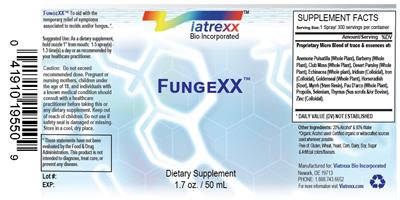
Supplement Facts
The label details for FungeXX by Viatrexx Bio Incorporated, sourced from the NIH Dietary Supplement Label Database.
Supplement Facts
| Ingredient | Amount | % DV |
|---|---|---|
| Iron | 0 NP | -- |
| Selenium | 0 NP | -- |
| Zinc | 0 NP | -- |
| Horseradish | 0 NP | -- |
| Propolis | 0 NP | -- |
| Iridium | 0 NP | -- |
| Proprietary Micro Blend of Trace Amounts and Essences | 0 NP | -- |
| Goldenseal | 0 NP | -- |
| Thymus | 0 NP | -- |
| Anemone Pulsatilla | 0 NP | -- |
| Barberry | 0 NP | -- |
| Club Moss | 0 NP | -- |
| Desert Parsley | 0 NP | -- |
| Echinacea | 0 NP | -- |
| Myrrh | 0 NP | -- |
| Pau d'Arco | 0 NP | -- |
Other ingredients: Alcohol, Water
Tap any ingredient to jump to its full detail below.
These statements are the manufacturer’s wording, reproduced from the product label — the label is saying it, not HelloPharmacist. We don’t verify or endorse them.
Formula
FungeXX to aid with the temporary relief of symptoms associated to molds and/or fungus.
Suggested/Recommended/Usage/Directions
Suggested use: As a dietary supplement, hold nozzle 1'' from mouth: 1-5 spray(s)- 1-3 time(s) a day or as recommended by your healthcare practitioner.
Precautions
Caution: Do not exceed recommended dose.
Pregnant or nursing mothers, children under the age of 18, and individuals with a known medical condition should consult with a healthcare practitioner before taking this or any dietary supplement.
Pregnant or nursing mothers, children under the age of 18, and individuals with a known medical condition should consult with a healthcare practitioner before taking this or any dietary supplement. Keep out of reach of children.
Do not use if safety seal is damaged or missing.
Storage
Store in a cool, dry place.
FDA Disclaimer Statement
These statements have not been evaluated by the Food & Drug Administration. This product is not intended to diagnose, treat, cure, or prevent any disease.
FDA Statement of Identity
Dietary Supplement
Formulation
Organic alcohol used/ Certified organic or wildecrafted sources used whenever possible.
Free of: Gluten, wheat, yeast, corn, dairy, soy, sugar & artificial colors/flavours.
General Statements
For more information visit: viatrexx.com
Is this label outdated? Report a formula or label change and our pharmacy team will review it.
FungeXX by Viatrexx Bio Incorporated label
The label scan from the NIH Dietary Supplement Label Database. Tap to enlarge.
Label images are published by the NIH Dietary Supplement Label Database for the version of this product on file. Always read your actual product label.
View the full label (PDF)The Ingredients in FungeXX by Viatrexx Bio Incorporated
These are the 15 active ingredients this product is made of. Select any to open its full monograph.
Serving size1 Spray(s) Dosage formLiquid Servings per container300 Amounts shown are per serving.
Most supplement products combine several ingredients, and a medication can interact with the product through any one of them. Each ingredient below shows whether it has known drug interactions.
Proprietary Micro Blend of Trace Amounts and Essences
- › Iron
- › Selenium
- › Zinc
- › Horseradish
- › Propolis
- › Iridium
- › Goldenseal
- › Thymus
- › Anemone Pulsatilla
- › Barberry
- › Club Moss
- › Desert Parsley
- › Echinacea
- › Myrrh
- › Pau d'Arco
Other (inactive) ingredients: Alcohol, Water. These complete the product’s ingredient list but are not active constituents.
FungeXX by Viatrexx Bio Incorporated Drug Interactions
HelloPharmacist Interaction Report
FungeXX by Viatrexx Bio Incorporated is a liquid supplement with multiple ingredients that do interact with medications.
Iron is responsible for the most serious documented interactions—it's Moderate severity across eight drug categories. Iron reduces how your body absorbs levodopa (used for Parkinson's), quinolone and tetracycline antibiotics, bisphosphonates (for bone health), methyldopa (blood pressure), levothyroxine (thyroid), mycophenolate mofetil (immune suppressant), and penicillamine (copper metabolism).
The fix is usually spacing: take iron at least 2 hours apart from most of these, or 4 hours after tetracyclines.
Read the full breakdown — every affected drug type, severity by severity
Several other ingredients carry Moderate interactions. Selenium may increase bleeding risk with anticoagulants or antiplatelet drugs, and theoretically interfere with immunosuppressants, barbiturates, and warfarin.
Zinc reduces absorption of quinolone and tetracycline antibiotics, cephalexin, penicillamine, and the HIV drugs ritonavir, dolutegravir, and bictegravir/emtricitabine/tenofovir alafenamide. Goldenseal contains berberine, which may boost levels of drugs your liver metabolizes (CYP2D6, 2C9, 3A4 substrates), increase bleeding risk, and theoretically raise low blood sugar (hypoglycemia) risk.
Propolis theoretically inhibits multiple liver enzymes (CYP2C19, 2D6, 1A2, 2C9, 3A4, 2E1 substrates), may increase bleeding risk, and might weaken warfarin. Parsley (Desert Parsley) can raise levels of CYP1A2 drugs, increase bleeding risk, lower blood glucose, and interfere with diuretics and warfarin.
Echinacea inhibits the metabolism of caffeine and may alter CYP3A4 substrates. Myrrh theoretically lowers blood glucose and may weaken warfarin.
Pau d'Arco may increase bleeding risk.
Horseradish theoretically interferes with thyroid hormone. We could not check Iridium, Thymus, Anemone Pulsatilla, Barberry, or Club Moss—no interaction data is on file for these ingredients.
Altogether, these interactions span 1,399 individual medications. Use the medication checker on this page with your exact prescriptions before starting FungeXX.
Check your own medications below · Editorial policy · How we use AI
Want to check YOUR meds against FungeXX?
Ask about interactions with your drugs in plain English — “Can I take it with lisinopril?” — and we find you the answer in seconds, ingredient by ingredient.
Go to the checkerIngredients driving the most interactions
Individual Drug Interactions
The ingredients in FungeXX interact with 1,510 drugs. Click any drug to see the details.
12 of the 15 ingredients in FungeXX interact with drugs. Each result below shows which ingredient is responsible. Goldenseal Barberry Propolis Echinacea Desert Parsley Selenium Club Moss Pau d'Arco Myrrh Iron Zinc Horseradish
6-mercaptopurinePurinethol
How 6-mercaptopurine interacts with FungeXX — through 2 ingredients. Tap an ingredient for the detail:
SeleniumImmunosuppressants Moderate
Interaction Summary
Theoretically, selenium supplementation may reduce the effectiveness of immunosuppressant therapy.
Read the full Selenium + 6-mercaptopurine interactionEchinaceaImmunosuppressants Moderate
Interaction Summary
Echinacea has immunostimulant activity which may interfere with immunosuppressant therapy.
Read the full Echinacea + 6-mercaptopurine interactionAdo-trastuzumab EmtansineKadcyla
How Ado-trastuzumab Emtansine interacts with FungeXX — through 4 ingredients. Tap an ingredient for the detail:
EchinaceaCytochrome P450 3a4 (cyp3a4) Substrates Moderate
Interaction Summary
Echinacea may induce hepatic CYP3A4 and inhibit intestinal CYP3A4.
Read the full Echinacea + Ado-trastuzumab Emtansine interactionGoldensealCytochrome P450 3a4 (cyp3a4) Substrates Moderate
Interaction Summary
Goldenseal might increase serum levels of drugs metabolized by CYP3A4.
Read the full Goldenseal + Ado-trastuzumab Emtansine interactionPropolisCytochrome P450 3a4 (cyp3a4) Substrates Moderate
Interaction Summary
Theoretically, high doses of propolis might increase blood levels of drugs metabolized by CYP3A4.
Read the full Propolis + Ado-trastuzumab Emtansine interactionBarberryCytochrome P450 3a4 (cyp3a4) Substrates Moderate
Interaction Summary
Theoretically, European barberry might increase the levels and clinical effects of CYP3A4 substrates.
Read the full Barberry + Ado-trastuzumab Emtansine interactionAbciximabReoPro
How Abciximab interacts with FungeXX — through 6 ingredients. Tap an ingredient for the detail:
SeleniumAnticoagulant/antiplatelet Drugs Moderate
Interaction Summary
Selenium may have antiplatelet effects and may increase the risk of bleeding if used with anticoagulant or antiplatelet drugs.
Read the full Selenium + Abciximab interactionGoldensealAnticoagulant/antiplatelet Drugs Moderate
Interaction Summary
Theoretically, goldenseal might increase the risk of bleeding when used with anticoagulant or antiplatelet drugs.
Read the full Goldenseal + Abciximab interactionPropolisAnticoagulant/antiplatelet Drugs Moderate
Interaction Summary
Theoretically, propolis might increase the risk of bleeding when taken with antiplatelet or anticoagulant drugs.
Read the full Propolis + Abciximab interactionDesert ParsleyAnticoagulant/antiplatelet Drugs Moderate
Interaction Summary
Theoretically, parsley might increase the risk of bleeding when taken with anticoagulant or antiplatelet drugs.
Read the full Desert Parsley + Abciximab interactionPau D'arcoAnticoagulant/antiplatelet Drugs Moderate
Interaction Summary
Theoretically, pau d'arco might increase the risk of bleeding when taken with anticoagulant or antiplatelet drugs.
Read the full Pau D'arco + Abciximab interactionBarberryAnticoagulant/antiplatelet Drugs Moderate
Interaction Summary
Theoretically, European barberry may increase the risk of bleeding if used with anticoagulant or antiplatelet drugs.
Read the full Barberry + Abciximab interactionAbemaciclibVerzenio
How Abemaciclib interacts with FungeXX — through 4 ingredients. Tap an ingredient for the detail:
BarberryCytochrome P450 3a4 (cyp3a4) Substrates Moderate
Interaction Summary
Theoretically, European barberry might increase the levels and clinical effects of CYP3A4 substrates.
Read the full Barberry + Abemaciclib interactionPropolisCytochrome P450 3a4 (cyp3a4) Substrates Moderate
Interaction Summary
Theoretically, high doses of propolis might increase blood levels of drugs metabolized by CYP3A4.
Read the full Propolis + Abemaciclib interactionEchinaceaCytochrome P450 3a4 (cyp3a4) Substrates Moderate
Interaction Summary
Echinacea may induce hepatic CYP3A4 and inhibit intestinal CYP3A4.
Read the full Echinacea + Abemaciclib interactionGoldensealCytochrome P450 3a4 (cyp3a4) Substrates Moderate
Interaction Summary
Goldenseal might increase serum levels of drugs metabolized by CYP3A4.
Read the full Goldenseal + Abemaciclib interactionAbiraterone
How Abiraterone interacts with FungeXX — through 4 ingredients. Tap an ingredient for the detail:
GoldensealCytochrome P450 3a4 (cyp3a4) Substrates Moderate
Interaction Summary
Goldenseal might increase serum levels of drugs metabolized by CYP3A4.
Read the full Goldenseal + Abiraterone interactionEchinaceaCytochrome P450 3a4 (cyp3a4) Substrates Moderate
Interaction Summary
Echinacea may induce hepatic CYP3A4 and inhibit intestinal CYP3A4.
Read the full Echinacea + Abiraterone interactionBarberryCytochrome P450 3a4 (cyp3a4) Substrates Moderate
Interaction Summary
Theoretically, European barberry might increase the levels and clinical effects of CYP3A4 substrates.
Read the full Barberry + Abiraterone interactionPropolisCytochrome P450 3a4 (cyp3a4) Substrates Moderate
Interaction Summary
Theoretically, high doses of propolis might increase blood levels of drugs metabolized by CYP3A4.
Read the full Propolis + Abiraterone interactionAbiraterone AcetateYonsa, Zytiga
How Abiraterone Acetate interacts with FungeXX — through 4 ingredients. Tap an ingredient for the detail:
PropolisCytochrome P450 3a4 (cyp3a4) Substrates Moderate
Interaction Summary
Theoretically, high doses of propolis might increase blood levels of drugs metabolized by CYP3A4.
Read the full Propolis + Abiraterone Acetate interactionBarberryCytochrome P450 3a4 (cyp3a4) Substrates Moderate
Interaction Summary
Theoretically, European barberry might increase the levels and clinical effects of CYP3A4 substrates.
Read the full Barberry + Abiraterone Acetate interactionGoldensealCytochrome P450 3a4 (cyp3a4) Substrates Moderate
Interaction Summary
Goldenseal might increase serum levels of drugs metabolized by CYP3A4.
Read the full Goldenseal + Abiraterone Acetate interactionEchinaceaCytochrome P450 3a4 (cyp3a4) Substrates Moderate
Interaction Summary
Echinacea may induce hepatic CYP3A4 and inhibit intestinal CYP3A4.
Read the full Echinacea + Abiraterone Acetate interactionAbrocitinibCibinqo
How Abrocitinib interacts with FungeXX — through 7 ingredients. Tap an ingredient for the detail:
EchinaceaImmunosuppressants Moderate
Interaction Summary
Echinacea has immunostimulant activity which may interfere with immunosuppressant therapy.
Read the full Echinacea + Abrocitinib interactionSeleniumImmunosuppressants, Anticoagulant/antiplatelet Drugs Moderate
Interaction Summary
Theoretically, selenium supplementation may reduce the effectiveness of immunosuppressant therapy.
Read the full Selenium + Abrocitinib interactionGoldensealAnticoagulant/antiplatelet Drugs, Cytochrome P450 2c9 (cyp2c9) Substrates Moderate
Interaction Summary
Theoretically, goldenseal might increase the risk of bleeding when used with anticoagulant or antiplatelet drugs.
Read the full Goldenseal + Abrocitinib interactionPropolisCytochrome P450 2c19 (cyp2c19) Substrates, Cytochrome P450 2c9 (cyp2c9) Substrates +1 Moderate
Interaction Summary
Theoretically, high doses of propolis might increase blood levels of drugs metabolized by CYP2C19.
Read the full Propolis + Abrocitinib interactionBarberryAnticoagulant/antiplatelet Drugs Moderate
Interaction Summary
Theoretically, European barberry may increase the risk of bleeding if used with anticoagulant or antiplatelet drugs.
Read the full Barberry + Abrocitinib interactionPau D'arcoAnticoagulant/antiplatelet Drugs Moderate
Interaction Summary
Theoretically, pau d'arco might increase the risk of bleeding when taken with anticoagulant or antiplatelet drugs.
Read the full Pau D'arco + Abrocitinib interactionDesert ParsleyAnticoagulant/antiplatelet Drugs Moderate
Interaction Summary
Theoretically, parsley might increase the risk of bleeding when taken with anticoagulant or antiplatelet drugs.
Read the full Desert Parsley + Abrocitinib interactionAcalabrutinibCalquence
How Acalabrutinib interacts with FungeXX — through 4 ingredients. Tap an ingredient for the detail:
PropolisCytochrome P450 3a4 (cyp3a4) Substrates Moderate
Interaction Summary
Theoretically, high doses of propolis might increase blood levels of drugs metabolized by CYP3A4.
Read the full Propolis + Acalabrutinib interactionEchinaceaCytochrome P450 3a4 (cyp3a4) Substrates Moderate
Interaction Summary
Echinacea may induce hepatic CYP3A4 and inhibit intestinal CYP3A4.
Read the full Echinacea + Acalabrutinib interactionGoldensealCytochrome P450 3a4 (cyp3a4) Substrates, P-glycoprotein Substrates Moderate
Interaction Summary
Goldenseal might increase serum levels of drugs metabolized by CYP3A4.
Read the full Goldenseal + Acalabrutinib interactionBarberryCytochrome P450 3a4 (cyp3a4) Substrates Moderate
Interaction Summary
Theoretically, European barberry might increase the levels and clinical effects of CYP3A4 substrates.
Read the full Barberry + Acalabrutinib interactionAcarboseGlucobay, Prandase, Precose
How Acarbose interacts with FungeXX — through 4 ingredients. Tap an ingredient for the detail:
BarberryAntidiabetes Drugs Moderate
Interaction Summary
Theoretically, taking European barberry with antidiabetes drugs might increase the risk of hypoglycemia.
Read the full Barberry + Acarbose interactionMyrrhAntidiabetes Drugs Moderate
Interaction Summary
Theoretically, myrrh might increase the risk of hypoglycemia when taken with antidiabetes drugs.
Read the full Myrrh + Acarbose interactionDesert ParsleyAntidiabetes Drugs Moderate
Interaction Summary
Theoretically, parsley might increase the risk of hypoglycemia when taken with antidiabetes drugs.
Read the full Desert Parsley + Acarbose interactionGoldensealAntidiabetes Drugs Moderate
Interaction Summary
Theoretically, goldenseal might increase the risk of hypoglycemia when used with antidiabetes drugs.
Read the full Goldenseal + Acarbose interactionAcebutololRhotral, Sectral
How Acebutolol interacts with FungeXX — through 2 ingredients. Tap an ingredient for the detail:
BarberryAntihypertensive Drugs Moderate
Interaction Summary
Theoretically, taking European barberry with antihypertensive drugs might increase the risk of hypotension.
Read the full Barberry + Acebutolol interactionGoldensealAntihypertensive Drugs Moderate
Interaction Summary
Theoretically, goldenseal might increase the risk of hypotension when taken with antihypertensive drugs.
Read the full Goldenseal + Acebutolol interactionAcenocoumarolSintrom
How Acenocoumarol interacts with FungeXX — through 6 ingredients. Tap an ingredient for the detail:
Desert ParsleyAnticoagulant/antiplatelet Drugs Moderate
Interaction Summary
Theoretically, parsley might increase the risk of bleeding when taken with anticoagulant or antiplatelet drugs.
Read the full Desert Parsley + Acenocoumarol interactionPau D'arcoAnticoagulant/antiplatelet Drugs Moderate
Interaction Summary
Theoretically, pau d'arco might increase the risk of bleeding when taken with anticoagulant or antiplatelet drugs.
Read the full Pau D'arco + Acenocoumarol interactionGoldensealAnticoagulant/antiplatelet Drugs Moderate
Interaction Summary
Theoretically, goldenseal might increase the risk of bleeding when used with anticoagulant or antiplatelet drugs.
Read the full Goldenseal + Acenocoumarol interactionSeleniumAnticoagulant/antiplatelet Drugs Moderate
Interaction Summary
Selenium may have antiplatelet effects and may increase the risk of bleeding if used with anticoagulant or antiplatelet drugs.
Read the full Selenium + Acenocoumarol interactionPropolisAnticoagulant/antiplatelet Drugs Moderate
Interaction Summary
Theoretically, propolis might increase the risk of bleeding when taken with antiplatelet or anticoagulant drugs.
Read the full Propolis + Acenocoumarol interactionBarberryAnticoagulant/antiplatelet Drugs Moderate
Interaction Summary
Theoretically, European barberry may increase the risk of bleeding if used with anticoagulant or antiplatelet drugs.
Read the full Barberry + Acenocoumarol interactionAcepromazineAtravet
How Acepromazine interacts with FungeXX — through 3 ingredients. Tap an ingredient for the detail:
BarberryCns Depressants, Anticholinergic Drugs Moderate
Interaction Summary
Theoretically, concomitant use with drugs that have sedative properties may cause additive effects.
Read the full Barberry + Acepromazine interactionGoldensealCns Depressants Moderate
Interaction Summary
Theoretically, goldenseal might increase the sedative effects of CNS depressants.
Read the full Goldenseal + Acepromazine interactionClub MossAnticholinergic Drugs Moderate
Interaction Summary
Evidence from in vitro research suggests that clubmoss extract can inhibit acetylcholinesterase activity.
Read the full Club Moss + Acepromazine interactionAcetaminophenChildren's Tylenol, Children's Tylenol Meltaways, Tylenol, Tylenol Ex Strength
How Acetaminophen interacts with FungeXX — through 4 ingredients. Tap an ingredient for the detail:
PropolisCytochrome P450 1a2 (cyp1a2) Substrates, Cytochrome P450 2e1 (cyp2e1) Substrates Moderate
Interaction Summary
Theoretically, high doses of propolis might increase blood levels of drugs metabolized by CYP1A2.
Read the full Propolis + Acetaminophen interactionGoldensealCytochrome P450 2e1 (cyp2e1) Substrates Moderate
Interaction Summary
Theoretically, goldenseal might increase serum levels of drugs metabolized by CYP2E1.
Read the full Goldenseal + Acetaminophen interactionEchinaceaCytochrome P450 1a2 (cyp1a2) Substrates Moderate
Interaction Summary
Echinacea might inhibit the metabolism of CYP1A2 and increase plasma levels of some drugs.
Read the full Echinacea + Acetaminophen interactionDesert ParsleyCytochrome P450 1a2 (cyp1a2) Substrates Moderate
Interaction Summary
Theoretically, parsley might increase serum levels of CYP1A2 substrates.
Read the full Desert Parsley + Acetaminophen interactionAcetaminophen, AspirinGemnisyn
How Acetaminophen, Aspirin interacts with FungeXX — through 7 ingredients. Tap an ingredient for the detail:
Desert ParsleyCytochrome P450 1a2 (cyp1a2) Substrates, Anticoagulant/antiplatelet Drugs +1 Moderate
Interaction Summary
Theoretically, parsley might increase serum levels of CYP1A2 substrates.
Read the full Desert Parsley + Acetaminophen, Aspirin interactionPau D'arcoAnticoagulant/antiplatelet Drugs Moderate
Interaction Summary
Theoretically, pau d'arco might increase the risk of bleeding when taken with anticoagulant or antiplatelet drugs.
Read the full Pau D'arco + Acetaminophen, Aspirin interactionPropolisCytochrome P450 2e1 (cyp2e1) Substrates, Cytochrome P450 1a2 (cyp1a2) Substrates +1 Moderate
Interaction Summary
Theoretically, propolis might increase levels of drugs metabolized by CYP2E1.
Read the full Propolis + Acetaminophen, Aspirin interactionBarberryAnticoagulant/antiplatelet Drugs Moderate
Interaction Summary
Theoretically, European barberry may increase the risk of bleeding if used with anticoagulant or antiplatelet drugs.
Read the full Barberry + Acetaminophen, Aspirin interactionSeleniumAnticoagulant/antiplatelet Drugs Moderate
Interaction Summary
Selenium may have antiplatelet effects and may increase the risk of bleeding if used with anticoagulant or antiplatelet drugs.
Read the full Selenium + Acetaminophen, Aspirin interactionEchinaceaCytochrome P450 1a2 (cyp1a2) Substrates Moderate
Interaction Summary
Echinacea might inhibit the metabolism of CYP1A2 and increase plasma levels of some drugs.
Read the full Echinacea + Acetaminophen, Aspirin interactionGoldensealAnticoagulant/antiplatelet Drugs, Cytochrome P450 2e1 (cyp2e1) Substrates Moderate
Interaction Summary
Theoretically, goldenseal might increase the risk of bleeding when used with anticoagulant or antiplatelet drugs.
Read the full Goldenseal + Acetaminophen, Aspirin interactionAcetaminophen, Aspirin, CaffeineExcedrin, Excedrin Extra Strength, Excedrin Migraine
How Acetaminophen, Aspirin, Caffeine interacts with FungeXX — through 7 ingredients. Tap an ingredient for the detail:
GoldensealCytochrome P450 2e1 (cyp2e1) Substrates, Anticoagulant/antiplatelet Drugs +1 Moderate
Interaction Summary
Theoretically, goldenseal might increase serum levels of drugs metabolized by CYP2E1.
Read the full Goldenseal + Acetaminophen, Aspirin, Caffeine interactionEchinaceaCytochrome P450 1a2 (cyp1a2) Substrates, Cytochrome P450 3a4 (cyp3a4) Substrates +1 Moderate
Interaction Summary
Echinacea might inhibit the metabolism of CYP1A2 and increase plasma levels of some drugs.
Read the full Echinacea + Acetaminophen, Aspirin, Caffeine interactionSeleniumAnticoagulant/antiplatelet Drugs Moderate
Interaction Summary
Selenium may have antiplatelet effects and may increase the risk of bleeding if used with anticoagulant or antiplatelet drugs.
Read the full Selenium + Acetaminophen, Aspirin, Caffeine interactionDesert ParsleyAspirin, Cytochrome P450 1a2 (cyp1a2) Substrates +1 Moderate
Interaction Summary
Theoretically, aspirin might increase the severity of allergic reactions to parsley.
Read the full Desert Parsley + Acetaminophen, Aspirin, Caffeine interactionPau D'arcoAnticoagulant/antiplatelet Drugs Moderate
Interaction Summary
Theoretically, pau d'arco might increase the risk of bleeding when taken with anticoagulant or antiplatelet drugs.
Read the full Pau D'arco + Acetaminophen, Aspirin, Caffeine interactionBarberryAnticoagulant/antiplatelet Drugs, Cytochrome P450 3a4 (cyp3a4) Substrates Moderate
Interaction Summary
Theoretically, European barberry may increase the risk of bleeding if used with anticoagulant or antiplatelet drugs.
Read the full Barberry + Acetaminophen, Aspirin, Caffeine interactionPropolisCytochrome P450 2e1 (cyp2e1) Substrates, Anticoagulant/antiplatelet Drugs +2 Moderate
Interaction Summary
Theoretically, propolis might increase levels of drugs metabolized by CYP2E1.
Read the full Propolis + Acetaminophen, Aspirin, Caffeine interactionAcetaminophen, Brompheniramine, PhenylpropanolamineDimetapp Cold and Flu
How Acetaminophen, Brompheniramine, Phenylpropanolamine interacts with FungeXX — through 4 ingredients. Tap an ingredient for the detail:
PropolisCytochrome P450 1a2 (cyp1a2) Substrates, Cytochrome P450 2e1 (cyp2e1) Substrates Moderate
Interaction Summary
Theoretically, high doses of propolis might increase blood levels of drugs metabolized by CYP1A2.
Read the full Propolis + Acetaminophen, Brompheniramine, Phenylpropanolamine interactionDesert ParsleyCytochrome P450 1a2 (cyp1a2) Substrates Moderate
Interaction Summary
Theoretically, parsley might increase serum levels of CYP1A2 substrates.
Read the full Desert Parsley + Acetaminophen, Brompheniramine, Phenylpropanolamine interactionGoldensealCytochrome P450 2e1 (cyp2e1) Substrates Moderate
Interaction Summary
Theoretically, goldenseal might increase serum levels of drugs metabolized by CYP2E1.
Read the full Goldenseal + Acetaminophen, Brompheniramine, Phenylpropanolamine interactionEchinaceaCytochrome P450 1a2 (cyp1a2) Substrates Moderate
Interaction Summary
Echinacea might inhibit the metabolism of CYP1A2 and increase plasma levels of some drugs.
Read the full Echinacea + Acetaminophen, Brompheniramine, Phenylpropanolamine interactionAcetaminophen, ButalbitalAxocet, Bancap, Bucet, Butex Forte, Esgic CF, Orbivan CF +5 more
How Acetaminophen, Butalbital interacts with FungeXX — through 5 ingredients. Tap an ingredient for the detail:
PropolisCytochrome P450 2e1 (cyp2e1) Substrates, Cytochrome P450 1a2 (cyp1a2) Substrates Moderate
Interaction Summary
Theoretically, propolis might increase levels of drugs metabolized by CYP2E1.
Read the full Propolis + Acetaminophen, Butalbital interactionDesert ParsleyCytochrome P450 1a2 (cyp1a2) Substrates Moderate
Interaction Summary
Theoretically, parsley might increase serum levels of CYP1A2 substrates.
Read the full Desert Parsley + Acetaminophen, Butalbital interactionSeleniumBarbiturates Moderate
Interaction Summary
Theoretically, selenium might prolong the sedating effects of barbiturates.
Read the full Selenium + Acetaminophen, Butalbital interactionEchinaceaCytochrome P450 1a2 (cyp1a2) Substrates Moderate
Interaction Summary
Echinacea might inhibit the metabolism of CYP1A2 and increase plasma levels of some drugs.
Read the full Echinacea + Acetaminophen, Butalbital interactionGoldensealCytochrome P450 2e1 (cyp2e1) Substrates Moderate
Interaction Summary
Theoretically, goldenseal might increase serum levels of drugs metabolized by CYP2E1.
Read the full Goldenseal + Acetaminophen, Butalbital interactionAcetaminophen, Butalbital, CaffeineEsgic, Esgic Plus, Fiogesic, Fioricet, Repan, Tecnal +1 more
How Acetaminophen, Butalbital, Caffeine interacts with FungeXX — through 6 ingredients. Tap an ingredient for the detail:
GoldensealCytochrome P450 2e1 (cyp2e1) Substrates, Cytochrome P450 3a4 (cyp3a4) Substrates Moderate
Interaction Summary
Theoretically, goldenseal might increase serum levels of drugs metabolized by CYP2E1.
Read the full Goldenseal + Acetaminophen, Butalbital, Caffeine interactionEchinaceaCytochrome P450 3a4 (cyp3a4) Substrates, Cytochrome P450 1a2 (cyp1a2) Substrates +1 Moderate
Interaction Summary
Echinacea may induce hepatic CYP3A4 and inhibit intestinal CYP3A4.
Read the full Echinacea + Acetaminophen, Butalbital, Caffeine interactionPropolisCytochrome P450 1a2 (cyp1a2) Substrates, Cytochrome P450 3a4 (cyp3a4) Substrates +1 Moderate
Interaction Summary
Theoretically, high doses of propolis might increase blood levels of drugs metabolized by CYP1A2.
Read the full Propolis + Acetaminophen, Butalbital, Caffeine interactionBarberryCytochrome P450 3a4 (cyp3a4) Substrates Moderate
Interaction Summary
Theoretically, European barberry might increase the levels and clinical effects of CYP3A4 substrates.
Read the full Barberry + Acetaminophen, Butalbital, Caffeine interactionDesert ParsleyCytochrome P450 1a2 (cyp1a2) Substrates Moderate
Interaction Summary
Theoretically, parsley might increase serum levels of CYP1A2 substrates.
Read the full Desert Parsley + Acetaminophen, Butalbital, Caffeine interactionSeleniumBarbiturates Moderate
Interaction Summary
Theoretically, selenium might prolong the sedating effects of barbiturates.
Read the full Selenium + Acetaminophen, Butalbital, Caffeine interactionAcetaminophen, Butalbital, Caffeine, CodeineEsgic with Codeine, Fioricet w/ Codeine
How Acetaminophen, Butalbital, Caffeine, Codeine interacts with FungeXX — through 6 ingredients. Tap an ingredient for the detail:
EchinaceaCaffeine, Cytochrome P450 1a2 (cyp1a2) Substrates +1 Moderate
Interaction Summary
Echinacea can increase plasma levels of caffeine by inhibiting its metabolism.
Read the full Echinacea + Acetaminophen, Butalbital, Caffeine, Codeine interactionSeleniumBarbiturates Moderate
Interaction Summary
Theoretically, selenium might prolong the sedating effects of barbiturates.
Read the full Selenium + Acetaminophen, Butalbital, Caffeine, Codeine interactionBarberryCytochrome P450 3a4 (cyp3a4) Substrates, Cns Depressants Moderate
Interaction Summary
Theoretically, European barberry might increase the levels and clinical effects of CYP3A4 substrates.
Read the full Barberry + Acetaminophen, Butalbital, Caffeine, Codeine interactionPropolisCytochrome P450 2e1 (cyp2e1) Substrates, Cytochrome P450 1a2 (cyp1a2) Substrates +2 Moderate
Interaction Summary
Theoretically, propolis might increase levels of drugs metabolized by CYP2E1.
Read the full Propolis + Acetaminophen, Butalbital, Caffeine, Codeine interactionGoldensealCytochrome P450 3a4 (cyp3a4) Substrates, Cytochrome P450 2e1 (cyp2e1) Substrates +2 Moderate
Interaction Summary
Goldenseal might increase serum levels of drugs metabolized by CYP3A4.
Read the full Goldenseal + Acetaminophen, Butalbital, Caffeine, Codeine interactionDesert ParsleyCytochrome P450 1a2 (cyp1a2) Substrates Moderate
Interaction Summary
Theoretically, parsley might increase serum levels of CYP1A2 substrates.
Read the full Desert Parsley + Acetaminophen, Butalbital, Caffeine, Codeine interactionAcetaminophen, Butalbital, CodeineBancap w/ Codeine
How Acetaminophen, Butalbital, Codeine interacts with FungeXX — through 5 ingredients. Tap an ingredient for the detail:
GoldensealCytochrome P450 2d6 (cyp2d6) Substrates, Cns Depressants +1 Moderate
Interaction Summary
Goldenseal might increase serum levels of drugs metabolized by CYP2D6.
Read the full Goldenseal + Acetaminophen, Butalbital, Codeine interactionDesert ParsleyCytochrome P450 1a2 (cyp1a2) Substrates Moderate
Interaction Summary
Theoretically, parsley might increase serum levels of CYP1A2 substrates.
Read the full Desert Parsley + Acetaminophen, Butalbital, Codeine interactionEchinaceaCytochrome P450 1a2 (cyp1a2) Substrates Moderate
Interaction Summary
Echinacea might inhibit the metabolism of CYP1A2 and increase plasma levels of some drugs.
Read the full Echinacea + Acetaminophen, Butalbital, Codeine interactionPropolisCytochrome P450 2e1 (cyp2e1) Substrates, Cytochrome P450 2d6 (cyp2d6) Substrates +1 Moderate
Interaction Summary
Theoretically, propolis might increase levels of drugs metabolized by CYP2E1.
Read the full Propolis + Acetaminophen, Butalbital, Codeine interactionBarberryCns Depressants Moderate
Interaction Summary
Theoretically, concomitant use with drugs that have sedative properties may cause additive effects.
Read the full Barberry + Acetaminophen, Butalbital, Codeine interactionAcetaminophen, Butalbital, Codeine PhosphatePhrenilin #3
How Acetaminophen, Butalbital, Codeine Phosphate interacts with FungeXX — through 5 ingredients. Tap an ingredient for the detail:
PropolisCytochrome P450 1a2 (cyp1a2) Substrates, Cytochrome P450 2d6 (cyp2d6) Substrates +1 Moderate
Interaction Summary
Theoretically, high doses of propolis might increase blood levels of drugs metabolized by CYP1A2.
Read the full Propolis + Acetaminophen, Butalbital, Codeine Phosphate interactionGoldensealCytochrome P450 2e1 (cyp2e1) Substrates, Cns Depressants +1 Moderate
Interaction Summary
Theoretically, goldenseal might increase serum levels of drugs metabolized by CYP2E1.
Read the full Goldenseal + Acetaminophen, Butalbital, Codeine Phosphate interactionEchinaceaCytochrome P450 1a2 (cyp1a2) Substrates Moderate
Interaction Summary
Echinacea might inhibit the metabolism of CYP1A2 and increase plasma levels of some drugs.
Read the full Echinacea + Acetaminophen, Butalbital, Codeine Phosphate interactionDesert ParsleyCytochrome P450 1a2 (cyp1a2) Substrates Moderate
Interaction Summary
Theoretically, parsley might increase serum levels of CYP1A2 substrates.
Read the full Desert Parsley + Acetaminophen, Butalbital, Codeine Phosphate interactionBarberryCns Depressants Moderate
Interaction Summary
Theoretically, concomitant use with drugs that have sedative properties may cause additive effects.
Read the full Barberry + Acetaminophen, Butalbital, Codeine Phosphate interactionAcetaminophen, Caffeine, Chlorpheniramine, Hydrocodone, PhenylephrineHycomine Compound
How Acetaminophen, Caffeine, Chlorpheniramine, Hydrocodone, Phenylephrine interacts with FungeXX — through 6 ingredients. Tap an ingredient for the detail:
PropolisCytochrome P450 2e1 (cyp2e1) Substrates, Cytochrome P450 2d6 (cyp2d6) Substrates +2 Moderate
Interaction Summary
Theoretically, propolis might increase levels of drugs metabolized by CYP2E1.
Read the full Propolis + Acetaminophen, Caffeine, Chlorpheniramine, Hydrocodone, Phenylephrine interactionBarberryCns Depressants, Cytochrome P450 3a4 (cyp3a4) Substrates +1 Moderate
Interaction Summary
Theoretically, concomitant use with drugs that have sedative properties may cause additive effects.
Read the full Barberry + Acetaminophen, Caffeine, Chlorpheniramine, Hydrocodone, Phenylephrine interactionEchinaceaCytochrome P450 1a2 (cyp1a2) Substrates, Cytochrome P450 3a4 (cyp3a4) Substrates +1 Moderate
Interaction Summary
Echinacea might inhibit the metabolism of CYP1A2 and increase plasma levels of some drugs.
Read the full Echinacea + Acetaminophen, Caffeine, Chlorpheniramine, Hydrocodone, Phenylephrine interactionGoldensealCytochrome P450 3a4 (cyp3a4) Substrates, Cytochrome P450 2e1 (cyp2e1) Substrates +2 Moderate
Interaction Summary
Goldenseal might increase serum levels of drugs metabolized by CYP3A4.
Read the full Goldenseal + Acetaminophen, Caffeine, Chlorpheniramine, Hydrocodone, Phenylephrine interactionClub MossAnticholinergic Drugs Moderate
Interaction Summary
Evidence from in vitro research suggests that clubmoss extract can inhibit acetylcholinesterase activity.
Read the full Club Moss + Acetaminophen, Caffeine, Chlorpheniramine, Hydrocodone, Phenylephrine interactionDesert ParsleyCytochrome P450 1a2 (cyp1a2) Substrates Moderate
Interaction Summary
Theoretically, parsley might increase serum levels of CYP1A2 substrates.
Read the full Desert Parsley + Acetaminophen, Caffeine, Chlorpheniramine, Hydrocodone, Phenylephrine interactionAcetaminophen, Caffeine, CodeineGesic C15, Gesic C30, Gesic C8, Lenoltec 1, Lenoltec 2, Lenoltec 3 +1 more
How Acetaminophen, Caffeine, Codeine interacts with FungeXX — through 5 ingredients. Tap an ingredient for the detail:
GoldensealCytochrome P450 2d6 (cyp2d6) Substrates, Cns Depressants +2 Moderate
Interaction Summary
Goldenseal might increase serum levels of drugs metabolized by CYP2D6.
Read the full Goldenseal + Acetaminophen, Caffeine, Codeine interactionDesert ParsleyCytochrome P450 1a2 (cyp1a2) Substrates Moderate
Interaction Summary
Theoretically, parsley might increase serum levels of CYP1A2 substrates.
Read the full Desert Parsley + Acetaminophen, Caffeine, Codeine interactionEchinaceaCaffeine, Cytochrome P450 3a4 (cyp3a4) Substrates +1 Moderate
Interaction Summary
Echinacea can increase plasma levels of caffeine by inhibiting its metabolism.
Read the full Echinacea + Acetaminophen, Caffeine, Codeine interactionBarberryCytochrome P450 3a4 (cyp3a4) Substrates, Cns Depressants Moderate
Interaction Summary
Theoretically, European barberry might increase the levels and clinical effects of CYP3A4 substrates.
Read the full Barberry + Acetaminophen, Caffeine, Codeine interactionPropolisCytochrome P450 2e1 (cyp2e1) Substrates, Cytochrome P450 1a2 (cyp1a2) Substrates +2 Moderate
Interaction Summary
Theoretically, propolis might increase levels of drugs metabolized by CYP2E1.
Read the full Propolis + Acetaminophen, Caffeine, Codeine interactionAcetaminophen, Caffeine, Codeine, SalicylamideCodalan No.1, Codalan No.2, Codalan No.3
How Acetaminophen, Caffeine, Codeine, Salicylamide interacts with FungeXX — through 5 ingredients. Tap an ingredient for the detail:
PropolisCytochrome P450 1a2 (cyp1a2) Substrates, Cytochrome P450 2d6 (cyp2d6) Substrates +2 Moderate
Interaction Summary
Theoretically, high doses of propolis might increase blood levels of drugs metabolized by CYP1A2.
Read the full Propolis + Acetaminophen, Caffeine, Codeine, Salicylamide interactionBarberryCns Depressants, Cytochrome P450 3a4 (cyp3a4) Substrates Moderate
Interaction Summary
Theoretically, concomitant use with drugs that have sedative properties may cause additive effects.
Read the full Barberry + Acetaminophen, Caffeine, Codeine, Salicylamide interactionGoldensealCytochrome P450 2d6 (cyp2d6) Substrates, Cns Depressants +2 Moderate
Interaction Summary
Goldenseal might increase serum levels of drugs metabolized by CYP2D6.
Read the full Goldenseal + Acetaminophen, Caffeine, Codeine, Salicylamide interactionDesert ParsleyCytochrome P450 1a2 (cyp1a2) Substrates Moderate
Interaction Summary
Theoretically, parsley might increase serum levels of CYP1A2 substrates.
Read the full Desert Parsley + Acetaminophen, Caffeine, Codeine, Salicylamide interactionEchinaceaCaffeine, Cytochrome P450 3a4 (cyp3a4) Substrates +1 Moderate
Interaction Summary
Echinacea can increase plasma levels of caffeine by inhibiting its metabolism.
Read the full Echinacea + Acetaminophen, Caffeine, Codeine, Salicylamide interactionAcetaminophen, Caffeine, DihydrocodeineDHC Plus, Panlor DC, Panlor SS
How Acetaminophen, Caffeine, Dihydrocodeine interacts with FungeXX — through 5 ingredients. Tap an ingredient for the detail:
EchinaceaCytochrome P450 1a2 (cyp1a2) Substrates, Cytochrome P450 3a4 (cyp3a4) Substrates +1 Moderate
Interaction Summary
Echinacea might inhibit the metabolism of CYP1A2 and increase plasma levels of some drugs.
Read the full Echinacea + Acetaminophen, Caffeine, Dihydrocodeine interactionGoldensealCytochrome P450 3a4 (cyp3a4) Substrates, Cytochrome P450 2e1 (cyp2e1) Substrates +2 Moderate
Interaction Summary
Goldenseal might increase serum levels of drugs metabolized by CYP3A4.
Read the full Goldenseal + Acetaminophen, Caffeine, Dihydrocodeine interactionDesert ParsleyCytochrome P450 1a2 (cyp1a2) Substrates Moderate
Interaction Summary
Theoretically, parsley might increase serum levels of CYP1A2 substrates.
Read the full Desert Parsley + Acetaminophen, Caffeine, Dihydrocodeine interactionPropolisCytochrome P450 3a4 (cyp3a4) Substrates, Cytochrome P450 2d6 (cyp2d6) Substrates +2 Moderate
Interaction Summary
Theoretically, high doses of propolis might increase blood levels of drugs metabolized by CYP3A4.
Read the full Propolis + Acetaminophen, Caffeine, Dihydrocodeine interactionBarberryCytochrome P450 3a4 (cyp3a4) Substrates, Cns Depressants Moderate
Interaction Summary
Theoretically, European barberry might increase the levels and clinical effects of CYP3A4 substrates.
Read the full Barberry + Acetaminophen, Caffeine, Dihydrocodeine interactionAcetaminophen, Caffeine, IsomethepteneMigralam
How Acetaminophen, Caffeine, Isometheptene interacts with FungeXX — through 5 ingredients. Tap an ingredient for the detail:
EchinaceaCaffeine, Cytochrome P450 3a4 (cyp3a4) Substrates +1 Moderate
Interaction Summary
Echinacea can increase plasma levels of caffeine by inhibiting its metabolism.
Read the full Echinacea + Acetaminophen, Caffeine, Isometheptene interactionPropolisCytochrome P450 1a2 (cyp1a2) Substrates, Cytochrome P450 3a4 (cyp3a4) Substrates +1 Moderate
Interaction Summary
Theoretically, high doses of propolis might increase blood levels of drugs metabolized by CYP1A2.
Read the full Propolis + Acetaminophen, Caffeine, Isometheptene interactionGoldensealCytochrome P450 2e1 (cyp2e1) Substrates, Cytochrome P450 3a4 (cyp3a4) Substrates Moderate
Interaction Summary
Theoretically, goldenseal might increase serum levels of drugs metabolized by CYP2E1.
Read the full Goldenseal + Acetaminophen, Caffeine, Isometheptene interactionDesert ParsleyCytochrome P450 1a2 (cyp1a2) Substrates Moderate
Interaction Summary
Theoretically, parsley might increase serum levels of CYP1A2 substrates.
Read the full Desert Parsley + Acetaminophen, Caffeine, Isometheptene interactionBarberryCytochrome P450 3a4 (cyp3a4) Substrates Moderate
Interaction Summary
Theoretically, European barberry might increase the levels and clinical effects of CYP3A4 substrates.
Read the full Barberry + Acetaminophen, Caffeine, Isometheptene interactionAcetaminophen, Caffeine, PyrilamineMidol Max Strength Menstrual
How Acetaminophen, Caffeine, Pyrilamine interacts with FungeXX — through 6 ingredients. Tap an ingredient for the detail:
BarberryCytochrome P450 3a4 (cyp3a4) Substrates, Anticholinergic Drugs Moderate
Interaction Summary
Theoretically, European barberry might increase the levels and clinical effects of CYP3A4 substrates.
Read the full Barberry + Acetaminophen, Caffeine, Pyrilamine interactionPropolisCytochrome P450 2e1 (cyp2e1) Substrates, Cytochrome P450 3a4 (cyp3a4) Substrates +1 Moderate
Interaction Summary
Theoretically, propolis might increase levels of drugs metabolized by CYP2E1.
Read the full Propolis + Acetaminophen, Caffeine, Pyrilamine interactionGoldensealCytochrome P450 3a4 (cyp3a4) Substrates, Cytochrome P450 2e1 (cyp2e1) Substrates Moderate
Interaction Summary
Goldenseal might increase serum levels of drugs metabolized by CYP3A4.
Read the full Goldenseal + Acetaminophen, Caffeine, Pyrilamine interactionEchinaceaCytochrome P450 3a4 (cyp3a4) Substrates, Cytochrome P450 1a2 (cyp1a2) Substrates +1 Moderate
Interaction Summary
Echinacea may induce hepatic CYP3A4 and inhibit intestinal CYP3A4.
Read the full Echinacea + Acetaminophen, Caffeine, Pyrilamine interactionClub MossAnticholinergic Drugs Moderate
Interaction Summary
Evidence from in vitro research suggests that clubmoss extract can inhibit acetylcholinesterase activity.
Read the full Club Moss + Acetaminophen, Caffeine, Pyrilamine interactionDesert ParsleyCytochrome P450 1a2 (cyp1a2) Substrates, Diuretic Drugs Moderate
Interaction Summary
Theoretically, parsley might increase serum levels of CYP1A2 substrates.
Read the full Desert Parsley + Acetaminophen, Caffeine, Pyrilamine interactionAcetaminophen, Chlorpheniramine Maleate, Dextromethorphan HbrVicks Formula 44M Cough, Cold & Flu Relief
How Acetaminophen, Chlorpheniramine Maleate, Dextromethorphan Hbr interacts with FungeXX — through 6 ingredients. Tap an ingredient for the detail:
GoldensealCytochrome P450 2d6 (cyp2d6) Substrates, Cytochrome P450 2e1 (cyp2e1) Substrates +2 Moderate
Interaction Summary
Goldenseal might increase serum levels of drugs metabolized by CYP2D6.
Read the full Goldenseal + Acetaminophen, Chlorpheniramine Maleate, Dextromethorphan Hbr interactionDesert ParsleyCytochrome P450 1a2 (cyp1a2) Substrates Moderate
Interaction Summary
Theoretically, parsley might increase serum levels of CYP1A2 substrates.
Read the full Desert Parsley + Acetaminophen, Chlorpheniramine Maleate, Dextromethorphan Hbr interactionEchinaceaCytochrome P450 3a4 (cyp3a4) Substrates, Cytochrome P450 1a2 (cyp1a2) Substrates Moderate
Interaction Summary
Echinacea may induce hepatic CYP3A4 and inhibit intestinal CYP3A4.
Read the full Echinacea + Acetaminophen, Chlorpheniramine Maleate, Dextromethorphan Hbr interactionBarberryAnticholinergic Drugs, Cytochrome P450 3a4 (cyp3a4) Substrates Moderate
Interaction Summary
Theoretically, taking European barberry with anticholinergic drugs might cause additive effects.
Read the full Barberry + Acetaminophen, Chlorpheniramine Maleate, Dextromethorphan Hbr interactionPropolisCytochrome P450 2e1 (cyp2e1) Substrates, Cytochrome P450 2d6 (cyp2d6) Substrates +2 Moderate
Interaction Summary
Theoretically, propolis might increase levels of drugs metabolized by CYP2E1.
Read the full Propolis + Acetaminophen, Chlorpheniramine Maleate, Dextromethorphan Hbr interactionClub MossAnticholinergic Drugs Moderate
Interaction Summary
Evidence from in vitro research suggests that clubmoss extract can inhibit acetylcholinesterase activity.
Read the full Club Moss + Acetaminophen, Chlorpheniramine Maleate, Dextromethorphan Hbr interactionAcetaminophen, Chlorpheniramine, Codeine, PhenylephrineColrex
How Acetaminophen, Chlorpheniramine, Codeine, Phenylephrine interacts with FungeXX — through 6 ingredients. Tap an ingredient for the detail:
PropolisCytochrome P450 3a4 (cyp3a4) Substrates, Cytochrome P450 1a2 (cyp1a2) Substrates +2 Moderate
Interaction Summary
Theoretically, high doses of propolis might increase blood levels of drugs metabolized by CYP3A4.
Read the full Propolis + Acetaminophen, Chlorpheniramine, Codeine, Phenylephrine interactionClub MossAnticholinergic Drugs Moderate
Interaction Summary
Evidence from in vitro research suggests that clubmoss extract can inhibit acetylcholinesterase activity.
Read the full Club Moss + Acetaminophen, Chlorpheniramine, Codeine, Phenylephrine interactionBarberryCns Depressants, Anticholinergic Drugs +1 Moderate
Interaction Summary
Theoretically, concomitant use with drugs that have sedative properties may cause additive effects.
Read the full Barberry + Acetaminophen, Chlorpheniramine, Codeine, Phenylephrine interactionDesert ParsleyCytochrome P450 1a2 (cyp1a2) Substrates Moderate
Interaction Summary
Theoretically, parsley might increase serum levels of CYP1A2 substrates.
Read the full Desert Parsley + Acetaminophen, Chlorpheniramine, Codeine, Phenylephrine interactionGoldensealCytochrome P450 2d6 (cyp2d6) Substrates, Cns Depressants +2 Moderate
Interaction Summary
Goldenseal might increase serum levels of drugs metabolized by CYP2D6.
Read the full Goldenseal + Acetaminophen, Chlorpheniramine, Codeine, Phenylephrine interactionEchinaceaCytochrome P450 1a2 (cyp1a2) Substrates, Cytochrome P450 3a4 (cyp3a4) Substrates Moderate
Interaction Summary
Echinacea might inhibit the metabolism of CYP1A2 and increase plasma levels of some drugs.
Read the full Echinacea + Acetaminophen, Chlorpheniramine, Codeine, Phenylephrine interactionAcetaminophen, Chlorpheniramine, DextromethorphanCoricidin II Extra Strength Cold and Flu
How Acetaminophen, Chlorpheniramine, Dextromethorphan interacts with FungeXX — through 6 ingredients. Tap an ingredient for the detail:
GoldensealCytochrome P450 2e1 (cyp2e1) Substrates, Dextromethorphan (robitussin Dm, Others) +2 Moderate
Interaction Summary
Theoretically, goldenseal might increase serum levels of drugs metabolized by CYP2E1.
Read the full Goldenseal + Acetaminophen, Chlorpheniramine, Dextromethorphan interactionEchinaceaCytochrome P450 1a2 (cyp1a2) Substrates, Cytochrome P450 3a4 (cyp3a4) Substrates Moderate
Interaction Summary
Echinacea might inhibit the metabolism of CYP1A2 and increase plasma levels of some drugs.
Read the full Echinacea + Acetaminophen, Chlorpheniramine, Dextromethorphan interactionPropolisCytochrome P450 2e1 (cyp2e1) Substrates, Cytochrome P450 3a4 (cyp3a4) Substrates +2 Moderate
Interaction Summary
Theoretically, propolis might increase levels of drugs metabolized by CYP2E1.
Read the full Propolis + Acetaminophen, Chlorpheniramine, Dextromethorphan interactionBarberryAnticholinergic Drugs, Cytochrome P450 3a4 (cyp3a4) Substrates Moderate
Interaction Summary
Theoretically, taking European barberry with anticholinergic drugs might cause additive effects.
Read the full Barberry + Acetaminophen, Chlorpheniramine, Dextromethorphan interactionClub MossAnticholinergic Drugs Moderate
Interaction Summary
Evidence from in vitro research suggests that clubmoss extract can inhibit acetylcholinesterase activity.
Read the full Club Moss + Acetaminophen, Chlorpheniramine, Dextromethorphan interactionDesert ParsleyCytochrome P450 1a2 (cyp1a2) Substrates Moderate
Interaction Summary
Theoretically, parsley might increase serum levels of CYP1A2 substrates.
Read the full Desert Parsley + Acetaminophen, Chlorpheniramine, Dextromethorphan interactionEach ingredient & the kinds of drugs it affects
For each ingredient in FungeXX with known interactions, here are the types of medications they can affect. Open any type for the detail — or search your exact drug in the checker above.
Goldenseal
Anticoagulant/Antiplatelet Drugs
Theoretically, goldenseal might increase the risk of bleeding when used with anticoagulant or antiplatelet drugs.
Goldenseal contains berberine. In vitro and animal research shows that berberine can inhibit platelet aggregation. However, this effect has not been reported in humans.
Antidiabetes Drugs
Theoretically, goldenseal might increase the risk of hypoglycemia when used with antidiabetes drugs.
Goldenseal contains berberine. Clinical research shows that berberine can lower blood glucose levels. However, this effect has not been reported with goldenseal.
Antihypertensive Drugs
Theoretically, goldenseal might increase the risk of hypotension when taken with antihypertensive drugs.
Goldenseal contains berberine. Animal research shows that berberine can have hypotensive effects. Also, an analysis of clinical research shows that taking berberine in combination with amlodipine can lower systolic and diastolic blood pressure when compared with amlodipine alone. However, this effect has not been reported with goldenseal.
Cns Depressants
Theoretically, goldenseal might increase the sedative effects of CNS depressants.
Goldenseal contains berberine. Animal research shows that berberine can have sedative effects. However, this effect has not been reported in humans.
Cytochrome P450 2C9 (Cyp2C9) Substrates
Theoretically, goldenseal might increase serum levels of drugs metabolized by CYP2C9.
In vitro research shows that goldenseal root extract can modestly inhibit CYP2C9. This effect may be due to its alkaloid constituents, hydrastine and berberine. However, this effect has not been reported in humans.
Cytochrome P450 2D6 (Cyp2D6) Substrates
Goldenseal might increase serum levels of drugs metabolized by CYP2D6.
Clinical and in vitro research shows that goldenseal can significantly inhibit CYP2D6 enzymes, potentially increasing levels of drugs metabolized by CYP2D6.
Cytochrome P450 2E1 (Cyp2E1) Substrates
Theoretically, goldenseal might increase serum levels of drugs metabolized by CYP2E1.
In vitro research shows that goldenseal root extract can inhibit the activity of CYP2E1. However, this effect has not been reported in humans.
Cytochrome P450 3A4 (Cyp3A4) Substrates
Goldenseal might increase serum levels of drugs metabolized by CYP3A4.
Most clinical and in vitro research shows that goldenseal inhibits CYP3A4 enzyme activity and increases serum levels of CYP3A4 substrates, such as midazolam. However, in one small clinical study, goldenseal did not affect the levels of indinavir, a CYP3A4 substrate, in healthy volunteers. This is likely due to the fact that indinavir has a high oral bioavailability, making it an inadequate probe for CYP3A4 interactions and/or that it is primarily metabolized by hepatic CYP3A, while goldenseal has more potential to inhibit intestinal CYP3A enzyme activity. Both goldenseal extract and its isolated constituents berberine and hydrastine inhibit CYP3A, with hydrastine possibly having more inhibitory potential than berberine.
Dextromethorphan (Robitussin Dm, Others)
Theoretically, goldenseal might increase serum levels of dextromethorphan.
Goldenseal contains berberine. A small clinical study shows that berberine can inhibit cytochrome P450 2D6 (CYP2D6) activity and reduce the metabolism of dextromethorphan.
Digoxin (Lanoxin)
Goldenseal might increase serum levels of digoxin, although this effect is unlikely to be clinically significant.
Clinical research shows that goldenseal modestly increases digoxin peak levels by about 14% in healthy volunteers. However, goldenseal does not seem to affect other pharmacokinetic parameters such as area under the curve (AUC). This suggests that goldenseal does not cause a clinically significant interaction with digoxin. Digoxin is a P-glycoprotein substrate. Some evidence suggests that goldenseal constituents might affect P-glycoprotein; however, it is unclear whether these constituents inhibit or induce P-glycoprotein.
Losartan (Cozaar)
Theoretically, goldenseal might decrease the conversion of losartan to its active form.
Goldenseal contains berberine. A small clinical study shows that berberine inhibits cytochrome P450 2C9 (CYP2C9) activity and reduces the metabolism of losartan. However, this effect has not been reported with goldenseal.
Metformin (Glucophage)
Theoretically, goldenseal might reduce blood levels of metformin.
In vitro research shows that goldenseal extract decreases the bioavailability of metformin, likely by interfering with transport, intestinal permeability, or other processes involved in metformin absorption. It is unclear which, if any, of metformin's transporters are inhibited by goldenseal. Goldenseal does not appear to alter the clearance or half-life of metformin.
P-Glycoprotein Substrates
Theoretically, goldenseal might increase or decrease serum levels of P-glycoprotein (P-gp) substrates.
There is conflicting evidence about the effect of goldenseal on P-gp. In vitro research suggests that berberine, a constituent of goldenseal, modestly inhibits P-gp efflux. Other evidence suggests that berberine induces P-gp. In healthy volunteers, goldenseal modestly increases peak levels of the P-gp substrate digoxin by about 14%. However, it does not seem to affect other pharmacokinetic parameters such as area under the curve (AUC). This suggests that goldenseal is not a potent inhibitor of P-gp-mediated drug efflux. Until more is known, goldenseal should be used cautiously with P-gp substrates.
Pentobarbital (Nembutal)
Theoretically, goldenseal might increase the sedative effects of pentobarbital.
Animal research shows that berberine, a constituent of goldenseal, can prolong pentobarbital-induced sleeping time. However, this effect has not been reported with goldenseal.
Tacrolimus (Prograf)
Theoretically, goldenseal might increase serum levels of tacrolimus.
Goldenseal contains berberine. In a 16-year-old patient with idiopathic nephrotic syndrome who was being treated with tacrolimus 6.5 mg twice daily, intake of berberine 200 mg three times daily increased the blood concentration of tacrolimus from 8 to 22 ng/mL. Following a reduction of tacrolimus dosing to 3 mg daily, blood levels of tacrolimus decreased to 12 ng/mL.
Oseltamivir (Tamiflu)
Theoretically, goldenseal might reduce the therapeutic effects of oseltamivir by decreasing its conversion to its active form.
In vitro evidence suggests that goldenseal reduces the formation of the active compound from the prodrug oseltamivir. The mechanism of action and clinical relevance is unclear.
Barberry
Anticholinergic Drugs
Theoretically, taking European barberry with anticholinergic drugs might cause additive effects.
In vitro evidence suggests that European barberry might have anticholinergic properties.
Anticoagulant/Antiplatelet Drugs
Theoretically, European barberry may increase the risk of bleeding if used with anticoagulant or antiplatelet drugs.
In vitro and animal evidence suggest that berberine, a constituent of European barberry, might inhibit platelet aggregation. Theoretically, European barberry might have a similar effect.
Antidiabetes Drugs
Theoretically, taking European barberry with antidiabetes drugs might increase the risk of hypoglycemia.
Preliminary clinical evidence suggests that European barberry juice reduces fasting glucose levels in patients with type 2 diabetes who are also taking antidiabetes drugs. Additionally, some animal studies show that berberine, a constituent of European barberry, has antiglycemic potential. Monitor blood glucose levels closely.
Antihypertensive Drugs
Theoretically, taking European barberry with antihypertensive drugs might increase the risk of hypotension.
Animal and human research suggests that European barberry extracts can have hypotensive effects.
Cholinergic Drugs
Theoretically, taking European barberry with cholinergic drugs might decrease the effects of cholinergic drugs.
In vitro evidence suggests that European barberry might have anticholinergic properties.
Cns Depressants
Theoretically, concomitant use with drugs that have sedative properties may cause additive effects.
Animal research suggests that berberine, a constituent of European barberry, might have sedative effects. Theoretically, European barberry might have a similar effect.
Cyclosporine (Neoral, Sandimmune)
Theoretically, concomitant use with cyclosporine may cause additive effects.
Berberine, a constituent of European barberry, can reduce the metabolism and increase serum levels of cyclosporine. This effect is attributed to the ability of berberine to inhibit cytochrome P450 3A4 (CYP3A4), which metabolizes cyclosporine. Theoretically, European barberry might have a similar effect.
Cytochrome P450 3A4 (Cyp3A4) Substrates
Theoretically, European barberry might increase the levels and clinical effects of CYP3A4 substrates.
There is very preliminary evidence suggesting that berberine, a constituent of European barberry, might inhibit the CYP3A4 enzyme. Theoretically, European barberry might have a similar effect.
Propolis
Anticoagulant/Antiplatelet Drugs
Theoretically, propolis might increase the risk of bleeding when taken with antiplatelet or anticoagulant drugs.
In vitro research shows that propolis water extract and the propolis constituent, caffeic acid phenethyl ester, can inhibit platelet aggregation. Additionally, evidence from an animal model shows that taking propolis in addition to warfarin decreases INR, suggesting that propolis can decrease the effectiveness of warfarin.
Cytochrome P450 1A2 (Cyp1A2) Substrates
Theoretically, high doses of propolis might increase blood levels of drugs metabolized by CYP1A2.
In vitro research shows that propolis extract can inhibit CYP1A2. However, animal research shows that propolis extract does not significantly affect CYP1A2 activity when administered to rats at doses up to 250 mg/kg. It is postulated that the constituents of propolis that inhibit CYP1A2 in vitro do not have significant effects in vivo due to low bioavailability and hepatic first-pass effect. This effect has not been reported in humans.
Cytochrome P450 2C19 (Cyp2C19) Substrates
Theoretically, high doses of propolis might increase blood levels of drugs metabolized by CYP2C19.
In vitro research shows that propolis extract can inhibit CYP2C19. However, animal research shows that propolis extract does not significantly affect CYP2C19 activity when administered to rats at doses up to 250 mg/kg. It is postulated that the constituents of propolis that inhibit CYP2C19 in vitro do not have significant effects in vivo due to low bioavailability and hepatic first-pass effect. This effect has not been reported in humans.
Cytochrome P450 2C9 (Cyp2C9) Substrates
Theoretically, high doses of propolis might increase blood levels of drugs metabolized by CYP2C9.
In vitro research shows that propolis extract can inhibit CYP2C9. However, animal research shows that propolis extract does not significantly affect CYP2C9 activity when administered to rats at doses up to 250 mg/kg. It is postulated that the constituents of propolis that inhibit CYP2C9 in vitro do not have significant effects in vivo due to low bioavailability and hepatic first-pass effect. This effect has not been reported in humans.
Cytochrome P450 2D6 (Cyp2D6) Substrates
Theoretically, high doses of propolis might increase blood levels of drugs metabolized by CYP2D6.
In vitro research shows that propolis extract can inhibit CYP2D6. However, animal research shows that propolis extract does not significantly affect CYP2D6 activity when administered to rats at doses up to 250 mg/kg. It is postulated that the constituents of propolis that inhibit CYP2D6 in vitro do not have significant effects in vivo due to low bioavailability and hepatic first-pass effect. This effect has not been reported in humans.
Cytochrome P450 2E1 (Cyp2E1) Substrates
Theoretically, propolis might increase levels of drugs metabolized by CYP2E1.
In vitro research shows that propolis can inhibit CYP2E1. This effect has not been reported in humans.
Cytochrome P450 3A4 (Cyp3A4) Substrates
Theoretically, high doses of propolis might increase blood levels of drugs metabolized by CYP3A4.
Some in vitro research shows that propolis extract can inhibit CYP3A4; however, other in vitro research shows that propolis has no effect on CYP3A4 activity. Furthermore, animal research shows that propolis extract does not significantly affect CYP3A4 activity when administered to rats at doses up to 250 mg/kg. It is postulated that the constituents of propolis that might in inhibit CYP3A4 in vitro do not have significant effects in vivo due to low bioavailability and hepatic first-pass effect. This effect has not been reported in humans.
Warfarin (Coumadin)
Theoretically, propolis might decrease the effectiveness of warfarin.
Animal research shows that taking propolis in addition to warfarin decreases the international normalized ratio (INR). This effect has not been reported in humans.
Echinacea
Caffeine
Echinacea can increase plasma levels of caffeine by inhibiting its metabolism.
Echinacea seems to increase plasma concentrations of caffeine by around 30%. This is likely due to inhibition of cytochrome P450 1A2 (CYP1A2) by echinacea.
Cytochrome P450 1A2 (Cyp1A2) Substrates
Echinacea might inhibit the metabolism of CYP1A2 and increase plasma levels of some drugs.
Echinacea appears to inhibit CYP1A2 enzymes in humans. Additionally, echinacea seems to increase plasma concentrations of caffeine, a CYP1A2 substrate, by around 30%. Theoretically, echinacea might increase levels of other drugs metabolized by CYP1A2.
Cytochrome P450 3A4 (Cyp3A4) Substrates
Echinacea may induce hepatic CYP3A4 and inhibit intestinal CYP3A4. This may increase or decrease levels of drugs metabolized by CYP3A4.
Several clinical trials have shown that taking echinacea for up to one month does not significantly affect the metabolism of various CYP3A4 substrates, including midazolam, docetaxel, etravirine, lopinavir-ritonavir, and darunavir-ritonavir. However, other clinical research shows that echinacea may increase the clearance of midazolam, suggesting that echinacea might induce CYP3A4. The discrepancy is thought to be due to differing effects of echinacea on intestinal versus hepatic CYP3A4 enzymes. Echinacea appears to induce hepatic CYP3A4 but inhibit intestinal CYP3A4. In some cases, these effects might cancel each other out, but in others, drug levels may be increased or decreased depending on the level of effect at hepatic and intestinal sites. The effect of echinacea on CYP3A4 activity may differ depending on the CYP3A4 substrate.
Etoposide (Vepesid)
Echinacea may increase levels of etoposide.
In one report, concomitant use of etoposide and echinacea was associated with more severe thrombocytopenia than the use of etoposide alone, suggesting inhibition of etoposide metabolism. Etoposide is a cytochrome P450 3A4 (CYP3A4) substrate. Echinacea has variable effects on CYP3A4, but some studies have reported inhibition of the enzyme.
Immunosuppressants
Echinacea has immunostimulant activity which may interfere with immunosuppressant therapy.
Theoretically, echinacea may interfere with immunosuppressant therapy because of its immunostimulant activity.
Darunavir (Prezista)
Theoretically, echinacea may interfere with the metabolism of darunavir; however, a small clinical study found no effect.
Darunavir is metabolized by cytochrome P450 3A4 (CYP3A4) and is administered with the CYP3A4 inhibitor ritonavir to increase its plasma concentrations. Echinacea has variable effects on CYP3A4, but administration of an E. purpurea root extract (Arkocapsulas Echinacea, Arkopharma) 500 mg four times daily for 14 days did not affect darunavir/ritonavir pharmacokinetics in 15 HIV-infected patients.
Dayquil Severe
Echinacea is reported to have varying effects on a number of Cytochrome P450 metabolizing enzymes in the liver, including CYP1A2 and CYP3A4, which play a role in acetaminophen and dextromethorphan metabolism (both contained in DayQuil Severe), respectively. Studies have reported both enzyme inhibition and induction, making it difficult to predict clinically significant drug interactions with reliability. Specific drug interaction studies reporting definitive results are rare, and potential drug interactions involving echinacea should likely be taken on a case-by-case basis. Based on what we know about how acetaminophen and dextromethorphan are metabolized, the risk of a clinically significant interaction between echinacea and DayQuil Severe is low.
Docetaxel (Taxotere)
Theoretically, echinacea may interfere with the metabolism of docetaxel; however, a small clinical study found no effect.
Docetaxel is metabolized by cytochrome P450 3A4 (CYP3A4). Echinacea has variable effects on CYP3A4, but taking E. purpurea whole plant extract (Echinaforce, A. Vogel Biopharma AG) 20 drops three times daily for 2 weeks did not alter the pharmacokinetics of docetaxel in one clinical study.
Etravirine (Intelence)
Theoretically, echinacea may interfere with the metabolism of etravirine; however, a small clinical study found no effect.
Etravirine is metabolized by cytochrome P450 3A4 (CYP3A4). Echinacea has variable effects on CYP3A4, but taking E. purpurea root extract (Arkocapsulas Echinacea, Arkopharma) 500 mg three times daily for 14 days did not alter the pharmacokinetics of etravirine in HIV-infected patients.
Lopinavir/Ritonavir (Kaletra)
Theoretically, echinacea may interfere with the metabolism of lopinavir; however, a small clinical study found no effect.
Lopinavir is metabolized by cytochrome P450 3A4 (CYP3A4) and is administered with the CYP3A4 inhibitor ritonavir to increase its plasma concentrations. Echinacea has variable effects on CYP3A4, but taking E. purpurea (Echinamide, Natural Factors Nutritional Products, Inc.) 500 mg three times daily for 14 days did not alter the pharmacokinetics of lopinavir/ritonavir in healthy volunteers.
Midazolam (Versed)
Theoretically, echinacea may increase the metabolism of intravenous midazolam.
Echinacea induces hepatic CYP3A4 and might decrease plasma levels of midazolam by about 20%, reducing the effectiveness of intravenous midazolam. Echinacea also appears to inhibit intestinal CYP3A4, which could theoretically increase the bioavailability of oral midazolam. This may cancel out the decrease in availability caused by induction of hepatic CYP3A4, such that overall plasma levels after oral administration of midazolam are not affected by echinacea.
Warfarin (Coumadin)
Echinacea seems to increase the clearance of warfarin, although the effect may not be clinically significant.
Preliminary clinical research in healthy male volunteers suggests that taking echinacea increases the clearance of the active S-isomer of warfarin after a single dose of warfarin, but there was not a clinically significant effect on the INR.
Desert Parsley
Anticoagulant/Antiplatelet Drugs
Theoretically, parsley might increase the risk of bleeding when taken with anticoagulant or antiplatelet drugs.
Animal research suggests that parsley has antiplatelet effects.
Antidiabetes Drugs
Theoretically, parsley might increase the risk of hypoglycemia when taken with antidiabetes drugs.
Animal research suggests that parsley might decrease blood glucose. Monitor blood glucose levels closely. Dose adjustments might be necessary.
Cytochrome P450 1A2 (Cyp1A2) Substrates
Theoretically, parsley might increase serum levels of CYP1A2 substrates.
Laboratory research suggests that parsley can inhibit CYP1A2.
Diuretic Drugs
Theoretically, parsley might enhance or interfere with the effects of diuretic drugs.
Animal research suggests that parsley seed extract increases urine elimination. Parsley leaf and root might also interfere with diuretic therapy due their purported aquaretic effects.
Pentobarbital (Nembutal)
Theoretically, parsley might increase the duration of pentobarbital effects.
Animal research suggests that parsley juice prolongs the action of pentobarbital, perhaps by decreasing cytochrome P450 levels. It is not known if this occurs in humans or if this applies to other barbiturates or sedatives.
Sirolimus (Rapamune)
Theoretically, large quantities of parsley might increase sirolimus levels.
In one case report, an adult female with a history of kidney transplant presented with elevated blood sirolimus levels, approximately 4-7 times greater than previous measures, after daily consumption of a juice containing approximately 30 grams of parsley for 7 days. Sirolimus levels returned to normal a week after the parsley juice was discontinued.
Warfarin (Coumadin)
Theoretically, large amounts of parsley leaf and root might decrease the effects of warfarin.
Parlsey contains vitamin K.
Aspirin
Theoretically, aspirin might increase the severity of allergic reactions to parsley.
In one case, severe urticaria and swelling were reported after taking aspirin with parsley in an individual with a known mild parsley allergy.
Selenium
Anticoagulant/Antiplatelet Drugs
Selenium may have antiplatelet effects and may increase the risk of bleeding if used with anticoagulant or antiplatelet drugs.
Clinical research suggests that taking selenium 10 mcg/kg/day can increase bleeding times by increasing prostacyclin production, which inhibits platelet activity. Other clinical research suggests that taking selenium 75 mcg daily, in combination with ascorbic acid 600 mg, alpha-tocopherol 300 mg, and beta-carotene 27 mg, reduces platelet aggregation.
Barbiturates
Theoretically, selenium might prolong the sedating effects of barbiturates.
Laboratory research suggests that selenium can inhibit the hepatic metabolism of barbiturates. Selenium seems to prolong the sedative effect of pentobarbital in animal models.
Immunosuppressants
Theoretically, selenium supplementation may reduce the effectiveness of immunosuppressant therapy.
In vitro research and preliminary clinical evidence suggests that selenium may stimulate the immune system.
Warfarin (Coumadin)
Theoretically, selenium might interfere with warfarin activity.
Animal research suggests that selenium can increase warfarin activity. Selenium might interact with warfarin by displacing it from albumin binding sites, reducing its metabolism in the liver, or by decreasing production of vitamin K-dependent clotting factors. Selenium can also prolong bleeding times in humans by increasing prostacyclin production, which inhibits platelet activity.
Contraceptive Drugs
Contraceptive drugs might increase levels of selenium, although the clinical significance of this effect is unclear.
Some research suggests that oral contraceptives increase serum selenium levels in women taking oral contraceptives; however, other research shows no change in selenium levels. It is suggested that an increase could be due to increased carrier proteins, indicating a redistribution of selenium rather than a change in total body selenium.
Niacin
Selenium might reduce the beneficial effects of niacin on high-density lipoprotein (HDL) levels.
A combination of niacin and simvastatin (Zocor) effectively raises HDL cholesterol levels in patients with coronary disease and low HDL levels. Clinical research shows that taking a combination of antioxidants (vitamin C, vitamin E, beta-carotene, and selenium) along with niacin and simvastatin (Zocor) attenuates this rise in HDL, specifically the HDL-2 and apolipoprotein A1 fractions, by more than 50% in patients with coronary disease. It is not known whether this adverse effect is due to a single antioxidant such as selenium, or to the combination. It also is not known whether it will occur in other patient populations.
Club Moss
Acetylcholinesterase (Ache) Inhibitors
Evidence from in vitro research suggests that clubmoss extract can inhibit acetylcholinesterase activity. Theoretically, concurrent use of clubmoss with other acetylcholinesterase (AChE) inhibitors might have additive effects and increase the risk of cholinergic side effects. AChE inhibitors and cholinergic drugs include bethanechol (Urecholine), donepezil (Aricept), echothiophate (Phospholine Iodide), edrophonium (Enlon, Reversol, Tensilon), neostigmine (Prostigmin), physostigmine (Antilirium), pyridostigmine (Mestinon, Regonol), succinylcholine (Anectine, Quelicin), and tacrine (Cognex).
Anticholinergic Drugs
Evidence from in vitro research suggests that clubmoss extract can inhibit acetylcholinesterase activity. Theoretically, concurrent use of anticholinergic drugs and clubmoss might decrease the effectiveness of club moss or the anticholinergic agent. Some anticholinergic drugs include atropine, benztropine (Cogentin), biperiden (Akineton), procyclidine (Kemadrin), and trihexyphenidyl (Artane).
Cholinergic Drugs
Evidence from in vitro research suggests that clubmoss extract can inhibit acetylcholinesterase activity. Theoretically, concurrent use of clubmoss with other cholinergic drugs might have additive effects and increase the risk of cholinergic side effects. AChE inhibitors and cholinergic drugs include bethanechol (Urecholine), donepezil (Aricept), echothiophate (Phospholine Iodide), edrophonium (Enlon, Reversol, Tensilon), neostigmine (Prostigmin), physostigmine (Antilirium), pyridostigmine (Mestinon, Regonol), succinylcholine (Anectine, Quelicin), and tacrine (Cognex).
Pau d'Arco
Anticoagulant/Antiplatelet Drugs
Theoretically, pau d'arco might increase the risk of bleeding when taken with anticoagulant or antiplatelet drugs.
In vitro research shows that pau d'arco reduces platelet aggregation and may interfere with vitamin K. One clinical study shows that taking the lapachol constituent of pau d'arco in doses above 1.5 grams daily increases the risk of bleeding. The effects of whole pau d'arco or pau d'arco extract in humans are unclear.
Myrrh
Antidiabetes Drugs
Theoretically, myrrh might increase the risk of hypoglycemia when taken with antidiabetes drugs.
In vitro and animal research suggests that myrrh has hypoglycemic effects.
Warfarin (Coumadin)
Theoretically, myrrh might decrease the effectiveness of warfarin.
In one case, a patient who was previously stable on warfarin had a significant decline in international normalized ratio (INR) following consumption of an aqueous extract of myrrh.
Iron
Bictegravir/Emtricitabine/Tenofovir Alafenamide (Biktarvy)
Iron might decrease levels of bictegravir/emtricitabine/tenofovir alafenamide by reducing its absorption when taken in a fasting state.
Advise patients that bictegravir/emtricitabine/tenofovir alafenamide and iron can be taken together if taken with food. However, if taken on an empty stomach, bictegravir/emtricitabine/tenofovir alafenamide should not be taken with, or 2 hours after, iron containing products.
Bisphosphonates
Iron reduces the absorption of bisphosphonates.
Advise patients that doses of bisphosphonates should be separated by at least two hours from doses of all other medications, including supplements such as iron. Divalent cations, including iron, can decrease absorption of bisphosphonates by forming insoluble complexes in the gastrointestinal tract.
Denosumab (Prolia, Others)
Administration of intravenous iron within one month of denosumab administration might increase the risk of severe hypophosphatemia and hypocalcemia.
A case of severe hypocalcemia (albumin corrected calcium 6.88 mg/dL, ionized calcium 3.68 mg/dL) and hypophosphatemia (<0.5 mg/dL) with respiratory acidosis, QT interval prolongation, and nonsustained ventricular tachycardia was reported in a 76-year-old male who had received an iron polymaltose infusion within 2 weeks of a subcutaneous injection of denosumab. Serum parathyroid hormone was also elevated (348 pg/mL). Subsequent iron infusions with iron polymaltose and ferric carboxymaltose were followed by transient hypophosphatemia, but without hypocalcemia. Additionally, a literature review describes 6 additional cases of hypophosphatemia and hypocalcemia in patients 52-92 years of age who had been administered intravenous iron as either ferric carboxymaltose or iron polymaltose and subcutaneous denosumab within 1-4 weeks of each other.
Dolutegravir (Tivicay)
Iron might decrease dolutegravir levels by reducing its absorption.
Advise patients to take dolutegravir at least 2 hours before or 6 hours after taking iron. Pharmacokinetic research shows that iron can decrease the absorption of dolutegravir from the gastrointestinal tract through chelation. When taken under fasting conditions, a single dose of ferrous fumarate 324 mg orally along with dolutegravir 50 mg reduces overall exposure to dolutegravir by 54%.
Integrase Inhibitors
Theoretically, taking iron along with integrase inhibitors might decrease the levels and clinical effects of these drugs.
Iron is a divalent cation. There is concern that iron may decrease the absorption of integrase inhibitors from the gastrointestinal tract through chelation. One pharmacokinetic study shows that iron can decrease blood levels of the specific integrase inhibitor dolutegravir through chelation. Also, other pharmacokinetic research shows that other divalent cations such as calcium can decrease the absorption and levels of some integrase inhibitors through chelation.
Levodopa
Iron might decrease levodopa levels by reducing its absorption.
Advise patients to separate doses of levodopa and iron as much as possible. There is some evidence in healthy people that iron forms chelates with levodopa, reducing the amount of levodopa absorbed by around 50%. The clinical significance of this hasn't been determined.
Levothyroxine (Synthroid, Others)
Iron might decrease levothyroxine levels by reducing its absorption.
Advise patients to separate levothyroxine and iron doses by at least 2 hours. Iron can decrease the absorption and efficacy of levothyroxine by forming insoluble complexes in the gastrointestinal tract.
Methyldopa (Aldomet)
Iron might decrease methyldopa levels by reducing its absorption.
Advise patients to separate methyldopa and iron doses by at least 2 hours. Iron can decrease the absorption of methyldopa from the gastrointestinal tract through chelation, resulting in increases in blood pressure.
Mycophenolate Mofetil (Cellcept)
Theoretically, iron might decrease mycophenolate mofetil levels by reducing its absorption.
Advise patients to take iron 4-6 hours before, or 2 hours after, mycophenolate mofetil. It has been suggested that a decrease of absorption is possible, probably by forming nonabsorbable chelates. However, mycophenolate pharmacokinetics are not affected by iron supplementation in available clinical research.
Penicillamine (Cuprimine, Depen)
Iron might decrease penicillamine levels by reducing its absorption.
Advise patients to separate penicillamine and iron doses by at least 2 hours. Oral iron supplements can reduce absorption of penicillamine by 30% to 70%, probably due to chelate formation. In people with Wilson's disease, this interaction has led to reduced efficacy of penicillamine.
Quinolone Antibiotics
Iron might decrease levels of quinolone antibiotics by reducing their absorption.
Advise patients to separate quinolone antibiotics and iron doses by at least 2 hours. Iron decreases the absorption of quinolones due to formation of insoluble complexes in the gastrointestinal tract.
Tetracycline Antibiotics
Iron might decrease levels of tetracycline antibiotics by reducing their absorption.
Advise patients to take iron at least 2 hours before or 4 hours after tetracycline antibiotics. Concomitant use can decrease absorption of tetracycline antibiotics from the gastrointestinal tract by 50% to 90%.
Chloramphenicol
Theoretically, taking chloramphenicol with iron might reduce the response to iron therapy in iron deficiency anemia.
Chloramphenicol interferes with erythrocyte maturation. However, since chloramphenicol isn't usually taken for prolonged periods, this isn't likely to be clinically significant.
Zinc
Bictegravir/Emtricitabine/Tenofovir Alafenamide (Biktarvy)
Theoretically, zinc might decrease levels of bictegravir/emtricitabine/tenofovir alafenamide by reducing its absorption.
Advise patients that bictegravir/emtricitabine/tenofovir alafenamide should be taken at least 2 hours before or 6 hours after zinc containing products.
Cephalexin (Keflex)
Zinc might decrease cephalexin levels by chelating with cephalexin in the gut and preventing its absorption.
A pharmacokinetic study shows that zinc sulfate 250 mg taken concomitantly with cephalexin 500 mg decreases peak levels of cephalexin by 31% and reduces the exposure to cephalexin by 27%. Also, taking zinc sulfate 3 hours before cephalexin decreases peak levels of cephalexin by 11% and reduces the exposure to cephalexin by 18%. By decreasing cephalexin levels, zinc might increase the risk of treatment failure. This effect does not occur when zinc is taken 3 hours after the cephalexin dose. To avoid an interaction, advise patients take zinc sulfate 3 hours after taking cephalexin.
Cisplatin (Platinol-Aq)
Theoretically, zinc might interfere with the therapeutic effects of cisplatin.
Animal research suggests that zinc stimulates tumor cell production of the protein metallothionein, which binds and inactivates cisplatin. It is not known whether zinc supplements or high dietary zinc intake can cause clinically significant interference with cisplatin therapy. Cisplatin might also increase zinc excretion.
Integrase Inhibitors
Theoretically, taking zinc along with integrase inhibitors might decrease the levels and clinical effects of these drugs.
Zinc is a divalent cation. Pharmacokinetic studies have shown that other divalent cations such as calcium and iron can decrease blood levels of the integrase inhibitor dolutegravir through chelation.
Penicillamine (Cuprimine, Depen)
Zinc might reduce the levels and clinical effects of penicillamine.
By forming an insoluble complex with penicillamine, zinc interferes with penicillamine absorption and activity. Zinc supplements reduce the efficacy of low-dose penicillamine (0.5-1 gram/day), but do not seem to affect higher doses (1-2.75 gram/day), provided dosing times are separated. Advise patients to take zinc and penicillamine at least 2 hours apart.
Quinolone Antibiotics
Zinc can decrease the levels and clinical effects of quinolones antibiotics.
Quinolones form complexes with zinc in the gastrointestinal tract, reducing absorption of both the quinolone and zinc if taken at the same time. Advise patients to take these drugs at least 2 hours before, or 4-6 hours after, zinc supplements.
Ritonavir (Norvir)
Zinc modestly reduces levels of ritonavir.
Clinical research shows that zinc might reduce serum ritonavir levels by chelating with ritonavir in the gut and preventing its absorption. In patients with HIV, ritonavir is taken with atazanavir to prevent the metabolism and increase the effects of atazanavir. A pharmacokinetic study shows that, in patients being treated with atazanavir/ritonavir, co-administration of zinc sulfate (Solvazinc tablets) 125 mg as a single dose or as multiple daily doses for 2 weeks reduces plasma levels of ritonavir by about 16%. However, atazanavir levels still remains high enough to prevent HIV virus replication. Therefore, the decrease in ritonavir levels is not likely to be clinically significant.
Tetracycline Antibiotics
Zinc might reduce levels of tetracycline antibiotics.
Tetracyclines form complexes with zinc in the gastrointestinal tract, which can reduce absorption of both the tetracycline and zinc when taken at the same time. Taking zinc sulfate 200 mg with tetracycline reduces absorption of the antibiotic by 30% to 40%. Demeclocycline and minocycline cause a similar interaction. However, doxycycline does not seem to interact significantly with zinc. Advise patients to take tetracyclines at least 2 hours before, or 4-6 hours after, zinc supplements to avoid any interactions.
Amiloride (Midamor)
Amiloride can modestly reduce zinc excretion and increase zinc levels.
Clinical research shows that amiloride can reduce urinary zinc excretion, especially at doses of 10 mg per day or more. This zinc-sparing effect can help to counteract zinc losses caused by thiazide diuretics, but it is unlikely to cause zinc toxicity at usual amiloride doses. The other potassium-sparing diuretics, spironolactone (Aldactone) and triamterene (Dyrenium), do not seem to have a zinc-sparing effect.
Atazanavir (Reyataz)
Zinc modestly reduces levels of atazanavir, although this effect does not seem to be clinically significant.
Clinical research shows that zinc might decrease serum atazanavir levels by chelating with atazanavir in the gut and preventing its absorption. Although a single dose of zinc sulfate (Solvazinc tablets) 125 mg orally does not affect atazanavir concentrations in patients being treated with atazanavir/ritonavir, co-administration of zinc sulfate 125 mg daily for 2 weeks reduces plasma levels of atazanavir by about 22% in these patients. However, despite this decrease, atazanavir levels still remain at high enough concentrations for the prevention of HIV virus replication.
Horseradish
Thyroid Hormone
Theoretically, horseradish might interfere with the effects of thyroid hormone.
Horseradish and other members of the cabbage and mustard family are associated with depressed thyroid function.
Brand information
Manufacturer and brand details for FungeXX, from the product label.
Viatrexx Bio Incorporated
See all Viatrexx Bio Incorporated products- Name
- Viatrexx Bio Incorporated
- City
- Newark
- State
- DE
- ZipCode
- 19713
- Phone Number
- 1.888.743.6652
- Web Address
- Viatrexx.com
FungeXX by Viatrexx Bio Incorporated: Common Questions
Does FungeXX by Viatrexx Bio Incorporated interact with any medications?
How can one product interact with so many drugs?
Where does this information come from?
Can I take FungeXX if I'm pregnant or breastfeeding?
What side effects might I experience?
Does this product actually work for fungal infections?
Why does FungeXX have so many ingredients?
Are there any ingredients you couldn't check for interactions?
Should I worry about iron toxicity from this supplement?
Written and reviewed by the HelloPharmacist editorial staff. Our editorial policy
Not sure if FungeXX is safe with your meds?
Our pharmacists answer your medication & supplement questions — free.
Label information is sourced from the NIH Dietary Supplement Label Database and reflects the product version on file; always read your actual product label. This page is for education only and is not a substitute for professional medical advice. Confirm with your pharmacist or doctor before combining supplements and medications.
The Full Monographs Behind FungeXX’s Ingredients
Every ingredient we hold a full HelloPharmacist monograph for — uses, evidence, safety, and the complete interaction list.
Iron
Interacts with 80 drugsIron is an essential mineral your body needs to make hemoglobin and carry oxygen in the blood. Supplements are mainly useful for treating or preventing iron deficiency and iron-deficiency an...
Read the full Iron monograph → Herb & supplement monographSelenium
Interacts with 321 drugsSelenium is an essential trace mineral your body needs in small amounts for thyroid function, antioxidant defense, and immune health. Most people who eat a varied diet get enough, and supple...
Read the full Selenium monograph → Herb & supplement monographZinc
Interacts with 67 drugsZinc is an essential mineral that your body needs for immune function, wound healing, taste, and smell. Most people get enough from food, but supplements can help correct or prevent a defici...
Read the full Zinc monograph → Herb & supplement monographHorseradish
Interacts with 16 drugsHorseradish is a pungent root used as a food and folk remedy, most often for sinus congestion and urinary tract complaints. Human evidence is limited, and while culinary amounts are generall...
Read the full Horseradish monograph → Herb & supplement monographPropolis
Interacts with 923 drugsPropolis is a natural, resin-like substance made by bees that has antimicrobial and anti-inflammatory properties in lab studies. Early research suggests it may help with cold sores, mouth so...
Read the full Propolis monograph → Herb & supplement monographGoldenseal
Interacts with 1,238 drugsGoldenseal is a popular North American herb that contains berberine, a compound studied for antimicrobial effects. However, strong human evidence for its many traditional uses is largely lac...
Read the full Goldenseal monograph → Herb & supplement monographEuropean Barberry
Interacts with 1,212 drugsEuropean barberry is a shrub whose root, bark, and berries contain berberine, a bitter plant alkaloid that has been studied mostly in isolated form. Some early research on berberine is promi...
Read the full European Barberry monograph → Herb & supplement monographClubmoss
Interacts with 219 drugsClubmoss (Lycopodium clavatum) is a primitive plant with a long history in folk medicine and homeopathy, but there is very little reliable human research to show it works for any health cond...
Read the full Clubmoss monograph → Herb & supplement monographParsley
Interacts with 443 drugsParsley is a popular culinary herb that is safe to eat in normal food amounts and is a good source of vitamins K and C. It is traditionally used as a diuretic and for digestion, but solid hu...
Read the full Parsley monograph → Herb & supplement monographEchinacea
Interacts with 818 drugsEchinacea is a popular herb taken to help prevent or shorten the common cold, but study results are mixed and the overall benefit appears small at best. It is generally well tolerated for sh...
Read the full Echinacea monograph → Herb & supplement monographMyrrh
Interacts with 88 drugsMyrrh is a fragrant gum resin from Commiphora trees that has long been used in mouthwashes, throat remedies, and skin care. Modern evidence for most of its uses is limited and comes mostly f...
Read the full Myrrh monograph → Herb & supplement monographPau D'arco
Interacts with 122 drugsPau d'arco is a South American tree bark traditionally used for infections and inflammation, and it contains compounds like lapachol that show activity in lab studies. However, strong human...
Read the full Pau D'arco monograph →Sources & How We Checked
FungeXX's label data comes from the NIH Dietary Supplement Label Database; the ingredient interaction data is from the Natural Medicines database, reviewed by our pharmacists.
- NIH Dietary Supplement Label Database (DSLD) — The official product label on file for this supplement.
- Natural Medicines (Therapeutic Research Center) — Evidence-graded clinical reference behind the ingredient interaction data.
Content is written and reviewed by licensed HelloPharmacist pharmacists. See our data sources and editorial standards for how this information is built and checked.
The 361 references behind this product’s interaction data
Every citation that drives the interaction findings for this product’s ingredients, from the evidence-graded Natural Medicines (TRC Healthcare) database. Open an ingredient to browse its citations — links open the study on PubMed or the publisher’s site.
Iron 72 references
- McEvoy GK, ed. AHFS Drug Information. Bethesda, MD: American Society of Health-System Pharmacists, 1998.
- Bruner AB, Joffe A, Duggan AK, et al. Randomized study of cognitive effects of iron supplementation in non- anaemic iron-deficient adolescent girls. Lancet 1996;348:992-6.
- Ullen H, Augustsson K, Gustavsson C, Steineck G. Supplementary iron intake and risk of cancer: reversed causality? Cancer Lett 1997;114:215-6.
- Reunanen A, Takkunen H, Knekt P, et al. Body iron stores, dietary iron intake and coronary heart disease mortality. J Intern Med 1995;238:223-30. PubMed
- Lund EK, Wharf SG, Fairweather-Tait SJ, Johnson IT. Oral ferrous sulfate supplements increase the free radical-generating capacity of feces from healthy volunteers. Am J Clin Nutr 1999;69:250-5.
- Rehman A, Collis CS, Yang M, et al. The effects of iron and vitamin C co-supplementation on oxidative damage to DNA in healthy volunteers. Biochem Biophys Res Comm 1998;246:293-8. PubMed
- Klipstein-Grobusch K, Grobbee DE, den Breeijen JH, et al. Dietary iron and risk of myocardial infarction in the Rotterdam Study. Am J Epidemiol 1999;149:421-8. PubMed
- Hansten PD, Horn JR. Drug Interactions Analysis and Management. Vancouver, WA: Applied Therapeutics Inc., 1997 and updates.
- Tatro DS, ed. Drug Interactions Facts. Facts and Comparisons Inc., St. Louis, MO. 1999.
- Food and Nutrition Board, Institute of Medicine. Dietary Reference Intakes for Vitamin A, Vitamin K, Arsenic, Boron, Chromium, Copper, Iodine, Iron, Manganese, Molybdenum, Nickel, Silicon, Vanadium, and Zinc. Washington, DC: National Academy Press, 2002.
- Campbell N, Paddock V, Sundaram R. Alteration of methyldopa absorption, metabolism, and blood pressure control by ferrous sulfate and ferrous gluconate. Clin Pharmacol Ther 1988;43:381-6..
- Schumann K, Borch-Iohnsen B, Hentze MW, Marx JJ. Tolerable upper intakes for dietary iron set by the US Food and Nutrition Board (commentary). Am J Clin Nutr 2002;76:499-500. PubMed
- Tuomainen TP, Punnonen K, Nyyssonen K, Salonen JT. Association between body iron stores and the risk of acute myocardial infarction in men. Circulation 1998;97:1461-6.. PubMed
- Salonen JT, Nyyssonen K, Korpela H, et al. High stored iron levels are associated with excess risk of myocardial infarction in Eastern Finnish men. Circulation 1992;86:803-11.. PubMed
- Campbell NRC, Hasinoff B. Ferrous sulfate reduces levodopa bioavailability: Chelation as a possible mechanism. Clin Pharmacol Ther 1989;45:220-5.. PubMed
- Campbell NRC, Hasinoff BB, Stalts H, et al. Ferrous sulfate reduces thyroxine efficacy in patients with hypothyroidism. Ann Int Med 1992;117:1010-3.. PubMed
- Kiechl S, Willeit J, Egger G, et al. Body iron stores and the risk of carotid atherosclerosis: prospective results from the Bruneck study. Circulation 1997;96:3300-07. PubMed
- Comparison of oral iron supplements. Pharmacist's Letter / Prescriber's Letter 2008;24(8):240811.
- Tran T., Wax J. R., Philput C., Steinfeld J. D., Ingardia C. J. Intentional iron overdose in pregnancy--management and outcome. J Emerg Med 2000;18(2):225-228. PubMed
- Toblli J. E., Brignoli, R. Iron(III)-hydroxide polymaltose complex in iron deficiency anemia / review and meta-analysis. Arzneimittelforschung 2007;57(6A):431-438. PubMed
- Köpcke W., Sauerland M. C. Meta-analysis of efficacy and tolerability data on iron proteinsuccinylate in patients with iron deficiency anemia of different severity. Arzneimittelforschung 1995;45(11):1211-1216.
- Campbell N. R., Campbell R. R., Hasinoff B. B. Ferrous sulfate reduces methyldopa absorption: methyldopa: iron complex formation as a likely mechanism. Clin Invest Med 1990;13(6):329-332.
- Morii M., Ueno K., Ogawa A., Kato R., Yoshimura H., Wada K., Hashimoto H., Takada M., Tanaka K., Nakatani T., Shibakawa M. Impairment of mycophenolate mofetil absorption by iron ion. Clin Pharmacol Ther 2000;68(6):613-616. PubMed
- Gelone D. K., Park J. M., Lake K. D. Lack of an effect of oral iron administration on mycophenolic acid pharmacokinetics in stable renal transplant recipients. Pharmacotherapy 2007;27(9):1272-1278. PubMed
- Ducray P. S., Banken L., Gerber M., Boutouyrie B., Zandt H. Absence of an interaction between iron and mycophenolate mofetil absorption. Br J Clin Pharmacol 2006;62(4):492-495. PubMed
- Lorenz M., Wolzt M., Weigel G., Puttinger H., Hörl W. H., Födinger M., Speiser W., Sunder-Plassmann G. Ferrous sulfate does not affect mycophenolic acid pharmacokinetics in kidney transplant patients. Am J Kidney Dis 2004;43(6):1098-1103. PubMed
- Osman M. A., Patel R. B., Schuna A., Sundstrom W. R., Welling P. G. Reduction in oral penicillamine absorption by food, antacid, and ferrous sulfate. Clin Pharmacol Ther 1983;33(4):465-470. PubMed
- Michael, B., Coyne, D. W., Fishbane, S., Folkert, V., Lynn, R., Nissenson, A. R., Agarwal, R., Eschbach, J. W., Fadem, S. Z., Trout, J. R., Strobos, J., and Warnock, D. G. Sodium ferric gluconate complex in hemodialysis patients: adverse reactions compar
- Zhang, X., Ouyang, J., Wieczorek, R., and DeSoto, F. Iron medication-induced gastric mucosal injury. Pathol.Res Pract 2009;205(8):579-581. PubMed
- Barbieri, P. G. [To-day exposure to occupational carcinogens and their effects. The experience of the rubber industry, iron metallurgy, asphalt work and aviculture]. Epidemiol.Prev 2009;33(4-5 Suppl 2):94-105.
- Macedo, A. and Cardoso, S. [Routine iron supplementation in pregnancy]. Acta Med Port. 2010;23(5):785-792.
- Bastide, N. M., Pierre, F. H., and Corpet, D. E. Heme iron from meat and risk of colorectal cancer: a meta-analysis and a review of the mechanisms involved. Cancer Prev Res (Phila) 2011;4(2):177-184. PubMed
- Stevens, R. G. Iron and the risk of cancer. Med Oncol Tumor Pharmacother. 1990;7(2-3):177-181. PubMed
- van den, Hombergh J., Dalderop, E., and Smit, Y. Does iron therapy benefit children with severe malaria-associated anaemia? A clinical trial with 12 weeks supplementation of oral iron in young children from the Turiani Division, Tanzania. J.Trop.Pediatr. PubMed
- Liabeuf S, Gras V, Moragny J, et al. Ulceration of the oral mucosa following direct contact with ferrous sulfate in elderly patients: a case report and a review of the French National Pharmacovigilance Database. Clin Interv Aging. 2014 Apr 25;9:737-40. PubMed
- Qiao L, Feng Y. Intakes of heme iron and zinc and colorectal cancer incidence: a meta-analysis of prospective studies. Cancer Causes Control. 2013 Jun;24(6):1175-83. PubMed
- Jalloh MA, Gregory PJ, Hein D, et al. Dietary supplement interactions with antiretrovirals: a systematic review. Int J STD AIDS. 2017 Jan;28(1):4-15. PubMed
- Guidelines for the Use of Antiretroviral Agents in HIV-1-Infected Adults and Adolescents: Drug Interactions between Integrase Inhibitors and Other Drugs. AIDSinfo. July 14, 2016. Available at: https://aidsinfo.nih.gov/guidelines/html/1/adult-and-adolescen
- Song I, Borland J, Arya N, Wynne B, Piscitelli S. Pharmacokinetics of dolutegravir when administered with mineral supplements in healthy adult subjects. J Clin Pharmacol. 2015;55(5):490-6. PubMed
- Esan MO, Boele van Hensbroek M, Nkhoma E, et al. Iron supplementation in HIV infected Malawian children with anemia: a double-blind, randomized, controlled trial. Clin Inf Dis 2013;57(11):1626-34.doi:10.1093/cid/cit528. PubMed
- Zlotkin S, Newton S, Aimone AM, et al. Effect of iron fortification on malaria incidence in infants and young children in Ghana: a randomized trial. JAMA 2013;310(9):938-47. PubMed
- Khambalia AZ, Aimone A, Nagubandi P, et al. High maternal iron status, dietary iron intake and iron supplement use in pregnancy and risk of gestational diabetes mellitus: a prospective study and systematic review. Diabet Med. 2016;33(9):1211-21. PubMed
- Kinnunen TI, Luoto R, Helin A, Hemminki E. Supplemental iron intake and the risk of glucose intolerance in pregnancy: re-analysis of a randomised controlled trial in Finland. Matern Child Nutr. 2016;12(1):74-84.
- Low MS, Speedy J, Styles CE, De-Regil LM, Pasricha SR. Daily iron supplementation for improving anaemia, iron status and health in menstruating women. Cochrane Database Syst Rev. 2016;4:CD009747. PubMed
- Melit LE, Marginean CO, Mocanu S, Marginean MO. A rare case of iron-pill induced gastritis in a female teenager: A case report and a review of the literature. Medicine (Baltimore). 2017;96(30):e7550. PubMed
- Neuberger A, Okebe J, Yahav D, Paul M. Oral iron supplements for children in malaria-endemic areas. Cochrane Database Syst Rev. 2016;2:CD006589. PubMed
- Peña-Rosas JP, De-Regil LM, Gomez Malave H, Flores-Urrutia MC, Dowswell T. Intermittent oral iron supplementation during pregnancy. Cochrane Database Syst Rev. 2015;(10):CD009997. PubMed
- Brabin B, Gies S, Roberts SA, et al. Excess risk of preterm birth with periconceptional iron supplementation in a malaria endemic area: analysis of secondary data on birth outcomes in a double blind randomized controlled safety trial in Burkina Faso. Mala PubMed
- Kaundal R, Bhatia P, Jain A, et al. Randomized controlled trial of twice-daily versus alternate-day oral iron therapy in the treatment of iron-deficiency anemia. Ann Hematol 2020;99(1):57-63. PubMed
- Li N, Zhao G, Wu W, et al. The efficacy and safety of vitamin C for iron supplementation in adult patients with iron deficiency anemia: A randomized clinical trial. JAMA Netw Open. 2020;3(11):e2023644.<br> PubMed
- Houston BL, Hurrie D, Graham J, et al. Efficacy of iron supplementation on fatigue and physical capacity in non-anaemic iron-deficient adults: a systematic review of randomised controlled trials. BMJ Open. 2018;8(4):e019240. PubMed
- Koch RM, Tchernodrinski S, Principe DR. Case report: Rapid onset, ischemic-type gastritis after initiating oral iron supplementation. Front Med (Lausanne) 2022;9:1010897. PubMed
- Milman NT. Iron supplementation in pregnant Danish women revisited: Effects on prepartum and postpartum iron deficiency, anemia, serum erythropoietin; including iron status, erythropoietin and anthropometrics in newborns. A randomized, placebo-controlled
- Rogozinska E, Daru J, Nicolaides M, et al. Iron preparations for women of reproductive age with iron deficiency anaemia in pregnancy (FRIDA): a systematic review and network meta-analysis. Lancet Haematol 2021;8(7):e503-e512. PubMed
- Shah AA, Donovan K, Seeley C, et al. Risk of infection associated with administration of intravenous iron: A systematic review and meta-analysis. JAMA Netw Open 2021;4(11):e2133935. PubMed
- Gamad N, Saha PK, Sharma P, Suri V, Chakrabarti A, Saha L. A randomized controlled trial comparing the efficacy, tolerability, and cost of oral iron preparations in iron-deficiency anemia in pregnancy. J Obstet Gynaecol Res 2021;47(11):3828-3841. PubMed
- El-Hawy MA, Abd Al-Salam SA, Bahbah WA. Comparing oral iron bisglycinate chelate, lactoferrin, lactoferrin with iron and iron polymaltose complex in the treatment of children with iron deficiency anemia. Clin Nutr ESPEN 2021;46:367-371. PubMed
- Adams A, Scheckel B, Habsaoui A, et al. Intravenous iron versus oral iron versus no iron with or without erythropoiesis- stimulating agents (ESA) for cancer patients with anaemia: a systematic review and network meta-analysis. Cochrane Database Syst Rev 2 PubMed
- Kancherla K, Constantin H, Kanawati A, Graham E. Iron-induced Hypophosphatemic Osteomalacia-An Atypical Case of Bilateral Femoral Stress Fractures. J Am Acad Orthop Surg Glob Res Rev 2023;7(5):e22. PubMed
- Shi R, Marin JG, Beaulieu M. Skin staining following intravenous iron extravasation in a patient with chronic kidney disease: A case report. Can J Kidney Health Dis 2023;10:20543581231165705. PubMed
- Varandas C, Vieira J, Correia CJ, et al. Hypersensitivity reactions to iron products: 10-year experience in a Portuguese tertiary Centre. Eur Ann Allergy Clin Immunol 2023.
- Jara Vidal M, López García MC, Quílez Toboso RP. Kounis syndrome after intravenous iron administration. Med Clin (Barc) 2023. DOI
- Jara Vidal M, Ruiz de Assín Valverde A, Aznar Rodríguez S. Severe hypophospathemia secondary to intravenous iron. Med Clin (Barc) 2023. DOI
- Samões B, Silva B, Martins A, et al. Hypophosphatemic osteomalacia induced by intravenous iron therapy: a case report. Joint Bone Spine 2023;90(5):105586. PubMed
- Seng NW, Barco JB, Wong MH, et al. Hypophosphatemia related to intravenous iron therapy with ferric carboxymaltose: A case series. Transfus Med 2023. PubMed
- Fernandez-Flores A, Fernandez-Parrado M, Alzoghby-Abi Chaker J, Angulo AG. Axillary cutaneous hemosiderosis in a patient with hyperhidrosis, after intravenous iron infusion. Am J Dermatopathol 2023;45(7):463-465. PubMed
- Ye S, Grill V, Luo J, Nguyen HH. Concurrent Denosumab and Parenteral Iron Therapy Precipitating Severe Hypocalcemia and Hypophosphatemia. JCEM Case Rep 2024;2(2):luae005. PubMed
- Yerigeri K. Hemochromatosis in an Adult Female With Previous Iron Deficiency Anemia on Iron Supplementation. Cureus 2023;15(12):e50166. PubMed
- Meyers M, Salmon M, Libert I, Klášterský J. A meta-analysis on the risk of infection associated with intravenous iron therapy in cancer-associated anaemia: a double-edged sword?. Curr Opin Oncol 2024;36(4):223-232. PubMed
- Short V, Allen R, Earley CJ, et al. A randomized double-blind pilot study to evaluate the efficacy, safety, and tolerability of intravenous iron versus oral iron for the treatment of restless legs syndrome in patients with iron deficiency anemia. Am J Hem PubMed
- Bellos I, Frountzas M, Pergialiotis V. Comparative Risk of Hypophosphatemia Following the Administration of Intravenous Iron Formulations: A Network Meta-Analysis. Transfus Med Rev 2020;34(3):188-194. PubMed
- US Food and Drug Administration (FDA). Biktarvy Prescribing Information. October 2024. Available at: https://www.accessdata.fda.gov/drugsatfda_docs/label/2024/210251Orig1s020lbl.pdf. Accessed July 16, 2025.
Selenium 36 references
- Food and Nutrition Board, Institute of Medicine. Dietary Reference Intakes for Vitamin C, Vitamin E, Selenium, and Carotenoids. Washington, DC: National Academy Press, 2000. Available at: http://www.nap.edu/books/0309069351/html/.
- Brown BG, Zhao XQ, Chait A, et al. Simvastatin and niacin, antioxidant vitamins, or the combination for the prevention of coronary disease. N Engl J Med 2001;345:1583-93. DOI
- Trafikowska U, Zachara BA, Wiacek M, et al. Selenium supply and glutathione peroxidase activity in breastfed Polish infants. Acta Paediatr 1996;85:1143-5. PubMed
- Duffield-Lillico AJ, Slate EH, Reid ME, et al. Selenium supplementation and secondary prevention of nonmelanoma skin cancer in a randomized trial. J Natl Cancer Inst 2003;95:1477-81.. PubMed
- Cheung MC, Zhao XQ, Chait A, et al. Antioxidant supplements block the response of HDL to simvastatin-niacin therapy in patients with coronary artery disease and low HDL. Arterioscler Thromb Vasc Biol 2001;21:1320-6. PubMed
- Schiavon R, Freeman GE, Guidi GC, et al. Selenium enhances prostacyclin production by cultured endothelial cells: possible explanation for increased bleeding times in volunteers taking selenium as a dietary supplement. Thromb Res 1984;34:389-96. PubMed
- Davila JC, Edds GT, Osuna O, Simpson CF. Modification of the effects of aflatoxin B1 and warfarin in young pigs given selenium. Am J Vet Res 1983;44:1877-83. DOI
- Heese HD, Lawrence MA, Dempster WS, Pocock F. Reference concentrations of serum selenium and manganese in healthy nulliparas. S Afr Med J 1988;73:163-5.
- Lloyd B, Lloyd RS, Clayton BE. Effect of smoking, alcohol and other factors on the selenium status of a healthy population. J Epidemiol Commun Health 1983;37:213-7. PubMed
- Capel ID, Jenner M, Williams DC, et al. The effect of prolonged oral contraceptive steroid use on erythrocyte glutathione peroxidase activity. J Steroid Biochem 1981;14:729-32. PubMed
- Contempre B, Dumont JE, Ngo B, et al. Effect of selenium supplementation in hypothyroid subjects of an iodine and selenium deficient area: the possible danger of indiscriminate supplementation of iodine-deficient subjects with selenium. J Clin Endocrinol PubMed
- Hofbauer LC, Spitzweg C, Magerstadt RA, Heufelder AE. Selenium-induced thyroid dysfunction. Postgrad Med J 1997;73:103-4. PubMed
- Debski B, Milner JA. Dietary selenium supplementation prolongs pentobarbital induced hypnosis. J Nutr Biochem 2004;15:548-53. PubMed
- Ishikawa M, Sasaki M, Koiwai K, et al. Inhibition of hepatic mixed-function oxidase enzymes in mice by acute and chronic treatment with selenium. J Pharmacobiodyn 1992;15:377-85. PubMed
- Lippmann SM, Klein EA, Goodman PJ, et al. Effect of selenium and vitamin E on risk of prostate cancer and other cancers: the selenium and vitamin E cancer prevention trial (SELECT). JAMA 2009;301:39-51. DOI
- Reid SM, Middleton P, Cossich MC, Crowther CA. Interventions for clinical and subclinical hypothyroidism in pregnancy. Cochrane Database Syst Rev 2010;(7):CD007752. PubMed
- Vinceti, M., Wei, E. T., Malagoli, C., Bergomi, M., and Vivoli, G. Adverse health effects of selenium in humans. Rev.Environ.Health 2001;16(4):233-251. PubMed
- Abrams, C. K., Siram, S. M., Galsim, C., Johnson-Hamilton, H., Munford, F. L., and Mezghebe, H. Selenium deficiency in long-term total parenteral nutrition. Nutr Clin Pract 1992;7(4):175-178. PubMed
- Spiller, H. A. and Pfiefer, E. Two fatal cases of selenium toxicity. Forensic Sci Int 8-24-2007;171(1):67-72. PubMed
- Negro, R., Greco, G., Mangieri, T., Pezzarossa, A., Dazzi, D., and Hassan, H. The influence of selenium supplementation on postpartum thyroid status in pregnant women with thyroid peroxidase autoantibodies. J Clin Endocrinol.Metab 2007;92(4):1263-1268. PubMed
- Alexander, J. Selenium. Novartis.Found.Symp 2007;282:143-149.
- Salonen, J. T., Salonen, R., Seppanen, K., Rinta-Kiikka, S., Kuukka, M., Korpela, H., Alfthan, G., Kantola, M., and Schalch, W. Effects of antioxidant supplementation on platelet function: a randomized pair-matched, placebo-controlled, double-blind trial
- Kupka, R., Mugusi, F., Aboud, S., Msamanga, G. I., Finkelstein, J. L., Spiegelman, D., and Fawzi, W. W. Randomized, double-blind, placebo-controlled trial of selenium supplements among HIV-infected pregnant women in Tanzania: effects on maternal and chil
- Kamble, P., Mohsin, N., Jha, A., Date, A., Upadhaya, A., Mohammad, E., Khalil, M., Pakkyara, A., and Budruddin, M. Selenium intoxication with selenite broth resulting in acute renal failure and severe gastritis. Saudi.J Kidney Dis.Transpl. 2009;20(1):106
- Peretz, A., Neve, J., Desmedt, J., Duchateau, J., Dramaix, M., and Famaey, J. P. Lymphocyte response is enhanced by supplementation of elderly subjects with selenium-enriched yeast. Am.J Clin.Nutr. 1991;53(5):1323-1328. PubMed
- Kumpulainen, J., Salmenpera, L., Siimes, M. A., Koivistoinen, P., and Perheentupa, J. Selenium status of exclusively breast-fed infants as influenced by maternal organic or inorganic selenium supplementation. Am.J Clin.Nutr. 1985;42(5):829-835. PubMed
- Han, L. and Zhou, S. M. Selenium supplement in the prevention of pregnancy induced hypertension. Chin Med J (Engl) 1994;107(11):870-871.
- Kiremidjian-Schumacher, L., Roy, M., Wishe, H. I., Cohen, M. W., and Stotzky, G. Supplementation with selenium and human immune cell functions. II. Effect on cytotoxic lymphocytes and natural killer cells. Biol.Trace Elem.Res. 1994;41(1-2):115-127. PubMed
- Srivastava, A. K., Gupta, B. N., Bihari, V., and Gaur, J. S. Generalized hair loss and selenium exposure. Vet.Hum.Toxicol. 1995;37(5):468-469.
- Sudfeld CR, Aboud S, Kupka R, et al. Effect of selenium supplementation on HIV-1 RNA detection in breast milk of Tanzanian women. Nutrition 2014;30(9):1081-4. PubMed
- Rees K, Hartley L, Day C, et al. Selenium supplementation for the primary prevention of cardiovascular disease. Cochrane Database Syst Rev 2013;1:CD009671. PubMed
- Thompson PA, Ashbeck EL, Roe DJ, et al. Selenium Supplementation for Prevention of Colorectal Adenomas and Risk of Associated Type 2 Diabetes. J Natl Cancer Inst. 2016;108(12). PubMed
- Wichman J, Winther KH, Bonnema SJ, Hegedüs L. Selenium supplementation significantly reduces thyroid autoantibody levels in patients with chronic autoimmune thyroiditis: a systematic review and meta-analysis. Thyroid 2016;26(12):1681-92. PubMed
- Vinceti M, Filippini T, Rothman KJ. Selenium exposure and the risk of type 2 diabetes: a systematic review and meta-analysis. Eur J Epidemiol. 2018 Sep;33(9):789-810. Epub 2018 Jul 5. Review. PubMed
- Fallah S, Sani FV, Firoozrai M. Effect of contraceptive pill on the selenium and zinc status of healthy subjects. Contraception. 2009;80(1):40-3. PubMed
- Malpas CB, Vivash L, Genc S, et al. A Phase IIa Randomized Control Trial of VEL015 (Sodium Selenate) in Mild-Moderate Alzheimer's Disease. J Alzheimers Dis. 2016;54(1):223-232. PubMed
Zinc 88 references
- Barceloux DG. Zinc. J Toxicol Clin Toxicol 1999;37:279-92.
- Eby GA, Davis DR, Halcomb WW. Reduction in duration of common colds by zinc gluconate lozenges in a double-blind study. Antimicrob Agents Chemother 1984;25:20-4. DOI
- Smith DS, Helzner EC, Nuttall CE Jr, et al. Failure of zinc gluconate in treatment of acute upper respiratory tract infections. Antimicrob Agents Chemother 1989;33:646-8. PubMed
- Blondeau JM. Expanded activity and utility of the new fluoroquinolones: a review. Clin Ther 1999;21:3-40. PubMed
- Reyes AJ, Olhaberry JV, Leary WP, et al. Urinary zinc excretion, diuretics, zinc deficiency and some side-effects of diuretics. S Afr Med J 1983;64:936-41.
- Kugelmas M. Preliminary observation: oral zinc sulfate replacement is effective in treating muscle cramps in cirrhotic patients. J Am Coll Nutr 2000;19:13-5. PubMed
- Hebel SK, ed. Drug Facts and Comparisons. 52nd ed. St. Louis: Facts and Comparisons, 1998.
- Chan S, Gerson B, Subramaniam S. The role of copper, molybdenum, selenium, and zinc in nutrition and health. Clin Lab Med 1998;18:673-85. DOI
- Brewer GJ, Yuzbasiyan-Gurkan V, Johnson V, et al. Treatment of Wilson's disease with zinc: XI. Interaction with other anticopper agents. J Am Coll Nutr 1993;12:26-30. PubMed
- Fosmire GJ. Zinc toxicity. Am J Clin Nutr 1990;51:225-7.
- Lomaestro BM, Bailie GR. Absorption interactions with fluoroquinolones. 1995 update. Drug Saf 1995;12:314-33. PubMed
- Hansten PD, Horn JR. Drug Interactions Analysis and Management. Vancouver, WA: Applied Therapeutics Inc., 1997 and updates.
- Seelig MS. Auto-immune complications of D-penicillamine - A possible result of zinc and magnesium depletion and of pyridoxine inactivation. J Am Coll Nutr 1982;1:207-14. PubMed
- Neuvonen PJ. Interactions with the absorption of tetracyclines. Drugs 1976;11:45-54.. PubMed
- Hirt M, Nobel S, Barron E. Zinc nasal gel for the treatment of common cold symptoms: A double-blind, placebo-controlled trial. Ear Nose Throat J 2000;79:778-82.. DOI
- Simkin PA. Oral zinc sulphate in rheumatoid arthritis. Lancet 1976;2:539-42. PubMed
- Wray D. A double-blind trial of systemic zinc sulfate in recurrent aphthous stomatitis. Oral Surg Oral Med Oral Pathol 1982;53:469-72. PubMed
- Douglas RM, Miles HB, Moore BW, et al. Failure of effervescent zinc acetate lozenges to alter the course of upper respiratory tract infections in Australian adults. Antimicrob Agents Chemother 1987;31:1263-5. PubMed
- Lagiou P, Wuu J, Trichopoulou A, et al. Diet and benign prostatic hyperplasia: a study in Greece. Urology 1999;54:284-90. PubMed
- Ewing CI, Gibbs AC, Ashcroft C, David TJ. Failure of oral zinc supplementation in atopic eczema. Eur J Clin Nutr 1991;45:507-10.
- Food and Nutrition Board, Institute of Medicine. Dietary Reference Intakes for Vitamin A, Vitamin K, Arsenic, Boron, Chromium, Copper, Iodine, Iron, Manganese, Molybdenum, Nickel, Silicon, Vanadium, and Zinc. Washington, DC: National Academy Press, 2002.
- Age-Related Eye Disease Study Research Group. A randomized, placebo-controlled, clinical trial of high-dose supplementation with vitamins C and E, beta carotene, and zinc for age-related macular degeneration and vision loss. AREDS report no. 8. Arch Oph
- Greenberg JE, Lynn M, Kirsner RS, et al. Mucocutaneous pigmented macule as a result of zinc deposition. J Cutan Pathol 2002;29:613-5. PubMed
- Godfrey HR, Godfrey NJ, Godfrey JC, Riley D. A randomized clinical trial on the treatment of oral herpes with topical zinc oxide/glycine. Altern Ther Health Med 2001;7:49-56.
- Turner RB. Ineffectiveness of intranasal zinc gluconate for prevention of experimental rhinovirus colds. Clin Infect Dis 2001;33:1865-70. PubMed
- Belongia EA, Berg R, Liu K. A randomized trial of zinc nasal spray for the treatment of upper respiratory illness in adults. Am J Med 2001;111:103-8. PubMed
- Mossad SB. Effect of zincum gluconicum nasal gel on the duration and symptom severity of the common cold in otherwise healthy adults. QJM 2003;96:35-43. DOI
- Leitzmann MF, Stampfer MJ, Wu K, et al. Zinc supplement use and risk of prostate cancer. J Natl Cancer Inst 2003;95:1004-7.. PubMed
- Jafek BW, Linschoten M, Murrow BW. Zicam Induced Anosmia. American Rhinologic Society 49th Annual Fall Scientific Meeting abstract. Orlando, Florida. September 20, 2003. http://app.american-rhinologic.org/programs/2003ARSFallProgram071503.pdf (Accessed 24
- Uebayashi H, Hatanaka T, Kanemura F, Tonosaki K. Acute anosmia in the mouse: behavioral discrimination among the four basic taste substances. Physiol Behav 2001;72:291-6.. PubMed
- Barrett S. Zicam Marketers Sued. United States District Court Western District of Michigan Southern Division, Filed October 14, 2003, Case No. 4:03CV0146.
- Bilici M, Yildirim F, Kandil S, et al. Double-blind, placebo-controlled study of zinc sulfate in the treatment of attention deficit hyperactivity disorder. Prog Neuropsychopharmacol Biol Psychiatry 2004;28:181-90.. PubMed
- Polk RE, Healy DP, Sahai J, et al. Effect of ferrous sulfate and multivitamins with zinc on absorption of ciprofloxacin in normal volunteers. Antimicrob Agents Chemother 1989;33:1841-4. PubMed
- Mery C, Delrieu F, Ghozlan R, et al. Controlled trial of D-penicillamine in rheumatoid arthritis. Dose effect and the role of zinc. Scand J Rheumatol 1976;5:241-7. PubMed
- Penttila O, Hurme H, Neuvonen PJ. Effect of zinc sulfate on the absorption of tetracycline and doxycycline in man. Eur J Clin Pharmacol 1975;9:131-4.
- Kondo Y, Yamagata K, Satoh M, et al. Optimal administration schedule of cisplatin for bladder tumor with minimal induction of metallothionein. J Urol 2003;170:2467-70. PubMed
- Doz F, Berens ME, Deschepper CF, et al. Experimental basis for increasing the therapeutic index of cis-diamminedicarboxylatocyclobutaneplatinum(II) in brain tumor therapy by a high-zinc diet. Cancer Chemother Pharmacol 1992;29:219-26.
- Wester PO. Urinary zinc excretion during treatment with different diuretics. Acta Med Scand 1980;208:209-12. PubMed
- Golik A, Modai D, Weissgarten J, et al. Hydrochlorothiazide-amiloride causes excessive urinary zinc excretion. Clin Pharmacol Ther 1987;42:42-4. PubMed
- Leary WP, Reyes AJ, Van der Byl K. Urinary magnesium and zinc excretion after two different single doses of amiloride in healthy adults. Curr Ther Res 1983;34:205-16.
- McBride K, Slotnick B, Margolis FL. Does intranasal application of zinc sulfate produce anosmia in the mouse? An olfactometric and anatomical study. Chem Senses 2003;28:659-70. PubMed
- Burd GD. Morphological study of the effects of intranasal zinc sulfate irrigation on the mouse olfactory epithelium and olfactory bulb. Microsc Res Tech 1993;24:195-213. PubMed
- Ducray A, Bondier JR, Michel G, et al. Recovery following peripheral destruction of olfactory neurons in young and adult mice. Eur J Neurosci 2002;15:1907-17. PubMed
- Mayer AD, Rosenblatt JS. Peripheral olfactory deafferentation of the primary olfactory system in rats using ZnSO4 nasal spray with special reference to maternal behavior. Physiol Behav 1993;53:587-92. PubMed
- DeCook CA, Hirsch AR. Anosmia due to inhalational zinc: a case report (abstract). Chem Senses 2000;25:659.
- Tisdall FF, Brown A, Defries RD. Persistent anosmia following zinc sulfate nasal spraying. JPed 1938;18:60-2. DOI
- Lawson KA, Wright ME, Subar A, et al. Multivitamin use and risk of prostate cancer in the National Institutes of Health-AARP Diet and Health Study. J Natl Cancer Inst 2007;99:754-64. PubMed
- Public Health Advisory. Loss of sense of smell with intranasal cold remedies containing zinc. U.S. Food and Drug Administration, June 16, 2009. Available at: http://www.fda.gov/Drugs/DrugSafety/PublicHealthAdvisories/ucm166059.htm (Accessed 16 June 2009)
- Dooren JC. FDA warns against use of Zicam. The Wall Street Journal, June 16, 2009. Available at: http://online.wsj.com/article/SB124516778692319231.html#mod=djemHL?mg=com-wsj (Accessed 16 June 2009).
- Alexander TH, Davidson TM. Intranasal zinc and anosmia: the zinc-induced anosmia syndrome. Laryngoscope 2006;116:217-20.
- Health Canada / GlaxoSmithKline Consumer Healthcare. Association of long-term, excessive use of zinc-containing Poli-Grip products with myeloneuropathy and blood dyscrasias. February 18, 2010. Available at: http://hc-sc.gc.ca/dhp-mps/alt_formats/pdf/medef
- GlaxoSmithKline Consumer Advisory. GlaxoSmithKline (GSK) warns about a potential health risk associated with long-term, excessive use of GSK's zinc-containing denture adhesives Super Polygrip Original, Ultra Fresh and Extra Care. February 18, 2010. Availa
- Science M, Johnstone J, Roth DE, et al. Zinc for the treatment of the common cold: a systematic review and meta-analysis of randomized controlled trials. CMAJ 2012;184:E551-61. PubMed
- Castilla-Higuero, L., Romero-Gomez, M., Suarez, E., and Castro, M. Acute hepatitis after starting zinc therapy in a patient with presymptomatic Wilson's disease. Hepatology 2000;32(4 Pt 1):877. PubMed
- Sharquie, K. E., Najim, R. A., Farjou, I. B., and Al Timimi, D. J. Oral zinc sulphate in the treatment of acute cutaneous leishmaniasis. Clin.Exp.Dermatol. 2001;26(1):21-26. PubMed
- Dreno, B., Moyse, D., Alirezai, M., Amblard, P., Auffret, N., Beylot, C., Bodokh, I., Chivot, M., Daniel, F., Humbert, P., Meynadier, J., and Poli, F. Multicenter randomized comparative double-blind controlled clinical trial of the safety and efficacy of
- Moore, R. Bleeding gastric erosion after oral zinc sulphate. Br.Med J 3-25-1978;1(6115):754. PubMed
- Jafek, B. W., Linschoten, M. R., and Murrow, B. W. Anosmia after intranasal zinc gluconate use. Am J Rhinol. 2004;18(3):137-141. DOI
- Simonart, T. and de, Maertelaer, V. Systemic treatments for cutaneous warts: a systematic review. J Dermatolog.Treat. 2012;23(1):72-77. PubMed
- Cochran, R. J., Tucker, S. B., and Flannigan, S. A. Topical zinc therapy for acne vulgaris. Int.J Dermatol. 1985;24(3):188-190. DOI
- Morgan, A. A. Bleeding gastric erosion after oral zinc sulphate. Br.Med.J. 5-13-1978;1(6122):1283-1284. PubMed
- Murphy, J. V. Intoxication following ingestion of elemental zinc. JAMA 6-22-1970;212(12):2119-2120.
- Lang, C. J., Rabas-Kolominsky, P., Engelhardt, A., Kobras, G., and Konig, H. J. Fatal deterioration of Wilson's disease after institution of oral zinc therapy. Arch Neurol. 1993;50(10):1007-1008. PubMed
- Fjellner, B. Drug-induced lupus erythematosus aggravated by oral zinc therapy. Acta Derm.Venereol. 1979;59(4):368-370. DOI
- Varas Lorenzo, M. J. Zinc acexamate and ranitidine in the short- and mid-term management of gastroduodenal ulcers. Curr Ther Res 21986;39:19-29.
- Bosch, F. and Jimenez, E. Post-marketing surveillance of zinc acexamate in peptic ulcer treatment. Clin Trials J 1990;27:301-312.
- DeCook, C. A. and Hirsch, A. R. Anosmia due to inhalational zinc: a case report (abstract). Chem Senses 2000;25:659.
- Crown LA, May JA. Zinc toxicity: denture adhesives, bone marrow failure and polyneuropathy. Tenn Med. 2012 Feb;105(2):39-40, 42.
- Dadamio J, Van Tournout M, Teughels W, Dekeyser C, Coucke W, Quirynen M. Efficacy of different mouthrinse formulations in reducing oral malodour: a randomized clinical trial. J Clin Periodontol. 2013 May;40(5):505-13. PubMed
- Moyle G, Else L, Jackson A, Back D, Yapa MH, Seymour N, Ringner-Nackter L, Karolia Z, Gazzard B, Boffito M. Coadministration of atazanavir-ritonavir and zinc sulfate: impact on hyperbilirubinemia and pharmacokinetics. Antimicrob Agents Chemother. 2013 Aug PubMed
- Zittel S, Ufer F, Gerloff C, Münchau A, Rosenkranz M. Severe myelopathy after denture cream use--is copper deficiency or excess zinc the cause? Clin Neurol Neurosurg. 2014 Jun;121:17-8. PubMed
- Jalloh MA, Gregory PJ, Hein D, et al. Dietary supplement interactions with antiretrovirals: a systematic review. Int J STD AIDS. 2017 Jan;28(1):4-15. PubMed
- Guidelines for the Use of Antiretroviral Agents in HIV-1-Infected Adults and Adolescents: Drug Interactions between Integrase Inhibitors and Other Drugs. AIDSinfo. July 14, 2016. Available at: https://aidsinfo.nih.gov/guidelines/html/1/adult-and-adolescen
- Ding Y, Jia YY, Li F, et al. The effect of staggered administration of zinc sulfate on the pharmacokinetics of oral cephalexin. Br J Clin Pharmacol. 2012 Mar;73(3):422-7. PubMed
- Fallah R, Sabbaghzadegan S, Karbasi SA, Binesh F. Efficacy of zinc sulfate supplement on febrile seizure recurrence prevention in children with normal serum zinc level: A randomised clinical trial. Nutrition. 2015;31(11-12):1358-61. PubMed
- Lazzerini M, Wanzira H. Oral zinc for treating diarrhoea in children. Cochrane Database Syst Rev. 2016;12:CD005436. PubMed
- Mahmoud AM, Al-Alem U, Dabbous F, et al. Zinc intake and risk of prostate cancer: Case-control study and meta-analysis. PLoS One. 2016;11(11):e0165956. PubMed
- Nagraj SK, George RP, Shetty N, Levenson D, Ferraiolo DM, Shrestha A. Interventions for managing taste disturbances. Cochrane Database Syst Rev. 2017 Dec 20;12(12):CD010470. PubMed
- Yee BE, Richards P, Sui JY, Marsch AF. Serum zinc levels and efficacy of zinc treatment in acne vulgaris: A systematic review and meta-analysis. Dermatol Ther. 2020:e14252. PubMed
- Janyajirawong R, Vilaichone RK, Sethasine S. Efficacy of zinc supplement in minimal hepatic encephalopathy: A prospective, randomized controlled study (Zinc-MHE Trial). Asian Pac J Cancer Prev 2021;22(9):2879-2887. PubMed
- Nakano M, Nakamura Y, Miyazaki A, Takahashi J. Zinc pharmacotherapy for elderly osteoporotic patients with zinc deficiency in a clinical setting. Nutrients 2021;13(6):1814. PubMed
- Tolino E, Skroza N, Mambrin A, et al. An open-label study comparing oral zinc to lymecycline in the treatment of acne vulgaris. J Clin Aesthet Dermatol 2021;14(5):56-58.
- Hunter J, Arentz S, Goldenberg J, et al. Zinc for the prevention or treatment of acute viral respiratory tract infections in adults: a rapid systematic review and meta-analysis of randomised controlled trials. BMJ Open. 2021;11(11):e047474. PubMed
- Yamazaki K, Kageyama H, Fujiyama T, Ito T, Urano S, Honda T. A case of systemic contact dermatitis due to zinc supplements. Int J Dermatol 2022. PubMed
- Magham K, Han J, Eilbert W, Bunney EB. Severe copper deficiency anemia caused by zinc supplement use. Am J Emerg Med 2023;72:222. PubMed
- Sivakumar RR, Chinnaiah Govindareddy D, Sahoo J, Bobby Z, Chinnakali P. Effect of daily zinc supplementation for 12 weeks on serum thyroid auto-antibody levels in children and adolescents with autoimmune thyroiditis - a randomized controlled trial. J Pedi PubMed
- AlDhasee O, AlMalki H, AlKharashi N, AlJeraisy N, Al Deeb M. Acute zinc sulfate overdose: clinical presentation and management. BMJ Case Rep 2025;18(1):e263899. PubMed
- US Food and Drug Administration (FDA). Biktarvy Prescribing Information. October 2024. Available at: https://www.accessdata.fda.gov/drugsatfda_docs/label/2024/210251Orig1s020lbl.pdf. Accessed July 16, 2025.
Horseradish 6 references
- Blumenthal M, ed. The Complete German Commission E Monographs: Therapeutic Guide to Herbal Medicines. Trans. S. Klein. Boston, MA: American Botanical Council, 1998.
- Newall CA, Anderson LA, Philpson JD. Herbal Medicine: A Guide for Healthcare Professionals. London, UK: The Pharmaceutical Press, 1996.
- The Review of Natural Products by Facts and Comparisons. St. Louis, MO: Wolters Kluwer Co., 1999.
- Electronic Code of Federal Regulations. Title 21. Part 182 -- Substances Generally Recognized As Safe. Available at: https://www.accessdata.fda.gov/scripts/cdrh/cfdocs/cfcfr/CFRSearch.cfm?CFRPart=182
- Panter, K. E. and James, L. F. Natural plant toxicants in milk: a review. J Anim Sci 1990;68(3):892-904. PubMed
- Lehmann CU, Puckett AL, Betz BO. 56-year-old man - increased heart rate - weakness - intense sweating - horseradish consumption - Dx?. J Fam Pract 2022;71(7):317-321. PubMed
Propolis 21 references
- Hay KD, Greig DE. Propolis allergy: a cause of oral mucositis with ulceration. Oral Surg Oral Med Oral Pathol 1990;70:584-6. PubMed
- Li YJ, Lin JL, Yang CW, Yu CC. Acute renal failure induced by a Brazilian variety of propolis. Am J Kidney Dis 2005;46:e125-9. PubMed
- Jensen CD, Andersen KE. Allergic contact dermatitis from cera alba (purified propolis) in a lip balm and candy. Contact Dermatitis 2006;55:312-3. PubMed
- Chen, T. G., Lee, J. J., Lin, K. H., Shen, C. H., Chou, D. S., and Sheu, J. R. Antiplatelet activity of caffeic acid phenethyl ester is mediated through a cyclic GMP-dependent pathway in human platelets. Chin J Physiol 6-30-2007;50(3):121-126.
- Hsu, C. Y., Chiang, W. C., Weng, T. I., Chen, W. J., and Yuan, A. Laryngeal edema and anaphalactic shock after topical propolis use for acute pharyngitis. Am J Emerg.Med 2004;22(5):432-433. PubMed
- Black, R. J. Vulval eczema associated with propolis sensitization from topical therapies treated successfully with pimecrolimus cream. Clin Exp.Dermatol. 2005;30(1):91-92. PubMed
- Matos D, Serrano P, Brandao FM. A case of allergic contact dermatitis caused by propolis-enriched honey. Contact Dermatitis 2015;72(1):59-60. PubMed
- Naramoto K, Kato M, Ichihara K. Effects of an ethanol extract of Brazilian green propolis on human cytochrome P450 enzyme activities in vitro. J Agric Food Chem 2014;62(46):11296-302. PubMed
- Nyman G, Hagvall L. A case of allergic contact cheilitis caused by propolis and honey. Contact Dermatitis 2016;74(3):186-7. PubMed
- Ryu CS, Oh SJ, Oh JM, et al. Inhibition of cytochrome P450 by propolis in human liver microsomes. Toxicol Res 2016;32(3):207-13. PubMed
- Akbay E, Özenirler Ç, Çelemli ÖG, Durukan AB, Onur MA, Sorkun K. Effects of propolis on warfarin efficacy. Kardiochir Torakochirurgia Pol. 2017;14(1):43-46. PubMed
- Lamoureux A, Meharon M, Durand AL, Darrigade AS, Doutre MS, Milpied B. A first case of erythema multiforme-like contact dermatitis caused by propolis. Contact Dermatitis. 2017;77(4):263-264. PubMed
- Piredda M, Facchinetti G, Biagioli V, et al. Propolis in the prevention of oral mucositis in breast cancer patients receiving adjuvant chemotherapy: A pilot randomised controlled trial. Eur J Cancer Care (Engl). 2017;26(6). PubMed
- Zhang YX, Yang TT, Xia L, Zhang WF, Wang JF, Wu YP. Inhibitory Effect of Propolis on Platelet Aggregation In Vitro. J Healthc Eng. 2017;2017:3050895. PubMed
- Nyman GSA, Tang M, Inerot A, Osmancevic A, Malmberg P, Hagvall L. Contact allergy to beeswax and propolis among patients with cheilitis or facial dermatitis. Contact Dermatitis 2019;81(2):110-6. PubMed
- Igarashi G, Segawa T, Akiyama N, et al. Efficacy of Brazilian propolis supplementation for japanese lactating women for atopic sensitization and nonspecific symptoms in their offspring: a randomized, double-blind, placebo-controlled trial. Evid Based Comp PubMed
- Soleimani D, Rezaie M, Rajabzadeh F, et al. Protective effects of propolis on hepatic steatosis and fibrosis among patients with nonalcoholic fatty liver disease (NAFLD) evaluated by real-time two-dimensional shear wave elastography: a randomized clinical
- D'Ercole MC. Prolonged use of propolis can increase liver enzymes. J Gastrointestin Liver Dis 2020;29(3):468-9. PubMed
- Cho E, Lee JD, Cho SH. Systemic contact dermatitis from propolis ingestion. Ann Dermatol. 2011;23(1):85-88. PubMed
- Hallajzadeh J, Milajerdi A, Amirani E, Attari VE, Maghsoudi H, Mirhashemi SM. Effects of propolis supplementation on glycemic status, lipid profiles, inflammation and oxidative stress, liver enzymes, and body weight: a systematic review and meta-analysis
- Gheflati A, Dehnavi Z, Ghannadzadeh Yazdi A, Khorasanchi Z, Raeisi-Dehkordi H, Ranjbar G. The effects of propolis supplementation on metabolic parameters: a systematic review and meta-analysis of randomized controlled clinical trials. Avicenna J Phytomed
Goldenseal 34 references
- Chan E. Displacement of bilirubin from albumin by berberine. Biol Neonate 1993;63:201-8. PubMed
- Budzinski JW, Foster BC, Vandenhoek S, Arnason JT. An in vitro evaluation of human cytochrome P450 3A4 inhibition by selected commercial herbal extracts and tinctures. Phytomedicine 2000;7:273-82. PubMed
- Sandhu RS, Prescilla RP, Simonelli TM, Edwards DJ. Influence of goldenseal root on the pharmacokinetics of indinavir. J Clin Pharmacol 2003;43:1283-8.. PubMed
- Janbaz KH, Gilani AH. Studies on preventive and curative effects of berberine on chemical-induced hepatotoxicity in rodents. Fitoterapia 2000;71:25-33.. PubMed
- Gurley BJ, Gardner SF, Hubbard MA, et al. In vivo effects of goldenseal, kava kava, black cohosh, and valerian on human cytochrome P450 1A2, 2D6, 2E1, and 3A4/5 phenotypes. Clin Pharmacol Ther 2005;77:415-26. PubMed
- Gurley BJ, Swain A, Barone GW, et al. Effect of goldenseal (Hydrastis canadensis) and kava kava (Piper methysticum) supplementation on digoxin pharmacokinetics in humans. Drug Metab Dispos 2007;35:240-5. PubMed
- Gurley BJ, Swain A, Hubbard MA, et al. Clinical assessement of CYP2D6-mediated herb-drug interactions in humans: Effects of milk-thistle, black cohosh, goldenseal, kava kava, St. John's wort, and Echinacea. Mol Nutr Food Res 2008;52:755-63.
- Zhang Y, Li X, Zou D, et al. Treatment of type 2 diabetes and dyslipidemia with the natural plant alkaloid berberine. J Clin Endocrinol Metab 2008;93:2559-65. PubMed
- Chatterjee P, Franklin MR. Human cytochrome p450 inhibition and metabolic-intermediate complex formation by goldenseal extract and its methylenedioxyphenyl components. Drug Metab Dispos 2003;31:1391-7. PubMed
- Choudhry, V. P., Sabir, M., and Bhide, V. N. Berberine in giardiasis. Indian Pediatr. 1972;9(3):143-146.
- Shanbhag, S. M., Kulkarni, H. J., and Gaitonde, B. B. Pharmacological actions of berberine on the central nervous system. Jpn.J Pharmacol 1970;20(4):482-487. PubMed
- Wu, J. F. and Liu, T. P. [Effects of berberine on platelet aggregation and plasma levels of TXB2 and 6-keto-PGF1 alpha in rats with reversible middle cerebral artery occlusion]. Yao Xue.Xue.Bao. 1995;30(2):98-102.
- Peng, W. H., Hsieh, M. T., and Wu, C. R. Effect of long-term administration of berberine on scopolamine-induced amnesia in rats. Jpn J Pharmacol 1997;74(3):261-266. DOI
- Sharda DC. Berberine in the treatment of diarrhoea of infancy and childhood. J Indian M A 1970;54(1):22-24.
- Sabir M and Bhide NK. Study of some pharmacological actions of berberine. Ind J Physiol & Pharmac 1971;15(3):111-132.
- Tripathi YB and Shukla SD. Berberis artistata inhibits PAF induced aggregation of rabbit platelets. Phytotherapy Research 1996;10:628-630.
- Zhang, Y., Li, X., Zou, D., Liu, W., Yang, J., Zhu, N., Huo, L., Wang, M., Hong, J., Wu, P., Ren, G., and Ning, G. Treatment of type 2 diabetes and dyslipidemia with the natural plant alkaloid berberine. J Clin Endocrinol.Metab 2008;93(7):2559-2565. PubMed
- Yin, J., Xing, H., and Ye, J. Efficacy of berberine in patients with type 2 diabetes mellitus. Metabolism 2008;57(5):712-717. PubMed
- Zhang, H., Wei, J., Xue, R., Wu, J. D., Zhao, W., Wang, Z. Z., Wang, S. K., Zhou, Z. X., Song, D. Q., Wang, Y. M., Pan, H. N., Kong, W. J., and Jiang, J. D. Berberine lowers blood glucose in type 2 diabetes mellitus patients through increasing insulin re
- Guo, Y., Chen, Y., Tan, Z. R., Klaassen, C. D., and Zhou, H. H. Repeated administration of berberine inhibits cytochromes P450 in humans. Eur J Clin Pharmacol 2012;68(2):213-217. PubMed
- Wei, W., Zhao, H., Wang, A., Sui, M., Liang, K., Deng, H., Ma, Y., Zhang, Y., Zhang, H., and Guan, Y. A clinical study on the short-term effect of berberine in comparison to metformin on the metabolic characteristics of women with polycystic ovary syndro
- Meng, S., Wang, L. S., Huang, Z. Q., Zhou, Q., Sun, Y. G., Cao, J. T., Li, Y. G., and Wang, C. Q. Berberine ameliorates inflammation in patients with acute coronary syndrome following percutaneous coronary intervention. Clin Exp.Pharmacol Physiol 2012;39 PubMed
- Chun YT, Yip TT, Lau KL, and et al. A biochemical study on the hypotensive effect of berberine in rats. Gen Pharmac 1979;10:177-182. PubMed
- Sevior, D. K., Hokkanen, J., Tolonen, A., Abass, K., Tursas, L., Pelkonen, O., and Ahokas, J. T. Rapid screening of commercially available herbal products for the inhibition of major human hepatic cytochrome P450 enzymes using the N-in-one cocktail. Xeno PubMed
- Bhowmick, S. K., Hundley, O. T., and Rettig, K. R. Severe hypernatremia and hyperosmolality exacerbated by an herbal preparation in a patient with diabetic ketoacidosis. Clin Pediatr (Phila) 2007;46(9):831-834. PubMed
- Gurley BJ, et al. Supplementation with goldenseal (Hydrastis canadensis), but not kava kava (Piper methysticum), inhibits human CYP3A activitiy In Vivo. Clin Pharmacol Ther. 2008;83(1):61-69.
- Dong H, Zhao Y, Zhao L, Lu F. The effects of berberine on blood lipids: a systemic review and meta-analysis of randomized controlled trials. Planta Med 2013;79(6):437-46. PubMed
- Hou Q, Han W, Fu X. Pharmacokinetic interaction between tacrolimus and berberine in a child with idiopathic nephrotic syndrome. Eur J Clin Pharmacol 2013;69(10):1861-2. PubMed
- Lan J, Zhao Y, Dong F, et al. Meta-analysis of the effect and safety of berberine in the treatment of type 2 diabetes mellitus, hyperlipemia and hypertension. J Ethnopharmacol. 2015;161:69-81. PubMed
- Jalloh MA, Gregory PJ, Hein D, et al. Dietary supplement interactions with antiretrovirals: a systematic review. Int J STD AIDS. 2017 Jan;28(1):4-15. PubMed
- Yamaura K, Shimada M, Nakayama N, Ueno K. Protective effects of goldenseal (Hydrastis canadensis L.) on acetaminophen-induced hepatotoxicity through inhibition of CYP2E1 in rats. Pharmacognosy Res. 2011;3(4):250-5. PubMed
- Nguyen JT, Tian DD, Tanna RS, et al. Assessing transporter-mediated natural product-drug interactions via in vitro-in vivo extrapolation: clinical evaluation with a probe cocktail. Clin Pharmacol Ther 2021;109(5):1342-52.
- Liu R, Tam TW, Mao J, et al. The effect of natural health products and traditional medicines on the activity of human hepatic microsomal-mediated metabolism of oseltamivir. J Pharm Pharm Sci 2010;13(1):43-55. PubMed
- Nguyen JT, Tian DD, Tanna RS, et al. An Integrative Approach to Elucidate Mechanisms Underlying the Pharmacokinetic Goldenseal-Midazolam Interaction: Application of In Vitro Assays and Physiologically Based Pharmacokinetic Models to Understand Clinical Ob
European Barberry 15 references
- Chan E. Displacement of bilirubin from albumin by berberine. Biol Neonate 1993;63:201-8. PubMed
- Wu X, Li Q, Xin H, Yu A, Zhong M. Effects of berberine on the blood concentration of cyclosporin A in renal transplanted recipients: clinical and pharmacokinetic study. Eur J Clin Pharmacol 2005;61:567-72. PubMed
- Shamsa F, Ahmadiani A, Khosrokhavar R. Antihistaminic and anticholinergic activity of barberry fruit (Berberis vulgaris) in the guinea-pig ileum. J Ethnopharmacol 1999;64:161-6. PubMed
- Fatehi M, Saleh TM, Fatehi-Hassanabad Z, et al. A pharmacological study on Berberis vulgaris fruit extract. J Ethnopharmacol 2005;102:46-52. PubMed
- Kostalova, D., Bukovsky, M., Koscova, H., and Kardosova, A. [Anticomplement activity of Mahonia aquifolium bisbenzylisoquinoline alkaloids and berberine extract]. Ceska.Slov.Farm 2001;50(6):286-289.
- Fatehi-Hassanabad, Z., Jafarzadeh, M., Tarhini, A., and Fatehi, M. The antihypertensive and vasodilator effects of aqueous extract from Berberis vulgaris fruit on hypertensive rats. Phytother Res 2005;19(3):222-225.
- Singh, J. and Kakkar, P. Antihyperglycemic and antioxidant effect of Berberis aristata root extract and its role in regulating carbohydrate metabolism in diabetic rats. J Ethnopharmacol. 5-4-2009;123(1):22-26. PubMed
- Shanbhag, S. M., Kulkarni, H. J., and Gaitonde, B. B. Pharmacological actions of berberine on the central nervous system. Jpn.J Pharmacol 1970;20(4):482-487. PubMed
- Wu, J. F. and Liu, T. P. [Effects of berberine on platelet aggregation and plasma levels of TXB2 and 6-keto-PGF1 alpha in rats with reversible middle cerebral artery occlusion]. Yao Xue.Xue.Bao. 1995;30(2):98-102.
- Xuan, B., Wang, W., and Li, D. X. Inhibitory effect of tetrahydroberberine on platelet aggregation and thrombosis. Zhongguo Yao Li Xue.Bao. 1994;15(2):133-135.
- Gao, C. R., Zhang, J. Q., and Huang, Q. L. [Experimental study on berberin raised insulin sensitivity in insulin resistance rat models]. Zhongguo Zhong.Xi.Yi.Jie.He.Za Zhi. 1997;17(3):162-164. DOI
- Sabir M and Bhide NK. Study of some pharmacological actions of berberine. Ind J Physiol & Pharmac 1971;15(3):111-132.
- Tripathi YB and Shukla SD. Berberis artistata inhibits PAF induced aggregation of rabbit platelets. Phytotherapy Research 1996;10:628-630.
- Lazavi F, Mirmiran P, Sohrab G, Nikpayam O, Angoorani P, Hedayati M. The barberry juice effects on metabolic factors and oxidative stress in patients with type 2 diabetes: A randomized clinical trial. Complement Ther Clin Pract. 2018;31:170-174. PubMed
- Philips CA, Theruvath AH, Ravindran R. Toxic hepatitis-associated aplastic anaemia after dual homeopathic remedies and Gymnema sylvestre use. BMJ Case Rep 2022;15(3):e247867. PubMed
Clubmoss 3 references
- Felgenhauer N, Zilker T, Worek F, Eyer P. Intoxication with huperzine A, a potent anticholinesterase found in the fir club moss. J Toxicol Clin Toxicol 2000;38:803-8.. PubMed
- Orhan, I., Terzioglu, S., and Sener, B. Alpha-onocerin: an acetylcholinesterase inhibitor from Lycopodium clavatum. Planta Med. 2003;69(3):265-267.
- Cullinan, P., Cannon, J., Sheril, D., and Newman, Taylor A. Asthma following occupational exposure to Lycopodium clavatum in condom manufacturers. Thorax 1993;48(7):774-775. PubMed
Parsley 21 references
- Newall CA, Anderson LA, Philpson JD. Herbal Medicine: A Guide for Healthcare Professionals. London, UK: The Pharmaceutical Press, 1996.
- Leung AY, Foster S. Encyclopedia of Common Natural Ingredients Used in Food, Drugs and Cosmetics. 2nd ed. New York, NY: John Wiley & Sons, 1996.
- McGuffin M, Hobbs C, Upton R, Goldberg A, eds. American Herbal Products Association's Botanical Safety Handbook. Boca Raton, FL: CRC Press, LLC 1997.
- Brinker F. Herb Contraindications and Drug Interactions. 2nd ed. Sandy, OR: Eclectic Medical Publications, 1998.
- Robbers JE, Tyler VE. Tyler's Herbs of Choice: The Therapeutic Use of Phytomedicinals. New York, NY: The Haworth Herbal Press, 1999.
- Foster S, Tyler VE. Tyler's Honest Herbal, 4th ed., Binghamton, NY: Haworth Herbal Press, 1999. DOI
- Eberhard P, Gall HM, Muller I, Moller R. Dramatic augmentation of a food allergy by acetylsalicylic acid. J Allergy Clin Immunol 2000;105:844 PubMed
- Tunali T, Yarat A, Yanardag R, et al. Effect of parsley (Petroselinum crispum) on the skin of STZ induced diabetic rats. Phytother Res 1999;13:138-41.. DOI
- Chuang CH, Doyle P, Wang JD, et al. Herbal medicines used during the first trimester and major congenital malformations: an analysis of data from a pregnancy cohort study. Drug Saf 2006;29:537-48. PubMed
- Ciganda C, and Laborde A. Herbal infusions used for induced abortion. J Toxicol.Clin Toxicol. 2003;41:235-239. PubMed
- Jakovljevic, V., Raskovic, A., Popovic, M., and Sabo, J. The effect of celery and parsley juices on pharmacodynamic activity of drugs involving cytochrome P450 in their metabolism. Eur.J Drug Metab Pharmacokinet. 2002;27(3):153-156. PubMed
- Kreydiyyeh, S. I. and Usta, J. Diuretic effect and mechanism of action of parsley. J Ethnopharmacol 2002;79(3):353-357. PubMed
- Yanardag, R., Bolkent, S., Tabakoglu-Oguz, A., and Ozsoy-Sacan, O. Effects of Petroselinum crispum extract on pancreatic B cells and blood glucose of streptozotocin-induced diabetic rats. Biol Pharm Bull. 2003;26(8):1206-1210. PubMed
- Bolkent, S., Yanardag, R., Ozsoy-Sacan, O., and Karabulut-Bulan, O. Effects of parsley (Petroselinum crispum) on the liver of diabetic rats: a morphological and biochemical study. Phytother.Res 2004;18(12):996-999.
- Ozsoy-Sacan, O., Yanardag, R., Orak, H., Ozgey, Y., Yarat, A., and Tunali, T. Effects of parsley (Petroselinum crispum) extract versus glibornuride on the liver of streptozotocin-induced diabetic rats. J Ethnopharmacol 3-8-2006;104(1-2):175-181. PubMed
- Peterson, S., Lampe, J. W., Bammler, T. K., Gross-Steinmeyer, K., and Eaton, D. L. Apiaceous vegetable constituents inhibit human cytochrome P-450 1A2 (hCYP1A2) activity and hCYP1A2-mediated mutagenicity of aflatoxin B1. Food Chem.Toxicol. 2006;44(9):147 PubMed
- Gadi, D., Bnouham, M., Aziz, M., Ziyyat, A., Legssyer, A., Legrand, C., Lafeve, F. F., and Mekhfi, H. Parsley extract inhibits in vitro and ex vivo platelet aggregation and prolongs bleeding time in rats. J Ethnopharmacol 8-17-2009;125(1):170-174. PubMed
- Arslan S, Ucar R, Caliskaner AZ. A Cases of Near-fatal Anaphylaxis: Parsley "Over-use" as an Herbal Remedy. Med Arch. 2014;68(6):426-7.
- Foti C, Cassano N, Mistrello G, Amato S, Romita P, Vena GA. Contact urticaria to raw arugula and parsley. Ann Allergy Asthma Immunol. 2011 May;106(5):447-8. PubMed
- Farzaei MH, Abbasabadi Z, Ardekani MR, Rahimi R, Farzaei F. Parsley: a review of ethnopharmacology, phytochemistry and biological activities. J Tradit Chin Med. 2013;33(6):815-26. PubMed
- Kurtaran M, Koc NS, Aksun MS, Yildirim T, Yilmaz SR, Erdem Y. Petroselinum crispum, a commonly consumed food, affects sirolimus level in a renal transplant recipient: a case report. Ther Adv Drug Saf 2021;12:20420986211009358.
Echinacea 51 references
- Mullins RJ. Echinacea-associated anaphylaxis. Med J Aust 1998;168:170-1. PubMed
- Mullins RJ. Allergic reactions to Echinacea. J Allergy Clin Immunol 2000;104:S340-341 (Abstract 1003).
- Chavez ML, Chavez PI. Echinacea. Hosp Pharm 1998;33:180-8.
- Grimm W, Muller HH. A randomized controlled trial of the effect of fluid extract of Echinacea purpurea on the incidence and severity of colds and respiratory infections. Am J Med 1999;106:138-43. PubMed
- Taylor JA, Weber W, Standish L, et al. Efficacy and safety of echinacea in treating upper respiratory tract infections in children: a randomized controlled trial. JAMA 2003;290:2824-30.. PubMed
- Luettig B, Steinmuller C, Gifford GE, et al. Macrophage activation by the polysaccharide arabinogalactan isolated from plant cell cultures of Echinacea purpurea. J Natl Cancer Inst 1989;81:669-75. PubMed
- Stimpel M, Proksch A, Wagner H, et al. Macrophage activation and induction of macrophage cytotoxicity by purified polysaccharide fractions from the plant Echinacea purpurea. Infect Immun 1984;46:845-9. PubMed
- Budzinski JW, Foster BC, Vandenhoek S, Arnason JT. An in vitro evaluation of human cytochrome P450 3A4 inhibition by selected commercial herbal extracts and tinctures. Phytomedicine 2000;7:273-82. PubMed
- Gallo M, Sarkar M, Au W, et al. Pregnancy outcome following gestational exposure to echinacea: A prospective controlled study. Arch Intern Med 2000;160:3141-3. PubMed
- Soon SL, Crawford RI. Recurrent erythema nodosum associated with echinacea herbal therapy. J Am Acad Dermatol 2001;44:298-9. PubMed
- Mullins RJ, Heddle R. Adverse reactions associated with echinacea: the Australian experience. Ann Allergy Asthma Immunol 2002;88:42-51. PubMed
- Logan JL, Ahmed J. Critical hypokalemic renal tubular acidosis due to Sjogren's syndrome: association with the purported immune stimulant echinacea. Clin Rheumatol 2003;22:158-9.
- Schulten B, Bulitta M, Ballering-Bruhl B, et al. Efficacy of Echinacea purpurea in patients with a common cold. A placebo-controlled, randomised, double-blind clinical trial. Arzneimittelforschung 2001;51:563-8.. PubMed
- Yale SH, Glurich I. Analysis of the inhibitory potential of Ginkgo biloba, Echinacea purpurea, and Serenoa repens on the metabolic activity of cytochrome P450 3A4, 2D6, and 2C9. J Altern Complement Med 2005;11:433-9.
- Yale SH, Liu K. Echinacea purpurea therapy for the treatment of the common cold: a randomized, double-blind, placebo-controlled clinical trial. Arch Intern Med 2004;164:1237-41. PubMed
- Gorski JC, Huang S, Zaheer NA, et al. The effect of echinacea (Echinacea purpurea root) on cytochrome P450 activity in vivo.Clin Pharmacol Ther 2003;73 (Abstract PDII-A-8):P94. PubMed
- Lee AN, Werth VP. Activation of autoimmunity following use of immunostimulatory herbal supplements. Arch Dermatol 2004;140:723-7. PubMed
- Goel V, Lovlin R, Barton R, et al. Efficacy of a standardized echinacea preparation (Echinilin) for the treatment of the common cold: a randomized, double-blind, placebo-controlled trial. J Clin Pharm Ther 2004;29:75-83.
- Barrett B. Medicinal properties of Echinacea: a critical review. Phytomedicine 2003;10:66-86. PubMed
- Huntley AL, Thompson Coon J, Ernst E. The safety of herbal medicinal products derived from Echinacea species: a systematic review. Drug Saf 2005;28:387-400. PubMed
- Turner RB, Bauer R, Woelkart K, et al. An evaluation of Echinacea angustifolia in experimental rhinovirus infections. N Engl J Med 2005;353:341-8.
- Gurley BJ, Gardner SF, Hubbard MA, et al. In vivo assessment of botanical supplementation on human cytochrome P450 phenotypes: Citrus aurantium, Echinacea purpurea, milk thistle, and saw palmetto. Clin Pharmacol Ther 2004;76:428-40. .
- Perri D, Dugoua JJ, Mills E, Koren G. Safety and efficacy of echinacea (Echinacea augustafolia, e. purpurea and e. pallida) during pregnancy and lactation. Can J Clin Pharmacol 2006;13:e262-7.
- Kocaman O, Hulagu S, Senturk O. Echinacea-induced severe acute hepatitis with features of cholestatic autoimmune hepatitis. Eur J Intern Med 2008;19:148. PubMed
- Barrett B, Brown R, Rakel D. et al. Echinacea for treating the common cold: a randomized trial. Ann Intern Med 2010;153:769-77. PubMed
- Press Release: Echinacea herbal products should not be used in children under 12 years old. Medicines and Healthcare Products Regulatory Agency (UK). August 20, 2012. Available at: www.mhra.gov.uk/NewsCentre/Pressreleases/CON180627. (Accessed 21 October
- Barrett B, Brown R, Rakel D, Rabago D, et al. Placebo effects and the common cold: a randomized controlled trial. Ann.Fam.Med 2011;9:312-22. PubMed
- Haller J, Freund, TF, Pelczer, KG, et al. The anxiolytic potential and psychotropic side effects of an echinacea preparation in laboratory animals and healthy volunteers. Phytother.Res. 2013;27:54-61.
- Grbic J, Wexler I, Celenti R, et al. A phase II trial of a transmucosal herbal patch for the treatment of gingivitis. J Am Dent.Assoc. 2011;142:1168-75. PubMed
- Schapowal A, Berger D, Klein P, et al. Echinacea/sage or chlorhexidine/lidocaine for treating acute sore throats: a randomized double-blind trial. Eur.J Med Res 9-1-2009;14:406-12. PubMed
- Bossaer JB and Odle BL. Probable etoposide interaction with Echinacea. J.Diet.Suppl 2012;9:90-5.
- Abdul MI, Jiang X, Williams KM, et al. Pharmacokinetic and pharmacodynamic interactions of echinacea and policosanol with warfarin in healthy subjects. Br J Clin.Pharmacol. 2010;69:508-15. PubMed
- Kemp, D. E. and Franco, K. N. Possible leukopenia associated with long-term use of echinacea. J Am Board Fam.Pract. 2002;15(5):417-419.
- Liatsos, G., Elefsiniotis, I., Todorova, R., and Moulakakis, A. Severe thrombotic thrombocytopenic purpura (TTP) induced or exacerbated by the immunostimulatory herb Echinacea. Am J Hematol. 2006;81(3):224.
- Penzak, S. R., Robertson, S. M., Hunt, J. D., Chairez, C., Malati, C. Y., Alfaro, R. M., Stevenson, J. M., and Kovacs, J. A. Echinacea purpurea significantly induces cytochrome P450 3A activity but does not alter lopinavir-ritonavir exposure in healthy s
- Maskatia, Z. K. and Baker, K. Hypereosinophilia associated with echinacea use. South.Med J 2010;103(11):1173-1174. PubMed
- Parnham MJ. Benefit-risk assessment of the squeezed sap of the purple coneflower (Echinacea purpurea) for long-term oral immunostimulation. Phytomed 1996;3:95-102. PubMed
- Schroder-Aasen T, Molden G, Nilsen OG. In vitro inhibition of CYP3A4 by the multiherbal commercial product Sambucus Force and its main constituents Echinacea purpurea and Sambucus nigra. Phytother Res 2012;26(11):1606-13.
- Moltó J, Valle M, Miranda C, et al. Herb-drug interaction between Echinacea purpurea and darunavir-ritonavir in HIV-infected patients. Antimicrob Agents Chemother 2011;55(1):326-30.
- Goey AK, Meijerman I, Rosing H, et al. The effect of Echinacea purpurea on the pharmacokinetics of docetaxel. Br J Clin Pharmacol 2013;76(3):467-74.
- Moltó J, Valle M, Miranda C, et al. Herb-drug interaction between Echinacea purpurea and etravirine in HIV-infected patients. Antimicrob Agents Chemother 2012;56(10):5328-31. PubMed
- Lawrenson JA, Walls T, Day AS. Echinacea-induced acute liver failure in a child. J Paediatr Child Health 2014;50(10):841.
- Hansen TS, Nilsen OG. In vitro CYP3A4 metabolism: inhibition by Echinacea purpurea and choice of substrate for the evaluation of herbal inhibition. Basic Clin Pharmacol Toxicol 2008;103:445-9.
- Gabranis I, Koufakis T1, Papakrivos I, Batala S. Echinacea-associated acute cholestatic hepatitis. J Postgrad Med. 2015;61(3):211-2. PubMed
- Jalloh MA, Gregory PJ, Hein D, et al. Dietary supplement interactions with antiretrovirals: a systematic review. Int J STD AIDS. 2017 Jan;28(1):4-15. PubMed
- Karsch-Völk M, Barrett B, Kiefer D, Bauer R, Ardjomand-Woelkart K, Linde K. Echinacea for preventing and treating the common cold. Cochrane Database Syst Rev.2014;(2):CD000530. doi: 10.1002/14651858.CD000530.pub3. PubMed
- Hoban CL, Byard RW, Musgrave IF. Analysis of spontaneous adverse drug reactions to echinacea, valerian, black cohosh and ginkgo in Australia from 2000 to 2015. J Integr Med. 2019;17(5):338-343. PubMed
- Ogal M, Johnston SL, Klein P, Schoop R. Echinacea reduces antibiotic usage in children through respiratory tract infection prevention: a randomized, blinded, controlled clinical trial. Eur J Med Res. 2021 Apr 8;26(1):33. PubMed
- Lopresti AL, Smith SJ. An investigation into the anxiety-relieving and mood-enhancing effects of Echinacea angustifolia (EP107 ™): A randomised, double-blind, placebo-controlled study. J Affect Disord 2021;293:229-237.
- Weishaupt R, Buchkov A, Kolev E, Klein P, Schoop R. Reduction of viral load in patients with acute sore throats: Results from an observational clinical trial with Echinacea / Salvia lozenges [published online ahead of print, 2023 Mar 8]. Complement Med Re
- Sumer J, Keckeis K, Scanferla G, et al. Novel Echinacea formulations for the treatment of acute respiratory tract infections in adults-A randomized blinded controlled trial. Front Med (Lausanne) 2023;10:948787. PubMed
Myrrh 8 references
- Newall CA, Anderson LA, Philpson JD. Herbal Medicine: A Guide for Healthcare Professionals. London, UK: The Pharmaceutical Press, 1996.
- The Review of Natural Products by Facts and Comparisons. St. Louis, MO: Wolters Kluwer Co., 1999.
- McGuffin M, Hobbs C, Upton R, Goldberg A, eds. American Herbal Products Association's Botanical Safety Handbook. Boca Raton, FL: CRC Press, LLC 1997.
- Brinker F. Herb Contraindications and Drug Interactions. 2nd ed. Sandy, OR: Eclectic Medical Publications, 1998.
- Al Faraj S. Antagonism of the anticoagulant effect of warfarin caused by the use of Commiphora molmol as a herbal medication: a case report. Ann Trop Med Parasitol 2005;99:219-20.
- Al-Jaroudi D, Kaddour O, Al-Amin N. Risks of myrrh use in pregnancy. JBRA Assist Reprod 2016;20(4):257-8.
- Xu YY, Li L, Xuan L, Guan K. Patch test diagnosis of non-immediate cutaneous reaction to myrrh following oral intake of a traditional Chinese medicine decoction. Contact Dermatitis. 2019;80(2):135-136. PubMed
- Al-Romaiyan A, Huang GC, Jones P, Persaud S. Commiphora myrrha stimulates insulin secretion from mouse and human islets of Langerhans. J Ethnopharmacol. 2021 Jan 10;264:113075. PubMed
Pau D'arco 6 references
- Gómez Castellanos JR, Prieto JM, Heinrich M. Red Lapacho (Tabebuia impetiginosa)--a global ethnopharmacological commodity? J Ethnopharmacol 2009;121:1-13. PubMed
- Guerra, Mde O., Mazoni, A. S., Brandao, M. A., and Peters, V. M. Toxicology of Lapachol in rats: embryolethality. Braz.J Biol. 2001;61(1):171-174. PubMed
- Felicio, A. C., Chang, C. V., Brandao, M. A., Peters, V. M., and Guerra, Mde O. Fetal growth in rats treated with lapachol. Contraception 2002;66(4):289-293. PubMed
- Son, D. J., Lim, Y., Park, Y. H., Chang, S. K., Yun, Y. P., Hong, J. T., Takeoka, G. R., Lee, K. G., Lee, S. E., Kim, M. R., Kim, J. H., and Park, B. S. Inhibitory effects of Tabebuia impetiginosa inner bark extract on platelet aggregation and vascular s
- Block JB, Serpick AA, Miller W, Wiernik PH. Early clinical studies with lapachol (NSC-11905). Cancer Chemother Rep 2. 1974;4(4):27-8.
- Algranti E, Mendonça EM, Ali SA, Kokron CM, Raile V. Occupational asthma caused by Ipe (Tabebuia spp) dust. J Investig Allergol Clin Immunol 2005;15(1):81-3.
Parts of this content are provided by the Therapeutic Research Center, LLC.
DISCLAIMER: Currently this does not check for drug-drug interactions. This is not an all-inclusive comprehensive list of potential interactions and is for informational purposes only. Not all interactions are known or well-reported in the scientific literature, and new interactions are continually being reported. Input is needed from a qualified healthcare provider including a pharmacist before starting any therapy. Application of clinical judgment is necessary.
© 2021 Therapeutic Research Center, LLC