
SleepThru Ingredients & Drug Interactions
by Gaia Herbs
What is this page for?
First and foremost: checking SleepThru against your medications. The heart of this page is the interaction checker and the full interaction report — how this product’s ingredients may interact with prescription and over-the-counter medicines you may be taking.
Around that, we add a pharmacist’s high-level view of the product as a whole — what’s inside, the evidence for its stated use, how transparent the label is, and what safety data exists — so you can see the full picture in one place. It’s educational information from our licensed clinical databases and the clinical staff at HelloPharmacist — not medical advice — and we don’t sell or endorse products. Our editorial policy
SleepThru is a dietary supplement by Gaia Herbs with 4 active ingredients. Its ingredients are commonly taken for stress and anxiety, sleep problems, fatigue and low energy.Based on those ingredients, 1,436 medications have a known interaction with it, the most serious rated moderate. The ingredients most likely to interact are Ashwagandha Root Extract , Passionflower flowering vine extract, Jujube extract. Use the checker below to test your specific medication, or read the full HelloPharmacist Interaction Report.
Check Your Meds Against SleepThru by Gaia Herbs
Ask about any prescription or over-the-counter medication and we check it for interactions with SleepThru by Gaia Herbs — and tell you which ingredient is responsible.
AI summaries are generated from our interaction database for education only — always confirm with your pharmacist. How we use AI
Ask the Pharmacist
A licensed pharmacist will answer your question by email — free, usually within 24 hours.
Got it — thank you!
A licensed pharmacist will answer within 24 hours. Keep an eye on your email (worth checking spam, just in case).
HelloPharmacist Scorecard of SleepThru by Gaia Herbs
Our pharmacy team’s full take, with four database checks built into the cards below — a summary of what is known, not a grade of the product itself.
What’s inside
Low disclosure
SleepThru has 4 active ingredients. The main ones are ashwagandha root extract, magnolia bark extract, and passionflower flowering vine extract—all three are traditional herbal ingredients used to promote relaxation and sleep.
There's also jujube extract, which we have no interaction data on file for. The product is made up in a capsule with inactive ingredients (glycerin, water, and hypromellose as a capsule binder).
Does it work?
Moderate evidence
Ashwagandha and passionflower are each rated possibly effective for insomnia. Ashwagandha is also possibly effective for anxiety, stress, and generalized anxiety disorder.
Passionflower is possibly effective for pre-procedural anxiety. Magnolia bark extract is rated possibly effective for gingivitis, though the evidence is limited for anxiety or hay fever.
The evidence for jujube extract isn't in our data.
How safe is it?
Well-documented data
Ashwagandha, magnolia bark, and passionflower are generally well tolerated short-term in healthy adults, though long-term safety data are limited. Common side effects with ashwagandha include diarrhea, nausea, and vomiting at higher doses, and drowsiness has been reported.
Magnolia and passionflower are also generally well tolerated, though passionflower may cause confusion, dizziness, or sedation. All three ingredients advise against use during pregnancy due to lack of safety data and possible effects on the uterus, and all three should be avoided while breastfeeding for the same reason.
Meds to double-check
Moderate interaction found
Before taking SleepThru, check whether you're on any CNS depressants (sedatives, sleeping pills, some pain relievers)—ashwagandha, magnolia, and passionflower all interact. Also double-check blood pressure medications, blood thinners or antiplatelet drugs, diabetes medications, thyroid hormone replacement, and immunosuppressants, all of which have Moderate interactions with one or more ingredients.
Minor interactions exist with certain enzyme-metabolized prescription drugs.
The bottom line
Scorecard at a glanceFormula with limited ingredient disclosure with some supporting evidence for its stated purpose. Moderate medication interactions have been identified, and safety information is well characterized.
SleepThru is aimed at people looking for herbal support for sleep and mild anxiety. If you take any CNS depressants, blood pressure medications, diabetes drugs, blood thinners, thyroid replacements, or immunosuppressants, check your exact medications with the tool below before starting.
Talk to your pharmacist or doctor if you're pregnant, breastfeeding, or taking any prescription medications.
Educational only — not medical advice; always confirm with your pharmacist. Our editorial policy · How we use AI
Assessment coverage: 4 of 4 active ingredients matched to our full ingredient reviews (monographs). Based on the product label dated May 23, 2024.
This Scorecard evaluates available label information, ingredient evidence, and known medication-safety considerations. It does not independently verify product identity, purity, potency, contamination, or manufacturing quality. How these ratings are computed
General information
Key facts about SleepThru, straight from the product label.
| Brand | Gaia Herbs |
|---|---|
| Net contents | 60 Vegan Liquid Phyto-Cap(s) |
| Market status | On market |
| Date entered into DSLD | May 23, 2024 |
| DSLD ID | 309581 |
| Product type | Botanical |
| Supplement form | Capsule |
| Dietary claims / uses | All Other, Structure/Function |
| Intended target group(s) | Vegan, Vegetarian, Adult (18 - 50 Years), Women (not pregnant or lactating), Gluten Free, Dairy Free |
Everything in this section is reproduced from the manufacturer’s own product label — it’s the label speaking, not HelloPharmacist. We show it so you can see exactly what the maker states; we don’t verify or endorse those statements.
Supplement Facts
The label details for SleepThru by Gaia Herbs, sourced from the NIH Dietary Supplement Label Database.
Supplement Facts
| Ingredient | Amount | % DV |
|---|---|---|
| Calories | 5 Calorie(s) | -- |
| Total Carbohydrates | 1 Gram(s) | 1% |
| Proprietary Extract Blend | 940 mg | -- |
| Ashwagandha Root Extract | 0 NP | -- |
| Magnolia Bark Extract | 0 NP | -- |
| Passionflower flowering vine extract | 0 NP | -- |
| Jujube extract | 0 NP | -- |
Other ingredients: Glycerin, Water, Hypromellose
Tap any ingredient to jump to its full detail below.
These statements are the manufacturer’s wording, reproduced from the product label — the label is saying it, not HelloPharmacist. We don’t verify or endorse them.
Brand IP Statement(s)
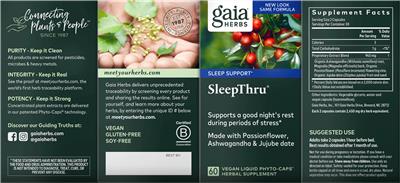
Gaia Herbs Connecting Plants & People Since 1987
Formulation
Purity - Keep it Clean All products are screened for pesticides, microbes & heavy metals. Integrity - Keep it Real See the proof at meetyourherbs.com, the world's first herb traceability platform. Potency - Keep it Strong Concentrated plant exteracts are delivered in our patented Phyto-Caps technology.
Gaia Herbs delivers unprecedented traceability by screening every product and sharing the results online. See for yourself, and learn more about your herbs, by entering the unique ID # below at meetyourherbs.com.
Vegan
Gluten-free Soy-free
New look Same formula Sleep support Supports a good night's rest during periods of stress
Natural separation may occur. This does not affect product quality.
General Statements
Discover our guiding truths at: Facebook Instagram gaiaherbs.com @gaiaherbs
FDA Disclaimer Statement
These statements have not been evaluated by the Food and Drug Administration. This product is not intended to diagnose, treat, cure, or prevent any disease.
Seals/Symbols
Est 1987 USA Integrity Purity Potency
Certified B Corporation
Formula
SleepThru made with passionflower, ashwagandha & jujube date
Each 2 capsules contain 2,450 mg dry herb equivalent.
FDA Statement of Identity
Herbal Supplement
Suggested/Recommended/Usage/Directions
Suggested use Adults take 2 capsules 1 hour before bed. Best results obtained after 1 month of use.
Precautions
Not for use during pregnancy or lactation. If you have a medical condition or take medications please consult with your doctor before use.
Store away from children.
Use only as directed on label. Safety-sealed for your protection.
Storage
Keep bottle capped at all times and store in a cool, dry place.
Is this label outdated? Report a formula or label change and our pharmacy team will review it.
SleepThru by Gaia Herbs label
The label scan from the NIH Dietary Supplement Label Database. Tap to enlarge.
Label images are published by the NIH Dietary Supplement Label Database for the version of this product on file. Always read your actual product label.
View the full label (PDF)The Ingredients in SleepThru by Gaia Herbs
These are the 4 active ingredients this product is made of. Select any to open its full monograph.
Serving size2 Capsule(s) Dosage formCapsule Servings per container30 Amounts shown are per serving.
Most supplement products combine several ingredients, and a medication can interact with the product through any one of them. Each ingredient below shows whether it has known drug interactions.
Proprietary Extract Blend
Other (inactive) ingredients: Glycerin, Water, Hypromellose. These complete the product’s ingredient list but are not active constituents.
SleepThru by Gaia Herbs Drug Interactions
HelloPharmacist Interaction Report
SleepThru by Gaia Herbs contains three ingredients with documented interactions with medications.
The most serious concern is ashwagandha, which has Moderate-severity interactions with multiple drug types. Ashwagandha may increase the sedative effects of CNS depressants (medications that slow your central nervous system, like some sleep aids and pain relievers), and it theoretically increases the effects of benzodiazepines (anti-anxiety drugs like Valium and Klonopin).
There's also a risk of low blood pressure (hypotension) if you're taking blood pressure medications, and a risk of low blood sugar (hypoglycemia) if you're on diabetes drugs.
Read the full breakdown — every affected drug type, severity by severity
Ashwagandha carries additional Moderate interactions with thyroid hormone replacements—it may boost their effects and side effects—and with immunosuppressants (drugs that weaken your immune system after transplant or for autoimmune conditions), which it may reduce in effectiveness. There's also a Moderate concern with drugs that can damage your liver (hepatotoxic drugs); ashwagandha has been linked to liver problems in rare cases.
A Minor interaction exists with certain enzyme-metabolized drugs (CYP1A2 substrates).
Magnolia bark extract, another ingredient, has Moderate interactions with CNS depressants and with blood thinners or antiplatelet drugs (like aspirin or warfarin), both of which may have stronger effects. Passionflower adds a Moderate interaction with CNS depressants, plus Minor interactions with certain enzyme-metabolized drugs (CYP3A4 and OATP substrates).
We could not check jujube extract for interactions. Altogether, these interactions span 1,415 individual medications.
Use the medication checker below to see if any of your prescriptions are affected before you start SleepThru.
Check your own medications below · Editorial policy · How we use AI
Want to check YOUR meds against SleepThru?
Ask about interactions with your drugs in plain English — “Can I take it with lisinopril?” — and we find you the answer in seconds, ingredient by ingredient.
Go to the checkerIngredients driving the most interactions
Individual Drug Interactions
The ingredients in SleepThru interact with 1,436 drugs. Click any drug to see the details.
4 of the 4 ingredients in SleepThru interact with drugs. Each result below shows which ingredient is responsible. Ashwagandha Root Extract Passionflower flowering vine extract Jujube extract Magnolia Bark Extract
AlemtuzumabCampath
How Alemtuzumab interacts with SleepThru — through 1 ingredient. Tap an ingredient for the detail:
Ashwagandha Root Extract Immunosuppressants Moderate
Interaction Summary
Theoretically, taking ashwagandha might decrease the effects of immunosuppressants.
Read the full Ashwagandha Root Extract + Alemtuzumab interactionAlfentanilAlfenta
How Alfentanil interacts with SleepThru — through 4 ingredients. Tap an ingredient for the detail:
Ashwagandha Root Extract Cns Depressants, Cytochrome P450 3a4 (cyp3a4) Substrates Moderate
Interaction Summary
Theoretically, taking ashwagandha might increase the sedative effects of CNS depressants.
Read the full Ashwagandha Root Extract + Alfentanil interactionJujube ExtractCns Depressants Moderate
Interaction Summary
Theoretically, zizyphus might cause additive sedative effects when taken with CNS depressants.
Read the full Jujube Extract + Alfentanil interactionPassionflower Flowering Vine ExtractCytochrome P450 3a4 (cyp3a4) Substrates, Cns Depressants Moderate
Interaction Summary
Theoretically, passion flower might decrease the effects of CYP3A4 substrates.
Read the full Passionflower Flowering Vine Extract + Alfentanil interactionMagnolia Bark ExtractCns Depressants Moderate
Interaction Summary
Theoretically, concomitant use of large doses of magnolia bark and CNS depressants might have additive effects.
Read the full Magnolia Bark Extract + Alfentanil interactionAliskirenTekturna
How Aliskiren interacts with SleepThru — through 2 ingredients. Tap an ingredient for the detail:
Ashwagandha Root Extract Cytochrome P450 3a4 (cyp3a4) Substrates, Antihypertensive Drugs Moderate
Interaction Summary
Theoretically, ashwagandha might decrease the levels and clinical effects of CYP3A4 substrates.
Read the full Ashwagandha Root Extract + Aliskiren interactionPassionflower Flowering Vine ExtractCytochrome P450 3a4 (cyp3a4) Substrates Minor
Interaction Summary
Theoretically, passion flower might decrease the effects of CYP3A4 substrates.
Read the full Passionflower Flowering Vine Extract + Aliskiren interactionAllopurinolCaplenal, Cosuric, Rimapurinol, Zyloprim, Zyloric
How Allopurinol interacts with SleepThru — through 1 ingredient. Tap an ingredient for the detail:
Ashwagandha Root Extract Hepatotoxic Drugs Moderate
Interaction Summary
Theoretically, taking ashwagandha with hepatotoxic drugs might increase the risk of liver damage.
Read the full Ashwagandha Root Extract + Allopurinol interactionAlogliptinNesina
How Alogliptin interacts with SleepThru — through 3 ingredients. Tap an ingredient for the detail:
Jujube ExtractAntidiabetes Drugs Moderate
Interaction Summary
Theoretically, zizyphus might increase the risk of hypoglycemia when taken with antidiabetes drugs.
Read the full Jujube Extract + Alogliptin interactionAshwagandha Root Extract Hepatotoxic Drugs, Antidiabetes Drugs +1 Moderate
Interaction Summary
Theoretically, taking ashwagandha with hepatotoxic drugs might increase the risk of liver damage.
Read the full Ashwagandha Root Extract + Alogliptin interactionPassionflower Flowering Vine ExtractCytochrome P450 3a4 (cyp3a4) Substrates Minor
Interaction Summary
Theoretically, passion flower might decrease the effects of CYP3A4 substrates.
Read the full Passionflower Flowering Vine Extract + Alogliptin interactionAlogliptin, MetforminKazano
How Alogliptin, Metformin interacts with SleepThru — through 2 ingredients. Tap an ingredient for the detail:
Jujube ExtractAntidiabetes Drugs Moderate
Interaction Summary
Theoretically, zizyphus might increase the risk of hypoglycemia when taken with antidiabetes drugs.
Read the full Jujube Extract + Alogliptin, Metformin interactionAshwagandha Root Extract Antidiabetes Drugs Moderate
Interaction Summary
Theoretically, taking ashwagandha with antidiabetes drugs might increase the risk of hypoglycemia.
Read the full Ashwagandha Root Extract + Alogliptin, Metformin interactionAlogliptin, PioglitazoneOseni
How Alogliptin, Pioglitazone interacts with SleepThru — through 3 ingredients. Tap an ingredient for the detail:
Ashwagandha Root Extract Antidiabetes Drugs, Hepatotoxic Drugs +1 Moderate
Interaction Summary
Theoretically, taking ashwagandha with antidiabetes drugs might increase the risk of hypoglycemia.
Read the full Ashwagandha Root Extract + Alogliptin, Pioglitazone interactionJujube ExtractAntidiabetes Drugs Moderate
Interaction Summary
Theoretically, zizyphus might increase the risk of hypoglycemia when taken with antidiabetes drugs.
Read the full Jujube Extract + Alogliptin, Pioglitazone interactionPassionflower Flowering Vine ExtractCytochrome P450 3a4 (cyp3a4) Substrates Minor
Interaction Summary
Theoretically, passion flower might decrease the effects of CYP3A4 substrates.
Read the full Passionflower Flowering Vine Extract + Alogliptin, Pioglitazone interactionAlprazolamNiravam, Xanax
How Alprazolam interacts with SleepThru — through 4 ingredients. Tap an ingredient for the detail:
Ashwagandha Root Extract Benzodiazepines, Cytochrome P450 3a4 (cyp3a4) Substrates +1 Moderate
Interaction Summary
Theoretically, taking ashwagandha might increase the sedative effects of benzodiazepines.
Read the full Ashwagandha Root Extract + Alprazolam interactionMagnolia Bark ExtractCns Depressants Moderate
Interaction Summary
Theoretically, concomitant use of large doses of magnolia bark and CNS depressants might have additive effects.
Read the full Magnolia Bark Extract + Alprazolam interactionPassionflower Flowering Vine ExtractCytochrome P450 3a4 (cyp3a4) Substrates, Cns Depressants Moderate
Interaction Summary
Theoretically, passion flower might decrease the effects of CYP3A4 substrates.
Read the full Passionflower Flowering Vine Extract + Alprazolam interactionJujube ExtractCns Depressants Moderate
Interaction Summary
Theoretically, zizyphus might cause additive sedative effects when taken with CNS depressants.
Read the full Jujube Extract + Alprazolam interactionAlteplase, TpaActilyse, Activase
How Alteplase, Tpa interacts with SleepThru — through 1 ingredient. Tap an ingredient for the detail:
Magnolia Bark ExtractAnticoagulant/antiplatelet Drugs Moderate
Interaction Summary
Theoretically, magnolia might have additive effects and increase the risk of bleeding when used with anticoagulant or antiplatelet drugs.
Read the full Magnolia Bark Extract + Alteplase, Tpa interactionAluminum Hydroxide, Aspirin, Codeine Phosphate, Magnesium HydroxideAscriptin Codeine #2
How Aluminum Hydroxide, Aspirin, Codeine Phosphate, Magnesium Hydroxide interacts with SleepThru — through 4 ingredients. Tap an ingredient for the detail:
Magnolia Bark ExtractAnticoagulant/antiplatelet Drugs, Cns Depressants Moderate
Interaction Summary
Theoretically, magnolia might have additive effects and increase the risk of bleeding when used with anticoagulant or antiplatelet drugs.
Read the full Magnolia Bark Extract + Aluminum Hydroxide, Aspirin, Codeine Phosphate, Magnesium Hydroxide interactionPassionflower Flowering Vine ExtractCns Depressants Moderate
Interaction Summary
Concomitant use of passion flower with sedative drugs might cause additive effects and side effects.
Read the full Passionflower Flowering Vine Extract + Aluminum Hydroxide, Aspirin, Codeine Phosphate, Magnesium Hydroxide interactionJujube ExtractCns Depressants Moderate
Interaction Summary
Theoretically, zizyphus might cause additive sedative effects when taken with CNS depressants.
Read the full Jujube Extract + Aluminum Hydroxide, Aspirin, Codeine Phosphate, Magnesium Hydroxide interactionAshwagandha Root Extract Cns Depressants Moderate
Interaction Summary
Theoretically, taking ashwagandha might increase the sedative effects of CNS depressants.
Read the full Ashwagandha Root Extract + Aluminum Hydroxide, Aspirin, Codeine Phosphate, Magnesium Hydroxide interactionAluminum Hydroxide, Aspirin, Magnesium HydroxideAscriptin
How Aluminum Hydroxide, Aspirin, Magnesium Hydroxide interacts with SleepThru — through 1 ingredient. Tap an ingredient for the detail:
Magnolia Bark ExtractAnticoagulant/antiplatelet Drugs Moderate
Interaction Summary
Theoretically, magnolia might have additive effects and increase the risk of bleeding when used with anticoagulant or antiplatelet drugs.
Read the full Magnolia Bark Extract + Aluminum Hydroxide, Aspirin, Magnesium Hydroxide interactionAmbrisentanLetairis, Volibris
How Ambrisentan interacts with SleepThru — through 2 ingredients. Tap an ingredient for the detail:
Ashwagandha Root Extract Cytochrome P450 3a4 (cyp3a4) Substrates, Hepatotoxic Drugs +1 Moderate
Interaction Summary
Theoretically, ashwagandha might decrease the levels and clinical effects of CYP3A4 substrates.
Read the full Ashwagandha Root Extract + Ambrisentan interactionPassionflower Flowering Vine ExtractCytochrome P450 3a4 (cyp3a4) Substrates Minor
Interaction Summary
Theoretically, passion flower might decrease the effects of CYP3A4 substrates.
Read the full Passionflower Flowering Vine Extract + Ambrisentan interactionAmilorideAmilamont, Midamor
How Amiloride interacts with SleepThru — through 1 ingredient. Tap an ingredient for the detail:
Ashwagandha Root Extract Antihypertensive Drugs Moderate
Interaction Summary
Theoretically, taking ashwagandha with antihypertensive drugs might increase the risk of hypotension.
Read the full Ashwagandha Root Extract + Amiloride interactionAmiloride, HydrochlorothiazideAmil-Co, Amilzide, Moduret 25, Moduretic
How Amiloride, Hydrochlorothiazide interacts with SleepThru — through 1 ingredient. Tap an ingredient for the detail:
Ashwagandha Root Extract Antihypertensive Drugs Moderate
Interaction Summary
Theoretically, taking ashwagandha with antihypertensive drugs might increase the risk of hypotension.
Read the full Ashwagandha Root Extract + Amiloride, Hydrochlorothiazide interactionAminoglutethimideCytadren
How Aminoglutethimide interacts with SleepThru — through 4 ingredients. Tap an ingredient for the detail:
Ashwagandha Root Extract Cns Depressants Moderate
Interaction Summary
Theoretically, taking ashwagandha might increase the sedative effects of CNS depressants.
Read the full Ashwagandha Root Extract + Aminoglutethimide interactionJujube ExtractCns Depressants Moderate
Interaction Summary
Theoretically, zizyphus might cause additive sedative effects when taken with CNS depressants.
Read the full Jujube Extract + Aminoglutethimide interactionMagnolia Bark ExtractCns Depressants Moderate
Interaction Summary
Theoretically, concomitant use of large doses of magnolia bark and CNS depressants might have additive effects.
Read the full Magnolia Bark Extract + Aminoglutethimide interactionPassionflower Flowering Vine ExtractCns Depressants Moderate
Interaction Summary
Concomitant use of passion flower with sedative drugs might cause additive effects and side effects.
Read the full Passionflower Flowering Vine Extract + Aminoglutethimide interactionAminophylline, Amobarbital, EphedrineAmesec
How Aminophylline, Amobarbital, Ephedrine interacts with SleepThru — through 4 ingredients. Tap an ingredient for the detail:
Passionflower Flowering Vine ExtractCns Depressants Moderate
Interaction Summary
Concomitant use of passion flower with sedative drugs might cause additive effects and side effects.
Read the full Passionflower Flowering Vine Extract + Aminophylline, Amobarbital, Ephedrine interactionMagnolia Bark ExtractCns Depressants Moderate
Interaction Summary
Theoretically, concomitant use of large doses of magnolia bark and CNS depressants might have additive effects.
Read the full Magnolia Bark Extract + Aminophylline, Amobarbital, Ephedrine interactionJujube ExtractCns Depressants Moderate
Interaction Summary
Theoretically, zizyphus might cause additive sedative effects when taken with CNS depressants.
Read the full Jujube Extract + Aminophylline, Amobarbital, Ephedrine interactionAshwagandha Root Extract Cns Depressants Moderate
Interaction Summary
Theoretically, taking ashwagandha might increase the sedative effects of CNS depressants.
Read the full Ashwagandha Root Extract + Aminophylline, Amobarbital, Ephedrine interactionAminosalicylic AcidPaser
How Aminosalicylic Acid interacts with SleepThru — through 1 ingredient. Tap an ingredient for the detail:
Ashwagandha Root Extract Hepatotoxic Drugs Moderate
Interaction Summary
Theoretically, taking ashwagandha with hepatotoxic drugs might increase the risk of liver damage.
Read the full Ashwagandha Root Extract + Aminosalicylic Acid interactionAmiodaroneCordarone, Pacerone
How Amiodarone interacts with SleepThru — through 2 ingredients. Tap an ingredient for the detail:
Ashwagandha Root Extract Hepatotoxic Drugs, Cytochrome P450 3a4 (cyp3a4) Substrates Moderate
Interaction Summary
Theoretically, taking ashwagandha with hepatotoxic drugs might increase the risk of liver damage.
Read the full Ashwagandha Root Extract + Amiodarone interactionPassionflower Flowering Vine ExtractCytochrome P450 3a4 (cyp3a4) Substrates Minor
Interaction Summary
Theoretically, passion flower might decrease the effects of CYP3A4 substrates.
Read the full Passionflower Flowering Vine Extract + Amiodarone interactionAmitriptylineElavil
How Amitriptyline interacts with SleepThru — through 4 ingredients. Tap an ingredient for the detail:
Passionflower Flowering Vine ExtractCytochrome P450 3a4 (cyp3a4) Substrates, Cns Depressants Moderate
Interaction Summary
Theoretically, passion flower might decrease the effects of CYP3A4 substrates.
Read the full Passionflower Flowering Vine Extract + Amitriptyline interactionJujube ExtractCns Depressants, Cytochrome P450 1a2 (cyp1a2) Substrates Moderate
Interaction Summary
Theoretically, zizyphus might cause additive sedative effects when taken with CNS depressants.
Read the full Jujube Extract + Amitriptyline interactionMagnolia Bark ExtractCns Depressants Moderate
Interaction Summary
Theoretically, concomitant use of large doses of magnolia bark and CNS depressants might have additive effects.
Read the full Magnolia Bark Extract + Amitriptyline interactionAshwagandha Root Extract Cytochrome P450 3a4 (cyp3a4) Substrates, Cns Depressants +2 Moderate
Interaction Summary
Theoretically, ashwagandha might decrease the levels and clinical effects of CYP3A4 substrates.
Read the full Ashwagandha Root Extract + Amitriptyline interactionAmitriptyline, ChlordiazepoxideLimbitrol DS
How Amitriptyline, Chlordiazepoxide interacts with SleepThru — through 4 ingredients. Tap an ingredient for the detail:
Ashwagandha Root Extract Serotonergic Drugs, Cytochrome P450 1a2 (cyp1a2) Substrates +3 Moderate
Interaction Summary
Some animal studies have reported that ashwagandha can enhance serotonergic transmission by altering certain serotonin (5-HT) receptors.
Read the full Ashwagandha Root Extract + Amitriptyline, Chlordiazepoxide interactionPassionflower Flowering Vine ExtractCns Depressants, Cytochrome P450 3a4 (cyp3a4) Substrates Moderate
Interaction Summary
Concomitant use of passion flower with sedative drugs might cause additive effects and side effects.
Read the full Passionflower Flowering Vine Extract + Amitriptyline, Chlordiazepoxide interactionJujube ExtractCns Depressants, Cytochrome P450 1a2 (cyp1a2) Substrates Moderate
Interaction Summary
Theoretically, zizyphus might cause additive sedative effects when taken with CNS depressants.
Read the full Jujube Extract + Amitriptyline, Chlordiazepoxide interactionMagnolia Bark ExtractCns Depressants Moderate
Interaction Summary
Theoretically, concomitant use of large doses of magnolia bark and CNS depressants might have additive effects.
Read the full Magnolia Bark Extract + Amitriptyline, Chlordiazepoxide interactionAmitriptyline, PerphenazineEtrafon, Etrafon-A, Etrafon-Forte, Triavil
How Amitriptyline, Perphenazine interacts with SleepThru — through 4 ingredients. Tap an ingredient for the detail:
Ashwagandha Root Extract Cytochrome P450 1a2 (cyp1a2) Substrates, Cns Depressants +2 Moderate
Interaction Summary
Theoretically, ashwagandha might decrease the levels and clinical effects of CYP1A2 substrates.
Read the full Ashwagandha Root Extract + Amitriptyline, Perphenazine interactionJujube ExtractCytochrome P450 1a2 (cyp1a2) Substrates, Cns Depressants Moderate
Interaction Summary
Theoretically, zizyphus might decrease the levels and clinical effects of drugs metabolized by CYP1A2.
Read the full Jujube Extract + Amitriptyline, Perphenazine interactionPassionflower Flowering Vine ExtractCns Depressants, Cytochrome P450 3a4 (cyp3a4) Substrates Moderate
Interaction Summary
Concomitant use of passion flower with sedative drugs might cause additive effects and side effects.
Read the full Passionflower Flowering Vine Extract + Amitriptyline, Perphenazine interactionMagnolia Bark ExtractCns Depressants Moderate
Interaction Summary
Theoretically, concomitant use of large doses of magnolia bark and CNS depressants might have additive effects.
Read the full Magnolia Bark Extract + Amitriptyline, Perphenazine interactionAmlodipineNorliqva
How Amlodipine interacts with SleepThru — through 2 ingredients. Tap an ingredient for the detail:
Ashwagandha Root Extract Antihypertensive Drugs, Cytochrome P450 3a4 (cyp3a4) Substrates Moderate
Interaction Summary
Theoretically, taking ashwagandha with antihypertensive drugs might increase the risk of hypotension.
Read the full Ashwagandha Root Extract + Amlodipine interactionPassionflower Flowering Vine ExtractCytochrome P450 3a4 (cyp3a4) Substrates Minor
Interaction Summary
Theoretically, passion flower might decrease the effects of CYP3A4 substrates.
Read the full Passionflower Flowering Vine Extract + Amlodipine interactionAmlodipine BenzoateKaterzia
How Amlodipine Benzoate interacts with SleepThru — through 2 ingredients. Tap an ingredient for the detail:
Ashwagandha Root Extract Cytochrome P450 3a4 (cyp3a4) Substrates, Antihypertensive Drugs Moderate
Interaction Summary
Theoretically, ashwagandha might decrease the levels and clinical effects of CYP3A4 substrates.
Read the full Ashwagandha Root Extract + Amlodipine Benzoate interactionPassionflower Flowering Vine ExtractCytochrome P450 3a4 (cyp3a4) Substrates Minor
Interaction Summary
Theoretically, passion flower might decrease the effects of CYP3A4 substrates.
Read the full Passionflower Flowering Vine Extract + Amlodipine Benzoate interactionAmlodipine BesilateIstin
How Amlodipine Besilate interacts with SleepThru — through 2 ingredients. Tap an ingredient for the detail:
Ashwagandha Root Extract Antihypertensive Drugs, Cytochrome P450 3a4 (cyp3a4) Substrates Moderate
Interaction Summary
Theoretically, taking ashwagandha with antihypertensive drugs might increase the risk of hypotension.
Read the full Ashwagandha Root Extract + Amlodipine Besilate interactionPassionflower Flowering Vine ExtractCytochrome P450 3a4 (cyp3a4) Substrates Minor
Interaction Summary
Theoretically, passion flower might decrease the effects of CYP3A4 substrates.
Read the full Passionflower Flowering Vine Extract + Amlodipine Besilate interactionAmlodipine BesylateNorvasc
How Amlodipine Besylate interacts with SleepThru — through 2 ingredients. Tap an ingredient for the detail:
Ashwagandha Root Extract Antihypertensive Drugs, Cytochrome P450 3a4 (cyp3a4) Substrates Moderate
Interaction Summary
Theoretically, taking ashwagandha with antihypertensive drugs might increase the risk of hypotension.
Read the full Ashwagandha Root Extract + Amlodipine Besylate interactionPassionflower Flowering Vine ExtractCytochrome P450 3a4 (cyp3a4) Substrates Minor
Interaction Summary
Theoretically, passion flower might decrease the effects of CYP3A4 substrates.
Read the full Passionflower Flowering Vine Extract + Amlodipine Besylate interactionAmlodipine Besylate, BenazeprilLotrel
How Amlodipine Besylate, Benazepril interacts with SleepThru — through 2 ingredients. Tap an ingredient for the detail:
Ashwagandha Root Extract Cytochrome P450 3a4 (cyp3a4) Substrates, Antihypertensive Drugs Moderate
Interaction Summary
Theoretically, ashwagandha might decrease the levels and clinical effects of CYP3A4 substrates.
Read the full Ashwagandha Root Extract + Amlodipine Besylate, Benazepril interactionPassionflower Flowering Vine ExtractCytochrome P450 3a4 (cyp3a4) Substrates Minor
Interaction Summary
Theoretically, passion flower might decrease the effects of CYP3A4 substrates.
Read the full Passionflower Flowering Vine Extract + Amlodipine Besylate, Benazepril interactionAmlodipine, CelecoxibConsensi
How Amlodipine, Celecoxib interacts with SleepThru — through 2 ingredients. Tap an ingredient for the detail:
Ashwagandha Root Extract Antihypertensive Drugs, Cytochrome P450 3a4 (cyp3a4) Substrates Moderate
Interaction Summary
Theoretically, taking ashwagandha with antihypertensive drugs might increase the risk of hypotension.
Read the full Ashwagandha Root Extract + Amlodipine, Celecoxib interactionPassionflower Flowering Vine ExtractCytochrome P450 3a4 (cyp3a4) Substrates Minor
Interaction Summary
Theoretically, passion flower might decrease the effects of CYP3A4 substrates.
Read the full Passionflower Flowering Vine Extract + Amlodipine, Celecoxib interactionAmmonium ChlorideAmmonium Chloride
How Ammonium Chloride interacts with SleepThru — through 1 ingredient. Tap an ingredient for the detail:
Ashwagandha Root Extract Antihypertensive Drugs Moderate
Interaction Summary
Theoretically, taking ashwagandha with antihypertensive drugs might increase the risk of hypotension.
Read the full Ashwagandha Root Extract + Ammonium Chloride interactionAmobarbitalAmytal
How Amobarbital interacts with SleepThru — through 4 ingredients. Tap an ingredient for the detail:
Ashwagandha Root Extract Cns Depressants Moderate
Interaction Summary
Theoretically, taking ashwagandha might increase the sedative effects of CNS depressants.
Read the full Ashwagandha Root Extract + Amobarbital interactionPassionflower Flowering Vine ExtractCns Depressants Moderate
Interaction Summary
Concomitant use of passion flower with sedative drugs might cause additive effects and side effects.
Read the full Passionflower Flowering Vine Extract + Amobarbital interactionJujube ExtractCns Depressants Moderate
Interaction Summary
Theoretically, zizyphus might cause additive sedative effects when taken with CNS depressants.
Read the full Jujube Extract + Amobarbital interactionMagnolia Bark ExtractCns Depressants Moderate
Interaction Summary
Theoretically, concomitant use of large doses of magnolia bark and CNS depressants might have additive effects.
Read the full Magnolia Bark Extract + Amobarbital interactionAmobarbital, Ephedrine SulfateEphedrine & Amytal
How Amobarbital, Ephedrine Sulfate interacts with SleepThru — through 4 ingredients. Tap an ingredient for the detail:
Magnolia Bark ExtractCns Depressants Moderate
Interaction Summary
Theoretically, concomitant use of large doses of magnolia bark and CNS depressants might have additive effects.
Read the full Magnolia Bark Extract + Amobarbital, Ephedrine Sulfate interactionPassionflower Flowering Vine ExtractCns Depressants Moderate
Interaction Summary
Concomitant use of passion flower with sedative drugs might cause additive effects and side effects.
Read the full Passionflower Flowering Vine Extract + Amobarbital, Ephedrine Sulfate interactionJujube ExtractCns Depressants Moderate
Interaction Summary
Theoretically, zizyphus might cause additive sedative effects when taken with CNS depressants.
Read the full Jujube Extract + Amobarbital, Ephedrine Sulfate interactionAshwagandha Root Extract Cns Depressants Moderate
Interaction Summary
Theoretically, taking ashwagandha might increase the sedative effects of CNS depressants.
Read the full Ashwagandha Root Extract + Amobarbital, Ephedrine Sulfate interactionEach ingredient & the kinds of drugs it affects
For each ingredient in SleepThru with known interactions, here are the types of medications they can affect. Open any type for the detail — or search your exact drug in the checker above.
Ashwagandha Root Extract
Antidiabetes Drugs
Theoretically, taking ashwagandha with antidiabetes drugs might increase the risk of hypoglycemia.
There is preliminary clinical evidence suggesting that ashwagandha might lower blood glucose levels. Theoretically, ashwagandha might have additive effects when used with antidiabetes drugs and increase the risk of hypoglycemia.
Antihypertensive Drugs
Theoretically, taking ashwagandha with antihypertensive drugs might increase the risk of hypotension.
Animal research suggests that ashwagandha might lower systolic and diastolic blood pressure. Theoretically, ashwagandha might have additive effects when used with antihypertensive drugs and increase the risk of hypotension.
Benzodiazepines
Theoretically, taking ashwagandha might increase the sedative effects of benzodiazepines.
There is preliminary evidence that ashwagandha might have an additive effect with diazepam (Valium) and clonazepam (Klonopin). This may also occur with other benzodiazepines.
Cns Depressants
Theoretically, taking ashwagandha might increase the sedative effects of CNS depressants.
Ashwagandha seems to have sedative effects. Theoretically, this may potentiate the effects of barbiturates, other sedatives, and anxiolytics.
Hepatotoxic Drugs
Theoretically, taking ashwagandha with hepatotoxic drugs might increase the risk of liver damage.
Ashwagandha has been linked to cases of acute hepatitis, liver failure, hepatic encephalopathy, autoimmune hepatitis, the need for liver transplantation, and death due to liver failure.
Immunosuppressants
Theoretically, taking ashwagandha might decrease the effects of immunosuppressants.
Ashwagandha has demonstrated immunostimulant effects in humans. Animal research has shown that ashwagandha can attenuate the immunosuppression caused by cyclophosphamide.
Thyroid Hormone
Ashwagandha might increase the effects and adverse effects of thyroid hormone.
Concomitant use of ashwagandha with thyroid hormones may cause additive therapeutic and adverse effects. Preliminary clinical research and animal studies suggest that ashwagandha boosts thyroid hormone synthesis and secretion. In one clinical study, ashwagandha increased triiodothyronine (T3) and thyroxine (T4) levels by 41.5% and 19.6%, respectively, and reduced serum TSH levels by 17.4% from baseline in adults with subclinical hypothyroidism.
Cytochrome P450 1A2 (Cyp1A2) Substrates
Theoretically, ashwagandha might decrease the levels and clinical effects of CYP1A2 substrates.
In vitro research shows that ashwagandha extract induces CYP1A2 enzymes.
Cytochrome P450 3A4 (Cyp3A4) Substrates
Theoretically, ashwagandha might decrease the levels and clinical effects of CYP3A4 substrates.
In vitro research shows that ashwagandha extract induces CYP3A4 enzymes.
Serotonergic Drugs
Some animal studies have reported that ashwagandha can enhance serotonergic transmission by altering certain serotonin (5-HT) receptors. However, there is no evidence to suggest that ashwagandha increases the risk of serotonin-related effects, and there have been no published case reports of serotonin syndrome when combined with other serotonergic drugs. Nevertheless, due to the lack of extensive studies on the matter and the fact that ashwagandha appears to affect serotonergic pathways, it would be prudent to exercise caution when combining it with drugs that affect serotonin. [References: - Effects of Withania somnifera (Ashwaga ndha) on Stress and the Stress-Related Neuropsychiatric Disorders Anxiety, Depression, and Insomnia. Curr Neuropharmacol. 2021 Sep 14; 19: 1468–1495. - A Prospective, Randomized Double-Blind, Placebo-Controlled Study of Safety and Efficacy of a High-Concentration Full-Spectrum Extract of Ashwagandha Root in Reducing Stress and Anxiety in Adults. https://www.ncbi.nlm.nih.gov/pmc/articles/PMC3573577/]
Passionflower flowering vine extract
Cns Depressants
Concomitant use of passion flower with sedative drugs might cause additive effects and side effects.
Research in animals and humans shows that passion flower has sedative effects which can be additive when used with sedative medications like lorazepam.
Cytochrome P450 3A4 (Cyp3A4) Substrates
Theoretically, passion flower might decrease the effects of CYP3A4 substrates.
In vitro research suggests that passion flower can induce CYP3A4 enzymes, albeit to a much lower degree than rifampin, a known CYP3A4 inducer.
Organic Anion-Transporting Polypeptide Substrates (Oatp)
Theoretically, passion flower might reduce the bioavailability of OATP2B1 and OATP1A2 substrates.
In vitro research shows that the passion flower constituents apigenin and vitexin inhibit OATP2B1 and OATP1A2. This inhibition may be dose-dependent. One specific high-flavonoid passion flower extract (Valverde) seems to inhibit OATP2B1 and OATP1A2, while another extract with a lower flavonoid concentration (Arkocaps) shows less potent inhibition. OATPs are responsible for the uptake of drugs and other compounds into the body; however, the specific activities of OATP2B1 and OATP1A2 are not well characterized.
Jujube extract
Antidiabetes Drugs
Theoretically, zizyphus might increase the risk of hypoglycemia when taken with antidiabetes drugs.
Animal research shows that zizyphus has hypoglycemic activity. However, a small clinical study shows that zizyphus fruit powder does not reduce fasting blood glucose levels in patients with type 2 diabetes.
Cns Depressants
Theoretically, zizyphus might cause additive sedative effects when taken with CNS depressants.
Some animal research has found that various parts of zizyphus have sedative effects. However, other animal research shows that zizyphus plant extract does not alter sleep parameters when used in combination with pentobarbital.
Cytochrome P450 1A2 (Cyp1A2) Substrates
Theoretically, zizyphus might decrease the levels and clinical effects of drugs metabolized by CYP1A2.
Animal research shows that zizyphus induces CYP1A2 enzymes. However, this effect has not been reported in humans.
Magnolia Bark Extract
Anticoagulant/Antiplatelet Drugs
Theoretically, magnolia might have additive effects and increase the risk of bleeding when used with anticoagulant or antiplatelet drugs.
In vitro research shows that the chemicals magnolol and honokiol, isolated from magnolia bark, inhibit platelet aggregation that is experimentally induced by collagen and arachidonic acid. However, they do not inhibit platelet aggregation that is induced by adenosine diphosphate, platelet-activating factor, or thrombin. This interaction has not been reported in humans.
Cns Depressants
Theoretically, concomitant use of large doses of magnolia bark and CNS depressants might have additive effects.
In vitro and animal research shows that constituents extracted from magnolia bark, especially honokiol and magnolol, have sedative effects. These effects may be due to the inhibition of catecholamine release and modulation of gamma-aminobutyric acid-A (GABA-A) receptors.
Brand information
Manufacturer and brand details for SleepThru, from the product label.
Gaia Herbs
See all Gaia Herbs products- Name
- Gaia Herbs, Inc.
- Street Address
- 101 Gaia Herbs Dr.
- City
- Brevard
- State
- NC
- ZipCode
- 28712
- Web Address
- meetyourherbs.com
SleepThru by Gaia Herbs: Common Questions
Does SleepThru by Gaia Herbs interact with any medications?
How can one product interact with so many drugs?
Where does this information come from?
Can I take SleepThru if I'm pregnant or breastfeeding?
What are the most common side effects?
Does SleepThru actually work for insomnia?
Can I take SleepThru with my anxiety medication?
Why does the product have so many interactions?
What is jujube extract, and is it safe?
Written and reviewed by the HelloPharmacist editorial staff. Our editorial policy
Not sure if SleepThru is safe with your meds?
Our pharmacists answer your medication & supplement questions — free.
Label information is sourced from the NIH Dietary Supplement Label Database and reflects the product version on file; always read your actual product label. This page is for education only and is not a substitute for professional medical advice. Confirm with your pharmacist or doctor before combining supplements and medications.
The Full Monographs Behind SleepThru’s Ingredients
Every ingredient we hold a full HelloPharmacist monograph for — uses, evidence, safety, and the complete interaction list.
Ashwagandha
Interacts with 1,372 drugsAshwagandha is an Ayurvedic herb most often taken to help with stress, anxiety, and sleep, and some small studies suggest it may help, though the evidence is still limited. It is generally w...
Read the full Ashwagandha monograph → Herb & supplement monographMagnolia
Interacts with 351 drugsMagnolia bark and flower buds have a long history in traditional Chinese and Japanese medicine, often for stress, sleep, and digestion. Modern human research is still limited, so we can't be...
Read the full Magnolia monograph → Herb & supplement monographPassion Flower
Interacts with 836 drugsPassion flower is a traditional calming herb that many people use for anxiety and sleep. Early studies hint it may help with mild anxiety and restlessness, but the evidence is limited and mo...
Read the full Passion Flower monograph → Herb & supplement monographZizyphus
Interacts with 469 drugsZizyphus (jujube) is an edible fruit and traditional remedy used mainly for sleep, anxiety, and digestion. The fruit is a nutritious food, but human evidence for its medicinal benefits is li...
Read the full Zizyphus monograph →Sources & How We Checked
SleepThru's label data comes from the NIH Dietary Supplement Label Database; the ingredient interaction data is from the Natural Medicines database, reviewed by our pharmacists.
- NIH Dietary Supplement Label Database (DSLD) — The official product label on file for this supplement.
- Natural Medicines (Therapeutic Research Center) — Evidence-graded clinical reference behind the ingredient interaction data.
Content is written and reviewed by licensed HelloPharmacist pharmacists. See our data sources and editorial standards for how this information is built and checked.
The 75 references behind this product’s interaction data
Every citation that drives the interaction findings for this product’s ingredients, from the evidence-graded Natural Medicines (TRC Healthcare) database. Open an ingredient to browse its citations — links open the study on PubMed or the publisher’s site.
Ashwagandha 32 references
- McGuffin M, Hobbs C, Upton R, Goldberg A, eds. American Herbal Products Association's Botanical Safety Handbook. Boca Raton, FL: CRC Press, LLC 1997.
- Upton R, ed. Ashwagandha Root (Withania somnifera): Analytical, quality control, and therapuetic monograph. Santa Cruz, CA: American Herbal Pharmacopoeia 2000:1-25.
- Davis L, Kuttan G. Effect of Withania somnifera on cyclophosphamide-induced urotoxicity. Cancer Lett 2000;148:9-17. PubMed
- Davis L, Kuttan G. Suppressive effect of cyclophosphamide-induced toxicity by Withania somnifera extract in mice. J Ethnopharmacol 1998;62:209-14. PubMed
- Mishra LC, Singh BB, Dagenais S. Scientific basis for the therapeutic use of Withania somnifera (ashwagandha): a review. Altern Med Rev 2000;5:334-46. DOI
- Andallu B, Radhika B. Hypoglycemic, diuretic and hypocholesterolemic effect of winter cherry (Withania somnifera, Dunal) root. Indian J Exp Biol 2000;38:607-9.
- Kulkarni RR, Patki PS, Jog VP, et al. Treatment of osteoarthritis with a herbomineral formulation: a double-blind, placebo-controlled, cross-over study. J Ethnopharmacol 1991;33:91-5. PubMed
- Ahumada F, Aspee F, Wikman G, Hancke J. Withania somnifera exract. Its effects on arterial blood pressure in anaesthetized dogs. Phytother Res 1991;5:111-14.
- Panda S, Kar A. Withania somnifera and Bauhinia purpurea in the regulation of circulating thyroid hormone concentrations in female mice. J Ethnopharmacol 1999;67:233-39. PubMed
- Panda S, Kar A. Changes in thyroid hormone concentrations after administration of ashwagandha root extract to adult male mice. J Pharm Pharmacol 1998;50:1065-68. PubMed
- Sehgal, V. N., Verma, P., and Bhattacharya, S. N. Fixed-drug eruption caused by ashwagandha (Withania somnifera): a widely used Ayurvedic drug. Skinmed. 2012;10(1):48-49.
- Agnihotri AP, Sontakke SD, Thawani VR, Saoji A, Goswami VS. Effects of Withania somnifera in patients of schizophrenia: a randomized, double blind, placebo controlled pilot trial study. Indian J Pharmacol. 2013;45(4):417-8. PubMed
- Biswal BM, Sulaiman SA, Ismail HC, Zakaria H, Musa KI. Effect of Withania somnifera (Ashwagandha) on the development of chemotherapy-induced fatigue and quality of life in breast cancer patients. Integr Cancer Ther. 2013;12(4):312-22.
- Sharma AK, Basu I, Singh S. Efficacy and safety of Ashwagandha root extract in subclinical hypothyroid patients: a double-blind, randomized placebo-controlled trial. J Altern Complement Med. 2018 Mar;24(3):243-248. PubMed
- Durg S, Bavage S, Shivaram SB. Withania somnifera (Indian ginseng) in diabetes mellitus: A systematic review and meta-analysis of scientific evidence from experimental research to clinical application. Phytother Res. 2020;34(5):1041-1059.
- Björnsson HK, Björnsson ES, Avula B, et al. Ashwagandha-induced liver injury: A case series from Iceland and the US Drug-Induced Liver Injury Network. Liver Int. 2020;40(4):825-829. PubMed
- Tharakan A, Shukla H, Benny IR, Tharakan M, George L, Koshy S. Immunomodulatory Effect of Withania somnifera (Ashwagandha) Extract-A Randomized, Double-Blind, Placebo Controlled Trial with an Open Label Extension on Healthy Participants. J Clin Med 2021;1 PubMed
- Ireland PJ, Hardy T, Burt AD, Donnelly MC. Drug-induced hepatocellular injury due to herbal supplement ashwagandha. J R Coll Physicians Edinb. 2021;51(4):363-365. PubMed
- Kamal HI, Patel K, Brdak A, Heffernan J, Ahmad N. Ashwagandha as a unique cause of thyrotoxicosis presenting with supraventricular tachycardia. Cureus. 2022 Mar 25;14(3):e23494. PubMed
- Suryawanshi G, Abdallah M, Thomson M, Desai N, Chauhan A, Lim N. Ashwagandha-Associated Acute Liver Failure Requiring Liver Transplantation. Am J Ther 2023;30(1):e80-e83. PubMed
- Pusec CM, Wolsky R, Llerena C, Sura P. A Case of Supplement-Induced Hepatitis. Cureus 2022;14(10):e30433. PubMed
- Ajgaonkar A, Jain M, Debnath K. Efficacy and Safety of Ashwagandha (Withania somnifera) Root Extract for Improvement of Sexual Health in Healthy Women: A Prospective, Randomized, Placebo-Controlled Study. Cureus 2022;14(10):e30787. PubMed
- Haron MH, Dale O, Martin K, et al. Evaluation of the Herb-Drug Interaction Potential of Commonly Used Botanicals on the US Market with Regard to PXR- and AhR-Mediated Influences on CYP3A4 and CYP1A2. J Diet Suppl 2022. PubMed
- Lubarska M, Halasinski P, Hryhorowicz S, et al. Liver Dangers of Herbal Products: A Case Report of Ashwagandha-Induced Liver Injury. Int J Environ Res Public Health 2023;20(5):3921. PubMed
- Tóth M, Benedek AE, Longerich T, Seitz HK. Ashwagandha-induced acute liver injury: A case report. Clin Case Rep 2023;11(3):e7078.
- Bokan G, Glamocanin T, Mavija Z, et al. Herb-Induced Liver Injury by Ayurvedic Ashwagandha as Assessed for Causality by the Updated RUCAM: An Emerging Cause. Pharmaceuticals (Basel) 2023;16(8):1129. PubMed
- Patel PA, Sanborn E, Then R, Williams DM. Recurrent Reversible Cerebral Vasoconstriction Syndrome: A Report of Two Cases. Cureus 2023;15(8):e42992. PubMed
- Majeed M, Nagabhushanam K, Murali A, Vishwanathan DT, Mamidala RV, Mundkur L. A Standardized Withania somniferra (Linn.) Root Extract with Piperine Alleviates the Symptoms of Anxiety and Depression by Increasing Serotonin Levels: A Double-Blind, Randomize
- Philips CA, Valsan A, Theruvath AH, et al. Ashwagandha-induced liver injury-A case series from India and literature review. Hepatol Commun 2023;7(10):e0270. PubMed
- Hayashi M, Hamada H, Azuma SI, Hayashi K. Painless Thyroiditis by Withania somnifera (Ashwagandha). Cureus 2024;16(3):e55352. PubMed
- Vazirani S, Kothari A, Fujimoto J, Gomez M. Supplements Are Not a Synonym for Safe: Suspected Liver Injury From Ashwagandha. Fed Pract 2023;40(9):315-319. PubMed
- Patel M, Newell R, Hillier M, Ramalingam R. Herbal remedies as a potential cause of hypoadrenalism. Br J Hosp Med (Lond) 2024;85(6):1-4. PubMed
Magnolia 9 references
- Kuribara H, Kishi E, Hattori N, et al. The anxiolytic effect of two oriental herbal drugs in Japan attributed to honokiol from magnolia bark. J Pharm Pharmacol 2000;52:1425-9. PubMed
- Tachikawa E, Takahashi M, Kashimoto T. Effects of extract and ingredients isolated from Magnolia obovata thunberg on catecholamine secretion from bovine adrenal chromaffin cells. Biochem Pharmacol 2000;60:433-40. PubMed
- Jung KY, Kim DS, Oh SR, et al. Magnone A and B, novel anti-PAF tetrahydrofuran lignans from the flower buds of Magnolia fargesii. J Nat Prod 1998;61:808-11.
- Garrison R, Chambliss WG. Effect of a proprietary Magnolia and Phellodendron extract on weight management: a pilot, double-blind, placebo-controlled clinical trial. Altern Ther Health Med 2006;12:50-4.
- Teng CM, Chen CC, Ko FN, et al. Two antiplatelet agents from Magnolia officinalis. Thromb Res 1988;50:757-65. PubMed
- Ghys K, De Palma A, Vandevenne A, Werbrouck J, Goossens A. Magnolia officinalis bark extract, a recently identified contact allergen in 'anti-ageing' cosmetics. Contact Dermatitis. 2015 Aug;73(2):130-2.
- Raison-Peyron N, Césaire A, Du-Thanh A, Dereure O. Allergic contact dermatitis caused by Magnolia officinalis bark extract in a facial anti-ageing cream. Contact Dermatitis. 2015 Jun;72(6):416-7.
- Nilausen TD, Johansen JD, Thyssen JP. Allergic contact dermatitis of the face caused by Magnolia officinalis bark extract. Contact Dermatitis. 2016;75(6):385-87.
- Amat-Samaranch V, López-Sánchez C, Tubau C, Puig L, Serra-Baldrich E. Vulvar allergic contact dermatitis caused by Magnolia officinalis bark extract. Contact Dermatitis 2022;87(1):96-97.
Passion Flower 19 references
- Newall CA, Anderson LA, Philpson JD. Herbal Medicine: A Guide for Healthcare Professionals. London, UK: The Pharmaceutical Press, 1996.
- The Review of Natural Products by Facts and Comparisons. St. Louis, MO: Wolters Kluwer Co., 1999.
- Fisher AA, Purcell P, Le Couteur DG. Toxicity of Passiflora incarnata L. J Toxicol Clin Toxicol 2000;38:63-6.
- Akhondzadeh S, Naghavi HR, Shayeganpour A, et al. Passionflower in the treatment of generalized anxiety: a pilot double-blind randomized controlled trial with oxazepam. J Clin Pharm Ther 2001;26:363-7. PubMed
- Farnsworth N, Bingel A, Cordell G, et al. Potential value of plants as sources of new antifertility agents I. J Pharm Sci 1975;64:535-98. DOI
- Mori A, Hasegawa K, Murasaki M, et al. Clinical evaluation of Passiflamin (passiflora extract) on neurosis - multicenter double blind study in comparison with mexazolam. Rinsho Hyoka (Clinical Evaluation) 1993;21:383-440.
- Miyasaka LS, Atallah AN, Soares BG. Passiflora for anxiety disorder. Cochrane Database Syst Rev 2007;(1):CD004518. DOI
- Speroni E., Minghetti A. Neuropharmacological activity of extracts from Passiflora incarnata. Planta Med. 1988;54:488-91.
- Capasso A., Sorrentino L. Pharmacological studies on the sedative and hypnotic effect of Kava kava and Passiflora extracts combination. Phytomedicine. 2005;12:39-45. PubMed
- Carrasco MC, Vallejo JR, Pardo-de-Santayana M, et al. Interactions of Valeriana officinalis L. and Passiflora incarnata L. in a patient treated with lorazepam. Phytother Res. 2009 Dec;23:1795-6.
- Smith, G. W., Chalmers, T. M., and Nuki, G. Vasculitis associated with herbal preparation containing Passiflora extract. Br J Rheumatol. 1993;32(1):87-88.
- Soulimani, R., Younos, C., Jarmouni, S., Bousta, D., Misslin, R., and Mortier, F. Behavioural effects of Passiflora incarnata L. and its indole alkaloid and flavonoid derivatives and maltol in the mouse. J Ethnopharmacol. 1997;57(1):11-20. PubMed
- Nojoumi M, Ghaeli P, Salimi S, Sharifi A, Raisi F. Effects of Passion Flower Extract, as an Add-On Treatment to Sertraline, on Reaction Time in Patients ?with Generalized Anxiety Disorder: A Double-Blind Placebo-Controlled Study. Iran J Psychiatry. 2016;1
- Rokhtabnak F, Ghodraty MR, Kholdebarin A, et al. Comparing the Effect of Preoperative Administration of Melatonin and Passiflora incarnata on Postoperative Cognitive Disorders in Adult Patients Undergoing Elective Surgery. Anesth Pain Med. 2016;7(1):e4123 PubMed
- Dantas LP, de Oliveira-Ribeiro A, de Almeida-Souza LM, Groppo FC. Effects of passiflora incarnata and midazolam for control of anxiety in patients undergoing dental extraction. Med Oral Patol Oral Cir Bucal. 2017;22(1):e95-e101. PubMed
- Ozturk Z, Kalayci CC. Pregnancy outcomes in psychiatric patients treated with passiflora incarnata. Complement Ther Med. 2018 Feb;36:30-32. PubMed
- da Cunha RS, Amorim KS, Gercina AC, et al. Herbal medicines as anxiolytics prior to third molar surgical extraction. A randomized controlled clinical trial. Clin Oral Investig. 2020. PubMed
- Schäfer AM, Gilgen PM, Spirgi C, et al. Constituents of Passiflora incarnata, but Not of Valeriana officinalis, Interact with the Organic Anion Transporting Polypeptides (OATP)2B1 and OATP1A2. Planta Med. 2021. PubMed
- Mazzari ALDA, Lacerda MG, Milton FA, et al. In vitro effects of European and Latin-American medicinal plants in CYP3A4 gene expression, glutathione levels, and P-glycoprotein activity. Front Pharmacol 2022;13:826395. PubMed
Zizyphus 15 references
- Adzu, B., Amos, S., Dzarma, S., Wambebe, C., and Gamaniel, K. Effect of Zizyphus spina-christi Willd aqueous extract on the central nervous system in mice. J Ethnopharmacol. 2002;79(1):13-16.
- Cisse, A., Ndiaye, A., Lopez-Sall, P., Seck, F., Faye, B., and Faye, B. [Antidiabetic activity of Zizyphus mauritiana Lam (Rhamnaceae)]. Dakar Med 2000;45(2):105-107.
- Abdel-Zaher, A. O., Salim, S. Y., Assaf, M. H., and Abdel-Hady, R. H. Antidiabetic activity and toxicity of Zizyphus spina-christi leaves. J Ethnopharmacol. 10-3-2005;101(1-3):129-138. PubMed
- Nesseem, D. I., Michel, C. G., Sleem, A. A., and El-Alfy, T. S. Formulation and evaluation of antihyperglycemic leaf extracts of Zizyphus spina-christi (L.) Willd. Pharmazie 2009;64(2):104-109. DOI
- Anand, K. K., Singh, B., Chand, D., Chandan, B. K., and Gupta, V. N. Effect of Zizyphus sativa leaves on blood glucose levels in normal and alloxan-diabetic rats. J Ethnopharmacol. 1989;27(1-2):121-127. PubMed
- Morishita, S., Mishima, Y., Hirai, Y., Saito, T., and Shoji, M. Pharmacological studies of water extract of the Zizyphus seed and the Zizyphus seed containing drug. Gen Pharmacol 1987;18(6):637-641. PubMed
- Watanabe, I., Saito, H., and Takagi, K. Pharmacological studies of Zizyphus seeds. Jpn J Pharmacol 1973;23(4):563-571. DOI
- Wu, S. X., Zhang, J. X., Xu, T., Li, L. F., Zhao, S. Y., and Lan, M. Y. [Effects of seeds, leaves and fruits of Ziziphus spinosa and jujuboside A on central nervous system function]. Zhongguo Zhong Yao Za Zhi 1993;18(11):685-4.
- Glombitza, K. W., Mahran, G. H., Mirhom, Y. W., Michel, K. G., and Motawi, T. K. Hypoglycemic and antihyperglycemic effects of Zizyphus spina-christi in rats. Planta Med 1994;60(3):244-247.
- Jarald, E. E., Joshi, S. B., and Jain, D. C. Antidiabetic activity of extracts and fraction of <it>Zizyphus mauritiana. Pharmaceutical Biology 2009;47:328-334.
- Ebrahimimd S, Ashkani-Esfahani S, Poormahmudibs A. Investigating the efficacy of zizyphus jujuba on neonatal jaundice. Iran J Pediatr. 2011 Sep;21(3):320-4.
- Hajhashemi V, Safaei A. Hypnotic effect of Coriandrum sativum, Ziziphus jujuba, Lavandula angustifolia and Melissa officinalis extracts in mice. Res Pharm Sci. 2015 Nov-Dec;10(6):477-84.
- Jing XY, Peng YR, Wang XM, Duan JA. Effects of Ziziphus jujuba fruit extracts on cytochrome P450 (CYP1A2) activity in rats. Chin J Nat Med. 2015 Aug;13(8):588-94. PubMed
- Irannejad Niri Z, Shidfar F, Jabbari M, et al. The effect of dried Ziziphus vulgaris on glycemic control, lipid profile, apo-proteins and hs-CRP in patients with type 2 diabetes mellitus: a randomized controlled clinical trial. J Food Biochem 2020; Mar 30
- Shergis JL, Hyde A, Meaklim H, Varma P, Da Costa C, Jackson ML. Medicinal seeds Ziziphus spinosa for insomnia: a randomized, placebo-controlled, cross-over, feasibility clinical trial. Complement Ther Med 2021;57:102657. PubMed
Parts of this content are provided by the Therapeutic Research Center, LLC.
DISCLAIMER: Currently this does not check for drug-drug interactions. This is not an all-inclusive comprehensive list of potential interactions and is for informational purposes only. Not all interactions are known or well-reported in the scientific literature, and new interactions are continually being reported. Input is needed from a qualified healthcare provider including a pharmacist before starting any therapy. Application of clinical judgment is necessary.
© 2021 Therapeutic Research Center, LLC