
Uritrac Ingredients & Drug Interactions
What is this page for?
First and foremost: checking Uritrac against your medications. The heart of this page is the interaction checker and the full interaction report — how this product’s ingredients may interact with prescription and over-the-counter medicines you may be taking.
Around that, we add a pharmacist’s high-level view of the product as a whole — what’s inside, the evidence for its stated use, how transparent the label is, and what safety data exists — so you can see the full picture in one place. It’s educational information from our licensed clinical databases and the clinical staff at HelloPharmacist — not medical advice — and we don’t sell or endorse products. Our editorial policy
Uritrac is a dietary supplement by Approved Science with 5 active ingredients. Its ingredients are commonly taken for preventing urinary tract infections (utis), treating mild utis, urinary tract health.Based on those ingredients, 1,259 medications have a known interaction with it, the most serious rated moderate. The ingredients most likely to interact are Goldenseal, Uva Ursi, Powder, Cranberry, Powder. Use the checker below to test your specific medication, or read the full HelloPharmacist Interaction Report.
Check Your Meds Against Uritrac by Approved Science
Ask about any prescription or over-the-counter medication and we check it for interactions with Uritrac by Approved Science — and tell you which ingredient is responsible.
AI summaries are generated from our interaction database for education only — always confirm with your pharmacist. How we use AI
Ask the Pharmacist
A licensed pharmacist will answer your question by email — free, usually within 24 hours.
Got it — thank you!
A licensed pharmacist will answer within 24 hours. Keep an eye on your email (worth checking spam, just in case).
HelloPharmacist Scorecard of Uritrac by Approved Science
Our pharmacy team’s full take, with four database checks built into the cards below — a summary of what is known, not a grade of the product itself.
What’s inside
Full disclosure
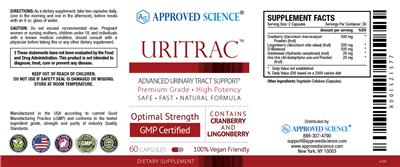
Uritrac contains five active ingredients. D-mannose is a simple sugar used for carbohydrate-deficient glycoprotein syndrome type 1b; it's also included for urinary tract infections.
Goldenseal, cranberry powder, lingonberry, and uva ursi are herbal ingredients traditionally used to support urinary and bladder health. The product also contains cellulose as an inactive ingredient.
Does it work?
Strong evidence
For urinary tract infections—the main reason people buy this product—the evidence is mixed. Cranberry powder is rated possibly effective, meaning some evidence supports it but it's not conclusive.
D-mannose, goldenseal, and uva ursi are all rated possibly ineffective for UTIs, and lingonberry's effectiveness for UTIs hasn't been established. If you're considering this product to prevent or treat a UTI, talk with your doctor or pharmacist about whether the evidence supports its use for your situation.
How safe is it?
Well-documented data
D-mannose is generally well tolerated short-term, but long-term safety data are limited; the facts advise caution unless your doctor recommends it, and breastfeeding safety hasn't been well studied. Goldenseal should be avoided during pregnancy because berberine (its active compound) may harm the fetus and trigger contractions, and it should not be used while breastfeeding.
Cranberry is likely safe during pregnancy and lactation in normal food amounts, but concentrated supplements haven't been well studied. Lingonberry is rated likely unsafe in pregnancy and lactation.
Uva ursi should be avoided during pregnancy because it may stimulate the uterus, and breastfeeding safety data are insufficient. Common side effects across these ingredients include diarrhea, nausea, abdominal discomfort, and gastrointestinal upset—especially at higher doses.
At very high doses, uva ursi can cause serious effects like convulsions and delirium.
Meds to double-check
Moderate interaction found
Before taking Uritrac, check your medications against these categories: drugs metabolized by CYP3A4, CYP2D6, CYP2C9, or CYP2C19 enzymes (including some heart meds, statins, and immunosuppressants); blood thinners and antiplatelet drugs like warfarin; antidiabetes drugs; blood pressure medications like nifedipine and amlodipine; CNS depressants (sedatives); glucuronidated drugs; and if you take lithium, uva ursi may affect its levels. Discuss these with your pharmacist before starting.
The bottom line
Scorecard at a glanceFully disclosed formula with clinical evidence supporting its stated purpose. Moderate medication interactions have been identified, and safety information is well characterized.
Uritrac may appeal to people looking for herbal support for urinary tract health, but the evidence for treating or preventing UTIs is weak to uncertain. If you take any prescription medications, you must check them against this product because goldenseal and cranberry inhibit liver enzymes that clear many drugs.
Pregnant or breastfeeding people should not use this product without talking to their doctor or pharmacist first.
Educational only — not medical advice; always confirm with your pharmacist. Our editorial policy · How we use AI
Assessment coverage: 5 of 5 active ingredients matched to our full ingredient reviews (monographs). Based on the product label dated Nov 22, 2024.
This Scorecard evaluates available label information, ingredient evidence, and known medication-safety considerations. It does not independently verify product identity, purity, potency, contamination, or manufacturing quality. How these ratings are computed
General information
Key facts about Uritrac, straight from the product label.
| Brand | Approved Science |
|---|---|
| Barcode (UPC) | X0015Z1577 |
| Net contents | 60 Capsule(s) |
| Market status | On market |
| Date entered into DSLD | Nov 22, 2024 |
| DSLD ID | 319831 |
| Product type | Botanical With Nutrients |
| Supplement form | Capsule |
| Dietary claims / uses | All Other, Structure/Function |
| Intended target group(s) | Vegan, Vegetarian, Adult (18 - 50 Years), Dairy Free |
Everything in this section is reproduced from the manufacturer’s own product label — it’s the label speaking, not HelloPharmacist. We show it so you can see exactly what the maker states; we don’t verify or endorse those statements.
Supplement Facts
The label details for Uritrac by Approved Science, sourced from the NIH Dietary Supplement Label Database.
Supplement Facts
| Ingredient | Amount | % DV |
|---|---|---|
| D-Mannose | 500 mg | -- |
| Goldenseal | 20 mg | -- |
| Cranberry, Powder | 500 mg | -- |
| Lingonberry | 500 mg | -- |
| Uva Ursi, Powder | 20 mg | -- |
Other ingredients: Cellulose
Tap any ingredient to jump to its full detail below.
These statements are the manufacturer’s wording, reproduced from the product label — the label is saying it, not HelloPharmacist. We don’t verify or endorse them.
Suggested/Recommended/Usage/Directions
Directions: As a dietary supplement, take two capsules daily, (one in the morning and one in the afternoon), before meals with an 8 oz. glass of water.
Precautions
Caution: Do not exceed recommended dose. Do not use if safety seal is damaged or missing.
Pregnant women or nursing mothers, children under 18, and individuals with a known medical condition, should consult with a physician before taking this or any other dietary supplement.
Pregnant women or nursing mothers, children under 18, and individuals with a known medical condition, should consult with a physician before taking this or any other dietary supplement. Keep out of reach of children.
FDA Disclaimer Statement
These statements have not been evaluated by the Food and Drug Administration. This product is not intended to diagnose, treat, cure or prevent any disease.
Storage
Store at room temperature.
Formulation
Manufactured in the USA according to current Good Manufacturing Practice (cGMP) and conforms to the tested ingredients grade, strength and purity of industry Quality Standards.
Vegan friendly
Made with GMO free ingredients
Advanced urinary tract support Premium grade High potency Safe Fast Natural formula Optimal strength GMP Certified
100% vegan friendly
Seals/Symbols
Vegan friendly Made in USA No animal testing GMP Good Manufacturing Practice Quality product
Formula
Contains cranberry and lingonberry
FDA Statement of Identity
Dietary Supplement
Is this label outdated? Report a formula or label change and our pharmacy team will review it.
Uritrac by Approved Science label
The label scan from the NIH Dietary Supplement Label Database. Tap to enlarge.
Label images are published by the NIH Dietary Supplement Label Database for the version of this product on file. Always read your actual product label.
View the full label (PDF)The Ingredients in Uritrac by Approved Science
These are the 5 active ingredients this product is made of. Select any to open its full monograph.
Serving size1 Capsule(s) Dosage formCapsule Servings per container30 Amounts shown are per serving.
Most supplement products combine several ingredients, and a medication can interact with the product through any one of them. Each ingredient below shows whether it has known drug interactions.
D-Mannose
No knowninteractions
D-mannose is a natural sugar most often used to help prevent urinary tract infections, especially those caused by E. coli. Early research is promising...
D-Mannose monograph & interactionsGoldenseal
Interacts with1,237 drugs
Goldenseal is a popular North American herb that contains berberine, a compound studied for antimicrobial effects. However, strong human evidence for...
Goldenseal monograph & interactionsCranberry, Powder
Interacts with712 drugs
Cranberry is best known for helping to prevent repeated urinary tract infections (UTIs) in some people, and the evidence here is moderate but mixed. I...
Cranberry, Powder monograph & interactionsLingonberry
No knowninteractions
Lingonberry is a tart red berry rich in antioxidants such as anthocyanins and the compound arbutin, and it is popular as a food and folk remedy for ur...
Lingonberry monograph & interactionsUva Ursi, Powder
Interacts with803 drugs
Uva ursi is a traditional herb used mainly for urinary tract infections, and its leaves contain a compound called arbutin that may have antimicrobial...
Uva Ursi, Powder monograph & interactionsOther (inactive) ingredients: Cellulose. These complete the product’s ingredient list but are not active constituents.
Uritrac by Approved Science Drug Interactions
HelloPharmacist Interaction Report
Uritrac by Approved Science contains five ingredients, and interactions are documented for three of them.
The most serious concern is goldenseal, which moderately interacts with multiple drug categories by inhibiting liver enzymes that clear many medications from your body. This means drugs metabolized by CYP2D6, CYP2C9, or CYP3A4 enzymes—a large group including some heart medications, statins, and others—could build up to higher levels and cause unwanted effects.
Read the full breakdown — every affected drug type, severity by severity
Cranberry powder also has moderate interactions with several medications, including warfarin (a blood thinner), atorvastatin (a cholesterol drug), and nifedipine (a blood pressure medication), as well as other CYP3A4 substrates. Uva ursi powder moderately interacts with drugs processed through CYP2C19, CYP3A4, lithium, and glucuronidated drugs—and it may reduce the effect of urinary acidifying agents used to treat infections.
Minor interactions exist between cranberry and some other blood-pressure and pain relievers.
D-mannose and lingonberry have no documented interactions in our data. Altogether, these interactions span 1,244 individual medications.
Because goldenseal and cranberry inhibit key liver enzymes, you'll want to run your exact medications through the checker below before adding this product.
Check your own medications below · Editorial policy · How we use AI
Want to check YOUR meds against Uritrac?
Ask about interactions with your drugs in plain English — “Can I take it with lisinopril?” — and we find you the answer in seconds, ingredient by ingredient.
Go to the checkerIngredients driving the most interactions
Individual Drug Interactions
The ingredients in Uritrac interact with 1,259 drugs. Click any drug to see the details.
3 of the 5 ingredients in Uritrac interact with drugs. Each result below shows which ingredient is responsible. Goldenseal Uva Ursi, Powder Cranberry, Powder
Ado-trastuzumab EmtansineKadcyla
How Ado-trastuzumab Emtansine interacts with Uritrac — through 3 ingredients. Tap an ingredient for the detail:
Uva Ursi, PowderCytochrome P450 3a4 (cyp3a4) Substrates Moderate
Interaction Summary
Theoretically, uva ursi may decrease the metabolism of CYP3A4 substrates.
Read the full Uva Ursi, Powder + Ado-trastuzumab Emtansine interactionCranberry, PowderCytochrome P450 3a4 (cyp3a4) Substrates Moderate
Interaction Summary
Theoretically, cranberry might increase the levels and adverse effects of CYP3A4 substrates.
Read the full Cranberry, Powder + Ado-trastuzumab Emtansine interactionGoldensealCytochrome P450 3a4 (cyp3a4) Substrates Moderate
Interaction Summary
Goldenseal might increase serum levels of drugs metabolized by CYP3A4.
Read the full Goldenseal + Ado-trastuzumab Emtansine interactionAbciximabReoPro
How Abciximab interacts with Uritrac — through 1 ingredient. Tap an ingredient for the detail:
GoldensealAnticoagulant/antiplatelet Drugs Moderate
Interaction Summary
Theoretically, goldenseal might increase the risk of bleeding when used with anticoagulant or antiplatelet drugs.
Read the full Goldenseal + Abciximab interactionAbemaciclibVerzenio
How Abemaciclib interacts with Uritrac — through 3 ingredients. Tap an ingredient for the detail:
Cranberry, PowderCytochrome P450 3a4 (cyp3a4) Substrates Moderate
Interaction Summary
Theoretically, cranberry might increase the levels and adverse effects of CYP3A4 substrates.
Read the full Cranberry, Powder + Abemaciclib interactionGoldensealCytochrome P450 3a4 (cyp3a4) Substrates Moderate
Interaction Summary
Goldenseal might increase serum levels of drugs metabolized by CYP3A4.
Read the full Goldenseal + Abemaciclib interactionUva Ursi, PowderCytochrome P450 3a4 (cyp3a4) Substrates Moderate
Interaction Summary
Theoretically, uva ursi may decrease the metabolism of CYP3A4 substrates.
Read the full Uva Ursi, Powder + Abemaciclib interactionAbiraterone
How Abiraterone interacts with Uritrac — through 3 ingredients. Tap an ingredient for the detail:
Uva Ursi, PowderCytochrome P450 3a4 (cyp3a4) Substrates Moderate
Interaction Summary
Theoretically, uva ursi may decrease the metabolism of CYP3A4 substrates.
Read the full Uva Ursi, Powder + Abiraterone interactionCranberry, PowderCytochrome P450 3a4 (cyp3a4) Substrates Moderate
Interaction Summary
Theoretically, cranberry might increase the levels and adverse effects of CYP3A4 substrates.
Read the full Cranberry, Powder + Abiraterone interactionGoldensealCytochrome P450 3a4 (cyp3a4) Substrates Moderate
Interaction Summary
Goldenseal might increase serum levels of drugs metabolized by CYP3A4.
Read the full Goldenseal + Abiraterone interactionAbiraterone AcetateYonsa, Zytiga
How Abiraterone Acetate interacts with Uritrac — through 3 ingredients. Tap an ingredient for the detail:
GoldensealCytochrome P450 3a4 (cyp3a4) Substrates Moderate
Interaction Summary
Goldenseal might increase serum levels of drugs metabolized by CYP3A4.
Read the full Goldenseal + Abiraterone Acetate interactionCranberry, PowderCytochrome P450 3a4 (cyp3a4) Substrates Moderate
Interaction Summary
Theoretically, cranberry might increase the levels and adverse effects of CYP3A4 substrates.
Read the full Cranberry, Powder + Abiraterone Acetate interactionUva Ursi, PowderCytochrome P450 3a4 (cyp3a4) Substrates Moderate
Interaction Summary
Theoretically, uva ursi may decrease the metabolism of CYP3A4 substrates.
Read the full Uva Ursi, Powder + Abiraterone Acetate interactionAbrocitinibCibinqo
How Abrocitinib interacts with Uritrac — through 3 ingredients. Tap an ingredient for the detail:
Uva Ursi, PowderCytochrome P450 2c19 (cyp2c19) Substrates Moderate
Interaction Summary
Theoretically, uva ursi may decrease the metabolism of CYP2C19 substrates.
Read the full Uva Ursi, Powder + Abrocitinib interactionGoldensealCytochrome P450 2c9 (cyp2c9) Substrates, Anticoagulant/antiplatelet Drugs Moderate
Interaction Summary
Theoretically, goldenseal might increase serum levels of drugs metabolized by CYP2C9.
Read the full Goldenseal + Abrocitinib interactionCranberry, PowderCytochrome P450 2c9 (cyp2c9) Substrates Minor
Interaction Summary
Theoretically, cranberry might increase the levels and adverse effects of CYP2C9 substrates.
Read the full Cranberry, Powder + Abrocitinib interactionAcalabrutinibCalquence
How Acalabrutinib interacts with Uritrac — through 3 ingredients. Tap an ingredient for the detail:
GoldensealCytochrome P450 3a4 (cyp3a4) Substrates, P-glycoprotein Substrates Moderate
Interaction Summary
Goldenseal might increase serum levels of drugs metabolized by CYP3A4.
Read the full Goldenseal + Acalabrutinib interactionCranberry, PowderCytochrome P450 3a4 (cyp3a4) Substrates Moderate
Interaction Summary
Theoretically, cranberry might increase the levels and adverse effects of CYP3A4 substrates.
Read the full Cranberry, Powder + Acalabrutinib interactionUva Ursi, PowderP-glycoprotein Substrates, Cytochrome P450 3a4 (cyp3a4) Substrates Moderate
Interaction Summary
Theoretically, uva ursi may alter the levels of drugs transported by P-glycoprotein.
Read the full Uva Ursi, Powder + Acalabrutinib interactionAcarboseGlucobay, Prandase, Precose
How Acarbose interacts with Uritrac — through 1 ingredient. Tap an ingredient for the detail:
GoldensealAntidiabetes Drugs Moderate
Interaction Summary
Theoretically, goldenseal might increase the risk of hypoglycemia when used with antidiabetes drugs.
Read the full Goldenseal + Acarbose interactionAcebutololRhotral, Sectral
How Acebutolol interacts with Uritrac — through 1 ingredient. Tap an ingredient for the detail:
GoldensealAntihypertensive Drugs Moderate
Interaction Summary
Theoretically, goldenseal might increase the risk of hypotension when taken with antihypertensive drugs.
Read the full Goldenseal + Acebutolol interactionAcenocoumarolSintrom
How Acenocoumarol interacts with Uritrac — through 1 ingredient. Tap an ingredient for the detail:
GoldensealAnticoagulant/antiplatelet Drugs Moderate
Interaction Summary
Theoretically, goldenseal might increase the risk of bleeding when used with anticoagulant or antiplatelet drugs.
Read the full Goldenseal + Acenocoumarol interactionAcepromazineAtravet
How Acepromazine interacts with Uritrac — through 1 ingredient. Tap an ingredient for the detail:
GoldensealCns Depressants Moderate
Interaction Summary
Theoretically, goldenseal might increase the sedative effects of CNS depressants.
Read the full Goldenseal + Acepromazine interactionAcetaminophenChildren's Tylenol, Children's Tylenol Meltaways, Tylenol, Tylenol Ex Strength
How Acetaminophen interacts with Uritrac — through 2 ingredients. Tap an ingredient for the detail:
Uva Ursi, PowderGlucuronidated Drugs Moderate
Interaction Summary
Theoretically, uva ursi may increase levels of drugs metabolized by glucuronidation.
Read the full Uva Ursi, Powder + Acetaminophen interactionGoldensealCytochrome P450 2e1 (cyp2e1) Substrates Moderate
Interaction Summary
Theoretically, goldenseal might increase serum levels of drugs metabolized by CYP2E1.
Read the full Goldenseal + Acetaminophen interactionAcetaminophen, AspirinGemnisyn
How Acetaminophen, Aspirin interacts with Uritrac — through 2 ingredients. Tap an ingredient for the detail:
GoldensealCytochrome P450 2e1 (cyp2e1) Substrates, Anticoagulant/antiplatelet Drugs Moderate
Interaction Summary
Theoretically, goldenseal might increase serum levels of drugs metabolized by CYP2E1.
Read the full Goldenseal + Acetaminophen, Aspirin interactionUva Ursi, PowderGlucuronidated Drugs Moderate
Interaction Summary
Theoretically, uva ursi may increase levels of drugs metabolized by glucuronidation.
Read the full Uva Ursi, Powder + Acetaminophen, Aspirin interactionAcetaminophen, Aspirin, CaffeineExcedrin, Excedrin Extra Strength, Excedrin Migraine
How Acetaminophen, Aspirin, Caffeine interacts with Uritrac — through 3 ingredients. Tap an ingredient for the detail:
Uva Ursi, PowderGlucuronidated Drugs, Cytochrome P450 3a4 (cyp3a4) Substrates Moderate
Interaction Summary
Theoretically, uva ursi may increase levels of drugs metabolized by glucuronidation.
Read the full Uva Ursi, Powder + Acetaminophen, Aspirin, Caffeine interactionGoldensealAnticoagulant/antiplatelet Drugs, Cytochrome P450 3a4 (cyp3a4) Substrates +1 Moderate
Interaction Summary
Theoretically, goldenseal might increase the risk of bleeding when used with anticoagulant or antiplatelet drugs.
Read the full Goldenseal + Acetaminophen, Aspirin, Caffeine interactionCranberry, PowderCytochrome P450 3a4 (cyp3a4) Substrates Moderate
Interaction Summary
Theoretically, cranberry might increase the levels and adverse effects of CYP3A4 substrates.
Read the full Cranberry, Powder + Acetaminophen, Aspirin, Caffeine interactionAcetaminophen, Brompheniramine, PhenylpropanolamineDimetapp Cold and Flu
How Acetaminophen, Brompheniramine, Phenylpropanolamine interacts with Uritrac — through 2 ingredients. Tap an ingredient for the detail:
GoldensealCytochrome P450 2e1 (cyp2e1) Substrates Moderate
Interaction Summary
Theoretically, goldenseal might increase serum levels of drugs metabolized by CYP2E1.
Read the full Goldenseal + Acetaminophen, Brompheniramine, Phenylpropanolamine interactionUva Ursi, PowderGlucuronidated Drugs Moderate
Interaction Summary
Theoretically, uva ursi may increase levels of drugs metabolized by glucuronidation.
Read the full Uva Ursi, Powder + Acetaminophen, Brompheniramine, Phenylpropanolamine interactionAcetaminophen, ButalbitalAxocet, Bancap, Bucet, Butex Forte, Esgic CF, Orbivan CF +5 more
How Acetaminophen, Butalbital interacts with Uritrac — through 2 ingredients. Tap an ingredient for the detail:
Uva Ursi, PowderGlucuronidated Drugs Moderate
Interaction Summary
Theoretically, uva ursi may increase levels of drugs metabolized by glucuronidation.
Read the full Uva Ursi, Powder + Acetaminophen, Butalbital interactionGoldensealCytochrome P450 2e1 (cyp2e1) Substrates Moderate
Interaction Summary
Theoretically, goldenseal might increase serum levels of drugs metabolized by CYP2E1.
Read the full Goldenseal + Acetaminophen, Butalbital interactionAcetaminophen, Butalbital, CaffeineEsgic, Esgic Plus, Fiogesic, Fioricet, Repan, Tecnal +1 more
How Acetaminophen, Butalbital, Caffeine interacts with Uritrac — through 3 ingredients. Tap an ingredient for the detail:
GoldensealCytochrome P450 2e1 (cyp2e1) Substrates, Cytochrome P450 3a4 (cyp3a4) Substrates Moderate
Interaction Summary
Theoretically, goldenseal might increase serum levels of drugs metabolized by CYP2E1.
Read the full Goldenseal + Acetaminophen, Butalbital, Caffeine interactionCranberry, PowderCytochrome P450 3a4 (cyp3a4) Substrates Moderate
Interaction Summary
Theoretically, cranberry might increase the levels and adverse effects of CYP3A4 substrates.
Read the full Cranberry, Powder + Acetaminophen, Butalbital, Caffeine interactionUva Ursi, PowderGlucuronidated Drugs, Cytochrome P450 3a4 (cyp3a4) Substrates Moderate
Interaction Summary
Theoretically, uva ursi may increase levels of drugs metabolized by glucuronidation.
Read the full Uva Ursi, Powder + Acetaminophen, Butalbital, Caffeine interactionAcetaminophen, Butalbital, Caffeine, CodeineEsgic with Codeine, Fioricet w/ Codeine
How Acetaminophen, Butalbital, Caffeine, Codeine interacts with Uritrac — through 3 ingredients. Tap an ingredient for the detail:
Uva Ursi, PowderCytochrome P450 3a4 (cyp3a4) Substrates, Glucuronidated Drugs Moderate
Interaction Summary
Theoretically, uva ursi may decrease the metabolism of CYP3A4 substrates.
Read the full Uva Ursi, Powder + Acetaminophen, Butalbital, Caffeine, Codeine interactionGoldensealCns Depressants, Cytochrome P450 2d6 (cyp2d6) Substrates +2 Moderate
Interaction Summary
Theoretically, goldenseal might increase the sedative effects of CNS depressants.
Read the full Goldenseal + Acetaminophen, Butalbital, Caffeine, Codeine interactionCranberry, PowderCytochrome P450 3a4 (cyp3a4) Substrates Moderate
Interaction Summary
Theoretically, cranberry might increase the levels and adverse effects of CYP3A4 substrates.
Read the full Cranberry, Powder + Acetaminophen, Butalbital, Caffeine, Codeine interactionAcetaminophen, Butalbital, CodeineBancap w/ Codeine
How Acetaminophen, Butalbital, Codeine interacts with Uritrac — through 2 ingredients. Tap an ingredient for the detail:
GoldensealCytochrome P450 2e1 (cyp2e1) Substrates, Cytochrome P450 2d6 (cyp2d6) Substrates +1 Moderate
Interaction Summary
Theoretically, goldenseal might increase serum levels of drugs metabolized by CYP2E1.
Read the full Goldenseal + Acetaminophen, Butalbital, Codeine interactionUva Ursi, PowderGlucuronidated Drugs Moderate
Interaction Summary
Theoretically, uva ursi may increase levels of drugs metabolized by glucuronidation.
Read the full Uva Ursi, Powder + Acetaminophen, Butalbital, Codeine interactionAcetaminophen, Butalbital, Codeine PhosphatePhrenilin #3
How Acetaminophen, Butalbital, Codeine Phosphate interacts with Uritrac — through 2 ingredients. Tap an ingredient for the detail:
Uva Ursi, PowderGlucuronidated Drugs Moderate
Interaction Summary
Theoretically, uva ursi may increase levels of drugs metabolized by glucuronidation.
Read the full Uva Ursi, Powder + Acetaminophen, Butalbital, Codeine Phosphate interactionGoldensealCns Depressants, Cytochrome P450 2d6 (cyp2d6) Substrates +1 Moderate
Interaction Summary
Theoretically, goldenseal might increase the sedative effects of CNS depressants.
Read the full Goldenseal + Acetaminophen, Butalbital, Codeine Phosphate interactionAcetaminophen, Caffeine, Chlorpheniramine, Hydrocodone, PhenylephrineHycomine Compound
How Acetaminophen, Caffeine, Chlorpheniramine, Hydrocodone, Phenylephrine interacts with Uritrac — through 3 ingredients. Tap an ingredient for the detail:
GoldensealCytochrome P450 2e1 (cyp2e1) Substrates, Cytochrome P450 3a4 (cyp3a4) Substrates +2 Moderate
Interaction Summary
Theoretically, goldenseal might increase serum levels of drugs metabolized by CYP2E1.
Read the full Goldenseal + Acetaminophen, Caffeine, Chlorpheniramine, Hydrocodone, Phenylephrine interactionCranberry, PowderCytochrome P450 3a4 (cyp3a4) Substrates Moderate
Interaction Summary
Theoretically, cranberry might increase the levels and adverse effects of CYP3A4 substrates.
Read the full Cranberry, Powder + Acetaminophen, Caffeine, Chlorpheniramine, Hydrocodone, Phenylephrine interactionUva Ursi, PowderCytochrome P450 3a4 (cyp3a4) Substrates, Glucuronidated Drugs Moderate
Interaction Summary
Theoretically, uva ursi may decrease the metabolism of CYP3A4 substrates.
Read the full Uva Ursi, Powder + Acetaminophen, Caffeine, Chlorpheniramine, Hydrocodone, Phenylephrine interactionAcetaminophen, Caffeine, CodeineGesic C15, Gesic C30, Gesic C8, Lenoltec 1, Lenoltec 2, Lenoltec 3 +1 more
How Acetaminophen, Caffeine, Codeine interacts with Uritrac — through 3 ingredients. Tap an ingredient for the detail:
Uva Ursi, PowderGlucuronidated Drugs, Cytochrome P450 3a4 (cyp3a4) Substrates Moderate
Interaction Summary
Theoretically, uva ursi may increase levels of drugs metabolized by glucuronidation.
Read the full Uva Ursi, Powder + Acetaminophen, Caffeine, Codeine interactionGoldensealCns Depressants, Cytochrome P450 2d6 (cyp2d6) Substrates +2 Moderate
Interaction Summary
Theoretically, goldenseal might increase the sedative effects of CNS depressants.
Read the full Goldenseal + Acetaminophen, Caffeine, Codeine interactionCranberry, PowderCytochrome P450 3a4 (cyp3a4) Substrates Moderate
Interaction Summary
Theoretically, cranberry might increase the levels and adverse effects of CYP3A4 substrates.
Read the full Cranberry, Powder + Acetaminophen, Caffeine, Codeine interactionAcetaminophen, Caffeine, Codeine, SalicylamideCodalan No.1, Codalan No.2, Codalan No.3
How Acetaminophen, Caffeine, Codeine, Salicylamide interacts with Uritrac — through 3 ingredients. Tap an ingredient for the detail:
GoldensealCytochrome P450 3a4 (cyp3a4) Substrates, Cytochrome P450 2e1 (cyp2e1) Substrates +2 Moderate
Interaction Summary
Goldenseal might increase serum levels of drugs metabolized by CYP3A4.
Read the full Goldenseal + Acetaminophen, Caffeine, Codeine, Salicylamide interactionCranberry, PowderCytochrome P450 3a4 (cyp3a4) Substrates Moderate
Interaction Summary
Theoretically, cranberry might increase the levels and adverse effects of CYP3A4 substrates.
Read the full Cranberry, Powder + Acetaminophen, Caffeine, Codeine, Salicylamide interactionUva Ursi, PowderCytochrome P450 3a4 (cyp3a4) Substrates, Glucuronidated Drugs Moderate
Interaction Summary
Theoretically, uva ursi may decrease the metabolism of CYP3A4 substrates.
Read the full Uva Ursi, Powder + Acetaminophen, Caffeine, Codeine, Salicylamide interactionAcetaminophen, Caffeine, DihydrocodeineDHC Plus, Panlor DC, Panlor SS
How Acetaminophen, Caffeine, Dihydrocodeine interacts with Uritrac — through 3 ingredients. Tap an ingredient for the detail:
GoldensealCytochrome P450 2d6 (cyp2d6) Substrates, Cns Depressants +2 Moderate
Interaction Summary
Goldenseal might increase serum levels of drugs metabolized by CYP2D6.
Read the full Goldenseal + Acetaminophen, Caffeine, Dihydrocodeine interactionUva Ursi, PowderCytochrome P450 3a4 (cyp3a4) Substrates, Glucuronidated Drugs Moderate
Interaction Summary
Theoretically, uva ursi may decrease the metabolism of CYP3A4 substrates.
Read the full Uva Ursi, Powder + Acetaminophen, Caffeine, Dihydrocodeine interactionCranberry, PowderCytochrome P450 3a4 (cyp3a4) Substrates Moderate
Interaction Summary
Theoretically, cranberry might increase the levels and adverse effects of CYP3A4 substrates.
Read the full Cranberry, Powder + Acetaminophen, Caffeine, Dihydrocodeine interactionAcetaminophen, Caffeine, IsomethepteneMigralam
How Acetaminophen, Caffeine, Isometheptene interacts with Uritrac — through 3 ingredients. Tap an ingredient for the detail:
GoldensealCytochrome P450 3a4 (cyp3a4) Substrates, Cytochrome P450 2e1 (cyp2e1) Substrates Moderate
Interaction Summary
Goldenseal might increase serum levels of drugs metabolized by CYP3A4.
Read the full Goldenseal + Acetaminophen, Caffeine, Isometheptene interactionCranberry, PowderCytochrome P450 3a4 (cyp3a4) Substrates Moderate
Interaction Summary
Theoretically, cranberry might increase the levels and adverse effects of CYP3A4 substrates.
Read the full Cranberry, Powder + Acetaminophen, Caffeine, Isometheptene interactionUva Ursi, PowderGlucuronidated Drugs, Cytochrome P450 3a4 (cyp3a4) Substrates Moderate
Interaction Summary
Theoretically, uva ursi may increase levels of drugs metabolized by glucuronidation.
Read the full Uva Ursi, Powder + Acetaminophen, Caffeine, Isometheptene interactionAcetaminophen, Caffeine, PyrilamineMidol Max Strength Menstrual
How Acetaminophen, Caffeine, Pyrilamine interacts with Uritrac — through 3 ingredients. Tap an ingredient for the detail:
Uva Ursi, PowderCytochrome P450 3a4 (cyp3a4) Substrates, Glucuronidated Drugs Moderate
Interaction Summary
Theoretically, uva ursi may decrease the metabolism of CYP3A4 substrates.
Read the full Uva Ursi, Powder + Acetaminophen, Caffeine, Pyrilamine interactionCranberry, PowderCytochrome P450 3a4 (cyp3a4) Substrates Moderate
Interaction Summary
Theoretically, cranberry might increase the levels and adverse effects of CYP3A4 substrates.
Read the full Cranberry, Powder + Acetaminophen, Caffeine, Pyrilamine interactionGoldensealCytochrome P450 2e1 (cyp2e1) Substrates, Cytochrome P450 3a4 (cyp3a4) Substrates Moderate
Interaction Summary
Theoretically, goldenseal might increase serum levels of drugs metabolized by CYP2E1.
Read the full Goldenseal + Acetaminophen, Caffeine, Pyrilamine interactionAcetaminophen, Chlorpheniramine Maleate, Dextromethorphan HbrVicks Formula 44M Cough, Cold & Flu Relief
How Acetaminophen, Chlorpheniramine Maleate, Dextromethorphan Hbr interacts with Uritrac — through 3 ingredients. Tap an ingredient for the detail:
Cranberry, PowderCytochrome P450 3a4 (cyp3a4) Substrates Moderate
Interaction Summary
Theoretically, cranberry might increase the levels and adverse effects of CYP3A4 substrates.
Read the full Cranberry, Powder + Acetaminophen, Chlorpheniramine Maleate, Dextromethorphan Hbr interactionGoldensealCytochrome P450 3a4 (cyp3a4) Substrates, Cytochrome P450 2e1 (cyp2e1) Substrates +2 Moderate
Interaction Summary
Goldenseal might increase serum levels of drugs metabolized by CYP3A4.
Read the full Goldenseal + Acetaminophen, Chlorpheniramine Maleate, Dextromethorphan Hbr interactionUva Ursi, PowderGlucuronidated Drugs, Cytochrome P450 3a4 (cyp3a4) Substrates Moderate
Interaction Summary
Theoretically, uva ursi may increase levels of drugs metabolized by glucuronidation.
Read the full Uva Ursi, Powder + Acetaminophen, Chlorpheniramine Maleate, Dextromethorphan Hbr interactionAcetaminophen, Chlorpheniramine, Codeine, PhenylephrineColrex
How Acetaminophen, Chlorpheniramine, Codeine, Phenylephrine interacts with Uritrac — through 3 ingredients. Tap an ingredient for the detail:
Uva Ursi, PowderGlucuronidated Drugs, Cytochrome P450 3a4 (cyp3a4) Substrates Moderate
Interaction Summary
Theoretically, uva ursi may increase levels of drugs metabolized by glucuronidation.
Read the full Uva Ursi, Powder + Acetaminophen, Chlorpheniramine, Codeine, Phenylephrine interactionGoldensealCns Depressants, Cytochrome P450 2d6 (cyp2d6) Substrates +2 Moderate
Interaction Summary
Theoretically, goldenseal might increase the sedative effects of CNS depressants.
Read the full Goldenseal + Acetaminophen, Chlorpheniramine, Codeine, Phenylephrine interactionCranberry, PowderCytochrome P450 3a4 (cyp3a4) Substrates Moderate
Interaction Summary
Theoretically, cranberry might increase the levels and adverse effects of CYP3A4 substrates.
Read the full Cranberry, Powder + Acetaminophen, Chlorpheniramine, Codeine, Phenylephrine interactionAcetaminophen, Chlorpheniramine, DextromethorphanCoricidin II Extra Strength Cold and Flu
How Acetaminophen, Chlorpheniramine, Dextromethorphan interacts with Uritrac — through 3 ingredients. Tap an ingredient for the detail:
GoldensealCytochrome P450 2e1 (cyp2e1) Substrates, Dextromethorphan (robitussin Dm, Others) +2 Moderate
Interaction Summary
Theoretically, goldenseal might increase serum levels of drugs metabolized by CYP2E1.
Read the full Goldenseal + Acetaminophen, Chlorpheniramine, Dextromethorphan interactionCranberry, PowderCytochrome P450 3a4 (cyp3a4) Substrates Moderate
Interaction Summary
Theoretically, cranberry might increase the levels and adverse effects of CYP3A4 substrates.
Read the full Cranberry, Powder + Acetaminophen, Chlorpheniramine, Dextromethorphan interactionUva Ursi, PowderGlucuronidated Drugs, Cytochrome P450 3a4 (cyp3a4) Substrates Moderate
Interaction Summary
Theoretically, uva ursi may increase levels of drugs metabolized by glucuronidation.
Read the full Uva Ursi, Powder + Acetaminophen, Chlorpheniramine, Dextromethorphan interactionAcetaminophen, Chlorpheniramine, Dextromethorphan HydrobromideCoricidin HBP Maximum Strength Flu
How Acetaminophen, Chlorpheniramine, Dextromethorphan Hydrobromide interacts with Uritrac — through 3 ingredients. Tap an ingredient for the detail:
Uva Ursi, PowderCytochrome P450 3a4 (cyp3a4) Substrates, Glucuronidated Drugs Moderate
Interaction Summary
Theoretically, uva ursi may decrease the metabolism of CYP3A4 substrates.
Read the full Uva Ursi, Powder + Acetaminophen, Chlorpheniramine, Dextromethorphan Hydrobromide interactionGoldensealCytochrome P450 2d6 (cyp2d6) Substrates, Dextromethorphan (robitussin Dm, Others) +2 Moderate
Interaction Summary
Goldenseal might increase serum levels of drugs metabolized by CYP2D6.
Read the full Goldenseal + Acetaminophen, Chlorpheniramine, Dextromethorphan Hydrobromide interactionCranberry, PowderCytochrome P450 3a4 (cyp3a4) Substrates Moderate
Interaction Summary
Theoretically, cranberry might increase the levels and adverse effects of CYP3A4 substrates.
Read the full Cranberry, Powder + Acetaminophen, Chlorpheniramine, Dextromethorphan Hydrobromide interactionEach ingredient & the kinds of drugs it affects
For each ingredient in Uritrac with known interactions, here are the types of medications they can affect. Open any type for the detail — or search your exact drug in the checker above.
Goldenseal
Anticoagulant/Antiplatelet Drugs
Theoretically, goldenseal might increase the risk of bleeding when used with anticoagulant or antiplatelet drugs.
Goldenseal contains berberine. In vitro and animal research shows that berberine can inhibit platelet aggregation. However, this effect has not been reported in humans.
Antidiabetes Drugs
Theoretically, goldenseal might increase the risk of hypoglycemia when used with antidiabetes drugs.
Goldenseal contains berberine. Clinical research shows that berberine can lower blood glucose levels. However, this effect has not been reported with goldenseal.
Antihypertensive Drugs
Theoretically, goldenseal might increase the risk of hypotension when taken with antihypertensive drugs.
Goldenseal contains berberine. Animal research shows that berberine can have hypotensive effects. Also, an analysis of clinical research shows that taking berberine in combination with amlodipine can lower systolic and diastolic blood pressure when compared with amlodipine alone. However, this effect has not been reported with goldenseal.
Cns Depressants
Theoretically, goldenseal might increase the sedative effects of CNS depressants.
Goldenseal contains berberine. Animal research shows that berberine can have sedative effects. However, this effect has not been reported in humans.
Cytochrome P450 2C9 (Cyp2C9) Substrates
Theoretically, goldenseal might increase serum levels of drugs metabolized by CYP2C9.
In vitro research shows that goldenseal root extract can modestly inhibit CYP2C9. This effect may be due to its alkaloid constituents, hydrastine and berberine. However, this effect has not been reported in humans.
Cytochrome P450 2D6 (Cyp2D6) Substrates
Goldenseal might increase serum levels of drugs metabolized by CYP2D6.
Clinical and in vitro research shows that goldenseal can significantly inhibit CYP2D6 enzymes, potentially increasing levels of drugs metabolized by CYP2D6.
Cytochrome P450 2E1 (Cyp2E1) Substrates
Theoretically, goldenseal might increase serum levels of drugs metabolized by CYP2E1.
In vitro research shows that goldenseal root extract can inhibit the activity of CYP2E1. However, this effect has not been reported in humans.
Cytochrome P450 3A4 (Cyp3A4) Substrates
Goldenseal might increase serum levels of drugs metabolized by CYP3A4.
Most clinical and in vitro research shows that goldenseal inhibits CYP3A4 enzyme activity and increases serum levels of CYP3A4 substrates, such as midazolam. However, in one small clinical study, goldenseal did not affect the levels of indinavir, a CYP3A4 substrate, in healthy volunteers. This is likely due to the fact that indinavir has a high oral bioavailability, making it an inadequate probe for CYP3A4 interactions and/or that it is primarily metabolized by hepatic CYP3A, while goldenseal has more potential to inhibit intestinal CYP3A enzyme activity. Both goldenseal extract and its isolated constituents berberine and hydrastine inhibit CYP3A, with hydrastine possibly having more inhibitory potential than berberine.
Dextromethorphan (Robitussin Dm, Others)
Theoretically, goldenseal might increase serum levels of dextromethorphan.
Goldenseal contains berberine. A small clinical study shows that berberine can inhibit cytochrome P450 2D6 (CYP2D6) activity and reduce the metabolism of dextromethorphan.
Digoxin (Lanoxin)
Goldenseal might increase serum levels of digoxin, although this effect is unlikely to be clinically significant.
Clinical research shows that goldenseal modestly increases digoxin peak levels by about 14% in healthy volunteers. However, goldenseal does not seem to affect other pharmacokinetic parameters such as area under the curve (AUC). This suggests that goldenseal does not cause a clinically significant interaction with digoxin. Digoxin is a P-glycoprotein substrate. Some evidence suggests that goldenseal constituents might affect P-glycoprotein; however, it is unclear whether these constituents inhibit or induce P-glycoprotein.
Losartan (Cozaar)
Theoretically, goldenseal might decrease the conversion of losartan to its active form.
Goldenseal contains berberine. A small clinical study shows that berberine inhibits cytochrome P450 2C9 (CYP2C9) activity and reduces the metabolism of losartan. However, this effect has not been reported with goldenseal.
Metformin (Glucophage)
Theoretically, goldenseal might reduce blood levels of metformin.
In vitro research shows that goldenseal extract decreases the bioavailability of metformin, likely by interfering with transport, intestinal permeability, or other processes involved in metformin absorption. It is unclear which, if any, of metformin's transporters are inhibited by goldenseal. Goldenseal does not appear to alter the clearance or half-life of metformin.
P-Glycoprotein Substrates
Theoretically, goldenseal might increase or decrease serum levels of P-glycoprotein (P-gp) substrates.
There is conflicting evidence about the effect of goldenseal on P-gp. In vitro research suggests that berberine, a constituent of goldenseal, modestly inhibits P-gp efflux. Other evidence suggests that berberine induces P-gp. In healthy volunteers, goldenseal modestly increases peak levels of the P-gp substrate digoxin by about 14%. However, it does not seem to affect other pharmacokinetic parameters such as area under the curve (AUC). This suggests that goldenseal is not a potent inhibitor of P-gp-mediated drug efflux. Until more is known, goldenseal should be used cautiously with P-gp substrates.
Pentobarbital (Nembutal)
Theoretically, goldenseal might increase the sedative effects of pentobarbital.
Animal research shows that berberine, a constituent of goldenseal, can prolong pentobarbital-induced sleeping time. However, this effect has not been reported with goldenseal.
Tacrolimus (Prograf)
Theoretically, goldenseal might increase serum levels of tacrolimus.
Goldenseal contains berberine. In a 16-year-old patient with idiopathic nephrotic syndrome who was being treated with tacrolimus 6.5 mg twice daily, intake of berberine 200 mg three times daily increased the blood concentration of tacrolimus from 8 to 22 ng/mL. Following a reduction of tacrolimus dosing to 3 mg daily, blood levels of tacrolimus decreased to 12 ng/mL.
Oseltamivir (Tamiflu)
Theoretically, goldenseal might reduce the therapeutic effects of oseltamivir by decreasing its conversion to its active form.
In vitro evidence suggests that goldenseal reduces the formation of the active compound from the prodrug oseltamivir. The mechanism of action and clinical relevance is unclear.
Uva Ursi, Powder
Cytochrome P450 2C19 (Cyp2C19) Substrates
Theoretically, uva ursi may decrease the metabolism of CYP2C19 substrates.
In vitro, uva ursi appears to inhibit cytochrome CYP2C19. This effect has not been reported in humans.
Cytochrome P450 3A4 (Cyp3A4) Substrates
Theoretically, uva ursi may decrease the metabolism of CYP3A4 substrates.
In vitro, uva ursi appears to inhibit CYP3A4. This effect has not been reported in humans.
Glucuronidated Drugs
Theoretically, uva ursi may increase levels of drugs metabolized by glucuronidation.
In vitro, uva ursi extract appears to strongly inhibit UDP-glucuronosyltransferase (UGT) 1A1 (UGT1A1). However, uva ursi extract does not appear to inhibit UGT1A1 in animal models. This effect has not been reported in humans.
Lithium
Theoretically, uva ursi may increase lithium levels, necessitating a decrease in dose.
Uva ursi may have diuretic properties. Diuretics may increase lithium reabsorption with sodium in the proximal tubule of the kidney. Theoretically, uva ursi might reduce excretion and increase levels of lithium.
Urinary Acidifying Agents
Effects of uva ursi in the urinary tract may be reduced by urinary acidifying agents.
Uva ursi seems to work best in alkaline urine. Theoretically, taking uva ursi with medications known to acidify the urine may decrease any effects of uva ursi on the urinary tract.
P-Glycoprotein Substrates
Theoretically, uva ursi may alter the levels of drugs transported by P-glycoprotein.
In vitro, uva ursi appears to inhibit the multi-drug transporter protein, P-glycoprotein. This effect has not been reported in humans.
Cranberry, Powder
Atorvastatin (Lipitor)
Theoretically, cranberry might increase levels and adverse effects of atorvastatin.
In one case report, a patient taking atorvastatin experienced upper back pain, rhabdomyolysis, and abnormal liver function after drinking cranberry juice 16 ounces daily for 2 weeks. Theoretically, this may have been caused by inhibition of cytochrome P450 3A4 (CYP3A4) enzymes by cranberry juice, as atorvastatin is a CYP3A4 substrate. Creatinine kinase and liver enzymes normalized within 2 weeks of stopping cranberry juice. Patients taking atorvastatin should avoid large quantities of cranberry juice.
Cytochrome P450 3A4 (Cyp3A4) Substrates
Theoretically, cranberry might increase the levels and adverse effects of CYP3A4 substrates.
A case of upper back pain, rhabdomyolysis, and abnormal liver function has been reported for a patient taking atorvastatin, a CYP3A4 substrate, in combination with cranberry juice 16 ounces daily for 2 weeks. Creatinine kinase and liver enzymes normalized within 2 weeks of stopping cranberry juice. Also, animal research suggests that cranberry juice, administered intraduodenally 30 minutes prior to nifedipine, a CYP3A4 substrate, inhibits nifedipine metabolism and increases the area under the concentration-time curve by 1.6-fold compared to control.
Nifedipine (Procardia)
Theoretically, cranberry might increase the levels and adverse effects of nifedipine.
Animal research suggests that cranberry juice, administered intraduodenally 30 minutes prior to nifedipine treatment, inhibits nifedipine metabolism and increases the area under the concentration-time curve by 1.6-fold compared to control. This interaction has not been reported in humans.
Warfarin (Coumadin)
Theoretically, cranberry might increase the levels and adverse effects of warfarin. However, research is conflicting.
There is contradictory evidence about the effect of cranberry juice on warfarin. Case reports have linked cranberry juice consumption to increases in the international normalized ratio (INR) in patients taking warfarin, resulting in severe spontaneous bleeding and excessive postoperative bleeding. Daily consumption of cranberry sauce for one week has also been linked to an increase in INR in one case report. In a small study in healthy young males, taking a high dose of 3 grams of cranberry juice concentrate capsules, equivalent to 57 grams of fruit daily, for 2 weeks produced a 30% increase in the area under the INR-time curve after a single 25-mg dose of warfarin. However, 3 very small clinical studies in patients stabilized on warfarin reported that cranberry juice 250 mL once or twice daily for 7 days (27% cranberry juice or pure cranberry juice) or 240 mL once daily for 14 days does not significantly increase INR or affect plasma warfarin levels. The reasons for these discrepant findings are unclear. It is possible that the form and dose of cranberry may play a role, as cranberry extracts and juices contain different constituents. Additionally, an in vitro study evaluating 5 different cranberry juices found varying effects, with only a cranberry concentrate, and not diluted cranberry juices, inhibiting CYP2C9. However, this concentrate did not inhibit CYP2C9 activity in humans.
Cytochrome P450 2C9 (Cyp2C9) Substrates
Theoretically, cranberry might increase the levels and adverse effects of CYP2C9 substrates. However, research is conflicting.
There is contradictory evidence about the effect of cranberry on CYP2C9 enzymes. In vitro evidence suggests that flavonoids in cranberry inhibit CYP2C9 enzymes. However, clinical research shows that cranberry juice does not significantly affect the levels, metabolism, or elimination of the CYP2C9 substrates flurbiprofen or diclofenac. Also, in patients stabilized on warfarin, drinking cranberry juice 250 mL daily for 7 days does not significantly increase the anticoagulant activity of warfarin, a CYP2C9 substrate. Additional pharmacokinetic research shows that cranberry juice does not increase peak plasma concentrations or area under the concentration-time curve of warfarin.
Diclofenac (Voltaren, Others)
Theoretically, cranberry might modestly increase the levels and adverse effects of diclofenac.
In vitro evidence suggests that cranberry juice inhibits diclofenac metabolism by human liver microsomes. However, drinking cranberry juice does not seem to affect diclofenac metabolism in humans.
Brand information
Manufacturer and brand details for Uritrac, from the product label.
Approved Science
See all Approved Science products- Name
- Approved Science
- City
- New York
- State
- NY
- ZipCode
- 10003
- Phone Number
- 888-307-4790
- Web Address
- www.approvedscience.com
Uritrac by Approved Science: Common Questions
Does Uritrac by Approved Science interact with any medications?
How can one product interact with so many drugs?
Where does this information come from?
Will this help me treat a urinary tract infection?
Can I take this if I'm pregnant or breastfeeding?
What are the most common side effects?
Is this product safe to use long-term?
What does each ingredient do?
Does this product have any fillers?
Written and reviewed by the HelloPharmacist editorial staff. Our editorial policy
Not sure if Uritrac is safe with your meds?
Our pharmacists answer your medication & supplement questions — free.
Label information is sourced from the NIH Dietary Supplement Label Database and reflects the product version on file; always read your actual product label. This page is for education only and is not a substitute for professional medical advice. Confirm with your pharmacist or doctor before combining supplements and medications.
The Full Monographs Behind Uritrac’s Ingredients
Every ingredient we hold a full HelloPharmacist monograph for — uses, evidence, safety, and the complete interaction list.
D-mannose
D-mannose is a natural sugar most often used to help prevent urinary tract infections, especially those caused by E. coli. Early research is promising for prevention, but the evidence is sti...
Read the full D-mannose monograph → Herb & supplement monographGoldenseal
Interacts with 1,237 drugsGoldenseal is a popular North American herb that contains berberine, a compound studied for antimicrobial effects. However, strong human evidence for its many traditional uses is largely lac...
Read the full Goldenseal monograph → Herb & supplement monographCranberry
Interacts with 712 drugsCranberry is best known for helping to prevent repeated urinary tract infections (UTIs) in some people, and the evidence here is moderate but mixed. It is not a reliable treatment for an act...
Read the full Cranberry monograph → Herb & supplement monographLingonberry
Lingonberry is a tart red berry rich in antioxidants such as anthocyanins and the compound arbutin, and it is popular as a food and folk remedy for urinary tract and general wellness. Human...
Read the full Lingonberry monograph → Herb & supplement monographUva Ursi
Interacts with 803 drugsUva ursi is a traditional herb used mainly for urinary tract infections, and its leaves contain a compound called arbutin that may have antimicrobial effects in the urine. Evidence in people...
Read the full Uva Ursi monograph →Sources & How We Checked
Uritrac's label data comes from the NIH Dietary Supplement Label Database; the ingredient interaction data is from the Natural Medicines database, reviewed by our pharmacists.
- NIH Dietary Supplement Label Database (DSLD) — The official product label on file for this supplement.
- Natural Medicines (Therapeutic Research Center) — Evidence-graded clinical reference behind the ingredient interaction data.
Content is written and reviewed by licensed HelloPharmacist pharmacists. See our data sources and editorial standards for how this information is built and checked.
The 85 references behind this product’s interaction data
Every citation that drives the interaction findings for this product’s ingredients, from the evidence-graded Natural Medicines (TRC Healthcare) database. Open an ingredient to browse its citations — links open the study on PubMed or the publisher’s site.
D-mannose 6 references
- Westphal V, Kjaergaard S, Davis JA, et al. Genetic and metabolic analysis of the first adult with congenital disorder of glycosylation type Ib: long-term outcome and effects of mannose supplementation. Mol Genet Metab 2001;73:77-85. PubMed
- Kranjcec B, Papes D, Altarac S. D-mannose powder for prophylaxis of recurrent urinary tract infections in women: a randomized clinical trial. World J Urol. 2014 Feb;32(1):79-84.
- de Lonlay P, Seta N. The clinical spectrum of phosphomannose isomerase deficiency, with an evaluation of mannose treatment for CDG-Ib. Biochim Biophys Acta. 2009;1792(9):841-3. PubMed
- Harms HK, Zimmer KP, Kurnik K, Bertele-Harms RM, Weidinger S, Reiter K. Oral mannose therapy persistently corrects the severe clinical symptoms and biochemical abnormalities of phosphomannose isomerase deficiency. Acta Paediatr. 2002;91(10):1065-72. DOI
- . Damen G, de Klerk H, Huijmans J, den Hollander J, Sinaasappel M. Gastrointestinal and other clinical manifestations in 17 children with congenital disorders of glycosylation type Ia, Ib, and Ic. J Pediatr Gastroenterol Nutr. 2004;38(3):282-7. DOI
- Lenger SM, Bradley MS, Thomas DA, Bertolet MH, Lowder JL, Sutcliffe S. D-mannose vs other agents for recurrent urinary tract infection prevention in adult women: a systematic review and meta-analysis. Am J Obstet Gynecol. 2020;223(2):265.e1-265.e13. PubMed
Goldenseal 34 references
- Chan E. Displacement of bilirubin from albumin by berberine. Biol Neonate 1993;63:201-8. PubMed
- Budzinski JW, Foster BC, Vandenhoek S, Arnason JT. An in vitro evaluation of human cytochrome P450 3A4 inhibition by selected commercial herbal extracts and tinctures. Phytomedicine 2000;7:273-82. PubMed
- Sandhu RS, Prescilla RP, Simonelli TM, Edwards DJ. Influence of goldenseal root on the pharmacokinetics of indinavir. J Clin Pharmacol 2003;43:1283-8.. PubMed
- Janbaz KH, Gilani AH. Studies on preventive and curative effects of berberine on chemical-induced hepatotoxicity in rodents. Fitoterapia 2000;71:25-33.. PubMed
- Gurley BJ, Gardner SF, Hubbard MA, et al. In vivo effects of goldenseal, kava kava, black cohosh, and valerian on human cytochrome P450 1A2, 2D6, 2E1, and 3A4/5 phenotypes. Clin Pharmacol Ther 2005;77:415-26. PubMed
- Gurley BJ, Swain A, Barone GW, et al. Effect of goldenseal (Hydrastis canadensis) and kava kava (Piper methysticum) supplementation on digoxin pharmacokinetics in humans. Drug Metab Dispos 2007;35:240-5. PubMed
- Gurley BJ, Swain A, Hubbard MA, et al. Clinical assessement of CYP2D6-mediated herb-drug interactions in humans: Effects of milk-thistle, black cohosh, goldenseal, kava kava, St. John's wort, and Echinacea. Mol Nutr Food Res 2008;52:755-63.
- Zhang Y, Li X, Zou D, et al. Treatment of type 2 diabetes and dyslipidemia with the natural plant alkaloid berberine. J Clin Endocrinol Metab 2008;93:2559-65. PubMed
- Chatterjee P, Franklin MR. Human cytochrome p450 inhibition and metabolic-intermediate complex formation by goldenseal extract and its methylenedioxyphenyl components. Drug Metab Dispos 2003;31:1391-7. PubMed
- Choudhry, V. P., Sabir, M., and Bhide, V. N. Berberine in giardiasis. Indian Pediatr. 1972;9(3):143-146.
- Shanbhag, S. M., Kulkarni, H. J., and Gaitonde, B. B. Pharmacological actions of berberine on the central nervous system. Jpn.J Pharmacol 1970;20(4):482-487. PubMed
- Wu, J. F. and Liu, T. P. [Effects of berberine on platelet aggregation and plasma levels of TXB2 and 6-keto-PGF1 alpha in rats with reversible middle cerebral artery occlusion]. Yao Xue.Xue.Bao. 1995;30(2):98-102.
- Peng, W. H., Hsieh, M. T., and Wu, C. R. Effect of long-term administration of berberine on scopolamine-induced amnesia in rats. Jpn J Pharmacol 1997;74(3):261-266. DOI
- Sharda DC. Berberine in the treatment of diarrhoea of infancy and childhood. J Indian M A 1970;54(1):22-24.
- Sabir M and Bhide NK. Study of some pharmacological actions of berberine. Ind J Physiol & Pharmac 1971;15(3):111-132.
- Tripathi YB and Shukla SD. Berberis artistata inhibits PAF induced aggregation of rabbit platelets. Phytotherapy Research 1996;10:628-630.
- Zhang, Y., Li, X., Zou, D., Liu, W., Yang, J., Zhu, N., Huo, L., Wang, M., Hong, J., Wu, P., Ren, G., and Ning, G. Treatment of type 2 diabetes and dyslipidemia with the natural plant alkaloid berberine. J Clin Endocrinol.Metab 2008;93(7):2559-2565. PubMed
- Yin, J., Xing, H., and Ye, J. Efficacy of berberine in patients with type 2 diabetes mellitus. Metabolism 2008;57(5):712-717. PubMed
- Zhang, H., Wei, J., Xue, R., Wu, J. D., Zhao, W., Wang, Z. Z., Wang, S. K., Zhou, Z. X., Song, D. Q., Wang, Y. M., Pan, H. N., Kong, W. J., and Jiang, J. D. Berberine lowers blood glucose in type 2 diabetes mellitus patients through increasing insulin re
- Guo, Y., Chen, Y., Tan, Z. R., Klaassen, C. D., and Zhou, H. H. Repeated administration of berberine inhibits cytochromes P450 in humans. Eur J Clin Pharmacol 2012;68(2):213-217. PubMed
- Wei, W., Zhao, H., Wang, A., Sui, M., Liang, K., Deng, H., Ma, Y., Zhang, Y., Zhang, H., and Guan, Y. A clinical study on the short-term effect of berberine in comparison to metformin on the metabolic characteristics of women with polycystic ovary syndro
- Meng, S., Wang, L. S., Huang, Z. Q., Zhou, Q., Sun, Y. G., Cao, J. T., Li, Y. G., and Wang, C. Q. Berberine ameliorates inflammation in patients with acute coronary syndrome following percutaneous coronary intervention. Clin Exp.Pharmacol Physiol 2012;39 PubMed
- Chun YT, Yip TT, Lau KL, and et al. A biochemical study on the hypotensive effect of berberine in rats. Gen Pharmac 1979;10:177-182. PubMed
- Sevior, D. K., Hokkanen, J., Tolonen, A., Abass, K., Tursas, L., Pelkonen, O., and Ahokas, J. T. Rapid screening of commercially available herbal products for the inhibition of major human hepatic cytochrome P450 enzymes using the N-in-one cocktail. Xeno PubMed
- Bhowmick, S. K., Hundley, O. T., and Rettig, K. R. Severe hypernatremia and hyperosmolality exacerbated by an herbal preparation in a patient with diabetic ketoacidosis. Clin Pediatr (Phila) 2007;46(9):831-834. PubMed
- Gurley BJ, et al. Supplementation with goldenseal (Hydrastis canadensis), but not kava kava (Piper methysticum), inhibits human CYP3A activitiy In Vivo. Clin Pharmacol Ther. 2008;83(1):61-69.
- Dong H, Zhao Y, Zhao L, Lu F. The effects of berberine on blood lipids: a systemic review and meta-analysis of randomized controlled trials. Planta Med 2013;79(6):437-46. PubMed
- Hou Q, Han W, Fu X. Pharmacokinetic interaction between tacrolimus and berberine in a child with idiopathic nephrotic syndrome. Eur J Clin Pharmacol 2013;69(10):1861-2. PubMed
- Lan J, Zhao Y, Dong F, et al. Meta-analysis of the effect and safety of berberine in the treatment of type 2 diabetes mellitus, hyperlipemia and hypertension. J Ethnopharmacol. 2015;161:69-81. PubMed
- Jalloh MA, Gregory PJ, Hein D, et al. Dietary supplement interactions with antiretrovirals: a systematic review. Int J STD AIDS. 2017 Jan;28(1):4-15. PubMed
- Yamaura K, Shimada M, Nakayama N, Ueno K. Protective effects of goldenseal (Hydrastis canadensis L.) on acetaminophen-induced hepatotoxicity through inhibition of CYP2E1 in rats. Pharmacognosy Res. 2011;3(4):250-5. PubMed
- Nguyen JT, Tian DD, Tanna RS, et al. Assessing transporter-mediated natural product-drug interactions via in vitro-in vivo extrapolation: clinical evaluation with a probe cocktail. Clin Pharmacol Ther 2021;109(5):1342-52.
- Liu R, Tam TW, Mao J, et al. The effect of natural health products and traditional medicines on the activity of human hepatic microsomal-mediated metabolism of oseltamivir. J Pharm Pharm Sci 2010;13(1):43-55. PubMed
- Nguyen JT, Tian DD, Tanna RS, et al. An Integrative Approach to Elucidate Mechanisms Underlying the Pharmacokinetic Goldenseal-Midazolam Interaction: Application of In Vitro Assays and Physiologically Based Pharmacokinetic Models to Understand Clinical Ob
Cranberry 33 references
- Anon. Possible interaction between warfarin and cranberry juice. Current Problems in Pharmacovigilance 2003;29:8. PubMed
- Greenblatt DJ, von Moltke LL, Perloff ES, et al. Interaction of flurbiprofen with cranberry juice, grape juice, tea, and fluconazole: in vitro and clinical studies. Clin Pharmacol Ther 2006;79:125-33. PubMed
- Hodek P, Trefil P, Stiborova M. Flavonoids-potent and versatile biologically active compounds interacting with cytochromes P450. Chem Biol Interact 2002;139:1-21.. PubMed
- Grant P. Warfarin and cranberry juice: An interaction? J Heart Valve Dis 2004;13:25-6.
- Suvarna R, Pirmohamed M, Henderson L. Possible interaction between warfarin and cranberry juice. BMJ 2003;327:1454. PubMed
- Li Z, Seeram NP, Carpenter CL, et al. Cranberry does not affect prothrombin time in male subjects on warfarin. J Am Diet Assoc 2006;106:2057-61. PubMed
- Lilja JJ, Backman JT, Neuvonen PJ. Effects of daily ingestion of cranberry juice on the pharmacokinetics of warfarin, tizanidine, and midazolam - probes of CYP2C9, CYP1A2 and CYP3A4. Clin Pharmacol The 2007:81:833-9. PubMed
- Wing DA, Rumney PJ, Preslicka CW, Chung JH. Daily cranberry juice for the prevention of asymptomatic bacteriuria in pregnancy: a randomized, controlled pilot study. J Urol 2008;180:1367-72. PubMed
- Mohammed Abdul MI, Jiang X, Williams KM, et al. Pharmacodynamic interaction of warfarin with cranberry but not with garlic in healthy subjects. Br J Pharmacol 2008;154:1691-700. PubMed
- McMurdo MET, Argo I, Phillips G, et al. Cranberry or trimethoprim for the prevention of recurrently urinary tract infections? A randomized controlled trial in older women. J Antimicrob Chemother 2009;63:389-95.
- Mergenhagen KA, Sherman O. Elevated International Normalized Ratio after concurrent ingestion of cranberry sauce and warfarin. Am J Health-Syst Pharm 2008;65:2113-6. PubMed
- Ansell J, McDonough M, Zhao Y, et al. The absence of an interaction between warfarin and cranberry juice: a randomized, double-blind trial. J Clin Pharmacol 2009;49:824-30. PubMed
- Haber SL, Cauthon KA, Raney EC. Cranberry and warfarin interaction: a case report and review of the literature. Consult Pharm 2012;27:58-65. PubMed
- Hamann GL, Campbell JD, George CM. Warfarin-cranberry juice interaction. Ann Pharmacother 2011;45:e17. PubMed
- Roberts D, Flanagan P. Case report: Cranberry juice and warfarin. Home Healthc Nurse 2011;29:92-7.
- Garcia-Calatayud, S., Larreina Cordoba, J. J., and Lozano De La Torre MJ. [Severe cranberry juice poisoning]. An.Esp.Pediatr. 2002;56(1):72-73.
- Patel, D. A., Gillespie, B., Sobel, J. D., Leaman, D., Nyirjesy, P., Weitz, M. V., and Foxman, B. Risk factors for recurrent vulvovaginal candidiasis in women receiving maintenance antifungal therapy: results of a prospective cohort study. Am J Obstet.Gy PubMed
- Isele, H. [Fatal bleeding under warfarin plus cranberry juice. Is it due to salicylic acid?]. MMW.Fortschr.Med 3-11-2004;146(11):13.
- Linsenmeyer, T. A., Harrison, B., Oakley, A., Kirshblum, S., Stock, J. A., and Millis, S. R. Evaluation of cranberry supplement for reduction of urinary tract infections in individuals with neurogenic bladders secondary to spinal cord injury. A prospecti
- McMurdo, M. E., Bissett, L. Y., Price, R. J., Phillips, G., and Crombie, I. K. Does ingestion of cranberry juice reduce symptomatic urinary tract infections in older people in hospital? A double-blind, placebo-controlled trial. Age Ageing 2005;34(3):256- PubMed
- Sylvan, L. and Justice, N. P. Possible interaction between warfarin and cranberry juice. Am Fam.Physician 9-15-2005;72(6):1000.
- Niklasson, A. and Andren, L. [Interaction between Waran and cranberry juice]. Lakartidningen 3-15-2006;103(11):853-854.
- Rindone, J. P. and Murphy, T. W. Warfarin-cranberry juice interaction resulting in profound hypoprothrombinemia and bleeding. Am J Ther 2006;13(3):283-284. PubMed
- Uesawa, Y. and Mohri, K. Effects of cranberry juice on nifedipine pharmacokinetics in rats. J Pharm Pharmacol 2006;58(8):1067-1072. PubMed
- Valentova, K., Stejskal, D., Bednar, P., Vostalova, J., Cihalik, C., Vecerova, R., Koukalova, D., Kolar, M., Reichenbach, R., Sknouril, L., Ulrichova, J., and Simanek, V. Biosafety, antioxidant status, and metabolites in urine after consumption of dried
- Royer, D. J., George, J. N., and Terrell, D. R. Thrombocytopenia as an adverse effect of complementary and alternative medicines, herbal remedies, nutritional supplements, foods, and beverages. Eur J Haematol 2010;84(5):421-429. PubMed
- Stapleton, A. E., Dziura, J., Hooton, T. M., Cox, M. E., Yarova-Yarovaya, Y., Chen, S., and Gupta, K. Recurrent urinary tract infection and urinary Escherichia coli in women ingesting cranberry juice daily: a randomized controlled trial. Mayo.Clin.Proc. PubMed
- Doad GJ, Kabange W. Cranberry juice, atorvastatin and back pain. J Med Assoc Ga 2014;103(1):14.
- Griffiths AP, Beddall A, Pegler S. Fatal haemopericardium and gastrointestinal haemorrhage due to possible interaction of cranberry juice with warfarin. J R Soc Promot Health 2008;128(6):324-6. PubMed
- Mellen CK, Ford M, Rindone JP. Effect of high-dose cranberry juice on the pharmacodynamics of warfarin in patients. Br J Clin Pharmacol 2010;70(1):139-42. PubMed
- Ushijima K, Tsuruoka S, Tsuda H, Hasegawa G, Obi Y, Kaneda T, Takahashi M, Maekawa T, Sasaki T, Koshimizu TA, Fujimura A. Cranberry juice suppressed the diclofenac metabolism by human liver microsomes, but not in healthy human subjects. Br J Clin Pharmaco PubMed
- Ngo N, Brantley SJ, Carrizosa DR, et al. The warfarin-cranberry juice interaction revisited: A systematic in vitro-in vivo evaluation. J Exp Pharmacol. 2010;2010(2):83-91.
- Williams G, Stothart CI, Hahn D, Stephens JH, Craig JC, Hodson EM. Cranberries for preventing urinary tract infections. Cochrane Database Syst Rev 2023;11(11):CD001321. PubMed
Lingonberry 4 references
- Gruenwald J, Brendler T, Jaenicke C. PDR for Herbal Medicines. 1st ed. Montvale, NJ: Medical Economics Company, Inc., 1998.
- Kontiokari T, Sundqvist K, Nuutinen M, et al. Randomised trial of cranberry-lingonberry juice and Lactobacillus GG drink for the prevention of urinary tract infections in women. BMJ 2001;322:1571.
- Ferrara, P., Romaniello, L., Vitelli, O., Gatto, A., Serva, M., and Cataldi, L. Cranberry juice for the prevention of recurrent urinary tract infections: a randomized controlled trial in children. Scand.J Urol.Nephrol. 2009;43(5):369-372. PubMed
- Pärnnen P, Nikula-Ijs P, Sorsa T. Antimicrobial and Anti-inflammatory Lingonberry Mouthwash - A Clinical Pilot Study in the Oral Cavity. Microorganisms. 2019;7(9):331. PubMed
Uva Ursi 8 references
- Newall CA, Anderson LA, Philpson JD. Herbal Medicine: A Guide for Healthcare Professionals. London, UK: The Pharmaceutical Press, 1996.
- Schulz V, Hansel R, Tyler VE. Rational Phytotherapy: A Physician's Guide to Herbal Medicine. Terry C. Telger, transl. 3rd ed. Berlin, GER: Springer, 1998.
- Brinker F. Herb Contraindications and Drug Interactions. 2nd ed. Sandy, OR: Eclectic Medical Publications, 1998.
- Wang L, Del Priore LV. Bull's-eye maculopathy secondary to herbal toxicity from uva ursi. Am J Ophthalmol 2004;137:1135-7. PubMed
- Beaux, D., Fleurentin, J., and Mortier, F. Effect of extracts of Orthosiphon stamineus Benth, Hieracium pilosella L., Sambucus nigra L. and Arctostaphylos uva-ursi (L.) Spreng. in rats. Phytother.Res 1999;13(3):222-225.
- de Arriba SG, Naser B, Nolte KU. Risk assessment of free hydroquinone derived from Arctostaphylos Uva-ursi folium herbal preparations. Int J Toxicol. 2013;32(6):442-453.
- Park JB, Kim D, Min JS, et al. Identification and characterization of in vitro inhibitors against UDP-glucuronosyltransferase 1A1 in uva-ursi extracts and evaluation of in vivo uva-ursi-drug interactions. Food Chem Toxicol. 2018;120:651-661. PubMed
- Chauhan B, Yu C, Krantis A, et al. In vitro activity of uva-ursi against cytochrome P450 isoenzymes and P-glycoprotein. Can J Physiol Pharmacol. 2007;85(11):1099-107.
Parts of this content are provided by the Therapeutic Research Center, LLC.
DISCLAIMER: Currently this does not check for drug-drug interactions. This is not an all-inclusive comprehensive list of potential interactions and is for informational purposes only. Not all interactions are known or well-reported in the scientific literature, and new interactions are continually being reported. Input is needed from a qualified healthcare provider including a pharmacist before starting any therapy. Application of clinical judgment is necessary.
© 2021 Therapeutic Research Center, LLC