
Alpha-T2 Ingredients & Drug Interactions
What is this page for?
First and foremost: checking Alpha-T2 against your medications. The heart of this page is the interaction checker and the full interaction report — how this product’s ingredients may interact with prescription and over-the-counter medicines you may be taking.
Around that, we add a pharmacist’s high-level view of the product as a whole — what’s inside, the evidence for its stated use, how transparent the label is, and what safety data exists — so you can see the full picture in one place. It’s educational information from our licensed clinical databases and the clinical staff at HelloPharmacist — not medical advice — and we don’t sell or endorse products. Our editorial policy
Alpha-T2 is a dietary supplement by Physique Enhancing Science with 4 active ingredients. Its ingredients are commonly taken for weight loss and fat burning, pre-workout energy and performance, appetite suppression.Based on those ingredients, 1,272 medications have a known interaction with it, the most serious rated major. The ingredients most likely to interact are Pausinystalia johimbe bark extract, Bacopa monnieri extract, Higenamine HCl. Use the checker below to test your specific medication, or read the full HelloPharmacist Interaction Report.
Check Your Meds Against Alpha-T2 by Physique Enhancing Science
Ask about any prescription or over-the-counter medication and we check it for interactions with Alpha-T2 by Physique Enhancing Science — and tell you which ingredient is responsible.
AI summaries are generated from our interaction database for education only — always confirm with your pharmacist. How we use AI
Ask the Pharmacist
A licensed pharmacist will answer your question by email — free, usually within 24 hours.
Got it — thank you!
A licensed pharmacist will answer within 24 hours. Keep an eye on your email (worth checking spam, just in case).
HelloPharmacist Scorecard of Alpha-T2 by Physique Enhancing Science
Our pharmacy team’s full take, with four database checks built into the cards below — a summary of what is known, not a grade of the product itself.
What’s inside
Low disclosure
Alpha-T2 contains 4 active ingredients. Higenamine HCl is a plant-derived compound with stimulant-like effects on the heart and airways.
Olive leaf extract comes from the olive tree and is used in traditional herbal practice. The blend also includes a proprietary mix labeled as the Thyro-Adrenergic System, which targets metabolism and energy signaling.
Bacopa monnieri extract is an herbal ingredient traditionally used to support cognitive function. Pausinystalia johimbe bark extract comes from the yohimbe tree and contains yohimbine, which has stimulant and blood-pressure-raising effects.
The capsule also contains several inactive ingredients (cellulose, magnesium stearate, silicon dioxide, and titanium dioxide color) that serve as binders, flow agents, and coating.
Does it work?
Insufficient evidence
The evidence supporting Alpha-T2's active ingredients is limited. For higenamine, the data we hold shows insufficient reliable evidence to rate it for asthma, athletic performance, cough, erectile dysfunction, obesity, or osteoarthritis.
Olive leaf extract similarly lacks sufficient evidence for osteoporosis, dyspepsia, exercise-induced respiratory infections, herpes zoster (shingles), influenza, or osteoarthritis. Bacopa monnieri extract is rated as having insufficient reliable evidence for Alzheimer disease, sexual dysfunction, ADHD, back pain, or general cognitive function and cognitive impairment.
Yohimbe bark extract also shows insufficient reliable evidence for obesity, orthostatic hypotension (low blood pressure when standing), or antidepressant-induced sexual dysfunction.
How safe is it?
Well-documented data
Higenamine acts as a heart stimulant and raises heart rate; the facts note it is banned in competitive sports and should be used with caution. It may cause headache as the most common side effect, with rare serious effects including rhabdomyolysis (muscle breakdown) when taken orally.
Olive leaf extract is generally well tolerated in food amounts, but concentrated supplements are less studied; reported side effects include headache and stomach discomfort. Bacopa monnieri extract is generally well tolerated, though gastrointestinal effects (stomach cramps, diarrhea, nausea) occur in 12–30% of users, and some people report drowsiness, insomnia, or vivid dreams.
Yohimbe carries the highest safety concerns. It can cause serious heart and blood pressure effects, and supplement strength varies unpredictably.
Common side effects include anxiety, agitation, headache, elevated blood pressure, rapid heart rate (tachycardia), tremors, dizziness, nausea, and increased urination. Rare serious effects include hypertensive crisis (dangerously high blood pressure).
For pregnancy: higenamine and bacopa should be avoided due to insufficient safety data; yohimbe is rated possibly unsafe. For breastfeeding: all three should be avoided due to lack of safety information.
Meds to double-check
Major interaction found
Before taking Alpha-T2, check with your doctor or pharmacist if you take any of these: monoamine oxidase inhibitors (MAOIs) — a Major interaction with yohimbe — or blood pressure medications, antidepressants (especially tricyclic types), antipsychotics, blood thinners, stimulants, thyroid hormone, or any medications metabolized by the liver enzymes CYP1A2, CYP2C9, CYP2C19, CYP2D6, or CYP3A4. Yohimbe and higenamine both raise heart rate and blood pressure, so combining them with stimulants or heart medications like propranolol poses particular risk.
The bottom line
Scorecard at a glanceFormula with limited ingredient disclosure with insufficient evidence for its stated purpose. Major medication interactions have been identified, and safety information is well characterized.
Alpha-T2 is marketed for metabolism and energy support, but the evidence for its ingredients is insufficient to establish whether it works for any claimed purpose. More importantly, it contains yohimbe and higenamine, both of which interact with a large number of medications — including common blood pressure drugs, antidepressants, and blood thinners.
If you take any prescription medications, talk with your doctor or pharmacist before starting this product, and avoid it entirely if you're on an MAOI or planning pregnancy or breastfeeding.
Educational only — not medical advice; always confirm with your pharmacist. Our editorial policy · How we use AI
Assessment coverage: 4 of 4 active ingredients matched to our full ingredient reviews (monographs). Based on the product label dated Mar 24, 2017.
This Scorecard evaluates available label information, ingredient evidence, and known medication-safety considerations. It does not independently verify product identity, purity, potency, contamination, or manufacturing quality. How these ratings are computed
General information
Key facts about Alpha-T2, straight from the product label.
| Brand | Physique Enhancing Science |
|---|---|
| Barcode (UPC) | 793573767646 |
| Net contents | 90 Capsule(s) |
| Market status | On market |
| Date entered into DSLD | Mar 24, 2017 |
| DSLD ID | 72258 |
| Product type | Other Combinations |
| Supplement form | Capsule |
| Dietary claims / uses | All Other, Structure/Function |
| Intended target group(s) | Adult (18 - 50 Years) |
Everything in this section is reproduced from the manufacturer’s own product label — it’s the label speaking, not HelloPharmacist. We show it so you can see exactly what the maker states; we don’t verify or endorse those statements.
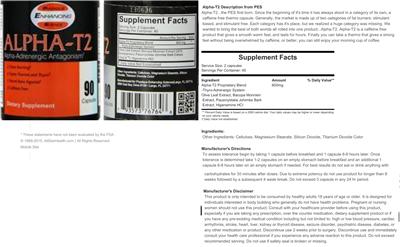
Supplement Facts
The label details for Alpha-T2 by Physique Enhancing Science, sourced from the NIH Dietary Supplement Label Database.
Supplement Facts
| Ingredient | Amount | % DV |
|---|---|---|
| Higenamine HCl | 0 NP | -- |
| Olive leaf extract | 0 NP | -- |
| Alpha-T2 Proprietary Blend-Thyro-Adrenergic System | 600 mg | -- |
| Bacopa monnieri extract | 0 NP | -- |
| Pausinystalia johimbe bark extract | 0 NP | -- |
Other ingredients: Cellulose, Magnesium Stearate, Silicon Dioxide, Titanium Dioxide color
Tap any ingredient to jump to its full detail below.
These statements are the manufacturer’s wording, reproduced from the product label — the label is saying it, not HelloPharmacist. We don’t verify or endorse them.
General Statements
Finally you can take a thermo that gives a strong feel without being overwhelmed by caffeine, or better, you can still enjoy your morning cup of coffee.
Alpha-adrenergic antagonism
130636
Alpha-T2 Description from PES Alpha-T2...the PES first born. Since the beginning of it's time it has always stood in a category of its own, a caffeine free thermo capsule. Generally, the market is made up of two categories of fat burners: stimulant based, and stimulant free. Each category has it's place, but we realized a huge category was missing. We wanted to bring the best of both worlds all rolled into one product...Alpha-T2.
Precautions
Due to extreme potency do not use product for longer than 8 weeks followed by a subsequent 4 week break. Do not exceed 3 capsule in any 24 hr period.
Manufacturer's Disclaimer This product is only intended to be consumed by healthy adults 18 years of age or older.
Discontinue use 2 weeks prior to surgery. Discontinue use and immediately consult your health care professional if you experience any adverse reaction to this product. Do not exceed recommended serving. Do not use if safety seal is broken or missing.
Pregnant or nursing women should not use this product. Consult with your healthcare provider before using this product, especially if you are taking any prescription, over the counter medication, dietary supplement product or if you have any pre-existing medical condition including but not limited to: high or low blood pressure, cardiac arrhythmia, stroke, heart, liver, kidney or thyroid disease, seizure disorder, psychiatric disease, diabetes, or any other medication or product.
Formula
It is designed for individuals interested in body building who generally do not have health problems.
FDA Disclaimer Statement
These statements have not been evaluated by the FDA
Brand IP Statement(s)
1999-2015, AllStarHealth.com All rights reserved
Suggested/Recommended/Usage/Directions
Manufacturer's Directions To assess tolerance begin by taking 1 capsule before breakfast and 1 capsule 6-8 hours later. Once tolerance is determined take 1-2 capsules on an empty stomach before breakfast and an additional 1 capsule 6-8 hours later on an empty stomach if needed. For best results do not eat or drink anything with carbohydrates for 30 minutes after doses. Due to extreme potency do not use product for longer than 8 weeks followed by a subsequent 4 week break. Do not exceed 3 capsule in any 24 hr period.
FDA Statement of Identity
Dietary Supplement
Formulation
Alpha-T2 is a caffeine free product that gives a smooth warm feel, and lasts for hours.
Is this label outdated? Report a formula or label change and our pharmacy team will review it.
Alpha-T2 by Physique Enhancing Science label
The label scan from the NIH Dietary Supplement Label Database. Tap to enlarge.
Label images are published by the NIH Dietary Supplement Label Database for the version of this product on file. Always read your actual product label.
View the full label (PDF)The Ingredients in Alpha-T2 by Physique Enhancing Science
These are the 4 active ingredients this product is made of. Select any to open its full monograph.
Serving size2 Capsule(s) Dosage formCapsule Servings per container45 Amounts shown are per serving.
Most supplement products combine several ingredients, and a medication can interact with the product through any one of them. Each ingredient below shows whether it has known drug interactions.
Alpha-T2 Proprietary Blend-Thyro-Adrenergic System
Other (inactive) ingredients: Cellulose, Magnesium Stearate, Silicon Dioxide, Titanium Dioxide color. These complete the product’s ingredient list but are not active constituents.
Alpha-T2 by Physique Enhancing Science Drug Interactions
HelloPharmacist Interaction Report
Alpha-T2 by Physique Enhancing Science contains four active ingredients, two of which carry documented interactions with medications.
The most serious concern is yohimbe (Pausinystalia johimbe bark extract), which has a Major interaction with monoamine oxidase inhibitors (MAOIs) — drugs used for depression and certain other conditions. Yohimbine, yohimbe's active ingredient, has MAOI-like effects itself, and combining them can cause dangerous additive effects.
Read the full breakdown — every affected drug type, severity by severity
Yohimbe also interacts with several other drug types at Moderate severity: antihypertensive medications (used for high blood pressure), stimulant drugs, tricyclic antidepressants (an older class of depression medication), phenothiazines (antipsychotics), and drugs metabolized by the liver enzymes CYP2D6 and CYP3A4. It may also interfere with how your body breaks down yohimbine if you're taking CYP2D6 or CYP3A4 inhibitors.
Higenamine HCl also carries Moderate interactions with stimulants, blood thinners (anticoagulants and antiplatelet drugs), and medications metabolized by CYP2D6 and CYP3A4 enzymes — plus a Minor interaction with propranolol. Bacopa monnieri extract has Moderate interactions with several liver enzymes (CYP1A2, CYP2C9, CYP2C19, CYP3A4), anticholinergic drugs, cholinergic drugs, and a specific medication called cevimeline, as well as a Minor interaction with thyroid hormone.
Olive leaf extract was checked and shows no interactions documented in our data. Altogether, these interactions span 1,273 individual medications.
Use the medication checker on this page to confirm your exact prescriptions before starting.
Check your own medications below · Editorial policy · How we use AI
Want to check YOUR meds against Alpha-T2?
Ask about interactions with your drugs in plain English — “Can I take it with lisinopril?” — and we find you the answer in seconds, ingredient by ingredient.
Go to the checkerIngredients driving the most interactions
Individual Drug Interactions
The ingredients in Alpha-T2 interact with 1,272 drugs. Click any drug to see the details.
3 of the 4 ingredients in Alpha-T2 interact with drugs. Each result below shows which ingredient is responsible. Pausinystalia johimbe bark extract Bacopa monnieri extract Higenamine HCl
AmphetamineAdensys XR-ODT, Adzenys ER, Dyanavel XR, Mydayis
How Amphetamine interacts with Alpha-T2 — through 2 ingredients. Tap an ingredient for the detail:
Pausinystalia Johimbe Bark ExtractStimulant Drugs, Monoamine Oxidase Inhibitors (maois) +1 Major
Interaction Summary
Theoretically, taking yohimbe with stimulant drugs can have additive effects.
Read the full Pausinystalia Johimbe Bark Extract + Amphetamine interactionHigenamine HclStimulant Drugs, Cytochrome P450 2d6 (cyp2d6) Substrates Moderate
Interaction Summary
Theoretically, higenamine might increase the risk of cardiovascular toxicity when taken with stimulant drugs.
Read the full Higenamine Hcl + Amphetamine interactionIsocarboxazidMarplan
How Isocarboxazid interacts with Alpha-T2 — through 1 ingredient. Tap an ingredient for the detail:
Pausinystalia Johimbe Bark ExtractMonoamine Oxidase Inhibitors (maois) Major
Interaction Summary
Concomitant use of MAOIs with yohimbe can result in additive effects.
Read the full Pausinystalia Johimbe Bark Extract + Isocarboxazid interactionMoclobemideManerix, Moclobemide
How Moclobemide interacts with Alpha-T2 — through 2 ingredients. Tap an ingredient for the detail:
Pausinystalia Johimbe Bark ExtractMonoamine Oxidase Inhibitors (maois), Cytochrome P450 2d6 (cyp2d6) Inhibitors Major
Interaction Summary
Concomitant use of MAOIs with yohimbe can result in additive effects.
Read the full Pausinystalia Johimbe Bark Extract + Moclobemide interactionBacopa Monnieri ExtractCytochrome P450 2c19 (cyp2c19) Substrates Moderate
Interaction Summary
Theoretically, bacopa might increase the levels and adverse effects of CYP2C19 substrates.
Read the full Bacopa Monnieri Extract + Moclobemide interactionOzanimod HydrochlorideZeposia
How Ozanimod Hydrochloride interacts with Alpha-T2 — through 1 ingredient. Tap an ingredient for the detail:
Pausinystalia Johimbe Bark ExtractMonoamine Oxidase Inhibitors (maois) Major
Interaction Summary
Concomitant use of MAOIs with yohimbe can result in additive effects.
Read the full Pausinystalia Johimbe Bark Extract + Ozanimod Hydrochloride interactionPhenelzine SulfateNardil
How Phenelzine Sulfate interacts with Alpha-T2 — through 1 ingredient. Tap an ingredient for the detail:
Pausinystalia Johimbe Bark ExtractMonoamine Oxidase Inhibitors (maois) Major
Interaction Summary
Concomitant use of MAOIs with yohimbe can result in additive effects.
Read the full Pausinystalia Johimbe Bark Extract + Phenelzine Sulfate interactionRasagilineAzilect
How Rasagiline interacts with Alpha-T2 — through 2 ingredients. Tap an ingredient for the detail:
Pausinystalia Johimbe Bark ExtractMonoamine Oxidase Inhibitors (maois), Cytochrome P450 1a2 (cyp1a2) Substrates Major
Interaction Summary
Concomitant use of MAOIs with yohimbe can result in additive effects.
Read the full Pausinystalia Johimbe Bark Extract + Rasagiline interactionBacopa Monnieri ExtractCytochrome P450 1a2 (cyp1a2) Substrates Moderate
Interaction Summary
Theoretically, bacopa might increase the levels and adverse effects of CYP1A2 substrates.
Read the full Bacopa Monnieri Extract + Rasagiline interactionSafinamide MesylateXadago
How Safinamide Mesylate interacts with Alpha-T2 — through 1 ingredient. Tap an ingredient for the detail:
Pausinystalia Johimbe Bark ExtractMonoamine Oxidase Inhibitors (maois) Major
Interaction Summary
Concomitant use of MAOIs with yohimbe can result in additive effects.
Read the full Pausinystalia Johimbe Bark Extract + Safinamide Mesylate interactionSelegilineCarbex, Eldepryl, Emsam, Zelapar
How Selegiline interacts with Alpha-T2 — through 1 ingredient. Tap an ingredient for the detail:
Pausinystalia Johimbe Bark ExtractMonoamine Oxidase Inhibitors (maois) Major
Interaction Summary
Concomitant use of MAOIs with yohimbe can result in additive effects.
Read the full Pausinystalia Johimbe Bark Extract + Selegiline interactionTranylcypromineParnate
How Tranylcypromine interacts with Alpha-T2 — through 1 ingredient. Tap an ingredient for the detail:
Pausinystalia Johimbe Bark ExtractMonoamine Oxidase Inhibitors (maois) Major
Interaction Summary
Concomitant use of MAOIs with yohimbe can result in additive effects.
Read the full Pausinystalia Johimbe Bark Extract + Tranylcypromine interactionAdo-trastuzumab EmtansineKadcyla
How Ado-trastuzumab Emtansine interacts with Alpha-T2 — through 3 ingredients. Tap an ingredient for the detail:
Higenamine HclCytochrome P450 3a4 (cyp3a4) Substrates Moderate
Interaction Summary
Theoretically, higenamine might increase the levels and clinical effects drugs metabolized by CYP3A4.
Read the full Higenamine Hcl + Ado-trastuzumab Emtansine interactionBacopa Monnieri ExtractCytochrome P450 3a4 (cyp3a4) Substrates Moderate
Interaction Summary
Theoretically, bacopa might increase the levels and adverse effects of CYP3A4 substrates.
Read the full Bacopa Monnieri Extract + Ado-trastuzumab Emtansine interactionPausinystalia Johimbe Bark ExtractCytochrome P450 3a4 (cyp3a4) Substrates Minor
Interaction Summary
Theoretically, yohimbe might decrease the levels and clinical effects of CYP3A4 substrates.
Read the full Pausinystalia Johimbe Bark Extract + Ado-trastuzumab Emtansine interactionAbametapirXeglyze
How Abametapir interacts with Alpha-T2 — through 1 ingredient. Tap an ingredient for the detail:
Pausinystalia Johimbe Bark ExtractCytochrome P450 3a4 (cyp3a4) Inhibitors Moderate
Interaction Summary
Theoretically, CYP3A4 inhibitors might increase the levels and adverse effects of yohimbine, a constituent of yohimbe bark.
Read the full Pausinystalia Johimbe Bark Extract + Abametapir interactionAbciximabReoPro
How Abciximab interacts with Alpha-T2 — through 2 ingredients. Tap an ingredient for the detail:
Higenamine HclAnticoagulant/antiplatelet Drugs Moderate
Interaction Summary
Theoretically, higenamine might increase the risk of bleeding or bruising when taken with anticoagulant/antiplatelet drugs.
Read the full Higenamine Hcl + Abciximab interactionPausinystalia Johimbe Bark ExtractAnticoagulant/antiplatelet Drugs Minor
Interaction Summary
Theoretically, combining yohimbe bark with antiplatelet or anticoagulant drugs might have additive effects; however, this has not been reported in clinical research.
Read the full Pausinystalia Johimbe Bark Extract + Abciximab interactionAbemaciclibVerzenio
How Abemaciclib interacts with Alpha-T2 — through 3 ingredients. Tap an ingredient for the detail:
Higenamine HclCytochrome P450 3a4 (cyp3a4) Substrates Moderate
Interaction Summary
Theoretically, higenamine might increase the levels and clinical effects drugs metabolized by CYP3A4.
Read the full Higenamine Hcl + Abemaciclib interactionBacopa Monnieri ExtractCytochrome P450 3a4 (cyp3a4) Substrates Moderate
Interaction Summary
Theoretically, bacopa might increase the levels and adverse effects of CYP3A4 substrates.
Read the full Bacopa Monnieri Extract + Abemaciclib interactionPausinystalia Johimbe Bark ExtractCytochrome P450 3a4 (cyp3a4) Substrates Minor
Interaction Summary
Theoretically, yohimbe might decrease the levels and clinical effects of CYP3A4 substrates.
Read the full Pausinystalia Johimbe Bark Extract + Abemaciclib interactionAbiraterone
How Abiraterone interacts with Alpha-T2 — through 3 ingredients. Tap an ingredient for the detail:
Pausinystalia Johimbe Bark ExtractCytochrome P450 3a4 (cyp3a4) Substrates, Cytochrome P450 3a4 (cyp3a4) Inhibitors +1 Moderate
Interaction Summary
Theoretically, yohimbe might decrease the levels and clinical effects of CYP3A4 substrates.
Read the full Pausinystalia Johimbe Bark Extract + Abiraterone interactionBacopa Monnieri ExtractCytochrome P450 3a4 (cyp3a4) Substrates Moderate
Interaction Summary
Theoretically, bacopa might increase the levels and adverse effects of CYP3A4 substrates.
Read the full Bacopa Monnieri Extract + Abiraterone interactionHigenamine HclCytochrome P450 3a4 (cyp3a4) Substrates Moderate
Interaction Summary
Theoretically, higenamine might increase the levels and clinical effects drugs metabolized by CYP3A4.
Read the full Higenamine Hcl + Abiraterone interactionAbiraterone AcetateYonsa, Zytiga
How Abiraterone Acetate interacts with Alpha-T2 — through 3 ingredients. Tap an ingredient for the detail:
Pausinystalia Johimbe Bark ExtractCytochrome P450 2d6 (cyp2d6) Inhibitors, Cytochrome P450 3a4 (cyp3a4) Substrates Moderate
Interaction Summary
CYP2D6 inhibitors may increase the levels and adverse effects of yohimbine, a constituent of yohimbe.
Read the full Pausinystalia Johimbe Bark Extract + Abiraterone Acetate interactionBacopa Monnieri ExtractCytochrome P450 3a4 (cyp3a4) Substrates Moderate
Interaction Summary
Theoretically, bacopa might increase the levels and adverse effects of CYP3A4 substrates.
Read the full Bacopa Monnieri Extract + Abiraterone Acetate interactionHigenamine HclCytochrome P450 3a4 (cyp3a4) Substrates Moderate
Interaction Summary
Theoretically, higenamine might increase the levels and clinical effects drugs metabolized by CYP3A4.
Read the full Higenamine Hcl + Abiraterone Acetate interactionAbrocitinibCibinqo
How Abrocitinib interacts with Alpha-T2 — through 3 ingredients. Tap an ingredient for the detail:
Higenamine HclAnticoagulant/antiplatelet Drugs Moderate
Interaction Summary
Theoretically, higenamine might increase the risk of bleeding or bruising when taken with anticoagulant/antiplatelet drugs.
Read the full Higenamine Hcl + Abrocitinib interactionBacopa Monnieri ExtractCytochrome P450 2c19 (cyp2c19) Substrates, Cytochrome P450 2c9 (cyp2c9) Substrates Moderate
Interaction Summary
Theoretically, bacopa might increase the levels and adverse effects of CYP2C19 substrates.
Read the full Bacopa Monnieri Extract + Abrocitinib interactionPausinystalia Johimbe Bark ExtractAnticoagulant/antiplatelet Drugs Minor
Interaction Summary
Theoretically, combining yohimbe bark with antiplatelet or anticoagulant drugs might have additive effects; however, this has not been reported in clinical research.
Read the full Pausinystalia Johimbe Bark Extract + Abrocitinib interactionAcalabrutinibCalquence
How Acalabrutinib interacts with Alpha-T2 — through 3 ingredients. Tap an ingredient for the detail:
Bacopa Monnieri ExtractCytochrome P450 3a4 (cyp3a4) Substrates Moderate
Interaction Summary
Theoretically, bacopa might increase the levels and adverse effects of CYP3A4 substrates.
Read the full Bacopa Monnieri Extract + Acalabrutinib interactionHigenamine HclCytochrome P450 3a4 (cyp3a4) Substrates Moderate
Interaction Summary
Theoretically, higenamine might increase the levels and clinical effects drugs metabolized by CYP3A4.
Read the full Higenamine Hcl + Acalabrutinib interactionPausinystalia Johimbe Bark ExtractCytochrome P450 3a4 (cyp3a4) Substrates Minor
Interaction Summary
Theoretically, yohimbe might decrease the levels and clinical effects of CYP3A4 substrates.
Read the full Pausinystalia Johimbe Bark Extract + Acalabrutinib interactionAcebutololRhotral, Sectral
How Acebutolol interacts with Alpha-T2 — through 1 ingredient. Tap an ingredient for the detail:
Pausinystalia Johimbe Bark ExtractAntihypertensive Drugs Moderate
Interaction Summary
Theoretically, yohimbe might reduce the effects of antihypertensive drugs.
Read the full Pausinystalia Johimbe Bark Extract + Acebutolol interactionAcenocoumarolSintrom
How Acenocoumarol interacts with Alpha-T2 — through 2 ingredients. Tap an ingredient for the detail:
Higenamine HclAnticoagulant/antiplatelet Drugs Moderate
Interaction Summary
Theoretically, higenamine might increase the risk of bleeding or bruising when taken with anticoagulant/antiplatelet drugs.
Read the full Higenamine Hcl + Acenocoumarol interactionPausinystalia Johimbe Bark ExtractAnticoagulant/antiplatelet Drugs Minor
Interaction Summary
Theoretically, combining yohimbe bark with antiplatelet or anticoagulant drugs might have additive effects; however, this has not been reported in clinical research.
Read the full Pausinystalia Johimbe Bark Extract + Acenocoumarol interactionAcepromazineAtravet
How Acepromazine interacts with Alpha-T2 — through 2 ingredients. Tap an ingredient for the detail:
Bacopa Monnieri ExtractAnticholinergic Drugs Moderate
Interaction Summary
Theoretically, concurrent use might decrease the effectiveness of both agents.
Read the full Bacopa Monnieri Extract + Acepromazine interactionPausinystalia Johimbe Bark ExtractPhenothiazines Moderate
Interaction Summary
Theoretically, using yohimbine with phenothiazines might have additive effects.
Read the full Pausinystalia Johimbe Bark Extract + Acepromazine interactionAcetaminophenChildren's Tylenol, Children's Tylenol Meltaways, Tylenol, Tylenol Ex Strength
How Acetaminophen interacts with Alpha-T2 — through 2 ingredients. Tap an ingredient for the detail:
Bacopa Monnieri ExtractCytochrome P450 1a2 (cyp1a2) Substrates Moderate
Interaction Summary
Theoretically, bacopa might increase the levels and adverse effects of CYP1A2 substrates.
Read the full Bacopa Monnieri Extract + Acetaminophen interactionPausinystalia Johimbe Bark ExtractCytochrome P450 1a2 (cyp1a2) Substrates Minor
Interaction Summary
Theoretically, yohimbe might decrease the levels and clinical effects of CYP1A2 substrates.
Read the full Pausinystalia Johimbe Bark Extract + Acetaminophen interactionAcetaminophen, AspirinGemnisyn
How Acetaminophen, Aspirin interacts with Alpha-T2 — through 3 ingredients. Tap an ingredient for the detail:
Bacopa Monnieri ExtractCytochrome P450 1a2 (cyp1a2) Substrates Moderate
Interaction Summary
Theoretically, bacopa might increase the levels and adverse effects of CYP1A2 substrates.
Read the full Bacopa Monnieri Extract + Acetaminophen, Aspirin interactionHigenamine HclAnticoagulant/antiplatelet Drugs Moderate
Interaction Summary
Theoretically, higenamine might increase the risk of bleeding or bruising when taken with anticoagulant/antiplatelet drugs.
Read the full Higenamine Hcl + Acetaminophen, Aspirin interactionPausinystalia Johimbe Bark ExtractCytochrome P450 1a2 (cyp1a2) Substrates, Anticoagulant/antiplatelet Drugs Minor
Interaction Summary
Theoretically, yohimbe might decrease the levels and clinical effects of CYP1A2 substrates.
Read the full Pausinystalia Johimbe Bark Extract + Acetaminophen, Aspirin interactionAcetaminophen, Aspirin, CaffeineExcedrin, Excedrin Extra Strength, Excedrin Migraine
How Acetaminophen, Aspirin, Caffeine interacts with Alpha-T2 — through 3 ingredients. Tap an ingredient for the detail:
Pausinystalia Johimbe Bark ExtractAnticoagulant/antiplatelet Drugs, Cytochrome P450 1a2 (cyp1a2) Substrates +2 Moderate
Interaction Summary
Theoretically, combining yohimbe bark with antiplatelet or anticoagulant drugs might have additive effects; however, this has not been reported in clinical research.
Read the full Pausinystalia Johimbe Bark Extract + Acetaminophen, Aspirin, Caffeine interactionBacopa Monnieri ExtractCytochrome P450 1a2 (cyp1a2) Substrates, Cytochrome P450 3a4 (cyp3a4) Substrates Moderate
Interaction Summary
Theoretically, bacopa might increase the levels and adverse effects of CYP1A2 substrates.
Read the full Bacopa Monnieri Extract + Acetaminophen, Aspirin, Caffeine interactionHigenamine HclAnticoagulant/antiplatelet Drugs, Stimulant Drugs +1 Moderate
Interaction Summary
Theoretically, higenamine might increase the risk of bleeding or bruising when taken with anticoagulant/antiplatelet drugs.
Read the full Higenamine Hcl + Acetaminophen, Aspirin, Caffeine interactionAcetaminophen, Brompheniramine, PhenylpropanolamineDimetapp Cold and Flu
How Acetaminophen, Brompheniramine, Phenylpropanolamine interacts with Alpha-T2 — through 3 ingredients. Tap an ingredient for the detail:
Higenamine HclStimulant Drugs Moderate
Interaction Summary
Theoretically, higenamine might increase the risk of cardiovascular toxicity when taken with stimulant drugs.
Read the full Higenamine Hcl + Acetaminophen, Brompheniramine, Phenylpropanolamine interactionPausinystalia Johimbe Bark ExtractCytochrome P450 1a2 (cyp1a2) Substrates, Stimulant Drugs Moderate
Interaction Summary
Theoretically, yohimbe might decrease the levels and clinical effects of CYP1A2 substrates.
Read the full Pausinystalia Johimbe Bark Extract + Acetaminophen, Brompheniramine, Phenylpropanolamine interactionBacopa Monnieri ExtractCytochrome P450 1a2 (cyp1a2) Substrates Moderate
Interaction Summary
Theoretically, bacopa might increase the levels and adverse effects of CYP1A2 substrates.
Read the full Bacopa Monnieri Extract + Acetaminophen, Brompheniramine, Phenylpropanolamine interactionAcetaminophen, ButalbitalAxocet, Bancap, Bucet, Butex Forte, Esgic CF, Orbivan CF +5 more
How Acetaminophen, Butalbital interacts with Alpha-T2 — through 2 ingredients. Tap an ingredient for the detail:
Bacopa Monnieri ExtractCytochrome P450 1a2 (cyp1a2) Substrates Moderate
Interaction Summary
Theoretically, bacopa might increase the levels and adverse effects of CYP1A2 substrates.
Read the full Bacopa Monnieri Extract + Acetaminophen, Butalbital interactionPausinystalia Johimbe Bark ExtractCytochrome P450 1a2 (cyp1a2) Substrates Minor
Interaction Summary
Theoretically, yohimbe might decrease the levels and clinical effects of CYP1A2 substrates.
Read the full Pausinystalia Johimbe Bark Extract + Acetaminophen, Butalbital interactionAcetaminophen, Butalbital, CaffeineEsgic, Esgic Plus, Fiogesic, Fioricet, Repan, Tecnal +1 more
How Acetaminophen, Butalbital, Caffeine interacts with Alpha-T2 — through 3 ingredients. Tap an ingredient for the detail:
Pausinystalia Johimbe Bark ExtractCytochrome P450 1a2 (cyp1a2) Substrates, Cytochrome P450 3a4 (cyp3a4) Substrates +1 Moderate
Interaction Summary
Theoretically, yohimbe might decrease the levels and clinical effects of CYP1A2 substrates.
Read the full Pausinystalia Johimbe Bark Extract + Acetaminophen, Butalbital, Caffeine interactionHigenamine HclStimulant Drugs, Cytochrome P450 3a4 (cyp3a4) Substrates Moderate
Interaction Summary
Theoretically, higenamine might increase the risk of cardiovascular toxicity when taken with stimulant drugs.
Read the full Higenamine Hcl + Acetaminophen, Butalbital, Caffeine interactionBacopa Monnieri ExtractCytochrome P450 1a2 (cyp1a2) Substrates, Cytochrome P450 3a4 (cyp3a4) Substrates Moderate
Interaction Summary
Theoretically, bacopa might increase the levels and adverse effects of CYP1A2 substrates.
Read the full Bacopa Monnieri Extract + Acetaminophen, Butalbital, Caffeine interactionAcetaminophen, Butalbital, Caffeine, CodeineEsgic with Codeine, Fioricet w/ Codeine
How Acetaminophen, Butalbital, Caffeine, Codeine interacts with Alpha-T2 — through 3 ingredients. Tap an ingredient for the detail:
Bacopa Monnieri ExtractCytochrome P450 1a2 (cyp1a2) Substrates, Cytochrome P450 3a4 (cyp3a4) Substrates Moderate
Interaction Summary
Theoretically, bacopa might increase the levels and adverse effects of CYP1A2 substrates.
Read the full Bacopa Monnieri Extract + Acetaminophen, Butalbital, Caffeine, Codeine interactionHigenamine HclCytochrome P450 2d6 (cyp2d6) Substrates, Cytochrome P450 3a4 (cyp3a4) Substrates +1 Moderate
Interaction Summary
Theoretically, higenamine might increase the levels and clinical effects of drugs metabolized by CYP2D6.
Read the full Higenamine Hcl + Acetaminophen, Butalbital, Caffeine, Codeine interactionPausinystalia Johimbe Bark ExtractStimulant Drugs, Cytochrome P450 1a2 (cyp1a2) Substrates +2 Moderate
Interaction Summary
Theoretically, taking yohimbe with stimulant drugs can have additive effects.
Read the full Pausinystalia Johimbe Bark Extract + Acetaminophen, Butalbital, Caffeine, Codeine interactionAcetaminophen, Butalbital, CodeineBancap w/ Codeine
How Acetaminophen, Butalbital, Codeine interacts with Alpha-T2 — through 3 ingredients. Tap an ingredient for the detail:
Higenamine HclCytochrome P450 2d6 (cyp2d6) Substrates Moderate
Interaction Summary
Theoretically, higenamine might increase the levels and clinical effects of drugs metabolized by CYP2D6.
Read the full Higenamine Hcl + Acetaminophen, Butalbital, Codeine interactionBacopa Monnieri ExtractCytochrome P450 1a2 (cyp1a2) Substrates Moderate
Interaction Summary
Theoretically, bacopa might increase the levels and adverse effects of CYP1A2 substrates.
Read the full Bacopa Monnieri Extract + Acetaminophen, Butalbital, Codeine interactionPausinystalia Johimbe Bark ExtractCytochrome P450 2d6 (cyp2d6) Substrates, Cytochrome P450 1a2 (cyp1a2) Substrates Moderate
Interaction Summary
Theoretically, yohimbe might increase the levels and adverse effects of CYP2D6 substrates.
Read the full Pausinystalia Johimbe Bark Extract + Acetaminophen, Butalbital, Codeine interactionAcetaminophen, Butalbital, Codeine PhosphatePhrenilin #3
How Acetaminophen, Butalbital, Codeine Phosphate interacts with Alpha-T2 — through 3 ingredients. Tap an ingredient for the detail:
Pausinystalia Johimbe Bark ExtractCytochrome P450 1a2 (cyp1a2) Substrates, Cytochrome P450 2d6 (cyp2d6) Substrates Moderate
Interaction Summary
Theoretically, yohimbe might decrease the levels and clinical effects of CYP1A2 substrates.
Read the full Pausinystalia Johimbe Bark Extract + Acetaminophen, Butalbital, Codeine Phosphate interactionBacopa Monnieri ExtractCytochrome P450 1a2 (cyp1a2) Substrates Moderate
Interaction Summary
Theoretically, bacopa might increase the levels and adverse effects of CYP1A2 substrates.
Read the full Bacopa Monnieri Extract + Acetaminophen, Butalbital, Codeine Phosphate interactionHigenamine HclCytochrome P450 2d6 (cyp2d6) Substrates Moderate
Interaction Summary
Theoretically, higenamine might increase the levels and clinical effects of drugs metabolized by CYP2D6.
Read the full Higenamine Hcl + Acetaminophen, Butalbital, Codeine Phosphate interactionAcetaminophen, Caffeine, Chlorpheniramine, Hydrocodone, PhenylephrineHycomine Compound
How Acetaminophen, Caffeine, Chlorpheniramine, Hydrocodone, Phenylephrine interacts with Alpha-T2 — through 3 ingredients. Tap an ingredient for the detail:
Higenamine HclCytochrome P450 2d6 (cyp2d6) Substrates, Stimulant Drugs +1 Moderate
Interaction Summary
Theoretically, higenamine might increase the levels and clinical effects of drugs metabolized by CYP2D6.
Read the full Higenamine Hcl + Acetaminophen, Caffeine, Chlorpheniramine, Hydrocodone, Phenylephrine interactionBacopa Monnieri ExtractCytochrome P450 1a2 (cyp1a2) Substrates, Cytochrome P450 3a4 (cyp3a4) Substrates +1 Moderate
Interaction Summary
Theoretically, bacopa might increase the levels and adverse effects of CYP1A2 substrates.
Read the full Bacopa Monnieri Extract + Acetaminophen, Caffeine, Chlorpheniramine, Hydrocodone, Phenylephrine interactionPausinystalia Johimbe Bark ExtractCytochrome P450 2d6 (cyp2d6) Substrates, Stimulant Drugs +3 Moderate
Interaction Summary
Theoretically, yohimbe might increase the levels and adverse effects of CYP2D6 substrates.
Read the full Pausinystalia Johimbe Bark Extract + Acetaminophen, Caffeine, Chlorpheniramine, Hydrocodone, Phenylephrine interactionEach ingredient & the kinds of drugs it affects
For each ingredient in Alpha-T2 with known interactions, here are the types of medications they can affect. Open any type for the detail — or search your exact drug in the checker above.
Pausinystalia johimbe bark extract
Monoamine Oxidase Inhibitors (Maois)
Concomitant use of MAOIs with yohimbe can result in additive effects.
Yohimbine, a constituent of yohimbe, has MAO inhibitory effects. At high doses, yohimbine is a non-selective inhibitor of MAO.
Antihypertensive Drugs
Theoretically, yohimbe might reduce the effects of antihypertensive drugs.
Yohimbine, a constituent of yohimbe, is an alpha-2 adrenoceptor antagonist and has been reported to increase blood pressure in clinical research. Theoretically, concomitant use of yohimbe and antihypertensive drugs can interfere with blood pressure control.
Clonidine (Catapres)
Theoretically, yohimbe might precipitate clonidine withdrawal.
Chronic clonidine use can downregulate alpha-2 adrenoreceptors. Animal research and one human case report suggest that concomitant administration of yohimbine, an alpha-2 adrenoceptor antagonist, may precipitate clonidine withdrawal and lead to sympathomimetic toxicity, including hypertensive crisis.
Cytochrome P450 2D6 (Cyp2D6) Inhibitors
CYP2D6 inhibitors may increase the levels and adverse effects of yohimbine, a constituent of yohimbe.
In vitro and clinical research shows that the yohimbe bark constituent, yohimbine, is metabolized by CYP2D6 isoenzymes. Paroxetine, a cytochrome P450 (CYP) 2D6 inhibitor, increases the maximum serum concentration of yohimbine and reduces the clearance of yohimbine compared to yohimbine alone in patients who are extensive CYP2D6 metabolizers..
Cytochrome P450 2D6 (Cyp2D6) Substrates
Theoretically, yohimbe might increase the levels and adverse effects of CYP2D6 substrates.
In vitro research suggests that yohimbine, a constituent of yohimbe bark, inhibits CYP2D6 enzyme activity.
Cytochrome P450 3A4 (Cyp3A4) Inhibitors
Theoretically, CYP3A4 inhibitors might increase the levels and adverse effects of yohimbine, a constituent of yohimbe bark.
In vitro and clinical research shows that the yohimbe bark constituent, yohimbine, is metabolized by CYP3A4 enzymes. Theoretically, drugs that inhibit CYP3A4 might increase the levels and adverse effects of yohimbine.
Paroxetine (Paxil)
Paroxetine decreases the clearance of yohimbine and may increase its effects.
Paroxetine, a cytochrome P450 (CYP) 2D6 inhibitor, increases the maximum serum concentration of yohimbine by about 350% and reduces the clearance of yohimbine by about 80% compared to yohimbine alone in patients who are extensive CYP2D6 metabolizers. No significant changes in pharmacokinetic parameters of yohimbine were observed with coadministration of paroxetine in patients who are poor CYP2D6 metabolizers.
Phenothiazines
Theoretically, using yohimbine with phenothiazines might have additive effects.
Yohimbine, a constituent of yohimbe, has alpha-2 adrenergic antagonist effects. Theoretically, combining it with phenothiazines can cause additive alpha-2 adrenergic antagonism.
Stimulant Drugs
Theoretically, taking yohimbe with stimulant drugs can have additive effects.
Yohimbine, a constituent of yohimbe, has sympathomimetic effects and increases blood pressure in a dose-dependent manner. Theoretically, taking yohimbe with stimulant drugs can have additive stimulant and hypertensive effects.
Tricyclic Antidepressants (Tcas)
Theoretically, taking yohimbe with TCAs can increase adverse effects.
A small clinical study in patients taking TCAs for at least 4 weeks shows that receiving doses of intravenous yohimbine 2.5-20 mg daily for up to 7 days precipitates severe anxiety, agitation, and tremor. The effects of yohimbe bark itself are unclear; oral yohimbe bark contains 0.6% to 1.38% yohimbine, but it is unclear how much is absorbed.
Anticoagulant/Antiplatelet Drugs
Theoretically, combining yohimbe bark with antiplatelet or anticoagulant drugs might have additive effects; however, this has not been reported in clinical research.
Research in healthy adults shows that taking yohimbine, a constituent of yohimbe bark, in doses of 8 mg or more, seems to inhibit platelet aggregation in vitro by binding to the alpha-2 adrenoceptor. The effects of yohimbe bark itself are unclear; yohimbe bark contains 0.6% to 1.38% yohimbine, but it is unclear how much is absorbed.
Cytochrome P450 1A2 (Cyp1A2) Substrates
Theoretically, yohimbe might decrease the levels and clinical effects of CYP1A2 substrates.
In vitro research shows that yohimbe extract induces CYP1A2 enzymes.
Cytochrome P450 3A4 (Cyp3A4) Substrates
Theoretically, yohimbe might decrease the levels and clinical effects of CYP3A4 substrates.
In vitro research shows that yohimbe extract induces CYP3A4 enzymes.
Bacopa monnieri extract
Anticholinergic Drugs
Theoretically, concurrent use might decrease the effectiveness of both agents.
Bacopa seems to inhibit acetylcholinesterase and might increase acetylcholine levels, which could counteract the effects of anticholinergic drugs. Similarly, anticholinergic drugs might counteract the cholinergic effects of bacopa.
Cevimeline (Evoxac)
Theoretically, bacopa might increase the effects and adverse effects of cevimeline.
In one case, a 58-year-old female taking cevimeline long-term for Sjogren syndrome experienced hyperhidrosis, malaise, nausea, and tachycardia shortly after taking a single dose of bacopa. Symptoms resolved after two days. Cevimeline is metabolized by cytochrome P450 (CYP) 2D6 and CYP3A4, and researchers theorize that bacopa may have inhibited these isoenzymes. However, it is unclear if bacopa causes clinically significant inhibition of either CYP2D6 or CYP3A4.
Cholinergic Drugs
Theoretically, concurrent use of bacopa with other cholinergic drugs might have additive effects.
Bacopa seems to inhibit acetylcholinesterase and might increase acetylcholine levels. Theoretically, this could result in additive cholinergic effects when used with cholinergic drugs.
Cytochrome P450 1A2 (Cyp1A2) Substrates
Theoretically, bacopa might increase the levels and adverse effects of CYP1A2 substrates.
Research on the effects of bacopa extracts on CYP1A2 enzymes is conflicting. Some in vitro evidence shows that bacopa extract can moderately and non-competitively inhibit CYP1A2, while other in vitro evidence suggests that any effect is unlikely to be clinically significant.
Cytochrome P450 2C19 (Cyp2C19) Substrates
Theoretically, bacopa might increase the levels and adverse effects of CYP2C19 substrates.
In vitro evidence suggests that bacopa extract can moderately and non-competitively inhibit CYP2C19 enzymes. It is not known whether this is clinically significant.
Cytochrome P450 2C9 (Cyp2C9) Substrates
Theoretically, bacopa might increase the levels and adverse effects of CYP2C9 substrates.
Research on the effect of bacopa extracts on CYP2C9 enzymes is conflicting. Some in vitro evidence suggests that bacopa extract can moderately and non-competitively inhibit CYP2C9, while other in vitro evidence suggests that any effect is unlikely to be clinically significant.
Cytochrome P450 3A4 (Cyp3A4) Substrates
Theoretically, bacopa might increase the levels and adverse effects of CYP3A4 substrates.
Research on the effects of bacopa extracts on CYP3A4 enzymes is conflicting. Some in vitro evidence suggests that bacopa extract can moderately and competitively inhibit CYP3A4, while other in vitro evidence suggests that any effect is unlikely to be clinically significant.
Thyroid Hormone
Theoretically, bacopa might have additive effects when used with thyroid hormone.
Animal research suggests that bacopa increases thyroxine (T4) levels in mice by about 40%.
Higenamine HCl
Anticoagulant/Antiplatelet Drugs
Theoretically, higenamine might increase the risk of bleeding or bruising when taken with anticoagulant/antiplatelet drugs.
Animal research shows that higenamine inhibits platelet aggregation and reduces the size of thrombus formation.
Cytochrome P450 2D6 (Cyp2D6) Substrates
Theoretically, higenamine might increase the levels and clinical effects of drugs metabolized by CYP2D6.
In vitro research shows that higenamine inhibits CYP2D6 enzymes. However, this effect has not been reported in humans.
Cytochrome P450 3A4 (Cyp3A4) Substrates
Theoretically, higenamine might increase the levels and clinical effects drugs metabolized by CYP3A4.
In vitro research shows that higenamine inhibits CYP3A4 enzymes by 21%. However, this effect has not been reported in humans.
Stimulant Drugs
Theoretically, higenamine might increase the risk of cardiovascular toxicity when taken with stimulant drugs.
Higenamine has stimulant effects due to agonist activity at beta2-adrenoreceptors. In cardiac muscle, higenamine appears to have a positive inotropic effect and increase heart rate. However, it does not appear to increase blood pressure.
Propranolol (Inderal)
Theoretically, the positive inotropic effects of higenamine might be reduced by propranolol.
Animal research shows that higenamine has a positive inotropic effect on the heart, and administering propranolol appears to block this cardiac effect. In animals, propranolol also appears to inhibit corpus cavernosum relaxation induced by higenamine.
Brand information
Manufacturer and brand details for Alpha-T2, from the product label.
Physique Enhancing Science
See all Physique Enhancing Science products- Name
- Physique Enhancing Science
- Street Address
- 3665 East Bay Dr #155
- City
- Largo
- State
- FL
- ZipCode
- 33771
- Phone Number
- 800-875-0448
Alpha-T2 by Physique Enhancing Science: Common Questions
Does Alpha-T2 by Physique Enhancing Science interact with any medications?
How can one product interact with so many drugs?
Where does this information come from?
Can I take this if I'm pregnant or breastfeeding?
What are the most common side effects?
Does this product actually work for weight loss or athletic performance?
Is yohimbe safe to use?
Why does this product interact with so many medications?
What is the proprietary blend, and why does it matter?
Written and reviewed by the HelloPharmacist editorial staff. Our editorial policy
Not sure if Alpha-T2 is safe with your meds?
Our pharmacists answer your medication & supplement questions — free.
Label information is sourced from the NIH Dietary Supplement Label Database and reflects the product version on file; always read your actual product label. This page is for education only and is not a substitute for professional medical advice. Confirm with your pharmacist or doctor before combining supplements and medications.
The Full Monographs Behind Alpha-T2’s Ingredients
Every ingredient we hold a full HelloPharmacist monograph for — uses, evidence, safety, and the complete interaction list.
Higenamine
Interacts with 891 drugsHigenamine is a plant-based stimulant compound added to many weight-loss and pre-workout supplements, but there is very little human evidence that it works and real concerns about heart and...
Read the full Higenamine monograph → Herb & supplement monographOlive
Olive comes from the same tree that gives us olives and olive oil, and its leaf and fruit contain antioxidant compounds like oleuropein and hydroxytyrosol. Olive oil as part of a Mediterrane...
Read the full Olive monograph → Herb & supplement monographBacopa
Interacts with 930 drugsBacopa is an Ayurvedic herb most often used for memory and thinking. Some small studies suggest it may modestly help memory when taken regularly for several weeks, but the evidence is limite...
Read the full Bacopa monograph → Herb & supplement monographYohimbe
Interacts with 1,125 drugsYohimbe is a West African tree bark that contains yohimbine, a compound mainly promoted for erectile dysfunction and as an aphrodisiac. A prescription form of yohimbine has some evidence for...
Read the full Yohimbe monograph →Sources & How We Checked
Alpha-T2's label data comes from the NIH Dietary Supplement Label Database; the ingredient interaction data is from the Natural Medicines database, reviewed by our pharmacists.
- NIH Dietary Supplement Label Database (DSLD) — The official product label on file for this supplement.
- Natural Medicines (Therapeutic Research Center) — Evidence-graded clinical reference behind the ingredient interaction data.
Content is written and reviewed by licensed HelloPharmacist pharmacists. See our data sources and editorial standards for how this information is built and checked.
The 94 references behind this product’s interaction data
Every citation that drives the interaction findings for this product’s ingredients, from the evidence-graded Natural Medicines (TRC Healthcare) database. Open an ingredient to browse its citations — links open the study on PubMed or the publisher’s site.
Higenamine 14 references
- Tai YT, But PP, Young K, et al. Cardiotoxicity after accidental herb-induced aconite poisoning. Lancet 1992;340:1254-6. PubMed
- But PP, Tai YT, Young K. Three fatal cases of herbal aconite poisoning. Vet Hum Toxicol 1994;36:212-5.
- Lin CC, Chan TY, Deng JF. Clinical features and management of herb-induced aconitine poisoning. Ann Emerg Med 2004;43:574-9. PubMed
- Wagner H, Reiter M, Ferstl W. New drugs with cardiotonic activity. Part 1. Chemistry and pharmacology of the cardiotonic active principle of Annona squamosa L. Planta Med 1980;40:77-85.
- Park CW, Chang KC, Lim JK. Effects of higenamine on isolated heart adrenoceptor of rabbit. Arch Int Pharmacodyn Ther 1984;267:279-88.
- Liu WH, Zhou YP, Zeng GY. Effects of dl-demethylcoclaurine on experimental heart failure. Acta Pharm Sinica 1988;23:81-5.
- Yun-Choi HS, Pyo MK, Park KM, et al. Anti-thrombotic effects of higenamine. Planta Med 2001;67:619-22. PubMed
- Zhang Z, Liu X, Tao Z, et al. Effects of higeramine on hemodynamics and its tolerability and safety, an experimental study. Zhonghua Yi Xue Za Zhi 2002;82:352-5.
- Kam SC, Do JM, Choi JH, et al. The relaxation effect and mechanism of action of higenamine in the rat corpus cavernosum. Int J Impot Res 2012;24:77-83. PubMed
- Liu Y, Santillo MF. Cytochrome P450 2D6 and 3A4 enzyme inhibition by amine stimulants in dietary supplements. Drug Test Anal. 2016;8(3-4):307-10. PubMed
- Jeter J, DeZee KJ, Kennedy L. A Case of Paraspinal Muscle Rhabdomyolysis in a 22-Year-Old Male After Ingesting a Supplement Containing Higenamine. Mil Med. 2015;180(7):e847-9. PubMed
- Zhang N, Lian Z, Peng X, Li Z, Zhu H. Applications of Higenamine in pharmacology and medicine. J Ethnopharmacol. 2017;196:242-252. PubMed
- Cohen PA, Travis JC, Keizers PHJ, Boyer FE, Venhuis BJ. The stimulant higenamine in weight loss and sports supplements. Clin Toxicol (Phila). 2018:1-6. PubMed
- Rasic JS, Ivanovic ND, Andjelkovic MS, et al. Influence of higenamine on exercise performance of recreational female athletes: a randomized double-blinded placebo-controlled trial. Front Psychol 2021;12:633110. PubMed
Olive 2 references
- Liccardi G, D'Amato M, D'Amato G. Oleaceae pollinosis: a review. Int Arch Allergy Immunol 1996;111:210-7. PubMed
- Somerville V, Moore R, Braakhuis A. The effect of olive leaf extract on upper respiratory illness in high school athletes: A randomised control trial. Nutrients. 2019;11(2). pii: E358. PubMed
Bacopa 12 references
- Stough C, Lloyd J, Clarke J, et al. The chronic effects of an extract of Bacopa monniera (Brahmi) on cognitive function in healthy human subjects. Psychopharmacology 2001;156:481-4..
- Yadav SK, Jain AK, Tripathi SN, Gupta JP. Irritable bowel syndrome: therapeutic evaluation of indigenous drugs. Indian J Med Res 1989;90:496-503..
- Morgan A, Stevens J. Does Bacopa monnieri improve memory performance in older persons? Results of a randomized, placebo-controlled, double-blind trial. J Altern Complement Med 2010;16:753-9.
- Kar, A., Panda, S., and Bharti, S. Relative efficacy of three medicinal plant extracts in the alteration of thyroid hormone concentrations in male mice. J Ethnopharmacol. 2002;81(2):281-285. PubMed
- Mukherjee, G. D. and Dey, C. D. Clinical trial on Brahmi. I. J.Exp.Med.Sci. 1966;10(1):5-11.
- Kar A, Pandit S, Mukherjee K, Bahadur S, Mukherjee PK. Safety assessment of selected medicinal food plants used in Ayurveda through CYP450 enzyme inhibition study. J Sci Food Agric 2017;97(1):333-40. doi: 10.1002/jsfa.7739. PubMed
- Kongkeaw C, Dilokthornsakul P, Thanarangsarit P, et al. Meta-analysis of randomized controlled trials on cognitive effects of Bacopa monnieri extract. J Ethnopharmacol 2014;151(1):528-35. PubMed
- Ramasamy S, Kiew LV, Chung LY. Inhibition of human cytochrome P450 enzymes by Bacopa monnieri standardized extract and constituents. Molecules 2014;19(2):2588-601. PubMed
- Prabhakar S, Vishnu VY, Modi M, et al. Efficacy of Bacopa monnieri (Brahmi) and donepezil in Alzheimer's disease and mild cognitive impairment: a randomized double-blind parallel phase 2b study. Ann Indian Acad Neurol 2020;23(6):767-73. PubMed
- Acquarulo B, Tandon P, Macica CM. Suspected cholinergic toxicity due to cevimeline hydrochloride and Bacopa monnieri interaction: a case report. J Med Case Rep 2022;16(1):253. PubMed
- Keegan AP, Stough C, Paris D, et al. Bacopa monnieri supplementation has no effect on serum brain-derived neurotrophic factor levels but beneficially modulates nuclear factor kappa B and cyclic AMP response element-binding protein levels in healthy elderl
- Yaworski AM, Blyumin M, Chang T, Mammen AL, Greene M. Necrotizing myopathy with elevated anti-HMGCR antibodies following exposure to the supplement Bacopa. Muscle Nerve 2023;67(2):E1-E3.
Yohimbe 66 references
- Leung AY, Foster S. Encyclopedia of Common Natural Ingredients Used in Food, Drugs and Cosmetics. 2nd ed. New York, NY: John Wiley & Sons, 1996.
- McGuffin M, Hobbs C, Upton R, Goldberg A, eds. American Herbal Products Association's Botanical Safety Handbook. Boca Raton, FL: CRC Press, LLC 1997.
- Gruenwald J, Brendler T, Jaenicke C. PDR for Herbal Medicines. 1st ed. Montvale, NJ: Medical Economics Company, Inc., 1998.
- Brinker F. Herb Contraindications and Drug Interactions. 2nd ed. Sandy, OR: Eclectic Medical Publications, 1998.
- Milman N, Scheibel J, Jessen O. Lysine prophylaxis in recurrent herpes simplex labialis: a double-blind, controlled crossover study. Acta Derm Venereol 1980;60:85-7.
- Teloken C, Rhoden EL, Sogari P, et al. Therapeutic effects of high dose yohimbine hydrochloride on organic erectile dysfunction. J Urol 1998;159:122-4. PubMed
- Jacobsen FM. Fluoxetine-induced sexual dysfunction and an open trial of yohimbine. J Clin Psychiatry 1992;53:119-22.
- Hollander E, McCarley A. Yohimbine treatment of sexual side effects induced by serotonin reuptake blockers. J Clin Psychiatry 1992;53:207-9.
- Sandler B, Aronson P. Yohimbine-induced cutaneous drug eruption, progressive renal failure, and lupus-like syndrome. Urol 1993;41:343-5. PubMed
- Kearney T, Tu N, Haller C. Adverse drug events associated with yohimbine-containing products: a retrospective review of the California Poison Control System reported cases. Ann Pharmacother 2010;44:1022-9. PubMed
- VandenBrink, B. M., Foti, R. S., Rock, D. A., Wienkers, L. C., and Wahlstrom, J. L. Prediction of CYP2D6 drug interactions from in vitro data: evidence for substrate-dependent inhibition. Drug Metab Dispos. 2012;40(1):47-53. PubMed
- Abebe, W. An overview of herbal supplement utilization with particular emphasis on possible interactions with dental drugs and oral manifestations. J Dent.Hyg. 2003;77(1):37-46.
- Mustonen, P., Savola, J., and Lassila, R. Atipamezole, an imidazoline-type alpha(2)-adrenoceptor inhibitor, binds to human platelets and inhibits their adrenaline-induced aggregation more effectively than yohimbine. Thromb.Res 8-1-2000;99(3):231-237.
- Cameron, O. G., Zubieta, J. K., Grunhaus, L., and Minoshima, S. Effects of yohimbine on cerebral blood flow, symptoms, and physiological functions in humans. Psychosom.Med 2000;62(4):549-559. PubMed
- Bowes, M. P., Peters, R. H., Kernan, W. J., Jr., and Hopper, D. L. Effects of yohimbine and idazoxan on motor behaviors in male rats. Pharmacol.Biochem.Behav. 1992;41(4):707-713.
- Bagheri, H., Schmitt, L., Berlan, M., and Montastruc, J. L. Effect of 3 weeks treatment with yohimbine on salivary secretion in healthy volunteers and in depressed patients treated with tricyclic antidepressants. Br J Clin Pharmacol 1992;34(6):555-558. PubMed
- Bagheri, H., Bompart, G., Girolami, J. P., Montastruc, J. L., and Montastruc, P. Is yohimbine-induced increase in salivary secretion a kinin-dependent mechanism? Fundam.Clin Pharmacol 1992;6(1):17-20. PubMed
- Swann, A. C., Birnbaum, D., Jagar, A. A., Dougherty, D. M., and Moeller, F. G. Acute yohimbine increases laboratory-measured impulsivity in normal subjects. Biol.Psychiatry 5-15-2005;57(10):1209-1211. PubMed
- Adeniyi, A. A., Brindley, G. S., Pryor, J. P., and Ralph, D. J. Yohimbine in the treatment of orgasmic dysfunction. Asian J Androl 2007;9(3):403-407. PubMed
- Murburg, M. M., Villacres, E. C., Ko, G. N., and Veith, R. C. Effects of yohimbine on human sympathetic nervous system function. J Clin Endocrinol.Metab 1991;73(4):861-865. PubMed
- Giampreti, A., Lonati, D., Locatelli, C., Rocchi, L., and Campailla, M. T. Acute neurotoxicity after yohimbine ingestion by a body builder. Clin Toxicol.(Phila) 2009;47(8):827-829. PubMed
- Bloomer, R. J., Canale, R. E., Blankenship, M. M., Hammond, K. G., Fisher-Wellman, K. H., and Schilling, B. K. Effect of the dietary supplement Meltdown on catecholamine secretion, markers of lipolysis, and metabolic rate in men and women: a randomized,
- Myers, A. and Barrueto, F., Jr. Refractory priapism associated with ingestion of yohimbe extract. J Med Toxicol. 2009;5(4):223-225.
- Berlin, I., Crespo-Laumonnier, B., Cournot, A., Landault, C., Aubin, F., Legrand, J. C., and Puech, A. J. The alpha 2-adrenergic receptor antagonist yohimbine inhibits epinephrine-induced platelet aggregation in healthy subjects. Clin Pharmacol.Ther. 199
- Swann, A. C. Mechanisms of impulsivity in bipolar disorder and related illness. Epidemiol.Psichiatr.Soc. 2010;19(2):120-130.
- Shibao, C., Okamoto, L. E., Gamboa, A., Yu, C., Diedrich, A., Raj, S. R., Robertson, D., and Biaggioni, I. Comparative efficacy of yohimbine against pyridostigmine for the treatment of orthostatic hypotension in autonomic failure. Hypertension 2010;56(5) PubMed
- Soeter, M. and Kindt, M. Stimulation of the noradrenergic system during memory formation impairs extinction learning but not the disruption of reconsolidation. Neuropsychopharmacology 2012;37(5):1204-1215. PubMed
- Cimolai, N. and Cimolai, T. Yohimbine use for physical enhancement and its potential toxicity. J Diet.Suppl 2011;8(4):346-354. PubMed
- Bagheri, H., Berlan, M., Montastruc, J. L., and Montastruc, P. Yohimbine and lacrimal secretion. Br J Clin Pharmacol. 1990;30(1):151-152.
- Landis, E. and Shore, E. Yohimbine-induced bronchospasm. Chest 1989;96(6):1424. PubMed
- Susset, J. G., Tessier, C. D., Wincze, J., Bansal, S., Malhotra, C., and Schwacha, M. G. Effect of yohimbine hydrochloride on erectile impotence: a double-blind study. J Urol. 1989;141(6):1360-1363. PubMed
- Chatelut, E., Rispail, Y., Berlan, M., and Montastruc, J. L. Yohimbine increases human salivary secretion. Br.J Clin Pharmacol. 1989;28(3):366-368. PubMed
- Montastruc, P., Berlan, M., and Montastruc, J. L. Effects of yohimbine on submaxillary salivation in dogs. Br J Pharmacol 1989;98(1):101-104. PubMed
- Charney, D. S., Price, L. H., and Heninger, G. R. Desipramine-yohimbine combination treatment of refractory depression. Implications for the beta-adrenergic receptor hypothesis of antidepressant action. Arch.Gen.Psychiatry 1986;43(12):1155-1161. PubMed
- Braddock, L., Cowen, P. J., Elliott, J. M., Fraser, S., and Stump, K. Binding of yohimbine and imipramine to platelets in depressive illness. Psychol.Med 1986;16(4):765-773. PubMed
- Bolme, P., Corrodi, H., Fuxe, K., Hokfelt, T., Lidbrink, P., and Goldstein, M. Possible involvement of central adrenaline neurons in vasomotor and respiratory control. Studies with clonidine and its interactions with piperoxane and yohimbine. Eur J Pharm PubMed
- Charney, D. S., Heninger, G. R., and Sternberg, D. E. Assessment of alpha 2 adrenergic autoreceptor function in humans: effects of oral yohimbine. Life Sci 6-7-1982;30(23):2033-2041.
- Boon, N. A., Elliott, J. M., Grahame-Smith, D. G., John-Green, T., and Stump, K. A comparison of alpha 2-adrenoreceptor binding characteristics of intact human platelets identified by [3H]-yohimbine and [3H]- dihydroergocryptine. J Auton.Pharmacol 1983;3
- Andrejak, M., Ward, M., and Schmitt, H. Cardiovascular effects of yohimbine in anaesthetized dogs. Eur.J Pharmacol 10-28-1983;94(3-4):219-228. PubMed
- Brodde, O. E., Anlauf, M., Arroyo, J., Wagner, R., Weber, F., and Buck, K. D. Hypersensitivity of adrenergic receptors and blood-pressure response to oral yohimbine in orthostatic hypotension. N.Engl.J Med 4-28-1983;308(17):1033-1034. PubMed
- Charney, D. S., Heninger, G. R., and Redmond, D. E., Jr. Yohimbine induced anxiety and increased noradrenergic function in humans: effects of diazepam and clonidine. Life Sci. 7-4-1983;33(1):19-29. PubMed
- Knoll, L. D., Benson, R. C., Jr., Bilhartz, D. L., Minich, P. J., and Furlow, W. L. A randomized crossover study using yohimbine and isoxsuprine versus pentoxifylline in the management of vasculogenic impotence. J Urol. 1996;155(1):144-146. DOI
- Betz, J. M., White, K. D., and der Marderosian, A. H. Gas chromatographic determination of yohimbine in commercial yohimbe products. J AOAC Int 1995;78(5):1189-1194. DOI
- Bagheri, H., Chale, J. J., Guyen, L. N., Tran, M. A., Berlan, M., and Montastruc, J. L. Evidence for activation of both adrenergic and cholinergic nervous pathways by yohimbine, an alpha 2-adrenoceptor antagonist. Fundam.Clin Pharmacol 1995;9(3):248-254.
- Kennedy, S. H., Gnam, W., Ralevski, E., and Brown, G. M. Melatonin responses to clonidine and yohimbine challenges. J Psychiatry Neurosci. 1995;20(4):297-304.
- Musso, N. R., Vergassola, C., Pende, A., and Lotti, G. Yohimbine effects on blood pressure and plasma catecholamines in human hypertension. Am J Hypertens. 1995;8(6):565-571. PubMed
- Morgan, C. A., III, Southwick, S. M., Grillon, C., Davis, M., Krystal, J. H., and Charney, D. S. Yohimbine-facilitated acoustic startle reflex in humans. Psychopharmacology (Berl) 1993;110(3):342-346. PubMed
- Adler, L. E., Hoffer, L., Nagamoto, H. T., Waldo, M. C., Kisley, M. A., and Giffith, J. M. Yohimbine impairs P50 auditory sensory gating in normal subjects. Neuropsychopharmacology 1994;10(4):249-257. PubMed
- Biaggioni, I., Robertson, R. M., and Robertson, D. Manipulation of norepinephrine metabolism with yohimbine in the treatment of autonomic failure. J Clin Pharmacol. 1994;34(5):418-423. PubMed
- Kenney, W. L., Zappe, D. H., Tankersley, C. G., and Derr, J. A. Effect of systemic yohimbine on the control of skin blood flow during local heating and dynamic exercise. Am J Physiol 1994;266(2 Pt 2):H371-H376. PubMed
- Friesen, K., Palatnick, W., and Tenenbein, M. Benign course after massive ingestion of yohimbine. J Emerg.Med 1993;11(3):287-288. PubMed
- Bierer, L. M., Aisen, P. S., Davidson, M., Ryan, T. M., Stern, R. G., Schmeidler, J., and Davis, K. L. A pilot study of oral physostigmine plus yohimbine in patients with Alzheimer disease. Alzheimer Dis.Assoc.Disord. 1993;7(2):98-104. PubMed
- Mann, K., Klingler, T., Noe, S., Roschke, J., Muller, S., and Benkert, O. Effects of yohimbine on sexual experiences and nocturnal penile tumescence and rigidity in erectile dysfunction. Arch.Sex Behav. 1996;25(1):1-16. PubMed
- Rowland, D. L., Kallan, K., and Slob, A. K. Yohimbine, erectile capacity, and sexual response in men. Arch Sex Behav 1997;26(1):49-62.
- Bremner, J. D., Innis, R. B., Ng, C. K., Staib, L. H., Salomon, R. M., Bronen, R. A., Duncan, J., Southwick, S. M., Krystal, J. H., Rich, D., Zubal, G., Dey, H., Soufer, R., and Charney, D. S. Positron emission tomography measurement of cerebral metaboli
- Riley AJ, Goodman R, Kellett JM, and et al. Double blind trial of yohimbine hydrochloride in the treatment of erection inadequacy. Sexual Marital Ther 1989;4(1):17-26. DOI
- Cohen PA, Wang YH, Maller G, DeSouza R, Khan IA. Pharmaceutical quantities of yohimbine found in dietary supplements in the USA. Drug Test Anal. 2015 Sep 22. PubMed
- Ruck B, Shih RD, Marcus SM. Hypertensive crisis from herbal treatment of impotence. Am J Emerg Med. 1999;17:317-318. PubMed
- Wylie KR. Yohimbine and sinusitis. Br J Psychiatry. 1996;169(3):384-5. PubMed
- Le Corre P, Parmer RJ, Kailasam MT, et al. Human sympathetic activation by alpha2-adrenergic blockade with yohimbine: Bimodal, epistatic influence of cytochrome P450-mediated drug metabolism. Clin Pharmacol Ther. 2004;76(2):139-53.
- Mueller-Schoell A, Michelet R, Weinelt F, Kloft C, Mikus G. CYP2D6 phenotype explains reported yohimbine concentrations in four severe acute intoxications. Arch Toxicol. 2021. PubMed
- Bharucha AE, Skaar T, Andrews CN, et al Relationship of cytochrome P450 pharmacogenetics to the effects of yohimbine on gastrointestinal transit and catecholamines in healthy subjects. Neurogastroenterol Motil. 2008;20(8):891-9. PubMed
- Schmauss M, Laakmann G, Dieterle D. Effects of alpha 2-receptor blockade in addition to tricyclic antidepressants in therapy-resistant depression. J Clin Psychopharmacol. 1988;8(2):108-11.
- Haron MH, Dale O, Martin K, et al. Evaluation of the Herb-Drug Interaction Potential of Commonly Used Botanicals on the US Market with Regard to PXR- and AhR-Mediated Influences on CYP3A4 and CYP1A2. J Diet Suppl 2022. PubMed
- Hodapp B, Haggerty A, Feldman R, Timpe J. Intracranial hemorrhage after a single dose of Yohimbine in a chronic user of clonidine. Am J Emerg Med 2022;62:145. PubMed
- Vay M, Meyer MJ, Blank A, et al. Oral yohimbine as a new probe drug to predict CYP2D6 activity: results of a fixed-sequence phase I trial. Clin Pharmacokinet. 2020;59(7):927-939. PubMed
Parts of this content are provided by the Therapeutic Research Center, LLC.
DISCLAIMER: Currently this does not check for drug-drug interactions. This is not an all-inclusive comprehensive list of potential interactions and is for informational purposes only. Not all interactions are known or well-reported in the scientific literature, and new interactions are continually being reported. Input is needed from a qualified healthcare provider including a pharmacist before starting any therapy. Application of clinical judgment is necessary.
© 2021 Therapeutic Research Center, LLC