
Ashwagandha by Solaray Ingredients, Side Effects and Drug Interactions
Dietary Supplement Capsule Botanical
UPC 0 76280 41746 3 Match it to the barcode on your bottle

Medically reviewed by Dr. Brian Staiger, PharmD, BCPS
Also reviewed by the HelloPharmacist Editorial Team
Updated Details about this page
- Label on file from the NIH Dietary Supplement Label Database, dated Aug 22, 2025.
- The interaction, evidence and safety records come from the Natural Medicines database, which we license, read against this label by our own system; the pharmacy team’s sections are written from those records.
- Dr. Brian Staiger, PharmD, BCPS, is a clinical pharmacist and pharmacotherapy specialist.
- Editorial policy Our sources
AI is used only to summarize verified clinical information, never the open internet. Our AI policy
Summary: The HelloPharmacist Team’s Take
- Form
- Capsule
- Serving Size
- 1 Veg Cap
- Servings
- 30 per container
- Container Holds
- 30 Veg Caps
What’s in it, whether it interacts with your drugs, its side effects, whether it works, and what our pharmacists would want you to know before you start it.
- What is Ashwagandha?A single-ingredient supplement from Solaray, in capsule form.
- Active Ingredients Shoden 240 mg One active ingredient. We check it for drug interactions and side effects. The full Supplement Facts
- Drug Interactions 1,373 drugs have a documented interaction with this supplement; the most serious is rated moderate. Of those, 958 are single drugs and 415 are combination products (two or more drugs in one), each listed under its own name. Ask your pharmacist first if you take a drug in any of these categories, the most serious of the 10 on record:
- Moderate · 372 drugs
- Moderate · 248 drugs
- Moderate · 172 drugs
- Moderate · 121 drugs
- Possible Side EffectsUpset stomach, nausea, or diarrheaDrowsiness or sleepinessHeadache +7 moreReported for its one active ingredient, Ashwagandha. Not studied in this exact product.
- Well documented Why
Does Ashwagandha work?
What It Is Marketed For
Stress, mood and sleep support
From the claims on the product’s label.
The Closest Use the Research Grades
Some studies support it, but the evidence isn’t conclusive.
Ashwagandha has research behind other uses too:
These grades are for the ingredient, not this exact product, and never a promise it will work for you.
What the research says- Full Why
- AllergensNone of its ingredient names point to a major food allergen
- Barcode (UPC)0 76280 41746 3Match it to the barcode on your bottle to be sure this is your product. Not your product? Search for it here
Who Might Consider It
- People looking for stress, mood and sleep support, which is what it is marketed for. The closest use the research grades is generalized anxiety disorder (GAD), rated Possibly Effective.
- People who want it for insomnia or stress: the other uses with research behind them. See each grade
More Before You Take It Show all three answersHide Its Shoden Amount vs. Other Supplements Pregnancy and Breastfeeding The Label’s Directions
-
How does its Shoden amount compare with other supplements?
- Shoden240 mgIn the usual range for the 344 recent Ashwagandha products in our database that state an amount; 600 mg is the most common.
A label’s amount is what the product holds, not a recommended dose.
See the Shoden comparison -
Pregnant or breastfeeding?
- Pregnancy
- There is insufficient reliable information available about the safety of oral ashwagandha when used during pregnancy.
- Breastfeeding
- Insufficient reliable information available; avoid using.
-
How does the label say to take it?
“Directions: Use only as directed. Take 1 VegCap twice a day with a glass of water.”
The maker’s words. Your pharmacist or doctor may advise differently.
Everything the label says
From the label dated Aug 22, 2025: its one active ingredient was checked against our records. A summary of what is known, not a grade or a test of the product. How these ratings are computed
Ask Anything About This Supplement
Name a drug you take, or ask about side effects, ingredients or pregnancy.
AI answers come from this label and our own records, never the open internet. AI can make mistakes, so always check with your doctor or pharmacist. How we use AI
Ask the Pharmacist
A licensed pharmacist will answer your question by email — free, usually within 24 hours.
Got it — thank you!
A licensed pharmacist will answer within 24 hours. Keep an eye on your email (worth checking spam, just in case).
What’s Inside Ashwagandha by Solaray
One Active Ingredient: Shoden
Everything this page says about drug interactions and side effects comes from what is known about Shoden.
Why this rating?
The label gives the exact amount of its one active ingredient, so you know how much you get in each serving. This rates what the label tells you, not the quality of the product.
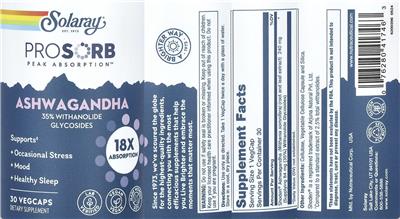
Supplement Facts
| Amount Per Serving | % Daily Value | |
|---|---|---|
| Shoden | 240 mg | † |
| Withanolide Glycosides | 84 mg | † |
Other ingredients: Cellulose, Silica
† Daily Value not established.
Daily Values for adults and children 4 or more years of age.
As the label prints it, from the NIH Dietary Supplement Label Database.
Each Ingredient and Its Drug Interactions
Tap one for more about it and its full guide.
-
Shoden 240 mg Interacts with 1,373 drugs
Form on the label: Ashwagandha Leaf, Root Extract
Ashwagandha is an Ayurvedic herb most often taken to help with stress, anxiety, and sleep, and some small studies suggest it may help, though the evidence is still limited.
- It is generally well tolerated for short-term use in healthy adults, but it should be avoided in pregnancy and used cautiously by people with thyroid or liver problems.
- Talk with your pharmacist or doctor before starting it.
The full Ashwagandha guide: uses, dosage and safety Every Ashwagandha drug interaction
- Withanolide Glycosides 84 mg
How Much Ashwagandha Is in It, Compared With Other Supplements
Each bar is an amount that other recent supplements list for the same ingredient. The taller the bar, the more of them state it.
-
240 mg in a serving of this product
In the usual range
- Most common amount
- 600 mg (about 11 in 100 products)
- Most products state
- 65 mg to 600 mg
- Compared with
- 344 recent products
Other Ingredients (Inactive)
The capsule or tablet itself, fillers, coatings and flavors. Not part of the drug interaction check; the allergen check below reads them.
- Cellulose
- Silica
Allergens in Ashwagandha
None of its ingredient names point to a major food allergen.
Not named in the ingredients
- Milk
- Egg
- Fish
- Shellfish
- Tree nuts
- Peanuts
- Wheat or other gluten grains
- Soy
- Sesame
- Made without, the label says“Vegan”
- Made without, the label says“Made without soy”
- Made without, the label says“Gluten free”
From the label text and ingredient names on file; we do not test products. With a serious allergy, check your bottle and ask the maker or your pharmacist.
What the Label Says
The maker’s own words, from the label. We do not verify or endorse them.
- Brand IP Statement(s)
-
“Solaray Est. 1973 A Brighter Way 1973”
“Shoden is a registered trademark of Arjuna Natural Pvd. Ltd.”
- Formulation
-
“ProSorb Peak Absorption Supports Occasional stress Mood Healthy sleep 18X absorption Compared to a standard extract of 2.5% total withanolides.”
“35% withanolide glycosides”
- FDA Statement of Identity
-
“Dietary Supplement”
- Seals and symbols
-
“Lab Verified Vegan”
- General statements
-
“Since 1973, we've scoured the globe for the highest-quality ingredients, connecting you with the most efficacious supplements that help you live brighter and embrace the moments that matter most.”
“100% PCR bottles”
- Storage
-
“Store in a cool, dry place.”
The Ashwagandha Label on File
The label scan on file at the NIH Dietary Supplement Label Database, dated August 2025. Always read the label on the bottle you have.
Product Facts
- Brand
- Solaray
- Barcode (UPC)
- 076280417463
- Net contents
- 30 Veg Caps
- Market status
- On market
- Date entered into DSLD
- Aug 22, 2025
- DSLD ID
- 338211
- Product type
- Botanical
- Supplement form
- Capsule
- Dietary claims / uses
- All Other, Structure/Function
- Intended target group(s)
- Vegan, Vegetarian, Adult (18 - 50 Years), Women (not pregnant or lactating), Gluten Free, Dairy Free
Is this label outdated? Report a formula or label change and our pharmacy team will review it.
Ashwagandha by Solaray Side Effects
Why this rating?
We look for three kinds of safety information on each ingredient: side effects reported in studies, a pregnancy and breastfeeding rating, and a safety write-up from our pharmacy team. All three are on file for Ashwagandha.
So this rates how much is known, not whether Ashwagandha is right for you.
Reported with Ashwagandha, its active ingredient
- Most often
- Upset stomach, nausea, or diarrhea; drowsiness or sleepiness; and headache
- !Rare but serious
- Liver problems, possible changes in thyroid function and hepatic encephalopathy See details
Side Effects Reported With Ashwagandha
Ashwagandha Warnings: Who Should Be Careful
These warnings are for Ashwagandha, its one active ingredient. If any of these apply to you, talk to your doctor or pharmacist before you start it.
-
Bleeding Problems or Surgery
- People with autoimmune conditions or those scheduled for surgery should also check with their doctor first.
-
Thyroid Conditions
- Use caution if you have a thyroid condition, since ashwagandha may affect thyroid hormone levels.
-
What the Label Warns
- “Warning: Do not use if safety seal is broken or missing. Keep your licensed health care practitioner informed when using this product.”
- “Keep out of reach of children.”
- “Do not use if you are pregnant.”
The maker’s wording, from the product label.
-
Pregnant or Breastfeeding
The rating for pregnancy and for breastfeeding, and what it covers.
Pregnancy
-
There is insufficient reliable information available about the safety of oral ashwagandha when used during pregnancy.
Historically, ashwagandha has been linked to abortifacient effects; however, there are no reliable case reports of harm in pregnancy.
2 more points on this rating
- Although one clinical study in pregnant females in their second trimester reported no adverse events with use of ashwagandha 300 mg twice daily for 12 weeks, abortifacient activity, developmental outcomes, and fetal toxicity were not assessed.
- Until more is known about the safety of ashwagandha, avoid using during pregnancy.
Breastfeeding
-
Insufficient reliable information available; avoid using.
Ratings and the words beside them are from the Natural Medicines database, which we license.
The full record, with its sources, in the Ashwagandha guide -
Rare but Serious Side Effects
-
!
Ashwagandha
Rare but serious effects include liver problems and possible changes in thyroid function.
Orally: Some case reports raise concerns about acute hepatitis, acute liver failure, hepatic encephalopathy, the need for liver transplantation, and death due to liver failure with ashwagandha treatment.
When to get help: a serious allergic reaction, with trouble breathing or swelling of the face, lips or throat, needs emergency care: call 911. For any other side effect that worries you, call your doctor or pharmacist.
These reports describe each ingredient, not studies of this exact product. Not medical advice: a side effect you notice after starting a supplement is worth a word with your pharmacist or doctor.
Ashwagandha by Solaray Drug Interactions
This supplement has one active ingredient, Shoden, and we checked it against every drug in our records.
A moderate interaction on record
2 of 3, on a scale from Minor or none to Major.Why this rating?
We rate this by the most serious interaction on record, not by how many there are. For Ashwagandha, the most serious is rated moderate, which means it calls for caution, and sometimes monitoring or a change in timing or dose. Some involve kinds of drugs where a small change can matter, such as transplant drugs and diabetes drugs.
1,374 drugs are on the full list. What matters is whether one you take is on it, so check yours with the interaction checker on this page.
Its one active ingredient has drug interactions on record: Ashwagandha.
Ashwagandha
- Interacts with
- 1,373 drugs
- Most serious
- Moderate
The kinds of drugs it affects most
- 645 drugs
- 372 drugs
- 248 drugs
- 186 drugs
Every Ashwagandha drug interaction, 10 records The Ashwagandha records cite 32 references, listed in the Ashwagandha guide.
The Breakdown by Severity
Each drug counted once, at its most serious rating. Tap a tile to list those drugs.
Find Your Drug
Type a drug or brand name to see whether it is on the list.
- Only drugs with a documented interaction are listed, the most serious first.
- A drug with no known interaction is not listed, but searching its name tells you so.
- Open a drug to see which ingredient is responsible. Of those, 958 are single drugs and 415 are combination products (two or more drugs in one), each listed under its own name.
-
LevothyroxineEltroxin, Estre, Euthyrox, Levo-T, Levolet and 6 more Moderate
The ingredient responsible:
-
Shoden Moderate Levothyroxine is in the Thyroid Hormone category.
Ashwagandha might increase the effects and adverse effects of thyroid hormone.
The full Shoden + Levothyroxine interaction
-
-
AmlodipineNorliqva Moderate
The ingredient responsible:
-
Shoden Moderate Amlodipine is in these Antihypertensive Drugs, Cytochrome P450 3A4 (CYP3A4) Substrates categories.
Theoretically, taking ashwagandha with antihypertensive drugs might increase the risk of hypotension.
The full Shoden + Amlodipine interaction
-
-
RosuvastatinCrestor, Ezallor Moderate
The ingredient responsible:
-
Shoden Moderate Rosuvastatin is in the Hepatotoxic Drugs category.
Theoretically, taking ashwagandha with hepatotoxic drugs might increase the risk of liver damage.
The full Shoden + Rosuvastatin interaction
-
-
Losartan PotassiumCozaar Moderate
The ingredient responsible:
-
Shoden Moderate Losartan Potassium is in these Antihypertensive Drugs, Cytochrome P450 3A4 (CYP3A4) Substrates categories.
Theoretically, taking ashwagandha with antihypertensive drugs might increase the risk of hypotension.
The full Shoden + Losartan Potassium interaction
-
-
AtorvastatinAtorvaliq Moderate
The ingredient responsible:
-
Shoden Moderate Atorvastatin is in these Cytochrome P450 3A4 (CYP3A4) Substrates, Hepatotoxic Drugs categories.
Theoretically, ashwagandha might decrease the levels and clinical effects of CYP3A4 substrates.
The full Shoden + Atorvastatin interaction
-
-
MetforminGlucophage, Metformin Moderate
The ingredient responsible:
-
Shoden Moderate Metformin is in the Antidiabetes Drugs category.
Theoretically, taking ashwagandha with antidiabetes drugs might increase the risk of hypoglycemia.
The full Shoden + Metformin interaction
-
-
TirzepatideMounjaro, Zepbound Moderate
The ingredient responsible:
-
Shoden Moderate Tirzepatide is in the Antidiabetes Drugs category.
Theoretically, taking ashwagandha with antidiabetes drugs might increase the risk of hypoglycemia.
The full Shoden + Tirzepatide interaction
-
-
MetoprololLopressor, Toprol XL Moderate
The ingredient responsible:
-
Shoden Moderate Metoprolol is in the Antihypertensive Drugs category.
Theoretically, taking ashwagandha with antihypertensive drugs might increase the risk of hypotension.
The full Shoden + Metoprolol interaction
-
-
SemaglutideOzempic, Rybelsus, Wegovy Moderate
The ingredient responsible:
-
Shoden Moderate Semaglutide is in the Antidiabetes Drugs category.
Theoretically, taking ashwagandha with antidiabetes drugs might increase the risk of hypoglycemia.
The full Shoden + Semaglutide interaction
-
-
TestosteroneAndrogel, Andropatch, Delatestryl, Intrinsa, Natesto and 4 more Moderate
The ingredient responsible:
-
Shoden Moderate Testosterone is in these Hepatotoxic Drugs, Cytochrome P450 3A4 (CYP3A4) Substrates categories.
Theoretically, taking ashwagandha with hepatotoxic drugs might increase the risk of liver damage.
The full Shoden + Testosterone interaction
-
-
AmoxicillinAmix, Amoram, Amoxident, Amoxil Capsules, Amoxil Injection and 4 more Moderate
The ingredient responsible:
-
Shoden Moderate Amoxicillin is in the Hepatotoxic Drugs category.
Theoretically, taking ashwagandha with hepatotoxic drugs might increase the risk of liver damage.
The full Shoden + Amoxicillin interaction
-
-
PrednisoneCortan, Deltasone, Meticorten, Orasone, Prednicen-M and 3 more Moderate
The ingredient responsible:
-
Shoden Moderate Prednisone is in these Cytochrome P450 3A4 (CYP3A4) Substrates, Immunosuppressants categories.
Theoretically, ashwagandha might decrease the levels and clinical effects of CYP3A4 substrates.
The full Shoden + Prednisone interaction
-
-
AcetaminophenChildren's Tylenol, Children's Tylenol Meltaways, Tylenol, Tylenol Ex Strength Moderate
The ingredient responsible:
-
Shoden Moderate Acetaminophen is in these Hepatotoxic Drugs, Cytochrome P450 1A2 (CYP1A2) Substrates categories.
Theoretically, taking ashwagandha with hepatotoxic drugs might increase the risk of liver damage.
The full Shoden + Acetaminophen interaction
-
-
MethotrexateOtrexup, Rasuvo, Reditrex, Rheumatrex Moderate
The ingredient responsible:
-
Shoden Moderate Methotrexate is in the Hepatotoxic Drugs category.
Theoretically, taking ashwagandha with hepatotoxic drugs might increase the risk of liver damage.
The full Shoden + Methotrexate interaction
-
-
PregabalinLyrica, Lyrica CR Moderate
The ingredient responsible:
-
Shoden Moderate Pregabalin is in the CNS Depressants category.
Theoretically, taking ashwagandha might increase the sedative effects of CNS depressants.
The full Shoden + Pregabalin interaction
-
-
PropranololAngilol, Bedranol SR, Beta Prograne, Half Beta Prograne, Half-Inderal LA and 7 more Moderate
The ingredient responsible:
-
Shoden Moderate Propranolol is in these Cytochrome P450 1A2 (CYP1A2) Substrates, Antihypertensive Drugs categories.
Theoretically, ashwagandha might decrease the levels and clinical effects of CYP1A2 substrates.
The full Shoden + Propranolol interaction
-
-
LamotrigineLamictal Moderate
The ingredient responsible:
-
Shoden Moderate Lamotrigine is in the CNS Depressants category.
Theoretically, taking ashwagandha might increase the sedative effects of CNS depressants.
The full Shoden + Lamotrigine interaction
-
-
LisinoprilPrinivil, Qbrelis, Zestril Moderate
The ingredient responsible:
-
Shoden Moderate Lisinopril is in the Antihypertensive Drugs category.
Theoretically, taking ashwagandha with antihypertensive drugs might increase the risk of hypotension.
The full Shoden + Lisinopril interaction
-
-
ClonazepamCeberclon, Klonopin, Rivotril Moderate
The ingredient responsible:
-
Shoden Moderate Clonazepam is in these Cytochrome P450 3A4 (CYP3A4) Substrates, CNS Depressants, Benzodiazepines categories.
Theoretically, ashwagandha might decrease the levels and clinical effects of CYP3A4 substrates.
The full Shoden + Clonazepam interaction
-
-
AmitriptylineElavil Moderate
The ingredient responsible:
-
Shoden Moderate Amitriptyline is in these Cytochrome P450 3A4 (CYP3A4) Substrates, Cytochrome P450 1A2 (CYP1A2) Substrates, CNS Depressants and 1 more categories.
Theoretically, ashwagandha might decrease the levels and clinical effects of CYP3A4 substrates.
The full Shoden + Amitriptyline interaction
-
-
DoxycyclineDoryx, Doxy, Doxy-D, Doxycin, Doxycycline Injection and 7 more Moderate
The ingredient responsible:
-
Shoden Moderate Doxycycline is in the Hepatotoxic Drugs category.
Theoretically, taking ashwagandha with hepatotoxic drugs might increase the risk of liver damage.
The full Shoden + Doxycycline interaction
-
-
GabapentinGralise, Neurontin Moderate
The ingredient responsible:
-
Shoden Moderate Gabapentin is in the CNS Depressants category.
Theoretically, taking ashwagandha might increase the sedative effects of CNS depressants.
The full Shoden + Gabapentin interaction
-
-
DuloxetineCymbalta, Drizalma Sprinkle, Irenka Moderate
The ingredient responsible:
-
Shoden Moderate Duloxetine is in these Hepatotoxic Drugs, Serotonergic Drugs categories.
Theoretically, taking ashwagandha with hepatotoxic drugs might increase the risk of liver damage.
The full Shoden + Duloxetine interaction
-
-
Amlodipine BesylateNorvasc Moderate
The ingredient responsible:
-
Shoden Moderate Amlodipine Besylate is in these Antihypertensive Drugs, Cytochrome P450 3A4 (CYP3A4) Substrates categories.
Theoretically, taking ashwagandha with antihypertensive drugs might increase the risk of hypotension.
The full Shoden + Amlodipine Besylate interaction
-
-
Levothyroxine SodiumErmez, Thyquidity, Tirosint-Sol Moderate
The ingredient responsible:
-
Shoden Moderate Levothyroxine Sodium is in the Thyroid Hormone category.
Ashwagandha might increase the effects and adverse effects of thyroid hormone.
The full Shoden + Levothyroxine Sodium interaction
-
-
CiprofloxacinCiloxan, Cipro, Cipro IV, Cipro XR, Ciprobay and 1 more Moderate
The ingredient responsible:
-
Shoden Moderate Ciprofloxacin is in the Hepatotoxic Drugs category.
Theoretically, taking ashwagandha with hepatotoxic drugs might increase the risk of liver damage.
The full Shoden + Ciprofloxacin interaction
-
-
Thyroid HormoneEtwon Moderate
The ingredient responsible:
-
Shoden Moderate
Ashwagandha might increase the effects and adverse effects of thyroid hormone.
The full Shoden + Thyroid Hormone interaction
-
-
BisoprololZebeta Moderate
The ingredient responsible:
-
Shoden Moderate Bisoprolol is in the Antihypertensive Drugs category.
Theoretically, taking ashwagandha with antihypertensive drugs might increase the risk of hypotension.
The full Shoden + Bisoprolol interaction
-
-
DiazepamDiastat AcuDial, Valium, Valium injection, Valtoco Moderate
The ingredient responsible:
-
Shoden Moderate Diazepam is in these Benzodiazepines, Cytochrome P450 3A4 (CYP3A4) Substrates, Cytochrome P450 1A2 (CYP1A2) Substrates and 1 more categories.
Theoretically, taking ashwagandha might increase the sedative effects of benzodiazepines.
The full Shoden + Diazepam interaction
-
-
Tamoxifen CitrateNolvadex, Soltamox Moderate
The ingredient responsible:
-
Shoden Moderate Tamoxifen Citrate is in these Cytochrome P450 3A4 (CYP3A4) Substrates, Hepatotoxic Drugs categories.
Theoretically, ashwagandha might decrease the levels and clinical effects of CYP3A4 substrates.
The full Shoden + Tamoxifen Citrate interaction
-
Does It Work? Ashwagandha by Solaray
What the research says so far. A grade is the research so far, never an endorsement.
What It Is Marketed For
Stress, mood and sleep support
From the claims on the product’s label.
Closest match for what it is marketed for
Ashwagandha for generalized anxiety disorder (GAD)
Some studies support it, but the evidence isn’t conclusive.
What the Research Says About Ashwagandha
Its uses graded effective, likely effective or possibly effective:
Research suggests a benefit for
- Generalized anxiety disorder (GAD) (the use on its label), insomnia and stress
The grades are the Natural Medicines database’s, which we license; tap a grade for what it means. They are about each ingredient, not this exact product.
About Solaray
Manufacturer and brand details for Ashwagandha, from the product label.
Solaray has 529 products in our supplement database, 524 of them on the market, with labels on file since 2012. Our database is built from the NIH’s Dietary Supplement Label Database and our pharmacy team’s own additions, so it covers the labels filed there, not every product the brand sells.
- Name
- Solaray
- City
- Salt Lake City
- State
- UT
- ZipCode
- 84101
- Phone Number
- 800-538-5888
- Web Address
- www.solaray.com
Ashwagandha by Solaray: Common Questions
Does Ashwagandha by Solaray interact with any drugs?
What are the side effects of Ashwagandha by Solaray?
Who should be careful taking Ashwagandha by Solaray?
Can Ashwagandha by Solaray affect the liver?
Does Ashwagandha by Solaray contain any common allergens?
Is Ashwagandha by Solaray gluten free?
How can Ashwagandha by Solaray interact with so many drugs?
Where does the information about Ashwagandha by Solaray come from?
Written and reviewed by the HelloPharmacist Editorial Team. Our editorial policy
Still Have a Question About Ashwagandha?
Our pharmacists answer drug and supplement questions, free, by email.
Label information is sourced from the NIH Dietary Supplement Label Database and reflects the product version on file; always read your actual product label. This page is for education only and is not a substitute for professional medical advice. Confirm with your pharmacist or doctor before combining supplements and drugs.
Who Reviews This Page
The pharmacist behind it, and how it is checked.
Dr. Brian Staiger, PharmD, BCPS
Clinical pharmacist and founder of HelloPharmacist
A licensed pharmacist for more than 13 years, he built the system behind this page: it reads the label on file, matches each active ingredient to its record in the Natural Medicines database, checks those records against every drug we cover, and our pharmacy team writes the take and the interaction summary from those records.
- 13+ Years in PharmacyRetail and clinical pharmacy, medication safety and healthcare administration.
- Board Certified (BCPS)A pharmacotherapy specialist, certified by the Board of Pharmacy Specialties.
- Herbalist TrainingCertificates in medical ethnobotany, for the herbs and supplements people take.
Where This Page Comes From
Ashwagandha’s label data comes from the NIH Dietary Supplement Label Database; the ingredient interaction data is from the Natural Medicines database, reviewed by our pharmacists.
- NIH Dietary Supplement Label Database (DSLD)
- The official product label on file for this supplement.
- Natural Medicines (Therapeutic Research Center)
- The evidence-graded clinical reference behind the ingredient interaction, evidence and safety records, which we license.
- HelloPharmacist Editorial Team
- Content is reviewed by the HelloPharmacist Editorial Team, the pharmacists on our staff and those we contract. See our data sources and editorial standards for how this information is built and checked.
- The ratings in the Quick Summary
- They summarize available label information, ingredient evidence and known drug-safety records: a summary of what is known, not a grade of the product itself. They do not verify product identity, purity, potency, contamination or manufacturing quality. How these ratings are computed
The References Behind the Interaction Records
Every citation the ingredients’ records rest on is listed in that ingredient’s guide, in context: Ashwagandha, 32 references .
Parts of this content are provided by the Therapeutic Research Center, LLC.
DISCLAIMER: Currently this does not check for drug-drug interactions. This is not an all-inclusive comprehensive list of potential interactions and is for informational purposes only. Not all interactions are known or well-reported in the scientific literature, and new interactions are continually being reported. Input is needed from a qualified healthcare provider including a pharmacist before starting any therapy. Application of clinical judgment is necessary.
© 2021 Therapeutic Research Center, LLC
Keep Exploring
- Supplement interaction checkerCheck any supplement or product against your drugs
- Drug–drug interactionsCheck two or more of your drugs against each other
- Browse drugs A to ZEvery drug we have checked against herbs and supplements
- NDC and pricing lookupFind a drug’s NDCs, packaging and costs
- Ask a pharmacistA free, personal answer from our licensed team