
BrainPower Ingredients & Drug Interactions
What is this page for?
First and foremost: checking BrainPower against your medications. The heart of this page is the interaction checker and the full interaction report — how this product’s ingredients may interact with prescription and over-the-counter medicines you may be taking.
Around that, we add a pharmacist’s high-level view of the product as a whole — what’s inside, the evidence for its stated use, how transparent the label is, and what safety data exists — so you can see the full picture in one place. It’s educational information from our licensed clinical databases and the clinical staff at HelloPharmacist — not medical advice — and we don’t sell or endorse products. Our editorial policy
BrainPower is a dietary supplement by Bluebonnet Targeted Choice with 5 active ingredients. Its ingredients are commonly taken for memory and thinking, brain health and aging, stroke recovery support.Based on those ingredients, 1,156 medications have a known interaction with it, the most serious rated moderate. The ingredients most likely to interact are Bacopa Whole Plant Extract, Lion's Mane Mushroom, Powder, Phosphatidylserine. Use the checker below to test your specific medication, or read the full HelloPharmacist Interaction Report.
Check Your Meds Against BrainPower by Bluebonnet Targeted Choice
Ask about any prescription or over-the-counter medication and we check it for interactions with BrainPower by Bluebonnet Targeted Choice — and tell you which ingredient is responsible.
AI summaries are generated from our interaction database for education only — always confirm with your pharmacist. How we use AI
Ask the Pharmacist
A licensed pharmacist will answer your question by email — free, usually within 24 hours.
Got it — thank you!
A licensed pharmacist will answer within 24 hours. Keep an eye on your email (worth checking spam, just in case).
HelloPharmacist Scorecard of BrainPower by Bluebonnet Targeted Choice
Our pharmacy team’s full take, with four database checks built into the cards below — a summary of what is known, not a grade of the product itself.
What’s inside
Full disclosure
BrainPower contains 5 active ingredients. Citicoline (Cytidine 5'-Diphosphocholine) is a compound involved in brain cell structure and signaling.
Lion's Mane Mushroom is a fungal powder traditionally used in Asian medicine. Phosphatidylserine is a natural fat found in cell membranes.
Bacopa Whole Plant Extract comes from a creeping herb used in Ayurvedic medicine. Wild Blueberry Fruit Extract is a concentrated form of the antioxidants in blueberries.
The capsule also contains inactive ingredients—hypromellose, purified water, cellulose, and magnesium stearate—which are binders and fillers.
Does it work?
Moderate evidence
The evidence for what this product can do is mixed and often limited. Citicoline shows possibly effective evidence for age-related cognitive decline and glaucoma, but evidence for Alzheimer's disease, traumatic brain injury, and stroke recovery is insufficient or points toward no real benefit.
Phosphatidylserine is possibly effective for age-related cognitive decline and Alzheimer's disease. For the other three ingredients—Lion's Mane Mushroom, Bacopa, and Blueberry—the evidence for cognitive and brain health claims is insufficient to rate their effectiveness.
In short, some ingredients have modest promise for certain conditions, but robust proof that this combination will improve your memory or thinking isn't established in the data we hold.
How safe is it?
Well-documented data
Citicoline, Phosphatidylserine, Bacopa, and Lion's Mane Mushroom are all generally well tolerated in studies, though long-term safety isn't fully established for any of them. Blueberry is widely eaten as food and is generally well tolerated.
Common side effects across the ingredients are mild: abdominal discomfort, nausea, headache, and insomnia appear in the literature for several of them. A small number of people taking bacopa in trials reported gastrointestinal issues (rates ranged from 12–30%), and some reported drowsiness or vivid dreams.
Freeze-dried blueberry supplements caused enough gastrointestinal upset in one trial that about a quarter of participants dropped out in the first week. For pregnancy and breastfeeding, all four of the first ingredients lack enough safety data, and the safety data advises against their use during both pregnancy and lactation.
Blueberries as food are safe during pregnancy and breastfeeding, but concentrated blueberry extracts in supplements haven't been well studied in those states—talk to your doctor or pharmacist if you're pregnant or nursing.
Meds to double-check
Moderate interaction found
Before taking BrainPower, double-check these medication types with the search tool: blood thinners and antiplatelet drugs (Moderate), diabetes medications (Moderate), drugs that suppress your immune system (Moderate), anticholinergic and cholinergic drugs (Moderate), medications metabolized by liver enzymes CYP1A2, CYP2C19, CYP2C9, or CYP3A4 (Moderate), and thyroid hormone (Minor). If you take buspirone, flurbiprofen, or cevimeline, flag those specifically.
No interactions are documented for citicoline among the ingredients we could check.
The bottom line
Scorecard at a glanceFully disclosed formula with some supporting evidence for its stated purpose. Moderate medication interactions have been identified, and safety information is well characterized.
BrainPower is a multi-ingredient brain supplement with some evidence for a couple of its ingredients, but robust proof of cognitive benefit is lacking. If you take any prescription or over-the-counter medications, especially blood thinners, diabetes drugs, anticholinergic agents, or medications processed through your liver, check them with the tool below before starting.
Pregnant or nursing? The safety data advises against this product.
Talk to your pharmacist about whether it makes sense for you.
Educational only — not medical advice; always confirm with your pharmacist. Our editorial policy · How we use AI
Assessment coverage: 5 of 5 active ingredients matched to our full ingredient reviews (monographs). Based on the product label dated Oct 24, 2024.
This Scorecard evaluates available label information, ingredient evidence, and known medication-safety considerations. It does not independently verify product identity, purity, potency, contamination, or manufacturing quality. How these ratings are computed
General information
Key facts about BrainPower, straight from the product label.
| Brand | Bluebonnet Targeted Choice |
|---|---|
| Barcode (UPC) | 743715020542 |
| Net contents | 60 Vegetable Capsule(s) |
| Market status | On market |
| Date entered into DSLD | Oct 24, 2024 |
| DSLD ID | 316446 |
| Product type | Other Combinations |
| Supplement form | Capsule |
| Dietary claims / uses | All Other, Structure/Function |
| Intended target group(s) | Vegan, Vegetarian, Adult (18 - 50 Years), Women (not pregnant or lactating), No Allergies, Gluten Free |
Everything in this section is reproduced from the manufacturer’s own product label — it’s the label speaking, not HelloPharmacist. We show it so you can see exactly what the maker states; we don’t verify or endorse those statements.
Supplement Facts
The label details for BrainPower by Bluebonnet Targeted Choice, sourced from the NIH Dietary Supplement Label Database.
Supplement Facts
| Ingredient | Amount | % DV |
|---|---|---|
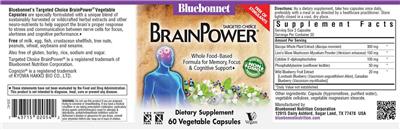
| Cytidine 5'-Diphosphocholine | 100 mg | -- |
| Lion's Mane Mushroom, Powder | 150 mg | -- |
| Phosphatidylserine | 50 mg | -- |
| Bacopa Whole Plant Extract | 300 mg | -- |
| Wild Blueberry Fruit Extract | 20 mg | -- |
Other ingredients: Hypromellose, Water, Purified, Cellulose, Magnesium Stearate
Tap any ingredient to jump to its full detail below.
These statements are the manufacturer’s wording, reproduced from the product label — the label is saying it, not HelloPharmacist. We don’t verify or endorse them.
Formula
Bluebonnet's Targeted Choice BrainPower Vegetable Capsules are specially formulated with a unique blend of sustainably harvested or wildcrafted herbal extracts and other neuro-nutrients to help support the brain's proper response to stress and communication between nerve cells for focus, alertness and cognitive performance.
Formulation
Free of milk, egg, fish, crustacean shellfish, tree nuts, peanuts, wheat, soybeans and sesame. Also free of gluten, barley, rice, sodium and sugar.
Free of stimulants Made with non GMO ingredients
Whole food-based formula for memory, focus & cognitive support
Soy free Gluten free
Vegan
Brand IP Statement(s)
Targeted Choice BrainPower is a registered trademark of Bluebonnet Nutrition Corporation. Cognizin is a registered trademark of Kyowa Hakko Bio Co., LTD.
FDA Disclaimer Statement
These statements have not been evaluated by the Food and Drug Administration. This product is not intended to diagnose, treat, cure or prevent any disease.
Precautions
Warning: Do not use this product if you are pregnant, trying to conceive or breastfeeding. If you have a medical condition or are taking prescription medication, particularly drying agents (anticholinergics) used for allergies & depression, acetylcholinesterase inhibitors used for Alzheimer's disease or glaucoma Rx eye drops, consult your physician before use.
Keep out of reach of children.
FDA Statement of Identity
Dietary Supplement
Suggested/Recommended/Usage/Directions
Directions: As dietary supplement, take two capsules once daily, preferably with a meal or as directed by a healthcare practitioner.
Storage
Store tightly closed in a cool, dry place.
Seals/Symbols
Made with Non GMO Ingredients
Is this label outdated? Report a formula or label change and our pharmacy team will review it.
BrainPower by Bluebonnet Targeted Choice label
The label scan from the NIH Dietary Supplement Label Database. Tap to enlarge.
Label images are published by the NIH Dietary Supplement Label Database for the version of this product on file. Always read your actual product label.
View the full label (PDF)The Ingredients in BrainPower by Bluebonnet Targeted Choice
These are the 5 active ingredients this product is made of. Select any to open its full monograph.
Serving size2 Capsule(s) Dosage formCapsule Servings per container30 Amounts shown are per serving.
Most supplement products combine several ingredients, and a medication can interact with the product through any one of them. Each ingredient below shows whether it has known drug interactions.
Cytidine 5'-Diphosphocholine
No knowninteractions
Citicoline is a naturally occurring compound involved in making brain cell membranes and the messenger chemical acetylcholine. It is popularly taken f...
Cytidine 5'-Diphosphocholine monograph & interactionsLion's Mane Mushroom, Powder
Interacts with327 drugs
Lion's mane is an edible mushroom that is popular as a 'nootropic' for memory, focus, and nerve health, but solid human evidence is still limited and...
Lion's Mane Mushroom, Powder monograph & interactionsPhosphatidylserine
Interacts with219 drugs
Phosphatidylserine is a natural fat-like compound found in cell membranes, especially in the brain, and it is sold mainly to support memory and thinki...
Phosphatidylserine monograph & interactionsBacopa Whole Plant Extract
Interacts with930 drugs
Bacopa is an Ayurvedic herb most often used for memory and thinking. Some small studies suggest it may modestly help memory when taken regularly for s...
Bacopa Whole Plant Extract monograph & interactionsWild Blueberry Fruit Extract
Interacts with88 drugs
Blueberries are a nutritious fruit rich in antioxidants called anthocyanins, and eating them as part of a balanced diet is healthy and safe for most p...
Wild Blueberry Fruit Extract monograph & interactionsOther (inactive) ingredients: Hypromellose, Water, Purified, Cellulose, Magnesium Stearate. These complete the product’s ingredient list but are not active constituents.
BrainPower by Bluebonnet Targeted Choice Drug Interactions
HelloPharmacist Interaction Report
BrainPower by Bluebonnet Targeted Choice contains five active ingredients, and several of them interact with medications.
The most serious concern is Bacopa, which can moderately inhibit multiple liver enzymes (CYP1A2, CYP2C19, CYP2C9, and CYP3A4). This means bacopa may raise blood levels of drugs metabolized by these pathways—potentially increasing their side effects.
The specific drugs affected depend on your prescriptions, so checking them below is important.
Read the full breakdown — every affected drug type, severity by severity
Lion's Mane Mushroom poses Moderate risks with blood thinners (anticoagulants/antiplatelets), diabetes medications, and immune-suppressing drugs. Phosphatidylserine and Bacopa both interact Moderately with anticholinergic and cholinergic drugs—medications used for conditions ranging from urinary problems to myasthenia gravis.
Blueberry Extract carries Minor interactions with diabetes drugs and a few specific medications like buspirone and flurbiprofen. Citicoline, our fifth ingredient, has no known interactions documented in our data.
Altogether, these interactions span 1,141 individual medications. This large number reflects the breadth of drugs affected by the liver enzyme interactions, not necessarily that you're taking any of them.
Use the medication checker on this page to look up your exact prescriptions before starting.
Check your own medications below · Editorial policy · How we use AI
Want to check YOUR meds against BrainPower?
Ask about interactions with your drugs in plain English — “Can I take it with lisinopril?” — and we find you the answer in seconds, ingredient by ingredient.
Go to the checkerIngredients driving the most interactions
Individual Drug Interactions
The ingredients in BrainPower interact with 1,156 drugs. Click any drug to see the details.
4 of the 5 ingredients in BrainPower interact with drugs. Each result below shows which ingredient is responsible. Bacopa Whole Plant Extract Lion's Mane Mushroom, Powder Phosphatidylserine Wild Blueberry Fruit Extract
AlefaceptAmevive
How Alefacept interacts with BrainPower — through 1 ingredient. Tap an ingredient for the detail:
Lion's Mane Mushroom, PowderImmunosuppressants Moderate
Interaction Summary
Theoretically, concurrent use of lion's mane mushroom might interfere with immunosuppressive therapy.
Read the full Lion's Mane Mushroom, Powder + Alefacept interactionAlemtuzumabCampath
How Alemtuzumab interacts with BrainPower — through 1 ingredient. Tap an ingredient for the detail:
Lion's Mane Mushroom, PowderImmunosuppressants Moderate
Interaction Summary
Theoretically, concurrent use of lion's mane mushroom might interfere with immunosuppressive therapy.
Read the full Lion's Mane Mushroom, Powder + Alemtuzumab interactionAlfentanilAlfenta
How Alfentanil interacts with BrainPower — through 1 ingredient. Tap an ingredient for the detail:
Bacopa Whole Plant ExtractCytochrome P450 3a4 (cyp3a4) Substrates Moderate
Interaction Summary
Theoretically, bacopa might increase the levels and adverse effects of CYP3A4 substrates.
Read the full Bacopa Whole Plant Extract + Alfentanil interactionAlfuzosinUroxatral
How Alfuzosin interacts with BrainPower — through 1 ingredient. Tap an ingredient for the detail:
Bacopa Whole Plant ExtractCytochrome P450 3a4 (cyp3a4) Substrates Moderate
Interaction Summary
Theoretically, bacopa might increase the levels and adverse effects of CYP3A4 substrates.
Read the full Bacopa Whole Plant Extract + Alfuzosin interactionAliskirenTekturna
How Aliskiren interacts with BrainPower — through 1 ingredient. Tap an ingredient for the detail:
Bacopa Whole Plant ExtractCytochrome P450 3a4 (cyp3a4) Substrates Moderate
Interaction Summary
Theoretically, bacopa might increase the levels and adverse effects of CYP3A4 substrates.
Read the full Bacopa Whole Plant Extract + Aliskiren interactionAlmotriptanAlmogran, Axert
How Almotriptan interacts with BrainPower — through 1 ingredient. Tap an ingredient for the detail:
Bacopa Whole Plant ExtractCytochrome P450 3a4 (cyp3a4) Substrates Moderate
Interaction Summary
Theoretically, bacopa might increase the levels and adverse effects of CYP3A4 substrates.
Read the full Bacopa Whole Plant Extract + Almotriptan interactionAlogliptinNesina
How Alogliptin interacts with BrainPower — through 3 ingredients. Tap an ingredient for the detail:
Bacopa Whole Plant ExtractCytochrome P450 3a4 (cyp3a4) Substrates Moderate
Interaction Summary
Theoretically, bacopa might increase the levels and adverse effects of CYP3A4 substrates.
Read the full Bacopa Whole Plant Extract + Alogliptin interactionLion's Mane Mushroom, PowderAntidiabetes Drugs Moderate
Interaction Summary
Theoretically, lion's mane mushroom may have additive effects when used with antidiabetes drugs.
Read the full Lion's Mane Mushroom, Powder + Alogliptin interactionWild Blueberry Fruit ExtractAntidiabetes Drugs Minor
Interaction Summary
Theoretically, blueberries or blueberry leaf extracts might increase the risk of hypoglycemia when taken with antidiabetes drugs.
Read the full Wild Blueberry Fruit Extract + Alogliptin interactionAlogliptin, MetforminKazano
How Alogliptin, Metformin interacts with BrainPower — through 2 ingredients. Tap an ingredient for the detail:
Lion's Mane Mushroom, PowderAntidiabetes Drugs Moderate
Interaction Summary
Theoretically, lion's mane mushroom may have additive effects when used with antidiabetes drugs.
Read the full Lion's Mane Mushroom, Powder + Alogliptin, Metformin interactionWild Blueberry Fruit ExtractAntidiabetes Drugs Minor
Interaction Summary
Theoretically, blueberries or blueberry leaf extracts might increase the risk of hypoglycemia when taken with antidiabetes drugs.
Read the full Wild Blueberry Fruit Extract + Alogliptin, Metformin interactionAlogliptin, PioglitazoneOseni
How Alogliptin, Pioglitazone interacts with BrainPower — through 3 ingredients. Tap an ingredient for the detail:
Lion's Mane Mushroom, PowderAntidiabetes Drugs Moderate
Interaction Summary
Theoretically, lion's mane mushroom may have additive effects when used with antidiabetes drugs.
Read the full Lion's Mane Mushroom, Powder + Alogliptin, Pioglitazone interactionBacopa Whole Plant ExtractCytochrome P450 3a4 (cyp3a4) Substrates Moderate
Interaction Summary
Theoretically, bacopa might increase the levels and adverse effects of CYP3A4 substrates.
Read the full Bacopa Whole Plant Extract + Alogliptin, Pioglitazone interactionWild Blueberry Fruit ExtractAntidiabetes Drugs Minor
Interaction Summary
Theoretically, blueberries or blueberry leaf extracts might increase the risk of hypoglycemia when taken with antidiabetes drugs.
Read the full Wild Blueberry Fruit Extract + Alogliptin, Pioglitazone interactionAlpelisibPiqray
How Alpelisib interacts with BrainPower — through 1 ingredient. Tap an ingredient for the detail:
Bacopa Whole Plant ExtractCytochrome P450 3a4 (cyp3a4) Substrates Moderate
Interaction Summary
Theoretically, bacopa might increase the levels and adverse effects of CYP3A4 substrates.
Read the full Bacopa Whole Plant Extract + Alpelisib interactionAlprazolamNiravam, Xanax
How Alprazolam interacts with BrainPower — through 1 ingredient. Tap an ingredient for the detail:
Bacopa Whole Plant ExtractCytochrome P450 3a4 (cyp3a4) Substrates Moderate
Interaction Summary
Theoretically, bacopa might increase the levels and adverse effects of CYP3A4 substrates.
Read the full Bacopa Whole Plant Extract + Alprazolam interactionAlteplase, TpaActilyse, Activase
How Alteplase, Tpa interacts with BrainPower — through 1 ingredient. Tap an ingredient for the detail:
Lion's Mane Mushroom, PowderAnticoagulant/antiplatelet Drugs Moderate
Interaction Summary
Theoretically, lion's mane mushroom may increase the risk of bleeding when used with anticoagulant/antiplatelet drugs.
Read the full Lion's Mane Mushroom, Powder + Alteplase, Tpa interactionAluminum Hydroxide, Aspirin, Codeine Phosphate, Magnesium HydroxideAscriptin Codeine #2
How Aluminum Hydroxide, Aspirin, Codeine Phosphate, Magnesium Hydroxide interacts with BrainPower — through 1 ingredient. Tap an ingredient for the detail:
Lion's Mane Mushroom, PowderAnticoagulant/antiplatelet Drugs Moderate
Interaction Summary
Theoretically, lion's mane mushroom may increase the risk of bleeding when used with anticoagulant/antiplatelet drugs.
Read the full Lion's Mane Mushroom, Powder + Aluminum Hydroxide, Aspirin, Codeine Phosphate, Magnesium Hydroxide interactionAluminum Hydroxide, Aspirin, Magnesium HydroxideAscriptin
How Aluminum Hydroxide, Aspirin, Magnesium Hydroxide interacts with BrainPower — through 1 ingredient. Tap an ingredient for the detail:
Lion's Mane Mushroom, PowderAnticoagulant/antiplatelet Drugs Moderate
Interaction Summary
Theoretically, lion's mane mushroom may increase the risk of bleeding when used with anticoagulant/antiplatelet drugs.
Read the full Lion's Mane Mushroom, Powder + Aluminum Hydroxide, Aspirin, Magnesium Hydroxide interactionAmantadineGocovri, Osmolex ER, Symmetrel
How Amantadine interacts with BrainPower — through 2 ingredients. Tap an ingredient for the detail:
Bacopa Whole Plant ExtractAnticholinergic Drugs Moderate
Interaction Summary
Theoretically, concurrent use might decrease the effectiveness of both agents.
Read the full Bacopa Whole Plant Extract + Amantadine interactionPhosphatidylserineAnticholinergic Drugs Moderate
Interaction Summary
Theoretically, phosphatidylserine might decrease the effectiveness anticholinergic drugs.
Read the full Phosphatidylserine + Amantadine interactionAmbenonium ChlorideMytelase
How Ambenonium Chloride interacts with BrainPower — through 2 ingredients. Tap an ingredient for the detail:
Bacopa Whole Plant ExtractCholinergic Drugs Moderate
Interaction Summary
Theoretically, concurrent use of bacopa with other cholinergic drugs might have additive effects.
Read the full Bacopa Whole Plant Extract + Ambenonium Chloride interactionPhosphatidylserineCholinergic Drugs Moderate
Interaction Summary
Theoretically, phosphatidylserine might have additive effects with cholinergic drugs.
Read the full Phosphatidylserine + Ambenonium Chloride interactionAmbrisentanLetairis, Volibris
How Ambrisentan interacts with BrainPower — through 1 ingredient. Tap an ingredient for the detail:
Bacopa Whole Plant ExtractCytochrome P450 3a4 (cyp3a4) Substrates Moderate
Interaction Summary
Theoretically, bacopa might increase the levels and adverse effects of CYP3A4 substrates.
Read the full Bacopa Whole Plant Extract + Ambrisentan interactionAmifampridineRuzurgi
How Amifampridine interacts with BrainPower — through 2 ingredients. Tap an ingredient for the detail:
Bacopa Whole Plant ExtractCholinergic Drugs Moderate
Interaction Summary
Theoretically, concurrent use of bacopa with other cholinergic drugs might have additive effects.
Read the full Bacopa Whole Plant Extract + Amifampridine interactionPhosphatidylserineCholinergic Drugs Moderate
Interaction Summary
Theoretically, phosphatidylserine might have additive effects with cholinergic drugs.
Read the full Phosphatidylserine + Amifampridine interactionAmifampridine PhosphateFirdapse
How Amifampridine Phosphate interacts with BrainPower — through 2 ingredients. Tap an ingredient for the detail:
PhosphatidylserineCholinergic Drugs Moderate
Interaction Summary
Theoretically, phosphatidylserine might have additive effects with cholinergic drugs.
Read the full Phosphatidylserine + Amifampridine Phosphate interactionBacopa Whole Plant ExtractCholinergic Drugs Moderate
Interaction Summary
Theoretically, concurrent use of bacopa with other cholinergic drugs might have additive effects.
Read the full Bacopa Whole Plant Extract + Amifampridine Phosphate interactionAminoglutethimideCytadren
How Aminoglutethimide interacts with BrainPower — through 2 ingredients. Tap an ingredient for the detail:
PhosphatidylserineAnticholinergic Drugs Moderate
Interaction Summary
Theoretically, phosphatidylserine might decrease the effectiveness anticholinergic drugs.
Read the full Phosphatidylserine + Aminoglutethimide interactionBacopa Whole Plant ExtractAnticholinergic Drugs Moderate
Interaction Summary
Theoretically, concurrent use might decrease the effectiveness of both agents.
Read the full Bacopa Whole Plant Extract + Aminoglutethimide interactionAmiodaroneCordarone, Pacerone
How Amiodarone interacts with BrainPower — through 1 ingredient. Tap an ingredient for the detail:
Bacopa Whole Plant ExtractCytochrome P450 3a4 (cyp3a4) Substrates Moderate
Interaction Summary
Theoretically, bacopa might increase the levels and adverse effects of CYP3A4 substrates.
Read the full Bacopa Whole Plant Extract + Amiodarone interactionAmitriptylineElavil
How Amitriptyline interacts with BrainPower — through 2 ingredients. Tap an ingredient for the detail:
Bacopa Whole Plant ExtractCytochrome P450 2c9 (cyp2c9) Substrates, Cytochrome P450 3a4 (cyp3a4) Substrates +3 Moderate
Interaction Summary
Theoretically, bacopa might increase the levels and adverse effects of CYP2C9 substrates.
Read the full Bacopa Whole Plant Extract + Amitriptyline interactionPhosphatidylserineAnticholinergic Drugs Moderate
Interaction Summary
Theoretically, phosphatidylserine might decrease the effectiveness anticholinergic drugs.
Read the full Phosphatidylserine + Amitriptyline interactionAmitriptyline, ChlordiazepoxideLimbitrol DS
How Amitriptyline, Chlordiazepoxide interacts with BrainPower — through 2 ingredients. Tap an ingredient for the detail:
PhosphatidylserineAnticholinergic Drugs Moderate
Interaction Summary
Theoretically, phosphatidylserine might decrease the effectiveness anticholinergic drugs.
Read the full Phosphatidylserine + Amitriptyline, Chlordiazepoxide interactionBacopa Whole Plant ExtractAnticholinergic Drugs, Cytochrome P450 2c9 (cyp2c9) Substrates +3 Moderate
Interaction Summary
Theoretically, concurrent use might decrease the effectiveness of both agents.
Read the full Bacopa Whole Plant Extract + Amitriptyline, Chlordiazepoxide interactionAmitriptyline, PerphenazineEtrafon, Etrafon-A, Etrafon-Forte, Triavil
How Amitriptyline, Perphenazine interacts with BrainPower — through 2 ingredients. Tap an ingredient for the detail:
Bacopa Whole Plant ExtractCytochrome P450 1a2 (cyp1a2) Substrates, Cytochrome P450 2c19 (cyp2c19) Substrates +3 Moderate
Interaction Summary
Theoretically, bacopa might increase the levels and adverse effects of CYP1A2 substrates.
Read the full Bacopa Whole Plant Extract + Amitriptyline, Perphenazine interactionPhosphatidylserineAnticholinergic Drugs Moderate
Interaction Summary
Theoretically, phosphatidylserine might decrease the effectiveness anticholinergic drugs.
Read the full Phosphatidylserine + Amitriptyline, Perphenazine interactionAmlodipineNorliqva
How Amlodipine interacts with BrainPower — through 1 ingredient. Tap an ingredient for the detail:
Bacopa Whole Plant ExtractCytochrome P450 3a4 (cyp3a4) Substrates Moderate
Interaction Summary
Theoretically, bacopa might increase the levels and adverse effects of CYP3A4 substrates.
Read the full Bacopa Whole Plant Extract + Amlodipine interactionAmlodipine BenzoateKaterzia
How Amlodipine Benzoate interacts with BrainPower — through 1 ingredient. Tap an ingredient for the detail:
Bacopa Whole Plant ExtractCytochrome P450 3a4 (cyp3a4) Substrates Moderate
Interaction Summary
Theoretically, bacopa might increase the levels and adverse effects of CYP3A4 substrates.
Read the full Bacopa Whole Plant Extract + Amlodipine Benzoate interactionAmlodipine BesilateIstin
How Amlodipine Besilate interacts with BrainPower — through 1 ingredient. Tap an ingredient for the detail:
Bacopa Whole Plant ExtractCytochrome P450 3a4 (cyp3a4) Substrates Moderate
Interaction Summary
Theoretically, bacopa might increase the levels and adverse effects of CYP3A4 substrates.
Read the full Bacopa Whole Plant Extract + Amlodipine Besilate interactionAmlodipine BesylateNorvasc
How Amlodipine Besylate interacts with BrainPower — through 1 ingredient. Tap an ingredient for the detail:
Bacopa Whole Plant ExtractCytochrome P450 3a4 (cyp3a4) Substrates Moderate
Interaction Summary
Theoretically, bacopa might increase the levels and adverse effects of CYP3A4 substrates.
Read the full Bacopa Whole Plant Extract + Amlodipine Besylate interactionAmlodipine Besylate, BenazeprilLotrel
How Amlodipine Besylate, Benazepril interacts with BrainPower — through 1 ingredient. Tap an ingredient for the detail:
Bacopa Whole Plant ExtractCytochrome P450 3a4 (cyp3a4) Substrates Moderate
Interaction Summary
Theoretically, bacopa might increase the levels and adverse effects of CYP3A4 substrates.
Read the full Bacopa Whole Plant Extract + Amlodipine Besylate, Benazepril interactionAmlodipine, CelecoxibConsensi
How Amlodipine, Celecoxib interacts with BrainPower — through 1 ingredient. Tap an ingredient for the detail:
Bacopa Whole Plant ExtractCytochrome P450 2c9 (cyp2c9) Substrates, Cytochrome P450 3a4 (cyp3a4) Substrates Moderate
Interaction Summary
Theoretically, bacopa might increase the levels and adverse effects of CYP2C9 substrates.
Read the full Bacopa Whole Plant Extract + Amlodipine, Celecoxib interactionEach ingredient & the kinds of drugs it affects
For each ingredient in BrainPower with known interactions, here are the types of medications they can affect. Open any type for the detail — or search your exact drug in the checker above.
Bacopa Whole Plant Extract
Anticholinergic Drugs
Theoretically, concurrent use might decrease the effectiveness of both agents.
Bacopa seems to inhibit acetylcholinesterase and might increase acetylcholine levels, which could counteract the effects of anticholinergic drugs. Similarly, anticholinergic drugs might counteract the cholinergic effects of bacopa.
Cevimeline (Evoxac)
Theoretically, bacopa might increase the effects and adverse effects of cevimeline.
In one case, a 58-year-old female taking cevimeline long-term for Sjogren syndrome experienced hyperhidrosis, malaise, nausea, and tachycardia shortly after taking a single dose of bacopa. Symptoms resolved after two days. Cevimeline is metabolized by cytochrome P450 (CYP) 2D6 and CYP3A4, and researchers theorize that bacopa may have inhibited these isoenzymes. However, it is unclear if bacopa causes clinically significant inhibition of either CYP2D6 or CYP3A4.
Cholinergic Drugs
Theoretically, concurrent use of bacopa with other cholinergic drugs might have additive effects.
Bacopa seems to inhibit acetylcholinesterase and might increase acetylcholine levels. Theoretically, this could result in additive cholinergic effects when used with cholinergic drugs.
Cytochrome P450 1A2 (Cyp1A2) Substrates
Theoretically, bacopa might increase the levels and adverse effects of CYP1A2 substrates.
Research on the effects of bacopa extracts on CYP1A2 enzymes is conflicting. Some in vitro evidence shows that bacopa extract can moderately and non-competitively inhibit CYP1A2, while other in vitro evidence suggests that any effect is unlikely to be clinically significant.
Cytochrome P450 2C19 (Cyp2C19) Substrates
Theoretically, bacopa might increase the levels and adverse effects of CYP2C19 substrates.
In vitro evidence suggests that bacopa extract can moderately and non-competitively inhibit CYP2C19 enzymes. It is not known whether this is clinically significant.
Cytochrome P450 2C9 (Cyp2C9) Substrates
Theoretically, bacopa might increase the levels and adverse effects of CYP2C9 substrates.
Research on the effect of bacopa extracts on CYP2C9 enzymes is conflicting. Some in vitro evidence suggests that bacopa extract can moderately and non-competitively inhibit CYP2C9, while other in vitro evidence suggests that any effect is unlikely to be clinically significant.
Cytochrome P450 3A4 (Cyp3A4) Substrates
Theoretically, bacopa might increase the levels and adverse effects of CYP3A4 substrates.
Research on the effects of bacopa extracts on CYP3A4 enzymes is conflicting. Some in vitro evidence suggests that bacopa extract can moderately and competitively inhibit CYP3A4, while other in vitro evidence suggests that any effect is unlikely to be clinically significant.
Thyroid Hormone
Theoretically, bacopa might have additive effects when used with thyroid hormone.
Animal research suggests that bacopa increases thyroxine (T4) levels in mice by about 40%.
Lion's Mane Mushroom, Powder
Anticoagulant/Antiplatelet Drugs
Theoretically, lion's mane mushroom may increase the risk of bleeding when used with anticoagulant/antiplatelet drugs.
In vitro research suggests that lion's mane mushroom extracts can inhibit platelet aggregation.
Antidiabetes Drugs
Theoretically, lion's mane mushroom may have additive effects when used with antidiabetes drugs.
Animal research suggests that an aqueous extract of lion's mane mushroom can reduce serum glucose and increase serum insulin.
Immunosuppressants
Theoretically, concurrent use of lion's mane mushroom might interfere with immunosuppressive therapy.
In animal and in vitro research, lion's mane mushroom polysaccharides stimulate the immune system.
Phosphatidylserine
Anticholinergic Drugs
Theoretically, phosphatidylserine might decrease the effectiveness anticholinergic drugs.
Phosphatidylserine is thought to increase acetylcholine levels, which could theoretically interfere with the activity of anticholinergic agents.
Cholinergic Drugs
Theoretically, phosphatidylserine might have additive effects with cholinergic drugs.
Phosphatidylserine is thought to increase acetylcholine levels, which could theoretically lead to additive cholinergic effects when used with cholinergic drugs.
Wild Blueberry Fruit Extract
Antidiabetes Drugs
Theoretically, blueberries or blueberry leaf extracts might increase the risk of hypoglycemia when taken with antidiabetes drugs.
Animal and in vitro research suggests that blueberry and/or blueberry leaf extracts can lower blood glucose levels.
Buspirone (Buspar)
Theoretically, blueberry juice might increase blood levels of buspirone.
In vitro research shows that blueberry juice can inhibit the metabolism of buspirone, possibly by inhibiting cytochrome P450 3A (CYP3A) enzymes. However, pharmacokinetic research in humans shows that drinking 300 mL of blueberry juice 30 minutes before taking buspirone hydrochloride 10 mg does not significantly affect the concentration or clearance of buspirone.
Flurbiprofen (Ansaid, Others)
Theoretically, blueberry juice might increase blood levels of flurbiprofen.
In vitro research shows that blueberry juice can inhibit the metabolism of flurbiprofen, possibly by inhibiting cytochrome P450 2C9 (CYP2C9) enzymes. However, pharmacokinetic research in humans shows that drinking 300 mL of blueberry juice 30 minutes before taking flurbiprofen 100 mg does not significantly affect the concentration or clearance of flurbiprofen.
Brand information
Manufacturer and brand details for BrainPower, from the product label.
Bluebonnet Targeted Choice
See all Bluebonnet Targeted Choice products- Name
- Bluebonnet Nutrition Corporation
- Street Address
- 12915 Dairy Ashford
- City
- Sugar Land
- State
- TX
- ZipCode
- 77478
- Web Address
- www.bluebonnetnutrition.com
BrainPower by Bluebonnet Targeted Choice: Common Questions
Does BrainPower by Bluebonnet Targeted Choice interact with any medications?
How can one product interact with so many drugs?
Where does this information come from?
Can I take BrainPower if I'm pregnant or breastfeeding?
Will this supplement actually improve my memory?
What are the most common side effects?
Why does this product interact with so many medications?
Is citicoline safe with my medications?
What is phosphatidylserine, and why is it in here?
Written and reviewed by the HelloPharmacist editorial staff. Our editorial policy
Not sure if BrainPower is safe with your meds?
Our pharmacists answer your medication & supplement questions — free.
Label information is sourced from the NIH Dietary Supplement Label Database and reflects the product version on file; always read your actual product label. This page is for education only and is not a substitute for professional medical advice. Confirm with your pharmacist or doctor before combining supplements and medications.
The Full Monographs Behind BrainPower’s Ingredients
Every ingredient we hold a full HelloPharmacist monograph for — uses, evidence, safety, and the complete interaction list.
Citicoline
Citicoline is a naturally occurring compound involved in making brain cell membranes and the messenger chemical acetylcholine. It is popularly taken for memory, focus, and brain aging, and s...
Read the full Citicoline monograph → Herb & supplement monographLion's Mane Mushroom
Interacts with 327 drugsLion's mane is an edible mushroom that is popular as a 'nootropic' for memory, focus, and nerve health, but solid human evidence is still limited and early. It is generally well tolerated as...
Read the full Lion's Mane Mushroom monograph → Herb & supplement monographPhosphatidylserine
Interacts with 219 drugsPhosphatidylserine is a natural fat-like compound found in cell membranes, especially in the brain, and it is sold mainly to support memory and thinking. Some research suggests possible bene...
Read the full Phosphatidylserine monograph → Herb & supplement monographBacopa
Interacts with 930 drugsBacopa is an Ayurvedic herb most often used for memory and thinking. Some small studies suggest it may modestly help memory when taken regularly for several weeks, but the evidence is limite...
Read the full Bacopa monograph → Herb & supplement monographBlueberry
Interacts with 88 drugsBlueberries are a nutritious fruit rich in antioxidants called anthocyanins, and eating them as part of a balanced diet is healthy and safe for most people. Concentrated supplements are mark...
Read the full Blueberry monograph →Sources & How We Checked
BrainPower's label data comes from the NIH Dietary Supplement Label Database; the ingredient interaction data is from the Natural Medicines database, reviewed by our pharmacists.
- NIH Dietary Supplement Label Database (DSLD) — The official product label on file for this supplement.
- Natural Medicines (Therapeutic Research Center) — Evidence-graded clinical reference behind the ingredient interaction data.
Content is written and reviewed by licensed HelloPharmacist pharmacists. See our data sources and editorial standards for how this information is built and checked.
The 45 references behind this product’s interaction data
Every citation that drives the interaction findings for this product’s ingredients, from the evidence-graded Natural Medicines (TRC Healthcare) database. Open an ingredient to browse its citations — links open the study on PubMed or the publisher’s site.
Citicoline 11 references
- Spiers PA, Myers D, Hochanadel GS, et al. Citicoline improves verbal memory in aging. Arch Neurol 1996;53:441-8. PubMed
- Fioravanti M, Yanagi M. Cytidinediphosphocholine (CDP-choline) for cognitive and behavioural disturbances associated with chronic cerebral disorders in the elderly. Cochrane Database Syst Rev 2005;(2):CD000269. PubMed
- Conant R, Schauss AG. Therapeutic applications of citicoline for stroke and cognitive function in the elderly: A review of the literature. Altern Med Rev 2004;9:17-31.
- Warach, S., Pettigrew, L. C., Dashe, J. F., Pullicino, P., Lefkowitz, D. M., Sabounjian, L., Harnett, K., Schwiderski, U., and Gammans, R. Effect of citicoline on ischemic lesions as measured by diffusion-weighted magnetic resonance imaging. Citicoline 0 DOI
- Lukas, S. E., Kouri, E. M., Rhee, C., Madrid, A., and Renshaw, P. F. Effects of short-term citicoline treatment on acute cocaine intoxication and cardiovascular effects. Psychopharmacology.(Berl.) 2001;157(2):163-167. PubMed
- Dinsdale, J. R., Griffiths, G. K., Castello, J., Maddock, J., Ortiz, J. A., and Aylward, M. CDP-choline: repeated oral dose tolerance studies in adult healthy volunteers. Arzneimittelforschung. 1983;33(7A):1061-1065.
- Clark BC, Georgekutty J, Berul CI. Myocardial ischemia secondary to synthetic cannabinoid (K2) use in pediatric patients. J Pediatr 2015;167(3):757-61.e1. PubMed
- Ghajar A, Gholamian F, Tabatabei-Motlagh M, et al. Citicoline (CDP-choline) add-on therapy to risperidone for treatment of negative symptoms in patients with stable schizophrenia: a double-blind, randomized placebo-controlled trial. Hum Psychopharmacol. 2
- Castagna A, Manzo C, Fabbo A, Lacava R, Ruberto C, Ruotolo G. The CITIMERIVA Study: CITIcoline plus MEmantina plus RIVAstigmine in Older Patients Affected with Alzheimer's Disease. Clin Drug Investig. 2021 Feb;41(2):177-182. PubMed
- Jeong H, Yoon S, Sung YH, et al. Effects of cytidine-5'-diphosphate choline on gray matter volumes in methamphetamine-dependent patients: A randomized, double-blind, placebo-controlled study. J Psychiatr Res 2021;143:215-221. PubMed
- Nakazaki E, Mah E, Sanoshy K, Citrolo D, Watanabe F. Citicoline and Memory Function in Healthy Older Adults: A Randomized, Double-Blind, Placebo-Controlled Clinical Trial. J Nutr 2021;151(8):2153-2160. PubMed
Lion's Mane Mushroom 6 references
- Product information for <em>Niaspan</em>. Abbott Laboratories. North Chicago, IL 60064. April 2015.
- Liang B, Guo Z, Xie F, Zhao A. Antihyperglycemic and antihyperlipidemic activities of aqueous extract of Hericium erinaceus in experimental diabetic rats. BMC Complement Altern Med. 2013;13:253. PubMed
- Mori K, Inatomi S, Ouchi K, Azumi Y, Tuchida T. Improving effects of the mushroom Yamabushitake (Hericium erinaceus) on mild cognitive impairment: a double-blind placebo-controlled clinical trial. Phytother Res. 2009;23(3):367-72.
- Mori K, Kikuchi H, Obara Y, et al. Inhibitory effect of hericenone B from Hericium erinaceus on collagen-induced platelet aggregation. Phytomedicine. 2010;17(14):1082-5. PubMed
- Li IC, Chang HH, Lin CH, et al. Prevention of early Alzheimer's disease by erinacine A-enriched Hericium erinaceus mycelia pilot double-blind placebo-controlled study. Front Aging Neurosci 2020 Jun 3;12:155. doi: 10.3389/fnagi.2020.00155. PubMed
- Tian B, Liu R, Xu T, et al. Modulating effects of Hericium erinaceus polysaccharides on the immune response by regulating gut microbiota in cyclophosphamide-treated mice. J Sci Food Agric 2023;103(6):3050-3064.
See these in context on the Lion's Mane Mushroom monograph →
Phosphatidylserine 9 references
- Crook T, Petrie W, Wells C, Massari DC. Effects of phosphatidylserine in Alzheimer's disease. Psychopharmacol Bull 1992;28:61-6.
- Pepping J. Phosphatidylserine. Am J Health-Syst Pharm 1999;56:2038,2043-4.
- Kidd PM. Phosphatidylserine; Membrane nutrient for memory. A clinical and mechanistic assessment. Altern Med Rev 1996;1:70-84.
- Kim HY, Akbar M, Lau A, et al. Inhibition of neuronal apoptosis by docosahexaenoic acid (22:6n-3). Role of phosphatidylserine in antiapoptotic effect. J Biol Chem 2000;275:35215-23.. PubMed
- Zanotti A, Valzelli L, Toffano G. Chronic phosphatidylserine treatment improves spatial memory and passive avoidance in aged rats. Psychopharmacology (Berl) 1989;99:316-21.. PubMed
- Schreiber S, Kampf-Sherf O, Gorfine M, et al. An open trial of plant-source derived phosphatydilserine for treatment of age-related cognitive decline. Isr J Psychiatry Relat Sci 2000;37:302-7.
- Pepping, J. Phosphatidylserine. Am J Health Syst.Pharm. 10-15-1999;56(20):2038, 2043-2038, 2044.
- Monteverde, A., Gnemmi, P., Rossi, F., Monteverde, A., and Finali, G. C. Selegiline in the treatment of mild to moderate Alzheimer-type dementia. Clin.Ther 1990;12(4):315-322.
- Vakhapova V, Cohen T, Richter Y, Herzog Y, Kam Y, Korczyn AD. Phosphatidylserine containing omega-3 Fatty acids may improve memory abilities in nondemented elderly individuals with memory complaints: results from an open-label extension study. Dement Geri PubMed
Bacopa 12 references
- Stough C, Lloyd J, Clarke J, et al. The chronic effects of an extract of Bacopa monniera (Brahmi) on cognitive function in healthy human subjects. Psychopharmacology 2001;156:481-4..
- Yadav SK, Jain AK, Tripathi SN, Gupta JP. Irritable bowel syndrome: therapeutic evaluation of indigenous drugs. Indian J Med Res 1989;90:496-503..
- Morgan A, Stevens J. Does Bacopa monnieri improve memory performance in older persons? Results of a randomized, placebo-controlled, double-blind trial. J Altern Complement Med 2010;16:753-9.
- Kar, A., Panda, S., and Bharti, S. Relative efficacy of three medicinal plant extracts in the alteration of thyroid hormone concentrations in male mice. J Ethnopharmacol. 2002;81(2):281-285. PubMed
- Mukherjee, G. D. and Dey, C. D. Clinical trial on Brahmi. I. J.Exp.Med.Sci. 1966;10(1):5-11.
- Kar A, Pandit S, Mukherjee K, Bahadur S, Mukherjee PK. Safety assessment of selected medicinal food plants used in Ayurveda through CYP450 enzyme inhibition study. J Sci Food Agric 2017;97(1):333-40. doi: 10.1002/jsfa.7739. PubMed
- Kongkeaw C, Dilokthornsakul P, Thanarangsarit P, et al. Meta-analysis of randomized controlled trials on cognitive effects of Bacopa monnieri extract. J Ethnopharmacol 2014;151(1):528-35. PubMed
- Ramasamy S, Kiew LV, Chung LY. Inhibition of human cytochrome P450 enzymes by Bacopa monnieri standardized extract and constituents. Molecules 2014;19(2):2588-601. PubMed
- Prabhakar S, Vishnu VY, Modi M, et al. Efficacy of Bacopa monnieri (Brahmi) and donepezil in Alzheimer's disease and mild cognitive impairment: a randomized double-blind parallel phase 2b study. Ann Indian Acad Neurol 2020;23(6):767-73. PubMed
- Acquarulo B, Tandon P, Macica CM. Suspected cholinergic toxicity due to cevimeline hydrochloride and Bacopa monnieri interaction: a case report. J Med Case Rep 2022;16(1):253. PubMed
- Keegan AP, Stough C, Paris D, et al. Bacopa monnieri supplementation has no effect on serum brain-derived neurotrophic factor levels but beneficially modulates nuclear factor kappa B and cyclic AMP response element-binding protein levels in healthy elderl
- Yaworski AM, Blyumin M, Chang T, Mammen AL, Greene M. Necrotizing myopathy with elevated anti-HMGCR antibodies following exposure to the supplement Bacopa. Muscle Nerve 2023;67(2):E1-E3.
Blueberry 7 references
- Cignarella A, Nastasi M, Cavalli E, Puglisi L. Novel lipid-lowering properties of Vaccinium myrtillus L. leaves, a traditional antidiabetic treatment, in several models of rat dyslipidaemia: a comparison with ciprofibrate. Thromb Res 1996;84:311-22. PubMed
- Wang SY, Lin HS. Antioxidant activity in fruits and leaves of blackberry, raspberry, and strawberry varies with cultivar and developmental stage. J Agric Food Chem 2000;48:140-6.. PubMed
- Martineau, L. C., Couture, A., Spoor, D., Benhaddou-Andaloussi, A., Harris, C., Meddah, B., Leduc, C., Burt, A., Vuong, T., Mai, Le P., Prentki, M., Bennett, S. A., Arnason, J. T., and Haddad, P. S. Anti-diabetic properties of the Canadian lowbush bluebe
- Vuong, T., Martineau, L. C., Ramassamy, C., Matar, C., and Haddad, P. S. Fermented Canadian lowbush blueberry juice stimulates glucose uptake and AMP-activated protein kinase in insulin-sensitive cultured muscle cells and adipocytes. Can J Physiol Pharma
- Hanley MJ, Masse G, Harmatz JS, Cancalon PF, Dolnikowski GG, Court MH, Greenblatt DJ. Effect of blueberry juice on clearance of buspirone and flurbiprofen in human volunteers. Br J Clin Pharmacol. 2013 Apr;75(4):1041-52. PubMed
- Basu A, Du M, Leyva MJ, et al. Blueberries decrease cardiovascular risk factors in obese men and women with metabolic syndrome. J Nutr 2010;140(9):1582-7. PubMed
- Basu A, Feng D, Planinic P, Ebersole JL, Lyons TJ, Alexander JM. Dietary blueberry and soluble fiber supplementation reduces risk of gestational diabetes in women with obesity in a randomized controlled trial. J Nutr 2021;151(5):1128-38. PubMed
Parts of this content are provided by the Therapeutic Research Center, LLC.
DISCLAIMER: Currently this does not check for drug-drug interactions. This is not an all-inclusive comprehensive list of potential interactions and is for informational purposes only. Not all interactions are known or well-reported in the scientific literature, and new interactions are continually being reported. Input is needed from a qualified healthcare provider including a pharmacist before starting any therapy. Application of clinical judgment is necessary.
© 2021 Therapeutic Research Center, LLC