
Healthy Detox Ingredients & Drug Interactions
by Terra Origin
What is this page for?
First and foremost: checking Healthy Detox against your medications. The heart of this page is the interaction checker and the full interaction report — how this product’s ingredients may interact with prescription and over-the-counter medicines you may be taking.
Around that, we add a pharmacist’s high-level view of the product as a whole — what’s inside, the evidence for its stated use, how transparent the label is, and what safety data exists — so you can see the full picture in one place. It’s educational information from our licensed clinical databases and the clinical staff at HelloPharmacist — not medical advice — and we don’t sell or endorse products. Our editorial policy
Healthy Detox is a dietary supplement by Terra Origin with 27 active ingredients. Its ingredients are commonly taken for digestive support for protein digestion, wound cleaning (debridement of dead tissue), sore throat and inflammation.Based on those ingredients, 1,455 medications have a known interaction with it, the most serious rated major. The ingredients most likely to interact are Deglycyrrhizinated Licorice Root Extract, Neem, Powder, Ginger, Powder. Use the checker below to test your specific medication, or read the full HelloPharmacist Interaction Report.
Check Your Meds Against Healthy Detox by Terra Origin
Ask about any prescription or over-the-counter medication and we check it for interactions with Healthy Detox by Terra Origin — and tell you which ingredient is responsible.
AI summaries are generated from our interaction database for education only — always confirm with your pharmacist. How we use AI
Ask the Pharmacist
A licensed pharmacist will answer your question by email — free, usually within 24 hours.
Got it — thank you!
A licensed pharmacist will answer within 24 hours. Keep an eye on your email (worth checking spam, just in case).
HelloPharmacist Scorecard of Healthy Detox by Terra Origin
Our pharmacy team’s full take, with four database checks built into the cards below — a summary of what is known, not a grade of the product itself.
What’s inside
Partial disclosure
Healthy Detox contains 27 ingredients total, including digestive enzymes (papain, bromelain, protease, lipase, and amylase), stimulant laxatives (cascara sagrada and senna leaf extract), several strains of live bacteria and beneficial microbes (Lactobacillus and Bifidobacterium species, Streptococcus thermophilus), and herbal powders (fennel, ginger, licorice root extract, and aloe vera). The enzymes are meant to break down food; the laxatives to promote bowel movement; and the probiotics to support gut bacteria balance.
The inactive ingredients are hypromellose, inulin, microcrystalline cellulose, and L-leucine — these are fillers, binders, and capsule material.
Does it work?
Strong evidence
The evidence for most ingredients in this product is limited or insufficient. Ginger appears possibly effective for pregnancy-related nausea and vomiting, dysmenorrhea (period pain), and osteoarthritis.
Senna is likely effective for constipation and possibly effective for bowel preparation. Lactobacillus acidophilus is possibly effective for irritable bowel syndrome, Helicobacter pylori infection, antibiotic-associated diarrhea, and bacterial vaginosis.
For the other ingredients — papain, bromelain, protease, lipase, fennel, aloe, goji, licorice, and the other Lactobacillus and Bifidobacterium strains — we either have insufficient evidence or the evidence hasn't been established in the data we hold.
How safe is it?
Well-documented data
Most ingredients in this product are generally well tolerated in short-term use at standard doses. Papain may cause allergic reactions (itchy watery eyes, runny nose, sneezing, cramps) and rare cases of severe esophageal or stomach damage at high doses.
Bromelain commonly causes diarrhea, gas, and stomach upset and may trigger allergic reactions. The probiotics are generally safe in healthy people, though rare infections (bacteremia or sepsis) have been reported in critically ill or premature infants.
The stimulant laxatives (cascara sagrada and senna) are intended for short-term constipation relief only — long-term use can cause muscle weakness, heart problems from potassium loss, and other serious effects. Ginger is generally safe at typical amounts but may cause heartburn, diarrhea, or mouth irritation at higher doses.
Licorice (deglycyrrhizinated in this product) is safe in small amounts but the whole licorice plant can raise blood pressure and deplete potassium with overuse. Aloe latex can cause severe cramping and diarrhea; concentrated forms used long-term pose serious risks.
For pregnancy, avoid this product — cascara sagrada and senna are not recommended during pregnancy, and papain, bromelain, goji, and licorice lack sufficient safety data. For breastfeeding, safety data are limited; ask your pharmacist or doctor before use.
Meds to double-check
Major interaction found
Before taking this product, check your medications against these types: blood thinners (anticoagulants or antiplatelet drugs) — goji, papain, bromelain, ginger, and aloe all raise bleeding risk; warfarin specifically — goji is a Major concern, and cascara, senna, ginger, and aloe are Moderate risks. Also check if you take heart medications (digoxin/Lanoxin and other cardiac glycosides), water pills or blood pressure drugs (diuretics and antihypertensives), diabetes medications, birth control or hormone replacement therapy, antibiotics, or liver-metabolized drugs (especially those processed by CYP2C9, CYP3A4, CYP2D6, CYP2C19, or CYP2B6 enzymes).
If you take any of these, run them through our search tool on this page.
The bottom line
Scorecard at a glancePartially disclosed formula with clinical evidence supporting its stated purpose. Major medication interactions have been identified, and safety information is well characterized.
If you take warfarin or other blood thinners, do not use this product without checking with your pharmacist first — the goji alone is a serious concern. Anyone on prescription medications, especially for heart rhythm, blood pressure, diabetes, or birth control, should verify their exact drugs against the checker below before starting.
This is a short-term digestive aid only; don't use the laxative ingredients daily without medical guidance. Pregnant and breastfeeding people should skip this product and talk to their doctor.
Educational only — not medical advice; always confirm with your pharmacist. Our editorial policy · How we use AI
Assessment coverage: 17 of 27 active ingredients matched to our full ingredient reviews (monographs). Based on the product label dated May 21, 2025.
This Scorecard evaluates available label information, ingredient evidence, and known medication-safety considerations. It does not independently verify product identity, purity, potency, contamination, or manufacturing quality. How these ratings are computed
General information
Key facts about Healthy Detox, straight from the product label.
| Brand | Terra Origin |
|---|---|
| Barcode (UPC) | 857668007977 |
| Net contents | 30 Capsule(s) |
| Market status | On market |
| Date entered into DSLD | May 21, 2025 |
| DSLD ID | 329117 |
| Product type | Other Combinations |
| Supplement form | Capsule |
| Dietary claims / uses | All Other, Structure/Function |
| Intended target group(s) | Adult (18 - 50 Years), Gluten Free, Dairy Free |
Everything in this section is reproduced from the manufacturer’s own product label — it’s the label speaking, not HelloPharmacist. We show it so you can see exactly what the maker states; we don’t verify or endorse those statements.
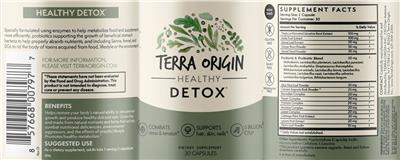
Supplement Facts
The label details for Healthy Detox by Terra Origin, sourced from the NIH Dietary Supplement Label Database.
Supplement Facts
| Ingredient | Amount | % DV |
|---|---|---|
| Maltodextrin | 0 NP | -- |
| Amylase | 20 mg | -- |
| Papain | 20 mg | -- |
| Bromelain | 20 mg | -- |
| Protease | 20 mg | -- |
| Lipase | 20 mg | -- |
| Lactobacillus acidophilus | 0 NP | -- |
| Lactobacillus salivarius | 0 NP | -- |
| Lactobacillus plantarum | 0 NP | -- |
| Bifidobacterium longum | 0 NP | -- |
| Lactobacillus paracasei | 0 NP | -- |
| Cascara Sagrada, Powder | 25 mg | -- |
| Fennel, Powder | 50 mg | -- |
| Senna Leaf Extract | 50 mg | -- |
| Lactobacillus bulgaricus | 0 NP | -- |
| Lactobacillus casei | 0 NP | -- |
| Lycium fruit extract | 20 mg | -- |
| Bifidobacterium animalis | 0 NP | -- |
| Streptococcus thermophilus | 0 NP | -- |
| Prebiotic & Probiotic Blend | 50 mg | -- |
| Lactobacillus brevis | 0 NP | -- |
| Lactobacillus rhamnosus | 0 NP | -- |
| Ginger, Powder | 50 mg | -- |
| Deglycyrrhizinated Licorice Root Extract | 100 mg | -- |
| Aloe Vera, Powder | 25 mg | -- |
| Amla Fruit Extract | 100 mg | -- |
| Cabbage Palm Fruit Extract | 20 mg | -- |
| Neem, Powder | 10 mg | -- |
Other ingredients: Hypromellose, Inulin, Microcrystalline Cellulose, L-Leucine
Tap any ingredient to jump to its full detail below.
These statements are the manufacturer’s wording, reproduced from the product label — the label is saying it, not HelloPharmacist. We don’t verify or endorse them.
Formula
Specially formulated using enzymes to help metabolize food and supplements more efficiently, probiotics supporting the growth of beneficial stomach bacteria to help properly absorb nutrients, and including Senna, fennel, and DGL to rid the body of toxins acquired from food, lifestyle or the environment.
5 Billion CFU At time of manufacture.
General Statements
For more information, please visit TerraOrigin.com
FDA Disclaimer Statement
These statements have not been evaluated by the Food and Drug Administration. This product is not intended to diagnose, treat, cure or prevent any disease.
Formulation
Benefits Helps restore your body's natural ability to stimulate hair growth and produce healthy skin and nails. Gluten-free and made from natural nutrients and herbs that can help combat nutritional deficiencies, environmental aggressors, and the effects of stressful lifestyle. Promotes healthy metabolism.
Combats stress & tension Supports hair, skin, nails
Non GMO Gluten free Dairy free Preservative free
Suggested/Recommended/Usage/Directions
Suggested use As a dietary supplement, adults take 1 serving (1 capsule) per day.
FDA Statement of Identity
Dietary Supplement
Precautions
This product contains Cascara sagrada. Read and follow directions carefully.
Use only as directed.
If you are pregnant, nursing or taking medication, consult your doctor before use.
Keep out of reach of children.
Do not use if safety seal is broken or missing. Do not use if you have or develop loose stools, diarrhea, or abdominal pain.
Storage
Warnings Store in a cool, dry place.
Brand IP Statement(s)
Copyright 2022 Terra Origin. Inc.
Is this label outdated? Report a formula or label change and our pharmacy team will review it.
Healthy Detox by Terra Origin label
The label scan from the NIH Dietary Supplement Label Database. Tap to enlarge.
Label images are published by the NIH Dietary Supplement Label Database for the version of this product on file. Always read your actual product label.
View the full label (PDF)The Ingredients in Healthy Detox by Terra Origin
These are the 27 active ingredients this product is made of. Select any to open its full monograph.
Serving size1 Capsule(s) Dosage formCapsule Servings per container30 Amounts shown are per serving.
Most supplement products combine several ingredients, and a medication can interact with the product through any one of them. Each ingredient below shows whether it has known drug interactions.
Amylase
Papain
Interacts with2 drugs
Papain is a protein-digesting enzyme from the papaya plant that is used in digestive supplements and some topical products. While it has clear food an...
Papain monograph & interactionsBromelain
Interacts with141 drugs
Bromelain is a group of protein-digesting enzymes from pineapple that people take mainly for inflammation, swelling, and sinus problems. Some early st...
Bromelain monograph & interactionsProtease
No knowninteractions
Proteolytic enzymes are proteins that help break down other proteins, and common examples include bromelain (from pineapple), papain (from papaya), tr...
Protease monograph & interactionsLipase
No knowninteractions
Lipase is a digestive enzyme that helps your body break down dietary fats. It is well established as part of prescription pancreatic enzyme therapy fo...
Lipase monograph & interactionsCascara Sagrada, Powder
Interacts with745 drugs
Cascara sagrada is a stimulant laxative made from the aged bark of a Pacific Northwest tree, used mainly for short-term relief of constipation. Becaus...
Cascara Sagrada, Powder monograph & interactionsFennel, Powder
Interacts with740 drugs
Fennel is a Mediterranean herb widely used as a food and spice, and traditionally taken for digestive complaints, colic, and menstrual cramps. Some sm...
Fennel, Powder monograph & interactionsSenna Leaf Extract
Interacts with140 drugs
Senna is a plant-based stimulant laxative that is widely used and generally effective for short-term relief of constipation. It is best used occasiona...
Senna Leaf Extract monograph & interactionsLycium fruit extract
Interacts with1,000 drugs
Goji berries are a nutritious fruit rich in antioxidants, vitamins, and plant polysaccharides, and they are safe for most people as a food. While they...
Lycium fruit extract monograph & interactionsPrebiotic & Probiotic Blend
- › Maltodextrin
- › Lactobacillus acidophilus
- › Lactobacillus salivarius
- › Lactobacillus plantarum
- › Bifidobacterium longum
- › Lactobacillus paracasei
- › Lactobacillus bulgaricus
- › Lactobacillus casei
- › Bifidobacterium animalis
- › Streptococcus thermophilus
- › Lactobacillus brevis
- › Lactobacillus rhamnosus
Ginger, Powder
Interacts with1,007 drugs
Ginger is a widely used culinary spice with a long history in traditional medicine, and it has the strongest evidence for helping with nausea and vomi...
Ginger, Powder monograph & interactionsDeglycyrrhizinated Licorice Root Extract
Interacts with1,040 drugs
Licorice root is a traditional remedy used for sore throats, coughs, and digestive complaints, but solid human evidence is limited for most uses. Regu...
Deglycyrrhizinated Licorice Root Extract monograph & interactionsAloe Vera, Powder
Interacts with461 drugs
Aloe vera gel is widely used on the skin for minor burns and irritation, and some research suggests it may help. Aloe latex (the yellow part) is a str...
Aloe Vera, Powder monograph & interactionsAmla Fruit Extract
Interacts with208 drugs
Indian gooseberry (amla) is a vitamin C-rich fruit used in Ayurvedic medicine for many purposes, from antioxidant support to cholesterol and digestion...
Amla Fruit Extract monograph & interactionsCabbage Palm Fruit Extract
Interacts with86 drugs
Acai is a nutritious Amazonian berry rich in antioxidants and healthy fats, and it is fine to enjoy as a food. However, strong human evidence is lacki...
Cabbage Palm Fruit Extract monograph & interactionsNeem, Powder
Interacts with1,013 drugs
Neem is a tree from India used for centuries in traditional medicine, especially for skin, dental, and antimicrobial purposes. Some small studies are...
Neem, Powder monograph & interactionsOther (inactive) ingredients: Hypromellose, Inulin, Microcrystalline Cellulose, L-Leucine. These complete the product’s ingredient list but are not active constituents.
Healthy Detox by Terra Origin Drug Interactions
HelloPharmacist Interaction Report
Healthy Detox by Terra Origin contains several ingredients with documented interactions with medications.
The most serious concern is Lycium fruit extract (goji), which has a Major interaction with warfarin (Coumadin) — goji can increase warfarin's blood-thinning effects and raise your bleeding risk. At least 5 case reports document this, with patients' INR (a measure of blood thickness) rising dangerously after they started drinking goji juice or concentrated goji tea.
Read the full breakdown — every affected drug type, severity by severity
Moderate interactions span several other ingredient-medication combinations. Papain may increase warfarin's effects.
Bromelain, ginger, and aloe may all increase bleeding risk with blood thinners (anticoagulants or antiplatelet drugs) like aspirin or clopidogrel. Cascara sagrada and senna — both stimulant laxatives in this product — can cause potassium loss and raise bleeding risk with warfarin; they may also weaken blood pressure medications (antihypertensives) and water pills (diuretics).
Goji also interacts with several enzyme systems in your liver, potentially affecting how your body processes many medications metabolized by CYP2C9, CYP3A4, CYP2D6, and CYP2C19. Fennel may interfere with birth control pills and hormone replacement therapy.
Licorice may reduce warfarin's effectiveness and interact with heart medications like digoxin. Finally, Lactobacillus acidophilus and Bifidobacterium longum — the probiotics — may be killed by antibiotics if taken at the same time, reducing their benefit.
Altogether, these interactions span 1,435 individual medications.
We could not check Maltodextrin, Amylase, Lactobacillus salivarius, Lactobacillus plantarum, Lactobacillus paracasei, Lactobacillus bulgaricus, Lactobacillus casei, Bifidobacterium animalis, Lactobacillus brevis, or Lactobacillus rhamnosus — we hold no data for these ingredients. Use the medication checker below to search your exact prescriptions before starting this product.
Check your own medications below · Editorial policy · How we use AI
Want to check YOUR meds against Healthy Detox?
Ask about interactions with your drugs in plain English — “Can I take it with lisinopril?” — and we find you the answer in seconds, ingredient by ingredient.
Go to the checkerIngredients driving the most interactions
Individual Drug Interactions
The ingredients in Healthy Detox interact with 1,455 drugs. Click any drug to see the details.
14 of the 27 ingredients in Healthy Detox interact with drugs. Each result below shows which ingredient is responsible. Deglycyrrhizinated Licorice Root Extract Neem, Powder Ginger, Powder Lycium fruit extract Cascara Sagrada, Powder Fennel, Powder Aloe Vera, Powder Amla Fruit Extract Lactobacillus acidophilus Bifidobacterium longum Bromelain Senna Leaf Extract Cabbage Palm Fruit Extract Papain
6-mercaptopurinePurinethol
How 6-mercaptopurine interacts with Healthy Detox — through 1 ingredient. Tap an ingredient for the detail:
Neem, PowderImmunosuppressants Moderate
Interaction Summary
Theoretically, neem might decrease the effectiveness of immunosuppressants.
Read the full Neem, Powder + 6-mercaptopurine interactionAdo-trastuzumab EmtansineKadcyla
How Ado-trastuzumab Emtansine interacts with Healthy Detox — through 6 ingredients. Tap an ingredient for the detail:
Neem, PowderCytochrome P450 3a4 (cyp3a4) Substrates Moderate
Interaction Summary
Theoretically, neem leaf extract might increase the levels and clinical effects of CYP3A4 substrates.
Read the full Neem, Powder + Ado-trastuzumab Emtansine interactionGinger, PowderCytochrome P450 3a4 (cyp3a4) Substrates Moderate
Interaction Summary
Ginger might increase or decrease the levels of CYP3A4 substrates.
Read the full Ginger, Powder + Ado-trastuzumab Emtansine interactionFennel, PowderCytochrome P450 3a4 (cyp3a4) Substrates Moderate
Interaction Summary
Theoretically, fennel might increase levels of drugs metabolized by CYP3A4.
Read the full Fennel, Powder + Ado-trastuzumab Emtansine interactionDeglycyrrhizinated Licorice Root ExtractCytochrome P450 3a4 (cyp3a4) Substrates Moderate
Interaction Summary
Theoretically, licorice might increase or decrease levels of drugs metabolized by CYP3A4.
Read the full Deglycyrrhizinated Licorice Root Extract + Ado-trastuzumab Emtansine interactionLycium Fruit ExtractCytochrome P450 3a4 (cyp3a4) Substrates Moderate
Interaction Summary
Theoretically, goji berry might inhibit CYP3A4 and reduce metabolism of CYP3A4 substrates.
Read the full Lycium Fruit Extract + Ado-trastuzumab Emtansine interactionCascara Sagrada, PowderCytochrome P450 3a4 (cyp3a4) Substrates Minor
Interaction Summary
Theoretically, cascara sagrada might decrease the effects of CYP3A4 substrates.
Read the full Cascara Sagrada, Powder + Ado-trastuzumab Emtansine interactionAbciximabReoPro
How Abciximab interacts with Healthy Detox — through 5 ingredients. Tap an ingredient for the detail:
Aloe Vera, PowderAnticoagulant/antiplatelet Drugs Moderate
Interaction Summary
Theoretically, aloe gel might increase the risk of bleeding when taken with anticoagulant or antiplatelet drugs.
Read the full Aloe Vera, Powder + Abciximab interactionGinger, PowderAnticoagulant/antiplatelet Drugs Moderate
Interaction Summary
Ginger may have antiplatelet effects and may increase the risk of bleeding if used with anticoagulant or antiplatelet drugs.
Read the full Ginger, Powder + Abciximab interactionBromelainAnticoagulant/antiplatelet Drugs Moderate
Interaction Summary
Bromelain may have antiplatelet effects and may increase the risk of bleeding if used with anticoagulant or antiplatelet drugs.
Read the full Bromelain + Abciximab interactionFennel, PowderAnticoagulant/antiplatelet Drugs Moderate
Interaction Summary
Theoretically, fennel might increase the risk of bleeding when used with antiplatelet or anticoagulant drugs.
Read the full Fennel, Powder + Abciximab interactionAmla Fruit ExtractAnticoagulant/antiplatelet Drugs Moderate
Interaction Summary
Theoretically, Indian gooseberry may increase the risk of bleeding if used with anticoagulant or antiplatelet drugs; however, research is conflicting.
Read the full Amla Fruit Extract + Abciximab interactionAbemaciclibVerzenio
How Abemaciclib interacts with Healthy Detox — through 6 ingredients. Tap an ingredient for the detail:
Deglycyrrhizinated Licorice Root ExtractCytochrome P450 3a4 (cyp3a4) Substrates Moderate
Interaction Summary
Theoretically, licorice might increase or decrease levels of drugs metabolized by CYP3A4.
Read the full Deglycyrrhizinated Licorice Root Extract + Abemaciclib interactionNeem, PowderCytochrome P450 3a4 (cyp3a4) Substrates Moderate
Interaction Summary
Theoretically, neem leaf extract might increase the levels and clinical effects of CYP3A4 substrates.
Read the full Neem, Powder + Abemaciclib interactionGinger, PowderCytochrome P450 3a4 (cyp3a4) Substrates Moderate
Interaction Summary
Ginger might increase or decrease the levels of CYP3A4 substrates.
Read the full Ginger, Powder + Abemaciclib interactionFennel, PowderCytochrome P450 3a4 (cyp3a4) Substrates Moderate
Interaction Summary
Theoretically, fennel might increase levels of drugs metabolized by CYP3A4.
Read the full Fennel, Powder + Abemaciclib interactionLycium Fruit ExtractCytochrome P450 3a4 (cyp3a4) Substrates Moderate
Interaction Summary
Theoretically, goji berry might inhibit CYP3A4 and reduce metabolism of CYP3A4 substrates.
Read the full Lycium Fruit Extract + Abemaciclib interactionCascara Sagrada, PowderCytochrome P450 3a4 (cyp3a4) Substrates Minor
Interaction Summary
Theoretically, cascara sagrada might decrease the effects of CYP3A4 substrates.
Read the full Cascara Sagrada, Powder + Abemaciclib interactionAbiraterone
How Abiraterone interacts with Healthy Detox — through 6 ingredients. Tap an ingredient for the detail:
Lycium Fruit ExtractCytochrome P450 3a4 (cyp3a4) Substrates Moderate
Interaction Summary
Theoretically, goji berry might inhibit CYP3A4 and reduce metabolism of CYP3A4 substrates.
Read the full Lycium Fruit Extract + Abiraterone interactionNeem, PowderCytochrome P450 3a4 (cyp3a4) Substrates Moderate
Interaction Summary
Theoretically, neem leaf extract might increase the levels and clinical effects of CYP3A4 substrates.
Read the full Neem, Powder + Abiraterone interactionDeglycyrrhizinated Licorice Root ExtractCytochrome P450 3a4 (cyp3a4) Substrates Moderate
Interaction Summary
Theoretically, licorice might increase or decrease levels of drugs metabolized by CYP3A4.
Read the full Deglycyrrhizinated Licorice Root Extract + Abiraterone interactionFennel, PowderCytochrome P450 3a4 (cyp3a4) Substrates Moderate
Interaction Summary
Theoretically, fennel might increase levels of drugs metabolized by CYP3A4.
Read the full Fennel, Powder + Abiraterone interactionGinger, PowderCytochrome P450 3a4 (cyp3a4) Substrates Moderate
Interaction Summary
Ginger might increase or decrease the levels of CYP3A4 substrates.
Read the full Ginger, Powder + Abiraterone interactionCascara Sagrada, PowderCytochrome P450 3a4 (cyp3a4) Substrates Minor
Interaction Summary
Theoretically, cascara sagrada might decrease the effects of CYP3A4 substrates.
Read the full Cascara Sagrada, Powder + Abiraterone interactionAbiraterone AcetateYonsa, Zytiga
How Abiraterone Acetate interacts with Healthy Detox — through 6 ingredients. Tap an ingredient for the detail:
Ginger, PowderCytochrome P450 3a4 (cyp3a4) Substrates Moderate
Interaction Summary
Ginger might increase or decrease the levels of CYP3A4 substrates.
Read the full Ginger, Powder + Abiraterone Acetate interactionLycium Fruit ExtractCytochrome P450 3a4 (cyp3a4) Substrates Moderate
Interaction Summary
Theoretically, goji berry might inhibit CYP3A4 and reduce metabolism of CYP3A4 substrates.
Read the full Lycium Fruit Extract + Abiraterone Acetate interactionNeem, PowderCytochrome P450 3a4 (cyp3a4) Substrates Moderate
Interaction Summary
Theoretically, neem leaf extract might increase the levels and clinical effects of CYP3A4 substrates.
Read the full Neem, Powder + Abiraterone Acetate interactionFennel, PowderCytochrome P450 3a4 (cyp3a4) Substrates Moderate
Interaction Summary
Theoretically, fennel might increase levels of drugs metabolized by CYP3A4.
Read the full Fennel, Powder + Abiraterone Acetate interactionDeglycyrrhizinated Licorice Root ExtractCytochrome P450 3a4 (cyp3a4) Substrates Moderate
Interaction Summary
Theoretically, licorice might increase or decrease levels of drugs metabolized by CYP3A4.
Read the full Deglycyrrhizinated Licorice Root Extract + Abiraterone Acetate interactionCascara Sagrada, PowderCytochrome P450 3a4 (cyp3a4) Substrates Minor
Interaction Summary
Theoretically, cascara sagrada might decrease the effects of CYP3A4 substrates.
Read the full Cascara Sagrada, Powder + Abiraterone Acetate interactionAbrocitinibCibinqo
How Abrocitinib interacts with Healthy Detox — through 8 ingredients. Tap an ingredient for the detail:
BromelainAnticoagulant/antiplatelet Drugs Moderate
Interaction Summary
Bromelain may have antiplatelet effects and may increase the risk of bleeding if used with anticoagulant or antiplatelet drugs.
Read the full Bromelain + Abrocitinib interactionGinger, PowderAnticoagulant/antiplatelet Drugs, Cytochrome P450 2c9 (cyp2c9) Substrates Moderate
Interaction Summary
Ginger may have antiplatelet effects and may increase the risk of bleeding if used with anticoagulant or antiplatelet drugs.
Read the full Ginger, Powder + Abrocitinib interactionLycium Fruit ExtractCytochrome P450 2c19 (cyp2c19) Substrates, Cytochrome P450 2c9 (cyp2c9) Substrates Moderate
Interaction Summary
Theoretically, goji berry might inhibit CYP2C19 and reduce metabolism of CYP2C19 substrates.
Read the full Lycium Fruit Extract + Abrocitinib interactionAmla Fruit ExtractAnticoagulant/antiplatelet Drugs Moderate
Interaction Summary
Theoretically, Indian gooseberry may increase the risk of bleeding if used with anticoagulant or antiplatelet drugs; however, research is conflicting.
Read the full Amla Fruit Extract + Abrocitinib interactionDeglycyrrhizinated Licorice Root ExtractCytochrome P450 2c19 (cyp2c19) Substrates, Cytochrome P450 2c9 (cyp2c9) Substrates Moderate
Interaction Summary
Theoretically, licorice might increase levels of drugs metabolized by CYP2C19.
Read the full Deglycyrrhizinated Licorice Root Extract + Abrocitinib interactionFennel, PowderAnticoagulant/antiplatelet Drugs Moderate
Interaction Summary
Theoretically, fennel might increase the risk of bleeding when used with antiplatelet or anticoagulant drugs.
Read the full Fennel, Powder + Abrocitinib interactionNeem, PowderImmunosuppressants, Cytochrome P450 2c9 (cyp2c9) Substrates Moderate
Interaction Summary
Theoretically, neem might decrease the effectiveness of immunosuppressants.
Read the full Neem, Powder + Abrocitinib interactionAloe Vera, PowderAnticoagulant/antiplatelet Drugs Moderate
Interaction Summary
Theoretically, aloe gel might increase the risk of bleeding when taken with anticoagulant or antiplatelet drugs.
Read the full Aloe Vera, Powder + Abrocitinib interactionAcalabrutinibCalquence
How Acalabrutinib interacts with Healthy Detox — through 6 ingredients. Tap an ingredient for the detail:
Neem, PowderCytochrome P450 3a4 (cyp3a4) Substrates, P-glycoprotein Substrates Moderate
Interaction Summary
Theoretically, neem leaf extract might increase the levels and clinical effects of CYP3A4 substrates.
Read the full Neem, Powder + Acalabrutinib interactionGinger, PowderP-glycoprotein Substrates, Cytochrome P450 3a4 (cyp3a4) Substrates Moderate
Interaction Summary
Ginger might increase the absorption and blood levels of P-glycoprotein (P-gp) substrates.
Read the full Ginger, Powder + Acalabrutinib interactionLycium Fruit ExtractCytochrome P450 3a4 (cyp3a4) Substrates Moderate
Interaction Summary
Theoretically, goji berry might inhibit CYP3A4 and reduce metabolism of CYP3A4 substrates.
Read the full Lycium Fruit Extract + Acalabrutinib interactionDeglycyrrhizinated Licorice Root ExtractCytochrome P450 3a4 (cyp3a4) Substrates, P-glycoprotein Substrates Moderate
Interaction Summary
Theoretically, licorice might increase or decrease levels of drugs metabolized by CYP3A4.
Read the full Deglycyrrhizinated Licorice Root Extract + Acalabrutinib interactionFennel, PowderCytochrome P450 3a4 (cyp3a4) Substrates Moderate
Interaction Summary
Theoretically, fennel might increase levels of drugs metabolized by CYP3A4.
Read the full Fennel, Powder + Acalabrutinib interactionCascara Sagrada, PowderCytochrome P450 3a4 (cyp3a4) Substrates Minor
Interaction Summary
Theoretically, cascara sagrada might decrease the effects of CYP3A4 substrates.
Read the full Cascara Sagrada, Powder + Acalabrutinib interactionAcarboseGlucobay, Prandase, Precose
How Acarbose interacts with Healthy Detox — through 6 ingredients. Tap an ingredient for the detail:
Amla Fruit ExtractAntidiabetes Drugs Moderate
Interaction Summary
Taking Indian gooseberry with antidiabetes drugs might increase the risk of hypoglycemia.
Read the full Amla Fruit Extract + Acarbose interactionCabbage Palm Fruit ExtractAntidiabetes Drugs Moderate
Interaction Summary
Theoretically, taking acai with antidiabetes drugs might interfere with glycemic control.
Read the full Cabbage Palm Fruit Extract + Acarbose interactionNeem, PowderAntidiabetes Drugs Moderate
Interaction Summary
Neem might increase the risk of hypoglycemia when taken with antidiabetes drugs.
Read the full Neem, Powder + Acarbose interactionAloe Vera, PowderAntidiabetes Drugs Moderate
Interaction Summary
Aloe might increase the risk of hypoglycemia when taken with antidiabetes drugs.
Read the full Aloe Vera, Powder + Acarbose interactionGinger, PowderAntidiabetes Drugs Moderate
Interaction Summary
Theoretically, taking ginger with antidiabetes drugs might increase the risk of hypoglycemia.
Read the full Ginger, Powder + Acarbose interactionLycium Fruit ExtractAntidiabetes Drugs Minor
Interaction Summary
Theoretically, concomitant use of goji fruit polysaccharides or goji root bark with antidiabetes drugs might have additive effects.
Read the full Lycium Fruit Extract + Acarbose interactionAcebutololRhotral, Sectral
How Acebutolol interacts with Healthy Detox — through 2 ingredients. Tap an ingredient for the detail:
Deglycyrrhizinated Licorice Root ExtractAntihypertensive Drugs Moderate
Interaction Summary
Theoretically, licorice might reduce the effects of antihypertensive drugs.
Read the full Deglycyrrhizinated Licorice Root Extract + Acebutolol interactionLycium Fruit ExtractAntihypertensive Drugs Moderate
Interaction Summary
Theoretically, concomitant use of goji root bark, but not goji fruit, with antihypertensive drugs might have additive effects.
Read the full Lycium Fruit Extract + Acebutolol interactionAcenocoumarolSintrom
How Acenocoumarol interacts with Healthy Detox — through 5 ingredients. Tap an ingredient for the detail:
Amla Fruit ExtractAnticoagulant/antiplatelet Drugs Moderate
Interaction Summary
Theoretically, Indian gooseberry may increase the risk of bleeding if used with anticoagulant or antiplatelet drugs; however, research is conflicting.
Read the full Amla Fruit Extract + Acenocoumarol interactionGinger, PowderAnticoagulant/antiplatelet Drugs Moderate
Interaction Summary
Ginger may have antiplatelet effects and may increase the risk of bleeding if used with anticoagulant or antiplatelet drugs.
Read the full Ginger, Powder + Acenocoumarol interactionBromelainAnticoagulant/antiplatelet Drugs Moderate
Interaction Summary
Bromelain may have antiplatelet effects and may increase the risk of bleeding if used with anticoagulant or antiplatelet drugs.
Read the full Bromelain + Acenocoumarol interactionAloe Vera, PowderAnticoagulant/antiplatelet Drugs Moderate
Interaction Summary
Theoretically, aloe gel might increase the risk of bleeding when taken with anticoagulant or antiplatelet drugs.
Read the full Aloe Vera, Powder + Acenocoumarol interactionFennel, PowderAnticoagulant/antiplatelet Drugs Moderate
Interaction Summary
Theoretically, fennel might increase the risk of bleeding when used with antiplatelet or anticoagulant drugs.
Read the full Fennel, Powder + Acenocoumarol interactionAcetaminophenChildren's Tylenol, Children's Tylenol Meltaways, Tylenol, Tylenol Ex Strength
How Acetaminophen interacts with Healthy Detox — through 4 ingredients. Tap an ingredient for the detail:
Neem, PowderCytochrome P450 1a2 (cyp1a2) Substrates Moderate
Interaction Summary
Theoretically, neem leaf extract might increase the levels and clinical effects of CYP1A2 substrates.
Read the full Neem, Powder + Acetaminophen interactionAloe Vera, PowderCytochrome P450 1a2 (cyp1a2) Substrates Minor
Interaction Summary
Theoretically, aloe might decrease the levels and clinical effects of CYP1A2 substrates.
Read the full Aloe Vera, Powder + Acetaminophen interactionDeglycyrrhizinated Licorice Root ExtractCytochrome P450 1a2 (cyp1a2) Substrates Minor
Interaction Summary
Theoretically, licorice might decrease the levels and clinical effects of CYP1A2 substrates.
Read the full Deglycyrrhizinated Licorice Root Extract + Acetaminophen interactionGinger, PowderCytochrome P450 1a2 (cyp1a2) Substrates Minor
Interaction Summary
Theoretically, ginger might increase the levels of CYP1A2 substrates.
Read the full Ginger, Powder + Acetaminophen interactionAcetaminophen, AspirinGemnisyn
How Acetaminophen, Aspirin interacts with Healthy Detox — through 7 ingredients. Tap an ingredient for the detail:
BromelainAnticoagulant/antiplatelet Drugs Moderate
Interaction Summary
Bromelain may have antiplatelet effects and may increase the risk of bleeding if used with anticoagulant or antiplatelet drugs.
Read the full Bromelain + Acetaminophen, Aspirin interactionGinger, PowderAnticoagulant/antiplatelet Drugs, Cytochrome P450 1a2 (cyp1a2) Substrates Moderate
Interaction Summary
Ginger may have antiplatelet effects and may increase the risk of bleeding if used with anticoagulant or antiplatelet drugs.
Read the full Ginger, Powder + Acetaminophen, Aspirin interactionAmla Fruit ExtractAnticoagulant/antiplatelet Drugs, Aspirin Moderate
Interaction Summary
Theoretically, Indian gooseberry may increase the risk of bleeding if used with anticoagulant or antiplatelet drugs; however, research is conflicting.
Read the full Amla Fruit Extract + Acetaminophen, Aspirin interactionAloe Vera, PowderCytochrome P450 1a2 (cyp1a2) Substrates, Anticoagulant/antiplatelet Drugs Moderate
Interaction Summary
Theoretically, aloe might decrease the levels and clinical effects of CYP1A2 substrates.
Read the full Aloe Vera, Powder + Acetaminophen, Aspirin interactionFennel, PowderAnticoagulant/antiplatelet Drugs Moderate
Interaction Summary
Theoretically, fennel might increase the risk of bleeding when used with antiplatelet or anticoagulant drugs.
Read the full Fennel, Powder + Acetaminophen, Aspirin interactionNeem, PowderCytochrome P450 1a2 (cyp1a2) Substrates Moderate
Interaction Summary
Theoretically, neem leaf extract might increase the levels and clinical effects of CYP1A2 substrates.
Read the full Neem, Powder + Acetaminophen, Aspirin interactionDeglycyrrhizinated Licorice Root ExtractCytochrome P450 1a2 (cyp1a2) Substrates Minor
Interaction Summary
Theoretically, licorice might decrease the levels and clinical effects of CYP1A2 substrates.
Read the full Deglycyrrhizinated Licorice Root Extract + Acetaminophen, Aspirin interactionAcetaminophen, Aspirin, CaffeineExcedrin, Excedrin Extra Strength, Excedrin Migraine
How Acetaminophen, Aspirin, Caffeine interacts with Healthy Detox — through 9 ingredients. Tap an ingredient for the detail:
Fennel, PowderAnticoagulant/antiplatelet Drugs, Cytochrome P450 3a4 (cyp3a4) Substrates Moderate
Interaction Summary
Theoretically, fennel might increase the risk of bleeding when used with antiplatelet or anticoagulant drugs.
Read the full Fennel, Powder + Acetaminophen, Aspirin, Caffeine interactionNeem, PowderCytochrome P450 1a2 (cyp1a2) Substrates, Cytochrome P450 3a4 (cyp3a4) Substrates Moderate
Interaction Summary
Theoretically, neem leaf extract might increase the levels and clinical effects of CYP1A2 substrates.
Read the full Neem, Powder + Acetaminophen, Aspirin, Caffeine interactionGinger, PowderCytochrome P450 1a2 (cyp1a2) Substrates, Anticoagulant/antiplatelet Drugs +1 Moderate
Interaction Summary
Theoretically, ginger might increase the levels of CYP1A2 substrates.
Read the full Ginger, Powder + Acetaminophen, Aspirin, Caffeine interactionDeglycyrrhizinated Licorice Root ExtractCytochrome P450 1a2 (cyp1a2) Substrates, Cytochrome P450 3a4 (cyp3a4) Substrates Moderate
Interaction Summary
Theoretically, licorice might decrease the levels and clinical effects of CYP1A2 substrates.
Read the full Deglycyrrhizinated Licorice Root Extract + Acetaminophen, Aspirin, Caffeine interactionBromelainAnticoagulant/antiplatelet Drugs Moderate
Interaction Summary
Bromelain may have antiplatelet effects and may increase the risk of bleeding if used with anticoagulant or antiplatelet drugs.
Read the full Bromelain + Acetaminophen, Aspirin, Caffeine interactionLycium Fruit ExtractCytochrome P450 3a4 (cyp3a4) Substrates Moderate
Interaction Summary
Theoretically, goji berry might inhibit CYP3A4 and reduce metabolism of CYP3A4 substrates.
Read the full Lycium Fruit Extract + Acetaminophen, Aspirin, Caffeine interactionAloe Vera, PowderAnticoagulant/antiplatelet Drugs, Cytochrome P450 1a2 (cyp1a2) Substrates Moderate
Interaction Summary
Theoretically, aloe gel might increase the risk of bleeding when taken with anticoagulant or antiplatelet drugs.
Read the full Aloe Vera, Powder + Acetaminophen, Aspirin, Caffeine interactionAmla Fruit ExtractAspirin, Anticoagulant/antiplatelet Drugs Moderate
Interaction Summary
Theoretically, Indian gooseberry may increase the risk of bleeding if used with aspirin; however, research is conflicting.
Read the full Amla Fruit Extract + Acetaminophen, Aspirin, Caffeine interactionCascara Sagrada, PowderCytochrome P450 3a4 (cyp3a4) Substrates Minor
Interaction Summary
Theoretically, cascara sagrada might decrease the effects of CYP3A4 substrates.
Read the full Cascara Sagrada, Powder + Acetaminophen, Aspirin, Caffeine interactionAcetaminophen, Brompheniramine, PhenylpropanolamineDimetapp Cold and Flu
How Acetaminophen, Brompheniramine, Phenylpropanolamine interacts with Healthy Detox — through 4 ingredients. Tap an ingredient for the detail:
Neem, PowderCytochrome P450 1a2 (cyp1a2) Substrates Moderate
Interaction Summary
Theoretically, neem leaf extract might increase the levels and clinical effects of CYP1A2 substrates.
Read the full Neem, Powder + Acetaminophen, Brompheniramine, Phenylpropanolamine interactionGinger, PowderCytochrome P450 1a2 (cyp1a2) Substrates Minor
Interaction Summary
Theoretically, ginger might increase the levels of CYP1A2 substrates.
Read the full Ginger, Powder + Acetaminophen, Brompheniramine, Phenylpropanolamine interactionDeglycyrrhizinated Licorice Root ExtractCytochrome P450 1a2 (cyp1a2) Substrates Minor
Interaction Summary
Theoretically, licorice might decrease the levels and clinical effects of CYP1A2 substrates.
Read the full Deglycyrrhizinated Licorice Root Extract + Acetaminophen, Brompheniramine, Phenylpropanolamine interactionAloe Vera, PowderCytochrome P450 1a2 (cyp1a2) Substrates Minor
Interaction Summary
Theoretically, aloe might decrease the levels and clinical effects of CYP1A2 substrates.
Read the full Aloe Vera, Powder + Acetaminophen, Brompheniramine, Phenylpropanolamine interactionAcetaminophen, ButalbitalAxocet, Bancap, Bucet, Butex Forte, Esgic CF, Orbivan CF +5 more
How Acetaminophen, Butalbital interacts with Healthy Detox — through 4 ingredients. Tap an ingredient for the detail:
Neem, PowderCytochrome P450 1a2 (cyp1a2) Substrates Moderate
Interaction Summary
Theoretically, neem leaf extract might increase the levels and clinical effects of CYP1A2 substrates.
Read the full Neem, Powder + Acetaminophen, Butalbital interactionAloe Vera, PowderCytochrome P450 1a2 (cyp1a2) Substrates Minor
Interaction Summary
Theoretically, aloe might decrease the levels and clinical effects of CYP1A2 substrates.
Read the full Aloe Vera, Powder + Acetaminophen, Butalbital interactionDeglycyrrhizinated Licorice Root ExtractCytochrome P450 1a2 (cyp1a2) Substrates Minor
Interaction Summary
Theoretically, licorice might decrease the levels and clinical effects of CYP1A2 substrates.
Read the full Deglycyrrhizinated Licorice Root Extract + Acetaminophen, Butalbital interactionGinger, PowderCytochrome P450 1a2 (cyp1a2) Substrates Minor
Interaction Summary
Theoretically, ginger might increase the levels of CYP1A2 substrates.
Read the full Ginger, Powder + Acetaminophen, Butalbital interactionAcetaminophen, Butalbital, CaffeineEsgic, Esgic Plus, Fiogesic, Fioricet, Repan, Tecnal +1 more
How Acetaminophen, Butalbital, Caffeine interacts with Healthy Detox — through 7 ingredients. Tap an ingredient for the detail:
Neem, PowderCytochrome P450 1a2 (cyp1a2) Substrates, Cytochrome P450 3a4 (cyp3a4) Substrates Moderate
Interaction Summary
Theoretically, neem leaf extract might increase the levels and clinical effects of CYP1A2 substrates.
Read the full Neem, Powder + Acetaminophen, Butalbital, Caffeine interactionFennel, PowderCytochrome P450 3a4 (cyp3a4) Substrates Moderate
Interaction Summary
Theoretically, fennel might increase levels of drugs metabolized by CYP3A4.
Read the full Fennel, Powder + Acetaminophen, Butalbital, Caffeine interactionDeglycyrrhizinated Licorice Root ExtractCytochrome P450 3a4 (cyp3a4) Substrates, Cytochrome P450 1a2 (cyp1a2) Substrates Moderate
Interaction Summary
Theoretically, licorice might increase or decrease levels of drugs metabolized by CYP3A4.
Read the full Deglycyrrhizinated Licorice Root Extract + Acetaminophen, Butalbital, Caffeine interactionGinger, PowderCytochrome P450 1a2 (cyp1a2) Substrates, Cytochrome P450 3a4 (cyp3a4) Substrates Moderate
Interaction Summary
Theoretically, ginger might increase the levels of CYP1A2 substrates.
Read the full Ginger, Powder + Acetaminophen, Butalbital, Caffeine interactionLycium Fruit ExtractCytochrome P450 3a4 (cyp3a4) Substrates Moderate
Interaction Summary
Theoretically, goji berry might inhibit CYP3A4 and reduce metabolism of CYP3A4 substrates.
Read the full Lycium Fruit Extract + Acetaminophen, Butalbital, Caffeine interactionAloe Vera, PowderCytochrome P450 1a2 (cyp1a2) Substrates Minor
Interaction Summary
Theoretically, aloe might decrease the levels and clinical effects of CYP1A2 substrates.
Read the full Aloe Vera, Powder + Acetaminophen, Butalbital, Caffeine interactionCascara Sagrada, PowderCytochrome P450 3a4 (cyp3a4) Substrates Minor
Interaction Summary
Theoretically, cascara sagrada might decrease the effects of CYP3A4 substrates.
Read the full Cascara Sagrada, Powder + Acetaminophen, Butalbital, Caffeine interactionAcetaminophen, Butalbital, Caffeine, CodeineEsgic with Codeine, Fioricet w/ Codeine
How Acetaminophen, Butalbital, Caffeine, Codeine interacts with Healthy Detox — through 7 ingredients. Tap an ingredient for the detail:
Ginger, PowderCytochrome P450 3a4 (cyp3a4) Substrates, Cytochrome P450 1a2 (cyp1a2) Substrates Moderate
Interaction Summary
Ginger might increase or decrease the levels of CYP3A4 substrates.
Read the full Ginger, Powder + Acetaminophen, Butalbital, Caffeine, Codeine interactionLycium Fruit ExtractCytochrome P450 3a4 (cyp3a4) Substrates, Cytochrome P450 2d6 (cyp2d6) Substrates Moderate
Interaction Summary
Theoretically, goji berry might inhibit CYP3A4 and reduce metabolism of CYP3A4 substrates.
Read the full Lycium Fruit Extract + Acetaminophen, Butalbital, Caffeine, Codeine interactionNeem, PowderCytochrome P450 3a4 (cyp3a4) Substrates, Cytochrome P450 1a2 (cyp1a2) Substrates Moderate
Interaction Summary
Theoretically, neem leaf extract might increase the levels and clinical effects of CYP3A4 substrates.
Read the full Neem, Powder + Acetaminophen, Butalbital, Caffeine, Codeine interactionFennel, PowderCytochrome P450 3a4 (cyp3a4) Substrates Moderate
Interaction Summary
Theoretically, fennel might increase levels of drugs metabolized by CYP3A4.
Read the full Fennel, Powder + Acetaminophen, Butalbital, Caffeine, Codeine interactionDeglycyrrhizinated Licorice Root ExtractCytochrome P450 1a2 (cyp1a2) Substrates, Cytochrome P450 3a4 (cyp3a4) Substrates Moderate
Interaction Summary
Theoretically, licorice might decrease the levels and clinical effects of CYP1A2 substrates.
Read the full Deglycyrrhizinated Licorice Root Extract + Acetaminophen, Butalbital, Caffeine, Codeine interactionCascara Sagrada, PowderCytochrome P450 3a4 (cyp3a4) Substrates Minor
Interaction Summary
Theoretically, cascara sagrada might decrease the effects of CYP3A4 substrates.
Read the full Cascara Sagrada, Powder + Acetaminophen, Butalbital, Caffeine, Codeine interactionAloe Vera, PowderCytochrome P450 1a2 (cyp1a2) Substrates Minor
Interaction Summary
Theoretically, aloe might decrease the levels and clinical effects of CYP1A2 substrates.
Read the full Aloe Vera, Powder + Acetaminophen, Butalbital, Caffeine, Codeine interactionAcetaminophen, Butalbital, CodeineBancap w/ Codeine
How Acetaminophen, Butalbital, Codeine interacts with Healthy Detox — through 5 ingredients. Tap an ingredient for the detail:
Lycium Fruit ExtractCytochrome P450 2d6 (cyp2d6) Substrates Moderate
Interaction Summary
Theoretically, goji berry might inhibit CYP2D6 and reduce metabolism of CYP2D6 substrates.
Read the full Lycium Fruit Extract + Acetaminophen, Butalbital, Codeine interactionNeem, PowderCytochrome P450 1a2 (cyp1a2) Substrates Moderate
Interaction Summary
Theoretically, neem leaf extract might increase the levels and clinical effects of CYP1A2 substrates.
Read the full Neem, Powder + Acetaminophen, Butalbital, Codeine interactionAloe Vera, PowderCytochrome P450 1a2 (cyp1a2) Substrates Minor
Interaction Summary
Theoretically, aloe might decrease the levels and clinical effects of CYP1A2 substrates.
Read the full Aloe Vera, Powder + Acetaminophen, Butalbital, Codeine interactionDeglycyrrhizinated Licorice Root ExtractCytochrome P450 1a2 (cyp1a2) Substrates Minor
Interaction Summary
Theoretically, licorice might decrease the levels and clinical effects of CYP1A2 substrates.
Read the full Deglycyrrhizinated Licorice Root Extract + Acetaminophen, Butalbital, Codeine interactionGinger, PowderCytochrome P450 1a2 (cyp1a2) Substrates Minor
Interaction Summary
Theoretically, ginger might increase the levels of CYP1A2 substrates.
Read the full Ginger, Powder + Acetaminophen, Butalbital, Codeine interactionAcetaminophen, Butalbital, Codeine PhosphatePhrenilin #3
How Acetaminophen, Butalbital, Codeine Phosphate interacts with Healthy Detox — through 5 ingredients. Tap an ingredient for the detail:
Neem, PowderCytochrome P450 1a2 (cyp1a2) Substrates Moderate
Interaction Summary
Theoretically, neem leaf extract might increase the levels and clinical effects of CYP1A2 substrates.
Read the full Neem, Powder + Acetaminophen, Butalbital, Codeine Phosphate interactionLycium Fruit ExtractCytochrome P450 2d6 (cyp2d6) Substrates Moderate
Interaction Summary
Theoretically, goji berry might inhibit CYP2D6 and reduce metabolism of CYP2D6 substrates.
Read the full Lycium Fruit Extract + Acetaminophen, Butalbital, Codeine Phosphate interactionAloe Vera, PowderCytochrome P450 1a2 (cyp1a2) Substrates Minor
Interaction Summary
Theoretically, aloe might decrease the levels and clinical effects of CYP1A2 substrates.
Read the full Aloe Vera, Powder + Acetaminophen, Butalbital, Codeine Phosphate interactionGinger, PowderCytochrome P450 1a2 (cyp1a2) Substrates Minor
Interaction Summary
Theoretically, ginger might increase the levels of CYP1A2 substrates.
Read the full Ginger, Powder + Acetaminophen, Butalbital, Codeine Phosphate interactionDeglycyrrhizinated Licorice Root ExtractCytochrome P450 1a2 (cyp1a2) Substrates Minor
Interaction Summary
Theoretically, licorice might decrease the levels and clinical effects of CYP1A2 substrates.
Read the full Deglycyrrhizinated Licorice Root Extract + Acetaminophen, Butalbital, Codeine Phosphate interactionAcetaminophen, Caffeine, Chlorpheniramine, Hydrocodone, PhenylephrineHycomine Compound
How Acetaminophen, Caffeine, Chlorpheniramine, Hydrocodone, Phenylephrine interacts with Healthy Detox — through 7 ingredients. Tap an ingredient for the detail:
Lycium Fruit ExtractCytochrome P450 2d6 (cyp2d6) Substrates, Cytochrome P450 3a4 (cyp3a4) Substrates Moderate
Interaction Summary
Theoretically, goji berry might inhibit CYP2D6 and reduce metabolism of CYP2D6 substrates.
Read the full Lycium Fruit Extract + Acetaminophen, Caffeine, Chlorpheniramine, Hydrocodone, Phenylephrine interactionGinger, PowderCytochrome P450 3a4 (cyp3a4) Substrates, Cytochrome P450 1a2 (cyp1a2) Substrates Moderate
Interaction Summary
Ginger might increase or decrease the levels of CYP3A4 substrates.
Read the full Ginger, Powder + Acetaminophen, Caffeine, Chlorpheniramine, Hydrocodone, Phenylephrine interactionFennel, PowderCytochrome P450 3a4 (cyp3a4) Substrates Moderate
Interaction Summary
Theoretically, fennel might increase levels of drugs metabolized by CYP3A4.
Read the full Fennel, Powder + Acetaminophen, Caffeine, Chlorpheniramine, Hydrocodone, Phenylephrine interactionNeem, PowderCytochrome P450 3a4 (cyp3a4) Substrates, Cytochrome P450 1a2 (cyp1a2) Substrates Moderate
Interaction Summary
Theoretically, neem leaf extract might increase the levels and clinical effects of CYP3A4 substrates.
Read the full Neem, Powder + Acetaminophen, Caffeine, Chlorpheniramine, Hydrocodone, Phenylephrine interactionDeglycyrrhizinated Licorice Root ExtractCytochrome P450 3a4 (cyp3a4) Substrates, Cytochrome P450 1a2 (cyp1a2) Substrates Moderate
Interaction Summary
Theoretically, licorice might increase or decrease levels of drugs metabolized by CYP3A4.
Read the full Deglycyrrhizinated Licorice Root Extract + Acetaminophen, Caffeine, Chlorpheniramine, Hydrocodone, Phenylephrine interactionAloe Vera, PowderCytochrome P450 1a2 (cyp1a2) Substrates Minor
Interaction Summary
Theoretically, aloe might decrease the levels and clinical effects of CYP1A2 substrates.
Read the full Aloe Vera, Powder + Acetaminophen, Caffeine, Chlorpheniramine, Hydrocodone, Phenylephrine interactionCascara Sagrada, PowderCytochrome P450 3a4 (cyp3a4) Substrates Minor
Interaction Summary
Theoretically, cascara sagrada might decrease the effects of CYP3A4 substrates.
Read the full Cascara Sagrada, Powder + Acetaminophen, Caffeine, Chlorpheniramine, Hydrocodone, Phenylephrine interactionAcetaminophen, Caffeine, CodeineGesic C15, Gesic C30, Gesic C8, Lenoltec 1, Lenoltec 2, Lenoltec 3 +1 more
How Acetaminophen, Caffeine, Codeine interacts with Healthy Detox — through 7 ingredients. Tap an ingredient for the detail:
Neem, PowderCytochrome P450 1a2 (cyp1a2) Substrates, Cytochrome P450 3a4 (cyp3a4) Substrates Moderate
Interaction Summary
Theoretically, neem leaf extract might increase the levels and clinical effects of CYP1A2 substrates.
Read the full Neem, Powder + Acetaminophen, Caffeine, Codeine interactionFennel, PowderCytochrome P450 3a4 (cyp3a4) Substrates Moderate
Interaction Summary
Theoretically, fennel might increase levels of drugs metabolized by CYP3A4.
Read the full Fennel, Powder + Acetaminophen, Caffeine, Codeine interactionGinger, PowderCytochrome P450 3a4 (cyp3a4) Substrates, Cytochrome P450 1a2 (cyp1a2) Substrates Moderate
Interaction Summary
Ginger might increase or decrease the levels of CYP3A4 substrates.
Read the full Ginger, Powder + Acetaminophen, Caffeine, Codeine interactionLycium Fruit ExtractCytochrome P450 3a4 (cyp3a4) Substrates, Cytochrome P450 2d6 (cyp2d6) Substrates Moderate
Interaction Summary
Theoretically, goji berry might inhibit CYP3A4 and reduce metabolism of CYP3A4 substrates.
Read the full Lycium Fruit Extract + Acetaminophen, Caffeine, Codeine interactionDeglycyrrhizinated Licorice Root ExtractCytochrome P450 1a2 (cyp1a2) Substrates, Cytochrome P450 3a4 (cyp3a4) Substrates Moderate
Interaction Summary
Theoretically, licorice might decrease the levels and clinical effects of CYP1A2 substrates.
Read the full Deglycyrrhizinated Licorice Root Extract + Acetaminophen, Caffeine, Codeine interactionCascara Sagrada, PowderCytochrome P450 3a4 (cyp3a4) Substrates Minor
Interaction Summary
Theoretically, cascara sagrada might decrease the effects of CYP3A4 substrates.
Read the full Cascara Sagrada, Powder + Acetaminophen, Caffeine, Codeine interactionAloe Vera, PowderCytochrome P450 1a2 (cyp1a2) Substrates Minor
Interaction Summary
Theoretically, aloe might decrease the levels and clinical effects of CYP1A2 substrates.
Read the full Aloe Vera, Powder + Acetaminophen, Caffeine, Codeine interactionAcetaminophen, Caffeine, Codeine, SalicylamideCodalan No.1, Codalan No.2, Codalan No.3
How Acetaminophen, Caffeine, Codeine, Salicylamide interacts with Healthy Detox — through 7 ingredients. Tap an ingredient for the detail:
Deglycyrrhizinated Licorice Root ExtractCytochrome P450 3a4 (cyp3a4) Substrates, Cytochrome P450 1a2 (cyp1a2) Substrates Moderate
Interaction Summary
Theoretically, licorice might increase or decrease levels of drugs metabolized by CYP3A4.
Read the full Deglycyrrhizinated Licorice Root Extract + Acetaminophen, Caffeine, Codeine, Salicylamide interactionNeem, PowderCytochrome P450 3a4 (cyp3a4) Substrates, Cytochrome P450 1a2 (cyp1a2) Substrates Moderate
Interaction Summary
Theoretically, neem leaf extract might increase the levels and clinical effects of CYP3A4 substrates.
Read the full Neem, Powder + Acetaminophen, Caffeine, Codeine, Salicylamide interactionFennel, PowderCytochrome P450 3a4 (cyp3a4) Substrates Moderate
Interaction Summary
Theoretically, fennel might increase levels of drugs metabolized by CYP3A4.
Read the full Fennel, Powder + Acetaminophen, Caffeine, Codeine, Salicylamide interactionLycium Fruit ExtractCytochrome P450 3a4 (cyp3a4) Substrates, Cytochrome P450 2d6 (cyp2d6) Substrates Moderate
Interaction Summary
Theoretically, goji berry might inhibit CYP3A4 and reduce metabolism of CYP3A4 substrates.
Read the full Lycium Fruit Extract + Acetaminophen, Caffeine, Codeine, Salicylamide interactionGinger, PowderCytochrome P450 1a2 (cyp1a2) Substrates, Cytochrome P450 3a4 (cyp3a4) Substrates Moderate
Interaction Summary
Theoretically, ginger might increase the levels of CYP1A2 substrates.
Read the full Ginger, Powder + Acetaminophen, Caffeine, Codeine, Salicylamide interactionAloe Vera, PowderCytochrome P450 1a2 (cyp1a2) Substrates Minor
Interaction Summary
Theoretically, aloe might decrease the levels and clinical effects of CYP1A2 substrates.
Read the full Aloe Vera, Powder + Acetaminophen, Caffeine, Codeine, Salicylamide interactionCascara Sagrada, PowderCytochrome P450 3a4 (cyp3a4) Substrates Minor
Interaction Summary
Theoretically, cascara sagrada might decrease the effects of CYP3A4 substrates.
Read the full Cascara Sagrada, Powder + Acetaminophen, Caffeine, Codeine, Salicylamide interactionAcetaminophen, Caffeine, DihydrocodeineDHC Plus, Panlor DC, Panlor SS
How Acetaminophen, Caffeine, Dihydrocodeine interacts with Healthy Detox — through 7 ingredients. Tap an ingredient for the detail:
Ginger, PowderCytochrome P450 3a4 (cyp3a4) Substrates, Cytochrome P450 1a2 (cyp1a2) Substrates Moderate
Interaction Summary
Ginger might increase or decrease the levels of CYP3A4 substrates.
Read the full Ginger, Powder + Acetaminophen, Caffeine, Dihydrocodeine interactionLycium Fruit ExtractCytochrome P450 2d6 (cyp2d6) Substrates, Cytochrome P450 3a4 (cyp3a4) Substrates Moderate
Interaction Summary
Theoretically, goji berry might inhibit CYP2D6 and reduce metabolism of CYP2D6 substrates.
Read the full Lycium Fruit Extract + Acetaminophen, Caffeine, Dihydrocodeine interactionDeglycyrrhizinated Licorice Root ExtractCytochrome P450 3a4 (cyp3a4) Substrates, Cytochrome P450 1a2 (cyp1a2) Substrates Moderate
Interaction Summary
Theoretically, licorice might increase or decrease levels of drugs metabolized by CYP3A4.
Read the full Deglycyrrhizinated Licorice Root Extract + Acetaminophen, Caffeine, Dihydrocodeine interactionFennel, PowderCytochrome P450 3a4 (cyp3a4) Substrates Moderate
Interaction Summary
Theoretically, fennel might increase levels of drugs metabolized by CYP3A4.
Read the full Fennel, Powder + Acetaminophen, Caffeine, Dihydrocodeine interactionNeem, PowderCytochrome P450 3a4 (cyp3a4) Substrates, Cytochrome P450 1a2 (cyp1a2) Substrates Moderate
Interaction Summary
Theoretically, neem leaf extract might increase the levels and clinical effects of CYP3A4 substrates.
Read the full Neem, Powder + Acetaminophen, Caffeine, Dihydrocodeine interactionCascara Sagrada, PowderCytochrome P450 3a4 (cyp3a4) Substrates Minor
Interaction Summary
Theoretically, cascara sagrada might decrease the effects of CYP3A4 substrates.
Read the full Cascara Sagrada, Powder + Acetaminophen, Caffeine, Dihydrocodeine interactionAloe Vera, PowderCytochrome P450 1a2 (cyp1a2) Substrates Minor
Interaction Summary
Theoretically, aloe might decrease the levels and clinical effects of CYP1A2 substrates.
Read the full Aloe Vera, Powder + Acetaminophen, Caffeine, Dihydrocodeine interactionAcetaminophen, Caffeine, IsomethepteneMigralam
How Acetaminophen, Caffeine, Isometheptene interacts with Healthy Detox — through 7 ingredients. Tap an ingredient for the detail:
Deglycyrrhizinated Licorice Root ExtractCytochrome P450 3a4 (cyp3a4) Substrates, Cytochrome P450 1a2 (cyp1a2) Substrates Moderate
Interaction Summary
Theoretically, licorice might increase or decrease levels of drugs metabolized by CYP3A4.
Read the full Deglycyrrhizinated Licorice Root Extract + Acetaminophen, Caffeine, Isometheptene interactionLycium Fruit ExtractCytochrome P450 3a4 (cyp3a4) Substrates Moderate
Interaction Summary
Theoretically, goji berry might inhibit CYP3A4 and reduce metabolism of CYP3A4 substrates.
Read the full Lycium Fruit Extract + Acetaminophen, Caffeine, Isometheptene interactionGinger, PowderCytochrome P450 3a4 (cyp3a4) Substrates, Cytochrome P450 1a2 (cyp1a2) Substrates Moderate
Interaction Summary
Ginger might increase or decrease the levels of CYP3A4 substrates.
Read the full Ginger, Powder + Acetaminophen, Caffeine, Isometheptene interactionNeem, PowderCytochrome P450 1a2 (cyp1a2) Substrates, Cytochrome P450 3a4 (cyp3a4) Substrates Moderate
Interaction Summary
Theoretically, neem leaf extract might increase the levels and clinical effects of CYP1A2 substrates.
Read the full Neem, Powder + Acetaminophen, Caffeine, Isometheptene interactionFennel, PowderCytochrome P450 3a4 (cyp3a4) Substrates Moderate
Interaction Summary
Theoretically, fennel might increase levels of drugs metabolized by CYP3A4.
Read the full Fennel, Powder + Acetaminophen, Caffeine, Isometheptene interactionAloe Vera, PowderCytochrome P450 1a2 (cyp1a2) Substrates Minor
Interaction Summary
Theoretically, aloe might decrease the levels and clinical effects of CYP1A2 substrates.
Read the full Aloe Vera, Powder + Acetaminophen, Caffeine, Isometheptene interactionCascara Sagrada, PowderCytochrome P450 3a4 (cyp3a4) Substrates Minor
Interaction Summary
Theoretically, cascara sagrada might decrease the effects of CYP3A4 substrates.
Read the full Cascara Sagrada, Powder + Acetaminophen, Caffeine, Isometheptene interactionAcetaminophen, Caffeine, PyrilamineMidol Max Strength Menstrual
How Acetaminophen, Caffeine, Pyrilamine interacts with Healthy Detox — through 8 ingredients. Tap an ingredient for the detail:
Fennel, PowderCytochrome P450 3a4 (cyp3a4) Substrates Moderate
Interaction Summary
Theoretically, fennel might increase levels of drugs metabolized by CYP3A4.
Read the full Fennel, Powder + Acetaminophen, Caffeine, Pyrilamine interactionNeem, PowderCytochrome P450 3a4 (cyp3a4) Substrates, Cytochrome P450 1a2 (cyp1a2) Substrates Moderate
Interaction Summary
Theoretically, neem leaf extract might increase the levels and clinical effects of CYP3A4 substrates.
Read the full Neem, Powder + Acetaminophen, Caffeine, Pyrilamine interactionDeglycyrrhizinated Licorice Root ExtractCytochrome P450 3a4 (cyp3a4) Substrates, Diuretic Drugs +1 Moderate
Interaction Summary
Theoretically, licorice might increase or decrease levels of drugs metabolized by CYP3A4.
Read the full Deglycyrrhizinated Licorice Root Extract + Acetaminophen, Caffeine, Pyrilamine interactionCascara Sagrada, PowderCytochrome P450 3a4 (cyp3a4) Substrates, Diuretic Drugs Moderate
Interaction Summary
Theoretically, cascara sagrada might decrease the effects of CYP3A4 substrates.
Read the full Cascara Sagrada, Powder + Acetaminophen, Caffeine, Pyrilamine interactionAloe Vera, PowderDiuretic Drugs, Cytochrome P450 1a2 (cyp1a2) Substrates Moderate
Interaction Summary
Theoretically, aloe latex might increase the risk of hypokalemia when taken with diuretic drugs.
Read the full Aloe Vera, Powder + Acetaminophen, Caffeine, Pyrilamine interactionSenna Leaf ExtractDiuretic Drugs Moderate
Interaction Summary
Theoretically, senna might increase the risk of hypokalemia when taken with diuretic drugs.
Read the full Senna Leaf Extract + Acetaminophen, Caffeine, Pyrilamine interactionGinger, PowderCytochrome P450 1a2 (cyp1a2) Substrates, Cytochrome P450 3a4 (cyp3a4) Substrates Moderate
Interaction Summary
Theoretically, ginger might increase the levels of CYP1A2 substrates.
Read the full Ginger, Powder + Acetaminophen, Caffeine, Pyrilamine interactionLycium Fruit ExtractCytochrome P450 3a4 (cyp3a4) Substrates Moderate
Interaction Summary
Theoretically, goji berry might inhibit CYP3A4 and reduce metabolism of CYP3A4 substrates.
Read the full Lycium Fruit Extract + Acetaminophen, Caffeine, Pyrilamine interactionAcetaminophen, Chlorpheniramine Maleate, Dextromethorphan HbrVicks Formula 44M Cough, Cold & Flu Relief
How Acetaminophen, Chlorpheniramine Maleate, Dextromethorphan Hbr interacts with Healthy Detox — through 7 ingredients. Tap an ingredient for the detail:
Ginger, PowderCytochrome P450 3a4 (cyp3a4) Substrates, Cytochrome P450 1a2 (cyp1a2) Substrates Moderate
Interaction Summary
Ginger might increase or decrease the levels of CYP3A4 substrates.
Read the full Ginger, Powder + Acetaminophen, Chlorpheniramine Maleate, Dextromethorphan Hbr interactionLycium Fruit ExtractCytochrome P450 2d6 (cyp2d6) Substrates, Cytochrome P450 3a4 (cyp3a4) Substrates Moderate
Interaction Summary
Theoretically, goji berry might inhibit CYP2D6 and reduce metabolism of CYP2D6 substrates.
Read the full Lycium Fruit Extract + Acetaminophen, Chlorpheniramine Maleate, Dextromethorphan Hbr interactionDeglycyrrhizinated Licorice Root ExtractCytochrome P450 3a4 (cyp3a4) Substrates, Cytochrome P450 1a2 (cyp1a2) Substrates Moderate
Interaction Summary
Theoretically, licorice might increase or decrease levels of drugs metabolized by CYP3A4.
Read the full Deglycyrrhizinated Licorice Root Extract + Acetaminophen, Chlorpheniramine Maleate, Dextromethorphan Hbr interactionFennel, PowderCytochrome P450 3a4 (cyp3a4) Substrates Moderate
Interaction Summary
Theoretically, fennel might increase levels of drugs metabolized by CYP3A4.
Read the full Fennel, Powder + Acetaminophen, Chlorpheniramine Maleate, Dextromethorphan Hbr interactionNeem, PowderCytochrome P450 1a2 (cyp1a2) Substrates, Cytochrome P450 3a4 (cyp3a4) Substrates Moderate
Interaction Summary
Theoretically, neem leaf extract might increase the levels and clinical effects of CYP1A2 substrates.
Read the full Neem, Powder + Acetaminophen, Chlorpheniramine Maleate, Dextromethorphan Hbr interactionCascara Sagrada, PowderCytochrome P450 3a4 (cyp3a4) Substrates Minor
Interaction Summary
Theoretically, cascara sagrada might decrease the effects of CYP3A4 substrates.
Read the full Cascara Sagrada, Powder + Acetaminophen, Chlorpheniramine Maleate, Dextromethorphan Hbr interactionAloe Vera, PowderCytochrome P450 1a2 (cyp1a2) Substrates Minor
Interaction Summary
Theoretically, aloe might decrease the levels and clinical effects of CYP1A2 substrates.
Read the full Aloe Vera, Powder + Acetaminophen, Chlorpheniramine Maleate, Dextromethorphan Hbr interactionAcetaminophen, Chlorpheniramine, Codeine, PhenylephrineColrex
How Acetaminophen, Chlorpheniramine, Codeine, Phenylephrine interacts with Healthy Detox — through 7 ingredients. Tap an ingredient for the detail:
Lycium Fruit ExtractCytochrome P450 3a4 (cyp3a4) Substrates, Cytochrome P450 2d6 (cyp2d6) Substrates Moderate
Interaction Summary
Theoretically, goji berry might inhibit CYP3A4 and reduce metabolism of CYP3A4 substrates.
Read the full Lycium Fruit Extract + Acetaminophen, Chlorpheniramine, Codeine, Phenylephrine interactionGinger, PowderCytochrome P450 3a4 (cyp3a4) Substrates, Cytochrome P450 1a2 (cyp1a2) Substrates Moderate
Interaction Summary
Ginger might increase or decrease the levels of CYP3A4 substrates.
Read the full Ginger, Powder + Acetaminophen, Chlorpheniramine, Codeine, Phenylephrine interactionDeglycyrrhizinated Licorice Root ExtractCytochrome P450 3a4 (cyp3a4) Substrates, Cytochrome P450 1a2 (cyp1a2) Substrates Moderate
Interaction Summary
Theoretically, licorice might increase or decrease levels of drugs metabolized by CYP3A4.
Read the full Deglycyrrhizinated Licorice Root Extract + Acetaminophen, Chlorpheniramine, Codeine, Phenylephrine interactionNeem, PowderCytochrome P450 1a2 (cyp1a2) Substrates, Cytochrome P450 3a4 (cyp3a4) Substrates Moderate
Interaction Summary
Theoretically, neem leaf extract might increase the levels and clinical effects of CYP1A2 substrates.
Read the full Neem, Powder + Acetaminophen, Chlorpheniramine, Codeine, Phenylephrine interactionFennel, PowderCytochrome P450 3a4 (cyp3a4) Substrates Moderate
Interaction Summary
Theoretically, fennel might increase levels of drugs metabolized by CYP3A4.
Read the full Fennel, Powder + Acetaminophen, Chlorpheniramine, Codeine, Phenylephrine interactionAloe Vera, PowderCytochrome P450 1a2 (cyp1a2) Substrates Minor
Interaction Summary
Theoretically, aloe might decrease the levels and clinical effects of CYP1A2 substrates.
Read the full Aloe Vera, Powder + Acetaminophen, Chlorpheniramine, Codeine, Phenylephrine interactionCascara Sagrada, PowderCytochrome P450 3a4 (cyp3a4) Substrates Minor
Interaction Summary
Theoretically, cascara sagrada might decrease the effects of CYP3A4 substrates.
Read the full Cascara Sagrada, Powder + Acetaminophen, Chlorpheniramine, Codeine, Phenylephrine interactionAcetaminophen, Chlorpheniramine, DextromethorphanCoricidin II Extra Strength Cold and Flu
How Acetaminophen, Chlorpheniramine, Dextromethorphan interacts with Healthy Detox — through 7 ingredients. Tap an ingredient for the detail:
Neem, PowderCytochrome P450 3a4 (cyp3a4) Substrates, Cytochrome P450 1a2 (cyp1a2) Substrates Moderate
Interaction Summary
Theoretically, neem leaf extract might increase the levels and clinical effects of CYP3A4 substrates.
Read the full Neem, Powder + Acetaminophen, Chlorpheniramine, Dextromethorphan interactionFennel, PowderCytochrome P450 3a4 (cyp3a4) Substrates Moderate
Interaction Summary
Theoretically, fennel might increase levels of drugs metabolized by CYP3A4.
Read the full Fennel, Powder + Acetaminophen, Chlorpheniramine, Dextromethorphan interactionLycium Fruit ExtractCytochrome P450 2d6 (cyp2d6) Substrates, Cytochrome P450 3a4 (cyp3a4) Substrates Moderate
Interaction Summary
Theoretically, goji berry might inhibit CYP2D6 and reduce metabolism of CYP2D6 substrates.
Read the full Lycium Fruit Extract + Acetaminophen, Chlorpheniramine, Dextromethorphan interactionGinger, PowderCytochrome P450 3a4 (cyp3a4) Substrates, Cytochrome P450 1a2 (cyp1a2) Substrates Moderate
Interaction Summary
Ginger might increase or decrease the levels of CYP3A4 substrates.
Read the full Ginger, Powder + Acetaminophen, Chlorpheniramine, Dextromethorphan interactionDeglycyrrhizinated Licorice Root ExtractCytochrome P450 1a2 (cyp1a2) Substrates, Cytochrome P450 3a4 (cyp3a4) Substrates Moderate
Interaction Summary
Theoretically, licorice might decrease the levels and clinical effects of CYP1A2 substrates.
Read the full Deglycyrrhizinated Licorice Root Extract + Acetaminophen, Chlorpheniramine, Dextromethorphan interactionAloe Vera, PowderCytochrome P450 1a2 (cyp1a2) Substrates Minor
Interaction Summary
Theoretically, aloe might decrease the levels and clinical effects of CYP1A2 substrates.
Read the full Aloe Vera, Powder + Acetaminophen, Chlorpheniramine, Dextromethorphan interactionCascara Sagrada, PowderCytochrome P450 3a4 (cyp3a4) Substrates Minor
Interaction Summary
Theoretically, cascara sagrada might decrease the effects of CYP3A4 substrates.
Read the full Cascara Sagrada, Powder + Acetaminophen, Chlorpheniramine, Dextromethorphan interactionAcetaminophen, Chlorpheniramine, Dextromethorphan HydrobromideCoricidin HBP Maximum Strength Flu
How Acetaminophen, Chlorpheniramine, Dextromethorphan Hydrobromide interacts with Healthy Detox — through 7 ingredients. Tap an ingredient for the detail:
Deglycyrrhizinated Licorice Root ExtractCytochrome P450 3a4 (cyp3a4) Substrates, Cytochrome P450 1a2 (cyp1a2) Substrates Moderate
Interaction Summary
Theoretically, licorice might increase or decrease levels of drugs metabolized by CYP3A4.
Read the full Deglycyrrhizinated Licorice Root Extract + Acetaminophen, Chlorpheniramine, Dextromethorphan Hydrobromide interactionLycium Fruit ExtractCytochrome P450 3a4 (cyp3a4) Substrates, Cytochrome P450 2d6 (cyp2d6) Substrates Moderate
Interaction Summary
Theoretically, goji berry might inhibit CYP3A4 and reduce metabolism of CYP3A4 substrates.
Read the full Lycium Fruit Extract + Acetaminophen, Chlorpheniramine, Dextromethorphan Hydrobromide interactionFennel, PowderCytochrome P450 3a4 (cyp3a4) Substrates Moderate
Interaction Summary
Theoretically, fennel might increase levels of drugs metabolized by CYP3A4.
Read the full Fennel, Powder + Acetaminophen, Chlorpheniramine, Dextromethorphan Hydrobromide interactionNeem, PowderCytochrome P450 1a2 (cyp1a2) Substrates, Cytochrome P450 3a4 (cyp3a4) Substrates Moderate
Interaction Summary
Theoretically, neem leaf extract might increase the levels and clinical effects of CYP1A2 substrates.
Read the full Neem, Powder + Acetaminophen, Chlorpheniramine, Dextromethorphan Hydrobromide interactionGinger, PowderCytochrome P450 3a4 (cyp3a4) Substrates, Cytochrome P450 1a2 (cyp1a2) Substrates Moderate
Interaction Summary
Ginger might increase or decrease the levels of CYP3A4 substrates.
Read the full Ginger, Powder + Acetaminophen, Chlorpheniramine, Dextromethorphan Hydrobromide interactionCascara Sagrada, PowderCytochrome P450 3a4 (cyp3a4) Substrates Minor
Interaction Summary
Theoretically, cascara sagrada might decrease the effects of CYP3A4 substrates.
Read the full Cascara Sagrada, Powder + Acetaminophen, Chlorpheniramine, Dextromethorphan Hydrobromide interactionAloe Vera, PowderCytochrome P450 1a2 (cyp1a2) Substrates Minor
Interaction Summary
Theoretically, aloe might decrease the levels and clinical effects of CYP1A2 substrates.
Read the full Aloe Vera, Powder + Acetaminophen, Chlorpheniramine, Dextromethorphan Hydrobromide interactionEach ingredient & the kinds of drugs it affects
For each ingredient in Healthy Detox with known interactions, here are the types of medications they can affect. Open any type for the detail — or search your exact drug in the checker above.
Deglycyrrhizinated Licorice Root Extract
Antihypertensive Drugs
Theoretically, licorice might reduce the effects of antihypertensive drugs.
In human research, licorice increases blood pressure in a dose-dependent manner.
Cisplatin (Platinol-Aq)
Theoretically, licorice might reduce the effects of cisplatin.
In animal research, licorice diminished the therapeutic efficacy of cisplatin.
Corticosteroids
Theoretically, concomitant use of licorice and corticosteroids might increase the side effects of corticosteroids.
Case reports suggest that concomitant use of licorice and oral corticosteroids, such as hydrocortisone, can potentiate the duration of activity and increase blood levels of corticosteroids. Additionally, in one case report, a patient with neurogenic orthostatic hypertension stabilized on fludrocortisone 0.1 mg twice daily developed pseudohyperaldosteronism after recent consumption of large amounts of black licorice.
Cytochrome P450 2B6 (Cyp2B6) Substrates
Theoretically, licorice might increase levels of drugs metabolized by CYP2B6.
In vitro research shows that licorice extract and glabridin, a licorice constituent, inhibit CYP2B6 isoenzymes. Licorice extract from the species G. uralensis seems to inhibit CYP2B6 isoenzymes to a greater degree than G. glabra extract in vitro. Theoretically, these species of licorice might increase levels of drugs metabolized by CYP2B6; however, these interactions have not yet been reported in humans.
Cytochrome P450 2C19 (Cyp2C19) Substrates
Theoretically, licorice might increase levels of drugs metabolized by CYP2C19.
In vitro, licorice extracts from the species G. glabra and G. uralensis inhibit CYP2C19 isoenzymes in vitro. Theoretically, these species of licorice might increase levels of drugs metabolized by CYP2C19; however, this interaction has not yet been reported in humans.
Cytochrome P450 2C8 (Cyp2C8) Substrates
Theoretically, licorice might increase levels of drugs metabolized by CYP2C8.
In vitro, licorice extract from the species G. glabra and G. uralensis inhibits CYP2C8 isoenzymes. Theoretically, these species of licorice might increase levels of drugs metabolized by CYP2C8; however, this interaction has not yet been reported in humans.
Cytochrome P450 2C9 (Cyp2C9) Substrates
Theoretically, licorice might increase or decrease levels of drugs metabolized by CYP2C9.
There is conflicting evidence about the effect of licorice on CYP2C9 enzyme activity. In vitro research shows that extracts from the licorice species G. glabra and G. uralensis moderately inhibit CYP2C9 isoenzymes. However, evidence from an animal model shows that licorice extract from the species G. uralensis can induce hepatic CYP2C9 activity. Until more is known, licorice should be used cautiously in people taking CYP2C9 substrates.
Cytochrome P450 3A4 (Cyp3A4) Substrates
Theoretically, licorice might increase or decrease levels of drugs metabolized by CYP3A4.
Pharmacokinetic research shows that the licorice constituent glycyrrhizin, taken in a dosage of 150 mg orally twice daily for 14 days, modestly decreases the area under the concentration-time curve of midazolam by about 20%. Midazolam is a substrate of CYP3A4, suggesting that glycyrrhizin modestly induces CYP3A4 activity. Animal research also shows that licorice extract from the species G. uralensis induces CYP3A4 activity. However, licorice extract from G. glabra species appear to inhibit CYP3A4-induced metabolism of testosterone in vitro. It is thought that the G. glabra inhibits CYP3A4 due to its constituent glabridin, which is a moderate CYP3A4 inhibitor in vitro and not present in other licorice species. Until more is known, licorice should be used cautiously in people taking CYP3A4 substrates.
Digoxin (Lanoxin)
Theoretically, concomitant use of licorice with digoxin might increase the risk of cardiac toxicity.
Overuse or misuse of licorice with cardiac glycoside therapy might increase the risk of cardiac toxicity due to potassium loss.
Diuretic Drugs
Theoretically, concomitant use of licorice with diuretic drugs might increase the risk of hypokalemia.
Overuse of licorice might compound diuretic-induced potassium loss. In one case report, a 72-year-old male with a past medical history of hypertension, type 2 diabetes, hyperlipidemia, arrhythmia, stroke, and hepatic dysfunction was hospitalized with severe hypokalemia and uncontrolled hypertension due to pseudohyperaldosteronism. This was thought to be provoked by concomitant daily consumption of a product containing 225 mg of glycyrrhizin, a constituent of licorice, and hydrochlorothiazide 12.5 mg for 1 month.
Estrogens
Theoretically, licorice might increase or decrease the effects of estrogen therapy.
Theoretically, licorice might interfere with estrogen therapy due to estrogenic and anti-estrogenic effects.
Loop Diuretics
Theoretically, loop diuretics might increase the mineralocorticoid effects of licorice.
Theoretically, loop diuretics might enhance the mineralocorticoid effects of licorice by inhibiting the enzyme that converts cortisol to cortisone; however, bumetanide (Bumex) does not appear to have this effect.
Midazolam (Versed)
Theoretically, licorice might decrease levels of midazolam.
In humans, the licorice constituent glycyrrhizin appears to moderately induce the metabolism of midazolam. This is likely due to induction of cytochrome P450 3A4 by licorice. Until more is known, licorice should be used cautiously in people taking midazolam.
P-Glycoprotein Substrates
Theoretically, licorice might decrease the absorption of P-glycoprotein substrates.
In vitro research shows that licorice can increase P-glycoprotein activity.
Paclitaxel (Abraxane, Onxol)
Theoretically, licorice might decrease plasma levels and clinical effects of paclitaxel.
Multiple doses of licorice taken concomitantly with paclitaxel might reduce the effectiveness of paclitaxel. Animal research shows that licorice 3 grams/kg given orally for 14 days before intravenous administration of paclitaxel decreases the exposure to paclitaxel and increases its clearance. Theoretically, this occurs because licorice induces cytochrome P450 3A4 enzymes, which metabolize paclitaxel. Notably, a single dose of licorice did not affect exposure or clearance of paclitaxel.
Warfarin (Coumadin)
Theoretically, licorice might decrease plasma levels and clinical effects of warfarin.
Licorice seems to increase metabolism and decrease levels of warfarin in animal models. This is likely due to induction of cytochrome P450 2C9 (CYP2C9) metabolism by licorice. Advise patients taking warfarin to avoid taking licorice.
Cytochrome P450 1A2 (Cyp1A2) Substrates
Theoretically, licorice might decrease the levels and clinical effects of CYP1A2 substrates.
In vitro research shows that licorice induces CYP1A2 enzymes.
Methotrexate (Trexall, Others)
Theoretically, licorice might increase levels of methotrexate.
Animal research suggests that intravenous administration of glycyrrhizin, a licorice constituent, and high-dose methotrexate may delay methotrexate excretion and increase systemic exposure, leading to transient elevations in liver enzymes and total bilirubin. This interaction has not yet been reported in humans.
Neem, Powder
Antidiabetes Drugs
Neem might increase the risk of hypoglycemia when taken with antidiabetes drugs.
Some clinical research shows that neem can lower blood glucose levels in adults with type 2 diabetes, including those already taking metformin.
Cytochrome P450 1A2 (Cyp1A2) Substrates
Theoretically, neem leaf extract might increase the levels and clinical effects of CYP1A2 substrates.
In vitro research shows that neem leaf extract inhibits CYP1A2 enzymes. So far, this reaction has not been reported in humans.
Cytochrome P450 2C8 (Cyp2C8) Substrates
Theoretically, neem leaf extract might increase the levels and clinical effects of CYP2C8 substrates.
In vitro research shows that neem leaf methanol extract inhibits CYP2C8 enzymes. So far, this reaction has not been reported in humans.
Cytochrome P450 2C9 (Cyp2C9) Substrates
Theoretically, neem leaf extract might increase the levels and clinical effects of CYP2C9 substrates.
In vitro research shows that neem leaf methanol extract inhibits CYP2C9 enzymes. So far, this reaction has not been reported in humans.
Cytochrome P450 3A4 (Cyp3A4) Substrates
Theoretically, neem leaf extract might increase the levels and clinical effects of CYP3A4 substrates.
In vitro research shows that neem leaf methanol extract inhibits CYP3A4 enzymes. So far, this reaction has not been reported in humans.
Immunosuppressants
Theoretically, neem might decrease the effectiveness of immunosuppressants.
Animal research suggests that neem might have immunostimulant effects.
P-Glycoprotein Substrates
Theoretically, neem leaf extract might increase the levels and clinical effects of P-glycoprotein substrates.
In vitro research shows that neem leaf methanol extract inhibits renal P-glycoprotein transport activity. So far, this reaction has not been reported in humans.
Ginger, Powder
Anticoagulant/Antiplatelet Drugs
Ginger may have antiplatelet effects and may increase the risk of bleeding if used with anticoagulant or antiplatelet drugs. However, research is conflicting.
Laboratory research suggests that ginger inhibits thromboxane synthetase and decreases platelet aggregation. However, this has not been demonstrated unequivocally in humans, with mixed results from clinical trials. Theoretically, excessive amounts of ginger might increase the risk of bleeding when used with anticoagulant/antiplatelet drugs.
Antidiabetes Drugs
Theoretically, taking ginger with antidiabetes drugs might increase the risk of hypoglycemia.
Animal and human research suggests that ginger might increase insulin levels and/or decrease blood glucose levels.
Cytochrome P450 3A4 (Cyp3A4) Substrates
Ginger might increase or decrease the levels of CYP3A4 substrates.
In vitro research and some case reports suggest that ginger inhibits CYP3A4 activity. Three case reports from the World Health Organization (WHO) adverse drug reaction database describe increased toxicity in patients taking ginger and cancer medications that are CYP3A4 substrates (imatinib, dabrafenib, and crizotinib). However, the causality of this interaction is unclear due to the presence of multiple interacting drugs and routes of administration.
Conversely, other in vitro research suggests that ginger induces CYP3A4 activity, leading to reduced levels of CYP3A4 substrates. However, this interaction has not been reported in humans.
Losartan (Cozaar)
Theoretically, ginger might increase levels of losartan and the risk of hypotension.
In animal research, ginger increased the levels and hypotensive effects of a single dose of losartan. It is not clear if ginger alters the concentration or effects of losartan when taken continuously. Additionally, this interaction has not been shown in humans.
Nifedipine (Procardia)
Ginger may have antiplatelet effects and increase the risk of bleeding if used with nifedipine.
Clinical research shows that combined treatment with ginger 1 gram plus nifedipine 10 mg significantly inhibits platelet aggregation when compared to nifedipine or ginger alone.
P-Glycoprotein Substrates
Ginger might increase the absorption and blood levels of P-glycoprotein (P-gp) substrates.
In vitro research and case reports suggest that ginger inhibits drug efflux by P-gp, potentially increasing absorption and serum levels of P-gp substrates. Two case reports from the World Health Organization (WHO) adverse drug reaction database describe increased toxicity in patients taking ginger and cancer medications that are P-gp substrates (trametinib, crizotinib). However, the causality of this interaction is unclear due to the presence of multiple interacting drugs and routes of administration.
Phenprocoumon (Marcoumar, Others)
Ginger might increase the risk of bleeding with phenprocoumon.
Phenprocoumon, a warfarin-related anticoagulant, might increase the international normalized ratio (INR) when taken with ginger. There is one case report of a 76-year-old woman with a stable INR on phenprocoumon that increased to greater than 10 when she began consuming dried ginger and ginger tea.
Warfarin (Coumadin)
Ginger might increase the risk of bleeding with warfarin.
Laboratory research suggests that ginger might inhibit thromboxane synthetase and decrease platelet aggregation. In one case report, ginger increased the INR when taken with phenprocoumon, which has similar pharmacological effects as warfarin. In another case report, ginger increased the INR when taken with a combination of warfarin, hydrochlorothiazide, and acetaminophen. A longitudinal analysis suggests that taking ginger increases the risk of bleeding in patients taking warfarin for at least 4 months. However, research in healthy people suggests that ginger has no effect on INR, or the pharmacokinetics or pharmacodynamics of warfarin. Until more is known, monitor INRs closely in patients taking large amounts of ginger.
Calcium Channel Blockers
Theoretically, taking ginger with calcium channel blockers might increase the risk of hypotension.
Some animal and in vitro research suggests that ginger has hypotensive and calcium channel-blocking effects. Another animal study shows that concomitant administration of ginger and the calcium channel blocker amlodipine leads to greater reductions in blood pressure when compared with amlodipine alone.
Cyclosporine (Neoral, Sandimmune)
Theoretically, when taken prior to cyclosporine, ginger might decrease cyclosporine levels.
In an animal model, ginger juice taken 2 hours prior to cyclosporine administration reduced the maximum concentration and area under the curve of cyclosporine by 51% and 40%, respectively. This effect was not observed when ginger juice and cyclosporine were administered at the same time.
Cytochrome P450 1A2 (Cyp1A2) Substrates
Theoretically, ginger might increase the levels of CYP1A2 substrates.
In vitro research shows that ginger inhibits CYP1A2 activity. However, this interaction has not been reported in humans.
Cytochrome P450 2B6 (Cyp2B6) Substrates
Theoretically, ginger might increase the levels of CYP2B6 substrates.
In vitro research shows that ginger inhibits CYP2B6 activity. However, this interaction has not been reported in humans.
Cytochrome P450 2C9 (Cyp2C9) Substrates
Theoretically, ginger might increase the levels of CYP2C9 substrates.
In vitro research shows that ginger inhibits CYP2C9 activity. However, this interaction has not been reported in humans.
Metronidazole (Flagyl)
Theoretically, ginger might increase levels of metronidazole.
In an animal model, ginger increased the absorption and plasma half-life of metronidazole. In addition, the elimination rate and clearance of metronidazole was significantly reduced.
Lycium fruit extract
Warfarin (Coumadin)
Goji can increase the effects of warfarin and possibly increase the risk of bleeding.
There are at least 5 case reports of increased international normalized ratio (INR) in patients stabilized on warfarin who began drinking goji juice, concentrated goji tea, or goji wine. Goji may inhibit the metabolism of warfarin by cytochrome P450 2C9 (CYP2C9).
Antihypertensive Drugs
Theoretically, concomitant use of goji root bark, but not goji fruit, with antihypertensive drugs might have additive effects.
Animal and in vitro research suggest that goji root bark has hypotensive effects. However, goji fruit juice does not appear to reduce systolic or diastolic blood pressure in humans.
Cytochrome P450 2C19 (Cyp2C19) Substrates
Theoretically, goji berry might inhibit CYP2C19 and reduce metabolism of CYP2C19 substrates.
In vitro research shows that goji berry tincture and juice inhibit CYP2C19 enzymes. Concomitant use with goji may decrease metabolism and increase levels of CYP2C19 substrates. However, this has not been reported in humans.
Cytochrome P450 2C9 (Cyp2C9) Substrates
Theoretically, goji berry might inhibit CYP2C9 and reduce metabolism of CYP2C9 substrates.
In vitro research shows that goji berry tincture and juice inhibit CYP2C9 enzymes. Additionally, multiple case reports suggest that goji berry concentrated tea and juice inhibit the metabolism of warfarin, a CYP2C9 substrate. Concomitant use with goji may decrease metabolism and increase levels of CYP2C9 substrates.
Cytochrome P450 2D6 (Cyp2D6) Substrates
Theoretically, goji berry might inhibit CYP2D6 and reduce metabolism of CYP2D6 substrates.
In vitro research shows that goji berry juice inhibits CYP2D6 enzymes. Concomitant use with goji may decrease metabolism and increase levels of CYP2D6 substrates. However, this has not been reported in humans.
Cytochrome P450 3A4 (Cyp3A4) Substrates
Theoretically, goji berry might inhibit CYP3A4 and reduce metabolism of CYP3A4 substrates.
In vitro research shows that goji berry juice inhibits CYP3A4 enzymes. Concomitant use with goji may decrease metabolism and increase levels of CYP3A4 substrates. However, this has not been reported in humans.
Flecainide (Tambocor)
Theoretically, goji berry might increase the levels and clinical effects of flecainide.
In one case report, a 75-year-old patient stable on flecainide and warfarin presented to the emergency room with fainting and pleomorphic arrhythmia caused by flecainide toxicity. Flecainide toxicity was attributed to drinking 1-2 glasses of concentrated goji tea daily for 2 weeks. Theoretically, goji may have inhibited the cytochrome P450 2D6 (CYP2D6) metabolism of flecainide.
Antidiabetes Drugs
Theoretically, concomitant use of goji fruit polysaccharides or goji root bark with antidiabetes drugs might have additive effects.
Animal and in vitro research show that goji root bark and fruit polysaccharides might have hypoglycemic effects. However, clinical research has only shown that taking goji fruit polysaccharides with or without antidiabetes drugs modestly reduces postprandial glucose when compared with control, with no reports of hypoglycemia.
Cascara Sagrada, Powder
Corticosteroids
Theoretically, cascara sagrada might increase the risk of hypokalemia when taken with corticosteroids.
Cascara sagrada has stimulant laxative effects, and long-term use has been associated with hypokalemia.
Digoxin (Lanoxin)
Theoretically, cascara sagrada might cause hypokalemia, potentially increasing the risk of digoxin toxicity.
Cascara sagrada has stimulant laxative effects, and long-term use has been associated with hypokalemia.
Diuretic Drugs
Theoretically, cascara sagrada might increase the risk of hypokalemia when taken with diuretic drugs.
Cascara sagrada has stimulant laxative effects, and long-term use has been associated with hypokalemia.
Stimulant Laxatives
Theoretically, cascara sagrada might have additive adverse effects when taken with stimulant laxatives.
Cascara sagrada has stimulant laxative effects and might compound fluid and electrolyte losses when taken with stimulant laxatives.
Warfarin (Coumadin)
Theoretically, cascara sagrada might increase the risk of bleeding when taken with warfarin.
Cascara sagrada has stimulant laxative effects. In some people, cascara sagrada can cause diarrhea. Diarrhea can increase the effects of warfarin, increase international normalized ratio (INR), and increase the risk of bleeding.
Cytochrome P450 3A4 (Cyp3A4) Substrates
Theoretically, cascara sagrada might decrease the effects of CYP3A4 substrates.
In vitro research suggests that cascara sagrada can induce CYP3A4 enzymes, albeit to a much lower degree than rifampin, a known CYP3A4 inducer.
Fennel, Powder
Anticoagulant/Antiplatelet Drugs
Theoretically, fennel might increase the risk of bleeding when used with antiplatelet or anticoagulant drugs.
Animal research suggests that fennel oil has antithrombotic and antiplatelet effects.
Ciprofloxacin (Cipro)
Theoretically, fennel might decrease the levels and clinical effects of ciprofloxacin.
Animal research shows that fennel reduces ciprofloxacin bioavailability by nearly 50%, possibly due to the metal cations such as calcium, iron, and magnesium contained in fennel. This study also found that fennel increased tissue distribution and slowed elimination of ciprofloxacin.
Contraceptive Drugs
Theoretically, taking large amounts of fennel might decrease the effects of contraceptive drugs due to competition for estrogen receptors.
Some constituents of fennel have estrogenic activity.
Cytochrome P450 3A4 (Cyp3A4) Substrates
Theoretically, fennel might increase levels of drugs metabolized by CYP3A4.
In vitro research suggests that fennel inhibits CYP3A4 enzyme activity. This effect has not been reported in humans.
Estrogens
Theoretically, taking large amounts of fennel might interfere with hormone replacement therapy due to competition for estrogen receptors.
Some constituents of fennel have estrogenic activity.
Tamoxifen (Nolvadex)
Theoretically, taking large amounts of fennel might decrease the antiestrogenic effect of tamoxifen.
Some constituents of fennel have estrogenic activity, which may interfere with the antiestrogenic activity of tamoxifen.
Aloe Vera, Powder
Digoxin (Lanoxin)
Theoretically, aloe latex might increase the risk of adverse effects when taken with cardiac glycosides.
Overuse of aloe latex can increase the risk of adverse effects from cardiac glycoside drugs, such as digoxin, due to potassium depletion. Overuse of aloe, along with cardiac glycoside drugs, can increase the risk of toxicity.
Anticoagulant/Antiplatelet Drugs
Theoretically, aloe gel might increase the risk of bleeding when taken with anticoagulant or antiplatelet drugs.
In vitro research shows that aloe gel can inhibit platelet aggregation. This inhibition was greater than that seen with celecoxib, but less than that seen with aspirin.
Antidiabetes Drugs
Aloe might increase the risk of hypoglycemia when taken with antidiabetes drugs.
Preliminary clinical research suggests aloe gel might lower blood glucose levels and have additive effects when used with antidiabetes drugs. Monitor blood glucose levels closely.
Diuretic Drugs
Theoretically, aloe latex might increase the risk of hypokalemia when taken with diuretic drugs.
Overuse of aloe latex might compound diuretic-induced potassium loss, increasing the risk of hypokalemia.
Stimulant Laxatives
Theoretically, aloe latex might increase the risk for fluid and electrolyte loss when taken with stimulant laxatives.
Due to cathartic laxative effects of aloe latex, concomitant use with other stimulant laxatives might compound fluid and electrolyte loss.
Warfarin (Coumadin)
Theoretically, aloe latex might increase the risk of bleeding when taken with warfarin.
Aloe latex has stimulant laxative effects. In some people aloe latex can cause diarrhea. Diarrhea can increase the effects of warfarin, increase international normalized ratio (INR), and increase the risk of bleeding. Advise patients who take warfarin not to take excessive amounts of aloe vera.
Cytochrome P450 1A2 (Cyp1A2) Substrates
Theoretically, aloe might decrease the levels and clinical effects of CYP1A2 substrates.
In vitro research shows that aloe extract induces CYP1A2 enzymes.
Amla Fruit Extract
Anticoagulant/Antiplatelet Drugs
Theoretically, Indian gooseberry may increase the risk of bleeding if used with anticoagulant or antiplatelet drugs; however, research is conflicting.
Clinical research shows that taking Indian gooseberry 500 mg as a single dose or twice daily for 10 days reduces platelet aggregation by about 24% to 36%, increases bleeding time by about 3.8-5.9 seconds, and increases clotting time by about 9.8-12.7 seconds when compared to baseline. However, taking Indian gooseberry 500 mg along with clopidogrel 75 mg or ecosprin 75 mg, as a single dose or for 10 days, does not significantly reduce platelet aggregation or increase bleeding time or clotting time when compared with clopidogrel 75 mg or ecosprin 75 mg alone. Until more is known, use caution when taking Indian gooseberry in combination with anticoagulant/antiplatelet drugs.
Antidiabetes Drugs
Taking Indian gooseberry with antidiabetes drugs might increase the risk of hypoglycemia.
Clinical research shows that taking Indian gooseberry fruit or fruit extract alone or in conjunction with antidiabetes medications can lower blood glucose levels. Dose adjustments to diabetes medications might be necessary.
Aspirin
Theoretically, Indian gooseberry may increase the risk of bleeding if used with aspirin; however, research is conflicting.
Clinical research shows that taking Indian gooseberry 500 mg as a single dose or twice daily for 10 days reduces platelet aggregation by about 24% to 36%, increases bleeding time by about 3.8-5.9 seconds, and increases clotting time by about 9.8-12.7 seconds when compared to baseline. However, taking a single dose of Indian gooseberry 500 mg along with ecosprin 75 mg, or taking a combination of Indian gooseberry 500 mg twice daily plus ecosprin 75 mg once daily for 10 days, does not significantly reduce platelet aggregation or increase bleeding time or clotting time when compared with ecosprin 75 mg alone.
Clopidogrel (Plavix)
Theoretically, Indian gooseberry may increase the risk of bleeding if used with clopidogrel; however, research is conflicting.
Clinical research shows that taking Indian gooseberry 500 mg as a single dose or twice daily for 10 days reduces platelet aggregation by about 24% to 36%, increases bleeding time by about 3.8-5.9 seconds, and increases clotting time by about 9.8-12.7 seconds when compared to baseline. However, taking a single dose of Indian gooseberry 500 mg along with clopidogrel 75 mg, or taking a combination of Indian gooseberry 500 mg twice daily plus clopidogrel 75 mg once daily for 10 days, does not significantly reduce platelet aggregation or increase bleeding time or clotting time when compared with clopidogrel 75 mg alone.
Lactobacillus acidophilus
Antibiotic Drugs
Theoretically, taking Lactobacillus acidophilus with antibiotic drugs might decrease the effectiveness of L. acidophilus.
L. acidophilus preparations usually contain live and active organisms. Therefore, simultaneously taking antibiotics might kill a significant number of the organisms. Tell patients to separate administration of antibiotics and L. acidophilus preparations by at least two hours.
Bifidobacterium longum
Antibiotic Drugs
Theoretically, taking Bifidobacterium longum with antibiotic drugs might decrease the effectiveness of B. longum.
Since B. longum preparations usually contain live and active organisms, simultaneously taking antibiotics might kill a significant number of the organisms. Tell patients to separate administration of antibiotics and B. longum preparations by at least 2 hours.
Bromelain
Anticoagulant/Antiplatelet Drugs
Bromelain may have antiplatelet effects and may increase the risk of bleeding if used with anticoagulant or antiplatelet drugs.
There is one case report of a patient experiencing minor bruising while taking bromelain with naproxen. Bromelain is thought to have antiplatelet activity. Whether this interaction is of concern with topical bromelain is unclear. Interference with coagulation of burn wounds has been reported in a patient receiving bromelain-based enzymatic debridement. However, observational research has found that topical bromelain debridement is not associated with increases or decreases in laboratory markers of coagulation when compared with surgical debridement.
Tetracycline Antibiotics
Theoretically, bromelain might increase levels of tetracycline antibiotics.
Laboratory research suggests that bromelain might increase the absorption of tetracycline antibiotics. However, a study in healthy adults reported no difference in tetracycline plasma levels when a 500 mg dose was taken with or without bromelain 80 mg.
Senna Leaf Extract
Digoxin (Lanoxin)
Theoretically, senna might increase the risk of adverse effects when taken with digoxin.
Overuse/abuse of senna increases the risk of adverse effects from cardiac glycosides, such as digoxin, due to potassium depletion.
Diuretic Drugs
Theoretically, senna might increase the risk of hypokalemia when taken with diuretic drugs.
Overuse of senna might compound diuretic-induced potassium loss and increase the risk for hypokalemia.
Estrogens
Theoretically, taking senna may interfere with the absorption of exogenous estrogens.
Some preliminary clinical evidence suggests that senna reduces the absorption of estradiol and decreases serum concentrations of estrone and estrone sulfate by decreasing intestinal transit time.
Stimulant Laxatives
Theoretically, senna might increase the risk for fluid and electrolyte loss when taken with other stimulant laxatives.
Senna is a stimulant laxative; concomitant use with other stimulant laxatives might compound fluid and electrolyte loss.
Warfarin (Coumadin)
Theoretically, excessive use of senna might increase the effects of warfarin.
Senna has stimulant laxative effects and can cause diarrhea. Diarrhea can increase the effects of warfarin, increase international normalized ratio (INR), and increase the risk of bleeding. In one case report, excessive use of senna for 3 weeks resulted in diarrhea, bloody stools, and an elevated INR of 11.9.
Cabbage Palm Fruit Extract
Antidiabetes Drugs
Theoretically, taking acai with antidiabetes drugs might interfere with glycemic control.
Preliminary clinical research in healthy adults has shown that taking acai may increase or decrease levels of fasting blood glucose.
Papain
Warfarin (Coumadin)
Theoretically, papain might increase the effects and side effects of warfarin.
In one case report, a patient previously stable on warfarin was found to have an international normalization ratio (INR) of 7.4, which was attributed to ingestion of a supplement containing papain from papaya extract.
Brand information
Manufacturer and brand details for Healthy Detox, from the product label.
Terra Origin
See all Terra Origin products- Name
- Terra Origin Inc.
- Street Address
- 330 Oser Avenue
- City
- Hauppauge
- State
- NY
- ZipCode
- 11788
- Phone Number
- 631-300-2306
- Web Address
- www.TerraOrigin.com
Healthy Detox by Terra Origin: Common Questions
Does Healthy Detox by Terra Origin interact with any medications?
How can one product interact with so many drugs?
Where does this information come from?
Can I take Healthy Detox if I'm pregnant or breastfeeding?
Does this product actually work for constipation?
What are the probiotics in this product supposed to do?
What's papain and bromelain — are they safe?
Is it safe to use this long-term?
Why can't I just take this with antibiotics if it has probiotics?
Written and reviewed by the HelloPharmacist editorial staff. Our editorial policy
Not sure if Healthy Detox is safe with your meds?
Our pharmacists answer your medication & supplement questions — free.
Label information is sourced from the NIH Dietary Supplement Label Database and reflects the product version on file; always read your actual product label. This page is for education only and is not a substitute for professional medical advice. Confirm with your pharmacist or doctor before combining supplements and medications.
The Full Monographs Behind Healthy Detox’s Ingredients
Every ingredient we hold a full HelloPharmacist monograph for — uses, evidence, safety, and the complete interaction list.
Papain
Interacts with 2 drugsPapain is a protein-digesting enzyme from the papaya plant that is used in digestive supplements and some topical products. While it has clear food and laboratory uses, strong human evidence...
Read the full Papain monograph → Herb & supplement monographBromelain
Interacts with 141 drugsBromelain is a group of protein-digesting enzymes from pineapple that people take mainly for inflammation, swelling, and sinus problems. Some early studies are promising, but the overall evi...
Read the full Bromelain monograph → Herb & supplement monographProteolytic Enzymes (proteases)
Proteolytic enzymes are proteins that help break down other proteins, and common examples include bromelain (from pineapple), papain (from papaya), trypsin, chymotrypsin, and pancreatin. Peo...
Read the full Proteolytic Enzymes (proteases) monograph → Herb & supplement monographLipase
Lipase is a digestive enzyme that helps your body break down dietary fats. It is well established as part of prescription pancreatic enzyme therapy for people who cannot make enough of their...
Read the full Lipase monograph → Herb & supplement monographCascara Sagrada
Interacts with 745 drugsCascara sagrada is a stimulant laxative made from the aged bark of a Pacific Northwest tree, used mainly for short-term relief of constipation. Because it can cause cramping, dehydration, an...
Read the full Cascara Sagrada monograph → Herb & supplement monographFennel
Interacts with 740 drugsFennel is a Mediterranean herb widely used as a food and spice, and traditionally taken for digestive complaints, colic, and menstrual cramps. Some small studies suggest possible benefit for...
Read the full Fennel monograph → Herb & supplement monographSenna
Interacts with 140 drugsSenna is a plant-based stimulant laxative that is widely used and generally effective for short-term relief of constipation. It is best used occasionally and for only a few days at a time, s...
Read the full Senna monograph → Herb & supplement monographGoji
Interacts with 1,000 drugsGoji berries are a nutritious fruit rich in antioxidants, vitamins, and plant polysaccharides, and they are safe for most people as a food. While they are popular for eye health, immune supp...
Read the full Goji monograph → Herb & supplement monographLactobacillus Acidophilus
Interacts with 182 drugsLactobacillus acidophilus is a 'friendly' bacterium used as a probiotic to support gut and vaginal health. It is generally well tolerated in healthy people, and there is reasonable evidence...
Read the full Lactobacillus Acidophilus monograph → Herb & supplement monographBifidobacterium Longum
Interacts with 182 drugsBifidobacterium longum is a 'friendly' bacterium found naturally in the human gut and used as a probiotic. It is generally well tolerated and is most studied for digestive issues, though evi...
Read the full Bifidobacterium Longum monograph → Herb & supplement monographStreptococcus Thermophilus
Streptococcus thermophilus is a friendly bacterium used as a probiotic, often combined with other strains in yogurt and supplements. It is generally well tolerated in healthy people and may...
Read the full Streptococcus Thermophilus monograph → Herb & supplement monographGinger
Interacts with 1,007 drugsGinger is a widely used culinary spice with a long history in traditional medicine, and it has the strongest evidence for helping with nausea and vomiting, including from motion sickness, pr...
Read the full Ginger monograph → Herb & supplement monographLicorice
Interacts with 1,040 drugsLicorice root is a traditional remedy used for sore throats, coughs, and digestive complaints, but solid human evidence is limited for most uses. Regular licorice contains glycyrrhizin, whic...
Read the full Licorice monograph → Herb & supplement monographAloe
Interacts with 461 drugsAloe vera gel is widely used on the skin for minor burns and irritation, and some research suggests it may help. Aloe latex (the yellow part) is a strong laxative that can cause cramping and...
Read the full Aloe monograph → Herb & supplement monographIndian Gooseberry
Interacts with 208 drugsIndian gooseberry (amla) is a vitamin C-rich fruit used in Ayurvedic medicine for many purposes, from antioxidant support to cholesterol and digestion. Early research is promising for some u...
Read the full Indian Gooseberry monograph → Herb & supplement monographAcai
Interacts with 86 drugsAcai is a nutritious Amazonian berry rich in antioxidants and healthy fats, and it is fine to enjoy as a food. However, strong human evidence is lacking for the bold health claims often atta...
Read the full Acai monograph → Herb & supplement monographNeem
Interacts with 1,013 drugsNeem is a tree from India used for centuries in traditional medicine, especially for skin, dental, and antimicrobial purposes. Some small studies are promising for oral health and skin, but...
Read the full Neem monograph →Sources & How We Checked
Healthy Detox's label data comes from the NIH Dietary Supplement Label Database; the ingredient interaction data is from the Natural Medicines database, reviewed by our pharmacists.
- NIH Dietary Supplement Label Database (DSLD) — The official product label on file for this supplement.
- Natural Medicines (Therapeutic Research Center) — Evidence-graded clinical reference behind the ingredient interaction data.
Content is written and reviewed by licensed HelloPharmacist pharmacists. See our data sources and editorial standards for how this information is built and checked.
The 406 references behind this product’s interaction data
Every citation that drives the interaction findings for this product’s ingredients, from the evidence-graded Natural Medicines (TRC Healthcare) database. Open an ingredient to browse its citations — links open the study on PubMed or the publisher’s site.
Papain 11 references
- The Review of Natural Products by Facts and Comparisons. St. Louis, MO: Wolters Kluwer Co., 1999.
- Shaw D, Leon C, Kolev S, Murray V. Traditional remedies and food supplements: a 5-year toxicological study (1991-1995). Drug Saf 1997;17:342-56.
- Shuttleworth D, Hill S, Marks R, Connelly DM. Relief of experimentally induced pruritus with a novel eutectic mixture of local anaesthetic agents. Br J Dermatol 1988;119:535-40.
- Mansfield LE, Ting S, Haverly RW, Yoo TJ. The incidence and clinical implications of hypersensitivity to papain in an allergic population, confirmed by blinded oral challenge. Ann Allergy 1985;55:541-3.
- Martin, T., Uhder, K., Kurek, R., Roeddiger, S., Schneider, L., Vogt, H. G., Heyd, R., and Zamboglou, N. Does prophylactic treatment with proteolytic enzymes reduce acute toxicity of adjuvant pelvic irradiation? Results of a double-blind randomized trial PubMed
- Walker-Renard, P. Update on the medicinal management of phytobezoars. Am J Gastroenterol. 1993;88(10):1663-1666.
- Tymoszuk D, Wiszniewska M, Walusiak-Skorupa J. Papain-induced occupational rhinoconjunctivitis and asthma - A case report. Med Pr 2016;67(1):109-12. PubMed
- Soto-Mera MT, López-Rico MR, Filgueira JF, et al. Occupational allergy to papain. Allergy 2000;55(10):983-4. PubMed
- Tarlo SM, Shaikh W, Bell B, et al. Papain-induced allergic reactions. Clin Allergy 1978;8(3):207-15. PubMed
- Baur X, König G, Bencze K, Fruhmann G. Clinical symptoms and results of skin test, RAST and bronchial provocation test in thirty-three papain workers: Evidence for strong immunogenic potency and clinically relevant proteolytic e?ects of airborne papain. C
- Novey HS, Keenan WJ, Fairshter RD, Wells ID, Wilson AF, Culver BD. Pulmonary disease in workers exposed to papain: clinico-physiological and immunological studies. Clin Allergy 1980;10(6):721-31. PubMed
Bromelain 19 references
- Nettis E, Napoli G, Ferrannini A, Tursi A. IgE-mediated allergy to bromelain. Allergy 2001;56:257-8. PubMed
- Taussig SJ, Batkin S. Bromelain, the enzyme complex of pineapple (Ananas comosus) and its clinical application. An update. J Ethnopharmacol 1988;22:191-203.. PubMed
- Bradbrook ID, Morrison PJ, Rogers HJ. The effect of bromelain on the absorption of orally administered tetracycline. Br J Clin Pharmacol 1978;6:552-4. PubMed
- Bush TM, Rayburn KS, Holloway SW, et al. Adverse interactions between herbal and dietary substances and prescription medications: a clinical survey. Altern Ther Health Med 2007;13:30-5.
- Brien S, Lewith G, Walker AF, et al. Bromelain as an adjunctive treatment for moderate-to-severe osteoarthritis of the knee: a randomized placebo-controlled pilot study. QJM 2006;99:841-50. PubMed
- Mori S, Ojima Y, Hirose T, et al. The clinical effect of proteolytic enzyme containing bromelain and trypsin on urinary tract infection evaluated by double blind method. Acta Obstet Gynaecol Jpn 1972;19:147-53.
- Glaser D, Hilberg T. The influence of bromelain on platelet count and platelet activity in vitro. Platelets 2006;17:37-41. PubMed
- Heinicke R M, van der Wal L, Yokoyama M. Effect of bromelain (Ananase) on human platelet aggregation. Experientia 1972;28:844-5. PubMed
- Gailhofer, G., Wilders-Truschnig, M., Smolle, J., and Ludvan, M. Asthma caused by bromelain: an occupational allergy. Clin Allergy 1988;18(5):445-450. PubMed
- Mattei, O., Fabri, G., and Farina, G. [Occupational health experience regarding four cases of asthma due to bromelain (author's transl)]. Medicina del Lavoro 1979;70(5):404-409.
- Galleguillos, F. and Rodriguez, J. C. Asthma caused by bromelin inhalation. Clin Allergy 1978;8(1):21-24. PubMed
- Perez-Camo I, Quirce S, Duran MA, and et al. Latex allergy: evidence of cross-reactivity with papain and bromelain [abstract]. Allergy 1996;51(suppl 31):48.
- Martin GJ, Ehrenreich J, and Asbell N. Bromelain: pineapple proteases with anti-edema activity. Exp Med Surg 1962;20:227-247.
- Kasemsuk T, Saengpetch N, Sibmooh N, Unchern S. Improved WOMAC score following 16-week treatment with bromelain for knee osteoarthritis. Clin Rheumatol. 2016 Oct;35(10):2531-40. PubMed
- Kutlu Ö, DemirbaS A, Elmas ÖF, Güvenç U, Metin A. Fixed drug eruption: a new side effect of bromelain. Contact Dermatitis 2020. Online ahead of print. PubMed
- Shoham Y, Shapira E, Haik J, et al. Bromelain-based enzymatic debridement of chronic wounds: Results of a multicentre randomized controlled trial. Wound Repair Regen 2021;29(6):899-907. PubMed
- Pfister P, Garcia Wendel PD, Kim BS, et al. Coagulation side effects of enzymatic debridement in burned patients. Burns 2022. PubMed
- Hasham S, Riyat H, Fletcher A, O'Boyle CP, Alexander S. To bleed or not to bleed? Case series and discussion of haemorrhage risk with enzymatic debridement in burn injuries. Scars Burn Heal 2023;9:20595131231168333. PubMed
- Leelakanok N, Petchsomrit A, Janurai T, Saechan C, Sunsandee N. Efficacy and safety of bromelain: A systematic review and meta-analysis. Nutr Health 2023. PubMed
Proteolytic Enzymes (proteases) 3 references
- Weeks JA, Harper RA, Simon RA, Burdick JD. Assessment of sensitization risk of a laundry pre-spotter containing protease. Cutan Ocul Toxicol. 2011;30(4):272-9. PubMed
- Marquès LI, Lara S, Abós T, Bartolomé B. Occupational rhinitis due to pepsin. J Investig Allergol Clin Immunol. 2006;16(2):136-7. DOI
- Cartier A, Malo JL, Pineau L, Dolovich J. Occupational asthma due to pepsin. J Allergy Clin Immunol. 1984;73(5 Pt 1):574-7. PubMed
See these in context on the Proteolytic Enzymes (proteases) monograph →
Lipase 1 reference
- Casper C, Hascoet JM, Ertl T, et al. Recombinant bile salt-stimulated lipase in preterm infant feeding: A randomized phase 3 study. PLoS One. 2016;11(5):e0156071. PubMed
Lactobacillus Acidophilus 15 references
- Pierce A. The American Pharmaceutical Association Practical Guide to Natural Medicines. New York: The Stonesong Press, 1999:19.
- Begtrup LM, de Muckadell OB, Kjeldsen J, Christensen RD, Jarbøl DE. Long-term treatment with probiotics in primary care patients with irritable bowel syndrome--a randomised, double-blind, placebo controlled trial. Scand J Gastroenterol 2013;48(10):1127-35 PubMed
- Chatterjee S, Kar P, Das T, Ray S, Gangulyt S, Rajendiran C, Mitra M. Randomised placebo-controlled double blind multicentric trial on efficacy and safety of Lactobacillus acidophilus LA-5 and Bifidobacterium BB-12 for prevention of antibiotic-associated
- Shavakhi A, Tabesh E, Yaghoutkar A, Hashemi H, Tabesh F, Khodadoostan M,Minakari M, Shavakhi S, Gholamrezaei A. The effects of multistrain probiotic compound on bismuth-containing quadruple therapy for Helicobacter pylori infection: a randomized placebo-c
- Karamali M, Dadkhah F, Sadrkhanlou M, et al. Effects of probiotic supplementation on glycaemic control and lipid profiles in gestational diabetes: a randomized, double-blind, placebo-controlled trial. Diabetes Metab 2016;42(4):234-41. PubMed
- Badehnoosh B, Karamali M, Zarrati M, et al. The effects of probiotic supplementation on biomarkers of inflammation, oxidative stress and pregnancy outcomes in gestational diabetes. J Matern Fetal Neonatal Med. 2018 May;31(9):1128-1136.
- Kumar S, Kumar R, Rohilla L, Jacob N, Yadav J, Sachdeva N. A high potency multi-strain probiotic improves glycemic control in children with new-onset type 1 diabetes mellitus: A randomized, double-blind, and placebo-controlled pilot study. Pediatr Diabete
- Shahriari A, Karimi E, Shahriari M, Aslani N, Khooshideh M, Arab A. The effect of probiotic supplementation on the risk of gestational diabetes mellitus among high-risk pregnant women: A parallel double-blind, randomized, placebo-controlled clinical trial PubMed
- Xiao SD, Zhang DZ, Lu H, et al. Multicenter, randomized, controlled trial of heat-killed Lactobacillus acidophilus LB in patients with chronic diarrhea. Adv Ther. 2003;20(5):253-60.
- Rossi F, Amadoro C, Gasperi M, Colavita G. Lactobacilli infection case reports in the last three years and safety implications. Nutrients. 2022;14(6):1178. PubMed
- Ozer M, Goksu SY, Shahverdiani A, Mustafa M. Lactobacillus acidophilus-induced endocarditis and associated splenic abscess. Case Rep Infect Dis 2020;2020:1382709.
- Sadrin S, Sennoune S, Gout B, et al. A 2-strain mixture of Lactobacillus acidophilus in the treatment of irritable bowel syndrome: A placebo-controlled randomized clinical trial. Dig Liver Dis 2020;52(5):534-540. PubMed
- Stoffer JN, Slingsby TJ, Giuliari GP. Lactobacillus acidophilus endophthalmitis after intravitreal bevacizumab injection requiring intraocular lens explantation. Can J Ophthalmol 2022;57(1):e21-e22. PubMed
- Cukovic-Cavka S, Likic R, Francetic I, Rustemovic N, Opacic M, Vucelic B. Lactobacillus acidophilus as a cause of liver abscess in a NOD2/CARD15-positive patient with Crohn's disease. Digestion 2006;73(2-3):107-10.
- Hui J, Ren Y, Wang Y, Han Q. Lactobacillus acidophilus endophthalmitis postcataract operation: A case report with a literature review. Ocul Immunol Inflamm 2023.
See these in context on the Lactobacillus Acidophilus monograph →
Bifidobacterium Longum 21 references
- Ha GY, Yang CH, Kim H, Chong Y. Case of sepsis caused by Bifidobacterium longum. J Clin Microbiol 1999;37:1227-8.
- Pierce A. The American Pharmaceutical Association Practical Guide to Natural Medicines. New York: The Stonesong Press, 1999:19.
- Xiao JZ, Takahashi S, Odamaki T, et al. Antibiotic susceptibility of bifidobacterial strains distributed in the Japanese market. Biosci Biotechnol Biochem. 2010;74(2):336-42. PubMed
- Rautava S, Kainonen E, Salminen S, Isolauri E. Maternal probiotic supplementation during pregnancy and breast-feeding reduces the risk of eczema in the infant. J Allergy Clin Immunol. 2012;130(6):1355-60. PubMed
- Pruccoli G, Silvestro E, Pace Napoleone C, Aidala E, Garazzino S, Scolfaro C. Are probiotics safe? Bifidobacterium bacteremia in a child with severe heart failure. Infez Med. 2019;27(2):175-178.
- Pellonperä O, Vahlberg T, Mokkala K, et al. Weight gain and body composition during pregnancy: a randomised pilot trial with probiotics and/or fish oil. Br J Nutr. 2020 Nov 4:1-11. PubMed
- Pellonperä O, Mokkala K, Houttu N, et al. Efficacy of fish oil and/or probiotic intervention on the incidence of gestational diabetes mellitus in an at-risk group of overweight and obese women: A randomized, placebo-controlled, double-blind clinical trial PubMed
- Shahriari A, Karimi E, Shahriari M, Aslani N, Khooshideh M, Arab A. The effect of probiotic supplementation on the risk of gestational diabetes mellitus among high-risk pregnant women: A parallel double-blind, randomized, placebo-controlled clinical trial PubMed
- Esaiassen E, Hjerde E, Cavanagh JP, Simonsen GS, Klingenberg C; Norwegian Study Group on Invasive Bifidobacterial Infections. Bifidobacterium bacteremia: Clinical characteristics and a genomic approach to assess pathogenicity. J Clin Microbiol. 2017;55(7) PubMed
- Enomoto T, Sowa M, Nishimori K, et al. Effects of bifidobacterial supplementation to pregnant women and infants in the prevention of allergy development in infants and on fecal microbiota. Allergol Int 2014;63(4):575-85. PubMed
- US Food and Drug Administration (FDA). Dear Healthcare Provider Letter: Warning Regarding Use of Probiotics in Preterm Infants. September 2023. Available at: https://www.fda.gov/media/172606/download?attachment. Accessed November 1, 2023.
- Pillai A, Tan J, Paquette V, Panczuk J. Does probiotic bacteremia in premature infants impact clinically relevant outcomes? A case report and updated review of literature. Clin Nutr ESPEN. 2020;39:255-259. PubMed
- Sabaté JM, Iglicki F. Effect of Bifidobacterium longum 35624 on disease severity and quality of life in patients with irritable bowel syndrome. World J Gastroenterol 2022;28(7):732-744.
- Malaguarnera M, Greco F, Barone G, Gargante MP, Malaguarnera M, Toscano MA. Bifidobacterium longum with fructo-oligosaccharide (FOS) treatment in minimal hepatic encephalopathy: a randomized, double-blind, placebo-controlled study. Dig Dis Sci 2007;52(11) PubMed
- Zbinden A, Zbinden R, Berger C, Arlettaz R. Case series of Bifidobacterium longum bacteremia in three preterm infants on probiotic therapy. Neonatology 2015;107(1):56-9.
- Tamaki H, Nakase H, Inoue S, et al. Efficacy of probiotic treatment with Bifidobacterium longum 536 for induction of remission in active ulcerative colitis: A randomized, double-blinded, placebo-controlled multicenter trial. Dig Endosc 2016;28(1):67-74.
- Bertelli C, Pillonel T, Torregrossa A, et al. Bifidobacterium longum bacteremia in preterm infants receiving probiotics. Clin Infect Dis 2015;60(6):924-7. PubMed
- Esaiassen E, Cavanagh P, Hjerde E, Simonsen GS, Støen R, Klingenberg C. Bifidobacterium longum subspecies infantis bacteremia in 3 extremely preterm infants receiving probiotics. Emerg Infect Dis 2016;22(9):1664-6.
- Tena D, Losa C, Medina MJ, Sáez-Nieto JA. Peritonitis caused by Bifidobacterium longum: case report and literature review. Anaerobe 2014;27:27-30. PubMed
- Sangkanjanavanich S, Pradubpongsa P, Mitthamsiri W, Sangasapaviliya A, Boonpiyathad T. Bifidobacterium infantis 35624 efficacy in patients with uncontrolled asthma: A randomized placebo-controlled trial. Ann Allergy Asthma Immunol 2022;129(6):790-792. PubMed
- Wilson HL, Ong CW. Bifidobacterium longum vertebrodiscitis in a patient with cirrhosis and prostate cancer. Anaerobe 2017;47:47-50. PubMed
See these in context on the Bifidobacterium Longum monograph →
Cascara Sagrada 9 references
- Blumenthal M, ed. The Complete German Commission E Monographs: Therapeutic Guide to Herbal Medicines. Trans. S. Klein. Boston, MA: American Botanical Council, 1998.
- Newall CA, Anderson LA, Philpson JD. Herbal Medicine: A Guide for Healthcare Professionals. London, UK: The Pharmaceutical Press, 1996.
- Brinker F. Herb Contraindications and Drug Interactions. 2nd ed. Sandy, OR: Eclectic Medical Publications, 1998.
- Covington TR, et al. Handbook of Nonprescription Drugs. 11th ed. Washington, DC: American Pharmaceutical Association, 1996.
- Nusko G, Schneider B, Schneider I, et al. Anthranoid laxative use is not a risk factor for colorectal neoplasia: results of a prospective case control study. Gut 2000;46:651-5. PubMed
- Nadir A, Reddy D, Van Thiel DH. Cascara-sagrada induced intrahepatic cholestasis causing portal hypertension: case report and review of herbal hepatotoxicity. Am J Gastroenterol 2000;95:3634-7. PubMed
- Nakasone ES, Tokeshi J. A serendipitous find: a case of cholangiocarcinoma identified incidentally after acute liver injury due to cascara sagrada ingestion. Hawaii J Med Public Health 2015;74(6):200-2.
- Cirillo C, Capasso R. Constipation and botanical medicines: an overview. Phytother Res 2015;29(10):1488-93. PubMed
- Mazzari ALDA, Lacerda MG, Milton FA, et al. In vitro effects of European and Latin-American medicinal plants in CYP3A4 gene expression, glutathione levels, and P-glycoprotein activity. Front Pharmacol 2022;13:826395. PubMed
Fennel 17 references
- Leung AY, Foster S. Encyclopedia of Common Natural Ingredients Used in Food, Drugs and Cosmetics. 2nd ed. New York, NY: John Wiley & Sons, 1996.
- Brinker F. Herb Contraindications and Drug Interactions. 2nd ed. Sandy, OR: Eclectic Medical Publications, 1998.
- Zhu M, Wong PY, Li RC. Effect of oral administration of fennel (Foeniculum vulgare) on ciprofloxacin absorption and disposition in the rat. J Pharm Pharmacol 1999;51:1391-6.
- Gral N, Beani JC, Bonnot D, et al. [Plasma levels of psoralens after celery ingestion]. Ann Dermatol Venereol 1993;120:599-603.
- Burkhard PR, Burkhardt K, Haenggeli CA, Landis T. Plant-induced seizures: reappearance of an old problem. J Neurol 1999;246:667-70. PubMed
- Rosti L, Nardini A, Bettinelli ME, Rosti D. Toxic effects of a herbal tea mixture in two newborns. Acta Paediatrica 1994;83:683. PubMed
- Cuzzolin L, Zaffani S, and Benoni G. Safety implications regarding use of phytomedicines. Eur.J Clin Pharmacol. 2006;62:37-42. PubMed
- Tognolini, M., Ballabeni, V., Bertoni, S., Bruni, R., Impicciatore, M., and Barocelli, E. Protective effect of Foeniculum vulgare essential oil and anethole in an experimental model of thrombosis. Pharmacol.Res 2007;56(3):254-260. PubMed
- Subehan, Usia, T., Iwata, H., Kadota, S., and Tezuka, Y. Mechanism-based inhibition of CYP3A4 and CYP2D6 by Indonesian medicinal plants. J Ethnopharmacol. 5-24-2006;105(3):449-455. PubMed
- Tognolini, M., Barocelli, E., Ballabeni, V., Bruni, R., Bianchi, A., Chiavarini, M., and Impicciatore, M. Comparative screening of plant essential oils: phenylpropanoid moiety as basic core for antiplatelet activity. Life Sci. 2-23-2006;78(13):1419-1432. PubMed
- Subehan, Zaidi, S. F., Kadota, S., and Tezuka, Y. Inhibition on human liver cytochrome P450 3A4 by constituents of fennel (Foeniculum vulgare): identification and characterization of a mechanism-based inactivator. J Agric.Food Chem. 12-12-2007;55(25):101 PubMed
- LEVY, S. B. Bronchial asthma due to ingestion of fennel and fennel seed. Ann.Allergy 1948;6(4):415.
- Ottolenghi, A., De Chiara, A., Arrigoni, S., Terracciano, L., and De Amici, M. [Diagnosis of food allergy caused by fruit and vegetables in children with atopic dermatitis]. Pediatr Med Chir 1995;17(6):525-530.
- Trabace L, Tucci P, Ciuffreda L, et al. "Natural" relief of pregnancy-related symptoms and neonatal outcomes: above all do no harm. J Ethnopharmacol. 2015;174:396-402. PubMed
- Denaxa D, Arkwright PD. Fennel as a cause of immediate hypersensitivity to toothpaste. Ann Allergy Asthma Immunol. 2020;125(1):99-100. PubMed
- Lee HW, Ang L, Lee MS, Alimoradi Z, Kim E. Fennel for reducing pain in primary dysmenorrhea: a systematic review and meta-analysis of randomized controlled trials. Nutrients 2020;12(11):3438. PubMed
- Mathew T, John SK, Javali M, Vasireddy M, Nadig R, Sarma GRK. Substance use related cluster headache: A case series. Headache 2022;62(7):908-910. PubMed
Senna 42 references
- McGuffin M, Hobbs C, Upton R, Goldberg A, eds. American Herbal Products Association's Botanical Safety Handbook. Boca Raton, FL: CRC Press, LLC 1997.
- Brinker F. Herb Contraindications and Drug Interactions. 2nd ed. Sandy, OR: Eclectic Medical Publications, 1998.
- American Academy of Pediatrics. The transfer of drugs and other chemicals into human milk. Pediatrics 2001;108:776-89. PubMed
- Nusko G, Schneider B, Schneider I, et al. Anthranoid laxative use is not a risk factor for colorectal neoplasia: results of a prospective case control study. Gut 2000;46:651-5. PubMed
- Seybold U, Landauer N, Hillebrand S, Goebel FD. Senna-induced hepatitis in a poor metabolizer. Ann Intern Med 2004;141:650-1. PubMed
- Vanderperren B, Rizzo M, Angenot L, et al. Acute liver failure with renal impairment related to the abuse of senna anthraquinone glycosides. Ann Pharmacother 2005;39:1353-7. PubMed
- Xing JH, Soffer EE. Adverse effects of laxatives. Dis Colon Rectum 2001;44:1201-9. PubMed
- Prior J, White I. Tetany and clubbing in patient who ingested large quantities of senna. Lancet 1978;2:947. PubMed
- Langmead L, Rampton DS. Review article: herbal treatment in gastrointestinal and liver disease--benefits and dangers. Aliment Pharmacol Ther 2001;15:1239-52. PubMed
- Joo JS, Ehrenpreis ED, Gonzalez L, et al. Alterations in colonic anatomy induced by chronic stimulant laxatives: the cathartic colon revisited. J Clin Gastroenterol 1998;26:283-6. PubMed
- Godding EW. Laxatives and the special role of senna. Pharmacology 1988;36:230-6. PubMed
- van Os FH. Anthraquinone derivatives in vegetable laxatives. Pharmacology 1976;14:7-17. PubMed
- Sondheimer JM, Gervaise EP. Lubricant versus laxative in the treatment of chronic functional constipation of children: a comparative study. J Pediatr Gastroenterol Nutr 1982;1:223-6. DOI
- Perkin JM. Constipation in childhood: a controlled comparison between lactulose and standardized senna. Curr Med Res Opin 1977;4:540-3. PubMed
- Shelton MG. Standardized senna in the management of constipation in the puerperium: A clinical trial. S Afr Med J 1980;57:78-80.
- [No authors listed] Senna in the puerperium. Pharmacology 1992;44:23-5. PubMed
- Passmore AP, Davies KW, Flanagan PG, et al. A comparison of Agiolax and lactulose in elderly patients with chronic constipation. Pharmacology 1993;47:249-52. PubMed
- Passmore AP, Wilson-Davies K, Stoker C, Scott ME. Chronic constipation in long stay elderly patients: a comparison of lactulose and a senna-fibre combination. BMJ 1993;307:769-71. PubMed
- MacLennan WJ, Pooler AFWM. A comparison of sodium picosulphate ("Laxoberal") with standardised senna ("Senokot") in geriatric patients. Curr Med Res Opin. 1974;2:641-7. PubMed
- Kittisupamongkol W, Nilaratanakul V, Kulwichit W. Near-fatal bleeding, senna, and the opposite of lettuce. Lancet 2008;371:784. PubMed
- Prather CM. Pregnancy-related constipation. Curr Gastroenterol Rep 2004;6:402-4. PubMed
- Werthmann WM Jr, Krees SV. Quantitative excretion of Senokot in human breast milk. Med Ann Dist Columbia 1973;42:4-5.
- Hagemann TM. Gastrointestinal medications and breastfeeding. J Hum Lact 1998;14:259-62. PubMed
- Faber P, Strenge-Hesse A. Senna-containing laxatives: excretion in the breast milk? Geburtshilfe Frauenheilkd 1989;49:958-62.
- Faber P, Strenge-Hesse A. Relevance of rhein excretion into breast milk. Pharmacology 1988;36 Suppl 1:212-20. PubMed
- Duncan AS. Standardized senna as a laxative in the puerperium; a clinical assessment. Br Med J 1957;1:439-41. PubMed
- Stickel, F. and Schuppan, D. Herbal medicine in the treatment of liver diseases. Dig.Liver Dis. 2007;39(4):293-304. PubMed
- BALDWIN, W. F. CLINICAL STUDY OF SENNA ADMINISTRATION TO NURSING MOTHERS: ASSESSMENT OF EFFECTS ON INFANT BOWEL HABITS. Can.Med Assoc.J 9-14-1963;89:566-568. DOI
- Sonmez, A., Yilmaz, M. I., Mas, R., Ozcan, A., Celasun, B., Dogru, T., Taslipinar, A., and Kocar, I. H. Subacute cholestatic hepatitis likely related to the use of senna for chronic constipation. Acta Gastroenterol.Belg. 2005;68(3):385-387.
- Beuers, U., Spengler, U., and Pape, G. R. Hepatitis after chronic abuse of senna. Lancet 2-9-1991;337(8737):372-373. PubMed
- Lim, A. K., Hooke, D. H., and Kerr, P. G. Anorexia nervosa and senna misuse: nephrocalcinosis, digital clubbing and hypertrophic osteoarthropathy. Med J Aust. 1-21-2008;188(2):121-122. PubMed
- McLaughlin, A. F. Anorexia nervosa and senna misuse: nephrocalcinosis, digital clubbing and hypertrophic osteoarthropathy. Med J Aust. 9-15-2008;189(6):348. PubMed
- Soyuncu, S., Cete, Y., and Nokay, A. E. Portal vein thrombosis related to Cassia angustifolia. Clin.Toxicol.(Phila) 2008;46(8):774-777.
- Levine, D., Goode, A. W., and Wingate, D. L. Purgative abuse associated with reversible cachexia, hypogammaglobulinaemia, and finger clubbing. Lancet 4-25-1981;1(8226):919-920. PubMed
- Malmquist, J., Ericsson, B., Hulten-Nosslin, M. B., Jeppsson, J. O., and Ljungberg, O. Finger clubbing and aspartylglucosamine excretion in a laxative-abusing patient. Postgrad.Med J 1980;56(662):862-864. PubMed
- Lewis, S. J., Heaton, K. W., Oakey, R. E., and McGarrigle, H. H. Lower serum oestrogen concentrations associated with faster intestinal transit. Br.J Cancer 1997;76(3):395-400. PubMed
- Lewis, S. J., Oakey, R. E., and Heaton, K. W. Intestinal absorption of oestrogen: the effect of altering transit-time. Eur.J Gastroenterol.Hepatol. 1998;10(1):33-39. PubMed
- Vilanova-Sanchez A, Gasior AC, Toocheck N, et al. Are Senna based laxatives safe when used as long term treatment for constipation in children? J Pediatr Surg 2018;53(4):722-7. PubMed
- Cogley K, Echevarria A, Correa C, De la Torre-Mondragón L. Contact Burn with Blister Formation in Children Treated with Sennosides. Pediatr Dermatol 2017;34(2):e85-e88. PubMed
- Coskun Y, Yuksel I. Polyethylene glycol versus split high-dose senna for bowel preparation: A comparative prospective randomized study. J Gastroenterol Hepatol 2020;35(11):1923-1929.
- Haoudar A, Chekhlabi N, El Kettani C, Dini N. Acute Hepatitis and Pancytopenia in a Child With Chronic Abuse of Senna. Cureus 2021;13(1):e12436. PubMed
- Irazábal B, Sánchez de Vicente J, Galán C, et al. Anaphylaxis Due to Senna (Cassia angustifolia). J Investig Allergol Clin Immunol 2021;31(1):71-73. PubMed
Goji 14 references
- Huang KC. The Pharmacology of Chinese Herbs. 2nd ed. Boca Raton, FL: CRC Press, LLC 1999.
- Lam AY, Elmer GW, Mohutsky MA. Possible interaction between warfarin and Lycium Barbarum. Ann Pharmacother 2001;35:1199-201.
- Leung H, Hung A, Hui AC, Chan TY. Warfarin overdose due to the possible effects of Lycium barbarum L. Food Chem Toxicol 2008;46:1860-2. PubMed
- Amagase H, Nance DM. A randomized, double-blind, placebo-controlled, clinical study of the general effects of a standardized Lycium barbarum (goji) juice, GoChi. J Altern Complement Med 2008;14:403-12.
- Rivera, C. A., Ferro, C. L., Bursua, A. J., and Gerber, B. S. Probable interaction between Lycium barbarum (goji) and warfarin. Pharmacotherapy 2012;32(3):e50-e53.
- Monzon, Ballarin S., Lopez-Matas, M. A., Saenz, Abad D., Perez-Cinto, N., and Carnes, J. Anaphylaxis associated with the ingestion of Goji berries (Lycium barbarum). J.Investig.Allergol.Clin.Immunol. 2011;21(7):567-570.
- Franco, M., Monmany, J., Domingo, P., and Turbau, M. [Autoimmune hepatitis triggered by consumption of Goji berries]. Med.Clin.(Barc.) 9-22-2012;139(7):320-321.
- Jiménez-Encarnación E, Ríos G, Muñoz-Mirabal A, Vilá LM. Euforia-induced acute hepatitis in a patient with scleroderma. BMJ Case Rep 2012;2012. PubMed
- Larramendi CH, García-Abujeta JL, Vicario S, García-Endrino A, López-Matas MA, García-Sedeño MD, et al. Goji berries (Lycium barbarum): Risk of allergic reactions in individuals with food allergy. J Investig Allergol Clin Immunol. 2012;22(5):345-50.
- Cai H, Liu F, Zuo P, Huang G, Song Z, Wang T, et al. Practical application of antidiabetic efficacy of Lycium barbarum polysaccharide in patients with type 2 diabetes. Med Chem. 2015;11(4):383-90.
- Potterat O. Goji (Lycium barbarum and L. chinense): Phytochemistry, pharmacology and safety in the perspective of traditional uses and recent popularity. Planta Med 2010;76(1):7-19.
- Guzmán CE, Guzmán-Moreno CG, Assad-Morell JL, Edgar Francisco Carrizales-Sepúlveda EF. Flecainide toxicity associated with the use of goji berries: a case report. Eur Heart J Case Rep. 2021;5(6):ytab204. PubMed
- Liu R, Tam TW, Mao J, et al. In vitro activity of Lycium barbarum (Goji) against major human phase I metabolism enzymes. Complement Integr Med. 2016;13(3):257-265.
- Zhang J, Tian L, Xie B. Bleeding due to a probable interaction between warfarin and Gouqizi (Lycium Barbarum L.). Toxicol Rep. 2015;2:1209-1212. PubMed
Streptococcus Thermophilus 21 references
- Saxelin M, Chuang NH, Chassy B, et al. Lactobacilli and bacteremia in southern Finland 1989-1992. Clin Infect Dis 1996;22:564-6. PubMed
- Tynkkynen S, Singh KV, Varmanen P. Vancomycin resistance factor of Lactobacillus rhamnosus GG in relation to enterococcal vancomycin resistance (van) genes. Int J Food Microbiol 1998;41:195-204. PubMed
- Klein G, Zill E, Schindler R, et al. Peritonitis associated with vancomycin-resistant Lactobacillus rhamnosus in a continuous ambulatory peritoneal dialysis patient; organism identification, antibiotic therapy, and case report. J Clin Microbiol 1998;36:
- Kalima P, Masterton RG, Roddie PH, et al. Lactobacillus rhamnosus infection in a child following bone marrow transplant. J Infect 1996;32:165-7. PubMed
- Goldin BR. Health Benefits of probiotics. Br J Nutr 1998;80:S203-7. DOI
- Rautio M, Jousimies-Somer H, Kauma H, et al. Liver abscess due to Lactobacillus rhamnosus strain indistinguishable from L. rhamnosus strain GG. Clin Infect Dis 1999;28:1159-60.
- MacGregor G, Smith AJ, Thakker B, Kinsella J. Yoghurt biotherapy: contraindicated in immunosuppressed patients? Postgrad Med J 2002;78:366-7. PubMed
- Land MH, Rouster-Stevens K, Woods CR, et al. Lactobacillus sepsis associated with probiotic therapy. Pediatrics 2005;115:178-81.
- De Groote MA, Frank DN, Dowell E, et al. Lactobacillus rhamnosus GG bacteremia associated with probiotic use in a child with short gut syndrome. Pediatr Infect Dis J 2005;24:278-80. PubMed
- Vahabnezhad E, Mochon AB, Wozniak LJ, Ziring DA. Lactobacillus bacteremia associated with probiotic use in a pediatric patient with ulcerative colitis. J Clin Gastroenterol. 2013;47(5):437-9. PubMed
- Dolatkhah N, Hajifaraji M, Abbasalizadeh F, Aghamohammadzadeh N, Mehrabi Y, Abbasi MM. Is there a value for probiotic supplements in gestational diabetes mellitus? A randomized clinical trial. J Health Popul Nutr. 2015;33:25. PubMed
- Pruccoli G, Silvestro E, Pace Napoleone C, Aidala E, Garazzino S, Scolfaro C. Are probiotics safe? Bifidobacterium bacteremia in a child with severe heart failure. Infez Med. 2019;27(2):175-178.
- Sendil S, Shrimanker I, Mansoora Q, Goldman J, Nookala VK. Lactobacillus rhamnosus bacteremia in an immunocompromised renal transplant patient. Cureus. 2020;12(2):e6887. PubMed
- Albarillo FS, Shah U, Joyce C, Slade D. Lactobacillus rhamnosus Infection: A single-center 4-year descriptive analysis. J Glob Infect Dis. 2020;12(3):119-123. PubMed
- Pasala S, Singer L, Arshad T, Roach K. Lactobacillus endocarditis in a healthy patient with probiotic use. IDCases. 2020;22:e00915. PubMed
- Agrawal S, Tuchman ES, Bruce MJ, Theodorou ME. Fatal Lactobacillus endocarditis in a patient with transcatheter aortic valve replacement. BMJ Case Rep. 2020;13(11):e236835.
- Antoun M, Hattab Y, Akhrass FA, Hamilton LD. Uncommon pathogen, Lactobacillus, causing infective endocarditis: Case report and review. Case Rep Infect Dis. 2020;2020:8833948. PubMed
- Rossi F, Amadoro C, Gasperi M, Colavita G. Lactobacilli infection case reports in the last three years and safety implications. Nutrients. 2022;14(6):1178. PubMed
- Franko B, Vaillant M, Recule C, Vautrin E, et al. Lactobacillus paracasei endocarditis in a consumer of probiotics. Med Mal Infect. 2013;43(4):171-3. PubMed
- Campbell RE, Miller A, Afroze A. Native valve endocarditis secondary to Lactobacillus paracasei bacteremia. Consultant. 2020;60(9):27-8. DOI
- Kato K, Funabashi N, Takaoka H, et al. Lactobacillus paracasei endocarditis in a consumer of probiotics with advanced and severe bicuspid aortic valve stenosis complicated with diffuse left ventricular mid-layer fibrosis. Int J Cardiol. 2016;224:157-161. PubMed
See these in context on the Streptococcus Thermophilus monograph →
Ginger 64 references
- Fischer-Rasmussen W, Kjaer SK, Dahl C, Asping U. Ginger treatment of hyperemesis gravidarum. Eur J Obstet Gynecol Reprod Biol 1991;38:19-24. PubMed
- Jewell D, Young G. Interventions for nausea and vomiting in early pregnancy. Cochrane Database Syst Rev 2000;(2):CD000145. PubMed
- Vutyavanich T, Kraisarin T, Ruangsri R. Ginger for nausea and vomiting in pregnancy: randomized, double-masked, placebo-controlled trial. Obstet Gynecol 2001;97:577-82. DOI
- Backon J. Ginger in preventing nausea and vomiting of pregnancy; a caveat due to its thromboxane synthetase activity and effect on testosterone binding. Eur J Obstet Gynecol Reprod Biol 1991;42:163-4. PubMed
- Srivastava KC. Effect of onion and ginger consumption on platelet thromboxane production in humans. Prostaglandins Leukot Essent Fatty Acids 1989;35:183-5. PubMed
- Stewart JJ, Wood MJ, Wood CD, Mims ME. Effects of ginger on motion sickness susceptibility and gastric function. Pharmacology 1991;42:111-20. PubMed
- Smith C, Crowther C, Willson K, et al. A randomized controlled trial of ginger to treat nausea and vomiting in pregnancy. Obstet Gynecol 2004;103:639-45. PubMed
- Portnoi G, Chng LA, Karimi-Tabesh L, et al. Prospective comparative study of the safety and effectiveness of ginger for the treatment of nausea and vomiting in pregnancy. Am J Obstet Gynecol 2003;189:1374-7.. PubMed
- Wigler I, Grotto I, Caspi D, Yaron M. The effects of Zintona EC (a ginger extract) on symptomatic gonarthritis. Osteoarthritis Cartilage 2003;11:783-9. PubMed
- Ghayur MN, Gilani AH. Ginger lowers blood pressure through blockade of voltage-dependent calcium channels. J Cardiovasc Pharmacol 2005;45:74-80. PubMed
- Thomson M, Al-Qattan KK, Al-Sawan SM, et al. The use of ginger (Zingiber officinale Rosc.) as a potential anti-inflammatory and antithrombotic agent. Prostaglandins Leukot Essent Fatty Acids 2002;67:475-8. PubMed
- Kanerva L, Estlander T, Jolanki R. Occupational allergic contact dermatitis from spices. Contact Dermatitis 1996;35:157-62. PubMed
- Akhani SP, Vishwakarma SL, Goyal RK. Anti-diabetic activity of Zingiber officinale in streptozotocin-induced type I diabetic rats. J Pharm Pharmacol 2004;56:101-5.
- Kruth P, Brosi E, Fux R, et al. Ginger-associated overanticoagulation by phenprocoumon. Ann Pharmacother 2004;38:257-60. PubMed
- Jiang X, Williams KM, Liauw WS, et al. Effect of ginkgo and ginger on the pharmacokinetics and pharmacodynamics of warfarin in healthy subjects. Br J Clin Pharmacol 2005;59:425-32. PubMed
- Borrelli F, Capasso R, Aviello G, et al. Effectiveness and safety of ginger in the treatment of pregnancy-induced nausea and vomiting. Obstet Gynecol 2005;105:849-56. PubMed
- Smith C, Crowther C, Wilson K et al. A randomized controlled trial of ginger to treat nausea and vomiting in pregnancy. Obstet Gynecol 2004;103:639-45. PubMed
- Jiang X, Blair EY, McLachlan AJ. Investigation of the effects of herbal medicines on warfarin response in healthy subjects: a population pharmacokinetic-pharmacodynamic modeling approach. J Clin Pharmacol 2006;46:1370-8. PubMed
- Chittumma P, Kaewkiattikun K, Wiriyasiriwach B. Comparison of the effectiveness of ginger and vitamin B6 for treatment of nausea and vomiting in early pregnancy: a randomized double-blind controlled trial. J Med Assoc Thai 2007;90:15-20.
- Ozgoli G, Goli M, Moattar F. Comparison of effects of ginger, mefenamic acid, and ibuprofen on pain in women with primary dysmenorrhea. J Altern Complement Med 2009;15:129-32. PubMed
- Black CD, Herring MP, Hurley DJ, O'Connor PJ. Ginger (Zingiber officinale) reduces muscle pain caused by eccentric exercise. J Pain 2010;11:894-903. PubMed
- Heitmann K, Nordeng H, Holst L. Safety of ginger use in pregnancy: results from a large population-based cohort study. Eur J Clin Pharmacol 2012 Jun 17. PubMed
- Ryan JL, Heckler CE, Roscoe JA, et al. Ginger (Zingiber officinale) reduces acute chemotherapy-induced nausea: a URCC CCOP study of 576 patients. Support Care Cancer. 2012;20:1479-89. PubMed
- Backon J. Ginger as an antiemetic: possible side effects due to its thromboxane synthetase activity. Anaesthesia. 1991;46(8):705-6.. PubMed
- Abebe W. Herbal medication: potential for adverse interactions with analgesic drugs. J Clin Pharm Ther. 2002;27:391-401. PubMed
- Argento A, Tiraferri E, Marzaloni M. [Oral anticoagulants and medicinal plants. An emerging interaction]. Ann Ital Med Int. 2000;15:139-43.
- Young HY, Liao JC, Chang YS, et al. Synergistic effect of ginger and nifedipine on human platelet aggregation: a study in hypertensive patients and normal volunteers. Am J Chin Med. 2006;34:545-51. PubMed
- Greenway FL, Liu Z, Martin CK, et al. Safety and efficacy of NT, an herbal supplement, in treating human obesity. Int J Obes (Lond). 2006;30:1737-41. PubMed
- Shalansky S, Lynd L, Richardson K, et al. Risk of warfarin-related bleeding events and supratherapeutic international normalized ratios associated with complementary and alternative medicine: a longitudinal analysis. Pharmacotherapy. 2007;27:1237-47. PubMed
- Lesho EP, Saullo L, Udvari-Nagy S. A 76-year-old woman with erratic anticoagulation. Cleve Clin J Med. 2004;71:651-6. PubMed
- Okonta JM, Uboh M, Obonga WO. Herb-Drug Interaction: A Case Study of Effect of Ginger on the Pharmacokinetic of Metronidazole in Rabbit. Indian Journal of Pharmaceutical Sciences (India) 2008;70(230):232. PubMed
- Chiang HM, Chao PD, Hsiu SL, et al. Ginger significantly decreased the oral bioavailability of cyclosporine in rats. Am J Chin Med. 2006;34:845-55. PubMed
- Bhandari U, Kanojia R, Pillai KK. Effect of ethanolic extract of Zingiber officinale on dyslipidaemia in diabetic rats. J Ethnopharmacol. 2005;97:227-30. PubMed
- Ojewole JA. Analgesic, antiinflammatory and hypoglycaemic effects of ethanol extract of Zingiber officinale (Roscoe) rhizomes (Zingiberaceae) in mice and rats. Phytother Res. 2006;20:764-72.
- Al-Amin ZM, Thomson M, Al-Qattan KK, et al. Anti-diabetic and hypolipidaemic properties of ginger (Zingiber officinale) in streptozotocin-induced diabetic rats. Br J Nutr. 2006;96:660-6.
- Islam MS, Choi H. Comparative effects of dietary ginger (Zingiber officinale) and garlic (Allium sativum) investigated in a type 2 diabetes model of rats. J Med Food. 2008;11:152-9.
- Cady RK, Goldstein J, Nett R, et al. A double-blind placebo-controlled pilot study of sublingual feverfew and ginger (LipiGesic M) in the treatment of migraine. Headache 2011;51:1078-86.
- Futrell, J. M. and Rietschel, R. L. Spice allergy evaluated by results of patch tests. Cutis 1993;52(5):288-290.
- Sripramote, M. and Lekhyananda, N. A randomized comparison of ginger and vitamin B6 in the treatment of nausea and vomiting of pregnancy. J Med Assoc.Thai. 2003;86(9):846-853.
- Lohsiriwat, S., Rukkiat, M., Chaikomin, R., and Leelakusolvong, S. Effect of ginger on lower esophageal sphincter pressure. J.Med.Assoc.Thai. 2010;93(3):366-372.
- Liu, P. H. and Ho, H. L. Ginger and drug bezoar induced small bowel obstruction. J R.Coll.Surg.Edinb. 1983;28(6):397-398.
- Maghbooli M, Golipour F, Moghimi Esfandabadi A, Yousefi M. Comparison between the efficacy of ginger and sumatriptan in the ablative treatment of the common migraine. Phytother Res 2014;28(3):412-5. PubMed
- Mahluji S, Attari VE, Mobasseri M, Payahoo L, Ostadrahimi A, Golzari SE. Effects of ginger (Zingiber officinale) on plasma glucose level, HbA1c and insulin sensitivity in type 2 diabetic patients. Int J Food Sci Nutr 2013;64(6):682-6.
- Mozaffari-Khosravi H, Talaei B, Jalali BA, Najarzadeh A, Mozayan MR. The effect of ginger powder supplementation on insulin resistance and glycemic indices in patients with type 2 diabetes: a randomized, double-blind, placebo-controlled trial. Complement PubMed
- Paramdeep G. Efficacy and tolerability of ginger (Zingiber officinale) in patients of osteoarthritis of knee. Indian J Physiol Pharmacol 2013;57(2):177-83.
- Rahnama P, Montazeri A, Huseini HF, Kianbakht S, Naseri M. Effect of Zingiber officinale R. rhizomes (ginger) on pain relief in primary dysmenorrhea: a placebo randomized trial. BMC Complement Altern Med 2012;12:92. PubMed
- Viljoen E, Visser J, Koen N, Musekiwa A. A systematic review and meta-analysis of the effect and safety of ginger in the treatment of pregnancy-associated nausea and vomiting. Nutr J 2014;13:20. PubMed
- Bartels EM, Folmer VN, Bliddal H, et al. Efficacy and safety of ginger in osteoarthritis patients: a meta-analysis of randomized placebo-controlled trials. Osteoarthritis Cartilage. 2015;23(1):13-21. PubMed
- Choi JS, Han JY, Ahn HK, et al. Assessment of fetal and neonatal outcomes in the offspring of women who had been treated with dried ginger (Zingiberis rhizoma siccus) for a variety of illnesses during pregnancy. J Obstet Gynaecol. 2015;35(2):125-30.
- Marx W, McKavanagh D, McCarthy AL, Bird R, Ried K, Chan A, Isenring L. The effect of ginger (Zingiber officinale) on platelet aggregation: A systematic literature review. PLoS One. 2015;10(10):e0141119. PubMed
- Crichton M, Marshall S, Marx W, McCarthy AL, Isenring E. Efficacy of ginger (Zingiber officinale) in ameliorating chemotherapy-induced nausea and vomiting and chemotherapy-related outcomes: A systematic review update and meta-analysis. J Acad Nutr Diet. 2 PubMed
- Martins LB, Rodrigues AMDS, Monteze NM, et al. Double-blind placebo-controlled randomized clinical trial of ginger (Zingiber officinale Rosc.) in the prophylactic treatment of migraine. Cephalalgia. 2020;40(1):88-95.
- Martins LB, Rodrigues AMDS, Rodrigues DF, Dos Santos LC, Teixeira AL, Ferreira AVM. Double-blind placebo-controlled randomized clinical trial of ginger (Zingiber officinale Rosc.) addition in migraine acute treatment. Cephalalgia. 2019;39(1):68-76.
- Ahad A, Raish M, Bin Jardan YA, Alam MA, Al-Mohizea AM, Al-Jenoobi FI. Effect of Hibiscus sabdariffa and Zingiber officinale on the antihypertensive activity and pharmacokinetic of losartan in hypertensive rats. Xenobiotica. 2020:1-11.
- Okuhira H, Nakatani Y, Furukawa F, Kanazawa N. Anaphylaxis to ginger induced by herbal medicine. Allergol Int. 2020;69(1):159-160. PubMed
- Yamprasert R, Chanvimalueng W, Mukkasombut N, Itharat A. Ginger extract versus Loratadine in the treatment of allergic rhinitis: a randomized controlled trial. BMC Complement Med Ther. 2020;20(1):116. PubMed
- Ebrahimzadeh A, Ebrahimzadeh A, Mirghazanfari SM, Hazrati E, Hadi S, Milajerdi A. The effect of ginger supplementation on metabolic profiles in patients with type 2 diabetes mellitus: a systematic review and meta-analysis of randomized controlled trials. PubMed
- Alam MA, Bin Jardan YA, Alzenaidy B, et al. Effect of Hibiscus sabdariffa and Zingiber officinale on pharmacokinetics and pharmacodynamics of amlodipine. J Pharm Pharmacol 2021;73(9):1151-60.
- Akbarzadeh E, Heydari M, Atarzadeh F, Jaladat AM. Chronic dysuria following ginger (Zingiber officinale) use: a case report. Galen Med J 2018;7:e1086. DOI
- Haron MH, Dale O, Martin K, et al. Evaluation of the Herb-Drug Interaction Potential of Commonly Used Botanicals on the US Market with Regard to PXR- and AhR-Mediated Influences on CYP3A4 and CYP1A2. J Diet Suppl 2022. PubMed
- Rostamkhani H, Veisi P, Niknafs B, Jafarabadi MA, Ghoreishi Z. The effect of zingiber officinale on prooxidant-antioxidant balance and glycemic control in diabetic patients with ESRD undergoing hemodialysis: a double-blind randomized control trial. BMC Co PubMed
- Husain I, Dale OR, Idrisi M, et al. Evaluation of the Herb-Drug Interaction (HDI) Potential of Zingiber officinale and Its Major Phytoconstituents. J Agric Food Chem. 2023;71(19):7521-7534.
- Committee on Practice Bulletins-Obstetrics. ACOG Practice Bulletin No. 189: Nausea And Vomiting Of Pregnancy. Obstet Gynecol. 2018;131(1):e15-e30. PubMed
- Pochet S, Lechon AS, Lescrainier C, et al. Herb-anticancer drug interactions in real life based on VigiBase, the WHO global database. Sci Rep 2022;12(1):14178. PubMed
Licorice 92 references
- Farese RV Jr, Biglieri EG, Shackleton CH, et al. Licorice-induced hypermineralocorticoidism. N Engl J Med 1991;325:1223-7. PubMed
- Sigurjonsdottir HA, Ragnarsson J, Franzson L, Sigurdsson G. Is blood pressure commonly raised by moderate consumption of liquorice? J Hum Hypertens 1995;9:345-8.
- Armanini D, Lewicka S, Pratesi C, et al. Further studies on the mechanism of the mineralocorticoid action of licorice in humans. J Endocrinol Invest 1996;19:624-9. PubMed
- Zhang YD, Lorenzo B, Reidenberg MM. Inhibition of 11 beta hydroxysteroid dehydrogenase obtained from guinea pig kidney by furosemide, naringenin and some other compounds. J Steroid Biochem Mol Biol 1994;49:81-5.
- Strandberg TE, Jarvenpaa AL, Vanhanen H, McKeigue PM. Birth outcome in relation to licorice consumption during pregnancy. Am J Epidemiol 2001;153:1085-8. PubMed
- Sigurjonsdottir HA, Franzson L, Manhem K, et al. Liquorice-induced rise in blood pressure: a linear dose-response relationship. J Hum Hypertens 2001;15:549-52. PubMed
- Amato P, Christophe S, Mellon PL. Estrogenic activity of herbs commonly used as remedies for menopausal symptoms. Menopause 2002;9:145-50. PubMed
- Kent UM, Aviram M, Rosenblat M, Hollenberg PF. The licorice root derived isoflavan glabridin inhibits the activities of human cytochrome P450S 3A4, 2B6, and 2C9. Drug Metab Dispos 2002;30:709-15.. PubMed
- Yoshida S, Takayama Y. Licorice-induced hypokalemia as a treatable cause of dropped head syndrome. Clin Neurol Neurosurg 2003;105:286-7.. PubMed
- Strandberg TE, Andersson S, Jarvenpaa AL, et al. Preterm birth and licorice consumption during pregnancy. Am J Epidemiol 2002;156:803-5.. PubMed
- Hussain RM. The sweet cake that reaches parts other cakes can't! Postgrad Med J 2003;79:115-6.. PubMed
- Morris DJ, Davis E, Latif SA. Licorice, tobacco chewing, and hypertension. N Engl J Med 1990;322:849-50. PubMed
- Quinkler M, Stewart PM. Hypertension and the cortisol-cortisone shuttle. J Clin Endocrinol Metab 2003;88:2384-92. PubMed
- Westman EC, Guthrie GP. Licorice, tobacco chewing, and hypertension. N Engl J Med 1990;322:850. PubMed
- Mu Y, Zhang J, Zhang S, et al. Traditional Chinese medicines Wu Wei Zi (Schisandra chinensis Baill) and Gan Cao (Glycyrrhiza uralensis Fisch) activate pregnane X receptor and increase warfarin clearance in rats. J Pharmacol Exp Ther 2006;316:1369-77. PubMed
- Yasue H, Itoh T, Mizuno Y, Harada E. Severe hypokalemia, rhabdomyolysis, muscle paralysis, and respiratory impairment in a hypertensive patient taking herbal medicines containing licorice. Intern Med 2007;46:575-8. PubMed
- Brayley J, Jones J. Life-threatening hypokalemia associated with excessive licorice ingestion (letter). Am J Psychiatry 1994;151:617-8. PubMed
- de Klerk GJ, Nieuwenhuis G, Beutler JJ. Hypokalaemia and hypertension associated with use of liquorice flavoured chewing gum. BMJ 1997;314:731-2.
- Dellow EL, Unwin RJ, Honour JW. Pontefract cakes can be bad for you: refractory hypertension and liquorice excess. Nephol Dial Transplant 1999;14:218-20. PubMed
- Elinav E, Chajek-Shaul T. Licorice consumption causing severe hypokalemic paralysis. Mayo Clin Proc 2003;78:767-8. PubMed
- Eriksson JW, Carlberg B, Hillom V. Life-threatening ventricular tachycardia due to liquorice-induced hypokalemia. J Intern Med 1999;245:307-10.
- Janse A, van Iersel M, Hoefnagels WH, Olde Rikker MG. The old lady who liked liquorice: hypertension due to chronic intoxication in a memory-impaired patient. Neth J Med 2005;63:149-50.
- Lin SH, Yang SS, Chau T, Halperin ML. An unusual cause of hypokalemic paralysis: chronic licorice ingestion. Am J Med Sci 2003;325:153-6. PubMed
- van den Bosch AE, van der Klooster JM, Zuidgeest DM, et al. Severe hypokalemic paralysis and rhabdomyolysis due to ingestion of liquorice. Neth J Med 2005;63:146-8.
- van Uum SH. Liquorice and hypertension. Neth J Med 2005;63:119-20.
- Russo S, Mastropasqua M, Mosetti MA, et al. Low doses of liquorice can induce hypertension encephalopathy. Am J Nephrol 2000;20:145-8. PubMed
- Stormer FC, Reistad R, Alexander J. Glycyrrhizic acid in liquorice - evaluation of health hazard. Food Chem Toxicol 1993;31:303-12. PubMed
- Sontia B, Mooney J, Gaudet L, Touyz RM. Pseudohyperaldosteronism, liquorice, and hypertension. J Clin Hypertens (Greenwich) 2008;10:153-7. PubMed
- Francini-Pesenti F, Puato M, Piccoli A, Brocadello F. Liquorice-induced hypokalaemia and water retention in the absence of hypertension. Phytother Res 2008;22:563-5. PubMed
- Lapi F, Gallo E, Bernasconi S, et al. Myopathies associated with red yeast rice and liquorice: spontaneous reports from the Italian Surveillance System of Natural Health Products. Br J Clin Pharmacol 2008;66:572-4. PubMed
- Chen MF, Shimada F, Kato H, Yano S, Kanaoka M. Effect of glycyrrhizin on the pharmacokinetics of prednisolone following low dosage of prednisolone hemisuccinate. Endocrinol Jpn 1990;37:331-41. PubMed
- Teelucksingh S, Mackie AD, Burt D, McIntyre MA, Brett L, Edwards CR. Potentiation of hydrocortisone activity in skin by glycyrrhetinic acid. Lancet 1990;335(8697):1060-3. PubMed
- Heidemann HT, Kreuzfelder E. Hypokalemic rhabdomyolysis with myoglobinuria due to licorice ingestion and diuretic treatment. Klin Wochenschr 1983;61:303-5. PubMed
- Hukkanen J, Ukkola O, Savolainen MJ. Effects of low-dose liquorice alone or in combination with hydrochlorothiazide on the plasma potassium in healthy volunteers. Blood Press 2009;18:192-5. PubMed
- Bisogni V, Rossi GP, Calò LA. Apparent mineralcorticoid excess syndrome, an often forgotten or unrecognized cause of hypokalemia and hypertension: case report and appraisal of the pathophysiology. Blood Press. 2014 Jun;23(3):189-92. PubMed
- Dehours E, Vallé B, Rougé-Bugat ME, Florent B, Bounes V, Franchitto N. Suspected hypokalaemia following liquorice ingestion on board ship. J Telemed Telecare. 2013 Jun;19(4):227-8. PubMed
- Kormann R, Languille E, Amiot HM, Hertig A. Dying for a cup of tea. BMJ Case Rep. 2012 Oct 19;2012. PubMed
- Panduranga P, Al-Rawahi N. Licorice-induced severe hypokalemia with recurrent torsade de pointes. Ann Noninvasive Electrocardiol. 2013 Nov;18(6):593-6. PubMed
- Räikkönen K, Seckl JR, Heinonen K, Pyhälä R, Feldt K, Jones A, Pesonen AK, Phillips DI, Lahti J, Järvenpää AL, Eriksson JG, Matthews KA, Strandberg TE, Kajantie E. Maternal prenatal licorice consumption alters hypothalamic-pituitary-adrenocortical axis fu
- Robles BJ, Sandoval AR, Dardon JD, Blas CA. Lethal liquorice lollies (liquorice abuse causing pseudohyperaldosteronism). BMJ Case Rep. 2013 Sep 19;2013. PubMed
- Chamberlain, J. J. and Abolnik, I. Z. Pulmonary edema following a licorice binge. West J Med 1997;167(3):184-185.
- Barrella, M., Lauria, G., Quatrale, R., and Paolino, E. Hypokaliemic rhabdomyolysis associated with liquorice ingestion: report of an atypical case. Ital.J Neurol.Sci 1997;18(4):217-220. PubMed
- Fugh-Berman, A. Herb-drug interactions. Lancet 2000;355(9198):134-138. PubMed
- Hasegawa, J., Suyama, Y., Kinugawa, T., Morisawa, T., and Kishimoto, Y. Echocardiographic findings of the heart resembling dilated cardiomyopathy during hypokalemic myopathy due to licorice-induced pseudoaldosteronism. Cardiovasc.Drugs Ther 1998;12(6):59 PubMed
- van Rossum, T. G., Vulto, A. G., Hop, W. C., Brouwer, J. T., Niesters, H. G., and Schalm, S. W. Intravenous glycyrrhizin for the treatment of chronic hepatitis C: a double-blind, randomized, placebo-controlled phase I/II trial. J Gastroenterol Hepatol 199 PubMed
- Lozano, P., Flores, D., Martinez, S., Artigues, I., Rimbau, E. M., and Gomez, F. Upper limb ischemia induced by chronic licorice ingestion. J Cardiovasc.Surg (Torino) 2000;41(4):631-632.
- Brouwers, A. J. and van der, Meulen J. ['Licorice hypertension' also caused by licorice tea]. Ned.Tijdschr Geneeskd. 4-14-2001;145(15):744-747.
- van Rossum, T. G., Vulto, A. G., Hop, W. C., and Schalm, S. W. Glycyrrhizin-induced reduction of ALT in European patients with chronic hepatitis C. Am J Gastroenterol 2001;96(8):2432-2437. PubMed
- Sigurjonsdottir, H. A., Manhem, K., Axelson, M., and Wallerstedt, S. Subjects with essential hypertension are more sensitive to the inhibition of 11 beta-HSD by liquorice. J Hum Hypertens 2003;17(2):125-131.
- Shintani, S., Murase, H., Tsukagoshi, H., and Shiigai, T. Glycyrrhizin (licorice)-induced hypokalemic myopathy. Report of 2 cases and review of the literature. Eur Neurol 1992;32(1):44-51. PubMed
- Chen, M. F., Shimada, F., Kato, H., Yano, S., and Kanaoka, M. Effect of oral administration of glycyrrhizin on the pharmacokinetics of prednisolone. Endocrinol Jpn 1991;38(2):167-174. PubMed
- Lee, C. K., Park, K. K., Lim, S. S., Park, J. H., and Chung, W. Y. Effects of the licorice extract against tumor growth and cisplatin-induced toxicity in a mouse xenograft model of colon cancer. Biol Pharm Bull 2007;30(11):2191-2195. PubMed
- Isaia, G. C., Pellissetto, C., Ravazzoli, M., and Tamone, C. Acute adrenal crisis and hypercalcemia in a patient assuming high liquorice doses. Minerva Med 2008;99(1):91-94.
- Bocker, D. and Breithardt, G. [Induction of arrhythmia by licorice abuse]. Z Kardiol 1991;80(6):389-391.
- Tacconi, P., Paribello, A., Cannas, A., and Marrosu, M. G. Carpal tunnel syndrome triggered by excessive licorice consumption. J Peripher.Nerv.Syst. 2009;14(1):64-65. PubMed
- Tu, J. H., He, Y. J., Chen, Y., Fan, L., Zhang, W., Tan, Z. R., Huang, Y. F., Guo, D., Hu, D. L., Wang, D., and Hong-Hao Zhou. Effect of glycyrrhizin on the activity of CYP3A enzyme in humans. Eur J Clin Pharmacol 2010;66(8):805-810. PubMed
- Goultschin, J., Palmon, S., Shapira, L., Brayer, L., and Gedalia, I. Effect of glycyrrhizin-containing toothpaste on dental plaque reduction and gingival health in humans. A pilot study. J Clin Periodontol 1991;18(3):210-212. PubMed
- Scali, M., Pratesi, C., Zennaro, M. C., Zampollo, V., and Armanini, D. Pseudohyperaldosteronism from liquorice-containing laxatives. J Endocrinol Invest 1990;13(10):847-848. PubMed
- Chatterjee, N., Domoto-Reilly, K., Fecci, P. E., Schwamm, L. H., and Singhal, A. B. Licorice-associated reversible cerebral vasoconstriction with PRES. Neurology 2010;75(21):1939-1941. PubMed
- Imtiaz, K. E. Sweet root, bitter pill: liquorice-induced hyperaldosteronism. QJM 2011;104(12):1093-1095. PubMed
- van Beers, E. J., Stam, J., and van den Bergh, W. M. Licorice consumption as a cause of posterior reversible encephalopathy syndrome: a case report. Crit Care 2011;15(1):R64. PubMed
- MacKenzie, M. A., Hoefnagels, W. H., Jansen, R. W., Benraad, T. J., and Kloppenborg, P. W. The influence of glycyrrhetinic acid on plasma cortisol and cortisone in healthy young volunteers. J Clin Endocrinol Metab 1990;70(6):1637-1643. PubMed
- Bardhan, K. D., Cumberland, D. C., Dixon, R. A., and Holdsworth, C. D. Clinical trial of deglycyrrhizinised liquorice in gastric ulcer. Gut 1978;19(9):779-782. PubMed
- Koster, M. and David, G. K. Reversible severe hypertension due to licorice ingestion. N Engl J Med 1968;278(25):1381-1383. PubMed
- Corse, F. M., Galgani, S., Gasparini, C., Giacanelli, M., and Piazza, G. Acute hypokalemic myopathy due to chronic licorice ingestion: report of a case. Ital J Neurol Sci 1983;4(4):493-497. PubMed
- Berlango Jimenez A., Jimenez Murillo L., Montero Perez F. J., Munoz Avila J. A., Torres Murillo J., and Calderon de la Barca Gazquez J. M. [Acute rhabdomyolysis and tetraparesis secondary to hypokalemia due to ingested licorice]. An Med Interna 1995;12(1)
- Bernardi, M., D'Intino, P. E., Trevisani, F., Cantelli-Forti, G., Raggi, M. A., Turchetto, E., and Gasbarrini, G. Effects of prolonged ingestion of graded doses of licorice by healthy volunteers. Life Sci 1994;55(11):863-872. PubMed
- van der Zwan A. Hypertension encephalopathy after liquorice ingestion. Clin Neurol Neurosurg 1993;95(1):35-37. PubMed
- Werner, S., Brismar, K., and Olsson, S. Hyperprolactinaemia and liquorice. Lancet 2-10-1979;1(8111):319.
- Nishioka, K. and Seguchi, T. Contact allergy due to oil-soluble licorice extracts in cosmetic products. Contact Dermatitis 1999;40(1):56. PubMed
- Yoshino T, Yanagawa T, Watanabe K. Risk factors for pseudoaldosteronism with rhabdomyolysis caused by consumption of drugs containing licorice and differences between incidence of these conditions in Japan and other countries: case report and literature r
- Li G, Simmler C, Chen L, et al. Cytochrome P450 inhibition by three licorice species and fourteen licorice constituents. Eur J Pharm Sci. 2017;109:182-190. PubMed
- Li J, Fan X, Wang Q. Hypertensive crisis with 2 target organ impairment induced by glycyrrhizin: a case report. Medicine (Baltimore) 2018;97(11):e0073. PubMed
- Foster CA, Church KS, Poddar M, Van Uum SH, Spaic T. Licorice-induced hypertension: a case of pseudohyperaldosteronism due to jelly bean ingestion. Postgrad Med 2017;129(3):329-31. PubMed
- Gallacher SD, Tsokolas G, Dimitropoulos I. Liquorice-induced apparent mineralocorticoid excess presenting in the emergency department. Clin Med (Lond) 2017;17(1):43-5. PubMed
- Dai DW, Singh I, Hershman JM. Lozenge-induced hypermineralcorticoid state--a unique case of licorice lozenges resulting in hypertension and hypokalemia. J Clin Hypertens (Greenwich) 2016;18(2):159-60.
- O'Connell K, Kinsella J, McMahon C, Holian J, O'Riordan S. Posterior reversible encephalopathy syndrome (PRES) associated with liquorice consumption. Ir J Med Sci 2016;185(4):945-7. PubMed
- Hataya Y, Oba A, Yamashita T, Komatsu Y. Hyponatremia in an elderly patient due to isolated hypoaldosteronism occurring after licorice withdrawal. Intern Med 2017;56(2):175-9. PubMed
- Ha Y, Wang T, Li J, et al. Herb-Drug Interaction Potential of Licorice Extract and Paclitaxel: A Pharmacokinetic Study in Rats. Eur J Drug Metab Pharmacokinet. 2020;45(2):257-264. PubMed
- Edelman ER, Butala NM, Avery LL, Lundquist AL, Dighe AS. Case 30-2020: A 54-Year-Old Man with Sudden Cardiac Arrest. N Engl J Med. 2020;383(13):1263-1275. PubMed
- Wang H, Dong L, Qu F, et al. Effects of glycyrrhizin on the pharmacokinetics of nobiletin in rats and its potential mechanism. Pharm Biol. 2020 Dec;58(1):352-356. PubMed
- Attou R, Redant S, Honore PM, Preseau T, Hantson P, De Bels D. Liquorice intoxication can lead to cardiac arrest! Case Rep Emerg Med. 2020;2020:3727682. PubMed
- Benge E, Shah P, Yamaguchi L, Josef V. Trick or Treat? Licorice-Induced Hypokalemia: A Case Report. Cureus 2020;12(11):e11656. PubMed
- Abe K, Higurashi T, Takahashi M, et al. Concomitant Use of High-dose Methotrexate and Glycyrrhizin Affects Pharmacokinetics of Methotrexate, Resulting in Hepatic Toxicity. In Vivo 2021;35(4):2163-2169. PubMed
- Awad N, Makar G, Burroughs V, Ravi P, Burroughs SR. Licorice-induced apparent mineralocorticoid excess causing persistent hypertension and hypokalemia. Acta Endocrinol (Buchar) 2020;16(4):508-510. PubMed
- Patel P, Aknouk M, Dawson A, et al. How Much Is Too Much? Exploring Pseudohyperaldosteronism in Glycyrrhizic Acid Toxicity From Chronic Licorice Root Consumption. Cureus 2021;13(7):e16454. PubMed
- Fan ZJ, Liu JM, Li XX, et al. Glycyrrhizin-Induced Pseudohyperaldosteronism: A Case Report. Chin J Integr Med 2022. PubMed
- Gatica-Ortega ME, Pastor-Nieto MA. Allergic contact dermatitis to Glycyrrhiza inflata root extract in an anti-acne cosmetic product. Contact Dermatitis 2021;85(4):454-455.
- Wang JB, Huang A, Wang Y, et al. Corticosteroid plus glycyrrhizin therapy for chronic drug- or herb-induced liver injury achieves biochemical and histological improvements: a randomised open-label trial. Aliment Pharmacol Ther 2022;55(10):1297-1310. PubMed
- Puaratanaarunkon T, Washrawirul C, Chuenboonngarm N, Noppakun N, Asawanonda P, Kumtornrut C. Efficacy and safety of a facial serum containing snail secretion filtrate, Calendula officinalis, and Glycyrrhiza glaba root extract in the treatment of maskne: A
- Haron MH, Dale O, Martin K, et al. Evaluation of the Herb-Drug Interaction Potential of Commonly Used Botanicals on the US Market with Regard to PXR- and AhR-Mediated Influences on CYP3A4 and CYP1A2. J Diet Suppl 2022. PubMed
- Han EJ, Park JS. Lethal Arrhythmia Induced by Licorice. J Korean Med Sci 2023;38(12):e107. PubMed
Aloe 41 references
- Newall CA, Anderson LA, Philpson JD. Herbal Medicine: A Guide for Healthcare Professionals. London, UK: The Pharmaceutical Press, 1996.
- Wichtl MW. Herbal Drugs and Phytopharmaceuticals. Ed. N.M. Bisset. Stuttgart: Medpharm GmbH Scientific Publishers, 1994.
- Brinker F. Herb Contraindications and Drug Interactions. 2nd ed. Sandy, OR: Eclectic Medical Publications, 1998.
- Nusko G, Schneider B, Schneider I, et al. Anthranoid laxative use is not a risk factor for colorectal neoplasia: results of a prospective case control study. Gut 2000;46:651-5. PubMed
- Luyckx VA, Ballantine R, Claeys M, et al. Herbal remedy-associated acute renal failure secondary to Cape aloes. Am J Kidney Dis 2002;39:E13. PubMed
- Rajasekaran S, Sivagnanam K, Ravi K, Subramanian S. Hypoglycemic effect of Aloe vera gel on streptozotocin-induced diabetes in experimental rats. J Med Food 2004;7:61-6.
- Williams MS, Burk M, Loprinzi CL, et al. Phase III double-blind evaluation of an aloe vera gel as a prophylactic agent for radiation-induced skin toxicity. Int J Radiat Oncol Biol Phys 1996;36:345-9. PubMed
- Vogler BK, Ernst E. Aloe vera: a systematic review of its clinical effectiveness. Br J Gen Pract 1999;49:823-8.
- Bottenberg MM, Wall GC, Harvey RL, Habib S. Oral aloe vera-induced hepatitis. Ann Pharmacother 2007;41:1740-3. PubMed
- Rabe C, Musch A, Schirmacher P, et al. Acute hepatitis induced by an Aloe vera preparation: a case report. World J Gastroenterol 2005;11:303-4. PubMed
- Kanat O, Ozet A, Ataergin S. Aloe vera-induced acute toxic hepatitis in a healthy young man. Eur J Int Med 2006;17:589. PubMed
- Mueller SO, Stopper H. Characterization of the genotoxicity of anthraquinones in mammalian cells. Biochim Biophys Acta 1999;1428:406-14. PubMed
- Schorkhuber M, Richter M, Dutter A, et al. Effect of anthraquinone laxatives on the proliferation and urokinase secretion of normal, premalignant and malignant colonic epithelial cells. Eur J Cancer 1998;34:1091-8. PubMed
- Yang HN, Kim DJ, Kim YM, et al. Aloe-induced toxic hepatitis. J Korean Med Sci 2010;25:492-5. PubMed
- Choonhakarn C, Busaracome P, Sripanidkulchai B, et al. A prospective, randomized clinical trial comparing topical aloe vera with 0.1% triamcinolone acetonide in mild to moderate plaque psoriasis. J.Eur.Acad.Dermatol.Venereol. 2010;24:168-72. PubMed
- Ishii Y, Tanizawa H, Takino Y. Studies of aloe. IV. Mechanism of cathartic effect. (3). Biol Pharm Bull. 1994;17:495-7. PubMed
- Ishii Y, Tanizawa H, Takino Y. Studies of aloe. V. Mechanism of cathartic effect. (4). Biol Pharm Bull. 1994;17:651-3. PubMed
- Nelemans FA. Clinical and toxicological aspects of anthraquinone laxatives. Pharmacology. 1976;14 Suppl 1:73-7. PubMed
- Paulsen E, Korsholm L, Brandrup F. A double-blind, placebo-controlled study of a commercial Aloe vera gel in the treatment of slight to moderate psoriasis vulgaris. J Eur Acad Dermatol Venereol. 2005;19:326-31.
- Huseini HF, Kianbakht S, Hajiaghaee R, et al. Anti-hyperglycemic and anti-hypercholesterolemic effects of Aloe vera leaf gel in hyperlipidemic type 2 diabetic patients: a randomized double-blind placebo-controlled clinical trial. Planta Med. 2012;78:311-6
- Ferreira, M., Teixeira, M., Silva, E., and Selores, M. Allergic contact dermatitis to Aloe vera. Contact Dermatitis 2007;57(4):278-279.
- Choonhakarn, C., Busaracome, P., Sripanidkulchai, B., and Sarakarn, P. The efficacy of aloe vera gel in the treatment of oral lichen planus: a randomized controlled trial. Br J Dermatol 2008;158(3):573-577. PubMed
- Baretta, Z., Ghiotto, C., Marino, D., and Jirillo, A. Aloe-induced hypokalemia in a patient with breast cancer during chemotherapy. Ann.Oncol. 2009;20(8):1445-1446. PubMed
- Hunter, D. and Frumkin, A. Adverse reactions to vitamin E and aloe vera preparations after dermabrasion and chemical peel. Cutis 1991;47(3):193-196.
- Alvarez-Perea, A., Garcia, A. P., Hernandez, A. L., de, Barrio M., and Baeza, M. L. Urticaria due to aloe vera: a new sensitizer? Ann.Allergy Asthma Immunol. 2010;105(5):404-405. PubMed
- Hogan, D. J. Widespread dermatitis after topical treatment of chronic leg ulcers and stasis dermatitis. CMAJ. 2-15-1988;138(4):336-338.
- Savchak VI. Acute bullous allergic dermatitis due to local application of aloe leaves. Vestnik Dermatologii i Venerologii 1977;12:44-45.
- Nakamura, T. and Kotajima, S. Contact dermatitis from aloe arborescens. Contact Dermatitis 1984;11(1):51. PubMed
- Shoji, A. Contact dermatitis to Aloe arborescens. Contact Dermatitis 1982;8(3):164-167. PubMed
- Morrow, D. M., Rapaport, M. J., and Strick, R. A. Hypersensitivity to aloe. Arch Dermatol. 1980;116(9):1064-1065. DOI
- Cosmetic Ingredient Review Expert Panel. Final report on the safety assessment of AloeAndongensis Extract, Aloe Andongensis Leaf Juice,aloe Arborescens Leaf Extract, Aloe Arborescens Leaf Juice, Aloe Arborescens Leaf Protoplasts, Aloe Barbadensis Flower E
- Bhalang K, Thunyakitpisal P, Rungsirisatean N. Acemannan, a polysaccharide extracted from Aloe vera, is effective in the treatment of oral aphthous ulceration. J Altern Complement Med 2013;19(5):429-34.
- Hajheydari Z, Saeedi M, Morteza-Semnani K, Soltani A. Effect of Aloe vera topical gel combined with tretinoin in treatment of mild and moderate acne vulgaris: a randomized, double-blind, prospective trial. J Dermatolog Treat 2014;25(2):123-9.
- Jiménez-Encarnación E, Ríos G, Muñoz-Mirabal A, Vilá LM. Euforia-induced acute hepatitis in a patient with scleroderma. BMJ Case Rep 2012;2012. PubMed
- Lee J, Lee MS, Nam KW. Acute toxic hepatitis caused by an aloe vera preparation in a young patient: a case report with a literature review. Korean J Gastroenterol 2014;64(1):54-8. PubMed
- Guo X, Mei N. Aloe Vera - A Review of Toxicity and Adverse Clinical Effects. J Environ Sci Health C Environ Carcinog Ecotoxicol Rev 2016;34(2):77-96.
- Hoogenboom TCH, Patel N, Cook NA, Williams R, Taylor-Robinson SD, Lim AKP. The effect of Aloe vera juice on liver enzymes and hepatic structure in a healthy population. Integr Med (Encinitas) 2020;19(3):30-4.
- Mushtaq S, Mushtaq Z, Sarfraz J, et al. Comparison of effect of aloe vera gel with aspirin and celecoxib on platelet aggregation. Professional Med J. 2020; 27(5):973-978. DOI
- Haron MH, Dale O, Martin K, et al. Evaluation of the Herb-Drug Interaction Potential of Commonly Used Botanicals on the US Market with Regard to PXR- and AhR-Mediated Influences on CYP3A4 and CYP1A2. J Diet Suppl 2022. PubMed
- Sabbaghzadegan S, Soltani MH, Kamalinejad M, Bahrami M, Kabir A, Dadmehr M. The effect of a standardized capsule of Aloe vera gel on the quality of life in patients with systolic heart failure: A randomized double-blind placebo-controlled clinical trial.
- Lewis ED, Crowley DC, Guthrie N, Evans M. Healthy adults supplemented with a nutraceutical formulation containing Aloe vera gel, rosemary and Poria cocos enhances the effect of influenza vaccination in a randomized, triple-blind, placebo-controlled trial. PubMed
Indian Gooseberry 6 references
- Sabu, M. C. and Kuttan, R. Anti-diabetic activity of medicinal plants and its relationship with their antioxidant property. J Ethnopharmacol. 2002;81(2):155-160. PubMed
- Fatima N, Pingali U, Muralidhar N. Study of pharmacodynamic interaction of Phyllanthus emblica extract with clopidogrel and ecosprin in patients with type II diabetes mellitus. Phytomedicine. 2014;21(5):579-85. PubMed
- Shanmugarajan D, Girish C, Harivenkatesh N, Chanaveerappa B, Prasanna Lakshmi NC. Antihypertensive and pleiotropic effects of Phyllanthus emblica extract as an add-on therapy in patients with essential hypertension-A randomized double-blind placebo-contro
- Akhtar MS, Ramzan A, Ali A, Ahmad M. Effect of amla fruit (Emblica officinalis Gaertn.) on blood glucose and lipid profile of normal subjects and type 2 diabetic patients. Int J Food Sci Nutr. 2011;62(6):609-16.
- Usharani P, Fatima N, Muralidhar N. Effects of Phyllanthus emblica extract on endothelial dysfunction and biomarkers of oxidative stress in patients with type 2 diabetes mellitus: a randomized, double-blind, controlled study. Diabetes Metab Syndr Obes. 20 PubMed
- Majeed M, Mundkur L, Paulose S, Nagabhushanam K. Novel Emblica officinalis extract containing ß-glucogallin vs. metformin: a randomized, open-label, comparative efficacy study in newly diagnosed type 2 diabetes mellitus patients with dyslipidemia. Food Fu
Acai 2 references
- Udani JK, Singh BB, Singh VJ, Barrett ML. Effects of acai (Euterpe oleracea Mart.) berry preparation on metabolic parameters in a healthy overweight population: a pilot study. Nutr J 2011;10:45.
- de Liz S, Cardoso AL, Copetti CLK, et al. Açaí (Euterpe oleracea Mart.) and juçara (Euterpe edulis Mart.) juices improved HDL-c levels and antioxidant defense of healthy adults in a 4-week randomized cross-over study. Clin Nutr. 2020;39(12):3629-3636. PubMed
Neem 28 references
- Sinniah D, Baskaran G. Margosa oil poisoning as a cause of Reye's syndrome. Lancet 1981;1:487-9. PubMed
- Sinniah D, Baskaran G, Looi LM, Leong KL. Reye-like syndrome due to margosa oil poisoning: report of a case with postmortem findings. Am J Gastroenterol 1982;77:158-61.
- Sinniah R, Sinniah D, Chia LS, Baskaran G. Animal model of margosa oil ingestion with Reye-like syndrome. Pathogenesis of microvesicular fatty liver. J Pathol 1989;159:255-64. PubMed
- Lai SM, Lim KW, Cheng HK. Margosa oil poisoning as a cause of toxic encephalopathy. Singapore Med J 1990;31:463-5.
- Biswas K, Chattopadhyay I, Banerjee RK, Bandyopadhyay U. Biological activities and medicinal properties of neem (Azadirachta indica). Curr Sci 2002;82:1336-45.
- Upadhyay SN, Dhawan S, Garg S, Talwar GP. Immunomodulatory effects of neem (Azadirachta indica) oil. Int J Immunopharmacol 1992;14:1187-93. PubMed
- Ibrahim IA, Khalid SA, Omer SA, Adam SE. On the toxicology of Azadirachta indica leaves. J Ethnopharmacol 1992;35:267-73. PubMed
- Ali BH. Toxicology of Azadirachta indica. J Ethnopharmacol 1994;42:71-2. PubMed
- Boeke SJ, Boersma MG, Alink GM, et al. Safety evaluation of neem (Azadirachta indica) derived pesticides. J Ethnopharmacol 2004;94:25-41. PubMed
- Abdel-Ghaffar, F. and Semmler, M. Efficacy of neem seed extract shampoo on head lice of naturally infected humans in Egypt. Parasitol.Res 2007;100(2):329-332. PubMed
- Reutemann, P. and Ehrlich, A. Neem oil: an herbal therapy for alopecia causes dermatitis. Dermatitis 2008;19(3):E12-E15.
- Senanayake, M. P., Rupasinghe, S., and Dissanayake, P. V. Margosa (Kohomba) oil induced toxic encephalopathy following home remedy for intestinal worms. Ceylon Med.J 2009;54(4):140. PubMed
- Bhaskar, M. V., Pramod, S. J., Jeevika, M. U., Chandan, P. K., and Shetteppa, G. MR imaging findings of neem oil poisoning. AJNR Am J Neuroradiol. 2010;31(7):E60-E61.
- Iyyadurai, R., Surekha, V., Sathyendra, S., Paul, Wilson B., and Gopinath, K. G. Azadirachtin poisoning: a case report. Clin Toxicol.(Phila) 2010;48(8):857-858. PubMed
- Sinniah, D., Sinniah, R., Baskaran, G., Pathmanathan, R., Yamashita, F., and Yoshino, M. Evaluation of the possible role of glucose, carnitine, coenzyme Q10 and steroids in the treatment of Reye's syndrome using the margosa oil animal model. Acta Paediat PubMed
- Balakrishnan, V., Pillai, N. R., and Santhakumari, G. Ventricular fibrillation and cardiac arrest due to neem leaf poisoning. J.Assoc.Physicians India 1986;34(7):536.
- Sivashanmugham, R., Bhaskar, N., and Banumathi, N. Ventricular fibrillation and cardiac arrest due to neem leaf poisoning. J.Assoc.Physicians India 1984;32(7):610-611.
- Mukherjee, S. and Talwar, G. P. Termination of pregnancy in rodents by oral administration of praneem, a purified neem seed extract. Am J Reprod.Immunol. 1996;35(1):51-56. PubMed
- Talwar, G. P., Pal, R., Singh, O., Garg, S., Taluja, V., Upadhyay, S. N., Gopalan, S., Jain, V., Kaur, J., and Sehgal, S. Safety of intrauterine administration of purified neem seed oil (Praneem Vilci) in women & effect of its co-administration with the
- Talwar, G. P., Shah, S., Mukherjee, S., and Chabra, R. Induced termination of pregnancy by purified extracts of Azadirachta Indica (Neem): mechanisms involved. Am J Reprod.Immunol. 1997;37(6):485-491. PubMed
- Greenblatt DT, Banerjee P, White JM. Allergic contact dermatitis caused by neem oil. Contact Dermatitis. 2012;67(4):242-3. PubMed
- Page C, Hawes EM. Haemolytic anaemia after ingestion of Neem (Azadirachta indica) tea. BMJ Case Rep. 2013. pii: bcr2013200890.
- Braidy N, Berg J, Clement J, et al. Role of nicotinamide dinucleotide and related precursors as therapeutic targets for age-related degenerative diseases: rationale, biochemistry, pharmacokinetics, and outcomes. Antiox Redox Signal 2018.
- Jadhav PB. Leucoderma on the lips induced by neem (Azadirachta indica): case series. Clin Exp Dermatol. 2018;43(8):943-6.
- Giuggioli D, Lumetti F, Spinella A, et al. Use of Neem oil and Hypericum perforatum for treatment of calcinosis-related skin ulcers in systemic sclerosis. J Int Med Res 2019:300060519882176. Online ahead of print.
- Pingali U, Ali MA, Gundagani S, Nutalapati C. Evaluation of the effect of an aqueous extract of Azadirachta indica (neem) leaves and twigs on glycemic control, endothelial dysfunction and systemic inflammation in subjects with type 2 diabetes mellitus - a
- Amaeze O, Marques ES, Wei W, et al. Evaluation of Nigerian Medicinal Plants Extract on Human P-glycoprotein and Cytochrome P450 Enzyme Induction: Implications for Herb-drug Interaction. Curr Drug Metab. 2021;22(14):1103-1113. PubMed
- Amaeze O, Eng H, Horlbogen L, Varma MVS, Slitt A. Cytochrome P450 Enzyme Inhibition and Herb-Drug Interaction Potential of Medicinal Plant Extracts Used for Management of Diabetes in Nigeria. Eur J Drug Metab Pharmacokinet. 2021;46(3):437-450. PubMed
Parts of this content are provided by the Therapeutic Research Center, LLC.
DISCLAIMER: Currently this does not check for drug-drug interactions. This is not an all-inclusive comprehensive list of potential interactions and is for informational purposes only. Not all interactions are known or well-reported in the scientific literature, and new interactions are continually being reported. Input is needed from a qualified healthcare provider including a pharmacist before starting any therapy. Application of clinical judgment is necessary.
© 2021 Therapeutic Research Center, LLC