
ImmuniKid Grape Flavor Ingredients & Drug Interactions
by Advanced Nutrition by Zahler
What is this page for?
First and foremost: checking ImmuniKid Grape Flavor against your medications. The heart of this page is the interaction checker and the full interaction report — how this product’s ingredients may interact with prescription and over-the-counter medicines you may be taking.
Around that, we add a pharmacist’s high-level view of the product as a whole — what’s inside, the evidence for its stated use, how transparent the label is, and what safety data exists — so you can see the full picture in one place. It’s educational information from our licensed clinical databases and the clinical staff at HelloPharmacist — not medical advice — and we don’t sell or endorse products. Our editorial policy
ImmuniKid Grape Flavor is a dietary supplement by Advanced Nutrition by Zahler with 15 active ingredients. Its ingredients are commonly taken for bone health and osteoporosis, correcting vitamin d deficiency, immune system support.Based on those ingredients, 1,456 medications have a known interaction with it, the most serious rated major. The ingredients most likely to interact are Licorice root powder, Lycium (Goji Berry) fruit powder, Aronia arbutifolia, Powder. Use the checker below to test your specific medication, or read the full HelloPharmacist Interaction Report.
Check Your Meds Against ImmuniKid Grape Flavor by Advanced Nutrition by Zahler
Ask about any prescription or over-the-counter medication and we check it for interactions with ImmuniKid Grape Flavor by Advanced Nutrition by Zahler — and tell you which ingredient is responsible.
AI summaries are generated from our interaction database for education only — always confirm with your pharmacist. How we use AI
Ask the Pharmacist
A licensed pharmacist will answer your question by email — free, usually within 24 hours.
Got it — thank you!
A licensed pharmacist will answer within 24 hours. Keep an eye on your email (worth checking spam, just in case).
HelloPharmacist Scorecard of ImmuniKid Grape Flavor by Advanced Nutrition by Zahler
Our pharmacy team’s full take, with four database checks built into the cards below — a summary of what is known, not a grade of the product itself.
What’s inside
Partial disclosure
ImmuniKid Grape Flavor contains 15 active ingredients designed to support immune function. These include vitamin D3, zinc, and vitamin C (which play direct roles in immune defense); vitamin A (supports tissue and immune cells); licorice root, astragalus, amla fruit, acerola, schisandra, goji berry, aronia (chokeberry), and beta-glucans (traditionally used to strengthen immunity and reduce infection risk); and European elder and elderberry (common in immune formulas).
The product also contains inactive ingredients such as sorbitol, natural flavors, stearic acid, magnesium stearate, microcrystalline cellulose, citric acid, silicon dioxide, and sucralose, which serve as sweeteners, thickeners, and capsule components.
Does it work?
Moderate evidence
Clinical evidence supports vitamin D for treating rickets, renal bone disease, and low-vitamin-D conditions. Zinc is effective for zinc deficiency and has possibly effective evidence for age-related macular degeneration and diabetes support.
Vitamin C is effective for vitamin C deficiency and has possibly effective evidence for several conditions including exercise-induced respiratory infections. Vitamin A is effective for vitamin A deficiency and possibly effective for skin and eye health.
For most of the herbal ingredients—licorice, astragalus, amla, acerola, schisandra, goji, and chokeberry—the evidence in our data is rated insufficient or shows no established benefit for the conditions they're traditionally marketed to address. Beta-glucans have strong evidence for supporting heart health and cholesterol levels.
Overall, while some individual nutrients have solid clinical backing, the product as a whole lacks established effectiveness data for its immune-support claims.
How safe is it?
Well-documented data
At recommended doses, vitamin D, zinc, and vitamin C are generally well tolerated; however, very high doses of vitamin D can cause toxicity with symptoms of elevated blood calcium, and excessive zinc may lead to copper deficiency. Vitamin A is generally safe at recommended levels but can accumulate and cause toxicity at high doses.
Licorice root carries cautions at higher intakes due to its glycyrrhizin content, which can cause serious effects with long-term or high-dose use. Pregnancy and breastfeeding safety varies by ingredient: vitamin D and zinc are likely safe in pregnancy at recommended amounts, but vitamin A at high doses is possibly unsafe; licorice root is considered unsafe in pregnancy; astragalus and schisandra lack reliable safety data and should be avoided in pregnancy and lactation; amla and goji lack sufficient data for pregnancy safety; and acerola and chokeberry have not been studied enough during these periods.
If you are pregnant, breastfeeding, or taking any medications, discuss this product with your doctor or pharmacist before use.
Meds to double-check
Major interaction found
Before taking this product, check with your doctor or pharmacist if you take warfarin or other blood thinners (anticoagulants), as several ingredients—especially goji berry—may increase bleeding risk. Blood pressure medications, diabetes drugs, and immunosuppressive medications should also be reviewed, as multiple ingredients may affect their effectiveness.
Quinolone and tetracycline antibiotics may have reduced absorption if taken at the same time as this product. Chemotherapy drugs, heart medications (digoxin, diltiazem, verapamil), and calcium-channel blockers warrant a careful check before use.
The bottom line
Scorecard at a glancePartially disclosed formula with some supporting evidence for its stated purpose. Major medication interactions have been identified, and safety information is well characterized.
This product combines common immune-support nutrients and botanicals, some of which have established clinical use (vitamin D, zinc, vitamin C, beta-glucans) and others with limited evidence. The main concern is the significant number of documented drug interactions—particularly with blood thinners like warfarin, blood pressure medications, diabetes drugs, and immunosuppressants—so checking your exact medications before starting is essential.
If you're taking any prescription or over-the-counter medications, or if you're pregnant or breastfeeding, talk with your doctor or pharmacist before taking ImmuniKid Grape Flavor.
Educational only — not medical advice; always confirm with your pharmacist. Our editorial policy · How we use AI
Assessment coverage: 12 of 15 active ingredients matched to our full ingredient reviews (monographs). Based on the product label dated Feb 23, 2022.
This Scorecard evaluates available label information, ingredient evidence, and known medication-safety considerations. It does not independently verify product identity, purity, potency, contamination, or manufacturing quality. How these ratings are computed
General information
Key facts about ImmuniKid Grape Flavor, straight from the product label.
| Brand | Advanced Nutrition by Zahler |
|---|---|
| Barcode (UPC) | 848998082260 |
| Net contents | 60 Chewable Tablet(s) |
| Market status | On market |
| Date entered into DSLD | Feb 23, 2022 |
| DSLD ID | 260082 |
| Product type | Botanical With Nutrients |
| Supplement form | Tablet Or Pill |
| Dietary claims / uses | All Other, Structure/Function |
| Intended target group(s) | Children 4 or More Years of Age, Vegetarian, Adult (18 - 50 Years), Kosher, Gluten Free, Dairy Free |
Everything in this section is reproduced from the manufacturer’s own product label — it’s the label speaking, not HelloPharmacist. We show it so you can see exactly what the maker states; we don’t verify or endorse those statements.
Supplement Facts
The label details for ImmuniKid Grape Flavor by Advanced Nutrition by Zahler, sourced from the NIH Dietary Supplement Label Database.
Supplement Facts
| Ingredient | Amount | % DV |
|---|---|---|
| Vitamin D3 | 10 mcg | 50% |
| Zinc | 5 mg | 45% |
| Vitamin C | 30 mg | 33% |
| Vitamin A | 650 mcg | 72% |
| Licorice root powder | 20 mg | -- |
| Astragalus root powder | 20 mg | -- |
| European Elder powder | 50 mg | -- |
| Amla fruit powder | 0 NP | -- |
| ElderMune Complex | 500 mg | -- |
| Acerola fruit powder | 0 NP | -- |
| Schisandra fruit powder | 0 NP | -- |
| European Elderberry concentrate | 0 NP | -- |
| Sunfiber | 0 NP | -- |
| Proprietary Berry Blend | 150 mg | -- |
| Lycium (Goji Berry) fruit powder | 0 NP | -- |
| Aronia arbutifolia, Powder | 0 NP | -- |
| Wellmune WGP | 100 mg | -- |
Other ingredients: Sorbitol, Natural Flavors, Stearic Acid, Magnesium Stearate, Microcrystalline Cellulose, Citric Acid, Silicon Dioxide, Sucralose
Tap any ingredient to jump to its full detail below.
These statements are the manufacturer’s wording, reproduced from the product label — the label is saying it, not HelloPharmacist. We don’t verify or endorse them.
Formulation
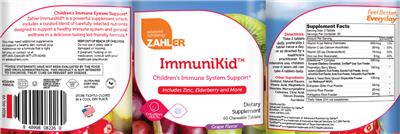
Children's immune system support
Zahler ImmuniKid is a powerful supplement which includes a curated blend of carefully selected nutrients designed to support a healthy immune system and general wellness in a delicious-tasting kid-friendly formula.
Gluten free Dairy free Soy free
Vegetarian friendly
General Statements
You may need additional supplements to support a healthy diet; consult your nutritionist for a formula that is right for you or contact us at 877-ASK-ZAHLER (877-275-9245) or [email protected].
Feel better, everyday.
Precautions
Keep out of reach of children.
Do not use if safety seal is damaged or missing.
If pregnant, nursing or on medication, consult with your healthcare practitioner.
FDA Disclaimer Statement
These statements have not been evaluated by the Food and Drug Administration. This product is not intended to diagnose, treat, cure or prevent any disease.
Seals/Symbols
Dairy Kosher OU (Kosher) This product was manufactured in a GMP certified Facility
Made in the USA
Formula
Dairy Kosher OU (Kosher) Kosher Pareve Under the strict supervision of Rabbi SH. Stern & the orthodox union
Includes Zinc, Elderberry and more
Children's health
Storage
Store tightly closed in a cool, dry place.
FDA Statement of Identity
Dietary Supplement
Suggested/Recommended/Usage/Directions
Directions: Take 2 tablets daily, preferably 1 tablet twice a day with food, or as directed by a healthcare practitioner. For intensive use, children over 6 years old can take 4 tablets daily.
Brand IP Statement(s)
ImmuniKid is a trademark of Advanced Nutrition by Zahler. ElderMune is a trademark of Innovative Natural Solutions, LLC (INS Farms). Sunfiber is a registered trademark of Taiyo International, Inc. Wellmune is a registered trademark of PLT Health solutions.
Is this label outdated? Report a formula or label change and our pharmacy team will review it.
ImmuniKid Grape Flavor by Advanced Nutrition by Zahler label
The label scan from the NIH Dietary Supplement Label Database. Tap to enlarge.
Label images are published by the NIH Dietary Supplement Label Database for the version of this product on file. Always read your actual product label.
View the full label (PDF)The Ingredients in ImmuniKid Grape Flavor by Advanced Nutrition by Zahler
These are the 15 active ingredients this product is made of. Select any to open its full monograph.
Serving size1 Tablet(s) Dosage formTablet Or Pill Servings per container30 Amounts shown are per serving.
Most supplement products combine several ingredients, and a medication can interact with the product through any one of them. Each ingredient below shows whether it has known drug interactions.
Vitamin D3
Interacts with715 drugs
Vitamin D is a fat-soluble vitamin that helps your body absorb calcium and is important for healthy bones, muscles, and immune function. Many people,...
Vitamin D3 monograph & interactionsZinc
Interacts with67 drugs
Zinc is an essential mineral that your body needs for immune function, wound healing, taste, and smell. Most people get enough from food, but suppleme...
Zinc monograph & interactionsVitamin C
Interacts with207 drugs
Vitamin C (ascorbic acid) is an essential nutrient your body needs but cannot make, so you must get it from food or supplements. It's important for im...
Vitamin C monograph & interactionsVitamin A
Interacts with387 drugs
Vitamin A is an essential nutrient important for vision, skin, immune function, and growth. Most people get enough from a balanced diet, and supplemen...
Vitamin A monograph & interactionsLicorice root powder
Interacts with1,040 drugs
Licorice root is a traditional remedy used for sore throats, coughs, and digestive complaints, but solid human evidence is limited for most uses. Regu...
Licorice root powder monograph & interactionsAstragalus root powder
Interacts with208 drugs
Astragalus is a root used for centuries in traditional Chinese medicine, mainly to support the immune system and help the body cope with stress. While...
Astragalus root powder monograph & interactionsEuropean Elder powder
ElderMune Complex
- › European Elderberry concentrate
- › Sunfiber
Proprietary Berry Blend
Wellmune WGP
Interacts with293 drugs
Beta-glucans are natural fibers found in oats, barley, mushrooms, and yeast. The strongest evidence supports the oat and barley types for modestly low...
Wellmune WGP monograph & interactionsOther (inactive) ingredients: Sorbitol, Natural Flavors, Stearic Acid, Magnesium Stearate, Microcrystalline Cellulose, Citric Acid, Silicon Dioxide, Sucralose. These complete the product’s ingredient list but are not active constituents.
ImmuniKid Grape Flavor by Advanced Nutrition by Zahler Drug Interactions
HelloPharmacist Interaction Report
ImmuniKid Grape Flavor by Advanced Nutrition by Zahler contains several ingredients with documented drug interactions.
Through its vitamin D, zinc, vitamin C, vitamin A, licorice root, astragalus, amla fruit, acerola, schisandra, goji berry, chokeberry, and beta-glucans content, this product may interact with a number of medications. The most serious interaction documented is between goji berry and warfarin (a blood thinner), where goji can increase warfarin's effects and raise the risk of bleeding—this is a Major severity interaction.
Read the full breakdown — every affected drug type, severity by severity
Vitamin D interacts with thiazide diuretics, verapamil, atorvastatin, digoxin, diltiazem, calcipotriene, and others—primarily by raising blood calcium levels or reducing drug effectiveness. Zinc reduces absorption of quinolone antibiotics, cephalexin, tetracycline antibiotics, penicillamine, and HIV medications like ritonavir and integrase inhibitors.
Vitamin C may increase estrogen levels from oral contraceptives or hormone therapy, reduce warfarin effectiveness at high doses, and theoretically interfere with certain chemotherapy drugs.
Vitamin A carries a Major interaction with retinoid medications (like isotretinoin), where combined use risks dangerous vitamin A buildup. Licorice root, astragalus, amla fruit, acerola, schisandra, goji, chokeberry, and beta-glucans each carry additional Moderate interactions with blood thinners, diabetes medications, blood pressure drugs, immunosuppressants, and specific chemotherapy agents.
Altogether, these interactions span 1,457 individual medications.
Several ingredients—European Elder powder, European Elderberry concentrate, and Sunfiber—could not be checked against our interaction data. Use the medication search tool on this page to check your exact prescriptions before taking this product.
Check your own medications below · Editorial policy · How we use AI
Want to check YOUR meds against ImmuniKid Grape Flavor?
Ask about interactions with your drugs in plain English — “Can I take it with lisinopril?” — and we find you the answer in seconds, ingredient by ingredient.
Go to the checkerIngredients driving the most interactions
Individual Drug Interactions
The ingredients in ImmuniKid Grape Flavor interact with 1,456 drugs. Click any drug to see the details.
12 of the 15 ingredients in ImmuniKid Grape Flavor interact with drugs. Each result below shows which ingredient is responsible. Licorice root powder Lycium (Goji Berry) fruit powder Aronia arbutifolia, Powder Schisandra fruit powder Vitamin D3 Vitamin A Wellmune WGP Astragalus root powder Amla fruit powder Vitamin C Acerola fruit powder Zinc
AcitretinSoriatane
How Acitretin interacts with ImmuniKid Grape Flavor — through 1 ingredient. Tap an ingredient for the detail:
Vitamin ARetinoids Major
Interaction Summary
Concomitant use of retinoids with vitamin A supplements might produce supratherapeutic vitamin A levels.
Read the full Vitamin A + Acitretin interactionAlitretinoinPanretin
How Alitretinoin interacts with ImmuniKid Grape Flavor — through 1 ingredient. Tap an ingredient for the detail:
Vitamin ARetinoids Major
Interaction Summary
Concomitant use of retinoids with vitamin A supplements might produce supratherapeutic vitamin A levels.
Read the full Vitamin A + Alitretinoin interactionBexaroteneTargretin
How Bexarotene interacts with ImmuniKid Grape Flavor — through 6 ingredients. Tap an ingredient for the detail:
Vitamin ARetinoids Major
Interaction Summary
Concomitant use of retinoids with vitamin A supplements might produce supratherapeutic vitamin A levels.
Read the full Vitamin A + Bexarotene interactionLicorice Root PowderCytochrome P450 3a4 (cyp3a4) Substrates Moderate
Interaction Summary
Theoretically, licorice might increase or decrease levels of drugs metabolized by CYP3A4.
Read the full Licorice Root Powder + Bexarotene interactionAronia Arbutifolia, PowderCytochrome P450 3a4 (cyp3a4) Substrates Moderate
Interaction Summary
Theoretically, chokeberry might increase levels of drugs metabolized by CYP3A4.
Read the full Aronia Arbutifolia, Powder + Bexarotene interactionLycium (goji Berry) Fruit PowderCytochrome P450 3a4 (cyp3a4) Substrates Moderate
Interaction Summary
Theoretically, goji berry might inhibit CYP3A4 and reduce metabolism of CYP3A4 substrates.
Read the full Lycium (goji Berry) Fruit Powder + Bexarotene interactionSchisandra Fruit PowderCytochrome P450 3a4 (cyp3a4) Substrates Moderate
Interaction Summary
Schisandra can increase the levels and clinical effects of drugs metabolized by CYP3A4.
Read the full Schisandra Fruit Powder + Bexarotene interactionVitamin D3Cytochrome P450 3a4 (cyp3a4) Substrates Minor
Interaction Summary
Vitamin D might induce CYP3A4 enzymes and reduce the bioavailability of CYP3A4 substrates.
Read the full Vitamin D3 + Bexarotene interactionHalobetasol Propionate,tazaroteneDuobrii
How Halobetasol Propionate,tazarotene interacts with ImmuniKid Grape Flavor — through 1 ingredient. Tap an ingredient for the detail:
Vitamin ARetinoids Major
Interaction Summary
Concomitant use of retinoids with vitamin A supplements might produce supratherapeutic vitamin A levels.
Read the full Vitamin A + Halobetasol Propionate,tazarotene interactionIsotretinoinAbsorica, Accutane, Amnesteem, Claravis, Roaccutane, Sotret
How Isotretinoin interacts with ImmuniKid Grape Flavor — through 2 ingredients. Tap an ingredient for the detail:
Vitamin ARetinoids Major
Interaction Summary
Concomitant use of retinoids with vitamin A supplements might produce supratherapeutic vitamin A levels.
Read the full Vitamin A + Isotretinoin interactionLicorice Root PowderCytochrome P450 2c8 (cyp2c8) Substrates Moderate
Interaction Summary
Theoretically, licorice might increase levels of drugs metabolized by CYP2C8.
Read the full Licorice Root Powder + Isotretinoin interactionTazaroteneArazlo, Avage, Fabior, Tazorotene, Zorac
How Tazarotene interacts with ImmuniKid Grape Flavor — through 1 ingredient. Tap an ingredient for the detail:
Vitamin ARetinoids Major
Interaction Summary
Concomitant use of retinoids with vitamin A supplements might produce supratherapeutic vitamin A levels.
Read the full Vitamin A + Tazarotene interactionTretinoinAltreno, Renova, Retin-A, Vesanoid
How Tretinoin interacts with ImmuniKid Grape Flavor — through 2 ingredients. Tap an ingredient for the detail:
Vitamin ARetinoids Major
Interaction Summary
Concomitant use of retinoids with vitamin A supplements might produce supratherapeutic vitamin A levels.
Read the full Vitamin A + Tretinoin interactionLicorice Root PowderCytochrome P450 2c8 (cyp2c8) Substrates Moderate
Interaction Summary
Theoretically, licorice might increase levels of drugs metabolized by CYP2C8.
Read the full Licorice Root Powder + Tretinoin interactionTretinoin, Benzoyl PeroxideTwyneo
How Tretinoin, Benzoyl Peroxide interacts with ImmuniKid Grape Flavor — through 2 ingredients. Tap an ingredient for the detail:
Vitamin ARetinoids Major
Interaction Summary
Concomitant use of retinoids with vitamin A supplements might produce supratherapeutic vitamin A levels.
Read the full Vitamin A + Tretinoin, Benzoyl Peroxide interactionLicorice Root PowderCytochrome P450 2c8 (cyp2c8) Substrates Moderate
Interaction Summary
Theoretically, licorice might increase levels of drugs metabolized by CYP2C8.
Read the full Licorice Root Powder + Tretinoin, Benzoyl Peroxide interactionWarfarinWarfarin
How Warfarin interacts with ImmuniKid Grape Flavor — through 9 ingredients. Tap an ingredient for the detail:
Lycium (goji Berry) Fruit PowderCytochrome P450 2c19 (cyp2c19) Substrates, Cytochrome P450 2c9 (cyp2c9) Substrates +2 Major
Interaction Summary
Theoretically, goji berry might inhibit CYP2C19 and reduce metabolism of CYP2C19 substrates.
Read the full Lycium (goji Berry) Fruit Powder + Warfarin interactionLicorice Root PowderCytochrome P450 1a2 (cyp1a2) Substrates, Cytochrome P450 3a4 (cyp3a4) Substrates +4 Moderate
Interaction Summary
Theoretically, licorice might decrease the levels and clinical effects of CYP1A2 substrates.
Read the full Licorice Root Powder + Warfarin interactionVitamin CWarfarin (coumadin) Moderate
Interaction Summary
High-dose vitamin C might reduce the levels and effectiveness of warfarin.
Read the full Vitamin C + Warfarin interactionVitamin AWarfarin (coumadin) Moderate
Interaction Summary
Theoretically, high doses of vitamin A could increase the risk of bleeding with warfarin.
Read the full Vitamin A + Warfarin interactionSchisandra Fruit PowderCytochrome P450 2c19 (cyp2c19) Substrates, Cytochrome P450 2c9 (cyp2c9) Substrates +2 Moderate
Interaction Summary
Theoretically, schisandra might increase the levels and clinical effects of CYP2C19 substrates.
Read the full Schisandra Fruit Powder + Warfarin interactionAmla Fruit PowderAnticoagulant/antiplatelet Drugs Moderate
Interaction Summary
Theoretically, Indian gooseberry may increase the risk of bleeding if used with anticoagulant or antiplatelet drugs; however, research is conflicting.
Read the full Amla Fruit Powder + Warfarin interactionAronia Arbutifolia, PowderAnticoagulant/antiplatelet Drugs, Cytochrome P450 3a4 (cyp3a4) Substrates Moderate
Interaction Summary
Theoretically, chokeberry might increase the risk of bleeding when taken with anticoagulant or antiplatelet drugs.
Read the full Aronia Arbutifolia, Powder + Warfarin interactionVitamin D3Cytochrome P450 3a4 (cyp3a4) Substrates Minor
Interaction Summary
Vitamin D might induce CYP3A4 enzymes and reduce the bioavailability of CYP3A4 substrates.
Read the full Vitamin D3 + Warfarin interactionAcerola Fruit PowderWarfarin (coumadin) Minor
Interaction Summary
Theoretically, acerola might reduce the effectiveness of warfarin; however, its vitamin C content is likely too low to produce clinically significant effects.
Read the full Acerola Fruit Powder + Warfarin interactionWarfarin SodiumCoumadin, Panwarfin, Sofarin
How Warfarin Sodium interacts with ImmuniKid Grape Flavor — through 9 ingredients. Tap an ingredient for the detail:
Lycium (goji Berry) Fruit PowderCytochrome P450 2c19 (cyp2c19) Substrates, Cytochrome P450 2c9 (cyp2c9) Substrates +2 Major
Interaction Summary
Theoretically, goji berry might inhibit CYP2C19 and reduce metabolism of CYP2C19 substrates.
Read the full Lycium (goji Berry) Fruit Powder + Warfarin Sodium interactionAronia Arbutifolia, PowderAnticoagulant/antiplatelet Drugs, Cytochrome P450 3a4 (cyp3a4) Substrates Moderate
Interaction Summary
Theoretically, chokeberry might increase the risk of bleeding when taken with anticoagulant or antiplatelet drugs.
Read the full Aronia Arbutifolia, Powder + Warfarin Sodium interactionLicorice Root PowderCytochrome P450 2c8 (cyp2c8) Substrates, Cytochrome P450 3a4 (cyp3a4) Substrates +4 Moderate
Interaction Summary
Theoretically, licorice might increase levels of drugs metabolized by CYP2C8.
Read the full Licorice Root Powder + Warfarin Sodium interactionVitamin AWarfarin (coumadin) Moderate
Interaction Summary
Theoretically, high doses of vitamin A could increase the risk of bleeding with warfarin.
Read the full Vitamin A + Warfarin Sodium interactionVitamin CWarfarin (coumadin) Moderate
Interaction Summary
High-dose vitamin C might reduce the levels and effectiveness of warfarin.
Read the full Vitamin C + Warfarin Sodium interactionSchisandra Fruit PowderWarfarin (coumadin), Cytochrome P450 2c19 (cyp2c19) Substrates +2 Moderate
Interaction Summary
Theoretically, schisandra might decrease the levels and clinical effects of warfarin.
Read the full Schisandra Fruit Powder + Warfarin Sodium interactionAmla Fruit PowderAnticoagulant/antiplatelet Drugs Moderate
Interaction Summary
Theoretically, Indian gooseberry may increase the risk of bleeding if used with anticoagulant or antiplatelet drugs; however, research is conflicting.
Read the full Amla Fruit Powder + Warfarin Sodium interactionVitamin D3Cytochrome P450 3a4 (cyp3a4) Substrates Minor
Interaction Summary
Vitamin D might induce CYP3A4 enzymes and reduce the bioavailability of CYP3A4 substrates.
Read the full Vitamin D3 + Warfarin Sodium interactionAcerola Fruit PowderWarfarin (coumadin) Minor
Interaction Summary
Theoretically, acerola might reduce the effectiveness of warfarin; however, its vitamin C content is likely too low to produce clinically significant effects.
Read the full Acerola Fruit Powder + Warfarin Sodium interactionEtretinateTegison
How Etretinate interacts with ImmuniKid Grape Flavor — through 1 ingredient. Tap an ingredient for the detail:
Vitamin ARetinoids Major
Interaction Summary
Concomitant use of retinoids with vitamin A supplements might produce supratherapeutic vitamin A levels.
Read the full Vitamin A + Etretinate interaction6-mercaptopurinePurinethol
How 6-mercaptopurine interacts with ImmuniKid Grape Flavor — through 3 ingredients. Tap an ingredient for the detail:
Wellmune WgpImmunosuppressants Moderate
Interaction Summary
Theoretically, beta-glucans might interfere with immunosuppressive therapy.
Read the full Wellmune Wgp + 6-mercaptopurine interactionVitamin AHepatotoxic Drugs Moderate
Interaction Summary
Theoretically, taking high doses of vitamin A in combination with other potentially hepatotoxic drugs might increase the risk of liver disease.
Read the full Vitamin A + 6-mercaptopurine interactionAstragalus Root PowderImmunosuppressants Moderate
Interaction Summary
Theoretically, astragalus might interfere with immunosuppressive therapy.
Read the full Astragalus Root Powder + 6-mercaptopurine interactionAdo-trastuzumab EmtansineKadcyla
How Ado-trastuzumab Emtansine interacts with ImmuniKid Grape Flavor — through 5 ingredients. Tap an ingredient for the detail:
Lycium (goji Berry) Fruit PowderCytochrome P450 3a4 (cyp3a4) Substrates Moderate
Interaction Summary
Theoretically, goji berry might inhibit CYP3A4 and reduce metabolism of CYP3A4 substrates.
Read the full Lycium (goji Berry) Fruit Powder + Ado-trastuzumab Emtansine interactionSchisandra Fruit PowderCytochrome P450 3a4 (cyp3a4) Substrates Moderate
Interaction Summary
Schisandra can increase the levels and clinical effects of drugs metabolized by CYP3A4.
Read the full Schisandra Fruit Powder + Ado-trastuzumab Emtansine interactionLicorice Root PowderCytochrome P450 3a4 (cyp3a4) Substrates Moderate
Interaction Summary
Theoretically, licorice might increase or decrease levels of drugs metabolized by CYP3A4.
Read the full Licorice Root Powder + Ado-trastuzumab Emtansine interactionAronia Arbutifolia, PowderCytochrome P450 3a4 (cyp3a4) Substrates Moderate
Interaction Summary
Theoretically, chokeberry might increase levels of drugs metabolized by CYP3A4.
Read the full Aronia Arbutifolia, Powder + Ado-trastuzumab Emtansine interactionVitamin D3Cytochrome P450 3a4 (cyp3a4) Substrates Minor
Interaction Summary
Vitamin D might induce CYP3A4 enzymes and reduce the bioavailability of CYP3A4 substrates.
Read the full Vitamin D3 + Ado-trastuzumab Emtansine interactionAbacavir Sulfate, Dolutegravir, LamivudineTriumeq
How Abacavir Sulfate, Dolutegravir, Lamivudine interacts with ImmuniKid Grape Flavor — through 1 ingredient. Tap an ingredient for the detail:
Vitamin AHepatotoxic Drugs Moderate
Interaction Summary
Theoretically, taking high doses of vitamin A in combination with other potentially hepatotoxic drugs might increase the risk of liver disease.
Read the full Vitamin A + Abacavir Sulfate, Dolutegravir, Lamivudine interactionAbacavir, LamivudineEpzicom
How Abacavir, Lamivudine interacts with ImmuniKid Grape Flavor — through 1 ingredient. Tap an ingredient for the detail:
Vitamin AHepatotoxic Drugs Moderate
Interaction Summary
Theoretically, taking high doses of vitamin A in combination with other potentially hepatotoxic drugs might increase the risk of liver disease.
Read the full Vitamin A + Abacavir, Lamivudine interactionAbciximabReoPro
How Abciximab interacts with ImmuniKid Grape Flavor — through 2 ingredients. Tap an ingredient for the detail:
Aronia Arbutifolia, PowderAnticoagulant/antiplatelet Drugs Moderate
Interaction Summary
Theoretically, chokeberry might increase the risk of bleeding when taken with anticoagulant or antiplatelet drugs.
Read the full Aronia Arbutifolia, Powder + Abciximab interactionAmla Fruit PowderAnticoagulant/antiplatelet Drugs Moderate
Interaction Summary
Theoretically, Indian gooseberry may increase the risk of bleeding if used with anticoagulant or antiplatelet drugs; however, research is conflicting.
Read the full Amla Fruit Powder + Abciximab interactionAbemaciclibVerzenio
How Abemaciclib interacts with ImmuniKid Grape Flavor — through 5 ingredients. Tap an ingredient for the detail:
Schisandra Fruit PowderCytochrome P450 3a4 (cyp3a4) Substrates Moderate
Interaction Summary
Schisandra can increase the levels and clinical effects of drugs metabolized by CYP3A4.
Read the full Schisandra Fruit Powder + Abemaciclib interactionLycium (goji Berry) Fruit PowderCytochrome P450 3a4 (cyp3a4) Substrates Moderate
Interaction Summary
Theoretically, goji berry might inhibit CYP3A4 and reduce metabolism of CYP3A4 substrates.
Read the full Lycium (goji Berry) Fruit Powder + Abemaciclib interactionLicorice Root PowderCytochrome P450 3a4 (cyp3a4) Substrates Moderate
Interaction Summary
Theoretically, licorice might increase or decrease levels of drugs metabolized by CYP3A4.
Read the full Licorice Root Powder + Abemaciclib interactionAronia Arbutifolia, PowderCytochrome P450 3a4 (cyp3a4) Substrates Moderate
Interaction Summary
Theoretically, chokeberry might increase levels of drugs metabolized by CYP3A4.
Read the full Aronia Arbutifolia, Powder + Abemaciclib interactionVitamin D3Cytochrome P450 3a4 (cyp3a4) Substrates Minor
Interaction Summary
Vitamin D might induce CYP3A4 enzymes and reduce the bioavailability of CYP3A4 substrates.
Read the full Vitamin D3 + Abemaciclib interactionAbiraterone
How Abiraterone interacts with ImmuniKid Grape Flavor — through 6 ingredients. Tap an ingredient for the detail:
Aronia Arbutifolia, PowderCytochrome P450 3a4 (cyp3a4) Substrates Moderate
Interaction Summary
Theoretically, chokeberry might increase levels of drugs metabolized by CYP3A4.
Read the full Aronia Arbutifolia, Powder + Abiraterone interactionLicorice Root PowderCytochrome P450 3a4 (cyp3a4) Substrates Moderate
Interaction Summary
Theoretically, licorice might increase or decrease levels of drugs metabolized by CYP3A4.
Read the full Licorice Root Powder + Abiraterone interactionSchisandra Fruit PowderCytochrome P450 3a4 (cyp3a4) Substrates Moderate
Interaction Summary
Schisandra can increase the levels and clinical effects of drugs metabolized by CYP3A4.
Read the full Schisandra Fruit Powder + Abiraterone interactionLycium (goji Berry) Fruit PowderCytochrome P450 3a4 (cyp3a4) Substrates Moderate
Interaction Summary
Theoretically, goji berry might inhibit CYP3A4 and reduce metabolism of CYP3A4 substrates.
Read the full Lycium (goji Berry) Fruit Powder + Abiraterone interactionVitamin AHepatotoxic Drugs Moderate
Interaction Summary
Theoretically, taking high doses of vitamin A in combination with other potentially hepatotoxic drugs might increase the risk of liver disease.
Read the full Vitamin A + Abiraterone interactionVitamin D3Cytochrome P450 3a4 (cyp3a4) Substrates Minor
Interaction Summary
Vitamin D might induce CYP3A4 enzymes and reduce the bioavailability of CYP3A4 substrates.
Read the full Vitamin D3 + Abiraterone interactionAbiraterone AcetateYonsa, Zytiga
How Abiraterone Acetate interacts with ImmuniKid Grape Flavor — through 6 ingredients. Tap an ingredient for the detail:
Vitamin AHepatotoxic Drugs Moderate
Interaction Summary
Theoretically, taking high doses of vitamin A in combination with other potentially hepatotoxic drugs might increase the risk of liver disease.
Read the full Vitamin A + Abiraterone Acetate interactionSchisandra Fruit PowderCytochrome P450 3a4 (cyp3a4) Substrates Moderate
Interaction Summary
Schisandra can increase the levels and clinical effects of drugs metabolized by CYP3A4.
Read the full Schisandra Fruit Powder + Abiraterone Acetate interactionAronia Arbutifolia, PowderCytochrome P450 3a4 (cyp3a4) Substrates Moderate
Interaction Summary
Theoretically, chokeberry might increase levels of drugs metabolized by CYP3A4.
Read the full Aronia Arbutifolia, Powder + Abiraterone Acetate interactionLicorice Root PowderCytochrome P450 3a4 (cyp3a4) Substrates Moderate
Interaction Summary
Theoretically, licorice might increase or decrease levels of drugs metabolized by CYP3A4.
Read the full Licorice Root Powder + Abiraterone Acetate interactionLycium (goji Berry) Fruit PowderCytochrome P450 3a4 (cyp3a4) Substrates Moderate
Interaction Summary
Theoretically, goji berry might inhibit CYP3A4 and reduce metabolism of CYP3A4 substrates.
Read the full Lycium (goji Berry) Fruit Powder + Abiraterone Acetate interactionVitamin D3Cytochrome P450 3a4 (cyp3a4) Substrates Minor
Interaction Summary
Vitamin D might induce CYP3A4 enzymes and reduce the bioavailability of CYP3A4 substrates.
Read the full Vitamin D3 + Abiraterone Acetate interactionAbrocitinibCibinqo
How Abrocitinib interacts with ImmuniKid Grape Flavor — through 7 ingredients. Tap an ingredient for the detail:
Lycium (goji Berry) Fruit PowderCytochrome P450 2c9 (cyp2c9) Substrates, Cytochrome P450 2c19 (cyp2c19) Substrates Moderate
Interaction Summary
Theoretically, goji berry might inhibit CYP2C9 and reduce metabolism of CYP2C9 substrates.
Read the full Lycium (goji Berry) Fruit Powder + Abrocitinib interactionWellmune WgpImmunosuppressants Moderate
Interaction Summary
Theoretically, beta-glucans might interfere with immunosuppressive therapy.
Read the full Wellmune Wgp + Abrocitinib interactionAronia Arbutifolia, PowderAnticoagulant/antiplatelet Drugs Moderate
Interaction Summary
Theoretically, chokeberry might increase the risk of bleeding when taken with anticoagulant or antiplatelet drugs.
Read the full Aronia Arbutifolia, Powder + Abrocitinib interactionAstragalus Root PowderImmunosuppressants Moderate
Interaction Summary
Theoretically, astragalus might interfere with immunosuppressive therapy.
Read the full Astragalus Root Powder + Abrocitinib interactionAmla Fruit PowderAnticoagulant/antiplatelet Drugs Moderate
Interaction Summary
Theoretically, Indian gooseberry may increase the risk of bleeding if used with anticoagulant or antiplatelet drugs; however, research is conflicting.
Read the full Amla Fruit Powder + Abrocitinib interactionSchisandra Fruit PowderCytochrome P450 2c19 (cyp2c19) Substrates, Cytochrome P450 2c9 (cyp2c9) Substrates Moderate
Interaction Summary
Theoretically, schisandra might increase the levels and clinical effects of CYP2C19 substrates.
Read the full Schisandra Fruit Powder + Abrocitinib interactionLicorice Root PowderCytochrome P450 2c19 (cyp2c19) Substrates, Cytochrome P450 2c9 (cyp2c9) Substrates Moderate
Interaction Summary
Theoretically, licorice might increase levels of drugs metabolized by CYP2C19.
Read the full Licorice Root Powder + Abrocitinib interactionAcalabrutinibCalquence
How Acalabrutinib interacts with ImmuniKid Grape Flavor — through 5 ingredients. Tap an ingredient for the detail:
Licorice Root PowderCytochrome P450 3a4 (cyp3a4) Substrates, P-glycoprotein Substrates Moderate
Interaction Summary
Theoretically, licorice might increase or decrease levels of drugs metabolized by CYP3A4.
Read the full Licorice Root Powder + Acalabrutinib interactionLycium (goji Berry) Fruit PowderCytochrome P450 3a4 (cyp3a4) Substrates Moderate
Interaction Summary
Theoretically, goji berry might inhibit CYP3A4 and reduce metabolism of CYP3A4 substrates.
Read the full Lycium (goji Berry) Fruit Powder + Acalabrutinib interactionAronia Arbutifolia, PowderCytochrome P450 3a4 (cyp3a4) Substrates Moderate
Interaction Summary
Theoretically, chokeberry might increase levels of drugs metabolized by CYP3A4.
Read the full Aronia Arbutifolia, Powder + Acalabrutinib interactionSchisandra Fruit PowderCytochrome P450 3a4 (cyp3a4) Substrates, P-glycoprotein Substrates Moderate
Interaction Summary
Schisandra can increase the levels and clinical effects of drugs metabolized by CYP3A4.
Read the full Schisandra Fruit Powder + Acalabrutinib interactionVitamin D3Cytochrome P450 3a4 (cyp3a4) Substrates Minor
Interaction Summary
Vitamin D might induce CYP3A4 enzymes and reduce the bioavailability of CYP3A4 substrates.
Read the full Vitamin D3 + Acalabrutinib interactionAcarboseGlucobay, Prandase, Precose
How Acarbose interacts with ImmuniKid Grape Flavor — through 5 ingredients. Tap an ingredient for the detail:
Amla Fruit PowderAntidiabetes Drugs Moderate
Interaction Summary
Taking Indian gooseberry with antidiabetes drugs might increase the risk of hypoglycemia.
Read the full Amla Fruit Powder + Acarbose interactionAstragalus Root PowderAntidiabetes Drugs Moderate
Interaction Summary
Theoretically, taking astragalus with antidiabetes drugs might increase the risk of hypoglycemia.
Read the full Astragalus Root Powder + Acarbose interactionVitamin AHepatotoxic Drugs Moderate
Interaction Summary
Theoretically, taking high doses of vitamin A in combination with other potentially hepatotoxic drugs might increase the risk of liver disease.
Read the full Vitamin A + Acarbose interactionAronia Arbutifolia, PowderAntidiabetes Drugs Moderate
Interaction Summary
Theoretically, chokeberry might increase the risk of hypoglycemia when taken with antidiabetes drugs.
Read the full Aronia Arbutifolia, Powder + Acarbose interactionLycium (goji Berry) Fruit PowderAntidiabetes Drugs Minor
Interaction Summary
Theoretically, concomitant use of goji fruit polysaccharides or goji root bark with antidiabetes drugs might have additive effects.
Read the full Lycium (goji Berry) Fruit Powder + Acarbose interactionAcebutololRhotral, Sectral
How Acebutolol interacts with ImmuniKid Grape Flavor — through 4 ingredients. Tap an ingredient for the detail:
Wellmune WgpAntihypertensive Drugs Moderate
Interaction Summary
Theoretically, taking beta-glucans with antihypertensive drugs might increase the risk of hypotension.
Read the full Wellmune Wgp + Acebutolol interactionLicorice Root PowderAntihypertensive Drugs Moderate
Interaction Summary
Theoretically, licorice might reduce the effects of antihypertensive drugs.
Read the full Licorice Root Powder + Acebutolol interactionVitamin AHepatotoxic Drugs Moderate
Interaction Summary
Theoretically, taking high doses of vitamin A in combination with other potentially hepatotoxic drugs might increase the risk of liver disease.
Read the full Vitamin A + Acebutolol interactionLycium (goji Berry) Fruit PowderAntihypertensive Drugs Moderate
Interaction Summary
Theoretically, concomitant use of goji root bark, but not goji fruit, with antihypertensive drugs might have additive effects.
Read the full Lycium (goji Berry) Fruit Powder + Acebutolol interactionAcenocoumarolSintrom
How Acenocoumarol interacts with ImmuniKid Grape Flavor — through 2 ingredients. Tap an ingredient for the detail:
Aronia Arbutifolia, PowderAnticoagulant/antiplatelet Drugs Moderate
Interaction Summary
Theoretically, chokeberry might increase the risk of bleeding when taken with anticoagulant or antiplatelet drugs.
Read the full Aronia Arbutifolia, Powder + Acenocoumarol interactionAmla Fruit PowderAnticoagulant/antiplatelet Drugs Moderate
Interaction Summary
Theoretically, Indian gooseberry may increase the risk of bleeding if used with anticoagulant or antiplatelet drugs; however, research is conflicting.
Read the full Amla Fruit Powder + Acenocoumarol interactionAcetaminophenChildren's Tylenol, Children's Tylenol Meltaways, Tylenol, Tylenol Ex Strength
How Acetaminophen interacts with ImmuniKid Grape Flavor — through 3 ingredients. Tap an ingredient for the detail:
Vitamin AHepatotoxic Drugs Moderate
Interaction Summary
Theoretically, taking high doses of vitamin A in combination with other potentially hepatotoxic drugs might increase the risk of liver disease.
Read the full Vitamin A + Acetaminophen interactionVitamin CAcetaminophen (tylenol, Others) Minor
Interaction Summary
High-dose vitamin C might slightly prolong the clearance of acetaminophen.
Read the full Vitamin C + Acetaminophen interactionLicorice Root PowderCytochrome P450 1a2 (cyp1a2) Substrates Minor
Interaction Summary
Theoretically, licorice might decrease the levels and clinical effects of CYP1A2 substrates.
Read the full Licorice Root Powder + Acetaminophen interactionAcetaminophen, AspirinGemnisyn
How Acetaminophen, Aspirin interacts with ImmuniKid Grape Flavor — through 6 ingredients. Tap an ingredient for the detail:
Vitamin AHepatotoxic Drugs Moderate
Interaction Summary
Theoretically, taking high doses of vitamin A in combination with other potentially hepatotoxic drugs might increase the risk of liver disease.
Read the full Vitamin A + Acetaminophen, Aspirin interactionAmla Fruit PowderAnticoagulant/antiplatelet Drugs, Aspirin Moderate
Interaction Summary
Theoretically, Indian gooseberry may increase the risk of bleeding if used with anticoagulant or antiplatelet drugs; however, research is conflicting.
Read the full Amla Fruit Powder + Acetaminophen, Aspirin interactionAronia Arbutifolia, PowderAnticoagulant/antiplatelet Drugs Moderate
Interaction Summary
Theoretically, chokeberry might increase the risk of bleeding when taken with anticoagulant or antiplatelet drugs.
Read the full Aronia Arbutifolia, Powder + Acetaminophen, Aspirin interactionLicorice Root PowderCytochrome P450 1a2 (cyp1a2) Substrates Minor
Interaction Summary
Theoretically, licorice might decrease the levels and clinical effects of CYP1A2 substrates.
Read the full Licorice Root Powder + Acetaminophen, Aspirin interactionVitamin CAcetaminophen (tylenol, Others), Aspirin Minor
Interaction Summary
High-dose vitamin C might slightly prolong the clearance of acetaminophen.
Read the full Vitamin C + Acetaminophen, Aspirin interactionAcerola Fruit PowderAspirin Minor
Interaction Summary
Theoretically, acerola might reduce the clearance of aspirin; however, its vitamin C content is likely too low to produce clinically significant effects.
Read the full Acerola Fruit Powder + Acetaminophen, Aspirin interactionAcetaminophen, Aspirin, CaffeineExcedrin, Excedrin Extra Strength, Excedrin Migraine
How Acetaminophen, Aspirin, Caffeine interacts with ImmuniKid Grape Flavor — through 9 ingredients. Tap an ingredient for the detail:
Aronia Arbutifolia, PowderAnticoagulant/antiplatelet Drugs, Cytochrome P450 3a4 (cyp3a4) Substrates Moderate
Interaction Summary
Theoretically, chokeberry might increase the risk of bleeding when taken with anticoagulant or antiplatelet drugs.
Read the full Aronia Arbutifolia, Powder + Acetaminophen, Aspirin, Caffeine interactionVitamin AHepatotoxic Drugs Moderate
Interaction Summary
Theoretically, taking high doses of vitamin A in combination with other potentially hepatotoxic drugs might increase the risk of liver disease.
Read the full Vitamin A + Acetaminophen, Aspirin, Caffeine interactionLicorice Root PowderCytochrome P450 1a2 (cyp1a2) Substrates, Cytochrome P450 3a4 (cyp3a4) Substrates Moderate
Interaction Summary
Theoretically, licorice might decrease the levels and clinical effects of CYP1A2 substrates.
Read the full Licorice Root Powder + Acetaminophen, Aspirin, Caffeine interactionLycium (goji Berry) Fruit PowderCytochrome P450 3a4 (cyp3a4) Substrates Moderate
Interaction Summary
Theoretically, goji berry might inhibit CYP3A4 and reduce metabolism of CYP3A4 substrates.
Read the full Lycium (goji Berry) Fruit Powder + Acetaminophen, Aspirin, Caffeine interactionSchisandra Fruit PowderCytochrome P450 3a4 (cyp3a4) Substrates Moderate
Interaction Summary
Schisandra can increase the levels and clinical effects of drugs metabolized by CYP3A4.
Read the full Schisandra Fruit Powder + Acetaminophen, Aspirin, Caffeine interactionAmla Fruit PowderAspirin, Anticoagulant/antiplatelet Drugs Moderate
Interaction Summary
Theoretically, Indian gooseberry may increase the risk of bleeding if used with aspirin; however, research is conflicting.
Read the full Amla Fruit Powder + Acetaminophen, Aspirin, Caffeine interactionVitamin CAspirin, Acetaminophen (tylenol, Others) Minor
Interaction Summary
Acidification of the urine by vitamin C might increase aspirin levels.
Read the full Vitamin C + Acetaminophen, Aspirin, Caffeine interactionVitamin D3Cytochrome P450 3a4 (cyp3a4) Substrates Minor
Interaction Summary
Vitamin D might induce CYP3A4 enzymes and reduce the bioavailability of CYP3A4 substrates.
Read the full Vitamin D3 + Acetaminophen, Aspirin, Caffeine interactionAcerola Fruit PowderAspirin Minor
Interaction Summary
Theoretically, acerola might reduce the clearance of aspirin; however, its vitamin C content is likely too low to produce clinically significant effects.
Read the full Acerola Fruit Powder + Acetaminophen, Aspirin, Caffeine interactionAcetaminophen, Brompheniramine, PhenylpropanolamineDimetapp Cold and Flu
How Acetaminophen, Brompheniramine, Phenylpropanolamine interacts with ImmuniKid Grape Flavor — through 3 ingredients. Tap an ingredient for the detail:
Vitamin AHepatotoxic Drugs Moderate
Interaction Summary
Theoretically, taking high doses of vitamin A in combination with other potentially hepatotoxic drugs might increase the risk of liver disease.
Read the full Vitamin A + Acetaminophen, Brompheniramine, Phenylpropanolamine interactionLicorice Root PowderCytochrome P450 1a2 (cyp1a2) Substrates Minor
Interaction Summary
Theoretically, licorice might decrease the levels and clinical effects of CYP1A2 substrates.
Read the full Licorice Root Powder + Acetaminophen, Brompheniramine, Phenylpropanolamine interactionVitamin CAcetaminophen (tylenol, Others) Minor
Interaction Summary
High-dose vitamin C might slightly prolong the clearance of acetaminophen.
Read the full Vitamin C + Acetaminophen, Brompheniramine, Phenylpropanolamine interactionAcetaminophen, ButalbitalAxocet, Bancap, Bucet, Butex Forte, Esgic CF, Orbivan CF +5 more
How Acetaminophen, Butalbital interacts with ImmuniKid Grape Flavor — through 3 ingredients. Tap an ingredient for the detail:
Vitamin AHepatotoxic Drugs Moderate
Interaction Summary
Theoretically, taking high doses of vitamin A in combination with other potentially hepatotoxic drugs might increase the risk of liver disease.
Read the full Vitamin A + Acetaminophen, Butalbital interactionVitamin CAcetaminophen (tylenol, Others) Minor
Interaction Summary
High-dose vitamin C might slightly prolong the clearance of acetaminophen.
Read the full Vitamin C + Acetaminophen, Butalbital interactionLicorice Root PowderCytochrome P450 1a2 (cyp1a2) Substrates Minor
Interaction Summary
Theoretically, licorice might decrease the levels and clinical effects of CYP1A2 substrates.
Read the full Licorice Root Powder + Acetaminophen, Butalbital interactionAcetaminophen, Butalbital, CaffeineEsgic, Esgic Plus, Fiogesic, Fioricet, Repan, Tecnal +1 more
How Acetaminophen, Butalbital, Caffeine interacts with ImmuniKid Grape Flavor — through 7 ingredients. Tap an ingredient for the detail:
Licorice Root PowderCytochrome P450 1a2 (cyp1a2) Substrates, Cytochrome P450 3a4 (cyp3a4) Substrates Moderate
Interaction Summary
Theoretically, licorice might decrease the levels and clinical effects of CYP1A2 substrates.
Read the full Licorice Root Powder + Acetaminophen, Butalbital, Caffeine interactionVitamin AHepatotoxic Drugs Moderate
Interaction Summary
Theoretically, taking high doses of vitamin A in combination with other potentially hepatotoxic drugs might increase the risk of liver disease.
Read the full Vitamin A + Acetaminophen, Butalbital, Caffeine interactionSchisandra Fruit PowderCytochrome P450 3a4 (cyp3a4) Substrates Moderate
Interaction Summary
Schisandra can increase the levels and clinical effects of drugs metabolized by CYP3A4.
Read the full Schisandra Fruit Powder + Acetaminophen, Butalbital, Caffeine interactionLycium (goji Berry) Fruit PowderCytochrome P450 3a4 (cyp3a4) Substrates Moderate
Interaction Summary
Theoretically, goji berry might inhibit CYP3A4 and reduce metabolism of CYP3A4 substrates.
Read the full Lycium (goji Berry) Fruit Powder + Acetaminophen, Butalbital, Caffeine interactionAronia Arbutifolia, PowderCytochrome P450 3a4 (cyp3a4) Substrates Moderate
Interaction Summary
Theoretically, chokeberry might increase levels of drugs metabolized by CYP3A4.
Read the full Aronia Arbutifolia, Powder + Acetaminophen, Butalbital, Caffeine interactionVitamin D3Cytochrome P450 3a4 (cyp3a4) Substrates Minor
Interaction Summary
Vitamin D might induce CYP3A4 enzymes and reduce the bioavailability of CYP3A4 substrates.
Read the full Vitamin D3 + Acetaminophen, Butalbital, Caffeine interactionVitamin CAcetaminophen (tylenol, Others) Minor
Interaction Summary
High-dose vitamin C might slightly prolong the clearance of acetaminophen.
Read the full Vitamin C + Acetaminophen, Butalbital, Caffeine interactionEach ingredient & the kinds of drugs it affects
For each ingredient in ImmuniKid Grape Flavor with known interactions, here are the types of medications they can affect. Open any type for the detail — or search your exact drug in the checker above.
Licorice root powder
Antihypertensive Drugs
Theoretically, licorice might reduce the effects of antihypertensive drugs.
In human research, licorice increases blood pressure in a dose-dependent manner.
Cisplatin (Platinol-Aq)
Theoretically, licorice might reduce the effects of cisplatin.
In animal research, licorice diminished the therapeutic efficacy of cisplatin.
Corticosteroids
Theoretically, concomitant use of licorice and corticosteroids might increase the side effects of corticosteroids.
Case reports suggest that concomitant use of licorice and oral corticosteroids, such as hydrocortisone, can potentiate the duration of activity and increase blood levels of corticosteroids. Additionally, in one case report, a patient with neurogenic orthostatic hypertension stabilized on fludrocortisone 0.1 mg twice daily developed pseudohyperaldosteronism after recent consumption of large amounts of black licorice.
Cytochrome P450 2B6 (Cyp2B6) Substrates
Theoretically, licorice might increase levels of drugs metabolized by CYP2B6.
In vitro research shows that licorice extract and glabridin, a licorice constituent, inhibit CYP2B6 isoenzymes. Licorice extract from the species G. uralensis seems to inhibit CYP2B6 isoenzymes to a greater degree than G. glabra extract in vitro. Theoretically, these species of licorice might increase levels of drugs metabolized by CYP2B6; however, these interactions have not yet been reported in humans.
Cytochrome P450 2C19 (Cyp2C19) Substrates
Theoretically, licorice might increase levels of drugs metabolized by CYP2C19.
In vitro, licorice extracts from the species G. glabra and G. uralensis inhibit CYP2C19 isoenzymes in vitro. Theoretically, these species of licorice might increase levels of drugs metabolized by CYP2C19; however, this interaction has not yet been reported in humans.
Cytochrome P450 2C8 (Cyp2C8) Substrates
Theoretically, licorice might increase levels of drugs metabolized by CYP2C8.
In vitro, licorice extract from the species G. glabra and G. uralensis inhibits CYP2C8 isoenzymes. Theoretically, these species of licorice might increase levels of drugs metabolized by CYP2C8; however, this interaction has not yet been reported in humans.
Cytochrome P450 2C9 (Cyp2C9) Substrates
Theoretically, licorice might increase or decrease levels of drugs metabolized by CYP2C9.
There is conflicting evidence about the effect of licorice on CYP2C9 enzyme activity. In vitro research shows that extracts from the licorice species G. glabra and G. uralensis moderately inhibit CYP2C9 isoenzymes. However, evidence from an animal model shows that licorice extract from the species G. uralensis can induce hepatic CYP2C9 activity. Until more is known, licorice should be used cautiously in people taking CYP2C9 substrates.
Cytochrome P450 3A4 (Cyp3A4) Substrates
Theoretically, licorice might increase or decrease levels of drugs metabolized by CYP3A4.
Pharmacokinetic research shows that the licorice constituent glycyrrhizin, taken in a dosage of 150 mg orally twice daily for 14 days, modestly decreases the area under the concentration-time curve of midazolam by about 20%. Midazolam is a substrate of CYP3A4, suggesting that glycyrrhizin modestly induces CYP3A4 activity. Animal research also shows that licorice extract from the species G. uralensis induces CYP3A4 activity. However, licorice extract from G. glabra species appear to inhibit CYP3A4-induced metabolism of testosterone in vitro. It is thought that the G. glabra inhibits CYP3A4 due to its constituent glabridin, which is a moderate CYP3A4 inhibitor in vitro and not present in other licorice species. Until more is known, licorice should be used cautiously in people taking CYP3A4 substrates.
Digoxin (Lanoxin)
Theoretically, concomitant use of licorice with digoxin might increase the risk of cardiac toxicity.
Overuse or misuse of licorice with cardiac glycoside therapy might increase the risk of cardiac toxicity due to potassium loss.
Diuretic Drugs
Theoretically, concomitant use of licorice with diuretic drugs might increase the risk of hypokalemia.
Overuse of licorice might compound diuretic-induced potassium loss. In one case report, a 72-year-old male with a past medical history of hypertension, type 2 diabetes, hyperlipidemia, arrhythmia, stroke, and hepatic dysfunction was hospitalized with severe hypokalemia and uncontrolled hypertension due to pseudohyperaldosteronism. This was thought to be provoked by concomitant daily consumption of a product containing 225 mg of glycyrrhizin, a constituent of licorice, and hydrochlorothiazide 12.5 mg for 1 month.
Estrogens
Theoretically, licorice might increase or decrease the effects of estrogen therapy.
Theoretically, licorice might interfere with estrogen therapy due to estrogenic and anti-estrogenic effects.
Loop Diuretics
Theoretically, loop diuretics might increase the mineralocorticoid effects of licorice.
Theoretically, loop diuretics might enhance the mineralocorticoid effects of licorice by inhibiting the enzyme that converts cortisol to cortisone; however, bumetanide (Bumex) does not appear to have this effect.
Midazolam (Versed)
Theoretically, licorice might decrease levels of midazolam.
In humans, the licorice constituent glycyrrhizin appears to moderately induce the metabolism of midazolam. This is likely due to induction of cytochrome P450 3A4 by licorice. Until more is known, licorice should be used cautiously in people taking midazolam.
P-Glycoprotein Substrates
Theoretically, licorice might decrease the absorption of P-glycoprotein substrates.
In vitro research shows that licorice can increase P-glycoprotein activity.
Paclitaxel (Abraxane, Onxol)
Theoretically, licorice might decrease plasma levels and clinical effects of paclitaxel.
Multiple doses of licorice taken concomitantly with paclitaxel might reduce the effectiveness of paclitaxel. Animal research shows that licorice 3 grams/kg given orally for 14 days before intravenous administration of paclitaxel decreases the exposure to paclitaxel and increases its clearance. Theoretically, this occurs because licorice induces cytochrome P450 3A4 enzymes, which metabolize paclitaxel. Notably, a single dose of licorice did not affect exposure or clearance of paclitaxel.
Warfarin (Coumadin)
Theoretically, licorice might decrease plasma levels and clinical effects of warfarin.
Licorice seems to increase metabolism and decrease levels of warfarin in animal models. This is likely due to induction of cytochrome P450 2C9 (CYP2C9) metabolism by licorice. Advise patients taking warfarin to avoid taking licorice.
Cytochrome P450 1A2 (Cyp1A2) Substrates
Theoretically, licorice might decrease the levels and clinical effects of CYP1A2 substrates.
In vitro research shows that licorice induces CYP1A2 enzymes.
Methotrexate (Trexall, Others)
Theoretically, licorice might increase levels of methotrexate.
Animal research suggests that intravenous administration of glycyrrhizin, a licorice constituent, and high-dose methotrexate may delay methotrexate excretion and increase systemic exposure, leading to transient elevations in liver enzymes and total bilirubin. This interaction has not yet been reported in humans.
Lycium (Goji Berry) fruit powder
Warfarin (Coumadin)
Goji can increase the effects of warfarin and possibly increase the risk of bleeding.
There are at least 5 case reports of increased international normalized ratio (INR) in patients stabilized on warfarin who began drinking goji juice, concentrated goji tea, or goji wine. Goji may inhibit the metabolism of warfarin by cytochrome P450 2C9 (CYP2C9).
Antihypertensive Drugs
Theoretically, concomitant use of goji root bark, but not goji fruit, with antihypertensive drugs might have additive effects.
Animal and in vitro research suggest that goji root bark has hypotensive effects. However, goji fruit juice does not appear to reduce systolic or diastolic blood pressure in humans.
Cytochrome P450 2C19 (Cyp2C19) Substrates
Theoretically, goji berry might inhibit CYP2C19 and reduce metabolism of CYP2C19 substrates.
In vitro research shows that goji berry tincture and juice inhibit CYP2C19 enzymes. Concomitant use with goji may decrease metabolism and increase levels of CYP2C19 substrates. However, this has not been reported in humans.
Cytochrome P450 2C9 (Cyp2C9) Substrates
Theoretically, goji berry might inhibit CYP2C9 and reduce metabolism of CYP2C9 substrates.
In vitro research shows that goji berry tincture and juice inhibit CYP2C9 enzymes. Additionally, multiple case reports suggest that goji berry concentrated tea and juice inhibit the metabolism of warfarin, a CYP2C9 substrate. Concomitant use with goji may decrease metabolism and increase levels of CYP2C9 substrates.
Cytochrome P450 2D6 (Cyp2D6) Substrates
Theoretically, goji berry might inhibit CYP2D6 and reduce metabolism of CYP2D6 substrates.
In vitro research shows that goji berry juice inhibits CYP2D6 enzymes. Concomitant use with goji may decrease metabolism and increase levels of CYP2D6 substrates. However, this has not been reported in humans.
Cytochrome P450 3A4 (Cyp3A4) Substrates
Theoretically, goji berry might inhibit CYP3A4 and reduce metabolism of CYP3A4 substrates.
In vitro research shows that goji berry juice inhibits CYP3A4 enzymes. Concomitant use with goji may decrease metabolism and increase levels of CYP3A4 substrates. However, this has not been reported in humans.
Flecainide (Tambocor)
Theoretically, goji berry might increase the levels and clinical effects of flecainide.
In one case report, a 75-year-old patient stable on flecainide and warfarin presented to the emergency room with fainting and pleomorphic arrhythmia caused by flecainide toxicity. Flecainide toxicity was attributed to drinking 1-2 glasses of concentrated goji tea daily for 2 weeks. Theoretically, goji may have inhibited the cytochrome P450 2D6 (CYP2D6) metabolism of flecainide.
Antidiabetes Drugs
Theoretically, concomitant use of goji fruit polysaccharides or goji root bark with antidiabetes drugs might have additive effects.
Animal and in vitro research show that goji root bark and fruit polysaccharides might have hypoglycemic effects. However, clinical research has only shown that taking goji fruit polysaccharides with or without antidiabetes drugs modestly reduces postprandial glucose when compared with control, with no reports of hypoglycemia.
Aronia arbutifolia, Powder
Anticoagulant/Antiplatelet Drugs
Theoretically, chokeberry might increase the risk of bleeding when taken with anticoagulant or antiplatelet drugs.
Clinical and in vitro research suggests that chokeberry extract can temporarily inhibit platelet aggregation and decrease clot formation.
Antidiabetes Drugs
Theoretically, chokeberry might increase the risk of hypoglycemia when taken with antidiabetes drugs.
Some clinical research shows that chokeberry decreases levels of blood glucose in some patients with diabetes. However, other clinical research suggests that chokeberry has no significant effect on blood glucose levels.
Cytochrome P450 3A4 (Cyp3A4) Substrates
Theoretically, chokeberry might increase levels of drugs metabolized by CYP3A4.
In vitro research shows that chokeberry inhibits CYP3A4. In humans, there is one case report of a drug interaction with trabectedin, a CYP3A4 substrate, which is hypothesized to have been caused by chokeberry inhibition of CYP3A4.
Trabectedin (Yondelis)
Theoretically, chokeberry might increase the effects and adverse effects of trabectedin.
In one case report, a patient drinking chokeberry juice developed rhabdomyolysis induced by trabectedin, a cytochrome P450 3A4 (CYP3A4) substrate. It is possible that inhibition of CYP3A4 by chokeberry juice might have inhibited the metabolism of trabectedin and increased trabectedin levels in this patient.
Schisandra fruit powder
Cyclophosphamide
Theoretically, schisandra might increase the levels and clinical effects of cyclophosphamide.
In vitro research shows that schisandra increases the concentration of cyclophosphamide, likely through inhibition of cytochrome P450 3A4. After multiple doses of the schisandra constituents schisandrin A and schisantherin A, the maximum concentration of cyclophosphamide was increased by 7% and 75%, respectively, while the overall exposure to cyclophosphamide was increased by 29% and 301%, respectively.
Cyclosporine (Neoral, Sandimmune)
Schisandra can increase the levels and clinical effects of cyclosporine.
A small observational study in children with aplastic anemia found that taking schisandra with cyclosporine increased cyclosporine trough levels by 93% without increasing the risk of adverse events. However, the dose of cyclosporine was reduced in 9% of children to maintain appropriate cyclosporine blood concentrations.
Cytochrome P450 2C19 (Cyp2C19) Substrates
Theoretically, schisandra might increase the levels and clinical effects of CYP2C19 substrates.
In vitro research shows that schisandra inhibits CYP2C19, and animal research shows that schisandra increases the concentration of voriconazole, a CYP2C19 substrate. Theoretically, schisandra may also inhibit the metabolism of other CYP2C19 substrates. This effect has not been reported in humans.
Cytochrome P450 2C9 (Cyp2C9) Substrates
Theoretically, schisandra might decrease the levels and clinical effects of CYP2C9 substrates.
In vitro and animal research suggests that schisandra induces CYP2C9 enzymes. This effect has not been reported in humans.
Cytochrome P450 3A4 (Cyp3A4) Substrates
Schisandra can increase the levels and clinical effects of drugs metabolized by CYP3A4.
Most clinical and laboratory research shows that schisandra, administered either as a single dose or up to twice daily for 14 days, inhibits CYP3A4 and increases the concentration of CYP3A4 substrates such as cyclophosphamide, midazolam, tacrolimus, and talinolol. Although one in vitro and animal study shows that schisandra may induce CYP3A4 metabolism, this effect appears to be overpowered by schisandra's CYP3A4 inhibitory activity and has not been reported in humans.
Midazolam (Versed)
Schisandra can increase the levels and clinical effects of midazolam.
A small pharmacokinetic study in healthy adults shows that taking schisandra extract (Hezheng Pharmaceutical Co.) containing deoxyschizandrin 33.75 mg twice daily for 8 days and a single dose of midazolam 15 mg on day 8 increases the overall exposure to midazolam by about 119%, increases the peak plasma level of midazolam by 86%, and decreases midazolam clearance by about 52%. This effect has been attributed to inhibition of CYP3A4 by schisandra.
P-Glycoprotein Substrates
Schisandra might increase the levels and clinical effects of P-glycoprotein substrates.
In vitro research shows that schisandra extracts and constituents such as schisandrin B inhibit P-glycoprotein mediated efflux in intestinal cells and in P-glycoprotein over-expressing cell lines. Additionally, a small clinical study shows that schisandra increases the peak concentration and overall exposure to talinolol, a P-glycoprotein probe substrate. Theoretically, schisandra might inhibit the efflux of other P-glycoprotein substrates.
Sirolimus (Rapamune)
Schisandra can increase the levels and clinical effects of sirolimus.
A small pharmacokinetic study in healthy volunteers shows that taking 3 capsules of schisandra (Hezheng Pharmaceutical Company) containing a total of 33.75 mg deoxyschizandrin twice daily for 13 days and then taking a single dose of sirolimus 2 mg increases the overall exposure and peak level of sirolimus by two-fold. This effect is thought to be due to inhibition of cytochrome P450 3A4 by schisandra, as well as possible inhibition of the P-glycoprotein drug transporter.
Tacrolimus (Prograf)
Schisandra can increase the levels and clinical effects of tacrolimus.
Clinical research in healthy children and adults, transplant patients, and patients with nephrotic syndrome and various rheumatic immunologic disorders shows that taking schisandra with tacrolimus increases tacrolimus peak levels by 183% to 268%, prolongs or delays time to peak tacrolimus concentrations, increases overall exposure to tacrolimus by 126% to 343%, and decreases tacrolimus clearance by 19% to 73%. This effect is thought to be due to inhibition of P-glycoprotein drug transporter and CYP3A4 and CYP3A5 by schisandra. Some clinical and observational studies suggest that schisandra increases tacrolimus levels similarly in both expressors and non-expressors of CYP3A5, while other studies suggest it does so to a greater degree in CYP3A5 expressors than non-expressors. Animal research suggests that the greatest increase in tacrolimus levels occurs when schisandra is taken either concomitantly or up to 2 hours before tacrolimus, and clinical and observational research in humans suggests that schisandra may increase whole blood levels of tacrolimus and decrease clearance of tacrolimus in a dose-dependent manner.
Talinolol
Schisandra can increase the levels and clinical effects of talinolol.
A small pharmacokinetic study in healthy volunteers shows that taking schisandra extract 300 mg twice daily for 14 days with a single dose of talinolol 100 mg on day 14 increases the peak talinolol level by 51% and the overall exposure to talinolol by 47%. This effect is thought to be due to the possible inhibition of cytochrome P450 3A4 and P-glycoprotein by schisandra.
tly.
Voriconazole (Vfend)
Theoretically, schisandra might increase the levels and clinical effects of voriconazole.
Animal research shows that oral schisandra given daily for 1 or 14 days increases levels of intravenously administered voriconazole, a cytochrome P450 (CYP) 2C19 substrate. This effect is thought to be due to inhibition of CYP2C19 by schisandra. However, this interaction has not been reported in humans.
Warfarin (Coumadin)
Theoretically, schisandra might decrease the levels and clinical effects of warfarin.
Animal research suggests that oral schisandra extract, given daily for 6 days, reduces levels of intravenously administered warfarin. This effect might be due to the induction of cytochrome P450 (CYP) 2C9 metabolism by schisandra. However, this interaction has not been reported in humans.
Vitamin D3
Aluminum
Vitamin D might increase aluminum absorption and toxicity, but this has only been reported in people with renal failure.
The protein that transports calcium across the intestinal wall can also bind and transport aluminum. This protein is stimulated by vitamin D, which may therefore increase aluminum absorption. This mechanism may contribute to increased aluminum levels and toxicity in people with renal failure, when they take vitamin D and aluminum-containing phosphate binders chronically.
Atorvastatin (Lipitor)
Vitamin D might reduce absorption of atorvastatin.
A small, low-quality clinical study shows that taking vitamin D reduces levels of atorvastatin and its active metabolites by up to 55%. However, while atorvastatin levels decreased, total cholesterol, low-density lipoprotein (LDL) cholesterol, and high-density lipoprotein (HDL) cholesterol levels did not substantially change. Atorvastatin is metabolized in the gut by CYP3A4 enzymes, and researchers theorized that vitamin D might induce CYP3A4, causing reduced levels of atorvastatin. However, this proposed mechanism was not specifically studied.
Calcipotriene (Dovonex)
Taking calcipotriene with vitamin D increases the risk for hypercalcemia.
Calcipotriene is a vitamin D analog used topically for psoriasis. It can be absorbed in sufficient amounts to cause systemic effects, including hypercalcemia. Theoretically, combining calcipotriene with vitamin D supplements might increase the risk of hypercalcemia.
Digoxin (Lanoxin)
Theoretically, hypercalcemia induced by high-dose vitamin D can increase the risk of arrhythmia from digoxin.
High doses of vitamin D can cause hypercalcemia. Hypercalcemia increases the risk of fatal cardiac arrhythmias with digoxin. Avoid vitamin D doses above the tolerable upper intake level (4000 IU daily for adults) and monitor serum calcium levels in people taking vitamin D and digoxin concurrently.
Diltiazem (Cardizem, Others)
Theoretically, hypercalcemia induced by high-dose vitamin D can reduce the therapeutic effects of diltiazem for arrhythmia.
High doses of vitamin D can cause hypercalcemia. Hypercalcemia can reduce the effectiveness of verapamil in atrial fibrillation. Theoretically this could also occur with diltiazem. Avoid vitamin D doses above the tolerable upper intake level (4000 IU daily for adults) and monitor serum calcium levels in people taking vitamin D and diltiazem concurrently.
Thiazide Diuretics
Theoretically, taking thiazide diuretics and high-dose vitamin D can increase the risk of hypercalcemia.
Thiazide diuretics decrease urinary calcium excretion, which could lead to hypercalcemia if vitamin D supplements are taken concurrently. This has been reported in people being treated with vitamin D for hypoparathyroidism, and also in elderly people with normal parathyroid function who were taking a thiazide, vitamin D, and calcium-containing antacids daily.
Verapamil (Calan, Others)
Hypercalcemia induced by high-dose vitamin D can reduce the therapeutic effects of verapamil for arrhythmia.
Hypercalcemia due to high doses of vitamin D can reduce the effectiveness of verapamil in atrial fibrillation. Avoid vitamin D doses above the tolerable upper intake level (4000 IU daily for adults) and monitor serum calcium levels in people taking vitamin D and verapamil concurrently.
Cytochrome P450 3A4 (Cyp3A4) Substrates
Vitamin D might induce CYP3A4 enzymes and reduce the bioavailability of CYP3A4 substrates.
There is some concern that vitamin D might induce CYP3A4. In vitro research suggests that vitamin D induces CYP3A4 transcription. Additionally, observational research has found that increased UV light exposure and serum vitamin D levels are associated with decreased serum levels of CYP3A4 substrates such as tacrolimus and sirolimus, while no association between UV light exposure or vitamin D levels and levels of mycophenolic acid, a non-CYP3A4 substrate, was found. A small, low-quality clinical study shows that taking vitamin D reduces levels of the CYP3A4 substrate atorvastatin and its active metabolites by up to 55%; however, the clinical effects of atorvastatin were not reduced. While researchers theorized that vitamin D might induce CYP3A4, this proposed mechanism was not specifically studied.
Vitamin A
Retinoids
Concomitant use of retinoids with vitamin A supplements might produce supratherapeutic vitamin A levels.
Retinoids, which are vitamin A derivatives, could have additive toxic effects when taken with vitamin A supplements.
Hepatotoxic Drugs
Theoretically, taking high doses of vitamin A in combination with other potentially hepatotoxic drugs might increase the risk of liver disease.
The tolerable upper intake level (UL) is the highest level of intake that is likely to pose no risk of adverse effects. Doses of vitamin A above the UL can cause hepatotoxicity, ranging from elevated liver enzymes to liver failure.
Tetracycline Antibiotics
Theoretically, taking tetracycline antibiotics with high doses of vitamin A can increase the risk of pseudotumor cerebri.
Benign intracranial hypertension (pseudotumor cerebri) can occur with tetracyclines and with acute or chronic vitamin A toxicity. Case reports suggest that taking tetracyclines and vitamin A concurrently can increase the risk of this condition. Avoid high doses of vitamin A in people taking tetracyclines chronically.
Warfarin (Coumadin)
Theoretically, high doses of vitamin A could increase the risk of bleeding with warfarin.
Vitamin A toxicity is associated with hemorrhage and hypoprothrombinemia, possibly due to vitamin K antagonism. Advise patients taking warfarin to avoid doses of vitamin A above the tolerable upper intake level of 10,000 IU/day for adults.
Wellmune WGP
Antihypertensive Drugs
Theoretically, taking beta-glucans with antihypertensive drugs might increase the risk of hypotension.
Clinical research shows that taking beta-glucans may reduce systolic and diastolic blood pressure in some hypertensive individuals.
Immunosuppressants
Theoretically, beta-glucans might interfere with immunosuppressive therapy.
Some clinical research shows that beta-glucans have immunostimulant effects.
Astragalus root powder
Antidiabetes Drugs
Theoretically, taking astragalus with antidiabetes drugs might increase the risk of hypoglycemia.
Clinical research in humans shows that astragalus might have hypoglycemic effects. Theoretically, taking astragalus, especially in combination with other hypoglycemic agents, might increase the risk of hypoglycemia.
Cyclophosphamide
Theoretically, astragalus might interfere with cyclophosphamide therapy.
Evidence regarding the effect of astragalus on immunosuppression caused by cyclophosphamide is conflicting. Some animal research suggests that astragalus reverses cyclophosphamide-induced immunosuppression. However, other animal research shows no effect.
Immunosuppressants
Theoretically, astragalus might interfere with immunosuppressive therapy.
Astragalus seems to stimulate immune function. Theoretically, taking astragalus might decrease the effects of immunosuppressive therapy.
Lithium
Theoretically, astragalus might increase levels and adverse effects of lithium.
Animal research suggests that astragalus has diuretic properties. Theoretically, due to this diuretic effect, astragalus might reduce excretion and increase levels of lithium.
Amla fruit powder
Anticoagulant/Antiplatelet Drugs
Theoretically, Indian gooseberry may increase the risk of bleeding if used with anticoagulant or antiplatelet drugs; however, research is conflicting.
Clinical research shows that taking Indian gooseberry 500 mg as a single dose or twice daily for 10 days reduces platelet aggregation by about 24% to 36%, increases bleeding time by about 3.8-5.9 seconds, and increases clotting time by about 9.8-12.7 seconds when compared to baseline. However, taking Indian gooseberry 500 mg along with clopidogrel 75 mg or ecosprin 75 mg, as a single dose or for 10 days, does not significantly reduce platelet aggregation or increase bleeding time or clotting time when compared with clopidogrel 75 mg or ecosprin 75 mg alone. Until more is known, use caution when taking Indian gooseberry in combination with anticoagulant/antiplatelet drugs.
Antidiabetes Drugs
Taking Indian gooseberry with antidiabetes drugs might increase the risk of hypoglycemia.
Clinical research shows that taking Indian gooseberry fruit or fruit extract alone or in conjunction with antidiabetes medications can lower blood glucose levels. Dose adjustments to diabetes medications might be necessary.
Aspirin
Theoretically, Indian gooseberry may increase the risk of bleeding if used with aspirin; however, research is conflicting.
Clinical research shows that taking Indian gooseberry 500 mg as a single dose or twice daily for 10 days reduces platelet aggregation by about 24% to 36%, increases bleeding time by about 3.8-5.9 seconds, and increases clotting time by about 9.8-12.7 seconds when compared to baseline. However, taking a single dose of Indian gooseberry 500 mg along with ecosprin 75 mg, or taking a combination of Indian gooseberry 500 mg twice daily plus ecosprin 75 mg once daily for 10 days, does not significantly reduce platelet aggregation or increase bleeding time or clotting time when compared with ecosprin 75 mg alone.
Clopidogrel (Plavix)
Theoretically, Indian gooseberry may increase the risk of bleeding if used with clopidogrel; however, research is conflicting.
Clinical research shows that taking Indian gooseberry 500 mg as a single dose or twice daily for 10 days reduces platelet aggregation by about 24% to 36%, increases bleeding time by about 3.8-5.9 seconds, and increases clotting time by about 9.8-12.7 seconds when compared to baseline. However, taking a single dose of Indian gooseberry 500 mg along with clopidogrel 75 mg, or taking a combination of Indian gooseberry 500 mg twice daily plus clopidogrel 75 mg once daily for 10 days, does not significantly reduce platelet aggregation or increase bleeding time or clotting time when compared with clopidogrel 75 mg alone.
Vitamin C
Alkylating Agents
Theoretically, antioxidant effects of vitamin C might reduce the effectiveness of alkylating agents.
The use of antioxidants like vitamin C during chemotherapy is controversial. There is concern that antioxidants could reduce the activity of chemotherapy drugs that generate free radicals, such as cyclophosphamide, chlorambucil, carmustine, busulfan, and thiotepa. In contrast, some researchers theorize that antioxidants might make chemotherapy more effective by reducing oxidative stress that could interfere with apoptosis (cell death) of cancer cells. More evidence is needed to determine what effect, if any, antioxidants such as vitamin C have on chemotherapy.
Aluminum
Vitamin C can increase the amount of aluminum absorbed from aluminum compounds.
Research in animals and humans shows that vitamin C increases aluminum absorption, theoretically by chelating aluminum and keeping it in solution where it is available for absorption. In people with normal renal function, urinary excretion of aluminum will likely increase, making aluminum retention and toxicity unlikely. Patients with renal failure who take aluminum-containing compounds such as phosphate binders should avoid vitamin C supplements in doses above the recommended dietary allowances.
Antitumor Antibiotics
Theoretically, the antioxidant effects of vitamin C might reduce the effectiveness of antitumor antibiotics.
The use of antioxidants like vitamin C during chemotherapy is controversial. There is concern that antioxidants could reduce the activity of chemotherapy drugs which generate free radicals, such as doxorubicin. In contrast, some researchers theorize that antioxidants might make chemotherapy more effective by reducing oxidative stress that could interfere with apoptosis (cell death) of cancer cells. More evidence is needed to determine what effects, if any, antioxidants such as vitamin C have on chemotherapy.
Estrogens
Vitamin C might increase blood levels of estrogens.
Increases in plasma estrogen levels of up to 55% occur under some circumstances when vitamin C is taken concurrently with oral contraceptives or hormone replacement therapy, including topical products. It is suggested that vitamin C prevents oxidation of estrogen in the tissues, regenerates oxidized estrogen, and reduces sulfate conjugation of estrogen in the gut wall. When tissue levels of vitamin C are high, these processes are already maximized and supplemental vitamin C does not have any effect on estrogen levels. Increases in plasma estrogen levels may occur when patients who are deficient in vitamin C take supplements. Monitor these patients for estrogen-related side effects.
Fluphenazine (Prolixin)
Theoretically, vitamin C might decrease levels of fluphenazine.
In one patient there was a clinically significant decrease in fluphenazine levels when vitamin C (500 mg twice daily) was started. The mechanism is not known, and there is no further data to confirm this interaction.
Indinavir (Crixivan)
Vitamin C can modestly reduce indinavir levels.
One pharmacokinetic study shows that taking vitamin C 1 gram orally once daily along with indinavir 800 mg orally three times daily reduces the area under the concentration-time curve of indinavir by 14%. The mechanism of this interaction is unknown, but it is unlikely to be clinically significant in most patients. The effect of higher doses of vitamin C on indinavir levels is unknown.
Levothyroxine (Synthroid, Others)
Vitamin C can increase levothyroxine absorption.
Two clinical studies in adults with poorly controlled hypothyroidism show that swallowing levothyroxine with a glass of water containing vitamin C 500-1000 mg in solution reduces thyroid stimulating hormone (TSH) levels and increases thyroxine (T4) levels when compared with taking levothyroxine alone. This suggests that vitamin C increases the oral absorption of levothyroxine, possibly due to a reduction in pH.
Warfarin (Coumadin)
High-dose vitamin C might reduce the levels and effectiveness of warfarin.
Vitamin C in high doses may cause diarrhea and possibly reduce warfarin absorption. There are reports of two people who took up to 16 grams daily of vitamin C and had a reduction in prothrombin time. Lower doses of 5-10 grams daily can also reduce warfarin absorption. In many cases, this does not seem to be clinically significant. However, a case of warfarin resistance has been reported for a patient who took vitamin C 500 mg twice daily. Cessation of vitamin C supplementation resulted in a rapid increase in international normalized ratio (INR). Tell patients taking warfarin to avoid taking vitamin C in excessively high doses (greater than 10 grams daily). Lower doses may be safe, but the anticoagulation activity of warfarin should be monitored. Patients who are stabilized on warfarin while taking vitamin C should avoid adjusting vitamin C dosage to prevent the possibility of warfarin resistance.
Acetaminophen (Tylenol, Others)
High-dose vitamin C might slightly prolong the clearance of acetaminophen.
A small pharmacokinetic study in healthy volunteers shows that taking high-dose vitamin C (3 grams) 1.5 hours after taking acetaminophen 1 gram slightly increases the apparent half-life of acetaminophen from around 2.3 hours to 3.1 hours. Ascorbic acid competitively inhibits sulfate conjugation of acetaminophen. However, to compensate, elimination of acetaminophen glucuronide and unconjugated acetaminophen increases. This effect is not likely to be clinically significant.
Aspirin
Acidification of the urine by vitamin C might increase aspirin levels.
It has been suggested that acidification of the urine by vitamin C could increase reabsorption of salicylates by the renal tubules, and increase plasma salicylate levels. However, short-term use of up to 6 grams daily of vitamin C does not seem to affect urinary pH or salicylate excretion, suggesting this interaction is not clinically significant.
Choline Magnesium Trisalicylate (Trilisate)
Acidification of the urine by vitamin C might increase choline magnesium trisalicylate levels.
It has been suggested that acidification of the urine by vitamin C could increase reabsorption of salicylates by the renal tubules, and increase plasma salicylate levels. However, short-term use of up to 6 grams daily of vitamin C does not seem to affect urinary pH or salicylate excretion, suggesting this interaction probably is not clinically significant.
Niacin
Vitamin C might decrease the beneficial effects of niacin on high-density lipoprotein (HDL) cholesterol levels.
A combination of niacin and simvastatin (Zocor) effectively raises HDL cholesterol levels in patients with coronary disease and low HDL levels. Clinical research shows that taking a combination of antioxidants (vitamin C, vitamin E, beta-carotene, and selenium) along with niacin and simvastatin (Zocor) attenuates this rise in HDL, specifically the HDL-2 and apolipoprotein A1 fractions, by more than 50% in patients with coronary disease. It is not known whether this adverse effect is due to a single antioxidant such as vitamin C, or to the combination. It also is not known whether it will occur in other patient populations.
Salsalate (Disalcid)
Acidification of the urine by vitamin C might increase salsalate levels.
It has been suggested that acidification of the urine by vitamin C could increase reabsorption of salicylates by the renal tubules, and increase plasma salicylate levels. However, short-term use of up to 6 grams/day vitamin C does not seem to affect urinary pH or salicylate excretion, suggesting this interaction probably is not clinically significant.
Acerola fruit powder
Alkylating Agents
Theoretically, the antioxidant effects of acerola might reduce the effectiveness of alkylating agents.
Acerola contains vitamin C, an antioxidant. There is concern that antioxidants might reduce the activity of chemotherapy drugs that generate free radicals, such as alkylating agents. In contrast, other researchers theorize that antioxidants might make alkylating chemotherapy more effective by reducing oxidative stress that could interfere with apoptosis (cell death) of cancer cells. More evidence is needed to determine what effect, if any, antioxidants such as vitamin C have on chemotherapy.
Antitumor Antibiotics
Theoretically, the antioxidant effects of acerola might reduce the effectiveness of antitumor antibiotics.
Acerola contains vitamin C, an antioxidant. There is concern that antioxidants might reduce the activity of chemotherapy drugs that generate free radicals, such as antitumor antibiotics. In contrast, other researchers theorize that antioxidants might make antitumor antibiotic chemotherapy more effective by reducing oxidative stress that could interfere with apoptosis (cell death) of cancer cells. More evidence is needed to determine what effects, if any, antioxidants such as vitamin C have on antitumor antibiotic chemotherapy.
Aluminum
Theoretically, concomitant use of acerola with aluminum salts might increase the amount of aluminum absorbed.
Acerola contains vitamin C. It is thought that vitamin C chelates aluminum, keeping it in solution and available for absorption. In people with normal renal function, urinary excretion of aluminum likely increases, making aluminum retention and toxicity unlikely. However, patients with renal failure who take aluminum-containing compounds, such as phosphate binders, should avoid acerola in doses that provide more vitamin C than the recommended dietary allowances.
Aspirin
Theoretically, acerola might reduce the clearance of aspirin; however, its vitamin C content is likely too low to produce clinically significant effects.
Acerola contains vitamin C. It has been suggested that acidification of the urine by vitamin C can decrease the urinary excretion of salicylates, increasing plasma salicylate levels. However, short-term use of up to 6 grams daily of vitamin C does not seem to affect urinary pH or salicylate excretion. The vitamin C content of acerola is typically about 2000 mg per 100 grams. Thus, a clinically significant interaction between acerola and aspirin is unlikely.
Estrogens
Theoretically, concomitant use of acerola with estrogens might increase estrogenic effects.
Acerola contains vitamin C. Increases in plasma estrogen levels of up to 55% have occurred under some circumstances when vitamin C is taken concurrently with oral contraceptives or hormone replacement therapy, including topical products. It is suggested that vitamin C prevents oxidation of estrogen in the tissues, regenerates oxidized estrogen, and reduces sulfate conjugation of estrogen in the gut wall. When tissue levels of vitamin C are high, these processes are already maximized and supplemental vitamin C does not have any effect on estrogen levels. However, increases in plasma estrogen levels may occur when women who are deficient in vitamin C take supplements.
Warfarin (Coumadin)
Theoretically, acerola might reduce the effectiveness of warfarin; however, its vitamin C content is likely too low to produce clinically significant effects.
Acerola contains vitamin C. High doses of vitamin C may reduce the response to warfarin, possibly by causing diarrhea and reducing warfarin absorption. This occurred in two people who took up to 16 grams daily of vitamin C, and resulted in decreased prothrombin time. Lower doses of 5-10 grams daily of vitamin C can also reduce warfarin absorption, but this does not seem to be clinically significant. The vitamin C content of acerola is typically about 2000 mg per 100 grams. Thus, a clinically significant interaction between acerola and warfarin is unlikely.
Zinc
Bictegravir/Emtricitabine/Tenofovir Alafenamide (Biktarvy)
Theoretically, zinc might decrease levels of bictegravir/emtricitabine/tenofovir alafenamide by reducing its absorption.
Advise patients that bictegravir/emtricitabine/tenofovir alafenamide should be taken at least 2 hours before or 6 hours after zinc containing products.
Cephalexin (Keflex)
Zinc might decrease cephalexin levels by chelating with cephalexin in the gut and preventing its absorption.
A pharmacokinetic study shows that zinc sulfate 250 mg taken concomitantly with cephalexin 500 mg decreases peak levels of cephalexin by 31% and reduces the exposure to cephalexin by 27%. Also, taking zinc sulfate 3 hours before cephalexin decreases peak levels of cephalexin by 11% and reduces the exposure to cephalexin by 18%. By decreasing cephalexin levels, zinc might increase the risk of treatment failure. This effect does not occur when zinc is taken 3 hours after the cephalexin dose. To avoid an interaction, advise patients take zinc sulfate 3 hours after taking cephalexin.
Cisplatin (Platinol-Aq)
Theoretically, zinc might interfere with the therapeutic effects of cisplatin.
Animal research suggests that zinc stimulates tumor cell production of the protein metallothionein, which binds and inactivates cisplatin. It is not known whether zinc supplements or high dietary zinc intake can cause clinically significant interference with cisplatin therapy. Cisplatin might also increase zinc excretion.
Integrase Inhibitors
Theoretically, taking zinc along with integrase inhibitors might decrease the levels and clinical effects of these drugs.
Zinc is a divalent cation. Pharmacokinetic studies have shown that other divalent cations such as calcium and iron can decrease blood levels of the integrase inhibitor dolutegravir through chelation.
Penicillamine (Cuprimine, Depen)
Zinc might reduce the levels and clinical effects of penicillamine.
By forming an insoluble complex with penicillamine, zinc interferes with penicillamine absorption and activity. Zinc supplements reduce the efficacy of low-dose penicillamine (0.5-1 gram/day), but do not seem to affect higher doses (1-2.75 gram/day), provided dosing times are separated. Advise patients to take zinc and penicillamine at least 2 hours apart.
Quinolone Antibiotics
Zinc can decrease the levels and clinical effects of quinolones antibiotics.
Quinolones form complexes with zinc in the gastrointestinal tract, reducing absorption of both the quinolone and zinc if taken at the same time. Advise patients to take these drugs at least 2 hours before, or 4-6 hours after, zinc supplements.
Ritonavir (Norvir)
Zinc modestly reduces levels of ritonavir.
Clinical research shows that zinc might reduce serum ritonavir levels by chelating with ritonavir in the gut and preventing its absorption. In patients with HIV, ritonavir is taken with atazanavir to prevent the metabolism and increase the effects of atazanavir. A pharmacokinetic study shows that, in patients being treated with atazanavir/ritonavir, co-administration of zinc sulfate (Solvazinc tablets) 125 mg as a single dose or as multiple daily doses for 2 weeks reduces plasma levels of ritonavir by about 16%. However, atazanavir levels still remains high enough to prevent HIV virus replication. Therefore, the decrease in ritonavir levels is not likely to be clinically significant.
Tetracycline Antibiotics
Zinc might reduce levels of tetracycline antibiotics.
Tetracyclines form complexes with zinc in the gastrointestinal tract, which can reduce absorption of both the tetracycline and zinc when taken at the same time. Taking zinc sulfate 200 mg with tetracycline reduces absorption of the antibiotic by 30% to 40%. Demeclocycline and minocycline cause a similar interaction. However, doxycycline does not seem to interact significantly with zinc. Advise patients to take tetracyclines at least 2 hours before, or 4-6 hours after, zinc supplements to avoid any interactions.
Amiloride (Midamor)
Amiloride can modestly reduce zinc excretion and increase zinc levels.
Clinical research shows that amiloride can reduce urinary zinc excretion, especially at doses of 10 mg per day or more. This zinc-sparing effect can help to counteract zinc losses caused by thiazide diuretics, but it is unlikely to cause zinc toxicity at usual amiloride doses. The other potassium-sparing diuretics, spironolactone (Aldactone) and triamterene (Dyrenium), do not seem to have a zinc-sparing effect.
Atazanavir (Reyataz)
Zinc modestly reduces levels of atazanavir, although this effect does not seem to be clinically significant.
Clinical research shows that zinc might decrease serum atazanavir levels by chelating with atazanavir in the gut and preventing its absorption. Although a single dose of zinc sulfate (Solvazinc tablets) 125 mg orally does not affect atazanavir concentrations in patients being treated with atazanavir/ritonavir, co-administration of zinc sulfate 125 mg daily for 2 weeks reduces plasma levels of atazanavir by about 22% in these patients. However, despite this decrease, atazanavir levels still remain at high enough concentrations for the prevention of HIV virus replication.
Brand information
Manufacturer and brand details for ImmuniKid Grape Flavor, from the product label.
Advanced Nutrition by Zahler
See all Advanced Nutrition by Zahler products- Name
- Advanced Nutrition by Zahler
- City
- Brooklyn
- State
- NY
- ZipCode
- 11230
- Phone Number
- 877-275-9245
- Web Address
- www.zahlers.com
ImmuniKid Grape Flavor by Advanced Nutrition by Zahler: Common Questions
Does ImmuniKid Grape Flavor by Advanced Nutrition by Zahler interact with any medications?
How can one product interact with so many drugs?
Where does this information come from?
Is this safe to take during pregnancy?
Can I take this while breastfeeding?
Does this product actually strengthen immunity?
What are the most common side effects?
Can I take this if I'm on blood thinners like warfarin?
What is schisandra and why is it in this product?
Written and reviewed by the HelloPharmacist editorial staff. Our editorial policy
Not sure if ImmuniKid Grape Flavor is safe with your meds?
Our pharmacists answer your medication & supplement questions — free.
Label information is sourced from the NIH Dietary Supplement Label Database and reflects the product version on file; always read your actual product label. This page is for education only and is not a substitute for professional medical advice. Confirm with your pharmacist or doctor before combining supplements and medications.
The Full Monographs Behind ImmuniKid Grape Flavor’s Ingredients
Every ingredient we hold a full HelloPharmacist monograph for — uses, evidence, safety, and the complete interaction list.
Vitamin D
Interacts with 715 drugsVitamin D is a fat-soluble vitamin that helps your body absorb calcium and is important for healthy bones, muscles, and immune function. Many people, especially those with low sun exposure,...
Read the full Vitamin D monograph → Herb & supplement monographZinc
Interacts with 67 drugsZinc is an essential mineral that your body needs for immune function, wound healing, taste, and smell. Most people get enough from food, but supplements can help correct or prevent a defici...
Read the full Zinc monograph → Herb & supplement monographVitamin C
Interacts with 207 drugsVitamin C (ascorbic acid) is an essential nutrient your body needs but cannot make, so you must get it from food or supplements. It's important for immune function, collagen, and acts as an...
Read the full Vitamin C monograph → Herb & supplement monographVitamin A
Interacts with 387 drugsVitamin A is an essential nutrient important for vision, skin, immune function, and growth. Most people get enough from a balanced diet, and supplements are mainly useful for correcting a tr...
Read the full Vitamin A monograph → Herb & supplement monographLicorice
Interacts with 1,040 drugsLicorice root is a traditional remedy used for sore throats, coughs, and digestive complaints, but solid human evidence is limited for most uses. Regular licorice contains glycyrrhizin, whic...
Read the full Licorice monograph → Herb & supplement monographAstragalus
Interacts with 208 drugsAstragalus is a root used for centuries in traditional Chinese medicine, mainly to support the immune system and help the body cope with stress. While early studies are interesting, strong h...
Read the full Astragalus monograph → Herb & supplement monographIndian Gooseberry
Interacts with 208 drugsIndian gooseberry (amla) is a vitamin C-rich fruit used in Ayurvedic medicine for many purposes, from antioxidant support to cholesterol and digestion. Early research is promising for some u...
Read the full Indian Gooseberry monograph → Herb & supplement monographAcerola
Interacts with 128 drugsAcerola is a small tropical fruit prized for its very high natural vitamin C content, and it is mostly used as a food-based source of vitamin C and antioxidants. While vitamin C itself has w...
Read the full Acerola monograph → Herb & supplement monographSchisandra
Interacts with 803 drugsSchisandra is a traditional Chinese medicine berry used as an adaptogen for stress, fatigue, and liver support. Human evidence is limited and most claims are not well proven, but it appears...
Read the full Schisandra monograph → Herb & supplement monographGoji
Interacts with 1,000 drugsGoji berries are a nutritious fruit rich in antioxidants, vitamins, and plant polysaccharides, and they are safe for most people as a food. While they are popular for eye health, immune supp...
Read the full Goji monograph → Herb & supplement monographChokeberry
Interacts with 811 drugsChokeberry (aronia) is a dark berry rich in antioxidants called polyphenols, and it's widely eaten as juice, jam, and supplements. Early research hints it may support heart health, blood pre...
Read the full Chokeberry monograph → Herb & supplement monographBeta-glucans
Interacts with 293 drugsBeta-glucans are natural fibers found in oats, barley, mushrooms, and yeast. The strongest evidence supports the oat and barley types for modestly lowering cholesterol and blood sugar, while...
Read the full Beta-glucans monograph →Sources & How We Checked
ImmuniKid Grape Flavor's label data comes from the NIH Dietary Supplement Label Database; the ingredient interaction data is from the Natural Medicines database, reviewed by our pharmacists.
- NIH Dietary Supplement Label Database (DSLD) — The official product label on file for this supplement.
- Natural Medicines (Therapeutic Research Center) — Evidence-graded clinical reference behind the ingredient interaction data.
Content is written and reviewed by licensed HelloPharmacist pharmacists. See our data sources and editorial standards for how this information is built and checked.
The 386 references behind this product’s interaction data
Every citation that drives the interaction findings for this product’s ingredients, from the evidence-graded Natural Medicines (TRC Healthcare) database. Open an ingredient to browse its citations — links open the study on PubMed or the publisher’s site.
Vitamin D 26 references
- McEvoy GK, ed. AHFS Drug Information. Bethesda, MD: American Society of Health-System Pharmacists, 1998.
- Tatro DS, ed. Drug Interactions Facts. Facts and Comparisons Inc., St. Louis, MO. 1999.
- Koutkia P, Chen TC, Holick MF. Vitamin D intoxication associated with an over-the-counter supplement. N Engl J Med 2001;345:66-7. PubMed
- Bar-Or D, Yoel G. Calcium and calciferol antagonize effect of verapamil in atrial fibrillation. Br Med J 1981;282:1585-6.
- Demontis R, Leflon A, Fournier A, et al. 1 alpha(OH) vitamin D3 increases plasma aluminum in hemodialyzed patients taking AI(OH)3. Clin Nephrol 1986;26:146-9.
- Crowe M, Wollner L, Griffiths RA. Hypercalcemia following vitamin D and thiazide therapy in the elderly. Practitioner 1984;228:312-3.
- Parfitt AM. Thiazide-induced hypercalcemia in vitamin D-treated hypoparathyroidism. Ann Intern Med 1972;77:557-63. PubMed
- Thiazide diuretics and the risk of osteoporosis. Pharmacist's Letter/Prescriber's Letter 2003;19(11):191105.
- Moon J. The role of vitamin D in toxic metal absorption. J Am Coll Nutr 1994;13:559-64.
- Demontis R, Reissi D, Noel C, et al. Indirect clinical evidence that 1alphaOH vitamin D<SUB>3</SUB> increases the intestinal absorption of aluminum. Clin Nephrol 1989;31:123-7.
- Adler AJ, Berlyne GM. Duodenal aluminum absorption in the rat: effect of vitamin D. Am J Physiol 1985;249:G209-13. PubMed
- Schwartz JB. Effects of vitamin D supplementation in atorvastatin-treated patients: A new drug interaction with an unexpected consequence. Clin Pharmacol Ther 2009;85:198-203. PubMed
- Dietary reference intakes for calcium and vitamin D. Institute of Medicine, November 30, 2010. Available at: http://www.iom.edu/~/media/Files/Report%20Files/2010/Dietary-Reference-Intakes-for-Calcium-and-Vitamin-D/Vitamin%20D%20and%20Calcium%202010%20Repo
- Cox KA, Dunn MA. Aluminum toxicity alters the regulation of calbindin-D28k protein and mRNA expression in chick intestine. J Nutr 2001;131:2007-13. PubMed
- Escribano, J., Balaguer, A., Pagone, F., Feliu, A., and Roque, I. Figuls. Pharmacological interventions for preventing complications in idiopathic hypercalciuria. Cochrane.Database.Syst.Rev. 2009;(1):CD004754. PubMed
- Carlton, S., Clopton, D., and Cappuzzo, K. A. Vitamin D deficiency: appropriate replenishment therapies and the effects of vitamin D toxicity. Consult Pharm 2010;25(3):171-177. PubMed
- Wang, H., Xia, N., Yang, Y., and Peng, D. Q. Influence of vitamin D supplementation on plasma lipid profiles: a meta-analysis of randomized controlled trials. Lipids Health Dis. 2012;11:42. PubMed
- Turner AN, Carr Reese P, Fields KS, Anderson J, Ervin M, Davis JA, Fichorova RN, Roberts MW, Klebanoff MA, Jackson RD. A blinded, randomized controlled trial of high-dose vitamin D supplementation to reduce recurrence of bacterial vaginosis. Am J Obstet G PubMed
- Weiner M, Epstein FH. Signs and symptoms of electrolyte disorders. Yale J Biol Med. 1970;43(2):76-109.
- Lappe J, Watson P, Travers-Gustafson D, Recker R, Garland C, Gorham E, Baggerly K, McDonnell SL. Effect of Vitamin D and Calcium Supplementation on Cancer Incidence in Older Women: A Randomized Clinical Trial. JAMA. 2017 Mar 28;317(12):1234-1243. PubMed
- Roth DE, Leung M, Mesfin E, Qamar H, Watterworth J, Papp E. Vitamin D supplementation during pregnancy: state of the evidence from a systematic review of randomised trials. BMJ. 2017;359:j5237. PubMed
- Murai IH, Fernandes AL, Sales LP, et al. Effect of a single high dose of vitamin D3 on hospital length of stay in patients with moderate to severe COVID-19: A randomized clinical trial. JAMA. 2021.
- Wang Z, Schuetz EG, Xu Y, Thummel KE. Interplay between vitamin D and the drug metabolizing enzyme CYP3A4. J Steroid Biochem Mol Biol 2013;136:54-8. PubMed
- Doyle D, Browne U, Brickley A, Murphy D. Vitamin D-induced hypercalcaemia and acute kidney injury in sarcoidosis. BMJ Case Rep 2023;16(1):e250580. PubMed
- Williamson A, Martineau AR, Sheikh A, Jolliffe D, Griffiths CJ. Vitamin D for the management of asthma. Cochrane Database Syst Rev 2023;2(2):CD011511. PubMed
- Kinesya E, Santoso D, Gde Arya N, et al. Vitamin D as adjuvant therapy for diabetic foot ulcers: Systematic review and meta-analysis approach. Clin Nutr ESPEN 2023;54:137-143. PubMed
Zinc 88 references
- Barceloux DG. Zinc. J Toxicol Clin Toxicol 1999;37:279-92.
- Eby GA, Davis DR, Halcomb WW. Reduction in duration of common colds by zinc gluconate lozenges in a double-blind study. Antimicrob Agents Chemother 1984;25:20-4. DOI
- Smith DS, Helzner EC, Nuttall CE Jr, et al. Failure of zinc gluconate in treatment of acute upper respiratory tract infections. Antimicrob Agents Chemother 1989;33:646-8. PubMed
- Blondeau JM. Expanded activity and utility of the new fluoroquinolones: a review. Clin Ther 1999;21:3-40. PubMed
- Reyes AJ, Olhaberry JV, Leary WP, et al. Urinary zinc excretion, diuretics, zinc deficiency and some side-effects of diuretics. S Afr Med J 1983;64:936-41.
- Kugelmas M. Preliminary observation: oral zinc sulfate replacement is effective in treating muscle cramps in cirrhotic patients. J Am Coll Nutr 2000;19:13-5. PubMed
- Hebel SK, ed. Drug Facts and Comparisons. 52nd ed. St. Louis: Facts and Comparisons, 1998.
- Chan S, Gerson B, Subramaniam S. The role of copper, molybdenum, selenium, and zinc in nutrition and health. Clin Lab Med 1998;18:673-85. DOI
- Brewer GJ, Yuzbasiyan-Gurkan V, Johnson V, et al. Treatment of Wilson's disease with zinc: XI. Interaction with other anticopper agents. J Am Coll Nutr 1993;12:26-30. PubMed
- Fosmire GJ. Zinc toxicity. Am J Clin Nutr 1990;51:225-7.
- Lomaestro BM, Bailie GR. Absorption interactions with fluoroquinolones. 1995 update. Drug Saf 1995;12:314-33. PubMed
- Hansten PD, Horn JR. Drug Interactions Analysis and Management. Vancouver, WA: Applied Therapeutics Inc., 1997 and updates.
- Seelig MS. Auto-immune complications of D-penicillamine - A possible result of zinc and magnesium depletion and of pyridoxine inactivation. J Am Coll Nutr 1982;1:207-14. PubMed
- Neuvonen PJ. Interactions with the absorption of tetracyclines. Drugs 1976;11:45-54.. PubMed
- Hirt M, Nobel S, Barron E. Zinc nasal gel for the treatment of common cold symptoms: A double-blind, placebo-controlled trial. Ear Nose Throat J 2000;79:778-82.. DOI
- Simkin PA. Oral zinc sulphate in rheumatoid arthritis. Lancet 1976;2:539-42. PubMed
- Wray D. A double-blind trial of systemic zinc sulfate in recurrent aphthous stomatitis. Oral Surg Oral Med Oral Pathol 1982;53:469-72. PubMed
- Douglas RM, Miles HB, Moore BW, et al. Failure of effervescent zinc acetate lozenges to alter the course of upper respiratory tract infections in Australian adults. Antimicrob Agents Chemother 1987;31:1263-5. PubMed
- Lagiou P, Wuu J, Trichopoulou A, et al. Diet and benign prostatic hyperplasia: a study in Greece. Urology 1999;54:284-90. PubMed
- Ewing CI, Gibbs AC, Ashcroft C, David TJ. Failure of oral zinc supplementation in atopic eczema. Eur J Clin Nutr 1991;45:507-10.
- Food and Nutrition Board, Institute of Medicine. Dietary Reference Intakes for Vitamin A, Vitamin K, Arsenic, Boron, Chromium, Copper, Iodine, Iron, Manganese, Molybdenum, Nickel, Silicon, Vanadium, and Zinc. Washington, DC: National Academy Press, 2002.
- Age-Related Eye Disease Study Research Group. A randomized, placebo-controlled, clinical trial of high-dose supplementation with vitamins C and E, beta carotene, and zinc for age-related macular degeneration and vision loss. AREDS report no. 8. Arch Oph
- Greenberg JE, Lynn M, Kirsner RS, et al. Mucocutaneous pigmented macule as a result of zinc deposition. J Cutan Pathol 2002;29:613-5. PubMed
- Godfrey HR, Godfrey NJ, Godfrey JC, Riley D. A randomized clinical trial on the treatment of oral herpes with topical zinc oxide/glycine. Altern Ther Health Med 2001;7:49-56.
- Turner RB. Ineffectiveness of intranasal zinc gluconate for prevention of experimental rhinovirus colds. Clin Infect Dis 2001;33:1865-70. PubMed
- Belongia EA, Berg R, Liu K. A randomized trial of zinc nasal spray for the treatment of upper respiratory illness in adults. Am J Med 2001;111:103-8. PubMed
- Mossad SB. Effect of zincum gluconicum nasal gel on the duration and symptom severity of the common cold in otherwise healthy adults. QJM 2003;96:35-43. DOI
- Leitzmann MF, Stampfer MJ, Wu K, et al. Zinc supplement use and risk of prostate cancer. J Natl Cancer Inst 2003;95:1004-7.. PubMed
- Jafek BW, Linschoten M, Murrow BW. Zicam Induced Anosmia. American Rhinologic Society 49th Annual Fall Scientific Meeting abstract. Orlando, Florida. September 20, 2003. http://app.american-rhinologic.org/programs/2003ARSFallProgram071503.pdf (Accessed 24
- Uebayashi H, Hatanaka T, Kanemura F, Tonosaki K. Acute anosmia in the mouse: behavioral discrimination among the four basic taste substances. Physiol Behav 2001;72:291-6.. PubMed
- Barrett S. Zicam Marketers Sued. United States District Court Western District of Michigan Southern Division, Filed October 14, 2003, Case No. 4:03CV0146.
- Bilici M, Yildirim F, Kandil S, et al. Double-blind, placebo-controlled study of zinc sulfate in the treatment of attention deficit hyperactivity disorder. Prog Neuropsychopharmacol Biol Psychiatry 2004;28:181-90.. PubMed
- Polk RE, Healy DP, Sahai J, et al. Effect of ferrous sulfate and multivitamins with zinc on absorption of ciprofloxacin in normal volunteers. Antimicrob Agents Chemother 1989;33:1841-4. PubMed
- Mery C, Delrieu F, Ghozlan R, et al. Controlled trial of D-penicillamine in rheumatoid arthritis. Dose effect and the role of zinc. Scand J Rheumatol 1976;5:241-7. PubMed
- Penttila O, Hurme H, Neuvonen PJ. Effect of zinc sulfate on the absorption of tetracycline and doxycycline in man. Eur J Clin Pharmacol 1975;9:131-4.
- Kondo Y, Yamagata K, Satoh M, et al. Optimal administration schedule of cisplatin for bladder tumor with minimal induction of metallothionein. J Urol 2003;170:2467-70. PubMed
- Doz F, Berens ME, Deschepper CF, et al. Experimental basis for increasing the therapeutic index of cis-diamminedicarboxylatocyclobutaneplatinum(II) in brain tumor therapy by a high-zinc diet. Cancer Chemother Pharmacol 1992;29:219-26.
- Wester PO. Urinary zinc excretion during treatment with different diuretics. Acta Med Scand 1980;208:209-12. PubMed
- Golik A, Modai D, Weissgarten J, et al. Hydrochlorothiazide-amiloride causes excessive urinary zinc excretion. Clin Pharmacol Ther 1987;42:42-4. PubMed
- Leary WP, Reyes AJ, Van der Byl K. Urinary magnesium and zinc excretion after two different single doses of amiloride in healthy adults. Curr Ther Res 1983;34:205-16.
- McBride K, Slotnick B, Margolis FL. Does intranasal application of zinc sulfate produce anosmia in the mouse? An olfactometric and anatomical study. Chem Senses 2003;28:659-70. PubMed
- Burd GD. Morphological study of the effects of intranasal zinc sulfate irrigation on the mouse olfactory epithelium and olfactory bulb. Microsc Res Tech 1993;24:195-213. PubMed
- Ducray A, Bondier JR, Michel G, et al. Recovery following peripheral destruction of olfactory neurons in young and adult mice. Eur J Neurosci 2002;15:1907-17. PubMed
- Mayer AD, Rosenblatt JS. Peripheral olfactory deafferentation of the primary olfactory system in rats using ZnSO4 nasal spray with special reference to maternal behavior. Physiol Behav 1993;53:587-92. PubMed
- DeCook CA, Hirsch AR. Anosmia due to inhalational zinc: a case report (abstract). Chem Senses 2000;25:659.
- Tisdall FF, Brown A, Defries RD. Persistent anosmia following zinc sulfate nasal spraying. JPed 1938;18:60-2. DOI
- Lawson KA, Wright ME, Subar A, et al. Multivitamin use and risk of prostate cancer in the National Institutes of Health-AARP Diet and Health Study. J Natl Cancer Inst 2007;99:754-64. PubMed
- Public Health Advisory. Loss of sense of smell with intranasal cold remedies containing zinc. U.S. Food and Drug Administration, June 16, 2009. Available at: http://www.fda.gov/Drugs/DrugSafety/PublicHealthAdvisories/ucm166059.htm (Accessed 16 June 2009)
- Dooren JC. FDA warns against use of Zicam. The Wall Street Journal, June 16, 2009. Available at: http://online.wsj.com/article/SB124516778692319231.html#mod=djemHL?mg=com-wsj (Accessed 16 June 2009).
- Alexander TH, Davidson TM. Intranasal zinc and anosmia: the zinc-induced anosmia syndrome. Laryngoscope 2006;116:217-20.
- Health Canada / GlaxoSmithKline Consumer Healthcare. Association of long-term, excessive use of zinc-containing Poli-Grip products with myeloneuropathy and blood dyscrasias. February 18, 2010. Available at: http://hc-sc.gc.ca/dhp-mps/alt_formats/pdf/medef
- GlaxoSmithKline Consumer Advisory. GlaxoSmithKline (GSK) warns about a potential health risk associated with long-term, excessive use of GSK's zinc-containing denture adhesives Super Polygrip Original, Ultra Fresh and Extra Care. February 18, 2010. Availa
- Science M, Johnstone J, Roth DE, et al. Zinc for the treatment of the common cold: a systematic review and meta-analysis of randomized controlled trials. CMAJ 2012;184:E551-61. PubMed
- Castilla-Higuero, L., Romero-Gomez, M., Suarez, E., and Castro, M. Acute hepatitis after starting zinc therapy in a patient with presymptomatic Wilson's disease. Hepatology 2000;32(4 Pt 1):877. PubMed
- Sharquie, K. E., Najim, R. A., Farjou, I. B., and Al Timimi, D. J. Oral zinc sulphate in the treatment of acute cutaneous leishmaniasis. Clin.Exp.Dermatol. 2001;26(1):21-26. PubMed
- Dreno, B., Moyse, D., Alirezai, M., Amblard, P., Auffret, N., Beylot, C., Bodokh, I., Chivot, M., Daniel, F., Humbert, P., Meynadier, J., and Poli, F. Multicenter randomized comparative double-blind controlled clinical trial of the safety and efficacy of
- Moore, R. Bleeding gastric erosion after oral zinc sulphate. Br.Med J 3-25-1978;1(6115):754. PubMed
- Jafek, B. W., Linschoten, M. R., and Murrow, B. W. Anosmia after intranasal zinc gluconate use. Am J Rhinol. 2004;18(3):137-141. DOI
- Simonart, T. and de, Maertelaer, V. Systemic treatments for cutaneous warts: a systematic review. J Dermatolog.Treat. 2012;23(1):72-77. PubMed
- Cochran, R. J., Tucker, S. B., and Flannigan, S. A. Topical zinc therapy for acne vulgaris. Int.J Dermatol. 1985;24(3):188-190. DOI
- Morgan, A. A. Bleeding gastric erosion after oral zinc sulphate. Br.Med.J. 5-13-1978;1(6122):1283-1284. PubMed
- Murphy, J. V. Intoxication following ingestion of elemental zinc. JAMA 6-22-1970;212(12):2119-2120.
- Lang, C. J., Rabas-Kolominsky, P., Engelhardt, A., Kobras, G., and Konig, H. J. Fatal deterioration of Wilson's disease after institution of oral zinc therapy. Arch Neurol. 1993;50(10):1007-1008. PubMed
- Fjellner, B. Drug-induced lupus erythematosus aggravated by oral zinc therapy. Acta Derm.Venereol. 1979;59(4):368-370. DOI
- Varas Lorenzo, M. J. Zinc acexamate and ranitidine in the short- and mid-term management of gastroduodenal ulcers. Curr Ther Res 21986;39:19-29.
- Bosch, F. and Jimenez, E. Post-marketing surveillance of zinc acexamate in peptic ulcer treatment. Clin Trials J 1990;27:301-312.
- DeCook, C. A. and Hirsch, A. R. Anosmia due to inhalational zinc: a case report (abstract). Chem Senses 2000;25:659.
- Crown LA, May JA. Zinc toxicity: denture adhesives, bone marrow failure and polyneuropathy. Tenn Med. 2012 Feb;105(2):39-40, 42.
- Dadamio J, Van Tournout M, Teughels W, Dekeyser C, Coucke W, Quirynen M. Efficacy of different mouthrinse formulations in reducing oral malodour: a randomized clinical trial. J Clin Periodontol. 2013 May;40(5):505-13. PubMed
- Moyle G, Else L, Jackson A, Back D, Yapa MH, Seymour N, Ringner-Nackter L, Karolia Z, Gazzard B, Boffito M. Coadministration of atazanavir-ritonavir and zinc sulfate: impact on hyperbilirubinemia and pharmacokinetics. Antimicrob Agents Chemother. 2013 Aug PubMed
- Zittel S, Ufer F, Gerloff C, Münchau A, Rosenkranz M. Severe myelopathy after denture cream use--is copper deficiency or excess zinc the cause? Clin Neurol Neurosurg. 2014 Jun;121:17-8. PubMed
- Jalloh MA, Gregory PJ, Hein D, et al. Dietary supplement interactions with antiretrovirals: a systematic review. Int J STD AIDS. 2017 Jan;28(1):4-15. PubMed
- Guidelines for the Use of Antiretroviral Agents in HIV-1-Infected Adults and Adolescents: Drug Interactions between Integrase Inhibitors and Other Drugs. AIDSinfo. July 14, 2016. Available at: https://aidsinfo.nih.gov/guidelines/html/1/adult-and-adolescen
- Ding Y, Jia YY, Li F, et al. The effect of staggered administration of zinc sulfate on the pharmacokinetics of oral cephalexin. Br J Clin Pharmacol. 2012 Mar;73(3):422-7. PubMed
- Fallah R, Sabbaghzadegan S, Karbasi SA, Binesh F. Efficacy of zinc sulfate supplement on febrile seizure recurrence prevention in children with normal serum zinc level: A randomised clinical trial. Nutrition. 2015;31(11-12):1358-61. PubMed
- Lazzerini M, Wanzira H. Oral zinc for treating diarrhoea in children. Cochrane Database Syst Rev. 2016;12:CD005436. PubMed
- Mahmoud AM, Al-Alem U, Dabbous F, et al. Zinc intake and risk of prostate cancer: Case-control study and meta-analysis. PLoS One. 2016;11(11):e0165956. PubMed
- Nagraj SK, George RP, Shetty N, Levenson D, Ferraiolo DM, Shrestha A. Interventions for managing taste disturbances. Cochrane Database Syst Rev. 2017 Dec 20;12(12):CD010470. PubMed
- Yee BE, Richards P, Sui JY, Marsch AF. Serum zinc levels and efficacy of zinc treatment in acne vulgaris: A systematic review and meta-analysis. Dermatol Ther. 2020:e14252. PubMed
- Janyajirawong R, Vilaichone RK, Sethasine S. Efficacy of zinc supplement in minimal hepatic encephalopathy: A prospective, randomized controlled study (Zinc-MHE Trial). Asian Pac J Cancer Prev 2021;22(9):2879-2887. PubMed
- Nakano M, Nakamura Y, Miyazaki A, Takahashi J. Zinc pharmacotherapy for elderly osteoporotic patients with zinc deficiency in a clinical setting. Nutrients 2021;13(6):1814. PubMed
- Tolino E, Skroza N, Mambrin A, et al. An open-label study comparing oral zinc to lymecycline in the treatment of acne vulgaris. J Clin Aesthet Dermatol 2021;14(5):56-58.
- Hunter J, Arentz S, Goldenberg J, et al. Zinc for the prevention or treatment of acute viral respiratory tract infections in adults: a rapid systematic review and meta-analysis of randomised controlled trials. BMJ Open. 2021;11(11):e047474. PubMed
- Yamazaki K, Kageyama H, Fujiyama T, Ito T, Urano S, Honda T. A case of systemic contact dermatitis due to zinc supplements. Int J Dermatol 2022. PubMed
- Magham K, Han J, Eilbert W, Bunney EB. Severe copper deficiency anemia caused by zinc supplement use. Am J Emerg Med 2023;72:222. PubMed
- Sivakumar RR, Chinnaiah Govindareddy D, Sahoo J, Bobby Z, Chinnakali P. Effect of daily zinc supplementation for 12 weeks on serum thyroid auto-antibody levels in children and adolescents with autoimmune thyroiditis - a randomized controlled trial. J Pedi PubMed
- AlDhasee O, AlMalki H, AlKharashi N, AlJeraisy N, Al Deeb M. Acute zinc sulfate overdose: clinical presentation and management. BMJ Case Rep 2025;18(1):e263899. PubMed
- US Food and Drug Administration (FDA). Biktarvy Prescribing Information. October 2024. Available at: https://www.accessdata.fda.gov/drugsatfda_docs/label/2024/210251Orig1s020lbl.pdf. Accessed July 16, 2025.
Vitamin C 51 references
- McEvoy GK, ed. AHFS Drug Information. Bethesda, MD: American Society of Health-System Pharmacists, 1998.
- Back DJ, Breckenridge AM, MacIver M, et al. Interaction of ethinyloestradiol with ascorbic acid in man. Br Med J (Clin Res Ed) 1981;282:1516.
- Morris JC, Beeley L, Ballantine N. Interaction of ethinyloestradiol with ascorbic acid in man [letter]. Br Med J (Clin Res Ed) 1981;283:503.
- Labriola D, Livingston R. Possible interactions between dietary antioxidants and chemotherapy. Oncology 1999;13:1003-8.
- Dwyer JH, Merz NB, Shirocre AM, et al. Progression of early atherosclerosis and intake of vitamin C and vitamin E from supplements and food. The Los Angeles Atherosclerosis Study. 41st Annual Conference on Cardiovascular Disease Epidemiology and Prevent
- Levine M, Rumsey SC, Daruwala R, et al. Criteria and recommendations for vitamin C intake. JAMA 1999;281:1415-23. PubMed
- Hansten PD, Horn JR. Drug Interactions Analysis and Management. Vancouver, WA: Applied Therapeutics Inc., 1997 and updates.
- Segal S, Kaminski S. Drug-nutrient interactions. American Druggist 1996 Jul;42-8.
- Food and Nutrition Board, Institute of Medicine. Dietary Reference Intakes for Vitamin C, Vitamin E, Selenium, and Carotenoids. Washington, DC: National Academy Press, 2000. Available at: http://www.nap.edu/books/0309069351/html/.
- Houston JB, Levy G. Drug biotransformation interactions in man VI: Acetaminophen and ascorbic acid. J Pharm Sci 1976;65:1218-21. PubMed
- Brown BG, Zhao XQ, Chait A, et al. Simvastatin and niacin, antioxidant vitamins, or the combination for the prevention of coronary disease. N Engl J Med 2001;345:1583-93. DOI
- Rosenthal G. Interaction of ascorbic acid and warfarin. JAMA 1971;215:1671. DOI
- Hume R, Johnstone JM, Weyers E. Interaction of ascorbic acid and warfarin. JAMA 1972;219:1479. DOI
- Smith EC, Skalski RJ, Johnson GC, Rossi GV. Interaction of ascorbic acid and warfarin. JAMA 1972;221:1166. DOI
- Traxer O, Huet B, Poindexter J, et al. Effect of ascorbic acid consumption on urinary stone risk factors. J Urol 2003;170:397-401.. PubMed
- Domingo JL, Gomez M, Llobet JM, Richart C. Effect of ascorbic acid on gastrointestinal aluminum absorption (letter). Lancet 1991;338:1467.
- Domingo JL, Gomez M, Llobet JM, Corbella J. Influence of some dietary constituents on aluminum absorption and retention in rats. Kidney Int 1991;39:598-601. PubMed
- Partridge NA, Regnier FE, White JL, Hem SL. Influence of dietary constituents on intestinal absorption of aluminum. Kidney Int 1989;35:1413-7. PubMed
- Mc Leod DC, Nahata MC. Inefficacy of ascorbic acid as a urinary acidifier (letter). N Engl J Med 1977;296:1413. DOI
- Hansten PD, Hayton WL. Effect of antacid and ascorbic acid on serum salicylate concentration. J Clin Pharmacol 1980;20:326-31. PubMed
- Dysken MW, Cumming RJ, Channon RA, Davis JM. Drug interaction between ascorbic acid and fluphenazine. JAMA 1979;241:2008. DOI
- Vihtamaki T, Parantainen J, Koivisto AM, et al. Oral ascorbic acid increases plasma oestradiol during postmenopausal hormone replacement therapy. Maturitas 2002;42:129-35. PubMed
- Slain D, Amsden JR, Khakoo RA, et al. Effect of high-dose vitamin C on the steady-state pharmacokinetics of the protease inhibitor indinavir in healthy volunteers. Pharmacotherapy 2005;25:165-70. PubMed
- Cheung MC, Zhao XQ, Chait A, et al. Antioxidant supplements block the response of HDL to simvastatin-niacin therapy in patients with coronary artery disease and low HDL. Arterioscler Thromb Vasc Biol 2001;21:1320-6. PubMed
- Feetam CL, Leach RH, Meynell MJ. Lack of a clinically important interaction between warfarin and ascorbic acid. Toxicol Appl Pharmacol 1975;31:544-7. PubMed
- Weintraub M, Griner PF. Warfarin and ascorbic acid: lack of evidence for a drug interaction. Toxicol Appl Pharmacol 1974;28:53-6. PubMed
- Lee DH, Folsom AR, Harnack L, et al. Does supplemental vitamin C increase cardiovascular disease risk in women with diabetes? Am J Clin Nutr 2004;80:1194-200. PubMed
- Taylor EN, Stampfer MJ, Curhan GC. Dietary factors and the risk of incident kidney stones in men: new insights after 14 years of follow-up. J Am Soc Nephrol 2004;15:3225-32. PubMed
- Ward NC, Hodgson JM, Croft KD, et al. The combination of vitamin C and grape-seed polyphenols increases blood pressure: a randomized, double-blind, placebo-controlled trial. J Hypertens 2005;23:427-34.. PubMed
- Prasad KN. Rationale for using high-dose multiple dietary antioxidants as an adjunct to radiation therapy and chemotherapy. J Nutr 2004;134:3182S-3S. PubMed
- Conklin KA. Cancer chemotherapy and antioxidants. J Nutr 2004;134:3201S-3204S. PubMed
- Fairweather-Tait S, Hickson K, McGaw B, et al. Orange juice enhances aluminium absorption from antacid preparation. Eur J Clin Nutr. 1994;48(1):71-3.
- Gruenwald, J., Graubaum, H. J., Busch, R., and Bentley, C. Safety and tolerance of ester-C compared with regular ascorbic acid. Adv.Ther. 2006;23(1):171-178.
- Rahimi, R., Nikfar, S., Rezaie, A., and Abdollahi, M. A meta-analysis on the efficacy and safety of combined vitamin C and E supplementation in preeclamptic women. Hypertens.Pregnancy. 2009;28(4):417-434. PubMed
- Einerson, B., Nathorn, C., Kitiyakara, C., Sirada, M., and Thamlikitkul, V. The efficacy of ascorbic acid in suboptimal responsive anemic hemodialysis patients receiving erythropoietin: a meta-analysis. J Med.Assoc.Thai. 2011;94 Suppl 1:S134-S146.
- Li, G., Li, L., Yu, C., and Chen, L. Effect of vitamins C and E supplementation on Helicobacter pylori eradication: a meta-analysis. Br.J Nutr 2011;106(11):1632-1637.
- Chen X, Shen L, Gu X, et al. High-dose supplementation with vitamin C--induced pediatric urolithiasis: the first case report in a child and literature review. Urology. 2014;84(4):922-4. PubMed
- Sattar A, Willman JE, Kolluri R. Possible warfarin resistance due to interaction with ascorbic acid: case report and literature review. Am J Health Syst Pharm. 2013;70(9):782-6. PubMed
- Yaich S, Chaabouni Y, Charfeddine K, et al. Secondary oxalosis due to excess vitamin C intake: a cause of graft loss in a renal transplant recipient. Saudi J Kidney Dis Transpl. 2014;25(1):113-6. PubMed
- Jalloh MA, Gregory PJ, Hein D, et al. Dietary supplement interactions with antiretrovirals: a systematic review. Int J STD AIDS. 2017 Jan;28(1):4-15. PubMed
- Rumbold A, Ota E, Nagata C, Shahrook S, Crowther CA. Vitamin C supplementation in pregnancy. Cochrane Database Syst Rev. 2015;(9):CD004072. PubMed
- Seo MS, Kim JK, Shim JY. High-dose vitamin C promotes regression of multiple pulmonary metastases originating from hepatocellular carcinoma. Yonsei Med J. 2015;56(5):1449-52. PubMed
- Skelin M, Lucijanic T, Amidzic Klaric D, et al. Factors Affecting Gastrointestinal Absorption of Levothyroxine: A Review. Clin Ther. 2017 Feb;39(2):378-403. PubMed
- Jiang K, Tang K, Liu H, Xu H, Ye Z, Chen Z. Ascorbic acid supplements and kidney stones incidence among men and women: a systematic review and meta-analysis. Urol J. 2019;16(2):115-120.
- Thomas S, Patel D, Bittel B, et al. Effect of High-Dose Zinc and Ascorbic Acid Supplementation vs Usual Care on Symptom Length and Reduction Among Ambulatory Patients With SARS-CoV-2 Infection: The COVID A to Z Randomized Clinical Trial. JAMA Netw Open. 2 PubMed
- Giffen MA, McLemore JL. Hyperoxalosis Secondary to Intravenous Vitamin C Administration as a Non-Allopathic Treatment for Cancer. Acad Forensic Pathol 2019;9(1-2):118-126. PubMed
- Maike A, Sturgill D, Gallan A. Oxalate Nephropathy in a Renal Transplant Recipient After Receiving High Dose Ascorbic Acid. Am J Med Sci 2021. PubMed
- Shen ZY, Chen YR, Wang MC, Chang SS. High-dose vitamin C-induced acute oxalate nephropathy in a renal transplant recipient: a case report and literature review. Asian J Surg 2022. PubMed
- Yanase F, Spano S, Maeda A, et al. Mega-dose sodium ascorbate: a pilot, single-dose, physiological effect, double-blind, randomized, controlled trial. Crit Care 2023;27(1):371. PubMed
- Sharma Y, Sumanadasa S, Shahi R, et al. Efficacy and safety of vitamin C supplementation in the treatment of community-acquired pneumonia: a systematic review and meta-analysis with trial sequential analysis. Sci Rep 2024;14(1):11846. PubMed
- Pejcic AV, Petrovic NZ, Djordjic MD, Milosavljevic MN. Vitamin C Levels in Pregnant Women and the Efficacy of Vitamin C Supplements in Preventing Premature Rupture of Membranes: A Systematic Review and Meta-Analysis. Balkan Med J 2024;41(4):248-260. PubMed
Vitamin A 31 references
- McEvoy GK, ed. AHFS Drug Information. Bethesda, MD: American Society of Health-System Pharmacists, 1998.
- Griffiths JK. The vitamin A paradox. J Pediatr 2000;137:604-7.. PubMed
- Hardman JG, Limbird LL, Molinoff PB, eds. Goodman and Gillman's The Pharmacological Basis of Therapeutics, 9th ed. New York, NY: McGraw-Hill, 1996.
- Hansten PD, Horn JR. Drug Interactions Analysis and Management. Vancouver, WA: Applied Therapeutics Inc., 1997 and updates.
- FDA Talk Paper. Vitamin A and birth defects (T95-56). Food and Drug Administration, U.S. Department of Health and Human Services, Rockville, MD. October 6, 1995.
- Russell RM. The vitamin A spectrum: from deficiency to toxicity. Am J Clin Nutr 2000;71:878-84. PubMed
- Food and Nutrition Board, Institute of Medicine. Dietary Reference Intakes for Vitamin A, Vitamin K, Arsenic, Boron, Chromium, Copper, Iodine, Iron, Manganese, Molybdenum, Nickel, Silicon, Vanadium, and Zinc. Washington, DC: National Academy Press, 2002.
- Feskanich D, Singh V, Willett WC, Colditz GA. Vitamin A intake and hip fractures among postmenopausal women. JAMA 2002;287:47-54. PubMed
- Melhus H, Michaelsson K, Kindmark A, et al. Excessive dietary intake of vitamin A is associated with reduced bone mineral density and increased risk for hip fracture. Ann Intern Med 1998;129:770-8. PubMed
- Michaelsson K, Lithell H, Vessby B, Melhus H. Serum retinol levels and the risk of fracture. N Engl J Med 2003;348:287-94.. PubMed
- Botterweck AA, van den Brandt PA, Goldbohm RA. Vitamins, carotenoids, dietary fiber, and the risk of gastric carcinoma: results from a prospective study after 6.3 years of follow-up. Cancer 2000;88:737-48.. DOI
- Meyskens FL Jr, Graham V, Chvapil M, et al. A phase I trial of beta-all-trans-retinoic acid delivered via a collagen sponge and a cervical cap for mild or moderate intraepithelial cervical neoplasia. J Natl Cancer Inst 1983;71:921-5..
- Hathcock JN, Hattan DG, Jenkins MY, et al. Evaluation of vitamin A toxicity. Am J Clin Nutr 1990;52:183-202.. PubMed
- Walters BN, Gubbay SS. Tetracycline and benign intracranial hypertension: report of five cases. Br Med J 1981;282:19-20.. PubMed
- Pearson MG, Littlewood SM, Bowden AN. Tetracycline and benign intracranial hypertension (letter). Br Med J 1981;282:568-9.. PubMed
- Azais-Braesco V, Pascal G. Vitamin A in pregnancy: requirements and safety limits. Am J Clin Nutr 2000;71:1325S-33S. PubMed
- Smedts HP, de Vries JH, Rakhshandehroo M, et al. High maternal vitamin E intake by diet or supplements is associated with congenital heart defects in the offspring. BJOG 2009;116:416-23. PubMed
- Grotto, I., Mimouni, M., Gdalevich, M., and Mimouni, D. Vitamin A supplementation and childhood morbidity from diarrhea and respiratory infections: a meta-analysis. J Pediatr 2003;142(3):297-304. PubMed
- Mahalanabis, D., Lahiri, M., Paul, D., Gupta, S., Gupta, A., Wahed, M. A., and Khaled, M. A. Randomized, double-blind, placebo-controlled clinical trial of the efficacy of treatment with zinc or vitamin A in infants and young children with severe acute l
- Long, K. Z., Montoya, Y., Hertzmark, E., Santos, J. I., and Rosado, J. L. A double-blind, randomized, clinical trial of the effect of vitamin A and zinc supplementation on diarrheal disease and respiratory tract infections in children in Mexico City, Mex
- Fritz, H., Kennedy, D., Fergusson, D., Fernandes, R., Doucette, S., Cooley, K., Seely, A., Sagar, S., Wong, R., and Seely, D. Vitamin A and retinoid derivatives for lung cancer: a systematic review and meta analysis. PLoS.One. 2011;6(6):e21107. PubMed
- Mayo-Wilson, E., Imdad, A., Herzer, K., Yakoob, M. Y., and Bhutta, Z. A. Vitamin A supplements for preventing mortality, illness, and blindness in children aged under 5: systematic review and meta-analysis. BMJ 2011;343:d5094. PubMed
- Mazumder S, Taneja S, Bhatia K, Yoshida S, Kaur J, Dube B, Toteja GS, Bahl R, Fontaine O, Martines J, Bhandari N; Neovita India Study Group. Efficacy of early neonatal supplementation with vitamin A to reduce mortality in infancy in Haryana, India (Neovit
- Baineni R, Gulati R, Delhi CK. Vitamin A toxicity presenting as bone pain. Arch Dis Child. 2017;102(6):556-8. PubMed
- Darlow BA, Graham PJ, Rojas-Reyes MX. Vitamin A supplementation to prevent mortality and short- and long-term morbidity in very low birth weight infants. Cochrane Database Syst Rev. 2016;(8):CD000501. PubMed
- Haider BA, Sharma R, Bhutta ZA. Neonatal vitamin A supplementation for the prevention of mortality and morbidity in term neonates in low and middle income countries. Cochrane Database Syst Rev. 2017;2:CD006980. PubMed
- Mohammad YM, Raslan IR, Al-Hussain FA. Idiopathic Intracranial Hypertension Induced by Topical Application of Vitamin A. J Neuroophthalmol. 2016;36(4):412-3. PubMed
- Masnadi Shirazi K, Nikniaz Z, Masnadi Shirazi A, Rohani M. Vitamin A supplementation decreases disease activity index in patients with ulcerative colitis: A randomized controlled clinical trial. Complement Ther Med. 2018 Dec;41:215-219. PubMed
- Ding Y, Hu P, Yang Y, et al. Impact of maternal daily oral low-dose vitamin A supplementation on the mother-infant pair: a randomised placebo-controlled trial in China. Nutrients 2021;13(7):2370. PubMed
- Knapik JJ, Hoedebecke SS. Vitamin A and bone fractures: systematic review and meta-analysis. J Spec Oper Med 2021;21(2):100-7. PubMed
- Imdad A, Mayo-Wilson E, Haykal MR, et al. Vitamin A supplementation for preventing morbidity and mortality in children from six months to five years of age. Cochrane Database Syst Rev 2022;3(3):CD008524. PubMed
Licorice 92 references
- Farese RV Jr, Biglieri EG, Shackleton CH, et al. Licorice-induced hypermineralocorticoidism. N Engl J Med 1991;325:1223-7. PubMed
- Sigurjonsdottir HA, Ragnarsson J, Franzson L, Sigurdsson G. Is blood pressure commonly raised by moderate consumption of liquorice? J Hum Hypertens 1995;9:345-8.
- Armanini D, Lewicka S, Pratesi C, et al. Further studies on the mechanism of the mineralocorticoid action of licorice in humans. J Endocrinol Invest 1996;19:624-9. PubMed
- Zhang YD, Lorenzo B, Reidenberg MM. Inhibition of 11 beta hydroxysteroid dehydrogenase obtained from guinea pig kidney by furosemide, naringenin and some other compounds. J Steroid Biochem Mol Biol 1994;49:81-5.
- Strandberg TE, Jarvenpaa AL, Vanhanen H, McKeigue PM. Birth outcome in relation to licorice consumption during pregnancy. Am J Epidemiol 2001;153:1085-8. PubMed
- Sigurjonsdottir HA, Franzson L, Manhem K, et al. Liquorice-induced rise in blood pressure: a linear dose-response relationship. J Hum Hypertens 2001;15:549-52. PubMed
- Amato P, Christophe S, Mellon PL. Estrogenic activity of herbs commonly used as remedies for menopausal symptoms. Menopause 2002;9:145-50. PubMed
- Kent UM, Aviram M, Rosenblat M, Hollenberg PF. The licorice root derived isoflavan glabridin inhibits the activities of human cytochrome P450S 3A4, 2B6, and 2C9. Drug Metab Dispos 2002;30:709-15.. PubMed
- Yoshida S, Takayama Y. Licorice-induced hypokalemia as a treatable cause of dropped head syndrome. Clin Neurol Neurosurg 2003;105:286-7.. PubMed
- Strandberg TE, Andersson S, Jarvenpaa AL, et al. Preterm birth and licorice consumption during pregnancy. Am J Epidemiol 2002;156:803-5.. PubMed
- Hussain RM. The sweet cake that reaches parts other cakes can't! Postgrad Med J 2003;79:115-6.. PubMed
- Morris DJ, Davis E, Latif SA. Licorice, tobacco chewing, and hypertension. N Engl J Med 1990;322:849-50. PubMed
- Quinkler M, Stewart PM. Hypertension and the cortisol-cortisone shuttle. J Clin Endocrinol Metab 2003;88:2384-92. PubMed
- Westman EC, Guthrie GP. Licorice, tobacco chewing, and hypertension. N Engl J Med 1990;322:850. PubMed
- Mu Y, Zhang J, Zhang S, et al. Traditional Chinese medicines Wu Wei Zi (Schisandra chinensis Baill) and Gan Cao (Glycyrrhiza uralensis Fisch) activate pregnane X receptor and increase warfarin clearance in rats. J Pharmacol Exp Ther 2006;316:1369-77. PubMed
- Yasue H, Itoh T, Mizuno Y, Harada E. Severe hypokalemia, rhabdomyolysis, muscle paralysis, and respiratory impairment in a hypertensive patient taking herbal medicines containing licorice. Intern Med 2007;46:575-8. PubMed
- Brayley J, Jones J. Life-threatening hypokalemia associated with excessive licorice ingestion (letter). Am J Psychiatry 1994;151:617-8. PubMed
- de Klerk GJ, Nieuwenhuis G, Beutler JJ. Hypokalaemia and hypertension associated with use of liquorice flavoured chewing gum. BMJ 1997;314:731-2.
- Dellow EL, Unwin RJ, Honour JW. Pontefract cakes can be bad for you: refractory hypertension and liquorice excess. Nephol Dial Transplant 1999;14:218-20. PubMed
- Elinav E, Chajek-Shaul T. Licorice consumption causing severe hypokalemic paralysis. Mayo Clin Proc 2003;78:767-8. PubMed
- Eriksson JW, Carlberg B, Hillom V. Life-threatening ventricular tachycardia due to liquorice-induced hypokalemia. J Intern Med 1999;245:307-10.
- Janse A, van Iersel M, Hoefnagels WH, Olde Rikker MG. The old lady who liked liquorice: hypertension due to chronic intoxication in a memory-impaired patient. Neth J Med 2005;63:149-50.
- Lin SH, Yang SS, Chau T, Halperin ML. An unusual cause of hypokalemic paralysis: chronic licorice ingestion. Am J Med Sci 2003;325:153-6. PubMed
- van den Bosch AE, van der Klooster JM, Zuidgeest DM, et al. Severe hypokalemic paralysis and rhabdomyolysis due to ingestion of liquorice. Neth J Med 2005;63:146-8.
- van Uum SH. Liquorice and hypertension. Neth J Med 2005;63:119-20.
- Russo S, Mastropasqua M, Mosetti MA, et al. Low doses of liquorice can induce hypertension encephalopathy. Am J Nephrol 2000;20:145-8. PubMed
- Stormer FC, Reistad R, Alexander J. Glycyrrhizic acid in liquorice - evaluation of health hazard. Food Chem Toxicol 1993;31:303-12. PubMed
- Sontia B, Mooney J, Gaudet L, Touyz RM. Pseudohyperaldosteronism, liquorice, and hypertension. J Clin Hypertens (Greenwich) 2008;10:153-7. PubMed
- Francini-Pesenti F, Puato M, Piccoli A, Brocadello F. Liquorice-induced hypokalaemia and water retention in the absence of hypertension. Phytother Res 2008;22:563-5. PubMed
- Lapi F, Gallo E, Bernasconi S, et al. Myopathies associated with red yeast rice and liquorice: spontaneous reports from the Italian Surveillance System of Natural Health Products. Br J Clin Pharmacol 2008;66:572-4. PubMed
- Chen MF, Shimada F, Kato H, Yano S, Kanaoka M. Effect of glycyrrhizin on the pharmacokinetics of prednisolone following low dosage of prednisolone hemisuccinate. Endocrinol Jpn 1990;37:331-41. PubMed
- Teelucksingh S, Mackie AD, Burt D, McIntyre MA, Brett L, Edwards CR. Potentiation of hydrocortisone activity in skin by glycyrrhetinic acid. Lancet 1990;335(8697):1060-3. PubMed
- Heidemann HT, Kreuzfelder E. Hypokalemic rhabdomyolysis with myoglobinuria due to licorice ingestion and diuretic treatment. Klin Wochenschr 1983;61:303-5. PubMed
- Hukkanen J, Ukkola O, Savolainen MJ. Effects of low-dose liquorice alone or in combination with hydrochlorothiazide on the plasma potassium in healthy volunteers. Blood Press 2009;18:192-5. PubMed
- Bisogni V, Rossi GP, Calò LA. Apparent mineralcorticoid excess syndrome, an often forgotten or unrecognized cause of hypokalemia and hypertension: case report and appraisal of the pathophysiology. Blood Press. 2014 Jun;23(3):189-92. PubMed
- Dehours E, Vallé B, Rougé-Bugat ME, Florent B, Bounes V, Franchitto N. Suspected hypokalaemia following liquorice ingestion on board ship. J Telemed Telecare. 2013 Jun;19(4):227-8. PubMed
- Kormann R, Languille E, Amiot HM, Hertig A. Dying for a cup of tea. BMJ Case Rep. 2012 Oct 19;2012. PubMed
- Panduranga P, Al-Rawahi N. Licorice-induced severe hypokalemia with recurrent torsade de pointes. Ann Noninvasive Electrocardiol. 2013 Nov;18(6):593-6. PubMed
- Räikkönen K, Seckl JR, Heinonen K, Pyhälä R, Feldt K, Jones A, Pesonen AK, Phillips DI, Lahti J, Järvenpää AL, Eriksson JG, Matthews KA, Strandberg TE, Kajantie E. Maternal prenatal licorice consumption alters hypothalamic-pituitary-adrenocortical axis fu
- Robles BJ, Sandoval AR, Dardon JD, Blas CA. Lethal liquorice lollies (liquorice abuse causing pseudohyperaldosteronism). BMJ Case Rep. 2013 Sep 19;2013. PubMed
- Chamberlain, J. J. and Abolnik, I. Z. Pulmonary edema following a licorice binge. West J Med 1997;167(3):184-185.
- Barrella, M., Lauria, G., Quatrale, R., and Paolino, E. Hypokaliemic rhabdomyolysis associated with liquorice ingestion: report of an atypical case. Ital.J Neurol.Sci 1997;18(4):217-220. PubMed
- Fugh-Berman, A. Herb-drug interactions. Lancet 2000;355(9198):134-138. PubMed
- Hasegawa, J., Suyama, Y., Kinugawa, T., Morisawa, T., and Kishimoto, Y. Echocardiographic findings of the heart resembling dilated cardiomyopathy during hypokalemic myopathy due to licorice-induced pseudoaldosteronism. Cardiovasc.Drugs Ther 1998;12(6):59 PubMed
- van Rossum, T. G., Vulto, A. G., Hop, W. C., Brouwer, J. T., Niesters, H. G., and Schalm, S. W. Intravenous glycyrrhizin for the treatment of chronic hepatitis C: a double-blind, randomized, placebo-controlled phase I/II trial. J Gastroenterol Hepatol 199 PubMed
- Lozano, P., Flores, D., Martinez, S., Artigues, I., Rimbau, E. M., and Gomez, F. Upper limb ischemia induced by chronic licorice ingestion. J Cardiovasc.Surg (Torino) 2000;41(4):631-632.
- Brouwers, A. J. and van der, Meulen J. ['Licorice hypertension' also caused by licorice tea]. Ned.Tijdschr Geneeskd. 4-14-2001;145(15):744-747.
- van Rossum, T. G., Vulto, A. G., Hop, W. C., and Schalm, S. W. Glycyrrhizin-induced reduction of ALT in European patients with chronic hepatitis C. Am J Gastroenterol 2001;96(8):2432-2437. PubMed
- Sigurjonsdottir, H. A., Manhem, K., Axelson, M., and Wallerstedt, S. Subjects with essential hypertension are more sensitive to the inhibition of 11 beta-HSD by liquorice. J Hum Hypertens 2003;17(2):125-131.
- Shintani, S., Murase, H., Tsukagoshi, H., and Shiigai, T. Glycyrrhizin (licorice)-induced hypokalemic myopathy. Report of 2 cases and review of the literature. Eur Neurol 1992;32(1):44-51. PubMed
- Chen, M. F., Shimada, F., Kato, H., Yano, S., and Kanaoka, M. Effect of oral administration of glycyrrhizin on the pharmacokinetics of prednisolone. Endocrinol Jpn 1991;38(2):167-174. PubMed
- Lee, C. K., Park, K. K., Lim, S. S., Park, J. H., and Chung, W. Y. Effects of the licorice extract against tumor growth and cisplatin-induced toxicity in a mouse xenograft model of colon cancer. Biol Pharm Bull 2007;30(11):2191-2195. PubMed
- Isaia, G. C., Pellissetto, C., Ravazzoli, M., and Tamone, C. Acute adrenal crisis and hypercalcemia in a patient assuming high liquorice doses. Minerva Med 2008;99(1):91-94.
- Bocker, D. and Breithardt, G. [Induction of arrhythmia by licorice abuse]. Z Kardiol 1991;80(6):389-391.
- Tacconi, P., Paribello, A., Cannas, A., and Marrosu, M. G. Carpal tunnel syndrome triggered by excessive licorice consumption. J Peripher.Nerv.Syst. 2009;14(1):64-65. PubMed
- Tu, J. H., He, Y. J., Chen, Y., Fan, L., Zhang, W., Tan, Z. R., Huang, Y. F., Guo, D., Hu, D. L., Wang, D., and Hong-Hao Zhou. Effect of glycyrrhizin on the activity of CYP3A enzyme in humans. Eur J Clin Pharmacol 2010;66(8):805-810. PubMed
- Goultschin, J., Palmon, S., Shapira, L., Brayer, L., and Gedalia, I. Effect of glycyrrhizin-containing toothpaste on dental plaque reduction and gingival health in humans. A pilot study. J Clin Periodontol 1991;18(3):210-212. PubMed
- Scali, M., Pratesi, C., Zennaro, M. C., Zampollo, V., and Armanini, D. Pseudohyperaldosteronism from liquorice-containing laxatives. J Endocrinol Invest 1990;13(10):847-848. PubMed
- Chatterjee, N., Domoto-Reilly, K., Fecci, P. E., Schwamm, L. H., and Singhal, A. B. Licorice-associated reversible cerebral vasoconstriction with PRES. Neurology 2010;75(21):1939-1941. PubMed
- Imtiaz, K. E. Sweet root, bitter pill: liquorice-induced hyperaldosteronism. QJM 2011;104(12):1093-1095. PubMed
- van Beers, E. J., Stam, J., and van den Bergh, W. M. Licorice consumption as a cause of posterior reversible encephalopathy syndrome: a case report. Crit Care 2011;15(1):R64. PubMed
- MacKenzie, M. A., Hoefnagels, W. H., Jansen, R. W., Benraad, T. J., and Kloppenborg, P. W. The influence of glycyrrhetinic acid on plasma cortisol and cortisone in healthy young volunteers. J Clin Endocrinol Metab 1990;70(6):1637-1643. PubMed
- Bardhan, K. D., Cumberland, D. C., Dixon, R. A., and Holdsworth, C. D. Clinical trial of deglycyrrhizinised liquorice in gastric ulcer. Gut 1978;19(9):779-782. PubMed
- Koster, M. and David, G. K. Reversible severe hypertension due to licorice ingestion. N Engl J Med 1968;278(25):1381-1383. PubMed
- Corse, F. M., Galgani, S., Gasparini, C., Giacanelli, M., and Piazza, G. Acute hypokalemic myopathy due to chronic licorice ingestion: report of a case. Ital J Neurol Sci 1983;4(4):493-497. PubMed
- Berlango Jimenez A., Jimenez Murillo L., Montero Perez F. J., Munoz Avila J. A., Torres Murillo J., and Calderon de la Barca Gazquez J. M. [Acute rhabdomyolysis and tetraparesis secondary to hypokalemia due to ingested licorice]. An Med Interna 1995;12(1)
- Bernardi, M., D'Intino, P. E., Trevisani, F., Cantelli-Forti, G., Raggi, M. A., Turchetto, E., and Gasbarrini, G. Effects of prolonged ingestion of graded doses of licorice by healthy volunteers. Life Sci 1994;55(11):863-872. PubMed
- van der Zwan A. Hypertension encephalopathy after liquorice ingestion. Clin Neurol Neurosurg 1993;95(1):35-37. PubMed
- Werner, S., Brismar, K., and Olsson, S. Hyperprolactinaemia and liquorice. Lancet 2-10-1979;1(8111):319.
- Nishioka, K. and Seguchi, T. Contact allergy due to oil-soluble licorice extracts in cosmetic products. Contact Dermatitis 1999;40(1):56. PubMed
- Yoshino T, Yanagawa T, Watanabe K. Risk factors for pseudoaldosteronism with rhabdomyolysis caused by consumption of drugs containing licorice and differences between incidence of these conditions in Japan and other countries: case report and literature r
- Li G, Simmler C, Chen L, et al. Cytochrome P450 inhibition by three licorice species and fourteen licorice constituents. Eur J Pharm Sci. 2017;109:182-190. PubMed
- Li J, Fan X, Wang Q. Hypertensive crisis with 2 target organ impairment induced by glycyrrhizin: a case report. Medicine (Baltimore) 2018;97(11):e0073. PubMed
- Foster CA, Church KS, Poddar M, Van Uum SH, Spaic T. Licorice-induced hypertension: a case of pseudohyperaldosteronism due to jelly bean ingestion. Postgrad Med 2017;129(3):329-31. PubMed
- Gallacher SD, Tsokolas G, Dimitropoulos I. Liquorice-induced apparent mineralocorticoid excess presenting in the emergency department. Clin Med (Lond) 2017;17(1):43-5. PubMed
- Dai DW, Singh I, Hershman JM. Lozenge-induced hypermineralcorticoid state--a unique case of licorice lozenges resulting in hypertension and hypokalemia. J Clin Hypertens (Greenwich) 2016;18(2):159-60.
- O'Connell K, Kinsella J, McMahon C, Holian J, O'Riordan S. Posterior reversible encephalopathy syndrome (PRES) associated with liquorice consumption. Ir J Med Sci 2016;185(4):945-7. PubMed
- Hataya Y, Oba A, Yamashita T, Komatsu Y. Hyponatremia in an elderly patient due to isolated hypoaldosteronism occurring after licorice withdrawal. Intern Med 2017;56(2):175-9. PubMed
- Ha Y, Wang T, Li J, et al. Herb-Drug Interaction Potential of Licorice Extract and Paclitaxel: A Pharmacokinetic Study in Rats. Eur J Drug Metab Pharmacokinet. 2020;45(2):257-264. PubMed
- Edelman ER, Butala NM, Avery LL, Lundquist AL, Dighe AS. Case 30-2020: A 54-Year-Old Man with Sudden Cardiac Arrest. N Engl J Med. 2020;383(13):1263-1275. PubMed
- Wang H, Dong L, Qu F, et al. Effects of glycyrrhizin on the pharmacokinetics of nobiletin in rats and its potential mechanism. Pharm Biol. 2020 Dec;58(1):352-356. PubMed
- Attou R, Redant S, Honore PM, Preseau T, Hantson P, De Bels D. Liquorice intoxication can lead to cardiac arrest! Case Rep Emerg Med. 2020;2020:3727682. PubMed
- Benge E, Shah P, Yamaguchi L, Josef V. Trick or Treat? Licorice-Induced Hypokalemia: A Case Report. Cureus 2020;12(11):e11656. PubMed
- Abe K, Higurashi T, Takahashi M, et al. Concomitant Use of High-dose Methotrexate and Glycyrrhizin Affects Pharmacokinetics of Methotrexate, Resulting in Hepatic Toxicity. In Vivo 2021;35(4):2163-2169. PubMed
- Awad N, Makar G, Burroughs V, Ravi P, Burroughs SR. Licorice-induced apparent mineralocorticoid excess causing persistent hypertension and hypokalemia. Acta Endocrinol (Buchar) 2020;16(4):508-510. PubMed
- Patel P, Aknouk M, Dawson A, et al. How Much Is Too Much? Exploring Pseudohyperaldosteronism in Glycyrrhizic Acid Toxicity From Chronic Licorice Root Consumption. Cureus 2021;13(7):e16454. PubMed
- Fan ZJ, Liu JM, Li XX, et al. Glycyrrhizin-Induced Pseudohyperaldosteronism: A Case Report. Chin J Integr Med 2022. PubMed
- Gatica-Ortega ME, Pastor-Nieto MA. Allergic contact dermatitis to Glycyrrhiza inflata root extract in an anti-acne cosmetic product. Contact Dermatitis 2021;85(4):454-455.
- Wang JB, Huang A, Wang Y, et al. Corticosteroid plus glycyrrhizin therapy for chronic drug- or herb-induced liver injury achieves biochemical and histological improvements: a randomised open-label trial. Aliment Pharmacol Ther 2022;55(10):1297-1310. PubMed
- Puaratanaarunkon T, Washrawirul C, Chuenboonngarm N, Noppakun N, Asawanonda P, Kumtornrut C. Efficacy and safety of a facial serum containing snail secretion filtrate, Calendula officinalis, and Glycyrrhiza glaba root extract in the treatment of maskne: A
- Haron MH, Dale O, Martin K, et al. Evaluation of the Herb-Drug Interaction Potential of Commonly Used Botanicals on the US Market with Regard to PXR- and AhR-Mediated Influences on CYP3A4 and CYP1A2. J Diet Suppl 2022. PubMed
- Han EJ, Park JS. Lethal Arrhythmia Induced by Licorice. J Korean Med Sci 2023;38(12):e107. PubMed
Astragalus 13 references
- Upton R, ed. Astragalus Root: Analytical, quality control, and therapeutic monograph. Santa Cruz, CA: American Herbal Pharmacopoeia. 1999:1-25.
- Khoo KS, Ang PT. Extract of astragalus membranaceus and ligustrum lucidum does not prevent cyclophosphamide-induced myelosuppression. Singapore Med J 1995;36:387-90.
- Chu DT, Wong WL, Mavligit GM. Immunotherapy with Chinese medicinal herbs. II. Reversal of cyclophosphamide-induced immune suppression by administration of fractionated Astragalus membranaceus in vivo. J Clin Lab Immunol 1988;25:125-9.
- Sun Y, Hersh EM, Lee SL, et al. Preliminary observations on the effects of the Chinese medicinal herbs Astragalus membranaceus and Ligustrum lucidum on lymphocyte blastogenic responses. J Biol Response Mod 1983;2:227-37..
- Ma J, Peng A, Lin S. Mechanisms of the therapeutic effect of astragalus membranaceus on sodium and water retention in experimental heart failure. Chin Med J (Engl) 1998;111:17-23.
- Matkovic Z, Zivkovic V, Korica M, et al. Efficacy and safety of Astragalus membranaceus in the treatment of patients with seasonal allergic rhinitis. Phytother Res 2010;24:175-81.
- Zhang, J. G., Yang, N., He, H., Wei, G. H., Gao, D. S., Wang, X. L., Wang, X. Z., and Song, G. Y. [Effect of Astragalus injection on plasma levels of apoptosis-related factors in aged patients with chronic heart failure.]. Chin J Integr.Med 2005;11(3):18 PubMed
- Chen, H. W., Lin, I. H., Chen, Y. J., Chang, K. H., Wu, M. H., Su, W. H., Huang, G. C., and Lai, Y. L. A novel infusible botanically-derived drug, PG2, for cancer-related fatigue: a phase II double-blind, randomized placebo-controlled study. Clin Invest PubMed
- Tian H, Lu J, He H, et al.The effect of Astragalus as an adjuvant treatment in type 2 diabetes mellitus: A (preliminary) meta-analysis. J Ethnopharmacol. 2016;191:206-215. doi: 10.1016/j.jep.2016.05.062. PubMed
- Hong KF, Liu PY, Zhang W, Gui DK, Xu YH. The Efficacy and Safety of Astragalus as an Adjuvant Treatment for Type 2 Diabetes Mellitus: A Systematic Review and Meta-Analysis. J Integr Complement Med 2023. PubMed
- Chan KW, Kwong ASK, Tsui PN, et al. Add-on astragalus in type 2 diabetes and chronic kidney disease: A multi-center, assessor-blind, randomized controlled trial. Phytomedicine 2024;130:155457. PubMed
- Han X, Yu T, Chen X, Du Z, Yu M, Xiong J. Effect of Astragalus membranaceus on left ventricular remodeling in HFrEF: a systematic review and meta-analysis. Front Pharmacol 2024;15:1345797. PubMed
- Jing P, Hongzheng H, Zhenqi WU, Meijuan Z, Zuojing LI, Gang C. Long-term efficacy and safety of Huangqi ()-based Traditional Chinese Medicine in diabetic peripheral neuropathy: a Meta-analysis of randomized controlled trials. J Tradit Chin Med 2024;44(2):
Indian Gooseberry 6 references
- Sabu, M. C. and Kuttan, R. Anti-diabetic activity of medicinal plants and its relationship with their antioxidant property. J Ethnopharmacol. 2002;81(2):155-160. PubMed
- Fatima N, Pingali U, Muralidhar N. Study of pharmacodynamic interaction of Phyllanthus emblica extract with clopidogrel and ecosprin in patients with type II diabetes mellitus. Phytomedicine. 2014;21(5):579-85. PubMed
- Shanmugarajan D, Girish C, Harivenkatesh N, Chanaveerappa B, Prasanna Lakshmi NC. Antihypertensive and pleiotropic effects of Phyllanthus emblica extract as an add-on therapy in patients with essential hypertension-A randomized double-blind placebo-contro
- Akhtar MS, Ramzan A, Ali A, Ahmad M. Effect of amla fruit (Emblica officinalis Gaertn.) on blood glucose and lipid profile of normal subjects and type 2 diabetic patients. Int J Food Sci Nutr. 2011;62(6):609-16.
- Usharani P, Fatima N, Muralidhar N. Effects of Phyllanthus emblica extract on endothelial dysfunction and biomarkers of oxidative stress in patients with type 2 diabetes mellitus: a randomized, double-blind, controlled study. Diabetes Metab Syndr Obes. 20 PubMed
- Majeed M, Mundkur L, Paulose S, Nagabhushanam K. Novel Emblica officinalis extract containing ß-glucogallin vs. metformin: a randomized, open-label, comparative efficacy study in newly diagnosed type 2 diabetes mellitus patients with dyslipidemia. Food Fu
Acerola 20 references
- Back DJ, Breckenridge AM, MacIver M, et al. Interaction of ethinyloestradiol with ascorbic acid in man. Br Med J (Clin Res Ed) 1981;282:1516.
- Morris JC, Beeley L, Ballantine N. Interaction of ethinyloestradiol with ascorbic acid in man [letter]. Br Med J (Clin Res Ed) 1981;283:503.
- Labriola D, Livingston R. Possible interactions between dietary antioxidants and chemotherapy. Oncology 1999;13:1003-8.
- Hansten PD, Horn JR. Drug Interactions Analysis and Management. Vancouver, WA: Applied Therapeutics Inc., 1997 and updates.
- Food and Nutrition Board, Institute of Medicine. Dietary Reference Intakes for Vitamin C, Vitamin E, Selenium, and Carotenoids. Washington, DC: National Academy Press, 2000. Available at: http://www.nap.edu/books/0309069351/html/.
- Rosenthal G. Interaction of ascorbic acid and warfarin. JAMA 1971;215:1671. DOI
- Hume R, Johnstone JM, Weyers E. Interaction of ascorbic acid and warfarin. JAMA 1972;219:1479. DOI
- Smith EC, Skalski RJ, Johnson GC, Rossi GV. Interaction of ascorbic acid and warfarin. JAMA 1972;221:1166. DOI
- Domingo JL, Gomez M, Llobet JM, Richart C. Effect of ascorbic acid on gastrointestinal aluminum absorption (letter). Lancet 1991;338:1467.
- Domingo JL, Gomez M, Llobet JM, Corbella J. Influence of some dietary constituents on aluminum absorption and retention in rats. Kidney Int 1991;39:598-601. PubMed
- Partridge NA, Regnier FE, White JL, Hem SL. Influence of dietary constituents on intestinal absorption of aluminum. Kidney Int 1989;35:1413-7. PubMed
- Mc Leod DC, Nahata MC. Inefficacy of ascorbic acid as a urinary acidifier (letter). N Engl J Med 1977;296:1413. DOI
- Hansten PD, Hayton WL. Effect of antacid and ascorbic acid on serum salicylate concentration. J Clin Pharmacol 1980;20:326-31. PubMed
- Vihtamaki T, Parantainen J, Koivisto AM, et al. Oral ascorbic acid increases plasma oestradiol during postmenopausal hormone replacement therapy. Maturitas 2002;42:129-35. PubMed
- Feetam CL, Leach RH, Meynell MJ. Lack of a clinically important interaction between warfarin and ascorbic acid. Toxicol Appl Pharmacol 1975;31:544-7. PubMed
- Weintraub M, Griner PF. Warfarin and ascorbic acid: lack of evidence for a drug interaction. Toxicol Appl Pharmacol 1974;28:53-6. PubMed
- Prasad KN. Rationale for using high-dose multiple dietary antioxidants as an adjunct to radiation therapy and chemotherapy. J Nutr 2004;134:3182S-3S. PubMed
- Conklin KA. Cancer chemotherapy and antioxidants. J Nutr 2004;134:3201S-3204S. PubMed
- Denadai R, Souza FM, Valle MR. Fecal impaction by rectal acerola bezoar. Indian J Pediatr 2013;80(5):432-3. PubMed
- Raulf-Heimsoth M, Stark R, Sander I, et al. Anaphylactic reaction to apple juice containing acerola: cross-reactivity to latex due to prohevein. J Allergy Clin Immunol 2002;109(4):715-6. PubMed
Schisandra 26 references
- Leung AY, Foster S. Encyclopedia of Common Natural Ingredients Used in Food, Drugs and Cosmetics. 2nd ed. New York, NY: John Wiley & Sons, 1996.
- Iwata H, Tezuka Y, Kadota S, et al. Identification and characterization of potent CYP3A4 inhibitors in Schisandra fruit extract. Drug Metab Dispos 2004;32:1351-8. PubMed
- Mu Y, Zhang J, Zhang S, et al. Traditional Chinese medicines Wu Wei Zi (Schisandra chinensis Baill) and Gan Cao (Glycyrrhiza uralensis Fisch) activate pregnane X receptor and increase warfarin clearance in rats. J Pharmacol Exp Ther 2006;316:1369-77. PubMed
- Xin HW, Wu XC, Li Q, et al. Effects of Schisandra sphenanthera extract on the pharmacokinetics of tacrolimus in healthy volunteers. Br J Clin Pharmacol 2007;64:469-75.
- Qin XL, Bi HC, Wang XD, et al. Mechanistic understanding of the different effects of Wuhzi Tablet (Schisandra sphenanthera extract) on the absorption and first-pass intestinal and hepatic metabolism of tacrolimus (FK506). Int J Pharm 2010;389:114-21.
- Makino, T., Mizuno, F., and Mizukami, H. Does a kampo medicine containing schisandra fruit affect pharmacokinetics of nifedipine like grapefruit juice? Biol.Pharm.Bull. 2006;29(10):2065-2069. PubMed
- Fan L, Mao XQ, Tao GY, Wang G, Jiang F, Chen Y, Li Q, Zhang W, Lei HP, Hu DL, Huang YF, Wang D, Zhou HH. Effect of Schisandra chinensis extract and Ginkgo biloba extract on the pharmacokinetics of talinolol in healthy volunteers. Xenobiotica. 2009 Mar;39(
- Jiang W, Wang X, Xu X, Kong L. Effect of Schisandra sphenanthera extract on the concentration of tacrolimus in the blood of liver transplant patients. Int J Clin Pharmacol Ther. 2010 Mar;48(3):224-9. PubMed
- Xin HW, Wu XC, Li Q, Yu AR, Xiong L. Effects of Schisandra sphenanthera extract on the pharmacokinetics of midazolam in healthy volunteers. Br J Clin Pharmacol. 2009 May;67(5):541-6.
- Li J, Chen S, Qin X, et at. Wuzhi Tablet (<i>Schisandra sphenanthera</i> Extract) is a Promising Tacrolimus-Sparing Agent for Renal Transplant Recipients Who are CYP3A5 Expressers: a Two-Phase Prospective Study. Drug Metab Dispos. 2017;45(11):1114-1119.
- Qin XL, Li JL, Wang SH, Chen X, Huang M, Bi HC. Co-administration of Wuzhi tablet (Schisandra sphenanthera extract) alters tacrolimus pharmacokinetics in a dose- and time-dependent manner in rats. J Ethnopharmacol. 2020;263:113233. PubMed
- Yuan F, Liang X, Chen X, Qin X, Tan C, Wang L. CYP2C19 is involved in the effect of Wuzhi tablet (Schisandra sphenanthera extract) and its constituents on the pharmacokinetics of intravenous voriconazole. Pharmazie. 2020;75(11):559-564. DOI
- Zhang Z, Lu X, Dong L, Ma J, Fan X. Clinical observation on the effect of Wuzhi soft capsule on FK506 concentration in membranous nephropathy patients. Medicine (Baltimore). 2019;98(48):e18150. PubMed
- Yoo HH, Lee M, Lee MW, Lim SY, Shin J, Kim DH. Effects of Schisandra lignans on P-glycoprotein-mediated drug efflux in human intestinal Caco-2. Planta Med. 2007;73(5):444-50.
- Qiangrong P, Wang T, Lu Q, Hu X. Schisandrin B--a novel inhibitor of P-glycoprotein. Biochem Biophys Res Commun. 2005;335(2):406-11. PubMed
- Chen L, Ji N, Zhang M, Chen W. The influence of Wuzhi capsule on the pharmacokinetics of cyclophosphamide. Recent Pat Anticancer Drug Discov 2021. PubMed
- Cheng X, Ma J, Xu X, Zhang L, Wang X, Wu R. Effect of Wuzhi capsules on cyclosporine A concentration in children with aplastic anemia immunotherapy: a single-center observational study. Expert Rev Clin Pharmacol 2022:1-5. PubMed
- Cheng F, Li Q, Wang J, Zeng F, Zhang Y. Effects and safety evaluation of Wuzhi capsules combined with tacrolimus for the treatment of kidney transplantation recipients. J Clin Pharm Ther 2021;46(6):1636-49. PubMed
- Teng F, Wang W, Zhang W, et al. Effect of hepar-protecting Wuzhi capsule on pharmacokinetics and dose-effect character of tacrolimus in healthy volunteers. Biopharm Drug Dispos 2022.
- Kou K, Sun X, Li M, et al. Beneficial effects of Wuzhi capsule on tacrolimus blood concentrations in liver transplant patients with different donor-recipient CYP3A5 genotypes. J Clin Pharm Ther 2022;47(2):200-10. PubMed
- Peng Y, Jiang F, Zhou R, et al. Clinical evaluation of the efficacy and safety of co-administration of Wuzhi capsule and tacrolimus in adult Chinese patients with myasthenia gravis. Neuropsychiatr Dis Treat 2021;17:2281-9. PubMed
- Chen P, Dai R, She Y, et al. Prediction of tacrolimus and Wuzhi tablet pharmacokinetic interaction magnitude in renal transplant recipients. Clin Transplant 2022;36(12):e14807. PubMed
- Qu J, Bian R, Liu B, et al. The pharmacokinetic study of tacrolimus and Wuzhi capsule in Chinese liver transplant patients. Front Pharmacol 2022;13:956166. PubMed
- Zhou Y, Huang X, Liu L, et al. Effect of Wuzhi preparations on tacrolimus in CYP3A5 expressers during the early period after transplantation: A real-life experience from heart transplant recipients. Transpl Immunol 2023;76:101748. PubMed
- Huang Q, Lin X, Wang Y, et al. Tacrolimus pharmacokinetics in pediatric nephrotic syndrome: A combination of population pharmacokinetic modelling and machine learning approaches to improve individual prediction. Front Pharmacol 2022;13:942129. PubMed
- Wang CB, Zhang YJ, Zhao MM, Zhao LM. Population pharmacokinetic analyses of tacrolimus in non-transplant patients: a systematic review. Eur J Clin Pharmacol 2023;79(7):897-913. PubMed
Goji 14 references
- Huang KC. The Pharmacology of Chinese Herbs. 2nd ed. Boca Raton, FL: CRC Press, LLC 1999.
- Lam AY, Elmer GW, Mohutsky MA. Possible interaction between warfarin and Lycium Barbarum. Ann Pharmacother 2001;35:1199-201.
- Leung H, Hung A, Hui AC, Chan TY. Warfarin overdose due to the possible effects of Lycium barbarum L. Food Chem Toxicol 2008;46:1860-2. PubMed
- Amagase H, Nance DM. A randomized, double-blind, placebo-controlled, clinical study of the general effects of a standardized Lycium barbarum (goji) juice, GoChi. J Altern Complement Med 2008;14:403-12.
- Rivera, C. A., Ferro, C. L., Bursua, A. J., and Gerber, B. S. Probable interaction between Lycium barbarum (goji) and warfarin. Pharmacotherapy 2012;32(3):e50-e53.
- Monzon, Ballarin S., Lopez-Matas, M. A., Saenz, Abad D., Perez-Cinto, N., and Carnes, J. Anaphylaxis associated with the ingestion of Goji berries (Lycium barbarum). J.Investig.Allergol.Clin.Immunol. 2011;21(7):567-570.
- Franco, M., Monmany, J., Domingo, P., and Turbau, M. [Autoimmune hepatitis triggered by consumption of Goji berries]. Med.Clin.(Barc.) 9-22-2012;139(7):320-321.
- Jiménez-Encarnación E, Ríos G, Muñoz-Mirabal A, Vilá LM. Euforia-induced acute hepatitis in a patient with scleroderma. BMJ Case Rep 2012;2012. PubMed
- Larramendi CH, García-Abujeta JL, Vicario S, García-Endrino A, López-Matas MA, García-Sedeño MD, et al. Goji berries (Lycium barbarum): Risk of allergic reactions in individuals with food allergy. J Investig Allergol Clin Immunol. 2012;22(5):345-50.
- Cai H, Liu F, Zuo P, Huang G, Song Z, Wang T, et al. Practical application of antidiabetic efficacy of Lycium barbarum polysaccharide in patients with type 2 diabetes. Med Chem. 2015;11(4):383-90.
- Potterat O. Goji (Lycium barbarum and L. chinense): Phytochemistry, pharmacology and safety in the perspective of traditional uses and recent popularity. Planta Med 2010;76(1):7-19.
- Guzmán CE, Guzmán-Moreno CG, Assad-Morell JL, Edgar Francisco Carrizales-Sepúlveda EF. Flecainide toxicity associated with the use of goji berries: a case report. Eur Heart J Case Rep. 2021;5(6):ytab204. PubMed
- Liu R, Tam TW, Mao J, et al. In vitro activity of Lycium barbarum (Goji) against major human phase I metabolism enzymes. Complement Integr Med. 2016;13(3):257-265.
- Zhang J, Tian L, Xie B. Bleeding due to a probable interaction between warfarin and Gouqizi (Lycium Barbarum L.). Toxicol Rep. 2015;2:1209-1212. PubMed
Chokeberry 8 references
- Sikora J, Broncel M, Markowicz M, Chalubinski M, Wojdan K, Mikiciuk-Olasik E. Short-term supplementation with Aronia melanocarpa extract improves platelet aggregation, clotting, and fibrinolysis in patients with metabolic syndrome. Eur J Nutr. 2012 Aug;51 PubMed
- Simeonov SB, Botushanov NP, Karahanian EB, Pavlova MB, Husianitis HK, Troev DM. Effects of Aronia melanocarpa juice as part of the dietary regimen in patients with diabetes mellitus. Folia Med (Plovdiv). 2002;44(3):20-3.
- Savikin K, Menkovic N, Zdunic G, Pljevljakusic D, Spasic S, Kardum N, Konic-Ristic A. Dietary supplementation with polyphenol-rich chokeberry juice improves skin morphology in cellulite. J Med Food. 2014 May;17(5):582-7. PubMed
- Bräunlich M, Christensen H, Johannesen S, Slimestad R, Wangensteen H, Malterud KE, Barsett H. In vitro inhibition of cytochrome P450 3A4 by Aronia melanocarpa constituents. Planta Med. 2013 Jan;79(2):137-41. PubMed
- Strippoli S, Lorusso V, Albano A, Guida M. Herbal-drug interaction induced rhabdomyolysis in a liposarcoma patient receiving trabectedin. BMC Complement Altern Med. 2013 Jul 30;13:199. PubMed
- Ryszawa N, Kawczynska-Drózdz A, Pryjma J, Czesnikiewicz-Guzik M, Adamek-Guzik T, Naruszewicz M, Korbut R, Guzik TJ. Effects of novel plant antioxidants on platelet superoxide production and aggregation in atherosclerosis. J Physiol Pharmacol. 2006 Dec;57(
- Milutinovic M, Velickovic Radovanovic R, Savikin K, et al. Chokeberry juice supplementation in type 2 diabetic patients - impact on health status. J Appl Biomed 2019;17(4):218-224. PubMed
- Lackner S, Sconocchia T, Ziegler T, et al. Immunomodulatory effects of aronia juice polyphenols-results of a randomized placebo-controlled human intervention study and cell culture experiments. Antioxidants (Basel) 2022;11(7):1283. PubMed
Beta-glucans 11 references
- Katz, D. L., Nawaz, H., Boukhalil, J., Giannamore, V., Chan, W., Ahmadi, R., and Sarrel, P. M. Acute effects of oats and vitamin E on endothelial responses to ingested fat. Am.J.Prev.Med. 2001;20(2):124-129. PubMed
- Keenan, J. M., Pins, J. J., Frazel, C., Moran, A., and Turnquist, L. Oat ingestion reduces systolic and diastolic blood pressure in patients with mild or borderline hypertension: a pilot trial. J.Fam.Pract. 2002;51(4):369.
- Maki, K. C., Galant, R., Samuel, P., Tesser, J., Witchger, M. S., Ribaya-Mercado, J. D., Blumberg, J. B., and Geohas, J. Effects of consuming foods containing oat beta-glucan on blood pressure, carbohydrate metabolism and biomarkers of oxidative stress i
- Bergendiova, K., Tibenska, E., and Majtan, J. Pleuran (beta-glucan from Pleurotus ostreatus) supplementation, cellular immune response and respiratory tract infections in athletes. Eur.J.Appl.Physiol 2011;111(9):2033-2040.
- Talbott S, Talbott J. Effect of beta 1,3/1,6 glucan on respiratory tract infection symptoms and mood state in marathon athletes. J Sports Sci Med 2009;8(4):509-515.
- Feldman S, Schwartz HI Kalman DS Mayers A Kohrman HM Clemens R Krieger DR. Randomized phase II clinical trials of Wellmune WGP® for immune support during cold and flu season. The Journal of Applied Research 2009;9(1-2):30-42.
- McFarlin BK, Carpenter KC, Davidson T, McFarlin MA. Baker's yeast beta glucan supplementation increases salivary IgA and decreases cold/flu symptomatic days after intense exercise. J Diet Suppl. 2013;10(3):171-83. PubMed
- Jesenak M, Urbancek S, Majtan J, Banovcin P, Hercogova J. ß-Glucan-based cream (containing pleuran isolated from pleurotus ostreatus) in supportive treatment of mild-to-moderate atopic dermatitis. J Dermatolog Treat 2016;27(4):351-4.
- Mah E, Kaden VN, Kelley KM, Liska DJ. Beverage containing dispersible yeast ß-glucan decreases cold/flu symptomatic days after intense exercise: a randomized controlled trial. J Diet Suppl 2020;17(2):200-10. PubMed
- Zhong K, Liu Z, Lu Y, Xu X. Effects of yeast ß-glucans for the prevention and treatment of upper respiratory tract infection in healthy subjects: a systematic review and meta-analysis. Eur J Nutr. 2021. PubMed
- Cardenas FI, Mauguen A, Cheung IY, et al. Phase I trial of oral yeast-derived ß-glucan to enhance anti-GD2 immunotherapy of resistant high-risk neuroblastoma. Cancers (Basel) 2021;13(24):6265. PubMed
Parts of this content are provided by the Therapeutic Research Center, LLC.
DISCLAIMER: Currently this does not check for drug-drug interactions. This is not an all-inclusive comprehensive list of potential interactions and is for informational purposes only. Not all interactions are known or well-reported in the scientific literature, and new interactions are continually being reported. Input is needed from a qualified healthcare provider including a pharmacist before starting any therapy. Application of clinical judgment is necessary.
© 2021 Therapeutic Research Center, LLC