
Inflavinol Ingredients & Drug Interactions
What is this page for?
First and foremost: checking Inflavinol against your medications. The heart of this page is the interaction checker and the full interaction report — how this product’s ingredients may interact with prescription and over-the-counter medicines you may be taking.
Around that, we add a pharmacist’s high-level view of the product as a whole — what’s inside, the evidence for its stated use, how transparent the label is, and what safety data exists — so you can see the full picture in one place. It’s educational information from our licensed clinical databases and the clinical staff at HelloPharmacist — not medical advice — and we don’t sell or endorse products. Our editorial policy
Inflavinol is a dietary supplement by Utzy Naturals with 7 active ingredients. Its ingredients are commonly taken for nausea and vomiting, motion sickness, morning sickness in pregnancy.Based on those ingredients, 1,452 medications have a known interaction with it, the most serious rated moderate. The ingredients most likely to interact are Quercetin Dihydrate, Ginger, Casperome. Use the checker below to test your specific medication, or read the full HelloPharmacist Interaction Report.
Check Your Meds Against Inflavinol by Utzy Naturals
Ask about any prescription or over-the-counter medication and we check it for interactions with Inflavinol by Utzy Naturals — and tell you which ingredient is responsible.
AI summaries are generated from our interaction database for education only — always confirm with your pharmacist. How we use AI
Ask the Pharmacist
A licensed pharmacist will answer your question by email — free, usually within 24 hours.
Got it — thank you!
A licensed pharmacist will answer within 24 hours. Keep an eye on your email (worth checking spam, just in case).
HelloPharmacist Scorecard of Inflavinol by Utzy Naturals
Our pharmacy team’s full take, with four database checks built into the cards below — a summary of what is known, not a grade of the product itself.
What’s inside
Full disclosure
Inflavinol contains 7 active ingredients: ginger, rutin, hesperidin methyl chalcone, quercetin dihydrate, devil's claw root extract, Boswellia serrata (listed as Casperome), and rosemary leaf extract. These are botanicals and plant extracts traditionally used for inflammation and joint support.
The capsules also contain inactive ingredients—hypromellose, microcrystalline cellulose, sodium stearyl fumarate, magnesium stearate, and silicon dioxide—which are standard binders and fillers that help deliver the actives.
Does it work?
Moderate evidence
The evidence for these ingredients is mixed. Ginger has possibly effective ratings for pregnancy-related nausea and vomiting, period pain, and osteoarthritis, but shows possibly ineffective evidence for exercise-induced muscle soreness and nausea from chemotherapy.
Devil's claw is possibly effective for back pain and osteoarthritis. Rosemary leaf extract is possibly effective for memory.
Rutin, hesperidin methyl chalcone, and quercetin dihydrate show insufficient evidence in our data for the conditions listed—meaning we don't yet have solid evidence one way or the other. Boswellia serrata is possibly effective for osteoarthritis but insufficient evidence for other uses.
The product's overall effectiveness for inflammation will depend on which condition you're targeting and the dose.
How safe is it?
Well-documented data
Ginger is generally well tolerated by most healthy adults in typical amounts, but doses above 5 grams daily increase side effects and digestive upset. Common oral side effects include heartburn, diarrhea, burping, abdominal discomfort, and a burning sensation in the mouth and throat—encapsulated ginger may cause less mouth irritation than powder.
One patient in a trial experienced mild arrhythmia. Devil's claw is generally well tolerated short-term but can cause digestive upset; diarrhea and dyspepsia occur in about 8–18% of users, and rare cases of gastrointestinal bleeding have been reported.
Boswellia serrata is generally well tolerated but may cause abdominal pain, diarrhea, headache, heartburn, or nausea. Rosemary is safe in normal food amounts; topical use can rarely cause allergic contact dermatitis.
Rutin may cause headache, flushing, or rashes in some people. Quercetin, taken by mouth, may cause headache or tingling in the extremities.
Meds to double-check
Moderate interaction found
Check with your pharmacist if you take blood thinners (warfarin, other anticoagulants, or antiplatelet drugs like aspirin)—ginger and rosemary may increase bleeding risk. Diabetes medications, heart rhythm or blood pressure drugs (especially verapamil, diltiazem, losartan, or nifedipine), cancer drugs metabolized by CYP3A4, and blood sugar–lowering medications all carry documented interactions with ingredients here.
If you take antibiotics (quinolones), immunosuppressants, or medications for high cholesterol (pravastatin), double-check before use.
The bottom line
Scorecard at a glanceFully disclosed formula with some supporting evidence for its stated purpose. Moderate medication interactions have been identified, and safety information is well characterized.
If you take blood thinners, diabetes medication, heart drugs, or cancer treatments, talk to your pharmacist before starting Inflavinol—the ingredient list carries real drug interactions. This product may help with back pain, osteoarthritis, nausea, or memory based on its ingredients, but evidence is strongest for ginger and devil's claw in those areas.
If you have digestive sensitivity or bleeding concerns, discuss it first.
Educational only — not medical advice; always confirm with your pharmacist. Our editorial policy · How we use AI
Assessment coverage: 7 of 7 active ingredients matched to our full ingredient reviews (monographs). Based on the product label dated Sep 22, 2022.
This Scorecard evaluates available label information, ingredient evidence, and known medication-safety considerations. It does not independently verify product identity, purity, potency, contamination, or manufacturing quality. How these ratings are computed
General information
Key facts about Inflavinol, straight from the product label.
| Brand | Utzy Naturals |
|---|---|
| Barcode (UPC) | 856420006296 |
| Net contents | 60 Capsule(s) |
| Market status | On market |
| Date entered into DSLD | Sep 22, 2022 |
| DSLD ID | 276949 |
| Product type | Other Combinations |
| Supplement form | Capsule |
| Dietary claims / uses | All Other, Structure/Function |
| Intended target group(s) | Adult (18 - 50 Years), Women (not pregnant or lactating), Gluten Free |
Everything in this section is reproduced from the manufacturer’s own product label — it’s the label speaking, not HelloPharmacist. We show it so you can see exactly what the maker states; we don’t verify or endorse those statements.
Supplement Facts
The label details for Inflavinol by Utzy Naturals, sourced from the NIH Dietary Supplement Label Database.
Supplement Facts
| Ingredient | Amount | % DV |
|---|---|---|
| Ginger | 400 mg | -- |
| Rutin | 50 mg | -- |
| Hesperidin Methyl Chalcone | 50 mg | -- |
| Quercetin Dihydrate | 50 mg | -- |
| Devil's Claw root extract | 150 mg | -- |
| Casperome | 250 mg | -- |
| Rosemary Leaf Extract | 100 mg | -- |
Other ingredients: Hypromellose, Microcrystalline Cellulose, Sodium stearyl fumarate, Magnesium Stearate, Silicon Dioxide
Tap any ingredient to jump to its full detail below.
These statements are the manufacturer’s wording, reproduced from the product label — the label is saying it, not HelloPharmacist. We don’t verify or endorse them.
Suggested/Recommended/Usage/Directions
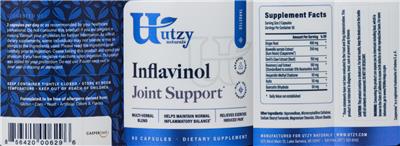
Suggested Use 2 capsules per day or as recommended by your healthcare professional.
Precautions
Do not consume this product if you are pregnant or nursing.
Consult your physician for further information.
As with all dietary supplements, some individuals may not tolerate or may be allergic to the ingredients used.
Please read the ingredient panel carefully prior to ingestion. Cease taking this product and consult your physician if you have negative reactions upon ingestion. This product was sealed for your protection. Do not use if outer neck seal or inner-seal is missing or damaged.
Keep out of reach of children
Caution: This product contains a desiccant. For best results, keep the desiccant in the bottle until all contents are consumed. Do not eat desiccant.
Warning: Consuming this product can expose you to chemicals including lead, which is known to the State of California to cause birth defects or other reproductive harm. For more information, go to www.P65Warnings.ca.gov.
Storage
Keep container tightly closed Store at room temperature
Formulation
Formulated to be free of allergens derived from: Gluten Corn Yeast Artificial colors & flavors
Targeted Joint support Multi-herbal blend Helps maintain normal inflammatory balance Relieves exercise induced pain Branded ingredients High concentration
Formula
Casperome
FDA Statement of Identity
Dietary Supplement
FDA Disclaimer Statement
These statements have not been evaluated by the Food and Drug Administration. This product is not intended to diagnose, treat, cure or prevent any disease.
Brand IP Statement(s)
Casperome is a registered trademark or Indena S.p.A.
Is this label outdated? Report a formula or label change and our pharmacy team will review it.
Inflavinol by Utzy Naturals label
The label scan from the NIH Dietary Supplement Label Database. Tap to enlarge.
Label images are published by the NIH Dietary Supplement Label Database for the version of this product on file. Always read your actual product label.
View the full label (PDF)The Ingredients in Inflavinol by Utzy Naturals
These are the 7 active ingredients this product is made of. Select any to open its full monograph.
Serving size2 Capsule(s) Dosage formCapsule Servings per container30 Amounts shown are per serving.
Most supplement products combine several ingredients, and a medication can interact with the product through any one of them. Each ingredient below shows whether it has known drug interactions.
Ginger
Interacts with1,007 drugs
Ginger is a widely used culinary spice with a long history in traditional medicine, and it has the strongest evidence for helping with nausea and vomi...
Ginger monograph & interactionsRutin
Interacts with86 drugs
Rutin is a plant flavonoid (often taken from buckwheat or citrus) that people use mainly for blood vessel and circulation problems like varicose veins...
Rutin monograph & interactionsHesperidin Methyl Chalcone
Interacts with702 drugs
Hesperidin is a flavonoid found in citrus fruits that is often combined with diosmin and used for vein and circulation problems like hemorrhoids and v...
Hesperidin Methyl Chalcone monograph & interactionsQuercetin Dihydrate
Interacts with1,169 drugs
Quercetin is a plant flavonoid with antioxidant and anti-inflammatory properties found in many common foods and sold as a supplement. While early rese...
Quercetin Dihydrate monograph & interactionsDevil's Claw root extract
Interacts with804 drugs
Devil's claw is a southern African plant used mainly for arthritis and back pain, and some studies suggest it may help ease these types of discomfort....
Devil's Claw root extract monograph & interactionsCasperome
Interacts with952 drugs
Boswellia serrata is a tree resin used in traditional medicine, mainly for joint pain and inflammation. Some studies suggest it may help with osteoart...
Casperome monograph & interactionsRosemary Leaf Extract
Interacts with372 drugs
Rosemary is a fragrant Mediterranean herb that is safe and flavorful in normal food amounts. Some early research suggests possible benefits for memory...
Rosemary Leaf Extract monograph & interactionsOther (inactive) ingredients: Hypromellose, Microcrystalline Cellulose, Sodium stearyl fumarate, Magnesium Stearate, Silicon Dioxide. These complete the product’s ingredient list but are not active constituents.
Inflavinol by Utzy Naturals Drug Interactions
HelloPharmacist Interaction Report
Inflavinol by Utzy Naturals contains several ingredients with documented interactions with medications.
The most serious concern is ginger, which has Moderate-severity interactions with blood thinners (anticoagulants and antiplatelet drugs) — it may increase bleeding risk, though research in humans is mixed. Ginger also interacts with warfarin and phenprocoumon (similar blood thinners), with one case report of increased bleeding risk.
Read the full breakdown — every affected drug type, severity by severity
The product's other ingredients carry additional Moderate interactions. Rutin, hesperidin methyl chalcone, quercetin dihydrate, devil's claw root extract, Boswellia serrata (Casperome), and rosemary leaf extract all interact with blood sugar medications and may increase hypoglycemia risk.
Quercetin and ginger both affect how your body metabolizes certain cancer drugs and other medications via CYP3A4 enzymes. Hesperidin may interact with heart medications (verapamil and diltiazem), and quercetin interacts with warfarin and several other drug classes including antibiotics and immunosuppressants.
Devil's claw and Boswellia serrata can affect multiple drug-metabolizing enzymes (CYP2C19, CYP2C9, CYP3A4), potentially raising levels of many prescription medications. Rosemary leaf extract may have additive effects with aspirin and similar salicylate-containing drugs.
Altogether, these interactions span 1,430 individual medications.
If you take any blood thinners, diabetes medications, heart drugs, or cancer treatments, check your exact medications with the tool below before starting this product.
Check your own medications below · Editorial policy · How we use AI
Want to check YOUR meds against Inflavinol?
Ask about interactions with your drugs in plain English — “Can I take it with lisinopril?” — and we find you the answer in seconds, ingredient by ingredient.
Go to the checkerIngredients driving the most interactions
Individual Drug Interactions
The ingredients in Inflavinol interact with 1,452 drugs. Click any drug to see the details.
7 of the 7 ingredients in Inflavinol interact with drugs. Each result below shows which ingredient is responsible. Quercetin Dihydrate Ginger Casperome Devil's Claw root extract Hesperidin Methyl Chalcone Rosemary Leaf Extract Rutin
6-mercaptopurinePurinethol
How 6-mercaptopurine interacts with Inflavinol — through 1 ingredient. Tap an ingredient for the detail:
CasperomeImmunosuppressants Moderate
Interaction Summary
Theoretically, Boswellia serrata might alter the effects of immunosuppressive drugs.
Read the full Casperome + 6-mercaptopurine interactionAdo-trastuzumab EmtansineKadcyla
How Ado-trastuzumab Emtansine interacts with Inflavinol — through 4 ingredients. Tap an ingredient for the detail:
CasperomeCytochrome P450 3a4 (cyp3a4) Substrates Moderate
Interaction Summary
Theoretically, Boswellia serrata might increase or decrease the levels and clinical effects of CYP3A4 substrates.
Read the full Casperome + Ado-trastuzumab Emtansine interactionGingerCytochrome P450 3a4 (cyp3a4) Substrates Moderate
Interaction Summary
Ginger might increase or decrease the levels of CYP3A4 substrates.
Read the full Ginger + Ado-trastuzumab Emtansine interactionQuercetin DihydrateCytochrome P450 3a4 (cyp3a4) Substrates Moderate
Interaction Summary
Theoretically, concomitant use might alter the effects and adverse effects of CYP3A4 substrates.
Read the full Quercetin Dihydrate + Ado-trastuzumab Emtansine interactionDevil's Claw Root ExtractCytochrome P450 3a4 (cyp3a4) Substrates Moderate
Interaction Summary
Theoretically, devil's claw might increase levels of drugs metabolized by CYP3A4.
Read the full Devil's Claw Root Extract + Ado-trastuzumab Emtansine interactionAbciximabReoPro
How Abciximab interacts with Inflavinol — through 3 ingredients. Tap an ingredient for the detail:
Hesperidin Methyl ChalconeAnticoagulant/antiplatelet Drugs Moderate
Interaction Summary
Theoretically, hesperidin may increase the risk of bleeding if used with anticoagulant or antiplatelet drugs.
Read the full Hesperidin Methyl Chalcone + Abciximab interactionRosemary Leaf ExtractAnticoagulant/antiplatelet Drugs Moderate
Interaction Summary
Theoretically, rosemary may increase the risk of bleeding if used with anticoagulant or antiplatelet drugs.
Read the full Rosemary Leaf Extract + Abciximab interactionGingerAnticoagulant/antiplatelet Drugs Moderate
Interaction Summary
Ginger may have antiplatelet effects and may increase the risk of bleeding if used with anticoagulant or antiplatelet drugs.
Read the full Ginger + Abciximab interactionAbemaciclibVerzenio
How Abemaciclib interacts with Inflavinol — through 4 ingredients. Tap an ingredient for the detail:
Quercetin DihydrateCytochrome P450 3a4 (cyp3a4) Substrates Moderate
Interaction Summary
Theoretically, concomitant use might alter the effects and adverse effects of CYP3A4 substrates.
Read the full Quercetin Dihydrate + Abemaciclib interactionDevil's Claw Root ExtractCytochrome P450 3a4 (cyp3a4) Substrates Moderate
Interaction Summary
Theoretically, devil's claw might increase levels of drugs metabolized by CYP3A4.
Read the full Devil's Claw Root Extract + Abemaciclib interactionGingerCytochrome P450 3a4 (cyp3a4) Substrates Moderate
Interaction Summary
Ginger might increase or decrease the levels of CYP3A4 substrates.
Read the full Ginger + Abemaciclib interactionCasperomeCytochrome P450 3a4 (cyp3a4) Substrates Moderate
Interaction Summary
Theoretically, Boswellia serrata might increase or decrease the levels and clinical effects of CYP3A4 substrates.
Read the full Casperome + Abemaciclib interactionAbiraterone
How Abiraterone interacts with Inflavinol — through 4 ingredients. Tap an ingredient for the detail:
CasperomeCytochrome P450 3a4 (cyp3a4) Substrates Moderate
Interaction Summary
Theoretically, Boswellia serrata might increase or decrease the levels and clinical effects of CYP3A4 substrates.
Read the full Casperome + Abiraterone interactionGingerCytochrome P450 3a4 (cyp3a4) Substrates Moderate
Interaction Summary
Ginger might increase or decrease the levels of CYP3A4 substrates.
Read the full Ginger + Abiraterone interactionDevil's Claw Root ExtractCytochrome P450 3a4 (cyp3a4) Substrates Moderate
Interaction Summary
Theoretically, devil's claw might increase levels of drugs metabolized by CYP3A4.
Read the full Devil's Claw Root Extract + Abiraterone interactionQuercetin DihydrateCytochrome P450 3a4 (cyp3a4) Substrates Moderate
Interaction Summary
Theoretically, concomitant use might alter the effects and adverse effects of CYP3A4 substrates.
Read the full Quercetin Dihydrate + Abiraterone interactionAbiraterone AcetateYonsa, Zytiga
How Abiraterone Acetate interacts with Inflavinol — through 4 ingredients. Tap an ingredient for the detail:
Quercetin DihydrateCytochrome P450 3a4 (cyp3a4) Substrates Moderate
Interaction Summary
Theoretically, concomitant use might alter the effects and adverse effects of CYP3A4 substrates.
Read the full Quercetin Dihydrate + Abiraterone Acetate interactionDevil's Claw Root ExtractCytochrome P450 3a4 (cyp3a4) Substrates Moderate
Interaction Summary
Theoretically, devil's claw might increase levels of drugs metabolized by CYP3A4.
Read the full Devil's Claw Root Extract + Abiraterone Acetate interactionGingerCytochrome P450 3a4 (cyp3a4) Substrates Moderate
Interaction Summary
Ginger might increase or decrease the levels of CYP3A4 substrates.
Read the full Ginger + Abiraterone Acetate interactionCasperomeCytochrome P450 3a4 (cyp3a4) Substrates Moderate
Interaction Summary
Theoretically, Boswellia serrata might increase or decrease the levels and clinical effects of CYP3A4 substrates.
Read the full Casperome + Abiraterone Acetate interactionAbrocitinibCibinqo
How Abrocitinib interacts with Inflavinol — through 6 ingredients. Tap an ingredient for the detail:
CasperomeCytochrome P450 2c9 (cyp2c9) Substrates, Immunosuppressants +1 Moderate
Interaction Summary
Theoretically, Boswellia serrata might increase the levels of CYP2C9 substrates.
Read the full Casperome + Abrocitinib interactionHesperidin Methyl ChalconeAnticoagulant/antiplatelet Drugs Moderate
Interaction Summary
Theoretically, hesperidin may increase the risk of bleeding if used with anticoagulant or antiplatelet drugs.
Read the full Hesperidin Methyl Chalcone + Abrocitinib interactionDevil's Claw Root ExtractCytochrome P450 2c19 (cyp2c19) Substrates, Cytochrome P450 2c9 (cyp2c9) Substrates Moderate
Interaction Summary
Theoretically, devil's claw might increase levels of drugs metabolized by CYP2C19.
Read the full Devil's Claw Root Extract + Abrocitinib interactionGingerAnticoagulant/antiplatelet Drugs, Cytochrome P450 2c9 (cyp2c9) Substrates Moderate
Interaction Summary
Ginger may have antiplatelet effects and may increase the risk of bleeding if used with anticoagulant or antiplatelet drugs.
Read the full Ginger + Abrocitinib interactionRosemary Leaf ExtractAnticoagulant/antiplatelet Drugs Moderate
Interaction Summary
Theoretically, rosemary may increase the risk of bleeding if used with anticoagulant or antiplatelet drugs.
Read the full Rosemary Leaf Extract + Abrocitinib interactionQuercetin DihydrateCytochrome P450 2c9 (cyp2c9) Substrates Moderate
Interaction Summary
Theoretically, concomitant use might increase the levels and adverse effects of CYP2C9 substrates.
Read the full Quercetin Dihydrate + Abrocitinib interactionAcalabrutinibCalquence
How Acalabrutinib interacts with Inflavinol — through 5 ingredients. Tap an ingredient for the detail:
Quercetin DihydrateP-glycoprotein Substrates, Cytochrome P450 3a4 (cyp3a4) Substrates Moderate
Interaction Summary
Theoretically, concomitant use might alter the effects and adverse effects of P-glycoprotein substrates.
Read the full Quercetin Dihydrate + Acalabrutinib interactionGingerCytochrome P450 3a4 (cyp3a4) Substrates, P-glycoprotein Substrates Moderate
Interaction Summary
Ginger might increase or decrease the levels of CYP3A4 substrates.
Read the full Ginger + Acalabrutinib interactionHesperidin Methyl ChalconeP-glycoprotein Substrates Moderate
Interaction Summary
Theoretically, hesperidin might inhibit P-glycoprotein-mediated drug efflux and potentially increase levels of drugs that are substrates of P-glycoprotein.
Read the full Hesperidin Methyl Chalcone + Acalabrutinib interactionDevil's Claw Root ExtractCytochrome P450 3a4 (cyp3a4) Substrates, P-glycoprotein Substrates Moderate
Interaction Summary
Theoretically, devil's claw might increase levels of drugs metabolized by CYP3A4.
Read the full Devil's Claw Root Extract + Acalabrutinib interactionCasperomeCytochrome P450 3a4 (cyp3a4) Substrates Moderate
Interaction Summary
Theoretically, Boswellia serrata might increase or decrease the levels and clinical effects of CYP3A4 substrates.
Read the full Casperome + Acalabrutinib interactionAcarboseGlucobay, Prandase, Precose
How Acarbose interacts with Inflavinol — through 4 ingredients. Tap an ingredient for the detail:
Quercetin DihydrateAntidiabetes Drugs Moderate
Interaction Summary
Theoretically, concomitant use of quercetin and antidiabetes drugs might increase the risk of hypoglycemia.
Read the full Quercetin Dihydrate + Acarbose interactionGingerAntidiabetes Drugs Moderate
Interaction Summary
Theoretically, taking ginger with antidiabetes drugs might increase the risk of hypoglycemia.
Read the full Ginger + Acarbose interactionRosemary Leaf ExtractAntidiabetes Drugs Moderate
Interaction Summary
Theoretically, taking rosemary with antidiabetes drugs might increase the risk of hypoglycemia.
Read the full Rosemary Leaf Extract + Acarbose interactionRutinAntidiabetes Drugs Moderate
Interaction Summary
Theoretically, taking rutin with antidiabetes drugs might increase the risk of hypoglycemia.
Read the full Rutin + Acarbose interactionAcebutololRhotral, Sectral
How Acebutolol interacts with Inflavinol — through 2 ingredients. Tap an ingredient for the detail:
Quercetin DihydrateAntihypertensive Drugs Moderate
Interaction Summary
Theoretically, taking quercetin with antihypertensive drugs might increase the risk of hypotension.
Read the full Quercetin Dihydrate + Acebutolol interactionHesperidin Methyl ChalconeAntihypertensive Drugs Moderate
Interaction Summary
Theoretically, taking hesperidin with antihypertensive drugs might increase the risk of hypotension.
Read the full Hesperidin Methyl Chalcone + Acebutolol interactionAcenocoumarolSintrom
How Acenocoumarol interacts with Inflavinol — through 3 ingredients. Tap an ingredient for the detail:
Hesperidin Methyl ChalconeAnticoagulant/antiplatelet Drugs Moderate
Interaction Summary
Theoretically, hesperidin may increase the risk of bleeding if used with anticoagulant or antiplatelet drugs.
Read the full Hesperidin Methyl Chalcone + Acenocoumarol interactionRosemary Leaf ExtractAnticoagulant/antiplatelet Drugs Moderate
Interaction Summary
Theoretically, rosemary may increase the risk of bleeding if used with anticoagulant or antiplatelet drugs.
Read the full Rosemary Leaf Extract + Acenocoumarol interactionGingerAnticoagulant/antiplatelet Drugs Moderate
Interaction Summary
Ginger may have antiplatelet effects and may increase the risk of bleeding if used with anticoagulant or antiplatelet drugs.
Read the full Ginger + Acenocoumarol interactionAcepromazineAtravet
How Acepromazine interacts with Inflavinol — through 1 ingredient. Tap an ingredient for the detail:
Hesperidin Methyl ChalconeCns Depressants Moderate
Interaction Summary
Theoretically, concomitant use with CNS depressants may cause additive sedative effects.
Read the full Hesperidin Methyl Chalcone + Acepromazine interactionAcetaminophenChildren's Tylenol, Children's Tylenol Meltaways, Tylenol, Tylenol Ex Strength
How Acetaminophen interacts with Inflavinol — through 3 ingredients. Tap an ingredient for the detail:
CasperomeCytochrome P450 1a2 (cyp1a2) Substrates Moderate
Interaction Summary
Theoretically, Boswellia serrata might increase the levels of CYP1A2 substrates.
Read the full Casperome + Acetaminophen interactionGingerCytochrome P450 1a2 (cyp1a2) Substrates Minor
Interaction Summary
Theoretically, ginger might increase the levels of CYP1A2 substrates.
Read the full Ginger + Acetaminophen interactionRosemary Leaf ExtractCytochrome P450 1a2 (cyp1a2) Substrates Minor
Interaction Summary
Theoretically, rosemary might decrease the levels and clinical effects of CYP1A2 substrates.
Read the full Rosemary Leaf Extract + Acetaminophen interactionAcetaminophen, AspirinGemnisyn
How Acetaminophen, Aspirin interacts with Inflavinol — through 5 ingredients. Tap an ingredient for the detail:
Rosemary Leaf ExtractCytochrome P450 1a2 (cyp1a2) Substrates, Anticoagulant/antiplatelet Drugs +1 Moderate
Interaction Summary
Theoretically, rosemary might decrease the levels and clinical effects of CYP1A2 substrates.
Read the full Rosemary Leaf Extract + Acetaminophen, Aspirin interactionCasperomeCytochrome P450 1a2 (cyp1a2) Substrates Moderate
Interaction Summary
Theoretically, Boswellia serrata might increase the levels of CYP1A2 substrates.
Read the full Casperome + Acetaminophen, Aspirin interactionHesperidin Methyl ChalconeAnticoagulant/antiplatelet Drugs Moderate
Interaction Summary
Theoretically, hesperidin may increase the risk of bleeding if used with anticoagulant or antiplatelet drugs.
Read the full Hesperidin Methyl Chalcone + Acetaminophen, Aspirin interactionQuercetin DihydrateOrganic Anion Transporter 3 (oat3) Substrates, Organic Anion Transporter 1 (oat1) Substrates Moderate
Interaction Summary
Theoretically, concomitant use might increase the effects and adverse effects of OAT3 substrates.
Read the full Quercetin Dihydrate + Acetaminophen, Aspirin interactionGingerCytochrome P450 1a2 (cyp1a2) Substrates, Anticoagulant/antiplatelet Drugs Moderate
Interaction Summary
Theoretically, ginger might increase the levels of CYP1A2 substrates.
Read the full Ginger + Acetaminophen, Aspirin interactionAcetaminophen, Aspirin, CaffeineExcedrin, Excedrin Extra Strength, Excedrin Migraine
How Acetaminophen, Aspirin, Caffeine interacts with Inflavinol — through 6 ingredients. Tap an ingredient for the detail:
GingerAnticoagulant/antiplatelet Drugs, Cytochrome P450 1a2 (cyp1a2) Substrates +1 Moderate
Interaction Summary
Ginger may have antiplatelet effects and may increase the risk of bleeding if used with anticoagulant or antiplatelet drugs.
Read the full Ginger + Acetaminophen, Aspirin, Caffeine interactionHesperidin Methyl ChalconeAnticoagulant/antiplatelet Drugs Moderate
Interaction Summary
Theoretically, hesperidin may increase the risk of bleeding if used with anticoagulant or antiplatelet drugs.
Read the full Hesperidin Methyl Chalcone + Acetaminophen, Aspirin, Caffeine interactionDevil's Claw Root ExtractCytochrome P450 3a4 (cyp3a4) Substrates Moderate
Interaction Summary
Theoretically, devil's claw might increase levels of drugs metabolized by CYP3A4.
Read the full Devil's Claw Root Extract + Acetaminophen, Aspirin, Caffeine interactionCasperomeCytochrome P450 1a2 (cyp1a2) Substrates, Cytochrome P450 3a4 (cyp3a4) Substrates Moderate
Interaction Summary
Theoretically, Boswellia serrata might increase the levels of CYP1A2 substrates.
Read the full Casperome + Acetaminophen, Aspirin, Caffeine interactionRosemary Leaf ExtractCytochrome P450 1a2 (cyp1a2) Substrates, Anticoagulant/antiplatelet Drugs +1 Moderate
Interaction Summary
Theoretically, rosemary might decrease the levels and clinical effects of CYP1A2 substrates.
Read the full Rosemary Leaf Extract + Acetaminophen, Aspirin, Caffeine interactionQuercetin DihydrateOrganic Anion Transporter 3 (oat3) Substrates, Organic Anion Transporter 1 (oat1) Substrates +1 Moderate
Interaction Summary
Theoretically, concomitant use might increase the effects and adverse effects of OAT3 substrates.
Read the full Quercetin Dihydrate + Acetaminophen, Aspirin, Caffeine interactionAcetaminophen, Brompheniramine, PhenylpropanolamineDimetapp Cold and Flu
How Acetaminophen, Brompheniramine, Phenylpropanolamine interacts with Inflavinol — through 3 ingredients. Tap an ingredient for the detail:
CasperomeCytochrome P450 1a2 (cyp1a2) Substrates Moderate
Interaction Summary
Theoretically, Boswellia serrata might increase the levels of CYP1A2 substrates.
Read the full Casperome + Acetaminophen, Brompheniramine, Phenylpropanolamine interactionGingerCytochrome P450 1a2 (cyp1a2) Substrates Minor
Interaction Summary
Theoretically, ginger might increase the levels of CYP1A2 substrates.
Read the full Ginger + Acetaminophen, Brompheniramine, Phenylpropanolamine interactionRosemary Leaf ExtractCytochrome P450 1a2 (cyp1a2) Substrates Minor
Interaction Summary
Theoretically, rosemary might decrease the levels and clinical effects of CYP1A2 substrates.
Read the full Rosemary Leaf Extract + Acetaminophen, Brompheniramine, Phenylpropanolamine interactionAcetaminophen, ButalbitalAxocet, Bancap, Bucet, Butex Forte, Esgic CF, Orbivan CF +5 more
How Acetaminophen, Butalbital interacts with Inflavinol — through 3 ingredients. Tap an ingredient for the detail:
CasperomeCytochrome P450 1a2 (cyp1a2) Substrates Moderate
Interaction Summary
Theoretically, Boswellia serrata might increase the levels of CYP1A2 substrates.
Read the full Casperome + Acetaminophen, Butalbital interactionRosemary Leaf ExtractCytochrome P450 1a2 (cyp1a2) Substrates Minor
Interaction Summary
Theoretically, rosemary might decrease the levels and clinical effects of CYP1A2 substrates.
Read the full Rosemary Leaf Extract + Acetaminophen, Butalbital interactionGingerCytochrome P450 1a2 (cyp1a2) Substrates Minor
Interaction Summary
Theoretically, ginger might increase the levels of CYP1A2 substrates.
Read the full Ginger + Acetaminophen, Butalbital interactionAcetaminophen, Butalbital, CaffeineEsgic, Esgic Plus, Fiogesic, Fioricet, Repan, Tecnal +1 more
How Acetaminophen, Butalbital, Caffeine interacts with Inflavinol — through 5 ingredients. Tap an ingredient for the detail:
GingerCytochrome P450 1a2 (cyp1a2) Substrates, Cytochrome P450 3a4 (cyp3a4) Substrates Moderate
Interaction Summary
Theoretically, ginger might increase the levels of CYP1A2 substrates.
Read the full Ginger + Acetaminophen, Butalbital, Caffeine interactionQuercetin DihydrateCytochrome P450 3a4 (cyp3a4) Substrates Moderate
Interaction Summary
Theoretically, concomitant use might alter the effects and adverse effects of CYP3A4 substrates.
Read the full Quercetin Dihydrate + Acetaminophen, Butalbital, Caffeine interactionDevil's Claw Root ExtractCytochrome P450 3a4 (cyp3a4) Substrates Moderate
Interaction Summary
Theoretically, devil's claw might increase levels of drugs metabolized by CYP3A4.
Read the full Devil's Claw Root Extract + Acetaminophen, Butalbital, Caffeine interactionCasperomeCytochrome P450 1a2 (cyp1a2) Substrates, Cytochrome P450 3a4 (cyp3a4) Substrates Moderate
Interaction Summary
Theoretically, Boswellia serrata might increase the levels of CYP1A2 substrates.
Read the full Casperome + Acetaminophen, Butalbital, Caffeine interactionRosemary Leaf ExtractCytochrome P450 1a2 (cyp1a2) Substrates Minor
Interaction Summary
Theoretically, rosemary might decrease the levels and clinical effects of CYP1A2 substrates.
Read the full Rosemary Leaf Extract + Acetaminophen, Butalbital, Caffeine interactionAcetaminophen, Butalbital, Caffeine, CodeineEsgic with Codeine, Fioricet w/ Codeine
How Acetaminophen, Butalbital, Caffeine, Codeine interacts with Inflavinol — through 6 ingredients. Tap an ingredient for the detail:
CasperomeCytochrome P450 3a4 (cyp3a4) Substrates, Cytochrome P450 2d6 (cyp2d6) Substrates +1 Moderate
Interaction Summary
Theoretically, Boswellia serrata might increase or decrease the levels and clinical effects of CYP3A4 substrates.
Read the full Casperome + Acetaminophen, Butalbital, Caffeine, Codeine interactionQuercetin DihydrateCytochrome P450 2d6 (cyp2d6) Substrates, Cytochrome P450 3a4 (cyp3a4) Substrates Moderate
Interaction Summary
Theoretically, concomitant use might increase the levels and adverse effects of CYP2D6 substrates.
Read the full Quercetin Dihydrate + Acetaminophen, Butalbital, Caffeine, Codeine interactionGingerCytochrome P450 3a4 (cyp3a4) Substrates, Cytochrome P450 1a2 (cyp1a2) Substrates Moderate
Interaction Summary
Ginger might increase or decrease the levels of CYP3A4 substrates.
Read the full Ginger + Acetaminophen, Butalbital, Caffeine, Codeine interactionDevil's Claw Root ExtractCytochrome P450 3a4 (cyp3a4) Substrates Moderate
Interaction Summary
Theoretically, devil's claw might increase levels of drugs metabolized by CYP3A4.
Read the full Devil's Claw Root Extract + Acetaminophen, Butalbital, Caffeine, Codeine interactionHesperidin Methyl ChalconeCns Depressants Moderate
Interaction Summary
Theoretically, concomitant use with CNS depressants may cause additive sedative effects.
Read the full Hesperidin Methyl Chalcone + Acetaminophen, Butalbital, Caffeine, Codeine interactionRosemary Leaf ExtractCytochrome P450 1a2 (cyp1a2) Substrates Minor
Interaction Summary
Theoretically, rosemary might decrease the levels and clinical effects of CYP1A2 substrates.
Read the full Rosemary Leaf Extract + Acetaminophen, Butalbital, Caffeine, Codeine interactionAcetaminophen, Butalbital, CodeineBancap w/ Codeine
How Acetaminophen, Butalbital, Codeine interacts with Inflavinol — through 5 ingredients. Tap an ingredient for the detail:
Hesperidin Methyl ChalconeCns Depressants Moderate
Interaction Summary
Theoretically, concomitant use with CNS depressants may cause additive sedative effects.
Read the full Hesperidin Methyl Chalcone + Acetaminophen, Butalbital, Codeine interactionQuercetin DihydrateCytochrome P450 2d6 (cyp2d6) Substrates Moderate
Interaction Summary
Theoretically, concomitant use might increase the levels and adverse effects of CYP2D6 substrates.
Read the full Quercetin Dihydrate + Acetaminophen, Butalbital, Codeine interactionCasperomeCytochrome P450 1a2 (cyp1a2) Substrates, Cytochrome P450 2d6 (cyp2d6) Substrates Moderate
Interaction Summary
Theoretically, Boswellia serrata might increase the levels of CYP1A2 substrates.
Read the full Casperome + Acetaminophen, Butalbital, Codeine interactionRosemary Leaf ExtractCytochrome P450 1a2 (cyp1a2) Substrates Minor
Interaction Summary
Theoretically, rosemary might decrease the levels and clinical effects of CYP1A2 substrates.
Read the full Rosemary Leaf Extract + Acetaminophen, Butalbital, Codeine interactionGingerCytochrome P450 1a2 (cyp1a2) Substrates Minor
Interaction Summary
Theoretically, ginger might increase the levels of CYP1A2 substrates.
Read the full Ginger + Acetaminophen, Butalbital, Codeine interactionAcetaminophen, Butalbital, Codeine PhosphatePhrenilin #3
How Acetaminophen, Butalbital, Codeine Phosphate interacts with Inflavinol — through 5 ingredients. Tap an ingredient for the detail:
Quercetin DihydrateCytochrome P450 2d6 (cyp2d6) Substrates Moderate
Interaction Summary
Theoretically, concomitant use might increase the levels and adverse effects of CYP2D6 substrates.
Read the full Quercetin Dihydrate + Acetaminophen, Butalbital, Codeine Phosphate interactionHesperidin Methyl ChalconeCns Depressants Moderate
Interaction Summary
Theoretically, concomitant use with CNS depressants may cause additive sedative effects.
Read the full Hesperidin Methyl Chalcone + Acetaminophen, Butalbital, Codeine Phosphate interactionCasperomeCytochrome P450 2d6 (cyp2d6) Substrates, Cytochrome P450 1a2 (cyp1a2) Substrates Moderate
Interaction Summary
Theoretically, Boswellia serrata might increase the levels of CYP2D6 substrates.
Read the full Casperome + Acetaminophen, Butalbital, Codeine Phosphate interactionGingerCytochrome P450 1a2 (cyp1a2) Substrates Minor
Interaction Summary
Theoretically, ginger might increase the levels of CYP1A2 substrates.
Read the full Ginger + Acetaminophen, Butalbital, Codeine Phosphate interactionRosemary Leaf ExtractCytochrome P450 1a2 (cyp1a2) Substrates Minor
Interaction Summary
Theoretically, rosemary might decrease the levels and clinical effects of CYP1A2 substrates.
Read the full Rosemary Leaf Extract + Acetaminophen, Butalbital, Codeine Phosphate interactionAcetaminophen, Caffeine, Chlorpheniramine, Hydrocodone, PhenylephrineHycomine Compound
How Acetaminophen, Caffeine, Chlorpheniramine, Hydrocodone, Phenylephrine interacts with Inflavinol — through 6 ingredients. Tap an ingredient for the detail:
CasperomeCytochrome P450 3a4 (cyp3a4) Substrates, Cytochrome P450 1a2 (cyp1a2) Substrates +1 Moderate
Interaction Summary
Theoretically, Boswellia serrata might increase or decrease the levels and clinical effects of CYP3A4 substrates.
Read the full Casperome + Acetaminophen, Caffeine, Chlorpheniramine, Hydrocodone, Phenylephrine interactionQuercetin DihydrateCytochrome P450 2d6 (cyp2d6) Substrates, Cytochrome P450 3a4 (cyp3a4) Substrates Moderate
Interaction Summary
Theoretically, concomitant use might increase the levels and adverse effects of CYP2D6 substrates.
Read the full Quercetin Dihydrate + Acetaminophen, Caffeine, Chlorpheniramine, Hydrocodone, Phenylephrine interactionGingerCytochrome P450 1a2 (cyp1a2) Substrates, Cytochrome P450 3a4 (cyp3a4) Substrates Moderate
Interaction Summary
Theoretically, ginger might increase the levels of CYP1A2 substrates.
Read the full Ginger + Acetaminophen, Caffeine, Chlorpheniramine, Hydrocodone, Phenylephrine interactionHesperidin Methyl ChalconeCns Depressants Moderate
Interaction Summary
Theoretically, concomitant use with CNS depressants may cause additive sedative effects.
Read the full Hesperidin Methyl Chalcone + Acetaminophen, Caffeine, Chlorpheniramine, Hydrocodone, Phenylephrine interactionDevil's Claw Root ExtractCytochrome P450 3a4 (cyp3a4) Substrates Moderate
Interaction Summary
Theoretically, devil's claw might increase levels of drugs metabolized by CYP3A4.
Read the full Devil's Claw Root Extract + Acetaminophen, Caffeine, Chlorpheniramine, Hydrocodone, Phenylephrine interactionRosemary Leaf ExtractCytochrome P450 1a2 (cyp1a2) Substrates Minor
Interaction Summary
Theoretically, rosemary might decrease the levels and clinical effects of CYP1A2 substrates.
Read the full Rosemary Leaf Extract + Acetaminophen, Caffeine, Chlorpheniramine, Hydrocodone, Phenylephrine interactionAcetaminophen, Caffeine, CodeineGesic C15, Gesic C30, Gesic C8, Lenoltec 1, Lenoltec 2, Lenoltec 3 +1 more
How Acetaminophen, Caffeine, Codeine interacts with Inflavinol — through 6 ingredients. Tap an ingredient for the detail:
Devil's Claw Root ExtractCytochrome P450 3a4 (cyp3a4) Substrates Moderate
Interaction Summary
Theoretically, devil's claw might increase levels of drugs metabolized by CYP3A4.
Read the full Devil's Claw Root Extract + Acetaminophen, Caffeine, Codeine interactionHesperidin Methyl ChalconeCns Depressants Moderate
Interaction Summary
Theoretically, concomitant use with CNS depressants may cause additive sedative effects.
Read the full Hesperidin Methyl Chalcone + Acetaminophen, Caffeine, Codeine interactionQuercetin DihydrateCytochrome P450 3a4 (cyp3a4) Substrates, Cytochrome P450 2d6 (cyp2d6) Substrates Moderate
Interaction Summary
Theoretically, concomitant use might alter the effects and adverse effects of CYP3A4 substrates.
Read the full Quercetin Dihydrate + Acetaminophen, Caffeine, Codeine interactionCasperomeCytochrome P450 2d6 (cyp2d6) Substrates, Cytochrome P450 1a2 (cyp1a2) Substrates +1 Moderate
Interaction Summary
Theoretically, Boswellia serrata might increase the levels of CYP2D6 substrates.
Read the full Casperome + Acetaminophen, Caffeine, Codeine interactionGingerCytochrome P450 3a4 (cyp3a4) Substrates, Cytochrome P450 1a2 (cyp1a2) Substrates Moderate
Interaction Summary
Ginger might increase or decrease the levels of CYP3A4 substrates.
Read the full Ginger + Acetaminophen, Caffeine, Codeine interactionRosemary Leaf ExtractCytochrome P450 1a2 (cyp1a2) Substrates Minor
Interaction Summary
Theoretically, rosemary might decrease the levels and clinical effects of CYP1A2 substrates.
Read the full Rosemary Leaf Extract + Acetaminophen, Caffeine, Codeine interactionAcetaminophen, Caffeine, Codeine, SalicylamideCodalan No.1, Codalan No.2, Codalan No.3
How Acetaminophen, Caffeine, Codeine, Salicylamide interacts with Inflavinol — through 6 ingredients. Tap an ingredient for the detail:
GingerCytochrome P450 1a2 (cyp1a2) Substrates, Cytochrome P450 3a4 (cyp3a4) Substrates Moderate
Interaction Summary
Theoretically, ginger might increase the levels of CYP1A2 substrates.
Read the full Ginger + Acetaminophen, Caffeine, Codeine, Salicylamide interactionQuercetin DihydrateCytochrome P450 2d6 (cyp2d6) Substrates, Cytochrome P450 3a4 (cyp3a4) Substrates Moderate
Interaction Summary
Theoretically, concomitant use might increase the levels and adverse effects of CYP2D6 substrates.
Read the full Quercetin Dihydrate + Acetaminophen, Caffeine, Codeine, Salicylamide interactionHesperidin Methyl ChalconeCns Depressants Moderate
Interaction Summary
Theoretically, concomitant use with CNS depressants may cause additive sedative effects.
Read the full Hesperidin Methyl Chalcone + Acetaminophen, Caffeine, Codeine, Salicylamide interactionDevil's Claw Root ExtractCytochrome P450 3a4 (cyp3a4) Substrates Moderate
Interaction Summary
Theoretically, devil's claw might increase levels of drugs metabolized by CYP3A4.
Read the full Devil's Claw Root Extract + Acetaminophen, Caffeine, Codeine, Salicylamide interactionCasperomeCytochrome P450 2d6 (cyp2d6) Substrates, Cytochrome P450 3a4 (cyp3a4) Substrates +1 Moderate
Interaction Summary
Theoretically, Boswellia serrata might increase the levels of CYP2D6 substrates.
Read the full Casperome + Acetaminophen, Caffeine, Codeine, Salicylamide interactionRosemary Leaf ExtractCytochrome P450 1a2 (cyp1a2) Substrates Minor
Interaction Summary
Theoretically, rosemary might decrease the levels and clinical effects of CYP1A2 substrates.
Read the full Rosemary Leaf Extract + Acetaminophen, Caffeine, Codeine, Salicylamide interactionAcetaminophen, Caffeine, DihydrocodeineDHC Plus, Panlor DC, Panlor SS
How Acetaminophen, Caffeine, Dihydrocodeine interacts with Inflavinol — through 6 ingredients. Tap an ingredient for the detail:
CasperomeCytochrome P450 2d6 (cyp2d6) Substrates, Cytochrome P450 3a4 (cyp3a4) Substrates +1 Moderate
Interaction Summary
Theoretically, Boswellia serrata might increase the levels of CYP2D6 substrates.
Read the full Casperome + Acetaminophen, Caffeine, Dihydrocodeine interactionQuercetin DihydrateCytochrome P450 3a4 (cyp3a4) Substrates, Cytochrome P450 2d6 (cyp2d6) Substrates Moderate
Interaction Summary
Theoretically, concomitant use might alter the effects and adverse effects of CYP3A4 substrates.
Read the full Quercetin Dihydrate + Acetaminophen, Caffeine, Dihydrocodeine interactionGingerCytochrome P450 3a4 (cyp3a4) Substrates, Cytochrome P450 1a2 (cyp1a2) Substrates Moderate
Interaction Summary
Ginger might increase or decrease the levels of CYP3A4 substrates.
Read the full Ginger + Acetaminophen, Caffeine, Dihydrocodeine interactionHesperidin Methyl ChalconeCns Depressants Moderate
Interaction Summary
Theoretically, concomitant use with CNS depressants may cause additive sedative effects.
Read the full Hesperidin Methyl Chalcone + Acetaminophen, Caffeine, Dihydrocodeine interactionDevil's Claw Root ExtractCytochrome P450 3a4 (cyp3a4) Substrates Moderate
Interaction Summary
Theoretically, devil's claw might increase levels of drugs metabolized by CYP3A4.
Read the full Devil's Claw Root Extract + Acetaminophen, Caffeine, Dihydrocodeine interactionRosemary Leaf ExtractCytochrome P450 1a2 (cyp1a2) Substrates Minor
Interaction Summary
Theoretically, rosemary might decrease the levels and clinical effects of CYP1A2 substrates.
Read the full Rosemary Leaf Extract + Acetaminophen, Caffeine, Dihydrocodeine interactionAcetaminophen, Caffeine, IsomethepteneMigralam
How Acetaminophen, Caffeine, Isometheptene interacts with Inflavinol — through 5 ingredients. Tap an ingredient for the detail:
Devil's Claw Root ExtractCytochrome P450 3a4 (cyp3a4) Substrates Moderate
Interaction Summary
Theoretically, devil's claw might increase levels of drugs metabolized by CYP3A4.
Read the full Devil's Claw Root Extract + Acetaminophen, Caffeine, Isometheptene interactionQuercetin DihydrateCytochrome P450 3a4 (cyp3a4) Substrates Moderate
Interaction Summary
Theoretically, concomitant use might alter the effects and adverse effects of CYP3A4 substrates.
Read the full Quercetin Dihydrate + Acetaminophen, Caffeine, Isometheptene interactionCasperomeCytochrome P450 1a2 (cyp1a2) Substrates, Cytochrome P450 3a4 (cyp3a4) Substrates Moderate
Interaction Summary
Theoretically, Boswellia serrata might increase the levels of CYP1A2 substrates.
Read the full Casperome + Acetaminophen, Caffeine, Isometheptene interactionGingerCytochrome P450 1a2 (cyp1a2) Substrates, Cytochrome P450 3a4 (cyp3a4) Substrates Moderate
Interaction Summary
Theoretically, ginger might increase the levels of CYP1A2 substrates.
Read the full Ginger + Acetaminophen, Caffeine, Isometheptene interactionRosemary Leaf ExtractCytochrome P450 1a2 (cyp1a2) Substrates Minor
Interaction Summary
Theoretically, rosemary might decrease the levels and clinical effects of CYP1A2 substrates.
Read the full Rosemary Leaf Extract + Acetaminophen, Caffeine, Isometheptene interactionAcetaminophen, Caffeine, PyrilamineMidol Max Strength Menstrual
How Acetaminophen, Caffeine, Pyrilamine interacts with Inflavinol — through 5 ingredients. Tap an ingredient for the detail:
GingerCytochrome P450 3a4 (cyp3a4) Substrates, Cytochrome P450 1a2 (cyp1a2) Substrates Moderate
Interaction Summary
Ginger might increase or decrease the levels of CYP3A4 substrates.
Read the full Ginger + Acetaminophen, Caffeine, Pyrilamine interactionQuercetin DihydrateCytochrome P450 3a4 (cyp3a4) Substrates Moderate
Interaction Summary
Theoretically, concomitant use might alter the effects and adverse effects of CYP3A4 substrates.
Read the full Quercetin Dihydrate + Acetaminophen, Caffeine, Pyrilamine interactionDevil's Claw Root ExtractCytochrome P450 3a4 (cyp3a4) Substrates Moderate
Interaction Summary
Theoretically, devil's claw might increase levels of drugs metabolized by CYP3A4.
Read the full Devil's Claw Root Extract + Acetaminophen, Caffeine, Pyrilamine interactionCasperomeCytochrome P450 3a4 (cyp3a4) Substrates, Cytochrome P450 1a2 (cyp1a2) Substrates Moderate
Interaction Summary
Theoretically, Boswellia serrata might increase or decrease the levels and clinical effects of CYP3A4 substrates.
Read the full Casperome + Acetaminophen, Caffeine, Pyrilamine interactionRosemary Leaf ExtractCytochrome P450 1a2 (cyp1a2) Substrates Minor
Interaction Summary
Theoretically, rosemary might decrease the levels and clinical effects of CYP1A2 substrates.
Read the full Rosemary Leaf Extract + Acetaminophen, Caffeine, Pyrilamine interactionAcetaminophen, Chlorpheniramine Maleate, Dextromethorphan HbrVicks Formula 44M Cough, Cold & Flu Relief
How Acetaminophen, Chlorpheniramine Maleate, Dextromethorphan Hbr interacts with Inflavinol — through 5 ingredients. Tap an ingredient for the detail:
CasperomeCytochrome P450 2d6 (cyp2d6) Substrates, Cytochrome P450 1a2 (cyp1a2) Substrates +1 Moderate
Interaction Summary
Theoretically, Boswellia serrata might increase the levels of CYP2D6 substrates.
Read the full Casperome + Acetaminophen, Chlorpheniramine Maleate, Dextromethorphan Hbr interactionQuercetin DihydrateCytochrome P450 2d6 (cyp2d6) Substrates, Cytochrome P450 3a4 (cyp3a4) Substrates Moderate
Interaction Summary
Theoretically, concomitant use might increase the levels and adverse effects of CYP2D6 substrates.
Read the full Quercetin Dihydrate + Acetaminophen, Chlorpheniramine Maleate, Dextromethorphan Hbr interactionGingerCytochrome P450 1a2 (cyp1a2) Substrates, Cytochrome P450 3a4 (cyp3a4) Substrates Moderate
Interaction Summary
Theoretically, ginger might increase the levels of CYP1A2 substrates.
Read the full Ginger + Acetaminophen, Chlorpheniramine Maleate, Dextromethorphan Hbr interactionDevil's Claw Root ExtractCytochrome P450 3a4 (cyp3a4) Substrates Moderate
Interaction Summary
Theoretically, devil's claw might increase levels of drugs metabolized by CYP3A4.
Read the full Devil's Claw Root Extract + Acetaminophen, Chlorpheniramine Maleate, Dextromethorphan Hbr interactionRosemary Leaf ExtractCytochrome P450 1a2 (cyp1a2) Substrates Minor
Interaction Summary
Theoretically, rosemary might decrease the levels and clinical effects of CYP1A2 substrates.
Read the full Rosemary Leaf Extract + Acetaminophen, Chlorpheniramine Maleate, Dextromethorphan Hbr interactionAcetaminophen, Chlorpheniramine, Codeine, PhenylephrineColrex
How Acetaminophen, Chlorpheniramine, Codeine, Phenylephrine interacts with Inflavinol — through 6 ingredients. Tap an ingredient for the detail:
Hesperidin Methyl ChalconeCns Depressants Moderate
Interaction Summary
Theoretically, concomitant use with CNS depressants may cause additive sedative effects.
Read the full Hesperidin Methyl Chalcone + Acetaminophen, Chlorpheniramine, Codeine, Phenylephrine interactionDevil's Claw Root ExtractCytochrome P450 3a4 (cyp3a4) Substrates Moderate
Interaction Summary
Theoretically, devil's claw might increase levels of drugs metabolized by CYP3A4.
Read the full Devil's Claw Root Extract + Acetaminophen, Chlorpheniramine, Codeine, Phenylephrine interactionQuercetin DihydrateCytochrome P450 3a4 (cyp3a4) Substrates, Cytochrome P450 2d6 (cyp2d6) Substrates Moderate
Interaction Summary
Theoretically, concomitant use might alter the effects and adverse effects of CYP3A4 substrates.
Read the full Quercetin Dihydrate + Acetaminophen, Chlorpheniramine, Codeine, Phenylephrine interactionCasperomeCytochrome P450 3a4 (cyp3a4) Substrates, Cytochrome P450 1a2 (cyp1a2) Substrates +1 Moderate
Interaction Summary
Theoretically, Boswellia serrata might increase or decrease the levels and clinical effects of CYP3A4 substrates.
Read the full Casperome + Acetaminophen, Chlorpheniramine, Codeine, Phenylephrine interactionGingerCytochrome P450 1a2 (cyp1a2) Substrates, Cytochrome P450 3a4 (cyp3a4) Substrates Moderate
Interaction Summary
Theoretically, ginger might increase the levels of CYP1A2 substrates.
Read the full Ginger + Acetaminophen, Chlorpheniramine, Codeine, Phenylephrine interactionRosemary Leaf ExtractCytochrome P450 1a2 (cyp1a2) Substrates Minor
Interaction Summary
Theoretically, rosemary might decrease the levels and clinical effects of CYP1A2 substrates.
Read the full Rosemary Leaf Extract + Acetaminophen, Chlorpheniramine, Codeine, Phenylephrine interactionAcetaminophen, Chlorpheniramine, DextromethorphanCoricidin II Extra Strength Cold and Flu
How Acetaminophen, Chlorpheniramine, Dextromethorphan interacts with Inflavinol — through 5 ingredients. Tap an ingredient for the detail:
GingerCytochrome P450 3a4 (cyp3a4) Substrates, Cytochrome P450 1a2 (cyp1a2) Substrates Moderate
Interaction Summary
Ginger might increase or decrease the levels of CYP3A4 substrates.
Read the full Ginger + Acetaminophen, Chlorpheniramine, Dextromethorphan interactionQuercetin DihydrateCytochrome P450 3a4 (cyp3a4) Substrates, Cytochrome P450 2d6 (cyp2d6) Substrates Moderate
Interaction Summary
Theoretically, concomitant use might alter the effects and adverse effects of CYP3A4 substrates.
Read the full Quercetin Dihydrate + Acetaminophen, Chlorpheniramine, Dextromethorphan interactionDevil's Claw Root ExtractCytochrome P450 3a4 (cyp3a4) Substrates Moderate
Interaction Summary
Theoretically, devil's claw might increase levels of drugs metabolized by CYP3A4.
Read the full Devil's Claw Root Extract + Acetaminophen, Chlorpheniramine, Dextromethorphan interactionCasperomeCytochrome P450 2d6 (cyp2d6) Substrates, Cytochrome P450 3a4 (cyp3a4) Substrates +1 Moderate
Interaction Summary
Theoretically, Boswellia serrata might increase the levels of CYP2D6 substrates.
Read the full Casperome + Acetaminophen, Chlorpheniramine, Dextromethorphan interactionRosemary Leaf ExtractCytochrome P450 1a2 (cyp1a2) Substrates Minor
Interaction Summary
Theoretically, rosemary might decrease the levels and clinical effects of CYP1A2 substrates.
Read the full Rosemary Leaf Extract + Acetaminophen, Chlorpheniramine, Dextromethorphan interactionEach ingredient & the kinds of drugs it affects
For each ingredient in Inflavinol with known interactions, here are the types of medications they can affect. Open any type for the detail — or search your exact drug in the checker above.
Quercetin Dihydrate
Antidiabetes Drugs
Theoretically, concomitant use of quercetin and antidiabetes drugs might increase the risk of hypoglycemia.
Clinical research suggests that a combination of quercetin, myricetin, and chlorogenic acid reduce levels of fasting glucose in patients with type 2 diabetes, including those already taking antidiabetes agents. The effect of quercetin alone is unknown.
Antihypertensive Drugs
Theoretically, taking quercetin with antihypertensive drugs might increase the risk of hypotension.
Quercetin can modestly decrease blood pressure in people with mild hypertension. Theoretically, it might have additive blood pressure lowering effects when used with antihypertensive drugs.
Cyclosporine (Neoral, Sandimmune)
Theoretically, concomitant use might increase the levels and adverse effects of cyclosporine.
A small study in healthy volunteers shows that pretreatment with quercetin increases plasma levels and prolongs the half-life of a single dose of cyclosporine, possibly due to inhibition of p-glycoprotein or cytochrome P450 3A4 (CYP3A4), which metabolizes cyclosporin.
Cytochrome P450 2C8 (Cyp2C8) Substrates
Theoretically, concomitant use might increase the levels and adverse effects of CYP2C8 substrates.
In vitro research shows that quercetin inhibits CYP2C8. Inhibition of paclitaxel (Taxol) metabolism via CYP2C8 has been reported in vitro. However, a small study in humans found no effect of quercetin on rosiglitazone (Avandia), which is also a CYP2C8 substrate.
Cytochrome P450 2C9 (Cyp2C9) Substrates
Theoretically, concomitant use might increase the levels and adverse effects of CYP2C9 substrates.
A small clinical study in healthy volunteers shows that taking quercetin 500 mg twice daily for 10 days prior to taking diclofenac, a CYP2C9 substrate, increases diclofenac plasma levels by 75% and prolongs the half-life by 32.5%. Animal research also shows that pretreatment with quercetin increases plasma levels and prolongs the half-life of losartan (Cozaar), a substrate of CYP2C9. Furthermore, laboratory research shows that quercetin inhibits CYP2C9.
Cytochrome P450 2D6 (Cyp2D6) Substrates
Theoretically, concomitant use might increase the levels and adverse effects of CYP2D6 substrates.
In vitro research show that quercetin inhibits CYP2D6. This effect has not been reported in humans.
Cytochrome P450 3A4 (Cyp3A4) Substrates
Theoretically, concomitant use might alter the effects and adverse effects of CYP3A4 substrates.
A small clinical study in healthy volunteers shows that pretreatment with quercetin increases plasma levels and prolongs the half-life of a single dose of cyclosporine (Neoral, Sandimmune), a substrate of CYP3A4. Animal research also shows that pretreatment with quercetin increases plasma levels and prolongs the half-life of losartan (Cozaar) and quetiapine (Seroquel), substrates of CYP3A4. Other laboratory research also shows that quercetin inhibits CYP3A4. However, one clinical study shows that quercetin can increase the metabolism of midazolam, a substrate of CYP3A4, and decrease serum concentrations of midazolam by about 24% in some healthy individuals, suggesting possible induction of CYP3A4.
Diclofenac (Voltaren, Others)
Theoretically, concomitant use might increase the levels and adverse effects of diclofenac.
A small clinical study in healthy volunteers shows that taking quercetin 500 mg twice daily for 10 days prior to taking diclofenac increases diclofenac plasma levels by 75% and prolongs the half-life by 32.5%. This is thought to be due to inhibition of CYP2C9 by quercetin.
Losartan (Cozaar)
Theoretically, concomitant use might increase the effects and adverse effects of losartan and decrease the effects of its active metabolite.
Animal research shows that pretreatment with quercetin increases plasma levels and prolongs the half-life of losartan (Cozaar) while decreasing plasma levels of losartan's active metabolite. This metabolite, which is around 10-fold more potent than losartan, is the result of cytochrome P450 (CYP) 2C9- and CYP3A4-mediated transformation of losartan. Additionally, in vitro research shows that quercetin may inhibit P-glycoprotein-mediated efflux of losartan from the intestines, resulting in increased absorption of losartan. These results suggest that concomitant use of quercetin and losartan might increase systemic exposure to losartan while also decreasing plasma concentrations of losartan's active and more potent metabolite.
Midazolam (Versed)
Theoretically, concomitant use might decrease the levels and effects of midazolam.
A small clinical study in healthy volunteers shows that quercetin can increase the metabolism of midazolam, with a decrease in AUC of about 24%.
Mitoxantrone
Theoretically, quercetin might increase the effects and adverse effects of mitoxantrone.
In vitro research shows that quercetin increases the intracellular accumulation and cytotoxicity of mitoxantrone, possibly through inhibition of breast cancer resistance protein (BCRP), of which mitoxantrone is a substrate. So far, this interaction has not been reported in humans.
Organic Anion Transporter 1 (Oat1) Substrates
Theoretically, concomitant use might increase the effects and adverse effects of OAT1 substrates.
In vitro research shows that quercetin is a strong non-competitive inhibitor of OAT1, with half-maximal inhibitory concentration (IC50) values less than 10 mcM. So far, this interaction has not been reported in humans.
Organic Anion Transporter 3 (Oat3) Substrates
Theoretically, concomitant use might increase the effects and adverse effects of OAT3 substrates.
In vitro research shows that quercetin is a strong non-competitive inhibitor of OAT3, with half-maximal inhibitory concentration (IC50) values as low as 0.75 mcM. So far, this interaction has not been reported in humans.
Organic Anion-Transporting Polypeptide Substrates (Oatp)
Theoretically, concomitant use might increase the effects and adverse effects of OATP substrates.
In vitro evidence shows that quercetin can inhibit organic anion-transporting peptide (OATP) 1B1-mediated uptake of estrone-3-sulfate and pravastatin. Furthermore, clinical research in healthy males shows that intake of quercetin along with pravastatin increases the AUC of pravastatin by 24%, prolongs its half-life by 14%, and decreases its apparent clearance by 18%, suggesting that quercetin modestly inhibits the uptake of pravastatin in hepatic cells.
P-Glycoprotein Substrates
Theoretically, concomitant use might alter the effects and adverse effects of P-glycoprotein substrates.
There is preliminary evidence that quercetin inhibits the gastrointestinal P-glycoprotein efflux pump, which might increase the bioavailability and serum levels of drugs transported by the pump. A small study in healthy volunteers reported that pretreatment with quercetin increased bioavailability and plasma levels after a single dose of cyclosporine (Neoral, Sandimmune). Also, two small studies have shown that quercetin might decrease the absorption of talinolol, a substrate transported by the gastrointestinal P-glycoprotein efflux pump. However, in another small study, several days of quercetin treatment did not significantly affect the pharmacokinetics of saquinavir (Invirase). The reason for these discrepancies is not entirely clear. Until more is known, use quercetin cautiously in combination with P-glycoprotein substrates.
Pravastatin (Pravachol)
Theoretically, concomitant use might increase the effects and adverse effects of pravastatin.
In vitro evidence shows that quercetin can inhibit OATP 1B1-mediated uptake of pravastatin. Also, preliminary clinical research in healthy males shows that intake of quercetin along with pravastatin increases the maximum concentration of pravastatin by 24%, prolongs its half-life by 14%, and decreases its apparent clearance by 18%, suggesting that quercetin modestly inhibits the uptake of pravastatin in hepatic cells.
Prazosin (Minipress)
Theoretically, quercetin might increase the effects and adverse effects of prazosin.
In vitro research shows that quercetin inhibits the transcellular efflux of prazosin, possibly through inhibition of breast cancer resistance protein (BCRP), of which prazosin is a substrate. BCRP is an ATP-binding cassette efflux transporter in the intestines, kidneys, and liver. So far, this interaction has not been reported in humans.
Quetiapine (Seroquel)
Theoretically, concomitant use might increase the effects and adverse effects of quetiapine.
Animal research shows that pretreatment with quercetin can increase plasma levels of quetiapine and prolong its clearance, possibly due to inhibition of cytochrome P450 3A4 (CYP3A4) by quercetin. Additionally, the brain-to-plasma ratio of quetiapine concentrations increased, possibly due to inhibition of P-glycoprotein at the blood-brain barrier. This interaction has not been reported in humans.
Quinolone Antibiotics
Theoretically, concomitant use might inhibit the effects of quinolone antibiotics.
In vitro, quercetin binds to the DNA gyrase site on bacteria, which may interfere with the activity of quinolone antibiotics.
Sulfasalazine (Azulfidine)
Theoretically, quercetin might increase the effects and adverse effects of sulfasalazine.
Animal research shows that quercetin increases the maximum serum concentration (Cmax) and area under the curve (AUC) of sulfasalazine, possibly through inhibition of breast cancer resistance protein (BCRP), of which sulfasalazine is a substrate. So far, this interaction has not been reported in humans.
Warfarin (Coumadin)
Theoretically, quercetin may increase the risk of bleeding if used with warfarin.
Animal and in vitro studies show that quercetin might increase serum levels of warfarin. Quercetin and warfarin have the same human serum albumin (HSA) binding site, and in vitro research shows that quercetin has stronger affinity for the HSA binding site and can theoretically displace warfarin, causing higher serum levels of warfarin. Animal research shows that taking quercetin for 2 weeks before initiating warfarin increases the maximum serum level of warfarin by 30%, the half-life by 10%, and the overall exposure by 63% when compared with control. Concomitant administration of quercetin and warfarin, without quercetin pre-treatment, also increased these measures, but to a lesser degree. Researchers theorize that inhibition of CYP3A4 by quercetin may explain these effects. So far, this interaction has not been reported in humans.
Ginger
Anticoagulant/Antiplatelet Drugs
Ginger may have antiplatelet effects and may increase the risk of bleeding if used with anticoagulant or antiplatelet drugs. However, research is conflicting.
Laboratory research suggests that ginger inhibits thromboxane synthetase and decreases platelet aggregation. However, this has not been demonstrated unequivocally in humans, with mixed results from clinical trials. Theoretically, excessive amounts of ginger might increase the risk of bleeding when used with anticoagulant/antiplatelet drugs.
Antidiabetes Drugs
Theoretically, taking ginger with antidiabetes drugs might increase the risk of hypoglycemia.
Animal and human research suggests that ginger might increase insulin levels and/or decrease blood glucose levels.
Cytochrome P450 3A4 (Cyp3A4) Substrates
Ginger might increase or decrease the levels of CYP3A4 substrates.
In vitro research and some case reports suggest that ginger inhibits CYP3A4 activity. Three case reports from the World Health Organization (WHO) adverse drug reaction database describe increased toxicity in patients taking ginger and cancer medications that are CYP3A4 substrates (imatinib, dabrafenib, and crizotinib). However, the causality of this interaction is unclear due to the presence of multiple interacting drugs and routes of administration.
Conversely, other in vitro research suggests that ginger induces CYP3A4 activity, leading to reduced levels of CYP3A4 substrates. However, this interaction has not been reported in humans.
Losartan (Cozaar)
Theoretically, ginger might increase levels of losartan and the risk of hypotension.
In animal research, ginger increased the levels and hypotensive effects of a single dose of losartan. It is not clear if ginger alters the concentration or effects of losartan when taken continuously. Additionally, this interaction has not been shown in humans.
Nifedipine (Procardia)
Ginger may have antiplatelet effects and increase the risk of bleeding if used with nifedipine.
Clinical research shows that combined treatment with ginger 1 gram plus nifedipine 10 mg significantly inhibits platelet aggregation when compared to nifedipine or ginger alone.
P-Glycoprotein Substrates
Ginger might increase the absorption and blood levels of P-glycoprotein (P-gp) substrates.
In vitro research and case reports suggest that ginger inhibits drug efflux by P-gp, potentially increasing absorption and serum levels of P-gp substrates. Two case reports from the World Health Organization (WHO) adverse drug reaction database describe increased toxicity in patients taking ginger and cancer medications that are P-gp substrates (trametinib, crizotinib). However, the causality of this interaction is unclear due to the presence of multiple interacting drugs and routes of administration.
Phenprocoumon (Marcoumar, Others)
Ginger might increase the risk of bleeding with phenprocoumon.
Phenprocoumon, a warfarin-related anticoagulant, might increase the international normalized ratio (INR) when taken with ginger. There is one case report of a 76-year-old woman with a stable INR on phenprocoumon that increased to greater than 10 when she began consuming dried ginger and ginger tea.
Warfarin (Coumadin)
Ginger might increase the risk of bleeding with warfarin.
Laboratory research suggests that ginger might inhibit thromboxane synthetase and decrease platelet aggregation. In one case report, ginger increased the INR when taken with phenprocoumon, which has similar pharmacological effects as warfarin. In another case report, ginger increased the INR when taken with a combination of warfarin, hydrochlorothiazide, and acetaminophen. A longitudinal analysis suggests that taking ginger increases the risk of bleeding in patients taking warfarin for at least 4 months. However, research in healthy people suggests that ginger has no effect on INR, or the pharmacokinetics or pharmacodynamics of warfarin. Until more is known, monitor INRs closely in patients taking large amounts of ginger.
Calcium Channel Blockers
Theoretically, taking ginger with calcium channel blockers might increase the risk of hypotension.
Some animal and in vitro research suggests that ginger has hypotensive and calcium channel-blocking effects. Another animal study shows that concomitant administration of ginger and the calcium channel blocker amlodipine leads to greater reductions in blood pressure when compared with amlodipine alone.
Cyclosporine (Neoral, Sandimmune)
Theoretically, when taken prior to cyclosporine, ginger might decrease cyclosporine levels.
In an animal model, ginger juice taken 2 hours prior to cyclosporine administration reduced the maximum concentration and area under the curve of cyclosporine by 51% and 40%, respectively. This effect was not observed when ginger juice and cyclosporine were administered at the same time.
Cytochrome P450 1A2 (Cyp1A2) Substrates
Theoretically, ginger might increase the levels of CYP1A2 substrates.
In vitro research shows that ginger inhibits CYP1A2 activity. However, this interaction has not been reported in humans.
Cytochrome P450 2B6 (Cyp2B6) Substrates
Theoretically, ginger might increase the levels of CYP2B6 substrates.
In vitro research shows that ginger inhibits CYP2B6 activity. However, this interaction has not been reported in humans.
Cytochrome P450 2C9 (Cyp2C9) Substrates
Theoretically, ginger might increase the levels of CYP2C9 substrates.
In vitro research shows that ginger inhibits CYP2C9 activity. However, this interaction has not been reported in humans.
Metronidazole (Flagyl)
Theoretically, ginger might increase levels of metronidazole.
In an animal model, ginger increased the absorption and plasma half-life of metronidazole. In addition, the elimination rate and clearance of metronidazole was significantly reduced.
Casperome
Cytochrome P450 1A2 (Cyp1A2) Substrates
Theoretically, Boswellia serrata might increase the levels of CYP1A2 substrates.
In vitro research shows that Boswellia serrata gum resin inhibits CYP1A2 enzymes.
Cytochrome P450 2C19 (Cyp2C19) Substrates
Theoretically, Boswellia serrata might increase the levels of CYP2C19 substrates.
In vitro research shows that Boswellia serrata gum resin inhibits CYP2C19 enzymes.
Cytochrome P450 2C9 (Cyp2C9) Substrates
Theoretically, Boswellia serrata might increase the levels of CYP2C9 substrates.
In vitro research shows that Boswellia serrata gum resin inhibits CYP2C9 enzymes.
Cytochrome P450 2D6 (Cyp2D6) Substrates
Theoretically, Boswellia serrata might increase the levels of CYP2D6 substrates.
In vitro research shows that Boswellia serrata gum resin inhibits CYP2D6 enzymes.
Cytochrome P450 3A4 (Cyp3A4) Substrates
Theoretically, Boswellia serrata might increase or decrease the levels and clinical effects of CYP3A4 substrates.
In vitro research shows that Boswellia serrata gum resin inhibits CYP3A4 enzymes. Other in vitro research shows that Boswellia serrata extract inhibits CYP3A4 enzymes at most concentrations, although it may modestly induce enzyme activity at low concentrations.
Immunosuppressants
Theoretically, Boswellia serrata might alter the effects of immunosuppressive drugs.
Some in vitro research suggests that Boswellia serrata extracts might inhibit mediators of autoimmune disorders such as leukotrienes and reduce production of antibodies and cell-mediated immunity. However, other in vitro research suggests that, when coupled with calcium ions, boswellic acids containing the keto group have immunostimulant properties within specific cell signaling pathways.
Devil's Claw root extract
Cytochrome P450 2C19 (Cyp2C19) Substrates
Theoretically, devil's claw might increase levels of drugs metabolized by CYP2C19.
In vitro research shows that devil's claw might inhibit CYP2C19, although this has not been reported in humans.
Cytochrome P450 2C9 (Cyp2C9) Substrates
Theoretically, devil's claw might increase levels of drugs metabolized by CYP2C9.
In vitro research shows that devil's claw might inhibit CYP2C9, although this has not been reported in humans.
Cytochrome P450 3A4 (Cyp3A4) Substrates
Theoretically, devil's claw might increase levels of drugs metabolized by CYP3A4.
In vitro research shows that devil's claw might inhibit CYP3A4, although this has not been reported in humans.
Warfarin (Coumadin)
Theoretically, Devil's claw might increase the activity of warfarin.
In one case report, purpura occurred in a patient taking warfarin and devil's claw concurrently. This might indicate over-anticoagulation. It is unclear if this was due to Devil's claw or other contributing factors.
H2-Blockers
Theoretically, devil's claw might decrease the effectiveness of H2-blockers.
Devil's claw has been reported to increase stomach acid, which might interfere with the effects of H2-blockers.
P-Glycoprotein Substrates
Theoretically, devil's claw might increase levels of P-glycoprotein substrates.
In vitro research shows that devil's claw inhibits P-glycoprotein, which transports many drugs out of cells. This might increase intracellular levels of P-glycoprotein substrates, although it is unclear if this effect would be clinically important.
Proton Pump Inhibitors (Ppis)
Theoretically, devil's claw might decrease the effectiveness of PPIs.
Devil's claw has been reported to increase stomach acid, which might interfere with the effects of PPIs.
Hesperidin Methyl Chalcone
Anticoagulant/Antiplatelet Drugs
Theoretically, hesperidin may increase the risk of bleeding if used with anticoagulant or antiplatelet drugs.
Animal research suggests that hesperetin, a bioflavonoid aglycone derivative of hesperidin, may have antiplatelet activity.
Antihypertensive Drugs
Theoretically, taking hesperidin with antihypertensive drugs might increase the risk of hypotension.
Some clinical and animal research shows that hesperidin can decrease blood pressure. However, other clinical research shows that hesperidin does not affect blood pressure.
Celiprolol (Celicard)
Theoretically, hesperidin may decrease the levels and clinical effects of celiprolol.
Animal research shows that concomitant use of hesperidin may reduce the plasma area under the curve of celiprolol by up to 75%. This effect has not been reported in humans.
Cns Depressants
Theoretically, concomitant use with CNS depressants may cause additive sedative effects.
Animal studies show that hesperidin has sedative effects, due to opioid receptor activity and can increase sedation when used with diazepam. This effect has not been reported in humans.
Diltiazem (Cardizem, Others)
Theoretically, hesperidin may increase the levels and clinical effects of diltiazem.
Animal research suggests that hesperidin may enhance the bioavailability of diltiazem, increasing the plasma area under the curve of diltiazem by up to 65.3%. This effect has not been reported in humans.
P-Glycoprotein Substrates
Theoretically, hesperidin might inhibit P-glycoprotein-mediated drug efflux and potentially increase levels of drugs that are substrates of P-glycoprotein.
In vitro research shows that hesperidin can inhibit P-glycoprotein efflux. This effect has not been reported in humans.
Verapamil (Calan, Others)
Theoretically, hesperidin might increase the levels and clinical effects of verapamil.
Animal research suggests that hesperidin may enhance the bioavailability of verapamil, increasing the plasma area under the curve of verapamil by 96.8%. This effect has not been reported in humans
Rosemary Leaf Extract
Anticoagulant/Antiplatelet Drugs
Theoretically, rosemary may increase the risk of bleeding if used with anticoagulant or antiplatelet drugs.
In vitro and animal research suggests that rosemary inhibits platelet aggregation.
Antidiabetes Drugs
Theoretically, taking rosemary with antidiabetes drugs might increase the risk of hypoglycemia.
Animal research shows that rosemary extract can decrease blood glucose levels in diabetic models. However, research in humans is conflicting. Although rosemary powder decreased blood glucose levels in healthy adults, no change in blood glucose levels was seen in adults with type 2 diabetes, most of whom were taking antidiabetes drugs.
Aspirin
Theoretically, rosemary might have additive effects with salicylate-containing drugs such as aspirin.
Rosemary is reported to contain salicylates.
Choline Magnesium Trisalicylate (Trilisate)
Theoretically, rosemary might have additive effects with salicylate-containing drugs such as choline magnesium trisalicylate.
Rosemary is reported to contain salicylate.
Salsalate (Disalcid)
Theoretically, rosemary might have additive effects with salicylate-containing drugs such as salsalate.
Rosemary is reported to contain salicylate.
Cytochrome P450 1A2 (Cyp1A2) Substrates
Theoretically, rosemary might decrease the levels and clinical effects of CYP1A2 substrates.
In vitro research shows that rosemary induces CYP1A2 enzymes. This effect has not been reported in humans.
Rutin
Antidiabetes Drugs
Theoretically, taking rutin with antidiabetes drugs might increase the risk of hypoglycemia.
Animal research suggests that rutin has hypoglycemic effects.
Brand information
Manufacturer and brand details for Inflavinol, from the product label.
Utzy Naturals
See all Utzy Naturals products- Name
- Utzy Naturals
- Street Address
- 623 West Main St
- City
- Lake Geneva
- State
- WI
- ZipCode
- 53147
- Phone Number
- (877) 307-6142
- Web Address
- www.utzy.com
Inflavinol by Utzy Naturals: Common Questions
Does Inflavinol by Utzy Naturals interact with any medications?
How can one product interact with so many drugs?
Where does this information come from?
Is Inflavinol safe to take while pregnant?
Can I take Inflavinol while breastfeeding?
What does ginger do in this product?
Will Inflavinol help my osteoarthritis?
What are the most common side effects?
Can Inflavinol help with inflammation?
Written and reviewed by the HelloPharmacist editorial staff. Our editorial policy
Not sure if Inflavinol is safe with your meds?
Our pharmacists answer your medication & supplement questions — free.
Label information is sourced from the NIH Dietary Supplement Label Database and reflects the product version on file; always read your actual product label. This page is for education only and is not a substitute for professional medical advice. Confirm with your pharmacist or doctor before combining supplements and medications.
The Full Monographs Behind Inflavinol’s Ingredients
Every ingredient we hold a full HelloPharmacist monograph for — uses, evidence, safety, and the complete interaction list.
Ginger
Interacts with 1,007 drugsGinger is a widely used culinary spice with a long history in traditional medicine, and it has the strongest evidence for helping with nausea and vomiting, including from motion sickness, pr...
Read the full Ginger monograph → Herb & supplement monographRutin
Interacts with 86 drugsRutin is a plant flavonoid (often taken from buckwheat or citrus) that people use mainly for blood vessel and circulation problems like varicose veins and hemorrhoids. The evidence is limite...
Read the full Rutin monograph → Herb & supplement monographHesperidin
Interacts with 702 drugsHesperidin is a flavonoid found in citrus fruits that is often combined with diosmin and used for vein and circulation problems like hemorrhoids and varicose veins. Some evidence supports th...
Read the full Hesperidin monograph → Herb & supplement monographQuercetin
Interacts with 1,169 drugsQuercetin is a plant flavonoid with antioxidant and anti-inflammatory properties found in many common foods and sold as a supplement. While early research is interesting for allergies, blood...
Read the full Quercetin monograph → Herb & supplement monographDevil's Claw
Interacts with 804 drugsDevil's claw is a southern African plant used mainly for arthritis and back pain, and some studies suggest it may help ease these types of discomfort. The evidence is moderate at best, and p...
Read the full Devil's Claw monograph → Herb & supplement monographBoswellia Serrata
Interacts with 952 drugsBoswellia serrata is a tree resin used in traditional medicine, mainly for joint pain and inflammation. Some studies suggest it may help with osteoarthritis symptoms, but the overall evidenc...
Read the full Boswellia Serrata monograph → Herb & supplement monographRosemary
Interacts with 372 drugsRosemary is a fragrant Mediterranean herb that is safe and flavorful in normal food amounts. Some early research suggests possible benefits for memory, mood, and hair growth, but the evidenc...
Read the full Rosemary monograph →Sources & How We Checked
Inflavinol's label data comes from the NIH Dietary Supplement Label Database; the ingredient interaction data is from the Natural Medicines database, reviewed by our pharmacists.
- NIH Dietary Supplement Label Database (DSLD) — The official product label on file for this supplement.
- Natural Medicines (Therapeutic Research Center) — Evidence-graded clinical reference behind the ingredient interaction data.
Content is written and reviewed by licensed HelloPharmacist pharmacists. See our data sources and editorial standards for how this information is built and checked.
The 160 references behind this product’s interaction data
Every citation that drives the interaction findings for this product’s ingredients, from the evidence-graded Natural Medicines (TRC Healthcare) database. Open an ingredient to browse its citations — links open the study on PubMed or the publisher’s site.
Ginger 64 references
- Fischer-Rasmussen W, Kjaer SK, Dahl C, Asping U. Ginger treatment of hyperemesis gravidarum. Eur J Obstet Gynecol Reprod Biol 1991;38:19-24. PubMed
- Jewell D, Young G. Interventions for nausea and vomiting in early pregnancy. Cochrane Database Syst Rev 2000;(2):CD000145. PubMed
- Vutyavanich T, Kraisarin T, Ruangsri R. Ginger for nausea and vomiting in pregnancy: randomized, double-masked, placebo-controlled trial. Obstet Gynecol 2001;97:577-82. DOI
- Backon J. Ginger in preventing nausea and vomiting of pregnancy; a caveat due to its thromboxane synthetase activity and effect on testosterone binding. Eur J Obstet Gynecol Reprod Biol 1991;42:163-4. PubMed
- Srivastava KC. Effect of onion and ginger consumption on platelet thromboxane production in humans. Prostaglandins Leukot Essent Fatty Acids 1989;35:183-5. PubMed
- Stewart JJ, Wood MJ, Wood CD, Mims ME. Effects of ginger on motion sickness susceptibility and gastric function. Pharmacology 1991;42:111-20. PubMed
- Smith C, Crowther C, Willson K, et al. A randomized controlled trial of ginger to treat nausea and vomiting in pregnancy. Obstet Gynecol 2004;103:639-45. PubMed
- Portnoi G, Chng LA, Karimi-Tabesh L, et al. Prospective comparative study of the safety and effectiveness of ginger for the treatment of nausea and vomiting in pregnancy. Am J Obstet Gynecol 2003;189:1374-7.. PubMed
- Wigler I, Grotto I, Caspi D, Yaron M. The effects of Zintona EC (a ginger extract) on symptomatic gonarthritis. Osteoarthritis Cartilage 2003;11:783-9. PubMed
- Ghayur MN, Gilani AH. Ginger lowers blood pressure through blockade of voltage-dependent calcium channels. J Cardiovasc Pharmacol 2005;45:74-80. PubMed
- Thomson M, Al-Qattan KK, Al-Sawan SM, et al. The use of ginger (Zingiber officinale Rosc.) as a potential anti-inflammatory and antithrombotic agent. Prostaglandins Leukot Essent Fatty Acids 2002;67:475-8. PubMed
- Kanerva L, Estlander T, Jolanki R. Occupational allergic contact dermatitis from spices. Contact Dermatitis 1996;35:157-62. PubMed
- Akhani SP, Vishwakarma SL, Goyal RK. Anti-diabetic activity of Zingiber officinale in streptozotocin-induced type I diabetic rats. J Pharm Pharmacol 2004;56:101-5.
- Kruth P, Brosi E, Fux R, et al. Ginger-associated overanticoagulation by phenprocoumon. Ann Pharmacother 2004;38:257-60. PubMed
- Jiang X, Williams KM, Liauw WS, et al. Effect of ginkgo and ginger on the pharmacokinetics and pharmacodynamics of warfarin in healthy subjects. Br J Clin Pharmacol 2005;59:425-32. PubMed
- Borrelli F, Capasso R, Aviello G, et al. Effectiveness and safety of ginger in the treatment of pregnancy-induced nausea and vomiting. Obstet Gynecol 2005;105:849-56. PubMed
- Smith C, Crowther C, Wilson K et al. A randomized controlled trial of ginger to treat nausea and vomiting in pregnancy. Obstet Gynecol 2004;103:639-45. PubMed
- Jiang X, Blair EY, McLachlan AJ. Investigation of the effects of herbal medicines on warfarin response in healthy subjects: a population pharmacokinetic-pharmacodynamic modeling approach. J Clin Pharmacol 2006;46:1370-8. PubMed
- Chittumma P, Kaewkiattikun K, Wiriyasiriwach B. Comparison of the effectiveness of ginger and vitamin B6 for treatment of nausea and vomiting in early pregnancy: a randomized double-blind controlled trial. J Med Assoc Thai 2007;90:15-20.
- Ozgoli G, Goli M, Moattar F. Comparison of effects of ginger, mefenamic acid, and ibuprofen on pain in women with primary dysmenorrhea. J Altern Complement Med 2009;15:129-32. PubMed
- Black CD, Herring MP, Hurley DJ, O'Connor PJ. Ginger (Zingiber officinale) reduces muscle pain caused by eccentric exercise. J Pain 2010;11:894-903. PubMed
- Heitmann K, Nordeng H, Holst L. Safety of ginger use in pregnancy: results from a large population-based cohort study. Eur J Clin Pharmacol 2012 Jun 17. PubMed
- Ryan JL, Heckler CE, Roscoe JA, et al. Ginger (Zingiber officinale) reduces acute chemotherapy-induced nausea: a URCC CCOP study of 576 patients. Support Care Cancer. 2012;20:1479-89. PubMed
- Backon J. Ginger as an antiemetic: possible side effects due to its thromboxane synthetase activity. Anaesthesia. 1991;46(8):705-6.. PubMed
- Abebe W. Herbal medication: potential for adverse interactions with analgesic drugs. J Clin Pharm Ther. 2002;27:391-401. PubMed
- Argento A, Tiraferri E, Marzaloni M. [Oral anticoagulants and medicinal plants. An emerging interaction]. Ann Ital Med Int. 2000;15:139-43.
- Young HY, Liao JC, Chang YS, et al. Synergistic effect of ginger and nifedipine on human platelet aggregation: a study in hypertensive patients and normal volunteers. Am J Chin Med. 2006;34:545-51. PubMed
- Greenway FL, Liu Z, Martin CK, et al. Safety and efficacy of NT, an herbal supplement, in treating human obesity. Int J Obes (Lond). 2006;30:1737-41. PubMed
- Shalansky S, Lynd L, Richardson K, et al. Risk of warfarin-related bleeding events and supratherapeutic international normalized ratios associated with complementary and alternative medicine: a longitudinal analysis. Pharmacotherapy. 2007;27:1237-47. PubMed
- Lesho EP, Saullo L, Udvari-Nagy S. A 76-year-old woman with erratic anticoagulation. Cleve Clin J Med. 2004;71:651-6. PubMed
- Okonta JM, Uboh M, Obonga WO. Herb-Drug Interaction: A Case Study of Effect of Ginger on the Pharmacokinetic of Metronidazole in Rabbit. Indian Journal of Pharmaceutical Sciences (India) 2008;70(230):232. PubMed
- Chiang HM, Chao PD, Hsiu SL, et al. Ginger significantly decreased the oral bioavailability of cyclosporine in rats. Am J Chin Med. 2006;34:845-55. PubMed
- Bhandari U, Kanojia R, Pillai KK. Effect of ethanolic extract of Zingiber officinale on dyslipidaemia in diabetic rats. J Ethnopharmacol. 2005;97:227-30. PubMed
- Ojewole JA. Analgesic, antiinflammatory and hypoglycaemic effects of ethanol extract of Zingiber officinale (Roscoe) rhizomes (Zingiberaceae) in mice and rats. Phytother Res. 2006;20:764-72.
- Al-Amin ZM, Thomson M, Al-Qattan KK, et al. Anti-diabetic and hypolipidaemic properties of ginger (Zingiber officinale) in streptozotocin-induced diabetic rats. Br J Nutr. 2006;96:660-6.
- Islam MS, Choi H. Comparative effects of dietary ginger (Zingiber officinale) and garlic (Allium sativum) investigated in a type 2 diabetes model of rats. J Med Food. 2008;11:152-9.
- Cady RK, Goldstein J, Nett R, et al. A double-blind placebo-controlled pilot study of sublingual feverfew and ginger (LipiGesic M) in the treatment of migraine. Headache 2011;51:1078-86.
- Futrell, J. M. and Rietschel, R. L. Spice allergy evaluated by results of patch tests. Cutis 1993;52(5):288-290.
- Sripramote, M. and Lekhyananda, N. A randomized comparison of ginger and vitamin B6 in the treatment of nausea and vomiting of pregnancy. J Med Assoc.Thai. 2003;86(9):846-853.
- Lohsiriwat, S., Rukkiat, M., Chaikomin, R., and Leelakusolvong, S. Effect of ginger on lower esophageal sphincter pressure. J.Med.Assoc.Thai. 2010;93(3):366-372.
- Liu, P. H. and Ho, H. L. Ginger and drug bezoar induced small bowel obstruction. J R.Coll.Surg.Edinb. 1983;28(6):397-398.
- Maghbooli M, Golipour F, Moghimi Esfandabadi A, Yousefi M. Comparison between the efficacy of ginger and sumatriptan in the ablative treatment of the common migraine. Phytother Res 2014;28(3):412-5. PubMed
- Mahluji S, Attari VE, Mobasseri M, Payahoo L, Ostadrahimi A, Golzari SE. Effects of ginger (Zingiber officinale) on plasma glucose level, HbA1c and insulin sensitivity in type 2 diabetic patients. Int J Food Sci Nutr 2013;64(6):682-6.
- Mozaffari-Khosravi H, Talaei B, Jalali BA, Najarzadeh A, Mozayan MR. The effect of ginger powder supplementation on insulin resistance and glycemic indices in patients with type 2 diabetes: a randomized, double-blind, placebo-controlled trial. Complement PubMed
- Paramdeep G. Efficacy and tolerability of ginger (Zingiber officinale) in patients of osteoarthritis of knee. Indian J Physiol Pharmacol 2013;57(2):177-83.
- Rahnama P, Montazeri A, Huseini HF, Kianbakht S, Naseri M. Effect of Zingiber officinale R. rhizomes (ginger) on pain relief in primary dysmenorrhea: a placebo randomized trial. BMC Complement Altern Med 2012;12:92. PubMed
- Viljoen E, Visser J, Koen N, Musekiwa A. A systematic review and meta-analysis of the effect and safety of ginger in the treatment of pregnancy-associated nausea and vomiting. Nutr J 2014;13:20. PubMed
- Bartels EM, Folmer VN, Bliddal H, et al. Efficacy and safety of ginger in osteoarthritis patients: a meta-analysis of randomized placebo-controlled trials. Osteoarthritis Cartilage. 2015;23(1):13-21. PubMed
- Choi JS, Han JY, Ahn HK, et al. Assessment of fetal and neonatal outcomes in the offspring of women who had been treated with dried ginger (Zingiberis rhizoma siccus) for a variety of illnesses during pregnancy. J Obstet Gynaecol. 2015;35(2):125-30.
- Marx W, McKavanagh D, McCarthy AL, Bird R, Ried K, Chan A, Isenring L. The effect of ginger (Zingiber officinale) on platelet aggregation: A systematic literature review. PLoS One. 2015;10(10):e0141119. PubMed
- Crichton M, Marshall S, Marx W, McCarthy AL, Isenring E. Efficacy of ginger (Zingiber officinale) in ameliorating chemotherapy-induced nausea and vomiting and chemotherapy-related outcomes: A systematic review update and meta-analysis. J Acad Nutr Diet. 2 PubMed
- Martins LB, Rodrigues AMDS, Monteze NM, et al. Double-blind placebo-controlled randomized clinical trial of ginger (Zingiber officinale Rosc.) in the prophylactic treatment of migraine. Cephalalgia. 2020;40(1):88-95.
- Martins LB, Rodrigues AMDS, Rodrigues DF, Dos Santos LC, Teixeira AL, Ferreira AVM. Double-blind placebo-controlled randomized clinical trial of ginger (Zingiber officinale Rosc.) addition in migraine acute treatment. Cephalalgia. 2019;39(1):68-76.
- Ahad A, Raish M, Bin Jardan YA, Alam MA, Al-Mohizea AM, Al-Jenoobi FI. Effect of Hibiscus sabdariffa and Zingiber officinale on the antihypertensive activity and pharmacokinetic of losartan in hypertensive rats. Xenobiotica. 2020:1-11.
- Okuhira H, Nakatani Y, Furukawa F, Kanazawa N. Anaphylaxis to ginger induced by herbal medicine. Allergol Int. 2020;69(1):159-160. PubMed
- Yamprasert R, Chanvimalueng W, Mukkasombut N, Itharat A. Ginger extract versus Loratadine in the treatment of allergic rhinitis: a randomized controlled trial. BMC Complement Med Ther. 2020;20(1):116. PubMed
- Ebrahimzadeh A, Ebrahimzadeh A, Mirghazanfari SM, Hazrati E, Hadi S, Milajerdi A. The effect of ginger supplementation on metabolic profiles in patients with type 2 diabetes mellitus: a systematic review and meta-analysis of randomized controlled trials. PubMed
- Alam MA, Bin Jardan YA, Alzenaidy B, et al. Effect of Hibiscus sabdariffa and Zingiber officinale on pharmacokinetics and pharmacodynamics of amlodipine. J Pharm Pharmacol 2021;73(9):1151-60.
- Akbarzadeh E, Heydari M, Atarzadeh F, Jaladat AM. Chronic dysuria following ginger (Zingiber officinale) use: a case report. Galen Med J 2018;7:e1086. DOI
- Haron MH, Dale O, Martin K, et al. Evaluation of the Herb-Drug Interaction Potential of Commonly Used Botanicals on the US Market with Regard to PXR- and AhR-Mediated Influences on CYP3A4 and CYP1A2. J Diet Suppl 2022. PubMed
- Rostamkhani H, Veisi P, Niknafs B, Jafarabadi MA, Ghoreishi Z. The effect of zingiber officinale on prooxidant-antioxidant balance and glycemic control in diabetic patients with ESRD undergoing hemodialysis: a double-blind randomized control trial. BMC Co PubMed
- Husain I, Dale OR, Idrisi M, et al. Evaluation of the Herb-Drug Interaction (HDI) Potential of Zingiber officinale and Its Major Phytoconstituents. J Agric Food Chem. 2023;71(19):7521-7534.
- Committee on Practice Bulletins-Obstetrics. ACOG Practice Bulletin No. 189: Nausea And Vomiting Of Pregnancy. Obstet Gynecol. 2018;131(1):e15-e30. PubMed
- Pochet S, Lechon AS, Lescrainier C, et al. Herb-anticancer drug interactions in real life based on VigiBase, the WHO global database. Sci Rep 2022;12(1):14178. PubMed
Rutin 2 references
- Mehta DK (Ex Ed). British National Formulary, Number 37. British Medical Association and Royal Pharmaceutical Society of Great Britain: London, England, March 1999.
- Sun C, Wang L, Sun J, Wang Z, Tang Z. Hypoglycemic and hypolipidemic effects of rutin on hyperglycemic rats. J Tradit Chin Med. 2020;40(4):640-645.
Hesperidin 14 references
- Fernandez, S. P., Wasowski, C., Paladini, A. C., and Marder, M. Synergistic interaction between hesperidin, a natural flavonoid, and diazepam. Eur.J.Pharmacol. 4-11-2005;512(2-3):189-198. PubMed
- Jin, Y. R., Han, X. H., Zhang, Y. H., Lee, J. J., Lim, Y., Chung, J. H., and Yun, Y. P. Antiplatelet activity of hesperetin, a bioflavonoid, is mainly mediated by inhibition of PLC-gamma2 phosphorylation and cyclooxygenase-1 activity. Atherosclerosis 200
- Loscalzo, L. M., Wasowski, C., Paladini, A. C., and Marder, M. Opioid receptors are involved in the sedative and antinociceptive effects of hesperidin as well as in its potentiation with benzodiazepines. Eur.J.Pharmacol. 2-12-2008;580(3):306-313. PubMed
- Yamamoto, M., Suzuki, A., Jokura, H., Yamamoto, N., and Hase, T. Glucosyl hesperidin prevents endothelial dysfunction and oxidative stress in spontaneously hypertensive rats. Nutrition 2008;24(5):470-476. PubMed
- El-Readi, M. Z., Hamdan, D., Farrag, N., El-Shazly, A., and Wink, M. Inhibition of P-glycoprotein activity by limonin and other secondary metabolites from Citrus species in human colon and leukaemia cell lines. Eur.J.Pharmacol. 1-25-2010;626(2-3):139-145 PubMed
- Buckshee, K., Takkar, D., and Aggarwal, N. Micronized flavonoid therapy in internal hemorrhoids of pregnancy. Int J Gynaecol Obstet 1997;57(2):145-151. PubMed
- Uesawa, Y. and Mohri, K. Hesperidin in orange juice reduces the absorption of celiprolol in rats. Biopharm Drug Dispos. 2008;29(3):185-188. PubMed
- Cho, YA, Choi, DH, and Choi, JS. Effect of hesperidin on the oral pharmacokinetics of diltiazem and its main metabolite, desacetyldiltiazem, in rats. J Pharm Pharmacol. 2009;61(6):825-829. PubMed
- Piao, YJ and Choi, JS. Enhanced bioavailability of verapamil after oral administration with hesperidin in rats. Arch Pharm Res. 2008;31(4):518-522. PubMed
- Andersen KE. Hesperidin methyl chalcone?-?a new cosmetic contact allergen. Contact Dermatitis. 2015;72(6):402-4. PubMed
- Morand C, Dubray C, Milenkovic D, et al. Hesperidin contributes to the vascular protective effects of orange juice: a randomized crossover study in healthy volunteers. Am J Clin Nutr 2011;93(1):73-80. PubMed
- Homayouni F, Haidari F, Hedayati M, Zakerkish M, Ahmadi K. Blood pressure lowering and anti-inflammatory effects of hesperidin in type 2 diabetes; a randomized double-blind controlled clinical trial. Phytother Res. 2018;32(6):1073-1079. PubMed
- Mohammadi M, Ramezani-Jolfaie N, Lorzadeh E, Khoshbakht Y, Salehi-Abargouei A. Hesperidin, a major flavonoid in orange juice, might not affect lipid profile and blood pressure: A systematic review and meta-analysis of randomized controlled clinical trials PubMed
- Valls RM, Pedret A, Calderón-Pérez L, et al. Effects of hesperidin in orange juice on blood and pulse pressures in mildly hypertensive individuals: a randomized controlled trial (Citrus study). Eur J Nutr. 2021;60(3):1277-1288. PubMed
Quercetin 26 references
- Shoskes DA, Zeitlin SI, Shahed A, Rajfer J. Quercetin in men with category III chronic prostatitis: A preliminary prospective, double-blind, placebo-controlled trial. Urol 1999;54:960-3. PubMed
- Starvic B. Quercetin in our diet: from potent mutagen to probable anticarcinogen. Clin Biochem 1994;27:245-8. PubMed
- Ferry DR, Smith A, Malkhandi J, et al. Phase I clinical trial of the flavonoid quercetin: Pharmacokinetics and evidence for in vivo tyrosine kinase inhibition. Clin Cancer Res 1996;2:659-67..
- Obach RS. Inhibition of human cytochrome P450 enzymes by constituents of St. John's wort, an herbal preparation used in the treatment of depression. J Pharmacol Exp Ther 2000;294:88-95. DOI
- Edwards RL, Lyon T, Litwin SE, et al. Quercetin reduces blood pressure in hypertensive subjects. J Nutr 2007;137:2405-11.
- Kim KA, Park PW, Kim HK, et al. Effect of quercetin on the pharmacokinetics of rosiglitazone, a CYP2C8 substrate, in healthy subjects. J Clin Pharmacol 2005;45:941-6. PubMed
- DiCenzo R, Frerichs V, Larppanichpoonphol P, et al. Effect of quercetin on the plasma and intracellular concentrations of saquinavir in healthy adults. Pharmacotherapy 2006;26:1255-61. PubMed
- Choi JS, Choi BC, Choi KE. Effect of quercetin on the pharmacokinetics of oral cyclosporine. Am J Health Syst Pharm 2004;61:2406-9. PubMed
- Choi JS, Jo BW, Kim YC. Enhanced paclitaxel bioavailability after oral administration of paclitaxel or prodrug to rats pretreated with quercetin. Eur J Pharm Biopharm 2004;57:313-8. PubMed
- Vaclavikova R, Horsky S, Simek P, Gut I. Paclitaxel metabolism in rat and human liver microsomes is inhibited by phenolic antioxidants. Naunyn Schmiedebergs Arch Pharmacol 2003;368:200-9. PubMed
- Di Bari L, Ripoli S, Pradhan S, Salvadori P. Interactions between quercetin and warfarin for albumin binding: A new eye on food/drug interference. Chirality 2010;22:593-6. PubMed
- Lamson, D. W. and Brignall, M. S. Antioxidants and cancer, part 3: quercetin. Altern.Med.Rev. 2000;5(3):196-208.
- Duan KM, Wang SY, Ouyang W, Mao YM, Yang LJ. Effect of quercetin on CYP3A activity in Chinese healthy participants. J Clin Pharmacol 2012;52(6):940-6. PubMed
- Wang SY, Duan KM, Li Y, et al. Effect of quercetin on P-glycoprotein transport ability in Chinese healthy subjects. Eur J Clin Nutr 2013;67(4):390-4. PubMed
- Nguyen MA, Staubach P, Wolffram S, Langguth P. Effect of single-dose and short-term administration of quercetin on the pharmacokinetics of talinolol in humans - Implications for the evaluation of transporter-mediated flavonoid-drug interactions. Eur J Pha PubMed
- Wu LX, Guo CX, Chen WQ, et al. Inhibition of the organic anion-transporting polypeptide 1B1 by quercetin: an in vitro and in vivo assessment. Br J Clin Pharmacol 2012;73(5):750-7.
- Ahrens MJ, Thompson DL. Effect of emulin on blood glucose in type 2 diabetics. J Med Food. 2013;16(3):211-5. PubMed
- Larson A, Witman MA, Guo Y, et al. Acute, quercetin-induced reductions in blood pressure in hypertensive individuals are not secondary to lower plasma angiotensin-converting enzyme activity or endothelin-1: nitric oxide. Nutr Res. 2012;32(8):557-64. PubMed
- Bedada SK, Neerati P. Evaluation of the effect of quercetin treatment on CYP2C9 enzyme activity of diclofenac in healthy human volunteers. Phytother Res. 2018 Feb;32(2):305-311. doi: 10.1002/ptr.5978. PubMed
- Zhao Q, Wei J, Zhang H. Effects of quercetin on the pharmacokinetics of losartan and its metabolite EXP3174 in rats. Xenobiotica 2019;49(5):563-8. PubMed
- Bhutani P, Rajanna PK, Paul AT. Impact of quercetin on pharmacokinetics of quetiapine: insights from in-vivo studies in wistar rats. Xenobiotica. 2020:1-7.
- Li C, Wang X, Bi Y, et al. Potent Inhibitors of Organic Anion Transporters 1 and 3 From Natural Compounds and Their Protective Effect on Aristolochic Acid Nephropathy. Toxicol Sci. 2020;175(2):279-291. PubMed
- Ni Y, Duan Z, Zhou D, et al. Identification of Structural Features for the Inhibition of OAT3-Mediated Uptake of Enalaprilat by Selected Drugs and Flavonoids. Front Pharmacol. 2020;11:802. PubMed
- Song YK, Yoon JH, Woo JK, et al. Quercetin is a flavonoid breast cancer resistance protein inhibitor with an impact on the oral pharmacokinetics of sulfasalazine in rats. Pharmaceutics 2020;12(5):397. PubMed
- Ahmad E, Jahangir M, Ismail MA, et al. Influence of quercetin pretreatment on pharmacokinetics of warfarin in rats. Curr Drug Saf 2022. PubMed
- Nambiar A, Kellogg D 3rd, Justice J, et al. Senolytics dasatinib and quercetin in idiopathic pulmonary fibrosis: results of a phase I, single-blind, single-center, randomized, placebo-controlled pilot trial on feasibility and tolerability. EBioMedicine 20 PubMed
Devil's Claw 18 references
- Brinker F. Herb Contraindications and Drug Interactions. 2nd ed. Sandy, OR: Eclectic Medical Publications, 1998.
- Shaw D, Leon C, Kolev S, Murray V. Traditional remedies and food supplements: a 5-year toxicological study (1991-1995). Drug Saf 1997;17:342-56.
- Chantre P, Cappelaere A, Leblan D, et al. Efficacy and tolerance or Harpagophytum procumbens versus diacerhein in treatment of osteoarthritis. Phytomedicine 2000;7:177-83.
- Chrubasik S, Thanner J, Kunzel O, et al. Comparison of outcome measures during treatment with the proprietary Harpagophytum extract doloteffin in patients with pain in the lower back, knee or hip. Phytomedicine 2002;9:181-94. PubMed
- Circosta C, Occhiuto F, Ragusa S, et al. A drug used in traditional medicine: Harpagophytum procumbens DC. II. Cardiovascular activity. J Ethnopharmacol 1984;11:259-74. PubMed
- Grahame R, Robinson BV. Devils's claw (Harpagophytum procumbens): pharmacological and clinical studies. Ann Rheum Dis 1981;40:632. PubMed
- Unger M, Frank A. Simultaneous determination of the inhibitory potency of herbal extracts on the activity of six major cytochrome P450 enzymes using liquid chromatography/mass spectrometry and automated online extraction. Rapid Commun Mass Spectrom 2004;1 PubMed
- Wegener T, Lupke NP. Treatment of patients with arthrosis of hip or knee with an aqueous extract of devil's claw (Harpagophytum procumbens DC). Phytother Res 2003;17:1165-72.
- Chrubasik S, Kunzel O, Thanner J, et al. A 1-year follow-up after a pilot study with Doloteffin for low back pain. Phytomedicine 2005;12:1-9. PubMed
- Romiti N, Tramonti G, Corti A, Chieli E. Effects of Devil's Claw (Harpagophytum procumbens) on the multidrug transporter ABCB1/P-glycoprotein. Phytomedicine 2009;16:1095-100. PubMed
- Chrubasik, S., Junck, H., Breitschwerdt, H., Conradt, C., and Zappe, H. Effectiveness of Harpagophytum extract WS 1531 in the treatment of exacerbation of low back pain: a randomized, placebo-controlled, double- blind study. Eur.J Anaesthesiol. 1999;16(2 DOI
- Laudahn, D. and Walper, A. Efficacy and tolerance of Harpagophytum extract LI 174 in patients with chronic non-radicular back pain. Phytother.Res. 2001;15(7):621-624.
- Belaiche P. Etude clinique de 630 cas d'artrose traites par le nebulisat aqueux d'Harpagophytum procumbens (Radix). Phytotherapy 1982;1:22-28.
- Chrubasik S, Model A, Black A, and et al. A randomized double-blind pilot study comparing Doloteffin® and Vioxx® in the treatment of low back pain. Rheumatology 2003;42:141-148.
- Cuspidi C, Sala C, Tadic M, et al. Systemic hypertension induced by Harpagophytum procumbens (devil's claw): a case report. J Clin Hypertens (Greenwich) 2015;17(11):908-10.
- Mahomed IM, Ojewole JAO. Oxytocin-like effect of Harpagophytum procumbens [Pedaliacae] secondary root aqueous extract on rat isolated uterus. Afr J Trad CAM 2006;3(1):82-89.
- Carvalho RR, Donadel CD, Cortez AF, Valviesse VR, Vianna PF, Correa BB. J Bras Nefrol. 2017 Mar;39(1):79-81.
- Anon. Devil's claw root: ulcers and gastrointestinal bleeding. Prescrire Int 2013;22(144):296.
Boswellia Serrata 16 references
- Gupta I, Gupta V, Parihar A, et al. Effects of Boswellia serrata gum resin in patients with bronchial asthma: results of a double-blind, placebo-controlled, 6-week clinical study. Eur J Med Res 1998;3:511-4.
- Electronic Code of Federal Regulations. Title 21. Part 182 -- Substances Generally Recognized As Safe. Available at: https://www.accessdata.fda.gov/scripts/cdrh/cfdocs/cfcfr/CFRSearch.cfm?CFRPart=182
- Kimmatkar N, Thawani V, Hingorani L, et al. Efficacy and tolerability of Boswellia serrata extract in treatment of osteoarthritis of knee--a randomized double blind placebo controlled trial. Phytomedicine 2003;10:3-7. PubMed
- Liu JJ, Nilsson A, Oredsson S, et al. Boswellic acids trigger apoptosis via a pathway dependent on caspase-8 activation but independent on Fas/Fas ligand interaction in colon cancer HT-29 cells. Carcinogenesis 2002;23:2087-93. PubMed
- Wildfeuer A, Neu IS, Safayhi H, et al. Effects of boswellic acids extracted from a herbal medicine on the biosynthesis of leukotrienes and the course of experimental autoimmune encephalomyelitis. Arzneimittelforschung 1998;48:668-74.
- Gupta I, Parihar A, Malhotra P, et al. Effects of gum resin of Boswellia serrata in patients with chronic colitis. Planta Med 2001;67:391-5. PubMed
- Sengupta K, Alluri KV, Satish AR, et al. A double blind, randomized, placebo controlled study of the efficacy and safety of 5-Loxin. Arthritis Res Ther 2008;10:R85.
- Sengupta K, Krishnaraju AV, Vishal AA, et al. Comparative efficacy and tolerability of 5-Loxin and Aflapin against osteoarthritis of the knee: a double blind, randomized, placebo controlled clinical study. Int J Med Sci 2010;7:366-77.
- Ernst E. Frankincense: systematic review. BMJ 2008;337:a2813. PubMed
- Kirste S, Treier M, Wehrle SJ, et al. Boswellia serratea extract acts on cerebral edema in patients irradiated for brain tumors: a prospective, randomized, placebo-controlled, double-blind pilot trial. Cancer 2011;117:3788-95.
- Frank A, Unger M. Analysis of frankincense from various Boswellia species with inhibitory activity on human drug metabolising cytochrome P450 enzymes using liquid chromatography mass spectrometry after automated on-line extraction. J Chromatogr A 2006;111 PubMed
- Altmann A, Poeckel D, Fischer L, et al. Coupling of boswellic acid-incuded Ca2+ mobilisation and MAPK activation to lipid metabolism and peroxide formation in human leucocytes. Br J Pharmacol 2004;141:223-32.
- El Fortia, M., Badi, H., Elalem, Kh, Kadiki, O., and Topov, Y. Olibanum bezoar: complication of a traditional popular medicine. East Mediterr.Health J 2006;12(6):927-929.
- Meshkat S, Mahmoodi Baram S, Rajaei S, et al. Boswellia serrata extract shows cognitive benefits in a double-blind, randomized, placebo-controlled pilot clinical trial in individuals who suffered traumatic brain injury. Brain Inj 2022;36(4):553-559. PubMed
- Haron MH, Dale O, Martin K, et al. Evaluation of the Herb-Drug Interaction Potential of Commonly Used Botanicals on the US Market with Regard to PXR- and AhR-Mediated Influences on CYP3A4 and CYP1A2. J Diet Suppl 2022. PubMed
- Valente IVB, Garcia D, Abbott A, et al. The anti-proliferative effects of a frankincense extract in a window of opportunity phase ia clinical trial for patients with breast cancer. Breast Cancer Res Treat 2024;204(3):521-530. PubMed
Rosemary 20 references
- Newall CA, Anderson LA, Philpson JD. Herbal Medicine: A Guide for Healthcare Professionals. London, UK: The Pharmaceutical Press, 1996.
- Foster S, Tyler VE. Tyler's Honest Herbal: A Sensible Guide to the Use of Herbs and Related Remedies. 3rd ed., Binghamton, NY: Haworth Herbal Press, 1993.
- The Review of Natural Products by Facts and Comparisons. St. Louis, MO: Wolters Kluwer Co., 1999.
- McGuffin M, Hobbs C, Upton R, Goldberg A, eds. American Herbal Products Association's Botanical Safety Handbook. Boca Raton, FL: CRC Press, LLC 1997.
- Gruenwald J, Brendler T, Jaenicke C. PDR for Herbal Medicines. 1st ed. Montvale, NJ: Medical Economics Company, Inc., 1998.
- Cartier LC, Lehrer A, Malo JL. Occupational asthma caused by aromatic herbs. Allergy 1996;51:647-9. DOI
- Burkhard PR, Burkhardt K, Haenggeli CA, Landis T. Plant-induced seizures: reappearance of an old problem. J Neurol 1999;246:667-70. PubMed
- Swain AR, Dutton SP, Truswell AS. Salicylates in foods. J Am Diet.Assoc 1985;85(8):950-60. DOI
- Zhu BT, Loder DP, Cai MX, et al. Dietary administration of an extract from rosemary leaves enhances the liver microsomal metabolism of endogenous estrogens and decreases their uterotropic action in CD-1 mice. Carcinogenesis 1998;19(10):1821-7. PubMed
- Debersac P, Heydel JM, Amiot MJ, et al. Induction of cytochrome P450 and/or detoxication enzymes by various extracts of rosemary: description of specific patterns. Food Chem Toxicol 2001;39(9):907-18. PubMed
- Debersac P, Vernevaut MF, Amiot MJ, et al. Effects of a water-soluble extract of rosemary and its purified component rosmarinic acid on xenobiotic-metabolizing enzymes in rat liver. Food Chem Toxicol 2001;39(2):109-17. PubMed
- Lee JJ, Jin YR, Lee JH, et al. Antiplatelet activity of carnosic acid, a phenolic diterpene from Rosmarinus officinalis. Planta Med 2007;73(2):121-7.
- Yamamoto J, Yamada K, Naemura A, et al. Testing various herbs for antithrombotic effect. Nutrition 2005;21(5):580-7. PubMed
- Naemura A, Ura M, Yamashita T, et al. Long-term intake of rosemary and common thyme herbs inhibits experimental thrombosis without prolongation of bleeding time. Thromb Res 2008;122(4):517-22. PubMed
- Lee JJ, Jin YR, Lim Y, et al. Antiplatelet activity of carnosol is mediated by the inhibition of TXA2 receptor and cytosolic calcium mobilization. Vascul Pharmacol 2006;45:148-53. PubMed
- Bakirel, T., Bakirel, U., Keles, O. U., Ulgen, S. G., and Yardibi, H. In vivo assessment of antidiabetic and antioxidant activities of rosemary (Rosmarinus officinalis) in alloxan-diabetic rabbits. J Ethnopharmacol 2-28-2008;116(1):64-73. PubMed
- Erenmemisoglu, A., Saraymen, R., and Ustun, S. Effect of a Rosmarinus officinalis leave extract on plasma glucose levels in normoglycaemic and diabetic mice. Pharmazie 1997;52(8):645-646.
- Valones MAA, Silva ICG, Gueiros LAM, Leão JC, Caldas AF Jr, Carvalho AAT. Clinical assessment of rosemary-based toothpaste (Rosmarinus officinalis Linn.): A randomized controlled double-blind study. Braz Dent J. 2019;30(2):146-151. PubMed
- Quirarte-Báez SM, Zamora-Perez AL, Reyes-Estrada CA, et al. A shortened treatment with rosemary tea (rosmarinus officinalis) instead of glucose in patients with diabetes mellitus type 2 (TSD). J Popul Ther Clin Pharmacol. 2019;26(4):e18-e28.
- Al Jamal A. Effect of rosemary (Rosmarinus officinalis) on lipid profiles and blood glucose in human diabetic patients (type-2). African J. Biochem. Res. 2014;8(8):147-50. DOI
Parts of this content are provided by the Therapeutic Research Center, LLC.
DISCLAIMER: Currently this does not check for drug-drug interactions. This is not an all-inclusive comprehensive list of potential interactions and is for informational purposes only. Not all interactions are known or well-reported in the scientific literature, and new interactions are continually being reported. Input is needed from a qualified healthcare provider including a pharmacist before starting any therapy. Application of clinical judgment is necessary.
© 2021 Therapeutic Research Center, LLC