
Organic Essiac Tea Ingredients & Drug Interactions
by Swanson
What is this page for?
First and foremost: checking Organic Essiac Tea against your medications. The heart of this page is the interaction checker and the full interaction report — how this product’s ingredients may interact with prescription and over-the-counter medicines you may be taking.
Around that, we add a pharmacist’s high-level view of the product as a whole — what’s inside, the evidence for its stated use, how transparent the label is, and what safety data exists — so you can see the full picture in one place. It’s educational information from our licensed clinical databases and the clinical staff at HelloPharmacist — not medical advice — and we don’t sell or endorse products. Our editorial policy
Organic Essiac Tea is a dietary supplement by Swanson with 8 active ingredients. Its ingredients are commonly taken for skin conditions like acne and eczema, digestive support, diuretic ('detox') and blood purifier.Based on those ingredients, 2,193 medications have a known interaction with it, the most serious rated moderate. The ingredients most likely to interact are Slippery Elm, Kelp, Red Clover. Use the checker below to test your specific medication, or read the full HelloPharmacist Interaction Report.
Check Your Meds Against Organic Essiac Tea by Swanson
Ask about any prescription or over-the-counter medication and we check it for interactions with Organic Essiac Tea by Swanson — and tell you which ingredient is responsible.
AI summaries are generated from our interaction database for education only — always confirm with your pharmacist. How we use AI
Ask the Pharmacist
A licensed pharmacist will answer your question by email — free, usually within 24 hours.
Got it — thank you!
A licensed pharmacist will answer within 24 hours. Keep an eye on your email (worth checking spam, just in case).
HelloPharmacist Scorecard of Organic Essiac Tea by Swanson
Our pharmacy team’s full take, with four database checks built into the cards below — a summary of what is known, not a grade of the product itself.
What’s inside
Low disclosure
Swanson's Organic Essiac Tea is a powder blend of eight active herbal ingredients. The main ones are burdock, rhubarb, blessed thistle, sheep sorrel, red clover, slippery elm, watercress, and kelp.
Each plays a traditional role — burdock and rhubarb as digestive support, blessed thistle and red clover to support wellness, slippery elm for soothing mucous membranes, watercress for nutrient density, and kelp for mineral content. The product contains no inactive fillers or binders; what you're taking is the herb blend itself.
Does it work?
Moderate evidence
The evidence for most uses in this blend hasn't been well established. Rhubarb has possibly effective evidence for menopausal symptoms and pancreatitis support, but the other ingredients — burdock, blessed thistle, sheep sorrel, red clover, slippery elm, and watercress — all carry insufficient evidence ratings for the conditions they're traditionally used for.
We hold no effectiveness data for kelp. If you're considering this product for a specific reason, talk with your pharmacist or doctor about what the research actually supports.
How safe is it?
Well-documented data
Burdock and rhubarb are generally well tolerated when used short-term, though human safety data are limited for both. Rhubarb can cause cramping and diarrhea and should not be used long-term.
Blessed thistle is often well tolerated in small amounts but can cause nausea or vomiting at high doses. Sheep sorrel is generally safe as a food in normal amounts, but its high oxalate content is a concern with large or concentrated doses — high oxalate intake can damage the kidneys.
Red clover is generally well tolerated short-term, though its estrogen-like effects warrant caution in certain people. Slippery elm is generally well tolerated for short-term use.
Watercress is safe as a food in normal amounts; raw wild watercress can carry parasitic flukes that cause liver disease. Rare allergic reactions (including anaphylaxis) have been reported with burdock and rhubarb.
We hold no safety data for kelp in this context.
Meds to double-check
Moderate interaction found
Before taking this product, double-check with your pharmacist if you use blood thinners like warfarin; heart medications such as digoxin; corticosteroids or diuretics (potassium loss risk); methotrexate; estrogen therapy; cyclosporine; lithium; chlorzoxazone; fexofenadine; or acid-reducing medications (H2-blockers, antacids, PPIs). No interactions are documented in our data for kelp, which we could not check.
The bottom line
Scorecard at a glanceFormula with limited ingredient disclosure with some supporting evidence behind its ingredients' uses. Moderate medication interactions have been identified, and safety information is well characterized.
This is a traditional herbal blend with a long history of use, but the scientific evidence for most of its ingredients is limited. If you take any prescription medications — especially blood thinners, heart medications, corticosteroids, diuretics, methotrexate, lithium, or acid-reducing drugs — check with your pharmacist before adding this product.
Avoid it during pregnancy and breastfeeding unless your doctor advises otherwise.
Educational only — not medical advice; always confirm with your pharmacist. Our editorial policy · How we use AI
Assessment coverage: 8 of 8 active ingredients matched to our full ingredient reviews (monographs). Based on the product label dated Feb 23, 2025.
This Scorecard evaluates available label information, ingredient evidence, and known medication-safety considerations. It does not independently verify product identity, purity, potency, contamination, or manufacturing quality. How these ratings are computed
General information
Key facts about Organic Essiac Tea, straight from the product label.
Everything in this section is reproduced from the manufacturer’s own product label — it’s the label speaking, not HelloPharmacist. We show it so you can see exactly what the maker states; we don’t verify or endorse those statements.
Supplement Facts
The label details for Organic Essiac Tea by Swanson, sourced from the NIH Dietary Supplement Label Database.
Supplement Facts
| Ingredient | Amount | % DV |
|---|---|---|
| Burdock | 0 NP, 0 NP | -- |
| Rhubarb | 0 NP, 0 NP | -- |
| Essiac Proprietary Organic Herbal Complex | 1.56 Gram(s), 2.33 Gram(s) | -- |
| Blessed Thistle | 0 NP, 0 NP | -- |
| Sheep Sorrel | 0 NP, 0 NP | -- |
| Red Clover | 0 NP, 0 NP | -- |
| Slippery Elm | 0 NP, 0 NP | -- |
| Watercress | 0 NP, 0 NP | -- |
| Kelp | 0 NP, 0 NP | -- |
Tap any ingredient to jump to its full detail below.
These statements are the manufacturer’s wording, reproduced from the product label — the label is saying it, not HelloPharmacist. We don’t verify or endorse them.
Formula
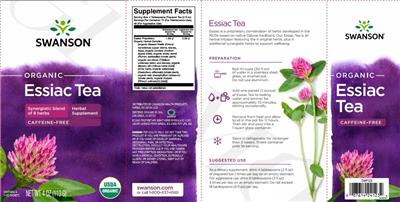
Synergistic blend of 8 herbs
Containing 4 1-oz packets
Essiac is a proprietary combination of herbs developed in the 1920s based on native Ojibwe traditions. Our Essiac Tea is an herbal infusion featuring the original herbs, plus 4 additional synergistic herbs to support wellbeing.
FDA Statement of Identity
Herbal Supplement
Formulation
Caffeine-Free
Certified Organic By QAI San Diego, Ca 102122
Seals/Symbols
USDA Organic
Quality Assurance International Certified Organic
Brand IP Statement(s)
Essiac Proprietary eight herb formula is used under license from Herbal Balance Life, Inc.
Precautions
Warning: For adults only.
Do not take this product id you are pregnant or nursing or if you have or develop diarrhea, abdominal pain, or intestinal obstruction. Consult your healthcare provider before use if you are taking any prescription medications or if you have a medical condition, especially ulceric or kidney stones.
Keep out of reach of children.
Do not exceed 18 Tablespoons (9 fl oz) per day.
Suggested/Recommended/Usage/Directions
Preparation Boil 4 1/2 cups (36 fl oz) of water in a stainless steel glass, or enamel pot. Do not use aluminum. Add one packet (1 ounce) of Essiac Tea to boiling water and simmer for approximately 10 minutes, stirring occasionally. Remove from heat and allow to sit in the pot for 12 hours. Then stir and pout into a 1-quart glass container.
Shake container prior to serving. Suggested use: As a dietary supplement, drink 4 tablespoons (2 fl oz) of prepared tea 2 times per day on an empty stomach. For aggressive use, drink 6 tablespoons (3 fl oz) 3 times per day on an empty stomach.
Storage
Store in refrigerator for no longer than 3 weeks.
Is this label outdated? Report a formula or label change and our pharmacy team will review it.
Organic Essiac Tea by Swanson label
The label scan from the NIH Dietary Supplement Label Database. Tap to enlarge.
Label images are published by the NIH Dietary Supplement Label Database for the version of this product on file. Always read your actual product label.
View the full label (PDF)The Ingredients in Organic Essiac Tea by Swanson
These are the 8 active ingredients this product is made of. Select any to open its full monograph.
Serving size2 Fluid Ounce(s) Dosage formPowder Servings per container48 Amounts shown are per serving.
Most supplement products combine several ingredients, and a medication can interact with the product through any one of them. Each ingredient below shows whether it has known drug interactions.
Essiac Proprietary Organic Herbal Complex
- › Burdock
- › Rhubarb
- › Blessed Thistle
- › Sheep Sorrel
- › Red Clover
- › Slippery Elm
- › Watercress
- › Kelp
Organic Essiac Tea by Swanson Drug Interactions
HelloPharmacist Interaction Report
Swanson's Organic Essiac Tea contains eight active herbal ingredients, and several of them interact with medications.
The most serious interactions are Moderate in severity.
Read the full breakdown — every affected drug type, severity by severity
Rhubarb — one of the main ingredients — has the broadest reach. It can theoretically increase bleeding risk with warfarin (a blood thinner), raise the risk of toxicity with digoxin (a heart medication), and compound potassium loss when taken with corticosteroids, diuretics, or other stimulant laxatives.
Rhubarb may also reduce levels of cyclosporine (an immunosuppressant). Additionally, it theoretically increases the risk of kidney and liver damage when combined with drugs known to harm those organs.
Other ingredients present Moderate concerns: Burdock may increase bleeding risk with anticoagulants or antiplatelet drugs. Sheep sorrel can theoretically reduce absorption of fexofenadine (an antihistamine) and other drugs transported by a specific carrier protein.
Red clover might interfere with estrogen therapy or increase toxicity from methotrexate, and may theoretically affect tamoxifen. Watercress could raise lithium levels, increase chlorzoxazone side effects, and counteract warfarin's blood-thinning effect.
Slippery elm may slow absorption of all oral drugs.
Blessed thistle carries Minor interactions with acid-reducing medications (H2-blockers, antacids, and proton pump inhibitors). Red clover also has Minor interactions with several drug-metabolizing enzymes, though a small clinical study found no effect in real-world use.
Altogether, these interactions span 2,159 individual medications. Check your exact medications with the search tool below before starting this product.
Check your own medications below · Editorial policy · How we use AI
Want to check YOUR meds against Organic Essiac Tea?
Ask about interactions with your drugs in plain English — “Can I take it with lisinopril?” — and we find you the answer in seconds, ingredient by ingredient.
Go to the checkerIngredients driving the most interactions
Individual Drug Interactions
The ingredients in Organic Essiac Tea interact with 2,193 drugs. Click any drug to see the details.
8 of the 8 ingredients in Organic Essiac Tea interact with drugs. Each result below shows which ingredient is responsible. Slippery Elm Kelp Red Clover Rhubarb Sheep Sorrel Burdock Blessed Thistle Watercress
"phentolamineOraVerse, Rogitine, Ryzumvi
How "phentolamine interacts with Organic Essiac Tea — through 1 ingredient. Tap an ingredient for the detail:
Slippery ElmOral Drugs Moderate
Interaction Summary
Theoretically, slippery elm may slow the absorption and reduce serum levels of oral drugs.
Read the full Slippery Elm + "phentolamine interaction6-mercaptopurinePurinethol
How 6-mercaptopurine interacts with Organic Essiac Tea — through 2 ingredients. Tap an ingredient for the detail:
Slippery ElmOral Drugs Moderate
Interaction Summary
Theoretically, slippery elm may slow the absorption and reduce serum levels of oral drugs.
Read the full Slippery Elm + 6-mercaptopurine interactionRhubarbHepatotoxic Drugs Moderate
Interaction Summary
Theoretically, concomitant use of rhubarb with potentially hepatotoxic drugs might increase the risk of developing liver damage.
Read the full Rhubarb + 6-mercaptopurine interactionAbacavirZiagen
How Abacavir interacts with Organic Essiac Tea — through 1 ingredient. Tap an ingredient for the detail:
Slippery ElmOral Drugs Moderate
Interaction Summary
Theoretically, slippery elm may slow the absorption and reduce serum levels of oral drugs.
Read the full Slippery Elm + Abacavir interactionAbacavir Sulfate, Dolutegravir, LamivudineTriumeq
How Abacavir Sulfate, Dolutegravir, Lamivudine interacts with Organic Essiac Tea — through 2 ingredients. Tap an ingredient for the detail:
Slippery ElmOral Drugs Moderate
Interaction Summary
Theoretically, slippery elm may slow the absorption and reduce serum levels of oral drugs.
Read the full Slippery Elm + Abacavir Sulfate, Dolutegravir, Lamivudine interactionRhubarbHepatotoxic Drugs Moderate
Interaction Summary
Theoretically, concomitant use of rhubarb with potentially hepatotoxic drugs might increase the risk of developing liver damage.
Read the full Rhubarb + Abacavir Sulfate, Dolutegravir, Lamivudine interactionAbacavir, LamivudineEpzicom
How Abacavir, Lamivudine interacts with Organic Essiac Tea — through 2 ingredients. Tap an ingredient for the detail:
RhubarbHepatotoxic Drugs Moderate
Interaction Summary
Theoretically, concomitant use of rhubarb with potentially hepatotoxic drugs might increase the risk of developing liver damage.
Read the full Rhubarb + Abacavir, Lamivudine interactionSlippery ElmOral Drugs Moderate
Interaction Summary
Theoretically, slippery elm may slow the absorption and reduce serum levels of oral drugs.
Read the full Slippery Elm + Abacavir, Lamivudine interactionAbciximabReoPro
How Abciximab interacts with Organic Essiac Tea — through 5 ingredients. Tap an ingredient for the detail:
Slippery ElmOral Drugs Moderate
Interaction Summary
Theoretically, slippery elm may slow the absorption and reduce serum levels of oral drugs.
Read the full Slippery Elm + Abciximab interactionSheep SorrelAnticoagulant/antiplatelet Drugs Moderate
Interaction Summary
Theoretically, sorrel might cause additive effects and side effects when used with anticoagulant or antiplatelet drugs.
Read the full Sheep Sorrel + Abciximab interactionBurdockAnticoagulant/antiplatelet Drugs Moderate
Interaction Summary
Theoretically, taking burdock with anticoagulant or antiplatelet drugs might increase the risk of bleeding.
Read the full Burdock + Abciximab interactionKelpAnticoagulant/antiplatelet Drugs Minor
Interaction Summary
Theoretically, taking Fucus vesiculosus with antiplatelet or anticoagulant drugs might increase the risk of bruising and bleeding.
Read the full Kelp + Abciximab interactionRed CloverAnticoagulant/antiplatelet Drugs Minor
Interaction Summary
Although some laboratory research suggests that red clover may have anticoagulant and antiplatelet activity, clinical research has not shown this effect.
Read the full Red Clover + Abciximab interactionAbemaciclibVerzenio
How Abemaciclib interacts with Organic Essiac Tea — through 3 ingredients. Tap an ingredient for the detail:
Slippery ElmOral Drugs Moderate
Interaction Summary
Theoretically, slippery elm may slow the absorption and reduce serum levels of oral drugs.
Read the full Slippery Elm + Abemaciclib interactionKelpCytochrome P450 3a4 (cyp3a4) Substrates Minor
Interaction Summary
Theoretically, concomitant use of Fucus vesiculosus with CYP3A4 substrates might increase the risk for adverse effects.
Read the full Kelp + Abemaciclib interactionRed CloverCytochrome P450 3a4 (cyp3a4) Substrates Minor
Interaction Summary
Theoretically, red clover might increase levels of drugs metabolized by CYP3A4; however, a small clinical study found no effect.
Read the full Red Clover + Abemaciclib interactionAbiraterone
How Abiraterone interacts with Organic Essiac Tea — through 4 ingredients. Tap an ingredient for the detail:
RhubarbHepatotoxic Drugs Moderate
Interaction Summary
Theoretically, concomitant use of rhubarb with potentially hepatotoxic drugs might increase the risk of developing liver damage.
Read the full Rhubarb + Abiraterone interactionSlippery ElmOral Drugs Moderate
Interaction Summary
Theoretically, slippery elm may slow the absorption and reduce serum levels of oral drugs.
Read the full Slippery Elm + Abiraterone interactionRed CloverCytochrome P450 3a4 (cyp3a4) Substrates Minor
Interaction Summary
Theoretically, red clover might increase levels of drugs metabolized by CYP3A4; however, a small clinical study found no effect.
Read the full Red Clover + Abiraterone interactionKelpCytochrome P450 3a4 (cyp3a4) Substrates Minor
Interaction Summary
Theoretically, concomitant use of Fucus vesiculosus with CYP3A4 substrates might increase the risk for adverse effects.
Read the full Kelp + Abiraterone interactionAbiraterone AcetateYonsa, Zytiga
How Abiraterone Acetate interacts with Organic Essiac Tea — through 4 ingredients. Tap an ingredient for the detail:
Slippery ElmOral Drugs Moderate
Interaction Summary
Theoretically, slippery elm may slow the absorption and reduce serum levels of oral drugs.
Read the full Slippery Elm + Abiraterone Acetate interactionRhubarbHepatotoxic Drugs Moderate
Interaction Summary
Theoretically, concomitant use of rhubarb with potentially hepatotoxic drugs might increase the risk of developing liver damage.
Read the full Rhubarb + Abiraterone Acetate interactionKelpCytochrome P450 3a4 (cyp3a4) Substrates Minor
Interaction Summary
Theoretically, concomitant use of Fucus vesiculosus with CYP3A4 substrates might increase the risk for adverse effects.
Read the full Kelp + Abiraterone Acetate interactionRed CloverCytochrome P450 3a4 (cyp3a4) Substrates Minor
Interaction Summary
Theoretically, red clover might increase levels of drugs metabolized by CYP3A4; however, a small clinical study found no effect.
Read the full Red Clover + Abiraterone Acetate interactionAbrocitinibCibinqo
How Abrocitinib interacts with Organic Essiac Tea — through 5 ingredients. Tap an ingredient for the detail:
BurdockAnticoagulant/antiplatelet Drugs Moderate
Interaction Summary
Theoretically, taking burdock with anticoagulant or antiplatelet drugs might increase the risk of bleeding.
Read the full Burdock + Abrocitinib interactionSlippery ElmOral Drugs Moderate
Interaction Summary
Theoretically, slippery elm may slow the absorption and reduce serum levels of oral drugs.
Read the full Slippery Elm + Abrocitinib interactionSheep SorrelAnticoagulant/antiplatelet Drugs Moderate
Interaction Summary
Theoretically, sorrel might cause additive effects and side effects when used with anticoagulant or antiplatelet drugs.
Read the full Sheep Sorrel + Abrocitinib interactionRed CloverCytochrome P450 2c19 (cyp2c19) Substrates, Cytochrome P450 2c9 (cyp2c9) Substrates +1 Minor
Interaction Summary
Theoretically, red clover might increase the levels and clinical effects of drugs metabolized by CYP2C19.
Read the full Red Clover + Abrocitinib interactionKelpAnticoagulant/antiplatelet Drugs, Cytochrome P450 2c9 (cyp2c9) Substrates Minor
Interaction Summary
Theoretically, taking Fucus vesiculosus with antiplatelet or anticoagulant drugs might increase the risk of bruising and bleeding.
Read the full Kelp + Abrocitinib interactionAcalabrutinibCalquence
How Acalabrutinib interacts with Organic Essiac Tea — through 3 ingredients. Tap an ingredient for the detail:
Slippery ElmOral Drugs Moderate
Interaction Summary
Theoretically, slippery elm may slow the absorption and reduce serum levels of oral drugs.
Read the full Slippery Elm + Acalabrutinib interactionRed CloverCytochrome P450 3a4 (cyp3a4) Substrates Minor
Interaction Summary
Theoretically, red clover might increase levels of drugs metabolized by CYP3A4; however, a small clinical study found no effect.
Read the full Red Clover + Acalabrutinib interactionKelpCytochrome P450 3a4 (cyp3a4) Substrates Minor
Interaction Summary
Theoretically, concomitant use of Fucus vesiculosus with CYP3A4 substrates might increase the risk for adverse effects.
Read the full Kelp + Acalabrutinib interactionAcamprosateCampral
How Acamprosate interacts with Organic Essiac Tea — through 1 ingredient. Tap an ingredient for the detail:
Slippery ElmOral Drugs Moderate
Interaction Summary
Theoretically, slippery elm may slow the absorption and reduce serum levels of oral drugs.
Read the full Slippery Elm + Acamprosate interactionAcarboseGlucobay, Prandase, Precose
How Acarbose interacts with Organic Essiac Tea — through 2 ingredients. Tap an ingredient for the detail:
RhubarbHepatotoxic Drugs Moderate
Interaction Summary
Theoretically, concomitant use of rhubarb with potentially hepatotoxic drugs might increase the risk of developing liver damage.
Read the full Rhubarb + Acarbose interactionSlippery ElmOral Drugs Moderate
Interaction Summary
Theoretically, slippery elm may slow the absorption and reduce serum levels of oral drugs.
Read the full Slippery Elm + Acarbose interactionAcebutololRhotral, Sectral
How Acebutolol interacts with Organic Essiac Tea — through 2 ingredients. Tap an ingredient for the detail:
Slippery ElmOral Drugs Moderate
Interaction Summary
Theoretically, slippery elm may slow the absorption and reduce serum levels of oral drugs.
Read the full Slippery Elm + Acebutolol interactionRhubarbHepatotoxic Drugs Moderate
Interaction Summary
Theoretically, concomitant use of rhubarb with potentially hepatotoxic drugs might increase the risk of developing liver damage.
Read the full Rhubarb + Acebutolol interactionAcenocoumarolSintrom
How Acenocoumarol interacts with Organic Essiac Tea — through 5 ingredients. Tap an ingredient for the detail:
BurdockAnticoagulant/antiplatelet Drugs Moderate
Interaction Summary
Theoretically, taking burdock with anticoagulant or antiplatelet drugs might increase the risk of bleeding.
Read the full Burdock + Acenocoumarol interactionSlippery ElmOral Drugs Moderate
Interaction Summary
Theoretically, slippery elm may slow the absorption and reduce serum levels of oral drugs.
Read the full Slippery Elm + Acenocoumarol interactionSheep SorrelAnticoagulant/antiplatelet Drugs Moderate
Interaction Summary
Theoretically, sorrel might cause additive effects and side effects when used with anticoagulant or antiplatelet drugs.
Read the full Sheep Sorrel + Acenocoumarol interactionRed CloverAnticoagulant/antiplatelet Drugs Minor
Interaction Summary
Although some laboratory research suggests that red clover may have anticoagulant and antiplatelet activity, clinical research has not shown this effect.
Read the full Red Clover + Acenocoumarol interactionKelpAnticoagulant/antiplatelet Drugs Minor
Interaction Summary
Theoretically, taking Fucus vesiculosus with antiplatelet or anticoagulant drugs might increase the risk of bruising and bleeding.
Read the full Kelp + Acenocoumarol interactionAcepromazineAtravet
How Acepromazine interacts with Organic Essiac Tea — through 1 ingredient. Tap an ingredient for the detail:
Slippery ElmOral Drugs Moderate
Interaction Summary
Theoretically, slippery elm may slow the absorption and reduce serum levels of oral drugs.
Read the full Slippery Elm + Acepromazine interactionAcetaminophenChildren's Tylenol, Children's Tylenol Meltaways, Tylenol, Tylenol Ex Strength
How Acetaminophen interacts with Organic Essiac Tea — through 3 ingredients. Tap an ingredient for the detail:
Slippery ElmOral Drugs Moderate
Interaction Summary
Theoretically, slippery elm may slow the absorption and reduce serum levels of oral drugs.
Read the full Slippery Elm + Acetaminophen interactionRhubarbNephrotoxic Drugs, Hepatotoxic Drugs Moderate
Interaction Summary
Theoretically, long-term use of anthraquinones from rhubarb might increase the risk of nephrotoxicity when used with nephrotoxic drugs.
Read the full Rhubarb + Acetaminophen interactionRed CloverCytochrome P450 1a2 (cyp1a2) Substrates Minor
Interaction Summary
Theoretically, red clover might increase levels of drugs metabolized by CYP1A2; however, a small clinical study found no effect.
Read the full Red Clover + Acetaminophen interactionAcetaminophen, AspirinGemnisyn
How Acetaminophen, Aspirin interacts with Organic Essiac Tea — through 6 ingredients. Tap an ingredient for the detail:
RhubarbHepatotoxic Drugs, Nephrotoxic Drugs Moderate
Interaction Summary
Theoretically, concomitant use of rhubarb with potentially hepatotoxic drugs might increase the risk of developing liver damage.
Read the full Rhubarb + Acetaminophen, Aspirin interactionBurdockAnticoagulant/antiplatelet Drugs Moderate
Interaction Summary
Theoretically, taking burdock with anticoagulant or antiplatelet drugs might increase the risk of bleeding.
Read the full Burdock + Acetaminophen, Aspirin interactionSlippery ElmOral Drugs Moderate
Interaction Summary
Theoretically, slippery elm may slow the absorption and reduce serum levels of oral drugs.
Read the full Slippery Elm + Acetaminophen, Aspirin interactionSheep SorrelAnticoagulant/antiplatelet Drugs Moderate
Interaction Summary
Theoretically, sorrel might cause additive effects and side effects when used with anticoagulant or antiplatelet drugs.
Read the full Sheep Sorrel + Acetaminophen, Aspirin interactionRed CloverCytochrome P450 1a2 (cyp1a2) Substrates, Anticoagulant/antiplatelet Drugs Minor
Interaction Summary
Theoretically, red clover might increase levels of drugs metabolized by CYP1A2; however, a small clinical study found no effect.
Read the full Red Clover + Acetaminophen, Aspirin interactionKelpAnticoagulant/antiplatelet Drugs Minor
Interaction Summary
Theoretically, taking Fucus vesiculosus with antiplatelet or anticoagulant drugs might increase the risk of bruising and bleeding.
Read the full Kelp + Acetaminophen, Aspirin interactionAcetaminophen, Aspirin, CaffeineExcedrin, Excedrin Extra Strength, Excedrin Migraine
How Acetaminophen, Aspirin, Caffeine interacts with Organic Essiac Tea — through 6 ingredients. Tap an ingredient for the detail:
Sheep SorrelAnticoagulant/antiplatelet Drugs Moderate
Interaction Summary
Theoretically, sorrel might cause additive effects and side effects when used with anticoagulant or antiplatelet drugs.
Read the full Sheep Sorrel + Acetaminophen, Aspirin, Caffeine interactionBurdockAnticoagulant/antiplatelet Drugs Moderate
Interaction Summary
Theoretically, taking burdock with anticoagulant or antiplatelet drugs might increase the risk of bleeding.
Read the full Burdock + Acetaminophen, Aspirin, Caffeine interactionRhubarbNephrotoxic Drugs, Hepatotoxic Drugs Moderate
Interaction Summary
Theoretically, long-term use of anthraquinones from rhubarb might increase the risk of nephrotoxicity when used with nephrotoxic drugs.
Read the full Rhubarb + Acetaminophen, Aspirin, Caffeine interactionSlippery ElmOral Drugs Moderate
Interaction Summary
Theoretically, slippery elm may slow the absorption and reduce serum levels of oral drugs.
Read the full Slippery Elm + Acetaminophen, Aspirin, Caffeine interactionRed CloverAnticoagulant/antiplatelet Drugs, Caffeine +2 Minor
Interaction Summary
Although some laboratory research suggests that red clover may have anticoagulant and antiplatelet activity, clinical research has not shown this effect.
Read the full Red Clover + Acetaminophen, Aspirin, Caffeine interactionKelpCytochrome P450 3a4 (cyp3a4) Substrates, Anticoagulant/antiplatelet Drugs Minor
Interaction Summary
Theoretically, concomitant use of Fucus vesiculosus with CYP3A4 substrates might increase the risk for adverse effects.
Read the full Kelp + Acetaminophen, Aspirin, Caffeine interactionAcetaminophen, Brompheniramine, PhenylpropanolamineDimetapp Cold and Flu
How Acetaminophen, Brompheniramine, Phenylpropanolamine interacts with Organic Essiac Tea — through 3 ingredients. Tap an ingredient for the detail:
Slippery ElmOral Drugs Moderate
Interaction Summary
Theoretically, slippery elm may slow the absorption and reduce serum levels of oral drugs.
Read the full Slippery Elm + Acetaminophen, Brompheniramine, Phenylpropanolamine interactionRhubarbHepatotoxic Drugs, Nephrotoxic Drugs Moderate
Interaction Summary
Theoretically, concomitant use of rhubarb with potentially hepatotoxic drugs might increase the risk of developing liver damage.
Read the full Rhubarb + Acetaminophen, Brompheniramine, Phenylpropanolamine interactionRed CloverCytochrome P450 1a2 (cyp1a2) Substrates Minor
Interaction Summary
Theoretically, red clover might increase levels of drugs metabolized by CYP1A2; however, a small clinical study found no effect.
Read the full Red Clover + Acetaminophen, Brompheniramine, Phenylpropanolamine interactionAcetaminophen, ButalbitalAxocet, Bancap, Bucet, Butex Forte, Esgic CF, Orbivan CF +5 more
How Acetaminophen, Butalbital interacts with Organic Essiac Tea — through 3 ingredients. Tap an ingredient for the detail:
RhubarbNephrotoxic Drugs, Hepatotoxic Drugs Moderate
Interaction Summary
Theoretically, long-term use of anthraquinones from rhubarb might increase the risk of nephrotoxicity when used with nephrotoxic drugs.
Read the full Rhubarb + Acetaminophen, Butalbital interactionSlippery ElmOral Drugs Moderate
Interaction Summary
Theoretically, slippery elm may slow the absorption and reduce serum levels of oral drugs.
Read the full Slippery Elm + Acetaminophen, Butalbital interactionRed CloverCytochrome P450 1a2 (cyp1a2) Substrates Minor
Interaction Summary
Theoretically, red clover might increase levels of drugs metabolized by CYP1A2; however, a small clinical study found no effect.
Read the full Red Clover + Acetaminophen, Butalbital interactionAcetaminophen, Butalbital, CaffeineEsgic, Esgic Plus, Fiogesic, Fioricet, Repan, Tecnal +1 more
How Acetaminophen, Butalbital, Caffeine interacts with Organic Essiac Tea — through 4 ingredients. Tap an ingredient for the detail:
Slippery ElmOral Drugs Moderate
Interaction Summary
Theoretically, slippery elm may slow the absorption and reduce serum levels of oral drugs.
Read the full Slippery Elm + Acetaminophen, Butalbital, Caffeine interactionRhubarbHepatotoxic Drugs, Nephrotoxic Drugs Moderate
Interaction Summary
Theoretically, concomitant use of rhubarb with potentially hepatotoxic drugs might increase the risk of developing liver damage.
Read the full Rhubarb + Acetaminophen, Butalbital, Caffeine interactionKelpCytochrome P450 3a4 (cyp3a4) Substrates Minor
Interaction Summary
Theoretically, concomitant use of Fucus vesiculosus with CYP3A4 substrates might increase the risk for adverse effects.
Read the full Kelp + Acetaminophen, Butalbital, Caffeine interactionRed CloverCaffeine, Cytochrome P450 1a2 (cyp1a2) Substrates +1 Minor
Interaction Summary
Theoretically, soy might reduce the clearance of caffeine; however, a small clinical study found no effect.
Read the full Red Clover + Acetaminophen, Butalbital, Caffeine interactionAcetaminophen, Butalbital, Caffeine, CodeineEsgic with Codeine, Fioricet w/ Codeine
How Acetaminophen, Butalbital, Caffeine, Codeine interacts with Organic Essiac Tea — through 4 ingredients. Tap an ingredient for the detail:
RhubarbHepatotoxic Drugs, Nephrotoxic Drugs Moderate
Interaction Summary
Theoretically, concomitant use of rhubarb with potentially hepatotoxic drugs might increase the risk of developing liver damage.
Read the full Rhubarb + Acetaminophen, Butalbital, Caffeine, Codeine interactionSlippery ElmOral Drugs Moderate
Interaction Summary
Theoretically, slippery elm may slow the absorption and reduce serum levels of oral drugs.
Read the full Slippery Elm + Acetaminophen, Butalbital, Caffeine, Codeine interactionRed CloverCytochrome P450 3a4 (cyp3a4) Substrates, Cytochrome P450 1a2 (cyp1a2) Substrates +1 Minor
Interaction Summary
Theoretically, red clover might increase levels of drugs metabolized by CYP3A4; however, a small clinical study found no effect.
Read the full Red Clover + Acetaminophen, Butalbital, Caffeine, Codeine interactionKelpCytochrome P450 2d6 (cyp2d6) Substrates, Cytochrome P450 3a4 (cyp3a4) Substrates Minor
Interaction Summary
Theoretically, concomitant use of Fucus vesiculosus with CYP2D6 substrates might alter the effects of these substrates.
Read the full Kelp + Acetaminophen, Butalbital, Caffeine, Codeine interactionAcetaminophen, Butalbital, CodeineBancap w/ Codeine
How Acetaminophen, Butalbital, Codeine interacts with Organic Essiac Tea — through 4 ingredients. Tap an ingredient for the detail:
RhubarbHepatotoxic Drugs, Nephrotoxic Drugs Moderate
Interaction Summary
Theoretically, concomitant use of rhubarb with potentially hepatotoxic drugs might increase the risk of developing liver damage.
Read the full Rhubarb + Acetaminophen, Butalbital, Codeine interactionSlippery ElmOral Drugs Moderate
Interaction Summary
Theoretically, slippery elm may slow the absorption and reduce serum levels of oral drugs.
Read the full Slippery Elm + Acetaminophen, Butalbital, Codeine interactionKelpCytochrome P450 2d6 (cyp2d6) Substrates Minor
Interaction Summary
Theoretically, concomitant use of Fucus vesiculosus with CYP2D6 substrates might alter the effects of these substrates.
Read the full Kelp + Acetaminophen, Butalbital, Codeine interactionRed CloverCytochrome P450 1a2 (cyp1a2) Substrates Minor
Interaction Summary
Theoretically, red clover might increase levels of drugs metabolized by CYP1A2; however, a small clinical study found no effect.
Read the full Red Clover + Acetaminophen, Butalbital, Codeine interactionAcetaminophen, Butalbital, Codeine PhosphatePhrenilin #3
How Acetaminophen, Butalbital, Codeine Phosphate interacts with Organic Essiac Tea — through 4 ingredients. Tap an ingredient for the detail:
Slippery ElmOral Drugs Moderate
Interaction Summary
Theoretically, slippery elm may slow the absorption and reduce serum levels of oral drugs.
Read the full Slippery Elm + Acetaminophen, Butalbital, Codeine Phosphate interactionRhubarbHepatotoxic Drugs, Nephrotoxic Drugs Moderate
Interaction Summary
Theoretically, concomitant use of rhubarb with potentially hepatotoxic drugs might increase the risk of developing liver damage.
Read the full Rhubarb + Acetaminophen, Butalbital, Codeine Phosphate interactionKelpCytochrome P450 2d6 (cyp2d6) Substrates Minor
Interaction Summary
Theoretically, concomitant use of Fucus vesiculosus with CYP2D6 substrates might alter the effects of these substrates.
Read the full Kelp + Acetaminophen, Butalbital, Codeine Phosphate interactionRed CloverCytochrome P450 1a2 (cyp1a2) Substrates Minor
Interaction Summary
Theoretically, red clover might increase levels of drugs metabolized by CYP1A2; however, a small clinical study found no effect.
Read the full Red Clover + Acetaminophen, Butalbital, Codeine Phosphate interactionAcetaminophen, Caffeine, Chlorpheniramine, Hydrocodone, PhenylephrineHycomine Compound
How Acetaminophen, Caffeine, Chlorpheniramine, Hydrocodone, Phenylephrine interacts with Organic Essiac Tea — through 4 ingredients. Tap an ingredient for the detail:
RhubarbHepatotoxic Drugs, Nephrotoxic Drugs Moderate
Interaction Summary
Theoretically, concomitant use of rhubarb with potentially hepatotoxic drugs might increase the risk of developing liver damage.
Read the full Rhubarb + Acetaminophen, Caffeine, Chlorpheniramine, Hydrocodone, Phenylephrine interactionSlippery ElmOral Drugs Moderate
Interaction Summary
Theoretically, slippery elm may slow the absorption and reduce serum levels of oral drugs.
Read the full Slippery Elm + Acetaminophen, Caffeine, Chlorpheniramine, Hydrocodone, Phenylephrine interactionRed CloverCytochrome P450 1a2 (cyp1a2) Substrates, Cytochrome P450 3a4 (cyp3a4) Substrates +1 Minor
Interaction Summary
Theoretically, red clover might increase levels of drugs metabolized by CYP1A2; however, a small clinical study found no effect.
Read the full Red Clover + Acetaminophen, Caffeine, Chlorpheniramine, Hydrocodone, Phenylephrine interactionKelpCytochrome P450 2d6 (cyp2d6) Substrates, Cytochrome P450 3a4 (cyp3a4) Substrates Minor
Interaction Summary
Theoretically, concomitant use of Fucus vesiculosus with CYP2D6 substrates might alter the effects of these substrates.
Read the full Kelp + Acetaminophen, Caffeine, Chlorpheniramine, Hydrocodone, Phenylephrine interactionAcetaminophen, Caffeine, CodeineGesic C15, Gesic C30, Gesic C8, Lenoltec 1, Lenoltec 2, Lenoltec 3 +1 more
How Acetaminophen, Caffeine, Codeine interacts with Organic Essiac Tea — through 4 ingredients. Tap an ingredient for the detail:
RhubarbNephrotoxic Drugs, Hepatotoxic Drugs Moderate
Interaction Summary
Theoretically, long-term use of anthraquinones from rhubarb might increase the risk of nephrotoxicity when used with nephrotoxic drugs.
Read the full Rhubarb + Acetaminophen, Caffeine, Codeine interactionSlippery ElmOral Drugs Moderate
Interaction Summary
Theoretically, slippery elm may slow the absorption and reduce serum levels of oral drugs.
Read the full Slippery Elm + Acetaminophen, Caffeine, Codeine interactionKelpCytochrome P450 3a4 (cyp3a4) Substrates, Cytochrome P450 2d6 (cyp2d6) Substrates Minor
Interaction Summary
Theoretically, concomitant use of Fucus vesiculosus with CYP3A4 substrates might increase the risk for adverse effects.
Read the full Kelp + Acetaminophen, Caffeine, Codeine interactionRed CloverCaffeine, Cytochrome P450 1a2 (cyp1a2) Substrates +1 Minor
Interaction Summary
Theoretically, soy might reduce the clearance of caffeine; however, a small clinical study found no effect.
Read the full Red Clover + Acetaminophen, Caffeine, Codeine interactionAcetaminophen, Caffeine, Codeine, SalicylamideCodalan No.1, Codalan No.2, Codalan No.3
How Acetaminophen, Caffeine, Codeine, Salicylamide interacts with Organic Essiac Tea — through 4 ingredients. Tap an ingredient for the detail:
Slippery ElmOral Drugs Moderate
Interaction Summary
Theoretically, slippery elm may slow the absorption and reduce serum levels of oral drugs.
Read the full Slippery Elm + Acetaminophen, Caffeine, Codeine, Salicylamide interactionRhubarbNephrotoxic Drugs, Hepatotoxic Drugs Moderate
Interaction Summary
Theoretically, long-term use of anthraquinones from rhubarb might increase the risk of nephrotoxicity when used with nephrotoxic drugs.
Read the full Rhubarb + Acetaminophen, Caffeine, Codeine, Salicylamide interactionRed CloverCaffeine, Cytochrome P450 3a4 (cyp3a4) Substrates +1 Minor
Interaction Summary
Theoretically, soy might reduce the clearance of caffeine; however, a small clinical study found no effect.
Read the full Red Clover + Acetaminophen, Caffeine, Codeine, Salicylamide interactionKelpCytochrome P450 3a4 (cyp3a4) Substrates, Cytochrome P450 2d6 (cyp2d6) Substrates Minor
Interaction Summary
Theoretically, concomitant use of Fucus vesiculosus with CYP3A4 substrates might increase the risk for adverse effects.
Read the full Kelp + Acetaminophen, Caffeine, Codeine, Salicylamide interactionAcetaminophen, Caffeine, DihydrocodeineDHC Plus, Panlor DC, Panlor SS
How Acetaminophen, Caffeine, Dihydrocodeine interacts with Organic Essiac Tea — through 4 ingredients. Tap an ingredient for the detail:
RhubarbHepatotoxic Drugs, Nephrotoxic Drugs Moderate
Interaction Summary
Theoretically, concomitant use of rhubarb with potentially hepatotoxic drugs might increase the risk of developing liver damage.
Read the full Rhubarb + Acetaminophen, Caffeine, Dihydrocodeine interactionSlippery ElmOral Drugs Moderate
Interaction Summary
Theoretically, slippery elm may slow the absorption and reduce serum levels of oral drugs.
Read the full Slippery Elm + Acetaminophen, Caffeine, Dihydrocodeine interactionRed CloverCytochrome P450 1a2 (cyp1a2) Substrates, Cytochrome P450 3a4 (cyp3a4) Substrates +1 Minor
Interaction Summary
Theoretically, red clover might increase levels of drugs metabolized by CYP1A2; however, a small clinical study found no effect.
Read the full Red Clover + Acetaminophen, Caffeine, Dihydrocodeine interactionKelpCytochrome P450 2d6 (cyp2d6) Substrates, Cytochrome P450 3a4 (cyp3a4) Substrates Minor
Interaction Summary
Theoretically, concomitant use of Fucus vesiculosus with CYP2D6 substrates might alter the effects of these substrates.
Read the full Kelp + Acetaminophen, Caffeine, Dihydrocodeine interactionAcetaminophen, Caffeine, IsomethepteneMigralam
How Acetaminophen, Caffeine, Isometheptene interacts with Organic Essiac Tea — through 4 ingredients. Tap an ingredient for the detail:
RhubarbNephrotoxic Drugs, Hepatotoxic Drugs Moderate
Interaction Summary
Theoretically, long-term use of anthraquinones from rhubarb might increase the risk of nephrotoxicity when used with nephrotoxic drugs.
Read the full Rhubarb + Acetaminophen, Caffeine, Isometheptene interactionSlippery ElmOral Drugs Moderate
Interaction Summary
Theoretically, slippery elm may slow the absorption and reduce serum levels of oral drugs.
Read the full Slippery Elm + Acetaminophen, Caffeine, Isometheptene interactionKelpCytochrome P450 3a4 (cyp3a4) Substrates Minor
Interaction Summary
Theoretically, concomitant use of Fucus vesiculosus with CYP3A4 substrates might increase the risk for adverse effects.
Read the full Kelp + Acetaminophen, Caffeine, Isometheptene interactionRed CloverCaffeine, Cytochrome P450 3a4 (cyp3a4) Substrates +1 Minor
Interaction Summary
Theoretically, soy might reduce the clearance of caffeine; however, a small clinical study found no effect.
Read the full Red Clover + Acetaminophen, Caffeine, Isometheptene interactionEach ingredient & the kinds of drugs it affects
For each ingredient in Organic Essiac Tea with known interactions, here are the types of medications they can affect. Open any type for the detail — or search your exact drug in the checker above.
Slippery Elm
Oral Drugs
Theoretically, slippery elm may slow the absorption and reduce serum levels of oral drugs.
Slippery elm inner bark contains mucilage, which may interfere with the absorption of orally administered drugs.
Kelp
Amiodarone (Cordarone)
Theoretically, combining Fucus vesiculosus with amiodarone might cause excessively high iodine levels.
Fucus vesiculosus contains high concentrations of iodine. Amiodarone contains 37.3% iodine and can increase iodine levels. Concomitant use might increase the risk of having excessive iodine levels and adversely affecting thyroid function. Monitor thyroid function.
Antithyroid Drugs
Due to its iodine content, Fucus vesiculosus might alter the effects of antithyroid drugs.
Fucus vesiculosus contains high concentrations of iodine. Iodine in high doses has been reported to cause both hyperthyroidism and hypothyroidism, depending on the individual's past medical history. Taking Fucus vesiculosus while using antithyroid drugs could alter the effects of the antithyroid drugs.
Lithium
Concomitant use of Fucus vesiculosus and lithium has resulted in hyperthyroidism.
There is a case of hyperthyroidism occurring in a patient taking Fucus vesiculosus and lithium. Monitor thyroid hormones closely in patients taking lithium and Fucus vesiculosus concomitantly.
Thyroid Hormone
Due to its iodine content, Fucus vesiculosus might alter the effects of thyroid hormone.
Fucus vesiculosus contains high concentrations of iodine. Iodine in high doses has been reported to cause both hyperthyroidism and hypothyroidism, depending on the individual's past medical history. Taking Fucus vesiculosus while using thyroid hormone could alter the effects of thyroid hormone.
Anticoagulant/Antiplatelet Drugs
Theoretically, taking Fucus vesiculosus with antiplatelet or anticoagulant drugs might increase the risk of bruising and bleeding.
In vitro evidence suggests that a constituent of Fucus vesiculosus, known as fucoidan, has anticoagulant effects. However, in clinical research, fucoidan does not seem to have significant anticoagulant activity when taken orally, possibly due to poor absorption.
Cytochrome P450 2C8 (Cyp2C8) Substrates
Theoretically, concomitant use of Fucus vesiculosus with CYP2C8 substrates might increase the risk for adverse effects.
In vitro research shows that fucoidan, a constituent of Fucus vesiculosus, inhibits CYP2C8. This interaction has not been reported in humans.
Cytochrome P450 2C9 (Cyp2C9) Substrates
Theoretically, concomitant use of Fucus vesiculosus with CYP2C9 substrates might increase the risk for adverse effects.
In vitro research shows that fucoidan, a constituent of Fucus vesiculosus, inhibits CYP2C9. This interaction has not been reported in humans.
Cytochrome P450 2D6 (Cyp2D6) Substrates
Theoretically, concomitant use of Fucus vesiculosus with CYP2D6 substrates might alter the effects of these substrates.
In vitro research shows that fucoidan, a constituent of Fucus vesiculosus, both inhibits and induces CYP2D6. This interaction has not been reported in humans.
Cytochrome P450 3A4 (Cyp3A4) Substrates
Theoretically, concomitant use of Fucus vesiculosus with CYP3A4 substrates might increase the risk for adverse effects.
In vitro research shows that fucoidan, a constituent of Fucus vesiculosus, inhibits CYP3A4. This interaction has not been reported in humans.
Red Clover
Estrogens
Theoretically, concomitant use of large amounts of red clover might interfere with estrogen therapy.
Red clover contains phytoestrogens which might have estrogenic activity in some people. Theoretically, red clover might compete for estrogen receptors and interfere with estrogen-containing drug therapy.
Methotrexate (Trexall, Others)
Theoretically, red clover might increase the risk of methotrexate toxicity.
In a case report, a 52-year-old female receiving weekly methotrexate injections for psoriasis developed symptoms of methotrexate toxicity, including severe vomiting and epigastric pain, after three days of taking red clover 430 mg daily. Toxicity resolved after red clover was discontinued. However, no liver function tests or methotrexate levels were reported.
Tamoxifen (Nolvadex)
Theoretically, the phytoestrogens in red clover might interfere with tamoxifen.
In vitro and animal research suggests that genistein, a constituent of red clover, might antagonize the antitumor effects of tamoxifen. However, there is some evidence from an animal study that red clover does not reduce the efficacy of tamoxifen. Until more is known, tell patients taking tamoxifen to avoid red clover.
Anticoagulant/Antiplatelet Drugs
Although some laboratory research suggests that red clover may have anticoagulant and antiplatelet activity, clinical research has not shown this effect.
In vitro research suggests that genistein in red clover has antiplatelet effects, and historically, red clover was thought to have anticoagulant effects due to its coumarin content. However, some experts state that this is unlikely as most natural coumarins have not been shown to have anticoagulant effects, and their content in red clover is low. Additionally, some clinical research in postmenopausal patients found no effect on coagulation or prothrombin time with the use of red clover flowering tops 378 mg daily for 12 months or red clover isoflavone (Rimostil) 50 mg daily for 2 years.
Caffeine
Theoretically, soy might reduce the clearance of caffeine; however, a small clinical study found no effect.
Red clover contains genistein. Taking genistein 1 gram daily for 14 days seems to inhibit caffeine clearance and metabolism in healthy females. However, this effect does not seem to occur with the lower amounts of genistein found in red clover. A clinical study in healthy postmenopausal individuals shows that taking red clover capsules standardized to contain 60 mg isoflavones twice daily for 14 days does not affect the pharmacokinetics of caffeine.
Cytochrome P450 1A2 (Cyp1A2) Substrates
Theoretically, red clover might increase levels of drugs metabolized by CYP1A2; however, a small clinical study found no effect.
In vitro evidence shows that red clover inhibits CYP1A2. However, a clinical study in healthy postmenopausal individuals shows that taking red clover capsules standardized to contain 60 mg isoflavones twice daily for 14 days does not affect the pharmacokinetics of caffeine, a CYP1A2 probe substrate.
Cytochrome P450 2C19 (Cyp2C19) Substrates
Theoretically, red clover might increase the levels and clinical effects of drugs metabolized by CYP2C19.
In vitro evidence suggests that red clover weakly inhibits CYP2C19. This interaction has not been reported in humans.
Cytochrome P450 2C9 (Cyp2C9) Substrates
Theoretically, red clover might increase levels of drugs metabolized by CYP2C9; however, a small clinical study found no effect.
In vitro evidence suggests that red clover might inhibit CYP2C9. However, a clinical study in healthy postmenopausal individuals shows that taking red clover capsules standardized to contain 60 mg isoflavones twice daily for 14 days does not affect the pharmacokinetics of tolbutamide, a CYP2C9 probe substrate.
Cytochrome P450 3A4 (Cyp3A4) Substrates
Theoretically, red clover might increase levels of drugs metabolized by CYP3A4; however, a small clinical study found no effect.
In vitro evidence shows that red clover might inhibit CYP3A4 isoenzymes. However, a clinical study in healthy postmenopausal individuals shows that taking red clover capsules standardized to contain 60 mg isoflavones twice daily for 14 days does not affect the pharmacokinetics of alprazolam, a CYP3A4 probe substrate.
Rhubarb
Corticosteroids
Theoretically, frequent and high doses of rhubarb might increase the risk of hypokalemia when taken with corticosteroids.
Rhubarb has stimulant laxative effects. Overuse of rhubarb might compound corticosteroid-induced potassium loss.
Cyclosporine (Neoral, Sandimmune)
Theoretically, taking rhubarb with cyclosporine might reduce cyclosporine levels.
Animal research shows that co-administration of rhubarb decoction 0.25 or 1 gram/kg with cyclosporine 2.5 mg/kg, decreases cyclosporine maximum plasma concentration and overall exposure levels when compared with taking cyclosporine alone. The authors theorize that rhubarb might reduce cyclosporine bioavailability by inducing of P-glycoprotein and/or cytochrome P450 3A4. However, since rhubarb was administered as a single oral dose and enzyme induction usually occurs after multiple doses, it is possible that cyclosporine absorption was actually reduced via rhubarb's stimulant laxative effects. Also, the composition of the rhubarb decoction was not described.
Digoxin (Lanoxin)
Theoretically, overuse of rhubarb might increase the risk of adverse effects when taken with digoxin.
Rhubarb has stimulant laxative effects. Overuse of rhubarb might cause potassium depletion, increasing the risk of digoxin toxicity.
Diuretic Drugs
Theoretically, frequent and high doses of rhubarb might increase the risk of hypokalemia.
Rhubarb has stimulant laxative effects. Overuse of rhubarb might cause potassium depletion and compound diuretic-induced potassium loss.
Hepatotoxic Drugs
Theoretically, concomitant use of rhubarb with potentially hepatotoxic drugs might increase the risk of developing liver damage.
Some animal research suggests that anthraquinones in rhubarb might have hepatotoxic effects. Also, rhubarb use has been linked to at least 24 cases of liver injury, although details on the dose of rhubarb and duration of use in these cases is unclear.
Nephrotoxic Drugs
Theoretically, long-term use of anthraquinones from rhubarb might increase the risk of nephrotoxicity when used with nephrotoxic drugs.
The anthraquinone constituents of rhubarb have been shown to induce nephrotoxicity in animal research. Additionally, in a case report, a 23-year old female presented with kidney failure after taking 6 tablets of a proprietary slimming agent (found to contain the anthraquinones emodin and aloe-emodin from rhubarb) daily for 6 weeks and then adding diclofenac 25 mg 4 times daily for 2 days. The authors postulate that the anthraquinone constituents of rhubarb contributed to the renal dysfunction, and the addition of diclofenac, a nephrotoxic drug, led to renal failure. Until more is known, advise patients to avoid taking rhubarb if they are taking other potentially nephrotoxic drugs.
Stimulant Laxatives
Theoretically, rhubarb might increase the risk for fluid and electrolyte loss when taken with other stimulant laxatives.
Rhubarb has stimulant laxative effects. Concomitant use with stimulant laxatives might compound fluid and electrolyte loss.
Warfarin (Coumadin)
Theoretically, excessive use of rhubarb might increase the risk of bleeding when taken with warfarin.
Rhubarb has stimulant laxative effects and can cause diarrhea. Diarrhea can increase the effects of warfarin, increase international normalized ratio (INR), and increase the risk of bleeding. Advise patients who take warfarin not to take excessive amounts of rhubarb.
Sheep Sorrel
Anticoagulant/Antiplatelet Drugs
Theoretically, sorrel might cause additive effects and side effects when used with anticoagulant or antiplatelet drugs.
In vitro, sorrel has been shown to inhibit platelet aggregation. However, this effect has not been reported in humans.
Fexofenadine (Allegra)
Sorrel might reduce the effectiveness of fexofenadine by reducing its absorption from the gut.
In vitro research shows that an ethanol extract of sorrel inhibits organic anion-transporting polypeptide 1A2 (OATP1A2), which transports fexofenadine from the intestine into cells. In rats, concomitant administration of sorrel extract with fexofenadine reduces oral absorption of fexofenadine and the area under the plasma concentration-time curve (AUC).
Organic Anion-Transporting Polypeptide Substrates (Oatp)
Sorrel might reduce the effectiveness of OATP substrates by reducing their absorption from the gut.
In vitro research shows that sorrel inhibits OATP1A2. Theoretically it may inhibit other OATPs. The OATPs are expressed in the small intestine and liver and transport drugs into cells. Inhibition of OATP may reduce the bioavailability of oral drugs that are substrates of OATP.
Burdock
Anticoagulant/Antiplatelet Drugs
Theoretically, taking burdock with anticoagulant or antiplatelet drugs might increase the risk of bleeding.
In vitro research shows that lignans from burdock reduce rabbit platelet aggregation by inhibiting platelet activating factor. This interaction has not been reported in humans.
Blessed Thistle
Antacids
Theoretically, blessed thistle might decrease the effectiveness of antacids.
There are reports that blessed thistle increases stomach acid.
H2-Blockers
Theoretically, blessed thistle might decrease the effectiveness of H2-blockers.
There are reports that blessed thistle increases stomach acid.
Proton Pump Inhibitors (Ppis)
Theoretically, blessed thistle might decrease the effectiveness of PPIs.
There are reports that blessed thistle increases stomach acid.
Watercress
Chlorzoxazone (Parafon Forte, Paraflex)
Watercress might reduce the metabolism of chlorzoxazone and increase its effects and side effects. Clinical research in healthy volunteers shows that a single ingestion of watercress 50 grams increases the chlorzoxazone plasma concentration-time curve by about 56% and increases its half-life by about 53%.
Lithium
Watercress is thought to have diuretic properties. Theoretically, due to these potential diuretic effects, watercress might reduce excretion and increase levels of lithium.
Warfarin (Coumadin)
Watercress contains vitamin K. Consuming large amounts of watercress might antagonize the anticoagulant effects of warfarin.
Brand information
Manufacturer and brand details for Organic Essiac Tea, from the product label.
Swanson
See all Swanson products- Name
- Swanson Health Products
- City
- Fargo
- State
- ND
- ZipCode
- 58104
- Phone Number
- 1-800-437-4148
- Web Address
- swanson.com
Organic Essiac Tea by Swanson: Common Questions
Does Organic Essiac Tea by Swanson interact with any medications?
How can one product interact with so many drugs?
Where does this information come from?
Can I take this while pregnant or breastfeeding?
What is burdock used for in this blend?
Will this help with menopausal symptoms?
What side effects should I watch for?
Is the raw watercress in this product safe?
Does this contain any fillers or binders?
Written and reviewed by the HelloPharmacist editorial staff. Our editorial policy
Not sure if Organic Essiac Tea is safe with your meds?
Our pharmacists answer your medication & supplement questions — free.
Label information is sourced from the NIH Dietary Supplement Label Database and reflects the product version on file; always read your actual product label. This page is for education only and is not a substitute for professional medical advice. Confirm with your pharmacist or doctor before combining supplements and medications.
The Full Monographs Behind Organic Essiac Tea’s Ingredients
Every ingredient we hold a full HelloPharmacist monograph for — uses, evidence, safety, and the complete interaction list.
Burdock
Interacts with 122 drugsBurdock is a traditional herb most often used for skin problems and as a so-called 'blood purifier,' but high-quality human studies are lacking and most claims are not well proven. It is wid...
Read the full Burdock monograph → Herb & supplement monographRhubarb
Interacts with 658 drugsRhubarb root has a long history of use as a laxative and in traditional Chinese medicine, and its edible stalks are a common food. Most medicinal claims are backed by limited or low-quality...
Read the full Rhubarb monograph → Herb & supplement monographBlessed Thistle
Interacts with 36 drugsBlessed thistle is a bitter herb traditionally used to stimulate appetite and ease mild digestive complaints. High-quality human studies are lacking, so its benefits are not well proven. It...
Read the full Blessed Thistle monograph → Herb & supplement monographSorrel
Interacts with 169 drugsSorrel is a tangy, leafy herb used in cooking and traditional medicine, often for congestion, digestion, and inflammation. Solid human evidence for any health benefit is limited, and its hig...
Read the full Sorrel monograph → Herb & supplement monographRed Clover
Interacts with 867 drugsRed clover is a plant rich in isoflavones (plant compounds with weak estrogen-like activity) that is most often used for menopause symptoms like hot flashes. The evidence is mixed and genera...
Read the full Red Clover monograph → Herb & supplement monographSlippery Elm
Interacts with 2,022 drugsSlippery elm is a traditional herbal remedy made from the inner bark of a North American elm tree, used mainly to soothe sore throats and irritated digestive tracts. Its mucilage can coat an...
Read the full Slippery Elm monograph → Herb & supplement monographWatercress
Interacts with 6 drugsWatercress is a nutrient-rich leafy green that provides vitamins A, C, and K plus minerals and antioxidant plant compounds. Eaten as a food it is generally safe and healthy for most people,...
Read the full Watercress monograph → Herb & supplement monographFucus Vesiculosus
Interacts with 891 drugsFucus vesiculosus (bladderwrack) is a brown seaweed rich in iodine that has been used traditionally for thyroid concerns, weight, and skin. There is little solid human evidence to support mo...
Read the full Fucus Vesiculosus monograph →Sources & How We Checked
Organic Essiac Tea's label data comes from the NIH Dietary Supplement Label Database; the ingredient interaction data is from the Natural Medicines database, reviewed by our pharmacists.
- NIH Dietary Supplement Label Database (DSLD) — The official product label on file for this supplement.
- Natural Medicines (Therapeutic Research Center) — Evidence-graded clinical reference behind the ingredient interaction data.
Content is written and reviewed by licensed HelloPharmacist pharmacists. See our data sources and editorial standards for how this information is built and checked.
The 117 references behind this product’s interaction data
Every citation that drives the interaction findings for this product’s ingredients, from the evidence-graded Natural Medicines (TRC Healthcare) database. Open an ingredient to browse its citations — links open the study on PubMed or the publisher’s site.
Burdock 11 references
- Iwakami S, Wu JB, Ebizuka Y, Sankawa U. Platelet activating factor (PAF) antagonists contained in medicinal plants: lignans and sesquiterpenes. Chem Pharm Bull (Tokyo) 1992;40:1196-8. PubMed
- Sasaki Y, Kimura Y, Tsunoda T, Tagami H. Anaphylaxis due to burdock. Int J Dermatol 2003;42:472-3. PubMed
- Rhoads PM, Tong TG, Banner W Jr, Anderson R. Anticholinergic poisonings associated with commercial burdock root tea. J Toxicol Clin Toxicol 1984-85;22:581-4. PubMed
- Rodriguez P, Blanco J, Juste S, et al. Allergic contact dermatitis due to burdock (Arctium lappa). Contact Dermatitis 1995;33:134-5.
- Kassler, W. J., Blanc, P., and Greenblatt, R. The use of medicinal herbs by human immunodeficiency virus-infected patients. Arch Intern Med 1991;151(11):2281-2288. DOI
- Chan, Y. S., Cheng, L. N., Wu, J. H., Chan, E., Kwan, Y. W., Lee, S. M., Leung, G. P., Yu, P. H., and Chan, S. W. A review of the pharmacological effects of Arctium lappa (burdock). Inflammopharmacology. 2011;19(5):245-254. PubMed
- Breed, F. B. and Kuwabara, T. Burdock ophthalmia. Arch Ophthalmol 1966;75(1):16-20.
- Bryson, P. D., Watanabe, A. S., Rumack, B. H., and Murphy, R. C. Burdock root tea poisoning. Case report involving a commercial preparation. JAMA 5-19-1978;239(20):2157. DOI
- <p>Fletcher GF<span>, </span>Cantwell JD. Burdock root tea poisoning. JAMA <span>1978 Oct 6;240(15):1586.</span></p> DOI
- Latif A, Fichadiya H, Abid F, Capo G. Herbal Teas and Thrombocytopenia: A Curious Case of Yellow Dock and Burdock-Induced Thrombocytopenia. Eur J Case Rep Intern Med 2022;9(3):003247. PubMed
- Niazi B, Ahmed K, Ahmed M, Ali S, Song K, Elias S. Drug-Induced Liver Injury from Herbal Liver Detoxification Tea. Case Rep Gastroenterol 2022;16(3):612-617. PubMed
Rhubarb 20 references
- Blumenthal M, ed. The Complete German Commission E Monographs: Therapeutic Guide to Herbal Medicines. Trans. S. Klein. Boston, MA: American Botanical Council, 1998.
- McGuffin M, Hobbs C, Upton R, Goldberg A, eds. American Herbal Products Association's Botanical Safety Handbook. Boca Raton, FL: CRC Press, LLC 1997.
- Gruenwald J, Brendler T, Jaenicke C. PDR for Herbal Medicines. 1st ed. Montvale, NJ: Medical Economics Company, Inc., 1998.
- Brinker F. Herb Contraindications and Drug Interactions. 2nd ed. Sandy, OR: Eclectic Medical Publications, 1998.
- Nusko G, Schneider B, Schneider I, et al. Anthranoid laxative use is not a risk factor for colorectal neoplasia: results of a prospective case control study. Gut 2000;46:651-5. PubMed
- Kwan TH, Tong MK, Leung KT, et al. Acute renal failure associated with prolonged intake of slimming pills containing anthraquinones. Hong Kong Med J 2006;12:394-7.
- Fairbairn JW. The anthraquinone laxatives. Biological assay and its relation to chemical structure. Pharmacology 1976;14:48-61. PubMed
- Siegers, C. P., Hertzberg-Lottin, E., Otte, M., and Schneider, B. Anthranoid laxative abuse--a risk for colorectal cancer? Gut 1993;34(8):1099-1101. PubMed
- Fan, J. G. Evaluating the efficacy and safety of Danning Pian in the short-term treatment of patients with non-alcoholic fatty liver disease: a multicenter clinical trial. Hepatobiliary.Pancreat.Dis.Int 2004;3(3):375-380.
- Yan, M., Zhang, L. Y., Sun, L. X., Jiang, Z. Z., and Xiao, X. H. Nephrotoxicity study of total rhubarb anthraquinones on Sprague Dawley rats using DNA microarrays. J Ethnopharmacol. 4-15-2006; PubMed
- Zhang, J. H., Li, L. S., and Zhang, M. Clinical effects of rheum and captopril on preventing progression of chronic renal failure. Chin Med J (Engl.) 1990;103(10):788-793.
- Mitsuma, T., Yokozawa, T., Oura, H., and Terasawa, K. [Rhubarb therapy in patients with chronic renal failure (Part 2)]. Nippon Jinzo Gakkai Shi 1987;29(2):195-207.
- Wu, C. X. [A preliminary study on the effect of a single Rheum officinale in heavy doses in the treatment of acute icteric hepatitis]. Zhong.Xi.Yi.Jie.He.Za Zhi.(Chinese Journal of Modern Developments in Traditional Medicine) 1984;4(2):88-89.
- Jiao, D. H. [Clinical research on the hemostatic effect of rhubarb on peptic ulcer with acute bleeding]. Zhong.Xi.Yi.Jie.He.Za Zhi.(Chinese Journal of Modern Developments in Traditional Medicine) 1984;4(10):597-600, 579.
- Jiao, D. H., Ma, Y. H., Chen, S. J., Liu, C. T., Shu, H. N., and Chu, C. M. Resume of 400 cases of acute upper digestive tract bleeding treated by rhubarb alone. Pharmacology 1980;20 Suppl 1:128-130.
- Zhang, JH, Yao, XD, Song, Y, and et al. [Long-term treating effects of rhubarb and captopril in delaying the progression of renal failure]. Chinese Kidney Disease Journal 1993;9(4):197-201.
- Rehman H, Begum W, Anjum F, Tabasum H, Zahid S. Effect of rhubarb (Rheum emodi) in primary dysmenorrhoea: a single-blind randomized controlled trial. J Complement Integr Med. 2015 Mar;12(1):61-9.
- Yu CP, Lin HJ, Lin SP, Shia CS, Chang PH, Hou YC, Hsieh YW. Rhubarb decreased the systemic exposure of cyclosporine, a probe substrate of P-glycoprotein and CYP 3A. Xenobiotica. 2016 Aug;46(8):677-82. PubMed
- Byeon JH, Kil JH, Ahn YC, Son CG. Systematic review of published data on herb induced liver injury. J Ethnopharmacol 2019;233:190-6. PubMed
- Zhao D, Feng SX, Zhang HJ, et al. Pharmacokinetics, tissue distribution and excretion of five rhubarb anthraquinones in rats after oral administration of effective fraction of anthraquinones from rheum officinale. Xenobiotica. 2021;51(8):916-925. PubMed
Blessed Thistle 2 references
- McGuffin M, Hobbs C, Upton R, Goldberg A, eds. American Herbal Products Association's Botanical Safety Handbook. Boca Raton, FL: CRC Press, LLC 1997.
- Brinker F. Herb Contraindications and Drug Interactions. 2nd ed. Sandy, OR: Eclectic Medical Publications, 1998.
Sorrel 8 references
- Neubauer N, Marz RW. Placebo-controlled, randomized, double-blind, clincal trial with Sinupret sugar coated tablets on the basis of a therapy with antibiotics and decongestant nasal drops in acute sinusitis. Phytomedicine 1994;1:177-81.
- Marz RW, Ismail C, Popp MA. Action profile and efficacy of a herbal combination preparation for the treatment of sinusitis. Wien Med Wochenschr 1999;149:202-8.
- Zick, S. M., Sen, A., Feng, Y., Green, J., Olatunde, S., and Boon, H. Trial of Essiac to ascertain its effect in women with breast cancer (TEA-BC). J Altern Complement Med 2006;12(10):971-980. PubMed
- Sanz, P. and Reig, R. Clinical and pathological findings in fatal plant oxalosis. A review. Am J Forensic Med Pathol. 1992;13(4):342-345. PubMed
- Gniazdowska, B., Doroszewska, G., and Doroszewski, W. [Hypersensitivity to weed pollen allergens in the region of Bygdoszcz]. Pneumonol.Alergol.Pol. 1993;61(7-8):367-372.
- Selçuk SN, Gülhan B, Düzova A, Teksam Ö. Acute tubulointerstitial nephritis due to large amount of sorrel (Rumex acetosa) intake. Clin Toxicol (Phila) 2015;53(5):497. PubMed
- Ahn JH, Kim J, Rehman NU, Kim HJ, Ahn MJ, Chung HJ. Effect of Rumex Acetosa Extract, a Herbal Drug, on the Absorption of Fexofenadine. Pharmaceutics. 2020;12(6):E547. PubMed
- Jeong D, Irfan M, Lee DH, Hong SB, Oh JW, Rhee MH. Rumex acetosa modulates platelet function and inhibits thrombus formation in rats. BMC Complement Med Ther. 2020;20(1):98. PubMed
Red Clover 24 references
- Kurzer MS, Xu X. Dietary phytoestrogens. Annu Rev Nutr 1997;17:353-81. PubMed
- Electronic Code of Federal Regulations. Title 21. Part 182 -- Substances Generally Recognized As Safe. Available at: https://www.accessdata.fda.gov/scripts/cdrh/cfdocs/cfcfr/CFRSearch.cfm?CFRPart=182
- Budzinski JW, Foster BC, Vandenhoek S, Arnason JT. An in vitro evaluation of human cytochrome P450 3A4 inhibition by selected commercial herbal extracts and tinctures. Phytomedicine 2000;7:273-82. PubMed
- This P, De La Rochefordiere A, Clough K, et al. Phytoestrogens after breast cancer. Endocr Relat Cancer 2001;8:129-34. PubMed
- Tice J, Cummings SR, Ettinger B, et al. Few adverse effects of two red clover extracts rich in phytoestrogens: a multicenter, placebo-controlled trial. Alt Ther 2001;7:S33.
- Ingram DM, Hickling C, West L, et al. A double-blind randomized controlled trial of isoflavones in the treatment of cyclical mastalgia. The Breast 2002;11:170-4. PubMed
- Unger M, Frank A. Simultaneous determination of the inhibitory potency of herbal extracts on the activity of six major cytochrome P450 enzymes using liquid chromatography/mass spectrometry and automated online extraction. Rapid Commun Mass Spectrom 2004;1 PubMed
- Cheong JL, Bucknall R. Retinal vein thrombosis associated with a herbal phytoestrogen preparation in a susceptible patient. Postgrad Med J 2005;81:266-7.. PubMed
- Geller SE, Shulman LP, van Breemen RB, et al. Safety and efficacy of black cohosh and red clover for the management of vasomotor symptoms: a randomized controlled trial. Menopause 2009;16:1156-66. PubMed
- Hidalgo LA, Chedraui PA, Morocho N, et al. The effect of red clover isoflavones on menopausal symptoms, lipids and vaginal cytology in menopausal women: a randomized, double-blind, placebo-controlled study. Gynecol Endocrinol 2005;21(5):257-264. PubMed
- Campbell MJ, Woodside JV, Honour JW, et al. Effect of red clover-derived isoflavone supplementation on insulin-like growth factor, lipid and antioxidant status in healthy female volunteers: a pilot study. Eur J Clin Nutr 2004;58(1):173-179. PubMed
- Guerrero JA, Lozano ML, Castillo J, et al. Flavonoids inhibit platelet function through binding to the thromboxane A2 receptor. J Thromb Haemost 2005;3(2):369-376. PubMed
- Kondo K, Suzuki Y, Ikeda Y, Umemura K. Genistein, an isoflavone included in soy, inhibits thrombotic vessel occlusion in the mouse femoral artery and in vitro platelet aggregation. Eur J Pharmacol 2002;455(1):53-57. PubMed
- Polini N, Rauschemberger MB, Mendiberri J, et al. Effect of genistein and raloxifene on vascular dependent platelet aggregation. Mol Cell Endocrinol 2007;267(1-2):55-62. PubMed
- Wuttke W, Jarry H, Seidlova-Wuttke D. Plant-derived alternative treatments for the aging male: facts and myths. Aging Male 2010;13(2):75-81. PubMed
- Villaseca P. Non-estrogen conventional and phytochemical treatments for vasomotor symptoms: what needs to be known for practice. Climacteric 2012;15(2):115-124. PubMed
- Chen, Y., Xiao, C. Q., He, Y. J., Chen, B. L., Wang, G., Zhou, G., Zhang, W., Tan, Z. R., Cao, S., Wang, L. P., and Zhou, H. H. Genistein alters caffeine exposure in healthy female volunteers. Eur.J Clin.Pharmacol. 2011;67(4):347-353. PubMed
- Friedman, J. A., Taylor, S. A., McDermott, W., and Alikhani, P. Multifocal and recurrent subarachnoid hemorrhage due to an herbal supplement containing natural coumarins. Neurocrit.Care 2007;7(1):76-80. PubMed
- Hooper, L., Madhavan, G., Tice, J. A., Leinster, S. J., and Cassidy, A. Effects of isoflavones on breast density in pre- and post-menopausal women: a systematic review and meta-analysis of randomized controlled trials. Hum.Reprod.Update. 2010;16(6):745-7 PubMed
- Orr A and Parker R. Red clover causing symptoms suggestive of methotrexate toxicity in a patient on high-dose methotrexate. Menopause Int. 2013;19(3):133-134. PubMed
- Clifton-Bligh PB, et al. Red cover isoflavones enriched with formononetin lower serum LDL cholesterol- a randomized, double-blind, placebo-controlled trial. Eur J Clin Nutr. 2015;69(1):134-142.
- Risk assessment for peri- and post-menopausal women taking food supplements containing isolated isoflavones. EFSA Panel on Food Additives and Nutrient Sources added to Food (ANS). 2015. DOI
- Ferraris C, Ballestra B, Listorti C, et al. Red clover and lifestyle changes to contrast menopausal symptoms in premenopausal patients with hormone-sensitive breast cancer receiving tamoxifen. Breast Cancer Res Treat 2020;180(1):157-65. doi: 10.1007/s1054 PubMed
- Chen L, Choi J, Leonard SW, et al. No Clinically Relevant Pharmacokinetic Interactions of a Red Clover Dietary Supplement with Cytochrome P450 Enzymes in Women. J Agric Food Chem. 2020;68(47):13929-13939. PubMed
Slippery Elm 3 references
- The Review of Natural Products by Facts and Comparisons. St. Louis, MO: Wolters Kluwer Co., 1999.
- Brinker F. Herb Contraindications and Drug Interactions. 2nd ed. Sandy, OR: Eclectic Medical Publications, 1998.
- Czarnecki D, Nixon R, Bekhor P, and et al. Delayed prolonged contact urticaria from the elm tree. Contact Dermatitis 1993;28:196-197. PubMed
Watercress 34 references
- Gruenwald J, Brendler T, Jaenicke C. PDR for Herbal Medicines. 1st ed. Montvale, NJ: Medical Economics Company, Inc., 1998.
- Brinker F. Herb Contraindications and Drug Interactions. 2nd ed. Sandy, OR: Eclectic Medical Publications, 1998.
- Leclercq I, Desager JP, Horsmans Y. Inhibition of chlorzoxazone metabolism, a clinical probe for CYP2E1, by a single ingestion of watercress. Clin Pharmacol Ther 1998;64:144-9. PubMed
- Bolton-Smith C, Price RJ, Fenton ST, et al. Compilation of a provisional UK database for the phylloquinone (vitamin K1) content of foods. Br J Nutr 2000;83:389-99.
- Rondelaud, D., Dreyfuss, G., Bouteille, B., and Darde, M. L. Changes in human fasciolosis in a temperate area: about some observations over a 28-year period in central France. Parasitol.Res 2000;86(9):753-757. PubMed
- Sanchez-Sosa, S., Rojas-Ortega, S., Reed-San Roman, G., and Torres-Santana, M. A. [Massive hepatobiliary fascioliasis]. Rev Gastroenterol.Mex. 2000;65(4):179-183.
- van Daele, P. L., Madretsma, G. S., and van Agtmael, M. A. [Stomach ache and fever after consumption of watercress in Turkey: fascioliasis]. Ned.Tijdschr.Geneeskd. 9-29-2001;145(39):1896-1899.
- Cosme, A., Ojeda, E., Cilla, G., Torrado, J., Alzate, L., Beristain, X., Orive, V., and Arenas, J. [Fasciola hepatica. study of a series of 37 patients]. Gastroenterol.Hepatol. 2001;24(8):375-380.
- Martinez-Bebert, K., Rodriguez-Baez, R., Pila-Perez, R., Pila-Pelaez, R., and Tamakloe, K. [Hepatic hematoma caused by fascioliasis]. Gac.Med Mex. 2002;138(3):271-274.
- Dreyfuss, G., Vignoles, P., Abrous, M., and Rondelaud, D. Unusual snail species involved in the transmission of Fasciola hepatica in watercress beds in central France. Parasite 2002;9(2):113-120.
- Christmann, M., Henrich, R., Mayer, G., and Ell, C. [Infection with fasciola hepatica causing elevated liver-enzyme results and eosinophilia - serologic and endoscopic diagnosis and therapy]. Z.Gastroenterol. 2002;40(9):801-806.
- Cosme, A., Ojeda, E., Poch, M., Bujanda, L., Castiella, A., and Fernandez, J. Sonographic findings of hepatic lesions in human fascioliasis. J Clin Ultrasound 2003;31(7):358-363. PubMed
- Sapunar, J., Latorre, R., Guerra, M., and Defilippi, C. [Clinical considerations on 2 cases of hepatic fascioliasis. Importance of the imaging examinations]. Bol.Chil.Parasitol. 1992;47(3-4):70-76.
- de Gorgolas, M., Torres, R., Verdejo, C., Garay, J., Robledo, A., Ponte, M. C., and Fernandez Guerrero, M. L. [Fasciola hepatica infestation. Biopathology and new diagnostic and therapeutic aspects]. Enferm.Infecc.Microbiol.Clin 1992;10(9):514-519.
- Carrada-Bravo, T. [Fascioliasis: diagnosis, epidemiology and treatment]. Rev Gastroenterol.Mex. 2003;68(2):135-142.
- Yilmaz, H. and Godekmerdan, A. Human fasciolosis in Van province, Turkey. Acta Trop. 2004;92(2):161-162.
- Dobrucali, A., Yigitbasi, R., Erzin, Y., Sunamak, O., Polat, E., and Yakar, H. Fasciola hepatica infestation as a very rare cause of extrahepatic cholestasis. World J Gastroenterol. 10-15-2004;10(20):3076-3077. PubMed
- Alvarez-Chacon, R., Garcia-Rosales, J. J., de la Cruz-Otero MC, Wong-Chio, M., Cabrera-Bravo, M., Gomez-Gomez, J. V., and Gamez-Aranda, V. [Fascioliasis in children. A study of 10 cases]. Bol.Med Hosp.Infant Mex. 1992;49(6):365-371.
- Mailles, A., Capek, I., Ajana, F., Schepens, C., Ilef, D., and Vaillant, V. Commercial watercress as an emerging source of fascioliasis in Northern France in 2002: results from an outbreak investigation. Epidemiol.Infect. 2006;134(5):942-945.
- Cruz, Lopez O., Adan, Pimentel A., Tamariz Cruz, O. J., Munoz, Lopez A., Cruz Lopez, M. C., Cruz Lopez, M. E., and Munoz, Lopez S. [Hepatic fasciolasis diagnosed in state phase]. Rev Gastroenterol Mex. 2006;71(1):59-62.
- el Shazly, A. M., Handousa, A. E., Youssef, M. E., Rizk, H., and Hamouda, M. M. Human fascioliasis: a parasitic health problem in Dakahlia Governorate, Egypt. J Egypt.Soc Parasitol. 1991;21(2):553-559.
- Cosme, A., Alzate, L., Orive, V., Recasens, M., Torrado, J., Ruiz, I., and Arenas, J. [Laparoscopic findings in liver fascioliasis. Study of 13 cases]. Rev Esp.Enferm.Dig. 1990;78(6):359-362.
- Diaz, J., Pina, B., Lastre, M., Rivera, L., and Perez, O. [Epidemic human fascioliasis. Cuba 1983. VI. Clinical study of 40 children in the Hospital Provincial of Sagua la Grande]. G.E.N. 1990;44(4):385-388.
- Borie, C., Corona, S., Garin, A., Olea, P., Salcedo, M., Perez, C., and Apt, W. [A family outbreak of acute hepatic fascioliasis]. Rev Med Chil. 1990;118(1):67-72.
- Diamond, S. P., Wiener, S. G., and Marks, J. G., Jr. Allergic contact dermatitis to nasturtium. Dermatol.Clin. 1990;8(1):77-80. DOI
- Delasalle, P., Beytout, J., Cambon, M., and Bommelaer, G. [Distomatosis: diagnosis and treatment]. Rev Prat. 1-21-1990;40(3):230-236.
- Rivera, J. V. and Bermudez, R. H. Radionuclide imaging of the liver in human fascioliasis. Clin Nucl.Med 1984;9(8):450-453. PubMed
- Croese, J., Chapman, G., and Gallagher, N. D. Evolution of fascioliasis after eating wild watercress. Aust.N.Z.J.Med. 1982;12(5):525-527. PubMed
- Bendezu, P., Frame, A., and Hillyer, G. V. Human fascioliasis in Corozal, Puerto Rico. J Parasitol. 1982;68(2):297-299. DOI
- Derrick, E. and Darley, C. Contact dermatitis to nasturtium. Br.J Dermatol 1997;136(2):290-291. PubMed
- Narain, K., Biswas, D., Rajguru, S. K., and Mahanta, J. Human distomatosis due to Fasciola hepatica infection in Assam, India. J Commun.Dis 1997;29(2):161-165.
- Brinker, F. Herb Contraindications and Drug Interactions. 1998;2nd edition.
- Gruenwald, J. PDR for Herbal Medicines. 1998;1st ed.
- Clemente M, Miguel MD, Felipe KB, et al. Effect of watercress extract supplementation on lipid profile and oxidative stress markers in overweight people with physical disability: A randomized, double-blind, and placebo-controlled trial. Phytother Res. 202 PubMed
Fucus Vesiculosus 15 references
- Goodman GA, Rall TW, Nies AS, Taylor P. The Pharmacological Basis of Therapeutics, 9th ed.
- Food and Nutrition Board, Institute of Medicine. Dietary Reference Intakes for Vitamin A, Vitamin K, Arsenic, Boron, Chromium, Copper, Iodine, Iron, Manganese, Molybdenum, Nickel, Silicon, Vanadium, and Zinc. Washington, DC: National Academy Press, 2002.
- Phaneuf D, Cote I, Dumas P, et al. Evaluation of the contamination of marine algae (Seaweed) from the St. Lawrence River and likely to be consumed by humans. Environ Res 1999;80:S175-S182. PubMed
- Durig J, Bruhn T, Zurborn KH, et al. Anticoagulant fucoidan fractions from Fucus vesiculosus induce platelet activation in vitro. Thromb Res 1997;85:479-91. PubMed
- Conz PA, La Greca G, Benedetti P, et al. Fucus vesiculosus: a nephrotoxic alga? Nephrol Dial Transplant 1998;13:526-7.
- Ohye H, Fukata S, Kanoh M, et al. Thyrotoxicosis caused by weight-reducing herbal medicines. Arch Intern Med 2005;165:831-4. PubMed
- Okamura K, Inoue K, Omae T. A case of Hashimoto's thyroiditis with thyroid immunological abnormality manifested after habitual ingestion of seaweed. Acta Endocrinol (Copenh) 1978;88:703-12. PubMed
- Agarwal SC, Crook JR, Pepper CB. Herbal remedies -- how safe are they? A case report of polymorphic ventricular tachycardia/ventricular fibrillation induced by herbal medication used for obesity. Int J Cardiol 2006;106:260-1. PubMed
- Sterling JB, Heymann WR. Potassium iodide in dermatology: a 19th century drug for the 21st century-uses, pharmacology, adverse effects, and contraindications. J Am Acad Dermatol 2000;43:691-7. PubMed
- Catania, M. A., Oteri, A., Caiello, P., Russo, A., Salvo, F., Giustini, E. S., Caputi, A. P., and Polimeni, G. Hemorrhagic cystitis induced by an herbal mixture. South.Med.J. 2010;103(1):90-92. PubMed
- Cumashi, A., Ushakova, N. A., Preobrazhenskaya, M. E., D'Incecco, A., Piccoli, A., Totani, L., Tinari, N., Morozevich, G. E., Berman, A. E., Bilan, M. I., Usov, A. I., Ustyuzhanina, N. E., Grachev, A. A., Sanderson, C. J., Kelly, M., Rabinovich, G. A., I
- Irhimeh, M. R., Fitton, J. H., and Lowenthal, R. M. Pilot clinical study to evaluate the anticoagulant activity of fucoidan. Blood Coagul.Fibrinolysis 2009;20(7):607-610. PubMed
- Arbaizar, B. and Llorca, J. [Fucus vesiculosus induced hyperthyroidism in a patient undergoing concomitant treatment with lithium]. Actas Esp.Psiquiatr. 2011;39(6):401-403.
- Church FC, Meade JB, Treanor RE, and et al. Antithrombin activity of fucoidan. The interaction of fucoidan with heparin cofactor II, antithrombin III, and thrombin. J Biol Chem 2-25-1989;264(6):3618-3623. DOI
- Mathew L, Burney M, Gaikwad A, et al. Preclinical evaluation of safety of fucoidan extracts from Undaria pinnatifida and Fucus vesiculosus for use in cancer treatment. Integr Cancer Ther 2017;16(4):572-84.
Parts of this content are provided by the Therapeutic Research Center, LLC.
DISCLAIMER: Currently this does not check for drug-drug interactions. This is not an all-inclusive comprehensive list of potential interactions and is for informational purposes only. Not all interactions are known or well-reported in the scientific literature, and new interactions are continually being reported. Input is needed from a qualified healthcare provider including a pharmacist before starting any therapy. Application of clinical judgment is necessary.
© 2021 Therapeutic Research Center, LLC