
Organic Mushroom Complex Ingredients & Drug Interactions
by VEGATOT
What is this page for?
First and foremost: checking Organic Mushroom Complex against your medications. The heart of this page is the interaction checker and the full interaction report — how this product’s ingredients may interact with prescription and over-the-counter medicines you may be taking.
Around that, we add a pharmacist’s high-level view of the product as a whole — what’s inside, the evidence for its stated use, how transparent the label is, and what safety data exists — so you can see the full picture in one place. It’s educational information from our licensed clinical databases and the clinical staff at HelloPharmacist — not medical advice — and we don’t sell or endorse products. Our editorial policy
Organic Mushroom Complex is a dietary supplement by VEGATOT with 10 active ingredients. Its ingredients are commonly taken for immune support, used alongside cancer care, gut and digestive health.Based on those ingredients, 560 medications have a known interaction with it, the most serious rated moderate. The ingredients most likely to interact are Reishi Mushroom Extract, Chaga Mushroom, Powder, Lion's Mane Mushroom Extract. Use the checker below to test your specific medication, or read the full HelloPharmacist Interaction Report.
Check Your Meds Against Organic Mushroom Complex by VEGATOT
Ask about any prescription or over-the-counter medication and we check it for interactions with Organic Mushroom Complex by VEGATOT — and tell you which ingredient is responsible.
AI summaries are generated from our interaction database for education only — always confirm with your pharmacist. How we use AI
Ask the Pharmacist
A licensed pharmacist will answer your question by email — free, usually within 24 hours.
Got it — thank you!
A licensed pharmacist will answer within 24 hours. Keep an eye on your email (worth checking spam, just in case).
HelloPharmacist Scorecard of Organic Mushroom Complex by VEGATOT
Our pharmacy team’s full take, with four database checks built into the cards below — a summary of what is known, not a grade of the product itself.
What’s inside
Full disclosure
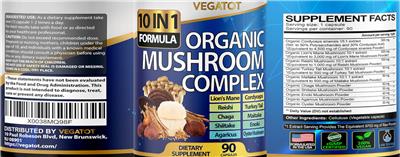
VEGATOT's Organic Mushroom Complex contains 10 ingredients, including extracts and powders from turkey tail, reishi, agaricus, chaga, shiitake, lion's mane, maitake, cordyceps, enoki, and oyster mushrooms. These are the active components.
The product also contains cellulose as an inactive ingredient (a binder).
Does it work?
Moderate evidence
The evidence for most of these mushrooms is still being built. Turkey tail mushroom is possibly effective for cancer support.
Reishi appears possibly ineffective for high cholesterol. The other mushrooms—including chaga, lion's mane, maitake, cordyceps, agaricus, and shiitake—do not have reliable evidence for the conditions they're marketed for in our current data, so we're unable to rate them.
How safe is it?
Well-documented data
The mushroom extracts in this product are generally well tolerated in the short term, though long-term safety data are limited and product quality varies. Gastrointestinal side effects—nausea, diarrhea, stomach discomfort—are the most common adverse effects reported.
Rare but serious cases of liver damage and kidney problems have been reported with some mushroom supplements, particularly with agaricus and chaga at very high intakes. The safety data advise against this product during pregnancy and while breastfeeding because there isn't enough information to know it's safe.
Meds to double-check
Moderate interaction found
Check before taking this product if you use antidiabetes drugs (moderate risk of low blood sugar with multiple ingredients), blood thinners or antiplatelet drugs (moderate risk of bleeding with chaga, lion's mane, cordyceps, and reishi), antihypertensive drugs (moderate risk of blood pressure dropping with reishi and maitake), cancer drugs like cyclophosphamide (moderate risk with turkey tail), warfarin specifically (moderate documented case risk with maitake), immunosuppressants (moderate risk with lion's mane and cordyceps), or any drug metabolized by CYP2C9 (minor risk with turkey tail).
The bottom line
Scorecard at a glanceFully disclosed formula with some supporting evidence for its stated purpose. Moderate medication interactions have been identified, and safety information is well characterized.
This product may be worth considering if you're interested in mushroom-based support and you don't take medications for blood sugar, blood pressure, blood clotting, or immune suppression. If you're on any prescription medication—especially cancer drugs, diabetes medications, blood thinners, or immunosuppressants—run your specific drugs through the checker below before you start.
Talk with your pharmacist or doctor first, especially if you're pregnant, nursing, or have liver or kidney concerns.
Educational only — not medical advice; always confirm with your pharmacist. Our editorial policy · How we use AI
Assessment coverage: 7 of 10 active ingredients matched to our full ingredient reviews (monographs). Based on the product label dated May 23, 2024.
This Scorecard evaluates available label information, ingredient evidence, and known medication-safety considerations. It does not independently verify product identity, purity, potency, contamination, or manufacturing quality. How these ratings are computed
General information
Key facts about Organic Mushroom Complex, straight from the product label.
| Brand | VEGATOT |
|---|---|
| Barcode (UPC) | X0038MQ98F |
| Net contents | 90 Capsule(s) |
| Market status | On market |
| Date entered into DSLD | May 23, 2024 |
| DSLD ID | 313706 |
| Product type | Botanical |
| Supplement form | Capsule |
| Dietary claims / uses | All Other, Structure/Function |
| Intended target group(s) | Vegan, Vegetarian, Adult (18 - 50 Years), Dairy Free |
Everything in this section is reproduced from the manufacturer’s own product label — it’s the label speaking, not HelloPharmacist. We show it so you can see exactly what the maker states; we don’t verify or endorse those statements.
Supplement Facts
The label details for Organic Mushroom Complex by VEGATOT, sourced from the NIH Dietary Supplement Label Database.
Supplement Facts
| Ingredient | Amount | % DV |
|---|---|---|
| Turkey Tail Mushroom Extract | 50 mg | -- |
| Reishi Mushroom Extract | 100 mg | -- |
| Agaricus Mushroom, Powder | 30 mg | -- |
| Chaga Mushroom, Powder | 50 mg | -- |
| Shiitake Mushroom, Powder | 50 mg | -- |
| Lion's Mane Mushroom Extract | 300 mg | -- |
| Maitake Mushroom Extract | 50 mg | -- |
| Cordyceps sinensis Extract | 300 mg | -- |
| Enoki Mushroom, Powder | 40 mg | -- |
| Oyster Mushroom, Powder | 30 mg | -- |
Other ingredients: Cellulose
Tap any ingredient to jump to its full detail below.
These statements are the manufacturer’s wording, reproduced from the product label — the label is saying it, not HelloPharmacist. We don’t verify or endorse them.
Suggested/Recommended/Usage/Directions
Suggested use: As a dietary supplement take one (1) capsule 1-2 times a day. For best results take with food or as directed by your healthcare professional.
Precautions
Caution: Do not exceed recommended dose.
Pregnant or nursing mothers, children under the age of 18, and individuals with a known medical condition should consult a physician before using this or any dietary supplement.
Pregnant or nursing mothers, children under the age of 18, and individuals with a known medical condition should consult a physician before using this or any dietary supplement. Keep out of the reach of children.
Do not use if a safety seal is damaged or missing.
Storage
Store in a cool, dry place.
FDA Disclaimer Statement
These statements have not been evaluated by the Food and Drug Administration. This product is not intended to diagnose, treat, cure or prevent any disease.
Formula
10 in 1 Formula Lion's Mane Cordyceps Reishi Turkey Tail Chaga Maitake Shiitake Enoki Agaricus Oyster Mushroom
1 extract serving provides the equivalent 9700 mg of raw powder
FDA Statement of Identity
Dietary Supplement
Seals/Symbols
Formulated in the USA cGMP Certified 100% Vegan Lab tested
Formulation
100% vegan
Is this label outdated? Report a formula or label change and our pharmacy team will review it.
Organic Mushroom Complex by VEGATOT label
The label scan from the NIH Dietary Supplement Label Database. Tap to enlarge.
Label images are published by the NIH Dietary Supplement Label Database for the version of this product on file. Always read your actual product label.
View the full label (PDF)The Ingredients in Organic Mushroom Complex by VEGATOT
These are the 10 active ingredients this product is made of. Select any to open its full monograph.
Serving size1 Capsule(s) Dosage formCapsule Servings per container90 Amounts shown are per serving.
Most supplement products combine several ingredients, and a medication can interact with the product through any one of them. Each ingredient below shows whether it has known drug interactions.
Turkey Tail Mushroom Extract
Interacts with187 drugs
Turkey tail is a woodland mushroom rich in polysaccharides like beta-glucans, and it is mainly used to support the immune system. Some of its purified...
Turkey Tail Mushroom Extract monograph & interactionsReishi Mushroom Extract
Interacts with375 drugs
Reishi is a traditional Asian mushroom widely used to support the immune system and overall wellness. Human evidence for most of its claimed benefits...
Reishi Mushroom Extract monograph & interactionsAgaricus Mushroom, Powder
Interacts with86 drugs
Agaricus mushroom (often Agaricus blazei/subrufescens) is a culinary and medicinal mushroom studied mostly for possible immune and antioxidant effects...
Agaricus Mushroom, Powder monograph & interactionsChaga Mushroom, Powder
Interacts with327 drugs
Chaga is a fungus that grows mostly on birch trees and is used as a tea or supplement, mainly for immune and antioxidant support. Human evidence for i...
Chaga Mushroom, Powder monograph & interactionsShiitake Mushroom, Powder
Lion's Mane Mushroom Extract
Interacts with327 drugs
Lion's mane is an edible mushroom that is popular as a 'nootropic' for memory, focus, and nerve health, but solid human evidence is still limited and...
Lion's Mane Mushroom Extract monograph & interactionsMaitake Mushroom Extract
Interacts with260 drugs
Maitake is an edible mushroom long used as food and in traditional Japanese medicine, and it is being studied for possible immune, blood sugar, and bl...
Maitake Mushroom Extract monograph & interactionsCordyceps sinensis Extract
Interacts with249 drugs
Cordyceps is a fungus used in traditional Chinese medicine for energy, exercise performance, and lung and immune support. Human research is limited an...
Cordyceps sinensis Extract monograph & interactionsEnoki Mushroom, Powder
Oyster Mushroom, Powder
Other (inactive) ingredients: Cellulose. These complete the product’s ingredient list but are not active constituents.
Organic Mushroom Complex by VEGATOT Drug Interactions
HelloPharmacist Interaction Report
VEGATOT Organic Mushroom Complex contains several mushroom extracts that interact with medications.
The most serious concern is turkey tail mushroom, which at moderate severity may increase exposure to cyclophosphamide (a cancer drug) by 44% to 50%, potentially raising the risk of side effects.
Read the full breakdown — every affected drug type, severity by severity
Multiple ingredients also pose moderate-severity risks with blood sugar and blood pressure medications. Turkey tail, reishi, agaricus, chaga, lion's mane, and maitake mushrooms may all theoretically increase the risk of low blood sugar (hypoglycemia) when taken alongside antidiabetes drugs.
Reishi and maitake may lower blood pressure further if you're already on antihypertensive medications. Maitake has a documented case report of raising INR levels (a measure of blood thinning) in a patient on warfarin — a blood thinner — so it warrants caution.
Anticoagulants and antiplatelets (blood thinners and antiplatelet drugs like aspirin) are a concern with chaga, lion's mane, and cordyceps at moderate severity; reishi at higher doses may also increase bleeding risk. Lion's mane and cordyceps may theoretically interfere with immunosuppressant medications.
Turkey tail shows minor-severity interactions with CYP2C9 substrates (a group of drugs your liver metabolizes), and cordyceps shows minor interactions with testosterone.
We could not check shiitake, enoki, or oyster mushroom for interactions. Altogether, these interactions span 553 individual medications.
Use the search tool below to verify your exact prescriptions before starting.
Check your own medications below · Editorial policy · How we use AI
Want to check YOUR meds against Organic Mushroom Complex?
Ask about interactions with your drugs in plain English — “Can I take it with lisinopril?” — and we find you the answer in seconds, ingredient by ingredient.
Go to the checkerIngredients driving the most interactions
Individual Drug Interactions
The ingredients in Organic Mushroom Complex interact with 560 drugs. Click any drug to see the details.
7 of the 10 ingredients in Organic Mushroom Complex interact with drugs. Each result below shows which ingredient is responsible. Reishi Mushroom Extract Chaga Mushroom, Powder Lion's Mane Mushroom Extract Maitake Mushroom Extract Cordyceps sinensis Extract Turkey Tail Mushroom Extract Agaricus Mushroom, Powder
6-mercaptopurinePurinethol
How 6-mercaptopurine interacts with Organic Mushroom Complex — through 3 ingredients. Tap an ingredient for the detail:
Lion's Mane Mushroom ExtractImmunosuppressants Moderate
Interaction Summary
Theoretically, concurrent use of lion's mane mushroom might interfere with immunosuppressive therapy.
Read the full Lion's Mane Mushroom Extract + 6-mercaptopurine interactionChaga Mushroom, PowderImmunosuppressants Moderate
Interaction Summary
Theoretically, chaga might interfere with immunosuppressive therapy.
Read the full Chaga Mushroom, Powder + 6-mercaptopurine interactionCordyceps Sinensis ExtractImmunosuppressants Moderate
Interaction Summary
Theoretically, concurrent use of cordyceps might interfere with immunosuppressive therapy.
Read the full Cordyceps Sinensis Extract + 6-mercaptopurine interactionAbciximabReoPro
How Abciximab interacts with Organic Mushroom Complex — through 4 ingredients. Tap an ingredient for the detail:
Chaga Mushroom, PowderAnticoagulant/antiplatelet Drugs Moderate
Interaction Summary
Theoretically, chaga may increase the risk of bleeding if used with anticoagulant or antiplatelet drugs.
Read the full Chaga Mushroom, Powder + Abciximab interactionCordyceps Sinensis ExtractAnticoagulant/antiplatelet Drugs Moderate
Interaction Summary
Theoretically, cordyceps may increase the risk of bleeding when used with antiplatelet or anticoagulant drugs.
Read the full Cordyceps Sinensis Extract + Abciximab interactionReishi Mushroom ExtractAnticoagulant/antiplatelet Drugs Moderate
Interaction Summary
Theoretically, high doses of reishi mushroom might increase the risk of bleeding.
Read the full Reishi Mushroom Extract + Abciximab interactionLion's Mane Mushroom ExtractAnticoagulant/antiplatelet Drugs Moderate
Interaction Summary
Theoretically, lion's mane mushroom may increase the risk of bleeding when used with anticoagulant/antiplatelet drugs.
Read the full Lion's Mane Mushroom Extract + Abciximab interactionAbrocitinibCibinqo
How Abrocitinib interacts with Organic Mushroom Complex — through 5 ingredients. Tap an ingredient for the detail:
Chaga Mushroom, PowderImmunosuppressants, Anticoagulant/antiplatelet Drugs Moderate
Interaction Summary
Theoretically, chaga might interfere with immunosuppressive therapy.
Read the full Chaga Mushroom, Powder + Abrocitinib interactionCordyceps Sinensis ExtractAnticoagulant/antiplatelet Drugs, Immunosuppressants Moderate
Interaction Summary
Theoretically, cordyceps may increase the risk of bleeding when used with antiplatelet or anticoagulant drugs.
Read the full Cordyceps Sinensis Extract + Abrocitinib interactionLion's Mane Mushroom ExtractImmunosuppressants, Anticoagulant/antiplatelet Drugs Moderate
Interaction Summary
Theoretically, concurrent use of lion's mane mushroom might interfere with immunosuppressive therapy.
Read the full Lion's Mane Mushroom Extract + Abrocitinib interactionReishi Mushroom ExtractAnticoagulant/antiplatelet Drugs Moderate
Interaction Summary
Theoretically, high doses of reishi mushroom might increase the risk of bleeding.
Read the full Reishi Mushroom Extract + Abrocitinib interactionTurkey Tail Mushroom ExtractCytochrome P450 2c9 (cyp2c9) Substrates Minor
Interaction Summary
Theoretically, the polysaccharide peptide (PSP) component of turkey tail mushroom might inhibit CYP2C9.
Read the full Turkey Tail Mushroom Extract + Abrocitinib interactionAcarboseGlucobay, Prandase, Precose
How Acarbose interacts with Organic Mushroom Complex — through 6 ingredients. Tap an ingredient for the detail:
Lion's Mane Mushroom ExtractAntidiabetes Drugs Moderate
Interaction Summary
Theoretically, lion's mane mushroom may have additive effects when used with antidiabetes drugs.
Read the full Lion's Mane Mushroom Extract + Acarbose interactionChaga Mushroom, PowderAntidiabetes Drugs Moderate
Interaction Summary
Theoretically, taking chaga with antidiabetes drugs might increase the risk of hypoglycemia.
Read the full Chaga Mushroom, Powder + Acarbose interactionMaitake Mushroom ExtractAntidiabetes Drugs Moderate
Interaction Summary
Theoretically, combining maitake mushroom with antidiabetes drugs might increase the risk of hypoglycemia.
Read the full Maitake Mushroom Extract + Acarbose interactionTurkey Tail Mushroom ExtractAntidiabetes Drugs Moderate
Interaction Summary
Theoretically, taking turkey tail mushroom with antidiabetes drugs might increase the risk of hypoglycemia.
Read the full Turkey Tail Mushroom Extract + Acarbose interactionReishi Mushroom ExtractAntidiabetes Drugs Moderate
Interaction Summary
Theoretically, reishi mushroom might have additive effects with antidiabetes drugs.
Read the full Reishi Mushroom Extract + Acarbose interactionAgaricus Mushroom, PowderAntidiabetes Drugs Moderate
Interaction Summary
Theoretically, taking agaricus mushroom with antidiabetes drugs might increase the risk of hypoglycemia.
Read the full Agaricus Mushroom, Powder + Acarbose interactionAcebutololRhotral, Sectral
How Acebutolol interacts with Organic Mushroom Complex — through 2 ingredients. Tap an ingredient for the detail:
Reishi Mushroom ExtractAntihypertensive Drugs Moderate
Interaction Summary
Theoretically, concurrent use of reishi mushroom with antihypertensive drugs might increase the risk of hypotension.
Read the full Reishi Mushroom Extract + Acebutolol interactionMaitake Mushroom ExtractAntihypertensive Drugs Moderate
Interaction Summary
Theoretically, combining maitake mushroom with antihypertensive drugs might increase the risk of hypotension.
Read the full Maitake Mushroom Extract + Acebutolol interactionAcenocoumarolSintrom
How Acenocoumarol interacts with Organic Mushroom Complex — through 4 ingredients. Tap an ingredient for the detail:
Reishi Mushroom ExtractAnticoagulant/antiplatelet Drugs Moderate
Interaction Summary
Theoretically, high doses of reishi mushroom might increase the risk of bleeding.
Read the full Reishi Mushroom Extract + Acenocoumarol interactionLion's Mane Mushroom ExtractAnticoagulant/antiplatelet Drugs Moderate
Interaction Summary
Theoretically, lion's mane mushroom may increase the risk of bleeding when used with anticoagulant/antiplatelet drugs.
Read the full Lion's Mane Mushroom Extract + Acenocoumarol interactionChaga Mushroom, PowderAnticoagulant/antiplatelet Drugs Moderate
Interaction Summary
Theoretically, chaga may increase the risk of bleeding if used with anticoagulant or antiplatelet drugs.
Read the full Chaga Mushroom, Powder + Acenocoumarol interactionCordyceps Sinensis ExtractAnticoagulant/antiplatelet Drugs Moderate
Interaction Summary
Theoretically, cordyceps may increase the risk of bleeding when used with antiplatelet or anticoagulant drugs.
Read the full Cordyceps Sinensis Extract + Acenocoumarol interactionAcetaminophen, AspirinGemnisyn
How Acetaminophen, Aspirin interacts with Organic Mushroom Complex — through 4 ingredients. Tap an ingredient for the detail:
Cordyceps Sinensis ExtractAnticoagulant/antiplatelet Drugs Moderate
Interaction Summary
Theoretically, cordyceps may increase the risk of bleeding when used with antiplatelet or anticoagulant drugs.
Read the full Cordyceps Sinensis Extract + Acetaminophen, Aspirin interactionChaga Mushroom, PowderAnticoagulant/antiplatelet Drugs Moderate
Interaction Summary
Theoretically, chaga may increase the risk of bleeding if used with anticoagulant or antiplatelet drugs.
Read the full Chaga Mushroom, Powder + Acetaminophen, Aspirin interactionLion's Mane Mushroom ExtractAnticoagulant/antiplatelet Drugs Moderate
Interaction Summary
Theoretically, lion's mane mushroom may increase the risk of bleeding when used with anticoagulant/antiplatelet drugs.
Read the full Lion's Mane Mushroom Extract + Acetaminophen, Aspirin interactionReishi Mushroom ExtractAnticoagulant/antiplatelet Drugs Moderate
Interaction Summary
Theoretically, high doses of reishi mushroom might increase the risk of bleeding.
Read the full Reishi Mushroom Extract + Acetaminophen, Aspirin interactionAcetaminophen, Aspirin, CaffeineExcedrin, Excedrin Extra Strength, Excedrin Migraine
How Acetaminophen, Aspirin, Caffeine interacts with Organic Mushroom Complex — through 4 ingredients. Tap an ingredient for the detail:
Reishi Mushroom ExtractAnticoagulant/antiplatelet Drugs Moderate
Interaction Summary
Theoretically, high doses of reishi mushroom might increase the risk of bleeding.
Read the full Reishi Mushroom Extract + Acetaminophen, Aspirin, Caffeine interactionChaga Mushroom, PowderAnticoagulant/antiplatelet Drugs Moderate
Interaction Summary
Theoretically, chaga may increase the risk of bleeding if used with anticoagulant or antiplatelet drugs.
Read the full Chaga Mushroom, Powder + Acetaminophen, Aspirin, Caffeine interactionCordyceps Sinensis ExtractAnticoagulant/antiplatelet Drugs Moderate
Interaction Summary
Theoretically, cordyceps may increase the risk of bleeding when used with antiplatelet or anticoagulant drugs.
Read the full Cordyceps Sinensis Extract + Acetaminophen, Aspirin, Caffeine interactionLion's Mane Mushroom ExtractAnticoagulant/antiplatelet Drugs Moderate
Interaction Summary
Theoretically, lion's mane mushroom may increase the risk of bleeding when used with anticoagulant/antiplatelet drugs.
Read the full Lion's Mane Mushroom Extract + Acetaminophen, Aspirin, Caffeine interactionAcetaminophen, IbuprofenCombogesic
How Acetaminophen, Ibuprofen interacts with Organic Mushroom Complex — through 5 ingredients. Tap an ingredient for the detail:
Chaga Mushroom, PowderAnticoagulant/antiplatelet Drugs Moderate
Interaction Summary
Theoretically, chaga may increase the risk of bleeding if used with anticoagulant or antiplatelet drugs.
Read the full Chaga Mushroom, Powder + Acetaminophen, Ibuprofen interactionReishi Mushroom ExtractAnticoagulant/antiplatelet Drugs Moderate
Interaction Summary
Theoretically, high doses of reishi mushroom might increase the risk of bleeding.
Read the full Reishi Mushroom Extract + Acetaminophen, Ibuprofen interactionLion's Mane Mushroom ExtractAnticoagulant/antiplatelet Drugs Moderate
Interaction Summary
Theoretically, lion's mane mushroom may increase the risk of bleeding when used with anticoagulant/antiplatelet drugs.
Read the full Lion's Mane Mushroom Extract + Acetaminophen, Ibuprofen interactionCordyceps Sinensis ExtractAnticoagulant/antiplatelet Drugs Moderate
Interaction Summary
Theoretically, cordyceps may increase the risk of bleeding when used with antiplatelet or anticoagulant drugs.
Read the full Cordyceps Sinensis Extract + Acetaminophen, Ibuprofen interactionTurkey Tail Mushroom ExtractCytochrome P450 2c9 (cyp2c9) Substrates Minor
Interaction Summary
Theoretically, the polysaccharide peptide (PSP) component of turkey tail mushroom might inhibit CYP2C9.
Read the full Turkey Tail Mushroom Extract + Acetaminophen, Ibuprofen interactionAcetazolamideAk-Zol, Diamox
How Acetazolamide interacts with Organic Mushroom Complex — through 2 ingredients. Tap an ingredient for the detail:
Maitake Mushroom ExtractAntihypertensive Drugs Moderate
Interaction Summary
Theoretically, combining maitake mushroom with antihypertensive drugs might increase the risk of hypotension.
Read the full Maitake Mushroom Extract + Acetazolamide interactionReishi Mushroom ExtractAntihypertensive Drugs Moderate
Interaction Summary
Theoretically, concurrent use of reishi mushroom with antihypertensive drugs might increase the risk of hypotension.
Read the full Reishi Mushroom Extract + Acetazolamide interactionAcetohexamideDymelor
How Acetohexamide interacts with Organic Mushroom Complex — through 6 ingredients. Tap an ingredient for the detail:
Maitake Mushroom ExtractAntidiabetes Drugs Moderate
Interaction Summary
Theoretically, combining maitake mushroom with antidiabetes drugs might increase the risk of hypoglycemia.
Read the full Maitake Mushroom Extract + Acetohexamide interactionTurkey Tail Mushroom ExtractAntidiabetes Drugs Moderate
Interaction Summary
Theoretically, taking turkey tail mushroom with antidiabetes drugs might increase the risk of hypoglycemia.
Read the full Turkey Tail Mushroom Extract + Acetohexamide interactionChaga Mushroom, PowderAntidiabetes Drugs Moderate
Interaction Summary
Theoretically, taking chaga with antidiabetes drugs might increase the risk of hypoglycemia.
Read the full Chaga Mushroom, Powder + Acetohexamide interactionReishi Mushroom ExtractAntidiabetes Drugs Moderate
Interaction Summary
Theoretically, reishi mushroom might have additive effects with antidiabetes drugs.
Read the full Reishi Mushroom Extract + Acetohexamide interactionAgaricus Mushroom, PowderAntidiabetes Drugs Moderate
Interaction Summary
Theoretically, taking agaricus mushroom with antidiabetes drugs might increase the risk of hypoglycemia.
Read the full Agaricus Mushroom, Powder + Acetohexamide interactionLion's Mane Mushroom ExtractAntidiabetes Drugs Moderate
Interaction Summary
Theoretically, lion's mane mushroom may have additive effects when used with antidiabetes drugs.
Read the full Lion's Mane Mushroom Extract + Acetohexamide interactionAcetylsalicylic AcidEntrophen
How Acetylsalicylic Acid interacts with Organic Mushroom Complex — through 4 ingredients. Tap an ingredient for the detail:
Lion's Mane Mushroom ExtractAnticoagulant/antiplatelet Drugs Moderate
Interaction Summary
Theoretically, lion's mane mushroom may increase the risk of bleeding when used with anticoagulant/antiplatelet drugs.
Read the full Lion's Mane Mushroom Extract + Acetylsalicylic Acid interactionReishi Mushroom ExtractAnticoagulant/antiplatelet Drugs Moderate
Interaction Summary
Theoretically, high doses of reishi mushroom might increase the risk of bleeding.
Read the full Reishi Mushroom Extract + Acetylsalicylic Acid interactionChaga Mushroom, PowderAnticoagulant/antiplatelet Drugs Moderate
Interaction Summary
Theoretically, chaga may increase the risk of bleeding if used with anticoagulant or antiplatelet drugs.
Read the full Chaga Mushroom, Powder + Acetylsalicylic Acid interactionCordyceps Sinensis ExtractAnticoagulant/antiplatelet Drugs Moderate
Interaction Summary
Theoretically, cordyceps may increase the risk of bleeding when used with antiplatelet or anticoagulant drugs.
Read the full Cordyceps Sinensis Extract + Acetylsalicylic Acid interactionAdalimumabHumira
How Adalimumab interacts with Organic Mushroom Complex — through 3 ingredients. Tap an ingredient for the detail:
Cordyceps Sinensis ExtractImmunosuppressants Moderate
Interaction Summary
Theoretically, concurrent use of cordyceps might interfere with immunosuppressive therapy.
Read the full Cordyceps Sinensis Extract + Adalimumab interactionLion's Mane Mushroom ExtractImmunosuppressants Moderate
Interaction Summary
Theoretically, concurrent use of lion's mane mushroom might interfere with immunosuppressive therapy.
Read the full Lion's Mane Mushroom Extract + Adalimumab interactionChaga Mushroom, PowderImmunosuppressants Moderate
Interaction Summary
Theoretically, chaga might interfere with immunosuppressive therapy.
Read the full Chaga Mushroom, Powder + Adalimumab interactionAdalimumab-adazHyrimoz
How Adalimumab-adaz interacts with Organic Mushroom Complex — through 3 ingredients. Tap an ingredient for the detail:
Cordyceps Sinensis ExtractImmunosuppressants Moderate
Interaction Summary
Theoretically, concurrent use of cordyceps might interfere with immunosuppressive therapy.
Read the full Cordyceps Sinensis Extract + Adalimumab-adaz interactionChaga Mushroom, PowderImmunosuppressants Moderate
Interaction Summary
Theoretically, chaga might interfere with immunosuppressive therapy.
Read the full Chaga Mushroom, Powder + Adalimumab-adaz interactionLion's Mane Mushroom ExtractImmunosuppressants Moderate
Interaction Summary
Theoretically, concurrent use of lion's mane mushroom might interfere with immunosuppressive therapy.
Read the full Lion's Mane Mushroom Extract + Adalimumab-adaz interactionAdalimumab-adbmCyltezo
How Adalimumab-adbm interacts with Organic Mushroom Complex — through 3 ingredients. Tap an ingredient for the detail:
Lion's Mane Mushroom ExtractImmunosuppressants Moderate
Interaction Summary
Theoretically, concurrent use of lion's mane mushroom might interfere with immunosuppressive therapy.
Read the full Lion's Mane Mushroom Extract + Adalimumab-adbm interactionCordyceps Sinensis ExtractImmunosuppressants Moderate
Interaction Summary
Theoretically, concurrent use of cordyceps might interfere with immunosuppressive therapy.
Read the full Cordyceps Sinensis Extract + Adalimumab-adbm interactionChaga Mushroom, PowderImmunosuppressants Moderate
Interaction Summary
Theoretically, chaga might interfere with immunosuppressive therapy.
Read the full Chaga Mushroom, Powder + Adalimumab-adbm interactionAdalimumab-afzbAbrilada
How Adalimumab-afzb interacts with Organic Mushroom Complex — through 3 ingredients. Tap an ingredient for the detail:
Chaga Mushroom, PowderImmunosuppressants Moderate
Interaction Summary
Theoretically, chaga might interfere with immunosuppressive therapy.
Read the full Chaga Mushroom, Powder + Adalimumab-afzb interactionLion's Mane Mushroom ExtractImmunosuppressants Moderate
Interaction Summary
Theoretically, concurrent use of lion's mane mushroom might interfere with immunosuppressive therapy.
Read the full Lion's Mane Mushroom Extract + Adalimumab-afzb interactionCordyceps Sinensis ExtractImmunosuppressants Moderate
Interaction Summary
Theoretically, concurrent use of cordyceps might interfere with immunosuppressive therapy.
Read the full Cordyceps Sinensis Extract + Adalimumab-afzb interactionAdalimumab-attoAmjevita
How Adalimumab-atto interacts with Organic Mushroom Complex — through 3 ingredients. Tap an ingredient for the detail:
Lion's Mane Mushroom ExtractImmunosuppressants Moderate
Interaction Summary
Theoretically, concurrent use of lion's mane mushroom might interfere with immunosuppressive therapy.
Read the full Lion's Mane Mushroom Extract + Adalimumab-atto interactionChaga Mushroom, PowderImmunosuppressants Moderate
Interaction Summary
Theoretically, chaga might interfere with immunosuppressive therapy.
Read the full Chaga Mushroom, Powder + Adalimumab-atto interactionCordyceps Sinensis ExtractImmunosuppressants Moderate
Interaction Summary
Theoretically, concurrent use of cordyceps might interfere with immunosuppressive therapy.
Read the full Cordyceps Sinensis Extract + Adalimumab-atto interactionAdalimumab-bwwdHadlima
How Adalimumab-bwwd interacts with Organic Mushroom Complex — through 3 ingredients. Tap an ingredient for the detail:
Lion's Mane Mushroom ExtractImmunosuppressants Moderate
Interaction Summary
Theoretically, concurrent use of lion's mane mushroom might interfere with immunosuppressive therapy.
Read the full Lion's Mane Mushroom Extract + Adalimumab-bwwd interactionChaga Mushroom, PowderImmunosuppressants Moderate
Interaction Summary
Theoretically, chaga might interfere with immunosuppressive therapy.
Read the full Chaga Mushroom, Powder + Adalimumab-bwwd interactionCordyceps Sinensis ExtractImmunosuppressants Moderate
Interaction Summary
Theoretically, concurrent use of cordyceps might interfere with immunosuppressive therapy.
Read the full Cordyceps Sinensis Extract + Adalimumab-bwwd interactionAdalimumab-fkjpHulio
How Adalimumab-fkjp interacts with Organic Mushroom Complex — through 3 ingredients. Tap an ingredient for the detail:
Cordyceps Sinensis ExtractImmunosuppressants Moderate
Interaction Summary
Theoretically, concurrent use of cordyceps might interfere with immunosuppressive therapy.
Read the full Cordyceps Sinensis Extract + Adalimumab-fkjp interactionChaga Mushroom, PowderImmunosuppressants Moderate
Interaction Summary
Theoretically, chaga might interfere with immunosuppressive therapy.
Read the full Chaga Mushroom, Powder + Adalimumab-fkjp interactionLion's Mane Mushroom ExtractImmunosuppressants Moderate
Interaction Summary
Theoretically, concurrent use of lion's mane mushroom might interfere with immunosuppressive therapy.
Read the full Lion's Mane Mushroom Extract + Adalimumab-fkjp interactionAlbiglutideTanzeum
How Albiglutide interacts with Organic Mushroom Complex — through 6 ingredients. Tap an ingredient for the detail:
Turkey Tail Mushroom ExtractAntidiabetes Drugs Moderate
Interaction Summary
Theoretically, taking turkey tail mushroom with antidiabetes drugs might increase the risk of hypoglycemia.
Read the full Turkey Tail Mushroom Extract + Albiglutide interactionLion's Mane Mushroom ExtractAntidiabetes Drugs Moderate
Interaction Summary
Theoretically, lion's mane mushroom may have additive effects when used with antidiabetes drugs.
Read the full Lion's Mane Mushroom Extract + Albiglutide interactionMaitake Mushroom ExtractAntidiabetes Drugs Moderate
Interaction Summary
Theoretically, combining maitake mushroom with antidiabetes drugs might increase the risk of hypoglycemia.
Read the full Maitake Mushroom Extract + Albiglutide interactionChaga Mushroom, PowderAntidiabetes Drugs Moderate
Interaction Summary
Theoretically, taking chaga with antidiabetes drugs might increase the risk of hypoglycemia.
Read the full Chaga Mushroom, Powder + Albiglutide interactionAgaricus Mushroom, PowderAntidiabetes Drugs Moderate
Interaction Summary
Theoretically, taking agaricus mushroom with antidiabetes drugs might increase the risk of hypoglycemia.
Read the full Agaricus Mushroom, Powder + Albiglutide interactionReishi Mushroom ExtractAntidiabetes Drugs Moderate
Interaction Summary
Theoretically, reishi mushroom might have additive effects with antidiabetes drugs.
Read the full Reishi Mushroom Extract + Albiglutide interactionAlefaceptAmevive
How Alefacept interacts with Organic Mushroom Complex — through 3 ingredients. Tap an ingredient for the detail:
Cordyceps Sinensis ExtractImmunosuppressants Moderate
Interaction Summary
Theoretically, concurrent use of cordyceps might interfere with immunosuppressive therapy.
Read the full Cordyceps Sinensis Extract + Alefacept interactionLion's Mane Mushroom ExtractImmunosuppressants Moderate
Interaction Summary
Theoretically, concurrent use of lion's mane mushroom might interfere with immunosuppressive therapy.
Read the full Lion's Mane Mushroom Extract + Alefacept interactionChaga Mushroom, PowderImmunosuppressants Moderate
Interaction Summary
Theoretically, chaga might interfere with immunosuppressive therapy.
Read the full Chaga Mushroom, Powder + Alefacept interactionAlemtuzumabCampath
How Alemtuzumab interacts with Organic Mushroom Complex — through 3 ingredients. Tap an ingredient for the detail:
Chaga Mushroom, PowderImmunosuppressants Moderate
Interaction Summary
Theoretically, chaga might interfere with immunosuppressive therapy.
Read the full Chaga Mushroom, Powder + Alemtuzumab interactionCordyceps Sinensis ExtractImmunosuppressants Moderate
Interaction Summary
Theoretically, concurrent use of cordyceps might interfere with immunosuppressive therapy.
Read the full Cordyceps Sinensis Extract + Alemtuzumab interactionLion's Mane Mushroom ExtractImmunosuppressants Moderate
Interaction Summary
Theoretically, concurrent use of lion's mane mushroom might interfere with immunosuppressive therapy.
Read the full Lion's Mane Mushroom Extract + Alemtuzumab interactionAliskirenTekturna
How Aliskiren interacts with Organic Mushroom Complex — through 2 ingredients. Tap an ingredient for the detail:
Maitake Mushroom ExtractAntihypertensive Drugs Moderate
Interaction Summary
Theoretically, combining maitake mushroom with antihypertensive drugs might increase the risk of hypotension.
Read the full Maitake Mushroom Extract + Aliskiren interactionReishi Mushroom ExtractAntihypertensive Drugs Moderate
Interaction Summary
Theoretically, concurrent use of reishi mushroom with antihypertensive drugs might increase the risk of hypotension.
Read the full Reishi Mushroom Extract + Aliskiren interactionAlogliptinNesina
How Alogliptin interacts with Organic Mushroom Complex — through 6 ingredients. Tap an ingredient for the detail:
Maitake Mushroom ExtractAntidiabetes Drugs Moderate
Interaction Summary
Theoretically, combining maitake mushroom with antidiabetes drugs might increase the risk of hypoglycemia.
Read the full Maitake Mushroom Extract + Alogliptin interactionLion's Mane Mushroom ExtractAntidiabetes Drugs Moderate
Interaction Summary
Theoretically, lion's mane mushroom may have additive effects when used with antidiabetes drugs.
Read the full Lion's Mane Mushroom Extract + Alogliptin interactionAgaricus Mushroom, PowderAntidiabetes Drugs Moderate
Interaction Summary
Theoretically, taking agaricus mushroom with antidiabetes drugs might increase the risk of hypoglycemia.
Read the full Agaricus Mushroom, Powder + Alogliptin interactionTurkey Tail Mushroom ExtractAntidiabetes Drugs Moderate
Interaction Summary
Theoretically, taking turkey tail mushroom with antidiabetes drugs might increase the risk of hypoglycemia.
Read the full Turkey Tail Mushroom Extract + Alogliptin interactionReishi Mushroom ExtractAntidiabetes Drugs Moderate
Interaction Summary
Theoretically, reishi mushroom might have additive effects with antidiabetes drugs.
Read the full Reishi Mushroom Extract + Alogliptin interactionChaga Mushroom, PowderAntidiabetes Drugs Moderate
Interaction Summary
Theoretically, taking chaga with antidiabetes drugs might increase the risk of hypoglycemia.
Read the full Chaga Mushroom, Powder + Alogliptin interactionAlogliptin, MetforminKazano
How Alogliptin, Metformin interacts with Organic Mushroom Complex — through 6 ingredients. Tap an ingredient for the detail:
Chaga Mushroom, PowderAntidiabetes Drugs Moderate
Interaction Summary
Theoretically, taking chaga with antidiabetes drugs might increase the risk of hypoglycemia.
Read the full Chaga Mushroom, Powder + Alogliptin, Metformin interactionTurkey Tail Mushroom ExtractAntidiabetes Drugs Moderate
Interaction Summary
Theoretically, taking turkey tail mushroom with antidiabetes drugs might increase the risk of hypoglycemia.
Read the full Turkey Tail Mushroom Extract + Alogliptin, Metformin interactionLion's Mane Mushroom ExtractAntidiabetes Drugs Moderate
Interaction Summary
Theoretically, lion's mane mushroom may have additive effects when used with antidiabetes drugs.
Read the full Lion's Mane Mushroom Extract + Alogliptin, Metformin interactionMaitake Mushroom ExtractAntidiabetes Drugs Moderate
Interaction Summary
Theoretically, combining maitake mushroom with antidiabetes drugs might increase the risk of hypoglycemia.
Read the full Maitake Mushroom Extract + Alogliptin, Metformin interactionAgaricus Mushroom, PowderAntidiabetes Drugs Moderate
Interaction Summary
Theoretically, taking agaricus mushroom with antidiabetes drugs might increase the risk of hypoglycemia.
Read the full Agaricus Mushroom, Powder + Alogliptin, Metformin interactionReishi Mushroom ExtractAntidiabetes Drugs Moderate
Interaction Summary
Theoretically, reishi mushroom might have additive effects with antidiabetes drugs.
Read the full Reishi Mushroom Extract + Alogliptin, Metformin interactionAlogliptin, PioglitazoneOseni
How Alogliptin, Pioglitazone interacts with Organic Mushroom Complex — through 6 ingredients. Tap an ingredient for the detail:
Reishi Mushroom ExtractAntidiabetes Drugs Moderate
Interaction Summary
Theoretically, reishi mushroom might have additive effects with antidiabetes drugs.
Read the full Reishi Mushroom Extract + Alogliptin, Pioglitazone interactionMaitake Mushroom ExtractAntidiabetes Drugs Moderate
Interaction Summary
Theoretically, combining maitake mushroom with antidiabetes drugs might increase the risk of hypoglycemia.
Read the full Maitake Mushroom Extract + Alogliptin, Pioglitazone interactionTurkey Tail Mushroom ExtractAntidiabetes Drugs Moderate
Interaction Summary
Theoretically, taking turkey tail mushroom with antidiabetes drugs might increase the risk of hypoglycemia.
Read the full Turkey Tail Mushroom Extract + Alogliptin, Pioglitazone interactionChaga Mushroom, PowderAntidiabetes Drugs Moderate
Interaction Summary
Theoretically, taking chaga with antidiabetes drugs might increase the risk of hypoglycemia.
Read the full Chaga Mushroom, Powder + Alogliptin, Pioglitazone interactionLion's Mane Mushroom ExtractAntidiabetes Drugs Moderate
Interaction Summary
Theoretically, lion's mane mushroom may have additive effects when used with antidiabetes drugs.
Read the full Lion's Mane Mushroom Extract + Alogliptin, Pioglitazone interactionAgaricus Mushroom, PowderAntidiabetes Drugs Moderate
Interaction Summary
Theoretically, taking agaricus mushroom with antidiabetes drugs might increase the risk of hypoglycemia.
Read the full Agaricus Mushroom, Powder + Alogliptin, Pioglitazone interactionAlteplase, TpaActilyse, Activase
How Alteplase, Tpa interacts with Organic Mushroom Complex — through 4 ingredients. Tap an ingredient for the detail:
Chaga Mushroom, PowderAnticoagulant/antiplatelet Drugs Moderate
Interaction Summary
Theoretically, chaga may increase the risk of bleeding if used with anticoagulant or antiplatelet drugs.
Read the full Chaga Mushroom, Powder + Alteplase, Tpa interactionLion's Mane Mushroom ExtractAnticoagulant/antiplatelet Drugs Moderate
Interaction Summary
Theoretically, lion's mane mushroom may increase the risk of bleeding when used with anticoagulant/antiplatelet drugs.
Read the full Lion's Mane Mushroom Extract + Alteplase, Tpa interactionReishi Mushroom ExtractAnticoagulant/antiplatelet Drugs Moderate
Interaction Summary
Theoretically, high doses of reishi mushroom might increase the risk of bleeding.
Read the full Reishi Mushroom Extract + Alteplase, Tpa interactionCordyceps Sinensis ExtractAnticoagulant/antiplatelet Drugs Moderate
Interaction Summary
Theoretically, cordyceps may increase the risk of bleeding when used with antiplatelet or anticoagulant drugs.
Read the full Cordyceps Sinensis Extract + Alteplase, Tpa interactionAluminum Hydroxide, Aspirin, Codeine Phosphate, Magnesium HydroxideAscriptin Codeine #2
How Aluminum Hydroxide, Aspirin, Codeine Phosphate, Magnesium Hydroxide interacts with Organic Mushroom Complex — through 4 ingredients. Tap an ingredient for the detail:
Cordyceps Sinensis ExtractAnticoagulant/antiplatelet Drugs Moderate
Interaction Summary
Theoretically, cordyceps may increase the risk of bleeding when used with antiplatelet or anticoagulant drugs.
Read the full Cordyceps Sinensis Extract + Aluminum Hydroxide, Aspirin, Codeine Phosphate, Magnesium Hydroxide interactionLion's Mane Mushroom ExtractAnticoagulant/antiplatelet Drugs Moderate
Interaction Summary
Theoretically, lion's mane mushroom may increase the risk of bleeding when used with anticoagulant/antiplatelet drugs.
Read the full Lion's Mane Mushroom Extract + Aluminum Hydroxide, Aspirin, Codeine Phosphate, Magnesium Hydroxide interactionChaga Mushroom, PowderAnticoagulant/antiplatelet Drugs Moderate
Interaction Summary
Theoretically, chaga may increase the risk of bleeding if used with anticoagulant or antiplatelet drugs.
Read the full Chaga Mushroom, Powder + Aluminum Hydroxide, Aspirin, Codeine Phosphate, Magnesium Hydroxide interactionReishi Mushroom ExtractAnticoagulant/antiplatelet Drugs Moderate
Interaction Summary
Theoretically, high doses of reishi mushroom might increase the risk of bleeding.
Read the full Reishi Mushroom Extract + Aluminum Hydroxide, Aspirin, Codeine Phosphate, Magnesium Hydroxide interactionAluminum Hydroxide, Aspirin, Magnesium HydroxideAscriptin
How Aluminum Hydroxide, Aspirin, Magnesium Hydroxide interacts with Organic Mushroom Complex — through 4 ingredients. Tap an ingredient for the detail:
Reishi Mushroom ExtractAnticoagulant/antiplatelet Drugs Moderate
Interaction Summary
Theoretically, high doses of reishi mushroom might increase the risk of bleeding.
Read the full Reishi Mushroom Extract + Aluminum Hydroxide, Aspirin, Magnesium Hydroxide interactionLion's Mane Mushroom ExtractAnticoagulant/antiplatelet Drugs Moderate
Interaction Summary
Theoretically, lion's mane mushroom may increase the risk of bleeding when used with anticoagulant/antiplatelet drugs.
Read the full Lion's Mane Mushroom Extract + Aluminum Hydroxide, Aspirin, Magnesium Hydroxide interactionCordyceps Sinensis ExtractAnticoagulant/antiplatelet Drugs Moderate
Interaction Summary
Theoretically, cordyceps may increase the risk of bleeding when used with antiplatelet or anticoagulant drugs.
Read the full Cordyceps Sinensis Extract + Aluminum Hydroxide, Aspirin, Magnesium Hydroxide interactionChaga Mushroom, PowderAnticoagulant/antiplatelet Drugs Moderate
Interaction Summary
Theoretically, chaga may increase the risk of bleeding if used with anticoagulant or antiplatelet drugs.
Read the full Chaga Mushroom, Powder + Aluminum Hydroxide, Aspirin, Magnesium Hydroxide interactionAmbrisentanLetairis, Volibris
How Ambrisentan interacts with Organic Mushroom Complex — through 2 ingredients. Tap an ingredient for the detail:
Reishi Mushroom ExtractAntihypertensive Drugs Moderate
Interaction Summary
Theoretically, concurrent use of reishi mushroom with antihypertensive drugs might increase the risk of hypotension.
Read the full Reishi Mushroom Extract + Ambrisentan interactionMaitake Mushroom ExtractAntihypertensive Drugs Moderate
Interaction Summary
Theoretically, combining maitake mushroom with antihypertensive drugs might increase the risk of hypotension.
Read the full Maitake Mushroom Extract + Ambrisentan interactionEach ingredient & the kinds of drugs it affects
For each ingredient in Organic Mushroom Complex with known interactions, here are the types of medications they can affect. Open any type for the detail — or search your exact drug in the checker above.
Reishi Mushroom Extract
Anticoagulant/Antiplatelet Drugs
Theoretically, high doses of reishi mushroom might increase the risk of bleeding.
A dose of 1.5 grams daily of reishi mushroom does not seem to decrease platelet aggregation, but a higher dose of 3 grams daily does.
Antidiabetes Drugs
Theoretically, reishi mushroom might have additive effects with antidiabetes drugs.
Animal research suggests that reishi mushroom decreases blood sugar. However, in patients with type 2 diabetes, taking reishi mushroom does not reduce fasting glucose levels, and its effects on glycated hemoglobin are inconsistent.
Antihypertensive Drugs
Theoretically, concurrent use of reishi mushroom with antihypertensive drugs might increase the risk of hypotension.
Reishi mushroom has shown hypotensive activity in animal research. Clinical evidence suggests that reishi mushroom reduces blood pressure in some, but not all, patients with hypertension.
Chaga Mushroom, Powder
Anticoagulant/Antiplatelet Drugs
Theoretically, chaga may increase the risk of bleeding if used with anticoagulant or antiplatelet drugs.
In vitro and animal research suggests that chaga extract can inhibit platelet aggregation. This effect has not been reported in humans.
Antidiabetes Drugs
Theoretically, taking chaga with antidiabetes drugs might increase the risk of hypoglycemia.
Animal research suggests that chaga might decrease blood glucose levels and increase insulin levels. This has not been reported in humans.
Immunosuppressants
Theoretically, chaga might interfere with immunosuppressive therapy.
In vitro research suggests that certain constituents of chaga stimulate immune function. This has not been reported in humans.
Lion's Mane Mushroom Extract
Anticoagulant/Antiplatelet Drugs
Theoretically, lion's mane mushroom may increase the risk of bleeding when used with anticoagulant/antiplatelet drugs.
In vitro research suggests that lion's mane mushroom extracts can inhibit platelet aggregation.
Antidiabetes Drugs
Theoretically, lion's mane mushroom may have additive effects when used with antidiabetes drugs.
Animal research suggests that an aqueous extract of lion's mane mushroom can reduce serum glucose and increase serum insulin.
Immunosuppressants
Theoretically, concurrent use of lion's mane mushroom might interfere with immunosuppressive therapy.
In animal and in vitro research, lion's mane mushroom polysaccharides stimulate the immune system.
Maitake Mushroom Extract
Antidiabetes Drugs
Theoretically, combining maitake mushroom with antidiabetes drugs might increase the risk of hypoglycemia.
Clinical research shows that taking maitake mushroom polysaccharide (MMP) can lower blood glucose levels in patients with types 2 diabetes.
Antihypertensive Drugs
Theoretically, combining maitake mushroom with antihypertensive drugs might increase the risk of hypotension.
Animal research shows that maitake mushroom can lower blood pressure.
Warfarin (Coumadin)
There is limited evidence that maitake mushroom may increase the anticoagulant effects of warfarin.
In a case report, a patient previously stabilized on warfarin developed an elevated international normalized ratio (INR) of 5.1 after taking maitake mushroom (Grifron-Pro Maitake D-Fraction) 1 drop/kg daily in three divided doses for one week. The elevated INR resolved after holding warfarin for two days, then reducing the dose by 11%. It is thought that the beta-glucan constituent of maitake mushroom might cause warfarin dissociation from proteins, resulting in increased free warfarin levels and increased warfarin effects.
Cordyceps sinensis Extract
Anticoagulant/Antiplatelet Drugs
Theoretically, cordyceps may increase the risk of bleeding when used with antiplatelet or anticoagulant drugs.
In vitro and animal research suggests that cordyceps extract inhibits platelet aggregation and function. However, this interaction has not been reported in humans.
Immunosuppressants
Theoretically, concurrent use of cordyceps might interfere with immunosuppressive therapy.
Animal and in vitro research suggests that cordyceps stimulates the immune system. However, limited clinical research suggests that taking cordyceps may lower the necessary therapeutic dose of the immunosuppressant cyclosporine, which suggests that cordyceps may have an immunosuppressive effect.
Testosterone
Theoretically, concurrent use of cordyceps and testosterone might have additive effects.
Animal research suggests that cordyceps can increase testosterone levels. The clinical significance of this finding is unclear.
Turkey Tail Mushroom Extract
Antidiabetes Drugs
Theoretically, taking turkey tail mushroom with antidiabetes drugs might increase the risk of hypoglycemia.
Animal research suggests that turkey tail mushroom and a polysaccharide component can have hypoglycemic effects.
Cyclophosphamide
Theoretically, the polysaccharide peptide (PSP) component of turkey tail mushroom might increase exposure to cyclophosphamide.
Some animal research shows that the PSP component of turkey tail mushroom can increase the area under the concentration-time curve (AUC) of cyclophosphamide by 44% to 50% and the half-life by 34% to 43%. This interaction could potentially increase the effects and adverse effects of cyclophosphamide. However, it is not known whether PSP affects the levels of the active metabolites of cyclophosphamide that are responsible for its clinical activity.
Tamoxifen (Nolvadex)
Theoretically, the polysaccharide peptide (PSP) component of turkey tail mushroom might interfere with the absorption of tamoxifen.
Animal research suggests that PSP increases the time to reach maximum concentration of a single dose of tamoxifen by about 9.5 hours, or 228%. When repeated doses of tamoxifen were given, the time to reach maximum concentration was increased by about 5.6 hours, or 93%. However, PSP did not affect the maximum concentration or the area under the curve of tamoxifen.
Cytochrome P450 2C9 (Cyp2C9) Substrates
Theoretically, the polysaccharide peptide (PSP) component of turkey tail mushroom might inhibit CYP2C9.
Laboratory research suggests that the PSP component of turkey tail mushroom dose-dependently inhibits CYP2C9. Theoretically, taking PSP with drugs metabolized by CYP2C9 might increase drug levels and the risk of adverse effects. However, this has not been reported in humans.
Agaricus Mushroom, Powder
Antidiabetes Drugs
Theoretically, taking agaricus mushroom with antidiabetes drugs might increase the risk of hypoglycemia.
In one clinical study in patients with type 2 diabetes who are stabilized on conventional oral hypoglycemic agents, 3 of 29 patients taking an agaricus mushroom extract 500 mg three times daily for 12 weeks reported hypoglycemia, compared to one of 29 patients in the placebo group.
Brand information
Manufacturer and brand details for Organic Mushroom Complex, from the product label.
VEGATOT
See all VEGATOT products- Name
- VEGATOT
- Street Address
- 10 Paul Robeson Blvd
- City
- New Brunswick
- State
- NJ
- ZipCode
- 08901
- Web Address
- https://vegatot.com/
Organic Mushroom Complex by VEGATOT: Common Questions
Does Organic Mushroom Complex by VEGATOT interact with any medications?
How can one product interact with so many drugs?
Where does this information come from?
Can I take this while pregnant or breastfeeding?
What are the most common side effects?
Does turkey tail mushroom actually help with cancer?
Why can't you check shiitake, enoki, and oyster mushroom?
Is this product safe to use long-term?
What does 'possibly effective' actually mean?
Written and reviewed by the HelloPharmacist editorial staff. Our editorial policy
Not sure if Organic Mushroom Complex is safe with your meds?
Our pharmacists answer your medication & supplement questions — free.
Label information is sourced from the NIH Dietary Supplement Label Database and reflects the product version on file; always read your actual product label. This page is for education only and is not a substitute for professional medical advice. Confirm with your pharmacist or doctor before combining supplements and medications.
The Full Monographs Behind Organic Mushroom Complex’s Ingredients
Every ingredient we hold a full HelloPharmacist monograph for — uses, evidence, safety, and the complete interaction list.
Turkey Tail Mushroom
Interacts with 187 drugsTurkey tail is a woodland mushroom rich in polysaccharides like beta-glucans, and it is mainly used to support the immune system. Some of its purified extracts (PSK and PSP) have been studie...
Read the full Turkey Tail Mushroom monograph → Herb & supplement monographReishi Mushroom
Interacts with 375 drugsReishi is a traditional Asian mushroom widely used to support the immune system and overall wellness. Human evidence for most of its claimed benefits is limited or low-quality, so it should...
Read the full Reishi Mushroom monograph → Herb & supplement monographAgaricus Mushroom
Interacts with 86 drugsAgaricus mushroom (often Agaricus blazei/subrufescens) is a culinary and medicinal mushroom studied mostly for possible immune and antioxidant effects. The human evidence is limited and not...
Read the full Agaricus Mushroom monograph → Herb & supplement monographChaga
Interacts with 327 drugsChaga is a fungus that grows mostly on birch trees and is used as a tea or supplement, mainly for immune and antioxidant support. Human evidence for its benefits is very limited, and it may...
Read the full Chaga monograph → Herb & supplement monographLion's Mane Mushroom
Interacts with 327 drugsLion's mane is an edible mushroom that is popular as a 'nootropic' for memory, focus, and nerve health, but solid human evidence is still limited and early. It is generally well tolerated as...
Read the full Lion's Mane Mushroom monograph → Herb & supplement monographMaitake Mushroom
Interacts with 260 drugsMaitake is an edible mushroom long used as food and in traditional Japanese medicine, and it is being studied for possible immune, blood sugar, and blood pressure effects. The human evidence...
Read the full Maitake Mushroom monograph → Herb & supplement monographCordyceps
Interacts with 249 drugsCordyceps is a fungus used in traditional Chinese medicine for energy, exercise performance, and lung and immune support. Human research is limited and mostly low quality, so its benefits ar...
Read the full Cordyceps monograph →Sources & How We Checked
Organic Mushroom Complex's label data comes from the NIH Dietary Supplement Label Database; the ingredient interaction data is from the Natural Medicines database, reviewed by our pharmacists.
- NIH Dietary Supplement Label Database (DSLD) — The official product label on file for this supplement.
- Natural Medicines (Therapeutic Research Center) — Evidence-graded clinical reference behind the ingredient interaction data.
Content is written and reviewed by licensed HelloPharmacist pharmacists. See our data sources and editorial standards for how this information is built and checked.
The 74 references behind this product’s interaction data
Every citation that drives the interaction findings for this product’s ingredients, from the evidence-graded Natural Medicines (TRC Healthcare) database. Open an ingredient to browse its citations — links open the study on PubMed or the publisher’s site.
Turkey Tail Mushroom 15 references
- Nakazato H, Koike A, Saji S, et al. Efficacy of immunochemotherapy as adjuvant treatment after curative resection of gastric cancer. Study Group of Immunochemotherapy with PSK for Gastric Cancer. Lancet 1994;343:1122-6. PubMed
- Mitomi T, Tsuchiya S, Iijima N, et al. Randomized, controlled study on adjuvant immunochemotherapy with PSK in curatively resected colorectal cancer. The Cooperative Study Group of Surgical Adjuvant Immunochemotherapy for Cancer of Colon and Rectum (Kanag DOI
- Torisu M, Hayashi Y, Ishimitsu T, et al. Significant prolongation of disease-free period gained by oral polysaccharide K (PSK) administration after curative surgical operation of colorectal cancer. Cancer Immunol Immunother 1990;31:261-8. PubMed
- Tsujitani, S., Kakeji, Y., Orita, H., Watanabe, A., Kohnoe, S., Baba, H., Anai, H., Maehara, Y., and Sugimachi, K. Postoperative adjuvant immunochemotherapy and infiltration of dendritic cells for patients with advanced gastric cancer. Anticancer Res 199
- Kojima, J., Kamata, T., and Monna, T. [Evaluation of immunochemotherapy in patients with primary liver cancer. Osaka Research Society for Liver, Gallbladder and Pancreas]. Gan To Kagaku Ryoho 1987;14(1):179-187.
- Fukuo, Y., Terashi, A., Hayashi, Y., Yano, Y., and Atarashi, J. [A clinical trial of cis-platinum (II) in combination with PSK and FT-207 in advanced stomach cancer]. Gan To Kagaku Ryoho 1985;12(4):960-965.
- Imaizumi, M., Kondo, T., Kamei, H., and Ichihashi, H. [Cooperative studies on surgical adjuvant immunochemotherapy for prevention of postoperative recurrence of gastric cancer]. Gan To Kagaku Ryoho 1984;11(1):60-68.
- Yeung JH and Or PM. Polysaccharide peptides from Coriolus versicolor competitively inhibit tolbutamide 4-hydroxylation in specific human CYP2C9 isoform and pooled human liver microsomes. Phytomedicine 2011;18(13):1170-5. PubMed
- Eliza WL, Fai CK, Chung LP. Efficacy of Yun Zhi (Coriolus versicolor) on survival in cancer patients: systematic review and meta-analysis. Recent Pat Inflamm Allergy Drug Discov 2012;6(1):78-87. PubMed
- Chan SL, Yeung JH. Effects of polysaccharide peptide (PSP) from Coriolus versicolor on the pharmacokinetics of cyclophosphamide in the rat and cytotoxicity in HepG2 cells. Food Chem Toxicol 2006;44:689-94. PubMed
- Serrano L, López AC, González SP, et al. Efficacy of a Coriolus versicolor-based vaginal gel in women with human papillomavirus-dependent cervical lesions: The PALOMA study. J Low Genit Tract Dis 2021;25(2):130-136. PubMed
- Meng F, Lin Y, Hu L, Feng W, Su P, Wu L. The therapeutic effect of Coriolus versicolor fruiting body on STZ-induced ICR diabetic mice. J Healthc Eng 2022;2022:7282453. PubMed
- Razmovski-Naumovski V, Kimble B, Laurenti D, Nammi S, Norimoto H, Chan K. Polysaccharide peptide extract from Coriolus versicolor increased T(max) of tamoxifen and maintained biochemical serum parameters, with no change in the metabolism of tamoxifen in t
- Cortés Bordoy J, de Santiago García J, Agenjo González M, et al. Effect of a multi-ingredient Coriolus-versicolor-based vaginal gel in women with HPV-dependent cervical lesions: The papilobs real-life prospective study. Cancers (Basel) 2023;15(15):3863. PubMed
- Nikolic M, Lazarevic N, Novakovic J, et al. Characterization, in vitro biological activity and in vivo cardioprotective properties of Trametes versicolor (L.:Fr.) quél. heteropolysaccharides in a rat model of metabolic syndrome. Pharmaceuticals (Basel) 20 PubMed
See these in context on the Turkey Tail Mushroom monograph →
Reishi Mushroom 17 references
- McGuffin M, Hobbs C, Upton R, Goldberg A, eds. American Herbal Products Association's Botanical Safety Handbook. Boca Raton, FL: CRC Press, LLC 1997.
- Tao J, Feng KY. Experimental and clinical studies on inhibitory effect of ganoderma lucidum on platelet aggregation. J Tongji Med Univ 1990;10:240-3. PubMed
- Singh AB, Gupta SK, Pereira BM, Prakash D. Sensitization to Ganoderma lucidum in patients with respiratory allergy in India. Clin Exp Allergy 1995;25:440-7.
- Lee SY, Rhee HM. Cardiovascular effects of mycelium extract of Ganoderma lucidum: inhibition of sympathetic outflow as a mechanism of its hypotensive action. Chem Pharm Bull (Tokyo) 1990;38:1359-64. PubMed
- Kwok Y, Ng KFJ, Li, CCF, et al. A prospective, randomized, double-blind, placebo-controlled study of the platelet and global hemostatic effects of Ganoderma lucidum (Ling-Zhi) in healthy volunteers. Anesth Analg 2005;101:423-6. PubMed
- Wanmuang, H., Leopairut, J., Kositchaiwat, C., Wananukul, W., and Bunyaratvej, S. Fatal fulminant hepatitis associated with Ganoderma lucidum (Lingzhi) mushroom powder. J Med Assoc Thai. 2007;90(1):179-181.
- Seto, S. W., Lam, T. Y., Tam, H. L., Au, A. L., Chan, S. W., Wu, J. H., Yu, P. H., Leung, G. P., Ngai, S. M., Yeung, J. H., Leung, P. S., Lee, S. M., and Kwan, Y. W. Novel hypoglycemic effects of Ganoderma lucidum water-extract in obese/diabetic (+db/+db
- Chu, T. T., Benzie, I. F., Lam, C. W., Fok, B. S., Lee, K. K., and Tomlinson, B. Study of potential cardioprotective effects of Ganoderma lucidum (Lingzhi): results of a controlled human intervention trial. Br.J.Nutr. 2012;107(7):1017-1027.
- Jin, X., Ruiz, Beguerie J., Sze, D. M., and Chan, G. C. Ganoderma lucidum (Reishi mushroom) for cancer treatment. Cochrane.Database.Syst.Rev. 2012;6:CD007731.
- Kabir, Y., Kimura, S., and Tamura, T. Dietary effect of Ganoderma lucidum mushroom on blood pressure and lipid levels in spontaneously hypertensive rats (SHR). J Nutr Sci Vitaminol.(Tokyo) 1988;34(4):433-438. PubMed
- Kanmatsuse, K., Kajiwara, N., Hayashi, K., Shimogaichi, S., Fukinbara, I., Ishikawa, H., and Tamura, T. [Studies on Ganoderma lucidum. I. Efficacy against hypertension and side effects]. Yakugaku Zasshi 1985;105(10):942-947. PubMed
- Gao, Y., Lan, J., Dai, X., Ye, J., and Zhou, S. A Phase I/II Study of Ling Zhi Mushroom Ganoderma lucidum(W.Curt: Fr.) Lloyd (Aphyllophoromycetideae) Extract in Patients with Type II Diabetes Mellitus. International Journal of Medicinal Mushrooms 2004;6. DOI
- Jin H, Zhang G, Cao X, and et al. Treatment of hypertension by linzhi combined with hypotensor and its effects on arterial, arteriolar and capillary pressure and microcirculation. In: Niimi H, Xiu RJ, Sawada T, and et al. Microcirculatory Approach to Asi
- Klupp NL, Chang D, Hawke F, Kiat H, Cao H, Grant SJ, Bensoussan A. Ganoderma lucidum mushroom for the treatment of cardiovascular risk factors. Cochrane Database Syst Rev. 2015 Feb 17;2:CD007259. PubMed
- Zhao H, Zhang Q, Zhao L, Huang X, Wang J, Kang X. Spore Powder of Ganoderma lucidum Improves Cancer-Related Fatigue in Breast Cancer Patients Undergoing Endocrine Therapy: A Pilot Clinical Trial. Evid Based Complement Alternat Med. 2012;2012:809614.
- Pazzi F, Adsuar JC, Domínguez-Muñoz FJ, García-Gordillo MA, Gusi N, Collado-Mateo D. Ganoderma lucidum effects on mood and health-related quality of life in women with fibromyalgia. Healthcare (Basel) 2020;8(4):520. PubMed
- Kogure T, Koiwai A, Fukushi D, et al. Hypereosinophilia with hepatic nodule formation caused by Ganoderma lucidum. Intern Med 2021;60(24):3897-3903.
Agaricus Mushroom 5 references
- Hsu CH, Liao YL, Lin SC, et al. The mushroom Agaricus Blazei Murill in combination with metformin and gliclazide improves insulin resistance in type 2 diabetes: a randomized, double-blinded, and placebo-controlled clinical trial. J Altern Complement Med 2
- Mukai H, Watanabe T, Ando M, Katsumata N. An alternative medicine, Agaricus blazei, may have induced severe hepatic dysfunction in cancer patients. Jpn J Clin Oncol 2006;36:808-10. PubMed
- Ohno S, Sumiyoshi Y, Hashine K, et al. Phase I clinical study of the dietary supplement, Agaricus blazei Murill, in cancer patients in remission. Evid Based Complement Alternat Med 2011, doi 10.1155/2011/192381.
- Suehiro M, Katoh N, Kishimoto S. Chelitis due to Agaricus blazei Murill mushroom extract. Contact Dermatitis 2007;56(5):293-4.
- Iwai N, Okuda T, Sawada R, et al. Interstitial lung disease associated with Agaricus blazei Murill in a patient with pancreatic ductal adenocarcinoma receiving gemcitabine-based therapy. Case Rep Gastroenterol 2022;16(1):229-234.
Chaga 9 references
- Sun JE, Ao ZH, Lu ZM, et al. Antihyperglycemic and antilipidperoxidative effects of dry matter of culture broth of Inonotus obliquus in submerged culture on normal and alloxan-diabetes mice. J Ethnopharmacol 2008;118(1):7-13. PubMed
- Hyun KW, Jeong SC, Lee DH, et al. Isolation and characterization of a novel platelet aggregation inhibitory peptide from the medicinal mushroom, Inonotus obliquus. Peptides 2006;27(6):1173-8. PubMed
- Kim YO, Han SB, Lee HW, et al. Immuno-stimulating effect of the endo-polysaccharide produced by submerged culture of Inonotus obliquus. Life Sci 2005;77(19):2438-56. PubMed
- Kikuchi Y, Seta K, Ogawa Y, et al. Chaga mushroom-induced oxalate nephropathy. Clin Nephrol 2014;81(6):440-4. PubMed
- Lee S, Lee HY, Park Y, et al. Development of end stage renal disease after long-term ingestion of chaga mushroom: case report and review of literature. J Korean Med Sci. 2020;35(19):e122.
- Kwon O, Kim Y, Paek JH, et al. Chaga mushroom-induced oxalate nephropathy that clinically manifested as nephrotic syndrome: A case report. Medicine (Baltimore) 2022;101(10):e28997. PubMed
- Su L, Xin C, Yang J, et al. A polysaccharide from Inonotus obliquus ameliorates intestinal barrier dysfunction in mice with type 2 diabetes mellitus. Int J Biol Macromol 2022;214:312-323. PubMed
- Chen S, Ma Y, Li H, et al. Anti-diabetic e?ects of Inonotus obliquus extract in high fat diet combined streptozotocin-induced type 2 diabetic mice. Nutr Hosp 2022;39(6):1256-1263. PubMed
- Ye X, Wu K, Xu L, et al. Methanol extract of Inonotus obliquus improves type 2 diabetes mellitus through modifying intestinal flora. Front Endocrinol (Lausanne) 2023;13:1103972. PubMed
Lion's Mane Mushroom 6 references
- Product information for <em>Niaspan</em>. Abbott Laboratories. North Chicago, IL 60064. April 2015.
- Liang B, Guo Z, Xie F, Zhao A. Antihyperglycemic and antihyperlipidemic activities of aqueous extract of Hericium erinaceus in experimental diabetic rats. BMC Complement Altern Med. 2013;13:253. PubMed
- Mori K, Inatomi S, Ouchi K, Azumi Y, Tuchida T. Improving effects of the mushroom Yamabushitake (Hericium erinaceus) on mild cognitive impairment: a double-blind placebo-controlled clinical trial. Phytother Res. 2009;23(3):367-72.
- Mori K, Kikuchi H, Obara Y, et al. Inhibitory effect of hericenone B from Hericium erinaceus on collagen-induced platelet aggregation. Phytomedicine. 2010;17(14):1082-5. PubMed
- Li IC, Chang HH, Lin CH, et al. Prevention of early Alzheimer's disease by erinacine A-enriched Hericium erinaceus mycelia pilot double-blind placebo-controlled study. Front Aging Neurosci 2020 Jun 3;12:155. doi: 10.3389/fnagi.2020.00155. PubMed
- Tian B, Liu R, Xu T, et al. Modulating effects of Hericium erinaceus polysaccharides on the immune response by regulating gut microbiota in cyclophosphamide-treated mice. J Sci Food Agric 2023;103(6):3050-3064.
See these in context on the Lion's Mane Mushroom monograph →
Maitake Mushroom 8 references
- Kabir Y, Kimura S. Dietary mushrooms reduce blood pressure in spontaneously hypertensive rats (SHR). J Nutr Sci Vitaminol (Tokyo) 1989;35:91-4. PubMed
- Kabir Y, Yamaguchi M, Kimura S. Effect of shiitake (Lentinus edodes) and maitake (Grifola frondosa) mushrooms on blood pressure and plasma lipids of spontaneously hypertensive rats. J Nutr Sci Vitaminol (Tokyo) 1987;33:341-6. PubMed
- Konno S, Tortorelis DG, Fullerton SA, et al. A possible hypoglycaemic effect of maitake mushroom on Type 2 diabetic patients. Diabet Med 2001;18:1010. PubMed
- Chen JT, Tominaga K, Sato Y, et al. Maitake mushroom (Grifola frondosa) extract induces ovulation in patients with polycystic ovary syndrome: a possible monotherapy and a combination therapy after failure with first-line clomiphene citrate. J Altern Compl
- Hanselin MR, Vande Griend JP, Linnebur SA. INR elevation with maitake extract in combination with warfarin. Ann Pharmacother 2010;44:223-4. PubMed
- Talpur, N. A., Echard, B. W., Fan, A. Y., Jaffari, O., Bagchi, D., and Preuss, H. G. Antihypertensive and metabolic effects of whole Maitake mushroom powder and its fractions in two rat strains. Mol.Cell Biochem. 2002;237(1-2):129-136. PubMed
- Deng, G., Lin, H., Seidman, A., Fornier, M., D'Andrea, G., Wesa, K., Yeung, S., Cunningham-Rundles, S., Vickers, A. J., and Cassileth, B. A phase I/II trial of a polysaccharide extract from Grifola frondosa (Maitake mushroom) in breast cancer patients: i
- Wesa KM, Cunningham-Rundles S, Klimek VM, et al. Maitake mushroom extract in myelodysplastic syndromes (MDS): a phase II study. Cancer Immunol Immunother 2015;64(2):237-47. PubMed
Cordyceps 14 references
- Zhu JS, Halpern GM, Jones K. The scientific rediscovery of an ancient Chinese herbal medicine: Cordyceps sinensis: part I. J Altern Complement Med 1998;4:289-303.
- Zhu JS, Halpern GM, Jones K. The scientific rediscovery of a precious ancient Chinese herbal regimen: Cordyceps sinensis: part II. J Altern Complement Med 1998;4:429-57.
- Chen YJ, Shiao MS, Lee SS, Wang SY. Effect of Cordyceps sinensis on the proliferation and differentiation of human leukemic U937 cells. Life Sci 1997;60:2349-59. PubMed
- Zhao Y. [Inhibitory effects of alcoholic extract of Cordyceps sinensis on abdominal aortic thrombus formation in rabbits]. Chung Hua I Hsueh Tsa Chih (Taipei) 1991;71:612-5, 42.
- Chen GZ, Chen GL, Sun T, et al. Effects of Cordyceps sinensis on murine T lymphocyte subsets. Chin Med J (English) 1991;104:4-8.
- Zhu XY, Yu HY. [Immunosuppressive effect of cultured Cordyceps sinensis on cellular immune response]. Chung Hsi I Chieh Ho Tsa Chih 1990;10:485-7, 454.
- Hsu, C. C., Huang, Y. L., Tsai, S. J., Sheu, C. C., and Huang, B. M. In vivo and in vitro stimulatory effects of Cordyceps sinensis on testosterone production in mouse Leydig cells. Life Sci 9-5-2003;73(16):2127-2136. PubMed
- Ikumoto, T., Sasaki, S., Namba, H., Toyama, R., Moritoki, H., and Mouri, T. [Physiologically active compounds in the extracts from tochukaso and cultured mycelia of Cordyceps and Isaria]. Yakugaku Zasshi 1991;111(9):504-509. PubMed
- Wu, T. N., Yang, K. C., Wang, C. M., Lai, J. S., Ko, K. N., Chang, P. Y., and Liou, S. H. Lead poisoning caused by contaminated Cordyceps, a Chinese herbal medicine: two case reports. Sci.Total Environ. 4-5-1996;182(1-3):193-195. PubMed
- Hong T, Zhang M, Fan J. Cordyceps sinensis (a traditional Chinese medicine) for kidney transplant recipients (Review). Cochrane Database Syst Rev. 2015;(10):CD009698. doi: 10.1002/14651858.CD009698.pub2.
- Zhang HW, Lin ZX, Tung YS, Kwan TH, Mok CK, Leung C, Chan LS. Cordyceps sinensis (a traditional Chinese medicine) for treating chronic kidney disease (Review). Cochrane Database Syst Rev. 2014;(12):CD008353. doi: 10.1002/14651858.CD008353.pub2. PubMed
- Bee Yean O, Zoriah A. Efficacy of Cordyceps sinensis as an adjunctive treatment in hemodialysis patients: a systematic review and Meta-analysis. J Tradit Chin Med. 2019;39(1):1-14.
- Thurian D, Montani M, Stickel F. Drug-induced, mixed-type hepatitis following ingestion of Cordyceps sinensis. Int J Clin Pharmacol Ther 2022;60(2):115-120. PubMed
- Yu X, Mao Y, Shergis JL, et al. Effectiveness and safety of oral Cordyceps sinensis on stable COPD of GOLD stages 2-3: Systematic review and meta-analysis. Evid Based Complement Alternat Med. 2019;2019:4903671.
Parts of this content are provided by the Therapeutic Research Center, LLC.
DISCLAIMER: Currently this does not check for drug-drug interactions. This is not an all-inclusive comprehensive list of potential interactions and is for informational purposes only. Not all interactions are known or well-reported in the scientific literature, and new interactions are continually being reported. Input is needed from a qualified healthcare provider including a pharmacist before starting any therapy. Application of clinical judgment is necessary.
© 2021 Therapeutic Research Center, LLC