
Prostate Formula Ingredients & Drug Interactions
What is this page for?
First and foremost: checking Prostate Formula against your medications. The heart of this page is the interaction checker and the full interaction report — how this product’s ingredients may interact with prescription and over-the-counter medicines you may be taking.
Around that, we add a pharmacist’s high-level view of the product as a whole — what’s inside, the evidence for its stated use, how transparent the label is, and what safety data exists — so you can see the full picture in one place. It’s educational information from our licensed clinical databases and the clinical staff at HelloPharmacist — not medical advice — and we don’t sell or endorse products. Our editorial policy
Prostate Formula is a dietary supplement by Woodstock Herbal Products with 16 active ingredients. Its ingredients are commonly taken for water retention and bloating, urinary and bladder support, digestive upset.Based on those ingredients, 1,577 medications have a known interaction with it, the most serious rated moderate. The ingredients most likely to interact are Black Cumin Seed Extract, Uva-Ursi Leaf Extract, Thuja Leaf Extract. Use the checker below to test your specific medication, or read the full HelloPharmacist Interaction Report.
Check Your Meds Against Prostate Formula by Woodstock Herbal Products
Ask about any prescription or over-the-counter medication and we check it for interactions with Prostate Formula by Woodstock Herbal Products — and tell you which ingredient is responsible.
AI summaries are generated from our interaction database for education only — always confirm with your pharmacist. How we use AI
Ask the Pharmacist
A licensed pharmacist will answer your question by email — free, usually within 24 hours.
Got it — thank you!
A licensed pharmacist will answer within 24 hours. Keep an eye on your email (worth checking spam, just in case).
HelloPharmacist Scorecard of Prostate Formula by Woodstock Herbal Products
Our pharmacy team’s full take, with four database checks built into the cards below — a summary of what is known, not a grade of the product itself.
What’s inside
Low disclosure
Prostate Formula contains 16 ingredients, 14 of which we were able to review. The active ingredients are parsley leaf extract, olive leaf extract, uva ursi leaf extract, juniper berry extract, horsetail aerial parts extract, stinging nettle root extract, saw palmetto berry extract, burdock root extract, pygeum bark extract, pumpkin seed extract, goldenrod aerial parts extract, pipsissewa aerial parts extract, black cumin seed extract, and thuja leaf extract.
Two ingredients — cornsilk extract and cleavers aerial parts extract — could not be checked. The liquid also contains alcohol as an inactive ingredient.
Does it work?
Strong evidence
The evidence for most uses is limited. Stinging nettle root is rated Possibly Effective for diabetes, and black cumin seed is rated Possibly Effective for acne, hay fever, asthma, Helicobacter pylori infection, and diabetes.
Saw palmetto is rated Possibly Effective for transurethral resection of the prostate (TURP) but Possibly Ineffective for benign prostatic hyperplasia (BPH) — a key condition for prostate supplements. Pygeum bark is rated Likely Effective for BPH.
For most other ingredients and uses — including urinary tract infections, osteoarthritis, and wound healing — the evidence we hold is insufficient to rate their effectiveness. No data on file support uva ursi for urinary tract infections; it's rated Possibly Ineffective.
How safe is it?
Well-documented data
Most ingredients are generally well tolerated at low to moderate doses and short-term use, but several carry cautions. Parsley is safe as food but concentrated extracts and large doses may be unsafe; it's rated Likely Unsafe in pregnancy because it may stimulate the uterus.
Uva ursi is generally well tolerated short-term but can be toxic at high doses (20 grams or more); serious effects including convulsions, delirium, and collapse are rare but documented, and it's rated Likely Unsafe in pregnancy. Juniper berry and horsetail are Unsafe and Likely Unsafe in pregnancy respectively, and safety during breastfeeding is not established for either.
Stinging nettle root is Likely Unsafe in pregnancy. Saw palmetto is Likely Unsafe in pregnancy and lactation.
Burdock, goldenrod, and pipsissewa lack sufficient safety data in pregnancy and lactation — avoid medicinal amounts. Black cumin seed is Likely Unsafe in pregnancy; safety during breastfeeding is not well studied.
Thuja contains thujone, a neurotoxin, and is Likely Unsafe in pregnancy and Likely Unsafe during lactation. Common side effects across the product include nausea, diarrhea, and stomach upset.
Rare serious effects — anaphylaxis, liver damage, and seizures — have been reported with individual ingredients at high doses or in sensitive individuals.
Meds to double-check
Moderate interaction found
Before taking this product, double-check with your own doctor or pharmacist if you take blood thinners or antiplatelet drugs (Moderate risk of increased bleeding), antidiabetes medications (Moderate risk of low blood sugar), diuretics (Moderate risk of potassium loss or reduced drug effect), lithium (Moderate risk of increased lithium levels), barbiturates or other sedatives (Moderate risk of prolonged effects), warfarin specifically (Moderate risk via vitamin K content), blood pressure medications (Moderate risk from black cumin seed), seizure-threshold–lowering or anticonvulsant drugs (Moderate risk from thuja), immunosuppressants (Moderate risk from black cumin seed and thuja), cyclosporine (Moderate risk from black cumin seed), CNS depressants (Moderate risk from black cumin seed), or serotonergic drugs like antidepressants (Moderate risk from black cumin seed). Minor interactions are also documented with aspirin and P-glycoprotein substrates.
The bottom line
Scorecard at a glanceFormula with limited ingredient disclosure with clinical evidence supporting its stated purpose. Moderate medication interactions have been identified, and safety information is well characterized.
This formula combines multiple herbal ingredients traditionally used for prostate and urinary health, though solid evidence supports only pygeum for benign prostatic hyperplasia and stinging nettle and black cumin for diabetes. If you take any medications — especially blood thinners, antidiabetes drugs, diuretics, lithium, sedatives, or antiseizure drugs — check each of your medications against this product's ingredients before starting.
Pregnancy and breastfeeding are not recommended, as several ingredients are rated unsafe or lack safety data. Talk with your doctor or pharmacist about whether this product is right for you and how it might affect your specific medicines.
Educational only — not medical advice; always confirm with your pharmacist. Our editorial policy · How we use AI
Assessment coverage: 14 of 16 active ingredients matched to our full ingredient reviews (monographs). Based on the product label dated Jul 24, 2025.
This Scorecard evaluates available label information, ingredient evidence, and known medication-safety considerations. It does not independently verify product identity, purity, potency, contamination, or manufacturing quality. How these ratings are computed
General information
Key facts about Prostate Formula, straight from the product label.
| Brand | Woodstock Herbal Products |
|---|---|
| Barcode (UPC) | 854245005449 |
| Net contents | 1 Fluid Ounce(s); 30 mL |
| Market status | On market |
| Date entered into DSLD | Jul 24, 2025 |
| DSLD ID | 335091 |
| Product type | Botanical |
| Supplement form | Liquid |
| Dietary claims / uses | All Other, Structure/Function |
| Intended target group(s) | Vegan, Vegetarian, Kosher, Adult Male (18-50 Years), Gluten Free, Dairy Free |
Everything in this section is reproduced from the manufacturer’s own product label — it’s the label speaking, not HelloPharmacist. We show it so you can see exactly what the maker states; we don’t verify or endorse those statements.
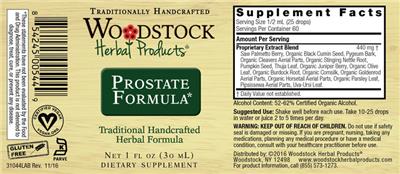
Supplement Facts
The label details for Prostate Formula by Woodstock Herbal Products, sourced from the NIH Dietary Supplement Label Database.
Supplement Facts
| Ingredient | Amount | % DV |
|---|---|---|
| Proprietary Extract Blend | 440 mg | -- |
| Parsley Leaf Extract | 0 NP | -- |
| Olive Leaf Extract | 0 NP | -- |
| Uva-Ursi Leaf Extract | 0 NP | -- |
| Juniper Berry Extract | 0 NP | -- |
| Horsetail Aerial Parts Extract | 0 NP | -- |
| Stinging Nettle Root Extract | 0 NP | -- |
| Saw Palmetto Berry Extract | 0 NP | -- |
| Burdock Root Extract | 0 NP | -- |
| Pygeum Bark Extract | 0 NP | -- |
| Pumpkin Seed Extract | 0 NP | -- |
| Cornsilk Extract | 0 NP | -- |
| Goldenrod Aerial Parts Extract | 0 NP | -- |
| Pipsissewa Aerial Parts Extract | 0 NP | -- |
| Black Cumin Seed Extract | 0 NP | -- |
| Cleavers Aerial Parts Extract | 0 NP | -- |
| Thuja Leaf Extract | 0 NP | -- |
Other ingredients: Alcohol
Tap any ingredient to jump to its full detail below.
These statements are the manufacturer’s wording, reproduced from the product label — the label is saying it, not HelloPharmacist. We don’t verify or endorse them.
FDA Disclaimer Statement
These statements have not been evaluated by the Food and Drug Administration. This product is not intended to diagnose, treat, cure, or prevent any disease.
Seals/Symbols
Certified Vegan Vegan.org KOF-K Parve (Kosher)
Formulation
Certified Vegan Vegan.org
Gluten Free
Traditionally Handcrafted Traditional Handcrafted Herbal Formula
Formula
KOF-K Parve (Kosher)
FDA Statement of Identity
Dietary Supplement
Suggested/Recommended/Usage/Directions
Suggested Use: Shake well before each use. Take 10-25 drops in water or juice 2 to 5 times per day.
Precautions
Warning: Keep out of reach of children.
Do not use if safety seal is damaged or missing.
If you are pregnant, nursing, taking any medications, planning any medical procedure or have a medical condition, consult with your healthcare practitioner before use.
Brand IP Statement(s)
Copyright 2016 Woodstock Herbal Products
General Statements
For product information, call (855) 573-1273.
Is this label outdated? Report a formula or label change and our pharmacy team will review it.
Prostate Formula by Woodstock Herbal Products label
The label scan from the NIH Dietary Supplement Label Database. Tap to enlarge.
Label images are published by the NIH Dietary Supplement Label Database for the version of this product on file. Always read your actual product label.
View the full label (PDF)The Ingredients in Prostate Formula by Woodstock Herbal Products
These are the 16 active ingredients this product is made of. Select any to open its full monograph.
Serving size0.2 mL Dosage formLiquid Servings per container60 Amounts shown are per serving.
Most supplement products combine several ingredients, and a medication can interact with the product through any one of them. Each ingredient below shows whether it has known drug interactions.
Proprietary Extract Blend
- › Parsley Leaf Extract
- › Olive Leaf Extract
- › Uva-Ursi Leaf Extract
- › Juniper Berry Extract
- › Horsetail Aerial Parts Extract
- › Stinging Nettle Root Extract
- › Saw Palmetto Berry Extract
- › Burdock Root Extract
- › Pygeum Bark Extract
- › Pumpkin Seed Extract
- › Cornsilk Extract
- › Goldenrod Aerial Parts Extract
- › Pipsissewa Aerial Parts Extract
- › Black Cumin Seed Extract
- › Cleavers Aerial Parts Extract
- › Thuja Leaf Extract
Other (inactive) ingredients: Alcohol. These complete the product’s ingredient list but are not active constituents.
Prostate Formula by Woodstock Herbal Products Drug Interactions
HelloPharmacist Interaction Report
Prostate Formula by Woodstock Herbal Products interacts with medications through its parsley leaf, uva ursi, juniper berry, horsetail, stinging nettle, saw palmetto, burdock, pumpkin seed, goldenrod, black cumin seed, and thuja leaf content.
The most serious interaction documented is Moderate severity: parsley may theoretically prolong the effects of pentobarbital (Nembutal), a barbiturate sedative, by decreasing enzyme activity — though this effect hasn't been confirmed in humans.
Read the full breakdown — every affected drug type, severity by severity
Beyond that, parsley presents Moderate interactions with blood thinners and antiplatelet drugs (increased bleeding risk), antidiabetes medications (low blood sugar risk), diuretics, and warfarin specifically (via its vitamin K content). Uva ursi, juniper berry, horsetail, stinging nettle, saw palmetto, pumpkin seed, goldenrod, black cumin seed, and thuja each add Moderate interactions with one or more of these drug categories: antidiabetes agents, diuretics, and lithium.
Black cumin seed additionally interacts with blood pressure drugs, blood thinners, immunosuppressants, cyclosporine, CNS depressants, and serotonergic medications. Thuja interacts with seizure-threshold–lowering drugs, immunosuppressants, and anticonvulsants.
We could not check cornsilk extract or cleavers aerial parts extract — no interaction data are on file for these ingredients.
Altogether, these interactions span 1,578 individual medications. If you take any prescription or over-the-counter drug, use the medication checker on this page to see whether any of yours are affected before you start this product.
Check your own medications below · Editorial policy · How we use AI
Want to check YOUR meds against Prostate Formula?
Ask about interactions with your drugs in plain English — “Can I take it with lisinopril?” — and we find you the answer in seconds, ingredient by ingredient.
Go to the checkerIngredients driving the most interactions
Individual Drug Interactions
The ingredients in Prostate Formula interact with 1,577 drugs. Click any drug to see the details.
11 of the 16 ingredients in Prostate Formula interact with drugs. Each result below shows which ingredient is responsible. Black Cumin Seed Extract Uva-Ursi Leaf Extract Thuja Leaf Extract Parsley Leaf Extract Horsetail Aerial Parts Extract Saw Palmetto Berry Extract Stinging Nettle Root Extract Juniper Berry Extract Burdock Root Extract Goldenrod Aerial Parts Extract Pumpkin Seed Extract
6-mercaptopurinePurinethol
How 6-mercaptopurine interacts with Prostate Formula — through 2 ingredients. Tap an ingredient for the detail:
Thuja Leaf ExtractImmunosuppressants Moderate
Interaction Summary
Thuja might stimulate immune function.
Read the full Thuja Leaf Extract + 6-mercaptopurine interactionBlack Cumin Seed ExtractImmunosuppressants Moderate
Interaction Summary
Theoretically, black seed might interfere with immunosuppressive therapy.
Read the full Black Cumin Seed Extract + 6-mercaptopurine interactionAdo-trastuzumab EmtansineKadcyla
How Ado-trastuzumab Emtansine interacts with Prostate Formula — through 1 ingredient. Tap an ingredient for the detail:
Uva-ursi Leaf ExtractCytochrome P450 3a4 (cyp3a4) Substrates Moderate
Interaction Summary
Theoretically, uva ursi may decrease the metabolism of CYP3A4 substrates.
Read the full Uva-ursi Leaf Extract + Ado-trastuzumab Emtansine interactionAbacavir Sulfate, Dolutegravir, LamivudineTriumeq
How Abacavir Sulfate, Dolutegravir, Lamivudine interacts with Prostate Formula — through 1 ingredient. Tap an ingredient for the detail:
Horsetail Aerial Parts ExtractNucleoside Reverse Transcriptase Inhibitors (nrtis) Moderate
Interaction Summary
Theoretically, horsetail might decrease the levels and clinical effects of NRTIs.
Read the full Horsetail Aerial Parts Extract + Abacavir Sulfate, Dolutegravir, Lamivudine interactionAbacavir, LamivudineEpzicom
How Abacavir, Lamivudine interacts with Prostate Formula — through 1 ingredient. Tap an ingredient for the detail:
Horsetail Aerial Parts ExtractNucleoside Reverse Transcriptase Inhibitors (nrtis) Moderate
Interaction Summary
Theoretically, horsetail might decrease the levels and clinical effects of NRTIs.
Read the full Horsetail Aerial Parts Extract + Abacavir, Lamivudine interactionAbciximabReoPro
How Abciximab interacts with Prostate Formula — through 4 ingredients. Tap an ingredient for the detail:
Saw Palmetto Berry ExtractAnticoagulant/antiplatelet Drugs Moderate
Interaction Summary
Saw palmetto might increase the risk of bleeding with anticoagulant or antiplatelet drugs.
Read the full Saw Palmetto Berry Extract + Abciximab interactionBurdock Root ExtractAnticoagulant/antiplatelet Drugs Moderate
Interaction Summary
Theoretically, taking burdock with anticoagulant or antiplatelet drugs might increase the risk of bleeding.
Read the full Burdock Root Extract + Abciximab interactionBlack Cumin Seed ExtractAnticoagulant/antiplatelet Drugs Moderate
Interaction Summary
Theoretically, black seed may increase the risk of bleeding if used with anticoagulant or antiplatelet drugs.
Read the full Black Cumin Seed Extract + Abciximab interactionParsley Leaf ExtractAnticoagulant/antiplatelet Drugs Moderate
Interaction Summary
Theoretically, parsley might increase the risk of bleeding when taken with anticoagulant or antiplatelet drugs.
Read the full Parsley Leaf Extract + Abciximab interactionAbemaciclibVerzenio
How Abemaciclib interacts with Prostate Formula — through 1 ingredient. Tap an ingredient for the detail:
Uva-ursi Leaf ExtractCytochrome P450 3a4 (cyp3a4) Substrates Moderate
Interaction Summary
Theoretically, uva ursi may decrease the metabolism of CYP3A4 substrates.
Read the full Uva-ursi Leaf Extract + Abemaciclib interactionAbiraterone
How Abiraterone interacts with Prostate Formula — through 1 ingredient. Tap an ingredient for the detail:
Uva-ursi Leaf ExtractCytochrome P450 3a4 (cyp3a4) Substrates Moderate
Interaction Summary
Theoretically, uva ursi may decrease the metabolism of CYP3A4 substrates.
Read the full Uva-ursi Leaf Extract + Abiraterone interactionAbiraterone AcetateYonsa, Zytiga
How Abiraterone Acetate interacts with Prostate Formula — through 1 ingredient. Tap an ingredient for the detail:
Uva-ursi Leaf ExtractCytochrome P450 3a4 (cyp3a4) Substrates Moderate
Interaction Summary
Theoretically, uva ursi may decrease the metabolism of CYP3A4 substrates.
Read the full Uva-ursi Leaf Extract + Abiraterone Acetate interactionAbrocitinibCibinqo
How Abrocitinib interacts with Prostate Formula — through 6 ingredients. Tap an ingredient for the detail:
Burdock Root ExtractAnticoagulant/antiplatelet Drugs Moderate
Interaction Summary
Theoretically, taking burdock with anticoagulant or antiplatelet drugs might increase the risk of bleeding.
Read the full Burdock Root Extract + Abrocitinib interactionUva-ursi Leaf ExtractCytochrome P450 2c19 (cyp2c19) Substrates Moderate
Interaction Summary
Theoretically, uva ursi may decrease the metabolism of CYP2C19 substrates.
Read the full Uva-ursi Leaf Extract + Abrocitinib interactionSaw Palmetto Berry ExtractAnticoagulant/antiplatelet Drugs Moderate
Interaction Summary
Saw palmetto might increase the risk of bleeding with anticoagulant or antiplatelet drugs.
Read the full Saw Palmetto Berry Extract + Abrocitinib interactionBlack Cumin Seed ExtractCytochrome P450 2c9 (cyp2c9) Substrates, Anticoagulant/antiplatelet Drugs +1 Moderate
Interaction Summary
Theoretically, black seed might increase levels of drugs metabolized by CYP2C9.
Read the full Black Cumin Seed Extract + Abrocitinib interactionThuja Leaf ExtractImmunosuppressants Moderate
Interaction Summary
Thuja might stimulate immune function.
Read the full Thuja Leaf Extract + Abrocitinib interactionParsley Leaf ExtractAnticoagulant/antiplatelet Drugs Moderate
Interaction Summary
Theoretically, parsley might increase the risk of bleeding when taken with anticoagulant or antiplatelet drugs.
Read the full Parsley Leaf Extract + Abrocitinib interactionAcalabrutinibCalquence
How Acalabrutinib interacts with Prostate Formula — through 1 ingredient. Tap an ingredient for the detail:
Uva-ursi Leaf ExtractCytochrome P450 3a4 (cyp3a4) Substrates, P-glycoprotein Substrates Moderate
Interaction Summary
Theoretically, uva ursi may decrease the metabolism of CYP3A4 substrates.
Read the full Uva-ursi Leaf Extract + Acalabrutinib interactionAcarboseGlucobay, Prandase, Precose
How Acarbose interacts with Prostate Formula — through 5 ingredients. Tap an ingredient for the detail:
Juniper Berry ExtractAntidiabetes Drugs Moderate
Interaction Summary
Theoretically, taking juniper berry with antidiabetes medications might cause additive hypoglycemia.
Read the full Juniper Berry Extract + Acarbose interactionStinging Nettle Root ExtractAntidiabetes Drugs Moderate
Interaction Summary
Theoretically, stinging nettle might have additive effects with antidiabetes drugs.
Read the full Stinging Nettle Root Extract + Acarbose interactionBlack Cumin Seed ExtractAntidiabetes Drugs Moderate
Interaction Summary
Theoretically, taking black seed with antidiabetes drugs might increase the risk of hypoglycemia.
Read the full Black Cumin Seed Extract + Acarbose interactionParsley Leaf ExtractAntidiabetes Drugs Moderate
Interaction Summary
Theoretically, parsley might increase the risk of hypoglycemia when taken with antidiabetes drugs.
Read the full Parsley Leaf Extract + Acarbose interactionHorsetail Aerial Parts ExtractAntidiabetes Drugs Moderate
Interaction Summary
Theoretically, taking horsetail with antidiabetes drugs might increase the risk of hypoglycemia.
Read the full Horsetail Aerial Parts Extract + Acarbose interactionAcebutololRhotral, Sectral
How Acebutolol interacts with Prostate Formula — through 1 ingredient. Tap an ingredient for the detail:
Black Cumin Seed ExtractAntihypertensive Drugs Moderate
Interaction Summary
Theoretically, taking black seed with antihypertensive drugs might increase the risk of hypotension.
Read the full Black Cumin Seed Extract + Acebutolol interactionAcenocoumarolSintrom
How Acenocoumarol interacts with Prostate Formula — through 4 ingredients. Tap an ingredient for the detail:
Black Cumin Seed ExtractAnticoagulant/antiplatelet Drugs Moderate
Interaction Summary
Theoretically, black seed may increase the risk of bleeding if used with anticoagulant or antiplatelet drugs.
Read the full Black Cumin Seed Extract + Acenocoumarol interactionParsley Leaf ExtractAnticoagulant/antiplatelet Drugs Moderate
Interaction Summary
Theoretically, parsley might increase the risk of bleeding when taken with anticoagulant or antiplatelet drugs.
Read the full Parsley Leaf Extract + Acenocoumarol interactionBurdock Root ExtractAnticoagulant/antiplatelet Drugs Moderate
Interaction Summary
Theoretically, taking burdock with anticoagulant or antiplatelet drugs might increase the risk of bleeding.
Read the full Burdock Root Extract + Acenocoumarol interactionSaw Palmetto Berry ExtractAnticoagulant/antiplatelet Drugs Moderate
Interaction Summary
Saw palmetto might increase the risk of bleeding with anticoagulant or antiplatelet drugs.
Read the full Saw Palmetto Berry Extract + Acenocoumarol interactionAcepromazineAtravet
How Acepromazine interacts with Prostate Formula — through 1 ingredient. Tap an ingredient for the detail:
Black Cumin Seed ExtractCns Depressants Moderate
Interaction Summary
Theoretically, concomitant use with drugs that have sedative properties may cause additive effects.
Read the full Black Cumin Seed Extract + Acepromazine interactionAcetaminophenChildren's Tylenol, Children's Tylenol Meltaways, Tylenol, Tylenol Ex Strength
How Acetaminophen interacts with Prostate Formula — through 2 ingredients. Tap an ingredient for the detail:
Parsley Leaf ExtractCytochrome P450 1a2 (cyp1a2) Substrates Moderate
Interaction Summary
Theoretically, parsley might increase serum levels of CYP1A2 substrates.
Read the full Parsley Leaf Extract + Acetaminophen interactionUva-ursi Leaf ExtractGlucuronidated Drugs Moderate
Interaction Summary
Theoretically, uva ursi may increase levels of drugs metabolized by glucuronidation.
Read the full Uva-ursi Leaf Extract + Acetaminophen interactionAcetaminophen, AspirinGemnisyn
How Acetaminophen, Aspirin interacts with Prostate Formula — through 5 ingredients. Tap an ingredient for the detail:
Uva-ursi Leaf ExtractGlucuronidated Drugs Moderate
Interaction Summary
Theoretically, uva ursi may increase levels of drugs metabolized by glucuronidation.
Read the full Uva-ursi Leaf Extract + Acetaminophen, Aspirin interactionBurdock Root ExtractAnticoagulant/antiplatelet Drugs Moderate
Interaction Summary
Theoretically, taking burdock with anticoagulant or antiplatelet drugs might increase the risk of bleeding.
Read the full Burdock Root Extract + Acetaminophen, Aspirin interactionSaw Palmetto Berry ExtractAnticoagulant/antiplatelet Drugs Moderate
Interaction Summary
Saw palmetto might increase the risk of bleeding with anticoagulant or antiplatelet drugs.
Read the full Saw Palmetto Berry Extract + Acetaminophen, Aspirin interactionParsley Leaf ExtractCytochrome P450 1a2 (cyp1a2) Substrates, Anticoagulant/antiplatelet Drugs +1 Moderate
Interaction Summary
Theoretically, parsley might increase serum levels of CYP1A2 substrates.
Read the full Parsley Leaf Extract + Acetaminophen, Aspirin interactionBlack Cumin Seed ExtractAnticoagulant/antiplatelet Drugs Moderate
Interaction Summary
Theoretically, black seed may increase the risk of bleeding if used with anticoagulant or antiplatelet drugs.
Read the full Black Cumin Seed Extract + Acetaminophen, Aspirin interactionAcetaminophen, Aspirin, CaffeineExcedrin, Excedrin Extra Strength, Excedrin Migraine
How Acetaminophen, Aspirin, Caffeine interacts with Prostate Formula — through 5 ingredients. Tap an ingredient for the detail:
Parsley Leaf ExtractAspirin, Cytochrome P450 1a2 (cyp1a2) Substrates +1 Moderate
Interaction Summary
Theoretically, aspirin might increase the severity of allergic reactions to parsley.
Read the full Parsley Leaf Extract + Acetaminophen, Aspirin, Caffeine interactionBlack Cumin Seed ExtractAnticoagulant/antiplatelet Drugs Moderate
Interaction Summary
Theoretically, black seed may increase the risk of bleeding if used with anticoagulant or antiplatelet drugs.
Read the full Black Cumin Seed Extract + Acetaminophen, Aspirin, Caffeine interactionBurdock Root ExtractAnticoagulant/antiplatelet Drugs Moderate
Interaction Summary
Theoretically, taking burdock with anticoagulant or antiplatelet drugs might increase the risk of bleeding.
Read the full Burdock Root Extract + Acetaminophen, Aspirin, Caffeine interactionUva-ursi Leaf ExtractCytochrome P450 3a4 (cyp3a4) Substrates, Glucuronidated Drugs Moderate
Interaction Summary
Theoretically, uva ursi may decrease the metabolism of CYP3A4 substrates.
Read the full Uva-ursi Leaf Extract + Acetaminophen, Aspirin, Caffeine interactionSaw Palmetto Berry ExtractAnticoagulant/antiplatelet Drugs Moderate
Interaction Summary
Saw palmetto might increase the risk of bleeding with anticoagulant or antiplatelet drugs.
Read the full Saw Palmetto Berry Extract + Acetaminophen, Aspirin, Caffeine interactionAcetaminophen, Brompheniramine, PhenylpropanolamineDimetapp Cold and Flu
How Acetaminophen, Brompheniramine, Phenylpropanolamine interacts with Prostate Formula — through 3 ingredients. Tap an ingredient for the detail:
Thuja Leaf ExtractSeizure Threshold Lowering Drugs Moderate
Interaction Summary
Thuja products can contains significant amounts of thujone, a neurotoxin.
Read the full Thuja Leaf Extract + Acetaminophen, Brompheniramine, Phenylpropanolamine interactionParsley Leaf ExtractCytochrome P450 1a2 (cyp1a2) Substrates Moderate
Interaction Summary
Theoretically, parsley might increase serum levels of CYP1A2 substrates.
Read the full Parsley Leaf Extract + Acetaminophen, Brompheniramine, Phenylpropanolamine interactionUva-ursi Leaf ExtractGlucuronidated Drugs Moderate
Interaction Summary
Theoretically, uva ursi may increase levels of drugs metabolized by glucuronidation.
Read the full Uva-ursi Leaf Extract + Acetaminophen, Brompheniramine, Phenylpropanolamine interactionAcetaminophen, ButalbitalAxocet, Bancap, Bucet, Butex Forte, Esgic CF, Orbivan CF +5 more
How Acetaminophen, Butalbital interacts with Prostate Formula — through 2 ingredients. Tap an ingredient for the detail:
Uva-ursi Leaf ExtractGlucuronidated Drugs Moderate
Interaction Summary
Theoretically, uva ursi may increase levels of drugs metabolized by glucuronidation.
Read the full Uva-ursi Leaf Extract + Acetaminophen, Butalbital interactionParsley Leaf ExtractCytochrome P450 1a2 (cyp1a2) Substrates Moderate
Interaction Summary
Theoretically, parsley might increase serum levels of CYP1A2 substrates.
Read the full Parsley Leaf Extract + Acetaminophen, Butalbital interactionAcetaminophen, Butalbital, CaffeineEsgic, Esgic Plus, Fiogesic, Fioricet, Repan, Tecnal +1 more
How Acetaminophen, Butalbital, Caffeine interacts with Prostate Formula — through 2 ingredients. Tap an ingredient for the detail:
Parsley Leaf ExtractCytochrome P450 1a2 (cyp1a2) Substrates Moderate
Interaction Summary
Theoretically, parsley might increase serum levels of CYP1A2 substrates.
Read the full Parsley Leaf Extract + Acetaminophen, Butalbital, Caffeine interactionUva-ursi Leaf ExtractGlucuronidated Drugs, Cytochrome P450 3a4 (cyp3a4) Substrates Moderate
Interaction Summary
Theoretically, uva ursi may increase levels of drugs metabolized by glucuronidation.
Read the full Uva-ursi Leaf Extract + Acetaminophen, Butalbital, Caffeine interactionAcetaminophen, Butalbital, Caffeine, CodeineEsgic with Codeine, Fioricet w/ Codeine
How Acetaminophen, Butalbital, Caffeine, Codeine interacts with Prostate Formula — through 4 ingredients. Tap an ingredient for the detail:
Uva-ursi Leaf ExtractCytochrome P450 3a4 (cyp3a4) Substrates, Glucuronidated Drugs Moderate
Interaction Summary
Theoretically, uva ursi may decrease the metabolism of CYP3A4 substrates.
Read the full Uva-ursi Leaf Extract + Acetaminophen, Butalbital, Caffeine, Codeine interactionThuja Leaf ExtractSeizure Threshold Lowering Drugs Moderate
Interaction Summary
Thuja products can contains significant amounts of thujone, a neurotoxin.
Read the full Thuja Leaf Extract + Acetaminophen, Butalbital, Caffeine, Codeine interactionParsley Leaf ExtractCytochrome P450 1a2 (cyp1a2) Substrates Moderate
Interaction Summary
Theoretically, parsley might increase serum levels of CYP1A2 substrates.
Read the full Parsley Leaf Extract + Acetaminophen, Butalbital, Caffeine, Codeine interactionBlack Cumin Seed ExtractCns Depressants Moderate
Interaction Summary
Theoretically, concomitant use with drugs that have sedative properties may cause additive effects.
Read the full Black Cumin Seed Extract + Acetaminophen, Butalbital, Caffeine, Codeine interactionAcetaminophen, Butalbital, CodeineBancap w/ Codeine
How Acetaminophen, Butalbital, Codeine interacts with Prostate Formula — through 4 ingredients. Tap an ingredient for the detail:
Black Cumin Seed ExtractCns Depressants Moderate
Interaction Summary
Theoretically, concomitant use with drugs that have sedative properties may cause additive effects.
Read the full Black Cumin Seed Extract + Acetaminophen, Butalbital, Codeine interactionParsley Leaf ExtractCytochrome P450 1a2 (cyp1a2) Substrates Moderate
Interaction Summary
Theoretically, parsley might increase serum levels of CYP1A2 substrates.
Read the full Parsley Leaf Extract + Acetaminophen, Butalbital, Codeine interactionUva-ursi Leaf ExtractGlucuronidated Drugs Moderate
Interaction Summary
Theoretically, uva ursi may increase levels of drugs metabolized by glucuronidation.
Read the full Uva-ursi Leaf Extract + Acetaminophen, Butalbital, Codeine interactionThuja Leaf ExtractSeizure Threshold Lowering Drugs Moderate
Interaction Summary
Thuja products can contains significant amounts of thujone, a neurotoxin.
Read the full Thuja Leaf Extract + Acetaminophen, Butalbital, Codeine interactionAcetaminophen, Butalbital, Codeine PhosphatePhrenilin #3
How Acetaminophen, Butalbital, Codeine Phosphate interacts with Prostate Formula — through 4 ingredients. Tap an ingredient for the detail:
Thuja Leaf ExtractSeizure Threshold Lowering Drugs Moderate
Interaction Summary
Thuja products can contains significant amounts of thujone, a neurotoxin.
Read the full Thuja Leaf Extract + Acetaminophen, Butalbital, Codeine Phosphate interactionParsley Leaf ExtractCytochrome P450 1a2 (cyp1a2) Substrates Moderate
Interaction Summary
Theoretically, parsley might increase serum levels of CYP1A2 substrates.
Read the full Parsley Leaf Extract + Acetaminophen, Butalbital, Codeine Phosphate interactionBlack Cumin Seed ExtractCns Depressants Moderate
Interaction Summary
Theoretically, concomitant use with drugs that have sedative properties may cause additive effects.
Read the full Black Cumin Seed Extract + Acetaminophen, Butalbital, Codeine Phosphate interactionUva-ursi Leaf ExtractGlucuronidated Drugs Moderate
Interaction Summary
Theoretically, uva ursi may increase levels of drugs metabolized by glucuronidation.
Read the full Uva-ursi Leaf Extract + Acetaminophen, Butalbital, Codeine Phosphate interactionAcetaminophen, Caffeine, Chlorpheniramine, Hydrocodone, PhenylephrineHycomine Compound
How Acetaminophen, Caffeine, Chlorpheniramine, Hydrocodone, Phenylephrine interacts with Prostate Formula — through 4 ingredients. Tap an ingredient for the detail:
Uva-ursi Leaf ExtractGlucuronidated Drugs, Cytochrome P450 3a4 (cyp3a4) Substrates Moderate
Interaction Summary
Theoretically, uva ursi may increase levels of drugs metabolized by glucuronidation.
Read the full Uva-ursi Leaf Extract + Acetaminophen, Caffeine, Chlorpheniramine, Hydrocodone, Phenylephrine interactionThuja Leaf ExtractSeizure Threshold Lowering Drugs Moderate
Interaction Summary
Thuja products can contains significant amounts of thujone, a neurotoxin.
Read the full Thuja Leaf Extract + Acetaminophen, Caffeine, Chlorpheniramine, Hydrocodone, Phenylephrine interactionBlack Cumin Seed ExtractCns Depressants Moderate
Interaction Summary
Theoretically, concomitant use with drugs that have sedative properties may cause additive effects.
Read the full Black Cumin Seed Extract + Acetaminophen, Caffeine, Chlorpheniramine, Hydrocodone, Phenylephrine interactionParsley Leaf ExtractCytochrome P450 1a2 (cyp1a2) Substrates Moderate
Interaction Summary
Theoretically, parsley might increase serum levels of CYP1A2 substrates.
Read the full Parsley Leaf Extract + Acetaminophen, Caffeine, Chlorpheniramine, Hydrocodone, Phenylephrine interactionAcetaminophen, Caffeine, CodeineGesic C15, Gesic C30, Gesic C8, Lenoltec 1, Lenoltec 2, Lenoltec 3 +1 more
How Acetaminophen, Caffeine, Codeine interacts with Prostate Formula — through 4 ingredients. Tap an ingredient for the detail:
Parsley Leaf ExtractCytochrome P450 1a2 (cyp1a2) Substrates Moderate
Interaction Summary
Theoretically, parsley might increase serum levels of CYP1A2 substrates.
Read the full Parsley Leaf Extract + Acetaminophen, Caffeine, Codeine interactionBlack Cumin Seed ExtractCns Depressants Moderate
Interaction Summary
Theoretically, concomitant use with drugs that have sedative properties may cause additive effects.
Read the full Black Cumin Seed Extract + Acetaminophen, Caffeine, Codeine interactionUva-ursi Leaf ExtractCytochrome P450 3a4 (cyp3a4) Substrates, Glucuronidated Drugs Moderate
Interaction Summary
Theoretically, uva ursi may decrease the metabolism of CYP3A4 substrates.
Read the full Uva-ursi Leaf Extract + Acetaminophen, Caffeine, Codeine interactionThuja Leaf ExtractSeizure Threshold Lowering Drugs Moderate
Interaction Summary
Thuja products can contains significant amounts of thujone, a neurotoxin.
Read the full Thuja Leaf Extract + Acetaminophen, Caffeine, Codeine interactionAcetaminophen, Caffeine, Codeine, SalicylamideCodalan No.1, Codalan No.2, Codalan No.3
How Acetaminophen, Caffeine, Codeine, Salicylamide interacts with Prostate Formula — through 4 ingredients. Tap an ingredient for the detail:
Thuja Leaf ExtractSeizure Threshold Lowering Drugs Moderate
Interaction Summary
Thuja products can contains significant amounts of thujone, a neurotoxin.
Read the full Thuja Leaf Extract + Acetaminophen, Caffeine, Codeine, Salicylamide interactionBlack Cumin Seed ExtractCns Depressants Moderate
Interaction Summary
Theoretically, concomitant use with drugs that have sedative properties may cause additive effects.
Read the full Black Cumin Seed Extract + Acetaminophen, Caffeine, Codeine, Salicylamide interactionParsley Leaf ExtractCytochrome P450 1a2 (cyp1a2) Substrates Moderate
Interaction Summary
Theoretically, parsley might increase serum levels of CYP1A2 substrates.
Read the full Parsley Leaf Extract + Acetaminophen, Caffeine, Codeine, Salicylamide interactionUva-ursi Leaf ExtractGlucuronidated Drugs, Cytochrome P450 3a4 (cyp3a4) Substrates Moderate
Interaction Summary
Theoretically, uva ursi may increase levels of drugs metabolized by glucuronidation.
Read the full Uva-ursi Leaf Extract + Acetaminophen, Caffeine, Codeine, Salicylamide interactionAcetaminophen, Caffeine, DihydrocodeineDHC Plus, Panlor DC, Panlor SS
How Acetaminophen, Caffeine, Dihydrocodeine interacts with Prostate Formula — through 4 ingredients. Tap an ingredient for the detail:
Uva-ursi Leaf ExtractCytochrome P450 3a4 (cyp3a4) Substrates, Glucuronidated Drugs Moderate
Interaction Summary
Theoretically, uva ursi may decrease the metabolism of CYP3A4 substrates.
Read the full Uva-ursi Leaf Extract + Acetaminophen, Caffeine, Dihydrocodeine interactionThuja Leaf ExtractSeizure Threshold Lowering Drugs Moderate
Interaction Summary
Thuja products can contains significant amounts of thujone, a neurotoxin.
Read the full Thuja Leaf Extract + Acetaminophen, Caffeine, Dihydrocodeine interactionParsley Leaf ExtractCytochrome P450 1a2 (cyp1a2) Substrates Moderate
Interaction Summary
Theoretically, parsley might increase serum levels of CYP1A2 substrates.
Read the full Parsley Leaf Extract + Acetaminophen, Caffeine, Dihydrocodeine interactionBlack Cumin Seed ExtractCns Depressants Moderate
Interaction Summary
Theoretically, concomitant use with drugs that have sedative properties may cause additive effects.
Read the full Black Cumin Seed Extract + Acetaminophen, Caffeine, Dihydrocodeine interactionAcetaminophen, Caffeine, IsomethepteneMigralam
How Acetaminophen, Caffeine, Isometheptene interacts with Prostate Formula — through 2 ingredients. Tap an ingredient for the detail:
Parsley Leaf ExtractCytochrome P450 1a2 (cyp1a2) Substrates Moderate
Interaction Summary
Theoretically, parsley might increase serum levels of CYP1A2 substrates.
Read the full Parsley Leaf Extract + Acetaminophen, Caffeine, Isometheptene interactionUva-ursi Leaf ExtractGlucuronidated Drugs, Cytochrome P450 3a4 (cyp3a4) Substrates Moderate
Interaction Summary
Theoretically, uva ursi may increase levels of drugs metabolized by glucuronidation.
Read the full Uva-ursi Leaf Extract + Acetaminophen, Caffeine, Isometheptene interactionAcetaminophen, Caffeine, PyrilamineMidol Max Strength Menstrual
How Acetaminophen, Caffeine, Pyrilamine interacts with Prostate Formula — through 7 ingredients. Tap an ingredient for the detail:
Uva-ursi Leaf ExtractCytochrome P450 3a4 (cyp3a4) Substrates, Glucuronidated Drugs Moderate
Interaction Summary
Theoretically, uva ursi may decrease the metabolism of CYP3A4 substrates.
Read the full Uva-ursi Leaf Extract + Acetaminophen, Caffeine, Pyrilamine interactionGoldenrod Aerial Parts ExtractDiuretic Drugs Moderate
Interaction Summary
Theoretically, goldenrod might increase the effects and adverse effects of diuretic drugs.
Read the full Goldenrod Aerial Parts Extract + Acetaminophen, Caffeine, Pyrilamine interactionStinging Nettle Root ExtractDiuretic Drugs Moderate
Interaction Summary
Theoretically, combining stinging nettle with diuretic drugs may have additive effects.
Read the full Stinging Nettle Root Extract + Acetaminophen, Caffeine, Pyrilamine interactionParsley Leaf ExtractCytochrome P450 1a2 (cyp1a2) Substrates, Diuretic Drugs Moderate
Interaction Summary
Theoretically, parsley might increase serum levels of CYP1A2 substrates.
Read the full Parsley Leaf Extract + Acetaminophen, Caffeine, Pyrilamine interactionHorsetail Aerial Parts ExtractDiuretic Drugs Moderate
Interaction Summary
Theoretically, taking horsetail with diuretic drugs might increase potassium loss and the risk of hypokalemia.
Read the full Horsetail Aerial Parts Extract + Acetaminophen, Caffeine, Pyrilamine interactionBlack Cumin Seed ExtractDiuretic Drugs Moderate
Interaction Summary
Theoretically, taking black seed with diuretic drugs might increase potassium loss and the risk of hypokalemia.
Read the full Black Cumin Seed Extract + Acetaminophen, Caffeine, Pyrilamine interactionJuniper Berry ExtractDiuretic Drugs Minor
Interaction Summary
Theoretically, juniper berry might increase the risk of adverse effects from diuretic drugs.
Read the full Juniper Berry Extract + Acetaminophen, Caffeine, Pyrilamine interactionAcetaminophen, Chlorpheniramine Maleate, Dextromethorphan HbrVicks Formula 44M Cough, Cold & Flu Relief
How Acetaminophen, Chlorpheniramine Maleate, Dextromethorphan Hbr interacts with Prostate Formula — through 4 ingredients. Tap an ingredient for the detail:
Thuja Leaf ExtractSeizure Threshold Lowering Drugs Moderate
Interaction Summary
Thuja products can contains significant amounts of thujone, a neurotoxin.
Read the full Thuja Leaf Extract + Acetaminophen, Chlorpheniramine Maleate, Dextromethorphan Hbr interactionUva-ursi Leaf ExtractGlucuronidated Drugs, Cytochrome P450 3a4 (cyp3a4) Substrates Moderate
Interaction Summary
Theoretically, uva ursi may increase levels of drugs metabolized by glucuronidation.
Read the full Uva-ursi Leaf Extract + Acetaminophen, Chlorpheniramine Maleate, Dextromethorphan Hbr interactionParsley Leaf ExtractCytochrome P450 1a2 (cyp1a2) Substrates Moderate
Interaction Summary
Theoretically, parsley might increase serum levels of CYP1A2 substrates.
Read the full Parsley Leaf Extract + Acetaminophen, Chlorpheniramine Maleate, Dextromethorphan Hbr interactionBlack Cumin Seed ExtractSerotonergic Drugs Moderate
Interaction Summary
Theoretically, combining serotonergic drugs with black seed might increase the risk of serotonergic side effects, including serotonin syndrome and cerebral vasoconstrictive disorders.
Read the full Black Cumin Seed Extract + Acetaminophen, Chlorpheniramine Maleate, Dextromethorphan Hbr interactionEach ingredient & the kinds of drugs it affects
For each ingredient in Prostate Formula with known interactions, here are the types of medications they can affect. Open any type for the detail — or search your exact drug in the checker above.
Black Cumin Seed Extract
Anticoagulant/Antiplatelet Drugs
Theoretically, black seed may increase the risk of bleeding if used with anticoagulant or antiplatelet drugs.
In vitro and animal research suggests that black seed extract can inhibit platelet aggregation and clotting, and increase bleeding time. In addition, decreased platelet counts have occurred in a human case report and in animal research.
Antidiabetes Drugs
Theoretically, taking black seed with antidiabetes drugs might increase the risk of hypoglycemia.
Some clinical research and numerous animal studies suggest that black seed, especially its constituent thymoquinone, can have hypoglycemic effects.
Antihypertensive Drugs
Theoretically, taking black seed with antihypertensive drugs might increase the risk of hypotension.
Clinical research suggests that black seed powder and oil might reduce blood pressure by 2-3 mmHg. In animal research, black seed modestly reduces blood pressure and concomitant use of black seed and amlodipine (Norvasc) or metoprolol (Lopressor) increased the blood pressure lowering effects of these drugs.
Clopidogrel (Plavix)
Theoretically, black seed may increase the risk of bleeding if used with clopidogrel.
Animal research shows that taking black seed extract daily for 2 weeks prior to a single dose of clopidogrel increases maximum concentrations of clopidogrel by approximately 31% and modestly decreases oral clearance. Furthermore, bleeding time was increased by 12%. This has not been shown in humans.
Cns Depressants
Theoretically, concomitant use with drugs that have sedative properties may cause additive effects.
Animal research suggests that black seed may have CNS depressant effects.
Cyclosporine (Neoral, Sandimmune)
Theoretically taking black seed might reduce the levels and clinical effects of cyclosporine.
In animal research, black seed extract decreased the maximal levels of cyclosporine in the blood by 35.5%. This has not been shown in humans.
Cytochrome P450 2C9 (Cyp2C9) Substrates
Theoretically, black seed might increase levels of drugs metabolized by CYP2C9.
In vitro research suggests that thymoquinone, a constituent of black seed, can decrease the metabolism of phenytoin by a mechanism possibly related to the inhibition of CYP2C9. The effect of black seed on CYP2C9 is unclear. This has not been shown in humans.
Diuretic Drugs
Theoretically, taking black seed with diuretic drugs might increase potassium loss and the risk of hypokalemia.
Black seed extract has shown diuretic effects in animals, which could theoretically increase potassium loss. This has not been shown in humans.
Immunosuppressants
Theoretically, black seed might interfere with immunosuppressive therapy.
Animal and in vitro studies suggest that black seed might stimulate immune function. However, other animal studies suggest that black seed may suppress immune function.
Phenytoin (Dilantin)
Theoretically, black seed might increase or decrease levels and effects of phenytoin.
In vitro research suggests that thymoquinone, a constituent of black seed, can decrease the metabolism of phenytoin. This effect may be due to inhibition of cytochrome P450 2C9 (CYP2C9). However, animal research shows that black seed decreases the maximum concentration of and total systemic exposure to phenytoin by 57% and 87%, respectively. This seems to be related to increased clearance and steady state volume of distribution. This interaction has not been shown in humans.
Serotonergic Drugs
Theoretically, combining serotonergic drugs with black seed might increase the risk of serotonergic side effects, including serotonin syndrome and cerebral vasoconstrictive disorders.
Animal research suggests that black seed can increase brain serotonin levels. In one case report, a 35-year-old man undergoing endoscopic surgery experienced immediate postoperative serotonin syndrome that was likely associated with the use of black seed oil 600 mg daily starting 4 days before surgery, and precipitated by the use of serotonergic pain medications, including fentanyl and oxycodone. Monitor patients for signs of serotonin syndrome and other serotonergic side effects if using black seed with serotonergic drugs.
Sildenafil (Viagra)
Theoretically, black seed might reduce plasma levels and the therapeutic effects of sildenafil.
Animal research shows that black seed reduces the total systemic exposure to sildenafil by 43%. So far, this interaction has not been reported in humans.
Warfarin (Coumadin)
Theoretically, black seed might increase levels of warfarin and increase the risk of bleeding.
In vitro research suggests that thymoquinone, a constituent of black seed, can decrease the metabolism of warfarin. This effect may be due to inhibition of cytochrome P450 2C9 (CYP2C9). The effect of black seed on warfarin metabolism is unclear. This has not been shown in humans.
Prednisolone
Theoretically black seed might reduce plasma levels and therapeutic effects of prednisolone.
In animal research, oral administration of a single dose of black seed oil 15 minutes prior to oral prednisolone decreases the prednisolone maximum plasma concentration by 65% and area under the curve by 25%. This has not been shown in humans.
Uva-Ursi Leaf Extract
Cytochrome P450 2C19 (Cyp2C19) Substrates
Theoretically, uva ursi may decrease the metabolism of CYP2C19 substrates.
In vitro, uva ursi appears to inhibit cytochrome CYP2C19. This effect has not been reported in humans.
Cytochrome P450 3A4 (Cyp3A4) Substrates
Theoretically, uva ursi may decrease the metabolism of CYP3A4 substrates.
In vitro, uva ursi appears to inhibit CYP3A4. This effect has not been reported in humans.
Glucuronidated Drugs
Theoretically, uva ursi may increase levels of drugs metabolized by glucuronidation.
In vitro, uva ursi extract appears to strongly inhibit UDP-glucuronosyltransferase (UGT) 1A1 (UGT1A1). However, uva ursi extract does not appear to inhibit UGT1A1 in animal models. This effect has not been reported in humans.
Lithium
Theoretically, uva ursi may increase lithium levels, necessitating a decrease in dose.
Uva ursi may have diuretic properties. Diuretics may increase lithium reabsorption with sodium in the proximal tubule of the kidney. Theoretically, uva ursi might reduce excretion and increase levels of lithium.
Urinary Acidifying Agents
Effects of uva ursi in the urinary tract may be reduced by urinary acidifying agents.
Uva ursi seems to work best in alkaline urine. Theoretically, taking uva ursi with medications known to acidify the urine may decrease any effects of uva ursi on the urinary tract.
P-Glycoprotein Substrates
Theoretically, uva ursi may alter the levels of drugs transported by P-glycoprotein.
In vitro, uva ursi appears to inhibit the multi-drug transporter protein, P-glycoprotein. This effect has not been reported in humans.
Thuja Leaf Extract
Anticonvulsants
Thuja products can contain thujone, which might lower the seizure threshold. Theoretically, this could decrease the effectiveness of anticonvulsants drugs.
Immunosuppressants
Thuja might stimulate immune function. Theoretically, taking thuja might decrease the effects of immunosuppressive therapy. Immunosuppressant drugs include azathioprine (Imuran), basiliximab (Simulect), cyclosporine (Neoral, Sandimmune), daclizumab (Zenapax), muromonab-CD3 (OKT3, Orthoclone OKT3), mycophenolate (CellCept), tacrolimus (FK506, Prograf), sirolimus (Rapamune), prednisone (Deltasone, Orasone), and other corticosteroids (glucocorticoids).
Seizure Threshold Lowering Drugs
Thuja products can contains significant amounts of thujone, a neurotoxin. Theoretically, patients taking drugs that lower the seizure threshold might be at greater risk of seizure if they also take thuja. Advise patients taking these drugs to avoid thuja products. Some drugs that lower the seizure threshold include anesthetics (propofol, others), antiarrhythmics (mexiletine), antibiotics (amphotericin, penicillin, cephalosporins, imipenem), antidepressants (bupropion, others), antihistamines (cyproheptadine, others), immunosuppressants (cyclosporine), narcotics (fentanyl, others), stimulants (methylphenidate), theophylline, and others.
Parsley Leaf Extract
Anticoagulant/Antiplatelet Drugs
Theoretically, parsley might increase the risk of bleeding when taken with anticoagulant or antiplatelet drugs.
Animal research suggests that parsley has antiplatelet effects.
Antidiabetes Drugs
Theoretically, parsley might increase the risk of hypoglycemia when taken with antidiabetes drugs.
Animal research suggests that parsley might decrease blood glucose. Monitor blood glucose levels closely. Dose adjustments might be necessary.
Cytochrome P450 1A2 (Cyp1A2) Substrates
Theoretically, parsley might increase serum levels of CYP1A2 substrates.
Laboratory research suggests that parsley can inhibit CYP1A2.
Diuretic Drugs
Theoretically, parsley might enhance or interfere with the effects of diuretic drugs.
Animal research suggests that parsley seed extract increases urine elimination. Parsley leaf and root might also interfere with diuretic therapy due their purported aquaretic effects.
Pentobarbital (Nembutal)
Theoretically, parsley might increase the duration of pentobarbital effects.
Animal research suggests that parsley juice prolongs the action of pentobarbital, perhaps by decreasing cytochrome P450 levels. It is not known if this occurs in humans or if this applies to other barbiturates or sedatives.
Sirolimus (Rapamune)
Theoretically, large quantities of parsley might increase sirolimus levels.
In one case report, an adult female with a history of kidney transplant presented with elevated blood sirolimus levels, approximately 4-7 times greater than previous measures, after daily consumption of a juice containing approximately 30 grams of parsley for 7 days. Sirolimus levels returned to normal a week after the parsley juice was discontinued.
Warfarin (Coumadin)
Theoretically, large amounts of parsley leaf and root might decrease the effects of warfarin.
Parlsey contains vitamin K.
Aspirin
Theoretically, aspirin might increase the severity of allergic reactions to parsley.
In one case, severe urticaria and swelling were reported after taking aspirin with parsley in an individual with a known mild parsley allergy.
Horsetail Aerial Parts Extract
Antidiabetes Drugs
Theoretically, taking horsetail with antidiabetes drugs might increase the risk of hypoglycemia.
Equisetum myriochaetum has demonstrated hypoglycemic activity in clinical research. In an animal diabetic model, Equisetum giganteum had hypoglycemic effects. It is unclear whether other horsetail species have hypoglycemic effects.
Diuretic Drugs
Theoretically, taking horsetail with diuretic drugs might increase potassium loss and the risk of hypokalemia.
Laboratory research shows that various species of horsetail have diuretic properties. Due to its diuretic effects, there has been concern that taking horsetail along with potassium-depleting diuretics might increase the risk for hypokalemia. However, pharmacokinetic research in humans shows that taking horsetail 900 mg daily for 4 days does not affect urinary excretion of electrolytes, including potassium and sodium, despite having a diuretic effect similar to taking hydrochlorothiazide 25 mg daily. It is unclear if taking horsetail for a longer duration would affect electrolyte levels. Until more is known, use with caution.
Efavirenz (Sustiva)
Theoretically, horsetail might decrease the levels and clinical effects of efavirenz.
In two case reports, patients were found to have detectable viral loads when taking horsetail-containing supplements along with an antiretroviral regimen that included efavirenz. In one case, the antiretroviral regimen included zidovudine, lamivudine, and efavirenz; in the other case, the regimen consisted of emtricitabine, tenofovir disoproxil fumarate, and efavirenz. One month after discontinuing horsetail, the viral loads became undetectable in both cases. The exact mechanism of this interaction is unknown. It is also unclear if this interaction is specific to efavirenz or if it is related to various components of antiretroviral therapy.
Lithium
Theoretically, horsetail might increase the levels and adverse effects of lithium.
Animal research suggests that horsetail has diuretic properties. Theoretically, due to these potential diuretic effects, horsetail might reduce excretion and increase levels of lithium. The dose of lithium might need to be decreased.
Nucleoside Reverse Transcriptase Inhibitors (Nrtis)
Theoretically, horsetail might decrease the levels and clinical effects of NRTIs.
In two case reports, patients were found to have detectable viral loads when taking horsetail-containing supplements along with an antiretroviral therapy. In one case, the antiretroviral regimen included zidovudine, lamivudine, and efavirenz; in the other case, the regimen consisted of emtricitabine, tenofovir disoproxil fumarate, and efavirenz. One month after discontinuing the supplement, the viral loads became undetectable in both cases. The exact mechanism of these interactions is unknown. It is also unclear if these interactions are specific to NRTIs or if they are related to various components of antiretroviral therapy.
Saw Palmetto Berry Extract
Anticoagulant/Antiplatelet Drugs
Saw palmetto might increase the risk of bleeding with anticoagulant or antiplatelet drugs.
Saw palmetto is reported to prolong bleeding time. Theoretically, it might increase the risk of bleeding when used concomitantly with anticoagulant or antiplatelet drugs.
Contraceptive Drugs
Saw palmetto might reduce the effectiveness of contraceptive drugs.
Saw palmetto might have antiestrogenic effects. Theoretically, it might interfere with contraceptive drugs taken concomitantly.
Estrogens
Saw palmetto might reduce the effectiveness of estrogens.
Saw palmetto might have antiestrogenic effects. Theoretically, it might interfere with estrogens taken concomitantly.
Stinging Nettle Root Extract
Antidiabetes Drugs
Theoretically, stinging nettle might have additive effects with antidiabetes drugs.
Clinical research shows that stinging nettle might decrease blood glucose levels in patients with diabetes.
Diuretic Drugs
Theoretically, combining stinging nettle with diuretic drugs may have additive effects.
Animal research suggests that the above ground parts and roots of stinging nettle may have a diuretic effect.
Lithium
Theoretically, stinging nettle might reduce excretion and increase levels of lithium.
Animal research suggests that stinging nettle has diuretic and natriuretic properties, which could alter the excretion of lithium. The dose of lithium might need to be decreased.
Warfarin (Coumadin)
There is some concern that stinging nettle might decrease the effects of anticoagulant drugs such as warfarin.
Stinging nettle contains a significant amount of vitamin K. When taken in large quantities, this might interfere with the activity of warfarin.
Juniper Berry Extract
Antidiabetes Drugs
Theoretically, taking juniper berry with antidiabetes medications might cause additive hypoglycemia.
Animal research shows that juniper berry can lower blood glucose.
Diuretic Drugs
Theoretically, juniper berry might increase the risk of adverse effects from diuretic drugs.
Juniper berry is thought to have mild diuretic effects.
Lithium
Theoretically, juniper berry might reduce lithium excretion and increase serum levels of lithium.
Juniper berry is thought to have mild diuretic effects.
Burdock Root Extract
Anticoagulant/Antiplatelet Drugs
Theoretically, taking burdock with anticoagulant or antiplatelet drugs might increase the risk of bleeding.
In vitro research shows that lignans from burdock reduce rabbit platelet aggregation by inhibiting platelet activating factor. This interaction has not been reported in humans.
Goldenrod Aerial Parts Extract
Diuretic Drugs
Theoretically, goldenrod might increase the effects and adverse effects of diuretic drugs.
In vitro and animal research suggests that goldenrod has diuretic effects.
Pumpkin Seed Extract
Lithium
Pumpkin might reduce excretion and increase levels of lithium.
Pumpkin is thought to have diuretic properties. Theoretically, this might reduce excretion and increase levels of lithium. The dose of lithium might need to be decreased.
Brand information
Manufacturer and brand details for Prostate Formula, from the product label.
Woodstock Herbal Products
See all Woodstock Herbal Products products- Name
- Woodstock Herbal Products LLC
- City
- Woodstock
- State
- NY
- ZipCode
- 12498
- Phone Number
- 855-573-1273
- Web Address
- www.woodstockherbalproducts.com
Prostate Formula by Woodstock Herbal Products: Common Questions
Does Prostate Formula by Woodstock Herbal Products interact with any medications?
How can one product interact with so many drugs?
Where does this information come from?
Is this safe to take during pregnancy or while breastfeeding?
What does saw palmetto do in this formula?
Does this product have any serious side effects?
How is this product supposed to help with prostate health?
Can I take this with my blood pressure or diabetes medication?
What about the ingredients I've never heard of?
Written and reviewed by the HelloPharmacist editorial staff. Our editorial policy
Not sure if Prostate Formula is safe with your meds?
Our pharmacists answer your medication & supplement questions — free.
Label information is sourced from the NIH Dietary Supplement Label Database and reflects the product version on file; always read your actual product label. This page is for education only and is not a substitute for professional medical advice. Confirm with your pharmacist or doctor before combining supplements and medications.
The Full Monographs Behind Prostate Formula’s Ingredients
Every ingredient we hold a full HelloPharmacist monograph for — uses, evidence, safety, and the complete interaction list.
Parsley
Interacts with 443 drugsParsley is a popular culinary herb that is safe to eat in normal food amounts and is a good source of vitamins K and C. It is traditionally used as a diuretic and for digestion, but solid hu...
Read the full Parsley monograph → Herb & supplement monographOlive
Olive comes from the same tree that gives us olives and olive oil, and its leaf and fruit contain antioxidant compounds like oleuropein and hydroxytyrosol. Olive oil as part of a Mediterrane...
Read the full Olive monograph → Herb & supplement monographUva Ursi
Interacts with 804 drugsUva ursi is a traditional herb used mainly for urinary tract infections, and its leaves contain a compound called arbutin that may have antimicrobial effects in the urine. Evidence in people...
Read the full Uva Ursi monograph → Herb & supplement monographJuniper
Interacts with 162 drugsJuniper berry is a traditional herb best known for flavoring gin and for its folk use as a diuretic and digestive aid. Solid human evidence for its health benefits is limited, and it can irr...
Read the full Juniper monograph → Herb & supplement monographHorsetail
Interacts with 188 drugsHorsetail is a traditional herb most often used as a mild diuretic and for hair, nail, and bone support, but high-quality human evidence is limited. It can cause thiamine (vitamin B1) loss w...
Read the full Horsetail monograph → Herb & supplement monographStinging Nettle
Interacts with 164 drugsStinging nettle is a common plant used as food and in traditional medicine, most often for prostate symptoms, allergies, and joint pain. The evidence is mixed and mostly preliminary, so it i...
Read the full Stinging Nettle monograph → Herb & supplement monographSaw Palmetto
Interacts with 174 drugsSaw palmetto is a plant extract most often used for urinary symptoms linked to an enlarged prostate (BPH). The best research suggests it works no better than a placebo for most men, though i...
Read the full Saw Palmetto monograph → Herb & supplement monographBurdock
Interacts with 122 drugsBurdock is a traditional herb most often used for skin problems and as a so-called 'blood purifier,' but high-quality human studies are lacking and most claims are not well proven. It is wid...
Read the full Burdock monograph → Herb & supplement monographPygeum
Pygeum is an extract from the bark of the African cherry tree that is most often used to ease urinary symptoms linked to an enlarged prostate. Some studies suggest modest benefit for these s...
Read the full Pygeum monograph → Herb & supplement monographPumpkin
Interacts with 1 drugPumpkin is a nutritious squash, and its seeds and seed oil are the parts most often used as supplements, mainly for urinary and prostate symptoms. The evidence for these uses is limited and...
Read the full Pumpkin monograph → Herb & supplement monographGoldenrod
Interacts with 75 drugsGoldenrod is a flowering plant traditionally used as an herbal diuretic and for urinary tract health. Human evidence is limited, and while it is generally well tolerated, people with certain...
Read the full Goldenrod monograph → Herb & supplement monographPipsissewa
Pipsissewa is a North American forest herb with a long history of traditional use as a diuretic and urinary remedy, but modern human research is very limited. There is not enough good eviden...
Read the full Pipsissewa monograph → Herb & supplement monographBlack Seed
Interacts with 913 drugsBlack seed (Nigella sativa) is a traditional spice and remedy that has been studied for asthma, blood sugar, cholesterol, and blood pressure, with early research showing some promise but no...
Read the full Black Seed monograph → Herb & supplement monographThuja
Interacts with 576 drugsThuja, also called northern white cedar or arborvitae, is a tree whose leaf and oil have a long history in folk and homeopathic medicine, especially for warts and immune support. Solid human...
Read the full Thuja monograph →Sources & How We Checked
Prostate Formula's label data comes from the NIH Dietary Supplement Label Database; the ingredient interaction data is from the Natural Medicines database, reviewed by our pharmacists.
- NIH Dietary Supplement Label Database (DSLD) — The official product label on file for this supplement.
- Natural Medicines (Therapeutic Research Center) — Evidence-graded clinical reference behind the ingredient interaction data.
Content is written and reviewed by licensed HelloPharmacist pharmacists. See our data sources and editorial standards for how this information is built and checked.
The 194 references behind this product’s interaction data
Every citation that drives the interaction findings for this product’s ingredients, from the evidence-graded Natural Medicines (TRC Healthcare) database. Open an ingredient to browse its citations — links open the study on PubMed or the publisher’s site.
Parsley 21 references
- Newall CA, Anderson LA, Philpson JD. Herbal Medicine: A Guide for Healthcare Professionals. London, UK: The Pharmaceutical Press, 1996.
- Leung AY, Foster S. Encyclopedia of Common Natural Ingredients Used in Food, Drugs and Cosmetics. 2nd ed. New York, NY: John Wiley & Sons, 1996.
- McGuffin M, Hobbs C, Upton R, Goldberg A, eds. American Herbal Products Association's Botanical Safety Handbook. Boca Raton, FL: CRC Press, LLC 1997.
- Brinker F. Herb Contraindications and Drug Interactions. 2nd ed. Sandy, OR: Eclectic Medical Publications, 1998.
- Robbers JE, Tyler VE. Tyler's Herbs of Choice: The Therapeutic Use of Phytomedicinals. New York, NY: The Haworth Herbal Press, 1999.
- Foster S, Tyler VE. Tyler's Honest Herbal, 4th ed., Binghamton, NY: Haworth Herbal Press, 1999. DOI
- Eberhard P, Gall HM, Muller I, Moller R. Dramatic augmentation of a food allergy by acetylsalicylic acid. J Allergy Clin Immunol 2000;105:844 PubMed
- Tunali T, Yarat A, Yanardag R, et al. Effect of parsley (Petroselinum crispum) on the skin of STZ induced diabetic rats. Phytother Res 1999;13:138-41.. DOI
- Chuang CH, Doyle P, Wang JD, et al. Herbal medicines used during the first trimester and major congenital malformations: an analysis of data from a pregnancy cohort study. Drug Saf 2006;29:537-48. PubMed
- Ciganda C, and Laborde A. Herbal infusions used for induced abortion. J Toxicol.Clin Toxicol. 2003;41:235-239. PubMed
- Jakovljevic, V., Raskovic, A., Popovic, M., and Sabo, J. The effect of celery and parsley juices on pharmacodynamic activity of drugs involving cytochrome P450 in their metabolism. Eur.J Drug Metab Pharmacokinet. 2002;27(3):153-156. PubMed
- Kreydiyyeh, S. I. and Usta, J. Diuretic effect and mechanism of action of parsley. J Ethnopharmacol 2002;79(3):353-357. PubMed
- Yanardag, R., Bolkent, S., Tabakoglu-Oguz, A., and Ozsoy-Sacan, O. Effects of Petroselinum crispum extract on pancreatic B cells and blood glucose of streptozotocin-induced diabetic rats. Biol Pharm Bull. 2003;26(8):1206-1210. PubMed
- Bolkent, S., Yanardag, R., Ozsoy-Sacan, O., and Karabulut-Bulan, O. Effects of parsley (Petroselinum crispum) on the liver of diabetic rats: a morphological and biochemical study. Phytother.Res 2004;18(12):996-999.
- Ozsoy-Sacan, O., Yanardag, R., Orak, H., Ozgey, Y., Yarat, A., and Tunali, T. Effects of parsley (Petroselinum crispum) extract versus glibornuride on the liver of streptozotocin-induced diabetic rats. J Ethnopharmacol 3-8-2006;104(1-2):175-181. PubMed
- Peterson, S., Lampe, J. W., Bammler, T. K., Gross-Steinmeyer, K., and Eaton, D. L. Apiaceous vegetable constituents inhibit human cytochrome P-450 1A2 (hCYP1A2) activity and hCYP1A2-mediated mutagenicity of aflatoxin B1. Food Chem.Toxicol. 2006;44(9):147 PubMed
- Gadi, D., Bnouham, M., Aziz, M., Ziyyat, A., Legssyer, A., Legrand, C., Lafeve, F. F., and Mekhfi, H. Parsley extract inhibits in vitro and ex vivo platelet aggregation and prolongs bleeding time in rats. J Ethnopharmacol 8-17-2009;125(1):170-174. PubMed
- Arslan S, Ucar R, Caliskaner AZ. A Cases of Near-fatal Anaphylaxis: Parsley "Over-use" as an Herbal Remedy. Med Arch. 2014;68(6):426-7.
- Foti C, Cassano N, Mistrello G, Amato S, Romita P, Vena GA. Contact urticaria to raw arugula and parsley. Ann Allergy Asthma Immunol. 2011 May;106(5):447-8. PubMed
- Farzaei MH, Abbasabadi Z, Ardekani MR, Rahimi R, Farzaei F. Parsley: a review of ethnopharmacology, phytochemistry and biological activities. J Tradit Chin Med. 2013;33(6):815-26. PubMed
- Kurtaran M, Koc NS, Aksun MS, Yildirim T, Yilmaz SR, Erdem Y. Petroselinum crispum, a commonly consumed food, affects sirolimus level in a renal transplant recipient: a case report. Ther Adv Drug Saf 2021;12:20420986211009358.
Olive 2 references
- Liccardi G, D'Amato M, D'Amato G. Oleaceae pollinosis: a review. Int Arch Allergy Immunol 1996;111:210-7. PubMed
- Somerville V, Moore R, Braakhuis A. The effect of olive leaf extract on upper respiratory illness in high school athletes: A randomised control trial. Nutrients. 2019;11(2). pii: E358. PubMed
Uva Ursi 8 references
- Newall CA, Anderson LA, Philpson JD. Herbal Medicine: A Guide for Healthcare Professionals. London, UK: The Pharmaceutical Press, 1996.
- Schulz V, Hansel R, Tyler VE. Rational Phytotherapy: A Physician's Guide to Herbal Medicine. Terry C. Telger, transl. 3rd ed. Berlin, GER: Springer, 1998.
- Brinker F. Herb Contraindications and Drug Interactions. 2nd ed. Sandy, OR: Eclectic Medical Publications, 1998.
- Wang L, Del Priore LV. Bull's-eye maculopathy secondary to herbal toxicity from uva ursi. Am J Ophthalmol 2004;137:1135-7. PubMed
- Beaux, D., Fleurentin, J., and Mortier, F. Effect of extracts of Orthosiphon stamineus Benth, Hieracium pilosella L., Sambucus nigra L. and Arctostaphylos uva-ursi (L.) Spreng. in rats. Phytother.Res 1999;13(3):222-225.
- de Arriba SG, Naser B, Nolte KU. Risk assessment of free hydroquinone derived from Arctostaphylos Uva-ursi folium herbal preparations. Int J Toxicol. 2013;32(6):442-453.
- Park JB, Kim D, Min JS, et al. Identification and characterization of in vitro inhibitors against UDP-glucuronosyltransferase 1A1 in uva-ursi extracts and evaluation of in vivo uva-ursi-drug interactions. Food Chem Toxicol. 2018;120:651-661. PubMed
- Chauhan B, Yu C, Krantis A, et al. In vitro activity of uva-ursi against cytochrome P450 isoenzymes and P-glycoprotein. Can J Physiol Pharmacol. 2007;85(11):1099-107.
Juniper 7 references
- Newall CA, Anderson LA, Philpson JD. Herbal Medicine: A Guide for Healthcare Professionals. London, UK: The Pharmaceutical Press, 1996.
- The Review of Natural Products by Facts and Comparisons. St. Louis, MO: Wolters Kluwer Co., 1999.
- Brinker F. Herb Contraindications and Drug Interactions. 2nd ed. Sandy, OR: Eclectic Medical Publications, 1998.
- Robbers JE, Tyler VE. Tyler's Herbs of Choice: The Therapeutic Use of Phytomedicinals. New York, NY: The Haworth Herbal Press, 1999.
- Sanchez de Medina F, Gamez MJ, Jimenez I, et al. Hypoglycemic activity of juniper "berries." Planta Med 1994;60:197-200. PubMed
- Swanston-Flatt SK, Day C, Bailey CJ, Flatt PR. Traditional plant treatments for diabetes. Studies in normal and streptozotocin diabetic mice. Diabetologia 1990;33:462-4. PubMed
- Tammaro A, Adebanjo GAR, Chello C, et al. Bullous dermatitis caused by common juniper. Contact Dermatitis. 2020. PubMed
Horsetail 14 references
- Sudan BJ. Seborrhoeic dermatitis induced by nicotine of horsetails (Equisetum arvense L.). Contact Dermatitis 1985;13:201-2.
- Perez Gutierrez RM, Laguna GY, Walkowski A. Diuretic activity of Mexican equisetum. J Ethnopharmacol 1985;14:269-72. PubMed
- Lemus I, Garcia R, Erazo S, et al. Diuretic activity of an Equisetum bogotense tea (Platero herb): evaluation in healthy volunteers. J Ethnopharmacol 1996;54:55-8. PubMed
- Revilla MC, Andrade-Cetto A, Islas S, Wiedenfeld H. Hypoglycemic effect of Equisetum myriochaetum aerial parts on type 2 diabetic patients. J Ethnopharmacol 2002;81:117-20. PubMed
- Tiktinskii, O. L. and Bablumian, I. A. [Therapeutic action of Java tea and field horsetail in uric acid diathesis]. Urol.Nefrol.(Mosk) 1983;3(1):47-50.
- Henderson JA, Evans EV, and McIntosh RA. The antithiamine action of Equisetum. J Amer Vet Med Assoc 1952;120:375-378.
- Carneiro DM, Freire RC, Honório TC, Zoghaib I, Cardoso FF, Tresvenzol LM, de Paula JR, Sousa AL, Jardim PC, da Cunha LC. Randomized, Double-Blind Clinical Trial to Assess the Acute Diuretic Effect of Equisetum arvense (Field Horsetail) in Healthy Voluntee
- Klnçalp S, Ekiz F, Basar Ö, Coban S, Yüksel O. Equisetum arvense (Field Horsetail)-induced liver injury. Eur J Gastroenterol Hepatol. 2012 Feb;24(2):213-4. PubMed
- Ortega García JA, Angulo MG, Sobrino-Najul EJ, Soldin OP, Mira AP, Martínez-Salcedo E, Claudio L. Prenatal exposure of a girl with autism spectrum disorder to 'horsetail' (Equisetum arvense) herbal remedy and alcohol: a case report. J Med Case Rep. 2011 M PubMed
- Cordova E, Morganti L, Rodriguez C. Possible Drug-Herb Interaction between Herbal Supplement Containing Horsetail (Equisetum arvense) and Antiretroviral Drugs. J Int Assoc Provid AIDS Care. 2017;16(1):11-13.
- García Gavilán MD, Moreno García AM, Rosales Zabal JM, Navarro Jarabo JM, Sánchez Cantos A. Case of drug-induced acute pancreatitis produced by horsetail infusions. Rev Esp Enferm Dig. 2017 Apr;109(4):301-304. PubMed
- Vieira GT, de Oliveira TT, Carneiro MAA, et al. Antidiabetic effect of Equisetum giganteum L. extract on alloxan-diabetic rabbit. J Ethnopharmacol. 2020;260:112898. PubMed
- Health Canada. Organism-Equisetum arvense. Available at: http://webprod.hc-sc.gc.ca/nhpid-bdipsn/ingredReq.do?id=6117&lang=eng. Accessed 21-July 2021.
- Bates D, Duong TB, Kheyson S, Moore K. Hyponatremia Secondary to Decreased Oral Intake and SIADH and Possibly Exacerbated by Horsetail (Equisetum arvense). Can J Hosp Pharm 2021;74(4):386-389. PubMed
Stinging Nettle 23 references
- Monographs on the medicinal uses of plant drugs. Exeter, UK: European Scientific Co-op Phytother, 1997.
- Newall CA, Anderson LA, Philpson JD. Herbal Medicine: A Guide for Healthcare Professionals. London, UK: The Pharmaceutical Press, 1996.
- The Review of Natural Products by Facts and Comparisons. St. Louis, MO: Wolters Kluwer Co., 1999.
- Schulz V, Hansel R, Tyler VE. Rational Phytotherapy: A Physician's Guide to Herbal Medicine. Terry C. Telger, transl. 3rd ed. Berlin, GER: Springer, 1998.
- Leung AY, Foster S. Encyclopedia of Common Natural Ingredients Used in Food, Drugs and Cosmetics. 2nd ed. New York, NY: John Wiley & Sons, 1996.
- Brinker F. Herb Contraindications and Drug Interactions. 2nd ed. Sandy, OR: Eclectic Medical Publications, 1998.
- Mittman P. Randomized, double-blind study of freeze-dried Urtica dioica in the treatment of allergic rhinitis. Planta Med 1990;56:44-7.
- Vontobel HP, Herzog R, Rutishauser G, Kres H. [Results of a double-blind study on the effectiveness of ERU (extractum radicis Urticae) capsules in conservative treatment of benign prostatic hyperplasia]. (Abstract). Urologe A 1985;24:49-51.
- Randall C, Randall H, Dobbs F, et al. Randomized controlled trial of nettle sting for treatment of base-of-thumb pain. J R Soc Med 2000;93:305-9. PubMed
- Caliskaner Z, Karaayvaz M, Ozturk S. Misuse of a herb: stinging nettle (Urtica urens) induced severe tongue oedema. Complement Ther Med 2004;12:57-8. PubMed
- Krzeski, T., Kazon, M., Borkowski, A., Witeska, A., and Kuczera, J. Combined extracts of Urtica dioica and Pygeum africanum in the treatment of benign prostatic hyperplasia: double-blind comparison of two doses. Clin Ther 1993;15(6):1011-1020.
- Randall, C., Meethan, K., Randall, H., and Dobbs, F. Nettle sting of Urtica dioica for joint pain--an exploratory study of this complementary therapy. Complement Ther Med 1999;7(3):126-131. PubMed
- Tahri, A., Yamani, S., Legssyer, A., Aziz, M., Mekhfi, H., Bnouham, M., and Ziyyat, A. Acute diuretic, natriuretic and hypotensive effects of a continuous perfusion of aqueous extract of Urtica dioica in the rat. J Ethnopharmacol 2000;73(1-2):95-100. PubMed
- Sahin, M., Yilmaz, H., Gursoy, A., Demirel, A. N., Tutuncu, N. B., and Guvener, N. D. Gynaecomastia in a man and hyperoestrogenism in a woman due to ingestion of nettle (Urtica dioica). N.Z.Med.J. 2007;120(1265):U2803.
- Randall, C., Dickens, A., White, A., Sanders, H., Fox, M., and Campbell, J. Nettle sting for chronic knee pain: a randomised controlled pilot study. Complement Ther.Med. 2008;16(2):66-72. PubMed
- Rayburn, K., Fleischbein, E., Song, J., Allen, B., Kundert, M., Leiter, C., and Bush, T. Stinging nettle cream for osteoarthritis. Altern.Ther.Health Med. 2009;15(4):60-61.
- Oliver, F., Amon, E. U., Breathnach, A., Francis, D. M., Sarathchandra, P., Black, A. K., and Greaves, M. W. Contact urticaria due to the common stinging nettle (Urtica dioica)-- histological, ultrastructural and pharmacological studies. Clin Exp Dermato PubMed
- Kulze, A. and Greaves, M. Contact urticaria caused by stinging nettles. Br.J Dermatol. 1988;119(2):269-270. PubMed
- Patten G. Medicinal plant review: Urtica. Aust J Med Herbalism 1993;5(1):5-13.
- Maor D, Little M. Skin contact with a stinging tree requiring intensive care unit admission. Contact Dermatitis. 2017 Nov;77(5):335-37. PubMed
- Easton L, Vaid S, Nagel AK, Venci JV, Fortuna RJ. Stinging Nettle (Urtica dioica): An Unusual Case of Galactorrhea. Am J Case Rep 2021;22:e933999. PubMed
- Niazi B, Ahmed K, Ahmed M, Ali S, Song K, Elias S. Drug-Induced Liver Injury from Herbal Liver Detoxification Tea. Case Rep Gastroenterol 2022;16(3):612-617. PubMed
- Nnamani I, Tolu-Akinnawo O, Dufera RR, Akintunde A, Maliakkal B. Tinospora cordifolia (Guduchi/Giloy)-Induced Liver Injury: A Case Review. Cureus 2023;15(5):e39793. PubMed
Saw Palmetto 22 references
- Wilt TJ, Ishani A, Stark G, et al. Saw palmetto extracts for treatment of benign prostatic hyperplasia: a systematic review. JAMA 1998;280:1604-9. PubMed
- Carraro JC, Raynaud JP, Koch G, et al. Comparison of phytotherapy (Permixon) with finasteride in the treatment of benign prostate hyperplasia: a randomized international study of 1,098 patients. Prostate 1996;29:231-40. DOI
- Di Silverio F, D'Eramo G, Lubrano C, et al. Evidence that Serenoa repens extract displays an antiestrogenic activity in prostatic tissue of benign prostatic hypertrophy patients. Eur Urol 1992;21:309-14. PubMed
- Stepanov VN, Siniakova LA, Sarrazin B, Raynaud JP. Efficacy and tolerability of the lipidosterolic extract of Serenoa repens (Permixon) in benign prostatic hyperplasia: a double-blind comparison of two dosage regimens. Adv Ther 1999;16:231-41.
- Cheema P, El-Mefty O, Jazieh AR. Intraoperative haemorrhage associated with the use of extract of Saw Palmetto herb: a case report and review of literature. J Intern Med 2001;250:167-9. PubMed
- Jibrin I, Erinle A, Saidi A, Aliyu ZY. Saw palmetto-induced pancreatitis. South Med J 2006;99:611-2. PubMed
- Prager N, Bickett K, French N, Marcovici G. A randomized, double-blind, placebo-controlled trial to determine the effectiveness of botanically derived inhibitors of 5-alpha-reductase in the treatment of androgenetic alopecia. J Altern Complement Med 2002
- Avins AL, Bent S, Staccone S, et al. A detailed safety assessment of a saw palmetto extract. Complement Ther Med 2008;16:147-54. PubMed
- Morgia, G., Mucciardi, G., Gali, A., Madonia, M., Marchese, F., Di, Benedetto A., Romano, G., Bonvissuto, G., Castelli, T., Macchione, L., and Magno, C. Treatment of chronic prostatitis/chronic pelvic pain syndrome category IIIA with Serenoa repens plus
- Aliaev, IuG, Vinarov, A. Z., Lokshin, K. L., and Spivak, L. G. [Efficiency and safety of prostamol-Uno in patients with chronic abacterial prostatitis]. Urologiia. 2006;(1):47-50.
- Agbabiaka, T. B., Pittler, M. H., Wider, B., and Ernst, E. Serenoa repens (saw palmetto): a systematic review of adverse events. Drug Saf 2009;32(8):637-647. PubMed
- Wargo, K. A., Allman, E., and Ibrahim, F. A possible case of saw palmetto-induced pancreatitis. South.Med.J. 2010;103(7):683-685. PubMed
- Lapi, F., Gallo, E., Giocaliere, E., Vietri, M., Baronti, R., Pieraccini, G., Tafi, A., Menniti-Ippolito, F., Mugelli, A., Firenzuoli, F., and Vannacci, A. Acute liver damage due to Serenoa repens: a case report. Br.J.Clin.Pharmacol. 2010;69(5):558-560.
- Mantovani, F. Serenoa repens in benign prostatic hypertrophy: analysis of 2 Italian studies. Minerva Urol.Nefrol. 2010;62(4):335-340.
- Hanaka, M., Yoshii, C., Yatera, K., Ito, C., Chojin, Y., Nagata, S., Yamasaki, K., Nishida, C., Kawanami, T., Kawanami, Y., Ishimoto, H., and Mukae, H. [A case of rhabdomyolysis caused by saw palmetto of healthy foods]. J.UOEH. 6-1-2012;34(2):193-199. PubMed
- Miroddi, M., Carni, A., Mannucci, C., Moleti, M., Navarra, M., and Calapai, G. Hot flashes in a young girl: a wake-up call concerning Serenoa repens use in children. Pediatrics 2012;130(5):e1374-e1376.
- Braeckman J. The extract of Serenoa repens in the treatment of benign prostatic hyperplasia: a multicenter open study. Current Therapeutic Research 1994;55(7):776-785. DOI
- Jipescu D, Patel A, Bohra H, Pientka A. Rare case of saw palmetto induced heart block. JACC 2017;69(11) supplement:2310.
- Morabito P, Miroddi M, Giovinazzo S, Spina E, Calapai G. Serenoa repens as an endocrine disruptor in a 10-year-Old young girl: a new case report. Pharmacology. 2015;96(1-2):41-3. doi: 10.1159/000431327.
- Gammoudi R, Ameur K, Ouni B, et al. Fixed drug eruption to Serenoa repens: first case report and consideration of the use of herbal medicine. Dermatol Ther 2020 Aug 29:e14247.
- Paulis G, Paulis A, Perletti G. Serenoa repens and its effects on male sexual function. A systematic review and meta-analysis of clinical trials. Arch Ital Urol Androl 2021;93(4):475-480. PubMed
- Venkateswaran S, Declet-Bauzo R, Shodeinde M, Gilford P. Postoperative Retroperitoneal Hematoma: A Case of Saw Palmetto and the Importance of Primary Care Intervention. HCA Healthc J Med 2020;1(5):279-282. PubMed
Burdock 11 references
- Iwakami S, Wu JB, Ebizuka Y, Sankawa U. Platelet activating factor (PAF) antagonists contained in medicinal plants: lignans and sesquiterpenes. Chem Pharm Bull (Tokyo) 1992;40:1196-8. PubMed
- Sasaki Y, Kimura Y, Tsunoda T, Tagami H. Anaphylaxis due to burdock. Int J Dermatol 2003;42:472-3. PubMed
- Rhoads PM, Tong TG, Banner W Jr, Anderson R. Anticholinergic poisonings associated with commercial burdock root tea. J Toxicol Clin Toxicol 1984-85;22:581-4. PubMed
- Rodriguez P, Blanco J, Juste S, et al. Allergic contact dermatitis due to burdock (Arctium lappa). Contact Dermatitis 1995;33:134-5.
- Kassler, W. J., Blanc, P., and Greenblatt, R. The use of medicinal herbs by human immunodeficiency virus-infected patients. Arch Intern Med 1991;151(11):2281-2288. DOI
- Chan, Y. S., Cheng, L. N., Wu, J. H., Chan, E., Kwan, Y. W., Lee, S. M., Leung, G. P., Yu, P. H., and Chan, S. W. A review of the pharmacological effects of Arctium lappa (burdock). Inflammopharmacology. 2011;19(5):245-254. PubMed
- Breed, F. B. and Kuwabara, T. Burdock ophthalmia. Arch Ophthalmol 1966;75(1):16-20.
- Bryson, P. D., Watanabe, A. S., Rumack, B. H., and Murphy, R. C. Burdock root tea poisoning. Case report involving a commercial preparation. JAMA 5-19-1978;239(20):2157. DOI
- <p>Fletcher GF<span>, </span>Cantwell JD. Burdock root tea poisoning. JAMA <span>1978 Oct 6;240(15):1586.</span></p> DOI
- Latif A, Fichadiya H, Abid F, Capo G. Herbal Teas and Thrombocytopenia: A Curious Case of Yellow Dock and Burdock-Induced Thrombocytopenia. Eur J Case Rep Intern Med 2022;9(3):003247. PubMed
- Niazi B, Ahmed K, Ahmed M, Ali S, Song K, Elias S. Drug-Induced Liver Injury from Herbal Liver Detoxification Tea. Case Rep Gastroenterol 2022;16(3):612-617. PubMed
Pygeum 3 references
- Ishani A, MacDonald R, Nelson D, et al. Pygeum africanum for the treatment of patients with benign prostatic hyperplasia: a systematic review and quantitative meta-analysis. Am J Med 2000;109:654-64.. PubMed
- Wilt T, Ishani A, Mac Donald R, et al. Pygeum africanum for benign prostatic hyperplasia. Cochrane Database Syst Rev 2002;CD001044.. PubMed
- Andro M and Riffaud J. Pygeum africanum extract for the treatment of patients with benign prostatic hyperplasia: a review of 25 years of published experience. Curr Ther Res 1995;56(8):796-817. DOI
Pumpkin 5 references
- Marks L, Partin AW, Epstein JI, et al. Effects of a saw palmetto herbal blend in men with symptomatic benign prostatic hyperplasia. J Urol 2000;163:1451-6. DOI
- Cho YH, Lee SY, Jeong DW, et al. Effect of pumpkin seed oil on hair growth in men with androgenetic alopecia: a randomized, double-blind, placebo-controlled trial. Evid Based Complement Alternat Med 2014;2014:549721. PubMed
- Vahlensieck W, Theurer C, Pfitzer E, Patz B, Banik N, Engelmann U. Effects of pumpkin seed in men with lower urinary tract symptoms due to benign prostatic hyperplasia in the one-year, randomized, placebo-controlled GRANU study. Urol Int 2015;94(3):286-95 PubMed
- Assouly P. Hair loss associated with cucurbit poisoning. JAMA Dermatol. 2018 May 1;154(5):617-618. PubMed
- Gawryjolek J, Ludwig H, Zbikowska-Götz M, Bartuzi Z, Krogulska A. Anaphylaxis after consumption of pumpkin seeds in a 2-y-old child tolerant to its pulp: A case study. Nutrition 2021;89:111272. PubMed
Goldenrod 6 references
- Robbers JE, Tyler VE. Tyler's Herbs of Choice: The Therapeutic Use of Phytomedicinals. New York, NY: The Haworth Herbal Press, 1999.
- Uter, W., Nohle, M., Randerath, B., and Schwanitz, H. J. Occupational contact urticaria and late-phase bronchial asthma caused by compositae pollen in a florist. Am J Contact Dermat. 2001;12(3):182-184. DOI
- Chodera, A., Dabrowska, K., Sloderbach, A., Skrzypczak, L., and Budzianowski, J. [Effect of flavonoid fractions of Solidago virgaurea L on diuresis and levels of electrolytes]. Acta Pol.Pharm 1991;48(5-6):35-37.
- Chodera, A., Dabrowska, K., Bobkiewicz-Kozlowska, T., Tkaczyk, J., Skrzypczak, L., and Budzianowski, J. [Effect of leiocarposide on experimental urinary calculi in rats]. Acta Pol.Pharm 1988;45(2):181-186.
- Chodera, A., Dabrowska, K., Skrzypczak, L., and Budzianowski, J. [Further studies on the diuretic effect of leiocarposide]. Acta Pol.Pharm 1986;43(5):499-503.
- Chodera, A., Dabrowska, K., Senczuk, M., Wasik-Olejnik, A., Skrzypczak, L., Budzianowski, J., and Ellnain-Wojtaszek, M. [Diuretic effect of the glycoside from a plant of the Solidago L. genus]. Acta Pol.Pharm 1985;42(2):199-204.
Pipsissewa 2 references
- Leung AY, Foster S. Encyclopedia of Common Natural Ingredients Used in Food, Drugs and Cosmetics. 2nd ed. New York, NY: John Wiley & Sons, 1996.
- Gruenwald J, Brendler T, Jaenicke C. PDR for Herbal Medicines. 1st ed. Montvale, NJ: Medical Economics Company, Inc., 1998.
Black Seed 60 references
- The Review of Natural Products by Facts and Comparisons. St. Louis, MO: Wolters Kluwer Co., 1999.
- Aqel M, Shaheen R. Effects of the volatile oil of black seed seeds on the uterine smooth muscle of rat and guinea pig. J Ethnopharmacol 1996;52:23-6.
- Keshri G, Singh MM, Lakshmi V, Kamboj VP. Post-coital contraceptive efficacy of the seeds of Black seed in rats. Indian J Physiol Pharmacol 1995;39:59-62.
- Tennekoon KH, Jeevathayaparan S, Kurukulasooriya AP, Karunanayake EH. Possible hepatotoxicity of Nigella sativa seeds and Dregea volubilis leaves. J Ethnopharmacol 1991;31:283-9. PubMed
- Dehkordi FR, Kamkhah AF. Antihypertensive effect of Nigella sativa seed extract in patients with mild hypertension. Fundam Clin Pharmacol 2008;22:447-52.
- Zaoui, A., Cherrah, Y., Lacaille-Dubois, M. A., Settaf, A., Amarouch, H., and Hassar, M. [Diuretic and hypotensive effects of Nigella sativa in the spontaneously hypertensive rat]. Therapie 2000;55(3):379-382.
- Enomoto, S., Asano, R., Iwahori, Y., Narui, T., Okada, Y., Singab, A. N., and Okuyama, T. Hematological studies on black cumin oil from the seeds of Nigella sativa L. Biol.Pharm.Bull 2001;24(3):307-310. PubMed
- Meral, I., Yener, Z., Kahraman, T., and Mert, N. Effect of Nigella sativa on glucose concentration, lipid peroxidation, anti-oxidant defence system and liver damage in experimentally-induced diabetic rabbits. J Vet.Med A Physiol Pathol.Clin Med 2001;48(1
- Al Jishi, S. A. and Abuo, Hozaifa B. Effect of Nigella sativa on blood hemostatic function in rats. J Ethnopharmacol. 2003;85(1):7-14. PubMed
- Ali, B. H. and Blunden, G. Pharmacological and toxicological properties of Nigella sativa. Phytother.Res. 2003;17(4):299-305.
- Al Naggar, T. B., Gomez-Serranillos, M. P., Carretero, M. E., and Villar, A. M. Neuropharmacological activity of Nigella sativa L. extracts. J Ethnopharmacol. 2003;88(1):63-68. PubMed
- Kalus, U., Pruss, A., Bystron, J., Jurecka, M., Smekalova, A., Lichius, J. J., and Kiesewetter, H. Effect of Nigella sativa (black seed) on subjective feeling in patients with allergic diseases. Phytother.Res. 2003;17(10):1209-1214.
- Islam, S. N., Begum, P., Ahsan, T., Huque, S., and Ahsan, M. Immunosuppressive and cytotoxic properties of Nigella sativa. Phytother.Res. 2004;18(5):395-398.
- Fararh, K. M., Atoji, Y., Shimizu, Y., Shiina, T., Nikami, H., and Takewaki, T. Mechanisms of the hypoglycaemic and immunopotentiating effects of Nigella sativa L. oil in streptozotocin-induced diabetic hamsters. Res Vet.Sci 2004;77(2):123-129. PubMed
- Awad, E. M. and Binder, B. R. In vitro induction of endothelial cell fibrinolytic alterations by Nigella sativa. Phytomedicine 2005;12(3):194-202. PubMed
- El Obeid, A., Al Harbi, S., Al Jomah, N., and Hassib, A. Herbal melanin modulates tumor necrosis factor alpha (TNF-alpha), interleukin 6 (IL-6) and vascular endothelial growth factor (VEGF) production. Phytomedicine. 2006;13(5):324-333.
- Abbas, A. T., Abdel-Aziz, M. M., Zalata, K. R., and Tel, Abd Al-Galel. Effect of dexamethasone and Nigella sativa on peripheral blood eosinophil count, IgG1 and IgG2a, cytokine profiles and lung inflammation in murine model of allergic asthma. Egypt J Im
- Kaleem, M., Kirmani, D., Asif, M., Ahmed, Q., and Bano, B. Biochemical effects of Nigella sativa L seeds in diabetic rats. Indian J Exp.Biol. 2006;44(9):745-748.
- Hawsawi, Z. A., Ali, B. A., and Bamosa, A. O. Effect of Nigella sativa (Black Seed) and thymoquinone on blood glucose in albino rats. Ann.Saudi Med 2001;21(3-4):242-244.
- Massadeh, A. M., Al Safi, S. A., Momani, I. F., Al Mahmoud, M., and Alkofahi, A. S. Analysis of cadmium and lead in mice organs: effect of Nigella sativa L. (Black Cumin) on the distribution and immunosuppressive effect of cadmium-lead mixture in mice. B PubMed
- Akhondian, J., Parsa, A., and Rakhshande, H. The effect of Nigella sativa L. (black cumin seed) on intractable pediatric seizures. Med Sci Monit. 2007;13(12):CR555-CR559.
- Meddah, B., Ducroc, R., El Abbes, Faouzi M., Eto, B., Mahraoui, L., Benhaddou-Andaloussi, A., Martineau, L. C., Cherrah, Y., and Haddad, P. S. Nigella sativa inhibits intestinal glucose absorption and improves glucose tolerance in rats. J Ethnopharmacol. PubMed
- Najmi, A., Nasiruddin, M., Khan, R. A., and Haque, S. F. Effect of Nigella sativa oil on various clinical and biochemical parameters of insulin resistance syndrome. Int J Diabetes Dev.Ctries. 2008;28(1):11-14.
- al Sheikh, O. A. and Gad el-Rab, M. O. Allergic contact dermatitis: clinical features and profile of sensitizing allergens in Riyadh, Saudi Arabia. Int J Dermatol. 1996;35(7):493-497.
- Steinmann, A., Schatzle, M., Agathos, M., and Breit, R. Allergic contact dermatitis from black cumin (Nigella sativa) oil after topical use. Contact Dermatitis 1997;36(5):268-269.
- Al-Jenoobi FI, Al-Suwayeh SA, Muzaffar I, et al. Effects of Nigella sativa and Lepidium sativum on cyclosporine pharmacokinetics. Biomed Res Int 2013;2013:953520.
- Arslan E, Sayin S, Demirbas S, et al. A case study report of acute renal failure associated with Nigella sativa in a diabetic patient. J Integr Med 2013;11:64-6. PubMed
- Bamosa AO, Kaatabi H, Lebdaa FM, et al. Effect of Nigella sativa seeds on the glycemic control of patients with type 2 diabetes mellitus. Indian J Physiol Pharmacol 2010;54:344-54.
- Bonhomme A, Poreaux C, Jouen F, et al. Bullous drug eruption to Nigella sativa oil: Consideration of the use of a herbal medicine - clinical report and review of the literature. J Eur Acad Dermatol Venereol 2017;31:e217-e219.
- Farhangi MA, Dehghan P, Tajmiri S, Abbasi MM. The effects of Nigella sativa on thyroid function, serum Vascular Endothelial Growth Factor (VEGF) - 1, Nesfatin-1 and anthropometric features in patients with Hashimoto's thyroiditis: a randomized controlled
- Kaatabi H, Bamosa AO, Badar A, et al. Nigella sativa improves glycemic control and ameliorates oxidative stress in patients with type 2 diabetes mellitus: placebo controlled participant blinded clinical trial. PLoS One 2015;10:e0113486. PubMed
- Mohtashami R, Huseini HF, Heydari M, et al. Efficacy and safety of honey based formulation of Nigella sativa seed oil in functional dyspepsia: A double blind randomized controlled clinical trial. J Ethnopharmacol 2015;175:147-52. PubMed
- Perveen T, Haider S, Zuberi NA, et al. Increased 5-HT levels following repeated administration of Nigella sativa L. (Black Seed) oil produce antidepressant effects in rats. Sci Pharm 2013;82:161-70. PubMed
- Sahebkar A, Soranna D, Liu X, et al. A systematic review and meta-analysis of randomized controlled trials investigating the effects of supplementation with Nigella sativa (black seed) on blood pressure. J Hypertens 2016;34:2127-35. PubMed
- Shawki M, El Wakeel L, Shatla R, et al. The clinical outcome of adjuvant therapy with black seed oil on intractable paediatric seizures: a pilot study. Epileptic Disord 2013;15:295-301. PubMed
- Muneera KE, Majeed A, Naveed AK. Comparative evaluation of nigella sativa (Kalonji) and simvastatin for the treatment of hyperlipidemia and in the induction of hepatotoxicity. Pak J Pharm Sci. 2015 Mar;28(2):493-8.
- Mahdavi R, Namazi N, Alizadeh M, Farajnia S. Effects of Nigella sativa oil with a low-calorie diet on cardiometabolic risk factors in obese women: a randomized controlled clinical trial. Food Funct. 2015;6(6):2041-8. PubMed
- Fallah Huseini H, Amini M, Mohtashami R, et al. Blood pressure lowering effect of Nigella sativa L. seed oil in healthy volunteers: a randomized, double-blind, placebo-controlled clinical trial. Phytother Res. 2013;27(12):1849-53.
- Dehavay F, Kolivras A, Scheers C. Local and systemic adverse skin reactions following the use of herbal products believed to contain Nigella sativa seeds and oil. Contact Dermatitis. 2019 Mar;80(3):176-177.
- Kooshki A, Tofighiyan T, Rastgoo N, Rakhshani MH, Miri M. Effect of Nigella sativa oil supplement on risk factors for cardiovascular diseases in patients with type 2 diabetes mellitus. Phytother Res. 2020.
- Warner ME, Warner PA, Sprung J, Warner MA. Black seed oil and perioperative serotonin syndrome: A case report. A A Pract. 2019;13(11):420-422. PubMed
- Alam MA, Bin Jardan YA, Raish M, Al-Mohizea AM, Ahad A, Al-Jenoobi FBI. Effect of Nigella sativa and fenugreek on the pharmacokinetics and pharmacodynamics of amlodipine in hypertensive rats. Curr Drug Metab. 2020;21(4):318-325. PubMed
- Moustafa HAM, El Wakeel LM, Halawa MR, Sabri NA, El-Bahy AZ, Singab AN. Effect of Nigella sativa oil versus metformin on glycemic control and biochemical parameters of newly diagnosed type 2 diabetes mellitus patients. Endocrine 2019;65(2):286-94. PubMed
- Safi S, Razmpoosh E, Fallahzadeh H, et al. The effect of Nigella sativa on appetite, anthropometric and body composition indices among overweight and obese women: A crossover, double-blind, placebo-controlled, randomized clinical trial. Complement Ther Me PubMed
- Wang X, Jiang A, Batra V. Severe thrombocytopenia associated with black seed oil and evening primrose oil. Cureus. 2020;12(6):e8390. PubMed
- Alkharfy K, Jan B, Alotaibi K, et al. Clopidogrel-herb Interactions: A Pharmacokinetic and Pharmacodynamic Assessment in a Rat Model. Curr Drug Metab 2021;22(12):969-977. PubMed
- Bin Jardan YA, Ahad A, Raish M, Alam MA, Al-Mohizea AM, Al-Jenoobi FI. Effects of garden cress, fenugreek and black seed on the pharmacodynamics of metoprolol: an herb-drug interaction study in rats with hypertension. Pharm Biol 2021;59(1):1088-1097. PubMed
- Thomas JV, Mohan ME, Prabhakaran P, Das S S, Maliakel B, I M K. A phase I clinical trial to evaluate the safety of thymoquinone-rich black cumin oil (BlaQmax®) on healthy subjects: Randomized, double-blinded, placebo-controlled prospective study. Toxicol PubMed
- Assier H, Kouby F, Ingen-Housz-Oro S, Roux C. Severe allergic contact connubial dermatitis to Nigella Sativa Seed Oil due to repeated contacts to beard cosmetics. Contact Dermatitis 2022. PubMed
- Koshak AE, Koshak EA, Mobeireek AF, et al. Nigella sativa for the treatment of COVID-19: An open-label randomized controlled clinical trial. Complement Ther Med 2021;61:102769. PubMed
- Hadi S, Daryabeygi-Khotbehsara R, Mirmiran P, et al. Effect of Nigella sativa oil extract on cardiometabolic risk factors in type 2 diabetes: A randomized, double-blind, placebo-controlled clinical trial. Phytother Res 2021;35(7):3747-3755.
- Ali SM, Chen P, Sheikh S, et al. Thymoquinone with metformin decreases fasting, post prandial glucose, and HbA1c in type 2 diabetic patients. Drug Res (Stuttg) 2021;71(6):302-306. PubMed
- Tavakoli-Rouzbehani OM, Abbasnezhad M, Kheirouri S, Alizadeh M. Effects of Nigella sativa oil supplementation on selected metabolic parameters and anthropometric indices in patients with coronary artery disease: A randomized, double-blind, placebo-control
- Fargeas M, Calugareanu A, Ben-Said B. Drug reaction with eosinophilia and systemic symptoms (DRESS) syndrome after topical use of Nigella sativa (black cumin) oil. Contact Dermatitis 2022;87(2):203-204.
- Wang Z, Wang Z, Wang X, et al. Potential food-drug interaction risk of thymoquinone with warfarin. Chem Biol Interact. 2022;365:110070. PubMed
- Wang Z, Wang X, Wang Z, et al. Potential herb-drug interaction risk of thymoquinone and phenytoin. Chem Biol Interact. 2022;353:109801. PubMed
- Al-Mohizea AM, Ahad A, El-Maghraby GM, et al. Effects of Nigella sativa, Lepidium sativum and Trigonella foenum-graecum on sildenafil disposition in beagle dogs. Eur J Drug Metab Pharmacokinet. 2015;40(2):219-24. PubMed
- Alkharfy KM, Al-Jenoobi FI, Al-Mohizea AM, et al. Effects of Lepidium sativum, Nigella sativa and Trigonella foenum-graceum on phenytoin pharmacokinetics in beagle dogs. Phytother Res. 2013;27(12):1800-4.
- Abutaima R, Al-Ebini Y, Alkofahi A, et al. In vivo assessment of black seed oil single dose on prednisolone pharmacokinetics. J Pharm Pharmacol 2024;76(1):57-63.
- Sener K, Cakir A, Yesiloglu O, Altug E, Guven R, Korkut S. Rhabdomyolysis and acute kidney injury after consumption of black seed oil. Toxicon 2024;245:107787. PubMed
Thuja 10 references
- Leung AY, Foster S. Encyclopedia of Common Natural Ingredients Used in Food, Drugs and Cosmetics. 2nd ed. New York, NY: John Wiley & Sons, 1996.
- McGuffin M, Hobbs C, Upton R, Goldberg A, eds. American Herbal Products Association's Botanical Safety Handbook. Boca Raton, FL: CRC Press, LLC 1997.
- Millet Y, Jouglard J, Steinmetz MD, et al. Toxicity of some essential plant oils. Clinical and experimental study. Clin Toxicol 1981;18:1485-98. PubMed
- Gohla SH, Haubeck HD, Neth RD. Mitogenic activity of high molecular polysaccharide fractions isolated from the Cupressaceae Thuja occidentale L. I. Macrophage-dependent induction of CD-4-positive T-helper (Th+) lymphocytes. Leukemia 1988;2:528-33.
- Fetrow CW, Avila JR. Professional's Handbook of Complementary & Alternative Medicines. 1st ed. Springhouse, PA: Springhouse Corp., 1999.
- Henneicke-von Zepelin H, Hentschel C, Schnitker J, et al. Efficacy and safety of a fixed combination phytomedicine in the treatment of the common cold (acute viral respiratory tract infection): results of a randomised, double blind, placebo-controlled, m
- Naser, B., Bodinet, C., Tegtmeier, M., and Lindequist, U. Thuja occidentalis (Arbor vitae): A Review of its Pharmaceutical, Pharmacological and Clinical Properties. Evid.Based Complement Alternat.Med 2005;2(1):69-78.
- Patel R, Alavi F, Ortega S, Matela A. Herb-Induced Liver Injury by Cimicifuga racemosa and Thuja occidentalis Herbal Medications for Fertility. Case Rep Gastrointest Med 2021;2021:8858310. PubMed
- Ambooken B, Thomas M, Jisha KT. Papillary Eccrine Adenoma in a 5-year-old Girl Altered by Application of Thuja Ointment. J Cutan Aesthet Surg 2020;13(4):370-371. PubMed
- Badaoui A, Fougerousse AC. Contact dermatitis to linalool and limonene: Unusual sources of exposure. Ann Dermatol Venereol 2023;150(2):167-168. PubMed
Parts of this content are provided by the Therapeutic Research Center, LLC.
DISCLAIMER: Currently this does not check for drug-drug interactions. This is not an all-inclusive comprehensive list of potential interactions and is for informational purposes only. Not all interactions are known or well-reported in the scientific literature, and new interactions are continually being reported. Input is needed from a qualified healthcare provider including a pharmacist before starting any therapy. Application of clinical judgment is necessary.
© 2021 Therapeutic Research Center, LLC