
Sinus Formula Ingredients & Drug Interactions
What is this page for?
First and foremost: checking Sinus Formula against your medications. The heart of this page is the interaction checker and the full interaction report — how this product’s ingredients may interact with prescription and over-the-counter medicines you may be taking.
Around that, we add a pharmacist’s high-level view of the product as a whole — what’s inside, the evidence for its stated use, how transparent the label is, and what safety data exists — so you can see the full picture in one place. It’s educational information from our licensed clinical databases and the clinical staff at HelloPharmacist — not medical advice — and we don’t sell or endorse products. Our editorial policy
Sinus Formula is a dietary supplement by Woodstock Herbal Products with 15 active ingredients. Its ingredients are commonly taken for heart health, high blood pressure, high cholesterol.Based on those ingredients, 1,510 medications have a known interaction with it, the most serious rated major. The ingredients most likely to interact are Goldenseal root extract, Black Cumin Seed Extract, Echinacea purpurea root extract. Use the checker below to test your specific medication, or read the full HelloPharmacist Interaction Report.
Check Your Meds Against Sinus Formula by Woodstock Herbal Products
Ask about any prescription or over-the-counter medication and we check it for interactions with Sinus Formula by Woodstock Herbal Products — and tell you which ingredient is responsible.
AI summaries are generated from our interaction database for education only — always confirm with your pharmacist. How we use AI
Ask the Pharmacist
A licensed pharmacist will answer your question by email — free, usually within 24 hours.
Got it — thank you!
A licensed pharmacist will answer within 24 hours. Keep an eye on your email (worth checking spam, just in case).
HelloPharmacist Scorecard of Sinus Formula by Woodstock Herbal Products
Our pharmacy team’s full take, with four database checks built into the cards below — a summary of what is known, not a grade of the product itself.
What’s inside
Low disclosure
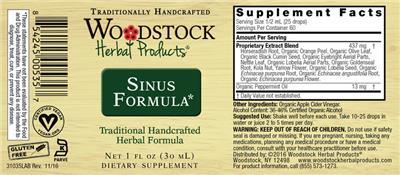
Sinus Formula contains 15 active and inactive ingredients. The product includes a proprietary blend that lists its components individually: olive leaf extract, echinacea (in three forms — purpurea root, angustifolia root, and purpurea flower), peppermint oil, eyebright aerial parts, orange peel extract, kola nut extract, goldenseal root, nettle leaf, horseradish root, lobelia (aerial parts and seed), black cumin seed, and yarrow flower.
The formula also contains apple cider vinegar and alcohol as inactive ingredients.
Does it work?
Moderate evidence
The evidence we hold is thin for most of what this formula claims to do. Peppermint oil is likely effective for irritable bowel syndrome (IBS) and possibly effective for indigestion (dyspepsia), nausea from chemotherapy or medical procedures, and colonic spasm during barium enema.
Black cumin seed is possibly effective for acne, allergies (hay fever), asthma, and blood sugar control. For the other ingredients — echinacea, olive leaf, eyebright, goldenseal, nettle, horseradish, lobelia, and yarrow — the evidence we hold rates them as insufficient to establish whether they work for their traditional uses, which include sinus and respiratory support.
That doesn't mean they don't work, only that the clinical evidence isn't established in our data.
How safe is it?
Well-documented data
Most ingredients are generally well tolerated when used short-term. Echinacea can cause the common side effects of abdominal pain, diarrhea, nausea, and rash, and rare cases of severe allergic reactions and liver inflammation have been reported, especially in people sensitive to ragweed or related plants.
Peppermint oil is well tolerated but can cause stomach pain, diarrhea, and heartburn; one case of anaphylaxis has been reported. Goldenseal carries cautions because long-term safety is not well established.
Lobelia is potentially toxic at higher doses and can cause nausea, vomiting, diarrhea, tremors, and at doses of 600 mg or higher, serious effects including rapid heart rate, low blood pressure, and death. Eyebright has caused confusion, headache, nausea, and respiratory symptoms.
Black cumin seed is likely safe in food amounts but is less studied at supplement doses long-term. Because this is a liquid formula with multiple herbal ingredients, talk with your pharmacist or doctor before use if you have allergies, liver disease, or are taking other medications.
Meds to double-check
Major interaction found
Before using this product, check these medication types with your pharmacist or doctor: drugs metabolized by your liver through CYP1A2 and CYP3A4 pathways (echinacea — Moderate), blood pressure medications and heart drugs (goldenseal, black cumin seed, peppermint oil — Moderate), blood thinners or antiplatelet drugs (goldenseal, black cumin seed — Moderate), blood sugar medications (goldenseal, eyebright, black cumin seed, nettle — Moderate), drugs metabolized by CYP2C9 and CYP2C19 (peppermint oil — Moderate), and lithium (nettle, lobelia, yarrow — Moderate). Warfarin (Coumadin) may be affected by echinacea (Minor) and nettle (Moderate).
The bottom line
Scorecard at a glanceFormula with limited ingredient disclosure with some supporting evidence for its stated purpose. Major medication interactions have been identified, and safety information is well characterized.
This formula may appeal to people looking for herbal support during sinus or respiratory symptoms, but the evidence for effectiveness is largely insufficient. The biggest concern is the drug interactions — echinacea, goldenseal, peppermint, and black cumin all interact with common medications.
If you take any prescription drugs, blood thinners, blood pressure medication, diabetes drugs, or lithium, check your exact medications with the tool below before you start. Pregnant or breastfeeding women should talk with their doctor first.
Educational only — not medical advice; always confirm with your pharmacist. Our editorial policy · How we use AI
Assessment coverage: 15 of 15 active ingredients matched to our full ingredient reviews (monographs). Based on the product label dated Jul 24, 2025.
This Scorecard evaluates available label information, ingredient evidence, and known medication-safety considerations. It does not independently verify product identity, purity, potency, contamination, or manufacturing quality. How these ratings are computed
General information
Key facts about Sinus Formula, straight from the product label.
| Brand | Woodstock Herbal Products |
|---|---|
| Barcode (UPC) | 854245005357 |
| Net contents | 1 Fluid Ounce(s); 30 mL |
| Market status | On market |
| Date entered into DSLD | Jul 24, 2025 |
| DSLD ID | 335093 |
| Product type | Botanical |
| Supplement form | Liquid |
| Dietary claims / uses | All Other, Structure/Function |
| Intended target group(s) | Vegan, Vegetarian, Adult (18 - 50 Years), Kosher, Gluten Free, Dairy Free |
Everything in this section is reproduced from the manufacturer’s own product label — it’s the label speaking, not HelloPharmacist. We show it so you can see exactly what the maker states; we don’t verify or endorse those statements.
Supplement Facts
The label details for Sinus Formula by Woodstock Herbal Products, sourced from the NIH Dietary Supplement Label Database.
Supplement Facts
| Ingredient | Amount | % DV |
|---|---|---|
| Proprietary Extract Blend | 437 mg | -- |
| Olive Leaf Extract | 0 NP | -- |
| Echinacea purpurea root extract | 0 NP | -- |
| Peppermint Oil | 13 mg | -- |
| Eyebright aerial parts extract | 0 NP | -- |
| Orange Peel Extract | 0 NP | -- |
| Kola Nut extract | 0 NP | -- |
| Echinacea angustifolia Root Extract | 0 NP | -- |
| Goldenseal root extract | 0 NP | -- |
| Nettle leaf extract | 0 NP | -- |
| Horseradish root extract | 0 NP | -- |
| Echinacea purpurea Flower Extract | 0 NP | -- |
| Lobelia Aerial Parts Extract | 0 NP | -- |
| Yarrow Flower Extract | 0 NP | -- |
| Lobelia Seed Extract | 0 NP | -- |
| Black Cumin Seed Extract | 0 NP | -- |
Other ingredients: Apple Cider Vinegar, Alcohol
Tap any ingredient to jump to its full detail below.
These statements are the manufacturer’s wording, reproduced from the product label — the label is saying it, not HelloPharmacist. We don’t verify or endorse them.
FDA Disclaimer Statement
These statements have not been evaluated by the Food and Drug Administration. This product is not intended to diagnose, treat, cure, or prevent any disease.
Seals/Symbols
Certified Vegan Vegan.org KOF-K Parve (Kosher)
Formulation
Certified Vegan Vegan.org
Gluten Free
Traditionally Handcrafted Traditional Handcrafted Herbal Formula
Formula
KOF-K Parve (Kosher)
FDA Statement of Identity
Dietary Supplement
Suggested/Recommended/Usage/Directions
Suggested Use: Shake well before each use. Take 10-25 drops in water or juice 2 to 5 times per day.
Precautions
Warning: Keep out of reach of children.
Do not use if safety seal is damaged or missing.
If you are pregnant, nursing, taking any medications, planning any medical procedure or have a medical condition, consult with your healthcare practitioner before use.
Brand IP Statement(s)
Copyright 2016 Woodstock Herbal Products
General Statements
For product information, call (855) 573-1273.
Is this label outdated? Report a formula or label change and our pharmacy team will review it.
Sinus Formula by Woodstock Herbal Products label
The label scan from the NIH Dietary Supplement Label Database. Tap to enlarge.
Label images are published by the NIH Dietary Supplement Label Database for the version of this product on file. Always read your actual product label.
View the full label (PDF)The Ingredients in Sinus Formula by Woodstock Herbal Products
These are the 15 active ingredients this product is made of. Select any to open its full monograph.
Serving size0.2 mL Dosage formLiquid Servings per container60 Amounts shown are per serving.
Most supplement products combine several ingredients, and a medication can interact with the product through any one of them. Each ingredient below shows whether it has known drug interactions.
Proprietary Extract Blend
- › Olive Leaf Extract
- › Echinacea purpurea root extract
- › Eyebright aerial parts extract
- › Orange Peel Extract
- › Kola Nut extract
- › Echinacea angustifolia Root Extract
- › Goldenseal root extract
- › Nettle leaf extract
- › Horseradish root extract
- › Echinacea purpurea Flower Extract
- › Lobelia Aerial Parts Extract
- › Yarrow Flower Extract
- › Lobelia Seed Extract
- › Black Cumin Seed Extract
Peppermint Oil
Interacts with798 drugs
Peppermint is a popular herb with the best evidence supporting enteric-coated peppermint oil for easing IBS symptoms. It is generally well tolerated f...
Peppermint Oil monograph & interactionsOther (inactive) ingredients: Apple Cider Vinegar, Alcohol. These complete the product’s ingredient list but are not active constituents.
Sinus Formula by Woodstock Herbal Products Drug Interactions
HelloPharmacist Interaction Report
Sinus Formula by Woodstock Herbal Products contains multiple ingredients with documented drug interactions.
The most serious concern is with echinacea (present in three different forms: purpurea root, angustifolia root, and purpurea flower), which carries Moderate-severity interactions with drugs metabolized by your liver — specifically CYP1A2 and CYP3A4 substrates. Echinacea can increase caffeine levels by around 30% and may unpredictably affect levels of many common medications metabolized through these pathways.
Read the full breakdown — every affected drug type, severity by severity
Other Moderate interactions include peppermint oil with several drug-metabolizing enzymes (CYP2C19, CYP2C9, CYP3A4), goldenseal with blood pressure medications, heart drugs, blood thinners (anticoagulants), blood sugar medications, and certain psychiatric drugs, and black cumin seed with blood thinners, blood pressure drugs, and blood sugar medications. Echinacea also carries Minor interactions with warfarin (a blood thinner) and certain HIV medications.
Nettle leaf, horseradish, lobelia, and yarrow each interact with specific medication types: nettle and lobelia with lithium (a mood stabilizer), horseradish with thyroid hormone, and eyebright with diabetes medications.
We could not check Orange Peel Extract and Kola Nut extract — we hold no data for these ingredients. Olive leaf extract was checked and shows no interactions documented in our data.
Altogether, these interactions span 1,382 individual medications. Use the interaction checker below with your exact medications before starting this product.
Check your own medications below · Editorial policy · How we use AI
Want to check YOUR meds against Sinus Formula?
Ask about interactions with your drugs in plain English — “Can I take it with lisinopril?” — and we find you the answer in seconds, ingredient by ingredient.
Go to the checkerIngredients driving the most interactions
Individual Drug Interactions
The ingredients in Sinus Formula interact with 1,510 drugs. Click any drug to see the details.
11 of the 15 ingredients in Sinus Formula interact with drugs. Each result below shows which ingredient is responsible. Goldenseal root extract Black Cumin Seed Extract Echinacea purpurea root extract Peppermint Oil Kola Nut extract Orange Peel Extract Nettle leaf extract Eyebright aerial parts extract Horseradish root extract Lobelia Aerial Parts Extract Yarrow Flower Extract
AtorvastatinAtorvaliq
How Atorvastatin interacts with Sinus Formula — through 4 ingredients. Tap an ingredient for the detail:
Orange Peel ExtractOrganic Anion-transporting Polypeptide Substrates (oatp) Major
Interaction Summary
Consuming sweet orange juice can decrease oral absorption of OATP substrates.
Read the full Orange Peel Extract + Atorvastatin interactionGoldenseal Root ExtractCytochrome P450 3a4 (cyp3a4) Substrates Moderate
Interaction Summary
Goldenseal might increase serum levels of drugs metabolized by CYP3A4.
Read the full Goldenseal Root Extract + Atorvastatin interactionEchinacea Purpurea Flower ExtractCytochrome P450 3a4 (cyp3a4) Substrates Moderate
Interaction Summary
Echinacea may induce hepatic CYP3A4 and inhibit intestinal CYP3A4.
Read the full Echinacea Purpurea Flower Extract + Atorvastatin interactionPeppermint OilCytochrome P450 3a4 (cyp3a4) Substrates Moderate
Interaction Summary
Theoretically, peppermint might increase the levels of CYP3A4 substrates.
Read the full Peppermint Oil + Atorvastatin interactionAtorvastatin CalciumLipitor
How Atorvastatin Calcium interacts with Sinus Formula — through 4 ingredients. Tap an ingredient for the detail:
Orange Peel ExtractOrganic Anion-transporting Polypeptide Substrates (oatp) Major
Interaction Summary
Consuming sweet orange juice can decrease oral absorption of OATP substrates.
Read the full Orange Peel Extract + Atorvastatin Calcium interactionPeppermint OilCytochrome P450 3a4 (cyp3a4) Substrates Moderate
Interaction Summary
Theoretically, peppermint might increase the levels of CYP3A4 substrates.
Read the full Peppermint Oil + Atorvastatin Calcium interactionEchinacea Purpurea Flower ExtractCytochrome P450 3a4 (cyp3a4) Substrates Moderate
Interaction Summary
Echinacea may induce hepatic CYP3A4 and inhibit intestinal CYP3A4.
Read the full Echinacea Purpurea Flower Extract + Atorvastatin Calcium interactionGoldenseal Root ExtractCytochrome P450 3a4 (cyp3a4) Substrates Moderate
Interaction Summary
Goldenseal might increase serum levels of drugs metabolized by CYP3A4.
Read the full Goldenseal Root Extract + Atorvastatin Calcium interactionBosentanTracleer
How Bosentan interacts with Sinus Formula — through 5 ingredients. Tap an ingredient for the detail:
Orange Peel ExtractOrganic Anion-transporting Polypeptide Substrates (oatp) Major
Interaction Summary
Consuming sweet orange juice can decrease oral absorption of OATP substrates.
Read the full Orange Peel Extract + Bosentan interactionBlack Cumin Seed ExtractCytochrome P450 2c9 (cyp2c9) Substrates, Antihypertensive Drugs Moderate
Interaction Summary
Theoretically, black seed might increase levels of drugs metabolized by CYP2C9.
Read the full Black Cumin Seed Extract + Bosentan interactionPeppermint OilCytochrome P450 3a4 (cyp3a4) Substrates, Cytochrome P450 2c9 (cyp2c9) Substrates Moderate
Interaction Summary
Theoretically, peppermint might increase the levels of CYP3A4 substrates.
Read the full Peppermint Oil + Bosentan interactionEchinacea Purpurea Flower ExtractCytochrome P450 3a4 (cyp3a4) Substrates Moderate
Interaction Summary
Echinacea may induce hepatic CYP3A4 and inhibit intestinal CYP3A4.
Read the full Echinacea Purpurea Flower Extract + Bosentan interactionGoldenseal Root ExtractAntihypertensive Drugs, Cytochrome P450 2c9 (cyp2c9) Substrates +1 Moderate
Interaction Summary
Theoretically, goldenseal might increase the risk of hypotension when taken with antihypertensive drugs.
Read the full Goldenseal Root Extract + Bosentan interactionBrincidofovirTembexa
How Brincidofovir interacts with Sinus Formula — through 1 ingredient. Tap an ingredient for the detail:
Orange Peel ExtractOrganic Anion-transporting Polypeptide Substrates (oatp) Major
Interaction Summary
Consuming sweet orange juice can decrease oral absorption of OATP substrates.
Read the full Orange Peel Extract + Brincidofovir interactionCeliprololCelicard
How Celiprolol interacts with Sinus Formula — through 3 ingredients. Tap an ingredient for the detail:
Orange Peel ExtractP-glycoprotein Substrates, Organic Anion-transporting Polypeptide Substrates (oatp) +1 Major
Interaction Summary
Sweet orange juice seems to modulate P-glycoprotein (P-gp), which might affect the blood levels of P-gp substrates.
Read the full Orange Peel Extract + Celiprolol interactionBlack Cumin Seed ExtractAntihypertensive Drugs Moderate
Interaction Summary
Theoretically, taking black seed with antihypertensive drugs might increase the risk of hypotension.
Read the full Black Cumin Seed Extract + Celiprolol interactionGoldenseal Root ExtractAntihypertensive Drugs, P-glycoprotein Substrates Moderate
Interaction Summary
Theoretically, goldenseal might increase the risk of hypotension when taken with antihypertensive drugs.
Read the full Goldenseal Root Extract + Celiprolol interactionCerivastatin SodiumBaycol
How Cerivastatin Sodium interacts with Sinus Formula — through 1 ingredient. Tap an ingredient for the detail:
Orange Peel ExtractOrganic Anion-transporting Polypeptide Substrates (oatp) Major
Interaction Summary
Consuming sweet orange juice can decrease oral absorption of OATP substrates.
Read the full Orange Peel Extract + Cerivastatin Sodium interactionCinoxacinCinobac
How Cinoxacin interacts with Sinus Formula — through 2 ingredients. Tap an ingredient for the detail:
Orange Peel ExtractOrganic Anion-transporting Polypeptide Substrates (oatp), Quinolone Antibiotics Major
Interaction Summary
Consuming sweet orange juice can decrease oral absorption of OATP substrates.
Read the full Orange Peel Extract + Cinoxacin interactionKola Nut ExtractQuinolone Antibiotics Moderate
Interaction Summary
Theoretically, quinolone antibiotics might increase the levels and adverse effects of the caffeine in cola nut.
Read the full Kola Nut Extract + Cinoxacin interactionCiprofloxacinCiloxan, Cipro, Cipro IV, Cipro XR, Ciprobay, Otiprio
How Ciprofloxacin interacts with Sinus Formula — through 2 ingredients. Tap an ingredient for the detail:
Orange Peel ExtractOrganic Anion-transporting Polypeptide Substrates (oatp), Quinolone Antibiotics Major
Interaction Summary
Consuming sweet orange juice can decrease oral absorption of OATP substrates.
Read the full Orange Peel Extract + Ciprofloxacin interactionKola Nut ExtractQuinolone Antibiotics, Cytochrome P450 1a2 (cyp1a2) Inhibitors Moderate
Interaction Summary
Theoretically, quinolone antibiotics might increase the levels and adverse effects of the caffeine in cola nut.
Read the full Kola Nut Extract + Ciprofloxacin interactionCiprofloxacin, HydrocortisoneCipro HC Otic
How Ciprofloxacin, Hydrocortisone interacts with Sinus Formula — through 1 ingredient. Tap an ingredient for the detail:
Orange Peel ExtractOrganic Anion-transporting Polypeptide Substrates (oatp) Major
Interaction Summary
Consuming sweet orange juice can decrease oral absorption of OATP substrates.
Read the full Orange Peel Extract + Ciprofloxacin, Hydrocortisone interactionClinafloxacinClinafloxacin
How Clinafloxacin interacts with Sinus Formula — through 2 ingredients. Tap an ingredient for the detail:
Orange Peel ExtractOrganic Anion-transporting Polypeptide Substrates (oatp), Quinolone Antibiotics Major
Interaction Summary
Consuming sweet orange juice can decrease oral absorption of OATP substrates.
Read the full Orange Peel Extract + Clinafloxacin interactionKola Nut ExtractQuinolone Antibiotics Moderate
Interaction Summary
Theoretically, quinolone antibiotics might increase the levels and adverse effects of the caffeine in cola nut.
Read the full Kola Nut Extract + Clinafloxacin interactionEnoxacinPenetrex
How Enoxacin interacts with Sinus Formula — through 2 ingredients. Tap an ingredient for the detail:
Orange Peel ExtractOrganic Anion-transporting Polypeptide Substrates (oatp), Quinolone Antibiotics Major
Interaction Summary
Consuming sweet orange juice can decrease oral absorption of OATP substrates.
Read the full Orange Peel Extract + Enoxacin interactionKola Nut ExtractQuinolone Antibiotics, Cytochrome P450 1a2 (cyp1a2) Inhibitors Moderate
Interaction Summary
Theoretically, quinolone antibiotics might increase the levels and adverse effects of the caffeine in cola nut.
Read the full Kola Nut Extract + Enoxacin interactionEtoposideEtopophos, VePesid, VP16
How Etoposide interacts with Sinus Formula — through 4 ingredients. Tap an ingredient for the detail:
Orange Peel ExtractOrganic Anion-transporting Polypeptide Substrates (oatp), P-glycoprotein Substrates Major
Interaction Summary
Consuming sweet orange juice can decrease oral absorption of OATP substrates.
Read the full Orange Peel Extract + Etoposide interactionPeppermint OilCytochrome P450 3a4 (cyp3a4) Substrates Moderate
Interaction Summary
Theoretically, peppermint might increase the levels of CYP3A4 substrates.
Read the full Peppermint Oil + Etoposide interactionGoldenseal Root ExtractCytochrome P450 3a4 (cyp3a4) Substrates, P-glycoprotein Substrates Moderate
Interaction Summary
Goldenseal might increase serum levels of drugs metabolized by CYP3A4.
Read the full Goldenseal Root Extract + Etoposide interactionEchinacea Purpurea Flower ExtractCytochrome P450 3a4 (cyp3a4) Substrates, Etoposide (vepesid) Moderate
Interaction Summary
Echinacea may induce hepatic CYP3A4 and inhibit intestinal CYP3A4.
Read the full Echinacea Purpurea Flower Extract + Etoposide interactionEzetimibe, AtorvastatinLiptruzet
How Ezetimibe, Atorvastatin interacts with Sinus Formula — through 4 ingredients. Tap an ingredient for the detail:
Orange Peel ExtractOrganic Anion-transporting Polypeptide Substrates (oatp) Major
Interaction Summary
Consuming sweet orange juice can decrease oral absorption of OATP substrates.
Read the full Orange Peel Extract + Ezetimibe, Atorvastatin interactionPeppermint OilCytochrome P450 3a4 (cyp3a4) Substrates Moderate
Interaction Summary
Theoretically, peppermint might increase the levels of CYP3A4 substrates.
Read the full Peppermint Oil + Ezetimibe, Atorvastatin interactionGoldenseal Root ExtractCytochrome P450 3a4 (cyp3a4) Substrates Moderate
Interaction Summary
Goldenseal might increase serum levels of drugs metabolized by CYP3A4.
Read the full Goldenseal Root Extract + Ezetimibe, Atorvastatin interactionEchinacea Purpurea Flower ExtractCytochrome P450 3a4 (cyp3a4) Substrates Moderate
Interaction Summary
Echinacea may induce hepatic CYP3A4 and inhibit intestinal CYP3A4.
Read the full Echinacea Purpurea Flower Extract + Ezetimibe, Atorvastatin interactionFexofenadineAllegra
How Fexofenadine interacts with Sinus Formula — through 4 ingredients. Tap an ingredient for the detail:
Orange Peel ExtractP-glycoprotein Substrates, Organic Anion-transporting Polypeptide Substrates (oatp) +1 Major
Interaction Summary
Sweet orange juice seems to modulate P-glycoprotein (P-gp), which might affect the blood levels of P-gp substrates.
Read the full Orange Peel Extract + Fexofenadine interactionGoldenseal Root ExtractCytochrome P450 3a4 (cyp3a4) Substrates, P-glycoprotein Substrates Moderate
Interaction Summary
Goldenseal might increase serum levels of drugs metabolized by CYP3A4.
Read the full Goldenseal Root Extract + Fexofenadine interactionPeppermint OilCytochrome P450 3a4 (cyp3a4) Substrates Moderate
Interaction Summary
Theoretically, peppermint might increase the levels of CYP3A4 substrates.
Read the full Peppermint Oil + Fexofenadine interactionEchinacea Purpurea Flower ExtractCytochrome P450 3a4 (cyp3a4) Substrates Moderate
Interaction Summary
Echinacea may induce hepatic CYP3A4 and inhibit intestinal CYP3A4.
Read the full Echinacea Purpurea Flower Extract + Fexofenadine interactionFexofenadine, PseudoephedrineAllegra D
How Fexofenadine, Pseudoephedrine interacts with Sinus Formula — through 5 ingredients. Tap an ingredient for the detail:
Orange Peel ExtractOrganic Anion-transporting Polypeptide Substrates (oatp), Fexofenadine (allegra) +1 Major
Interaction Summary
Consuming sweet orange juice can decrease oral absorption of OATP substrates.
Read the full Orange Peel Extract + Fexofenadine, Pseudoephedrine interactionEchinacea Purpurea Flower ExtractCytochrome P450 3a4 (cyp3a4) Substrates Moderate
Interaction Summary
Echinacea may induce hepatic CYP3A4 and inhibit intestinal CYP3A4.
Read the full Echinacea Purpurea Flower Extract + Fexofenadine, Pseudoephedrine interactionGoldenseal Root ExtractP-glycoprotein Substrates, Cytochrome P450 3a4 (cyp3a4) Substrates Moderate
Interaction Summary
Theoretically, goldenseal might increase or decrease serum levels of P-glycoprotein (P-gp) substrates.
Read the full Goldenseal Root Extract + Fexofenadine, Pseudoephedrine interactionPeppermint OilCytochrome P450 3a4 (cyp3a4) Substrates Moderate
Interaction Summary
Theoretically, peppermint might increase the levels of CYP3A4 substrates.
Read the full Peppermint Oil + Fexofenadine, Pseudoephedrine interactionKola Nut ExtractStimulant Drugs Moderate
Interaction Summary
Theoretically, concomitant use might increase stimulant adverse effects.
Read the full Kola Nut Extract + Fexofenadine, Pseudoephedrine interactionFluvastatinLescol, Lescol XL
How Fluvastatin interacts with Sinus Formula — through 4 ingredients. Tap an ingredient for the detail:
Orange Peel ExtractOrganic Anion-transporting Polypeptide Substrates (oatp) Major
Interaction Summary
Consuming sweet orange juice can decrease oral absorption of OATP substrates.
Read the full Orange Peel Extract + Fluvastatin interactionPeppermint OilCytochrome P450 2c9 (cyp2c9) Substrates Moderate
Interaction Summary
Theoretically, peppermint might increase the levels of CYP2C9 substrates.
Read the full Peppermint Oil + Fluvastatin interactionBlack Cumin Seed ExtractCytochrome P450 2c9 (cyp2c9) Substrates Moderate
Interaction Summary
Theoretically, black seed might increase levels of drugs metabolized by CYP2C9.
Read the full Black Cumin Seed Extract + Fluvastatin interactionGoldenseal Root ExtractCytochrome P450 2c9 (cyp2c9) Substrates Moderate
Interaction Summary
Theoretically, goldenseal might increase serum levels of drugs metabolized by CYP2C9.
Read the full Goldenseal Root Extract + Fluvastatin interactionGatifloxacinTequin, Tequin Injection
How Gatifloxacin interacts with Sinus Formula — through 2 ingredients. Tap an ingredient for the detail:
Orange Peel ExtractOrganic Anion-transporting Polypeptide Substrates (oatp), Quinolone Antibiotics Major
Interaction Summary
Consuming sweet orange juice can decrease oral absorption of OATP substrates.
Read the full Orange Peel Extract + Gatifloxacin interactionKola Nut ExtractQuinolone Antibiotics Moderate
Interaction Summary
Theoretically, quinolone antibiotics might increase the levels and adverse effects of the caffeine in cola nut.
Read the full Kola Nut Extract + Gatifloxacin interactionGemifloxacinFactive
How Gemifloxacin interacts with Sinus Formula — through 2 ingredients. Tap an ingredient for the detail:
Orange Peel ExtractOrganic Anion-transporting Polypeptide Substrates (oatp), Quinolone Antibiotics Major
Interaction Summary
Consuming sweet orange juice can decrease oral absorption of OATP substrates.
Read the full Orange Peel Extract + Gemifloxacin interactionKola Nut ExtractQuinolone Antibiotics Moderate
Interaction Summary
Theoretically, quinolone antibiotics might increase the levels and adverse effects of the caffeine in cola nut.
Read the full Kola Nut Extract + Gemifloxacin interactionGlyburideAlbert Glyburide, Diabeta, Glycron, Glynase, Glynase PresTab, Micronase +1 more
How Glyburide interacts with Sinus Formula — through 7 ingredients. Tap an ingredient for the detail:
Orange Peel ExtractOrganic Anion-transporting Polypeptide Substrates (oatp) Major
Interaction Summary
Consuming sweet orange juice can decrease oral absorption of OATP substrates.
Read the full Orange Peel Extract + Glyburide interactionGoldenseal Root ExtractCytochrome P450 2c9 (cyp2c9) Substrates, Antidiabetes Drugs Moderate
Interaction Summary
Theoretically, goldenseal might increase serum levels of drugs metabolized by CYP2C9.
Read the full Goldenseal Root Extract + Glyburide interactionEyebright Aerial Parts ExtractAntidiabetes Drugs Moderate
Interaction Summary
Theoretically, eyebright might increase the risk of hypoglycemia when taken with antidiabetes drugs.
Read the full Eyebright Aerial Parts Extract + Glyburide interactionNettle Leaf ExtractAntidiabetes Drugs Moderate
Interaction Summary
Theoretically, stinging nettle might have additive effects with antidiabetes drugs.
Read the full Nettle Leaf Extract + Glyburide interactionPeppermint OilCytochrome P450 2c9 (cyp2c9) Substrates Moderate
Interaction Summary
Theoretically, peppermint might increase the levels of CYP2C9 substrates.
Read the full Peppermint Oil + Glyburide interactionBlack Cumin Seed ExtractAntidiabetes Drugs, Cytochrome P450 2c9 (cyp2c9) Substrates Moderate
Interaction Summary
Theoretically, taking black seed with antidiabetes drugs might increase the risk of hypoglycemia.
Read the full Black Cumin Seed Extract + Glyburide interactionKola Nut ExtractAntidiabetes Drugs Minor
Interaction Summary
Theoretically, taking cola nut with antidiabetes drugs might interfere with blood glucose control.
Read the full Kola Nut Extract + Glyburide interactionGlyburide, MetforminGlucovance
How Glyburide, Metformin interacts with Sinus Formula — through 7 ingredients. Tap an ingredient for the detail:
Orange Peel ExtractOrganic Anion-transporting Polypeptide Substrates (oatp) Major
Interaction Summary
Consuming sweet orange juice can decrease oral absorption of OATP substrates.
Read the full Orange Peel Extract + Glyburide, Metformin interactionGoldenseal Root ExtractAntidiabetes Drugs, Metformin (glucophage) +1 Moderate
Interaction Summary
Theoretically, goldenseal might increase the risk of hypoglycemia when used with antidiabetes drugs.
Read the full Goldenseal Root Extract + Glyburide, Metformin interactionPeppermint OilCytochrome P450 2c9 (cyp2c9) Substrates Moderate
Interaction Summary
Theoretically, peppermint might increase the levels of CYP2C9 substrates.
Read the full Peppermint Oil + Glyburide, Metformin interactionEyebright Aerial Parts ExtractAntidiabetes Drugs Moderate
Interaction Summary
Theoretically, eyebright might increase the risk of hypoglycemia when taken with antidiabetes drugs.
Read the full Eyebright Aerial Parts Extract + Glyburide, Metformin interactionNettle Leaf ExtractAntidiabetes Drugs Moderate
Interaction Summary
Theoretically, stinging nettle might have additive effects with antidiabetes drugs.
Read the full Nettle Leaf Extract + Glyburide, Metformin interactionBlack Cumin Seed ExtractCytochrome P450 2c9 (cyp2c9) Substrates, Antidiabetes Drugs Moderate
Interaction Summary
Theoretically, black seed might increase levels of drugs metabolized by CYP2C9.
Read the full Black Cumin Seed Extract + Glyburide, Metformin interactionKola Nut ExtractAntidiabetes Drugs, Metformin (glucophage) Minor
Interaction Summary
Theoretically, taking cola nut with antidiabetes drugs might interfere with blood glucose control.
Read the full Kola Nut Extract + Glyburide, Metformin interactionGrepafloxacinRaxar
How Grepafloxacin interacts with Sinus Formula — through 4 ingredients. Tap an ingredient for the detail:
Orange Peel ExtractOrganic Anion-transporting Polypeptide Substrates (oatp), Quinolone Antibiotics Major
Interaction Summary
Consuming sweet orange juice can decrease oral absorption of OATP substrates.
Read the full Orange Peel Extract + Grepafloxacin interactionKola Nut ExtractQuinolone Antibiotics Moderate
Interaction Summary
Theoretically, quinolone antibiotics might increase the levels and adverse effects of the caffeine in cola nut.
Read the full Kola Nut Extract + Grepafloxacin interactionEchinacea Purpurea Flower ExtractCytochrome P450 1a2 (cyp1a2) Substrates Moderate
Interaction Summary
Echinacea might inhibit the metabolism of CYP1A2 and increase plasma levels of some drugs.
Read the full Echinacea Purpurea Flower Extract + Grepafloxacin interactionPeppermint OilCytochrome P450 1a2 (cyp1a2) Substrates Minor
Interaction Summary
Theoretically, peppermint might increase the levels of CYP1A2 substrates.
Read the full Peppermint Oil + Grepafloxacin interactionIrinotecanCamptosar, Onivyde
How Irinotecan interacts with Sinus Formula — through 4 ingredients. Tap an ingredient for the detail:
Orange Peel ExtractOrganic Anion-transporting Polypeptide Substrates (oatp) Major
Interaction Summary
Consuming sweet orange juice can decrease oral absorption of OATP substrates.
Read the full Orange Peel Extract + Irinotecan interactionPeppermint OilCytochrome P450 3a4 (cyp3a4) Substrates Moderate
Interaction Summary
Theoretically, peppermint might increase the levels of CYP3A4 substrates.
Read the full Peppermint Oil + Irinotecan interactionGoldenseal Root ExtractCytochrome P450 3a4 (cyp3a4) Substrates Moderate
Interaction Summary
Goldenseal might increase serum levels of drugs metabolized by CYP3A4.
Read the full Goldenseal Root Extract + Irinotecan interactionEchinacea Purpurea Flower ExtractCytochrome P450 3a4 (cyp3a4) Substrates Moderate
Interaction Summary
Echinacea may induce hepatic CYP3A4 and inhibit intestinal CYP3A4.
Read the full Echinacea Purpurea Flower Extract + Irinotecan interactionIrinotecan Hydrochloride
How Irinotecan Hydrochloride interacts with Sinus Formula — through 4 ingredients. Tap an ingredient for the detail:
Orange Peel ExtractOrganic Anion-transporting Polypeptide Substrates (oatp) Major
Interaction Summary
Consuming sweet orange juice can decrease oral absorption of OATP substrates.
Read the full Orange Peel Extract + Irinotecan Hydrochloride interactionEchinacea Purpurea Flower ExtractCytochrome P450 3a4 (cyp3a4) Substrates Moderate
Interaction Summary
Echinacea may induce hepatic CYP3A4 and inhibit intestinal CYP3A4.
Read the full Echinacea Purpurea Flower Extract + Irinotecan Hydrochloride interactionPeppermint OilCytochrome P450 3a4 (cyp3a4) Substrates Moderate
Interaction Summary
Theoretically, peppermint might increase the levels of CYP3A4 substrates.
Read the full Peppermint Oil + Irinotecan Hydrochloride interactionGoldenseal Root ExtractCytochrome P450 3a4 (cyp3a4) Substrates Moderate
Interaction Summary
Goldenseal might increase serum levels of drugs metabolized by CYP3A4.
Read the full Goldenseal Root Extract + Irinotecan Hydrochloride interactionIsoniazid, Pyrazinamide, RifampinRifater
How Isoniazid, Pyrazinamide, Rifampin interacts with Sinus Formula — through 2 ingredients. Tap an ingredient for the detail:
Orange Peel ExtractOrganic Anion-transporting Polypeptide Substrates (oatp) Major
Interaction Summary
Consuming sweet orange juice can decrease oral absorption of OATP substrates.
Read the full Orange Peel Extract + Isoniazid, Pyrazinamide, Rifampin interactionKola Nut ExtractCytochrome P450 1a2 (cyp1a2) Inhibitors Moderate
Interaction Summary
Theoretically, CYP1A2 inhibitors might increase the levels and adverse effects of the caffeine in cola nut.
Read the full Kola Nut Extract + Isoniazid, Pyrazinamide, Rifampin interactionIsoniazid, RifampinRifamate
How Isoniazid, Rifampin interacts with Sinus Formula — through 2 ingredients. Tap an ingredient for the detail:
Orange Peel ExtractOrganic Anion-transporting Polypeptide Substrates (oatp) Major
Interaction Summary
Consuming sweet orange juice can decrease oral absorption of OATP substrates.
Read the full Orange Peel Extract + Isoniazid, Rifampin interactionKola Nut ExtractCytochrome P450 1a2 (cyp1a2) Inhibitors Moderate
Interaction Summary
Theoretically, CYP1A2 inhibitors might increase the levels and adverse effects of the caffeine in cola nut.
Read the full Kola Nut Extract + Isoniazid, Rifampin interactionIvermectinMectizan, Sklice, Soolantra, Stromectol
How Ivermectin interacts with Sinus Formula — through 2 ingredients. Tap an ingredient for the detail:
Orange Peel ExtractP-glycoprotein Substrates, Ivermectin (stromectol, Others) Major
Interaction Summary
Sweet orange juice seems to modulate P-glycoprotein (P-gp), which might affect the blood levels of P-gp substrates.
Read the full Orange Peel Extract + Ivermectin interactionGoldenseal Root ExtractP-glycoprotein Substrates Moderate
Interaction Summary
Theoretically, goldenseal might increase or decrease serum levels of P-glycoprotein (P-gp) substrates.
Read the full Goldenseal Root Extract + Ivermectin interactionLevofloxacinLeva-pak, Levaquin, Levaquin Injection
How Levofloxacin interacts with Sinus Formula — through 2 ingredients. Tap an ingredient for the detail:
Orange Peel ExtractOrganic Anion-transporting Polypeptide Substrates (oatp), Quinolone Antibiotics Major
Interaction Summary
Consuming sweet orange juice can decrease oral absorption of OATP substrates.
Read the full Orange Peel Extract + Levofloxacin interactionKola Nut ExtractQuinolone Antibiotics Moderate
Interaction Summary
Theoretically, quinolone antibiotics might increase the levels and adverse effects of the caffeine in cola nut.
Read the full Kola Nut Extract + Levofloxacin interactionLevofloxacin (ophthalmic)Levofloxacin
How Levofloxacin (ophthalmic) interacts with Sinus Formula — through 2 ingredients. Tap an ingredient for the detail:
Orange Peel ExtractOrganic Anion-transporting Polypeptide Substrates (oatp), Quinolone Antibiotics Major
Interaction Summary
Consuming sweet orange juice can decrease oral absorption of OATP substrates.
Read the full Orange Peel Extract + Levofloxacin (ophthalmic) interactionKola Nut ExtractQuinolone Antibiotics Moderate
Interaction Summary
Theoretically, quinolone antibiotics might increase the levels and adverse effects of the caffeine in cola nut.
Read the full Kola Nut Extract + Levofloxacin (ophthalmic) interactionLomefloxacinMaxaquin
How Lomefloxacin interacts with Sinus Formula — through 2 ingredients. Tap an ingredient for the detail:
Orange Peel ExtractOrganic Anion-transporting Polypeptide Substrates (oatp), Quinolone Antibiotics Major
Interaction Summary
Consuming sweet orange juice can decrease oral absorption of OATP substrates.
Read the full Orange Peel Extract + Lomefloxacin interactionKola Nut ExtractQuinolone Antibiotics Moderate
Interaction Summary
Theoretically, quinolone antibiotics might increase the levels and adverse effects of the caffeine in cola nut.
Read the full Kola Nut Extract + Lomefloxacin interactionLovastatinAltocor, Mevacor
How Lovastatin interacts with Sinus Formula — through 4 ingredients. Tap an ingredient for the detail:
Orange Peel ExtractOrganic Anion-transporting Polypeptide Substrates (oatp) Major
Interaction Summary
Consuming sweet orange juice can decrease oral absorption of OATP substrates.
Read the full Orange Peel Extract + Lovastatin interactionPeppermint OilCytochrome P450 3a4 (cyp3a4) Substrates Moderate
Interaction Summary
Theoretically, peppermint might increase the levels of CYP3A4 substrates.
Read the full Peppermint Oil + Lovastatin interactionEchinacea Purpurea Flower ExtractCytochrome P450 3a4 (cyp3a4) Substrates Moderate
Interaction Summary
Echinacea may induce hepatic CYP3A4 and inhibit intestinal CYP3A4.
Read the full Echinacea Purpurea Flower Extract + Lovastatin interactionGoldenseal Root ExtractCytochrome P450 3a4 (cyp3a4) Substrates Moderate
Interaction Summary
Goldenseal might increase serum levels of drugs metabolized by CYP3A4.
Read the full Goldenseal Root Extract + Lovastatin interactionEach ingredient & the kinds of drugs it affects
For each ingredient in Sinus Formula with known interactions, here are the types of medications they can affect. Open any type for the detail — or search your exact drug in the checker above.
Goldenseal root extract
Anticoagulant/Antiplatelet Drugs
Theoretically, goldenseal might increase the risk of bleeding when used with anticoagulant or antiplatelet drugs.
Goldenseal contains berberine. In vitro and animal research shows that berberine can inhibit platelet aggregation. However, this effect has not been reported in humans.
Antidiabetes Drugs
Theoretically, goldenseal might increase the risk of hypoglycemia when used with antidiabetes drugs.
Goldenseal contains berberine. Clinical research shows that berberine can lower blood glucose levels. However, this effect has not been reported with goldenseal.
Antihypertensive Drugs
Theoretically, goldenseal might increase the risk of hypotension when taken with antihypertensive drugs.
Goldenseal contains berberine. Animal research shows that berberine can have hypotensive effects. Also, an analysis of clinical research shows that taking berberine in combination with amlodipine can lower systolic and diastolic blood pressure when compared with amlodipine alone. However, this effect has not been reported with goldenseal.
Cns Depressants
Theoretically, goldenseal might increase the sedative effects of CNS depressants.
Goldenseal contains berberine. Animal research shows that berberine can have sedative effects. However, this effect has not been reported in humans.
Cytochrome P450 2C9 (Cyp2C9) Substrates
Theoretically, goldenseal might increase serum levels of drugs metabolized by CYP2C9.
In vitro research shows that goldenseal root extract can modestly inhibit CYP2C9. This effect may be due to its alkaloid constituents, hydrastine and berberine. However, this effect has not been reported in humans.
Cytochrome P450 2D6 (Cyp2D6) Substrates
Goldenseal might increase serum levels of drugs metabolized by CYP2D6.
Clinical and in vitro research shows that goldenseal can significantly inhibit CYP2D6 enzymes, potentially increasing levels of drugs metabolized by CYP2D6.
Cytochrome P450 2E1 (Cyp2E1) Substrates
Theoretically, goldenseal might increase serum levels of drugs metabolized by CYP2E1.
In vitro research shows that goldenseal root extract can inhibit the activity of CYP2E1. However, this effect has not been reported in humans.
Cytochrome P450 3A4 (Cyp3A4) Substrates
Goldenseal might increase serum levels of drugs metabolized by CYP3A4.
Most clinical and in vitro research shows that goldenseal inhibits CYP3A4 enzyme activity and increases serum levels of CYP3A4 substrates, such as midazolam. However, in one small clinical study, goldenseal did not affect the levels of indinavir, a CYP3A4 substrate, in healthy volunteers. This is likely due to the fact that indinavir has a high oral bioavailability, making it an inadequate probe for CYP3A4 interactions and/or that it is primarily metabolized by hepatic CYP3A, while goldenseal has more potential to inhibit intestinal CYP3A enzyme activity. Both goldenseal extract and its isolated constituents berberine and hydrastine inhibit CYP3A, with hydrastine possibly having more inhibitory potential than berberine.
Dextromethorphan (Robitussin Dm, Others)
Theoretically, goldenseal might increase serum levels of dextromethorphan.
Goldenseal contains berberine. A small clinical study shows that berberine can inhibit cytochrome P450 2D6 (CYP2D6) activity and reduce the metabolism of dextromethorphan.
Digoxin (Lanoxin)
Goldenseal might increase serum levels of digoxin, although this effect is unlikely to be clinically significant.
Clinical research shows that goldenseal modestly increases digoxin peak levels by about 14% in healthy volunteers. However, goldenseal does not seem to affect other pharmacokinetic parameters such as area under the curve (AUC). This suggests that goldenseal does not cause a clinically significant interaction with digoxin. Digoxin is a P-glycoprotein substrate. Some evidence suggests that goldenseal constituents might affect P-glycoprotein; however, it is unclear whether these constituents inhibit or induce P-glycoprotein.
Losartan (Cozaar)
Theoretically, goldenseal might decrease the conversion of losartan to its active form.
Goldenseal contains berberine. A small clinical study shows that berberine inhibits cytochrome P450 2C9 (CYP2C9) activity and reduces the metabolism of losartan. However, this effect has not been reported with goldenseal.
Metformin (Glucophage)
Theoretically, goldenseal might reduce blood levels of metformin.
In vitro research shows that goldenseal extract decreases the bioavailability of metformin, likely by interfering with transport, intestinal permeability, or other processes involved in metformin absorption. It is unclear which, if any, of metformin's transporters are inhibited by goldenseal. Goldenseal does not appear to alter the clearance or half-life of metformin.
P-Glycoprotein Substrates
Theoretically, goldenseal might increase or decrease serum levels of P-glycoprotein (P-gp) substrates.
There is conflicting evidence about the effect of goldenseal on P-gp. In vitro research suggests that berberine, a constituent of goldenseal, modestly inhibits P-gp efflux. Other evidence suggests that berberine induces P-gp. In healthy volunteers, goldenseal modestly increases peak levels of the P-gp substrate digoxin by about 14%. However, it does not seem to affect other pharmacokinetic parameters such as area under the curve (AUC). This suggests that goldenseal is not a potent inhibitor of P-gp-mediated drug efflux. Until more is known, goldenseal should be used cautiously with P-gp substrates.
Pentobarbital (Nembutal)
Theoretically, goldenseal might increase the sedative effects of pentobarbital.
Animal research shows that berberine, a constituent of goldenseal, can prolong pentobarbital-induced sleeping time. However, this effect has not been reported with goldenseal.
Tacrolimus (Prograf)
Theoretically, goldenseal might increase serum levels of tacrolimus.
Goldenseal contains berberine. In a 16-year-old patient with idiopathic nephrotic syndrome who was being treated with tacrolimus 6.5 mg twice daily, intake of berberine 200 mg three times daily increased the blood concentration of tacrolimus from 8 to 22 ng/mL. Following a reduction of tacrolimus dosing to 3 mg daily, blood levels of tacrolimus decreased to 12 ng/mL.
Oseltamivir (Tamiflu)
Theoretically, goldenseal might reduce the therapeutic effects of oseltamivir by decreasing its conversion to its active form.
In vitro evidence suggests that goldenseal reduces the formation of the active compound from the prodrug oseltamivir. The mechanism of action and clinical relevance is unclear.
Black Cumin Seed Extract
Anticoagulant/Antiplatelet Drugs
Theoretically, black seed may increase the risk of bleeding if used with anticoagulant or antiplatelet drugs.
In vitro and animal research suggests that black seed extract can inhibit platelet aggregation and clotting, and increase bleeding time. In addition, decreased platelet counts have occurred in a human case report and in animal research.
Antidiabetes Drugs
Theoretically, taking black seed with antidiabetes drugs might increase the risk of hypoglycemia.
Some clinical research and numerous animal studies suggest that black seed, especially its constituent thymoquinone, can have hypoglycemic effects.
Antihypertensive Drugs
Theoretically, taking black seed with antihypertensive drugs might increase the risk of hypotension.
Clinical research suggests that black seed powder and oil might reduce blood pressure by 2-3 mmHg. In animal research, black seed modestly reduces blood pressure and concomitant use of black seed and amlodipine (Norvasc) or metoprolol (Lopressor) increased the blood pressure lowering effects of these drugs.
Clopidogrel (Plavix)
Theoretically, black seed may increase the risk of bleeding if used with clopidogrel.
Animal research shows that taking black seed extract daily for 2 weeks prior to a single dose of clopidogrel increases maximum concentrations of clopidogrel by approximately 31% and modestly decreases oral clearance. Furthermore, bleeding time was increased by 12%. This has not been shown in humans.
Cns Depressants
Theoretically, concomitant use with drugs that have sedative properties may cause additive effects.
Animal research suggests that black seed may have CNS depressant effects.
Cyclosporine (Neoral, Sandimmune)
Theoretically taking black seed might reduce the levels and clinical effects of cyclosporine.
In animal research, black seed extract decreased the maximal levels of cyclosporine in the blood by 35.5%. This has not been shown in humans.
Cytochrome P450 2C9 (Cyp2C9) Substrates
Theoretically, black seed might increase levels of drugs metabolized by CYP2C9.
In vitro research suggests that thymoquinone, a constituent of black seed, can decrease the metabolism of phenytoin by a mechanism possibly related to the inhibition of CYP2C9. The effect of black seed on CYP2C9 is unclear. This has not been shown in humans.
Diuretic Drugs
Theoretically, taking black seed with diuretic drugs might increase potassium loss and the risk of hypokalemia.
Black seed extract has shown diuretic effects in animals, which could theoretically increase potassium loss. This has not been shown in humans.
Immunosuppressants
Theoretically, black seed might interfere with immunosuppressive therapy.
Animal and in vitro studies suggest that black seed might stimulate immune function. However, other animal studies suggest that black seed may suppress immune function.
Phenytoin (Dilantin)
Theoretically, black seed might increase or decrease levels and effects of phenytoin.
In vitro research suggests that thymoquinone, a constituent of black seed, can decrease the metabolism of phenytoin. This effect may be due to inhibition of cytochrome P450 2C9 (CYP2C9). However, animal research shows that black seed decreases the maximum concentration of and total systemic exposure to phenytoin by 57% and 87%, respectively. This seems to be related to increased clearance and steady state volume of distribution. This interaction has not been shown in humans.
Serotonergic Drugs
Theoretically, combining serotonergic drugs with black seed might increase the risk of serotonergic side effects, including serotonin syndrome and cerebral vasoconstrictive disorders.
Animal research suggests that black seed can increase brain serotonin levels. In one case report, a 35-year-old man undergoing endoscopic surgery experienced immediate postoperative serotonin syndrome that was likely associated with the use of black seed oil 600 mg daily starting 4 days before surgery, and precipitated by the use of serotonergic pain medications, including fentanyl and oxycodone. Monitor patients for signs of serotonin syndrome and other serotonergic side effects if using black seed with serotonergic drugs.
Sildenafil (Viagra)
Theoretically, black seed might reduce plasma levels and the therapeutic effects of sildenafil.
Animal research shows that black seed reduces the total systemic exposure to sildenafil by 43%. So far, this interaction has not been reported in humans.
Warfarin (Coumadin)
Theoretically, black seed might increase levels of warfarin and increase the risk of bleeding.
In vitro research suggests that thymoquinone, a constituent of black seed, can decrease the metabolism of warfarin. This effect may be due to inhibition of cytochrome P450 2C9 (CYP2C9). The effect of black seed on warfarin metabolism is unclear. This has not been shown in humans.
Prednisolone
Theoretically black seed might reduce plasma levels and therapeutic effects of prednisolone.
In animal research, oral administration of a single dose of black seed oil 15 minutes prior to oral prednisolone decreases the prednisolone maximum plasma concentration by 65% and area under the curve by 25%. This has not been shown in humans.
Echinacea purpurea root extract
Caffeine
Echinacea can increase plasma levels of caffeine by inhibiting its metabolism.
Echinacea seems to increase plasma concentrations of caffeine by around 30%. This is likely due to inhibition of cytochrome P450 1A2 (CYP1A2) by echinacea.
Cytochrome P450 1A2 (Cyp1A2) Substrates
Echinacea might inhibit the metabolism of CYP1A2 and increase plasma levels of some drugs.
Echinacea appears to inhibit CYP1A2 enzymes in humans. Additionally, echinacea seems to increase plasma concentrations of caffeine, a CYP1A2 substrate, by around 30%. Theoretically, echinacea might increase levels of other drugs metabolized by CYP1A2.
Cytochrome P450 3A4 (Cyp3A4) Substrates
Echinacea may induce hepatic CYP3A4 and inhibit intestinal CYP3A4. This may increase or decrease levels of drugs metabolized by CYP3A4.
Several clinical trials have shown that taking echinacea for up to one month does not significantly affect the metabolism of various CYP3A4 substrates, including midazolam, docetaxel, etravirine, lopinavir-ritonavir, and darunavir-ritonavir. However, other clinical research shows that echinacea may increase the clearance of midazolam, suggesting that echinacea might induce CYP3A4. The discrepancy is thought to be due to differing effects of echinacea on intestinal versus hepatic CYP3A4 enzymes. Echinacea appears to induce hepatic CYP3A4 but inhibit intestinal CYP3A4. In some cases, these effects might cancel each other out, but in others, drug levels may be increased or decreased depending on the level of effect at hepatic and intestinal sites. The effect of echinacea on CYP3A4 activity may differ depending on the CYP3A4 substrate.
Etoposide (Vepesid)
Echinacea may increase levels of etoposide.
In one report, concomitant use of etoposide and echinacea was associated with more severe thrombocytopenia than the use of etoposide alone, suggesting inhibition of etoposide metabolism. Etoposide is a cytochrome P450 3A4 (CYP3A4) substrate. Echinacea has variable effects on CYP3A4, but some studies have reported inhibition of the enzyme.
Immunosuppressants
Echinacea has immunostimulant activity which may interfere with immunosuppressant therapy.
Theoretically, echinacea may interfere with immunosuppressant therapy because of its immunostimulant activity.
Darunavir (Prezista)
Theoretically, echinacea may interfere with the metabolism of darunavir; however, a small clinical study found no effect.
Darunavir is metabolized by cytochrome P450 3A4 (CYP3A4) and is administered with the CYP3A4 inhibitor ritonavir to increase its plasma concentrations. Echinacea has variable effects on CYP3A4, but administration of an E. purpurea root extract (Arkocapsulas Echinacea, Arkopharma) 500 mg four times daily for 14 days did not affect darunavir/ritonavir pharmacokinetics in 15 HIV-infected patients.
Dayquil Severe
Echinacea is reported to have varying effects on a number of Cytochrome P450 metabolizing enzymes in the liver, including CYP1A2 and CYP3A4, which play a role in acetaminophen and dextromethorphan metabolism (both contained in DayQuil Severe), respectively. Studies have reported both enzyme inhibition and induction, making it difficult to predict clinically significant drug interactions with reliability. Specific drug interaction studies reporting definitive results are rare, and potential drug interactions involving echinacea should likely be taken on a case-by-case basis. Based on what we know about how acetaminophen and dextromethorphan are metabolized, the risk of a clinically significant interaction between echinacea and DayQuil Severe is low.
Docetaxel (Taxotere)
Theoretically, echinacea may interfere with the metabolism of docetaxel; however, a small clinical study found no effect.
Docetaxel is metabolized by cytochrome P450 3A4 (CYP3A4). Echinacea has variable effects on CYP3A4, but taking E. purpurea whole plant extract (Echinaforce, A. Vogel Biopharma AG) 20 drops three times daily for 2 weeks did not alter the pharmacokinetics of docetaxel in one clinical study.
Etravirine (Intelence)
Theoretically, echinacea may interfere with the metabolism of etravirine; however, a small clinical study found no effect.
Etravirine is metabolized by cytochrome P450 3A4 (CYP3A4). Echinacea has variable effects on CYP3A4, but taking E. purpurea root extract (Arkocapsulas Echinacea, Arkopharma) 500 mg three times daily for 14 days did not alter the pharmacokinetics of etravirine in HIV-infected patients.
Lopinavir/Ritonavir (Kaletra)
Theoretically, echinacea may interfere with the metabolism of lopinavir; however, a small clinical study found no effect.
Lopinavir is metabolized by cytochrome P450 3A4 (CYP3A4) and is administered with the CYP3A4 inhibitor ritonavir to increase its plasma concentrations. Echinacea has variable effects on CYP3A4, but taking E. purpurea (Echinamide, Natural Factors Nutritional Products, Inc.) 500 mg three times daily for 14 days did not alter the pharmacokinetics of lopinavir/ritonavir in healthy volunteers.
Midazolam (Versed)
Theoretically, echinacea may increase the metabolism of intravenous midazolam.
Echinacea induces hepatic CYP3A4 and might decrease plasma levels of midazolam by about 20%, reducing the effectiveness of intravenous midazolam. Echinacea also appears to inhibit intestinal CYP3A4, which could theoretically increase the bioavailability of oral midazolam. This may cancel out the decrease in availability caused by induction of hepatic CYP3A4, such that overall plasma levels after oral administration of midazolam are not affected by echinacea.
Warfarin (Coumadin)
Echinacea seems to increase the clearance of warfarin, although the effect may not be clinically significant.
Preliminary clinical research in healthy male volunteers suggests that taking echinacea increases the clearance of the active S-isomer of warfarin after a single dose of warfarin, but there was not a clinically significant effect on the INR.
Peppermint Oil
Cyclosporine (Neoral, Sandimmune)
Theoretically, peppermint oil might increase the levels and adverse effects of cyclosporine.
In animal research, peppermint oil inhibits cyclosporine metabolism and increases cyclosporine levels. Inhibition of cytochrome P450 3A4 (CYP3A4) may be partially responsible for this interaction. An interaction between peppermint oil and cyclosporine has not been reported in humans.
Cytochrome P450 2C19 (Cyp2C19) Substrates
Theoretically, peppermint might increase the levels of CYP2C19 substrates.
In vitro research shows that peppermint oil inhibits CYP2C19. So far, this interaction has not been reported in humans.
Cytochrome P450 2C9 (Cyp2C9) Substrates
Theoretically, peppermint might increase the levels of CYP2C9 substrates.
In vitro research shows that peppermint oil inhibits CYP2C9. So far, this interaction has not been reported in humans.
Cytochrome P450 3A4 (Cyp3A4) Substrates
Theoretically, peppermint might increase the levels of CYP3A4 substrates.
Clinical research in healthy volunteers shows that a single dose of peppermint oil 600 mg inhibits CYP3A4 enzymes and increases the AUC of felodipine, a CYP3A4 substrate. However, in vitro research suggests that peppermint oil only inhibits CYP3A4 at very high concentrations.
Cytochrome P450 1A2 (Cyp1A2) Substrates
Theoretically, peppermint might increase the levels of CYP1A2 substrates.
In vitro and animal research shows that peppermint oil and peppermint leaf inhibit CYP1A2. However, in clinical research, peppermint tea did not significantly affect the metabolism of caffeine, a CYP1A2 substrate. It is possible that the 6-day duration of treatment may have been too short to identify a difference.
Kola Nut extract
Adenosine (Adenocard)
Theoretically, cola nut might decrease the vasodilatory effects of adenosine and interfere with its use prior to stress testing.
Cola nut contains caffeine. Caffeine is a competitive inhibitor of adenosine at the cellular level. However, caffeine does not seem to affect supplemental adenosine because high interstitial levels of adenosine overcome the antagonistic effects of caffeine. It is recommended that methylxanthines and methylxanthine-containing products (including cola nut) be stopped 24 hours prior to pharmacological stress tests. However, methylxanthines appear more likely to interfere with dipyridamole (Persantine) than adenosine-induced stress testing.
Alcohol (Ethanol)
Theoretically, alcohol might increase the levels and adverse effects of the caffeine in cola nut.
Cola nut contains caffeine. Concomitant use of alcohol and caffeine can increase caffeine serum concentrations and the risk of caffeine adverse effects. Alcohol reduces caffeine metabolism.
Anticoagulant/Antiplatelet Drugs
Theoretically, cola nut may increase the risk of bleeding if used with anticoagulant or antiplatelet drugs.
Cola nut contains caffeine. Caffeine is reported to have antiplatelet activity. This interaction has not been reported in humans.
Beta-Adrenergic Agonists
Theoretically, the caffeine in cola nut might increase the clinical effects of beta-adrenergic agonists.
Cola nut contains caffeine. Theoretically, concomitant use of large amounts of caffeine might increase the cardiac inotropic effects of beta-agonists.
Carbamazepine (Tegretol)
Theoretically, cola nut might reduce the effects of carbamazepine and increase the risk for convulsions.
Cola nut contains caffeine. Animal research suggests that taking caffeine can lower the anticonvulsant effects of carbamazepine and can induce seizures when taken in doses above 400 mg/kg. Human research has shown that taking caffeine 300 mg in three divided doses along with carbamazepine 200 mg reduces the bioavailability of carbamazepine by 32% and prolongs the plasma half-life of carbamazepine 2-fold in healthy individuals.
Clozapine (Clozaril)
Theoretically, cola nut might increase the levels and adverse effects of clozapine and acutely exacerbate psychotic symptoms.
Cola nut contains caffeine. Caffeine can increase the effects and toxicity of clozapine. Caffeine doses of 400-1000 mg daily inhibit clozapine metabolism. Clozapine is metabolized by cytochrome P450 1A2 (CYP1A2). Researchers speculate that caffeine might inhibit CYP1A2. However, there is no reliable evidence that caffeine affects CYP1A2. There is also speculation that genetic factors might make some patients more sensitive to the interaction between clozapine and caffeine.
Cytochrome P450 1A2 (Cyp1A2) Inhibitors
Theoretically, CYP1A2 inhibitors might increase the levels and adverse effects of the caffeine in cola nut.
Cola nut contains caffeine. Caffeine is metabolized by CYP1A2,.
Dipyridamole (Persantine)
Theoretically, cola nut might decrease the vasodilatory effects of dipyridamole and interfere with its use prior to stress testing.
Cola nut contains caffeine. Caffeine may inhibit dipyridamole-induced vasodilation. It is recommended that methylxanthines and methylxanthine-containing products, such as cola nut, be stopped 24 hours prior to pharmacological stress tests. Methylxanthines appear more likely to interfere with dipyridamole than with adenosine-induced stress testing.
Disulfiram (Antabuse)
Theoretically, disulfiram might increase the levels and adverse effects of the caffeine in cola nut.
Cola nut contains caffeine. In human research, disulfiram decreases the rate of caffeine clearance.
Diuretic Drugs
Theoretically, using cola nut with diuretic drugs might increase the risk of hypokalemia.
Cola nut contains caffeine. In excessive amounts, caffeine can reduce potassium levels due to stimulation of the sodium-potassium pump. Certain diuretics can also lower potassium levels.
Ephedrine
Theoretically, concomitant use might increase the risk for stimulant adverse effects.
Cola nut contains caffeine. There is evidence that using ephedrine with caffeine might increase the risk of serious life-threatening or debilitating adverse effects such as hypertension, myocardial infarction, stroke, seizures, and death.
Estrogens
Theoretically, estrogens might increase the levels and adverse effects of the caffeine in cola nut.
Cola nut contains caffeine. Estrogen inhibits caffeine metabolism.
Ethosuximide (Zarontin)
Theoretically, cola nut might reduce the effects of ethosuximide and increase the risk for convulsions.
Cola nut contains caffeine. Animal research suggests that caffeine 92.4 mg/kg can decrease the anticonvulsant activity of ethosuximide. However, this effect has not been reported in humans
Felbamate (Felbatol)
Theoretically, cola nut might reduce the effects of felbamate and increase the risk for convulsions.
Cola nut contains caffeine. Animal research suggests that a high dose of caffeine 161.7 mg/kg can decreases the anticonvulsant activity of felbamate. However, this effect has not been reported in humans.
Flutamide (Eulexin)
Theoretically, cola nut might increase the levels and adverse effects of flutamide.
Cola nut contains caffeine. In vitro evidence suggests that caffeine can inhibit the metabolism of flutamide. This effect has not been reported in humans.
Fluvoxamine (Luvox)
Theoretically, fluvoxamine might increase the levels and adverse effects of the caffeine in cola nut.
Cola nut contains caffeine. Fluvoxamine reduces caffeine metabolism.
Lithium
Theoretically, abrupt cola nut withdrawal might increase the levels and adverse effects of lithium.
Cola nut contains caffeine. Abrupt caffeine withdrawal can increase serum lithium levels. There are two case reports of lithium tremor that worsened upon abrupt coffee withdrawal.
Monoamine Oxidase Inhibitors (Maois)
Theoretically, concomitant use might increase the risk of a hypertensive crisis.
Cola nut contains caffeine. Caffeine has been shown to inhibit monoamine oxidase (MAO) A and B in laboratory studies. Concomitant intake of large amounts of caffeine with MAOIs might precipitate a hypertensive crisis. In a case report, a patient that consumed 10-12 cups of caffeinated coffee and took the MAOI tranylcypromine presented with severe hypertension. Hypertension was resolved after the patient switched to drinking decaffeinated coffee.
Nicotine
Theoretically, concomitant use might increase the risk of hypertension.
Cola nut contains caffeine. Concomitant use of caffeine and nicotine has been shown to have additive cardiovascular effects, including increased heart rate and blood pressure. Blood pressure was increased by 10.8/12.4 mmHg when the agents were used concomitantly.
Pentobarbital (Nembutal)
Theoretically, cola nut might decrease the effects of pentobarbital.
Cola nut contains caffeine. Theoretically, caffeine might negate the hypnotic effects of pentobarbital.
Phenobarbital (Luminal)
Theoretically, cola nut might reduce the effects of phenobarbital and increase the risk for convulsions.
Cola nut contains caffeine. Animal research suggests that caffeine can decrease the anticonvulsant activity of phenobarbital. However, this effect has not been reported in humans.
Phenylpropanolamine
Theoretically, phenylpropanolamine might increase the risk of hypertension, as well as the levels and adverse effects of the caffeine in cola nut.
Cola nut contains caffeine. Concomitant use of phenylpropanolamine and caffeine might cause an additive increase in blood pressure. Phenylpropanolamine also seems to increase caffeine serum levels.
Phenytoin (Dilantin)
Theoretically, cola nut might reduce the effects of phenytoin and increase the risk for convulsions.
Cola nut contains caffeine. Animal research suggests that caffeine can decrease the anticonvulsant activity of phenytoin. The effect does not seem to be related to the seizure threshold-lowering effects of caffeine. However, the exact mechanism of this interaction is unclear.
Pioglitazone (Actos)
Theoretically, cola nut might increase the levels and clinical effects of pioglitazone.
Cola nut contains caffeine. Animal research suggests that caffeine can modestly increase the maximum concentration, area under the curve, and half-life of pioglitazone, and also reduce its clearance. This increased the antidiabetic effects of pioglitazone. However, the exact mechanism of this interaction is unclear.
Quinolone Antibiotics
Theoretically, quinolone antibiotics might increase the levels and adverse effects of the caffeine in cola nut.
Cola nut contains caffeine. Quinolones (also called fluoroquinolones) can decrease caffeine clearance by inhibiting cytochrome P450 1A2 (CYP1A2).
Orange Peel Extract
Celiprolol (Celicard)
Consuming sweet orange with celiprolol can decrease oral absorption of celiprolol.
A pharmacokinetic study in healthy volunteers shows that celiprolol levels, after a single dose of 100 mg, are decreased by up to 90% in people who drink sweet orange juice 200 mL three times daily. It's not known if lower consumption of sweet orange juice will have the same effect. Theoretically, this occurs due to short-term inhibition of organic anion transporting polypeptide (OATP). Recommend separating drug administration and consumption of sweet orange by at least 4 hours.
Ivermectin (Stromectol, Others)
Consuming sweet orange juice with ivermectin can decrease the oral absorption of ivermectin.
A pharmacokinetic study in healthy volunteers shows that taking ivermectin orally with sweet orange juice 750 mL over 4 hours reduces the bioavailability of ivermectin. This effect does not seem to be related to effects on P-glycoprotein. The effect on ivermectin is more pronounced in males compared to females.
Organic Anion-Transporting Polypeptide Substrates (Oatp)
Consuming sweet orange juice can decrease oral absorption of OATP substrates. Separate administration by at least 4 hours.
Clinical research shows that consuming sweet orange juice inhibits OATP, which reduces bioavailability of oral drugs that are substrates of OATP. For example, sweet orange juice decreases bioavailability of fexofenadine, a substrate of OATP, by about 72% and of celiprolol, another OATP substrate, by up to 90%. Since sweet orange juice seems to affect OATP for a short time, recommend separating drug administration and consumption of sweet orange juice by at least 4 hours.
Pravastatin (Pravachol)
Consuming sweet orange juice with pravastatin can increase the absorption of pravastatin.
A small pharmacokinetic study in healthy volunteers shows that consuming sweet orange juice 800 mL over 3 hours, including before, during, and after taking pravastatin 10 mg, increases pravastatin levels by about 149%, without affecting pravastatin elimination. Theoretically this effect might be due to modulation of organic anion transporting polypeptides (OATPs) by sweet orange juice. Sweet orange juice does not seem to affect simvastatin levels, but it is not known if sweet orange affects any of the other statins.
Fexofenadine (Allegra)
Consuming sweet orange juice with fexofenadine can decrease oral absorption of fexofenadine.
Clinical research shows that coadministration of sweet orange juice 1200 mL decreases bioavailability of fexofenadine by about 72%. In an animal model, sweet orange juice decreased bioavailability of fexofenadine by 31%. Fexofenadine manufacturer data indicates that concomitant administration of sweet orange juice and fexofenadine results in larger wheal and flare sizes in research models. This suggests that sweet orange reduces the clinical response to fexofenadine. Theoretically, this occurs due to short-term inhibition of organic anion transporting polypeptide (OATP). Recommend separating drug administration and consumption of sweet orange by at least 4 hours.
P-Glycoprotein Substrates
Sweet orange juice seems to modulate P-glycoprotein (P-gp), which might affect the blood levels of P-gp substrates.
Animal and in vitro research suggest that orange juice extract inhibits drug efflux by P-gp, increasing absorption and levels of P-gp substrates. In contrast, pharmacokinetic research in humans shows that drinking large amounts of sweet orange juice decreases absorption and levels of the P-gp substrate celiprolol. This suggests that orange juice actually induces drug efflux by P-gp or affects drug levels by another mechanism such as inhibiting the gut drug transporter called organic anion transporting polypeptide (OATP). Until more is known, sweet orange juice should be used cautiously in people taking P-gp substrates.
Quinolone Antibiotics
Calcium-fortified sweet orange juice might reduce quinolone absorption.
Calcium binds to quinolones in the gut. Theoretically, the calcium in certain fortified orange juices can also bind to quinolone antibiotics and reduce their absorption and levels.
Nettle leaf extract
Antidiabetes Drugs
Theoretically, stinging nettle might have additive effects with antidiabetes drugs.
Clinical research shows that stinging nettle might decrease blood glucose levels in patients with diabetes.
Diuretic Drugs
Theoretically, combining stinging nettle with diuretic drugs may have additive effects.
Animal research suggests that the above ground parts and roots of stinging nettle may have a diuretic effect.
Lithium
Theoretically, stinging nettle might reduce excretion and increase levels of lithium.
Animal research suggests that stinging nettle has diuretic and natriuretic properties, which could alter the excretion of lithium. The dose of lithium might need to be decreased.
Warfarin (Coumadin)
There is some concern that stinging nettle might decrease the effects of anticoagulant drugs such as warfarin.
Stinging nettle contains a significant amount of vitamin K. When taken in large quantities, this might interfere with the activity of warfarin.
Eyebright aerial parts extract
Antidiabetes Drugs
Theoretically, eyebright might increase the risk of hypoglycemia when taken with antidiabetes drugs.
Animal research suggests that eyebright lowers blood glucose levels.
Horseradish root extract
Thyroid Hormone
Theoretically, horseradish might interfere with the effects of thyroid hormone.
Horseradish and other members of the cabbage and mustard family are associated with depressed thyroid function.
Lobelia Aerial Parts Extract
Lithium
Lobelia is thought to have diuretic properties. Theoretically, due to these potential diuretic effects, lobelia might reduce excretion and increase levels of lithium. The dose of lithium might need to be decreased.
Yarrow Flower Extract
Lithium
Theoretically, taking yarrow with lithium might increase the levels and adverse effects of lithium.
Animal research shows that yarrow has diuretic activity. Theoretically, due to these potential diuretic effects, yarrow might reduce excretion and increase levels of lithium. The dose of lithium might need to be decreased.
Brand information
Manufacturer and brand details for Sinus Formula, from the product label.
Woodstock Herbal Products
See all Woodstock Herbal Products products- Name
- Woodstock Herbal Products LLC
- City
- Woodstock
- State
- NY
- ZipCode
- 12498
- Phone Number
- 855-573-1273
- Web Address
- www.woodstockherbalproducts.com
Sinus Formula by Woodstock Herbal Products: Common Questions
Does Sinus Formula by Woodstock Herbal Products interact with any medications?
How can one product interact with so many drugs?
Where does this information come from?
Is peppermint oil in this safe to use?
What does echinacea actually do in this formula?
Can I take this while pregnant?
Can I breastfeed while taking this?
Why is lobelia in here if it's toxic?
Does this have any fillers?
Written and reviewed by the HelloPharmacist editorial staff. Our editorial policy
Not sure if Sinus Formula is safe with your meds?
Our pharmacists answer your medication & supplement questions — free.
Label information is sourced from the NIH Dietary Supplement Label Database and reflects the product version on file; always read your actual product label. This page is for education only and is not a substitute for professional medical advice. Confirm with your pharmacist or doctor before combining supplements and medications.
The Full Monographs Behind Sinus Formula’s Ingredients
Every ingredient we hold a full HelloPharmacist monograph for — uses, evidence, safety, and the complete interaction list.
Olive
Olive comes from the same tree that gives us olives and olive oil, and its leaf and fruit contain antioxidant compounds like oleuropein and hydroxytyrosol. Olive oil as part of a Mediterrane...
Read the full Olive monograph → Herb & supplement monographEchinacea
Interacts with 818 drugsEchinacea is a popular herb taken to help prevent or shorten the common cold, but study results are mixed and the overall benefit appears small at best. It is generally well tolerated for sh...
Read the full Echinacea monograph → Herb & supplement monographEyebright
Interacts with 86 drugsEyebright is a traditional herb long used for minor eye irritation, redness, and allergy symptoms, but high-quality human studies are very limited. There is not enough reliable evidence to c...
Read the full Eyebright monograph → Herb & supplement monographSweet Orange
Interacts with 247 drugsSweet orange is a common citrus fruit that is a good source of vitamin C, fiber, and antioxidants, and is enjoyed as a food worldwide. Its peel and essential oil are used in aromatherapy and...
Read the full Sweet Orange monograph → Herb & supplement monographCola Nut
Interacts with 655 drugsCola nut is a caffeine-containing seed from West Africa used mainly as a natural stimulant for energy and alertness. Most of its effects come from caffeine, and strong human evidence for spe...
Read the full Cola Nut monograph → Herb & supplement monographGoldenseal
Interacts with 1,238 drugsGoldenseal is a popular North American herb that contains berberine, a compound studied for antimicrobial effects. However, strong human evidence for its many traditional uses is largely lac...
Read the full Goldenseal monograph → Herb & supplement monographStinging Nettle
Interacts with 164 drugsStinging nettle is a common plant used as food and in traditional medicine, most often for prostate symptoms, allergies, and joint pain. The evidence is mixed and mostly preliminary, so it i...
Read the full Stinging Nettle monograph → Herb & supplement monographHorseradish
Interacts with 16 drugsHorseradish is a pungent root used as a food and folk remedy, most often for sinus congestion and urinary tract complaints. Human evidence is limited, and while culinary amounts are generall...
Read the full Horseradish monograph → Herb & supplement monographLobelia
Interacts with 1 drugLobelia is a traditional herb once used for breathing problems and to help people quit smoking, but reliable evidence supporting these uses is lacking. It can be toxic in higher amounts, cau...
Read the full Lobelia monograph → Herb & supplement monographYarrow
Interacts with 1 drugYarrow is a traditional herb long used for wounds, digestive complaints, and colds, but high-quality human studies are very limited, so its benefits are not well proven. It is generally used...
Read the full Yarrow monograph → Herb & supplement monographBlack Seed
Interacts with 913 drugsBlack seed (Nigella sativa) is a traditional spice and remedy that has been studied for asthma, blood sugar, cholesterol, and blood pressure, with early research showing some promise but no...
Read the full Black Seed monograph → Herb & supplement monographPeppermint
Interacts with 798 drugsPeppermint is a popular herb with the best evidence supporting enteric-coated peppermint oil for easing IBS symptoms. It is generally well tolerated for most adults, but it can cause heartbu...
Read the full Peppermint monograph →Sources & How We Checked
Sinus Formula's label data comes from the NIH Dietary Supplement Label Database; the ingredient interaction data is from the Natural Medicines database, reviewed by our pharmacists.
- NIH Dietary Supplement Label Database (DSLD) — The official product label on file for this supplement.
- Natural Medicines (Therapeutic Research Center) — Evidence-graded clinical reference behind the ingredient interaction data.
Content is written and reviewed by licensed HelloPharmacist pharmacists. See our data sources and editorial standards for how this information is built and checked.
The 409 references behind this product’s interaction data
Every citation that drives the interaction findings for this product’s ingredients, from the evidence-graded Natural Medicines (TRC Healthcare) database. Open an ingredient to browse its citations — links open the study on PubMed or the publisher’s site.
Olive 2 references
- Liccardi G, D'Amato M, D'Amato G. Oleaceae pollinosis: a review. Int Arch Allergy Immunol 1996;111:210-7. PubMed
- Somerville V, Moore R, Braakhuis A. The effect of olive leaf extract on upper respiratory illness in high school athletes: A randomised control trial. Nutrients. 2019;11(2). pii: E358. PubMed
Echinacea 51 references
- Mullins RJ. Echinacea-associated anaphylaxis. Med J Aust 1998;168:170-1. PubMed
- Mullins RJ. Allergic reactions to Echinacea. J Allergy Clin Immunol 2000;104:S340-341 (Abstract 1003).
- Chavez ML, Chavez PI. Echinacea. Hosp Pharm 1998;33:180-8.
- Grimm W, Muller HH. A randomized controlled trial of the effect of fluid extract of Echinacea purpurea on the incidence and severity of colds and respiratory infections. Am J Med 1999;106:138-43. PubMed
- Taylor JA, Weber W, Standish L, et al. Efficacy and safety of echinacea in treating upper respiratory tract infections in children: a randomized controlled trial. JAMA 2003;290:2824-30.. PubMed
- Luettig B, Steinmuller C, Gifford GE, et al. Macrophage activation by the polysaccharide arabinogalactan isolated from plant cell cultures of Echinacea purpurea. J Natl Cancer Inst 1989;81:669-75. PubMed
- Stimpel M, Proksch A, Wagner H, et al. Macrophage activation and induction of macrophage cytotoxicity by purified polysaccharide fractions from the plant Echinacea purpurea. Infect Immun 1984;46:845-9. PubMed
- Budzinski JW, Foster BC, Vandenhoek S, Arnason JT. An in vitro evaluation of human cytochrome P450 3A4 inhibition by selected commercial herbal extracts and tinctures. Phytomedicine 2000;7:273-82. PubMed
- Gallo M, Sarkar M, Au W, et al. Pregnancy outcome following gestational exposure to echinacea: A prospective controlled study. Arch Intern Med 2000;160:3141-3. PubMed
- Soon SL, Crawford RI. Recurrent erythema nodosum associated with echinacea herbal therapy. J Am Acad Dermatol 2001;44:298-9. PubMed
- Mullins RJ, Heddle R. Adverse reactions associated with echinacea: the Australian experience. Ann Allergy Asthma Immunol 2002;88:42-51. PubMed
- Logan JL, Ahmed J. Critical hypokalemic renal tubular acidosis due to Sjogren's syndrome: association with the purported immune stimulant echinacea. Clin Rheumatol 2003;22:158-9.
- Schulten B, Bulitta M, Ballering-Bruhl B, et al. Efficacy of Echinacea purpurea in patients with a common cold. A placebo-controlled, randomised, double-blind clinical trial. Arzneimittelforschung 2001;51:563-8.. PubMed
- Yale SH, Glurich I. Analysis of the inhibitory potential of Ginkgo biloba, Echinacea purpurea, and Serenoa repens on the metabolic activity of cytochrome P450 3A4, 2D6, and 2C9. J Altern Complement Med 2005;11:433-9.
- Yale SH, Liu K. Echinacea purpurea therapy for the treatment of the common cold: a randomized, double-blind, placebo-controlled clinical trial. Arch Intern Med 2004;164:1237-41. PubMed
- Gorski JC, Huang S, Zaheer NA, et al. The effect of echinacea (Echinacea purpurea root) on cytochrome P450 activity in vivo.Clin Pharmacol Ther 2003;73 (Abstract PDII-A-8):P94. PubMed
- Lee AN, Werth VP. Activation of autoimmunity following use of immunostimulatory herbal supplements. Arch Dermatol 2004;140:723-7. PubMed
- Goel V, Lovlin R, Barton R, et al. Efficacy of a standardized echinacea preparation (Echinilin) for the treatment of the common cold: a randomized, double-blind, placebo-controlled trial. J Clin Pharm Ther 2004;29:75-83.
- Barrett B. Medicinal properties of Echinacea: a critical review. Phytomedicine 2003;10:66-86. PubMed
- Huntley AL, Thompson Coon J, Ernst E. The safety of herbal medicinal products derived from Echinacea species: a systematic review. Drug Saf 2005;28:387-400. PubMed
- Turner RB, Bauer R, Woelkart K, et al. An evaluation of Echinacea angustifolia in experimental rhinovirus infections. N Engl J Med 2005;353:341-8.
- Gurley BJ, Gardner SF, Hubbard MA, et al. In vivo assessment of botanical supplementation on human cytochrome P450 phenotypes: Citrus aurantium, Echinacea purpurea, milk thistle, and saw palmetto. Clin Pharmacol Ther 2004;76:428-40. .
- Perri D, Dugoua JJ, Mills E, Koren G. Safety and efficacy of echinacea (Echinacea augustafolia, e. purpurea and e. pallida) during pregnancy and lactation. Can J Clin Pharmacol 2006;13:e262-7.
- Kocaman O, Hulagu S, Senturk O. Echinacea-induced severe acute hepatitis with features of cholestatic autoimmune hepatitis. Eur J Intern Med 2008;19:148. PubMed
- Barrett B, Brown R, Rakel D. et al. Echinacea for treating the common cold: a randomized trial. Ann Intern Med 2010;153:769-77. PubMed
- Press Release: Echinacea herbal products should not be used in children under 12 years old. Medicines and Healthcare Products Regulatory Agency (UK). August 20, 2012. Available at: www.mhra.gov.uk/NewsCentre/Pressreleases/CON180627. (Accessed 21 October
- Barrett B, Brown R, Rakel D, Rabago D, et al. Placebo effects and the common cold: a randomized controlled trial. Ann.Fam.Med 2011;9:312-22. PubMed
- Haller J, Freund, TF, Pelczer, KG, et al. The anxiolytic potential and psychotropic side effects of an echinacea preparation in laboratory animals and healthy volunteers. Phytother.Res. 2013;27:54-61.
- Grbic J, Wexler I, Celenti R, et al. A phase II trial of a transmucosal herbal patch for the treatment of gingivitis. J Am Dent.Assoc. 2011;142:1168-75. PubMed
- Schapowal A, Berger D, Klein P, et al. Echinacea/sage or chlorhexidine/lidocaine for treating acute sore throats: a randomized double-blind trial. Eur.J Med Res 9-1-2009;14:406-12. PubMed
- Bossaer JB and Odle BL. Probable etoposide interaction with Echinacea. J.Diet.Suppl 2012;9:90-5.
- Abdul MI, Jiang X, Williams KM, et al. Pharmacokinetic and pharmacodynamic interactions of echinacea and policosanol with warfarin in healthy subjects. Br J Clin.Pharmacol. 2010;69:508-15. PubMed
- Kemp, D. E. and Franco, K. N. Possible leukopenia associated with long-term use of echinacea. J Am Board Fam.Pract. 2002;15(5):417-419.
- Liatsos, G., Elefsiniotis, I., Todorova, R., and Moulakakis, A. Severe thrombotic thrombocytopenic purpura (TTP) induced or exacerbated by the immunostimulatory herb Echinacea. Am J Hematol. 2006;81(3):224.
- Penzak, S. R., Robertson, S. M., Hunt, J. D., Chairez, C., Malati, C. Y., Alfaro, R. M., Stevenson, J. M., and Kovacs, J. A. Echinacea purpurea significantly induces cytochrome P450 3A activity but does not alter lopinavir-ritonavir exposure in healthy s
- Maskatia, Z. K. and Baker, K. Hypereosinophilia associated with echinacea use. South.Med J 2010;103(11):1173-1174. PubMed
- Parnham MJ. Benefit-risk assessment of the squeezed sap of the purple coneflower (Echinacea purpurea) for long-term oral immunostimulation. Phytomed 1996;3:95-102. PubMed
- Schroder-Aasen T, Molden G, Nilsen OG. In vitro inhibition of CYP3A4 by the multiherbal commercial product Sambucus Force and its main constituents Echinacea purpurea and Sambucus nigra. Phytother Res 2012;26(11):1606-13.
- Moltó J, Valle M, Miranda C, et al. Herb-drug interaction between Echinacea purpurea and darunavir-ritonavir in HIV-infected patients. Antimicrob Agents Chemother 2011;55(1):326-30.
- Goey AK, Meijerman I, Rosing H, et al. The effect of Echinacea purpurea on the pharmacokinetics of docetaxel. Br J Clin Pharmacol 2013;76(3):467-74.
- Moltó J, Valle M, Miranda C, et al. Herb-drug interaction between Echinacea purpurea and etravirine in HIV-infected patients. Antimicrob Agents Chemother 2012;56(10):5328-31. PubMed
- Lawrenson JA, Walls T, Day AS. Echinacea-induced acute liver failure in a child. J Paediatr Child Health 2014;50(10):841.
- Hansen TS, Nilsen OG. In vitro CYP3A4 metabolism: inhibition by Echinacea purpurea and choice of substrate for the evaluation of herbal inhibition. Basic Clin Pharmacol Toxicol 2008;103:445-9.
- Gabranis I, Koufakis T1, Papakrivos I, Batala S. Echinacea-associated acute cholestatic hepatitis. J Postgrad Med. 2015;61(3):211-2. PubMed
- Jalloh MA, Gregory PJ, Hein D, et al. Dietary supplement interactions with antiretrovirals: a systematic review. Int J STD AIDS. 2017 Jan;28(1):4-15. PubMed
- Karsch-Völk M, Barrett B, Kiefer D, Bauer R, Ardjomand-Woelkart K, Linde K. Echinacea for preventing and treating the common cold. Cochrane Database Syst Rev.2014;(2):CD000530. doi: 10.1002/14651858.CD000530.pub3. PubMed
- Hoban CL, Byard RW, Musgrave IF. Analysis of spontaneous adverse drug reactions to echinacea, valerian, black cohosh and ginkgo in Australia from 2000 to 2015. J Integr Med. 2019;17(5):338-343. PubMed
- Ogal M, Johnston SL, Klein P, Schoop R. Echinacea reduces antibiotic usage in children through respiratory tract infection prevention: a randomized, blinded, controlled clinical trial. Eur J Med Res. 2021 Apr 8;26(1):33. PubMed
- Lopresti AL, Smith SJ. An investigation into the anxiety-relieving and mood-enhancing effects of Echinacea angustifolia (EP107 ™): A randomised, double-blind, placebo-controlled study. J Affect Disord 2021;293:229-237.
- Weishaupt R, Buchkov A, Kolev E, Klein P, Schoop R. Reduction of viral load in patients with acute sore throats: Results from an observational clinical trial with Echinacea / Salvia lozenges [published online ahead of print, 2023 Mar 8]. Complement Med Re
- Sumer J, Keckeis K, Scanferla G, et al. Novel Echinacea formulations for the treatment of acute respiratory tract infections in adults-A randomized blinded controlled trial. Front Med (Lausanne) 2023;10:948787. PubMed
Peppermint 41 references
- Liu JH, Chen GH, Yeh HZ, et al. Enteric-coated peppermint-oil capsules in the treatment of irritable bowel syndrome: a prospective, randomized trial. J Gastroenterol 1997;32:765-8. PubMed
- Pittler MH, Ernst E. Peppermint oil for irritable bowel syndrome: a critical review and metaanalysis. Am J Gastroenterol 1998;93:1131-5. PubMed
- Kline RM, Kline JJ, Di Palma J, Barbero GJ. Enteric-coated, pH-dependent peppermint oil capsules for the treatment of irritable bowel syndrome in children. J Pediatr 2001;138:125-8. PubMed
- Madisch A, Heydenreich CJ, Wieland V, et al. Treatment of functional dyspepsia with a fixed peppermint oil and caraway oil combination preparation as compared to cisapride. A multicenter, reference-controlled, double-blind equivalence study. Arzneimittel
- May B, Kuntz HD, Kieser M, Kohler S. Efficacy of a fixed peppermint oil/caraway oil combination in non-ulcer dyspepsia. Arzneimittelforschung 1996;46:1149-53.
- Micklefield GH, Greving I, May B. Effects of peppermint oil and caraway oil on gastroduodenal motility. Phytother Res 2000;14:20-3. DOI
- Morton CA, Garioch J, Todd P, et al. Contact sensitivity to menthol and peppermint in patients with intra-oral symptoms. Contact Dermatitis 1995;32:281-4. PubMed
- May B, Kohler S, Schneider B. Efficacy and tolerability of a fixed combination of peppermint oil and caraway oil in patients suffering from functional dyspepsia. Aliment Pharmacol Ther 2000;14:1671-7. PubMed
- Nash P, Gould SR, Bernardo DE. Peppermint oil does not relieve the pain of irritable bowel syndrome. Br J Clin Pract 1986;40:292-3. DOI
- Rees WD, Evans BK, Rhodes J. Treating irritable bowel syndrome with peppermint oil. Br Med J 1979;2:835-6. PubMed
- Davies SJ, Harding LM, Baranowski AP. A novel treatment of postherpetic neuralgia using peppermint oil. Clin J Pain 2002;18:200-2. PubMed
- Weston CF. Anal burning and peppermint oil. Postgrad Med J 1987;63:717. PubMed
- Dresser GK, Wacher V, Wong S, et al. Evaluation of peppermint oil and ascorbyl palmitate as inhibitors of cytochrome P4503A4 activity in vitro and in vivo. Clin Pharmacol Ther 2002;72:247-55. PubMed
- Wacher VJ, Wong S, Wong HT. Peppermint oil enhances cyclosporine oral bioavailability in rats: comparison with D-alpha-tocopheryl poly(ethylene glycol 1000) succinate (TPGS) and ketoconazole. J Pharm Sci 2002;91:77-90.
- Lawson MJ, Knight RE, Tran K, et al. Failure of enteric-coated peppermint oil in the irritable bowel syndrome: a randomized double-blind crossover study. J Gastroenterol Hepatol 1988;3:235-8. DOI
- Unger M, Frank A. Simultaneous determination of the inhibitory potency of herbal extracts on the activity of six major cytochrome P450 enzymes using liquid chromatography/mass spectrometry and automated online extraction. Rapid Commun Mass Spectrom 2004;1 PubMed
- Maliakal PP, Wanwimolruk S. Effect of herbal teas on hepatic drug metabolizing enzymes in rats. J Pharm Pharmacol 2001;53:1323-9. PubMed
- Rogers SN, Pahor AL. A form of stomatitis induced by excessive peppermint consumption. Dent Update 1995;22:36-7.
- Cappello G, Spezzaferro M, Grossi L, et al. Peppermint oil (Mintoil) in the treatment of irritable bowel syndrome: a prospective double blind placebo-controlled randomized trial. Dig Liver Dis 2007;39:530-6. PubMed
- Moghadam BK, Gier R, and Thurlow T. Extensive oral mucosal ulcerations caused by misuse of a commercial mouthwash. Cutis 1999;64:131-134.
- Andersen, K. E. Contact allergy to toothpaste flavors. Contact Dermatitis 1978;4(4):195-198. PubMed
- Barnard, D. R. Repellency of essential oils to mosquitoes (Diptera: Culicidae). J Med Entomol. 1999;36(5):625-629. PubMed
- Tamir, S., Davidovich, Z., Attal, P., and Eliashar, R. Peppermint oil chemical burn. Otolaryngol.Head Neck Surg. 2005;133(5):801-802. PubMed
- Kalavala, M., Hughes, T. M., Goodwin, R. G., Anstey, A. V., and Stone, N. M. Allergic contact dermatitis to peppermint foot spray. Contact Dermatitis 2007;57(1):57-58. PubMed
- Vermaat, H., van Meurs, T., Rustemeyer, T., Bruynzeel, D. P., and Kirtschig, G. Vulval allergic contact dermatitis due to peppermint oil in herbal tea. Contact Dermatitis 2008;58(6):364-365. PubMed
- Merat, S., Khalili, S., Mostajabi, P., Ghorbani, A., Ansari, R., and Malekzadeh, R. The effect of enteric-coated, delayed-release peppermint oil on irritable bowel syndrome. Dig.Dis.Sci. 2010;55(5):1385-1390. PubMed
- Tran, A., Pratt, M., and DeKoven, J. Acute allergic contact dermatitis of the lips from peppermint oil in a lip balm. Dermatitis 2010;21(2):111-115. DOI
- Hitz, Lindenmuller, I and Lambrecht, J. T. Oral care. Curr Probl.Dermatol 2011;40:107-115.
- Shavakhi, A., Ardestani, S. K., Taki, M., Goli, M., and Keshteli, A. H. Premedication with peppermint oil capsules in colonoscopy: a double blind placebo-controlled randomized trial study. Acta Gastroenterol Belg 2012;75(3):349-353.
- Lech, Y., Olesen, K. M., Hey, H., Rask-Pedersen, E., Vilien, M., and Ostergaard, O. [Treatment of irritable bowel syndrome with peppermint oil. A double- blind study with a placebo]. Ugeskr.Laeger 10-3-1988;150(40):2388-2389.
- Parys, B. T. Chemical burns resulting from contact with peppermint oil mar: a case report. Burns Incl.Therm.Inj. 1983;9(5):374-375. PubMed
- Bayat R, Borici-Mazi R. A case of anaphylaxis to peppermint. Allergy Asthma Clin Immunol. 2014;10(1):6. PubMed
- Rich G, Shah A, Koloski N, et al. A randomized placebo-controlled trial on the effects of Menthacarin, a proprietary peppermint- and caraway-oil-preparation, on symptoms and quality of life in patients with functional dyspepsia. Neurogastroenterol Motil 2 PubMed
- Douros A, Bronder E, Andersohn F, et al. Herb-Induced Liver Injury in the Berlin Case-Control Surveillance Study. Int J Mol Sci 2016;17(1). PubMed
- Begas E, Tsioutsiouliti A, Kouvaras E, et al. Effects of peppermint tea consumption on the activities of CYP1A2, CYP2A6, Xanthine Oxidase, N-acetyltranferase-2 and UDP-glucuronosyltransferases-1A1/1A6 in healthy volunteers. Food Chem Toxicol 2017;100:80-9 PubMed
- Cash BD, Epstein MS, Shah SM. A Novel Delivery System of Peppermint Oil Is an Effective Therapy for Irritable Bowel Syndrome Symptoms. Dig Dis Sci 2016;61(2):560-71. PubMed
- Elsaie LT, El Mohsen AM, Ibrahim IM, Mohey-Eddin MH, Elsaie ML. Effectiveness of topical peppermint oil on symptomatic treatment of chronic pruritus. Clin Cosmet Investig Dermatol 2016;9:333-8. PubMed
- Wu J, Xu R, Zhan R, et al. Effective symptomatic treatment for severe and intractable pruritus associated with severe burn-induced hypertrophic scars: A prospective, multicenter, controlled trial. Burns 2016;42(5):1059-66. PubMed
- Weerts ZZRM, Masclee AAM, Witteman BJM, et al. Efficacy and safety of peppermint oil in a randomized, double-blind trial of patients with irritable bowel syndrome. Gastroenterology. 2020;158(1):123-136. PubMed
- Nee J, Ballou S, Kelley JM, et al. Peppermint Oil Treatment for Irritable Bowel Syndrome: A Randomized Placebo-Controlled Trial. Am J Gastroenterol 2021;116(11):2279-2285. PubMed
- Ingrosso MR, Ianiro G, Nee J, et al. Systematic review and meta-analysis: efficacy of peppermint oil in irritable bowel syndrome. Aliment Pharmacol Ther 2022;56(6):932-41. PubMed
Eyebright 4 references
- Newall CA, Anderson LA, Philpson JD. Herbal Medicine: A Guide for Healthcare Professionals. London, UK: The Pharmaceutical Press, 1996.
- Wichtl MW. Herbal Drugs and Phytopharmaceuticals. Ed. N.M. Bisset. Stuttgart: Medpharm GmbH Scientific Publishers, 1994.
- Leung AY, Foster S. Encyclopedia of Common Natural Ingredients Used in Food, Drugs and Cosmetics. 2nd ed. New York, NY: John Wiley & Sons, 1996.
- Porchezhian, E., Ansari, S. H., and Shreedharan, N. K. Antihyperglycemic activity of Euphrasia officinale leaves. Fitoterapia 2000;71(5):522-526. PubMed
Sweet Orange 17 references
- Leung AY, Foster S. Encyclopedia of Common Natural Ingredients Used in Food, Drugs and Cosmetics. 2nd ed. New York, NY: John Wiley & Sons, 1996.
- FDA, CFSAN. FDA-approved potassium health claim notification for potassium containing foods. 2000. Available at: www.cfsan.fda.gov/~dms/hclm-k.html.
- Kurowska EM, Spence JD, Jordan J, et al. HDL-cholesterol-raising effect of orange juice in subjects with hypercholesterolemia. Am J Clin Nutr 2000;72:1095-100. PubMed
- Murry JJ, Healy MD. Drug-mineral interactions: a new responsibility for the hospital dietician. J Am Diet Assoc 1991;91:66-73.
- Bailey DG, Dresser GK, Munoz C, et al. Reduction of fexofenadine bioavailability by fruit juices. Clin Pharmacol Ther 2001;69:P21.
- Pletz MW, Petzold P, Allen A, et al. Effect of calcium carbonate on bioavailability of orally administered gemifloxacin. Antimicrob Agents Chemother 2003;47:2158-60.. PubMed
- Lilja JJ, Juntti-Patinen L, Neuvonen PJ. Orange juice substantially reduces the bioavailability of the beta-adrenergic-blocking agent celiprolol. Clin Pharmacol Ther 2004;75:184-90.
- Tian R, Koyabu N, Takanaga H, et al. Effects of grapefruit juice and orange juice on the intestinal efflux of P-glycoprotein substrates. Pharm Res 2002;19:802-9. PubMed
- Vanapalli SR, Chen Y, Ellingrod VL, et al. Orange juice decreases the oral bioavailability of ivermectin in health volunteers. Clin Pharmacol Ther 2003;73 (Abstract PDII-A-10):P94.
- Huang SM, Lesko LJ. Drug-drug, drug-dietary supplement, and drug-citrus fruit and other food interactions: what have we learned? J Clin Pharmacol 2004;44:559-69. PubMed
- Koitabashi Y, Kumai T, Matsumoto N, et al. Orange juice increased the bioavailability of pravastatin, 3-hydroxy-3-methylglutaryl CoA reductase inhibitor, in rats and healthy human subjects. Life Sci 2006;78:2852-9. PubMed
- Takanaga H, Ohnishi A, Yamada S, et al. Polymethoxylated flavones in orange juice are inhibitors of P-glycoprotein but not cytochrome P450 3A4. J Pharmacol Exp Ther 2000;293:230-6. DOI
- Greenblatt DJ. Analysis of drug interactions involving fruit beverages and organic anion-transporting polypeptides. J Clin Pharmacol 2009;49:1403-7. PubMed
- Bailey DG. Fruit juice inhibition of uptake transport: a new type of food-drug interaction. Br J Clin Pharmacol 2010;70:645-55. PubMed
- Kamath AV, Yao M, Zhang Y, Chong S. Effect of fruit juices on the oral bioavailability of fexofenadine in rats. J Pharm Sci 2005;94:233-9. PubMed
- Kays MB, Overholser BR, Mueller BA, et al. Effects of sevelamer hydrochloride and calcium acetate on the oral bioavailability of ciprofloxacin. Am J Kidney Dis. 2003;42(6):1253-9. PubMed
- Neuhofel, A. L., Wilton, J. H., Victory, J. M., Hejmanowsk, L. G., and Amsden, G. W. Lack of bioequivalence of ciprofloxacin when administered with calcium-fortified orange juice: a new twist on an old interaction. J Clin Pharmacol. 2002;42(4):461-466. DOI
Cola Nut 157 references
- McEvoy GK, ed. AHFS Drug Information. Bethesda, MD: American Society of Health-System Pharmacists, 1998.
- Harder S, Fuhr U, Staib AH, Wolff T. Ciprofloxacin-caffeine: a drug interaction established using in vivo and in vitro investigations. Am J Med 1989;87:89S-91S. PubMed
- Carbo M, Segura J, De la Torre R, et al. Effect of quinolones on caffeine disposition. Clin Pharmacol Ther 1989;45:234-40. PubMed
- Healy DP, Polk RE, Kanawati L, et al. Interaction between oral ciprofloxacin and caffeine in normal volunteers. Antimicrob Agents Chemother 1989;33:474-8. PubMed
- Mester R, Toren P, Mizrachi I, et al. Caffeine withdrawal increases lithium blood levels. Biol Psychiatry 1995;37:348-50. PubMed
- Jefferson JW. Lithium tremor and caffeine intake: two cases of drinking less and shaking more. J Clin Psychiatry 1988;49:72-3.
- Joeres R, Klinker H, Heusler H, et al. Influence of mexiletine on caffeine elimination. Pharmacol Ther 1987;33:163-9. PubMed
- Vahedi K, Domingo V, Amarenco P, Bousser MG. Ischemic stroke in a sportsman who consumed MaHuang extract and creatine monohydrate for bodybuilding. J Neurol Neurosurg Psychiatr 2000;68:112-3.
- Wakabayashi K, Kono S, Shinchi K, et al. Habitual coffee consumption and blood pressure: A study of self-defense officials in Japan. Eur J Epidemiol 1998;14:669-73. PubMed
- Hodgson JM, Puddey IB, Burke V, et al. Effects on blood pressure of drinking green and black tea. J Hypertens 1999;17:457-63. PubMed
- Rapuri PB, Gallagher JC, Kinyamu HK, Ryschon KL. Caffeine intake increases the rate of bone loss in elderly women and interacts with vitamin D receptor genotypes. Am J Clin Nutr 2001;74:694-700. PubMed
- The National Toxicology Program (NTP). Caffeine. Center for the Evaluation of Risks to Human Reproduction (CERHR). Available at: http://cerhr.niehs.nih.gov/common/caffeine.html.
- Klebanoff MA, Levine RJ, DerSimonian R, et al. Maternal serum paraxanthine, a caffeine metabolite, and the risk of spontaneous abortion. N Engl J Med 1999;341:1639-44. PubMed
- Eskenazi B. Caffeine—filtering the facts. N Engl J Med 1999;341:1688-9. PubMed
- Fernandes O, Sabharwal M, Smiley T, et al. Moderate to heavy caffeine consumption during pregnancy and relationship to spontaneous abortion and abnormal fetal growth: a meta-analysis. Reprod Toxicol 1998;12:435-44. PubMed
- Pollock BG, Wylie M, Stack JA, et al. Inhibition of caffeine metabolism by estrogen replacement therapy in postmenopausal women. J Clin Pharmacol 1999;39:936-40. PubMed
- Nurminen ML, Niittynen L, Korpela R, Vapaatalo H. Coffee, caffeine and blood pressure: a critical review. Eur J Clin Nutr 1999;53:831-9. PubMed
- Weisburger JH. Tea and health: the underlying mechanisms. Proc Soc Exp Biol Med 1999;220:271-5. PubMed
- Briggs GB, Freeman RK, Yaffe SJ. Drugs in Pregnancy and Lactation. 5th ed. Philadelphia, PA: Lippincott Williams & Wilkins; 1998.
- Hagg S, Spigset O, Mjorndal T, Dahlqvist R. Effect of caffeine on clozapine pharmacokinetics in healthy volunteers. Br J Clin Pharmacol 2000;49:59-63. PubMed
- Tobias JD. Caffeine in the treatment of apnea associated with respiratory syncytial virus infection in neonates and infants. South Med J 2000;93:297-304. DOI
- Watson JM, Jenkins EJ, Hamilton P, et al. Influence of caffeine on the frequency and perception of hypoglycemia in free-living patients with type 1 diabetes. Diabetes Care 2000;23:455-9. PubMed
- Lloyd T, Johnson-Rollings N, Eggli DF, et al. Bone status among postmenopausal women with different habitual caffeine intakes: a longitudinal investigation. J Am Coll Nutr 2000;19:256-61. PubMed
- American Academy of Pediatrics. The transfer of drugs and other chemicals into human milk. Pediatrics 2001;108:776-89. PubMed
- Sinclair CJ, Geiger JD. Caffeine use in sports. A pharmacological review. J Sports Med Phys Fitness 2000;40:71-9.
- Haller CA, Benowitz NL. Adverse cardiovascular and central nervous system events associated with dietary supplements containing ephedra alkaloids. N Engl J Med 2000;343:1833-8. PubMed
- Ali M, Afzal M. A potent inhibitor of thrombin stimulated platelet thromboxane formation from unprocessed tea. Prostaglandins Leukot Med 1987;27:9-13. PubMed
- Ardlie NG, Glew G, Schultz BG, Schwartz CJ. Inhibition and reversal of platelet aggregation by methyl xanthines. Thromb Diath Haemorrh 1967;18:670-3. DOI
- Ferrini RL, Barrett-Connor E. Caffeine intake and endogenous sex steroid levels in postmenopausal women. The Rancho Bernardo Study. Am J Epidemiol 1996:144:642-4. PubMed
- Bell DG, Jacobs I, Ellerington K. Effect of caffeine and ephedrine ingestion on anaerobic exercise performance. Med Sci Sports Exerc 2001;33:1399-403. PubMed
- Horner NK, Lampe JW. Potential mechanisms of diet therapy for fibrocystic breast conditions show inadequate evidence of effectiveness. J Am Diet Assoc 2000;100:1368-80. PubMed
- Bracken MB, Triche EW, Belanger K, et al. Association of maternal caffeine consumption with decrements in fetal growth. Am J Epidemiol 2003;157:456-66.. PubMed
- McGowan JD, Altman RE, Kanto WP Jr. Neonatal withdrawal symptoms after chronic maternal ingestion of caffeine. South Med J 1988;81:1092-4.. PubMed
- Nehlig A, Debry G. Consequences on the newborn of chronic maternal consumption of coffee during gestation and lactation: a review. J Am Coll Nutr 1994;13:6-21.. PubMed
- Massey LK. Is caffeine a risk factor for bone loss in the elderly? Am J Clin Nutr 2001;74:569-70. PubMed
- Dreher HM. The effect of caffeine reduction on sleep quality and well-being in persons with HIV. J Psychosom Res 2003;54:191-8.. PubMed
- Kockler DR, McCarthy MW, Lawson CL. Seizure activity and unresponsiveness after hydroxycut ingestion. Pharmacotherapy 2001;21:647-51.. PubMed
- Schechter MD, Timmons GD. Objectively measured hyperactivity--II. Caffeine and amphetamine effects. J Clin Pharmacol 1985;25:276-80.. PubMed
- Nix D, Zelenitsky S, Symonds W, et al. The effect of fluconazole on the pharmacokinetics of caffeine in young and elderly subjects. Clin Pharmacol Ther 1992;51:183. DOI
- Infante S, Baeza ML, Calvo M, et al. Anaphylaxis due to caffeine. Allergy 2003;58:681-2. PubMed
- Massey LK, Whiting SJ. Caffeine, urinary calcium, calcium metabolism and bone. J Nutr 1993;123:1611-4. PubMed
- Nawrot P, Jordan S, Eastwood J, et al. Effects of caffeine on human health. Food Addit Contam 2003;20:1-30. PubMed
- May DC, Jarboe CH, VanBakel AB, Williams WM. Effects of cimetidine on caffeine disposition in smokers and nonsmokers. Clin Pharmacol Ther 1982;31:656-61. PubMed
- Abernethy DR, Todd EL. Impairment of caffeine clearance by chronic use of low-dose oestrogen-containing oral contraceptives. Eur J Clin Pharmacol 1985;28:425-8. PubMed
- Brown NJ, Ryder D, Branch RA. A pharmacodynamic interaction between caffeine and phenylpropanolamine. Clin Pharmacol Ther 1991;50:363-71. PubMed
- Sanderink GJ, Bournique B, Stevens J, et al. Involvement of human CYP1A isoenzymes in the metabolism and drug interactions of riluzole in vitro. Pharmacol Exp Ther 1997;282:1465-72. DOI
- Wahllander A, Paumgartner G. Effect of ketoconazole and terbinafine on the pharmacokinetics of caffeine in healthy volunteers. Eur J Clin Pharmacol 1989;37:279-83. PubMed
- Carrillo JA, Benitez J. Clinically significant pharmacokinetic interactions between dietary caffeine and medications. Clin Pharmacokinet 2000;39:127-53. PubMed
- Underwood DA. Which medications should be held before a pharmacologic or exercise stress test? Cleve Clin J Med 2002;69:449-50. PubMed
- Aqel RA, Zoghbi GJ, Trimm JR, et al. Effect of caffeine administered intravenously on intracoronary-administered adenosine-induced coronary hemodynamics in patients with coronary artery disease. Am J Cardiol 2004;93:343-6. PubMed
- Zheng XM, Williams RC. Serum caffeine levels after 24-hour abstention: clinical implications on dipyridamole (201)Tl myocardial perfusion imaging. J Nucl Med Technol 2002;30:123-7.
- Institute of Medicine. Caffeine for the Sustainment of Mental Task Performance: Formulations for Military Operations. Washington, DC: National Academy Press, 2001. Available at: http://books.nap.edu/books/0309082587/html/index.html. DOI
- Beach CA, Mays DC, Guiler RC, et al. Inhibition of elimination of caffeine by disulfiram in normal subjects and recovering alcoholics. Clin Pharmacol Ther 1986;39:265-70. PubMed
- Benton D, Donohoe RT, Sillance B, Nabb S. The influence of phosphatidylserine supplementation on mood and heart rate when faced with an acute stressor. Nutr Neurosci 2001;4:169-78. PubMed
- Juliano LM, Griffiths RR. A critical review of caffeine withdrawal: empirical validation of symptoms and signs, incidence, severity, and associated features. Psychopharmacology (Berl) 2004;176:1-29. PubMed
- Winkelmayer WC, Stampfer MJ, Willett WC, Curhan GC. Habitual caffeine intake and the risk of hypertension in women. JAMA 2005;294:2330-5. PubMed
- Raaska K, Raitasuo V, Laitila J, Neuvonen PJ. Effect of caffeine-containing versus decaffeinated coffee on serum clozapine concentrations in hospitalised patients. Basic Clin Pharmacol Toxicol 2004;94:13-8. DOI
- Forrest WH Jr, Bellville JW, Brown BW Jr. The interaction of caffeine with pentobarbital as a nighttime hypnotic. Anesthesiology 1972;36:37-41. PubMed
- Lake CR, Rosenberg DB, Gallant S, et al. Phenylpropanolamine increases plasma caffeine levels. Clin Pharmacol Ther 1990;47:675-85. PubMed
- Weng X, Odouli R, Li DK. Maternal caffeine consumption during pregnancy and the risk of miscarriage: a prospective cohort study. Am J Obstet Gynecol 2008;198:279.e1-8. PubMed
- Savitz DA, Chan RL, Herring AH, et al. Caffeine and miscarriage risk. Epidemiology 2008;19:55-62. PubMed
- Shet, M. S., McPhaul, M., Fisher, C. W., Stallings, N. R., and Estabrook, R. W. Metabolism of the antiandrogenic drug (Flutamide) by human CYP1A2. Drug Metab Dispos. 1997;25(11):1298-1303.
- Staib, A. H., Stille, W., Dietlein, G., Shah, P. M., Harder, S., Mieke, S., and Beer, C. Interaction between quinolones and caffeine. Drugs 1987;34 Suppl 1:170-174. PubMed
- Stille, W., Harder, S., Mieke, S., Beer, C., Shah, P. M., Frech, K., and Staib, A. H. Decrease of caffeine elimination in man during co-administration of 4-quinolones. J.Antimicrob.Chemother. 1987;20(5):729-734. PubMed
- Fuhr, U., Strobl, G., Manaut, F., Anders, E. M., Sorgel, F., Lopez-de-Brinas, E., Chu, D. T., Pernet, A. G., Mahr, G., Sanz, F., and . Quinolone antibacterial agents: relationship between structure and in vitro inhibition of the human cytochrome P450 isof
- Kot, M. and Daniel, W. A. Effect of diethyldithiocarbamate (DDC) and ticlopidine on CYP1A2 activity and caffeine metabolism: an in vitro comparative study with human cDNA-expressed CYP1A2 and liver microsomes. Pharmacol Rep. 2009;61(6):1216-1220. PubMed
- Gasior, M., Borowicz, K., Buszewicz, G., Kleinrok, Z., and Czuczwar, S. J. Anticonvulsant activity of phenobarbital and valproate against maximal electroshock in mice during chronic treatment with caffeine and caffeine discontinuation. Epilepsia 1996;37(3 PubMed
- Jankiewicz, K., Chroscinska-Krawczyk, M., Blaszczyk, B., and Czuczwar, S. J. [Caffeine and antiepileptic drugs: experimental and clinical data]. Przegl.Lek. 2007;64(11):965-967.
- Luszczki, J. J., Zuchora, M., Sawicka, K. M., Kozinska, J., and Czuczwar, S. J. Acute exposure to caffeine decreases the anticonvulsant action of ethosuximide, but not that of clonazepam, phenobarbital and valproate against pentetrazole-induced seizures i
- Chroscinska-Krawczyk, M., Jargiello-Baszak, M., Walek, M., Tylus, B., and Czuczwar, S. J. Caffeine and the anticonvulsant potency of antiepileptic drugs: experimental and clinical data. Pharmacol.Rep. 2011;63(1):12-18. PubMed
- Vaz, J., Kulkarni, C., David, J., and Joseph, T. Influence of caffeine on pharmacokinetic profile of sodium valproate and carbamazepine in normal human volunteers. Indian J.Exp.Biol. 1998;36(1):112-114.
- Gasior, M., Swiader, M., Przybylko, M., Borowicz, K., Turski, W. A., Kleinrok, Z., and Czuczwar, S. J. Felbamate demonstrates low propensity for interaction with methylxanthines and Ca2+ channel modulators against experimental seizures in mice. Eur.J Phar PubMed
- Mohiuddin, M., Azam, A. T., Amran, M. S., and Hossain, M. A. In vive effects of gliclazide and metformin on the plasma concentration of caffeine in healthy rats. Pak.J Biol Sci 5-1-2009;12(9):734-737.
- Mays, D. C., Camisa, C., Cheney, P., Pacula, C. M., Nawoot, S., and Gerber, N. Methoxsalen is a potent inhibitor of the metabolism of caffeine in humans. Clin.Pharmacol.Ther. 1987;42(6):621-626. PubMed
- Wojcikowski, J. and Daniel, W. A. Perazine at therapeutic drug concentrations inhibits human cytochrome P450 isoenzyme 1A2 (CYP1A2) and caffeine metabolism--an in vitro study. Pharmacol Rep. 2009;61(5):851-858. PubMed
- Daniel, W. A., Syrek, M., Rylko, Z., and Kot, M. Effects of phenothiazine neuroleptics on the rate of caffeine demethylation and hydroxylation in the rat liver. Pol.J Pharmacol 2001;53(6):615-621.
- Norager, C. B., Jensen, M. B., Weimann, A., and Madsen, M. R. Metabolic effects of caffeine ingestion and physical work in 75-year old citizens. A randomized, double-blind, placebo-controlled, cross-over study. Clin Endocrinol (Oxf) 2006;65(2):223-228. PubMed
- Wang, X. and Yeung, J. H. Effects of the aqueous extract from Salvia miltiorrhiza Bunge on caffeine pharmacokinetics and liver microsomal CYP1A2 activity in humans and rats. J Pharm Pharmacol 2010;62(8):1077-1083.
- Kot M, Daniel WA. Caffeine as a marker substrate for testing cytochrome P450 activity in human and rat. Pharmacol Rep 2008;60:789-97.
- Kjaerstad MB, Nielsen F, Nohr-Jensen L, et al. Systemic uptake of miconazole during vaginal suppository use and effect on CYP1A2 and CYP3A4 associated enzyme activities in women. Eur J Clin Pharmacol 2010;66:1189-97. PubMed
- Goh BC, Reddy NJ, Dandamudi UB, et al. An evaluation of the drug interaction potential of pazopanib, an oral vascular endothelial growth factor receptor tyrosine kinase inhibitor, using a modified Cooperstown 5+1 cocktail in patients with advanced solid t
- Chen Y, Kang Z, Yan J, et al. Liu wei di huang wan, a well-known traditional Chinese medicine induces CYP1A2 while suppressing CYP2A6 and N-acetyltransferase 2 acivities in man. J Ethnopharmacol 2010;132:213-8.
- Suzuki S, Murayama Y, Sugiyama E, et al. Estimating pediatric doses of drugs metabolized by cytochrome P450 (CYP) isozymes, based on physiological liver development and serum protein levels. Yakugaku Zasshi 2010;130:613-20. PubMed
- Chien CF, Wu YT, Lee WC, et al. Herb-drug interaction of Andrographis paniculata extract and andrographolide on the pharmacokinetics of theophylline in rats. Chem Biol Interact 2010;184:458-65. PubMed
- Mills BM, Zaya MJ, Walters RR, et al. Current cytochrome P450 phenotyping methods applied to metabolic drug -drug interaction prediction in dogs. Drug Metab Dispos 2010;38:396-404. PubMed
- Turpault S, Brian W, Van Horn R, et al. Pharmacokinetic assessment of a five-probe cocktail for CYPs 1A2, 2C9, 2C19, 2D6, and 3A. Br J Clin Pharmacol 2009;68:928-35. PubMed
- Filimonova AA, Ziganshina LE, Ziganshin AU, Chichirov AA. On the possibility of patient phenotyping on the basis of cytochrome p-450 1A2 isoenzyme activity using caffeine as the test substrate. Eksp Klin Farmakol 2009;72:61-5.
- Jenkins J, Williams D, Deng Y, et al. Eltrombopag, an oral thrombopoietin receptor agonist, has no impact on the pharmacokinetic profile of probe drugs for cytochrome P450 isoenzymes CYP3A4, CYP1A2, CYP2C9 and CYP2C19 in healthy men: a cocktail analysis.
- Satoh, E., Ishii, T., Shimizu, Y., Sawamura, S., and Nishimura, M. Black tea extract, thearubigin fraction, counteract the effects of botulinum neurotoxins in mice. Br.J Pharmacol. 2001;132(4):797-798.
- Griffiths, R. R. and Chausmer, A. L. Caffeine as a model drug of dependence: recent developments in understanding caffeine withdrawal, the caffeine dependence syndrome, and caffeine negative reinforcement. Nihon Shinkei Seishin Yakurigaku Zasshi 2000;20(
- Adams, B. A. and Brubaker, R. F. Caffeine has no clinically significant effect on aqueous humor flow in the normal human eye. Ophthalmology 1990;97(8):1030-1031. PubMed
- Davis, R. H. Does caffeine ingestion affect intraocular pressure?. Ophthalmology 1989;96(11):1680-1681. PubMed
- Higginbotham, E. J., Kilimanjaro, H. A., Wilensky, J. T., Batenhorst, R. L., and Hermann, D. The effect of caffeine on intraocular pressure in glaucoma patients. Ophthalmology 1989;96(5):624-626.
- Wrenn, K. D. and Oschner, I. Rhabdomyolysis induced by a caffeine overdose. Ann.Emerg.Med. 1989;18(1):94-97. PubMed
- Stillner, V., Popkin, M. K., and Pierce, C. M. Caffeine-induced delirium during prolonged competitive stress. Am.J.Psychiatry 1978;135(7):855-856. PubMed
- Smits, P., Temme, L., and Thien, T. The cardiovascular interaction between caffeine and nicotine in humans. Clin Pharmacol Ther 1993;54(2):194-204. PubMed
- Chandrasekaran, S., Rochtchina, E., and Mitchell, P. Effects of caffeine on intraocular pressure: the Blue Mountains Eye Study. J Glaucoma. 2005;14(6):504-507. PubMed
- Doan, B. K., Hickey, P. A., Lieberman, H. R., and Fischer, J. R. Caffeinated tube food effect on pilot performance during a 9-hour, simulated nighttime U-2 mission. Aviat.Space Environ Med 2006;77(10):1034-1040.
- Whalen, D. J., Silk, J. S., Semel, M., Forbes, E. E., Ryan, N. D., Axelson, D. A., Birmaher, B., and Dahl, R. E. Caffeine consumption, sleep, and affect in the natural environments of depressed youth and healthy controls. J Pediatr.Psychol. 2008;33(4):35 PubMed
- MacKenzie, T., Comi, R., Sluss, P., Keisari, R., Manwar, S., Kim, J., Larson, R., and Baron, J. A. Metabolic and hormonal effects of caffeine: randomized, double-blind, placebo-controlled crossover trial. Metabolism 2007;56(12):1694-1698. PubMed
- Killgore, W. D., Rupp, T. L., Grugle, N. L., Reichardt, R. M., Lipizzi, E. L., and Balkin, T. J. Effects of dextroamphetamine, caffeine and modafinil on psychomotor vigilance test performance after 44 h of continuous wakefulness. J Sleep Res 2008;17(3):3 PubMed
- Lopez-Garcia, E., Rodriguez-Artalejo, F., Rexrode, K. M., Logroscino, G., Hu, F. B., and van Dam, R. M. Coffee consumption and risk of stroke in women. Circulation 3-3-2009;119(8):1116-1123. PubMed
- Zhang, W., Lopez-Garcia, E., Li, T. Y., Hu, F. B., and van Dam, R. M. Coffee consumption and risk of cardiovascular diseases and all-cause mortality among men with type 2 diabetes. Diabetes Care 2009;32(6):1043-1045. PubMed
- Killgore, W. D., Kahn-Greene, E. T., Grugle, N. L., Killgore, D. B., and Balkin, T. J. Sustaining executive functions during sleep deprivation: A comparison of caffeine, dextroamphetamine, and modafinil. Sleep 2-1-2009;32(2):205-216. PubMed
- Natale, F., Cirillo, C., Di Marco, G. M., di Vetta, L. S., Aronne, L., Siciliano, A., Mocerino, R., Tedesco, M. A., Golino, P., and Calabro, R. When chewing gum is more than just a bad habit. Lancet 5-30-2009;373(9678):1918. PubMed
- Koran, L. M., Aboujaoude, E., and Gamel, N. N. Double-blind study of dextroamphetamine versus caffeine augmentation for treatment-resistant obsessive-compulsive disorder. J Clin Psychiatry 2009;70(11):1530-1535. PubMed
- Luebbe, A. M. and Bell, D. J. Mountain Dew or mountain don't?: a pilot investigation of caffeine use parameters and relations to depression and anxiety symptoms in 5th- and 10th-grade students. J Sch Health 2009;79(8):380-387.
- Skouroliakou, M., Bacopoulou, F., and Markantonis, S. L. Caffeine versus theophylline for apnea of prematurity: a randomised controlled trial. J Paediatr.Child Health 2009;45(10):587-592. PubMed
- Addicott, M. A. and Laurienti, P. J. A comparison of the effects of caffeine following abstinence and normal caffeine use. Psychopharmacology (Berl) 2009;207(3):423-431. PubMed
- Hashim, H. and Al, Mousa R. Management of fluid intake in patients with overactive bladder. Curr.Urol.Rep. 2009;10(6):428-433. PubMed
- Moisey, L. L., Robinson, L. E., and Graham, T. E. Consumption of caffeinated coffee and a high carbohydrate meal affects postprandial metabolism of a subsequent oral glucose tolerance test in young, healthy males. Br.J Nutr. 2010;103(6):833-841. PubMed
- Chroscinska-Krawczyk, M., Ratnaraj, N., Patsalos, P. N., and Czuczwar, S. J. Effect of caffeine on the anticonvulsant effects of oxcarbazepine, lamotrigine and tiagabine in a mouse model of generalized tonic-clonic seizures. Pharmacol Rep. 2009;61(5):819 PubMed
- Attwood, A., Terry, P., and Higgs, S. Conditioned effects of caffeine on performance in humans. Physiol Behav 3-3-2010;99(3):286-293. PubMed
- Simmonds, M. J., Minahan, C. L., and Sabapathy, S. Caffeine improves supramaximal cycling but not the rate of anaerobic energy release. Eur.J Appl Physiol 2010;109(2):287-295. PubMed
- Buscemi, S., Verga, S., Batsis, J. A., Donatelli, M., Tranchina, M. R., Belmonte, S., Mattina, A., Re, A., and Cerasola, G. Acute effects of coffee on endothelial function in healthy subjects. Eur.J Clin Nutr. 2010;64(5):483-489. PubMed
- Rigato, I., Blarasin, L., and Kette, F. Severe hypokalemia in 2 young bicycle riders due to massive caffeine intake. Clin J Sport Med. 2010;20(2):128-130. PubMed
- Mevcha, A., Gulur, D. M., and Gillatt, D. Diagnosing urological disorders in ageing men. Practitioner 2010;254(1726):25-9, 2.
- Boos, C. J., White, S. H., Bland, S. A., and McAllister, P. D. Dietary supplements and military operations: caution is advised. J R.Army Med Corps 2010;156(1):41-43. PubMed
- Ernest, D., Chia, M., and Corallo, C. E. Profound hypokalaemia due to Nurofen Plus and Red Bull misuse. Crit Care Resusc. 2010;12(2):109-110. DOI
- Suen, L. K., Tam, W. W., and Hon, K. L. Association of sleep hygiene-related factors and sleep quality among university students in Hong Kong. Hong.Kong.Med.J 2010;16(3):180-185.
- Stafford, L. D., Wright, C., and Yeomans, M. R. The drink remains the same: implicit positive associations in high but not moderate or non-caffeine users. Psychol.Addict.Behav. 2010;24(2):274-281. PubMed
- Conen, D., Chiuve, S. E., Everett, B. M., Zhang, S. M., Buring, J. E., and Albert, C. M. Caffeine consumption and incident atrial fibrillation in women. Am J Clin Nutr 2010;92(3):509-514. PubMed
- Freire, R. C., Perna, G., and Nardi, A. E. Panic disorder respiratory subtype: psychopathology, laboratory challenge tests, and response to treatment. Harv.Rev.Psychiatry 2010;18(4):220-229. PubMed
- Reis, J. P., Loria, C. M., Steffen, L. M., Zhou, X., van, Horn L., Siscovick, D. S., Jacobs, D. R., Jr., and Carr, J. J. Coffee, decaffeinated coffee, caffeine, and tea consumption in young adulthood and atherosclerosis later in life: the CARDIA study. A PubMed
- Clausen, T. Hormonal and pharmacological modification of plasma potassium homeostasis. Fundam.Clin Pharmacol 2010;24(5):595-605. PubMed
- Li, S., Zhu, S., Jin, X., Yan, C., Wu, S., Jiang, F., and Shen, X. Risk factors associated with short sleep duration among Chinese school-aged children. Sleep Med. 2010;11(9):907-916. PubMed
- Gronroos, N. N. and Alonso, A. Diet and risk of atrial fibrillation - epidemiologic and clinical evidence -. Circ.J 2010;74(10):2029-2038. PubMed
- Perera, V., Gross, A. S., and McLachlan, A. J. Caffeine and paraxanthine HPLC assay for CYP1A2 phenotype assessment using saliva and plasma. Biomed.Chromatogr. 2010;24(10):1136-1144. PubMed
- Orozco-Gregorio, H., Mota-Rojas, D., Bonilla-Jaime, H., Trujillo-Ortega, M. E., Becerril-Herrera, M., Hernandez-Gonzalez, R., and Villanueva-Garcia, D. Effects of administration of caffeine on metabolic variables in neonatal pigs with peripartum asphyxia PubMed
- Li, G. Z., Zhang, N., Du, P., Yang, Y., Wu, S. L., Xiao, Y. X., Jin, R., Liu, L., Shen, H., and Dai, Y. Risk factors for interstitial cystitis/painful bladder syndrome in patients with lower urinary tract symptoms: a Chinese multi-center study. Chin Med
- Birkett, N. J. and Logan, A. G. Caffeine-containing beverages and the prevalence of hypertension. J Hypertens.Suppl 1988;6(4):S620-S622. PubMed
- Greden, J. F. Anxiety or caffeinism: a diagnostic dilemma. Am J Psychiatry 1974;131(10):1089-1092. PubMed
- Izzo, A. A. and Ernst, E. Interactions between herbal medicines and prescribed drugs: an updated systematic review. Drugs 2009;69(13):1777-1798. PubMed
- Browning, D. J. West African crystalline maculopathy. Ophthalmology 2004;111(5):921-925. PubMed
- Holcombe, C., Omotara, B. A., Padonu, M. K., and Bassi, A. P. The prevalence of symptoms of dyspepsia in north eastern Nigeria. A random community based survey. Trop.Geogr.Med 1991;43(1-2):209-214.
- Holcombe, C., Kaluba, J., and Lucas, S. B. Non-ulcer dyspepsia in Nigeria: a case-control study. Trans.R.Soc Trop.Med Hyg. 1991;85(4):553-555. PubMed
- Ibu, J. O., Iyama, A. C., Ijije, C. T., Ishmael, D., Ibeshi, M., and Nwokediuko, S. The effect of cola acuminata and cola nitida on gastric acid secretion. Scand J Gastroenterol Suppl 1986;124:39-45. PubMed
- Ogunremi OO and Mamora AO. Cola acuminata (Kolanut) and coffee: Acute effects on sleep of Nigerians. Psychopathologie Africaine 1980;16(1):69-75.
- Beaudoin MS, Allen B, Mazzetti G, Sullivan PJ, Graham TE. Caffeine ingestion impairs insulin sensitivity in a dose-dependent manner in both men and women. Appl Physiol Nutr Metab. 2013;38(2):140-7. doi: 10.1139/apnm-2012-0201. Epub 2012 9. PubMed
- Caldeira D, Martins C, Alves LB, Pereira H, Ferreira JJ, Costa J. Caffeine does not increase the risk of atrial fibrillation: a systematic review and meta-analysis of observational studies. Heart. 2013;99(19):1383-9. doi: 10.1136/heartjnl-2013-303950. Re PubMed
- Chen LW, Wu Y, Neelakantan N, Chong MF, Pan A, van Dam RM. Maternal caffeine intake during pregnancy is associated with risk of low birth weight: a systematic review and dose-response meta-analysis. BMC Med. 2014 19;12:174. doi: 10.1186/s12916-014-0174-6 PubMed
- Cheng M, Hu Z, Lu X, Huang J, Gu D. Caffeine intake and atrial fibrillation incidence: dose response meta-analysis of prospective cohort studies. Can J Cardiol. 2014 Apr;30(4):448-54. doi: 10.1016/j.cjca.2013.12.026. Epub 2014 2. Review. PubMed
- Greenwood DC, Thatcher NJ, Ye J, Garrard L, Keogh G, King LG, Cade JE. Caffeine intake during pregnancy and adverse birth outcomes: a systematic review and dose-response meta-analysis. Eur J Epidemiol. 2014;29(10):725-34. doi: 10.1007/s10654-014-9944-x. PubMed
- van der Hoeven N, Visser I, Schene A, van den Born BJ. Severe hypertension related to caffeinated coffee and tranylcypromine: a case report. Ann Intern Med. 2014 May 6;160(9):657-8. doi: 10.7326/L14-5009-8. No abstract available. PubMed
- Dixit S, Stein PK, Dewland TA, Dukes JW, Vittinghoff E, Heckbert SR, Marcus GM. Consumption of Caffeinated Products and Cardiac Ectopy. J Am Heart Assoc. 2016 26;5(1). pii: e002503. doi: 10.1161/JAHA.115.002503. PubMed
- Zuchinali P, Riberio PA, Pimentel M, da Rosa PR, Zimerman LI, Rohde LE. Effect of caffeine on ventricular arrhythmia: a systematic review and meta-analysis of experimental and clinical studies. Europace 2016 Feb;18(2):257-66. PubMed
- Rhee J, Kim R, Kim Y, et al. Maternal caffeine consumption during pregnancy and risk of low birth weight: a dose-response meta-analysis of observational studies. PLoS One. 2015 Jul 20;10(7):e0132334. PubMed
- Lystrup RM, Leggit JC. Caffeine toxicity due to supplement use in caffeine - naïve individual: a cautionary tale. Mil Med. 2015 Aug;180(8):e936-40. PubMed
- Lagier D, Nee L, Guieu R, et al. Peri-operative oral caffeine does not prevent postoperative atrial fibrillation after heart valve surgery with cardiopulmonary bypass: a randomized controlled clinical trial. Eur J Anaesthesiol. 2018 Apr 26. [Epub ahead of DOI
- Voskoboinik A, Kalman JM, Kistler PM. Caffeine and arrhythmias: time to grind the data. JACC: Clin Electrophysiol. 2018;4(4):425-32. PubMed
- Wikoff D, Welsh BT, Henderson R, et al. Systematic review of the potential adverse effects of caffeine consumption in healthy adults, pregnant women, adolescents, and children. Food Chem Toxicol 2017;109:585-648. PubMed
- Shen JG, Brooks MB, Cincotta J, Manjourides JD. Establishing a relationship between the effect of caffeine and duration of endurance athletic time trial events: A systematic review and meta-analysis. J Sci Med Sport. 2019;22(2):232-238. PubMed
- Stojanovic E, Scanlan AT, Milanovic Z, Fox JL, Stankovic R, Dalbo VJ. Acute caffeine supplementation improves jumping, sprinting, and change-of-direction performance in basketball players when ingested in the morning but not evening. Eur J Sport Sci. 2021 PubMed
- Zheng KH, Zhu K, Wactawski-Wende J, et al. Caffeine intake from coffee and tea and invasive breast cancer incidence among postmenopausal women in the Women's Health Initiative. Int J Cancer 2021;149(12):2032-2044. PubMed
- Wang S, Li X, Yang Y, et al. Does coffee, tea and caffeine consumption reduce the risk of incident breast cancer? A systematic review and network meta-analysis. Public Health Nutr 2021;24(18):6377-6389. PubMed
- Alshabi AM, Alkahtani SA, Shaikh IA, Habeeb MS. Caffeine modulates pharmacokinetic and pharmacodynamic profiles of pioglitazone in diabetic rats: Impact on therapeutics. Saudi Med J 2021;42(2):151-160. PubMed
- Gleason JL, Sundaram R, Mitro SD, et al. Association of maternal caffeine consumption during pregnancy with child growth. JAMA Netw Open. 2022;5(10):e2239609. PubMed
Goldenseal 34 references
- Chan E. Displacement of bilirubin from albumin by berberine. Biol Neonate 1993;63:201-8. PubMed
- Budzinski JW, Foster BC, Vandenhoek S, Arnason JT. An in vitro evaluation of human cytochrome P450 3A4 inhibition by selected commercial herbal extracts and tinctures. Phytomedicine 2000;7:273-82. PubMed
- Sandhu RS, Prescilla RP, Simonelli TM, Edwards DJ. Influence of goldenseal root on the pharmacokinetics of indinavir. J Clin Pharmacol 2003;43:1283-8.. PubMed
- Janbaz KH, Gilani AH. Studies on preventive and curative effects of berberine on chemical-induced hepatotoxicity in rodents. Fitoterapia 2000;71:25-33.. PubMed
- Gurley BJ, Gardner SF, Hubbard MA, et al. In vivo effects of goldenseal, kava kava, black cohosh, and valerian on human cytochrome P450 1A2, 2D6, 2E1, and 3A4/5 phenotypes. Clin Pharmacol Ther 2005;77:415-26. PubMed
- Gurley BJ, Swain A, Barone GW, et al. Effect of goldenseal (Hydrastis canadensis) and kava kava (Piper methysticum) supplementation on digoxin pharmacokinetics in humans. Drug Metab Dispos 2007;35:240-5. PubMed
- Gurley BJ, Swain A, Hubbard MA, et al. Clinical assessement of CYP2D6-mediated herb-drug interactions in humans: Effects of milk-thistle, black cohosh, goldenseal, kava kava, St. John's wort, and Echinacea. Mol Nutr Food Res 2008;52:755-63.
- Zhang Y, Li X, Zou D, et al. Treatment of type 2 diabetes and dyslipidemia with the natural plant alkaloid berberine. J Clin Endocrinol Metab 2008;93:2559-65. PubMed
- Chatterjee P, Franklin MR. Human cytochrome p450 inhibition and metabolic-intermediate complex formation by goldenseal extract and its methylenedioxyphenyl components. Drug Metab Dispos 2003;31:1391-7. PubMed
- Choudhry, V. P., Sabir, M., and Bhide, V. N. Berberine in giardiasis. Indian Pediatr. 1972;9(3):143-146.
- Shanbhag, S. M., Kulkarni, H. J., and Gaitonde, B. B. Pharmacological actions of berberine on the central nervous system. Jpn.J Pharmacol 1970;20(4):482-487. PubMed
- Wu, J. F. and Liu, T. P. [Effects of berberine on platelet aggregation and plasma levels of TXB2 and 6-keto-PGF1 alpha in rats with reversible middle cerebral artery occlusion]. Yao Xue.Xue.Bao. 1995;30(2):98-102.
- Peng, W. H., Hsieh, M. T., and Wu, C. R. Effect of long-term administration of berberine on scopolamine-induced amnesia in rats. Jpn J Pharmacol 1997;74(3):261-266. DOI
- Sharda DC. Berberine in the treatment of diarrhoea of infancy and childhood. J Indian M A 1970;54(1):22-24.
- Sabir M and Bhide NK. Study of some pharmacological actions of berberine. Ind J Physiol & Pharmac 1971;15(3):111-132.
- Tripathi YB and Shukla SD. Berberis artistata inhibits PAF induced aggregation of rabbit platelets. Phytotherapy Research 1996;10:628-630.
- Zhang, Y., Li, X., Zou, D., Liu, W., Yang, J., Zhu, N., Huo, L., Wang, M., Hong, J., Wu, P., Ren, G., and Ning, G. Treatment of type 2 diabetes and dyslipidemia with the natural plant alkaloid berberine. J Clin Endocrinol.Metab 2008;93(7):2559-2565. PubMed
- Yin, J., Xing, H., and Ye, J. Efficacy of berberine in patients with type 2 diabetes mellitus. Metabolism 2008;57(5):712-717. PubMed
- Zhang, H., Wei, J., Xue, R., Wu, J. D., Zhao, W., Wang, Z. Z., Wang, S. K., Zhou, Z. X., Song, D. Q., Wang, Y. M., Pan, H. N., Kong, W. J., and Jiang, J. D. Berberine lowers blood glucose in type 2 diabetes mellitus patients through increasing insulin re
- Guo, Y., Chen, Y., Tan, Z. R., Klaassen, C. D., and Zhou, H. H. Repeated administration of berberine inhibits cytochromes P450 in humans. Eur J Clin Pharmacol 2012;68(2):213-217. PubMed
- Wei, W., Zhao, H., Wang, A., Sui, M., Liang, K., Deng, H., Ma, Y., Zhang, Y., Zhang, H., and Guan, Y. A clinical study on the short-term effect of berberine in comparison to metformin on the metabolic characteristics of women with polycystic ovary syndro
- Meng, S., Wang, L. S., Huang, Z. Q., Zhou, Q., Sun, Y. G., Cao, J. T., Li, Y. G., and Wang, C. Q. Berberine ameliorates inflammation in patients with acute coronary syndrome following percutaneous coronary intervention. Clin Exp.Pharmacol Physiol 2012;39 PubMed
- Chun YT, Yip TT, Lau KL, and et al. A biochemical study on the hypotensive effect of berberine in rats. Gen Pharmac 1979;10:177-182. PubMed
- Sevior, D. K., Hokkanen, J., Tolonen, A., Abass, K., Tursas, L., Pelkonen, O., and Ahokas, J. T. Rapid screening of commercially available herbal products for the inhibition of major human hepatic cytochrome P450 enzymes using the N-in-one cocktail. Xeno PubMed
- Bhowmick, S. K., Hundley, O. T., and Rettig, K. R. Severe hypernatremia and hyperosmolality exacerbated by an herbal preparation in a patient with diabetic ketoacidosis. Clin Pediatr (Phila) 2007;46(9):831-834. PubMed
- Gurley BJ, et al. Supplementation with goldenseal (Hydrastis canadensis), but not kava kava (Piper methysticum), inhibits human CYP3A activitiy In Vivo. Clin Pharmacol Ther. 2008;83(1):61-69.
- Dong H, Zhao Y, Zhao L, Lu F. The effects of berberine on blood lipids: a systemic review and meta-analysis of randomized controlled trials. Planta Med 2013;79(6):437-46. PubMed
- Hou Q, Han W, Fu X. Pharmacokinetic interaction between tacrolimus and berberine in a child with idiopathic nephrotic syndrome. Eur J Clin Pharmacol 2013;69(10):1861-2. PubMed
- Lan J, Zhao Y, Dong F, et al. Meta-analysis of the effect and safety of berberine in the treatment of type 2 diabetes mellitus, hyperlipemia and hypertension. J Ethnopharmacol. 2015;161:69-81. PubMed
- Jalloh MA, Gregory PJ, Hein D, et al. Dietary supplement interactions with antiretrovirals: a systematic review. Int J STD AIDS. 2017 Jan;28(1):4-15. PubMed
- Yamaura K, Shimada M, Nakayama N, Ueno K. Protective effects of goldenseal (Hydrastis canadensis L.) on acetaminophen-induced hepatotoxicity through inhibition of CYP2E1 in rats. Pharmacognosy Res. 2011;3(4):250-5. PubMed
- Nguyen JT, Tian DD, Tanna RS, et al. Assessing transporter-mediated natural product-drug interactions via in vitro-in vivo extrapolation: clinical evaluation with a probe cocktail. Clin Pharmacol Ther 2021;109(5):1342-52.
- Liu R, Tam TW, Mao J, et al. The effect of natural health products and traditional medicines on the activity of human hepatic microsomal-mediated metabolism of oseltamivir. J Pharm Pharm Sci 2010;13(1):43-55. PubMed
- Nguyen JT, Tian DD, Tanna RS, et al. An Integrative Approach to Elucidate Mechanisms Underlying the Pharmacokinetic Goldenseal-Midazolam Interaction: Application of In Vitro Assays and Physiologically Based Pharmacokinetic Models to Understand Clinical Ob
Stinging Nettle 23 references
- Monographs on the medicinal uses of plant drugs. Exeter, UK: European Scientific Co-op Phytother, 1997.
- Newall CA, Anderson LA, Philpson JD. Herbal Medicine: A Guide for Healthcare Professionals. London, UK: The Pharmaceutical Press, 1996.
- The Review of Natural Products by Facts and Comparisons. St. Louis, MO: Wolters Kluwer Co., 1999.
- Schulz V, Hansel R, Tyler VE. Rational Phytotherapy: A Physician's Guide to Herbal Medicine. Terry C. Telger, transl. 3rd ed. Berlin, GER: Springer, 1998.
- Leung AY, Foster S. Encyclopedia of Common Natural Ingredients Used in Food, Drugs and Cosmetics. 2nd ed. New York, NY: John Wiley & Sons, 1996.
- Brinker F. Herb Contraindications and Drug Interactions. 2nd ed. Sandy, OR: Eclectic Medical Publications, 1998.
- Mittman P. Randomized, double-blind study of freeze-dried Urtica dioica in the treatment of allergic rhinitis. Planta Med 1990;56:44-7.
- Vontobel HP, Herzog R, Rutishauser G, Kres H. [Results of a double-blind study on the effectiveness of ERU (extractum radicis Urticae) capsules in conservative treatment of benign prostatic hyperplasia]. (Abstract). Urologe A 1985;24:49-51.
- Randall C, Randall H, Dobbs F, et al. Randomized controlled trial of nettle sting for treatment of base-of-thumb pain. J R Soc Med 2000;93:305-9. PubMed
- Caliskaner Z, Karaayvaz M, Ozturk S. Misuse of a herb: stinging nettle (Urtica urens) induced severe tongue oedema. Complement Ther Med 2004;12:57-8. PubMed
- Krzeski, T., Kazon, M., Borkowski, A., Witeska, A., and Kuczera, J. Combined extracts of Urtica dioica and Pygeum africanum in the treatment of benign prostatic hyperplasia: double-blind comparison of two doses. Clin Ther 1993;15(6):1011-1020.
- Randall, C., Meethan, K., Randall, H., and Dobbs, F. Nettle sting of Urtica dioica for joint pain--an exploratory study of this complementary therapy. Complement Ther Med 1999;7(3):126-131. PubMed
- Tahri, A., Yamani, S., Legssyer, A., Aziz, M., Mekhfi, H., Bnouham, M., and Ziyyat, A. Acute diuretic, natriuretic and hypotensive effects of a continuous perfusion of aqueous extract of Urtica dioica in the rat. J Ethnopharmacol 2000;73(1-2):95-100. PubMed
- Sahin, M., Yilmaz, H., Gursoy, A., Demirel, A. N., Tutuncu, N. B., and Guvener, N. D. Gynaecomastia in a man and hyperoestrogenism in a woman due to ingestion of nettle (Urtica dioica). N.Z.Med.J. 2007;120(1265):U2803.
- Randall, C., Dickens, A., White, A., Sanders, H., Fox, M., and Campbell, J. Nettle sting for chronic knee pain: a randomised controlled pilot study. Complement Ther.Med. 2008;16(2):66-72. PubMed
- Rayburn, K., Fleischbein, E., Song, J., Allen, B., Kundert, M., Leiter, C., and Bush, T. Stinging nettle cream for osteoarthritis. Altern.Ther.Health Med. 2009;15(4):60-61.
- Oliver, F., Amon, E. U., Breathnach, A., Francis, D. M., Sarathchandra, P., Black, A. K., and Greaves, M. W. Contact urticaria due to the common stinging nettle (Urtica dioica)-- histological, ultrastructural and pharmacological studies. Clin Exp Dermato PubMed
- Kulze, A. and Greaves, M. Contact urticaria caused by stinging nettles. Br.J Dermatol. 1988;119(2):269-270. PubMed
- Patten G. Medicinal plant review: Urtica. Aust J Med Herbalism 1993;5(1):5-13.
- Maor D, Little M. Skin contact with a stinging tree requiring intensive care unit admission. Contact Dermatitis. 2017 Nov;77(5):335-37. PubMed
- Easton L, Vaid S, Nagel AK, Venci JV, Fortuna RJ. Stinging Nettle (Urtica dioica): An Unusual Case of Galactorrhea. Am J Case Rep 2021;22:e933999. PubMed
- Niazi B, Ahmed K, Ahmed M, Ali S, Song K, Elias S. Drug-Induced Liver Injury from Herbal Liver Detoxification Tea. Case Rep Gastroenterol 2022;16(3):612-617. PubMed
- Nnamani I, Tolu-Akinnawo O, Dufera RR, Akintunde A, Maliakkal B. Tinospora cordifolia (Guduchi/Giloy)-Induced Liver Injury: A Case Review. Cureus 2023;15(5):e39793. PubMed
Horseradish 6 references
- Blumenthal M, ed. The Complete German Commission E Monographs: Therapeutic Guide to Herbal Medicines. Trans. S. Klein. Boston, MA: American Botanical Council, 1998.
- Newall CA, Anderson LA, Philpson JD. Herbal Medicine: A Guide for Healthcare Professionals. London, UK: The Pharmaceutical Press, 1996.
- The Review of Natural Products by Facts and Comparisons. St. Louis, MO: Wolters Kluwer Co., 1999.
- Electronic Code of Federal Regulations. Title 21. Part 182 -- Substances Generally Recognized As Safe. Available at: https://www.accessdata.fda.gov/scripts/cdrh/cfdocs/cfcfr/CFRSearch.cfm?CFRPart=182
- Panter, K. E. and James, L. F. Natural plant toxicants in milk: a review. J Anim Sci 1990;68(3):892-904. PubMed
- Lehmann CU, Puckett AL, Betz BO. 56-year-old man - increased heart rate - weakness - intense sweating - horseradish consumption - Dx?. J Fam Pract 2022;71(7):317-321. PubMed
Lobelia 6 references
- Newall CA, Anderson LA, Philpson JD. Herbal Medicine: A Guide for Healthcare Professionals. London, UK: The Pharmaceutical Press, 1996.
- Leung AY, Foster S. Encyclopedia of Common Natural Ingredients Used in Food, Drugs and Cosmetics. 2nd ed. New York, NY: John Wiley & Sons, 1996.
- McGuffin M, Hobbs C, Upton R, Goldberg A, eds. American Herbal Products Association's Botanical Safety Handbook. Boca Raton, FL: CRC Press, LLC 1997.
- McChargue DE, Collins FL Jr, Cohen LM. Effect of non-nicotinic moist snuff replacement and lobeline on withdrawal symptoms during 48-h smokeless tobacco deprivation. Nicotine Tob Res 2002;4:195-200. PubMed
- Stead LF, Hughes JR. Lobeline for smoking cessation. Cochrane Database Syst Rev 2000;2:CD000124. PubMed
- Plakun, A. L., Ambrus, J., Bross, I., Graham, S., Levin, M. L., and Ross, C. A. Clinical factors in smoking withdrawal: preliminary report. Am J Public Health Nations.Health 1966;56(3):434-441. PubMed
Yarrow 8 references
- McGuffin M, Hobbs C, Upton R, Goldberg A, eds. American Herbal Products Association's Botanical Safety Handbook. Boca Raton, FL: CRC Press, LLC 1997.
- Uter, W., Nohle, M., Randerath, B., and Schwanitz, H. J. Occupational contact urticaria and late-phase bronchial asthma caused by compositae pollen in a florist. Am J Contact Dermat. 2001;12(3):182-184. DOI
- Schempp, C. M., Schopf, E., and Simon, J. C. [Plant-induced toxic and allergic dermatitis (phytodermatitis)]. Hautarzt 2002;53(2):93-97.
- Jovanovic, M., Poljacki, M., Duran, V., Vujanovic, L., Sente, R., and Stojanovic, S. Contact allergy to Compositae plants in patients with atopic dermatitis. Med Pregl. 2004;57(5-6):209-218. PubMed
- Becker LC, Bergfeld WF, Belsito DV, et al. Safety assessment of Achillea millefolium as used in cosmetics. Int J Toxicol. 2016;35(3 suppl):5S-15S.
- Zakeri S, Esmaeilzadeh S, Gorji N, Memariani Z, Moeini R, Bijani A. The effect of Achillea millefolium L. on vulvovaginal candidiasis compared with clotrimazole: A randomized controlled trial. Complement Ther Med. 2020;52:102483. PubMed
- de Souza P, Crestani S, da Silva Rde C, et al. Involvement of bradykinin and prostaglandins in the diuretic effects of Achillea millefolium L. (Asteraceae). J Ethnopharmacol. 2013 Aug 26;149(1):157-61. PubMed
- Miranzadeh S, Adib-Hajbaghery M, Soleymanpoor L, Ehsani M. Effect of adding the herb Achillea millefolium on mouthwash on chemotherapy induced oral mucositis in cancer patients: A double-blind randomized controlled trial. Eur J Oncol Nurs. 2015;19(3):207- PubMed
Black Seed 60 references
- The Review of Natural Products by Facts and Comparisons. St. Louis, MO: Wolters Kluwer Co., 1999.
- Aqel M, Shaheen R. Effects of the volatile oil of black seed seeds on the uterine smooth muscle of rat and guinea pig. J Ethnopharmacol 1996;52:23-6.
- Keshri G, Singh MM, Lakshmi V, Kamboj VP. Post-coital contraceptive efficacy of the seeds of Black seed in rats. Indian J Physiol Pharmacol 1995;39:59-62.
- Tennekoon KH, Jeevathayaparan S, Kurukulasooriya AP, Karunanayake EH. Possible hepatotoxicity of Nigella sativa seeds and Dregea volubilis leaves. J Ethnopharmacol 1991;31:283-9. PubMed
- Dehkordi FR, Kamkhah AF. Antihypertensive effect of Nigella sativa seed extract in patients with mild hypertension. Fundam Clin Pharmacol 2008;22:447-52.
- Zaoui, A., Cherrah, Y., Lacaille-Dubois, M. A., Settaf, A., Amarouch, H., and Hassar, M. [Diuretic and hypotensive effects of Nigella sativa in the spontaneously hypertensive rat]. Therapie 2000;55(3):379-382.
- Enomoto, S., Asano, R., Iwahori, Y., Narui, T., Okada, Y., Singab, A. N., and Okuyama, T. Hematological studies on black cumin oil from the seeds of Nigella sativa L. Biol.Pharm.Bull 2001;24(3):307-310. PubMed
- Meral, I., Yener, Z., Kahraman, T., and Mert, N. Effect of Nigella sativa on glucose concentration, lipid peroxidation, anti-oxidant defence system and liver damage in experimentally-induced diabetic rabbits. J Vet.Med A Physiol Pathol.Clin Med 2001;48(1
- Al Jishi, S. A. and Abuo, Hozaifa B. Effect of Nigella sativa on blood hemostatic function in rats. J Ethnopharmacol. 2003;85(1):7-14. PubMed
- Ali, B. H. and Blunden, G. Pharmacological and toxicological properties of Nigella sativa. Phytother.Res. 2003;17(4):299-305.
- Al Naggar, T. B., Gomez-Serranillos, M. P., Carretero, M. E., and Villar, A. M. Neuropharmacological activity of Nigella sativa L. extracts. J Ethnopharmacol. 2003;88(1):63-68. PubMed
- Kalus, U., Pruss, A., Bystron, J., Jurecka, M., Smekalova, A., Lichius, J. J., and Kiesewetter, H. Effect of Nigella sativa (black seed) on subjective feeling in patients with allergic diseases. Phytother.Res. 2003;17(10):1209-1214.
- Islam, S. N., Begum, P., Ahsan, T., Huque, S., and Ahsan, M. Immunosuppressive and cytotoxic properties of Nigella sativa. Phytother.Res. 2004;18(5):395-398.
- Fararh, K. M., Atoji, Y., Shimizu, Y., Shiina, T., Nikami, H., and Takewaki, T. Mechanisms of the hypoglycaemic and immunopotentiating effects of Nigella sativa L. oil in streptozotocin-induced diabetic hamsters. Res Vet.Sci 2004;77(2):123-129. PubMed
- Awad, E. M. and Binder, B. R. In vitro induction of endothelial cell fibrinolytic alterations by Nigella sativa. Phytomedicine 2005;12(3):194-202. PubMed
- El Obeid, A., Al Harbi, S., Al Jomah, N., and Hassib, A. Herbal melanin modulates tumor necrosis factor alpha (TNF-alpha), interleukin 6 (IL-6) and vascular endothelial growth factor (VEGF) production. Phytomedicine. 2006;13(5):324-333.
- Abbas, A. T., Abdel-Aziz, M. M., Zalata, K. R., and Tel, Abd Al-Galel. Effect of dexamethasone and Nigella sativa on peripheral blood eosinophil count, IgG1 and IgG2a, cytokine profiles and lung inflammation in murine model of allergic asthma. Egypt J Im
- Kaleem, M., Kirmani, D., Asif, M., Ahmed, Q., and Bano, B. Biochemical effects of Nigella sativa L seeds in diabetic rats. Indian J Exp.Biol. 2006;44(9):745-748.
- Hawsawi, Z. A., Ali, B. A., and Bamosa, A. O. Effect of Nigella sativa (Black Seed) and thymoquinone on blood glucose in albino rats. Ann.Saudi Med 2001;21(3-4):242-244.
- Massadeh, A. M., Al Safi, S. A., Momani, I. F., Al Mahmoud, M., and Alkofahi, A. S. Analysis of cadmium and lead in mice organs: effect of Nigella sativa L. (Black Cumin) on the distribution and immunosuppressive effect of cadmium-lead mixture in mice. B PubMed
- Akhondian, J., Parsa, A., and Rakhshande, H. The effect of Nigella sativa L. (black cumin seed) on intractable pediatric seizures. Med Sci Monit. 2007;13(12):CR555-CR559.
- Meddah, B., Ducroc, R., El Abbes, Faouzi M., Eto, B., Mahraoui, L., Benhaddou-Andaloussi, A., Martineau, L. C., Cherrah, Y., and Haddad, P. S. Nigella sativa inhibits intestinal glucose absorption and improves glucose tolerance in rats. J Ethnopharmacol. PubMed
- Najmi, A., Nasiruddin, M., Khan, R. A., and Haque, S. F. Effect of Nigella sativa oil on various clinical and biochemical parameters of insulin resistance syndrome. Int J Diabetes Dev.Ctries. 2008;28(1):11-14.
- al Sheikh, O. A. and Gad el-Rab, M. O. Allergic contact dermatitis: clinical features and profile of sensitizing allergens in Riyadh, Saudi Arabia. Int J Dermatol. 1996;35(7):493-497.
- Steinmann, A., Schatzle, M., Agathos, M., and Breit, R. Allergic contact dermatitis from black cumin (Nigella sativa) oil after topical use. Contact Dermatitis 1997;36(5):268-269.
- Al-Jenoobi FI, Al-Suwayeh SA, Muzaffar I, et al. Effects of Nigella sativa and Lepidium sativum on cyclosporine pharmacokinetics. Biomed Res Int 2013;2013:953520.
- Arslan E, Sayin S, Demirbas S, et al. A case study report of acute renal failure associated with Nigella sativa in a diabetic patient. J Integr Med 2013;11:64-6. PubMed
- Bamosa AO, Kaatabi H, Lebdaa FM, et al. Effect of Nigella sativa seeds on the glycemic control of patients with type 2 diabetes mellitus. Indian J Physiol Pharmacol 2010;54:344-54.
- Bonhomme A, Poreaux C, Jouen F, et al. Bullous drug eruption to Nigella sativa oil: Consideration of the use of a herbal medicine - clinical report and review of the literature. J Eur Acad Dermatol Venereol 2017;31:e217-e219.
- Farhangi MA, Dehghan P, Tajmiri S, Abbasi MM. The effects of Nigella sativa on thyroid function, serum Vascular Endothelial Growth Factor (VEGF) - 1, Nesfatin-1 and anthropometric features in patients with Hashimoto's thyroiditis: a randomized controlled
- Kaatabi H, Bamosa AO, Badar A, et al. Nigella sativa improves glycemic control and ameliorates oxidative stress in patients with type 2 diabetes mellitus: placebo controlled participant blinded clinical trial. PLoS One 2015;10:e0113486. PubMed
- Mohtashami R, Huseini HF, Heydari M, et al. Efficacy and safety of honey based formulation of Nigella sativa seed oil in functional dyspepsia: A double blind randomized controlled clinical trial. J Ethnopharmacol 2015;175:147-52. PubMed
- Perveen T, Haider S, Zuberi NA, et al. Increased 5-HT levels following repeated administration of Nigella sativa L. (Black Seed) oil produce antidepressant effects in rats. Sci Pharm 2013;82:161-70. PubMed
- Sahebkar A, Soranna D, Liu X, et al. A systematic review and meta-analysis of randomized controlled trials investigating the effects of supplementation with Nigella sativa (black seed) on blood pressure. J Hypertens 2016;34:2127-35. PubMed
- Shawki M, El Wakeel L, Shatla R, et al. The clinical outcome of adjuvant therapy with black seed oil on intractable paediatric seizures: a pilot study. Epileptic Disord 2013;15:295-301. PubMed
- Muneera KE, Majeed A, Naveed AK. Comparative evaluation of nigella sativa (Kalonji) and simvastatin for the treatment of hyperlipidemia and in the induction of hepatotoxicity. Pak J Pharm Sci. 2015 Mar;28(2):493-8.
- Mahdavi R, Namazi N, Alizadeh M, Farajnia S. Effects of Nigella sativa oil with a low-calorie diet on cardiometabolic risk factors in obese women: a randomized controlled clinical trial. Food Funct. 2015;6(6):2041-8. PubMed
- Fallah Huseini H, Amini M, Mohtashami R, et al. Blood pressure lowering effect of Nigella sativa L. seed oil in healthy volunteers: a randomized, double-blind, placebo-controlled clinical trial. Phytother Res. 2013;27(12):1849-53.
- Dehavay F, Kolivras A, Scheers C. Local and systemic adverse skin reactions following the use of herbal products believed to contain Nigella sativa seeds and oil. Contact Dermatitis. 2019 Mar;80(3):176-177.
- Kooshki A, Tofighiyan T, Rastgoo N, Rakhshani MH, Miri M. Effect of Nigella sativa oil supplement on risk factors for cardiovascular diseases in patients with type 2 diabetes mellitus. Phytother Res. 2020.
- Warner ME, Warner PA, Sprung J, Warner MA. Black seed oil and perioperative serotonin syndrome: A case report. A A Pract. 2019;13(11):420-422. PubMed
- Alam MA, Bin Jardan YA, Raish M, Al-Mohizea AM, Ahad A, Al-Jenoobi FBI. Effect of Nigella sativa and fenugreek on the pharmacokinetics and pharmacodynamics of amlodipine in hypertensive rats. Curr Drug Metab. 2020;21(4):318-325. PubMed
- Moustafa HAM, El Wakeel LM, Halawa MR, Sabri NA, El-Bahy AZ, Singab AN. Effect of Nigella sativa oil versus metformin on glycemic control and biochemical parameters of newly diagnosed type 2 diabetes mellitus patients. Endocrine 2019;65(2):286-94. PubMed
- Safi S, Razmpoosh E, Fallahzadeh H, et al. The effect of Nigella sativa on appetite, anthropometric and body composition indices among overweight and obese women: A crossover, double-blind, placebo-controlled, randomized clinical trial. Complement Ther Me PubMed
- Wang X, Jiang A, Batra V. Severe thrombocytopenia associated with black seed oil and evening primrose oil. Cureus. 2020;12(6):e8390. PubMed
- Alkharfy K, Jan B, Alotaibi K, et al. Clopidogrel-herb Interactions: A Pharmacokinetic and Pharmacodynamic Assessment in a Rat Model. Curr Drug Metab 2021;22(12):969-977. PubMed
- Bin Jardan YA, Ahad A, Raish M, Alam MA, Al-Mohizea AM, Al-Jenoobi FI. Effects of garden cress, fenugreek and black seed on the pharmacodynamics of metoprolol: an herb-drug interaction study in rats with hypertension. Pharm Biol 2021;59(1):1088-1097. PubMed
- Thomas JV, Mohan ME, Prabhakaran P, Das S S, Maliakel B, I M K. A phase I clinical trial to evaluate the safety of thymoquinone-rich black cumin oil (BlaQmax®) on healthy subjects: Randomized, double-blinded, placebo-controlled prospective study. Toxicol PubMed
- Assier H, Kouby F, Ingen-Housz-Oro S, Roux C. Severe allergic contact connubial dermatitis to Nigella Sativa Seed Oil due to repeated contacts to beard cosmetics. Contact Dermatitis 2022. PubMed
- Koshak AE, Koshak EA, Mobeireek AF, et al. Nigella sativa for the treatment of COVID-19: An open-label randomized controlled clinical trial. Complement Ther Med 2021;61:102769. PubMed
- Hadi S, Daryabeygi-Khotbehsara R, Mirmiran P, et al. Effect of Nigella sativa oil extract on cardiometabolic risk factors in type 2 diabetes: A randomized, double-blind, placebo-controlled clinical trial. Phytother Res 2021;35(7):3747-3755.
- Ali SM, Chen P, Sheikh S, et al. Thymoquinone with metformin decreases fasting, post prandial glucose, and HbA1c in type 2 diabetic patients. Drug Res (Stuttg) 2021;71(6):302-306. PubMed
- Tavakoli-Rouzbehani OM, Abbasnezhad M, Kheirouri S, Alizadeh M. Effects of Nigella sativa oil supplementation on selected metabolic parameters and anthropometric indices in patients with coronary artery disease: A randomized, double-blind, placebo-control
- Fargeas M, Calugareanu A, Ben-Said B. Drug reaction with eosinophilia and systemic symptoms (DRESS) syndrome after topical use of Nigella sativa (black cumin) oil. Contact Dermatitis 2022;87(2):203-204.
- Wang Z, Wang Z, Wang X, et al. Potential food-drug interaction risk of thymoquinone with warfarin. Chem Biol Interact. 2022;365:110070. PubMed
- Wang Z, Wang X, Wang Z, et al. Potential herb-drug interaction risk of thymoquinone and phenytoin. Chem Biol Interact. 2022;353:109801. PubMed
- Al-Mohizea AM, Ahad A, El-Maghraby GM, et al. Effects of Nigella sativa, Lepidium sativum and Trigonella foenum-graecum on sildenafil disposition in beagle dogs. Eur J Drug Metab Pharmacokinet. 2015;40(2):219-24. PubMed
- Alkharfy KM, Al-Jenoobi FI, Al-Mohizea AM, et al. Effects of Lepidium sativum, Nigella sativa and Trigonella foenum-graceum on phenytoin pharmacokinetics in beagle dogs. Phytother Res. 2013;27(12):1800-4.
- Abutaima R, Al-Ebini Y, Alkofahi A, et al. In vivo assessment of black seed oil single dose on prednisolone pharmacokinetics. J Pharm Pharmacol 2024;76(1):57-63.
- Sener K, Cakir A, Yesiloglu O, Altug E, Guven R, Korkut S. Rhabdomyolysis and acute kidney injury after consumption of black seed oil. Toxicon 2024;245:107787. PubMed
Parts of this content are provided by the Therapeutic Research Center, LLC.
DISCLAIMER: Currently this does not check for drug-drug interactions. This is not an all-inclusive comprehensive list of potential interactions and is for informational purposes only. Not all interactions are known or well-reported in the scientific literature, and new interactions are continually being reported. Input is needed from a qualified healthcare provider including a pharmacist before starting any therapy. Application of clinical judgment is necessary.
© 2021 Therapeutic Research Center, LLC