
Male Potency Ingredients & Drug Interactions
What is this page for?
First and foremost: checking Male Potency against your medications. The heart of this page is the interaction checker and the full interaction report — how this product’s ingredients may interact with prescription and over-the-counter medicines you may be taking.
Around that, we add a pharmacist’s high-level view of the product as a whole — what’s inside, the evidence for its stated use, how transparent the label is, and what safety data exists — so you can see the full picture in one place. It’s educational information from our licensed clinical databases and the clinical staff at HelloPharmacist — not medical advice — and we don’t sell or endorse products. Our editorial policy
Male Potency is a dietary supplement by Woodstock Herbal Products with 15 active ingredients. Its ingredients are commonly taken for nausea and vomiting, motion sickness, morning sickness in pregnancy.Based on those ingredients, 1,575 medications have a known interaction with it, the most serious rated major. The ingredients most likely to interact are Rhodiola root extract, Eleuthero root extract, Asian Ginseng root extract. Use the checker below to test your specific medication, or read the full HelloPharmacist Interaction Report.
Check Your Meds Against Male Potency by Woodstock Herbal Products
Ask about any prescription or over-the-counter medication and we check it for interactions with Male Potency by Woodstock Herbal Products — and tell you which ingredient is responsible.
AI summaries are generated from our interaction database for education only — always confirm with your pharmacist. How we use AI
Ask the Pharmacist
A licensed pharmacist will answer your question by email — free, usually within 24 hours.
Got it — thank you!
A licensed pharmacist will answer within 24 hours. Keep an eye on your email (worth checking spam, just in case).
HelloPharmacist Scorecard of Male Potency by Woodstock Herbal Products
Our pharmacy team’s full take, with four database checks built into the cards below — a summary of what is known, not a grade of the product itself.
What’s inside
Low disclosure
Male Potency contains 15 ingredients total, most of them herbal extracts. The main actives are Ginger Root, Rhodiola root, Eleuthero root, Maca root, Muira Puama Bark, Tribulus fruit, American Ginseng root, Saw Palmetto berry, Damiana leaf, Kola Nut, Asian Ginseng root, Oat seed, Sarsaparilla root, Yohimbe Bark, and Coriander seed—each chosen for traditional or researched roles in sexual function or stamina.
The formula also includes a Proprietary Extract Blend and alcohol as an inactive ingredient to preserve the liquid extract.
Does it work?
Moderate evidence
The evidence for this product's ingredients is mixed. Tribulus shows possibly effective evidence for sexual dysfunction, and American Ginseng is possibly effective for upper respiratory infections—though that's not the product's stated purpose.
Most of the other actives—including Maca, Muira Puama, Damiana, Yohimbe, Eleuthero, and Rhodiola—lack reliable evidence for their intended use. The product contains several ingredients (Ginger, Saw Palmetto, Oats, Coriander) with evidence ratings for other conditions (nausea, urinary symptoms, cholesterol, digestion), but not for sexual function or potency.
How safe is it?
Well-documented data
Ginger, Rhodiola, Eleuthero, Tribulus, American Ginseng, Saw Palmetto, Damiana, Oats, Sarsaparilla, Yohimbe, and Coriander are generally well tolerated in the short term for most healthy adults. However, Yohimbe is the exception: it can cause serious heart and blood pressure effects, and potency varies unpredictably between products.
Ginger at doses above 5 grams daily increases side effects like heartburn, diarrhea, and mouth irritation. Eleuthero and Yohimbe may trigger nervousness, anxiety, or irritability, especially at higher doses.
Yohimbe can also cause tremor, agitation, and hypertension. Tribulus has caused rare but serious cases of liver and kidney injury and seizures.
Long-term safety data are limited for most of these ingredients. Regarding pregnancy and breastfeeding: Ginger, Maca, Muira Puama, Eleuthero, Tribulus, American Ginseng, Damiana, Yohimbe, and Sarsaparilla all advise against use because safety data are insufficient or the ingredient may affect hormones.
Rhodiola and Yohimbe specifically are rated possibly unsafe or unsafe in pregnancy. Oats eaten as food are considered safe in pregnancy and breastfeeding; concentrated supplement forms are less studied.
Coriander in food amounts is safe, but medicinal doses lack data.
Meds to double-check
Major interaction found
Check with your pharmacist before using this if you take: warfarin or other blood thinners (anticoagulants or antiplatelet drugs); blood pressure medication; diabetes medication; heart medications including nifedipine, digoxin, or losartan; stimulant drugs; an MAOI or tricyclic antidepressant; immunosuppressants; lithium; or certain cancer medications. The most serious risk is with warfarin and with MAOIs paired with Yohimbe.
The bottom line
Scorecard at a glanceFormula with limited ingredient disclosure with some supporting evidence for its stated purpose. Major medication interactions have been identified, and safety information is well characterized.
If you take any blood thinner, heart medication, blood pressure medication, diabetes medication, antidepressant (especially an older one or an MAOI), or immunosuppressant, talk to your pharmacist or doctor before starting this product. The interactions are real and can affect how well your medications work.
Yohimbe in particular demands caution because it carries serious cardiovascular risks. If you're pregnant or breastfeeding, avoid this product—the safety data just aren't there.
Educational only — not medical advice; always confirm with your pharmacist. Our editorial policy · How we use AI
Assessment coverage: 15 of 15 active ingredients matched to our full ingredient reviews (monographs). Based on the product label dated Jul 24, 2025.
This Scorecard evaluates available label information, ingredient evidence, and known medication-safety considerations. It does not independently verify product identity, purity, potency, contamination, or manufacturing quality. How these ratings are computed
General information
Key facts about Male Potency, straight from the product label.
| Brand | Woodstock Herbal Products |
|---|---|
| Barcode (UPC) | 854245005296 |
| Net contents | 1 Fluid Ounce(s); 30 mL |
| Market status | On market |
| Date entered into DSLD | Jul 24, 2025 |
| DSLD ID | 335084 |
| Product type | Botanical |
| Supplement form | Liquid |
| Dietary claims / uses | All Other, Structure/Function |
| Intended target group(s) | Vegan, Vegetarian, Kosher, Adult Male (18-50 Years), Gluten Free, Dairy Free |
Everything in this section is reproduced from the manufacturer’s own product label — it’s the label speaking, not HelloPharmacist. We show it so you can see exactly what the maker states; we don’t verify or endorse those statements.
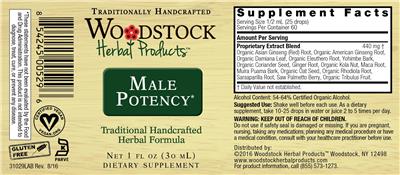
Supplement Facts
The label details for Male Potency by Woodstock Herbal Products, sourced from the NIH Dietary Supplement Label Database.
Supplement Facts
| Ingredient | Amount | % DV |
|---|---|---|
| Ginger Root Extract | 0 NP | -- |
| Rhodiola root extract | 0 NP | -- |
| Eleuthero root extract | 0 NP | -- |
| Proprietary Extract Blend | 440 mg | -- |
| Maca root extract | 0 NP | -- |
| Muira Puama Bark Extract | 0 NP | -- |
| Tribulus fruit extract | 0 NP | -- |
| American Ginseng Root Extract | 0 NP | -- |
| Saw Palmetto berry extract | 0 NP | -- |
| Damiana leaf extract | 0 NP | -- |
| Kola Nut extract | 0 NP | -- |
| Asian Ginseng root extract | 0 NP | -- |
| Oat seed extract | 0 NP | -- |
| Sarsaparilla Root Extract | 0 NP | -- |
| Yohimbe Bark Extract | 0 NP | -- |
| Coriander seed extract | 0 NP | -- |
Other ingredients: Alcohol
Tap any ingredient to jump to its full detail below.
These statements are the manufacturer’s wording, reproduced from the product label — the label is saying it, not HelloPharmacist. We don’t verify or endorse them.
FDA Disclaimer Statement
These statements have not been evaluated by the Food and Drug Administration. This product is not intended to diagnose, treat, cure, or prevent any disease.
Seals/Symbols
Certified Vegan V Vegan.org KOF-K (Kosher) Parve
Formulation
Certified Vegan V Vegan.org
Gluten Free
Traditionally Handcrafted Traditional Handcrafted Herbal Formula
Formula
KOF-K (Kosher) Parve
FDA Statement of Identity
Dietary Supplement
Suggested/Recommended/Usage/Directions
Suggested Use: Shake well before each use. As a dietary supplement, take 10-25 drops in water or juice 2 to 5 times per day.
Precautions
Warning: Keep out of reach of children.
Do not use if safety seal is damaged or missing.
If you are pregnant, nursing, taking any medications, planning any medical procedure or have a medical condition, consult with your healthcare practitioner before use.
Brand IP Statement(s)
Copyright 2016 Woodstock Herbal Products
General Statements
For product information, call (855) 573-1273.
Is this label outdated? Report a formula or label change and our pharmacy team will review it.
Male Potency by Woodstock Herbal Products label
The label scan from the NIH Dietary Supplement Label Database. Tap to enlarge.
Label images are published by the NIH Dietary Supplement Label Database for the version of this product on file. Always read your actual product label.
View the full label (PDF)The Ingredients in Male Potency by Woodstock Herbal Products
These are the 15 active ingredients this product is made of. Select any to open its full monograph.
Serving size0.2 mL Dosage formLiquid Servings per container60 Amounts shown are per serving.
Most supplement products combine several ingredients, and a medication can interact with the product through any one of them. Each ingredient below shows whether it has known drug interactions.
Proprietary Extract Blend
- › Ginger Root Extract
- › Rhodiola root extract
- › Eleuthero root extract
- › Maca root extract
- › Muira Puama Bark Extract
- › Tribulus fruit extract
- › American Ginseng Root Extract
- › Saw Palmetto berry extract
- › Damiana leaf extract
- › Kola Nut extract
- › Asian Ginseng root extract
- › Oat seed extract
- › Sarsaparilla Root Extract
- › Yohimbe Bark Extract
- › Coriander seed extract
Other (inactive) ingredients: Alcohol. These complete the product’s ingredient list but are not active constituents.
Male Potency by Woodstock Herbal Products Drug Interactions
HelloPharmacist Interaction Report
Male Potency by Woodstock Herbal Products contains multiple ingredients with documented interactions with medications.
The most serious concern is American Ginseng, which significantly reduces warfarin's effectiveness—meaning your blood thinner may not protect you as intended. You'll need your doctor to monitor your INR closely or adjust your dose if you take both.
Read the full breakdown — every affected drug type, severity by severity
Several other ingredients carry Moderate-severity interactions. Ginger and Saw Palmetto may increase bleeding risk with blood thinners (anticoagulants and antiplatelet drugs) and with nifedipine.
Ginger, Rhodiola, Eleuthero, Tribulus, American Ginseng, Damiana, Oats, and Coriander all may lower blood sugar dangerously if you're taking diabetes medications. Yohimbe is a particular concern: it works like an MAOI (a class of antidepressants), has major interactions with MAOIs themselves, and can dangerously raise blood pressure if you're on blood pressure meds or stimulants.
Rhodiola, Eleuthero, and Yohimbe may raise levels of certain heart and cancer drugs by slowing how your liver breaks them down. Eleuthero, Tribulus, and American Ginseng may interfere with immunosuppressant drugs.
Yohimbe can also worsen anxiety and tremor if combined with older antidepressants (tricyclic antidepressants). Saw Palmetto and Oats carry additional drug interactions documented in their individual monographs.
We could not check Kola Nut or Asian Ginseng—no data is on file for those ingredients.
Additionally, you should run your exact medications through the checker tool on this page. Altogether, these interactions span 1,506 individual medications.
Check your own medications below · Editorial policy · How we use AI
Want to check YOUR meds against Male Potency?
Ask about interactions with your drugs in plain English — “Can I take it with lisinopril?” — and we find you the answer in seconds, ingredient by ingredient.
Go to the checkerIngredients driving the most interactions
Individual Drug Interactions
The ingredients in Male Potency interact with 1,575 drugs. Click any drug to see the details.
13 of the 15 ingredients in Male Potency interact with drugs. Each result below shows which ingredient is responsible. Rhodiola root extract Eleuthero root extract Asian Ginseng root extract Yohimbe Bark Extract Ginger Root Extract Coriander seed extract Kola Nut extract Tribulus fruit extract American Ginseng Root Extract Saw Palmetto berry extract Damiana leaf extract Oat seed extract Sarsaparilla Root Extract
AmphetamineAdensys XR-ODT, Adzenys ER, Dyanavel XR, Mydayis
How Amphetamine interacts with Male Potency — through 5 ingredients. Tap an ingredient for the detail:
Yohimbe Bark ExtractCytochrome P450 2d6 (cyp2d6) Substrates, Stimulant Drugs +1 Major
Interaction Summary
Theoretically, yohimbe might increase the levels and adverse effects of CYP2D6 substrates.
Read the full Yohimbe Bark Extract + Amphetamine interactionAmerican Ginseng Root ExtractMonoamine Oxidase Inhibitors (maois) Moderate
Interaction Summary
Theoretically, American ginseng can interfere with MAOI therapy.
Read the full American Ginseng Root Extract + Amphetamine interactionAsian Ginseng Root ExtractStimulant Drugs, Monoamine Oxidase Inhibitors (maois) +1 Moderate
Interaction Summary
Theoretically, taking Panax ginseng with stimulant drugs might increase the risk of adverse stimulant effects.
Read the full Asian Ginseng Root Extract + Amphetamine interactionKola Nut ExtractStimulant Drugs, Monoamine Oxidase Inhibitors (maois) Moderate
Interaction Summary
Theoretically, concomitant use might increase stimulant adverse effects.
Read the full Kola Nut Extract + Amphetamine interactionEleuthero Root ExtractCytochrome P450 2d6 (cyp2d6) Substrates Minor
Interaction Summary
Theoretically, eleuthero might increase levels of drugs metabolized by CYP2D6.
Read the full Eleuthero Root Extract + Amphetamine interactionIsocarboxazidMarplan
How Isocarboxazid interacts with Male Potency — through 5 ingredients. Tap an ingredient for the detail:
Yohimbe Bark ExtractMonoamine Oxidase Inhibitors (maois) Major
Interaction Summary
Concomitant use of MAOIs with yohimbe can result in additive effects.
Read the full Yohimbe Bark Extract + Isocarboxazid interactionAsian Ginseng Root ExtractMonoamine Oxidase Inhibitors (maois) Moderate
Interaction Summary
Theoretically, Panax ginseng can interfere with MAOI therapy.
Read the full Asian Ginseng Root Extract + Isocarboxazid interactionAmerican Ginseng Root ExtractMonoamine Oxidase Inhibitors (maois) Moderate
Interaction Summary
Theoretically, American ginseng can interfere with MAOI therapy.
Read the full American Ginseng Root Extract + Isocarboxazid interactionKola Nut ExtractMonoamine Oxidase Inhibitors (maois) Moderate
Interaction Summary
Theoretically, concomitant use might increase the risk of a hypertensive crisis.
Read the full Kola Nut Extract + Isocarboxazid interactionRhodiola Root ExtractAntidepressant Drugs Minor
Interaction Summary
Theoretically, rhodiola might increase the risk of adverse effects when taken with antidepressants.
Read the full Rhodiola Root Extract + Isocarboxazid interactionMoclobemideManerix, Moclobemide
How Moclobemide interacts with Male Potency — through 5 ingredients. Tap an ingredient for the detail:
Yohimbe Bark ExtractCytochrome P450 2d6 (cyp2d6) Inhibitors, Monoamine Oxidase Inhibitors (maois) Major
Interaction Summary
CYP2D6 inhibitors may increase the levels and adverse effects of yohimbine, a constituent of yohimbe.
Read the full Yohimbe Bark Extract + Moclobemide interactionAsian Ginseng Root ExtractMonoamine Oxidase Inhibitors (maois) Moderate
Interaction Summary
Theoretically, Panax ginseng can interfere with MAOI therapy.
Read the full Asian Ginseng Root Extract + Moclobemide interactionAmerican Ginseng Root ExtractMonoamine Oxidase Inhibitors (maois) Moderate
Interaction Summary
Theoretically, American ginseng can interfere with MAOI therapy.
Read the full American Ginseng Root Extract + Moclobemide interactionKola Nut ExtractMonoamine Oxidase Inhibitors (maois) Moderate
Interaction Summary
Theoretically, concomitant use might increase the risk of a hypertensive crisis.
Read the full Kola Nut Extract + Moclobemide interactionRhodiola Root ExtractAntidepressant Drugs Minor
Interaction Summary
Theoretically, rhodiola might increase the risk of adverse effects when taken with antidepressants.
Read the full Rhodiola Root Extract + Moclobemide interactionOzanimod HydrochlorideZeposia
How Ozanimod Hydrochloride interacts with Male Potency — through 6 ingredients. Tap an ingredient for the detail:
Yohimbe Bark ExtractMonoamine Oxidase Inhibitors (maois) Major
Interaction Summary
Concomitant use of MAOIs with yohimbe can result in additive effects.
Read the full Yohimbe Bark Extract + Ozanimod Hydrochloride interactionRhodiola Root ExtractImmunosuppressants Moderate
Interaction Summary
Theoretically, rhodiola use might interfere with immunosuppressive therapy.
Read the full Rhodiola Root Extract + Ozanimod Hydrochloride interactionEleuthero Root ExtractImmunosuppressants Moderate
Interaction Summary
Theoretically, eleuthero might interfere with immunosuppressive drugs because of its immunostimulant activity.
Read the full Eleuthero Root Extract + Ozanimod Hydrochloride interactionAmerican Ginseng Root ExtractImmunosuppressants, Monoamine Oxidase Inhibitors (maois) Moderate
Interaction Summary
Theoretically, American ginseng use might interfere with immunosuppressive therapy.
Read the full American Ginseng Root Extract + Ozanimod Hydrochloride interactionKola Nut ExtractMonoamine Oxidase Inhibitors (maois) Moderate
Interaction Summary
Theoretically, concomitant use might increase the risk of a hypertensive crisis.
Read the full Kola Nut Extract + Ozanimod Hydrochloride interactionAsian Ginseng Root ExtractMonoamine Oxidase Inhibitors (maois), Immunosuppressants +1 Moderate
Interaction Summary
Theoretically, Panax ginseng can interfere with MAOI therapy.
Read the full Asian Ginseng Root Extract + Ozanimod Hydrochloride interactionPhenelzine SulfateNardil
How Phenelzine Sulfate interacts with Male Potency — through 6 ingredients. Tap an ingredient for the detail:
Yohimbe Bark ExtractMonoamine Oxidase Inhibitors (maois) Major
Interaction Summary
Concomitant use of MAOIs with yohimbe can result in additive effects.
Read the full Yohimbe Bark Extract + Phenelzine Sulfate interactionCoriander Seed ExtractCns Depressants Moderate
Interaction Summary
Theoretically, coriander might cause additive sedative effects when taken with CNS depressants.
Read the full Coriander Seed Extract + Phenelzine Sulfate interactionKola Nut ExtractMonoamine Oxidase Inhibitors (maois) Moderate
Interaction Summary
Theoretically, concomitant use might increase the risk of a hypertensive crisis.
Read the full Kola Nut Extract + Phenelzine Sulfate interactionAsian Ginseng Root ExtractMonoamine Oxidase Inhibitors (maois) Moderate
Interaction Summary
Theoretically, Panax ginseng can interfere with MAOI therapy.
Read the full Asian Ginseng Root Extract + Phenelzine Sulfate interactionAmerican Ginseng Root ExtractMonoamine Oxidase Inhibitors (maois) Moderate
Interaction Summary
Theoretically, American ginseng can interfere with MAOI therapy.
Read the full American Ginseng Root Extract + Phenelzine Sulfate interactionRhodiola Root ExtractCns Depressants, Antidepressant Drugs Minor
Interaction Summary
Theoretically, rhodiola might increase the risk of adverse effects when taken with CNS depressants.
Read the full Rhodiola Root Extract + Phenelzine Sulfate interactionRasagilineAzilect
How Rasagiline interacts with Male Potency — through 8 ingredients. Tap an ingredient for the detail:
Yohimbe Bark ExtractCytochrome P450 1a2 (cyp1a2) Substrates, Monoamine Oxidase Inhibitors (maois) Major
Interaction Summary
Theoretically, yohimbe might decrease the levels and clinical effects of CYP1A2 substrates.
Read the full Yohimbe Bark Extract + Rasagiline interactionEleuthero Root ExtractCytochrome P450 1a2 (cyp1a2) Substrates Moderate
Interaction Summary
Theoretically, eleuthero might increase levels of drugs metabolized by CYP1A2.
Read the full Eleuthero Root Extract + Rasagiline interactionAmerican Ginseng Root ExtractMonoamine Oxidase Inhibitors (maois) Moderate
Interaction Summary
Theoretically, American ginseng can interfere with MAOI therapy.
Read the full American Ginseng Root Extract + Rasagiline interactionKola Nut ExtractMonoamine Oxidase Inhibitors (maois) Moderate
Interaction Summary
Theoretically, concomitant use might increase the risk of a hypertensive crisis.
Read the full Kola Nut Extract + Rasagiline interactionCoriander Seed ExtractPhotosensitizing Drugs Moderate
Interaction Summary
Theoretically, coriander might increase the risk of photosensitivity when taken with photosensitizing drugs.
Read the full Coriander Seed Extract + Rasagiline interactionAsian Ginseng Root ExtractMonoamine Oxidase Inhibitors (maois) Moderate
Interaction Summary
Theoretically, Panax ginseng can interfere with MAOI therapy.
Read the full Asian Ginseng Root Extract + Rasagiline interactionRhodiola Root ExtractCytochrome P450 1a2 (cyp1a2) Substrates Minor
Interaction Summary
Theoretically, rhodiola might increase levels of drugs metabolized by CYP1A2.
Read the full Rhodiola Root Extract + Rasagiline interactionGinger Root ExtractCytochrome P450 1a2 (cyp1a2) Substrates Minor
Interaction Summary
Theoretically, ginger might increase the levels of CYP1A2 substrates.
Read the full Ginger Root Extract + Rasagiline interactionSafinamide MesylateXadago
How Safinamide Mesylate interacts with Male Potency — through 4 ingredients. Tap an ingredient for the detail:
Yohimbe Bark ExtractMonoamine Oxidase Inhibitors (maois) Major
Interaction Summary
Concomitant use of MAOIs with yohimbe can result in additive effects.
Read the full Yohimbe Bark Extract + Safinamide Mesylate interactionKola Nut ExtractMonoamine Oxidase Inhibitors (maois) Moderate
Interaction Summary
Theoretically, concomitant use might increase the risk of a hypertensive crisis.
Read the full Kola Nut Extract + Safinamide Mesylate interactionAmerican Ginseng Root ExtractMonoamine Oxidase Inhibitors (maois) Moderate
Interaction Summary
Theoretically, American ginseng can interfere with MAOI therapy.
Read the full American Ginseng Root Extract + Safinamide Mesylate interactionAsian Ginseng Root ExtractMonoamine Oxidase Inhibitors (maois) Moderate
Interaction Summary
Theoretically, Panax ginseng can interfere with MAOI therapy.
Read the full Asian Ginseng Root Extract + Safinamide Mesylate interactionSelegilineCarbex, Eldepryl, Emsam, Zelapar
How Selegiline interacts with Male Potency — through 6 ingredients. Tap an ingredient for the detail:
Yohimbe Bark ExtractMonoamine Oxidase Inhibitors (maois) Major
Interaction Summary
Concomitant use of MAOIs with yohimbe can result in additive effects.
Read the full Yohimbe Bark Extract + Selegiline interactionAmerican Ginseng Root ExtractMonoamine Oxidase Inhibitors (maois) Moderate
Interaction Summary
Theoretically, American ginseng can interfere with MAOI therapy.
Read the full American Ginseng Root Extract + Selegiline interactionAsian Ginseng Root ExtractMonoamine Oxidase Inhibitors (maois), Selegiline (eldepryl) Moderate
Interaction Summary
Theoretically, Panax ginseng can interfere with MAOI therapy.
Read the full Asian Ginseng Root Extract + Selegiline interactionCoriander Seed ExtractPhotosensitizing Drugs Moderate
Interaction Summary
Theoretically, coriander might increase the risk of photosensitivity when taken with photosensitizing drugs.
Read the full Coriander Seed Extract + Selegiline interactionKola Nut ExtractMonoamine Oxidase Inhibitors (maois) Moderate
Interaction Summary
Theoretically, concomitant use might increase the risk of a hypertensive crisis.
Read the full Kola Nut Extract + Selegiline interactionRhodiola Root ExtractAntidepressant Drugs Minor
Interaction Summary
Theoretically, rhodiola might increase the risk of adverse effects when taken with antidepressants.
Read the full Rhodiola Root Extract + Selegiline interactionTranylcypromineParnate
How Tranylcypromine interacts with Male Potency — through 5 ingredients. Tap an ingredient for the detail:
Yohimbe Bark ExtractMonoamine Oxidase Inhibitors (maois) Major
Interaction Summary
Concomitant use of MAOIs with yohimbe can result in additive effects.
Read the full Yohimbe Bark Extract + Tranylcypromine interactionAsian Ginseng Root ExtractMonoamine Oxidase Inhibitors (maois) Moderate
Interaction Summary
Theoretically, Panax ginseng can interfere with MAOI therapy.
Read the full Asian Ginseng Root Extract + Tranylcypromine interactionAmerican Ginseng Root ExtractMonoamine Oxidase Inhibitors (maois) Moderate
Interaction Summary
Theoretically, American ginseng can interfere with MAOI therapy.
Read the full American Ginseng Root Extract + Tranylcypromine interactionKola Nut ExtractMonoamine Oxidase Inhibitors (maois) Moderate
Interaction Summary
Theoretically, concomitant use might increase the risk of a hypertensive crisis.
Read the full Kola Nut Extract + Tranylcypromine interactionRhodiola Root ExtractAntidepressant Drugs Minor
Interaction Summary
Theoretically, rhodiola might increase the risk of adverse effects when taken with antidepressants.
Read the full Rhodiola Root Extract + Tranylcypromine interactionWarfarinWarfarin
How Warfarin interacts with Male Potency — through 8 ingredients. Tap an ingredient for the detail:
American Ginseng Root ExtractWarfarin (coumadin) Major
Interaction Summary
American ginseng seems to decrease the effectiveness of warfarin therapy.
Read the full American Ginseng Root Extract + Warfarin interactionAsian Ginseng Root ExtractCytochrome P450 3a4 (cyp3a4) Substrates, Anticoagulant/antiplatelet Drugs +1 Moderate
Interaction Summary
Theoretically, Panax ginseng might increase or decrease levels of drugs metabolized by CYP3A4.
Read the full Asian Ginseng Root Extract + Warfarin interactionGinger Root ExtractCytochrome P450 1a2 (cyp1a2) Substrates, Cytochrome P450 2c9 (cyp2c9) Substrates +3 Moderate
Interaction Summary
Theoretically, ginger might increase the levels of CYP1A2 substrates.
Read the full Ginger Root Extract + Warfarin interactionKola Nut ExtractAnticoagulant/antiplatelet Drugs Moderate
Interaction Summary
Theoretically, cola nut may increase the risk of bleeding if used with anticoagulant or antiplatelet drugs.
Read the full Kola Nut Extract + Warfarin interactionEleuthero Root ExtractAnticoagulant/antiplatelet Drugs, Cytochrome P450 3a4 (cyp3a4) Substrates +2 Moderate
Interaction Summary
Theoretically, eleuthero may have antiplatelet effects and may increase the risk of bleeding if used with anticoagulant or antiplatelet drugs.
Read the full Eleuthero Root Extract + Warfarin interactionSaw Palmetto Berry ExtractAnticoagulant/antiplatelet Drugs Moderate
Interaction Summary
Saw palmetto might increase the risk of bleeding with anticoagulant or antiplatelet drugs.
Read the full Saw Palmetto Berry Extract + Warfarin interactionRhodiola Root ExtractCytochrome P450 1a2 (cyp1a2) Substrates, Cytochrome P450 2c9 (cyp2c9) Substrates +1 Moderate
Interaction Summary
Theoretically, rhodiola might increase levels of drugs metabolized by CYP1A2.
Read the full Rhodiola Root Extract + Warfarin interactionYohimbe Bark ExtractAnticoagulant/antiplatelet Drugs, Cytochrome P450 1a2 (cyp1a2) Substrates +1 Minor
Interaction Summary
Theoretically, combining yohimbe bark with antiplatelet or anticoagulant drugs might have additive effects; however, this has not been reported in clinical research.
Read the full Yohimbe Bark Extract + Warfarin interactionWarfarin SodiumCoumadin, Panwarfin, Sofarin
How Warfarin Sodium interacts with Male Potency — through 8 ingredients. Tap an ingredient for the detail:
American Ginseng Root ExtractWarfarin (coumadin) Major
Interaction Summary
American ginseng seems to decrease the effectiveness of warfarin therapy.
Read the full American Ginseng Root Extract + Warfarin Sodium interactionRhodiola Root ExtractCytochrome P450 2c9 (cyp2c9) Substrates, Cytochrome P450 3a4 (cyp3a4) Substrates +1 Moderate
Interaction Summary
Theoretically, rhodiola might increase levels of drugs metabolized by CYP2C9.
Read the full Rhodiola Root Extract + Warfarin Sodium interactionGinger Root ExtractWarfarin (coumadin), Cytochrome P450 1a2 (cyp1a2) Substrates +3 Moderate
Interaction Summary
Ginger might increase the risk of bleeding with warfarin.
Read the full Ginger Root Extract + Warfarin Sodium interactionKola Nut ExtractAnticoagulant/antiplatelet Drugs Moderate
Interaction Summary
Theoretically, cola nut may increase the risk of bleeding if used with anticoagulant or antiplatelet drugs.
Read the full Kola Nut Extract + Warfarin Sodium interactionAsian Ginseng Root ExtractWarfarin (coumadin), Cytochrome P450 3a4 (cyp3a4) Substrates +1 Moderate
Interaction Summary
Panax ginseng might affect the clearance of warfarin.
Read the full Asian Ginseng Root Extract + Warfarin Sodium interactionSaw Palmetto Berry ExtractAnticoagulant/antiplatelet Drugs Moderate
Interaction Summary
Saw palmetto might increase the risk of bleeding with anticoagulant or antiplatelet drugs.
Read the full Saw Palmetto Berry Extract + Warfarin Sodium interactionEleuthero Root ExtractCytochrome P450 1a2 (cyp1a2) Substrates, Cytochrome P450 2c9 (cyp2c9) Substrates +2 Moderate
Interaction Summary
Theoretically, eleuthero might increase levels of drugs metabolized by CYP1A2.
Read the full Eleuthero Root Extract + Warfarin Sodium interactionYohimbe Bark ExtractAnticoagulant/antiplatelet Drugs, Cytochrome P450 1a2 (cyp1a2) Substrates +1 Minor
Interaction Summary
Theoretically, combining yohimbe bark with antiplatelet or anticoagulant drugs might have additive effects; however, this has not been reported in clinical research.
Read the full Yohimbe Bark Extract + Warfarin Sodium interaction6-mercaptopurinePurinethol
How 6-mercaptopurine interacts with Male Potency — through 4 ingredients. Tap an ingredient for the detail:
Asian Ginseng Root ExtractImmunosuppressants Moderate
Interaction Summary
Theoretically, Panax ginseng use might interfere with immunosuppressive therapy.
Read the full Asian Ginseng Root Extract + 6-mercaptopurine interactionRhodiola Root ExtractImmunosuppressants Moderate
Interaction Summary
Theoretically, rhodiola use might interfere with immunosuppressive therapy.
Read the full Rhodiola Root Extract + 6-mercaptopurine interactionEleuthero Root ExtractImmunosuppressants Moderate
Interaction Summary
Theoretically, eleuthero might interfere with immunosuppressive drugs because of its immunostimulant activity.
Read the full Eleuthero Root Extract + 6-mercaptopurine interactionAmerican Ginseng Root ExtractImmunosuppressants Moderate
Interaction Summary
Theoretically, American ginseng use might interfere with immunosuppressive therapy.
Read the full American Ginseng Root Extract + 6-mercaptopurine interactionAdo-trastuzumab EmtansineKadcyla
How Ado-trastuzumab Emtansine interacts with Male Potency — through 5 ingredients. Tap an ingredient for the detail:
Ginger Root ExtractCytochrome P450 3a4 (cyp3a4) Substrates Moderate
Interaction Summary
Ginger might increase or decrease the levels of CYP3A4 substrates.
Read the full Ginger Root Extract + Ado-trastuzumab Emtansine interactionAsian Ginseng Root ExtractCytochrome P450 3a4 (cyp3a4) Substrates Moderate
Interaction Summary
Theoretically, Panax ginseng might increase or decrease levels of drugs metabolized by CYP3A4.
Read the full Asian Ginseng Root Extract + Ado-trastuzumab Emtansine interactionRhodiola Root ExtractCytochrome P450 3a4 (cyp3a4) Substrates Minor
Interaction Summary
Theoretically, rhodiola might increase levels of drugs metabolized by CYP3A4.
Read the full Rhodiola Root Extract + Ado-trastuzumab Emtansine interactionEleuthero Root ExtractCytochrome P450 3a4 (cyp3a4) Substrates Minor
Interaction Summary
Theoretically, eleuthero might increase levels of drugs metabolized by CYP3A4.
Read the full Eleuthero Root Extract + Ado-trastuzumab Emtansine interactionYohimbe Bark ExtractCytochrome P450 3a4 (cyp3a4) Substrates Minor
Interaction Summary
Theoretically, yohimbe might decrease the levels and clinical effects of CYP3A4 substrates.
Read the full Yohimbe Bark Extract + Ado-trastuzumab Emtansine interactionAbametapirXeglyze
How Abametapir interacts with Male Potency — through 2 ingredients. Tap an ingredient for the detail:
Kola Nut ExtractCytochrome P450 1a2 (cyp1a2) Inhibitors Moderate
Interaction Summary
Theoretically, CYP1A2 inhibitors might increase the levels and adverse effects of the caffeine in cola nut.
Read the full Kola Nut Extract + Abametapir interactionYohimbe Bark ExtractCytochrome P450 3a4 (cyp3a4) Inhibitors Moderate
Interaction Summary
Theoretically, CYP3A4 inhibitors might increase the levels and adverse effects of yohimbine, a constituent of yohimbe bark.
Read the full Yohimbe Bark Extract + Abametapir interactionAbciximabReoPro
How Abciximab interacts with Male Potency — through 6 ingredients. Tap an ingredient for the detail:
Saw Palmetto Berry ExtractAnticoagulant/antiplatelet Drugs Moderate
Interaction Summary
Saw palmetto might increase the risk of bleeding with anticoagulant or antiplatelet drugs.
Read the full Saw Palmetto Berry Extract + Abciximab interactionEleuthero Root ExtractAnticoagulant/antiplatelet Drugs Moderate
Interaction Summary
Theoretically, eleuthero may have antiplatelet effects and may increase the risk of bleeding if used with anticoagulant or antiplatelet drugs.
Read the full Eleuthero Root Extract + Abciximab interactionKola Nut ExtractAnticoagulant/antiplatelet Drugs Moderate
Interaction Summary
Theoretically, cola nut may increase the risk of bleeding if used with anticoagulant or antiplatelet drugs.
Read the full Kola Nut Extract + Abciximab interactionGinger Root ExtractAnticoagulant/antiplatelet Drugs Moderate
Interaction Summary
Ginger may have antiplatelet effects and may increase the risk of bleeding if used with anticoagulant or antiplatelet drugs.
Read the full Ginger Root Extract + Abciximab interactionAsian Ginseng Root ExtractAnticoagulant/antiplatelet Drugs Moderate
Interaction Summary
Although Panax ginseng has shown antiplatelet effects in the laboratory, it is unlikely to increase the risk of bleeding if used with anticoagulant or antiplatelet drugs.
Read the full Asian Ginseng Root Extract + Abciximab interactionYohimbe Bark ExtractAnticoagulant/antiplatelet Drugs Minor
Interaction Summary
Theoretically, combining yohimbe bark with antiplatelet or anticoagulant drugs might have additive effects; however, this has not been reported in clinical research.
Read the full Yohimbe Bark Extract + Abciximab interactionAbemaciclibVerzenio
How Abemaciclib interacts with Male Potency — through 5 ingredients. Tap an ingredient for the detail:
Asian Ginseng Root ExtractCytochrome P450 3a4 (cyp3a4) Substrates Moderate
Interaction Summary
Theoretically, Panax ginseng might increase or decrease levels of drugs metabolized by CYP3A4.
Read the full Asian Ginseng Root Extract + Abemaciclib interactionGinger Root ExtractCytochrome P450 3a4 (cyp3a4) Substrates Moderate
Interaction Summary
Ginger might increase or decrease the levels of CYP3A4 substrates.
Read the full Ginger Root Extract + Abemaciclib interactionRhodiola Root ExtractCytochrome P450 3a4 (cyp3a4) Substrates Minor
Interaction Summary
Theoretically, rhodiola might increase levels of drugs metabolized by CYP3A4.
Read the full Rhodiola Root Extract + Abemaciclib interactionYohimbe Bark ExtractCytochrome P450 3a4 (cyp3a4) Substrates Minor
Interaction Summary
Theoretically, yohimbe might decrease the levels and clinical effects of CYP3A4 substrates.
Read the full Yohimbe Bark Extract + Abemaciclib interactionEleuthero Root ExtractCytochrome P450 3a4 (cyp3a4) Substrates Minor
Interaction Summary
Theoretically, eleuthero might increase levels of drugs metabolized by CYP3A4.
Read the full Eleuthero Root Extract + Abemaciclib interactionAbiraterone
How Abiraterone interacts with Male Potency — through 6 ingredients. Tap an ingredient for the detail:
Ginger Root ExtractCytochrome P450 3a4 (cyp3a4) Substrates Moderate
Interaction Summary
Ginger might increase or decrease the levels of CYP3A4 substrates.
Read the full Ginger Root Extract + Abiraterone interactionAsian Ginseng Root ExtractCytochrome P450 3a4 (cyp3a4) Substrates Moderate
Interaction Summary
Theoretically, Panax ginseng might increase or decrease levels of drugs metabolized by CYP3A4.
Read the full Asian Ginseng Root Extract + Abiraterone interactionYohimbe Bark ExtractCytochrome P450 2d6 (cyp2d6) Inhibitors, Cytochrome P450 3a4 (cyp3a4) Inhibitors +1 Moderate
Interaction Summary
CYP2D6 inhibitors may increase the levels and adverse effects of yohimbine, a constituent of yohimbe.
Read the full Yohimbe Bark Extract + Abiraterone interactionKola Nut ExtractCytochrome P450 1a2 (cyp1a2) Inhibitors Moderate
Interaction Summary
Theoretically, CYP1A2 inhibitors might increase the levels and adverse effects of the caffeine in cola nut.
Read the full Kola Nut Extract + Abiraterone interactionEleuthero Root ExtractCytochrome P450 3a4 (cyp3a4) Substrates Minor
Interaction Summary
Theoretically, eleuthero might increase levels of drugs metabolized by CYP3A4.
Read the full Eleuthero Root Extract + Abiraterone interactionRhodiola Root ExtractCytochrome P450 3a4 (cyp3a4) Substrates Minor
Interaction Summary
Theoretically, rhodiola might increase levels of drugs metabolized by CYP3A4.
Read the full Rhodiola Root Extract + Abiraterone interactionAbiraterone AcetateYonsa, Zytiga
How Abiraterone Acetate interacts with Male Potency — through 5 ingredients. Tap an ingredient for the detail:
Ginger Root ExtractCytochrome P450 3a4 (cyp3a4) Substrates Moderate
Interaction Summary
Ginger might increase or decrease the levels of CYP3A4 substrates.
Read the full Ginger Root Extract + Abiraterone Acetate interactionAsian Ginseng Root ExtractCytochrome P450 3a4 (cyp3a4) Substrates Moderate
Interaction Summary
Theoretically, Panax ginseng might increase or decrease levels of drugs metabolized by CYP3A4.
Read the full Asian Ginseng Root Extract + Abiraterone Acetate interactionYohimbe Bark ExtractCytochrome P450 3a4 (cyp3a4) Substrates, Cytochrome P450 2d6 (cyp2d6) Inhibitors Moderate
Interaction Summary
Theoretically, yohimbe might decrease the levels and clinical effects of CYP3A4 substrates.
Read the full Yohimbe Bark Extract + Abiraterone Acetate interactionRhodiola Root ExtractCytochrome P450 3a4 (cyp3a4) Substrates Minor
Interaction Summary
Theoretically, rhodiola might increase levels of drugs metabolized by CYP3A4.
Read the full Rhodiola Root Extract + Abiraterone Acetate interactionEleuthero Root ExtractCytochrome P450 3a4 (cyp3a4) Substrates Minor
Interaction Summary
Theoretically, eleuthero might increase levels of drugs metabolized by CYP3A4.
Read the full Eleuthero Root Extract + Abiraterone Acetate interactionAbrocitinibCibinqo
How Abrocitinib interacts with Male Potency — through 8 ingredients. Tap an ingredient for the detail:
Saw Palmetto Berry ExtractAnticoagulant/antiplatelet Drugs Moderate
Interaction Summary
Saw palmetto might increase the risk of bleeding with anticoagulant or antiplatelet drugs.
Read the full Saw Palmetto Berry Extract + Abrocitinib interactionAmerican Ginseng Root ExtractImmunosuppressants Moderate
Interaction Summary
Theoretically, American ginseng use might interfere with immunosuppressive therapy.
Read the full American Ginseng Root Extract + Abrocitinib interactionRhodiola Root ExtractCytochrome P450 2c9 (cyp2c9) Substrates, Immunosuppressants Moderate
Interaction Summary
Theoretically, rhodiola might increase levels of drugs metabolized by CYP2C9.
Read the full Rhodiola Root Extract + Abrocitinib interactionAsian Ginseng Root ExtractAnticoagulant/antiplatelet Drugs, Immunosuppressants Moderate
Interaction Summary
Although Panax ginseng has shown antiplatelet effects in the laboratory, it is unlikely to increase the risk of bleeding if used with anticoagulant or antiplatelet drugs.
Read the full Asian Ginseng Root Extract + Abrocitinib interactionGinger Root ExtractAnticoagulant/antiplatelet Drugs, Cytochrome P450 2c9 (cyp2c9) Substrates Moderate
Interaction Summary
Ginger may have antiplatelet effects and may increase the risk of bleeding if used with anticoagulant or antiplatelet drugs.
Read the full Ginger Root Extract + Abrocitinib interactionKola Nut ExtractAnticoagulant/antiplatelet Drugs Moderate
Interaction Summary
Theoretically, cola nut may increase the risk of bleeding if used with anticoagulant or antiplatelet drugs.
Read the full Kola Nut Extract + Abrocitinib interactionEleuthero Root ExtractCytochrome P450 2c9 (cyp2c9) Substrates, Anticoagulant/antiplatelet Drugs +1 Moderate
Interaction Summary
Theoretically, eleuthero might increase levels of drugs metabolized by CYP2C9.
Read the full Eleuthero Root Extract + Abrocitinib interactionYohimbe Bark ExtractAnticoagulant/antiplatelet Drugs Minor
Interaction Summary
Theoretically, combining yohimbe bark with antiplatelet or anticoagulant drugs might have additive effects; however, this has not been reported in clinical research.
Read the full Yohimbe Bark Extract + Abrocitinib interactionAcalabrutinibCalquence
How Acalabrutinib interacts with Male Potency — through 5 ingredients. Tap an ingredient for the detail:
Eleuthero Root ExtractCytochrome P450 3a4 (cyp3a4) Substrates, P-glycoprotein Substrates Moderate
Interaction Summary
Theoretically, eleuthero might increase levels of drugs metabolized by CYP3A4.
Read the full Eleuthero Root Extract + Acalabrutinib interactionGinger Root ExtractCytochrome P450 3a4 (cyp3a4) Substrates, P-glycoprotein Substrates Moderate
Interaction Summary
Ginger might increase or decrease the levels of CYP3A4 substrates.
Read the full Ginger Root Extract + Acalabrutinib interactionRhodiola Root ExtractCytochrome P450 3a4 (cyp3a4) Substrates, P-glycoprotein Substrates Moderate
Interaction Summary
Theoretically, rhodiola might increase levels of drugs metabolized by CYP3A4.
Read the full Rhodiola Root Extract + Acalabrutinib interactionAsian Ginseng Root ExtractCytochrome P450 3a4 (cyp3a4) Substrates Moderate
Interaction Summary
Theoretically, Panax ginseng might increase or decrease levels of drugs metabolized by CYP3A4.
Read the full Asian Ginseng Root Extract + Acalabrutinib interactionYohimbe Bark ExtractCytochrome P450 3a4 (cyp3a4) Substrates Minor
Interaction Summary
Theoretically, yohimbe might decrease the levels and clinical effects of CYP3A4 substrates.
Read the full Yohimbe Bark Extract + Acalabrutinib interactionAcarboseGlucobay, Prandase, Precose
How Acarbose interacts with Male Potency — through 10 ingredients. Tap an ingredient for the detail:
Asian Ginseng Root ExtractAntidiabetes Drugs Moderate
Interaction Summary
Theoretically, taking Panax ginseng with antidiabetes drugs might increase the risk of hypoglycemia.
Read the full Asian Ginseng Root Extract + Acarbose interactionAmerican Ginseng Root ExtractAntidiabetes Drugs Moderate
Interaction Summary
Theoretically, taking American ginseng with antidiabetes drugs might increase the risk of hypoglycemia.
Read the full American Ginseng Root Extract + Acarbose interactionCoriander Seed ExtractAntidiabetes Drugs Moderate
Interaction Summary
Theoretically, coriander might increase the risk of hypoglycemia when taken with antidiabetes drugs.
Read the full Coriander Seed Extract + Acarbose interactionDamiana Leaf ExtractAntidiabetes Drugs Moderate
Interaction Summary
Theoretically, taking damiana with antidiabetes drugs might increase the risk of hypoglycemia.
Read the full Damiana Leaf Extract + Acarbose interactionTribulus Fruit ExtractAntidiabetes Drugs Moderate
Interaction Summary
Taking tribulus with antidiabetes drugs might increase the risk of hypoglycemia.
Read the full Tribulus Fruit Extract + Acarbose interactionEleuthero Root ExtractAntidiabetes Drugs Moderate
Interaction Summary
Theoretically, eleuthero might have additive effects when used with antidiabetes drugs.
Read the full Eleuthero Root Extract + Acarbose interactionRhodiola Root ExtractAntidiabetes Drugs Moderate
Interaction Summary
Theoretically, taking rhodiola with antidiabetes drugs might increase the risk of hypoglycemia.
Read the full Rhodiola Root Extract + Acarbose interactionGinger Root ExtractAntidiabetes Drugs Moderate
Interaction Summary
Theoretically, taking ginger with antidiabetes drugs might increase the risk of hypoglycemia.
Read the full Ginger Root Extract + Acarbose interactionOat Seed ExtractAntidiabetes Drugs Moderate
Interaction Summary
Theoretically, oats may have additive effects with antidiabetic agents and might increase the risk of hypoglycemia.
Read the full Oat Seed Extract + Acarbose interactionKola Nut ExtractAntidiabetes Drugs Minor
Interaction Summary
Theoretically, taking cola nut with antidiabetes drugs might interfere with blood glucose control.
Read the full Kola Nut Extract + Acarbose interactionAcebutololRhotral, Sectral
How Acebutolol interacts with Male Potency — through 4 ingredients. Tap an ingredient for the detail:
Rhodiola Root ExtractAntihypertensive Drugs Moderate
Interaction Summary
Theoretically, taking rhodiola with antihypertensive drugs might increase the risk of hypotension.
Read the full Rhodiola Root Extract + Acebutolol interactionTribulus Fruit ExtractAntihypertensive Drugs Moderate
Interaction Summary
Theoretically, taking tribulus with antihypertensive drugs might increase the risk of hypotension.
Read the full Tribulus Fruit Extract + Acebutolol interactionYohimbe Bark ExtractAntihypertensive Drugs Moderate
Interaction Summary
Theoretically, yohimbe might reduce the effects of antihypertensive drugs.
Read the full Yohimbe Bark Extract + Acebutolol interactionCoriander Seed ExtractAntihypertensive Drugs Moderate
Interaction Summary
Theoretically, coriander might increase the risk of hypotension when taken with antihypertensive drugs.
Read the full Coriander Seed Extract + Acebutolol interactionAcenocoumarolSintrom
How Acenocoumarol interacts with Male Potency — through 6 ingredients. Tap an ingredient for the detail:
Asian Ginseng Root ExtractAnticoagulant/antiplatelet Drugs Moderate
Interaction Summary
Although Panax ginseng has shown antiplatelet effects in the laboratory, it is unlikely to increase the risk of bleeding if used with anticoagulant or antiplatelet drugs.
Read the full Asian Ginseng Root Extract + Acenocoumarol interactionSaw Palmetto Berry ExtractAnticoagulant/antiplatelet Drugs Moderate
Interaction Summary
Saw palmetto might increase the risk of bleeding with anticoagulant or antiplatelet drugs.
Read the full Saw Palmetto Berry Extract + Acenocoumarol interactionGinger Root ExtractAnticoagulant/antiplatelet Drugs Moderate
Interaction Summary
Ginger may have antiplatelet effects and may increase the risk of bleeding if used with anticoagulant or antiplatelet drugs.
Read the full Ginger Root Extract + Acenocoumarol interactionKola Nut ExtractAnticoagulant/antiplatelet Drugs Moderate
Interaction Summary
Theoretically, cola nut may increase the risk of bleeding if used with anticoagulant or antiplatelet drugs.
Read the full Kola Nut Extract + Acenocoumarol interactionEleuthero Root ExtractAnticoagulant/antiplatelet Drugs Moderate
Interaction Summary
Theoretically, eleuthero may have antiplatelet effects and may increase the risk of bleeding if used with anticoagulant or antiplatelet drugs.
Read the full Eleuthero Root Extract + Acenocoumarol interactionYohimbe Bark ExtractAnticoagulant/antiplatelet Drugs Minor
Interaction Summary
Theoretically, combining yohimbe bark with antiplatelet or anticoagulant drugs might have additive effects; however, this has not been reported in clinical research.
Read the full Yohimbe Bark Extract + Acenocoumarol interactionAcepromazineAtravet
How Acepromazine interacts with Male Potency — through 4 ingredients. Tap an ingredient for the detail:
Coriander Seed ExtractCns Depressants, Photosensitizing Drugs Moderate
Interaction Summary
Theoretically, coriander might cause additive sedative effects when taken with CNS depressants.
Read the full Coriander Seed Extract + Acepromazine interactionYohimbe Bark ExtractPhenothiazines Moderate
Interaction Summary
Theoretically, using yohimbine with phenothiazines might have additive effects.
Read the full Yohimbe Bark Extract + Acepromazine interactionKola Nut ExtractPhenothiazines Minor
Interaction Summary
Theoretically, phenothiazines might increase the levels and adverse effects of the caffeine in cola nut.
Read the full Kola Nut Extract + Acepromazine interactionRhodiola Root ExtractCns Depressants Minor
Interaction Summary
Theoretically, rhodiola might increase the risk of adverse effects when taken with CNS depressants.
Read the full Rhodiola Root Extract + Acepromazine interactionAcetaminophenChildren's Tylenol, Children's Tylenol Meltaways, Tylenol, Tylenol Ex Strength
How Acetaminophen interacts with Male Potency — through 4 ingredients. Tap an ingredient for the detail:
Eleuthero Root ExtractCytochrome P450 1a2 (cyp1a2) Substrates Moderate
Interaction Summary
Theoretically, eleuthero might increase levels of drugs metabolized by CYP1A2.
Read the full Eleuthero Root Extract + Acetaminophen interactionRhodiola Root ExtractCytochrome P450 1a2 (cyp1a2) Substrates Minor
Interaction Summary
Theoretically, rhodiola might increase levels of drugs metabolized by CYP1A2.
Read the full Rhodiola Root Extract + Acetaminophen interactionGinger Root ExtractCytochrome P450 1a2 (cyp1a2) Substrates Minor
Interaction Summary
Theoretically, ginger might increase the levels of CYP1A2 substrates.
Read the full Ginger Root Extract + Acetaminophen interactionYohimbe Bark ExtractCytochrome P450 1a2 (cyp1a2) Substrates Minor
Interaction Summary
Theoretically, yohimbe might decrease the levels and clinical effects of CYP1A2 substrates.
Read the full Yohimbe Bark Extract + Acetaminophen interactionAcetaminophen, AspirinGemnisyn
How Acetaminophen, Aspirin interacts with Male Potency — through 7 ingredients. Tap an ingredient for the detail:
Asian Ginseng Root ExtractAnticoagulant/antiplatelet Drugs Moderate
Interaction Summary
Although Panax ginseng has shown antiplatelet effects in the laboratory, it is unlikely to increase the risk of bleeding if used with anticoagulant or antiplatelet drugs.
Read the full Asian Ginseng Root Extract + Acetaminophen, Aspirin interactionEleuthero Root ExtractAnticoagulant/antiplatelet Drugs, Cytochrome P450 1a2 (cyp1a2) Substrates Moderate
Interaction Summary
Theoretically, eleuthero may have antiplatelet effects and may increase the risk of bleeding if used with anticoagulant or antiplatelet drugs.
Read the full Eleuthero Root Extract + Acetaminophen, Aspirin interactionSaw Palmetto Berry ExtractAnticoagulant/antiplatelet Drugs Moderate
Interaction Summary
Saw palmetto might increase the risk of bleeding with anticoagulant or antiplatelet drugs.
Read the full Saw Palmetto Berry Extract + Acetaminophen, Aspirin interactionGinger Root ExtractCytochrome P450 1a2 (cyp1a2) Substrates, Anticoagulant/antiplatelet Drugs Moderate
Interaction Summary
Theoretically, ginger might increase the levels of CYP1A2 substrates.
Read the full Ginger Root Extract + Acetaminophen, Aspirin interactionKola Nut ExtractAnticoagulant/antiplatelet Drugs Moderate
Interaction Summary
Theoretically, cola nut may increase the risk of bleeding if used with anticoagulant or antiplatelet drugs.
Read the full Kola Nut Extract + Acetaminophen, Aspirin interactionYohimbe Bark ExtractCytochrome P450 1a2 (cyp1a2) Substrates, Anticoagulant/antiplatelet Drugs Minor
Interaction Summary
Theoretically, yohimbe might decrease the levels and clinical effects of CYP1A2 substrates.
Read the full Yohimbe Bark Extract + Acetaminophen, Aspirin interactionRhodiola Root ExtractCytochrome P450 1a2 (cyp1a2) Substrates Minor
Interaction Summary
Theoretically, rhodiola might increase levels of drugs metabolized by CYP1A2.
Read the full Rhodiola Root Extract + Acetaminophen, Aspirin interactionAcetaminophen, Aspirin, CaffeineExcedrin, Excedrin Extra Strength, Excedrin Migraine
How Acetaminophen, Aspirin, Caffeine interacts with Male Potency — through 7 ingredients. Tap an ingredient for the detail:
Ginger Root ExtractAnticoagulant/antiplatelet Drugs, Cytochrome P450 1a2 (cyp1a2) Substrates +1 Moderate
Interaction Summary
Ginger may have antiplatelet effects and may increase the risk of bleeding if used with anticoagulant or antiplatelet drugs.
Read the full Ginger Root Extract + Acetaminophen, Aspirin, Caffeine interactionKola Nut ExtractAnticoagulant/antiplatelet Drugs, Stimulant Drugs Moderate
Interaction Summary
Theoretically, cola nut may increase the risk of bleeding if used with anticoagulant or antiplatelet drugs.
Read the full Kola Nut Extract + Acetaminophen, Aspirin, Caffeine interactionAsian Ginseng Root ExtractAnticoagulant/antiplatelet Drugs, Stimulant Drugs +2 Moderate
Interaction Summary
Although Panax ginseng has shown antiplatelet effects in the laboratory, it is unlikely to increase the risk of bleeding if used with anticoagulant or antiplatelet drugs.
Read the full Asian Ginseng Root Extract + Acetaminophen, Aspirin, Caffeine interactionYohimbe Bark ExtractAnticoagulant/antiplatelet Drugs, Cytochrome P450 3a4 (cyp3a4) Substrates +2 Moderate
Interaction Summary
Theoretically, combining yohimbe bark with antiplatelet or anticoagulant drugs might have additive effects; however, this has not been reported in clinical research.
Read the full Yohimbe Bark Extract + Acetaminophen, Aspirin, Caffeine interactionEleuthero Root ExtractAnticoagulant/antiplatelet Drugs, Cytochrome P450 3a4 (cyp3a4) Substrates +1 Moderate
Interaction Summary
Theoretically, eleuthero may have antiplatelet effects and may increase the risk of bleeding if used with anticoagulant or antiplatelet drugs.
Read the full Eleuthero Root Extract + Acetaminophen, Aspirin, Caffeine interactionSaw Palmetto Berry ExtractAnticoagulant/antiplatelet Drugs Moderate
Interaction Summary
Saw palmetto might increase the risk of bleeding with anticoagulant or antiplatelet drugs.
Read the full Saw Palmetto Berry Extract + Acetaminophen, Aspirin, Caffeine interactionRhodiola Root ExtractCytochrome P450 1a2 (cyp1a2) Substrates, Cytochrome P450 3a4 (cyp3a4) Substrates Minor
Interaction Summary
Theoretically, rhodiola might increase levels of drugs metabolized by CYP1A2.
Read the full Rhodiola Root Extract + Acetaminophen, Aspirin, Caffeine interactionAcetaminophen, Brompheniramine, PhenylpropanolamineDimetapp Cold and Flu
How Acetaminophen, Brompheniramine, Phenylpropanolamine interacts with Male Potency — through 7 ingredients. Tap an ingredient for the detail:
Eleuthero Root ExtractCytochrome P450 1a2 (cyp1a2) Substrates Moderate
Interaction Summary
Theoretically, eleuthero might increase levels of drugs metabolized by CYP1A2.
Read the full Eleuthero Root Extract + Acetaminophen, Brompheniramine, Phenylpropanolamine interactionAsian Ginseng Root ExtractStimulant Drugs Moderate
Interaction Summary
Theoretically, taking Panax ginseng with stimulant drugs might increase the risk of adverse stimulant effects.
Read the full Asian Ginseng Root Extract + Acetaminophen, Brompheniramine, Phenylpropanolamine interactionCoriander Seed ExtractPhotosensitizing Drugs Moderate
Interaction Summary
Theoretically, coriander might increase the risk of photosensitivity when taken with photosensitizing drugs.
Read the full Coriander Seed Extract + Acetaminophen, Brompheniramine, Phenylpropanolamine interactionKola Nut ExtractStimulant Drugs, Phenylpropanolamine Moderate
Interaction Summary
Theoretically, concomitant use might increase stimulant adverse effects.
Read the full Kola Nut Extract + Acetaminophen, Brompheniramine, Phenylpropanolamine interactionYohimbe Bark ExtractStimulant Drugs, Cytochrome P450 1a2 (cyp1a2) Substrates Moderate
Interaction Summary
Theoretically, taking yohimbe with stimulant drugs can have additive effects.
Read the full Yohimbe Bark Extract + Acetaminophen, Brompheniramine, Phenylpropanolamine interactionGinger Root ExtractCytochrome P450 1a2 (cyp1a2) Substrates Minor
Interaction Summary
Theoretically, ginger might increase the levels of CYP1A2 substrates.
Read the full Ginger Root Extract + Acetaminophen, Brompheniramine, Phenylpropanolamine interactionRhodiola Root ExtractCytochrome P450 1a2 (cyp1a2) Substrates Minor
Interaction Summary
Theoretically, rhodiola might increase levels of drugs metabolized by CYP1A2.
Read the full Rhodiola Root Extract + Acetaminophen, Brompheniramine, Phenylpropanolamine interactionAcetaminophen, ButalbitalAxocet, Bancap, Bucet, Butex Forte, Esgic CF, Orbivan CF +5 more
How Acetaminophen, Butalbital interacts with Male Potency — through 4 ingredients. Tap an ingredient for the detail:
Eleuthero Root ExtractCytochrome P450 1a2 (cyp1a2) Substrates Moderate
Interaction Summary
Theoretically, eleuthero might increase levels of drugs metabolized by CYP1A2.
Read the full Eleuthero Root Extract + Acetaminophen, Butalbital interactionRhodiola Root ExtractCytochrome P450 1a2 (cyp1a2) Substrates Minor
Interaction Summary
Theoretically, rhodiola might increase levels of drugs metabolized by CYP1A2.
Read the full Rhodiola Root Extract + Acetaminophen, Butalbital interactionYohimbe Bark ExtractCytochrome P450 1a2 (cyp1a2) Substrates Minor
Interaction Summary
Theoretically, yohimbe might decrease the levels and clinical effects of CYP1A2 substrates.
Read the full Yohimbe Bark Extract + Acetaminophen, Butalbital interactionGinger Root ExtractCytochrome P450 1a2 (cyp1a2) Substrates Minor
Interaction Summary
Theoretically, ginger might increase the levels of CYP1A2 substrates.
Read the full Ginger Root Extract + Acetaminophen, Butalbital interactionAcetaminophen, Butalbital, CaffeineEsgic, Esgic Plus, Fiogesic, Fioricet, Repan, Tecnal +1 more
How Acetaminophen, Butalbital, Caffeine interacts with Male Potency — through 6 ingredients. Tap an ingredient for the detail:
Ginger Root ExtractCytochrome P450 1a2 (cyp1a2) Substrates, Cytochrome P450 3a4 (cyp3a4) Substrates Moderate
Interaction Summary
Theoretically, ginger might increase the levels of CYP1A2 substrates.
Read the full Ginger Root Extract + Acetaminophen, Butalbital, Caffeine interactionKola Nut ExtractStimulant Drugs Moderate
Interaction Summary
Theoretically, concomitant use might increase stimulant adverse effects.
Read the full Kola Nut Extract + Acetaminophen, Butalbital, Caffeine interactionAsian Ginseng Root ExtractStimulant Drugs, Cytochrome P450 3a4 (cyp3a4) Substrates +1 Moderate
Interaction Summary
Theoretically, taking Panax ginseng with stimulant drugs might increase the risk of adverse stimulant effects.
Read the full Asian Ginseng Root Extract + Acetaminophen, Butalbital, Caffeine interactionYohimbe Bark ExtractCytochrome P450 1a2 (cyp1a2) Substrates, Stimulant Drugs +1 Moderate
Interaction Summary
Theoretically, yohimbe might decrease the levels and clinical effects of CYP1A2 substrates.
Read the full Yohimbe Bark Extract + Acetaminophen, Butalbital, Caffeine interactionEleuthero Root ExtractCytochrome P450 3a4 (cyp3a4) Substrates, Cytochrome P450 1a2 (cyp1a2) Substrates Moderate
Interaction Summary
Theoretically, eleuthero might increase levels of drugs metabolized by CYP3A4.
Read the full Eleuthero Root Extract + Acetaminophen, Butalbital, Caffeine interactionRhodiola Root ExtractCytochrome P450 1a2 (cyp1a2) Substrates, Cytochrome P450 3a4 (cyp3a4) Substrates Minor
Interaction Summary
Theoretically, rhodiola might increase levels of drugs metabolized by CYP1A2.
Read the full Rhodiola Root Extract + Acetaminophen, Butalbital, Caffeine interactionEach ingredient & the kinds of drugs it affects
For each ingredient in Male Potency with known interactions, here are the types of medications they can affect. Open any type for the detail — or search your exact drug in the checker above.
Rhodiola root extract
Antidiabetes Drugs
Theoretically, taking rhodiola with antidiabetes drugs might increase the risk of hypoglycemia.
In vitro and animal research shows that rhodiola extract can decrease blood glucose due to alpha-glucosidase activity.
Antihypertensive Drugs
Theoretically, taking rhodiola with antihypertensive drugs might increase the risk of hypotension.
In vitro and animal research shows that rhodiola extract inhibits angiotensin-converting enzyme (ACE) and might lower blood pressure.
Cytochrome P450 2C9 (Cyp2C9) Substrates
Theoretically, rhodiola might increase levels of drugs metabolized by CYP2C9.
In vitro research shows that rhodiola inhibits CYP2C9. This effect is highly variable and appears to be dependent on the rhodiola product studied. Also, a clinical study in healthy young males found that taking rhodiola extract 290 mg daily for 14 days reduces the metabolism of losartan, a CYP2C9 substrate, by 21% after 4 hours.
Immunosuppressants
Theoretically, rhodiola use might interfere with immunosuppressive therapy.
In vitro and animal research show that rhodiola has immunostimulatory effects.
Losartan (Cozaar)
Rhodiola might increase the levels and adverse effects of losartan.
A clinical study in healthy young males found that taking rhodiola extract 290 mg daily for 14 days reduces the metabolism of losartan, a CYP2C9 substrate, by 21% after 4 hours.
P-Glycoprotein Substrates
Theoretically, rhodiola might increase levels of P-glycoprotein substrates.
In vitro research shows that rhodiola inhibits P-glycoprotein. Theoretically, using rhodiola with P-glycoprotein substrates might increase drug levels and potentially increase the risk of adverse effects.
Antidepressant Drugs
Theoretically, rhodiola might increase the risk of adverse effects when taken with antidepressants.
A review of adverse event reports in Poland identified cases of tachyarrhythmias, myalgia, arthralgia, gum pain, restless leg syndrome, swallowing disorders, and changes in consciousness when rhodiola was taken in combination with paroxetine, escitalopram, fluoxetine, sertraline, trazodone, and/or duloxetine.
Cns Depressants
Theoretically, rhodiola might increase the risk of adverse effects when taken with CNS depressants.
A review of adverse event reports in Poland identified cases of excessive sedation, myoclonus, hypotension, and hallucinations when rhodiola was taken with haloperidol, diazepam, or alprazolam.
Cytochrome P450 1A2 (Cyp1A2) Substrates
Theoretically, rhodiola might increase levels of drugs metabolized by CYP1A2.
In vitro research shows that rhodiola inhibits CYP1A2. This effect is highly variable and appears to be dependent on the rhodiola product studied. However, a clinical study in healthy young males found that taking rhodiola extract 290 mg daily for 14 days does not inhibit the metabolism of caffeine, a CYP1A2 substrate.
Cytochrome P450 3A4 (Cyp3A4) Substrates
Theoretically, rhodiola might increase levels of drugs metabolized by CYP3A4.
In vitro research shows that rhodiola inhibits CYP3A4. This effect is highly variable and appears to be dependent on the rhodiola product studied. However, a clinical study in healthy young males found that taking rhodiola extract 290 mg daily for 14 days does not inhibit the metabolism of midazolam, a CYP3A4 substrate.
Eleuthero root extract
Anticoagulant/Antiplatelet Drugs
Theoretically, eleuthero may have antiplatelet effects and may increase the risk of bleeding if used with anticoagulant or antiplatelet drugs.
In vitro and animal research shows that a constituent of eleuthero, dihydroxybenzoic acid, appears to inhibit platelet aggregation. Concomitant use with anticoagulant or antiplatelet drugs might increase the risk of bleeding. This effect has not been reported in humans.
Antidiabetes Drugs
Theoretically, eleuthero might have additive effects when used with antidiabetes drugs.
Animal research suggests that certain constituents of eleuthero have hypoglycemic activity in both healthy and diabetic animals. A small study in adults with type 2 diabetes also shows that taking eleuthero for 3 months can lower blood glucose levels. However, one very small study in healthy individuals shows that taking powdered eleuthero 3 grams, 40 minutes prior to a 75-gram oral glucose tolerance test, significantly increases postprandial blood glucose levels when compared with placebo. These contradictory findings might be due to patient-specific variability and variability in active ingredient ratios.
Cytochrome P450 1A2 (Cyp1A2) Substrates
Theoretically, eleuthero might increase levels of drugs metabolized by CYP1A2.
In vitro and animal research suggest that standardized extracts of eleuthero inhibit CYP1A2. This effect has not been reported in humans.
Cytochrome P450 2C9 (Cyp2C9) Substrates
Theoretically, eleuthero might increase levels of drugs metabolized by CYP2C9.
In vitro and animal research suggest that standardized extracts of eleuthero might inhibit CYP2C9. This effect has not been reported in humans.
Digoxin (Lanoxin)
Eleuthero might increase serum digoxin levels and increase the risk of side effects.
In one case report, a 74-year-old male who was stabilized on digoxin presented with an elevated serum digoxin level after starting an eleuthero supplement, without symptoms of toxicity. After stopping the supplement, serum digoxin levels returned to normal. It is not clear whether this was due to a pharmacokinetic interaction or to interference with the digoxin assay. Although the product was found to be free of digoxin and digitoxin, it was not tested for other contaminants.
Immunosuppressants
Theoretically, eleuthero might interfere with immunosuppressive drugs because of its immunostimulant activity.
Animal and in vitro research shows that eleuthero extracts have immunomodulatory effects, including increasing cellular and humoral activity.
P-Glycoprotein Substrates
Theoretically, eleuthero might increase levels of P-glycoprotein substrates.
In vitro research suggests that eleuthero can inhibit the multi-drug transporter protein, P-glycoprotein. However, it is too soon to tell if this is clinically important. This interaction has not been reported in humans.
Cytochrome P450 2D6 (Cyp2D6) Substrates
Theoretically, eleuthero might increase levels of drugs metabolized by CYP2D6.
In vitro and animal research suggest that standardized extracts of eleuthero might inhibit CYP2D6. However, research in healthy human volunteers has found that taking eleuthero 485 mg twice daily for 14 days does not inhibit CYP2D6 drug metabolism.
Cytochrome P450 3A4 (Cyp3A4) Substrates
Theoretically, eleuthero might increase levels of drugs metabolized by CYP3A4.
In vitro and animal research suggest that standardized extracts of eleuthero might inhibit CYP3A4. However, research in healthy human volunteers has found that taking eleuthero 485 mg twice daily for 14 days does not inhibit CYP3A4 drug metabolism.
Organic Anion-Transporting Polypeptide Substrates (Oatp)
Theoretically, eleuthero might decrease levels of drugs metabolized by OATP.
In vitro research suggests that eleuthero inhibits OATP2B1, which might reduce the bioavailability of oral drugs that are substrates of OATP2B1. Due to the weak inhibitory effect identified in this study, this interaction is not likely to be clinically significant.
Asian Ginseng root extract
Anticoagulant/Antiplatelet Drugs
Although Panax ginseng has shown antiplatelet effects in the laboratory, it is unlikely to increase the risk of bleeding if used with anticoagulant or antiplatelet drugs.
In vitro evidence suggests that ginsenoside constituents in Panax ginseng might decrease platelet aggregation. However, research in humans suggests that ginseng does not affect platelet aggregation. Animal research indicates low oral bioavailability of Rb1 and rapid elimination of Rg1, which might explain the discrepancy between in vitro and human research. Until more is known, use with caution in patients concurrently taking anticoagulant or antiplatelet drugs.
Antidiabetes Drugs
Theoretically, taking Panax ginseng with antidiabetes drugs might increase the risk of hypoglycemia.
Clinical research suggests that Panax ginseng might decrease blood glucose levels. Monitor blood glucose levels closely.
Caffeine
Theoretically, taking Panax ginseng with caffeine might increase the risk of adverse stimulant effects.
Panax ginseng has been shown to have stimulant effects. Theoretically, caffeine might have an additive effect on the stimulant effects of Panax ginseng.
Cytochrome P450 2D6 (Cyp2D6) Substrates
Theoretically, Panax ginseng might increase levels of drugs metabolized by CYP2D6. However, research is conflicting.
There is some evidence that Panax ginseng can inhibit the CYP2D6 enzyme by approximately 6%. In addition, in animal research, Panax ginseng inhibits the metabolism of dextromethorphan, a drug metabolized by CYP2D6, by a small amount. However, contradictory research suggests Panax ginseng might not inhibit CYP2D6. Until more is known, use Panax ginseng cautiously in patients taking drugs metabolized by these enzymes.
Cytochrome P450 3A4 (Cyp3A4) Substrates
Theoretically, Panax ginseng might increase or decrease levels of drugs metabolized by CYP3A4.
Panax ginseng may affect the clearance of drugs metabolized by CYP3A4. One such drug is imatinib. Inhibition of CYP3A4 was believed to be responsible for a case of imatinib-induced hepatotoxicity. In contrast, Panax ginseng has been shown to increase the clearance of midazolam, another drug metabolized by CYP3A4. Clinical research shows that Panax ginseng can reduce midazolam area under the curve by 44%, maximum plasma concentration by 26%, and time to reach maximum plasma concentration by 29%. Midazolam metabolism was also increased in animals given Panax ginseng. Until more is known, use Panax ginseng cautiously in combination with CYP3A4 substrates.
Estrogens
Theoretically, concomitant use of large amounts of Panax ginseng might interfere with hormone replacement therapy.
Laboratory research and some case reports suggest that Panax ginseng can have estrogenic effects due to competition for estrogen receptors. The estrogenic activity is attributed to the ginsenoside constituents of Panax ginseng.
Furosemide (Lasix)
Theoretically, Panax ginseng might reduce the effects of furosemide.
There is some concern that Panax ginseng might contribute to furosemide resistance. There is one case of resistance to furosemide diuresis in a patient taking a germanium-containing ginseng product.
Imatinib (Gleevec)
Theoretically, Panax ginseng might increase the effects and adverse effects of imatinib.
A case of imatinib-induced hepatotoxicity has been reported for a 26-year-old male with chronic myelogenous leukemia stabilized on imatinib for 7 years. The patient took imatinib 400 mg along with a Panax ginseng-containing energy drink daily for 3 months. Since imatinib-associated hepatotoxicity typically occurs within 2 years of initiating therapy, it is believed that Panax ginseng affected imatinib toxicity though inhibition of cytochrome P450 3A4. CYP3A4 is the primary enzyme involved in imatinib metabolism.
Immunosuppressants
Theoretically, Panax ginseng use might interfere with immunosuppressive therapy.
Panax ginseng might have immune system stimulating properties.
Insulin
Theoretically, taking Panax ginseng with insulin might increase the risk of hypoglycemia.
Clinical research suggests that Panax ginseng might decrease blood glucose levels. Insulin dose adjustments might be necessary in patients taking Panax ginseng; use with caution.
Midazolam (Versed)
Theoretically, Panax ginseng may increase the clearance of midazolam.
Midazolam is metabolized by cytochrome P450 3A4 (CYP3A4). Clinical research suggests that Panax ginseng can reduce midazolam area under the curve by 44%, maximum plasma concentration by 26%, and time to reach maximum plasma concentration by 29%. Midazolam metabolism was also increased in animals given Panax ginseng.
Monoamine Oxidase Inhibitors (Maois)
Theoretically, Panax ginseng can interfere with MAOI therapy.
Concomitant use of Panax ginseng with phenelzine (Nardil) is associated with insomnia, headache, tremors, and hypomania.
Nifedipine (Procardia)
Theoretically, taking Panax ginseng with nifedipine might increase serum levels of nifedipine and the risk of hypotension.
Preliminary clinical research shows that concomitant use can increase serum levels of nifedipine in healthy volunteers. This might cause the blood pressure lowering effects of nifedipine to be increased when taken concomitantly with Panax ginseng.
Qt Interval-Prolonging Drugs
Theoretically, Panax ginseng has an additive effect with drugs that prolong the QT interval and potentially increase the risk of ventricular arrhythmias. However, research is conflicting.
Clinical research shows that short-term use of Panax ginseng can increase the QT interval. However, no changes in QT interval have been identified with prolonged use.
Raltegravir (Isentress)
Theoretically, taking Panax ginseng with raltegravir might increase the risk of liver toxicity.
A case report suggests that concomitant use of Panax ginseng with raltegravir can increase serum levels of raltegravir, resulting in elevated liver enzymes levels.
Selegiline (Eldepryl)
Theoretically, Panax ginseng might increase or decrease levels of selegiline, possibly altering the effects and side effects of selegiline.
Animal research shows that taking selegiline with a low dose of Panax ginseng extract (1 gram/kg) reduces selegiline bioavailability, while taking a high dose of Panax ginseng extract (3 grams/kg) increases selegiline bioavailability. More research is needed to confirm these effects.
Stimulant Drugs
Theoretically, taking Panax ginseng with stimulant drugs might increase the risk of adverse stimulant effects.
Panax ginseng has been shown to have stimulant effects.
Warfarin (Coumadin)
Panax ginseng might affect the clearance of warfarin. However, this interaction appears to be unlikely.
There has been a single case report of decreased effectiveness of warfarin in a patient who also took Panax ginseng. However, it is questionable whether Panax ginseng was the cause of this decrease in warfarin effectiveness. Some research in humans and animals suggests that Panax ginseng does not affect the pharmacokinetics of warfarin. However, other research in humans suggests that Panax ginseng might modestly increase the clearance of the S-warfarin isomer. More evidence is needed to determine whether Panax ginseng causes a significant interaction with warfarin.
Fexofenadine (Allegra)
Theoretically, Panax ginseng might decrease blood levels of oral or intravenous fexofenadine.
Animal research suggests that taking Panax ginseng in combination with oral or intravenous fexofenadine may reduce the bioavailability of fexofenadine. Some scientists have attributed this effect to the ability of Panax ginseng to increase the expression of P-glycoprotein.
Lopinavir/Ritonavir (Kaletra)
Although Panax ginseng has demonstrated variable effects on cytochrome P450 3A4 (CYP3A4), which metabolizes lopinavir, Panax ginseng is unlikely to alter levels of lopinavir/ritonavir.
Lopinavir is metabolized by CYP3A4 and is administered with the CYP3A4 inhibitor ritonavir to increase its plasma concentrations. Panax ginseng has shown variable effects on CYP3A4 activity in humans. However, taking Panax ginseng (Vitamer Laboratories) 500 mg twice daily for 14 days did not alter the pharmacokinetics of lopinavir/ritonavir in 12 healthy volunteers.
Yohimbe Bark Extract
Monoamine Oxidase Inhibitors (Maois)
Concomitant use of MAOIs with yohimbe can result in additive effects.
Yohimbine, a constituent of yohimbe, has MAO inhibitory effects. At high doses, yohimbine is a non-selective inhibitor of MAO.
Antihypertensive Drugs
Theoretically, yohimbe might reduce the effects of antihypertensive drugs.
Yohimbine, a constituent of yohimbe, is an alpha-2 adrenoceptor antagonist and has been reported to increase blood pressure in clinical research. Theoretically, concomitant use of yohimbe and antihypertensive drugs can interfere with blood pressure control.
Clonidine (Catapres)
Theoretically, yohimbe might precipitate clonidine withdrawal.
Chronic clonidine use can downregulate alpha-2 adrenoreceptors. Animal research and one human case report suggest that concomitant administration of yohimbine, an alpha-2 adrenoceptor antagonist, may precipitate clonidine withdrawal and lead to sympathomimetic toxicity, including hypertensive crisis.
Cytochrome P450 2D6 (Cyp2D6) Inhibitors
CYP2D6 inhibitors may increase the levels and adverse effects of yohimbine, a constituent of yohimbe.
In vitro and clinical research shows that the yohimbe bark constituent, yohimbine, is metabolized by CYP2D6 isoenzymes. Paroxetine, a cytochrome P450 (CYP) 2D6 inhibitor, increases the maximum serum concentration of yohimbine and reduces the clearance of yohimbine compared to yohimbine alone in patients who are extensive CYP2D6 metabolizers..
Cytochrome P450 2D6 (Cyp2D6) Substrates
Theoretically, yohimbe might increase the levels and adverse effects of CYP2D6 substrates.
In vitro research suggests that yohimbine, a constituent of yohimbe bark, inhibits CYP2D6 enzyme activity.
Cytochrome P450 3A4 (Cyp3A4) Inhibitors
Theoretically, CYP3A4 inhibitors might increase the levels and adverse effects of yohimbine, a constituent of yohimbe bark.
In vitro and clinical research shows that the yohimbe bark constituent, yohimbine, is metabolized by CYP3A4 enzymes. Theoretically, drugs that inhibit CYP3A4 might increase the levels and adverse effects of yohimbine.
Paroxetine (Paxil)
Paroxetine decreases the clearance of yohimbine and may increase its effects.
Paroxetine, a cytochrome P450 (CYP) 2D6 inhibitor, increases the maximum serum concentration of yohimbine by about 350% and reduces the clearance of yohimbine by about 80% compared to yohimbine alone in patients who are extensive CYP2D6 metabolizers. No significant changes in pharmacokinetic parameters of yohimbine were observed with coadministration of paroxetine in patients who are poor CYP2D6 metabolizers.
Phenothiazines
Theoretically, using yohimbine with phenothiazines might have additive effects.
Yohimbine, a constituent of yohimbe, has alpha-2 adrenergic antagonist effects. Theoretically, combining it with phenothiazines can cause additive alpha-2 adrenergic antagonism.
Stimulant Drugs
Theoretically, taking yohimbe with stimulant drugs can have additive effects.
Yohimbine, a constituent of yohimbe, has sympathomimetic effects and increases blood pressure in a dose-dependent manner. Theoretically, taking yohimbe with stimulant drugs can have additive stimulant and hypertensive effects.
Tricyclic Antidepressants (Tcas)
Theoretically, taking yohimbe with TCAs can increase adverse effects.
A small clinical study in patients taking TCAs for at least 4 weeks shows that receiving doses of intravenous yohimbine 2.5-20 mg daily for up to 7 days precipitates severe anxiety, agitation, and tremor. The effects of yohimbe bark itself are unclear; oral yohimbe bark contains 0.6% to 1.38% yohimbine, but it is unclear how much is absorbed.
Anticoagulant/Antiplatelet Drugs
Theoretically, combining yohimbe bark with antiplatelet or anticoagulant drugs might have additive effects; however, this has not been reported in clinical research.
Research in healthy adults shows that taking yohimbine, a constituent of yohimbe bark, in doses of 8 mg or more, seems to inhibit platelet aggregation in vitro by binding to the alpha-2 adrenoceptor. The effects of yohimbe bark itself are unclear; yohimbe bark contains 0.6% to 1.38% yohimbine, but it is unclear how much is absorbed.
Cytochrome P450 1A2 (Cyp1A2) Substrates
Theoretically, yohimbe might decrease the levels and clinical effects of CYP1A2 substrates.
In vitro research shows that yohimbe extract induces CYP1A2 enzymes.
Cytochrome P450 3A4 (Cyp3A4) Substrates
Theoretically, yohimbe might decrease the levels and clinical effects of CYP3A4 substrates.
In vitro research shows that yohimbe extract induces CYP3A4 enzymes.
Ginger Root Extract
Anticoagulant/Antiplatelet Drugs
Ginger may have antiplatelet effects and may increase the risk of bleeding if used with anticoagulant or antiplatelet drugs. However, research is conflicting.
Laboratory research suggests that ginger inhibits thromboxane synthetase and decreases platelet aggregation. However, this has not been demonstrated unequivocally in humans, with mixed results from clinical trials. Theoretically, excessive amounts of ginger might increase the risk of bleeding when used with anticoagulant/antiplatelet drugs.
Antidiabetes Drugs
Theoretically, taking ginger with antidiabetes drugs might increase the risk of hypoglycemia.
Animal and human research suggests that ginger might increase insulin levels and/or decrease blood glucose levels.
Cytochrome P450 3A4 (Cyp3A4) Substrates
Ginger might increase or decrease the levels of CYP3A4 substrates.
In vitro research and some case reports suggest that ginger inhibits CYP3A4 activity. Three case reports from the World Health Organization (WHO) adverse drug reaction database describe increased toxicity in patients taking ginger and cancer medications that are CYP3A4 substrates (imatinib, dabrafenib, and crizotinib). However, the causality of this interaction is unclear due to the presence of multiple interacting drugs and routes of administration.
Conversely, other in vitro research suggests that ginger induces CYP3A4 activity, leading to reduced levels of CYP3A4 substrates. However, this interaction has not been reported in humans.
Losartan (Cozaar)
Theoretically, ginger might increase levels of losartan and the risk of hypotension.
In animal research, ginger increased the levels and hypotensive effects of a single dose of losartan. It is not clear if ginger alters the concentration or effects of losartan when taken continuously. Additionally, this interaction has not been shown in humans.
Nifedipine (Procardia)
Ginger may have antiplatelet effects and increase the risk of bleeding if used with nifedipine.
Clinical research shows that combined treatment with ginger 1 gram plus nifedipine 10 mg significantly inhibits platelet aggregation when compared to nifedipine or ginger alone.
P-Glycoprotein Substrates
Ginger might increase the absorption and blood levels of P-glycoprotein (P-gp) substrates.
In vitro research and case reports suggest that ginger inhibits drug efflux by P-gp, potentially increasing absorption and serum levels of P-gp substrates. Two case reports from the World Health Organization (WHO) adverse drug reaction database describe increased toxicity in patients taking ginger and cancer medications that are P-gp substrates (trametinib, crizotinib). However, the causality of this interaction is unclear due to the presence of multiple interacting drugs and routes of administration.
Phenprocoumon (Marcoumar, Others)
Ginger might increase the risk of bleeding with phenprocoumon.
Phenprocoumon, a warfarin-related anticoagulant, might increase the international normalized ratio (INR) when taken with ginger. There is one case report of a 76-year-old woman with a stable INR on phenprocoumon that increased to greater than 10 when she began consuming dried ginger and ginger tea.
Warfarin (Coumadin)
Ginger might increase the risk of bleeding with warfarin.
Laboratory research suggests that ginger might inhibit thromboxane synthetase and decrease platelet aggregation. In one case report, ginger increased the INR when taken with phenprocoumon, which has similar pharmacological effects as warfarin. In another case report, ginger increased the INR when taken with a combination of warfarin, hydrochlorothiazide, and acetaminophen. A longitudinal analysis suggests that taking ginger increases the risk of bleeding in patients taking warfarin for at least 4 months. However, research in healthy people suggests that ginger has no effect on INR, or the pharmacokinetics or pharmacodynamics of warfarin. Until more is known, monitor INRs closely in patients taking large amounts of ginger.
Calcium Channel Blockers
Theoretically, taking ginger with calcium channel blockers might increase the risk of hypotension.
Some animal and in vitro research suggests that ginger has hypotensive and calcium channel-blocking effects. Another animal study shows that concomitant administration of ginger and the calcium channel blocker amlodipine leads to greater reductions in blood pressure when compared with amlodipine alone.
Cyclosporine (Neoral, Sandimmune)
Theoretically, when taken prior to cyclosporine, ginger might decrease cyclosporine levels.
In an animal model, ginger juice taken 2 hours prior to cyclosporine administration reduced the maximum concentration and area under the curve of cyclosporine by 51% and 40%, respectively. This effect was not observed when ginger juice and cyclosporine were administered at the same time.
Cytochrome P450 1A2 (Cyp1A2) Substrates
Theoretically, ginger might increase the levels of CYP1A2 substrates.
In vitro research shows that ginger inhibits CYP1A2 activity. However, this interaction has not been reported in humans.
Cytochrome P450 2B6 (Cyp2B6) Substrates
Theoretically, ginger might increase the levels of CYP2B6 substrates.
In vitro research shows that ginger inhibits CYP2B6 activity. However, this interaction has not been reported in humans.
Cytochrome P450 2C9 (Cyp2C9) Substrates
Theoretically, ginger might increase the levels of CYP2C9 substrates.
In vitro research shows that ginger inhibits CYP2C9 activity. However, this interaction has not been reported in humans.
Metronidazole (Flagyl)
Theoretically, ginger might increase levels of metronidazole.
In an animal model, ginger increased the absorption and plasma half-life of metronidazole. In addition, the elimination rate and clearance of metronidazole was significantly reduced.
Coriander seed extract
Antidiabetes Drugs
Theoretically, coriander might increase the risk of hypoglycemia when taken with antidiabetes drugs.
Evidence from animal research suggests that coriander fruit and coriander extract can reduce blood glucose levels. Monitor blood glucose levels closely. Dose adjustments might be necessary.
Antihypertensive Drugs
Theoretically, coriander might increase the risk of hypotension when taken with antihypertensive drugs.
Evidence from animal research suggests that coriander fruit can lower blood pressure.
Cns Depressants
Theoretically, coriander might cause additive sedative effects when taken with CNS depressants.
Evidence from animal research suggests that coriander fruit extract has sedative effects.
Photosensitizing Drugs
Theoretically, coriander might increase the risk of photosensitivity when taken with photosensitizing drugs.
Evidence from in vitro research suggests that coriandrin, a constituent of coriander, has photosensitizing effects.
Kola Nut extract
Adenosine (Adenocard)
Theoretically, cola nut might decrease the vasodilatory effects of adenosine and interfere with its use prior to stress testing.
Cola nut contains caffeine. Caffeine is a competitive inhibitor of adenosine at the cellular level. However, caffeine does not seem to affect supplemental adenosine because high interstitial levels of adenosine overcome the antagonistic effects of caffeine. It is recommended that methylxanthines and methylxanthine-containing products (including cola nut) be stopped 24 hours prior to pharmacological stress tests. However, methylxanthines appear more likely to interfere with dipyridamole (Persantine) than adenosine-induced stress testing.
Alcohol (Ethanol)
Theoretically, alcohol might increase the levels and adverse effects of the caffeine in cola nut.
Cola nut contains caffeine. Concomitant use of alcohol and caffeine can increase caffeine serum concentrations and the risk of caffeine adverse effects. Alcohol reduces caffeine metabolism.
Anticoagulant/Antiplatelet Drugs
Theoretically, cola nut may increase the risk of bleeding if used with anticoagulant or antiplatelet drugs.
Cola nut contains caffeine. Caffeine is reported to have antiplatelet activity. This interaction has not been reported in humans.
Beta-Adrenergic Agonists
Theoretically, the caffeine in cola nut might increase the clinical effects of beta-adrenergic agonists.
Cola nut contains caffeine. Theoretically, concomitant use of large amounts of caffeine might increase the cardiac inotropic effects of beta-agonists.
Carbamazepine (Tegretol)
Theoretically, cola nut might reduce the effects of carbamazepine and increase the risk for convulsions.
Cola nut contains caffeine. Animal research suggests that taking caffeine can lower the anticonvulsant effects of carbamazepine and can induce seizures when taken in doses above 400 mg/kg. Human research has shown that taking caffeine 300 mg in three divided doses along with carbamazepine 200 mg reduces the bioavailability of carbamazepine by 32% and prolongs the plasma half-life of carbamazepine 2-fold in healthy individuals.
Clozapine (Clozaril)
Theoretically, cola nut might increase the levels and adverse effects of clozapine and acutely exacerbate psychotic symptoms.
Cola nut contains caffeine. Caffeine can increase the effects and toxicity of clozapine. Caffeine doses of 400-1000 mg daily inhibit clozapine metabolism. Clozapine is metabolized by cytochrome P450 1A2 (CYP1A2). Researchers speculate that caffeine might inhibit CYP1A2. However, there is no reliable evidence that caffeine affects CYP1A2. There is also speculation that genetic factors might make some patients more sensitive to the interaction between clozapine and caffeine.
Cytochrome P450 1A2 (Cyp1A2) Inhibitors
Theoretically, CYP1A2 inhibitors might increase the levels and adverse effects of the caffeine in cola nut.
Cola nut contains caffeine. Caffeine is metabolized by CYP1A2,.
Dipyridamole (Persantine)
Theoretically, cola nut might decrease the vasodilatory effects of dipyridamole and interfere with its use prior to stress testing.
Cola nut contains caffeine. Caffeine may inhibit dipyridamole-induced vasodilation. It is recommended that methylxanthines and methylxanthine-containing products, such as cola nut, be stopped 24 hours prior to pharmacological stress tests. Methylxanthines appear more likely to interfere with dipyridamole than with adenosine-induced stress testing.
Disulfiram (Antabuse)
Theoretically, disulfiram might increase the levels and adverse effects of the caffeine in cola nut.
Cola nut contains caffeine. In human research, disulfiram decreases the rate of caffeine clearance.
Diuretic Drugs
Theoretically, using cola nut with diuretic drugs might increase the risk of hypokalemia.
Cola nut contains caffeine. In excessive amounts, caffeine can reduce potassium levels due to stimulation of the sodium-potassium pump. Certain diuretics can also lower potassium levels.
Ephedrine
Theoretically, concomitant use might increase the risk for stimulant adverse effects.
Cola nut contains caffeine. There is evidence that using ephedrine with caffeine might increase the risk of serious life-threatening or debilitating adverse effects such as hypertension, myocardial infarction, stroke, seizures, and death.
Estrogens
Theoretically, estrogens might increase the levels and adverse effects of the caffeine in cola nut.
Cola nut contains caffeine. Estrogen inhibits caffeine metabolism.
Ethosuximide (Zarontin)
Theoretically, cola nut might reduce the effects of ethosuximide and increase the risk for convulsions.
Cola nut contains caffeine. Animal research suggests that caffeine 92.4 mg/kg can decrease the anticonvulsant activity of ethosuximide. However, this effect has not been reported in humans
Felbamate (Felbatol)
Theoretically, cola nut might reduce the effects of felbamate and increase the risk for convulsions.
Cola nut contains caffeine. Animal research suggests that a high dose of caffeine 161.7 mg/kg can decreases the anticonvulsant activity of felbamate. However, this effect has not been reported in humans.
Flutamide (Eulexin)
Theoretically, cola nut might increase the levels and adverse effects of flutamide.
Cola nut contains caffeine. In vitro evidence suggests that caffeine can inhibit the metabolism of flutamide. This effect has not been reported in humans.
Fluvoxamine (Luvox)
Theoretically, fluvoxamine might increase the levels and adverse effects of the caffeine in cola nut.
Cola nut contains caffeine. Fluvoxamine reduces caffeine metabolism.
Lithium
Theoretically, abrupt cola nut withdrawal might increase the levels and adverse effects of lithium.
Cola nut contains caffeine. Abrupt caffeine withdrawal can increase serum lithium levels. There are two case reports of lithium tremor that worsened upon abrupt coffee withdrawal.
Monoamine Oxidase Inhibitors (Maois)
Theoretically, concomitant use might increase the risk of a hypertensive crisis.
Cola nut contains caffeine. Caffeine has been shown to inhibit monoamine oxidase (MAO) A and B in laboratory studies. Concomitant intake of large amounts of caffeine with MAOIs might precipitate a hypertensive crisis. In a case report, a patient that consumed 10-12 cups of caffeinated coffee and took the MAOI tranylcypromine presented with severe hypertension. Hypertension was resolved after the patient switched to drinking decaffeinated coffee.
Nicotine
Theoretically, concomitant use might increase the risk of hypertension.
Cola nut contains caffeine. Concomitant use of caffeine and nicotine has been shown to have additive cardiovascular effects, including increased heart rate and blood pressure. Blood pressure was increased by 10.8/12.4 mmHg when the agents were used concomitantly.
Pentobarbital (Nembutal)
Theoretically, cola nut might decrease the effects of pentobarbital.
Cola nut contains caffeine. Theoretically, caffeine might negate the hypnotic effects of pentobarbital.
Phenobarbital (Luminal)
Theoretically, cola nut might reduce the effects of phenobarbital and increase the risk for convulsions.
Cola nut contains caffeine. Animal research suggests that caffeine can decrease the anticonvulsant activity of phenobarbital. However, this effect has not been reported in humans.
Phenylpropanolamine
Theoretically, phenylpropanolamine might increase the risk of hypertension, as well as the levels and adverse effects of the caffeine in cola nut.
Cola nut contains caffeine. Concomitant use of phenylpropanolamine and caffeine might cause an additive increase in blood pressure. Phenylpropanolamine also seems to increase caffeine serum levels.
Phenytoin (Dilantin)
Theoretically, cola nut might reduce the effects of phenytoin and increase the risk for convulsions.
Cola nut contains caffeine. Animal research suggests that caffeine can decrease the anticonvulsant activity of phenytoin. The effect does not seem to be related to the seizure threshold-lowering effects of caffeine. However, the exact mechanism of this interaction is unclear.
Pioglitazone (Actos)
Theoretically, cola nut might increase the levels and clinical effects of pioglitazone.
Cola nut contains caffeine. Animal research suggests that caffeine can modestly increase the maximum concentration, area under the curve, and half-life of pioglitazone, and also reduce its clearance. This increased the antidiabetic effects of pioglitazone. However, the exact mechanism of this interaction is unclear.
Quinolone Antibiotics
Theoretically, quinolone antibiotics might increase the levels and adverse effects of the caffeine in cola nut.
Cola nut contains caffeine. Quinolones (also called fluoroquinolones) can decrease caffeine clearance by inhibiting cytochrome P450 1A2 (CYP1A2).
Tribulus fruit extract
Antidiabetes Drugs
Taking tribulus with antidiabetes drugs might increase the risk of hypoglycemia.
Clinical research shows that Tribulus can lower blood glucose levels in adults with type 2 diabetes who are taking antidiabetes medications.
Antihypertensive Drugs
Theoretically, taking tribulus with antihypertensive drugs might increase the risk of hypotension.
Animal research shows that tribulus can lower blood pressure by inhibiting angiotensin-converting enzyme (ACE). Tribulus has also demonstrated hypotensive effects in pre-hypertensive adults.
Lithium
Theoretically, tribulus might increase the levels and clinical effects of lithium.
Tribulus is thought to have diuretic properties. Due to these potential diuretic effects, tribulus might reduce excretion and increase levels of lithium. The dose of lithium might need to be decreased.
American Ginseng Root Extract
Warfarin (Coumadin)
American ginseng seems to decrease the effectiveness of warfarin therapy.
Healthy patients receiving warfarin 5 mg daily, who also take American ginseng 1 gram twice daily, seem to have a significantly reduced international normalized ratio (INR).
Antidiabetes Drugs
Theoretically, taking American ginseng with antidiabetes drugs might increase the risk of hypoglycemia.
American ginseng seems to lower postprandial blood glucose. Theoretically, concomitant use with antidiabetes drugs might enhance blood glucose lowering effects and possibly cause hypoglycemia.
Immunosuppressants
Theoretically, American ginseng use might interfere with immunosuppressive therapy.
American ginseng seems to stimulate immune function. Theoretically, American ginseng might decrease the effectiveness of immunosuppressant drugs.
Monoamine Oxidase Inhibitors (Maois)
Theoretically, American ginseng can interfere with MAOI therapy.
There is one case report of insomnia, headache, and tremors when an unspecified ginseng product was used with phenelzine (Nardil), an MAOI. There is also one case report of hypomania when an unspecified ginseng product was used with phenelzine. Theoretically, American ginseng may interfere with MAOI therapy.
Saw Palmetto berry extract
Anticoagulant/Antiplatelet Drugs
Saw palmetto might increase the risk of bleeding with anticoagulant or antiplatelet drugs.
Saw palmetto is reported to prolong bleeding time. Theoretically, it might increase the risk of bleeding when used concomitantly with anticoagulant or antiplatelet drugs.
Contraceptive Drugs
Saw palmetto might reduce the effectiveness of contraceptive drugs.
Saw palmetto might have antiestrogenic effects. Theoretically, it might interfere with contraceptive drugs taken concomitantly.
Estrogens
Saw palmetto might reduce the effectiveness of estrogens.
Saw palmetto might have antiestrogenic effects. Theoretically, it might interfere with estrogens taken concomitantly.
Damiana leaf extract
Antidiabetes Drugs
Theoretically, taking damiana with antidiabetes drugs might increase the risk of hypoglycemia.
Animal research shows that taking damiana lowers blood glucose level.
Oat seed extract
Antidiabetes Drugs
Theoretically, oats may have additive effects with antidiabetic agents and might increase the risk of hypoglycemia.
Consuming oats can decrease blood glucose in patients with diabetes. In those who require insulin, taking oats 100 grams daily for 2 days reduces the insulin dose required to achieve metabolic control.
Insulin
Concomitant use of oats and insulin might increase the risk of hypoglycemia.
In patients with insulin-dependent type 2 diabetes, taking oats 100 grams daily for 2 days reduces the insulin dose required to achieve metabolic control.
Sarsaparilla Root Extract
Digoxin (Lanoxin)
Theoretically, concomitant use of sarsaparilla with digoxin might increase the risk of cardiac toxicity.
Sarsaparilla is thought to have diuretic properties, which could potentially cause potassium loss. Overuse or misuse of sarsaparilla with cardiac glycoside therapy might increase the risk of cardiac toxicity due to potassium loss.
Lithium
Theoretically, sarsaparilla might increase the effects and adverse effects of lithium.
Sarsaparilla is thought to have diuretic properties. Due to these effects, sarsaparilla might reduce excretion and increase levels of lithium. The dose of lithium might need to be decreased.
Brand information
Manufacturer and brand details for Male Potency, from the product label.
Woodstock Herbal Products
See all Woodstock Herbal Products products- Name
- Woodstock Herbal Products LLC
- City
- Woodstock
- State
- NY
- ZipCode
- 12498
- Phone Number
- 855-573-1273
- Web Address
- www.woodstockherbalproducts.com
Male Potency by Woodstock Herbal Products: Common Questions
Does Male Potency by Woodstock Herbal Products interact with any medications?
How can one product interact with so many drugs?
Where does this information come from?
Does this product work for erectile dysfunction?
What is Yohimbe, and why is it in here?
Can I take this if I'm on a blood thinner like warfarin?
What are the side effects I should watch for?
Is this safe during pregnancy or breastfeeding?
What does the alcohol do in this liquid formula?
Written and reviewed by the HelloPharmacist editorial staff. Our editorial policy
Not sure if Male Potency is safe with your meds?
Our pharmacists answer your medication & supplement questions — free.
Label information is sourced from the NIH Dietary Supplement Label Database and reflects the product version on file; always read your actual product label. This page is for education only and is not a substitute for professional medical advice. Confirm with your pharmacist or doctor before combining supplements and medications.
The Full Monographs Behind Male Potency’s Ingredients
Every ingredient we hold a full HelloPharmacist monograph for — uses, evidence, safety, and the complete interaction list.
Ginger
Interacts with 1,008 drugsGinger is a widely used culinary spice with a long history in traditional medicine, and it has the strongest evidence for helping with nausea and vomiting, including from motion sickness, pr...
Read the full Ginger monograph → Herb & supplement monographRhodiola
Interacts with 1,271 drugsRhodiola is an herb traditionally used to fight fatigue and help the body cope with stress. Some small studies suggest it may modestly reduce fatigue and improve mood, but the evidence is li...
Read the full Rhodiola monograph → Herb & supplement monographEleuthero
Interacts with 1,141 drugsEleuthero is an herb traditionally used as an 'adaptogen' to fight fatigue, boost energy, and help the body handle stress. The scientific evidence behind these uses is limited and mixed, so...
Read the full Eleuthero monograph → Herb & supplement monographMaca
Maca is a nutrient-rich Andean root often used for energy, libido, and menopause symptoms. Early studies suggest it may modestly help sexual desire and some menopause symptoms, but the evide...
Read the full Maca monograph → Herb & supplement monographMuira Puama
Muira puama is a Brazilian plant traditionally used as an aphrodisiac and general tonic, often nicknamed 'potency wood.' Human research is very limited, so its benefits are not well proven,...
Read the full Muira Puama monograph → Herb & supplement monographTribulus
Interacts with 259 drugsTribulus is a plant supplement most often marketed to boost libido, testosterone, and athletic performance, but the human evidence behind these claims is weak and inconsistent. It is general...
Read the full Tribulus monograph → Herb & supplement monographAmerican Ginseng
Interacts with 217 drugsAmerican ginseng is an herbal root used as an 'adaptogen' to support energy, stress, immune function, and blood sugar. Some uses—such as reducing the chance or length of colds and modestly l...
Read the full American Ginseng monograph → Herb & supplement monographSaw Palmetto
Interacts with 174 drugsSaw palmetto is a plant extract most often used for urinary symptoms linked to an enlarged prostate (BPH). The best research suggests it works no better than a placebo for most men, though i...
Read the full Saw Palmetto monograph → Herb & supplement monographDamiana
Interacts with 86 drugsDamiana is a traditional herb most famous as an aphrodisiac and mild mood-lifter, but solid human evidence for any of its uses is very limited. It is generally well tolerated in the small am...
Read the full Damiana monograph → Herb & supplement monographCola Nut
Interacts with 655 drugsCola nut is a caffeine-containing seed from West Africa used mainly as a natural stimulant for energy and alertness. Most of its effects come from caffeine, and strong human evidence for spe...
Read the full Cola Nut monograph → Herb & supplement monographPanax Ginseng
Interacts with 1,132 drugsPanax ginseng is a popular traditional herb used to boost energy, ease stress, and support overall wellness, though scientific evidence is mixed and mostly preliminary. It is generally well...
Read the full Panax Ginseng monograph → Herb & supplement monographOats
Interacts with 86 drugsOats are a well-studied whole grain whose soluble fiber (beta-glucan) can help lower cholesterol and support heart health when eaten regularly. As a food, oats are safe for most people, and...
Read the full Oats monograph → Herb & supplement monographSarsaparilla
Interacts with 2 drugsSarsaparilla is a traditional root used in teas, tonics, and old-fashioned root beer flavoring. Modern evidence for its health claims is very limited and comes mostly from lab studies, so it...
Read the full Sarsaparilla monograph → Herb & supplement monographYohimbe
Interacts with 1,126 drugsYohimbe is a West African tree bark that contains yohimbine, a compound mainly promoted for erectile dysfunction and as an aphrodisiac. A prescription form of yohimbine has some evidence for...
Read the full Yohimbe monograph → Herb & supplement monographCoriander
Interacts with 717 drugsCoriander (also called cilantro) is a common cooking herb and spice that has long been used in traditional medicine for digestive complaints. As a food it is generally safe for most people,...
Read the full Coriander monograph →Sources & How We Checked
Male Potency's label data comes from the NIH Dietary Supplement Label Database; the ingredient interaction data is from the Natural Medicines database, reviewed by our pharmacists.
- NIH Dietary Supplement Label Database (DSLD) — The official product label on file for this supplement.
- Natural Medicines (Therapeutic Research Center) — Evidence-graded clinical reference behind the ingredient interaction data.
Content is written and reviewed by licensed HelloPharmacist pharmacists. See our data sources and editorial standards for how this information is built and checked.
The 466 references behind this product’s interaction data
Every citation that drives the interaction findings for this product’s ingredients, from the evidence-graded Natural Medicines (TRC Healthcare) database. Open an ingredient to browse its citations — links open the study on PubMed or the publisher’s site.
Ginger 64 references
- Fischer-Rasmussen W, Kjaer SK, Dahl C, Asping U. Ginger treatment of hyperemesis gravidarum. Eur J Obstet Gynecol Reprod Biol 1991;38:19-24. PubMed
- Jewell D, Young G. Interventions for nausea and vomiting in early pregnancy. Cochrane Database Syst Rev 2000;(2):CD000145. PubMed
- Vutyavanich T, Kraisarin T, Ruangsri R. Ginger for nausea and vomiting in pregnancy: randomized, double-masked, placebo-controlled trial. Obstet Gynecol 2001;97:577-82. DOI
- Backon J. Ginger in preventing nausea and vomiting of pregnancy; a caveat due to its thromboxane synthetase activity and effect on testosterone binding. Eur J Obstet Gynecol Reprod Biol 1991;42:163-4. PubMed
- Srivastava KC. Effect of onion and ginger consumption on platelet thromboxane production in humans. Prostaglandins Leukot Essent Fatty Acids 1989;35:183-5. PubMed
- Stewart JJ, Wood MJ, Wood CD, Mims ME. Effects of ginger on motion sickness susceptibility and gastric function. Pharmacology 1991;42:111-20. PubMed
- Smith C, Crowther C, Willson K, et al. A randomized controlled trial of ginger to treat nausea and vomiting in pregnancy. Obstet Gynecol 2004;103:639-45. PubMed
- Portnoi G, Chng LA, Karimi-Tabesh L, et al. Prospective comparative study of the safety and effectiveness of ginger for the treatment of nausea and vomiting in pregnancy. Am J Obstet Gynecol 2003;189:1374-7.. PubMed
- Wigler I, Grotto I, Caspi D, Yaron M. The effects of Zintona EC (a ginger extract) on symptomatic gonarthritis. Osteoarthritis Cartilage 2003;11:783-9. PubMed
- Ghayur MN, Gilani AH. Ginger lowers blood pressure through blockade of voltage-dependent calcium channels. J Cardiovasc Pharmacol 2005;45:74-80. PubMed
- Thomson M, Al-Qattan KK, Al-Sawan SM, et al. The use of ginger (Zingiber officinale Rosc.) as a potential anti-inflammatory and antithrombotic agent. Prostaglandins Leukot Essent Fatty Acids 2002;67:475-8. PubMed
- Kanerva L, Estlander T, Jolanki R. Occupational allergic contact dermatitis from spices. Contact Dermatitis 1996;35:157-62. PubMed
- Akhani SP, Vishwakarma SL, Goyal RK. Anti-diabetic activity of Zingiber officinale in streptozotocin-induced type I diabetic rats. J Pharm Pharmacol 2004;56:101-5.
- Kruth P, Brosi E, Fux R, et al. Ginger-associated overanticoagulation by phenprocoumon. Ann Pharmacother 2004;38:257-60. PubMed
- Jiang X, Williams KM, Liauw WS, et al. Effect of ginkgo and ginger on the pharmacokinetics and pharmacodynamics of warfarin in healthy subjects. Br J Clin Pharmacol 2005;59:425-32. PubMed
- Borrelli F, Capasso R, Aviello G, et al. Effectiveness and safety of ginger in the treatment of pregnancy-induced nausea and vomiting. Obstet Gynecol 2005;105:849-56. PubMed
- Smith C, Crowther C, Wilson K et al. A randomized controlled trial of ginger to treat nausea and vomiting in pregnancy. Obstet Gynecol 2004;103:639-45. PubMed
- Jiang X, Blair EY, McLachlan AJ. Investigation of the effects of herbal medicines on warfarin response in healthy subjects: a population pharmacokinetic-pharmacodynamic modeling approach. J Clin Pharmacol 2006;46:1370-8. PubMed
- Chittumma P, Kaewkiattikun K, Wiriyasiriwach B. Comparison of the effectiveness of ginger and vitamin B6 for treatment of nausea and vomiting in early pregnancy: a randomized double-blind controlled trial. J Med Assoc Thai 2007;90:15-20.
- Ozgoli G, Goli M, Moattar F. Comparison of effects of ginger, mefenamic acid, and ibuprofen on pain in women with primary dysmenorrhea. J Altern Complement Med 2009;15:129-32. PubMed
- Black CD, Herring MP, Hurley DJ, O'Connor PJ. Ginger (Zingiber officinale) reduces muscle pain caused by eccentric exercise. J Pain 2010;11:894-903. PubMed
- Heitmann K, Nordeng H, Holst L. Safety of ginger use in pregnancy: results from a large population-based cohort study. Eur J Clin Pharmacol 2012 Jun 17. PubMed
- Ryan JL, Heckler CE, Roscoe JA, et al. Ginger (Zingiber officinale) reduces acute chemotherapy-induced nausea: a URCC CCOP study of 576 patients. Support Care Cancer. 2012;20:1479-89. PubMed
- Backon J. Ginger as an antiemetic: possible side effects due to its thromboxane synthetase activity. Anaesthesia. 1991;46(8):705-6.. PubMed
- Abebe W. Herbal medication: potential for adverse interactions with analgesic drugs. J Clin Pharm Ther. 2002;27:391-401. PubMed
- Argento A, Tiraferri E, Marzaloni M. [Oral anticoagulants and medicinal plants. An emerging interaction]. Ann Ital Med Int. 2000;15:139-43.
- Young HY, Liao JC, Chang YS, et al. Synergistic effect of ginger and nifedipine on human platelet aggregation: a study in hypertensive patients and normal volunteers. Am J Chin Med. 2006;34:545-51. PubMed
- Greenway FL, Liu Z, Martin CK, et al. Safety and efficacy of NT, an herbal supplement, in treating human obesity. Int J Obes (Lond). 2006;30:1737-41. PubMed
- Shalansky S, Lynd L, Richardson K, et al. Risk of warfarin-related bleeding events and supratherapeutic international normalized ratios associated with complementary and alternative medicine: a longitudinal analysis. Pharmacotherapy. 2007;27:1237-47. PubMed
- Lesho EP, Saullo L, Udvari-Nagy S. A 76-year-old woman with erratic anticoagulation. Cleve Clin J Med. 2004;71:651-6. PubMed
- Okonta JM, Uboh M, Obonga WO. Herb-Drug Interaction: A Case Study of Effect of Ginger on the Pharmacokinetic of Metronidazole in Rabbit. Indian Journal of Pharmaceutical Sciences (India) 2008;70(230):232. PubMed
- Chiang HM, Chao PD, Hsiu SL, et al. Ginger significantly decreased the oral bioavailability of cyclosporine in rats. Am J Chin Med. 2006;34:845-55. PubMed
- Bhandari U, Kanojia R, Pillai KK. Effect of ethanolic extract of Zingiber officinale on dyslipidaemia in diabetic rats. J Ethnopharmacol. 2005;97:227-30. PubMed
- Ojewole JA. Analgesic, antiinflammatory and hypoglycaemic effects of ethanol extract of Zingiber officinale (Roscoe) rhizomes (Zingiberaceae) in mice and rats. Phytother Res. 2006;20:764-72.
- Al-Amin ZM, Thomson M, Al-Qattan KK, et al. Anti-diabetic and hypolipidaemic properties of ginger (Zingiber officinale) in streptozotocin-induced diabetic rats. Br J Nutr. 2006;96:660-6.
- Islam MS, Choi H. Comparative effects of dietary ginger (Zingiber officinale) and garlic (Allium sativum) investigated in a type 2 diabetes model of rats. J Med Food. 2008;11:152-9.
- Cady RK, Goldstein J, Nett R, et al. A double-blind placebo-controlled pilot study of sublingual feverfew and ginger (LipiGesic M) in the treatment of migraine. Headache 2011;51:1078-86.
- Futrell, J. M. and Rietschel, R. L. Spice allergy evaluated by results of patch tests. Cutis 1993;52(5):288-290.
- Sripramote, M. and Lekhyananda, N. A randomized comparison of ginger and vitamin B6 in the treatment of nausea and vomiting of pregnancy. J Med Assoc.Thai. 2003;86(9):846-853.
- Lohsiriwat, S., Rukkiat, M., Chaikomin, R., and Leelakusolvong, S. Effect of ginger on lower esophageal sphincter pressure. J.Med.Assoc.Thai. 2010;93(3):366-372.
- Liu, P. H. and Ho, H. L. Ginger and drug bezoar induced small bowel obstruction. J R.Coll.Surg.Edinb. 1983;28(6):397-398.
- Maghbooli M, Golipour F, Moghimi Esfandabadi A, Yousefi M. Comparison between the efficacy of ginger and sumatriptan in the ablative treatment of the common migraine. Phytother Res 2014;28(3):412-5. PubMed
- Mahluji S, Attari VE, Mobasseri M, Payahoo L, Ostadrahimi A, Golzari SE. Effects of ginger (Zingiber officinale) on plasma glucose level, HbA1c and insulin sensitivity in type 2 diabetic patients. Int J Food Sci Nutr 2013;64(6):682-6.
- Mozaffari-Khosravi H, Talaei B, Jalali BA, Najarzadeh A, Mozayan MR. The effect of ginger powder supplementation on insulin resistance and glycemic indices in patients with type 2 diabetes: a randomized, double-blind, placebo-controlled trial. Complement PubMed
- Paramdeep G. Efficacy and tolerability of ginger (Zingiber officinale) in patients of osteoarthritis of knee. Indian J Physiol Pharmacol 2013;57(2):177-83.
- Rahnama P, Montazeri A, Huseini HF, Kianbakht S, Naseri M. Effect of Zingiber officinale R. rhizomes (ginger) on pain relief in primary dysmenorrhea: a placebo randomized trial. BMC Complement Altern Med 2012;12:92. PubMed
- Viljoen E, Visser J, Koen N, Musekiwa A. A systematic review and meta-analysis of the effect and safety of ginger in the treatment of pregnancy-associated nausea and vomiting. Nutr J 2014;13:20. PubMed
- Bartels EM, Folmer VN, Bliddal H, et al. Efficacy and safety of ginger in osteoarthritis patients: a meta-analysis of randomized placebo-controlled trials. Osteoarthritis Cartilage. 2015;23(1):13-21. PubMed
- Choi JS, Han JY, Ahn HK, et al. Assessment of fetal and neonatal outcomes in the offspring of women who had been treated with dried ginger (Zingiberis rhizoma siccus) for a variety of illnesses during pregnancy. J Obstet Gynaecol. 2015;35(2):125-30.
- Marx W, McKavanagh D, McCarthy AL, Bird R, Ried K, Chan A, Isenring L. The effect of ginger (Zingiber officinale) on platelet aggregation: A systematic literature review. PLoS One. 2015;10(10):e0141119. PubMed
- Crichton M, Marshall S, Marx W, McCarthy AL, Isenring E. Efficacy of ginger (Zingiber officinale) in ameliorating chemotherapy-induced nausea and vomiting and chemotherapy-related outcomes: A systematic review update and meta-analysis. J Acad Nutr Diet. 2 PubMed
- Martins LB, Rodrigues AMDS, Monteze NM, et al. Double-blind placebo-controlled randomized clinical trial of ginger (Zingiber officinale Rosc.) in the prophylactic treatment of migraine. Cephalalgia. 2020;40(1):88-95.
- Martins LB, Rodrigues AMDS, Rodrigues DF, Dos Santos LC, Teixeira AL, Ferreira AVM. Double-blind placebo-controlled randomized clinical trial of ginger (Zingiber officinale Rosc.) addition in migraine acute treatment. Cephalalgia. 2019;39(1):68-76.
- Ahad A, Raish M, Bin Jardan YA, Alam MA, Al-Mohizea AM, Al-Jenoobi FI. Effect of Hibiscus sabdariffa and Zingiber officinale on the antihypertensive activity and pharmacokinetic of losartan in hypertensive rats. Xenobiotica. 2020:1-11.
- Okuhira H, Nakatani Y, Furukawa F, Kanazawa N. Anaphylaxis to ginger induced by herbal medicine. Allergol Int. 2020;69(1):159-160. PubMed
- Yamprasert R, Chanvimalueng W, Mukkasombut N, Itharat A. Ginger extract versus Loratadine in the treatment of allergic rhinitis: a randomized controlled trial. BMC Complement Med Ther. 2020;20(1):116. PubMed
- Ebrahimzadeh A, Ebrahimzadeh A, Mirghazanfari SM, Hazrati E, Hadi S, Milajerdi A. The effect of ginger supplementation on metabolic profiles in patients with type 2 diabetes mellitus: a systematic review and meta-analysis of randomized controlled trials. PubMed
- Alam MA, Bin Jardan YA, Alzenaidy B, et al. Effect of Hibiscus sabdariffa and Zingiber officinale on pharmacokinetics and pharmacodynamics of amlodipine. J Pharm Pharmacol 2021;73(9):1151-60.
- Akbarzadeh E, Heydari M, Atarzadeh F, Jaladat AM. Chronic dysuria following ginger (Zingiber officinale) use: a case report. Galen Med J 2018;7:e1086. DOI
- Haron MH, Dale O, Martin K, et al. Evaluation of the Herb-Drug Interaction Potential of Commonly Used Botanicals on the US Market with Regard to PXR- and AhR-Mediated Influences on CYP3A4 and CYP1A2. J Diet Suppl 2022. PubMed
- Rostamkhani H, Veisi P, Niknafs B, Jafarabadi MA, Ghoreishi Z. The effect of zingiber officinale on prooxidant-antioxidant balance and glycemic control in diabetic patients with ESRD undergoing hemodialysis: a double-blind randomized control trial. BMC Co PubMed
- Husain I, Dale OR, Idrisi M, et al. Evaluation of the Herb-Drug Interaction (HDI) Potential of Zingiber officinale and Its Major Phytoconstituents. J Agric Food Chem. 2023;71(19):7521-7534.
- Committee on Practice Bulletins-Obstetrics. ACOG Practice Bulletin No. 189: Nausea And Vomiting Of Pregnancy. Obstet Gynecol. 2018;131(1):e15-e30. PubMed
- Pochet S, Lechon AS, Lescrainier C, et al. Herb-anticancer drug interactions in real life based on VigiBase, the WHO global database. Sci Rep 2022;12(1):14178. PubMed
Rhodiola 13 references
- Kim SH, Hyun SH, Choung SY. Antioxidative effects of Cinnamomi cassiae and Rhodiola rosea extracts in liver of diabetic mice. Biofactors 2006;26:209-19.
- Kwon YI, Jang HD, Shetty K. Evaluation of Rhodiola crenulata and Rhodiola rosea for management of type II diabetes and hypertension. Asia Pac J Clin Nutr 2006;15:425-32.
- Bystritsky A, Kerwin L, Feusner JD. A pilot study of Rhodiola rosea (Rhodax) for generalized anxiety disorder (GAD). J Altern Complement Med 2008;14:175-80.
- Shevtsov VA, Zholus BI, Shervarly VI, et al. A randomized trial of two different doses of a SHR-5 Rhodiola rosea extract versus placebo and control of capacity for mental work. Phytomedicine 2003;10:95-105. PubMed
- Apostolidis E, Kwon YI, Shetty K. Potential of cranberry-based herbal synergies for diabetes and hypertension management. Asia Pac J Clin Nutr 2006;15:433-41.
- Hellum BH, Tosse A, Hoybakk K, et al. Potent in vitro inhibition of CYP3A4 and P-glycoprotein by Rhodiola rosea. Planta Med 2010;76:331-8.
- Skopriska-Rozewska E, Wojcik R, Siwicki AK, et al. The effect of Rhodiola quadrifida extracts on cellular immunity in mice and rats. Pol J Vet Sci 2008;11:105-11.
- Mishra KP, Chanda S, Shukla K, Ganju L. Adjuvant effect of aqueous extract of Rhodiola imbricate rhizome on the immune responses to tetanus toxoid and ovalbumin in rats. Immunopharmacol Immunotoxicol 2010;32:141-6.
- Li HX, Sze SC, Tong Y, Ng TB. Production of Th1- and Th2-dependent cytokines induced by the Chinese medicine herb, Rhodiola algida, on human peripheral blood monocytes. J Ethnopharmacol 2009;123:257-66. PubMed
- Mishra KP, Ganju L, Chanda S, et al. Aqueous extract of Rhodiola imbricate rhizome stimulates Toll-like receptor 4, granzyme-B and Th1 cytokines in vitro. Immunobiology 2009;214:27-31.
- Thu OK, Nilsen OG, Hellum B. In vitro inhibition of cytochrome P-450 activities and quantification of constituents in a selection of commercial Rhodiola rosea products. Pharm Bio. 2016 Dec;54(12):3249-3256.
- Thu OK, Spigset O, Nilsen OG, Hellum B. Effect of commercial Rhodiola rosea on CYP enzyme activity in humans. Eur J Clin Pharmacol. 2016 Mar;72(3):295-300. PubMed
- Woron J, Siwek M. Unwanted effects of psychotropic drug interactions with medicinal products and diet supplements containing plant extracts. Psychiatr Pol 2018;52(6):983-96. PubMed
Eleuthero 24 references
- McGuffin M, Hobbs C, Upton R, Goldberg A, eds. American Herbal Products Association's Botanical Safety Handbook. Boca Raton, FL: CRC Press, LLC 1997.
- McRae S. Elevated serum digoxin levels in a patient taking digoxin and Siberian ginseng. CMAJ 1996;155:293-5.
- Awang DVC. Siberian ginseng toxicity may be case of mistaken identity (letter). CMAJ 1996;155:1237.
- Mills S, Bone K. Principles and Practice of Phytotherapy. London: Churchill Livingstone, 2000.
- Harkey MR, Henderson GL, Zhou L, et al. Effects of Siberian ginseng (Eleutherococcus senticosus) on c-DNA-expressed P450 drug metabolizing enzymes. Alt Ther 2001;7:S14.
- Hikino H, Takahashi M, Otake K, Konno C. Isolation and hypoglycemic activity of eleutherans A, B, C, D, E, F, and G: glycans of Eleutherococcus senticosus roots. J Nat Prod 1986;49:293-7. PubMed
- Yun-Choi HS, Kim JH, Lee JR. Potential inhibitors of platelet aggregation from plant sources, III. J Nat Prod 1987;50:1059-64. PubMed
- Donovan JL, DeVane CL, Chavin KD, et al. Siberian Ginseng (Eleutheroccus senticosus) Effects on CYP2D6 and CYP3A4 Activity in Normal Volunteers. Drug Metab Dispos 2003;31:519-22.. PubMed
- Hartz AJ, Bentler S, Noyes R et al. Randomized controlled trial of Siberian ginseng for chronic fatigue. Psychol Med 2004;34:51-61. PubMed
- Sievenpiper JL, Arnason JT, Leiter LA, Vuksan V. Decreasing, null and increasing effects of eight popular types of ginseng on acute postprandial glycemic indices in healthy humans: the role of ginsenosides. J Am Coll Nutr 2004;23:248-58. PubMed
- Dasgupta A, Wu S, Actor J, et al. Effect of Asian and Siberian ginseng on serum digoxin measurement by five digoxin immunoassays. Significant variation in digoxin-like immunoreactivity among commercial ginsengs. Am J Clin Pathol 2003;119:298-303. DOI
- Takahashi T, Kaku T, Sato T, et al. Effects of Acanthopanax senticosus HARMS extract on drug transport in human intestinal cell line Caco-2. J Nat Med. 2010;64(1):55-62. PubMed
- Fuchikami H, Satoh H, Tsujimoto M, Ohdo S, Ohtani H, Sawada Y. Effects of herbal extracts on the function of human organic anion-transporting polypeptide OATP-B. Drug Metab Dispos 2006;34:577-82. PubMed
- Friedman, J. A., Taylor, S. A., McDermott, W., and Alikhani, P. Multifocal and recurrent subarachnoid hemorrhage due to an herbal supplement containing natural coumarins. Neurocrit.Care 2007;7(1):76-80. PubMed
- Molokovskii, D. S., Davydov, V. V., and Tiulenev, V. V. [The action of adaptogenic plant preparations in experimental alloxan diabetes]. Probl.Endokrinol.(Mosk) 1989;35(6):82-87.
- Schmolz, M. W., Sacher, F., and Aicher, B. The synthesis of Rantes, G-CSF, IL-4, IL-5, IL-6, IL-12 and IL-13 in human whole-blood cultures is modulated by an extract from Eleutherococcus senticosus L. roots. Phytother.Res 2001;15(3):268-270.
- Huang, D. B., Ran, R. Z., and Yu, Z. F. [Effect of Acanthopanax senticosus injection on the activities of human tumor necrosis factor and natural killer cell in blood in the patients with lung cancer]. Zhongguo Zhong.Yao Za Zhi. 2005;30(8):621-624.
- Niu, H. S., Hsu, F. L., Liu, I. M., and Cheng, J. T. Increase of beta-endorphin secretion by syringin, an active principle of Eleutherococcus senticosus, to produce antihyperglycemic action in type 1-like diabetic rats. Horm.Metab Res 2007;39(12):894-898
- Watanabe, K., Kamata, K., Sato, J., and Takahashi, T. Fundamental studies on the inhibitory action of Acanthopanax senticosus Harms on glucose absorption. J Ethnopharmacol. 10-28-2010;132(1):193-199. PubMed
- Bazaz'ian, G. G., Liapina, L. A., Pastorova, V. E., and Zvereva, E. G. [Effect of Eleutherococcus on the functional status of the anticoagulation system in older animals]. Fiziol.Zh.SSSR Im I.M.Sechenova 1987;73(10):1390-1395.
- Kaloeva, Z. D. [Effect of the glycosides of Eleutherococcus senticosus on the hemodynamic indices of children with hypotensive states]. Farmakol.Toksikol. 1986;49(5):73.
- Martinez, B. and Staba, E. J. The physiological effects of Aralia, Panax and Eleutherococcus on exercised rats. Jpn J Pharmacol 1984;35(2):79-85. DOI
- Medon, P. J., Thompson, E. B., and Farnsworth, N. R. Hypoglycemic effect and toxicity of Eleutherococcus senticosus following acute and chronic administration in mice. Zhongguo Yao Li Xue.Bao. 1981;2(4):281-285.
- Freye E, GLeske J. Siberian ginseng results in beneficial effects on glucose metabolism in diabetes type 2 patients: a double blind placebo-controlled study in comparison to panax ginseng. Int J Clin Nutr. 2013;1(1):11-17.
Maca 1 reference
- Valerio, L. G., Jr. and Gonzales, G. F. Toxicological aspects of the South American herbs cat's claw (Uncaria tomentosa) and Maca (Lepidium meyenii) : a critical synopsis. Toxicol.Rev 2005;24(1):11-35. PubMed
Muira Puama 1 reference
- Herbs at a Glance — NIH NCCIH Source
Tribulus 10 references
- Sharifi AM, Darabi R, Akbarloo N. Study of antihypertensive mechanism of Tribulus terrestris in 2K1C hypertensive rats: role of tissue ACE activity. Life Sci 2003;73:2963-71. PubMed
- Walker D, Bird A, Flora T, O'Sullivan B. Some effects of feeding Tribulus terrestris, Ipomoea lonchophylla and the seed of Abelmoschus ficulneus on fetal development and the outcome of pregnancy in sheep. Reprod Fertil Dev 1992;4:135-44. PubMed
- Al-Ali M, Wahbi S, Twaij H, Al-Badr A. Tribulus terrestris: preliminary study of its diuretic and contractile effects and comparison with Zea mays. J Ethnopharmacol 2003;85:257-60. PubMed
- Tabakova, P., Dimitrov, M., Ognyanov, K., and et al. Clinical study of Tribestan in females with endocrine sterility. Documentation for Registration (unpublished) 1999.
- Akhtari E, Raisi F, Keshavarz M, et al. Tribulus terrestris for treatment of sexual dysfunction in women: randomized double-blind placebo-controlled study. Daru 2014;22:40. PubMed
- Ryan M, Lazar I, Nadasdy GM, et al. Acute kidney injury and hyperbilirubinemia in a young male after ingestion of Tribulus terrestris. Clin Nephrol 2015;83(3):177-83. PubMed
- Postigo S, Lima SM, Yamada SS, et al. Assessment of the effects of Tribulus terrestris on sexual function of menopausal women. Rev Bras Ginecol Obstet 2016;38(3):140-6. PubMed
- Talasaz AH, Abbasi MR, Abkhiz S, Dashti-Khavidaki S. Tribulus terrestris-induced severe nephrotoxicity in a young healthy male. Nephrol Dial Tranplant 2010;25(11):3792-3. PubMed
- Samani NB, Jokar A, Soveid M, Heydari M, Mosavat SH. Efficacy of the hydroalcoholic extract of Tribulus terrestris on the serum glucose and lipid profile of women with diabetes mellitus: a double-blind randomized placebo-controlled clinical trial. J Evid
- Siddiqui MA, Itrat M, Mobeen A, Khan MI. Efficacy of khar-i-khasak (Tribulus terrestris Linn.) in prehypertension: a randomized, double-blind, placebo-controlled trial. J Complement Integr Med. 2021.
American Ginseng 12 references
- Shader RI, Greenblatt DJ. Phenelzine and the dream machine-ramblings and reflections. J Clin Psychopharmacol 1985;5:65. PubMed
- Jones BD, Runikis AM. Interaction of ginseng with phenelzine. J Clin Psychopharmacol 1987;7:201-2. PubMed
- Janetzky K, Morreale AP. Probable interaction between warfarin and ginseng. Am J Health Syst Pharm 1997;54:692-3. PubMed
- Vuksan V, Sievenpiper JL, Koo VY, et al. American ginseng (Panax quinquefolius L) reduces postprandial glycemia in nondiabetic subjects and subjects with type 2 diabetes mellitus. Arch Intern Med 2000;160:1009-13. PubMed
- Vuksan V, Stavro MP, Sievenpiper JL, et al. Similar postprandial glycemic reductions with escalation of dose and administration time of American ginseng in type 2 diabetes. Diabetes Care 2000;23:1221-6. PubMed
- Chan LY, Chiu PY, Lau TK. An in-vitro study of ginsenoside Rb(1)-induced teratogenicity using a whole rat embryo culture model. Hum Reprod 2003;18:2166-8..
- McElhaney JE, Gravenstein S, Cole SK, et al. A Placebo-Controlled Trial of a Proprietary Extract of North American Ginseng (CVT-E002) to Prevent Acute Respiratory Illness in Institutionalized Older Adults. J Am Geriatr Soc 2004;52:13-9. PubMed
- Yuan CS, Wei G, Dey L, et al. American ginseng reduces warfarin's effect in healthy patients: a randomized, controlled trial. Ann Intern Med 2004;141:23-7.
- Predy GN, Goel V, Lovlin R, et al. Efficacy of an extract of North American ginseng containing poly-furanosyl-pyranosyl-saccharides for preventing upper respiratory tract infections: a randomized controlled trial. CMAJ 2005;173:1043-8.. PubMed
- McElhaney JE, Goel V, Toane B, et al. Efficacy of COLD-fX in the prevention of respiratory symptoms in community-dwelling adults: a randomized, double-blinded, placebo controlled trial. J Altern Complement Med 2006;12:153-7. PubMed
- Predy GN, Goel V, Lovlin RE, et al. Immune modulating effects of daily supplementation of COLD-fX (a proprietary extract of North American ginseng) in healthy adults. J Clin Biochem Nutr 2006;39:162-167. DOI
- Stavro PM, Woo M, Leiter LA, et al. Long-term intake of North American ginseng has no effect on 24-hour blood pressure and renal function. Hypertension 2006;47(4):791-6. PubMed
Saw Palmetto 22 references
- Wilt TJ, Ishani A, Stark G, et al. Saw palmetto extracts for treatment of benign prostatic hyperplasia: a systematic review. JAMA 1998;280:1604-9. PubMed
- Carraro JC, Raynaud JP, Koch G, et al. Comparison of phytotherapy (Permixon) with finasteride in the treatment of benign prostate hyperplasia: a randomized international study of 1,098 patients. Prostate 1996;29:231-40. DOI
- Di Silverio F, D'Eramo G, Lubrano C, et al. Evidence that Serenoa repens extract displays an antiestrogenic activity in prostatic tissue of benign prostatic hypertrophy patients. Eur Urol 1992;21:309-14. PubMed
- Stepanov VN, Siniakova LA, Sarrazin B, Raynaud JP. Efficacy and tolerability of the lipidosterolic extract of Serenoa repens (Permixon) in benign prostatic hyperplasia: a double-blind comparison of two dosage regimens. Adv Ther 1999;16:231-41.
- Cheema P, El-Mefty O, Jazieh AR. Intraoperative haemorrhage associated with the use of extract of Saw Palmetto herb: a case report and review of literature. J Intern Med 2001;250:167-9. PubMed
- Jibrin I, Erinle A, Saidi A, Aliyu ZY. Saw palmetto-induced pancreatitis. South Med J 2006;99:611-2. PubMed
- Prager N, Bickett K, French N, Marcovici G. A randomized, double-blind, placebo-controlled trial to determine the effectiveness of botanically derived inhibitors of 5-alpha-reductase in the treatment of androgenetic alopecia. J Altern Complement Med 2002
- Avins AL, Bent S, Staccone S, et al. A detailed safety assessment of a saw palmetto extract. Complement Ther Med 2008;16:147-54. PubMed
- Morgia, G., Mucciardi, G., Gali, A., Madonia, M., Marchese, F., Di, Benedetto A., Romano, G., Bonvissuto, G., Castelli, T., Macchione, L., and Magno, C. Treatment of chronic prostatitis/chronic pelvic pain syndrome category IIIA with Serenoa repens plus
- Aliaev, IuG, Vinarov, A. Z., Lokshin, K. L., and Spivak, L. G. [Efficiency and safety of prostamol-Uno in patients with chronic abacterial prostatitis]. Urologiia. 2006;(1):47-50.
- Agbabiaka, T. B., Pittler, M. H., Wider, B., and Ernst, E. Serenoa repens (saw palmetto): a systematic review of adverse events. Drug Saf 2009;32(8):637-647. PubMed
- Wargo, K. A., Allman, E., and Ibrahim, F. A possible case of saw palmetto-induced pancreatitis. South.Med.J. 2010;103(7):683-685. PubMed
- Lapi, F., Gallo, E., Giocaliere, E., Vietri, M., Baronti, R., Pieraccini, G., Tafi, A., Menniti-Ippolito, F., Mugelli, A., Firenzuoli, F., and Vannacci, A. Acute liver damage due to Serenoa repens: a case report. Br.J.Clin.Pharmacol. 2010;69(5):558-560.
- Mantovani, F. Serenoa repens in benign prostatic hypertrophy: analysis of 2 Italian studies. Minerva Urol.Nefrol. 2010;62(4):335-340.
- Hanaka, M., Yoshii, C., Yatera, K., Ito, C., Chojin, Y., Nagata, S., Yamasaki, K., Nishida, C., Kawanami, T., Kawanami, Y., Ishimoto, H., and Mukae, H. [A case of rhabdomyolysis caused by saw palmetto of healthy foods]. J.UOEH. 6-1-2012;34(2):193-199. PubMed
- Miroddi, M., Carni, A., Mannucci, C., Moleti, M., Navarra, M., and Calapai, G. Hot flashes in a young girl: a wake-up call concerning Serenoa repens use in children. Pediatrics 2012;130(5):e1374-e1376.
- Braeckman J. The extract of Serenoa repens in the treatment of benign prostatic hyperplasia: a multicenter open study. Current Therapeutic Research 1994;55(7):776-785. DOI
- Jipescu D, Patel A, Bohra H, Pientka A. Rare case of saw palmetto induced heart block. JACC 2017;69(11) supplement:2310.
- Morabito P, Miroddi M, Giovinazzo S, Spina E, Calapai G. Serenoa repens as an endocrine disruptor in a 10-year-Old young girl: a new case report. Pharmacology. 2015;96(1-2):41-3. doi: 10.1159/000431327.
- Gammoudi R, Ameur K, Ouni B, et al. Fixed drug eruption to Serenoa repens: first case report and consideration of the use of herbal medicine. Dermatol Ther 2020 Aug 29:e14247.
- Paulis G, Paulis A, Perletti G. Serenoa repens and its effects on male sexual function. A systematic review and meta-analysis of clinical trials. Arch Ital Urol Androl 2021;93(4):475-480. PubMed
- Venkateswaran S, Declet-Bauzo R, Shodeinde M, Gilford P. Postoperative Retroperitoneal Hematoma: A Case of Saw Palmetto and the Importance of Primary Care Intervention. HCA Healthc J Med 2020;1(5):279-282. PubMed
Damiana 2 references
- Newall CA, Anderson LA, Philpson JD. Herbal Medicine: A Guide for Healthcare Professionals. London, UK: The Pharmaceutical Press, 1996.
- Alarcon-Aquilar FJ, Roman-Ramos R, Perez-Gutierrez S, et al. Study of the anti-hyperglycemic effect of plants used as antidiabetics. J Ethnopharmacol 1998;61:101-10. PubMed
Cola Nut 157 references
- McEvoy GK, ed. AHFS Drug Information. Bethesda, MD: American Society of Health-System Pharmacists, 1998.
- Harder S, Fuhr U, Staib AH, Wolff T. Ciprofloxacin-caffeine: a drug interaction established using in vivo and in vitro investigations. Am J Med 1989;87:89S-91S. PubMed
- Carbo M, Segura J, De la Torre R, et al. Effect of quinolones on caffeine disposition. Clin Pharmacol Ther 1989;45:234-40. PubMed
- Healy DP, Polk RE, Kanawati L, et al. Interaction between oral ciprofloxacin and caffeine in normal volunteers. Antimicrob Agents Chemother 1989;33:474-8. PubMed
- Mester R, Toren P, Mizrachi I, et al. Caffeine withdrawal increases lithium blood levels. Biol Psychiatry 1995;37:348-50. PubMed
- Jefferson JW. Lithium tremor and caffeine intake: two cases of drinking less and shaking more. J Clin Psychiatry 1988;49:72-3.
- Joeres R, Klinker H, Heusler H, et al. Influence of mexiletine on caffeine elimination. Pharmacol Ther 1987;33:163-9. PubMed
- Vahedi K, Domingo V, Amarenco P, Bousser MG. Ischemic stroke in a sportsman who consumed MaHuang extract and creatine monohydrate for bodybuilding. J Neurol Neurosurg Psychiatr 2000;68:112-3.
- Wakabayashi K, Kono S, Shinchi K, et al. Habitual coffee consumption and blood pressure: A study of self-defense officials in Japan. Eur J Epidemiol 1998;14:669-73. PubMed
- Hodgson JM, Puddey IB, Burke V, et al. Effects on blood pressure of drinking green and black tea. J Hypertens 1999;17:457-63. PubMed
- Rapuri PB, Gallagher JC, Kinyamu HK, Ryschon KL. Caffeine intake increases the rate of bone loss in elderly women and interacts with vitamin D receptor genotypes. Am J Clin Nutr 2001;74:694-700. PubMed
- The National Toxicology Program (NTP). Caffeine. Center for the Evaluation of Risks to Human Reproduction (CERHR). Available at: http://cerhr.niehs.nih.gov/common/caffeine.html.
- Klebanoff MA, Levine RJ, DerSimonian R, et al. Maternal serum paraxanthine, a caffeine metabolite, and the risk of spontaneous abortion. N Engl J Med 1999;341:1639-44. PubMed
- Eskenazi B. Caffeine—filtering the facts. N Engl J Med 1999;341:1688-9. PubMed
- Fernandes O, Sabharwal M, Smiley T, et al. Moderate to heavy caffeine consumption during pregnancy and relationship to spontaneous abortion and abnormal fetal growth: a meta-analysis. Reprod Toxicol 1998;12:435-44. PubMed
- Pollock BG, Wylie M, Stack JA, et al. Inhibition of caffeine metabolism by estrogen replacement therapy in postmenopausal women. J Clin Pharmacol 1999;39:936-40. PubMed
- Nurminen ML, Niittynen L, Korpela R, Vapaatalo H. Coffee, caffeine and blood pressure: a critical review. Eur J Clin Nutr 1999;53:831-9. PubMed
- Weisburger JH. Tea and health: the underlying mechanisms. Proc Soc Exp Biol Med 1999;220:271-5. PubMed
- Briggs GB, Freeman RK, Yaffe SJ. Drugs in Pregnancy and Lactation. 5th ed. Philadelphia, PA: Lippincott Williams & Wilkins; 1998.
- Hagg S, Spigset O, Mjorndal T, Dahlqvist R. Effect of caffeine on clozapine pharmacokinetics in healthy volunteers. Br J Clin Pharmacol 2000;49:59-63. PubMed
- Tobias JD. Caffeine in the treatment of apnea associated with respiratory syncytial virus infection in neonates and infants. South Med J 2000;93:297-304. DOI
- Watson JM, Jenkins EJ, Hamilton P, et al. Influence of caffeine on the frequency and perception of hypoglycemia in free-living patients with type 1 diabetes. Diabetes Care 2000;23:455-9. PubMed
- Lloyd T, Johnson-Rollings N, Eggli DF, et al. Bone status among postmenopausal women with different habitual caffeine intakes: a longitudinal investigation. J Am Coll Nutr 2000;19:256-61. PubMed
- American Academy of Pediatrics. The transfer of drugs and other chemicals into human milk. Pediatrics 2001;108:776-89. PubMed
- Sinclair CJ, Geiger JD. Caffeine use in sports. A pharmacological review. J Sports Med Phys Fitness 2000;40:71-9.
- Haller CA, Benowitz NL. Adverse cardiovascular and central nervous system events associated with dietary supplements containing ephedra alkaloids. N Engl J Med 2000;343:1833-8. PubMed
- Ali M, Afzal M. A potent inhibitor of thrombin stimulated platelet thromboxane formation from unprocessed tea. Prostaglandins Leukot Med 1987;27:9-13. PubMed
- Ardlie NG, Glew G, Schultz BG, Schwartz CJ. Inhibition and reversal of platelet aggregation by methyl xanthines. Thromb Diath Haemorrh 1967;18:670-3. DOI
- Ferrini RL, Barrett-Connor E. Caffeine intake and endogenous sex steroid levels in postmenopausal women. The Rancho Bernardo Study. Am J Epidemiol 1996:144:642-4. PubMed
- Bell DG, Jacobs I, Ellerington K. Effect of caffeine and ephedrine ingestion on anaerobic exercise performance. Med Sci Sports Exerc 2001;33:1399-403. PubMed
- Horner NK, Lampe JW. Potential mechanisms of diet therapy for fibrocystic breast conditions show inadequate evidence of effectiveness. J Am Diet Assoc 2000;100:1368-80. PubMed
- Bracken MB, Triche EW, Belanger K, et al. Association of maternal caffeine consumption with decrements in fetal growth. Am J Epidemiol 2003;157:456-66.. PubMed
- McGowan JD, Altman RE, Kanto WP Jr. Neonatal withdrawal symptoms after chronic maternal ingestion of caffeine. South Med J 1988;81:1092-4.. PubMed
- Nehlig A, Debry G. Consequences on the newborn of chronic maternal consumption of coffee during gestation and lactation: a review. J Am Coll Nutr 1994;13:6-21.. PubMed
- Massey LK. Is caffeine a risk factor for bone loss in the elderly? Am J Clin Nutr 2001;74:569-70. PubMed
- Dreher HM. The effect of caffeine reduction on sleep quality and well-being in persons with HIV. J Psychosom Res 2003;54:191-8.. PubMed
- Kockler DR, McCarthy MW, Lawson CL. Seizure activity and unresponsiveness after hydroxycut ingestion. Pharmacotherapy 2001;21:647-51.. PubMed
- Schechter MD, Timmons GD. Objectively measured hyperactivity--II. Caffeine and amphetamine effects. J Clin Pharmacol 1985;25:276-80.. PubMed
- Nix D, Zelenitsky S, Symonds W, et al. The effect of fluconazole on the pharmacokinetics of caffeine in young and elderly subjects. Clin Pharmacol Ther 1992;51:183. DOI
- Infante S, Baeza ML, Calvo M, et al. Anaphylaxis due to caffeine. Allergy 2003;58:681-2. PubMed
- Massey LK, Whiting SJ. Caffeine, urinary calcium, calcium metabolism and bone. J Nutr 1993;123:1611-4. PubMed
- Nawrot P, Jordan S, Eastwood J, et al. Effects of caffeine on human health. Food Addit Contam 2003;20:1-30. PubMed
- May DC, Jarboe CH, VanBakel AB, Williams WM. Effects of cimetidine on caffeine disposition in smokers and nonsmokers. Clin Pharmacol Ther 1982;31:656-61. PubMed
- Abernethy DR, Todd EL. Impairment of caffeine clearance by chronic use of low-dose oestrogen-containing oral contraceptives. Eur J Clin Pharmacol 1985;28:425-8. PubMed
- Brown NJ, Ryder D, Branch RA. A pharmacodynamic interaction between caffeine and phenylpropanolamine. Clin Pharmacol Ther 1991;50:363-71. PubMed
- Sanderink GJ, Bournique B, Stevens J, et al. Involvement of human CYP1A isoenzymes in the metabolism and drug interactions of riluzole in vitro. Pharmacol Exp Ther 1997;282:1465-72. DOI
- Wahllander A, Paumgartner G. Effect of ketoconazole and terbinafine on the pharmacokinetics of caffeine in healthy volunteers. Eur J Clin Pharmacol 1989;37:279-83. PubMed
- Carrillo JA, Benitez J. Clinically significant pharmacokinetic interactions between dietary caffeine and medications. Clin Pharmacokinet 2000;39:127-53. PubMed
- Underwood DA. Which medications should be held before a pharmacologic or exercise stress test? Cleve Clin J Med 2002;69:449-50. PubMed
- Aqel RA, Zoghbi GJ, Trimm JR, et al. Effect of caffeine administered intravenously on intracoronary-administered adenosine-induced coronary hemodynamics in patients with coronary artery disease. Am J Cardiol 2004;93:343-6. PubMed
- Zheng XM, Williams RC. Serum caffeine levels after 24-hour abstention: clinical implications on dipyridamole (201)Tl myocardial perfusion imaging. J Nucl Med Technol 2002;30:123-7.
- Institute of Medicine. Caffeine for the Sustainment of Mental Task Performance: Formulations for Military Operations. Washington, DC: National Academy Press, 2001. Available at: http://books.nap.edu/books/0309082587/html/index.html. DOI
- Beach CA, Mays DC, Guiler RC, et al. Inhibition of elimination of caffeine by disulfiram in normal subjects and recovering alcoholics. Clin Pharmacol Ther 1986;39:265-70. PubMed
- Benton D, Donohoe RT, Sillance B, Nabb S. The influence of phosphatidylserine supplementation on mood and heart rate when faced with an acute stressor. Nutr Neurosci 2001;4:169-78. PubMed
- Juliano LM, Griffiths RR. A critical review of caffeine withdrawal: empirical validation of symptoms and signs, incidence, severity, and associated features. Psychopharmacology (Berl) 2004;176:1-29. PubMed
- Winkelmayer WC, Stampfer MJ, Willett WC, Curhan GC. Habitual caffeine intake and the risk of hypertension in women. JAMA 2005;294:2330-5. PubMed
- Raaska K, Raitasuo V, Laitila J, Neuvonen PJ. Effect of caffeine-containing versus decaffeinated coffee on serum clozapine concentrations in hospitalised patients. Basic Clin Pharmacol Toxicol 2004;94:13-8. DOI
- Forrest WH Jr, Bellville JW, Brown BW Jr. The interaction of caffeine with pentobarbital as a nighttime hypnotic. Anesthesiology 1972;36:37-41. PubMed
- Lake CR, Rosenberg DB, Gallant S, et al. Phenylpropanolamine increases plasma caffeine levels. Clin Pharmacol Ther 1990;47:675-85. PubMed
- Weng X, Odouli R, Li DK. Maternal caffeine consumption during pregnancy and the risk of miscarriage: a prospective cohort study. Am J Obstet Gynecol 2008;198:279.e1-8. PubMed
- Savitz DA, Chan RL, Herring AH, et al. Caffeine and miscarriage risk. Epidemiology 2008;19:55-62. PubMed
- Shet, M. S., McPhaul, M., Fisher, C. W., Stallings, N. R., and Estabrook, R. W. Metabolism of the antiandrogenic drug (Flutamide) by human CYP1A2. Drug Metab Dispos. 1997;25(11):1298-1303.
- Staib, A. H., Stille, W., Dietlein, G., Shah, P. M., Harder, S., Mieke, S., and Beer, C. Interaction between quinolones and caffeine. Drugs 1987;34 Suppl 1:170-174. PubMed
- Stille, W., Harder, S., Mieke, S., Beer, C., Shah, P. M., Frech, K., and Staib, A. H. Decrease of caffeine elimination in man during co-administration of 4-quinolones. J.Antimicrob.Chemother. 1987;20(5):729-734. PubMed
- Fuhr, U., Strobl, G., Manaut, F., Anders, E. M., Sorgel, F., Lopez-de-Brinas, E., Chu, D. T., Pernet, A. G., Mahr, G., Sanz, F., and . Quinolone antibacterial agents: relationship between structure and in vitro inhibition of the human cytochrome P450 isof
- Kot, M. and Daniel, W. A. Effect of diethyldithiocarbamate (DDC) and ticlopidine on CYP1A2 activity and caffeine metabolism: an in vitro comparative study with human cDNA-expressed CYP1A2 and liver microsomes. Pharmacol Rep. 2009;61(6):1216-1220. PubMed
- Gasior, M., Borowicz, K., Buszewicz, G., Kleinrok, Z., and Czuczwar, S. J. Anticonvulsant activity of phenobarbital and valproate against maximal electroshock in mice during chronic treatment with caffeine and caffeine discontinuation. Epilepsia 1996;37(3 PubMed
- Jankiewicz, K., Chroscinska-Krawczyk, M., Blaszczyk, B., and Czuczwar, S. J. [Caffeine and antiepileptic drugs: experimental and clinical data]. Przegl.Lek. 2007;64(11):965-967.
- Luszczki, J. J., Zuchora, M., Sawicka, K. M., Kozinska, J., and Czuczwar, S. J. Acute exposure to caffeine decreases the anticonvulsant action of ethosuximide, but not that of clonazepam, phenobarbital and valproate against pentetrazole-induced seizures i
- Chroscinska-Krawczyk, M., Jargiello-Baszak, M., Walek, M., Tylus, B., and Czuczwar, S. J. Caffeine and the anticonvulsant potency of antiepileptic drugs: experimental and clinical data. Pharmacol.Rep. 2011;63(1):12-18. PubMed
- Vaz, J., Kulkarni, C., David, J., and Joseph, T. Influence of caffeine on pharmacokinetic profile of sodium valproate and carbamazepine in normal human volunteers. Indian J.Exp.Biol. 1998;36(1):112-114.
- Gasior, M., Swiader, M., Przybylko, M., Borowicz, K., Turski, W. A., Kleinrok, Z., and Czuczwar, S. J. Felbamate demonstrates low propensity for interaction with methylxanthines and Ca2+ channel modulators against experimental seizures in mice. Eur.J Phar PubMed
- Mohiuddin, M., Azam, A. T., Amran, M. S., and Hossain, M. A. In vive effects of gliclazide and metformin on the plasma concentration of caffeine in healthy rats. Pak.J Biol Sci 5-1-2009;12(9):734-737.
- Mays, D. C., Camisa, C., Cheney, P., Pacula, C. M., Nawoot, S., and Gerber, N. Methoxsalen is a potent inhibitor of the metabolism of caffeine in humans. Clin.Pharmacol.Ther. 1987;42(6):621-626. PubMed
- Wojcikowski, J. and Daniel, W. A. Perazine at therapeutic drug concentrations inhibits human cytochrome P450 isoenzyme 1A2 (CYP1A2) and caffeine metabolism--an in vitro study. Pharmacol Rep. 2009;61(5):851-858. PubMed
- Daniel, W. A., Syrek, M., Rylko, Z., and Kot, M. Effects of phenothiazine neuroleptics on the rate of caffeine demethylation and hydroxylation in the rat liver. Pol.J Pharmacol 2001;53(6):615-621.
- Norager, C. B., Jensen, M. B., Weimann, A., and Madsen, M. R. Metabolic effects of caffeine ingestion and physical work in 75-year old citizens. A randomized, double-blind, placebo-controlled, cross-over study. Clin Endocrinol (Oxf) 2006;65(2):223-228. PubMed
- Wang, X. and Yeung, J. H. Effects of the aqueous extract from Salvia miltiorrhiza Bunge on caffeine pharmacokinetics and liver microsomal CYP1A2 activity in humans and rats. J Pharm Pharmacol 2010;62(8):1077-1083.
- Kot M, Daniel WA. Caffeine as a marker substrate for testing cytochrome P450 activity in human and rat. Pharmacol Rep 2008;60:789-97.
- Kjaerstad MB, Nielsen F, Nohr-Jensen L, et al. Systemic uptake of miconazole during vaginal suppository use and effect on CYP1A2 and CYP3A4 associated enzyme activities in women. Eur J Clin Pharmacol 2010;66:1189-97. PubMed
- Goh BC, Reddy NJ, Dandamudi UB, et al. An evaluation of the drug interaction potential of pazopanib, an oral vascular endothelial growth factor receptor tyrosine kinase inhibitor, using a modified Cooperstown 5+1 cocktail in patients with advanced solid t
- Chen Y, Kang Z, Yan J, et al. Liu wei di huang wan, a well-known traditional Chinese medicine induces CYP1A2 while suppressing CYP2A6 and N-acetyltransferase 2 acivities in man. J Ethnopharmacol 2010;132:213-8.
- Suzuki S, Murayama Y, Sugiyama E, et al. Estimating pediatric doses of drugs metabolized by cytochrome P450 (CYP) isozymes, based on physiological liver development and serum protein levels. Yakugaku Zasshi 2010;130:613-20. PubMed
- Chien CF, Wu YT, Lee WC, et al. Herb-drug interaction of Andrographis paniculata extract and andrographolide on the pharmacokinetics of theophylline in rats. Chem Biol Interact 2010;184:458-65. PubMed
- Mills BM, Zaya MJ, Walters RR, et al. Current cytochrome P450 phenotyping methods applied to metabolic drug -drug interaction prediction in dogs. Drug Metab Dispos 2010;38:396-404. PubMed
- Turpault S, Brian W, Van Horn R, et al. Pharmacokinetic assessment of a five-probe cocktail for CYPs 1A2, 2C9, 2C19, 2D6, and 3A. Br J Clin Pharmacol 2009;68:928-35. PubMed
- Filimonova AA, Ziganshina LE, Ziganshin AU, Chichirov AA. On the possibility of patient phenotyping on the basis of cytochrome p-450 1A2 isoenzyme activity using caffeine as the test substrate. Eksp Klin Farmakol 2009;72:61-5.
- Jenkins J, Williams D, Deng Y, et al. Eltrombopag, an oral thrombopoietin receptor agonist, has no impact on the pharmacokinetic profile of probe drugs for cytochrome P450 isoenzymes CYP3A4, CYP1A2, CYP2C9 and CYP2C19 in healthy men: a cocktail analysis.
- Satoh, E., Ishii, T., Shimizu, Y., Sawamura, S., and Nishimura, M. Black tea extract, thearubigin fraction, counteract the effects of botulinum neurotoxins in mice. Br.J Pharmacol. 2001;132(4):797-798.
- Griffiths, R. R. and Chausmer, A. L. Caffeine as a model drug of dependence: recent developments in understanding caffeine withdrawal, the caffeine dependence syndrome, and caffeine negative reinforcement. Nihon Shinkei Seishin Yakurigaku Zasshi 2000;20(
- Adams, B. A. and Brubaker, R. F. Caffeine has no clinically significant effect on aqueous humor flow in the normal human eye. Ophthalmology 1990;97(8):1030-1031. PubMed
- Davis, R. H. Does caffeine ingestion affect intraocular pressure?. Ophthalmology 1989;96(11):1680-1681. PubMed
- Higginbotham, E. J., Kilimanjaro, H. A., Wilensky, J. T., Batenhorst, R. L., and Hermann, D. The effect of caffeine on intraocular pressure in glaucoma patients. Ophthalmology 1989;96(5):624-626.
- Wrenn, K. D. and Oschner, I. Rhabdomyolysis induced by a caffeine overdose. Ann.Emerg.Med. 1989;18(1):94-97. PubMed
- Stillner, V., Popkin, M. K., and Pierce, C. M. Caffeine-induced delirium during prolonged competitive stress. Am.J.Psychiatry 1978;135(7):855-856. PubMed
- Smits, P., Temme, L., and Thien, T. The cardiovascular interaction between caffeine and nicotine in humans. Clin Pharmacol Ther 1993;54(2):194-204. PubMed
- Chandrasekaran, S., Rochtchina, E., and Mitchell, P. Effects of caffeine on intraocular pressure: the Blue Mountains Eye Study. J Glaucoma. 2005;14(6):504-507. PubMed
- Doan, B. K., Hickey, P. A., Lieberman, H. R., and Fischer, J. R. Caffeinated tube food effect on pilot performance during a 9-hour, simulated nighttime U-2 mission. Aviat.Space Environ Med 2006;77(10):1034-1040.
- Whalen, D. J., Silk, J. S., Semel, M., Forbes, E. E., Ryan, N. D., Axelson, D. A., Birmaher, B., and Dahl, R. E. Caffeine consumption, sleep, and affect in the natural environments of depressed youth and healthy controls. J Pediatr.Psychol. 2008;33(4):35 PubMed
- MacKenzie, T., Comi, R., Sluss, P., Keisari, R., Manwar, S., Kim, J., Larson, R., and Baron, J. A. Metabolic and hormonal effects of caffeine: randomized, double-blind, placebo-controlled crossover trial. Metabolism 2007;56(12):1694-1698. PubMed
- Killgore, W. D., Rupp, T. L., Grugle, N. L., Reichardt, R. M., Lipizzi, E. L., and Balkin, T. J. Effects of dextroamphetamine, caffeine and modafinil on psychomotor vigilance test performance after 44 h of continuous wakefulness. J Sleep Res 2008;17(3):3 PubMed
- Lopez-Garcia, E., Rodriguez-Artalejo, F., Rexrode, K. M., Logroscino, G., Hu, F. B., and van Dam, R. M. Coffee consumption and risk of stroke in women. Circulation 3-3-2009;119(8):1116-1123. PubMed
- Zhang, W., Lopez-Garcia, E., Li, T. Y., Hu, F. B., and van Dam, R. M. Coffee consumption and risk of cardiovascular diseases and all-cause mortality among men with type 2 diabetes. Diabetes Care 2009;32(6):1043-1045. PubMed
- Killgore, W. D., Kahn-Greene, E. T., Grugle, N. L., Killgore, D. B., and Balkin, T. J. Sustaining executive functions during sleep deprivation: A comparison of caffeine, dextroamphetamine, and modafinil. Sleep 2-1-2009;32(2):205-216. PubMed
- Natale, F., Cirillo, C., Di Marco, G. M., di Vetta, L. S., Aronne, L., Siciliano, A., Mocerino, R., Tedesco, M. A., Golino, P., and Calabro, R. When chewing gum is more than just a bad habit. Lancet 5-30-2009;373(9678):1918. PubMed
- Koran, L. M., Aboujaoude, E., and Gamel, N. N. Double-blind study of dextroamphetamine versus caffeine augmentation for treatment-resistant obsessive-compulsive disorder. J Clin Psychiatry 2009;70(11):1530-1535. PubMed
- Luebbe, A. M. and Bell, D. J. Mountain Dew or mountain don't?: a pilot investigation of caffeine use parameters and relations to depression and anxiety symptoms in 5th- and 10th-grade students. J Sch Health 2009;79(8):380-387.
- Skouroliakou, M., Bacopoulou, F., and Markantonis, S. L. Caffeine versus theophylline for apnea of prematurity: a randomised controlled trial. J Paediatr.Child Health 2009;45(10):587-592. PubMed
- Addicott, M. A. and Laurienti, P. J. A comparison of the effects of caffeine following abstinence and normal caffeine use. Psychopharmacology (Berl) 2009;207(3):423-431. PubMed
- Hashim, H. and Al, Mousa R. Management of fluid intake in patients with overactive bladder. Curr.Urol.Rep. 2009;10(6):428-433. PubMed
- Moisey, L. L., Robinson, L. E., and Graham, T. E. Consumption of caffeinated coffee and a high carbohydrate meal affects postprandial metabolism of a subsequent oral glucose tolerance test in young, healthy males. Br.J Nutr. 2010;103(6):833-841. PubMed
- Chroscinska-Krawczyk, M., Ratnaraj, N., Patsalos, P. N., and Czuczwar, S. J. Effect of caffeine on the anticonvulsant effects of oxcarbazepine, lamotrigine and tiagabine in a mouse model of generalized tonic-clonic seizures. Pharmacol Rep. 2009;61(5):819 PubMed
- Attwood, A., Terry, P., and Higgs, S. Conditioned effects of caffeine on performance in humans. Physiol Behav 3-3-2010;99(3):286-293. PubMed
- Simmonds, M. J., Minahan, C. L., and Sabapathy, S. Caffeine improves supramaximal cycling but not the rate of anaerobic energy release. Eur.J Appl Physiol 2010;109(2):287-295. PubMed
- Buscemi, S., Verga, S., Batsis, J. A., Donatelli, M., Tranchina, M. R., Belmonte, S., Mattina, A., Re, A., and Cerasola, G. Acute effects of coffee on endothelial function in healthy subjects. Eur.J Clin Nutr. 2010;64(5):483-489. PubMed
- Rigato, I., Blarasin, L., and Kette, F. Severe hypokalemia in 2 young bicycle riders due to massive caffeine intake. Clin J Sport Med. 2010;20(2):128-130. PubMed
- Mevcha, A., Gulur, D. M., and Gillatt, D. Diagnosing urological disorders in ageing men. Practitioner 2010;254(1726):25-9, 2.
- Boos, C. J., White, S. H., Bland, S. A., and McAllister, P. D. Dietary supplements and military operations: caution is advised. J R.Army Med Corps 2010;156(1):41-43. PubMed
- Ernest, D., Chia, M., and Corallo, C. E. Profound hypokalaemia due to Nurofen Plus and Red Bull misuse. Crit Care Resusc. 2010;12(2):109-110. DOI
- Suen, L. K., Tam, W. W., and Hon, K. L. Association of sleep hygiene-related factors and sleep quality among university students in Hong Kong. Hong.Kong.Med.J 2010;16(3):180-185.
- Stafford, L. D., Wright, C., and Yeomans, M. R. The drink remains the same: implicit positive associations in high but not moderate or non-caffeine users. Psychol.Addict.Behav. 2010;24(2):274-281. PubMed
- Conen, D., Chiuve, S. E., Everett, B. M., Zhang, S. M., Buring, J. E., and Albert, C. M. Caffeine consumption and incident atrial fibrillation in women. Am J Clin Nutr 2010;92(3):509-514. PubMed
- Freire, R. C., Perna, G., and Nardi, A. E. Panic disorder respiratory subtype: psychopathology, laboratory challenge tests, and response to treatment. Harv.Rev.Psychiatry 2010;18(4):220-229. PubMed
- Reis, J. P., Loria, C. M., Steffen, L. M., Zhou, X., van, Horn L., Siscovick, D. S., Jacobs, D. R., Jr., and Carr, J. J. Coffee, decaffeinated coffee, caffeine, and tea consumption in young adulthood and atherosclerosis later in life: the CARDIA study. A PubMed
- Clausen, T. Hormonal and pharmacological modification of plasma potassium homeostasis. Fundam.Clin Pharmacol 2010;24(5):595-605. PubMed
- Li, S., Zhu, S., Jin, X., Yan, C., Wu, S., Jiang, F., and Shen, X. Risk factors associated with short sleep duration among Chinese school-aged children. Sleep Med. 2010;11(9):907-916. PubMed
- Gronroos, N. N. and Alonso, A. Diet and risk of atrial fibrillation - epidemiologic and clinical evidence -. Circ.J 2010;74(10):2029-2038. PubMed
- Perera, V., Gross, A. S., and McLachlan, A. J. Caffeine and paraxanthine HPLC assay for CYP1A2 phenotype assessment using saliva and plasma. Biomed.Chromatogr. 2010;24(10):1136-1144. PubMed
- Orozco-Gregorio, H., Mota-Rojas, D., Bonilla-Jaime, H., Trujillo-Ortega, M. E., Becerril-Herrera, M., Hernandez-Gonzalez, R., and Villanueva-Garcia, D. Effects of administration of caffeine on metabolic variables in neonatal pigs with peripartum asphyxia PubMed
- Li, G. Z., Zhang, N., Du, P., Yang, Y., Wu, S. L., Xiao, Y. X., Jin, R., Liu, L., Shen, H., and Dai, Y. Risk factors for interstitial cystitis/painful bladder syndrome in patients with lower urinary tract symptoms: a Chinese multi-center study. Chin Med
- Birkett, N. J. and Logan, A. G. Caffeine-containing beverages and the prevalence of hypertension. J Hypertens.Suppl 1988;6(4):S620-S622. PubMed
- Greden, J. F. Anxiety or caffeinism: a diagnostic dilemma. Am J Psychiatry 1974;131(10):1089-1092. PubMed
- Izzo, A. A. and Ernst, E. Interactions between herbal medicines and prescribed drugs: an updated systematic review. Drugs 2009;69(13):1777-1798. PubMed
- Browning, D. J. West African crystalline maculopathy. Ophthalmology 2004;111(5):921-925. PubMed
- Holcombe, C., Omotara, B. A., Padonu, M. K., and Bassi, A. P. The prevalence of symptoms of dyspepsia in north eastern Nigeria. A random community based survey. Trop.Geogr.Med 1991;43(1-2):209-214.
- Holcombe, C., Kaluba, J., and Lucas, S. B. Non-ulcer dyspepsia in Nigeria: a case-control study. Trans.R.Soc Trop.Med Hyg. 1991;85(4):553-555. PubMed
- Ibu, J. O., Iyama, A. C., Ijije, C. T., Ishmael, D., Ibeshi, M., and Nwokediuko, S. The effect of cola acuminata and cola nitida on gastric acid secretion. Scand J Gastroenterol Suppl 1986;124:39-45. PubMed
- Ogunremi OO and Mamora AO. Cola acuminata (Kolanut) and coffee: Acute effects on sleep of Nigerians. Psychopathologie Africaine 1980;16(1):69-75.
- Beaudoin MS, Allen B, Mazzetti G, Sullivan PJ, Graham TE. Caffeine ingestion impairs insulin sensitivity in a dose-dependent manner in both men and women. Appl Physiol Nutr Metab. 2013;38(2):140-7. doi: 10.1139/apnm-2012-0201. Epub 2012 9. PubMed
- Caldeira D, Martins C, Alves LB, Pereira H, Ferreira JJ, Costa J. Caffeine does not increase the risk of atrial fibrillation: a systematic review and meta-analysis of observational studies. Heart. 2013;99(19):1383-9. doi: 10.1136/heartjnl-2013-303950. Re PubMed
- Chen LW, Wu Y, Neelakantan N, Chong MF, Pan A, van Dam RM. Maternal caffeine intake during pregnancy is associated with risk of low birth weight: a systematic review and dose-response meta-analysis. BMC Med. 2014 19;12:174. doi: 10.1186/s12916-014-0174-6 PubMed
- Cheng M, Hu Z, Lu X, Huang J, Gu D. Caffeine intake and atrial fibrillation incidence: dose response meta-analysis of prospective cohort studies. Can J Cardiol. 2014 Apr;30(4):448-54. doi: 10.1016/j.cjca.2013.12.026. Epub 2014 2. Review. PubMed
- Greenwood DC, Thatcher NJ, Ye J, Garrard L, Keogh G, King LG, Cade JE. Caffeine intake during pregnancy and adverse birth outcomes: a systematic review and dose-response meta-analysis. Eur J Epidemiol. 2014;29(10):725-34. doi: 10.1007/s10654-014-9944-x. PubMed
- van der Hoeven N, Visser I, Schene A, van den Born BJ. Severe hypertension related to caffeinated coffee and tranylcypromine: a case report. Ann Intern Med. 2014 May 6;160(9):657-8. doi: 10.7326/L14-5009-8. No abstract available. PubMed
- Dixit S, Stein PK, Dewland TA, Dukes JW, Vittinghoff E, Heckbert SR, Marcus GM. Consumption of Caffeinated Products and Cardiac Ectopy. J Am Heart Assoc. 2016 26;5(1). pii: e002503. doi: 10.1161/JAHA.115.002503. PubMed
- Zuchinali P, Riberio PA, Pimentel M, da Rosa PR, Zimerman LI, Rohde LE. Effect of caffeine on ventricular arrhythmia: a systematic review and meta-analysis of experimental and clinical studies. Europace 2016 Feb;18(2):257-66. PubMed
- Rhee J, Kim R, Kim Y, et al. Maternal caffeine consumption during pregnancy and risk of low birth weight: a dose-response meta-analysis of observational studies. PLoS One. 2015 Jul 20;10(7):e0132334. PubMed
- Lystrup RM, Leggit JC. Caffeine toxicity due to supplement use in caffeine - naïve individual: a cautionary tale. Mil Med. 2015 Aug;180(8):e936-40. PubMed
- Lagier D, Nee L, Guieu R, et al. Peri-operative oral caffeine does not prevent postoperative atrial fibrillation after heart valve surgery with cardiopulmonary bypass: a randomized controlled clinical trial. Eur J Anaesthesiol. 2018 Apr 26. [Epub ahead of DOI
- Voskoboinik A, Kalman JM, Kistler PM. Caffeine and arrhythmias: time to grind the data. JACC: Clin Electrophysiol. 2018;4(4):425-32. PubMed
- Wikoff D, Welsh BT, Henderson R, et al. Systematic review of the potential adverse effects of caffeine consumption in healthy adults, pregnant women, adolescents, and children. Food Chem Toxicol 2017;109:585-648. PubMed
- Shen JG, Brooks MB, Cincotta J, Manjourides JD. Establishing a relationship between the effect of caffeine and duration of endurance athletic time trial events: A systematic review and meta-analysis. J Sci Med Sport. 2019;22(2):232-238. PubMed
- Stojanovic E, Scanlan AT, Milanovic Z, Fox JL, Stankovic R, Dalbo VJ. Acute caffeine supplementation improves jumping, sprinting, and change-of-direction performance in basketball players when ingested in the morning but not evening. Eur J Sport Sci. 2021 PubMed
- Zheng KH, Zhu K, Wactawski-Wende J, et al. Caffeine intake from coffee and tea and invasive breast cancer incidence among postmenopausal women in the Women's Health Initiative. Int J Cancer 2021;149(12):2032-2044. PubMed
- Wang S, Li X, Yang Y, et al. Does coffee, tea and caffeine consumption reduce the risk of incident breast cancer? A systematic review and network meta-analysis. Public Health Nutr 2021;24(18):6377-6389. PubMed
- Alshabi AM, Alkahtani SA, Shaikh IA, Habeeb MS. Caffeine modulates pharmacokinetic and pharmacodynamic profiles of pioglitazone in diabetic rats: Impact on therapeutics. Saudi Med J 2021;42(2):151-160. PubMed
- Gleason JL, Sundaram R, Mitro SD, et al. Association of maternal caffeine consumption during pregnancy with child growth. JAMA Netw Open. 2022;5(10):e2239609. PubMed
Panax Ginseng 66 references
- Scaglione F, Cattaneo G, Alessandria M, Cogo R. Efficacy and safety of the standardized Ginseng extract G115 for potentiating vaccination against the influenza syndrome and protection against the common cold. Drugs Exp Clin Res 1996;22:65-72.
- Palmer BV, Montgomery AC, Monteiro JC, et al. Gin Seng and mastalgia [letter]. BMJ 1978;1:1284. PubMed
- Hopkins MP, Androff L, Benninghoff AS. Ginseng face cream and unexplained vaginal bleeding. Am J Obstet Gynecol 1988;159:1121-2. PubMed
- Greenspan EM. Ginseng and vaginal bleeding [letter]. JAMA 1983;249:2018.
- Gonzalez-Seijo JC, Ramos YM, Lastra I. Manic episode and ginseng: Report of a possible case. J Clin Psychopharmacol 1995;15:447-8.
- Dega H, Laporte JL, Frances C, et al. Ginseng as a cause of Stevens-Johnson syndrome. Lancet 1996;347:1344.
- Hamid S, Rojter S, Vierling J. Protracted cholestatic hepatitis after the use of Prostata. Ann Intern Med 1997;127:169-70.
- Shader RI, Greenblatt DJ. Phenelzine and the dream machine-ramblings and reflections. J Clin Psychopharmacol 1985;5:65. PubMed
- Jones BD, Runikis AM. Interaction of ginseng with phenelzine. J Clin Psychopharmacol 1987;7:201-2. PubMed
- Janetzky K, Morreale AP. Probable interaction between warfarin and ginseng. Am J Health Syst Pharm 1997;54:692-3. PubMed
- Becker BN. Ginseng-induced diuretic resistance. JAMA 1996;276:606-7. PubMed
- Gurley BJ, Gardner SF, Hubbard MA. Clinical assessment of potential cytochrome P450-mediated herb-drug interactions. AAPS Ann Mtg & Expo Indianapolis, IN: 2000; Oct 29 - Nov 2:presentation #3460.
- Park HJ, Lee JH, Song YB, Park KH. Effects of dietary supplementation of lipophilic fraction from Panax ginseng on cGMP and cAMP in rat platelets and on blood coagulation. Biol Pharm Bull 1996;19:1434-9. PubMed
- Zhu M, Chan KW, Ng LS, et al. Possible influences of ginseng on the pharmacodynamics of warfarin in rats. J Pharm Pharmacol 1999;51:175-80.
- Choi HK, Jung GW, Moon KH, et al. Clinical study of SS-Cream in patients with lifelong premature ejaculation. Urology 2000;55:257-61. PubMed
- Shin HR, Kim JY, Yun TK, et al. The cancer-preventive potential of Panax ginseng: a review of human and experimental evidence. Cancer Causes Control 2000;11:565-76. PubMed
- Siegel RK. Ginseng Abuse Syndrome. JAMA 1979;241:1614-5. DOI
- Palop-Larrea V, Gonzalvez-Perales JL, Catalan-Oliver C, et al. Metrorrhagia and ginseng. Ann Pharmacother 2000;34:1347-8. PubMed
- Caron MF, Hotsko AL, Robertson S, et al. Electrocardiographic and hemodynamic effects of Panax ginseng. Ann Pharmacother 2002;36:758-63..
- Eagon PK, Elm MS, Hunter DS, et al. Medicinal herbs: modulation of estrogen action. Era of Hope Mtg, Dept Defense; Breast Cancer Res Prog, Atlanta, GA 2000;Jun 8-11.
- Chan LY, Chiu PY, Lau TK. An in-vitro study of ginsenoside Rb(1)-induced teratogenicity using a whole rat embryo culture model. Hum Reprod 2003;18:2166-8..
- Gurley BJ, Gardner SF, Hubbard MA, et al. Cytochrome P450 phenotypic ratios for predicting herb-drug interactions in humans. Clin Pharmacol Ther 2002;72:276-87.. PubMed
- Wiklund IK, Mattsson LA, Lindgren R, et al. Effects of a standardized ginseng extract on quality of life and physiological parameters in symptomatic postmenopausal women: a double-blind, placebo-controlled trial. Int J Clin Pharmacol Res 1999;19:89-99..
- Hammond TG, Whitworth JA. Adverse reactions to ginseng [letter]. Med J Aust 1981;1:492.. PubMed
- Punnonen R, Lukola A. Oestrogen-like effect of ginseng. Br Med J 1980;281:1110.. PubMed
- Lee YJ, Jin YR, Lim WC, et al. Ginsenoside-Rb1 acts as a weak phytoestrogen in MCF-7 human breast cancer cells. Arch Pharm Res 2003;26:58-63.. PubMed
- Xu QF, Fang XL, Chen DF. Pharmacokinetics and bioavailability of ginsenoside Rb1 and Rg1 from Panax notoginseng in rats. J Ethnopharmacol 2003;84:187-92. PubMed
- Jiang X, Williams KM, Liauw WS, et al. Effect of St John's wort and ginseng on the pharmacokinetics and pharmacodynamics of warfarin in healthy subjects. Br J Clin Pharmacol 2004;57:592-9. PubMed
- Yun YP, Do JH, Ko SR, et al. Effects of Korean red ginseng and its mixed prescription on the high molecular weight dextran-induced blood stasis in rats and human platelet aggregation. J Ethnopharmacol 2001;77:259-64. PubMed
- Wiwanikit V, Taungjarwinai W. A case report of suspected ginseng allergy. Medscape General Medicine 6 (3), 2004. Available at: www.medscape.com/viewarticle/482833 (Accessed 17 September 2004).
- Kabalak AA, Soyal OB, Urfalioglu A, et al. Menometrorrhagia and tachyarrhythmia after using oral and topical ginseng. J Womens Health (Larchmt) 2004;13:830-3. PubMed
- Jiang X, Blair EY, McLachlan AJ. Investigation of the effects of herbal medicines on warfarin response in healthy subjects: a population pharmacokinetic-pharmacodynamic modeling approach. J Clin Pharmacol 2006;46:1370-8. PubMed
- Lee SH, Ahn YM, Ahn SY, et al. Interaction between warfarin and Panax ginseng in ischemic stroke patients. J Altern Complement Med 2008;14:715-721.
- Smith M, Lin KM, and Zheng YP. PIII-89 an open trial of nifedipine-herb interactions: Nifedipine with St. John's wort, ginseng or ginkgo biloba. Clin Pharm Ther 2001;69:P86.
- Mateo-Carrasco, H., Galvez-Contreras, M. C., Fernandez-Gines, F. D., and Nguyen, T. V. Elevated liver enzymes resulting from an interaction between Raltegravir and Panax ginseng: a case report and brief review. Drug Metabol.Drug Interact. 2012;27(3):171-1
- Oh, K. J., Chae, M. J., Lee, H. S., Hong, H. D., and Park, K. Effects of Korean red ginseng on sexual arousal in menopausal women: placebo-controlled, double-blind crossover clinical study. J Sex Med 2010;7(4 Pt 1):1469-1477. PubMed
- Kim, T. H., Jeon, S. H., Hahn, E. J., Paek, K. Y., Park, J. K., Youn, N. Y., and Lee, H. L. Effects of tissue-cultured mountain ginseng (Panax ginseng CA Meyer) extract on male patients with erectile dysfunction. Asian J Androl 2009;11(3):356-361. PubMed
- Hu, Z., Yang, X., Ho, P. C., Chan, S. Y., Heng, P. W., Chan, E., Duan, W., Koh, H. L., and Zhou, S. Herb-drug interactions: a literature review. Drugs 2005;65(9):1239-1282. PubMed
- Zhang, R., Jie, J., Zhou, Y., Cao, Z., and Li, W. Long-term effects of Panax ginseng on disposition of fexofenadine in rats in vivo. Am J Chin Med 2009;37(4):657-667.
- Lee, Y. H., Lee, B. K., Choi, Y. J., Yoon, I. K., Chang, B. C., and Gwak, H. S. Interaction between warfarin and Korean red ginseng in patients with cardiac valve replacement. Int J Cardiol. 11-19-2010;145(2):275-276. PubMed
- Liu, P., Yin, H., Xu, Y., Zhang, Z., Chen, K., and Li, Y. Effects of ginsenoside Rg1 on postimplantation rat and mouse embryos cultured in vitro. Toxicol In Vitro 2006;20(2):234-238. PubMed
- Liu, P., Xu, Y., Yin, H., Wang, J., Chen, K., and Li, Y. Developmental toxicity research of ginsenoside Rb1 using a whole mouse embryo culture model. Birth Defects Res B Dev Reprod Toxicol 2005;74(2):207-209. PubMed
- Gurley, B. J., Gardner, S. F., Hubbard, M. A., Williams, D. K., Gentry, W. B., Cui, Y., and Ang, C. Y. Clinical assessment of effects of botanical supplementation on cytochrome P450 phenotypes in the elderly: St John's wort, garlic oil, Panax ginseng and DOI
- Wesnes KA, Faleni RA, Hefting NR, and et al. The cognitive, subjective, and physical effects of a Ginkgo biloba/Panax ginseng combination in healthy volunteers with neurasthenic complaints. Psychopharmacol Bull 1997;33(4):677-683.
- Martínez-Mir I, Rubio E, Morales-Olivas FJ, Palop-Larrea V. Transient ischemic attack secondary to hypertensive crisis related to Panax ginseng. Ann Pharmacother 2004;38(11):1970.
- Kakisaka Y, Ohara T, Tozawa H, Sato S, Katayama S, Suzuki T, Hino-Fukuyo N, Kure S. Panax ginseng: a newly identified cause of gynecomastia. Tohoku J Exp Med 2012;228(2):143-5. PubMed
- Malati CY, Robertson SM, Hunt JD, Chairez C, Alfaro RM, Kovacs JA, Penzak SR. Influence of Panax ginseng on cytochrome P450 (CYP)3A and P-glycoprotein (P-gp) activity in healthy participants. J Clin Pharmacol 2012;52(6):932-9.
- Sen A. Orobuccolingual dyskinesia after long-term use of black cohosh and ginseng. J Neuropsychiatry Clin Neurosci 2013 Fall;25(4):E50. PubMed
- Oh MR, Park SH, Kim SY, Back HI, Kim MG, Jeon JY, Ha KC, Na WT, Cha YS, Park BH, Park TS, Chae SW. Postprandial glucose-lowering effects of fermented red ginseng in subjects with impaired fasting glucose or type 2 diabetes: a randomized, double-blind, pla
- Kim HG, Cho JH, Yoo SR, Lee JS, Han JM, Lee NH, Ahn YC, Son CG. Antifatigue effects of Panax ginseng C.A. Meyer: a randomised, double-blind, placebo-controlled trial. PLoS One 2013;8(4):e61271. PubMed
- Rhee MY, Kim YS, Bae JH, Nah DY, Kim YK, Lee MM, Kim HY. Effect of Korean red ginseng on arterial stiffness in subjects with hypertension. J Altern Complement Med 2011;17(1):45-9.
- Bilgi N, Bell K, Ananthakrishnan AN, Atallah E. Imatinib and Panax ginseng: a potential interaction resulting in liver toxicity. Ann Pharmacother 2010;44(5):926-8.
- Jalloh MA, Gregory PJ, Hein D, et al. Dietary supplement interactions with antiretrovirals: a systematic review. Int J STD AIDS. 2017 Jan;28(1):4-15. PubMed
- Shah SA, Occiano A, Nguyen TA, et al. Electrocardiographic and blood pressure effects of energy drinks and panax ginseng in healthy volunteers: a randomized clinical trial. Int J Cardiol. 2016 Sep 1;218:318-23. PubMed
- Yang L, Li CL, Tsai TH. Preclinical Herb-Drug Pharmacokinetic Interaction of Panax ginseng Extract and Selegiline in Freely Moving Rats. ACS Omega. 2020;5(9):4682-4688.
- Shen L, Gwak SR, Joo JC, et al. Effectiveness and safety of Panax ginseng extract on hepatic dysfunction: A randomized, double-blind, placebo-controlled clinical trial. Evid Based Complement Alternat Med. 2020;2020:2689565.
- Kim Y, Jo JJ, Cho P, et al. Characterization of red ginseng-drug interaction by CYP3A activity increased in high dose administration in mice. Biopharm Drug Dispos. 2020;41(7):295-306. PubMed
- Bessell E, Fuller NR, Markovic TP, et al. Effects of a-cyclodextrin on cholesterol control and hydrolyzed ginseng extract on glycemic control in people with prediabetes: a randomized clinical trial. JAMA Netw Open 2020 Nov 2;3(11):e2023491.
- Lee SR, Hur K, Cho S. Subcorneal pustular dermatosis as a cause of pityriasis amiantacea in a young child. JAAD Case Rep 2021;18:40-44. PubMed
- Liu J, Chang D, Cordato D, et al. A pilot randomized controlled trial of WeiNaoKang (SaiLuoTong) in treating vascular dementia. Aging Med (Milton). 2022;5(4):246-256. PubMed
- Shin D, Yoon BI, Bang S, et al. Safety and Efficacy Assessment of Red Ginseng Oil (RXGIN) in Men with Lower Urinary Tract Symptoms in a Randomized, Double-Blind, Placebo-Controlled Trial. World J Mens Health 2023. PubMed
- Shin MB, Kim SA, Lee S, et al. Pharmacokinetic Comparison of Ginsenosides between Fermented and Non-Fermented Red Ginseng in Healthy Volunteers. Pharmaceutics 2022;14(12):2807. PubMed
- Gao J, Shi J, Ma X, et al. Effects of ginseng berry saponins from panax ginseng on glucose metabolism of patients with prediabetes: A randomized, double-blinded, placebo-controlled, crossover trial. Phytomedicine 2024;132:155842. PubMed
- Cho SK, Song YJ, Han JY, Kim HW, Nam E, Sung YK. Effectiveness of Korean Red Ginseng on fatigue in patients with rheumatic diseases: a randomized, double-blind, placebo-controlled study. Korean J Intern Med 2024;39(4):680-690. PubMed
- Arabi SM, Shahraki-Jazinaki M, Nayyerabadi M, et al. The Effect of Ginseng Supplementation on Lipid Profile: GRADE-assessed Systematic Review and Dose-response Meta-analysis of Randomized Controlled Trials. Curr Pharm Des 2024;30(26):2047-205. PubMed
- Zeng X, Zhou X, Zhang A, et al. Pityriasis Rosea-Like Eruption following anti-fatigue traditional herbs: Aconitum carmichaelii Debx and Panax Ginseng suspected. BMC Complement Med Ther 2024;24(1):248. PubMed
Oats 13 references
- Cooper SG, Tracey EJ. Small-bowel obstruction caused by oat-bran bezoar. N Engl J Med 1989;320:1148-9. DOI
- Pick ME, Hawrysh ZJ, Gee MI, et al. Oat bran concentrate bread products improve long-term control of diabetes: a pilot study. J Am Diet Assoc 1996;96:1254-61. PubMed
- Braaten JT, Scott FW, Wood PJ, et al. High beta-glucan oat bran and oat gum reduce postprandial blood glucose and insulin in subjects with and without type 2 diabetes. Diabet Med 1994;11:312-8.
- Rosario PG, Gerst PH, Prakash K, Albu E. Dentureless distention: oat bran bezoars cause obstruction. J Am Geriatr Soc 1990;38:608. PubMed
- Food and Drug Administration. Food labeling: health claims: oats and coronary heart disease. Fed Regist 1996;61:296-313.
- Foulke J. FDA Allows Whole Oat Foods To Make Health Claim on Reducing the Risk of Heart Disease. FDA Talk Paper. 1997. Available at: http://www.fda.gov/bbs/topics/ANSWERS/ANS00782.html.
- Chandalia M, Garg A, Lutjohann D, et al. Beneficial effects of high dietary fiber intake in patients with type 2 diabetes mellitus. N Engl J Med 2000;342:1392-8. PubMed
- Lembo A, Camilleri M. Chronic constipation. N Engl J Med 2003;349:1360-8. . PubMed
- De Paz Arranz S, Perez Montero A, Remon LZ, Molero MI. Allergic contact urticaria to oatmeal. Allergy 2002;57:1215. . PubMed
- Delgado G, Kleber ME, Krämer BK, et al. Dietary intervention with oatmeal in patients with uncontrolled type 2 diabetes mellitus - A crossover study. Exp Clin Endocrinol Diabetes. 2019;127(9):623-629. PubMed
- Sobhan M, Hojati M, Vafaie SY, Ahmadimoghaddam D, Mohammadi Y, Mehrpooya M. The efficacy of colloidal oatmeal cream 1% as add-on therapy in the management of chronic irritant hand eczema: A double-blind study. Clin Cosmet Investig Dermatol. 2020;13:241-25
- Hou Q, Li Y, Li L, Cheng G, Sun X, Li S, Tian H. The metabolic effects of oats intake in patients with type 2 diabetes: A systematic review and meta-analysis. Nutrients. 2015;7(12):10369-87. PubMed
- González-Afonso M, Cañas JA, Sastre B, et al. A Case of Anaphylaxis After Ingestion of Oats: Research Into New Allergens. J Investig Allergol Clin Immunol 2022;32(6):506-508. PubMed
Sarsaparilla 3 references
- Blumenthal M, ed. The Complete German Commission E Monographs: Therapeutic Guide to Herbal Medicines. Trans. S. Klein. Boston, MA: American Botanical Council, 1998.
- Leung AY, Foster S. Encyclopedia of Common Natural Ingredients Used in Food, Drugs and Cosmetics. 2nd ed. New York, NY: John Wiley & Sons, 1996.
- Vandenplas O, Depelchin S, Toussaint G, et al. Occupational asthma caused by sarsaparilla root dust. J Allergy Clin Immunol 1996;97:1416-8. PubMed
Yohimbe 66 references
- Leung AY, Foster S. Encyclopedia of Common Natural Ingredients Used in Food, Drugs and Cosmetics. 2nd ed. New York, NY: John Wiley & Sons, 1996.
- McGuffin M, Hobbs C, Upton R, Goldberg A, eds. American Herbal Products Association's Botanical Safety Handbook. Boca Raton, FL: CRC Press, LLC 1997.
- Gruenwald J, Brendler T, Jaenicke C. PDR for Herbal Medicines. 1st ed. Montvale, NJ: Medical Economics Company, Inc., 1998.
- Brinker F. Herb Contraindications and Drug Interactions. 2nd ed. Sandy, OR: Eclectic Medical Publications, 1998.
- Milman N, Scheibel J, Jessen O. Lysine prophylaxis in recurrent herpes simplex labialis: a double-blind, controlled crossover study. Acta Derm Venereol 1980;60:85-7.
- Teloken C, Rhoden EL, Sogari P, et al. Therapeutic effects of high dose yohimbine hydrochloride on organic erectile dysfunction. J Urol 1998;159:122-4. PubMed
- Jacobsen FM. Fluoxetine-induced sexual dysfunction and an open trial of yohimbine. J Clin Psychiatry 1992;53:119-22.
- Hollander E, McCarley A. Yohimbine treatment of sexual side effects induced by serotonin reuptake blockers. J Clin Psychiatry 1992;53:207-9.
- Sandler B, Aronson P. Yohimbine-induced cutaneous drug eruption, progressive renal failure, and lupus-like syndrome. Urol 1993;41:343-5. PubMed
- Kearney T, Tu N, Haller C. Adverse drug events associated with yohimbine-containing products: a retrospective review of the California Poison Control System reported cases. Ann Pharmacother 2010;44:1022-9. PubMed
- VandenBrink, B. M., Foti, R. S., Rock, D. A., Wienkers, L. C., and Wahlstrom, J. L. Prediction of CYP2D6 drug interactions from in vitro data: evidence for substrate-dependent inhibition. Drug Metab Dispos. 2012;40(1):47-53. PubMed
- Abebe, W. An overview of herbal supplement utilization with particular emphasis on possible interactions with dental drugs and oral manifestations. J Dent.Hyg. 2003;77(1):37-46.
- Mustonen, P., Savola, J., and Lassila, R. Atipamezole, an imidazoline-type alpha(2)-adrenoceptor inhibitor, binds to human platelets and inhibits their adrenaline-induced aggregation more effectively than yohimbine. Thromb.Res 8-1-2000;99(3):231-237.
- Cameron, O. G., Zubieta, J. K., Grunhaus, L., and Minoshima, S. Effects of yohimbine on cerebral blood flow, symptoms, and physiological functions in humans. Psychosom.Med 2000;62(4):549-559. PubMed
- Bowes, M. P., Peters, R. H., Kernan, W. J., Jr., and Hopper, D. L. Effects of yohimbine and idazoxan on motor behaviors in male rats. Pharmacol.Biochem.Behav. 1992;41(4):707-713.
- Bagheri, H., Schmitt, L., Berlan, M., and Montastruc, J. L. Effect of 3 weeks treatment with yohimbine on salivary secretion in healthy volunteers and in depressed patients treated with tricyclic antidepressants. Br J Clin Pharmacol 1992;34(6):555-558. PubMed
- Bagheri, H., Bompart, G., Girolami, J. P., Montastruc, J. L., and Montastruc, P. Is yohimbine-induced increase in salivary secretion a kinin-dependent mechanism? Fundam.Clin Pharmacol 1992;6(1):17-20. PubMed
- Swann, A. C., Birnbaum, D., Jagar, A. A., Dougherty, D. M., and Moeller, F. G. Acute yohimbine increases laboratory-measured impulsivity in normal subjects. Biol.Psychiatry 5-15-2005;57(10):1209-1211. PubMed
- Adeniyi, A. A., Brindley, G. S., Pryor, J. P., and Ralph, D. J. Yohimbine in the treatment of orgasmic dysfunction. Asian J Androl 2007;9(3):403-407. PubMed
- Murburg, M. M., Villacres, E. C., Ko, G. N., and Veith, R. C. Effects of yohimbine on human sympathetic nervous system function. J Clin Endocrinol.Metab 1991;73(4):861-865. PubMed
- Giampreti, A., Lonati, D., Locatelli, C., Rocchi, L., and Campailla, M. T. Acute neurotoxicity after yohimbine ingestion by a body builder. Clin Toxicol.(Phila) 2009;47(8):827-829. PubMed
- Bloomer, R. J., Canale, R. E., Blankenship, M. M., Hammond, K. G., Fisher-Wellman, K. H., and Schilling, B. K. Effect of the dietary supplement Meltdown on catecholamine secretion, markers of lipolysis, and metabolic rate in men and women: a randomized,
- Myers, A. and Barrueto, F., Jr. Refractory priapism associated with ingestion of yohimbe extract. J Med Toxicol. 2009;5(4):223-225.
- Berlin, I., Crespo-Laumonnier, B., Cournot, A., Landault, C., Aubin, F., Legrand, J. C., and Puech, A. J. The alpha 2-adrenergic receptor antagonist yohimbine inhibits epinephrine-induced platelet aggregation in healthy subjects. Clin Pharmacol.Ther. 199
- Swann, A. C. Mechanisms of impulsivity in bipolar disorder and related illness. Epidemiol.Psichiatr.Soc. 2010;19(2):120-130.
- Shibao, C., Okamoto, L. E., Gamboa, A., Yu, C., Diedrich, A., Raj, S. R., Robertson, D., and Biaggioni, I. Comparative efficacy of yohimbine against pyridostigmine for the treatment of orthostatic hypotension in autonomic failure. Hypertension 2010;56(5) PubMed
- Soeter, M. and Kindt, M. Stimulation of the noradrenergic system during memory formation impairs extinction learning but not the disruption of reconsolidation. Neuropsychopharmacology 2012;37(5):1204-1215. PubMed
- Cimolai, N. and Cimolai, T. Yohimbine use for physical enhancement and its potential toxicity. J Diet.Suppl 2011;8(4):346-354. PubMed
- Bagheri, H., Berlan, M., Montastruc, J. L., and Montastruc, P. Yohimbine and lacrimal secretion. Br J Clin Pharmacol. 1990;30(1):151-152.
- Landis, E. and Shore, E. Yohimbine-induced bronchospasm. Chest 1989;96(6):1424. PubMed
- Susset, J. G., Tessier, C. D., Wincze, J., Bansal, S., Malhotra, C., and Schwacha, M. G. Effect of yohimbine hydrochloride on erectile impotence: a double-blind study. J Urol. 1989;141(6):1360-1363. PubMed
- Chatelut, E., Rispail, Y., Berlan, M., and Montastruc, J. L. Yohimbine increases human salivary secretion. Br.J Clin Pharmacol. 1989;28(3):366-368. PubMed
- Montastruc, P., Berlan, M., and Montastruc, J. L. Effects of yohimbine on submaxillary salivation in dogs. Br J Pharmacol 1989;98(1):101-104. PubMed
- Charney, D. S., Price, L. H., and Heninger, G. R. Desipramine-yohimbine combination treatment of refractory depression. Implications for the beta-adrenergic receptor hypothesis of antidepressant action. Arch.Gen.Psychiatry 1986;43(12):1155-1161. PubMed
- Braddock, L., Cowen, P. J., Elliott, J. M., Fraser, S., and Stump, K. Binding of yohimbine and imipramine to platelets in depressive illness. Psychol.Med 1986;16(4):765-773. PubMed
- Bolme, P., Corrodi, H., Fuxe, K., Hokfelt, T., Lidbrink, P., and Goldstein, M. Possible involvement of central adrenaline neurons in vasomotor and respiratory control. Studies with clonidine and its interactions with piperoxane and yohimbine. Eur J Pharm PubMed
- Charney, D. S., Heninger, G. R., and Sternberg, D. E. Assessment of alpha 2 adrenergic autoreceptor function in humans: effects of oral yohimbine. Life Sci 6-7-1982;30(23):2033-2041.
- Boon, N. A., Elliott, J. M., Grahame-Smith, D. G., John-Green, T., and Stump, K. A comparison of alpha 2-adrenoreceptor binding characteristics of intact human platelets identified by [3H]-yohimbine and [3H]- dihydroergocryptine. J Auton.Pharmacol 1983;3
- Andrejak, M., Ward, M., and Schmitt, H. Cardiovascular effects of yohimbine in anaesthetized dogs. Eur.J Pharmacol 10-28-1983;94(3-4):219-228. PubMed
- Brodde, O. E., Anlauf, M., Arroyo, J., Wagner, R., Weber, F., and Buck, K. D. Hypersensitivity of adrenergic receptors and blood-pressure response to oral yohimbine in orthostatic hypotension. N.Engl.J Med 4-28-1983;308(17):1033-1034. PubMed
- Charney, D. S., Heninger, G. R., and Redmond, D. E., Jr. Yohimbine induced anxiety and increased noradrenergic function in humans: effects of diazepam and clonidine. Life Sci. 7-4-1983;33(1):19-29. PubMed
- Knoll, L. D., Benson, R. C., Jr., Bilhartz, D. L., Minich, P. J., and Furlow, W. L. A randomized crossover study using yohimbine and isoxsuprine versus pentoxifylline in the management of vasculogenic impotence. J Urol. 1996;155(1):144-146. DOI
- Betz, J. M., White, K. D., and der Marderosian, A. H. Gas chromatographic determination of yohimbine in commercial yohimbe products. J AOAC Int 1995;78(5):1189-1194. DOI
- Bagheri, H., Chale, J. J., Guyen, L. N., Tran, M. A., Berlan, M., and Montastruc, J. L. Evidence for activation of both adrenergic and cholinergic nervous pathways by yohimbine, an alpha 2-adrenoceptor antagonist. Fundam.Clin Pharmacol 1995;9(3):248-254.
- Kennedy, S. H., Gnam, W., Ralevski, E., and Brown, G. M. Melatonin responses to clonidine and yohimbine challenges. J Psychiatry Neurosci. 1995;20(4):297-304.
- Musso, N. R., Vergassola, C., Pende, A., and Lotti, G. Yohimbine effects on blood pressure and plasma catecholamines in human hypertension. Am J Hypertens. 1995;8(6):565-571. PubMed
- Morgan, C. A., III, Southwick, S. M., Grillon, C., Davis, M., Krystal, J. H., and Charney, D. S. Yohimbine-facilitated acoustic startle reflex in humans. Psychopharmacology (Berl) 1993;110(3):342-346. PubMed
- Adler, L. E., Hoffer, L., Nagamoto, H. T., Waldo, M. C., Kisley, M. A., and Giffith, J. M. Yohimbine impairs P50 auditory sensory gating in normal subjects. Neuropsychopharmacology 1994;10(4):249-257. PubMed
- Biaggioni, I., Robertson, R. M., and Robertson, D. Manipulation of norepinephrine metabolism with yohimbine in the treatment of autonomic failure. J Clin Pharmacol. 1994;34(5):418-423. PubMed
- Kenney, W. L., Zappe, D. H., Tankersley, C. G., and Derr, J. A. Effect of systemic yohimbine on the control of skin blood flow during local heating and dynamic exercise. Am J Physiol 1994;266(2 Pt 2):H371-H376. PubMed
- Friesen, K., Palatnick, W., and Tenenbein, M. Benign course after massive ingestion of yohimbine. J Emerg.Med 1993;11(3):287-288. PubMed
- Bierer, L. M., Aisen, P. S., Davidson, M., Ryan, T. M., Stern, R. G., Schmeidler, J., and Davis, K. L. A pilot study of oral physostigmine plus yohimbine in patients with Alzheimer disease. Alzheimer Dis.Assoc.Disord. 1993;7(2):98-104. PubMed
- Mann, K., Klingler, T., Noe, S., Roschke, J., Muller, S., and Benkert, O. Effects of yohimbine on sexual experiences and nocturnal penile tumescence and rigidity in erectile dysfunction. Arch.Sex Behav. 1996;25(1):1-16. PubMed
- Rowland, D. L., Kallan, K., and Slob, A. K. Yohimbine, erectile capacity, and sexual response in men. Arch Sex Behav 1997;26(1):49-62.
- Bremner, J. D., Innis, R. B., Ng, C. K., Staib, L. H., Salomon, R. M., Bronen, R. A., Duncan, J., Southwick, S. M., Krystal, J. H., Rich, D., Zubal, G., Dey, H., Soufer, R., and Charney, D. S. Positron emission tomography measurement of cerebral metaboli
- Riley AJ, Goodman R, Kellett JM, and et al. Double blind trial of yohimbine hydrochloride in the treatment of erection inadequacy. Sexual Marital Ther 1989;4(1):17-26. DOI
- Cohen PA, Wang YH, Maller G, DeSouza R, Khan IA. Pharmaceutical quantities of yohimbine found in dietary supplements in the USA. Drug Test Anal. 2015 Sep 22. PubMed
- Ruck B, Shih RD, Marcus SM. Hypertensive crisis from herbal treatment of impotence. Am J Emerg Med. 1999;17:317-318. PubMed
- Wylie KR. Yohimbine and sinusitis. Br J Psychiatry. 1996;169(3):384-5. PubMed
- Le Corre P, Parmer RJ, Kailasam MT, et al. Human sympathetic activation by alpha2-adrenergic blockade with yohimbine: Bimodal, epistatic influence of cytochrome P450-mediated drug metabolism. Clin Pharmacol Ther. 2004;76(2):139-53.
- Mueller-Schoell A, Michelet R, Weinelt F, Kloft C, Mikus G. CYP2D6 phenotype explains reported yohimbine concentrations in four severe acute intoxications. Arch Toxicol. 2021. PubMed
- Bharucha AE, Skaar T, Andrews CN, et al Relationship of cytochrome P450 pharmacogenetics to the effects of yohimbine on gastrointestinal transit and catecholamines in healthy subjects. Neurogastroenterol Motil. 2008;20(8):891-9. PubMed
- Schmauss M, Laakmann G, Dieterle D. Effects of alpha 2-receptor blockade in addition to tricyclic antidepressants in therapy-resistant depression. J Clin Psychopharmacol. 1988;8(2):108-11.
- Haron MH, Dale O, Martin K, et al. Evaluation of the Herb-Drug Interaction Potential of Commonly Used Botanicals on the US Market with Regard to PXR- and AhR-Mediated Influences on CYP3A4 and CYP1A2. J Diet Suppl 2022. PubMed
- Hodapp B, Haggerty A, Feldman R, Timpe J. Intracranial hemorrhage after a single dose of Yohimbine in a chronic user of clonidine. Am J Emerg Med 2022;62:145. PubMed
- Vay M, Meyer MJ, Blank A, et al. Oral yohimbine as a new probe drug to predict CYP2D6 activity: results of a fixed-sequence phase I trial. Clin Pharmacokinet. 2020;59(7):927-939. PubMed
Coriander 12 references
- Brinker F. Herb Contraindications and Drug Interactions. 2nd ed. Sandy, OR: Eclectic Medical Publications, 1998.
- Swanston-Flatt SK, Day C, Bailey CJ, Flatt PR. Traditional plant treatments for diabetes. Studies in normal and streptozotocin diabetic mice. Diabetologia 1990;33:462-4. PubMed
- Gray, A. M. and Flatt, P. R. Insulin-releasing and insulin-like activity of the traditional anti-diabetic plant Coriandrum sativum (coriander). Br.J Nutr. 1999;81(3):203-209.
- Kanerva, L. and Soini, M. Occupational protein contact dermatitis from coriander. Contact Dermatitis 2001;45(6):354-355. PubMed
- Emamghoreishi, M., Khasaki, M., and Aazam, M. F. Coriandrum sativum: evaluation of its anxiolytic effect in the elevated plus-maze. J Ethnopharmacol. 1-15-2005;96(3):365-370. PubMed
- Ebo, D. G., Bridts, C. H., Mertens, M. H., and Stevens, W. J. Coriander anaphylaxis in a spice grinder with undetected occupational allergy. Acta Clin Belg. 2006;61(3):152-156. PubMed
- Eidi, M., Eidi, A., Saeidi, A., Molanaei, S., Sadeghipour, A., Bahar, M., and Bahar, K. Effect of coriander seed (Coriandrum sativum L.) ethanol extract on insulin release from pancreatic beta cells in streptozotocin-induced diabetic rats. Phytother.Res
- Jabeen, Q., Bashir, S., Lyoussi, B., and Gilani, A. H. Coriander fruit exhibits gut modulatory, blood pressure lowering and diuretic activities. J Ethnopharmacol. 2-25-2009;122(1):123-130. PubMed
- van Toorenenbergen, A. W. and Dieges, P. H. Immunoglobulin E antibodies against coriander and other spices. J Allergy Clin Immunol. 1985;76(3):477-481. PubMed
- Ashwood-Smith, M. J., Warrington, P. J., Jenkins, M., Ceska, O., and Romaniuk, P. J. Photobiological properties of a novel, naturally occurring furoisocoumarin, coriandrin. Photochem.Photobiol. 1989;50(6):745-751. PubMed
- Sastre, J., Olmo, M., Novalvos, A., Ibanez, D., and Lahoz, C. Occupational asthma due to different spices. Allergy 1996;51(2):117-120. PubMed
- Beikert FC, Anastasiadou Z, Fritzen B, Frank U, Augustin M. Topical treatment of tinea pedis using 6% coriander oil in unguentum leniens: a randomized, controlled, comparative pilot study. Dermatology. 2013;226(1):47-51. PubMed
Parts of this content are provided by the Therapeutic Research Center, LLC.
DISCLAIMER: Currently this does not check for drug-drug interactions. This is not an all-inclusive comprehensive list of potential interactions and is for informational purposes only. Not all interactions are known or well-reported in the scientific literature, and new interactions are continually being reported. Input is needed from a qualified healthcare provider including a pharmacist before starting any therapy. Application of clinical judgment is necessary.
© 2021 Therapeutic Research Center, LLC