
Steel-Libido Ingredients & Drug Interactions
What is this page for?
First and foremost: checking Steel-Libido against your medications. The heart of this page is the interaction checker and the full interaction report — how this product’s ingredients may interact with prescription and over-the-counter medicines you may be taking.
Around that, we add a pharmacist’s high-level view of the product as a whole — what’s inside, the evidence for its stated use, how transparent the label is, and what safety data exists — so you can see the full picture in one place. It’s educational information from our licensed clinical databases and the clinical staff at HelloPharmacist — not medical advice — and we don’t sell or endorse products. Our editorial policy
Steel-Libido is a dietary supplement by Irwin Naturals with 13 active ingredients. Its ingredients are commonly taken for mental focus and alertness, coping with stress, fatigue and sleep loss.Based on those ingredients, 1,592 medications have a known interaction with it, the most serious rated major. The ingredients most likely to interact are Ashwagandha, Powder, Asian Ginseng root extract, Yohimbe Bark Extract. Use the checker below to test your specific medication, or read the full HelloPharmacist Interaction Report.
Check Your Meds Against Steel-Libido by Irwin Naturals
Ask about any prescription or over-the-counter medication and we check it for interactions with Steel-Libido by Irwin Naturals — and tell you which ingredient is responsible.
AI summaries are generated from our interaction database for education only — always confirm with your pharmacist. How we use AI
Ask the Pharmacist
A licensed pharmacist will answer your question by email — free, usually within 24 hours.
Got it — thank you!
A licensed pharmacist will answer within 24 hours. Keep an eye on your email (worth checking spam, just in case).
HelloPharmacist Scorecard of Steel-Libido by Irwin Naturals
Our pharmacy team’s full take, with four database checks built into the cards below — a summary of what is known, not a grade of the product itself.
What’s inside
Full disclosure
Steel-Libido contains 12 ingredients, of which several are active. The main ones are L-Tyrosine (an amino acid precursor to neurotransmitters), L-Arginine (an amino acid that supports blood vessel function), Ashwagandha (an herbal adaptogen), Cayenne powder (for circulation), Flaxseed Oil (a source of omega fatty acids), Maca powder (a traditional botanical), Choline (a nutrient for nerve function), and extracts of Asian Ginseng, Icariin, and Yohimbe Bark.
The product also contains inactive ingredients including gelatin, glycerin, soy lecithin, and others that serve as fillers and capsule materials.
Does it work?
Moderate evidence
The evidence on this product's ingredients is mixed. L-Tyrosine is effective for phenylketonuria (PKU) and possibly effective for cognitive function and memory, though possibly ineffective for athletic performance.
Cayenne is likely effective for nerve pain conditions like postherpetic neuralgia and diabetic neuropathy, and possibly effective for back pain and cluster headaches. Ashwagandha is possibly effective for insomnia, anxiety, and stress.
Flaxseed oil, Maca, and Choline all show insufficient or mostly ineffective evidence for the conditions they've been studied in. For several ingredients—Asian Ginseng, Icariin, and Yohimbe Bark—effectiveness data aren't on file in our records.
The product as a whole has not been evaluated in clinical trials for its stated purpose.
How safe is it?
Well-documented data
Most of these ingredients are generally well tolerated at typical doses. L-Tyrosine commonly causes fatigue, headache, heartburn, and nausea; Cayenne causes belching, bloating, burning sensations, diarrhea, gas, and heartburn; L-Arginine may cause abdominal pain, bloating, nausea, diarrhea, and headache; and Ashwagandha can cause diarrhea, gastrointestinal upset, nausea, and vomiting, plus drowsiness.
Ashwagandha carries rare but serious concerns about liver damage, and flaxseed oil can rarely trigger severe allergic reactions. Ashwagandha is traditionally thought to risk miscarriage and should be avoided in pregnancy; safety data during breastfeeding are insufficient for ashwagandha, cayenne, flaxseed oil, and maca.
L-Tyrosine and L-Arginine lack pregnancy/lactation safety data on file. Choline is likely safe in pregnancy when taken as advised by a doctor, but needs are higher while breastfeeding—use only under professional guidance.
Meds to double-check
Moderate interaction found
Check with your pharmacist if you take blood pressure medications (antihypertensives, ACE inhibitors, ARBs, or isoproterenol), as L-Arginine and Ashwagandha can dangerously lower blood pressure—and avoid sildenafil (Viagra) without professional guidance. Blood thinners (anticoagulants or antiplatelet drugs like warfarin and aspirin) interact Moderately with Cayenne and Flaxseed oil, raising bleeding risk.
Diabetes medications interact Moderately with Cayenne and Ashwagandha, increasing hypoglycemia risk. Thyroid hormones interact Moderately with both L-Tyrosine and Ashwagandha.
Sedatives and benzodiazepines may be potentiated by Ashwagandha. We could not check several ingredients in this product for interactions.
The bottom line
Scorecard at a glanceFully disclosed formula with some supporting evidence for its stated purpose. Moderate medication interactions have been identified, and safety information is well characterized.
This product combines ingredients studied for circulation, stress, and sexual function, but the evidence for effectiveness varies widely and no clinical trials of the product itself exist. If you take blood pressure medications, blood thinners, diabetes drugs, thyroid hormones, benzodiazepines, or any medications for Parkinson's disease, you need to check your specific drugs against our interaction tool before starting.
Talk to your pharmacist or doctor before use, especially if you're pregnant, breastfeeding, or managing a chronic health condition.
Educational only — not medical advice; always confirm with your pharmacist. Our editorial policy · How we use AI
Assessment coverage: 8 of 12 active ingredients matched to our full ingredient reviews (monographs). Based on the product label dated Feb 23, 2025.
This Scorecard evaluates available label information, ingredient evidence, and known medication-safety considerations. It does not independently verify product identity, purity, potency, contamination, or manufacturing quality. How these ratings are computed
General information
Key facts about Steel-Libido, straight from the product label.
| Brand | Irwin Naturals |
|---|---|
| Barcode (UPC) | 710363262389 |
| Net contents | 75 Liquid Soft-Gel(s) |
| Market status | On market |
| Date entered into DSLD | Feb 23, 2025 |
| DSLD ID | 323292 |
| Product type | Botanical With Nutrients |
| Supplement form | Softgel Capsule |
| Dietary claims / uses | All Other, Structure/Function |
| Intended target group(s) | Women (not pregnant or lactating), Adult Male (18-50 Years) |
Everything in this section is reproduced from the manufacturer’s own product label — it’s the label speaking, not HelloPharmacist. We show it so you can see exactly what the maker states; we don’t verify or endorse those statements.
Supplement Facts
The label details for Steel-Libido by Irwin Naturals, sourced from the NIH Dietary Supplement Label Database.
Supplement Facts
| Ingredient | Amount | % DV |
|---|---|---|
| Calories | 20 Calorie(s) | -- |
| Total Carbohydrates | 1 Gram(s) | 1% |
| L-Tyrosine | 60 mg | -- |
| Total Fat | 1.5 Gram(s) | 2% |
| Saturated Fat | 0.5 Gram(s) | 3% |
| Protein | 1 Gram(s) | -- |
| Cayenne, Powder | 50 mg | -- |
| L-Arginine | 167 mg | -- |
| Ashwagandha, Powder | 120 mg | -- |
| Flaxseed Oil | 894 mg | -- |
| Dimethylglycine | 80 mg | -- |
| Asian Ginseng root extract | 15 mg | -- |
| Yohimbe Bark Extract | 70 mg | -- |
| Icariin | 12 mg | -- |
| Maca, Powder | 130 mg | -- |
| Epimedium Aerial Extract | 120 mg | -- |
| BioPerine Complex | 3 mg | -- |
| Choline | 10 mg | 2% |
| Alkaloid | 1.4 mg | -- |
Other ingredients: Gelatin, Water, Purified, Glycerin, Caramel, Soy Lecithin, Beeswax, St. John's Bread
Tap any ingredient to jump to its full detail below.
These statements are the manufacturer’s wording, reproduced from the product label — the label is saying it, not HelloPharmacist. We don’t verify or endorse them.
Formulation
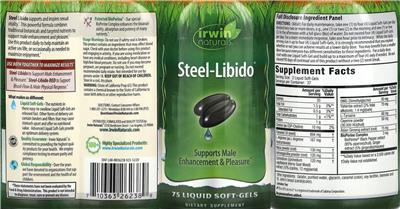
Steel Libido supports and inspires sexual vitality. This powerful formula combines traditional botanicals and targeted nutrients to support male enhancement and pleasure. Use this product daily to help maintain an active sex life, or occasionally as needed to maximize enjoyment.
What makes us different: Liquid Soft-Gels - The nutrients in these easy-to-swallow liquid soft-gels are released fast. Other forms of delivery can contain binders and fillers that may cause stomach upset and offer no traditional value. Advanced Liquid Soft-Gels provide an optimum delivery system. Quality assurance - Irwin Naturals is committed to providing the highest quality products for your health. We employ compliance testing to ensure purity and potency.
Supports male enhancement & pleasure
No preservatives added.
General Statements
Use both together to maximize results Steel-Libido to support male enhancement & pleasure. Steel-Libido RED to support blood-slow & male physical response. Global responsibility - Over the years we have donated to organizations that support the environment and the health of children.
Questions: Contact consumer affairs 1-800-297-3273 Weekdays 8:00 AM to 5:00 PM (PST) 100+ highly specialized products: www.IrwinNaturals.com
Full Disclosure Ingredient Panel
Formula
Patented BioPerine - Our special BioPerine Complex enhances the bioavailability, absorption and potency of many nutrients.
Supports male enhancement & pleasure
Seals/Symbols
Pass Quality Tested Guaranteed
FDA Disclaimer Statement
These statements have not been evaluated by the Food and Drug Administration. This product is not intended to diagnose, treat, cure or prevent any disease.
Precautions
Usage warnings: Do not use if safety seal is broken. This product contains an ingredients that may affect blood sugar. Do not exceed recommended daily intake. Warning: (State of California Prop 65) This product contains a chemical known to the State of California to cause birth defects or other reproductive harm.
Check with your doctor before using this product and engaging in activity, if you are using medication or have any medical conditions, including heart disease or high/low blood pressure. Do not use if you may become pregnant, are pregnant or nursing.
Not intended for use by persons under 18. Keep out of reach of children.
Do not exceed 90 days of continual use of this product without a two (2) week break.
Contains: Soy
Storage
Store in a cool, dry place.
FDA Statement of Identity
Dietary Supplement
Suggested/Recommended/Usage/Directions
Directions: (Adult) For daily maintenance, take one (1) to four (4) liquid soft-gels per day divided into two or more doses, e.g., one (1) or two (2) in the morning and one (1) or two (2) in the afternoon with a full glass (8oz) of water. Do not exceed four (4) liquid soft-gels per day. For a more immediate response, take one hour prior to intimacy. While the daily serving size is up to four (4) liquid soft-gels, it is strongly recommended that you explore whether or not you can achieve results at a lower daily dose. You may benefit from a smaller dose because everyone has different sensitivities to these ingredients.
Brand IP Statement(s)
BioPerine is a registered trademark of Sabinsa Corporation.
Is this label outdated? Report a formula or label change and our pharmacy team will review it.
Steel-Libido by Irwin Naturals label
The label scan from the NIH Dietary Supplement Label Database. Tap to enlarge.
Label images are published by the NIH Dietary Supplement Label Database for the version of this product on file. Always read your actual product label.
View the full label (PDF)The Ingredients in Steel-Libido by Irwin Naturals
These are the 13 active ingredients this product is made of. Select any to open its full monograph.
Serving size1 Liquid Soft-Gel(s) Dosage formSoftgel Capsule Servings per container37 Amounts shown are per serving.
Most supplement products combine several ingredients, and a medication can interact with the product through any one of them. Each ingredient below shows whether it has known drug interactions.
L-Tyrosine
Interacts with21 drugs
L-tyrosine is an amino acid your body uses to make brain chemicals like dopamine and norepinephrine. Some studies suggest it may help mental performan...
L-Tyrosine monograph & interactionsProtein
Cayenne, Powder
Interacts with239 drugs
Capsicum (chili pepper) contains capsaicin, which is best known and best studied as a topical treatment for certain types of pain. Topical capsaicin p...
Cayenne, Powder monograph & interactionsL-Arginine
Interacts with403 drugs
L-arginine is an amino acid that the body uses to make nitric oxide, a substance that helps blood vessels relax and widen. It is popularly used for bl...
L-Arginine monograph & interactionsAshwagandha, Powder
Interacts with1,372 drugs
Ashwagandha is an Ayurvedic herb most often taken to help with stress, anxiety, and sleep, and some small studies suggest it may help, though the evid...
Ashwagandha, Powder monograph & interactionsFlaxseed Oil
Interacts with293 drugs
Flaxseed oil is a plant-based source of the omega-3 fatty acid ALA, which the body can partly convert to the omega-3s found in fish oil. It may help s...
Flaxseed Oil monograph & interactionsDimethylglycine
Asian Ginseng root extract
Interacts with1,130 drugs
Panax ginseng is a popular traditional herb used to boost energy, ease stress, and support overall wellness, though scientific evidence is mixed and m...
Asian Ginseng root extract monograph & interactionsYohimbe Bark Extract
Interacts with1,125 drugs
Yohimbe is a West African tree bark that contains yohimbine, a compound mainly promoted for erectile dysfunction and as an aphrodisiac. A prescription...
Yohimbe Bark Extract monograph & interactions- › Alkaloid
Maca, Powder
No knowninteractions
Maca is a nutrient-rich Andean root often used for energy, libido, and menopause symptoms. Early studies suggest it may modestly help sexual desire an...
Maca, Powder monograph & interactionsEpimedium Aerial Extract
Interacts with963 drugs
Horny goat weed (Epimedium) is a traditional Chinese herb most often marketed for low libido and erectile problems, but solid human evidence for these...
Epimedium Aerial Extract monograph & interactions- › Icariin
BioPerine Complex
Choline
Interacts with16 drugs
Choline is an essential nutrient your body needs for liver function, brain health, and nerve signaling, and many people get enough from foods like egg...
Choline monograph & interactionsOther (inactive) ingredients: Gelatin, Water, Purified, Glycerin, Caramel, Soy Lecithin, Beeswax, St. John's Bread. These complete the product’s ingredient list but are not active constituents.
Steel-Libido by Irwin Naturals Drug Interactions
HelloPharmacist Interaction Report
Steel-Libido by Irwin Naturals contains several ingredients with documented interactions with medications.
The most serious concern is L-Arginine, which carries Moderate-severity interactions with blood pressure medications (antihypertensives, ACE inhibitors, ARBs) and can increase the risk of dangerously low blood pressure, especially when combined with sildenafil (Viagra).
Read the full breakdown — every affected drug type, severity by severity
Cayenne (capsicum) interacts Moderately with blood thinners and antiplatelet drugs like warfarin and aspirin, raising bleeding risk, and with diabetes medications, which may increase the risk of low blood sugar (hypoglycemia). It also affects theophylline levels and has a Minor interaction with ciprofloxacin.
Ashwagandha carries Moderate interactions with sedatives, benzodiazepines, blood pressure drugs, diabetes drugs, thyroid hormones, and immunosuppressants, and may increase liver damage risk if taken with hepatotoxic drugs. Flaxseed oil interacts Moderately with blood thinners and antihypertensive drugs, and blocks absorption of ezetimibe (Zetia).
L-Tyrosine has Moderate interactions with levodopa (Parkinson's medication) and thyroid hormones. Choline carries a Minor interaction with atropine.
Altogether, these interactions span 1,432 individual medications. Maca has been checked and shows no interactions documented in our data—though this is not a guarantee none exist.
We could not check Dimethylglycine, Asian Ginseng, Icariin, or BioPerine Complex. Please run your exact medications through the search tool on this page before starting.
Check your own medications below · Editorial policy · How we use AI
Want to check YOUR meds against Steel-Libido?
Ask about interactions with your drugs in plain English — “Can I take it with lisinopril?” — and we find you the answer in seconds, ingredient by ingredient.
Go to the checkerIngredients driving the most interactions
Individual Drug Interactions
The ingredients in Steel-Libido interact with 1,592 drugs. Click any drug to see the details.
9 of the 13 ingredients in Steel-Libido interact with drugs. Each result below shows which ingredient is responsible. Ashwagandha, Powder Asian Ginseng root extract Yohimbe Bark Extract Epimedium Aerial Extract L-Arginine Flaxseed Oil Cayenne, Powder L-Tyrosine Choline
AmphetamineAdensys XR-ODT, Adzenys ER, Dyanavel XR, Mydayis
How Amphetamine interacts with Steel-Libido — through 2 ingredients. Tap an ingredient for the detail:
Yohimbe Bark ExtractCytochrome P450 2d6 (cyp2d6) Substrates, Stimulant Drugs +1 Major
Interaction Summary
Theoretically, yohimbe might increase the levels and adverse effects of CYP2D6 substrates.
Read the full Yohimbe Bark Extract + Amphetamine interactionAsian Ginseng Root ExtractCytochrome P450 2d6 (cyp2d6) Substrates, Stimulant Drugs +1 Moderate
Interaction Summary
Theoretically, Panax ginseng might increase levels of drugs metabolized by CYP2D6.
Read the full Asian Ginseng Root Extract + Amphetamine interactionIsocarboxazidMarplan
How Isocarboxazid interacts with Steel-Libido — through 3 ingredients. Tap an ingredient for the detail:
Yohimbe Bark ExtractMonoamine Oxidase Inhibitors (maois) Major
Interaction Summary
Concomitant use of MAOIs with yohimbe can result in additive effects.
Read the full Yohimbe Bark Extract + Isocarboxazid interactionAsian Ginseng Root ExtractMonoamine Oxidase Inhibitors (maois) Moderate
Interaction Summary
Theoretically, Panax ginseng can interfere with MAOI therapy.
Read the full Asian Ginseng Root Extract + Isocarboxazid interactionAshwagandha, PowderSerotonergic Drugs Minor
Interaction Summary
Some animal studies have reported that ashwagandha can enhance serotonergic transmission by altering certain serotonin (5-HT) receptors.
Read the full Ashwagandha, Powder + Isocarboxazid interactionMoclobemideManerix, Moclobemide
How Moclobemide interacts with Steel-Libido — through 2 ingredients. Tap an ingredient for the detail:
Yohimbe Bark ExtractMonoamine Oxidase Inhibitors (maois), Cytochrome P450 2d6 (cyp2d6) Inhibitors Major
Interaction Summary
Concomitant use of MAOIs with yohimbe can result in additive effects.
Read the full Yohimbe Bark Extract + Moclobemide interactionAsian Ginseng Root ExtractMonoamine Oxidase Inhibitors (maois) Moderate
Interaction Summary
Theoretically, Panax ginseng can interfere with MAOI therapy.
Read the full Asian Ginseng Root Extract + Moclobemide interactionOzanimod HydrochlorideZeposia
How Ozanimod Hydrochloride interacts with Steel-Libido — through 3 ingredients. Tap an ingredient for the detail:
Yohimbe Bark ExtractMonoamine Oxidase Inhibitors (maois) Major
Interaction Summary
Concomitant use of MAOIs with yohimbe can result in additive effects.
Read the full Yohimbe Bark Extract + Ozanimod Hydrochloride interactionAshwagandha, PowderHepatotoxic Drugs, Immunosuppressants Moderate
Interaction Summary
Theoretically, taking ashwagandha with hepatotoxic drugs might increase the risk of liver damage.
Read the full Ashwagandha, Powder + Ozanimod Hydrochloride interactionAsian Ginseng Root ExtractMonoamine Oxidase Inhibitors (maois), Qt Interval-prolonging Drugs +1 Moderate
Interaction Summary
Theoretically, Panax ginseng can interfere with MAOI therapy.
Read the full Asian Ginseng Root Extract + Ozanimod Hydrochloride interactionPhenelzine SulfateNardil
How Phenelzine Sulfate interacts with Steel-Libido — through 3 ingredients. Tap an ingredient for the detail:
Yohimbe Bark ExtractMonoamine Oxidase Inhibitors (maois) Major
Interaction Summary
Concomitant use of MAOIs with yohimbe can result in additive effects.
Read the full Yohimbe Bark Extract + Phenelzine Sulfate interactionAshwagandha, PowderCns Depressants, Serotonergic Drugs Moderate
Interaction Summary
Theoretically, taking ashwagandha might increase the sedative effects of CNS depressants.
Read the full Ashwagandha, Powder + Phenelzine Sulfate interactionAsian Ginseng Root ExtractMonoamine Oxidase Inhibitors (maois) Moderate
Interaction Summary
Theoretically, Panax ginseng can interfere with MAOI therapy.
Read the full Asian Ginseng Root Extract + Phenelzine Sulfate interactionRasagilineAzilect
How Rasagiline interacts with Steel-Libido — through 4 ingredients. Tap an ingredient for the detail:
Yohimbe Bark ExtractCytochrome P450 1a2 (cyp1a2) Substrates, Monoamine Oxidase Inhibitors (maois) Major
Interaction Summary
Theoretically, yohimbe might decrease the levels and clinical effects of CYP1A2 substrates.
Read the full Yohimbe Bark Extract + Rasagiline interactionEpimedium Aerial ExtractCytochrome P450 1a2 (cyp1a2) Substrates Moderate
Interaction Summary
Theoretically, horny goat weed might increase the effects and side effects of CYP1A2 substrates.
Read the full Epimedium Aerial Extract + Rasagiline interactionAsian Ginseng Root ExtractMonoamine Oxidase Inhibitors (maois) Moderate
Interaction Summary
Theoretically, Panax ginseng can interfere with MAOI therapy.
Read the full Asian Ginseng Root Extract + Rasagiline interactionAshwagandha, PowderSerotonergic Drugs, Cytochrome P450 1a2 (cyp1a2) Substrates Minor
Interaction Summary
Some animal studies have reported that ashwagandha can enhance serotonergic transmission by altering certain serotonin (5-HT) receptors.
Read the full Ashwagandha, Powder + Rasagiline interactionSafinamide MesylateXadago
How Safinamide Mesylate interacts with Steel-Libido — through 3 ingredients. Tap an ingredient for the detail:
Yohimbe Bark ExtractMonoamine Oxidase Inhibitors (maois) Major
Interaction Summary
Concomitant use of MAOIs with yohimbe can result in additive effects.
Read the full Yohimbe Bark Extract + Safinamide Mesylate interactionAsian Ginseng Root ExtractMonoamine Oxidase Inhibitors (maois) Moderate
Interaction Summary
Theoretically, Panax ginseng can interfere with MAOI therapy.
Read the full Asian Ginseng Root Extract + Safinamide Mesylate interactionAshwagandha, PowderSerotonergic Drugs Minor
Interaction Summary
Some animal studies have reported that ashwagandha can enhance serotonergic transmission by altering certain serotonin (5-HT) receptors.
Read the full Ashwagandha, Powder + Safinamide Mesylate interactionSelegilineCarbex, Eldepryl, Emsam, Zelapar
How Selegiline interacts with Steel-Libido — through 3 ingredients. Tap an ingredient for the detail:
Yohimbe Bark ExtractMonoamine Oxidase Inhibitors (maois) Major
Interaction Summary
Concomitant use of MAOIs with yohimbe can result in additive effects.
Read the full Yohimbe Bark Extract + Selegiline interactionAsian Ginseng Root ExtractMonoamine Oxidase Inhibitors (maois), Selegiline (eldepryl) Moderate
Interaction Summary
Theoretically, Panax ginseng can interfere with MAOI therapy.
Read the full Asian Ginseng Root Extract + Selegiline interactionAshwagandha, PowderSerotonergic Drugs Minor
Interaction Summary
Some animal studies have reported that ashwagandha can enhance serotonergic transmission by altering certain serotonin (5-HT) receptors.
Read the full Ashwagandha, Powder + Selegiline interactionTranylcypromineParnate
How Tranylcypromine interacts with Steel-Libido — through 3 ingredients. Tap an ingredient for the detail:
Yohimbe Bark ExtractMonoamine Oxidase Inhibitors (maois) Major
Interaction Summary
Concomitant use of MAOIs with yohimbe can result in additive effects.
Read the full Yohimbe Bark Extract + Tranylcypromine interactionAsian Ginseng Root ExtractMonoamine Oxidase Inhibitors (maois) Moderate
Interaction Summary
Theoretically, Panax ginseng can interfere with MAOI therapy.
Read the full Asian Ginseng Root Extract + Tranylcypromine interactionAshwagandha, PowderSerotonergic Drugs Minor
Interaction Summary
Some animal studies have reported that ashwagandha can enhance serotonergic transmission by altering certain serotonin (5-HT) receptors.
Read the full Ashwagandha, Powder + Tranylcypromine interaction6-mercaptopurinePurinethol
How 6-mercaptopurine interacts with Steel-Libido — through 2 ingredients. Tap an ingredient for the detail:
Asian Ginseng Root ExtractImmunosuppressants Moderate
Interaction Summary
Theoretically, Panax ginseng use might interfere with immunosuppressive therapy.
Read the full Asian Ginseng Root Extract + 6-mercaptopurine interactionAshwagandha, PowderHepatotoxic Drugs, Immunosuppressants Moderate
Interaction Summary
Theoretically, taking ashwagandha with hepatotoxic drugs might increase the risk of liver damage.
Read the full Ashwagandha, Powder + 6-mercaptopurine interactionAdo-trastuzumab EmtansineKadcyla
How Ado-trastuzumab Emtansine interacts with Steel-Libido — through 4 ingredients. Tap an ingredient for the detail:
Asian Ginseng Root ExtractCytochrome P450 3a4 (cyp3a4) Substrates Moderate
Interaction Summary
Theoretically, Panax ginseng might increase or decrease levels of drugs metabolized by CYP3A4.
Read the full Asian Ginseng Root Extract + Ado-trastuzumab Emtansine interactionEpimedium Aerial ExtractCytochrome P450 3a4 (cyp3a4) Substrates Moderate
Interaction Summary
Theoretically, horny goat weed might increase the effects and side effects of CYP3A4 substrates.
Read the full Epimedium Aerial Extract + Ado-trastuzumab Emtansine interactionYohimbe Bark ExtractCytochrome P450 3a4 (cyp3a4) Substrates Minor
Interaction Summary
Theoretically, yohimbe might decrease the levels and clinical effects of CYP3A4 substrates.
Read the full Yohimbe Bark Extract + Ado-trastuzumab Emtansine interactionAshwagandha, PowderCytochrome P450 3a4 (cyp3a4) Substrates Minor
Interaction Summary
Theoretically, ashwagandha might decrease the levels and clinical effects of CYP3A4 substrates.
Read the full Ashwagandha, Powder + Ado-trastuzumab Emtansine interactionAbacavir Sulfate, Dolutegravir, LamivudineTriumeq
How Abacavir Sulfate, Dolutegravir, Lamivudine interacts with Steel-Libido — through 1 ingredient. Tap an ingredient for the detail:
Ashwagandha, PowderHepatotoxic Drugs Moderate
Interaction Summary
Theoretically, taking ashwagandha with hepatotoxic drugs might increase the risk of liver damage.
Read the full Ashwagandha, Powder + Abacavir Sulfate, Dolutegravir, Lamivudine interactionAbacavir, LamivudineEpzicom
How Abacavir, Lamivudine interacts with Steel-Libido — through 1 ingredient. Tap an ingredient for the detail:
Ashwagandha, PowderHepatotoxic Drugs Moderate
Interaction Summary
Theoretically, taking ashwagandha with hepatotoxic drugs might increase the risk of liver damage.
Read the full Ashwagandha, Powder + Abacavir, Lamivudine interactionAbametapirXeglyze
How Abametapir interacts with Steel-Libido — through 1 ingredient. Tap an ingredient for the detail:
Yohimbe Bark ExtractCytochrome P450 3a4 (cyp3a4) Inhibitors Moderate
Interaction Summary
Theoretically, CYP3A4 inhibitors might increase the levels and adverse effects of yohimbine, a constituent of yohimbe bark.
Read the full Yohimbe Bark Extract + Abametapir interactionAbciximabReoPro
How Abciximab interacts with Steel-Libido — through 6 ingredients. Tap an ingredient for the detail:
Asian Ginseng Root ExtractAnticoagulant/antiplatelet Drugs Moderate
Interaction Summary
Although Panax ginseng has shown antiplatelet effects in the laboratory, it is unlikely to increase the risk of bleeding if used with anticoagulant or antiplatelet drugs.
Read the full Asian Ginseng Root Extract + Abciximab interactionCayenne, PowderAnticoagulant/antiplatelet Drugs Moderate
Interaction Summary
Theoretically, capsicum may increase the risk of bleeding if used with anticoagulant or antiplatelet drugs.
Read the full Cayenne, Powder + Abciximab interactionL-arginineAnticoagulant/antiplatelet Drugs Moderate
Interaction Summary
Theoretically, concomitant use of L-arginine with anticoagulant and antiplatelet drugs might have additive effects and increase the risk of bleeding.
Read the full L-arginine + Abciximab interactionEpimedium Aerial ExtractAnticoagulant/antiplatelet Drugs Moderate
Interaction Summary
Theoretically, horny goat weed might increase the risk of bleeding.
Read the full Epimedium Aerial Extract + Abciximab interactionFlaxseed OilAnticoagulant/antiplatelet Drugs Moderate
Interaction Summary
Theoretically, using flaxseed oil in combination with anticoagulant or antiplatelet drugs might have additive effects and increase the risk of bleeding.
Read the full Flaxseed Oil + Abciximab interactionYohimbe Bark ExtractAnticoagulant/antiplatelet Drugs Minor
Interaction Summary
Theoretically, combining yohimbe bark with antiplatelet or anticoagulant drugs might have additive effects; however, this has not been reported in clinical research.
Read the full Yohimbe Bark Extract + Abciximab interactionAbemaciclibVerzenio
How Abemaciclib interacts with Steel-Libido — through 4 ingredients. Tap an ingredient for the detail:
Epimedium Aerial ExtractCytochrome P450 3a4 (cyp3a4) Substrates Moderate
Interaction Summary
Theoretically, horny goat weed might increase the effects and side effects of CYP3A4 substrates.
Read the full Epimedium Aerial Extract + Abemaciclib interactionAsian Ginseng Root ExtractCytochrome P450 3a4 (cyp3a4) Substrates Moderate
Interaction Summary
Theoretically, Panax ginseng might increase or decrease levels of drugs metabolized by CYP3A4.
Read the full Asian Ginseng Root Extract + Abemaciclib interactionAshwagandha, PowderCytochrome P450 3a4 (cyp3a4) Substrates Minor
Interaction Summary
Theoretically, ashwagandha might decrease the levels and clinical effects of CYP3A4 substrates.
Read the full Ashwagandha, Powder + Abemaciclib interactionYohimbe Bark ExtractCytochrome P450 3a4 (cyp3a4) Substrates Minor
Interaction Summary
Theoretically, yohimbe might decrease the levels and clinical effects of CYP3A4 substrates.
Read the full Yohimbe Bark Extract + Abemaciclib interactionAbiraterone
How Abiraterone interacts with Steel-Libido — through 4 ingredients. Tap an ingredient for the detail:
Yohimbe Bark ExtractCytochrome P450 3a4 (cyp3a4) Inhibitors, Cytochrome P450 2d6 (cyp2d6) Inhibitors +1 Moderate
Interaction Summary
Theoretically, CYP3A4 inhibitors might increase the levels and adverse effects of yohimbine, a constituent of yohimbe bark.
Read the full Yohimbe Bark Extract + Abiraterone interactionEpimedium Aerial ExtractCytochrome P450 3a4 (cyp3a4) Substrates Moderate
Interaction Summary
Theoretically, horny goat weed might increase the effects and side effects of CYP3A4 substrates.
Read the full Epimedium Aerial Extract + Abiraterone interactionAshwagandha, PowderHepatotoxic Drugs, Cytochrome P450 3a4 (cyp3a4) Substrates Moderate
Interaction Summary
Theoretically, taking ashwagandha with hepatotoxic drugs might increase the risk of liver damage.
Read the full Ashwagandha, Powder + Abiraterone interactionAsian Ginseng Root ExtractCytochrome P450 3a4 (cyp3a4) Substrates Moderate
Interaction Summary
Theoretically, Panax ginseng might increase or decrease levels of drugs metabolized by CYP3A4.
Read the full Asian Ginseng Root Extract + Abiraterone interactionAbiraterone AcetateYonsa, Zytiga
How Abiraterone Acetate interacts with Steel-Libido — through 4 ingredients. Tap an ingredient for the detail:
Asian Ginseng Root ExtractCytochrome P450 3a4 (cyp3a4) Substrates Moderate
Interaction Summary
Theoretically, Panax ginseng might increase or decrease levels of drugs metabolized by CYP3A4.
Read the full Asian Ginseng Root Extract + Abiraterone Acetate interactionEpimedium Aerial ExtractCytochrome P450 3a4 (cyp3a4) Substrates Moderate
Interaction Summary
Theoretically, horny goat weed might increase the effects and side effects of CYP3A4 substrates.
Read the full Epimedium Aerial Extract + Abiraterone Acetate interactionYohimbe Bark ExtractCytochrome P450 3a4 (cyp3a4) Substrates, Cytochrome P450 2d6 (cyp2d6) Inhibitors Moderate
Interaction Summary
Theoretically, yohimbe might decrease the levels and clinical effects of CYP3A4 substrates.
Read the full Yohimbe Bark Extract + Abiraterone Acetate interactionAshwagandha, PowderHepatotoxic Drugs, Cytochrome P450 3a4 (cyp3a4) Substrates Moderate
Interaction Summary
Theoretically, taking ashwagandha with hepatotoxic drugs might increase the risk of liver damage.
Read the full Ashwagandha, Powder + Abiraterone Acetate interactionAbrocitinibCibinqo
How Abrocitinib interacts with Steel-Libido — through 7 ingredients. Tap an ingredient for the detail:
Flaxseed OilAnticoagulant/antiplatelet Drugs Moderate
Interaction Summary
Theoretically, using flaxseed oil in combination with anticoagulant or antiplatelet drugs might have additive effects and increase the risk of bleeding.
Read the full Flaxseed Oil + Abrocitinib interactionEpimedium Aerial ExtractAnticoagulant/antiplatelet Drugs Moderate
Interaction Summary
Theoretically, horny goat weed might increase the risk of bleeding.
Read the full Epimedium Aerial Extract + Abrocitinib interactionAsian Ginseng Root ExtractAnticoagulant/antiplatelet Drugs, Immunosuppressants Moderate
Interaction Summary
Although Panax ginseng has shown antiplatelet effects in the laboratory, it is unlikely to increase the risk of bleeding if used with anticoagulant or antiplatelet drugs.
Read the full Asian Ginseng Root Extract + Abrocitinib interactionL-arginineAnticoagulant/antiplatelet Drugs Moderate
Interaction Summary
Theoretically, concomitant use of L-arginine with anticoagulant and antiplatelet drugs might have additive effects and increase the risk of bleeding.
Read the full L-arginine + Abrocitinib interactionAshwagandha, PowderImmunosuppressants Moderate
Interaction Summary
Theoretically, taking ashwagandha might decrease the effects of immunosuppressants.
Read the full Ashwagandha, Powder + Abrocitinib interactionCayenne, PowderAnticoagulant/antiplatelet Drugs Moderate
Interaction Summary
Theoretically, capsicum may increase the risk of bleeding if used with anticoagulant or antiplatelet drugs.
Read the full Cayenne, Powder + Abrocitinib interactionYohimbe Bark ExtractAnticoagulant/antiplatelet Drugs Minor
Interaction Summary
Theoretically, combining yohimbe bark with antiplatelet or anticoagulant drugs might have additive effects; however, this has not been reported in clinical research.
Read the full Yohimbe Bark Extract + Abrocitinib interactionAcalabrutinibCalquence
How Acalabrutinib interacts with Steel-Libido — through 4 ingredients. Tap an ingredient for the detail:
Asian Ginseng Root ExtractCytochrome P450 3a4 (cyp3a4) Substrates Moderate
Interaction Summary
Theoretically, Panax ginseng might increase or decrease levels of drugs metabolized by CYP3A4.
Read the full Asian Ginseng Root Extract + Acalabrutinib interactionEpimedium Aerial ExtractCytochrome P450 3a4 (cyp3a4) Substrates Moderate
Interaction Summary
Theoretically, horny goat weed might increase the effects and side effects of CYP3A4 substrates.
Read the full Epimedium Aerial Extract + Acalabrutinib interactionYohimbe Bark ExtractCytochrome P450 3a4 (cyp3a4) Substrates Minor
Interaction Summary
Theoretically, yohimbe might decrease the levels and clinical effects of CYP3A4 substrates.
Read the full Yohimbe Bark Extract + Acalabrutinib interactionAshwagandha, PowderCytochrome P450 3a4 (cyp3a4) Substrates Minor
Interaction Summary
Theoretically, ashwagandha might decrease the levels and clinical effects of CYP3A4 substrates.
Read the full Ashwagandha, Powder + Acalabrutinib interactionAcarboseGlucobay, Prandase, Precose
How Acarbose interacts with Steel-Libido — through 4 ingredients. Tap an ingredient for the detail:
Asian Ginseng Root ExtractAntidiabetes Drugs Moderate
Interaction Summary
Theoretically, taking Panax ginseng with antidiabetes drugs might increase the risk of hypoglycemia.
Read the full Asian Ginseng Root Extract + Acarbose interactionCayenne, PowderAntidiabetes Drugs Moderate
Interaction Summary
Theoretically, taking capsicum with antidiabetes drugs might increase the risk of hypoglycemia.
Read the full Cayenne, Powder + Acarbose interactionAshwagandha, PowderAntidiabetes Drugs, Hepatotoxic Drugs Moderate
Interaction Summary
Theoretically, taking ashwagandha with antidiabetes drugs might increase the risk of hypoglycemia.
Read the full Ashwagandha, Powder + Acarbose interactionL-arginineAntidiabetes Drugs Moderate
Interaction Summary
Theoretically, concomitant use of L-arginine might have additive effects with antidiabetes drugs.
Read the full L-arginine + Acarbose interactionAcebutololRhotral, Sectral
How Acebutolol interacts with Steel-Libido — through 5 ingredients. Tap an ingredient for the detail:
Ashwagandha, PowderHepatotoxic Drugs, Antihypertensive Drugs Moderate
Interaction Summary
Theoretically, taking ashwagandha with hepatotoxic drugs might increase the risk of liver damage.
Read the full Ashwagandha, Powder + Acebutolol interactionYohimbe Bark ExtractAntihypertensive Drugs Moderate
Interaction Summary
Theoretically, yohimbe might reduce the effects of antihypertensive drugs.
Read the full Yohimbe Bark Extract + Acebutolol interactionEpimedium Aerial ExtractAntihypertensive Drugs Moderate
Interaction Summary
Theoretically, horny goat weed might increase the risk of hypotension.
Read the full Epimedium Aerial Extract + Acebutolol interactionL-arginineAntihypertensive Drugs Moderate
Interaction Summary
Theoretically, concomitant use of L-arginine and antihypertensive drugs may increase the risk of hypotension.
Read the full L-arginine + Acebutolol interactionFlaxseed OilAntihypertensive Drugs Moderate
Interaction Summary
Theoretically, combining flaxseed oil with other antihypertensive drugs might have additive effects and increase the risk of hypotension.
Read the full Flaxseed Oil + Acebutolol interactionAcenocoumarolSintrom
How Acenocoumarol interacts with Steel-Libido — through 6 ingredients. Tap an ingredient for the detail:
Flaxseed OilAnticoagulant/antiplatelet Drugs Moderate
Interaction Summary
Theoretically, using flaxseed oil in combination with anticoagulant or antiplatelet drugs might have additive effects and increase the risk of bleeding.
Read the full Flaxseed Oil + Acenocoumarol interactionL-arginineAnticoagulant/antiplatelet Drugs Moderate
Interaction Summary
Theoretically, concomitant use of L-arginine with anticoagulant and antiplatelet drugs might have additive effects and increase the risk of bleeding.
Read the full L-arginine + Acenocoumarol interactionCayenne, PowderAnticoagulant/antiplatelet Drugs Moderate
Interaction Summary
Theoretically, capsicum may increase the risk of bleeding if used with anticoagulant or antiplatelet drugs.
Read the full Cayenne, Powder + Acenocoumarol interactionEpimedium Aerial ExtractAnticoagulant/antiplatelet Drugs Moderate
Interaction Summary
Theoretically, horny goat weed might increase the risk of bleeding.
Read the full Epimedium Aerial Extract + Acenocoumarol interactionAsian Ginseng Root ExtractAnticoagulant/antiplatelet Drugs Moderate
Interaction Summary
Although Panax ginseng has shown antiplatelet effects in the laboratory, it is unlikely to increase the risk of bleeding if used with anticoagulant or antiplatelet drugs.
Read the full Asian Ginseng Root Extract + Acenocoumarol interactionYohimbe Bark ExtractAnticoagulant/antiplatelet Drugs Minor
Interaction Summary
Theoretically, combining yohimbe bark with antiplatelet or anticoagulant drugs might have additive effects; however, this has not been reported in clinical research.
Read the full Yohimbe Bark Extract + Acenocoumarol interactionAcepromazineAtravet
How Acepromazine interacts with Steel-Libido — through 2 ingredients. Tap an ingredient for the detail:
Ashwagandha, PowderCns Depressants Moderate
Interaction Summary
Theoretically, taking ashwagandha might increase the sedative effects of CNS depressants.
Read the full Ashwagandha, Powder + Acepromazine interactionYohimbe Bark ExtractPhenothiazines Moderate
Interaction Summary
Theoretically, using yohimbine with phenothiazines might have additive effects.
Read the full Yohimbe Bark Extract + Acepromazine interactionAcetaminophenChildren's Tylenol, Children's Tylenol Meltaways, Tylenol, Tylenol Ex Strength
How Acetaminophen interacts with Steel-Libido — through 3 ingredients. Tap an ingredient for the detail:
Ashwagandha, PowderHepatotoxic Drugs, Cytochrome P450 1a2 (cyp1a2) Substrates Moderate
Interaction Summary
Theoretically, taking ashwagandha with hepatotoxic drugs might increase the risk of liver damage.
Read the full Ashwagandha, Powder + Acetaminophen interactionEpimedium Aerial ExtractCytochrome P450 1a2 (cyp1a2) Substrates Moderate
Interaction Summary
Theoretically, horny goat weed might increase the effects and side effects of CYP1A2 substrates.
Read the full Epimedium Aerial Extract + Acetaminophen interactionYohimbe Bark ExtractCytochrome P450 1a2 (cyp1a2) Substrates Minor
Interaction Summary
Theoretically, yohimbe might decrease the levels and clinical effects of CYP1A2 substrates.
Read the full Yohimbe Bark Extract + Acetaminophen interactionAcetaminophen, AspirinGemnisyn
How Acetaminophen, Aspirin interacts with Steel-Libido — through 7 ingredients. Tap an ingredient for the detail:
Epimedium Aerial ExtractCytochrome P450 1a2 (cyp1a2) Substrates, Anticoagulant/antiplatelet Drugs Moderate
Interaction Summary
Theoretically, horny goat weed might increase the effects and side effects of CYP1A2 substrates.
Read the full Epimedium Aerial Extract + Acetaminophen, Aspirin interactionFlaxseed OilAnticoagulant/antiplatelet Drugs Moderate
Interaction Summary
Theoretically, using flaxseed oil in combination with anticoagulant or antiplatelet drugs might have additive effects and increase the risk of bleeding.
Read the full Flaxseed Oil + Acetaminophen, Aspirin interactionAsian Ginseng Root ExtractAnticoagulant/antiplatelet Drugs Moderate
Interaction Summary
Although Panax ginseng has shown antiplatelet effects in the laboratory, it is unlikely to increase the risk of bleeding if used with anticoagulant or antiplatelet drugs.
Read the full Asian Ginseng Root Extract + Acetaminophen, Aspirin interactionCayenne, PowderAspirin, Anticoagulant/antiplatelet Drugs Moderate
Interaction Summary
Theoretically, taking capsicum with aspirin might reduce the bioavailability of aspirin.
Read the full Cayenne, Powder + Acetaminophen, Aspirin interactionAshwagandha, PowderCytochrome P450 1a2 (cyp1a2) Substrates, Hepatotoxic Drugs Moderate
Interaction Summary
Theoretically, ashwagandha might decrease the levels and clinical effects of CYP1A2 substrates.
Read the full Ashwagandha, Powder + Acetaminophen, Aspirin interactionL-arginineAnticoagulant/antiplatelet Drugs Moderate
Interaction Summary
Theoretically, concomitant use of L-arginine with anticoagulant and antiplatelet drugs might have additive effects and increase the risk of bleeding.
Read the full L-arginine + Acetaminophen, Aspirin interactionYohimbe Bark ExtractCytochrome P450 1a2 (cyp1a2) Substrates, Anticoagulant/antiplatelet Drugs Minor
Interaction Summary
Theoretically, yohimbe might decrease the levels and clinical effects of CYP1A2 substrates.
Read the full Yohimbe Bark Extract + Acetaminophen, Aspirin interactionAcetaminophen, Aspirin, CaffeineExcedrin, Excedrin Extra Strength, Excedrin Migraine
How Acetaminophen, Aspirin, Caffeine interacts with Steel-Libido — through 7 ingredients. Tap an ingredient for the detail:
Cayenne, PowderAnticoagulant/antiplatelet Drugs, Aspirin Moderate
Interaction Summary
Theoretically, capsicum may increase the risk of bleeding if used with anticoagulant or antiplatelet drugs.
Read the full Cayenne, Powder + Acetaminophen, Aspirin, Caffeine interactionAshwagandha, PowderCytochrome P450 1a2 (cyp1a2) Substrates, Hepatotoxic Drugs +1 Moderate
Interaction Summary
Theoretically, ashwagandha might decrease the levels and clinical effects of CYP1A2 substrates.
Read the full Ashwagandha, Powder + Acetaminophen, Aspirin, Caffeine interactionL-arginineAnticoagulant/antiplatelet Drugs Moderate
Interaction Summary
Theoretically, concomitant use of L-arginine with anticoagulant and antiplatelet drugs might have additive effects and increase the risk of bleeding.
Read the full L-arginine + Acetaminophen, Aspirin, Caffeine interactionFlaxseed OilAnticoagulant/antiplatelet Drugs Moderate
Interaction Summary
Theoretically, using flaxseed oil in combination with anticoagulant or antiplatelet drugs might have additive effects and increase the risk of bleeding.
Read the full Flaxseed Oil + Acetaminophen, Aspirin, Caffeine interactionEpimedium Aerial ExtractAnticoagulant/antiplatelet Drugs, Cytochrome P450 1a2 (cyp1a2) Substrates +1 Moderate
Interaction Summary
Theoretically, horny goat weed might increase the risk of bleeding.
Read the full Epimedium Aerial Extract + Acetaminophen, Aspirin, Caffeine interactionYohimbe Bark ExtractAnticoagulant/antiplatelet Drugs, Stimulant Drugs +2 Moderate
Interaction Summary
Theoretically, combining yohimbe bark with antiplatelet or anticoagulant drugs might have additive effects; however, this has not been reported in clinical research.
Read the full Yohimbe Bark Extract + Acetaminophen, Aspirin, Caffeine interactionAsian Ginseng Root ExtractStimulant Drugs, Cytochrome P450 3a4 (cyp3a4) Substrates +2 Moderate
Interaction Summary
Theoretically, taking Panax ginseng with stimulant drugs might increase the risk of adverse stimulant effects.
Read the full Asian Ginseng Root Extract + Acetaminophen, Aspirin, Caffeine interactionAcetaminophen, Brompheniramine, PhenylpropanolamineDimetapp Cold and Flu
How Acetaminophen, Brompheniramine, Phenylpropanolamine interacts with Steel-Libido — through 4 ingredients. Tap an ingredient for the detail:
Asian Ginseng Root ExtractStimulant Drugs Moderate
Interaction Summary
Theoretically, taking Panax ginseng with stimulant drugs might increase the risk of adverse stimulant effects.
Read the full Asian Ginseng Root Extract + Acetaminophen, Brompheniramine, Phenylpropanolamine interactionEpimedium Aerial ExtractCytochrome P450 1a2 (cyp1a2) Substrates Moderate
Interaction Summary
Theoretically, horny goat weed might increase the effects and side effects of CYP1A2 substrates.
Read the full Epimedium Aerial Extract + Acetaminophen, Brompheniramine, Phenylpropanolamine interactionAshwagandha, PowderHepatotoxic Drugs, Cytochrome P450 1a2 (cyp1a2) Substrates Moderate
Interaction Summary
Theoretically, taking ashwagandha with hepatotoxic drugs might increase the risk of liver damage.
Read the full Ashwagandha, Powder + Acetaminophen, Brompheniramine, Phenylpropanolamine interactionYohimbe Bark ExtractCytochrome P450 1a2 (cyp1a2) Substrates, Stimulant Drugs Moderate
Interaction Summary
Theoretically, yohimbe might decrease the levels and clinical effects of CYP1A2 substrates.
Read the full Yohimbe Bark Extract + Acetaminophen, Brompheniramine, Phenylpropanolamine interactionAcetaminophen, ButalbitalAxocet, Bancap, Bucet, Butex Forte, Esgic CF, Orbivan CF +5 more
How Acetaminophen, Butalbital interacts with Steel-Libido — through 3 ingredients. Tap an ingredient for the detail:
Epimedium Aerial ExtractCytochrome P450 1a2 (cyp1a2) Substrates Moderate
Interaction Summary
Theoretically, horny goat weed might increase the effects and side effects of CYP1A2 substrates.
Read the full Epimedium Aerial Extract + Acetaminophen, Butalbital interactionAshwagandha, PowderCytochrome P450 1a2 (cyp1a2) Substrates, Hepatotoxic Drugs Moderate
Interaction Summary
Theoretically, ashwagandha might decrease the levels and clinical effects of CYP1A2 substrates.
Read the full Ashwagandha, Powder + Acetaminophen, Butalbital interactionYohimbe Bark ExtractCytochrome P450 1a2 (cyp1a2) Substrates Minor
Interaction Summary
Theoretically, yohimbe might decrease the levels and clinical effects of CYP1A2 substrates.
Read the full Yohimbe Bark Extract + Acetaminophen, Butalbital interactionAcetaminophen, Butalbital, CaffeineEsgic, Esgic Plus, Fiogesic, Fioricet, Repan, Tecnal +1 more
How Acetaminophen, Butalbital, Caffeine interacts with Steel-Libido — through 4 ingredients. Tap an ingredient for the detail:
Ashwagandha, PowderHepatotoxic Drugs, Cytochrome P450 1a2 (cyp1a2) Substrates +1 Moderate
Interaction Summary
Theoretically, taking ashwagandha with hepatotoxic drugs might increase the risk of liver damage.
Read the full Ashwagandha, Powder + Acetaminophen, Butalbital, Caffeine interactionYohimbe Bark ExtractStimulant Drugs, Cytochrome P450 1a2 (cyp1a2) Substrates +1 Moderate
Interaction Summary
Theoretically, taking yohimbe with stimulant drugs can have additive effects.
Read the full Yohimbe Bark Extract + Acetaminophen, Butalbital, Caffeine interactionAsian Ginseng Root ExtractStimulant Drugs, Caffeine +1 Moderate
Interaction Summary
Theoretically, taking Panax ginseng with stimulant drugs might increase the risk of adverse stimulant effects.
Read the full Asian Ginseng Root Extract + Acetaminophen, Butalbital, Caffeine interactionEpimedium Aerial ExtractCytochrome P450 1a2 (cyp1a2) Substrates, Cytochrome P450 3a4 (cyp3a4) Substrates Moderate
Interaction Summary
Theoretically, horny goat weed might increase the effects and side effects of CYP1A2 substrates.
Read the full Epimedium Aerial Extract + Acetaminophen, Butalbital, Caffeine interactionEach ingredient & the kinds of drugs it affects
For each ingredient in Steel-Libido with known interactions, here are the types of medications they can affect. Open any type for the detail — or search your exact drug in the checker above.
Ashwagandha, Powder
Antidiabetes Drugs
Theoretically, taking ashwagandha with antidiabetes drugs might increase the risk of hypoglycemia.
There is preliminary clinical evidence suggesting that ashwagandha might lower blood glucose levels. Theoretically, ashwagandha might have additive effects when used with antidiabetes drugs and increase the risk of hypoglycemia.
Antihypertensive Drugs
Theoretically, taking ashwagandha with antihypertensive drugs might increase the risk of hypotension.
Animal research suggests that ashwagandha might lower systolic and diastolic blood pressure. Theoretically, ashwagandha might have additive effects when used with antihypertensive drugs and increase the risk of hypotension.
Benzodiazepines
Theoretically, taking ashwagandha might increase the sedative effects of benzodiazepines.
There is preliminary evidence that ashwagandha might have an additive effect with diazepam (Valium) and clonazepam (Klonopin). This may also occur with other benzodiazepines.
Cns Depressants
Theoretically, taking ashwagandha might increase the sedative effects of CNS depressants.
Ashwagandha seems to have sedative effects. Theoretically, this may potentiate the effects of barbiturates, other sedatives, and anxiolytics.
Hepatotoxic Drugs
Theoretically, taking ashwagandha with hepatotoxic drugs might increase the risk of liver damage.
Ashwagandha has been linked to cases of acute hepatitis, liver failure, hepatic encephalopathy, autoimmune hepatitis, the need for liver transplantation, and death due to liver failure.
Immunosuppressants
Theoretically, taking ashwagandha might decrease the effects of immunosuppressants.
Ashwagandha has demonstrated immunostimulant effects in humans. Animal research has shown that ashwagandha can attenuate the immunosuppression caused by cyclophosphamide.
Thyroid Hormone
Ashwagandha might increase the effects and adverse effects of thyroid hormone.
Concomitant use of ashwagandha with thyroid hormones may cause additive therapeutic and adverse effects. Preliminary clinical research and animal studies suggest that ashwagandha boosts thyroid hormone synthesis and secretion. In one clinical study, ashwagandha increased triiodothyronine (T3) and thyroxine (T4) levels by 41.5% and 19.6%, respectively, and reduced serum TSH levels by 17.4% from baseline in adults with subclinical hypothyroidism.
Cytochrome P450 1A2 (Cyp1A2) Substrates
Theoretically, ashwagandha might decrease the levels and clinical effects of CYP1A2 substrates.
In vitro research shows that ashwagandha extract induces CYP1A2 enzymes.
Cytochrome P450 3A4 (Cyp3A4) Substrates
Theoretically, ashwagandha might decrease the levels and clinical effects of CYP3A4 substrates.
In vitro research shows that ashwagandha extract induces CYP3A4 enzymes.
Serotonergic Drugs
Some animal studies have reported that ashwagandha can enhance serotonergic transmission by altering certain serotonin (5-HT) receptors. However, there is no evidence to suggest that ashwagandha increases the risk of serotonin-related effects, and there have been no published case reports of serotonin syndrome when combined with other serotonergic drugs. Nevertheless, due to the lack of extensive studies on the matter and the fact that ashwagandha appears to affect serotonergic pathways, it would be prudent to exercise caution when combining it with drugs that affect serotonin. [References: - Effects of Withania somnifera (Ashwaga ndha) on Stress and the Stress-Related Neuropsychiatric Disorders Anxiety, Depression, and Insomnia. Curr Neuropharmacol. 2021 Sep 14; 19: 1468–1495. - A Prospective, Randomized Double-Blind, Placebo-Controlled Study of Safety and Efficacy of a High-Concentration Full-Spectrum Extract of Ashwagandha Root in Reducing Stress and Anxiety in Adults. https://www.ncbi.nlm.nih.gov/pmc/articles/PMC3573577/]
Asian Ginseng root extract
Anticoagulant/Antiplatelet Drugs
Although Panax ginseng has shown antiplatelet effects in the laboratory, it is unlikely to increase the risk of bleeding if used with anticoagulant or antiplatelet drugs.
In vitro evidence suggests that ginsenoside constituents in Panax ginseng might decrease platelet aggregation. However, research in humans suggests that ginseng does not affect platelet aggregation. Animal research indicates low oral bioavailability of Rb1 and rapid elimination of Rg1, which might explain the discrepancy between in vitro and human research. Until more is known, use with caution in patients concurrently taking anticoagulant or antiplatelet drugs.
Antidiabetes Drugs
Theoretically, taking Panax ginseng with antidiabetes drugs might increase the risk of hypoglycemia.
Clinical research suggests that Panax ginseng might decrease blood glucose levels. Monitor blood glucose levels closely.
Caffeine
Theoretically, taking Panax ginseng with caffeine might increase the risk of adverse stimulant effects.
Panax ginseng has been shown to have stimulant effects. Theoretically, caffeine might have an additive effect on the stimulant effects of Panax ginseng.
Cytochrome P450 2D6 (Cyp2D6) Substrates
Theoretically, Panax ginseng might increase levels of drugs metabolized by CYP2D6. However, research is conflicting.
There is some evidence that Panax ginseng can inhibit the CYP2D6 enzyme by approximately 6%. In addition, in animal research, Panax ginseng inhibits the metabolism of dextromethorphan, a drug metabolized by CYP2D6, by a small amount. However, contradictory research suggests Panax ginseng might not inhibit CYP2D6. Until more is known, use Panax ginseng cautiously in patients taking drugs metabolized by these enzymes.
Cytochrome P450 3A4 (Cyp3A4) Substrates
Theoretically, Panax ginseng might increase or decrease levels of drugs metabolized by CYP3A4.
Panax ginseng may affect the clearance of drugs metabolized by CYP3A4. One such drug is imatinib. Inhibition of CYP3A4 was believed to be responsible for a case of imatinib-induced hepatotoxicity. In contrast, Panax ginseng has been shown to increase the clearance of midazolam, another drug metabolized by CYP3A4. Clinical research shows that Panax ginseng can reduce midazolam area under the curve by 44%, maximum plasma concentration by 26%, and time to reach maximum plasma concentration by 29%. Midazolam metabolism was also increased in animals given Panax ginseng. Until more is known, use Panax ginseng cautiously in combination with CYP3A4 substrates.
Estrogens
Theoretically, concomitant use of large amounts of Panax ginseng might interfere with hormone replacement therapy.
Laboratory research and some case reports suggest that Panax ginseng can have estrogenic effects due to competition for estrogen receptors. The estrogenic activity is attributed to the ginsenoside constituents of Panax ginseng.
Furosemide (Lasix)
Theoretically, Panax ginseng might reduce the effects of furosemide.
There is some concern that Panax ginseng might contribute to furosemide resistance. There is one case of resistance to furosemide diuresis in a patient taking a germanium-containing ginseng product.
Imatinib (Gleevec)
Theoretically, Panax ginseng might increase the effects and adverse effects of imatinib.
A case of imatinib-induced hepatotoxicity has been reported for a 26-year-old male with chronic myelogenous leukemia stabilized on imatinib for 7 years. The patient took imatinib 400 mg along with a Panax ginseng-containing energy drink daily for 3 months. Since imatinib-associated hepatotoxicity typically occurs within 2 years of initiating therapy, it is believed that Panax ginseng affected imatinib toxicity though inhibition of cytochrome P450 3A4. CYP3A4 is the primary enzyme involved in imatinib metabolism.
Immunosuppressants
Theoretically, Panax ginseng use might interfere with immunosuppressive therapy.
Panax ginseng might have immune system stimulating properties.
Insulin
Theoretically, taking Panax ginseng with insulin might increase the risk of hypoglycemia.
Clinical research suggests that Panax ginseng might decrease blood glucose levels. Insulin dose adjustments might be necessary in patients taking Panax ginseng; use with caution.
Midazolam (Versed)
Theoretically, Panax ginseng may increase the clearance of midazolam.
Midazolam is metabolized by cytochrome P450 3A4 (CYP3A4). Clinical research suggests that Panax ginseng can reduce midazolam area under the curve by 44%, maximum plasma concentration by 26%, and time to reach maximum plasma concentration by 29%. Midazolam metabolism was also increased in animals given Panax ginseng.
Monoamine Oxidase Inhibitors (Maois)
Theoretically, Panax ginseng can interfere with MAOI therapy.
Concomitant use of Panax ginseng with phenelzine (Nardil) is associated with insomnia, headache, tremors, and hypomania.
Nifedipine (Procardia)
Theoretically, taking Panax ginseng with nifedipine might increase serum levels of nifedipine and the risk of hypotension.
Preliminary clinical research shows that concomitant use can increase serum levels of nifedipine in healthy volunteers. This might cause the blood pressure lowering effects of nifedipine to be increased when taken concomitantly with Panax ginseng.
Qt Interval-Prolonging Drugs
Theoretically, Panax ginseng has an additive effect with drugs that prolong the QT interval and potentially increase the risk of ventricular arrhythmias. However, research is conflicting.
Clinical research shows that short-term use of Panax ginseng can increase the QT interval. However, no changes in QT interval have been identified with prolonged use.
Raltegravir (Isentress)
Theoretically, taking Panax ginseng with raltegravir might increase the risk of liver toxicity.
A case report suggests that concomitant use of Panax ginseng with raltegravir can increase serum levels of raltegravir, resulting in elevated liver enzymes levels.
Selegiline (Eldepryl)
Theoretically, Panax ginseng might increase or decrease levels of selegiline, possibly altering the effects and side effects of selegiline.
Animal research shows that taking selegiline with a low dose of Panax ginseng extract (1 gram/kg) reduces selegiline bioavailability, while taking a high dose of Panax ginseng extract (3 grams/kg) increases selegiline bioavailability. More research is needed to confirm these effects.
Stimulant Drugs
Theoretically, taking Panax ginseng with stimulant drugs might increase the risk of adverse stimulant effects.
Panax ginseng has been shown to have stimulant effects.
Warfarin (Coumadin)
Panax ginseng might affect the clearance of warfarin. However, this interaction appears to be unlikely.
There has been a single case report of decreased effectiveness of warfarin in a patient who also took Panax ginseng. However, it is questionable whether Panax ginseng was the cause of this decrease in warfarin effectiveness. Some research in humans and animals suggests that Panax ginseng does not affect the pharmacokinetics of warfarin. However, other research in humans suggests that Panax ginseng might modestly increase the clearance of the S-warfarin isomer. More evidence is needed to determine whether Panax ginseng causes a significant interaction with warfarin.
Fexofenadine (Allegra)
Theoretically, Panax ginseng might decrease blood levels of oral or intravenous fexofenadine.
Animal research suggests that taking Panax ginseng in combination with oral or intravenous fexofenadine may reduce the bioavailability of fexofenadine. Some scientists have attributed this effect to the ability of Panax ginseng to increase the expression of P-glycoprotein.
Lopinavir/Ritonavir (Kaletra)
Although Panax ginseng has demonstrated variable effects on cytochrome P450 3A4 (CYP3A4), which metabolizes lopinavir, Panax ginseng is unlikely to alter levels of lopinavir/ritonavir.
Lopinavir is metabolized by CYP3A4 and is administered with the CYP3A4 inhibitor ritonavir to increase its plasma concentrations. Panax ginseng has shown variable effects on CYP3A4 activity in humans. However, taking Panax ginseng (Vitamer Laboratories) 500 mg twice daily for 14 days did not alter the pharmacokinetics of lopinavir/ritonavir in 12 healthy volunteers.
Yohimbe Bark Extract
Monoamine Oxidase Inhibitors (Maois)
Concomitant use of MAOIs with yohimbe can result in additive effects.
Yohimbine, a constituent of yohimbe, has MAO inhibitory effects. At high doses, yohimbine is a non-selective inhibitor of MAO.
Antihypertensive Drugs
Theoretically, yohimbe might reduce the effects of antihypertensive drugs.
Yohimbine, a constituent of yohimbe, is an alpha-2 adrenoceptor antagonist and has been reported to increase blood pressure in clinical research. Theoretically, concomitant use of yohimbe and antihypertensive drugs can interfere with blood pressure control.
Clonidine (Catapres)
Theoretically, yohimbe might precipitate clonidine withdrawal.
Chronic clonidine use can downregulate alpha-2 adrenoreceptors. Animal research and one human case report suggest that concomitant administration of yohimbine, an alpha-2 adrenoceptor antagonist, may precipitate clonidine withdrawal and lead to sympathomimetic toxicity, including hypertensive crisis.
Cytochrome P450 2D6 (Cyp2D6) Inhibitors
CYP2D6 inhibitors may increase the levels and adverse effects of yohimbine, a constituent of yohimbe.
In vitro and clinical research shows that the yohimbe bark constituent, yohimbine, is metabolized by CYP2D6 isoenzymes. Paroxetine, a cytochrome P450 (CYP) 2D6 inhibitor, increases the maximum serum concentration of yohimbine and reduces the clearance of yohimbine compared to yohimbine alone in patients who are extensive CYP2D6 metabolizers..
Cytochrome P450 2D6 (Cyp2D6) Substrates
Theoretically, yohimbe might increase the levels and adverse effects of CYP2D6 substrates.
In vitro research suggests that yohimbine, a constituent of yohimbe bark, inhibits CYP2D6 enzyme activity.
Cytochrome P450 3A4 (Cyp3A4) Inhibitors
Theoretically, CYP3A4 inhibitors might increase the levels and adverse effects of yohimbine, a constituent of yohimbe bark.
In vitro and clinical research shows that the yohimbe bark constituent, yohimbine, is metabolized by CYP3A4 enzymes. Theoretically, drugs that inhibit CYP3A4 might increase the levels and adverse effects of yohimbine.
Paroxetine (Paxil)
Paroxetine decreases the clearance of yohimbine and may increase its effects.
Paroxetine, a cytochrome P450 (CYP) 2D6 inhibitor, increases the maximum serum concentration of yohimbine by about 350% and reduces the clearance of yohimbine by about 80% compared to yohimbine alone in patients who are extensive CYP2D6 metabolizers. No significant changes in pharmacokinetic parameters of yohimbine were observed with coadministration of paroxetine in patients who are poor CYP2D6 metabolizers.
Phenothiazines
Theoretically, using yohimbine with phenothiazines might have additive effects.
Yohimbine, a constituent of yohimbe, has alpha-2 adrenergic antagonist effects. Theoretically, combining it with phenothiazines can cause additive alpha-2 adrenergic antagonism.
Stimulant Drugs
Theoretically, taking yohimbe with stimulant drugs can have additive effects.
Yohimbine, a constituent of yohimbe, has sympathomimetic effects and increases blood pressure in a dose-dependent manner. Theoretically, taking yohimbe with stimulant drugs can have additive stimulant and hypertensive effects.
Tricyclic Antidepressants (Tcas)
Theoretically, taking yohimbe with TCAs can increase adverse effects.
A small clinical study in patients taking TCAs for at least 4 weeks shows that receiving doses of intravenous yohimbine 2.5-20 mg daily for up to 7 days precipitates severe anxiety, agitation, and tremor. The effects of yohimbe bark itself are unclear; oral yohimbe bark contains 0.6% to 1.38% yohimbine, but it is unclear how much is absorbed.
Anticoagulant/Antiplatelet Drugs
Theoretically, combining yohimbe bark with antiplatelet or anticoagulant drugs might have additive effects; however, this has not been reported in clinical research.
Research in healthy adults shows that taking yohimbine, a constituent of yohimbe bark, in doses of 8 mg or more, seems to inhibit platelet aggregation in vitro by binding to the alpha-2 adrenoceptor. The effects of yohimbe bark itself are unclear; yohimbe bark contains 0.6% to 1.38% yohimbine, but it is unclear how much is absorbed.
Cytochrome P450 1A2 (Cyp1A2) Substrates
Theoretically, yohimbe might decrease the levels and clinical effects of CYP1A2 substrates.
In vitro research shows that yohimbe extract induces CYP1A2 enzymes.
Cytochrome P450 3A4 (Cyp3A4) Substrates
Theoretically, yohimbe might decrease the levels and clinical effects of CYP3A4 substrates.
In vitro research shows that yohimbe extract induces CYP3A4 enzymes.
Epimedium Aerial Extract
Anticoagulant/Antiplatelet Drugs
Theoretically, horny goat weed might increase the risk of bleeding.
In vitro research and animal research shows that horny goat weed can inhibit platelet aggregation and thrombus formation. This effect has not been reported in humans.
Antihypertensive Drugs
Theoretically, horny goat weed might increase the risk of hypotension.
Laboratory research suggests that horny goat weed might have hypotensive effects. This effect has not been reported in humans.
Cytochrome P450 1A2 (Cyp1A2) Substrates
Theoretically, horny goat weed might increase the effects and side effects of CYP1A2 substrates.
In vitro, horny goat weed leaf extract inhibits CYP1A2. This effect has not been reported in humans.
Cytochrome P450 2B6 (Cyp2B6) Substrates
Theoretically, horny goat weed might increase the effects and side effects of CYP2B6 substrates.
In vitro, horny goat weed leaf extract inhibits CYP2B6. This effect has not been reported in humans.
Cytochrome P450 3A4 (Cyp3A4) Substrates
Theoretically, horny goat weed might increase the effects and side effects of CYP3A4 substrates.
In vitro, horny goat weed extract inhibits CYP3A4 and suppresses CYP3A4 mRNA expression. This effect has not been reported in humans.
Estrogens
Theoretically, concomitant use of horny goat weed with estrogens might increase their therapeutic and adverse effects.
In vitro evidence suggests that horny goat weed has estrogenic activity. In clinical research, horny goat weed has been shown to increase blood levels of estrogen in some females.
L-Arginine
Ace Inhibitors (Aceis)
Theoretically, concomitant use of L-arginine and ACE inhibitors may increase the risk for hypotension and hyperkalemia.
Combining L-arginine with some antihypertensive drugs, especially ACE inhibitors, seems to have additive vasodilating and blood pressure-lowering effects. Furthermore, ACE inhibitors can increase potassium levels. Use of L-arginine has been associated with hyperkalemia in some patients. Theoretically, concomitant use of ACE inhibitors with L-arginine may increases the risk of hyperkalemia.
Angiotensin Receptor Blockers (Arbs)
Theoretically, concomitant use of L-arginine and ARBs may increase the risk of hypotension and hyperkalemia.
L-arginine increases nitric oxide, which causes vasodilation. Combining L-arginine with ARBs seems to increase L-arginine-induced vasodilation. Furthermore, ARBs can increase potassium levels. Use of L-arginine has been associated with hyperkalemia in some patients. Theoretically, concomitant use of ARBs with L-arginine may increases the risk of hyperkalemia.
Anticoagulant/Antiplatelet Drugs
Theoretically, concomitant use of L-arginine with anticoagulant and antiplatelet drugs might have additive effects and increase the risk of bleeding.
Preliminary research suggests that L-arginine infusions reduce platelet aggregation in humans. The clinical significance of this effect is unclear.
Antidiabetes Drugs
Theoretically, concomitant use of L-arginine might have additive effects with antidiabetes drugs.
Preliminary clinical research shows that L-arginine decreases blood glucose levels in patients with type 2 diabetes.
Antihypertensive Drugs
Theoretically, concomitant use of L-arginine and antihypertensive drugs may increase the risk of hypotension.
L-arginine increases nitric oxide, which causes vasodilation. Clinical evidence shows that L-arginine can reduce blood pressure in some individuals with hypertension. Furthermore, combining L-arginine with some antihypertensive drugs seems to have additive vasodilating and blood pressure-lowering effects.
Isoproterenol (Isuprel)
Theoretically, concurrent use of isoproterenol and L-arginine might result in additive effects and hypotension.
Preliminary clinical evidence suggests that L-arginine enhances isoproterenol-induced vasodilation in patients with essential hypertension or a family history of essential hypertension.
Potassium-Sparing Diuretics
Theoretically concomitant use of potassium-sparing diuretics with L-arginine may increases the risk of hyperkalemia.
Potassium-sparing diuretics can increase potassium levels. Use of L-arginine has been associated with hyperkalemia in some patients.
Sildenafil (Viagra)
Theoretically, concurrent use of sildenafil and L-arginine might increase the risk for hypotension.
In vivo, concurrent use of L-arginine and sildenafil has resulted in increased vasodilation. Theoretically, concurrent use might have additive vasodilatory and hypotensive effects. However, in studies evaluating the combined use of L-arginine and sildenafil for erectile dysfunction, hypotension was not reported.
Testosterone
Theoretically, concomitant use of L-arginine and testosterone might have additive effects.
In clinical research, L-arginine increases the level of testosterone in male patients with erectile dysfunction. The clinical significance of this finding is unclear.
Flaxseed Oil
Anticoagulant/Antiplatelet Drugs
Theoretically, using flaxseed oil in combination with anticoagulant or antiplatelet drugs might have additive effects and increase the risk of bleeding.
Small clinical studies show that consuming flaxseed oil might decrease platelet aggregation and increase bleeding time.
Antihypertensive Drugs
Theoretically, combining flaxseed oil with other antihypertensive drugs might have additive effects and increase the risk of hypotension.
Some clinical evidence suggests that long-term consumption of flaxseed oil can modestly lower systolic and diastolic blood pressure, while other clinical research shows no effect.
Ezetimibe (Zetia)
Concomitant use of flaxseed oil and ezetimibe reduces the absorption of alpha-linolenic acid from flaxseed oil.
In one clinical study, concomitant consumption of ezetimibe 10 mg daily with flaxseed oil 2 grams providing 1 gram of alpha-linolenic acid daily blocked the absorption of alpha-linolenic acid, resulting in an overall reduction in alpha-linolenic plasma levels from baseline.
Cayenne, Powder
Anticoagulant/Antiplatelet Drugs
Theoretically, capsicum may increase the risk of bleeding if used with anticoagulant or antiplatelet drugs.
In vitro research shows that capsicum might increase the effects of antiplatelet drugs. Also, population research shows that capsicum is associated with an increased risk of self-reported bleeding in patients taking warfarin. However, clinical research shows that taking a single dose of capsaicin (Asian Herbex Ltd.), the active ingredient in capsicum, 400-800 mcg orally in combination with aspirin 500 mg does not decrease platelet aggregation when compared with taking aspirin 500 mg alone. Also, there was no notable effect on measures of platelet aggregation with capsaicin. It is unclear whether capsaicin must be used in more than a single dose to affect platelet aggregation.
Antidiabetes Drugs
Theoretically, taking capsicum with antidiabetes drugs might increase the risk of hypoglycemia.
Preliminary clinical research shows that consuming capsicum 5 grams along with a glucose drink attenuates the rise in plasma glucose after 30 minutes by 21%, decreases the 2-hour postprandial area under the curve of plasma glucose by 11%, and increases the 2-hour postprandial area under the curve of plasma insulin by 58% in healthy individuals when compared with placebo. Other clinical research shows that taking capsicum 5 mg daily for 28 days significantly reduces postprandial blood glucose and insulin levels, but not fasting blood glucose and insulin levels, in patients with gestational diabetes.
Aspirin
Theoretically, taking capsicum with aspirin might reduce the bioavailability of aspirin.
Animal research shows that acute or chronic intake of capsicum pepper reduces oral aspirin bioavailability. This has not been shown in humans.
Theophylline
Theoretically, taking capsicum with theophylline might increase the levels and adverse effects of theophylline.
In animal research, oral administration of capsicum reduced excretion of theophylline. However, capsicum does not seem to affect the pharmacokinetics of theophylline when administered intravenously.
Ace Inhibitors (Aceis)
Theoretically, using topical capsaicin may increase the risk of ACE inhibitor-induced cough.
There is one case report of a topically applied capsaicin cream contributing to the cough reflex in a patient using an ACEI. However, it is unclear if this interaction is clinically significant.
Ciprofloxacin (Cipro)
Theoretically, taking capsicum with ciprofloxacin might increase levels and adverse effects of ciprofloxacin.
Animal research shows that concomitant use of capsaicin, the active constituent of capsicum, and ciprofloxacin increases the bioavailability of ciprofloxacin by up to 70%.
L-Tyrosine
Levodopa
Theoretically, tyrosine might decrease the effectiveness of levodopa.
Tyrosine and levodopa compete for absorption in the proximal duodenum by the large neutral amino acid (LNAA) transport system. Advise patients to separate doses of tyrosine and levodopa by at least 2 hours.
Thyroid Hormone
Theoretically, tyrosine might have additive effects with thyroid hormone medications.
Tyrosine is a precursor to thyroxine and might increase levels of thyroid hormones.
Choline
Atropine
Theoretically, choline might decrease the effects of atropine in the brain.
Animal research shows that administering choline one hour before administering atropine can attenuate atropine-induced decreases in brain levels of acetylcholine. Theoretically, concomitant use of choline and atropine may decrease the effects of atropine.
Brand information
Manufacturer and brand details for Steel-Libido, from the product label.
Irwin Naturals
See all Irwin Naturals products- Name
- Irwin Naturals
- Street Address
- 5310 Beethoven Street
- City
- Los Angeles
- State
- CA
- ZipCode
- 90066
- Phone Number
- 1-800-297-3273
- Web Address
- www.IrwinNaturals.com
Steel-Libido by Irwin Naturals: Common Questions
Does Steel-Libido by Irwin Naturals interact with any medications?
How can one product interact with so many drugs?
Where does this information come from?
Does this product work for sexual performance?
Can I take this if I'm on blood pressure medication?
What's ashwagandha in this for?
Is this safe during pregnancy?
What are the most common side effects?
Can I take this with aspirin or blood thinners?
Written and reviewed by the HelloPharmacist editorial staff. Our editorial policy
Not sure if Steel-Libido is safe with your meds?
Our pharmacists answer your medication & supplement questions — free.
Label information is sourced from the NIH Dietary Supplement Label Database and reflects the product version on file; always read your actual product label. This page is for education only and is not a substitute for professional medical advice. Confirm with your pharmacist or doctor before combining supplements and medications.
The Full Monographs Behind Steel-Libido’s Ingredients
Every ingredient we hold a full HelloPharmacist monograph for — uses, evidence, safety, and the complete interaction list.
Tyrosine
Interacts with 21 drugsL-tyrosine is an amino acid your body uses to make brain chemicals like dopamine and norepinephrine. Some studies suggest it may help mental performance during short-term stress, sleep loss,...
Read the full Tyrosine monograph → Herb & supplement monographCapsicum
Interacts with 239 drugsCapsicum (chili pepper) contains capsaicin, which is best known and best studied as a topical treatment for certain types of pain. Topical capsaicin products are supported by reasonable evid...
Read the full Capsicum monograph → Herb & supplement monographL-arginine
Interacts with 403 drugsL-arginine is an amino acid that the body uses to make nitric oxide, a substance that helps blood vessels relax and widen. It is popularly used for blood pressure, erectile dysfunction, and...
Read the full L-arginine monograph → Herb & supplement monographAshwagandha
Interacts with 1,372 drugsAshwagandha is an Ayurvedic herb most often taken to help with stress, anxiety, and sleep, and some small studies suggest it may help, though the evidence is still limited. It is generally w...
Read the full Ashwagandha monograph → Herb & supplement monographFlaxseed Oil
Interacts with 293 drugsFlaxseed oil is a plant-based source of the omega-3 fatty acid ALA, which the body can partly convert to the omega-3s found in fish oil. It may help support heart health and provide healthy...
Read the full Flaxseed Oil monograph → Herb & supplement monographPanax Ginseng
Interacts with 1,130 drugsPanax ginseng is a popular traditional herb used to boost energy, ease stress, and support overall wellness, though scientific evidence is mixed and mostly preliminary. It is generally well...
Read the full Panax Ginseng monograph → Herb & supplement monographYohimbe
Interacts with 1,125 drugsYohimbe is a West African tree bark that contains yohimbine, a compound mainly promoted for erectile dysfunction and as an aphrodisiac. A prescription form of yohimbine has some evidence for...
Read the full Yohimbe monograph → Herb & supplement monographMaca
Maca is a nutrient-rich Andean root often used for energy, libido, and menopause symptoms. Early studies suggest it may modestly help sexual desire and some menopause symptoms, but the evide...
Read the full Maca monograph → Herb & supplement monographHorny Goat Weed
Interacts with 963 drugsHorny goat weed (Epimedium) is a traditional Chinese herb most often marketed for low libido and erectile problems, but solid human evidence for these uses is lacking. While short-term use s...
Read the full Horny Goat Weed monograph → Herb & supplement monographCholine
Interacts with 16 drugsCholine is an essential nutrient your body needs for liver function, brain health, and nerve signaling, and many people get enough from foods like eggs, meat, and fish. Supplements may help...
Read the full Choline monograph →Sources & How We Checked
Steel-Libido's label data comes from the NIH Dietary Supplement Label Database; the ingredient interaction data is from the Natural Medicines database, reviewed by our pharmacists.
- NIH Dietary Supplement Label Database (DSLD) — The official product label on file for this supplement.
- Natural Medicines (Therapeutic Research Center) — Evidence-graded clinical reference behind the ingredient interaction data.
Content is written and reviewed by licensed HelloPharmacist pharmacists. See our data sources and editorial standards for how this information is built and checked.
The 370 references behind this product’s interaction data
Every citation that drives the interaction findings for this product’s ingredients, from the evidence-graded Natural Medicines (TRC Healthcare) database. Open an ingredient to browse its citations — links open the study on PubMed or the publisher’s site.
Tyrosine 4 references
- Meyer JS, Welch KM, Deshmukh VD, et al. Neurotransmitter precursor amino acids in the treatment of multi-infarct dementia and Alzheimer's disease. J Amer Geriat Soc 1977;25:289-98.
- DiPiro JT, Talbert RL, Yee GC, et al; eds. Pharmacotherapy: A pathophysiologic approach. 4th ed. Stamford, CT: Appleton & Lange, 1999.
- Wood DR, Reimherr FW, Wender PH. Amino acid precursors for the treatment of attention deficit disorder, residual type. Psychopharmacol Bull 1985;21:146-9.
- van Spronsen FJ, van Rijn M, Bekhof J. Phenylketonuria: tyrosine supplementation in phenylalanine-restricted diets. Am J Clin Nutr 2001;73:153-7. PubMed
Capsicum 89 references
- Covington TR, et al. Handbook of Nonprescription Drugs. 11th ed. Washington, DC: American Pharmaceutical Association, 1996.
- Cooper RL, Cooper MM. Red pepper-induced dermatitis in breast-fed infants. Dermatol 1996;93:61-2. PubMed
- Millqvist E. Cough provocation with capsaicin is an objective way to test sensory hyperreactivity in patients with asthma-like symptoms. Allergy 2000;55:546-50. DOI
- Locock RA. Capsicum. Can Pharm J 1985;118:517-9.
- Mason L, Moore RA, Derry S, et al. Systematic review of topical capsaicin for the treatment of chronic pain. BMJ 2004;328:991. PubMed
- Schmulson MJ, Valdovinos MA, Milke P. Chili pepper and rectal hyperalgesia in irritable bowel syndrome. Am J Gastroenterol 2003;98:1214-5. PubMed
- Surh YJ, Lee SS. Capsaicin in hot chili pepper: carcinogen, co-carcinogen or anticarcinogen? Food Chem Toxicol 1996;34:313-6. PubMed
- Bouraoui A, Brazier JL, Zouaghi H, Rousseau M. Theophylline pharmacokinetics and metabolism in rabbits following single and repeated administration of Capsicum fruit. Eur J Drug Metab Pharmacokinet 1995;20:173-8.
- Hogaboam CM, Wallace JL. Inhibition of platelet aggregation by capsaicin. An effect unrelated to actions on sensory afferent neurons. Eur J Pharmacol 1991;202:129-31. PubMed
- Wang JP, Hsu MF, Teng CM. Antiplatelet effect of capsaicin. Thromb Res 1984;36:497-507. PubMed
- Williams SR, Clark RF, Dunford JV. Contact dermatitis associated with capsaicin: Hunan hand syndrome. Ann Emerg Med 1995;25:713-5. PubMed
- Zollman TM, Bragg RM, Harrison DA. Clinical effects of oleoresin capsicum (pepper spray) on the human cornea and conjunctiva. Ophthalmology 2000;107:2186-9. PubMed
- Bortolotti M, Coccia G, Grossi G, Miglioli M. The treatment of functional dyspepsia with red pepper. Aliment Pharmacol Ther 2002;16:1075-82. PubMed
- Hakas JF Jr. Topical capsaicin induces cough in patient receiving ACE inhibitor. Ann Allergy 1990;65:322-3.
- Rapoport AM, Bigal ME, Tepper SJ, Sheftell FD. Intranasal medications for the treatment of migraine and cluster headache. CNS Drugs 2004;18:671-85. PubMed
- Stjarne P, Rinder J, Heden-Blomquist E, et al. Capsaicin desensitization of the nasal mucosa reduces symptoms upon allergen challenge in patients with allergic rhinitis. Acta Otolaryngol 1998;118:235-9. PubMed
- Levy RL. Intranasal capsaicin for acute abortive treatment of migraine without aura. Headache 1995;35:277.
- Fusco BM, Marabini S, Maggi CA, et al. Preventative effect of repeated nasal applications of capsaicin in cluster headache. Pain 1994;59:321-5. PubMed
- Sicuteri F, Fusco BM, Marabini S, et al. Beneficial effect of capsaicin application to the nasal mucosa in cluster headache. Clin J Pain 1989;5:49-53. PubMed
- Marabini S, Ciabatti PG, Polli G, et al. Beneficial effects of intranasal applications of capsaicin in patients with vasomotor rhinitis. Eur Arch Otorhinolaryngol 1991;248:191-4. PubMed
- Frerick H, Keitel W, Kuhn U, et al. Topical treatment of chronic low back pain with a capsicum plaster. Pain 2003;106:59-64. PubMed
- Keitel W, Frerick H, Kuhn U, et al. Capsicum pain plaster in chronic non-specific low back pain. Arzneimittelforschung 2001;51:896-903. PubMed
- Shalansky S, Lynd L, Richardson K, et al. Risk of warfarin-related bleeding events and supratherapeutic international normalized ratios associated with complementary and alternative medicine: a longitudinal analysis. Pharmacotherapy. 2007;27:1237-47. PubMed
- Sumano-López H, Gutiérrez-Olvera L, Aguilera-Jiménez R, et al. Administration of ciprofloxacin and capsaicin in rats to achieve higher maximal serum concentrations. Arzneimittelforschung. 2007;57(5):286-90. PubMed
- Wanwimolruk S, Nyika S, Kepple M, et al. Effects of capsaicin on the pharmacokinetics of antipyrine, theophylline and quinine in rats. J Pharm Pharmacol. 1993;45(7):618-21. PubMed
- Cruz L, Castañeda-Hernández G, Navarrete A. Ingestion of chilli pepper (Capsicum annuum) reduces salicylate bioavailability after oral asprin administration in the rat. Can J Physiol Pharmacol.
- Rodriguez-Stanley, S., Collings, K. L., Robinson, M., Owen, W., and Miner, P. B., Jr. The effects of capsaicin on reflux, gastric emptying and dyspepsia. Aliment.Pharmacol.Ther. 2000;14(1):129-134. PubMed
- Brown, L., Takeuchi, D., and Challoner, K. Corneal abrasions associated with pepper spray exposure. Am.J.Emerg.Med. 2000;18(3):271-272. PubMed
- Vesaluoma, M., Muller, L., Gallar, J., Lambiase, A., Moilanen, J., Hack, T., Belmonte, C., and Tervo, T. Effects of oleoresin capsicum pepper spray on human corneal morphology and sensitivity. Invest Ophthalmol.Vis.Sci. 2000;41(8):2138-2147.
- Stam, C., Bonnet, M. S., and van Haselen, R. A. The efficacy and safety of a homeopathic gel in the treatment of acute low back pain: a multi-centre, randomised, double-blind comparative clinical trial. Br Homeopath J 2001;90(1):21-28. PubMed
- Olajos, E. J. and Salem, H. Riot control agents: pharmacology, toxicology, biochemistry and chemistry. J.Appl.Toxicol. 2001;21(5):355-391. PubMed
- Fett, D. D. Botanical briefs: Capsicum peppers. Cutis 2003;72(1):21-23.
- McCarthy, G. M. and McCarty, D. J. Effect of topical capsaicin in the therapy of painful osteoarthritis of the hands. J.Rheumatol. 1992;19(4):604-607.
- Chaiyata, P., Puttadechakum, S., and Komindr, S. Effect of chili pepper (Capsicum frutescens) ingestion on plasma glucose response and metabolic rate in Thai women. J.Med.Assoc.Thai. 2003;86(9):854-860.
- Petruzzi, M., Lauritano, D., De Benedittis, M., Baldoni, M., and Serpico, R. Systemic capsaicin for burning mouth syndrome: short-term results of a pilot study. J.Oral Pathol.Med. 2004;33(2):111-114. PubMed
- Misra, M. N., Pullani, A. J., and Mohamed, Z. U. Prevention of PONV by acustimulation with capsicum plaster is comparable to ondansetron after middle ear surgery: [La prevention des NVPO par acustimulation avec un emplatre de Capsicum est comparable a ce PubMed
- Milke, P., Diaz, A., Valdovinos, M. A., and Moran, S. Gastroesophageal reflux in healthy subjects induced by two different species of chilli (Capsicum annum). Dig.Dis. 2006;24(1-2):184-188.
- de Jong, N. W., van der Steen, J. J., Smeekens, C. C., Blacquiere, T., Mulder, P. G., van Wijk, R. G., and de Groot, H. Honeybee interference as a novel aid to reduce pollen exposure and nasal symptoms among greenhouse workers allergic to sweet bell pepp
- Final report on the safety assessment of capsicum annuum extract, capsicum annuum fruit extract, capsicum annuum resin, capsicum annuum fruit powder, capsicum frutescens fruit, capsicum frutescens fruit extract, capsicum frutescens resin, and capsaicin.
- Tandan, R., Lewis, G. A., Krusinski, P. B., Badger, G. B., and Fries, T. J. Topical capsaicin in painful diabetic neuropathy. Controlled study with long-term follow-up. Diabetes Care 1992;15(1):8-14. PubMed
- Gupta, P. J. Red hot chilli consumption is harmful in patients operated for anal fissure - a randomized, double-blind, controlled study. Dig.Surg. 2007;24(5):354-357. PubMed
- Patane, S., Marte, F., Di Bella, G., Cerrito, M., and Coglitore, S. Capsaicin, arterial hypertensive crisis and acute myocardial infarction associated with high levels of thyroid stimulating hormone. Int.J Cardiol. 5-1-2009;134(1):130-132. PubMed
- Gupta, P. J. Consumption of red-hot chili pepper increases symptoms in patients with acute anal fissures. A prospective, randomized, placebo-controlled, double blind, crossover trial. Arq Gastroenterol. 2008;45(2):124-127. PubMed
- Gupta, P. J. Consumption of red-hot chili pepper increases symptoms in patients with acute anal fissures. Ann.Ital.Chir 2008;79(5):347-351.
- Patane, S., Marte, F., La Rosa, F. C., and La, Rocca R. Capsaicin and arterial hypertensive crisis. Int J Cardiol. 10-8-2010;144(2):e26-e27. PubMed
- Chaiyasit, K., Khovidhunkit, W., and Wittayalertpanya, S. Pharmacokinetic and the effect of capsaicin in Capsicum frutescens on decreasing plasma glucose level. J Med.Assoc.Thai. 2009;92(1):108-113.
- Blanc, P., Liu, D., Juarez, C., and Boushey, H. A. Cough in hot pepper workers. Chest 1991;99(1):27-32. PubMed
- Akcay, A. B., Ozcan, T., Seyis, S., and Acele, A. Coronary vasospasm and acute myocardial infarction induced by a topical capsaicin patch. Turk.Kardiyol.Dern.Ars 2009;37(7):497-500.
- van Boxel, O. S., ter Linde, J. J., Siersema, P. D., and Smout, A. J. Role of chemical stimulation of the duodenum in dyspeptic symptom generation. Am J Gastroenterol. 2010;105(4):803-811. PubMed
- Niemcunowicz-Janica, A., Ptaszynska-Sarosiek, I., and Wardaszka, Z. [Sudden death caused by an oleoresin capsicum spray]. Arch.Med.Sadowej.Kryminol. 2009;59(3):252-254.
- Reuter, J., Merfort, I., and Schempp, C. M. Botanicals in dermatology: an evidence-based review. Am J Clin Dermatol 2010;11(4):247-267. PubMed
- McCormack, P. L. Capsaicin dermal patch: in non-diabetic peripheral neuropathic pain. Drugs 10-1-2010;70(14):1831-1842. PubMed
- Bortolotti, M. and Porta, S. Effect of red pepper on symptoms of irritable bowel syndrome: preliminary study. Dig.Dis.Sci 2011;56(11):3288-3295. PubMed
- Webster, L. R., Peppin, J. F., Murphy, F. T., Lu, B., Tobias, J. K., and Vanhove, G. F. Efficacy, safety, and tolerability of NGX-4010, capsaicin 8% patch, in an open-label study of patients with peripheral neuropathic pain. Diabetes Res Clin Pract. 2011 PubMed
- Gerber, S., Frueh, B. E., and Tappeiner, C. Conjunctival proliferation after a mild pepper spray injury in a young child. Cornea 2011;30(9):1042-1044. PubMed
- Lim, L. G., Tay, H., and Ho, K. Y. Curry induces acid reflux and symptoms in gastroesophageal reflux disease. Dig.Dis.Sci 2011;56(12):3546-3550. PubMed
- Ludy, M. J., Moore, G. E., and Mattes, R. D. The effects of capsaicin and capsiate on energy balance: critical review and meta-analyses of studies in humans. Chem Senses 2012;37(2):103-121. PubMed
- Sayin, M. R., Karabag, T., Dogan, S. M., Akpinar, I., and Aydin, M. A case of acute myocardial infarction due to the use of cayenne pepper pills. Wien.Klin.Wochenschr. 2012;124(7-8):285-287. PubMed
- Bley, K., Boorman, G., Mohammad, B., McKenzie, D., and Babbar, S. A comprehensive review of the carcinogenic and anticarcinogenic potential of capsaicin. Toxicol.Pathol. 2012;40(6):847-873. PubMed
- Derry, S. and Moore, R. A. Topical capsaicin (low concentration) for chronic neuropathic pain in adults. Cochrane.Database.Syst.Rev. 2012;9:CD010111. PubMed
- Tominack, R. L. and Spyker, D. A. Capsicum and capsaicin--a review: case report of the use of hot peppers in child abuse. J.Toxicol.Clin.Toxicol. 1987;25(7):591-601. PubMed
- Schuurs, A. H., Abraham-Inpijn, L., van Straalen, J. P., and Sastrowijoto, S. H. An unusual case of black teeth. Oral Surg.Oral Med.Oral Pathol. 1987;64(4):427-431. PubMed
- Kumar, N., Vij, J. C., Sarin, S. K., and Anand, B. S. Do chillies influence healing of duodenal ulcer? Br.Med.J.(Clin.Res.Ed) 6-16-1984;288(6433):1803-1804. PubMed
- Steffee, C. H., Lantz, P. E., Flannagan, L. M., Thompson, R. L., and Jason, D. R. Oleoresin capsicum (pepper) spray and "in-custody deaths". Am.J.Forensic Med.Pathol. 1995;16(3):185-192. PubMed
- Knight, T. E. and Hayashi, T. Solar (brachioradial) pruritus--response to capsaicin cream. Int.J.Dermatol. 1994;33(3):206-209. DOI
- Watson, W. A., Stremel, K. R., and Westdorp, E. J. Oleoresin capsicum (Cap-Stun) toxicity from aerosol exposure. Ann.Pharmacother. 1996;30(7-8):733-735. PubMed
- Busker, R. W. and van Helden, H. P. Toxicologic evaluation of pepper spray as a possible weapon for the Dutch police force: risk assessment and efficacy. Am.J.Forensic Med.Pathol. 1998;19(4):309-316. PubMed
- Sausenthaler, S., Koletzko, S., Schaaf, B., Lehmann, I., Borte, M., Herbarth, O., von Berg, A., Wichmann, H. E., and Heinrich, J. Maternal diet during pregnancy in relation to eczema and allergic sensitization in the offspring at 2 y of age. Am J Clin Nu PubMed
- Bleuel I, Zinkernagel M, Tschopp M, Tappeiner C. Association of bilateral acute anterior uveitis with a capsaicin patch. Ocul Immunol Inflamm 2013;21(5):394-5. PubMed
- Casanueva B, Rodero B, Quintial C, Llorca J, González-Gay MA. Short-term efficacy of topical capsaicin therapy in severely affected fibromyalgia patients. Rheumatol Int 2013;33(10):2665-70. PubMed
- Copeland S, Nugent K. Persistent respiratory symptoms following prolonged capsaicin exposure. Int J Occup Environ Med. 2013;4(4):211-5.
- García-Menaya JM, Cordobés -Durán C, Bobadilla-González P, et al. Anaphylactic reaction to bell pepper (Capsicum annuum) in a patient with a latex-fruit syndrome. Allergol Immunopathol (Madr). 2014;42(3):263-5. PubMed
- Kim DH, Yoon KB, Park S, et al. Comparison of NSAID patch given as monotherapy and NSAID patch in combination with transcutaneous electric nerve stimulation, a heating pad, or topical capsaicin in the treatment of patients with myofascial pain syndrome o
- Kulkantrakorn K, Lorsuwansiri C, Meesawatsom P. 0.025% capsaicin gel for the treatment of painful diabetic neuropathy: a randomized, double-blind, crossover, placebo-controlled trial. Pain Pract. 2013;13(6):497-503. PubMed
- Pabalan N, Jarjanazi H, Ozcelik H. The impact of capsaicin intake on risk of developing gastric cancers: a meta-analysis. J Gastrointest Cancer. 2014;45(3):334-41. PubMed
- Sandor B, Papp J, Mozsik G, et al. Orally given gastroprotective capsaicin does not modify aspirin-induced platelet aggregation in healthy male volunteers (human phase I examination). Acta Physiol Hung. 2014 Dec;101(4):429-37. PubMed
- Van Nooten F, Treur M, Pantiri K, Stoker M, Charokopou M. Capsaicin 8% patch versus oral neuropathic pain medications for the treatment of painful diabetic peripheral neuropathy: a systematic literature review and network meta-analysis. Clin Ther. 2017 Ap PubMed
- Simpson DM, Robinson-Papp J, Van J, et al. Capsaicin 8% patch in painful diabetic peripheral neuropathy: a randomized, double-blind, placebo-controlled study. J Pain. 2017 Jan;18(1):42-53. PubMed
- Campbell CM, Diamond E, Schmidt WK, et al. A randomized, double-blind, placebo-controlled trial of injected capsaicin for pain in Morton's neuroma. Pain. 2016 Jun;157(6):1297-304. PubMed
- Jorgensen MR, Pedersen AM. Analgesic effect of topical oral capsaicin gel in burning mouth syndrome. Acta Odontol Scand. 2017 Mar;75(2):130-6.
- Yuan LJ, Qin Y, Wang L, et al. Capsaicin-containing chili improved postprandial hyperglycemia, hyperinsulinemia, and fasting lipid disorders in women with gestational diabetes mellitus and lowered the incidence of large-for-gestational-age newborns. Clin PubMed
- Dean DJ, Sabagha N, Rose K, et al. A pilot trial of topical capsaicin cream for treatment of cannabinoid hyperemesis syndrome. Acad Emerg Med. 2020;27(11):1166-1172. PubMed
- Jang HH, Lee J, Lee SH, Lee YM. Effects of Capsicum annuum supplementation on the components of metabolic syndrome: a systematic review and meta-analysis. Sci Rep. 2020;10(1):20912. PubMed
- Joseph MSc A, John PhD F, Thomas MSc JV, Sivadasan SDP, Maliakel PhD B, Mohan PhD R, I M K. Influence of a novel food-grade formulation of red chili extract (Capsicum annum) on overweight subjects: Randomized, double-blinded, placebo-controlled study. J D
- Kocak AO, Dogruyol S, Akbas I, et al. Comparison of topical capsaicin and topical piroxicam in the treatment of acute trauma-induced pain: A randomized double-blind trial. Am J Emerg Med. 2020;38(9):1767-1771. PubMed
- Lassen CL, Meyer K, Bredthauer A, Klier TW. Facial and oral cross-contamination of a 3-year-old child with high concentration capsaicin: A case report. A A Pract. 2020;14(9):e01258. PubMed
- Predel HG, Ebel-Bitoun C, Peil B, Weiser TW, Lange R. Efficacy and safety of diclofenac?+?capsaicin gel in patients with acute back/neck pain: A multicenter randomized controlled study. Pain Ther. 2020;9(1):279-296. PubMed
- Umigai N, Kozai Y, Saito T, Takara T. Effects of paprika carotenoid supplementation on bone turnover in postmenopausal women: a randomized, double-blind, placebo-controlled, parallel-group comparison study. Food Nutr Res. 2020;64. PubMed
- Trin K, Perino J, Allouchery M, Géniaux H, Miremont G, Salvo F. Second-degree burn induced by high-concentration topical capsaicin with mobility sequelae: A case report. Pain Pract 2023;23(2):216-219. PubMed
L-arginine 66 references
- Sapienza MA, Kharitonov SA, Horvath I, et al. Effect of inhaled L-arginine on exhaled nitric oxide in normal and asthmatic subjects. Thorax 1998;53:172-5.
- Clarkson P, Adams MR, Powe AJ, et al. Oral L-arginine improves endothelium-dependent dilation in hypercholesterolemic young adults. J Clin Invest 1996;97:1989-94. PubMed
- Tenenbaum A, Fisman EZ, Motro M. L-arginine: Rediscovery in progress. Cardiology 1998;90:153-9.
- Brittenden J, Park KGM, Heys SD, et al. L-Arginine stimulates host defenses in patients with breast cancer. Surgery 1994;115:205-12.
- Korting GE, Smith SD, Wheeler MA, et al. A randomized double-blind trial of oral L-arginine for treatment of interstitial cystitis. J Urol 1999;161:558-65. DOI
- Rector TS, Bank AJ, Mullen KA, et al. Randomized, double-blind, placebo-controlled study of supplemental oral L-arginine in patients with heart failure. Circulation 1996;93:2135-41.
- Siani A, Pagano E, Iacone R, et al. Blood pressure and metabolic changes during dietary L-arginine supplementation in humans. Am J Hypertens 2000;13:547-51. PubMed
- Cheng JW, Balwin SN. L-arginine in the management of cardiovascular diseases. Ann Pharmacother 2001;35:755-64. PubMed
- Wallace AW, Tom WL. Interaction of L-arginine and phosphodiesterase inhibitors in vasodilation of the porcine internal mammary artery. Anesth Analg 2000;90:840-6. DOI
- Huynh NT, Tayek JA. Oral arginine reduces systemic blood pressure in type 2 diabetes: its potential role in nitric oxide generation. J Am Coll Nutr 2002;21:422-7.. PubMed
- Staff AC, Berge L, Haugen G, et al. Dietary supplementation with L-arginine or placebo in women with pre-eclampsia. Acta Obstet Gynecol Scand 2004;83:103-7.
- Resnick DJ, Softness B, Murphy AR, et al. Case report of an anaphylactoid reaction to arginine. Ann Allergy Asthma Immunol 2002;88:67-8. PubMed
- Anon. Arginine hydrochloride injection (marketed as R-Gene 10). FDA Drug Safety Newsletter 2009;2(2):16-18. Available at: www.fda.gov/Drugs/DrugSafety/DrugSafetyNewsletter/default.htm.
- Higashi Y, Oshima T, Sasaki S, et. al. Angiotensin-converting enzyme inhibition, but not calcium antagonism, improves a response of the renal vasculature to L-arginine in patients with essential hypertension. Hypertension. 1998 Jul;32(1):16-24.
- Facchinetti, F., Longo, M., Piccinini, F., Neri, I., and Volpe, A. L-arginine infusion reduces blood pressure in preeclamptic women through nitric oxide release. J Soc Gynecol.Investig. 1999;6(4):202-207. DOI
- de Gouw, H. W., Verbruggen, M. B., Twiss, I. M., and Sterk, P. J. Effect of oral L-arginine on airway hyperresponsiveness to histamine in asthma. Thorax 1999;54(11):1033-1035. PubMed
- Komers, R., Komersova, K., Kazdova, L., Ruzickova, J., and Pelikanova, T. Effect of ACE inhibition and angiotensin AT1 receptor blockade on renal and blood pressure response to L-arginine in humans. J Hypertens. 2000;18(1):51-59. PubMed
- Cartledge, J. J., Davies, A. M., and Eardley, I. A randomized double-blind placebo-controlled crossover trial of the efficacy of L-arginine in the treatment of interstitial cystitis. BJU.Int. 2000;85(4):421-426.
- Sozykin, A. V., Noeva, E. A., Balakhonova, T. V., Pogorelova, O. A., and Men'shikov, M. I. [Effect of L-arginine on platelet aggregation, endothelial function adn exercise tolerance in patients with stable angina pectoris]. Ter.Arkh. 2000;72(8):24-27.
- Nagaya, N., Uematsu, M., Oya, H., Sato, N., Sakamaki, F., Kyotani, S., Ueno, K., Nakanishi, N., Yamagishi, M., and Miyatake, K. Short-term oral administration of L-arginine improves hemodynamics and exercise capacity in patients with precapillary pulmona
- Stokes, G. S., Barin, E. S., Gilfillan, K. L., and Kaesemeyer, W. H. Interactions of L-arginine, isosorbide mononitrate, and angiotensin II inhibitors on arterial pulse wave. Am J Hypertens. 2003;16(9 Pt 1):719-724.
- Park, K. G., Heys, S. D., Blessing, K., Kelly, P., McNurlan, M. A., Eremin, O., and Garlick, P. J. Stimulation of human breast cancers by dietary L-arginine. Clin.Sci.(Lond) 1992;82(4):413-417.
- Palloshi, A., Fragasso, G., Piatti, P., Monti, L. D., Setola, E., Valsecchi, G., Galluccio, E., Chierchia, S. L., and Margonato, A. Effect of oral L-arginine on blood pressure and symptoms and endothelial function in patients with systemic hypertension,
- Schlaich, M. P., Ahlers, B. A., Parnell, M. M., and Kaye, D. M. beta-Adrenoceptor-mediated, nitric-oxide-dependent vasodilatation is abnormal in early hypertension: restoration by L-arginine. J Hypertens. 2004;22(10):1917-1925. PubMed
- Neri, I., Blasi, I., and Facchinetti, F. Effects of acute L-arginine infusion on non-stress test in hypertensive pregnant women. J Matern.Fetal Neonatal Med. 2004;16(1):23-26. PubMed
- Rytlewski, K., Olszanecki, R., Korbut, R., and Zdebski, Z. Effects of prolonged oral supplementation with l-arginine on blood pressure and nitric oxide synthesis in preeclampsia. Eur.J Clin.Invest 2005;35(1):32-37.
- Mansoor, J. K., Morrissey, B. M., Walby, W. F., Yoneda, K. Y., Juarez, M., Kajekar, R., Severinghaus, J. W., Eldridge, M. W., and Schelegle, E. S. L-arginine supplementation enhances exhaled NO, breath condensate VEGF, and headache at 4,342 m. High Alt.M
- Neri, I., Jasonni, V. M., Gori, G. F., Blasi, I., and Facchinetti, F. Effect of L-arginine on blood pressure in pregnancy-induced hypertension: a randomized placebo-controlled trial. J Matern.Fetal Neonatal Med. 2006;19(5):277-281.
- Lucotti, P., Setola, E., Monti, L. D., Galluccio, E., Costa, S., Sandoli, E. P., Fermo, I., Rabaiotti, G., Gatti, R., and Piatti, P. Beneficial effects of a long-term oral L-arginine treatment added to a hypocaloric diet and exercise training program in
- Savoye, G., Jemaa, Y., Mosni, G., Savoye-Collet, C., Morcamp, P., Dechelotte, P., Bouin, M., Denis, P., and Ducrotte, P. Effects of intragastric L-arginine administration on proximal stomach tone under basal conditions and after an intragastric diet. Dig PubMed
- Facchinetti, F., Saade, G. R., Neri, I., Pizzi, C., Longo, M., and Volpe, A. L-arginine supplementation in patients with gestational hypertension: a pilot study. Hypertens.Pregnancy. 2007;26(1):121-130. PubMed
- Jovanovic, A., Gerrard, J., and Taylor, R. The second-meal phenomenon in type 2 diabetes. Diabetes Care 2009;32(7):1199-1201. PubMed
- Fontanive P, Saponati G, Iurato A, et al. Effects of L-arginine on the Minnesota Living with Heart Failure Questionnaire quality-of-life score in patients with chronic systolic heart failure. Med.Sci.Monit. 2009;15:CR606-11.
- Doutreleau, S., Rouyer, O., Di, Marco P., Lonsdorfer, E., Richard, R., Piquard, F., and Geny, B. L-arginine supplementation improves exercise capacity after a heart transplant. Am J Clin.Nutr. 2010;91(5):1261-1267. PubMed
- Ast, J., Jablecka, A., Bogdanski, P., Smolarek, I., Krauss, H., and Chmara, E. Evaluation of the antihypertensive effect of L-arginine supplementation in patients with mild hypertension assessed with ambulatory blood pressure monitoring. Med.Sci.Monit. 2
- Saleh, A. I., Abdel Maksoud, S. M., El-Maraghy, S. A., and Gad, M. Z. Protective effect of L-arginine in experimentally induced myocardial ischemia: comparison with aspirin. J Cardiovasc.Pharmacol.Ther 2011;16(1):53-62. PubMed
- Dong, J. Y., Qin, L. Q., Zhang, Z., Zhao, Y., Wang, J., Arigoni, F., and Zhang, W. Effect of oral L-arginine supplementation on blood pressure: a meta-analysis of randomized, double-blind, placebo-controlled trials. Am.Heart J 2011;162(6):959-965. PubMed
- Hertz, P. and Richardson, J. A. Arginine-induced hyperkalemia in renal failure patients. Arch.Intern.Med. 1972;130(5):778-780. DOI
- Bushinsky, D. A. and Gennari, F. J. Life-threatening hyperkalemia induced by arginine. Ann.Intern.Med. 1978;89(5 Pt 1):632-634. PubMed
- Adams, M. R., Forsyth, C. J., Jessup, W., Robinson, J., and Celermajer, D. S. Oral L-arginine inhibits platelet aggregation but does not enhance endothelium-dependent dilation in healthy young men. J Am Coll.Cardiol 1995;26(4):1054-1061. PubMed
- Dell'Omo, G., Catapano, G., Ebel, M., Gazzano, A., Ducci, M., Del, Chicca M., Clerico, A., and Pedrinelli, R. [Pressor, renal and endocrine effects of systemic infusion of L-arginine in hypertensive patients]. Ann.Ital Med.Int. 1995;10(2):107-112.
- Higashi, Y., Oshima, T., Ozono, R., Watanabe, M., Matsuura, H., and Kajiyama, G. Effects of L-arginine infusion on renal hemodynamics in patients with mild essential hypertension. Hypertension 1995;25(4 Pt 2):898-902.
- Bode-Boger, S. M., Boger, R. H., Creutzig, A., Tsikas, D., Gutzki, F. M., Alexander, K., and Frolich, J. C. L-arginine infusion decreases peripheral arterial resistance and inhibits platelet aggregation in healthy subjects. Clin.Sci.(Lond) 1994;87(3):303
- Marfella, R., Acampora, R., Verrazzo, G., Ziccardi, P., De, Rosa N., Giunta, R., and Giugliano, D. Metformin improves hemodynamic and rheological responses to L-arginine in NIDDM patients. Diabetes Care 1996;19(9):934-939. PubMed
- Giugliano, D., Marfella, R., Verrazzo, G., Acampora, R., Coppola, L., Cozzolino, D., and D'Onofrio, F. The vascular effects of L-Arginine in humans. The role of endogenous insulin. J Clin.Invest 2-1-1997;99(3):433-438. PubMed
- Khan, F., Litchfield, S. J., McLaren, M., Veale, D. J., Littleford, R. C., and Belch, J. J. Oral L-arginine supplementation and cutaneous vascular responses in patients with primary Raynaud's phenomenon. Arthritis Rheum. 1997;40(2):352-357.
- Wolf, A., Zalpour, C., Theilmeier, G., Wang, B. Y., Ma, A., Anderson, B., Tsao, P. S., and Cooke, J. P. Dietary L-arginine supplementation normalizes platelet aggregation in hypercholesterolemic humans. J Am Coll.Cardiol 3-1-1997;29(3):479-485. PubMed
- Schellong, S. M., Boger, R. H., Burchert, W., Bode-Boger, S. M., Galland, A., Frolich, J. C., Hundeshagen, H., and Alexander, K. Dose-related effect of intravenous L-arginine on muscular blood flow of the calf in patients with peripheral vascular disease
- Marietta, M., Facchinetti, F., Neri, I., Piccinini, F., Volpe, A., and Torelli, G. L-arginine infusion decreases platelet aggregation through an intraplatelet nitric oxide release. Thromb.Res 10-15-1997;88(2):229-235. PubMed
- Bauer JD, Isenring E, Waterhouse M. The effectiveness of a specialised oral nutrition supplement on outcomes in patients with chronic wounds: a pragmatic randomised study. J Hum Nutr Diet. 2013 Oct;26(5):452-8. PubMed
- Vadillo-Ortega F, Perichart-Perera O, Espino S, et al. Effect of supplementation during pregnancy with L-arginine and antioxidant vitamins in medical food on pre-eclampsia in high risk population: randomised controlled trial. BMJ. 2011 May 19;342:d2901. PubMed
- Camarena Pulido EE, García Benavides L, Panduro Barón JG, et al. Efficacy of L-arginine for preventing preeclampsia in high-risk pregnancies: A double-blind, randomized, clinical trial. Hypertens Pregnancy. 2016;35(2):217-25. PubMed
- Yokota T, Hamauchi S, Yoshida Y, et al. A phase II study of HMB/Arg/Gln against oral mucositis induced by chemoradiotherapy for patients with head and neck cancer. Support Care Cancer. 2018;26(9):3241-3248. PubMed
- Binet Q, Dufour I, Agneessens E, et al. The second case of a young man with L-arginine-induced acute pancreatitis. Clin J Gastroenterol. 2018;11(5):424-427. PubMed
- El Taieb M, Hegazy E, Ibrahim A. Daily oral l-arginine plus tadalafil in diabetic patients with erectile dysfunction: A double-blinded, randomized, controlled clinical trial. J Sex Med. 2019;16(9):1390-1397.
- Gallo L, Pecoraro S, Sarnacchiaro P, Silvani M, Antonini G. The daily therapy with L-arginine 2,500 mg and tadalafil 5 mg in combination and in monotherapy for the treatment of erectile dysfunction: A prospective, randomized multicentre study. Sex Med. 20 PubMed
- de la Parra PR, González-Cruz MÁ, Ferreiro-Marin A, Casaubón-Garcín PR. L-arginine-induced esophagitis, report of six cases. Bol Med Hosp Infant Mex. 2020;77(1):38-41. PubMed
- El-Wakeel LM, Fouad FA, Saleem MD, Saber-Khalaf M. Efficacy and tolerability of sildenafil/l-arginine combination relative to sildenafil alone in patients with organic erectile dysfunction. Andrology. 2020;8(1):143-147.
- Abu El-Hamd M, Hegazy EM. Comparison of the clinical efficacy of daily use of L-arginine, tadalafil and combined L-arginine with tadalafil in the treatment of elderly patients with erectile dysfunction. Andrologia. 2020;52(7):e13640. PubMed
- Liao SY, Showalter MR, Linderholm AL, et al. l-Arginine supplementation in severe asthma. JCI Insight. 2020;5(13):e137777. PubMed
- Yousefi Rad E, Nazarian B, Saboori S, Falahi E, Hekmatdoost A. Effects of l-arginine supplementation on glycemic profile: Evidence from a systematic review and meta-analysis of clinical trials. J Integr Med. 2020;18(4):284-291. PubMed
- Xu Z, Liu C, Liu S, Zhou Z. Comparison of efficacy and safety of daily oral L-arginine and PDE5Is alone or combination in treating erectile dysfunction: A systematic review and meta-analysis of randomised controlled trials. Andrologia. 2021:e14007. PubMed
- Goto E. Effects of prenatal oral L-arginine on birth outcomes: a meta-analysis. Sci Rep 2021;11(1):22748. PubMed
- Monari F, Menichini D, Pignatti L, Basile L, Facchinetti F, Neri I. Effect of L-arginine supplementation in pregnant women with chronic hypertension and previous placenta vascular disorders receiving Aspirin prophylaxis: a randomized control trial. Minerv PubMed
- Li H, Liu Q, Zou Z, et al. L-arginine supplementation to mitigate cardiovascular effects of walking outside in the context of traffic-related air pollution in participants with elevated blood pressure: A randomized, double-blind, placebo-controlled trial. PubMed
- Shiraseb F, Asbaghi O, Bagheri R, Wong A, Figueroa A, Mirzaei K. The Effect of L-arginine Supplementation On Blood Pressure in Adults: A Systematic Review and Dose-response Meta-analysis of Randomized Clinical Trials. Adv Nutr 2021. PubMed
Ashwagandha 32 references
- McGuffin M, Hobbs C, Upton R, Goldberg A, eds. American Herbal Products Association's Botanical Safety Handbook. Boca Raton, FL: CRC Press, LLC 1997.
- Upton R, ed. Ashwagandha Root (Withania somnifera): Analytical, quality control, and therapuetic monograph. Santa Cruz, CA: American Herbal Pharmacopoeia 2000:1-25.
- Davis L, Kuttan G. Effect of Withania somnifera on cyclophosphamide-induced urotoxicity. Cancer Lett 2000;148:9-17. PubMed
- Davis L, Kuttan G. Suppressive effect of cyclophosphamide-induced toxicity by Withania somnifera extract in mice. J Ethnopharmacol 1998;62:209-14. PubMed
- Mishra LC, Singh BB, Dagenais S. Scientific basis for the therapeutic use of Withania somnifera (ashwagandha): a review. Altern Med Rev 2000;5:334-46. DOI
- Andallu B, Radhika B. Hypoglycemic, diuretic and hypocholesterolemic effect of winter cherry (Withania somnifera, Dunal) root. Indian J Exp Biol 2000;38:607-9.
- Kulkarni RR, Patki PS, Jog VP, et al. Treatment of osteoarthritis with a herbomineral formulation: a double-blind, placebo-controlled, cross-over study. J Ethnopharmacol 1991;33:91-5. PubMed
- Ahumada F, Aspee F, Wikman G, Hancke J. Withania somnifera exract. Its effects on arterial blood pressure in anaesthetized dogs. Phytother Res 1991;5:111-14.
- Panda S, Kar A. Withania somnifera and Bauhinia purpurea in the regulation of circulating thyroid hormone concentrations in female mice. J Ethnopharmacol 1999;67:233-39. PubMed
- Panda S, Kar A. Changes in thyroid hormone concentrations after administration of ashwagandha root extract to adult male mice. J Pharm Pharmacol 1998;50:1065-68. PubMed
- Sehgal, V. N., Verma, P., and Bhattacharya, S. N. Fixed-drug eruption caused by ashwagandha (Withania somnifera): a widely used Ayurvedic drug. Skinmed. 2012;10(1):48-49.
- Agnihotri AP, Sontakke SD, Thawani VR, Saoji A, Goswami VS. Effects of Withania somnifera in patients of schizophrenia: a randomized, double blind, placebo controlled pilot trial study. Indian J Pharmacol. 2013;45(4):417-8. PubMed
- Biswal BM, Sulaiman SA, Ismail HC, Zakaria H, Musa KI. Effect of Withania somnifera (Ashwagandha) on the development of chemotherapy-induced fatigue and quality of life in breast cancer patients. Integr Cancer Ther. 2013;12(4):312-22.
- Sharma AK, Basu I, Singh S. Efficacy and safety of Ashwagandha root extract in subclinical hypothyroid patients: a double-blind, randomized placebo-controlled trial. J Altern Complement Med. 2018 Mar;24(3):243-248. PubMed
- Durg S, Bavage S, Shivaram SB. Withania somnifera (Indian ginseng) in diabetes mellitus: A systematic review and meta-analysis of scientific evidence from experimental research to clinical application. Phytother Res. 2020;34(5):1041-1059.
- Björnsson HK, Björnsson ES, Avula B, et al. Ashwagandha-induced liver injury: A case series from Iceland and the US Drug-Induced Liver Injury Network. Liver Int. 2020;40(4):825-829. PubMed
- Tharakan A, Shukla H, Benny IR, Tharakan M, George L, Koshy S. Immunomodulatory Effect of Withania somnifera (Ashwagandha) Extract-A Randomized, Double-Blind, Placebo Controlled Trial with an Open Label Extension on Healthy Participants. J Clin Med 2021;1 PubMed
- Ireland PJ, Hardy T, Burt AD, Donnelly MC. Drug-induced hepatocellular injury due to herbal supplement ashwagandha. J R Coll Physicians Edinb. 2021;51(4):363-365. PubMed
- Kamal HI, Patel K, Brdak A, Heffernan J, Ahmad N. Ashwagandha as a unique cause of thyrotoxicosis presenting with supraventricular tachycardia. Cureus. 2022 Mar 25;14(3):e23494. PubMed
- Suryawanshi G, Abdallah M, Thomson M, Desai N, Chauhan A, Lim N. Ashwagandha-Associated Acute Liver Failure Requiring Liver Transplantation. Am J Ther 2023;30(1):e80-e83. PubMed
- Pusec CM, Wolsky R, Llerena C, Sura P. A Case of Supplement-Induced Hepatitis. Cureus 2022;14(10):e30433. PubMed
- Ajgaonkar A, Jain M, Debnath K. Efficacy and Safety of Ashwagandha (Withania somnifera) Root Extract for Improvement of Sexual Health in Healthy Women: A Prospective, Randomized, Placebo-Controlled Study. Cureus 2022;14(10):e30787. PubMed
- Haron MH, Dale O, Martin K, et al. Evaluation of the Herb-Drug Interaction Potential of Commonly Used Botanicals on the US Market with Regard to PXR- and AhR-Mediated Influences on CYP3A4 and CYP1A2. J Diet Suppl 2022. PubMed
- Lubarska M, Halasinski P, Hryhorowicz S, et al. Liver Dangers of Herbal Products: A Case Report of Ashwagandha-Induced Liver Injury. Int J Environ Res Public Health 2023;20(5):3921. PubMed
- Tóth M, Benedek AE, Longerich T, Seitz HK. Ashwagandha-induced acute liver injury: A case report. Clin Case Rep 2023;11(3):e7078.
- Bokan G, Glamocanin T, Mavija Z, et al. Herb-Induced Liver Injury by Ayurvedic Ashwagandha as Assessed for Causality by the Updated RUCAM: An Emerging Cause. Pharmaceuticals (Basel) 2023;16(8):1129. PubMed
- Patel PA, Sanborn E, Then R, Williams DM. Recurrent Reversible Cerebral Vasoconstriction Syndrome: A Report of Two Cases. Cureus 2023;15(8):e42992. PubMed
- Majeed M, Nagabhushanam K, Murali A, Vishwanathan DT, Mamidala RV, Mundkur L. A Standardized Withania somniferra (Linn.) Root Extract with Piperine Alleviates the Symptoms of Anxiety and Depression by Increasing Serotonin Levels: A Double-Blind, Randomize
- Philips CA, Valsan A, Theruvath AH, et al. Ashwagandha-induced liver injury-A case series from India and literature review. Hepatol Commun 2023;7(10):e0270. PubMed
- Hayashi M, Hamada H, Azuma SI, Hayashi K. Painless Thyroiditis by Withania somnifera (Ashwagandha). Cureus 2024;16(3):e55352. PubMed
- Vazirani S, Kothari A, Fujimoto J, Gomez M. Supplements Are Not a Synonym for Safe: Suspected Liver Injury From Ashwagandha. Fed Pract 2023;40(9):315-319. PubMed
- Patel M, Newell R, Hillier M, Ramalingam R. Herbal remedies as a potential cause of hypoadrenalism. Br J Hosp Med (Lond) 2024;85(6):1-4. PubMed
Flaxseed Oil 21 references
- Kolonel LN, Nomura AM, Cooney RV. Dietary fat and prostate cancer: current status. J Natl Cancer Inst 1999;91:414-28. PubMed
- Ramon JM, Bou R, Romea S, et al. Dietary fat intake and prostate cancer risk: a case-control study in Spain. Cancer Causes Control 2000;11:679-85. PubMed
- Nordstrom DC, Honkanen VE, Nasu Y, et al. Alpha-linolenic acid in the treatment of rheumatoid arthritis. A double-blind, placebo-controlled and randomized study: flaxseed vs. safflower seed. Rheumatol Int 1995;14:231-4. PubMed
- De Stefani E, Deneo-Pellegrini H, Boffetta P, et al. Alpha-linolenic acid and risk of prostate cancer: a case-control study in Uruguay. Cancer Epidemiol Biomarkers Prev 2000;9:335-8.
- Giovannucci E, Rimm EB, Colditz GA, et al. A prospective study of dietary fat and risk of prostate cancer. J Natl Cancer Inst 1993;85:1571-9. PubMed
- Bloedon LT, Szapary PO. Flaxseed and cardiovascular risk. Nutr Rev 2004;62:18-27. DOI
- Laaksonen DE, Laukkanen JA, Niskanen L, et al. Serum linoleic and total polyunsaturated fatty acids in relation to prostate and other cancers: a population-based cohort study. Int J Cancer 2004;111:444-50.. PubMed
- Brouwer IA, Katan MB, Zock PL. Dietary alpha-linolenic acid is associated with reduced risk of fatal coronary heart disease, but increased prostate cancer risk: a meta-analysis. J Nutr 2004;134:919-22.
- Paschos GK, Magkos F, Panagiotakos DB, et al. Dietary supplementation with flaxseed oil lowers blood pressure in dyslipidaemic patients. Eur J Clin Nutr 2007;61:1201-6. PubMed
- Harper CR, Edwards MC, Jacobson TA. Flaxseed oil supplementation does not affect plasma lipoprotein concentration or particle size in human subjects. J Nutr 2006;136:2844-8. PubMed
- University of Montreal. Pregnant Women Consuming Flaxseed Oil Have High Risk Of Premature Birth.ScienceDaily, October 29, 2008. Available at: www.sciencedaily.com/releases/2008/10/081027140817.htm (Accessed May 14, 2009).
- Allman, M. A., Pena, M. M., and Pang, D. Supplementation with flaxseed oil versus sunflowerseed oil in healthy young men consuming a low fat diet: effects on platelet composition and function. Eur.J Clin.Nutr. 1995;49(3):169-178.
- Ursoniu S, Sahebkar A, Andrica F, Serban C, Banach M; Lipid and Blood Pressure Meta-analysis Collaboration Group. Effects of flaxseed supplements on blood pressure: a systematic review and meta-analysis of controlled clinical trial. Clin Nutr. 2016 Jun;3 PubMed
- Taghizadeh M, Jamilian M, Mazloomi M, Sanami M, Asemi Z. A randomized-controlled clinical trial investigating the effect of omega-3 fatty acids on vitamin E co-supplementation on markers of insulin metabolism and lipid profiles in gestational diabetes. J
- Blackwood DP, LaVallee RK, Al Busaidi A, Jassal DS, Pierce GN. A randomized trial of the effects of ezetimibe on the absorption of omega-3 fatty acids in cardiac disease patients: a pilot study. Clin Nutr ESPEN. 2015 Oct;10(5):e155-e159. PubMed
- Morshedzadeh N, Shahrokh S, Aghdaei HA, et al. Effects of flaxseed and flaxseed oil supplement on serum levels of inflammatory markers, metabolic parameters and severity of disease in patients with ulcerative colitis. Complement Ther Med. 2019;46:36-43. PubMed
- Downie LE, Hom MM, Berdy GJ, et al. An artificial tear containing flaxseed oil for treating dry eye disease: A randomized controlled trial. Ocul Surf. 2020;18(1):148-157. PubMed
- Saleh-Ghadimi S, Kheirouri S, Golmohammadi A, Moludi J, Jafari-Vayghan H, Alizadeh M. Effect of flaxseed oil supplementation on anthropometric and metabolic indices in patients with coronary artery disease: A double-blinded randomized controlled trial. J PubMed
- Jamilian M, Tabassi Z, Reiner Z, et al. The effects of n-3 fatty acids from flaxseed oil on genetic and metabolic profiles in patients with gestational diabetes mellitus: a randomised, double-blind, placebo-controlled trial. Br J Nutr. 2020;123(7):792-799
- Li L, Li H, Gao Y, Vafaei S, Zhang X, Yang M. Effect of flaxseed supplementation on blood pressure: a systematic review, and dose-response meta-analysis of randomized clinical trials. Food Funct 2023;14(2):675-690. PubMed
- Mahmudiono T, Jasim SA, Karim YS, et al. The effect of flaxseed oil consumption on blood pressure among patients with metabolic syndrome and related disorders: A systematic review and meta-analysis of randomized clinical trials. Phytother Res 2022;36(10):
Panax Ginseng 66 references
- Scaglione F, Cattaneo G, Alessandria M, Cogo R. Efficacy and safety of the standardized Ginseng extract G115 for potentiating vaccination against the influenza syndrome and protection against the common cold. Drugs Exp Clin Res 1996;22:65-72.
- Palmer BV, Montgomery AC, Monteiro JC, et al. Gin Seng and mastalgia [letter]. BMJ 1978;1:1284. PubMed
- Hopkins MP, Androff L, Benninghoff AS. Ginseng face cream and unexplained vaginal bleeding. Am J Obstet Gynecol 1988;159:1121-2. PubMed
- Greenspan EM. Ginseng and vaginal bleeding [letter]. JAMA 1983;249:2018.
- Gonzalez-Seijo JC, Ramos YM, Lastra I. Manic episode and ginseng: Report of a possible case. J Clin Psychopharmacol 1995;15:447-8.
- Dega H, Laporte JL, Frances C, et al. Ginseng as a cause of Stevens-Johnson syndrome. Lancet 1996;347:1344.
- Hamid S, Rojter S, Vierling J. Protracted cholestatic hepatitis after the use of Prostata. Ann Intern Med 1997;127:169-70.
- Shader RI, Greenblatt DJ. Phenelzine and the dream machine-ramblings and reflections. J Clin Psychopharmacol 1985;5:65. PubMed
- Jones BD, Runikis AM. Interaction of ginseng with phenelzine. J Clin Psychopharmacol 1987;7:201-2. PubMed
- Janetzky K, Morreale AP. Probable interaction between warfarin and ginseng. Am J Health Syst Pharm 1997;54:692-3. PubMed
- Becker BN. Ginseng-induced diuretic resistance. JAMA 1996;276:606-7. PubMed
- Gurley BJ, Gardner SF, Hubbard MA. Clinical assessment of potential cytochrome P450-mediated herb-drug interactions. AAPS Ann Mtg & Expo Indianapolis, IN: 2000; Oct 29 - Nov 2:presentation #3460.
- Park HJ, Lee JH, Song YB, Park KH. Effects of dietary supplementation of lipophilic fraction from Panax ginseng on cGMP and cAMP in rat platelets and on blood coagulation. Biol Pharm Bull 1996;19:1434-9. PubMed
- Zhu M, Chan KW, Ng LS, et al. Possible influences of ginseng on the pharmacodynamics of warfarin in rats. J Pharm Pharmacol 1999;51:175-80.
- Choi HK, Jung GW, Moon KH, et al. Clinical study of SS-Cream in patients with lifelong premature ejaculation. Urology 2000;55:257-61. PubMed
- Shin HR, Kim JY, Yun TK, et al. The cancer-preventive potential of Panax ginseng: a review of human and experimental evidence. Cancer Causes Control 2000;11:565-76. PubMed
- Siegel RK. Ginseng Abuse Syndrome. JAMA 1979;241:1614-5. DOI
- Palop-Larrea V, Gonzalvez-Perales JL, Catalan-Oliver C, et al. Metrorrhagia and ginseng. Ann Pharmacother 2000;34:1347-8. PubMed
- Caron MF, Hotsko AL, Robertson S, et al. Electrocardiographic and hemodynamic effects of Panax ginseng. Ann Pharmacother 2002;36:758-63..
- Eagon PK, Elm MS, Hunter DS, et al. Medicinal herbs: modulation of estrogen action. Era of Hope Mtg, Dept Defense; Breast Cancer Res Prog, Atlanta, GA 2000;Jun 8-11.
- Chan LY, Chiu PY, Lau TK. An in-vitro study of ginsenoside Rb(1)-induced teratogenicity using a whole rat embryo culture model. Hum Reprod 2003;18:2166-8..
- Gurley BJ, Gardner SF, Hubbard MA, et al. Cytochrome P450 phenotypic ratios for predicting herb-drug interactions in humans. Clin Pharmacol Ther 2002;72:276-87.. PubMed
- Wiklund IK, Mattsson LA, Lindgren R, et al. Effects of a standardized ginseng extract on quality of life and physiological parameters in symptomatic postmenopausal women: a double-blind, placebo-controlled trial. Int J Clin Pharmacol Res 1999;19:89-99..
- Hammond TG, Whitworth JA. Adverse reactions to ginseng [letter]. Med J Aust 1981;1:492.. PubMed
- Punnonen R, Lukola A. Oestrogen-like effect of ginseng. Br Med J 1980;281:1110.. PubMed
- Lee YJ, Jin YR, Lim WC, et al. Ginsenoside-Rb1 acts as a weak phytoestrogen in MCF-7 human breast cancer cells. Arch Pharm Res 2003;26:58-63.. PubMed
- Xu QF, Fang XL, Chen DF. Pharmacokinetics and bioavailability of ginsenoside Rb1 and Rg1 from Panax notoginseng in rats. J Ethnopharmacol 2003;84:187-92. PubMed
- Jiang X, Williams KM, Liauw WS, et al. Effect of St John's wort and ginseng on the pharmacokinetics and pharmacodynamics of warfarin in healthy subjects. Br J Clin Pharmacol 2004;57:592-9. PubMed
- Yun YP, Do JH, Ko SR, et al. Effects of Korean red ginseng and its mixed prescription on the high molecular weight dextran-induced blood stasis in rats and human platelet aggregation. J Ethnopharmacol 2001;77:259-64. PubMed
- Wiwanikit V, Taungjarwinai W. A case report of suspected ginseng allergy. Medscape General Medicine 6 (3), 2004. Available at: www.medscape.com/viewarticle/482833 (Accessed 17 September 2004).
- Kabalak AA, Soyal OB, Urfalioglu A, et al. Menometrorrhagia and tachyarrhythmia after using oral and topical ginseng. J Womens Health (Larchmt) 2004;13:830-3. PubMed
- Jiang X, Blair EY, McLachlan AJ. Investigation of the effects of herbal medicines on warfarin response in healthy subjects: a population pharmacokinetic-pharmacodynamic modeling approach. J Clin Pharmacol 2006;46:1370-8. PubMed
- Lee SH, Ahn YM, Ahn SY, et al. Interaction between warfarin and Panax ginseng in ischemic stroke patients. J Altern Complement Med 2008;14:715-721.
- Smith M, Lin KM, and Zheng YP. PIII-89 an open trial of nifedipine-herb interactions: Nifedipine with St. John's wort, ginseng or ginkgo biloba. Clin Pharm Ther 2001;69:P86.
- Mateo-Carrasco, H., Galvez-Contreras, M. C., Fernandez-Gines, F. D., and Nguyen, T. V. Elevated liver enzymes resulting from an interaction between Raltegravir and Panax ginseng: a case report and brief review. Drug Metabol.Drug Interact. 2012;27(3):171-1
- Oh, K. J., Chae, M. J., Lee, H. S., Hong, H. D., and Park, K. Effects of Korean red ginseng on sexual arousal in menopausal women: placebo-controlled, double-blind crossover clinical study. J Sex Med 2010;7(4 Pt 1):1469-1477. PubMed
- Kim, T. H., Jeon, S. H., Hahn, E. J., Paek, K. Y., Park, J. K., Youn, N. Y., and Lee, H. L. Effects of tissue-cultured mountain ginseng (Panax ginseng CA Meyer) extract on male patients with erectile dysfunction. Asian J Androl 2009;11(3):356-361. PubMed
- Hu, Z., Yang, X., Ho, P. C., Chan, S. Y., Heng, P. W., Chan, E., Duan, W., Koh, H. L., and Zhou, S. Herb-drug interactions: a literature review. Drugs 2005;65(9):1239-1282. PubMed
- Zhang, R., Jie, J., Zhou, Y., Cao, Z., and Li, W. Long-term effects of Panax ginseng on disposition of fexofenadine in rats in vivo. Am J Chin Med 2009;37(4):657-667.
- Lee, Y. H., Lee, B. K., Choi, Y. J., Yoon, I. K., Chang, B. C., and Gwak, H. S. Interaction between warfarin and Korean red ginseng in patients with cardiac valve replacement. Int J Cardiol. 11-19-2010;145(2):275-276. PubMed
- Liu, P., Yin, H., Xu, Y., Zhang, Z., Chen, K., and Li, Y. Effects of ginsenoside Rg1 on postimplantation rat and mouse embryos cultured in vitro. Toxicol In Vitro 2006;20(2):234-238. PubMed
- Liu, P., Xu, Y., Yin, H., Wang, J., Chen, K., and Li, Y. Developmental toxicity research of ginsenoside Rb1 using a whole mouse embryo culture model. Birth Defects Res B Dev Reprod Toxicol 2005;74(2):207-209. PubMed
- Gurley, B. J., Gardner, S. F., Hubbard, M. A., Williams, D. K., Gentry, W. B., Cui, Y., and Ang, C. Y. Clinical assessment of effects of botanical supplementation on cytochrome P450 phenotypes in the elderly: St John's wort, garlic oil, Panax ginseng and DOI
- Wesnes KA, Faleni RA, Hefting NR, and et al. The cognitive, subjective, and physical effects of a Ginkgo biloba/Panax ginseng combination in healthy volunteers with neurasthenic complaints. Psychopharmacol Bull 1997;33(4):677-683.
- Martínez-Mir I, Rubio E, Morales-Olivas FJ, Palop-Larrea V. Transient ischemic attack secondary to hypertensive crisis related to Panax ginseng. Ann Pharmacother 2004;38(11):1970.
- Kakisaka Y, Ohara T, Tozawa H, Sato S, Katayama S, Suzuki T, Hino-Fukuyo N, Kure S. Panax ginseng: a newly identified cause of gynecomastia. Tohoku J Exp Med 2012;228(2):143-5. PubMed
- Malati CY, Robertson SM, Hunt JD, Chairez C, Alfaro RM, Kovacs JA, Penzak SR. Influence of Panax ginseng on cytochrome P450 (CYP)3A and P-glycoprotein (P-gp) activity in healthy participants. J Clin Pharmacol 2012;52(6):932-9.
- Sen A. Orobuccolingual dyskinesia after long-term use of black cohosh and ginseng. J Neuropsychiatry Clin Neurosci 2013 Fall;25(4):E50. PubMed
- Oh MR, Park SH, Kim SY, Back HI, Kim MG, Jeon JY, Ha KC, Na WT, Cha YS, Park BH, Park TS, Chae SW. Postprandial glucose-lowering effects of fermented red ginseng in subjects with impaired fasting glucose or type 2 diabetes: a randomized, double-blind, pla
- Kim HG, Cho JH, Yoo SR, Lee JS, Han JM, Lee NH, Ahn YC, Son CG. Antifatigue effects of Panax ginseng C.A. Meyer: a randomised, double-blind, placebo-controlled trial. PLoS One 2013;8(4):e61271. PubMed
- Rhee MY, Kim YS, Bae JH, Nah DY, Kim YK, Lee MM, Kim HY. Effect of Korean red ginseng on arterial stiffness in subjects with hypertension. J Altern Complement Med 2011;17(1):45-9.
- Bilgi N, Bell K, Ananthakrishnan AN, Atallah E. Imatinib and Panax ginseng: a potential interaction resulting in liver toxicity. Ann Pharmacother 2010;44(5):926-8.
- Jalloh MA, Gregory PJ, Hein D, et al. Dietary supplement interactions with antiretrovirals: a systematic review. Int J STD AIDS. 2017 Jan;28(1):4-15. PubMed
- Shah SA, Occiano A, Nguyen TA, et al. Electrocardiographic and blood pressure effects of energy drinks and panax ginseng in healthy volunteers: a randomized clinical trial. Int J Cardiol. 2016 Sep 1;218:318-23. PubMed
- Yang L, Li CL, Tsai TH. Preclinical Herb-Drug Pharmacokinetic Interaction of Panax ginseng Extract and Selegiline in Freely Moving Rats. ACS Omega. 2020;5(9):4682-4688.
- Shen L, Gwak SR, Joo JC, et al. Effectiveness and safety of Panax ginseng extract on hepatic dysfunction: A randomized, double-blind, placebo-controlled clinical trial. Evid Based Complement Alternat Med. 2020;2020:2689565.
- Kim Y, Jo JJ, Cho P, et al. Characterization of red ginseng-drug interaction by CYP3A activity increased in high dose administration in mice. Biopharm Drug Dispos. 2020;41(7):295-306. PubMed
- Bessell E, Fuller NR, Markovic TP, et al. Effects of a-cyclodextrin on cholesterol control and hydrolyzed ginseng extract on glycemic control in people with prediabetes: a randomized clinical trial. JAMA Netw Open 2020 Nov 2;3(11):e2023491.
- Lee SR, Hur K, Cho S. Subcorneal pustular dermatosis as a cause of pityriasis amiantacea in a young child. JAAD Case Rep 2021;18:40-44. PubMed
- Liu J, Chang D, Cordato D, et al. A pilot randomized controlled trial of WeiNaoKang (SaiLuoTong) in treating vascular dementia. Aging Med (Milton). 2022;5(4):246-256. PubMed
- Shin D, Yoon BI, Bang S, et al. Safety and Efficacy Assessment of Red Ginseng Oil (RXGIN) in Men with Lower Urinary Tract Symptoms in a Randomized, Double-Blind, Placebo-Controlled Trial. World J Mens Health 2023. PubMed
- Shin MB, Kim SA, Lee S, et al. Pharmacokinetic Comparison of Ginsenosides between Fermented and Non-Fermented Red Ginseng in Healthy Volunteers. Pharmaceutics 2022;14(12):2807. PubMed
- Gao J, Shi J, Ma X, et al. Effects of ginseng berry saponins from panax ginseng on glucose metabolism of patients with prediabetes: A randomized, double-blinded, placebo-controlled, crossover trial. Phytomedicine 2024;132:155842. PubMed
- Cho SK, Song YJ, Han JY, Kim HW, Nam E, Sung YK. Effectiveness of Korean Red Ginseng on fatigue in patients with rheumatic diseases: a randomized, double-blind, placebo-controlled study. Korean J Intern Med 2024;39(4):680-690. PubMed
- Arabi SM, Shahraki-Jazinaki M, Nayyerabadi M, et al. The Effect of Ginseng Supplementation on Lipid Profile: GRADE-assessed Systematic Review and Dose-response Meta-analysis of Randomized Controlled Trials. Curr Pharm Des 2024;30(26):2047-205. PubMed
- Zeng X, Zhou X, Zhang A, et al. Pityriasis Rosea-Like Eruption following anti-fatigue traditional herbs: Aconitum carmichaelii Debx and Panax Ginseng suspected. BMC Complement Med Ther 2024;24(1):248. PubMed
Yohimbe 66 references
- Leung AY, Foster S. Encyclopedia of Common Natural Ingredients Used in Food, Drugs and Cosmetics. 2nd ed. New York, NY: John Wiley & Sons, 1996.
- McGuffin M, Hobbs C, Upton R, Goldberg A, eds. American Herbal Products Association's Botanical Safety Handbook. Boca Raton, FL: CRC Press, LLC 1997.
- Gruenwald J, Brendler T, Jaenicke C. PDR for Herbal Medicines. 1st ed. Montvale, NJ: Medical Economics Company, Inc., 1998.
- Brinker F. Herb Contraindications and Drug Interactions. 2nd ed. Sandy, OR: Eclectic Medical Publications, 1998.
- Milman N, Scheibel J, Jessen O. Lysine prophylaxis in recurrent herpes simplex labialis: a double-blind, controlled crossover study. Acta Derm Venereol 1980;60:85-7.
- Teloken C, Rhoden EL, Sogari P, et al. Therapeutic effects of high dose yohimbine hydrochloride on organic erectile dysfunction. J Urol 1998;159:122-4. PubMed
- Jacobsen FM. Fluoxetine-induced sexual dysfunction and an open trial of yohimbine. J Clin Psychiatry 1992;53:119-22.
- Hollander E, McCarley A. Yohimbine treatment of sexual side effects induced by serotonin reuptake blockers. J Clin Psychiatry 1992;53:207-9.
- Sandler B, Aronson P. Yohimbine-induced cutaneous drug eruption, progressive renal failure, and lupus-like syndrome. Urol 1993;41:343-5. PubMed
- Kearney T, Tu N, Haller C. Adverse drug events associated with yohimbine-containing products: a retrospective review of the California Poison Control System reported cases. Ann Pharmacother 2010;44:1022-9. PubMed
- VandenBrink, B. M., Foti, R. S., Rock, D. A., Wienkers, L. C., and Wahlstrom, J. L. Prediction of CYP2D6 drug interactions from in vitro data: evidence for substrate-dependent inhibition. Drug Metab Dispos. 2012;40(1):47-53. PubMed
- Abebe, W. An overview of herbal supplement utilization with particular emphasis on possible interactions with dental drugs and oral manifestations. J Dent.Hyg. 2003;77(1):37-46.
- Mustonen, P., Savola, J., and Lassila, R. Atipamezole, an imidazoline-type alpha(2)-adrenoceptor inhibitor, binds to human platelets and inhibits their adrenaline-induced aggregation more effectively than yohimbine. Thromb.Res 8-1-2000;99(3):231-237.
- Cameron, O. G., Zubieta, J. K., Grunhaus, L., and Minoshima, S. Effects of yohimbine on cerebral blood flow, symptoms, and physiological functions in humans. Psychosom.Med 2000;62(4):549-559. PubMed
- Bowes, M. P., Peters, R. H., Kernan, W. J., Jr., and Hopper, D. L. Effects of yohimbine and idazoxan on motor behaviors in male rats. Pharmacol.Biochem.Behav. 1992;41(4):707-713.
- Bagheri, H., Schmitt, L., Berlan, M., and Montastruc, J. L. Effect of 3 weeks treatment with yohimbine on salivary secretion in healthy volunteers and in depressed patients treated with tricyclic antidepressants. Br J Clin Pharmacol 1992;34(6):555-558. PubMed
- Bagheri, H., Bompart, G., Girolami, J. P., Montastruc, J. L., and Montastruc, P. Is yohimbine-induced increase in salivary secretion a kinin-dependent mechanism? Fundam.Clin Pharmacol 1992;6(1):17-20. PubMed
- Swann, A. C., Birnbaum, D., Jagar, A. A., Dougherty, D. M., and Moeller, F. G. Acute yohimbine increases laboratory-measured impulsivity in normal subjects. Biol.Psychiatry 5-15-2005;57(10):1209-1211. PubMed
- Adeniyi, A. A., Brindley, G. S., Pryor, J. P., and Ralph, D. J. Yohimbine in the treatment of orgasmic dysfunction. Asian J Androl 2007;9(3):403-407. PubMed
- Murburg, M. M., Villacres, E. C., Ko, G. N., and Veith, R. C. Effects of yohimbine on human sympathetic nervous system function. J Clin Endocrinol.Metab 1991;73(4):861-865. PubMed
- Giampreti, A., Lonati, D., Locatelli, C., Rocchi, L., and Campailla, M. T. Acute neurotoxicity after yohimbine ingestion by a body builder. Clin Toxicol.(Phila) 2009;47(8):827-829. PubMed
- Bloomer, R. J., Canale, R. E., Blankenship, M. M., Hammond, K. G., Fisher-Wellman, K. H., and Schilling, B. K. Effect of the dietary supplement Meltdown on catecholamine secretion, markers of lipolysis, and metabolic rate in men and women: a randomized,
- Myers, A. and Barrueto, F., Jr. Refractory priapism associated with ingestion of yohimbe extract. J Med Toxicol. 2009;5(4):223-225.
- Berlin, I., Crespo-Laumonnier, B., Cournot, A., Landault, C., Aubin, F., Legrand, J. C., and Puech, A. J. The alpha 2-adrenergic receptor antagonist yohimbine inhibits epinephrine-induced platelet aggregation in healthy subjects. Clin Pharmacol.Ther. 199
- Swann, A. C. Mechanisms of impulsivity in bipolar disorder and related illness. Epidemiol.Psichiatr.Soc. 2010;19(2):120-130.
- Shibao, C., Okamoto, L. E., Gamboa, A., Yu, C., Diedrich, A., Raj, S. R., Robertson, D., and Biaggioni, I. Comparative efficacy of yohimbine against pyridostigmine for the treatment of orthostatic hypotension in autonomic failure. Hypertension 2010;56(5) PubMed
- Soeter, M. and Kindt, M. Stimulation of the noradrenergic system during memory formation impairs extinction learning but not the disruption of reconsolidation. Neuropsychopharmacology 2012;37(5):1204-1215. PubMed
- Cimolai, N. and Cimolai, T. Yohimbine use for physical enhancement and its potential toxicity. J Diet.Suppl 2011;8(4):346-354. PubMed
- Bagheri, H., Berlan, M., Montastruc, J. L., and Montastruc, P. Yohimbine and lacrimal secretion. Br J Clin Pharmacol. 1990;30(1):151-152.
- Landis, E. and Shore, E. Yohimbine-induced bronchospasm. Chest 1989;96(6):1424. PubMed
- Susset, J. G., Tessier, C. D., Wincze, J., Bansal, S., Malhotra, C., and Schwacha, M. G. Effect of yohimbine hydrochloride on erectile impotence: a double-blind study. J Urol. 1989;141(6):1360-1363. PubMed
- Chatelut, E., Rispail, Y., Berlan, M., and Montastruc, J. L. Yohimbine increases human salivary secretion. Br.J Clin Pharmacol. 1989;28(3):366-368. PubMed
- Montastruc, P., Berlan, M., and Montastruc, J. L. Effects of yohimbine on submaxillary salivation in dogs. Br J Pharmacol 1989;98(1):101-104. PubMed
- Charney, D. S., Price, L. H., and Heninger, G. R. Desipramine-yohimbine combination treatment of refractory depression. Implications for the beta-adrenergic receptor hypothesis of antidepressant action. Arch.Gen.Psychiatry 1986;43(12):1155-1161. PubMed
- Braddock, L., Cowen, P. J., Elliott, J. M., Fraser, S., and Stump, K. Binding of yohimbine and imipramine to platelets in depressive illness. Psychol.Med 1986;16(4):765-773. PubMed
- Bolme, P., Corrodi, H., Fuxe, K., Hokfelt, T., Lidbrink, P., and Goldstein, M. Possible involvement of central adrenaline neurons in vasomotor and respiratory control. Studies with clonidine and its interactions with piperoxane and yohimbine. Eur J Pharm PubMed
- Charney, D. S., Heninger, G. R., and Sternberg, D. E. Assessment of alpha 2 adrenergic autoreceptor function in humans: effects of oral yohimbine. Life Sci 6-7-1982;30(23):2033-2041.
- Boon, N. A., Elliott, J. M., Grahame-Smith, D. G., John-Green, T., and Stump, K. A comparison of alpha 2-adrenoreceptor binding characteristics of intact human platelets identified by [3H]-yohimbine and [3H]- dihydroergocryptine. J Auton.Pharmacol 1983;3
- Andrejak, M., Ward, M., and Schmitt, H. Cardiovascular effects of yohimbine in anaesthetized dogs. Eur.J Pharmacol 10-28-1983;94(3-4):219-228. PubMed
- Brodde, O. E., Anlauf, M., Arroyo, J., Wagner, R., Weber, F., and Buck, K. D. Hypersensitivity of adrenergic receptors and blood-pressure response to oral yohimbine in orthostatic hypotension. N.Engl.J Med 4-28-1983;308(17):1033-1034. PubMed
- Charney, D. S., Heninger, G. R., and Redmond, D. E., Jr. Yohimbine induced anxiety and increased noradrenergic function in humans: effects of diazepam and clonidine. Life Sci. 7-4-1983;33(1):19-29. PubMed
- Knoll, L. D., Benson, R. C., Jr., Bilhartz, D. L., Minich, P. J., and Furlow, W. L. A randomized crossover study using yohimbine and isoxsuprine versus pentoxifylline in the management of vasculogenic impotence. J Urol. 1996;155(1):144-146. DOI
- Betz, J. M., White, K. D., and der Marderosian, A. H. Gas chromatographic determination of yohimbine in commercial yohimbe products. J AOAC Int 1995;78(5):1189-1194. DOI
- Bagheri, H., Chale, J. J., Guyen, L. N., Tran, M. A., Berlan, M., and Montastruc, J. L. Evidence for activation of both adrenergic and cholinergic nervous pathways by yohimbine, an alpha 2-adrenoceptor antagonist. Fundam.Clin Pharmacol 1995;9(3):248-254.
- Kennedy, S. H., Gnam, W., Ralevski, E., and Brown, G. M. Melatonin responses to clonidine and yohimbine challenges. J Psychiatry Neurosci. 1995;20(4):297-304.
- Musso, N. R., Vergassola, C., Pende, A., and Lotti, G. Yohimbine effects on blood pressure and plasma catecholamines in human hypertension. Am J Hypertens. 1995;8(6):565-571. PubMed
- Morgan, C. A., III, Southwick, S. M., Grillon, C., Davis, M., Krystal, J. H., and Charney, D. S. Yohimbine-facilitated acoustic startle reflex in humans. Psychopharmacology (Berl) 1993;110(3):342-346. PubMed
- Adler, L. E., Hoffer, L., Nagamoto, H. T., Waldo, M. C., Kisley, M. A., and Giffith, J. M. Yohimbine impairs P50 auditory sensory gating in normal subjects. Neuropsychopharmacology 1994;10(4):249-257. PubMed
- Biaggioni, I., Robertson, R. M., and Robertson, D. Manipulation of norepinephrine metabolism with yohimbine in the treatment of autonomic failure. J Clin Pharmacol. 1994;34(5):418-423. PubMed
- Kenney, W. L., Zappe, D. H., Tankersley, C. G., and Derr, J. A. Effect of systemic yohimbine on the control of skin blood flow during local heating and dynamic exercise. Am J Physiol 1994;266(2 Pt 2):H371-H376. PubMed
- Friesen, K., Palatnick, W., and Tenenbein, M. Benign course after massive ingestion of yohimbine. J Emerg.Med 1993;11(3):287-288. PubMed
- Bierer, L. M., Aisen, P. S., Davidson, M., Ryan, T. M., Stern, R. G., Schmeidler, J., and Davis, K. L. A pilot study of oral physostigmine plus yohimbine in patients with Alzheimer disease. Alzheimer Dis.Assoc.Disord. 1993;7(2):98-104. PubMed
- Mann, K., Klingler, T., Noe, S., Roschke, J., Muller, S., and Benkert, O. Effects of yohimbine on sexual experiences and nocturnal penile tumescence and rigidity in erectile dysfunction. Arch.Sex Behav. 1996;25(1):1-16. PubMed
- Rowland, D. L., Kallan, K., and Slob, A. K. Yohimbine, erectile capacity, and sexual response in men. Arch Sex Behav 1997;26(1):49-62.
- Bremner, J. D., Innis, R. B., Ng, C. K., Staib, L. H., Salomon, R. M., Bronen, R. A., Duncan, J., Southwick, S. M., Krystal, J. H., Rich, D., Zubal, G., Dey, H., Soufer, R., and Charney, D. S. Positron emission tomography measurement of cerebral metaboli
- Riley AJ, Goodman R, Kellett JM, and et al. Double blind trial of yohimbine hydrochloride in the treatment of erection inadequacy. Sexual Marital Ther 1989;4(1):17-26. DOI
- Cohen PA, Wang YH, Maller G, DeSouza R, Khan IA. Pharmaceutical quantities of yohimbine found in dietary supplements in the USA. Drug Test Anal. 2015 Sep 22. PubMed
- Ruck B, Shih RD, Marcus SM. Hypertensive crisis from herbal treatment of impotence. Am J Emerg Med. 1999;17:317-318. PubMed
- Wylie KR. Yohimbine and sinusitis. Br J Psychiatry. 1996;169(3):384-5. PubMed
- Le Corre P, Parmer RJ, Kailasam MT, et al. Human sympathetic activation by alpha2-adrenergic blockade with yohimbine: Bimodal, epistatic influence of cytochrome P450-mediated drug metabolism. Clin Pharmacol Ther. 2004;76(2):139-53.
- Mueller-Schoell A, Michelet R, Weinelt F, Kloft C, Mikus G. CYP2D6 phenotype explains reported yohimbine concentrations in four severe acute intoxications. Arch Toxicol. 2021. PubMed
- Bharucha AE, Skaar T, Andrews CN, et al Relationship of cytochrome P450 pharmacogenetics to the effects of yohimbine on gastrointestinal transit and catecholamines in healthy subjects. Neurogastroenterol Motil. 2008;20(8):891-9. PubMed
- Schmauss M, Laakmann G, Dieterle D. Effects of alpha 2-receptor blockade in addition to tricyclic antidepressants in therapy-resistant depression. J Clin Psychopharmacol. 1988;8(2):108-11.
- Haron MH, Dale O, Martin K, et al. Evaluation of the Herb-Drug Interaction Potential of Commonly Used Botanicals on the US Market with Regard to PXR- and AhR-Mediated Influences on CYP3A4 and CYP1A2. J Diet Suppl 2022. PubMed
- Hodapp B, Haggerty A, Feldman R, Timpe J. Intracranial hemorrhage after a single dose of Yohimbine in a chronic user of clonidine. Am J Emerg Med 2022;62:145. PubMed
- Vay M, Meyer MJ, Blank A, et al. Oral yohimbine as a new probe drug to predict CYP2D6 activity: results of a fixed-sequence phase I trial. Clin Pharmacokinet. 2020;59(7):927-939. PubMed
Maca 1 reference
- Valerio, L. G., Jr. and Gonzales, G. F. Toxicological aspects of the South American herbs cat's claw (Uncaria tomentosa) and Maca (Lepidium meyenii) : a critical synopsis. Toxicol.Rev 2005;24(1):11-35. PubMed
Horny Goat Weed 11 references
- Cirigliano MD, Szapary PO. Horny goat weed for erectile dysfunction. Alt Med Alert 2001;4:19-22.
- Partin JF, Pushkin YR. Tachyarrhythmia and hypomania with horny goat weed. Psychosomatics 2004;45:536-7. PubMed
- De Naeyer A, Pocock V, Milligan S, De Keukeleire D. Estrogenic activity of a polyphenolic extract of the leaves of Epimedium brevicornum. Fitoterapia 2005;76:35-40. PubMed
- Zhang CZ, Wang SX, Zhang Y, et al. In vitro estrogenic activities of Chinese medicinal plants traditionally used for the management of menopausal symptoms. J Ethnopharmacol 2005;98:295-300. PubMed
- Yap SP, Shen P, Li J, et al. Molecular and pharmacodynamic properties of estrogenic extracts from the traditional Chinese medicinal herb, Epimedium. J Ethnopharmacol 2007;113:218-24. PubMed
- Yan, F. F., Liu, Y., Liu, Y. F., and Zhao, Y. X. Herba Epimedii water extract elevates estrogen level and improves lipid metabolism in postmenopausal women. Phytother.Res. 2008;22(9):1224-1228. PubMed
- Ramanathan VS, Mitropoulos E, Shlopov B, et al. An Enzyte'ing' case of acute hepatitis. J Clin Gastroenterol 2011;45(9):834-5. PubMed
- Zhong Q, Shi Z, Zhang L, et al. The potential of Epimedium koreanum Nakai for herb-drug interaction. J Pharm Pharmacol 2017;69(10):1398-408. doi: 10.1111/jphp.12773.
- Irfan M, Kwon TH, Lee DH, et al. Antiplatelet and Antithrombotic Effects of Epimedium koreanum Nakai. Evid Based Complement Alternat Med. Apr 2021;2021:7071987. PubMed
- Tan K, Yang W, Pang L, Hou F. Differences in clinical characteristics among 726 patients with Chinese herbal medicine- or Western medicine-induced liver injury. Medicine (Baltimore) 2022;101(32):e29909. PubMed
- Li K, Yu XH, Maskey AR, et al. Cytochrome P450 3A4 suppression by epimedium and active compound kaempferol leads to synergistic anti-inflammatory effect with corticosteroid. Front Pharmacol 2023;13:1042756. PubMed
Choline 14 references
- Yates AA, Schlicker SA, Suitor CW. Dietary reference intakes: The new basis for recommendations for calcium and related nutrients, B vitamins, and choline. J Am Diet Assoc 1998;98:699-706. PubMed
- Cho E, Willett WC, Colditz GA, et al. Dietary choline and betaine and the risk of distal colorectal adenoma in women. J Natl Cancer Inst 2007;99:1224-31. PubMed
- Schmidt, C., Abicht, A., Krampfl, K., Voss, W., Stucka, R., Mildner, G., Petrova, S., Schara, U., Mortier, W., Bufler, J., Huebner, A., and Lochmuller, H. Congenital myasthenic syndrome due to a novel missense mutation in the gene encoding choline acetyl
- Tamminga, C., Smith, R. C., Chang, S., Haraszti, J. S., and Davis, J. M. Depression associated with oral choline. Lancet 10-23-1976;2(7991):905. PubMed
- Wood, J. L. and Allison, R. G. Effects of consumption of choline and lecithin on neurological and cardiovascular systems. Fed.Proc. 1982;41(14):3015-3021.
- Growdon, J. H. and Gelenberg, A. J. Choline and lecithin administration to patients with tardive dyskinesia. Trans.Am.Neurol.Assoc. 1978;103:95-99.
- Smith, C. M., Swash, M., Exton-Smith, A. N., Phillips, M. J., Overstall, P. W., Piper, M. E., and Bailey, M. R. Choline therapy in Alzheimer's disease. Lancet 8-5-1978;2(8084):318. PubMed
- Morrison, L. M. and W. F. Gonzales. Choline in coronary atherosclerosis. Amer.Heart J. 1950;39:729.
- Christie, J. G. Blackburn 1. M. Glen A. I. M. Zeisel S. Shering A. & Yates C. M. Effects of choline and lecithin on CSF choline levels and on cognitive functioning in patients with presenile dementia of the Alzheimer type. Nutrition and the brain 1979;5
- Sidhu N, Davies S, Nadarajah A, et al. Oral choline supplementation for postoperative pain. Br J Anaesth 2013;111(2):249-55. PubMed
- Wozniak JR, Fuglestad AJ, Eckerle JK, et al. Choline supplementation in children with fetal alcohol spectrum disorders has high feasibility and tolerability. Nutr Res. 2013;33(11):897-904. PubMed
- Wozniak JR, Fuglestad AJ, Eckerle JK, et al. Choline supplementation in children with fetal alcohol disorders: a randomized, double-blind, placebo-controlled trial. Am J Clin Nutr. 2015;102(5): 1113-25.
- Ross RG, Hunter SK, McCarthy L, et al. Perinatal choline effects on neonatal pathophysiology related to later schizophrenia risk. Am J Psychiatry. 2013;170(3):290-8. PubMed
- Food and Nutrition Board, Institute of Medicine. Choline. Dietary Reference Intakes: Thiamin, Riboflavin, Niacin, Vitamin B-6, Vitamin B-12, Pantothenic Acid, Biotin, and Choline. Washington D.C.: National Academy Press; 1998:390-422.
Parts of this content are provided by the Therapeutic Research Center, LLC.
DISCLAIMER: Currently this does not check for drug-drug interactions. This is not an all-inclusive comprehensive list of potential interactions and is for informational purposes only. Not all interactions are known or well-reported in the scientific literature, and new interactions are continually being reported. Input is needed from a qualified healthcare provider including a pharmacist before starting any therapy. Application of clinical judgment is necessary.
© 2021 Therapeutic Research Center, LLC