
Turbo Shred Ingredients & Drug Interactions
by Swole
What is this page for?
First and foremost: checking Turbo Shred against your medications. The heart of this page is the interaction checker and the full interaction report — how this product’s ingredients may interact with prescription and over-the-counter medicines you may be taking.
Around that, we add a pharmacist’s high-level view of the product as a whole — what’s inside, the evidence for its stated use, how transparent the label is, and what safety data exists — so you can see the full picture in one place. It’s educational information from our licensed clinical databases and the clinical staff at HelloPharmacist — not medical advice — and we don’t sell or endorse products. Our editorial policy
Turbo Shred is a dietary supplement by Swole with 13 active ingredients. Its ingredients are commonly taken for blood sugar support in type 2 diabetes, weight loss and appetite control, insulin sensitivity.Based on those ingredients, 1,533 medications have a known interaction with it, the most serious rated major. The ingredients most likely to interact are Bioperine(R) (Piper Nigrum) Extract, Synephrine Hydrochloride, Evodiamine 10% (Evodia rutaecarpa) Extract. Use the checker below to test your specific medication, or read the full HelloPharmacist Interaction Report.
Check Your Meds Against Turbo Shred by Swole
Ask about any prescription or over-the-counter medication and we check it for interactions with Turbo Shred by Swole — and tell you which ingredient is responsible.
AI summaries are generated from our interaction database for education only — always confirm with your pharmacist. How we use AI
Ask the Pharmacist
A licensed pharmacist will answer your question by email — free, usually within 24 hours.
Got it — thank you!
A licensed pharmacist will answer within 24 hours. Keep an eye on your email (worth checking spam, just in case).
HelloPharmacist Scorecard of Turbo Shred by Swole
Our pharmacy team’s full take, with four database checks built into the cards below — a summary of what is known, not a grade of the product itself.
What’s inside
Low disclosure
Turbo Shred contains 13 ingredients, of which the active ones are inositol (a compound that helps regulate blood sugar and may support metabolic health), caffeine anhydrous (a concentrated stimulant), razberi K (raspberry ketone, a ketone compound from raspberries), chromium (a mineral tied to glucose control), synephrine HCl (a stimulant alkaloid), glucuronolactone (a compound found in energy drinks), picamilon (a form of GABA that crosses the blood-brain barrier), alpha-yohimbine (rauwolscine, a stimulant alkaloid), phenylethylamine HCl (PEA, a mood-supporting compound), evodia extract (a plant extract with stimulant properties), stinging nettle leaf extract, gardenia extract, and black pepper extract (piperine). The inactive ingredients are gelatin, magnesium stearate, and food colorings (FD&C Yellow #5 and #6) and titanium oxide.
Does it work?
Strong evidence
The evidence for what this product can do is mixed and sometimes thin. Inositol is possibly effective for polycystic ovary syndrome and metabolic syndrome, but only possibly ineffective for anxiety, diabetic neuropathy, and depression.
Caffeine has solid evidence — it's effective for neonatal apnea and postoperative headache, and likely effective for mental alertness and athletic performance. Chromium is likely effective for chromium deficiency and possibly effective for diabetes, but possibly ineffective for prediabetes and several other conditions.
For razberi K, stinging nettle, evodia, and gardenia, the evidence we hold is insufficient to rate them for their proposed uses — obesity, energy, and fat loss claims lack reliable data. Alpha-yohimbine, phenylethylamine, and black pepper similarly lack sufficient evidence in our data.
Picamilon shows insufficient evidence as well.
How safe is it?
Well-documented data
Caffeine is generally well tolerated in moderate amounts but can cause anxiety, insomnia, jitteriness, and in rare cases, stroke. High doses carry serious risks.
Inositol commonly causes mild digestive upset — diarrhea, gas, nausea — and is generally well tolerated otherwise. Razberi K is a concern: it resembles a stimulant and has case reports of heart palpitations, high blood pressure, and dangerous arrhythmias; human safety data at supplement doses are very limited.
Chromium is usually well tolerated, though high or long-term doses may raise rare risks of kidney damage, liver injury, or blood disorders. Alpha-yohimbine is a potent stimulant with limited human data and can raise heart rate and blood pressure; a related compound (yohimbine) has caused loss of consciousness, paralysis, and seizures.
Phenylethylamine may affect heart rate and blood pressure and has case reports of anxiety, agitation, and rapid heart rate in multi-ingredient products. Evodia has induced heart rhythm problems (QT prolongation and a dangerous arrhythmia called Torsade de pointes) in animal studies, though human risk is unknown.
Stinging nettle is generally well tolerated at normal doses with minor digestive effects, but one case of liver injury has been reported. Picamilon and gardenia have limited human safety data.
Black pepper as a spice is safe; concentrated supplements are less well studied but generally cause only minor mouth and digestive effects.
Meds to double-check
Major interaction found
Before taking Turbo Shred, check with your pharmacist or doctor if you take ephedrine (Major risk with caffeine), any blood thinners like warfarin, diabetes medications, heart or blood pressure drugs, seizure medications, psychiatric drugs (especially clozapine or serotonergic antidepressants), thyroid hormone, barbiturates, quinolone antibiotics, or cimetidine. No interactions are documented for the synephrine hydrochloride in this product, as we hold no data for it.
The bottom line
Scorecard at a glanceFormula with limited ingredient disclosure with clinical evidence supporting its stated purpose. Major medication interactions have been identified, and safety information is well characterized.
This is a multi-ingredient stimulant formula with serious interaction risks, especially if you take heart medications, blood thinners, seizure drugs, diabetes medications, or psychiatric medications. Several ingredients — caffeine, razberi K, alpha-yohimbine, phenylethylamine, and evodia — are potent stimulants with limited human safety data and documented cardiovascular side effects in case reports.
If you're on any prescription medication, check your exact drugs with the tool on this page before you start. Talk to your pharmacist or doctor about whether this product is right for you.
Educational only — not medical advice; always confirm with your pharmacist. Our editorial policy · How we use AI
Assessment coverage: 13 of 13 active ingredients matched to our full ingredient reviews (monographs). Based on the product label dated Apr 25, 2014.
This Scorecard evaluates available label information, ingredient evidence, and known medication-safety considerations. It does not independently verify product identity, purity, potency, contamination, or manufacturing quality. How these ratings are computed
General information
Key facts about Turbo Shred, straight from the product label.
Everything in this section is reproduced from the manufacturer’s own product label — it’s the label speaking, not HelloPharmacist. We show it so you can see exactly what the maker states; we don’t verify or endorse those statements.
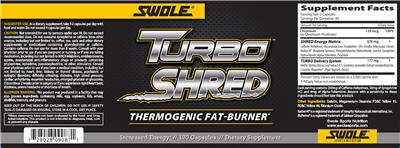
Supplement Facts
The label details for Turbo Shred by Swole, sourced from the NIH Dietary Supplement Label Database.
Supplement Facts
| Ingredient | Amount | % DV |
|---|---|---|
| Inositol | 0 NP | -- |
| Caffeine Anhydrous | 0 NP | -- |
| Razberi K | 0 NP | -- |
| Chromium | 120 mcg | 100% |
| Synephrine Hydrochloride | 0 NP | -- |
| Glucuronolactone | 0 NP | -- |
| Picamilon | 0 NP | -- |
| Alpha-Yohimbine | 0 NP | -- |
| Phenylethylamine Hydrochloride | 0 NP | -- |
| SHRED Energy Matrix | 676 mg | -- |
| Evodiamine 10% (Evodia rutaecarpa) Extract | 0 NP | -- |
| TURBO Delivery System | 177 mg | -- |
| Nettle (Uritica Dioca) Leaf extract 4:1 | 0 NP | -- |
| Gardenia Jasmoides Extract | 0 NP | -- |
| Bioperine(R) (Piper Nigrum) Extract | 0 NP | -- |
Other ingredients: Gelatin, Magnesium Stearate, FD&C Yellow #5, FD&C Yellow #6, Titanium Oxide
Tap any ingredient to jump to its full detail below.
These statements are the manufacturer’s wording, reproduced from the product label — the label is saying it, not HelloPharmacist. We don’t verify or endorse them.
General Statements
THERMOGENIC FAT-BURNER
Increased Energy
FDA Statement of Identity
Dietary Supplement
Brand IP Statement(s)
Razberi-K(R) is a registered trademark of integrity Nutraceuticals International, Inc. BioPerine(R) is a registered trademark of Sabinsa Corporation.
Seals/Symbols
SWOLE(R) SPORTS NUTRITION
Precautions
ALLERGEN WARNING: This product was produced in a facility that may also process ingredients containing milk, egg, soybeans, fish, wheat, shellfish, treenuts, and peanuts.
KEEP OUT OF THE REACH OF CHILDREN.
DO NOT USE IF SAFETY SEAL IS DAMAGED OR MISSING.
Do not exceed recommended dose. Do not consume synephrine or caffeine from other sources, including but not limited to, coffee, tea, soda, and other dietary supplements or medications containing phenylephrine or caffeine.
Consult with your physician prior to use if you are pregnant or nursing, or if you are taking medication, including, but not limited to MAOI inhibitors, antidepressants, aspirin, nonsteroidal anti-inflammatory drugs or products containing phylephrine, ephedrine, pseudoephedrine, or other stimulants.
CAUTION: Not intended for use by persons under age 18.
Consult your physician prior to use if you have a medical condition, including but not limited to heart, liver, kidney, or thyroid disease, psychiatric or epileptic disorders, difficulty urinating, diabetes, high blood pressure, cardiac arrhythmia, recurrent headaches, enlarged prostate or glaucoma. Discontinue 2 weeks prior to surgery or if you experience rapid heart beat, dizziness, server headache or shortness of breath.
Each serving contains 200mg of Caffeine Anhydrous, 20mg of Symephrine HCl and 4mg of Alpha-Yohimbine. Anyone with sensitivity to these ingredients should Not take this product.
Do not use for more that 8 weeks.
FDA Disclaimer Statement
These statements have not been evaluated by the Food and Drug Administration. This product is not intended to diagnose, treat, cure or prevent any disease.
Storage
STORE IN A COOL, DRY PLACE.
Formula
Contains caffeine.
Each serving contains 200mg of Caffeine Anhydrous, 20mg of Symephrine HCl and 4mg of Alpha-Yohimbine. Anyone with sensitivity to these ingredients should Not take this product.
Suggested/Recommended/Usage/Directions
SUGGESTED USE: As a dietary supplement, take 1-2 capsules per day with food and water. Do not exceed 4 capsules per day.
Is this label outdated? Report a formula or label change and our pharmacy team will review it.
Turbo Shred by Swole label
The label scan from the NIH Dietary Supplement Label Database. Tap to enlarge.
Label images are published by the NIH Dietary Supplement Label Database for the version of this product on file. Always read your actual product label.
View the full label (PDF)The Ingredients in Turbo Shred by Swole
These are the 13 active ingredients this product is made of. Select any to open its full monograph.
Serving size1 Capsule(s) Dosage formCapsule Servings per container60 Amounts shown are per serving.
Most supplement products combine several ingredients, and a medication can interact with the product through any one of them. Each ingredient below shows whether it has known drug interactions.
Chromium
Interacts with178 drugs
Chromium is an essential trace mineral involved in how the body handles sugar and fat. Some studies suggest it may modestly help blood sugar control i...
Chromium monograph & interactionsSHRED Energy Matrix
TURBO Delivery System
Other (inactive) ingredients: Gelatin, Magnesium Stearate, FD&C Yellow #5, FD&C Yellow #6, Titanium Oxide. These complete the product’s ingredient list but are not active constituents.
Turbo Shred by Swole Drug Interactions
HelloPharmacist Interaction Report
Turbo Shred by Swole has documented interactions with a large number of medications across multiple ingredient types.
The most serious interaction involves caffeine anhydrous with ephedrine — a Major severity pairing that can trigger serious, even life-threatening stimulant effects like dangerous blood pressure spikes and heart attack.
Read the full breakdown — every affected drug type, severity by severity
Beyond ephedrine, caffeine interacts with several medication types at Moderate severity: barbiturates (pentobarbital, phenobarbital), the antipsychotic clozapine, seizure medications (carbamazepine), the stomach acid drug cimetidine, quinolone antibiotics, and the heart medication dipyridamole. Razberi K (raspberry ketone) adds Moderate interactions with other stimulant drugs and warfarin (a blood thinner).
Inositol, chromium, and stinging nettle all carry Moderate risk with diabetes medications. Chromium also interacts with thyroid hormone (levothyroxine) and insulin.
Evodia has multiple Moderate interactions spanning several enzyme systems and QT-prolonging heart drugs. Alpha-yohimbine brings Moderate interactions with seizure threshold–lowering drugs, heart medications (calcium channel blockers, stimulants, clonidine), blood thinners, and CYP2D6 substrates.
Phenylethylamine interacts Moderately with serotonergic drugs and MAOIs. Black pepper interacts Moderately with propranolol, nevirapine, rifampin, phenytoin, cyclosporine, pentobarbital, atorvastatin, and theophylline.
Picamilon carries Moderate risk with niacin, and gardenia with stimulant laxatives.
We could not check Synephrine Hydrochloride against any medications — no interaction data is on file for it.
Some ingredients showed no documented interactions: glucuronolactone, for which no interaction categories are listed. Altogether, these interactions span 1,515 individual medications.
Use the medication checker on this page to search your exact prescriptions before starting this product.
Check your own medications below · Editorial policy · How we use AI
Want to check YOUR meds against Turbo Shred?
Ask about interactions with your drugs in plain English — “Can I take it with lisinopril?” — and we find you the answer in seconds, ingredient by ingredient.
Go to the checkerIngredients driving the most interactions
Individual Drug Interactions
The ingredients in Turbo Shred interact with 1,533 drugs. Click any drug to see the details.
12 of the 13 ingredients in Turbo Shred interact with drugs. Each result below shows which ingredient is responsible. Bioperine(R) (Piper Nigrum) Extract Synephrine Hydrochloride Evodiamine 10% (Evodia rutaecarpa) Extract Alpha-Yohimbine Caffeine Anhydrous Phenylethylamine Hydrochloride Chromium Razberi K Nettle (Uritica Dioca) Leaf extract 4:1 Inositol Gardenia Jasmoides Extract Picamilon
Aminophylline, Amobarbital, EphedrineAmesec
How Aminophylline, Amobarbital, Ephedrine interacts with Turbo Shred — through 4 ingredients. Tap an ingredient for the detail:
Caffeine AnhydrousStimulant Drugs, Ephedrine Major
Interaction Summary
Theoretically, concomitant use might increase stimulant adverse effects.
Read the full Caffeine Anhydrous + Aminophylline, Amobarbital, Ephedrine interactionRazberi KStimulant Drugs Moderate
Interaction Summary
Theoretically, raspberry ketone might increase the risk of adverse cardiovascular effects with stimulant drugs.
Read the full Razberi K + Aminophylline, Amobarbital, Ephedrine interactionSynephrine HydrochlorideStimulant Drugs Moderate
Interaction Summary
Theoretically, bitter orange might increase the risk of hypertension and adverse cardiovascular effects when taken with stimulant drugs.
Read the full Synephrine Hydrochloride + Aminophylline, Amobarbital, Ephedrine interactionAlpha-yohimbineStimulant Drugs Moderate
Interaction Summary
Theoretically, taking rauwolscine with stimulant drugs might increase the risk of adverse stimulant effects.
Read the full Alpha-yohimbine + Aminophylline, Amobarbital, Ephedrine interactionAmphetamineAdensys XR-ODT, Adzenys ER, Dyanavel XR, Mydayis
How Amphetamine interacts with Turbo Shred — through 6 ingredients. Tap an ingredient for the detail:
Synephrine HydrochlorideCytochrome P450 2d6 (cyp2d6) Substrates, Stimulant Drugs +1 Major
Interaction Summary
Theoretically, bitter orange might increase levels of drug metabolized by CYP2D6.
Read the full Synephrine Hydrochloride + Amphetamine interactionCaffeine AnhydrousStimulant Drugs, Monoamine Oxidase Inhibitors (maois) Moderate
Interaction Summary
Theoretically, concomitant use might increase stimulant adverse effects.
Read the full Caffeine Anhydrous + Amphetamine interactionRazberi KStimulant Drugs Moderate
Interaction Summary
Theoretically, raspberry ketone might increase the risk of adverse cardiovascular effects with stimulant drugs.
Read the full Razberi K + Amphetamine interactionPhenylethylamine HydrochlorideMonoamine Oxidase Inhibitors (maois) Moderate
Interaction Summary
Theoretically, taking phenethylamine concomitantly with MAOIs may increase adverse effects.
Read the full Phenylethylamine Hydrochloride + Amphetamine interactionBioperine(r) (piper Nigrum) ExtractCytochrome P450 2d6 (cyp2d6) Substrates Moderate
Interaction Summary
Theoretically, black pepper might increase levels of drugs metabolized by CYP2D6.
Read the full Bioperine(r) (piper Nigrum) Extract + Amphetamine interactionAlpha-yohimbineSeizure Threshold Lowering Drugs, Cytochrome P450 2d6 (cyp2d6) Substrates +1 Moderate
Interaction Summary
Theoretically, taking rauwolscine with seizure threshold lowering drugs might increase the risk of adverse convulsant effects.
Read the full Alpha-yohimbine + Amphetamine interactionCarbetapentane Tannate, Chlorpheniramine Tannate, Ephedrine Tannate, Phenylephrine TannateQuadratuss, Ry Tuss, Rynatuss, Tri Tannate Plus
How Carbetapentane Tannate, Chlorpheniramine Tannate, Ephedrine Tannate, Phenylephrine Tannate interacts with Turbo Shred — through 7 ingredients. Tap an ingredient for the detail:
Caffeine AnhydrousEphedrine, Stimulant Drugs Major
Interaction Summary
Theoretically, concomitant use might increase the risk for stimulant adverse effects.
Read the full Caffeine Anhydrous + Carbetapentane Tannate, Chlorpheniramine Tannate, Ephedrine Tannate, Phenylephrine Tannate interactionBioperine(r) (piper Nigrum) ExtractCytochrome P450 3a4 (cyp3a4) Substrates Moderate
Interaction Summary
Theoretically, black pepper might increase levels of drugs metabolized by CYP3A4.
Read the full Bioperine(r) (piper Nigrum) Extract + Carbetapentane Tannate, Chlorpheniramine Tannate, Ephedrine Tannate, Phenylephrine Tannate interactionAlpha-yohimbineStimulant Drugs, Seizure Threshold Lowering Drugs Moderate
Interaction Summary
Theoretically, taking rauwolscine with stimulant drugs might increase the risk of adverse stimulant effects.
Read the full Alpha-yohimbine + Carbetapentane Tannate, Chlorpheniramine Tannate, Ephedrine Tannate, Phenylephrine Tannate interactionEvodiamine 10% (evodia Rutaecarpa) ExtractCytochrome P450 3a4 (cyp3a4) Substrates Moderate
Interaction Summary
Theoretically, evodia might increase the levels and clinical effects of CYP3A4 substrates.
Read the full Evodiamine 10% (evodia Rutaecarpa) Extract + Carbetapentane Tannate, Chlorpheniramine Tannate, Ephedrine Tannate, Phenylephrine Tannate interactionRazberi KStimulant Drugs Moderate
Interaction Summary
Theoretically, raspberry ketone might increase the risk of adverse cardiovascular effects with stimulant drugs.
Read the full Razberi K + Carbetapentane Tannate, Chlorpheniramine Tannate, Ephedrine Tannate, Phenylephrine Tannate interactionPhenylethylamine HydrochlorideSerotonergic Drugs Moderate
Interaction Summary
Theoretically, combining serotonergic drugs with phenethylamine might increase the risk of serotonergic adverse effects.
Read the full Phenylethylamine Hydrochloride + Carbetapentane Tannate, Chlorpheniramine Tannate, Ephedrine Tannate, Phenylephrine Tannate interactionSynephrine HydrochlorideCytochrome P450 3a4 (cyp3a4) Substrates, Stimulant Drugs Moderate
Interaction Summary
Bitter orange might increase levels of drugs metabolized by CYP3A4.
Read the full Synephrine Hydrochloride + Carbetapentane Tannate, Chlorpheniramine Tannate, Ephedrine Tannate, Phenylephrine Tannate interactionDyphylline, Ephedrine, Guaifenesin, PhenobarbitalLufyllin-EPG
How Dyphylline, Ephedrine, Guaifenesin, Phenobarbital interacts with Turbo Shred — through 5 ingredients. Tap an ingredient for the detail:
Caffeine AnhydrousStimulant Drugs, Phenobarbital (luminal) +1 Major
Interaction Summary
Theoretically, concomitant use might increase stimulant adverse effects.
Read the full Caffeine Anhydrous + Dyphylline, Ephedrine, Guaifenesin, Phenobarbital interactionEvodiamine 10% (evodia Rutaecarpa) ExtractCytochrome P450 3a4 (cyp3a4) Inducers Moderate
Interaction Summary
Theoretically, taking CYP3A4 inducers might decrease the levels and clinical effects of evodia.
Read the full Evodiamine 10% (evodia Rutaecarpa) Extract + Dyphylline, Ephedrine, Guaifenesin, Phenobarbital interactionRazberi KStimulant Drugs Moderate
Interaction Summary
Theoretically, raspberry ketone might increase the risk of adverse cardiovascular effects with stimulant drugs.
Read the full Razberi K + Dyphylline, Ephedrine, Guaifenesin, Phenobarbital interactionSynephrine HydrochlorideStimulant Drugs Moderate
Interaction Summary
Theoretically, bitter orange might increase the risk of hypertension and adverse cardiovascular effects when taken with stimulant drugs.
Read the full Synephrine Hydrochloride + Dyphylline, Ephedrine, Guaifenesin, Phenobarbital interactionAlpha-yohimbineStimulant Drugs Moderate
Interaction Summary
Theoretically, taking rauwolscine with stimulant drugs might increase the risk of adverse stimulant effects.
Read the full Alpha-yohimbine + Dyphylline, Ephedrine, Guaifenesin, Phenobarbital interactionEphedrine, Guaifenesin (otc Drug)Ephedrine Formula 400, Ephedrine Plus Tabs
How Ephedrine, Guaifenesin (otc Drug) interacts with Turbo Shred — through 4 ingredients. Tap an ingredient for the detail:
Caffeine AnhydrousEphedrine, Stimulant Drugs Major
Interaction Summary
Theoretically, concomitant use might increase the risk for stimulant adverse effects.
Read the full Caffeine Anhydrous + Ephedrine, Guaifenesin (otc Drug) interactionSynephrine HydrochlorideStimulant Drugs Moderate
Interaction Summary
Theoretically, bitter orange might increase the risk of hypertension and adverse cardiovascular effects when taken with stimulant drugs.
Read the full Synephrine Hydrochloride + Ephedrine, Guaifenesin (otc Drug) interactionAlpha-yohimbineStimulant Drugs Moderate
Interaction Summary
Theoretically, taking rauwolscine with stimulant drugs might increase the risk of adverse stimulant effects.
Read the full Alpha-yohimbine + Ephedrine, Guaifenesin (otc Drug) interactionRazberi KStimulant Drugs Moderate
Interaction Summary
Theoretically, raspberry ketone might increase the risk of adverse cardiovascular effects with stimulant drugs.
Read the full Razberi K + Ephedrine, Guaifenesin (otc Drug) interactionEphedrine, Guaifenesin, Phenobarbital, TheophyllineMudrane GG
How Ephedrine, Guaifenesin, Phenobarbital, Theophylline interacts with Turbo Shred — through 6 ingredients. Tap an ingredient for the detail:
Caffeine AnhydrousTheophylline, Phenobarbital (luminal) +2 Major
Interaction Summary
Theoretically, caffeine might increase the levels and adverse effects of theophylline.
Read the full Caffeine Anhydrous + Ephedrine, Guaifenesin, Phenobarbital, Theophylline interactionRazberi KStimulant Drugs Moderate
Interaction Summary
Theoretically, raspberry ketone might increase the risk of adverse cardiovascular effects with stimulant drugs.
Read the full Razberi K + Ephedrine, Guaifenesin, Phenobarbital, Theophylline interactionEvodiamine 10% (evodia Rutaecarpa) ExtractTheophylline, Cytochrome P450 3a4 (cyp3a4) Inducers +1 Moderate
Interaction Summary
Theoretically, evodia might decrease the levels and clinical effects of theophylline.
Read the full Evodiamine 10% (evodia Rutaecarpa) Extract + Ephedrine, Guaifenesin, Phenobarbital, Theophylline interactionAlpha-yohimbineSeizure Threshold Lowering Drugs, Stimulant Drugs Moderate
Interaction Summary
Theoretically, taking rauwolscine with seizure threshold lowering drugs might increase the risk of adverse convulsant effects.
Read the full Alpha-yohimbine + Ephedrine, Guaifenesin, Phenobarbital, Theophylline interactionSynephrine HydrochlorideStimulant Drugs Moderate
Interaction Summary
Theoretically, bitter orange might increase the risk of hypertension and adverse cardiovascular effects when taken with stimulant drugs.
Read the full Synephrine Hydrochloride + Ephedrine, Guaifenesin, Phenobarbital, Theophylline interactionBioperine(r) (piper Nigrum) ExtractCytochrome P450 1a2 (cyp1a2) Substrates, Theophylline Moderate
Interaction Summary
Theoretically, black pepper might decrease levels and clinical effects of drugs metabolized by CYP1A2.
Read the full Bioperine(r) (piper Nigrum) Extract + Ephedrine, Guaifenesin, Phenobarbital, Theophylline interactionEphedrine, Hydroxyzine, TheophyllineAmi Rax, Marax
How Ephedrine, Hydroxyzine, Theophylline interacts with Turbo Shred — through 6 ingredients. Tap an ingredient for the detail:
Caffeine AnhydrousEphedrine, Stimulant Drugs +1 Major
Interaction Summary
Theoretically, concomitant use might increase the risk for stimulant adverse effects.
Read the full Caffeine Anhydrous + Ephedrine, Hydroxyzine, Theophylline interactionBioperine(r) (piper Nigrum) ExtractTheophylline, Cytochrome P450 1a2 (cyp1a2) Substrates Moderate
Interaction Summary
Black pepper might increase blood levels of theophylline.
Read the full Bioperine(r) (piper Nigrum) Extract + Ephedrine, Hydroxyzine, Theophylline interactionSynephrine HydrochlorideStimulant Drugs Moderate
Interaction Summary
Theoretically, bitter orange might increase the risk of hypertension and adverse cardiovascular effects when taken with stimulant drugs.
Read the full Synephrine Hydrochloride + Ephedrine, Hydroxyzine, Theophylline interactionAlpha-yohimbineSeizure Threshold Lowering Drugs, Stimulant Drugs Moderate
Interaction Summary
Theoretically, taking rauwolscine with seizure threshold lowering drugs might increase the risk of adverse convulsant effects.
Read the full Alpha-yohimbine + Ephedrine, Hydroxyzine, Theophylline interactionRazberi KStimulant Drugs Moderate
Interaction Summary
Theoretically, raspberry ketone might increase the risk of adverse cardiovascular effects with stimulant drugs.
Read the full Razberi K + Ephedrine, Hydroxyzine, Theophylline interactionEvodiamine 10% (evodia Rutaecarpa) ExtractTheophylline, Cytochrome P450 1a2 (cyp1a2) Substrates Moderate
Interaction Summary
Theoretically, evodia might decrease the levels and clinical effects of theophylline.
Read the full Evodiamine 10% (evodia Rutaecarpa) Extract + Ephedrine, Hydroxyzine, Theophylline interactionEphedrine, Phenobarbital, Potassium Iodide, TheophyllineMudrane, Quadrinal
How Ephedrine, Phenobarbital, Potassium Iodide, Theophylline interacts with Turbo Shred — through 6 ingredients. Tap an ingredient for the detail:
Caffeine AnhydrousStimulant Drugs, Theophylline +2 Major
Interaction Summary
Theoretically, concomitant use might increase stimulant adverse effects.
Read the full Caffeine Anhydrous + Ephedrine, Phenobarbital, Potassium Iodide, Theophylline interactionEvodiamine 10% (evodia Rutaecarpa) ExtractTheophylline, Cytochrome P450 3a4 (cyp3a4) Inducers Moderate
Interaction Summary
Theoretically, evodia might decrease the levels and clinical effects of theophylline.
Read the full Evodiamine 10% (evodia Rutaecarpa) Extract + Ephedrine, Phenobarbital, Potassium Iodide, Theophylline interactionAlpha-yohimbineSeizure Threshold Lowering Drugs, Stimulant Drugs Moderate
Interaction Summary
Theoretically, taking rauwolscine with seizure threshold lowering drugs might increase the risk of adverse convulsant effects.
Read the full Alpha-yohimbine + Ephedrine, Phenobarbital, Potassium Iodide, Theophylline interactionRazberi KStimulant Drugs Moderate
Interaction Summary
Theoretically, raspberry ketone might increase the risk of adverse cardiovascular effects with stimulant drugs.
Read the full Razberi K + Ephedrine, Phenobarbital, Potassium Iodide, Theophylline interactionBioperine(r) (piper Nigrum) ExtractTheophylline Moderate
Interaction Summary
Black pepper might increase blood levels of theophylline.
Read the full Bioperine(r) (piper Nigrum) Extract + Ephedrine, Phenobarbital, Potassium Iodide, Theophylline interactionSynephrine HydrochlorideStimulant Drugs Moderate
Interaction Summary
Theoretically, bitter orange might increase the risk of hypertension and adverse cardiovascular effects when taken with stimulant drugs.
Read the full Synephrine Hydrochloride + Ephedrine, Phenobarbital, Potassium Iodide, Theophylline interactionEphedrine, Phenobarbital, TheophyllineTedral
How Ephedrine, Phenobarbital, Theophylline interacts with Turbo Shred — through 6 ingredients. Tap an ingredient for the detail:
Caffeine AnhydrousEphedrine, Stimulant Drugs +2 Major
Interaction Summary
Theoretically, concomitant use might increase the risk for stimulant adverse effects.
Read the full Caffeine Anhydrous + Ephedrine, Phenobarbital, Theophylline interactionAlpha-yohimbineStimulant Drugs, Seizure Threshold Lowering Drugs Moderate
Interaction Summary
Theoretically, taking rauwolscine with stimulant drugs might increase the risk of adverse stimulant effects.
Read the full Alpha-yohimbine + Ephedrine, Phenobarbital, Theophylline interactionBioperine(r) (piper Nigrum) ExtractTheophylline Moderate
Interaction Summary
Black pepper might increase blood levels of theophylline.
Read the full Bioperine(r) (piper Nigrum) Extract + Ephedrine, Phenobarbital, Theophylline interactionSynephrine HydrochlorideStimulant Drugs Moderate
Interaction Summary
Theoretically, bitter orange might increase the risk of hypertension and adverse cardiovascular effects when taken with stimulant drugs.
Read the full Synephrine Hydrochloride + Ephedrine, Phenobarbital, Theophylline interactionEvodiamine 10% (evodia Rutaecarpa) ExtractCytochrome P450 3a4 (cyp3a4) Inducers, Theophylline Moderate
Interaction Summary
Theoretically, taking CYP3A4 inducers might decrease the levels and clinical effects of evodia.
Read the full Evodiamine 10% (evodia Rutaecarpa) Extract + Ephedrine, Phenobarbital, Theophylline interactionRazberi KStimulant Drugs Moderate
Interaction Summary
Theoretically, raspberry ketone might increase the risk of adverse cardiovascular effects with stimulant drugs.
Read the full Razberi K + Ephedrine, Phenobarbital, Theophylline interactionIsocarboxazidMarplan
How Isocarboxazid interacts with Turbo Shred — through 3 ingredients. Tap an ingredient for the detail:
Synephrine HydrochlorideMonoamine Oxidase Inhibitors (maois) Major
Interaction Summary
Theoretically, taking MAOIs with synephrine-containing bitter orange preparations might increase the hypertensive effects of synephrine, potentially leading to hypertensive crisis.
Read the full Synephrine Hydrochloride + Isocarboxazid interactionPhenylethylamine HydrochlorideSerotonergic Drugs, Monoamine Oxidase Inhibitors (maois) Moderate
Interaction Summary
Theoretically, combining serotonergic drugs with phenethylamine might increase the risk of serotonergic adverse effects.
Read the full Phenylethylamine Hydrochloride + Isocarboxazid interactionCaffeine AnhydrousMonoamine Oxidase Inhibitors (maois) Moderate
Interaction Summary
Theoretically, concomitant use might increase the risk of a hypertensive crisis.
Read the full Caffeine Anhydrous + Isocarboxazid interactionMidazolamNayzilam, Seizalam, Versed
How Midazolam interacts with Turbo Shred — through 3 ingredients. Tap an ingredient for the detail:
Synephrine HydrochlorideMidazolam (versed), Cytochrome P450 3a4 (cyp3a4) Substrates Major
Interaction Summary
Bitter orange might increase blood levels of midazolam.
Read the full Synephrine Hydrochloride + Midazolam interactionEvodiamine 10% (evodia Rutaecarpa) ExtractCytochrome P450 3a4 (cyp3a4) Substrates Moderate
Interaction Summary
Theoretically, evodia might increase the levels and clinical effects of CYP3A4 substrates.
Read the full Evodiamine 10% (evodia Rutaecarpa) Extract + Midazolam interactionBioperine(r) (piper Nigrum) ExtractCytochrome P450 3a4 (cyp3a4) Substrates Moderate
Interaction Summary
Theoretically, black pepper might increase levels of drugs metabolized by CYP3A4.
Read the full Bioperine(r) (piper Nigrum) Extract + Midazolam interactionMoclobemideManerix, Moclobemide
How Moclobemide interacts with Turbo Shred — through 3 ingredients. Tap an ingredient for the detail:
Synephrine HydrochlorideMonoamine Oxidase Inhibitors (maois) Major
Interaction Summary
Theoretically, taking MAOIs with synephrine-containing bitter orange preparations might increase the hypertensive effects of synephrine, potentially leading to hypertensive crisis.
Read the full Synephrine Hydrochloride + Moclobemide interactionCaffeine AnhydrousMonoamine Oxidase Inhibitors (maois) Moderate
Interaction Summary
Theoretically, concomitant use might increase the risk of a hypertensive crisis.
Read the full Caffeine Anhydrous + Moclobemide interactionPhenylethylamine HydrochlorideMonoamine Oxidase Inhibitors (maois) Moderate
Interaction Summary
Theoretically, taking phenethylamine concomitantly with MAOIs may increase adverse effects.
Read the full Phenylethylamine Hydrochloride + Moclobemide interactionOzanimod HydrochlorideZeposia
How Ozanimod Hydrochloride interacts with Turbo Shred — through 4 ingredients. Tap an ingredient for the detail:
Synephrine HydrochlorideQt Interval-prolonging Drugs, Monoamine Oxidase Inhibitors (maois) Major
Interaction Summary
Theoretically, bitter orange might have an additive effect when combined with drugs that prolong the QT interval, potentially increasing the risk of ventricular arrhythmias.
Read the full Synephrine Hydrochloride + Ozanimod Hydrochloride interactionPhenylethylamine HydrochlorideMonoamine Oxidase Inhibitors (maois) Moderate
Interaction Summary
Theoretically, taking phenethylamine concomitantly with MAOIs may increase adverse effects.
Read the full Phenylethylamine Hydrochloride + Ozanimod Hydrochloride interactionCaffeine AnhydrousMonoamine Oxidase Inhibitors (maois) Moderate
Interaction Summary
Theoretically, concomitant use might increase the risk of a hypertensive crisis.
Read the full Caffeine Anhydrous + Ozanimod Hydrochloride interactionEvodiamine 10% (evodia Rutaecarpa) ExtractQt Interval-prolonging Drugs Moderate
Interaction Summary
Theoretically, evodia might have an additive effect with drugs that prolong the QT interval, potentially increasing the risk of ventricular arrhythmias.
Read the full Evodiamine 10% (evodia Rutaecarpa) Extract + Ozanimod Hydrochloride interactionPhenelzine SulfateNardil
How Phenelzine Sulfate interacts with Turbo Shred — through 3 ingredients. Tap an ingredient for the detail:
Synephrine HydrochlorideMonoamine Oxidase Inhibitors (maois) Major
Interaction Summary
Theoretically, taking MAOIs with synephrine-containing bitter orange preparations might increase the hypertensive effects of synephrine, potentially leading to hypertensive crisis.
Read the full Synephrine Hydrochloride + Phenelzine Sulfate interactionCaffeine AnhydrousMonoamine Oxidase Inhibitors (maois) Moderate
Interaction Summary
Theoretically, concomitant use might increase the risk of a hypertensive crisis.
Read the full Caffeine Anhydrous + Phenelzine Sulfate interactionPhenylethylamine HydrochlorideSerotonergic Drugs, Monoamine Oxidase Inhibitors (maois) Moderate
Interaction Summary
Theoretically, combining serotonergic drugs with phenethylamine might increase the risk of serotonergic adverse effects.
Read the full Phenylethylamine Hydrochloride + Phenelzine Sulfate interactionRasagilineAzilect
How Rasagiline interacts with Turbo Shred — through 5 ingredients. Tap an ingredient for the detail:
Synephrine HydrochlorideMonoamine Oxidase Inhibitors (maois) Major
Interaction Summary
Theoretically, taking MAOIs with synephrine-containing bitter orange preparations might increase the hypertensive effects of synephrine, potentially leading to hypertensive crisis.
Read the full Synephrine Hydrochloride + Rasagiline interactionPhenylethylamine HydrochlorideSerotonergic Drugs, Monoamine Oxidase Inhibitors (maois) Moderate
Interaction Summary
Theoretically, combining serotonergic drugs with phenethylamine might increase the risk of serotonergic adverse effects.
Read the full Phenylethylamine Hydrochloride + Rasagiline interactionCaffeine AnhydrousMonoamine Oxidase Inhibitors (maois) Moderate
Interaction Summary
Theoretically, concomitant use might increase the risk of a hypertensive crisis.
Read the full Caffeine Anhydrous + Rasagiline interactionEvodiamine 10% (evodia Rutaecarpa) ExtractCytochrome P450 1a2 (cyp1a2) Substrates Moderate
Interaction Summary
Evodia might reduce the levels and clinical effects of CYP1A2 substrates through induction of CYP1A2.
Read the full Evodiamine 10% (evodia Rutaecarpa) Extract + Rasagiline interactionBioperine(r) (piper Nigrum) ExtractCytochrome P450 1a2 (cyp1a2) Substrates Minor
Interaction Summary
Theoretically, black pepper might decrease levels and clinical effects of drugs metabolized by CYP1A2.
Read the full Bioperine(r) (piper Nigrum) Extract + Rasagiline interactionSafinamide MesylateXadago
How Safinamide Mesylate interacts with Turbo Shred — through 3 ingredients. Tap an ingredient for the detail:
Synephrine HydrochlorideMonoamine Oxidase Inhibitors (maois) Major
Interaction Summary
Theoretically, taking MAOIs with synephrine-containing bitter orange preparations might increase the hypertensive effects of synephrine, potentially leading to hypertensive crisis.
Read the full Synephrine Hydrochloride + Safinamide Mesylate interactionCaffeine AnhydrousMonoamine Oxidase Inhibitors (maois) Moderate
Interaction Summary
Theoretically, concomitant use might increase the risk of a hypertensive crisis.
Read the full Caffeine Anhydrous + Safinamide Mesylate interactionPhenylethylamine HydrochlorideSerotonergic Drugs, Monoamine Oxidase Inhibitors (maois) Moderate
Interaction Summary
Theoretically, combining serotonergic drugs with phenethylamine might increase the risk of serotonergic adverse effects.
Read the full Phenylethylamine Hydrochloride + Safinamide Mesylate interactionSelegilineCarbex, Eldepryl, Emsam, Zelapar
How Selegiline interacts with Turbo Shred — through 3 ingredients. Tap an ingredient for the detail:
Synephrine HydrochlorideMonoamine Oxidase Inhibitors (maois) Major
Interaction Summary
Theoretically, taking MAOIs with synephrine-containing bitter orange preparations might increase the hypertensive effects of synephrine, potentially leading to hypertensive crisis.
Read the full Synephrine Hydrochloride + Selegiline interactionPhenylethylamine HydrochlorideSerotonergic Drugs, Monoamine Oxidase Inhibitors (maois) Moderate
Interaction Summary
Theoretically, combining serotonergic drugs with phenethylamine might increase the risk of serotonergic adverse effects.
Read the full Phenylethylamine Hydrochloride + Selegiline interactionCaffeine AnhydrousMonoamine Oxidase Inhibitors (maois) Moderate
Interaction Summary
Theoretically, concomitant use might increase the risk of a hypertensive crisis.
Read the full Caffeine Anhydrous + Selegiline interactionTranylcypromineParnate
How Tranylcypromine interacts with Turbo Shred — through 3 ingredients. Tap an ingredient for the detail:
Synephrine HydrochlorideMonoamine Oxidase Inhibitors (maois) Major
Interaction Summary
Theoretically, taking MAOIs with synephrine-containing bitter orange preparations might increase the hypertensive effects of synephrine, potentially leading to hypertensive crisis.
Read the full Synephrine Hydrochloride + Tranylcypromine interactionPhenylethylamine HydrochlorideSerotonergic Drugs, Monoamine Oxidase Inhibitors (maois) Moderate
Interaction Summary
Theoretically, combining serotonergic drugs with phenethylamine might increase the risk of serotonergic adverse effects.
Read the full Phenylethylamine Hydrochloride + Tranylcypromine interactionCaffeine AnhydrousMonoamine Oxidase Inhibitors (maois) Moderate
Interaction Summary
Theoretically, concomitant use might increase the risk of a hypertensive crisis.
Read the full Caffeine Anhydrous + Tranylcypromine interactionAdo-trastuzumab EmtansineKadcyla
How Ado-trastuzumab Emtansine interacts with Turbo Shred — through 3 ingredients. Tap an ingredient for the detail:
Synephrine HydrochlorideCytochrome P450 3a4 (cyp3a4) Substrates Moderate
Interaction Summary
Bitter orange might increase levels of drugs metabolized by CYP3A4.
Read the full Synephrine Hydrochloride + Ado-trastuzumab Emtansine interactionEvodiamine 10% (evodia Rutaecarpa) ExtractCytochrome P450 3a4 (cyp3a4) Substrates Moderate
Interaction Summary
Theoretically, evodia might increase the levels and clinical effects of CYP3A4 substrates.
Read the full Evodiamine 10% (evodia Rutaecarpa) Extract + Ado-trastuzumab Emtansine interactionBioperine(r) (piper Nigrum) ExtractCytochrome P450 3a4 (cyp3a4) Substrates Moderate
Interaction Summary
Theoretically, black pepper might increase levels of drugs metabolized by CYP3A4.
Read the full Bioperine(r) (piper Nigrum) Extract + Ado-trastuzumab Emtansine interactionAbametapirXeglyze
How Abametapir interacts with Turbo Shred — through 2 ingredients. Tap an ingredient for the detail:
Evodiamine 10% (evodia Rutaecarpa) ExtractCytochrome P450 1a2 (cyp1a2) Inhibitors, Cytochrome P450 3a4 (cyp3a4) Inhibitors Moderate
Interaction Summary
Theoretically, drugs that inhibit CYP1A2 might increase the levels and clinical effects of evodia.
Read the full Evodiamine 10% (evodia Rutaecarpa) Extract + Abametapir interactionCaffeine AnhydrousCytochrome P450 1a2 (cyp1a2) Inhibitors Minor
Interaction Summary
Theoretically, concomitant use might increase the levels and adverse effects of caffeine.
Read the full Caffeine Anhydrous + Abametapir interactionAbciximabReoPro
How Abciximab interacts with Turbo Shred — through 4 ingredients. Tap an ingredient for the detail:
Caffeine AnhydrousAnticoagulant/antiplatelet Drugs Moderate
Interaction Summary
Theoretically, caffeine may increase the risk of bleeding if used with anticoagulant or antiplatelet drugs.
Read the full Caffeine Anhydrous + Abciximab interactionAlpha-yohimbineAnticoagulant/antiplatelet Drugs Moderate
Interaction Summary
Theoretically, rauwolscine may have antiplatelet effects and may increase the risk of bleeding if used with anticoagulant or antiplatelet drugs.
Read the full Alpha-yohimbine + Abciximab interactionEvodiamine 10% (evodia Rutaecarpa) ExtractAnticoagulant/antiplatelet Drugs Moderate
Interaction Summary
Theoretically, taking evodia with antiplatelet or anticoagulant drugs might increase the risk of bruising and bleeding.
Read the full Evodiamine 10% (evodia Rutaecarpa) Extract + Abciximab interactionBioperine(r) (piper Nigrum) ExtractAnticoagulant/antiplatelet Drugs Moderate
Interaction Summary
Theoretically, black pepper might increase the risk of bleeding when taken with antiplatelet or anticoagulant drugs.
Read the full Bioperine(r) (piper Nigrum) Extract + Abciximab interactionAbemaciclibVerzenio
How Abemaciclib interacts with Turbo Shred — through 3 ingredients. Tap an ingredient for the detail:
Bioperine(r) (piper Nigrum) ExtractCytochrome P450 3a4 (cyp3a4) Substrates Moderate
Interaction Summary
Theoretically, black pepper might increase levels of drugs metabolized by CYP3A4.
Read the full Bioperine(r) (piper Nigrum) Extract + Abemaciclib interactionSynephrine HydrochlorideCytochrome P450 3a4 (cyp3a4) Substrates Moderate
Interaction Summary
Bitter orange might increase levels of drugs metabolized by CYP3A4.
Read the full Synephrine Hydrochloride + Abemaciclib interactionEvodiamine 10% (evodia Rutaecarpa) ExtractCytochrome P450 3a4 (cyp3a4) Substrates Moderate
Interaction Summary
Theoretically, evodia might increase the levels and clinical effects of CYP3A4 substrates.
Read the full Evodiamine 10% (evodia Rutaecarpa) Extract + Abemaciclib interactionAbiraterone
How Abiraterone interacts with Turbo Shred — through 4 ingredients. Tap an ingredient for the detail:
Evodiamine 10% (evodia Rutaecarpa) ExtractCytochrome P450 3a4 (cyp3a4) Substrates, Cytochrome P450 3a4 (cyp3a4) Inhibitors +1 Moderate
Interaction Summary
Theoretically, evodia might increase the levels and clinical effects of CYP3A4 substrates.
Read the full Evodiamine 10% (evodia Rutaecarpa) Extract + Abiraterone interactionBioperine(r) (piper Nigrum) ExtractCytochrome P450 3a4 (cyp3a4) Substrates Moderate
Interaction Summary
Theoretically, black pepper might increase levels of drugs metabolized by CYP3A4.
Read the full Bioperine(r) (piper Nigrum) Extract + Abiraterone interactionSynephrine HydrochlorideCytochrome P450 3a4 (cyp3a4) Substrates Moderate
Interaction Summary
Bitter orange might increase levels of drugs metabolized by CYP3A4.
Read the full Synephrine Hydrochloride + Abiraterone interactionCaffeine AnhydrousCytochrome P450 1a2 (cyp1a2) Inhibitors Minor
Interaction Summary
Theoretically, concomitant use might increase the levels and adverse effects of caffeine.
Read the full Caffeine Anhydrous + Abiraterone interactionAbiraterone AcetateYonsa, Zytiga
How Abiraterone Acetate interacts with Turbo Shred — through 3 ingredients. Tap an ingredient for the detail:
Synephrine HydrochlorideCytochrome P450 3a4 (cyp3a4) Substrates Moderate
Interaction Summary
Bitter orange might increase levels of drugs metabolized by CYP3A4.
Read the full Synephrine Hydrochloride + Abiraterone Acetate interactionBioperine(r) (piper Nigrum) ExtractCytochrome P450 3a4 (cyp3a4) Substrates Moderate
Interaction Summary
Theoretically, black pepper might increase levels of drugs metabolized by CYP3A4.
Read the full Bioperine(r) (piper Nigrum) Extract + Abiraterone Acetate interactionEvodiamine 10% (evodia Rutaecarpa) ExtractCytochrome P450 3a4 (cyp3a4) Substrates Moderate
Interaction Summary
Theoretically, evodia might increase the levels and clinical effects of CYP3A4 substrates.
Read the full Evodiamine 10% (evodia Rutaecarpa) Extract + Abiraterone Acetate interactionAbrocitinibCibinqo
How Abrocitinib interacts with Turbo Shred — through 4 ingredients. Tap an ingredient for the detail:
Evodiamine 10% (evodia Rutaecarpa) ExtractAnticoagulant/antiplatelet Drugs Moderate
Interaction Summary
Theoretically, taking evodia with antiplatelet or anticoagulant drugs might increase the risk of bruising and bleeding.
Read the full Evodiamine 10% (evodia Rutaecarpa) Extract + Abrocitinib interactionBioperine(r) (piper Nigrum) ExtractAnticoagulant/antiplatelet Drugs Moderate
Interaction Summary
Theoretically, black pepper might increase the risk of bleeding when taken with antiplatelet or anticoagulant drugs.
Read the full Bioperine(r) (piper Nigrum) Extract + Abrocitinib interactionAlpha-yohimbineAnticoagulant/antiplatelet Drugs Moderate
Interaction Summary
Theoretically, rauwolscine may have antiplatelet effects and may increase the risk of bleeding if used with anticoagulant or antiplatelet drugs.
Read the full Alpha-yohimbine + Abrocitinib interactionCaffeine AnhydrousAnticoagulant/antiplatelet Drugs Moderate
Interaction Summary
Theoretically, caffeine may increase the risk of bleeding if used with anticoagulant or antiplatelet drugs.
Read the full Caffeine Anhydrous + Abrocitinib interactionAcalabrutinibCalquence
How Acalabrutinib interacts with Turbo Shred — through 3 ingredients. Tap an ingredient for the detail:
Bioperine(r) (piper Nigrum) ExtractCytochrome P450 3a4 (cyp3a4) Substrates, P-glycoprotein Substrates Moderate
Interaction Summary
Theoretically, black pepper might increase levels of drugs metabolized by CYP3A4.
Read the full Bioperine(r) (piper Nigrum) Extract + Acalabrutinib interactionEvodiamine 10% (evodia Rutaecarpa) ExtractCytochrome P450 3a4 (cyp3a4) Substrates Moderate
Interaction Summary
Theoretically, evodia might increase the levels and clinical effects of CYP3A4 substrates.
Read the full Evodiamine 10% (evodia Rutaecarpa) Extract + Acalabrutinib interactionSynephrine HydrochlorideCytochrome P450 3a4 (cyp3a4) Substrates Moderate
Interaction Summary
Bitter orange might increase levels of drugs metabolized by CYP3A4.
Read the full Synephrine Hydrochloride + Acalabrutinib interactionAcarboseGlucobay, Prandase, Precose
How Acarbose interacts with Turbo Shred — through 6 ingredients. Tap an ingredient for the detail:
Synephrine HydrochlorideAntidiabetes Drugs Moderate
Interaction Summary
Theoretically, bitter orange might increase the risk of hypoglycemia when taken with antidiabetes drugs.
Read the full Synephrine Hydrochloride + Acarbose interactionChromiumAntidiabetes Drugs Moderate
Interaction Summary
Theoretically, chromium may have additive effects with antidiabetic agents and increase the risk of hypoglycemia.
Read the full Chromium + Acarbose interactionInositolAntidiabetes Drugs Moderate
Interaction Summary
Theoretically, taking inositol with antidiabetes drugs might increase the risk of hypoglycemia.
Read the full Inositol + Acarbose interactionNettle (uritica Dioca) Leaf Extract 4:1Antidiabetes Drugs Moderate
Interaction Summary
Theoretically, stinging nettle might have additive effects with antidiabetes drugs.
Read the full Nettle (uritica Dioca) Leaf Extract 4:1 + Acarbose interactionBioperine(r) (piper Nigrum) ExtractAntidiabetes Drugs Moderate
Interaction Summary
Theoretically, black pepper might increase the risk of hypoglycemia when taken with antidiabetes drugs.
Read the full Bioperine(r) (piper Nigrum) Extract + Acarbose interactionCaffeine AnhydrousAntidiabetes Drugs Minor
Interaction Summary
Theoretically, taking caffeine with antidiabetes drugs might interfere with blood glucose control.
Read the full Caffeine Anhydrous + Acarbose interactionAcenocoumarolSintrom
How Acenocoumarol interacts with Turbo Shred — through 4 ingredients. Tap an ingredient for the detail:
Bioperine(r) (piper Nigrum) ExtractAnticoagulant/antiplatelet Drugs Moderate
Interaction Summary
Theoretically, black pepper might increase the risk of bleeding when taken with antiplatelet or anticoagulant drugs.
Read the full Bioperine(r) (piper Nigrum) Extract + Acenocoumarol interactionCaffeine AnhydrousAnticoagulant/antiplatelet Drugs Moderate
Interaction Summary
Theoretically, caffeine may increase the risk of bleeding if used with anticoagulant or antiplatelet drugs.
Read the full Caffeine Anhydrous + Acenocoumarol interactionEvodiamine 10% (evodia Rutaecarpa) ExtractAnticoagulant/antiplatelet Drugs Moderate
Interaction Summary
Theoretically, taking evodia with antiplatelet or anticoagulant drugs might increase the risk of bruising and bleeding.
Read the full Evodiamine 10% (evodia Rutaecarpa) Extract + Acenocoumarol interactionAlpha-yohimbineAnticoagulant/antiplatelet Drugs Moderate
Interaction Summary
Theoretically, rauwolscine may have antiplatelet effects and may increase the risk of bleeding if used with anticoagulant or antiplatelet drugs.
Read the full Alpha-yohimbine + Acenocoumarol interactionAcetaminophenChildren's Tylenol, Children's Tylenol Meltaways, Tylenol, Tylenol Ex Strength
How Acetaminophen interacts with Turbo Shred — through 2 ingredients. Tap an ingredient for the detail:
Evodiamine 10% (evodia Rutaecarpa) ExtractCytochrome P450 1a2 (cyp1a2) Substrates, Cytochrome P450 2e1 (cyp2e1) Substrates Moderate
Interaction Summary
Evodia might reduce the levels and clinical effects of CYP1A2 substrates through induction of CYP1A2.
Read the full Evodiamine 10% (evodia Rutaecarpa) Extract + Acetaminophen interactionBioperine(r) (piper Nigrum) ExtractCytochrome P450 1a2 (cyp1a2) Substrates Minor
Interaction Summary
Theoretically, black pepper might decrease levels and clinical effects of drugs metabolized by CYP1A2.
Read the full Bioperine(r) (piper Nigrum) Extract + Acetaminophen interactionAcetaminophen, AspirinGemnisyn
How Acetaminophen, Aspirin interacts with Turbo Shred — through 5 ingredients. Tap an ingredient for the detail:
Evodiamine 10% (evodia Rutaecarpa) ExtractCytochrome P450 2e1 (cyp2e1) Substrates, Anticoagulant/antiplatelet Drugs +1 Moderate
Interaction Summary
Theoretically, evodia might reduce the levels and clinical effects of CYP2E1 substrates through induction of CYP2E1.
Read the full Evodiamine 10% (evodia Rutaecarpa) Extract + Acetaminophen, Aspirin interactionCaffeine AnhydrousAnticoagulant/antiplatelet Drugs Moderate
Interaction Summary
Theoretically, caffeine may increase the risk of bleeding if used with anticoagulant or antiplatelet drugs.
Read the full Caffeine Anhydrous + Acetaminophen, Aspirin interactionAlpha-yohimbineAnticoagulant/antiplatelet Drugs Moderate
Interaction Summary
Theoretically, rauwolscine may have antiplatelet effects and may increase the risk of bleeding if used with anticoagulant or antiplatelet drugs.
Read the full Alpha-yohimbine + Acetaminophen, Aspirin interactionBioperine(r) (piper Nigrum) ExtractCytochrome P450 1a2 (cyp1a2) Substrates, Anticoagulant/antiplatelet Drugs Moderate
Interaction Summary
Theoretically, black pepper might decrease levels and clinical effects of drugs metabolized by CYP1A2.
Read the full Bioperine(r) (piper Nigrum) Extract + Acetaminophen, Aspirin interactionChromiumAspirin, Nonsteroidal Anti-inflammatory Drugs (nsaids) Minor
Interaction Summary
Theoretically, aspirin might increase chromium absorption.
Read the full Chromium + Acetaminophen, Aspirin interactionEach ingredient & the kinds of drugs it affects
For each ingredient in Turbo Shred with known interactions, here are the types of medications they can affect. Open any type for the detail — or search your exact drug in the checker above.
Bioperine(R) (Piper Nigrum) Extract
Anticoagulant/Antiplatelet Drugs
Theoretically, black pepper might increase the risk of bleeding when taken with antiplatelet or anticoagulant drugs.
In vitro research shows that piperine, a constituent of black pepper, seems to inhibit platelet aggregation. This has not been reported in humans.
Antidiabetes Drugs
Theoretically, black pepper might increase the risk of hypoglycemia when taken with antidiabetes drugs.
Animal research shows that piperine, a constituent of black pepper, can reduce blood glucose levels. Monitor blood glucose levels closely. Dose adjustments might be necessary.
Atorvastatin (Lipitor)
Theoretically, black pepper might increase blood levels of atorvastatin.
Animal research shows that taking piperine, a constituent of black pepper, 35 mg/kg can increase the maximum serum concentration of atorvastatin three-fold. This has not been reported in humans.
Cyclosporine (Neoral, Sandimmune)
Theoretically, black pepper might increase the effects and side effects of cyclosporine.
In vitro research shows that piperine, a constituent of black pepper, increases the bioavailability of cyclosporine. This has not been reported in humans.
Cytochrome P450 2D6 (Cyp2D6) Substrates
Theoretically, black pepper might increase levels of drugs metabolized by CYP2D6.
In vitro research suggests that some constituents of black pepper inhibit CYP2D6. This has not been reported in humans.
Cytochrome P450 3A4 (Cyp3A4) Substrates
Theoretically, black pepper might increase levels of drugs metabolized by CYP3A4.
In vitro research and pharmacokinetic simulation data suggest that piperine, a constituent of black pepper, as well as the pepper fruit seem to inhibit CYP3A4. This has not been reported in humans.
Lithium
Theoretically, black pepper might increase blood levels of lithium due to its diuretic effects. The dose of lithium might need to be reduced.
Black pepper is thought to have diuretic properties.
Nevirapine (Viramune)
Black pepper might increase blood levels of nevirapine.
Clinical research shows that piperine, a constituent of black pepper, increases the plasma concentration of nevirapine. However, no adverse effects were observed in this study.
P-Glycoprotein Substrates
Theoretically, black pepper might increase levels of P-glycoprotein substrates.
In vitro research shows that piperine, a constituent of black pepper, seems to inhibit P-glycoprotein.
Pentobarbital (Nembutal)
Theoretically, black pepper might increase the sedative effects of pentobarbital.
Animal research shows that piperine, a constituent of black pepper, increases pentobarbital-induced sleeping time.
Phenytoin (Dilantin)
Black pepper might increase blood levels of phenytoin.
Clinical research shows that piperine, a constituent of black pepper, seems to increase absorption, slow elimination, and increase levels of phenytoin. Taking a single dose of black pepper 1 gram along with phenytoin seems to double the serum concentration of phenytoin. Consuming a soup with black pepper providing piperine 44 mg/200 mL of soup along with phenytoin also seems to increase phenytoin levels when compared with consuming the same soup without black pepper.
Propranolol (Inderal)
Black pepper might increase blood levels of propranolol.
Clinical research shows that piperine, a constituent of black pepper, seems to increase absorption and slow elimination of propranolol.
Rifampin (Rifadin)
Black pepper might increase blood levels of rifampin.
Clinical research shows that piperine, a constituent of black pepper, seems to increase absorption and serum levels of rifampin.
Theophylline
Black pepper might increase blood levels of theophylline.
Clinical research shows that piperine, a constituent of black pepper, seems to increase absorption and slow elimination of theophylline.
Amoxicillin (Amoxil, Trimox)
Theoretically, black pepper might increase the effects and side effects of amoxicillin.
Animal research shows that taking piperine, a constituent of black pepper, with amoxicillin increases plasma levels of amoxicillin. This has not been reported in humans.
Carbamazepine (Tegretol)
Theoretically, black pepper might increase blood levels of carbamazepine, potentially increasing the effects and side effects of carbamazepine.
One clinical study in patients taking carbamazepine 300 mg or 500 mg twice daily shows that taking a single 20 mg dose of purified piperine, a constituent of black pepper, increases carbamazepine levels. Piperine may increase carbamazepine absorption by increasing blood flow to the GI tract, increasing the surface area of the small intestine, or inhibiting cytochrome P450 3A4 (CYP3A4) in the gut wall. Absorption was significantly increased by 7-10 mcg/mL/hour. The time to eliminate carbamazepine was also increased by 4-8 hours. Although carbamazepine levels were increased, this did not appear to increase side effects. In vitro research also shows that piperine can increase carbamazepine levels by 11% in a time-dependent manner.
Cytochrome P450 1A2 (Cyp1A2) Substrates
Theoretically, black pepper might decrease levels and clinical effects of drugs metabolized by CYP1A2.
In vitro research suggests that black pepper induces CYP1A2. This has not been reported in humans.
Synephrine Hydrochloride
Midazolam (Versed)
Bitter orange might increase blood levels of midazolam.
One small clinical study shows that bitter orange juice can increase midazolam levels, likely through inhibition of cytochrome P450 3A4 (CYP3A4). Theoretically, bitter orange might increase the risk of midazolam-related adverse effects.
Monoamine Oxidase Inhibitors (Maois)
Theoretically, taking MAOIs with synephrine-containing bitter orange preparations might increase the hypertensive effects of synephrine, potentially leading to hypertensive crisis.
Bitter orange contains tyramine, octopamine, and synephrine, which are MAO substrates.
Antidiabetes Drugs
Theoretically, bitter orange might increase the risk of hypoglycemia when taken with antidiabetes drugs.
Some clinical research shows that drinking a tea containing bitter orange and Indian snakeroot reduces fasting and postprandial glucose levels in patients with type 2 diabetes who are using antidiabetes drugs. However, it is unclear if these effects are due to bitter orange, Indian snakeroot, or the combination. An animal study also shows that p-synephrine in combination with gliclazide , a sulfonylurea, causes an additional 20% to 44% decrease in glucose levels when compared with gliclazide alone.
Caffeine
Bitter orange might increase blood pressure and heart rate when taken with caffeine.
Small clinical studies show that taking bitter orange in combination with caffeine can increase blood pressure and heart rate in otherwise healthy normotensive adults. Theoretically, this might increase the risk of serious cardiovascular adverse effects.
Colchicine
Bitter orange might affect colchicine levels.
Colchicine is a substrate of P-glycoprotein and cytochrome P450 3A4 (CYP3A4). Bitter orange has been reported to inhibit CYP3A4 and increase levels of CYP3A4 substrates. However, one small clinical study in healthy adults shows that drinking bitter orange juice 240 mL twice daily for 4 days and taking a single dose of colchicine 0.6 mg on the 4th day decreases colchicine peak serum levels by 24%, time to peak serum level by 1 hour, and overall exposure to colchicine by 20%. The clinical significance of this finding is unclear.
Cytochrome P450 3A4 (Cyp3A4) Substrates
Bitter orange might increase levels of drugs metabolized by CYP3A4.
Small clinical studies suggest that single or multiple doses of freshly squeezed bitter orange juice 200-240 mL can inhibit CYP3A4 metabolism of drugs, causing increased drug levels and potentially increasing the risk of adverse effects. However, the extent of the effect of bitter orange on CYP3A4-mediated drug interactions is unknown. Some evidence suggests that bitter orange selectively inhibits intestinal CYP3A4, but not hepatic CYP3A4. Its effect on P-glycoprotein, which strongly overlaps with CYP3A4 interactions, is unclear. One small clinical study shows that drinking 8 ounces of freshly squeezed bitter orange juice has no effect on cyclosporine, which seems to be more dependent on hepatic CYP3A4 and P-glycoprotein than intestinal CYP3A4.
Dextromethorphan (Robitussin Dm, Others)
Bitter orange might increase blood levels of dextromethorphan.
One small clinical study shows that bitter orange juice increases dextromethorphan levels, likely through cytochrome P450 3A4 (CYP3A4) inhibition. Theoretically, bitter orange might increase the risk for dextromethorphan-related adverse effects.
Felodipine (Plendil)
Bitter orange might increase blood levels of felodipine.
One small clinical study shows that bitter orange juice increases felodipine levels, likely through cytochrome P450 3A4 (CYP3A4) inhibition. Theoretically, bitter orange might increase the risk for felodipine-related adverse effects.
Indinavir (Crixivan)
Bitter orange might increase blood levels of indinavir.
One small clinical study shows that bitter orange juice slightly increases indinavir levels, but this effect is likely to be clinically insignificant. Bitter orange selectively inhibits intestinal cytochrome P450 3A4 (CYP3A4); however, the metabolism of indinavir seems to be more dependent on hepatic CYP3A4. The effect of bitter orange on other protease inhibitors has not been studied.
Qt Interval-Prolonging Drugs
Theoretically, bitter orange might have an additive effect when combined with drugs that prolong the QT interval, potentially increasing the risk of ventricular arrhythmias.
One case report suggests that taking bitter orange in combination with other stimulants such as caffeine might prolong the QT interval in some patients.
Sildenafil (Viagra)
Bitter orange juice might increase blood levels of sildenafil.
A small clinical study in healthy adult males shows that drinking freshly squeezed bitter orange juice 250 mL daily for 3 days and taking a single dose of sildenafil 50 mg on the 3rd day increases the peak plasma concentration of sildenafil by 18% and the overall exposure to sildenafil by 44%. Theoretically, this may be due to inhibition of cytochrome P450 3A4 by bitter orange.
Stimulant Drugs
Theoretically, bitter orange might increase the risk of hypertension and adverse cardiovascular effects when taken with stimulant drugs.
Bitter orange appears to have stimulant effects.
Cytochrome P450 2D6 (Cyp2D6) Substrates
Theoretically, bitter orange might increase levels of drug metabolized by CYP2D6.
In vitro research shows that octopamine, a constituent of bitter orange, weakly inhibits CYP2D6 enzymes. This effect has not been reported in humans.
Evodiamine 10% (Evodia rutaecarpa) Extract
Anticoagulant/Antiplatelet Drugs
Theoretically, taking evodia with antiplatelet or anticoagulant drugs might increase the risk of bruising and bleeding.
In vitro and animal studies show that rutaecarpine, a constituent of evodia, inhibits platelet aggregation.
Caffeine
Theoretically, evodia might decrease the levels and clinical effects of caffeine.
In animal models, evodia extract decreases caffeine levels by up to 71%. Evodia extract induces hepatic cytochrome P450 1A2 (CYP1A2) enzyme, of which caffeine is a substrate.
Chlorzoxazone (Parafon Forte, Paraflex)
Theoretically, evodia might decrease the levels and clinical effects of chlorzoxazone.
Animal research shows that administration of rutaecarpine, a constituent of evodia, with chlorzoxazone reduces the area under the curve (AUC) of chlorzoxazone by 84% and increases its clearance by 646%. This interaction is likely due to induction of cytochrome P450 2E1 (CYP2E1) by rutaecarpine .
Cytochrome P450 1A2 (Cyp1A2) Inhibitors
Theoretically, drugs that inhibit CYP1A2 might increase the levels and clinical effects of evodia.
The evodia constituent rutaecarpine is metabolized by CYP1A2.
Cytochrome P450 1A2 (Cyp1A2) Substrates
Evodia might reduce the levels and clinical effects of CYP1A2 substrates through induction of CYP1A2.
Evodia extract and the evodia constituent rutaecarpine induce hepatic CYP1A2 enzyme activity. Evodia decreases levels of theophylline and caffeine, CYP1A2 substrates, by about 70% in animal models.
Cytochrome P450 2E1 (Cyp2E1) Substrates
Theoretically, evodia might reduce the levels and clinical effects of CYP2E1 substrates through induction of CYP2E1.
Animal research suggests that rutaecarpine, a constituent of evodia, induces CYP2E1 activity. In rats, rutaecarpine increases markers of CYP2E1 activity, and administration of rutaecarpine with chlorzoxazone, a known CYP2E1 substrate, reduces the area under the curve (AUC) of chlorzoxazone by 84% and increases its clearance by 646%.
Cytochrome P450 3A4 (Cyp3A4) Inducers
Theoretically, taking CYP3A4 inducers might decrease the levels and clinical effects of evodia.
Animal research shows that concomitant administration of dexamethasone, a known CYP3A4 inducer, with the alkaloid constituents of evodia significantly reduces the area under the curve (AUC), maximum concentration (Cmax), and half-life of these constituents.
Cytochrome P450 3A4 (Cyp3A4) Inhibitors
Theoretically, CYP3A4 inhibitors might increase the levels and clinical effects of evodia.
Animal research shows that concomitant administration of ketoconazole, a known CYP3A4 inhibitor, with the alkaloid constituents of evodia significantly increases the area under the curve (AUC), maximum concentration (Cmax), and half-life of these constituents.
Cytochrome P450 3A4 (Cyp3A4) Substrates
Theoretically, evodia might increase the levels and clinical effects of CYP3A4 substrates.
In vitro research shows that evodia extract inhibits hepatic CYP3A4. This effect has not been reported in humans.
Qt Interval-Prolonging Drugs
Theoretically, evodia might have an additive effect with drugs that prolong the QT interval, potentially increasing the risk of ventricular arrhythmias.
Evodia has demonstrated dose-dependent activity as a proarrhythmic agent in animal and in vitro studies. Evodia infusion in animals extends the action duration potential and induces prolongation of the QT interval and Torsade de pointes.
Theophylline
Theoretically, evodia might decrease the levels and clinical effects of theophylline.
The evodia constituent rutaecarpine decreases theophylline levels and half-life by about 70% in animal models. This constituent appears to induce hepatic cytochrome P450 1A2 (CYP1A2) enzyme activity, of which theophylline is a substrate. Rutaecarpine is the primary active constituent of evodia; however, it is not known if the whole crude extract of evodia also causes this interaction.
Alpha-Yohimbine
Anticoagulant/Antiplatelet Drugs
Theoretically, rauwolscine may have antiplatelet effects and may increase the risk of bleeding if used with anticoagulant or antiplatelet drugs.
Rauwolscine is structurally related to yohimbine. In vitro research shows that yohimbine inhibits platelet aggregation.
Calcium Channel Blockers
Theoretically, rauwolscine may have additive coronary vasodilatory effects if used with calcium channel blockers.
In vitro, rauwolscine inhibits calcium influx in aortic smooth muscle cells.
Clonidine (Catapres)
Theoretically, rauwolscine may inhibit the effects of clonidine.
In animal research, rauwolscine antagonized the effects of clonidine.
Cytochrome P450 2D6 (Cyp2D6) Substrates
Theoretically, rauwolscine might increase levels of drugs metabolized by CYP2D6.
Rauwolscine is structurally related to yohimbine. In vitro research shows that yohimbine inhibits CYP2D6 enzyme activity.
Seizure Threshold Lowering Drugs
Theoretically, taking rauwolscine with seizure threshold lowering drugs might increase the risk of adverse convulsant effects.
In animal research, intraperitoneal rauwolscine lowered the seizure threshold level of the drug metrazol.
Stimulant Drugs
Theoretically, taking rauwolscine with stimulant drugs might increase the risk of adverse stimulant effects.
Rauwolscine has demonstrated stimulant effects in animal research.
Caffeine Anhydrous
Ephedrine
Theoretically, concomitant use might increase the risk for stimulant adverse effects.
Use of ephedrine with caffeine can increase the risk of stimulatory adverse effects. There is evidence that using ephedrine with caffeine might increase the risk of serious life-threatening or debilitating adverse effects such as hypertension, myocardial infarction, stroke, seizures, and death.
Adenosine (Adenocard)
Theoretically, caffeine might decrease the vasodilatory effects of adenosine and interfere with its use prior to stress testing.
Some evidence shows that caffeine is a competitive inhibitor of adenosine and can reduce the vasodilatory effects of adenosine in humans. However, other research shows that caffeine does not seem to affect supplemental adenosine because high interstitial levels of adenosine overcome the antagonistic effects of caffeine. It is recommended that methylxanthines and methylxanthine-containing products be stopped 24 hours prior to pharmacological stress tests. However, methylxanthines appear more likely to interfere with dipyridamole (Persantine) than adenosine-induced stress testing.
Anticoagulant/Antiplatelet Drugs
Theoretically, caffeine may increase the risk of bleeding if used with anticoagulant or antiplatelet drugs.
Caffeine is reported to have antiplatelet activity. Theoretically, it might increase the risk of bleeding when used concomitantly with these agents; however, this interaction has not been reported in humans.
Beta-Adrenergic Agonists
Theoretically, large amounts of caffeine might increase the cardiac inotropic effects of beta-agonists.
Carbamazepine (Tegretol)
Theoretically, caffeine might reduce the effects of carbamazepine and increase the risk for convulsions.
Animal research suggests that taking caffeine can lower the anticonvulsant effects of carbamazepine and can induce seizures when taken in doses above 400 mg/kg. Human research has shown that taking caffeine 300 mg in three divided doses along with carbamazepine 200 mg reduces the bioavailability of carbamazepine by 32% and prolongs the plasma half-life of carbamazepine 2-fold in healthy individuals.
Cimetidine (Tagamet)
Theoretically, cimetidine might increase the levels and adverse effects of caffeine.
Cimetidine decreases the rate of caffeine clearance by 31% to 42%.
Clozapine (Clozaril)
Caffeine might increase the levels and adverse effects of clozapine and acutely exacerbate psychotic symptoms.
Caffeine might increase the effects and toxicity of clozapine. Caffeine doses of 400-1000 mg per day inhibit clozapine metabolism. Clozapine is metabolized by cytochrome P450 1A2 (CYP1A2). Although researchers speculate that caffeine might inhibit CYP1A2, there is no reliable evidence that caffeine affects CYP1A2. There is also speculation that genetic factors might make some patients more sensitive to an interaction between clozapine and caffeine. In one case report, severe, life-threatening clozapine toxicity and multiorgan system failure occurred in a patient with schizophrenia stabilized on clozapine who consumed caffeine 600 mg daily.
Dipyridamole (Persantine)
Theoretically, caffeine might decrease the vasodilatory effects of dipyridamole and interfere with its use prior to stress testing.
Caffeine inhibits dipyridamole-induced vasodilation. It is recommended that methylxanthines and methylxanthine-containing products be stopped 24 hours prior to pharmacological stress tests. Methylxanthines appear more likely to interfere with dipyridamole (Persantine) than adenosine-induced stress testing.
Disulfiram (Antabuse)
Theoretically, disulfiram use might increase the levels and adverse effects of caffeine.
Disulfiram decreases the rate of caffeine clearance.
Diuretic Drugs
Theoretically, using caffeine with diuretic drugs might increase the risk of hypokalemia.
Caffeine, especially in excessive amounts, can reduce potassium levels due to stimulation of the sodium-potassium pump. Diuretics can also cause lower potassium levels.
Estrogens
Theoretically, estrogens might increase the levels and adverse effects of caffeine.
Estrogen inhibits caffeine metabolism.
Ethosuximide (Zarontin)
Theoretically, caffeine might reduce the effects of ethosuximide and increase the risk for convulsions.
Animal research suggests that caffeine 92.4 mg/kg can decrease the anticonvulsant activity of ethosuximide. However, this effect has not been reported in humans.
Felbamate (Felbatol)
Theoretically, caffeine might reduce the effects of felbamate and increase the risk for convulsions.
Animal research suggests that a high dose of caffeine 161.7 mg/kg can decreases the anticonvulsant activity of felbamate. However, this effect has not been reported in humans.
Flutamide (Eulexin)
Theoretically, caffeine might increase the levels and adverse effects of flutamide.
In vitro evidence suggests that caffeine can inhibit the metabolism of flutamide. However, this effect has not been reported in humans.
Fluvoxamine (Luvox)
Theoretically, fluvoxamine might increase the levels and adverse effects of caffeine.
Fluvoxamine reduces caffeine metabolism.
Lithium
Abrupt caffeine withdrawal might increase the levels and adverse effects of lithium.
Caffeine has diuretic activity. When abruptly discontinued, caffeine may alter the clearance of lithium. There are two case reports of lithium tremor that worsened upon abrupt coffee withdrawal and 6 case reports of elevated serum lithium levels after reducing or eliminating caffeine intake. In one case, a male with schizoaffective disorder stabilized on lithium had an elevated lithium level after reducing his caffeine intake by 87%. At a later date, he increased his caffeine intake by 6-fold, resulting in a subtherapeutic lithium level and a recurrence of psychiatric symptoms.
Monoamine Oxidase Inhibitors (Maois)
Theoretically, concomitant use might increase the risk of a hypertensive crisis.
Caffeine has been shown to inhibit monoamine oxidase (MAO) A and B in laboratory studies. Concomitant intake of large amounts of caffeine with MAOIs might precipitate a hypertensive crisis. In a case report, a patient that consumed 10-12 cups of caffeinated coffee and took the MAOI tranylcypromine presented with severe hypertension. Hypertension was resolved after the patient switched to drinking decaffeinated coffee.
Nicotine
Theoretically, concomitant use might increase the risk of hypertension.
Concomitant use of caffeine and nicotine has been shown to have additive cardiovascular effects, including increased heart rate and blood pressure. Blood pressure was increased by 10.8/12.4 mmHg when the agents were used concomitantly.
Pentobarbital (Nembutal)
Theoretically, caffeine might decrease the effects of pentobarbital.
Caffeine might negate the hypnotic effects of pentobarbital.
Phenobarbital (Luminal)
Theoretically, caffeine might reduce the effects of phenobarbital and increase the risk for convulsions.
Animal research suggests that caffeine can decrease the anticonvulsant activity of phenobarbital. However, the exact mechanism of this interaction is unclear.
Phenylpropanolamine
Theoretically, phenylpropanolamine might increase the risk of hypertension, as well as the levels and adverse effects of caffeine.
Concomitant use of phenylpropanolamine and caffeine might cause an additive increase in blood pressure. Phenylpropanolamine also seems to increase caffeine serum levels.
Phenytoin (Dilantin)
Theoretically, caffeine might reduce the effects of phenytoin and increase the risk for convulsions.
Animal research suggests that caffeine can decrease the anticonvulsant activity of phenytoin. The effect does not seem to be related to the seizure threshold-lowering effects of caffeine. However, the exact mechanism of this interaction is unclear.
Pioglitazone (Actos)
Theoretically, caffeine might increase the levels and clinical effects of pioglitazone.
Animal research suggests that caffeine can modestly increase the maximum concentration, area under the curve, and half-life of pioglitazone, and also reduce its clearance. This increased the antidiabetic effects of pioglitazone. However, the exact mechanism of this interaction is unclear.
Quinolone Antibiotics
Theoretically, quinolone antibiotics might increase the levels and adverse effects of caffeine.
Quinolones (also called fluoroquinolones) can decrease caffeine clearance by inhibiting cytochrome P450 1A2 (CYP1A2) enzyme.
Riluzole (Rilutek)
Theoretically, concomitant use might increase the levels and adverse effects of both caffeine and riluzole.
Caffeine and riluzole are both metabolized by cytochrome P450 1A2 (CYP1A2), and concomitant use might reduce the metabolism of one or both agents.
Phenylethylamine Hydrochloride
Monoamine Oxidase Inhibitors (Maois)
Theoretically, taking phenethylamine concomitantly with MAOIs may increase adverse effects.
In humans, phenethylamine is oxidized by MAO-B to form the inactive metabolite phenylacetic acid. Animal research shows that administering an MAOI prior to phenethylamine increases the amphetamine-like effects of phenethylamine. However, low-quality clinical research has used phenethylamine with selegiline, an MAOI, with apparent safety.
Serotonergic Drugs
Theoretically, combining serotonergic drugs with phenethylamine might increase the risk of serotonergic adverse effects.
Animal research shows that phenethylamine increases levels of serotonin, norepinephrine, and dopamine. Theoretically, combining serotonergic drugs with phenethylamine might increase the risk of additive serotonergic adverse effects, including serotonin syndrome and cerebral vasoconstrictive disorders. However, low-quality clinical research has used phenethylamine with selegiline, a monoamine oxidase inhibitor (MAOI), with apparent safety.
Chromium
Antidiabetes Drugs
Theoretically, chromium may have additive effects with antidiabetic agents and increase the risk of hypoglycemia.
Some research shows that taking chromium might lower blood glucose levels, especially in patients with poorly controlled type 2 diabetes.
Insulin
Theoretically, concomitant use of chromium and insulin might increase the risk of hypoglycemia.
In clinical research, chromium has been shown to increase insulin sensitivity,
Levothyroxine (Synthroid, Others)
Chromium might bind levothyroxine in the intestinal tract and decrease levothyroxine absorption.
Clinical research in healthy volunteers shows that taking chromium picolinate 1000 mcg with levothyroxine 1 mg decreases serum levels of levothyroxine by 17% when compared to taking levothyroxine alone. Advise patients to take levothyroxine at least 30 minutes before or 3-4 hours after taking chromium.
Aspirin
Theoretically, aspirin might increase chromium absorption.
Animal research suggests that aspirin may increase chromium absorption and chromium levels in the blood.
Nonsteroidal Anti-Inflammatory Drugs (Nsaids)
NSAIDs might increase chromium levels in the body.
Drugs that are prostaglandin inhibitors, such as NSAIDs, seem to increase chromium absorption and retention.
Razberi K
Stimulant Drugs
Theoretically, raspberry ketone might increase the risk of adverse cardiovascular effects with stimulant drugs.
Structurally, raspberry ketone resembles synephrine, a known stimulant agent. Heart palpitations, elevated blood pressure, coronary vasospasm, pulseless electrical activity arrest, and resistant polymorphic ventricular tachycardia have been reported in patients taking raspberry ketone.
Warfarin (Coumadin)
Theoretically, raspberry ketone might increase warfarin dose requirements.
In one case report, a patient taking warfarin 55 mg per week had a decrease in INR over a period of one month while taking raspberry ketone 250 mg daily. A warfarin dose increase to 70 mg per week was necessary to maintain a therapeutic INR while taking raspberry ketone. The mechanism for this potential interaction is not known.
Nettle (Uritica Dioca) Leaf extract 4:1
Antidiabetes Drugs
Theoretically, stinging nettle might have additive effects with antidiabetes drugs.
Clinical research shows that stinging nettle might decrease blood glucose levels in patients with diabetes.
Diuretic Drugs
Theoretically, combining stinging nettle with diuretic drugs may have additive effects.
Animal research suggests that the above ground parts and roots of stinging nettle may have a diuretic effect.
Lithium
Theoretically, stinging nettle might reduce excretion and increase levels of lithium.
Animal research suggests that stinging nettle has diuretic and natriuretic properties, which could alter the excretion of lithium. The dose of lithium might need to be decreased.
Warfarin (Coumadin)
There is some concern that stinging nettle might decrease the effects of anticoagulant drugs such as warfarin.
Stinging nettle contains a significant amount of vitamin K. When taken in large quantities, this might interfere with the activity of warfarin.
Inositol
Antidiabetes Drugs
Theoretically, taking inositol with antidiabetes drugs might increase the risk of hypoglycemia.
Clinical research shows that inositol lowers blood glucose levels and glycated hemoglobin (HbA1c) levels in patients with diabetes.
Gardenia Jasmoides Extract
Stimulant Laxatives
Theoretically, gardenia might increase the effects and adverse effects of stimulant laxatives.
Animal research shows that geniposide, a glucoside found in gardenia fruit, may function as a laxative and cause diarrhea when taken orally.
Picamilon
Niacin
Picamilon is broken down into gamma-aminobutyric acid (GABA) and niacin after oral administration. Concomitant use with niacin might cause additive effects and adverse effects. However, this interaction is only theoretical and has not been documented in humans.
Brand information
Manufacturer and brand details for Turbo Shred, from the product label.
Turbo Shred by Swole: Common Questions
Does Turbo Shred by Swole interact with any medications?
How can one product interact with so many drugs?
Where does this information come from?
Does inositol in this product help with weight loss?
Can I take this if I'm pregnant or breastfeeding?
What are the most common side effects?
Is this safe to take with my blood pressure medication?
How much caffeine is in this?
Can I take this with my seizure medication?
Written and reviewed by the HelloPharmacist editorial staff. Our editorial policy
Not sure if Turbo Shred is safe with your meds?
Our pharmacists answer your medication & supplement questions — free.
Label information is sourced from the NIH Dietary Supplement Label Database and reflects the product version on file; always read your actual product label. This page is for education only and is not a substitute for professional medical advice. Confirm with your pharmacist or doctor before combining supplements and medications.
The Full Monographs Behind Turbo Shred’s Ingredients
Every ingredient we hold a full HelloPharmacist monograph for — uses, evidence, safety, and the complete interaction list.
Chromium
Interacts with 178 drugsChromium is an essential trace mineral involved in how the body handles sugar and fat. Some studies suggest it may modestly help blood sugar control in certain people with type 2 diabetes, b...
Read the full Chromium monograph → Herb & supplement monographInositol
Interacts with 86 drugsInositol is a sugar alcohol made naturally in the body and found in many foods, and it is sold as a supplement (often myo-inositol) mainly for PCOS, mood, and metabolic concerns. The stronge...
Read the full Inositol monograph → Herb & supplement monographCaffeine
Interacts with 655 drugsCaffeine is a natural stimulant found in coffee, tea, and many other plants and products. In moderate amounts it can boost alertness and reduce tiredness for most healthy adults, but too muc...
Read the full Caffeine monograph → Herb & supplement monographRaspberry Ketone
Interacts with 174 drugsRaspberry ketone is a natural aroma compound found in red raspberries that is heavily marketed for weight loss, but there is no good human evidence that it helps people lose weight. Most cla...
Read the full Raspberry Ketone monograph → Herb & supplement monographBitter Orange
Interacts with 959 drugsBitter orange is a citrus fruit whose extracts contain synephrine, a mild stimulant often added to weight-loss and energy supplements. Evidence that it works for weight loss or performance i...
Read the full Bitter Orange monograph → Herb & supplement monographGlucuronolactone
Glucuronolactone is a naturally occurring compound that is commonly added to energy drinks and supplements, often alongside caffeine and taurine. There is very little solid human evidence th...
Read the full Glucuronolactone monograph → Herb & supplement monographPicamilon
Interacts with 3 drugsPicamilon is a synthetic compound made by joining niacin (vitamin B3) and GABA, originally developed in the former Soviet Union as a prescription drug. It is sold in some countries as a supp...
Read the full Picamilon monograph → Herb & supplement monographRauwolscine
Interacts with 677 drugsRauwolscine (alpha-yohimbine) is a stimulant alkaloid closely related to yohimbine that is marketed mainly in fat-burning and pre-workout supplements. Human evidence for its benefits is very...
Read the full Rauwolscine monograph → Herb & supplement monographPhenethylamine (pea)
Interacts with 187 drugsPhenethylamine (PEA) is a natural compound made in the body and found in foods like chocolate; supplements are marketed for mood, focus, and energy. Reliable human research on the supplement...
Read the full Phenethylamine (pea) monograph → Herb & supplement monographEvodia
Interacts with 951 drugsEvodia is a fruit used in traditional Chinese medicine, most often for digestive complaints, headaches, and menstrual pain. Human evidence for these uses is very limited, and it is mostly st...
Read the full Evodia monograph → Herb & supplement monographStinging Nettle
Interacts with 164 drugsStinging nettle is a common plant used as food and in traditional medicine, most often for prostate symptoms, allergies, and joint pain. The evidence is mixed and mostly preliminary, so it i...
Read the full Stinging Nettle monograph → Herb & supplement monographGardenia
Interacts with 21 drugsGardenia fruit has a long history in traditional Chinese medicine and is also used as a natural food coloring. While early lab and animal studies are interesting, strong human evidence for i...
Read the full Gardenia monograph → Herb & supplement monographBlack Pepper
Interacts with 1,020 drugsBlack pepper is a common kitchen spice that is generally safe in the amounts used in food. Its extract, piperine, is mostly added to supplements to help the body absorb other ingredients (li...
Read the full Black Pepper monograph →Sources & How We Checked
Turbo Shred's label data comes from the NIH Dietary Supplement Label Database; the ingredient interaction data is from the Natural Medicines database, reviewed by our pharmacists.
- NIH Dietary Supplement Label Database (DSLD) — The official product label on file for this supplement.
- Natural Medicines (Therapeutic Research Center) — Evidence-graded clinical reference behind the ingredient interaction data.
Content is written and reviewed by licensed HelloPharmacist pharmacists. See our data sources and editorial standards for how this information is built and checked.
The 466 references behind this product’s interaction data
Every citation that drives the interaction findings for this product’s ingredients, from the evidence-graded Natural Medicines (TRC Healthcare) database. Open an ingredient to browse its citations — links open the study on PubMed or the publisher’s site.
Inositol 14 references
- Palatnik A, Frolov K, Fux M, Benjamin J. Double-blind, controlled, crossover trial of inositol versus fluvoxamine for the treatment of panic disorder. J Clin Psychopharmacol 2001;21:335-9.. PubMed
- Allan SJ, Kavanagh GM, Herd RM, Savin JA. The effect of inositol supplements on the psoriasis of patients taking lithium: a randomized, placebo-controlled trial. Br J Dermatol 2004;150:966-9. PubMed
- Machado-Vieira R, Viale CI, Kapczinski F. Mania associated with an energy drink: the possible role of caffeine, taurine, and inositol. Can J Psychiatry 2001;46:454-5. PubMed
- Kamenov Z, Kolarov G, Gateva A, Carlomagno G, Genazzani AD. Ovulation induction with myo-inositol alone and in combination with clomiphene citrate in polycystic ovarian syndrome patients with insulin resistance. Gynecol Endocrinol 2015;31(2):131-5. PubMed
- Matarrelli B, Vitacolonna E, D'Angelo M, et al. Effect of dietary myo-inositol supplementation in pregnancy on the incidence of maternal gestational diabetes mellitus and fetal outcomes: a randomized controlled trial. J Matern Fetal Neonatal Med 2013;26(1 PubMed
- Mukai T, Kishi T, Matsuda Y, Iwata N. A meta-analysis of inositol for depression and anxiety disorders. Hum Psychopharmacol 2014;29(1):55-63. PubMed
- Farren M, Daly N, McKeating A, Kinsley B, Turner MJ, Daly S. The Prevention of Gestational Diabetes Mellitus With Antenatal Oral Inositol Supplementation: A Randomized Controlled Trial. Diabetes Care. 2017;40(6):759-63. PubMed
- Zheng X, Liu Z, Zhang Y, et al. Relationship Between Myo-Inositol Supplementary and Gestational Diabetes Mellitus: A Meta-Analysis. Medicine (Baltimore). 2015;94(42):e1604. PubMed
- Crawford TJ, Crowther CA, Alsweiler J, Brown J. Antenatal dietary supplementation with myo-inositol in women during pregnancy for preventing gestational diabetes. Cochrane Database Syst Rev. 2015;(12):CD011507. PubMed
- Maurizi AR, Menduni M, Del Toro R, et al. A pilot study of D-chiro-inositol plus folic acid in overweight patients with type 1 diabetes. Acta Diabetol. 2017;54(4):361-65. PubMed
- Leppink EW, Redden SA, Grant JE. A double-blind, placebo-controlled study of inositol in trichotillomania. Int Clin Psychopharmacol. 2017;32(2):107-14. PubMed
- Lam S, Mandrekar SJ, Gesthalter Y. A Randomized Phase IIb Trial of myo-Inositol in Smokers with Bronchial Dysplasia. Cancer Prev Res (Phila). 2016;9(12):906-14.
- Wozniak J, Faraone SV, Chan J, et al. A randomized clinical trial of high eicosapentaenoic acid omega-3 fatty acids and inositol as monotherapy and in combination in the treatment of pediatric bipolar spectrum disorders: a pilot study. J Clin Psychiatry. PubMed
- Vitale SG, Corrado F, Caruso S, et al. Myo-inositol supplementation to prevent gestational diabetes in overweight non-obese women: bioelectrical impedance analysis, metabolic aspects, obstetric and neonatal outcomes - a randomized and open-label, placebo-
Caffeine 236 references
- McEvoy GK, ed. AHFS Drug Information. Bethesda, MD: American Society of Health-System Pharmacists, 1998.
- Harder S, Fuhr U, Staib AH, Wolff T. Ciprofloxacin-caffeine: a drug interaction established using in vivo and in vitro investigations. Am J Med 1989;87:89S-91S. PubMed
- Carbo M, Segura J, De la Torre R, et al. Effect of quinolones on caffeine disposition. Clin Pharmacol Ther 1989;45:234-40. PubMed
- Healy DP, Polk RE, Kanawati L, et al. Interaction between oral ciprofloxacin and caffeine in normal volunteers. Antimicrob Agents Chemother 1989;33:474-8. PubMed
- Mester R, Toren P, Mizrachi I, et al. Caffeine withdrawal increases lithium blood levels. Biol Psychiatry 1995;37:348-50. PubMed
- Jefferson JW. Lithium tremor and caffeine intake: two cases of drinking less and shaking more. J Clin Psychiatry 1988;49:72-3.
- Joeres R, Klinker H, Heusler H, et al. Influence of mexiletine on caffeine elimination. Pharmacol Ther 1987;33:163-9. PubMed
- Vahedi K, Domingo V, Amarenco P, Bousser MG. Ischemic stroke in a sportsman who consumed MaHuang extract and creatine monohydrate for bodybuilding. J Neurol Neurosurg Psychiatr 2000;68:112-3.
- Wakabayashi K, Kono S, Shinchi K, et al. Habitual coffee consumption and blood pressure: A study of self-defense officials in Japan. Eur J Epidemiol 1998;14:669-73. PubMed
- Hodgson JM, Puddey IB, Burke V, et al. Effects on blood pressure of drinking green and black tea. J Hypertens 1999;17:457-63. PubMed
- Rapuri PB, Gallagher JC, Kinyamu HK, Ryschon KL. Caffeine intake increases the rate of bone loss in elderly women and interacts with vitamin D receptor genotypes. Am J Clin Nutr 2001;74:694-700. PubMed
- The National Toxicology Program (NTP). Caffeine. Center for the Evaluation of Risks to Human Reproduction (CERHR). Available at: http://cerhr.niehs.nih.gov/common/caffeine.html.
- Klebanoff MA, Levine RJ, DerSimonian R, et al. Maternal serum paraxanthine, a caffeine metabolite, and the risk of spontaneous abortion. N Engl J Med 1999;341:1639-44. PubMed
- Eskenazi B. Caffeine—filtering the facts. N Engl J Med 1999;341:1688-9. PubMed
- Fernandes O, Sabharwal M, Smiley T, et al. Moderate to heavy caffeine consumption during pregnancy and relationship to spontaneous abortion and abnormal fetal growth: a meta-analysis. Reprod Toxicol 1998;12:435-44. PubMed
- Pollock BG, Wylie M, Stack JA, et al. Inhibition of caffeine metabolism by estrogen replacement therapy in postmenopausal women. J Clin Pharmacol 1999;39:936-40. PubMed
- Nurminen ML, Niittynen L, Korpela R, Vapaatalo H. Coffee, caffeine and blood pressure: a critical review. Eur J Clin Nutr 1999;53:831-9. PubMed
- Dews PB, Curtis GL, Hanford KJ, O'Brien CP. The frequency of caffeine withdrawal in a population-based survey and in a controlled, blinded pilot experiment. J Clin Pharmacol 1999;39:1221-32. PubMed
- FDA. Proposed rule: dietary supplements containing ephedrine alkaloids. Available at: www.verity.fda.gov (Accessed 25 January 2000).
- Briggs GB, Freeman RK, Yaffe SJ. Drugs in Pregnancy and Lactation. 5th ed. Philadelphia, PA: Lippincott Williams & Wilkins; 1998.
- Hagg S, Spigset O, Mjorndal T, Dahlqvist R. Effect of caffeine on clozapine pharmacokinetics in healthy volunteers. Br J Clin Pharmacol 2000;49:59-63. PubMed
- Tobias JD. Caffeine in the treatment of apnea associated with respiratory syncytial virus infection in neonates and infants. South Med J 2000;93:297-304. DOI
- Watson JM, Jenkins EJ, Hamilton P, et al. Influence of caffeine on the frequency and perception of hypoglycemia in free-living patients with type 1 diabetes. Diabetes Care 2000;23:455-9. PubMed
- Lloyd T, Johnson-Rollings N, Eggli DF, et al. Bone status among postmenopausal women with different habitual caffeine intakes: a longitudinal investigation. J Am Coll Nutr 2000;19:256-61. PubMed
- American Academy of Pediatrics. The transfer of drugs and other chemicals into human milk. Pediatrics 2001;108:776-89. PubMed
- Sinclair CJ, Geiger JD. Caffeine use in sports. A pharmacological review. J Sports Med Phys Fitness 2000;40:71-9.
- Haller CA, Benowitz NL. Adverse cardiovascular and central nervous system events associated with dietary supplements containing ephedra alkaloids. N Engl J Med 2000;343:1833-8. PubMed
- Ali M, Afzal M. A potent inhibitor of thrombin stimulated platelet thromboxane formation from unprocessed tea. Prostaglandins Leukot Med 1987;27:9-13. PubMed
- Ardlie NG, Glew G, Schultz BG, Schwartz CJ. Inhibition and reversal of platelet aggregation by methyl xanthines. Thromb Diath Haemorrh 1967;18:670-3. DOI
- Ferrini RL, Barrett-Connor E. Caffeine intake and endogenous sex steroid levels in postmenopausal women. The Rancho Bernardo Study. Am J Epidemiol 1996:144:642-4. PubMed
- Avisar R, Avisar E, Weinberger D. Effect of coffee consumption on intraocular pressure. Ann Pharmacother 2002;36:992-5.. PubMed
- Bell DG, Jacobs I, Ellerington K. Effect of caffeine and ephedrine ingestion on anaerobic exercise performance. Med Sci Sports Exerc 2001;33:1399-403. PubMed
- Horner NK, Lampe JW. Potential mechanisms of diet therapy for fibrocystic breast conditions show inadequate evidence of effectiveness. J Am Diet Assoc 2000;100:1368-80. PubMed
- Bracken MB, Triche EW, Belanger K, et al. Association of maternal caffeine consumption with decrements in fetal growth. Am J Epidemiol 2003;157:456-66.. PubMed
- McGowan JD, Altman RE, Kanto WP Jr. Neonatal withdrawal symptoms after chronic maternal ingestion of caffeine. South Med J 1988;81:1092-4.. PubMed
- Massey LK. Is caffeine a risk factor for bone loss in the elderly? Am J Clin Nutr 2001;74:569-70. PubMed
- Dreher HM. The effect of caffeine reduction on sleep quality and well-being in persons with HIV. J Psychosom Res 2003;54:191-8.. PubMed
- Kockler DR, McCarthy MW, Lawson CL. Seizure activity and unresponsiveness after hydroxycut ingestion. Pharmacotherapy 2001;21:647-51.. PubMed
- Schechter MD, Timmons GD. Objectively measured hyperactivity--II. Caffeine and amphetamine effects. J Clin Pharmacol 1985;25:276-80.. PubMed
- Nix D, Zelenitsky S, Symonds W, et al. The effect of fluconazole on the pharmacokinetics of caffeine in young and elderly subjects. Clin Pharmacol Ther 1992;51:183. DOI
- Infante S, Baeza ML, Calvo M, et al. Anaphylaxis due to caffeine. Allergy 2003;58:681-2. PubMed
- Massey LK, Whiting SJ. Caffeine, urinary calcium, calcium metabolism and bone. J Nutr 1993;123:1611-4. PubMed
- Nawrot P, Jordan S, Eastwood J, et al. Effects of caffeine on human health. Food Addit Contam 2003;20:1-30. PubMed
- May DC, Jarboe CH, VanBakel AB, Williams WM. Effects of cimetidine on caffeine disposition in smokers and nonsmokers. Clin Pharmacol Ther 1982;31:656-61. PubMed
- Abernethy DR, Todd EL. Impairment of caffeine clearance by chronic use of low-dose oestrogen-containing oral contraceptives. Eur J Clin Pharmacol 1985;28:425-8. PubMed
- Brown NJ, Ryder D, Branch RA. A pharmacodynamic interaction between caffeine and phenylpropanolamine. Clin Pharmacol Ther 1991;50:363-71. PubMed
- Sanderink GJ, Bournique B, Stevens J, et al. Involvement of human CYP1A isoenzymes in the metabolism and drug interactions of riluzole in vitro. Pharmacol Exp Ther 1997;282:1465-72. DOI
- Wahllander A, Paumgartner G. Effect of ketoconazole and terbinafine on the pharmacokinetics of caffeine in healthy volunteers. Eur J Clin Pharmacol 1989;37:279-83. PubMed
- Carrillo JA, Benitez J. Clinically significant pharmacokinetic interactions between dietary caffeine and medications. Clin Pharmacokinet 2000;39:127-53. PubMed
- Underwood DA. Which medications should be held before a pharmacologic or exercise stress test? Cleve Clin J Med 2002;69:449-50. PubMed
- Aqel RA, Zoghbi GJ, Trimm JR, et al. Effect of caffeine administered intravenously on intracoronary-administered adenosine-induced coronary hemodynamics in patients with coronary artery disease. Am J Cardiol 2004;93:343-6. PubMed
- Zheng XM, Williams RC. Serum caffeine levels after 24-hour abstention: clinical implications on dipyridamole (201)Tl myocardial perfusion imaging. J Nucl Med Technol 2002;30:123-7.
- Institute of Medicine. Caffeine for the Sustainment of Mental Task Performance: Formulations for Military Operations. Washington, DC: National Academy Press, 2001. Available at: http://books.nap.edu/books/0309082587/html/index.html. DOI
- Dews PB, O'Brien CP, Bergman J. Caffeine: behavioral effects of withdrawal and related issues. Food Chem Toxicol 2002;40:1257-61. PubMed
- Beach CA, Mays DC, Guiler RC, et al. Inhibition of elimination of caffeine by disulfiram in normal subjects and recovering alcoholics. Clin Pharmacol Ther 1986;39:265-70. PubMed
- Juliano LM, Griffiths RR. A critical review of caffeine withdrawal: empirical validation of symptoms and signs, incidence, severity, and associated features. Psychopharmacology (Berl) 2004;176:1-29. PubMed
- Winkelmayer WC, Stampfer MJ, Willett WC, Curhan GC. Habitual caffeine intake and the risk of hypertension in women. JAMA 2005;294:2330-5. PubMed
- Raaska K, Raitasuo V, Laitila J, Neuvonen PJ. Effect of caffeine-containing versus decaffeinated coffee on serum clozapine concentrations in hospitalised patients. Basic Clin Pharmacol Toxicol 2004;94:13-8. DOI
- Forrest WH Jr, Bellville JW, Brown BW Jr. The interaction of caffeine with pentobarbital as a nighttime hypnotic. Anesthesiology 1972;36:37-41. PubMed
- Lake CR, Rosenberg DB, Gallant S, et al. Phenylpropanolamine increases plasma caffeine levels. Clin Pharmacol Ther 1990;47:675-85. PubMed
- Weng X, Odouli R, Li DK. Maternal caffeine consumption during pregnancy and the risk of miscarriage: a prospective cohort study. Am J Obstet Gynecol 2008;198:279.e1-8. PubMed
- Savitz DA, Chan RL, Herring AH, et al. Caffeine and miscarriage risk. Epidemiology 2008;19:55-62. PubMed
- Shet, M. S., McPhaul, M., Fisher, C. W., Stallings, N. R., and Estabrook, R. W. Metabolism of the antiandrogenic drug (Flutamide) by human CYP1A2. Drug Metab Dispos. 1997;25(11):1298-1303.
- Staib, A. H., Stille, W., Dietlein, G., Shah, P. M., Harder, S., Mieke, S., and Beer, C. Interaction between quinolones and caffeine. Drugs 1987;34 Suppl 1:170-174. PubMed
- Stille, W., Harder, S., Mieke, S., Beer, C., Shah, P. M., Frech, K., and Staib, A. H. Decrease of caffeine elimination in man during co-administration of 4-quinolones. J.Antimicrob.Chemother. 1987;20(5):729-734. PubMed
- Fuhr, U., Strobl, G., Manaut, F., Anders, E. M., Sorgel, F., Lopez-de-Brinas, E., Chu, D. T., Pernet, A. G., Mahr, G., Sanz, F., and . Quinolone antibacterial agents: relationship between structure and in vitro inhibition of the human cytochrome P450 isof
- Kot, M. and Daniel, W. A. Effect of diethyldithiocarbamate (DDC) and ticlopidine on CYP1A2 activity and caffeine metabolism: an in vitro comparative study with human cDNA-expressed CYP1A2 and liver microsomes. Pharmacol Rep. 2009;61(6):1216-1220. PubMed
- Gasior, M., Borowicz, K., Buszewicz, G., Kleinrok, Z., and Czuczwar, S. J. Anticonvulsant activity of phenobarbital and valproate against maximal electroshock in mice during chronic treatment with caffeine and caffeine discontinuation. Epilepsia 1996;37(3 PubMed
- Jankiewicz, K., Chroscinska-Krawczyk, M., Blaszczyk, B., and Czuczwar, S. J. [Caffeine and antiepileptic drugs: experimental and clinical data]. Przegl.Lek. 2007;64(11):965-967.
- Luszczki, J. J., Zuchora, M., Sawicka, K. M., Kozinska, J., and Czuczwar, S. J. Acute exposure to caffeine decreases the anticonvulsant action of ethosuximide, but not that of clonazepam, phenobarbital and valproate against pentetrazole-induced seizures i
- Chroscinska-Krawczyk, M., Jargiello-Baszak, M., Walek, M., Tylus, B., and Czuczwar, S. J. Caffeine and the anticonvulsant potency of antiepileptic drugs: experimental and clinical data. Pharmacol.Rep. 2011;63(1):12-18. PubMed
- Vaz, J., Kulkarni, C., David, J., and Joseph, T. Influence of caffeine on pharmacokinetic profile of sodium valproate and carbamazepine in normal human volunteers. Indian J.Exp.Biol. 1998;36(1):112-114.
- Gasior, M., Swiader, M., Przybylko, M., Borowicz, K., Turski, W. A., Kleinrok, Z., and Czuczwar, S. J. Felbamate demonstrates low propensity for interaction with methylxanthines and Ca2+ channel modulators against experimental seizures in mice. Eur.J Phar PubMed
- Balogh, A., Klinger, G., Henschel, L., Borner, A., Vollanth, R., and Kuhnz, W. Influence of ethinylestradiol-containing combination oral contraceptives with gestodene or levonorgestrel on caffeine elimination. Eur.J.Clin.Pharmacol. 1995;48(2):161-166. PubMed
- Mohiuddin, M., Azam, A. T., Amran, M. S., and Hossain, M. A. In vive effects of gliclazide and metformin on the plasma concentration of caffeine in healthy rats. Pak.J Biol Sci 5-1-2009;12(9):734-737.
- Mays, D. C., Camisa, C., Cheney, P., Pacula, C. M., Nawoot, S., and Gerber, N. Methoxsalen is a potent inhibitor of the metabolism of caffeine in humans. Clin.Pharmacol.Ther. 1987;42(6):621-626. PubMed
- Wojcikowski, J. and Daniel, W. A. Perazine at therapeutic drug concentrations inhibits human cytochrome P450 isoenzyme 1A2 (CYP1A2) and caffeine metabolism--an in vitro study. Pharmacol Rep. 2009;61(5):851-858. PubMed
- Daniel, W. A., Syrek, M., Rylko, Z., and Kot, M. Effects of phenothiazine neuroleptics on the rate of caffeine demethylation and hydroxylation in the rat liver. Pol.J Pharmacol 2001;53(6):615-621.
- Norager, C. B., Jensen, M. B., Weimann, A., and Madsen, M. R. Metabolic effects of caffeine ingestion and physical work in 75-year old citizens. A randomized, double-blind, placebo-controlled, cross-over study. Clin Endocrinol (Oxf) 2006;65(2):223-228. PubMed
- Bailey, D. N., Weibert, R. T., Naylor, A. J., and Shaw, R. F. A study of salicylate and caffeine excretion in the breast milk of two nursing mothers. J.Anal.Toxicol. 1982;6(2):64-68. PubMed
- Griffiths, R. R. and Chausmer, A. L. Caffeine as a model drug of dependence: recent developments in understanding caffeine withdrawal, the caffeine dependence syndrome, and caffeine negative reinforcement. Nihon Shinkei Seishin Yakurigaku Zasshi 2000;20(
- Karacan, I., Thornby, J. I., Anch, M., Booth, G. H., Williams, R. L., and Salis, P. J. Dose-related sleep disturbances induced by coffee and caffeine. Clin Pharmacol Ther 1976;20(6):682-689. PubMed
- Quirce, G. S., Freire, P., Fernandez, R. M., Davila, I., and Losada, E. Urticaria from caffeine. J.Allergy Clin Immunol. 1991;88(4):680-681. PubMed
- Hughes, J. R., Higgins, S. T., Bickel, W. K., Hunt, W. K., Fenwick, J. W., Gulliver, S. B., and Mireault, G. C. Caffeine self-administration, withdrawal, and adverse effects among coffee drinkers. Arch.Gen.Psychiatry 1991;48(7):611-617. PubMed
- Adams, B. A. and Brubaker, R. F. Caffeine has no clinically significant effect on aqueous humor flow in the normal human eye. Ophthalmology 1990;97(8):1030-1031. PubMed
- Davis, R. H. Does caffeine ingestion affect intraocular pressure?. Ophthalmology 1989;96(11):1680-1681. PubMed
- Higginbotham, E. J., Kilimanjaro, H. A., Wilensky, J. T., Batenhorst, R. L., and Hermann, D. The effect of caffeine on intraocular pressure in glaucoma patients. Ophthalmology 1989;96(5):624-626.
- Wrenn, K. D. and Oschner, I. Rhabdomyolysis induced by a caffeine overdose. Ann.Emerg.Med. 1989;18(1):94-97. PubMed
- Pola, J., Subiza, J., Armentia, A., Zapata, C., Hinojosa, M., Losada, E., and Valdivieso, R. Urticaria caused by caffeine. Ann.Allergy 1988;60(3):207-208.
- Lane, J. D. and Williams, R. B., Jr. Cardiovascular effects of caffeine and stress in regular coffee drinkers. Psychophysiology 1987;24(2):157-164. PubMed
- Shirlow, M. J. and Mathers, C. D. A study of caffeine consumption and symptoms; indigestion, palpitations, tremor, headache and insomnia. Int.J.Epidemiol. 1985;14(2):239-248. PubMed
- Stillner, V., Popkin, M. K., and Pierce, C. M. Caffeine-induced delirium during prolonged competitive stress. Am.J.Psychiatry 1978;135(7):855-856. PubMed
- Levy, M. and Zylber-Katz, E. Caffeine metabolism and coffee-attributed sleep disturbances. Clin Pharmacol Ther 1983;33(6):770-775. PubMed
- Brown, S. L., Salive, M. E., Pahor, M., Foley, D. J., Corti, M. C., Langlois, J. A., Wallace, R. B., and Harris, T. B. Occult caffeine as a source of sleep problems in an older population. J.Am.Geriatr.Soc. 1995;43(8):860-864. PubMed
- Sung, B. H., Whitsett, T. L., Lovallo, W. R., al'Absi, M., Pincomb, G. A., and Wilson, M. F. Prolonged increase in blood pressure by a single oral dose of caffeine in mildly hypertensive men. Am.J Hypertens. 1994;7(8):755-758. PubMed
- Caballero, T., Garcia-Ara, C., Pascual, C., Diaz-Pena, J. M., and Ojeda, A. Urticaria induced by caffeine. J.Investig.Allergol.Clin Immunol. 1993;3(3):160-162.
- Smits, P., Temme, L., and Thien, T. The cardiovascular interaction between caffeine and nicotine in humans. Clin Pharmacol Ther 1993;54(2):194-204. PubMed
- Garrett, B. E. and Griffiths, R. R. Physical dependence increases the relative reinforcing effects of caffeine versus placebo. Psychopharmacology (Berl) 1998;139(3):195-202. PubMed
- Lane, J. D. and Phillips-Bute, B. G. Caffeine deprivation affects vigilance performance and mood. Physiol Behav. 1998;65(1):171-175. PubMed
- Boekema, P. J., Samsom, M., van Berge Henegouwen, G. P., and Smout, A. J. Coffee and gastrointestinal function: facts and fiction. A review. Scand J Gastroenterol.Suppl 1999;230:35-39. PubMed
- Terry, P., Lagergren, J., Wolk, A., and Nyren, O. Reflux-inducing dietary factors and risk of adenocarcinoma of the esophagus and gastric cardia. Nutr Cancer 2000;38(2):186-191.
- Pollak, C. P. and Bright, D. Caffeine consumption and weekly sleep patterns in US seventh-, eighth-, and ninth-graders. Pediatrics 2003;111(1):42-46. PubMed
- DiBaise, J. K. A randomized, double-blind comparison of two different coffee-roasting processes on development of heartburn and dyspepsia in coffee-sensitive individuals. Dig.Dis.Sci 2003;48(4):652-656. PubMed
- Wang, J. H., Luo, J. Y., Dong, L., Gong, J., and Tong, M. Epidemiology of gastroesophageal reflux disease: a general population-based study in Xi'an of Northwest China. World J Gastroenterol. 6-1-2004;10(11):1647-1651. PubMed
- Naliboff, B. D., Mayer, M., Fass, R., Fitzgerald, L. Z., Chang, L., Bolus, R., and Mayer, E. A. The effect of life stress on symptoms of heartburn. Psychosom.Med 2004;66(3):426-434. PubMed
- Massey, L. K. and Sutton, R. A. Acute caffeine effects on urine composition and calcium kidney stone risk in calcium stone formers. J.Urol. 2004;172(2):555-558. PubMed
- Tavani, A. and La, Vecchia C. Coffee, decaffeinated coffee, tea and cancer of the colon and rectum: a review of epidemiological studies, 1990-2003. Cancer Causes Control 2004;15(8):743-757. PubMed
- Noordzij, M., Uiterwaal, C. S., Arends, L. R., Kok, F. J., Grobbee, D. E., and Geleijnse, J. M. Blood pressure response to chronic intake of coffee and caffeine: a meta-analysis of randomized controlled trials. J Hypertens. 2005;23(5):921-928. PubMed
- Chandrasekaran, S., Rochtchina, E., and Mitchell, P. Effects of caffeine on intraocular pressure: the Blue Mountains Eye Study. J Glaucoma. 2005;14(6):504-507. PubMed
- Morgan, J. C. and Sethi, K. D. Drug-induced tremors. Lancet Neurol. 2005;4(12):866-876. PubMed
- Doan, B. K., Hickey, P. A., Lieberman, H. R., and Fischer, J. R. Caffeinated tube food effect on pilot performance during a 9-hour, simulated nighttime U-2 mission. Aviat.Space Environ Med 2006;77(10):1034-1040.
- Whalen, D. J., Silk, J. S., Semel, M., Forbes, E. E., Ryan, N. D., Axelson, D. A., Birmaher, B., and Dahl, R. E. Caffeine consumption, sleep, and affect in the natural environments of depressed youth and healthy controls. J Pediatr.Psychol. 2008;33(4):35 PubMed
- MacKenzie, T., Comi, R., Sluss, P., Keisari, R., Manwar, S., Kim, J., Larson, R., and Baron, J. A. Metabolic and hormonal effects of caffeine: randomized, double-blind, placebo-controlled crossover trial. Metabolism 2007;56(12):1694-1698. PubMed
- Mort, J. R. and Kruse, H. R. Timing of blood pressure measurement related to caffeine consumption. Ann Pharmacother. 2008;42(1):105-110.
- Ganmaa, D., Willett, W. C., Li, T. Y., Feskanich, D., van Dam, R. M., Lopez-Garcia, E., Hunter, D. J., and Holmes, M. D. Coffee, tea, caffeine and risk of breast cancer: a 22-year follow-up. Int J Cancer 5-1-2008;122(9):2071-2076. PubMed
- Killgore, W. D., Rupp, T. L., Grugle, N. L., Reichardt, R. M., Lipizzi, E. L., and Balkin, T. J. Effects of dextroamphetamine, caffeine and modafinil on psychomotor vigilance test performance after 44 h of continuous wakefulness. J Sleep Res 2008;17(3):3 PubMed
- Ozsungur, S., Brenner, D., and El-Sohemy, A. Fourteen well-described caffeine withdrawal symptoms factor into three clusters. Psychopharmacology (Berl) 2009;201(4):541-548. PubMed
- Ishitani, K., Lin, J., Manson, J. E., Buring, J. E., and Zhang, S. M. Caffeine consumption and the risk of breast cancer in a large prospective cohort of women. Arch Intern Med 10-13-2008;168(18):2022-2031. PubMed
- Tunnicliffe, J. M., Erdman, K. A., Reimer, R. A., Lun, V., and Shearer, J. Consumption of dietary caffeine and coffee in physically active populations: physiological interactions. Appl Physiol Nutr Metab 2008;33(6):1301-1310. PubMed
- Sin, C. W., Ho, J. S., and Chung, J. W. Systematic review on the effectiveness of caffeine abstinence on the quality of sleep. J Clin Nurs. 2009;18(1):13-21. PubMed
- Lopez-Garcia, E., Rodriguez-Artalejo, F., Rexrode, K. M., Logroscino, G., Hu, F. B., and van Dam, R. M. Coffee consumption and risk of stroke in women. Circulation 3-3-2009;119(8):1116-1123. PubMed
- Zhang, W., Lopez-Garcia, E., Li, T. Y., Hu, F. B., and van Dam, R. M. Coffee consumption and risk of cardiovascular diseases and all-cause mortality among men with type 2 diabetes. Diabetes Care 2009;32(6):1043-1045. PubMed
- Killgore, W. D., Kahn-Greene, E. T., Grugle, N. L., Killgore, D. B., and Balkin, T. J. Sustaining executive functions during sleep deprivation: A comparison of caffeine, dextroamphetamine, and modafinil. Sleep 2-1-2009;32(2):205-216. PubMed
- Natale, F., Cirillo, C., Di Marco, G. M., di Vetta, L. S., Aronne, L., Siciliano, A., Mocerino, R., Tedesco, M. A., Golino, P., and Calabro, R. When chewing gum is more than just a bad habit. Lancet 5-30-2009;373(9678):1918. PubMed
- Calamaro, C. J., Mason, T. B., and Ratcliffe, S. J. Adolescents living the 24/7 lifestyle: effects of caffeine and technology on sleep duration and daytime functioning. Pediatrics 2009;123(6):e1005-e1010. PubMed
- Koran, L. M., Aboujaoude, E., and Gamel, N. N. Double-blind study of dextroamphetamine versus caffeine augmentation for treatment-resistant obsessive-compulsive disorder. J Clin Psychiatry 2009;70(11):1530-1535. PubMed
- Luebbe, A. M. and Bell, D. J. Mountain Dew or mountain don't?: a pilot investigation of caffeine use parameters and relations to depression and anxiety symptoms in 5th- and 10th-grade students. J Sch Health 2009;79(8):380-387.
- Skouroliakou, M., Bacopoulou, F., and Markantonis, S. L. Caffeine versus theophylline for apnea of prematurity: a randomised controlled trial. J Paediatr.Child Health 2009;45(10):587-592. PubMed
- Urade, Y. [Molecular mechanisms of insomnia]. Nippon Rinsho 2009;67(8):1489-1493.
- Montandon, G., Horner, R. L., Kinkead, R., and Bairam, A. Caffeine in the neonatal period induces long-lasting changes in sleep and breathing in adult rats. J Physiol 11-15-2009;587(Pt 22):5493-5507. PubMed
- Addicott, M. A. and Laurienti, P. J. A comparison of the effects of caffeine following abstinence and normal caffeine use. Psychopharmacology (Berl) 2009;207(3):423-431. PubMed
- Hashim, H. and Al, Mousa R. Management of fluid intake in patients with overactive bladder. Curr.Urol.Rep. 2009;10(6):428-433. PubMed
- Moisey, L. L., Robinson, L. E., and Graham, T. E. Consumption of caffeinated coffee and a high carbohydrate meal affects postprandial metabolism of a subsequent oral glucose tolerance test in young, healthy males. Br.J Nutr. 2010;103(6):833-841. PubMed
- Chroscinska-Krawczyk, M., Ratnaraj, N., Patsalos, P. N., and Czuczwar, S. J. Effect of caffeine on the anticonvulsant effects of oxcarbazepine, lamotrigine and tiagabine in a mouse model of generalized tonic-clonic seizures. Pharmacol Rep. 2009;61(5):819 PubMed
- Attwood, A., Terry, P., and Higgs, S. Conditioned effects of caffeine on performance in humans. Physiol Behav 3-3-2010;99(3):286-293. PubMed
- Skinner, T. L., Jenkins, D. G., Coombes, J. S., Taaffe, D. R., and Leveritt, M. D. Dose response of caffeine on 2000-m rowing performance. Med Sci Sports Exerc. 2010;42(3):571-576. PubMed
- Holick, C. N., Smith, S. G., Giovannucci, E., and Michaud, D. S. Coffee, tea, caffeine intake, and risk of adult glioma in three prospective cohort studies. Cancer Epidemiol.Biomarkers Prev 2010;19(1):39-47. PubMed
- Simmonds, M. J., Minahan, C. L., and Sabapathy, S. Caffeine improves supramaximal cycling but not the rate of anaerobic energy release. Eur.J Appl Physiol 2010;109(2):287-295. PubMed
- Buscemi, S., Verga, S., Batsis, J. A., Donatelli, M., Tranchina, M. R., Belmonte, S., Mattina, A., Re, A., and Cerasola, G. Acute effects of coffee on endothelial function in healthy subjects. Eur.J Clin Nutr. 2010;64(5):483-489. PubMed
- Rigato, I., Blarasin, L., and Kette, F. Severe hypokalemia in 2 young bicycle riders due to massive caffeine intake. Clin J Sport Med. 2010;20(2):128-130. PubMed
- Greenwood, D. C., Alwan, N., Boylan, S., Cade, J. E., Charvill, J., Chipps, K. C., Cooke, M. S., Dolby, V. A., Hay, A. W., Kassam, S., Kirk, S. F., Konje, J. C., Potdar, N., Shires, S., Simpson, N., Taub, N., Thomas, J. D., Walker, J., White, K. L., and
- Mevcha, A., Gulur, D. M., and Gillatt, D. Diagnosing urological disorders in ageing men. Practitioner 2010;254(1726):25-9, 2.
- Brick, C. A., Seely, D. L., and Palermo, T. M. Association between sleep hygiene and sleep quality in medical students. Behav Sleep Med 2010;8(2):113-121. PubMed
- Digdon, N. L. Circadian preference and college students' beliefs about sleep education. Chronobiol.Int 2010;27(2):297-317. PubMed
- Boos, C. J., White, S. H., Bland, S. A., and McAllister, P. D. Dietary supplements and military operations: caution is advised. J R.Army Med Corps 2010;156(1):41-43. PubMed
- Casiglia, E., Bongiovi, S., Paleari, C. D., Petucco, S., Boni, M., Colangeli, G., Penzo, M., and Pessina, A. C. Haemodynamic effects of coffee and caffeine in normal volunteers: a placebo-controlled clinical study. J.Intern.Med. 1991;229(6):501-504. PubMed
- Aguggia, M. and Saracco, M. G. Pathophysiology of migraine chronification. Neurol.Sci 2010;31 Suppl 1:S15-S17. PubMed
- Torelli, P. and Manzoni, G. C. Fasting headache. Curr Pain Headache Rep. 2010;14(4):284-291.
- Farag, N. H., Whitsett, T. L., McKey, B. S., Wilson, M. F., Vincent, A. S., Everson-Rose, S. A., and Lovallo, W. R. Caffeine and blood pressure response: sex, age, and hormonal status. J Womens Health (Larchmt.) 2010;19(6):1171-1176. PubMed
- Ernest, D., Chia, M., and Corallo, C. E. Profound hypokalaemia due to Nurofen Plus and Red Bull misuse. Crit Care Resusc. 2010;12(2):109-110. DOI
- Suen, L. K., Tam, W. W., and Hon, K. L. Association of sleep hygiene-related factors and sleep quality among university students in Hong Kong. Hong.Kong.Med.J 2010;16(3):180-185.
- Stafford, L. D., Wright, C., and Yeomans, M. R. The drink remains the same: implicit positive associations in high but not moderate or non-caffeine users. Psychol.Addict.Behav. 2010;24(2):274-281. PubMed
- Conen, D., Chiuve, S. E., Everett, B. M., Zhang, S. M., Buring, J. E., and Albert, C. M. Caffeine consumption and incident atrial fibrillation in women. Am J Clin Nutr 2010;92(3):509-514. PubMed
- Freire, R. C., Perna, G., and Nardi, A. E. Panic disorder respiratory subtype: psychopathology, laboratory challenge tests, and response to treatment. Harv.Rev.Psychiatry 2010;18(4):220-229. PubMed
- Reis, J. P., Loria, C. M., Steffen, L. M., Zhou, X., van, Horn L., Siscovick, D. S., Jacobs, D. R., Jr., and Carr, J. J. Coffee, decaffeinated coffee, caffeine, and tea consumption in young adulthood and atherosclerosis later in life: the CARDIA study. A PubMed
- Clausen, T. Hormonal and pharmacological modification of plasma potassium homeostasis. Fundam.Clin Pharmacol 2010;24(5):595-605. PubMed
- Kujawa-Hadrys, M., Tosik, D., and Bartel, H. Changes in thickness of each layer of developing chicken cornea after administration of caffeine. Folia Histochem.Cytobiol. 2010;48(2):273-277. PubMed
- Boggs, D. A., Palmer, J. R., Stampfer, M. J., Spiegelman, D., Adams-Campbell, L. L., and Rosenberg, L. Tea and coffee intake in relation to risk of breast cancer in the Black Women's Health Study. Cancer Causes Control 2010;21(11):1941-1948. PubMed
- Li, S., Zhu, S., Jin, X., Yan, C., Wu, S., Jiang, F., and Shen, X. Risk factors associated with short sleep duration among Chinese school-aged children. Sleep Med. 2010;11(9):907-916. PubMed
- Gronroos, N. N. and Alonso, A. Diet and risk of atrial fibrillation - epidemiologic and clinical evidence -. Circ.J 2010;74(10):2029-2038. PubMed
- Knight, J. M., Avery, E. F., Janssen, I., and Powell, L. H. Cortisol and depressive symptoms in a population-based cohort of midlife women. Psychosom.Med. 2010;72(9):855-861. PubMed
- Porkka-Heiskanen, T. Methylxanthines and sleep. Handb.Exp.Pharmacol 2011;(200):331-348. PubMed
- Mostofsky, E., Schlaug, G., Mukamal, K. J., Rosamond, W. D., and Mittleman, M. A. Coffee and acute ischemic stroke onset: the Stroke Onset Study. Neurology 11-2-2010;75(18):1583-1588. PubMed
- Orozco-Gregorio, H., Mota-Rojas, D., Bonilla-Jaime, H., Trujillo-Ortega, M. E., Becerril-Herrera, M., Hernandez-Gonzalez, R., and Villanueva-Garcia, D. Effects of administration of caffeine on metabolic variables in neonatal pigs with peripartum asphyxia PubMed
- Li, G. Z., Zhang, N., Du, P., Yang, Y., Wu, S. L., Xiao, Y. X., Jin, R., Liu, L., Shen, H., and Dai, Y. Risk factors for interstitial cystitis/painful bladder syndrome in patients with lower urinary tract symptoms: a Chinese multi-center study. Chin Med
- Duvnjak-Zaknich, D. M., Dawson, B. T., Wallman, K. E., and Henry, G. Effect of caffeine on reactive agility time when fresh and fatigued. Med.Sci.Sports Exerc. 2011;43(8):1523-1530. PubMed
- Astorino, T. A., Martin, B. J., Schachtsiek, L., Wong, K., and Ng, K. Minimal effect of acute caffeine ingestion on intense resistance training performance. J Strength.Cond.Res 2011;25(6):1752-1758. PubMed
- Kivity, S., Ben Aharon, Y., Man, A., and Topilsky, M. The effect of caffeine on exercise-induced bronchoconstriction. Chest 1990;97(5):1083-1085. PubMed
- Lubin, F. and Ron, E. Consumption of methylxanthine-containing beverages and the risk of breast cancer. Cancer Lett. 1990;53(2-3):81-90. PubMed
- Smits, P., Lenders, J. W., and Thien, T. Caffeine and theophylline attenuate adenosine-induced vasodilation in humans. Clin.Pharmacol.Ther. 1990;48(4):410-418. PubMed
- Rossignol, A. M. and Bonnlander, H. Caffeine-containing beverages, total fluid consumption, and premenstrual syndrome. Am.J.Public Health 1990;80(9):1106-1110. PubMed
- Birkett, N. J. and Logan, A. G. Caffeine-containing beverages and the prevalence of hypertension. J Hypertens.Suppl 1988;6(4):S620-S622. PubMed
- Fraumeni, J. F., Jr., Scotto, J., and Dunham, L. J. Coffee-drinking and bladder cancer. Lancet 11-27-1971;2(7735):1204. PubMed
- Greden, J. F. Anxiety or caffeinism: a diagnostic dilemma. Am J Psychiatry 1974;131(10):1089-1092. PubMed
- Whitsett, T. L., Manion, C. V., and Christensen, H. D. Cardiovascular effects of coffee and caffeine. Am.J.Cardiol. 3-15-1984;53(7):918-922. PubMed
- Firestone, P., Poitras-Wright, H., and Douglas, V. The effects of caffeine on hyperactive children. J.Learn.Disabil. 1978;11(3):133-141. PubMed
- Thomas, F. B., Steinbaugh, J. T., Fromkes, J. J., Mekhjian, H. S., and Caldwell, J. H. Inhibitory effect of coffee on lower esophageal sphincter pressure. Gastroenterology 1980;79(6):1262-1266. DOI
- Linn, S., Schoenbaum, S. C., Monson, R. R., Rosner, B., Stubblefield, P. G., and Ryan, K. J. No association between coffee consumption and adverse outcomes of pregnancy. N.Engl.J Med 1-21-1982;306(3):141-145. PubMed
- Cohen, S. Pathogenesis of coffee-induced gastrointestinal symptoms. N.Engl.J Med 7-17-1980;303(3):122-124. PubMed
- Feldman, M. and Barnett, C. Relationships between the acidity and osmolality of popular beverages and reported postprandial heartburn. Gastroenterology 1995;108(1):125-131. PubMed
- Quinlan, P., Lane, J., and Aspinall, L. Effects of hot tea, coffee and water ingestion on physiological responses and mood: the role of caffeine, water and beverage type. Psychopharmacology (Berl) 1997;134(2):164-173. PubMed
- Youngstedt, S. D., O'Connor, P. J., Crabbe, J. B., and Dishman, R. K. Acute exercise reduces caffeine-induced anxiogenesis. Med.Sci Sports Exerc. 1998;30(5):740-745. PubMed
- Kaminsky, L. A., Martin, C. A., and Whaley, M. H. Caffeine consumption habits do not influence the exercise blood pressure response following caffeine ingestion. J.Sports Med.Phys.Fitness 1998;38(1):53-58.
- McManamy, M. C. and Schube, P. G. Caffeine intoxication: report of a case the symptoms of which amounted to a psychosis. New England Journal of Medicine 1936;215:616-620. DOI
- Richter, J. E., Katz, P. O., and Waring, J. P. Gastroesophageal Reflux Disease. IFFGD 2000;
- Hsu, C., Harden, R. N., and Houle, T. Nicotine and caffeine intake in complex regional pain syndrome. Journal of Back and Musculoskeletal Rehabilitation 2002;16(1):33-38. PubMed
- Luebbe, A. M. Child and Adolescent Anxiety Sensitivity, Perceived Subjective Effects of Caffeine and Caffeine Consumption. J Caffeine Res 2011;1(4):213-218. DOI
- Li-Neng, Y., Greenstadt, L., and Shapiro, D. Effects of caffeine on blood pressure:A cross-cultural comparison. Psychophysiology 1983;20
- Fotherby, M. D., Ghandi, C., Haigh, R. A., Macdonald, T. A., and Potter, J. F. Sustained caffeine use has no pressor effect in the elderly. Cardiology in the Elderly 1994;2(6):499-503.
- Basurto Ona X, Uriona Tuma SM, Martínez García L, Solà I, Bonfill Cosp X. Drug therapy for preventing post-dural puncture headache. Cochrane Database Syst Rev. 2013 28;2:CD001792. doi: 10.1002/14651858.CD001792.pub3. Review. PubMed
- Beaudoin MS, Allen B, Mazzetti G, Sullivan PJ, Graham TE. Caffeine ingestion impairs insulin sensitivity in a dose-dependent manner in both men and women. Appl Physiol Nutr Metab. 2013;38(2):140-7. doi: 10.1139/apnm-2012-0201. Epub 2012 9. PubMed
- Caldeira D, Martins C, Alves LB, Pereira H, Ferreira JJ, Costa J. Caffeine does not increase the risk of atrial fibrillation: a systematic review and meta-analysis of observational studies. Heart. 2013;99(19):1383-9. doi: 10.1136/heartjnl-2013-303950. Re PubMed
- Chen L, Bell EM, Browne ML, Druschel CM, Romitti PA, Schmidt RJ, Burns TL, Moslehi R, Olney RS; National Birth Defects Prevention Study. Maternal caffeine consumption and risk of congenital limb deficiencies. Birth Defects Res A Clin Mol Teratol. 2012 De PubMed
- Chen LW, Wu Y, Neelakantan N, Chong MF, Pan A, van Dam RM. Maternal caffeine intake during pregnancy is associated with risk of low birth weight: a systematic review and dose-response meta-analysis. BMC Med. 2014 19;12:174. doi: 10.1186/s12916-014-0174-6 PubMed
- Cheng M, Hu Z, Lu X, Huang J, Gu D. Caffeine intake and atrial fibrillation incidence: dose response meta-analysis of prospective cohort studies. Can J Cardiol. 2014 Apr;30(4):448-54. doi: 10.1016/j.cjca.2013.12.026. Epub 2014 2. Review. PubMed
- Chiaffarino F, Bravi F, Cipriani S, Parazzini F, Ricci E, Viganò P, La Vecchia C. Coffee and caffeine intake and risk of endometriosis: a meta-analysis. Eur J Nutr. 2014 Oct;53(7):1573-9. doi: 10.1007/s00394-014-0662-7. Epub 2014 31. PubMed
- Greenwood DC, Thatcher NJ, Ye J, Garrard L, Keogh G, King LG, Cade JE. Caffeine intake during pregnancy and adverse birth outcomes: a systematic review and dose-response meta-analysis. Eur J Epidemiol. 2014;29(10):725-34. doi: 10.1007/s10654-014-9944-x. PubMed
- Jiang W, Wu Y, Jiang X. Coffee and caffeine intake and breast cancer risk: an updated dose-response meta-analysis of 37 published studies. Gynecol Oncol. 2013 Jun;129(3):620-9. doi: 10.1016/j.ygyno.2013.03.014. Epub 2013 25. Review. PubMed
- Lee SM, Choi NK, Lee BC, Cho KH, Yoon BW, Park BJ. Caffeine-containing medicines increase the risk of hemorrhagic stroke. Stroke. 2013 Aug;44(8):2139-43. doi: 10.1161/STROKEAHA.111.674077. Epub 2013 6. PubMed
- Sanikini H, Dik VK, Siersema PD, Bhoo-Pathy N, Uiterwaal CS, Peeters PH, González CA, Zamora-Ros R, Overvad K, Tjønneland A, Roswall N, Boutron-Ruault MC, Fagherazzi G, Racine A, Kühn T, Katzke V, Boeing H, Trichopoulou A, Trichopoulos D, Lagiou P, Palli
- Simonin C, Duru C, Salleron J, Hincker P, Charles P, Delval A, Youssov K, Burnouf S, Azulay JP, Verny C, Scherer C, Tranchant C, Goizet C, Debruxelles S, Defebvre L, Sablonnière B, Romon-Rousseaux M, Buée L, Destée A, Godefroy O, Dürr A, Landwehrmeyer B;
- Szpak A, Allen D. A case of acute suicidality following excessive caffeine intake. J Psychopharmacol. 2012 Nov;26(11):1502-10. doi: 10.1177/0269881112442788. Epub 2012 2. PubMed
- van der Hoeven N, Visser I, Schene A, van den Born BJ. Severe hypertension related to caffeinated coffee and tranylcypromine: a case report. Ann Intern Med. 2014 May 6;160(9):657-8. doi: 10.7326/L14-5009-8. No abstract available. PubMed
- Dixit S, Stein PK, Dewland TA, Dukes JW, Vittinghoff E, Heckbert SR, Marcus GM. Consumption of Caffeinated Products and Cardiac Ectopy. J Am Heart Assoc. 2016 26;5(1). pii: e002503. doi: 10.1161/JAHA.115.002503. PubMed
- Sheppard SG. A preliminary investigation of ibogaine: case reports and recommendations for further study. J Subst Abuse Treat. 1994 Jul-Aug;11(4):379-85. PubMed
- Zuchinali P, Riberio PA, Pimentel M, da Rosa PR, Zimerman LI, Rohde LE. Effect of caffeine on ventricular arrhythmia: a systematic review and meta-analysis of experimental and clinical studies. Europace 2016 Feb;18(2):257-66. PubMed
- Rhee J, Kim R, Kim Y, et al. Maternal caffeine consumption during pregnancy and risk of low birth weight: a dose-response meta-analysis of observational studies. PLoS One. 2015 Jul 20;10(7):e0132334. PubMed
- Zuchinali P, Souza GC, Pimentel M, et al. Short-term effects of high-dose caffeine on cardiac arrhythmias in patients with heart failure: a randomized clinical trial. JAMA Intern Med. 2016 Dec 1;176(12):1752-59. PubMed
- Lystrup RM, Leggit JC. Caffeine toxicity due to supplement use in caffeine - naïve individual: a cautionary tale. Mil Med. 2015 Aug;180(8):e936-40. PubMed
- Magdalan J, Zawadzki M, Skowronek R, et al. Nonfatal and fata intoxications with pure caffeine - report of three different cases. Forensic Sci Med Pathol. 2017 Sep;13(3):355-58.
- Trexler ET, Smith-Ryan AE, Roelofs EJ, Hirsch KR, Persky AM, Mock AG. Effects of coffee and caffeine anhydrous intake during creatine loading. J Strength Cond Res. 2016 May;30(5):1438-46. PubMed
- Lagier D, Nee L, Guieu R, et al. Peri-operative oral caffeine does not prevent postoperative atrial fibrillation after heart valve surgery with cardiopulmonary bypass: a randomized controlled clinical trial. Eur J Anaesthesiol. 2018 Apr 26. [Epub ahead of DOI
- Voskoboinik A, Kalman JM, Kistler PM. Caffeine and arrhythmias: time to grind the data. JACC: Clin Electrophysiol. 2018;4(4):425-32. PubMed
- Wang HR, Woo YS, Bahk WM. Caffeine-induced psychiatric manifestations: a review. Int Clin Psychopharmacol. 2015 Jul;30(4):179-82. PubMed
- Wikoff D, Welsh BT, Henderson R, et al. Systematic review of the potential adverse effects of caffeine consumption in healthy adults, pregnant women, adolescents, and children. Food Chem Toxicol 2017;109:585-648. PubMed
- Vliegenthart R, Miedema M, Hutten GJ, van Kaam AH, Onland W. High versus standard dose caffeine for apnoea: a systematic review. Arch Dis Child Fetal Neonatal Ed 2018;103(6):F523-9. doi: 10.1136/archdischild-2017-313556. PubMed
- Modzelewska D, Bellocco R, Elfvin A, et al. Caffeine exposure during pregnancy, small for gestational age birth and neonatal outcome - results from the Norwegian Mother and Child Cohort Study. BMC Pregnancy Childbirth. 2019;19(1):80. PubMed
- Shen JG, Brooks MB, Cincotta J, Manjourides JD. Establishing a relationship between the effect of caffeine and duration of endurance athletic time trial events: A systematic review and meta-analysis. J Sci Med Sport. 2019;22(2):232-238. PubMed
- Berglundh S, Vollrath M, Brantsæter AL, et al. Maternal caffeine intake during pregnancy and child neurodevelopment up to eight years of age-Results from the Norwegian Mother, Father and Child Cohort Study. Eur J Nutr. 2020. PubMed
- Jin F, Qiao C. Association of maternal caffeine intake during pregnancy with low birth weight, childhood overweight, and obesity: a meta-analysis of cohort studies. Int J Obes (Lond). 2020. PubMed
- Krittanawong C, Tunhasiriwet A, Wang Z, et al. Is caffeine or coffee consumption a risk for new-onset atrial fibrillation? A systematic review and meta-analysis. Eur J Prev Cardiol. 2020:2047487320908385. PubMed
- Zhang H, Lee ZX, Qiu A. Caffeine intake and cognitive functions in children. Psychopharmacology (Berl). 2020;237(10):3109-3116. PubMed
- Stojanovic E, Scanlan AT, Milanovic Z, Fox JL, Stankovic R, Dalbo VJ. Acute caffeine supplementation improves jumping, sprinting, and change-of-direction performance in basketball players when ingested in the morning but not evening. Eur J Sport Sci. 2021 PubMed
- Zheng KH, Zhu K, Wactawski-Wende J, et al. Caffeine intake from coffee and tea and invasive breast cancer incidence among postmenopausal women in the Women's Health Initiative. Int J Cancer 2021;149(12):2032-2044. PubMed
- Wang S, Li X, Yang Y, et al. Does coffee, tea and caffeine consumption reduce the risk of incident breast cancer? A systematic review and network meta-analysis. Public Health Nutr 2021;24(18):6377-6389. PubMed
- Alshabi AM, Alkahtani SA, Shaikh IA, Habeeb MS. Caffeine modulates pharmacokinetic and pharmacodynamic profiles of pioglitazone in diabetic rats: Impact on therapeutics. Saudi Med J 2021;42(2):151-160. PubMed
- Hinkle SN, Gleason JL, Yisahak SF, et al. Assessment of Caffeine Consumption and Maternal Cardiometabolic Pregnancy Complications. JAMA Netw Open 2021;4(11):e2133401. PubMed
- Yartsev A, Peisah C. Caffeine-clozapine interaction associated with severe toxicity and multiorgan system failure: a case report. BMC Psychiatry 2021;21(1):192. PubMed
- Tinawi M. Severe Rhabdomyolysis Due to Strenuous Exercise With a Potential Role of a High-Caffeine Energy Drink. Cureus 2022;14(1):e20867. PubMed
- Gleason JL, Sundaram R, Mitro SD, et al. Association of maternal caffeine consumption during pregnancy with child growth. JAMA Netw Open. 2022;5(10):e2239609. PubMed
- Ismail RIH, Awad HA, Saber M, Shehata BM. Bone mineral content for preterm neonates treated with caffeine using dual energy X-ray absorptiometry: An observational study. J Neonatal Perinatal Med 2023;16(1):129-135. PubMed
- Zhao J, Huang Y, Yu X. Caffeine intake and the risk of incident kidney stones: a systematic review and meta-analysis. Int Urol Nephrol 2022;54(10):2457-2466. PubMed
- Abbas-Hashemi SA, Hosseininasab D, Rastgoo S, Shiraseb F, Asbaghi O. The effects of caffeine supplementation on blood pressure in adults: A systematic review and dose-response meta-analysis. Clin Nutr ESPEN 2023;58:165-177. PubMed
- Oliphant EA, Hanning SM, McKinlay CJD, Alsweiler JM. Caffeine for apnea and prevention of neurodevelopmental impairment in preterm infants: systematic review and meta-analysis. J Perinatol 2024;44(6):785-801. PubMed
- Kühne T, Wallace E, Herzig D, et al. Combined intake of caffeine and low-dose glucose to reduce exercise-related hypoglycaemia in individuals with type 1 diabetes on ultra-long-acting insulin degludec: A randomized, controlled, double-blind, cross-over tr
- Song JJ, Eyabi JC, Awatramani PD, Mitchell BG, Nene SY. Sudden Reduction in Caffeine Intake Increases Serum Lithium Concentration to Supratherapeutic Level: A Case Report. Prim Care Companion CNS Disord 2024;26(2):23cr03642. PubMed
Raspberry Ketone 4 references
- Adverse Event Report. Raspberry Ketone. Natural MedWatch, April 27, 2012.
- Adverse Event Report. Raspberry Ketone. Natural MedWatch, September 18, 2011.
- Ansari SA, Patel F, Ashouri D, Dhaliwal JSS, Desai A. Resistant Polymorphic Ventricular Tachycardia in a Patient Taking Raspberry Ketones Weight Loss Supplement. Cureus 2022;14(12):e33089. PubMed
- Khattar A, Beeton I. Coronary vasospasm and raspberry ketones weight-loss supplement: Is there a connection? Anatol J Cardiol. 2020;24(3):205-208.
Chromium 53 references
- Cerulli J, Grabe DW, Gauthier I, et al. Chromium picolinate toxicity. Ann Pharmacother 1998;32:428-31. PubMed
- Urberg M, Zemel MB. Evidence for synergism between chromium and nicotinic acid in the control of glucose tolerance in elderly humans. Metabolism 1987;36:896-9. PubMed
- Mohamedshah FY, Moser-Veillon PB, Yamini S, et al. Distribution of a stable isotope of chromium (53Cr) in serum, urine, and breast milk in lactating women. Am J Clin Nutr 1998;67:1250-5. PubMed
- Wasser WG, Feldman NS, D'Agati VD. Chronic renal failure after ingestion of over-the-counter chromium picolinate. [letter]. Ann Intern Med 1997;126:410. PubMed
- Mertz W. Interaction of chromium with insulin: a progress report. Nutr Rev 1998;56:174-7. PubMed
- Anderson RA. Chromium, glucose intolerance and diabetes. J Am Coll Nutr 1998;17:548-55. PubMed
- McLeod MN, Gaynes BN, Golden RN. Chromium potentiation of antidepressant pharmacotherapy for dysthymic disorder in 5 patients. J Clin Psych 1999;60:237-40. PubMed
- Fowler JF Jr. Systemic contact dermatitis caused by oral chromium picolinate. Cutis 2000;65:116. DOI
- Trent LK, Thieding-Cancel D. Effects of chromium picolinate on body composition. J Sports Med Phys Fitness 1995;35:273-80.
- Food and Nutrition Board, Institute of Medicine. Dietary Reference Intakes for Vitamin A, Vitamin K, Arsenic, Boron, Chromium, Copper, Iodine, Iron, Manganese, Molybdenum, Nickel, Silicon, Vanadium, and Zinc. Washington, DC: National Academy Press, 2002.
- Rabinovitz H, Friedensohn A, Leibovitz A, et al. Effect of chromium supplementation on blood glucose and lipid levels in type 2 diabetes mellitus elderly patients. Int J Vitam Nutr Res 2004;74:178-82. PubMed
- Lanca S, Alves A, Vieira AI, et al. Chromium-induced toxic hepatitis. Eur J Intern Med 2002;13:518-20. PubMed
- Kockler DR, McCarthy MW, Lawson CL. Seizure activity and unresponsiveness after hydroxycut ingestion. Pharmacotherapy 2001;21:647-51.. PubMed
- Davidson JR, Abraham K, Connor KM, McLeod MN. Effectiveness of chromium in atypical depression: a placebo-controlled trial. Biol Psychiatry 2003;53:261-4.. PubMed
- Food Standards Agency. Medicines and Healthcare products Regulatory Agency (MHRA). Expert Group on Vitamins and Minerals. Available at: http://cot.food.gov.uk/sites/default/files/vitmin2003.pdf.
- Mouser JF, Hak EB, Helms RA, et al. Chromium and zinc concentrations in pediatric patients receiving long-term parenteral nutrition. Am J Health Syst Pharm 1999;56:1950-6. PubMed
- Stevens T, Qadri A, Zein NN. Two patients with acute liver injury associated with use of the herbal weight-loss supplement hydroxycut. Ann Intern Med 2005;142:477-8. PubMed
- Wani S, Weskamp C, Marple J, Spry L. Acute tubular necrosis associated with chromium picolinate-containing dietary supplement. Ann Pharmacother 2006;40:563-6. PubMed
- Kleefstra N, Houweling ST, Jansman FG, et al. Chromium treatment has no effect in patients with poorly controlled, insulin-treated type 2 diabetes in an obese Western population: a randomized, double-blind, placebo-controlled trial. Diabetes Care 2006;29: PubMed
- Martin J, Wang ZQ, Zhang XH, et al. Chromium picolinate supplementation attenuates body weight gain and increases insulin sensitivity in subjects with type 2 diabetes. Diabetes Care 2006;29:1826-32. PubMed
- Singer GM, Geohas J. The effect of chromium picolinate and biotin supplementation on glycemic control in poorly controlled patients with type 2 diabetes mellitus: a placebo-controlled, double-blinded, randomized trial. Diabetes Technol Ther 2006;8:636-43. PubMed
- John-Kalarickal J, Pearlman G, Carlson HE. New medications which decrease levothyroxine absorption. Thyroid 2007;17:763-5. PubMed
- Yazaki Y, Faridi Z, Ma Y, et al. A pilot study of chromium picolinate for weight loss. J Altern Complement Med 2010;16:291-9. PubMed
- Davis ML, Seaborn CD, and Stoecker BJ. Effects of over-the-counter drugs on chromium retention and urinary excretion in rats. Nutrition Research 1995;15(2):201-210.
- Young P, Turiansky G, Bonner M, and et al. Acute generalized exanthematous pustulosis induced by chromium picolinate. J.Am Acad.Dermatol. 1999;41(5 Pt 2):820-823. PubMed
- Gibb, H. J., Lees, P. S., Pinsky, P. F., and Rooney, B. C. Lung cancer among workers in chromium chemical production. Am J Ind.Med 2000;38(2):115-126. DOI
- Gibb, H. J., Lees, P. S., Pinsky, P. F., and Rooney, B. C. Clinical findings of irritation among chromium chemical production workers. Am J Ind.Med 2000;38(2):127-131. PubMed
- Pittler, M. H. and Ernst, E. Dietary supplements for body-weight reduction: a systematic review. Am.J.Clin Nutr. 2004;79(4):529-536. PubMed
- Pei, D., Hsieh, C. H., Hung, Y. J., Li, J. C., Lee, C. H., and Kuo, S. W. The influence of chromium chloride-containing milk to glycemic control of patients with type 2 diabetes mellitus: a randomized, double-blind, placebo-controlled trial. Metabolism 2 PubMed
- Hisatomi, K., Ishii, H., Hashiguchi, K., Seki, M., Ide, M., Sugiyama, K., Ishimoto, H., Nakayama, S., Mukae, H., and Kohno, S. Interstitial pneumonia caused by inhalation of fumes of nickel and chrome. Respirology. 2006;11(6):814-817. PubMed
- Kleefstra, N., Houweling, S. T., Bakker, S. J., Verhoeven, S., Gans, R. O., Meyboom-de Jong, B., and Bilo, H. J. Chromium treatment has no effect in patients with type 2 diabetes in a Western population: a randomized, double-blind, placebo-controlled tri DOI
- Parsons, A., Ingram, J., Inglis, J., Aveyard, P., Johnstone, E., Brown, K., Franklin, M., and Bermudez, I. A proof of concept randomised placebo controlled factorial trial to examine the efficacy of St John's wort for smoking cessation and chromium to pr
- Bagdon RE and Hazen RE. Skin permeation and cutaneous hypersensitivity as a basis for making risk assessments of chromium as a soil contaminant. Environ.Health Perspect. 1991;92:111-119. PubMed
- Bharmal, S. V., Moyes, V., Ahmed, S., and Grossman, A. Hypoglycaemia: possible mediation by chromium salt medication. Hormones.(Athens.) 2010;9(2):181-183. PubMed
- Krol, E., Krejpcio, Z., Byks, H., Bogdanski, P., and Pupek-Musialik, D. Effects of chromium brewer's yeast supplementation on body mass, blood carbohydrates, and lipids and minerals in type 2 diabetic patients. Biol.Trace Elem.Res. 2011;143(2):726-737.
- Unisa, S., Jagannath, P., Dhir, V., Khandelwal, C., Sarangi, L., and Roy, T. K. Population-based study to estimate prevalence and determine risk factors of gallbladder diseases in the rural Gangetic basin of North India. HPB (Oxford) 2011;13(2):117-125. PubMed
- Noda, S., Asano, Y., and Sato, S. Lichen planus in a patient with long-term exposure to chrome. Eur.J.Dermatol. 2011;21(3):417-418. PubMed
- Xiang, J., Sun, Z., and Huan, J. N. Intensive chromic acid burns and acute chromium poisoning with acute renal failure. Chin Med.J.(Engl.) 7-5-2011;124(13):2071-2073.
- Chhabra, D., Oda, K., Jagannath, P., Utsunomiya, H., Takekoshi, S., and Nimura, Y. Chronic heavy metal exposure and gallbladder cancer risk in India, a comparative study with Japan. Asian Pac.J.Cancer Prev. 2012;13(1):187-190. PubMed
- Huszonek, J. Over-the-counter chromium picolinate. Am J Psychiatry 1993;150(10):1560-1561. PubMed
- Bunner S and McGinnis R. Chromium-induced hypoglycemia. Psychosomatics 1998;39(3):298-299. PubMed
- Martin, W. R. and Fuller, R. E. Suspected chromium picolinate-induced rhabdomyolysis. Pharmacotherapy 1998;18(4):860-862. DOI
- Proctor, D. M., Fredrick, M. M., Scott, P. K., Paustenbach, D. J., and Finley, B. L. The prevalence of chromium allergy in the United States and its implications for setting soil cleanup: a cost-effectiveness case study. Regul.Toxicol Pharmacol 1998;28(1 PubMed
- De Marchi S, Cecchin E, De Marchi SU. Systemic allergic dermatitis resulting from oral administration of chromium with a food supplement. Contact Dermatitis 2014;70(2):123-5. PubMed
- Hedberg YS, Gumulka M, Lind ML, Matura M, Lidén C. Severe occupational chromium allergy despite cement legislation. Contact Dermatitis. 2014;70(5):321-3. PubMed
- Thyssen JP, Jellesen MS, Møller P, Menné T, Johansen JD. Allergic chromium dermatitis from wearing 'chromium-free' footwear. Contact Dermatitis 2014;70(3):185-7. PubMed
- Liu Y, Cotillard A, Vatier C, et al. A Dietary Supplement Containing Cinnamon, Chromium and Carnosine Decreases Fasting Plasma Glucose and Increases Lean Mass in Overweight or Obese Pre-Diabetic Subjects: A Randomized, Placebo-Controlled Trial. PLoS One.
- Jamilian M, Asemi Z. Chromium Supplementation and the Effects on Metabolic Status in Women with Polycystic Ovary Syndrome: A Randomized, Double-Blind, Placebo-Controlled Trial. Ann Nutr Metab. 2015;67(1):42-8. PubMed
- Guimarães MM, Carvalho AC, Silva MS. Effect of chromium supplementation on the glucose homeostasis and anthropometry of type 2 diabetic patients: Double blind, randomized clinical trial: Chromium, glucose homeostasis and anthropometry. J Trace Elem Med Bi PubMed
- Paiva AN, Lima JG, Medeiros AC, et al. Beneficial effects of oral chromium picolinate supplementation on glycemic control in patients with type 2 diabetes: A randomized clinical study. J Trace Elem Med Biol. 2015;32:66-72. PubMed
- Yin RV, Phung OJ. Effect of chromium supplementation on glycated hemoglobin and fasting plasma glucose in patients with diabetes mellitus. Nutr J. 2015;14:14. PubMed
- Jamilian M, Zadeh Modarres S, Amiri Siavashani M, et al. The influences of chromium supplementation on glycemic control, markers of cardio-metabolic risk, and oxidative stress in infertile polycystic ovary syndrome women candidate for in vitro fertilizati
- Alinaghi F, Thyssen JP, Zachariae C, Johansen JD. No immediate effect of regulatory reduction of chromium in leather among adult patients with chromium allergy. Contact Dermatitis 2021;85(5):514-522. PubMed
Bitter Orange 47 references
- Penzak SR, Jann MW, Cold JA, et al. Seville (sour) orange juice: synephrine content and cardiovascular effects in normotensive adults. J Clin Pharmacol 2001;41:1059-63. PubMed
- Electronic Code of Federal Regulations. Title 21. Part 182 -- Substances Generally Recognized As Safe. Available at: https://www.accessdata.fda.gov/scripts/cdrh/cfdocs/cfcfr/CFRSearch.cfm?CFRPart=182
- Calapai G, Firenzuoli F, Saitta A, et al. Antiobesity and cardiovascular toxic effects of Citrus aurantium extracts in the rat: A preliminary report. Fitoterapia 1999;70:586-92. DOI
- Keogh AM, Baron DW. Sympathomimetic abuse and coronary artery spasm. Br Med J 1985;291:940.
- Malhotra S, Bailey DG, Paine MF, Watkins PB. Seville orange juice-felodipine interaction: comparison with dilute grapefruit juice and involvement of furocoumarins. Clin Pharmacol Ther 2001;69:14-23. PubMed
- Pellati F, Benvenuti S, Melegari M, Firenzuoli F. Determination of adrenergic agonists from extracts and herbal products of Citrus aurantium L. var. amara by LC. J Pharm Biomed Anal 2002;29:1113-9. . PubMed
- Colker CM, Kalman DS, Torina GC, et al. Effects of Citrus aurantium extract, caffeine, and St. John's wort on body fat loss, lipid levels, and mood states in overweight healthy adults. Curr Ther Res 1999;60:145-153. DOI
- Penzak SR, Acosta EP, Turner M, et al. Effect of Seville orange juice and grapefruit juice on indinavir pharmacokinetics. J Clin Pharmacol 2002;42:1165-70. PubMed
- Edwards DJ, Fitzsimmons ME, Schuetz EG, et al. 6',7'-Dihydroxybergamottin in grapefruit juice and Seville orange juice: effects on cyclosporine disposition, enterocyte CYP3A4, and P-glycoprotein. Clin Pharmacol Ther 1999;65:237-44. PubMed
- Di Marco MP, Edwards DJ, Wainer IW, Ducharme MP. The effect of grapefruit juice and seville orange juice on the pharmacokinetics of dextromethorphan: the role of gut CYP3A and P-glycoprotein. Life Sci 2002;71:1149-60. PubMed
- Visentin V, Morin N, Fontana E, et al. Dual action of octopamine on glucose transport into adipocytes: inhibition via beta3-adrenoceptor activation and stimulation via oxidation by amine oxidases. J Pharmacol Exp Ther 2001;299:96-104.
- Nykamp DL, Fackih MN, Compton AL. Possible association of acute lateral-wall myocardial infarction and bitter orange supplement. Ann Pharmacother 2004;38:812-6. PubMed
- Fugh-Berman A, Myers A. Citrus aurantium, an ingredient of dietary supplements marketed for weight loss: Current status of clinical and basic Research. Exp Biol Med 2004;229:698-704.
- Suzuki O, Matsumoto T, Oya M, Katsumata Y. Oxidation of synephrine by type A and type B monoamine oxidase. Experientia 1979;35:1283-4. PubMed
- Nasir JM, Durning SJ, Ferguson M, et al. Exercise-induced syncope associated with QT prolongation and ephedra-free Xenadrine. Mayo Clin Proc 2004;79:1059-62.. PubMed
- Firenzuoli F, Gori L, Galapai C. Adverse reaction to an adrenergic herbal extract (Citrus aurantium). Phytomedicine 2005;12:247-8. PubMed
- Bouchard NC, Howland MA, Greller HA, et al. Ischemic stroke associated with use of an ephedra-free dietary supplement containing synephrine. Mayo Clin Proc 2005;80:541-5. PubMed
- Haller CA, Benowitz NL, Jacob P 3rd. Hemodynamic effects of ephedra-free weight-loss supplements in humans. Am J Med 2005;118:998-1003.. PubMed
- Bui LT, Nguyen DT, Ambrose PJ. Blood pressure and heart rate effects following a single dose of bitter orange. Ann Pharmacother 2006;40:53-7. PubMed
- Min B, Cios D, Kluger J, White CM. Absence of QTc-interval-prolonging or hemodynamic effects of a single dose of bitter-orange extract in healthy subjects. Pharmacotherapy 2005;25:1719-24. PubMed
- Gange CA, Madias C, Felix-Getzik EM, et al. Variant angina associated with bitter orange in a dietary supplement. Mayo Clin Proc 2006;81:545-8. PubMed
- Jordan S, Murty M, Pilon K. Products containing bitter orange or synephrine: suspected cardiovascular adverse reactions. Canadian Adverse Reaction Newsletter 2004;14:3-4.
- Burke J, Seda G, Allen D, Knee TS. A case of severe exercise-induced rhabdomyolysis associated with a weight loss dietary supplement. Mil Med 2007;172:656-8. PubMed
- Gray, S. and Woolf, A. D. Citrus aurantium used for weight loss by an adolescent with anorexia nervosa. J Adolesc.Health 2005;37(5):414-415. PubMed
- Haller, C. A., Duan, M., Jacob, P., III, and Benowitz, N. Human pharmacology of a performance-enhancing dietary supplement under resting and exercise conditions. Br J Clin Pharmacol 2008;65(6):833-840. PubMed
- Thomas, J. E., Munir, J. A., McIntyre, P. Z., and Ferguson, M. A. STEMI in a 24-year-old man after use of a synephrine-containing dietary supplement: a case report and review of the literature. Tex.Heart Inst.J 2009;36(6):586-590.
- Campbell-Tofte, J. I., Molgaard, P., Josefsen, K., Abdallah, Z., Hansen, S. H., Cornett, C., Mu, H., Richter, E. A., Petersen, H. W., Norregaard, J. C., and Winther, K. Randomized and double-blinded pilot clinical study of the safety and anti-diabetic ef
- Seifert, J. G., Nelson, A., Devonish, J., Burke, E. R., and Stohs, S. J. Effect of acute administration of an herbal preparation on blood pressure and heart rate in humans. Int J Med Sci 2011;8(3):192-197. PubMed
- Stohs, S. J., Preuss, H. G., Keith, S. C., Keith, P. L., Miller, H., and Kaats, G. R. Effects of p-synephrine alone and in combination with selected bioflavonoids on resting metabolism, blood pressure, heart rate and self-reported mood changes. Int J Med
- Wason, S., DiGiacinto, J. L., and Davis, M. W. Effects of grapefruit and Seville orange juices on the pharmacokinetic properties of colchicine in healthy subjects. Clin Ther 2012;34(10):2161-2173. PubMed
- Kaats, G. R., Miller, H., Preuss, H. G., and Stohs, S. J. A 60day double-blind, placebo-controlled safety study involving Citrus aurantium (bitter orange) extract. Food Chem Toxicol. 2013;55:358-362.
- Calapai, G., Firenzuoli, F., Saitta, A., Squadrito, F. R., Arlotta, M., Costantino, G., and Inferrera, G. Antiobesity and cardiovascular toxic effects of Citrus aurantium extracts in the rat: a preliminary report. Fitoterapia 12-1-1999;70(6):586-592. DOI
- Colker, C., Kalman, D., and Torina, G. Effects of Citrus aurantium extract, caffeine, and St. John's Wort on body fat loss, lipid levels, and mood states in overweight healthy adults. Curr Ther Res 1999;60:145-153. DOI
- Shara M, Stohs SJ. Safety evaluation of Bitter orange extract (p-synephrine) in healthy volunteers. J.Amer.Coll.Nutr. 2011;30:358.
- Lynch B. Review of the safety of p-synephrine and caffeine. Intertek-Cantox Report, 2013;1-20.
- Smith TB, Staub BA, Natarajan GM, et al. Acute myocardial infarction associated with dietary supplements containing 1,3-dimethylamylamine and Citrus aurantium. Tex Heart Inst J 2014;41(1):70-2. PubMed
- Shara M, Stohs SJ, Mukattash TL. Cardiovascular safety of oral p-synephrine (bitter orange) in healthy subjects: a randomized placebo-controlled cross-over clinical trial. Phytother Res. 2016;30(5):842-7.
- Liu Y, Santillo MF. Cytochrome P450 2D6 and 3A4 enzyme inhibition by amine stimulants in dietary supplements. Drug Test Anal. 2016;8(3-4):307-10. PubMed
- Abdelkawy KS, Donia AM, Turner RB, Elbarbry F. Effects of Lemon and Seville Orange Juices on the Pharmacokinetic Properties of Sildenafil in Healthy Subjects. Drugs R D. 2016 Sep;16(3):271-278. PubMed
- Gutiérrez-Hellín J, Salinero JJ, Abían-Vicen J, Areces F, Lara B, Gallo C, et al. Acute consumption of p-synephrine does not enhance performance in sprint athletes.J. Appl Physiol Nutr Metab. 2016;41(1):63-9. doi: 10.1139/apnm-2015-0299.
- Jung YP, Earnest CP, Koozehchian M, et al. Effects of ingesting a pre-workout dietary supplement with and without synephrine for 8 weeks on training adaptations in resistance-trained males. J Int Soc Sports Nutr. 2017;3;14:1. doi: 10.1186/s12970-016-0158- PubMed
- Jung YP, Earnest CP, Koozehchian M, et al. Effects of acute ingestion of a pre-workout dietary supplement with and without synephrine on resting energy expenditure, cognitive function and exercise performance. J Int Soc Sports Nutr. 2017;14:3. doi: 10.118
- Vatsavai LK, Kilari EK. Interaction of p-synephrine on the pharmacodynamic and pharmacokinetics of gliclazide in animal models. J Ayurveda Integr Med 2017; S0975-9476(16)30487-9. doi: 10.1016/j.jaim.2017.04.010.
- Ratamess NA, Bush JA, Stohs SJ, et al. Acute cardiovascular effects of bitter orange extract (p-synephrine) consumed alone and in combination with caffeine in human subjects: A placebo-controlled, double-blind study. Phytother Res. 2018;32(1):94-102.
- Gutiérrez-Hellín J, Ruiz-Moreno C, Del Coso J. Acute p-synephrine ingestion increases whole-body fat oxidation during 1-h of cycling at Fatmax. Eur J Nutr. 2019 Nov 5. PubMed
- Karimzadeh Z, Azizzadeh Forouzi M, Tajadini H, Ahmadinejad M, Roy C, Dehghan M. Effects of lavender and Citrus aurantium on pain of conscious intensive care unit patients: a parallel randomized placebo-controlled trial. J Integr Med 2021:S2095-4964(21)000 PubMed
- Koncz D, Tóth B, Bahar MA, Roza O, Csupor D. The Safety and Efficacy of Citrus aurantium (Bitter Orange) Extracts and p-Synephrine: A Systematic Review and Meta-Analysis. Nutrients 2022;14(19):4019. PubMed
Glucuronolactone 2 references
Picamilon 3 references
- Avula B, Chittiboyina AG, Sagi S, et al. Identification and quantification of vinpocetine and picamilon in dietary supplements sold in the United States. Drug Test Anal. 2016;8(3-4):334-43. PubMed
- Vishnevskii EL, Guseva NB. Validation of the treatment of the neurogenic bladder in children with myelodysplasia using pikamilon [abstract only]. Urol Nefrol (Mosk) 1998;(2):27-30.
- Kolomoitseva EM, Ermakova VN, Abdulkadyrova MZh. Results of pikamilon use in the treatment of patients with open-angle glaucoma [abstract only]. Vestn Oftalmol 1994;110(4):4-7.
Rauwolscine 28 references
- Leung AY, Foster S. Encyclopedia of Common Natural Ingredients Used in Food, Drugs and Cosmetics. 2nd ed. New York, NY: John Wiley & Sons, 1996.
- Gruenwald J, Brendler T, Jaenicke C. PDR for Herbal Medicines. 1st ed. Montvale, NJ: Medical Economics Company, Inc., 1998.
- Teloken C, Rhoden EL, Sogari P, et al. Therapeutic effects of high dose yohimbine hydrochloride on organic erectile dysfunction. J Urol 1998;159:122-4. PubMed
- Jacobsen FM. Fluoxetine-induced sexual dysfunction and an open trial of yohimbine. J Clin Psychiatry 1992;53:119-22.
- Hollander E, McCarley A. Yohimbine treatment of sexual side effects induced by serotonin reuptake blockers. J Clin Psychiatry 1992;53:207-9.
- Sandler B, Aronson P. Yohimbine-induced cutaneous drug eruption, progressive renal failure, and lupus-like syndrome. Urol 1993;41:343-5. PubMed
- Kearney T, Tu N, Haller C. Adverse drug events associated with yohimbine-containing products: a retrospective review of the California Poison Control System reported cases. Ann Pharmacother 2010;44:1022-9. PubMed
- VandenBrink, B. M., Foti, R. S., Rock, D. A., Wienkers, L. C., and Wahlstrom, J. L. Prediction of CYP2D6 drug interactions from in vitro data: evidence for substrate-dependent inhibition. Drug Metab Dispos. 2012;40(1):47-53. PubMed
- Mustonen, P., Savola, J., and Lassila, R. Atipamezole, an imidazoline-type alpha(2)-adrenoceptor inhibitor, binds to human platelets and inhibits their adrenaline-induced aggregation more effectively than yohimbine. Thromb.Res 8-1-2000;99(3):231-237.
- Bagheri, H., Schmitt, L., Berlan, M., and Montastruc, J. L. Effect of 3 weeks treatment with yohimbine on salivary secretion in healthy volunteers and in depressed patients treated with tricyclic antidepressants. Br J Clin Pharmacol 1992;34(6):555-558. PubMed
- Swann, A. C., Birnbaum, D., Jagar, A. A., Dougherty, D. M., and Moeller, F. G. Acute yohimbine increases laboratory-measured impulsivity in normal subjects. Biol.Psychiatry 5-15-2005;57(10):1209-1211. PubMed
- Adeniyi, A. A., Brindley, G. S., Pryor, J. P., and Ralph, D. J. Yohimbine in the treatment of orgasmic dysfunction. Asian J Androl 2007;9(3):403-407. PubMed
- Giampreti, A., Lonati, D., Locatelli, C., Rocchi, L., and Campailla, M. T. Acute neurotoxicity after yohimbine ingestion by a body builder. Clin Toxicol.(Phila) 2009;47(8):827-829. PubMed
- Myers, A. and Barrueto, F., Jr. Refractory priapism associated with ingestion of yohimbe extract. J Med Toxicol. 2009;5(4):223-225.
- Berlin, I., Crespo-Laumonnier, B., Cournot, A., Landault, C., Aubin, F., Legrand, J. C., and Puech, A. J. The alpha 2-adrenergic receptor antagonist yohimbine inhibits epinephrine-induced platelet aggregation in healthy subjects. Clin Pharmacol.Ther. 199
- Swann, A. C. Mechanisms of impulsivity in bipolar disorder and related illness. Epidemiol.Psichiatr.Soc. 2010;19(2):120-130.
- Landis, E. and Shore, E. Yohimbine-induced bronchospasm. Chest 1989;96(6):1424. PubMed
- Susset, J. G., Tessier, C. D., Wincze, J., Bansal, S., Malhotra, C., and Schwacha, M. G. Effect of yohimbine hydrochloride on erectile impotence: a double-blind study. J Urol. 1989;141(6):1360-1363. PubMed
- Braddock, L., Cowen, P. J., Elliott, J. M., Fraser, S., and Stump, K. Binding of yohimbine and imipramine to platelets in depressive illness. Psychol.Med 1986;16(4):765-773. PubMed
- Charney, D. S., Heninger, G. R., and Sternberg, D. E. Assessment of alpha 2 adrenergic autoreceptor function in humans: effects of oral yohimbine. Life Sci 6-7-1982;30(23):2033-2041.
- Boon, N. A., Elliott, J. M., Grahame-Smith, D. G., John-Green, T., and Stump, K. A comparison of alpha 2-adrenoreceptor binding characteristics of intact human platelets identified by [3H]-yohimbine and [3H]- dihydroergocryptine. J Auton.Pharmacol 1983;3
- Riley AJ, Goodman R, Kellett JM, and et al. Double blind trial of yohimbine hydrochloride in the treatment of erection inadequacy. Sexual Marital Ther 1989;4(1):17-26. DOI
- Wylie KR. Yohimbine and sinusitis. Br J Psychiatry. 1996;169(3):384-5. PubMed
- Aziz TA, Hussain SA, Mahwi TO, Ahmed ZA, Rahman HS, Rasedee A. The efficacy and safety of Ginkgo biloba extract as an adjuvant in type 2 diabetes mellitus patients ineffectively managed with metformin: a double-blind, randomized, placebo-controlled trial.
- Godfraind T, Miller RC, Socrates Lima J. Effects of yohimbine, rauwolscine and corynanthine on contractions and calcium fluxes induced by depolarization and prostaglandin F2 alpha in rat aorta. Br J Pharmacol. 1983;80(1):115-21.
- Shepperson NB, Duval N, Massingham R, Langer SZ. Pre- and postsynaptic alpha adrenoceptor selectivity studies with yohimbine and its two diastereoisomers rauwolscine and corynanthine in the anesthetized dog. J Pharmacol Exp Ther. 1981;219(2):540-6. DOI
- Szabo B, Hedler L, Starke K. Peripheral presynaptic and central effects of clonidine, yohimbine and rauwolscine on the sympathetic nervous system in rabbits. Naunyn Schmiedebergs Arch Pharmacol. 1989;340(6):648-57. PubMed
- Doxey JC, Lane AC, Roach AG, Virdee NK. Comparison of the alpha-adrenoceptor antagonist profiles of idazoxan (RX 781094), yohimbine, rauwolscine and corynanthine. Naunyn Schmiedebergs Arch Pharmacol. 1984;325(2):136-44.
Phenethylamine (pea) 9 references
- Singhal AB, Caviness VS, Begleiter AF, et al. Cerebral vasoconstriction and stroke after use of serotonergic drugs. Neurology 2002;58:130-3. PubMed
- Sabelli H, Fink P, Fawcett J, et al. Sustained antidepressant effect of PEA replacement. J Neuropsychiatry Clin Neurosci. 1996;8(2):168-71.
- Xie Z, Miller G. Beta-phenylehtylamine alters monoamine transporter function via trace amine-associated receptor 1: implication for modulatory roles of trace amines in brain. J Pharmacol Exp Ther. 2008;325(2):617-28.
- Lukasik-Glebocka M, Sommerfeld K, Tezyk A, et al. [Acute poisoning with weight-loss dietary supplement falsely suggesting the use of amphetamine]. Przegl Lek. 2013;70(10):880-3.
- Nakamura M, Ishii A, Nakahara D. Characterization of beta-phenyltheylamine-induced monoamine release in rat nucleus accumbens: a microdialysis study. Eur J Pharmacol. 1998;349(2-3):163-9.
- Bailey B, Philips S, Boulton A. In vivo release of endogenous dopamine, 5-hydroxytryptamine and some of their metabolites from rat caudate nucleus by phenylethylamine. Neurochem Res. 1987;12(2):173-8. PubMed
- Mantegazza P, Riva M. Amphetamine-like activity of beta-phenethylamine after a monoamine oxidase inhibitor in vivo. Journal of Pharmacy and Pharmacology. 1963;151(1):472-8.
- Grimsby J, Toth M, Chen K, et al. Increased stress response and beta-phenylethylamine in MAOB-deficient mice. Nat Genet. 1997;17(2):206-10.
- Lindemann L, Hoener MC. A renaissance in trace amines inspired by a novel GPCR family. Trends Pharmacol Sci. 2005;26(5):274-81. PubMed
See these in context on the Phenethylamine (pea) monograph →
Evodia 13 references
- Sheu JR, Kan YC, Hung WC, et al. The antiplatelet activity of rutaecarpine, an alkaloid isolated from Evodia rutaecarpa, is mediated through inhibition of phospholipase C. Thromb Res 1998;92:53-64. PubMed
- Sheu JR, Hung WC, Lee YM, Yen MH. Mechanism of inhibition of platelet aggregation by rutaecarpine, an alkaloid isolated from Evodia rutaecarpa. Eur J Pharmacol 1996;318:469-75. PubMed
- Ueng YF, Tsai TH, Don MJ, et al. Alteration of the pharmacokinetics of theophylline by rutaecarpine, an alkaloid of the medicinal herb Evodia rutaecarpa, in rats. J Pharm Pharmacol 2005;57:227-32.
- King CL, Kong YC, Wong NS, et al. Uterotonic effect of Evodia rutaecarpa alkaloids. J Nat Prod 1980;43:577-82. PubMed
- Ueng YF, Jan WC, Lin LC, et al. The alkaloid rutaecarpine is a selective inhibitor of cytochrome P450 1A in mouse and human liver microsomes. Drug Metab Dispos 2002;30:349-53. PubMed
- Iwata H, Tezuka Y, Kadota S, et al. Mechanism-based inactivation of human liver microsomal CYP3A4 by rutaecarpine and limonin from Evodia fruit extract. Drug Metab Pharmacokinet 2005;20:34-45. PubMed
- Sheu JR, Hung WC, Wu CH, et al. Antithrombotic effect of rutaecarpine, an alkaloid isolated from Evodia rutaecarpa, on platelet plug formation in in vivo experiments. Br J Haematol 2000;110:110-5.
- Tsai TH, Chang CH, Lin LC. Effects of Evodia rutaecarpa and rutaecarpine on the pharmacokinetics of caffeine in rats. Planta Med 2005;71:640-5.
- Lee SK, Kim NH, Lee J, et al. Induction of cytochrome P450s by rutaecarpine and metabolism of rutaecarpine by cytochrome P450s. Planta Med 2004;70:753-7. PubMed
- Baburin I, Varkvisser R, Schramm A, et al. Dehydroevodiamine and hortiamine, alkaloids from the traditional Chinese herbal drug Evodia rutaecarpa, are IKr blockers with proarrhythmic effects in vitro and in vivo. Pharmacol Res. 2018 May;131:150-163. DOI
- Zhang W, Guo J, Wang D, et al. Effect of CYP3A inducer/inhibitor on pharmacokinetics of five alkaloids in Evodiae Fructus. Chem Biol Interact 2020;327:109146. PubMed
- Huang CJ, Huang WC, Lin WT, et al. Rutaecarpine, an alkaloid from Evodia rutaecarpa, can prevent platelet activation in humans and reduce microvascular thrombosis in mice: crucial role of the PI3K/Akt/GSK3ß signal axis through a cyclic nucleotides/VASP-in
- Bista SR, Lee SK, Thapa D, et al. Effects of oral rutaecarpine on the pharmacokinetics of intravenous chlorzoxazone in rats. Toxicol Res 2008;24(3):195-9. PubMed
Stinging Nettle 23 references
- Monographs on the medicinal uses of plant drugs. Exeter, UK: European Scientific Co-op Phytother, 1997.
- Newall CA, Anderson LA, Philpson JD. Herbal Medicine: A Guide for Healthcare Professionals. London, UK: The Pharmaceutical Press, 1996.
- The Review of Natural Products by Facts and Comparisons. St. Louis, MO: Wolters Kluwer Co., 1999.
- Schulz V, Hansel R, Tyler VE. Rational Phytotherapy: A Physician's Guide to Herbal Medicine. Terry C. Telger, transl. 3rd ed. Berlin, GER: Springer, 1998.
- Leung AY, Foster S. Encyclopedia of Common Natural Ingredients Used in Food, Drugs and Cosmetics. 2nd ed. New York, NY: John Wiley & Sons, 1996.
- Brinker F. Herb Contraindications and Drug Interactions. 2nd ed. Sandy, OR: Eclectic Medical Publications, 1998.
- Mittman P. Randomized, double-blind study of freeze-dried Urtica dioica in the treatment of allergic rhinitis. Planta Med 1990;56:44-7.
- Vontobel HP, Herzog R, Rutishauser G, Kres H. [Results of a double-blind study on the effectiveness of ERU (extractum radicis Urticae) capsules in conservative treatment of benign prostatic hyperplasia]. (Abstract). Urologe A 1985;24:49-51.
- Randall C, Randall H, Dobbs F, et al. Randomized controlled trial of nettle sting for treatment of base-of-thumb pain. J R Soc Med 2000;93:305-9. PubMed
- Caliskaner Z, Karaayvaz M, Ozturk S. Misuse of a herb: stinging nettle (Urtica urens) induced severe tongue oedema. Complement Ther Med 2004;12:57-8. PubMed
- Krzeski, T., Kazon, M., Borkowski, A., Witeska, A., and Kuczera, J. Combined extracts of Urtica dioica and Pygeum africanum in the treatment of benign prostatic hyperplasia: double-blind comparison of two doses. Clin Ther 1993;15(6):1011-1020.
- Randall, C., Meethan, K., Randall, H., and Dobbs, F. Nettle sting of Urtica dioica for joint pain--an exploratory study of this complementary therapy. Complement Ther Med 1999;7(3):126-131. PubMed
- Tahri, A., Yamani, S., Legssyer, A., Aziz, M., Mekhfi, H., Bnouham, M., and Ziyyat, A. Acute diuretic, natriuretic and hypotensive effects of a continuous perfusion of aqueous extract of Urtica dioica in the rat. J Ethnopharmacol 2000;73(1-2):95-100. PubMed
- Sahin, M., Yilmaz, H., Gursoy, A., Demirel, A. N., Tutuncu, N. B., and Guvener, N. D. Gynaecomastia in a man and hyperoestrogenism in a woman due to ingestion of nettle (Urtica dioica). N.Z.Med.J. 2007;120(1265):U2803.
- Randall, C., Dickens, A., White, A., Sanders, H., Fox, M., and Campbell, J. Nettle sting for chronic knee pain: a randomised controlled pilot study. Complement Ther.Med. 2008;16(2):66-72. PubMed
- Rayburn, K., Fleischbein, E., Song, J., Allen, B., Kundert, M., Leiter, C., and Bush, T. Stinging nettle cream for osteoarthritis. Altern.Ther.Health Med. 2009;15(4):60-61.
- Oliver, F., Amon, E. U., Breathnach, A., Francis, D. M., Sarathchandra, P., Black, A. K., and Greaves, M. W. Contact urticaria due to the common stinging nettle (Urtica dioica)-- histological, ultrastructural and pharmacological studies. Clin Exp Dermato PubMed
- Kulze, A. and Greaves, M. Contact urticaria caused by stinging nettles. Br.J Dermatol. 1988;119(2):269-270. PubMed
- Patten G. Medicinal plant review: Urtica. Aust J Med Herbalism 1993;5(1):5-13.
- Maor D, Little M. Skin contact with a stinging tree requiring intensive care unit admission. Contact Dermatitis. 2017 Nov;77(5):335-37. PubMed
- Easton L, Vaid S, Nagel AK, Venci JV, Fortuna RJ. Stinging Nettle (Urtica dioica): An Unusual Case of Galactorrhea. Am J Case Rep 2021;22:e933999. PubMed
- Niazi B, Ahmed K, Ahmed M, Ali S, Song K, Elias S. Drug-Induced Liver Injury from Herbal Liver Detoxification Tea. Case Rep Gastroenterol 2022;16(3):612-617. PubMed
- Nnamani I, Tolu-Akinnawo O, Dufera RR, Akintunde A, Maliakkal B. Tinospora cordifolia (Guduchi/Giloy)-Induced Liver Injury: A Case Review. Cureus 2023;15(5):e39793. PubMed
Gardenia 5 references
- Kubo, Y., Nonaka, S., and Yoshida, H. Allergic contact dermatitis from gardenia fruit. Contact Dermatitis 1990;22(2):65-7. PubMed
- Yamauchi, K., Fujimoto, N., Kuwano, S., Inouye, H., and Inoue, K. The mechanism of purgative action of geniposide, an iridoid glucoside of the fruit of Gardenia, in mice. Planta Med 1976;30(1):39-47.
- Paulsen, E., Skov, P. S., and Andersen, K. E. Immediate skin and mucosal symptoms from pot plants and vegetables in gardeners and greenhouse workers. Contact Dermatitis 1998;39(4):166-170. PubMed
- Mizawa M, Andoh T, Shimizu T. Gardenia fruit-related blue-gray skin pigmentation. JAMA Dermatol. 2020. PubMed
- Tong T, Fu J, Kong Y. Recurrent Abdominal Pain in a 61-Year-Old Woman. Gastroenterology 2023;164(6):887-890. PubMed
Black Pepper 29 references
- Leung AY, Foster S. Encyclopedia of Common Natural Ingredients Used in Food, Drugs and Cosmetics. 2nd ed. New York, NY: John Wiley & Sons, 1996.
- Brinker F. Herb Contraindications and Drug Interactions. 2nd ed. Sandy, OR: Eclectic Medical Publications, 1998.
- Bano G, Amla V, Raina RK, et al. The effect of piperine on pharmacokinetics of phenytoin in healthy volunteers. Planta Med 1987;53:568-9. PubMed
- Bano G, et al. Effect of piperine on bioavailability and pharmacokinetics of propranolol and theophylline in healthy volunteers. Eur J Clin Pharmacol 1991;41;615-7. PubMed
- Cohle SD, Trestrail JD III, Graham MA, et al. Fatal pepper aspiration. Am J Dis Child 1988;142:633-6. PubMed
- Bhardwaj RK, Glaeser H, Becquemont L, et al. Piperine, a major constituent of black pepper, inhibits human P-glycoprotein and CYP3A4. J Pharmacol Exp Ther 2002;302:645-50. PubMed
- Velpandian T, Jasuja R, Bhardwaj RK, et al. Piperine in food: interference in the pharmacokinetics of phenytoin. Eur J Drug Metab Pharmacokinet 2001;26:241-7. PubMed
- Pattanaik S, Hota D, Prabhakar S, et al. Pharmacokinetic interaction of a single dose of piperine with steady-state carbamazepine in epilepsy patients. Phytother Res 2009;23:1281-6.
- Munakata, M., Kobayashi, K., Niisato-Nezu, J., Tanaka, S., Kakisaka, Y., Ebihara, T., Ebihara, S., Haginoya, K., Tsuchiya, S., and Onuma, A. Olfactory stimulation using black pepper oil facilitates oral feeding in pediatric patients receiving long-term en
- Myers, B. M., Smith, J. L., and Graham, D. Y. Effect of red pepper and black pepper on the stomach. Am J Gastroenterol 1987;82(3):211-214.
- Raghavendra, R. H. and Naidu, K. A. Spice active principles as the inhibitors of human platelet aggregation and thromboxane biosynthesis. Prostaglandins Leukot.Essent.Fatty Acids 2009;81(1):73-78. PubMed
- Subehan, Usia, T., Kadota, S., and Tezuka, Y. Mechanism-based inhibition of human liver microsomal cytochrome P450 2D6 (CYP2D6) by alkamides of Piper nigrum. Planta Med 2006;72(6):527-532.
- Kasibhatta, R. and Naidu, M. U. Influence of piperine on the pharmacokinetics of nevirapine under fasting conditions: a randomised, crossover, placebo-controlled study. Drugs R.D. 2007;8(6):383-391. PubMed
- Usia, T., Iwata, H., Hiratsuka, A., Watabe, T., Kadota, S., and Tezuka, Y. CYP3A4 and CYP2D6 inhibitory activities of Indonesian medicinal plants. Phytomedicine. 2006;13(1-2):67-73. PubMed
- Mujumdar, A. M., Dhuley, J. N., Deshmukh, V. K., Raman, P. H., Thorat, S. L., and Naik, S. R. Effect of piperine on pentobarbitone induced hypnosis in rats. Indian J Exp.Biol. 1990;28(5):486-487.
- Panda, S. and Kar, A. Piperine lowers the serum concentrations of thyroid hormones, glucose and hepatic 5'D activity in adult male mice. Horm.Metab Res. 2003;35(9):523-526. PubMed
- Lawless, H. and Stevens, D. A. Effects of oral chemical irritation on taste. Physiol Behav. 1984;32(6):995-998. PubMed
- Hiwale, A. R., Dhuley, J. N., and Naik, S. R. Effect of co-administration of piperine on pharmacokinetics of beta-lactam antibiotics in rats. Indian J Exp.Biol. 2002;40(3):277-281.
- Han, Y., Chin Tan, T. M., and Lim, L. Y. In vitro and in vivo evaluation of the effects of piperine on P-gp function and expression. Toxicol.Appl.Pharmacol. 8-1-2008;230(3):283-289. PubMed
- Sharma, P., Varma, M. V., Chawla, H. P., and Panchagnula, R. In situ and in vivo efficacy of peroral absorption enhancers in rats and correlation to in vitro mechanistic studies. Farmaco 2005;60(11-12):874-883. PubMed
- Aher, S., Biradar, S., Gopu, C. L., and Paradkar, A. Novel pepper extract for enhanced P-glycoprotein inhibition. J Pharm.Pharmacol. 2009;61(9):1179-1186. PubMed
- Zutshi, R. K., Singh, R., Zutshi, U., Johri, R. K., and Atal, C. K. Influence of piperine on rifampicin blood levels in patients of pulmonary tuberculosis. J Assoc.Physicians India 1985;33(3):223-224.
- Marotta, R. B. and Floch, M. H. Diet and nutrition in ulcer disease. Med Clin North Am 1991;75(4):967-979. PubMed
- Subehan, Usia, T., Iwata, H., Kadota, S., and Tezuka, Y. Mechanism-based inhibition of CYP3A4 and CYP2D6 by Indonesian medicinal plants. J Ethnopharmacol. 5-24-2006;105(3):449-455. PubMed
- Gimenez L, Zacharisen M. Severe pepper allergy in a young child. WMJ. 2011 Jun;110(3):138-9.
- Ren T, Yang M, Xiao M, Zhu J, Xie W, Zuo Z. Time-dependent inhibition of carbamazepine metabolism by piperine in anti-epileptic treatment. Life Sci. 2019;218:314-323. PubMed
- Thomas AB, Choudhary DC, Raje A, Nagrik SS. Pharmacokinetics and pharmacodynamic herb-drug interaction of piperine with atorvastatin in rats. J Chromatogr Sci 2021;59(4):371-80. PubMed
- Haron MH, Dale O, Martin K, et al. Evaluation of the Herb-Drug Interaction Potential of Commonly Used Botanicals on the US Market with Regard to PXR- and AhR-Mediated Influences on CYP3A4 and CYP1A2. J Diet Suppl 2022. PubMed
- Lin F, Hu Y, Zhang Y, Zhao L, Zhong D, Liu J. Predicting Food-Drug Interactions between Piperine and CYP3A4 Substrate Drugs Using PBPK Modeling. Int J Mol Sci 2024;25(20):10955. PubMed
Parts of this content are provided by the Therapeutic Research Center, LLC.
DISCLAIMER: Currently this does not check for drug-drug interactions. This is not an all-inclusive comprehensive list of potential interactions and is for informational purposes only. Not all interactions are known or well-reported in the scientific literature, and new interactions are continually being reported. Input is needed from a qualified healthcare provider including a pharmacist before starting any therapy. Application of clinical judgment is necessary.
© 2021 Therapeutic Research Center, LLC