
AminoLean x Chase Byrd Cherry On Top by RSP Ingredients, Side Effects and Drug Interactions
Dietary Supplement Powder Other Combinations
UPC 8 50019 46945 5 Match it to the barcode on your bottle

Medically reviewed by Dr. Brian Staiger, PharmD, BCPS
Also reviewed by the HelloPharmacist Editorial Team
Updated Details about this page
- Label on file from the NIH Dietary Supplement Label Database, dated Jun 20, 2024.
- The interaction, evidence and safety records come from the Natural Medicines database, which we license, read against this label by our own system; the pharmacy team’s sections are written from those records.
- Dr. Brian Staiger, PharmD, BCPS, is a clinical pharmacist and pharmacotherapy specialist.
- Editorial policy Our sources
AI is used only to summarize verified clinical information, never the open internet. Our AI policy
Summary: The HelloPharmacist Team’s Take
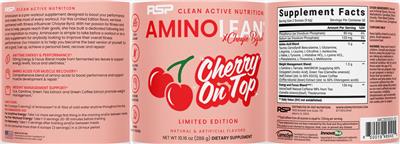
- Form
- Powder
- Serving Size
- 9.6 g
- Servings
- 30 per container
- Container Holds
- 10.16 Ounces; 288 g
What’s in it, whether it interacts with your drugs, its side effects, whether it works, and what our pharmacists would want you to know before you start it.
- What it isA supplement from RSP with 21 active ingredients, in powder form.
- Active Ingredients 2 minerals, 2 plant ingredients, 13 amino acids, 1 fatty acid and 3 others: Phosphorus 80 mgSodium 120 mgTaurineCarnoSynL-GlutamineL-ArginineL-LeucineL-CitrullineL-IsoleucineL-ValineL-TyrosineL-Histidine Hydrochloride 21 active ingredients. Each one can interact with drugs or cause side effects on its own, so we check every one. And 9 more, in the Supplement Facts
- Drug Interactions 1,427 drugs have a documented interaction with this supplement; the most serious is rated major. Of those, 970 are single drugs and 457 are combination products (two or more drugs in one), each listed under its own name. Based on the 16 of its 21 ingredients we could check. Ask your pharmacist first if you take a drug in any of these categories, the most serious of the 83 on record:
- EphedrineMajor · 8 drugs
- Major · 5 drugs
- Atorvastatin (Lipitor)Major · 3 drugs
- Nmda AntagonistsMajor · 3 drugs
- Possible Side EffectsNausea 10 ingredientsStomach upset 10 ingredientsHeadache 7 ingredientsBloating 3 ingredientsDiarrhea 3 ingredientsTrouble sleeping 3 ingredients +27 moreCombined from 15 of its 21 active ingredients. Not studied in this exact product.
- Well documented Why
Does AminoLean x Chase Byrd Cherry On Top work?
What It Is Marketed For
- Pre-workout performance
- Energy
- Focus
- Muscle recovery
From the claims on the product’s label.
The Closest Use the Research Grades
Caffeine
Good studies support it.
Its ingredients have research behind other uses too:
- Amphotericin B nephrotoxicity Sodium
- Hepatitis Taurine
- Beta-alanine
- Critical illness (trauma) Glutamine
- Physical performance Beta-alanine
- Glutamine
These grades are for each ingredient, not this exact product, and never a promise it will work for you.
What the research says- Low Why
- AllergensThe label says it contains milk
- Barcode (UPC)8 50019 46945 5Match it to the barcode on your bottle to be sure this is your product. Not your product? Search for it here
Who Might Consider It
- People looking for pre-workout performance, energy, focus and muscle recovery, which is what it is marketed for. The closest use the research grades is athletic performance, rated Likely Effective.
- People who want it for amphotericin B nephrotoxicity, hepatitis, athletic performance, critical illness (trauma) or another graded use: the other uses with research behind them. See each grade
- People who are looking for an amino acid powder with specific, rated uses may want to look at the ingredient details here.
Who Should Be Careful
- Anyone with kidney or liver disease, heart or blood pressure conditions, a seizure history, or a Parkinson's diagnosis should talk it over with their own doctor or pharmacist first.
- If you take any prescription medication, review the full interaction list with your doctor or pharmacist before you start.
More Before You Take It Show both answersHide Pregnancy and Breastfeeding The Label’s Directions
-
Pregnant or breastfeeding?
- Pregnancy Phenylalanine
- ! When L-phenylalanine is consumed in amounts typically found in foods by pregnant patients with high serum phenylalanine concentrations, such as those with phenylketonuria (PKU).
- Breastfeeding Phenylalanine
- When L-phenylalanine is consumed in amounts typically found in foods by breast-feeding patients with normal phenylalanine metabolism.
- Pregnancy and Breastfeeding Sodium
- ! When used orally in higher doses.
- Pregnancy Green Tea
- ! When used orally in amounts providing more than 300 mg caffeine daily.
- Breastfeeding Green Tea
- ! When used orally in large amounts.
-
How does the label say to take it?
“Directions: Mix 2 scoops (1 serving) of AminoLean in 8-10oz of cold water anytime throughout the day. Recommended use: For anytime energy: Take 1 or more servings first thing in the morning and/or between meals. …”
The maker’s words. Your pharmacist or doctor may advise differently.
Everything the label says
From the label dated Jun 20, 2024: 16 of its 21 active ingredients were checked against our records; the other five are not in them yet. A summary of what is known, not a grade or a test of the product. How these ratings are computed
Ask Anything About This Supplement
Name a drug you take, or ask about side effects, ingredients or pregnancy.
AI answers come from this label and our own records, never the open internet. AI can make mistakes, so always check with your doctor or pharmacist. How we use AI
Ask the Pharmacist
A licensed pharmacist will answer your question by email — free, usually within 24 hours.
Got it — thank you!
A licensed pharmacist will answer within 24 hours. Keep an eye on your email (worth checking spam, just in case).
What’s Inside AminoLean x Chase Byrd Cherry On Top by RSP
21 Active Ingredients, Each Checked on Its Own
A supplement is often several ingredients in one bottle, and each one can interact with drugs or cause side effects on its own. We check every one of them against our records.
- PhosphorusNot in our interaction records yet
- SodiumDrug interactions on record, most serious: Moderate
- TaurineDrug interactions on record, most serious: Moderate
- CarnoSynNo drug interactions on record
- L-GlutamineDrug interactions on record, most serious: Moderate
- L-ArginineDrug interactions on record, most serious: Moderate
- L-LeucineNot in our interaction records yet
- L-CitrullineDrug interactions on record, most serious: Moderate
And 13 more, each with its own card below.
The label gives an exact amount for 3 of its 21 active ingredients. The other 18 are inside two proprietary blends, and the label gives one total for each, not how much of each ingredient is in it.
- 3 state an exact amount
- 18 have no amount of their own
- Amino Acid Blend 5 g in total · 14 ingredients, no amount for each
- Weight Management Blend 1.50 g in total · 4 ingredients, no amount for each
This rates what the label tells you, not the quality of the product.
Supplement Facts
| Amount Per Serving | % Daily Value | |
|---|---|---|
| Phosphorus | 80 mg | 6% |
| Sodium | 120 mg | 5% |
| Amino Acid Blend | 5 g | † |
| Taurine | † | |
| CarnoSyn | † | |
| L-Glutamine | † | |
| L-Arginine | † | |
| L-Leucine | † | |
| L-Citrulline | † | |
| L-Isoleucine | † | |
| L-Valine | † | |
| L-Tyrosine | † | |
| L-Histidine Hydrochloride | † | |
| L-Lysine Hydrochloride | † | |
| L-Phenylalanine | † | |
| L-Threonine | † | |
| L-Methionine | † | |
| Weight Management Blend | 1.5 g | † |
| L-Carnitine L-Tartrate | † | |
| InnoBio | † | |
| Green Tea Leaf Extract | † | |
| Green Coffee Bean Extract | † | |
| Energy and Focus Blend | 130 mg | † |
| Total Caffeine | 125 mg | † |
| InnovaTea | † | |
| Theobromine | † | |
Other ingredients: Natural & Artificial Flavors, Citric Acid, Maltodextrin, Sucralose, Silicon Dioxide, Cellulose Gum, Xanthan Gum, Carrageenan
† Daily Value not established.
Daily Values for adults and children 4 or more years of age.
As the label prints it, from the NIH Dietary Supplement Label Database.
Each Ingredient and Its Drug Interactions
Tap one for more about it and its full guide. A drug can interact with this supplement through any one of them.
This product lists 22 ingredients.
- Most of its active ingredients are amino acids, the building blocks of protein, including glutamine, arginine, citrulline, tyrosine, phenylalanine, lysine, threonine, and taurine.
- The body uses tyrosine to make thyroid hormones, and citrulline is converted into arginine.
Show 1 more point
- Several entries are blends (amino acid, energy and focus, weight management, and total caffeine), so their individual components are listed separately.
-
Phosphorus 80 mg We know this ingredient, but hold no drug interaction record for it yet, so it was not checked
Form on the label: Disodium Phosphate
-
Sodium 120 mg Other actives include beta-alanine (CarnoSyn), L-carnitine, sodium, and several caffeine sources: cocoa (theobromine), green tea leaf extract, and green coffee bean extract. Interacts with 205 drugs
Form on the label: Disodium Phosphate
Sodium is an essential mineral and electrolyte your body needs to balance fluids, support nerves, and help muscles work.
- Most people in modern diets get more than enough—often too much—from food, so supplements are rarely needed except for specific medical reasons like dehydration or low blood sodium.
- Talk to your doctor or pharmacist before deliberately adding sodium, especially if you have high blood pressure, heart, or kidney problems.
The full Sodium guide: uses, dosage and safety Every Sodium drug interaction
-
Amino Acid Blend 5 g 14 ingredients inside it, each checked on its own
- Taurine 173 drugs
- CarnoSyn
- L-Glutamine 50 drugs
- L-Arginine 403 drugs
- L-Leucine
- L-Citrulline 178 drugs
- L-Isoleucine
- L-Valine
- L-Tyrosine 21 drugs
- L-Histidine Hydrochloride
- L-Lysine Hydrochloride 1 drug
- L-Phenylalanine 16 drugs
- L-Threonine 3 drugs
- L-Methionine
-
Weight Management Blend 1.5 g Four ingredients inside it, each checked on its own
- L-Carnitine L-Tartrate 19 drugs
- InnoBio
- Green Tea Leaf Extract 1,294 drugs
- Green Coffee Bean Extract 591 drugs
-
Energy and Focus Blend 130 mg One ingredient inside it, each checked on its own
- Total Caffeine 125 mg 655 drugs
Other Ingredients (Inactive)
The capsule or tablet itself, fillers, coatings and flavors. Not part of the drug interaction check; the allergen check below reads them.
- Natural & Artificial Flavors
- Citric Acid
- Maltodextrin
- Sucralose
- Silicon Dioxide
- Cellulose Gum
- Xanthan Gum
- Carrageenan
Allergens in AminoLean x Chase Byrd Cherry On Top
The label says it contains milk.
Named on this label
- MilkThe label says it contains it
Not named in the ingredients
- Egg
- Fish
- Shellfish
- Tree nuts
- Peanuts
- Wheat or other gluten grains
- Soy
- Sesame
- The label’s allergen statement“Contains milk”
- Made without, the label says“Zero sugar · Gluten free”
From the label text and ingredient names on file; we do not test products. With a serious allergy, check your bottle and ask the maker or your pharmacist.
What the Label Says
The maker’s own words, from the label. We do not verify or endorse them.
- General statements
-
“RSP Clean Active Nutrition”
“For this Limited Edition flavor, we have partnered with fitness influencer Chayse Byrd. With her passion for fitness and drive to help people reach their goals, she has built a dedicated following and is an inspiration to many.”
- Formulation
-
“AminoLean is a pre-workout supplement designed to boost your performance and make the most of every workout. AminoLean is simple to take before a workout or as a daily supplement for anybody looking to improve their overall fitness performance. Our mission is to help you become the best version of yourself. So set up a goal, fuel up, achieve a personal best, recover and repeat! Anytime energy & performance Weight management support”
“Zero sugar Gluten free”
4 more from the label
“Third party tested Limited Edition”
“130mg Energy & Focus Blend made from fermented tea leaves to support energy levels, focus and alertness. Amino Acids for muscle recovery Comprehensive blend of amino acids to boost performance and support muscle development & repair. CLA, carnitine, green tea extract and green coffee extract promote weight management.”
“Cherry On Top Natural & Artificial Flavors”
“CarnoSyn Carnosine Synthesizer InnovaTea”
- Directions
-
“Directions: Mix 2 scoops (1 serving) of AminoLean in 8-10oz of cold water anytime throughout the day. Recommended use: For anytime energy: Take 1 or more servings first thing in the morning and/or between meals. For pre-workout energy: Take 1-3 servings 20-30 minutes before training. For recovery: Take 1-2 servings after training and/or between meals. Do not consume more than 6 scoops (3 servings) in a 24 hour period.”
“Before exercise”
- Seals and symbols
-
“Made in the USA This product contains ingredients of international and domestic origin.”
- FDA Statement of Identity
-
“Dietary Supplement”
- Storage
-
“Keep tightly closed in a cool, dry place. Avoid exposure to excessive heat.”
- Brand IP Statement(s)
-
“CarnoSyn is a registered mark of Natural Alternative International (NAI). InnovaTea is a registered trademark of NutriScience Innovations, LLC.”
The AminoLean x Chase Byrd Cherry On Top Label on File
The label scan on file at the NIH Dietary Supplement Label Database, dated June 2024. Always read the label on the bottle you have.
Product Facts
- Brand
- RSP
- Barcode (UPC)
- 850019469455
- Net contents
- 10.16 Ounces; 288 g
- Market status
- On market
- Date entered into DSLD
- Jun 20, 2024
- DSLD ID
- 310391
- Product type
- Other Combinations
- Supplement form
- Powder
- Dietary claims / uses
- Nutrient, All Other, Structure/Function
- Intended target group(s)
- Adult (18 - 50 Years), Women (not pregnant or lactating), Gluten Free, Sugar Free
Is this label outdated? Report a formula or label change and our pharmacy team will review it.
AminoLean x Chase Byrd Cherry On Top by RSP Side Effects
Why this rating?
We look for three kinds of safety information on each ingredient: side effects reported in studies, a pregnancy and breastfeeding rating, and a safety write-up from our pharmacy team. Of the 17 ingredients we could check, 16 have side-effect reports, all 17 have a pregnancy rating and all 17 have a safety write-up.
So this rates how much is known, not whether AminoLean x Chase Byrd Cherry On Top is right for you.
Reported with 16 of its ingredients
- Most often
- Nausea, stomach upset, headache, bloating, diarrhea and trouble sleeping
- !Rare but serious
- Worsened cardiovascular disease, high blood pressure and hypersensitivity reactions in sensitive individuals See details
HelloPharmacist Team Summary: AminoLean x Chase Byrd Cherry On Top by RSP Side Effects
If you start AminoLean x Chase Byrd Cherry On Top, the most likely effects are stomach upset, nausea, and bloating, which are commonly reported across its amino acids and its cocoa and green tea ingredients.
- The caffeine from cocoa, green tea, and green coffee bean extract can bring jitteriness, anxiety, or trouble sleeping, and beta-alanine from CarnoSyn may cause a prickling feeling and flushing.
- Serious reactions are uncommon, but concentrated green tea extract has been linked to rare liver injury and very high caffeine can cause a rapid or irregular heartbeat, so call your doctor right away if you have a serious reaction.
- If you have kidney, liver, or heart problems, a seizure history, or take blood pressure, blood thinner, or Parkinson's medication, talk with your own doctor or pharmacist before starting.
Side Effects, Ingredient by Ingredient
A supplement’s side effects come from its ingredients. Here is what is reported with each one.
Taurine
Most reported
- Stomach upset
- Nausea
- Headache
Beta-alanine
Most reported
- Flushing
- Prickling sensation
- Neck
- Scalp
Glutamine
Most reported
- Stomach upset
- Nausea
- Bloating
- Gas
L-Arginine
Most reported
- Stomach upset
- Bloating
- Nausea
- Diarrhea
L-Citrulline
Most reported
- Stomach upset
- Bloating
- Headache
Tyrosine
Most reported
- Nausea
- Upset stomach
- Headache
- Fatigue
Histidine
Most reported
- Stomach upset
- Nausea
- Headache
Lysine
Most reported
- Stomach pain
- Nausea
- Diarrhea
Phenylalanine
Most reported
- Nausea
- Heartburn
- Headache
- Anxiety
Threonine
Most reported
- Nausea
- Upset stomach
- Headache
Methionine
Most reported
- Nausea
- Vomiting
- Drowsiness
- Irritability
L-Carnitine
Most reported
- Nausea, stomach upset, or cramping
- Diarrhea
- A fishy body odor, especially at higher doses
- Heartburn or a fishy taste
Green Tea
Most reported
- Trouble sleeping or feeling jittery
- Nervousness or anxiety
- Upset stomach or nausea, especially on an empty stomach
- Headache
Coffee
Most reported
- Jitteriness
- Nervousness
- Fast or pounding heartbeat
- Trouble sleeping
Caffeine
Most reported
- Feeling jittery, nervous, or anxious
- Racing or pounding heartbeat
- Trouble sleeping
- Upset stomach or heartburn
Sodium has side-effect reports, but no list of the most common ones. Read them in the Sodium guide
AminoLean x Chase Byrd Cherry On Top Warnings: Who Should Be Careful
AminoLean x Chase Byrd Cherry On Top has 21 active ingredients, and each can carry warnings of its own. We checked the 16 in our ingredient guides, and each warning below names the ingredient it comes from. Phosphorus, L-Leucine and L-Isoleucine and two more are not in our guides yet, so ask your pharmacist about them. If any of these apply to you, talk to your doctor or pharmacist before you start it.
- Sodium4 warnings below
- Taurine1 warning below
- Beta-alanine2 warnings below
- Glutamine3 warnings below
- L-Arginine3 warnings below
- L-Citrulline1 warning below
- Tyrosine2 warnings below
- Histidine2 warnings below
- Lysine3 warnings below
- Phenylalanine3 warnings below
- Threonine2 warnings below
- Methionine3 warnings below
- L-Carnitine3 warnings below
- Green Tea3 warnings below
- Coffee3 warnings below
- Caffeine2 warnings below
- PhosphorusNot in our guides yet
- L-LeucineNot in our guides yet
- L-IsoleucineNot in our guides yet
- L-ValineNot in our guides yet
- InnoBioNot in our guides yet
-
Bleeding Problems or Surgery
- Green TeaThe same goes for people with bleeding disorders or those preparing for surgery.
-
Blood Pressure
- SodiumYou should be especially cautious with added sodium if you have high blood pressure, heart failure, kidney disease, or liver disease, or if your doctor has told you to follow a low-salt diet.
- L-ArginineBecause L-arginine can widen blood vessels and lower blood pressure, use caution if you already have low blood pressure.
- L-CitrullineBecause it can lower blood pressure and affect blood flow, people who take blood pressure medicines, have low blood pressure, or have heart or kidney problems should talk with a healthcare provider before using it.
- PhenylalanineAnyone with high blood pressure should also use caution.
Show 4 more
- CoffeeBe cautious if you have heart problems, high blood pressure, anxiety disorders, acid reflux, or trouble sleeping.
- CaffeineBe cautious if you: have heart problems, high blood pressure, an irregular heartbeat, anxiety, panic attacks, trouble sleeping, stomach ulcers, or seizure disorders.
- SodiumHigh-dose sodium is linked to high blood pressure and heart strain.
- Arginine can lower blood pressure and may not be safe for everyone.
-
Liver Disease
- GlutamineUse extra caution if you have kidney disease or liver disease, since these organs are involved in processing amino acids and the byproducts of protein.
- HistidinePeople with certain rare metabolic disorders, kidney disease, or liver disease should be especially careful and only use amino acid supplements under medical supervision.
- LysinePeople with kidney disease or liver disease should be cautious and talk to their doctor before using amino acid supplements, since these organs help process them.
- ThreoninePeople with kidney or liver disease should be cautious, because these organs process amino acids, and high amino acid loads may be harder for them to handle.
Show 3 more
- MethionineThose with liver or kidney disease should also be careful and check with a doctor first.
- Green TeaPeople with liver disease should be especially careful and check with a healthcare provider first.
- People with kidney or liver disease should use amino acid supplements only under medical supervision.
-
Kidney Disease or Kidney Stones
- TaurinePeople with kidney problems, heart conditions, or other health issues should check with a doctor first, since their bodies may handle taurine differently.
- Beta-alaninePeople with kidney problems or other chronic health conditions should talk to a doctor or pharmacist before using it, since long-term safety and effects in these groups are not well studied.
- L-CarnitineUse extra caution if you have kidney disease, since the body handles L-carnitine differently and waste products may build up.
-
Heart Conditions
- L-ArgininePeople with heart disease, especially those who have recently had a heart attack, should avoid using it unless a doctor recommends it, since some research suggested possible harm in that group.
- Green TeaBecause green tea contains caffeine, people who are sensitive to caffeine, have heart rhythm problems, anxiety, or trouble sleeping should be cautious.
-
Thyroid Conditions
- TyrosineBe extra cautious if you have a thyroid condition (such as overactive thyroid or Graves' disease), because tyrosine is used to make thyroid hormones and could in theory affect thyroid levels.
-
Seizure Disorders
- GlutaminePeople with a history of seizures or certain mental health conditions should also talk to a doctor first, because glutamine is related to glutamate, a chemical messenger in the brain.
- L-CarnitinePeople with a history of seizures should also be careful, as some reports link L-carnitine to more frequent seizures.
-
Mental Health Conditions
- PhenylalaninePeople with certain mental health conditions, including schizophrenia or a history of mania, should be cautious because phenylalanine affects brain chemistry.
-
Children
- Beta-alanineChildren and teens have not been well studied either.
- CoffeeChildren and teens should also limit caffeine.
- CaffeineChildren and teens should limit caffeine.
-
Older Adults
- CoffeeOlder adults and people taking certain medications should also be careful.
-
If You Take Other Drugs
- TyrosinePeople with a history of migraines or those taking medications that affect brain chemicals should also check with a professional first.
- HistidineAs with any supplement, talk with your pharmacist or doctor before starting, especially if you have a health condition or take other medicines.
- MethionineAlways talk with a pharmacist or doctor before starting methionine, especially if you take other medicines or have a health condition.
-
Other Cautions
- GlutaminePeople with these conditions should only take glutamine under the supervision of a healthcare provider.
- L-ArgininePeople with herpes (cold sores or genital herpes) sometimes worry that arginine may trigger outbreaks; this is not well proven but worth discussing with your provider.
- LysineTo be safe, avoid supplemental lysine unless your doctor recommends it.
- PhenylalaninePeople with phenylketonuria (PKU) must avoid phenylalanine.
Show 3 more
- ThreonineIf you have any chronic health condition, check with your doctor or pharmacist before starting.
- MethioninePeople with certain inherited disorders that affect how the body handles amino acids (such as homocystinuria) should avoid methionine supplements.
- L-CarnitinePeople with a real deficiency are often treated under medical supervision.
-
What the Label Warns
- “Warning: Keep out of reach of children. Not for use for those under the age of 18, women that are pregnant, or nursing, or those that are sensitive to caffeine and beta-alanine.”
- “Consult your physician before using this product if you are taking any medication or under a physician's care for a medical condition. Not for use for those under the age of 18, women that are pregnant, or nursing, or those that are sensitive to caffeine and beta-alanine.”
- “Do not consume caffeine from other sources while taking this product as too much caffeine may cause nervousness, irritability, sleeplessness, and occasionally rapid heartbeat. Discontinue use two weeks prior to surgery.”
The maker’s wording, from the product label.
-
Pregnant or Breastfeeding
Each ingredient’s rating for pregnancy and for breastfeeding, and what it covers.
Pregnancy
-
When L-phenylalanine is consumed in amounts typically found in foods by pregnant patients with normal phenylalanine metabolism.
-
When L-phenylalanine is consumed in amounts typically found in foods by pregnant patients with high serum phenylalanine concentrations, such as those with phenylketonuria (PKU).
Serum levels of phenylalanine greater than 360 micromol/L increase the risk of birth defects.
3 more points on this rating
- Experts recommend that patients with high phenylalanine serum concentrations follow a low phenylalanine diet for at least 20 weeks prior to conception to decrease the risk for birth defects.
- There is insufficient reliable information available about the safety of L-phenylalanine when taken by mouth in large doses during pregnancy; avoid using.
- There is insufficient reliable information available about the safety of oral D-phenylalanine during pregnancy; avoid using.
Breastfeeding
-
When L-phenylalanine is consumed in amounts typically found in foods by breast-feeding patients with normal phenylalanine metabolism.
There is insufficient reliable information available about the safety of L-phenylalanine when taken by mouth in medicinal amounts during lactation; avoid using.
There is insufficient reliable information available about the safety of oral D-phenylalanine during lactation; avoid using.
Pregnancy and Breastfeeding The record rates both the same
-
When used orally and appropriately.
Sodium is safe in amounts that do not exceed the CDRR intake level of 2.3 grams daily.
-
When used orally in higher doses.
Higher intake can cause hypertension.
Also, both the highest and the lowest pre-pregnancy sodium quintile intakes are associated with an increased risk of hypertensive disorders of pregnancy, including gestational hypertension and pre-eclampsia, and the delivery of small for gestational age (SGA) infants when compared to the middle intake quintile.
Show 14 more ingredients
Pregnancy
-
When used orally in moderate amounts.
Due to the caffeine content of green tea, pregnant patients should closely monitor their intake to ensure moderate consumption.
12 more points on this rating
- Fetal blood concentrations of caffeine approximate maternal concentrations.
- The use of caffeine during pregnancy is controversial; however, moderate consumption has not been associated with clinically important adverse fetal effects.
- In some studies consuming amounts over 200 mg daily is associated with a significantly increased risk of miscarriage.
- This increased risk may be most likely to occur in those with genotypes that confer a slow rate of caffeine metabolism.
- According to a review by Health Canada, and a subsequent large meta-analysis conducted in the US, most healthy pregnant patients can safely consume doses up to 300 mg daily without an increased risk of spontaneous abortion, stillbirth, preterm birth, fetal growth retardation, or congenital malformations.
- Advise keeping caffeine consumption below 300 mg daily.
- This is similar to the amount of caffeine in about 6 cups of green tea.
- Keep in mind that only the amount of ADDED caffeine must be stated on product labels.
- The amount of caffeine found in ingredients such as green tea, which naturally contains caffeine, does not need to be provided.
- This can make it difficult to determine the total amount of caffeine in a given product.
- Based on animal models, green tea extract catechins are also transferred to the fetus, but in amounts 50-100 times less than maternal concentrations.
- The potential impact of these catechins on the human fetus is not known, but animal models suggest that the catechins are not teratogenic.
-
When used orally in amounts providing more than 300 mg caffeine daily.
Caffeine from green tea crosses the placenta, producing fetal blood concentrations similar to maternal levels.
16 more points on this rating
- Consumption of caffeine in amounts over 300 mg daily is associated with a significantly increased risk of miscarriage in some studies.
- Advise keeping caffeine consumption from all sources below 300 mg daily.
- This is similar to the amount of caffeine in about 6 cups of green tea.
- High maternal doses of caffeine throughout pregnancy have also resulted in symptoms of caffeine withdrawal in newborn infants.
- High doses of caffeine have also been associated with spontaneous abortion, premature delivery, and low birth weight.
- However, some research has also found that intrauterine exposure to even modest amounts of caffeine, based on maternal blood levels during the first trimester, is associated with a shorter stature in children ages 4-8 years.
- Keep in mind that only the amount of ADDED caffeine must be stated on product labels.
- The amount of caffeine found in ingredients such as green tea, which naturally contains caffeine, does not need to be provided.
- This can make it difficult to determine the total amount of caffeine in a given product.
- There is also concern that consuming large amounts of green tea might have antifolate activity and potentially increase the risk of folic acid deficiency-related birth defects.
- Catechins in green tea inhibit the enzyme dihydrofolate reductase in vitro.
- This enzyme is responsible for converting folic acid to its active form.
- Preliminary evidence suggests that increasing maternal green tea consumption is associated with increased risk of spina bifida.
- Also, evidence from epidemiological research suggests that serum folate levels in pregnant patients with high green tea intake (57.3 mL per 1000 kcal) are decreased compared to participants who consume moderate or low amounts of green tea.
- More evidence is needed to determine the safety of using green tea during pregnancy.
- For now, advise pregnant patients to avoid consuming large quantities of green tea.
Breastfeeding
-
When used orally in moderate amounts.
Due to the caffeine content of green tea, nursing parents should closely monitor caffeine intake.
Breast milk concentrations of caffeine are thought to be approximately 50% of maternal serum concentrations.
-
When used orally in large amounts.
Consumption of green tea might cause irritability and increased bowel activity in nursing infants.
There is insufficient reliable information available about the safety of green tea extracts when applied topically during breast-feeding.
Pregnancy
-
When used orally in moderate amounts.
Intake of caffeine from coffee and other sources should be monitored during pregnancy.
12 more points on this rating
- Caffeine crosses the human placenta, but is not considered a teratogen.
- Fetal blood and tissue levels are similar to maternal concentrations.
- The use of caffeine during pregnancy is controversial; however, moderate consumption has not been associated with clinically important adverse fetal effects.
- However, some research has also found that intrauterine exposure to even modest amounts of caffeine, based on maternal blood levels during the first trimester, is associated with a shorter stature in children ages 4-8 years.
- In some studies, consuming amounts over 200 mg daily has been associated with a significantly increased risk of miscarriage.
- This increased risk may be most likely to occur in people with genotypes that confer a slow rate of caffeine metabolism.
- According to a review by Health Canada, and a subsequent large meta-analysis conducted in the US, most healthy pregnant patients can safely consume caffeine in doses up to 300 mg daily without an increased risk of spontaneous abortion, stillbirth, preterm birth, fetal growth retardation, or congenital malformations.
- Advise patients to keep caffeine consumption below 300 mg daily during pregnancy.
- This is similar to the amount of caffeine in about 3 cups of coffee.
- Keep in mind that only the amount of ADDED caffeine must be stated on product labels.
- The amount of caffeine found in ingredients such as coffee, which naturally contains caffeine, does not need to be provided.
- This can make it difficult to determine the total amount of caffeine in a given product.
-
When caffeinated coffee providing more than 300 mg of caffeine daily is consumed orally.
Caffeine from coffee crosses the placenta, producing fetal blood concentrations similar to maternal levels.
7 more points on this rating
- Consumption of caffeine in amounts over 300 mg daily is associated with a significantly increased risk of miscarriage in some studies.
- Advise patients to keep caffeine consumption from all sources below 300 mg daily during pregnancy.
- This is similar to the amount of caffeine in about 3 cups of coffee.
- High doses of caffeine throughout pregnancy have resulted in symptoms of caffeine withdrawal in newborn infants.
- High doses of caffeine have also been associated with spontaneous abortion, premature delivery, and low birth weight.
- Drinking more than 6 cups of coffee daily increases the risk of spontaneous abortion.
- Drinking 8 or more cups of coffee daily doubles the risk of stillbirth when compared with those who do not drink coffee during pregnancy.
Breastfeeding
-
When used orally.
Drinking one or two caffeine-containing beverages daily during lactation is not associated with unacceptable levels of caffeine in human milk.
-
When used orally in large amounts.
Caffeine from coffee can cause wakefulness or irritability in breast-fed infants.
Caffeine can also cause feeding intolerance and gastrointestinal irritation in infants.
Pregnancy
-
When used orally in amounts commonly found in foods.
Intakes of caffeine should be monitored during pregnancy.
10 more points on this rating
- Caffeine crosses the human placenta, but is not considered a teratogen.
- Fetal blood and tissue levels are similar to maternal concentrations.
- The use of caffeine during pregnancy is controversial; however, moderate consumption has not been associated with clinically important adverse fetal effects.
- In some studies consuming amounts over 200 mg daily is associated with a significantly increased risk of miscarriage.
- This increased risk seems to occur in those with genotypes that confer a slow rate of caffeine metabolism.
- According to a review by Health Canada, and a subsequent large meta-analysis conducted in the US, up to 300 mg daily can be consumed during pregnancy without an increased risk of spontaneous abortion, stillbirth, preterm birth, fetal growth retardation, or congenital malformations.
- However, observational research in a Norwegian cohort found that caffeine consumption is associated with a 16% increased odds of the baby being born small for gestational age when compared with no consumption.
- The same Norwegian cohort found that low to moderate caffeine consumption during pregnancy is not associated with changes in neurodevelopment in children up to 8 years of age.
- Advise patients to keep caffeine consumption below 300 mg daily during pregnancy.
- This is similar to the amount of caffeine in about 3 cups of coffee or tea.
-
When used orally in amounts over 300 mg daily.
Caffeine crosses the placenta, producing fetal blood concentrations similar to maternal levels.
8 more points on this rating
- Consumption of caffeine in amounts over 300 mg daily is associated with a significantly increased risk of miscarriage in some studies.
- Advise patients to keep caffeine consumption below 300 mg daily during pregnancy.
- This is similar to the amount of caffeine in about 3 cups of coffee or tea.
- Additionally, high doses of caffeine throughout pregnancy have resulted in symptoms of caffeine withdrawal in newborn infants.
- High doses of caffeine have also been associated with spontaneous abortion, premature delivery, and low birth weight.
- In a cohort of mother/infant pairs with a median maternal plasma caffeine level of 168.5 ng/mL (range 29.5-650.5 ng/mL) during pregnancy, birth weights and lengths were lower in the 4th quartile of caffeine intake compared with the 1st.
- By age 7, heights and weights were lower by 1.5 cm and 1.1 kg respectively.
- In another cohort of mother/infant pairs with higher maternal pregnancy plasma caffeine levels, median 625.5 ng/mL (range 86.2 to 1994.7 ng/mL), heights at age 8 were 2.2 cm lower, but there was no difference in weights.
Breastfeeding
-
When used orally in amounts commonly found in foods.
Caffeine intake should be closely monitored while breast-feeding.
During lactation, breast milk concentrations of caffeine are thought to be approximately 50% of serum concentrations and caffeine peaks in breastmilk approximately 1-2 hours after consumption.
-
When used orally in large amounts.
Caffeine is excreted slowly in infants and may accumulate.
Caffeine can cause sleep disturbances, irritability, and increased bowel activity in breast-fed infants exposed to caffeine.
Pregnancy and Breastfeeding The record rates both the same
-
Insufficient reliable information available; avoid using in medicinal amounts.
Pregnancy
-
When used orally and appropriately, short-term.
L-arginine 12 grams daily for 2 days has been used with apparent safety in pregnancy during the third trimester.
L-arginine 3 grams daily has been taken safely during the second and/or third trimesters.
1 more rating for L-Arginine used another way
This supplement is taken by mouth. This rating is for L-Arginine given another way.
-
When used intravenously and appropriately, short-term.
Intravenous L-arginine 20-30 grams daily has been used safely in pregnancy for up to 5 days.
Breastfeeding
-
Insufficient reliable information available; avoid using.
Pregnancy and Breastfeeding The record rates both the same
-
Insufficient reliable information available; avoid using.
Pregnancy and Breastfeeding The record rates both the same
-
There is insufficient reliable information available about the safety of tyrosine during pregnancy and lactation when used in medicinal amounts.
Some pharmacokinetic research shows that taking a single dose of tyrosine 2-10 grams orally can modestly increase levels of free tyrosine in breast milk.
2 more points on this rating
- However, total levels are not affected, and levels remain within the range found in infant formulas.
- Therefore, it is not clear if the increase in free tyrosine is a concern.
Pregnancy and Breastfeeding The record rates both the same
-
Insufficient reliable information available; avoid using.
Pregnancy and Breastfeeding The record rates both the same
-
Insufficient reliable information available; avoid using.
Pregnancy
-
Insufficient reliable information available; avoid using.
Breastfeeding
-
When used orally.
Supplemental doses of L-carnitine have been given to infants in breast milk and formula with no reported adverse effects.
The effects of large doses used while nursing are unknown, but L-carnitine is secreted in the breast milk.
Pregnancy and Breastfeeding The record rates both the same
-
When used in amounts found in foods.
There is insufficient reliable information available about the safety of taurine when used in medicinal amounts during pregnancy and lactation; avoid using.
Pregnancy and Breastfeeding The record rates both the same
-
When consumed in amounts commonly found in foods.
There is insufficient reliable information available about the safety of glutamine when used in larger amounts as medicine during pregnancy or lactation.
Pregnancy and Breastfeeding The record rates both the same
-
When used orally in the amounts found in foods.
There is insufficient reliable information available about the safety of histidine when used in larger amounts during pregnancy or lactation.
Pregnancy and Breastfeeding The record rates both the same
-
When used orally in amounts commonly found in food.
There is insufficient reliable information available about the safety of methionine in medical doses during pregnancy and lactation; avoid using.
Our pharmacy team’s notes
- For pregnancy, glutamine, methionine, histidine, and taurine are rated Likely Safe.
Ratings and the words beside them are from the Natural Medicines database, which we license.
-
Rare but Serious Side Effects
-
!
Sodium
Rarely, a sudden large intake of salt—or a rapid change in blood sodium during treatment—can be very serious and even life-threatening.
Orally: Worsened cardiovascular disease, hypertension, kidney disease.
-
!
Taurine
Serious side effects are uncommon with taurine alone.
Orally: Hypersensitivity reactions in sensitive individuals. Case reports raise concerns for serious cardiovascular adverse effects, but these reports have involved energy drinks containing taurine and other ingredients. It is unclear if these adverse effects are due to taurine, other ingredients, or the combination.
-
!
Beta-alanine
Serious side effects have not been clearly reported in healthy users, but long-term, high-dose use has not been thoroughly studied.
-
!
Glutamine
Serious reactions are uncommon.
-
!
L-Arginine
Allergic reactions are possible but uncommon.
-
!
L-Citrulline
Serious side effects appear to be rare.
-
!
Tyrosine
Serious side effects are uncommon at typical supplement doses.
-
!
Phenylalanine
Buildup can cause serious harm, including brain damage.
-
!
Threonine
Serious side effects are not well documented, but because high-dose, long-term use has not been carefully studied, unexpected effects are possible.
-
!
Methionine
Cerebral edema, hepatic encephalopathy. In infants, intravenous methionine has been linked to liver toxicity.
-
!
L-Carnitine
Seizures.
-
!
Green Tea
A rare but serious concern with concentrated green tea extract supplements is liver damage.
Concentrated green tea extract has been linked to rare liver injury, and high-dose carnitine can cause stomach upset and a fishy body odor.
Orally: Hepatotoxicity, hypokalemia, and thrombotic thrombocytopenic purpura have been reported rarely.
-
!
Coffee
Very high doses of caffeine, especially from concentrated supplements or energy products, can cause more serious problems such as a very rapid or irregular heartbeat, vomiting, and in rare cases dangerous reactions.
-
!
Caffeine
Serious effects are rare but can happen with very high doses.
Orally: Stroke has been reported rarely.
When to get help: a serious allergic reaction, with trouble breathing or swelling of the face, lips or throat, needs emergency care: call 911. For any other side effect that worries you, call your doctor or pharmacist.
These reports describe each ingredient, not studies of this exact product. Not medical advice: a side effect you notice after starting a supplement is worth a word with your pharmacist or doctor.
AminoLean x Chase Byrd Cherry On Top by RSP Drug Interactions
We checked all 21 active ingredients in this supplement against every drug in our records. A drug can interact with it through any one of them. Five of them are not in our interaction records yet.
A major interaction on record
3 of 3, on a scale from Minor or none to Major.Why this rating?
We rate this by the most serious interaction on record, not by how many there are. For Lysine, Phenylalanine, Cocoa, L-Arginine and Glutamine, the most serious is rated major, which means the combination is best avoided, or used only under close supervision. Some involve kinds of drugs where a small change can matter, such as blood thinners, seizure drugs and diabetes drugs.
1,428 drugs are on the full list. What matters is whether one you take is on it, so check yours with the interaction checker on this page.
13 of its 21 active ingredients have drug interactions on record. The ones below matter most.
- Interacts with
- 1 drug
- Most serious
- Minor
- A Minor-rated interaction exists between lysine and 5-HT4 agonists.
- Interacts with
- 16 drugs
- Most serious
- Major
- The most serious interaction is between its phenylalanine and levodopa, a Parkinson's medication.
- Phenylalanine, especially in high doses, can reduce levodopa's effectiveness, which may worsen tremor, rigidity, and 'on-off' episodes.
- Interacts with
- 1,294 drugs
- Most serious
- Major
- Most of its records involve Cytochrome P450 3A4 (CYP3A4) Substrates, Hepatotoxic Drugs and P-glycoprotein Substrates.
Show three more ingredients
- Interacts with
- 655 drugs
- Most serious
- Major
- Most of its records involve Stimulant Drugs, Anticoagulant/Antiplatelet Drugs and Cytochrome P450 1A2 (CYP1A2) Inhibitors.
- Interacts with
- 591 drugs
- Most serious
- Major
- Most of its records involve Stimulant Drugs, Anticoagulant/Antiplatelet Drugs and Antidiabetes Drugs.
- Interacts with
- 403 drugs
- Most serious
- Moderate
- Most of its records involve Antihypertensive Drugs, Anticoagulant/Antiplatelet Drugs and Antidiabetes Drugs.
And seven more ingredients with records, each in the cards below.
From the HelloPharmacist Team
Looking at the supplement as a whole rather than one ingredient at a time:
- Severity: Major.
- Other Major-rated interactions involve ephedrine, where the caffeine in green tea and green coffee bean extract may add to the risk of serious stimulant effects such as high blood pressure, heart attack, stroke, and seizures.
- Green tea can also lower levels of nadolol (a blood pressure drug) and atorvastatin (a cholesterol-lowering statin), and threonine may reduce the effects of NMDA antagonists.
Summarized by the HelloPharmacist pharmacy team from the interaction records below. How it is written How we use AI
Why AminoLean x Chase Byrd Cherry On Top Interacts, Ingredient by Ingredient
A product interacts through its ingredients. Each card: how many drugs, the most serious rating, and the kinds of drugs it affects most (tap a kind for what it means).
The ingredients driving the most interactions
-
Green Tea Leaf Extract 1,294 drugs
Most serious: Major58 interaction records on file
The kinds of drugs it affects most
- 645 drugs
- 372 drugs
- 202 drugs
- 172 drugs
Every Green Tea drug interaction, 58 records The Green Tea records cite 219 references, listed in the Green Tea guide.
-
Total Caffeine 655 drugs
Most serious: Major41 interaction records on file
The kinds of drugs it affects most
- 172 drugs
- 122 drugs
- 90 drugs
- 86 drugs
Every Caffeine drug interaction, 41 records The Caffeine records cite 235 references, listed in the Caffeine guide.
-
Green Coffee Bean Extract 591 drugs
Most serious: Major33 interaction records on file
The kinds of drugs it affects most
- 172 drugs
- 122 drugs
- 86 drugs
- 75 drugs
Every Coffee drug interaction, 33 records The Coffee records cite 174 references, listed in the Coffee guide.
-
L-Arginine 403 drugs
Most serious: Moderate9 interaction records on file
The kinds of drugs it affects most
- 172 drugs
- 122 drugs
- 86 drugs
- 23 drugs
Every L-Arginine drug interaction, 9 records The L-Arginine records cite 66 references, listed in the L-Arginine guide.
-
Sodium 205 drugs
Most serious: Moderate7 interaction records on file
The kinds of drugs it affects most
- 172 drugs
- 23 drugs
- Sodium-containing Drugs 7 drugs
- Sodium Phosphates 2 drugs
Every Sodium drug interaction, 7 records The Sodium records cite 43 references, listed in the Sodium guide.
-
L-Citrulline 178 drugs
Most serious: Moderate2 interaction records on file
The kinds of drugs it affects most
- 172 drugs
- PHOSPHODIESTERASE-5 Inhibitors 7 drugs
Every L-Citrulline drug interaction, 2 records The L-Citrulline records cite 9 references, listed in the L-Citrulline guide.
-
Taurine 173 drugs
Most serious: Moderate2 interaction records on file
The kinds of drugs it affects most
- 172 drugs
- 1 drug
Every Taurine drug interaction, 2 records The Taurine records cite 21 references, listed in the Taurine guide.
-
L-Glutamine 50 drugs
Most serious: Moderate1 interaction record on file
The kinds of drugs it affects most
- 50 drugs
Every Glutamine drug interaction, 1 record The Glutamine records cite 11 references, listed in the Glutamine guide.
-
L-Tyrosine 21 drugs
Most serious: Moderate2 interaction records on file
The kinds of drugs it affects most
- 16 drugs
- 5 drugs
Every Tyrosine drug interaction, 2 records The Tyrosine records cite 4 references, listed in the Tyrosine guide.
-
L-Carnitine L-Tartrate 19 drugs
Most serious: Moderate3 interaction records on file
The kinds of drugs it affects most
- 16 drugs
- 2 drugs
- Acenocoumarol (Sintrom) 1 drug
Every L-Carnitine drug interaction, 3 records The L-Carnitine records cite 41 references, listed in the L-Carnitine guide.
-
L-Phenylalanine 16 drugs
Most serious: Major3 interaction records on file
The kinds of drugs it affects most
- 9 drugs
- 5 drugs
- Baclofen 2 drugs
Every Phenylalanine drug interaction, 3 records The Phenylalanine records cite 23 references, listed in the Phenylalanine guide.
-
L-Threonine 3 drugs
Most serious: Major1 interaction record on file
The kinds of drugs it affects most
- Nmda Antagonists 3 drugs
Every Threonine drug interaction, 1 record The Threonine records cite 4 references, listed in the Threonine guide.
-
L-Lysine Hydrochloride 1 drug
Most serious: Minor1 interaction record on file
The kinds of drugs it affects most
- 5-HT4 Agonists 1 drug
Every Lysine drug interaction, 1 record The Lysine records cite 7 references, listed in the Lysine guide.
The Breakdown by Severity
Each drug counted once, at its most serious rating. Tap a tile to list those drugs.
Find Your Drug
Type a drug or brand name to see whether it is on the list.
- Only drugs with a documented interaction are listed, the most serious first.
- A drug with no known interaction is not listed, but searching its name tells you so.
- Open a drug to see which ingredient is responsible. Of those, 970 are single drugs and 457 are combination products (two or more drugs in one), each listed under its own name.
-
AtorvastatinAtorvaliq Major
The ingredient responsible:
-
Green Tea Leaf Extract Major Atorvastatin is in these Cytochrome P450 3A4 (CYP3A4) Substrates, Hepatotoxic Drugs, Organic Anion-transporting Polypeptide Substrates (OATP) categories.
Green tea is unlikely to produce clinically significant changes in the levels and clinical effects of CYP3A4 substrates.
The full Green Tea Leaf Extract + Atorvastatin interaction
-
-
Atorvastatin CalciumLipitor Major
The ingredient responsible:
-
Green Tea Leaf Extract Major Atorvastatin Calcium is in these Organic Anion-transporting Polypeptide Substrates (OATP), Cytochrome P450 3A4 (CYP3A4) Substrates, Hepatotoxic Drugs categories.
Theoretically, green tea might reduce the absorption of organic anion-transporting polypeptide (OATP) substrates.
The full Green Tea Leaf Extract + Atorvastatin Calcium interaction
-
-
LevodopaInbrija, Larodopa Major
The 2 ingredients responsible:
-
L-Phenylalanine Major
Phenylalanine, especially in high doses, can reduce the effectiveness of levodopa.
The full L-Phenylalanine + Levodopa interaction -
L-Tyrosine Moderate
Theoretically, tyrosine might decrease the effectiveness of levodopa.
The full L-Tyrosine + Levodopa interaction
-
-
MemantineEbixa Major
The ingredient responsible:
-
L-Threonine Major Memantine is in the Nmda Antagonists category.
Theoretically, threonine might decrease the effects of NMDA antagonists.
The full L-Threonine + Memantine interaction
-
-
Memantine HydrochlorideNamenda Major
The ingredient responsible:
-
L-Threonine Major Memantine Hydrochloride is in the Nmda Antagonists category.
Theoretically, threonine might decrease the effects of NMDA antagonists.
The full L-Threonine + Memantine Hydrochloride interaction
-
-
NadololCorgard, Nadolol Major
The 6 ingredients responsible:
-
Green Tea Leaf Extract Major
Green tea seems to reduce the levels and clinical effects of nadolol.
The full Green Tea Leaf Extract + Nadolol interaction -
L-Arginine Moderate Nadolol is in the Antihypertensive Drugs category.
Theoretically, concomitant use of L-arginine and antihypertensive drugs may increase the risk of hypotension.
The full L-Arginine + Nadolol interaction -
Theobromine Moderate Nadolol is in the Antihypertensive Drugs category.
Theoretically, taking cocoa with antihypertensive drugs might increase the risk of hypotension.
The full Theobromine + Nadolol interaction -
Sodium Moderate Nadolol is in the Antihypertensive Drugs category.
Theoretically, a high intake of dietary sodium might reduce the effectiveness of antihypertensive drugs.
The full Sodium + Nadolol interaction -
Taurine Moderate Nadolol is in the Antihypertensive Drugs category.
Theoretically, taurine might increase the risk of hypotension when taken with antihypertensive drugs.
The full Taurine + Nadolol interaction -
L-Citrulline Moderate Nadolol is in the Antihypertensive Drugs category.
Theoretically, concomitant use of L-citrulline with antihypertensive drugs might have additive effects and increase the chance of hypotension.
The full L-Citrulline + Nadolol interaction
-
-
Carbidopa and LevodopaDhivy, Rytary, Sinemet, Sinemet CR Major
The 2 ingredients responsible:
-
L-Phenylalanine Major Carbidopa and Levodopa is in the Levodopa category.
Phenylalanine, especially in high doses, can reduce the effectiveness of levodopa.
The full L-Phenylalanine + Carbidopa and Levodopa interaction -
L-Tyrosine Moderate Carbidopa and Levodopa is in the Levodopa category.
Theoretically, tyrosine might decrease the effectiveness of levodopa.
The full L-Tyrosine + Carbidopa and Levodopa interaction
-
-
Ezetimibe and AtorvastatinLiptruzet Major
The ingredient responsible:
-
Green Tea Leaf Extract Major It contains atorvastatin, the drug this record is about. Ezetimibe and Atorvastatin is in these Organic Anion-transporting Polypeptide Substrates (OATP), Cytochrome P450 3A4 (CYP3A4) Substrates, Hepatotoxic Drugs categories.
Theoretically, green tea might reduce the absorption of organic anion-transporting polypeptide (OATP) substrates.
The full Green Tea Leaf Extract + Ezetimibe and Atorvastatin interaction
-
-
Ephedrine, Phenobarbital, Potassium Iodide, and TheophyllineMudrane, Quadrinal Major
The 4 ingredients responsible:
-
Green Coffee Bean Extract Major It contains ephedrine, the drug this record is about. Ephedrine, Phenobarbital, Potassium Iodide, and Theophylline is in these Stimulant Drugs, Theophylline categories.
Theoretically, concomitant use might increase stimulant adverse effects.
The full Green Coffee Bean Extract + Ephedrine, Phenobarbital, Potassium Iodide, and Theophylline interaction -
Green Tea Leaf Extract Major It contains phenobarbital and ephedrine, the drugs these records are about. Ephedrine, Phenobarbital, Potassium Iodide, and Theophylline is in these Stimulant Drugs, Theophylline categories.
Theoretically, green tea might reduce the effects of phenobarbital and increase the risk for convulsions.
The full Green Tea Leaf Extract + Ephedrine, Phenobarbital, Potassium Iodide, and Theophylline interaction -
Innovatea Major It contains phenobarbital and ephedrine, the drugs these records are about. Ephedrine, Phenobarbital, Potassium Iodide, and Theophylline is in these Stimulant Drugs, Theophylline categories.
Theoretically, concomitant use might increase stimulant adverse effects.
The full Innovatea + Ephedrine, Phenobarbital, Potassium Iodide, and Theophylline interaction -
Theobromine Moderate It contains phenobarbital and ephedrine, the drugs these records are about. Ephedrine, Phenobarbital, Potassium Iodide, and Theophylline is in these Theophylline, Stimulant Drugs categories.
Theoretically, cocoa might increase the levels and adverse effects of theophylline.
The full Theobromine + Ephedrine, Phenobarbital, Potassium Iodide, and Theophylline interaction
-
-
Benserazide and LevodopaMadopar, Prolopa Major
The 2 ingredients responsible:
-
L-Phenylalanine Major Benserazide and Levodopa is in the Levodopa category.
Phenylalanine, especially in high doses, can reduce the effectiveness of levodopa.
The full L-Phenylalanine + Benserazide and Levodopa interaction -
L-Tyrosine Moderate Benserazide and Levodopa is in the Levodopa category.
Theoretically, tyrosine might decrease the effectiveness of levodopa.
The full L-Tyrosine + Benserazide and Levodopa interaction
-
-
Ephedrine, Phenobarbital, and TheophyllineTedral Major
The 5 ingredients responsible:
-
Green Tea Leaf Extract Major It contains phenobarbital and ephedrine, the drugs these records are about. Ephedrine, Phenobarbital, and Theophylline is in these Stimulant Drugs, Theophylline categories.
Theoretically, concomitant use might increase stimulant adverse effects.
The full Green Tea Leaf Extract + Ephedrine, Phenobarbital, and Theophylline interaction -
Innovatea Major It contains phenobarbital and ephedrine, the drugs these records are about. Ephedrine, Phenobarbital, and Theophylline is in these Stimulant Drugs, Theophylline categories.
Theoretically, concomitant use might increase stimulant adverse effects.
The full Innovatea + Ephedrine, Phenobarbital, and Theophylline interaction -
Green Coffee Bean Extract Major It contains ephedrine, the drug this record is about. Ephedrine, Phenobarbital, and Theophylline is in these Stimulant Drugs, Theophylline categories.
Theoretically, concomitant use might increase stimulant adverse effects.
The full Green Coffee Bean Extract + Ephedrine, Phenobarbital, and Theophylline interaction -
Theobromine Moderate It contains phenobarbital and ephedrine, the drugs these records are about. Ephedrine, Phenobarbital, and Theophylline is in these Stimulant Drugs, Theophylline categories.
Theoretically, concomitant use might increase stimulant adverse effects.
The full Theobromine + Ephedrine, Phenobarbital, and Theophylline interaction -
L-Glutamine Moderate Ephedrine, Phenobarbital, and Theophylline is in the Anticonvulsants category.
Theoretically, glutamine might antagonize the effects of anticonvulsant medications.
The full L-Glutamine + Ephedrine, Phenobarbital, and Theophylline interaction
-
-
Aminophylline, Amobarbital, and EphedrineAmesec Major
The 5 ingredients responsible:
-
Innovatea Major Aminophylline, Amobarbital, and Ephedrine is in these Stimulant Drugs, Ephedrine categories.
Theoretically, concomitant use might increase stimulant adverse effects.
The full Innovatea + Aminophylline, Amobarbital, and Ephedrine interaction -
Green Coffee Bean Extract Major Aminophylline, Amobarbital, and Ephedrine is in these Stimulant Drugs, Ephedrine categories.
Theoretically, concomitant use might increase stimulant adverse effects.
The full Green Coffee Bean Extract + Aminophylline, Amobarbital, and Ephedrine interaction -
Green Tea Leaf Extract Major Aminophylline, Amobarbital, and Ephedrine is in these Ephedrine, Stimulant Drugs categories.
Theoretically, concomitant use might increase the risk for stimulant adverse effects.
The full Green Tea Leaf Extract + Aminophylline, Amobarbital, and Ephedrine interaction -
L-Glutamine Moderate Aminophylline, Amobarbital, and Ephedrine is in the Anticonvulsants category.
Theoretically, glutamine might antagonize the effects of anticonvulsant medications.
The full L-Glutamine + Aminophylline, Amobarbital, and Ephedrine interaction -
Theobromine Moderate Aminophylline, Amobarbital, and Ephedrine is in these Ephedrine, Stimulant Drugs categories.
Theoretically, concomitant use might increase the risk for stimulant adverse effects.
The full Theobromine + Aminophylline, Amobarbital, and Ephedrine interaction
-
-
Ephedrine, Guaifenesin, Phenobarbital, and TheophyllineMudrane GG Major
The 4 ingredients responsible:
-
Green Tea Leaf Extract Major It contains phenobarbital and ephedrine, the drugs these records are about. Ephedrine, Guaifenesin, Phenobarbital, and Theophylline is in these Stimulant Drugs, Theophylline categories.
Theoretically, concomitant use might increase stimulant adverse effects.
The full Green Tea Leaf Extract + Ephedrine, Guaifenesin, Phenobarbital, and Theophylline interaction -
Innovatea Major It contains phenobarbital and ephedrine, the drugs these records are about. Ephedrine, Guaifenesin, Phenobarbital, and Theophylline is in these Theophylline, Stimulant Drugs categories.
Theoretically, caffeine might increase the levels and adverse effects of theophylline.
The full Innovatea + Ephedrine, Guaifenesin, Phenobarbital, and Theophylline interaction -
Green Coffee Bean Extract Major It contains ephedrine, the drug this record is about. Ephedrine, Guaifenesin, Phenobarbital, and Theophylline is in these Stimulant Drugs, Theophylline categories.
Theoretically, concomitant use might increase stimulant adverse effects.
The full Green Coffee Bean Extract + Ephedrine, Guaifenesin, Phenobarbital, and Theophylline interaction -
Theobromine Moderate It contains phenobarbital and ephedrine, the drugs these records are about. Ephedrine, Guaifenesin, Phenobarbital, and Theophylline is in these Theophylline, Stimulant Drugs categories.
Theoretically, cocoa might increase the levels and adverse effects of theophylline.
The full Theobromine + Ephedrine, Guaifenesin, Phenobarbital, and Theophylline interaction
-
-
Dyphylline, Ephedrine, Guaifenesin, and PhenobarbitalLufyllin-EPG Major
The 4 ingredients responsible:
-
Green Tea Leaf Extract Major It contains phenobarbital, the drug this record is about. Dyphylline, Ephedrine, Guaifenesin, and Phenobarbital is in these Stimulant Drugs, Ephedrine categories.
Theoretically, concomitant use might increase stimulant adverse effects.
The full Green Tea Leaf Extract + Dyphylline, Ephedrine, Guaifenesin, and Phenobarbital interaction -
Green Coffee Bean Extract Major Dyphylline, Ephedrine, Guaifenesin, and Phenobarbital is in these Stimulant Drugs, Ephedrine categories.
Theoretically, concomitant use might increase stimulant adverse effects.
The full Green Coffee Bean Extract + Dyphylline, Ephedrine, Guaifenesin, and Phenobarbital interaction -
Innovatea Major It contains phenobarbital, the drug this record is about. Dyphylline, Ephedrine, Guaifenesin, and Phenobarbital is in these Stimulant Drugs, Ephedrine categories.
Theoretically, concomitant use might increase stimulant adverse effects.
The full Innovatea + Dyphylline, Ephedrine, Guaifenesin, and Phenobarbital interaction -
Theobromine Moderate It contains phenobarbital, the drug this record is about. Dyphylline, Ephedrine, Guaifenesin, and Phenobarbital is in these Ephedrine, Stimulant Drugs categories.
Theoretically, cocoa might reduce the effects of phenobarbital and increase the risk for convulsions.
The full Theobromine + Dyphylline, Ephedrine, Guaifenesin, and Phenobarbital interaction
-
-
Levodopa and CarbidopaDuodopa Major
The 2 ingredients responsible:
-
L-Phenylalanine Major
Phenylalanine, especially in high doses, can reduce the effectiveness of levodopa.
The full L-Phenylalanine + Levodopa and Carbidopa interaction -
L-Tyrosine Moderate
Theoretically, tyrosine might decrease the effectiveness of levodopa.
The full L-Tyrosine + Levodopa and Carbidopa interaction
-
-
Bendroflumethiazide and NadololCorzide Major
The 8 ingredients responsible:
-
Green Tea Leaf Extract Major It contains nadolol, the drug this record is about. Bendroflumethiazide and Nadolol is in the Diuretic Drugs category.
Green tea seems to reduce the levels and clinical effects of nadolol.
The full Green Tea Leaf Extract + Bendroflumethiazide and Nadolol interaction -
Innovatea Moderate Bendroflumethiazide and Nadolol is in the Diuretic Drugs category.
Theoretically, using caffeine with diuretic drugs might increase the risk of hypokalemia.
The full Innovatea + Bendroflumethiazide and Nadolol interaction -
Green Coffee Bean Extract Moderate Bendroflumethiazide and Nadolol is in the Diuretic Drugs category.
Theoretically, concomitant use might increase the risk of hypokalemia.
The full Green Coffee Bean Extract + Bendroflumethiazide and Nadolol interaction -
Theobromine Moderate Bendroflumethiazide and Nadolol is in these Diuretic Drugs, Antihypertensive Drugs categories.
Theoretically, using cocoa with diuretic drugs might increase the risk of hypokalemia.
The full Theobromine + Bendroflumethiazide and Nadolol interaction -
L-Arginine Moderate Bendroflumethiazide and Nadolol is in the Antihypertensive Drugs category.
Theoretically, concomitant use of L-arginine and antihypertensive drugs may increase the risk of hypotension.
The full L-Arginine + Bendroflumethiazide and Nadolol interaction -
Taurine Moderate Bendroflumethiazide and Nadolol is in the Antihypertensive Drugs category.
Theoretically, taurine might increase the risk of hypotension when taken with antihypertensive drugs.
The full Taurine + Bendroflumethiazide and Nadolol interaction -
L-Citrulline Moderate Bendroflumethiazide and Nadolol is in the Antihypertensive Drugs category.
Theoretically, concomitant use of L-citrulline with antihypertensive drugs might have additive effects and increase the chance of hypotension.
The full L-Citrulline + Bendroflumethiazide and Nadolol interaction -
Sodium Moderate Bendroflumethiazide and Nadolol is in the Antihypertensive Drugs category.
Theoretically, a high intake of dietary sodium might reduce the effectiveness of antihypertensive drugs.
The full Sodium + Bendroflumethiazide and Nadolol interaction
-
-
Carbetapentane Tannate, Chlorpheniramine Tannate, Ephedrine Tannate, and Phenylephrine TannateQuadratuss, Ry Tuss, Rynatuss, Tri Tannate Plus Major
The 4 ingredients responsible:
-
Green Tea Leaf Extract Major Carbetapentane Tannate, Chlorpheniramine Tannate, Ephedrine Tannate, and Phenylephrine Tannate is in these Cytochrome P450 3A4 (CYP3A4) Substrates, Stimulant Drugs, Ephedrine categories.
Green tea is unlikely to produce clinically significant changes in the levels and clinical effects of CYP3A4 substrates.
The full Green Tea Leaf Extract + Carbetapentane Tannate, Chlorpheniramine Tannate, Ephedrine Tannate, and Phenylephrine Tannate interaction -
Innovatea Major Carbetapentane Tannate, Chlorpheniramine Tannate, Ephedrine Tannate, and Phenylephrine Tannate is in these Ephedrine, Stimulant Drugs categories.
Theoretically, concomitant use might increase the risk for stimulant adverse effects.
The full Innovatea + Carbetapentane Tannate, Chlorpheniramine Tannate, Ephedrine Tannate, and Phenylephrine Tannate interaction -
Green Coffee Bean Extract Major Carbetapentane Tannate, Chlorpheniramine Tannate, Ephedrine Tannate, and Phenylephrine Tannate is in these Stimulant Drugs, Ephedrine categories.
Theoretically, concomitant use might increase stimulant adverse effects.
The full Green Coffee Bean Extract + Carbetapentane Tannate, Chlorpheniramine Tannate, Ephedrine Tannate, and Phenylephrine Tannate interaction -
Theobromine Moderate Carbetapentane Tannate, Chlorpheniramine Tannate, Ephedrine Tannate, and Phenylephrine Tannate is in these Ephedrine, Stimulant Drugs categories.
Theoretically, concomitant use might increase the risk for stimulant adverse effects.
The full Theobromine + Carbetapentane Tannate, Chlorpheniramine Tannate, Ephedrine Tannate, and Phenylephrine Tannate interaction
-
-
Ephedrine, Hydroxyzine, and TheophyllineAmi Rax, Marax Major
The 4 ingredients responsible:
-
Innovatea Major It contains ephedrine, the drug this record is about. Ephedrine, Hydroxyzine, and Theophylline is in these Stimulant Drugs, Theophylline categories.
Theoretically, concomitant use might increase stimulant adverse effects.
The full Innovatea + Ephedrine, Hydroxyzine, and Theophylline interaction -
Green Tea Leaf Extract Major It contains ephedrine, the drug this record is about. Ephedrine, Hydroxyzine, and Theophylline is in these Stimulant Drugs, Theophylline categories.
Theoretically, concomitant use might increase the risk for stimulant adverse effects.
The full Green Tea Leaf Extract + Ephedrine, Hydroxyzine, and Theophylline interaction -
Green Coffee Bean Extract Major It contains ephedrine, the drug this record is about. Ephedrine, Hydroxyzine, and Theophylline is in these Stimulant Drugs, Theophylline categories.
Theoretically, concomitant use might increase stimulant adverse effects.
The full Green Coffee Bean Extract + Ephedrine, Hydroxyzine, and Theophylline interaction -
Theobromine Moderate It contains ephedrine, the drug this record is about. Ephedrine, Hydroxyzine, and Theophylline is in these Stimulant Drugs, Theophylline categories.
Theoretically, concomitant use might increase stimulant adverse effects.
The full Theobromine + Ephedrine, Hydroxyzine, and Theophylline interaction
-
-
Carbidopa, Levodopa, and EntacaponeStalevo Major
The 2 ingredients responsible:
-
L-Phenylalanine Major Carbidopa, Levodopa, and Entacapone is in the Levodopa category.
Phenylalanine, especially in high doses, can reduce the effectiveness of levodopa.
The full L-Phenylalanine + Carbidopa, Levodopa, and Entacapone interaction -
L-Tyrosine Moderate Carbidopa, Levodopa, and Entacapone is in the Levodopa category.
Theoretically, tyrosine might decrease the effectiveness of levodopa.
The full L-Tyrosine + Carbidopa, Levodopa, and Entacapone interaction
-
-
Ephedrine and Guaifenesin (otc Drug)Ephedrine Formula 400, Ephedrine Plus Tabs Major
The 4 ingredients responsible:
-
Green Coffee Bean Extract Major Ephedrine and Guaifenesin (otc Drug) is in the Stimulant Drugs category.
Theoretically, concomitant use might increase stimulant adverse effects.
The full Green Coffee Bean Extract + Ephedrine and Guaifenesin (otc Drug) interaction -
Innovatea Major Ephedrine and Guaifenesin (otc Drug) is in the Stimulant Drugs category.
Theoretically, concomitant use might increase stimulant adverse effects.
The full Innovatea + Ephedrine and Guaifenesin (otc Drug) interaction -
Green Tea Leaf Extract Major Ephedrine and Guaifenesin (otc Drug) is in the Stimulant Drugs category.
Theoretically, concomitant use might increase the risk for stimulant adverse effects.
The full Green Tea Leaf Extract + Ephedrine and Guaifenesin (otc Drug) interaction -
Theobromine Moderate Ephedrine and Guaifenesin (otc Drug) is in the Stimulant Drugs category.
Theoretically, concomitant use might increase stimulant adverse effects.
The full Theobromine + Ephedrine and Guaifenesin (otc Drug) interaction
-
-
Memantine and DonepezilNamzaric Major
The 2 ingredients responsible:
-
L-Threonine Major Memantine and Donepezil is in the Nmda Antagonists category.
Theoretically, threonine might decrease the effects of NMDA antagonists.
The full L-Threonine + Memantine and Donepezil interaction -
Green Tea Leaf Extract Minor Memantine and Donepezil is in the Cytochrome P450 3A4 (CYP3A4) Substrates category.
Green tea is unlikely to produce clinically significant changes in the levels and clinical effects of CYP3A4 substrates.
The full Green Tea Leaf Extract + Memantine and Donepezil interaction
-
-
ApixabanEliquis Moderate
The 5 ingredients responsible:
-
Green Tea Leaf Extract Moderate Apixaban is in these Cytochrome P450 3A4 (CYP3A4) Substrates, Anticoagulant/Antiplatelet Drugs, P-glycoprotein Substrates categories.
Green tea is unlikely to produce clinically significant changes in the levels and clinical effects of CYP3A4 substrates.
The full Green Tea Leaf Extract + Apixaban interaction -
Theobromine Moderate Apixaban is in the Anticoagulant/Antiplatelet Drugs category.
Theoretically, cocoa may increase the risk of bleeding if used with anticoagulant or antiplatelet drugs.
The full Theobromine + Apixaban interaction -
L-Arginine Moderate Apixaban is in the Anticoagulant/Antiplatelet Drugs category.
Theoretically, concomitant use of L-arginine with anticoagulant and antiplatelet drugs might have additive effects and increase the risk of bleeding.
The full L-Arginine + Apixaban interaction -
Green Coffee Bean Extract Moderate Apixaban is in the Anticoagulant/Antiplatelet Drugs category.
Theoretically, coffee may increase the risk of bleeding if used with anticoagulant or antiplatelet drugs.
The full Green Coffee Bean Extract + Apixaban interaction -
Innovatea Moderate Apixaban is in the Anticoagulant/Antiplatelet Drugs category.
Theoretically, caffeine may increase the risk of bleeding if used with anticoagulant or antiplatelet drugs.
The full Innovatea + Apixaban interaction
-
-
WarfarinWarfarin Moderate
The 6 ingredients responsible:
-
Green Tea Leaf Extract Moderate Warfarin is in these Anticoagulant/Antiplatelet Drugs, Cytochrome P450 3A4 (CYP3A4) Substrates categories.
Theoretically, green tea may increase the risk of bleeding if used with anticoagulant or antiplatelet drugs.
The full Green Tea Leaf Extract + Warfarin interaction -
Green Coffee Bean Extract Moderate Warfarin is in the Anticoagulant/Antiplatelet Drugs category.
Theoretically, coffee may increase the risk of bleeding if used with anticoagulant or antiplatelet drugs.
The full Green Coffee Bean Extract + Warfarin interaction -
Innovatea Moderate Warfarin is in the Anticoagulant/Antiplatelet Drugs category.
Theoretically, caffeine may increase the risk of bleeding if used with anticoagulant or antiplatelet drugs.
The full Innovatea + Warfarin interaction -
L-Carnitine L-Tartrate Moderate
Theoretically, L-carnitine might increase the anticoagulant effects of warfarin.
The full L-Carnitine L-Tartrate + Warfarin interaction -
L-Arginine Moderate Warfarin is in the Anticoagulant/Antiplatelet Drugs category.
Theoretically, concomitant use of L-arginine with anticoagulant and antiplatelet drugs might have additive effects and increase the risk of bleeding.
The full L-Arginine + Warfarin interaction -
Theobromine Moderate Warfarin is in the Anticoagulant/Antiplatelet Drugs category.
Theoretically, cocoa may increase the risk of bleeding if used with anticoagulant or antiplatelet drugs.
The full Theobromine + Warfarin interaction
-
-
LevothyroxineEltroxin, Estre, Euthyrox, Levo-T, Levolet and 6 more Moderate
The 3 ingredients responsible:
-
Green Coffee Bean Extract Moderate
Coffee can reduce the absorption of levothyroxine.
The full Green Coffee Bean Extract + Levothyroxine interaction -
L-Carnitine L-Tartrate Moderate Levothyroxine is in the Thyroid Hormone category.
Theoretically, L-carnitine might decrease the effectiveness of thyroid hormone replacement.
The full L-Carnitine L-Tartrate + Levothyroxine interaction -
L-Tyrosine Moderate Levothyroxine is in the Thyroid Hormone category.
Theoretically, tyrosine might have additive effects with thyroid hormone medications.
The full L-Tyrosine + Levothyroxine interaction
-
-
AmlodipineNorliqva Moderate
The 6 ingredients responsible:
-
Taurine Moderate Amlodipine is in the Antihypertensive Drugs category.
Theoretically, taurine might increase the risk of hypotension when taken with antihypertensive drugs.
The full Taurine + Amlodipine interaction -
Sodium Moderate Amlodipine is in the Antihypertensive Drugs category.
Theoretically, a high intake of dietary sodium might reduce the effectiveness of antihypertensive drugs.
The full Sodium + Amlodipine interaction -
L-Citrulline Moderate Amlodipine is in the Antihypertensive Drugs category.
Theoretically, concomitant use of L-citrulline with antihypertensive drugs might have additive effects and increase the chance of hypotension.
The full L-Citrulline + Amlodipine interaction -
L-Arginine Moderate Amlodipine is in the Antihypertensive Drugs category.
Theoretically, concomitant use of L-arginine and antihypertensive drugs may increase the risk of hypotension.
The full L-Arginine + Amlodipine interaction -
Theobromine Moderate Amlodipine is in the Antihypertensive Drugs category.
Theoretically, taking cocoa with antihypertensive drugs might increase the risk of hypotension.
The full Theobromine + Amlodipine interaction -
Green Tea Leaf Extract Minor Amlodipine is in the Cytochrome P450 3A4 (CYP3A4) Substrates category.
Green tea is unlikely to produce clinically significant changes in the levels and clinical effects of CYP3A4 substrates.
The full Green Tea Leaf Extract + Amlodipine interaction
-
-
ClopidogrelPlavix Moderate
The 5 ingredients responsible:
-
Green Tea Leaf Extract Moderate Clopidogrel is in these Cytochrome P450 3A4 (CYP3A4) Substrates, Anticoagulant/Antiplatelet Drugs categories.
Green tea is unlikely to produce clinically significant changes in the levels and clinical effects of CYP3A4 substrates.
The full Green Tea Leaf Extract + Clopidogrel interaction -
Green Coffee Bean Extract Moderate Clopidogrel is in the Anticoagulant/Antiplatelet Drugs category.
Theoretically, coffee may increase the risk of bleeding if used with anticoagulant or antiplatelet drugs.
The full Green Coffee Bean Extract + Clopidogrel interaction -
Innovatea Moderate Clopidogrel is in the Anticoagulant/Antiplatelet Drugs category.
Theoretically, caffeine may increase the risk of bleeding if used with anticoagulant or antiplatelet drugs.
The full Innovatea + Clopidogrel interaction -
L-Arginine Moderate Clopidogrel is in the Anticoagulant/Antiplatelet Drugs category.
Theoretically, concomitant use of L-arginine with anticoagulant and antiplatelet drugs might have additive effects and increase the risk of bleeding.
The full L-Arginine + Clopidogrel interaction -
Theobromine Moderate Clopidogrel is in the Anticoagulant/Antiplatelet Drugs category.
Theoretically, cocoa may increase the risk of bleeding if used with anticoagulant or antiplatelet drugs.
The full Theobromine + Clopidogrel interaction
-
-
RosuvastatinCrestor, Ezallor Moderate
The ingredient responsible:
-
Green Tea Leaf Extract Moderate Rosuvastatin is in the Hepatotoxic Drugs category.
Theoretically, green tea extract might alter the absorption and distribution of rosuvastatin.
The full Green Tea Leaf Extract + Rosuvastatin interaction
-
-
AspirinAngettes 75, ASA, Asaphen, Aspirin, Caprin and 9 more Moderate
The 5 ingredients responsible:
-
Green Tea Leaf Extract Moderate Aspirin is in the Anticoagulant/Antiplatelet Drugs category.
Theoretically, green tea may increase the risk of bleeding if used with anticoagulant or antiplatelet drugs.
The full Green Tea Leaf Extract + Aspirin interaction -
Green Coffee Bean Extract Moderate Aspirin is in the Anticoagulant/Antiplatelet Drugs category.
Theoretically, coffee may increase the risk of bleeding if used with anticoagulant or antiplatelet drugs.
The full Green Coffee Bean Extract + Aspirin interaction -
Innovatea Moderate Aspirin is in the Anticoagulant/Antiplatelet Drugs category.
Theoretically, caffeine may increase the risk of bleeding if used with anticoagulant or antiplatelet drugs.
The full Innovatea + Aspirin interaction -
L-Arginine Moderate Aspirin is in the Anticoagulant/Antiplatelet Drugs category.
Theoretically, concomitant use of L-arginine with anticoagulant and antiplatelet drugs might have additive effects and increase the risk of bleeding.
The full L-Arginine + Aspirin interaction -
Theobromine Moderate Aspirin is in the Anticoagulant/Antiplatelet Drugs category.
Theoretically, cocoa may increase the risk of bleeding if used with anticoagulant or antiplatelet drugs.
The full Theobromine + Aspirin interaction
-
-
EscitalopramLexapro Moderate
The 3 ingredients responsible:
-
Theobromine Moderate Escitalopram is in the Cytochrome P450 1A2 (CYP1A2) Inhibitors category.
Theoretically, concomitant use might increase the levels and adverse effects of caffeine.
The full Theobromine + Escitalopram interaction -
Green Tea Leaf Extract Moderate Escitalopram is in these Cytochrome P450 3A4 (CYP3A4) Substrates, Cytochrome P450 1A2 (CYP1A2) Inhibitors categories.
Green tea is unlikely to produce clinically significant changes in the levels and clinical effects of CYP3A4 substrates.
The full Green Tea Leaf Extract + Escitalopram interaction -
Innovatea Minor Escitalopram is in the Cytochrome P450 1A2 (CYP1A2) Inhibitors category.
Theoretically, concomitant use might increase the levels and adverse effects of caffeine.
The full Innovatea + Escitalopram interaction
-
-
Losartan PotassiumCozaar Moderate
The 6 ingredients responsible:
-
L-Arginine Moderate Losartan Potassium is in these Angiotensin Receptor Blockers (ARBs), Antihypertensive Drugs categories.
Theoretically, concomitant use of L-arginine and ARBs may increase the risk of hypotension and hyperkalemia.
The full L-Arginine + Losartan Potassium interaction -
Theobromine Moderate Losartan Potassium is in the Antihypertensive Drugs category.
Theoretically, taking cocoa with antihypertensive drugs might increase the risk of hypotension.
The full Theobromine + Losartan Potassium interaction -
Taurine Moderate Losartan Potassium is in the Antihypertensive Drugs category.
Theoretically, taurine might increase the risk of hypotension when taken with antihypertensive drugs.
The full Taurine + Losartan Potassium interaction -
Sodium Moderate Losartan Potassium is in the Antihypertensive Drugs category.
Theoretically, a high intake of dietary sodium might reduce the effectiveness of antihypertensive drugs.
The full Sodium + Losartan Potassium interaction -
L-Citrulline Moderate Losartan Potassium is in the Antihypertensive Drugs category.
Theoretically, concomitant use of L-citrulline with antihypertensive drugs might have additive effects and increase the chance of hypotension.
The full L-Citrulline + Losartan Potassium interaction -
Green Tea Leaf Extract Minor Losartan Potassium is in the Cytochrome P450 3A4 (CYP3A4) Substrates category.
Green tea is unlikely to produce clinically significant changes in the levels and clinical effects of CYP3A4 substrates.
The full Green Tea Leaf Extract + Losartan Potassium interaction
-
Does It Work? AminoLean x Chase Byrd Cherry On Top by RSP
How it rates in the research so far, then each ingredient on its own. A grade is the research so far, never an endorsement.
What It Is Marketed For
- Pre-workout performance
- Energy
- Focus
- Muscle recovery
From the claims on the product’s label.
Closest match for what it is marketed for
Caffeine for athletic performance
Good studies support it.
Our pharmacy team’s notes on this supplement
- Ratings differ by ingredient and condition, so there is no single rating for the whole product.
- Some are Possibly Ineffective, including citrulline for sarcopenia, phenylalanine for ADHD, threonine for ALS, and taurine for obesity.
- For many other ingredient-condition pairs, the reliable evidence is insufficient to rate.
The Evidence, Ingredient by Ingredient
Each card holds our notes on one ingredient, then its uses graded effective, likely effective or possibly effective.
Sodium
From our Sodium guide
- Sodium is genuinely needed for normal body function, so the question is usually about how much, not whether it works.
Research suggests a benefit for
- Amphotericin B nephrotoxicity
Not counted here: one graded use is for Sodium injected or put on the skin (cystic fibrosis), not for a product like this one.
Every graded use, in the Sodium guideTaurine
From our Taurine guide
- Taurine is popular, but the science behind many of its uses is still developing.
Research suggests a benefit for
- Hepatitis
Not counted here: one graded use is for a condition treated by a doctor or in a hospital (congestive heart failure (CHF)).
Every graded use, in the Taurine guideBeta-alanine
From our Beta-alanine guide
- The most studied use of beta-alanine is to improve exercise performance, especially during short, intense efforts lasting roughly one to several minutes (such as sprinting, rowing, or repeated high-effort sets).
- Several studies suggest it may give a small benefit in these kinds of activities by raising muscle carnosine over time.
Research suggests a benefit for
- Athletic performance and physical performance
Glutamine
From our Glutamine guide
- People use glutamine for many reasons, but the strength of the evidence varies a lot depending on the use.
Research suggests a benefit for
- Critical illness (trauma) and pancreatitis
Not counted here: three graded uses are for conditions treated by a doctor or in a hospital (HIV/AIDS-related wasting, sickle cell disease and postoperative recovery).
Every graded use, in the Glutamine guideL-Arginine
From our L-Arginine guide
- People take L-arginine for many reasons, but the strength of the evidence varies a lot depending on the use.
Research suggests a benefit for
- Erectile dysfunction (ED), peripheral arterial disease (PAD) and necrotizing enterocolitis (NEC)
Not counted here: two graded uses are for L-Arginine injected or put on the skin (pre-eclampsia and pregnancy-induced hypertension), not for a product like this one. One more is for a condition treated by a doctor or in a hospital (angina).
Every graded use, in the L-Arginine guideL-Citrulline
From our L-Citrulline guide
- L-citrulline is best known as a workout supplement.
- Some studies suggest it may modestly improve exercise performance and reduce muscle soreness after intense activity, but results are mixed and the effects tend to be small.
Research suggests a benefit for
- Athletic performance
Tyrosine
From our Tyrosine guide
- People commonly take tyrosine for mental sharpness, focus, mood, and stress.
- The most promising research looks at situations where the brain is under physical or mental strain, such as sleep deprivation, cold exposure, or demanding multitasking.
Research suggests a benefit for
- Phenylketonuria (PKU)
- Cognitive function and memory
Histidine
From our Histidine guide
- Histidine is studied and used for several conditions, but the evidence for most uses is limited or preliminary.
Research suggests a benefit for
- Cholera
Lysine
From our Lysine guide
- The most popular reason people use lysine is for cold sores and other herpes outbreaks.
- Some small studies suggest lysine might help reduce how often outbreaks happen or how long they last, but the results are inconsistent.
Research suggests a benefit for
- Herpes labialis (cold sores)
Phenylalanine
From our Phenylalanine guide
- For most uses, the scientific evidence is limited, mixed, or preliminary.
- More high-quality research is needed before phenylalanine can be recommended for any specific condition.
Research suggests a benefit for
- Vitiligo
Threonine
From our Threonine guide
- As a nutrient, threonine is clearly important — a true deficiency can harm growth, the immune system, and tissue health.
- But deficiency is rare in people who eat enough protein.
No use is graded effective, likely effective or possibly effective for it yet.
Every graded use, in the Threonine guideMethionine
From our Methionine guide
- People take methionine for several reasons, but the strength of the evidence varies a lot depending on the use.
Research suggests a benefit for
- Neural tube birth defects
L-Carnitine
From our L-Carnitine guide
- In these cases it is sometimes given as a prescription product.
Research suggests a benefit for
- L-carnitine deficiency
- Hyperlipidemia, myocarditis and valproic acid-induced toxicities
Not counted here: three graded uses are for conditions treated by a doctor or in a hospital (angina, congestive heart failure (CHF) and kidney failure).
Every graded use, in the L-Carnitine guideGreen Tea
From our Green Tea guide
- People use green tea for a wide range of reasons, but the strength of the evidence varies a lot depending on the use.
Not counted here: one graded use is for Green Tea injected or put on the skin (human papillomavirus (HPV)), not for a product like this one. Two more are for conditions treated by a doctor or in a hospital (endometrial cancer and ovarian cancer).
Every graded use, in the Green Tea guideCoffee
From our Coffee guide
- The most well-established effect of coffee comes from its caffeine, which can improve alertness, reduce tiredness, and help with mental focus.
- Many people also report that caffeine helps with certain headaches, and it is found in some over-the-counter headache products.
Not counted here: two graded uses are for conditions treated by a doctor or in a hospital (heart failure and postoperative ileus).
Every graded use, in the Coffee guideCaffeine
From our Caffeine guide
- Alertness and fatigue: There is good evidence that caffeine can help you feel more awake and reduce the feeling of being tired, at least for a while.
- This is its most well-known and supported use.
Not counted here: one graded use is for Caffeine injected or put on the skin (bronchopulmonary dysplasia), not for a product like this one. Two more are for conditions treated by a doctor or in a hospital (neonatal apnea and postoperative headache).
Every graded use, in the Caffeine guideThe grades are the Natural Medicines database’s, which we license; tap a grade for what it means. They are about each ingredient, not this exact product.
About RSP
Manufacturer and brand details for AminoLean x Chase Byrd Cherry On Top, from the product label.
RSP has 36 products in our supplement database, 34 of them on the market, with labels on file since 2011. Our database is built from the NIH’s Dietary Supplement Label Database and our pharmacy team’s own additions, so it covers the labels filed there, not every product the brand sells.
- Name
- RSP Nutrition
- Street Address
- 1000 Brickell Ave Suite 715
- City
- Miami
- State
- FL
- ZipCode
- 33131
- Phone Number
- 877.814-2544
- Web Address
- www.rspnutrition.com
AminoLean x Chase Byrd Cherry On Top by RSP: Common Questions
Does AminoLean x Chase Byrd Cherry On Top by RSP interact with any drugs?
What are the side effects of AminoLean x Chase Byrd Cherry On Top by RSP?
Who should be careful taking AminoLean x Chase Byrd Cherry On Top by RSP?
Can AminoLean x Chase Byrd Cherry On Top by RSP affect the liver?
Can AminoLean x Chase Byrd Cherry On Top by RSP affect the kidneys?
Does AminoLean x Chase Byrd Cherry On Top by RSP contain any common allergens?
Is AminoLean x Chase Byrd Cherry On Top by RSP gluten free?
How can AminoLean x Chase Byrd Cherry On Top by RSP interact with so many drugs?
Where does the information about AminoLean x Chase Byrd Cherry On Top by RSP come from?
Is AminoLean x Chase Byrd Cherry On Top by RSP okay to take during pregnancy?
Why does beta-alanine cause tingling?
Does glutamine work for anything?
What is taurine used for?
Can people with phenylketonuria use the phenylalanine in AminoLean x Chase Byrd Cherry On Top by RSP?
Written and reviewed by the HelloPharmacist Editorial Team. Our editorial policy
Still Have a Question About AminoLean x Chase Byrd Cherry On Top?
Our pharmacists answer drug and supplement questions, free, by email.
Label information is sourced from the NIH Dietary Supplement Label Database and reflects the product version on file; always read your actual product label. This page is for education only and is not a substitute for professional medical advice. Confirm with your pharmacist or doctor before combining supplements and drugs.
Who Reviews This Page
The pharmacist behind it, and how it is checked.
Dr. Brian Staiger, PharmD, BCPS
Clinical pharmacist and founder of HelloPharmacist
A licensed pharmacist for more than 13 years, he built the system behind this page: it reads the label on file, matches each active ingredient to its record in the Natural Medicines database, checks those records against every drug we cover, and our pharmacy team writes the take and the interaction summary from those records.
- 13+ Years in PharmacyRetail and clinical pharmacy, medication safety and healthcare administration.
- Board Certified (BCPS)A pharmacotherapy specialist, certified by the Board of Pharmacy Specialties.
- Herbalist TrainingCertificates in medical ethnobotany, for the herbs and supplements people take.
Where This Page Comes From
AminoLean x Chase Byrd Cherry On Top’s label data comes from the NIH Dietary Supplement Label Database; the ingredient interaction data is from the Natural Medicines database, reviewed by our pharmacists.
- NIH Dietary Supplement Label Database (DSLD)
- The official product label on file for this supplement.
- Natural Medicines (Therapeutic Research Center)
- The evidence-graded clinical reference behind the ingredient interaction, evidence and safety records, which we license.
- HelloPharmacist Editorial Team
- Content is reviewed by the HelloPharmacist Editorial Team, the pharmacists on our staff and those we contract. See our data sources and editorial standards for how this information is built and checked.
- The Pharmacy Team’s Take and Summaries
- Generated from HelloPharmacist’s pharmacist-curated databases and editorial rules. Clinical methodology reviewed by Dr. Brian Staiger, PharmD, BCPS. Last generated Oct 30, 2026. How we use AI
- The ratings in the Quick Summary
- They summarize available label information, ingredient evidence and known drug-safety records: a summary of what is known, not a grade of the product itself. They do not verify product identity, purity, potency, contamination or manufacturing quality. How these ratings are computed
The References Behind the Interaction Records
Every citation the ingredients’ records rest on is listed in that ingredient’s guide, in context: Sodium, 43 references; Taurine, 21 references; Beta-alanine, 13 references; Glutamine, 11 references; L-Arginine, 66 references; L-Citrulline, 9 references; Tyrosine, 4 references; Histidine, 3 references; Lysine, 7 references; Phenylalanine, 23 references; Threonine, 4 references; Methionine, 12 references; L-Carnitine, 41 references; Green Tea, 219 references; Coffee, 174 references; Caffeine, 235 references; Cocoa, 119 references .
Parts of this content are provided by the Therapeutic Research Center, LLC.
DISCLAIMER: Currently this does not check for drug-drug interactions. This is not an all-inclusive comprehensive list of potential interactions and is for informational purposes only. Not all interactions are known or well-reported in the scientific literature, and new interactions are continually being reported. Input is needed from a qualified healthcare provider including a pharmacist before starting any therapy. Application of clinical judgment is necessary.
© 2021 Therapeutic Research Center, LLC
Keep Exploring
- Supplement interaction checkerCheck any supplement or product against your drugs
- Drug–drug interactionsCheck two or more of your drugs against each other
- Browse drugs A to ZEvery drug we have checked against herbs and supplements
- NDC and pricing lookupFind a drug’s NDCs, packaging and costs
- Ask a pharmacistA free, personal answer from our licensed team