
Sleep SR by Kaged Muscle Ingredients, Side Effects and Drug Interactions
Dietary Supplement Capsule Other Combinations
Sleep SR by Kaged Muscle is a dietary supplement with five active ingredients: 2 vitamins, 1 amino acid, 1 protein and 1 other. It is marketed for sleep support and stress relief.
UPC 0 50015 10732 0 Match it to the barcode on your bottle

Medically reviewed by Dr. Brian Staiger, PharmD, BCPS
Also reviewed by the HelloPharmacist Editorial Team
Updated Details about this page
- Label on file from the NIH Dietary Supplement Label Database, dated Feb 23, 2025.
- The interaction, evidence and safety records come from the Natural Medicines database, which we license, read against this label by our own system; the pharmacy team’s sections are written from those records.
- Dr. Brian Staiger, PharmD, BCPS, is a clinical pharmacist and pharmacotherapy specialist.
- Editorial policy Our sources
AI is used only to summarize verified clinical information, never the open internet. Our AI policy
Summary: The HelloPharmacist Team’s Take
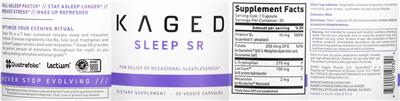
This summary is for Sleep SR by Kaged Muscle
- Form
- Capsule
- Serving Size
- 1 Capsule
- Servings
- 30 per container
- Container Holds
- 30 Veggie Capsules
- What is Sleep SR?A supplement from Kaged Muscle with five active ingredients, in capsule form.
- Active Ingredients 2 vitamins, 1 amino acid, 1 protein and 1 other: Vitamin B6 10 mgFolate 200 mcg DFEL-Tryptophan 275 mgLactium 150 mgMicroActive Melatonin 2 mg Five active ingredients. Each one can interact with drugs or cause side effects on its own, so we check every one. The full Supplement Facts
- Drug Interactions 1,499 drugs have a documented interaction with this supplement; the most serious is rated major. Of those, 1,045 are single drugs and 454 are combination products (two or more drugs in one), each listed under its own name. Based on the 4 of its 5 ingredients we could check. Ask your pharmacist first if you take a drug in any of these categories, the most serious of the 28 on record:
- Major · 248 drugs
- Moderate · 418 drugs
- Moderate · 186 drugs
- Moderate · 184 drugs
- Possible Side EffectsNausea 4 ingredientsDrowsiness 3 ingredientsHeadache 2 ingredientsStomach upset 2 ingredientsAbdominal painAllergic reactions +14 moreCombined from four of its five active ingredients. Not studied in this exact product.
- Well documented Why
Does Sleep SR work?
What It Is Marketed For
Sleep support and stress relief
From the claims on the product’s label.
The Closest Use the Research Grades
Delayed sleep phase syndrome (DSPS) Melatonin
Good studies support it.
Its ingredients have research behind other uses too:
- Hyperhomocysteinemia Vitamin B6
- Neural tube birth defects Folic Acid
- Non-24-hour sleep wake disorder Melatonin
- Vitamin B6
- Folic Acid
- Melatonin
These grades are for each ingredient, not this exact product, and never a promise it will work for you.
And 7 more graded uses, in what the research says- AllergensThe label says it contains milk
- Barcode (UPC)0 50015 10732 0Match it to the barcode on your bottle to be sure this is your product. Not your product? Search for it here
Who Might Consider It
- People looking for sleep support and stress relief, which is what it is marketed for. The closest use the research grades is delayed sleep phase syndrome (DSPS), rated Likely Effective.
- People who want it for hyperhomocysteinemia, neural tube birth defects, non-24-hour sleep wake disorder, premenstrual syndrome (PMS) or another graded use: the other uses with research behind them. See each grade
Who Should Be Careful
- Sleep SR may be worth discussing with your doctor if your main interest is sleep and you do not take medications that interact with its ingredients.
- People taking antidepressants, blood thinners, blood pressure drugs, seizure medicines, or sedatives should be especially careful.
- Pregnant or breastfeeding people, children, and anyone with liver, kidney, or seizure problems should talk it over with their own doctor or pharmacist first.
More Before You Take It Show both answersHide Pregnancy and Breastfeeding The Label’s Directions
-
Pregnant or breastfeeding?
- Pregnancy Vitamin B6
- ! When used orally in excessive doses.
- Breastfeeding Vitamin B6
- When used orally in doses not exceeding the tolerable upper intake level (UL) of vitamin B6 in the form of pyridoxine 80 mg daily for those aged 14-18 years and 100 mg daily for those 19 years and older.
- Pregnancy L-Tryptophan
- ! When used orally in medicinal amounts because it may cause respiratory depression in utero.
- Breastfeeding L-Tryptophan
- When used orally in amounts commonly found in foods.
- Pregnancy Melatonin
- ! When used orally or parenterally in high doses or with frequent use.
- Breastfeeding Melatonin
- Insufficient reliable information available; avoid using.
-
How does the label say to take it?
“Directions: Take 1 capsule 30-60 minutes before bed for relief of occasional sleeplessness.”
The maker’s words. Your pharmacist or doctor may advise differently.
Everything the label says
From the label dated Feb 23, 2025: 4 of its 5 active ingredients were checked against our records; the other one is not in them yet. A summary of what is known, not a grade or a test of the product. How these ratings are computed
Ask Anything About This Supplement
Name a drug you take, or ask about side effects, ingredients or pregnancy.
There’s a lot of information about this supplement on this page! Ask anything in plain English for a quick answer drawn from it.
AI answers come from this label and our own records, never the open internet. AI can make mistakes, so always check with your doctor or pharmacist. How we use AI
Ask the Pharmacist
A licensed pharmacist will answer your question by email — free, as soon as they can.
Got it — thank you!
A licensed pharmacist will answer as soon as they can. Keep an eye on your email (worth checking spam, just in case).
What’s Inside Sleep SR by Kaged Muscle
Five Active Ingredients
In the order the label lists them, each with its own card below.
Why this rating?
The label gives an exact amount for every one of its five active ingredients, so you know how much of each you get in each serving. This rates what the label tells you, not the quality of the product.
Supplement Facts
| Amount Per Serving | % Daily Value | |
|---|---|---|
| Vitamin B6 | 10 mg | 588% |
| Folate | 200 mcg DFE | 50% |
| L-Tryptophan | 275 mg | † |
| Lactium | 150 mg | † |
| MicroActive Melatonin | 2 mg | † |
Other ingredients: Cellulose, Rice extract, Rice, Gum Arabic, Sunflower Oil, Silicon Dioxide
† Daily Value not established.
Daily Values for adults and children 4 or more years of age.
As the label prints it, from the NIH Dietary Supplement Label Database.
Each Ingredient and Its Drug Interactions
Tap one for more about it and its full guide. A drug can interact with this supplement through any one of them.
Vitamin B6 and folate are vitamins, and melatonin is a hormone that helps regulate the sleep-wake cycle.
-
Vitamin B6 10 mg Interacts with 210 drugs
Form on the label: Pyridoxal 5-Phosphate
Vitamin B6 (pyridoxine) is an essential water-soluble vitamin that your body needs for metabolism, brain function, and making red blood cells.
- It is best known for helping with pregnancy-related nausea and may help some people with PMS, but taking very high doses for long periods can cause nerve damage.
- Get most of your B6 from food, and check with a pharmacist or doctor before taking high-dose supplements.
The full Vitamin B6 guide: uses, dosage and safety Every Vitamin B6 drug interaction
-
Folate 200 mcg DFE Interacts with 40 drugs
Form on the label: Quatrefolic
Folic acid is the man-made form of vitamin B9 and is one of the most well-studied supplements, especially for preventing serious birth defects when taken before and during early pregnancy.
- It is widely available, inexpensive, and generally safe at recommended doses, but you should still check with your pharmacist or doctor about the right amount for you.
The full Folic Acid guide: uses, dosage and safety Every Folic Acid drug interaction
-
L-Tryptophan 275 mg L-tryptophan is an amino acid and a precursor to serotonin, a brain chemical involved in mood and sleep. Interacts with 394 drugs
L-tryptophan is an essential amino acid the body uses to make serotonin and melatonin, and people take it to support sleep and mood.
- The evidence for supplement use is limited and mixed, and there are real safety concerns, so talk to a pharmacist or doctor before trying it.
The full L-Tryptophan guide: uses, dosage and safety Every L-Tryptophan drug interaction
-
Lactium 150 mg Lactium is listed as an active ingredient, but we do not hold role or effectiveness data for it. We know this ingredient, but hold no drug interaction record for it yet, so it was not checked
-
MicroActive Melatonin 2 mg Interacts with 1,463 drugs
Form on the label: Melatonin
Melatonin is a hormone your body makes naturally to help control your sleep-wake cycle, and the supplement form is widely used to help with sleep timing problems and jet lag.
- The evidence is strongest for certain circadian (body-clock) disorders and is more mixed for everyday insomnia.
- It is generally well tolerated for short-term use, but talk with your pharmacist or doctor before starting, especially for children or during pregnancy.
The full Melatonin guide: uses, dosage and safety Every Melatonin drug interaction
Other Ingredients (Inactive)
The capsule or tablet itself, fillers, coatings and flavors. Not part of the drug interaction check; the allergen check below reads them.
- Cellulose
- Rice extract
- Rice
- Gum Arabic
- Sunflower Oil
- Silicon Dioxide
Allergens in Sleep SR
The label says it contains milk.
Named on this label
- MilkThe label says it contains it
Not named in the ingredients
- Egg
- Fish
- Shellfish
- Tree nuts
- Peanuts
- Wheat or other gluten grains
- Soy
- Sesame
- The label’s allergen statement“Contains: Milk.”
From the label text and ingredient names on file; we do not test products. With a serious allergy, check your bottle and ask the maker or your pharmacist.
What the Label Says
The maker’s own words, from the label. We do not verify or endorse them.
- Formulation
-
“Fall asleep faster Stay asleep longer Reduce stress Wake up refreshed”
“Optimize your evening ritual Sleep SR is a 7 hour sustained release sleep and relaxation formula.”
2 more from the label
“For relief of occasional sleeplessness”
“Premium ingredients like B6, folic acid, tryptophan, and lactium support stress relief and relaxation. Sleep SR provides the perfect amount of melatonin throughout the night, so you wake up feeling refreshed and energized. Quaetrefolic Lactium”
- Seals and symbols
-
“Informed Sport We Test - You Trust Banned Substance Tested Every Batch”
- General statements
-
“Never Stop Evolving”
- FDA Statement of Identity
-
“Dietary Supplement”
- Storage
-
“Store in a cool, dry place, avoid direct sunlight, humidity and high temperatures. Replace lid after use.”
- Brand IP Statement(s)
-
“Copyright 2022 Kaged Muscle LLC. Quatrefolic is a registered trademark of Gnosis S.p.A. U.S. Patent No. 7,947,662. MicroActive Melatonin is a registered trademark of Bioactives LLC.”
The Sleep SR Label on File
The label scan on file at the NIH Dietary Supplement Label Database, dated February 2025. Always read the label on the bottle you have.
Product Facts
- Brand
- Kaged Muscle
- Barcode (UPC)
- 050015107320
- Net contents
- 30 Veggie Capsules
- Market status
- On market
- Date entered into DSLD
- Feb 23, 2025
- DSLD ID
- 323468
- Product type
- Other Combinations
- Supplement form
- Capsule
- Dietary claims / uses
- All Other, Structure/Function
- Intended target group(s)
- Adult (18 - 50 Years)
Is this label outdated? Report a formula or label change and our pharmacy team will review it.
HelloPharmacist Score Sleep SR by Kaged Muscle
Up to 10 points for research, amount, label and outside testing. Not a safety rating. How this one adds up
for insomnia
It is marketed for sleep support and stress relief, which our pharmacists count as insomnia. There is too little good research to say whether L-tryptophan, one of its ingredients, helps with insomnia.
- Research0 of 5 points
- Amount1 of 2 points
- Label2 of 2 points
- Outside testing1 of 1 point
Major drug interactions. The score does not count drug interactions. Check them against any drugs you take. See them
How It Earns Its 4
Score: 4 out of 10. Unproven for insomnia.
Research
Too little research on L-tryptophan for insomnia.
Graded “Insufficient Reliable Evidence to Rate” in the Natural Medicines database, which we license. The combination itself is not studied, so research counts for at most 3 of 5 points.
0 of 5 points
Amount
We have nothing to compare its 275 mg of L-tryptophan with yet.
1 of 2 points
Label
It states the amount of all five of its active ingredients.
2 of 2 points
Outside testing
Its label carries the Informed Sport mark. Programs like this test supplements on their own, and you can look the product up on the program’s website.
1 of 1 point
Sleep SR by Kaged Muscle Side Effects
Why this rating?
We look for three kinds of safety information on each ingredient: side effects reported in studies, a pregnancy and breastfeeding rating, and a safety write-up from our pharmacy team. All three are on file for each of the four ingredients we could check.
So this rates how much is known, not whether Sleep SR is right for you.
Reported with four of its ingredients
- Most often
- Nausea, drowsiness, headache, stomach upset, abdominal pain and allergic reactions
- !Rare but serious
- Sensory neuropathy (high doses), liver cirrhosis and cancer (long-term use) See details
HelloPharmacist Team Summary: Sleep SR by Kaged Muscle Side Effects
Most people taking Sleep SR notice drowsiness, nausea, or stomach upset, and melatonin can add headache or dizziness.
- If drowsiness or dizziness shows up, you may want to see how it affects you before driving.
- The rare but serious concern is too much serotonin activity from the L-tryptophan, with signs such as agitation, fast heartbeat, sweating, shivering, or confusion, so call your doctor right away if you notice these.
- If you take prescription medication, are pregnant or breastfeeding, or have liver, kidney, or seizure problems, talk with your own doctor or pharmacist before starting.
Side Effects, Ingredient by Ingredient
A supplement’s side effects come from its ingredients. Here is what is reported with each one.
Vitamin B6
Most reported
- Abdominal pain
- Allergic reactions
- Headache
- Heartburn
- Loss of appetite
- Nausea
- Somnolence
- Vomiting
From the Natural Medicines database, which we license.
Every reported effect, in the Vitamin B6 guideFolic Acid
Most reported
- Stomach upset
- Nausea
- Bloating
- Gas
L-Tryptophan
Most reported
- Drowsiness
- Nausea
- Stomach upset
- Dry mouth
Melatonin
Most reported
- Daytime drowsiness or grogginess
- Headache
- Dizziness
- Nausea
Sleep SR Warnings: Who Should Be Careful
Sleep SR has five active ingredients, and each can carry warnings of its own. We checked the four in our ingredient guides, and each warning below names the ingredient it comes from. Lactium is not in our guides yet, so ask your pharmacist about it. If any of these apply to you, talk to your doctor or pharmacist before you start it.
- Vitamin B62 warnings below
- Folic Acid2 warnings below
- L-Tryptophan2 warnings below
- Melatonin2 warnings below
- LactiumNot in our guides yet
-
Liver Disease
- L-TryptophanPeople taking medicines that affect serotonin, those with liver or kidney problems, and anyone with a history of serotonin-related illness should be especially careful and check with a healthcare provider first.
-
Kidney Disease or Kidney Stones
- Vitamin B6People with kidney problems or other chronic conditions should talk to a clinician before using supplements.
-
Autoimmune Conditions
- MelatoninTalk with a healthcare provider before giving melatonin to a child or teen, and before using it if you have a seizure disorder, an autoimmune condition, depression, or other ongoing health problems.
-
Iron Deficiency or Anemia
- Folic AcidAnyone with a history of anemia should have the cause checked rather than just taking folic acid on their own.
-
Children
- MelatoninBecause it is a hormone, some experts have raised questions about effects on hormones and development, especially in children.
-
If You Take Other Drugs
- L-TryptophanAlways talk to a pharmacist or doctor before starting it, especially if you take prescription medication.
-
Other Cautions
- Vitamin B6Avoid high doses.
- Folic AcidOne important caution: high doses of folic acid can mask a vitamin B12 deficiency.
-
What the Label Warns
- “Warning: Not intended for people with medical conditions affecting sleep.”
- “Consult your physician prior to using this product if you are pregnant, nursing, under 18 years of age, take medication or have a medical condition.”
- “Immediately discontinue use and contact your physician if any adverse reactions occur. Do not drive or operate heavy machinery after use.”
- “Consult your physician prior to using this product if you are pregnant, nursing, under 18 years of age, take medication or have a medical condition. Keep out of reach of children.”
- “This product contains a silica gel pack. Do not eat.”
The maker’s wording, from the product label.
-
Pregnant or Breastfeeding
Each ingredient’s rating for pregnancy and for breastfeeding, and what it covers.
Pregnancy
-
When used orally and appropriately.
A special sustained-release product providing vitamin B6 (pyridoxine) 75 mg daily is FDA-approved for use in pregnancy.
3 more points on this rating
- Vitamin B6 (pyridoxine) is also considered a first-line treatment for nausea and vomiting in pregnancy by the American College of Obstetrics and Gynecology.
- However, it should not be used long-term or without medical supervision and close monitoring.
- The tolerable upper intake level (UL) refers to vitamin B6 in the form of pyridoxine and is 80 mg daily for those aged 14-18 years and 100 mg daily for 19 years and older.
-
When used orally in excessive doses.
There is some concern that high-dose maternal vitamin B6 (pyridoxine) can cause neonatal seizures.
Breastfeeding
-
When used orally in doses not exceeding the tolerable upper intake level (UL) of vitamin B6 in the form of pyridoxine 80 mg daily for those aged 14-18 years and 100 mg daily for those 19 years and older.
The recommended dietary allowance (RDA) in lactating women is 2 mg daily.
There is insufficient reliable information available about the safety of vitamin B6 when used in higher doses in breast-feeding women.
Pregnancy
-
When used orally in amounts commonly found in foods.
-
When used orally in medicinal amounts because it may cause respiratory depression in utero.
Avoid using in amounts greater than those found in foods.
Breastfeeding
-
When used orally in amounts commonly found in foods.
There is insufficient reliable information available about the safety of larger medicinal amounts; avoid using.
Show 2 more ingredients
Pregnancy
-
When used orally or parenterally in high doses or with frequent use.
High doses of melatonin 75-300 mg daily seem to inhibit ovulation, causing a contraceptive effect.
6 more points on this rating
- Advise pregnant patients and patients wishing to become pregnant to avoid using melatonin frequently or in high doses.
- There is insufficient reliable information available about the safety of melatonin in lower doses during pregnancy.
- Some research shows that taking melatonin 2 mg daily does not affect anterior pituitary hormone levels in females who are not pregnant; this suggests that low doses may not have a contraceptive effect.
- Other research shows that taking melatonin 3 mg daily during the follicle stimulating stage of in vitro fertilization does not negatively impact pregnancy rates.
- However, it is not known if melatonin is safe for use throughout pregnancy.
- Until more is known about the safety of melatonin, avoid using during pregnancy.
Breastfeeding
-
Insufficient reliable information available; avoid using.
Pregnancy and Breastfeeding The record rates both the same
-
When used orally and appropriately.
Folic acid 300-400 mcg is commonly used during pregnancy for prevention of neural tube defects.
3 more points on this rating
- Miscarriage rates and negative impacts on fetal growth have not been shown to increase with peri-conception supplemental folic acid intakes of 4 mg per day.
- However, other research shows that taking more than 5 mg per day during pregnancy may reduce development of cognitive, emotional, and motor skills in infants.
- Also, the tolerable upper intake level (UL) of folic acid for pregnant or lactating women is 800 mcg daily for those 14-18 years of age and 1000 mcg daily for those 19 years and older.
-
When L-5-methyltetrahydrofolate (L-5-MTHF), the reduced form of folate, is used orally and appropriately, short-term.
L-5-MTHF has been used with apparent safety at a dose of 416 mcg daily for 16 weeks during lactation.
Compared to folic acid, this form seems to further increase the folate concentration of red blood cells, but not breast milk.
Our pharmacy team’s notes
- Folic AcidWe have no pregnancy or breastfeeding information for folate or Lactium.
- MelatoninMelatonin is rated possibly unsafe in pregnancy, so it is best avoided.
Ratings and the words beside them are from the Natural Medicines database, which we license.
-
Rare but Serious Side Effects
-
!
Vitamin B6
Orally or by injection: Sensory neuropathy (high doses).
Orally: Liver cirrhosis, hepatocellular carcinoma (high doses of pyridoxal-5'-phosphate).
-
!
Folic Acid
Allergic reactions are uncommon but possible.
Orally: Cancer (long-term use), cardiovascular complications, liver injury, seizures.
Allergic reactions such as bronchospasm and anaphylactic shock.
-
!
L-Tryptophan
More serious concerns include the possibility of too much serotonin activity, which can cause symptoms such as agitation, fast heartbeat, sweating, shivering, or confusion.
Orally: L-tryptophan has been associated with the neurological disorder eosinophilia-myalgia syndrome (EMS). However, almost all cases were traced to L-tryptophan produced by a single manufacturer in Japan and are likely related to contamination.
-
!
Melatonin
Serious side effects are rare.
Orally: There is concern that melatonin may increase the risk for seizure.
-
!
Our pharmacy team on Sleep SR
Our data flags L-tryptophan with a past contaminated-product safety scare, linked to a rare neurological disorder called eosinophilia-myalgia syndrome.
When to get help: a serious allergic reaction, with trouble breathing or swelling of the face, lips or throat, needs emergency care: call 911. For any other side effect that worries you, call your doctor or pharmacist.
These reports describe each ingredient, not studies of this exact product. Not medical advice: a side effect you notice after starting a supplement is worth a word with your pharmacist or doctor.
Sleep SR by Kaged Muscle Drug Interactions
We checked all five active ingredients in this supplement against every drug in our records. A drug can interact with it through any one of them. Lactium is not in our interaction records yet.
A major interaction on record
3 of 3, on a scale from Minor or none to Major.Why this rating?
We rate this by the most serious interaction on record, not by how many there are. For L-Tryptophan, Vitamin B6, Melatonin and Folic Acid, the most serious is rated major, which means the combination is best avoided, or used only under close supervision. Some involve kinds of drugs where a small change can matter, such as blood thinners, seizure drugs and transplant drugs.
1,500 drugs are on the full list. What matters is whether one you take is on it, so check yours with the interaction checker on this page.
From the HelloPharmacist Team
A few things worth knowing about the supplement as a whole.
- Sleep SR from Kaged Muscle can interact with several medications, through its L-tryptophan, vitamin B6, and melatonin content.
- Search for your exact medications with the search tool on this page, and talk with your own doctor or pharmacist before combining anything with this product.
Four of its five active ingredients have drug interactions on record: Vitamin B6, Folic Acid, L-Tryptophan and Melatonin. We have no interaction records for Lactium.
- Interacts with
- 210 drugs
- Most serious
- Moderate
- Vitamin B6 has Moderate interactions with antihypertensives (blood pressure drugs), amiodarone (a heart rhythm drug), and the anti-seizure drugs phenobarbital and phenytoin, plus a Minor interaction with levodopa.
- Interacts with
- 40 drugs
- Most serious
- Moderate
- Folate and Lactium could not be checked because we have no interaction information for them.
- Interacts with
- 394 drugs
- Most serious
- Major
- The most serious interaction is with CNS depressants (drugs that slow the central nervous system, such as sedatives), which L-tryptophan may add to, producing extra sedation and drowsiness.
- L-tryptophan also has a Moderate interaction with serotonergic drugs (medicines that raise serotonin, including some antidepressants), which may increase the risk of serotonin syndrome (a dangerous buildup of serotonin).
- Interacts with
- 1,463 drugs
- Most serious
- Moderate
- Melatonin has Moderate interactions with nifedipine GITS, anticoagulant and antiplatelet drugs including warfarin, immunosuppressants, antidiabetes drugs, anticonvulsants, methamphetamine, and antihypertensives.
Summarized by the HelloPharmacist pharmacy team from the interaction records below. How it is written How we use AI
Why Sleep SR Interacts, Ingredient by Ingredient
A product interacts through its ingredients. Each card: how many drugs, the most serious rating, and the kinds of drugs it affects most (tap a kind for what it means).
The ingredients driving the most interactions
-
MicroActive Melatonin 1,463 drugs
Most serious: Moderate18 interaction records on file
The kinds of drugs it affects most
- 645 drugs
- 418 drugs
- 248 drugs
- 193 drugs
Every Melatonin drug interaction, 18 records The Melatonin records cite 119 references, listed in the Melatonin guide.
-
L-Tryptophan 394 drugs
Most serious: Major2 interaction records on file
The kinds of drugs it affects most
- 248 drugs
- 184 drugs
Every L-Tryptophan drug interaction, 2 records The L-Tryptophan records cite 18 references, listed in the L-Tryptophan guide.
-
Vitamin B6 210 drugs
Most serious: Moderate5 interaction records on file
The kinds of drugs it affects most
- 172 drugs
- Phenobarbital (Luminal) 28 drugs
- Phenytoin (Dilantin) 5 drugs
- 5 drugs
Every Vitamin B6 drug interaction, 5 records The Vitamin B6 records cite 33 references, listed in the Vitamin B6 guide.
-
Folate 40 drugs
Most serious: Moderate7 interaction records on file
The kinds of drugs it affects most
- Phenobarbital (Luminal) 28 drugs
- Phenytoin (Dilantin) 5 drugs
- 5-Fluorouracil 2 drugs
- 2 drugs
Every Folic Acid drug interaction, 7 records The Folic Acid records cite 56 references, listed in the Folic Acid guide.
The Breakdown by Severity
Each drug counted once, at its most serious rating. Tap a tile to list those drugs.
Find Your Drug
Type a drug or brand name to see whether it is on the list.
- Only drugs with a documented interaction are listed, the most serious first.
- A drug with no known interaction is not listed, but searching its name tells you so.
- Open a drug to see which ingredient is responsible. Of those, 1,045 are single drugs and 454 are combination products (two or more drugs in one), each listed under its own name.
-
PregabalinLyrica, Lyrica CR Major
The 2 ingredients responsible:
-
L-Tryptophan Major Pregabalin is in the CNS Depressants category.
Theoretically, concomitant use of L-tryptophan with CNS depressants might cause additive sedative effects.
The full L-Tryptophan + Pregabalin interaction -
Microactive Melatonin Moderate Pregabalin is in the CNS Depressants category.
Theoretically, taking melatonin might increase the sedative effects of CNS depressants.
The full Microactive Melatonin + Pregabalin interaction
-
-
AmitriptylineElavil Major
The 2 ingredients responsible:
-
L-Tryptophan Major Amitriptyline is in these Serotonergic Drugs, CNS Depressants categories.
Theoretically, combining L-tryptophan with serotonergic drugs might cause additive serotonergic effects.
The full L-Tryptophan + Amitriptyline interaction -
Microactive Melatonin Moderate Amitriptyline is in these Cytochrome P450 3A4 (CYP3A4) Substrates, CNS Depressants, Cytochrome P450 1A2 (CYP1A2) Substrates and 2 more categories.
Theoretically, melatonin might increase levels of drugs metabolized by CYP3A4.
The full Microactive Melatonin + Amitriptyline interaction
-
-
LamotrigineLamictal Major
The 2 ingredients responsible:
-
L-Tryptophan Major Lamotrigine is in the CNS Depressants category.
Theoretically, concomitant use of L-tryptophan with CNS depressants might cause additive sedative effects.
The full L-Tryptophan + Lamotrigine interaction -
Microactive Melatonin Moderate Lamotrigine is in these Anticonvulsants, CNS Depressants categories.
Theoretically, melatonin may reduce the effects of anticonvulsants.
The full Microactive Melatonin + Lamotrigine interaction
-
-
ClonazepamCeberclon, Klonopin, Rivotril Major
The 2 ingredients responsible:
-
L-Tryptophan Major Clonazepam is in the CNS Depressants category.
Theoretically, concomitant use of L-tryptophan with CNS depressants might cause additive sedative effects.
The full L-Tryptophan + Clonazepam interaction -
Microactive Melatonin Moderate Clonazepam is in these Anticonvulsants, Cytochrome P450 3A4 (CYP3A4) Substrates, CNS Depressants categories.
Theoretically, melatonin may reduce the effects of anticonvulsants.
The full Microactive Melatonin + Clonazepam interaction
-
-
GabapentinGralise, Neurontin Major
The 2 ingredients responsible:
-
L-Tryptophan Major Gabapentin is in the CNS Depressants category.
Theoretically, concomitant use of L-tryptophan with CNS depressants might cause additive sedative effects.
The full L-Tryptophan + Gabapentin interaction -
Microactive Melatonin Moderate Gabapentin is in these Anticonvulsants, CNS Depressants categories.
Theoretically, melatonin may reduce the effects of anticonvulsants.
The full Microactive Melatonin + Gabapentin interaction
-
-
AlprazolamNiravam, Xanax Major
The 2 ingredients responsible:
-
L-Tryptophan Major Alprazolam is in the CNS Depressants category.
Theoretically, concomitant use of L-tryptophan with CNS depressants might cause additive sedative effects.
The full L-Tryptophan + Alprazolam interaction -
Microactive Melatonin Moderate Alprazolam is in these CNS Depressants, Cytochrome P450 3A4 (CYP3A4) Substrates categories.
Theoretically, taking melatonin might increase the sedative effects of CNS depressants.
The full Microactive Melatonin + Alprazolam interaction
-
-
DiazepamDiastat AcuDial, Valium, Valium injection, Valtoco Major
The 2 ingredients responsible:
-
L-Tryptophan Major Diazepam is in the CNS Depressants category.
Theoretically, concomitant use of L-tryptophan with CNS depressants might cause additive sedative effects.
The full L-Tryptophan + Diazepam interaction -
Microactive Melatonin Moderate Diazepam is in these Cytochrome P450 1A2 (CYP1A2) Substrates, Cytochrome P450 3A4 (CYP3A4) Substrates, Cytochrome P450 2C19 (CYP2C19) Substrates and 2 more categories.
Theoretically, melatonin might increase levels of drugs metabolized by CYP1A2.
The full Microactive Melatonin + Diazepam interaction
-
-
AcetazolamideAk-Zol, Diamox Major
The 3 ingredients responsible:
-
L-Tryptophan Major Acetazolamide is in the CNS Depressants category.
Theoretically, concomitant use of L-tryptophan with CNS depressants might cause additive sedative effects.
The full L-Tryptophan + Acetazolamide interaction -
Vitamin B6 Moderate Acetazolamide is in the Antihypertensive Drugs category.
Theoretically, vitamin B6 may have additive effects when used with antihypertensive drugs.
The full Vitamin B6 + Acetazolamide interaction -
Microactive Melatonin Moderate Acetazolamide is in these CNS Depressants, Antihypertensive Drugs, Anticonvulsants categories.
Theoretically, taking melatonin might increase the sedative effects of CNS depressants.
The full Microactive Melatonin + Acetazolamide interaction
-
-
Lithium Carbonate (prescription Drug)Eskalith, Lithium Carbonate Major
The 2 ingredients responsible:
-
L-Tryptophan Major Lithium Carbonate (prescription Drug) is in these Serotonergic Drugs, CNS Depressants categories.
Theoretically, combining L-tryptophan with serotonergic drugs might cause additive serotonergic effects.
The full L-Tryptophan + Lithium Carbonate (prescription Drug) interaction -
Microactive Melatonin Moderate Lithium Carbonate (prescription Drug) is in the CNS Depressants category.
Theoretically, taking melatonin might increase the sedative effects of CNS depressants.
The full Microactive Melatonin + Lithium Carbonate (prescription Drug) interaction
-
-
AripiprazoleAbilify, Abilify Maintena, Abilify Mycite Major
The 2 ingredients responsible:
-
L-Tryptophan Major Aripiprazole is in these Serotonergic Drugs, CNS Depressants categories.
Theoretically, combining L-tryptophan with serotonergic drugs might cause additive serotonergic effects.
The full L-Tryptophan + Aripiprazole interaction -
Microactive Melatonin Moderate Aripiprazole is in these CNS Depressants, Cytochrome P450 2D6 (CYP2D6) Substrates, Seizure Threshold Lowering Drugs and 1 more categories.
Theoretically, taking melatonin might increase the sedative effects of CNS depressants.
The full Microactive Melatonin + Aripiprazole interaction
-
-
LorazepamAtivan Major
The 2 ingredients responsible:
-
L-Tryptophan Major Lorazepam is in the CNS Depressants category.
Theoretically, concomitant use of L-tryptophan with CNS depressants might cause additive sedative effects.
The full L-Tryptophan + Lorazepam interaction -
Microactive Melatonin Moderate Lorazepam is in these Anticonvulsants, CNS Depressants categories.
Theoretically, melatonin may reduce the effects of anticonvulsants.
The full Microactive Melatonin + Lorazepam interaction
-
-
CarbamazepineCarbatrol, Carnexiv, Equetro, Tegretol, Tegretol XR Major
The 2 ingredients responsible:
-
L-Tryptophan Major Carbamazepine is in these Serotonergic Drugs, CNS Depressants categories.
Theoretically, combining L-tryptophan with serotonergic drugs might cause additive serotonergic effects.
The full L-Tryptophan + Carbamazepine interaction -
Microactive Melatonin Moderate Carbamazepine is in these Anticonvulsants, Cytochrome P450 3A4 (CYP3A4) Substrates, CNS Depressants and 1 more categories.
Theoretically, melatonin may reduce the effects of anticonvulsants.
The full Microactive Melatonin + Carbamazepine interaction
-
-
LevetiracetamElepsia XR, Keppra, Spritam Major
The 2 ingredients responsible:
-
L-Tryptophan Major Levetiracetam is in the CNS Depressants category.
Theoretically, concomitant use of L-tryptophan with CNS depressants might cause additive sedative effects.
The full L-Tryptophan + Levetiracetam interaction -
Microactive Melatonin Moderate Levetiracetam is in these CNS Depressants, Anticonvulsants categories.
Theoretically, taking melatonin might increase the sedative effects of CNS depressants.
The full Microactive Melatonin + Levetiracetam interaction
-
-
DiphenhydramineAllerdryl, Benadryl, Benadryl cream, Benadryl spray, Compoz and 10 more Major
The 2 ingredients responsible:
-
L-Tryptophan Major Diphenhydramine is in the CNS Depressants category.
Theoretically, concomitant use of L-tryptophan with CNS depressants might cause additive sedative effects.
The full L-Tryptophan + Diphenhydramine interaction -
Microactive Melatonin Moderate Diphenhydramine is in these CNS Depressants, Seizure Threshold Lowering Drugs categories.
Theoretically, taking melatonin might increase the sedative effects of CNS depressants.
The full Microactive Melatonin + Diphenhydramine interaction
-
-
Magnesium Sulfate (prescription Drug)Bilagog, Magnesium Sulfate Major
The 2 ingredients responsible:
-
L-Tryptophan Major Magnesium Sulfate (prescription Drug) is in the CNS Depressants category.
Theoretically, concomitant use of L-tryptophan with CNS depressants might cause additive sedative effects.
The full L-Tryptophan + Magnesium Sulfate (prescription Drug) interaction -
Microactive Melatonin Moderate Magnesium Sulfate (prescription Drug) is in these CNS Depressants, Anticonvulsants categories.
Theoretically, taking melatonin might increase the sedative effects of CNS depressants.
The full Microactive Melatonin + Magnesium Sulfate (prescription Drug) interaction
-
-
CetirizineCetirizine, Quzyttir, Zyrtec Major
The 2 ingredients responsible:
-
L-Tryptophan Major Cetirizine is in the CNS Depressants category.
Theoretically, concomitant use of L-tryptophan with CNS depressants might cause additive sedative effects.
The full L-Tryptophan + Cetirizine interaction -
Microactive Melatonin Moderate Cetirizine is in these Seizure Threshold Lowering Drugs, CNS Depressants categories.
Theoretically, taking melatonin with drugs that lower the seizure threshold might increase the risk of seizure activity.
The full Microactive Melatonin + Cetirizine interaction
-
-
MethadoneDolophine Major
The 2 ingredients responsible:
-
L-Tryptophan Major Methadone is in these CNS Depressants, Serotonergic Drugs categories.
Theoretically, concomitant use of L-tryptophan with CNS depressants might cause additive sedative effects.
The full L-Tryptophan + Methadone interaction -
Microactive Melatonin Moderate Methadone is in these Seizure Threshold Lowering Drugs, Cytochrome P450 2D6 (CYP2D6) Substrates, Cytochrome P450 3A4 (CYP3A4) Substrates and 1 more categories.
Theoretically, taking melatonin with drugs that lower the seizure threshold might increase the risk of seizure activity.
The full Microactive Melatonin + Methadone interaction
-
-
OxycodoneOxecta, OxyContin, OxyIR, OxyNeo, Percolone and 1 more Major
The 2 ingredients responsible:
-
L-Tryptophan Major Oxycodone is in the CNS Depressants category.
Theoretically, concomitant use of L-tryptophan with CNS depressants might cause additive sedative effects.
The full L-Tryptophan + Oxycodone interaction -
Microactive Melatonin Moderate Oxycodone is in these Seizure Threshold Lowering Drugs, CNS Depressants, Cytochrome P450 2D6 (CYP2D6) Substrates categories.
Theoretically, taking melatonin with drugs that lower the seizure threshold might increase the risk of seizure activity.
The full Microactive Melatonin + Oxycodone interaction
-
-
Codeine PhosphateCodeine Major
The 2 ingredients responsible:
-
L-Tryptophan Major Codeine Phosphate is in the CNS Depressants category.
Theoretically, concomitant use of L-tryptophan with CNS depressants might cause additive sedative effects.
The full L-Tryptophan + Codeine Phosphate interaction -
Microactive Melatonin Moderate Codeine Phosphate is in these Seizure Threshold Lowering Drugs, CNS Depressants, Cytochrome P450 2D6 (CYP2D6) Substrates categories.
Theoretically, taking melatonin with drugs that lower the seizure threshold might increase the risk of seizure activity.
The full Microactive Melatonin + Codeine Phosphate interaction
-
-
TramadolQdolo, Ultram, Zytram XL Major
The 2 ingredients responsible:
-
L-Tryptophan Major Tramadol is in these CNS Depressants, Serotonergic Drugs categories.
Theoretically, concomitant use of L-tryptophan with CNS depressants might cause additive sedative effects.
The full L-Tryptophan + Tramadol interaction -
Microactive Melatonin Moderate Tramadol is in these Cytochrome P450 3A4 (CYP3A4) Substrates, CNS Depressants, Seizure Threshold Lowering Drugs and 1 more categories.
Theoretically, melatonin might increase levels of drugs metabolized by CYP3A4.
The full Microactive Melatonin + Tramadol interaction
-
-
Aripiprazole LauroxilAristada, Aristada Initio Kit Major
The 2 ingredients responsible:
-
L-Tryptophan Major Aripiprazole Lauroxil is in these CNS Depressants, Serotonergic Drugs categories.
Theoretically, concomitant use of L-tryptophan with CNS depressants might cause additive sedative effects.
The full L-Tryptophan + Aripiprazole Lauroxil interaction -
Microactive Melatonin Moderate Aripiprazole Lauroxil is in these Cytochrome P450 3A4 (CYP3A4) Substrates, Cytochrome P450 2D6 (CYP2D6) Substrates, CNS Depressants and 1 more categories.
Theoretically, melatonin might increase levels of drugs metabolized by CYP3A4.
The full Microactive Melatonin + Aripiprazole Lauroxil interaction
-
-
Valproic AcidDepacon, Depakene, Valproate Major
The 2 ingredients responsible:
-
L-Tryptophan Major Valproic Acid is in these Serotonergic Drugs, CNS Depressants categories.
Theoretically, combining L-tryptophan with serotonergic drugs might cause additive serotonergic effects.
The full L-Tryptophan + Valproic Acid interaction -
Microactive Melatonin Moderate Valproic Acid is in these Anticonvulsants, CNS Depressants categories.
Theoretically, melatonin may reduce the effects of anticonvulsants.
The full Microactive Melatonin + Valproic Acid interaction
-
-
Codeine SulfateCodeine Sulfate Major
The 2 ingredients responsible:
-
L-Tryptophan Major Codeine Sulfate is in the CNS Depressants category.
Theoretically, concomitant use of L-tryptophan with CNS depressants might cause additive sedative effects.
The full L-Tryptophan + Codeine Sulfate interaction -
Microactive Melatonin Moderate Codeine Sulfate is in these Cytochrome P450 2D6 (CYP2D6) Substrates, Seizure Threshold Lowering Drugs, CNS Depressants categories.
Theoretically, melatonin might increase levels of drugs metabolized by CYP2D6.
The full Microactive Melatonin + Codeine Sulfate interaction
-
-
HydrocodoneHydrocodone, Zohydro ER Major
The 2 ingredients responsible:
-
L-Tryptophan Major Hydrocodone is in the CNS Depressants category.
Theoretically, concomitant use of L-tryptophan with CNS depressants might cause additive sedative effects.
The full L-Tryptophan + Hydrocodone interaction -
Microactive Melatonin Moderate Hydrocodone is in these CNS Depressants, Cytochrome P450 2D6 (CYP2D6) Substrates, Seizure Threshold Lowering Drugs and 1 more categories.
Theoretically, taking melatonin might increase the sedative effects of CNS depressants.
The full Microactive Melatonin + Hydrocodone interaction
-
-
ZolpidemAmbien CR, Intermezzo, Sublinox Major
The 2 ingredients responsible:
-
L-Tryptophan Major Zolpidem is in the CNS Depressants category.
Theoretically, concomitant use of L-tryptophan with CNS depressants might cause additive sedative effects.
The full L-Tryptophan + Zolpidem interaction -
Microactive Melatonin Moderate Zolpidem is in these CNS Depressants, Cytochrome P450 3A4 (CYP3A4) Substrates categories.
Theoretically, taking melatonin might increase the sedative effects of CNS depressants.
The full Microactive Melatonin + Zolpidem interaction
-
-
Sodium ValproateEpilim Major
The 2 ingredients responsible:
-
L-Tryptophan Major Sodium Valproate is in these CNS Depressants, Serotonergic Drugs categories.
Theoretically, concomitant use of L-tryptophan with CNS depressants might cause additive sedative effects.
The full L-Tryptophan + Sodium Valproate interaction -
Microactive Melatonin Moderate Sodium Valproate is in these Anticonvulsants, CNS Depressants categories.
Theoretically, melatonin may reduce the effects of anticonvulsants.
The full Microactive Melatonin + Sodium Valproate interaction
-
-
TopiramateEprontia, Qudexy XR, Topamax, Trokendi XR Major
The 2 ingredients responsible:
-
L-Tryptophan Major Topiramate is in the CNS Depressants category.
Theoretically, concomitant use of L-tryptophan with CNS depressants might cause additive sedative effects.
The full L-Tryptophan + Topiramate interaction -
Microactive Melatonin Moderate Topiramate is in these Anticonvulsants, CNS Depressants categories.
Theoretically, melatonin may reduce the effects of anticonvulsants.
The full Microactive Melatonin + Topiramate interaction
-
-
ZopicloneApo-Zopiclone, Co Zopiclone, Dom-Zopiclone, Imovane, Mylan-Zopiclone and 2 more Major
The 2 ingredients responsible:
-
L-Tryptophan Major Zopiclone is in the CNS Depressants category.
Theoretically, concomitant use of L-tryptophan with CNS depressants might cause additive sedative effects.
The full L-Tryptophan + Zopiclone interaction -
Microactive Melatonin Moderate Zopiclone is in these CNS Depressants, Cytochrome P450 3A4 (CYP3A4) Substrates categories.
Theoretically, taking melatonin might increase the sedative effects of CNS depressants.
The full Microactive Melatonin + Zopiclone interaction
-
-
Gamma Hydroxybutyrate (prescription Drug)GHB Major
The 2 ingredients responsible:
-
L-Tryptophan Major Gamma Hydroxybutyrate (prescription Drug) is in the CNS Depressants category.
Theoretically, concomitant use of L-tryptophan with CNS depressants might cause additive sedative effects.
The full L-Tryptophan + Gamma Hydroxybutyrate (prescription Drug) interaction -
Microactive Melatonin Moderate Gamma Hydroxybutyrate (prescription Drug) is in these Seizure Threshold Lowering Drugs, CNS Depressants categories.
Theoretically, taking melatonin with drugs that lower the seizure threshold might increase the risk of seizure activity.
The full Microactive Melatonin + Gamma Hydroxybutyrate (prescription Drug) interaction
-
-
Zolpidem TartrateAmbien Major
The 2 ingredients responsible:
-
L-Tryptophan Major Zolpidem Tartrate is in the CNS Depressants category.
Theoretically, concomitant use of L-tryptophan with CNS depressants might cause additive sedative effects.
The full L-Tryptophan + Zolpidem Tartrate interaction -
Microactive Melatonin Moderate Zolpidem Tartrate is in these CNS Depressants, Cytochrome P450 3A4 (CYP3A4) Substrates categories.
Theoretically, taking melatonin might increase the sedative effects of CNS depressants.
The full Microactive Melatonin + Zolpidem Tartrate interaction
-
Does It Work? Sleep SR by Kaged Muscle
What the research says for what it is marketed for, then its ingredients’ other uses and each ingredient on its own. A grade is the research so far, never an endorsement.
What the Research Supports
First for what it is marketed for, then the other uses its ingredients are graded for, strongest research first.
Marketed for sleep support and stress relief
- Delayed sleep phase syndrome (DSPS) Melatonin
- Non-24-hour sleep wake disorder Melatonin
- Melatonin
- Beta blocker-induced insomnia Melatonin
Other uses its ingredients are graded for
- Hyperhomocysteinemia Vitamin B6
- Neural tube birth defects Folic Acid
- Vitamin B6
- Vitamin B6
- Pregnancy-induced nausea and vomiting Vitamin B6
- Folic Acid
- Folic Acid
- Oral clefts Folic Acid
- Melatonin
- Temporomandibular disorders (TMD) Melatonin
HelloPharmacist Team Summary: Does Sleep SR by Kaged Muscle Work?
For L-tryptophan, depression is rated possibly ineffective, and rates anxiety, athletic performance, bruxism (teeth grinding), and tobacco and nicotine dependence as having insufficient reliable evidence to rate.
The Evidence, Ingredient by Ingredient
The detail behind the list above: our notes on each ingredient and its graded uses.
Vitamin B6
From our Vitamin B6 guide
- Morning sickness (nausea and vomiting in pregnancy): This is one of the better-supported uses.
- Vitamin B6 is commonly recommended by doctors, sometimes combined with the medication doxylamine, to help reduce nausea.
Research suggests a benefit for
- Vitamin B6 deficiency
- Hyperhomocysteinemia
- Premenstrual syndrome (PMS), kidney stones (nephrolithiasis) and pregnancy-induced nausea and vomiting
Not counted here: one graded use is for Vitamin B6 injected or put on the skin (pyridoxine-dependent epilepsy), not for a product like this one. Two more are for conditions treated by a doctor or in a hospital (sideroblastic anemia and antipsychotic-induced hyperprolactinemia).
Every graded use, in the Vitamin B6 guideFolic Acid
From our Folic Acid guide
- The strongest and most accepted use of folic acid is preventing neural tube defects (such as spina bifida) when taken before conception and during early pregnancy.
- The evidence here is very strong, and this is why folic acid is recommended for people who can become pregnant.
Research suggests a benefit for
- Folate deficiency
- Neural tube birth defects
- Depression, vitiligo and oral clefts
Not counted here: one graded use is for Folic Acid injected or put on the skin (phenytoin-induced gingival hyperplasia), not for a product like this one. Four more are for conditions treated by a doctor or in a hospital (congenital heart disease, methotrexate toxicity, kidney failure and others).
Every graded use, in the Folic Acid guideL-Tryptophan
From our L-Tryptophan guide
- People most often use L-tryptophan for sleep, low mood or depression, and anxiety.
- Some also use it for premenstrual symptoms or to help control appetite.
No use is graded effective, likely effective or possibly effective for it yet.
Every graded use, in the L-Tryptophan guideMelatonin
From our Melatonin guide
- Melatonin is studied most for sleep and body-clock (circadian) problems.
- The evidence is strongest for circadian rhythm disorders, such as delayed sleep phase syndrome (a body clock that runs late) and non-24-hour sleep-wake disorder (common in people who are totally blind).
Research suggests a benefit for
- Delayed sleep phase syndrome (DSPS) (the use on its label) and non-24-hour sleep wake disorder
- Hypertension, temporomandibular disorders (TMD), jet lag and beta blocker-induced insomnia
Not counted here: one graded use is for Melatonin injected or put on the skin (sunburn), not for a product like this one. Four more are for conditions treated by a doctor or in a hospital (pre-procedural anxiety, thrombocytopenia, emergence delirium and others).
Every graded use, in the Melatonin guideThe grades are the Natural Medicines database’s, which we license; tap a grade for what it means. They are about each ingredient, not this exact product.
About Kaged Muscle
Manufacturer and brand details for Sleep SR, from the product label.
Kaged Muscle has 35 products in our supplement database, 34 of them on the market, with labels on file since 2019. Our database is built from the NIH’s Dietary Supplement Label Database and our pharmacy team’s own additions, so it covers the labels filed there, not every product the brand sells.
- Name
- Kaged
- Street Address
- 17872 Gillette Ave, #475
- City
- Irvine
- State
- CA
- ZipCode
- 92614
- Phone Number
- 844.445.2433
- Web Address
- Kaged.com
Sleep SR by Kaged Muscle: Common Questions
Does Sleep SR by Kaged Muscle interact with any drugs?
What are the side effects of Sleep SR by Kaged Muscle?
Who should be careful taking Sleep SR by Kaged Muscle?
Can Sleep SR by Kaged Muscle affect the liver?
Does Sleep SR by Kaged Muscle contain any common allergens?
How can Sleep SR by Kaged Muscle interact with so many drugs?
Where does the information about Sleep SR by Kaged Muscle come from?
Is Sleep SR by Kaged Muscle safe to take during pregnancy?
Does melatonin in Sleep SR by Kaged Muscle work for everyday sleep problems?
Does L-tryptophan help with depression?
Can vitamin B6 help with nausea during pregnancy?
Written and reviewed by the HelloPharmacist Editorial Team. Our editorial policy
Still Have a Question About Sleep SR?
Our pharmacists answer drug and supplement questions, free, by email.
Label information is sourced from the NIH Dietary Supplement Label Database and reflects the product version on file; always read your actual product label. This page is for education only and is not a substitute for professional medical advice. Confirm with your pharmacist or doctor before combining supplements and drugs.
Who Reviews This Page
The pharmacist behind it, and how it is checked.
Dr. Brian Staiger, PharmD, BCPS
Clinical pharmacist and founder of HelloPharmacist
A licensed pharmacist for more than 13 years, he built the system behind this page: it reads the label on file, matches each active ingredient to its record in the Natural Medicines database, checks those records against every drug we cover, and our pharmacy team writes the take and the interaction summary from those records.
- 13+ Years in PharmacyRetail and clinical pharmacy, medication safety and healthcare administration.
- Board Certified (BCPS)A pharmacotherapy specialist, certified by the Board of Pharmacy Specialties.
- Herbalist TrainingCertificates in medical ethnobotany, for the herbs and supplements people take.
Where This Page Comes From
Sleep SR’s label data comes from the NIH Dietary Supplement Label Database; the ingredient interaction data is from the Natural Medicines database, reviewed by our pharmacists.
- NIH Dietary Supplement Label Database (DSLD)
- The official product label on file for this supplement.
- Natural Medicines (Therapeutic Research Center)
- The evidence-graded clinical reference behind the ingredient interaction, evidence and safety records, which we license.
- HelloPharmacist Editorial Team
- Content is reviewed by the HelloPharmacist Editorial Team, the pharmacists on our staff and those we contract. See our data sources and editorial standards for how this information is built and checked.
- The Pharmacy Team’s Take and Summaries
- Generated from HelloPharmacist’s pharmacist-curated databases and editorial rules. Clinical methodology reviewed by Dr. Brian Staiger, PharmD, BCPS. Last generated Oct 31, 2026. How we use AI
- The ratings in the Quick Summary
- They summarize available label information, ingredient evidence and known drug-safety records: a summary of what is known, not a grade of the product itself. They do not verify product identity, purity, potency, contamination or manufacturing quality. How these ratings are computed
The References Behind the Interaction Records
Every citation the ingredients’ records rest on is listed in that ingredient’s guide, in context: Vitamin B6, 33 references; Folic Acid, 56 references; L-Tryptophan, 18 references; Melatonin, 119 references .
Parts of this content are provided by the Therapeutic Research Center, LLC.
DISCLAIMER: Currently this does not check for drug-drug interactions. This is not an all-inclusive comprehensive list of potential interactions and is for informational purposes only. Not all interactions are known or well-reported in the scientific literature, and new interactions are continually being reported. Input is needed from a qualified healthcare provider including a pharmacist before starting any therapy. Application of clinical judgment is necessary.
© 2021 Therapeutic Research Center, LLC
Keep Exploring
- Supplement interaction checkerCheck any supplement or product against your drugs
- Drug–drug interactionsCheck two or more of your drugs against each other
- Browse drugs A to ZEvery drug we have checked against herbs and supplements
- NDC and pricing lookupFind a drug’s NDCs, packaging and costs
- Ask a pharmacistA free, personal answer from our licensed team