
LIT Blue Raspberry by GNC Beyond Raw Ingredients, Side Effects and Drug Interactions
Dietary Supplement Powder Other Combinations
UPC 0 48107 21590 3 Match it to the barcode on your bottle

Medically reviewed by Dr. Brian Staiger, PharmD, BCPS
Also reviewed by the HelloPharmacist Editorial Team
Updated Details about this page
- Label on file from the NIH Dietary Supplement Label Database, dated May 21, 2025.
- The interaction, evidence and safety records come from the Natural Medicines database, which we license, read against this label by our own system; the pharmacy team’s sections are written from those records.
- Dr. Brian Staiger, PharmD, BCPS, is a clinical pharmacist and pharmacotherapy specialist.
- Editorial policy Our sources
AI is used only to summarize verified clinical information, never the open internet. Our AI policy
Summary: The HelloPharmacist Team’s Take
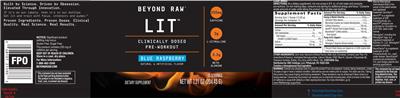
- Form
- Powder
- Serving Size
- 13.63 g
- Servings
- 15 per container
- Container Holds
- 7.21 Ounces; 204.45 g
What’s in it, whether it interacts with your drugs, its side effects, whether it works, and what our pharmacists would want you to know before you start it.
- What is LIT Blue Raspberry?A supplement from GNC Beyond Raw with nine active ingredients, in powder form.
- Active Ingredients 2 minerals, 1 plant ingredient, 2 amino acids and 4 others: Sodium 15 mgPotassium 100 mgCarnoSyn Beta-Alanine 3.2 gmicronized Creatine 1.5 gCaffeine Anhydrous 250 mgelevATP 150 mgNeuroFactor 100 mgL-Citrulline 3 gNitrosigine 1.5 g Nine active ingredients. Each one can interact with drugs or cause side effects on its own, so we check every one. The full Supplement Facts
- Drug Interactions 812 drugs have a documented interaction with this supplement; the most serious is rated major. Of those, 468 are single drugs and 344 are combination products (two or more drugs in one), each listed under its own name. Based on the 7 of its 9 ingredients we could check. Ask your pharmacist first if you take a drug in any of these categories, the most serious of the 55 on record:
- EphedrineMajor · 8 drugs
- Moderate · 172 drugs
- Moderate · 172 drugs
- Moderate · 122 drugs
- Possible Side EffectsStomach upset 4 ingredientsBloating 2 ingredientsTrouble sleeping 2 ingredientsFlushingWater retentionFeeling jittery +16 moreReported for six of its nine active ingredients. Not studied in this exact product.
- Well documented Why
Does LIT Blue Raspberry work?
What It Is Marketed For
Focus, intensity and performance during workouts
From the claims on the product’s label.
The Closest Use the Research Grades
Mental alertness Caffeine
Good studies support it.
Its ingredients have research behind other uses too:
- Caffeine
- Beta-alanine
- L-Citrulline
- Creatine
- Physical performance Beta-alanine
- Creatine
These grades are for each ingredient, not this exact product, and never a promise it will work for you.
And 6 more graded uses, in what the research says- Full Why
- AllergensThe label says it contains soy
- Barcode (UPC)0 48107 21590 3Match it to the barcode on your bottle to be sure this is your product. Not your product? Search for it here
Who Might Consider It
- People looking for focus, intensity and performance during workouts, which is what it is marketed for. The closest use the research grades is mental alertness, rated Likely Effective.
- People who want it for athletic performance, physical performance, muscle strength or another graded use: the other uses with research behind them. See each grade
- LIT Blue Raspberry may be of interest if you are an adult looking for a caffeine-containing powder, with the ingredient details above in mind.
Who Should Be Careful
- If you have heart or blood pressure problems, kidney disease, anxiety, or take any prescription medicine, be especially careful.
- Please talk it over with your own doctor or pharmacist before you start.
More Before You Take It Show both answersHide Pregnancy and Breastfeeding The Label’s Directions
-
Pregnant or breastfeeding?
- Pregnancy and Breastfeeding Sodium
- ! When used orally in higher doses.
- Pregnancy Caffeine
- ! When used orally in amounts over 300 mg daily.
- Breastfeeding Caffeine
- ! When used orally in large amounts.
- Pregnancy Coffee
- ! When caffeinated coffee providing more than 300 mg of caffeine daily is consumed orally.
- Breastfeeding Coffee
- ! When used orally in large amounts.
-
How does the label say to take it?
“Directions: As a dietary supplement, mix one scoop in 8 fl. oz. of cold water and consume pre-workout. On non-training days, consume one serving for additional energy and focus. Consume ample amounts of water while taking this product. …”
The maker’s words. Your pharmacist or doctor may advise differently.
Everything the label says
From the label dated May 21, 2025: 7 of its 9 active ingredients were checked against our records; the other two are not in them yet. A summary of what is known, not a grade or a test of the product. How these ratings are computed
Ask Anything About This Supplement
Name a drug you take, or ask about side effects, ingredients or pregnancy.
AI answers come from this label and our own records, never the open internet. AI can make mistakes, so always check with your doctor or pharmacist. How we use AI
Ask the Pharmacist
A licensed pharmacist will answer your question by email — free, usually within 24 hours.
Got it — thank you!
A licensed pharmacist will answer within 24 hours. Keep an eye on your email (worth checking spam, just in case).
What’s Inside LIT Blue Raspberry by GNC Beyond Raw
Nine Active Ingredients, Each Checked on Its Own
A supplement is often several ingredients in one bottle, and each one can interact with drugs or cause side effects on its own. We check every one of them against our records.
- SodiumDrug interactions on record, most serious: Moderate
- PotassiumDrug interactions on record, most serious: Moderate
- CarnoSyn Beta-AlanineNo drug interactions on record
- micronized CreatineNo drug interactions on record
- Caffeine AnhydrousDrug interactions on record, most serious: Major
- elevATPNot in our interaction records yet
- NeuroFactorDrug interactions on record, most serious: Major
- L-CitrullineDrug interactions on record, most serious: Moderate
And 1 more, each with its own card below.
Why this rating?
The label gives an exact amount for every one of its nine active ingredients, so you know how much of each you get in each serving. This rates what the label tells you, not the quality of the product.
Supplement Facts
| Amount Per Serving | % Daily Value | |
|---|---|---|
| Calories | 10 Calories | † |
| Total Carbohydrates | 3 g | 1% |
| Total Sugars | † | |
| Added Sugars | † | |
| Sodium | 15 mg | 1% |
| Potassium | 100 mg | 2% |
| Energy & Mental Intensity | 5.2 g | † |
| CarnoSyn Beta-Alanine | 3.2 g | † |
| micronized Creatine | 1.5 g | † |
| Caffeine Anhydrous | 250 mg | † |
| elevATP | 150 mg | † |
| NeuroFactor | 100 mg | † |
| Pump & N.O. Support | 4.5 g | † |
| L-Citrulline | 3 g | † |
| Nitrosigine | 1.5 g | † |
Other ingredients: Citric Acid, Natural & Artificial Flavors, Malic Acid, Sucralose, Acesulfame Potassium, Acetylated Monoglycerides, Calcium Silicate, FD&C Blue #1, Glycerin, Polysorbate 80, Potassium Sorbate, Shellac, Soy Oil, Lecithin, Talc
† Daily Value not established.
Daily Values for adults and children 4 or more years of age.
As the label prints it, from the NIH Dietary Supplement Label Database.
Each Ingredient and Its Drug Interactions
Tap one for more about it and its full guide. A drug can interact with this supplement through any one of them.
The label lists nine ingredients.
- The active ones include sodium and potassium (electrolytes), L-citrulline (an amino acid that is converted to L-arginine and can increase nitric oxide), caffeine anhydrous (a stimulant), beta-alanine (CarnoSyn), creatine (micronized), NeuroFactor (derived from coffee), and Nitrosigine and elevATP, plus two blends, Pump & N.O.
- The product also contains 15 inactive other ingredients, including citric acid, malic acid, sucralose, glycerin, polysorbate 80, lecithin, shellac, and talc.
-
Sodium 15 mg Interacts with 205 drugs
Sodium is an essential mineral and electrolyte your body needs to balance fluids, support nerves, and help muscles work.
- Most people in modern diets get more than enough—often too much—from food, so supplements are rarely needed except for specific medical reasons like dehydration or low blood sodium.
- Talk to your doctor or pharmacist before deliberately adding sodium, especially if you have high blood pressure, heart, or kidney problems.
The full Sodium guide: uses, dosage and safety Every Sodium drug interaction
-
Potassium 100 mg Interacts with 62 drugs
Potassium is an essential mineral your body needs for nerve signals, muscle function, and a steady heartbeat, and most people get enough from a balanced diet rich in fruits and vegetables.
- Potassium supplements can help when blood levels are truly low, but too much potassium can be dangerous, especially for people with kidney problems.
- Always talk with your pharmacist or doctor before taking a potassium supplement.
The full Potassium guide: uses, dosage and safety Every Potassium drug interaction
-
Energy & Mental Intensity 5.2 g Support and Energy & Mental Intensity. Five ingredients inside it, each checked on its own
- CarnoSyn Beta-Alanine 3.2 g
- Micronized Creatine 1.5 g
- Caffeine Anhydrous 250 mg 655 drugs
- ElevATP 150 mg
- NeuroFactor 100 mg 591 drugs
-
Pump & N.O. Support 4.5 g Two ingredients inside it, each checked on its own
- L-Citrulline 3 g 178 drugs
- Nitrosigine 1.5 g
Other Ingredients (Inactive)
The capsule or tablet itself, fillers, coatings and flavors. Not part of the drug interaction check; the allergen check below reads them.
- Citric Acid
- Natural & Artificial Flavors
- Malic Acid
- Sucralose
- Acesulfame Potassium
- Acetylated Monoglycerides
- Calcium Silicate
- FD&C Blue #1
- Glycerin
- Polysorbate 80
- Potassium Sorbate
- Shellac
- Soy Oil
- Lecithin
- Talc
Allergens in LIT Blue Raspberry
The label says it contains soy.
Named on this label
- SoyThe label says it contains it; in the ingredients: Soy Oil
Not named in the ingredients
- Milk
- Egg
- Fish
- Shellfish
- Tree nuts
- Peanuts
- Wheat or other gluten grains
- Sesame
- The label’s allergen statement“Contains: Soy. · Contains a bioengineered food ingredient.”
- Made without, the label says“Gluten Free. Sugar Free.”
From the label text and ingredient names on file; we do not test products. With a serious allergy, check your bottle and ask the maker or your pharmacist.
What the Label Says
The maker’s own words, from the label. We do not verify or endorse them.
- General statements
-
“Built by Science. Driven by Obsession. Elevated Through Innovation.”
- Formulation
-
“It it's on our labels, then it's in our bottles. Get LIT and train with focus, intensity and pumps. Proven Ingredients. Proven Doses. Clinical Quality. Real Science. Real Results.”
“Clinically dosed pre-workout”
“Blue Raspberry Natural & Artificial Flavor 250mg caffeine 3 g L-Citrulline Malate 3.2 g Beta-Alanine”
- Storage
-
“Notice: Significant product settling may occur.”
“Store in a cool, dry place.”
- FDA Statement of Identity
-
“Dietary Supplement”
- Directions
-
“Directions: As a dietary supplement, mix one scoop in 8 fl. oz. of cold water and consume pre-workout. On non-training days, consume one serving for additional energy and focus. Consume ample amounts of water while taking this product. Do not take close to bedtime.”
- Brand IP Statement(s)
-
“Natural Alternatives International (NAI) is the owner of the patent estate and registered trademark of CarnoSyn. elevATP is a registered trademark of VDF FutureCeuticals, Inc. elevATP products are protected by US patent no 9,327,005, used under license. Nitrosigine, including the Nitrosifine logo, is a registered trademark of Nutrition 21, LLC. Nitrosigine is patent protected. NeuroFactor is a registered trademark of VDF FutureCeuticals, Inc., used under license. NeuroFactor products are protected by U.S. and foreign patents and pending applications.”
The LIT Blue Raspberry Label on File
The label scan on file at the NIH Dietary Supplement Label Database, dated May 2025. Always read the label on the bottle you have.
Product Facts
- Brand
- GNC Beyond Raw
- Barcode (UPC)
- 048107215903
- Net contents
- 7.21 Ounces; 204.45 g
- Market status
- On market
- Date entered into DSLD
- May 21, 2025
- DSLD ID
- 330836
- Product type
- Other Combinations
- Supplement form
- Powder
- Dietary claims / uses
- Nutrient, All Other, Structure/Function
- Intended target group(s)
- Adult (18 - 50 Years), Gluten Free, Sugar Free
Is this label outdated? Report a formula or label change and our pharmacy team will review it.
LIT Blue Raspberry by GNC Beyond Raw Side Effects
Why this rating?
We look for three kinds of safety information on each ingredient: side effects reported in studies, a pregnancy and breastfeeding rating, and a safety write-up from our pharmacy team. All three are on file for each of the seven ingredients we could check.
So this rates how much is known, not whether LIT Blue Raspberry is right for you.
Reported with seven of its ingredients
- Most often
- Stomach upset, bloating, trouble sleeping, flushing, water retention and feeling jittery
- !Rare but serious
- Worsened cardiovascular disease and high blood pressure See details
HelloPharmacist Team Summary of Side Effects
Most people tolerate LIT Blue Raspberry generally well, but you are most likely to notice a jittery, nervous feeling or trouble sleeping from its caffeine, along with stomach upset, which can come from several ingredients.
- Some people also report bloating or headache, and a tingling, flushing feeling from beta-alanine.
- The rare but serious effect to know about is a very rapid or irregular heartbeat, which can come with high caffeine doses or high potassium levels, so call your doctor right away if it happens.
- If you have heart, blood pressure, kidney, or anxiety concerns, or take regular medications, talk with your own doctor or pharmacist before starting.
Side Effects, Ingredient by Ingredient
A supplement’s side effects come from its ingredients. Here is what is reported with each one.
Potassium
Most reported
- Stomach upset
- Nausea
- Vomiting
- Gas
Beta-alanine
Most reported
- Flushing
- Prickling sensation
- Neck
- Scalp
Creatine
Most reported
- Water retention
- Bloating
- Stomach upset
Caffeine
Most reported
- Feeling jittery, nervous, or anxious
- Racing or pounding heartbeat
- Trouble sleeping
- Upset stomach or heartburn
Coffee
Most reported
- Jitteriness
- Nervousness
- Fast or pounding heartbeat
- Trouble sleeping
L-Citrulline
Most reported
- Stomach upset
- Bloating
- Headache
Sodium has side-effect reports on file, but no list of the most common ones. Read them in the Sodium guide
LIT Blue Raspberry Warnings: Who Should Be Careful
LIT Blue Raspberry has nine active ingredients, and each can carry warnings of its own. We checked the seven in our ingredient guides, and each warning below names the ingredient it comes from. elevATP and Nitrosigine are not in our guides yet, so ask your pharmacist about them. If any of these apply to you, talk to your doctor or pharmacist before you start it.
- Sodium3 warnings below
- Potassium3 warnings below
- Beta-alanine2 warnings below
- Creatine3 warnings below
- Caffeine2 warnings below
- Coffee3 warnings below
- L-Citrulline1 warning below
- elevATPNot in our guides yet
- NitrosigineNot in our guides yet
-
Blood Pressure
- SodiumYou should be especially cautious with added sodium if you have high blood pressure, heart failure, kidney disease, or liver disease, or if your doctor has told you to follow a low-salt diet.
- PotassiumPeople who should be especially careful or avoid potassium supplements unless a doctor directs them include those with kidney disease, people taking certain blood pressure or heart medicines that raise potassium, and those with conditions affecting adrenal or hormone function.
- CaffeineBe cautious if you: have heart problems, high blood pressure, an irregular heartbeat, anxiety, panic attacks, trouble sleeping, stomach ulcers, or seizure disorders.
- CoffeeBe cautious if you have heart problems, high blood pressure, anxiety disorders, acid reflux, or trouble sleeping.
- L-CitrullineBecause it can lower blood pressure and affect blood flow, people who take blood pressure medicines, have low blood pressure, or have heart or kidney problems should talk with a healthcare provider before using it.
-
Kidney Disease or Kidney Stones
- Beta-alaninePeople with kidney problems or other chronic health conditions should talk to a doctor or pharmacist before using it, since long-term safety and effects in these groups are not well studied.
- CreatinePeople with kidney disease or reduced kidney function should be cautious and talk to a doctor first, since the kidneys process creatine and its by-products.
- PotassiumPotassium supplements can cause dangerously high blood potassium in some people, especially those with kidney disease.
-
Children
- Beta-alanineChildren and teens have not been well studied either.
- CreatineIt is also best to be cautious in children and teens, since most studies have been done in adults.
- CaffeineChildren and teens should limit caffeine.
- CoffeeChildren and teens should also limit caffeine.
-
Older Adults
- CoffeeOlder adults and people taking certain medications should also be careful.
-
If You Take Other Drugs
- CreatineAnyone with a medical condition or who takes regular medications should check with a pharmacist or doctor before starting.
-
Other Cautions
- PotassiumSupplements are different and require more caution, because they can raise blood potassium quickly.
-
What the Label Warns
- “This product contains 250 mg of caffeine per serving.”
- “Keep out of reach of children.”
- “Consume ample amounts of water while taking this product. Do not take close to bedtime.”
- “Contains: Soy. Contains a bioengineered food ingredient.”
- “Warning: Consult your physician prior to using this product if you are pregnant, nursing, taking medication, under 18 years of age or have a medical condition.”
- “Warning: Consult your physician prior to using this product if you are pregnant, nursing, taking medication, under 18 years of age or have a medical condition. For adult use only.”
- “Discontinue use two weeks prior to surgery. Taking this product may cause tingling and flushing sensations. These sensations may be enhanced if taken close to or during exercise. Consuming this product can expose you to chemicals including lead, which is known to the State of California to cause birth defects or other reproductive harm. For more information, go to www.P65Warnings.ca.gov/food.”
The maker’s wording, from the product label.
-
Pregnant or Breastfeeding
Each ingredient’s rating for pregnancy and for breastfeeding, and what it covers.
Pregnancy and Breastfeeding The record rates both the same
-
When used orally and appropriately.
Sodium is safe in amounts that do not exceed the CDRR intake level of 2.3 grams daily.
-
When used orally in higher doses.
Higher intake can cause hypertension.
Also, both the highest and the lowest pre-pregnancy sodium quintile intakes are associated with an increased risk of hypertensive disorders of pregnancy, including gestational hypertension and pre-eclampsia, and the delivery of small for gestational age (SGA) infants when compared to the middle intake quintile.
Pregnancy
-
When used orally in amounts commonly found in foods.
Intakes of caffeine should be monitored during pregnancy.
10 more points on this rating
- Caffeine crosses the human placenta, but is not considered a teratogen.
- Fetal blood and tissue levels are similar to maternal concentrations.
- The use of caffeine during pregnancy is controversial; however, moderate consumption has not been associated with clinically important adverse fetal effects.
- In some studies consuming amounts over 200 mg daily is associated with a significantly increased risk of miscarriage.
- This increased risk seems to occur in those with genotypes that confer a slow rate of caffeine metabolism.
- According to a review by Health Canada, and a subsequent large meta-analysis conducted in the US, up to 300 mg daily can be consumed during pregnancy without an increased risk of spontaneous abortion, stillbirth, preterm birth, fetal growth retardation, or congenital malformations.
- However, observational research in a Norwegian cohort found that caffeine consumption is associated with a 16% increased odds of the baby being born small for gestational age when compared with no consumption.
- The same Norwegian cohort found that low to moderate caffeine consumption during pregnancy is not associated with changes in neurodevelopment in children up to 8 years of age.
- Advise patients to keep caffeine consumption below 300 mg daily during pregnancy.
- This is similar to the amount of caffeine in about 3 cups of coffee or tea.
-
When used orally in amounts over 300 mg daily.
Caffeine crosses the placenta, producing fetal blood concentrations similar to maternal levels.
8 more points on this rating
- Consumption of caffeine in amounts over 300 mg daily is associated with a significantly increased risk of miscarriage in some studies.
- Advise patients to keep caffeine consumption below 300 mg daily during pregnancy.
- This is similar to the amount of caffeine in about 3 cups of coffee or tea.
- Additionally, high doses of caffeine throughout pregnancy have resulted in symptoms of caffeine withdrawal in newborn infants.
- High doses of caffeine have also been associated with spontaneous abortion, premature delivery, and low birth weight.
- In a cohort of mother/infant pairs with a median maternal plasma caffeine level of 168.5 ng/mL (range 29.5-650.5 ng/mL) during pregnancy, birth weights and lengths were lower in the 4th quartile of caffeine intake compared with the 1st.
- By age 7, heights and weights were lower by 1.5 cm and 1.1 kg respectively.
- In another cohort of mother/infant pairs with higher maternal pregnancy plasma caffeine levels, median 625.5 ng/mL (range 86.2 to 1994.7 ng/mL), heights at age 8 were 2.2 cm lower, but there was no difference in weights.
Breastfeeding
-
When used orally in amounts commonly found in foods.
Caffeine intake should be closely monitored while breast-feeding.
During lactation, breast milk concentrations of caffeine are thought to be approximately 50% of serum concentrations and caffeine peaks in breastmilk approximately 1-2 hours after consumption.
-
When used orally in large amounts.
Caffeine is excreted slowly in infants and may accumulate.
Caffeine can cause sleep disturbances, irritability, and increased bowel activity in breast-fed infants exposed to caffeine.
Show 5 more ingredients
Pregnancy
-
When used orally in moderate amounts.
Intake of caffeine from coffee and other sources should be monitored during pregnancy.
12 more points on this rating
- Caffeine crosses the human placenta, but is not considered a teratogen.
- Fetal blood and tissue levels are similar to maternal concentrations.
- The use of caffeine during pregnancy is controversial; however, moderate consumption has not been associated with clinically important adverse fetal effects.
- However, some research has also found that intrauterine exposure to even modest amounts of caffeine, based on maternal blood levels during the first trimester, is associated with a shorter stature in children ages 4-8 years.
- In some studies, consuming amounts over 200 mg daily has been associated with a significantly increased risk of miscarriage.
- This increased risk may be most likely to occur in people with genotypes that confer a slow rate of caffeine metabolism.
- According to a review by Health Canada, and a subsequent large meta-analysis conducted in the US, most healthy pregnant patients can safely consume caffeine in doses up to 300 mg daily without an increased risk of spontaneous abortion, stillbirth, preterm birth, fetal growth retardation, or congenital malformations.
- Advise patients to keep caffeine consumption below 300 mg daily during pregnancy.
- This is similar to the amount of caffeine in about 3 cups of coffee.
- Keep in mind that only the amount of ADDED caffeine must be stated on product labels.
- The amount of caffeine found in ingredients such as coffee, which naturally contains caffeine, does not need to be provided.
- This can make it difficult to determine the total amount of caffeine in a given product.
-
When caffeinated coffee providing more than 300 mg of caffeine daily is consumed orally.
Caffeine from coffee crosses the placenta, producing fetal blood concentrations similar to maternal levels.
7 more points on this rating
- Consumption of caffeine in amounts over 300 mg daily is associated with a significantly increased risk of miscarriage in some studies.
- Advise patients to keep caffeine consumption from all sources below 300 mg daily during pregnancy.
- This is similar to the amount of caffeine in about 3 cups of coffee.
- High doses of caffeine throughout pregnancy have resulted in symptoms of caffeine withdrawal in newborn infants.
- High doses of caffeine have also been associated with spontaneous abortion, premature delivery, and low birth weight.
- Drinking more than 6 cups of coffee daily increases the risk of spontaneous abortion.
- Drinking 8 or more cups of coffee daily doubles the risk of stillbirth when compared with those who do not drink coffee during pregnancy.
Breastfeeding
-
When used orally.
Drinking one or two caffeine-containing beverages daily during lactation is not associated with unacceptable levels of caffeine in human milk.
-
When used orally in large amounts.
Caffeine from coffee can cause wakefulness or irritability in breast-fed infants.
Caffeine can also cause feeding intolerance and gastrointestinal irritation in infants.
Pregnancy and Breastfeeding The record rates both the same
-
Insufficient reliable information available; avoid using in medicinal amounts.
Pregnancy and Breastfeeding The record rates both the same
-
Insufficient reliable information available; avoid using.
Pregnancy and Breastfeeding The record rates both the same
-
Insufficient reliable information available; avoid using.
Pregnancy and Breastfeeding The record rates both the same
-
When used orally in dietary amounts of 40-80 mEq daily.
A tolerable upper intake level (UL) has not been established for healthy individuals.
Our pharmacy team’s notes
- SodiumFor pregnancy and breastfeeding, sodium has one possibly unsafe rating, so the safety data advises against using it without medical guidance.
- PotassiumPotassium is rated likely safe for pregnancy and lactation.
- CaffeineCaffeine also has a possibly unsafe pregnancy rating, so the safety data advises limiting it.
Ratings and the words beside them are from the Natural Medicines database, which we license.
-
Rare but Serious Side Effects
-
!
Sodium
Rarely, a sudden large intake of salt—or a rapid change in blood sodium during treatment—can be very serious and even life-threatening.
Sodium is essential in small amounts, but high intake is linked to high blood pressure and heart strain, and our data notes that very high or sudden large intakes can be serious.
Orally: Worsened cardiovascular disease, hypertension, kidney disease.
-
!
Potassium
The most serious risk is high blood potassium (hyperkalemia).
High potassium levels can cause arrhythmia, heart block, hypotension, and mental confusion.
-
!
Beta-alanine
Serious side effects have not been clearly reported in healthy users, but long-term, high-dose use has not been thoroughly studied.
-
!
Creatine
It is one of the most studied supplements, and long-term use in healthy people has not been clearly linked to serious harm.
Orally: Case reports have raised concerns about interstitial nephritis, renal insufficiency, rhabdomyolysis, and venous thrombosis.
-
!
Caffeine
Serious effects are rare but can happen with very high doses.
Orally: Stroke has been reported rarely.
-
!
Coffee
Very high doses of caffeine, especially from concentrated supplements or energy products, can cause more serious problems such as a very rapid or irregular heartbeat, vomiting, and in rare cases dangerous reactions.
-
!
L-Citrulline
Serious side effects appear to be rare.
-
!
Our pharmacy team on LIT Blue Raspberry
Caffeine at high doses can cause serious side effects, and creatine's safety notes flag kidney concerns.
When to get help: a serious allergic reaction, with trouble breathing or swelling of the face, lips or throat, needs emergency care: call 911. For any other side effect that worries you, call your doctor or pharmacist.
These reports describe each ingredient, not studies of this exact product. Not medical advice: a side effect you notice after starting a supplement is worth a word with your pharmacist or doctor.
LIT Blue Raspberry by GNC Beyond Raw Drug Interactions
We checked all nine active ingredients in this supplement against every drug in our records. A drug can interact with it through any one of them. elevATP and Nitrosigine are not in our interaction records yet.
A major interaction on record
3 of 3, on a scale from Minor or none to Major.Why this rating?
We rate this by the most serious interaction on record, not by how many there are. For Potassium, Caffeine, Coffee, L-Citrulline and Sodium, the most serious is rated major, which means the combination is best avoided, or used only under close supervision. Some involve kinds of drugs where a small change can matter, such as blood thinners, diabetes drugs and lithium.
812 drugs are on the full list. What matters is whether one you take is on it, so check yours with the interaction checker on this page.
Five of its nine active ingredients have drug interactions on record: Sodium, Potassium, Caffeine, Coffee and L-Citrulline. We have no interaction records for Beta-alanine, Creatine, elevATP and Nitrosigine.
- Interacts with
- 205 drugs
- Most serious
- Moderate
- Sodium can blunt antihypertensive drugs and raise sodium levels with corticosteroids, lithium, tolvaptan, sodium phosphate bowel preparations, didanosine, and other sodium-containing drugs.
- Interacts with
- 62 drugs
- Most serious
- Moderate
- Potassium can raise blood potassium (hyperkalemia) alongside potassium-sparing diuretics, ACE inhibitors, and ARBs.
- Interacts with
- 655 drugs
- Most serious
- Major
- The most serious interaction is between its caffeine and ephedrine, rated Major.
Show two more ingredients
- Interacts with
- 178 drugs
- Most serious
- Moderate
- L-citrulline may add to the blood-pressure-lowering effect of antihypertensives and PDE-5 inhibitors.
- Interacts with
- 591 drugs
- Most serious
- Major
- Most of its records involve Stimulant Drugs, Anticoagulant/Antiplatelet Drugs and Antidiabetes Drugs.
From the HelloPharmacist Team
Here is how the interactions add up across the whole label.
- LIT Blue Raspberry from GNC Beyond Raw does interact with several medications, through its caffeine anhydrous, coffee-derived NeuroFactor, sodium, potassium, and L-citrulline content.
- Combining them can increase stimulant side effects, including serious, potentially life-threatening effects such as high blood pressure.
- Several other drug types are rated Moderate.
Summarized by the HelloPharmacist pharmacy team from the interaction records below. How it is written How we use AI
Why LIT Blue Raspberry Interacts, Ingredient by Ingredient
A product interacts through its ingredients. Each card: how many drugs, the most serious rating, and the kinds of drugs it affects most (tap a kind for what it means).
The ingredients driving the most interactions
-
Caffeine Anhydrous 655 drugs
Most serious: Major41 interaction records on file
The kinds of drugs it affects most
- 172 drugs
- 122 drugs
- 90 drugs
- 86 drugs
Every Caffeine drug interaction, 41 records The Caffeine records cite 235 references, listed in the Caffeine guide.
-
NeuroFactor 591 drugs
Most serious: Major33 interaction records on file
The kinds of drugs it affects most
- 172 drugs
- 122 drugs
- 86 drugs
- 75 drugs
Every Coffee drug interaction, 33 records The Coffee records cite 174 references, listed in the Coffee guide.
-
Sodium 205 drugs
Most serious: Moderate7 interaction records on file
The kinds of drugs it affects most
- 172 drugs
- 23 drugs
- Sodium-containing Drugs 7 drugs
- Sodium Phosphates 2 drugs
Every Sodium drug interaction, 7 records The Sodium records cite 43 references, listed in the Sodium guide.
-
L-Citrulline 178 drugs
Most serious: Moderate2 interaction records on file
The kinds of drugs it affects most
- 172 drugs
- PHOSPHODIESTERASE-5 Inhibitors 7 drugs
Every L-Citrulline drug interaction, 2 records The L-Citrulline records cite 9 references, listed in the L-Citrulline guide.
-
Potassium 62 drugs
Most serious: Moderate3 interaction records on file
The kinds of drugs it affects most
- 23 drugs
- 23 drugs
- 17 drugs
Every Potassium drug interaction, 3 records The Potassium records cite 12 references, listed in the Potassium guide.
The Breakdown by Severity
Each drug counted once, at its most serious rating. Tap a tile to list those drugs.
Find Your Drug
Type a drug or brand name to see whether it is on the list.
- Only drugs with a documented interaction are listed, the most serious first.
- A drug with no known interaction is not listed, but searching its name tells you so.
- Open a drug to see which ingredient is responsible. Of those, 468 are single drugs and 344 are combination products (two or more drugs in one), each listed under its own name.
-
Aminophylline, Amobarbital, and EphedrineAmesec Major
The 2 ingredients responsible:
-
Neurofactor Major Aminophylline, Amobarbital, and Ephedrine is in these Ephedrine, Stimulant Drugs categories.
Theoretically, concomitant use might increase the risk of stimulant adverse effects.
The full Neurofactor + Aminophylline, Amobarbital, and Ephedrine interaction -
Caffeine Anhydrous Major Aminophylline, Amobarbital, and Ephedrine is in these Stimulant Drugs, Ephedrine categories.
Theoretically, concomitant use might increase stimulant adverse effects.
The full Caffeine Anhydrous + Aminophylline, Amobarbital, and Ephedrine interaction
-
-
Ephedrine, Phenobarbital, and TheophyllineTedral Major
The 2 ingredients responsible:
-
Caffeine Anhydrous Major It contains phenobarbital and ephedrine, the drugs these records are about. Ephedrine, Phenobarbital, and Theophylline is in these Theophylline, Stimulant Drugs categories.
Theoretically, caffeine might increase the levels and adverse effects of theophylline.
The full Caffeine Anhydrous + Ephedrine, Phenobarbital, and Theophylline interaction -
Neurofactor Major It contains ephedrine, the drug this record is about. Ephedrine, Phenobarbital, and Theophylline is in these Stimulant Drugs, Theophylline categories.
Theoretically, concomitant use might increase stimulant adverse effects.
The full Neurofactor + Ephedrine, Phenobarbital, and Theophylline interaction
-
-
Ephedrine, Phenobarbital, Potassium Iodide, and TheophyllineMudrane, Quadrinal Major
The 2 ingredients responsible:
-
Neurofactor Major It contains ephedrine, the drug this record is about. Ephedrine, Phenobarbital, Potassium Iodide, and Theophylline is in these Stimulant Drugs, Theophylline categories.
Theoretically, concomitant use might increase stimulant adverse effects.
The full Neurofactor + Ephedrine, Phenobarbital, Potassium Iodide, and Theophylline interaction -
Caffeine Anhydrous Major It contains phenobarbital and ephedrine, the drugs these records are about. Ephedrine, Phenobarbital, Potassium Iodide, and Theophylline is in these Stimulant Drugs, Theophylline categories.
Theoretically, concomitant use might increase stimulant adverse effects.
The full Caffeine Anhydrous + Ephedrine, Phenobarbital, Potassium Iodide, and Theophylline interaction
-
-
Carbetapentane Tannate, Chlorpheniramine Tannate, Ephedrine Tannate, and Phenylephrine TannateQuadratuss, Ry Tuss, Rynatuss, Tri Tannate Plus Major
The 2 ingredients responsible:
-
Caffeine Anhydrous Major Carbetapentane Tannate, Chlorpheniramine Tannate, Ephedrine Tannate, and Phenylephrine Tannate is in these Ephedrine, Stimulant Drugs categories.
Theoretically, concomitant use might increase the risk for stimulant adverse effects.
The full Caffeine Anhydrous + Carbetapentane Tannate, Chlorpheniramine Tannate, Ephedrine Tannate, and Phenylephrine Tannate interaction -
Neurofactor Major Carbetapentane Tannate, Chlorpheniramine Tannate, Ephedrine Tannate, and Phenylephrine Tannate is in these Ephedrine, Stimulant Drugs categories.
Theoretically, concomitant use might increase the risk of stimulant adverse effects.
The full Neurofactor + Carbetapentane Tannate, Chlorpheniramine Tannate, Ephedrine Tannate, and Phenylephrine Tannate interaction
-
-
Ephedrine, Hydroxyzine, and TheophyllineAmi Rax, Marax Major
The 2 ingredients responsible:
-
Neurofactor Major It contains ephedrine, the drug this record is about. Ephedrine, Hydroxyzine, and Theophylline is in these Theophylline, Stimulant Drugs categories.
Theoretically, coffee might increase the levels and adverse effects of theophylline.
The full Neurofactor + Ephedrine, Hydroxyzine, and Theophylline interaction -
Caffeine Anhydrous Major It contains ephedrine, the drug this record is about. Ephedrine, Hydroxyzine, and Theophylline is in these Theophylline, Stimulant Drugs categories.
Theoretically, caffeine might increase the levels and adverse effects of theophylline.
The full Caffeine Anhydrous + Ephedrine, Hydroxyzine, and Theophylline interaction
-
-
Ephedrine, Guaifenesin, Phenobarbital, and TheophyllineMudrane GG Major
The 2 ingredients responsible:
-
Caffeine Anhydrous Major It contains phenobarbital and ephedrine, the drugs these records are about. Ephedrine, Guaifenesin, Phenobarbital, and Theophylline is in these Theophylline, Stimulant Drugs categories.
Theoretically, caffeine might increase the levels and adverse effects of theophylline.
The full Caffeine Anhydrous + Ephedrine, Guaifenesin, Phenobarbital, and Theophylline interaction -
Neurofactor Major It contains ephedrine, the drug this record is about. Ephedrine, Guaifenesin, Phenobarbital, and Theophylline is in these Stimulant Drugs, Theophylline categories.
Theoretically, concomitant use might increase stimulant adverse effects.
The full Neurofactor + Ephedrine, Guaifenesin, Phenobarbital, and Theophylline interaction
-
-
Dyphylline, Ephedrine, Guaifenesin, and PhenobarbitalLufyllin-EPG Major
The 2 ingredients responsible:
-
Neurofactor Major Dyphylline, Ephedrine, Guaifenesin, and Phenobarbital is in these Stimulant Drugs, Ephedrine categories.
Theoretically, concomitant use might increase stimulant adverse effects.
The full Neurofactor + Dyphylline, Ephedrine, Guaifenesin, and Phenobarbital interaction -
Caffeine Anhydrous Major It contains phenobarbital, the drug this record is about. Dyphylline, Ephedrine, Guaifenesin, and Phenobarbital is in these Stimulant Drugs, Ephedrine categories.
Theoretically, concomitant use might increase stimulant adverse effects.
The full Caffeine Anhydrous + Dyphylline, Ephedrine, Guaifenesin, and Phenobarbital interaction
-
-
Ephedrine and Guaifenesin (otc Drug)Ephedrine Formula 400, Ephedrine Plus Tabs Major
The 2 ingredients responsible:
-
Neurofactor Major Ephedrine and Guaifenesin (otc Drug) is in the Stimulant Drugs category.
Theoretically, concomitant use might increase stimulant adverse effects.
The full Neurofactor + Ephedrine and Guaifenesin (otc Drug) interaction -
Caffeine Anhydrous Major Ephedrine and Guaifenesin (otc Drug) is in the Stimulant Drugs category.
Theoretically, concomitant use might increase stimulant adverse effects.
The full Caffeine Anhydrous + Ephedrine and Guaifenesin (otc Drug) interaction
-
-
ApixabanEliquis Moderate
The 2 ingredients responsible:
-
Caffeine Anhydrous Moderate Apixaban is in the Anticoagulant/Antiplatelet Drugs category.
Theoretically, caffeine may increase the risk of bleeding if used with anticoagulant or antiplatelet drugs.
The full Caffeine Anhydrous + Apixaban interaction -
Neurofactor Moderate Apixaban is in the Anticoagulant/Antiplatelet Drugs category.
Theoretically, coffee may increase the risk of bleeding if used with anticoagulant or antiplatelet drugs.
The full Neurofactor + Apixaban interaction
-
-
LevothyroxineEltroxin, Estre, Euthyrox, Levo-T, Levolet and 6 more Moderate
The ingredient responsible:
-
Neurofactor Moderate
Coffee can reduce the absorption of levothyroxine.
The full Neurofactor + Levothyroxine interaction
-
-
WarfarinWarfarin Moderate
The 2 ingredients responsible:
-
Caffeine Anhydrous Moderate Warfarin is in the Anticoagulant/Antiplatelet Drugs category.
Theoretically, caffeine may increase the risk of bleeding if used with anticoagulant or antiplatelet drugs.
The full Caffeine Anhydrous + Warfarin interaction -
Neurofactor Moderate Warfarin is in the Anticoagulant/Antiplatelet Drugs category.
Theoretically, coffee may increase the risk of bleeding if used with anticoagulant or antiplatelet drugs.
The full Neurofactor + Warfarin interaction
-
-
AmlodipineNorliqva Moderate
The 2 ingredients responsible:
-
Sodium Moderate Amlodipine is in the Antihypertensive Drugs category.
Theoretically, a high intake of dietary sodium might reduce the effectiveness of antihypertensive drugs.
The full Sodium + Amlodipine interaction -
L-Citrulline Moderate Amlodipine is in the Antihypertensive Drugs category.
Theoretically, concomitant use of L-citrulline with antihypertensive drugs might have additive effects and increase the chance of hypotension.
The full L-Citrulline + Amlodipine interaction
-
-
ClopidogrelPlavix Moderate
The 2 ingredients responsible:
-
Neurofactor Moderate Clopidogrel is in the Anticoagulant/Antiplatelet Drugs category.
Theoretically, coffee may increase the risk of bleeding if used with anticoagulant or antiplatelet drugs.
The full Neurofactor + Clopidogrel interaction -
Caffeine Anhydrous Moderate Clopidogrel is in the Anticoagulant/Antiplatelet Drugs category.
Theoretically, caffeine may increase the risk of bleeding if used with anticoagulant or antiplatelet drugs.
The full Caffeine Anhydrous + Clopidogrel interaction
-
-
AspirinAngettes 75, ASA, Asaphen, Aspirin, Caprin and 9 more Moderate
The 2 ingredients responsible:
-
Neurofactor Moderate Aspirin is in the Anticoagulant/Antiplatelet Drugs category.
Theoretically, coffee may increase the risk of bleeding if used with anticoagulant or antiplatelet drugs.
The full Neurofactor + Aspirin interaction -
Caffeine Anhydrous Moderate Aspirin is in the Anticoagulant/Antiplatelet Drugs category.
Theoretically, caffeine may increase the risk of bleeding if used with anticoagulant or antiplatelet drugs.
The full Caffeine Anhydrous + Aspirin interaction
-
-
Losartan PotassiumCozaar Moderate
The 3 ingredients responsible:
-
Sodium Moderate Losartan Potassium is in the Antihypertensive Drugs category.
Theoretically, a high intake of dietary sodium might reduce the effectiveness of antihypertensive drugs.
The full Sodium + Losartan Potassium interaction -
Potassium Moderate Losartan Potassium is in the Angiotensin Receptor Blockers (ARBs) category.
Using ARBs with high doses of potassium increases the risk of hyperkalemia.
The full Potassium + Losartan Potassium interaction -
L-Citrulline Moderate Losartan Potassium is in the Antihypertensive Drugs category.
Theoretically, concomitant use of L-citrulline with antihypertensive drugs might have additive effects and increase the chance of hypotension.
The full L-Citrulline + Losartan Potassium interaction
-
-
RivaroxabanXarelto Moderate
The 2 ingredients responsible:
-
Caffeine Anhydrous Moderate Rivaroxaban is in the Anticoagulant/Antiplatelet Drugs category.
Theoretically, caffeine may increase the risk of bleeding if used with anticoagulant or antiplatelet drugs.
The full Caffeine Anhydrous + Rivaroxaban interaction -
Neurofactor Moderate Rivaroxaban is in the Anticoagulant/Antiplatelet Drugs category.
Theoretically, coffee may increase the risk of bleeding if used with anticoagulant or antiplatelet drugs.
The full Neurofactor + Rivaroxaban interaction
-
-
Warfarin SodiumCoumadin, Panwarfin, Sofarin Moderate
The 2 ingredients responsible:
-
Neurofactor Moderate Warfarin Sodium is in the Anticoagulant/Antiplatelet Drugs category.
Theoretically, coffee may increase the risk of bleeding if used with anticoagulant or antiplatelet drugs.
The full Neurofactor + Warfarin Sodium interaction -
Caffeine Anhydrous Moderate Warfarin Sodium is in the Anticoagulant/Antiplatelet Drugs category.
Theoretically, caffeine may increase the risk of bleeding if used with anticoagulant or antiplatelet drugs.
The full Caffeine Anhydrous + Warfarin Sodium interaction
-
-
MethylphenidateAptensio XR, Concerta, Cotempla XR-ODT, Jornay PM, Metadate and 8 more Moderate
The 2 ingredients responsible:
-
Caffeine Anhydrous Moderate Methylphenidate is in the Stimulant Drugs category.
Theoretically, concomitant use might increase stimulant adverse effects.
The full Caffeine Anhydrous + Methylphenidate interaction -
Neurofactor Moderate Methylphenidate is in the Stimulant Drugs category.
Theoretically, concomitant use might increase stimulant adverse effects.
The full Neurofactor + Methylphenidate interaction
-
-
MetoprololLopressor, Toprol XL Moderate
The 2 ingredients responsible:
-
L-Citrulline Moderate Metoprolol is in the Antihypertensive Drugs category.
Theoretically, concomitant use of L-citrulline with antihypertensive drugs might have additive effects and increase the chance of hypotension.
The full L-Citrulline + Metoprolol interaction -
Sodium Moderate Metoprolol is in the Antihypertensive Drugs category.
Theoretically, a high intake of dietary sodium might reduce the effectiveness of antihypertensive drugs.
The full Sodium + Metoprolol interaction
-
-
IbuprofenAdvil, Arthrofen, Brufen, Brufen Retard, Calodor and 15 more Moderate
The 2 ingredients responsible:
-
Caffeine Anhydrous Moderate Ibuprofen is in the Anticoagulant/Antiplatelet Drugs category.
Theoretically, caffeine may increase the risk of bleeding if used with anticoagulant or antiplatelet drugs.
The full Caffeine Anhydrous + Ibuprofen interaction -
Neurofactor Moderate Ibuprofen is in the Anticoagulant/Antiplatelet Drugs category.
Theoretically, coffee may increase the risk of bleeding if used with anticoagulant or antiplatelet drugs.
The full Neurofactor + Ibuprofen interaction
-
-
TadalafilCialis, Tadliq Moderate
The ingredient responsible:
-
L-Citrulline Moderate Tadalafil is in the PHOSPHODIESTERASE-5 Inhibitors category.
Theoretically, concurrent use of phosphodiesterase-5 (PDE-5) inhibitors and L-citrulline might result in additive vasodilation.
The full L-Citrulline + Tadalafil interaction
-
-
PrednisoneCortan, Deltasone, Meticorten, Orasone, Prednicen-M and 3 more Moderate
The ingredient responsible:
-
Sodium Moderate Prednisone is in the Corticosteroids category.
Concomitant use of mineralocorticoids and some glucocorticoids with sodium supplements might increase the risk of hypernatremia.
The full Sodium + Prednisone interaction
-
-
AmphetamineAdensys XR-ODT, Adzenys ER, Dyanavel XR, Mydayis Moderate
The 2 ingredients responsible:
-
Neurofactor Moderate Amphetamine is in these Stimulant Drugs, Monoamine Oxidase Inhibitors (MAOIs) categories.
Theoretically, concomitant use might increase stimulant adverse effects.
The full Neurofactor + Amphetamine interaction -
Caffeine Anhydrous Moderate Amphetamine is in these Stimulant Drugs, Monoamine Oxidase Inhibitors (MAOIs) categories.
Theoretically, concomitant use might increase stimulant adverse effects.
The full Caffeine Anhydrous + Amphetamine interaction
-
-
LisdexamfetamineVyvanse Moderate
The 2 ingredients responsible:
-
Neurofactor Moderate Lisdexamfetamine is in the Stimulant Drugs category.
Theoretically, concomitant use might increase stimulant adverse effects.
The full Neurofactor + Lisdexamfetamine interaction -
Caffeine Anhydrous Moderate Lisdexamfetamine is in the Stimulant Drugs category.
Theoretically, concomitant use might increase stimulant adverse effects.
The full Caffeine Anhydrous + Lisdexamfetamine interaction
-
-
PropranololAngilol, Bedranol SR, Beta Prograne, Half Beta Prograne, Half-Inderal LA and 7 more Moderate
The 2 ingredients responsible:
-
Sodium Moderate Propranolol is in the Antihypertensive Drugs category.
Theoretically, a high intake of dietary sodium might reduce the effectiveness of antihypertensive drugs.
The full Sodium + Propranolol interaction -
L-Citrulline Moderate Propranolol is in the Antihypertensive Drugs category.
Theoretically, concomitant use of L-citrulline with antihypertensive drugs might have additive effects and increase the chance of hypotension.
The full L-Citrulline + Propranolol interaction
-
-
LamotrigineLamictal Moderate
The ingredient responsible:
-
Neurofactor Moderate
Coffee consumption can decrease the levels and clinical effects of lamotrigine.
The full Neurofactor + Lamotrigine interaction
-
-
NaproxenAleve, Anaprox, Anaprox DS, Arthroxen, EC-Naprosyn and 8 more Moderate
The 2 ingredients responsible:
-
Neurofactor Moderate Naproxen is in the Anticoagulant/Antiplatelet Drugs category.
Theoretically, coffee may increase the risk of bleeding if used with anticoagulant or antiplatelet drugs.
The full Neurofactor + Naproxen interaction -
Caffeine Anhydrous Moderate Naproxen is in the Anticoagulant/Antiplatelet Drugs category.
Theoretically, caffeine may increase the risk of bleeding if used with anticoagulant or antiplatelet drugs.
The full Caffeine Anhydrous + Naproxen interaction
-
-
LisinoprilPrinivil, Qbrelis, Zestril Moderate
The 3 ingredients responsible:
-
Sodium Moderate Lisinopril is in the Antihypertensive Drugs category.
Theoretically, a high intake of dietary sodium might reduce the effectiveness of antihypertensive drugs.
The full Sodium + Lisinopril interaction -
L-Citrulline Moderate Lisinopril is in the Antihypertensive Drugs category.
Theoretically, concomitant use of L-citrulline with antihypertensive drugs might have additive effects and increase the chance of hypotension.
The full L-Citrulline + Lisinopril interaction -
Potassium Moderate Lisinopril is in the ACE Inhibitors (ACEIs) category.
Using ACEIs with high doses of potassium increases the risk of hyperkalemia.
The full Potassium + Lisinopril interaction
-
-
MethamphetamineDesoxyn Moderate
The 2 ingredients responsible:
-
Caffeine Anhydrous Moderate Methamphetamine is in the Stimulant Drugs category.
Theoretically, concomitant use might increase stimulant adverse effects.
The full Caffeine Anhydrous + Methamphetamine interaction -
Neurofactor Moderate Methamphetamine is in the Stimulant Drugs category.
Theoretically, concomitant use might increase stimulant adverse effects.
The full Neurofactor + Methamphetamine interaction
-
-
Amlodipine BesylateNorvasc Moderate
The 2 ingredients responsible:
-
L-Citrulline Moderate Amlodipine Besylate is in the Antihypertensive Drugs category.
Theoretically, concomitant use of L-citrulline with antihypertensive drugs might have additive effects and increase the chance of hypotension.
The full L-Citrulline + Amlodipine Besylate interaction -
Sodium Moderate Amlodipine Besylate is in the Antihypertensive Drugs category.
Theoretically, a high intake of dietary sodium might reduce the effectiveness of antihypertensive drugs.
The full Sodium + Amlodipine Besylate interaction
-
Does It Work? LIT Blue Raspberry by GNC Beyond Raw
How it rates in the research so far, then each ingredient on its own. A grade is the research so far, never an endorsement.
What It Is Marketed For
Focus, intensity and performance during workouts
From the claims on the product’s label.
Closest match for what it is marketed for
Caffeine for mental alertness
Good studies support it.
Our pharmacy team’s notes on this supplement
- Creatine and beta-alanine are rated Possibly Effective for athletic performance, and L-citrulline is Possibly Effective for athletic performance but Possibly Ineffective for sarcopenia.
The Evidence, Ingredient by Ingredient
Each card holds our notes on one ingredient, then its uses graded effective, likely effective or possibly effective.
Beta-alanine
From our Beta-alanine guide
- The most studied use of beta-alanine is to improve exercise performance, especially during short, intense efforts lasting roughly one to several minutes (such as sprinting, rowing, or repeated high-effort sets).
- Several studies suggest it may give a small benefit in these kinds of activities by raising muscle carnosine over time.
Research suggests a benefit for
- Athletic performance and physical performance
L-Citrulline
From our L-Citrulline guide
- L-citrulline is best known as a workout supplement.
- Some studies suggest it may modestly improve exercise performance and reduce muscle soreness after intense activity, but results are mixed and the effects tend to be small.
Research suggests a benefit for
- Athletic performance
Creatine
From our Creatine guide
- The strongest evidence supports creatine for improving performance during short, high-intensity exercise such as weightlifting, sprinting, and repeated bursts of effort.
- Many studies suggest it can help increase muscle strength and power, and may support gains in muscle size when paired with resistance training.
Research suggests a benefit for
- Athletic performance, muscle strength, sarcopenia and cerebral creatine deficiency syndromes
Caffeine
From our Caffeine guide
- Alertness and fatigue: There is good evidence that caffeine can help you feel more awake and reduce the feeling of being tired, at least for a while.
- This is its most well-known and supported use.
Research suggests a benefit for
- Mental alertness (the use on its label) and athletic performance
- Diabetes, obesity, memory and postdural puncture headache
Not counted here: one graded use is for Caffeine injected or put on the skin (bronchopulmonary dysplasia), not for a product like this one. Two more are for conditions treated by a doctor or in a hospital (neonatal apnea and postoperative headache).
Every graded use, in the Caffeine guidePotassium
From our Potassium guide
- This can happen with certain water pills (diuretics), prolonged vomiting or diarrhea, or some medical conditions.
Research suggests a benefit for
- Hypertension and kidney stones (nephrolithiasis)
- Cardiovascular disease (CVD)
Not counted here: two graded uses are for conditions treated by a doctor or in a hospital (hypokalemia and stroke).
Every graded use, in the Potassium guideCoffee
From our Coffee guide
- The most well-established effect of coffee comes from its caffeine, which can improve alertness, reduce tiredness, and help with mental focus.
- Many people also report that caffeine helps with certain headaches, and it is found in some over-the-counter headache products.
Research suggests a benefit for
- Mental alertness
- Diabetes, athletic performance, Parkinson disease and overall mortality
Not counted here: two graded uses are for conditions treated by a doctor or in a hospital (heart failure and postoperative ileus).
Every graded use, in the Coffee guideSodium
Our pharmacy team’s notes on Sodium
- Sodium's ratings are mixed, and Nitrosigine and elevATP have no ratings.
Research suggests a benefit for
- Amphotericin B nephrotoxicity
Not counted here: one graded use is for Sodium injected or put on the skin (cystic fibrosis), not for a product like this one.
Every graded use, in the Sodium guideThe grades are the Natural Medicines database’s, which we license; tap a grade for what it means. They are about each ingredient, not this exact product.
About GNC Beyond Raw
Manufacturer and brand details for LIT Blue Raspberry, from the product label.
GNC Beyond Raw has 196 products in our supplement database, 181 of them on the market, with labels on file since 2011. Our database is built from the NIH’s Dietary Supplement Label Database and our pharmacy team’s own additions, so it covers the labels filed there, not every product the brand sells.
- Name
- GNC Holdings, LLC
- City
- Pittsburgh
- State
- PA
- ZipCode
- 15222
- Phone Number
- 1-888-462-2548
- Web Address
- BEYONDRAW.COM
LIT Blue Raspberry by GNC Beyond Raw: Common Questions
Does LIT Blue Raspberry by GNC Beyond Raw interact with any drugs?
What are the side effects of LIT Blue Raspberry by GNC Beyond Raw?
Who should be careful taking LIT Blue Raspberry by GNC Beyond Raw?
Can LIT Blue Raspberry by GNC Beyond Raw affect the liver?
Can LIT Blue Raspberry by GNC Beyond Raw affect the kidneys?
Does LIT Blue Raspberry by GNC Beyond Raw contain any common allergens?
Is LIT Blue Raspberry by GNC Beyond Raw gluten free?
How can LIT Blue Raspberry by GNC Beyond Raw interact with so many drugs?
Where does the information about LIT Blue Raspberry by GNC Beyond Raw come from?
Is caffeine in LIT Blue Raspberry by GNC Beyond Raw safe during pregnancy?
Does LIT Blue Raspberry by GNC Beyond Raw help with mental alertness?
Can creatine cause water retention?
What is beta-alanine used for?
Is there pregnancy data for L-citrulline?
Written and reviewed by the HelloPharmacist Editorial Team. Our editorial policy
Still Have a Question About LIT Blue Raspberry?
Our pharmacists answer drug and supplement questions, free, by email.
Label information is sourced from the NIH Dietary Supplement Label Database and reflects the product version on file; always read your actual product label. This page is for education only and is not a substitute for professional medical advice. Confirm with your pharmacist or doctor before combining supplements and drugs.
Who Reviews This Page
The pharmacist behind it, and how it is checked.
Dr. Brian Staiger, PharmD, BCPS
Clinical pharmacist and founder of HelloPharmacist
A licensed pharmacist for more than 13 years, he built the system behind this page: it reads the label on file, matches each active ingredient to its record in the Natural Medicines database, checks those records against every drug we cover, and our pharmacy team writes the take and the interaction summary from those records.
- 13+ Years in PharmacyRetail and clinical pharmacy, medication safety and healthcare administration.
- Board Certified (BCPS)A pharmacotherapy specialist, certified by the Board of Pharmacy Specialties.
- Herbalist TrainingCertificates in medical ethnobotany, for the herbs and supplements people take.
Where This Page Comes From
LIT Blue Raspberry’s label data comes from the NIH Dietary Supplement Label Database; the ingredient interaction data is from the Natural Medicines database, reviewed by our pharmacists.
- NIH Dietary Supplement Label Database (DSLD)
- The official product label on file for this supplement.
- Natural Medicines (Therapeutic Research Center)
- The evidence-graded clinical reference behind the ingredient interaction, evidence and safety records, which we license.
- HelloPharmacist Editorial Team
- Content is reviewed by the HelloPharmacist Editorial Team, the pharmacists on our staff and those we contract. See our data sources and editorial standards for how this information is built and checked.
- The Pharmacy Team’s Take and Summaries
- Generated from HelloPharmacist’s pharmacist-curated databases and editorial rules. Clinical methodology reviewed by Dr. Brian Staiger, PharmD, BCPS. Last generated Oct 30, 2026. How we use AI
- The ratings in the Quick Summary
- They summarize available label information, ingredient evidence and known drug-safety records: a summary of what is known, not a grade of the product itself. They do not verify product identity, purity, potency, contamination or manufacturing quality. How these ratings are computed
The References Behind the Interaction Records
Every citation the ingredients’ records rest on is listed in that ingredient’s guide, in context: Sodium, 43 references; Potassium, 12 references; Beta-alanine, 13 references; Creatine, 77 references; Caffeine, 235 references; Coffee, 174 references; L-Citrulline, 9 references .
Parts of this content are provided by the Therapeutic Research Center, LLC.
DISCLAIMER: Currently this does not check for drug-drug interactions. This is not an all-inclusive comprehensive list of potential interactions and is for informational purposes only. Not all interactions are known or well-reported in the scientific literature, and new interactions are continually being reported. Input is needed from a qualified healthcare provider including a pharmacist before starting any therapy. Application of clinical judgment is necessary.
© 2021 Therapeutic Research Center, LLC
Keep Exploring
- Supplement interaction checkerCheck any supplement or product against your drugs
- Drug–drug interactionsCheck two or more of your drugs against each other
- Browse drugs A to ZEvery drug we have checked against herbs and supplements
- NDC and pricing lookupFind a drug’s NDCs, packaging and costs
- Ask a pharmacistA free, personal answer from our licensed team