
Multi-Flower Ingredients & Drug Interactions
by Energique
What is this page for?
First and foremost: checking Multi-Flower against your medications. The heart of this page is the interaction checker and the full interaction report — how this product’s ingredients may interact with prescription and over-the-counter medicines you may be taking.
Around that, we add a pharmacist’s high-level view of the product as a whole — what’s inside, the evidence for its stated use, how transparent the label is, and what safety data exists — so you can see the full picture in one place. It’s educational information from our licensed clinical databases and the clinical staff at HelloPharmacist — not medical advice — and we don’t sell or endorse products. Our editorial policy
Multi-Flower is a dietary supplement by Energique with 35 active ingredients. Its ingredients are commonly taken for cold and flu-type symptoms, sore throat and mouth health, antimicrobial support.Based on those ingredients, 1,259 medications have a known interaction with it, the most serious rated major. The ingredients most likely to interact are Vitis vinifera, Malus, Ornithogalum umbellatum. Use the checker below to test your specific medication, or read the full HelloPharmacist Interaction Report.
Check Your Meds Against Multi-Flower by Energique
Ask about any prescription or over-the-counter medication and we check it for interactions with Multi-Flower by Energique — and tell you which ingredient is responsible.
AI summaries are generated from our interaction database for education only — always confirm with your pharmacist. How we use AI
Ask the Pharmacist
A licensed pharmacist will answer your question by email — free, usually within 24 hours.
Got it — thank you!
A licensed pharmacist will answer within 24 hours. Keep an eye on your email (worth checking spam, just in case).
HelloPharmacist Scorecard of Multi-Flower by Energique
Our pharmacy team’s full take, with four database checks built into the cards below — a summary of what is known, not a grade of the product itself.
What’s inside
Low disclosure
This liquid supplement contains 35 ingredients, most of them plant extracts and compounds. The active components include apple, horse chestnut seed extract, agrimony, heather, centaury, chicory root, holly leaf, larch arabinogalactan, honeysuckle flowers, olive, star of Bethlehem, and aspen bark, along with several plant materials we have limited data on.
The product is made with water and ethanol (alcohol) as inactive ingredients.
Does it work?
Couldn't assess
The evidence for this product's effectiveness is limited. Individual ingredients have been studied for specific conditions—horse chestnut for chronic venous insufficiency (possibly effective), and apple for various conditions like diabetes and heart health (all insufficient evidence).
Most other ingredients lack established evidence in our data. The product as a whole has no effectiveness rating on file, so we can't tell you whether this particular combination works for any particular purpose.
How safe is it?
Well-documented data
Several ingredients raise safety concerns. Apple is well tolerated in food amounts.
Horse chestnut seed extract (when properly processed to remove toxic compounds) is generally well tolerated, though dizziness, upset stomach, headache, and itching have been reported; raw plant parts are toxic. Chicory is usually well tolerated but can cause gas, bloating, and allergic reactions in sensitive people.
Holly leaf can cause stomach irritation, nausea, vomiting, and diarrhea; the berries are toxic. Star of Bethlehem contains cardiac glycosides (heart-active compounds) and can cause serious heart rhythm problems or death—this is a rare but serious risk.
Aspen contains aspirin-like compounds and theoretically carries similar risks as aspirin. For pregnancy and breastfeeding: rock rose, heather, centaury, honeysuckle, and several others lack adequate safety data and should be avoided during pregnancy and breastfeeding.
Horse chestnut, chicory, holly, and star of Bethlehem are flagged as unsafe or possibly unsafe in pregnancy. Larch arabinogalactan lacks enough data—talk with your doctor or pharmacist before using if you're pregnant or nursing.
Meds to double-check
Major interaction found
Before taking this product, check your exact medications against these drug types: OATP substrates (fexofenadine, atenolol, aliskiren) and other drugs that depend on OATP for absorption—Major severity from apple. Then check for: anticoagulant or antiplatelet drugs (blood thinners), antihypertensive drugs (blood pressure medicines), atenolol specifically, antidiabetes drugs, lithium, fexofenadine, and aliskiren—all Moderate from apple and other ingredients.
Also check for: corticosteroids, diuretics, stimulant laxatives, macrolide and tetracycline antibiotics, digoxin, quinine, aspirin, and immunosuppressant drugs—all Moderate from star of Bethlehem, aspen, agrimony, chicory, and larch.
The bottom line
Scorecard at a glanceFormula with limited ingredient disclosure with no assessable stated purpose. Major medication interactions have been identified, and safety information is well characterized.
This product is a complex blend with significant interaction risks, especially if you take heart medications, blood thinners, diabetes drugs, or blood pressure medicines. The most serious concern is the apple content and its effect on multiple drug types.
If you're considering this supplement, check every medication you take against the tool on this page first, and talk it over with your pharmacist or doctor—especially if you're pregnant, nursing, or have heart or blood sugar concerns.
Educational only — not medical advice; always confirm with your pharmacist. Our editorial policy · How we use AI
Assessment coverage: 15 of 35 active ingredients matched to our full ingredient reviews (monographs). Based on the product label dated Aug 22, 2025.
This Scorecard evaluates available label information, ingredient evidence, and known medication-safety considerations. It does not independently verify product identity, purity, potency, contamination, or manufacturing quality. How these ratings are computed
General information
Key facts about Multi-Flower, straight from the product label.
| Brand | Energique |
|---|---|
| Net contents | 1 Fluid Ounce(s); 30 mL |
| Market status | On market |
| Date entered into DSLD | Aug 22, 2025 |
| DSLD ID | 329393 |
| Product type | Other Combinations |
| Supplement form | Liquid |
| Dietary claims / uses | All Other, Structure/Function |
| Intended target group(s) | Children 4 or More Years of Age, Adult (18 - 50 Years) |
Everything in this section is reproduced from the manufacturer’s own product label — it’s the label speaking, not HelloPharmacist. We show it so you can see exactly what the maker states; we don’t verify or endorse those statements.
Supplement Facts
The label details for Multi-Flower by Energique, sourced from the NIH Dietary Supplement Label Database.
Supplement Facts
| Ingredient | Amount | % DV |
|---|---|---|
| Scleranthus annuus | 0 NP | -- |
| Mimulus guttatus | 0 NP | -- |
| Helianthemum nummularium | 0 NP | -- |
| Aesculus carnea | 0 NP | -- |
| Aesculus hippocastanum | 0 NP | -- |
| Agrimonia eupatoria | 0 NP | -- |
| Bromus ramosus | 0 NP | -- |
| Calluna vulgaris | 0 NP | -- |
| Carpinus betulus | 0 NP | -- |
| Castanea sativa | 0 NP | -- |
| Centaurium umbellatum | 0 NP | -- |
| Ceratostigma willmottianum | 0 NP | -- |
| Cichorium intybus | 0 NP | -- |
| Clematis vitalba | 0 NP | -- |
| Fagus sylvatica | 0 NP | -- |
| Gentianella amarella | 0 NP | -- |
| Ilex aquifolium | 0 NP | -- |
| Impatiens glandulifera | 0 NP | -- |
| Larix | 0 NP | -- |
| Lonicera caprifolium | 0 NP | -- |
| Malus | 0 NP | -- |
| Olea europaea | 0 NP | -- |
| Ornithogalum umbellatum | 0 NP | -- |
| Pinus sylvestris | 0 NP | -- |
| Populus tremula | 0 NP | -- |
| Prunus cerasifera | 0 NP | -- |
| Quercus robur | 0 NP | -- |
| Rock Water | 0 NP | -- |
| Rosa canina | 0 NP | -- |
| Salix vitellina | 0 NP | -- |
| Sinapis arvensis | 0 NP | -- |
| Ulex europaeus | 0 NP | -- |
| Ulmus procera | 0 NP | -- |
| Verbena | 0 NP | -- |
| Vitis vinifera | 0 NP | -- |
Other ingredients: Water, Ethanol
Tap any ingredient to jump to its full detail below.
These statements are the manufacturer’s wording, reproduced from the product label — the label is saying it, not HelloPharmacist. We don’t verify or endorse them.
Precautions
Warnings: If pregnant or breastfeeding, ask a health professional before use.
Keep out of reach of children.
In case of overdose, get medical help or contact a poison control center right away. Do not use if tamper evident seal is broken or missing.
If symptoms persist for more than 7 days, consult your health care professional.
Consult a physician for use in children under 12 years of age.
Storage
Store in a cool, dry place.
Formulation
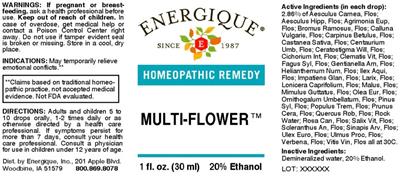
Indications: May temporarily relieve emotional conflicts.
Homeopathic remedy
FDA Disclaimer Statement
Claims based on traditional homeopathic practice, not accepted medical evidence. Not FDA evaluated.
Suggested/Recommended/Usage/Directions
Directions: Adults and children 5 to 10 drops orally, 1-2 times daily or as otherwise directed by a health care professional.
Brand IP Statement(s)
Energique Since 1987
Formula
20% Ethanol
Is this label outdated? Report a formula or label change and our pharmacy team will review it.
Multi-Flower by Energique label
The label scan from the NIH Dietary Supplement Label Database. Tap to enlarge.
Label images are published by the NIH Dietary Supplement Label Database for the version of this product on file. Always read your actual product label.
View the full label (PDF)The Ingredients in Multi-Flower by Energique
These are the 35 active ingredients this product is made of. Select any to open its full monograph.
Serving size5 Drop(s) Dosage formLiquid Amounts shown are per serving.
Most supplement products combine several ingredients, and a medication can interact with the product through any one of them. Each ingredient below shows whether it has known drug interactions.
Scleranthus annuus
Mimulus guttatus
Helianthemum nummularium
No knowninteractions
Rock Rose usually refers to plants in the Cistus family, taken as a tea or extract and traditionally used for colds, sore throats, and as an antimicro...
Helianthemum nummularium monograph & interactionsAesculus carnea
Aesculus hippocastanum
Interacts with122 drugs
Horse chestnut seed extract is most often used for chronic venous insufficiency, where standardized products may help reduce leg swelling, pain, and h...
Aesculus hippocastanum monograph & interactionsAgrimonia eupatoria
Interacts with86 drugs
Agrimony is a traditional European herb rich in tannins that has long been used for sore throats, mild diarrhea, and minor skin problems. Good-quality...
Agrimonia eupatoria monograph & interactionsBromus ramosus
Calluna vulgaris
No knowninteractions
Heather (Calluna vulgaris) is a traditional European herb used mainly as a tea for urinary and minor inflammatory complaints, but high-quality human s...
Calluna vulgaris monograph & interactionsCarpinus betulus
Castanea sativa
Centaurium umbellatum
No knowninteractions
Centaury is a bitter-tasting herb traditionally used to stimulate appetite and ease mild digestive complaints. Solid human studies are lacking, so its...
Centaurium umbellatum monograph & interactionsCeratostigma willmottianum
Cichorium intybus
Interacts with86 drugs
Chicory is best known as a caffeine-free coffee substitute and as a source of inulin, a soluble prebiotic fiber that may support digestion and regular...
Cichorium intybus monograph & interactionsClematis vitalba
Fagus sylvatica
Gentianella amarella
Ilex aquifolium
No knowninteractions
Holly (Ilex aquifolium) is a common ornamental shrub whose bright red berries are poisonous and should never be eaten. There is very little reliable h...
Ilex aquifolium monograph & interactionsImpatiens glandulifera
Larix
Interacts with121 drugs
Larch arabinogalactan is a soluble fiber from larch trees that is mainly used as a prebiotic and for immune support. Early research is interesting but...
Larix monograph & interactionsLonicera caprifolium
Interacts with122 drugs
Honeysuckle, especially Japanese honeysuckle flower (Lonicera japonica), is a staple of traditional Chinese medicine used mainly for colds, sore throa...
Lonicera caprifolium monograph & interactionsMalus
Interacts with300 drugs
Apples are a nutritious whole food that provides fiber, vitamins, and antioxidant plant compounds, and eating them regularly fits well into a healthy...
Malus monograph & interactionsOlea europaea
No knowninteractions
Olive comes from the same tree that gives us olives and olive oil, and its leaf and fruit contain antioxidant compounds like oleuropein and hydroxytyr...
Olea europaea monograph & interactionsOrnithogalum umbellatum
Interacts with156 drugs
Star of Bethlehem is a small flowering plant best known as one of the ingredients in Bach flower remedies, where it is used for emotional shock and gr...
Ornithogalum umbellatum monograph & interactionsPinus sylvestris
Populus tremula
Interacts with39 drugs
Aspen bark and leaf contain salicin, a natural compound related to aspirin, which is why it is traditionally used for pain, fever, and inflammation. S...
Populus tremula monograph & interactionsPrunus cerasifera
Quercus robur
Rock Water
Rosa canina
Salix vitellina
Sinapis arvensis
Ulex europaeus
Ulmus procera
Verbena
No knowninteractions
Verbena (Verbena officinalis), also called vervain, is a traditional herb people use for relaxation, sleep, and minor digestive complaints. Solid huma...
Verbena monograph & interactionsVitis vinifera
Interacts with910 drugs
Grapes and grape products like grape seed extract contain antioxidant compounds such as resveratrol and proanthocyanidins that may support heart and b...
Vitis vinifera monograph & interactionsOther (inactive) ingredients: Water, Ethanol. These complete the product’s ingredient list but are not active constituents.
Multi-Flower by Energique Drug Interactions
HelloPharmacist Interaction Report
Energique Multi-Flower is a 35-ingredient liquid supplement with documented interactions affecting a substantial number of medications.
The most serious concern is apple (Malus), which contains a Major-severity interaction: it can significantly reduce blood levels of drugs that are OATP substrates (organic anion-transporting polypeptide substrates), including fexofenadine, atenolol, and aliskiren, potentially making them much less effective.
Read the full breakdown — every affected drug type, severity by severity
Several ingredients carry Moderate-severity interactions. Apple also interacts with antihypertensive drugs, antidiabetes drugs, and lithium, each reducing their effectiveness or blood levels.
Horse chestnut may increase bleeding risk with anticoagulant or antiplatelet drugs. Honeysuckle may similarly increase bleeding risk with these drugs.
Star of Bethlehem contains cardiac glycosides and interacts with corticosteroids, diuretics, stimulant laxatives, macrolide antibiotics, tetracycline antibiotics, digoxin, and quinine—all Moderate severity. Aspen contains plant salicylates and may add to the effects of aspirin and related salicylate drugs.
Agrimony and chicory may increase the risk of low blood sugar (hypoglycemia) with antidiabetes drugs. Larch arabinogalactan may theoretically interfere with immune-suppressing drugs.
We could not check Scleranthus annuus, Mimulus guttatus, Aesculus carnea, Bromus ramosus, Carpinus betulus, Castanea sativa, Ceratostigma willmottianum, Clematis vitalba, Fagus sylvatica, Gentianella amarella, Impatiens glandulifera, and Pinus sylvestris—we hold no interaction data for these ingredients.
Altogether, these interactions span 1,244 individual medications. Use the medication checker on this page with your exact prescriptions before starting this product.
Check your own medications below · Editorial policy · How we use AI
Want to check YOUR meds against Multi-Flower?
Ask about interactions with your drugs in plain English — “Can I take it with lisinopril?” — and we find you the answer in seconds, ingredient by ingredient.
Go to the checkerIngredients driving the most interactions
Individual Drug Interactions
The ingredients in Multi-Flower interact with 1,259 drugs. Click any drug to see the details.
9 of the 35 ingredients in Multi-Flower interact with drugs. Each result below shows which ingredient is responsible. Vitis vinifera Malus Ornithogalum umbellatum Aesculus hippocastanum Lonicera caprifolium Larix Agrimonia eupatoria Cichorium intybus Populus tremula
AtorvastatinAtorvaliq
How Atorvastatin interacts with Multi-Flower — through 2 ingredients. Tap an ingredient for the detail:
MalusOrganic Anion-transporting Polypeptide Substrates (oatp) Major
Interaction Summary
Concomitant consumption of apple juice can significantly decrease oral absorption and blood levels of OATP substrates.
Read the full Malus + Atorvastatin interactionVitis ViniferaCytochrome P450 3a4 (cyp3a4) Substrates Moderate
Interaction Summary
It is unclear if grape seed extract inhibits or induces CYP3A4; research is conflicting.
Read the full Vitis Vinifera + Atorvastatin interactionAtorvastatin CalciumLipitor
How Atorvastatin Calcium interacts with Multi-Flower — through 2 ingredients. Tap an ingredient for the detail:
MalusOrganic Anion-transporting Polypeptide Substrates (oatp) Major
Interaction Summary
Concomitant consumption of apple juice can significantly decrease oral absorption and blood levels of OATP substrates.
Read the full Malus + Atorvastatin Calcium interactionVitis ViniferaCytochrome P450 3a4 (cyp3a4) Substrates Moderate
Interaction Summary
It is unclear if grape seed extract inhibits or induces CYP3A4; research is conflicting.
Read the full Vitis Vinifera + Atorvastatin Calcium interactionBosentanTracleer
How Bosentan interacts with Multi-Flower — through 2 ingredients. Tap an ingredient for the detail:
MalusAntihypertensive Drugs, Organic Anion-transporting Polypeptide Substrates (oatp) Major
Interaction Summary
Consuming apple juice with antihypertensive drugs might interfere with blood pressure control.
Read the full Malus + Bosentan interactionVitis ViniferaCytochrome P450 3a4 (cyp3a4) Substrates, Cytochrome P450 2c9 (cyp2c9) Substrates Moderate
Interaction Summary
It is unclear if grape seed extract inhibits or induces CYP3A4; research is conflicting.
Read the full Vitis Vinifera + Bosentan interactionBrincidofovirTembexa
How Brincidofovir interacts with Multi-Flower — through 1 ingredient. Tap an ingredient for the detail:
MalusOrganic Anion-transporting Polypeptide Substrates (oatp) Major
Interaction Summary
Concomitant consumption of apple juice can significantly decrease oral absorption and blood levels of OATP substrates.
Read the full Malus + Brincidofovir interactionCeliprololCelicard
How Celiprolol interacts with Multi-Flower — through 1 ingredient. Tap an ingredient for the detail:
MalusAntihypertensive Drugs, Organic Anion-transporting Polypeptide Substrates (oatp) Major
Interaction Summary
Consuming apple juice with antihypertensive drugs might interfere with blood pressure control.
Read the full Malus + Celiprolol interactionCerivastatin SodiumBaycol
How Cerivastatin Sodium interacts with Multi-Flower — through 1 ingredient. Tap an ingredient for the detail:
MalusOrganic Anion-transporting Polypeptide Substrates (oatp) Major
Interaction Summary
Concomitant consumption of apple juice can significantly decrease oral absorption and blood levels of OATP substrates.
Read the full Malus + Cerivastatin Sodium interactionCinoxacinCinobac
How Cinoxacin interacts with Multi-Flower — through 1 ingredient. Tap an ingredient for the detail:
MalusOrganic Anion-transporting Polypeptide Substrates (oatp) Major
Interaction Summary
Concomitant consumption of apple juice can significantly decrease oral absorption and blood levels of OATP substrates.
Read the full Malus + Cinoxacin interactionCiprofloxacinCiloxan, Cipro, Cipro IV, Cipro XR, Ciprobay, Otiprio
How Ciprofloxacin interacts with Multi-Flower — through 1 ingredient. Tap an ingredient for the detail:
MalusOrganic Anion-transporting Polypeptide Substrates (oatp) Major
Interaction Summary
Concomitant consumption of apple juice can significantly decrease oral absorption and blood levels of OATP substrates.
Read the full Malus + Ciprofloxacin interactionCiprofloxacin, HydrocortisoneCipro HC Otic
How Ciprofloxacin, Hydrocortisone interacts with Multi-Flower — through 1 ingredient. Tap an ingredient for the detail:
MalusOrganic Anion-transporting Polypeptide Substrates (oatp) Major
Interaction Summary
Concomitant consumption of apple juice can significantly decrease oral absorption and blood levels of OATP substrates.
Read the full Malus + Ciprofloxacin, Hydrocortisone interactionClinafloxacinClinafloxacin
How Clinafloxacin interacts with Multi-Flower — through 1 ingredient. Tap an ingredient for the detail:
MalusOrganic Anion-transporting Polypeptide Substrates (oatp) Major
Interaction Summary
Concomitant consumption of apple juice can significantly decrease oral absorption and blood levels of OATP substrates.
Read the full Malus + Clinafloxacin interactionEnoxacinPenetrex
How Enoxacin interacts with Multi-Flower — through 1 ingredient. Tap an ingredient for the detail:
MalusOrganic Anion-transporting Polypeptide Substrates (oatp) Major
Interaction Summary
Concomitant consumption of apple juice can significantly decrease oral absorption and blood levels of OATP substrates.
Read the full Malus + Enoxacin interactionEtoposideEtopophos, VePesid, VP16
How Etoposide interacts with Multi-Flower — through 2 ingredients. Tap an ingredient for the detail:
MalusOrganic Anion-transporting Polypeptide Substrates (oatp) Major
Interaction Summary
Concomitant consumption of apple juice can significantly decrease oral absorption and blood levels of OATP substrates.
Read the full Malus + Etoposide interactionVitis ViniferaCytochrome P450 3a4 (cyp3a4) Substrates Moderate
Interaction Summary
It is unclear if grape seed extract inhibits or induces CYP3A4; research is conflicting.
Read the full Vitis Vinifera + Etoposide interactionEzetimibe, AtorvastatinLiptruzet
How Ezetimibe, Atorvastatin interacts with Multi-Flower — through 2 ingredients. Tap an ingredient for the detail:
MalusOrganic Anion-transporting Polypeptide Substrates (oatp) Major
Interaction Summary
Concomitant consumption of apple juice can significantly decrease oral absorption and blood levels of OATP substrates.
Read the full Malus + Ezetimibe, Atorvastatin interactionVitis ViniferaCytochrome P450 3a4 (cyp3a4) Substrates Moderate
Interaction Summary
It is unclear if grape seed extract inhibits or induces CYP3A4; research is conflicting.
Read the full Vitis Vinifera + Ezetimibe, Atorvastatin interactionFexofenadineAllegra
How Fexofenadine interacts with Multi-Flower — through 2 ingredients. Tap an ingredient for the detail:
MalusOrganic Anion-transporting Polypeptide Substrates (oatp), Fexofenadine (allegra) Major
Interaction Summary
Concomitant consumption of apple juice can significantly decrease oral absorption and blood levels of OATP substrates.
Read the full Malus + Fexofenadine interactionVitis ViniferaCytochrome P450 3a4 (cyp3a4) Substrates Moderate
Interaction Summary
It is unclear if grape seed extract inhibits or induces CYP3A4; research is conflicting.
Read the full Vitis Vinifera + Fexofenadine interactionFexofenadine, PseudoephedrineAllegra D
How Fexofenadine, Pseudoephedrine interacts with Multi-Flower — through 2 ingredients. Tap an ingredient for the detail:
MalusOrganic Anion-transporting Polypeptide Substrates (oatp), Fexofenadine (allegra) Major
Interaction Summary
Concomitant consumption of apple juice can significantly decrease oral absorption and blood levels of OATP substrates.
Read the full Malus + Fexofenadine, Pseudoephedrine interactionVitis ViniferaCytochrome P450 3a4 (cyp3a4) Substrates Moderate
Interaction Summary
It is unclear if grape seed extract inhibits or induces CYP3A4; research is conflicting.
Read the full Vitis Vinifera + Fexofenadine, Pseudoephedrine interactionFluvastatinLescol, Lescol XL
How Fluvastatin interacts with Multi-Flower — through 2 ingredients. Tap an ingredient for the detail:
MalusOrganic Anion-transporting Polypeptide Substrates (oatp) Major
Interaction Summary
Concomitant consumption of apple juice can significantly decrease oral absorption and blood levels of OATP substrates.
Read the full Malus + Fluvastatin interactionVitis ViniferaCytochrome P450 2c9 (cyp2c9) Substrates Minor
Interaction Summary
It is unclear if grape juice or grape seed extract inhibits CYP2C9; research is conflicting.
Read the full Vitis Vinifera + Fluvastatin interactionGatifloxacinTequin, Tequin Injection
How Gatifloxacin interacts with Multi-Flower — through 1 ingredient. Tap an ingredient for the detail:
MalusOrganic Anion-transporting Polypeptide Substrates (oatp) Major
Interaction Summary
Concomitant consumption of apple juice can significantly decrease oral absorption and blood levels of OATP substrates.
Read the full Malus + Gatifloxacin interactionGemifloxacinFactive
How Gemifloxacin interacts with Multi-Flower — through 1 ingredient. Tap an ingredient for the detail:
MalusOrganic Anion-transporting Polypeptide Substrates (oatp) Major
Interaction Summary
Concomitant consumption of apple juice can significantly decrease oral absorption and blood levels of OATP substrates.
Read the full Malus + Gemifloxacin interactionGlyburideAlbert Glyburide, Diabeta, Glycron, Glynase, Glynase PresTab, Micronase +1 more
How Glyburide interacts with Multi-Flower — through 4 ingredients. Tap an ingredient for the detail:
MalusAntidiabetes Drugs, Organic Anion-transporting Polypeptide Substrates (oatp) Major
Interaction Summary
Theoretically, consuming apple juice with antidiabetes drugs might interfere with blood glucose control.
Read the full Malus + Glyburide interactionAgrimonia EupatoriaAntidiabetes Drugs Moderate
Interaction Summary
Theoretically, taking agrimony with antidiabetes drugs might increase the risk of hypoglycemia.
Read the full Agrimonia Eupatoria + Glyburide interactionCichorium IntybusAntidiabetes Drugs Moderate
Interaction Summary
Theoretically, chicory might increase the risk of hypoglycemia when taken with antidiabetes drugs.
Read the full Cichorium Intybus + Glyburide interactionVitis ViniferaCytochrome P450 2c9 (cyp2c9) Substrates Minor
Interaction Summary
It is unclear if grape juice or grape seed extract inhibits CYP2C9; research is conflicting.
Read the full Vitis Vinifera + Glyburide interactionGlyburide, MetforminGlucovance
How Glyburide, Metformin interacts with Multi-Flower — through 4 ingredients. Tap an ingredient for the detail:
MalusAntidiabetes Drugs, Organic Anion-transporting Polypeptide Substrates (oatp) Major
Interaction Summary
Theoretically, consuming apple juice with antidiabetes drugs might interfere with blood glucose control.
Read the full Malus + Glyburide, Metformin interactionAgrimonia EupatoriaAntidiabetes Drugs Moderate
Interaction Summary
Theoretically, taking agrimony with antidiabetes drugs might increase the risk of hypoglycemia.
Read the full Agrimonia Eupatoria + Glyburide, Metformin interactionCichorium IntybusAntidiabetes Drugs Moderate
Interaction Summary
Theoretically, chicory might increase the risk of hypoglycemia when taken with antidiabetes drugs.
Read the full Cichorium Intybus + Glyburide, Metformin interactionVitis ViniferaCytochrome P450 2c9 (cyp2c9) Substrates Minor
Interaction Summary
It is unclear if grape juice or grape seed extract inhibits CYP2C9; research is conflicting.
Read the full Vitis Vinifera + Glyburide, Metformin interactionGrepafloxacinRaxar
How Grepafloxacin interacts with Multi-Flower — through 2 ingredients. Tap an ingredient for the detail:
MalusOrganic Anion-transporting Polypeptide Substrates (oatp) Major
Interaction Summary
Concomitant consumption of apple juice can significantly decrease oral absorption and blood levels of OATP substrates.
Read the full Malus + Grepafloxacin interactionVitis ViniferaCytochrome P450 1a2 (cyp1a2) Substrates Moderate
Interaction Summary
Theoretically, grape juice might reduce the levels of CYP1A2 substrates.
Read the full Vitis Vinifera + Grepafloxacin interactionIrinotecanCamptosar, Onivyde
How Irinotecan interacts with Multi-Flower — through 2 ingredients. Tap an ingredient for the detail:
MalusOrganic Anion-transporting Polypeptide Substrates (oatp) Major
Interaction Summary
Concomitant consumption of apple juice can significantly decrease oral absorption and blood levels of OATP substrates.
Read the full Malus + Irinotecan interactionVitis ViniferaCytochrome P450 3a4 (cyp3a4) Substrates Moderate
Interaction Summary
It is unclear if grape seed extract inhibits or induces CYP3A4; research is conflicting.
Read the full Vitis Vinifera + Irinotecan interactionIrinotecan Hydrochloride
How Irinotecan Hydrochloride interacts with Multi-Flower — through 2 ingredients. Tap an ingredient for the detail:
MalusOrganic Anion-transporting Polypeptide Substrates (oatp) Major
Interaction Summary
Concomitant consumption of apple juice can significantly decrease oral absorption and blood levels of OATP substrates.
Read the full Malus + Irinotecan Hydrochloride interactionVitis ViniferaCytochrome P450 3a4 (cyp3a4) Substrates Moderate
Interaction Summary
It is unclear if grape seed extract inhibits or induces CYP3A4; research is conflicting.
Read the full Vitis Vinifera + Irinotecan Hydrochloride interactionIsoniazid, Pyrazinamide, RifampinRifater
How Isoniazid, Pyrazinamide, Rifampin interacts with Multi-Flower — through 1 ingredient. Tap an ingredient for the detail:
MalusOrganic Anion-transporting Polypeptide Substrates (oatp) Major
Interaction Summary
Concomitant consumption of apple juice can significantly decrease oral absorption and blood levels of OATP substrates.
Read the full Malus + Isoniazid, Pyrazinamide, Rifampin interactionIsoniazid, RifampinRifamate
How Isoniazid, Rifampin interacts with Multi-Flower — through 1 ingredient. Tap an ingredient for the detail:
MalusOrganic Anion-transporting Polypeptide Substrates (oatp) Major
Interaction Summary
Concomitant consumption of apple juice can significantly decrease oral absorption and blood levels of OATP substrates.
Read the full Malus + Isoniazid, Rifampin interactionLevofloxacinLeva-pak, Levaquin, Levaquin Injection
How Levofloxacin interacts with Multi-Flower — through 1 ingredient. Tap an ingredient for the detail:
MalusOrganic Anion-transporting Polypeptide Substrates (oatp) Major
Interaction Summary
Concomitant consumption of apple juice can significantly decrease oral absorption and blood levels of OATP substrates.
Read the full Malus + Levofloxacin interactionLevofloxacin (ophthalmic)Levofloxacin
How Levofloxacin (ophthalmic) interacts with Multi-Flower — through 1 ingredient. Tap an ingredient for the detail:
MalusOrganic Anion-transporting Polypeptide Substrates (oatp) Major
Interaction Summary
Concomitant consumption of apple juice can significantly decrease oral absorption and blood levels of OATP substrates.
Read the full Malus + Levofloxacin (ophthalmic) interactionLomefloxacinMaxaquin
How Lomefloxacin interacts with Multi-Flower — through 1 ingredient. Tap an ingredient for the detail:
MalusOrganic Anion-transporting Polypeptide Substrates (oatp) Major
Interaction Summary
Concomitant consumption of apple juice can significantly decrease oral absorption and blood levels of OATP substrates.
Read the full Malus + Lomefloxacin interactionLovastatinAltocor, Mevacor
How Lovastatin interacts with Multi-Flower — through 2 ingredients. Tap an ingredient for the detail:
MalusOrganic Anion-transporting Polypeptide Substrates (oatp) Major
Interaction Summary
Concomitant consumption of apple juice can significantly decrease oral absorption and blood levels of OATP substrates.
Read the full Malus + Lovastatin interactionVitis ViniferaCytochrome P450 3a4 (cyp3a4) Substrates Moderate
Interaction Summary
It is unclear if grape seed extract inhibits or induces CYP3A4; research is conflicting.
Read the full Vitis Vinifera + Lovastatin interactionMethotrexateOtrexup, Rasuvo, Reditrex, Rheumatrex
How Methotrexate interacts with Multi-Flower — through 1 ingredient. Tap an ingredient for the detail:
MalusOrganic Anion-transporting Polypeptide Substrates (oatp) Major
Interaction Summary
Concomitant consumption of apple juice can significantly decrease oral absorption and blood levels of OATP substrates.
Read the full Malus + Methotrexate interactionEach ingredient & the kinds of drugs it affects
For each ingredient in Multi-Flower with known interactions, here are the types of medications they can affect. Open any type for the detail — or search your exact drug in the checker above.
Vitis vinifera
Anticoagulant/Antiplatelet Drugs
Theoretically, grape extracts may have antiplatelet effects and may increase the risk of bleeding if used with anticoagulant or antiplatelet drugs.
In vitro evidence suggests that grape extracts might decrease platelet aggregation.
Cyclosporine (Neoral, Sandimmune)
Ingesting grape juice with cyclosporine can reduce cyclosporine absorption.
A small pharmacokinetic study in healthy young adults shows that intake of purple grape juice 200 mL along with cyclosporine can decrease the absorption of cyclosporine by up to 30% when compared with water. Separate doses of grape juice and cyclosporine by at least 2 hours to avoid this interaction.
Cytochrome P450 1A2 (Cyp1A2) Substrates
Theoretically, grape juice might reduce the levels of CYP1A2 substrates.
A small pharmacokinetic study in healthy adults shows that ingestion of 200 mL of grape juice decreases phenacetin plasma levels. This is thought to be due to induction of CYP1A2.
Cytochrome P450 2D6 (Cyp2D6) Substrates
Theoretically, grape seed extract may increase the levels of CYP2D6 substrates.
In vitro evidence suggests that grape seed extract might inhibit CYP2D6 enzymes. However, this interaction has not been reported in humans.
Cytochrome P450 2E1 (Cyp2E1) Substrates
Theoretically, grape seed extract might increase the levels of CYP2E1 substrates.
In vitro and animal research suggests that grape seed proanthocyanidin extract inhibits CYP2E1 enzymes. However, this interaction has not been reported in humans.
Cytochrome P450 3A4 (Cyp3A4) Substrates
It is unclear if grape seed extract inhibits or induces CYP3A4; research is conflicting.
In vitro evidence suggests that grape seed extract might inhibit CYP3A4 enzymes. However, evidence from animal research shows that grape seed extract may induce CYP3A4 in the liver. So far, these interactions have not been reported in humans.
Midazolam (Versed)
Theoretically, long-term intake of grape seed extract might decrease the effects of midazolam.
Animal research shows that subchronic ingestions of grape seed extract can increase the elimination of intravenous midazolam by increasing hepatic CYP3A4 activity. Single doses of grape seed extract do not appear to affect midazolam elimination.
Phenacetin
Grape juice might decrease phenacetin absorption.
A small pharmacokinetic study in healthy adults shows that ingestion of 200 mL of grape juice decreases phenacetin plasma levels. This is thought to be due to induction of cytochrome P450 1A2 (CYP1A2).
Cytochrome P450 2C9 (Cyp2C9) Substrates
It is unclear if grape juice or grape seed extract inhibits CYP2C9; research is conflicting.
In vitro evidence shows that grape seed extract or grape juice might inhibit CYP2C9 enzymes. However, a small pharmacokinetic study in healthy adults shows that drinking 8 ounces of grape juice once does not affect the clearance of flurbiprofen, a probe-drug for CYP2C9 metabolism. The effects of continued grape juice consumption are unclear.
Malus
Organic Anion-Transporting Polypeptide Substrates (Oatp)
Concomitant consumption of apple juice can significantly decrease oral absorption and blood levels of OATP substrates.
Research shows that consuming apple juice inhibits OATP, which reduces bioavailability of oral drugs that are substrates of OATP. Fexofenadine, atenolol, and aliskiren are substrates of OATP. Clinical research shows that coadministration of apple juice decreases bioavailability of fexofenadine by up to 78%, aliskiren by 63%, and atenolol by up to 82%. These effects appear to increase with larger quantities of apple juice. It is thought that apple juice might affect OATP for only a short time. Therefore, separating drug administration and consumption of apple juice by at least 4 hours might avoid this interaction.
Aliskiren (Tekturna, Rasilez)
Concomitant consumption of apple juice can significantly decrease oral absorption and blood levels of aliskiren.
Pharmacokinetic research shows that coadministration of apple juice 200 mL along with aliskiren 150 mg decreases the bioavailability of aliskiren by 63%. Apple juice seems to inhibit organic anion transporting polypeptide (OATP), which is involved in drug uptake in the gut, liver, and kidney. It is thought that apple juice might affect OATP for only a short time. Therefore, separating drug administration and consumption of apple juice by at least 4 hours might avoid this interaction.
Antidiabetes Drugs
Theoretically, consuming apple juice with antidiabetes drugs might interfere with blood glucose control.
Clinical research suggests that consuming apples or drinking apple juice can raise blood glucose levels, with the effects of drinking apple juice being more significant than consuming apples.
Antihypertensive Drugs
Consuming apple juice with antihypertensive drugs might interfere with blood pressure control.
Some clinical evidence suggests that consuming apple and cherry juice can increase blood pressure in elderly patients.
Atenolol (Tenormin)
Concomitant consumption of apple juice can significantly decrease oral absorption and blood levels of atenolol.
Pharmacokinetic research shows that coadministration of apple juice 600-1200 mL decreases levels of atenolol by 58% to 82% in a dose-dependent manner. Apple juice seems to inhibit organic anion transporting polypeptide (OATP), which is involved in drug uptake in the gut, liver, and kidney. It is thought that apple juice might affect OATP for only a short time. Therefore, separating drug administration and consumption of apple juice by at least 4 hours might avoid this interaction.
Fexofenadine (Allegra)
Concomitant consumption of apple juice can significantly decrease oral absorption and blood levels of fexofenadine.
Pharmacokinetic research shows that coadministration of apple juice 400-1200 mL along with fexofenadine 60-120 mg decreases bioavailability of fexofenadine by up to 78%. Coadministration with smaller quantities of apple juice (150 mL or less) does not appear to affect the bioavailability of fexofenadine. Apple juice seems to inhibit organic anion transporting polypeptide (OATP), which is involved in drug uptake in the gut, liver, and kidney. It is thought that apple juice might affect OATP for only a short time. Therefore, separating drug administration and consumption of apple juice by at least 4 hours might avoid this interaction.
Lithium
There is some concern that concomitant consumption of apple juice might decrease oral absorption and blood levels of lithium.
In one case report, a patient had an undetectable serum lithium level when lithium citrate was administered with apple juice. When lithium was administered with an alternative beverage, the lithium level became detectable and the patient demonstrated clinical improvement.
Ornithogalum umbellatum
Corticosteroids
Theoretically, taking star of Bethlehem with prolonged corticosteroid therapy might increase the risk of toxicity.
Star of Bethlehem contains cardiac glycosides. Concomitant use of corticosteroids with star of Bethlehem can increase the therapeutic and adverse effects of long-term corticosteroid use due to potassium depletion and electrolyte imbalance.
Digoxin (Lanoxin)
Theoretically, taking star of Bethlehem in combination with digoxin might have additive effects and increase the risk of toxicity.
Star of Bethlehem contains cardiac glycosides with effects similar to digoxin.
Diuretic Drugs
Theoretically, taking diuretics with star of Bethlehem might increase the risk of toxicity.
Star of Bethlehem contains cardiac glycosides. Theoretically, concomitant use of potassium-depleting diuretics and star of Bethlehem can increase the risk of cardiac glycoside toxicity due to potassium depletion.
Macrolide Antibiotics
Theoretically, taking macrolide antibiotics with star of Bethlehem might increase the risk of cardiac glycoside toxicity.
Star of Bethlehem contains cardiac glycosides. Macrolide antibiotics appear to increase the gastrointestinal absorption of oral digoxin. Theoretically, concomitant use of macrolide antibiotics might increase the absorption of the cardiac glycosides found in star of Bethlehem and increase the risk of adverse effects.
Quinine
Theoretically, taking quinine with star of Bethlehem might increase the risk of cardiac glycoside toxicity.
Star of Bethlehem contains cardiac glycosides. Quinine may reduce the clearance of oral digoxin. Theoretically, concomitant use of quinine might reduce the clearance of cardiac glycosides found in star of Bethlehem and increase the risk of adverse effects.
Stimulant Laxatives
Theoretically, excessive use of stimulant laxatives with star of Bethlehem might increase the risk of toxicity.
Star of Bethlehem contains cardiac glycosides. Excessive use of stimulant laxatives can cause diarrhea, resulting in potassium depletion. This might increase the risk of cardiac glycoside toxicity.
Tetracycline Antibiotics
Theoretically, taking tetracycline antibiotics with star of Bethlehem might increase the risk of cardiac glycoside toxicity.
Star of Bethlehem contains cardiac glycosides similar to digitalis. Tetracycline antibiotics appear to increase the gastrointestinal absorption of oral digoxin. Theoretically, concomitant use of tetracycline antibiotics might increase the absorption of the cardiac glycosides found in star of Bethlehem and increase the risk of adverse effects.
Aesculus hippocastanum
Anticoagulant/Antiplatelet Drugs
Horse chestnut may have antiplatelet effects and may increase the risk of bleeding if used with anticoagulant or antiplatelet drugs.
Horse chestnut contains the constituent esculin which has been shown to have antithrombotic effects. Therefore, horse chestnut might have antiplatelet effects. This has not been shown in humans.
Lonicera caprifolium
Anticoagulant/Antiplatelet Drugs
Theoretically, honeysuckle might increase the risk of bleeding when taken with anticoagulant or antiplatelet drugs.
In vitro research shows that polyphenols extracted from honeysuckle can inhibit platelet aggregation.
Larix
Immunosuppressants
Theoretically, larch arabinogalactan might interfere with immunosuppression therapy due to immunostimulant effects. Immunosuppressant drugs include azathioprine (Imuran), basiliximab (Simulect), cyclosporine (Neoral, Sandimmune), daclizumab (Zenapax), muromonab-CD3 (OKT3, Orthoclone OKT3), mycophenolate (CellCept), tacrolimus (FK506, Prograf), sirolimus (Rapamune), prednisone (Deltasone, Orasone), corticosteroids (glucocorticoids), and other drugs.
Agrimonia eupatoria
Antidiabetes Drugs
Theoretically, taking agrimony with antidiabetes drugs might increase the risk of hypoglycemia.
Agrimony has demonstrated hypoglycemic effects in animal research.
Cichorium intybus
Antidiabetes Drugs
Theoretically, chicory might increase the risk of hypoglycemia when taken with antidiabetes drugs.
Animal and in vitro research shows that chicory extracts have antidiabetic effects.
Populus tremula
Aspirin
Aspen contains salicin, a plant salicylate. Theoretically, aspen might have an additive effect with other salicylate-containing drugs, such as aspirin.
Choline Magnesium Trisalicylate (Trilisate)
Aspen contains salicin, a plant salicylate. Theoretically, aspen might have an additive effect with other salicylate-containing drugs such as choline magnesium trisalicylate.
Salsalate (Disalcid)
Aspen contains salicin, a plant salicylate. Theoretically, aspen might have an additive effect with other salicylate-containing drugs such as salsalate.
Brand information
Manufacturer and brand details for Multi-Flower, from the product label.
Energique
See all Energique products- Name
- Energique, Inc.
- Street Address
- 201 Apple Blvd.
- City
- Woodbine
- State
- IA
- ZipCode
- 51579
- Phone Number
- 800.869.8078
Multi-Flower by Energique: Common Questions
Does Multi-Flower by Energique interact with any medications?
How can one product interact with so many drugs?
Where does this information come from?
Can I take this if I'm pregnant or breastfeeding?
What's the alcohol content in this liquid?
Does apple in this supplement work like whole apples?
Is this supplement safe for someone with a heart condition?
Will this help with anxiety or stress?
What are the most common side effects?
Written and reviewed by the HelloPharmacist editorial staff. Our editorial policy
Not sure if Multi-Flower is safe with your meds?
Our pharmacists answer your medication & supplement questions — free.
Label information is sourced from the NIH Dietary Supplement Label Database and reflects the product version on file; always read your actual product label. This page is for education only and is not a substitute for professional medical advice. Confirm with your pharmacist or doctor before combining supplements and medications.
The Full Monographs Behind Multi-Flower’s Ingredients
Every ingredient we hold a full HelloPharmacist monograph for — uses, evidence, safety, and the complete interaction list.
Rock Rose
Rock Rose usually refers to plants in the Cistus family, taken as a tea or extract and traditionally used for colds, sore throats, and as an antimicrobial; it is also a Bach flower remedy us...
Read the full Rock Rose monograph → Herb & supplement monographHorse Chestnut
Interacts with 122 drugsHorse chestnut seed extract is most often used for chronic venous insufficiency, where standardized products may help reduce leg swelling, pain, and heaviness. Raw, unprocessed horse chestnu...
Read the full Horse Chestnut monograph → Herb & supplement monographAgrimony
Interacts with 86 drugsAgrimony is a traditional European herb rich in tannins that has long been used for sore throats, mild diarrhea, and minor skin problems. Good-quality human studies are very limited, so its...
Read the full Agrimony monograph → Herb & supplement monographHeather
Heather (Calluna vulgaris) is a traditional European herb used mainly as a tea for urinary and minor inflammatory complaints, but high-quality human studies are lacking. It is generally cons...
Read the full Heather monograph → Herb & supplement monographCentaury
Centaury is a bitter-tasting herb traditionally used to stimulate appetite and ease mild digestive complaints. Solid human studies are lacking, so its benefits remain largely unproven, and i...
Read the full Centaury monograph → Herb & supplement monographChicory
Interacts with 86 drugsChicory is best known as a caffeine-free coffee substitute and as a source of inulin, a soluble prebiotic fiber that may support digestion and regularity. Strong human evidence for most othe...
Read the full Chicory monograph → Herb & supplement monographHolly
Holly (Ilex aquifolium) is a common ornamental shrub whose bright red berries are poisonous and should never be eaten. There is very little reliable human evidence supporting any health bene...
Read the full Holly monograph → Herb & supplement monographLarch Arabinogalactan
Interacts with 121 drugsLarch arabinogalactan is a soluble fiber from larch trees that is mainly used as a prebiotic and for immune support. Early research is interesting but limited, and most claims are not yet fi...
Read the full Larch Arabinogalactan monograph → Herb & supplement monographHoneysuckle
Interacts with 122 drugsHoneysuckle, especially Japanese honeysuckle flower (Lonicera japonica), is a staple of traditional Chinese medicine used mainly for colds, sore throat, and inflammation. Modern human eviden...
Read the full Honeysuckle monograph → Herb & supplement monographApple
Interacts with 300 drugsApples are a nutritious whole food that provides fiber, vitamins, and antioxidant plant compounds, and eating them regularly fits well into a healthy diet. While research suggests apples may...
Read the full Apple monograph → Herb & supplement monographOlive
Olive comes from the same tree that gives us olives and olive oil, and its leaf and fruit contain antioxidant compounds like oleuropein and hydroxytyrosol. Olive oil as part of a Mediterrane...
Read the full Olive monograph → Herb & supplement monographStar Of Bethlehem
Interacts with 156 drugsStar of Bethlehem is a small flowering plant best known as one of the ingredients in Bach flower remedies, where it is used for emotional shock and grief. There is no solid scientific eviden...
Read the full Star Of Bethlehem monograph → Herb & supplement monographAspen
Interacts with 39 drugsAspen bark and leaf contain salicin, a natural compound related to aspirin, which is why it is traditionally used for pain, fever, and inflammation. Solid human studies are lacking, and beca...
Read the full Aspen monograph → Herb & supplement monographVerbena
Verbena (Verbena officinalis), also called vervain, is a traditional herb people use for relaxation, sleep, and minor digestive complaints. Solid human research is limited, so its benefits r...
Read the full Verbena monograph → Herb & supplement monographGrape
Interacts with 910 drugsGrapes and grape products like grape seed extract contain antioxidant compounds such as resveratrol and proanthocyanidins that may support heart and blood vessel health. While the food is he...
Read the full Grape monograph →Sources & How We Checked
Multi-Flower's label data comes from the NIH Dietary Supplement Label Database; the ingredient interaction data is from the Natural Medicines database, reviewed by our pharmacists.
- NIH Dietary Supplement Label Database (DSLD) — The official product label on file for this supplement.
- Natural Medicines (Therapeutic Research Center) — Evidence-graded clinical reference behind the ingredient interaction data.
Content is written and reviewed by licensed HelloPharmacist pharmacists. See our data sources and editorial standards for how this information is built and checked.
The 125 references behind this product’s interaction data
Every citation that drives the interaction findings for this product’s ingredients, from the evidence-graded Natural Medicines (TRC Healthcare) database. Open an ingredient to browse its citations — links open the study on PubMed or the publisher’s site.
Rock Rose 2 references
Horse Chestnut 21 references
- Blumenthal M, ed. The Complete German Commission E Monographs: Therapeutic Guide to Herbal Medicines. Trans. S. Klein. Boston, MA: American Botanical Council, 1998.
- Ellenhorn MJ, et al. Ellenhorn's Medical Toxicology: Diagnoses and Treatment of Human Poisoning. 2nd ed. Baltimore, MD: Williams & Wilkins, 1997.
- Gruenwald J, Brendler T, Jaenicke C. PDR for Herbal Medicines. 1st ed. Montvale, NJ: Medical Economics Company, Inc., 1998.
- Brinker F. Herb Contraindications and Drug Interactions. 2nd ed. Sandy, OR: Eclectic Medical Publications, 1998.
- Greeske K, Pohlmann BK. Horse chestnut seed extract-an effective therapy principle in general practice. Drug therapy of chronic venous insufficiency. Fortschr Med 1996;114:196-200.
- Robbers JE, Tyler VE. Tyler's Herbs of Choice: The Therapeutic Use of Phytomedicinals. New York, NY: The Haworth Herbal Press, 1999.
- Takegoshi K, Tohyama T, Okuda K, et al. A case of Venoplant-induced hepatic injury. Gastroenterol Jpn 1986;21:62-5.
- Jaspersen-Schib R, Theus L, Guirguis-Oeschger M, et al. [Serious plant poisonings in Switzerland 1966-1994. Case analysis from the Swiss Toxicology Information Center]. Schweiz Med Wochenschr 1996;126:1085-98.
- Popp W, Horak F, Jager S, et al. Horse chestnut (Aesculus hippocastanum) pollen: a frequent cause of allergic sensitization in urban children. Allergy 1992;47:380-3.
- Diaz-Perales A, Collada C, Blanco C, et al. Cross-reactions in the latex-fruit syndrome: A relevant role of chitinases but not of complex asparagine-linked glycans. J Allergy Clin Immunol 1999;104:681-7. PubMed
- Blanco C, Diaz-Perales A, Collada C, et al. Class I chitinases as potential panallergens involved in the latex-fruit syndrome. J Allergy Clin Immunol 1999;103:507-13. PubMed
- Comaish JS, Kersey PJ. Contact dermatitis to extract of horse chestnut (esculin). Contact Dermatitis 1980;6:150-1. PubMed
- Pittler MH, Ernst E. Horse chestnut seed extract for chronic venous insufficiency (Cochrane Review). In: The Cochrane Library, Issue 3, 2004. Chichester, UK: John Wiley & Sons, Ltd. PubMed
- Ottillinger, B. and Greeske, K. Rational therapy of chronic venous insufficiency--chances and limits of the therapeutic use of horse-chestnut seeds extract. BMC.Cardiovasc.Disord. 2001;1(1):5. PubMed
- Pittler, M. H. and Ernst, E. Horse chestnut seed extract for chronic venous insufficiency. Cochrane.Database.Syst.Rev. 2004;(2):CD003230. PubMed
- Fang, Y., Zhao, L., Yan, F., Xia, X., Xu, D., and Cui, X. Escin improves sperm quality in male patients with varicocele-associated infertility. Phytomedicine. 2010;17(3-4):192-196. PubMed
- De Smet, P. A., Van den Eertwegh, A. J., Lesterhuis, W., and Stricker, B. H. Hepatotoxicity associated with herbal tablets. BMJ 7-13-1996;313(7049):92.
- Rehn, D., Unkauf, M., Klein, P., Jost, V., and Lucker, P. W. Comparative clinical efficacy and tolerability of oxerutins and horse chestnut extract in patients with chronic venous insufficiency. Arzneimittelforschung 1996;46(5):483-487.
- Edem E, Kahyaoglu B, Çakar MA. Acute Effusive Pericarditis due to Horse Chestnut Consumption. Am J Case Rep. 2016;17:305-8. PubMed
- Costa Santos D, Lérias G, Madruga I. Drug-induced Liver Injury Due to a Horse Chestnut Dietary Supplement. Eur J Case Rep Intern Med 2021;8(3):002389. PubMed
- Yi HY, Lee JY. Poisoning due to consumption of horse chestnut seed. Clin Exp Emerg Med 2021;8(4):333-335. PubMed
Agrimony 4 references
- Newall CA, Anderson LA, Philpson JD. Herbal Medicine: A Guide for Healthcare Professionals. London, UK: The Pharmaceutical Press, 1996.
- McGuffin M, Hobbs C, Upton R, Goldberg A, eds. American Herbal Products Association's Botanical Safety Handbook. Boca Raton, FL: CRC Press, LLC 1997.
- Gray AM, Flatt PR. Actions of the traditional anti-diabetic plant, Agrimony eupatoria (agrimony): effects on hyperglycaemia, cellular glucose metabolism and insulin secretion. Br J Nutr 1998;80:109-14.
- Swanston-Flatt SK, Day C, Bailey CJ, Flatt PR. Traditional plant treatments for diabetes. Studies in normal and streptozotocin diabetic mice. Diabetologia 1990;33:462-4. PubMed
Heather 2 references
Centaury 1 reference
- Martynyuk L, Martynyuk L, Ruzhitska O, Martynyuk O. Effect of the herbal combination Canephron N on diabetic nephropathy in patients with diabetes mellitus: results of a comparative cohort study. J Altern Complement Med. 2014;20(6):472-478. PubMed
Chicory 13 references
- Brinker F. Herb Contraindications and Drug Interactions. 2nd ed. Sandy, OR: Eclectic Medical Publications, 1998.
- Stone-Dorshow T, Levitt MD. Gaseous response to ingestion of a poorly absorbed fructo-oligosaccharide sweetener. Am J Clin Nutr 1987;46:61-5. PubMed
- Briet F, et al. Symptomatic response to varying levels of fructo-oligosaccharides consumed occasionally or regularly. Eur J Clin Nutr 1995;49:501-7.
- Bouhnik Y, Vahedi K, Achour L, et al. Short-chain fructo-oligosaccharide administration dose-dependently increases fecal bifidobacteria in healthy humans. J Nutr 1999;129:113-6. PubMed
- Cummings JH, Macfarlane GT, Englyst HN. Prebiotic digestion and fermentation. Am J Clin Nutr 2001;73:415S-420S. PubMed
- Cadot, P., Kochuyt, A. M., van Ree, R., and Ceuppens, J. L. Oral allergy syndrome to chicory associated with birch pollen allergy. Int.Arch.Allergy Immunol. 2003;131(1):19-24. PubMed
- Friis, B., Hjorth, N., Vail, J. T., Jr., and Mitchell, J. C. Occupational contact dermatitis from Cichorium (chicory, endive) and Lactuca (lettuce). Contact Dermatitis 1975;1(5):311-313.
- Nemery, B. and Demedts, M. Occupational asthma in a chicory grower. Lancet 3-25-1989;1(8639):672-673. PubMed
- Pirson F, Detry B, Pilette C. Occupational rhinoconjunctivitis and asthma caused by chicory and oral allergy syndrome associated with bet v 1-related protein. J Investig Allergol Clin Immunol 2009;19(4):306-10.
- Willi R, Pfab F, Huss-Marp J, et al. Contact anaphylaxis and protein contact dermatitis in a cook handling chicory leaves. Contact Dermatitis 2009;60(4):226-7. PubMed
- Street RA, Sidana J, Prinsloo G. Cichorium intybus: traditional uses, phytochemistry, pharmacology, and toxicology. Evid Based Complement Alternat Med 2013;2013:579319.
- Bonnema AL, Kolberg LW, Thomas W, Slavin JL. Gastrointestinal tolerance of chicory inulin products. J Am Diet Assoc 2010;110(6):865-8. PubMed
- Devi Kt R, Sivalingam N. Cichorium intybus attenuates Streptozotocin-induced pancreatic ß-cell damage by inhibiting NF-?B activation and oxidative stress. J Appl Biomed 2020;18(2-3):70-9. PubMed
Holly 2 references
- The Review of Natural Products by Facts and Comparisons. St. Louis, MO: Wolters Kluwer Co., 1999.
- Gruenwald J, Brendler T, Jaenicke C. PDR for Herbal Medicines. 1st ed. Montvale, NJ: Medical Economics Company, Inc., 1998.
Larch Arabinogalactan 8 references
- D'Adamo P. Larch arabinogalactan. J Naturopath Med 1996;6:33-7.
- Kelly GS. Larch arabinogalactan: Clinical relevance of a novel immune-enhancing polysaccharide. Alt Med Rev 1999;4:96-103.
- Marett R, Slavin JL. No long-term benefits of supplementation with arabinogalactan on serum lipids and glucose. J Am Diet Assoc 2004;104:636-9.
- Robinson RR, Feirtag J, Slavin JL. Effects of dietary arabinogalactan on gastrointestinal and blood parameters in healthy human subjects. J Am Coll Nutr 2001;20:279-85. PubMed
- Udani JK, Singh BB, Barrett ML, Singh VJ. Proprietary arabinogalactan extract increases antibody response to the pneumonia vaccine: a randomized, double-blind, placebo-controlled, pilot study in healthy volunteers. Nutr J 2010;9:32. PubMed
- Grube B, Stier H, Riede L, Gruenwald J. Tolerability of a proprietary larch arabinogalactan extract: a randomized, double-blind, placebo-controlled clinical trial in healthy subjects. Food Nutr Sci 2012;3:1533-8. DOI
- Dion C, Chappuis E, Ripoll C. Does larch arabinogalactan enhance immune function? A review of mechanistic and clinical trials. Nutr Metab (Lond) 2016;13:28. PubMed
- Riede L, Grube B, Gruenwald J. Larch arabinogalactan effects on reducing incidence of upper respiratory tract infections. Curr Med Res Opin 2013;29(3):251-8.
See these in context on the Larch Arabinogalactan monograph →
Honeysuckle 3 references
- Chang WC, Hsu FL. Inhibition of platelet activation and endothelial cell injury by polyphenolic compounds isolated from Lonicera japonica Thunb. Prostaglandins Leukot Essent Fatty Acids 1992;45:307-12. PubMed
- Webster RM. Honeysuckle contact dermatitis. Cutis 1993;51:424.
- Zhou LF, Lu R. Compound-honeysuckle-induced drug eruption with special manifestations: A case report. World J Clin Cases 2022;10(22):8018-8024. PubMed
Apple 16 references
- The Review of Natural Products by Facts and Comparisons. St. Louis, MO: Wolters Kluwer Co., 1999.
- Bailey DG, Dresser GK, Munoz C, et al. Reduction of fexofenadine bioavailability by fruit juices. Clin Pharmacol Ther 2001;69:P21.
- Rodriguez J, Crespo JF, Lopez-Rubio A, et al. Clinical cross-reactivity among foods of the Rosaceae family. J Allergy Clin Immunol 2000;106:183-189. PubMed
- Greenblatt DJ. Analysis of drug interactions involving fruit beverages and organic anion-transporting polypeptides. J Clin Pharmacol 2009;49:1403-7. PubMed
- Bailey DG. Fruit juice inhibition of uptake transport: a new type of food-drug interaction. Br J Clin Pharmacol 2010;70:645-55. PubMed
- Kamath AV, Yao M, Zhang Y, Chong S. Effect of fruit juices on the oral bioavailability of fexofenadine in rats. J Pharm Sci 2005;94:233-9. PubMed
- Tapaninen T, Neuvonen PJ, Niemi M. Orange and apple juice greatly reduce the plasma concentrations of the OATP2B1 substrate aliskiren. Br J Clin Pharmacol 2011;71:718-26. PubMed
- Jeon H, Jang IJ, Lee S, et al. Apple juice greatly reduces systemic exposure to atenolol. Br J Clin Pharmacol 2012 May 11. doi: 10.1111/j.1365-2125.2012.04324.x. [Epub ahead of print]. PubMed
- Visvanathan, R., Chen, R., Horowitz, M., and Chapman, I. Blood pressure responses in healthy older people to 50 g carbohydrate drinks with differing glycaemic effects. Br J Nutr 2004;92(2):335-340. PubMed
- Asp, N. G., Agardh, C. D., Ahren, B., Dencker, I., Johansson, C. G., Lundquist, I., Nyman, M., Sartor, G., and Schersten, B. Dietary fibre in type II diabetes. Acta Med Scand Suppl 1981;656:47-50. PubMed
- Akamine Y, Miura M, Komori H, et al. Effects of one-time apple juice ingestion on the pharmacokinetics of fexofenadine enantiomers. Eur J Clin Pharmacol. 2014 Sep;70(9):1087-95. PubMed
- Luo J, Imai H, Ohyama T, et al. The Pharmacokinetic Exposure to Fexofenadine is Volume-Dependently Reduced in Healthy Subjects Following Oral Administration With Apple Juice. Clin Transl Sci. 2016 Aug;9(4):201-6. PubMed
- Tsiougkos N, Vovolis V. Repeated anaphylactic episodes to orange and apple. Eur Ann Allergy Clin Immunol. 2013 May;45(3):113-5.
- Rubido S, García-Caballero L, Abeleira MT, Limeres J, García M, Diz P. Effect of chewing an apple on dental plaque removal and on salivary bacterial viability. PLoS One. 2018;13(7):e0199812. PubMed
- Krishnasamy S, Lomer MCE, Marciani L, et al. Processing apples to puree or juice speeds gastric emptying and reduces postprandial intestinal volumes and satiety in healthy adults. J Nutr 2020;150(11):2890-9. PubMed
- Awan S, Abelleira A, Khehra L, Hieber R. Undetectable serum lithium concentrations after coadministration of liquid lithium citrate and apple juice: A case report. Ment Health Clin. 2021;11(1):27-30. PubMed
Olive 2 references
- Liccardi G, D'Amato M, D'Amato G. Oleaceae pollinosis: a review. Int Arch Allergy Immunol 1996;111:210-7. PubMed
- Somerville V, Moore R, Braakhuis A. The effect of olive leaf extract on upper respiratory illness in high school athletes: A randomised control trial. Nutrients. 2019;11(2). pii: E358. PubMed
Star Of Bethlehem 8 references
- Blumenthal M, ed. The Complete German Commission E Monographs: Therapeutic Guide to Herbal Medicines. Trans. S. Klein. Boston, MA: American Botanical Council, 1998.
- Ellenhorn MJ, et al. Ellenhorn's Medical Toxicology: Diagnoses and Treatment of Human Poisoning. 2nd ed. Baltimore, MD: Williams & Wilkins, 1997.
- Gruenwald J, Brendler T, Jaenicke C. PDR for Herbal Medicines. 1st ed. Montvale, NJ: Medical Economics Company, Inc., 1998.
- Burnham TH, ed. Drug Facts and Comparisons, Updated Monthly. Facts and Comparisons, St. Louis, MO.
- Waud RA. The action of Ornithogalum umbellatum on the heart. J Pharmacol Exp Ther 1954;111:147-51. DOI
- Vogelsang A. Ornithogalum umbellatum in the treatment of congestive heart failure: progress report. J Am Geriatr Soc 1961;9:1096-9.
- Vogelsang A. Clinical trial of Ornithogalum umbellatum on the human heart; preliminary report. Can Med Assoc J 1955;73:295-6.
- Smith JA, Paterson GR. Rhodexin A and rhodexoside in Ornithogalum umbellatum. J Pharm Pharmacol 1967;19:221-5.
Aspen 3 references
- Brinker F. Herb Contraindications and Drug Interactions. 2nd ed. Sandy, OR: Eclectic Medical Publications, 1998.
- Goodman LS, Gilman A. The Pharmacological Basis of Therapeutics. 5th ed. New York, NY: Macmillan Publ. Co., Inc., 1975.
- Aalto-Korte K, Välimaa J, Henriks-Eckerman ML, Jolanki R. Allergic contact dermatitis from salicyl alcohol and salicylaldehyde in aspen bark (Populus tremula). Contact Dermatitis 2005;52(2):93-5.
Verbena 6 references
- Neubauer N, Marz RW. Placebo-controlled, randomized, double-blind, clincal trial with Sinupret sugar coated tablets on the basis of a therapy with antibiotics and decongestant nasal drops in acute sinusitis. Phytomedicine 1994;1:177-81.
- Marz RW, Ismail C, Popp MA. Action profile and efficacy of a herbal combination preparation for the treatment of sinusitis. Wien Med Wochenschr 1999;149:202-8.
- Electronic Code of Federal Regulations. Title 21. Part 182 -- Substances Generally Recognized As Safe. Available at: https://www.accessdata.fda.gov/scripts/cdrh/cfdocs/cfcfr/CFRSearch.cfm?CFRPart=182
- Del Pozo MD, Gastaminza G, Navarro JA, et al. Allergic contact dermatitis from Verbena officinalis L. Contact Dermatitis 1994;31:200-1.
- Peric A, Kovacevic SV, Gacesa D, Peric AV. Efficacy and safety of combined treatment of acute rhinosinusitis by herbal medicinal product Sinupret and mometasone furoate nasal spray. ENT Updates 2017;7(2):68-74. DOI
- Grawish ME, Anees MM, Elsabaa HM, Abdel-Raziq MS, Zedan W. Short-term effects of Verbena officinalis Linn decoction on patients suffering from chronic generalized gingivitis: Double-blind randomized controlled multicenter clinical trial. Quintessence Int.
Grape 34 references
- Kiesewetter H, Koscielny J, Kalus U, et al. Efficacy of orally administered extract of red vine leaf AS 195 (folia vitis viniferae) in chronic venous insufficiency (stages I-II). A randomized, double-blind, placebo-controlled trial. Arzneimittelforschung
- Xiao Dong S, Zhi Ping Z, Zhong Xiao W, et al. Possible enhancement of the first-pass metabolism of phenacetin by ingestion of grape juice in Chinese subjects. Br J Clin Pharmacol 1999;48:638-40. PubMed
- Vaswani SK, Hamilton RG, Carey RN, et al. Anaphylaxis recurrent urticaria and angioedema from grape hypersensitivity. J Allergy Clin Immunol 1998;101:S31.
- Chevallier A. The Encyclopedia of Medicinal Plants. London, UK: Dorling Kindersley, Ltd., 1996.
- Bernstein DI, Bernstein CK, Deng C, et al. Evaluation of the clinical efficacy and safety of grapeseed extract in the treatment of fall seasonal allergic rhinitis: a pilot study. Ann Allergy Asthma Immunol 2002;88:272-8.. PubMed
- Greenblatt DJ, von Moltke LL, Perloff ES, et al. Interaction of flurbiprofen with cranberry juice, grape juice, tea, and fluconazole: in vitro and clinical studies. Clin Pharmacol Ther 2006;79:125-33. PubMed
- Ward NC, Hodgson JM, Croft KD, et al. The combination of vitamin C and grape-seed polyphenols increases blood pressure: a randomized, double-blind, placebo-controlled trial. J Hypertens 2005;23:427-34.. PubMed
- Ray, S. D., Parikh, H., Hickey, E., Bagchi, M., and Bagchi, D. Differential effects of IH636 grape seed proanthocyanidin extract and a DNA repair modulator 4-aminobenzamide on liver microsomal cytochrome 4502E1-dependent aniline hydroxylation. Mol Cell B PubMed
- O'Byrne, D. J., Devaraj, S., Grundy, S. M., and Jialal, I. Comparison of the antioxidant effects of Concord grape juice flavonoids alpha-tocopherol on markers of oxidative stress in healthy adults. Am J Clin.Nutr. 2002;76(6):1367-1374.
- Schaefer, E., Peil, H., Ambrosetti, L., and Petrini, O. Oedema protective properties of the red vine leaf extract AS 195 (Folia vitis viniferae) in the treatment of chronic venous insufficiency. A 6-week observational clinical trial. Arzneimittelforschun PubMed
- Nishikawa, M., Ariyoshi, N., Kotani, A., Ishii, I., Nakamura, H., Nakasa, H., Ida, M., Nakamura, H., Kimura, N., Kimura, M., Hasegawa, A., Kusu, F., Ohmori, S., Nakazawa, K., and Kitada, M. Effects of continuous ingestion of green tea or grape seed extra
- de Lange, D. W., Scholman, W. L., Kraaijenhagen, R. J., Akkerman, J. W., and van de Wiel, A. Alcohol and polyphenolic grape extract inhibit platelet adhesion in flowing blood. Eur.J Clin.Invest 2004;34(12):818-824. PubMed
- Samet, J. M. and Coultas, D. B. Reduced forced vital capacity in California grape workers. What does it mean? Am Rev.Respir.Dis 1992;145(2 Pt 1):255-256. PubMed
- Gamsky, T. E., McCurdy, S. A., Samuels, S. J., and Schenker, M. B. Reduced FVC among California grape workers. Am Rev.Respir.Dis 1992;145(2 Pt 1):257-262. PubMed
- de Lange, D. W., Verhoef, S., Gorter, G., Kraaijenhagen, R. J., van de Wiel, A., and Akkerman, J. W. Polyphenolic grape extract inhibits platelet activation through PECAM-1: an explanation for the French paradox. Alcohol Clin.Exp.Res 2007;31(8):1308-1314 PubMed
- Etheridge, A. S., Black, S. R., Patel, P. R., So, J., and Mathews, J. M. An in vitro evaluation of cytochrome P450 inhibition and P-glycoprotein interaction with goldenseal, Ginkgo biloba, grape seed, milk thistle, and ginseng extracts and their constitu
- Krikorian, R., Nash, T. A., Shidler, M. D., Shukitt-Hale, B., and Joseph, J. A. Concord grape juice supplementation improves memory function in older adults with mild cognitive impairment. Br J Nutr. 2010;103(5):730-734. PubMed
- Ingersoll, G. L., Wasilewski, A., Haller, M., Pandya, K., Bennett, J., He, H., Hoffmire, C., and Berry, C. Effect of concord grape juice on chemotherapy-induced nausea and vomiting: results of a pilot study. Oncol.Nurs.Forum 2010;37(2):213-221. PubMed
- Oliveira-Freitas, V. L., Dalla, Costa T., Manfro, R. C., Cruz, L. B., and Schwartsmann, G. Influence of purple grape juice in cyclosporine bioavailability. J Ren Nutr. 2010;20(5):309-313. PubMed
- Hollis, J. H., Houchins, J. A., Blumberg, J. B., and Mattes, R. D. Effects of concord grape juice on appetite, diet, body weight, lipid profile, and antioxidant status of adults. J Am Coll.Nutr. 2009;28(5):574-582. PubMed
- Dohadwala, M. M., Hamburg, N. M., Holbrook, M., Kim, B. H., Duess, M. A., Levit, A., Titas, M., Chung, W. B., Vincent, F. B., Caiano, T. L., Frame, A. A., Keaney, J. F., Jr., and Vita, J. A. Effects of Concord grape juice on ambulatory blood pressure in
- Rabe, E., Stucker, M., Esperester, A., Schafer, E., and Ottillinger, B. Efficacy and tolerability of a red-vine-leaf extract in patients suffering from chronic venous insufficiency--results of a double-blind placebo-controlled study. Eur.J Vasc.Endovasc. PubMed
- Trotta, M., Cesaretti, M., Conzi, R., Derchi, L. E., and Borgonovo, G. Elderly male with mesogastric pain. Small bowel obstruction caused by an intact fresh grape. Ann.Emerg.Med 2011;58(4):e1-e2. PubMed
- McCurdy, S. A., Wiggins, P., Schenker, M. B., Munn, S., Shaieb, A. M., Weinbaum, Z., Goldsmith, D., McGillis, S. T., Berman, B., and Samuels, S. Assessing dermatitis in epidemiologic studies: occupational skin disease among California grape and tomato ha
- Winter, C. K. and Kurtz, P. H. Factors influencing grape worker susceptibility to skin rashes. Bull.Environ.Contam Toxicol. 1985;35(3):418-426. PubMed
- Yamasaki, R., Dekio, S., and Jidoi, J. Contact dermatitis from grape bud. Contact Dermatitis 1985;12(4):226-227. PubMed
- Cox, J. and Grigg, M. Small bowel obstruction by an intact grape. J Am Geriatr.Soc 1986;34(7):550. PubMed
- Faircloth, D. E. and Robison, W. J. Obstruction of the sigmoid colon by grape seeds. JAMA 11-27-1981;246(21):2430. PubMed
- Marguerie, C. and Drouet, M. [Occupational eosinophilic lung in a grape grower: role of sulfites]. Allerg.Immunol.(Paris) 1995;27(5):163-167.
- Brito, FF., Martinez, A., Palacios, R., Mur, P., Gomez, E., Galindo, P. A., Borja, J., and Martinez, J. Rhinoconjunctivitis and asthma caused by vine pollen: a case report. J Allergy Clin Immunol 1999;103(2 Pt 1):262-266. PubMed
- Ras RT, Zock PL, Zebregs YE, et al. Effect of polyphenol-rich grape seed extract on ambulatory blood pressure in subjects with pre- and stage I hypertension. Br J Nutr 2013;110(12):2234-41. PubMed
- Berry AC, Nakshabendi R, Abidali H, et al. Adverse effects of grape seed extract supplement: A clinical case and long-term follow-up. J Diet Suppl. 2016;13(2):232-5. PubMed
- Martínez-Maqueda D, Zapatera B, Gallego-Narbón A, Vaquero MP, Saura-Calixto F, Pérez-Jiménez J. A 6-week supplementation with grape pomace to subjects at cardiometabolic risk ameliorates insulin sensitivity, without affecting other metabolic syndrome mark
- Moon SW, Shin YU, Cho H, Bae SH, Kim HK; and for the Mogen Study Group. Effect of grape seed proanthocyanidin extract on hard exudates in patients with non-proliferative diabetic retinopathy. Medicine (Baltimore) 2019;98(21):e15515. PubMed
Parts of this content are provided by the Therapeutic Research Center, LLC.
DISCLAIMER: Currently this does not check for drug-drug interactions. This is not an all-inclusive comprehensive list of potential interactions and is for informational purposes only. Not all interactions are known or well-reported in the scientific literature, and new interactions are continually being reported. Input is needed from a qualified healthcare provider including a pharmacist before starting any therapy. Application of clinical judgment is necessary.
© 2021 Therapeutic Research Center, LLC