
St. John's Wort-IMT Ingredients & Drug Interactions
What is this page for?
First and foremost: checking St. John's Wort-IMT against your medications. The heart of this page is the interaction checker and the full interaction report — how this product’s ingredients may interact with prescription and over-the-counter medicines you may be taking.
Around that, we add a pharmacist’s high-level view of the product as a whole — what’s inside, the evidence for its stated use, how transparent the label is, and what safety data exists — so you can see the full picture in one place. It’s educational information from our licensed clinical databases and the clinical staff at HelloPharmacist — not medical advice — and we don’t sell or endorse products. Our editorial policy
St. John's Wort-IMT is a dietary supplement by SP Standard Process with 9 active ingredients. Its ingredients are commonly taken for replacing fluids and electrolytes, preventing dehydration during exercise or illness, treating low blood sodium (under medical care).Based on those ingredients, 1,508 medications have a known interaction with it, the most serious rated major. The ingredients most likely to interact are St. John's Wort Aerial Parts Extract, Alfalfa, Magnesium Citrate. Use the checker below to test your specific medication, or read the full HelloPharmacist Interaction Report.
Check Your Meds Against St. John's Wort-IMT by SP Standard Process
Ask about any prescription or over-the-counter medication and we check it for interactions with St. John's Wort-IMT by SP Standard Process — and tell you which ingredient is responsible.
AI summaries are generated from our interaction database for education only — always confirm with your pharmacist. How we use AI
Ask the Pharmacist
A licensed pharmacist will answer your question by email — free, usually within 24 hours.
Got it — thank you!
A licensed pharmacist will answer within 24 hours. Keep an eye on your email (worth checking spam, just in case).
HelloPharmacist Scorecard of St. John's Wort-IMT by SP Standard Process
Our pharmacy team’s full take, with four database checks built into the cards below — a summary of what is known, not a grade of the product itself.
What’s inside
Low disclosure
St. John's Wort-IMT contains 9 ingredients, including active herbal and mineral components.
The main active ingredient is St. John's Wort Aerial Parts Extract, which is the primary botanical in this formula.
Supporting ingredients include sodium, inositol (a carbohydrate), iodine, magnesium citrate, calcium lactate, carrot, and alfalfa. A proprietary blend is also included but its specific amounts are not itemized.
The product is supplied as a capsule and contains inactive ingredients (gelatin, kelp, water, and calcium stearate) that serve as the capsule material and binders.
Does it work?
Strong evidence
St. John's wort, the main ingredient, is rated likely effective for depression.
Inositol is possibly effective for polycystic ovary syndrome (PCOS), metabolic syndrome, and preterm labor, though it was rated possibly ineffective for anxiety, diabetic neuropathy, and depression. Magnesium citrate is effective for dyspepsia (indigestion) and constipation.
Calcium lactate is effective for kidney disease, dyspepsia, low blood calcium (hypocalcemia), high potassium (hyperkalemia), and likely effective for osteoporosis. Sodium is rated likely effective for cystic fibrosis and possibly effective for amphotericin B-related kidney damage.
Iodine is likely effective for radiation exposure and iodine deficiency, and possibly effective for mouth sores and gum disease. Carrot is possibly effective for vitamin A deficiency.
For other conditions listed (bipolar disorder, heart failure with sodium; PCOS complications, anxiety and depression with inositol; cancer and other conditions with other ingredients), the evidence is insufficient to rate or shows the ingredient was possibly ineffective.
How safe is it?
Well-documented data
St. John's wort is generally well tolerated for short-term use but carries real risks.
It can cause sun sensitivity (photodermatitis), especially at higher doses. Rare serious effects include suicidal ideation, psychosis, hypomania, and mania—particularly in people with undiagnosed bipolar disorder.
The safety data advises against use in pregnancy and lactation because there is insufficient reliable data. Magnesium citrate is generally well tolerated at recommended doses; common side effects are digestive (diarrhea, nausea, vomiting).
Magnesium is rated possibly safe in pregnancy and lactation. Calcium lactate is generally well tolerated; common effects are mild digestive complaints.
Calcium is rated likely safe in pregnancy and lactation. Sodium is essential in small amounts but excess is linked to high blood pressure and heart strain—avoid supplements or very high intake without medical guidance.
Iodine is safe at normal amounts but high doses can affect thyroid function; adequate iodine is important in pregnancy but use only as advised by your doctor. Inositol is generally well tolerated with mostly mild digestive side effects (diarrhea, gas, nausea); it is rated possibly safe in pregnancy.
Alfalfa is food-safe in small amounts, but supplement doses carry risks and are best avoided in pregnancy. Carrot as food is safe; concentrated supplements are less studied.
We hold no pregnancy/lactation data for the proprietary blend.
Meds to double-check
Major interaction found
Before taking this product, check with your pharmacist if you're on any seizure medications (phenytoin, phenobarbital, mephenytoin), digoxin for heart rhythm, cancer drugs (irinotecan, docetaxel), HIV protease inhibitors or integrase inhibitors, tacrolimus, levodopa/carbidopa, blood thinners like warfarin, lithium, diabetes medications, thyroid medication (levothyroxine), or heart/blood pressure drugs. St.
John's wort and other ingredients in this formula can substantially lower or change how these medications work. No interactions are documented for carrot among the ingredients we could check.
The bottom line
Scorecard at a glanceFormula with limited ingredient disclosure with clinical evidence supporting its stated purpose. Major medication interactions have been identified, and safety information is well characterized.
This product is primarily a St. John's wort formula and should be used only after checking your current medications for interactions—especially if you take seizure drugs, heart medications, HIV drugs, cancer treatments, immunosuppressants, or blood thinners.
St. John's wort can significantly reduce the effectiveness of many prescription medications.
If you're pregnant, planning pregnancy, or breastfeeding, talk with your doctor or pharmacist before using this product. Check with us before adding it to your routine.
Educational only — not medical advice; always confirm with your pharmacist. Our editorial policy · How we use AI
Assessment coverage: 9 of 9 active ingredients matched to our full ingredient reviews (monographs). Based on the product label dated Sep 25, 2025.
This Scorecard evaluates available label information, ingredient evidence, and known medication-safety considerations. It does not independently verify product identity, purity, potency, contamination, or manufacturing quality. How these ratings are computed
General information
Key facts about St. John's Wort-IMT, straight from the product label.
| Brand | SP Standard Process |
|---|---|
| Barcode (UPC) | 812122011747 |
| Net contents | 90 Capsule(s) |
| Market status | On market |
| Date entered into DSLD | Sep 25, 2025 |
| DSLD ID | 340287 |
| Product type | Other Combinations |
| Supplement form | Capsule |
| Dietary claims / uses | All Other, Structure/Function |
| Intended target group(s) | Adult (18 - 50 Years), Women (not pregnant or lactating), Gluten Free |
Everything in this section is reproduced from the manufacturer’s own product label — it’s the label speaking, not HelloPharmacist. We show it so you can see exactly what the maker states; we don’t verify or endorse those statements.
Supplement Facts
The label details for St. John's Wort-IMT by SP Standard Process, sourced from the NIH Dietary Supplement Label Database.
Supplement Facts
| Ingredient | Amount | % DV |
|---|---|---|
| Sodium | 10 mg | 1% |
| Inositol | 0 NP | -- |
| Iodine | 130 mcg | 87% |
| Proprietary Blend | 540 mg | -- |
| Magnesium Citrate | 0 NP | -- |
| Calcium Lactate | 0 NP | -- |
| St. John's Wort Aerial Parts Extract | 0 NP | -- |
| Carrot | 0 NP | -- |
| Alfalfa | 0 NP | -- |
| St. John's Wort | 0 NP | -- |
Other ingredients: Gelatin, Kelp, Water, Calcium Stearate
Tap any ingredient to jump to its full detail below.
These statements are the manufacturer’s wording, reproduced from the product label — the label is saying it, not HelloPharmacist. We don’t verify or endorse them.
Formulation
Supports emotional balance
GF (Gluten free)
FDA Statement of Identity
Dietary Supplement
Suggested/Recommended/Usage/Directions
Suggested Use: One capsule per meal, or as directed.
General Statements
Whole Food Supplements Since 1929
Precautions
Warning: Not to be used if you are pregnant, nursing, or taking any prescription drug(s) unless otherwise directed by your health care professional.
Avoid excessive exposure to UV irradiation (e.g. sunlight, tanning) when using this product.
Keep out of reach of children.
FDA Disclaimer Statement
This statement has not been evaluated by the Food and Drug Administration. This product is not intended to diagnose, treat, cure, or prevent any disease.
Is this label outdated? Report a formula or label change and our pharmacy team will review it.
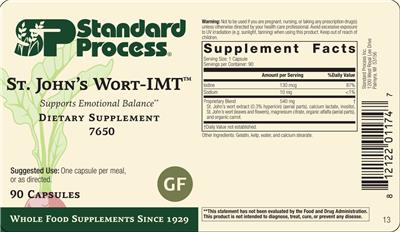
St. John's Wort-IMT by SP Standard Process label
The label scan from the NIH Dietary Supplement Label Database. Tap to enlarge.
Label images are published by the NIH Dietary Supplement Label Database for the version of this product on file. Always read your actual product label.
View the full label (PDF)The Ingredients in St. John's Wort-IMT by SP Standard Process
These are the 9 active ingredients this product is made of. Select any to open its full monograph.
Serving size1 Capsule(s) Dosage formCapsule Servings per container90 Amounts shown are per serving.
Most supplement products combine several ingredients, and a medication can interact with the product through any one of them. Each ingredient below shows whether it has known drug interactions.
Sodium
Interacts with205 drugs
Sodium is an essential mineral and electrolyte your body needs to balance fluids, support nerves, and help muscles work. Most people in modern diets g...
Sodium monograph & interactionsIodine
Interacts with7 drugs
Iodine is an essential mineral your body needs to make thyroid hormones, and most people get enough from iodized salt, dairy, and seafood. Supplements...
Iodine monograph & interactionsProprietary Blend
Other (inactive) ingredients: Gelatin, Kelp, Water, Calcium Stearate. These complete the product’s ingredient list but are not active constituents.
St. John's Wort-IMT by SP Standard Process Drug Interactions
HelloPharmacist Interaction Report
St.
John's Wort-IMT by SP Standard Process contains multiple ingredients with documented drug interactions. The most serious concerns involve St.
John's Wort itself, which has Major-severity interactions with several medications. St.
John's wort significantly reduces the levels of digoxin (a heart medication), phenobarbital and phenytoin (seizure drugs), irinotecan (a cancer drug), protease inhibitors used for HIV, tacrolimus (an immunosuppressant), docetaxel (a cancer drug), and mephenytoin (another seizure medication). These interactions can substantially lower medication effectiveness or require dose adjustments.
Read the full breakdown — every affected drug type, severity by severity
Other ingredients carry Moderate-severity interactions. Magnesium citrate interacts with levodopa/carbidopa (Parkinson's medication), skeletal muscle relaxants, potassium-sparing diuretics, calcium channel blockers, certain antacids, sulfonylureas (diabetes drugs), quinolone antibiotics, and bisphosphonates.
Calcium lactate interacts with HIV integrase inhibitors (dolutegravir and elvitegravir), the antibiotic ceftriaxone, raltegravir, levothyroxine (thyroid medication), sotalol (a heart drug), calcipotriene (psoriasis treatment), and diltiazem (a calcium channel blocker). Sodium can affect blood pressure medications, corticosteroids, lithium, didanosine, certain bowel-prep drugs, and tolvaptan.
Iodine interacts with lithium, antithyroid drugs, and amiodarone. Inositol may increase hypoglycemia risk with diabetes medications.
Alfalfa theoretically interacts with warfarin (a blood thinner), photosensitizing drugs, birth control, estrogen therapy, immunosuppressants, and diabetes medications.
Additionally, carrot showed no documented interactions in our data. Altogether, these interactions span 1,509 individual medications.
Use the medication checker below to look up your exact prescriptions before starting this product.
Check your own medications below · Editorial policy · How we use AI
Want to check YOUR meds against St. John's Wort-IMT?
Ask about interactions with your drugs in plain English — “Can I take it with lisinopril?” — and we find you the answer in seconds, ingredient by ingredient.
Go to the checkerIngredients driving the most interactions
Individual Drug Interactions
The ingredients in St. John's Wort-IMT interact with 1,508 drugs. Click any drug to see the details.
7 of the 9 ingredients in St. John's Wort-IMT interact with drugs. Each result below shows which ingredient is responsible. St. John's Wort Aerial Parts Extract Alfalfa Magnesium Citrate Sodium Calcium Lactate Inositol Iodine
Acetaminophen, Dextromethorphan, Guaifenesin, PhenylpropanolamineAnatuss
How Acetaminophen, Dextromethorphan, Guaifenesin, Phenylpropanolamine interacts with St. John's Wort-IMT — through 1 ingredient. Tap an ingredient for the detail:
St. John's WortSerotonergic Drugs, Cytochrome P450 1a2 (cyp1a2) Substrates +1 Major
Interaction Summary
Theoretically, St.
Read the full St. John's Wort + Acetaminophen, Dextromethorphan, Guaifenesin, Phenylpropanolamine interactionAcetaminophen, Dextromethorphan, Guaifenesin, PseudoephedrineRobitussin Cold, Severe Cold, Suphedrine Cold/Cough
How Acetaminophen, Dextromethorphan, Guaifenesin, Pseudoephedrine interacts with St. John's Wort-IMT — through 1 ingredient. Tap an ingredient for the detail:
St. John's WortCytochrome P450 3a4 (cyp3a4) Substrates, Serotonergic Drugs +1 Major
Acetaminophen, Dextromethorphan, Phenylpropanolamine, PyrilamineTheracaps
How Acetaminophen, Dextromethorphan, Phenylpropanolamine, Pyrilamine interacts with St. John's Wort-IMT — through 1 ingredient. Tap an ingredient for the detail:
St. John's WortSerotonergic Drugs, Cytochrome P450 3a4 (cyp3a4) Substrates +1 Major
Interaction Summary
Theoretically, St.
Read the full St. John's Wort + Acetaminophen, Dextromethorphan, Phenylpropanolamine, Pyrilamine interactionAcetaminophen, Dextromethorphan, PseudoephedrineAlka-Seltzer PLUS Flu Liquid Gels, Non Aspirin Cold Caps, Tylenol Cold, Tylenol Flu Daytime Ex Strength, Tylenol Flu Ex Strength
How Acetaminophen, Dextromethorphan, Pseudoephedrine interacts with St. John's Wort-IMT — through 1 ingredient. Tap an ingredient for the detail:
St. John's WortCytochrome P450 1a2 (cyp1a2) Substrates, Serotonergic Drugs +1 Major
Interaction Summary
St.
Read the full St. John's Wort + Acetaminophen, Dextromethorphan, Pseudoephedrine interactionAcetaminophen, HydrocodoneAnexsia, Anodynos DHC, Azdone, Co-Gesic, Doucet, Lorcet +9 more
How Acetaminophen, Hydrocodone interacts with St. John's Wort-IMT — through 1 ingredient. Tap an ingredient for the detail:
St. John's WortCytochrome P450 1a2 (cyp1a2) Substrates, Cytochrome P450 3a4 (cyp3a4) Substrates Major
Acetaminophen, OxycodonePercocet, Roxicet, Tylox, Xartemis XR
How Acetaminophen, Oxycodone interacts with St. John's Wort-IMT — through 1 ingredient. Tap an ingredient for the detail:
St. John's WortOxycodone (oxycontin), Cytochrome P450 1a2 (cyp1a2) Substrates Major
Acetaminophen, Phenylephrine, ChlorpheniramineSuper Cold Tabs
How Acetaminophen, Phenylephrine, Chlorpheniramine interacts with St. John's Wort-IMT — through 2 ingredients. Tap an ingredient for the detail:
St. John's WortCytochrome P450 1a2 (cyp1a2) Substrates, Photosensitizing Drugs +2 Major
Interaction Summary
St.
Read the full St. John's Wort + Acetaminophen, Phenylephrine, Chlorpheniramine interactionAlfalfaPhotosensitizing Drugs Moderate
Interaction Summary
Theoretically, concomitant use of alfalfa with photosensitizing drugs might have additive effects.
Read the full Alfalfa + Acetaminophen, Phenylephrine, Chlorpheniramine interactionAdagrasibKrazati
How Adagrasib interacts with St. John's Wort-IMT — through 1 ingredient. Tap an ingredient for the detail:
St. John's WortCytochrome P450 3a4 (cyp3a4) Substrates Major
Afatinib DimaleateGilotrif
How Afatinib Dimaleate interacts with St. John's Wort-IMT — through 1 ingredient. Tap an ingredient for the detail:
St. John's WortP-glycoprotein Substrates Major
AlfentanilAlfenta
How Alfentanil interacts with St. John's Wort-IMT — through 1 ingredient. Tap an ingredient for the detail:
St. John's WortCytochrome P450 3a4 (cyp3a4) Substrates Major
AlfuzosinUroxatral
How Alfuzosin interacts with St. John's Wort-IMT — through 1 ingredient. Tap an ingredient for the detail:
St. John's WortCytochrome P450 3a4 (cyp3a4) Substrates Major
AliskirenTekturna
How Aliskiren interacts with St. John's Wort-IMT — through 2 ingredients. Tap an ingredient for the detail:
St. John's WortCytochrome P450 3a4 (cyp3a4) Substrates Major
SodiumAntihypertensive Drugs Moderate
Interaction Summary
Theoretically, a high intake of dietary sodium might reduce the effectiveness of antihypertensive drugs.
Read the full Sodium + Aliskiren interactionAlmotriptanAlmogran, Axert
How Almotriptan interacts with St. John's Wort-IMT — through 1 ingredient. Tap an ingredient for the detail:
St. John's WortSerotonergic Drugs, Cytochrome P450 3a4 (cyp3a4) Substrates Major
AlogliptinNesina
How Alogliptin interacts with St. John's Wort-IMT — through 3 ingredients. Tap an ingredient for the detail:
St. John's WortCytochrome P450 3a4 (cyp3a4) Substrates Major
AlfalfaAntidiabetes Drugs Moderate
Interaction Summary
Theoretically, alfalfa might increase the risk of hypoglycemia when taken with antidiabetes drugs.
Read the full Alfalfa + Alogliptin interactionInositolAntidiabetes Drugs Moderate
Interaction Summary
Theoretically, taking inositol with antidiabetes drugs might increase the risk of hypoglycemia.
Read the full Inositol + Alogliptin interactionAlogliptin, PioglitazoneOseni
How Alogliptin, Pioglitazone interacts with St. John's Wort-IMT — through 3 ingredients. Tap an ingredient for the detail:
St. John's WortCytochrome P450 3a4 (cyp3a4) Substrates Major
AlfalfaAntidiabetes Drugs Moderate
Interaction Summary
Theoretically, alfalfa might increase the risk of hypoglycemia when taken with antidiabetes drugs.
Read the full Alfalfa + Alogliptin, Pioglitazone interactionInositolAntidiabetes Drugs Moderate
Interaction Summary
Theoretically, taking inositol with antidiabetes drugs might increase the risk of hypoglycemia.
Read the full Inositol + Alogliptin, Pioglitazone interactionAlpelisibPiqray
How Alpelisib interacts with St. John's Wort-IMT — through 1 ingredient. Tap an ingredient for the detail:
St. John's WortCytochrome P450 3a4 (cyp3a4) Substrates Major
AlprazolamNiravam, Xanax
How Alprazolam interacts with St. John's Wort-IMT — through 1 ingredient. Tap an ingredient for the detail:
St. John's WortCytochrome P450 3a4 (cyp3a4) Substrates, Alprazolam (xanax) Major
AlvimopanEntereg
How Alvimopan interacts with St. John's Wort-IMT — through 1 ingredient. Tap an ingredient for the detail:
St. John's WortP-glycoprotein Substrates Major
AmbrisentanLetairis, Volibris
How Ambrisentan interacts with St. John's Wort-IMT — through 2 ingredients. Tap an ingredient for the detail:
St. John's WortP-glycoprotein Substrates, Ambrisentan (letairis) +1 Major
SodiumAntihypertensive Drugs Moderate
Interaction Summary
Theoretically, a high intake of dietary sodium might reduce the effectiveness of antihypertensive drugs.
Read the full Sodium + Ambrisentan interactionAmiodaroneCordarone, Pacerone
How Amiodarone interacts with St. John's Wort-IMT — through 3 ingredients. Tap an ingredient for the detail:
St. John's WortCytochrome P450 3a4 (cyp3a4) Substrates, Photosensitizing Drugs Major
IodineAmiodarone (cordarone) Moderate
Interaction Summary
Combining iodine with amiodarone might cause excessively high iodine levels.
Read the full Iodine + Amiodarone interactionAlfalfaPhotosensitizing Drugs Moderate
Interaction Summary
Theoretically, concomitant use of alfalfa with photosensitizing drugs might have additive effects.
Read the full Alfalfa + Amiodarone interactionAmitriptylineElavil
How Amitriptyline interacts with St. John's Wort-IMT — through 2 ingredients. Tap an ingredient for the detail:
St. John's WortPhotosensitizing Drugs, Cytochrome P450 3a4 (cyp3a4) Substrates +4 Major
AlfalfaPhotosensitizing Drugs Moderate
Interaction Summary
Theoretically, concomitant use of alfalfa with photosensitizing drugs might have additive effects.
Read the full Alfalfa + Amitriptyline interactionAmitriptyline, ChlordiazepoxideLimbitrol DS
How Amitriptyline, Chlordiazepoxide interacts with St. John's Wort-IMT — through 2 ingredients. Tap an ingredient for the detail:
St. John's WortCytochrome P450 1a2 (cyp1a2) Substrates, Cytochrome P450 2c9 (cyp2c9) Substrates +4 Major
AlfalfaPhotosensitizing Drugs Moderate
Interaction Summary
Theoretically, concomitant use of alfalfa with photosensitizing drugs might have additive effects.
Read the full Alfalfa + Amitriptyline, Chlordiazepoxide interactionAmitriptyline, PerphenazineEtrafon, Etrafon-A, Etrafon-Forte, Triavil
How Amitriptyline, Perphenazine interacts with St. John's Wort-IMT — through 2 ingredients. Tap an ingredient for the detail:
St. John's WortCytochrome P450 2c19 (cyp2c19) Substrates, Serotonergic Drugs +4 Major
AlfalfaPhotosensitizing Drugs Moderate
Interaction Summary
Theoretically, concomitant use of alfalfa with photosensitizing drugs might have additive effects.
Read the full Alfalfa + Amitriptyline, Perphenazine interactionAmlodipineNorliqva
How Amlodipine interacts with St. John's Wort-IMT — through 4 ingredients. Tap an ingredient for the detail:
St. John's WortCytochrome P450 3a4 (cyp3a4) Substrates Major
Magnesium CitrateCalcium Channel Blockers Moderate
Interaction Summary
Magnesium can have additive effects with calcium channel blockers, although evidence is conflicting.
Read the full Magnesium Citrate + Amlodipine interactionSodiumAntihypertensive Drugs Moderate
Interaction Summary
Theoretically, a high intake of dietary sodium might reduce the effectiveness of antihypertensive drugs.
Read the full Sodium + Amlodipine interactionCalcium LactateCalcium Channel Blockers Minor
Interaction Summary
Intravenous calcium may decrease the effects of calcium channel blockers; oral calcium is unlikely to have this effect.
Read the full Calcium Lactate + Amlodipine interactionAmlodipine BenzoateKaterzia
How Amlodipine Benzoate interacts with St. John's Wort-IMT — through 4 ingredients. Tap an ingredient for the detail:
St. John's WortCytochrome P450 3a4 (cyp3a4) Substrates Major
SodiumAntihypertensive Drugs Moderate
Interaction Summary
Theoretically, a high intake of dietary sodium might reduce the effectiveness of antihypertensive drugs.
Read the full Sodium + Amlodipine Benzoate interactionMagnesium CitrateCalcium Channel Blockers Moderate
Interaction Summary
Magnesium can have additive effects with calcium channel blockers, although evidence is conflicting.
Read the full Magnesium Citrate + Amlodipine Benzoate interactionCalcium LactateCalcium Channel Blockers Minor
Interaction Summary
Intravenous calcium may decrease the effects of calcium channel blockers; oral calcium is unlikely to have this effect.
Read the full Calcium Lactate + Amlodipine Benzoate interactionAmlodipine BesilateIstin
How Amlodipine Besilate interacts with St. John's Wort-IMT — through 4 ingredients. Tap an ingredient for the detail:
St. John's WortCytochrome P450 3a4 (cyp3a4) Substrates Major
SodiumAntihypertensive Drugs Moderate
Interaction Summary
Theoretically, a high intake of dietary sodium might reduce the effectiveness of antihypertensive drugs.
Read the full Sodium + Amlodipine Besilate interactionMagnesium CitrateCalcium Channel Blockers Moderate
Interaction Summary
Magnesium can have additive effects with calcium channel blockers, although evidence is conflicting.
Read the full Magnesium Citrate + Amlodipine Besilate interactionCalcium LactateCalcium Channel Blockers Minor
Interaction Summary
Intravenous calcium may decrease the effects of calcium channel blockers; oral calcium is unlikely to have this effect.
Read the full Calcium Lactate + Amlodipine Besilate interactionAmlodipine BesylateNorvasc
How Amlodipine Besylate interacts with St. John's Wort-IMT — through 4 ingredients. Tap an ingredient for the detail:
St. John's WortCytochrome P450 3a4 (cyp3a4) Substrates Major
Magnesium CitrateCalcium Channel Blockers Moderate
Interaction Summary
Magnesium can have additive effects with calcium channel blockers, although evidence is conflicting.
Read the full Magnesium Citrate + Amlodipine Besylate interactionSodiumAntihypertensive Drugs Moderate
Interaction Summary
Theoretically, a high intake of dietary sodium might reduce the effectiveness of antihypertensive drugs.
Read the full Sodium + Amlodipine Besylate interactionCalcium LactateCalcium Channel Blockers Minor
Interaction Summary
Intravenous calcium may decrease the effects of calcium channel blockers; oral calcium is unlikely to have this effect.
Read the full Calcium Lactate + Amlodipine Besylate interactionAmlodipine Besylate, BenazeprilLotrel
How Amlodipine Besylate, Benazepril interacts with St. John's Wort-IMT — through 5 ingredients. Tap an ingredient for the detail:
St. John's WortCytochrome P450 3a4 (cyp3a4) Substrates, Photosensitizing Drugs Major
SodiumAntihypertensive Drugs Moderate
Interaction Summary
Theoretically, a high intake of dietary sodium might reduce the effectiveness of antihypertensive drugs.
Read the full Sodium + Amlodipine Besylate, Benazepril interactionMagnesium CitrateCalcium Channel Blockers Moderate
Interaction Summary
Magnesium can have additive effects with calcium channel blockers, although evidence is conflicting.
Read the full Magnesium Citrate + Amlodipine Besylate, Benazepril interactionAlfalfaPhotosensitizing Drugs Moderate
Interaction Summary
Theoretically, concomitant use of alfalfa with photosensitizing drugs might have additive effects.
Read the full Alfalfa + Amlodipine Besylate, Benazepril interactionCalcium LactateCalcium Channel Blockers Minor
Interaction Summary
Intravenous calcium may decrease the effects of calcium channel blockers; oral calcium is unlikely to have this effect.
Read the full Calcium Lactate + Amlodipine Besylate, Benazepril interactionAmlodipine, CelecoxibConsensi
How Amlodipine, Celecoxib interacts with St. John's Wort-IMT — through 5 ingredients. Tap an ingredient for the detail:
St. John's WortCytochrome P450 3a4 (cyp3a4) Substrates, Photosensitizing Drugs +1 Major
SodiumAntihypertensive Drugs Moderate
Interaction Summary
Theoretically, a high intake of dietary sodium might reduce the effectiveness of antihypertensive drugs.
Read the full Sodium + Amlodipine, Celecoxib interactionAlfalfaPhotosensitizing Drugs Moderate
Interaction Summary
Theoretically, concomitant use of alfalfa with photosensitizing drugs might have additive effects.
Read the full Alfalfa + Amlodipine, Celecoxib interactionMagnesium CitrateCalcium Channel Blockers Moderate
Interaction Summary
Magnesium can have additive effects with calcium channel blockers, although evidence is conflicting.
Read the full Magnesium Citrate + Amlodipine, Celecoxib interactionCalcium LactateCalcium Channel Blockers Minor
Interaction Summary
Intravenous calcium may decrease the effects of calcium channel blockers; oral calcium is unlikely to have this effect.
Read the full Calcium Lactate + Amlodipine, Celecoxib interactionAmoxicillin, Omeprazole Magnesium, RifabutinTalicia
How Amoxicillin, Omeprazole Magnesium, Rifabutin interacts with St. John's Wort-IMT — through 1 ingredient. Tap an ingredient for the detail:
St. John's WortOmeprazole (prilosec), Cytochrome P450 3a4 (cyp3a4) Substrates +2 Major
Interaction Summary
St.
Read the full St. John's Wort + Amoxicillin, Omeprazole Magnesium, Rifabutin interactionEach ingredient & the kinds of drugs it affects
For each ingredient in St. John's Wort-IMT with known interactions, here are the types of medications they can affect. Open any type for the detail — or search your exact drug in the checker above.
St. John's Wort Aerial Parts Extract
Alprazolam (Xanax)
St. John's wort increases the clearance of alprazolam and decreases its effects.
Alprazolam, which is used as a probe for cytochrome P450 3A4 (CYP3A4) activity, has a two-fold increase in clearance when given with St. John's wort. St. John's wort reduces the half-life of alprazolam from 12.4 hours to 6 hours.
Contraceptive Drugs
St. John's wort increases the clearance of contraceptive drugs and reduces their clinical effects.
Females taking St. John's wort and oral contraceptives concurrently should use an additional or alternative form of birth control. St. John's wort can decrease norethindrone and ethinyl estradiol levels by 13% to 15%, resulting in breakthrough bleeding, irregular menstrual bleeding, or unplanned pregnancy. Bleeding irregularities usually occur within a week of starting St. John's wort and regular cycles usually return when St. John's wort is discontinued. Unplanned pregnancy has occurred with concurrent use of oral contraceptives and St. John's wort extract. St. John's wort is thought to induce the cytochrome P450 1A2 (CYP1A2), 2C9 (CYP2C9), and 3A4 (CYP3A4) enzymes, which are responsible for metabolism of progestins and estrogens in contraceptives.
Cyclosporine (Neoral, Sandimmune)
St. John's wort reduces the levels and clinical effects of cyclosporine.
Concomitant use can decrease plasma cyclosporine levels by 30% to 70%. Using St. John's wort with cyclosporine in patients with heart, kidney, or liver transplants can cause subtherapeutic cyclosporine levels and acute transplant rejection. This interaction has occurred with a St. John's wort extract standardized to 0.3% hypericin and dosed at 300-600 mg per day. Withdrawal of St. John's wort can result in a 64% increase in cyclosporine levels. St. John's wort induces cytochrome P450 3A4 (CYP3A4) and the multi-drug transporter, P-glycoprotein/MDR-1, which increases cyclosporine clearance.
Cytochrome P450 3A4 (Cyp3A4) Substrates
St. John's wort increases the metabolism and reduces the levels of CYP3A4 substrates.
St. John's wort induces CYP3A4 enzymes and increases metabolism of CYP3A4 substrates. Clinically significant interactions have been reported with St. John's wort products containing hyperforin 1 mg or more.
Digoxin (Lanoxin)
St. John's wort reduces the levels and clinical effects of digoxin.
St. John's wort can reduce the bioavailability, serum levels, and therapeutic effects of digoxin. Taking an extract of St. John's wort 900 mg, containing hyperforin 7.5 mg or more, daily for 10-14 days, can reduce serum digoxin levels by 25% in healthy people. St. John's wort is thought to affect the multidrug transporter, P-glycoprotein, which mediates the absorption and elimination of digoxin and other drugs. St. John's wort products providing less than 7.5 mg of hyperforin daily do not appear to affect digoxin levels.
Docetaxel (Taxotere)
St. John's wort reduces the levels and clinical effects of docetaxel.
Clinical research shows that taking a specific St. John's wort product (Hyperiplant, VSM) 300 mg three times daily for 14 days increases docetaxel clearance by about 14%, resulting in decreased plasma concentrations of docetaxel in cancer patients. This is most likely due to induction of cytochrome P450 3A4 (CYP3A4) by St. John's wort.
Imatinib (Gleevec)
St. John's wort reduces the levels and clinical effects of imatinib.
Taking St. John's wort 900 mg daily for 2 weeks reduces the bioavailability and half-life of a single dose of imatinib and decreases its serum levels by 30% in healthy volunteers. This is most likely due to induction of cytochrome P450 3A4 (CYP3A4) by St. John's wort, which increases clearance of imatinib.
Irinotecan (Camptosar)
St. John's wort reduces the levels and clinical effects of irinotecan.
St. John's wort 900 mg daily for 18 days decreases serum levels of irinotecan by at least 50%. Clearance of the active metabolite of irinotecan, SN-38, is also increased, resulting in a 42% decrease in the area under the concentration-time curve. This is thought to be due to induction of cytochrome P450 3A4 (CYP3A4) by St. John's wort.
Mephenytoin (Mesantoin)
St. John's wort reduces the levels and clinical effects of mephenytoin.
Preliminary clinical research in healthy males shows that taking St. John's wort for 14 days induces cytochrome P450 2C19 (CYP2C19) and significantly increases metabolism of mephenytoin (Mesantoin). In people with wild-type 2C19, metabolism was almost 4-fold greater in subjects who received St. John's wort compared to placebo. In contrast, patients with 2C19*2/*2 and *2/*3 genotypes did not demonstrate a similar increase in metabolism.
Non-Nucleoside Reverse Transcriptase Inhibitors (Nnrtis)
St. John's wort decreases the levels and clinical effects of NNRTIs.
St. John's wort increases the oral clearance of nevirapine (Viramune) by 35%. Subtherapeutic concentrations are associated with therapeutic failure, development of viral resistance, and development of drug class resistance. St. John's wort induces intestinal and hepatic cytochrome P450 3A4 (CYP3A4) and intestinal P-glycoprotein/MDR-1, a drug transporter.
Omeprazole (Prilosec)
St. John's wort decreases the levels and clinical effects of omeprazole.
Taking St. John's wort, 300 mg orally three times daily for 14 days, reduces serum concentrations of omeprazole by inducing its metabolism via cytochrome P450 (CYP) 2C19 and 3A4. The reduction of omeprazole serum levels is dependent on CYP2C19 genotype, with reductions up to 50% in extensive metabolizers and 38% in poor metabolizers.
Oxycodone (Oxycontin)
St. John's wort decreases the levels and clinical effects of oxycodone.
St. John's wort can increase oxycodone metabolism by inducing cytochrome P450 3A4 (CYP3A4), reducing plasma levels and analgesic activity.
P-Glycoprotein Substrates
St. John's wort decreases the levels and clinical effects of P-glycoprotein substrates.
St. John's wort induces P-glycoprotein. P-glycoprotein is a carrier mechanism responsible for transporting drugs and other substances across cell membranes. When P-glycoprotein is induced in the gastrointestinal (GI) tract, it can prevent the absorption of some medications. In addition, induction of p-glycoprotein can decrease entry of drugs into the central nervous system (CNS) and decrease access to other sites of action.
Phenobarbital (Luminal)
St. John's wort decreases the levels and clinical effects of phenobarbital.
St. John's wort may increase the metabolism of phenobarbital. Plasma concentrations of phenobarbital should be monitored carefully. The dose of phenobarbital may need to be increased when St. John's wort is started and decreased when it is stopped.
Phenprocoumon (Marcoumar, Others)
St. John's wort decreases the levels and clinical effects of phenprocoumon.
St. John's wort appears to increase the metabolism of phenprocoumon (an anticoagulant that is not available in the US) by increasing the activity of the cytochrome P450 2C9 (CYP2C9) enzyme. This may result in decreases in the anticoagulant effect and international normalized ratio (INR).
Phenytoin (Dilantin)
St. John's wort decreases the levels and clinical effects of phenytoin.
St. John's wort may increase the metabolism of phenytoin. Plasma concentrations of phenytoin should be monitored closely. The dose of phenytoin may need to be increased when St. John's wort is started and decreased when it is stopped.
Protease Inhibitors (Pis)
St. John's wort reduces the levels and clinical effects of PIs.
In healthy volunteers, St. John's wort can reduce the plasma concentrations of indinavir (Crixivan) by inducing cytochrome P450 3A4 (CYP3A4). This might result in treatment failure and viral resistance. St. John's wort also induces P-glycoprotein, which can result in decreased intracellular protease inhibitor concentrations and increased elimination.
Rivaroxaban (Xarelto)
St. John's wort decreases the levels and clinical effects of rivaroxaban.
A small pharmacokinetic study in healthy volunteers shows that taking a single dose of rivaroxaban 20 mg after using a specific St. John's wort extract (Jarsin, Vifor SA) 450 mg orally twice daily for 14 days reduces the bioavailability of rivaroxaban by 24% and reduces rivaroxaban's therapeutic inhibition of factor Xa by 20%.
Tacrolimus (Prograf)
St. John's wort decreases the levels and clinical effects of tacrolimus.
Taking a St. John's wort extract (Jarsin) 600 mg daily significantly decreases tacrolimus serum levels. Dose increases of 60% may be required to maintain therapeutic tacrolimus levels in patients taking St. John's wort. St. John's wort is thought to lower tacrolimus levels by inducing cytochrome P450 3A4 (CYP3A4) enzymes. A small clinical study in healthy adults also shows that taking St. John's wort 300 mg three times daily for 10 days decreases the total systemic exposure to tacrolimus by 27% and 33% after taking a single 5 mg dose of immediate-release or prolonged-release tacrolimus, respectively.
Warfarin (Coumadin)
St. John's wort decreases the levels and clinical effects of warfarin.
Taking St. John's wort significantly increases clearance of warfarin, including both its R- and S-isomers. This is likely due to induction of cytochrome P450 (CYP) 1A2 and CYP3A4. St. John's wort can also significantly decrease International Normalized Ratio (INR) in people taking warfarin. In addition, taking warfarin at the same time as St. John's wort might reduce warfarin bioavailability. When a dried extract is mixed with warfarin in an aqueous medium, up to 30% of warfarin is bound to particles, reducing its absorption.
Aminolevulinic Acid
St. John's wort might have additive phototoxic effects with aminolevulinic acid.
Concomitant use with St. John's wort extract may cause synergistic phototoxicity. Delta-aminolevulinic acid can cause a burning erythematous rash and severe swelling of the face, neck, and hands when taken with St. John's wort.
Bupropion (Wellbutrin)
St. John's wort might reduce the levels and effects of bupropion.
Clinical research shows that taking St. John's wort 325 mg three times daily for 14 days along with bupropion reduces the area under the concentration-time curve by approximately 14% and increases the clearance of bupropion by approximately 20%. This effect is attributed to the induction of cytochrome P450 2B6 (CYP2B6) by St. John's wort.
Clopidogrel (Plavix)
St. John's wort might increase the levels and effects of clopidogrel.
Taking St. John's wort with clopidogrel seems to increase the activity of clopidogrel. In clopidogrel non-responders, taking St. John's wort seems to induce metabolism of clopidogrel to its active metabolite by cytochrome P450 enzymes 3A4 and 2C19. This leads to increased antiplatelet activity. Theoretically, this might lead to an increased risk of bleeding in clopidogrel responders.
Clozapine (Clozaril)
St. John's wort might decrease the levels and clinical effects of clozapine.
A case report describes a female with schizophrenia controlled on clozapine who had a return of symptoms when she started taking St. John's wort. The plasma concentration of clozapine was reduced, likely because its clearance was increased due to induction of the cytochrome P450 enzymes 3A4, 1A2, 2C9, and 2C19 by St. John's wort.
Cytochrome P450 1A2 (Cyp1A2) Substrates
St. John's wort may increase the metabolism and reduce the levels of CYP1A2 substrates.
Clinical and in vitro research shows that St. John's wort induces CYP1A2, but to a lesser extent than CYP3A4.
Alfalfa
Warfarin (Coumadin)
Theoretically, alfalfa might reduce the anticoagulant activity of warfarin.
Alfalfa contains a large amount of vitamin K. This could theoretically interfere with the activity of warfarin.
Antidiabetes Drugs
Theoretically, alfalfa might increase the risk of hypoglycemia when taken with antidiabetes drugs.
Animal research suggests that alfalfa decreases blood sugar in diabetic mice. Also, in one case report, a diabetic patient experienced hypoglycemia after consuming alfalfa extract. Monitor blood glucose levels closely. Dose adjustments might be necessary.
Contraceptive Drugs
Theoretically, alfalfa might interfere with the activity of contraceptive drugs.
Alfalfa contains coumestrol, a phytoestrogen, and isoflavonoids, which have estrogenic effects.
Estrogens
Theoretically, alfalfa might interfere with hormone therapy.
Alfalfa contains coumestrol, a phytoestrogen, and isoflavonoids, which have estrogenic effects.
Immunosuppressants
Theoretically, alfalfa might decrease the efficacy of immunosuppressive therapy.
In vitro research and human case reports suggest that alfalfa may have immunostimulant effects.
Photosensitizing Drugs
Theoretically, concomitant use of alfalfa with photosensitizing drugs might have additive effects.
Animal research suggests that excessive doses of alfalfa may increase photosensitivity, possibly due to its chlorophyll content. It is unclear if this effect would be clinically relevant in humans.
Magnesium Citrate
Levodopa/Carbidopa (Sinemet)
Magnesium can reduce the bioavailability of levodopa/carbidopa.
Clinical research in healthy volunteers shows that taking magnesium oxide 1000 mg with levodopa 100 mg/carbidopa 10 mg reduces the area under the curve (AUC) of levodopa by 35% and of carbidopa by 81%. In vitro and animal research shows that magnesium produces an alkaline environment in the digestive tract, which might lead to degradation and reduced bioavailability of levodopa/carbidopa.
Aminoglycoside Antibiotics
Concomitant use of aminoglycoside antibiotics and magnesium can increase the risk for neuromuscular weakness.
Both aminoglycosides and magnesium reduce presynaptic acetylcholine release, which can lead to neuromuscular blockade and possible paralysis. This is most likely to occur with high doses of magnesium given intravenously.
Antacids
Use of acid reducers may reduce the laxative effect of magnesium oxide.
A retrospective analysis shows that, in the presence of H2 receptor antagonists (H2RAs) or proton pump inhibitors (PPIs), a higher dose of magnesium oxide is needed for a laxative effect. This may also occur with antacids. Under acidic conditions, magnesium oxide is converted to magnesium chloride and then to magnesium bicarbonate, which has an osmotic laxative effect. By reducing acidity, antacids may reduce the conversion of magnesium oxide to the active bicarbonate salt.
Bictegravir/Emtricitabine/Tenofovir Alafenamide (Biktarvy)
Magnesium might decrease levels of bictegravir/emtricitabine/tenofovir alafenamide by reducing its absorption.
Advise patients that bictegravir/emtricitabine/tenofovir alafenamide should be taken at least 2 hours before or 6 hours after magnesium containing products.
Bisphosphonates
Magnesium can decrease absorption of bisphosphonates.
Cations, including magnesium, can decrease bisphosphonate absorption. Advise patients to separate doses of magnesium and these drugs by at least 2 hours.
Calcium Channel Blockers
Magnesium can have additive effects with calcium channel blockers, although evidence is conflicting.
Magnesium inhibits calcium entry into smooth muscle cells and may therefore have additive effects with calcium channel blockers. Severe hypotension and neuromuscular blockades may occur when nifedipine is used with intravenous magnesium, although some contradictory evidence suggests that concurrent use of magnesium with nifedipine does not increase the risk of neuromuscular weakness. High doses of magnesium could theoretically have additive effects with other calcium channel blockers.
Digoxin
Magnesium salts may reduce absorption of digoxin.
Clinical evidence suggests that treatment with oral magnesium hydroxide or magnesium trisilicate reduces absorption of digoxin from the intestines. This may reduce the blood levels of digoxin and decrease its therapeutic effects.
Potassium-Sparing Diuretics
Potassium-sparing diuretics decrease excretion of magnesium, possibly increasing magnesium levels.
Potassium-sparing diuretics also have magnesium-sparing properties, which can counteract the magnesium losses associated with loop and thiazide diuretics. Theoretically, increased magnesium levels could result from concomitant use of potassium-sparing diuretics and magnesium supplements.
Quinolone Antibiotics
Magnesium decreases absorption of quinolones.
Magnesium can form insoluble complexes with quinolones and decrease their absorption. Advise patients to take these drugs at least 2 hours before, or 4 to 6 hours after, magnesium supplements.
Skeletal Muscle Relaxants
Parenteral magnesium alters the pharmacokinetics of skeletal muscle relaxants, increasing their effects and accelerating the onset of effect.
Parenteral magnesium shortens the time to onset of skeletal muscle relaxants by about 1 minute and prolongs the duration of action by about 2 minutes. Magnesium potentiates the effects of skeletal muscle relaxants by decreasing calcium-mediated release of acetylcholine from presynaptic nerve terminals, reducing postsynaptic sensitivity to acetylcholine, and having a direct effect on the membrane potential of myocytes. Magnesium also has vasodilatory actions and increases cardiac output, allowing a greater amount of muscle relaxant to reach the motor end plate. A clinical study found that low-dose rocuronium (0.45 mg/kg), when given after administration of magnesium 30 mg/kg over 10 minutes, has an accelerated onset of effect, which matches the onset of effect seen with a full-dose rocuronium regimen (0.6 mg/kg). In another clinical study, onset times for rocuronium doses of 0.3, 0.6, and 1.2 mg/kg were 86, 76, and 50 seconds, respectively, when given alone, but were reduced to 66, 44, and 38 seconds, respectively, when the doses were given after a 15-minute infusion of magnesium sulfate 60 mg/kg. Giving intraoperative intravenous magnesium sulfate, 50 mg/kg loading dose followed by 15 mg/kg/hour, reduces the onset time of rocuronium, enhances its clinical effects, reduces the dose of intraoperative opiates, and prolongs the spontaneous recovery time. It does not affect the activity of subsequently administered neostigmine.
Sulfonylureas
Magnesium increases the systemic absorption of sulfonylureas, increasing their effects and side effects.
Clinical research shows that administration of magnesium hydroxide with glyburide increases glyburide absorption, increases maximal insulin response by 35-fold, and increases the risk of hypoglycemia, when compared with glyburide alone. A similar interaction occurs between magnesium hydroxide and glipizide. The mechanism of this effect appears to be related to the elevation of gastrointestinal pH by magnesium-based antacids, increasing solubility and enhancing absorption of sulfonylureas.
Tetracycline Antibiotics
Magnesium decreases absorption of tetracyclines.
Magnesium can form insoluble complexes with tetracyclines in the gut and decrease their absorption and antibacterial activity. Advise patients to take these drugs 1 hour before or 2 hours after magnesium supplements.
Anticoagulant/Antiplatelet Drugs
Theoretically, magnesium may have antiplatelet effects, but the evidence is conflicting.
In vitro evidence shows that magnesium sulfate inhibits platelet aggregation, even at low concentrations. Some preliminary clinical evidence shows that infusion of magnesium sulfate increases bleeding time by 48% and reduces platelet activity. However, other clinical research shows that magnesium does not affect platelet aggregation, although inhibition of platelet-dependent thrombosis can occur.
Gabapentin (Neurontin)
Gabapentin absorption can be decreased by magnesium.
Clinical research shows that giving magnesium oxide orally along with gabapentin decreases the maximum plasma concentration of gabapentin by 33%, time to maximum concentration by 36%, and area under the curve by 43%. Advise patients to take gabapentin at least 2 hours before, or 4 to 6 hours after, magnesium supplements.
Sevelamer (Renagel, Renvela)
Sevelamer may increase serum magnesium levels.
In patients on hemodialysis, sevelamer use was associated with a 0.28 mg/dL increase in serum magnesium. The mechanism of this interaction remains unclear.
Sodium
Antihypertensive Drugs
Theoretically, a high intake of dietary sodium might reduce the effectiveness of antihypertensive drugs.
High intake of dietary sodium can increase systolic and diastolic blood pressure. Also, high intake of sodium may necessitate increased use of antihypertensive medications to achieve blood pressure control in some patients, such as those with chronic kidney disease.
Corticosteroids
Concomitant use of mineralocorticoids and some glucocorticoids with sodium supplements might increase the risk of hypernatremia.
Mineralocorticoids and some glucocorticoids (corticosteroids) cause sodium retention. This effect is dose-related and depends on mineralocorticoid potency. It is most common with hydrocortisone, cortisone, and fludrocortisone, followed by prednisone and prednisolone.
Didanosine (Videx)
Concomitant use of didanosine with additional sodium from dietary or supplemental sources may increase the risk of hypernatremia.
Didanosine formulations contain a significant amount of sodium.
Lithium
Altering dietary intake of sodium might alter the levels and clinical effects of lithium.
High sodium intake can reduce plasma concentrations of lithium by increasing lithium excretion. Reducing sodium intake can significantly increase plasma concentrations of lithium and cause lithium toxicity in patients being treated with lithium carbonate. Stabilizing sodium intake is shown to reduce the percentage of patients with lithium level fluctuations above 0.8 mEq/L. Patients taking lithium should avoid significant alterations in their dietary intake of sodium.
Sodium Phosphates
Theoretically, concomitant use of sodium phosphate with sodium supplements might increase the risk of hypernatremia.
Use of high doses (> 45 mL in 24 hours) of sodium phosphate, such as those used for bowel cleansing before surgery, can lead to serious electrolyte disturbances, including hypernatremia. The risk of hypernatremia is highest in the elderly and people with other risk factors for electrolyte disturbances.
Sodium-Containing Drugs
Concomitant use of sodium-containing drugs with additional sodium from dietary or supplemental sources may increase the risk of hypernatremia and long-term sodium-related complications.
The Chronic Disease Risk Reduction (CDRR) intake level of 2.3 grams of sodium daily indicates the intake at which it is believed that chronic disease risk increases for the apparently healthy population. Some medications contain high quantities of sodium. When used in conjunction with sodium supplements or high-sodium diets, the CDRR may be exceeded. Additionally, concomitant use may increase the risk for hypernatremia; this risk is highest in the elderly and people with other risk factors for electrolyte disturbances.
Tolvaptan (Samsca)
Theoretically, concomitant use of tolvaptan with sodium might increase the risk of hypernatremia.
Tolvaptan is a vasopressin receptor 2 antagonist that is used to increase sodium levels in patients with hyponatremia. Patients taking tolvaptan should use caution with the use of sodium salts such as sodium chloride.
Calcium Lactate
Ceftriaxone (Rocephin)
Co-administration of intravenous calcium and ceftriaxone can result in precipitation of a ceftriaxone-calcium salt in the lungs and kidneys.
Avoid administering intravenous calcium in any form, such as parenteral nutrition or Lactated Ringers, within 48 hours of intravenous ceftriaxone. Case reports in neonates show that administering intravenous ceftriaxone and calcium can result in precipitation of a ceftriaxone-calcium salt in the lungs and kidneys. In several cases, neonates have died as a result of this interaction. So far there are no reports in adults; however, there is still concern that this interaction might occur in adults.
Dolutegravir (Tivicay)
Calcium seems to reduce levels of dolutegravir.
Advise patients to take dolutegravir either 2 hours before or 6 hours after taking calcium supplements. Pharmacokinetic research suggests that taking calcium carbonate 1200 mg concomitantly with dolutegravir 50 mg reduces plasma levels of dolutegravir by almost 40%. Calcium appears to decrease levels of dolutegravir through chelation.
Elvitegravir (Vitekta)
Calcium seems to reduce levels of elvitegravir.
Advise patients to take elvitegravir either 2 hours before or 2 hours after taking calcium supplements. Pharmacokinetic research suggests that taking calcium along with elvitegravir can reduce blood levels of elvitegravir through chelation.
Aluminum
Calcium citrate might increase aluminum absorption and toxicity. Other types of calcium do not increase aluminum absorption.
Calcium citrate can increase the absorption of aluminum when taken with aluminum hydroxide. The increase in aluminum levels may become toxic, particularly in individuals with kidney disease. However, the effect of calcium citrate on aluminum absorption is due to the citrate anion rather than calcium cation. Calcium acetate does not appear to increase aluminum absorption.
Bictegravir/Emtricitabine/Tenofovir Alafenamide (Biktarvy)
Calcium might decrease levels of bictegravir/emtricitabine/tenofovir alafenamide by reducing its absorption when taken in a fasting state.
Advise patients that bictegravir/emtricitabine/tenofovir alafenamide and calcium can be taken together if taken with food. However, if taken on an empty stomach, bictegravir/emtricitabine/tenofovir alafenamide should not be taken with, or 2 hours after, calcium containing products.
Bisphosphonates
Calcium reduces the absorption of bisphosphonates.
Advise patients to take bisphosphonates at least 30 minutes before calcium, but preferably at a different time of day. Calcium supplements decrease absorption of bisphosphonates.
Calcipotriene (Dovonex)
Taking calcipotriene with calcium might increase the risk for hypercalcemia.
Calcipotriene is a vitamin D analog used topically for psoriasis. It can be absorbed in sufficient amounts to cause systemic effects, including hypercalcemia. Theoretically, combining calcipotriene with calcium supplements might increase the risk of hypercalcemia.
Digoxin (Lanoxin)
Using intravenous calcium with digoxin might increase the risk of fatal cardiac arrhythmias.
Hypercalcemia increases the risk of fatal cardiac arrhythmias with digoxin. However, one retrospective analysis of clinical data suggests that intravenous calcium does not increase the risk of dysrhythmias or mortality in patients receiving digoxin.
Diltiazem (Cardizem, Others)
Theoretically, calcium may reduce the therapeutic effects of diltiazem.
Hypercalcemia can reduce the effectiveness of verapamil in atrial fibrillation. Theoretically, calcium might increase this risk of hypercalcemia and reduce the effectiveness of diltiazem.
Levothyroxine (Synthroid, Others)
Calcium seems to reduce the absorption and effectiveness of levothyroxine.
Advise patients to take levothyroxine and calcium supplements at least 4 hours apart. Calcium reduces levothyroxine absorption, probably by forming insoluble complexes. Calcium carbonate supplements reduce effectiveness of levothyroxine in patients with hypothyroidism.
Lithium
Theoretically, concomitant use of calcium and lithium may increase this risk of hypercalcemia.
Clinical research suggests that long-term use of lithium may cause hypercalcemia in 10% to 60% of patients. Theoretically, concomitant use of lithium and calcium supplements may further increase this risk.
Quinolone Antibiotics
Calcium seems to reduce the absorption of quinolone antibiotics.
Advise patients to take oral quinolones at least 2 hours before or 4-6 hours after calcium supplements or calcium-fortified foods. Taking calcium at the same time as oral quinolones can reduce quinolone absorption. Calcium binds to quinolones in the gut.
Raltegravir (Isentress)
Calcium may reduce levels of raltegravir.
Pharmacokinetic research shows that taking a single dose of calcium carbonate 3000 mg along with raltegravir 400 mg twice daily modestly decreases the mean area under the curve of raltegravir, but the decrease does not necessitate a dose adjustment of raltegravir. However, a case of elevated HIV-1 RNA levels and documented resistance to raltegravir has been reported for a patient taking calcium carbonate 1 gram three times daily plus vitamin D3 (cholecalciferol) 400 IU three times daily in combination with raltegravir 400 mg twice daily for 11 months. It is thought that calcium reduced raltegravir levels by chelation, leading to treatment failure.
Sotalol (Betapace)
Calcium seems to reduce the absorption of sotalol.
Advise patients to separate doses by at least 2 hours before or 4-6 hours after calcium. Calcium appears to reduce the absorption of sotalol, probably by forming insoluble complexes.
Tetracycline Antibiotics
Calcium seems to reduce the absorption of tetracycline antibiotics.
Advise patients to take oral tetracyclines at least 2 hours before, or 4-6 hours after calcium supplements. Taking calcium at the same time as oral tetracyclines can reduce tetracycline absorption. Calcium binds to tetracyclines in the gut.
Thiazide Diuretics
Taking calcium along with thiazides might increase the risk of hypercalcemia and renal failure.
Thiazides reduce calcium excretion by the kidneys. Using thiazides along with moderately large amounts of calcium carbonate increases the risk of milk-alkali syndrome (hypercalcemia, metabolic alkalosis, renal failure). Patients may need to have their serum calcium levels and/or parathyroid function monitored regularly.
Verapamil (Calan, Others)
Theoretically, calcium may reduce the therapeutic effects of verapamil.
Hypercalcemia can reduce the effectiveness of verapamil in atrial fibrillation. Theoretically, use of calcium supplements may increase this risk of hypercalcemia and reduce the effectiveness of verapamil.
Calcium Channel Blockers
Intravenous calcium may decrease the effects of calcium channel blockers; oral calcium is unlikely to have this effect.
Intravenous calcium is used to decrease the effects of calcium channel blockers in the management of overdose. Intravenous calcium gluconate has been used before intravenous verapamil (Isoptin) to prevent or reduce the hypotensive effects without affecting the antiarrhythmic effects. But there is no evidence that dietary or supplemental calcium when taken orally interacts with calcium channel blockers.
Inositol
Antidiabetes Drugs
Theoretically, taking inositol with antidiabetes drugs might increase the risk of hypoglycemia.
Clinical research shows that inositol lowers blood glucose levels and glycated hemoglobin (HbA1c) levels in patients with diabetes.
Iodine
Amiodarone (Cordarone)
Combining iodine with amiodarone might cause excessively high iodine levels.
Amiodarone contains 37.3% iodine and can increase iodine levels. Concomitant use with iodine might increase the risk of having excessive iodine levels and adversely affecting thyroid function. Monitor thyroid function.
Antithyroid Drugs
Iodine might alter the effects of antithyroid drugs.
Iodine in high doses has been reported to cause both hyperthyroidism and hypothyroidism, depending on the individual's past medical history. Taking iodine while using antithyroid drugs could alter the effects of the antithyroid drugs.
Lithium
Combining iodine with lithium might have additive hypothyroid effects.
Lithium can inhibit thyroid function. Several case reports suggest that concomitant use of lithium and potassium iodide can reduce thyroid function in otherwise healthy adults. Monitor thyroid function.
Brand information
Manufacturer and brand details for St. John's Wort-IMT, from the product label.
SP Standard Process
See all SP Standard Process products- Name
- Standard Process Inc.
- Street Address
- 1200 West Royal Lee Drive
- City
- Palmyra
- State
- WI
- ZipCode
- 53156
St. John's Wort-IMT by SP Standard Process: Common Questions
Does St. John's Wort-IMT by SP Standard Process interact with any medications?
How can one product interact with so many drugs?
Where does this information come from?
Can I take this while I'm pregnant or breastfeeding?
What does St. John's wort in this product do?
Will this product make my skin sensitive to sun?
Does this product have any fillers or just active ingredients?
What are the most common side effects?
Is this safe to take if I have thyroid problems or take thyroid medication?
Written and reviewed by the HelloPharmacist editorial staff. Our editorial policy
Not sure if St. John's Wort-IMT is safe with your meds?
Our pharmacists answer your medication & supplement questions — free.
Label information is sourced from the NIH Dietary Supplement Label Database and reflects the product version on file; always read your actual product label. This page is for education only and is not a substitute for professional medical advice. Confirm with your pharmacist or doctor before combining supplements and medications.
The Full Monographs Behind St. John's Wort-IMT’s Ingredients
Every ingredient we hold a full HelloPharmacist monograph for — uses, evidence, safety, and the complete interaction list.
Sodium
Interacts with 205 drugsSodium is an essential mineral and electrolyte your body needs to balance fluids, support nerves, and help muscles work. Most people in modern diets get more than enough—often too much—from...
Read the full Sodium monograph → Herb & supplement monographIodine
Interacts with 7 drugsIodine is an essential mineral your body needs to make thyroid hormones, and most people get enough from iodized salt, dairy, and seafood. Supplements help when you are truly deficient, but...
Read the full Iodine monograph → Herb & supplement monographInositol
Interacts with 86 drugsInositol is a sugar alcohol made naturally in the body and found in many foods, and it is sold as a supplement (often myo-inositol) mainly for PCOS, mood, and metabolic concerns. The stronge...
Read the full Inositol monograph → Herb & supplement monographMagnesium
Interacts with 295 drugsMagnesium is an essential mineral your body needs for muscles, nerves, blood pressure, and many other functions, and supplements are useful for preventing or correcting deficiency. Some othe...
Read the full Magnesium monograph → Herb & supplement monographCalcium
Interacts with 168 drugsCalcium is an essential mineral your body needs for strong bones, nerve signaling, and muscle function, and supplements can help fill gaps when diet falls short. Most people do best getting...
Read the full Calcium monograph → Herb & supplement monographSt. John's Wort
Interacts with 1,143 drugsSt. John's wort is a well-studied herb most often used for mild to moderate depression, and some research suggests it may help with this. However, it has many serious interactions with presc...
Read the full St. John's Wort monograph → Herb & supplement monographCarrot
Carrot is a common food vegetable that is a rich source of beta-carotene (which the body turns into vitamin A) and other nutrients. Eating carrots is safe and nutritious for most people, but...
Read the full Carrot monograph → Herb & supplement monographAlfalfa
Interacts with 583 drugsAlfalfa is a nutrient-rich legume that people use for high cholesterol, menopause symptoms, and general wellness, but solid human evidence for most of these uses is limited. It is best avoid...
Read the full Alfalfa monograph →Sources & How We Checked
St. John's Wort-IMT's label data comes from the NIH Dietary Supplement Label Database; the ingredient interaction data is from the Natural Medicines database, reviewed by our pharmacists.
- NIH Dietary Supplement Label Database (DSLD) — The official product label on file for this supplement.
- Natural Medicines (Therapeutic Research Center) — Evidence-graded clinical reference behind the ingredient interaction data.
Content is written and reviewed by licensed HelloPharmacist pharmacists. See our data sources and editorial standards for how this information is built and checked.
The 420 references behind this product’s interaction data
Every citation that drives the interaction findings for this product’s ingredients, from the evidence-graded Natural Medicines (TRC Healthcare) database. Open an ingredient to browse its citations — links open the study on PubMed or the publisher’s site.
Sodium 38 references
- Garabedian-Ruffalo SM, Ruffalo RL. Drug and nutrient interactions. Am Fam Physician 1986;33:165-74.
- Food and Drug Administration Science Background: Safety of Sodium Phosphates Oral Solution. September 17, 2001. Available at: http://www.fda.gov/cder/drug/safety/sodiumphospate.htm
- Coton T, Mallaret C, Coilliot C, Carre D, Guisset M. Severe acute ulcerated gastritis induced by salt. Presse Med 2009;38(3):499-500. PubMed
- Frings-Meuthen P, Buehlmeier J, Baecker N, et al. High sodium chloride intake exacerbates immobilization-induced bone resorption and protein losses. J Appl Physiol 2011;111(2):537-542. PubMed
- Frings-Meuthen P, Baecker N, Heer M. Low-grade metabolic acidosis may be the cause of sodium chloride-induced exaggerated bone resorption. J Bone Miner Res 2008;23(4):517-524. PubMed
- Alam S, Johnson AG. A meta-analysis of randomised controlled trials (RCT) among healthy normotensive and essential hypertensive elderly patients to determine the effect of high salt (NaCl) diet of blood pressure. J Hum Hypertens 1999;13(6):367-74.
- Boudville N, Ward S, Benaroia M, House AA. Increased sodium intake correlates with greater use of antihypertensive agents by subjects with chronic kidney disease. Am J Hypertens 2005;18(10):1300-5. PubMed
- Bennett WM. Drug interactions and consequences of sodium restriction. Am J Clin Nutr 1997;65(2 Suppl):678S-681S. PubMed
- Okusa MD, Crystal LJ. Clinical manifestations and management of acute lithium intoxication. Am J Med 1994;97(4):383-9. PubMed
- Food and Nutrition Board, Institute of Medicine. Dietary reference intakes for water, potassium, sodium, chloride, and sulfate. Washington, DC: National Academy Press, 2005. Available at: http://www.nap.edu/openbook.php?record_id=10925. DOI
- D'Elia L, Rossi G, Ippolito R, Cappuccio FP, Strazzullo P. Habitual salt intake and risk of gastric cancer: a meta-analysis of prospective studies. Clin Nutr 2012;31(4):489-98. PubMed
- Goldsmith SR. Hyponatremia in heart failure: time for a trial. J Card Fail 2013;19(6):398-400. PubMed
- Willocks L, Brettle R, Keen J, Valentine C, Pinching AJ. Formulations of didanosine (ddI) and salt overload. Lancet 1992;339(8786):190.
- Chen L, Zhang Z, Chen W, Whelton PK, Appel LJ. Lower Sodium Intake and Risk of Headaches: Results From the Trial of Nonpharmacologic Interventions in the Elderly. Am J Public Health. 2016;106(7):1270-5. PubMed
- Cook NR, Appel LJ, Whelton PK. Lower levels of sodium intake and reduced cardiovascular risk. Circulation. 2014;129(9):981-9. PubMed
- Cook NR, Appel LJ, Whelton PK. Sodium Intake and All-Cause Mortality Over 20 Years in the Trials of Hypertension Prevention. J Am Coll Cardiol. 2016;68(15):1609-1617. PubMed
- Mente A, O'Donnell M, Rangarajan S, et al. Associations of urinary sodium excretion with cardiovascular events in individuals with and without hypertension: a pooled analysis of data from four studies. Lancet. 2016;388(10043):465-75. PubMed
- Moosavian SP, Haghighatdoost F, Surkan PJ, Azadbakht L. Salt and obesity: a systematic review and meta-analysis of observational studies. Int J Food Sci Nutr. 2017;68(3):265-277. PubMed
- O'Donnell M, Mente A, Rangarajan S, et al. Urinary sodium and potassium excretion, mortality, and cardiovascular events. N Engl J Med. 2014;371(7):612-23. DOI
- Poggio R, Gutierrez L, Matta MG, Elorriaga N, Irazola V, Rubinstein A. Daily sodium consumption and CVD mortality in the general population: systematic review and meta-analysis of prospective studies. Public Health Nutr. 2015;18(4):695-704. PubMed
- Stallings VA, Harrison M, Oria M; Committee to Review the Dietary Reference Intakes for Sodium and Potassium, Food and Nutrition Board, Health and Medicine Division, National Academies of Sciences, Engineering, and Medicine. Washington (DC): National Acad
- Mahtani KR, Heneghan C, Onakpoya I, et al. Reduced Salt Intake for Heart Failure: A Systematic Review. JAMA Intern Med. 2018 Dec 1;178(12):1693-1700. PubMed
- Yancy CW. Sodium Restriction in Heart Failure: Too Much Uncertainty-Do the Trials. JAMA Intern Med. 2018 Dec 1;178(12):1700-1701. PubMed
- He FJ, Campbell NRC, Ma Y, MacGregor GA, Cogswell ME, Cook NR. Errors in estimating usual sodium intake by the Kawasaki formula alter its relationship with mortality: implications for public health. Int J Epidemiol. 2018;47(6):1784-1795. PubMed
- Murthy K, Ondrey GJ, Malkani N, et al. THE EFFECTS OF HYPONATREMIA ON BONE DENSITY AND FRACTURES: A SYSTEMATIC REVIEW AND META-ANALYSIS. Endocr Pract. 2019;25(4):366-378. PubMed
- Messerli FH, Hofstetter L, Syrogiannouli L, et al. Sodium intake, life expectancy, and all-cause mortality. Eur Heart J 2021;42(21):2103-2112. PubMed
- Graudal NA, Hubeck-Graudal T, Jurgens G. Effects of low sodium diet versus high sodium diet on blood pressure, renin, aldosterone, catecholamines, cholesterol, and triglyceride. Cochrane Database Syst Rev 2020;12(12):CD004022. PubMed
- Giatti S, Santos RB, Aielo AN, et al. Association of sodium with obstructive sleep apnea. The ELSA-Brasil study. Ann Am Thorac Soc 2021;18(3):502-510. PubMed
- Nan X, Lu H, Wu J, et al. The interactive association between sodium intake, alcohol consumption and hypertension among elderly in northern China: a cross-sectional study. BMC Geriatr 2021;21(1):135. PubMed
- Kyozuka H, Fukusda T, Murata T, et al. Impact of preconception sodium intake on hypertensive disorders of pregnancy: The Japan Environment and Children's study. Pregnancy Hypertens 2021;23:66-72. PubMed
- Zhao L, Ogden CL, Yang Q, et al. Association of usual sodium intake with obesity among US children and adolescents, NHANES 2009-2016. Obesity (Silver Spring) 2021;29(3):587-594. PubMed
- Ma Y, He FJ, Sun Q, et al. 24-Hour urinary sodium and potassium excretion and cardiovascular risk. N Engl J Med 2022;386(3):252-263. PubMed
- Liu J, Yang X, Zhang P, et al. Association of urinary sodium excretion and left ventricular hypertrophy in people with type 2 diabetes mellitus: A cross-sectional study. Front Endocrinol (Lausanne) 2021;12:728493. PubMed
- Filippini T, Malavolti M, Whelton PK, Vinceti M. Sodium intake and risk of hypertension: A systematic review and dose-response meta-analysis of observational cohort studies. Curr Hypertens Rep 2022;24(5):133-144. PubMed
- Wang DD, Li Y, Nguyen XT, et al. Dietary sodium and potassium intake and risk of non-fatal cardiovascular diseases: The million veteran program. Nutrients 2022;14(5):1121. PubMed
- Kwak JH, Park CH, Eun CS, et al. The associations of dietary intake of high sodium and low zinc with gastric cancer mortality: A prospective cohort study in Korea. Nutr Cancer 2022;74(10):3501-3508. PubMed
- George S, Maiti R, Mishra BR, Jena M, Mohapatra D. Effect of regulated add-on sodium chloride intake on stabilization of serum lithium concentration in bipolar disorder: A randomized controlled trial. Bipolar Disord 2023;25(1):66-75. PubMed
- Zhou TL, Schütten MTJ, Kroon AA, et al. Urinary Sodium Excretion and Salt Intake Are Not Associated With Blood Pressure Variability in a White General Population. J Am Heart Assoc 2023;12(1):e026578. PubMed
Inositol 14 references
- Palatnik A, Frolov K, Fux M, Benjamin J. Double-blind, controlled, crossover trial of inositol versus fluvoxamine for the treatment of panic disorder. J Clin Psychopharmacol 2001;21:335-9.. PubMed
- Allan SJ, Kavanagh GM, Herd RM, Savin JA. The effect of inositol supplements on the psoriasis of patients taking lithium: a randomized, placebo-controlled trial. Br J Dermatol 2004;150:966-9. PubMed
- Machado-Vieira R, Viale CI, Kapczinski F. Mania associated with an energy drink: the possible role of caffeine, taurine, and inositol. Can J Psychiatry 2001;46:454-5. PubMed
- Kamenov Z, Kolarov G, Gateva A, Carlomagno G, Genazzani AD. Ovulation induction with myo-inositol alone and in combination with clomiphene citrate in polycystic ovarian syndrome patients with insulin resistance. Gynecol Endocrinol 2015;31(2):131-5. PubMed
- Matarrelli B, Vitacolonna E, D'Angelo M, et al. Effect of dietary myo-inositol supplementation in pregnancy on the incidence of maternal gestational diabetes mellitus and fetal outcomes: a randomized controlled trial. J Matern Fetal Neonatal Med 2013;26(1 PubMed
- Mukai T, Kishi T, Matsuda Y, Iwata N. A meta-analysis of inositol for depression and anxiety disorders. Hum Psychopharmacol 2014;29(1):55-63. PubMed
- Farren M, Daly N, McKeating A, Kinsley B, Turner MJ, Daly S. The Prevention of Gestational Diabetes Mellitus With Antenatal Oral Inositol Supplementation: A Randomized Controlled Trial. Diabetes Care. 2017;40(6):759-63. PubMed
- Zheng X, Liu Z, Zhang Y, et al. Relationship Between Myo-Inositol Supplementary and Gestational Diabetes Mellitus: A Meta-Analysis. Medicine (Baltimore). 2015;94(42):e1604. PubMed
- Crawford TJ, Crowther CA, Alsweiler J, Brown J. Antenatal dietary supplementation with myo-inositol in women during pregnancy for preventing gestational diabetes. Cochrane Database Syst Rev. 2015;(12):CD011507. PubMed
- Maurizi AR, Menduni M, Del Toro R, et al. A pilot study of D-chiro-inositol plus folic acid in overweight patients with type 1 diabetes. Acta Diabetol. 2017;54(4):361-65. PubMed
- Leppink EW, Redden SA, Grant JE. A double-blind, placebo-controlled study of inositol in trichotillomania. Int Clin Psychopharmacol. 2017;32(2):107-14. PubMed
- Lam S, Mandrekar SJ, Gesthalter Y. A Randomized Phase IIb Trial of myo-Inositol in Smokers with Bronchial Dysplasia. Cancer Prev Res (Phila). 2016;9(12):906-14.
- Wozniak J, Faraone SV, Chan J, et al. A randomized clinical trial of high eicosapentaenoic acid omega-3 fatty acids and inositol as monotherapy and in combination in the treatment of pediatric bipolar spectrum disorders: a pilot study. J Clin Psychiatry. PubMed
- Vitale SG, Corrado F, Caruso S, et al. Myo-inositol supplementation to prevent gestational diabetes in overweight non-obese women: bioelectrical impedance analysis, metabolic aspects, obstetric and neonatal outcomes - a randomized and open-label, placebo-
Iodine 26 references
- McEvoy GK, ed. AHFS Drug Information. Bethesda, MD: American Society of Health-System Pharmacists, 1998.
- Goodman GA, Rall TW, Nies AS, Taylor P. The Pharmacological Basis of Therapeutics, 9th ed.
- Ghent WR, Eskin BA, Low DA, Hill LP. Iodine replacement in fibrocystic disease of the breast. Can J Surg 1993;36:453-60.
- Potassium iodide for nuclear exposure. Pharmacist's Letter/Prescriber's Letter 2001;17(12):171214.
- Food and Nutrition Board, Institute of Medicine. Dietary Reference Intakes for Vitamin A, Vitamin K, Arsenic, Boron, Chromium, Copper, Iodine, Iron, Manganese, Molybdenum, Nickel, Silicon, Vanadium, and Zinc. Washington, DC: National Academy Press, 2002.
- Cabezas C, Bustamante B, Holgado W, Begue RE. Treatment of cutaneous sporotrichosis with one daily dose of potassium iodide. Pediatr Infect Dis J 1996;15:352-4. PubMed
- Sterling JB, Heymann WR. Potassium iodide in dermatology: a 19th century drug for the 21st century-uses, pharmacology, adverse effects, and contraindications. J Am Acad Dermatol 2000;43:691-7. PubMed
- Yarrington CD, Pearce EN. Dietary iodine in pregnancy and postpartum. Clin Obstet Gynecol 2011;54:459-70. PubMed
- Goel, S., Mandhani, A., Srivastava, A., Kapoor, R., Gogoi, S., Kumar, A., and Bhandari, M. Is povidone iodine an alternative to silver nitrate for renal pelvic instillation sclerotherapy in chyluria? BJU.Int 2004;94(7):1082-1085. PubMed
- Teng, W., Shan, Z., Teng, X., Guan, H., Li, Y., Teng, D., Jin, Y., Yu, X., Fan, C., Chong, W., Yang, F., Dai, H., Yu, Y., Li, J., Chen, Y., Zhao, D., Shi, X., Hu, F., Mao, J., Gu, X., Yang, R., Tong, Y., Wang, W., Gao, T., and Li, C. Effect of iodine int
- Crawford, B. A., Cowell, C. T., Emder, P. J., Learoyd, D. L., Chua, E. L., Sinn, J., and Jack, M. M. Iodine toxicity from soy milk and seaweed ingestion is associated with serious thyroid dysfunction. Med J Aust. 10-4-2010;193(7):413-415. PubMed
- Ohkuma, M. Molluscum contagiosum treated with iodine solution and salicylic acid plaster. Int J Dermatol. 1990;29(6):443-445. PubMed
- Connelly KJ, Boston BA, Pearce EN, Sesser D, Snyder D, Braverman LE, Pino S, LaFranchi SH. Congenital hypothyroidism caused by excess prenatal maternal iodine ingestion. J Pediatr. 2012 Oct;161(4):760-2. PubMed
- Kasahara T, Narumi S, Okasora K, Takaya R, Tamai H, Hasegawa T. Delayed onset congenital hypothyroidism in a patient with DUOX2 mutations and maternal iodine excess. Am J Med Genet A. 2013 Jan;161A(1):214-7.
- Murcia M, Rebagliato M, Iñiguez C, Lopez-Espinosa MJ, Estarlich M, Plaza B, Barona-Vilar C, Espada M, Vioque J, Ballester F. Effect of iodine supplementation during pregnancy on infant neurodevelopment at 1 year of age. Am J Epidemiol. 2011 Apr 1;173(7):8 PubMed
- Sang Z, Wang PP, Yao Z, Shen J, Halfyard B, Tan L, Zhao N, Wu Y, Gao S, Tan J, Liu J, Chen Z, Zhang W. Exploration of the safe upper level of iodine intake in euthyroid Chinese adults: a randomized double-blind trial. Am J Clin Nutr. 2012 Feb;95(2):367-73 PubMed
- Speeckaert MM, Speeckaert R, Wierckx K, Delanghe JR, Kaufman JM. Value and pitfalls in iodine fortification and supplementation in the 21st century. Br J Nutr. 2011 Oct;106(7):964-73. PubMed
- Yun SE, Kang Y, Bae EJ, Hwang K, Jang HN, Cho HS, Chang SH, Park DJ. Iodine-induced thyrotoxic hypokalemic paralysis after ingestion of Salicornia herbace. Ren Fail. 2014 Apr;36(3):461-3.
- Iodine Hypersensitivity. Pharmacist's Letter/Prescriber's Letter 2011; 27(5):270504.
- Hammel JA, Selby JC. Pustular eruption in a patient with cancer treated with complementary and alternative medicine. JAMA Dermatology 2017 October; E1. doi: 10.1001/jamadermatol.2017.3749. [Epub ahead of print] PubMed
- Gil GS, Smith BW, Guerra JR, Williams WT. Acute Delirium in a Hypothyroid Patient Precipitated by Iodine Supplements Use. Am J Ther. 2018;25(6):e717-e718. PubMed
- Hamby T, Kunnel N, Dallas JS, Wilson DP. Maternal iodine excess: an uncommon cause of acquired neonatal hypothyroidism. J Pediatr Endocrinol Metab. 2018;31(9):1061-1064. PubMed
- Censi S, Watutantrige-Fernando S, Groccia G, et al. The Effects of Iodine Supplementation in Pregnancy on Iodine Status, Thyroglobulin Levels and Thyroid Function Parameters: Results from a Randomized Controlled Clinical Trial in a Mild-to-Moderate Iodine
- Rovner MS, Wolf BJ, Rubin M, et al. Instillation of 5% Povidone-Iodine Ophthalmic Drops Decreases the Respiratory Rate in Children Undergoing Strabismus Surgery: A Randomized Controlled Trial. J Pediatr Ophthalmol Strabismus. 2019;56(6):378-382. PubMed
- Guenezan J, Garcia M, Strasters D, et al. Povidone Iodine Mouthwash, Gargle, and Nasal Spray to Reduce Nasopharyngeal Viral Load in Patients With COVID-19: A Randomized Clinical Trial. JAMA Otolaryngol Head Neck Surg. 2021;147(4):400-401. PubMed
- Li F, Wan S, Zhang L, et al. A Meta-Analysis of the Effect of Iodine Excess on the Intellectual Development of Children in Areas with High Iodine Levels in their Drinking Water. Biol Trace Elem Res 2022;200(4):1580-1590. PubMed
Magnesium 82 references
- Rodin SM, Johnson BF. Pharmacokinetic interactions with digoxin. Clin Pharmacokinet 1988;15:227-44.
- Covington TR, et al. Handbook of Nonprescription Drugs. 11th ed. Washington, DC: American Pharmaceutical Association, 1996.
- Dahle LO, Berg G, Hammar M, et al. The effect of oral magnesium substitution on pregnancy-induced leg cramps. Am J Obstet Gynecol 1995;173:175-80. PubMed
- Hansten PD, Horn JR. Drug Interactions Analysis and Management. Vancouver, WA: Applied Therapeutics Inc., 1997 and updates.
- Peikert A, Wilimzig C, Kohne-Volland R. Prophylaxis of migraine with oral magnesium: results from a prospective, multi-center, placebo-controlled and double-blind randomized study. Cephalalgia 1996;16:257-63. PubMed
- Food and Nutrition Board, Institute of Medicine. Dietary Reference Intakes for Calcium, Phosphorus, Magnesium, Vitamin D, and Fluoride. Washington, DC: National Academy Press, 1999. Available at: http://books.nap.edu/books/0309063507/html/index.html.
- Birrer RB, Shallash AJ, Totten V. Hypermagnesemia-induced fatality following epsom salt gargles. J Emerg Med 2002;22:185-8. PubMed
- Ryan MP. Diuretics and potassium/magnesium depletion. Directions for treatment. Am J Med 1987;82:38-47.. PubMed
- Hollifield JW. Magnesium depletion, diuretics, and arrhythmias. Am J Med 1987;82:30-7.. PubMed
- Heidenreich O. Mode of action of conventional and potassium-sparing diuretics--aspects with relevance to Mg-sparing effects. Magnesium 1984;3:248-56..
- Pfaffenrath V, Wessely P, Meyer C, et al. Magnesium in the prophylaxis of migraine--a double-blind placebo-controlled study. Cephalalgia 1996;16:436-40.. PubMed
- Wang F, Van Den Eeden SK, Ackerson LM, et al. Oral magnesium oxide prophylaxis of frequent migrainous headache in children: a randomized, double-blind, placebo-controlled trial. Headache 2003;43:601-10.. PubMed
- Sompolinsky D, Samra Z. Influence of magnesium and manganese on some biological and physical properties of tetracycline. J Bacteriol 1972;110:468-76.. PubMed
- Jeyabalan A, Caritis SN. Pharmacologic inhibition of preterm labor. Clin Obstet Gynecol 2002;45:99-113. PubMed
- Mittendorf R, Dambrosia J, Pryde PG, et al. Association between the use of antenatal magnesium sulfate in preterm labor and adverse health outcomes in infants. Am J Obstet Gynecol 2002;186:1111-8.. PubMed
- Witlin AG, Sibai BM. Magnesium sulfate therapy in preeclampsia and eclampsia. Obstet Gynecol 1998;92:883-9.. DOI
- Crowther CA, Hiller JE, Doyle LW. Magnesium sulphate for preventing preterm birth in threatened preterm labour. Cochrane Database Syst Rev 2002;4:CD001060. . PubMed
- Davey MJ, Teubner D. A randomized controlled trial of magnesium sulfate, in addition to usual care, for rate control in atrial fibrillation. Ann Emerg Med 2005;45:347-53.. PubMed
- L'Hommedieu CS, Nicholas D, Armes DA, et al. Potentiation of magnesium sulfate--induced neuromuscular weakness by gentamicin, tobramycin, and amikacin. J Pediatr 1983;102:629-31..
- Dunn CJ, Goa KL. Risedronate: a review of its pharmacological properties and clinical use in resorptive bone disease. Drugs 2001;61:685-712..
- Kass L, Weekes J, Carpenter L. Effect of magnesium supplementation on blood pressure: a meta-analysis. Eur J Clin Nutr 2012;66:411-8. PubMed
- Koontz SL, Friedman SA, Schwartz ML. Symptomatic hypocalcemia after tocolytic therapy with magnesium sulfate and nifedipine. Am J Obstet Gynecol. 2004;190(6):1773-6. PubMed
- Snyder SW, Cardwell MS. Neuromuscular blockade with magnesium sulfate and nifedipine. Am J Obstet Gynecol. 1989;161(1):35-6. PubMed
- Waisman GD, Mayorga LM, Cámera MI, et al. Magnesium plus nifedipine: potentiation of hypotensive effect in preeclampsia? Am J Obstet Gynecol. 1988;159(2):308-9. PubMed
- Brown DD, Juhl RP. Decreased bioavailability of digoxin due to antacids and kaolin-pectin. N Engl J Med. 1976;295(19):1034-7. PubMed
- Allen MD, Greenblatt DJ, Harmatz JS, et al. Effect of magnesium--aluminum hydroxide and kaolin--pectin on absorption of digoxin from tablets and capsules. J Clin Pharmacol. 1981;21(1):26-30. PubMed
- Ravn HB, Vissinger H, Kristensen SD, et al. Magnesium inhibits platelet activity--an in vitro study. Thromb Haemost. 1996;76(1):88-93. DOI
- Ravn HB, Kristensen SD, Vissinger H, et al. Magnesium inhibits human platelets. Blood Coagul Fibrinolysis. 1996;7(2):241-4. PubMed
- Ravn HB, Vissinger H, Kristensen SD, et al. Magnesium inhibits platelet activity--an infusion study in healthy volunteers. Thromb Haemost. 1996;75(6):939-44. DOI
- Neuvonen PJ, Kivistö KT. The effects of magnesium hydroxide on the absorption and efficacy of two glibenclamide preparations. Br J Clin Pharmacol. 1991;32(2):215-20. PubMed
- Kivistö KT, Neuvonen PJ. Enhancement of absorption and effect of glipizide by magnesium hydroxide. Clin Pharmacol Ther. 1991;49(1):39-43. PubMed
- Neuvonen PJ, Kivistö KT. Enhancement of drug absorption by antacids. An unrecognised drug interaction. Clin Pharmacokinet. 1994;27(2):120-8. PubMed
- Shechter, M., Merz, C. N., Paul-Labrador, M., Meisel, S. R., Rude, R. K., Molloy, M. D., Dwyer, J. H., Shah, P. K., and Kaul, S. Beneficial antithrombotic effects of the association of pharmacological oral magnesium therapy with aspirin in coronary heart
- Ganzevoort, J. W., Hoogerwaard, E. M., and van der Post, J. A. [Hypocalcemic delirium due to magnesium sulphate therapy in a pregnant woman with pre-eclampsia]. Ned.Tijdschr.Geneeskd. 8-3-2002;146(31):1453-1456.
- Horner, S. M. Efficacy of intravenous magnesium in acute myocardial infarction in reducing arrhythmias and mortality. Meta-analysis of magnesium in acute myocardial infarction. Circulation 1992;86(3):774-779. PubMed
- Azria, E., Tsatsaris, V., Goffinet, F., Kayem, G., Mignon, A., and Cabrol, D. [Magnesium sulfate in obstetrics: current data]. J Gynecol.Obstet.Biol.Reprod.(Paris) 2004;33(6 Pt 1):510-517.
- Magee, L. A., Miremadi, S., Li, J., Cheng, C., Ensom, M. H., Carleton, B., Cote, A. M., and von Dadelszen, P. Therapy with both magnesium sulfate and nifedipine does not increase the risk of serious magnesium-related maternal side effects in women with p
- Henyan, N. N., Gillespie, E. L., White, C. M., Kluger, J., and Coleman, C. I. Impact of intravenous magnesium on post-cardiothoracic surgery atrial fibrillation and length of hospital stay: a meta-analysis. Ann.Thorac.Surg. 2005;80(6):2402-2406. PubMed
- Li, J., Zhang, Q., Zhang, M., and Egger, M. Intravenous magnesium for acute myocardial infarction. Cochrane.Database.Syst.Rev. 2007;(2):CD002755. PubMed
- Doyle, L. W., Crowther, C. A., Middleton, P., Marret, S., and Rouse, D. Magnesium sulphate for women at risk of preterm birth for neuroprotection of the fetus. Cochrane.Database.Syst.Rev. 2009;(1):CD004661. PubMed
- Han, S., Crowther, C. A., and Moore, V. Magnesium maintenance therapy for preventing preterm birth after threatened preterm labour. Cochrane.Database.Syst.Rev. 2010;(7):CD000940. PubMed
- Duley, L., Gulmezoglu, A. M., Henderson-Smart, D. J., and Chou, D. Magnesium sulphate and other anticonvulsants for women with pre-eclampsia. Cochrane.Database.Syst.Rev. 2010;(11):CD000025. PubMed
- Conde-Agudelo, A., Romero, R., and Kusanovic, J. P. Nifedipine in the management of preterm labor: a systematic review and metaanalysis. Am J Obstet.Gynecol. 2011;204(2):134-20. PubMed
- Wong, G. K., Boet, R., Poon, W. S., Chan, M. T., Gin, T., Ng, S. C., and Zee, B. C. Intravenous magnesium sulphate for aneurysmal subarachnoid hemorrhage: an updated systemic review and meta-analysis. Crit Care 2011;15(1):R52. PubMed
- Magee, L., Sawchuck, D., Synnes, A., and von, Dadelszen P. SOGC Clinical Practice Guideline. Magnesium sulphate for fetal neuroprotection. J Obstet.Gynaecol.Can. 2011;33(5):516-529.
- Doyle, L. W. Antenatal magnesium sulfate and neuroprotection. Curr Opin Pediatr 2012;24(2):154-159. PubMed
- McDonald, S. D., Lutsiv, O., Dzaja, N., and Duley, L. A systematic review of maternal and infant outcomes following magnesium sulfate for pre-eclampsia/eclampsia in real-world use. Int J Gynaecol.Obstet. 2012;118(2):90-96. PubMed
- Gordon, M., Naidoo, K., Akobeng, A. K., and Thomas, A. G. Osmotic and stimulant laxatives for the management of childhood constipation. Cochrane.Database.Syst.Rev. 2012;7:CD009118. PubMed
- Dodd, J. M., Crowther, C. A., and Middleton, P. Oral betamimetics for maintenance therapy after threatened preterm labour. Cochrane.Database.Syst.Rev. 2012;12:CD003927. PubMed
- Wu, X., Wang, C., Zhu, J., Zhang, C., Zhang, Y., and Gao, Y. Meta-analysis of randomized controlled trials on magnesium in addition to beta-blocker for prevention of postoperative atrial arrhythmias after coronary artery bypass grafting. BMC.Cardiovasc.D PubMed
- Thorp, J. M., Jr., Katz, V. L., Campbell, D., and Cefalo, R. C. Hypersensitivity to magnesium sulfate. Am.J.Obstet.Gynecol. 1989;161(4):889-890. PubMed
- Duley L and Gulmezoglu AM. Magnesium sulphate versus lytic cocktail for eclampsia. Cochrane Database of Systematic Reviews 2000;(3) PubMed
- Gibbins KJ, Browning KR, Lopes VV, Anderson BL, Rouse DJ. Evaluation of the clinical use of magnesium sulfate for cerebral palsy prevention. Obstet Gynecol 2013;121(2 Pt 1):235-40. PubMed
- Ji D. Oral magnesium sulfate causes perforation during bowel preparation for fiberoptic colonoscopy in patients with colorectal cancer. J Emerg Med 2012;43(4):716-7. PubMed
- Yagi T, Naito T, Mino Y, Umemura K, Kawakami J. Impact of concomitant antacid administration on gabapentin plasma exposure and oral bioavailability in healthy adult subjects. Drug Metab Pharmacokinet 2012;27(2):248-54. PubMed
- Yamasaki M, Funakoshi S, Matsuda S, Imazu T, Takeda Y, Murakami T, Maeda Y. Interaction of magnesium oxide with gastric acid secretion inhibitors in clinical pharmacotherapy. Eur J Clin Pharmacol 2014;70(8):921-4. PubMed
- Choi ES, Jeong WJ, Ahn SH, Oh AY, Jeon YT, Do SH. Magnesium sulfate accelerates the onset of low-dose rocuronium in patients undergoing laryngeal microsurgery. J Clin Anesth. 2017 Feb;36:102-106. PubMed
- Ikee R, Toyoyama T, Endo T, Tsunoda M, Hashimoto N. Impact of sevelamer hydrochloride on serum magnesium concentrations in hemodialysis patients. Magnes Res. 2016 Apr 1;29(4):184-90. PubMed
- Miller ES, Sakowicz A, Leger E. Lange E, Yee LM. The association between receipt of intrapartum magnesium and postpartum hemorrhage. Am J Obstet Gynecol 2018;218(1 Suppl):S165.
- Rodríguez-Rubio L, Solis Garcia Del Pozo J, Nava E, Jordán J. Interaction between magnesium sulfate and neuromuscular blockers during the perioperative period. A systematic review and meta-analysis. J Clin Anesth. 2016;34:524-34. PubMed
- Brown RS. Magnesium Sulfate: Another Cause of a Solute Diuresis. Am J Kidney Dis. 2017;69(4):550-551. PubMed
- Park H, Qin R, Smith TJ, et al. North Central Cancer Treatment Group N10C2 (Alliance): a double-blind placebo-controlled study of magnesium supplements to reduce menopausal hot flashes. Menopause. 2015;22(6):627-32. PubMed
- Sakanoue M, Sanada J, Kanekura T. Skin eruption elicited by magnesium oxide (Maglax). J Dermatol. 2016;43(2):221-2.
- Iwamuro M, Saito S, Yoshioka M, et al. A Magnesium Oxide Bezoar. Intern Med. 2018;57(21):3087-3091. PubMed
- Vilchez G, Dai J, Kumar K, Mundy D, Kontopoulos E, Sokol RJ. Racial/ethnic disparities in magnesium sulfate neuroprotection: a subgroup analysis of a multicenter randomized controlled trial. J Matern Fetal Neonatal Med. 2018;31(17):2304-2311. PubMed
- Drug Safety Communication: FDA Recommends Against Prolonged Use of Magnesium Sulfate to Stop Pre-term Labor Due to Bone Changes in Exposed Babies. U.S. Food and Drug Administration (FDA), May 30, 2013. https://www.fda.gov/downloads/Drugs/DrugSafety/UCM353
- Committee Opinion: Magnesium Sulfate Use in Obstetrics. The American College of Obstetricians and Gynecologists Committee on Obstetric Practice Society for Maternal-Fetal Medicine, Number 652, January 2016. https://www.acog.org/Clinical-Guidance-and-Publi
- Kashihara Y, Terao Y, Yoda K, et al. Effects of magnesium oxide on pharmacokinetics of L-dopa/carbidopa and assessment of pharmacodynamic changes by a model-based simulation. Eur J Clin Pharmacol. 2019;75(3):351-361. PubMed
- Shepherd E, Salam RA, Manhas D, et al. Antenatal magnesium sulphate and adverse neonatal outcomes: A systematic review and meta-analysis. PLoS Med. 2019;16(12):e1002988. PubMed
- Hong JY, Hong JY, Choi YS, et al. Antenatal magnesium sulfate treatment and risk of necrotizing enterocolitis in preterm infants born at less than 32 weeks of gestation. Sci Rep. 2020;10(1):12826. PubMed
- Schuh S, Sweeney J, Rumantir M, et al. Effect of nebulized magnesium vs placebo added to albuterol on hospitalization among children with refractory acute asthma treated in the emergency department: a randomized clinical trial. JAMA. 2020;324(20):2038-20 PubMed
- Almeida CED, Carvalho LR, Andrade CVC, Nascimento PD Jr, Barros GAM, Modolo NSP. Effects of magnesium sulphate on the onset time of rocuronium at different doses: a randomized clinical trial. Braz J Anesthesiol. 2021;71(5):482-8. PubMed
- Gochi Valdovinos A, Arriaga-Redondo M, Dejuan Bitriá E, Pérez Rodríguez I, Márquez Isidro E, Blanco Bravo D. Prenatal therapy with magnesium sulphate and intestinal obstruction due to meconium in preterm newborns. An Pediatr (Engl Ed). 2022 Feb;96(2):138- PubMed
- Iio K, Kondo E, Shibata E, et al. Long-term tocolysis with magnesium sulfate as a risk factor for low bone mass: a case series. J Med Cases. 2022 Feb;13(2):47-50. PubMed
- Eiraku K, Uozumi Y, Hieda M, Maruyama T, Nomura H. A senile case of heart failure associated with hypermagnesemia induced by magnesium-containing laxative agent. Geriatr Gerontol Int. 2022;22(10):897-899.
- Enayati A, Gin JH, Sajeev JK, et al. Efficacy of intravenous magnesium for the management of non-post operative atrial fibrillation with rapid ventricular response: A systematic review and meta-analysis. J Cardiovasc Electrophysiol 2023;34(5):1286-1295. PubMed
- Su YH, Luo DC, Pang Y. Effects of intraoperative Magnesium sulfate infusion on emergency agitation during general anesthesia in patients undergoing radical mastectomy: a randomized controlled study. BMC Anesthesiol 2023;23(1):326. PubMed
- Han J, Park HY, Shin HJ, Chung SH, Do SH. Effects of magnesium sulphate on neostigmine-induced recovery from moderate neuromuscular blockade with rocuronium: a randomized controlled trial. Magnes Res 2023;36(2):31-39. PubMed
- Lee AT, Cordova JC, Jamplis RP, Pomicter GR. Posterior Reversible Encephalopathy Syndrome and Eclampsia in the Setting of Magnesium Toxicity: A Case Report. A A Pract 2023;17(11):e01726. PubMed
- Darmawan D, Rengganis I, Rumende CM, et al. Effectiveness and Safety of Nebulized Magnesium as Last Line Treatment in Adults with Acute Asthma Attack: A Systematic Review and Meta-Analysis. Acta Med Indones 2024;56(1):3-12.
- Shepherd ES, Goldsmith S, Doyle LW, et al. Magnesium sulphate for women at risk of preterm birth for neuroprotection of the fetus. Cochrane Database Syst Rev 2024;5(5):CD004661. PubMed
- US Food and Drug Administration (FDA). Biktarvy Prescribing Information. October 2024. Available at: https://www.accessdata.fda.gov/drugsatfda_docs/label/2024/210251Orig1s020lbl.pdf. Accessed July 16, 2025.
Calcium 62 references
- Shils M, Olson A, Shike M. Modern Nutrition in Health and Disease. 8th ed. Philadelphia, PA: Lea and Febiger, 1994.
- Hernandez-Avila M, Gonzalez-Cossio T, Hernandez-Avila JE, et al. Dietary calcium supplements to lower blood lead levels in lactating women: a randomized placebo-controlled trial. Epidemiology 2003;14:206-12.. PubMed
- Thys-Jacobs S, Ceccarelli S, Bierman A, et al. Calcium supplementation in premenstrual syndrome: a randomized crossover trial. J Gen Intern Med 1989;4:183-9. PubMed
- Maton PN, Burton ME. Antacids revisited: a review of their clinical pharmacology and recommended therapeutic use. Drugs 1999;57:855-70.
- Clemens JD, Feinstein AR. Calcium carbonate and constipation: a historical review of medical mythopoeia. Gastroenterology 1977;72:957-61. DOI
- Saunders D, Sillery J, Chapman R. Effect of calcium carbonate and aluminum hydroxide on human intestinal function. Dig Dis Sci 1988;33:409-13. PubMed
- Friedman PA, Bushinsky DA. Diuretic effects on calcium metabolism. Semin Nephrol 1999;19:551-6.
- Koo WK, Walters JC, Esterlitz J, et al. Maternal calcium supplementation and fetal bone mineralization. Obstet Gynecol 1999;94:577-82. DOI
- Raman L, Rajalakshmi K, Krishnamachari KAVR, et al. Effect of calcium supplementation to undernourished mothers during pregnancy on the bone density of the neonates. Am J Clin Nutr 1978; 31:466-9. DOI
- Murry JJ, Healy MD. Drug-mineral interactions: a new responsibility for the hospital dietician. J Am Diet Assoc 1991;91:66-73.
- Chan JM, Giovannucci E, Andersson SO, et al. Dairy products, calcium, phosphorous, vitamin D, and risk of prostate cancer. Cancer Causes Control 1998;9:559-66.
- Butner LE, Fulco PP, Feldman G, et al. Calcium carbonate-induced hypothyroidism. Ann Intern Med 2000:132:595. PubMed
- Schneyer CR. Calcium carbonate and reduction of levothyroxine efficacy. JAMA 1998;279:750. PubMed
- Moser LR, Smythe MA, Tisdale JE. The use of calcium salts in the prevention and management of verapamil-induced hypotension. Ann Pharmacother 2000;34:622-9. PubMed
- Singh N, Singh PN, Hershman JM. Effect of calcium carbonate on the absorption of levothyroxine. JAMA 2000;283:2822-5. PubMed
- Kahela P, Anttila M, Tikkanen R, Sundquist H. Effect of food, food constituents and fluid volume on the bioavailability of sotalol. Acta Pharmacol Toxicol (Copenh) 1979;44:7-12.. PubMed
- Pletz MW, Petzold P, Allen A, et al. Effect of calcium carbonate on bioavailability of orally administered gemifloxacin. Antimicrob Agents Chemother 2003;47:2158-60.. PubMed
- Bar-Or D, Yoel G. Calcium and calciferol antagonize effect of verapamil in atrial fibrillation. Br Med J 1981;282:1585-6.
- Decktor DL, Robinson M, Maton PN, et al. Effects of aluminum/magnesium hydroxide and calcium carbonate on esophageal and gastric pH in subjects with heartburn. Am J Ther 1995;2:546-52. PubMed
- Simoneau G. Absence of rebound effect with calcium carbonate. Eur J Drug Metab Pharmacokinet 1996;21:351-7. PubMed
- Peters ML, Leonard M, Licata AA. Role of alendronate and risedronate in preventing and treating osteoporosis. Cleve Clin J Med 2001;68:945-51. PubMed
- Bourke JF, Mumford R, Whittaker P, et al. The effects of topical calcipotriol on systemic calcium homeostasis in patients with chronic plaque psoriasis. J Am Acad Dermatol 1997;37:929-34.
- Gueguen L, Pointillart A. The bioavailability of dietary calcium. J Am Coll Nutr 2000;19:119s-136s. PubMed
- Vella A, Gerber TC, Hayes DL, Reeder GS. Digoxin, hypercalcaemia, and cardiac conduction. Postgrad Med J 1999;75:554-6. PubMed
- Bania TC, Blaufeux B, Hughes S, et al. Calcium and digoxin vs. calcium alone for severe verapamil toxicity. Acad Emerg Med 2000;7:1089-96. PubMed
- Tseng M, Breslow RA, Graubard BI, Ziegler RG. Dairy, calcium, and vitamin D intakes and prostate cancer risk in the National Health and Nutrition Examination Epidemiologic Follow-up Study cohort. Am J Clin Nutr 2005;81:1147-54. PubMed
- Weingarten MA, Zalmanovici A, Yaphe J. Dietary calcium supplementation for preventing colorectal cancer and adenomatous polyps. Cochrane Database Syst Rev 2004;(1):CD003548. PubMed
- Tavani A, Bertuccio P, Bosetti C, et al. Dietary intake of calcium, vitamin D, phosphorus and the risk of prostate cancer. Eur Urol 2005;48:27-33. PubMed
- Giovannucci E, Liu Y, Stampfer MJ, Willett WC. A prospective study of calcium intake and incident and fatal prostate cancer. Cancer Epidemiol Biomarkers Prev 2006;15:203-10. PubMed
- Rocephin (ceftriaxone) and calcium interaction. Pharmacist's Letter / Prescriber's Letter 2007;23(10):231005.
- Bolland MJ, Barber PA, Doughty RN, et al. Vascular events in healthy older women receiving calcium supplementation: randomised control trial. BMJ 2008;336:262-6.
- Bolland MJ, Avenell A, Baron JA, et al. Effect of calcium supplements on risk of myocardial infarction and cardiovascular events: meta-analysis. BMJ 2010;341:c3691. PubMed
- Calcium supplementation and vascular events. Pharmacist's Letter / Prescriber's Letter 2008;24(3):240306.
- Dietary reference intakes for calcium and vitamin D. Institute of Medicine, November 30, 2010. Available at: http://www.iom.edu/~/media/Files/Report%20Files/2010/Dietary-Reference-Intakes-for-Calcium-and-Vitamin-D/Vitamin%20D%20and%20Calcium%202010%20Repo
- Coburn JW, Mischel MG, Goodman WG, et al. Calcium citrate markedly enhances aluminum absorption from aluminum hydroxide. Am J Kidney Dis. 1991;17(6):708-11. PubMed
- Bradley JS, Wassel RT, Lee L, et al. Intravenous ceftriaxone and calcium in the neonate: assessing the risk for cardiopulmonary adverse events. Pediatrics. 2009;123(4):e609-13. PubMed
- Kays MB, Overholser BR, Mueller BA, et al. Effects of sevelamer hydrochloride and calcium acetate on the oral bioavailability of ciprofloxacin. Am J Kidney Dis. 2003;42(6):1253-9. PubMed
- Neuhofel, A. L., Wilton, J. H., Victory, J. M., Hejmanowsk, L. G., and Amsden, G. W. Lack of bioequivalence of ciprofloxacin when administered with calcium-fortified orange juice: a new twist on an old interaction. J Clin Pharmacol. 2002;42(4):461-466. DOI
- Dickinson, H. O., Nicolson, D. J., Cook, J. V., Campbell, F., Beyer, F. R., Ford, G. A., and Mason, J. Calcium supplementation for the management of primary hypertension in adults. Cochrane.Database.Syst.Rev. 2006;(2):CD004639. PubMed
- Jones, B. J. and Twomey, P. J. Requesting patterns for serum calcium concentration in patients on long-term lithium therapy. Int J Clin Pract. 2009;63(1):170-172. PubMed
- Levine, M., Nikkanen, H., and Pallin, D. J. The effects of intravenous calcium in patients with digoxin toxicity. J Emerg.Med. 2011;40(1):41-46. PubMed
- Castelo-Branco, C., Ciria-Recasens, M., Cancelo-Hidalgo, M. J., Palacios, S., Haya-Palazuelos, J., Carbonell-Abello, J., Blanch-Rubio, J., Martinez-Zapata, M. J., Manasanch, J., and Perez-Edo, L. Efficacy of ossein-hydroxyapatite complex compared with ca
- Li K, Kaaks R, Linseisen J, Rohrmann S. Associations of dietary calcium intake and calcium supplementation with myocardial infarction and stroke risk and overall cardiovascular mortality in the Heidelberg cohort of the European Prospective Investigation i
- Chung M, Tang AM, Fu Z. Calcium Intake and Cardiovascular Disease Risk: An Updated Systematic Review and Meta-analysis. Ann Intern Med. 2016 Oct 25. PubMed
- Nolan CR, Califano JR, Butzin CA. Influence of calcium acetate or calcium citrate on intestinal aluminum absorption. Kidney Int. 1990;38(5):937-41. PubMed
- Lewis JR, Radavelli-Bagatini S, Rejnmark L, et al. The effects of calcium supplementation on verified coronary heart disease hospitalization and death in postmenopausal women: a collaborative meta-analysis of randomized controlled trials. J Bone Miner Res PubMed
- Jalloh MA, Gregory PJ, Hein D, et al. Dietary supplement interactions with antiretrovirals: a systematic review. Int J STD AIDS. 2017 Jan;28(1):4-15. PubMed
- Lappe J, Watson P, Travers-Gustafson D, Recker R, Garland C, Gorham E, Baggerly K, McDonnell SL. Effect of Vitamin D and Calcium Supplementation on Cancer Incidence in Older Women: A Randomized Clinical Trial. JAMA. 2017 Mar 28;317(12):1234-1243. PubMed
- Grove ML, Cook D. Calcium and heart attacks. Doesn't apply to most calcium prescriptions. BMJ. 2010;341:c5003. PubMed
- Insentress [package insert]. Whitehouse Station, NJ: Merck Sharp & Dohme Corp.; 2014.
- Roberts JL, Kiser JJ, Hindman JT, Meditz AL. Virologic failure with a raltegravir-containing antiretroviral regimen and concomitant calcium administration. Pharmacotherapy 2011;31(10):298e-302e. DOI
- Vitekta [package insert]. Foster City, CA: Gilead Sciences, Inc.; 2014.
- Storan ER, O'Gorman SM, Murphy A, Laing M. Case Report of Calciphylaxis Secondary to Calcium and Vitamin D<sub>3</sub> Supplementation. J Cutan Med Surg. 2017;21(2):162-163. DOI
- Jenkins DJA, Spence JD, Giovannucci EL, et al. Supplemental vitamins and minerals for CVD prevention and treatment. J Am Coll Cardiol 2018;71(22):2570-84. PubMed
- Borkenhagen JF, Connor EL, Stafstrom CE. Neonatal hypocalcemic seizures due to excessive maternal calcium ingestion. Pediatr Neurol 2013;48(6):469-71. PubMed
- WHO recommendations on antenatal care for a positive pregnancy experience. Geneva: World Health Organization; 2016 (http://www.who.int/reproductivehealth/publications/maternal_perinatal_health/ anc-positive-pregnancy-experience/en/).
- Aune D, Navarro Rosenblatt DA, Chan DS, et al. Dairy products, calcium, and prostate cancer risk: a systematic review and meta-analysis of cohort studies. Am J Clin Nutr. 2015;101(1):87-117. PubMed
- Lan T, Park Y, Colditz GA, et al. Adolescent dairy product and calcium intake in relation to later prostate cancer risk and mortality in the NIH-AARP Diet and Health Study. Cancer Causes Control. 2020;31(10):891-904. PubMed
- Zhang Y, Li Y, Liu J, et al. Association of Vitamin D or Calcium Supplementation with Cardiovascular Outcomes and Mortality: A Meta-Analysis with Trial Sequential Analysis. J Nutr Health Aging 2021;25(2):263-270. PubMed
- Myung SK, Kim HB, Lee YJ, Choi YJ, Oh SW. Calcium Supplements and Risk of Cardiovascular Disease: A Meta-Analysis of Clinical Trials. Nutrients 2021;13(2):368. PubMed
- Hetaimish B. Neonatal Calcinosis Cutis After Treatment of Hypocalcemia with Calcium Gluconate: A Report of 2 Cases. Am J Case Rep 2024;25:e943397. PubMed
- US Food and Drug Administration (FDA). Biktarvy Prescribing Information. October 2024. Available at: https://www.accessdata.fda.gov/drugsatfda_docs/label/2024/210251Orig1s020lbl.pdf. Accessed July 16, 2025.
St. John's Wort 152 references
- Miller LG. Herbal Medicinals: Selected clinical considerations focusing on known or potential drug-herb interactions. Arch Intern Med 1998;158:2200-11.
- Gulick RM, McAuliffe V, Holden-Wiltse J, et al. Phase I studies of hypericin, the active compound in St. John's Wort, as an antiretroviral agent in HIV-infected adults. AIDS Clinical Trials Group Protocols 150 and 258. Ann Intern Med 1999;130:510-4. PubMed
- O'Breasail AM, Argouarch S. Hypomania and St John's wort. Can J Psychiatry 1998;43:746-7.
- Johne A, Brockmoller J, Bauer S, et al. Pharmacokinetic interaction of digoxin with an herbal extract from St John's wort (Hypericum perforatum). Clin Pharmacol Ther 1999;66:338-45.
- Gordon JB. SSRIs and St. John's Wort: possible toxicity? Am Fam Physician 1998;57:950, 953.
- Golsch S, Vocks E, Rakoski J, et al. [Reversible increase in photosensitivity to UV-B caused by St. John's wort extract]. Hautarzt 1997;48:249-52.
- Bove GM. Acute neuropathy after exposure to sun in a patient treated with St. John's Wort. Lancet 1998;352:1121-2. PubMed
- Brockmoller J, Reum T, Bauer S, et al. Hypericin and pseudohypericin: pharmacokinetics and effects on photosensitivity in humans. Pharmacopsychiatry 1997;30:94-101. PubMed
- Upton R, ed. St. John's wort, Hypericum perforatum: Quality control, analytical and therapeutic monograph. Santa Cruz, CA: American Herbal Pharmacopoeia 1997;1-32.
- Muller WE, Singer A, Wonnemann M, et al. Hyperforin represents the neurotransmitter reuptake inhibiting constituent of hypericum extract. Pharmacopsychiatry 1998;31:16-21.
- Abul-Ezz SR, Barone GW, Gurley BJ, et al. Effect of herbal supplements on cyclosporine blood levels and associated acute rejection. Am Soc of Nephrol Ann Mtg, Toronto, CAN 2000;Oct. 11-16:abstract A3754.
- Piscitelli SC, Burstein AH, Chaitt D, et al. Indinavir concentrations and St John's wort. Lancet 2000;355:547-8. PubMed
- Yue QY, Bergquist C, Gerden B. Safety of St. John's wort (Hypericum perforatum). Lancet 2000;355:576-7. PubMed
- Ruschitzka F, Meier PJ, Turina M, et al. Acute heart transplant rejection due to Saint John's wort. Lancet 2000;355:548-9. PubMed
- Roberts JE, Wang RH, Tan IP, et al. Hypericin (active ingredient in St. John's wort) photo-oxidation of lens proteins. Photochem Photobiol 1999;69:42S.
- Gurley BJ, Barone GW. Herb-drug interaction involving St. John's wort and cyclosporine. AAPS Ann Mtg & Expo Indianapolis, IN:2000;Oct 29- Nov 2: presentation #3443.
- Durr D, Stieger B, Kullak-Ublick GA, et al. St. John's Wort induces intestinal P-glycoprotein/MDR1 and intestinal and hepatic CYP3A4. Clin Pharmacol Ther 2000;68:598-604. PubMed
- Lee A, Minhas R, Ito S, et al. Safety of St. John's wort during breastfeeding. Clin Pharmacol Ther 2000;67:130, abstract PII-64.
- Schneck C. St. John's wort and hypomania. J Clin Psychiatry 1998;59:689. PubMed
- Nierenberg AA, Burt T, Matthews J, et al. Mania associated with St. John's wort. Biol Psychiatry 1999;46:1707-8. PubMed
- Nebel A, Schneider BJ, Baker RA, et al. Potential metabolic interaction between St. John's wort and theophylline. Ann Pharmacother 1999;33:502. PubMed
- Moses EL, Mallinger AG. St. John's wort: Three cases of possible mania induction. J Clin Psychopharmacol 2000;20:115-7. PubMed
- Beckman SE, Sommi RW, Switzer J. Consumer use of St. John's wort: A survey of effectiveness, safety, and tolerability. Pharmacotherapy 2000;20:568-74.
- Peirce A. The American Pharmaceutical Association Practical Guide to Natural Medicines. New York, NY: William Morrow and Co., 1999.
- Mai I, Kruger H, Budde K, et al. Hazardous pharmacokinetic interaction of Saint John's wort (Hypericum perforatum) with the immunosuppressant cyclosporin. Int J Clin Pharmacol Ther 2000;38:500-2. PubMed
- Schempp CM, Muller K, Winghofer B, et al. Single-dose and steady-state administration of Hypericum perfotatum extract (St. John's wort) does not influence skin sensitivity to UV radiation, visible light, and solar-stimulated radiation. Arch Dermatol 2001;
- Schempp CM, Ludtke R, Winghofer B, Simon JC. Effect of topical application of hypericum perforatum extract on skin sensitivity to solar simulated radiation. Photodermatol Photoimmunol Photomed 2000;16:125-8.
- Jacobson JM, Feinman L, Liebes L, et al. Pharmacokinetics, safety, and antiviral effects of hypericin, a derivative of St. John's Wort plant, in patients with chronic hepatitis C virus infection. Antimicrob Agents Chemother 2001;45:517-24. PubMed
- Moschella C, Jaber BL. Interaction between cyclosporine and Hypericum perforatum (St. John's wort) after organ transplantation. Amer J Kidney Dis 2001;38:1105-7. PubMed
- Karliova M, Treichel U, Malago M, et al. Interaction of Hypericum perforatum (SJW) with cyclosporin A metabolism in a patient after liver transplantation. J Hepatol 2000;33:853-5.
- Mandelbaum A, Pertzborn F, Martin-Facklam M, Wiesel M. Unexplained decrease of cyclosporin trough levels in a compliant renal transplant patient. Nephrol Dial Transplant 2000;15:1473-4. PubMed
- Assalian P. Sildenafil for SJW-induced sexual dysfunction. J Sex Marital Ther 2000;26:357-8.
- de Maat M, Hoetelmans R, Mathot R, et al. Drug interaction between St. John's wort and nevirapine. AIDS 2001;15:420-1. PubMed
- Schrader E. Equivalence of St. John's wort extract (Ze 117) and fluoxetine: a randomized, controlled study in mild-moderate depression. Int Clin Psychopharmacol 2000;15:61-8.
- Ernst E, Rand JI, Barnes J, Stevinson C. Adverse effects profile of the herbal antidepressant St. John's wort (Hypericum perforatum L.). Eur J Clin Pharmacol 1998;54:589-94. PubMed
- Shelton RC, Keller MB, Gelenberg A, et al. Effectiveness of St. John's wort in major depression: A randomized, placebo-controlled trial. JAMA 2001;285:1978-86. DOI
- Breidenbach T, Hoffmann MW, Becker T, et al. Drug interaction of St. John's wort with cyclosporin. Lancet 2000;355:1912.
- Brown TM. Acute St. John's wort toxicity. Am J Emerg Med 2000;18:231-2. PubMed
- Kleber E, Obry T, Hippeli S, et al. Biochemical activities of extracts from Hypericum perforatum L. 1st Communication: inhibition of dopamine-beta-hydroxylase. Arzneimittelforschung 1999;49:106-9.
- Barone GW, Gurley BJ, Ketel BL, et al. Drug interaction between St. John's wort and cyclosporin. Ann Pharmacother 2000;34:1013-6.
- Cheng TO. St. John's wort interaction with digoxin [letter]. Arch Intern Med 2000;160:2548. PubMed
- Lane-Brown MM. Photosensitivity associated with herbal preparations of St. John's wort (Hypericum perforatum). Med J Aust 2000;172:302.
- Mathijssen RHJ, Verweij J, De Bruijn P, et al. Modulation of irinotecan (CPT-11) metabolism by St. John's wort in cancer patients. American Association for Cancer Research Annual Meeting, San Francisco, April 2002. Abstract 2443.
- Mai I, Bauer S, Krueger H, et al. Wechselwirkungen von Johaniskraut mit tacrolismus bei nierentransplantierten patienten. Symposium Phytopharmaka VII. Forschung und Klinische Anwendung, Berlin, October, 2001.
- Bhopal JS. St John's wort-induced sexual dysfunction. Can J Psychiatry 2001;46:456-457. PubMed
- Schulz V. Incidence and clinical relevance of the interactions and side effects of Hypericum preparations. Phytomedicine 2001;8:152-60.
- Gorski JC, Hamman MA, Wang Z, et al. The effect of St. John's wort on the efficacy of oral contraceptives (abstract MPI-80). Clin Pharmacol Ther 2001;71:P25.
- Hennessy M, Kelleher D, Spiers JP, et al. St Johns wort increases expression of P-glycoprotein: implications for drug interactions. Br J Clin Pharmacol 2002;53:75-82.
- Parker V, Wong AH, Boon HS, Seeman MV. Adverse reactions to St John's Wort. Can J Psychiatry 2001;46:77-9. PubMed
- Patel S, Robinson R, Burk M. Hypertensive crisis associated with St. John's Wort. Am J Med 2002;112:507-8. PubMed
- Singhal AB, Caviness VS, Begleiter AF, et al. Cerebral vasoconstriction and stroke after use of serotonergic drugs. Neurology 2002;58:130-3. PubMed
- Holme SA, Roberts DL. Erythroderma associated with St John's wort. Br J Dermatol 2000;143:1127-8. PubMed
- Irefin S, Sprung J. A possible cause of cardiovascular collapse during anesthesia: long-term use of St. John's Wort. J Clin Anesth 2000;12:498-9. PubMed
- Calapai G, Crupi A, Firenzuoli F, et al. Serotonin, norepinephrine and dopamine involvement in the antidepressant action of hypericum perforatum. Pharmacopsychiatry 2001;34:45-9. PubMed
- Henderson L, Yue QY, Bergquist C, et al. St John's wort (Hypericum perforatum): drug interactions and clinical outcomes. Br J Clin Pharmacol 2002;54:349-56..
- Mathijssen RH, Verweij J, de Bruijn P, et al. Effects of St. John's wort on irinotecan metabolism. J Natl Cancer Inst 2002;94:1247-9.. PubMed
- Ladner DP, Klein SD, Steiner RA, Walt H. Synergistic toxicity of delta-aminolaevulinic acid-induced protoporphyrin IX used for photodiagnosis and hypericum extract, a herbal antidepressant. Br J Dermatol 2001;144:916-8. PubMed
- Ernst E. St. John's Wort supplements endanger the success of organ transplantation. Arch Surg 2002;137:316-9. PubMed
- Wang Z, Hamman MA, Huang SM, et al. Effect of St. John's wort on the pharmacokinetics of fexofenadine. Clin Pharmacol Ther 2002;71:414-20.. PubMed
- Chan LY, Chiu PY, Lau TK. A study of hypericin-induced teratogenicity during organogenesis using a whole rat embryo culture model. Fertil Steril 2001;76:1073-4. PubMed
- Schwarz UI, Buschel B, Kirch W. Unwanted pregnancy on self-medication with St John's wort despite hormonal contraception. Br J Clin Pharmacol 2003;55:112-3. PubMed
- Logan JL, Ahmed J. Critical hypokalemic renal tubular acidosis due to Sjogren's syndrome: association with the purported immune stimulant echinacea. Clin Rheumatol 2003;22:158-9.
- Mai I, Stormer E, Bauer S, et al. Impact of St John's wort treatment on the pharmacokinetics of tacrolimus and mycophenolic acid in renal transplant patients. Nephrol Dial Transplant 2003;18:819-22.. PubMed
- Groning R, Breitkreutz J, Muller RS. Physico-chemical interactions between extracts of Hypericum perforatum L. and drugs. Eur J Pharm Biopharm 2003;56:231-6.. PubMed
- Sugimoto K, Ohmori M, Tsuruoka S, et al. Different effects of St John's wort on the pharmacokinetics of simvastatin and pravastatin. Clin Pharmacol Ther 2001;70:518-24.. DOI
- Bauer S, Stormer E, Johne A, et al. Alterations in cyclosporin A pharmacokinetics and metabolism during treatment with St John's wort in renal transplant patients. Br J Clin Pharmacol 2003;55:203-11.. PubMed
- Markowitz JS, Donovan JL, DeVane CL, et al. Effect of St. John's wort on drug metabolism by induction of cytochrome P450 3A4 enzyme. JAMA 2003;290:1500-4.. PubMed
- Hypericum Depression Trial Study Group. Effect of Hypericum perforatum (St. John's wort) in major depressive disorder: a randomized controlled trial. JAMA 2002;287:1807-14. PubMed
- Hammerness P, Basch E, Ulbricht C, et al. St. John's wort: a systematic review of adverse effects and drug interactions for the consultation psychiatrist. Psychosomatics 2003;44:271-82. PubMed
- Gurley BJ, Gardner SF, Hubbard MA, et al. Cytochrome P450 phenotypic ratios for predicting herb-drug interactions in humans. Clin Pharmacol Ther 2002;72:276-87.. PubMed
- Foster BC, Vandenhoek S, Hana J, et al. In vitro inhibition of human cytochrome P450-mediated metabolism of marker substrates by natural products. Phytomedicine 2003;10:334-42.. PubMed
- Kim RB. Drugs as P-glycoprotein substrates, inhibitors, and inducers. Drug Metab Rev 2002;34:47-54. PubMed
- Dean AJ, Moses GM, Vernon JM. Suspected withdrawal syndrome after cessation of St. John's wort. Ann Pharmacother 2003;37:150. PubMed
- Morimoto T, Kotegawa T, Tsutsumi K, et al. Effect of St. John's wort on the pharmacokinetics of theophylline in healthy volunteers. J Clin Pharmacol 2004;44:95-101. PubMed
- Pfrunder A, Schiesser M, Gerber S, et al. Interaction of St John's wort with low-dose oral contraceptive therapy: a randomized controlled trial. Br J Clin Pharmacol 2003;56:683-90. PubMed
- Hall SD, Wang Z, Huang SM, et al. The interaction between St John's wort and an oral contraceptive. Clin Pharmacol Ther 2003;74:525-35. PubMed
- Frye RF, Fitzgerald SM, Lagattuta TT, et al. Effect of St. John's wort on imatinib mesylate pharmacokinetics. Clin Pharmacol Ther 2004;76:323-9. PubMed
- Komoroski BJ, Zhang S, Cai H, et al. Induction and inhibition of cytochromes P450 by the St. John's wort constituent hyperforin in human hepatocyte cultures. Drug Metab Dispos 2004;32:512-8. PubMed
- Jiang X, Williams KM, Liauw WS, et al. Effect of St John's wort and ginseng on the pharmacokinetics and pharmacodynamics of warfarin in healthy subjects. Br J Clin Pharmacol 2004;57:592-9. PubMed
- Shimizu K, Nakamura M, Isse K, Nathan PJ. First-episode psychosis after taking an extract of Hypericum perforatum (St John's Wort). Hum Psychopharmacol 2004;19:275-6.
- Szegedi A, Kohnen R, Dienel A, Kieser M. Acute treatment of moderate to severe depression with hypericum extract WS 5570 (St John's wort): randomised controlled double blind non-inferiority trial versus paroxetine. BMJ 2005;330:503. PubMed
- Lau WC, Carville DGM, Guyer KE, et al. St. John's Wort Enhances the Platelet Inhibitory Effect of Clopidogrel in Clopidogrel "Resistant" Healthy Volunteers. American College of Cardiology Annual Meeting, Orlando, FL 2005: Presentation 1043-129.
- Murphy PA, Kern SE, Stanczyk FZ, Westhoff CL. Interaction of St. John's Wort with oral contraceptives: effects on the pharmacokinetics of norethindrone and ethinyl estradiol, ovarian activity and breakthrough bleeding. Contraception 2005;71:402-8. PubMed
- Linde K, Knuppel L. Large-scale observational studies of hypericum extracts in patients with depressive disorders - a systematic review. Phytomedicine 2005;12:148-57. PubMed
- Dasgupta A, Hovanetz M, Olsen M, et al. Drug-herb interaction: effect of St John's wort on bioavailability and metabolism of procainamide in mice. Arch Pathol Lab Med 2007;131:1094-8. PubMed
- Dugoua JJ, Mills E, Perri D, Koren G. Safety and efficacy of St. John's wort (hypericum) during pregnancy and lactation. Can J Clin Pharmacol 2006;13:e268-76.
- Jiang X, Blair EY, McLachlan AJ. Investigation of the effects of herbal medicines on warfarin response in healthy subjects: a population pharmacokinetic-pharmacodynamic modeling approach. J Clin Pharmacol 2006;46:1370-8. PubMed
- Niederhofer H. St. John's wort may diminish methylphenidate's efficacy in treating patients suffering from attention deficit hyperactivity disorder. Med Hypotheses 2007;68:1189. PubMed
- Bell EC, Ravis WR, Lloyd KB, Stokes TJ. Effects of St. John's wort supplementation on ibuprofen pharmacokinetics. Ann Pharmacother 2007;41:229-34. PubMed
- Booth JN, McGwin G. The association between self-reported cataracts and St. John's Wort. Curr Eye Res 2009;34:863-6. PubMed
- Samadi S, Khadivzadeh T, Emami A, et al. The effect of Hypericum perforatum on the wound healing and scar of cesarean. J Altern Complement Med 2010;16:113-7.
- Wang LS, Zhu B, Abd El-Aty A, et al. The influence of St. John's wort on CYP2C19 activity with respect to genotype. J Clin Pharmacol 2004;44:577-81. PubMed
- Weber W, Vander Stoep A, McCarty RL, et al. Hypericum perforatum (St John's wort) for attention-deficit/hyperactivity disorder in children and adolescents: a randomized controlled trial. JAMA 2008;299:2633-41. PubMed
- Lee, A., Minhas, R., Matsuda, N., Lam, M., and Ito, S. The safety of St. John's wort (Hypericum perforatum) during breastfeeding. J Clin Psychiatry 2003;64(8):966-968.
- Eich-Hochli, D., Oppliger, R., Golay, K. P., Baumann, P., and Eap, C. B. Methadone maintenance treatment and St. John's Wort - a case report. Pharmacopsychiatry 2003;36(1):35-37. PubMed
- Smith M, Lin KM, and Zheng YP. PIII-89 an open trial of nifedipine-herb interactions: Nifedipine with St. John's wort, ginseng or ginkgo biloba. Clin Pharm Ther 2001;69:P86.
- Kawaguchi, A., Ohmori, M., Tsuruoka, S., Nishiki, K., Harada, K., Miyamori, I., Yano, R., Nakamura, T., Masada, M., and Fujimura, A. Drug interaction between St John's Wort and quazepam. Br.J.Clin Pharmacol. 2004;58(4):403-410. PubMed
- Dresser, G. K., Schwarz, U. I., Wilkinson, G. R., and Kim, R. B. Coordinate induction of both cytochrome P4503A and MDR1 by St John's wort in healthy subjects. Clin Pharmacol Ther 2003;73(1):41-50. PubMed
- Patel, J., Buddha, B., Dey, S., Pal, D., and Mitra, A. K. In vitro interaction of the HIV protease inhibitor ritonavir with herbal constituents: changes in P-gp and CYP3A4 activity. Am.J.Ther. 2004;11(4):262-277. PubMed
- Xu, H., Williams, K. M., Liauw, W. S., Murray, M., Day, R. O., and McLachlan, A. J. Effects of St John's wort and CYP2C9 genotype on the pharmacokinetics and pharmacodynamics of gliclazide. Br.J.Pharmacol. 2008;153(7):1579-1586.
- Wang, L. S., Zhou, G., Zhu, B., Wu, J., Wang, J. G., Abd El-Aty, A. M., Li, T., Liu, J., Yang, T. L., Wang, D., Zhong, X. Y., and Zhou, H. H. St John's wort induces both cytochrome P450 3A4-catalyzed sulfoxidation and 2C19-dependent hydroxylation of omepr
- Hojo, Y., Echizenya, M., Ohkubo, T., and Shimizu, T. Drug interaction between St John's wort and zolpidem in healthy subjects. J.Clin.Pharm.Ther. 2011;36(6):711-715. PubMed
- Izzo, A. A. and Ernst, E. Interactions between herbal medicines and prescribed drugs: an updated systematic review. Drugs 2009;69(13):1777-1798. PubMed
- Barbenel, D. M., Yusufi, B., O'Shea, D., and Bench, C. J. Mania in a patient receiving testosterone replacement postorchidectomy taking St John's wort and sertraline. J Psychopharmacol 2000;14(1):84-86.
- Ratz, A. E., von Moos, M., and Drewe, J. [St. John's wort: a pharmaceutical with potentially dangerous interactions]. Schweiz Rundsch.Med Prax. 5-10-2001;90(19):843-849.
- Guzelcan, Y., Scholte, W. F., Assies, J., and Becker, H. E. [Mania during the use of a combination preparation with St. John's wort (Hypericum perforatum)]. Ned.Tijdschr.Geneeskd. 10-6-2001;145(40):1943-1945.
- van Gurp, G., Meterissian, G. B., Haiek, L. N., McCusker, J., and Bellavance, F. St John's wort or sertraline? Randomized controlled trial in primary care. Can Fam Physician 2002;48:905-912.
- Lecrubier, Y., Clerc, G., Didi, R., and Kieser, M. Efficacy of St. John's wort extract WS 5570 in major depression: a double-blind, placebo-controlled trial. Am J Psychiatry 2002;159(8):1361-1366. PubMed
- Schempp, C. M., Winghofer, B., Muller, K., Schulte-Monting, J., Mannel, M., Schopf, E., and Simon, J. C. Effect of oral administration of Hypericum perforatum extract (St. John's Wort) on skin erythema and pigmentation induced by UVB, UVA, visible light
- Zullino, D. and Borgeat, F. Hypertension induced by St. John's Wort - a case report. Pharmacopsychiatry 2003;36(1):32. PubMed
- Nanayakkara, P. W., Meijboom, M., and Schouten, J. A. [Suicidal and aggressive thoughts as a result of taking a Hypericum preparation (St. John's wort)]. Ned.Tijdschr.Geneeskd. 6-11-2005;149(24):1347-1349.
- Fava, M., Alpert, J., Nierenberg, A. A., Mischoulon, D., Otto, M. W., Zajecka, J., Murck, H., and Rosenbaum, J. F. A Double-blind, randomized trial of St John's wort, fluoxetine, and placebo in major depressive disorder. J.Clin.Psychopharmacol. 2005;25(5 PubMed
- Gastpar, M., Singer, A., and Zeller, K. Comparative efficacy and safety of a once-daily dosage of hypericum extract STW3-VI and citalopram in patients with moderate depression: a double-blind, randomised, multicentre, placebo-controlled study. Pharmacops PubMed
- Cappuzzo, K. A. Herbal product use in a patient with polypharmacy. Consult Pharm. 2006;21(11):911-915. PubMed
- Papakostas, G. I., Crawford, C. M., Scalia, M. J., and Fava, M. Timing of clinical improvement and symptom resolution in the treatment of major depressive disorder. A replication of findings with the use of a double-blind, placebo-controlled trial of Hyp DOI
- Sardella, A., Lodi, G., Demarosi, F., Tarozzi, M., Canegallo, L., and Carrassi, A. Hypericum perforatum extract in burning mouth syndrome: a randomized placebo-controlled study. J.Oral Pathol.Med. 2008;37(7):395-401.
- Etogo-Asse, F., Boemer, F., Sempoux, C., and Geubel, A. Acute hepatitis with prolonged cholestasis and disappearance of interlobular bile ducts following tibolone and Hypericum perforatum (St. John's wort). Case of drug interaction? Acta Gastroenterol.Be
- Andreescu, C., Mulsant, B. H., and Emanuel, J. E. Complementary and alternative medicine in the treatment of bipolar disorder--a review of the evidence. J.Affect.Disord. 2008;110(1-2):16-26. PubMed
- Kasper, S., Volz, H. P., Moller, H. J., Dienel, A., and Kieser, M. Continuation and long-term maintenance treatment with Hypericum extract WS 5570 after recovery from an acute episode of moderate depression--a double-blind, randomized, placebo controlled
- Al-Akoum, M., Maunsell, E., Verreault, R., Provencher, L., Otis, H., and Dodin, S. Effects of Hypericum perforatum (St. John's wort) on hot flashes and quality of life in perimenopausal women: a randomized pilot trial. Menopause. 2009;16(2):307-314. PubMed
- Brattstrom, A. Long-term effects of St. John's wort (Hypericum perforatum) treatment: a 1-year safety study in mild to moderate depression. Phytomedicine. 2009;16(4):277-283. PubMed
- Canning, S., Waterman, M., Orsi, N., Ayres, J., Simpson, N., and Dye, L. The efficacy of Hypericum perforatum (St John's wort) for the treatment of premenstrual syndrome: a randomized, double-blind, placebo-controlled trial. CNS.Drugs 2010;24(3):207-225. PubMed
- Van Strater, A. C. and Bogers, J. P. Interaction of St John's wort (Hypericum perforatum) with clozapine. Int.Clin.Psychopharmacol. 2012;27(2):121-124. PubMed
- Sultana D, Peindl KS Wisner KL. Rash associated with St. John's wort treatment in premenstrual dysphoric disorder. Arch Women Ment Health 2000;3:99-101. DOI
- Bernd A, Ramirez-Bosca A, Kippenberger S, and et al. Phototoxic effects of Hypericum extract in cultures of human keratinocytes compared with those of psoralen. Photochem Photobiol 1999;2(69):218-221.
- Woelk H, Burkard G, and Grunwald J. Nutzen und Risikobewertung des Hypericum-extraktes LI 160 auf der Basis einer Drug-Monitoring-Studie mit 3250 patienten. Nervenheilkunde 1993;12:308-313.
- Schakau D, Hiller K, Schultz-Zehden W, and et al. Risk/benefit profile of St.John's wort extract: STEI 300 in 2404 patients with various degrees of psychiatric disturbance. Psychopharmakotherapie 1996;3:116-122.
- Laird RD and Webb M. Psychotic episode during use of St John's wort. J Herbal Pharmacother 2001;1(2):81-87. DOI
- Schrader E, Meier B, and Brattstrom A. Hypericum treatment of mild-moderate depression in a placebo-controlled study. A prospective, double-blind, randomized, placebo-controlled, multicentre study. Human Psychopharm 1998;13:163-169. DOI
- Dolton MJ, Mikus G, Weiss J, et al. Understanding variability with voriconazole using a population pharmacokinetic approach: implications for optimal dosing. J Antimicrob Chemother 2014;69(6):1633-41. PubMed
- Goey AK, Meijerman I, Rosing H, et al. The effect of St John's wort on the pharmacokinetics of docetaxel. Clin Pharmacokinet 2014;53(1):103-10. PubMed
- Lei HP, Yu XY, Xie HT, et al. Effect of St. John's wort supplementation on the pharmacokinetics of bupropion in healthy male Chinese volunteers. Xenobiotica 2010;40(4):275-81. PubMed
- Gurok MG, Mermi O, Kilic F, et al. Psychotic episode induced by St. John's wort (Hypericum perforatum): a case report. J Mood Dis 2014;4(1):38-40. DOI
- Yildirim O, Canan F. A case of panic attack induced by St John's wort. Prim Care Companion CNS Disord 2013;15(1). pii: PCC.12l01453. PubMed
- Abdali K, Khajehei M, Tabatabaee HR. Effect of St John's wort on severity, frequency, and duration of hot flashes in premenopausal, perimenopausal and postmenopausal women: a randomized, double-blind, placebo-controlled study. Menopause 2010;17(2):326-31. PubMed
- Trana C, Toth G, Wijns W, Barbato E. St. John's Wort in patients non-responders to clopidogrel undergoing percutaneous coronary intervention: a single-center randomized open-label trial (St. John's Trial). J Cardiovasc Transl Res 2013;6(3):411-4. PubMed
- Agollo MC, Miszputen SJ, Diament J. Hypericum perforatum-induced hepatotoxicity with possible association with copaiba (copaifera langsdorffii desf): a case report. Einstein (Sao Paulo) 2014;12(3):355-7.
- Hohmann N, Maus A, CarlsA, Haefeli WE, Mikus G. St. John's wort treatment in women bears risks beyond pharmacokinetic drug interactions. Arch Toxico. 2016;90(4):1013-15. doi:10.1007/s00204-015-1532-7. PubMed
- Jackson A, D'Avolio A, Moyle G, et al. Pharmacokinetics of the co-administration of boceprevir and St. John's wort to male and female healthy volunteers. J Antimicrob Chemother 2014;69:1911-1915. PubMed
- Jones D. Tourian LT, Margolese H. Possible association of syndrome of Inappropriate secretion of antidiuretic hormone with St. John's wort use. J of Clin Psychopharmacol 2014:34(6):759-60. PubMed
- Soleymani S, Bahramsoltani R, Rahimi R, Abdollahi M. Clinical risks of St John's Wort (Hypericum perforatum) co-administration. Expert Opin Drug Metab Toxicol. 2017;13(10):1047-62.
- Chrubasik-Hausmann S, Vlachojannis J, McLachlan AJ. Understanding drug interactions with St John's wort (Hypericum perforatum L.): impact of hyperforin content. J Pharm Pharmacol. 2018.
- Market C, Kastner IM, Hellwig, et al. The effect of induction of CYP3A4 by St. John's wort on ambrisentan plasma kinetics in volunteers of known CY2C19 genotype. Basic & Clinical Pharmacology & Toxicology 2015;116:423-428.
- Loughren MJ, Kharasch ED, Kelton-Rehkopf MC, Syrjala KL, Shen DD. Influence of St. John's wort on intravenous fentanyl pharmacokinetics, pharmacodynamics, and clinical effects: a randomized clinical trial. Anesthesiology 2020;132(3):491-503. PubMed
- Scholz I, Liakoni E, Hammann F, et al. Effects of Hypericum perforatum (St. John's wort) on the pharmacokinetics and pharmacodynamics of rivaroxaban in humans. Br J Clin Pharmacol. 2020. doi: 10.1111/bcp.14553.
- Fisher KA, Patel P, Abualula S, Concepion L. St. John's Wort-Induced Supraventricular Tachycardia. Cureus. 2021 Apr 7;13(4):e14356. PubMed
- Schäfer W, Wentzell N, Schink T, Haug U. Characterization of pregnancies exposed to St. John's wort and their outcomes: A claims data analysis. Reprod Toxicol. 2021 Jun;102:90-97. PubMed
- Adibelli Z, Karacay I, Demir M, Duran C. St. John's Wort (Hypericum perforatum)-related acute kidney injury. Blood Purif. 2021 Aug 24:1-3. doi: 10.1159/000518349.
- Sarris J, Ravindran A, Yatham LN, et al. Clinician guidelines for the treatment of psychiatric disorders with nutraceuticals and phytoceuticals: The World Federation of Societies of Biological Psychiatry (WFSBP) and Canadian Network for Mood and Anxiety T
- Haron MH, Dale O, Martin K, et al. Evaluation of the Herb-Drug Interaction Potential of Commonly Used Botanicals on the US Market with Regard to PXR- and AhR-Mediated Influences on CYP3A4 and CYP1A2. J Diet Suppl 2022. PubMed
- Pochet S, Lechon AS, Lescrainier C, et al. Herb-anticancer drug interactions in real life based on VigiBase, the WHO global database. Sci Rep 2022;12(1):14178. PubMed
- Gümüs KS, Teegelbekkers A, Sauter M, et al. Effect of Tacrolimus Formulation (Prolonged-Release vs Immediate-Release) on Its Susceptibility to Drug-Drug Interactions with St. John's Wort. Clin Pharmacol Drug Dev 2024. PubMed
Carrot 14 references
- Electronic Code of Federal Regulations. Title 21. Part 182 -- Substances Generally Recognized As Safe. Available at: https://www.accessdata.fda.gov/scripts/cdrh/cfdocs/cfcfr/CFRSearch.cfm?CFRPart=182
- Wetzel WE, Lehn W, Grieb A. [Carotene jaundice in infants with "sugar nursing bottle syndrome"]. Monatsschr Kinderheilkd 1989;137(10):659-61.
- el-Arab AE, Khalil F, Hussein L. Vitamin A deficiency among preschool children in a rural area of Egypt: the results of dietary assessment and biochemical assay. Int J Food Sci Nutr 2002;53(6):465-74. PubMed
- Helbling A. [Food allergy]. Ther Umsch 1994;51(1):31-7.
- Kaplan R. Carrot addiction. Aust N Z J Psychiatry 1996;30(5):698-700.
- Ncube, T. N., Greiner, T., Malaba, L. C., and Gebre-Medhin, M. Supplementing lactating women with puréed papaya and grated carrots improved vitamin A status in a placebo-controlled trial. J Nutr 2001;131(5):1497-1502. PubMed
- Mullins M, Froelke BR, Rivera MR. Effect of delayed activated charcoal on acetaminophen concentration after simulated overdose of oxycodone and acetaminophen. Clin Toxicol (Phila) 2009;47(2):112-5. PubMed
- Kawai M, Tamagawa-Mineoka R, Hagura A, Masuda K, Katoh N. Allergic contact dermatitis due to carrots. J Dermatol 2014;41(8):753-4. PubMed
- Xu X, Cheng Y, Li S, et al. Dietary carrot consumption and the risk of prostate cancer. Eur J Nutr 2014;53(8):1615-23. PubMed
- Donaldson MS, Speight N, Loomis S. Fibromyalgia syndrome improved using a mostly raw vegetarian diet: an observational study. BMC Complement Altern Med. 2001;1:7. PubMed
- Chen H, Shao F, Zhang F, Miao Q. Association between dietary carrot intake and breast cancer: A meta-analysis. Medicine (Baltimore). 2018;97(37):e12164. PubMed
- Bosanac SS, Clark AK, Sivamani RK. Phytophotodermatitis related to carrot extract-containing sunscreen. Dermatol Online J. 2018;24(1). pii: 13030/qt2nv2d1n0. DOI
- Deding U, Baatrup G, Christensen LP, Kobaek-Larsen M. Carrot Intake and Risk of Colorectal Cancer: A Prospective Cohort Study of 57,053 Danes. Nutrients 2020;12(2):332. PubMed
- Sánchez-Guerrero IM, Nieto A, Meseguer J, et al. Occupational Rhinoconjunctivitis Induced by Unusual Allergens of Carrot. J Investig Allergol Clin Immunol 2020;30(3):204-206. PubMed
Alfalfa 32 references
- Newall CA, Anderson LA, Philpson JD. Herbal Medicine: A Guide for Healthcare Professionals. London, UK: The Pharmaceutical Press, 1996.
- The Review of Natural Products by Facts and Comparisons. St. Louis, MO: Wolters Kluwer Co., 1999.
- Leung AY, Foster S. Encyclopedia of Common Natural Ingredients Used in Food, Drugs and Cosmetics. 2nd ed. New York, NY: John Wiley & Sons, 1996.
- Kurzer MS, Xu X. Dietary phytoestrogens. Annu Rev Nutr 1997;17:353-81. PubMed
- Farber JM, Carter AO, Varughese PV, et al. Listeriosis traced to the consumption of alfalfa tablets and soft cheese [Letter to the Editor]. N Engl J Med 1990;322:338. PubMed
- Molgaard J, von Schenck H, Olsson AG. Alfalfa seeds lower low density lipoprotein cholesterol and apolipoprotein B concentrations in patients with type II hyperlipoproteinemia. Atherosclerosis 1987;65:173-9. PubMed
- Light TD, Light JA. Acute renal transplant rejection possibly related to herbal medications. Am J Transplant 2003;3:1608-9. PubMed
- Prete PE. The mechanism of action of L-canavanine in inducing autoimmune phenomena. Arthritis Rheum 1985;28:1198-200. PubMed
- Alcocer-Varela J, Iglesias A, Llorente L, Alarcon-Segovia D. Effects of L-canavanine on T cells may explain the induction of systemic lupus erythematosus by alfalfa. Arthritis Rheum 1985;28:52-7. PubMed
- Roberts JL, Hayashi JA. Exacerbation of SLE associated with alfalfa ingestion. N Engl J Med 1983;308:1361. DOI
- Feingold, R. M. Should we fear "health foods"? Arch Intern Med 7-12-1999;159(13):1502. PubMed
- Taormina, P. J., Beuchat, L. R., and Slutsker, L. Infections associated with eating seed sprouts: an international concern. Emerg.Infect.Dis 1999;5(5):626-634. PubMed
- Backer, H. D., Mohle-Boetani, J. C., Werner, S. B., Abbott, S. L., Farrar, J., and Vugia, D. J. High incidence of extra-intestinal infections in a Salmonella Havana outbreak associated with alfalfa sprouts. Public Health Rep. 2000;115(4):339-345. PubMed
- Mohle-Boetani J, Werner B, Polumbo M, and et al. From the Centers for Disease Control and Prevention. Alfalfa sprouts-- Arizona, California, Colorado, and New Mexico, February-April, 2001. JAMA 2-6-2002;287(5):581-582.
- Howard, M. B. and Hutcheson, S. W. Growth dynamics of Salmonella enterica strains on alfalfa sprouts and in waste seed irrigation water. Appl.Environ.Microbiol. 2003;69(1):548-553.
- Winthrop, K. L., Palumbo, M. S., Farrar, J. A., Mohle-Boetani, J. C., Abbott, S., Beatty, M. E., Inami, G., and Werner, S. B. Alfalfa sprouts and Salmonella Kottbus infection: a multistate outbreak following inadequate seed disinfection with heat and chl
- Strapp, C. M., Shearer, A. E., and Joerger, R. D. Survey of retail alfalfa sprouts and mushrooms for the presence of Escherichia coil O157:H7, Salmonella, and Listeria with BAX, and evaluation of this polymerase chain reaction-based system with experimen
- Akaogi, J., Barker, T., Kuroda, Y., Nacionales, D. C., Yamasaki, Y., Stevens, B. R., Reeves, W. H., and Satoh, M. Role of non-protein amino acid L-canavanine in autoimmunity. Autoimmun.Rev 2006;5(6):429-435. PubMed
- Burden and causes of foodborne disease in Australia: Annual report of the OzFoodNet network, 2005. Commun.Dis Intell. 2006;30(3):278-300.
- Shemesh, M., Lindner, H. R., and Ayalon, N. Affinity of rabbit uterine oestradiol receptor for phyto-oestrogens and its use in a competitive protein-binding radioassay for plasma coumestrol. J Reprod.Fertil. 1972;29(1):1-9. PubMed
- Elakovich, S. D. and Hampton, J. M. Analysis of coumestrol, a phytoestrogen, in alfalfa tablets sold for human consumption. J Agric.Food Chem. 1984;32(1):173-175. PubMed
- Malinow, M. R., Bardana, E. J., Jr., Pirofsky, B., Craig, S., and McLaughlin, P. Systemic lupus erythematosus-like syndrome in monkeys fed alfalfa sprouts: role of a nonprotein amino acid. Science 4-23-1982;216(4544):415-417. PubMed
- Malinow, M. R., McLaughlin, P., and Stafford, C. Alfalfa seeds: effects on cholesterol metabolism. Experientia 5-15-1980;36(5):562-564. PubMed
- Farnsworth, N. R. Alfalfa pills and autoimmune diseases. Am J Clin Nutr. 1995;62(5):1026-1028. DOI
- Herbert, V. and Kasdan, T. S. Alfalfa, vitamin E, and autoimmune disorders. Am J Clin Nutr 1994;60(4):639-640.
- Mahon, B. E., Ponka, A., Hall, W. N., Komatsu, K., Dietrich, S. E., Siitonen, A., Cage, G., Hayes, P. S., Lambert-Fair, M. A., Bean, N. H., Griffin, P. M., and Slutsker, L. An international outbreak of Salmonella infections caused by alfalfa sprouts grow
- Gray, A. M. and Flatt, P. R. Pancreatic and extra-pancreatic effects of the traditional anti- diabetic plant, Medicago sativa (lucerne). Br J Nutr. 1997;78(2):325-334.
- Van Beneden, C. A., Keene, W. E., Strang, R. A., Werker, D. H., King, A. S., Mahon, B., Hedberg, K., Bell, A., Kelly, M. T., Balan, V. K., Mac Kenzie, W. R., and Fleming, D. Multinational outbreak of Salmonella enterica serotype Newport infections due to
- Rubenstein AH, Levin NW, and Elliott GA. Manganese-induced hypoglycemia. Lancet 1962;1348-1351.
- Kaufman W. Alfalfa seed dermatitis. JAMA 1954;155(12):1058-1059. PubMed
- Ponka A, Andersson Y, Siitonen A, and et al. Salmonella in alfalfa sprouts. Lancet 1995;345:462-463. PubMed
- Puschner B, Chen X, Read D, Affolter VK. Alfalfa hay induced primary photosensitization in horses. Vet J. 2016 May;211:32-8. PubMed
Parts of this content are provided by the Therapeutic Research Center, LLC.
DISCLAIMER: Currently this does not check for drug-drug interactions. This is not an all-inclusive comprehensive list of potential interactions and is for informational purposes only. Not all interactions are known or well-reported in the scientific literature, and new interactions are continually being reported. Input is needed from a qualified healthcare provider including a pharmacist before starting any therapy. Application of clinical judgment is necessary.
© 2021 Therapeutic Research Center, LLC