
Prime Factor (Human Growth Factor Formula) For Men Ingredients, Side Effects and Drug Interactions
by Prime Dietary Supplement Tablet or Pill Other Combinations
Prime Factor (Human Growth Factor Formula) For Men is a dietary supplement with 19 active ingredients: 1 vitamin, 3 minerals, 8 plant ingredients such as Coleus forskohlii tuber, Fo Ti root and Ashwagandha root and 7 others.

Medically reviewed by Dr. Brian Staiger, PharmD, BCPS
Also reviewed by the HelloPharmacist Editorial Team
Updated Details about this page
- Label on file from the NIH Dietary Supplement Label Database, dated Feb 23, 2012.
- The interaction, evidence and safety records come from the Natural Medicines database, which we license, read against this label by our own system; the pharmacy team’s sections are written from those records.
- Dr. Brian Staiger, PharmD, BCPS, is a clinical pharmacist and pharmacotherapy specialist.
- Editorial policy Our sources
AI is used only to summarize verified clinical information, never the open internet. Our AI policy
Summary: The HelloPharmacist Team’s Take
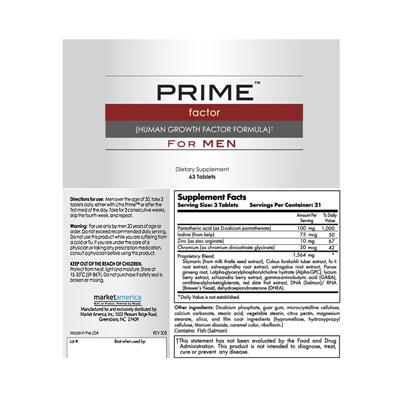
This summary is for Prime Factor (Human Growth Factor Formula) For Men by Prime
- Form
- Tablet or Pill
- Serving Size
- 3 Tablets
- Servings
- 21 per container
- Container Holds
- 63 Tablets
- Status
- No longer sold, per the NIH record
- What it isA supplement from Prime with 19 active ingredients, in tablet form.
- Active Ingredients 1 vitamin, 3 minerals, 8 plant ingredients such as Coleus forskohlii tuber, Fo Ti root and Ashwagandha root and 7 others: Pantothenic Acid 100 mgIodine 75 mcgZinc 10 mgChromium 50 mcgSilymarinColeus forskohlii tuber extractFo Ti root extractAshwagandha root extractAstragalus root extractPanax ginsengL-Alpha-Glycerylphosphorylcholine HydrateLycium berry extract 19 active ingredients. Each one can interact with drugs or cause side effects on its own, so we check every one. And 7 more, in the Supplement Facts
- Drug Interactions 1,664 drugs have a documented interaction with this supplement; the most serious is rated major. Of those, 1,172 are single drugs and 492 are combination products (two or more drugs in one), each listed under its own name. Based on the 15 of its 19 ingredients we could check. Ask your pharmacist first if you take a drug in any of these categories, the most serious of the 70 on record:
- Major · 22 drugs
- Major · 7 drugs
- Major · 2 drugs
- Moderate · 645 drugs
- Possible Side EffectsStomach upset 8 ingredientsHeadache 7 ingredientsNausea 7 ingredientsDiarrhea 5 ingredientsLoose stools 3 ingredientsDrowsiness or sleepiness 2 ingredients +35 moreCombined from 13 of its 19 active ingredients. Not studied in this exact product.
- Well documented Why
Does Prime Factor (Human Growth Factor Formula) For Men work?
It is not marketed for one specific use, so this is what its ingredients have been studied for, strongest research first:
- Zinc
- Chromium
- Iodine
- Ashwagandha
- Fibrocystic breast disease Iodine
- Zinc
These grades are for each ingredient, not this exact product, and never a promise it will work for you.
And 10 more graded uses, in what the research says- AllergensThe label says it contains fish
Who Might Consider It
- People who want it for diabetes, periodontitis, insomnia, fibrocystic breast disease or another graded use: the uses with research behind them. See each grade
More Before You Take It Show both answersHide Pregnancy and Breastfeeding The Label’s Directions
-
Pregnant or breastfeeding?
- Pregnancy Zinc
- ! When used orally in doses exceeding the UL.
- Breastfeeding Zinc
- ! When used orally in doses exceeding the UL.
- Pregnancy and Breastfeeding Iodine
- ! When used orally in doses exceeding the UL.
- Pregnancy Coleus
- ! When used orally.
- Breastfeeding Coleus
- Insufficient reliable information available; avoid using.
-
How does the label say to take it?
“Directions for use: Men over the age of 30, take 3 tablets daily, either with Ultra Prime(TM) of after the first meal of the day. Take for 3 consecutive weeks, skip the fourth week, and repeat.”
The maker’s words. Your pharmacist or doctor may advise differently.
Everything the label says
From the label dated Feb 23, 2012: 15 of its 19 active ingredients were checked against our records; the other four are not in them yet. A summary of what is known, not a grade or a test of the product. How these ratings are computed
Ask Anything About This Supplement
Name a drug you take, or ask about side effects, ingredients or pregnancy.
There’s a lot of information about this supplement on this page! Ask anything in plain English for a quick answer drawn from it.
AI answers come from this label and our own records, never the open internet. AI can make mistakes, so always check with your doctor or pharmacist. How we use AI
Ask the Pharmacist
A licensed pharmacist will answer your question by email — free, as soon as they can.
Got it — thank you!
A licensed pharmacist will answer as soon as they can. Keep an eye on your email (worth checking spam, just in case).
What’s Inside Prime Factor (Human Growth Factor Formula) For Men
19 Active Ingredients
In the order the label lists them, each with its own card below.
- Pantothenic Acid
- Iodine
- Zinc
- Chromium
- Silymarin
- Coleus forskohlii tuber extract
- Fo Ti root extract
- Ashwagandha root extract
- Astragalus root extract
- Panax ginseng
- L-Alpha-Glycerylphosphorylcholine Hydrate
- Lycium berry extract
And 7 more, each with its own card below.
The label gives an exact amount for 4 of its 19 active ingredients. The other 15 are inside one proprietary blend, “Proprietary Blend”, and the label gives one total for it, not how much of each ingredient is in it.
- 4 state an exact amount
- 15 have no amount of their own
- Proprietary Blend 1,564 mg in total · 15 ingredients, no amount for each
This rates what the label tells you, not the quality of the product.
Supplement Facts
| Amount Per Serving | % Daily Value | |
|---|---|---|
| Pantothenic Acid | 100 mg | 1000% |
| Iodine | 75 mcg | 50% |
| Zinc | 10 mg | 67% |
| Chromium | 50 mcg | 42% |
| Proprietary Blend | 1564 mg | † |
| Silymarin | † | |
| Coleus forskohlii tuber extract | † | |
| Fo Ti root extract | † | |
| Ashwagandha root extract | † | |
| Astragalus root extract | † | |
| Panax ginseng | † | |
| L-Alpha-Glycerylphosphorylcholine Hydrate | † | |
| Lycium berry extract | † | |
| Schizandra berry extract | † | |
| Gamma-Aminobutyric Acid | † | |
| Ornithine-Alpha-Ketogluterate | † | |
| Red Date fruit extract | † | |
| DNA | † | |
| RNA | † | |
| Dehydroepiandrosterone | † | |
Other ingredients: Dicalcium Phosphate, Guar Gum, Microcrystalline Cellulose, Calcium Carbonate, Stearic Acid, Vegetable Stearin, citrus pectin, Magnesium Stearate, Silica, Film Coat Ingredients
† Daily Value not established.
Daily Values for adults and children 4 or more years of age.
As the label prints it, from the NIH Dietary Supplement Label Database.
Each Ingredient and Its Drug Interactions
Tap one for more about it and its full guide. A drug can interact with this supplement through any one of them.
-
Pantothenic Acid 100 mg No known drug interactions
Form on the label: D-Calcium Pantothenate
Pantothenic acid is vitamin B5, an essential nutrient your body uses to turn food into energy.
- True deficiency is very rare because it is found in nearly all foods, and most people meet their needs through diet.
- Supplements are generally considered safe, but evidence that extra amounts treat acne, high cholesterol, or other conditions is limited.
-
Iodine 75 mcg Interacts with 23 drugs
Form on the label: Kelp
Iodine is an essential mineral your body needs to make thyroid hormones, and most people get enough from iodized salt, dairy, and seafood.
- Supplements help when you are truly deficient, but taking too much can harm the thyroid, so high-dose products should only be used under medical supervision.
The full Iodine guide: uses, dosage and safety Every Iodine drug interaction
-
Zinc 10 mg Interacts with 67 drugs
Form on the label: Zinc Arginate
Zinc is an essential mineral that your body needs for immune function, wound healing, taste, and smell.
- Most people get enough from food, but supplements can help correct or prevent a deficiency.
- Taking too much zinc for too long can cause harm, so check with a pharmacist or doctor before using high-dose supplements.
The full Zinc guide: uses, dosage and safety Every Zinc drug interaction
-
Chromium 50 mcg Interacts with 178 drugs
Form on the label: Chromium Dinicotinate Glycinate
Chromium is an essential trace mineral involved in how the body handles sugar and fat.
- Some studies suggest it may modestly help blood sugar control in certain people with type 2 diabetes, but results are mixed and the effect on weight loss is small and uncertain.
- For most healthy people who eat a varied diet, supplements are not needed; check with your pharmacist or doctor before starting.
The full Chromium guide: uses, dosage and safety Every Chromium drug interaction
-
Proprietary Blend 1564 mg 15 ingredients inside it, each checked on its own
- Silymarin
- Coleus forskohlii tuber extract 917 drugs
- Fo Ti root extract 1,259 drugs
- Ashwagandha root extract 1,373 drugs
- Astragalus root extract 208 drugs
- Panax ginseng 1,132 drugs
- L-Alpha-Glycerylphosphorylcholine Hydrate 16 drugs
- Lycium berry extract 1,002 drugs
- Schizandra berry extract 804 drugs
- Gamma-Aminobutyric Acid 419 drugs
- Ornithine-Alpha-Ketogluterate
- Red Date fruit extract 469 drugs
- DNA
- RNA
- Dehydroepiandrosterone 777 drugs
Other Ingredients (Inactive)
The capsule or tablet itself, fillers, coatings and flavors. Not part of the drug interaction check; the allergen check below reads them.
- Dicalcium Phosphate
- Guar Gum
- Microcrystalline Cellulose
- Calcium Carbonate
- Stearic Acid
- Vegetable Stearin
- Citrus pectin
- Magnesium Stearate
- Silica
- Film Coat Ingredients
Allergens in Prime Factor (Human Growth Factor Formula) For Men
The label says it contains fish.
Named on this label
- FishThe label says it contains it; in the ingredients: DNA (Salmon)
Not named in the ingredients
- Milk
- Egg
- Shellfish
- Tree nuts
- Peanuts
- Wheat or other gluten grains
- Soy
- Sesame
- The label’s allergen statement“Contains: Fish (Salmon)”
From the label text and ingredient names on file; we do not test products. With a serious allergy, check your bottle and ask the maker or your pharmacist.
What the Label Says
The maker’s own words, from the label. We do not verify or endorse them.
- FDA Statement of Identity
-
“Dietary Supplement”
- Storage
-
“Protect from heat, light and moisture. Store at 15-30°C (59-86°F).”
- General statements
-
“Made in the USA”
“marketamerica Built on Product. Powered by People.”
- General
-
“REV 308”
The Prime Factor (Human Growth Factor Formula) For Men Label on File
The label scan on file at the NIH Dietary Supplement Label Database, dated February 2012. Always read the label on the bottle you have.
Product Facts
- Brand
- Prime
- Net contents
- 63 Tablets
- Market status
- Off market
- Date entered into DSLD
- Feb 23, 2012
- DSLD ID
- 6182
- Product type
- Other Combinations
- Supplement form
- Tablet or Pill
- Dietary claims / uses
- All Other, Structure/Function
- Intended target group(s)
- Adult Male (18-50 Years), Seniors/Mature (>50 Years) - Men ONLY
Is this label outdated? Report a formula or label change and our pharmacy team will review it.
HelloPharmacist Score Prime Factor (Human Growth Factor Formula) For Men
Up to 10 points for research, amount, label and outside testing. Not a safety rating. How this one adds up
for hypogeusia
It is not marketed for one specific use, and only 6 of its 19 ingredients have research behind them. The strongest is some research on zinc for hypogeusia.
- Research3 of 5 points
- Amount2 of 2 points
- Label0 of 2 points
- Outside testing0 of 1 point
Major drug interactions. The score does not count drug interactions. Check them against any drugs you take. See them
How It Earns Its 5
Score: 5 out of 10. Preliminary for hypogeusia.
6 of its 19 ingredients have research behind them. The best graded use of each:
- Zinc: Possibly Effective for hypogeusia
- Iodine: Possibly Effective for periodontitis
- Chromium: Possibly Effective for diabetes
- Ashwagandha: Possibly Effective for generalized anxiety disorder (GAD)
- Panax ginseng: Possibly Effective for cognitive function
- DHEA: Possibly Effective for aging skin
With no one use on the label, research can earn up to 3 of 5 points. If at least half its ingredients had research, it could earn 4. Grades come from the Natural Medicines database, which we license.
3 of 5 points
Amount
We compared 4 of its ingredients with other products in our database: all 4 hold a normal amount. At least half hold a normal amount, so it earns both points.
- Pantothenic acid 100 mg: a normal amount (most hold 2.5 mg to 100 mg)
- Iodine 75 mcg: a normal amount (most hold 45 mcg to 225 mcg)
- Zinc 10 mg: a normal amount (most hold 3 mg to 30 mg)
- Chromium 50 mcg: a normal amount (most hold 17.5 mcg to 400 mcg)
2 of 2 points
Label
It states the amount of four of its 19 active ingredients; 15 are inside blends that give only a total.
0 of 2 points
Outside testing
We found no mark from an outside testing program, such as USP Verified or NSF Certified, on the label we have on file.
0 of 1 point
Prime Factor (Human Growth Factor Formula) For Men Side Effects
Why this rating?
We look for three kinds of safety information on each ingredient: side effects reported in studies, a pregnancy and breastfeeding rating, and a safety write-up from our pharmacy team. All three are on file for each of the 15 ingredients we could check.
So this rates how much is known, not whether Prime Factor (Human Growth Factor Formula) For Men is right for you.
Reported with 15 of its ingredients
- Most often
- Stomach upset, headache, nausea, diarrhea, loose stools and drowsiness or sleepiness
- !Rare but serious
- Liver problems, possible changes in thyroid function and hypersensitivity reactions such as anaphylaxis See details
Side Effects, Ingredient by Ingredient
A supplement’s side effects come from its ingredients. Here is what is reported with each one.
Iodine
Most reported
- Metallic taste in the mouth
- Stomach upset, nausea, or diarrhea
- Burning in the mouth, throat, or stomach with strong liquid forms
- Headache
Zinc
Most reported
- Nausea
- Stomach upset
- Vomiting
- Metallic taste
Chromium
Most reported
- Headache
- Dizziness
- Nausea
- Stomach upset
Coleus
Most reported
- Low blood pressure
- Fast or irregular heartbeat
- Flushing
- Headache
Fo-ti
Most reported
- Loose stools
- Diarrhea
- Abdominal cramping
Ashwagandha
Most reported
- Upset stomach, nausea, or diarrhea
- Drowsiness or sleepiness
- Headache
Astragalus
Most reported
- Upset stomach
- Loose stools
- Other digestive discomfort
Panax Ginseng
Most reported
- Headache
- Nervousness, restlessness, or feeling jittery
- Upset stomach, nausea, or diarrhea
- Changes in blood pressure
Alpha-GPC
Most reported
- Headache
- Heartburn
- Nausea
- Diarrhea
Schisandra
Most reported
- Heartburn or stomach upset
- Decreased appetite
- Nausea or stomach pain
- Skin rash (uncommon)
Gamma-aminobutyric Acid (GABA)
Most reported
- Drowsiness or sleepiness
- Headache
- Upset stomach or nausea
- A brief tingling or flushing sensation
Zizyphus
Most reported
- Bloating
- Loose stools
DHEA
Most reported
- Oily skin
- Acne
- Hair loss or unwanted hair growth
Pantothenic Acid and Goji have side-effect reports, but no list of the most common ones. Read them in each guide: Pantothenic Acid, Goji.
Prime Factor (Human Growth Factor Formula) For Men Warnings: Who Should Be Careful
Prime Factor (Human Growth Factor Formula) For Men has 19 active ingredients, and each can carry warnings of its own. We checked the 15 in our ingredient guides, and each warning below names the ingredient it comes from. Silymarin, Ornithine-Alpha-Ketogluterate and Dna and one more are not in our guides yet, so ask your pharmacist about them. If any of these apply to you, talk to your doctor or pharmacist before you start it.
- Pantothenic Acid3 warnings below
- Iodine2 warnings below
- Zinc2 warnings below
- Chromium3 warnings below
- Coleus3 warnings below
- Fo-ti1 warning below
- Ashwagandha2 warnings below
- Astragalus2 warnings below
- Panax Ginseng1 warning below
- Alpha-GPC3 warnings below
- Goji2 warnings below
- Schisandra2 warnings below
- Gamma-aminobutyric Acid (GABA)3 warnings below
- Zizyphus3 warnings below
- DHEA3 warnings below
- SilymarinNot in our guides yet
- Ornithine-Alpha-KetogluterateNot in our guides yet
- DnaNot in our guides yet
- RnaNot in our guides yet
-
Bleeding Problems or Surgery
- ColeusPeople with bleeding disorders or those scheduled for surgery should also use caution, as forskolin may affect blood clotting.
- AshwagandhaPeople with autoimmune conditions or those scheduled for surgery should also check with their doctor first.
- Alpha-GPCIf you have any medical condition, are scheduled for surgery, or take other medicines or supplements, check with your pharmacist or doctor before starting.
- SchisandraPeople scheduled for surgery and those taking prescription medicines should also check with a pharmacist before use.
-
Diabetes or Low Blood Sugar
- ChromiumPeople with diabetes should monitor their blood sugar closely, since chromium may affect blood sugar levels.
- GojiIf you have diabetes, low blood pressure, or take prescription medicines, talk with your pharmacist or doctor before using goji supplements.
- ZizyphusPeople with diabetes should be aware that the dried fruit is high in natural sugars.
-
Blood Pressure
- ColeusBecause forskolin can lower blood pressure and may affect the heart, people with low blood pressure, heart disease, or those taking blood pressure or heart medicines should be especially careful and check with a healthcare provider first.
- Gamma-aminobutyric Acid (GABA)Use extra caution if you take medicines or supplements that cause drowsiness or affect your nervous system, or if you have low blood pressure.
-
Liver Disease
- ChromiumStill, taking high doses or using it for a long time may carry risks, and some case reports have linked very high intakes to kidney or liver problems.
- ChromiumPeople with kidney disease or liver disease should be especially careful and talk to a doctor before using chromium.
- Fo-tiPeople with liver disease, or those who take other products that can affect the liver, should be especially careful and talk with a healthcare provider first.
- SchisandraUse extra caution and talk to a healthcare provider if you have liver disease, acid reflux or stomach ulcers, epilepsy, or a condition affected by hormones.
- DHEAPeople with liver disease, heart conditions, mood disorders, or polycystic ovary syndrome (PCOS) should be cautious and speak with a healthcare provider first.
-
Kidney Disease or Kidney Stones
- Pantothenic AcidPeople with kidney problems or other chronic health conditions should talk with a pharmacist or doctor before taking high-dose supplements.
-
Heart Conditions
- Alpha-GPCPeople with heart disease or stroke history should be especially careful and talk to a doctor first.
-
Stomach or Bowel Problems
- ZincPeople with digestive disorders, those who drink heavily, and people on restrictive diets are more likely to be low in zinc and may need supplements.
-
Thyroid Conditions
- IodinePeople with existing thyroid conditions such as Hashimoto's disease, Graves' disease, thyroid nodules, or thyroid cancer should be especially careful and only take iodine under a doctor's guidance.
- IodineAlways talk to a pharmacist or doctor before starting an iodine supplement, especially if you take high doses or have a thyroid condition.
- AshwagandhaUse caution if you have a thyroid condition, since ashwagandha may affect thyroid hormone levels.
-
Autoimmune Conditions
- AstragalusPeople with autoimmune conditions (such as lupus, rheumatoid arthritis, or multiple sclerosis) should be cautious, because astragalus may affect immune activity.
-
Hormone-Sensitive Conditions
- DHEAPeople with hormone-sensitive conditions — such as breast, ovarian, uterine, or prostate cancers — should generally avoid it, since DHEA can raise estrogen or testosterone levels.
-
Allergies
- GojiBecause goji is in the nightshade family, people with allergies to other foods or pollens may rarely react to it.
- ZizyphusThose with allergies to jujube or related plants should avoid it.
-
Children
- Panax GinsengGinseng is generally not recommended for children unless directed by a doctor.
- Alpha-GPCChildren should not use it unless directed by a healthcare provider.
-
If You Take Other Drugs
- Pantothenic AcidIf you have a medical condition or take medications, it is always wise to check first.
- AstragalusThose who have had an organ transplant or who take medicines that suppress the immune system should also avoid it unless a doctor approves.
- ZizyphusAlways check with your pharmacist or doctor before starting any new supplement, especially if you have a health condition or take other medicines.
-
Other Cautions
- Pantothenic AcidThere is not enough safety information on very high-dose supplements, so avoid those unless your doctor recommends them.
- ZincAnyone considering high-dose or long-term zinc should talk to a pharmacist or doctor first.
- Gamma-aminobutyric Acid (GABA)People with existing medical conditions should check with a healthcare provider first.
- Gamma-aminobutyric Acid (GABA)Choose products from reputable brands, ideally with third-party testing, and always talk with your pharmacist or doctor before starting.
- DHEADHEA is banned by many sports organizations, so athletes should avoid it.
-
What the Label Warns
- “KEEP OUT OF THE REACH OF CHILDREN.”
- “Do not purchase if safety seal is broken or missing.”
- “If you are under the care of a physician or taking any prescription medication, consult a physician before using this product.”
- “Warning: For use only by men 30 years of age or older. Do not exceed recommended daily serving. Do not use this product while you are suffering from a cold or flu.”
The maker’s wording, from the product label.
-
Pregnant or Breastfeeding
Each ingredient’s rating for pregnancy and for breastfeeding, and what it covers.
Pregnancy
-
When used orally and appropriately.
Zinc is safe in amounts that do not exceed the tolerable upper intake level (UL) of 34 mg daily during pregnancy in those 14-18 years of age and 40 mg daily in those 19-50 years of age.
-
When used orally in doses exceeding the UL.
Breastfeeding
-
When used orally and appropriately.
Zinc is safe in amounts that do not exceed the tolerable upper intake level (UL) of 34 mg daily during lactation in those 14-18 years of age, and 40 mg daily for those 19-50 years of age.
-
When used orally in doses exceeding the UL.
Higher doses can cause zinc-induced copper deficiency in nursing infants.
Pregnancy and Breastfeeding The record rates both the same
-
When used orally and appropriately.
Iodine is safe in amounts that do not exceed the tolerable upper intake level (UL) of 1100 mcg daily in those 18 years and older or 900 mcg daily in those 14-18 years of age.
Iodine needs increase during pregnancy and lactation and adequate intakes should begin as soon as a patient is aware of the pregnancy, or earlier in areas of potential deficiency.
-
When used orally in doses exceeding the UL.
Higher intake can cause thyroid dysfunction.
2 more points on this rating
- Also, higher intakes during pregnancy cause increased iodine levels in breast milk and infant blood samples.
- Higher iodine intake during pregnancy has also been associated with an increased risk of congenital hypothyroidism and reduced mental and physical development in the offspring.
1 more rating for Iodine used another way
This supplement is taken by mouth. This rating is for Iodine given another way.
-
When used topically as a 2% solution.
Iodine is an FDA-approved prescription product.
Show 13 more ingredients
Pregnancy
-
When used orally.
Evidence from animal research suggests that high doses of coleus can inhibit embryo implantation and/or delay fetal development; avoid using.
Breastfeeding
-
Insufficient reliable information available; avoid using.
Pregnancy
-
When used orally.
Fo-ti contains anthraquinone constituents, which can exert a stimulant laxative effect.
3 more points on this rating
- Bulk-forming or emollient laxatives are preferred in pregnancy.
- Fo-ti has also been linked to several cases of liver damage.
- There is insufficient reliable information available about the safety of fo-ti when used topically during pregnancy.
Breastfeeding
-
When used orally.
Anthraquinone constituents can cross into breast milk and might cause loose stools in some breast-fed infants.
2 more points on this rating
- Fo-ti has also been linked to several cases of liver damage.
- There is insufficient reliable information available about the safety of fo-ti when used topically during lactation.
Pregnancy
-
When used orally.
Ginsenoside Rb1, an active constituent of Panax ginseng, has teratogenic effects in animal models; avoid using.
Breastfeeding
-
Insufficient reliable information available; avoid using.
Pregnancy
-
When used orally.
Some evidence suggests schisandra fruit is a uterine stimulant.
Breastfeeding
-
Insufficient reliable information available; avoid using.
Pregnancy and Breastfeeding The record rates both the same
-
When used orally.
DHEA can cause higher than normal androgen levels, which might adversely affect pregnancy or a nursing infant.
Pregnancy
-
There is insufficient reliable information available about the safety of oral ashwagandha when used during pregnancy.
Historically, ashwagandha has been linked to abortifacient effects; however, there are no reliable case reports of harm in pregnancy.
2 more points on this rating
- Although one clinical study in pregnant females in their second trimester reported no adverse events with use of ashwagandha 300 mg twice daily for 12 weeks, abortifacient activity, developmental outcomes, and fetal toxicity were not assessed.
- Until more is known about the safety of ashwagandha, avoid using during pregnancy.
Breastfeeding
-
Insufficient reliable information available; avoid using.
Pregnancy and Breastfeeding The record rates both the same
-
There is insufficient reliable information in humans.
However, astragaloside, a constituent of astragalus, has maternal and fetal toxic effects in animals.
Avoid using.
Pregnancy and Breastfeeding The record rates both the same
-
Insufficient reliable information available; avoid using.
Pregnancy and Breastfeeding The record rates both the same
-
Insufficient reliable information available.
Some animal research shows that goji fruit may stimulate the uterus.
2 more points on this rating
- However, this has not been reported in humans.
- Until more is known, avoid using during pregnancy or lactation.
Gamma-aminobutyric Acid (GABA)
Pregnancy and Breastfeeding The record rates both the same
-
Insufficient reliable information available; avoid using.
Pregnancy
-
When used orally and appropriately.
The daily adequate intake (AI) during pregnancy is 6 mg.
Breastfeeding
-
When used orally and appropriately.
The daily adequate intake (AI) during lactation is 7 mg.
Pregnancy
-
When used orally and appropriately in amounts not exceeding adequate intake (AI) levels.
The AI for pregnancy is 28 mcg daily for those 14-18 years of age and 30 mcg daily for those 19-50 years of age.
-
When used orally in amounts exceeding the adequate intake (AI) levels.
There is some evidence that patients with gestational diabetes can safely use chromium in doses of 4-8 mcg/kg; however, patients should not take chromium supplements during pregnancy without medical supervision.
Breastfeeding
-
When used orally and appropriately in amounts not exceeding adequate intake (AI) levels.
The AI for lactation is 44 mcg daily for those 14-18 years of age and 45 mcg daily for those 19-50 years of age.
2 more points on this rating
- Chromium supplements do not seem to increase normal chromium concentration in human breast milk.
- There is insufficient reliable information available about the safety of chromium when used in higher amounts while breast-feeding.
Pregnancy and Breastfeeding The record rates both the same
-
When zizyphus fruit is consumed in the amounts typically found in foods.
There is insufficient reliable information available about the safety of zizyphus fruit in amounts greater than those found in foods; avoid using.
Ratings and the words beside them are from the Natural Medicines database, which we license.
-
Rare but Serious Side Effects
-
!
Pantothenic Acid
Serious reactions are uncommon.
-
!
Iodine
More serious effects from too much iodine include thyroid problems (either overactive or underactive thyroid), thyroid swelling, and rarely allergic reactions.
Hypersensitivity reactions such as anaphylaxis and angioedema.
-
!
Zinc
Very high single doses can cause more serious stomach symptoms.
Orally: There have been cases of acute renal tubular necrosis, interstitial nephritis, neurological complications, severe vomiting, and sideroblastic anemia after zinc overdose.
-
!
Chromium
Rare but more serious problems, such as kidney or liver injury, have been reported mostly with high doses.
Orally: Rare cases of kidney and liver damage, rhabdomyolysis, and thrombocytopenia have been reported.
-
!
Fo-ti
More seriously, Fo-ti has been associated with liver injury, which is rare but potentially serious.
Orally: Hepatotoxicity with processed or unprocessed fo-ti.
-
!
Ashwagandha
Rare but serious effects include liver problems and possible changes in thyroid function.
Orally: Some case reports raise concerns about acute hepatitis, acute liver failure, hepatic encephalopathy, the need for liver transplantation, and death due to liver failure with ashwagandha treatment.
-
!
Astragalus
Allergic reactions are possible, especially in people sensitive to plants in the legume (bean) family.
-
!
Panax Ginseng
Rarely, more serious reactions such as allergic reactions can occur.
Orally: Anaphylaxis, arrhythmia, ischemia, Stevens-Johnson syndrome.
-
!
Alpha-GPC
Serious side effects appear to be uncommon, but because long-term and large-scale data are limited, not all possible risks are known.
Orally: Stroke.
-
!
Goji
Allergic reactions are uncommon but possible, and can range from mild itching to more serious swelling or breathing problems.
-
!
Schisandra
Serious reactions are rare.
-
!
Gamma-aminobutyric Acid (GABA)
Serious side effects are not commonly reported, but high doses and long-term use have not been well studied.
-
!
Zizyphus
Allergic reactions are possible but uncommon.
-
!
DHEA
Orally: Possible increased risk for cardiovascular events and various types of cancer.
When to get help: a serious allergic reaction, with trouble breathing or swelling of the face, lips or throat, needs emergency care: call 911. For any other side effect that worries you, call your doctor or pharmacist.
These reports describe each ingredient, not studies of this exact product. Not medical advice: a side effect you notice after starting a supplement is worth a word with your pharmacist or doctor.
Prime Factor (Human Growth Factor Formula) For Men Drug Interactions
We checked all 19 active ingredients in this supplement against every drug in our records. A drug can interact with it through any one of them. Four of them are not in our interaction records yet.
A major interaction on record
3 of 3, on a scale from Minor or none to Major.Why this rating?
We rate this by the most serious interaction on record, not by how many there are. For Iodine, Zizyphus, DHEA, Schisandra and Gamma-aminobutyric Acid (GABA), the most serious is rated major, which means the combination is best avoided, or used only under close supervision. Some involve kinds of drugs where a small change can matter, such as blood thinners, transplant drugs and diabetes drugs.
1,665 drugs are on the full list. What matters is whether one you take is on it, so check yours with the interaction checker on this page.
14 of its 19 active ingredients have drug interactions on record. The ones below matter most.
- Interacts with
- 1,373 drugs
- Most serious
- Moderate
- Most of its records involve Cytochrome P450 3A4 (CYP3A4) Substrates, Hepatotoxic Drugs and CNS Depressants.
- Interacts with
- 1,259 drugs
- Most serious
- Moderate
- Most of its records involve Cytochrome P450 3A4 (CYP3A4) Substrates, Hepatotoxic Drugs and Cytochrome P450 2D6 (CYP2D6) Substrates.
- Interacts with
- 1,132 drugs
- Most serious
- Moderate
- Most of its records involve Cytochrome P450 3A4 (CYP3A4) Substrates, Cytochrome P450 2D6 (CYP2D6) Substrates and Stimulant Drugs.
Show three more ingredients
- Interacts with
- 1,002 drugs
- Most serious
- Major
- Most of its records involve Cytochrome P450 3A4 (CYP3A4) Substrates, Cytochrome P450 2D6 (CYP2D6) Substrates and Antihypertensive Drugs.
- Interacts with
- 917 drugs
- Most serious
- Major
- Most of its records involve Cytochrome P450 3A4 (CYP3A4) Substrates, Antihypertensive Drugs and Anticoagulant/Antiplatelet Drugs.
- Interacts with
- 804 drugs
- Most serious
- Moderate
- Most of its records involve Cytochrome P450 3A4 (CYP3A4) Substrates, P-glycoprotein Substrates and Cytochrome P450 2C9 (CYP2C9) Substrates.
And eight more ingredients with records, each in the cards below.
Why Prime Factor (Human Growth Factor Formula) For Men Interacts, Ingredient by Ingredient
A product interacts through its ingredients. Each card: how many drugs, the most serious rating, and the kinds of drugs it affects most (tap a kind for what it means).
The ingredients driving the most interactions
-
Ashwagandha root extract 1,373 drugs
Most serious: Moderate10 interaction records on file
The kinds of drugs it affects most
- 645 drugs
- 372 drugs
- 248 drugs
- 186 drugs
Every Ashwagandha drug interaction, 10 records The Ashwagandha records cite 32 references, listed in the Ashwagandha guide.
-
Fo Ti root extract 1,259 drugs
Most serious: Moderate17 interaction records on file
The kinds of drugs it affects most
- 645 drugs
- 372 drugs
- 193 drugs
- 186 drugs
Every Fo-ti drug interaction, 17 records The Fo-ti records cite 28 references, listed in the Fo-ti guide.
-
Panax ginseng 1,132 drugs
Most serious: Moderate20 interaction records on file
The kinds of drugs it affects most
- 645 drugs
- 193 drugs
- 172 drugs
- 161 drugs
Every Panax Ginseng drug interaction, 20 records The Panax Ginseng records cite 65 references, listed in the Panax Ginseng guide.
-
Lycium berry extract 1,002 drugs
Most serious: Major8 interaction records on file
The kinds of drugs it affects most
- 645 drugs
- 193 drugs
- 172 drugs
- 112 drugs
Every Goji drug interaction, 8 records The Goji records cite 14 references, listed in the Goji guide.
-
Coleus forskohlii tuber extract 917 drugs
Most serious: Major7 interaction records on file
The kinds of drugs it affects most
- 645 drugs
- 172 drugs
- 122 drugs
- 112 drugs
Every Coleus drug interaction, 7 records The Coleus records cite 16 references, listed in the Coleus guide.
-
Schizandra berry extract 804 drugs
Most serious: Moderate12 interaction records on file
The kinds of drugs it affects most
- 645 drugs
- 202 drugs
- 112 drugs
- 72 drugs
Every Schisandra drug interaction, 12 records The Schisandra records cite 26 references, listed in the Schisandra guide.
-
Dehydroepiandrosterone 777 drugs
Most serious: Moderate10 interaction records on file
The kinds of drugs it affects most
- 645 drugs
- 122 drugs
- 41 drugs
- 41 drugs
Every DHEA drug interaction, 10 records The DHEA records cite 98 references, listed in the DHEA guide.
-
Red Date fruit extract 469 drugs
Most serious: Moderate3 interaction records on file
The kinds of drugs it affects most
- 248 drugs
- 186 drugs
- 86 drugs
Every Zizyphus drug interaction, 3 records The Zizyphus records cite 15 references, listed in the Zizyphus guide.
-
Gamma-Aminobutyric Acid 419 drugs
Most serious: Moderate2 interaction records on file
The kinds of drugs it affects most
- 248 drugs
- 172 drugs
Every Gamma-aminobutyric Acid (GABA) drug interaction, 2 records The Gamma-aminobutyric Acid (GABA) records cite 12 references, listed in the Gamma-aminobutyric Acid (GABA) guide.
-
Astragalus root extract 208 drugs
Most serious: Moderate4 interaction records on file
The kinds of drugs it affects most
- 121 drugs
- 86 drugs
- Cyclophosphamide 1 drug
- 1 drug
Every Astragalus drug interaction, 4 records The Astragalus records cite 13 references, listed in the Astragalus guide.
-
Chromium 178 drugs
Most serious: Moderate5 interaction records on file
The kinds of drugs it affects most
- 89 drugs
- 86 drugs
- 35 drugs
- 13 drugs
Every Chromium drug interaction, 5 records The Chromium records cite 54 references, listed in the Chromium guide.
-
Zinc 67 drugs
Most serious: Moderate10 interaction records on file
The kinds of drugs it affects most
- 21 drugs
- 20 drugs
- Bictegravir/Emtricitabine/Tenofovir Alafenamide (Biktarvy) 13 drugs
- Ritonavir (Norvir) 7 drugs
Every Zinc drug interaction, 10 records The Zinc records cite 88 references, listed in the Zinc guide.
-
Iodine 23 drugs
Most serious: Moderate4 interaction records on file
The kinds of drugs it affects most
- 16 drugs
- Antithyroid Drugs 5 drugs
- Amiodarone (Cordarone) 1 drug
- 1 drug
Every Iodine drug interaction, 4 records The Iodine records cite 29 references, listed in the Iodine guide.
-
L-Alpha-Glycerylphosphorylcholine Hydrate 16 drugs
Most serious: Minor1 interaction record on file
The kinds of drugs it affects most
- Scopolamine (Transderm Scop) 16 drugs
Every Alpha-GPC drug interaction, 1 record The Alpha-GPC records cite 4 references, listed in the Alpha-GPC guide.
The Breakdown by Severity
Each drug counted once, at its most serious rating. Tap a tile to list those drugs.
Find Your Drug
Type a drug or brand name to see whether it is on the list.
- Only drugs with a documented interaction are listed, the most serious first.
- A drug with no known interaction is not listed, but searching its name tells you so.
- Open a drug to see which ingredient is responsible. Of those, 1,172 are single drugs and 492 are combination products (two or more drugs in one), each listed under its own name.
-
WarfarinWarfarin Major
The 8 ingredients responsible:
-
Lycium Berry Extract Major Warfarin is in these Cytochrome P450 2C19 (CYP2C19) Substrates, Cytochrome P450 2C9 (CYP2C9) Substrates, Cytochrome P450 3A4 (CYP3A4) Substrates categories.
Theoretically, goji berry might inhibit CYP2C19 and reduce metabolism of CYP2C19 substrates.
The full Lycium Berry Extract + Warfarin interaction -
Coleus Forskohlii Tuber Extract Moderate Warfarin is in these Anticoagulant/Antiplatelet Drugs, Cytochrome P450 2C9 (CYP2C9) Substrates, Cytochrome P450 3A4 (CYP3A4) Substrates categories.
Theoretically, concomitant use of coleus and anticoagulant or antiplatelet drugs might increase the risk of bruising and bleeding.
The full Coleus Forskohlii Tuber Extract + Warfarin interaction -
Schizandra Berry Extract Moderate Warfarin is in these Cytochrome P450 3A4 (CYP3A4) Substrates, Cytochrome P450 2C19 (CYP2C19) Substrates, Cytochrome P450 2C9 (CYP2C9) Substrates categories.
Schisandra can increase the levels and clinical effects of drugs metabolized by CYP3A4.
The full Schizandra Berry Extract + Warfarin interaction -
Fo Ti Root Extract Moderate Warfarin is in these Cytochrome P450 2C19 (CYP2C19) Substrates, Anticoagulant/Antiplatelet Drugs, Cytochrome P450 1A2 (CYP1A2) Substrates and 3 more categories.
Theoretically, fo-ti may increase the levels and clinical effects of drugs metabolized by CYP2C19.
The full Fo Ti Root Extract + Warfarin interaction -
Dehydroepiandrosterone Moderate Warfarin is in these Anticoagulant/Antiplatelet Drugs, Cytochrome P450 3A4 (CYP3A4) Substrates categories.
Theoretically, DHEA might increase the risk of bleeding if used with anticoagulant or antiplatelet drugs.
The full Dehydroepiandrosterone + Warfarin interaction -
Red Date Fruit Extract Moderate Warfarin is in the Cytochrome P450 1A2 (CYP1A2) Substrates category.
Theoretically, zizyphus might decrease the levels and clinical effects of drugs metabolized by CYP1A2.
The full Red Date Fruit Extract + Warfarin interaction -
Panax Ginseng Moderate Warfarin is in these Cytochrome P450 3A4 (CYP3A4) Substrates, Anticoagulant/Antiplatelet Drugs categories.
Panax ginseng might affect the clearance of warfarin.
The full Panax Ginseng + Warfarin interaction -
Ashwagandha Root Extract Minor Warfarin is in these Cytochrome P450 3A4 (CYP3A4) Substrates, Cytochrome P450 1A2 (CYP1A2) Substrates categories.
Theoretically, ashwagandha might decrease the levels and clinical effects of CYP3A4 substrates.
The full Ashwagandha Root Extract + Warfarin interaction
-
-
AmlodipineNorliqva Major
The 8 ingredients responsible:
-
Coleus Forskohlii Tuber Extract Major Amlodipine is in these Antihypertensive Drugs, Calcium Channel Blockers, Cytochrome P450 3A4 (CYP3A4) Substrates categories.
Theoretically, combining coleus with antihypertensive drugs might cause additive blood pressure lowering effects and increase the risk of hypotension.
The full Coleus Forskohlii Tuber Extract + Amlodipine interaction -
Lycium Berry Extract Moderate Amlodipine is in these Antihypertensive Drugs, Cytochrome P450 3A4 (CYP3A4) Substrates categories.
Theoretically, concomitant use of goji root bark, but not goji fruit, with antihypertensive drugs might have additive effects.
The full Lycium Berry Extract + Amlodipine interaction -
Panax Ginseng Moderate Amlodipine is in the Cytochrome P450 3A4 (CYP3A4) Substrates category.
Theoretically, Panax ginseng might increase or decrease levels of drugs metabolized by CYP3A4.
The full Panax Ginseng + Amlodipine interaction -
Dehydroepiandrosterone Moderate Amlodipine is in the Cytochrome P450 3A4 (CYP3A4) Substrates category.
Theoretically, DHEA might increase the levels of drugs metabolized by CYP3A4.
The full Dehydroepiandrosterone + Amlodipine interaction -
Fo Ti Root Extract Moderate Amlodipine is in the Cytochrome P450 3A4 (CYP3A4) Substrates category.
Theoretically, fo-ti might increase the levels and clinical effects of drugs metabolized by CYP3A4.
The full Fo Ti Root Extract + Amlodipine interaction -
Ashwagandha Root Extract Moderate Amlodipine is in these Cytochrome P450 3A4 (CYP3A4) Substrates, Antihypertensive Drugs categories.
Theoretically, ashwagandha might decrease the levels and clinical effects of CYP3A4 substrates.
The full Ashwagandha Root Extract + Amlodipine interaction -
Gamma-aminobutyric Acid Moderate Amlodipine is in the Antihypertensive Drugs category.
Theoretically, taking GABA with antihypertensive drugs might increase the risk of hypotension.
The full Gamma-aminobutyric Acid + Amlodipine interaction -
Schizandra Berry Extract Moderate Amlodipine is in the Cytochrome P450 3A4 (CYP3A4) Substrates category.
Schisandra can increase the levels and clinical effects of drugs metabolized by CYP3A4.
The full Schizandra Berry Extract + Amlodipine interaction
-
-
Warfarin SodiumCoumadin, Panwarfin, Sofarin Major
The 8 ingredients responsible:
-
Lycium Berry Extract Major Warfarin Sodium is in these Cytochrome P450 2C19 (CYP2C19) Substrates, Cytochrome P450 2C9 (CYP2C9) Substrates, Cytochrome P450 3A4 (CYP3A4) Substrates categories.
Goji can increase the effects of warfarin and possibly increase the risk of bleeding.
The full Lycium Berry Extract + Warfarin Sodium interaction -
Panax Ginseng Moderate Warfarin Sodium is in these Anticoagulant/Antiplatelet Drugs, Cytochrome P450 3A4 (CYP3A4) Substrates categories.
Panax ginseng might affect the clearance of warfarin.
The full Panax Ginseng + Warfarin Sodium interaction -
Schizandra Berry Extract Moderate Warfarin Sodium is in these Cytochrome P450 2C19 (CYP2C19) Substrates, Cytochrome P450 2C9 (CYP2C9) Substrates, Cytochrome P450 3A4 (CYP3A4) Substrates categories.
Theoretically, schisandra might increase the levels and clinical effects of CYP2C19 substrates.
The full Schizandra Berry Extract + Warfarin Sodium interaction -
Red Date Fruit Extract Moderate Warfarin Sodium is in the Cytochrome P450 1A2 (CYP1A2) Substrates category.
Theoretically, zizyphus might decrease the levels and clinical effects of drugs metabolized by CYP1A2.
The full Red Date Fruit Extract + Warfarin Sodium interaction -
Dehydroepiandrosterone Moderate Warfarin Sodium is in these Anticoagulant/Antiplatelet Drugs, Cytochrome P450 3A4 (CYP3A4) Substrates categories.
Theoretically, DHEA might increase the risk of bleeding if used with anticoagulant or antiplatelet drugs.
The full Dehydroepiandrosterone + Warfarin Sodium interaction -
Coleus Forskohlii Tuber Extract Moderate Warfarin Sodium is in these Cytochrome P450 2C9 (CYP2C9) Substrates, Cytochrome P450 3A4 (CYP3A4) Substrates, Anticoagulant/Antiplatelet Drugs categories.
Theoretically, taking coleus may affect drugs metabolized by CYP2C9 and increase the risk of adverse effects or reduce the effectiveness.
The full Coleus Forskohlii Tuber Extract + Warfarin Sodium interaction -
Fo Ti Root Extract Moderate Warfarin Sodium is in these Cytochrome P450 2C19 (CYP2C19) Substrates, Cytochrome P450 2C8 (CYP2C8) Substrates, Cytochrome P450 1A2 (CYP1A2) Substrates and 3 more categories.
Theoretically, fo-ti may increase the levels and clinical effects of drugs metabolized by CYP2C19.
The full Fo Ti Root Extract + Warfarin Sodium interaction -
Ashwagandha Root Extract Minor Warfarin Sodium is in these Cytochrome P450 1A2 (CYP1A2) Substrates, Cytochrome P450 3A4 (CYP3A4) Substrates categories.
Theoretically, ashwagandha might decrease the levels and clinical effects of CYP1A2 substrates.
The full Ashwagandha Root Extract + Warfarin Sodium interaction
-
-
Amlodipine BesylateNorvasc Major
The 8 ingredients responsible:
-
Coleus Forskohlii Tuber Extract Major Amlodipine Besylate is in these Antihypertensive Drugs, Calcium Channel Blockers, Cytochrome P450 3A4 (CYP3A4) Substrates categories.
Theoretically, combining coleus with antihypertensive drugs might cause additive blood pressure lowering effects and increase the risk of hypotension.
The full Coleus Forskohlii Tuber Extract + Amlodipine Besylate interaction -
Ashwagandha Root Extract Moderate Amlodipine Besylate is in these Antihypertensive Drugs, Cytochrome P450 3A4 (CYP3A4) Substrates categories.
Theoretically, taking ashwagandha with antihypertensive drugs might increase the risk of hypotension.
The full Ashwagandha Root Extract + Amlodipine Besylate interaction -
Schizandra Berry Extract Moderate Amlodipine Besylate is in the Cytochrome P450 3A4 (CYP3A4) Substrates category.
Schisandra can increase the levels and clinical effects of drugs metabolized by CYP3A4.
The full Schizandra Berry Extract + Amlodipine Besylate interaction -
Gamma-aminobutyric Acid Moderate Amlodipine Besylate is in the Antihypertensive Drugs category.
Theoretically, taking GABA with antihypertensive drugs might increase the risk of hypotension.
The full Gamma-aminobutyric Acid + Amlodipine Besylate interaction -
Lycium Berry Extract Moderate Amlodipine Besylate is in these Cytochrome P450 3A4 (CYP3A4) Substrates, Antihypertensive Drugs categories.
Theoretically, goji berry might inhibit CYP3A4 and reduce metabolism of CYP3A4 substrates.
The full Lycium Berry Extract + Amlodipine Besylate interaction -
Dehydroepiandrosterone Moderate Amlodipine Besylate is in the Cytochrome P450 3A4 (CYP3A4) Substrates category.
Theoretically, DHEA might increase the levels of drugs metabolized by CYP3A4.
The full Dehydroepiandrosterone + Amlodipine Besylate interaction -
Fo Ti Root Extract Moderate Amlodipine Besylate is in the Cytochrome P450 3A4 (CYP3A4) Substrates category.
Theoretically, fo-ti might increase the levels and clinical effects of drugs metabolized by CYP3A4.
The full Fo Ti Root Extract + Amlodipine Besylate interaction -
Panax Ginseng Moderate Amlodipine Besylate is in the Cytochrome P450 3A4 (CYP3A4) Substrates category.
Theoretically, Panax ginseng might increase or decrease levels of drugs metabolized by CYP3A4.
The full Panax Ginseng + Amlodipine Besylate interaction
-
-
Amlodipine BenzoateKaterzia Major
The 8 ingredients responsible:
-
Coleus Forskohlii Tuber Extract Major Amlodipine Benzoate is in these Cytochrome P450 3A4 (CYP3A4) Substrates, Calcium Channel Blockers, Antihypertensive Drugs categories.
Theoretically, taking coleus might decrease serum levels of drugs metabolized by CYP3A4.
The full Coleus Forskohlii Tuber Extract + Amlodipine Benzoate interaction -
Schizandra Berry Extract Moderate Amlodipine Benzoate is in the Cytochrome P450 3A4 (CYP3A4) Substrates category.
Schisandra can increase the levels and clinical effects of drugs metabolized by CYP3A4.
The full Schizandra Berry Extract + Amlodipine Benzoate interaction -
Gamma-aminobutyric Acid Moderate Amlodipine Benzoate is in the Antihypertensive Drugs category.
Theoretically, taking GABA with antihypertensive drugs might increase the risk of hypotension.
The full Gamma-aminobutyric Acid + Amlodipine Benzoate interaction -
Fo Ti Root Extract Moderate Amlodipine Benzoate is in the Cytochrome P450 3A4 (CYP3A4) Substrates category.
Theoretically, fo-ti might increase the levels and clinical effects of drugs metabolized by CYP3A4.
The full Fo Ti Root Extract + Amlodipine Benzoate interaction -
Panax Ginseng Moderate Amlodipine Benzoate is in the Cytochrome P450 3A4 (CYP3A4) Substrates category.
Theoretically, Panax ginseng might increase or decrease levels of drugs metabolized by CYP3A4.
The full Panax Ginseng + Amlodipine Benzoate interaction -
Lycium Berry Extract Moderate Amlodipine Benzoate is in these Antihypertensive Drugs, Cytochrome P450 3A4 (CYP3A4) Substrates categories.
Theoretically, concomitant use of goji root bark, but not goji fruit, with antihypertensive drugs might have additive effects.
The full Lycium Berry Extract + Amlodipine Benzoate interaction -
Dehydroepiandrosterone Moderate Amlodipine Benzoate is in the Cytochrome P450 3A4 (CYP3A4) Substrates category.
Theoretically, DHEA might increase the levels of drugs metabolized by CYP3A4.
The full Dehydroepiandrosterone + Amlodipine Benzoate interaction -
Ashwagandha Root Extract Moderate Amlodipine Benzoate is in these Antihypertensive Drugs, Cytochrome P450 3A4 (CYP3A4) Substrates categories.
Theoretically, taking ashwagandha with antihypertensive drugs might increase the risk of hypotension.
The full Ashwagandha Root Extract + Amlodipine Benzoate interaction
-
-
DiltiazemAdizem-SR, Adizem-XL, Angitil SR, Angitil XL, Calcicard CR and 24 more Major
The 8 ingredients responsible:
-
Coleus Forskohlii Tuber Extract Major Diltiazem is in these Calcium Channel Blockers, Cytochrome P450 3A4 (CYP3A4) Substrates, Antihypertensive Drugs categories.
Theoretically, combining coleus with calcium channel blockers might increase the coronary vasodilatory effects.
The full Coleus Forskohlii Tuber Extract + Diltiazem interaction -
Ashwagandha Root Extract Moderate Diltiazem is in these Cytochrome P450 3A4 (CYP3A4) Substrates, Antihypertensive Drugs categories.
Theoretically, ashwagandha might decrease the levels and clinical effects of CYP3A4 substrates.
The full Ashwagandha Root Extract + Diltiazem interaction -
Schizandra Berry Extract Moderate Diltiazem is in these Cytochrome P450 3A4 (CYP3A4) Substrates, P-glycoprotein Substrates categories.
Schisandra can increase the levels and clinical effects of drugs metabolized by CYP3A4.
The full Schizandra Berry Extract + Diltiazem interaction -
Gamma-aminobutyric Acid Moderate Diltiazem is in the Antihypertensive Drugs category.
Theoretically, taking GABA with antihypertensive drugs might increase the risk of hypotension.
The full Gamma-aminobutyric Acid + Diltiazem interaction -
Dehydroepiandrosterone Moderate Diltiazem is in the Cytochrome P450 3A4 (CYP3A4) Substrates category.
Theoretically, DHEA might increase the levels of drugs metabolized by CYP3A4.
The full Dehydroepiandrosterone + Diltiazem interaction -
Lycium Berry Extract Moderate Diltiazem is in these Cytochrome P450 3A4 (CYP3A4) Substrates, Antihypertensive Drugs categories.
Theoretically, goji berry might inhibit CYP3A4 and reduce metabolism of CYP3A4 substrates.
The full Lycium Berry Extract + Diltiazem interaction -
Fo Ti Root Extract Moderate Diltiazem is in the Cytochrome P450 3A4 (CYP3A4) Substrates category.
Theoretically, fo-ti might increase the levels and clinical effects of drugs metabolized by CYP3A4.
The full Fo Ti Root Extract + Diltiazem interaction -
Panax Ginseng Moderate Diltiazem is in the Cytochrome P450 3A4 (CYP3A4) Substrates category.
Theoretically, Panax ginseng might increase or decrease levels of drugs metabolized by CYP3A4.
The full Panax Ginseng + Diltiazem interaction
-
-
NifedipineAdalat, Adalat CC, Adalat LA, Adalat PA, Adalat Retard and 16 more Major
The 8 ingredients responsible:
-
Coleus Forskohlii Tuber Extract Major Nifedipine is in these Antihypertensive Drugs, Calcium Channel Blockers, Cytochrome P450 3A4 (CYP3A4) Substrates categories.
Theoretically, combining coleus with antihypertensive drugs might cause additive blood pressure lowering effects and increase the risk of hypotension.
The full Coleus Forskohlii Tuber Extract + Nifedipine interaction -
Panax Ginseng Moderate Nifedipine is in the Cytochrome P450 3A4 (CYP3A4) Substrates category.
Theoretically, taking Panax ginseng with nifedipine might increase serum levels of nifedipine and the risk of hypotension.
The full Panax Ginseng + Nifedipine interaction -
Lycium Berry Extract Moderate Nifedipine is in these Antihypertensive Drugs, Cytochrome P450 3A4 (CYP3A4) Substrates categories.
Theoretically, concomitant use of goji root bark, but not goji fruit, with antihypertensive drugs might have additive effects.
The full Lycium Berry Extract + Nifedipine interaction -
Dehydroepiandrosterone Moderate Nifedipine is in the Cytochrome P450 3A4 (CYP3A4) Substrates category.
Theoretically, DHEA might increase the levels of drugs metabolized by CYP3A4.
The full Dehydroepiandrosterone + Nifedipine interaction -
Gamma-aminobutyric Acid Moderate Nifedipine is in the Antihypertensive Drugs category.
Theoretically, taking GABA with antihypertensive drugs might increase the risk of hypotension.
The full Gamma-aminobutyric Acid + Nifedipine interaction -
Schizandra Berry Extract Moderate Nifedipine is in the Cytochrome P450 3A4 (CYP3A4) Substrates category.
Schisandra can increase the levels and clinical effects of drugs metabolized by CYP3A4.
The full Schizandra Berry Extract + Nifedipine interaction -
Fo Ti Root Extract Moderate Nifedipine is in these Hepatotoxic Drugs, Cytochrome P450 3A4 (CYP3A4) Substrates categories.
Theoretically, fo-ti might increase the risk of liver damage when taken with hepatotoxic drugs.
The full Fo Ti Root Extract + Nifedipine interaction -
Ashwagandha Root Extract Moderate Nifedipine is in these Cytochrome P450 3A4 (CYP3A4) Substrates, Antihypertensive Drugs, Hepatotoxic Drugs categories.
Theoretically, ashwagandha might decrease the levels and clinical effects of CYP3A4 substrates.
The full Ashwagandha Root Extract + Nifedipine interaction
-
-
VerapamilCalan, Calan SR, Covera HS, Isoptin, Isoptin SR and 4 more Major
The 9 ingredients responsible:
-
Coleus Forskohlii Tuber Extract Major Verapamil is in these Calcium Channel Blockers, Antihypertensive Drugs, Cytochrome P450 3A4 (CYP3A4) Substrates categories.
Theoretically, combining coleus with calcium channel blockers might increase the coronary vasodilatory effects.
The full Coleus Forskohlii Tuber Extract + Verapamil interaction -
Dehydroepiandrosterone Moderate Verapamil is in the Cytochrome P450 3A4 (CYP3A4) Substrates category.
Theoretically, DHEA might increase the levels of drugs metabolized by CYP3A4.
The full Dehydroepiandrosterone + Verapamil interaction -
Red Date Fruit Extract Moderate Verapamil is in the Cytochrome P450 1A2 (CYP1A2) Substrates category.
Theoretically, zizyphus might decrease the levels and clinical effects of drugs metabolized by CYP1A2.
The full Red Date Fruit Extract + Verapamil interaction -
Lycium Berry Extract Moderate Verapamil is in these Antihypertensive Drugs, Cytochrome P450 3A4 (CYP3A4) Substrates categories.
Theoretically, concomitant use of goji root bark, but not goji fruit, with antihypertensive drugs might have additive effects.
The full Lycium Berry Extract + Verapamil interaction -
Fo Ti Root Extract Moderate Verapamil is in these Cytochrome P450 2C8 (CYP2C8) Substrates, Cytochrome P450 3A4 (CYP3A4) Substrates, Cytochrome P450 1A2 (CYP1A2) Substrates and 1 more categories.
Theoretically, fo-ti might increase the levels and clinical effects of drugs metabolized by CYP2C8.
The full Fo Ti Root Extract + Verapamil interaction -
Ashwagandha Root Extract Moderate Verapamil is in these Hepatotoxic Drugs, Cytochrome P450 1A2 (CYP1A2) Substrates, Antihypertensive Drugs and 1 more categories.
Theoretically, taking ashwagandha with hepatotoxic drugs might increase the risk of liver damage.
The full Ashwagandha Root Extract + Verapamil interaction -
Schizandra Berry Extract Moderate Verapamil is in these P-glycoprotein Substrates, Cytochrome P450 3A4 (CYP3A4) Substrates categories.
Schisandra might increase the levels and clinical effects of P-glycoprotein substrates.
The full Schizandra Berry Extract + Verapamil interaction -
Gamma-aminobutyric Acid Moderate Verapamil is in the Antihypertensive Drugs category.
Theoretically, taking GABA with antihypertensive drugs might increase the risk of hypotension.
The full Gamma-aminobutyric Acid + Verapamil interaction
And through 1 more ingredient, each with its own page:
- Panax Ginseng Moderate
-
-
Amlodipine BesilateIstin Major
The 8 ingredients responsible:
-
Coleus Forskohlii Tuber Extract Major Amlodipine Besilate is in these Antihypertensive Drugs, Calcium Channel Blockers, Cytochrome P450 3A4 (CYP3A4) Substrates categories.
Theoretically, combining coleus with antihypertensive drugs might cause additive blood pressure lowering effects and increase the risk of hypotension.
The full Coleus Forskohlii Tuber Extract + Amlodipine Besilate interaction -
Lycium Berry Extract Moderate Amlodipine Besilate is in these Cytochrome P450 3A4 (CYP3A4) Substrates, Antihypertensive Drugs categories.
Theoretically, goji berry might inhibit CYP3A4 and reduce metabolism of CYP3A4 substrates.
The full Lycium Berry Extract + Amlodipine Besilate interaction -
Panax Ginseng Moderate Amlodipine Besilate is in the Cytochrome P450 3A4 (CYP3A4) Substrates category.
Theoretically, Panax ginseng might increase or decrease levels of drugs metabolized by CYP3A4.
The full Panax Ginseng + Amlodipine Besilate interaction -
Gamma-aminobutyric Acid Moderate Amlodipine Besilate is in the Antihypertensive Drugs category.
Theoretically, taking GABA with antihypertensive drugs might increase the risk of hypotension.
The full Gamma-aminobutyric Acid + Amlodipine Besilate interaction -
Schizandra Berry Extract Moderate Amlodipine Besilate is in the Cytochrome P450 3A4 (CYP3A4) Substrates category.
Schisandra can increase the levels and clinical effects of drugs metabolized by CYP3A4.
The full Schizandra Berry Extract + Amlodipine Besilate interaction -
Fo Ti Root Extract Moderate Amlodipine Besilate is in the Cytochrome P450 3A4 (CYP3A4) Substrates category.
Theoretically, fo-ti might increase the levels and clinical effects of drugs metabolized by CYP3A4.
The full Fo Ti Root Extract + Amlodipine Besilate interaction -
Ashwagandha Root Extract Moderate Amlodipine Besilate is in these Cytochrome P450 3A4 (CYP3A4) Substrates, Antihypertensive Drugs categories.
Theoretically, ashwagandha might decrease the levels and clinical effects of CYP3A4 substrates.
The full Ashwagandha Root Extract + Amlodipine Besilate interaction -
Dehydroepiandrosterone Moderate Amlodipine Besilate is in the Cytochrome P450 3A4 (CYP3A4) Substrates category.
Theoretically, DHEA might increase the levels of drugs metabolized by CYP3A4.
The full Dehydroepiandrosterone + Amlodipine Besilate interaction
-
-
NitroglycerinGonitro, Nitro Time, Nitro-Bid, Nitrocine Timecaps, Nitrogard and 8 more Major
The ingredient responsible:
-
Coleus Forskohlii Tuber Extract Major Nitroglycerin is in the Nitrates category.
Theoretically, combining coleus with nitrates might increase the coronary vasodilatory effects.
The full Coleus Forskohlii Tuber Extract + Nitroglycerin interaction
-
-
Lercanidipine HydrochlorideZanidip Major
The 8 ingredients responsible:
-
Coleus Forskohlii Tuber Extract Major Lercanidipine Hydrochloride is in these Calcium Channel Blockers, Antihypertensive Drugs, Cytochrome P450 3A4 (CYP3A4) Substrates categories.
Theoretically, combining coleus with calcium channel blockers might increase the coronary vasodilatory effects.
The full Coleus Forskohlii Tuber Extract + Lercanidipine Hydrochloride interaction -
Panax Ginseng Moderate Lercanidipine Hydrochloride is in the Cytochrome P450 3A4 (CYP3A4) Substrates category.
Theoretically, Panax ginseng might increase or decrease levels of drugs metabolized by CYP3A4.
The full Panax Ginseng + Lercanidipine Hydrochloride interaction -
Lycium Berry Extract Moderate Lercanidipine Hydrochloride is in these Antihypertensive Drugs, Cytochrome P450 3A4 (CYP3A4) Substrates categories.
Theoretically, concomitant use of goji root bark, but not goji fruit, with antihypertensive drugs might have additive effects.
The full Lycium Berry Extract + Lercanidipine Hydrochloride interaction -
Fo Ti Root Extract Moderate Lercanidipine Hydrochloride is in the Cytochrome P450 3A4 (CYP3A4) Substrates category.
Theoretically, fo-ti might increase the levels and clinical effects of drugs metabolized by CYP3A4.
The full Fo Ti Root Extract + Lercanidipine Hydrochloride interaction -
Schizandra Berry Extract Moderate Lercanidipine Hydrochloride is in the Cytochrome P450 3A4 (CYP3A4) Substrates category.
Schisandra can increase the levels and clinical effects of drugs metabolized by CYP3A4.
The full Schizandra Berry Extract + Lercanidipine Hydrochloride interaction -
Gamma-aminobutyric Acid Moderate Lercanidipine Hydrochloride is in the Antihypertensive Drugs category.
Theoretically, taking GABA with antihypertensive drugs might increase the risk of hypotension.
The full Gamma-aminobutyric Acid + Lercanidipine Hydrochloride interaction -
Ashwagandha Root Extract Moderate Lercanidipine Hydrochloride is in these Antihypertensive Drugs, Cytochrome P450 3A4 (CYP3A4) Substrates categories.
Theoretically, taking ashwagandha with antihypertensive drugs might increase the risk of hypotension.
The full Ashwagandha Root Extract + Lercanidipine Hydrochloride interaction -
Dehydroepiandrosterone Moderate Lercanidipine Hydrochloride is in the Cytochrome P450 3A4 (CYP3A4) Substrates category.
Theoretically, DHEA might increase the levels of drugs metabolized by CYP3A4.
The full Dehydroepiandrosterone + Lercanidipine Hydrochloride interaction
-
-
Isosorbide DinitrateAngitak, Cedocard Retard, Isoket, Isoket Retard, Isordil Major
The ingredient responsible:
-
Coleus Forskohlii Tuber Extract Major Isosorbide Dinitrate is in the Nitrates category.
Theoretically, combining coleus with nitrates might increase the coronary vasodilatory effects.
The full Coleus Forskohlii Tuber Extract + Isosorbide Dinitrate interaction
-
-
BepridilVascor Major
The 7 ingredients responsible:
-
Coleus Forskohlii Tuber Extract Major Bepridil is in these Calcium Channel Blockers, Cytochrome P450 3A4 (CYP3A4) Substrates categories.
Theoretically, combining coleus with calcium channel blockers might increase the coronary vasodilatory effects.
The full Coleus Forskohlii Tuber Extract + Bepridil interaction -
Lycium Berry Extract Moderate Bepridil is in the Cytochrome P450 3A4 (CYP3A4) Substrates category.
Theoretically, goji berry might inhibit CYP3A4 and reduce metabolism of CYP3A4 substrates.
The full Lycium Berry Extract + Bepridil interaction -
Schizandra Berry Extract Moderate Bepridil is in the Cytochrome P450 3A4 (CYP3A4) Substrates category.
Schisandra can increase the levels and clinical effects of drugs metabolized by CYP3A4.
The full Schizandra Berry Extract + Bepridil interaction -
Dehydroepiandrosterone Moderate Bepridil is in the Cytochrome P450 3A4 (CYP3A4) Substrates category.
Theoretically, DHEA might increase the levels of drugs metabolized by CYP3A4.
The full Dehydroepiandrosterone + Bepridil interaction -
Panax Ginseng Moderate Bepridil is in these Cytochrome P450 3A4 (CYP3A4) Substrates, QT Interval-prolonging Drugs categories.
Theoretically, Panax ginseng might increase or decrease levels of drugs metabolized by CYP3A4.
The full Panax Ginseng + Bepridil interaction -
Fo Ti Root Extract Moderate Bepridil is in the Cytochrome P450 3A4 (CYP3A4) Substrates category.
Theoretically, fo-ti might increase the levels and clinical effects of drugs metabolized by CYP3A4.
The full Fo Ti Root Extract + Bepridil interaction -
Ashwagandha Root Extract Minor Bepridil is in the Cytochrome P450 3A4 (CYP3A4) Substrates category.
Theoretically, ashwagandha might decrease the levels and clinical effects of CYP3A4 substrates.
The full Ashwagandha Root Extract + Bepridil interaction
-
-
LevamlodipineConjupri Major
The 8 ingredients responsible:
-
Coleus Forskohlii Tuber Extract Major Levamlodipine is in these Calcium Channel Blockers, Cytochrome P450 3A4 (CYP3A4) Substrates, Antihypertensive Drugs categories.
Theoretically, combining coleus with calcium channel blockers might increase the coronary vasodilatory effects.
The full Coleus Forskohlii Tuber Extract + Levamlodipine interaction -
Dehydroepiandrosterone Moderate Levamlodipine is in the Cytochrome P450 3A4 (CYP3A4) Substrates category.
Theoretically, DHEA might increase the levels of drugs metabolized by CYP3A4.
The full Dehydroepiandrosterone + Levamlodipine interaction -
Lycium Berry Extract Moderate Levamlodipine is in these Antihypertensive Drugs, Cytochrome P450 3A4 (CYP3A4) Substrates categories.
Theoretically, concomitant use of goji root bark, but not goji fruit, with antihypertensive drugs might have additive effects.
The full Lycium Berry Extract + Levamlodipine interaction -
Panax Ginseng Moderate Levamlodipine is in the Cytochrome P450 3A4 (CYP3A4) Substrates category.
Theoretically, Panax ginseng might increase or decrease levels of drugs metabolized by CYP3A4.
The full Panax Ginseng + Levamlodipine interaction -
Ashwagandha Root Extract Moderate Levamlodipine is in these Antihypertensive Drugs, Cytochrome P450 3A4 (CYP3A4) Substrates categories.
Theoretically, taking ashwagandha with antihypertensive drugs might increase the risk of hypotension.
The full Ashwagandha Root Extract + Levamlodipine interaction -
Fo Ti Root Extract Moderate Levamlodipine is in the Cytochrome P450 3A4 (CYP3A4) Substrates category.
Theoretically, fo-ti might increase the levels and clinical effects of drugs metabolized by CYP3A4.
The full Fo Ti Root Extract + Levamlodipine interaction -
Schizandra Berry Extract Moderate Levamlodipine is in the Cytochrome P450 3A4 (CYP3A4) Substrates category.
Schisandra can increase the levels and clinical effects of drugs metabolized by CYP3A4.
The full Schizandra Berry Extract + Levamlodipine interaction -
Gamma-aminobutyric Acid Moderate Levamlodipine is in the Antihypertensive Drugs category.
Theoretically, taking GABA with antihypertensive drugs might increase the risk of hypotension.
The full Gamma-aminobutyric Acid + Levamlodipine interaction
-
-
IsradipineDynacirc CR Major
The 8 ingredients responsible:
-
Coleus Forskohlii Tuber Extract Major Isradipine is in these Antihypertensive Drugs, Cytochrome P450 3A4 (CYP3A4) Substrates, Calcium Channel Blockers categories.
Theoretically, combining coleus with antihypertensive drugs might cause additive blood pressure lowering effects and increase the risk of hypotension.
The full Coleus Forskohlii Tuber Extract + Isradipine interaction -
Ashwagandha Root Extract Moderate Isradipine is in these Antihypertensive Drugs, Cytochrome P450 3A4 (CYP3A4) Substrates categories.
Theoretically, taking ashwagandha with antihypertensive drugs might increase the risk of hypotension.
The full Ashwagandha Root Extract + Isradipine interaction -
Lycium Berry Extract Moderate Isradipine is in these Cytochrome P450 3A4 (CYP3A4) Substrates, Antihypertensive Drugs categories.
Theoretically, goji berry might inhibit CYP3A4 and reduce metabolism of CYP3A4 substrates.
The full Lycium Berry Extract + Isradipine interaction -
Panax Ginseng Moderate Isradipine is in these QT Interval-prolonging Drugs, Cytochrome P450 3A4 (CYP3A4) Substrates categories.
Theoretically, Panax ginseng has an additive effect with drugs that prolong the QT interval and potentially increase the risk of ventricular arrhythmias.
The full Panax Ginseng + Isradipine interaction -
Gamma-aminobutyric Acid Moderate Isradipine is in the Antihypertensive Drugs category.
Theoretically, taking GABA with antihypertensive drugs might increase the risk of hypotension.
The full Gamma-aminobutyric Acid + Isradipine interaction -
Schizandra Berry Extract Moderate Isradipine is in the Cytochrome P450 3A4 (CYP3A4) Substrates category.
Schisandra can increase the levels and clinical effects of drugs metabolized by CYP3A4.
The full Schizandra Berry Extract + Isradipine interaction -
Dehydroepiandrosterone Moderate Isradipine is in the Cytochrome P450 3A4 (CYP3A4) Substrates category.
Theoretically, DHEA might increase the levels of drugs metabolized by CYP3A4.
The full Dehydroepiandrosterone + Isradipine interaction -
Fo Ti Root Extract Moderate Isradipine is in the Cytochrome P450 3A4 (CYP3A4) Substrates category.
Theoretically, fo-ti might increase the levels and clinical effects of drugs metabolized by CYP3A4.
The full Fo Ti Root Extract + Isradipine interaction
-
-
Glyceryl TrinitrateNitronal Major
The ingredient responsible:
-
Coleus Forskohlii Tuber Extract Major Glyceryl Trinitrate is in the Nitrates category.
Theoretically, combining coleus with nitrates might increase the coronary vasodilatory effects.
The full Coleus Forskohlii Tuber Extract + Glyceryl Trinitrate interaction
-
-
FelodipinePlendil, Renedil Major
The 8 ingredients responsible:
-
Coleus Forskohlii Tuber Extract Major Felodipine is in these Calcium Channel Blockers, Antihypertensive Drugs, Cytochrome P450 3A4 (CYP3A4) Substrates categories.
Theoretically, combining coleus with calcium channel blockers might increase the coronary vasodilatory effects.
The full Coleus Forskohlii Tuber Extract + Felodipine interaction -
Dehydroepiandrosterone Moderate Felodipine is in the Cytochrome P450 3A4 (CYP3A4) Substrates category.
Theoretically, DHEA might increase the levels of drugs metabolized by CYP3A4.
The full Dehydroepiandrosterone + Felodipine interaction -
Ashwagandha Root Extract Moderate Felodipine is in these Cytochrome P450 3A4 (CYP3A4) Substrates, Antihypertensive Drugs categories.
Theoretically, ashwagandha might decrease the levels and clinical effects of CYP3A4 substrates.
The full Ashwagandha Root Extract + Felodipine interaction -
Lycium Berry Extract Moderate Felodipine is in these Antihypertensive Drugs, Cytochrome P450 3A4 (CYP3A4) Substrates categories.
Theoretically, concomitant use of goji root bark, but not goji fruit, with antihypertensive drugs might have additive effects.
The full Lycium Berry Extract + Felodipine interaction -
Panax Ginseng Moderate Felodipine is in the Cytochrome P450 3A4 (CYP3A4) Substrates category.
Theoretically, Panax ginseng might increase or decrease levels of drugs metabolized by CYP3A4.
The full Panax Ginseng + Felodipine interaction -
Gamma-aminobutyric Acid Moderate Felodipine is in the Antihypertensive Drugs category.
Theoretically, taking GABA with antihypertensive drugs might increase the risk of hypotension.
The full Gamma-aminobutyric Acid + Felodipine interaction -
Schizandra Berry Extract Moderate Felodipine is in the Cytochrome P450 3A4 (CYP3A4) Substrates category.
Schisandra can increase the levels and clinical effects of drugs metabolized by CYP3A4.
The full Schizandra Berry Extract + Felodipine interaction -
Fo Ti Root Extract Moderate Felodipine is in the Cytochrome P450 3A4 (CYP3A4) Substrates category.
Theoretically, fo-ti might increase the levels and clinical effects of drugs metabolized by CYP3A4.
The full Fo Ti Root Extract + Felodipine interaction
-
-
Isosorbide MononitrateAngeze, Angeze SR, Chemydur 60XL, Dynamin, Elantan and 14 more Major
The ingredient responsible:
-
Coleus Forskohlii Tuber Extract Major Isosorbide Mononitrate is in the Nitrates category.
Theoretically, combining coleus with nitrates might increase the coronary vasodilatory effects.
The full Coleus Forskohlii Tuber Extract + Isosorbide Mononitrate interaction
-
-
NisoldipineSular Major
The 8 ingredients responsible:
-
Coleus Forskohlii Tuber Extract Major Nisoldipine is in these Calcium Channel Blockers, Antihypertensive Drugs, Cytochrome P450 3A4 (CYP3A4) Substrates categories.
Theoretically, combining coleus with calcium channel blockers might increase the coronary vasodilatory effects.
The full Coleus Forskohlii Tuber Extract + Nisoldipine interaction -
Lycium Berry Extract Moderate Nisoldipine is in these Cytochrome P450 3A4 (CYP3A4) Substrates, Antihypertensive Drugs categories.
Theoretically, goji berry might inhibit CYP3A4 and reduce metabolism of CYP3A4 substrates.
The full Lycium Berry Extract + Nisoldipine interaction -
Dehydroepiandrosterone Moderate Nisoldipine is in the Cytochrome P450 3A4 (CYP3A4) Substrates category.
Theoretically, DHEA might increase the levels of drugs metabolized by CYP3A4.
The full Dehydroepiandrosterone + Nisoldipine interaction -
Ashwagandha Root Extract Moderate Nisoldipine is in these Antihypertensive Drugs, Cytochrome P450 3A4 (CYP3A4) Substrates categories.
Theoretically, taking ashwagandha with antihypertensive drugs might increase the risk of hypotension.
The full Ashwagandha Root Extract + Nisoldipine interaction -
Schizandra Berry Extract Moderate Nisoldipine is in the Cytochrome P450 3A4 (CYP3A4) Substrates category.
Schisandra can increase the levels and clinical effects of drugs metabolized by CYP3A4.
The full Schizandra Berry Extract + Nisoldipine interaction -
Gamma-aminobutyric Acid Moderate Nisoldipine is in the Antihypertensive Drugs category.
Theoretically, taking GABA with antihypertensive drugs might increase the risk of hypotension.
The full Gamma-aminobutyric Acid + Nisoldipine interaction -
Fo Ti Root Extract Moderate Nisoldipine is in the Cytochrome P450 3A4 (CYP3A4) Substrates category.
Theoretically, fo-ti might increase the levels and clinical effects of drugs metabolized by CYP3A4.
The full Fo Ti Root Extract + Nisoldipine interaction -
Panax Ginseng Moderate Nisoldipine is in the Cytochrome P450 3A4 (CYP3A4) Substrates category.
Theoretically, Panax ginseng might increase or decrease levels of drugs metabolized by CYP3A4.
The full Panax Ginseng + Nisoldipine interaction
-
-
NitrendipineCardif Major
The 7 ingredients responsible:
-
Coleus Forskohlii Tuber Extract Major Nitrendipine is in these Calcium Channel Blockers, Cytochrome P450 3A4 (CYP3A4) Substrates categories.
Theoretically, combining coleus with calcium channel blockers might increase the coronary vasodilatory effects.
The full Coleus Forskohlii Tuber Extract + Nitrendipine interaction -
Schizandra Berry Extract Moderate Nitrendipine is in the Cytochrome P450 3A4 (CYP3A4) Substrates category.
Schisandra can increase the levels and clinical effects of drugs metabolized by CYP3A4.
The full Schizandra Berry Extract + Nitrendipine interaction -
Lycium Berry Extract Moderate Nitrendipine is in the Cytochrome P450 3A4 (CYP3A4) Substrates category.
Theoretically, goji berry might inhibit CYP3A4 and reduce metabolism of CYP3A4 substrates.
The full Lycium Berry Extract + Nitrendipine interaction -
Dehydroepiandrosterone Moderate Nitrendipine is in the Cytochrome P450 3A4 (CYP3A4) Substrates category.
Theoretically, DHEA might increase the levels of drugs metabolized by CYP3A4.
The full Dehydroepiandrosterone + Nitrendipine interaction -
Panax Ginseng Moderate Nitrendipine is in the Cytochrome P450 3A4 (CYP3A4) Substrates category.
Theoretically, Panax ginseng might increase or decrease levels of drugs metabolized by CYP3A4.
The full Panax Ginseng + Nitrendipine interaction -
Fo Ti Root Extract Moderate Nitrendipine is in the Cytochrome P450 3A4 (CYP3A4) Substrates category.
Theoretically, fo-ti might increase the levels and clinical effects of drugs metabolized by CYP3A4.
The full Fo Ti Root Extract + Nitrendipine interaction -
Ashwagandha Root Extract Minor Nitrendipine is in the Cytochrome P450 3A4 (CYP3A4) Substrates category.
Theoretically, ashwagandha might decrease the levels and clinical effects of CYP3A4 substrates.
The full Ashwagandha Root Extract + Nitrendipine interaction
-
-
NicorandilAprior, Dancor, Ikorel, Sigmart, Zynicor Major
The ingredient responsible:
-
Coleus Forskohlii Tuber Extract Major Nicorandil is in the Nitrates category.
Theoretically, combining coleus with nitrates might increase the coronary vasodilatory effects.
The full Coleus Forskohlii Tuber Extract + Nicorandil interaction
-
-
Pentaerythritol TetranitratePeritrate, Peritrate SA Major
The ingredient responsible:
-
Coleus Forskohlii Tuber Extract Major Pentaerythritol Tetranitrate is in the Nitrates category.
Theoretically, combining coleus with nitrates might increase the coronary vasodilatory effects.
The full Coleus Forskohlii Tuber Extract + Pentaerythritol Tetranitrate interaction
-
-
NicardipineCardene, Cardene IV, Cardene SR Major
The 8 ingredients responsible:
-
Coleus Forskohlii Tuber Extract Major Nicardipine is in these Cytochrome P450 3A4 (CYP3A4) Substrates, Calcium Channel Blockers, Antihypertensive Drugs categories.
Theoretically, taking coleus might decrease serum levels of drugs metabolized by CYP3A4.
The full Coleus Forskohlii Tuber Extract + Nicardipine interaction -
Lycium Berry Extract Moderate Nicardipine is in these Cytochrome P450 3A4 (CYP3A4) Substrates, Antihypertensive Drugs categories.
Theoretically, goji berry might inhibit CYP3A4 and reduce metabolism of CYP3A4 substrates.
The full Lycium Berry Extract + Nicardipine interaction -
Fo Ti Root Extract Moderate Nicardipine is in the Cytochrome P450 3A4 (CYP3A4) Substrates category.
Theoretically, fo-ti might increase the levels and clinical effects of drugs metabolized by CYP3A4.
The full Fo Ti Root Extract + Nicardipine interaction -
Schizandra Berry Extract Moderate Nicardipine is in the Cytochrome P450 3A4 (CYP3A4) Substrates category.
Schisandra can increase the levels and clinical effects of drugs metabolized by CYP3A4.
The full Schizandra Berry Extract + Nicardipine interaction -
Gamma-aminobutyric Acid Moderate Nicardipine is in the Antihypertensive Drugs category.
Theoretically, taking GABA with antihypertensive drugs might increase the risk of hypotension.
The full Gamma-aminobutyric Acid + Nicardipine interaction -
Ashwagandha Root Extract Moderate Nicardipine is in these Cytochrome P450 3A4 (CYP3A4) Substrates, Antihypertensive Drugs categories.
Theoretically, ashwagandha might decrease the levels and clinical effects of CYP3A4 substrates.
The full Ashwagandha Root Extract + Nicardipine interaction -
Panax Ginseng Moderate Nicardipine is in these QT Interval-prolonging Drugs, Cytochrome P450 3A4 (CYP3A4) Substrates categories.
Theoretically, Panax ginseng has an additive effect with drugs that prolong the QT interval and potentially increase the risk of ventricular arrhythmias.
The full Panax Ginseng + Nicardipine interaction -
Dehydroepiandrosterone Moderate Nicardipine is in the Cytochrome P450 3A4 (CYP3A4) Substrates category.
Theoretically, DHEA might increase the levels of drugs metabolized by CYP3A4.
The full Dehydroepiandrosterone + Nicardipine interaction
-
-
Telmisartan and AmlodipineTwynsta Major
The 8 ingredients responsible:
-
Coleus Forskohlii Tuber Extract Major Telmisartan and Amlodipine is in these Antihypertensive Drugs, Cytochrome P450 3A4 (CYP3A4) Substrates, Calcium Channel Blockers categories.
Theoretically, combining coleus with antihypertensive drugs might cause additive blood pressure lowering effects and increase the risk of hypotension.
The full Coleus Forskohlii Tuber Extract + Telmisartan and Amlodipine interaction -
Ashwagandha Root Extract Moderate Telmisartan and Amlodipine is in these Antihypertensive Drugs, Cytochrome P450 3A4 (CYP3A4) Substrates categories.
Theoretically, taking ashwagandha with antihypertensive drugs might increase the risk of hypotension.
The full Ashwagandha Root Extract + Telmisartan and Amlodipine interaction -
Lycium Berry Extract Moderate Telmisartan and Amlodipine is in these Cytochrome P450 3A4 (CYP3A4) Substrates, Antihypertensive Drugs categories.
Theoretically, goji berry might inhibit CYP3A4 and reduce metabolism of CYP3A4 substrates.
The full Lycium Berry Extract + Telmisartan and Amlodipine interaction -
Dehydroepiandrosterone Moderate Telmisartan and Amlodipine is in the Cytochrome P450 3A4 (CYP3A4) Substrates category.
Theoretically, DHEA might increase the levels of drugs metabolized by CYP3A4.
The full Dehydroepiandrosterone + Telmisartan and Amlodipine interaction -
Panax Ginseng Moderate Telmisartan and Amlodipine is in the Cytochrome P450 3A4 (CYP3A4) Substrates category.
Theoretically, Panax ginseng might increase or decrease levels of drugs metabolized by CYP3A4.
The full Panax Ginseng + Telmisartan and Amlodipine interaction -
Fo Ti Root Extract Moderate Telmisartan and Amlodipine is in the Cytochrome P450 3A4 (CYP3A4) Substrates category.
Theoretically, fo-ti might increase the levels and clinical effects of drugs metabolized by CYP3A4.
The full Fo Ti Root Extract + Telmisartan and Amlodipine interaction -
Gamma-aminobutyric Acid Moderate Telmisartan and Amlodipine is in the Antihypertensive Drugs category.
Theoretically, taking GABA with antihypertensive drugs might increase the risk of hypotension.
The full Gamma-aminobutyric Acid + Telmisartan and Amlodipine interaction -
Schizandra Berry Extract Moderate Telmisartan and Amlodipine is in the Cytochrome P450 3A4 (CYP3A4) Substrates category.
Schisandra can increase the levels and clinical effects of drugs metabolized by CYP3A4.
The full Schizandra Berry Extract + Telmisartan and Amlodipine interaction
-
-
Amlodipine Besylate and BenazeprilLotrel Major
The 8 ingredients responsible:
-
Coleus Forskohlii Tuber Extract Major Amlodipine Besylate and Benazepril is in these Cytochrome P450 3A4 (CYP3A4) Substrates, Calcium Channel Blockers, Antihypertensive Drugs categories.
Theoretically, taking coleus might decrease serum levels of drugs metabolized by CYP3A4.
The full Coleus Forskohlii Tuber Extract + Amlodipine Besylate and Benazepril interaction -
Ashwagandha Root Extract Moderate Amlodipine Besylate and Benazepril is in these Cytochrome P450 3A4 (CYP3A4) Substrates, Antihypertensive Drugs categories.
Theoretically, ashwagandha might decrease the levels and clinical effects of CYP3A4 substrates.
The full Ashwagandha Root Extract + Amlodipine Besylate and Benazepril interaction -
Lycium Berry Extract Moderate Amlodipine Besylate and Benazepril is in these Cytochrome P450 3A4 (CYP3A4) Substrates, Antihypertensive Drugs categories.
Theoretically, goji berry might inhibit CYP3A4 and reduce metabolism of CYP3A4 substrates.
The full Lycium Berry Extract + Amlodipine Besylate and Benazepril interaction -
Gamma-aminobutyric Acid Moderate Amlodipine Besylate and Benazepril is in the Antihypertensive Drugs category.
Theoretically, taking GABA with antihypertensive drugs might increase the risk of hypotension.
The full Gamma-aminobutyric Acid + Amlodipine Besylate and Benazepril interaction -
Schizandra Berry Extract Moderate Amlodipine Besylate and Benazepril is in the Cytochrome P450 3A4 (CYP3A4) Substrates category.
Schisandra can increase the levels and clinical effects of drugs metabolized by CYP3A4.
The full Schizandra Berry Extract + Amlodipine Besylate and Benazepril interaction -
Fo Ti Root Extract Moderate Amlodipine Besylate and Benazepril is in the Cytochrome P450 3A4 (CYP3A4) Substrates category.
Theoretically, fo-ti might increase the levels and clinical effects of drugs metabolized by CYP3A4.
The full Fo Ti Root Extract + Amlodipine Besylate and Benazepril interaction -
Panax Ginseng Moderate Amlodipine Besylate and Benazepril is in the Cytochrome P450 3A4 (CYP3A4) Substrates category.
Theoretically, Panax ginseng might increase or decrease levels of drugs metabolized by CYP3A4.
The full Panax Ginseng + Amlodipine Besylate and Benazepril interaction -
Dehydroepiandrosterone Moderate Amlodipine Besylate and Benazepril is in the Cytochrome P450 3A4 (CYP3A4) Substrates category.
Theoretically, DHEA might increase the levels of drugs metabolized by CYP3A4.
The full Dehydroepiandrosterone + Amlodipine Besylate and Benazepril interaction
-
-
Perindopril Arginine and AmlodipinePrestalia Major
The 8 ingredients responsible:
-
Coleus Forskohlii Tuber Extract Major Perindopril Arginine and Amlodipine is in these Antihypertensive Drugs, Calcium Channel Blockers, Cytochrome P450 3A4 (CYP3A4) Substrates categories.
Theoretically, combining coleus with antihypertensive drugs might cause additive blood pressure lowering effects and increase the risk of hypotension.
The full Coleus Forskohlii Tuber Extract + Perindopril Arginine and Amlodipine interaction -
Schizandra Berry Extract Moderate Perindopril Arginine and Amlodipine is in the Cytochrome P450 3A4 (CYP3A4) Substrates category.
Schisandra can increase the levels and clinical effects of drugs metabolized by CYP3A4.
The full Schizandra Berry Extract + Perindopril Arginine and Amlodipine interaction -
Gamma-aminobutyric Acid Moderate Perindopril Arginine and Amlodipine is in the Antihypertensive Drugs category.
Theoretically, taking GABA with antihypertensive drugs might increase the risk of hypotension.
The full Gamma-aminobutyric Acid + Perindopril Arginine and Amlodipine interaction -
Ashwagandha Root Extract Moderate Perindopril Arginine and Amlodipine is in these Antihypertensive Drugs, Cytochrome P450 3A4 (CYP3A4) Substrates categories.
Theoretically, taking ashwagandha with antihypertensive drugs might increase the risk of hypotension.
The full Ashwagandha Root Extract + Perindopril Arginine and Amlodipine interaction -
Fo Ti Root Extract Moderate Perindopril Arginine and Amlodipine is in the Cytochrome P450 3A4 (CYP3A4) Substrates category.
Theoretically, fo-ti might increase the levels and clinical effects of drugs metabolized by CYP3A4.
The full Fo Ti Root Extract + Perindopril Arginine and Amlodipine interaction -
Panax Ginseng Moderate Perindopril Arginine and Amlodipine is in the Cytochrome P450 3A4 (CYP3A4) Substrates category.
Theoretically, Panax ginseng might increase or decrease levels of drugs metabolized by CYP3A4.
The full Panax Ginseng + Perindopril Arginine and Amlodipine interaction -
Lycium Berry Extract Moderate Perindopril Arginine and Amlodipine is in these Antihypertensive Drugs, Cytochrome P450 3A4 (CYP3A4) Substrates categories.
Theoretically, concomitant use of goji root bark, but not goji fruit, with antihypertensive drugs might have additive effects.
The full Lycium Berry Extract + Perindopril Arginine and Amlodipine interaction -
Dehydroepiandrosterone Moderate Perindopril Arginine and Amlodipine is in the Cytochrome P450 3A4 (CYP3A4) Substrates category.
Theoretically, DHEA might increase the levels of drugs metabolized by CYP3A4.
The full Dehydroepiandrosterone + Perindopril Arginine and Amlodipine interaction
-
-
Amlodipine and CelecoxibConsensi Major
The 9 ingredients responsible:
-
Coleus Forskohlii Tuber Extract Major Amlodipine and Celecoxib is in these Antihypertensive Drugs, Cytochrome P450 2C9 (CYP2C9) Substrates, Cytochrome P450 3A4 (CYP3A4) Substrates and 1 more categories.
Theoretically, combining coleus with antihypertensive drugs might cause additive blood pressure lowering effects and increase the risk of hypotension.
The full Coleus Forskohlii Tuber Extract + Amlodipine and Celecoxib interaction -
Dehydroepiandrosterone Moderate Amlodipine and Celecoxib is in the Cytochrome P450 3A4 (CYP3A4) Substrates category.
Theoretically, DHEA might increase the levels of drugs metabolized by CYP3A4.
The full Dehydroepiandrosterone + Amlodipine and Celecoxib interaction -
Ashwagandha Root Extract Moderate Amlodipine and Celecoxib is in these Antihypertensive Drugs, Cytochrome P450 3A4 (CYP3A4) Substrates categories.
Theoretically, taking ashwagandha with antihypertensive drugs might increase the risk of hypotension.
The full Ashwagandha Root Extract + Amlodipine and Celecoxib interaction -
Lycium Berry Extract Moderate Amlodipine and Celecoxib is in these Cytochrome P450 3A4 (CYP3A4) Substrates, Cytochrome P450 2C9 (CYP2C9) Substrates, Antihypertensive Drugs categories.
Theoretically, goji berry might inhibit CYP3A4 and reduce metabolism of CYP3A4 substrates.
The full Lycium Berry Extract + Amlodipine and Celecoxib interaction -
Panax Ginseng Moderate Amlodipine and Celecoxib is in the Cytochrome P450 3A4 (CYP3A4) Substrates category.
Theoretically, Panax ginseng might increase or decrease levels of drugs metabolized by CYP3A4.
The full Panax Ginseng + Amlodipine and Celecoxib interaction -
Schizandra Berry Extract Moderate Amlodipine and Celecoxib is in these Cytochrome P450 2C9 (CYP2C9) Substrates, Cytochrome P450 3A4 (CYP3A4) Substrates categories.
Theoretically, schisandra might decrease the levels and clinical effects of CYP2C9 substrates.
The full Schizandra Berry Extract + Amlodipine and Celecoxib interaction -
Gamma-aminobutyric Acid Moderate Amlodipine and Celecoxib is in the Antihypertensive Drugs category.
Theoretically, taking GABA with antihypertensive drugs might increase the risk of hypotension.
The full Gamma-aminobutyric Acid + Amlodipine and Celecoxib interaction -
Fo Ti Root Extract Moderate Amlodipine and Celecoxib is in these Cytochrome P450 3A4 (CYP3A4) Substrates, Cytochrome P450 2C9 (CYP2C9) Substrates categories.
Theoretically, fo-ti might increase the levels and clinical effects of drugs metabolized by CYP3A4.
The full Fo Ti Root Extract + Amlodipine and Celecoxib interaction
And through 1 more ingredient, each with its own page:
- Chromium Minor
-
-
Diltiazem and EnalaprilTeczem Major
The 8 ingredients responsible:
-
Coleus Forskohlii Tuber Extract Major Diltiazem and Enalapril is in these Cytochrome P450 3A4 (CYP3A4) Substrates, Calcium Channel Blockers, Antihypertensive Drugs categories.
Theoretically, taking coleus might decrease serum levels of drugs metabolized by CYP3A4.
The full Coleus Forskohlii Tuber Extract + Diltiazem and Enalapril interaction -
Panax Ginseng Moderate Diltiazem and Enalapril is in the Cytochrome P450 3A4 (CYP3A4) Substrates category.
Theoretically, Panax ginseng might increase or decrease levels of drugs metabolized by CYP3A4.
The full Panax Ginseng + Diltiazem and Enalapril interaction -
Lycium Berry Extract Moderate Diltiazem and Enalapril is in these Antihypertensive Drugs, Cytochrome P450 3A4 (CYP3A4) Substrates categories.
Theoretically, concomitant use of goji root bark, but not goji fruit, with antihypertensive drugs might have additive effects.
The full Lycium Berry Extract + Diltiazem and Enalapril interaction -
Dehydroepiandrosterone Moderate Diltiazem and Enalapril is in the Cytochrome P450 3A4 (CYP3A4) Substrates category.
Theoretically, DHEA might increase the levels of drugs metabolized by CYP3A4.
The full Dehydroepiandrosterone + Diltiazem and Enalapril interaction -
Ashwagandha Root Extract Moderate Diltiazem and Enalapril is in these Cytochrome P450 3A4 (CYP3A4) Substrates, Antihypertensive Drugs categories.
Theoretically, ashwagandha might decrease the levels and clinical effects of CYP3A4 substrates.
The full Ashwagandha Root Extract + Diltiazem and Enalapril interaction -
Gamma-aminobutyric Acid Moderate Diltiazem and Enalapril is in the Antihypertensive Drugs category.
Theoretically, taking GABA with antihypertensive drugs might increase the risk of hypotension.
The full Gamma-aminobutyric Acid + Diltiazem and Enalapril interaction -
Schizandra Berry Extract Moderate Diltiazem and Enalapril is in these P-glycoprotein Substrates, Cytochrome P450 3A4 (CYP3A4) Substrates categories.
Schisandra might increase the levels and clinical effects of P-glycoprotein substrates.
The full Schizandra Berry Extract + Diltiazem and Enalapril interaction -
Fo Ti Root Extract Moderate Diltiazem and Enalapril is in the Cytochrome P450 3A4 (CYP3A4) Substrates category.
Theoretically, fo-ti might increase the levels and clinical effects of drugs metabolized by CYP3A4.
The full Fo Ti Root Extract + Diltiazem and Enalapril interaction
-
-
Enalapril Maleate and FelodipineLexxel Major
The 8 ingredients responsible:
-
Coleus Forskohlii Tuber Extract Major Enalapril Maleate and Felodipine is in these Antihypertensive Drugs, Cytochrome P450 3A4 (CYP3A4) Substrates, Calcium Channel Blockers categories.
Theoretically, combining coleus with antihypertensive drugs might cause additive blood pressure lowering effects and increase the risk of hypotension.
The full Coleus Forskohlii Tuber Extract + Enalapril Maleate and Felodipine interaction -
Lycium Berry Extract Moderate Enalapril Maleate and Felodipine is in these Cytochrome P450 3A4 (CYP3A4) Substrates, Antihypertensive Drugs categories.
Theoretically, goji berry might inhibit CYP3A4 and reduce metabolism of CYP3A4 substrates.
The full Lycium Berry Extract + Enalapril Maleate and Felodipine interaction -
Ashwagandha Root Extract Moderate Enalapril Maleate and Felodipine is in these Antihypertensive Drugs, Cytochrome P450 3A4 (CYP3A4) Substrates categories.
Theoretically, taking ashwagandha with antihypertensive drugs might increase the risk of hypotension.
The full Ashwagandha Root Extract + Enalapril Maleate and Felodipine interaction -
Fo Ti Root Extract Moderate Enalapril Maleate and Felodipine is in the Cytochrome P450 3A4 (CYP3A4) Substrates category.
Theoretically, fo-ti might increase the levels and clinical effects of drugs metabolized by CYP3A4.
The full Fo Ti Root Extract + Enalapril Maleate and Felodipine interaction -
Gamma-aminobutyric Acid Moderate Enalapril Maleate and Felodipine is in the Antihypertensive Drugs category.
Theoretically, taking GABA with antihypertensive drugs might increase the risk of hypotension.
The full Gamma-aminobutyric Acid + Enalapril Maleate and Felodipine interaction -
Schizandra Berry Extract Moderate Enalapril Maleate and Felodipine is in the Cytochrome P450 3A4 (CYP3A4) Substrates category.
Schisandra can increase the levels and clinical effects of drugs metabolized by CYP3A4.
The full Schizandra Berry Extract + Enalapril Maleate and Felodipine interaction -
Dehydroepiandrosterone Moderate Enalapril Maleate and Felodipine is in the Cytochrome P450 3A4 (CYP3A4) Substrates category.
Theoretically, DHEA might increase the levels of drugs metabolized by CYP3A4.
The full Dehydroepiandrosterone + Enalapril Maleate and Felodipine interaction -
Panax Ginseng Moderate Enalapril Maleate and Felodipine is in the Cytochrome P450 3A4 (CYP3A4) Substrates category.
Theoretically, Panax ginseng might increase or decrease levels of drugs metabolized by CYP3A4.
The full Panax Ginseng + Enalapril Maleate and Felodipine interaction
-
-
Trandolapril and VerapamilTarka Major
The 9 ingredients responsible:
-
Coleus Forskohlii Tuber Extract Major Trandolapril and Verapamil is in these Antihypertensive Drugs, Cytochrome P450 3A4 (CYP3A4) Substrates, Calcium Channel Blockers categories.
Theoretically, combining coleus with antihypertensive drugs might cause additive blood pressure lowering effects and increase the risk of hypotension.
The full Coleus Forskohlii Tuber Extract + Trandolapril and Verapamil interaction -
Ashwagandha Root Extract Moderate Trandolapril and Verapamil is in these Antihypertensive Drugs, Hepatotoxic Drugs, Cytochrome P450 1A2 (CYP1A2) Substrates and 1 more categories.
Theoretically, taking ashwagandha with antihypertensive drugs might increase the risk of hypotension.
The full Ashwagandha Root Extract + Trandolapril and Verapamil interaction -
Fo Ti Root Extract Moderate Trandolapril and Verapamil is in these Cytochrome P450 2C8 (CYP2C8) Substrates, Hepatotoxic Drugs, Cytochrome P450 3A4 (CYP3A4) Substrates and 1 more categories.
Theoretically, fo-ti might increase the levels and clinical effects of drugs metabolized by CYP2C8.
The full Fo Ti Root Extract + Trandolapril and Verapamil interaction -
Lycium Berry Extract Moderate Trandolapril and Verapamil is in these Antihypertensive Drugs, Cytochrome P450 3A4 (CYP3A4) Substrates categories.
Theoretically, concomitant use of goji root bark, but not goji fruit, with antihypertensive drugs might have additive effects.
The full Lycium Berry Extract + Trandolapril and Verapamil interaction -
Panax Ginseng Moderate Trandolapril and Verapamil is in the Cytochrome P450 3A4 (CYP3A4) Substrates category.
Theoretically, Panax ginseng might increase or decrease levels of drugs metabolized by CYP3A4.
The full Panax Ginseng + Trandolapril and Verapamil interaction -
Dehydroepiandrosterone Moderate Trandolapril and Verapamil is in the Cytochrome P450 3A4 (CYP3A4) Substrates category.
Theoretically, DHEA might increase the levels of drugs metabolized by CYP3A4.
The full Dehydroepiandrosterone + Trandolapril and Verapamil interaction -
Red Date Fruit Extract Moderate Trandolapril and Verapamil is in the Cytochrome P450 1A2 (CYP1A2) Substrates category.
Theoretically, zizyphus might decrease the levels and clinical effects of drugs metabolized by CYP1A2.
The full Red Date Fruit Extract + Trandolapril and Verapamil interaction -
Gamma-aminobutyric Acid Moderate Trandolapril and Verapamil is in the Antihypertensive Drugs category.
Theoretically, taking GABA with antihypertensive drugs might increase the risk of hypotension.
The full Gamma-aminobutyric Acid + Trandolapril and Verapamil interaction
And through 1 more ingredient, each with its own page:
- Schizandra Berry Extract Moderate
-
Does It Work? Prime Factor (Human Growth Factor Formula) For Men
What its ingredients have research behind, strongest first, then each ingredient on its own. A grade is the research so far, never an endorsement.
What the Research Supports
Each use one or more of its ingredients is graded for, strongest research first.
- Zinc and Chromium
- Iodine
- Fibrocystic breast disease Iodine
- Thyroid nodules Iodine
- Zinc
- Zinc
- Zinc
- Zinc
- Child growth Zinc
- Halitosis Zinc
- Diaper rash Zinc
- Ashwagandha
- Ashwagandha
- Ashwagandha
- Panax Ginseng
- Panax Ginseng
- Panax Ginseng
- Sexual arousal Panax Ginseng
- DHEA
- Aging skin DHEA
The Evidence, Ingredient by Ingredient
The detail behind the list above: our notes on each ingredient and its graded uses.
Pantothenic Acid
From our Pantothenic Acid guide
- The main, well-accepted use of pantothenic acid is to prevent or treat a deficiency of the vitamin.
- However, deficiency is extremely rare because the vitamin is so widely available in food.
Research suggests a benefit for
- Pantothenic acid deficiency
Iodine
From our Iodine guide
- The strongest and best-proven use of iodine is to prevent and treat iodine deficiency.
- When people do not get enough iodine, supplements clearly help restore healthy thyroid function and support normal brain development in children.
Research suggests a benefit for
- Iodine deficiency
- Periodontitis, fibrocystic breast disease and thyroid nodules
Not counted here: four graded uses are for Iodine injected or put on the skin (venous leg ulcers, diabetic foot ulcers, conjunctivitis and others), not for a product like this one. Three more are for conditions treated by a doctor or in a hospital (postoperative infection, thyroid storm and radiation exposure).
Every graded use, in the Iodine guideZinc
From our Zinc guide
- The strongest reason to take zinc is to treat or prevent a zinc deficiency.
- Deficiency is well documented and clearly responds to zinc, so this use is supported by good evidence.
Research suggests a benefit for
- Zinc deficiency
- Diabetes, coronavirus disease 2019 (COVID-19), acne, peptic ulcers, age-related macular degeneration (AMD), child growth and halitosis
Not counted here: three graded uses are for Zinc injected or put on the skin (gingivitis, herpes labialis (cold sores) and pressure ulcers), not for a product like this one. Eight more are for conditions treated by a doctor or in a hospital (acrodermatitis enteropathica, leishmania lesions, leprosy and others).
And 2 more graded uses, in the Zinc guideChromium
From our Chromium guide
- The most studied use of chromium is for blood sugar control in type 2 diabetes.
- Some studies suggest it may modestly improve blood sugar levels or insulin sensitivity, especially in people who are low in chromium or have poorly controlled diabetes.
Research suggests a benefit for
- Chromium deficiency
- Diabetes
Coleus
From our Coleus guide
- Coleus is most often marketed today as a weight loss aid.
- A few small studies have looked at forskolin and body composition, but the results are mixed and the studies are small.
No use is graded effective, likely effective or possibly effective for it yet.
Every graded use, in the Coleus guideFo-ti
From our Fo-ti guide
- People most commonly take Fo-ti hoping to slow aging, reduce gray hair or hair loss, boost energy, support heart health, or relieve constipation.
- These uses come mainly from traditional practice rather than strong modern science.
No use is graded effective, likely effective or possibly effective for it yet.
Every graded use, in the Fo-ti guideAshwagandha
From our Ashwagandha guide
- People take ashwagandha for many reasons, but for most of these the evidence is limited or early.
Research suggests a benefit for
- Insomnia, stress and generalized anxiety disorder (GAD)
Astragalus
From our Astragalus guide
- Astragalus is popularly used for immune support, colds and flu, upper respiratory infections, fatigue, and as a general tonic.
- It is also sometimes used alongside conventional treatment for heart conditions and kidney problems, and as supportive care during cancer treatment in some traditional practices.
No use is graded effective, likely effective or possibly effective for it yet.
Every graded use, in the Astragalus guidePanax Ginseng
From our Panax Ginseng guide
- Panax ginseng has been studied for many conditions, but for most uses the evidence is limited, mixed, or preliminary.
- Many studies are small, short, or of low quality, and ginseng products vary a lot in their ingredients, which makes it hard to draw firm conclusions.
Research suggests a benefit for
- Influenza, cognitive function, erectile dysfunction (ED) and sexual arousal
Not counted here: one graded use is for a condition treated by a doctor or in a hospital (multiple sclerosis-related fatigue).
Every graded use, in the Panax Ginseng guideAlpha-GPC
From our Alpha-GPC guide
- The strongest research on Alpha-GPC comes from studies in people with dementia or memory problems after a stroke, where it has been studied as a possible add-on to other treatments.
- Some of these studies suggest it may modestly help thinking and memory, but the research is limited, older, and not always high quality.
Not counted here: one graded use is for a condition treated by a doctor or in a hospital (Alzheimer disease).
Every graded use, in the Alpha-GPC guideGoji
From our Goji guide
- Goji is popular for general wellness, eye health, immune support, and anti-aging, but the scientific evidence behind most of these uses is limited and not conclusive.
No use is graded effective, likely effective or possibly effective for it yet.
Every graded use, in the Goji guideSchisandra
From our Schisandra guide
- People use schisandra for many reasons, but for most of these the scientific evidence in humans is limited, preliminary, or unclear.
- Much of what we know comes from laboratory studies, animal research, or small human trials.
No use is graded effective, likely effective or possibly effective for it yet.
Every graded use, in the Schisandra guideGamma-aminobutyric Acid (GABA)
From our Gamma-aminobutyric Acid (GABA) guide
- The overall evidence for GABA supplements is limited and not very strong.
- Much of what we know comes from small studies, lab research, or studies funded by supplement makers.
No use is graded effective, likely effective or possibly effective for it yet.
Every graded use, in the Gamma-aminobutyric Acid (GABA) guideZizyphus
From our Zizyphus guide
- People most commonly use Zizyphus for sleep, anxiety and stress, and digestion.
- It is also valued simply as a nutritious food, since the fruit contains fiber, vitamin C, and B vitamins.
No use is graded effective, likely effective or possibly effective for it yet.
Every graded use, in the Zizyphus guideDHEA
From our DHEA guide
- People take DHEA for a wide range of reasons, but the scientific evidence is mixed and limited for most of them.
Research suggests a benefit for
- Depression and aging skin
Not counted here: one graded use is for DHEA injected or put on the skin (vaginal atrophy), not for a product like this one.
Every graded use, in the DHEA guideThe grades are the Natural Medicines database’s, which we license; tap a grade for what it means. They are about each ingredient, not this exact product.
About Prime
Manufacturer and brand details for Prime Factor (Human Growth Factor Formula) For Men, from the product label.
Prime has 17 products in our supplement database, 13 of them on the market, with labels on file since 2012. Our database is built from the NIH’s Dietary Supplement Label Database and our pharmacy team’s own additions, so it covers the labels filed there, not every product the brand sells.
- Name
- Market America, Inc.
- Street Address
- 1302 Pleasant Ridge Road
- City
- Greensboro
- State
- NC
- ZipCode
- 27409
Prime Factor (Human Growth Factor Formula) For Men: Common Questions
Does Prime Factor (Human Growth Factor Formula) For Men interact with any drugs?
What are the side effects of Prime Factor (Human Growth Factor Formula) For Men?
Who should be careful taking Prime Factor (Human Growth Factor Formula) For Men?
Can Prime Factor (Human Growth Factor Formula) For Men affect the liver?
Can Prime Factor (Human Growth Factor Formula) For Men affect the kidneys?
Does Prime Factor (Human Growth Factor Formula) For Men contain any common allergens?
How can Prime Factor (Human Growth Factor Formula) For Men interact with so many drugs?
Where does the information about Prime Factor (Human Growth Factor Formula) For Men come from?
Written and reviewed by the HelloPharmacist Editorial Team. Our editorial policy
Still Have a Question About Prime Factor (Human Growth Factor Formula) For Men?
Our pharmacists answer drug and supplement questions, free, by email.
Label information is sourced from the NIH Dietary Supplement Label Database and reflects the product version on file; always read your actual product label. This page is for education only and is not a substitute for professional medical advice. Confirm with your pharmacist or doctor before combining supplements and drugs.
Who Reviews This Page
The pharmacist behind it, and how it is checked.
Dr. Brian Staiger, PharmD, BCPS
Clinical pharmacist and founder of HelloPharmacist
A licensed pharmacist for more than 13 years, he built the system behind this page: it reads the label on file, matches each active ingredient to its record in the Natural Medicines database, checks those records against every drug we cover, and our pharmacy team writes the take and the interaction summary from those records.
- 13+ Years in PharmacyRetail and clinical pharmacy, medication safety and healthcare administration.
- Board Certified (BCPS)A pharmacotherapy specialist, certified by the Board of Pharmacy Specialties.
- Herbalist TrainingCertificates in medical ethnobotany, for the herbs and supplements people take.
Where This Page Comes From
Prime Factor (Human Growth Factor Formula) For Men’s label data comes from the NIH Dietary Supplement Label Database; the ingredient interaction data is from the Natural Medicines database, reviewed by our pharmacists.
- NIH Dietary Supplement Label Database (DSLD)
- The official product label on file for this supplement.
- Natural Medicines (Therapeutic Research Center)
- The evidence-graded clinical reference behind the ingredient interaction, evidence and safety records, which we license.
- HelloPharmacist Editorial Team
- Content is reviewed by the HelloPharmacist Editorial Team, the pharmacists on our staff and those we contract. See our data sources and editorial standards for how this information is built and checked.
- The ratings in the Quick Summary
- They summarize available label information, ingredient evidence and known drug-safety records: a summary of what is known, not a grade of the product itself. They do not verify product identity, purity, potency, contamination or manufacturing quality. How these ratings are computed
The References Behind the Interaction Records
Every citation the ingredients’ records rest on is listed in that ingredient’s guide, in context: Pantothenic Acid, 11 references; Iodine, 29 references; Zinc, 88 references; Chromium, 54 references; Coleus, 16 references; Fo-ti, 28 references; Ashwagandha, 32 references; Astragalus, 13 references; Panax Ginseng, 65 references; Alpha-GPC, 4 references; Goji, 14 references; Schisandra, 26 references; Gamma-aminobutyric Acid (GABA), 12 references; Zizyphus, 15 references; DHEA, 98 references .
Parts of this content are provided by the Therapeutic Research Center, LLC.
DISCLAIMER: Currently this does not check for drug-drug interactions. This is not an all-inclusive comprehensive list of potential interactions and is for informational purposes only. Not all interactions are known or well-reported in the scientific literature, and new interactions are continually being reported. Input is needed from a qualified healthcare provider including a pharmacist before starting any therapy. Application of clinical judgment is necessary.
© 2021 Therapeutic Research Center, LLC
Keep Exploring
- Supplement interaction checkerCheck any supplement or product against your drugs
- Drug–drug interactionsCheck two or more of your drugs against each other
- Browse drugs A to ZEvery drug we have checked against herbs and supplements
- NDC and pricing lookupFind a drug’s NDCs, packaging and costs
- Ask a pharmacistA free, personal answer from our licensed team