
Sam-e 200 mg by NatureRite Ingredients, Side Effects and Drug Interactions
Dietary Supplement Tablet or Pill Non-nutrient/non-botanical

Medically reviewed by Dr. Brian Staiger, PharmD, BCPS
Also reviewed by the HelloPharmacist Editorial Team
Updated Details about this page
- Label on file from the NIH Dietary Supplement Label Database, dated Mar 24, 2017.
- The interaction, evidence and safety records come from the Natural Medicines database, which we license, read against this label by our own system; the pharmacy team’s sections are written from those records.
- Dr. Brian Staiger, PharmD, BCPS, is a clinical pharmacist and pharmacotherapy specialist.
- Editorial policy Our sources
AI is used only to summarize verified clinical information, never the open internet. Our AI policy
Summary: The HelloPharmacist Team’s Take
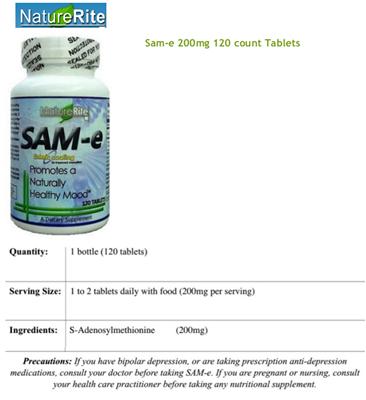
- Form
- Tablet or Pill
- Serving Size
- 1 Tablet
- Container Holds
- 120 Tablets
What’s in it, whether it interacts with your drugs, its side effects, whether it works, and what our pharmacists would want you to know before you start it.
- What is Sam-e 200 mg?A single-ingredient supplement from NatureRite, in tablet form.
- Active Ingredients S-Adenosylmethionine 200 mg One active ingredient. We check it for drug interactions and side effects. The full Supplement Facts
- Drug Interactions 189 drugs have a documented interaction with this supplement; the most serious is rated moderate. Of those, 100 are single drugs and 89 are combination products (two or more drugs in one), each listed under its own name. Ask your pharmacist first if you take a drug in any of these categories:
- Moderate · 184 drugs
- Moderate · 5 drugs
- Possible Side EffectsNauseaGasDiarrheaUpset stomach From its one active ingredient, SAMe. Not studied in this exact product.
- Well documented Why
Does Sam-e 200 mg work?
How It Is Marketed
To promote a naturally healthy mood
From the claims on the product’s label.
The Closest Use the Research Grades
Some studies support it, but the evidence isn’t conclusive.
SAMe has stronger research for other uses:
- Cholestasis
These grades are for the ingredient, not this exact product, and never a promise it will work for you.
What the research says- Full Why
- AllergensNone of its ingredient names point to a major food allergen, and the label text we have carries no allergen statement
Who Might Consider It
- People who want it to promote a naturally healthy mood, which is how it is marketed. The closest use the research grades is depression, rated Possibly Effective.
- People who want it for osteoarthritis or cholestasis: the other uses with research behind them. See each grade
- SAMe may be worth discussing if you are dealing with osteoarthritis or depression, since those are the uses with the strongest ratings.
- Your own doctor or pharmacist is the right person to decide whether it fits your situation.
Who Should Be Careful
- Anyone who takes an antidepressant or other serotonin-affecting drug, or levodopa for Parkinson disease, should be especially careful.
- People with bipolar disorder, Parkinson disease, anxiety disorders, or an upcoming surgery should talk it over with their own doctor first.
More Before You Take It Show all three answersHide Its S-Adenosylmethionine Amount vs. Other Supplements Pregnancy and Breastfeeding The Label’s Directions
-
How does its S-Adenosylmethionine amount compare with other supplements?
- S-Adenosylmethionine200 mgIn the usual range for the 167 recent SAMe products in our database that state an amount; 400 mg is the most common.
A label’s amount is what the product holds, not a recommended dose.
See the S-Adenosylmethionine comparison -
Pregnant or breastfeeding?
- Pregnancy
- When used intravenously short-term during the third trimester of pregnancy.
- Breastfeeding
- Insufficient reliable information available; avoid using.
-
How does the label say to take it?
“1 to 2 tablets daily with food 200mg per serving”
The maker’s words. Your pharmacist or doctor may advise differently.
Everything the label says
From the label dated Mar 24, 2017: its one active ingredient was checked against our records. A summary of what is known, not a grade or a test of the product. How these ratings are computed
Ask Anything About This Supplement
Name a drug you take, or ask about side effects, ingredients or pregnancy.
AI answers come from this label and our own records, never the open internet. AI can make mistakes, so always check with your doctor or pharmacist. How we use AI
Ask the Pharmacist
A licensed pharmacist will answer your question by email — free, as soon as they can.
Got it — thank you!
A licensed pharmacist will answer as soon as they can. Keep an eye on your email (worth checking spam, just in case).
What’s Inside Sam-e 200 mg by NatureRite
One Active Ingredient: S-Adenosylmethionine
Everything this page says about drug interactions and side effects comes from what is known about S-Adenosylmethionine.
Why this rating?
The label gives the exact amount of its one active ingredient, so you know how much you get in each serving. This rates what the label tells you, not the quality of the product.
Supplement Facts
| Amount Per Serving | % Daily Value | |
|---|---|---|
| S-Adenosylmethionine | 200 mg | † |
† Daily Value not established.
Daily Values for adults and children 4 or more years of age.
As the label prints it, from the NIH Dietary Supplement Label Database.
Each Ingredient and Its Drug Interactions
Tap one for more about it and its full guide.
-
S-Adenosylmethionine 200 mg The only active ingredient in this tablet is S-adenosylmethionine (SAMe), at 200 mg per tablet. SAMe is the active ingredient people usually take for joint, mood, and liver-related uses. Interacts with 189 drugs
SAM-e is a compound your body makes naturally that is sold as a supplement, most often for depression and osteoarthritis.
- Some research suggests it may help with these conditions, but the quality of evidence is mixed and more study is needed.
- Talk with your pharmacist or doctor before trying it, especially if you take other medicines or have bipolar disorder.
The full SAMe guide: uses, dosage and safety Every SAMe drug interaction
How Much SAMe Is in It, Compared With Other Supplements
Each bar is an amount that other recent supplements list for the same ingredient. The taller the bar, the more of them state it.
-
200 mg in a serving of this product
In the usual range
- Most common amount
- 400 mg (about 47 in 100 products)
- Most products state
- 50 mg to 400 mg
- Compared with
- 167 recent products
Allergens in Sam-e 200 mg
None of its ingredient names point to a major food allergen, and the label text we have carries no allergen statement.
Not named in the ingredients
- Milk
- Egg
- Fish
- Shellfish
- Tree nuts
- Peanuts
- Wheat or other gluten grains
- Soy
- Sesame
From the label text and ingredient names on file; we do not test products. With a serious allergy, check your bottle and ask the maker or your pharmacist.
What the Label Says
The maker’s own words, from the label. We do not verify or endorse them.
- General statements
-
“Enteric coating for improved absorption”
“Promotes a naturally healthy mood”
- FDA Statement of Identity
-
“A Dietary Supplement”
The Sam-e 200 mg Label on File
The label scan on file at the NIH Dietary Supplement Label Database, dated March 2017. Always read the label on the bottle you have.
Product Facts
- Brand
- NatureRite
- Net contents
- 120 Tablets
- Market status
- On market
- Date entered into DSLD
- Mar 24, 2017
- DSLD ID
- 72226
- Product type
- Non-nutrient/non-botanical
- Supplement form
- Tablet or Pill
- Dietary claims / uses
- All Other
- Intended target group(s)
- Adult (18 - 50 Years)
Is this label outdated? Report a formula or label change and our pharmacy team will review it.
Sam-e 200 mg by NatureRite Side Effects
Why this rating?
We look for three kinds of safety information on each ingredient: side effects reported in studies, a pregnancy and breastfeeding rating, and a safety write-up from our pharmacy team. All three are on file for SAMe.
So this rates how much is known, not whether Sam-e 200 mg is right for you.
Reported with SAMe, its active ingredient
- Most often
- Nausea, gas, diarrhea and upset stomach
HelloPharmacist Team Summary: Sam-e 200 mg by NatureRite Side Effects
Most people tolerate SAMe generally well, especially at typical doses, though side effects become more common at higher doses.
- You are most likely to notice nausea, diarrhea, or gas, and upset stomach has also been reported.
- Dizziness and headache are also listed among common effects, so see how you feel before driving.
- If you notice a serious reaction, call your doctor right away, and talk with your own doctor or pharmacist before starting if you have bipolar disorder or Parkinson disease.
Side Effects Reported With SAMe
Sam-e 200 mg Warnings: Who Should Be Careful
These warnings are for SAMe, its one active ingredient. If any of these apply to you, talk to your doctor or pharmacist before you start it.
-
Bleeding Problems or Surgery
- People with Parkinson's disease, anxiety disorders, or those who are scheduled for surgery should talk with their doctor first.
-
Mental Health Conditions
- People with bipolar disorder should avoid SAM-e unless directed by a doctor, because it may trigger mania or a switch into a manic episode.
- It may also trigger mania (an episode of unusually high mood and energy) in people with bipolar disorder.
-
What the Label Warns
- “If you have bipolar depression, or are taking prescription anti-depression medications, consult your doctor before taking sam-e.”
- “Precautions: If you are pregnant or nursing, consult your health care practitioner before taking any nutritional supplement.”
The maker’s wording, from the product label.
-
Pregnant or Breastfeeding
The rating for pregnancy and for breastfeeding, and what it covers.
Pregnancy
-
When used intravenously short-term during the third trimester of pregnancy.
In two small-scale trials, SAMe 800 mg daily was used intravenously for 14-20 days during the third trimester of pregnancy for cholestasis.
3 more points on this rating
- No adverse effects were observed.
- However, use of SAMe in pregnancy should only be considered when benefits clearly outweigh the potential risks.
- There is insufficient reliable information available about the use of SAMe at higher doses, for extended periods of time, or during the earlier trimesters of pregnancy.
Breastfeeding
-
Insufficient reliable information available; avoid using.
Our pharmacy team’s notes
- In pregnancy, the rating is Possibly Safe.
- We have no lactation (breastfeeding) information for this product, so we cannot tell you how it behaves during breastfeeding.
Ratings and the words beside them are from the Natural Medicines database, which we license.
The full record, with its sources, in the SAMe guide -
These reports describe each ingredient, not studies of this exact product. Not medical advice: a side effect you notice after starting a supplement is worth a word with your pharmacist or doctor.
Sam-e 200 mg by NatureRite Drug Interactions
This supplement has one active ingredient, S-Adenosylmethionine, and we checked it against every drug in our records.
A moderate interaction on record
2 of 3, on a scale from Minor or none to Major.Why this rating?
We rate this by the most serious interaction on record, not by how many there are. For SAMe, the most serious is rated moderate, which means it calls for caution, and sometimes monitoring or a change in timing or dose. Some involve kinds of drugs where a small change can matter, such as Parkinson’s drugs.
189 drugs are on the full list. What matters is whether one you take is on it, so check yours with the interaction checker on this page.
Its one active ingredient has drug interactions on record: SAMe.
SAMe
- Interacts with
- 189 drugs
- Most serious
- Moderate
- The most serious interactions we list are rated Moderate.
- One involves serotonergic drugs (medicines that affect serotonin, such as many antidepressants).
- SAMe has serotonin-like effects, so combining the two may increase the risk of serotonin syndrome (a potentially serious reaction caused by too much serotonin) and other serotonin-related side effects.
- The other drug type is levodopa, a Parkinson disease medicine.
Show three more points
- SAMe may reduce how well levodopa works, because SAMe methylates levodopa.
- This interaction is also rated Moderate.
- Use the search tool on this page to check your exact medications.
The kinds of drugs it affects most
- 184 drugs
- 5 drugs
Every SAMe drug interaction, 2 records The SAMe records cite 31 references, listed in the SAMe guide.
Summarized by the HelloPharmacist pharmacy team from the interaction records below. How it is written How we use AI
The Breakdown by Severity
Each drug counted once, at its most serious rating. Tap a tile to list those drugs.
- 0 Major None found
- 189
- 0 Minor None found
Find Your Drug
Type a drug or brand name to see whether it is on the list.
- Only drugs with a documented interaction are listed, the most serious first.
- A drug with no known interaction is not listed, but searching its name tells you so.
- Open a drug to see which ingredient is responsible. Of those, 100 are single drugs and 89 are combination products (two or more drugs in one), each listed under its own name.
-
SertralineZoloft Moderate
The ingredient responsible:
-
S-Adenosylmethionine Moderate Sertraline is in the Serotonergic Drugs category.
Taking SAMe with serotonergic drugs might increase the risk of serotonin syndrome and other serotonergic side effects.
The full S-Adenosylmethionine + Sertraline interaction
-
-
EscitalopramLexapro Moderate
The ingredient responsible:
-
S-Adenosylmethionine Moderate Escitalopram is in the Serotonergic Drugs category.
Taking SAMe with serotonergic drugs might increase the risk of serotonin syndrome and other serotonergic side effects.
The full S-Adenosylmethionine + Escitalopram interaction
-
-
MethylphenidateAptensio XR, Concerta, Cotempla XR-ODT, Jornay PM, Metadate and 8 more Moderate
The ingredient responsible:
-
S-Adenosylmethionine Moderate Methylphenidate is in the Serotonergic Drugs category.
Taking SAMe with serotonergic drugs might increase the risk of serotonin syndrome and other serotonergic side effects.
The full S-Adenosylmethionine + Methylphenidate interaction
-
-
FluoxetineProzac, Sarafem Moderate
The ingredient responsible:
-
S-Adenosylmethionine Moderate Fluoxetine is in the Serotonergic Drugs category.
Taking SAMe with serotonergic drugs might increase the risk of serotonin syndrome and other serotonergic side effects.
The full S-Adenosylmethionine + Fluoxetine interaction
-
-
LisdexamfetamineVyvanse Moderate
The ingredient responsible:
-
S-Adenosylmethionine Moderate Lisdexamfetamine is in the Serotonergic Drugs category.
Taking SAMe with serotonergic drugs might increase the risk of serotonin syndrome and other serotonergic side effects.
The full S-Adenosylmethionine + Lisdexamfetamine interaction
-
-
AmitriptylineElavil Moderate
The ingredient responsible:
-
S-Adenosylmethionine Moderate Amitriptyline is in the Serotonergic Drugs category.
Taking SAMe with serotonergic drugs might increase the risk of serotonin syndrome and other serotonergic side effects.
The full S-Adenosylmethionine + Amitriptyline interaction
-
-
CitalopramCelexa Moderate
The ingredient responsible:
-
S-Adenosylmethionine Moderate Citalopram is in the Serotonergic Drugs category.
Taking SAMe with serotonergic drugs might increase the risk of serotonin syndrome and other serotonergic side effects.
The full S-Adenosylmethionine + Citalopram interaction
-
-
BuspironeBuSpar Moderate
The ingredient responsible:
-
S-Adenosylmethionine Moderate Buspirone is in the Serotonergic Drugs category.
Taking SAMe with serotonergic drugs might increase the risk of serotonin syndrome and other serotonergic side effects.
The full S-Adenosylmethionine + Buspirone interaction
-
-
QuetiapineDopaquel, Seroquel Moderate
The ingredient responsible:
-
S-Adenosylmethionine Moderate Quetiapine is in the Serotonergic Drugs category.
Taking SAMe with serotonergic drugs might increase the risk of serotonin syndrome and other serotonergic side effects.
The full S-Adenosylmethionine + Quetiapine interaction
-
-
Methylene BlueProvayblue, Urolene Blue Moderate
The ingredient responsible:
-
S-Adenosylmethionine Moderate Methylene Blue is in the Serotonergic Drugs category.
Taking SAMe with serotonergic drugs might increase the risk of serotonin syndrome and other serotonergic side effects.
The full S-Adenosylmethionine + Methylene Blue interaction
-
-
MethamphetamineDesoxyn Moderate
The ingredient responsible:
-
S-Adenosylmethionine Moderate Methamphetamine is in the Serotonergic Drugs category.
Taking SAMe with serotonergic drugs might increase the risk of serotonin syndrome and other serotonergic side effects.
The full S-Adenosylmethionine + Methamphetamine interaction
-
-
DuloxetineCymbalta, Drizalma Sprinkle, Irenka Moderate
The ingredient responsible:
-
S-Adenosylmethionine Moderate Duloxetine is in the Serotonergic Drugs category.
Taking SAMe with serotonergic drugs might increase the risk of serotonin syndrome and other serotonergic side effects.
The full S-Adenosylmethionine + Duloxetine interaction
-
-
SumatriptanTosymra Moderate
The ingredient responsible:
-
S-Adenosylmethionine Moderate Sumatriptan is in the Serotonergic Drugs category.
Taking SAMe with serotonergic drugs might increase the risk of serotonin syndrome and other serotonergic side effects.
The full S-Adenosylmethionine + Sumatriptan interaction
-
-
DextroamphetamineDexedrine Moderate
The ingredient responsible:
-
S-Adenosylmethionine Moderate Dextroamphetamine is in the Serotonergic Drugs category.
Taking SAMe with serotonergic drugs might increase the risk of serotonin syndrome and other serotonergic side effects.
The full S-Adenosylmethionine + Dextroamphetamine interaction
-
-
MirtazapineRemeron Moderate
The ingredient responsible:
-
S-Adenosylmethionine Moderate Mirtazapine is in the Serotonergic Drugs category.
Taking SAMe with serotonergic drugs might increase the risk of serotonin syndrome and other serotonergic side effects.
The full S-Adenosylmethionine + Mirtazapine interaction
-
-
VenlafaxineEffexor, Effexor XR Moderate
The ingredient responsible:
-
S-Adenosylmethionine Moderate Venlafaxine is in the Serotonergic Drugs category.
Taking SAMe with serotonergic drugs might increase the risk of serotonin syndrome and other serotonergic side effects.
The full S-Adenosylmethionine + Venlafaxine interaction
-
-
TrazodoneDesyrel, Oleptro Moderate
The ingredient responsible:
-
S-Adenosylmethionine Moderate Trazodone is in the Serotonergic Drugs category.
Taking SAMe with serotonergic drugs might increase the risk of serotonin syndrome and other serotonergic side effects.
The full S-Adenosylmethionine + Trazodone interaction
-
-
Lithium Carbonate (prescription Drug)Eskalith, Lithium Carbonate Moderate
The ingredient responsible:
-
S-Adenosylmethionine Moderate Lithium Carbonate (prescription Drug) is in the Serotonergic Drugs category.
Taking SAMe with serotonergic drugs might increase the risk of serotonin syndrome and other serotonergic side effects.
The full S-Adenosylmethionine + Lithium Carbonate (prescription Drug) interaction
-
-
AripiprazoleAbilify, Abilify Maintena, Abilify Mycite Moderate
The ingredient responsible:
-
S-Adenosylmethionine Moderate Aripiprazole is in the Serotonergic Drugs category.
Taking SAMe with serotonergic drugs might increase the risk of serotonin syndrome and other serotonergic side effects.
The full S-Adenosylmethionine + Aripiprazole interaction
-
-
ParoxetineBrisdelle, Paxil, Paxil CR Moderate
The ingredient responsible:
-
S-Adenosylmethionine Moderate Paroxetine is in the Serotonergic Drugs category.
Taking SAMe with serotonergic drugs might increase the risk of serotonin syndrome and other serotonergic side effects.
The full S-Adenosylmethionine + Paroxetine interaction
-
-
CarbamazepineCarbatrol, Carnexiv, Equetro, Tegretol, Tegretol XR Moderate
The ingredient responsible:
-
S-Adenosylmethionine Moderate Carbamazepine is in the Serotonergic Drugs category.
Taking SAMe with serotonergic drugs might increase the risk of serotonin syndrome and other serotonergic side effects.
The full S-Adenosylmethionine + Carbamazepine interaction
-
-
MethadoneDolophine Moderate
The ingredient responsible:
-
S-Adenosylmethionine Moderate Methadone is in the Serotonergic Drugs category.
Taking SAMe with serotonergic drugs might increase the risk of serotonin syndrome and other serotonergic side effects.
The full S-Adenosylmethionine + Methadone interaction
-
-
NortriptylineAllegron, Aventyl, Nortriptyline, Pamelor Moderate
The ingredient responsible:
-
S-Adenosylmethionine Moderate Nortriptyline is in the Serotonergic Drugs category.
Taking SAMe with serotonergic drugs might increase the risk of serotonin syndrome and other serotonergic side effects.
The full S-Adenosylmethionine + Nortriptyline interaction
-
-
DextromethorphanBenylin Adult, Benylin Pediatric, Hold, Neo Citran Thin Strips Cough, Theraflu Thin Strips Long Acting Cough Moderate
The ingredient responsible:
-
S-Adenosylmethionine Moderate Dextromethorphan is in the Serotonergic Drugs category.
Taking SAMe with serotonergic drugs might increase the risk of serotonin syndrome and other serotonergic side effects.
The full S-Adenosylmethionine + Dextromethorphan interaction
-
-
EletriptanRelpax Moderate
The ingredient responsible:
-
S-Adenosylmethionine Moderate Eletriptan is in the Serotonergic Drugs category.
Taking SAMe with serotonergic drugs might increase the risk of serotonin syndrome and other serotonergic side effects.
The full S-Adenosylmethionine + Eletriptan interaction
-
-
Methylphenidate HydrochlorideAdhansia XR, Quillichew Moderate
The ingredient responsible:
-
S-Adenosylmethionine Moderate Methylphenidate Hydrochloride is in the Serotonergic Drugs category.
Taking SAMe with serotonergic drugs might increase the risk of serotonin syndrome and other serotonergic side effects.
The full S-Adenosylmethionine + Methylphenidate Hydrochloride interaction
-
-
RisperidonePerseris, Risperdal Moderate
The ingredient responsible:
-
S-Adenosylmethionine Moderate Risperidone is in the Serotonergic Drugs category.
Taking SAMe with serotonergic drugs might increase the risk of serotonin syndrome and other serotonergic side effects.
The full S-Adenosylmethionine + Risperidone interaction
-
-
Methylphenidate Transdermal SystemDaytrana Moderate
The ingredient responsible:
-
S-Adenosylmethionine Moderate Methylphenidate Transdermal System is in the Serotonergic Drugs category.
Taking SAMe with serotonergic drugs might increase the risk of serotonin syndrome and other serotonergic side effects.
The full S-Adenosylmethionine + Methylphenidate Transdermal System interaction
-
-
FluvoxamineLuvox Moderate
The ingredient responsible:
-
S-Adenosylmethionine Moderate Fluvoxamine is in the Serotonergic Drugs category.
Taking SAMe with serotonergic drugs might increase the risk of serotonin syndrome and other serotonergic side effects.
The full S-Adenosylmethionine + Fluvoxamine interaction
-
-
Trazodone HclTrazorel Moderate
The ingredient responsible:
-
S-Adenosylmethionine Moderate Trazodone Hcl is in the Serotonergic Drugs category.
Taking SAMe with serotonergic drugs might increase the risk of serotonin syndrome and other serotonergic side effects.
The full S-Adenosylmethionine + Trazodone Hcl interaction
-
Does It Work? Sam-e 200 mg by NatureRite
What the research says so far. A grade is the research so far, never an endorsement.
How It Is Marketed
To promote a naturally healthy mood
From the claims on the product’s label.
Closest match for what it is marketed for
SAMe for depression
Some studies support it, but the evidence isn’t conclusive.
Our pharmacy team’s notes on this supplement
- For osteoarthritis, the evidence is rated Likely Effective.
- For depression and for cholestasis (a condition where bile flow from the liver is reduced), the evidence is rated Possibly Effective.
- These ratings describe the research available to us.
- They are not a promise of results for you, so talk over your own goals with your doctor or pharmacist.
What the Research Says About SAMe
Its uses graded effective, likely effective or possibly effective:
Research suggests a benefit for
- Osteoarthritis
- Depression (the use on its label) and cholestasis
The grades are the Natural Medicines database’s, which we license; tap a grade for what it means. They are about each ingredient, not this exact product.
About NatureRite
Manufacturer and brand details for Sam-e 200 mg, from the product label.
NatureRite has one product in our supplement database, with labels on file since 2017. Our database is built from the NIH’s Dietary Supplement Label Database and our pharmacy team’s own additions, so it covers the labels filed there, not every product the brand sells.
- Name
- NatureRite
Sam-e 200 mg by NatureRite: Common Questions
Does Sam-e 200 mg by NatureRite interact with any drugs?
What are the side effects of Sam-e 200 mg by NatureRite?
Who should be careful taking Sam-e 200 mg by NatureRite?
How can Sam-e 200 mg by NatureRite interact with so many drugs?
Where does the information about Sam-e 200 mg by NatureRite come from?
Is Sam-e 200 mg by NatureRite safe to take during pregnancy?
Is Sam-e 200 mg by NatureRite okay to take Sam-e while breastfeeding?
Does SAMe work for osteoarthritis?
What is SAMe used for?
Written and reviewed by the HelloPharmacist Editorial Team. Our editorial policy
Still Have a Question About Sam-e 200 mg?
Our pharmacists answer drug and supplement questions, free, by email.
Label information is sourced from the NIH Dietary Supplement Label Database and reflects the product version on file; always read your actual product label. This page is for education only and is not a substitute for professional medical advice. Confirm with your pharmacist or doctor before combining supplements and drugs.
Who Reviews This Page
The pharmacist behind it, and how it is checked.
Dr. Brian Staiger, PharmD, BCPS
Clinical pharmacist and founder of HelloPharmacist
A licensed pharmacist for more than 13 years, he built the system behind this page: it reads the label on file, matches each active ingredient to its record in the Natural Medicines database, checks those records against every drug we cover, and our pharmacy team writes the take and the interaction summary from those records.
- 13+ Years in PharmacyRetail and clinical pharmacy, medication safety and healthcare administration.
- Board Certified (BCPS)A pharmacotherapy specialist, certified by the Board of Pharmacy Specialties.
- Herbalist TrainingCertificates in medical ethnobotany, for the herbs and supplements people take.
Where This Page Comes From
Sam-e 200 mg’s label data comes from the NIH Dietary Supplement Label Database; the ingredient interaction data is from the Natural Medicines database, reviewed by our pharmacists.
- NIH Dietary Supplement Label Database (DSLD)
- The official product label on file for this supplement.
- Natural Medicines (Therapeutic Research Center)
- The evidence-graded clinical reference behind the ingredient interaction, evidence and safety records, which we license.
- HelloPharmacist Editorial Team
- Content is reviewed by the HelloPharmacist Editorial Team, the pharmacists on our staff and those we contract. See our data sources and editorial standards for how this information is built and checked.
- The Pharmacy Team’s Take and Summaries
- Generated from HelloPharmacist’s pharmacist-curated databases and editorial rules. Clinical methodology reviewed by Dr. Brian Staiger, PharmD, BCPS. Last generated Oct 31, 2026. How we use AI
- The ratings in the Quick Summary
- They summarize available label information, ingredient evidence and known drug-safety records: a summary of what is known, not a grade of the product itself. They do not verify product identity, purity, potency, contamination or manufacturing quality. How these ratings are computed
The References Behind the Interaction Records
Every citation the ingredients’ records rest on is listed in that ingredient’s guide, in context: SAMe, 31 references .
Parts of this content are provided by the Therapeutic Research Center, LLC.
DISCLAIMER: Currently this does not check for drug-drug interactions. This is not an all-inclusive comprehensive list of potential interactions and is for informational purposes only. Not all interactions are known or well-reported in the scientific literature, and new interactions are continually being reported. Input is needed from a qualified healthcare provider including a pharmacist before starting any therapy. Application of clinical judgment is necessary.
© 2021 Therapeutic Research Center, LLC
Keep Exploring
- Supplement interaction checkerCheck any supplement or product against your drugs
- Drug–drug interactionsCheck two or more of your drugs against each other
- Browse drugs A to ZEvery drug we have checked against herbs and supplements
- NDC and pricing lookupFind a drug’s NDCs, packaging and costs
- Ask a pharmacistA free, personal answer from our licensed team