
Yeast Aid Advanced Formula by Kirkman Ingredients, Side Effects and Drug Interactions
Dietary Supplement Capsule Botanical With Nutrients
UPC 8 12325 02452 0 Match it to the barcode on your bottle

Medically reviewed by Dr. Brian Staiger, PharmD, BCPS
Also reviewed by the HelloPharmacist Editorial Team
Updated Details about this page
- Label on file from the NIH Dietary Supplement Label Database, dated Aug 22, 2024.
- The interaction, evidence and safety records come from the Natural Medicines database, which we license, read against this label by our own system; the pharmacy team’s sections are written from those records.
- Dr. Brian Staiger, PharmD, BCPS, is a clinical pharmacist and pharmacotherapy specialist.
- Editorial policy Our sources
AI is used only to summarize verified clinical information, never the open internet. Our AI policy
Summary: The HelloPharmacist Team’s Take
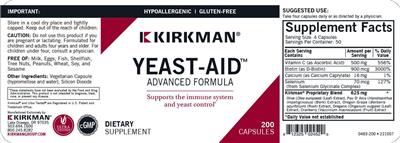
- Form
- Capsule
- Serving Size
- 4 Capsules
- Servings
- 50 per container
- Container Holds
- 200 Capsules
What’s in it, whether it interacts with your drugs, its side effects, whether it works, and what our pharmacists would want you to know before you start it.
- What is Yeast Aid Advanced Formula?A supplement from Kirkman with nine active ingredients, in capsule form.
- Active Ingredients 2 vitamins, 2 minerals and 5 plant ingredients such as Olive Leaf, Pau d'Arco Bark and Oregon Grape Root: Vitamin C 500 mgBiotin 900 mcgCalcium 16 mgSelenium 70 mcgOlive Leaf ExtractPau d'Arco Bark ExtractOregon Grape Root ExtractOregano Leaf ExtractCranberry Fruit Extract Nine active ingredients. Each one can interact with drugs or cause side effects on its own, so we check every one. The full Supplement Facts
- Drug Interactions 1,431 drugs have a documented interaction with this supplement; the most serious is rated major. Of those, 997 are single drugs and 434 are combination products (two or more drugs in one), each listed under its own name. Ask your pharmacist first if you take a drug in any of these categories, the most serious of the 46 on record:
- Dolutegravir (Tivicay)Major · 3 drugs
- Elvitegravir (Vitekta)Major · 3 drugs
- Ceftriaxone (Rocephin)Major · 1 drug
- Moderate · 645 drugs
- Possible Side EffectsNausea 6 ingredientsUpset stomach 6 ingredientsHeadache 3 ingredientsDiarrhea 2 ingredientsHeartburn 2 ingredientsRash 2 ingredients +10 moreCombined from eight of its nine active ingredients. Not studied in this exact product.
- Well documented Why
Does Yeast Aid Advanced Formula work?
What It Is Marketed For
Immune system support and yeast control
From the claims on the product’s label.
The Closest Use the Research Grades
Olive
There isn’t enough good research to say either way.
Its ingredients have stronger research for other uses:
- Vitamin C deficiency Vitamin C
- Calcium
- Biotin deficiency Biotin
- Selenium deficiency Selenium
- Calcium
- Calcium
These grades are for each ingredient, not this exact product, and never a promise it will work for you.
And 17 more graded uses, in what the research says- Low Why
- AllergensNone of its ingredient names point to a major food allergen
- Barcode (UPC)8 12325 02452 0Match it to the barcode on your bottle to be sure this is your product. Not your product? Search for it here
Who Might Consider It
- People looking for immune system support and yeast control, which is what it is marketed for. For influenza, the closest use the research grades, there is not enough good research to say either way.
- People who want it for vitamin C deficiency, dyspepsia, biotin deficiency, selenium deficiency or another graded use: the other uses with research behind them. See each grade
- This product may suit adults looking for a multi-ingredient supplement who take no medications with documented interactions.
Who Should Be Careful
- People taking HIV medications, thyroid medication, warfarin or other blood thinners, diabetes drugs, or blood pressure drugs should be especially careful.
- Anyone who is pregnant, breastfeeding, or has kidney disease or a history of kidney stones should talk it over with their own doctor or pharmacist first.
More Before You Take It Show both answersHide Pregnancy and Breastfeeding The Label’s Directions
-
Pregnant or breastfeeding?
- Pregnancy Oregon Grape
- ! When used orally.
- Breastfeeding Oregon Grape
- ! When used orally.
- Pregnancy and Breastfeeding Vitamin C
- ! When used orally in excessive doses.
- Pregnancy and Breastfeeding Calcium
- ! When used orally in excessive doses.
-
How does the label say to take it?
“Suggested use: take four capsules daily or as directed by a physician.”
The maker’s words. Your pharmacist or doctor may advise differently.
Everything the label says
From the label dated Aug 22, 2024: all nine of its active ingredients were checked against our records. A summary of what is known, not a grade or a test of the product. How these ratings are computed
Ask Anything About This Supplement
Name a drug you take, or ask about side effects, ingredients or pregnancy.
AI answers come from this label and our own records, never the open internet. AI can make mistakes, so always check with your doctor or pharmacist. How we use AI
Ask the Pharmacist
A licensed pharmacist will answer your question by email — free, as soon as they can.
Got it — thank you!
A licensed pharmacist will answer as soon as they can. Keep an eye on your email (worth checking spam, just in case).
What’s Inside Yeast Aid Advanced Formula by Kirkman
Nine Active Ingredients, Each Checked on Its Own
A supplement is often several ingredients in one bottle, and each one can interact with drugs or cause side effects on its own. We check every one of them against our records.
- Vitamin CDrug interactions on record, most serious: Moderate
- BiotinNo drug interactions on record
- CalciumDrug interactions on record, most serious: Major
- SeleniumDrug interactions on record, most serious: Moderate
- Olive Leaf ExtractNo drug interactions on record
- Pau d'Arco Bark ExtractDrug interactions on record, most serious: Moderate
- Oregon Grape Root ExtractDrug interactions on record, most serious: Moderate
- Oregano Leaf ExtractDrug interactions on record, most serious: Moderate
And 1 more, each with its own card below.
The label gives an exact amount for 4 of its 9 active ingredients. The other five are inside one proprietary blend, “Kirkman Proprietary Blend”, and the label gives one total for it, not how much of each ingredient is in it.
- 4 state an exact amount
- 5 have no amount of their own
- Kirkman Proprietary Blend 625 mg in total · 5 ingredients, no amount for each
This rates what the label tells you, not the quality of the product.
Supplement Facts
| Amount Per Serving | % Daily Value | |
|---|---|---|
| Vitamin C | 500 mg | 556% |
| Biotin | 900 mcg | 3000% |
| Calcium | 16 mg | 1% |
| Selenium | 70 mcg | 127% |
| Kirkman Proprietary Blend | 625 mg | † |
| Olive Leaf Extract | † | |
| Pau d'Arco Bark Extract | † | |
| Oregon Grape Root Extract | † | |
| Oregano Leaf Extract | † | |
| Cranberry Fruit Extract | † | |
Other ingredients: Hypromellose, Water, Silicon Dioxide
† Daily Value not established.
Daily Values for adults and children 4 or more years of age.
As the label prints it, from the NIH Dietary Supplement Label Database.
Each Ingredient and Its Drug Interactions
Tap one for more about it and its full guide. A drug can interact with this supplement through any one of them.
Yeast Aid Advanced Formula contains nine active ingredients: vitamin C, biotin, cranberry fruit extract, Oregon grape root extract, olive leaf extract, calcium, oregano leaf extract, selenium, and pau d'arco bark extract.
- Vitamin C, biotin, and selenium have been linked to deficiency concerns, with vitamin C deficiency rated effective, biotin deficiency likely effective, and selenium deficiency likely effective.
-
Vitamin C 500 mg Interacts with 207 drugs
Form on the label: Ascorbic Acid
Vitamin C (ascorbic acid) is an essential nutrient your body needs but cannot make, so you must get it from food or supplements.
- It's important for immune function, collagen, and acts as an antioxidant, but taking large doses doesn't prevent colds for most people and may cause stomach upset.
- Most people get enough from a balanced diet, so check with your pharmacist or doctor before taking high-dose supplements.
The full Vitamin C guide: uses, dosage and safety Every Vitamin C drug interaction
-
Biotin 900 mcg No known drug interactions
Form on the label: D-Biotin
Biotin (vitamin B7) is a water-soluble vitamin your body needs to turn food into energy and to support healthy hair, skin, and nails.
- Most people get plenty from a normal diet, and true deficiency is rare.
- Supplements are widely sold for hair and nail health, but solid evidence for these benefits is limited in people who are not deficient, and high doses can interfere with certain lab tests.
-
Calcium 16 mg Interacts with 168 drugs
Form on the label: Calcium Caprylate
Calcium is an essential mineral your body needs for strong bones, nerve signaling, and muscle function, and supplements can help fill gaps when diet falls short.
- Most people do best getting calcium from food, and supplements should be used at the lowest dose needed.
- Talk to your pharmacist or doctor before starting, especially if you have kidney problems or take other medicines.
The full Calcium guide: uses, dosage and safety Every Calcium drug interaction
-
Selenium 70 mcg Interacts with 321 drugs
Form on the label: Selenium Glycinate Complex
Selenium is an essential trace mineral your body needs in small amounts for thyroid function, antioxidant defense, and immune health.
- Most people who eat a varied diet get enough, and supplements are mainly useful for those who are deficient.
- Because too much selenium can be toxic, stick to recommended amounts and check with your pharmacist or doctor before supplementing.
The full Selenium guide: uses, dosage and safety Every Selenium drug interaction
-
Kirkman Proprietary Blend 625 mg Five ingredients inside it, each checked on its own
- Olive Leaf Extract
- Pau d'Arco Bark Extract 122 drugs
- Oregon Grape Root Extract 1,219 drugs
- Oregano Leaf Extract 881 drugs
- Cranberry Fruit Extract 714 drugs
Other Ingredients (Inactive)
The capsule or tablet itself, fillers, coatings and flavors. Not part of the drug interaction check; the allergen check below reads them.
- Hypromellose
- Water
- Silicon Dioxide
Allergens in Yeast Aid Advanced Formula
None of its ingredient names point to a major food allergen.
Not named in the ingredients
- Milk
- Egg
- Fish
- Shellfish
- Tree nuts
- Peanuts
- Wheat or other gluten grains
- Soy
- Sesame
- Made without, the label says“Free of: milk, eggs, fish, shellfish, tree nuts, peanuts, wheat, soy, and sesame”
- Made without, the label says“Gluten-free”
From the label text and ingredient names on file; we do not test products. With a serious allergy, check your bottle and ask the maker or your pharmacist.
What the Label Says
The maker’s own words, from the label. We do not verify or endorse them.
- Storage
-
“Important: Store in a cool dry place and tightly capped.”
- Formulation
-
“Hypoallergenic Supports the immune system and yeast control”
- Brand IP Statement(s)
-
“Kirkman and Ultra Tested are registered in U.S. Patent and Trademark Office.”
- Seals and symbols
-
“Ultra Tested cGMP”
- FDA Statement of Identity
-
“Dietary Supplement”
- General statements
-
“503.694.1600”
The Yeast Aid Advanced Formula Label on File
The label scan on file at the NIH Dietary Supplement Label Database, dated August 2024. Always read the label on the bottle you have.
Product Facts
- Brand
- Kirkman
- Barcode (UPC)
- 812325024520
- Net contents
- 200 Capsules
- Market status
- On market
- Date entered into DSLD
- Aug 22, 2024
- DSLD ID
- 317798
- Product type
- Botanical With Nutrients
- Supplement form
- Capsule
- Dietary claims / uses
- All Other, Structure/Function
- Intended target group(s)
- Children 4 or More Years of Age, Adult (18 - 50 Years), Women (not pregnant or lactating), No Allergies, Gluten Free, Dairy Free
Is this label outdated? Report a formula or label change and our pharmacy team will review it.
Yeast Aid Advanced Formula by Kirkman Side Effects
Why this rating?
We look for three kinds of safety information on each ingredient: side effects reported in studies, a pregnancy and breastfeeding rating, and a safety write-up from our pharmacy team. All three are on file for each of the nine ingredients we could check.
So this rates how much is known, not whether Yeast Aid Advanced Formula is right for you.
Reported with nine of its ingredients
- Most often
- Nausea, upset stomach, headache, diarrhea, heartburn and rash
- !Rare but serious
- Systemic allergic reactions, including anaphylaxis and in sensitive individuals See details
HelloPharmacist Team Summary: Yeast Aid Advanced Formula by Kirkman Side Effects
You may notice mild digestive effects with Yeast Aid Advanced Formula, most often stomach upset, diarrhea, and heartburn.
- Diarrhea is most linked to the vitamin C and cranberry, while constipation, gas, and bloating come from the calcium.
- Rarely, very high or long-term amounts of vitamin C or calcium can lead to kidney stones, so call your doctor promptly if you suspect one.
- If you have kidney disease, a history of kidney stones, hemochromatosis, or G6PD deficiency, or you are pregnant or breastfeeding, talk with your own doctor or pharmacist before you start.
Side Effects, Ingredient by Ingredient
A supplement’s side effects come from its ingredients. Here is what is reported with each one.
Vitamin C
Most reported
- Upset stomach, nausea, or stomach cramps
- Diarrhea
- Heartburn
- Headache
Biotin
Most reported
- Stomach upset
- Nausea
- Digestive discomfort
Calcium
Most reported
- Constipation
- Gas
- Bloating
Selenium
Most reported
- Gastric discomfort
- Headache
- Rash
From the Natural Medicines database, which we license.
Every reported effect, in the Selenium guideOlive
Most reported
- Stomach upset
- Nausea
- Headache
Pau d'Arco
Most reported
- Nausea
- Stomach upset
Oregano
Most reported
- Stomach upset, nausea, or heartburn
- Mouth or throat irritation
- Skin irritation or rash if applied undiluted to the skin
Cranberry
Most reported
- Stomach upset
- Diarrhea
- Nausea
Oregon Grape has side-effect reports, but no list of the most common ones. Read them in the Oregon Grape guide
Yeast Aid Advanced Formula Warnings: Who Should Be Careful
Yeast Aid Advanced Formula has nine active ingredients, and each can carry warnings of its own. We checked all nine, and each warning below names the ingredient it comes from. If any of these apply to you, talk to your doctor or pharmacist before you start it.
- Vitamin C3 warnings below
- Biotin1 warning below
- Calcium3 warnings below
- Selenium1 warning below
- Olive2 warnings below
- Pau d'Arco3 warnings below
- Oregon Grape2 warnings below
- Oregano2 warnings below
- Cranberry3 warnings below
-
Bleeding Problems or Surgery
- Pau d'ArcoOlder research using larger amounts of lapachol reported problems such as nausea, vomiting, and effects on blood clotting that may raise the risk of bleeding.
- Pau d'ArcoPeople with bleeding disorders, or who are scheduled for surgery, should be especially careful and talk with a healthcare provider before use.
- OreganoPeople with bleeding disorders or those scheduled for surgery should be cautious and tell their healthcare team.
-
Diabetes or Low Blood Sugar
- OliveIf you have low blood pressure or take medicine that lowers blood pressure or blood sugar, use caution, since olive supplements might add to those effects.
- CranberryPeople with diabetes should choose unsweetened products, because cranberry juice cocktails can be high in added sugar.
-
Liver Disease
- Oregon GrapeUse caution if you have liver problems, are taking multiple medications, or are giving it to children.
-
Kidney Disease or Kidney Stones
- Vitamin CVery high doses (often several grams a day) are more likely to cause side effects and may raise the risk of kidney stones in some people.
- Vitamin CPeople with kidney disease, a history of kidney stones, or a condition called hemochromatosis (iron overload) should be cautious and talk to a doctor before taking high doses.
- CalciumTaking very high amounts over a long time can raise the risk of kidney stones in some people and may cause too much calcium in the blood.
- CalciumPeople with kidney disease, kidney stones, parathyroid problems, or high blood calcium should talk with a doctor before taking calcium supplements.
- CranberryUse extra caution if you have a history of kidney stones, since cranberry contains oxalate and large amounts may not be ideal for stone-prone people.
-
Heart Conditions
- CalciumSome research has raised questions about whether high-dose calcium supplements could affect heart health, so it is wise to avoid taking more than you need and to favor calcium from food when possible.
-
Allergies
- OreganoPeople who are allergic to other plants in the mint family (such as basil, sage, mint, lavender, or marjoram) may also react to oregano.
-
If You Take Other Drugs
- OliveAlways talk with a pharmacist or doctor before adding a new supplement, especially if you have a health condition or take regular medications.
-
Other Cautions
- Vitamin CPeople with a rare condition called G6PD deficiency should also use caution with very high doses.
- BiotinAnyone with an existing medical condition, or who is having lab work done, should check with a pharmacist or doctor first.
- Pau d'ArcoBecause the long-term safety of regular use is not well studied, it is wise to avoid taking large amounts or using it for long periods.
- CranberryAs always, if you have UTI symptoms such as burning, urgency, fever, or back pain, see a healthcare provider rather than relying on cranberry alone.
-
What the Label Warns
- “Keep out of the reach of children. Formulated for children and adults four years and older. For children under four, consult a physician.”
- “Caution: do not use this product if you are pregnant or lactating.”
The maker’s wording, from the product label.
-
Pregnant or Breastfeeding
Each ingredient’s rating for pregnancy and for breastfeeding, and what it covers.
Pregnancy
-
When used orally.
Berberine, a constituent of Oregon grape, is thought to cross the placenta and may cause harm to the fetus.
Kernicterus has developed in newborn infants exposed to berberine.
Breastfeeding
-
When used orally.
Berberine and other harmful constituents can be transferred to the infant through breast milk.
Pregnancy and Breastfeeding The record rates both the same
-
When used orally and appropriately.
-
When used orally in excessive doses.
Tell patients over age 19 not to use doses exceeding the UL of 2000 mg daily when pregnant or breast-feeding and for those 14-18 years of age not to use doses exceeding 1800 mg daily when pregnant or breast-feeding.
2 more points on this rating
- Higher doses can cause osmotic diarrhea and gastrointestinal upset.
- Large doses of vitamin C during pregnancy can also cause newborn scurvy; avoid using.
Show 7 more ingredients
Pregnancy and Breastfeeding The record rates both the same
-
When used orally and appropriately.
The World Health Organization (WHO) recommends prescribing oral calcium supplementation 1.5-2 grams daily during pregnancy to those with low dietary calcium intake to prevent pre-eclampsia.
-
When used orally in excessive doses.
The Institute of Medicine sets the same daily tolerable upper intake level (UL) for calcium according to age independent of pregnancy status: 9-18 years, 3000 mg; 19-50 years, 2500 mg.
2 more points on this rating
- Doses over these amounts might increase the risk of neonatal hypocalcemia-induced seizures possibly caused by transient neonatal hypoparathyroidism in the setting of excessive calcium supplementation during pregnancy, especially during the third trimester.
- Neonatal hypocalcemia is a risk factor for neonatal seizures.
Pregnancy
-
When used orally and appropriately.
Selenium appears to be safe when used short-term in amounts that do not exceed the tolerable upper intake level (UL) of 400 mcg daily; however, there is concern that long-term use might not be safe.
-
When used orally in excessive doses.
Doses above 400 mcg daily may cause significant toxicity.
Breastfeeding
-
When used orally and appropriately.
Selenium appears to be safe when used short-term in amounts that do not exceed the tolerable upper intake level (UL) of 400 mcg daily when taken short-term; however, there is concern that long-term use might not be safe.
-
When used orally in excessive doses.
Doses above 400 mcg daily may cause significant toxicity.
-
When used orally in HIV-positive women.
Selenium supplementation in HIV-positive women not taking highly active antiretroviral therapy may increase HIV-1 levels in breast milk.
Pregnancy
-
When used orally in typical doses.
Animal studies have found that lapachol, a constituent of pau d'arco, has teratogenic and abortifacient effects; avoid using.
There is insufficient reliable information available about the safety of pau d'arco when used topically in pregnancy; avoid using.
Breastfeeding
-
Insufficient reliable information available; avoid using.
Pregnancy
-
When used orally in medicinal amounts.
Oregano is thought to have abortifacient and emmenagogue effects.
Breastfeeding
-
There is insufficient reliable information available about the safety of oregano when used in medicinal amounts; avoid amounts greater than those found in food.
Pregnancy and Breastfeeding The record rates both the same
-
Insufficient reliable information available; stick with amounts commonly found in foods.
Pregnancy and Breastfeeding The record rates both the same
-
When used orally and appropriately.
Biotin has been safely used at the adequate intake (AI) dose of 30 mcg daily during pregnancy and 35 mcg daily during lactation.
2 more points on this rating
- It has also been used in supplemental doses of up to 300 mcg daily.
- A tolerable upper intake level (UL) has not been established.
Pregnancy and Breastfeeding The record rates both the same
-
When consumed in amounts commonly found in the diet.
There is insufficient reliable information available about the safety of cranberry when used therapeutically during pregnancy or lactation; avoid using.
Our pharmacy team’s notes
- Oregon GrapeFor pregnancy, Oregon grape is rated likely unsafe, and it is best avoided.
- Oregano and pau d'arco are rated possibly unsafe in pregnancy, so they are best avoided too.
- Vitamin C, calcium, and selenium have both likely safe and possibly unsafe pregnancy ratings, so there isn't a clear answer.
- Oregon grape is also rated likely unsafe while breastfeeding, and pau d'arco should be avoided during breastfeeding.
Ratings and the words beside them are from the Natural Medicines database, which we license.
-
Rare but Serious Side Effects
-
!
Vitamin C
Rare but more serious concerns with very high or long-term high doses include kidney stones and, in people with iron-overload conditions, too much iron buildup.
Orally: There have been rare case reports of carotid inner wall thickening after large doses of vitamin C.
-
!
Biotin
Serious side effects are rare.
High-dose biotin has been rarely linked to mild diarrhea.
-
!
Calcium
Taking too much calcium can lead to more serious problems such as kidney stones or high blood calcium (hypercalcemia), which can cause nausea, confusion, excessive thirst, frequent urination, and an irregular heartbeat.
Orally: Case reports have raised concerns about calciphylaxis and kidney stones.
-
!
Selenium
In severe cases of overdose, more serious effects on the nervous system, kidneys, and heart can occur.
Orally: Excessive ingestion has led to cases of multi-organ failure and death.
-
!
Olive
Allergic reactions are rare but possible, especially in people sensitive to olive tree pollen.
-
!
Pau d'Arco
At higher doses, pau d'arco can cause more serious problems, including nausea, vomiting, dizziness, and an increased risk of bleeding because of its possible effect on blood clotting.
-
!
Oregon Grape
Serious side effects are not well documented, but the oral form has not been thoroughly studied for long-term safety.
-
!
Oregano
Allergic reactions are possible, especially in people sensitive to mint-family plants.
Orally: Systemic allergic reactions, including anaphylaxis, in sensitive individuals.
When to get help: a serious allergic reaction, with trouble breathing or swelling of the face, lips or throat, needs emergency care: call 911. For any other side effect that worries you, call your doctor or pharmacist.
These reports describe each ingredient, not studies of this exact product. Not medical advice: a side effect you notice after starting a supplement is worth a word with your pharmacist or doctor.
Yeast Aid Advanced Formula by Kirkman Drug Interactions
We checked all nine active ingredients in this supplement against every drug in our records. A drug can interact with it through any one of them.
A major interaction on record
3 of 3, on a scale from Minor or none to Major.Why this rating?
We rate this by the most serious interaction on record, not by how many there are. For Oregon Grape, Oregano, Pau d'Arco, Calcium and Cranberry, the most serious is rated major, which means the combination is best avoided, or used only under close supervision. Some involve kinds of drugs where a small change can matter, such as blood thinners, transplant drugs and cancer treatments.
1,432 drugs are on the full list. What matters is whether one you take is on it, so check yours with the interaction checker on this page.
Seven of its nine active ingredients have drug interactions on record. The ones below matter most. We have no interaction records for Biotin and Olive.
- Interacts with
- 168 drugs
- Most serious
- Major
- The most serious interaction is rated Major: calcium may lower levels of dolutegravir (Tivicay), an HIV medication, so the documented advice is to take dolutegravir 2 hours before or 6 hours after calcium.
- Calcium has two more Major warnings: it may lower elvitegravir (Vitekta) levels, and intravenous calcium should not be given within 48 hours of the antibiotic ceftriaxone (Rocephin).
- Interacts with
- 1,219 drugs
- Most serious
- Moderate
- Most of its records involve Cytochrome P450 3A4 (CYP3A4) Substrates, CNS Depressants and P-glycoprotein Substrates.
- Interacts with
- 881 drugs
- Most serious
- Moderate
- Most of its records involve Cytochrome P450 3A4 (CYP3A4) Substrates, Cytochrome P450 1A2 (CYP1A2) Substrates and Anticoagulant/Antiplatelet Drugs.
Show three more ingredients
- Interacts with
- 714 drugs
- Most serious
- Moderate
- Most of its records involve Cytochrome P450 3A4 (CYP3A4) Substrates, Cytochrome P450 2C9 (CYP2C9) Substrates and Diclofenac (Voltaren, others).
- Interacts with
- 321 drugs
- Most serious
- Moderate
- Most of its records involve Anticoagulant/Antiplatelet Drugs, Immunosuppressants and Barbiturates.
- Interacts with
- 207 drugs
- Most serious
- Moderate
- Most of its records involve Acetaminophen (Tylenol, others), Estrogens and Aspirin.
And one more ingredient with records, each in the cards below.
From the HelloPharmacist Team
Stepping back from the single ingredients, here is the picture across the whole supplement.
- Yeast Aid Advanced Formula by Kirkman can interact with a number of medications, through its calcium, vitamin C, cranberry, Oregon grape root, oregano, selenium, and pau d'arco content.
- Moderate interactions cover levothyroxine (thyroid hormone), where calcium may reduce absorption and vitamin C may increase it, plus raltegravir, sotalol, diltiazem, calcipotriene, warfarin, estrogens, cyclosporine, alprazolam, atorvastatin, and fluphenazine.
- More Moderate interactions involve blood thinners (anticoagulants and antiplatelet drugs), where bleeding risk may rise, and diabetes drugs, where low blood sugar (hypoglycemia) may occur.
Summarized by the HelloPharmacist pharmacy team from the interaction records below. How it is written How we use AI
Why Yeast Aid Advanced Formula Interacts, Ingredient by Ingredient
A product interacts through its ingredients. Each card: how many drugs, the most serious rating, and the kinds of drugs it affects most (tap a kind for what it means).
The ingredients driving the most interactions
-
Oregon Grape Root Extract 1,219 drugs
Most serious: Moderate9 interaction records on file
The kinds of drugs it affects most
- 645 drugs
- 248 drugs
- 202 drugs
- 193 drugs
Every Oregon Grape drug interaction, 9 records The Oregon Grape records cite 21 references, listed in the Oregon Grape guide.
-
Oregano Leaf Extract 881 drugs
Most serious: Moderate4 interaction records on file
The kinds of drugs it affects most
- 645 drugs
- 186 drugs
- 122 drugs
- 86 drugs
Every Oregano drug interaction, 4 records The Oregano records cite 13 references, listed in the Oregano guide.
-
Cranberry Fruit Extract 714 drugs
Most serious: Moderate7 interaction records on file
The kinds of drugs it affects most
- 645 drugs
- 112 drugs
- Diclofenac (Voltaren, others) 5 drugs
- Atorvastatin (Lipitor) 3 drugs
Every Cranberry drug interaction, 7 records The Cranberry records cite 34 references, listed in the Cranberry guide.
-
Selenium 321 drugs
Most serious: Moderate6 interaction records on file
The kinds of drugs it affects most
- 122 drugs
- 121 drugs
- 49 drugs
- 30 drugs
Every Selenium drug interaction, 6 records The Selenium records cite 36 references, listed in the Selenium guide.
-
Vitamin C 207 drugs
Most serious: Moderate13 interaction records on file
The kinds of drugs it affects most
- 69 drugs
- 41 drugs
- 35 drugs
- 24 drugs
Every Vitamin C drug interaction, 13 records The Vitamin C records cite 51 references, listed in the Vitamin C guide.
-
Calcium 168 drugs
Most serious: Major18 interaction records on file
The kinds of drugs it affects most
- 56 drugs
- 22 drugs
- 21 drugs
- 20 drugs
Every Calcium drug interaction, 18 records The Calcium records cite 62 references, listed in the Calcium guide.
-
Pau d'Arco Bark Extract 122 drugs
Most serious: Moderate1 interaction record on file
The kinds of drugs it affects most
- 122 drugs
Every Pau d'Arco drug interaction, 1 record The Pau d'Arco records cite 6 references, listed in the Pau d'Arco guide.
The Breakdown by Severity
Each drug counted once, at its most serious rating. Tap a tile to list those drugs.
Find Your Drug
Type a drug or brand name to see whether it is on the list.
- Only drugs with a documented interaction are listed, the most serious first.
- A drug with no known interaction is not listed, but searching its name tells you so.
- Open a drug to see which ingredient is responsible. Of those, 997 are single drugs and 434 are combination products (two or more drugs in one), each listed under its own name.
-
DolutegravirTivicay Major
The 2 ingredients responsible:
-
Calcium Major
Calcium seems to reduce levels of dolutegravir.
The full Calcium + Dolutegravir interaction -
Oregon Grape Root Extract Moderate Dolutegravir is in the P-glycoprotein Substrates category.
Theoretically, Oregon grape might increase serum levels of drugs that are P-glycoprotein (P-gp) substrates.
The full Oregon Grape Root Extract + Dolutegravir interaction
-
-
CeftriaxoneRocephin Major
The ingredient responsible:
-
Calcium Major
Co-administration of intravenous calcium and ceftriaxone can result in precipitation of a ceftriaxone-calcium salt in the lungs and kidneys.
The full Calcium + Ceftriaxone interaction
-
-
ElvitegravirVitekta Major
The 4 ingredients responsible:
-
Calcium Major
Calcium seems to reduce levels of elvitegravir.
The full Calcium + Elvitegravir interaction -
Cranberry Fruit Extract Moderate Elvitegravir is in the Cytochrome P450 3A4 (CYP3A4) Substrates category.
Theoretically, cranberry might increase the levels and adverse effects of CYP3A4 substrates.
The full Cranberry Fruit Extract + Elvitegravir interaction -
Oregon Grape Root Extract Moderate Elvitegravir is in the Cytochrome P450 3A4 (CYP3A4) Substrates category.
Theoretically, Oregon grape might increase serum levels of drugs metabolized by CYP3A4.
The full Oregon Grape Root Extract + Elvitegravir interaction -
Oregano Leaf Extract Minor Elvitegravir is in the Cytochrome P450 3A4 (CYP3A4) Substrates category.
Theoretically, oregano might decrease the levels and clinical effects of CYP3A4 substrates.
The full Oregano Leaf Extract + Elvitegravir interaction
-
-
Cobicistat, Elvitegravir, Emtricitabine, and Tenofovir Alafenamide FumarateGenvoya Major
The 4 ingredients responsible:
-
Calcium Major It contains elvitegravir, the drug this record is about.
Calcium seems to reduce levels of elvitegravir.
The full Calcium + Cobicistat, Elvitegravir, Emtricitabine, and Tenofovir Alafenamide Fumarate interaction -
Oregon Grape Root Extract Moderate Cobicistat, Elvitegravir, Emtricitabine, and Tenofovir Alafenamide Fumarate is in these P-glycoprotein Substrates, Cytochrome P450 3A4 (CYP3A4) Substrates categories.
Theoretically, Oregon grape might increase serum levels of drugs that are P-glycoprotein (P-gp) substrates.
The full Oregon Grape Root Extract + Cobicistat, Elvitegravir, Emtricitabine, and Tenofovir Alafenamide Fumarate interaction -
Cranberry Fruit Extract Moderate Cobicistat, Elvitegravir, Emtricitabine, and Tenofovir Alafenamide Fumarate is in the Cytochrome P450 3A4 (CYP3A4) Substrates category.
Theoretically, cranberry might increase the levels and adverse effects of CYP3A4 substrates.
The full Cranberry Fruit Extract + Cobicistat, Elvitegravir, Emtricitabine, and Tenofovir Alafenamide Fumarate interaction -
Oregano Leaf Extract Minor Cobicistat, Elvitegravir, Emtricitabine, and Tenofovir Alafenamide Fumarate is in the Cytochrome P450 3A4 (CYP3A4) Substrates category.
Theoretically, oregano might decrease the levels and clinical effects of CYP3A4 substrates.
The full Oregano Leaf Extract + Cobicistat, Elvitegravir, Emtricitabine, and Tenofovir Alafenamide Fumarate interaction
-
-
Elvitegravir, Cobicistat, Emtricitabine, and Tenofovir Disoproxil FumarateStribild Major
The 4 ingredients responsible:
-
Calcium Major It contains elvitegravir, the drug this record is about.
Calcium seems to reduce levels of elvitegravir.
The full Calcium + Elvitegravir, Cobicistat, Emtricitabine, and Tenofovir Disoproxil Fumarate interaction -
Oregon Grape Root Extract Moderate Elvitegravir, Cobicistat, Emtricitabine, and Tenofovir Disoproxil Fumarate is in the Cytochrome P450 3A4 (CYP3A4) Substrates category.
Theoretically, Oregon grape might increase serum levels of drugs metabolized by CYP3A4.
The full Oregon Grape Root Extract + Elvitegravir, Cobicistat, Emtricitabine, and Tenofovir Disoproxil Fumarate interaction -
Cranberry Fruit Extract Moderate Elvitegravir, Cobicistat, Emtricitabine, and Tenofovir Disoproxil Fumarate is in the Cytochrome P450 3A4 (CYP3A4) Substrates category.
Theoretically, cranberry might increase the levels and adverse effects of CYP3A4 substrates.
The full Cranberry Fruit Extract + Elvitegravir, Cobicistat, Emtricitabine, and Tenofovir Disoproxil Fumarate interaction -
Oregano Leaf Extract Minor Elvitegravir, Cobicistat, Emtricitabine, and Tenofovir Disoproxil Fumarate is in the Cytochrome P450 3A4 (CYP3A4) Substrates category.
Theoretically, oregano might decrease the levels and clinical effects of CYP3A4 substrates.
The full Oregano Leaf Extract + Elvitegravir, Cobicistat, Emtricitabine, and Tenofovir Disoproxil Fumarate interaction
-
-
Dolutegravir and RilpivirineJuluca Major
The 4 ingredients responsible:
-
Calcium Major
Calcium seems to reduce levels of dolutegravir.
The full Calcium + Dolutegravir and Rilpivirine interaction -
Oregon Grape Root Extract Moderate Dolutegravir and Rilpivirine is in these P-glycoprotein Substrates, Cytochrome P450 3A4 (CYP3A4) Substrates categories.
Theoretically, Oregon grape might increase serum levels of drugs that are P-glycoprotein (P-gp) substrates.
The full Oregon Grape Root Extract + Dolutegravir and Rilpivirine interaction -
Cranberry Fruit Extract Moderate Dolutegravir and Rilpivirine is in the Cytochrome P450 3A4 (CYP3A4) Substrates category.
Theoretically, cranberry might increase the levels and adverse effects of CYP3A4 substrates.
The full Cranberry Fruit Extract + Dolutegravir and Rilpivirine interaction -
Oregano Leaf Extract Minor Dolutegravir and Rilpivirine is in the Cytochrome P450 3A4 (CYP3A4) Substrates category.
Theoretically, oregano might decrease the levels and clinical effects of CYP3A4 substrates.
The full Oregano Leaf Extract + Dolutegravir and Rilpivirine interaction
-
-
Dolutegravir, Emtricitabine, and Tenofovir AlafenamideDolutegravir, Emtricitabine, Tenofovir Alafenamide Major
The 2 ingredients responsible:
-
Calcium Major It contains dolutegravir, the drug this record is about.
Calcium seems to reduce levels of dolutegravir.
The full Calcium + Dolutegravir, Emtricitabine, and Tenofovir Alafenamide interaction -
Oregon Grape Root Extract Moderate Dolutegravir, Emtricitabine, and Tenofovir Alafenamide is in the P-glycoprotein Substrates category.
Theoretically, Oregon grape might increase serum levels of drugs that are P-glycoprotein (P-gp) substrates.
The full Oregon Grape Root Extract + Dolutegravir, Emtricitabine, and Tenofovir Alafenamide interaction
-
-
ApixabanEliquis Moderate
The 5 ingredients responsible:
-
Oregano Leaf Extract Moderate Apixaban is in these Cytochrome P450 3A4 (CYP3A4) Substrates, Anticoagulant/Antiplatelet Drugs categories.
Theoretically, oregano might decrease the levels and clinical effects of CYP3A4 substrates.
The full Oregano Leaf Extract + Apixaban interaction -
Oregon Grape Root Extract Moderate Apixaban is in these P-glycoprotein Substrates, Anticoagulant/Antiplatelet Drugs, Cytochrome P450 3A4 (CYP3A4) Substrates categories.
Theoretically, Oregon grape might increase serum levels of drugs that are P-glycoprotein (P-gp) substrates.
The full Oregon Grape Root Extract + Apixaban interaction -
Pau D'arco Bark Extract Moderate Apixaban is in the Anticoagulant/Antiplatelet Drugs category.
Theoretically, pau d'arco might increase the risk of bleeding when taken with anticoagulant or antiplatelet drugs.
The full Pau D'arco Bark Extract + Apixaban interaction -
Cranberry Fruit Extract Moderate Apixaban is in the Cytochrome P450 3A4 (CYP3A4) Substrates category.
Theoretically, cranberry might increase the levels and adverse effects of CYP3A4 substrates.
The full Cranberry Fruit Extract + Apixaban interaction -
Selenium Moderate Apixaban is in the Anticoagulant/Antiplatelet Drugs category.
Selenium may have antiplatelet effects and may increase the risk of bleeding if used with anticoagulant or antiplatelet drugs.
The full Selenium + Apixaban interaction
-
-
WarfarinWarfarin Moderate
The 6 ingredients responsible:
-
Pau D'arco Bark Extract Moderate Warfarin is in the Anticoagulant/Antiplatelet Drugs category.
Theoretically, pau d'arco might increase the risk of bleeding when taken with anticoagulant or antiplatelet drugs.
The full Pau D'arco Bark Extract + Warfarin interaction -
Oregano Leaf Extract Moderate Warfarin is in these Cytochrome P450 3A4 (CYP3A4) Substrates, Cytochrome P450 1A2 (CYP1A2) Substrates, Anticoagulant/Antiplatelet Drugs categories.
Theoretically, oregano might decrease the levels and clinical effects of CYP3A4 substrates.
The full Oregano Leaf Extract + Warfarin interaction -
Oregon Grape Root Extract Moderate Warfarin is in these Anticoagulant/Antiplatelet Drugs, Cytochrome P450 2C9 (CYP2C9) Substrates, Cytochrome P450 3A4 (CYP3A4) Substrates categories.
Theoretically, Oregon grape might increase the risk of bleeding when taken with anticoagulant or antiplatelet drugs.
The full Oregon Grape Root Extract + Warfarin interaction -
Cranberry Fruit Extract Moderate Warfarin is in these Cytochrome P450 3A4 (CYP3A4) Substrates, Cytochrome P450 2C9 (CYP2C9) Substrates categories.
Theoretically, cranberry might increase the levels and adverse effects of warfarin.
The full Cranberry Fruit Extract + Warfarin interaction -
Selenium Moderate Warfarin is in the Anticoagulant/Antiplatelet Drugs category.
Theoretically, selenium might interfere with warfarin activity.
The full Selenium + Warfarin interaction -
Vitamin C Moderate
High-dose vitamin C might reduce the levels and effectiveness of warfarin.
The full Vitamin C + Warfarin interaction
-
-
LevothyroxineEltroxin, Estre, Euthyrox, Levo-T, Levolet and 6 more Moderate
The 2 ingredients responsible:
-
Calcium Moderate
Calcium seems to reduce the absorption and effectiveness of levothyroxine.
The full Calcium + Levothyroxine interaction -
Vitamin C Moderate
Vitamin C can increase levothyroxine absorption.
The full Vitamin C + Levothyroxine interaction
-
-
AmlodipineNorliqva Moderate
The 4 ingredients responsible:
-
Oregon Grape Root Extract Moderate Amlodipine is in these Cytochrome P450 3A4 (CYP3A4) Substrates, Antihypertensive Drugs categories.
Theoretically, Oregon grape might increase serum levels of drugs metabolized by CYP3A4.
The full Oregon Grape Root Extract + Amlodipine interaction -
Cranberry Fruit Extract Moderate Amlodipine is in the Cytochrome P450 3A4 (CYP3A4) Substrates category.
Theoretically, cranberry might increase the levels and adverse effects of CYP3A4 substrates.
The full Cranberry Fruit Extract + Amlodipine interaction -
Calcium Minor Amlodipine is in the Calcium Channel Blockers category.
Intravenous calcium may decrease the effects of calcium channel blockers; oral calcium is unlikely to have this effect.
The full Calcium + Amlodipine interaction -
Oregano Leaf Extract Minor Amlodipine is in the Cytochrome P450 3A4 (CYP3A4) Substrates category.
Theoretically, oregano might decrease the levels and clinical effects of CYP3A4 substrates.
The full Oregano Leaf Extract + Amlodipine interaction
-
-
SertralineZoloft Moderate
The 3 ingredients responsible:
-
Oregon Grape Root Extract Moderate Sertraline is in the Cytochrome P450 3A4 (CYP3A4) Substrates category.
Theoretically, Oregon grape might increase serum levels of drugs metabolized by CYP3A4.
The full Oregon Grape Root Extract + Sertraline interaction -
Cranberry Fruit Extract Moderate Sertraline is in the Cytochrome P450 3A4 (CYP3A4) Substrates category.
Theoretically, cranberry might increase the levels and adverse effects of CYP3A4 substrates.
The full Cranberry Fruit Extract + Sertraline interaction -
Oregano Leaf Extract Minor Sertraline is in the Cytochrome P450 3A4 (CYP3A4) Substrates category.
Theoretically, oregano might decrease the levels and clinical effects of CYP3A4 substrates.
The full Oregano Leaf Extract + Sertraline interaction
-
-
ClopidogrelPlavix Moderate
The 5 ingredients responsible:
-
Oregon Grape Root Extract Moderate Clopidogrel is in these Cytochrome P450 3A4 (CYP3A4) Substrates, Anticoagulant/Antiplatelet Drugs, Cytochrome P450 2C9 (CYP2C9) Substrates categories.
Theoretically, Oregon grape might increase serum levels of drugs metabolized by CYP3A4.
The full Oregon Grape Root Extract + Clopidogrel interaction -
Cranberry Fruit Extract Moderate Clopidogrel is in these Cytochrome P450 3A4 (CYP3A4) Substrates, Cytochrome P450 2C9 (CYP2C9) Substrates categories.
Theoretically, cranberry might increase the levels and adverse effects of CYP3A4 substrates.
The full Cranberry Fruit Extract + Clopidogrel interaction -
Selenium Moderate Clopidogrel is in the Anticoagulant/Antiplatelet Drugs category.
Selenium may have antiplatelet effects and may increase the risk of bleeding if used with anticoagulant or antiplatelet drugs.
The full Selenium + Clopidogrel interaction -
Oregano Leaf Extract Moderate Clopidogrel is in these Cytochrome P450 3A4 (CYP3A4) Substrates, Anticoagulant/Antiplatelet Drugs, Cytochrome P450 1A2 (CYP1A2) Substrates categories.
Theoretically, oregano might decrease the levels and clinical effects of CYP3A4 substrates.
The full Oregano Leaf Extract + Clopidogrel interaction -
Pau D'arco Bark Extract Moderate Clopidogrel is in the Anticoagulant/Antiplatelet Drugs category.
Theoretically, pau d'arco might increase the risk of bleeding when taken with anticoagulant or antiplatelet drugs.
The full Pau D'arco Bark Extract + Clopidogrel interaction
-
-
AspirinAngettes 75, ASA, Asaphen, Aspirin, Caprin and 9 more Moderate
The 5 ingredients responsible:
-
Pau D'arco Bark Extract Moderate Aspirin is in the Anticoagulant/Antiplatelet Drugs category.
Theoretically, pau d'arco might increase the risk of bleeding when taken with anticoagulant or antiplatelet drugs.
The full Pau D'arco Bark Extract + Aspirin interaction -
Oregano Leaf Extract Moderate Aspirin is in the Anticoagulant/Antiplatelet Drugs category.
Theoretically, oregano might increase the risk of bleeding when taken with anticoagulant or antiplatelet drugs.
The full Oregano Leaf Extract + Aspirin interaction -
Oregon Grape Root Extract Moderate Aspirin is in the Anticoagulant/Antiplatelet Drugs category.
Theoretically, Oregon grape might increase the risk of bleeding when taken with anticoagulant or antiplatelet drugs.
The full Oregon Grape Root Extract + Aspirin interaction -
Selenium Moderate Aspirin is in the Anticoagulant/Antiplatelet Drugs category.
Selenium may have antiplatelet effects and may increase the risk of bleeding if used with anticoagulant or antiplatelet drugs.
The full Selenium + Aspirin interaction -
Vitamin C Minor
Acidification of the urine by vitamin C might increase aspirin levels.
The full Vitamin C + Aspirin interaction
-
-
Losartan PotassiumCozaar Moderate
The 3 ingredients responsible:
-
Oregon Grape Root Extract Moderate Losartan Potassium is in these Antihypertensive Drugs, Cytochrome P450 2C9 (CYP2C9) Substrates, Cytochrome P450 3A4 (CYP3A4) Substrates categories.
Theoretically, Oregon grape might increase the risk of hypotension when taken with antihypertensive drugs.
The full Oregon Grape Root Extract + Losartan Potassium interaction -
Cranberry Fruit Extract Moderate Losartan Potassium is in these Cytochrome P450 3A4 (CYP3A4) Substrates, Cytochrome P450 2C9 (CYP2C9) Substrates categories.
Theoretically, cranberry might increase the levels and adverse effects of CYP3A4 substrates.
The full Cranberry Fruit Extract + Losartan Potassium interaction -
Oregano Leaf Extract Minor Losartan Potassium is in the Cytochrome P450 3A4 (CYP3A4) Substrates category.
Theoretically, oregano might decrease the levels and clinical effects of CYP3A4 substrates.
The full Oregano Leaf Extract + Losartan Potassium interaction
-
-
EscitalopramLexapro Moderate
The 3 ingredients responsible:
-
Oregon Grape Root Extract Moderate Escitalopram is in the Cytochrome P450 3A4 (CYP3A4) Substrates category.
Theoretically, Oregon grape might increase serum levels of drugs metabolized by CYP3A4.
The full Oregon Grape Root Extract + Escitalopram interaction -
Cranberry Fruit Extract Moderate Escitalopram is in the Cytochrome P450 3A4 (CYP3A4) Substrates category.
Theoretically, cranberry might increase the levels and adverse effects of CYP3A4 substrates.
The full Cranberry Fruit Extract + Escitalopram interaction -
Oregano Leaf Extract Minor Escitalopram is in the Cytochrome P450 3A4 (CYP3A4) Substrates category.
Theoretically, oregano might decrease the levels and clinical effects of CYP3A4 substrates.
The full Oregano Leaf Extract + Escitalopram interaction
-
-
AtorvastatinAtorvaliq Moderate
The 3 ingredients responsible:
-
Oregon Grape Root Extract Moderate Atorvastatin is in the Cytochrome P450 3A4 (CYP3A4) Substrates category.
Theoretically, Oregon grape might increase serum levels of drugs metabolized by CYP3A4.
The full Oregon Grape Root Extract + Atorvastatin interaction -
Cranberry Fruit Extract Moderate Atorvastatin is in the Cytochrome P450 3A4 (CYP3A4) Substrates category.
Theoretically, cranberry might increase the levels and adverse effects of CYP3A4 substrates.
The full Cranberry Fruit Extract + Atorvastatin interaction -
Oregano Leaf Extract Minor Atorvastatin is in the Cytochrome P450 3A4 (CYP3A4) Substrates category.
Theoretically, oregano might decrease the levels and clinical effects of CYP3A4 substrates.
The full Oregano Leaf Extract + Atorvastatin interaction
-
-
Warfarin SodiumCoumadin, Panwarfin, Sofarin Moderate
The 6 ingredients responsible:
-
Vitamin C Moderate
High-dose vitamin C might reduce the levels and effectiveness of warfarin.
The full Vitamin C + Warfarin Sodium interaction -
Selenium Moderate Warfarin Sodium is in the Anticoagulant/Antiplatelet Drugs category.
Selenium may have antiplatelet effects and may increase the risk of bleeding if used with anticoagulant or antiplatelet drugs.
The full Selenium + Warfarin Sodium interaction -
Cranberry Fruit Extract Moderate Warfarin Sodium is in these Cytochrome P450 3A4 (CYP3A4) Substrates, Cytochrome P450 2C9 (CYP2C9) Substrates categories.
Theoretically, cranberry might increase the levels and adverse effects of CYP3A4 substrates.
The full Cranberry Fruit Extract + Warfarin Sodium interaction -
Oregano Leaf Extract Moderate Warfarin Sodium is in these Anticoagulant/Antiplatelet Drugs, Cytochrome P450 1A2 (CYP1A2) Substrates, Cytochrome P450 3A4 (CYP3A4) Substrates categories.
Theoretically, oregano might increase the risk of bleeding when taken with anticoagulant or antiplatelet drugs.
The full Oregano Leaf Extract + Warfarin Sodium interaction -
Pau D'arco Bark Extract Moderate Warfarin Sodium is in the Anticoagulant/Antiplatelet Drugs category.
Theoretically, pau d'arco might increase the risk of bleeding when taken with anticoagulant or antiplatelet drugs.
The full Pau D'arco Bark Extract + Warfarin Sodium interaction -
Oregon Grape Root Extract Moderate Warfarin Sodium is in these Cytochrome P450 3A4 (CYP3A4) Substrates, Cytochrome P450 2C9 (CYP2C9) Substrates, Anticoagulant/Antiplatelet Drugs categories.
Theoretically, Oregon grape might increase serum levels of drugs metabolized by CYP3A4.
The full Oregon Grape Root Extract + Warfarin Sodium interaction
-
-
RivaroxabanXarelto Moderate
The 5 ingredients responsible:
-
Cranberry Fruit Extract Moderate Rivaroxaban is in the Cytochrome P450 3A4 (CYP3A4) Substrates category.
Theoretically, cranberry might increase the levels and adverse effects of CYP3A4 substrates.
The full Cranberry Fruit Extract + Rivaroxaban interaction -
Selenium Moderate Rivaroxaban is in the Anticoagulant/Antiplatelet Drugs category.
Selenium may have antiplatelet effects and may increase the risk of bleeding if used with anticoagulant or antiplatelet drugs.
The full Selenium + Rivaroxaban interaction -
Oregon Grape Root Extract Moderate Rivaroxaban is in these Cytochrome P450 3A4 (CYP3A4) Substrates, Anticoagulant/Antiplatelet Drugs, P-glycoprotein Substrates categories.
Theoretically, Oregon grape might increase serum levels of drugs metabolized by CYP3A4.
The full Oregon Grape Root Extract + Rivaroxaban interaction -
Pau D'arco Bark Extract Moderate Rivaroxaban is in the Anticoagulant/Antiplatelet Drugs category.
Theoretically, pau d'arco might increase the risk of bleeding when taken with anticoagulant or antiplatelet drugs.
The full Pau D'arco Bark Extract + Rivaroxaban interaction -
Oregano Leaf Extract Moderate Rivaroxaban is in these Cytochrome P450 3A4 (CYP3A4) Substrates, Anticoagulant/Antiplatelet Drugs categories.
Theoretically, oregano might decrease the levels and clinical effects of CYP3A4 substrates.
The full Oregano Leaf Extract + Rivaroxaban interaction
-
-
MetforminGlucophage, Metformin Moderate
The 2 ingredients responsible:
-
Oregon Grape Root Extract Moderate Metformin is in the Antidiabetes Drugs category.
Theoretically, Oregon grape might increase the risk of hypoglycemia when taken with antidiabetes drugs.
The full Oregon Grape Root Extract + Metformin interaction -
Oregano Leaf Extract Moderate Metformin is in the Antidiabetes Drugs category.
Theoretically, oregano might increase the risk for hypoglycemia when taken with antidiabetes drugs.
The full Oregano Leaf Extract + Metformin interaction
-
-
MetoprololLopressor, Toprol XL Moderate
The ingredient responsible:
-
Oregon Grape Root Extract Moderate Metoprolol is in these Antihypertensive Drugs, Cytochrome P450 2D6 (CYP2D6) Substrates categories.
Theoretically, Oregon grape might increase the risk of hypotension when taken with antihypertensive drugs.
The full Oregon Grape Root Extract + Metoprolol interaction
-
-
TirzepatideMounjaro, Zepbound Moderate
The 2 ingredients responsible:
-
Oregano Leaf Extract Moderate Tirzepatide is in the Antidiabetes Drugs category.
Theoretically, oregano might increase the risk for hypoglycemia when taken with antidiabetes drugs.
The full Oregano Leaf Extract + Tirzepatide interaction -
Oregon Grape Root Extract Moderate Tirzepatide is in the Antidiabetes Drugs category.
Theoretically, Oregon grape might increase the risk of hypoglycemia when taken with antidiabetes drugs.
The full Oregon Grape Root Extract + Tirzepatide interaction
-
-
TadalafilCialis, Tadliq Moderate
The 3 ingredients responsible:
-
Oregon Grape Root Extract Moderate Tadalafil is in the Cytochrome P450 3A4 (CYP3A4) Substrates category.
Theoretically, Oregon grape might increase serum levels of drugs metabolized by CYP3A4.
The full Oregon Grape Root Extract + Tadalafil interaction -
Cranberry Fruit Extract Moderate Tadalafil is in the Cytochrome P450 3A4 (CYP3A4) Substrates category.
Theoretically, cranberry might increase the levels and adverse effects of CYP3A4 substrates.
The full Cranberry Fruit Extract + Tadalafil interaction -
Oregano Leaf Extract Minor Tadalafil is in the Cytochrome P450 3A4 (CYP3A4) Substrates category.
Theoretically, oregano might decrease the levels and clinical effects of CYP3A4 substrates.
The full Oregano Leaf Extract + Tadalafil interaction
-
-
SemaglutideOzempic, Rybelsus, Wegovy Moderate
The 2 ingredients responsible:
-
Oregano Leaf Extract Moderate Semaglutide is in the Antidiabetes Drugs category.
Theoretically, oregano might increase the risk for hypoglycemia when taken with antidiabetes drugs.
The full Oregano Leaf Extract + Semaglutide interaction -
Oregon Grape Root Extract Moderate Semaglutide is in the Antidiabetes Drugs category.
Theoretically, Oregon grape might increase the risk of hypoglycemia when taken with antidiabetes drugs.
The full Oregon Grape Root Extract + Semaglutide interaction
-
-
IbuprofenAdvil, Arthrofen, Brufen, Brufen Retard, Calodor and 15 more Moderate
The 5 ingredients responsible:
-
Selenium Moderate Ibuprofen is in the Anticoagulant/Antiplatelet Drugs category.
Selenium may have antiplatelet effects and may increase the risk of bleeding if used with anticoagulant or antiplatelet drugs.
The full Selenium + Ibuprofen interaction -
Oregon Grape Root Extract Moderate Ibuprofen is in these Anticoagulant/Antiplatelet Drugs, Cytochrome P450 2C9 (CYP2C9) Substrates categories.
Theoretically, Oregon grape might increase the risk of bleeding when taken with anticoagulant or antiplatelet drugs.
The full Oregon Grape Root Extract + Ibuprofen interaction -
Pau D'arco Bark Extract Moderate Ibuprofen is in the Anticoagulant/Antiplatelet Drugs category.
Theoretically, pau d'arco might increase the risk of bleeding when taken with anticoagulant or antiplatelet drugs.
The full Pau D'arco Bark Extract + Ibuprofen interaction -
Oregano Leaf Extract Moderate Ibuprofen is in the Anticoagulant/Antiplatelet Drugs category.
Theoretically, oregano might increase the risk of bleeding when taken with anticoagulant or antiplatelet drugs.
The full Oregano Leaf Extract + Ibuprofen interaction -
Cranberry Fruit Extract Minor Ibuprofen is in the Cytochrome P450 2C9 (CYP2C9) Substrates category.
Theoretically, cranberry might increase the levels and adverse effects of CYP2C9 substrates.
The full Cranberry Fruit Extract + Ibuprofen interaction
-
-
IvermectinMectizan, Sklice, Soolantra, Stromectol Moderate
The ingredient responsible:
-
Oregon Grape Root Extract Moderate Ivermectin is in the P-glycoprotein Substrates category.
Theoretically, Oregon grape might increase serum levels of drugs that are P-glycoprotein (P-gp) substrates.
The full Oregon Grape Root Extract + Ivermectin interaction
-
-
TestosteroneAndrogel, Andropatch, Delatestryl, Intrinsa, Natesto and 4 more Moderate
The 3 ingredients responsible:
-
Cranberry Fruit Extract Moderate Testosterone is in the Cytochrome P450 3A4 (CYP3A4) Substrates category.
Theoretically, cranberry might increase the levels and adverse effects of CYP3A4 substrates.
The full Cranberry Fruit Extract + Testosterone interaction -
Oregon Grape Root Extract Moderate Testosterone is in the Cytochrome P450 3A4 (CYP3A4) Substrates category.
Theoretically, Oregon grape might increase serum levels of drugs metabolized by CYP3A4.
The full Oregon Grape Root Extract + Testosterone interaction -
Oregano Leaf Extract Minor Testosterone is in the Cytochrome P450 3A4 (CYP3A4) Substrates category.
Theoretically, oregano might decrease the levels and clinical effects of CYP3A4 substrates.
The full Oregano Leaf Extract + Testosterone interaction
-
-
FluoxetineProzac, Sarafem Moderate
The 2 ingredients responsible:
-
Oregon Grape Root Extract Moderate Fluoxetine is in these Cytochrome P450 2C9 (CYP2C9) Substrates, Cytochrome P450 2D6 (CYP2D6) Substrates categories.
Theoretically, Oregon grape might increase serum levels of drugs metabolized by CYP2C9.
The full Oregon Grape Root Extract + Fluoxetine interaction -
Cranberry Fruit Extract Minor Fluoxetine is in the Cytochrome P450 2C9 (CYP2C9) Substrates category.
Theoretically, cranberry might increase the levels and adverse effects of CYP2C9 substrates.
The full Cranberry Fruit Extract + Fluoxetine interaction
-
-
PrednisoneCortan, Deltasone, Meticorten, Orasone, Prednicen-M and 3 more Moderate
The 4 ingredients responsible:
-
Cranberry Fruit Extract Moderate Prednisone is in the Cytochrome P450 3A4 (CYP3A4) Substrates category.
Theoretically, cranberry might increase the levels and adverse effects of CYP3A4 substrates.
The full Cranberry Fruit Extract + Prednisone interaction -
Selenium Moderate Prednisone is in the Immunosuppressants category.
Theoretically, selenium supplementation may reduce the effectiveness of immunosuppressant therapy.
The full Selenium + Prednisone interaction -
Oregon Grape Root Extract Moderate Prednisone is in these Cytochrome P450 3A4 (CYP3A4) Substrates, P-glycoprotein Substrates categories.
Theoretically, Oregon grape might increase serum levels of drugs metabolized by CYP3A4.
The full Oregon Grape Root Extract + Prednisone interaction -
Oregano Leaf Extract Minor Prednisone is in the Cytochrome P450 3A4 (CYP3A4) Substrates category.
Theoretically, oregano might decrease the levels and clinical effects of CYP3A4 substrates.
The full Oregano Leaf Extract + Prednisone interaction
-
-
AmphetamineAdensys XR-ODT, Adzenys ER, Dyanavel XR, Mydayis Moderate
The ingredient responsible:
-
Oregon Grape Root Extract Moderate Amphetamine is in the Cytochrome P450 2D6 (CYP2D6) Substrates category.
Theoretically, Oregon grape might increase serum levels of drugs metabolized by CYP2D6.
The full Oregon Grape Root Extract + Amphetamine interaction
-
Does It Work? Yeast Aid Advanced Formula by Kirkman
How it rates in the research so far, then each ingredient on its own. A grade is the research so far, never an endorsement.
What It Is Marketed For
Immune system support and yeast control
From the claims on the product’s label.
Closest match for what it is marketed for
Olive for influenza
There isn’t enough good research to say either way.
Our pharmacy team’s notes on this supplement
- Our ratings are mixed.
- Many other listed conditions for oregano, olive, pau d'arco, and Oregon grape have insufficient reliable evidence to rate.
The Evidence, Ingredient by Ingredient
Each card holds our notes on one ingredient, then its uses graded effective, likely effective or possibly effective.
Vitamin C
From our Vitamin C guide
- Preventing and treating scurvy: This is the clearest, best-proven use.
- Scurvy is a disease caused by vitamin C deficiency.
Research suggests a benefit for
- Vitamin C deficiency
- Hypercholesterolemia, hypertension, cataracts, exercise-induced respiratory infections, anemia of chronic disease, complex regional pain syndrome and nitrate tolerance
Not counted here: two graded uses are for Vitamin C injected or put on the skin (wrinkled skin and laser skin resurfacing), not for a product like this one. Four more are for conditions treated by a doctor or in a hospital (atrial fibrillation, lead toxicity, bowel preparation and others).
Every graded use, in the Vitamin C guideBiotin
From our Biotin guide
- The clearest, best-supported use of biotin is treating biotin deficiency.
- Deficiency is uncommon but can happen with certain genetic disorders, long-term use of some medicines, very heavy alcohol use, or eating large amounts of raw egg whites.
Research suggests a benefit for
- Biotin deficiency
Calcium
From our Calcium guide
- Calcium is most strongly supported for preventing and treating calcium deficiency and for supporting bone health.
- Getting enough calcium, often along with vitamin D, is widely recommended to help maintain bone strength and lower the risk of bone thinning (osteoporosis), especially in older adults and postmenopausal women.
Research suggests a benefit for
- Dyspepsia
- Osteoporosis, premenstrual syndrome (PMS), corticosteroid-induced osteoporosis and hyperparathyroidism
- Hypertension, pregnancy-induced hypertension and rickets
Not counted here: one graded use is for Calcium injected or put on the skin (hyperkalemia), not for a product like this one. Four more are for conditions treated by a doctor or in a hospital (colorectal cancer, hypocalcemia, pre-eclampsia and others).
And 3 more graded uses, in the Calcium guideSelenium
From our Selenium guide
- Selenium is best known and best supported as a treatment for true selenium deficiency.
- When someone is genuinely low in selenium, supplementing clearly helps restore healthy levels.
Research suggests a benefit for
- Selenium deficiency
- Autoimmune thyroiditis and kashin-Beck disease
Not counted here: one graded use is for a condition treated by a doctor or in a hospital (pre-eclampsia).
Every graded use, in the Selenium guideOlive
From our Olive guide
- The strongest evidence for olive is actually for olive oil as part of a healthy diet.
- A Mediterranean-style diet rich in olive oil has been linked in many studies to better heart health, including healthier cholesterol and blood pressure.
No use is graded effective, likely effective or possibly effective for it yet.
Every graded use, in the Olive guidePau d'Arco
From our Pau d'Arco guide
- Pau d'arco is popularly used for a wide range of problems, including bacterial and fungal infections, yeast (Candida) infections, inflammation, digestive complaints, and skin conditions.
- Some products are also marketed for boosting immunity.
No use is graded effective, likely effective or possibly effective for it yet.
Every graded use, in the Pau d'Arco guideOregon Grape
Not counted here: one graded use is for Oregon Grape injected or put on the skin (psoriasis), not for a product like this one.
Every graded use, in the Oregon Grape guideOregano
From our Oregano guide
- People use oregano and oregano oil for many reasons, but it is important to understand that most of the evidence is preliminary.
- A lot of the research has been done in test tubes or on animals rather than in well-designed human studies.
No use is graded effective, likely effective or possibly effective for it yet.
Every graded use, in the Oregano guideCranberry
From our Cranberry guide
- The main reason people use cranberry is to prevent urinary tract infections (UTIs), especially in women who get them often.
- Research here is moderate but mixed.
Research suggests a benefit for
- Urinary tract infections (UTIs)
The grades are the Natural Medicines database’s, which we license; tap a grade for what it means. They are about each ingredient, not this exact product.
About Kirkman
Manufacturer and brand details for Yeast Aid Advanced Formula, from the product label.
Kirkman has 355 products in our supplement database, 298 of them on the market, with labels on file since 2013. Our database is built from the NIH’s Dietary Supplement Label Database and our pharmacy team’s own additions, so it covers the labels filed there, not every product the brand sells.
- Name
- Kirkman
- City
- Lake Oswego
- State
- OR
- ZipCode
- 97035
- Phone Number
- (800) 245-8282
- Web Address
- www.kirkmangroup.com
Yeast Aid Advanced Formula by Kirkman: Common Questions
Does Yeast Aid Advanced Formula by Kirkman interact with any drugs?
What are the side effects of Yeast Aid Advanced Formula by Kirkman?
Who should be careful taking Yeast Aid Advanced Formula by Kirkman?
Can Yeast Aid Advanced Formula by Kirkman affect the kidneys?
Does Yeast Aid Advanced Formula by Kirkman contain any common allergens?
Is Yeast Aid Advanced Formula by Kirkman gluten free?
How can Yeast Aid Advanced Formula by Kirkman interact with so many drugs?
Where does the information about Yeast Aid Advanced Formula by Kirkman come from?
Is Yeast Aid Advanced Formula by Kirkman suitable during pregnancy?
What is biotin used for in Yeast Aid Advanced Formula by Kirkman?
Can cranberry in Yeast Aid Advanced Formula by Kirkman help with urinary tract infections?
Can selenium cause hair loss?
Is there pregnancy information for olive leaf extract?
Written and reviewed by the HelloPharmacist Editorial Team. Our editorial policy
Still Have a Question About Yeast Aid Advanced Formula?
Our pharmacists answer drug and supplement questions, free, by email.
Label information is sourced from the NIH Dietary Supplement Label Database and reflects the product version on file; always read your actual product label. This page is for education only and is not a substitute for professional medical advice. Confirm with your pharmacist or doctor before combining supplements and drugs.
Who Reviews This Page
The pharmacist behind it, and how it is checked.
Dr. Brian Staiger, PharmD, BCPS
Clinical pharmacist and founder of HelloPharmacist
A licensed pharmacist for more than 13 years, he built the system behind this page: it reads the label on file, matches each active ingredient to its record in the Natural Medicines database, checks those records against every drug we cover, and our pharmacy team writes the take and the interaction summary from those records.
- 13+ Years in PharmacyRetail and clinical pharmacy, medication safety and healthcare administration.
- Board Certified (BCPS)A pharmacotherapy specialist, certified by the Board of Pharmacy Specialties.
- Herbalist TrainingCertificates in medical ethnobotany, for the herbs and supplements people take.
Where This Page Comes From
Yeast Aid Advanced Formula’s label data comes from the NIH Dietary Supplement Label Database; the ingredient interaction data is from the Natural Medicines database, reviewed by our pharmacists.
- NIH Dietary Supplement Label Database (DSLD)
- The official product label on file for this supplement.
- Natural Medicines (Therapeutic Research Center)
- The evidence-graded clinical reference behind the ingredient interaction, evidence and safety records, which we license.
- HelloPharmacist Editorial Team
- Content is reviewed by the HelloPharmacist Editorial Team, the pharmacists on our staff and those we contract. See our data sources and editorial standards for how this information is built and checked.
- The Pharmacy Team’s Take and Summaries
- Generated from HelloPharmacist’s pharmacist-curated databases and editorial rules. Clinical methodology reviewed by Dr. Brian Staiger, PharmD, BCPS. Last generated Oct 30, 2026. How we use AI
- The ratings in the Quick Summary
- They summarize available label information, ingredient evidence and known drug-safety records: a summary of what is known, not a grade of the product itself. They do not verify product identity, purity, potency, contamination or manufacturing quality. How these ratings are computed
The References Behind the Interaction Records
Every citation the ingredients’ records rest on is listed in that ingredient’s guide, in context: Vitamin C, 51 references; Biotin, 4 references; Calcium, 62 references; Selenium, 36 references; Olive, 2 references; Pau d'Arco, 6 references; Oregon Grape, 21 references; Oregano, 13 references; Cranberry, 34 references .
Parts of this content are provided by the Therapeutic Research Center, LLC.
DISCLAIMER: Currently this does not check for drug-drug interactions. This is not an all-inclusive comprehensive list of potential interactions and is for informational purposes only. Not all interactions are known or well-reported in the scientific literature, and new interactions are continually being reported. Input is needed from a qualified healthcare provider including a pharmacist before starting any therapy. Application of clinical judgment is necessary.
© 2021 Therapeutic Research Center, LLC
Keep Exploring
- Supplement interaction checkerCheck any supplement or product against your drugs
- Drug–drug interactionsCheck two or more of your drugs against each other
- Browse drugs A to ZEvery drug we have checked against herbs and supplements
- NDC and pricing lookupFind a drug’s NDCs, packaging and costs
- Ask a pharmacistA free, personal answer from our licensed team