
Detox Tea by Dr. Schulze's Ingredients, Side Effects and Drug Interactions
Dietary Supplement Liquid Botanical

Medically reviewed by Dr. Brian Staiger, PharmD, BCPS
Also reviewed by the HelloPharmacist Editorial Team
Updated Details about this page
- Label on file from the NIH Dietary Supplement Label Database, dated May 21, 2025.
- The interaction, evidence and safety records come from the Natural Medicines database, which we license, read against this label by our own system; the pharmacy team’s sections are written from those records.
- Dr. Brian Staiger, PharmD, BCPS, is a clinical pharmacist and pharmacotherapy specialist.
- Editorial policy Our sources
AI is used only to summarize verified clinical information, never the open internet. Our AI policy
Summary: The HelloPharmacist Team’s Take
- Form
- Liquid
- Serving Size
- 2 Tablespoons
- Servings
- 32 per container
- Container Holds
- N/A
What’s in it, whether it interacts with your drugs, its side effects, whether it works, and what our pharmacists would want you to know before you start it.
- What is Detox Tea?A supplement from Dr. Schulze's with 15 active ingredients, in liquid form.
- Drug Interactions 1,380 drugs have a documented interaction with this supplement; the most serious is rated major. Of those, 943 are single drugs and 437 are combination products (two or more drugs in one), each listed under its own name. Ask your pharmacist first if you take a drug in any of these categories, the most serious of the 56 on record:
- Major · 47 drugs
- Celiprolol (Celicard)Major · 1 drug
- Ivermectin (Stromectol, others)Major · 1 drug
- Pravastatin (Pravachol)Major · 1 drug
- Possible Side EffectsStomach upset 7 ingredientsIncreased urination 4 ingredientsDiarrhea 2 ingredientsHeartburn 2 ingredientsNausea 2 ingredientsSwelling 2 ingredients +32 moreReported for eleven of its 15 active ingredients. Not studied in this exact product.
- Well documented Why
Does Detox Tea work?
What It Is Marketed For
- Cleanse
- Detoxify
- Protect liver
- Gallbladder
From the claims on the product’s label.
The Closest Use the Research Grades
Cardamom
There isn’t enough good research to say either way.
Its ingredients have stronger research for other uses:
- Ginger
- Fennel
- Ginger
- Pregnancy-induced nausea and vomiting Ginger
These grades are for each ingredient, not this exact product, and never a promise it will work for you.
What the research says- Low Why
- AllergensNone of its ingredient names point to a major food allergen, and the label text we have carries no allergen statement
Who Might Consider It
- People looking for cleanse, detoxify, and protect liver and gallbladder, which is what it is marketed for. For nonalcoholic fatty liver disease (NAFLD), the closest use the research grades, there is not enough good research to say either way.
- People who want it for osteoarthritis, dysmenorrhea or pregnancy-induced nausea and vomiting: the other uses with research behind them. See each grade
Who Should Be Careful
- This tea may appeal to people who enjoy herbal flavors and are not pregnant, breastfeeding, or taking medications that interact with its ingredients.
- People taking blood thinners, diabetes medicines, lithium, digoxin, or any drug affected by absorption changes should be careful.
- People with kidney, liver, gallbladder, or bleeding disorders should also be cautious.
- Talk it over with your own doctor or pharmacist before starting.
More Before You Take It Show the answerHide Pregnancy and Breastfeeding
-
Pregnant or breastfeeding?
- Pregnancy Licorice
- ! When used orally.
- Breastfeeding Licorice
- Insufficient reliable information available; avoid using.
- Pregnancy Juniper
- ! When used orally.
- Breastfeeding Juniper
- Insufficient reliable information available; avoid using.
- Pregnancy Black Pepper
- ! When used orally in large amounts.
- Breastfeeding Black Pepper
- When used orally in amounts commonly found in foods.
From the label dated May 21, 2025: all 15 of its active ingredients were checked against our records. A summary of what is known, not a grade or a test of the product. How these ratings are computed
Ask Anything About This Supplement
Name a drug you take, or ask about side effects, ingredients or pregnancy.
AI answers come from this label and our own records, never the open internet. AI can make mistakes, so always check with your doctor or pharmacist. How we use AI
Ask the Pharmacist
A licensed pharmacist will answer your question by email — free, usually within 24 hours.
Got it — thank you!
A licensed pharmacist will answer within 24 hours. Keep an eye on your email (worth checking spam, just in case).
What’s Inside Detox Tea by Dr. Schulze's
15 Active Ingredients, Each Checked on Its Own
A supplement is often several ingredients in one bottle, and each one can interact with drugs or cause side effects on its own. We check every one of them against our records.
- DandelionDrug interactions on record, most serious: Moderate
- BurdockDrug interactions on record, most serious: Moderate
- CardamonNo drug interactions on record
- CinnamonDrug interactions on record, most serious: Moderate
- GingerDrug interactions on record, most serious: Moderate
- CloveDrug interactions on record, most serious: Moderate
- FennelDrug interactions on record, most serious: Moderate
- LicoriceDrug interactions on record, most serious: Moderate
And 7 more, each with its own card below.
The label gives an exact amount for 0 of its 15 active ingredients. 15 are inside one proprietary blend, “Proprietary Blend”, and the label gives one total for it, not how much of each ingredient is in it.
- 0 state an exact amount
- 15 have no amount of their own
- Proprietary Blend 5.25 g in total · 15 ingredients, no amount for each
This rates what the label tells you, not the quality of the product.
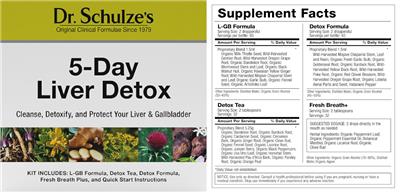
Supplement Facts
| Amount Per Serving | % Daily Value | |
|---|---|---|
| Proprietary Blend | 5.25 g | † |
| Dandelion | † | |
| Burdock | † | |
| Cardamon | † | |
| Cinnamon | † | |
| Ginger | † | |
| Clove | † | |
| Fennel | † | |
| Licorice | † | |
| Juniper | † | |
| Black Peppercorn | † | |
| Uva Ursi | † | |
| Horsetail | † | |
| Pau d'Arco | † | |
| Parsley | † | |
| Orange | † | |
† Daily Value not established.
Daily Values for adults and children 4 or more years of age.
As the label prints it, from the NIH Dietary Supplement Label Database.
Each Ingredient and Its Drug Interactions
Tap one for more about it and its full guide. A drug can interact with this supplement through any one of them.
Our data does not describe the role of each herb, but it does name some key constituents: eugenol in clove, piperine in black pepper, glycyrrhizin in licorice, coumarin in cassia cinnamon, apiole in parsley, and lapachol in pau d'arco.
-
Proprietary Blend 5.25 g Dr. Schulze's Detox Tea is a liquid herbal blend made from dandelion, clove, parsley, licorice, fennel, burdock, orange, cinnamon, cardamom, horsetail, juniper, black pepper, pau d'arco, uva ursi, and ginger, plus a proprietary blend whose components are listed individually. 15 ingredients inside it, each checked on its own
Allergens in Detox Tea
None of its ingredient names point to a major food allergen, and the label text we have carries no allergen statement.
Not named in the ingredients
- Milk
- Egg
- Fish
- Shellfish
- Tree nuts
- Peanuts
- Wheat or other gluten grains
- Soy
- Sesame
From the label text and ingredient names on file; we do not test products. With a serious allergy, check your bottle and ask the maker or your pharmacist.
What the Label Says
The maker’s own words, from the label. We do not verify or endorse them.
- General statements
-
“Original clinical formulae since 1979”
“Kit includes: L-GB Formula, Detox Tea, Detox Formula, Fresh Breath Plus, and Quick Start Instructions”
- Formulation
-
“Cleanse, detoxify, and protect your liver & gallbladder”
“Kit includes: L-GB Formula, Detox Tea, Detox Formula, Fresh Breath Plus, and Quick Start Instructions”
The Detox Tea Label on File
The label scan on file at the NIH Dietary Supplement Label Database, dated May 2025. Always read the label on the bottle you have.
Product Facts
- Brand
- Dr. Schulze's
- Net contents
- N/A
- Market status
- On market
- Date entered into DSLD
- May 21, 2025
- DSLD ID
- 333285
- Product type
- Botanical
- Supplement form
- Liquid
- Dietary claims / uses
- All Other, Structure/Function
- Intended target group(s)
- Adult (18 - 50 Years)
Is this label outdated? Report a formula or label change and our pharmacy team will review it.
Detox Tea by Dr. Schulze's Side Effects
Why this rating?
We look for three kinds of safety information on each ingredient: side effects reported in studies, a pregnancy and breastfeeding rating, and a safety write-up from our pharmacy team. All three are on file for each of the 15 ingredients we could check.
So this rates how much is known, not whether Detox Tea is right for you.
Reported with 15 of its ingredients
- Most often
- Stomach upset, increased urination, diarrhea, heartburn, nausea and swelling
- !Rare but serious
- Anaphylaxis in sensitive individuals, allergic reactions and including contact dermatitis See details
HelloPharmacist Team Summary of Side Effects
You are most likely to notice stomach upset, heartburn, and increased urination, which are the side effects reported for this tea, with the urination linked to the possible diuretic effect of dandelion, horsetail, and parsley.
- Clove oil applied undiluted can irritate the mouth, gums, or skin.
- Serious allergic reactions are rare but possible, especially if you are sensitive to daisy-family plants, so call your doctor right away if you notice swelling, rash, or breathing trouble.
- Talk with your own doctor or pharmacist before starting if you have gallbladder, kidney, liver, or bleeding problems, diabetes, or are pregnant or breastfeeding.
Side Effects, Ingredient by Ingredient
A supplement’s side effects come from its ingredients. Here is what is reported with each one.
Dandelion
Most reported
- Stomach upset, heartburn, or diarrhea
- Increased urination (from its possible diuretic effect)
Ginger
Most reported
- Heartburn
- Stomach discomfort
- Gas
- Burping
Clove
Most reported
- Mouth, gum, or skin irritation when clove oil is applied undiluted
- Stomach upset
- Allergic reactions in sensitive people
Fennel
Most reported
- Skin rash
- Itching
- Swelling
Licorice
Most reported
- High blood pressure
- Low potassium
- Fluid retention and swelling
- Headache
Juniper
Most reported
- Stomach upset
- Diarrhea
- Increased urination
Black Pepper
Most reported
- Burning aftertaste
- Dyspepsia
- Reduced taste perception
From the Natural Medicines database, which we license.
Every reported effect, in the Black Pepper guideUva Ursi
Most reported
- Nausea
- Vomiting
- Stomach upset
Horsetail
Most reported
- Increased urination
- Stomach upset or mild digestive complaints
Pau d'Arco
Most reported
- Nausea
- Stomach upset
Parsley
Most reported
- Stomach upset
- Increased urination
Burdock, Cardamom, Cassia Cinnamon and Sweet Orange have side-effect reports on file, but no list of the most common ones. Read them in each guide: Burdock, Cardamom, Cassia Cinnamon, Sweet Orange.
Detox Tea Warnings: Who Should Be Careful
Detox Tea has 15 active ingredients, and each can carry warnings of its own. We checked all 15, and each warning below names the ingredient it comes from. If any of these apply to you, talk to your doctor or pharmacist before you start it.
- Dandelion2 warnings below
- Burdock3 warnings below
- Cardamom2 warnings below
- Cassia Cinnamon2 warnings below
- Ginger2 warnings below
- Clove3 warnings below
- Fennel3 warnings below
- Licorice3 warnings below
- Juniper1 warning below
- Black Pepper2 warnings below
- Uva Ursi3 warnings below
- Horsetail3 warnings below
- Pau d'Arco3 warnings below
- Parsley2 warnings below
- Sweet Orange2 warnings below
-
Bleeding Problems or Surgery
- GingerUse extra caution if you have a bleeding disorder or are scheduled for surgery, since ginger may slightly affect blood clotting.
- ClovePeople with bleeding disorders, those scheduled for surgery, and people with liver problems should be especially careful.
- Pau d'ArcoOlder research using larger amounts of lapachol reported problems such as nausea, vomiting, and effects on blood clotting that may raise the risk of bleeding.
- Pau d'ArcoPeople with bleeding disorders, or who are scheduled for surgery, should be especially careful and talk with a healthcare provider before use.
-
Diabetes or Low Blood Sugar
- Cassia CinnamonPeople with diabetes who take blood-sugar-lowering medicine should monitor their levels and check with a pharmacist before adding cinnamon supplements.
- HorsetailWho should be cautious: People with kidney problems, heart conditions, low potassium, or diabetes should talk to a healthcare provider first, partly because of horsetail's diuretic action.
-
Blood Pressure
- LicoriceThe bigger concern is with glycyrrhizin-containing licorice taken in large amounts or for a long time, which can raise blood pressure, lower potassium, and stress the heart.
- LicoricePeople who should be especially cautious or avoid glycyrrhizin-containing licorice include those with high blood pressure, heart disease, kidney disease, low potassium, or hormone-sensitive conditions.
- On safety more broadly, clove oil can be toxic when swallowed, especially in children, and high-dose or long-term licorice containing glycyrrhizin can raise blood pressure and lower potassium.
-
Liver Disease
- Cassia CinnamonPeople with liver disease should be especially careful and should talk to a healthcare provider before using cinnamon supplements.
- Uva UrsiDo not use uva ursi if you have kidney disease or liver disease.
-
Kidney Disease or Kidney Stones
- DandelionWho should be cautious: People with gallbladder problems, blocked bile ducts, or kidney disease should talk to a doctor first, since dandelion may affect bile flow and fluid balance.
- JuniperLarger medicinal doses, or use over many weeks, may irritate the kidneys and are not recommended.
- ParsleyPeople with kidney disease should be cautious because of parsley's potential diuretic effect and its content of oxalates, which may matter for those prone to kidney stones.
-
Gallbladder Problems
- CardamomIf you have gallstones, talk to your doctor before using medicinal amounts, since some sources advise caution.
- GingerPeople with gallstones should also check with a doctor, because ginger can increase the flow of bile.
-
Stomach or Bowel Problems
- Black PepperPeople with stomach ulcers, acid reflux, or gut sensitivity may find that pepper worsens irritation.
- Sweet OrangePeople with citrus allergies, acid reflux, or sensitive stomachs may want to limit acidic citrus.
-
Hormone-Sensitive Conditions
- FennelThose with hormone-sensitive conditions should talk to their doctor before using medicinal amounts because of fennel's possible estrogen-like effects.
-
Allergies
- BurdockPeople who are allergic to ragweed, chrysanthemums, marigolds, daisies, or other Asteraceae plants may also react to burdock and should be cautious.
- CardamomPeople with a known allergy to cardamom or related plants should avoid it.
- FennelPeople who are allergic to plants in the carrot family (such as carrots, celery, or parsley) may also react to fennel.
-
Children
- CloveClove oil should never be given by mouth to children.
- Uva UrsiChildren should not take it.
-
If You Take Other Drugs
- BurdockBecause burdock may act as a diuretic, people who are dehydrated or taking medications that affect fluid balance should use caution.
- Black PepperBecause piperine can increase absorption of medications and other supplements, anyone taking prescription drugs should talk to a pharmacist before using a piperine supplement.
-
Other Cautions
- DandelionBecause it may act as a mild diuretic, use caution if you are already taking water pills or have conditions affected by fluid loss.
- CloveAlways check with a healthcare professional before using clove medicinally.
- LicoriceDGL products avoid most of these risks because the glycyrrhizin has been removed.
- Uva UrsiPeople with conditions sensitive to its astringent or irritant effects should also be cautious.
Show 4 more
- HorsetailSome products are labeled 'thiaminase-free,' but caution is still wise.
- HorsetailHeavy alcohol users and people with poor diets may be at higher risk of thiamine deficiency.
- Pau d'ArcoBecause the long-term safety of regular use is not well studied, it is wise to avoid taking large amounts or using it for long periods.
- Sweet OrangeOrange essential oil is for external or aromatherapy use and should not be swallowed unless a qualified professional advises it.
-
What the Label Warns
- “Notice: Use only as directed. Stop use immediately if you experience any adverse reaction.”
- “Consult a health professional before using if you are pregnant, nursing or have a medical condition.”
The maker’s wording, from the product label.
-
Pregnant or Breastfeeding
Each ingredient’s rating for pregnancy and for breastfeeding, and what it covers.
Pregnancy
-
When used orally.
Licorice has abortifacient, estrogenic, and steroid effects.
4 more points on this rating
- It can also cause uterine stimulation.
- Heavy consumption of licorice, equivalent to 500 mg of glycyrrhizin per week (about 250 grams of licorice per week), during pregnancy seems to increase the risk of delivery before gestational age of 38 weeks.
- Furthermore, high intake of glycyrrhizin, at least 500 mg per week, during pregnancy is associated with increased salivary cortisol levels in the child by the age of 8 years.
- This suggests that high intake of licorice during pregnancy may increase hypothalamic-pituitary-adrenocortical axis activity in the child; avoid using.
Breastfeeding
-
Insufficient reliable information available; avoid using.
Pregnancy
-
When used orally.
Juniper can increase uterine tone, interfere with fertility and implantation, and cause abortion.
Breastfeeding
-
Insufficient reliable information available; avoid using.
Show 13 more ingredients
Pregnancy
-
When used orally in amounts commonly found in foods.
-
When used orally in large amounts.
Black pepper might have abortifacient effects; contraindicated.
There is insufficient reliable information available about the safety of topical pepper when used during pregnancy.
Breastfeeding
-
When used orally in amounts commonly found in foods.
There is insufficient reliable information available about the safety of black pepper when used in medicinal amounts during breast-feeding.
Pregnancy
-
When used orally.
Uva ursi can have oxytocic effects, increasing the speed of labor; avoid using.
Breastfeeding
-
Insufficient reliable information available; avoid using.
Pregnancy
-
When used orally in medicinal amounts.
Parsley has been used orally as an abortifacient and to stimulate menstrual flow.
Population evidence suggests that maternal intake of An-Tai-Yin, an herbal combination product containing parsley and dong quai, during the first trimester increases the risk of congenital malformations of the musculoskeletal system, connective tissue, and eyes.
Breastfeeding
-
Insufficient reliable information available; avoid using.
Pregnancy
-
Food amounts are likely fine, but avoid concentrated supplement or essential oil doses without medical advice.
Breastfeeding
-
When used orally in amounts commonly found in foods.
There is insufficient reliable information available about the safety of cardamom when used in medicinal amounts.
Avoid using amounts greater than those used in food.
Pregnancy
-
When used orally.
Observational research has found that regular use of fennel during pregnancy is associated with shortened gestation.
Breastfeeding
-
When used orally.
Case reports have linked consumption of an herbal tea containing extracts of fennel, licorice, anise, and goat's rue to neurotoxicity in two breast-feeding infants.
4 more points on this rating
- The adverse effect was attributed to anethole, a constituent of fennel and anise.
- However, levels of anethole were not measured in breastmilk, and the herbal tea was not tested for contaminants.
- Furthermore, other adverse effects related to use of fennel during lactation have not been reported.
- However, until more is known, avoid using.
Pregnancy
-
When used orally in typical doses.
Animal studies have found that lapachol, a constituent of pau d'arco, has teratogenic and abortifacient effects; avoid using.
There is insufficient reliable information available about the safety of pau d'arco when used topically in pregnancy; avoid using.
Breastfeeding
-
Insufficient reliable information available; avoid using.
Pregnancy and Breastfeeding The record rates both the same
-
Insufficient reliable information available; avoid using amounts greater than those in foods.
Pregnancy and Breastfeeding The record rates both the same
-
Insufficient reliable information available; avoid using.
Pregnancy and Breastfeeding The record rates both the same
-
Insufficient reliable information available; avoid using.
Pregnancy and Breastfeeding The record rates both the same
-
When consumed in amounts commonly found in foods.
There is insufficient reliable information available about the safety of cassia cinnamon when used in medicinal amounts during pregnancy and breast-feeding.
Stay on the safe side and stick to food amounts.
Pregnancy
-
When consumed in the amounts typically found in foods.
Ginger is considered a first-line nonpharmacological treatment option for nausea in pregnancy by the American College of Obstetrics and Gynecology (ACOG).
However, it should not be used long-term or without medical supervision and close monitoring.
-
When used for medicinal purposes.
Despite some early reports of adverse effects and one observational study suggesting that taking dried ginger and other herbal supplements during the first 20 weeks of pregnancy marginally increased the chance of stillbirth, most research shows that ginger is unlikely to cause harm to the baby.
3 more points on this rating
- The risk for major malformations in infants of parents who took ginger when pregnant does not appear to be higher than the baseline rate of 1% to 3%.
- Also, other research suggests that ginger intake during various trimesters does not significantly affect the risk of spontaneous abortion, congenital malformations, stillbirth, perinatal death, preterm birth, low birth weight, or low Apgar scores.
- Ginger use has been associated with an increase in non-severe vaginal bleeding, including spotting, after week 17 of pregnancy.
Breastfeeding
-
When consumed in the amounts typically found in foods.
There is insufficient reliable information available about the safety of ginger when used for medicinal purposes; avoid amounts greater than those found in foods.
Pregnancy and Breastfeeding The record rates both the same
-
When used orally in amounts found in foods.
Clove, clove oil, and eugenol have Generally Recognized As Safe (GRAS) status for use in foods in the US.
There is insufficient reliable information available about the safety of using clove in medicinal amounts during pregnancy and lactation; avoid using.
Pregnancy and Breastfeeding The record rates both the same
-
When sweet orange juice or fruit is used orally in amounts commonly found in foods.
Our pharmacy team’s notes
- LicoriceLicorice is rated unsafe in pregnancy, and our safety data advises avoiding licorice supplements.
- Pregnancy data differs by ingredient.
- For anyone pregnant or breastfeeding, these are decisions to make with your own doctor or pharmacist.
Ratings and the words beside them are from the Natural Medicines database, which we license. Where it has no rating, the rating and note are our pharmacy team’s.
-
Rare but Serious Side Effects
-
!
Dandelion
Rarely, serious allergic reactions can occur.
Orally: Anaphylaxis in sensitive individuals.
-
!
Burdock
Possible side effects include allergic reactions (skin rash, itching, or, rarely, more serious reactions), especially in people sensitive to daisy-family plants.
Allergic reactions, including contact dermatitis and anaphylaxis.
-
!
Cardamom
Allergic reactions are possible but uncommon.
-
!
Cassia Cinnamon
Some people may have mouth or lip irritation, an allergic reaction, or stomach upset.
-
!
Ginger
Rarely, some people may have an allergic reaction.
-
!
Clove
More serious effects can occur with swallowed clove oil, especially in children, and may include liver damage, low blood sugar, seizures, and bleeding problems.
Orally: Liver failure, respiratory distress.
-
!
Fennel
Possible side effects include mild stomach upset and, rarely, allergic reactions such as skin rash, itching, or swelling.
Orally: Seizures.
-
!
Licorice
In serious cases, low potassium and blood pressure changes can lead to irregular heartbeats or other heart problems.
Orally: Case reports have raised concerns about acute renal failure, cardiac arrest, cardiac arrhythmias, hypertension, hypokalemia, muscle weakness, paralysis, pseudohyperaldosteronism, and seizure associated with long-term use or large amounts of licorice containing glycyrrhizin.
-
!
Black Pepper
Orally: Allergic reaction in sensitive individuals.
-
!
Uva Ursi
More serious concerns come with high doses or long-term use.
Orally: At high doses (20 grams of dried herb), uva ursi has been reported to cause collapse, convulsions, cyanosis, delirium, shortness of breath, and tinnitus. Very high doses of 30 grams or more may be fatal.
-
!
Horsetail
Allergic reactions are possible but uncommon.
-
!
Pau d'Arco
At higher doses, pau d'arco can cause more serious problems, including nausea, vomiting, dizziness, and an increased risk of bleeding because of its possible effect on blood clotting.
-
!
Parsley
Some people can have allergic reactions, and parsley may make the skin more sensitive to sunlight (photosensitivity), leading to rashes after sun exposure.
Orally, Hallucinations, hemolytic anemia, hypotension, hepatic impairment, kidney impairment, nephrotic syndrome, paralysis, and thrombocytopenia purpura when taken in very high doses (200 grams parsley oil or 10 grams or more of parsley's apiole or myristicin constituents).
-
!
Sweet Orange
Allergic reactions to citrus are possible but uncommon.
When to get help: a serious allergic reaction, with trouble breathing or swelling of the face, lips or throat, needs emergency care: call 911. For any other side effect that worries you, call your doctor or pharmacist.
These reports describe each ingredient, not studies of this exact product. Not medical advice: a side effect you notice after starting a supplement is worth a word with your pharmacist or doctor.
Detox Tea by Dr. Schulze's Drug Interactions
We checked all 15 active ingredients in this supplement against every drug in our records. A drug can interact with it through any one of them.
A major interaction on record
3 of 3, on a scale from Minor or none to Major.Why this rating?
We rate this by the most serious interaction on record, not by how many there are. For Burdock, Clove, Fennel, Uva Ursi and Pau d'Arco, the most serious is rated major, which means the combination is best avoided, or used only under close supervision. Some involve kinds of drugs where a small change can matter, such as blood thinners, transplant drugs and diabetes drugs.
1,381 drugs are on the full list. What matters is whether one you take is on it, so check yours with the interaction checker on this page.
14 of its 15 active ingredients have drug interactions on record. The ones below matter most. We have no interaction records for Cardamom.
- Interacts with
- 1,041 drugs
- Most serious
- Moderate
- Moderate-rated types, worst first, include warfarin and other blood thinners (anticoagulants) and antiplatelet drugs, since several herbs may add to bleeding risk; antidiabetes drugs, because blood sugar can drop further; lithium, where diuretic effects may raise levels; digoxin, where potassium loss from licorice may raise heart risk; and quinolone antibiotics, which can be absorbed less well.
- Interacts with
- 247 drugs
- Most serious
- Major
- The most serious rating is Major, and it comes from the orange: sweet orange juice can sharply reduce how well the body absorbs certain drugs, and in one study celiprolol levels fell by up to 90%.
- Sweet orange juice can raise levels of pravastatin (a cholesterol drug) and lower absorption of ivermectin.
- Interacts with
- 1,020 drugs
- Most serious
- Moderate
- Most of its records involve Cytochrome P450 3A4 (CYP3A4) Substrates, P-glycoprotein Substrates and Cytochrome P450 2D6 (CYP2D6) Substrates.
Show three more ingredients
- Interacts with
- 1,008 drugs
- Most serious
- Moderate
- Most of its records involve Cytochrome P450 3A4 (CYP3A4) Substrates, P-glycoprotein Substrates and Cytochrome P450 1A2 (CYP1A2) Substrates.
- Interacts with
- 979 drugs
- Most serious
- Moderate
- Most of its records involve Cytochrome P450 3A4 (CYP3A4) Substrates, Cytochrome P450 2D6 (CYP2D6) Substrates and Cytochrome P450 1A2 (CYP1A2) Substrates.
- Interacts with
- 804 drugs
- Most serious
- Moderate
- Most of its records involve Cytochrome P450 3A4 (CYP3A4) Substrates, P-glycoprotein Substrates and Glucuronidated Drugs.
And eight more ingredients with records, each in the cards below.
From the HelloPharmacist Team
Looking at the supplement as a whole rather than one ingredient at a time:
- Dr. Schulze's Detox Tea can interact with medications.
- The findings involve 14 of its herbs: orange, black pepper, dandelion, clove, licorice, ginger, parsley, fennel, burdock, cinnamon, horsetail, juniper, pau d'arco, and uva ursi.
- Two other Major drug types are involved.
Summarized by the HelloPharmacist pharmacy team from the interaction records below. How it is written How we use AI
Why Detox Tea Interacts, Ingredient by Ingredient
A product interacts through its ingredients. Each card: how many drugs, the most serious rating, and the kinds of drugs it affects most (tap a kind for what it means).
The ingredients driving the most interactions
-
Licorice 1,041 drugs
Most serious: Moderate18 interaction records on file
The kinds of drugs it affects most
- 645 drugs
- 202 drugs
- 186 drugs
- 172 drugs
Every Licorice drug interaction, 18 records The Licorice records cite 94 references, listed in the Licorice guide.
-
Black Peppercorn 1,020 drugs
Most serious: Moderate17 interaction records on file
The kinds of drugs it affects most
- 645 drugs
- 202 drugs
- 193 drugs
- 186 drugs
Every Black Pepper drug interaction, 17 records The Black Pepper records cite 29 references, listed in the Black Pepper guide.
-
Ginger 1,008 drugs
Most serious: Moderate14 interaction records on file
The kinds of drugs it affects most
- 645 drugs
- 202 drugs
- 186 drugs
- 122 drugs
Every Ginger drug interaction, 14 records The Ginger records cite 65 references, listed in the Ginger guide.
-
Clove 979 drugs
Most serious: Moderate7 interaction records on file
The kinds of drugs it affects most
- 645 drugs
- 193 drugs
- 186 drugs
- 122 drugs
Every Clove drug interaction, 7 records The Clove records cite 26 references, listed in the Clove guide.
-
Uva Ursi 804 drugs
Most serious: Moderate6 interaction records on file
The kinds of drugs it affects most
- 645 drugs
- 202 drugs
- 124 drugs
- 72 drugs
Every Uva Ursi drug interaction, 6 records The Uva Ursi records cite 8 references, listed in the Uva Ursi guide.
-
Fennel 742 drugs
Most serious: Moderate6 interaction records on file
The kinds of drugs it affects most
- 645 drugs
- 122 drugs
- 41 drugs
- 30 drugs
Every Fennel drug interaction, 6 records The Fennel records cite 17 references, listed in the Fennel guide.
-
Dandelion 457 drugs
Most serious: Moderate7 interaction records on file
The kinds of drugs it affects most
- 186 drugs
- 124 drugs
- 122 drugs
- 86 drugs
Every Dandelion drug interaction, 7 records The Dandelion records cite 27 references, listed in the Dandelion guide.
-
Cinnamon 444 drugs
Most serious: Moderate2 interaction records on file
The kinds of drugs it affects most
- 372 drugs
- 86 drugs
Every Cassia Cinnamon drug interaction, 2 records The Cassia Cinnamon records cite 20 references, listed in the Cassia Cinnamon guide.
-
Parsley 443 drugs
Most serious: Moderate8 interaction records on file
The kinds of drugs it affects most
- 186 drugs
- 122 drugs
- 86 drugs
- 75 drugs
Every Parsley drug interaction, 8 records The Parsley records cite 21 references, listed in the Parsley guide.
-
Orange 247 drugs
Most serious: Major7 interaction records on file
The kinds of drugs it affects most
- 202 drugs
- 47 drugs
- 21 drugs
- Fexofenadine (Allegra) 2 drugs
Every Sweet Orange drug interaction, 7 records The Sweet Orange records cite 17 references, listed in the Sweet Orange guide.
-
Horsetail 188 drugs
Most serious: Moderate5 interaction records on file
The kinds of drugs it affects most
- 86 drugs
- 75 drugs
- Nucleoside Reverse Transcriptase Inhibitors (NRTIs) 25 drugs
- Efavirenz (SUSTIVA) 3 drugs
Every Horsetail drug interaction, 5 records The Horsetail records cite 14 references, listed in the Horsetail guide.
-
Juniper 162 drugs
Most serious: Moderate3 interaction records on file
The kinds of drugs it affects most
- 86 drugs
- 75 drugs
- 1 drug
Every Juniper drug interaction, 3 records The Juniper records cite 7 references, listed in the Juniper guide.
-
Burdock 122 drugs
Most serious: Moderate1 interaction record on file
The kinds of drugs it affects most
- 122 drugs
Every Burdock drug interaction, 1 record The Burdock records cite 11 references, listed in the Burdock guide.
-
Pau d'Arco 122 drugs
Most serious: Moderate1 interaction record on file
The kinds of drugs it affects most
- 122 drugs
Every Pau d'Arco drug interaction, 1 record The Pau d'Arco records cite 6 references, listed in the Pau d'Arco guide.
The Breakdown by Severity
Each drug counted once, at its most serious rating. Tap a tile to list those drugs.
Find Your Drug
Type a drug or brand name to see whether it is on the list.
- Only drugs with a documented interaction are listed, the most serious first.
- A drug with no known interaction is not listed, but searching its name tells you so.
- Open a drug to see which ingredient is responsible. Of those, 943 are single drugs and 437 are combination products (two or more drugs in one), each listed under its own name.
-
AtorvastatinAtorvaliq Major
The 9 ingredients responsible:
-
Orange Major Atorvastatin is in the Organic Anion-transporting Polypeptide Substrates (OATP) category.
Consuming sweet orange juice can decrease oral absorption of OATP substrates.
The full Orange + Atorvastatin interaction -
Black Peppercorn Moderate Atorvastatin is in the Cytochrome P450 3A4 (CYP3A4) Substrates category.
Theoretically, black pepper might increase levels of drugs metabolized by CYP3A4.
The full Black Peppercorn + Atorvastatin interaction -
Clove Moderate Atorvastatin is in the Cytochrome P450 3A4 (CYP3A4) Substrates category.
Theoretically, concomitant use of clove may increase levels of drugs metabolized by CYP3A4.
The full Clove + Atorvastatin interaction -
Ginger Moderate Atorvastatin is in the Cytochrome P450 3A4 (CYP3A4) Substrates category.
Ginger might increase or decrease the levels of CYP3A4 substrates.
The full Ginger + Atorvastatin interaction -
Licorice Moderate Atorvastatin is in the Cytochrome P450 3A4 (CYP3A4) Substrates category.
Theoretically, licorice might increase or decrease levels of drugs metabolized by CYP3A4.
The full Licorice + Atorvastatin interaction -
Cinnamon Moderate Atorvastatin is in the Hepatotoxic Drugs category.
Theoretically, large doses of cassia cinnamon might cause additive effects when used with hepatotoxic drugs.
The full Cinnamon + Atorvastatin interaction -
Uva Ursi Moderate Atorvastatin is in these Glucuronidated Drugs, Cytochrome P450 3A4 (CYP3A4) Substrates categories.
Theoretically, uva ursi may increase levels of drugs metabolized by glucuronidation.
The full Uva Ursi + Atorvastatin interaction -
Dandelion Moderate Atorvastatin is in the Glucuronidated Drugs category.
Theoretically, dandelion might increase the clearance of drugs that are UDP-glucuronosyltransferase substrates.
The full Dandelion + Atorvastatin interaction
And through 1 more ingredient, each with its own page:
- Fennel Moderate
-
-
IvermectinMectizan, Sklice, Soolantra, Stromectol Major
The 5 ingredients responsible:
-
Orange Major Ivermectin is in the P-glycoprotein Substrates category.
Sweet orange juice seems to modulate P-glycoprotein (P-gp), which might affect the blood levels of P-gp substrates.
The full Orange + Ivermectin interaction -
Black Peppercorn Moderate Ivermectin is in the P-glycoprotein Substrates category.
Theoretically, black pepper might increase levels of P-glycoprotein substrates.
The full Black Peppercorn + Ivermectin interaction -
Licorice Moderate Ivermectin is in the P-glycoprotein Substrates category.
Theoretically, licorice might decrease the absorption of P-glycoprotein substrates.
The full Licorice + Ivermectin interaction -
Ginger Moderate Ivermectin is in the P-glycoprotein Substrates category.
Ginger might increase the absorption and blood levels of P-glycoprotein (P-gp) substrates.
The full Ginger + Ivermectin interaction -
Uva Ursi Minor Ivermectin is in the P-glycoprotein Substrates category.
Theoretically, uva ursi may alter the levels of drugs transported by P-glycoprotein.
The full Uva Ursi + Ivermectin interaction
-
-
MethotrexateOtrexup, Rasuvo, Reditrex, Rheumatrex Major
The 3 ingredients responsible:
-
Orange Major Methotrexate is in the Organic Anion-transporting Polypeptide Substrates (OATP) category.
Consuming sweet orange juice can decrease oral absorption of OATP substrates.
The full Orange + Methotrexate interaction -
Cinnamon Moderate Methotrexate is in the Hepatotoxic Drugs category.
Theoretically, large doses of cassia cinnamon might cause additive effects when used with hepatotoxic drugs.
The full Cinnamon + Methotrexate interaction -
Licorice Minor
Theoretically, licorice might increase levels of methotrexate.
The full Licorice + Methotrexate interaction
-
-
CiprofloxacinCiloxan, Cipro, Cipro IV, Cipro XR, Ciprobay and 1 more Major
The 4 ingredients responsible:
-
Orange Major Ciprofloxacin is in these Organic Anion-transporting Polypeptide Substrates (OATP), Quinolone Antibiotics categories.
Consuming sweet orange juice can decrease oral absorption of OATP substrates.
The full Orange + Ciprofloxacin interaction -
Dandelion Moderate Ciprofloxacin is in the Quinolone Antibiotics category.
Theoretically, dandelion might lower fluoroquinolone levels.
The full Dandelion + Ciprofloxacin interaction -
Fennel Moderate
Theoretically, fennel might decrease the levels and clinical effects of ciprofloxacin.
The full Fennel + Ciprofloxacin interaction -
Cinnamon Moderate Ciprofloxacin is in the Hepatotoxic Drugs category.
Theoretically, large doses of cassia cinnamon might cause additive effects when used with hepatotoxic drugs.
The full Cinnamon + Ciprofloxacin interaction
-
-
Atorvastatin CalciumLipitor Major
The 9 ingredients responsible:
-
Orange Major Atorvastatin Calcium is in the Organic Anion-transporting Polypeptide Substrates (OATP) category.
Consuming sweet orange juice can decrease oral absorption of OATP substrates.
The full Orange + Atorvastatin Calcium interaction -
Uva Ursi Moderate Atorvastatin Calcium is in these Cytochrome P450 3A4 (CYP3A4) Substrates, Glucuronidated Drugs categories.
Theoretically, uva ursi may decrease the metabolism of CYP3A4 substrates.
The full Uva Ursi + Atorvastatin Calcium interaction -
Ginger Moderate Atorvastatin Calcium is in the Cytochrome P450 3A4 (CYP3A4) Substrates category.
Ginger might increase or decrease the levels of CYP3A4 substrates.
The full Ginger + Atorvastatin Calcium interaction -
Black Peppercorn Moderate Atorvastatin Calcium is in the Cytochrome P450 3A4 (CYP3A4) Substrates category.
Theoretically, black pepper might increase blood levels of atorvastatin.
The full Black Peppercorn + Atorvastatin Calcium interaction -
Clove Moderate Atorvastatin Calcium is in the Cytochrome P450 3A4 (CYP3A4) Substrates category.
Theoretically, concomitant use of clove may increase levels of drugs metabolized by CYP3A4.
The full Clove + Atorvastatin Calcium interaction -
Fennel Moderate Atorvastatin Calcium is in the Cytochrome P450 3A4 (CYP3A4) Substrates category.
Theoretically, fennel might increase levels of drugs metabolized by CYP3A4.
The full Fennel + Atorvastatin Calcium interaction -
Dandelion Moderate Atorvastatin Calcium is in the Glucuronidated Drugs category.
Theoretically, dandelion might increase the clearance of drugs that are UDP-glucuronosyltransferase substrates.
The full Dandelion + Atorvastatin Calcium interaction -
Licorice Moderate Atorvastatin Calcium is in the Cytochrome P450 3A4 (CYP3A4) Substrates category.
Theoretically, licorice might increase or decrease levels of drugs metabolized by CYP3A4.
The full Licorice + Atorvastatin Calcium interaction
And through 1 more ingredient, each with its own page:
- Cinnamon Moderate
-
-
SimvastatinZocor Major
The 9 ingredients responsible:
-
Orange Major Simvastatin is in the Organic Anion-transporting Polypeptide Substrates (OATP) category.
Consuming sweet orange juice can decrease oral absorption of OATP substrates.
The full Orange + Simvastatin interaction -
Uva Ursi Moderate Simvastatin is in these Cytochrome P450 3A4 (CYP3A4) Substrates, Glucuronidated Drugs categories.
Theoretically, uva ursi may decrease the metabolism of CYP3A4 substrates.
The full Uva Ursi + Simvastatin interaction -
Fennel Moderate Simvastatin is in the Cytochrome P450 3A4 (CYP3A4) Substrates category.
Theoretically, fennel might increase levels of drugs metabolized by CYP3A4.
The full Fennel + Simvastatin interaction -
Licorice Moderate Simvastatin is in the Cytochrome P450 3A4 (CYP3A4) Substrates category.
Theoretically, licorice might increase or decrease levels of drugs metabolized by CYP3A4.
The full Licorice + Simvastatin interaction -
Dandelion Moderate Simvastatin is in the Glucuronidated Drugs category.
Theoretically, dandelion might increase the clearance of drugs that are UDP-glucuronosyltransferase substrates.
The full Dandelion + Simvastatin interaction -
Ginger Moderate Simvastatin is in the Cytochrome P450 3A4 (CYP3A4) Substrates category.
Ginger might increase or decrease the levels of CYP3A4 substrates.
The full Ginger + Simvastatin interaction -
Black Peppercorn Moderate Simvastatin is in the Cytochrome P450 3A4 (CYP3A4) Substrates category.
Theoretically, black pepper might increase levels of drugs metabolized by CYP3A4.
The full Black Peppercorn + Simvastatin interaction -
Cinnamon Moderate Simvastatin is in the Hepatotoxic Drugs category.
Theoretically, large doses of cassia cinnamon might cause additive effects when used with hepatotoxic drugs.
The full Cinnamon + Simvastatin interaction
And through 1 more ingredient, each with its own page:
- Clove Moderate
-
-
Methotrexate SodiumXatmep Major
The 3 ingredients responsible:
-
Orange Major Methotrexate Sodium is in the Organic Anion-transporting Polypeptide Substrates (OATP) category.
Consuming sweet orange juice can decrease oral absorption of OATP substrates.
The full Orange + Methotrexate Sodium interaction -
Cinnamon Moderate Methotrexate Sodium is in the Hepatotoxic Drugs category.
Theoretically, large doses of cassia cinnamon might cause additive effects when used with hepatotoxic drugs.
The full Cinnamon + Methotrexate Sodium interaction -
Licorice Minor
Theoretically, licorice might increase levels of methotrexate.
The full Licorice + Methotrexate Sodium interaction
-
-
GlyburideAlbert Glyburide, Diabeta, Glycron, Glynase, Glynase PresTab and 2 more Major
The 10 ingredients responsible:
-
Orange Major Glyburide is in the Organic Anion-transporting Polypeptide Substrates (OATP) category.
Consuming sweet orange juice can decrease oral absorption of OATP substrates.
The full Orange + Glyburide interaction -
Cinnamon Moderate Glyburide is in these Antidiabetes Drugs, Hepatotoxic Drugs categories.
Theoretically, cassia cinnamon may have additive effects with antidiabetes drugs.
The full Cinnamon + Glyburide interaction -
Ginger Moderate Glyburide is in these Antidiabetes Drugs, Cytochrome P450 2C9 (CYP2C9) Substrates categories.
Theoretically, taking ginger with antidiabetes drugs might increase the risk of hypoglycemia.
The full Ginger + Glyburide interaction -
Juniper Moderate Glyburide is in the Antidiabetes Drugs category.
Theoretically, taking juniper berry with antidiabetes medications might cause additive hypoglycemia.
The full Juniper + Glyburide interaction -
Parsley Moderate Glyburide is in the Antidiabetes Drugs category.
Theoretically, parsley might increase the risk of hypoglycemia when taken with antidiabetes drugs.
The full Parsley + Glyburide interaction -
Dandelion Moderate Glyburide is in the Antidiabetes Drugs category.
Theoretically, dandelion might increase the risk for hypoglycemia when used with antidiabetes drugs.
The full Dandelion + Glyburide interaction -
Horsetail Moderate Glyburide is in the Antidiabetes Drugs category.
Theoretically, taking horsetail with antidiabetes drugs might increase the risk of hypoglycemia.
The full Horsetail + Glyburide interaction -
Black Peppercorn Moderate Glyburide is in the Antidiabetes Drugs category.
Theoretically, black pepper might increase the risk of hypoglycemia when taken with antidiabetes drugs.
The full Black Peppercorn + Glyburide interaction
And through 2 more ingredients, each with its own page:
The Glyburide drug page: uses, dosage and side effects -
-
LevofloxacinLeva-pak, Levaquin, Levaquin Injection Major
The 3 ingredients responsible:
-
Orange Major Levofloxacin is in these Organic Anion-transporting Polypeptide Substrates (OATP), Quinolone Antibiotics categories.
Consuming sweet orange juice can decrease oral absorption of OATP substrates.
The full Orange + Levofloxacin interaction -
Dandelion Moderate Levofloxacin is in the Quinolone Antibiotics category.
Theoretically, dandelion might lower fluoroquinolone levels.
The full Dandelion + Levofloxacin interaction -
Cinnamon Moderate Levofloxacin is in the Hepatotoxic Drugs category.
Theoretically, large doses of cassia cinnamon might cause additive effects when used with hepatotoxic drugs.
The full Cinnamon + Levofloxacin interaction
-
-
Simvastatin/ezetimibeVytorin Major
The 9 ingredients responsible:
-
Orange Major Simvastatin/ezetimibe is in the Organic Anion-transporting Polypeptide Substrates (OATP) category.
Consuming sweet orange juice can decrease oral absorption of OATP substrates.
The full Orange + Simvastatin/ezetimibe interaction -
Black Peppercorn Moderate Simvastatin/ezetimibe is in the Cytochrome P450 3A4 (CYP3A4) Substrates category.
Theoretically, black pepper might increase levels of drugs metabolized by CYP3A4.
The full Black Peppercorn + Simvastatin/ezetimibe interaction -
Uva Ursi Moderate Simvastatin/ezetimibe is in these Cytochrome P450 3A4 (CYP3A4) Substrates, Glucuronidated Drugs categories.
Theoretically, uva ursi may decrease the metabolism of CYP3A4 substrates.
The full Uva Ursi + Simvastatin/ezetimibe interaction -
Fennel Moderate Simvastatin/ezetimibe is in the Cytochrome P450 3A4 (CYP3A4) Substrates category.
Theoretically, fennel might increase levels of drugs metabolized by CYP3A4.
The full Fennel + Simvastatin/ezetimibe interaction -
Clove Moderate Simvastatin/ezetimibe is in the Cytochrome P450 3A4 (CYP3A4) Substrates category.
Theoretically, concomitant use of clove may increase levels of drugs metabolized by CYP3A4.
The full Clove + Simvastatin/ezetimibe interaction -
Dandelion Moderate Simvastatin/ezetimibe is in the Glucuronidated Drugs category.
Theoretically, dandelion might increase the clearance of drugs that are UDP-glucuronosyltransferase substrates.
The full Dandelion + Simvastatin/ezetimibe interaction -
Ginger Moderate Simvastatin/ezetimibe is in the Cytochrome P450 3A4 (CYP3A4) Substrates category.
Ginger might increase or decrease the levels of CYP3A4 substrates.
The full Ginger + Simvastatin/ezetimibe interaction -
Licorice Moderate Simvastatin/ezetimibe is in the Cytochrome P450 3A4 (CYP3A4) Substrates category.
Theoretically, licorice might increase or decrease levels of drugs metabolized by CYP3A4.
The full Licorice + Simvastatin/ezetimibe interaction
And through 1 more ingredient, each with its own page:
- Cinnamon Moderate
-
-
FexofenadineAllegra Major
The 7 ingredients responsible:
-
Orange Major Fexofenadine is in these P-glycoprotein Substrates, Organic Anion-transporting Polypeptide Substrates (OATP) categories.
Sweet orange juice seems to modulate P-glycoprotein (P-gp), which might affect the blood levels of P-gp substrates.
The full Orange + Fexofenadine interaction -
Clove Moderate Fexofenadine is in the Cytochrome P450 3A4 (CYP3A4) Substrates category.
Theoretically, concomitant use of clove may increase levels of drugs metabolized by CYP3A4.
The full Clove + Fexofenadine interaction -
Uva Ursi Moderate Fexofenadine is in these P-glycoprotein Substrates, Cytochrome P450 3A4 (CYP3A4) Substrates categories.
Theoretically, uva ursi may alter the levels of drugs transported by P-glycoprotein.
The full Uva Ursi + Fexofenadine interaction -
Fennel Moderate Fexofenadine is in the Cytochrome P450 3A4 (CYP3A4) Substrates category.
Theoretically, fennel might increase levels of drugs metabolized by CYP3A4.
The full Fennel + Fexofenadine interaction -
Licorice Moderate Fexofenadine is in these P-glycoprotein Substrates, Cytochrome P450 3A4 (CYP3A4) Substrates categories.
Theoretically, licorice might decrease the absorption of P-glycoprotein substrates.
The full Licorice + Fexofenadine interaction -
Black Peppercorn Moderate Fexofenadine is in these Cytochrome P450 3A4 (CYP3A4) Substrates, P-glycoprotein Substrates categories.
Theoretically, black pepper might increase levels of drugs metabolized by CYP3A4.
The full Black Peppercorn + Fexofenadine interaction -
Ginger Moderate Fexofenadine is in these P-glycoprotein Substrates, Cytochrome P450 3A4 (CYP3A4) Substrates categories.
Ginger might increase the absorption and blood levels of P-glycoprotein (P-gp) substrates.
The full Ginger + Fexofenadine interaction
-
-
TorsemideDemadex, Soaanz Major
The 7 ingredients responsible:
-
Orange Major Torsemide is in the Organic Anion-transporting Polypeptide Substrates (OATP) category.
Consuming sweet orange juice can decrease oral absorption of OATP substrates.
The full Orange + Torsemide interaction -
Clove Moderate Torsemide is in the Cytochrome P450 2C9 (CYP2C9) Substrates category.
Theoretically, concomitant use of clove may increase levels of drugs metabolized by CYP2C9.
The full Clove + Torsemide interaction -
Licorice Moderate Torsemide is in these Diuretic Drugs, Loop Diuretics, Cytochrome P450 2C9 (CYP2C9) Substrates and 1 more categories.
Theoretically, concomitant use of licorice with diuretic drugs might increase the risk of hypokalemia.
The full Licorice + Torsemide interaction -
Horsetail Moderate Torsemide is in the Diuretic Drugs category.
Theoretically, taking horsetail with diuretic drugs might increase potassium loss and the risk of hypokalemia.
The full Horsetail + Torsemide interaction -
Parsley Moderate Torsemide is in the Diuretic Drugs category.
Theoretically, parsley might enhance or interfere with the effects of diuretic drugs.
The full Parsley + Torsemide interaction -
Juniper Minor Torsemide is in the Diuretic Drugs category.
Theoretically, juniper berry might increase the risk of adverse effects from diuretic drugs.
The full Juniper + Torsemide interaction -
Ginger Minor Torsemide is in the Cytochrome P450 2C9 (CYP2C9) Substrates category.
Theoretically, ginger might increase the levels of CYP2C9 substrates.
The full Ginger + Torsemide interaction
-
-
CeliprololCelicard Major
The 5 ingredients responsible:
-
Orange Major Celiprolol is in these P-glycoprotein Substrates, Organic Anion-transporting Polypeptide Substrates (OATP) categories.
Sweet orange juice seems to modulate P-glycoprotein (P-gp), which might affect the blood levels of P-gp substrates.
The full Orange + Celiprolol interaction -
Black Peppercorn Moderate Celiprolol is in the P-glycoprotein Substrates category.
Theoretically, black pepper might increase levels of P-glycoprotein substrates.
The full Black Peppercorn + Celiprolol interaction -
Ginger Moderate Celiprolol is in the P-glycoprotein Substrates category.
Ginger might increase the absorption and blood levels of P-glycoprotein (P-gp) substrates.
The full Ginger + Celiprolol interaction -
Licorice Moderate Celiprolol is in these P-glycoprotein Substrates, Antihypertensive Drugs categories.
Theoretically, licorice might decrease the absorption of P-glycoprotein substrates.
The full Licorice + Celiprolol interaction -
Uva Ursi Minor Celiprolol is in the P-glycoprotein Substrates category.
Theoretically, uva ursi may alter the levels of drugs transported by P-glycoprotein.
The full Uva Ursi + Celiprolol interaction
-
-
Pravastatin SodiumPravachol Major
The 2 ingredients responsible:
-
Orange Major Pravastatin Sodium is in the Organic Anion-transporting Polypeptide Substrates (OATP) category.
Consuming sweet orange juice can decrease oral absorption of OATP substrates.
The full Orange + Pravastatin Sodium interaction -
Cinnamon Moderate Pravastatin Sodium is in the Hepatotoxic Drugs category.
Theoretically, large doses of cassia cinnamon might cause additive effects when used with hepatotoxic drugs.
The full Cinnamon + Pravastatin Sodium interaction
-
-
LovastatinAltocor, Mevacor Major
The 9 ingredients responsible:
-
Orange Major Lovastatin is in the Organic Anion-transporting Polypeptide Substrates (OATP) category.
Consuming sweet orange juice can decrease oral absorption of OATP substrates.
The full Orange + Lovastatin interaction -
Black Peppercorn Moderate Lovastatin is in the Cytochrome P450 3A4 (CYP3A4) Substrates category.
Theoretically, black pepper might increase levels of drugs metabolized by CYP3A4.
The full Black Peppercorn + Lovastatin interaction -
Uva Ursi Moderate Lovastatin is in these Cytochrome P450 3A4 (CYP3A4) Substrates, Glucuronidated Drugs categories.
Theoretically, uva ursi may decrease the metabolism of CYP3A4 substrates.
The full Uva Ursi + Lovastatin interaction -
Dandelion Moderate Lovastatin is in the Glucuronidated Drugs category.
Theoretically, dandelion might increase the clearance of drugs that are UDP-glucuronosyltransferase substrates.
The full Dandelion + Lovastatin interaction -
Fennel Moderate Lovastatin is in the Cytochrome P450 3A4 (CYP3A4) Substrates category.
Theoretically, fennel might increase levels of drugs metabolized by CYP3A4.
The full Fennel + Lovastatin interaction -
Clove Moderate Lovastatin is in the Cytochrome P450 3A4 (CYP3A4) Substrates category.
Theoretically, concomitant use of clove may increase levels of drugs metabolized by CYP3A4.
The full Clove + Lovastatin interaction -
Licorice Moderate Lovastatin is in the Cytochrome P450 3A4 (CYP3A4) Substrates category.
Theoretically, licorice might increase or decrease levels of drugs metabolized by CYP3A4.
The full Licorice + Lovastatin interaction -
Cinnamon Moderate Lovastatin is in the Hepatotoxic Drugs category.
Theoretically, large doses of cassia cinnamon might cause additive effects when used with hepatotoxic drugs.
The full Cinnamon + Lovastatin interaction
And through 1 more ingredient, each with its own page:
- Ginger Moderate
-
-
RifampinRifadin, Rifadin Injection, Rimactane, Rofactor Major
The 8 ingredients responsible:
-
Orange Major Rifampin is in the Organic Anion-transporting Polypeptide Substrates (OATP) category.
Consuming sweet orange juice can decrease oral absorption of OATP substrates.
The full Orange + Rifampin interaction -
Ginger Moderate Rifampin is in the Cytochrome P450 3A4 (CYP3A4) Substrates category.
Ginger might increase or decrease the levels of CYP3A4 substrates.
The full Ginger + Rifampin interaction -
Clove Moderate Rifampin is in the Cytochrome P450 3A4 (CYP3A4) Substrates category.
Theoretically, concomitant use of clove may increase levels of drugs metabolized by CYP3A4.
The full Clove + Rifampin interaction -
Cinnamon Moderate Rifampin is in the Hepatotoxic Drugs category.
Theoretically, large doses of cassia cinnamon might cause additive effects when used with hepatotoxic drugs.
The full Cinnamon + Rifampin interaction -
Black Peppercorn Moderate Rifampin is in the Cytochrome P450 3A4 (CYP3A4) Substrates category.
Theoretically, black pepper might increase levels of drugs metabolized by CYP3A4.
The full Black Peppercorn + Rifampin interaction -
Uva Ursi Moderate Rifampin is in the Cytochrome P450 3A4 (CYP3A4) Substrates category.
Theoretically, uva ursi may decrease the metabolism of CYP3A4 substrates.
The full Uva Ursi + Rifampin interaction -
Fennel Moderate Rifampin is in the Cytochrome P450 3A4 (CYP3A4) Substrates category.
Theoretically, fennel might increase levels of drugs metabolized by CYP3A4.
The full Fennel + Rifampin interaction -
Licorice Moderate Rifampin is in the Cytochrome P450 3A4 (CYP3A4) Substrates category.
Theoretically, licorice might increase or decrease levels of drugs metabolized by CYP3A4.
The full Licorice + Rifampin interaction
-
-
EnoxacinPenetrex Major
The 2 ingredients responsible:
-
Orange Major Enoxacin is in these Organic Anion-transporting Polypeptide Substrates (OATP), Quinolone Antibiotics categories.
Consuming sweet orange juice can decrease oral absorption of OATP substrates.
The full Orange + Enoxacin interaction -
Dandelion Moderate Enoxacin is in the Quinolone Antibiotics category.
Theoretically, dandelion might lower fluoroquinolone levels.
The full Dandelion + Enoxacin interaction
-
-
BosentanTracleer Major
The 8 ingredients responsible:
-
Orange Major Bosentan is in the Organic Anion-transporting Polypeptide Substrates (OATP) category.
Consuming sweet orange juice can decrease oral absorption of OATP substrates.
The full Orange + Bosentan interaction -
Cinnamon Moderate Bosentan is in the Hepatotoxic Drugs category.
Theoretically, large doses of cassia cinnamon might cause additive effects when used with hepatotoxic drugs.
The full Cinnamon + Bosentan interaction -
Uva Ursi Moderate Bosentan is in the Cytochrome P450 3A4 (CYP3A4) Substrates category.
Theoretically, uva ursi may decrease the metabolism of CYP3A4 substrates.
The full Uva Ursi + Bosentan interaction -
Fennel Moderate Bosentan is in the Cytochrome P450 3A4 (CYP3A4) Substrates category.
Theoretically, fennel might increase levels of drugs metabolized by CYP3A4.
The full Fennel + Bosentan interaction -
Black Peppercorn Moderate Bosentan is in the Cytochrome P450 3A4 (CYP3A4) Substrates category.
Theoretically, black pepper might increase levels of drugs metabolized by CYP3A4.
The full Black Peppercorn + Bosentan interaction -
Licorice Moderate Bosentan is in these Cytochrome P450 3A4 (CYP3A4) Substrates, Antihypertensive Drugs, Cytochrome P450 2C9 (CYP2C9) Substrates categories.
Theoretically, licorice might increase or decrease levels of drugs metabolized by CYP3A4.
The full Licorice + Bosentan interaction -
Clove Moderate Bosentan is in these Cytochrome P450 3A4 (CYP3A4) Substrates, Cytochrome P450 2C9 (CYP2C9) Substrates categories.
Theoretically, concomitant use of clove may increase levels of drugs metabolized by CYP3A4.
The full Clove + Bosentan interaction -
Ginger Moderate Bosentan is in these Cytochrome P450 3A4 (CYP3A4) Substrates, Cytochrome P450 2C9 (CYP2C9) Substrates categories.
Ginger might increase or decrease the levels of CYP3A4 substrates.
The full Ginger + Bosentan interaction
-
-
MoxifloxacinAvelox Major
The 3 ingredients responsible:
-
Orange Major Moxifloxacin is in these Organic Anion-transporting Polypeptide Substrates (OATP), Quinolone Antibiotics categories.
Consuming sweet orange juice can decrease oral absorption of OATP substrates.
The full Orange + Moxifloxacin interaction -
Cinnamon Moderate Moxifloxacin is in the Hepatotoxic Drugs category.
Theoretically, large doses of cassia cinnamon might cause additive effects when used with hepatotoxic drugs.
The full Cinnamon + Moxifloxacin interaction -
Dandelion Moderate Moxifloxacin is in the Quinolone Antibiotics category.
Theoretically, dandelion might lower fluoroquinolone levels.
The full Dandelion + Moxifloxacin interaction
-
-
IrinotecanCamptosar, Onivyde Major
The 8 ingredients responsible:
-
Orange Major Irinotecan is in the Organic Anion-transporting Polypeptide Substrates (OATP) category.
Consuming sweet orange juice can decrease oral absorption of OATP substrates.
The full Orange + Irinotecan interaction -
Ginger Moderate Irinotecan is in the Cytochrome P450 3A4 (CYP3A4) Substrates category.
Ginger might increase or decrease the levels of CYP3A4 substrates.
The full Ginger + Irinotecan interaction -
Licorice Moderate Irinotecan is in the Cytochrome P450 3A4 (CYP3A4) Substrates category.
Theoretically, licorice might increase or decrease levels of drugs metabolized by CYP3A4.
The full Licorice + Irinotecan interaction -
Clove Moderate Irinotecan is in the Cytochrome P450 3A4 (CYP3A4) Substrates category.
Theoretically, concomitant use of clove may increase levels of drugs metabolized by CYP3A4.
The full Clove + Irinotecan interaction -
Uva Ursi Moderate Irinotecan is in these Glucuronidated Drugs, Cytochrome P450 3A4 (CYP3A4) Substrates categories.
Theoretically, uva ursi may increase levels of drugs metabolized by glucuronidation.
The full Uva Ursi + Irinotecan interaction -
Dandelion Moderate Irinotecan is in the Glucuronidated Drugs category.
Theoretically, dandelion might increase the clearance of drugs that are UDP-glucuronosyltransferase substrates.
The full Dandelion + Irinotecan interaction -
Fennel Moderate Irinotecan is in the Cytochrome P450 3A4 (CYP3A4) Substrates category.
Theoretically, fennel might increase levels of drugs metabolized by CYP3A4.
The full Fennel + Irinotecan interaction -
Black Peppercorn Moderate Irinotecan is in the Cytochrome P450 3A4 (CYP3A4) Substrates category.
Theoretically, black pepper might increase levels of drugs metabolized by CYP3A4.
The full Black Peppercorn + Irinotecan interaction
-
-
CinoxacinCinobac Major
The 3 ingredients responsible:
-
Orange Major Cinoxacin is in these Organic Anion-transporting Polypeptide Substrates (OATP), Quinolone Antibiotics categories.
Consuming sweet orange juice can decrease oral absorption of OATP substrates.
The full Orange + Cinoxacin interaction -
Cinnamon Moderate Cinoxacin is in the Hepatotoxic Drugs category.
Theoretically, large doses of cassia cinnamon might cause additive effects when used with hepatotoxic drugs.
The full Cinnamon + Cinoxacin interaction -
Dandelion Moderate Cinoxacin is in the Quinolone Antibiotics category.
Theoretically, dandelion might lower fluoroquinolone levels.
The full Dandelion + Cinoxacin interaction
-
-
FluvastatinLescol, Lescol XL Major
The 5 ingredients responsible:
-
Orange Major Fluvastatin is in the Organic Anion-transporting Polypeptide Substrates (OATP) category.
Consuming sweet orange juice can decrease oral absorption of OATP substrates.
The full Orange + Fluvastatin interaction -
Licorice Moderate Fluvastatin is in these Cytochrome P450 2C9 (CYP2C9) Substrates, Cytochrome P450 2C8 (CYP2C8) Substrates categories.
Theoretically, licorice might increase or decrease levels of drugs metabolized by CYP2C9.
The full Licorice + Fluvastatin interaction -
Clove Moderate Fluvastatin is in the Cytochrome P450 2C9 (CYP2C9) Substrates category.
Theoretically, concomitant use of clove may increase levels of drugs metabolized by CYP2C9.
The full Clove + Fluvastatin interaction -
Cinnamon Moderate Fluvastatin is in the Hepatotoxic Drugs category.
Theoretically, large doses of cassia cinnamon might cause additive effects when used with hepatotoxic drugs.
The full Cinnamon + Fluvastatin interaction -
Ginger Minor Fluvastatin is in the Cytochrome P450 2C9 (CYP2C9) Substrates category.
Theoretically, ginger might increase the levels of CYP2C9 substrates.
The full Ginger + Fluvastatin interaction
-
-
PaclitaxelAbraxane, Taxol Major
The 7 ingredients responsible:
-
Orange Major Paclitaxel is in these Organic Anion-transporting Polypeptide Substrates (OATP), P-glycoprotein Substrates categories.
Consuming sweet orange juice can decrease oral absorption of OATP substrates.
The full Orange + Paclitaxel interaction -
Ginger Moderate Paclitaxel is in these P-glycoprotein Substrates, Cytochrome P450 3A4 (CYP3A4) Substrates categories.
Ginger might increase the absorption and blood levels of P-glycoprotein (P-gp) substrates.
The full Ginger + Paclitaxel interaction -
Uva Ursi Moderate Paclitaxel is in these P-glycoprotein Substrates, Cytochrome P450 3A4 (CYP3A4) Substrates categories.
Theoretically, uva ursi may alter the levels of drugs transported by P-glycoprotein.
The full Uva Ursi + Paclitaxel interaction -
Fennel Moderate Paclitaxel is in the Cytochrome P450 3A4 (CYP3A4) Substrates category.
Theoretically, fennel might increase levels of drugs metabolized by CYP3A4.
The full Fennel + Paclitaxel interaction -
Black Peppercorn Moderate Paclitaxel is in these P-glycoprotein Substrates, Cytochrome P450 3A4 (CYP3A4) Substrates categories.
Theoretically, black pepper might increase levels of P-glycoprotein substrates.
The full Black Peppercorn + Paclitaxel interaction -
Clove Moderate Paclitaxel is in the Cytochrome P450 3A4 (CYP3A4) Substrates category.
Theoretically, concomitant use of clove may increase levels of drugs metabolized by CYP3A4.
The full Clove + Paclitaxel interaction -
Licorice Moderate Paclitaxel is in these Cytochrome P450 2C8 (CYP2C8) Substrates, P-glycoprotein Substrates, Cytochrome P450 3A4 (CYP3A4) Substrates categories.
Theoretically, licorice might increase levels of drugs metabolized by CYP2C8.
The full Licorice + Paclitaxel interaction
-
-
EtoposideEtopophos, VePesid, VP16 Major
The 7 ingredients responsible:
-
Orange Major Etoposide is in these P-glycoprotein Substrates, Organic Anion-transporting Polypeptide Substrates (OATP) categories.
Sweet orange juice seems to modulate P-glycoprotein (P-gp), which might affect the blood levels of P-gp substrates.
The full Orange + Etoposide interaction -
Uva Ursi Moderate Etoposide is in these P-glycoprotein Substrates, Cytochrome P450 3A4 (CYP3A4) Substrates categories.
Theoretically, uva ursi may alter the levels of drugs transported by P-glycoprotein.
The full Uva Ursi + Etoposide interaction -
Ginger Moderate Etoposide is in these P-glycoprotein Substrates, Cytochrome P450 3A4 (CYP3A4) Substrates categories.
Ginger might increase the absorption and blood levels of P-glycoprotein (P-gp) substrates.
The full Ginger + Etoposide interaction -
Licorice Moderate Etoposide is in these P-glycoprotein Substrates, Cytochrome P450 3A4 (CYP3A4) Substrates categories.
Theoretically, licorice might decrease the absorption of P-glycoprotein substrates.
The full Licorice + Etoposide interaction -
Fennel Moderate Etoposide is in the Cytochrome P450 3A4 (CYP3A4) Substrates category.
Theoretically, fennel might increase levels of drugs metabolized by CYP3A4.
The full Fennel + Etoposide interaction -
Clove Moderate Etoposide is in the Cytochrome P450 3A4 (CYP3A4) Substrates category.
Theoretically, concomitant use of clove may increase levels of drugs metabolized by CYP3A4.
The full Clove + Etoposide interaction -
Black Peppercorn Moderate Etoposide is in these P-glycoprotein Substrates, Cytochrome P450 3A4 (CYP3A4) Substrates categories.
Theoretically, black pepper might increase levels of P-glycoprotein substrates.
The full Black Peppercorn + Etoposide interaction
-
-
GatifloxacinTequin, Tequin Injection Major
The 3 ingredients responsible:
-
Orange Major Gatifloxacin is in these Organic Anion-transporting Polypeptide Substrates (OATP), Quinolone Antibiotics categories.
Consuming sweet orange juice can decrease oral absorption of OATP substrates.
The full Orange + Gatifloxacin interaction -
Dandelion Moderate Gatifloxacin is in the Quinolone Antibiotics category.
Theoretically, dandelion might lower fluoroquinolone levels.
The full Dandelion + Gatifloxacin interaction -
Cinnamon Moderate Gatifloxacin is in the Hepatotoxic Drugs category.
Theoretically, large doses of cassia cinnamon might cause additive effects when used with hepatotoxic drugs.
The full Cinnamon + Gatifloxacin interaction
-
-
BrincidofovirTembexa Major
The ingredient responsible:
-
Orange Major Brincidofovir is in the Organic Anion-transporting Polypeptide Substrates (OATP) category.
Consuming sweet orange juice can decrease oral absorption of OATP substrates.
The full Orange + Brincidofovir interaction
-
-
Nalidixic AcidNegGram Major
The 3 ingredients responsible:
-
Orange Major Nalidixic Acid is in these Organic Anion-transporting Polypeptide Substrates (OATP), Quinolone Antibiotics categories.
Consuming sweet orange juice can decrease oral absorption of OATP substrates.
The full Orange + Nalidixic Acid interaction -
Dandelion Moderate Nalidixic Acid is in the Quinolone Antibiotics category.
Theoretically, dandelion might lower fluoroquinolone levels.
The full Dandelion + Nalidixic Acid interaction -
Cinnamon Moderate Nalidixic Acid is in the Hepatotoxic Drugs category.
Theoretically, large doses of cassia cinnamon might cause additive effects when used with hepatotoxic drugs.
The full Cinnamon + Nalidixic Acid interaction
-
-
OfloxacinFloxin, Floxin Injection, Floxin Otic, Oflox Major
The 3 ingredients responsible:
-
Orange Major Ofloxacin is in these Organic Anion-transporting Polypeptide Substrates (OATP), Quinolone Antibiotics categories.
Consuming sweet orange juice can decrease oral absorption of OATP substrates.
The full Orange + Ofloxacin interaction -
Dandelion Moderate Ofloxacin is in the Quinolone Antibiotics category.
Theoretically, dandelion might lower fluoroquinolone levels.
The full Dandelion + Ofloxacin interaction -
Cinnamon Moderate Ofloxacin is in the Hepatotoxic Drugs category.
Theoretically, large doses of cassia cinnamon might cause additive effects when used with hepatotoxic drugs.
The full Cinnamon + Ofloxacin interaction
-
-
GemifloxacinFactive Major
The 2 ingredients responsible:
-
Orange Major Gemifloxacin is in these Organic Anion-transporting Polypeptide Substrates (OATP), Quinolone Antibiotics categories.
Consuming sweet orange juice can decrease oral absorption of OATP substrates.
The full Orange + Gemifloxacin interaction -
Dandelion Moderate Gemifloxacin is in the Quinolone Antibiotics category.
Theoretically, dandelion might lower fluoroquinolone levels.
The full Dandelion + Gemifloxacin interaction
-
-
Irinotecan Hydrochloride Major
The 8 ingredients responsible:
-
Orange Major Irinotecan Hydrochloride is in the Organic Anion-transporting Polypeptide Substrates (OATP) category.
Consuming sweet orange juice can decrease oral absorption of OATP substrates.
The full Orange + Irinotecan Hydrochloride interaction -
Black Peppercorn Moderate Irinotecan Hydrochloride is in the Cytochrome P450 3A4 (CYP3A4) Substrates category.
Theoretically, black pepper might increase levels of drugs metabolized by CYP3A4.
The full Black Peppercorn + Irinotecan Hydrochloride interaction -
Licorice Moderate Irinotecan Hydrochloride is in the Cytochrome P450 3A4 (CYP3A4) Substrates category.
Theoretically, licorice might increase or decrease levels of drugs metabolized by CYP3A4.
The full Licorice + Irinotecan Hydrochloride interaction -
Ginger Moderate Irinotecan Hydrochloride is in the Cytochrome P450 3A4 (CYP3A4) Substrates category.
Ginger might increase or decrease the levels of CYP3A4 substrates.
The full Ginger + Irinotecan Hydrochloride interaction -
Fennel Moderate Irinotecan Hydrochloride is in the Cytochrome P450 3A4 (CYP3A4) Substrates category.
Theoretically, fennel might increase levels of drugs metabolized by CYP3A4.
The full Fennel + Irinotecan Hydrochloride interaction -
Uva Ursi Moderate Irinotecan Hydrochloride is in these Cytochrome P450 3A4 (CYP3A4) Substrates, Glucuronidated Drugs categories.
Theoretically, uva ursi may decrease the metabolism of CYP3A4 substrates.
The full Uva Ursi + Irinotecan Hydrochloride interaction -
Clove Moderate Irinotecan Hydrochloride is in the Cytochrome P450 3A4 (CYP3A4) Substrates category.
Theoretically, concomitant use of clove may increase levels of drugs metabolized by CYP3A4.
The full Clove + Irinotecan Hydrochloride interaction -
Dandelion Moderate Irinotecan Hydrochloride is in the Glucuronidated Drugs category.
Theoretically, dandelion might increase the clearance of drugs that are UDP-glucuronosyltransferase substrates.
The full Dandelion + Irinotecan Hydrochloride interaction
-
Does It Work? Detox Tea by Dr. Schulze's
How it rates in the research so far, then each ingredient on its own. A grade is the research so far, never an endorsement.
What It Is Marketed For
- Cleanse
- Detoxify
- Protect liver
- Gallbladder
From the claims on the product’s label.
Closest match for what it is marketed for
Cardamom for nonalcoholic fatty liver disease (NAFLD)
There isn’t enough good research to say either way.
Our pharmacy team’s notes on this supplement
- These ratings apply to individual ingredients, not to the tea as a whole.
- All other rated ingredients have insufficient reliable evidence to rate, and the evidence for the tea itself is not established.
The Evidence, Ingredient by Ingredient
Each card holds our notes on one ingredient, then its uses graded effective, likely effective or possibly effective.
Dandelion
From our Dandelion guide
- Despite its long history, high-quality human evidence for dandelion is limited.
- Most claims come from traditional use, laboratory studies, or small animal experiments rather than large, well-designed trials in people.
No use is graded effective, likely effective or possibly effective for it yet.
Every graded use, in the Dandelion guideBurdock
From our Burdock guide
- Burdock is popular in folk medicine, but solid scientific proof for most of its uses is limited.
- Much of what we know comes from laboratory and animal studies rather than well-designed human trials.
No use is graded effective, likely effective or possibly effective for it yet.
Every graded use, in the Burdock guideCardamom
From our Cardamom guide
- Cardamom is most popular as a flavoring spice, but it is also taken for several health reasons.
- It is important to know that strong human evidence for these uses is limited.
No use is graded effective, likely effective or possibly effective for it yet.
Every graded use, in the Cardamom guideCassia Cinnamon
From our Cassia Cinnamon guide
- The most studied use is blood sugar support in people with type 2 diabetes or prediabetes.
- Some small studies suggest cinnamon may slightly lower fasting blood sugar, but results are inconsistent and the effect, when present, is usually modest.
No use is graded effective, likely effective or possibly effective for it yet.
Every graded use, in the Cassia Cinnamon guideGinger
Our pharmacy team’s notes on Ginger
- Ginger is possibly effective for nausea during pregnancy, painful periods (dysmenorrhea), and osteoarthritis, and possibly ineffective for exercise-related muscle soreness and chemotherapy-related nausea.
Research suggests a benefit for
- Osteoarthritis, dysmenorrhea and pregnancy-induced nausea and vomiting
Clove
From our Clove guide
- The best-known use of clove is for tooth and gum pain.
- Clove oil contains eugenol, which has a numbing effect, and it has long been used in dentistry.
Not counted here: one graded use is for Clove injected or put on the skin (ventilator-associated pneumonia (VAP)), not for a product like this one.
Every graded use, in the Clove guideFennel
From our Fennel guide
- Fennel is most often used for digestive problems such as gas, bloating, and stomach discomfort.
- Some small studies suggest it may help relax the gut, but the overall evidence is limited and not strong enough to call it proven.
Research suggests a benefit for
- Dysmenorrhea
Licorice
From our Licorice guide
- People use licorice for many reasons, but for most of them the scientific evidence in humans is limited or not strong.
Not counted here: two graded uses are for Licorice injected or put on the skin (atopic dermatitis (eczema) and canker sores), not for a product like this one.
Every graded use, in the Licorice guideJuniper
From our Juniper guide
- Most uses of juniper are based on tradition and laboratory studies rather than strong human trials.
- The overall scientific evidence is weak for nearly all of its claimed benefits.
No use is graded effective, likely effective or possibly effective for it yet.
Every graded use, in the Juniper guideBlack Pepper
From our Black Pepper guide
- People use black pepper and piperine for digestion, inflammation, coughs and congestion, and as an antioxidant.
- Much of the support for these uses comes from traditional practice plus laboratory and animal studies rather than large, high-quality human trials.
No use is graded effective, likely effective or possibly effective for it yet.
Every graded use, in the Black Pepper guideUva Ursi
Our pharmacy team’s notes on Uva Ursi
- Uva ursi is possibly ineffective for urinary tract infections.
No use is graded effective, likely effective or possibly effective for it yet.
Every graded use, in the Uva Ursi guideHorsetail
From our Horsetail guide
- Horsetail is popular, but solid human research is limited.
- Most claims rest on traditional use, laboratory studies, or small trials.
No use is graded effective, likely effective or possibly effective for it yet.
Every graded use, in the Horsetail guidePau d'Arco
From our Pau d'Arco guide
- Pau d'arco is popularly used for a wide range of problems, including bacterial and fungal infections, yeast (Candida) infections, inflammation, digestive complaints, and skin conditions.
- Some products are also marketed for boosting immunity.
No use is graded effective, likely effective or possibly effective for it yet.
Every graded use, in the Pau d'Arco guideParsley
From our Parsley guide
- Parsley is popularly used as a natural diuretic (a "water pill") to ease bloating and fluid retention, and for urinary or bladder discomfort.
- It is also used for upset stomach, gas, and to freshen breath.
No use is graded effective, likely effective or possibly effective for it yet.
Every graded use, in the Parsley guideSweet Orange
From our Sweet Orange guide
- People use sweet orange for many reasons, but the strength of the evidence varies a lot depending on the use.
No use is graded effective, likely effective or possibly effective for it yet.
Every graded use, in the Sweet Orange guideThe grades are the Natural Medicines database’s, which we license; tap a grade for what it means. They are about each ingredient, not this exact product.
About Dr. Schulze's
Manufacturer and brand details for Detox Tea, from the product label.
Dr. Schulze's has 11 products in our supplement database, all of them on the market, with labels on file since 2013. Our database is built from the NIH’s Dietary Supplement Label Database and our pharmacy team’s own additions, so it covers the labels filed there, not every product the brand sells.
- Name
- Dr. Schulze's
Detox Tea by Dr. Schulze's: Common Questions
Does Detox Tea by Dr. Schulze's interact with any drugs?
What are the side effects of Detox Tea by Dr. Schulze's?
Who should be careful taking Detox Tea by Dr. Schulze's?
Can Detox Tea by Dr. Schulze's affect the liver?
Can Detox Tea by Dr. Schulze's affect the kidneys?
How can Detox Tea by Dr. Schulze's interact with so many drugs?
Where does the information about Detox Tea by Dr. Schulze's come from?
Is Detox Tea by Dr. Schulze's safe during pregnancy?
Does the evidence show Detox Tea by Dr. Schulze's helps with nausea?
Why is licorice a concern in Detox Tea by Dr. Schulze's?
Can Detox Tea by Dr. Schulze's cause allergic reactions?
Written and reviewed by the HelloPharmacist Editorial Team. Our editorial policy
Still Have a Question About Detox Tea?
Our pharmacists answer drug and supplement questions, free, by email.
Label information is sourced from the NIH Dietary Supplement Label Database and reflects the product version on file; always read your actual product label. This page is for education only and is not a substitute for professional medical advice. Confirm with your pharmacist or doctor before combining supplements and drugs.
Who Reviews This Page
The pharmacist behind it, and how it is checked.
Dr. Brian Staiger, PharmD, BCPS
Clinical pharmacist and founder of HelloPharmacist
A licensed pharmacist for more than 13 years, he built the system behind this page: it reads the label on file, matches each active ingredient to its record in the Natural Medicines database, checks those records against every drug we cover, and our pharmacy team writes the take and the interaction summary from those records.
- 13+ Years in PharmacyRetail and clinical pharmacy, medication safety and healthcare administration.
- Board Certified (BCPS)A pharmacotherapy specialist, certified by the Board of Pharmacy Specialties.
- Herbalist TrainingCertificates in medical ethnobotany, for the herbs and supplements people take.
Where This Page Comes From
Detox Tea’s label data comes from the NIH Dietary Supplement Label Database; the ingredient interaction data is from the Natural Medicines database, reviewed by our pharmacists.
- NIH Dietary Supplement Label Database (DSLD)
- The official product label on file for this supplement.
- Natural Medicines (Therapeutic Research Center)
- The evidence-graded clinical reference behind the ingredient interaction, evidence and safety records, which we license.
- HelloPharmacist Editorial Team
- Content is reviewed by the HelloPharmacist Editorial Team, the pharmacists on our staff and those we contract. See our data sources and editorial standards for how this information is built and checked.
- The Pharmacy Team’s Take and Summaries
- Generated from HelloPharmacist’s pharmacist-curated databases and editorial rules. Clinical methodology reviewed by Dr. Brian Staiger, PharmD, BCPS. Last generated Oct 31, 2026. How we use AI
- The ratings in the Quick Summary
- They summarize available label information, ingredient evidence and known drug-safety records: a summary of what is known, not a grade of the product itself. They do not verify product identity, purity, potency, contamination or manufacturing quality. How these ratings are computed
The References Behind the Interaction Records
Every citation the ingredients’ records rest on is listed in that ingredient’s guide, in context: Dandelion, 27 references; Burdock, 11 references; Cardamom, 2 references; Cassia Cinnamon, 20 references; Ginger, 65 references; Clove, 26 references; Fennel, 17 references; Licorice, 94 references; Juniper, 7 references; Black Pepper, 29 references; Uva Ursi, 8 references; Horsetail, 14 references; Pau d'Arco, 6 references; Parsley, 21 references; Sweet Orange, 17 references .
Parts of this content are provided by the Therapeutic Research Center, LLC.
DISCLAIMER: Currently this does not check for drug-drug interactions. This is not an all-inclusive comprehensive list of potential interactions and is for informational purposes only. Not all interactions are known or well-reported in the scientific literature, and new interactions are continually being reported. Input is needed from a qualified healthcare provider including a pharmacist before starting any therapy. Application of clinical judgment is necessary.
© 2021 Therapeutic Research Center, LLC
Keep Exploring
- Supplement interaction checkerCheck any supplement or product against your drugs
- Drug–drug interactionsCheck two or more of your drugs against each other
- Browse drugs A to ZEvery drug we have checked against herbs and supplements
- NDC and pricing lookupFind a drug’s NDCs, packaging and costs
- Ask a pharmacistA free, personal answer from our licensed team