
GHR Formula Ingredients & Drug Interactions
by Swanson
What is this page for?
First and foremost: checking GHR Formula against your medications. The heart of this page is the interaction checker and the full interaction report — how this product’s ingredients may interact with prescription and over-the-counter medicines you may be taking.
Around that, we add a pharmacist’s high-level view of the product as a whole — what’s inside, the evidence for its stated use, how transparent the label is, and what safety data exists — so you can see the full picture in one place. It’s educational information from our licensed clinical databases and the clinical staff at HelloPharmacist — not medical advice — and we don’t sell or endorse products. Our editorial policy
GHR Formula is a dietary supplement by Swanson with 9 active ingredients. Its ingredients are commonly taken for morning sickness in pregnancy, premenstrual syndrome (pms), preventing or treating b6 deficiency.Based on those ingredients, 710 medications have a known interaction with it, the most serious rated major. The ingredients most likely to interact are L-Arginine, Vitamin B6, Vitamin C. Use the checker below to test your specific medication, or read the full HelloPharmacist Interaction Report.
Check Your Meds Against GHR Formula by Swanson
Ask about any prescription or over-the-counter medication and we check it for interactions with GHR Formula by Swanson — and tell you which ingredient is responsible.
AI summaries are generated from our interaction database for education only — always confirm with your pharmacist. How we use AI
Ask the Pharmacist
A licensed pharmacist will answer your question by email — free, usually within 24 hours.
Got it — thank you!
A licensed pharmacist will answer within 24 hours. Keep an eye on your email (worth checking spam, just in case).
HelloPharmacist Scorecard of GHR Formula by Swanson
Our pharmacy team’s full take, with four database checks built into the cards below — a summary of what is known, not a grade of the product itself.
What’s inside
Full disclosure
GHR Formula contains 9 ingredients, 7 of which are active compounds. Vitamin B6 supports red blood cell formation and nerve function.
Glycine and L-arginine are amino acids that play roles in protein synthesis and other metabolic processes. L-lysine is another amino acid often used for herpes support.
Vitamin C is an antioxidant essential for immune function and collagen. L-ornithine and L-ornithine alpha-ketoglutarate are amino acid derivatives involved in protein metabolism.
Mucuna pruriens extract is a plant source of levodopa, a compound used in Parkinson's treatment. Alpha-GPC is a choline compound studied for cognitive support.
The formula also contains inactive ingredients — gelatin, dicalcium phosphate, magnesium stearate, silica, dextrin, and magnesium silicate — which serve as binders, fillers, and capsule material.
Does it work?
Moderate evidence
The evidence for this product's ingredients varies widely. Vitamin B6 is effective for sideroblastic anemia and B6 deficiency, and likely effective for elevated homocysteine levels.
Vitamin C is effective for C deficiency. L-lysine is possibly effective for cold sores.
Several other ingredients—glycine for schizophrenia, L-arginine, L-ornithine for athletic performance, alpha-GPC for Alzheimer's disease, and Mucuna pruriens—carry a rating of possibly effective or insufficient evidence. The product hasn't been evaluated as a whole; its overall benefit depends on which ingredient addresses your goal.
How safe is it?
Well-documented data
Vitamin B6 is well tolerated at doses under 100 mg daily but can cause nerve damage (sensory neuropathy) at very high doses or over long periods. Glycine, L-arginine, L-lysine, and alpha-GPC are generally well tolerated at standard doses, though long-term safety data are limited for most.
Vitamin C is safe at normal amounts; doses above 2 grams daily increase the risk of kidney stones and stomach upset. Mucuna pruriens extract contains an active drug-like compound (levodopa) and requires careful use under professional guidance.
Pregnancy and breastfeeding data are sparse or limited for most ingredients. Vitamin B6 is likely safe in pregnancy at typical amounts.
L-arginine is possibly safe in pregnancy, while glycine, L-lysine, L-ornithine, and alpha-GPC have insufficient data — talk with your doctor before use. For breastfeeding, Mucuna pruriens should be avoided because levodopa can reduce milk supply.
Most others have insufficient breastfeeding data; your doctor or pharmacist can advise on individual ingredients.
Meds to double-check
Major interaction found
Before taking GHR Formula, check with your doctor or pharmacist if you take monoamine oxidase inhibitors (MAOIs) — the Mucuna pruriens extract poses a Major risk of dangerously high blood pressure. Also flag: blood pressure medications and ACE inhibitors or ARBs (Major risk from Mucuna pruriens, Moderate from vitamin B6 and L-arginine), seizure drugs like phenobarbital or phenytoin (Moderate from B6), blood thinners or antiplatelet drugs (Moderate from L-arginine and vitamin C), levodopa for Parkinson's (Major from Mucuna pruriens, Minor from B6), and diabetes medications (Moderate from L-arginine and Mucuna pruriens).
No interactions are documented for L-ornithine alpha-ketoglutarate.
The bottom line
Scorecard at a glanceFully disclosed formula with some supporting evidence for its stated purpose. Major medication interactions have been identified, and safety information is well characterized.
GHR Formula is a multi-ingredient supplement with effects that range from well-established (vitamin B6 for deficiency) to understudied (most others). If you take any prescription medication — especially blood pressure drugs, seizure medications, blood thinners, diabetes drugs, psychiatric medications, or MAOIs — check with your doctor or pharmacist before starting, because interactions here can be serious.
Pregnant or breastfeeding? Talk it over first; the safety data are too thin to go it alone.
Educational only — not medical advice; always confirm with your pharmacist. Our editorial policy · How we use AI
Assessment coverage: 8 of 9 active ingredients matched to our full ingredient reviews (monographs). Based on the product label dated May 28, 2019.
This Scorecard evaluates available label information, ingredient evidence, and known medication-safety considerations. It does not independently verify product identity, purity, potency, contamination, or manufacturing quality. How these ratings are computed
General information
Key facts about GHR Formula, straight from the product label.
Everything in this section is reproduced from the manufacturer’s own product label — it’s the label speaking, not HelloPharmacist. We show it so you can see exactly what the maker states; we don’t verify or endorse those statements.
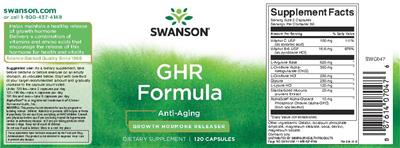
Supplement Facts
The label details for GHR Formula by Swanson, sourced from the NIH Dietary Supplement Label Database.
Supplement Facts
| Ingredient | Amount | % DV |
|---|---|---|
| Vitamin B6 | 16.6 mg | 976% |
| Glycine | 230 mg | -- |
| L-Arginine | 620 mg | -- |
| L-Lysine Hydrochloride | 120 mg | -- |
| Vitamin C | 100 mg | 111% |
| L-Ornithine Hydrochloride | 230 mg | -- |
| L-Ornithine Alpha-Ketoglutarate | 350 mg | -- |
| AlphaSize Alpha-Glyceryl Phosphoryl Choline | 10 mg | -- |
| standardized Mucuna pruriens extract | 25 mg | -- |
Other ingredients: Gelatin, Dicalcium Phosphate Dihydrate, Magnesium Stearate, Silica, Dextrin, Magnesium Silicate
Tap any ingredient to jump to its full detail below.
These statements are the manufacturer’s wording, reproduced from the product label — the label is saying it, not HelloPharmacist. We don’t verify or endorse them.
General Statements
Helps maintain a healthy release of growth hormone Delivers a combination of vitamins and amino acids that encourage the release of this hormone for health and vitality Science-Backed Quality Since 1969
Anti-aging Growth hormone releaser
Suggested/Recommended/Usage/Directions
Suggested use: As a dietary supplement, take before bedtime or before exercise on an empty stomach, as indicated below. Start with one-third of your target recommended amount and gradually increase to the capsule count listed. Under 120 lbs—take 2 capsules per day 121–180 lbs—take 4 capsules per day 181 lbs and over—take 6 capsules per day
Brand IP Statement(s)
AlphaSize is a registered trademark of Chemi Nutraceuticals, Inc.
Precautions
Warning: This product is not intended for use by pregnant or lactating women, children, diabetics or persons with herpes or forms of psychosis.
Warning: This product is not intended for use by pregnant or lactating women, children, diabetics or persons with herpes or forms of psychosis. Do not use if you are taking an MAO inhibitor. Consult your physician before use if you are being treated for hypertension, cardiac or pulmonary disease, or if you are taking products which contain L-dopa.
Keep out of reach of children.
Do not use if seal is broken.
Contains soy.
Storage
Store in a cool, dry place.
FDA Disclaimer Statement
These statements have not been evaluated by the Food and Drug Administration. This product is not intended to diagnose, treat, cure or prevent any disease.
FDA Statement of Identity
Dietary Supplement
Formula
Contains soy.
General
SWC047 Rev 0 04 16 18
Is this label outdated? Report a formula or label change and our pharmacy team will review it.
GHR Formula by Swanson label
The label scan from the NIH Dietary Supplement Label Database. Tap to enlarge.
Label images are published by the NIH Dietary Supplement Label Database for the version of this product on file. Always read your actual product label.
View the full label (PDF)The Ingredients in GHR Formula by Swanson
These are the 9 active ingredients this product is made of. Select any to open its full monograph.
Serving size2 Capsule(s) Dosage formCapsule Servings per container60 Amounts shown are per serving.
Most supplement products combine several ingredients, and a medication can interact with the product through any one of them. Each ingredient below shows whether it has known drug interactions.
Vitamin B6
Interacts with210 drugs
Vitamin B6 (pyridoxine) is an essential water-soluble vitamin that your body needs for metabolism, brain function, and making red blood cells. It is b...
Vitamin B6 monograph & interactionsGlycine
Interacts with1 drug
Glycine is a non-essential amino acid your body makes on its own and that also appears in protein-rich foods. It is most studied for improving sleep q...
Glycine monograph & interactionsL-Arginine
Interacts with403 drugs
L-arginine is an amino acid that the body uses to make nitric oxide, a substance that helps blood vessels relax and widen. It is popularly used for bl...
L-Arginine monograph & interactionsL-Lysine Hydrochloride
Interacts with1 drug
Lysine is an essential amino acid your body cannot make on its own, so it must come from food or supplements. People most often take extra lysine to t...
L-Lysine Hydrochloride monograph & interactionsVitamin C
Interacts with207 drugs
Vitamin C (ascorbic acid) is an essential nutrient your body needs but cannot make, so you must get it from food or supplements. It's important for im...
Vitamin C monograph & interactionsL-Ornithine Hydrochloride
No knowninteractions
Ornithine is a non-essential amino acid your body makes naturally as part of the urea cycle, which helps remove ammonia. It is sold as a supplement fo...
L-Ornithine Hydrochloride monograph & interactionsL-Ornithine Alpha-Ketoglutarate
AlphaSize Alpha-Glyceryl Phosphoryl Choline
Interacts with16 drugs
Alpha-GPC is a choline-containing compound used mainly for memory, brain health, and as a choline source. There is some evidence it may help cognition...
AlphaSize Alpha-Glyceryl Phosphoryl Choline monograph & interactionsStandardized Mucuna pruriens extract
Interacts with193 drugs
Cowhage (Mucuna pruriens) is a tropical legume best known as a natural source of L-dopa, the compound the body turns into dopamine. It is most studied...
Standardized Mucuna pruriens extract monograph & interactionsOther (inactive) ingredients: Gelatin, Dicalcium Phosphate Dihydrate, Magnesium Stearate, Silica, Dextrin, Magnesium Silicate. These complete the product’s ingredient list but are not active constituents.
GHR Formula by Swanson Drug Interactions
HelloPharmacist Interaction Report
GHR Formula by Swanson contains several ingredients with documented interactions: vitamin B6, glycine, L-arginine, L-lysine, vitamin C, alpha-GPC, and Mucuna pruriens extract.
The most serious concern is with Mucuna pruriens extract and monoamine oxidase inhibitors (MAOIs) — a combination that could trigger a dangerous spike in blood pressure (hypertensive crisis). Altogether, these interactions span 710 individual medications.
Read the full breakdown — every affected drug type, severity by severity
Vitamin B6 interacts with blood pressure medications, the heart drug amiodarone, seizure medications (phenobarbital and phenytoin), and levodopa. L-arginine poses risks with blood pressure drugs, potassium-sparing diuretics, blood thinners (anticoagulants and antiplatelets), diabetes medications, ACE inhibitors, ARBs, and the erectile dysfunction drug sildenafil — most involving low blood pressure or high potassium levels.
Vitamin C can affect estrogens, some cancer chemotherapy drugs, aluminum absorption, warfarin (a blood thinner), and several psychiatric and antiviral medications.
Alpha-GPC has a minor interaction with scopolamine patches (motion sickness). L-lysine may reduce effects of certain serotonin drugs.
Glycine might worsen schizophrenia symptoms in people taking clozapine. We could not check L-ornithine alpha-ketoglutarate — no data is on file for it.
Use the medication checker below to search your exact prescriptions before you start this product.
Check your own medications below · Editorial policy · How we use AI
Want to check YOUR meds against GHR Formula?
Ask about interactions with your drugs in plain English — “Can I take it with lisinopril?” — and we find you the answer in seconds, ingredient by ingredient.
Go to the checkerIngredients driving the most interactions
Individual Drug Interactions
The ingredients in GHR Formula interact with 710 drugs. Click any drug to see the details.
7 of the 9 ingredients in GHR Formula interact with drugs. Each result below shows which ingredient is responsible. L-Arginine Vitamin B6 Vitamin C standardized Mucuna pruriens extract AlphaSize Alpha-Glyceryl Phosphoryl Choline Glycine L-Lysine Hydrochloride
AmphetamineAdensys XR-ODT, Adzenys ER, Dyanavel XR, Mydayis
How Amphetamine interacts with GHR Formula — through 1 ingredient. Tap an ingredient for the detail:
Standardized Mucuna Pruriens ExtractMonoamine Oxidase Inhibitors (maois) Major
Interaction Summary
Theoretically, concomitant use of cowhage and non-selective MAOIs might increase the risk of hypertensive crisis.
Read the full Standardized Mucuna Pruriens Extract + Amphetamine interactionBenserazide, LevodopaMadopar, Prolopa
How Benserazide, Levodopa interacts with GHR Formula — through 2 ingredients. Tap an ingredient for the detail:
Standardized Mucuna Pruriens ExtractLevodopa Major
Interaction Summary
Concomitant use can increase the risk of levodopa-related adverse effects.
Read the full Standardized Mucuna Pruriens Extract + Benserazide, Levodopa interactionVitamin B6Levodopa Minor
Interaction Summary
Vitamin B6 may increase the metabolism of levodopa when taken alone, but not when taken in conjunction with carbidopa.
Read the full Vitamin B6 + Benserazide, Levodopa interactionCarbidopa, LevodopaDhivy, Rytary, Sinemet, Sinemet CR
How Carbidopa, Levodopa interacts with GHR Formula — through 2 ingredients. Tap an ingredient for the detail:
Standardized Mucuna Pruriens ExtractLevodopa Major
Interaction Summary
Concomitant use can increase the risk of levodopa-related adverse effects.
Read the full Standardized Mucuna Pruriens Extract + Carbidopa, Levodopa interactionVitamin B6Levodopa Minor
Interaction Summary
Vitamin B6 may increase the metabolism of levodopa when taken alone, but not when taken in conjunction with carbidopa.
Read the full Vitamin B6 + Carbidopa, Levodopa interactionCarbidopa, Levodopa, EntacaponeStalevo
How Carbidopa, Levodopa, Entacapone interacts with GHR Formula — through 2 ingredients. Tap an ingredient for the detail:
Standardized Mucuna Pruriens ExtractLevodopa Major
Interaction Summary
Concomitant use can increase the risk of levodopa-related adverse effects.
Read the full Standardized Mucuna Pruriens Extract + Carbidopa, Levodopa, Entacapone interactionVitamin B6Levodopa Minor
Interaction Summary
Vitamin B6 may increase the metabolism of levodopa when taken alone, but not when taken in conjunction with carbidopa.
Read the full Vitamin B6 + Carbidopa, Levodopa, Entacapone interactionChlorothiazide, MethyldopaAldochlor, Aldoclor 150, Aldoclor 250
How Chlorothiazide, Methyldopa interacts with GHR Formula — through 3 ingredients. Tap an ingredient for the detail:
Standardized Mucuna Pruriens ExtractMethyldopa (aldomet) Major
Interaction Summary
Theoretically, concomitant use of cowhage and methyldopa might increase the risk of hypotension.
Read the full Standardized Mucuna Pruriens Extract + Chlorothiazide, Methyldopa interactionL-arginineAntihypertensive Drugs Moderate
Interaction Summary
Theoretically, concomitant use of L-arginine and antihypertensive drugs may increase the risk of hypotension.
Read the full L-arginine + Chlorothiazide, Methyldopa interactionVitamin B6Antihypertensive Drugs Moderate
Interaction Summary
Theoretically, vitamin B6 may have additive effects when used with antihypertensive drugs.
Read the full Vitamin B6 + Chlorothiazide, Methyldopa interactionHydrochlorothiazide, MethyldopaAldoril 15, Aldoril 25, Aldoril D30, Methazide
How Hydrochlorothiazide, Methyldopa interacts with GHR Formula — through 3 ingredients. Tap an ingredient for the detail:
Standardized Mucuna Pruriens ExtractMethyldopa (aldomet) Major
Interaction Summary
Theoretically, concomitant use of cowhage and methyldopa might increase the risk of hypotension.
Read the full Standardized Mucuna Pruriens Extract + Hydrochlorothiazide, Methyldopa interactionVitamin B6Antihypertensive Drugs Moderate
Interaction Summary
Theoretically, vitamin B6 may have additive effects when used with antihypertensive drugs.
Read the full Vitamin B6 + Hydrochlorothiazide, Methyldopa interactionL-arginineAntihypertensive Drugs Moderate
Interaction Summary
Theoretically, concomitant use of L-arginine and antihypertensive drugs may increase the risk of hypotension.
Read the full L-arginine + Hydrochlorothiazide, Methyldopa interactionIsocarboxazidMarplan
How Isocarboxazid interacts with GHR Formula — through 1 ingredient. Tap an ingredient for the detail:
Standardized Mucuna Pruriens ExtractMonoamine Oxidase Inhibitors (maois) Major
Interaction Summary
Theoretically, concomitant use of cowhage and non-selective MAOIs might increase the risk of hypertensive crisis.
Read the full Standardized Mucuna Pruriens Extract + Isocarboxazid interactionLevodopaInbrija, Larodopa
How Levodopa interacts with GHR Formula — through 2 ingredients. Tap an ingredient for the detail:
Standardized Mucuna Pruriens ExtractLevodopa Major
Interaction Summary
Concomitant use can increase the risk of levodopa-related adverse effects.
Read the full Standardized Mucuna Pruriens Extract + Levodopa interactionVitamin B6Levodopa Minor
Interaction Summary
Vitamin B6 may increase the metabolism of levodopa when taken alone, but not when taken in conjunction with carbidopa.
Read the full Vitamin B6 + Levodopa interactionLevodopa, CarbidopaDuodopa
How Levodopa, Carbidopa interacts with GHR Formula — through 2 ingredients. Tap an ingredient for the detail:
Standardized Mucuna Pruriens ExtractLevodopa Major
Interaction Summary
Concomitant use can increase the risk of levodopa-related adverse effects.
Read the full Standardized Mucuna Pruriens Extract + Levodopa, Carbidopa interactionVitamin B6Levodopa Minor
Interaction Summary
Vitamin B6 may increase the metabolism of levodopa when taken alone, but not when taken in conjunction with carbidopa.
Read the full Vitamin B6 + Levodopa, Carbidopa interactionMethyldopaAldomet, Methyldopa
How Methyldopa interacts with GHR Formula — through 3 ingredients. Tap an ingredient for the detail:
Standardized Mucuna Pruriens ExtractMethyldopa (aldomet) Major
Interaction Summary
Theoretically, concomitant use of cowhage and methyldopa might increase the risk of hypotension.
Read the full Standardized Mucuna Pruriens Extract + Methyldopa interactionL-arginineAntihypertensive Drugs Moderate
Interaction Summary
Theoretically, concomitant use of L-arginine and antihypertensive drugs may increase the risk of hypotension.
Read the full L-arginine + Methyldopa interactionVitamin B6Antihypertensive Drugs Moderate
Interaction Summary
Theoretically, vitamin B6 may have additive effects when used with antihypertensive drugs.
Read the full Vitamin B6 + Methyldopa interactionMoclobemideManerix, Moclobemide
How Moclobemide interacts with GHR Formula — through 1 ingredient. Tap an ingredient for the detail:
Standardized Mucuna Pruriens ExtractMonoamine Oxidase Inhibitors (maois) Major
Interaction Summary
Theoretically, concomitant use of cowhage and non-selective MAOIs might increase the risk of hypertensive crisis.
Read the full Standardized Mucuna Pruriens Extract + Moclobemide interactionOzanimod HydrochlorideZeposia
How Ozanimod Hydrochloride interacts with GHR Formula — through 1 ingredient. Tap an ingredient for the detail:
Standardized Mucuna Pruriens ExtractMonoamine Oxidase Inhibitors (maois) Major
Interaction Summary
Theoretically, concomitant use of cowhage and non-selective MAOIs might increase the risk of hypertensive crisis.
Read the full Standardized Mucuna Pruriens Extract + Ozanimod Hydrochloride interactionPhenelzine SulfateNardil
How Phenelzine Sulfate interacts with GHR Formula — through 1 ingredient. Tap an ingredient for the detail:
Standardized Mucuna Pruriens ExtractMonoamine Oxidase Inhibitors (maois) Major
Interaction Summary
Theoretically, concomitant use of cowhage and non-selective MAOIs might increase the risk of hypertensive crisis.
Read the full Standardized Mucuna Pruriens Extract + Phenelzine Sulfate interactionRasagilineAzilect
How Rasagiline interacts with GHR Formula — through 1 ingredient. Tap an ingredient for the detail:
Standardized Mucuna Pruriens ExtractMonoamine Oxidase Inhibitors (maois) Major
Interaction Summary
Theoretically, concomitant use of cowhage and non-selective MAOIs might increase the risk of hypertensive crisis.
Read the full Standardized Mucuna Pruriens Extract + Rasagiline interactionSafinamide MesylateXadago
How Safinamide Mesylate interacts with GHR Formula — through 1 ingredient. Tap an ingredient for the detail:
Standardized Mucuna Pruriens ExtractMonoamine Oxidase Inhibitors (maois) Major
Interaction Summary
Theoretically, concomitant use of cowhage and non-selective MAOIs might increase the risk of hypertensive crisis.
Read the full Standardized Mucuna Pruriens Extract + Safinamide Mesylate interactionSelegilineCarbex, Eldepryl, Emsam, Zelapar
How Selegiline interacts with GHR Formula — through 1 ingredient. Tap an ingredient for the detail:
Standardized Mucuna Pruriens ExtractMonoamine Oxidase Inhibitors (maois) Major
Interaction Summary
Theoretically, concomitant use of cowhage and non-selective MAOIs might increase the risk of hypertensive crisis.
Read the full Standardized Mucuna Pruriens Extract + Selegiline interactionTranylcypromineParnate
How Tranylcypromine interacts with GHR Formula — through 1 ingredient. Tap an ingredient for the detail:
Standardized Mucuna Pruriens ExtractMonoamine Oxidase Inhibitors (maois) Major
Interaction Summary
Theoretically, concomitant use of cowhage and non-selective MAOIs might increase the risk of hypertensive crisis.
Read the full Standardized Mucuna Pruriens Extract + Tranylcypromine interactionAbciximabReoPro
How Abciximab interacts with GHR Formula — through 1 ingredient. Tap an ingredient for the detail:
L-arginineAnticoagulant/antiplatelet Drugs Moderate
Interaction Summary
Theoretically, concomitant use of L-arginine with anticoagulant and antiplatelet drugs might have additive effects and increase the risk of bleeding.
Read the full L-arginine + Abciximab interactionAbrocitinibCibinqo
How Abrocitinib interacts with GHR Formula — through 1 ingredient. Tap an ingredient for the detail:
L-arginineAnticoagulant/antiplatelet Drugs Moderate
Interaction Summary
Theoretically, concomitant use of L-arginine with anticoagulant and antiplatelet drugs might have additive effects and increase the risk of bleeding.
Read the full L-arginine + Abrocitinib interactionAcarboseGlucobay, Prandase, Precose
How Acarbose interacts with GHR Formula — through 2 ingredients. Tap an ingredient for the detail:
L-arginineAntidiabetes Drugs Moderate
Interaction Summary
Theoretically, concomitant use of L-arginine might have additive effects with antidiabetes drugs.
Read the full L-arginine + Acarbose interactionStandardized Mucuna Pruriens ExtractAntidiabetes Drugs Moderate
Interaction Summary
Theoretically, concomitant use of cowhage and antidiabetes drugs might increase the risk of hypoglycemia.
Read the full Standardized Mucuna Pruriens Extract + Acarbose interactionAcebutololRhotral, Sectral
How Acebutolol interacts with GHR Formula — through 2 ingredients. Tap an ingredient for the detail:
L-arginineAntihypertensive Drugs Moderate
Interaction Summary
Theoretically, concomitant use of L-arginine and antihypertensive drugs may increase the risk of hypotension.
Read the full L-arginine + Acebutolol interactionVitamin B6Antihypertensive Drugs Moderate
Interaction Summary
Theoretically, vitamin B6 may have additive effects when used with antihypertensive drugs.
Read the full Vitamin B6 + Acebutolol interactionAcenocoumarolSintrom
How Acenocoumarol interacts with GHR Formula — through 1 ingredient. Tap an ingredient for the detail:
L-arginineAnticoagulant/antiplatelet Drugs Moderate
Interaction Summary
Theoretically, concomitant use of L-arginine with anticoagulant and antiplatelet drugs might have additive effects and increase the risk of bleeding.
Read the full L-arginine + Acenocoumarol interactionAcepromazineAtravet
How Acepromazine interacts with GHR Formula — through 1 ingredient. Tap an ingredient for the detail:
Standardized Mucuna Pruriens ExtractAntipsychotic Drugs Moderate
Interaction Summary
Theoretically, use of cowhage might decrease the clinical effects of antipsychotic drugs.
Read the full Standardized Mucuna Pruriens Extract + Acepromazine interactionAcetaminophen, AspirinGemnisyn
How Acetaminophen, Aspirin interacts with GHR Formula — through 2 ingredients. Tap an ingredient for the detail:
L-arginineAnticoagulant/antiplatelet Drugs Moderate
Interaction Summary
Theoretically, concomitant use of L-arginine with anticoagulant and antiplatelet drugs might have additive effects and increase the risk of bleeding.
Read the full L-arginine + Acetaminophen, Aspirin interactionVitamin CAcetaminophen (tylenol, Others), Aspirin Minor
Interaction Summary
High-dose vitamin C might slightly prolong the clearance of acetaminophen.
Read the full Vitamin C + Acetaminophen, Aspirin interactionAcetaminophen, Aspirin, CaffeineExcedrin, Excedrin Extra Strength, Excedrin Migraine
How Acetaminophen, Aspirin, Caffeine interacts with GHR Formula — through 2 ingredients. Tap an ingredient for the detail:
L-arginineAnticoagulant/antiplatelet Drugs Moderate
Interaction Summary
Theoretically, concomitant use of L-arginine with anticoagulant and antiplatelet drugs might have additive effects and increase the risk of bleeding.
Read the full L-arginine + Acetaminophen, Aspirin, Caffeine interactionVitamin CAcetaminophen (tylenol, Others), Aspirin Minor
Interaction Summary
High-dose vitamin C might slightly prolong the clearance of acetaminophen.
Read the full Vitamin C + Acetaminophen, Aspirin, Caffeine interactionAcetaminophen, IbuprofenCombogesic
How Acetaminophen, Ibuprofen interacts with GHR Formula — through 2 ingredients. Tap an ingredient for the detail:
L-arginineAnticoagulant/antiplatelet Drugs Moderate
Interaction Summary
Theoretically, concomitant use of L-arginine with anticoagulant and antiplatelet drugs might have additive effects and increase the risk of bleeding.
Read the full L-arginine + Acetaminophen, Ibuprofen interactionVitamin CAcetaminophen (tylenol, Others) Minor
Interaction Summary
High-dose vitamin C might slightly prolong the clearance of acetaminophen.
Read the full Vitamin C + Acetaminophen, Ibuprofen interactionAcetazolamideAk-Zol, Diamox
How Acetazolamide interacts with GHR Formula — through 2 ingredients. Tap an ingredient for the detail:
Vitamin B6Antihypertensive Drugs Moderate
Interaction Summary
Theoretically, vitamin B6 may have additive effects when used with antihypertensive drugs.
Read the full Vitamin B6 + Acetazolamide interactionL-arginineAntihypertensive Drugs Moderate
Interaction Summary
Theoretically, concomitant use of L-arginine and antihypertensive drugs may increase the risk of hypotension.
Read the full L-arginine + Acetazolamide interactionAcetohexamideDymelor
How Acetohexamide interacts with GHR Formula — through 2 ingredients. Tap an ingredient for the detail:
Standardized Mucuna Pruriens ExtractAntidiabetes Drugs Moderate
Interaction Summary
Theoretically, concomitant use of cowhage and antidiabetes drugs might increase the risk of hypoglycemia.
Read the full Standardized Mucuna Pruriens Extract + Acetohexamide interactionL-arginineAntidiabetes Drugs Moderate
Interaction Summary
Theoretically, concomitant use of L-arginine might have additive effects with antidiabetes drugs.
Read the full L-arginine + Acetohexamide interactionAcetophenazineTindal
How Acetophenazine interacts with GHR Formula — through 1 ingredient. Tap an ingredient for the detail:
Standardized Mucuna Pruriens ExtractAntipsychotic Drugs Moderate
Interaction Summary
Theoretically, use of cowhage might decrease the clinical effects of antipsychotic drugs.
Read the full Standardized Mucuna Pruriens Extract + Acetophenazine interactionAcetylsalicylic AcidEntrophen
How Acetylsalicylic Acid interacts with GHR Formula — through 2 ingredients. Tap an ingredient for the detail:
L-arginineAnticoagulant/antiplatelet Drugs Moderate
Interaction Summary
Theoretically, concomitant use of L-arginine with anticoagulant and antiplatelet drugs might have additive effects and increase the risk of bleeding.
Read the full L-arginine + Acetylsalicylic Acid interactionVitamin CAspirin Minor
Interaction Summary
Acidification of the urine by vitamin C might increase aspirin levels.
Read the full Vitamin C + Acetylsalicylic Acid interactionEach ingredient & the kinds of drugs it affects
For each ingredient in GHR Formula with known interactions, here are the types of medications they can affect. Open any type for the detail — or search your exact drug in the checker above.
L-Arginine
Ace Inhibitors (Aceis)
Theoretically, concomitant use of L-arginine and ACE inhibitors may increase the risk for hypotension and hyperkalemia.
Combining L-arginine with some antihypertensive drugs, especially ACE inhibitors, seems to have additive vasodilating and blood pressure-lowering effects. Furthermore, ACE inhibitors can increase potassium levels. Use of L-arginine has been associated with hyperkalemia in some patients. Theoretically, concomitant use of ACE inhibitors with L-arginine may increases the risk of hyperkalemia.
Angiotensin Receptor Blockers (Arbs)
Theoretically, concomitant use of L-arginine and ARBs may increase the risk of hypotension and hyperkalemia.
L-arginine increases nitric oxide, which causes vasodilation. Combining L-arginine with ARBs seems to increase L-arginine-induced vasodilation. Furthermore, ARBs can increase potassium levels. Use of L-arginine has been associated with hyperkalemia in some patients. Theoretically, concomitant use of ARBs with L-arginine may increases the risk of hyperkalemia.
Anticoagulant/Antiplatelet Drugs
Theoretically, concomitant use of L-arginine with anticoagulant and antiplatelet drugs might have additive effects and increase the risk of bleeding.
Preliminary research suggests that L-arginine infusions reduce platelet aggregation in humans. The clinical significance of this effect is unclear.
Antidiabetes Drugs
Theoretically, concomitant use of L-arginine might have additive effects with antidiabetes drugs.
Preliminary clinical research shows that L-arginine decreases blood glucose levels in patients with type 2 diabetes.
Antihypertensive Drugs
Theoretically, concomitant use of L-arginine and antihypertensive drugs may increase the risk of hypotension.
L-arginine increases nitric oxide, which causes vasodilation. Clinical evidence shows that L-arginine can reduce blood pressure in some individuals with hypertension. Furthermore, combining L-arginine with some antihypertensive drugs seems to have additive vasodilating and blood pressure-lowering effects.
Isoproterenol (Isuprel)
Theoretically, concurrent use of isoproterenol and L-arginine might result in additive effects and hypotension.
Preliminary clinical evidence suggests that L-arginine enhances isoproterenol-induced vasodilation in patients with essential hypertension or a family history of essential hypertension.
Potassium-Sparing Diuretics
Theoretically concomitant use of potassium-sparing diuretics with L-arginine may increases the risk of hyperkalemia.
Potassium-sparing diuretics can increase potassium levels. Use of L-arginine has been associated with hyperkalemia in some patients.
Sildenafil (Viagra)
Theoretically, concurrent use of sildenafil and L-arginine might increase the risk for hypotension.
In vivo, concurrent use of L-arginine and sildenafil has resulted in increased vasodilation. Theoretically, concurrent use might have additive vasodilatory and hypotensive effects. However, in studies evaluating the combined use of L-arginine and sildenafil for erectile dysfunction, hypotension was not reported.
Testosterone
Theoretically, concomitant use of L-arginine and testosterone might have additive effects.
In clinical research, L-arginine increases the level of testosterone in male patients with erectile dysfunction. The clinical significance of this finding is unclear.
Vitamin B6
Amiodarone (Cordarone)
Theoretically, vitamin B6 might increase the photosensitivity caused by amiodarone.
Despite initial case reports suggesting that pyridoxine may have a protective effect against amiodarone-induced photosensitivity, preliminary clinical research suggests that pyridoxine may actually exacerbate this adverse effect.
Antihypertensive Drugs
Theoretically, vitamin B6 may have additive effects when used with antihypertensive drugs.
Research in hypertensive rats shows that vitamin B6 can decrease systolic blood pressure. Similarly, clinical research in patients with hypertension shows that taking high doses of vitamin B6 may reduce systolic and diastolic blood pressure, possibly by reducing plasma levels of epinephrine and norepinephrine.
Phenobarbital (Luminal)
High doses of vitamin B6 may reduce the levels and clinical effects of phenobarbital.
Preliminary clinical evidence suggests that vitamin B6 200 mg daily can reduce plasma levels of phenobarbital, possibly by increasing metabolism. It is not known whether lower doses have any effect. Advise people taking phenobarbital to avoid high doses of vitamin B6.
Phenytoin (Dilantin)
High doses of vitamin B6 may reduce the levels and clinical effects of phenytoin.
Preliminary clinical evidence suggests that vitamin B6 200 mg daily can reduce plasma levels of phenytoin, possibly by increasing metabolism. It is not known whether lower doses have any effect. Advise people taking phenytoin to avoid high doses of vitamin B6.
Levodopa
Vitamin B6 may increase the metabolism of levodopa when taken alone, but not when taken in conjunction with carbidopa.
Vitamin B6 (pyridoxine) enhances the metabolism of levodopa, reducing its clinical effects. However, this interaction does not occur when carbidopa is used concurrently with levodopa (Sinemet). Therefore, it is not likely to be a problem in most people.
Vitamin C
Alkylating Agents
Theoretically, antioxidant effects of vitamin C might reduce the effectiveness of alkylating agents.
The use of antioxidants like vitamin C during chemotherapy is controversial. There is concern that antioxidants could reduce the activity of chemotherapy drugs that generate free radicals, such as cyclophosphamide, chlorambucil, carmustine, busulfan, and thiotepa. In contrast, some researchers theorize that antioxidants might make chemotherapy more effective by reducing oxidative stress that could interfere with apoptosis (cell death) of cancer cells. More evidence is needed to determine what effect, if any, antioxidants such as vitamin C have on chemotherapy.
Aluminum
Vitamin C can increase the amount of aluminum absorbed from aluminum compounds.
Research in animals and humans shows that vitamin C increases aluminum absorption, theoretically by chelating aluminum and keeping it in solution where it is available for absorption. In people with normal renal function, urinary excretion of aluminum will likely increase, making aluminum retention and toxicity unlikely. Patients with renal failure who take aluminum-containing compounds such as phosphate binders should avoid vitamin C supplements in doses above the recommended dietary allowances.
Antitumor Antibiotics
Theoretically, the antioxidant effects of vitamin C might reduce the effectiveness of antitumor antibiotics.
The use of antioxidants like vitamin C during chemotherapy is controversial. There is concern that antioxidants could reduce the activity of chemotherapy drugs which generate free radicals, such as doxorubicin. In contrast, some researchers theorize that antioxidants might make chemotherapy more effective by reducing oxidative stress that could interfere with apoptosis (cell death) of cancer cells. More evidence is needed to determine what effects, if any, antioxidants such as vitamin C have on chemotherapy.
Estrogens
Vitamin C might increase blood levels of estrogens.
Increases in plasma estrogen levels of up to 55% occur under some circumstances when vitamin C is taken concurrently with oral contraceptives or hormone replacement therapy, including topical products. It is suggested that vitamin C prevents oxidation of estrogen in the tissues, regenerates oxidized estrogen, and reduces sulfate conjugation of estrogen in the gut wall. When tissue levels of vitamin C are high, these processes are already maximized and supplemental vitamin C does not have any effect on estrogen levels. Increases in plasma estrogen levels may occur when patients who are deficient in vitamin C take supplements. Monitor these patients for estrogen-related side effects.
Fluphenazine (Prolixin)
Theoretically, vitamin C might decrease levels of fluphenazine.
In one patient there was a clinically significant decrease in fluphenazine levels when vitamin C (500 mg twice daily) was started. The mechanism is not known, and there is no further data to confirm this interaction.
Indinavir (Crixivan)
Vitamin C can modestly reduce indinavir levels.
One pharmacokinetic study shows that taking vitamin C 1 gram orally once daily along with indinavir 800 mg orally three times daily reduces the area under the concentration-time curve of indinavir by 14%. The mechanism of this interaction is unknown, but it is unlikely to be clinically significant in most patients. The effect of higher doses of vitamin C on indinavir levels is unknown.
Levothyroxine (Synthroid, Others)
Vitamin C can increase levothyroxine absorption.
Two clinical studies in adults with poorly controlled hypothyroidism show that swallowing levothyroxine with a glass of water containing vitamin C 500-1000 mg in solution reduces thyroid stimulating hormone (TSH) levels and increases thyroxine (T4) levels when compared with taking levothyroxine alone. This suggests that vitamin C increases the oral absorption of levothyroxine, possibly due to a reduction in pH.
Warfarin (Coumadin)
High-dose vitamin C might reduce the levels and effectiveness of warfarin.
Vitamin C in high doses may cause diarrhea and possibly reduce warfarin absorption. There are reports of two people who took up to 16 grams daily of vitamin C and had a reduction in prothrombin time. Lower doses of 5-10 grams daily can also reduce warfarin absorption. In many cases, this does not seem to be clinically significant. However, a case of warfarin resistance has been reported for a patient who took vitamin C 500 mg twice daily. Cessation of vitamin C supplementation resulted in a rapid increase in international normalized ratio (INR). Tell patients taking warfarin to avoid taking vitamin C in excessively high doses (greater than 10 grams daily). Lower doses may be safe, but the anticoagulation activity of warfarin should be monitored. Patients who are stabilized on warfarin while taking vitamin C should avoid adjusting vitamin C dosage to prevent the possibility of warfarin resistance.
Acetaminophen (Tylenol, Others)
High-dose vitamin C might slightly prolong the clearance of acetaminophen.
A small pharmacokinetic study in healthy volunteers shows that taking high-dose vitamin C (3 grams) 1.5 hours after taking acetaminophen 1 gram slightly increases the apparent half-life of acetaminophen from around 2.3 hours to 3.1 hours. Ascorbic acid competitively inhibits sulfate conjugation of acetaminophen. However, to compensate, elimination of acetaminophen glucuronide and unconjugated acetaminophen increases. This effect is not likely to be clinically significant.
Aspirin
Acidification of the urine by vitamin C might increase aspirin levels.
It has been suggested that acidification of the urine by vitamin C could increase reabsorption of salicylates by the renal tubules, and increase plasma salicylate levels. However, short-term use of up to 6 grams daily of vitamin C does not seem to affect urinary pH or salicylate excretion, suggesting this interaction is not clinically significant.
Choline Magnesium Trisalicylate (Trilisate)
Acidification of the urine by vitamin C might increase choline magnesium trisalicylate levels.
It has been suggested that acidification of the urine by vitamin C could increase reabsorption of salicylates by the renal tubules, and increase plasma salicylate levels. However, short-term use of up to 6 grams daily of vitamin C does not seem to affect urinary pH or salicylate excretion, suggesting this interaction probably is not clinically significant.
Niacin
Vitamin C might decrease the beneficial effects of niacin on high-density lipoprotein (HDL) cholesterol levels.
A combination of niacin and simvastatin (Zocor) effectively raises HDL cholesterol levels in patients with coronary disease and low HDL levels. Clinical research shows that taking a combination of antioxidants (vitamin C, vitamin E, beta-carotene, and selenium) along with niacin and simvastatin (Zocor) attenuates this rise in HDL, specifically the HDL-2 and apolipoprotein A1 fractions, by more than 50% in patients with coronary disease. It is not known whether this adverse effect is due to a single antioxidant such as vitamin C, or to the combination. It also is not known whether it will occur in other patient populations.
Salsalate (Disalcid)
Acidification of the urine by vitamin C might increase salsalate levels.
It has been suggested that acidification of the urine by vitamin C could increase reabsorption of salicylates by the renal tubules, and increase plasma salicylate levels. However, short-term use of up to 6 grams/day vitamin C does not seem to affect urinary pH or salicylate excretion, suggesting this interaction probably is not clinically significant.
standardized Mucuna pruriens extract
Levodopa
Concomitant use can increase the risk of levodopa-related adverse effects.
Cowhage contains levodopa. Some cowhage products have been standardized to contain 75-400 mg of levodopa per dose.
Methyldopa (Aldomet)
Theoretically, concomitant use of cowhage and methyldopa might increase the risk of hypotension.
Cowhage contains levodopa. Use of levodopa with methyldopa might cause additive hypotension. In addition, methyldopa may inhibit peripheral decarboxylation of levodopa and increase levodopa levels in the central nervous system; avoid using.
Monoamine Oxidase Inhibitors (Maois)
Theoretically, concomitant use of cowhage and non-selective MAOIs might increase the risk of hypertensive crisis.
Cowhage contains levodopa. Use of levodopa with non-selective MAOIs might cause hypertensive crisis. However, this interaction has not been reported with MAO-B selective inhibitors such as selegiline.
Anesthesia
Theoretically, concomitant use of cowhage and anesthesia might increase the risk of arrhythmias.
Cowhage contains levodopa. Use of levodopa with cyclopropane or halogenated hydrocarbon anesthesia has led to arrhythmias. Other anesthetics have not been implicated. Use other anesthetics in patients taking cowhage or tell patients to stop taking cowhage at least 2 weeks before surgery.
Antidiabetes Drugs
Theoretically, concomitant use of cowhage and antidiabetes drugs might increase the risk of hypoglycemia.
Animal research shows that cowhage might have hypoglycemic effects.
Antipsychotic Drugs
Theoretically, use of cowhage might decrease the clinical effects of antipsychotic drugs.
Cowhage contains levodopa. Use of levodopa might counteract the antidopaminergic effects of antipsychotic medications.
Guanethidine (Ismelin)
Theoretically, concomitant use of cowhage and guanethidine might increase the risk of hypotension.
Cowhage contains levodopa. Use of levodopa with guanethidine might cause additive hypotension; avoid using.
Tricyclic Antidepressants (Tcas)
Theoretically, use of TCAs might reduce the levels and clinical effects of cowhage.
Cowhage contains levodopa. Use of TCAs might reduce the absorption of levodopa. Some case reports describe patients that developed hypertension and dyskinesia when taking both levodopa and TCAs.
AlphaSize Alpha-Glyceryl Phosphoryl Choline
Scopolamine (Transderm Scop)
Theoretically, alpha-GPC might decrease the effects of scopolamine.
A small clinical study shows that alpha-GPC can partially counteract the attention and memory impairment effects caused by scopolamine given intramuscularly. Whether alpha-GPC can decrease the beneficial anti-motion sickness effects of the scopolamine patch (Transderm Scop) is unclear.
Glycine
Clozapine (Clozaril)
Theoretically, glycine might decrease the effectiveness of clozapine.
One small clinical study in patients with schizophrenia shows that adding glycine to clozapine therapy worsens symptoms of schizophrenia when compared with clozapine alone. The mechanism of this interaction is unclear.
L-Lysine Hydrochloride
5-Ht4 Agonists
Theoretically, lysine may reduce the effects of 5-HT4 agonists.
Animal research suggests that L-lysine is a partial serotonin receptor 4 (5-HT4) antagonist and inhibits diarrhea induced by the 5-HT4 agonist, 5-hydroxytryptophane.
Brand information
Manufacturer and brand details for GHR Formula, from the product label.
Swanson
See all Swanson products- Name
- Swanson Health Products
- City
- Fargo
- State
- ND
- ZipCode
- 58104
- Phone Number
- 1-800-437-4148
- Web Address
- swanson.com
GHR Formula by Swanson: Common Questions
Does GHR Formula by Swanson interact with any medications?
How can one product interact with so many drugs?
Where does this information come from?
Does GHR Formula work for athletic performance or muscle?
Can I take GHR Formula if I'm pregnant?
What does Mucuna pruriens do in this formula?
Are there any common side effects I should watch for?
Is it safe to take GHR Formula while breastfeeding?
Can GHR Formula help with brain health or memory?
Written and reviewed by the HelloPharmacist editorial staff. Our editorial policy
Not sure if GHR Formula is safe with your meds?
Our pharmacists answer your medication & supplement questions — free.
Label information is sourced from the NIH Dietary Supplement Label Database and reflects the product version on file; always read your actual product label. This page is for education only and is not a substitute for professional medical advice. Confirm with your pharmacist or doctor before combining supplements and medications.
The Full Monographs Behind GHR Formula’s Ingredients
Every ingredient we hold a full HelloPharmacist monograph for — uses, evidence, safety, and the complete interaction list.
Vitamin B6
Interacts with 210 drugsVitamin B6 (pyridoxine) is an essential water-soluble vitamin that your body needs for metabolism, brain function, and making red blood cells. It is best known for helping with pregnancy-rel...
Read the full Vitamin B6 monograph → Herb & supplement monographGlycine
Interacts with 1 drugGlycine is a non-essential amino acid your body makes on its own and that also appears in protein-rich foods. It is most studied for improving sleep quality, where early research is promisin...
Read the full Glycine monograph → Herb & supplement monographL-arginine
Interacts with 403 drugsL-arginine is an amino acid that the body uses to make nitric oxide, a substance that helps blood vessels relax and widen. It is popularly used for blood pressure, erectile dysfunction, and...
Read the full L-arginine monograph → Herb & supplement monographLysine
Interacts with 1 drugLysine is an essential amino acid your body cannot make on its own, so it must come from food or supplements. People most often take extra lysine to try to prevent or shorten cold sores, but...
Read the full Lysine monograph → Herb & supplement monographVitamin C
Interacts with 207 drugsVitamin C (ascorbic acid) is an essential nutrient your body needs but cannot make, so you must get it from food or supplements. It's important for immune function, collagen, and acts as an...
Read the full Vitamin C monograph → Herb & supplement monographOrnithine
Ornithine is a non-essential amino acid your body makes naturally as part of the urea cycle, which helps remove ammonia. It is sold as a supplement for fatigue, exercise recovery, and sleep,...
Read the full Ornithine monograph → Herb & supplement monographAlpha-gpc
Interacts with 16 drugsAlpha-GPC is a choline-containing compound used mainly for memory, brain health, and as a choline source. There is some evidence it may help cognition in people with dementia, but evidence i...
Read the full Alpha-gpc monograph → Herb & supplement monographCowhage
Interacts with 193 drugsCowhage (Mucuna pruriens) is a tropical legume best known as a natural source of L-dopa, the compound the body turns into dopamine. It is most studied for Parkinson's disease symptoms and ma...
Read the full Cowhage monograph →Sources & How We Checked
GHR Formula's label data comes from the NIH Dietary Supplement Label Database; the ingredient interaction data is from the Natural Medicines database, reviewed by our pharmacists.
- NIH Dietary Supplement Label Database (DSLD) — The official product label on file for this supplement.
- Natural Medicines (Therapeutic Research Center) — Evidence-graded clinical reference behind the ingredient interaction data.
Content is written and reviewed by licensed HelloPharmacist pharmacists. See our data sources and editorial standards for how this information is built and checked.
The 178 references behind this product’s interaction data
Every citation that drives the interaction findings for this product’s ingredients, from the evidence-graded Natural Medicines (TRC Healthcare) database. Open an ingredient to browse its citations — links open the study on PubMed or the publisher’s site.
Vitamin B6 32 references
- Hansten PD, Horn JR. Drug Interactions Analysis and Management. Vancouver, WA: Applied Therapeutics Inc., 1997 and updates.
- Yates AA, Schlicker SA, Suitor CW. Dietary reference intakes: The new basis for recommendations for calcium and related nutrients, B vitamins, and choline. J Am Diet Assoc 1998;98:699-706. PubMed
- Geerling BJ, Dagnelie PC, Badart-Smook A, et al. Diet as a risk factor for the development of ulcerative colitis. Am J Gastroenterol 2000;95:1008-13. PubMed
- South M. Neonatal seizures after pyridoxine use -- reply. Lancet 1999;354:2083. PubMed
- Food and Nutrition Board, Institute of Medicine. Dietary Reference Intakes for Thiamin, Riboflavin, Niacin, Vitamin B6, Folate, Vitamin B12, Pantothenic Acid, Biotin, and Choline (2000). Washington, DC: National Academy Press, 2000. Available at: http://b
- Baxter P, Aicardi J. Neonatal seizures after pyridoxine use. Lancet 1999;354:2082-3. PubMed
- Bendich A, Cohen M. Vitamin B6 safety issues. Ann N Y Acad Sci 1990;585:321-30.
- Schaumburg H, Kaplan J, Windebank A. Sensory neuropathy from pyridoxine abuse. A new megavitamin syndrome. N Engl J Med 1983;309:445-8. PubMed
- Gordon N. Pyridoxine dependency: an update. Dev Med Child Neurol 1997;39:63-5. PubMed
- Lewis PJ. Pain in the hand and wrist. Pyridoxine supplements may help patients with carpal tunnel syndrome. BMJ 1995;310:1534. PubMed
- Kaufman G. Pyridoxine against amiodarone-induced photosensitivity (letter). Lancet 1984;1:51-2. PubMed
- Mulrow JP, Mulrow CD, McKenna WJ. Pyridoxine and amiodarone-induced photosensitivity. Ann Intern Med 1985;103:68-9. PubMed
- Kawada A, Kashima A, Shiraishi H, et al. Pyridoxine-induced photosensitivity and hypophosphatasia. Dermatology 2000;201:356-60.. PubMed
- Vasile A, Goldberg R, Kornberg B. Pyridoxine toxicity: report of a case. J Am Osteopath Assoc 1984;83:790-1. DOI
- Hansson O, Sillanpaa M. Pyridoxine and serum concentration of phenytoin and phenobarbitone. Lancet 1976;1:256. DOI
- Jansen T, Romiti R, Kreuter A, Altmeyer P. Rosacea fulminans triggered by high-dose vitamins B6 and B12. J Eur Acad Dermatol Venereol 2001;15:484-5..
- Chittumma P, Kaewkiattikun K, Wiriyasiriwach B. Comparison of the effectiveness of ginger and vitamin B6 for treatment of nausea and vomiting in early pregnancy: a randomized double-blind controlled trial. J Med Assoc Thai 2007;90:15-20.
- Hatzitolios, A., Iliadis, F., Katsiki, N., and Baltatzi, M. Is the anti-hypertensive effect of dietary supplements via aldehydes reduction evidence based? A systematic review. Clin Exp.Hypertens. 2008;30(7):628-639. PubMed
- Vasdev, S., Ford, C. A., Parai, S., Longerich, L., and Gadag, V. Dietary vitamin B6 supplementation attenuates hypertension in spontaneously hypertensive rats. Mol.Cell Biochem. 1999;200(1-2):155-162.
- de, Vogel S., Dindore, V., van, Engeland M., Goldbohm, R. A., van den Brandt, P. A., and Weijenberg, M. P. Dietary folate, methionine, riboflavin, and vitamin B-6 and risk of sporadic colorectal cancer. J Nutr 2008;138(12):2372-2378. PubMed
- Hagen, I., Nesheim, B. I., and Tuntland, T. No effect of vitamin B-6 against premenstrual tension. A controlled clinical study. Acta Obstet.Gynecol.Scand. 1985;64(8):667-670. PubMed
- Aybak, M., Sermet, A., Ayyildiz, M. O., and Karakilcik, A. Z. Effect of oral pyridoxine hydrochloride supplementation on arterial blood pressure in patients with essential hypertension. Arzneimittelforschung. 1995;45(12):1271-1273.
- Lal, K. J., Dakshinamurti, K., and Thliveris, J. The effect of vitamin B6 on the systolic blood pressure of rats in various animal models of hypertension. J Hypertens. 1996;14(3):355-363. PubMed
- Lauritzen CH, Reuter HD, Repges R, Bohnert K, and Schmidt U. Treatment of premenstrual tension syndrome with Vitex agnus castus. Controlled, double-blind study versus pyridoxine. Phytomed 1997;4(3):183-189. PubMed
- Fonseca VA, Lavery LA, Thethi TK, et al. Metanx in type 2 diabetes with peripheral neuropathy: A randomized trial. Am J Med 2013;126(2):141-9. PubMed
- Hankey GJ, Eikelboom JW, Yi Q, et al. Treatment with B vitamins and incidence of cancer in patients with previous stroke or transient ischemic attack: Results of a randomized placebo-controlled trial. Stroke 2012;43(6):1572-7. PubMed
- Hoyer-Kuhn H, Kohbrok S, Volland R, Franklin J, Hero B, Beck BB, Hoppe B. Vitamin B6 in primary hyperoxaluria I: first prospective trial after 40 years of practice. Clin J Am Soc Nephrol. 2014 Mar;9(3):468-77. PubMed
- Mahmoud A, Tabassum S, Al Enazi S, et al. Amelioration of levetiracetam-induced behavioral side effects by pyridoxine. A randomized double blind controlled study. Pediatr Neurol 2021;119:15-21. PubMed
- Gupta M, Gallante B, Bamberger JN, et al. Prospective randomized evaluation of idiopathic hyperoxaluria treatments. J Endourol 2021;35(12):1844-1851. PubMed
- Li H, Chen M, Liang S, et al. Excessive vitamin B6 during treatment is related to poor prognosis of patients with nasopharyngeal carcinoma: A U-shaped distribution suggests low dose supplement. Clin Nutr 2021;40(4):2293-2300. PubMed
- Tanigawa J, Nabatame S, Tominaga K, et al. High-dose pyridoxine treatment for inherited glycosylphosphatidylinositol deficiency. Brain Dev 2021;43(6):680-687. PubMed
- Committee on Practice Bulletins-Obstetrics. ACOG Practice Bulletin No. 189: Nausea And Vomiting Of Pregnancy. Obstet Gynecol. 2018;131(1):e15-e30. PubMed
Glycine 5 references
- Heresco-Levy U, Javitt DC, Ermilov M, et al. Efficacy of high-dose glycine in the treatment of enduring negative symptoms of schizophrenia. Arch Gen Psychiatry 1999;56:29-36.. PubMed
- Potkin SG, Jin Y, Bunney BG, Costa J, Gulasekaram B. Effect of clozapine and adjunctive high-dose glycine in treatment-resistant schizophrenia. Am J Psychiatry 1999;156:145-7.. PubMed
- Gusev EI, Skvortsova VI, Dambinova SA, et al. Neuroprotective effects of glycine for therapy of acute ischaemic stroke. Cerebrovasc Dis 2000;10:49-60. PubMed
- Inagawa K, Kawai N, Ono K, Sukegawa E, Tsubuku S, Takahashi M. Assessment of acute adverse effects of glycine ingestion at a high dose in human volunteers. Seikatsu Eisei. 2006; 50:27-32.
- Woods SW, Walsh BC, Hawkins KA, Miller TJ, Saksa JR, D'Souza DC, Pearlson GD, Javitt DC, McGlashan TH, Krystal JH. Glycine treatment of the risk syndrome for psychosis: report of two pilot studies. Eur Neuropsychopharmacol. 2013 Aug;23(8):931-40. PubMed
L-arginine 66 references
- Sapienza MA, Kharitonov SA, Horvath I, et al. Effect of inhaled L-arginine on exhaled nitric oxide in normal and asthmatic subjects. Thorax 1998;53:172-5.
- Clarkson P, Adams MR, Powe AJ, et al. Oral L-arginine improves endothelium-dependent dilation in hypercholesterolemic young adults. J Clin Invest 1996;97:1989-94. PubMed
- Tenenbaum A, Fisman EZ, Motro M. L-arginine: Rediscovery in progress. Cardiology 1998;90:153-9.
- Brittenden J, Park KGM, Heys SD, et al. L-Arginine stimulates host defenses in patients with breast cancer. Surgery 1994;115:205-12.
- Korting GE, Smith SD, Wheeler MA, et al. A randomized double-blind trial of oral L-arginine for treatment of interstitial cystitis. J Urol 1999;161:558-65. DOI
- Rector TS, Bank AJ, Mullen KA, et al. Randomized, double-blind, placebo-controlled study of supplemental oral L-arginine in patients with heart failure. Circulation 1996;93:2135-41.
- Siani A, Pagano E, Iacone R, et al. Blood pressure and metabolic changes during dietary L-arginine supplementation in humans. Am J Hypertens 2000;13:547-51. PubMed
- Cheng JW, Balwin SN. L-arginine in the management of cardiovascular diseases. Ann Pharmacother 2001;35:755-64. PubMed
- Wallace AW, Tom WL. Interaction of L-arginine and phosphodiesterase inhibitors in vasodilation of the porcine internal mammary artery. Anesth Analg 2000;90:840-6. DOI
- Huynh NT, Tayek JA. Oral arginine reduces systemic blood pressure in type 2 diabetes: its potential role in nitric oxide generation. J Am Coll Nutr 2002;21:422-7.. PubMed
- Staff AC, Berge L, Haugen G, et al. Dietary supplementation with L-arginine or placebo in women with pre-eclampsia. Acta Obstet Gynecol Scand 2004;83:103-7.
- Resnick DJ, Softness B, Murphy AR, et al. Case report of an anaphylactoid reaction to arginine. Ann Allergy Asthma Immunol 2002;88:67-8. PubMed
- Anon. Arginine hydrochloride injection (marketed as R-Gene 10). FDA Drug Safety Newsletter 2009;2(2):16-18. Available at: www.fda.gov/Drugs/DrugSafety/DrugSafetyNewsletter/default.htm.
- Higashi Y, Oshima T, Sasaki S, et. al. Angiotensin-converting enzyme inhibition, but not calcium antagonism, improves a response of the renal vasculature to L-arginine in patients with essential hypertension. Hypertension. 1998 Jul;32(1):16-24.
- Facchinetti, F., Longo, M., Piccinini, F., Neri, I., and Volpe, A. L-arginine infusion reduces blood pressure in preeclamptic women through nitric oxide release. J Soc Gynecol.Investig. 1999;6(4):202-207. DOI
- de Gouw, H. W., Verbruggen, M. B., Twiss, I. M., and Sterk, P. J. Effect of oral L-arginine on airway hyperresponsiveness to histamine in asthma. Thorax 1999;54(11):1033-1035. PubMed
- Komers, R., Komersova, K., Kazdova, L., Ruzickova, J., and Pelikanova, T. Effect of ACE inhibition and angiotensin AT1 receptor blockade on renal and blood pressure response to L-arginine in humans. J Hypertens. 2000;18(1):51-59. PubMed
- Cartledge, J. J., Davies, A. M., and Eardley, I. A randomized double-blind placebo-controlled crossover trial of the efficacy of L-arginine in the treatment of interstitial cystitis. BJU.Int. 2000;85(4):421-426.
- Sozykin, A. V., Noeva, E. A., Balakhonova, T. V., Pogorelova, O. A., and Men'shikov, M. I. [Effect of L-arginine on platelet aggregation, endothelial function adn exercise tolerance in patients with stable angina pectoris]. Ter.Arkh. 2000;72(8):24-27.
- Nagaya, N., Uematsu, M., Oya, H., Sato, N., Sakamaki, F., Kyotani, S., Ueno, K., Nakanishi, N., Yamagishi, M., and Miyatake, K. Short-term oral administration of L-arginine improves hemodynamics and exercise capacity in patients with precapillary pulmona
- Stokes, G. S., Barin, E. S., Gilfillan, K. L., and Kaesemeyer, W. H. Interactions of L-arginine, isosorbide mononitrate, and angiotensin II inhibitors on arterial pulse wave. Am J Hypertens. 2003;16(9 Pt 1):719-724.
- Park, K. G., Heys, S. D., Blessing, K., Kelly, P., McNurlan, M. A., Eremin, O., and Garlick, P. J. Stimulation of human breast cancers by dietary L-arginine. Clin.Sci.(Lond) 1992;82(4):413-417.
- Palloshi, A., Fragasso, G., Piatti, P., Monti, L. D., Setola, E., Valsecchi, G., Galluccio, E., Chierchia, S. L., and Margonato, A. Effect of oral L-arginine on blood pressure and symptoms and endothelial function in patients with systemic hypertension,
- Schlaich, M. P., Ahlers, B. A., Parnell, M. M., and Kaye, D. M. beta-Adrenoceptor-mediated, nitric-oxide-dependent vasodilatation is abnormal in early hypertension: restoration by L-arginine. J Hypertens. 2004;22(10):1917-1925. PubMed
- Neri, I., Blasi, I., and Facchinetti, F. Effects of acute L-arginine infusion on non-stress test in hypertensive pregnant women. J Matern.Fetal Neonatal Med. 2004;16(1):23-26. PubMed
- Rytlewski, K., Olszanecki, R., Korbut, R., and Zdebski, Z. Effects of prolonged oral supplementation with l-arginine on blood pressure and nitric oxide synthesis in preeclampsia. Eur.J Clin.Invest 2005;35(1):32-37.
- Mansoor, J. K., Morrissey, B. M., Walby, W. F., Yoneda, K. Y., Juarez, M., Kajekar, R., Severinghaus, J. W., Eldridge, M. W., and Schelegle, E. S. L-arginine supplementation enhances exhaled NO, breath condensate VEGF, and headache at 4,342 m. High Alt.M
- Neri, I., Jasonni, V. M., Gori, G. F., Blasi, I., and Facchinetti, F. Effect of L-arginine on blood pressure in pregnancy-induced hypertension: a randomized placebo-controlled trial. J Matern.Fetal Neonatal Med. 2006;19(5):277-281.
- Lucotti, P., Setola, E., Monti, L. D., Galluccio, E., Costa, S., Sandoli, E. P., Fermo, I., Rabaiotti, G., Gatti, R., and Piatti, P. Beneficial effects of a long-term oral L-arginine treatment added to a hypocaloric diet and exercise training program in
- Savoye, G., Jemaa, Y., Mosni, G., Savoye-Collet, C., Morcamp, P., Dechelotte, P., Bouin, M., Denis, P., and Ducrotte, P. Effects of intragastric L-arginine administration on proximal stomach tone under basal conditions and after an intragastric diet. Dig PubMed
- Facchinetti, F., Saade, G. R., Neri, I., Pizzi, C., Longo, M., and Volpe, A. L-arginine supplementation in patients with gestational hypertension: a pilot study. Hypertens.Pregnancy. 2007;26(1):121-130. PubMed
- Jovanovic, A., Gerrard, J., and Taylor, R. The second-meal phenomenon in type 2 diabetes. Diabetes Care 2009;32(7):1199-1201. PubMed
- Fontanive P, Saponati G, Iurato A, et al. Effects of L-arginine on the Minnesota Living with Heart Failure Questionnaire quality-of-life score in patients with chronic systolic heart failure. Med.Sci.Monit. 2009;15:CR606-11.
- Doutreleau, S., Rouyer, O., Di, Marco P., Lonsdorfer, E., Richard, R., Piquard, F., and Geny, B. L-arginine supplementation improves exercise capacity after a heart transplant. Am J Clin.Nutr. 2010;91(5):1261-1267. PubMed
- Ast, J., Jablecka, A., Bogdanski, P., Smolarek, I., Krauss, H., and Chmara, E. Evaluation of the antihypertensive effect of L-arginine supplementation in patients with mild hypertension assessed with ambulatory blood pressure monitoring. Med.Sci.Monit. 2
- Saleh, A. I., Abdel Maksoud, S. M., El-Maraghy, S. A., and Gad, M. Z. Protective effect of L-arginine in experimentally induced myocardial ischemia: comparison with aspirin. J Cardiovasc.Pharmacol.Ther 2011;16(1):53-62. PubMed
- Dong, J. Y., Qin, L. Q., Zhang, Z., Zhao, Y., Wang, J., Arigoni, F., and Zhang, W. Effect of oral L-arginine supplementation on blood pressure: a meta-analysis of randomized, double-blind, placebo-controlled trials. Am.Heart J 2011;162(6):959-965. PubMed
- Hertz, P. and Richardson, J. A. Arginine-induced hyperkalemia in renal failure patients. Arch.Intern.Med. 1972;130(5):778-780. DOI
- Bushinsky, D. A. and Gennari, F. J. Life-threatening hyperkalemia induced by arginine. Ann.Intern.Med. 1978;89(5 Pt 1):632-634. PubMed
- Adams, M. R., Forsyth, C. J., Jessup, W., Robinson, J., and Celermajer, D. S. Oral L-arginine inhibits platelet aggregation but does not enhance endothelium-dependent dilation in healthy young men. J Am Coll.Cardiol 1995;26(4):1054-1061. PubMed
- Dell'Omo, G., Catapano, G., Ebel, M., Gazzano, A., Ducci, M., Del, Chicca M., Clerico, A., and Pedrinelli, R. [Pressor, renal and endocrine effects of systemic infusion of L-arginine in hypertensive patients]. Ann.Ital Med.Int. 1995;10(2):107-112.
- Higashi, Y., Oshima, T., Ozono, R., Watanabe, M., Matsuura, H., and Kajiyama, G. Effects of L-arginine infusion on renal hemodynamics in patients with mild essential hypertension. Hypertension 1995;25(4 Pt 2):898-902.
- Bode-Boger, S. M., Boger, R. H., Creutzig, A., Tsikas, D., Gutzki, F. M., Alexander, K., and Frolich, J. C. L-arginine infusion decreases peripheral arterial resistance and inhibits platelet aggregation in healthy subjects. Clin.Sci.(Lond) 1994;87(3):303
- Marfella, R., Acampora, R., Verrazzo, G., Ziccardi, P., De, Rosa N., Giunta, R., and Giugliano, D. Metformin improves hemodynamic and rheological responses to L-arginine in NIDDM patients. Diabetes Care 1996;19(9):934-939. PubMed
- Giugliano, D., Marfella, R., Verrazzo, G., Acampora, R., Coppola, L., Cozzolino, D., and D'Onofrio, F. The vascular effects of L-Arginine in humans. The role of endogenous insulin. J Clin.Invest 2-1-1997;99(3):433-438. PubMed
- Khan, F., Litchfield, S. J., McLaren, M., Veale, D. J., Littleford, R. C., and Belch, J. J. Oral L-arginine supplementation and cutaneous vascular responses in patients with primary Raynaud's phenomenon. Arthritis Rheum. 1997;40(2):352-357.
- Wolf, A., Zalpour, C., Theilmeier, G., Wang, B. Y., Ma, A., Anderson, B., Tsao, P. S., and Cooke, J. P. Dietary L-arginine supplementation normalizes platelet aggregation in hypercholesterolemic humans. J Am Coll.Cardiol 3-1-1997;29(3):479-485. PubMed
- Schellong, S. M., Boger, R. H., Burchert, W., Bode-Boger, S. M., Galland, A., Frolich, J. C., Hundeshagen, H., and Alexander, K. Dose-related effect of intravenous L-arginine on muscular blood flow of the calf in patients with peripheral vascular disease
- Marietta, M., Facchinetti, F., Neri, I., Piccinini, F., Volpe, A., and Torelli, G. L-arginine infusion decreases platelet aggregation through an intraplatelet nitric oxide release. Thromb.Res 10-15-1997;88(2):229-235. PubMed
- Bauer JD, Isenring E, Waterhouse M. The effectiveness of a specialised oral nutrition supplement on outcomes in patients with chronic wounds: a pragmatic randomised study. J Hum Nutr Diet. 2013 Oct;26(5):452-8. PubMed
- Vadillo-Ortega F, Perichart-Perera O, Espino S, et al. Effect of supplementation during pregnancy with L-arginine and antioxidant vitamins in medical food on pre-eclampsia in high risk population: randomised controlled trial. BMJ. 2011 May 19;342:d2901. PubMed
- Camarena Pulido EE, García Benavides L, Panduro Barón JG, et al. Efficacy of L-arginine for preventing preeclampsia in high-risk pregnancies: A double-blind, randomized, clinical trial. Hypertens Pregnancy. 2016;35(2):217-25. PubMed
- Yokota T, Hamauchi S, Yoshida Y, et al. A phase II study of HMB/Arg/Gln against oral mucositis induced by chemoradiotherapy for patients with head and neck cancer. Support Care Cancer. 2018;26(9):3241-3248. PubMed
- Binet Q, Dufour I, Agneessens E, et al. The second case of a young man with L-arginine-induced acute pancreatitis. Clin J Gastroenterol. 2018;11(5):424-427. PubMed
- El Taieb M, Hegazy E, Ibrahim A. Daily oral l-arginine plus tadalafil in diabetic patients with erectile dysfunction: A double-blinded, randomized, controlled clinical trial. J Sex Med. 2019;16(9):1390-1397.
- Gallo L, Pecoraro S, Sarnacchiaro P, Silvani M, Antonini G. The daily therapy with L-arginine 2,500 mg and tadalafil 5 mg in combination and in monotherapy for the treatment of erectile dysfunction: A prospective, randomized multicentre study. Sex Med. 20 PubMed
- de la Parra PR, González-Cruz MÁ, Ferreiro-Marin A, Casaubón-Garcín PR. L-arginine-induced esophagitis, report of six cases. Bol Med Hosp Infant Mex. 2020;77(1):38-41. PubMed
- El-Wakeel LM, Fouad FA, Saleem MD, Saber-Khalaf M. Efficacy and tolerability of sildenafil/l-arginine combination relative to sildenafil alone in patients with organic erectile dysfunction. Andrology. 2020;8(1):143-147.
- Abu El-Hamd M, Hegazy EM. Comparison of the clinical efficacy of daily use of L-arginine, tadalafil and combined L-arginine with tadalafil in the treatment of elderly patients with erectile dysfunction. Andrologia. 2020;52(7):e13640. PubMed
- Liao SY, Showalter MR, Linderholm AL, et al. l-Arginine supplementation in severe asthma. JCI Insight. 2020;5(13):e137777. PubMed
- Yousefi Rad E, Nazarian B, Saboori S, Falahi E, Hekmatdoost A. Effects of l-arginine supplementation on glycemic profile: Evidence from a systematic review and meta-analysis of clinical trials. J Integr Med. 2020;18(4):284-291. PubMed
- Xu Z, Liu C, Liu S, Zhou Z. Comparison of efficacy and safety of daily oral L-arginine and PDE5Is alone or combination in treating erectile dysfunction: A systematic review and meta-analysis of randomised controlled trials. Andrologia. 2021:e14007. PubMed
- Goto E. Effects of prenatal oral L-arginine on birth outcomes: a meta-analysis. Sci Rep 2021;11(1):22748. PubMed
- Monari F, Menichini D, Pignatti L, Basile L, Facchinetti F, Neri I. Effect of L-arginine supplementation in pregnant women with chronic hypertension and previous placenta vascular disorders receiving Aspirin prophylaxis: a randomized control trial. Minerv PubMed
- Li H, Liu Q, Zou Z, et al. L-arginine supplementation to mitigate cardiovascular effects of walking outside in the context of traffic-related air pollution in participants with elevated blood pressure: A randomized, double-blind, placebo-controlled trial. PubMed
- Shiraseb F, Asbaghi O, Bagheri R, Wong A, Figueroa A, Mirzaei K. The Effect of L-arginine Supplementation On Blood Pressure in Adults: A Systematic Review and Dose-response Meta-analysis of Randomized Clinical Trials. Adv Nutr 2021. PubMed
Lysine 7 references
- Thein DJ, Hurt WC. Lysine as a prophylactic agent in the treatment of recurrent herpes simplex labialis. Oral Surg Oral Med Oral Pathol 1984;58:659-66. PubMed
- McCune MA, Perry HO, Muller SA, O'Fallon WM. Treatment of recurrent herpes simplex infections with L-lysine monohydrochloride. Cutis 1984;34:366-73.
- DiGiovanna JJ, Blank H. Failure of lysine in frequently recurrent herpes simplex infection. Treatment and prophylaxis. Arch Dermatol 1984;120:48-51. DOI
- Milman N, Scheibel J, Jessen O. Lysine prophylaxis in recurrent herpes simplex labialis: a double-blind, controlled crossover study. Acta Derm Venereol 1980;60:85-7.
- Griffith RS, Walsh DE, Myrmel KH, et al. Success of L-lysine therapy in frequently recurrent herpes simplex infection. Treatment and prophylaxis. Dermatologica 1987;175:183-90. DOI
- Lo JC, Chertow GM, Rennke H, Seifter JL. Fanconi's syndrome and tubulointerstitial nephritis in association with L-lysine ingestion. Am J Kidney Dis 1996;28:614-7. PubMed
- Smriga M, Torii K. L-Lysine acts like a partial serotonin receptor 4 antagonist and inhibits serotonin-mediated intestinal pathologies and anxiety in rats. Proc Natl Acad Sci U S A. 2003 Dec 23;100(26):15370-5.
Vitamin C 51 references
- McEvoy GK, ed. AHFS Drug Information. Bethesda, MD: American Society of Health-System Pharmacists, 1998.
- Back DJ, Breckenridge AM, MacIver M, et al. Interaction of ethinyloestradiol with ascorbic acid in man. Br Med J (Clin Res Ed) 1981;282:1516.
- Morris JC, Beeley L, Ballantine N. Interaction of ethinyloestradiol with ascorbic acid in man [letter]. Br Med J (Clin Res Ed) 1981;283:503.
- Labriola D, Livingston R. Possible interactions between dietary antioxidants and chemotherapy. Oncology 1999;13:1003-8.
- Dwyer JH, Merz NB, Shirocre AM, et al. Progression of early atherosclerosis and intake of vitamin C and vitamin E from supplements and food. The Los Angeles Atherosclerosis Study. 41st Annual Conference on Cardiovascular Disease Epidemiology and Prevent
- Levine M, Rumsey SC, Daruwala R, et al. Criteria and recommendations for vitamin C intake. JAMA 1999;281:1415-23. PubMed
- Hansten PD, Horn JR. Drug Interactions Analysis and Management. Vancouver, WA: Applied Therapeutics Inc., 1997 and updates.
- Segal S, Kaminski S. Drug-nutrient interactions. American Druggist 1996 Jul;42-8.
- Food and Nutrition Board, Institute of Medicine. Dietary Reference Intakes for Vitamin C, Vitamin E, Selenium, and Carotenoids. Washington, DC: National Academy Press, 2000. Available at: http://www.nap.edu/books/0309069351/html/.
- Houston JB, Levy G. Drug biotransformation interactions in man VI: Acetaminophen and ascorbic acid. J Pharm Sci 1976;65:1218-21. PubMed
- Brown BG, Zhao XQ, Chait A, et al. Simvastatin and niacin, antioxidant vitamins, or the combination for the prevention of coronary disease. N Engl J Med 2001;345:1583-93. DOI
- Rosenthal G. Interaction of ascorbic acid and warfarin. JAMA 1971;215:1671. DOI
- Hume R, Johnstone JM, Weyers E. Interaction of ascorbic acid and warfarin. JAMA 1972;219:1479. DOI
- Smith EC, Skalski RJ, Johnson GC, Rossi GV. Interaction of ascorbic acid and warfarin. JAMA 1972;221:1166. DOI
- Traxer O, Huet B, Poindexter J, et al. Effect of ascorbic acid consumption on urinary stone risk factors. J Urol 2003;170:397-401.. PubMed
- Domingo JL, Gomez M, Llobet JM, Richart C. Effect of ascorbic acid on gastrointestinal aluminum absorption (letter). Lancet 1991;338:1467.
- Domingo JL, Gomez M, Llobet JM, Corbella J. Influence of some dietary constituents on aluminum absorption and retention in rats. Kidney Int 1991;39:598-601. PubMed
- Partridge NA, Regnier FE, White JL, Hem SL. Influence of dietary constituents on intestinal absorption of aluminum. Kidney Int 1989;35:1413-7. PubMed
- Mc Leod DC, Nahata MC. Inefficacy of ascorbic acid as a urinary acidifier (letter). N Engl J Med 1977;296:1413. DOI
- Hansten PD, Hayton WL. Effect of antacid and ascorbic acid on serum salicylate concentration. J Clin Pharmacol 1980;20:326-31. PubMed
- Dysken MW, Cumming RJ, Channon RA, Davis JM. Drug interaction between ascorbic acid and fluphenazine. JAMA 1979;241:2008. DOI
- Vihtamaki T, Parantainen J, Koivisto AM, et al. Oral ascorbic acid increases plasma oestradiol during postmenopausal hormone replacement therapy. Maturitas 2002;42:129-35. PubMed
- Slain D, Amsden JR, Khakoo RA, et al. Effect of high-dose vitamin C on the steady-state pharmacokinetics of the protease inhibitor indinavir in healthy volunteers. Pharmacotherapy 2005;25:165-70. PubMed
- Cheung MC, Zhao XQ, Chait A, et al. Antioxidant supplements block the response of HDL to simvastatin-niacin therapy in patients with coronary artery disease and low HDL. Arterioscler Thromb Vasc Biol 2001;21:1320-6. PubMed
- Feetam CL, Leach RH, Meynell MJ. Lack of a clinically important interaction between warfarin and ascorbic acid. Toxicol Appl Pharmacol 1975;31:544-7. PubMed
- Weintraub M, Griner PF. Warfarin and ascorbic acid: lack of evidence for a drug interaction. Toxicol Appl Pharmacol 1974;28:53-6. PubMed
- Lee DH, Folsom AR, Harnack L, et al. Does supplemental vitamin C increase cardiovascular disease risk in women with diabetes? Am J Clin Nutr 2004;80:1194-200. PubMed
- Taylor EN, Stampfer MJ, Curhan GC. Dietary factors and the risk of incident kidney stones in men: new insights after 14 years of follow-up. J Am Soc Nephrol 2004;15:3225-32. PubMed
- Ward NC, Hodgson JM, Croft KD, et al. The combination of vitamin C and grape-seed polyphenols increases blood pressure: a randomized, double-blind, placebo-controlled trial. J Hypertens 2005;23:427-34.. PubMed
- Prasad KN. Rationale for using high-dose multiple dietary antioxidants as an adjunct to radiation therapy and chemotherapy. J Nutr 2004;134:3182S-3S. PubMed
- Conklin KA. Cancer chemotherapy and antioxidants. J Nutr 2004;134:3201S-3204S. PubMed
- Fairweather-Tait S, Hickson K, McGaw B, et al. Orange juice enhances aluminium absorption from antacid preparation. Eur J Clin Nutr. 1994;48(1):71-3.
- Gruenwald, J., Graubaum, H. J., Busch, R., and Bentley, C. Safety and tolerance of ester-C compared with regular ascorbic acid. Adv.Ther. 2006;23(1):171-178.
- Rahimi, R., Nikfar, S., Rezaie, A., and Abdollahi, M. A meta-analysis on the efficacy and safety of combined vitamin C and E supplementation in preeclamptic women. Hypertens.Pregnancy. 2009;28(4):417-434. PubMed
- Einerson, B., Nathorn, C., Kitiyakara, C., Sirada, M., and Thamlikitkul, V. The efficacy of ascorbic acid in suboptimal responsive anemic hemodialysis patients receiving erythropoietin: a meta-analysis. J Med.Assoc.Thai. 2011;94 Suppl 1:S134-S146.
- Li, G., Li, L., Yu, C., and Chen, L. Effect of vitamins C and E supplementation on Helicobacter pylori eradication: a meta-analysis. Br.J Nutr 2011;106(11):1632-1637.
- Chen X, Shen L, Gu X, et al. High-dose supplementation with vitamin C--induced pediatric urolithiasis: the first case report in a child and literature review. Urology. 2014;84(4):922-4. PubMed
- Sattar A, Willman JE, Kolluri R. Possible warfarin resistance due to interaction with ascorbic acid: case report and literature review. Am J Health Syst Pharm. 2013;70(9):782-6. PubMed
- Yaich S, Chaabouni Y, Charfeddine K, et al. Secondary oxalosis due to excess vitamin C intake: a cause of graft loss in a renal transplant recipient. Saudi J Kidney Dis Transpl. 2014;25(1):113-6. PubMed
- Jalloh MA, Gregory PJ, Hein D, et al. Dietary supplement interactions with antiretrovirals: a systematic review. Int J STD AIDS. 2017 Jan;28(1):4-15. PubMed
- Rumbold A, Ota E, Nagata C, Shahrook S, Crowther CA. Vitamin C supplementation in pregnancy. Cochrane Database Syst Rev. 2015;(9):CD004072. PubMed
- Seo MS, Kim JK, Shim JY. High-dose vitamin C promotes regression of multiple pulmonary metastases originating from hepatocellular carcinoma. Yonsei Med J. 2015;56(5):1449-52. PubMed
- Skelin M, Lucijanic T, Amidzic Klaric D, et al. Factors Affecting Gastrointestinal Absorption of Levothyroxine: A Review. Clin Ther. 2017 Feb;39(2):378-403. PubMed
- Jiang K, Tang K, Liu H, Xu H, Ye Z, Chen Z. Ascorbic acid supplements and kidney stones incidence among men and women: a systematic review and meta-analysis. Urol J. 2019;16(2):115-120.
- Thomas S, Patel D, Bittel B, et al. Effect of High-Dose Zinc and Ascorbic Acid Supplementation vs Usual Care on Symptom Length and Reduction Among Ambulatory Patients With SARS-CoV-2 Infection: The COVID A to Z Randomized Clinical Trial. JAMA Netw Open. 2 PubMed
- Giffen MA, McLemore JL. Hyperoxalosis Secondary to Intravenous Vitamin C Administration as a Non-Allopathic Treatment for Cancer. Acad Forensic Pathol 2019;9(1-2):118-126. PubMed
- Maike A, Sturgill D, Gallan A. Oxalate Nephropathy in a Renal Transplant Recipient After Receiving High Dose Ascorbic Acid. Am J Med Sci 2021. PubMed
- Shen ZY, Chen YR, Wang MC, Chang SS. High-dose vitamin C-induced acute oxalate nephropathy in a renal transplant recipient: a case report and literature review. Asian J Surg 2022. PubMed
- Yanase F, Spano S, Maeda A, et al. Mega-dose sodium ascorbate: a pilot, single-dose, physiological effect, double-blind, randomized, controlled trial. Crit Care 2023;27(1):371. PubMed
- Sharma Y, Sumanadasa S, Shahi R, et al. Efficacy and safety of vitamin C supplementation in the treatment of community-acquired pneumonia: a systematic review and meta-analysis with trial sequential analysis. Sci Rep 2024;14(1):11846. PubMed
- Pejcic AV, Petrovic NZ, Djordjic MD, Milosavljevic MN. Vitamin C Levels in Pregnant Women and the Efficacy of Vitamin C Supplements in Preventing Premature Rupture of Membranes: A Systematic Review and Meta-Analysis. Balkan Med J 2024;41(4):248-260. PubMed
Ornithine 1 reference
- Dietary Supplements: What You Need to Know — NIH Office of Dietary Supplements Source
Alpha-gpc 4 references
- Di Perri R, Coppola G, Ambrosio LA, et al. A multicentre trial to the evaluate the efficacy and tolerability of alpha-glycerylphosphorylcholine versus cytosine diphosphocholine in patients with vascular dementia. J Int Med Res 1991;19:330-41.
- Barbagallo Sangiorgi G, Barbagallo M, Giordano M, et al. Alpha-glycerophosphocholine in the mental recovery of cerebral ischemic attacks: An Italian multicenter clinical trial. Ann N Y Acad Sci 1994;717:253-69. PubMed
- Canal N, Franceschi M, Alberoni M, et al. Effect of L-alpha-glyceryl-phosphorylcholine on amnesia caused by scopolamine. Int J Clin Pharmacol Ther Toxicol 1991;29:103-7.
- Lee G, Choi S, Chang J, et al. Association of L-a glycerylphosphorylcholine with subsequent stroke risk after 10 Years. JAMA Netw Open 2021;4(11):e2136008.
Cowhage 12 references
- McEvoy GK, ed. AHFS Drug Information. Bethesda, MD: American Society of Health-System Pharmacists, 1998.
- Gruenwald J, Brendler T, Jaenicke C. PDR for Herbal Medicines. 1st ed. Montvale, NJ: Medical Economics Company, Inc., 1998.
- Anon. Epidemiological notes and reports: Mucuna pruriens-associated pruritus--New Jersey. MMWR Morb Mortal Wkly Rep 1985;34:732-3.
- HP-200 in Parkinson's Disease study group. An alternative medicine treatment for Parkinson's disease: Results of a multicenter clinical trial. J Alt Comp Med 1995;1:249-55. DOI
- Infante ME, Perez AM, Simao MR, et al. Outbreak of acute toxic psychosis attributed to Mucuna pruriens. Lancet 1990;336:1129. PubMed
- Vaidya AB, Rajagopalan TG, Mankodi NA, et al. Treatment of Parkinson's disease with the cowhage plant-Mucuna pruriens Bak. Neurol India 1978;26:171-6.
- Vadivel V, Janardhanan K. Nutritional and anti-nutritional composition of velvet bean: an under-utilized food legume in south India. Int J Food Sci Nutr 2000;51:279-87. PubMed
- Akhtar MS, Qureshi AQ, Iqbal J. Antidiabetic evaluation of Mucuna pruriens, Linn seeds. J Pak Med Assoc 1990;40:147-50.
- Prakash, D., Niranjan, A., and Tewari, S. K. Some nutritional properties of the seeds of three Mucuna species. Int.J.Food Sci.Nutr. 2001;52(1):79-82.
- Vadivel, V. and Janardhanan, K. Nutritional and antinutritional characteristics of seven South Indian wild legumes. Plant Foods Hum.Nutr 2005;60(2):69-75. PubMed
- Creapure (Creatine Monohydrate). Toxicological Datasheet. Degussa BioActives. Available at: https://www.fda.gov/ohrms/DOCKETS/.../95s-0316-rpt0154-54-Ref-50-vol112.pdf.
- Pulikkalpura H, Kurup R, Mathew PJ, Baby S. Levodopa in Mucuna pruriens and its degradation. Sci Rep 2015;5:11078. PubMed
Parts of this content are provided by the Therapeutic Research Center, LLC.
DISCLAIMER: Currently this does not check for drug-drug interactions. This is not an all-inclusive comprehensive list of potential interactions and is for informational purposes only. Not all interactions are known or well-reported in the scientific literature, and new interactions are continually being reported. Input is needed from a qualified healthcare provider including a pharmacist before starting any therapy. Application of clinical judgment is necessary.
© 2021 Therapeutic Research Center, LLC