
MagnifiGreens Ingredients & Drug Interactions
What is this page for?
First and foremost: checking MagnifiGreens against your medications. The heart of this page is the interaction checker and the full interaction report — how this product’s ingredients may interact with prescription and over-the-counter medicines you may be taking.
Around that, we add a pharmacist’s high-level view of the product as a whole — what’s inside, the evidence for its stated use, how transparent the label is, and what safety data exists — so you can see the full picture in one place. It’s educational information from our licensed clinical databases and the clinical staff at HelloPharmacist — not medical advice — and we don’t sell or endorse products. Our editorial policy
MagnifiGreens is a dietary supplement by Logos Nutritionals with 28 active ingredients. Its ingredients are commonly taken for general nutrition and antioxidants, heart health support, eye health.Based on those ingredients, 1,372 medications have a known interaction with it, the most serious rated major. The ingredients most likely to interact are Ginger, Garlic, Beet. Use the checker below to test your specific medication, or read the full HelloPharmacist Interaction Report.
Check Your Meds Against MagnifiGreens by Logos Nutritionals
Ask about any prescription or over-the-counter medication and we check it for interactions with MagnifiGreens by Logos Nutritionals — and tell you which ingredient is responsible.
AI summaries are generated from our interaction database for education only — always confirm with your pharmacist. How we use AI
Ask the Pharmacist
A licensed pharmacist will answer your question by email — free, usually within 24 hours.
Got it — thank you!
A licensed pharmacist will answer within 24 hours. Keep an eye on your email (worth checking spam, just in case).
HelloPharmacist Scorecard of MagnifiGreens by Logos Nutritionals
Our pharmacy team’s full take, with four database checks built into the cards below — a summary of what is known, not a grade of the product itself.
What’s inside
Low disclosure
MagnifiGreens contains 28 active ingredients — a mix of vegetables, fruits, grasses, and herbs chosen for their nutrient and phytonutrient content. The ingredient list includes Green Bell Pepper, Blueberry, Kale, Spirulina, Green Onion, Beet, Tomato, Strawberry, Tart Cherry, Blackberry, Garlic, Parsley, Carrot, Barley Grass, Broccoli, Celery, Cabbage, Cauliflower, Asparagus, Alfalfa Grass, and Ginger, plus Raspberry, Pea, and proprietary blends labeled "Organic Greens Blend" and "Organic Fruit and Vegetable Blend." The product also contains inactive ingredients — acacia gum, water, maltodextrin, sunflower lecithin, palm oil, guar gum, silicon dioxide, rice extract, gum arabic, sunflower oil, and silica concentrate — as binders, thickeners, and flow agents.
Does it work?
Strong evidence
The evidence for MagnifiGreens depends on which ingredient you're looking at, since each has its own rating. Green Bell Pepper (capsicum) is likely effective for postherpetic neuralgia and diabetic neuropathy.
Barley Grass is likely effective for high cholesterol and coronary heart disease. Beet is possibly effective for athletic performance and exercise soreness.
Ginger is possibly effective for pregnancy-related nausea, menstrual cramps, and osteoarthritis. For most of the other ingredients — Blueberry, Kale, Spirulina, Green Onion, Tomato, Strawberry, Tart Cherry, Blackberry, Garlic, Parsley, Carrot, Broccoli, Celery, Cabbage, Cauliflower, Asparagus, and Alfalfa Grass — the evidence is insufficient to rate their effectiveness reliably, meaning either studies are lacking or the data is too mixed to draw firm conclusions.
How safe is it?
Well-documented data
Most of the vegetables and fruits in MagnifiGreens are generally well tolerated in food amounts. The main cautions are ingredient-specific.
Green Bell Pepper commonly causes burning and irritation, especially topically or at high doses. Spirulina (blue-green algae) can vary in quality and may be contaminated with toxins or heavy metals — the safety data advises caution or avoiding it, particularly during pregnancy and breastfeeding.
Parsley should be avoided in medicinal amounts during pregnancy because it may stimulate the uterus. Alfalfa is possibly unsafe in pregnancy due to its estrogen-like activity.
Celery should also be avoided in medicinal amounts during pregnancy. Garlic may be possibly unsafe in pregnancy at high doses.
Common minor side effects reported with some ingredients include gastrointestinal upset (bloating, gas, diarrhea, nausea), headache, and skin flushing — most are mild and transient. Allergic reactions are rare but possible, particularly to garlic, onion, celery, and carrot in sensitive individuals.
Meds to double-check
Major interaction found
Before taking MagnifiGreens, double-check with your pharmacist if you take blood thinners (warfarin, apixaban, rivaroxaban) or antiplatelet drugs (aspirin, clopidogrel) — several ingredients may increase bleeding risk. If you're on blood sugar medication (insulin, metformin, glyburide), watch for low blood sugar.
If you take lithium, have your levels monitored because Green Onion and Asparagus may affect how your body clears it. If you're on an ACE inhibitor (for blood pressure) or ciprofloxacin (antibiotic), Green Bell Pepper may worsen ACE inhibitor-related cough or raise ciprofloxacin levels.
If you take contraceptive pills or hormone therapy, Alfalfa may interfere. If you take immune-suppressing drugs or cancer medications, Spirulina and Alfalfa may reduce their effect.
For any drug metabolized by liver enzymes (CYP450 pathways) — a long list including certain cancer drugs, statins, and many others — Beet, Broccoli, Cabbage, Cauliflower, Celery, Garlic, Ginger, and Parsley may alter levels.
The bottom line
Scorecard at a glanceFormula with limited ingredient disclosure with strong clinical evidence behind its ingredients' uses. Major medication interactions have been identified, and safety information is well characterized.
If you take blood thinners, blood sugar medications, or any prescription that depends on liver enzymes to work, talk to your pharmacist before starting MagnifiGreens — the interactions are real and could affect how your drugs perform. If you're pregnant or breastfeeding, check with your doctor first, especially about Parsley, Celery, Alfalfa, and Spirulina.
For most other healthy adults not on medications, the vegetable and fruit ingredients are generally safe in the amounts found here. Always run your exact medications through our checker on this page.
Educational only — not medical advice; always confirm with your pharmacist. Our editorial policy · How we use AI
Assessment coverage: 25 of 28 active ingredients matched to our full ingredient reviews (monographs). Based on the product label dated Jul 24, 2025.
This Scorecard evaluates available label information, ingredient evidence, and known medication-safety considerations. It does not independently verify product identity, purity, potency, contamination, or manufacturing quality. How these ratings are computed
General information
Key facts about MagnifiGreens, straight from the product label.
| Brand | Logos Nutritionals |
|---|---|
| Barcode (UPC) | 850045673055 |
| Net contents | 60 Tablet(s) |
| Market status | On market |
| Date entered into DSLD | Jul 24, 2025 |
| DSLD ID | 335720 |
| Product type | Botanical |
| Supplement form | Tablet Or Pill |
| Dietary claims / uses | All Other, Structure/Function |
| Intended target group(s) | Vegan, Vegetarian, Adult (18 - 50 Years), Organic, Dairy Free |
Everything in this section is reproduced from the manufacturer’s own product label — it’s the label speaking, not HelloPharmacist. We show it so you can see exactly what the maker states; we don’t verify or endorse those statements.
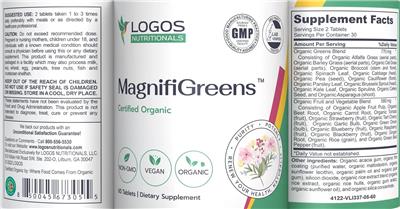
Supplement Facts
The label details for MagnifiGreens by Logos Nutritionals, sourced from the NIH Dietary Supplement Label Database.
Supplement Facts
| Ingredient | Amount | % DV |
|---|---|---|
| Green Bell Pepper | 0 NP | -- |
| Blueberry | 0 NP | -- |
| Kale | 0 NP | -- |
| Spirulina | 0 NP | -- |
| Green Onion | 0 NP | -- |
| Beet | 0 NP | -- |
| Tomato | 0 NP | -- |
| Strawberry | 0 NP | -- |
| Tart Cherry | 0 NP | -- |
| Blackberry | 0 NP | -- |
| Garlic | 0 NP | -- |
| Parsley | 0 NP | -- |
| Carrot | 0 NP | -- |
| Barley Grass | 0 NP | -- |
| Broccoli | 0 NP | -- |
| Celery | 0 NP | -- |
| Cabbage | 0 NP | -- |
| Raspberry | 0 NP | -- |
| Organic Greens Blend | 770 mg | -- |
| Cauliflower | 0 NP | -- |
| Asparagus | 0 NP | -- |
| Alfalfa Grass | 0 NP | -- |
| Pea | 0 NP | -- |
| Organic Fruit and Vegetable Blend | 580 mg | -- |
| Ginger | 0 NP | -- |
| Rice | 0 NP | -- |
| Spinach | 0 NP | -- |
| Oat Grass | 0 NP | -- |
| Brussels Sprout | 0 NP | -- |
| Apple | 0 NP | -- |
Other ingredients: Acacia Gum, Water, Purified, Maltodextrin, Sunflower Lecithin, Palm Oil, Guar Gum, Silicon Dioxide, Rice extract, Rice, Gum Arabic, Sunflower Oil, Silica Concentrate
Tap any ingredient to jump to its full detail below.
These statements are the manufacturer’s wording, reproduced from the product label — the label is saying it, not HelloPharmacist. We don’t verify or endorse them.
Suggested/Recommended/Usage/Directions
Suggested use: 2 tablets taken 1 to 3 times dally preferably with meals or as directed by a healthcare professional.
Precautions
Caution: Do not exceed recommended dose. Do not use if safety seal is damaged or missing.
Pregnant or nursing mothers, children under 18, and individuals with a known medical condition should consult a physician before using this or any dietary supplement.
Pregnant or nursing mothers, children under 18, and individuals with a known medical condition should consult a physician before using this or any dietary supplement. Keep out of the reach of children.
This product is manufactured and packaged in a facility which may also process milk, soy, wheat, egg, peanuts, tree nuts, fish and crustacean shellfish.
Storage
Store in a cool, dry place.
FDA Disclaimer Statement
These statements have not been evaluated by the Food and Drug Administration. This product is not intended to diagnose, treat, cure or prevent any disease.
General Statements
We back our products with an Unconditional Satisfaction Guarantee! Questions or Comments - Call 800-556-5530 Or visit our Website: www.logosnutritionals.com
Brand IP Statement(s)
Copyright 2022 LOGOS
Formulation
Certified Organic by: Where Food Comes From Organic Certified Organic
Vegan
Non-GMO
Seals/Symbols
Where Food Comes From Organic Sourced from a GMP Certified Facility Good Manufacturing Practices Quality Assured Lab Verified 3rd Party Tested Vegan Organic Purity - Potency - Renew your health, naturally
FDA Statement of Identity
Dietary Supplement
Is this label outdated? Report a formula or label change and our pharmacy team will review it.
MagnifiGreens by Logos Nutritionals label
The label scan from the NIH Dietary Supplement Label Database. Tap to enlarge.
Label images are published by the NIH Dietary Supplement Label Database for the version of this product on file. Always read your actual product label.
View the full label (PDF)The Ingredients in MagnifiGreens by Logos Nutritionals
These are the 28 active ingredients this product is made of. Select any to open its full monograph.
Serving size2 Tablet(s) Dosage formTablet Or Pill Servings per container30 Amounts shown are per serving.
Most supplement products combine several ingredients, and a medication can interact with the product through any one of them. Each ingredient below shows whether it has known drug interactions.
Organic Greens Blend
- › Kale
- › Spirulina
- › Parsley
- › Barley Grass
- › Broccoli
- › Celery
- › Cabbage
- › Cauliflower
- › Asparagus
- › Alfalfa Grass
- › Pea
- › Spinach
- › Oat Grass
- › Brussels Sprout
Organic Fruit and Vegetable Blend
- › Green Bell Pepper
- › Blueberry
- › Green Onion
- › Beet
- › Tomato
- › Strawberry
- › Tart Cherry
- › Blackberry
- › Garlic
- › Carrot
- › Raspberry
- › Ginger
- › Rice
- › Apple
Other (inactive) ingredients: Acacia Gum, Water, Purified, Maltodextrin, Sunflower Lecithin, Palm Oil, Guar Gum, Silicon Dioxide, Rice extract, Rice, Gum Arabic, Sunflower Oil, Silica Concentrate. These complete the product’s ingredient list but are not active constituents.
MagnifiGreens by Logos Nutritionals Drug Interactions
HelloPharmacist Interaction Report
MagnifiGreens by Logos Nutritionals contains 28 ingredients, many of which interact with medications.
The most serious interaction we found is between Alfalfa Grass and warfarin (a blood thinner). Alfalfa is high in vitamin K, which can reduce warfarin's effectiveness — this is a Major severity interaction.
Read the full breakdown — every affected drug type, severity by severity
Several ingredients pose Moderate-severity risks with blood thinners and antiplatelet drugs (such as aspirin, clopidogrel, and warfarin itself): Green Bell Pepper, Blueberry, Spirulina, Green Onion, Strawberry, Garlic, Parsley, Ginger, and Celery. They may increase bleeding risk, though the clinical significance varies by ingredient and dose.
Moderate interactions also affect blood sugar control with antidiabetes drugs — Green Bell Pepper, Blueberry, Spirulina, Green Onion, Garlic, Parsley, Cabbage, Alfalfa Grass, and Ginger may lower blood glucose further. Garlic, Beet, Broccoli, Celery, and Cauliflower interact with various liver enzymes (cytochrome P450 pathways), potentially raising or lowering levels of drugs metabolized by those enzymes.
Alfalfa may also interfere with contraceptive and estrogen-containing medications, and with immune-suppressing drugs. Green Onion and Garlic can affect lithium levels.
Parsley poses a Moderate risk with warfarin due to its vitamin K content. Minor interactions involve Green Bell Pepper with ACE inhibitors (blood pressure drugs) and ciprofloxacin (an antibiotic).
We could not check Raspberry and Pea — we hold no interaction data for these ingredients. Use the medication checker on this page to verify your exact prescriptions against this product.
Check your own medications below · Editorial policy · How we use AI
Want to check YOUR meds against MagnifiGreens?
Ask about interactions with your drugs in plain English — “Can I take it with lisinopril?” — and we find you the answer in seconds, ingredient by ingredient.
Go to the checkerIngredients driving the most interactions
Individual Drug Interactions
The ingredients in MagnifiGreens interact with 1,372 drugs. Click any drug to see the details.
20 of the 28 ingredients in MagnifiGreens interact with drugs. Each result below shows which ingredient is responsible. Ginger Garlic Beet Celery Alfalfa Grass Parsley Spirulina Cabbage Strawberry Apple Green Onion Brussels Sprout Green Bell Pepper Broccoli Cauliflower Spinach Blueberry Oat Grass Asparagus Barley Grass
AtorvastatinAtorvaliq
How Atorvastatin interacts with MagnifiGreens — through 6 ingredients. Tap an ingredient for the detail:
AppleOrganic Anion-transporting Polypeptide Substrates (oatp) Major
Interaction Summary
Concomitant consumption of apple juice can significantly decrease oral absorption and blood levels of OATP substrates.
Read the full Apple + Atorvastatin interactionGarlicCytochrome P450 3a4 (cyp3a4) Substrates Moderate
Interaction Summary
Theoretically, garlic products containing allicin might induce intestinal CYP3A4 and inhibit hepatic CYP3A4.
Read the full Garlic + Atorvastatin interactionBeetCytochrome P450 3a4 (cyp3a4) Substrates Moderate
Interaction Summary
Theoretically, beet might increase the levels of CYP3A4 substrates.
Read the full Beet + Atorvastatin interactionBrussels SproutGlucuronidated Drugs Moderate
Interaction Summary
A cabbage and Brussels sprout-containing diet seems to boost elimination through glucuronide conjugation.
Read the full Brussels Sprout + Atorvastatin interactionCabbageGlucuronidated Drugs Moderate
Interaction Summary
Theoretically, cabbage might increase clearance and decrease the effects of drugs metabolized through glucuronide conjugation.
Read the full Cabbage + Atorvastatin interactionGingerCytochrome P450 3a4 (cyp3a4) Substrates Moderate
Interaction Summary
Ginger might increase or decrease the levels of CYP3A4 substrates.
Read the full Ginger + Atorvastatin interactionAtorvastatin CalciumLipitor
How Atorvastatin Calcium interacts with MagnifiGreens — through 6 ingredients. Tap an ingredient for the detail:
AppleOrganic Anion-transporting Polypeptide Substrates (oatp) Major
Interaction Summary
Concomitant consumption of apple juice can significantly decrease oral absorption and blood levels of OATP substrates.
Read the full Apple + Atorvastatin Calcium interactionGingerCytochrome P450 3a4 (cyp3a4) Substrates Moderate
Interaction Summary
Ginger might increase or decrease the levels of CYP3A4 substrates.
Read the full Ginger + Atorvastatin Calcium interactionBrussels SproutGlucuronidated Drugs Moderate
Interaction Summary
A cabbage and Brussels sprout-containing diet seems to boost elimination through glucuronide conjugation.
Read the full Brussels Sprout + Atorvastatin Calcium interactionGarlicCytochrome P450 3a4 (cyp3a4) Substrates Moderate
Interaction Summary
Theoretically, garlic products containing allicin might induce intestinal CYP3A4 and inhibit hepatic CYP3A4.
Read the full Garlic + Atorvastatin Calcium interactionBeetCytochrome P450 3a4 (cyp3a4) Substrates Moderate
Interaction Summary
Theoretically, beet might increase the levels of CYP3A4 substrates.
Read the full Beet + Atorvastatin Calcium interactionCabbageGlucuronidated Drugs Moderate
Interaction Summary
Theoretically, cabbage might increase clearance and decrease the effects of drugs metabolized through glucuronide conjugation.
Read the full Cabbage + Atorvastatin Calcium interactionBosentanTracleer
How Bosentan interacts with MagnifiGreens — through 5 ingredients. Tap an ingredient for the detail:
AppleAntihypertensive Drugs, Organic Anion-transporting Polypeptide Substrates (oatp) Major
Interaction Summary
Consuming apple juice with antihypertensive drugs might interfere with blood pressure control.
Read the full Apple + Bosentan interactionBeetCytochrome P450 3a4 (cyp3a4) Substrates, Antihypertensive Drugs Moderate
Interaction Summary
Theoretically, beet might increase the levels of CYP3A4 substrates.
Read the full Beet + Bosentan interactionGingerCytochrome P450 2c9 (cyp2c9) Substrates, Cytochrome P450 3a4 (cyp3a4) Substrates Moderate
Interaction Summary
Theoretically, ginger might increase the levels of CYP2C9 substrates.
Read the full Ginger + Bosentan interactionCeleryAntihypertensive Drugs Moderate
Interaction Summary
Theoretically, celery seed extract might have additive effects with antihypertensive drugs.
Read the full Celery + Bosentan interactionGarlicCytochrome P450 3a4 (cyp3a4) Substrates, Antihypertensive Drugs Moderate
Interaction Summary
Theoretically, garlic products containing allicin might induce intestinal CYP3A4 and inhibit hepatic CYP3A4.
Read the full Garlic + Bosentan interactionBrincidofovirTembexa
How Brincidofovir interacts with MagnifiGreens — through 1 ingredient. Tap an ingredient for the detail:
AppleOrganic Anion-transporting Polypeptide Substrates (oatp) Major
Interaction Summary
Concomitant consumption of apple juice can significantly decrease oral absorption and blood levels of OATP substrates.
Read the full Apple + Brincidofovir interactionCeliprololCelicard
How Celiprolol interacts with MagnifiGreens — through 6 ingredients. Tap an ingredient for the detail:
AppleOrganic Anion-transporting Polypeptide Substrates (oatp), Antihypertensive Drugs Major
Interaction Summary
Concomitant consumption of apple juice can significantly decrease oral absorption and blood levels of OATP substrates.
Read the full Apple + Celiprolol interactionStrawberryP-glycoprotein Substrates Moderate
Interaction Summary
In vitro research suggests that strawberry extract can inhibit p-glycoprotein efflux.
Read the full Strawberry + Celiprolol interactionCeleryAntihypertensive Drugs Moderate
Interaction Summary
Theoretically, celery seed extract might have additive effects with antihypertensive drugs.
Read the full Celery + Celiprolol interactionGingerP-glycoprotein Substrates Moderate
Interaction Summary
Ginger might increase the absorption and blood levels of P-glycoprotein (P-gp) substrates.
Read the full Ginger + Celiprolol interactionGarlicAntihypertensive Drugs Moderate
Interaction Summary
Theoretically, taking garlic with antihypertensive drugs might increase the risk of hypotension.
Read the full Garlic + Celiprolol interactionBeetAntihypertensive Drugs Minor
Interaction Summary
Beet and beetroot contain nitrates, which can cause vasodilation, potentially leading to lower blood pressure.
Read the full Beet + Celiprolol interactionCerivastatin SodiumBaycol
How Cerivastatin Sodium interacts with MagnifiGreens — through 1 ingredient. Tap an ingredient for the detail:
AppleOrganic Anion-transporting Polypeptide Substrates (oatp) Major
Interaction Summary
Concomitant consumption of apple juice can significantly decrease oral absorption and blood levels of OATP substrates.
Read the full Apple + Cerivastatin Sodium interactionCinoxacinCinobac
How Cinoxacin interacts with MagnifiGreens — through 3 ingredients. Tap an ingredient for the detail:
AppleOrganic Anion-transporting Polypeptide Substrates (oatp) Major
Interaction Summary
Concomitant consumption of apple juice can significantly decrease oral absorption and blood levels of OATP substrates.
Read the full Apple + Cinoxacin interactionAlfalfa GrassPhotosensitizing Drugs Moderate
Interaction Summary
Theoretically, concomitant use of alfalfa with photosensitizing drugs might have additive effects.
Read the full Alfalfa Grass + Cinoxacin interactionCeleryPhotosensitizing Drugs Minor
Interaction Summary
Theoretically, celery might increase the risk of photosensitivity reactions when taken with photosensitizing drugs.
Read the full Celery + Cinoxacin interactionCiprofloxacinCiloxan, Cipro, Cipro IV, Cipro XR, Ciprobay, Otiprio
How Ciprofloxacin interacts with MagnifiGreens — through 4 ingredients. Tap an ingredient for the detail:
AppleOrganic Anion-transporting Polypeptide Substrates (oatp) Major
Interaction Summary
Concomitant consumption of apple juice can significantly decrease oral absorption and blood levels of OATP substrates.
Read the full Apple + Ciprofloxacin interactionAlfalfa GrassPhotosensitizing Drugs Moderate
Interaction Summary
Theoretically, concomitant use of alfalfa with photosensitizing drugs might have additive effects.
Read the full Alfalfa Grass + Ciprofloxacin interactionCeleryPhotosensitizing Drugs Minor
Interaction Summary
Theoretically, celery might increase the risk of photosensitivity reactions when taken with photosensitizing drugs.
Read the full Celery + Ciprofloxacin interactionGreen Bell PepperCiprofloxacin (cipro) Minor
Interaction Summary
Theoretically, taking capsicum with ciprofloxacin might increase levels and adverse effects of ciprofloxacin.
Read the full Green Bell Pepper + Ciprofloxacin interactionCiprofloxacin, HydrocortisoneCipro HC Otic
How Ciprofloxacin, Hydrocortisone interacts with MagnifiGreens — through 1 ingredient. Tap an ingredient for the detail:
AppleOrganic Anion-transporting Polypeptide Substrates (oatp) Major
Interaction Summary
Concomitant consumption of apple juice can significantly decrease oral absorption and blood levels of OATP substrates.
Read the full Apple + Ciprofloxacin, Hydrocortisone interactionClinafloxacinClinafloxacin
How Clinafloxacin interacts with MagnifiGreens — through 1 ingredient. Tap an ingredient for the detail:
AppleOrganic Anion-transporting Polypeptide Substrates (oatp) Major
Interaction Summary
Concomitant consumption of apple juice can significantly decrease oral absorption and blood levels of OATP substrates.
Read the full Apple + Clinafloxacin interactionEnoxacinPenetrex
How Enoxacin interacts with MagnifiGreens — through 3 ingredients. Tap an ingredient for the detail:
AppleOrganic Anion-transporting Polypeptide Substrates (oatp) Major
Interaction Summary
Concomitant consumption of apple juice can significantly decrease oral absorption and blood levels of OATP substrates.
Read the full Apple + Enoxacin interactionAlfalfa GrassPhotosensitizing Drugs Moderate
Interaction Summary
Theoretically, concomitant use of alfalfa with photosensitizing drugs might have additive effects.
Read the full Alfalfa Grass + Enoxacin interactionCeleryPhotosensitizing Drugs Minor
Interaction Summary
Theoretically, celery might increase the risk of photosensitivity reactions when taken with photosensitizing drugs.
Read the full Celery + Enoxacin interactionEtoposideEtopophos, VePesid, VP16
How Etoposide interacts with MagnifiGreens — through 5 ingredients. Tap an ingredient for the detail:
AppleOrganic Anion-transporting Polypeptide Substrates (oatp) Major
Interaction Summary
Concomitant consumption of apple juice can significantly decrease oral absorption and blood levels of OATP substrates.
Read the full Apple + Etoposide interactionGarlicCytochrome P450 3a4 (cyp3a4) Substrates Moderate
Interaction Summary
Theoretically, garlic products containing allicin might induce intestinal CYP3A4 and inhibit hepatic CYP3A4.
Read the full Garlic + Etoposide interactionBeetCytochrome P450 3a4 (cyp3a4) Substrates Moderate
Interaction Summary
Theoretically, beet might increase the levels of CYP3A4 substrates.
Read the full Beet + Etoposide interactionStrawberryP-glycoprotein Substrates Moderate
Interaction Summary
In vitro research suggests that strawberry extract can inhibit p-glycoprotein efflux.
Read the full Strawberry + Etoposide interactionGingerCytochrome P450 3a4 (cyp3a4) Substrates, P-glycoprotein Substrates Moderate
Interaction Summary
Ginger might increase or decrease the levels of CYP3A4 substrates.
Read the full Ginger + Etoposide interactionEzetimibe, AtorvastatinLiptruzet
How Ezetimibe, Atorvastatin interacts with MagnifiGreens — through 6 ingredients. Tap an ingredient for the detail:
AppleOrganic Anion-transporting Polypeptide Substrates (oatp) Major
Interaction Summary
Concomitant consumption of apple juice can significantly decrease oral absorption and blood levels of OATP substrates.
Read the full Apple + Ezetimibe, Atorvastatin interactionCabbageGlucuronidated Drugs Moderate
Interaction Summary
Theoretically, cabbage might increase clearance and decrease the effects of drugs metabolized through glucuronide conjugation.
Read the full Cabbage + Ezetimibe, Atorvastatin interactionBrussels SproutGlucuronidated Drugs Moderate
Interaction Summary
A cabbage and Brussels sprout-containing diet seems to boost elimination through glucuronide conjugation.
Read the full Brussels Sprout + Ezetimibe, Atorvastatin interactionBeetCytochrome P450 3a4 (cyp3a4) Substrates Moderate
Interaction Summary
Theoretically, beet might increase the levels of CYP3A4 substrates.
Read the full Beet + Ezetimibe, Atorvastatin interactionGarlicCytochrome P450 3a4 (cyp3a4) Substrates Moderate
Interaction Summary
Theoretically, garlic products containing allicin might induce intestinal CYP3A4 and inhibit hepatic CYP3A4.
Read the full Garlic + Ezetimibe, Atorvastatin interactionGingerCytochrome P450 3a4 (cyp3a4) Substrates Moderate
Interaction Summary
Ginger might increase or decrease the levels of CYP3A4 substrates.
Read the full Ginger + Ezetimibe, Atorvastatin interactionFexofenadineAllegra
How Fexofenadine interacts with MagnifiGreens — through 5 ingredients. Tap an ingredient for the detail:
AppleOrganic Anion-transporting Polypeptide Substrates (oatp), Fexofenadine (allegra) Major
Interaction Summary
Concomitant consumption of apple juice can significantly decrease oral absorption and blood levels of OATP substrates.
Read the full Apple + Fexofenadine interactionGarlicCytochrome P450 3a4 (cyp3a4) Substrates Moderate
Interaction Summary
Theoretically, garlic products containing allicin might induce intestinal CYP3A4 and inhibit hepatic CYP3A4.
Read the full Garlic + Fexofenadine interactionBeetCytochrome P450 3a4 (cyp3a4) Substrates Moderate
Interaction Summary
Theoretically, beet might increase the levels of CYP3A4 substrates.
Read the full Beet + Fexofenadine interactionStrawberryP-glycoprotein Substrates Moderate
Interaction Summary
In vitro research suggests that strawberry extract can inhibit p-glycoprotein efflux.
Read the full Strawberry + Fexofenadine interactionGingerP-glycoprotein Substrates, Cytochrome P450 3a4 (cyp3a4) Substrates Moderate
Interaction Summary
Ginger might increase the absorption and blood levels of P-glycoprotein (P-gp) substrates.
Read the full Ginger + Fexofenadine interactionFexofenadine, PseudoephedrineAllegra D
How Fexofenadine, Pseudoephedrine interacts with MagnifiGreens — through 5 ingredients. Tap an ingredient for the detail:
AppleOrganic Anion-transporting Polypeptide Substrates (oatp), Fexofenadine (allegra) Major
Interaction Summary
Concomitant consumption of apple juice can significantly decrease oral absorption and blood levels of OATP substrates.
Read the full Apple + Fexofenadine, Pseudoephedrine interactionStrawberryP-glycoprotein Substrates Moderate
Interaction Summary
In vitro research suggests that strawberry extract can inhibit p-glycoprotein efflux.
Read the full Strawberry + Fexofenadine, Pseudoephedrine interactionBeetCytochrome P450 3a4 (cyp3a4) Substrates Moderate
Interaction Summary
Theoretically, beet might increase the levels of CYP3A4 substrates.
Read the full Beet + Fexofenadine, Pseudoephedrine interactionGarlicCytochrome P450 3a4 (cyp3a4) Substrates Moderate
Interaction Summary
Theoretically, garlic products containing allicin might induce intestinal CYP3A4 and inhibit hepatic CYP3A4.
Read the full Garlic + Fexofenadine, Pseudoephedrine interactionGingerCytochrome P450 3a4 (cyp3a4) Substrates, P-glycoprotein Substrates Moderate
Interaction Summary
Ginger might increase or decrease the levels of CYP3A4 substrates.
Read the full Ginger + Fexofenadine, Pseudoephedrine interactionFluvastatinLescol, Lescol XL
How Fluvastatin interacts with MagnifiGreens — through 2 ingredients. Tap an ingredient for the detail:
AppleOrganic Anion-transporting Polypeptide Substrates (oatp) Major
Interaction Summary
Concomitant consumption of apple juice can significantly decrease oral absorption and blood levels of OATP substrates.
Read the full Apple + Fluvastatin interactionGingerCytochrome P450 2c9 (cyp2c9) Substrates Minor
Interaction Summary
Theoretically, ginger might increase the levels of CYP2C9 substrates.
Read the full Ginger + Fluvastatin interactionGatifloxacinTequin, Tequin Injection
How Gatifloxacin interacts with MagnifiGreens — through 3 ingredients. Tap an ingredient for the detail:
AppleOrganic Anion-transporting Polypeptide Substrates (oatp) Major
Interaction Summary
Concomitant consumption of apple juice can significantly decrease oral absorption and blood levels of OATP substrates.
Read the full Apple + Gatifloxacin interactionAlfalfa GrassPhotosensitizing Drugs Moderate
Interaction Summary
Theoretically, concomitant use of alfalfa with photosensitizing drugs might have additive effects.
Read the full Alfalfa Grass + Gatifloxacin interactionCeleryPhotosensitizing Drugs Minor
Interaction Summary
Theoretically, celery might increase the risk of photosensitivity reactions when taken with photosensitizing drugs.
Read the full Celery + Gatifloxacin interactionGemifloxacinFactive
How Gemifloxacin interacts with MagnifiGreens — through 1 ingredient. Tap an ingredient for the detail:
AppleOrganic Anion-transporting Polypeptide Substrates (oatp) Major
Interaction Summary
Concomitant consumption of apple juice can significantly decrease oral absorption and blood levels of OATP substrates.
Read the full Apple + Gemifloxacin interactionGlyburideAlbert Glyburide, Diabeta, Glycron, Glynase, Glynase PresTab, Micronase +1 more
How Glyburide interacts with MagnifiGreens — through 13 ingredients. Tap an ingredient for the detail:
AppleAntidiabetes Drugs, Organic Anion-transporting Polypeptide Substrates (oatp) Major
Interaction Summary
Theoretically, consuming apple juice with antidiabetes drugs might interfere with blood glucose control.
Read the full Apple + Glyburide interactionGarlicAntidiabetes Drugs Moderate
Interaction Summary
Theoretically, taking garlic with antidiabetes drugs might increase the risk of hypoglycemia.
Read the full Garlic + Glyburide interactionParsleyAntidiabetes Drugs Moderate
Interaction Summary
Theoretically, parsley might increase the risk of hypoglycemia when taken with antidiabetes drugs.
Read the full Parsley + Glyburide interactionGreen OnionAntidiabetes Drugs Moderate
Interaction Summary
Concomitant use of antidiabetes drugs with onion may increase the risk of hypoglycemia.
Read the full Green Onion + Glyburide interactionSpinachAntidiabetes Drugs Moderate
Interaction Summary
There are claims that spinach leaves have hypoglycemic effects.
Read the full Spinach + Glyburide interactionGingerAntidiabetes Drugs, Cytochrome P450 2c9 (cyp2c9) Substrates Moderate
Interaction Summary
Theoretically, taking ginger with antidiabetes drugs might increase the risk of hypoglycemia.
Read the full Ginger + Glyburide interactionAlfalfa GrassAntidiabetes Drugs, Photosensitizing Drugs Moderate
Interaction Summary
Theoretically, alfalfa might increase the risk of hypoglycemia when taken with antidiabetes drugs.
Read the full Alfalfa Grass + Glyburide interactionCabbageAntidiabetes Drugs Moderate
Interaction Summary
Theoretically, cabbage might increase the risk of hypoglycemia when taken with antidiabetes drugs.
Read the full Cabbage + Glyburide interactionGreen Bell PepperAntidiabetes Drugs Moderate
Interaction Summary
Theoretically, taking capsicum with antidiabetes drugs might increase the risk of hypoglycemia.
Read the full Green Bell Pepper + Glyburide interactionOat GrassAntidiabetes Drugs Moderate
Interaction Summary
Theoretically, oats may have additive effects with antidiabetic agents and might increase the risk of hypoglycemia.
Read the full Oat Grass + Glyburide interactionSpirulinaAntidiabetes Drugs Moderate
Interaction Summary
Theoretically, taking blue-green algae with antidiabetes drugs might increase the risk of hypoglycemia.
Read the full Spirulina + Glyburide interactionBlueberryAntidiabetes Drugs Minor
Interaction Summary
Theoretically, blueberries or blueberry leaf extracts might increase the risk of hypoglycemia when taken with antidiabetes drugs.
Read the full Blueberry + Glyburide interactionCeleryPhotosensitizing Drugs Minor
Interaction Summary
Theoretically, celery might increase the risk of photosensitivity reactions when taken with photosensitizing drugs.
Read the full Celery + Glyburide interactionGlyburide, MetforminGlucovance
How Glyburide, Metformin interacts with MagnifiGreens — through 13 ingredients. Tap an ingredient for the detail:
AppleOrganic Anion-transporting Polypeptide Substrates (oatp), Antidiabetes Drugs Major
Interaction Summary
Concomitant consumption of apple juice can significantly decrease oral absorption and blood levels of OATP substrates.
Read the full Apple + Glyburide, Metformin interactionSpirulinaAntidiabetes Drugs Moderate
Interaction Summary
Theoretically, taking blue-green algae with antidiabetes drugs might increase the risk of hypoglycemia.
Read the full Spirulina + Glyburide, Metformin interactionOat GrassAntidiabetes Drugs Moderate
Interaction Summary
Theoretically, oats may have additive effects with antidiabetic agents and might increase the risk of hypoglycemia.
Read the full Oat Grass + Glyburide, Metformin interactionGreen Bell PepperAntidiabetes Drugs Moderate
Interaction Summary
Theoretically, taking capsicum with antidiabetes drugs might increase the risk of hypoglycemia.
Read the full Green Bell Pepper + Glyburide, Metformin interactionSpinachAntidiabetes Drugs Moderate
Interaction Summary
There are claims that spinach leaves have hypoglycemic effects.
Read the full Spinach + Glyburide, Metformin interactionGreen OnionAntidiabetes Drugs Moderate
Interaction Summary
Concomitant use of antidiabetes drugs with onion may increase the risk of hypoglycemia.
Read the full Green Onion + Glyburide, Metformin interactionParsleyAntidiabetes Drugs Moderate
Interaction Summary
Theoretically, parsley might increase the risk of hypoglycemia when taken with antidiabetes drugs.
Read the full Parsley + Glyburide, Metformin interactionGarlicAntidiabetes Drugs Moderate
Interaction Summary
Theoretically, taking garlic with antidiabetes drugs might increase the risk of hypoglycemia.
Read the full Garlic + Glyburide, Metformin interactionAlfalfa GrassPhotosensitizing Drugs, Antidiabetes Drugs Moderate
Interaction Summary
Theoretically, concomitant use of alfalfa with photosensitizing drugs might have additive effects.
Read the full Alfalfa Grass + Glyburide, Metformin interactionCabbageAntidiabetes Drugs Moderate
Interaction Summary
Theoretically, cabbage might increase the risk of hypoglycemia when taken with antidiabetes drugs.
Read the full Cabbage + Glyburide, Metformin interactionGingerCytochrome P450 2c9 (cyp2c9) Substrates, Antidiabetes Drugs Moderate
Interaction Summary
Theoretically, ginger might increase the levels of CYP2C9 substrates.
Read the full Ginger + Glyburide, Metformin interactionCeleryPhotosensitizing Drugs Minor
Interaction Summary
Theoretically, celery might increase the risk of photosensitivity reactions when taken with photosensitizing drugs.
Read the full Celery + Glyburide, Metformin interactionBlueberryAntidiabetes Drugs Minor
Interaction Summary
Theoretically, blueberries or blueberry leaf extracts might increase the risk of hypoglycemia when taken with antidiabetes drugs.
Read the full Blueberry + Glyburide, Metformin interactionGrepafloxacinRaxar
How Grepafloxacin interacts with MagnifiGreens — through 9 ingredients. Tap an ingredient for the detail:
AppleOrganic Anion-transporting Polypeptide Substrates (oatp) Major
Interaction Summary
Concomitant consumption of apple juice can significantly decrease oral absorption and blood levels of OATP substrates.
Read the full Apple + Grepafloxacin interactionCabbageCytochrome P450 1a2 (cyp1a2) Substrates Moderate
Interaction Summary
Theoretically, cabbage might decrease levels of drugs metabolized by CYP1A2.
Read the full Cabbage + Grepafloxacin interactionBrussels SproutCytochrome P450 1a2 (cyp1a2) Substrates Moderate
Interaction Summary
Animal research suggests that Brussels sprout can induce cytochrome P450 1A2 (CYP1A2) activity.
Read the full Brussels Sprout + Grepafloxacin interactionCauliflowerCytochrome P450 1a2 (cyp1a2) Substrates Moderate
Interaction Summary
Preliminary clinical evidence suggests that eating cruciferous vegetables, including broccoli, cauliflower, daikon radish sprouts, and cabbage, can increase cytochrome P450 1A2 (CYP1A2) activity by 14% to 27%.
Read the full Cauliflower + Grepafloxacin interactionBroccoliCytochrome P450 1a2 (cyp1a2) Substrates Moderate
Interaction Summary
Theoretically, broccoli might reduce the levels and effects of drugs metabolized by CYP1A2.
Read the full Broccoli + Grepafloxacin interactionCeleryCytochrome P450 1a2 (cyp1a2) Substrates Moderate
Interaction Summary
Theoretically, celery might increase levels of drugs metabolized by CYP1A2.
Read the full Celery + Grepafloxacin interactionParsleyCytochrome P450 1a2 (cyp1a2) Substrates Moderate
Interaction Summary
Theoretically, parsley might increase serum levels of CYP1A2 substrates.
Read the full Parsley + Grepafloxacin interactionBeetCytochrome P450 1a2 (cyp1a2) Substrates Minor
Interaction Summary
Theoretically, beet might decrease the levels and clinical effects of CYP1A2 substrates.
Read the full Beet + Grepafloxacin interactionGingerCytochrome P450 1a2 (cyp1a2) Substrates Minor
Interaction Summary
Theoretically, ginger might increase the levels of CYP1A2 substrates.
Read the full Ginger + Grepafloxacin interactionIrinotecanCamptosar, Onivyde
How Irinotecan interacts with MagnifiGreens — through 6 ingredients. Tap an ingredient for the detail:
AppleOrganic Anion-transporting Polypeptide Substrates (oatp) Major
Interaction Summary
Concomitant consumption of apple juice can significantly decrease oral absorption and blood levels of OATP substrates.
Read the full Apple + Irinotecan interactionGingerCytochrome P450 3a4 (cyp3a4) Substrates Moderate
Interaction Summary
Ginger might increase or decrease the levels of CYP3A4 substrates.
Read the full Ginger + Irinotecan interactionGarlicCytochrome P450 3a4 (cyp3a4) Substrates Moderate
Interaction Summary
Theoretically, garlic products containing allicin might induce intestinal CYP3A4 and inhibit hepatic CYP3A4.
Read the full Garlic + Irinotecan interactionBrussels SproutGlucuronidated Drugs Moderate
Interaction Summary
A cabbage and Brussels sprout-containing diet seems to boost elimination through glucuronide conjugation.
Read the full Brussels Sprout + Irinotecan interactionCabbageGlucuronidated Drugs Moderate
Interaction Summary
Theoretically, cabbage might increase clearance and decrease the effects of drugs metabolized through glucuronide conjugation.
Read the full Cabbage + Irinotecan interactionBeetCytochrome P450 3a4 (cyp3a4) Substrates Moderate
Interaction Summary
Theoretically, beet might increase the levels of CYP3A4 substrates.
Read the full Beet + Irinotecan interactionIrinotecan Hydrochloride
How Irinotecan Hydrochloride interacts with MagnifiGreens — through 6 ingredients. Tap an ingredient for the detail:
AppleOrganic Anion-transporting Polypeptide Substrates (oatp) Major
Interaction Summary
Concomitant consumption of apple juice can significantly decrease oral absorption and blood levels of OATP substrates.
Read the full Apple + Irinotecan Hydrochloride interactionBeetCytochrome P450 3a4 (cyp3a4) Substrates Moderate
Interaction Summary
Theoretically, beet might increase the levels of CYP3A4 substrates.
Read the full Beet + Irinotecan Hydrochloride interactionGarlicCytochrome P450 3a4 (cyp3a4) Substrates Moderate
Interaction Summary
Theoretically, garlic products containing allicin might induce intestinal CYP3A4 and inhibit hepatic CYP3A4.
Read the full Garlic + Irinotecan Hydrochloride interactionGingerCytochrome P450 3a4 (cyp3a4) Substrates Moderate
Interaction Summary
Ginger might increase or decrease the levels of CYP3A4 substrates.
Read the full Ginger + Irinotecan Hydrochloride interactionCabbageGlucuronidated Drugs Moderate
Interaction Summary
Theoretically, cabbage might increase clearance and decrease the effects of drugs metabolized through glucuronide conjugation.
Read the full Cabbage + Irinotecan Hydrochloride interactionBrussels SproutGlucuronidated Drugs Moderate
Interaction Summary
A cabbage and Brussels sprout-containing diet seems to boost elimination through glucuronide conjugation.
Read the full Brussels Sprout + Irinotecan Hydrochloride interactionIsoniazid, Pyrazinamide, RifampinRifater
How Isoniazid, Pyrazinamide, Rifampin interacts with MagnifiGreens — through 4 ingredients. Tap an ingredient for the detail:
AppleOrganic Anion-transporting Polypeptide Substrates (oatp) Major
Interaction Summary
Concomitant consumption of apple juice can significantly decrease oral absorption and blood levels of OATP substrates.
Read the full Apple + Isoniazid, Pyrazinamide, Rifampin interactionGarlicIsoniazid Moderate
Interaction Summary
Theoretically, garlic might decrease levels of isoniazid.
Read the full Garlic + Isoniazid, Pyrazinamide, Rifampin interactionAlfalfa GrassPhotosensitizing Drugs Moderate
Interaction Summary
Theoretically, concomitant use of alfalfa with photosensitizing drugs might have additive effects.
Read the full Alfalfa Grass + Isoniazid, Pyrazinamide, Rifampin interactionCeleryPhotosensitizing Drugs Minor
Interaction Summary
Theoretically, celery might increase the risk of photosensitivity reactions when taken with photosensitizing drugs.
Read the full Celery + Isoniazid, Pyrazinamide, Rifampin interactionIsoniazid, RifampinRifamate
How Isoniazid, Rifampin interacts with MagnifiGreens — through 2 ingredients. Tap an ingredient for the detail:
AppleOrganic Anion-transporting Polypeptide Substrates (oatp) Major
Interaction Summary
Concomitant consumption of apple juice can significantly decrease oral absorption and blood levels of OATP substrates.
Read the full Apple + Isoniazid, Rifampin interactionGarlicIsoniazid Moderate
Interaction Summary
Theoretically, garlic might decrease levels of isoniazid.
Read the full Garlic + Isoniazid, Rifampin interactionLevofloxacinLeva-pak, Levaquin, Levaquin Injection
How Levofloxacin interacts with MagnifiGreens — through 3 ingredients. Tap an ingredient for the detail:
AppleOrganic Anion-transporting Polypeptide Substrates (oatp) Major
Interaction Summary
Concomitant consumption of apple juice can significantly decrease oral absorption and blood levels of OATP substrates.
Read the full Apple + Levofloxacin interactionAlfalfa GrassPhotosensitizing Drugs Moderate
Interaction Summary
Theoretically, concomitant use of alfalfa with photosensitizing drugs might have additive effects.
Read the full Alfalfa Grass + Levofloxacin interactionCeleryPhotosensitizing Drugs Minor
Interaction Summary
Theoretically, celery might increase the risk of photosensitivity reactions when taken with photosensitizing drugs.
Read the full Celery + Levofloxacin interactionLevofloxacin (ophthalmic)Levofloxacin
How Levofloxacin (ophthalmic) interacts with MagnifiGreens — through 1 ingredient. Tap an ingredient for the detail:
AppleOrganic Anion-transporting Polypeptide Substrates (oatp) Major
Interaction Summary
Concomitant consumption of apple juice can significantly decrease oral absorption and blood levels of OATP substrates.
Read the full Apple + Levofloxacin (ophthalmic) interactionLomefloxacinMaxaquin
How Lomefloxacin interacts with MagnifiGreens — through 3 ingredients. Tap an ingredient for the detail:
AppleOrganic Anion-transporting Polypeptide Substrates (oatp) Major
Interaction Summary
Concomitant consumption of apple juice can significantly decrease oral absorption and blood levels of OATP substrates.
Read the full Apple + Lomefloxacin interactionAlfalfa GrassPhotosensitizing Drugs Moderate
Interaction Summary
Theoretically, concomitant use of alfalfa with photosensitizing drugs might have additive effects.
Read the full Alfalfa Grass + Lomefloxacin interactionCeleryPhotosensitizing Drugs Minor
Interaction Summary
Theoretically, celery might increase the risk of photosensitivity reactions when taken with photosensitizing drugs.
Read the full Celery + Lomefloxacin interactionLovastatinAltocor, Mevacor
How Lovastatin interacts with MagnifiGreens — through 6 ingredients. Tap an ingredient for the detail:
AppleOrganic Anion-transporting Polypeptide Substrates (oatp) Major
Interaction Summary
Concomitant consumption of apple juice can significantly decrease oral absorption and blood levels of OATP substrates.
Read the full Apple + Lovastatin interactionCabbageGlucuronidated Drugs Moderate
Interaction Summary
Theoretically, cabbage might increase clearance and decrease the effects of drugs metabolized through glucuronide conjugation.
Read the full Cabbage + Lovastatin interactionBeetCytochrome P450 3a4 (cyp3a4) Substrates Moderate
Interaction Summary
Theoretically, beet might increase the levels of CYP3A4 substrates.
Read the full Beet + Lovastatin interactionGarlicCytochrome P450 3a4 (cyp3a4) Substrates Moderate
Interaction Summary
Theoretically, garlic products containing allicin might induce intestinal CYP3A4 and inhibit hepatic CYP3A4.
Read the full Garlic + Lovastatin interactionGingerCytochrome P450 3a4 (cyp3a4) Substrates Moderate
Interaction Summary
Ginger might increase or decrease the levels of CYP3A4 substrates.
Read the full Ginger + Lovastatin interactionBrussels SproutGlucuronidated Drugs Moderate
Interaction Summary
A cabbage and Brussels sprout-containing diet seems to boost elimination through glucuronide conjugation.
Read the full Brussels Sprout + Lovastatin interactionMethotrexateOtrexup, Rasuvo, Reditrex, Rheumatrex
How Methotrexate interacts with MagnifiGreens — through 1 ingredient. Tap an ingredient for the detail:
AppleOrganic Anion-transporting Polypeptide Substrates (oatp) Major
Interaction Summary
Concomitant consumption of apple juice can significantly decrease oral absorption and blood levels of OATP substrates.
Read the full Apple + Methotrexate interactionEach ingredient & the kinds of drugs it affects
For each ingredient in MagnifiGreens with known interactions, here are the types of medications they can affect. Open any type for the detail — or search your exact drug in the checker above.
Ginger
Anticoagulant/Antiplatelet Drugs
Ginger may have antiplatelet effects and may increase the risk of bleeding if used with anticoagulant or antiplatelet drugs. However, research is conflicting.
Laboratory research suggests that ginger inhibits thromboxane synthetase and decreases platelet aggregation. However, this has not been demonstrated unequivocally in humans, with mixed results from clinical trials. Theoretically, excessive amounts of ginger might increase the risk of bleeding when used with anticoagulant/antiplatelet drugs.
Antidiabetes Drugs
Theoretically, taking ginger with antidiabetes drugs might increase the risk of hypoglycemia.
Animal and human research suggests that ginger might increase insulin levels and/or decrease blood glucose levels.
Cytochrome P450 3A4 (Cyp3A4) Substrates
Ginger might increase or decrease the levels of CYP3A4 substrates.
In vitro research and some case reports suggest that ginger inhibits CYP3A4 activity. Three case reports from the World Health Organization (WHO) adverse drug reaction database describe increased toxicity in patients taking ginger and cancer medications that are CYP3A4 substrates (imatinib, dabrafenib, and crizotinib). However, the causality of this interaction is unclear due to the presence of multiple interacting drugs and routes of administration.
Conversely, other in vitro research suggests that ginger induces CYP3A4 activity, leading to reduced levels of CYP3A4 substrates. However, this interaction has not been reported in humans.
Losartan (Cozaar)
Theoretically, ginger might increase levels of losartan and the risk of hypotension.
In animal research, ginger increased the levels and hypotensive effects of a single dose of losartan. It is not clear if ginger alters the concentration or effects of losartan when taken continuously. Additionally, this interaction has not been shown in humans.
Nifedipine (Procardia)
Ginger may have antiplatelet effects and increase the risk of bleeding if used with nifedipine.
Clinical research shows that combined treatment with ginger 1 gram plus nifedipine 10 mg significantly inhibits platelet aggregation when compared to nifedipine or ginger alone.
P-Glycoprotein Substrates
Ginger might increase the absorption and blood levels of P-glycoprotein (P-gp) substrates.
In vitro research and case reports suggest that ginger inhibits drug efflux by P-gp, potentially increasing absorption and serum levels of P-gp substrates. Two case reports from the World Health Organization (WHO) adverse drug reaction database describe increased toxicity in patients taking ginger and cancer medications that are P-gp substrates (trametinib, crizotinib). However, the causality of this interaction is unclear due to the presence of multiple interacting drugs and routes of administration.
Phenprocoumon (Marcoumar, Others)
Ginger might increase the risk of bleeding with phenprocoumon.
Phenprocoumon, a warfarin-related anticoagulant, might increase the international normalized ratio (INR) when taken with ginger. There is one case report of a 76-year-old woman with a stable INR on phenprocoumon that increased to greater than 10 when she began consuming dried ginger and ginger tea.
Warfarin (Coumadin)
Ginger might increase the risk of bleeding with warfarin.
Laboratory research suggests that ginger might inhibit thromboxane synthetase and decrease platelet aggregation. In one case report, ginger increased the INR when taken with phenprocoumon, which has similar pharmacological effects as warfarin. In another case report, ginger increased the INR when taken with a combination of warfarin, hydrochlorothiazide, and acetaminophen. A longitudinal analysis suggests that taking ginger increases the risk of bleeding in patients taking warfarin for at least 4 months. However, research in healthy people suggests that ginger has no effect on INR, or the pharmacokinetics or pharmacodynamics of warfarin. Until more is known, monitor INRs closely in patients taking large amounts of ginger.
Calcium Channel Blockers
Theoretically, taking ginger with calcium channel blockers might increase the risk of hypotension.
Some animal and in vitro research suggests that ginger has hypotensive and calcium channel-blocking effects. Another animal study shows that concomitant administration of ginger and the calcium channel blocker amlodipine leads to greater reductions in blood pressure when compared with amlodipine alone.
Cyclosporine (Neoral, Sandimmune)
Theoretically, when taken prior to cyclosporine, ginger might decrease cyclosporine levels.
In an animal model, ginger juice taken 2 hours prior to cyclosporine administration reduced the maximum concentration and area under the curve of cyclosporine by 51% and 40%, respectively. This effect was not observed when ginger juice and cyclosporine were administered at the same time.
Cytochrome P450 1A2 (Cyp1A2) Substrates
Theoretically, ginger might increase the levels of CYP1A2 substrates.
In vitro research shows that ginger inhibits CYP1A2 activity. However, this interaction has not been reported in humans.
Cytochrome P450 2B6 (Cyp2B6) Substrates
Theoretically, ginger might increase the levels of CYP2B6 substrates.
In vitro research shows that ginger inhibits CYP2B6 activity. However, this interaction has not been reported in humans.
Cytochrome P450 2C9 (Cyp2C9) Substrates
Theoretically, ginger might increase the levels of CYP2C9 substrates.
In vitro research shows that ginger inhibits CYP2C9 activity. However, this interaction has not been reported in humans.
Metronidazole (Flagyl)
Theoretically, ginger might increase levels of metronidazole.
In an animal model, ginger increased the absorption and plasma half-life of metronidazole. In addition, the elimination rate and clearance of metronidazole was significantly reduced.
Garlic
Anticoagulant/Antiplatelet Drugs
Garlic may have antiplatelet effects and may increase the risk of bleeding if used with anticoagulant or antiplatelet drugs.
Raw garlic and a variety of garlic extracts have antiplatelet activity and can increase prothrombin time.
Antidiabetes Drugs
Theoretically, taking garlic with antidiabetes drugs might increase the risk of hypoglycemia.
Clinical research suggests that garlic and garlic extract lower blood glucose levels in healthy and diabetic individuals.
Antihypertensive Drugs
Theoretically, taking garlic with antihypertensive drugs might increase the risk of hypotension.
In human research, both garlic and garlic extracts have blood pressure-lowering effects.
Atazanavir (Reyataz)
Theoretically, garlic might decrease levels and effects of atazanavir.
In a case report, a patient consuming six stir-fried garlic cloves three times weekly developed suboptimal atazanavir levels and increases in HIV viral load. While the exact cause of this interaction is unclear, there is speculation that garlic might decrease the intestinal absorption of atazanavir or increase its metabolism by inducing cytochrome P450 3A4 (CYP3A4). Until more is known, advise patients not to consume large amounts of garlic while taking atazanavir.
Cytochrome P450 2E1 (Cyp2E1) Substrates
Garlic might increase levels of drugs metabolized by CYP2E1.
Clinical research suggests garlic oil can inhibit the activity of CYP2E1 by 39%. Use garlic oil cautiously in patients taking drugs metabolized by these enzymes.
Cytochrome P450 3A4 (Cyp3A4) Substrates
Theoretically, garlic products containing allicin might induce intestinal CYP3A4 and inhibit hepatic CYP3A4. This may increase or decrease levels of drugs metabolized by CYP3A4.
Some human research suggests that garlic may induce INTESTINAL CYP3A4, reducing levels of drugs metabolized by this enzyme. This is primarily based on a study showing that taking a specific allicin-containing garlic product (GarliPure Maximum Allicin Formula, Natrol Inc.) twice daily for 3 days reduces saquinavir levels by approximately 50%. It is speculated that the allicin constituent induced CYP3A4 in the gut mucosa. Another study shows that giving docetaxel intravenously, bypassing the CYP3A4 enzymes in the gut mucosa, along with the same specific garlic product for 12 consecutive days, does not affect docetaxel levels. Conversely, there is concern that garlic may inhibit HEPATIC CYP3A4. In a single case report, increased tacrolimus levels and liver injury occurred in a liver transplant patient after taking a specific garlic supplement (Garlicin Cardio, Nature's Way) at up to three times the manufacturer recommended dose for 7 days. Several other studies have evaluated the impact of other garlic formulations on CYP3A4 substrates and have found no effect. Most of the products in these studies provided little or no allicin.
Isoniazid
Theoretically, garlic might decrease levels of isoniazid.
Animal research suggests that an aqueous extract of garlic reduces isoniazid levels by about 65%. Garlic reduced the maximum concentration (Cmax) and area under the curve (AUC), but not the half-life, of isoniazid. This suggests that garlic extract might inhibit isoniazid absorption across the intestinal mucosa; however, the exact mechanism of this potential interaction is not known.
Protease Inhibitors (Pis)
Theoretically, garlic products containing allicin might decrease levels of PIs.
Protease inhibitors are metabolized by cytochrome P450 3A4 (CYP3A4) isoenzymes. There is concern that garlic products containing allicin might induce intestinal CYP3A4, reducing plasma levels of protease inhibitors. This is primarily based on a study showing that taking a specific garlic product (GarliPure Maximum Allicin Formula, Natrol Inc.) twice daily for 3 days reduces levels of saquinavir, a PI, by approximately 50%. It is speculated that the allicin constituent induce CYP3A4 in the gut mucosa. Several studies have evaluated the impact of other garlic formulations on CYP3A4 substrates and have found no effect. Most of the products in these studies provided little or no allicin.
Saquinavir (Fortovase, Invirase)
Theoretically, garlic containing allicin might decrease levels of saquinavir.
Saquinavir is a substrate of cytochrome P450 3A4 (CYP3A4) isoenzymes. There is concern that garlic products containing allicin might induce intestinal CYP3A4 and cause subtherapeutic levels of saquinavir. This is primarily based on a pharmacokinetic study showing that taking a specific garlic product (GarliPure Maximum Allicin Formula, Natrol Inc.) twice daily for 3 days reduces saquinavir levels by approximately 50%. It is speculated that the allicin constituent induces CYP3A4 in the gut mucosa. Several pharmacokinetic studies have evaluated the impact of other garlic formulations on CYP3A4 substrates and have found no effect. Most of the products in these studies provided little or no allicin. Until more is known about this potential interaction, use garlic containing allicin cautiously in patients taking saquinavir.
Sofosbuvir (Sovaldi)
Theoretically, taking garlic with sofosbuvir might decrease its effectiveness.
Animal research in rats shows that giving aged garlic extract 120 mg/kg orally daily for 14 days decreases the area under the concentration time curve (AUC) after a single sofosbuvir dose of 40 mg/kg by 36%, increases the clearance by 63%, and decreases the plasma concentrations at 1 and 8 hours by 35% and 58%, respectively. This interaction is hypothesized to be due to induction of intestinal P-glycoprotein expression by garlic.
Tacrolimus (Prograf)
Theoretically, garlic might increase levels of tacrolimus.
In one case report, a liver transplant patient taking tacrolimus experienced increased tacrolimus levels and liver injury after taking a specific garlic supplement (Garlicin Cardio, Nature's Way) at up to three times the manufacturer recommended dose for 7 days. It is speculated that garlic inhibited hepatic cytochrome P450 3A4 (CYP3A4), which increased plasma levels of tacrolimus.
Warfarin (Coumadin)
Theoretically, garlic might increase the risk of bleeding with warfarin.
Raw garlic and a variety of garlic extracts have antiplatelet activity and can increase prothrombin time. In addition, there is a report of two patients who experienced an increase in a previously stabilized international normalized ratio (INR) with concomitant garlic and warfarin use. However, this report has been subsequently debated due to limited clinical information. Other clinical studies have not identified an effect of garlic on INR, warfarin pharmacokinetics, or bleeding risk. More evidence is needed to determine the safety of using garlic with warfarin.
Beet
Cytochrome P450 3A4 (Cyp3A4) Substrates
Theoretically, beet might increase the levels of CYP3A4 substrates.
In vitro research suggests that betanin, the major pigment in beet, competitively inhibits CYP3A4 in a dose-dependent manner similarly to strong CYP3A4 inhibitor ketoconazole.
Antihypertensive Drugs
Beet and beetroot contain nitrates, which can cause vasodilation, potentially leading to lower blood pressure. However, a study published in the European Journal of Clinical Nutrition using concentrated beetroot juice found no significant impact on blood pressure or heart rate in different age groups. Other small clinical studies suggest that while beet consumption might transiently lower blood pressure due to vessel dilation, there's no consistent evidence of a lasting effect. Overall, the theoretical risk of reduced blood pressure due to beet's nitrate content exists, but studies generally indicate a low and temporary impact rather than a sustained decrease.
Cytochrome P450 1A2 (Cyp1A2) Substrates
Theoretically, beet might decrease the levels and clinical effects of CYP1A2 substrates.
In vitro research suggests that beet induces CYP1A2 enzymes.
Celery
Anticoagulant/Antiplatelet Drugs
Theoretically, celery root might increase the risk of bleeding when taken with anticoagulant/antiplatelet drugs.
Celery root contains the constituents falcarinol and falcarindiol. Laboratory research suggests that these constituents can inhibit platelet aggregation. This effect has not been reported in humans.
Antihypertensive Drugs
Theoretically, celery seed extract might have additive effects with antihypertensive drugs.
Clinical research suggests that taking celery seed extract may reduce daytime systolic blood pressure by about 12 mmHg compared to less than 1 mmHg with placebo.
Cytochrome P450 1A2 (Cyp1A2) Substrates
Theoretically, celery might increase levels of drugs metabolized by CYP1A2.
In vitro and animal research suggests that constituents of celery can inhibit CYP1A2. This effect has not been reported in humans.
Levothyroxine (Synthroid, Others)
Theoretically, celery seed might decrease the effects of levothyroxine.
Several cases of hypothyroidism with low T4 levels have been reported in people who were previously stabilized on levothyroxine and then started taking celery seed tablets. They presented with symptoms such as lethargy, bloating, and dry skin, and recovered when celery seed was stopped. However, celery stem and leaf has been associated with case reports of hyperthyroidism in patients with no pre-existing thyroid disorders.
Lithium
Theoretically, celery might reduce excretion and increase levels of lithium due to potential diuretic effects.
Celery is thought to have diuretic properties. However, this effect has not been confirmed in humans.
Venlafaxine (Effexor)
Theoretically, celery root extract might increase blood levels of venlafaxine.
There is one case report of a patient who experienced medication-induced bipolar disorder after beginning to take celery root extract 1000 mg daily along with venlafaxine 75 mg and St. John's wort 600 mg daily. Symptoms included confusion, speech abnormalities, manic affect, and visual hallucinations. The plasma level of venlafaxine was 476.8 ng/mL (normal range 195-400 ng/mL). It is theorized that celery root increased venlafaxine levels by inhibiting cytochrome P450 2D6.
Acetaminophen (Tylenol, Others)
Theoretically, celery juice might increase the effects and side effects of acetaminophen.
Animal research suggests that concomitant use of celery juice plus acetaminophen prolongs the effects of acetaminophen. This effect has been attributed to a decrease in hepatic cytochrome P450 activity. However, other animal research shows that pretreatment with celery root extract protects against acetaminophen-induced acute liver failure. These effects have not been reported in humans.
Photosensitizing Drugs
Theoretically, celery might increase the risk of photosensitivity reactions when taken with photosensitizing drugs.
Laboratory research shows that celery contains photosensitizing agents such as phenols and psoralens.
Alfalfa Grass
Warfarin (Coumadin)
Theoretically, alfalfa might reduce the anticoagulant activity of warfarin.
Alfalfa contains a large amount of vitamin K. This could theoretically interfere with the activity of warfarin.
Antidiabetes Drugs
Theoretically, alfalfa might increase the risk of hypoglycemia when taken with antidiabetes drugs.
Animal research suggests that alfalfa decreases blood sugar in diabetic mice. Also, in one case report, a diabetic patient experienced hypoglycemia after consuming alfalfa extract. Monitor blood glucose levels closely. Dose adjustments might be necessary.
Contraceptive Drugs
Theoretically, alfalfa might interfere with the activity of contraceptive drugs.
Alfalfa contains coumestrol, a phytoestrogen, and isoflavonoids, which have estrogenic effects.
Estrogens
Theoretically, alfalfa might interfere with hormone therapy.
Alfalfa contains coumestrol, a phytoestrogen, and isoflavonoids, which have estrogenic effects.
Immunosuppressants
Theoretically, alfalfa might decrease the efficacy of immunosuppressive therapy.
In vitro research and human case reports suggest that alfalfa may have immunostimulant effects.
Photosensitizing Drugs
Theoretically, concomitant use of alfalfa with photosensitizing drugs might have additive effects.
Animal research suggests that excessive doses of alfalfa may increase photosensitivity, possibly due to its chlorophyll content. It is unclear if this effect would be clinically relevant in humans.
Parsley
Anticoagulant/Antiplatelet Drugs
Theoretically, parsley might increase the risk of bleeding when taken with anticoagulant or antiplatelet drugs.
Animal research suggests that parsley has antiplatelet effects.
Antidiabetes Drugs
Theoretically, parsley might increase the risk of hypoglycemia when taken with antidiabetes drugs.
Animal research suggests that parsley might decrease blood glucose. Monitor blood glucose levels closely. Dose adjustments might be necessary.
Cytochrome P450 1A2 (Cyp1A2) Substrates
Theoretically, parsley might increase serum levels of CYP1A2 substrates.
Laboratory research suggests that parsley can inhibit CYP1A2.
Diuretic Drugs
Theoretically, parsley might enhance or interfere with the effects of diuretic drugs.
Animal research suggests that parsley seed extract increases urine elimination. Parsley leaf and root might also interfere with diuretic therapy due their purported aquaretic effects.
Pentobarbital (Nembutal)
Theoretically, parsley might increase the duration of pentobarbital effects.
Animal research suggests that parsley juice prolongs the action of pentobarbital, perhaps by decreasing cytochrome P450 levels. It is not known if this occurs in humans or if this applies to other barbiturates or sedatives.
Sirolimus (Rapamune)
Theoretically, large quantities of parsley might increase sirolimus levels.
In one case report, an adult female with a history of kidney transplant presented with elevated blood sirolimus levels, approximately 4-7 times greater than previous measures, after daily consumption of a juice containing approximately 30 grams of parsley for 7 days. Sirolimus levels returned to normal a week after the parsley juice was discontinued.
Warfarin (Coumadin)
Theoretically, large amounts of parsley leaf and root might decrease the effects of warfarin.
Parlsey contains vitamin K.
Aspirin
Theoretically, aspirin might increase the severity of allergic reactions to parsley.
In one case, severe urticaria and swelling were reported after taking aspirin with parsley in an individual with a known mild parsley allergy.
Spirulina
Anticoagulant/Antiplatelet Drugs
Theoretically, spirulina blue-green algae might increase the risk of bleeding if used with other anticoagulant or antiplatelet drugs. However, this is unlikely.
Spirulina blue-green algae have shown antiplatelet and anticoagulant effects in vitro. However, one preliminary study in 24 patients receiving spirulina blue-green algae 2.3 grams daily for 2 weeks showed no effect on platelet activation or measures of clotting time.
Antidiabetes Drugs
Theoretically, taking blue-green algae with antidiabetes drugs might increase the risk of hypoglycemia.
Human research shows that spirulina blue-green algae can have hypoglycemic effects in patients with diabetes, at least some of whom were using antidiabetes drugs. However, blue-green algae does not seem to improve glycated hemoglobin (HbA1c) levels in patients with diabetes. A meta-analysis of animal studies also suggests that spirulina blue-green algae have hypoglycemic effects.
Immunosuppressants
Theoretically, concurrent use of blue-green algae might interfere with immunosuppressive therapy.
Blue-green algae have been shown to stimulate the immune system.
Cabbage
Acetaminophen (Tylenol, Others)
Cabbage might increase clearance and reduce the effects of acetaminophen.
A small clinical study shows that daily consumption of cabbage and Brussels sprout decreases acetaminophen levels by as much as 16%, with some evidence suggesting that this effect is due to increased elimination through glucuronide conjugation.
Antidiabetes Drugs
Theoretically, cabbage might increase the risk of hypoglycemia when taken with antidiabetes drugs.
Animal and in vivo research suggests that cabbage might have hypoglycemic effects.
Cytochrome P450 1A2 (Cyp1A2) Substrates
Theoretically, cabbage might decrease levels of drugs metabolized by CYP1A2.
Some animal research suggests that cabbage or its constituent indole-3-carbinol might increase drug metabolism and elimination by stimulating CYP1A2 activity.
Glucuronidated Drugs
Theoretically, cabbage might increase clearance and decrease the effects of drugs metabolized through glucuronide conjugation.
A small clinical study shows that daily consumption of cabbage and Brussels sprout decreases levels of some drugs metabolized through glucuronide conjugation.
Oxazepam (Serax)
Cabbage might increase clearance and reduce the effects of oxazepam.
A small clinical study shows that daily consumption of cabbage and brussels sprout decreases oxazepam levels by as much as 17%, with some evidence suggesting that this effect is due to increased elimination through glucuronide conjugation.
Warfarin (Coumadin)
Theoretically, cabbage might decrease the anticoagulant effects of warfarin.
Cabbage contains vitamin K. If consumed in large quantities, cabbage might decrease the anticoagulant effects of warfarin.
Strawberry
Anticoagulant/Antiplatelet Drugs
In vitro and animal research suggests that strawberry extract can inhibit platelet aggregation due to its phenolic content. Theoretically, strawberry might increase the risk of bleeding when used with antiplatelet or anticoagulant drugs.
Some anticoagulant or antiplatelet drugs include aspirin, clopidogrel (Plavix), dalteparin (Fragmin), enoxaparin (Lovenox), heparin, ticlopidine (Ticlid), warfarin (Coumadin), and others.
P-Glycoprotein Substrates
In vitro research suggests that strawberry extract can inhibit p-glycoprotein efflux. Theoretically, strawberry might inhibit p-glycoprotein mediated drug efflux and potentially increase levels of drugs that are substrates of p-glycoprotein. Until more is known, strawberry should be used cautiously in people taking p-glycoprotein substrates.
Drugs that might be affected include some chemotherapeutic agents (etoposide, paclitaxel, vinblastine, vincristine, vindesine), antifungals (ketoconazole, itraconazole), protease inhibitors (amprenavir, indinavir, nelfinavir, saquinavir), H2 antagonists (cimetidine, ranitidine), some calcium channel blockers (diltiazem, verapamil), corticosteroids, erythromycin, cisapride (Propulsid), fexofenadine (Allegra), cyclosporine, loperamide (Imodium), quinidine, and others.
Apple
Organic Anion-Transporting Polypeptide Substrates (Oatp)
Concomitant consumption of apple juice can significantly decrease oral absorption and blood levels of OATP substrates.
Research shows that consuming apple juice inhibits OATP, which reduces bioavailability of oral drugs that are substrates of OATP. Fexofenadine, atenolol, and aliskiren are substrates of OATP. Clinical research shows that coadministration of apple juice decreases bioavailability of fexofenadine by up to 78%, aliskiren by 63%, and atenolol by up to 82%. These effects appear to increase with larger quantities of apple juice. It is thought that apple juice might affect OATP for only a short time. Therefore, separating drug administration and consumption of apple juice by at least 4 hours might avoid this interaction.
Aliskiren (Tekturna, Rasilez)
Concomitant consumption of apple juice can significantly decrease oral absorption and blood levels of aliskiren.
Pharmacokinetic research shows that coadministration of apple juice 200 mL along with aliskiren 150 mg decreases the bioavailability of aliskiren by 63%. Apple juice seems to inhibit organic anion transporting polypeptide (OATP), which is involved in drug uptake in the gut, liver, and kidney. It is thought that apple juice might affect OATP for only a short time. Therefore, separating drug administration and consumption of apple juice by at least 4 hours might avoid this interaction.
Antidiabetes Drugs
Theoretically, consuming apple juice with antidiabetes drugs might interfere with blood glucose control.
Clinical research suggests that consuming apples or drinking apple juice can raise blood glucose levels, with the effects of drinking apple juice being more significant than consuming apples.
Antihypertensive Drugs
Consuming apple juice with antihypertensive drugs might interfere with blood pressure control.
Some clinical evidence suggests that consuming apple and cherry juice can increase blood pressure in elderly patients.
Atenolol (Tenormin)
Concomitant consumption of apple juice can significantly decrease oral absorption and blood levels of atenolol.
Pharmacokinetic research shows that coadministration of apple juice 600-1200 mL decreases levels of atenolol by 58% to 82% in a dose-dependent manner. Apple juice seems to inhibit organic anion transporting polypeptide (OATP), which is involved in drug uptake in the gut, liver, and kidney. It is thought that apple juice might affect OATP for only a short time. Therefore, separating drug administration and consumption of apple juice by at least 4 hours might avoid this interaction.
Fexofenadine (Allegra)
Concomitant consumption of apple juice can significantly decrease oral absorption and blood levels of fexofenadine.
Pharmacokinetic research shows that coadministration of apple juice 400-1200 mL along with fexofenadine 60-120 mg decreases bioavailability of fexofenadine by up to 78%. Coadministration with smaller quantities of apple juice (150 mL or less) does not appear to affect the bioavailability of fexofenadine. Apple juice seems to inhibit organic anion transporting polypeptide (OATP), which is involved in drug uptake in the gut, liver, and kidney. It is thought that apple juice might affect OATP for only a short time. Therefore, separating drug administration and consumption of apple juice by at least 4 hours might avoid this interaction.
Lithium
There is some concern that concomitant consumption of apple juice might decrease oral absorption and blood levels of lithium.
In one case report, a patient had an undetectable serum lithium level when lithium citrate was administered with apple juice. When lithium was administered with an alternative beverage, the lithium level became detectable and the patient demonstrated clinical improvement.
Green Onion
Anticoagulant/Antiplatelet Drugs
Theoretically, concomitant use of anticoagulant or antiplatelet drugs with onion might increase the risk of bleeding.
In vitro research shows that onion inhibits platelet aggregation.
Antidiabetes Drugs
Concomitant use of antidiabetes drugs with onion may increase the risk of hypoglycemia.
Animal research and clinical research shows that taking onion can lower blood glucose levels. Monitor blood glucose levels closely.
Aspirin
Concomitant use of aspirin with onion may worsen onion allergy.
In one case report, a patient with a mild onion allergy reported worsening allergy, including swelling and severe urticaria, after taking aspirin.
Cytochrome P450 2E1 (Cyp2E1) Substrates
Theoretically, taking onion might increase the levels and clinical effects of drugs metabolized by CYP2E1.
Animal research shows that taking onion powder inhibits CYP2E1. However, this interaction has not been reported in humans.
Lithium
Onion is thought to have diuretic properties. Theoretically, due to these potential diuretic effects, onion might reduce excretion and increase levels of lithium. The dose of lithium might need to be decreased.
Brussels Sprout
Acetaminophen (Tylenol, Others)
A cabbage and Brussels sprout-containing diet can increase metabolism and decrease levels of acetaminophen. In clinical research, a diet that includes daily consumption of cabbage and Brussels sprout decreases acetaminophen levels by as much as 16%. This appears to occur due to a boost of elimination through glucuronide conjugation.
Cytochrome P450 1A2 (Cyp1A2) Substrates
Animal research suggests that Brussels sprout can induce cytochrome P450 1A2 (CYP1A2) activity. Theoretically, Brussels sprout might increase the clearance and decrease the effects of drugs metabolized by CYP1A2. Some drugs metabolized by CYP1A2 include clozapine (Clozaril), cyclobenzaprine (Flexeril), fluvoxamine (Luvox), haloperidol (Haldol), imipramine (Tofranil), mexiletine (Mexitil), olanzapine (Zyprexa), pentazocine (Talwin), propranolol (Inderal), tacrine (Cognex), theophylline, zileuton (Zyflo), zolmitriptan (Zomig), and others.
Glucuronidated Drugs
A cabbage and Brussels sprout-containing diet seems to boost elimination through glucuronide conjugation. Theoretically, these foods might also lower levels of other drugs that are metabolized through glucuronide conjugation, including acetaminophen (Tylenol, others) and oxazepam (Serax), haloperidol (Haldol), lamotrigine (Lamictal), morphine (MS Contin, Roxanol), zidovudine (AZT, Retrovir), and others.
Oxazepam (Serax)
A diet that includes daily consumption of cabbage and Brussels sprout decreases oxazepam levels by as much as 17%. This appears to occur due to a boost of elimination through glucuronide conjugation. Theoretically, Brussels sprout might also lower levels of other drugs that are metabolized through glucuronide conjugation including acetaminophen (Tylenol, others), haloperidol (Haldol), lamotrigine (Lamictal), morphine (MS Contin, Roxanol), zidovudine (AZT, Retrovir), and others.
Warfarin (Coumadin)
Preliminary clinical research shows that increasing Brussels sprout consumption by 400 grams daily can increase warfarin clearance rate by 27% and decrease plasma concentrations of warfarin by 16%. Theoretically, consuming Brussels sprout while taking warfarin might decrease the effects of warfarin and increase the risk of blood clots in some people.
Green Bell Pepper
Anticoagulant/Antiplatelet Drugs
Theoretically, capsicum may increase the risk of bleeding if used with anticoagulant or antiplatelet drugs.
In vitro research shows that capsicum might increase the effects of antiplatelet drugs. Also, population research shows that capsicum is associated with an increased risk of self-reported bleeding in patients taking warfarin. However, clinical research shows that taking a single dose of capsaicin (Asian Herbex Ltd.), the active ingredient in capsicum, 400-800 mcg orally in combination with aspirin 500 mg does not decrease platelet aggregation when compared with taking aspirin 500 mg alone. Also, there was no notable effect on measures of platelet aggregation with capsaicin. It is unclear whether capsaicin must be used in more than a single dose to affect platelet aggregation.
Antidiabetes Drugs
Theoretically, taking capsicum with antidiabetes drugs might increase the risk of hypoglycemia.
Preliminary clinical research shows that consuming capsicum 5 grams along with a glucose drink attenuates the rise in plasma glucose after 30 minutes by 21%, decreases the 2-hour postprandial area under the curve of plasma glucose by 11%, and increases the 2-hour postprandial area under the curve of plasma insulin by 58% in healthy individuals when compared with placebo. Other clinical research shows that taking capsicum 5 mg daily for 28 days significantly reduces postprandial blood glucose and insulin levels, but not fasting blood glucose and insulin levels, in patients with gestational diabetes.
Aspirin
Theoretically, taking capsicum with aspirin might reduce the bioavailability of aspirin.
Animal research shows that acute or chronic intake of capsicum pepper reduces oral aspirin bioavailability. This has not been shown in humans.
Theophylline
Theoretically, taking capsicum with theophylline might increase the levels and adverse effects of theophylline.
In animal research, oral administration of capsicum reduced excretion of theophylline. However, capsicum does not seem to affect the pharmacokinetics of theophylline when administered intravenously.
Ace Inhibitors (Aceis)
Theoretically, using topical capsaicin may increase the risk of ACE inhibitor-induced cough.
There is one case report of a topically applied capsaicin cream contributing to the cough reflex in a patient using an ACEI. However, it is unclear if this interaction is clinically significant.
Ciprofloxacin (Cipro)
Theoretically, taking capsicum with ciprofloxacin might increase levels and adverse effects of ciprofloxacin.
Animal research shows that concomitant use of capsaicin, the active constituent of capsicum, and ciprofloxacin increases the bioavailability of ciprofloxacin by up to 70%.
Broccoli
Cytochrome P450 1A2 (Cyp1A2) Substrates
Theoretically, broccoli might reduce the levels and effects of drugs metabolized by CYP1A2.
Pharmacokinetic research in humans shows that eating 500 grams of fresh broccoli daily for 6-12 days can increase CYP1A2 activity by 10% to 200%. Induction of CYP1A2 activity by broccoli is attributed to its glucosinolate constituents.
Cytochrome P450 2A6 (Cyp2A6) Substrates
Theoretically, broccoli might reduce the levels and effects of drugs metabolized by CYP2A6.
Pharmacokinetic research in humans shows that eating 500 grams of broccoli daily for 6 days increases CYP2A6 activity by 135% to 550%. Induction of CYP2A6 activity is attributed to its glucosinolate constituents.
Cauliflower
Cytochrome P450 1A2 (Cyp1A2) Substrates
Preliminary clinical evidence suggests that eating cruciferous vegetables, including broccoli, cauliflower, daikon radish sprouts, and cabbage, can increase cytochrome P450 1A2 (CYP1A2) activity by 14% to 27%. Theoretically, cauliflower might increase the clearance and decrease the effects of drugs metabolized by CYP1A2. Some drugs metabolized by CYP1A2 include clozapine (Clozaril), cyclobenzaprine (Flexeril), fluvoxamine (Luvox), haloperidol (Haldol), imipramine (Tofranil), mexiletine (Mexitil), olanzapine (Zyprexa), pentazocine (Talwin), propranolol (Inderal), tacrine (Cognex), theophylline, zileuton (Zyflo), zolmitriptan (Zomig), and others.
Spinach
Antidiabetes Drugs
There are claims that spinach leaves have hypoglycemic effects. Evidence from clinical research suggests that consumption of a spinach-rich meal reduces post-meal blood glucose levels. Theoretically, spinach might have additive effects with antidiabetes drugs and increase the risk of hypoglycemia. Monitor blood glucose levels closely. Dose adjustments might be necessary. Some antidiabetes drugs include glimepiride (Amaryl), glyburide (DiaBeta, Glynase PresTab, Micronase), insulin, pioglitazone (Actos), rosiglitazone (Avandia), and others.
Warfarin (Coumadin)
Spinach contains vitamin K, which can interfere with the activity of warfarin.
In human research, although eating spinach with one meal does not result in coagulation test results outside the therapeutic range, daily consumption for one week necessitates dose adjustment of warfarin. Individuals using anticoagulants should consume a consistent daily amount of spinach to maintain the effect of anticoagulant therapy.
Blueberry
Antidiabetes Drugs
Theoretically, blueberries or blueberry leaf extracts might increase the risk of hypoglycemia when taken with antidiabetes drugs.
Animal and in vitro research suggests that blueberry and/or blueberry leaf extracts can lower blood glucose levels.
Buspirone (Buspar)
Theoretically, blueberry juice might increase blood levels of buspirone.
In vitro research shows that blueberry juice can inhibit the metabolism of buspirone, possibly by inhibiting cytochrome P450 3A (CYP3A) enzymes. However, pharmacokinetic research in humans shows that drinking 300 mL of blueberry juice 30 minutes before taking buspirone hydrochloride 10 mg does not significantly affect the concentration or clearance of buspirone.
Flurbiprofen (Ansaid, Others)
Theoretically, blueberry juice might increase blood levels of flurbiprofen.
In vitro research shows that blueberry juice can inhibit the metabolism of flurbiprofen, possibly by inhibiting cytochrome P450 2C9 (CYP2C9) enzymes. However, pharmacokinetic research in humans shows that drinking 300 mL of blueberry juice 30 minutes before taking flurbiprofen 100 mg does not significantly affect the concentration or clearance of flurbiprofen.
Oat Grass
Antidiabetes Drugs
Theoretically, oats may have additive effects with antidiabetic agents and might increase the risk of hypoglycemia.
Consuming oats can decrease blood glucose in patients with diabetes. In those who require insulin, taking oats 100 grams daily for 2 days reduces the insulin dose required to achieve metabolic control.
Insulin
Concomitant use of oats and insulin might increase the risk of hypoglycemia.
In patients with insulin-dependent type 2 diabetes, taking oats 100 grams daily for 2 days reduces the insulin dose required to achieve metabolic control.
Asparagus
Diuretic Drugs
Theoretically, asparagus root might increase diuresis and electrolyte loss when used with diuretic drugs.
Animal studies show that asparagus root extracts have diuretic effects. This effect has not been reported in humans.
Lithium
Theoretically, asparagus root might cause diuresis, reducing lithium clearance.
Animal studies show that asparagus root extracts have diuretic effects. Theoretically, this might reduce excretion and increase levels of lithium. The dose of lithium might need to be decreased.
Barley Grass
Triclabendazole (Egaten)
Theoretically, barley might decrease the clinical effects of triclabendazole.
Animal research suggests that a diet supplemented with barley can reduce the bioavailability of triclabendazole when taken concomitantly. This effect has not been shown in humans.
Brand information
Manufacturer and brand details for MagnifiGreens, from the product label.
Logos Nutritionals
See all Logos Nutritionals products- Name
- Logos Nutritionals, LLC.
- Street Address
- 912 Killian Hill Road SW, Ste. 202-O
- City
- Lilburn
- State
- GA
- ZipCode
- 30047
- Phone Number
- 800-556-5530
- Web Address
- www.logosnutritionals.com
MagnifiGreens by Logos Nutritionals: Common Questions
Does MagnifiGreens by Logos Nutritionals interact with any medications?
How can one product interact with so many drugs?
Where does this information come from?
Can I take this if I'm pregnant?
Can I take this while breastfeeding?
Will this upset my stomach?
Does this product actually work for anything?
Are there any allergens I should know about?
Is this safe if I have diabetes and take blood sugar medication?
Written and reviewed by the HelloPharmacist editorial staff. Our editorial policy
Not sure if MagnifiGreens is safe with your meds?
Our pharmacists answer your medication & supplement questions — free.
Label information is sourced from the NIH Dietary Supplement Label Database and reflects the product version on file; always read your actual product label. This page is for education only and is not a substitute for professional medical advice. Confirm with your pharmacist or doctor before combining supplements and medications.
The Full Monographs Behind MagnifiGreens’s Ingredients
Every ingredient we hold a full HelloPharmacist monograph for — uses, evidence, safety, and the complete interaction list.
Kale
Kale is a nutrient-dense leafy green vegetable that is rich in vitamins, minerals, fiber, and antioxidants. Eaten as a normal food it is very healthy for most people, but it is a whole food...
Read the full Kale monograph → Herb & supplement monographBlue-green Algae
Interacts with 327 drugsBlue-green algae are nutrient-rich aquatic microorganisms (such as spirulina and Klamath Lake algae) taken as a supplement for energy, nutrition, and general wellness. Evidence for most heal...
Read the full Blue-green Algae monograph → Herb & supplement monographParsley
Interacts with 443 drugsParsley is a popular culinary herb that is safe to eat in normal food amounts and is a good source of vitamins K and C. It is traditionally used as a diuretic and for digestion, but solid hu...
Read the full Parsley monograph → Herb & supplement monographBarley
Interacts with 1 drugBarley is a nutritious whole grain that is a good source of soluble fiber called beta-glucan, which has solid evidence for modestly lowering LDL ('bad') cholesterol when eaten regularly. It...
Read the full Barley monograph → Herb & supplement monographBroccoli
Interacts with 187 drugsBroccoli is a nutritious cruciferous vegetable rich in fiber, vitamins, and plant compounds like sulforaphane that have drawn scientific interest for health benefits. Eating broccoli as food...
Read the full Broccoli monograph → Herb & supplement monographCelery
Interacts with 651 drugsCelery is a common vegetable that is also taken as a seed extract or oil supplement, mainly for blood pressure, fluid retention, and joint discomfort. Human evidence for these supplement use...
Read the full Celery monograph → Herb & supplement monographCabbage
Interacts with 325 drugsCabbage is a nutritious, low-calorie vegetable that is safe to eat as food and is sometimes applied to the skin as a leaf wrap for breast engorgement or sore joints. Most medicinal claims ar...
Read the full Cabbage monograph → Herb & supplement monographCauliflower
Interacts with 186 drugsCauliflower is a nutritious cruciferous vegetable that provides vitamin C, fiber, and plant compounds called glucosinolates. As a food it is healthy and safe for most people, but there is no...
Read the full Cauliflower monograph → Herb & supplement monographAsparagus
Interacts with 76 drugsAsparagus is a nutritious vegetable that is safe and healthy to eat as part of a normal diet. Most of its claimed medicinal benefits, such as use as a diuretic or for urinary health, come fr...
Read the full Asparagus monograph → Herb & supplement monographAlfalfa
Interacts with 583 drugsAlfalfa is a nutrient-rich legume that people use for high cholesterol, menopause symptoms, and general wellness, but solid human evidence for most of these uses is limited. It is best avoid...
Read the full Alfalfa monograph → Herb & supplement monographSpinach
Interacts with 88 drugsSpinach is a nutrient-dense leafy green that is a healthy part of a balanced diet, providing vitamins, minerals, fiber, and antioxidants. While it is very safe as a food, concentrated supple...
Read the full Spinach monograph → Herb & supplement monographOats
Interacts with 86 drugsOats are a well-studied whole grain whose soluble fiber (beta-glucan) can help lower cholesterol and support heart health when eaten regularly. As a food, oats are safe for most people, and...
Read the full Oats monograph → Herb & supplement monographBrussels Sprout
Interacts with 241 drugsBrussels sprouts are a nutritious cruciferous vegetable rich in fiber, vitamin C, vitamin K, and plant compounds called glucosinolates. Eating them as part of a balanced diet is healthy and...
Read the full Brussels Sprout monograph → Herb & supplement monographCapsicum
Interacts with 239 drugsCapsicum (chili pepper) contains capsaicin, which is best known and best studied as a topical treatment for certain types of pain. Topical capsaicin products are supported by reasonable evid...
Read the full Capsicum monograph → Herb & supplement monographBlueberry
Interacts with 88 drugsBlueberries are a nutritious fruit rich in antioxidants called anthocyanins, and eating them as part of a balanced diet is healthy and safe for most people. Concentrated supplements are mark...
Read the full Blueberry monograph → Herb & supplement monographOnion
Interacts with 275 drugsOnion is a common food with a long history in traditional medicine, and it contains antioxidants like quercetin and sulfur compounds. Eating onion as part of a balanced diet is safe for most...
Read the full Onion monograph → Herb & supplement monographBeet
Interacts with 863 drugsBeet, especially beetroot juice, is a nitrate-rich food that may modestly lower blood pressure and slightly improve exercise performance in some people. It is generally safe as a food, but s...
Read the full Beet monograph → Herb & supplement monographTomato
Tomato is a common food rich in vitamins, potassium, and the antioxidant lycopene, and eating it as part of a balanced diet is healthy for most people. Concentrated tomato or lycopene supple...
Read the full Tomato monograph → Herb & supplement monographStrawberry
Interacts with 317 drugsStrawberry is a popular, nutrient-rich fruit that supplies vitamin C, fiber, and antioxidant plant compounds. Eating strawberries as part of a balanced diet is healthy for most people, but c...
Read the full Strawberry monograph → Herb & supplement monographSour Cherry
Sour cherry (often sold as tart cherry or Montmorency cherry) is a fruit-based supplement rich in antioxidants that people use for muscle recovery, joint and gout symptoms, and sleep. Early...
Read the full Sour Cherry monograph → Herb & supplement monographBlackberry
Blackberry is a common edible berry that is safe and nutritious as a food, rich in vitamin C, fiber, and antioxidant plant compounds. The leaves and root have a long history of traditional u...
Read the full Blackberry monograph → Herb & supplement monographGarlic
Interacts with 991 drugsGarlic is a common food and supplement that may modestly help with blood pressure and cholesterol, though the evidence is mixed and effects are usually small. It is generally safe in food am...
Read the full Garlic monograph → Herb & supplement monographCarrot
Carrot is a common food vegetable that is a rich source of beta-carotene (which the body turns into vitamin A) and other nutrients. Eating carrots is safe and nutritious for most people, but...
Read the full Carrot monograph → Herb & supplement monographGinger
Interacts with 1,008 drugsGinger is a widely used culinary spice with a long history in traditional medicine, and it has the strongest evidence for helping with nausea and vomiting, including from motion sickness, pr...
Read the full Ginger monograph → Herb & supplement monographApple
Interacts with 300 drugsApples are a nutritious whole food that provides fiber, vitamins, and antioxidant plant compounds, and eating them regularly fits well into a healthy diet. While research suggests apples may...
Read the full Apple monograph →Sources & How We Checked
MagnifiGreens's label data comes from the NIH Dietary Supplement Label Database; the ingredient interaction data is from the Natural Medicines database, reviewed by our pharmacists.
- NIH Dietary Supplement Label Database (DSLD) — The official product label on file for this supplement.
- Natural Medicines (Therapeutic Research Center) — Evidence-graded clinical reference behind the ingredient interaction data.
Content is written and reviewed by licensed HelloPharmacist pharmacists. See our data sources and editorial standards for how this information is built and checked.
The 619 references behind this product’s interaction data
Every citation that drives the interaction findings for this product’s ingredients, from the evidence-graded Natural Medicines (TRC Healthcare) database. Open an ingredient to browse its citations — links open the study on PubMed or the publisher’s site.
Capsicum 89 references
- Covington TR, et al. Handbook of Nonprescription Drugs. 11th ed. Washington, DC: American Pharmaceutical Association, 1996.
- Cooper RL, Cooper MM. Red pepper-induced dermatitis in breast-fed infants. Dermatol 1996;93:61-2. PubMed
- Millqvist E. Cough provocation with capsaicin is an objective way to test sensory hyperreactivity in patients with asthma-like symptoms. Allergy 2000;55:546-50. DOI
- Locock RA. Capsicum. Can Pharm J 1985;118:517-9.
- Mason L, Moore RA, Derry S, et al. Systematic review of topical capsaicin for the treatment of chronic pain. BMJ 2004;328:991. PubMed
- Schmulson MJ, Valdovinos MA, Milke P. Chili pepper and rectal hyperalgesia in irritable bowel syndrome. Am J Gastroenterol 2003;98:1214-5. PubMed
- Surh YJ, Lee SS. Capsaicin in hot chili pepper: carcinogen, co-carcinogen or anticarcinogen? Food Chem Toxicol 1996;34:313-6. PubMed
- Bouraoui A, Brazier JL, Zouaghi H, Rousseau M. Theophylline pharmacokinetics and metabolism in rabbits following single and repeated administration of Capsicum fruit. Eur J Drug Metab Pharmacokinet 1995;20:173-8.
- Hogaboam CM, Wallace JL. Inhibition of platelet aggregation by capsaicin. An effect unrelated to actions on sensory afferent neurons. Eur J Pharmacol 1991;202:129-31. PubMed
- Wang JP, Hsu MF, Teng CM. Antiplatelet effect of capsaicin. Thromb Res 1984;36:497-507. PubMed
- Williams SR, Clark RF, Dunford JV. Contact dermatitis associated with capsaicin: Hunan hand syndrome. Ann Emerg Med 1995;25:713-5. PubMed
- Zollman TM, Bragg RM, Harrison DA. Clinical effects of oleoresin capsicum (pepper spray) on the human cornea and conjunctiva. Ophthalmology 2000;107:2186-9. PubMed
- Bortolotti M, Coccia G, Grossi G, Miglioli M. The treatment of functional dyspepsia with red pepper. Aliment Pharmacol Ther 2002;16:1075-82. PubMed
- Hakas JF Jr. Topical capsaicin induces cough in patient receiving ACE inhibitor. Ann Allergy 1990;65:322-3.
- Rapoport AM, Bigal ME, Tepper SJ, Sheftell FD. Intranasal medications for the treatment of migraine and cluster headache. CNS Drugs 2004;18:671-85. PubMed
- Stjarne P, Rinder J, Heden-Blomquist E, et al. Capsaicin desensitization of the nasal mucosa reduces symptoms upon allergen challenge in patients with allergic rhinitis. Acta Otolaryngol 1998;118:235-9. PubMed
- Levy RL. Intranasal capsaicin for acute abortive treatment of migraine without aura. Headache 1995;35:277.
- Fusco BM, Marabini S, Maggi CA, et al. Preventative effect of repeated nasal applications of capsaicin in cluster headache. Pain 1994;59:321-5. PubMed
- Sicuteri F, Fusco BM, Marabini S, et al. Beneficial effect of capsaicin application to the nasal mucosa in cluster headache. Clin J Pain 1989;5:49-53. PubMed
- Marabini S, Ciabatti PG, Polli G, et al. Beneficial effects of intranasal applications of capsaicin in patients with vasomotor rhinitis. Eur Arch Otorhinolaryngol 1991;248:191-4. PubMed
- Frerick H, Keitel W, Kuhn U, et al. Topical treatment of chronic low back pain with a capsicum plaster. Pain 2003;106:59-64. PubMed
- Keitel W, Frerick H, Kuhn U, et al. Capsicum pain plaster in chronic non-specific low back pain. Arzneimittelforschung 2001;51:896-903. PubMed
- Shalansky S, Lynd L, Richardson K, et al. Risk of warfarin-related bleeding events and supratherapeutic international normalized ratios associated with complementary and alternative medicine: a longitudinal analysis. Pharmacotherapy. 2007;27:1237-47. PubMed
- Sumano-López H, Gutiérrez-Olvera L, Aguilera-Jiménez R, et al. Administration of ciprofloxacin and capsaicin in rats to achieve higher maximal serum concentrations. Arzneimittelforschung. 2007;57(5):286-90. PubMed
- Wanwimolruk S, Nyika S, Kepple M, et al. Effects of capsaicin on the pharmacokinetics of antipyrine, theophylline and quinine in rats. J Pharm Pharmacol. 1993;45(7):618-21. PubMed
- Cruz L, Castañeda-Hernández G, Navarrete A. Ingestion of chilli pepper (Capsicum annuum) reduces salicylate bioavailability after oral asprin administration in the rat. Can J Physiol Pharmacol.
- Rodriguez-Stanley, S., Collings, K. L., Robinson, M., Owen, W., and Miner, P. B., Jr. The effects of capsaicin on reflux, gastric emptying and dyspepsia. Aliment.Pharmacol.Ther. 2000;14(1):129-134. PubMed
- Brown, L., Takeuchi, D., and Challoner, K. Corneal abrasions associated with pepper spray exposure. Am.J.Emerg.Med. 2000;18(3):271-272. PubMed
- Vesaluoma, M., Muller, L., Gallar, J., Lambiase, A., Moilanen, J., Hack, T., Belmonte, C., and Tervo, T. Effects of oleoresin capsicum pepper spray on human corneal morphology and sensitivity. Invest Ophthalmol.Vis.Sci. 2000;41(8):2138-2147.
- Stam, C., Bonnet, M. S., and van Haselen, R. A. The efficacy and safety of a homeopathic gel in the treatment of acute low back pain: a multi-centre, randomised, double-blind comparative clinical trial. Br Homeopath J 2001;90(1):21-28. PubMed
- Olajos, E. J. and Salem, H. Riot control agents: pharmacology, toxicology, biochemistry and chemistry. J.Appl.Toxicol. 2001;21(5):355-391. PubMed
- Fett, D. D. Botanical briefs: Capsicum peppers. Cutis 2003;72(1):21-23.
- McCarthy, G. M. and McCarty, D. J. Effect of topical capsaicin in the therapy of painful osteoarthritis of the hands. J.Rheumatol. 1992;19(4):604-607.
- Chaiyata, P., Puttadechakum, S., and Komindr, S. Effect of chili pepper (Capsicum frutescens) ingestion on plasma glucose response and metabolic rate in Thai women. J.Med.Assoc.Thai. 2003;86(9):854-860.
- Petruzzi, M., Lauritano, D., De Benedittis, M., Baldoni, M., and Serpico, R. Systemic capsaicin for burning mouth syndrome: short-term results of a pilot study. J.Oral Pathol.Med. 2004;33(2):111-114. PubMed
- Misra, M. N., Pullani, A. J., and Mohamed, Z. U. Prevention of PONV by acustimulation with capsicum plaster is comparable to ondansetron after middle ear surgery: [La prevention des NVPO par acustimulation avec un emplatre de Capsicum est comparable a ce PubMed
- Milke, P., Diaz, A., Valdovinos, M. A., and Moran, S. Gastroesophageal reflux in healthy subjects induced by two different species of chilli (Capsicum annum). Dig.Dis. 2006;24(1-2):184-188.
- de Jong, N. W., van der Steen, J. J., Smeekens, C. C., Blacquiere, T., Mulder, P. G., van Wijk, R. G., and de Groot, H. Honeybee interference as a novel aid to reduce pollen exposure and nasal symptoms among greenhouse workers allergic to sweet bell pepp
- Final report on the safety assessment of capsicum annuum extract, capsicum annuum fruit extract, capsicum annuum resin, capsicum annuum fruit powder, capsicum frutescens fruit, capsicum frutescens fruit extract, capsicum frutescens resin, and capsaicin.
- Tandan, R., Lewis, G. A., Krusinski, P. B., Badger, G. B., and Fries, T. J. Topical capsaicin in painful diabetic neuropathy. Controlled study with long-term follow-up. Diabetes Care 1992;15(1):8-14. PubMed
- Gupta, P. J. Red hot chilli consumption is harmful in patients operated for anal fissure - a randomized, double-blind, controlled study. Dig.Surg. 2007;24(5):354-357. PubMed
- Patane, S., Marte, F., Di Bella, G., Cerrito, M., and Coglitore, S. Capsaicin, arterial hypertensive crisis and acute myocardial infarction associated with high levels of thyroid stimulating hormone. Int.J Cardiol. 5-1-2009;134(1):130-132. PubMed
- Gupta, P. J. Consumption of red-hot chili pepper increases symptoms in patients with acute anal fissures. A prospective, randomized, placebo-controlled, double blind, crossover trial. Arq Gastroenterol. 2008;45(2):124-127. PubMed
- Gupta, P. J. Consumption of red-hot chili pepper increases symptoms in patients with acute anal fissures. Ann.Ital.Chir 2008;79(5):347-351.
- Patane, S., Marte, F., La Rosa, F. C., and La, Rocca R. Capsaicin and arterial hypertensive crisis. Int J Cardiol. 10-8-2010;144(2):e26-e27. PubMed
- Chaiyasit, K., Khovidhunkit, W., and Wittayalertpanya, S. Pharmacokinetic and the effect of capsaicin in Capsicum frutescens on decreasing plasma glucose level. J Med.Assoc.Thai. 2009;92(1):108-113.
- Blanc, P., Liu, D., Juarez, C., and Boushey, H. A. Cough in hot pepper workers. Chest 1991;99(1):27-32. PubMed
- Akcay, A. B., Ozcan, T., Seyis, S., and Acele, A. Coronary vasospasm and acute myocardial infarction induced by a topical capsaicin patch. Turk.Kardiyol.Dern.Ars 2009;37(7):497-500.
- van Boxel, O. S., ter Linde, J. J., Siersema, P. D., and Smout, A. J. Role of chemical stimulation of the duodenum in dyspeptic symptom generation. Am J Gastroenterol. 2010;105(4):803-811. PubMed
- Niemcunowicz-Janica, A., Ptaszynska-Sarosiek, I., and Wardaszka, Z. [Sudden death caused by an oleoresin capsicum spray]. Arch.Med.Sadowej.Kryminol. 2009;59(3):252-254.
- Reuter, J., Merfort, I., and Schempp, C. M. Botanicals in dermatology: an evidence-based review. Am J Clin Dermatol 2010;11(4):247-267. PubMed
- McCormack, P. L. Capsaicin dermal patch: in non-diabetic peripheral neuropathic pain. Drugs 10-1-2010;70(14):1831-1842. PubMed
- Bortolotti, M. and Porta, S. Effect of red pepper on symptoms of irritable bowel syndrome: preliminary study. Dig.Dis.Sci 2011;56(11):3288-3295. PubMed
- Webster, L. R., Peppin, J. F., Murphy, F. T., Lu, B., Tobias, J. K., and Vanhove, G. F. Efficacy, safety, and tolerability of NGX-4010, capsaicin 8% patch, in an open-label study of patients with peripheral neuropathic pain. Diabetes Res Clin Pract. 2011 PubMed
- Gerber, S., Frueh, B. E., and Tappeiner, C. Conjunctival proliferation after a mild pepper spray injury in a young child. Cornea 2011;30(9):1042-1044. PubMed
- Lim, L. G., Tay, H., and Ho, K. Y. Curry induces acid reflux and symptoms in gastroesophageal reflux disease. Dig.Dis.Sci 2011;56(12):3546-3550. PubMed
- Ludy, M. J., Moore, G. E., and Mattes, R. D. The effects of capsaicin and capsiate on energy balance: critical review and meta-analyses of studies in humans. Chem Senses 2012;37(2):103-121. PubMed
- Sayin, M. R., Karabag, T., Dogan, S. M., Akpinar, I., and Aydin, M. A case of acute myocardial infarction due to the use of cayenne pepper pills. Wien.Klin.Wochenschr. 2012;124(7-8):285-287. PubMed
- Bley, K., Boorman, G., Mohammad, B., McKenzie, D., and Babbar, S. A comprehensive review of the carcinogenic and anticarcinogenic potential of capsaicin. Toxicol.Pathol. 2012;40(6):847-873. PubMed
- Derry, S. and Moore, R. A. Topical capsaicin (low concentration) for chronic neuropathic pain in adults. Cochrane.Database.Syst.Rev. 2012;9:CD010111. PubMed
- Tominack, R. L. and Spyker, D. A. Capsicum and capsaicin--a review: case report of the use of hot peppers in child abuse. J.Toxicol.Clin.Toxicol. 1987;25(7):591-601. PubMed
- Schuurs, A. H., Abraham-Inpijn, L., van Straalen, J. P., and Sastrowijoto, S. H. An unusual case of black teeth. Oral Surg.Oral Med.Oral Pathol. 1987;64(4):427-431. PubMed
- Kumar, N., Vij, J. C., Sarin, S. K., and Anand, B. S. Do chillies influence healing of duodenal ulcer? Br.Med.J.(Clin.Res.Ed) 6-16-1984;288(6433):1803-1804. PubMed
- Steffee, C. H., Lantz, P. E., Flannagan, L. M., Thompson, R. L., and Jason, D. R. Oleoresin capsicum (pepper) spray and "in-custody deaths". Am.J.Forensic Med.Pathol. 1995;16(3):185-192. PubMed
- Knight, T. E. and Hayashi, T. Solar (brachioradial) pruritus--response to capsaicin cream. Int.J.Dermatol. 1994;33(3):206-209. DOI
- Watson, W. A., Stremel, K. R., and Westdorp, E. J. Oleoresin capsicum (Cap-Stun) toxicity from aerosol exposure. Ann.Pharmacother. 1996;30(7-8):733-735. PubMed
- Busker, R. W. and van Helden, H. P. Toxicologic evaluation of pepper spray as a possible weapon for the Dutch police force: risk assessment and efficacy. Am.J.Forensic Med.Pathol. 1998;19(4):309-316. PubMed
- Sausenthaler, S., Koletzko, S., Schaaf, B., Lehmann, I., Borte, M., Herbarth, O., von Berg, A., Wichmann, H. E., and Heinrich, J. Maternal diet during pregnancy in relation to eczema and allergic sensitization in the offspring at 2 y of age. Am J Clin Nu PubMed
- Bleuel I, Zinkernagel M, Tschopp M, Tappeiner C. Association of bilateral acute anterior uveitis with a capsaicin patch. Ocul Immunol Inflamm 2013;21(5):394-5. PubMed
- Casanueva B, Rodero B, Quintial C, Llorca J, González-Gay MA. Short-term efficacy of topical capsaicin therapy in severely affected fibromyalgia patients. Rheumatol Int 2013;33(10):2665-70. PubMed
- Copeland S, Nugent K. Persistent respiratory symptoms following prolonged capsaicin exposure. Int J Occup Environ Med. 2013;4(4):211-5.
- García-Menaya JM, Cordobés -Durán C, Bobadilla-González P, et al. Anaphylactic reaction to bell pepper (Capsicum annuum) in a patient with a latex-fruit syndrome. Allergol Immunopathol (Madr). 2014;42(3):263-5. PubMed
- Kim DH, Yoon KB, Park S, et al. Comparison of NSAID patch given as monotherapy and NSAID patch in combination with transcutaneous electric nerve stimulation, a heating pad, or topical capsaicin in the treatment of patients with myofascial pain syndrome o
- Kulkantrakorn K, Lorsuwansiri C, Meesawatsom P. 0.025% capsaicin gel for the treatment of painful diabetic neuropathy: a randomized, double-blind, crossover, placebo-controlled trial. Pain Pract. 2013;13(6):497-503. PubMed
- Pabalan N, Jarjanazi H, Ozcelik H. The impact of capsaicin intake on risk of developing gastric cancers: a meta-analysis. J Gastrointest Cancer. 2014;45(3):334-41. PubMed
- Sandor B, Papp J, Mozsik G, et al. Orally given gastroprotective capsaicin does not modify aspirin-induced platelet aggregation in healthy male volunteers (human phase I examination). Acta Physiol Hung. 2014 Dec;101(4):429-37. PubMed
- Van Nooten F, Treur M, Pantiri K, Stoker M, Charokopou M. Capsaicin 8% patch versus oral neuropathic pain medications for the treatment of painful diabetic peripheral neuropathy: a systematic literature review and network meta-analysis. Clin Ther. 2017 Ap PubMed
- Simpson DM, Robinson-Papp J, Van J, et al. Capsaicin 8% patch in painful diabetic peripheral neuropathy: a randomized, double-blind, placebo-controlled study. J Pain. 2017 Jan;18(1):42-53. PubMed
- Campbell CM, Diamond E, Schmidt WK, et al. A randomized, double-blind, placebo-controlled trial of injected capsaicin for pain in Morton's neuroma. Pain. 2016 Jun;157(6):1297-304. PubMed
- Jorgensen MR, Pedersen AM. Analgesic effect of topical oral capsaicin gel in burning mouth syndrome. Acta Odontol Scand. 2017 Mar;75(2):130-6.
- Yuan LJ, Qin Y, Wang L, et al. Capsaicin-containing chili improved postprandial hyperglycemia, hyperinsulinemia, and fasting lipid disorders in women with gestational diabetes mellitus and lowered the incidence of large-for-gestational-age newborns. Clin PubMed
- Dean DJ, Sabagha N, Rose K, et al. A pilot trial of topical capsaicin cream for treatment of cannabinoid hyperemesis syndrome. Acad Emerg Med. 2020;27(11):1166-1172. PubMed
- Jang HH, Lee J, Lee SH, Lee YM. Effects of Capsicum annuum supplementation on the components of metabolic syndrome: a systematic review and meta-analysis. Sci Rep. 2020;10(1):20912. PubMed
- Joseph MSc A, John PhD F, Thomas MSc JV, Sivadasan SDP, Maliakel PhD B, Mohan PhD R, I M K. Influence of a novel food-grade formulation of red chili extract (Capsicum annum) on overweight subjects: Randomized, double-blinded, placebo-controlled study. J D
- Kocak AO, Dogruyol S, Akbas I, et al. Comparison of topical capsaicin and topical piroxicam in the treatment of acute trauma-induced pain: A randomized double-blind trial. Am J Emerg Med. 2020;38(9):1767-1771. PubMed
- Lassen CL, Meyer K, Bredthauer A, Klier TW. Facial and oral cross-contamination of a 3-year-old child with high concentration capsaicin: A case report. A A Pract. 2020;14(9):e01258. PubMed
- Predel HG, Ebel-Bitoun C, Peil B, Weiser TW, Lange R. Efficacy and safety of diclofenac?+?capsaicin gel in patients with acute back/neck pain: A multicenter randomized controlled study. Pain Ther. 2020;9(1):279-296. PubMed
- Umigai N, Kozai Y, Saito T, Takara T. Effects of paprika carotenoid supplementation on bone turnover in postmenopausal women: a randomized, double-blind, placebo-controlled, parallel-group comparison study. Food Nutr Res. 2020;64. PubMed
- Trin K, Perino J, Allouchery M, Géniaux H, Miremont G, Salvo F. Second-degree burn induced by high-concentration topical capsaicin with mobility sequelae: A case report. Pain Pract 2023;23(2):216-219. PubMed
Blueberry 7 references
- Cignarella A, Nastasi M, Cavalli E, Puglisi L. Novel lipid-lowering properties of Vaccinium myrtillus L. leaves, a traditional antidiabetic treatment, in several models of rat dyslipidaemia: a comparison with ciprofibrate. Thromb Res 1996;84:311-22. PubMed
- Wang SY, Lin HS. Antioxidant activity in fruits and leaves of blackberry, raspberry, and strawberry varies with cultivar and developmental stage. J Agric Food Chem 2000;48:140-6.. PubMed
- Martineau, L. C., Couture, A., Spoor, D., Benhaddou-Andaloussi, A., Harris, C., Meddah, B., Leduc, C., Burt, A., Vuong, T., Mai, Le P., Prentki, M., Bennett, S. A., Arnason, J. T., and Haddad, P. S. Anti-diabetic properties of the Canadian lowbush bluebe
- Vuong, T., Martineau, L. C., Ramassamy, C., Matar, C., and Haddad, P. S. Fermented Canadian lowbush blueberry juice stimulates glucose uptake and AMP-activated protein kinase in insulin-sensitive cultured muscle cells and adipocytes. Can J Physiol Pharma
- Hanley MJ, Masse G, Harmatz JS, Cancalon PF, Dolnikowski GG, Court MH, Greenblatt DJ. Effect of blueberry juice on clearance of buspirone and flurbiprofen in human volunteers. Br J Clin Pharmacol. 2013 Apr;75(4):1041-52. PubMed
- Basu A, Du M, Leyva MJ, et al. Blueberries decrease cardiovascular risk factors in obese men and women with metabolic syndrome. J Nutr 2010;140(9):1582-7. PubMed
- Basu A, Feng D, Planinic P, Ebersole JL, Lyons TJ, Alexander JM. Dietary blueberry and soluble fiber supplementation reduces risk of gestational diabetes in women with obesity in a randomized controlled trial. J Nutr 2021;151(5):1128-38. PubMed
Kale 2 references
Blue-green Algae 22 references
- Jensen GS, Ginsberg DJ, Huerta P, et al. Consumption of Aphanizomenon flos-aquae has rapid effects on the circulation and function of immune cells in humans. A novel approach to nutritional mobilization of the immune system. JANA 2000;2:50-6.
- Iwasa M, Yamamoto M, Tanaka Y, et al. Spirulina-associated hepatotoxicity. Am J Gastroenterol 2002;97:3212-13. PubMed
- Hayashi O, Katoh T, Okuwaki Y. Enhancement of antibody production in mice by dietary Spirulina platensis. J Nutr Sci Vitaminol (Tokyo) 1994;40:431-41.. PubMed
- Vitale S, Miller NR, Mejico LJ, et al. A randomized, placebo-controlled, crossover clinical trial of super blue-green algae in patients with essential blepharospasm or Meige syndrome. Am J Ophthalmol 2004;138:18-32. PubMed
- Mani UV, Desai S, Iyer U. Studies on the long-term effect of spirulina supplementation on serum lipid profile and glycated proteins in NIDDM patients. J Nutraceut 2000;2(3):25-32. DOI
- Chiu HF, Yang SP, Kuo YL, et al. Mechanisms involved in the antiplatelet effect of C-phycocyanin. Br J Nutr 2006;95:435-40. PubMed
- Hsiao G, Chou PH, Shen MY, et al. C-phycocyanin, a very potent and novel platelet aggregation inhibitor from Spirulina platensis. J Agric Food Chem 2005;53:7734-40.
- Katz M, Levine AA, Kol-Degani H, Kav-Venaki L. A compound herbal preparation (CHP) in the treatment of children with ADHD: a randomized controlled trial. J Atten Disord 2010;14:281-91. PubMed
- Madhyastha, H. K., Radha, K. S., Sugiki, M., Omura, S., and Maruyama, M. Purification of c-phycocyanin from Spirulina fusiformis and its effect on the induction of urokinase-type plasminogen activator from calf pulmonary endothelial cells. Phytomedicine PubMed
- Mazokopakis, E. E., Karefilakis, C. M., Tsartsalis, A. N., Milkas, A. N., and Ganotakis, E. S. Acute rhabdomyolysis caused by Spirulina (Arthrospira platensis). Phytomedicine. 2008;15(6-7):525-527. PubMed
- Halidou, Doudou M., Degbey, H., Daouda, H., Leveque, A., Donnen, P., Hennart, P., and Dramaix-Wilmet, M. [The effect of spiruline during nutritional rehabilitation: systematic review]. Rev.Epidemiol.Sante Publique 2008;56(6):425-431.
- Konno, T., Umeda, Y., Umeda, M., Kawachi, I., Oyake, M., and Fujita, N. [A case of inflammatory myopathy with widely skin rash following use of supplements containing Spirulina]. Rinsho Shinkeigaku 2011;51(5):330-333. PubMed
- Le TM, Knulst AC, Röckmann H. Anaphylaxis to Spirulina confirmed by skin prick test with ingredients of Spirulina tablets. Food Chem Toxicol 2014;74:309-10. PubMed
- Rzymski P, Niedzielski P, Kaczmarek N, Jurczak T, Klimaszyk P. The multidisciplinary approach to safety and toxicity assessment of microalgae-based food supplements following clinical cases of poisoning. Harmful Algae 2015;46:34-42. DOI
- Petrus M, Culerrier R, Campistron M, et al. First case report of anaphylaxis to spirulin: identification of phycocyanin as responsible allergen. Allergy 2010;65(7):924-5. PubMed
- Marles RJ, Barrett ML, Barnes J, et al. United States Pharmacopeia safety evaluation of spirulina. Crit Rev Food Sci Nutr 2011;51(7):593-604. PubMed
- Majdoub H, Ben Mansour M, Chaubet F, et al. Anticoagulant activity of a sulfated polysaccharide from the green alga Arthrospira platensis. Biochim Biophys Acta 2009;1790(10):1377-81. PubMed
- Cha BG, Kwak HW, Park AR, et al. Structural characteristics and biological performance of silk fibroin nanofiber containing microalgae spirulina extract. Biopolymers 2014;101(4):307-18. PubMed
- Jensen GS, Drapeau C, Lenninger M, Benson KF. Clinical safety of a high dose of phycocyanin-enriched aqueous extract from Arthrospira (Spirulina) platensis: results from a randomized, double-Blind, placebo-controlled study with a focus on anticoagulant ac
- Hamedifard Z, Milajerdi A, Reiner Z, Taghizadeh M, Kolahdooz F, Asemi Z. The effects of spirulina on glycemic control and serum lipoproteins in patients with metabolic syndrome and related disorders: A systematic review and meta-analysis of randomized con
- Moradi S, Zobeiri M, Feizi A, Clark CCT, Entezari MH. The effects of spirulina (Arthrospira platensis) supplementation on anthropometric indices, blood pressure, sleep quality, mental health, fatigue status and quality of life in patients with ulcerative
- Ghanbari F, Amerizadeh A, Behshood P, Moradi S, Asgary S. Effect of microalgae arthrospira on biomarkers of glycemic control and glucose metabolism: a systematic Review and meta-analysis. Curr Probl Cardiol 2022;47(10):100942. PubMed
Onion 26 references
- Gruenwald J, Brendler T, Jaenicke C. PDR for Herbal Medicines. 1st ed. Montvale, NJ: Medical Economics Company, Inc., 1998.
- Brinker F. Herb Contraindications and Drug Interactions. 2nd ed. Sandy, OR: Eclectic Medical Publications, 1998.
- Bruynzeel DP. Bulb dermatitis. Dermatological problems in the flower bulb industries. Contact Dermatitis 1997;37:70-7.
- Eberhard P, Gall HM, Muller I, Moller R. Dramatic augmentation of a food allergy by acetylsalicylic acid. J Allergy Clin Immunol 2000;105:844 PubMed
- Teyssier, C., Amiot, M. J., Mondy, N., Auger, J., Kahane, R., and Siess, M. H. Effect of onion consumption by rats on hepatic drug-metabolizing enzymes. Food Chem.Toxicol. 2001;39(10):981-987. PubMed
- Moneret-Vautrin, D. A., Morisset, M., Lemerdy, P., Croizier, A., and Kanny, G. Food allergy and IgE sensitization caused by spices: CICBAA data (based on 589 cases of food allergy). Allerg.Immunol.(Paris) 2002;34(4):135-140.
- van Ketel, W. G. and de Haan, P. Occupational eczema from garlic and onion. Contact Dermatitis 1978;4(1):53-54. PubMed
- Mathew, P. T. and Augusti, K. T. Hypoglycaemic effects of onion, Allium cepa Linn. on diabetes mellitus - a preliminary report. Indian J.Physiol Pharmacol. 1975;19(4):213-217.
- Campos, K. E., Diniz, Y. S., Cataneo, A. C., Faine, L. A., Alves, M. J., and Novelli, E. L. Hypoglycaemic and antioxidant effects of onion, Allium cepa: dietary onion addition, antioxidant activity and hypoglycaemic effects on diabetic rats. Int J Food S
- Bajaj, J. S., Shaker, R., and Hogan, W. J. Esophageal veggie spasms: a food-specific cause of chest distress. Am.J Gastroenterol. 2004;99(7):1396-1398. PubMed
- El Demerdash, F. M., Yousef, M. I., and El Naga, N. I. Biochemical study on the hypoglycemic effects of onion and garlic in alloxan-induced diabetic rats. Food Chem.Toxicol. 2005;43(1):57-63. PubMed
- Hubbard, G. P., Wolffram, S., de Vos, R., Bovy, A., Gibbins, J. M., and Lovegrove, J. A. Ingestion of onion soup high in quercetin inhibits platelet aggregation and essential components of the collagen-stimulated platelet activation pathway in man: a pil
- Kook, S., Kim, G. H., and Choi, K. The antidiabetic effect of onion and garlic in experimental diabetic rats: meta-analysis. J Med Food 2009;12(3):552-560. PubMed
- Sharma, K. K., Gupta, R. K., Gupta, S., and Samuel, K. C. Antihyperglycemic effect of onion: effect on fasting blood sugar and induced hyperglycemia in man. Indian J.Med.Res. 1977;65(3):422-429.
- Jain, R. C., Vyas, C. R., and Mahatma, O. P. Letter: Hypoglycaemic action of onion and garlic. Lancet 12-29-1973;2(7844):1491.
- Jain, R. C. and Vyas, C. R. Letter: Hypoglycaemia action of onion on rabbits. Br.Med.J. 6-29-1974;2(5921):730. PubMed
- Veien, N. K., Hattel, T., Justesen, O., and Norholm, A. Causes of eczema in the food industry. Derm.Beruf.Umwelt. 1983;31(3):84-86.
- Tjokroprawiro, A., Pikir, B. S., Budhiarta, A. A., Pranawa, Soewondo, H., Donosepoetro, M., Budhianto, F. X., Wibowo, J. A., Tanuwidjaja, S. J., Pangemanan, M., and . Metabolic effects of onion and green beans on diabetic patients. Tohoku J Exp Med 1983; PubMed
- Brenner, S. and Wolf, R. Possible nutritional factors in induced pemphigus. Dermatology 1994;189(4):337-339. PubMed
- Roussos AP, Hirsch AR. Alliaceous migraines. Headache 2014;54(2):378-82. PubMed
- Akash MS, Rehman K, Chen S. Spice plant Allium cepa: dietary supplement for treatment of type 2 diabetes mellitus. Nutrition 2014;30(10):1128-37. PubMed
- Ebrahimi-Mamaghani M, Saghafi-Asl M, Pirouzpanah S, Asghari-Jafarabadi M. Effects of raw red onion consumption on metabolic features in overweight or obese women with polycystic ovary syndrome: a randomized controlled clinical trial. J Obstet Gynaecol Res PubMed
- Eldin IM, Ahmed EM, HM AE. Preliminary study of the clinical hypoglycemic effects of Allium cepa (red onion) in type 1 and type 2 diabetic patients. Environmental health insights 2010;4:71. PubMed
- Albanesi M, Pasculli C, Giliberti L, et al. Immunological characterization of onion (Allium cepa) allergy. Postepy Dermatol Alergol. 2019;36(1):98-103. PubMed
- Armentia A, Martín-Armentia S, Pineda F, et al. Allergic hypersensitivity to garlic and onion in children and adults. Allergol Immunopathol (Madr). 2019. pii: S0301-0546(19)30091-6. PubMed
- Nishimura M, Muro T, Kobori M, Nishihira J. Effect of daily ingestion of quercetin-rich onion powder for 12 weeks on visceral fat: A randomised, double-Blind, placebo-controlled, parallel-group study. Nutrients. 2019 Dec 28;12(1):91. PubMed
Beet 10 references
- Gruenwald J, Brendler T, Jaenicke C. PDR for Herbal Medicines. 1st ed. Montvale, NJ: Medical Economics Company, Inc., 1998.
- Siervo M, Lara J, Ogbonmwan I, Mathers JC. Inorganic nitrate and beetroot juice supplementation reduces blood pressure in adults: a systematic review and meta-analysis. J Nutr 2013;143:818-26. PubMed
- Wylie LJ, Kelly J, Bailey SJ, et al. Beetroot juice and exercise: pharmacodynamic and dose-response relationships. J Appl Physiol (1985). 2013;115(3):325-36. PubMed
- Garnacho-Castaño MV, Palau-Salvà G, Cuenca E, et al. Effects of a single dose of beetroot juice on cycling time trial performance at ventilatory thresholds intensity in male triathletes. J Int Soc Sports Nutr. 2018;15(1):49. PubMed
- Rasica L, Porcelli S, Marzorati M, et al. Ergogenic effects of beetroot juice supplementation during severe-intensity exercise in obese adolescents. Am J Physiol Regul Integr Comp Physiol. 2018;315(3):R453-R460. PubMed
- Henrohn D, Björkstrand K, Lundberg JO, et al. Effects of oral supplementation with nitrate-rich beetroot juice in patients with pulmonary arterial hypertension-results from BEET-PAH, an exploratory randomized, double-blind, placebo-controlled, crosso
- Serra-Payá N, Garnacho-Castaño MV, Sánchez-Nuño S, et al. The relationship between resistance exercise performance and ventilatory efficiency after beetroot juice intake in well-trained athletes. Nutrients 2021;13(4):1094. PubMed
- Haron MH, Dale O, Martin K, et al. Evaluation of the Herb-Drug Interaction Potential of Commonly Used Botanicals on the US Market with Regard to PXR- and AhR-Mediated Influences on CYP3A4 and CYP1A2. J Diet Suppl 2022. PubMed
- Lim SH, Bae S, Lee HS, Han HK, Choi CI. Effect of Betanin, the Major Pigment of Red Beetroot (Beta vulgaris L.), on the Activity of Recombinant Human Cytochrome P450 Enzymes. Pharmaceuticals (Basel) 2023;16(9):1224. PubMed
- Oscherwitz M, Tamayo RM, Heudebert A, Centor R. A Case of Pseudo-Hematochezia from Beet Supplement Ingestion. Am J Med 2023;136(9):e177-e178. PubMed
Tomato 3 references
- Gruenwald J, Brendler T, Jaenicke C. PDR for Herbal Medicines. 1st ed. Montvale, NJ: Medical Economics Company, Inc., 1998.
- Asero R, Mistrello G, Amato S. Airborne allergy to tomato proteins. Allergy. 2010;65(12):1626-7. PubMed
- Friedman M. Tomato Glycoalkaloids: Role in the Plant and in the Diet. J Agric Food Chem. 2002;50(21):5751-80. PubMed
Strawberry 10 references
- Grattan CE, Harman RR. Contact urticaria to strawberry. Contact Dermatitis 1985;13:191-2. . PubMed
- Dutta-Roy, A. K., Crosbie, L., and Gordon, M. J. Effects of tomato extract on human platelet aggregation in vitro. Platelets. 2001;12(4):218-227. PubMed
- Van Gelder, J., Deferme, S., Naesens, L., De Clercq, E., van den, Mooter G., Kinget, R., and Augustijns, P. Intestinal absorption enhancement of the ester prodrug tenofovir disoproxil fumarate through modulation of the biochemical barrier by defined este
- Deferme, S., Van Gelder, J., and Augustijns, P. Inhibitory effect of fruit extracts on P-glycoprotein-related efflux carriers: an in-vitro screening. J Pharm Pharmacol 2002;54(9):1213-1219.
- Naemura, A., Mitani, T., Ijiri, Y., Tamura, Y., Yamashita, T., Okimura, M., and Yamamoto, J. Anti-thrombotic effect of strawberries. Blood Coagul.Fibrinolysis 2005;16(7):501-509. PubMed
- Basu A, Betts NM, Nguyen A, Newman ED, Fu D, Lyons TJ. Freeze-dried strawberries lower serum cholesterol and lipid peroxidation in adults with abdominal adiposity and elevated serum lipids. J Nutr. 2014;144(6):830-7. PubMed
- Moazen S, Amani R, Homayouni Rad A, Shahbazian H, Ahmadi K, Taha Jalali M. Effects of freeze-dried strawberry supplementation on metabolic biomarkers of atherosclerosis in subjects with type 2 diabetes: a randomized double-blind controlled trial. Ann Nutr PubMed
- Schell J, Scofield RH, Barrett JR, et al. Strawberries improve pain and inflammation in obese adults with radiographic evidence of knee osteoarthritis. Nutrients. 2017;9(9):949. PubMed
- Amani R, Moazen S, Shahbazian H, Ahmadi K, Jalali MT. Flavonoid-rich beverage effects on lipid profile and blood pressure in diabetic patients. World J Diabetes. 2014;5(6):962-8. PubMed
- Cabrera-Freitag P, Bermejo Becerro A, Abreu Ramírez MG, et al. Allergy to strawberry in children from the Mediterranean area: is it really allergy? J Investig Allergol Clin Immunol 2020;30(4):283-5. PubMed
Sour Cherry 4 references
- Schumacher HR, Pullman-Mooar S, Gupta SR, et al. Randomized double-blind crossover study of the efficacy of a tart cherry juice blend in treatment of osteoarthritis (OA) of the knee. Osteoarthritis Cartilage 2013;21(8):1035-41. PubMed
- Seymour EM, Warber SM, Kirakosyan A, et al. Anthocyanin pharmacokinetics and dose-dependent plasma antioxidant pharmacodynamics following whole tart cherry intake in healthy humans. J Funct Food 2014;11:509-16. DOI
- Elliot DL, Kuehl KS, Jones KD, Dulacki K. Using an eccentric exercise-testing protocol to assess the beneficial effects of tart cherry juice in fibromyalgia patients. Integ Med 2010;9(6):25-9.
- Soltanifar A, Moharreri F, Bakhtiari E, Hosseinpour A. The Effect of Adding Sour Cherry Concentrate to The Usual Treatment of Attention Deficit Hyperactivity Disorder In 6 To 12 Years Old Children. J Atten Disord 2023;27(2):214-219. PubMed
Blackberry 1 reference
- Antioxidants: In Depth — NIH NCCIH Source
Garlic 154 references
- Silagy CA, Neil HA. A meta-analysis of the effect of garlic on blood pressure. J Hypertens 1994;12:463-8. DOI
- McMahon FG, Vargas R. Can garlic lower blood pressure? A pilot study. Pharmacotherapy 1993;13:406-7. DOI
- Auer W, Eiber A, Hertkorn E, et al. Hypertension and hyperlipidaemia: garlic helps in mild cases. Br J Clin Pract Suppl 1990;69:3-6.
- Garty BZ. Garlic burns. Pediatrics 1993;91:658-9.
- Rose KD, Croissant PD, Parliament CF, Levin MB. Spontaneous spinal epidural hematoma with associated platelet dysfunction from excessive garlic ingestion: a case report. Neurosurg 1990;26:880-2. PubMed
- Burnham BE. Garlic as a possible risk for postoperative bleeding. Plast Reconstr Surg 1995;95:213.
- Sunter WH. Warfarin and garlic. Pharm J 1991;246:722.
- Berthold HK, Sudhop T, von Bergmann K. Effect of a garlic oil preparation on serum lipoproteins and cholesterol metabolism. JAMA 1998;279:1900-2.
- Steiner M, Khan AH, Holbert D, Lin RI. A double-blind crossover study in moderately hypercholesterolemic men that compared the effect of aged garlic extract and placebo administration on blood lipids. Am J Clin Nutr 1996;64:866-70. PubMed
- Steiner M, Lin RS. Changes in platelet function and susceptibility of lipoproteins to oxidation associated with administration of aged garlic extract. J Cardiovasc Pharmacol 1998;31:904-8. PubMed
- Gwilt PR, Lear CL, Tempero MA, et al. The effect of garlic extract on human metabolism of acetaminophen. Cancer Epidemiol Biomarkers Prev 1994;3:155-60.
- Rahman K, Billington D. Dietary supplementation with aged garlic extract inhibits ADP-induced platelet aggregation in humans. J Nutr 2000;130:2662-5. PubMed
- Bloch AS. Pushing the Envelope of Nutrition Support: Complementary Therapies. Nutrition 2000;16:236-9. PubMed
- Steiner M, Li W. Aged garlic extract, a modulator of cardiovascular risk factors: a dose-finding study on the effects of AGE on platelet functions. J Nutr 2001;131:980S-4S. PubMed
- Mader FH. Treatment of hyperlipidaemia with garlic-powder tablets. Evidence from the German Association of General Practitioners' multicentric placebo-controlled double-blind study. Arzneimittelforschung 1990;40:1111-6.
- Vorberg G, Schneider B. Therapy with garlic: results of a placebo-controlled, double-blind study. Br J Clin Pract Symp Suppl 1990;69:7-11.
- Simons LA, Balasubramaniam S, von Konigsmark M, et al. On the effect of garlic on plasma lipids and lipoproteins in mild hypercholesterolaemia. Atherosclerosis 1995;113:219-25. PubMed
- Neil HA, Silagy CA, Lancaster T, et al. Garlic powder in the treatment of moderate hyperlipidaemia: a controlled trial and meta-analysis. J R Coll Physicians Lond 1996;30:329-34. DOI
- Koscielny J, Klussendorf D, Latza R, et al. The antiatherosclerotic effect of Allium sativum. Atherosclerosis 1999;144:237-49. PubMed
- Kiesewetter H, Jung F, Jung EM, et al. Effects of garlic coated tablets in peripheral arterial occlusive disease. Clin Investig 1993;71:383-6. PubMed
- Kiesewetter H, Jung F, Jung EM, et al. Effect of garlic on platelet aggregation in patients with increased risk of juvenile ischaemic attack. Eur J Clin Pharmacol 1993;45:333-6. PubMed
- Legnani C, Frascaro M, Guazzaloca G, et al. Effects of a dried garlic preparation on fibrinolysis and platelet aggregation in healthy subjects. Arzneimittelforschung 1993;43:119-22.
- Mennella JA, Johnson A, Beauchamp GK. Garlic ingestion by pregnant women alters the odor of amniotic fluid. Chem Senses 1995;20:207-9. PubMed
- Mennella JA, Beauchamp GK. Maternal diet alters the sensory qualities of human milk and the nursling's behavior. Pediatrics 1991;88:737-44. DOI
- Mennella JA, Beauchamp GK. The effects of repeated exposure to garlic-flavored milk on the nursling's behavior. Pediatr Res 1993;34:805-8. PubMed
- Cronin E. Dermatitis of the hands in caterers. Contact Dermatitis 1987;17:265-9. PubMed
- Lee TY, Lam TH. Contact dermatitis due to topical treatment with garlic in Hong Kong. Contact Dermatitis 1991;24:193-6. PubMed
- Bruynzeel DP. Bulb dermatitis. Dermatological problems in the flower bulb industries. Contact Dermatitis 1997;37:70-7.
- Stevinson C, Pittler MH, Ernst E. Garlic for treating hypercholesterolemia: a meta-analysis of randomized clinical trials. Ann Intern Med 2000;133:420-9. PubMed
- Ackermann RT, Mulrow CD, Ramirez G, et al. Garlic shows promise for improving some cardiovascular risk factors. Arch Intern Med 2001;161:813-24. PubMed
- Piscitelli SC, Burstein AH, Welden N, et al. The effect of garlic supplements on the pharmacokinetics of saquinavir. Clin Infect Dis 2002;34:234-8. PubMed
- Ziaei S, Hantoshzadeh S, Rezasoltani P, Lamyian M. The effect of garlic tablet on plasma lipids and platelet aggregation in nulliparous pregnants at high risk of preeclampsia. Eur J Obstet Gynecol Reprod Biol 2001;99:201-6.. PubMed
- Markowitz JS, Devane CL, Chavin KD, et al. Effects of garlic (Allium sativum L.) supplementation on cytochrome P450 2D6 and 3A4 activity in healthy volunteers. Clin Pharmacol Ther 2003;74:170-7.. PubMed
- Josling P. Preventing the common cold with a garlic supplement: a double-blind, placebo-controlled survey. Adv Ther 2001;18:189-93. PubMed
- Gurley BJ, Gardner SF, Hubbard MA, et al. Cytochrome P450 phenotypic ratios for predicting herb-drug interactions in humans. Clin Pharmacol Ther 2002;72:276-87.. PubMed
- Farnsworth N, Bingel A, Cordell G, et al. Potential value of plants as sources of new antifertility agents I. J Pharm Sci 1975;64:535-98. DOI
- Carden SM, Good WV, Carden PA, Good RM. Garlic and the strabismus surgeon. Clin Experiment Ophthalmol 2002;30:303-4. PubMed
- Kanerva L, Estlander T, Jolanki R. Occupational allergic contact dermatitis from spices. Contact Dermatitis 1996;35:157-62. PubMed
- Dehghani F, Merat A, Panjehshahin MR, Handjani F. Healing effect of garlic extract on warts and corns. Int J Dermatol 2005;44:612-5. PubMed
- Dhamija P, Malhotra S, Pandhi P. Effect of oral administration of crude aqueous extract of garlic on pharmacokinetic parameters of isoniazid and rifampicin in rabbits. Pharmacology 2006;77:100-4. PubMed
- Macan H, Uykimpang R, Alconcel M, et al. Aged garlic extract may be safe for patients on warfarin therapy. J Nutr 2006;136(3 Suppl):793S-795S. PubMed
- Hubbard VG, Goldsmith P. Garlic-fingered chefs. Contact Dermatitis 2005;52:165-6. PubMed
- Mohammed Abdul MI, Jiang X, Williams KM, et al. Pharmacodynamic interaction of warfarin with cranberry but not with garlic in healthy subjects. Br J Pharmacol 2008;154:1691-700. PubMed
- Ried K, Frank OR, Stocks NP, et al. Effect of garlic on blood pressure: A systematic review and meta-analysis. BMC Cardiovasc Disord 2008;8:13. PubMed
- Cox MC, Low J, Lee J, et al. Influence of garlic (Allium sativum) on the pharmacokinetics of docetaxel. Clin Cancer Res 2006;12:4636-40.
- van der Walt, A., Lopata, A. L., Nieuwenhuizen, N. E., and Jeebhay, M. F. Work-related allergy and asthma in spice mill workers - The impact of processing dried spices on IgE reactivity patterns. Int Arch.Allergy Immunol. 2010;152(3):271-278. PubMed
- Huang, J., Frohlich, J., and Ignaszewski, A. P. The impact of dietary changes and dietary supplements on lipid profile. Can J Cardiol 2011;27(4):488-505. PubMed
- Hasani-Ranjbar, S., Nayebi, N., Moradi, L., Mehri, A., Larijani, B., and Abdollahi, M. The efficacy and safety of herbal medicines used in the treatment of hyperlipidemia; a systematic review. Curr.Pharm.Des 2010;16(26):2935-2947. PubMed
- Eming, S. A., Piontek, J. O., Hunzelmann, N., Rasokat, H., and Scharffetter-Kachanek, K. Severe toxic contact dermatitis caused by garlic. Br J Dermatol. 1999;141(2):391-392. PubMed
- Seuri, M., Taivanen, A., Ruoppi, P., and Tukiainen, H. Three cases of occupational asthma and rhinitis caused by garlic. Clin Exp.Allergy 1993;23(12):1011-1014. PubMed
- Rafaat, M. and Leung, A. K. Garlic burns. Pediatr Dermatol. 2000;17(6):475-476.
- Vaes, L. P. and Chyka, P. A. Interactions of warfarin with garlic, ginger, ginkgo, or ginseng: nature of the evidence. Ann Pharmacother 2000;34(12):1478-1482. PubMed
- Hviid, K. and Alsbjorn, B. ["Burns" caused by local application of garlic]. Ugeskr.Laeger 12-11-2000;162(50):6853-6854.
- Baruchin, A. M., Sagi, A., Yoffe, B., and Ronen, M. Garlic burns. Burns 2001;27(7):781-782.
- Pereira, F., Hatia, M., and Cardoso, J. Systemic contact dermatitis from diallyl disulfide. Contact Dermatitis 2002;46(2):124. PubMed
- Hughes, T. M., Varma, S., and Stone, N. M. Occupational contact dermatitis from a garlic and herb mixture. Contact Dermatitis 2002;47(1):48. PubMed
- Dillon, S. A., Burmi, R. S., Lowe, G. M., Billington, D., and Rahman, K. Antioxidant properties of aged garlic extract: an in vitro study incorporating human low density lipoprotein. Life Sci. 2-21-2003;72(14):1583-1594. PubMed
- Groppo, F. C., Ramacciato, J. C., Simoes, R. P., Florio, F. M., and Sartoratto, A. Antimicrobial activity of garlic, tea tree oil, and chlorhexidine against oral microorganisms. Int.Dent.J. 2002;52(6):433-437. PubMed
- Lachter, J., Babich, J. P., Brookman, J. C., and Factor, A. Y. Garlic: a way out of work. Mil.Med 2003;168(6):499-500. DOI
- Hjorth, N. and Roed-Petersen, J. Occupational protein contact dermatitis in food handlers. Contact Dermatitis 1976;2(1):28-42. PubMed
- van Ketel, W. G. and de Haan, P. Occupational eczema from garlic and onion. Contact Dermatitis 1978;4(1):53-54. PubMed
- McFadden, J. P., White, I. R., and Rycroft, R. J. Allergic contact dermatitis from garlic. Contact Dermatitis 1992;27(5):333-334. PubMed
- Tanamai, J., Veeramanomai, S., and Indrakosas, N. The efficacy of cholesterol-lowering action and side effects of garlic enteric coated tablets in man. J Med Assoc.Thai. 2004;87(10):1156-1161.
- Ashraf, R., Aamir, K., Shaikh, A. R., and Ahmed, T. Effects of garlic on dyslipidemia in patients with type 2 diabetes mellitus. J Ayub.Med Coll.Abbottabad. 2005;17(3):60-64.
- Laing, M. E., Barry, J., Buckley, A. M., and Murphy, G. M. Immediate and delayed hypersensitivity reactions to food and latex in a chef. Contact Dermatitis 2006;55(3):193-194. PubMed
- Friedman, T., Shalom, A., and Westreich, M. Self-inflicted garlic burns: our experience and literature review. Int.J Dermatol. 2006;45(10):1161-1163. PubMed
- van Doorn, M. B., Espirito Santo, S. M., Meijer, P., Kamerling, I. M., Schoemaker, R. C., Dirsch, V., Vollmar, A., Haffner, T., Gebhardt, R., Cohen, A. F., Princen, H. M., and Burggraaf, J. Effect of garlic powder on C-reactive protein and plasma lipids
- Ekeowa-Anderson, A. L., Shergill, B., and Goldsmith, P. Allergic contact cheilitis to garlic. Contact Dermatitis 2007;56(3):174-175. PubMed
- Gadkari JV, Joshi VD. Effect of ingestion of raw garlic on serum cholesterol level, clotting time and fibrinolytic activity in normal subjects. J Postgrad.Med 1991;37:128-131.
- McFadden, J. P., White, J. M., Basketter, D. A., and Kimber, I. Reduced allergy rates in atopic eczema to contact allergens used in both skin products and foods: atopy and the 'hapten-atopy hypothesis'. Contact Dermatitis 2008;58(3):156-158. PubMed
- Lembo, G., Balato, N., Patruno, C., Auricchio, L., and Ayala, F. Allergic contact dermatitis due to garlic (Allium sativum). Contact Dermatitis 1991;25(5):330-331.
- Bordel-Gomez, M. T. and Miranda-Romero, A. Sensitivity to diallyl disulfide in a Spanish population. Contact Dermatitis 2008;59(2):125-126. PubMed
- Reinhart, K. M., Coleman, C. I., Teevan, C., Vachhani, P., and White, C. M. Effects of garlic on blood pressure in patients with and without systolic hypertension: a meta-analysis. Ann.Pharmacother. 2008;42(12):1766-1771. PubMed
- Bagga, S., Thomas, B. S., and Bhat, M. Garlic burn as self-inflicted mucosal injury--a case report and review of the literature. Quintessence.Int. 2008;39(6):491-494.
- Shakeel, M., Trinidade, A., McCluney, N., and Clive, B. Complementary and alternative medicine in epistaxis: a point worth considering during the patient's history. Eur.J.Emerg.Med. 2010;17(1):17-19. PubMed
- Smyth, A. R., Cifelli, P. M., Ortori, C. A., Righetti, K., Lewis, S., Erskine, P., Holland, E. D., Givskov, M., Williams, P., Camara, M., Barrett, D. A., and Knox, A. Garlic as an inhibitor of Pseudomonas aeruginosa quorum sensing in cystic fibrosis--a p
- Russell, J. E. Chinese complementary therapy for stress causing bilateral chemical burns to the feet. Emerg.Med.J. 2010;27(10):787. PubMed
- Adachi, A. [Two cases of eosinophilic gastroenteritis whose causative allergens are usefully diagnosed by patch test]. Arerugi 2010;59(5):545-551.
- Ried, K., Frank, O. R., and Stocks, N. P. Aged garlic extract lowers blood pressure in patients with treated but uncontrolled hypertension: a randomised controlled trial. Maturitas 2010;67(2):144-150. PubMed
- Hansanugrum, A. and Barringer, S. A. Effect of milk on the deodorization of malodorous breath after garlic ingestion. J.Food Sci. 8-1-2010;75(6):C549-C558. PubMed
- Hurley, M. N., Forrester, D. L., and Smyth, A. R. Antibiotic adjuvant therapy for pulmonary infection in cystic fibrosis. Cochrane.Database.Syst.Rev. 2010;(10):CD008037. PubMed
- Nahas, R. and Balla, A. Complementary and alternative medicine for prevention and treatment of the common cold. Can.Fam.Physician 2011;57(1):31-36.
- Takeuchi, S., Matsuzaki, Y., Ikenaga, S., Nishikawa, Y., Kimura, K., Nakano, H., and Sawamura, D. Garlic-induced irritant contact dermatitis mimicking nail psoriasis. J.Dermatol. 2011;38(3):280-282. PubMed
- Davis, L. E., Shen, J. K., and Cai, Y. Antifungal activity in human cerebrospinal fluid and plasma after intravenous administration of Allium sativum. Antimicrob.Agents Chemother. 1990;34(4):651-653. PubMed
- Ashraf, R., Khan, R. A., and Ashraf, I. Garlic (Allium sativum) supplementation with standard antidiabetic agent provides better diabetic control in type 2 diabetes patients. Pak.J.Pharm.Sci. 2011;24(4):565-570.
- Bakhshi, M., Taheri, J. B., Shabestari, S. B., Tanik, A., and Pahlevan, R. Comparison of therapeutic effect of aqueous extract of garlic and nystatin mouthwash in denture stomatitis. Gerodontology. 2012;29(2):e680-e684. PubMed
- Kianoush, S., Balali-Mood, M., Mousavi, S. R., Moradi, V., Sadeghi, M., Dadpour, B., Rajabi, O., and Shakeri, M. T. Comparison of therapeutic effects of garlic and d-Penicillamine in patients with chronic occupational lead poisoning. Basic Clin.Pharmacol
- Filobbos, G., Chapman, T., and Gesakis, K. Iatrogenic burns from garlic. J.Burn Care Res. 2012;33(1):e21. PubMed
- Nantz, M. P., Rowe, C. A., Muller, C. E., Creasy, R. A., Stanilka, J. M., and Percival, S. S. Supplementation with aged garlic extract improves both NK and gammadelta-T cell function and reduces the severity of cold and flu symptoms: a randomized, double
- Fedder, S. L. Spinal epidural hematoma and garlic ingestion. Neurosurgery 1990;27(4):659. DOI
- Lissiman, E., Bhasale, A. L., and Cohen, M. Garlic for the common cold. Cochrane.Database.Syst.Rev. 2012;3:CD006206. PubMed
- Kaplan, B., Schewach-Millet, M., and Yorav, S. Factitial dermatitis induced by application of garlic. Int J Dermatol. 1990;29(1):75-76. PubMed
- Harenberg, J., Giese, C., and Zimmermann, R. Effect of dried garlic on blood coagulation, fibrinolysis, platelet aggregation and serum cholesterol levels in patients with hyperlipoproteinemia. Atherosclerosis 1988;74(3):247-249. PubMed
- Parish, R. A., McIntire, S., and Heimbach, D. M. Garlic burns: a naturopathic remedy gone awry. Pediatr.Emerg.Care 1987;3(4):258-260.
- Bojs, G. and Svensson, A. Contact allergy to garlic used for wound healing. Contact Dermatitis 1988;18(3):179-181. PubMed
- Bleumink, E. and Nater, J. P. Contact dermatitis to garlic; crossreactivity between garlic, onion and tulip. Arch.Dermatol.Forsch 8-15-1973;247(2):117-124. PubMed
- Yoshikawa, K., Hadame, K., Saitoh, K., and Hijikata, T. Patch tests with common vegetables in hand dermatitis patients. Contact Dermatitis 1979;5(4):274-275. PubMed
- Bleumink, E., Doeglas, H. M., Klokke, A. H., and Nater, J. P. Allergic contact dermatitis to garlic. Br.J Dermatol. 1972;87(1):6-9. PubMed
- Papageorgiou, C., Corbet, J. P., Menezes-Brandao, F., Pecegueiro, M., and Benezra, C. Allergic contact dermatitis to garlic (Allium sativum L.). Identification of the allergens: the role of mono-, di-, and trisulfides present in garlic. A comparative stu DOI
- anonymous. Garlic in cryptococcal meningitis: a preliminary report of 21 cases. Chin Med J (Engl.) 1980;93(2):123-126.
- Szybejko, J., Zukowski, A., and Herbec, R. [Unusual cause of obturation of the small intestine]. Wiad.Lek. 4-15-1982;35(2):163-164.
- Mitchell, J. C. Contact sensitivity to garlic (Allium). Contact Dermatitis 1980;6(5):356-357. PubMed
- German, K., Kumar, U., and Blackford, H. N. Garlic and the risk of TURP bleeding. Br J Urol 1995;76(4):518. PubMed
- Petry, J. J. Garlic and postoperative bleeding. Plast.Reconstr.Surg 1995;96(2):483-484. PubMed
- Canduela, V., Mongil, I., Carrascosa, M., Docio, S., and Cagigas, P. Garlic: always good for the health? Br J Dermatol. 1995;132(1):161-162. PubMed
- Farrell, A. M. and Staughton, R. C. Garlic burns mimicking herpes zoster. Lancet 4-27-1996;347(9009):1195. PubMed
- Delaney, T. A. and Donnelly, A. M. Garlic dermatitis. Austr J Dermatol 1996;37(2):109-110.
- Ruocco, V., Brenner, S., and Lombardi, M. L. A case of diet-related pemphigus. Dermatology 1996;192(4):373-374. PubMed
- Jain, R. C. Effect of garlic on serum lipids, coagulability and fibrinolytic activity of blood. Am J Clin Nutr 1977;30(9):1380-1381. PubMed
- Rance, F. and Dutau, G. Labial food challenge in children with food allergy. Pediatr Allergy Immunol. 1997;8(1):41-44. PubMed
- Roberge, R. J., Leckey, R., Spence, R., and Krenzelok, E. J. Garlic burns of the breast. Am J Emerg.Med 1997;15(5):548. PubMed
- Kumar, M. and Berwal, J. S. Sensitivity of food pathogens to garlic (Allium sativum). J Appl.Microbiol. 1998;84(2):213-215. PubMed
- Bimmermann A, Weingart K, and Schwartzkopff W. Allium sativum: Studie zur Wirksamkeit bei Hyperlipoproteinamie. Therapiewoche 1988;38:3885-3890.
- Czerny B and Samochowiec J. Klinische Untersuchungen mit einem Knoblauch-Lezithin-Präparat. Arztezeitschr Naturheilverf 1996;37:126-129.
- Yeh YY, Lin RI, Yeh SM, and et al. Garlic reduces plasma cholesterol in hypercholesterolemic men maintaining habitual diets. In: Ohigashi H, Osawa T, Terao J, and et al. Food Factors for Cancer Prevention. Tokyo, Japan: Springer-Verlag;1997. DOI
- Edelstein AJ and Johnstown PA. Dermatitis caused by garlic. Arch Dermatol 1950;61:111. PubMed
- Fleischer S, Bayerl C, and Jung EG. [Occupational allergic hand dermatitis to garlic in a pizza baker]. Aktuelle Dermatol 1996;22:278-279.
- Gaddoni G, Selvi M, Resta F, and et al. Allergic contact dermatitis to garlic in a cook. Ann Ital Dermatol Clin Sperimentale 1994;48:120-121.
- Ince DI, Sonmez GT, and Ince ML. Effects garlic on aerobic performance. Turkish Journal of Medical Sciences 2000;30(6):557-561.
- Soltani PR. Preecampisia [sic] is an important complication of pregnancy which can result in morbidity and mortality in mother, fetus and the neonate. Journal of Medical Council of Islamic Republic of Iran (J MED COUNC ISLAMIC REPUB IRAN) 2005;23(3):319.
- Gravas S, Tzortzis V Rountas C Melekos MD. Extracorporeal shock-wave lithotripsy and garlic consumption: a lesson to learn. Urol Res. 2010;38(1):61-63. PubMed
- Sunter WH. Warfarin and garlic. Pharm J 1991;246:722.
- Jeyaraj S, Shivaji G, and Jeyaraj SD. Effect of a combined supplementation of fish oil (MEGA-3) with garlic pearls on the serum lipid profile, blood pressure and body mass index of hypercholesterolemic subjects. Heart 2000;83(suppl 2):A4.
- Ashraf R, Khan RA, Ashraf I, Qureshi AA. Effects of Allium sativum (garlic) on systolic and diastolic blood pressure in patients with essential hypertension. Pak J Pharm Sci 2013;26(5):859-63.
- Duncan A, Mills J. An unusual case of HIV virologic failure during treatment with boosted atazanavir. AIDS 2013;27:1361-2. PubMed
- Ergul B, Cakal B. Dysphagia caused by garlic induced esophagitis. Clin Res Hepatol Gastroenterol 2012;36(6):e134. PubMed
- Karabacak E, Aydin E, Kutlu A, Dogan B. An unusual garlic burn occurring on an unexpected area. BMJ Case Rep 2014. PubMed
- Ma S, Yin J. Anaphylaxis induced by ingestion of raw garlic. Foodborne Pathog Dis 2012;9(8):773-5. PubMed
- Mane SK, Jordan PA, Bahna SL. Eosinophilic esophagitis to unsuspected rare food allergen. Ann Allergy Asthma Immunol 2013;111(1):64-5. PubMed
- Ried K, Frank OR, Stocks NP. Aged garlic extract reduces blood pressure in hypertensives: a dose-response trial. Eur J Clin Nutr 2013;67(1):64-70. PubMed
- Roussos AP, Hirsch AR. Alliaceous migraines. Headache 2014;54(2):378-82. PubMed
- Watson CJ, Grando D, Fairley CK, et al. The effects of oral garlic on vaginal candida colony counts: a randomised placebo controlled double-blind trial. BJOG 2014;121(4):498-506. PubMed
- Xu S, Heller M, Wu PA, Nambudri VE. Chemical burn caused by topical application of garlic under occlusion. Dermatol Online J 2014;20(1):21261. DOI
- Jalloh MA, Gregory PJ, Hein D, et al. Dietary supplement interactions with antiretrovirals: a systematic review. Int J STD AIDS. 2017 Jan;28(1):4-15. PubMed
- Gallicano K, Foster B, Choudhri S. Effect of short-term administration of garlic supplements on single-dose ritonavir pharmacokinetics in healthy volunteers. Br J Clin Pharmacol. 2003;55(2):199-202. PubMed
- Hou LQ, Liu YH, Zhang YY. Garlic intake lowers fasting blood glucose: meta-analysis of randomized controlled trials. Asia Pac J Clin Nutr. 2015;24(4):575-82.
- Oberle M, Wachs T, Brisson P. Garlic burn to the face. J Spec Oper Med. Winter 2016;16(4):80-81. PubMed
- Ried K. Garlic lowers blood pressure in hypertensive individuals, regulates serum cholesterol, and stimulates immunity: An updated meta-analysis and review. J Nutr. 2016;146(2):389S-396S. PubMed
- Shaikh SA, Tischer S, Choi EK, Fontana RJ. Good for the lung but bad for the liver? Garlic-induced hepatotoxicity following liver transplantation. J Clin Pharm Ther. 2017;42(5):646-648. PubMed
- Suzuki Y, Saito J, Misa K, Fukuhara N, Fukuhara A, Munakata M. A case of black garlic-induced pneumonia as an adverse reaction. Allergol Int. 2016;65(3):353-5. PubMed
- Treudler R, Reuter A, Engin AM, Simon JC. A case of anaphylaxis after garlic ingestion: Is alliinase the only culprit allergen? J Investig Allergol Clin Immunol. 2015;25(5):374-5.
- Woodbury A, Sniecinski R. Garlic-induced surgical bleeding: How much is too much? A Case Rep. 2016;7(12):266-269. PubMed
- Yagami A, Suzuki K, Sano A, et al. Immediate allergy due to raw garlic (Allium sativum L.). J Dermatol. 2015;42(10):1026-7.
- Gandomkar H, Mahmoodzadeh H, Tavakoli H, Fazeli M, Rezaei J. Garlic-induced esophageal perforation: A case series. Asian J Surg. 2020;43(6):696-697. PubMed
- Dev T, Bharti P, Patel U, Bhari N. Chronic paronychia and nail dystrophy: an atypical presentation of allergic contact dermatitis to garlic. Int J Dermatol 2021 Feb 11. doi: 10.1111/ijd.15430. PubMed
- Jafari F, Tabarrai M, Abbassian A, Jafari F, Ayati MH. Effect of Garlic (Allium sativum) Supplementation on Premenstrual Disorders: A Randomized, Double-Blind, Placebo-Controlled Trial. Evid Based Complement Alternat Med 2021;2021:9965064. PubMed
- Tomo S, Santos IDS, Cruz TMD, Miyahara GI, Simonato LE. Garlic burn trauma of the oral mucosa in a patient with trigeminal neuralgia: A case report. Dent Traumatol 2022. PubMed
- Wasef AK, Wahdan SA, Saeed NM, El-Demerdash E. Effects of aged garlic and ginkgo biloba extracts on the pharmacokinetics of sofosbuvir in rats. Biopharm Drug Dispos. 2022;43(4):152-62. PubMed
- Sangouni AA, Alizadeh M, Jamalzehi A, Hosseinzadeh M, Parastouei K. Garlic supplementation improves intestinal transit time, lipid accumulation product and cardiometabolic indices in subjects with metabolic syndrome: A randomized controlled trial. Phytoth PubMed
- Taghavi MR, Tavanaei Tamanaei T, Oghazian MB, et al. Effectiveness of fortified garlic extract oral capsules as adjuvant therapy in hospitalized patients with coronavirus disease 2019: A triple-blind randomized controlled clinical trial. Curr Ther Res Cli PubMed
- Jamaluddin J, Jamil SN. An unexpected reaction to topical garlic medicament - A case report of irritant contact dermatitis successfully managed in primary care. Cureus 2023;15(1):e33657. PubMed
- Nair A, Abdelqader B, Sureshkumar S, Katmawai-Sabbagh S. Hematuria and dietary supplements - A case report on pronounced bleeding following a minimally invasive urological intervention in a patient on long term garlic supplements. Urol Case Rep 2023;50:10 PubMed
- Zhao X, Cheng T, Xia H, Yang Y, Wang S. Effects of Garlic on Glucose Parameters and Lipid Profile: A Systematic Review and Meta-Analysis on Randomized Controlled Trials. Nutrients 2024;16(11):1692. PubMed
- Bhat GS, Shastry A. Prospective, randomized, placebo-controlled, two-arm study to evaluate the efficacy of coadministration of garlic as a hydrogen sulfide donor and tadalafil in patients with erectile dysfunction not responding to tadalafil alone - A pil
Parsley 21 references
- Newall CA, Anderson LA, Philpson JD. Herbal Medicine: A Guide for Healthcare Professionals. London, UK: The Pharmaceutical Press, 1996.
- Leung AY, Foster S. Encyclopedia of Common Natural Ingredients Used in Food, Drugs and Cosmetics. 2nd ed. New York, NY: John Wiley & Sons, 1996.
- McGuffin M, Hobbs C, Upton R, Goldberg A, eds. American Herbal Products Association's Botanical Safety Handbook. Boca Raton, FL: CRC Press, LLC 1997.
- Brinker F. Herb Contraindications and Drug Interactions. 2nd ed. Sandy, OR: Eclectic Medical Publications, 1998.
- Robbers JE, Tyler VE. Tyler's Herbs of Choice: The Therapeutic Use of Phytomedicinals. New York, NY: The Haworth Herbal Press, 1999.
- Foster S, Tyler VE. Tyler's Honest Herbal, 4th ed., Binghamton, NY: Haworth Herbal Press, 1999. DOI
- Eberhard P, Gall HM, Muller I, Moller R. Dramatic augmentation of a food allergy by acetylsalicylic acid. J Allergy Clin Immunol 2000;105:844 PubMed
- Tunali T, Yarat A, Yanardag R, et al. Effect of parsley (Petroselinum crispum) on the skin of STZ induced diabetic rats. Phytother Res 1999;13:138-41.. DOI
- Chuang CH, Doyle P, Wang JD, et al. Herbal medicines used during the first trimester and major congenital malformations: an analysis of data from a pregnancy cohort study. Drug Saf 2006;29:537-48. PubMed
- Ciganda C, and Laborde A. Herbal infusions used for induced abortion. J Toxicol.Clin Toxicol. 2003;41:235-239. PubMed
- Jakovljevic, V., Raskovic, A., Popovic, M., and Sabo, J. The effect of celery and parsley juices on pharmacodynamic activity of drugs involving cytochrome P450 in their metabolism. Eur.J Drug Metab Pharmacokinet. 2002;27(3):153-156. PubMed
- Kreydiyyeh, S. I. and Usta, J. Diuretic effect and mechanism of action of parsley. J Ethnopharmacol 2002;79(3):353-357. PubMed
- Yanardag, R., Bolkent, S., Tabakoglu-Oguz, A., and Ozsoy-Sacan, O. Effects of Petroselinum crispum extract on pancreatic B cells and blood glucose of streptozotocin-induced diabetic rats. Biol Pharm Bull. 2003;26(8):1206-1210. PubMed
- Bolkent, S., Yanardag, R., Ozsoy-Sacan, O., and Karabulut-Bulan, O. Effects of parsley (Petroselinum crispum) on the liver of diabetic rats: a morphological and biochemical study. Phytother.Res 2004;18(12):996-999.
- Ozsoy-Sacan, O., Yanardag, R., Orak, H., Ozgey, Y., Yarat, A., and Tunali, T. Effects of parsley (Petroselinum crispum) extract versus glibornuride on the liver of streptozotocin-induced diabetic rats. J Ethnopharmacol 3-8-2006;104(1-2):175-181. PubMed
- Peterson, S., Lampe, J. W., Bammler, T. K., Gross-Steinmeyer, K., and Eaton, D. L. Apiaceous vegetable constituents inhibit human cytochrome P-450 1A2 (hCYP1A2) activity and hCYP1A2-mediated mutagenicity of aflatoxin B1. Food Chem.Toxicol. 2006;44(9):147 PubMed
- Gadi, D., Bnouham, M., Aziz, M., Ziyyat, A., Legssyer, A., Legrand, C., Lafeve, F. F., and Mekhfi, H. Parsley extract inhibits in vitro and ex vivo platelet aggregation and prolongs bleeding time in rats. J Ethnopharmacol 8-17-2009;125(1):170-174. PubMed
- Arslan S, Ucar R, Caliskaner AZ. A Cases of Near-fatal Anaphylaxis: Parsley "Over-use" as an Herbal Remedy. Med Arch. 2014;68(6):426-7.
- Foti C, Cassano N, Mistrello G, Amato S, Romita P, Vena GA. Contact urticaria to raw arugula and parsley. Ann Allergy Asthma Immunol. 2011 May;106(5):447-8. PubMed
- Farzaei MH, Abbasabadi Z, Ardekani MR, Rahimi R, Farzaei F. Parsley: a review of ethnopharmacology, phytochemistry and biological activities. J Tradit Chin Med. 2013;33(6):815-26. PubMed
- Kurtaran M, Koc NS, Aksun MS, Yildirim T, Yilmaz SR, Erdem Y. Petroselinum crispum, a commonly consumed food, affects sirolimus level in a renal transplant recipient: a case report. Ther Adv Drug Saf 2021;12:20420986211009358.
Carrot 14 references
- Electronic Code of Federal Regulations. Title 21. Part 182 -- Substances Generally Recognized As Safe. Available at: https://www.accessdata.fda.gov/scripts/cdrh/cfdocs/cfcfr/CFRSearch.cfm?CFRPart=182
- Wetzel WE, Lehn W, Grieb A. [Carotene jaundice in infants with "sugar nursing bottle syndrome"]. Monatsschr Kinderheilkd 1989;137(10):659-61.
- el-Arab AE, Khalil F, Hussein L. Vitamin A deficiency among preschool children in a rural area of Egypt: the results of dietary assessment and biochemical assay. Int J Food Sci Nutr 2002;53(6):465-74. PubMed
- Helbling A. [Food allergy]. Ther Umsch 1994;51(1):31-7.
- Kaplan R. Carrot addiction. Aust N Z J Psychiatry 1996;30(5):698-700.
- Ncube, T. N., Greiner, T., Malaba, L. C., and Gebre-Medhin, M. Supplementing lactating women with puréed papaya and grated carrots improved vitamin A status in a placebo-controlled trial. J Nutr 2001;131(5):1497-1502. PubMed
- Mullins M, Froelke BR, Rivera MR. Effect of delayed activated charcoal on acetaminophen concentration after simulated overdose of oxycodone and acetaminophen. Clin Toxicol (Phila) 2009;47(2):112-5. PubMed
- Kawai M, Tamagawa-Mineoka R, Hagura A, Masuda K, Katoh N. Allergic contact dermatitis due to carrots. J Dermatol 2014;41(8):753-4. PubMed
- Xu X, Cheng Y, Li S, et al. Dietary carrot consumption and the risk of prostate cancer. Eur J Nutr 2014;53(8):1615-23. PubMed
- Donaldson MS, Speight N, Loomis S. Fibromyalgia syndrome improved using a mostly raw vegetarian diet: an observational study. BMC Complement Altern Med. 2001;1:7. PubMed
- Chen H, Shao F, Zhang F, Miao Q. Association between dietary carrot intake and breast cancer: A meta-analysis. Medicine (Baltimore). 2018;97(37):e12164. PubMed
- Bosanac SS, Clark AK, Sivamani RK. Phytophotodermatitis related to carrot extract-containing sunscreen. Dermatol Online J. 2018;24(1). pii: 13030/qt2nv2d1n0. DOI
- Deding U, Baatrup G, Christensen LP, Kobaek-Larsen M. Carrot Intake and Risk of Colorectal Cancer: A Prospective Cohort Study of 57,053 Danes. Nutrients 2020;12(2):332. PubMed
- Sánchez-Guerrero IM, Nieto A, Meseguer J, et al. Occupational Rhinoconjunctivitis Induced by Unusual Allergens of Carrot. J Investig Allergol Clin Immunol 2020;30(3):204-206. PubMed
Barley 15 references
- Brinker F. Herb Contraindications and Drug Interactions. 2nd ed. Sandy, OR: Eclectic Medical Publications, 1998.
- Fernandez-Anaya S, Crespo JF, Rodriguez JR, et al. Beer anaphylaxis. J Allergy Clin Immunol 1999;103:959-60.
- Lembo A, Camilleri M. Chronic constipation. N Engl J Med 2003;349:1360-8. . PubMed
- Ferre, I., Giraldez, F. J., Alvarez-Bujidos, M. L., and Mantecon, A. R. Influence of barley supplement on plasma concentration of triclabendazole metabolites in sheep. Vet.Rec. 11-22-1997;141(21):549-551. PubMed
- Curioni, A., Santucci, B., Cristaudo, A., Canistraci, C., Pietravalle, M., Simonato, B., and Giannattasio, M. Urticaria from beer: an immediate hypersensitivity reaction due to a 10- kDa protein derived from barley. Clin Exp Allergy 1999;29(3):407-413. PubMed
- Fernandez-Anaya, S., Crespo, J. F., Rodriguez, J. R., Daroca, P., Carmona, E., Herraez, L., and Lopez-Rubio, A. Beer anaphylaxis. J Allergy Clin Immunol. 1999;103(5 Pt 1):959-960.
- Cronin, E. Contact dermatitis from barley dust. Contact Dermatitis 1979;5(3):196. PubMed
- Block, G., Tse, K. S., Kijek, K., Chan, H., and Chan-Yeung, M. Baker's asthma. Studies of the cross-antigenicity between different cereal grains. Clin Allergy 1984;14(2):177-185.
- van Ketel, W. G. Immediate type allergy to malt in beer. Contact Dermatitis 1980;6(4):297-298. PubMed
- Ellis, H. J., Doyle, A. P., Day, P., Wieser, H., and Ciclitira, P. J. Demonstration of the presence of coeliac-activating gliadin-like epitopes in malted barley. Int Arch Allergy Immunol. 1994;104(3):308-310. PubMed
- Vidal, C. and Gonzalez-Quintela, A. Food-induced and occupational asthma due to barley flour. Ann Allergy Asthma Immunol. 1995;75(2):121-124.
- Gutgesell, C. and Fuchs, T. Contact urticaria from beer. Contact Dermatitis 1995;33(6):436-437. PubMed
- Baker, P. G. and Read, A. E. Oats and barley toxicity in coeliac patients. Postgrad.Med J 1976;52(607):264-268. PubMed
- Nakase, M., Usui, Y., Alvarez-Nakase, A. M., Adachi, T., Urisu, A., Nakamura, R., Aoki, N., Kitajima, K., and Matsuda, T. Cereal allergens: rice-seed allergens with structural similarity to wheat and barley allergens. Allergy 1998;53(46 Suppl):55-57. PubMed
- Pereira, F., Rafael, M., and Lacerda, M. H. Contact dermatitis from barley. Contact Dermatitis 1998;39(5):261-262. PubMed
Broccoli 5 references
- Kristal AR, Lampe JW. Brassica vegetables and prostate cancer risk: a review of the epidemiological evidence. Nutr Cancer 2002;42:1-9. PubMed
- Chakrabarti A, Prais L, Foulds IS. Allergic contact dermatitis to broccoli. Br J Dermatol 2003;148:172-3. PubMed
- Hakooz, N. and Hamdan, I. Effects of dietary broccoli on human in vivo caffeine metabolism: a pilot study on a group of Jordanian volunteers. Curr Drug Metab 2007;8(1):9-15. PubMed
- Kall MA, Vang O, Clausen J. Effects of dietary broccoli on human drug metabolising activity. Cancer Lett. 1997;114(1-2):169-70. PubMed
- Bauman JE, Hsu CH, Centuori S, et al. Randomized Crossover Trial Evaluating Detoxification of Tobacco Carcinogens by Broccoli Seed and Sprout Extract in Current Smokers. Cancers (Basel). 2022;14(9):2129. Published 2022 Apr 24. PubMed
Celery 48 references
- Newall CA, Anderson LA, Philpson JD. Herbal Medicine: A Guide for Healthcare Professionals. London, UK: The Pharmaceutical Press, 1996.
- The Review of Natural Products by Facts and Comparisons. St. Louis, MO: Wolters Kluwer Co., 1999.
- Brinker F. Herb Contraindications and Drug Interactions. 2nd ed. Sandy, OR: Eclectic Medical Publications, 1998.
- Heck AM, DeWitt BA, Lukes AL. Potential interactions between alternative therapies and warfarin. Am J Health Syst Pharm 2000;57:1221-7. DOI
- Gral N, Beani JC, Bonnot D, et al. [Plasma levels of psoralens after celery ingestion]. Ann Dermatol Venereol 1993;120:599-603.
- Moses, G. Thyroxine interacts with celery seed tablets? Australian Prescriber 2001;24:6-7. DOI
- Ciganda C, and Laborde A. Herbal infusions used for induced abortion. J Toxicol.Clin Toxicol. 2003;41:235-239. PubMed
- Jakovljevic, V., Raskovic, A., Popovic, M., and Sabo, J. The effect of celery and parsley juices on pharmacodynamic activity of drugs involving cytochrome P450 in their metabolism. Eur.J Drug Metab Pharmacokinet. 2002;27(3):153-156. PubMed
- Wang, L., Sterling, B., and Don, P. Berloque dermatitis induced by "Florida water". Cutis 2002;70(1):29-30.
- Weber, I. C., Davis, C. P., and Greeson, D. M. Phytophotodermatitis: the other "lime" disease. J Emerg.Med 1999;17(2):235-237. PubMed
- Rueff, F., Eberlein-Konig, B., and Przybilla, B. Oral hyposensitization with celery juice. Allergy 2001;56(1):82-83. PubMed
- Lombaert, G. A., Siemens, K. H., Pellaers, P., Mankotia, M., and Ng, W. Furanocoumarins in celery and parsnips: method and multiyear Canadian survey. J AOAC Int 2001;84(4):1135-1143. DOI
- Ballmer-Weber, B. K., Hoffmann, A., Wuthrich, B., Luttkopf, D., Pompei, C., Wangorsch, A., Kastner, M., and Vieths, S. Influence of food processing on the allergenicity of celery: DBPCFC with celery spice and cooked celery in patients with celery allergy PubMed
- Hoerler, S. and Ukiwe, J. Laryngeal edema from celery allergic reaction. Am.J.Emerg.Med. 1992;10(6):613. PubMed
- DeLeo, V. A. Photocontact dermatitis. Dermatol Ther 2004;17(4):279-288. PubMed
- Groot, B. J., Belinfante-van Gelder, M. E., and Jans, H. W. [An epidemic of dermatitis caused by blanched celery]. Ned.Tijdschr.Geneeskd. 6-20-1992;136(25):1210-1213.
- Erdmann, S. M., Sachs, B., Schmidt, A., Merk, H. F., Scheiner, O., Moll-Slodowy, S., Sauer, I., Kwiecien, R., Maderegger, B., and Hoffmann-Sommergruber, K. In vitro analysis of birch-pollen-associated food allergy by use of recombinant allergens in the b
- Jeanmougin, M., Varroud-Vial, C., and Dubertret, L. [Phototoxic side-effect following celery ingestion during puvatherapy]. Ann.Dermatol Venereol 2005;132(6-7 Pt 1):566-567.
- Christensen, L. P. and Brandt, K. Bioactive polyacetylenes in food plants of the Apiaceae family: occurrence, bioactivity and analysis. J Pharm.Biomed.Anal. 6-7-2006;41(3):683-693. PubMed
- Gorgus, E., Lohr, C., Raquet, N., Guth, S., and Schrenk, D. Limettin and furocoumarins in beverages containing citrus juices or extracts. Food Chem.Toxicol. 2010;48(1):93-98. PubMed
- Maso, M. J., Ruszkowski, A. M., Bauerle, J., DeLeo, V. A., and Gasparro, F. P. Celery phytophotodermatitis in a chef. Arch.Dermatol. 1991;127(6):912-913. DOI
- Ljunggren, B. Severe phototoxic burn following celery ingestion. Arch.Dermatol. 1990;126(10):1334-1336. DOI
- Held, J. L. Phytophotodermatitis. Am Fam.Physician 1989;39(4):143-146.
- Silverstein, S. R., Frommer, D. A., Dobozin, B., and Rosen, P. Celery-dependent exercise-induced anaphylaxis. J.Emerg.Med. 1986;4(3):195-199. PubMed
- Rose, M. H. and Altman, L. C. Anaphylaxis after ingestion of raw celery. Ann.Allergy 1985;54(2):166.
- Forsbeck, M. and Ros, A. M. Anaphylactoid reaction to celery. Contact Dermatitis 1979;5(3):191. PubMed
- DeChamp, C., Michel, J., Deviller, P., and Perrin, L. F. [Anaphylactic shock to celery and sensitization to ragweed and mugwort. Crossed or concomitant allergy?]. Presse Med. 3-31-1984;13(14):871-874.
- Johansson, S. G., Dannaeus, A., and Lilja, G. The relevance of anti-food antibodies for the diagnosis of food allergy. Ann.Allergy 1984;53(6 Pt 2):665-672.
- Beier, R. C., Ivie, G. W., Oertli, E. H., and Holt, D. L. HPLC analysis of linear furocoumarins (psoralens) in healthy celery (Apium graveolens). Food Chem.Toxicol. 1983;21(2):163-165. PubMed
- Kidd, J. M., III, Cohen, S. H., Sosman, A. J., and Fink, J. N. Food-dependent exercise-induced anaphylaxis. J Allergy Clin Immunol 1983;71(4):407-411. PubMed
- Moneret-Vautrin, D. A. and Kanny, G. [Food-induced anaphylaxis. A new French multicenter survey]. Ann.Gastroenterol Hepatol (Paris) 1995;31(4):256-263.
- Bonnin, J. P., Grezard, P., Colin, L., and Perrot, H. [A very significant case of allergy to celery]. Allerg.Immunol.(Paris) 1995;27(6):209.
- Bonnin, J. P., Grezard, P., Colin, L., and Perrot, H. [A very significant case of allergy to celery cross-reacting with ragweed]. Allerg.Immunol.(Paris) 1995;27(3):91-93.
- Moneret-Vautrin, D. A. and Kanny, G. [Food-induced anaphylaxis. A new French multicenter study]. Bull.Acad.Natl.Med 1995;179(1):161-184.
- Puig, L. and de Moragas, J. M. Enhancement of PUVA phototoxic effects following celery ingestion: cool broth also can burn. Arch.Dermatol. 1994;130(6):809-810. DOI
- Egan, C. L. and Sterling, G. Phytophotodermatitis: a visit to Margaritaville. Cutis 1993;51(1):41-42.
- Boffa, M. J., Gilmour, E., and Ead, R. D. Celery soup causing severe phototoxicity during PUVA therapy. Br.J.Dermatol. 1996;135(2):334.
- Wuthrich, B., Borga, A., and Yman, L. Oral allergy syndrome to a jackfruit (Artocarpus integrifolia). Allergy 1997;52(4):428-431.
- Peterson, S., Lampe, J. W., Bammler, T. K., Gross-Steinmeyer, K., and Eaton, D. L. Apiaceous vegetable constituents inhibit human cytochrome P-450 1A2 (hCYP1A2) activity and hCYP1A2-mediated mutagenicity of aflatoxin B1. Food Chem.Toxicol. 2006;44(9):147 PubMed
- Baek CH, Bae YJ, Cho YS, Moon HB, Kim TB. Food-dependent exercise-induced anaphylaxis in the celery-mugwort-birch-spice syndrome. Allergy. 2010;65(6):792-3. PubMed
- Khalid Z, Osuagwu FC, Shah B, Roy N, Dillon JE, Bradley R. Celery root extract as an inducer of mania induction in a patient on venlafaxine and St John's Wort. Postgrad Med. 2016;128(7):682-3. PubMed
- Palgan K, Götz-Zbikowska M, Tykwinska M, Napiórkowska K, Bartuzi Z. Celery-cause of severe anaphylactic shock. Postepy Hig Med Dosw (Online). 2012;66:132-4.
- Maljaei MB, Moosavian SP, Mirmosayyeb O, Rouhani MH, Namjoo I, Bahreini A. Effect of celery extract on thyroid function; is herbal therapy safe in obesity? Int J Prev Med 2019;10:55. doi: 10.4103/ijpvm.IJPVM_209_17. PubMed
- Rouhi-Boroujeni H, Hosseini M, Gharipour M, Rouhi-Boroujeni H. Is herbal therapy safe in obesity? A case of Apium graveolens (Celery) induced hyperthyroidism. ARYA Atheroscler 2016;12(5):248-9.
- Emad AM, Ali SF, Abdel-Rahman EA, et al. Anti-inflammatory and antioxidant effects of Apium graveolens L. extracts mitigate against fatal acetaminophen-induced acute liver toxicity. J Food Biochem 2020:e13399. Online ahead of print.
- Shayani Rad M, Moohebati M, Mohajeri SA. Effect of celery (Apium graveolens) seed extract on hypertension: A randomized, triple-blind, placebo-controlled, cross-over, clinical trial. Phytother Res 2022.
- Azimi M, Zahedi MJ, Raeiszadeh M, Iraji A, Cramer H, Pasalar M. Efficacy and Safety of a Persian Medicine Formula on Functional Dyspepsia Symptoms: A Randomized Double-Blind Active-Control Clinical Trial. Complement Med Res 2023;30(3):238-247. PubMed
- Ukleja-Sokolowska N, Lis K, Graczyk M, Bartuzi M, Bartuzi Z. The use of inhibition assay in Api g 7 suspected allergy in a female patient with anaphylaxis: A case report. Int J Immunopathol Pharmacol 2024;38:3946320231223004. PubMed
Cabbage 15 references
- Brinker F. Herb Contraindications and Drug Interactions. 2nd ed. Sandy, OR: Eclectic Medical Publications, 1998.
- Pantuck EJ, Pantuck CB, Anderson KE, et al. Effect of brussels sprouts and cabbage on drug conjugation. Clin Pharmacol Ther 1984;35:161-9. PubMed
- Roberts KL. A comparison of chilled cabbage leaves and chilled gelpaks in reducing breast engorgement. J Hum Lact 1995;11:17-20. PubMed
- Roberts KL, Reiter M, Schuster D. A comparison of chilled and room temperature cabbage leaves in treating breast engorgement. J Hum Lact 1995;11:191-4. PubMed
- Roberts KL, Reiter M, Schuster D. Effects of cabbage leaf extract on breast engorgement. J Hum Lact 1998;14:231-6. PubMed
- Nikodem VC, Danziger D, Gebka N, et al. Do cabbage leaves prevent breast engorgement? A randomized, controlled study. Birth 1993;20:61-4. PubMed
- Balk JL. Indole-3-carbinol for cancer prevention. Altern Med Alert 2000; 3:105-7.
- He YH, Friesen MD, Ruch RJ, Schut HA. Indole-3-carbinol as a chemopreventive agent in 2-amino-1-methyl-6-phenylimidazo[4,5-b]pyridine (PhIP) carcinogenesis: inhibition of PhIP-DNA adduct formation, acceleration of PhIP metabolism, and induction of cytoch
- Platel, K. and Srinivasan, K. Plant foods in the management of diabetes mellitus: vegetables as potential hypoglycaemic agents. Nahrung 1997;41(2):68-74. PubMed
- Steinkellner, H., Rabot, S., Freywald, C., Nobis, E., Scharf, G., Chabicovsky, M., Knasmuller, S., and Kassie, F. Effects of cruciferous vegetables and their constituents on drug metabolizing enzymes involved in the bioactivation of DNA-reactive dietary c
- Dolle S, Hompes S, Lange L, Worm M. Cabbage allergy: a rare cause of food-induced anaphylaxis. Acta Derm Venereol 2013;93(4):485-6. PubMed
- Lauche R, Graf N, Cramer H, Al-Abtah J, Dobos G, Saha FJ. Efficacy of cabbage leaf wraps in the treatment of symptomatic osteoarthritis of the knee: a randomized controlled trial. Clin J Pain 2016;32(11):961-71. PubMed
- Lim AR, Song JA, Hur MH, Lee MK, Lee MS. Cabbage compression early breast care on breast engorgement in primiparous women after cesarean birth: a controlled trial. Int J Clin Exp Med 2015;8(11):21335-42.
- Milanesi N, Gola M. Irritant contact dermatitis caused by Savoy cabbage. Contact Dermatitis 2016;74(1):60-1. PubMed
- Saini P, Saini R. Cabbage leaves and breast engorgement. Indian J Public Health 2014;58(4):291-2. PubMed
Cauliflower 9 references
- Joshipura KJ, Ascherio A, Manson JE, et al. Fruit and vegetable intake in relation to risk of ischemic stroke. JAMA 1999;282:1233-39. PubMed
- Zhao H, Lin J, Grossman HB, et al. Dietary isothiocyanates, GSTM1, GSTT1, NAT2 polymorphisms and bladder cancer risk. Int J Cancer 2007;120:2208-13.
- Cohen, J. H., Kristal, A. R., and Stanford, J. L. Fruit and vegetable intakes and prostate cancer risk. J Natl.Cancer Inst. 1-5-2000;92(1):61-68. PubMed
- Michaud DS, Spiegelman D, Clinton SK, et al. Fruit and vegetable intake and incidence of bladder cancer in a male prospective cohort. J Natl Cancer Inst 1999;91(7):605-13. PubMed
- Feskanich D, Ziegler RG, Michaud DS, et al. Prospective study of fruit and vegetable consumption and risk of lung cancer among men and women. J Natl Cancer Inst 2000;92(22):1812-23. PubMed
- Chang ET, Smedby KE, Zhang SM, et al. Dietary factors and risk of non-Hodgkin lymphoma in men and women. Cancer Epidemiol Biomarkers Prev 2005;14(2):512-20. PubMed
- Liu S, Serdula M, Janket SJ, et al. A prospective study of fruit and vegetable intake and the risk of type 2 diabetes in women. Diabetes Care 2004;27(12):2993-6. PubMed
- Gaudet MM, Britton JA, Kabat GC, et al. Fruits, vegetables, and micronutrients in relation to breast cancer modified by menopause and hormone receptor status. Cancer Epidemiol Biomarkers Prev 2004;13(9):1485-94. DOI
- Peterson S, Schwarz Y, Li SS, et al. CYP1A2, GSTM1, and GSTT1 polymorphisms and diet effects on CYP1A2 activity in a crossover feeding trial. Cancer Epidemiol Biomarkers Prev 2009;18(11):3118-25.
Asparagus 14 references
- The Review of Natural Products by Facts and Comparisons. St. Louis, MO: Wolters Kluwer Co., 1999.
- Electronic Code of Federal Regulations. Title 21. Part 182 -- Substances Generally Recognized As Safe. Available at: https://www.accessdata.fda.gov/scripts/cdrh/cfdocs/cfcfr/CFRSearch.cfm?CFRPart=182
- Volz T, Berner D, Weigert C, et al. Fixed food eruption caused by asparagus. J Allergy Clin Immunol 2005;116:1390-2. PubMed
- Huang X, Kong L. Steroidal saponins from roots of Asparagus officinalis. Steroids 2006;71:171-6. PubMed
- Rodriguez R, Jaramillo S, Rodriguez G, et al. Antioxidant activity of ethanolic extracts from several asparagus cultivars. J Agric Food Chem 2005;53:5212-7. PubMed
- Rieker J, Ruzicka T, Neumann NJ, Homey B. Protein contact dermatitis to asparagus. J Allergy Clin Immunol 2004;113:354-5. PubMed
- Tabar AI, Alvarez-Puebla MJ, Gomez B, et al. Diversity of asparagus allergy: clinical and immunological features. Clin Exp Allergy 2004;34:131-6. PubMed
- Rademaker M, Yung A. Contact dermatitis to Asparagus officinalis. Australas J Dermatol 2000;41:262-3.
- Misico, R. I., Nicotra, V. E., Oberti, J. C., Barboza, G., Gil, R. R., and Burton, G. Withanolides and related steroids. Prog.Chem.Org.Nat.Prod. 2011;94:127-229.
- Hausen BM, Wolf C. 1,2,3-Trithiane-5-carboxylic acid, a first contact allergen from Asparagus officinalis (Liliaceae). Am J Contact Dermat 1996;7(1):41-46. PubMed
- Escribano MM, Munoz-Bellido FJ, Serrano P, et al. Acute urticaria after ingestion of asparagus. Allergy 1998;53(6):622-623. PubMed
- Chrubasik S, Droste C, Black A. Asparagus P(R) cannot compete with first-line diuretics in lowering the blood pressure in treatment-requiring antihypertensives. Phytother Res 2009;23:1345-6.
- Gaus BM, Scheiba N, Schäkel K. Asparagus-induced fixed food eruptions mimicking cutaneous lupus. Acta Derm Venereol 2014;94:731-2. PubMed
- Yanagi T, Shimizu H, Shimizu T. Occupational contact dermatitis caused by asparagus. Contact Dermatitis 2010;63:54. PubMed
Alfalfa 32 references
- Newall CA, Anderson LA, Philpson JD. Herbal Medicine: A Guide for Healthcare Professionals. London, UK: The Pharmaceutical Press, 1996.
- The Review of Natural Products by Facts and Comparisons. St. Louis, MO: Wolters Kluwer Co., 1999.
- Leung AY, Foster S. Encyclopedia of Common Natural Ingredients Used in Food, Drugs and Cosmetics. 2nd ed. New York, NY: John Wiley & Sons, 1996.
- Kurzer MS, Xu X. Dietary phytoestrogens. Annu Rev Nutr 1997;17:353-81. PubMed
- Farber JM, Carter AO, Varughese PV, et al. Listeriosis traced to the consumption of alfalfa tablets and soft cheese [Letter to the Editor]. N Engl J Med 1990;322:338. PubMed
- Molgaard J, von Schenck H, Olsson AG. Alfalfa seeds lower low density lipoprotein cholesterol and apolipoprotein B concentrations in patients with type II hyperlipoproteinemia. Atherosclerosis 1987;65:173-9. PubMed
- Light TD, Light JA. Acute renal transplant rejection possibly related to herbal medications. Am J Transplant 2003;3:1608-9. PubMed
- Prete PE. The mechanism of action of L-canavanine in inducing autoimmune phenomena. Arthritis Rheum 1985;28:1198-200. PubMed
- Alcocer-Varela J, Iglesias A, Llorente L, Alarcon-Segovia D. Effects of L-canavanine on T cells may explain the induction of systemic lupus erythematosus by alfalfa. Arthritis Rheum 1985;28:52-7. PubMed
- Roberts JL, Hayashi JA. Exacerbation of SLE associated with alfalfa ingestion. N Engl J Med 1983;308:1361. DOI
- Feingold, R. M. Should we fear "health foods"? Arch Intern Med 7-12-1999;159(13):1502. PubMed
- Taormina, P. J., Beuchat, L. R., and Slutsker, L. Infections associated with eating seed sprouts: an international concern. Emerg.Infect.Dis 1999;5(5):626-634. PubMed
- Backer, H. D., Mohle-Boetani, J. C., Werner, S. B., Abbott, S. L., Farrar, J., and Vugia, D. J. High incidence of extra-intestinal infections in a Salmonella Havana outbreak associated with alfalfa sprouts. Public Health Rep. 2000;115(4):339-345. PubMed
- Mohle-Boetani J, Werner B, Polumbo M, and et al. From the Centers for Disease Control and Prevention. Alfalfa sprouts-- Arizona, California, Colorado, and New Mexico, February-April, 2001. JAMA 2-6-2002;287(5):581-582.
- Howard, M. B. and Hutcheson, S. W. Growth dynamics of Salmonella enterica strains on alfalfa sprouts and in waste seed irrigation water. Appl.Environ.Microbiol. 2003;69(1):548-553.
- Winthrop, K. L., Palumbo, M. S., Farrar, J. A., Mohle-Boetani, J. C., Abbott, S., Beatty, M. E., Inami, G., and Werner, S. B. Alfalfa sprouts and Salmonella Kottbus infection: a multistate outbreak following inadequate seed disinfection with heat and chl
- Strapp, C. M., Shearer, A. E., and Joerger, R. D. Survey of retail alfalfa sprouts and mushrooms for the presence of Escherichia coil O157:H7, Salmonella, and Listeria with BAX, and evaluation of this polymerase chain reaction-based system with experimen
- Akaogi, J., Barker, T., Kuroda, Y., Nacionales, D. C., Yamasaki, Y., Stevens, B. R., Reeves, W. H., and Satoh, M. Role of non-protein amino acid L-canavanine in autoimmunity. Autoimmun.Rev 2006;5(6):429-435. PubMed
- Burden and causes of foodborne disease in Australia: Annual report of the OzFoodNet network, 2005. Commun.Dis Intell. 2006;30(3):278-300.
- Shemesh, M., Lindner, H. R., and Ayalon, N. Affinity of rabbit uterine oestradiol receptor for phyto-oestrogens and its use in a competitive protein-binding radioassay for plasma coumestrol. J Reprod.Fertil. 1972;29(1):1-9. PubMed
- Elakovich, S. D. and Hampton, J. M. Analysis of coumestrol, a phytoestrogen, in alfalfa tablets sold for human consumption. J Agric.Food Chem. 1984;32(1):173-175. PubMed
- Malinow, M. R., Bardana, E. J., Jr., Pirofsky, B., Craig, S., and McLaughlin, P. Systemic lupus erythematosus-like syndrome in monkeys fed alfalfa sprouts: role of a nonprotein amino acid. Science 4-23-1982;216(4544):415-417. PubMed
- Malinow, M. R., McLaughlin, P., and Stafford, C. Alfalfa seeds: effects on cholesterol metabolism. Experientia 5-15-1980;36(5):562-564. PubMed
- Farnsworth, N. R. Alfalfa pills and autoimmune diseases. Am J Clin Nutr. 1995;62(5):1026-1028. DOI
- Herbert, V. and Kasdan, T. S. Alfalfa, vitamin E, and autoimmune disorders. Am J Clin Nutr 1994;60(4):639-640.
- Mahon, B. E., Ponka, A., Hall, W. N., Komatsu, K., Dietrich, S. E., Siitonen, A., Cage, G., Hayes, P. S., Lambert-Fair, M. A., Bean, N. H., Griffin, P. M., and Slutsker, L. An international outbreak of Salmonella infections caused by alfalfa sprouts grow
- Gray, A. M. and Flatt, P. R. Pancreatic and extra-pancreatic effects of the traditional anti- diabetic plant, Medicago sativa (lucerne). Br J Nutr. 1997;78(2):325-334.
- Van Beneden, C. A., Keene, W. E., Strang, R. A., Werker, D. H., King, A. S., Mahon, B., Hedberg, K., Bell, A., Kelly, M. T., Balan, V. K., Mac Kenzie, W. R., and Fleming, D. Multinational outbreak of Salmonella enterica serotype Newport infections due to
- Rubenstein AH, Levin NW, and Elliott GA. Manganese-induced hypoglycemia. Lancet 1962;1348-1351.
- Kaufman W. Alfalfa seed dermatitis. JAMA 1954;155(12):1058-1059. PubMed
- Ponka A, Andersson Y, Siitonen A, and et al. Salmonella in alfalfa sprouts. Lancet 1995;345:462-463. PubMed
- Puschner B, Chen X, Read D, Affolter VK. Alfalfa hay induced primary photosensitization in horses. Vet J. 2016 May;211:32-8. PubMed
Ginger 64 references
- Fischer-Rasmussen W, Kjaer SK, Dahl C, Asping U. Ginger treatment of hyperemesis gravidarum. Eur J Obstet Gynecol Reprod Biol 1991;38:19-24. PubMed
- Jewell D, Young G. Interventions for nausea and vomiting in early pregnancy. Cochrane Database Syst Rev 2000;(2):CD000145. PubMed
- Vutyavanich T, Kraisarin T, Ruangsri R. Ginger for nausea and vomiting in pregnancy: randomized, double-masked, placebo-controlled trial. Obstet Gynecol 2001;97:577-82. DOI
- Backon J. Ginger in preventing nausea and vomiting of pregnancy; a caveat due to its thromboxane synthetase activity and effect on testosterone binding. Eur J Obstet Gynecol Reprod Biol 1991;42:163-4. PubMed
- Srivastava KC. Effect of onion and ginger consumption on platelet thromboxane production in humans. Prostaglandins Leukot Essent Fatty Acids 1989;35:183-5. PubMed
- Stewart JJ, Wood MJ, Wood CD, Mims ME. Effects of ginger on motion sickness susceptibility and gastric function. Pharmacology 1991;42:111-20. PubMed
- Smith C, Crowther C, Willson K, et al. A randomized controlled trial of ginger to treat nausea and vomiting in pregnancy. Obstet Gynecol 2004;103:639-45. PubMed
- Portnoi G, Chng LA, Karimi-Tabesh L, et al. Prospective comparative study of the safety and effectiveness of ginger for the treatment of nausea and vomiting in pregnancy. Am J Obstet Gynecol 2003;189:1374-7.. PubMed
- Wigler I, Grotto I, Caspi D, Yaron M. The effects of Zintona EC (a ginger extract) on symptomatic gonarthritis. Osteoarthritis Cartilage 2003;11:783-9. PubMed
- Ghayur MN, Gilani AH. Ginger lowers blood pressure through blockade of voltage-dependent calcium channels. J Cardiovasc Pharmacol 2005;45:74-80. PubMed
- Thomson M, Al-Qattan KK, Al-Sawan SM, et al. The use of ginger (Zingiber officinale Rosc.) as a potential anti-inflammatory and antithrombotic agent. Prostaglandins Leukot Essent Fatty Acids 2002;67:475-8. PubMed
- Kanerva L, Estlander T, Jolanki R. Occupational allergic contact dermatitis from spices. Contact Dermatitis 1996;35:157-62. PubMed
- Akhani SP, Vishwakarma SL, Goyal RK. Anti-diabetic activity of Zingiber officinale in streptozotocin-induced type I diabetic rats. J Pharm Pharmacol 2004;56:101-5.
- Kruth P, Brosi E, Fux R, et al. Ginger-associated overanticoagulation by phenprocoumon. Ann Pharmacother 2004;38:257-60. PubMed
- Jiang X, Williams KM, Liauw WS, et al. Effect of ginkgo and ginger on the pharmacokinetics and pharmacodynamics of warfarin in healthy subjects. Br J Clin Pharmacol 2005;59:425-32. PubMed
- Borrelli F, Capasso R, Aviello G, et al. Effectiveness and safety of ginger in the treatment of pregnancy-induced nausea and vomiting. Obstet Gynecol 2005;105:849-56. PubMed
- Smith C, Crowther C, Wilson K et al. A randomized controlled trial of ginger to treat nausea and vomiting in pregnancy. Obstet Gynecol 2004;103:639-45. PubMed
- Jiang X, Blair EY, McLachlan AJ. Investigation of the effects of herbal medicines on warfarin response in healthy subjects: a population pharmacokinetic-pharmacodynamic modeling approach. J Clin Pharmacol 2006;46:1370-8. PubMed
- Chittumma P, Kaewkiattikun K, Wiriyasiriwach B. Comparison of the effectiveness of ginger and vitamin B6 for treatment of nausea and vomiting in early pregnancy: a randomized double-blind controlled trial. J Med Assoc Thai 2007;90:15-20.
- Ozgoli G, Goli M, Moattar F. Comparison of effects of ginger, mefenamic acid, and ibuprofen on pain in women with primary dysmenorrhea. J Altern Complement Med 2009;15:129-32. PubMed
- Black CD, Herring MP, Hurley DJ, O'Connor PJ. Ginger (Zingiber officinale) reduces muscle pain caused by eccentric exercise. J Pain 2010;11:894-903. PubMed
- Heitmann K, Nordeng H, Holst L. Safety of ginger use in pregnancy: results from a large population-based cohort study. Eur J Clin Pharmacol 2012 Jun 17. PubMed
- Ryan JL, Heckler CE, Roscoe JA, et al. Ginger (Zingiber officinale) reduces acute chemotherapy-induced nausea: a URCC CCOP study of 576 patients. Support Care Cancer. 2012;20:1479-89. PubMed
- Backon J. Ginger as an antiemetic: possible side effects due to its thromboxane synthetase activity. Anaesthesia. 1991;46(8):705-6.. PubMed
- Abebe W. Herbal medication: potential for adverse interactions with analgesic drugs. J Clin Pharm Ther. 2002;27:391-401. PubMed
- Argento A, Tiraferri E, Marzaloni M. [Oral anticoagulants and medicinal plants. An emerging interaction]. Ann Ital Med Int. 2000;15:139-43.
- Young HY, Liao JC, Chang YS, et al. Synergistic effect of ginger and nifedipine on human platelet aggregation: a study in hypertensive patients and normal volunteers. Am J Chin Med. 2006;34:545-51. PubMed
- Greenway FL, Liu Z, Martin CK, et al. Safety and efficacy of NT, an herbal supplement, in treating human obesity. Int J Obes (Lond). 2006;30:1737-41. PubMed
- Shalansky S, Lynd L, Richardson K, et al. Risk of warfarin-related bleeding events and supratherapeutic international normalized ratios associated with complementary and alternative medicine: a longitudinal analysis. Pharmacotherapy. 2007;27:1237-47. PubMed
- Lesho EP, Saullo L, Udvari-Nagy S. A 76-year-old woman with erratic anticoagulation. Cleve Clin J Med. 2004;71:651-6. PubMed
- Okonta JM, Uboh M, Obonga WO. Herb-Drug Interaction: A Case Study of Effect of Ginger on the Pharmacokinetic of Metronidazole in Rabbit. Indian Journal of Pharmaceutical Sciences (India) 2008;70(230):232. PubMed
- Chiang HM, Chao PD, Hsiu SL, et al. Ginger significantly decreased the oral bioavailability of cyclosporine in rats. Am J Chin Med. 2006;34:845-55. PubMed
- Bhandari U, Kanojia R, Pillai KK. Effect of ethanolic extract of Zingiber officinale on dyslipidaemia in diabetic rats. J Ethnopharmacol. 2005;97:227-30. PubMed
- Ojewole JA. Analgesic, antiinflammatory and hypoglycaemic effects of ethanol extract of Zingiber officinale (Roscoe) rhizomes (Zingiberaceae) in mice and rats. Phytother Res. 2006;20:764-72.
- Al-Amin ZM, Thomson M, Al-Qattan KK, et al. Anti-diabetic and hypolipidaemic properties of ginger (Zingiber officinale) in streptozotocin-induced diabetic rats. Br J Nutr. 2006;96:660-6.
- Islam MS, Choi H. Comparative effects of dietary ginger (Zingiber officinale) and garlic (Allium sativum) investigated in a type 2 diabetes model of rats. J Med Food. 2008;11:152-9.
- Cady RK, Goldstein J, Nett R, et al. A double-blind placebo-controlled pilot study of sublingual feverfew and ginger (LipiGesic M) in the treatment of migraine. Headache 2011;51:1078-86.
- Futrell, J. M. and Rietschel, R. L. Spice allergy evaluated by results of patch tests. Cutis 1993;52(5):288-290.
- Sripramote, M. and Lekhyananda, N. A randomized comparison of ginger and vitamin B6 in the treatment of nausea and vomiting of pregnancy. J Med Assoc.Thai. 2003;86(9):846-853.
- Lohsiriwat, S., Rukkiat, M., Chaikomin, R., and Leelakusolvong, S. Effect of ginger on lower esophageal sphincter pressure. J.Med.Assoc.Thai. 2010;93(3):366-372.
- Liu, P. H. and Ho, H. L. Ginger and drug bezoar induced small bowel obstruction. J R.Coll.Surg.Edinb. 1983;28(6):397-398.
- Maghbooli M, Golipour F, Moghimi Esfandabadi A, Yousefi M. Comparison between the efficacy of ginger and sumatriptan in the ablative treatment of the common migraine. Phytother Res 2014;28(3):412-5. PubMed
- Mahluji S, Attari VE, Mobasseri M, Payahoo L, Ostadrahimi A, Golzari SE. Effects of ginger (Zingiber officinale) on plasma glucose level, HbA1c and insulin sensitivity in type 2 diabetic patients. Int J Food Sci Nutr 2013;64(6):682-6.
- Mozaffari-Khosravi H, Talaei B, Jalali BA, Najarzadeh A, Mozayan MR. The effect of ginger powder supplementation on insulin resistance and glycemic indices in patients with type 2 diabetes: a randomized, double-blind, placebo-controlled trial. Complement PubMed
- Paramdeep G. Efficacy and tolerability of ginger (Zingiber officinale) in patients of osteoarthritis of knee. Indian J Physiol Pharmacol 2013;57(2):177-83.
- Rahnama P, Montazeri A, Huseini HF, Kianbakht S, Naseri M. Effect of Zingiber officinale R. rhizomes (ginger) on pain relief in primary dysmenorrhea: a placebo randomized trial. BMC Complement Altern Med 2012;12:92. PubMed
- Viljoen E, Visser J, Koen N, Musekiwa A. A systematic review and meta-analysis of the effect and safety of ginger in the treatment of pregnancy-associated nausea and vomiting. Nutr J 2014;13:20. PubMed
- Bartels EM, Folmer VN, Bliddal H, et al. Efficacy and safety of ginger in osteoarthritis patients: a meta-analysis of randomized placebo-controlled trials. Osteoarthritis Cartilage. 2015;23(1):13-21. PubMed
- Choi JS, Han JY, Ahn HK, et al. Assessment of fetal and neonatal outcomes in the offspring of women who had been treated with dried ginger (Zingiberis rhizoma siccus) for a variety of illnesses during pregnancy. J Obstet Gynaecol. 2015;35(2):125-30.
- Marx W, McKavanagh D, McCarthy AL, Bird R, Ried K, Chan A, Isenring L. The effect of ginger (Zingiber officinale) on platelet aggregation: A systematic literature review. PLoS One. 2015;10(10):e0141119. PubMed
- Crichton M, Marshall S, Marx W, McCarthy AL, Isenring E. Efficacy of ginger (Zingiber officinale) in ameliorating chemotherapy-induced nausea and vomiting and chemotherapy-related outcomes: A systematic review update and meta-analysis. J Acad Nutr Diet. 2 PubMed
- Martins LB, Rodrigues AMDS, Monteze NM, et al. Double-blind placebo-controlled randomized clinical trial of ginger (Zingiber officinale Rosc.) in the prophylactic treatment of migraine. Cephalalgia. 2020;40(1):88-95.
- Martins LB, Rodrigues AMDS, Rodrigues DF, Dos Santos LC, Teixeira AL, Ferreira AVM. Double-blind placebo-controlled randomized clinical trial of ginger (Zingiber officinale Rosc.) addition in migraine acute treatment. Cephalalgia. 2019;39(1):68-76.
- Ahad A, Raish M, Bin Jardan YA, Alam MA, Al-Mohizea AM, Al-Jenoobi FI. Effect of Hibiscus sabdariffa and Zingiber officinale on the antihypertensive activity and pharmacokinetic of losartan in hypertensive rats. Xenobiotica. 2020:1-11.
- Okuhira H, Nakatani Y, Furukawa F, Kanazawa N. Anaphylaxis to ginger induced by herbal medicine. Allergol Int. 2020;69(1):159-160. PubMed
- Yamprasert R, Chanvimalueng W, Mukkasombut N, Itharat A. Ginger extract versus Loratadine in the treatment of allergic rhinitis: a randomized controlled trial. BMC Complement Med Ther. 2020;20(1):116. PubMed
- Ebrahimzadeh A, Ebrahimzadeh A, Mirghazanfari SM, Hazrati E, Hadi S, Milajerdi A. The effect of ginger supplementation on metabolic profiles in patients with type 2 diabetes mellitus: a systematic review and meta-analysis of randomized controlled trials. PubMed
- Alam MA, Bin Jardan YA, Alzenaidy B, et al. Effect of Hibiscus sabdariffa and Zingiber officinale on pharmacokinetics and pharmacodynamics of amlodipine. J Pharm Pharmacol 2021;73(9):1151-60.
- Akbarzadeh E, Heydari M, Atarzadeh F, Jaladat AM. Chronic dysuria following ginger (Zingiber officinale) use: a case report. Galen Med J 2018;7:e1086. DOI
- Haron MH, Dale O, Martin K, et al. Evaluation of the Herb-Drug Interaction Potential of Commonly Used Botanicals on the US Market with Regard to PXR- and AhR-Mediated Influences on CYP3A4 and CYP1A2. J Diet Suppl 2022. PubMed
- Rostamkhani H, Veisi P, Niknafs B, Jafarabadi MA, Ghoreishi Z. The effect of zingiber officinale on prooxidant-antioxidant balance and glycemic control in diabetic patients with ESRD undergoing hemodialysis: a double-blind randomized control trial. BMC Co PubMed
- Husain I, Dale OR, Idrisi M, et al. Evaluation of the Herb-Drug Interaction (HDI) Potential of Zingiber officinale and Its Major Phytoconstituents. J Agric Food Chem. 2023;71(19):7521-7534.
- Committee on Practice Bulletins-Obstetrics. ACOG Practice Bulletin No. 189: Nausea And Vomiting Of Pregnancy. Obstet Gynecol. 2018;131(1):e15-e30. PubMed
- Pochet S, Lechon AS, Lescrainier C, et al. Herb-anticancer drug interactions in real life based on VigiBase, the WHO global database. Sci Rep 2022;12(1):14178. PubMed
Spinach 6 references
- Brinker F. Herb Contraindications and Drug Interactions. 2nd ed. Sandy, OR: Eclectic Medical Publications, 1998.
- Karlson, B., Leijd, B., and Hellstrom, K. On the influence of vitamin K-rich vegetables and wine on the effectiveness of warfarin treatment. Acta Med Scand. 1986;220(4):347-350. PubMed
- Roller, E., Meller, S., Homey, B., Ruzicka, T., and Neumann, N. J. [Contact dermatitis caused by spinach, hedge mustard and chives]. Hautarzt 2003;54(4):374-375.
- Schuller, A., Morisset, M., Maadi, F., Kolopp Sarda, M. N., Fremont, S., Parisot, L., Kanny, G., and Moneret-Vautrin, D. A. Occupational asthma due to allergy to spinach powder in a pasta factory. Allergy 2005;60(3):408-409. PubMed
- Gustafsson, K., Asp, N. G., Hagander, B., and Nyman, M. Satiety effects of spinach in mixed meals: comparison with other vegetables. Int.J.Food Sci.Nutr. 1995;46(4):327-334. PubMed
- Schreiber, J., Muller, E., Becker, W. M., Zabel, P., Schlaak, M., and Amthor, M. [Spinach powder-induced exogenous allergic alveolitis]. Pneumologie 1998;52(1):61-65.
Oats 13 references
- Cooper SG, Tracey EJ. Small-bowel obstruction caused by oat-bran bezoar. N Engl J Med 1989;320:1148-9. DOI
- Pick ME, Hawrysh ZJ, Gee MI, et al. Oat bran concentrate bread products improve long-term control of diabetes: a pilot study. J Am Diet Assoc 1996;96:1254-61. PubMed
- Braaten JT, Scott FW, Wood PJ, et al. High beta-glucan oat bran and oat gum reduce postprandial blood glucose and insulin in subjects with and without type 2 diabetes. Diabet Med 1994;11:312-8.
- Rosario PG, Gerst PH, Prakash K, Albu E. Dentureless distention: oat bran bezoars cause obstruction. J Am Geriatr Soc 1990;38:608. PubMed
- Food and Drug Administration. Food labeling: health claims: oats and coronary heart disease. Fed Regist 1996;61:296-313.
- Foulke J. FDA Allows Whole Oat Foods To Make Health Claim on Reducing the Risk of Heart Disease. FDA Talk Paper. 1997. Available at: http://www.fda.gov/bbs/topics/ANSWERS/ANS00782.html.
- Chandalia M, Garg A, Lutjohann D, et al. Beneficial effects of high dietary fiber intake in patients with type 2 diabetes mellitus. N Engl J Med 2000;342:1392-8. PubMed
- Lembo A, Camilleri M. Chronic constipation. N Engl J Med 2003;349:1360-8. . PubMed
- De Paz Arranz S, Perez Montero A, Remon LZ, Molero MI. Allergic contact urticaria to oatmeal. Allergy 2002;57:1215. . PubMed
- Delgado G, Kleber ME, Krämer BK, et al. Dietary intervention with oatmeal in patients with uncontrolled type 2 diabetes mellitus - A crossover study. Exp Clin Endocrinol Diabetes. 2019;127(9):623-629. PubMed
- Sobhan M, Hojati M, Vafaie SY, Ahmadimoghaddam D, Mohammadi Y, Mehrpooya M. The efficacy of colloidal oatmeal cream 1% as add-on therapy in the management of chronic irritant hand eczema: A double-blind study. Clin Cosmet Investig Dermatol. 2020;13:241-25
- Hou Q, Li Y, Li L, Cheng G, Sun X, Li S, Tian H. The metabolic effects of oats intake in patients with type 2 diabetes: A systematic review and meta-analysis. Nutrients. 2015;7(12):10369-87. PubMed
- González-Afonso M, Cañas JA, Sastre B, et al. A Case of Anaphylaxis After Ingestion of Oats: Research Into New Allergens. J Investig Allergol Clin Immunol 2022;32(6):506-508. PubMed
Brussels Sprout 19 references
- Pantuck EJ, Pantuck CB, Anderson KE, et al. Effect of brussels sprouts and cabbage on drug conjugation. Clin Pharmacol Ther 1984;35:161-9. PubMed
- Joshipura KJ, Ascherio A, Manson JE, et al. Fruit and vegetable intake in relation to risk of ischemic stroke. JAMA 1999;282:1233-39. PubMed
- Zhao H, Lin J, Grossman HB, et al. Dietary isothiocyanates, GSTM1, GSTT1, NAT2 polymorphisms and bladder cancer risk. Int J Cancer 2007;120:2208-13.
- Cohen, J. H., Kristal, A. R., and Stanford, J. L. Fruit and vegetable intakes and prostate cancer risk. J Natl.Cancer Inst. 1-5-2000;92(1):61-68. PubMed
- Kolonel, L. N., Hankin, J. H., Whittemore, A. S., Wu, A. H., Gallagher, R. P., Wilkens, L. R., John, E. M., Howe, G. R., Dreon, D. M., West, D. W., and Paffenbarger, R. S., Jr. Vegetables, fruits, legumes and prostate cancer: a multiethnic case-control st
- Kissel JT, Scott CB, Reyna SP, Crawford TO, Simard LR, Krosschell KJ, Acsadi G, Elsheik B, Schroth MK, D'Anjou G, LaSalle B, Prior TW, Sorenson S, Maczulski JA, Bromberg MB, Chan GM, Swoboda KJ; Project Cure Spinal Muscular Atrophy Investigators' Network.
- Ovesen L, Lyduch S, Idorn ML. The effect of a diet rich in Brussels sprouts on warfarin pharmacokinetics. Eur J Clin Pharmacol 1998;34(5):521-523. PubMed
- Wortelboer HM, de Kruif CA, van Iersel AAJ, et al. Effects of cooked Brussels sprouts on cytochrome P-450 profile and phase II enzymes in liver and small intestinal mucosa of the rat. Food Chem Toxicol 1992;30(1):17-27. PubMed
- Michaud DS, Spiegelman D, Clinton SK, et al. Fruit and vegetable intake and incidence of bladder cancer in a male prospective cohort. J Natl Cancer Inst 1999;91(7):605-13. PubMed
- Chang ET, Smedby KE, Zhang SM, et al. Dietary factors and risk of non-Hodgkin lymphoma in men and women. Cancer Epidemiol Biomarkers Prev 2005;14(2):512-20. PubMed
- Liu S, Serdula M, Janket SJ, et al. A prospective study of fruit and vegetable intake and the risk of type 2 diabetes in women. Diabetes Care 2004;27(12):2993-6. PubMed
- Gaudet MM, Britton JA, Kabat GC, et al. Fruits, vegetables, and micronutrients in relation to breast cancer modified by menopause and hormone receptor status. Cancer Epidemiol Biomarkers Prev 2004;13(9):1485-94. DOI
- Smith-Warner SA, Spiegelman D, Yaun SS, et al. Intake of fruits and vegetables and risk of breast cancer: a pooled analysis of cohort studies. JAMA 2001;285(6):769-76.
- Rohrmann S, Giovannucci E, Willett WC, Platz EA. Fruit and vegetable consumption, intake of micronutrients, and benign prostatic hyperplasia in US men. Am J Clin Nutr 2007;85(2):523-9. PubMed
- Brennan P, Hsu CC, Moullan N, et al. Effect of cruciferous vegetables on lung cancer in patients stratified by genetic status: a mendelian randomisation approach. Lancet 2005;366(9496):1558-60. PubMed
- Allaby RG, Peterson GW, Merriwether DA, Fu YB. Evidence of the domestication history of flax (Linum usitatissimum L.) from genetic diversity of the sad2 locus. Theor Appl Genet. 2005 Dec;112(1):58-65. PubMed
- Davis SJ, Arscott SA, Goltz S, Muir C, Binkley N, Tanumihardjo SA. Urinary 2- to 16a-hydroxyestrone ratio did not change with cruciferous vegetable intake in premenopausal women. Int J Vitam Nutr Res. 2023 Jun 19. doi: 10.1024/0300-9831/a000785.
- Madsen H, Sen A, Aune D. Fruit and vegetable consumption and the risk of hypertension: a systematic review and meta-analysis of prospective studies. Eur J Nutr. 2023 Aug;62(5):1941-1955. PubMed
- Halvorsen RE, Elvestad M, Molin M, Aune D. Fruit and vegetable consumption and the risk of type 2 diabetes: a systematic review and dose-response meta-analysis of prospective studies. BMJ Nutr Prev Health. 2021 Jul 2;4(2):519-531. PubMed
Apple 16 references
- The Review of Natural Products by Facts and Comparisons. St. Louis, MO: Wolters Kluwer Co., 1999.
- Bailey DG, Dresser GK, Munoz C, et al. Reduction of fexofenadine bioavailability by fruit juices. Clin Pharmacol Ther 2001;69:P21.
- Rodriguez J, Crespo JF, Lopez-Rubio A, et al. Clinical cross-reactivity among foods of the Rosaceae family. J Allergy Clin Immunol 2000;106:183-189. PubMed
- Greenblatt DJ. Analysis of drug interactions involving fruit beverages and organic anion-transporting polypeptides. J Clin Pharmacol 2009;49:1403-7. PubMed
- Bailey DG. Fruit juice inhibition of uptake transport: a new type of food-drug interaction. Br J Clin Pharmacol 2010;70:645-55. PubMed
- Kamath AV, Yao M, Zhang Y, Chong S. Effect of fruit juices on the oral bioavailability of fexofenadine in rats. J Pharm Sci 2005;94:233-9. PubMed
- Tapaninen T, Neuvonen PJ, Niemi M. Orange and apple juice greatly reduce the plasma concentrations of the OATP2B1 substrate aliskiren. Br J Clin Pharmacol 2011;71:718-26. PubMed
- Jeon H, Jang IJ, Lee S, et al. Apple juice greatly reduces systemic exposure to atenolol. Br J Clin Pharmacol 2012 May 11. doi: 10.1111/j.1365-2125.2012.04324.x. [Epub ahead of print]. PubMed
- Visvanathan, R., Chen, R., Horowitz, M., and Chapman, I. Blood pressure responses in healthy older people to 50 g carbohydrate drinks with differing glycaemic effects. Br J Nutr 2004;92(2):335-340. PubMed
- Asp, N. G., Agardh, C. D., Ahren, B., Dencker, I., Johansson, C. G., Lundquist, I., Nyman, M., Sartor, G., and Schersten, B. Dietary fibre in type II diabetes. Acta Med Scand Suppl 1981;656:47-50. PubMed
- Akamine Y, Miura M, Komori H, et al. Effects of one-time apple juice ingestion on the pharmacokinetics of fexofenadine enantiomers. Eur J Clin Pharmacol. 2014 Sep;70(9):1087-95. PubMed
- Luo J, Imai H, Ohyama T, et al. The Pharmacokinetic Exposure to Fexofenadine is Volume-Dependently Reduced in Healthy Subjects Following Oral Administration With Apple Juice. Clin Transl Sci. 2016 Aug;9(4):201-6. PubMed
- Tsiougkos N, Vovolis V. Repeated anaphylactic episodes to orange and apple. Eur Ann Allergy Clin Immunol. 2013 May;45(3):113-5.
- Rubido S, García-Caballero L, Abeleira MT, Limeres J, García M, Diz P. Effect of chewing an apple on dental plaque removal and on salivary bacterial viability. PLoS One. 2018;13(7):e0199812. PubMed
- Krishnasamy S, Lomer MCE, Marciani L, et al. Processing apples to puree or juice speeds gastric emptying and reduces postprandial intestinal volumes and satiety in healthy adults. J Nutr 2020;150(11):2890-9. PubMed
- Awan S, Abelleira A, Khehra L, Hieber R. Undetectable serum lithium concentrations after coadministration of liquid lithium citrate and apple juice: A case report. Ment Health Clin. 2021;11(1):27-30. PubMed
Parts of this content are provided by the Therapeutic Research Center, LLC.
DISCLAIMER: Currently this does not check for drug-drug interactions. This is not an all-inclusive comprehensive list of potential interactions and is for informational purposes only. Not all interactions are known or well-reported in the scientific literature, and new interactions are continually being reported. Input is needed from a qualified healthcare provider including a pharmacist before starting any therapy. Application of clinical judgment is necessary.
© 2021 Therapeutic Research Center, LLC