
AKBA Plus Ingredients & Drug Interactions
What is this page for?
First and foremost: checking AKBA Plus against your medications. The heart of this page is the interaction checker and the full interaction report — how this product’s ingredients may interact with prescription and over-the-counter medicines you may be taking.
Around that, we add a pharmacist’s high-level view of the product as a whole — what’s inside, the evidence for its stated use, how transparent the label is, and what safety data exists — so you can see the full picture in one place. It’s educational information from our licensed clinical databases and the clinical staff at HelloPharmacist — not medical advice — and we don’t sell or endorse products. Our editorial policy
AKBA Plus is a dietary supplement by True Botanica with 5 active ingredients. Its ingredients are commonly taken for flavoring and culinary use, digestive complaints like bloating and indigestion, boosting absorption of other supplements.Based on those ingredients, 1,252 medications have a known interaction with it, the most serious rated moderate. The ingredients most likely to interact are Bioperine Nature's Thermonutrient, Boswellin PS, Fenugreek, Powder. Use the checker below to test your specific medication, or read the full HelloPharmacist Interaction Report.
Check Your Meds Against AKBA Plus by True Botanica
Ask about any prescription or over-the-counter medication and we check it for interactions with AKBA Plus by True Botanica — and tell you which ingredient is responsible.
AI summaries are generated from our interaction database for education only — always confirm with your pharmacist. How we use AI
Ask the Pharmacist
A licensed pharmacist will answer your question by email — free, usually within 24 hours.
Got it — thank you!
A licensed pharmacist will answer within 24 hours. Keep an eye on your email (worth checking spam, just in case).
HelloPharmacist Scorecard of AKBA Plus by True Botanica
Our pharmacy team’s full take, with four database checks built into the cards below — a summary of what is known, not a grade of the product itself.
What’s inside
Full disclosure
AKBA Plus contains 5 active ingredients. Fenugreek powder is the one we have interaction and safety data for; it's traditionally used for sexual function, menstrual discomfort, and blood sugar support.
The other four — piperine, 3-O-acetyl-11-keto beta boswellic acid, AKBA 90, boswellin PS, and the Bioperine thermonutrient blend — are included for their roles in the formula, though we don't hold detailed monographs on all of them. The capsule also contains inactive ingredients (inulin, cellulose, and stearate) that serve as fillers and binders.
Does it work?
Moderate evidence
Fenugreek in this product is rated possibly effective for sexual dysfunction, sexual arousal, dysmenorrhea (menstrual cramps), and type 2 diabetes based on the evidence we hold. That means some clinical research supports these uses, but the data isn't yet conclusive.
We don't have effectiveness ratings on file for the other ingredients in AKBA Plus.
How safe is it?
Well-documented data
Fenugreek is generally well tolerated when eaten as food, but supplement doses may cause side effects. The most common ones from clinical use are abdominal pain, bloating, diarrhea, heartburn, gas, low blood sugar (hypoglycemia), and nausea.
Rare but serious allergic reactions — including severe swelling (angioedema), airway constriction (bronchospasm), and anaphylaxis — have been reported. Avoid medicinal use of fenugreek during pregnancy, as supplement amounts may affect the uterus.
If you're breastfeeding and considering fenugreek to boost milk supply, discuss it with your provider first — it's often used for this, but the evidence is limited and we need more data. One odd side effect: fenugreek can cause an unusual body odor in newborns and children, which some parents have mistaken for maple syrup urine disease (a serious genetic condition), though it does not cause lasting harm.
Meds to double-check
Moderate interaction found
Before taking AKBA Plus, double-check if you're on blood thinners (warfarin, clopidogrel) or antiplatelet drugs — fenugreek may increase bleeding risk. Also verify diabetes medications, blood pressure drugs (especially beta blockers like metoprolol), theophylline for breathing, phenytoin for seizures, or sildenafil for sexual function.
Fenugreek may reduce how well some of these work or add to their effects. Run your medication list through the checker on this page.
The bottom line
Scorecard at a glanceFully disclosed formula with some supporting evidence for its stated purpose. Moderate medication interactions have been identified, and safety information is well characterized.
AKBA Plus is aimed at people looking to support sexual function, menstrual health, or blood sugar — fenugreek shows promise for these. But if you take blood thinners, diabetes drugs, blood pressure medication, or certain other prescriptions, you'll want to check with us or your pharmacist first.
Even if you're generally healthy, side effects like gas and digestive upset are common, and allergic reactions, though rare, can be serious.
Educational only — not medical advice; always confirm with your pharmacist. Our editorial policy · How we use AI
Assessment coverage: 3 of 5 active ingredients matched to our full ingredient reviews (monographs). Based on the product label dated Sep 25, 2025.
This Scorecard evaluates available label information, ingredient evidence, and known medication-safety considerations. It does not independently verify product identity, purity, potency, contamination, or manufacturing quality. How these ratings are computed
General information
Key facts about AKBA Plus, straight from the product label.
| Brand | True Botanica |
|---|---|
| Net contents | 90 Capsule(s) |
| Market status | On market |
| Date entered into DSLD | Sep 25, 2025 |
| DSLD ID | 336199 |
| Product type | Other Combinations |
| Supplement form | Capsule |
| Dietary claims / uses | All Other, Structure/Function |
| Intended target group(s) | Adult (18 - 50 Years), No Allergies, Gluten Free, Dairy Free |
Everything in this section is reproduced from the manufacturer’s own product label — it’s the label speaking, not HelloPharmacist. We show it so you can see exactly what the maker states; we don’t verify or endorse those statements.
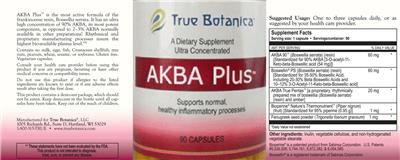
Supplement Facts
The label details for AKBA Plus by True Botanica, sourced from the NIH Dietary Supplement Label Database.
Supplement Facts
| Ingredient | Amount | % DV |
|---|---|---|
| Piperine | 0.95 Gram(s) | -- |
| Bioperine Nature's Thermonutrient | 1 mg | -- |
| 3-0-Acetyl-11-Keto Beta Boswellic Acid | 54 mg | -- |
| Fenugreek, Powder | 1 mg | -- |
| AKBA 90 | 60 mg | -- |
| Boswellin PS | 60 mg | -- |
| AKBA True Pentas | 20 mg | -- |
Other ingredients: Inulin, Cellulose, Stearate
Tap any ingredient to jump to its full detail below.
These statements are the manufacturer’s wording, reproduced from the product label — the label is saying it, not HelloPharmacist. We don’t verify or endorse them.
Formula
AKBA Plus is the most active formula of the frankincense resin, Boswellia serrata. It has an ultra high concentration of 90% AKBA, its most potent component, as opposed to 2-3% AKBA normally available in other preparations!
Formulation
Rhythmical and proprietary manufacturing processes insure the highest bio-available plasma level.
Contains no milk, eggs, fish, crustacean shellfish, tree nuts, peanuts, wheat, sesame, or soybeans. Gluten free.
Vegetarian capsules.
Ultra concentrated Supports normal, healthy inflammatory processes
Precautions
Consult your health care provider before using this product if you are pregnant, lactating or have other medical concerns or compatibility issues.
Do not use this product if allergies to the listed ingredients are known to exist or if any adverse effects result after taking the first dose.
This product contains a desiccant package, which should not be eaten.
Keep out of the reach of children.
Storage
Keep desiccant in the bottle until all capsules have been taken.
FDA Disclaimer Statement
These statements have not been evaluated by the FDA. This product is not intended to diagnose, treat, cure, or prevent any disease.
FDA Statement of Identity
A Dietary Supplement
Suggested/Recommended/Usage/Directions
Suggested usage: One to three capsules daily, or as suggested by your health care provider.
Brand IP Statement(s)
BioPerine is a patented product from Sabinsa Corporation. U.S. Patents #5,536,506; 5,744,161; 5,972,382; & 6,054,585. Boswellin is a registered trademark of Sabinsa Corporation.
Is this label outdated? Report a formula or label change and our pharmacy team will review it.
AKBA Plus by True Botanica label
The label scan from the NIH Dietary Supplement Label Database. Tap to enlarge.
Label images are published by the NIH Dietary Supplement Label Database for the version of this product on file. Always read your actual product label.
View the full label (PDF)The Ingredients in AKBA Plus by True Botanica
These are the 5 active ingredients this product is made of. Select any to open its full monograph.
Serving size1 Capsule(s) Dosage formCapsule Servings per container90 Amounts shown are per serving.
Most supplement products combine several ingredients, and a medication can interact with the product through any one of them. Each ingredient below shows whether it has known drug interactions.
Bioperine Nature's Thermonutrient
Interacts with1,019 drugs
Black pepper is a common kitchen spice that is generally safe in the amounts used in food. Its extract, piperine, is mostly added to supplements to he...
Bioperine Nature's Thermonutrient monograph & interactions- › Piperine
Fenugreek, Powder
Interacts with389 drugs
Fenugreek is a common kitchen spice that is also taken as a supplement, mainly for blood sugar, cholesterol, and to support breast milk production. So...
Fenugreek, Powder monograph & interactionsAKBA 90
- › 3-0-Acetyl-11-Keto Beta Boswellic Acid
Boswellin PS
Interacts with952 drugs
Boswellia serrata is a tree resin used in traditional medicine, mainly for joint pain and inflammation. Some studies suggest it may help with osteoart...
Boswellin PS monograph & interactionsAKBA True Pentas
Other (inactive) ingredients: Inulin, Cellulose, Stearate. These complete the product’s ingredient list but are not active constituents.
AKBA Plus by True Botanica Drug Interactions
HelloPharmacist Interaction Report
AKBA Plus by True Botanica contains fenugreek, which has documented interactions with a range of medications.
The most serious concern is fenugreek's theoretical additive effects with blood thinners (anticoagulants) and antiplatelet drugs like warfarin and clopidogrel — both are rated Moderate severity. Fenugreek may also lower blood sugar (hypoglycemia) when combined with diabetes medications, reduce blood pressure when taken with beta blockers like metoprolol, and interfere with the effectiveness of certain other drugs.
Read the full breakdown — every affected drug type, severity by severity
Additionally, fenugreek carries Moderate-severity interactions with theophylline (a breathing medication), phenytoin (a seizure drug), and sildenafil (a sexual dysfunction medication) — it may reduce how well these work. Three other ingredients in this product — piperine, 3-O-acetyl-11-keto beta boswellic acid, and boswellin PS — we could not check for interactions.
Altogether, these interactions span 386 individual medications.
Before you start AKBA Plus, use the medication checker on this page to verify your exact drugs, especially if you take blood thinners, diabetes medications, blood pressure drugs, or any of the other medications mentioned above.
Check your own medications below · Editorial policy · How we use AI
Want to check YOUR meds against AKBA Plus?
Ask about interactions with your drugs in plain English — “Can I take it with lisinopril?” — and we find you the answer in seconds, ingredient by ingredient.
Go to the checkerIngredients driving the most interactions
Individual Drug Interactions
The ingredients in AKBA Plus interact with 1,252 drugs. Click any drug to see the details.
3 of the 5 ingredients in AKBA Plus interact with drugs. Each result below shows which ingredient is responsible. Bioperine Nature's Thermonutrient Boswellin PS Fenugreek, Powder
6-mercaptopurinePurinethol
How 6-mercaptopurine interacts with AKBA Plus — through 1 ingredient. Tap an ingredient for the detail:
Boswellin PsImmunosuppressants Moderate
Interaction Summary
Theoretically, Boswellia serrata might alter the effects of immunosuppressive drugs.
Read the full Boswellin Ps + 6-mercaptopurine interactionAdo-trastuzumab EmtansineKadcyla
How Ado-trastuzumab Emtansine interacts with AKBA Plus — through 2 ingredients. Tap an ingredient for the detail:
Boswellin PsCytochrome P450 3a4 (cyp3a4) Substrates Moderate
Interaction Summary
Theoretically, Boswellia serrata might increase or decrease the levels and clinical effects of CYP3A4 substrates.
Read the full Boswellin Ps + Ado-trastuzumab Emtansine interactionBioperine Nature's ThermonutrientCytochrome P450 3a4 (cyp3a4) Substrates Moderate
Interaction Summary
Theoretically, black pepper might increase levels of drugs metabolized by CYP3A4.
Read the full Bioperine Nature's Thermonutrient + Ado-trastuzumab Emtansine interactionAbciximabReoPro
How Abciximab interacts with AKBA Plus — through 2 ingredients. Tap an ingredient for the detail:
Bioperine Nature's ThermonutrientAnticoagulant/antiplatelet Drugs Moderate
Interaction Summary
Theoretically, black pepper might increase the risk of bleeding when taken with antiplatelet or anticoagulant drugs.
Read the full Bioperine Nature's Thermonutrient + Abciximab interactionFenugreek, PowderAnticoagulant/antiplatelet Drugs Moderate
Interaction Summary
Theoretically, fenugreek might have additive effects when used with anticoagulant or antiplatelet drugs.
Read the full Fenugreek, Powder + Abciximab interactionAbemaciclibVerzenio
How Abemaciclib interacts with AKBA Plus — through 2 ingredients. Tap an ingredient for the detail:
Bioperine Nature's ThermonutrientCytochrome P450 3a4 (cyp3a4) Substrates Moderate
Interaction Summary
Theoretically, black pepper might increase levels of drugs metabolized by CYP3A4.
Read the full Bioperine Nature's Thermonutrient + Abemaciclib interactionBoswellin PsCytochrome P450 3a4 (cyp3a4) Substrates Moderate
Interaction Summary
Theoretically, Boswellia serrata might increase or decrease the levels and clinical effects of CYP3A4 substrates.
Read the full Boswellin Ps + Abemaciclib interactionAbiraterone
How Abiraterone interacts with AKBA Plus — through 2 ingredients. Tap an ingredient for the detail:
Bioperine Nature's ThermonutrientCytochrome P450 3a4 (cyp3a4) Substrates Moderate
Interaction Summary
Theoretically, black pepper might increase levels of drugs metabolized by CYP3A4.
Read the full Bioperine Nature's Thermonutrient + Abiraterone interactionBoswellin PsCytochrome P450 3a4 (cyp3a4) Substrates Moderate
Interaction Summary
Theoretically, Boswellia serrata might increase or decrease the levels and clinical effects of CYP3A4 substrates.
Read the full Boswellin Ps + Abiraterone interactionAbiraterone AcetateYonsa, Zytiga
How Abiraterone Acetate interacts with AKBA Plus — through 2 ingredients. Tap an ingredient for the detail:
Boswellin PsCytochrome P450 3a4 (cyp3a4) Substrates Moderate
Interaction Summary
Theoretically, Boswellia serrata might increase or decrease the levels and clinical effects of CYP3A4 substrates.
Read the full Boswellin Ps + Abiraterone Acetate interactionBioperine Nature's ThermonutrientCytochrome P450 3a4 (cyp3a4) Substrates Moderate
Interaction Summary
Theoretically, black pepper might increase levels of drugs metabolized by CYP3A4.
Read the full Bioperine Nature's Thermonutrient + Abiraterone Acetate interactionAbrocitinibCibinqo
How Abrocitinib interacts with AKBA Plus — through 3 ingredients. Tap an ingredient for the detail:
Boswellin PsCytochrome P450 2c9 (cyp2c9) Substrates, Immunosuppressants +1 Moderate
Interaction Summary
Theoretically, Boswellia serrata might increase the levels of CYP2C9 substrates.
Read the full Boswellin Ps + Abrocitinib interactionBioperine Nature's ThermonutrientAnticoagulant/antiplatelet Drugs Moderate
Interaction Summary
Theoretically, black pepper might increase the risk of bleeding when taken with antiplatelet or anticoagulant drugs.
Read the full Bioperine Nature's Thermonutrient + Abrocitinib interactionFenugreek, PowderAnticoagulant/antiplatelet Drugs Moderate
Interaction Summary
Theoretically, fenugreek might have additive effects when used with anticoagulant or antiplatelet drugs.
Read the full Fenugreek, Powder + Abrocitinib interactionAcalabrutinibCalquence
How Acalabrutinib interacts with AKBA Plus — through 2 ingredients. Tap an ingredient for the detail:
Bioperine Nature's ThermonutrientCytochrome P450 3a4 (cyp3a4) Substrates, P-glycoprotein Substrates Moderate
Interaction Summary
Theoretically, black pepper might increase levels of drugs metabolized by CYP3A4.
Read the full Bioperine Nature's Thermonutrient + Acalabrutinib interactionBoswellin PsCytochrome P450 3a4 (cyp3a4) Substrates Moderate
Interaction Summary
Theoretically, Boswellia serrata might increase or decrease the levels and clinical effects of CYP3A4 substrates.
Read the full Boswellin Ps + Acalabrutinib interactionAcarboseGlucobay, Prandase, Precose
How Acarbose interacts with AKBA Plus — through 2 ingredients. Tap an ingredient for the detail:
Fenugreek, PowderAntidiabetes Drugs Moderate
Interaction Summary
Theoretically, fenugreek seed might have additive hypoglycemic effects when used with antidiabetes drugs.
Read the full Fenugreek, Powder + Acarbose interactionBioperine Nature's ThermonutrientAntidiabetes Drugs Moderate
Interaction Summary
Theoretically, black pepper might increase the risk of hypoglycemia when taken with antidiabetes drugs.
Read the full Bioperine Nature's Thermonutrient + Acarbose interactionAcenocoumarolSintrom
How Acenocoumarol interacts with AKBA Plus — through 2 ingredients. Tap an ingredient for the detail:
Fenugreek, PowderAnticoagulant/antiplatelet Drugs Moderate
Interaction Summary
Theoretically, fenugreek might have additive effects when used with anticoagulant or antiplatelet drugs.
Read the full Fenugreek, Powder + Acenocoumarol interactionBioperine Nature's ThermonutrientAnticoagulant/antiplatelet Drugs Moderate
Interaction Summary
Theoretically, black pepper might increase the risk of bleeding when taken with antiplatelet or anticoagulant drugs.
Read the full Bioperine Nature's Thermonutrient + Acenocoumarol interactionAcetaminophenChildren's Tylenol, Children's Tylenol Meltaways, Tylenol, Tylenol Ex Strength
How Acetaminophen interacts with AKBA Plus — through 2 ingredients. Tap an ingredient for the detail:
Boswellin PsCytochrome P450 1a2 (cyp1a2) Substrates Moderate
Interaction Summary
Theoretically, Boswellia serrata might increase the levels of CYP1A2 substrates.
Read the full Boswellin Ps + Acetaminophen interactionBioperine Nature's ThermonutrientCytochrome P450 1a2 (cyp1a2) Substrates Minor
Interaction Summary
Theoretically, black pepper might decrease levels and clinical effects of drugs metabolized by CYP1A2.
Read the full Bioperine Nature's Thermonutrient + Acetaminophen interactionAcetaminophen, AspirinGemnisyn
How Acetaminophen, Aspirin interacts with AKBA Plus — through 3 ingredients. Tap an ingredient for the detail:
Bioperine Nature's ThermonutrientCytochrome P450 1a2 (cyp1a2) Substrates, Anticoagulant/antiplatelet Drugs Moderate
Interaction Summary
Theoretically, black pepper might decrease levels and clinical effects of drugs metabolized by CYP1A2.
Read the full Bioperine Nature's Thermonutrient + Acetaminophen, Aspirin interactionBoswellin PsCytochrome P450 1a2 (cyp1a2) Substrates Moderate
Interaction Summary
Theoretically, Boswellia serrata might increase the levels of CYP1A2 substrates.
Read the full Boswellin Ps + Acetaminophen, Aspirin interactionFenugreek, PowderAnticoagulant/antiplatelet Drugs Moderate
Interaction Summary
Theoretically, fenugreek might have additive effects when used with anticoagulant or antiplatelet drugs.
Read the full Fenugreek, Powder + Acetaminophen, Aspirin interactionAcetaminophen, Aspirin, CaffeineExcedrin, Excedrin Extra Strength, Excedrin Migraine
How Acetaminophen, Aspirin, Caffeine interacts with AKBA Plus — through 3 ingredients. Tap an ingredient for the detail:
Fenugreek, PowderAnticoagulant/antiplatelet Drugs Moderate
Interaction Summary
Theoretically, fenugreek might have additive effects when used with anticoagulant or antiplatelet drugs.
Read the full Fenugreek, Powder + Acetaminophen, Aspirin, Caffeine interactionBioperine Nature's ThermonutrientAnticoagulant/antiplatelet Drugs, Cytochrome P450 3a4 (cyp3a4) Substrates +1 Moderate
Interaction Summary
Theoretically, black pepper might increase the risk of bleeding when taken with antiplatelet or anticoagulant drugs.
Read the full Bioperine Nature's Thermonutrient + Acetaminophen, Aspirin, Caffeine interactionBoswellin PsCytochrome P450 3a4 (cyp3a4) Substrates, Cytochrome P450 1a2 (cyp1a2) Substrates Moderate
Interaction Summary
Theoretically, Boswellia serrata might increase or decrease the levels and clinical effects of CYP3A4 substrates.
Read the full Boswellin Ps + Acetaminophen, Aspirin, Caffeine interactionAcetaminophen, Brompheniramine, PhenylpropanolamineDimetapp Cold and Flu
How Acetaminophen, Brompheniramine, Phenylpropanolamine interacts with AKBA Plus — through 2 ingredients. Tap an ingredient for the detail:
Boswellin PsCytochrome P450 1a2 (cyp1a2) Substrates Moderate
Interaction Summary
Theoretically, Boswellia serrata might increase the levels of CYP1A2 substrates.
Read the full Boswellin Ps + Acetaminophen, Brompheniramine, Phenylpropanolamine interactionBioperine Nature's ThermonutrientCytochrome P450 1a2 (cyp1a2) Substrates Minor
Interaction Summary
Theoretically, black pepper might decrease levels and clinical effects of drugs metabolized by CYP1A2.
Read the full Bioperine Nature's Thermonutrient + Acetaminophen, Brompheniramine, Phenylpropanolamine interactionAcetaminophen, ButalbitalAxocet, Bancap, Bucet, Butex Forte, Esgic CF, Orbivan CF +5 more
How Acetaminophen, Butalbital interacts with AKBA Plus — through 2 ingredients. Tap an ingredient for the detail:
Boswellin PsCytochrome P450 1a2 (cyp1a2) Substrates Moderate
Interaction Summary
Theoretically, Boswellia serrata might increase the levels of CYP1A2 substrates.
Read the full Boswellin Ps + Acetaminophen, Butalbital interactionBioperine Nature's ThermonutrientCytochrome P450 1a2 (cyp1a2) Substrates Minor
Interaction Summary
Theoretically, black pepper might decrease levels and clinical effects of drugs metabolized by CYP1A2.
Read the full Bioperine Nature's Thermonutrient + Acetaminophen, Butalbital interactionAcetaminophen, Butalbital, CaffeineEsgic, Esgic Plus, Fiogesic, Fioricet, Repan, Tecnal +1 more
How Acetaminophen, Butalbital, Caffeine interacts with AKBA Plus — through 2 ingredients. Tap an ingredient for the detail:
Bioperine Nature's ThermonutrientCytochrome P450 1a2 (cyp1a2) Substrates, Cytochrome P450 3a4 (cyp3a4) Substrates Moderate
Interaction Summary
Theoretically, black pepper might decrease levels and clinical effects of drugs metabolized by CYP1A2.
Read the full Bioperine Nature's Thermonutrient + Acetaminophen, Butalbital, Caffeine interactionBoswellin PsCytochrome P450 1a2 (cyp1a2) Substrates, Cytochrome P450 3a4 (cyp3a4) Substrates Moderate
Interaction Summary
Theoretically, Boswellia serrata might increase the levels of CYP1A2 substrates.
Read the full Boswellin Ps + Acetaminophen, Butalbital, Caffeine interactionAcetaminophen, Butalbital, Caffeine, CodeineEsgic with Codeine, Fioricet w/ Codeine
How Acetaminophen, Butalbital, Caffeine, Codeine interacts with AKBA Plus — through 2 ingredients. Tap an ingredient for the detail:
Bioperine Nature's ThermonutrientCytochrome P450 3a4 (cyp3a4) Substrates, Cytochrome P450 2d6 (cyp2d6) Substrates +1 Moderate
Interaction Summary
Theoretically, black pepper might increase levels of drugs metabolized by CYP3A4.
Read the full Bioperine Nature's Thermonutrient + Acetaminophen, Butalbital, Caffeine, Codeine interactionBoswellin PsCytochrome P450 2d6 (cyp2d6) Substrates, Cytochrome P450 3a4 (cyp3a4) Substrates +1 Moderate
Interaction Summary
Theoretically, Boswellia serrata might increase the levels of CYP2D6 substrates.
Read the full Boswellin Ps + Acetaminophen, Butalbital, Caffeine, Codeine interactionAcetaminophen, Butalbital, CodeineBancap w/ Codeine
How Acetaminophen, Butalbital, Codeine interacts with AKBA Plus — through 2 ingredients. Tap an ingredient for the detail:
Bioperine Nature's ThermonutrientCytochrome P450 1a2 (cyp1a2) Substrates, Cytochrome P450 2d6 (cyp2d6) Substrates Moderate
Interaction Summary
Theoretically, black pepper might decrease levels and clinical effects of drugs metabolized by CYP1A2.
Read the full Bioperine Nature's Thermonutrient + Acetaminophen, Butalbital, Codeine interactionBoswellin PsCytochrome P450 1a2 (cyp1a2) Substrates, Cytochrome P450 2d6 (cyp2d6) Substrates Moderate
Interaction Summary
Theoretically, Boswellia serrata might increase the levels of CYP1A2 substrates.
Read the full Boswellin Ps + Acetaminophen, Butalbital, Codeine interactionAcetaminophen, Butalbital, Codeine PhosphatePhrenilin #3
How Acetaminophen, Butalbital, Codeine Phosphate interacts with AKBA Plus — through 2 ingredients. Tap an ingredient for the detail:
Boswellin PsCytochrome P450 2d6 (cyp2d6) Substrates, Cytochrome P450 1a2 (cyp1a2) Substrates Moderate
Interaction Summary
Theoretically, Boswellia serrata might increase the levels of CYP2D6 substrates.
Read the full Boswellin Ps + Acetaminophen, Butalbital, Codeine Phosphate interactionBioperine Nature's ThermonutrientCytochrome P450 1a2 (cyp1a2) Substrates, Cytochrome P450 2d6 (cyp2d6) Substrates Moderate
Interaction Summary
Theoretically, black pepper might decrease levels and clinical effects of drugs metabolized by CYP1A2.
Read the full Bioperine Nature's Thermonutrient + Acetaminophen, Butalbital, Codeine Phosphate interactionAcetaminophen, Caffeine, Chlorpheniramine, Hydrocodone, PhenylephrineHycomine Compound
How Acetaminophen, Caffeine, Chlorpheniramine, Hydrocodone, Phenylephrine interacts with AKBA Plus — through 2 ingredients. Tap an ingredient for the detail:
Bioperine Nature's ThermonutrientCytochrome P450 2d6 (cyp2d6) Substrates, Cytochrome P450 3a4 (cyp3a4) Substrates +1 Moderate
Interaction Summary
Theoretically, black pepper might increase levels of drugs metabolized by CYP2D6.
Read the full Bioperine Nature's Thermonutrient + Acetaminophen, Caffeine, Chlorpheniramine, Hydrocodone, Phenylephrine interactionBoswellin PsCytochrome P450 2d6 (cyp2d6) Substrates, Cytochrome P450 1a2 (cyp1a2) Substrates +1 Moderate
Interaction Summary
Theoretically, Boswellia serrata might increase the levels of CYP2D6 substrates.
Read the full Boswellin Ps + Acetaminophen, Caffeine, Chlorpheniramine, Hydrocodone, Phenylephrine interactionAcetaminophen, Caffeine, CodeineGesic C15, Gesic C30, Gesic C8, Lenoltec 1, Lenoltec 2, Lenoltec 3 +1 more
How Acetaminophen, Caffeine, Codeine interacts with AKBA Plus — through 2 ingredients. Tap an ingredient for the detail:
Boswellin PsCytochrome P450 3a4 (cyp3a4) Substrates, Cytochrome P450 2d6 (cyp2d6) Substrates +1 Moderate
Interaction Summary
Theoretically, Boswellia serrata might increase or decrease the levels and clinical effects of CYP3A4 substrates.
Read the full Boswellin Ps + Acetaminophen, Caffeine, Codeine interactionBioperine Nature's ThermonutrientCytochrome P450 2d6 (cyp2d6) Substrates, Cytochrome P450 1a2 (cyp1a2) Substrates +1 Moderate
Interaction Summary
Theoretically, black pepper might increase levels of drugs metabolized by CYP2D6.
Read the full Bioperine Nature's Thermonutrient + Acetaminophen, Caffeine, Codeine interactionAcetaminophen, Caffeine, Codeine, SalicylamideCodalan No.1, Codalan No.2, Codalan No.3
How Acetaminophen, Caffeine, Codeine, Salicylamide interacts with AKBA Plus — through 2 ingredients. Tap an ingredient for the detail:
Boswellin PsCytochrome P450 2d6 (cyp2d6) Substrates, Cytochrome P450 3a4 (cyp3a4) Substrates +1 Moderate
Interaction Summary
Theoretically, Boswellia serrata might increase the levels of CYP2D6 substrates.
Read the full Boswellin Ps + Acetaminophen, Caffeine, Codeine, Salicylamide interactionBioperine Nature's ThermonutrientCytochrome P450 2d6 (cyp2d6) Substrates, Cytochrome P450 3a4 (cyp3a4) Substrates +1 Moderate
Interaction Summary
Theoretically, black pepper might increase levels of drugs metabolized by CYP2D6.
Read the full Bioperine Nature's Thermonutrient + Acetaminophen, Caffeine, Codeine, Salicylamide interactionAcetaminophen, Caffeine, DihydrocodeineDHC Plus, Panlor DC, Panlor SS
How Acetaminophen, Caffeine, Dihydrocodeine interacts with AKBA Plus — through 2 ingredients. Tap an ingredient for the detail:
Bioperine Nature's ThermonutrientCytochrome P450 1a2 (cyp1a2) Substrates, Cytochrome P450 3a4 (cyp3a4) Substrates +1 Moderate
Interaction Summary
Theoretically, black pepper might decrease levels and clinical effects of drugs metabolized by CYP1A2.
Read the full Bioperine Nature's Thermonutrient + Acetaminophen, Caffeine, Dihydrocodeine interactionBoswellin PsCytochrome P450 2d6 (cyp2d6) Substrates, Cytochrome P450 3a4 (cyp3a4) Substrates +1 Moderate
Interaction Summary
Theoretically, Boswellia serrata might increase the levels of CYP2D6 substrates.
Read the full Boswellin Ps + Acetaminophen, Caffeine, Dihydrocodeine interactionAcetaminophen, Caffeine, IsomethepteneMigralam
How Acetaminophen, Caffeine, Isometheptene interacts with AKBA Plus — through 2 ingredients. Tap an ingredient for the detail:
Bioperine Nature's ThermonutrientCytochrome P450 3a4 (cyp3a4) Substrates, Cytochrome P450 1a2 (cyp1a2) Substrates Moderate
Interaction Summary
Theoretically, black pepper might increase levels of drugs metabolized by CYP3A4.
Read the full Bioperine Nature's Thermonutrient + Acetaminophen, Caffeine, Isometheptene interactionBoswellin PsCytochrome P450 1a2 (cyp1a2) Substrates, Cytochrome P450 3a4 (cyp3a4) Substrates Moderate
Interaction Summary
Theoretically, Boswellia serrata might increase the levels of CYP1A2 substrates.
Read the full Boswellin Ps + Acetaminophen, Caffeine, Isometheptene interactionAcetaminophen, Caffeine, PyrilamineMidol Max Strength Menstrual
How Acetaminophen, Caffeine, Pyrilamine interacts with AKBA Plus — through 2 ingredients. Tap an ingredient for the detail:
Boswellin PsCytochrome P450 3a4 (cyp3a4) Substrates, Cytochrome P450 1a2 (cyp1a2) Substrates Moderate
Interaction Summary
Theoretically, Boswellia serrata might increase or decrease the levels and clinical effects of CYP3A4 substrates.
Read the full Boswellin Ps + Acetaminophen, Caffeine, Pyrilamine interactionBioperine Nature's ThermonutrientCytochrome P450 3a4 (cyp3a4) Substrates, Cytochrome P450 1a2 (cyp1a2) Substrates Moderate
Interaction Summary
Theoretically, black pepper might increase levels of drugs metabolized by CYP3A4.
Read the full Bioperine Nature's Thermonutrient + Acetaminophen, Caffeine, Pyrilamine interactionAcetaminophen, Chlorpheniramine Maleate, Dextromethorphan HbrVicks Formula 44M Cough, Cold & Flu Relief
How Acetaminophen, Chlorpheniramine Maleate, Dextromethorphan Hbr interacts with AKBA Plus — through 2 ingredients. Tap an ingredient for the detail:
Bioperine Nature's ThermonutrientCytochrome P450 2d6 (cyp2d6) Substrates, Cytochrome P450 3a4 (cyp3a4) Substrates +1 Moderate
Interaction Summary
Theoretically, black pepper might increase levels of drugs metabolized by CYP2D6.
Read the full Bioperine Nature's Thermonutrient + Acetaminophen, Chlorpheniramine Maleate, Dextromethorphan Hbr interactionBoswellin PsCytochrome P450 2d6 (cyp2d6) Substrates, Cytochrome P450 3a4 (cyp3a4) Substrates +1 Moderate
Interaction Summary
Theoretically, Boswellia serrata might increase the levels of CYP2D6 substrates.
Read the full Boswellin Ps + Acetaminophen, Chlorpheniramine Maleate, Dextromethorphan Hbr interactionAcetaminophen, Chlorpheniramine, Codeine, PhenylephrineColrex
How Acetaminophen, Chlorpheniramine, Codeine, Phenylephrine interacts with AKBA Plus — through 2 ingredients. Tap an ingredient for the detail:
Boswellin PsCytochrome P450 2d6 (cyp2d6) Substrates, Cytochrome P450 3a4 (cyp3a4) Substrates +1 Moderate
Interaction Summary
Theoretically, Boswellia serrata might increase the levels of CYP2D6 substrates.
Read the full Boswellin Ps + Acetaminophen, Chlorpheniramine, Codeine, Phenylephrine interactionBioperine Nature's ThermonutrientCytochrome P450 2d6 (cyp2d6) Substrates, Cytochrome P450 1a2 (cyp1a2) Substrates +1 Moderate
Interaction Summary
Theoretically, black pepper might increase levels of drugs metabolized by CYP2D6.
Read the full Bioperine Nature's Thermonutrient + Acetaminophen, Chlorpheniramine, Codeine, Phenylephrine interactionAcetaminophen, Chlorpheniramine, DextromethorphanCoricidin II Extra Strength Cold and Flu
How Acetaminophen, Chlorpheniramine, Dextromethorphan interacts with AKBA Plus — through 2 ingredients. Tap an ingredient for the detail:
Boswellin PsCytochrome P450 2d6 (cyp2d6) Substrates, Cytochrome P450 1a2 (cyp1a2) Substrates +1 Moderate
Interaction Summary
Theoretically, Boswellia serrata might increase the levels of CYP2D6 substrates.
Read the full Boswellin Ps + Acetaminophen, Chlorpheniramine, Dextromethorphan interactionBioperine Nature's ThermonutrientCytochrome P450 1a2 (cyp1a2) Substrates, Cytochrome P450 2d6 (cyp2d6) Substrates +1 Moderate
Interaction Summary
Theoretically, black pepper might decrease levels and clinical effects of drugs metabolized by CYP1A2.
Read the full Bioperine Nature's Thermonutrient + Acetaminophen, Chlorpheniramine, Dextromethorphan interactionAcetaminophen, Chlorpheniramine, Dextromethorphan HydrobromideCoricidin HBP Maximum Strength Flu
How Acetaminophen, Chlorpheniramine, Dextromethorphan Hydrobromide interacts with AKBA Plus — through 2 ingredients. Tap an ingredient for the detail:
Boswellin PsCytochrome P450 3a4 (cyp3a4) Substrates, Cytochrome P450 2d6 (cyp2d6) Substrates +1 Moderate
Interaction Summary
Theoretically, Boswellia serrata might increase or decrease the levels and clinical effects of CYP3A4 substrates.
Read the full Boswellin Ps + Acetaminophen, Chlorpheniramine, Dextromethorphan Hydrobromide interactionBioperine Nature's ThermonutrientCytochrome P450 1a2 (cyp1a2) Substrates, Cytochrome P450 3a4 (cyp3a4) Substrates +1 Moderate
Interaction Summary
Theoretically, black pepper might decrease levels and clinical effects of drugs metabolized by CYP1A2.
Read the full Bioperine Nature's Thermonutrient + Acetaminophen, Chlorpheniramine, Dextromethorphan Hydrobromide interactionAcetaminophen, Chlorpheniramine, Dextromethorphan, PhenylpropanolamineMulti Symptom Cold Relief
How Acetaminophen, Chlorpheniramine, Dextromethorphan, Phenylpropanolamine interacts with AKBA Plus — through 2 ingredients. Tap an ingredient for the detail:
Bioperine Nature's ThermonutrientCytochrome P450 3a4 (cyp3a4) Substrates, Cytochrome P450 2d6 (cyp2d6) Substrates +1 Moderate
Interaction Summary
Theoretically, black pepper might increase levels of drugs metabolized by CYP3A4.
Read the full Bioperine Nature's Thermonutrient + Acetaminophen, Chlorpheniramine, Dextromethorphan, Phenylpropanolamine interactionBoswellin PsCytochrome P450 3a4 (cyp3a4) Substrates, Cytochrome P450 1a2 (cyp1a2) Substrates +1 Moderate
Interaction Summary
Theoretically, Boswellia serrata might increase or decrease the levels and clinical effects of CYP3A4 substrates.
Read the full Boswellin Ps + Acetaminophen, Chlorpheniramine, Dextromethorphan, Phenylpropanolamine interactionEach ingredient & the kinds of drugs it affects
For each ingredient in AKBA Plus with known interactions, here are the types of medications they can affect. Open any type for the detail — or search your exact drug in the checker above.
Bioperine Nature's Thermonutrient
Anticoagulant/Antiplatelet Drugs
Theoretically, black pepper might increase the risk of bleeding when taken with antiplatelet or anticoagulant drugs.
In vitro research shows that piperine, a constituent of black pepper, seems to inhibit platelet aggregation. This has not been reported in humans.
Antidiabetes Drugs
Theoretically, black pepper might increase the risk of hypoglycemia when taken with antidiabetes drugs.
Animal research shows that piperine, a constituent of black pepper, can reduce blood glucose levels. Monitor blood glucose levels closely. Dose adjustments might be necessary.
Atorvastatin (Lipitor)
Theoretically, black pepper might increase blood levels of atorvastatin.
Animal research shows that taking piperine, a constituent of black pepper, 35 mg/kg can increase the maximum serum concentration of atorvastatin three-fold. This has not been reported in humans.
Cyclosporine (Neoral, Sandimmune)
Theoretically, black pepper might increase the effects and side effects of cyclosporine.
In vitro research shows that piperine, a constituent of black pepper, increases the bioavailability of cyclosporine. This has not been reported in humans.
Cytochrome P450 2D6 (Cyp2D6) Substrates
Theoretically, black pepper might increase levels of drugs metabolized by CYP2D6.
In vitro research suggests that some constituents of black pepper inhibit CYP2D6. This has not been reported in humans.
Cytochrome P450 3A4 (Cyp3A4) Substrates
Theoretically, black pepper might increase levels of drugs metabolized by CYP3A4.
In vitro research and pharmacokinetic simulation data suggest that piperine, a constituent of black pepper, as well as the pepper fruit seem to inhibit CYP3A4. This has not been reported in humans.
Lithium
Theoretically, black pepper might increase blood levels of lithium due to its diuretic effects. The dose of lithium might need to be reduced.
Black pepper is thought to have diuretic properties.
Nevirapine (Viramune)
Black pepper might increase blood levels of nevirapine.
Clinical research shows that piperine, a constituent of black pepper, increases the plasma concentration of nevirapine. However, no adverse effects were observed in this study.
P-Glycoprotein Substrates
Theoretically, black pepper might increase levels of P-glycoprotein substrates.
In vitro research shows that piperine, a constituent of black pepper, seems to inhibit P-glycoprotein.
Pentobarbital (Nembutal)
Theoretically, black pepper might increase the sedative effects of pentobarbital.
Animal research shows that piperine, a constituent of black pepper, increases pentobarbital-induced sleeping time.
Phenytoin (Dilantin)
Black pepper might increase blood levels of phenytoin.
Clinical research shows that piperine, a constituent of black pepper, seems to increase absorption, slow elimination, and increase levels of phenytoin. Taking a single dose of black pepper 1 gram along with phenytoin seems to double the serum concentration of phenytoin. Consuming a soup with black pepper providing piperine 44 mg/200 mL of soup along with phenytoin also seems to increase phenytoin levels when compared with consuming the same soup without black pepper.
Propranolol (Inderal)
Black pepper might increase blood levels of propranolol.
Clinical research shows that piperine, a constituent of black pepper, seems to increase absorption and slow elimination of propranolol.
Rifampin (Rifadin)
Black pepper might increase blood levels of rifampin.
Clinical research shows that piperine, a constituent of black pepper, seems to increase absorption and serum levels of rifampin.
Theophylline
Black pepper might increase blood levels of theophylline.
Clinical research shows that piperine, a constituent of black pepper, seems to increase absorption and slow elimination of theophylline.
Amoxicillin (Amoxil, Trimox)
Theoretically, black pepper might increase the effects and side effects of amoxicillin.
Animal research shows that taking piperine, a constituent of black pepper, with amoxicillin increases plasma levels of amoxicillin. This has not been reported in humans.
Carbamazepine (Tegretol)
Theoretically, black pepper might increase blood levels of carbamazepine, potentially increasing the effects and side effects of carbamazepine.
One clinical study in patients taking carbamazepine 300 mg or 500 mg twice daily shows that taking a single 20 mg dose of purified piperine, a constituent of black pepper, increases carbamazepine levels. Piperine may increase carbamazepine absorption by increasing blood flow to the GI tract, increasing the surface area of the small intestine, or inhibiting cytochrome P450 3A4 (CYP3A4) in the gut wall. Absorption was significantly increased by 7-10 mcg/mL/hour. The time to eliminate carbamazepine was also increased by 4-8 hours. Although carbamazepine levels were increased, this did not appear to increase side effects. In vitro research also shows that piperine can increase carbamazepine levels by 11% in a time-dependent manner.
Cytochrome P450 1A2 (Cyp1A2) Substrates
Theoretically, black pepper might decrease levels and clinical effects of drugs metabolized by CYP1A2.
In vitro research suggests that black pepper induces CYP1A2. This has not been reported in humans.
Boswellin PS
Cytochrome P450 1A2 (Cyp1A2) Substrates
Theoretically, Boswellia serrata might increase the levels of CYP1A2 substrates.
In vitro research shows that Boswellia serrata gum resin inhibits CYP1A2 enzymes.
Cytochrome P450 2C19 (Cyp2C19) Substrates
Theoretically, Boswellia serrata might increase the levels of CYP2C19 substrates.
In vitro research shows that Boswellia serrata gum resin inhibits CYP2C19 enzymes.
Cytochrome P450 2C9 (Cyp2C9) Substrates
Theoretically, Boswellia serrata might increase the levels of CYP2C9 substrates.
In vitro research shows that Boswellia serrata gum resin inhibits CYP2C9 enzymes.
Cytochrome P450 2D6 (Cyp2D6) Substrates
Theoretically, Boswellia serrata might increase the levels of CYP2D6 substrates.
In vitro research shows that Boswellia serrata gum resin inhibits CYP2D6 enzymes.
Cytochrome P450 3A4 (Cyp3A4) Substrates
Theoretically, Boswellia serrata might increase or decrease the levels and clinical effects of CYP3A4 substrates.
In vitro research shows that Boswellia serrata gum resin inhibits CYP3A4 enzymes. Other in vitro research shows that Boswellia serrata extract inhibits CYP3A4 enzymes at most concentrations, although it may modestly induce enzyme activity at low concentrations.
Immunosuppressants
Theoretically, Boswellia serrata might alter the effects of immunosuppressive drugs.
Some in vitro research suggests that Boswellia serrata extracts might inhibit mediators of autoimmune disorders such as leukotrienes and reduce production of antibodies and cell-mediated immunity. However, other in vitro research suggests that, when coupled with calcium ions, boswellic acids containing the keto group have immunostimulant properties within specific cell signaling pathways.
Fenugreek, Powder
Anticoagulant/Antiplatelet Drugs
Theoretically, fenugreek might have additive effects when used with anticoagulant or antiplatelet drugs.
Some of the constituents in fenugreek have antiplatelet effects in animal and in vitro research. However, common fenugreek products might not contain sufficient concentrations of these constituents for clinical effects. A clinical study in patients with coronary artery disease or diabetes shows that taking fenugreek seed powder 2.5 grams twice daily for 3 months does not affect platelet aggregation, fibrinolytic activity, or fibrinogen levels .
Antidiabetes Drugs
Theoretically, fenugreek seed might have additive hypoglycemic effects when used with antidiabetes drugs.
Clinical research shows that fenugreek seed can reduce fasting blood glucose and 2-hour postprandial glucose levels in adults with type 2 diabetes.
Clopidogrel (Plavix)
Theoretically, fenugreek seed might alter the clinical effects of clopidogrel by inhibiting its conversion to the active form.
Animal research shows that fenugreek seed 200 mg/kg daily for 14 days increases the maximum serum concentration of clopidogrel by 21%. It is unclear how this affects the pharmacokinetics of the active metabolite of clopidogrel; however, this study found that concomitant use of fenugreek seed and clopidogrel prolonged bleeding time by an additional 11%.
Metoprolol (Toprol)
Theoretically, fenugreek seed might have additive hypotensive effects when used with metoprolol.
Animal research shows that fenugreek seed 300 mg/kg daily for 2 weeks decreases systolic and diastolic blood pressure by 9% and 11%, respectively, when administered alone, and by 15% and 22%, respectively, when given with metoprolol 10 mg/kg.
Phenytoin (Dilantin)
Theoretically, fenugreek might decrease plasma levels of phenytoin.
Animal research shows that taking fenugreek seeds for 1 week decreases maximum concentrations and the area under the curve of a single dose of phenytoin by 44% and 72%, respectively. This seems to be related to increased clearance. So far, this interaction has not been reported in humans.
Sildenafil (Viagra)
Theoretically, concurrent use of sildenafil and fenugreek might reduce levels and therapeutic effects of sildenafil.
Animal research shows that taking fenugreek seeds for 1 week reduces maximum concentrations and the area under the curve of a single dose of sildenafil by 27% and 48%, respectively. So far, this interaction has not been reported in humans.
Theophylline
Theoretically, fenugreek may reduce the levels and clinical effects of theophylline.
Animal research shows that fenugreek 50 grams daily for 7 days reduces the maximum serum concentration (Cmax) of theophylline by 28% and the area under the plasma drug concentration-time curve (AUC) by 22%.
Warfarin (Coumadin)
Theoretically, fenugreek might have additive effects with warfarin and increase the international normalized ratio (INR).
Some fenugreek constituents have antiplatelet effects, although these might not be present in concentrations that are clinically significant. In one case report, a patient taking warfarin experienced an increased INR when starting to take fenugreek in combination with boldo.
Antihypertensive Drugs
Fenugreek may also have an additive effect on blood pressure-lowering medications. Studies on animals have shown that fenugreek seed can decrease both systolic and diastolic blood pressure by up to 22% when combined with metoprolol. Therefore, it is essential to monitor your blood pressure regularly if you are taking fenugreek and metoprolol together or any other antihypertensive drugs.
Brand information
Manufacturer and brand details for AKBA Plus, from the product label.
True Botanica
See all True Botanica products- Name
- True Botanica, LLC
- Street Address
- 1005 Richards Road, Suite D
- City
- Hartland
- State
- WI
- ZipCode
- 53029
- Phone Number
- 1-800-315-8783
- Web Address
- www.truebotanica.com
AKBA Plus by True Botanica: Common Questions
Does AKBA Plus by True Botanica interact with any medications?
How can one product interact with so many drugs?
Where does this information come from?
Can I take AKBA Plus if I'm pregnant?
Does AKBA Plus work for erectile dysfunction?
What are the most common side effects?
Can fenugreek lower my blood sugar?
Does AKBA Plus have any fillers?
Can I use AKBA Plus while breastfeeding to boost milk supply?
Written and reviewed by the HelloPharmacist editorial staff. Our editorial policy
Not sure if AKBA Plus is safe with your meds?
Our pharmacists answer your medication & supplement questions — free.
Label information is sourced from the NIH Dietary Supplement Label Database and reflects the product version on file; always read your actual product label. This page is for education only and is not a substitute for professional medical advice. Confirm with your pharmacist or doctor before combining supplements and medications.
The Full Monographs Behind AKBA Plus’s Ingredients
Every ingredient we hold a full HelloPharmacist monograph for — uses, evidence, safety, and the complete interaction list.
Black Pepper
Interacts with 1,019 drugsBlack pepper is a common kitchen spice that is generally safe in the amounts used in food. Its extract, piperine, is mostly added to supplements to help the body absorb other ingredients (li...
Read the full Black Pepper monograph → Herb & supplement monographFenugreek
Interacts with 389 drugsFenugreek is a common kitchen spice that is also taken as a supplement, mainly for blood sugar, cholesterol, and to support breast milk production. Some early research is encouraging for blo...
Read the full Fenugreek monograph → Herb & supplement monographBoswellia Serrata
Interacts with 952 drugsBoswellia serrata is a tree resin used in traditional medicine, mainly for joint pain and inflammation. Some studies suggest it may help with osteoarthritis symptoms, but the overall evidenc...
Read the full Boswellia Serrata monograph →Sources & How We Checked
AKBA Plus's label data comes from the NIH Dietary Supplement Label Database; the ingredient interaction data is from the Natural Medicines database, reviewed by our pharmacists.
- NIH Dietary Supplement Label Database (DSLD) — The official product label on file for this supplement.
- Natural Medicines (Therapeutic Research Center) — Evidence-graded clinical reference behind the ingredient interaction data.
Content is written and reviewed by licensed HelloPharmacist pharmacists. See our data sources and editorial standards for how this information is built and checked.
The 75 references behind this product’s interaction data
Every citation that drives the interaction findings for this product’s ingredients, from the evidence-graded Natural Medicines (TRC Healthcare) database. Open an ingredient to browse its citations — links open the study on PubMed or the publisher’s site.
Black Pepper 29 references
- Leung AY, Foster S. Encyclopedia of Common Natural Ingredients Used in Food, Drugs and Cosmetics. 2nd ed. New York, NY: John Wiley & Sons, 1996.
- Brinker F. Herb Contraindications and Drug Interactions. 2nd ed. Sandy, OR: Eclectic Medical Publications, 1998.
- Bano G, Amla V, Raina RK, et al. The effect of piperine on pharmacokinetics of phenytoin in healthy volunteers. Planta Med 1987;53:568-9. PubMed
- Bano G, et al. Effect of piperine on bioavailability and pharmacokinetics of propranolol and theophylline in healthy volunteers. Eur J Clin Pharmacol 1991;41;615-7. PubMed
- Cohle SD, Trestrail JD III, Graham MA, et al. Fatal pepper aspiration. Am J Dis Child 1988;142:633-6. PubMed
- Bhardwaj RK, Glaeser H, Becquemont L, et al. Piperine, a major constituent of black pepper, inhibits human P-glycoprotein and CYP3A4. J Pharmacol Exp Ther 2002;302:645-50. PubMed
- Velpandian T, Jasuja R, Bhardwaj RK, et al. Piperine in food: interference in the pharmacokinetics of phenytoin. Eur J Drug Metab Pharmacokinet 2001;26:241-7. PubMed
- Pattanaik S, Hota D, Prabhakar S, et al. Pharmacokinetic interaction of a single dose of piperine with steady-state carbamazepine in epilepsy patients. Phytother Res 2009;23:1281-6.
- Munakata, M., Kobayashi, K., Niisato-Nezu, J., Tanaka, S., Kakisaka, Y., Ebihara, T., Ebihara, S., Haginoya, K., Tsuchiya, S., and Onuma, A. Olfactory stimulation using black pepper oil facilitates oral feeding in pediatric patients receiving long-term en
- Myers, B. M., Smith, J. L., and Graham, D. Y. Effect of red pepper and black pepper on the stomach. Am J Gastroenterol 1987;82(3):211-214.
- Raghavendra, R. H. and Naidu, K. A. Spice active principles as the inhibitors of human platelet aggregation and thromboxane biosynthesis. Prostaglandins Leukot.Essent.Fatty Acids 2009;81(1):73-78. PubMed
- Subehan, Usia, T., Kadota, S., and Tezuka, Y. Mechanism-based inhibition of human liver microsomal cytochrome P450 2D6 (CYP2D6) by alkamides of Piper nigrum. Planta Med 2006;72(6):527-532.
- Kasibhatta, R. and Naidu, M. U. Influence of piperine on the pharmacokinetics of nevirapine under fasting conditions: a randomised, crossover, placebo-controlled study. Drugs R.D. 2007;8(6):383-391. PubMed
- Usia, T., Iwata, H., Hiratsuka, A., Watabe, T., Kadota, S., and Tezuka, Y. CYP3A4 and CYP2D6 inhibitory activities of Indonesian medicinal plants. Phytomedicine. 2006;13(1-2):67-73. PubMed
- Mujumdar, A. M., Dhuley, J. N., Deshmukh, V. K., Raman, P. H., Thorat, S. L., and Naik, S. R. Effect of piperine on pentobarbitone induced hypnosis in rats. Indian J Exp.Biol. 1990;28(5):486-487.
- Panda, S. and Kar, A. Piperine lowers the serum concentrations of thyroid hormones, glucose and hepatic 5'D activity in adult male mice. Horm.Metab Res. 2003;35(9):523-526. PubMed
- Lawless, H. and Stevens, D. A. Effects of oral chemical irritation on taste. Physiol Behav. 1984;32(6):995-998. PubMed
- Hiwale, A. R., Dhuley, J. N., and Naik, S. R. Effect of co-administration of piperine on pharmacokinetics of beta-lactam antibiotics in rats. Indian J Exp.Biol. 2002;40(3):277-281.
- Han, Y., Chin Tan, T. M., and Lim, L. Y. In vitro and in vivo evaluation of the effects of piperine on P-gp function and expression. Toxicol.Appl.Pharmacol. 8-1-2008;230(3):283-289. PubMed
- Sharma, P., Varma, M. V., Chawla, H. P., and Panchagnula, R. In situ and in vivo efficacy of peroral absorption enhancers in rats and correlation to in vitro mechanistic studies. Farmaco 2005;60(11-12):874-883. PubMed
- Aher, S., Biradar, S., Gopu, C. L., and Paradkar, A. Novel pepper extract for enhanced P-glycoprotein inhibition. J Pharm.Pharmacol. 2009;61(9):1179-1186. PubMed
- Zutshi, R. K., Singh, R., Zutshi, U., Johri, R. K., and Atal, C. K. Influence of piperine on rifampicin blood levels in patients of pulmonary tuberculosis. J Assoc.Physicians India 1985;33(3):223-224.
- Marotta, R. B. and Floch, M. H. Diet and nutrition in ulcer disease. Med Clin North Am 1991;75(4):967-979. PubMed
- Subehan, Usia, T., Iwata, H., Kadota, S., and Tezuka, Y. Mechanism-based inhibition of CYP3A4 and CYP2D6 by Indonesian medicinal plants. J Ethnopharmacol. 5-24-2006;105(3):449-455. PubMed
- Gimenez L, Zacharisen M. Severe pepper allergy in a young child. WMJ. 2011 Jun;110(3):138-9.
- Ren T, Yang M, Xiao M, Zhu J, Xie W, Zuo Z. Time-dependent inhibition of carbamazepine metabolism by piperine in anti-epileptic treatment. Life Sci. 2019;218:314-323. PubMed
- Thomas AB, Choudhary DC, Raje A, Nagrik SS. Pharmacokinetics and pharmacodynamic herb-drug interaction of piperine with atorvastatin in rats. J Chromatogr Sci 2021;59(4):371-80. PubMed
- Haron MH, Dale O, Martin K, et al. Evaluation of the Herb-Drug Interaction Potential of Commonly Used Botanicals on the US Market with Regard to PXR- and AhR-Mediated Influences on CYP3A4 and CYP1A2. J Diet Suppl 2022. PubMed
- Lin F, Hu Y, Zhang Y, Zhao L, Zhong D, Liu J. Predicting Food-Drug Interactions between Piperine and CYP3A4 Substrate Drugs Using PBPK Modeling. Int J Mol Sci 2024;25(20):10955. PubMed
Fenugreek 30 references
- Madar Z, Thorne R. Dietary fiber. Prog Food Nutr Sci 1987;11:153-74.
- Sharma RD, Raghuram TC, Rao NS. Effect of fenugreek seeds on blood glucose and serum lipids in type I diabetes. Eur J Clin Nutr 1990;44:301-6.
- Patil SP, Niphadkar PV, Bapat MM. Allergy to fenugreek (Trigonella foenum graecum). Ann Allergy Asthma Immunol 1997;78:297-300. PubMed
- Lambert J, Cormier J. Potential interaction between warfarin and boldo-fenugreek. Pharmacotherapy 2001;21:509-12. PubMed
- Bordia A, Verma SK, Srivastava KC. Effect of ginger (Zingiber officinale Rosc.) and fenugreek (Trigonella foenumgraecum L.) on blood lipids, blood sugar and platelet aggregation in patients with coronary artery disease. Prostaglandins Leukot Essent Fatty PubMed
- Yalcin SS, Tekinalp G, Ozalp I. Peculiar odor of traditional food and maple syrup urine disease. Pediatr Int 1999;41:108-9. PubMed
- Sewell AC, Mosandl A, Bohles H. False diagnosis of maple syrup urine disease owing to ingestion of herbal tea. N Engl J Med 1999;341:769.. PubMed
- Abdo MS, al-Kafawi AA. Experimental studies on the effect of Trigonella foenum-graecum (abstract). Planta Med 1969;17:14-8.
- Gupta A, Gupta R, Lal B. Effect of Trigonella foenum-graecum (fenugreek) seeds on glycaemic control and insulin resistance in type 2 diabetes mellitus: a double blind placebo controlled study. J Assoc Physicians India 2001;49:1057-61.
- Gabay MP. Galactogogues: medications that induce lactation. J Hum Lact 2002;18:274-9. PubMed
- Chevassus H, Gaillard JB, Farret A, et al. A fenugreek seed extract selectively reduces spontaneous fat intake in overweight subjects. Eur J Clin Pharmacol 2010;66(5):449-55. PubMed
- Turkyilmaz C, Onal E, Hirfanoglu IM, et al. The effect of galactagogue herbal tea on breast milk production and short-term catch-up of birth weight in the first week of life. J Altern Complement Med 2011;17(2):139-42. PubMed
- Swafford S, Berens P. Effect of fenugreek on breast milk volume. Abstract presented at: 5th International Meeting of the Academy of Breastfeeding Medicine; September 11-13,2000, Tucson, Arizona.
- Abdel-Barry, J. A., Abdel-Hassan, I. A., Jawad, A. M., and al Hakiem, M. H. Hypoglycaemic effect of aqueous extract of the leaves of Trigonella foenum-graecum in healthy volunteers. East Mediterr.Health J 2000;6(1):83-88. DOI
- Parvizpur, A., Ahmadiani, A., and Kamalinejad, M. Probable role of spinal purinoceptors in the analgesic effect of Trigonella foenum (TFG) leaves extract. J Ethnopharmacol 3-8-2006;104(1-2):108-112. PubMed
- Mora, A., Herrrera, A., Lopez, C., Dahbi, G., Mamani, R., Pita, J. M., Alonso, M. P., Llovo, J., Bernardez, M. I., Blanco, J. E., Blanco, M., and Blanco, J. Characteristics of the Shiga-toxin-producing enteroaggregative Escherichia coli O104:H4 German ou
- Blanco, J. [Stx2a-producing enteroaggregative Escherichia coli O104:H4-ST678. Microbiological diagnostic already, for this and other STEC/VTEC serotypes!]. Enferm.Infecc.Microbiol.Clin. 2012;30(2):84-89.
- Beutin, L. and Martin, A. Outbreak of Shiga toxin-producing Escherichia coli (STEC) O104:H4 infection in Germany causes a paradigm shift with regard to human pathogenicity of STEC strains. J Food Prot. 2012;75(2):408-418. PubMed
- King LA, Nogareda F, Weill FX, Mariani-Kurkdjian P, Loukiadis E, Gault G, Jourdan-DaSilva N, Bingen E, Macé M, Thevenot D, Ong N, Castor C, Noël H, Van Cauteren D, Charron M, Vaillant V, Aldabe B, Goulet V, Delmas G, Couturier E, Le Strat Y, Combe C, Delm
- Reeder C, Legrand A, O'Connor-Von SK. The Effect of Fenugreek on Milk Production and Prolactin Levels in Mothers of Preterm Infants. Clinical Lactation 2013;4(4):159-165. DOI
- Al-Jenoobi FI, Ahad A, Mahrous GM, Al-Mohizea AM, AlKharfy KM, Al-Suwayeh SA. Effects of fenugreek, garden cress, and black seed on theophylline pharmacokinetics in beagle dogs. Pharm Biol 2015;53(2):296-300. PubMed
- Rao A, Steels E, Inder WJ, Abraham S, Vitetta L. Testofen, a specialised Trigonella foenum-graecum seed extract reduces age-related symptoms of androgen decrease, increases testosterone levels and improves sexual function in healthy aging males in a doubl
- Steels E, Rao A, Vitetta L. Physiological aspects of male libido enhanced by standardized Trigonella foenum-graecum extract and mineral formulation. Phytother Res. 2011 Sep;25(9):1294-300.
- Gong J, Fang K, Dong H, Wang D, Hu M, Lu F. Effect of fenugreek on hyperglycaemia and hyperlipidemia in diabetes and prediabetes: A meta-analysis. J Ethnopharmacol. 2016 Dec 24;194:260-268. PubMed
- Ouzir M, El Bairi K, Amzazi S. Toxicological properties of fenugreek (Trigonella foenum graecum). Food Chem Toxicol. 2016 Oct;96:145-54. PubMed
- Khodamoradi K, Khosropanah MH, Ayati Z, et al. The Effects of Fenugreek on Cardiometabolic Risk Factors in Adults: A Systematic Review and Meta-analysis. Complement Ther Med. 2020;52:102416. PubMed
- Alkharfy K, Jan B, Alotaibi K, et al. Clopidogrel-herb Interactions: A Pharmacokinetic and Pharmacodynamic Assessment in a Rat Model. Curr Drug Metab 2021;22(12):969-977. PubMed
- Bin Jardan YA, Ahad A, Raish M, Alam MA, Al-Mohizea AM, Al-Jenoobi FI. Effects of garden cress, fenugreek and black seed on the pharmacodynamics of metoprolol: an herb-drug interaction study in rats with hypertension. Pharm Biol 2021;59(1):1088-1097. PubMed
- Al-Mohizea AM, Ahad A, El-Maghraby GM, et al. Effects of Nigella sativa, Lepidium sativum and Trigonella foenum-graecum on sildenafil disposition in beagle dogs. Eur J Drug Metab Pharmacokinet. 2015;40(2):219-24. PubMed
- Alkharfy KM, Al-Jenoobi FI, Al-Mohizea AM, et al. Effects of Lepidium sativum, Nigella sativa and Trigonella foenum-graceum on phenytoin pharmacokinetics in beagle dogs. Phytother Res. 2013;27(12):1800-4.
Boswellia Serrata 16 references
- Gupta I, Gupta V, Parihar A, et al. Effects of Boswellia serrata gum resin in patients with bronchial asthma: results of a double-blind, placebo-controlled, 6-week clinical study. Eur J Med Res 1998;3:511-4.
- Electronic Code of Federal Regulations. Title 21. Part 182 -- Substances Generally Recognized As Safe. Available at: https://www.accessdata.fda.gov/scripts/cdrh/cfdocs/cfcfr/CFRSearch.cfm?CFRPart=182
- Kimmatkar N, Thawani V, Hingorani L, et al. Efficacy and tolerability of Boswellia serrata extract in treatment of osteoarthritis of knee--a randomized double blind placebo controlled trial. Phytomedicine 2003;10:3-7. PubMed
- Liu JJ, Nilsson A, Oredsson S, et al. Boswellic acids trigger apoptosis via a pathway dependent on caspase-8 activation but independent on Fas/Fas ligand interaction in colon cancer HT-29 cells. Carcinogenesis 2002;23:2087-93. PubMed
- Wildfeuer A, Neu IS, Safayhi H, et al. Effects of boswellic acids extracted from a herbal medicine on the biosynthesis of leukotrienes and the course of experimental autoimmune encephalomyelitis. Arzneimittelforschung 1998;48:668-74.
- Gupta I, Parihar A, Malhotra P, et al. Effects of gum resin of Boswellia serrata in patients with chronic colitis. Planta Med 2001;67:391-5. PubMed
- Sengupta K, Alluri KV, Satish AR, et al. A double blind, randomized, placebo controlled study of the efficacy and safety of 5-Loxin. Arthritis Res Ther 2008;10:R85.
- Sengupta K, Krishnaraju AV, Vishal AA, et al. Comparative efficacy and tolerability of 5-Loxin and Aflapin against osteoarthritis of the knee: a double blind, randomized, placebo controlled clinical study. Int J Med Sci 2010;7:366-77.
- Ernst E. Frankincense: systematic review. BMJ 2008;337:a2813. PubMed
- Kirste S, Treier M, Wehrle SJ, et al. Boswellia serratea extract acts on cerebral edema in patients irradiated for brain tumors: a prospective, randomized, placebo-controlled, double-blind pilot trial. Cancer 2011;117:3788-95.
- Frank A, Unger M. Analysis of frankincense from various Boswellia species with inhibitory activity on human drug metabolising cytochrome P450 enzymes using liquid chromatography mass spectrometry after automated on-line extraction. J Chromatogr A 2006;111 PubMed
- Altmann A, Poeckel D, Fischer L, et al. Coupling of boswellic acid-incuded Ca2+ mobilisation and MAPK activation to lipid metabolism and peroxide formation in human leucocytes. Br J Pharmacol 2004;141:223-32.
- El Fortia, M., Badi, H., Elalem, Kh, Kadiki, O., and Topov, Y. Olibanum bezoar: complication of a traditional popular medicine. East Mediterr.Health J 2006;12(6):927-929.
- Meshkat S, Mahmoodi Baram S, Rajaei S, et al. Boswellia serrata extract shows cognitive benefits in a double-blind, randomized, placebo-controlled pilot clinical trial in individuals who suffered traumatic brain injury. Brain Inj 2022;36(4):553-559. PubMed
- Haron MH, Dale O, Martin K, et al. Evaluation of the Herb-Drug Interaction Potential of Commonly Used Botanicals on the US Market with Regard to PXR- and AhR-Mediated Influences on CYP3A4 and CYP1A2. J Diet Suppl 2022. PubMed
- Valente IVB, Garcia D, Abbott A, et al. The anti-proliferative effects of a frankincense extract in a window of opportunity phase ia clinical trial for patients with breast cancer. Breast Cancer Res Treat 2024;204(3):521-530. PubMed
Parts of this content are provided by the Therapeutic Research Center, LLC.
DISCLAIMER: Currently this does not check for drug-drug interactions. This is not an all-inclusive comprehensive list of potential interactions and is for informational purposes only. Not all interactions are known or well-reported in the scientific literature, and new interactions are continually being reported. Input is needed from a qualified healthcare provider including a pharmacist before starting any therapy. Application of clinical judgment is necessary.
© 2021 Therapeutic Research Center, LLC