
GABA 500 mg by Bluebonnet Ingredients, Side Effects and Drug Interactions
Dietary Supplement Capsule Other Combinations
GABA 500 mg by Bluebonnet is a Gamma-aminobutyric Acid (GABA) supplement with one other active ingredient, Vitamin B6. It is marketed for stress relief and mood support.
UPC 7 43715 00095 7 Match it to the barcode on your bottle

Medically reviewed by Dr. Brian Staiger, PharmD, BCPS
Also reviewed by the HelloPharmacist Editorial Team
Updated Details about this page
- Label on file from the NIH Dietary Supplement Label Database, dated Jun 20, 2024.
- The interaction, evidence and safety records come from the Natural Medicines database, which we license, read against this label by our own system; the pharmacy team’s sections are written from those records.
- Dr. Brian Staiger, PharmD, BCPS, is a clinical pharmacist and pharmacotherapy specialist.
- Editorial policy Our sources
AI is used only to summarize verified clinical information, never the open internet. Our AI policy
Summary: The HelloPharmacist Team’s Take
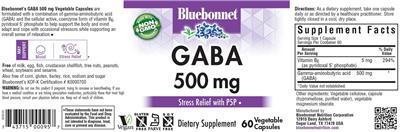
This summary is for GABA 500 mg by Bluebonnet
- Form
- Capsule
- Serving Size
- 1 Capsule
- Servings
- 60 per container
- Container Holds
- 60 Vegetable Capsules
- What is GABA 500 mg?A Gamma-aminobutyric Acid (GABA) supplement from Bluebonnet with one other active ingredient, in capsule form.
- Active Ingredients Vitamin B6 5 mgGamma-Aminobutyric Acid 500 mg Two active ingredients. Each one can interact with drugs or cause side effects on its own, so we check every one. The full Supplement Facts
- Drug Interactions 425 drugs have a documented interaction with this supplement; the most serious is rated moderate. Of those, 256 are single drugs and 169 are combination products (two or more drugs in one), each listed under its own name. Ask your pharmacist first if you take a drug in any of these categories, the most serious of the 6 on record:
- Moderate · 172 drugs
- Phenobarbital (Luminal)Moderate · 28 drugs
- Phenytoin (Dilantin)Moderate · 5 drugs
- Amiodarone (Cordarone)Moderate · 1 drug
- Possible Side EffectsDrowsiness bothHeadache bothNausea bothAbdominal painAllergic reactionsHeartburn +5 moreCombined from its two active ingredients, Vitamin B6 and Gamma-aminobutyric Acid (GABA). Not studied in this exact product.
- Well documented Why
Does GABA 500 mg work?
What It Is Marketed For
Stress relief and mood support
From the claims on the product’s label.
The Closest Use the Research Grades
Gamma-aminobutyric Acid (GABA)
There isn’t enough good research to say either way.
Vitamin B6 has stronger research for other uses:
- Hyperhomocysteinemia
These grades are for the ingredient, not this exact product, and never a promise it will work for you.
And 1 more graded use, in what the research says- AllergensNone of its ingredient names point to a major food allergen
- Barcode (UPC)7 43715 00095 7Match it to the barcode on your bottle to be sure this is your product. Not your product? Search for it here
Who Might Consider It
- People looking for stress relief and mood support, which is what it is marketed for. For anxiety, the closest use the research grades, there is not enough good research to say either way.
- People who want it for hyperhomocysteinemia, premenstrual syndrome (PMS), kidney stones (nephrolithiasis) or another graded use: the other uses with research behind them. See each grade
- This supplement may appeal to adults looking for stress or mood support, though the research for those uses is too limited to rate.
Who Should Be Careful
- If you are pregnant or breastfeeding, have kidney problems or low blood pressure, or take medicines that cause drowsiness, you should take extra care.
- Talk it over with your own doctor or pharmacist before starting.
More Before You Take It Show all three answersHide Its Ingredient Amounts vs. Other Supplements Pregnancy and Breastfeeding The Label’s Directions
-
How do its ingredient amounts compare with other supplements?
- Vitamin B65 mgIn the usual range for the 586 recent Vitamin B6 products in our database that state an amount; 2 mg is the most common.
- Gamma-Aminobutyric Acid500 mgMore than most of the 402 recent Gamma-aminobutyric Acid (GABA) products in our database that state an amount; 100 mg is the most common.
A label’s amount is what the product holds, not a recommended dose.
See each comparison -
Pregnant or breastfeeding?
- Pregnancy and Breastfeeding Gamma-aminobutyric Acid (GABA)
- Insufficient reliable information available; avoid using.
- Pregnancy Vitamin B6
- ! When used orally in excessive doses.
- Breastfeeding Vitamin B6
- When used orally in doses not exceeding the tolerable upper intake level (UL) of vitamin B6 in the form of pyridoxine 80 mg daily for those aged 14-18 years and 100 mg daily for those 19 years and older.
-
How does the label say to take it?
“Directions: As a dietary supplement, take one capsule daily or as directed by a healthcare practitioner .”
The maker’s words. Your pharmacist or doctor may advise differently.
Everything the label says
A Note From the HelloPharmacist Team
It is marketed for stress relief and mood support, and the research for those uses is too limited to rate for either GABA or vitamin B6. The side effects you are most likely to notice are drowsiness, upset stomach, and nausea, which both ingredients list among their common effects, and high doses of vitamin B6 can cause nerve problems with numbness or tingling, which is rare. Its most serious interaction is with blood pressure medicines (antihypertensives), where both ingredients may lower blood pressure further, and vitamin B6 may also lower the levels of anti-seizure medicines such as phenytoin and phenobarbital.
From the label dated Jun 20, 2024: both of its active ingredients were checked against our records. A summary of what is known, not a grade or a test of the product. How these ratings are computed
Ask Anything About This Supplement
Name a drug you take, or ask about side effects, ingredients or pregnancy.
There’s a lot of information about this supplement on this page! Ask anything in plain English for a quick answer drawn from it.
AI answers come from this label and our own records, never the open internet. AI can make mistakes, so always check with your doctor or pharmacist. How we use AI
Ask the Pharmacist
A licensed pharmacist will answer your question by email — free, as soon as they can.
Got it — thank you!
A licensed pharmacist will answer as soon as they can. Keep an eye on your email (worth checking spam, just in case).
What’s Inside GABA 500 mg by Bluebonnet
Two Active Ingredients
In the order the label lists them, each with its own card below.
Why this rating?
The label gives an exact amount for every one of its two active ingredients, so you know how much of each you get in each serving. This rates what the label tells you, not the quality of the product.
Supplement Facts
| Amount Per Serving | % Daily Value | |
|---|---|---|
| Vitamin B6 | 5 mg | 294% |
| Gamma-Aminobutyric Acid | 500 mg | † |
Other ingredients: Cellulose, Hypromellose, Water, Purified, Magnesium Stearate
† Daily Value not established.
Daily Values for adults and children 4 or more years of age.
As the label prints it, from the NIH Dietary Supplement Label Database.
Each Ingredient and Its Drug Interactions
Tap one for more about it and its full guide. A drug can interact with this supplement through any one of them.
-
Vitamin B6 5 mg Interacts with 210 drugs
Form on the label: Pyridoxal 5-Phosphate
Vitamin B6 (pyridoxine) is an essential water-soluble vitamin that your body needs for metabolism, brain function, and making red blood cells.
- It is best known for helping with pregnancy-related nausea and may help some people with PMS, but taking very high doses for long periods can cause nerve damage.
- Get most of your B6 from food, and check with a pharmacist or doctor before taking high-dose supplements.
The full Vitamin B6 guide: uses, dosage and safety Every Vitamin B6 drug interaction
-
Gamma-Aminobutyric Acid 500 mg Interacts with 419 drugs
GABA is a calming chemical messenger (neurotransmitter) that your body makes on its own, and it is sold as a supplement for stress, anxiety, and sleep.
- The science behind oral GABA supplements is limited and mixed, partly because it is unclear how much swallowed GABA actually reaches the brain.
- It is generally well tolerated short-term, but talk with a pharmacist or doctor before using it, especially if you are pregnant, breastfeeding, or take other medicines.
The full Gamma-aminobutyric Acid (GABA) guide: uses, dosage and safety Every Gamma-aminobutyric Acid (GABA) drug interaction
How Much of Each Ingredient Is in It, Compared With Other Supplements
Each bar is an amount that other recent supplements list for the same ingredient. The taller the bar, the more of them state it.
-
5 mg in a serving of this product
In the usual range
- Most common amount
- 2 mg (about 10 in 100 products)
- Most products state
- 1 mg to 50 mg
- Compared with
- 586 recent products
-
Gamma-aminobutyric Acid (GABA)
500 mg in a serving of this product
More than most products
- Most common amount
- 100 mg (about 28 in 100 products)
- Most products state
- 25 mg to 550 mg
- Compared with
- 402 recent products
Other Ingredients (Inactive)
The capsule or tablet itself, fillers, coatings and flavors. Not part of the drug interaction check; the allergen check below reads them.
- Cellulose
- Hypromellose
- Water, Purified
- Magnesium Stearate
Allergens in GABA 500 mg
None of its ingredient names point to a major food allergen.
Not named in the ingredients
- Milk
- Egg
- Fish
- Shellfish
- Tree nuts
- Peanuts
- Wheat or other gluten grains
- Soy
- Sesame
- Made without, the label says“Free of milk, egg, fish, crustacean shellfish, tree nuts, peanuts, wheat, soybeans and sesame. · Also free of corn, gluten, barley, rice, sodium and sugar.”
- Made without, the label says“Vegan”
- Made without, the label says“Gluten free · Soy free”
From the label text and ingredient names on file; we do not test products. With a serious allergy, check your bottle and ask the maker or your pharmacist.
What the Label Says
The maker’s own words, from the label. We do not verify or endorse them.
- Formulation
-
“May support mood | stress relief”
“Free of milk, egg, fish, crustacean shellfish, tree nuts, peanuts, wheat, soybeans and sesame. Also free of corn, gluten, barley, rice, sodium and sugar.”
5 more from the label
“Gluten free Soy free”
“Bluebonnet's GABA 500 mg vegetable capsules are formulated with a combination of gamma-aminobutyric acid (GABA) and the cellular active, coenzyme form of vitamin B6, pyridoxal 5' phosphate to help support the body and mind adapt and cope with occasional stressors while supporting an overall sense of relaxation.”
“Bluebonnet's KOF-K certification #K-0000700”
“K Parve (Kosher)”
“Stress relief with P5P”
- Seals and symbols
-
“Made with non GMO ingredients Vegan K Parve (Kosher)”
- FDA Statement of Identity
-
“Dietary Supplement”
- Storage
-
“Store tightly closed in a cool, dry place.”
The GABA 500 mg Label on File
The label scan on file at the NIH Dietary Supplement Label Database, dated June 2024. Always read the label on the bottle you have.
Product Facts
- Brand
- Bluebonnet
- Barcode (UPC)
- 743715000957
- Net contents
- 60 Vegetable Capsules
- Market status
- On market
- Date entered into DSLD
- Jun 20, 2024
- DSLD ID
- 314796
- Product type
- Other Combinations
- Supplement form
- Capsule
- Dietary claims / uses
- Nutrient, All Other, Structure/Function
- Intended target group(s)
- Vegan, Vegetarian, Adult (18 - 50 Years), Kosher, Women (not pregnant or lactating), Gluten Free
Is this label outdated? Report a formula or label change and our pharmacy team will review it.
HelloPharmacist Score GABA 500 mg by Bluebonnet
Up to 10 points for research, amount, label and outside testing. Not a safety rating. How this one adds up
for anxiety
It is marketed for stress relief and mood support. There is no graded research on that exact use, so we scored the closest one: there is too little good research to say whether Gamma-aminobutyric acid (GABA) helps with anxiety.
- Research0 of 5 points
- Amount2 of 2 points
- Label2 of 2 points
- Outside testing0 of 1 point
Moderate drug interactions. The score does not count drug interactions. Check them against any drugs you take. See them
There is too little research to score Gamma-aminobutyric acid (GABA) for obesity, unhealthy cholesterol levels, high blood pressure, athletic performance, pain (acute), depression, attention deficit-hyperactivity disorder (ADHD) and insomnia.
How It Earns Its 4
Score: 4 out of 10. Unproven for anxiety.
Too little research on Gamma-aminobutyric acid (GABA) for anxiety.
Graded “Insufficient Reliable Evidence to Rate” in the Natural Medicines database, which we license. A related use, not the one it is marketed for, counts for at most 3 of 5 research points.
0 of 5 points
Amount
Its 500 mg is a normal amount: most of the 402 Gamma-aminobutyric acid (GABA) products in our database that state an amount hold 25 mg to 550 mg.
2 of 2 points
Label
It states the amount of both of its active ingredients.
2 of 2 points
Outside testing
We found no mark from an outside testing program, such as USP Verified or NSF Certified, on the label we have on file.
0 of 1 point
Where It Sits on the Gamma-aminobutyric Acid (GABA) Shelf
The 123 gamma-aminobutyric acid (gaba) products we have scored so far, lined up by their scores. The dark bottle is this one. Each bottle stands for up to 4 products. Tap a score to see the products on it.
56 gamma-aminobutyric acid (gaba) products score 4 out of 10
- GABA 500 mg by Bluebonnet this one
- GABA Plant-Sourced 100 mg by Solaray
- PharmaGABA by SuperSmart
- GABA 420 mg by Neurobiologix
- Calm Drops Lozenges Raspberry Flavored by Nature's Way
- Calm Drops Lozenges Cherry Flavored by Nature's Way
- Liposomal GABA by NuMedica
- GABA 420 mg by Klaire Labs
- Relax CBD Capsules 25 mg by Green Roads
- Lipo GABA by Renue By Science
- GABA Pure Powder by NOW
- GABA 500 mg by Bluebonnet
And 44 more.
62 gamma-aminobutyric acid (gaba) products score 3 out of 10
- GABA 750 mg by SuperiorLabs
- GABA 750 mg by Protocol For Life Balance
- GABA by SuperSmart
- GABA Powder 750 mg by AN Amazing Nutrition Amazing Formulas
- GABA Calm by Earthborn Elements
- GABA 1000 mg by Double Wood Supplements
- Gamma Aminobutyric Acid by BulkSupplements.com
- Gamma Aminobutyric Acid by BulkSupplements.com
- Gamma Aminobutyric Acid by BulkSupplements.com
- Gamma Aminobutyric Acid by BulkSupplements.com
- GABA 750 mg Veg Capsules by BulkSupplements.com
- GABA 750 mg Maximum Strength by Swanson
And 50 more.
2 gamma-aminobutyric acid (gaba) products score 5 out of 10
- PharmaGABA-250 by Thorne
- PharmaGABA-100 by Thorne
3 gamma-aminobutyric acid (gaba) products score 2 out of 10
- Gaba Plus by Nature's Sunshine
- GABA 750 mg Capsules by Muscle Empire
- GABA (Gamma Amino-Butyric Acid) 500 mg Unflavored by Muscle Empire
This One Next to Most Gamma-aminobutyric Acid (GABA) Products
| What | This one | Most of the other 122 |
|---|---|---|
| What it is marketed for | No one use | Insomnia (11 of 11) |
| How much gamma-aminobutyric acid (gaba) | 500 mg a serving | 250 mg to 750 mg |
| Form | Not named | Gamma Aminobutyric Acid |
| The label | Every amount stated | Every amount stated on 121 of 122 |
| Outside testing seal | None on file | 2 of 122 have one |
| Score | 4, Unproven | 3 to 4 |
GABA 500 mg by Bluebonnet Side Effects
Why this rating?
We look for three kinds of safety information on each ingredient: side effects reported in studies, a pregnancy and breastfeeding rating, and a safety write-up from our pharmacy team. All three are on file for each of the two ingredients we could check.
So this rates how much is known, not whether GABA 500 mg is right for you.
Reported with Vitamin B6 and Gamma-aminobutyric Acid (GABA)
- Most often
- Drowsiness, headache, nausea, abdominal pain, allergic reactions and heartburn
- !Rare but serious
- Sensory neuropathy (high doses) and liver cirrhosis See details
HelloPharmacist Team Summary: GABA 500 mg by Bluebonnet Side Effects
Most people tolerate the ingredients in this supplement generally well.
- The side effects you are most likely to notice are drowsiness, upset stomach or nausea, and headache, and both ingredients list drowsiness and nausea among their common effects.
- If drowsiness affects you, see how you feel before driving.
- High doses of vitamin B6 over time can cause nerve problems, such as numbness or tingling, which is rare but worth calling your doctor about if it happens.
Side Effects, Ingredient by Ingredient
A supplement’s side effects come from its ingredients. Here is what is reported with each one.
Vitamin B6
Most reported
- Abdominal pain
- Allergic reactions
- Headache
- Heartburn
- Loss of appetite
- Nausea
- Somnolence
- Vomiting
From the Natural Medicines database, which we license.
Every reported effect, in the Vitamin B6 guideGamma-aminobutyric Acid (GABA)
Most reported
- Drowsiness or sleepiness
- Headache
- Upset stomach or nausea
- A brief tingling or flushing sensation
GABA 500 mg Warnings: Who Should Be Careful
HelloPharmacist Team Summary: GABA 500 mg by Bluebonnet Warnings
If you are pregnant, vitamin B6 is best avoided, and there is not enough known about GABA in pregnancy to say either way.
- If you are breastfeeding, GABA is best avoided, while vitamin B6 is rated likely safe.
- If you have kidney problems, low blood pressure, or other chronic conditions, or you take medicines that cause drowsiness, take extra care, and avoid high doses of vitamin B6 unless advised.
- Talk it over with your own doctor or pharmacist before starting.
GABA 500 mg has two active ingredients, and each can carry warnings of its own. We checked both, and each warning below names the ingredient it comes from.
- Vitamin B62 warnings below
- Gamma-aminobutyric Acid (GABA)3 warnings below
-
Blood Pressure
- Gamma-aminobutyric Acid (GABA)Use extra caution if you take medicines or supplements that cause drowsiness or affect your nervous system, or if you have low blood pressure.
-
Kidney Disease or Kidney Stones
- Vitamin B6People with kidney problems or other chronic conditions should talk to a clinician before using supplements.
-
Other Cautions
- Vitamin B6Avoid high doses.
- Gamma-aminobutyric Acid (GABA)People with existing medical conditions should check with a healthcare provider first.
- Gamma-aminobutyric Acid (GABA)Choose products from reputable brands, ideally with third-party testing, and always talk with your pharmacist or doctor before starting.
-
What the Label Warns
- “Warning: Do not use this product if pregnant, trying to conceive or breastfeeding. If you have a medical condition or are taking prescription medication, particularly those that treat high blood pressure, consult your physician before use.”
- “Keep out of reach of children.”
The maker’s wording, from the product label.
-
Pregnant or Breastfeeding
Each ingredient’s rating for pregnancy and for breastfeeding, and what it covers.
Gamma-aminobutyric Acid (GABA)
Pregnancy and Breastfeeding The record rates both the same
-
Insufficient reliable information available; avoid using.
Pregnancy
-
When used orally and appropriately.
A special sustained-release product providing vitamin B6 (pyridoxine) 75 mg daily is FDA-approved for use in pregnancy.
3 more points on this rating
- Vitamin B6 (pyridoxine) is also considered a first-line treatment for nausea and vomiting in pregnancy by the American College of Obstetrics and Gynecology.
- However, it should not be used long-term or without medical supervision and close monitoring.
- The tolerable upper intake level (UL) refers to vitamin B6 in the form of pyridoxine and is 80 mg daily for those aged 14-18 years and 100 mg daily for 19 years and older.
-
When used orally in excessive doses.
There is some concern that high-dose maternal vitamin B6 (pyridoxine) can cause neonatal seizures.
Breastfeeding
-
When used orally in doses not exceeding the tolerable upper intake level (UL) of vitamin B6 in the form of pyridoxine 80 mg daily for those aged 14-18 years and 100 mg daily for those 19 years and older.
The recommended dietary allowance (RDA) in lactating women is 2 mg daily.
There is insufficient reliable information available about the safety of vitamin B6 when used in higher doses in breast-feeding women.
Our pharmacy team’s notes
- Vitamin B6Vitamin B6 is generally well tolerated at normal amounts, but high doses taken over time can harm the nerves, and it is best avoided in pregnancy.
- Vitamin B6Its rating for breastfeeding is likely safe.
- GABA is often well tolerated short term, but long-term safety has not been well studied, and it is best avoided while breastfeeding.
- For pregnancy, there is not enough known about GABA to say either way, so talk with your doctor for personal advice.
Ratings and the words beside them are from the Natural Medicines database, which we license.
-
Rare but Serious Side Effects
-
!
Vitamin B6
Orally or by injection: Sensory neuropathy (high doses).
Orally: Liver cirrhosis, hepatocellular carcinoma (high doses of pyridoxal-5'-phosphate).
-
!
Gamma-aminobutyric Acid (GABA)
Serious side effects are not commonly reported, but high doses and long-term use have not been well studied.
When to get help: a serious allergic reaction, with trouble breathing or swelling of the face, lips or throat, needs emergency care: call 911. For any other side effect that worries you, call your doctor or pharmacist.
These reports describe each ingredient, not studies of this exact product. Not medical advice: a side effect you notice after starting a supplement is worth a word with your pharmacist or doctor.
GABA 500 mg by Bluebonnet Drug Interactions
We checked both active ingredients in this supplement against every drug in our records. A drug can interact with it through any one of them.
A moderate interaction on record
2 of 3, on a scale from Minor or none to Major.Why this rating?
We rate this by the most serious interaction on record, not by how many there are. For Gamma-aminobutyric Acid (GABA) and Vitamin B6, the most serious is rated moderate, which means it calls for caution, and sometimes monitoring or a change in timing or dose. Some involve kinds of drugs where a small change can matter, such as Parkinson’s drugs.
425 drugs are on the full list. What matters is whether one you take is on it, so check yours with the interaction checker on this page.
From the HelloPharmacist Team
The big picture, once every ingredient is counted together.
- The most serious is with blood pressure medicines (antihypertensives), rated Moderate, where both ingredients may add to the blood-pressure-lowering effect and increase the risk of low blood pressure (hypotension).
- GABA has a Minor interaction with CNS depressants, medicines that calm the nervous system such as sedatives, where effects may add up, though it is unclear whether this matters in practice.
- Check your exact medications with the search tool on this page, and talk over any results with your own doctor or pharmacist.
Both of its active ingredients have drug interactions on record: Vitamin B6 and Gamma-aminobutyric Acid (GABA).
- Interacts with
- 210 drugs
- Most serious
- Moderate
- Vitamin B6 also has Moderate interactions with the anti-seizure medicines phenobarbital and phenytoin, where high doses may lower their levels and effects, and with amiodarone, a heart rhythm medicine, where it may increase sun sensitivity.
- Vitamin B6 has a Minor interaction with levodopa, a Parkinson's medicine, that is not expected when levodopa is taken with carbidopa.
Gamma-aminobutyric Acid (GABA)
- Interacts with
- 419 drugs
- Most serious
- Moderate
- Most of its records involve CNS Depressants and Antihypertensive Drugs.
Summarized by the HelloPharmacist pharmacy team from the interaction records below. How it is written How we use AI
Why GABA 500 mg Interacts, Ingredient by Ingredient
A product interacts through its ingredients. Each card: how many drugs, the most serious rating, and the kinds of drugs it affects most (tap a kind for what it means).
The ingredients driving the most interactions
-
Gamma-Aminobutyric Acid 419 drugs
Most serious: Moderate2 interaction records on file
The kinds of drugs it affects most
- 248 drugs
- 172 drugs
Every Gamma-aminobutyric Acid (GABA) drug interaction, 2 records The Gamma-aminobutyric Acid (GABA) records cite 12 references, listed in the Gamma-aminobutyric Acid (GABA) guide.
-
Vitamin B6 210 drugs
Most serious: Moderate5 interaction records on file
The kinds of drugs it affects most
- 172 drugs
- Phenobarbital (Luminal) 28 drugs
- Phenytoin (Dilantin) 5 drugs
- 5 drugs
Every Vitamin B6 drug interaction, 5 records The Vitamin B6 records cite 33 references, listed in the Vitamin B6 guide.
The Breakdown by Severity
Each drug counted once, at its most serious rating. Tap a tile to list those drugs.
Find Your Drug
Type a drug or brand name to see whether it is on the list.
- Only drugs with a documented interaction are listed, the most serious first.
- A drug with no known interaction is not listed, but searching its name tells you so.
- Open a drug to see which ingredient is responsible. Of those, 256 are single drugs and 169 are combination products (two or more drugs in one), each listed under its own name.
-
AmlodipineNorliqva Moderate
The 2 ingredients responsible:
-
Gamma-aminobutyric Acid Moderate Amlodipine is in the Antihypertensive Drugs category.
Theoretically, taking GABA with antihypertensive drugs might increase the risk of hypotension.
The full Gamma-aminobutyric Acid + Amlodipine interaction -
Vitamin B6 Moderate Amlodipine is in the Antihypertensive Drugs category.
Theoretically, vitamin B6 may have additive effects when used with antihypertensive drugs.
The full Vitamin B6 + Amlodipine interaction
-
-
Losartan PotassiumCozaar Moderate
The 2 ingredients responsible:
-
Vitamin B6 Moderate Losartan Potassium is in the Antihypertensive Drugs category.
Theoretically, vitamin B6 may have additive effects when used with antihypertensive drugs.
The full Vitamin B6 + Losartan Potassium interaction -
Gamma-aminobutyric Acid Moderate Losartan Potassium is in the Antihypertensive Drugs category.
Theoretically, taking GABA with antihypertensive drugs might increase the risk of hypotension.
The full Gamma-aminobutyric Acid + Losartan Potassium interaction
-
-
MetoprololLopressor, Toprol XL Moderate
The 2 ingredients responsible:
-
Vitamin B6 Moderate Metoprolol is in the Antihypertensive Drugs category.
Theoretically, vitamin B6 may have additive effects when used with antihypertensive drugs.
The full Vitamin B6 + Metoprolol interaction -
Gamma-aminobutyric Acid Moderate Metoprolol is in the Antihypertensive Drugs category.
Theoretically, taking GABA with antihypertensive drugs might increase the risk of hypotension.
The full Gamma-aminobutyric Acid + Metoprolol interaction
-
-
PropranololAngilol, Bedranol SR, Beta Prograne, Half Beta Prograne, Half-Inderal LA and 7 more Moderate
The 2 ingredients responsible:
-
Gamma-aminobutyric Acid Moderate Propranolol is in the Antihypertensive Drugs category.
Theoretically, taking GABA with antihypertensive drugs might increase the risk of hypotension.
The full Gamma-aminobutyric Acid + Propranolol interaction -
Vitamin B6 Moderate Propranolol is in the Antihypertensive Drugs category.
Theoretically, vitamin B6 may have additive effects when used with antihypertensive drugs.
The full Vitamin B6 + Propranolol interaction
-
-
LisinoprilPrinivil, Qbrelis, Zestril Moderate
The 2 ingredients responsible:
-
Gamma-aminobutyric Acid Moderate Lisinopril is in the Antihypertensive Drugs category.
Theoretically, taking GABA with antihypertensive drugs might increase the risk of hypotension.
The full Gamma-aminobutyric Acid + Lisinopril interaction -
Vitamin B6 Moderate Lisinopril is in the Antihypertensive Drugs category.
Theoretically, vitamin B6 may have additive effects when used with antihypertensive drugs.
The full Vitamin B6 + Lisinopril interaction
-
-
BisoprololZebeta Moderate
The 2 ingredients responsible:
-
Gamma-aminobutyric Acid Moderate Bisoprolol is in the Antihypertensive Drugs category.
Theoretically, taking GABA with antihypertensive drugs might increase the risk of hypotension.
The full Gamma-aminobutyric Acid + Bisoprolol interaction -
Vitamin B6 Moderate Bisoprolol is in the Antihypertensive Drugs category.
Theoretically, vitamin B6 may have additive effects when used with antihypertensive drugs.
The full Vitamin B6 + Bisoprolol interaction
-
-
Amlodipine BesylateNorvasc Moderate
The 2 ingredients responsible:
-
Gamma-aminobutyric Acid Moderate Amlodipine Besylate is in the Antihypertensive Drugs category.
Theoretically, taking GABA with antihypertensive drugs might increase the risk of hypotension.
The full Gamma-aminobutyric Acid + Amlodipine Besylate interaction -
Vitamin B6 Moderate Amlodipine Besylate is in the Antihypertensive Drugs category.
Theoretically, vitamin B6 may have additive effects when used with antihypertensive drugs.
The full Vitamin B6 + Amlodipine Besylate interaction
-
-
ValsartanDiovan, Prexxartan Moderate
The 2 ingredients responsible:
-
Gamma-aminobutyric Acid Moderate Valsartan is in the Antihypertensive Drugs category.
Theoretically, taking GABA with antihypertensive drugs might increase the risk of hypotension.
The full Gamma-aminobutyric Acid + Valsartan interaction -
Vitamin B6 Moderate Valsartan is in the Antihypertensive Drugs category.
Theoretically, vitamin B6 may have additive effects when used with antihypertensive drugs.
The full Vitamin B6 + Valsartan interaction
-
-
TelmisartanMicardis Moderate
The 2 ingredients responsible:
-
Vitamin B6 Moderate Telmisartan is in the Antihypertensive Drugs category.
Theoretically, vitamin B6 may have additive effects when used with antihypertensive drugs.
The full Vitamin B6 + Telmisartan interaction -
Gamma-aminobutyric Acid Moderate Telmisartan is in the Antihypertensive Drugs category.
Theoretically, taking GABA with antihypertensive drugs might increase the risk of hypotension.
The full Gamma-aminobutyric Acid + Telmisartan interaction
-
-
SpironolactoneAldactone, Carospir, Spiroton Moderate
The 2 ingredients responsible:
-
Gamma-aminobutyric Acid Moderate Spironolactone is in the Antihypertensive Drugs category.
Theoretically, taking GABA with antihypertensive drugs might increase the risk of hypotension.
The full Gamma-aminobutyric Acid + Spironolactone interaction -
Vitamin B6 Moderate Spironolactone is in the Antihypertensive Drugs category.
Theoretically, vitamin B6 may have additive effects when used with antihypertensive drugs.
The full Vitamin B6 + Spironolactone interaction
-
-
AcetazolamideAk-Zol, Diamox Moderate
The 2 ingredients responsible:
-
Gamma-aminobutyric Acid Moderate Acetazolamide is in these CNS Depressants, Antihypertensive Drugs categories.
Theoretically, GABA might have additive sedative effects when used in conjunction with CNS depressants.
The full Gamma-aminobutyric Acid + Acetazolamide interaction -
Vitamin B6 Moderate Acetazolamide is in the Antihypertensive Drugs category.
Theoretically, vitamin B6 may have additive effects when used with antihypertensive drugs.
The full Vitamin B6 + Acetazolamide interaction
-
-
CarvedilolCoreg, Coreg CR Moderate
The 2 ingredients responsible:
-
Gamma-aminobutyric Acid Moderate Carvedilol is in the Antihypertensive Drugs category.
Theoretically, taking GABA with antihypertensive drugs might increase the risk of hypotension.
The full Gamma-aminobutyric Acid + Carvedilol interaction -
Vitamin B6 Moderate Carvedilol is in the Antihypertensive Drugs category.
Theoretically, vitamin B6 may have additive effects when used with antihypertensive drugs.
The full Vitamin B6 + Carvedilol interaction
-
-
Propranolol HydrochlorideHemangeol Moderate
The 2 ingredients responsible:
-
Gamma-aminobutyric Acid Moderate Propranolol Hydrochloride is in the Antihypertensive Drugs category.
Theoretically, taking GABA with antihypertensive drugs might increase the risk of hypotension.
The full Gamma-aminobutyric Acid + Propranolol Hydrochloride interaction -
Vitamin B6 Moderate Propranolol Hydrochloride is in the Antihypertensive Drugs category.
Theoretically, vitamin B6 may have additive effects when used with antihypertensive drugs.
The full Vitamin B6 + Propranolol Hydrochloride interaction
-
-
AtenololAtenix, Tenormin Moderate
The 2 ingredients responsible:
-
Gamma-aminobutyric Acid Moderate Atenolol is in the Antihypertensive Drugs category.
Theoretically, taking GABA with antihypertensive drugs might increase the risk of hypotension.
The full Gamma-aminobutyric Acid + Atenolol interaction -
Vitamin B6 Moderate Atenolol is in the Antihypertensive Drugs category.
Theoretically, vitamin B6 may have additive effects when used with antihypertensive drugs.
The full Vitamin B6 + Atenolol interaction
-
-
MinoxidilLoniten, Minoxidil, Rogaine Moderate
The 2 ingredients responsible:
-
Gamma-aminobutyric Acid Moderate Minoxidil is in the Antihypertensive Drugs category.
Theoretically, taking GABA with antihypertensive drugs might increase the risk of hypotension.
The full Gamma-aminobutyric Acid + Minoxidil interaction -
Vitamin B6 Moderate Minoxidil is in the Antihypertensive Drugs category.
Theoretically, vitamin B6 may have additive effects when used with antihypertensive drugs.
The full Vitamin B6 + Minoxidil interaction
-
-
Candesartan CilexetilAmias, Atacand Moderate
The 2 ingredients responsible:
-
Gamma-aminobutyric Acid Moderate Candesartan Cilexetil is in the Antihypertensive Drugs category.
Theoretically, taking GABA with antihypertensive drugs might increase the risk of hypotension.
The full Gamma-aminobutyric Acid + Candesartan Cilexetil interaction -
Vitamin B6 Moderate Candesartan Cilexetil is in the Antihypertensive Drugs category.
Theoretically, vitamin B6 may have additive effects when used with antihypertensive drugs.
The full Vitamin B6 + Candesartan Cilexetil interaction
-
-
RamiprilAltace Moderate
The 2 ingredients responsible:
-
Vitamin B6 Moderate Ramipril is in the Antihypertensive Drugs category.
Theoretically, vitamin B6 may have additive effects when used with antihypertensive drugs.
The full Vitamin B6 + Ramipril interaction -
Gamma-aminobutyric Acid Moderate Ramipril is in the Antihypertensive Drugs category.
Theoretically, taking GABA with antihypertensive drugs might increase the risk of hypotension.
The full Gamma-aminobutyric Acid + Ramipril interaction
-
-
HydrochlorothiazideAquazide, Aquazide H, Esidrix, HCTZ, Hydro and 4 more Moderate
The 2 ingredients responsible:
-
Gamma-aminobutyric Acid Moderate Hydrochlorothiazide is in the Antihypertensive Drugs category.
Theoretically, taking GABA with antihypertensive drugs might increase the risk of hypotension.
The full Gamma-aminobutyric Acid + Hydrochlorothiazide interaction -
Vitamin B6 Moderate Hydrochlorothiazide is in the Antihypertensive Drugs category.
Theoretically, vitamin B6 may have additive effects when used with antihypertensive drugs.
The full Vitamin B6 + Hydrochlorothiazide interaction
-
-
FurosemideLasix Moderate
The 2 ingredients responsible:
-
Gamma-aminobutyric Acid Moderate Furosemide is in the Antihypertensive Drugs category.
Theoretically, taking GABA with antihypertensive drugs might increase the risk of hypotension.
The full Gamma-aminobutyric Acid + Furosemide interaction -
Vitamin B6 Moderate Furosemide is in the Antihypertensive Drugs category.
Theoretically, vitamin B6 may have additive effects when used with antihypertensive drugs.
The full Vitamin B6 + Furosemide interaction
-
-
DiltiazemAdizem-SR, Adizem-XL, Angitil SR, Angitil XL, Calcicard CR and 24 more Moderate
The 2 ingredients responsible:
-
Vitamin B6 Moderate Diltiazem is in the Antihypertensive Drugs category.
Theoretically, vitamin B6 may have additive effects when used with antihypertensive drugs.
The full Vitamin B6 + Diltiazem interaction -
Gamma-aminobutyric Acid Moderate Diltiazem is in the Antihypertensive Drugs category.
Theoretically, taking GABA with antihypertensive drugs might increase the risk of hypotension.
The full Gamma-aminobutyric Acid + Diltiazem interaction
-
-
Amlodipine BenzoateKaterzia Moderate
The 2 ingredients responsible:
-
Vitamin B6 Moderate Amlodipine Benzoate is in the Antihypertensive Drugs category.
Theoretically, vitamin B6 may have additive effects when used with antihypertensive drugs.
The full Vitamin B6 + Amlodipine Benzoate interaction -
Gamma-aminobutyric Acid Moderate Amlodipine Benzoate is in the Antihypertensive Drugs category.
Theoretically, taking GABA with antihypertensive drugs might increase the risk of hypotension.
The full Gamma-aminobutyric Acid + Amlodipine Benzoate interaction
-
-
NifedipineAdalat, Adalat CC, Adalat LA, Adalat PA, Adalat Retard and 16 more Moderate
The 2 ingredients responsible:
-
Gamma-aminobutyric Acid Moderate Nifedipine is in the Antihypertensive Drugs category.
Theoretically, taking GABA with antihypertensive drugs might increase the risk of hypotension.
The full Gamma-aminobutyric Acid + Nifedipine interaction -
Vitamin B6 Moderate Nifedipine is in the Antihypertensive Drugs category.
Theoretically, vitamin B6 may have additive effects when used with antihypertensive drugs.
The full Vitamin B6 + Nifedipine interaction
-
-
Olmesartan MedoxomilBenicar, Olmesartan Medoxomil Moderate
The 2 ingredients responsible:
-
Vitamin B6 Moderate Olmesartan Medoxomil is in the Antihypertensive Drugs category.
Theoretically, vitamin B6 may have additive effects when used with antihypertensive drugs.
The full Vitamin B6 + Olmesartan Medoxomil interaction -
Gamma-aminobutyric Acid Moderate Olmesartan Medoxomil is in the Antihypertensive Drugs category.
Theoretically, taking GABA with antihypertensive drugs might increase the risk of hypotension.
The full Gamma-aminobutyric Acid + Olmesartan Medoxomil interaction
-
-
NebivololBystolic, Nebilet Moderate
The 2 ingredients responsible:
-
Gamma-aminobutyric Acid Moderate Nebivolol is in the Antihypertensive Drugs category.
Theoretically, taking GABA with antihypertensive drugs might increase the risk of hypotension.
The full Gamma-aminobutyric Acid + Nebivolol interaction -
Vitamin B6 Moderate Nebivolol is in the Antihypertensive Drugs category.
Theoretically, vitamin B6 may have additive effects when used with antihypertensive drugs.
The full Vitamin B6 + Nebivolol interaction
-
-
AmiodaroneCordarone, Pacerone Moderate
The ingredient responsible:
-
Vitamin B6 Moderate
Theoretically, vitamin B6 might increase the photosensitivity caused by amiodarone.
The full Vitamin B6 + Amiodarone interaction
-
-
MacitentanOpsumit Moderate
The 2 ingredients responsible:
-
Gamma-aminobutyric Acid Moderate Macitentan is in the Antihypertensive Drugs category.
Theoretically, taking GABA with antihypertensive drugs might increase the risk of hypotension.
The full Gamma-aminobutyric Acid + Macitentan interaction -
Vitamin B6 Moderate Macitentan is in the Antihypertensive Drugs category.
Theoretically, vitamin B6 may have additive effects when used with antihypertensive drugs.
The full Vitamin B6 + Macitentan interaction
-
-
VerapamilCalan, Calan SR, Covera HS, Isoptin, Isoptin SR and 4 more Moderate
The 2 ingredients responsible:
-
Gamma-aminobutyric Acid Moderate Verapamil is in the Antihypertensive Drugs category.
Theoretically, taking GABA with antihypertensive drugs might increase the risk of hypotension.
The full Gamma-aminobutyric Acid + Verapamil interaction -
Vitamin B6 Moderate Verapamil is in the Antihypertensive Drugs category.
Theoretically, vitamin B6 may have additive effects when used with antihypertensive drugs.
The full Vitamin B6 + Verapamil interaction
-
-
UreaUreaphil Moderate
The 2 ingredients responsible:
-
Vitamin B6 Moderate Urea is in the Antihypertensive Drugs category.
Theoretically, vitamin B6 may have additive effects when used with antihypertensive drugs.
The full Vitamin B6 + Urea interaction -
Gamma-aminobutyric Acid Moderate Urea is in the Antihypertensive Drugs category.
Theoretically, taking GABA with antihypertensive drugs might increase the risk of hypotension.
The full Gamma-aminobutyric Acid + Urea interaction
-
-
ReserpineSandril, Serpasil Moderate
The 2 ingredients responsible:
-
Vitamin B6 Moderate Reserpine is in the Antihypertensive Drugs category.
Theoretically, vitamin B6 may have additive effects when used with antihypertensive drugs.
The full Vitamin B6 + Reserpine interaction -
Gamma-aminobutyric Acid Moderate Reserpine is in the Antihypertensive Drugs category.
Theoretically, taking GABA with antihypertensive drugs might increase the risk of hypotension.
The full Gamma-aminobutyric Acid + Reserpine interaction
-
-
PolythiazideRenese Moderate
The 2 ingredients responsible:
-
Gamma-aminobutyric Acid Moderate Polythiazide is in the Antihypertensive Drugs category.
Theoretically, taking GABA with antihypertensive drugs might increase the risk of hypotension.
The full Gamma-aminobutyric Acid + Polythiazide interaction -
Vitamin B6 Moderate Polythiazide is in the Antihypertensive Drugs category.
Theoretically, vitamin B6 may have additive effects when used with antihypertensive drugs.
The full Vitamin B6 + Polythiazide interaction
-
Does It Work? GABA 500 mg by Bluebonnet
What its ingredients have research behind, strongest first, then each ingredient on its own. A grade is the research so far, never an endorsement.
What the Research Supports
Each use one or more of its ingredients is graded for, strongest research first.
- Hyperhomocysteinemia Vitamin B6
- Vitamin B6
- Vitamin B6
- Pregnancy-induced nausea and vomiting Vitamin B6
HelloPharmacist Team Summary: Does GABA 500 mg by Bluebonnet Work?
It is marketed for stress relief and mood support.
- Vitamin B6 has some grades for other uses, such as possibly effective for premenstrual syndrome, but none of them is for stress or mood.
- These grades apply to each ingredient on its own, not to this combination.
The Evidence, Ingredient by Ingredient
The detail behind the list above: our notes on each ingredient and its graded uses.
Gamma-aminobutyric Acid (GABA)
From our Gamma-aminobutyric Acid (GABA) guide
- The overall evidence for GABA supplements is limited and not very strong.
- Much of what we know comes from small studies, lab research, or studies funded by supplement makers.
No use is graded effective, likely effective or possibly effective for it yet.
Every graded use, in the Gamma-aminobutyric Acid (GABA) guideVitamin B6
From our Vitamin B6 guide
- Morning sickness (nausea and vomiting in pregnancy): This is one of the better-supported uses.
- Vitamin B6 is commonly recommended by doctors, sometimes combined with the medication doxylamine, to help reduce nausea.
Research suggests a benefit for
- Vitamin B6 deficiency
- Hyperhomocysteinemia
- Premenstrual syndrome (PMS), kidney stones (nephrolithiasis) and pregnancy-induced nausea and vomiting
Not counted here: one graded use is for Vitamin B6 injected or put on the skin (pyridoxine-dependent epilepsy), not for a product like this one. Two more are for conditions treated by a doctor or in a hospital (sideroblastic anemia and antipsychotic-induced hyperprolactinemia).
Every graded use, in the Vitamin B6 guideThe grades are the Natural Medicines database’s, which we license; tap a grade for what it means. They are about each ingredient, not this exact product.
About Bluebonnet
Manufacturer and brand details for GABA 500 mg, from the product label.
Bluebonnet has 353 products in our supplement database, all of them on the market, with labels on file since 2011. Our database is built from the NIH’s Dietary Supplement Label Database and our pharmacy team’s own additions, so it covers the labels filed there, not every product the brand sells.
- Name
- Bluebonnet Nutrition Corporation
- Street Address
- 12915 Dairy Ashford
- City
- Sugar Land
- State
- Texas
- ZipCode
- 77478
- Web Address
- www.bluebonnetnutrition.com
GABA 500 mg by Bluebonnet: Common Questions
Does GABA 500 mg by Bluebonnet interact with any drugs?
What are the side effects of GABA 500 mg by Bluebonnet?
Who should be careful taking GABA 500 mg by Bluebonnet?
Can GABA 500 mg by Bluebonnet affect the liver?
Does GABA 500 mg by Bluebonnet contain any common allergens?
Is GABA 500 mg by Bluebonnet gluten free?
How can GABA 500 mg by Bluebonnet interact with so many drugs?
Where does the information about GABA 500 mg by Bluebonnet come from?
Can I take GABA 500 mg by Bluebonnet while pregnant?
Does GABA 500 mg by Bluebonnet work for stress or mood?
Why might it make me drowsy?
Can I take GABA 500 mg by Bluebonnet while breastfeeding?
Can GABA 500 mg by Bluebonnet cause nerve problems?
Written and reviewed by the HelloPharmacist Editorial Team. Our editorial policy
Still Have a Question About GABA 500 mg?
Our pharmacists answer drug and supplement questions, free, by email.
Label information is sourced from the NIH Dietary Supplement Label Database and reflects the product version on file; always read your actual product label. This page is for education only and is not a substitute for professional medical advice. Confirm with your pharmacist or doctor before combining supplements and drugs.
Who Reviews This Page
The pharmacist behind it, and how it is checked.
Dr. Brian Staiger, PharmD, BCPS
Clinical pharmacist and founder of HelloPharmacist
A licensed pharmacist for more than 13 years, he built the system behind this page: it reads the label on file, matches each active ingredient to its record in the Natural Medicines database, checks those records against every drug we cover, and our pharmacy team writes the take and the interaction summary from those records.
- 13+ Years in PharmacyRetail and clinical pharmacy, medication safety and healthcare administration.
- Board Certified (BCPS)A pharmacotherapy specialist, certified by the Board of Pharmacy Specialties.
- Herbalist TrainingCertificates in medical ethnobotany, for the herbs and supplements people take.
Where This Page Comes From
GABA 500 mg’s label data comes from the NIH Dietary Supplement Label Database; the ingredient interaction data is from the Natural Medicines database, reviewed by our pharmacists.
- NIH Dietary Supplement Label Database (DSLD)
- The official product label on file for this supplement.
- Natural Medicines (Therapeutic Research Center)
- The evidence-graded clinical reference behind the ingredient interaction, evidence and safety records, which we license.
- HelloPharmacist Editorial Team
- Content is reviewed by the HelloPharmacist Editorial Team, the pharmacists on our staff and those we contract. See our data sources and editorial standards for how this information is built and checked.
- The Pharmacy Team’s Take and Summaries
- Generated from HelloPharmacist’s pharmacist-curated databases and editorial rules. Clinical methodology reviewed by Dr. Brian Staiger, PharmD, BCPS. Last generated Nov 27, 2026. How we use AI
- The ratings in the Quick Summary
- They summarize available label information, ingredient evidence and known drug-safety records: a summary of what is known, not a grade of the product itself. They do not verify product identity, purity, potency, contamination or manufacturing quality. How these ratings are computed
The References Behind the Interaction Records
Every citation the ingredients’ records rest on is listed in that ingredient’s guide, in context: Vitamin B6, 33 references; Gamma-aminobutyric Acid (GABA), 12 references .
Parts of this content are provided by the Therapeutic Research Center, LLC.
DISCLAIMER: Currently this does not check for drug-drug interactions. This is not an all-inclusive comprehensive list of potential interactions and is for informational purposes only. Not all interactions are known or well-reported in the scientific literature, and new interactions are continually being reported. Input is needed from a qualified healthcare provider including a pharmacist before starting any therapy. Application of clinical judgment is necessary.
© 2021 Therapeutic Research Center, LLC
Keep Exploring
- Supplement interaction checkerCheck any supplement or product against your drugs
- Drug–drug interactionsCheck two or more of your drugs against each other
- Browse drugs A to ZEvery drug we have checked against herbs and supplements
- NDC and pricing lookupFind a drug’s NDCs, packaging and costs
- Ask a pharmacistA free, personal answer from our licensed team