
ProstaCalm by NuMedica Ingredients, Side Effects and Drug Interactions
Dietary Supplement Capsule Other Combinations
UPC 8 12527 01083 3 Match it to the barcode on your bottle

Medically reviewed by Dr. Brian Staiger, PharmD, BCPS
Also reviewed by the HelloPharmacist Editorial Team
Updated Details about this page
- Label on file from the NIH Dietary Supplement Label Database, dated Jan 23, 2025.
- The interaction, evidence and safety records come from the Natural Medicines database, which we license, read against this label by our own system; the pharmacy team’s sections are written from those records.
- Dr. Brian Staiger, PharmD, BCPS, is a clinical pharmacist and pharmacotherapy specialist.
- Editorial policy Our sources
AI is used only to summarize verified clinical information, never the open internet. Our AI policy
Summary: The HelloPharmacist Team’s Take
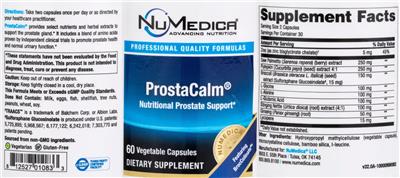
- Form
- Capsule
- Serving Size
- 2 Capsules
- Servings
- 30 per container
- Container Holds
- 60 Vegetable Capsules
What’s in it, whether it interacts with your drugs, its side effects, whether it works, and what our pharmacists would want you to know before you start it.
- What is ProstaCalm?A supplement from NuMedica with ten active ingredients, in capsule form.
- Active Ingredients 1 mineral, 5 plant ingredients such as Saw Palmetto Berry, Pumpkin Seed and Broccoli Seed, 3 amino acids and 1 other: Zinc 5 mgSaw Palmetto Berry Extract 250 mgPumpkin Seed Extract 250 mgBroccoli Seed Extract 150 mgL-Glycine 100 mgL-Alanine 100 mgL-Glutamic Acid 100 mgStinging Nettle Root Extract 100 mgGinseng 50 mgLycopene 15 mg Ten active ingredients. Each one can interact with drugs or cause side effects on its own, so we check every one. The full Supplement Facts
- Drug Interactions 1,107 drugs have a documented interaction with this supplement; the most serious is rated major. Of those, 739 are single drugs and 368 are combination products (two or more drugs in one), each listed under its own name. Based on the 9 of its 10 ingredients we could check. Ask your pharmacist first if you take a drug in any of these categories, the most serious of the 24 on record:
- Major · 2 drugs
- Moderate · 645 drugs
- Moderate · 186 drugs
- Moderate · 122 drugs
- Possible Side EffectsNausea 6 ingredientsStomach upset 5 ingredientsGas 2 ingredientsHeadache 2 ingredientsLoose stoolsDiarrhea +9 moreReported for eight of its ten active ingredients. Not studied in this exact product.
- Well documented Why
Does ProstaCalm work?
What It Is Marketed For
Prostate health and normal urinary function
From the claims on the product’s label.
The Closest Use the Research Grades
Pumpkin
Some studies support it, but the evidence isn’t conclusive.
Its ingredients have research behind other uses too:
- Transurethral resection of the prostate (TURP) Saw Palmetto
- Glycine
- Stinging Nettle
These grades are for each ingredient, not this exact product, and never a promise it will work for you.
What the research says- Full Why
- AllergensNone of its ingredient names point to a major food allergen
- Barcode (UPC)8 12527 01083 3Match it to the barcode on your bottle to be sure this is your product. Not your product? Search for it here
Who Might Consider It
- People looking for prostate health and normal urinary function, which is what it is marketed for. The closest use the research grades is benign prostatic hyperplasia (BPH), rated Possibly Effective.
- People who want it for transurethral resection of the prostate (TURP), schizophrenia or diabetes: the other uses with research behind them. See each grade
- ProstaCalm may be worth discussing with your doctor if you are looking for a prostate-focused supplement and understand that much of the evidence is limited or mixed.
Who Should Be Careful
- Anyone who takes warfarin, antidiabetes drugs, lithium, antibiotics, or other medications listed on this page should be especially careful.
- People who are pregnant, breastfeeding, or managing kidney, liver, or blood sugar conditions should talk it over with their own doctor or pharmacist before starting.
More Before You Take It Show both answersHide Pregnancy and Breastfeeding The Label’s Directions
-
Pregnant or breastfeeding?
- Pregnancy Zinc
- ! When used orally in doses exceeding the UL.
- Breastfeeding Zinc
- ! When used orally in doses exceeding the UL.
- Pregnancy and Breastfeeding Saw Palmetto
- ! When used orally.
- Pregnancy Stinging Nettle
- ! When used orally due to possible abortifacient and uterine-stimulant effects.
- Breastfeeding Stinging Nettle
- Insufficient reliable information available; avoid using.
-
How does the label say to take it?
“Directions: Take two capsules once per day or as directed by your healthcare practitioner.”
The maker’s words. Your pharmacist or doctor may advise differently.
Everything the label says
From the label dated Jan 23, 2025: 9 of its 10 active ingredients were checked against our records; the other one is not in them yet. A summary of what is known, not a grade or a test of the product. How these ratings are computed
Ask Anything About This Supplement
Name a drug you take, or ask about side effects, ingredients or pregnancy.
AI answers come from this label and our own records, never the open internet. AI can make mistakes, so always check with your doctor or pharmacist. How we use AI
Ask the Pharmacist
A licensed pharmacist will answer your question by email — free, usually within 24 hours.
Got it — thank you!
A licensed pharmacist will answer within 24 hours. Keep an eye on your email (worth checking spam, just in case).
What’s Inside ProstaCalm by NuMedica
Ten Active Ingredients, Each Checked on Its Own
A supplement is often several ingredients in one bottle, and each one can interact with drugs or cause side effects on its own. We check every one of them against our records.
- ZincDrug interactions on record, most serious: Moderate
- Saw Palmetto Berry ExtractDrug interactions on record, most serious: Moderate
- Pumpkin Seed ExtractDrug interactions on record, most serious: Moderate
- Broccoli Seed ExtractDrug interactions on record, most serious: Moderate
- L-GlycineDrug interactions on record, most serious: Moderate
- L-AlanineNo drug interactions on record
- L-Glutamic AcidNot in our interaction records yet
- Stinging Nettle Root ExtractDrug interactions on record, most serious: Moderate
And 2 more, each with its own card below.
Why this rating?
The label gives an exact amount for every one of its ten active ingredients, so you know how much of each you get in each serving. This rates what the label tells you, not the quality of the product.
Supplement Facts
| Amount Per Serving | % Daily Value | |
|---|---|---|
| Zinc | 5 mg | 45% |
| Saw Palmetto Berry Extract | 250 mg | † |
| Pumpkin Seed Extract | 250 mg | † |
| Broccoli Seed Extract | 150 mg | † |
| Sulforaphane Glucosinolate | 15 mg | † |
| L-Glycine | 100 mg | † |
| L-Alanine | 100 mg | † |
| L-Glutamic Acid | 100 mg | † |
| Stinging Nettle Root Extract | 100 mg | † |
| Ginseng | 50 mg | † |
| Lycopene | 15 mg | † |
Other ingredients: Hydroxypropyl Methylcellulose, Microcrystalline Cellulose, Bamboo Silica, L-Leucine
† Daily Value not established.
Daily Values for adults and children 4 or more years of age.
As the label prints it, from the NIH Dietary Supplement Label Database.
Each Ingredient and Its Drug Interactions
Tap one for more about it and its full guide. A drug can interact with this supplement through any one of them.
The amino acids in ProstaCalm are L-Alanine, L-Glycine, and L-Glutamic Acid.
- The remaining active ingredients are plant-based extracts, including saw palmetto berry, pumpkin seed, stinging nettle root, American ginseng, and broccoli seed, along with lycopene and sulforaphane glucosinolate.
- These are inactive, so they are not counted among the active ingredients.
-
Zinc 5 mg Zinc is a mineral. Interacts with 67 drugs
Form on the label: Zinc Bisglycinate Chelate
Zinc is an essential mineral that your body needs for immune function, wound healing, taste, and smell.
- Most people get enough from food, but supplements can help correct or prevent a deficiency.
- Taking too much zinc for too long can cause harm, so check with a pharmacist or doctor before using high-dose supplements.
The full Zinc guide: uses, dosage and safety Every Zinc drug interaction
-
Saw Palmetto Berry Extract 250 mg Interacts with 174 drugs
Saw palmetto is a plant extract most often used for urinary symptoms linked to an enlarged prostate (BPH).
- The best research suggests it works no better than a placebo for most men, though it is generally well tolerated.
- Talk to your doctor or pharmacist before using it, especially for prostate or urinary problems that need proper evaluation.
The full Saw Palmetto guide: uses, dosage and safety Every Saw Palmetto drug interaction
-
Pumpkin Seed Extract 250 mg Interacts with 1 drug
Pumpkin is a nutritious squash, and its seeds and seed oil are the parts most often used as supplements, mainly for urinary and prostate symptoms.
- The evidence for these uses is limited and mostly preliminary, though eating pumpkin as a food is safe and a good source of vitamin A, fiber, and antioxidants.
- Talk to your pharmacist or doctor before using concentrated pumpkin seed supplements.
The full Pumpkin guide: uses, dosage and safety Every Pumpkin drug interaction
-
Broccoli Seed Extract 150 mg Interacts with 187 drugs
Broccoli is a nutritious cruciferous vegetable rich in fiber, vitamins, and plant compounds like sulforaphane that have drawn scientific interest for health benefits.
- Eating broccoli as food is safe and healthy for most people, but concentrated supplements and extracts are less studied and benefits are not firmly proven.
- Talk to your pharmacist or doctor before using broccoli supplements, especially in high doses.
The full Broccoli guide: uses, dosage and safety Every Broccoli drug interaction
- Sulforaphane Glucosinolate 15 mg 724 drugs
-
L-Glycine 100 mg Interacts with 1 drug
Glycine is a non-essential amino acid your body makes on its own and that also appears in protein-rich foods.
- It is most studied for improving sleep quality, where early research is promising but limited, and it appears generally well tolerated at common doses.
- Talk with your pharmacist or doctor before starting it, especially if you take other medicines or have a health condition.
The full Glycine guide: uses, dosage and safety Every Glycine drug interaction
-
L-Alanine 100 mg No known drug interactions
Alpha-alanine (usually called alanine) is a non-essential amino acid your body can make on its own and that you also get from protein foods.
- Most people do not need a supplement, and strong human evidence for any specific health benefit is limited.
- If you are considering it, talk with your pharmacist or doctor first.
-
L-Glutamic Acid 100 mg We know this ingredient, but hold no drug interaction record for it yet, so it was not checked
-
Stinging Nettle Root Extract 100 mg Interacts with 164 drugs
Stinging nettle is a common plant used as food and in traditional medicine, most often for prostate symptoms, allergies, and joint pain.
- The evidence is mixed and mostly preliminary, so it is best thought of as a supportive option rather than a proven treatment.
- It is generally well tolerated, but pregnant and breastfeeding people should avoid it and everyone should check with a pharmacist or doctor first.
The full Stinging Nettle guide: uses, dosage and safety Every Stinging Nettle drug interaction
-
Ginseng 50 mg Interacts with 217 drugs
Form on the label: Panax ginseng
American ginseng is an herbal root used as an 'adaptogen' to support energy, stress, immune function, and blood sugar.
- Some uses—such as reducing the chance or length of colds and modestly lowering after-meal blood sugar—have early supportive evidence, but most claims are not well proven.
- Talk to your pharmacist or doctor before use, especially if you have a health condition or take medications.
The full American Ginseng guide: uses, dosage and safety Every American Ginseng drug interaction
-
Lycopene 15 mg Interacts with 122 drugs
Lycopene is a red plant pigment and antioxidant found mainly in tomatoes and other red fruits.
- Eating lycopene-rich foods is linked with possible heart and prostate benefits, but evidence from supplements is mixed and far from conclusive.
- For most people, getting lycopene from food is a safe and reasonable choice; talk to your pharmacist before taking high-dose supplements.
The full Lycopene guide: uses, dosage and safety Every Lycopene drug interaction
Other Ingredients (Inactive)
The capsule or tablet itself, fillers, coatings and flavors. Not part of the drug interaction check; the allergen check below reads them.
- Hydroxypropyl Methylcellulose
- Microcrystalline Cellulose
- Bamboo Silica
- L-Leucine
Allergens in ProstaCalm
None of its ingredient names point to a major food allergen.
Not named in the ingredients
- Milk
- Egg
- Fish
- Shellfish
- Tree nuts
- Peanuts
- Wheat or other gluten grains
- Soy
- Sesame
- Made without, the label says“Does not contain: milk, eggs, fish, shellfish, tree nuts, peanuts, wheat, soy.”
- Made without, the label says“Sourced from non-GMO ingredients. · GF Gluten-free”
- Made without, the label says“Vegetarian”
From the label text and ingredient names on file; we do not test products. With a serious allergy, check your bottle and ask the maker or your pharmacist.
What the Label Says
The maker’s own words, from the label. We do not verify or endorse them.
- Storage
-
“Storage: Keep tightly closed in a cool, dry place.”
- Formulation
-
“This formula meets or exceeds cGMP quality standards.”
“Sourced from non-GMO ingredients. GF Gluten-free”
3 more from the label
“Professional quality formulas Nutritional prostate support”
“ProstaCalm provides select nutrients and herbal extracts to support the prostate gland. It includes a blend of amino acids proven by independent clinical trials to promote prostate health and normal urinary function.”
“Featuring BrocColinate”
- Brand IP Statement(s)
-
“TRAACS is a trademark of Balchem Corp. or Albion Labs. Sulforaphane Glucosinolate is produced under U.S. patents: 5,725,895; 5,968,567; 6,177,122; 6,242,018; 7,303,770 and patents pending.”
“NuMedica Advancing Nutrition”
- Seals and symbols
-
“cGMP Third-Party Certified Facility”
- FDA Statement of Identity
-
“Dietary Supplement”
The ProstaCalm Label on File
The label scan on file at the NIH Dietary Supplement Label Database, dated January 2025. Always read the label on the bottle you have.
Product Facts
- Brand
- NuMedica
- Barcode (UPC)
- 812527010833
- Net contents
- 60 Vegetable Capsules
- Market status
- On market
- Date entered into DSLD
- Jan 23, 2025
- DSLD ID
- 323682
- Product type
- Other Combinations
- Supplement form
- Capsule
- Dietary claims / uses
- Nutrient, All Other, Structure/Function
- Intended target group(s)
- Vegetarian, Adult Male (18-50 Years), Seniors/Mature (>50 Years) - Men ONLY, Gluten Free, Dairy Free
Is this label outdated? Report a formula or label change and our pharmacy team will review it.
ProstaCalm by NuMedica Side Effects
Why this rating?
We look for three kinds of safety information on each ingredient: side effects reported in studies, a pregnancy and breastfeeding rating, and a safety write-up from our pharmacy team. Of the ten ingredients we could check, nine have side-effect reports, all ten have a pregnancy rating and all ten have a safety write-up.
So this rates how much is known, not whether ProstaCalm is right for you.
Reported with ten of its ingredients
- Most often
- Nausea, stomach upset, gas, headache, loose stools and diarrhea
- !Rare but serious
- Severe allergic reaction See details
HelloPharmacist Team Summary of Side Effects
ProstaCalm is generally well tolerated, though the ingredients vary.
- You are most likely to notice upset stomach, nausea, or loose stools, which can come from the glycine and zinc content.
- Headache may also occur, and ginseng is the ingredient linked to it.
- Rare but serious reactions are worth knowing about, such as liver or pancreas problems linked to saw palmetto; if you notice yellowing skin, severe belly pain, or dark urine, call your doctor right away.
- Because drowsiness has been reported with glycine, see how the product affects you before driving, and talk with your own doctor or pharmacist before starting if you are pregnant, breastfeeding, or have kidney, liver, or blood sugar concerns.
Side Effects, Ingredient by Ingredient
A supplement’s side effects come from its ingredients. Here is what is reported with each one.
Zinc
Most reported
- Nausea
- Stomach upset
- Vomiting
- Metallic taste
Saw Palmetto
Most reported
- Stomach upset
- Nausea
- Dizziness
- Headache
Pumpkin
Most reported
- Stomach upset
- Gas
- Feeling of fullness
Sulforaphane
Most reported
- Gas or bloating
- Stomach upset or mild nausea
- Changes in bowel habits
Glycine
Most reported
- Upset stomach
- Nausea
- Soft stools
- Drowsiness
Alpha-alanine
Most reported
- Nausea
- Loose stools
Stinging Nettle
Most reported
- Stomach upset
- Diarrhea
American Ginseng
Most reported
- Headache
- Digestive upset, such as nausea or diarrhea
- Nervousness or restlessness
Broccoli and Lycopene have side-effect reports on file, but no list of the most common ones. Read them in each guide: Broccoli, Lycopene.
ProstaCalm Warnings: Who Should Be Careful
If any of these apply to you, talk to your doctor or pharmacist before you start it.
-
Bleeding Problems or Surgery
- American GinsengUse extra caution if you have diabetes (it may affect blood sugar), a hormone-sensitive condition, a bleeding disorder, or if you are scheduled for surgery.
- LycopenePeople with health conditions, those scheduled for surgery, and anyone taking medications should check with a pharmacist or doctor before starting a supplement.
-
Diabetes or Low Blood Sugar
- Alpha-alaninePeople with diabetes or blood sugar problems should be especially careful, since alanine can affect blood sugar and glucagon.
- Stinging NettleWho should be cautious: People with kidney problems, low blood pressure, diabetes, or fluid-balance concerns should talk with a healthcare provider first, partly because of nettle's possible diuretic and blood-sugar effects.
- Use extra care if you have kidney or liver disease, diabetes, or blood sugar problems, because several ingredients can affect those organs or blood sugar.
-
Liver Disease
- GlycinePeople with kidney or liver disease should be cautious and check with a doctor first, since these organs handle amino acids and protein.
- Alpha-alaninePeople with kidney or liver disease should talk to their doctor before taking any amino acid supplement, because these organs help process protein and amino acids.
-
Stomach or Bowel Problems
- ZincPeople with digestive disorders, those who drink heavily, and people on restrictive diets are more likely to be low in zinc and may need supplements.
-
Thyroid Conditions
- BroccoliPeople with thyroid problems may want to be mindful, since very large amounts of cruciferous vegetables contain compounds (goitrogens) that could affect the thyroid, especially if iodine intake is low.
-
Allergies
- PumpkinIf you have a known allergy to pumpkin or other squash family plants, avoid it.
-
If You Take Other Drugs
- SulforaphanePeople who should be cautious include those with a known sensitivity to cruciferous vegetables and anyone with a medical condition or taking medications, who should check with a healthcare provider first.
- Alpha-alanineAs with any supplement, choose products from reputable brands and check with your pharmacist or doctor before starting, especially if you have a health condition or take medicines.
-
Other Cautions
- ZincAnyone considering high-dose or long-term zinc should talk to a pharmacist or doctor first.
- Saw PalmettoStill, it should be used with care, and you should talk to your doctor or pharmacist first.
- BroccoliThe safety of concentrated extracts is not established, so caution is advised.
- GlycineGetting glycine from normal foods is not a concern; this caution is about concentrated supplements.
Show 2 more
- Stinging NettlePeople with prostate symptoms should get a proper medical evaluation rather than self-treating.
- American GinsengPeople with these conditions should speak with a healthcare provider first.
-
What the Label Warns
- “Caution: Keep out of reach of children.”
The maker’s wording, from the product label.
-
Pregnant or Breastfeeding
Each ingredient’s rating for pregnancy and for breastfeeding, and what it covers.
Pregnancy
-
When used orally and appropriately.
Zinc is safe in amounts that do not exceed the tolerable upper intake level (UL) of 34 mg daily during pregnancy in those 14-18 years of age and 40 mg daily in those 19-50 years of age.
-
When used orally in doses exceeding the UL.
Breastfeeding
-
When used orally and appropriately.
Zinc is safe in amounts that do not exceed the tolerable upper intake level (UL) of 34 mg daily during lactation in those 14-18 years of age, and 40 mg daily for those 19-50 years of age.
-
When used orally in doses exceeding the UL.
Higher doses can cause zinc-induced copper deficiency in nursing infants.
Pregnancy and Breastfeeding The record rates both the same
-
When used orally.
Saw palmetto has hormonal activity; avoid using.
Show 8 more ingredients
Pregnancy
-
When used orally due to possible abortifacient and uterine-stimulant effects.
Breastfeeding
-
Insufficient reliable information available; avoid using.
Pregnancy
-
When used orally.
Ginsenoside Rb1, an active constituent of American ginseng, has teratogenic effects in animal models; avoid using.
Breastfeeding
-
Insufficient reliable information available; avoid using.
Pregnancy and Breastfeeding The record rates both the same
-
Insufficient reliable information available; avoid using amounts greater than those found in food.
Pregnancy and Breastfeeding The record rates both the same
-
Insufficient reliable information available; avoid using.
Pregnancy and Breastfeeding The record rates both the same
-
When used orally in food amounts.
There is insufficient reliable information available about the safety of broccoli when used in medicinal amounts during pregnancy and lactation; avoid using.
Pregnancy and Breastfeeding The record rates both the same
-
When used orally in amounts found in foods.
There is insufficient reliable information available about the safety of sulforaphane in medicinal amounts.
Pregnancy and Breastfeeding The record rates both the same
-
When used in amounts commonly found in foods.
There is insufficient reliable information available about the safety of using larger amounts as medicine during pregnancy or lactation.
Pregnancy
-
When consumed in amounts commonly found in foods.
There is insufficient reliable information available about the safety of lycopene supplements during pregnancy.
Small, low-quality clinical studies have shown conflicting results about the safety of using lycopene 2-4 mg daily during pregnancy.
Breastfeeding
-
When consumed in amounts commonly found in foods.
There is insufficient reliable information available about the safety of lycopene supplements during lactation; avoid using in amounts greater than those typically found in foods.
Our pharmacy team’s notes
- Pregnancy data differ by ingredient.
- L-Alanine and lycopene are rated likely safe in pregnancy.
- Breastfeeding data are also limited, and for glycine and stinging nettle the data do not settle the question.
Ratings and the words beside them are from the Natural Medicines database, which we license.
-
Rare but Serious Side Effects
-
!
Zinc
Very high single doses can cause more serious stomach symptoms.
Orally: There have been cases of acute renal tubular necrosis, interstitial nephritis, neurological complications, severe vomiting, and sideroblastic anemia after zinc overdose.
-
!
Saw Palmetto
Rare reports have linked saw palmetto to liver or pancreas problems, though a direct cause is not well established.
Rare reports link saw palmetto to liver or pancreas problems, though a direct cause is not established.
-
!
Pumpkin
Allergic reactions are uncommon but possible.
Orally: Anaphylaxis.
-
!
Broccoli
Allergic reactions to broccoli are uncommon but possible.
-
!
Sulforaphane
Allergic reactions are uncommon but possible.
-
!
Glycine
Serious reactions appear to be rare.
-
!
Alpha-alanine
Serious side effects have not been well documented, but that is partly because high-quality safety studies are lacking.
-
!
Stinging Nettle
Some people may have an allergic reaction, including skin rash or itching.
-
!
American Ginseng
Allergic reactions are uncommon but possible.
-
!
Lycopene
Serious side effects are rare.
When to get help: a serious allergic reaction, with trouble breathing or swelling of the face, lips or throat, needs emergency care: call 911. For any other side effect that worries you, call your doctor or pharmacist.
These reports describe each ingredient, not studies of this exact product. Not medical advice: a side effect you notice after starting a supplement is worth a word with your pharmacist or doctor.
ProstaCalm by NuMedica Drug Interactions
We checked all ten active ingredients in this supplement against every drug in our records. A drug can interact with it through any one of them. L-Glutamic Acid is not in our interaction records yet.
A major interaction on record
3 of 3, on a scale from Minor or none to Major.Why this rating?
We rate this by the most serious interaction on record, not by how many there are. For Lycopene, Stinging Nettle, Pumpkin, American Ginseng and Saw Palmetto, the most serious is rated major, which means the combination is best avoided, or used only under close supervision. Some involve kinds of drugs where a small change can matter, such as blood thinners, transplant drugs and diabetes drugs.
1,108 drugs are on the full list. What matters is whether one you take is on it, so check yours with the interaction checker on this page.
Eight of its ten active ingredients have drug interactions on record. The ones below matter most. We have no interaction records for Alpha-alanine and L-Glutamic Acid.
- Interacts with
- 67 drugs
- Most serious
- Moderate
- Zinc may reduce absorption of quinolone, tetracycline, and cephalexin antibiotics, as well as penicillamine, ritonavir, cisplatin, integrase inhibitors, and bictegravir/emtricitabine/tenofovir alafenamide (Biktarvy).
- Interacts with
- 174 drugs
- Most serious
- Moderate
- Saw palmetto may reduce the effect of estrogens and contraceptive drugs.
- Interacts with
- 187 drugs
- Most serious
- Moderate
- We could not check L-Glutamic Acid or Broccoli Seed Extract.
Show three more ingredients
- Interacts with
- 217 drugs
- Most serious
- Major
- The most serious interaction is rated Major and involves ginseng and warfarin (Coumadin), a blood thinner (anticoagulant).
- American ginseng seems to reduce warfarin's effectiveness.
- Interacts with
- 164 drugs
- Most serious
- Moderate
- Most of its records involve Antidiabetes Drugs, Diuretic Drugs and Warfarin (Coumadin).
- Interacts with
- 122 drugs
- Most serious
- Moderate
- Most of its records involve Anticoagulant/Antiplatelet Drugs.
And two more ingredients with records, each in the cards below.
From the HelloPharmacist Team
The big picture, once every ingredient is counted together.
- ProstaCalm by NuMedica can interact with medications through several of its ingredients: glycine, zinc, saw palmetto, lycopene, sulforaphane, pumpkin seed extract, stinging nettle, and ginseng.
- In healthy people taking both, a measure of blood clotting (INR) was significantly lowered.
- Each of the remaining interactions is rated Moderate, and many are theoretical.
Summarized by the HelloPharmacist pharmacy team from the interaction records below. How it is written How we use AI
Why ProstaCalm Interacts, Ingredient by Ingredient
A product interacts through its ingredients. Each card: how many drugs, the most serious rating, and the kinds of drugs it affects most (tap a kind for what it means).
The ingredients driving the most interactions
-
Ginseng 217 drugs
Most serious: Major4 interaction records on file
The kinds of drugs it affects most
- 121 drugs
- 86 drugs
- 9 drugs
- 2 drugs
Every American Ginseng drug interaction, 4 records The American Ginseng records cite 12 references, listed in the American Ginseng guide.
-
Broccoli Seed Extract 187 drugs
Most serious: Moderate2 interaction records on file
The kinds of drugs it affects most
- 186 drugs
- 1 drug
Every Broccoli drug interaction, 2 records The Broccoli records cite 5 references, listed in the Broccoli guide.
-
Saw Palmetto Berry Extract 174 drugs
Most serious: Moderate3 interaction records on file
The kinds of drugs it affects most
- 122 drugs
- 41 drugs
- 30 drugs
Every Saw Palmetto drug interaction, 3 records The Saw Palmetto records cite 22 references, listed in the Saw Palmetto guide.
-
Stinging Nettle Root Extract 164 drugs
Most serious: Moderate4 interaction records on file
The kinds of drugs it affects most
- 86 drugs
- 75 drugs
- 2 drugs
- 1 drug
Every Stinging Nettle drug interaction, 4 records The Stinging Nettle records cite 23 references, listed in the Stinging Nettle guide.
-
Lycopene 122 drugs
Most serious: Moderate1 interaction record on file
The kinds of drugs it affects most
- 122 drugs
Every Lycopene drug interaction, 1 record The Lycopene records cite 10 references, listed in the Lycopene guide.
-
Zinc 67 drugs
Most serious: Moderate10 interaction records on file
The kinds of drugs it affects most
- 21 drugs
- 20 drugs
- Bictegravir/Emtricitabine/Tenofovir Alafenamide (Biktarvy) 13 drugs
- Ritonavir (Norvir) 7 drugs
Every Zinc drug interaction, 10 records The Zinc records cite 88 references, listed in the Zinc guide.
-
Pumpkin Seed Extract 1 drug
Most serious: Moderate1 interaction record on file
The kinds of drugs it affects most
- 1 drug
Every Pumpkin drug interaction, 1 record The Pumpkin records cite 7 references, listed in the Pumpkin guide.
-
L-Glycine 1 drug
Most serious: Moderate1 interaction record on file
The kinds of drugs it affects most
- Clozapine (Clozaril) 1 drug
Every Glycine drug interaction, 1 record The Glycine records cite 5 references, listed in the Glycine guide.
The Breakdown by Severity
Each drug counted once, at its most serious rating. Tap a tile to list those drugs.
Find Your Drug
Type a drug or brand name to see whether it is on the list.
- Only drugs with a documented interaction are listed, the most serious first.
- A drug with no known interaction is not listed, but searching its name tells you so.
- Open a drug to see which ingredient is responsible. Of those, 739 are single drugs and 368 are combination products (two or more drugs in one), each listed under its own name.
-
WarfarinWarfarin Major
The 6 ingredients responsible:
-
Ginseng Major
American ginseng seems to decrease the effectiveness of warfarin therapy.
The full Ginseng + Warfarin interaction -
Broccoli Seed Extract Moderate Warfarin is in the Cytochrome P450 1A2 (CYP1A2) Substrates category.
Theoretically, broccoli might reduce the levels and effects of drugs metabolized by CYP1A2.
The full Broccoli Seed Extract + Warfarin interaction -
Sulforaphane Glucosinolate Moderate Warfarin is in these Cytochrome P450 1A2 (CYP1A2) Substrates, Cytochrome P450 3A4 (CYP3A4) Substrates categories.
Theoretically, sulforaphane might alter the levels and clinical effects of CYP1A2 substrates.
The full Sulforaphane Glucosinolate + Warfarin interaction -
Lycopene Moderate Warfarin is in the Anticoagulant/Antiplatelet Drugs category.
Theoretically, taking lycopene with anticoagulant or antiplatelet drugs might increase the risk of bleeding.
The full Lycopene + Warfarin interaction -
Stinging Nettle Root Extract Moderate
There is some concern that stinging nettle might decrease the effects of anticoagulant drugs such as warfarin.
The full Stinging Nettle Root Extract + Warfarin interaction -
Saw Palmetto Berry Extract Moderate Warfarin is in the Anticoagulant/Antiplatelet Drugs category.
Saw palmetto might increase the risk of bleeding with anticoagulant or antiplatelet drugs.
The full Saw Palmetto Berry Extract + Warfarin interaction
-
-
Warfarin SodiumCoumadin, Panwarfin, Sofarin Major
The 6 ingredients responsible:
-
Ginseng Major
American ginseng seems to decrease the effectiveness of warfarin therapy.
The full Ginseng + Warfarin Sodium interaction -
Saw Palmetto Berry Extract Moderate Warfarin Sodium is in the Anticoagulant/Antiplatelet Drugs category.
Saw palmetto might increase the risk of bleeding with anticoagulant or antiplatelet drugs.
The full Saw Palmetto Berry Extract + Warfarin Sodium interaction -
Sulforaphane Glucosinolate Moderate Warfarin Sodium is in these Cytochrome P450 1A2 (CYP1A2) Substrates, Cytochrome P450 3A4 (CYP3A4) Substrates categories.
Theoretically, sulforaphane might alter the levels and clinical effects of CYP1A2 substrates.
The full Sulforaphane Glucosinolate + Warfarin Sodium interaction -
Broccoli Seed Extract Moderate Warfarin Sodium is in the Cytochrome P450 1A2 (CYP1A2) Substrates category.
Theoretically, broccoli might reduce the levels and effects of drugs metabolized by CYP1A2.
The full Broccoli Seed Extract + Warfarin Sodium interaction -
Stinging Nettle Root Extract Moderate
There is some concern that stinging nettle might decrease the effects of anticoagulant drugs such as warfarin.
The full Stinging Nettle Root Extract + Warfarin Sodium interaction -
Lycopene Moderate Warfarin Sodium is in the Anticoagulant/Antiplatelet Drugs category.
Theoretically, taking lycopene with anticoagulant or antiplatelet drugs might increase the risk of bleeding.
The full Lycopene + Warfarin Sodium interaction
-
-
ApixabanEliquis Moderate
The 3 ingredients responsible:
-
Lycopene Moderate Apixaban is in the Anticoagulant/Antiplatelet Drugs category.
Theoretically, taking lycopene with anticoagulant or antiplatelet drugs might increase the risk of bleeding.
The full Lycopene + Apixaban interaction -
Saw Palmetto Berry Extract Moderate Apixaban is in the Anticoagulant/Antiplatelet Drugs category.
Saw palmetto might increase the risk of bleeding with anticoagulant or antiplatelet drugs.
The full Saw Palmetto Berry Extract + Apixaban interaction -
Sulforaphane Glucosinolate Moderate Apixaban is in the Cytochrome P450 3A4 (CYP3A4) Substrates category.
Theoretically, sulforaphane might increase the levels and effects of CYP3A4 substrates.
The full Sulforaphane Glucosinolate + Apixaban interaction
-
-
AmlodipineNorliqva Moderate
The ingredient responsible:
-
Sulforaphane Glucosinolate Moderate Amlodipine is in the Cytochrome P450 3A4 (CYP3A4) Substrates category.
Theoretically, sulforaphane might increase the levels and effects of CYP3A4 substrates.
The full Sulforaphane Glucosinolate + Amlodipine interaction
-
-
SertralineZoloft Moderate
The ingredient responsible:
-
Sulforaphane Glucosinolate Moderate Sertraline is in the Cytochrome P450 3A4 (CYP3A4) Substrates category.
Theoretically, sulforaphane might increase the levels and effects of CYP3A4 substrates.
The full Sulforaphane Glucosinolate + Sertraline interaction
-
-
ClopidogrelPlavix Moderate
The 4 ingredients responsible:
-
Sulforaphane Glucosinolate Moderate Clopidogrel is in these Cytochrome P450 3A4 (CYP3A4) Substrates, Cytochrome P450 1A2 (CYP1A2) Substrates categories.
Theoretically, sulforaphane might increase the levels and effects of CYP3A4 substrates.
The full Sulforaphane Glucosinolate + Clopidogrel interaction -
Broccoli Seed Extract Moderate Clopidogrel is in the Cytochrome P450 1A2 (CYP1A2) Substrates category.
Theoretically, broccoli might reduce the levels and effects of drugs metabolized by CYP1A2.
The full Broccoli Seed Extract + Clopidogrel interaction -
Lycopene Moderate Clopidogrel is in the Anticoagulant/Antiplatelet Drugs category.
Theoretically, taking lycopene with anticoagulant or antiplatelet drugs might increase the risk of bleeding.
The full Lycopene + Clopidogrel interaction -
Saw Palmetto Berry Extract Moderate Clopidogrel is in the Anticoagulant/Antiplatelet Drugs category.
Saw palmetto might increase the risk of bleeding with anticoagulant or antiplatelet drugs.
The full Saw Palmetto Berry Extract + Clopidogrel interaction
-
-
EscitalopramLexapro Moderate
The ingredient responsible:
-
Sulforaphane Glucosinolate Moderate Escitalopram is in the Cytochrome P450 3A4 (CYP3A4) Substrates category.
Theoretically, sulforaphane might increase the levels and effects of CYP3A4 substrates.
The full Sulforaphane Glucosinolate + Escitalopram interaction
-
-
AspirinAngettes 75, ASA, Asaphen, Aspirin, Caprin and 9 more Moderate
The 2 ingredients responsible:
-
Lycopene Moderate Aspirin is in the Anticoagulant/Antiplatelet Drugs category.
Theoretically, taking lycopene with anticoagulant or antiplatelet drugs might increase the risk of bleeding.
The full Lycopene + Aspirin interaction -
Saw Palmetto Berry Extract Moderate Aspirin is in the Anticoagulant/Antiplatelet Drugs category.
Saw palmetto might increase the risk of bleeding with anticoagulant or antiplatelet drugs.
The full Saw Palmetto Berry Extract + Aspirin interaction
-
-
Losartan PotassiumCozaar Moderate
The ingredient responsible:
-
Sulforaphane Glucosinolate Moderate Losartan Potassium is in the Cytochrome P450 3A4 (CYP3A4) Substrates category.
Theoretically, sulforaphane might increase the levels and effects of CYP3A4 substrates.
The full Sulforaphane Glucosinolate + Losartan Potassium interaction
-
-
AtorvastatinAtorvaliq Moderate
The ingredient responsible:
-
Sulforaphane Glucosinolate Moderate Atorvastatin is in the Cytochrome P450 3A4 (CYP3A4) Substrates category.
Theoretically, sulforaphane might increase the levels and effects of CYP3A4 substrates.
The full Sulforaphane Glucosinolate + Atorvastatin interaction
-
-
RivaroxabanXarelto Moderate
The 3 ingredients responsible:
-
Sulforaphane Glucosinolate Moderate Rivaroxaban is in the Cytochrome P450 3A4 (CYP3A4) Substrates category.
Theoretically, sulforaphane might increase the levels and effects of CYP3A4 substrates.
The full Sulforaphane Glucosinolate + Rivaroxaban interaction -
Lycopene Moderate Rivaroxaban is in the Anticoagulant/Antiplatelet Drugs category.
Theoretically, taking lycopene with anticoagulant or antiplatelet drugs might increase the risk of bleeding.
The full Lycopene + Rivaroxaban interaction -
Saw Palmetto Berry Extract Moderate Rivaroxaban is in the Anticoagulant/Antiplatelet Drugs category.
Saw palmetto might increase the risk of bleeding with anticoagulant or antiplatelet drugs.
The full Saw Palmetto Berry Extract + Rivaroxaban interaction
-
-
TirzepatideMounjaro, Zepbound Moderate
The 2 ingredients responsible:
-
Stinging Nettle Root Extract Moderate Tirzepatide is in the Antidiabetes Drugs category.
Theoretically, stinging nettle might have additive effects with antidiabetes drugs.
The full Stinging Nettle Root Extract + Tirzepatide interaction -
Ginseng Moderate Tirzepatide is in the Antidiabetes Drugs category.
Theoretically, taking American ginseng with antidiabetes drugs might increase the risk of hypoglycemia.
The full Ginseng + Tirzepatide interaction
-
-
MetforminGlucophage, Metformin Moderate
The 2 ingredients responsible:
-
Ginseng Moderate Metformin is in the Antidiabetes Drugs category.
Theoretically, taking American ginseng with antidiabetes drugs might increase the risk of hypoglycemia.
The full Ginseng + Metformin interaction -
Stinging Nettle Root Extract Moderate Metformin is in the Antidiabetes Drugs category.
Theoretically, stinging nettle might have additive effects with antidiabetes drugs.
The full Stinging Nettle Root Extract + Metformin interaction
-
-
IbuprofenAdvil, Arthrofen, Brufen, Brufen Retard, Calodor and 15 more Moderate
The 2 ingredients responsible:
-
Lycopene Moderate Ibuprofen is in the Anticoagulant/Antiplatelet Drugs category.
Theoretically, taking lycopene with anticoagulant or antiplatelet drugs might increase the risk of bleeding.
The full Lycopene + Ibuprofen interaction -
Saw Palmetto Berry Extract Moderate Ibuprofen is in the Anticoagulant/Antiplatelet Drugs category.
Saw palmetto might increase the risk of bleeding with anticoagulant or antiplatelet drugs.
The full Saw Palmetto Berry Extract + Ibuprofen interaction
-
-
SemaglutideOzempic, Rybelsus, Wegovy Moderate
The 2 ingredients responsible:
-
Stinging Nettle Root Extract Moderate Semaglutide is in the Antidiabetes Drugs category.
Theoretically, stinging nettle might have additive effects with antidiabetes drugs.
The full Stinging Nettle Root Extract + Semaglutide interaction -
Ginseng Moderate Semaglutide is in the Antidiabetes Drugs category.
Theoretically, taking American ginseng with antidiabetes drugs might increase the risk of hypoglycemia.
The full Ginseng + Semaglutide interaction
-
-
TadalafilCialis, Tadliq Moderate
The ingredient responsible:
-
Sulforaphane Glucosinolate Moderate Tadalafil is in the Cytochrome P450 3A4 (CYP3A4) Substrates category.
Theoretically, sulforaphane might increase the levels and effects of CYP3A4 substrates.
The full Sulforaphane Glucosinolate + Tadalafil interaction
-
-
PrednisoneCortan, Deltasone, Meticorten, Orasone, Prednicen-M and 3 more Moderate
The 2 ingredients responsible:
-
Ginseng Moderate Prednisone is in the Immunosuppressants category.
Theoretically, American ginseng use might interfere with immunosuppressive therapy.
The full Ginseng + Prednisone interaction -
Sulforaphane Glucosinolate Moderate Prednisone is in the Cytochrome P450 3A4 (CYP3A4) Substrates category.
Theoretically, sulforaphane might increase the levels and effects of CYP3A4 substrates.
The full Sulforaphane Glucosinolate + Prednisone interaction
-
-
TestosteroneAndrogel, Andropatch, Delatestryl, Intrinsa, Natesto and 4 more Moderate
The ingredient responsible:
-
Sulforaphane Glucosinolate Moderate Testosterone is in the Cytochrome P450 3A4 (CYP3A4) Substrates category.
Theoretically, sulforaphane might increase the levels and effects of CYP3A4 substrates.
The full Sulforaphane Glucosinolate + Testosterone interaction
-
-
AmphetamineAdensys XR-ODT, Adzenys ER, Dyanavel XR, Mydayis Moderate
The ingredient responsible:
-
Ginseng Moderate Amphetamine is in the Monoamine Oxidase Inhibitors (MAOIs) category.
Theoretically, American ginseng can interfere with MAOI therapy.
The full Ginseng + Amphetamine interaction
-
-
AcetaminophenChildren's Tylenol, Children's Tylenol Meltaways, Tylenol, Tylenol Ex Strength Moderate
The 2 ingredients responsible:
-
Sulforaphane Glucosinolate Moderate Acetaminophen is in these Cytochrome P450 2E1 (CYP2E1) Substrates, Cytochrome P450 1A2 (CYP1A2) Substrates categories.
Theoretically, sulforaphane might increase the levels and effects of CYP2E1 substrates.
The full Sulforaphane Glucosinolate + Acetaminophen interaction -
Broccoli Seed Extract Moderate Acetaminophen is in the Cytochrome P450 1A2 (CYP1A2) Substrates category.
Theoretically, broccoli might reduce the levels and effects of drugs metabolized by CYP1A2.
The full Broccoli Seed Extract + Acetaminophen interaction
-
-
AbemaciclibVerzenio Moderate
The ingredient responsible:
-
Sulforaphane Glucosinolate Moderate Abemaciclib is in the Cytochrome P450 3A4 (CYP3A4) Substrates category.
Theoretically, sulforaphane might increase the levels and effects of CYP3A4 substrates.
The full Sulforaphane Glucosinolate + Abemaciclib interaction
-
-
LetrozoleFemara Moderate
The ingredient responsible:
-
Sulforaphane Glucosinolate Moderate Letrozole is in the Cytochrome P450 3A4 (CYP3A4) Substrates category.
Theoretically, sulforaphane might increase the levels and effects of CYP3A4 substrates.
The full Sulforaphane Glucosinolate + Letrozole interaction
-
-
PropranololAngilol, Bedranol SR, Beta Prograne, Half Beta Prograne, Half-Inderal LA and 7 more Moderate
The 2 ingredients responsible:
-
Sulforaphane Glucosinolate Moderate Propranolol is in the Cytochrome P450 1A2 (CYP1A2) Substrates category.
Theoretically, sulforaphane might alter the levels and clinical effects of CYP1A2 substrates.
The full Sulforaphane Glucosinolate + Propranolol interaction -
Broccoli Seed Extract Moderate Propranolol is in the Cytochrome P450 1A2 (CYP1A2) Substrates category.
Theoretically, broccoli might reduce the levels and effects of drugs metabolized by CYP1A2.
The full Broccoli Seed Extract + Propranolol interaction
-
-
NaproxenAleve, Anaprox, Anaprox DS, Arthroxen, EC-Naprosyn and 8 more Moderate
The 4 ingredients responsible:
-
Broccoli Seed Extract Moderate Naproxen is in the Cytochrome P450 1A2 (CYP1A2) Substrates category.
Theoretically, broccoli might reduce the levels and effects of drugs metabolized by CYP1A2.
The full Broccoli Seed Extract + Naproxen interaction -
Sulforaphane Glucosinolate Moderate Naproxen is in the Cytochrome P450 1A2 (CYP1A2) Substrates category.
Theoretically, sulforaphane might alter the levels and clinical effects of CYP1A2 substrates.
The full Sulforaphane Glucosinolate + Naproxen interaction -
Saw Palmetto Berry Extract Moderate Naproxen is in the Anticoagulant/Antiplatelet Drugs category.
Saw palmetto might increase the risk of bleeding with anticoagulant or antiplatelet drugs.
The full Saw Palmetto Berry Extract + Naproxen interaction -
Lycopene Moderate Naproxen is in the Anticoagulant/Antiplatelet Drugs category.
Theoretically, taking lycopene with anticoagulant or antiplatelet drugs might increase the risk of bleeding.
The full Lycopene + Naproxen interaction
-
-
AmitriptylineElavil Moderate
The 2 ingredients responsible:
-
Sulforaphane Glucosinolate Moderate Amitriptyline is in these Cytochrome P450 3A4 (CYP3A4) Substrates, Cytochrome P450 1A2 (CYP1A2) Substrates categories.
Theoretically, sulforaphane might increase the levels and effects of CYP3A4 substrates.
The full Sulforaphane Glucosinolate + Amitriptyline interaction -
Broccoli Seed Extract Moderate Amitriptyline is in the Cytochrome P450 1A2 (CYP1A2) Substrates category.
Theoretically, broccoli might reduce the levels and effects of drugs metabolized by CYP1A2.
The full Broccoli Seed Extract + Amitriptyline interaction
-
-
ClonazepamCeberclon, Klonopin, Rivotril Moderate
The ingredient responsible:
-
Sulforaphane Glucosinolate Moderate Clonazepam is in the Cytochrome P450 3A4 (CYP3A4) Substrates category.
Theoretically, sulforaphane might increase the levels and effects of CYP3A4 substrates.
The full Sulforaphane Glucosinolate + Clonazepam interaction
-
-
CitalopramCelexa Moderate
The ingredient responsible:
-
Sulforaphane Glucosinolate Moderate Citalopram is in the Cytochrome P450 3A4 (CYP3A4) Substrates category.
Theoretically, sulforaphane might increase the levels and effects of CYP3A4 substrates.
The full Sulforaphane Glucosinolate + Citalopram interaction
-
-
BuspironeBuSpar Moderate
The ingredient responsible:
-
Sulforaphane Glucosinolate Moderate Buspirone is in the Cytochrome P450 3A4 (CYP3A4) Substrates category.
Theoretically, sulforaphane might increase the levels and effects of CYP3A4 substrates.
The full Sulforaphane Glucosinolate + Buspirone interaction
-
-
DoxycyclineDoryx, Doxy, Doxy-D, Doxycin, Doxycycline Injection and 7 more Moderate
The ingredient responsible:
-
Zinc Moderate Doxycycline is in the Tetracycline Antibiotics category.
Zinc might reduce levels of tetracycline antibiotics.
The full Zinc + Doxycycline interaction
-
-
QuetiapineDopaquel, Seroquel Moderate
The ingredient responsible:
-
Sulforaphane Glucosinolate Moderate Quetiapine is in the Cytochrome P450 3A4 (CYP3A4) Substrates category.
Theoretically, sulforaphane might increase the levels and effects of CYP3A4 substrates.
The full Sulforaphane Glucosinolate + Quetiapine interaction
-
Does It Work? ProstaCalm by NuMedica
How it rates in the research so far, then each ingredient on its own. A grade is the research so far, never an endorsement.
What It Is Marketed For
Prostate health and normal urinary function
From the claims on the product’s label.
Closest match for what it is marketed for
Pumpkin for benign prostatic hyperplasia (BPH)
Some studies support it, but the evidence isn’t conclusive.
Our pharmacy team’s notes on this supplement
- Our ratings are mixed and depend on the condition.
- Some ratings point the other way.
- Saw palmetto is rated possibly ineffective for BPH, lycopene for bladder cancer, and sulforaphane for H. pylori.
- Many other uses, including all of L-Alanine's ratings, have insufficient reliable evidence to rate.
The Evidence, Ingredient by Ingredient
Each card holds our notes on one ingredient, then its uses graded effective, likely effective or possibly effective.
Saw Palmetto
From our Saw Palmetto guide
- The most studied use of saw palmetto is for benign prostatic hyperplasia (BPH), a common condition in which the prostate enlarges and causes urinary symptoms like a weak stream, dribbling, or needing to urinate often or at night.
Research suggests a benefit for
- Transurethral resection of the prostate (TURP)
Pumpkin
From our Pumpkin guide
- The most studied supplement use of pumpkin is for urinary and prostate symptoms.
- Some small studies suggest pumpkin seed or seed oil may modestly ease symptoms of an enlarged prostate (benign prostatic hyperplasia, or BPH) or an overactive bladder.
Research suggests a benefit for
- Benign prostatic hyperplasia (BPH) (the use on its label)
Broccoli
From our Broccoli guide
- Broccoli is a healthy food that provides fiber, vitamin C, vitamin K, folate, and beneficial plant compounds.
- Diets high in vegetables, including cruciferous vegetables like broccoli, are linked with better overall health.
Not counted here: one graded use is for a condition treated by a doctor or in a hospital (colorectal cancer).
Every graded use, in the Broccoli guideGlycine
From our Glycine guide
- The most studied use of glycine is for sleep quality.
- A few small studies suggest that taking glycine before bed may help some people fall asleep more easily and feel less tired during the day.
Research suggests a benefit for
- Schizophrenia
Alpha-alanine
From our Alpha-alanine guide
- Alanine is marketed for sports and exercise support, blood sugar balance, and general amino acid "topping up." It is important to be honest: the human evidence for these uses is limited, and for most claims there is not enough good research to say it works.
No use is graded effective, likely effective or possibly effective for it yet.
Every graded use, in the Alpha-alanine guideStinging Nettle
From our Stinging Nettle guide
- Nettle is popular for many conditions, but the strength of the scientific evidence is modest and uneven.
Research suggests a benefit for
- Diabetes
American Ginseng
From our American Ginseng guide
- American ginseng is popular, but the strength of the evidence varies a lot depending on the use.
Research suggests a benefit for
- Upper respiratory tract infection (URTI)
Lycopene
From our Lycopene guide
- People most often use lycopene hoping to support heart health and prostate health, and as a general antioxidant.
- Population studies have linked diets high in tomatoes and lycopene with a lower risk of some chronic diseases, but these studies cannot prove that lycopene itself is the reason.
Not counted here: one graded use is for a condition treated by a doctor or in a hospital (prostate cancer).
Every graded use, in the Lycopene guideZinc
From our Zinc guide
- The strongest reason to take zinc is to treat or prevent a zinc deficiency.
- Deficiency is well documented and clearly responds to zinc, so this use is supported by good evidence.
Research suggests a benefit for
- Zinc deficiency
- Diabetes, coronavirus disease 2019 (COVID-19), acne, peptic ulcers, pneumonia, age-related macular degeneration (AMD) and child growth
Not counted here: three graded uses are for Zinc injected or put on the skin (gingivitis, herpes labialis (cold sores) and pressure ulcers), not for a product like this one. Five more are for conditions treated by a doctor or in a hospital (acrodermatitis enteropathica, low birth weight, sickle cell disease and others).
And 5 more graded uses, in the Zinc guideSulforaphane
From our Sulforaphane guide
- Sulforaphane has been studied in laboratory and animal research for a wide range of possible effects, including antioxidant, anti-inflammatory, and cell-protective actions.
- However, it is important to understand that most human evidence is still early and limited.
Not counted here: one graded use is for a condition treated by a doctor or in a hospital (prostate cancer).
Every graded use, in the Sulforaphane guideThe grades are the Natural Medicines database’s, which we license; tap a grade for what it means. They are about each ingredient, not this exact product.
About NuMedica
Manufacturer and brand details for ProstaCalm, from the product label.
NuMedica has 152 products in our supplement database, all of them on the market, with labels on file since 2018. Our database is built from the NIH’s Dietary Supplement Label Database and our pharmacy team’s own additions, so it covers the labels filed there, not every product the brand sells.
- Name
- NuMedica LLC
- Street Address
- 9503 E. 55th Place
- City
- Tulsa
- State
- OK
- ZipCode
- 74145
- Phone Number
- 800.869.8100
- Web Address
- www.numedica.com
ProstaCalm by NuMedica: Common Questions
Does ProstaCalm by NuMedica interact with any drugs?
What are the side effects of ProstaCalm by NuMedica?
Who should be careful taking ProstaCalm by NuMedica?
Can ProstaCalm by NuMedica affect the liver?
Does ProstaCalm by NuMedica contain any common allergens?
Is ProstaCalm by NuMedica gluten free?
How can ProstaCalm by NuMedica interact with so many drugs?
Where does the information about ProstaCalm by NuMedica come from?
Is ProstaCalm by NuMedica safe during pregnancy?
Does saw palmetto work for the prostate?
Can glycine cause drowsiness?
What is L-Alanine used for?
Written and reviewed by the HelloPharmacist Editorial Team. Our editorial policy
Still Have a Question About ProstaCalm?
Our pharmacists answer drug and supplement questions, free, by email.
Label information is sourced from the NIH Dietary Supplement Label Database and reflects the product version on file; always read your actual product label. This page is for education only and is not a substitute for professional medical advice. Confirm with your pharmacist or doctor before combining supplements and drugs.
Who Reviews This Page
The pharmacist behind it, and how it is checked.
Dr. Brian Staiger, PharmD, BCPS
Clinical pharmacist and founder of HelloPharmacist
A licensed pharmacist for more than 13 years, he built the system behind this page: it reads the label on file, matches each active ingredient to its record in the Natural Medicines database, checks those records against every drug we cover, and our pharmacy team writes the take and the interaction summary from those records.
- 13+ Years in PharmacyRetail and clinical pharmacy, medication safety and healthcare administration.
- Board Certified (BCPS)A pharmacotherapy specialist, certified by the Board of Pharmacy Specialties.
- Herbalist TrainingCertificates in medical ethnobotany, for the herbs and supplements people take.
Where This Page Comes From
ProstaCalm’s label data comes from the NIH Dietary Supplement Label Database; the ingredient interaction data is from the Natural Medicines database, reviewed by our pharmacists.
- NIH Dietary Supplement Label Database (DSLD)
- The official product label on file for this supplement.
- Natural Medicines (Therapeutic Research Center)
- The evidence-graded clinical reference behind the ingredient interaction, evidence and safety records, which we license.
- HelloPharmacist Editorial Team
- Content is reviewed by the HelloPharmacist Editorial Team, the pharmacists on our staff and those we contract. See our data sources and editorial standards for how this information is built and checked.
- The Pharmacy Team’s Take and Summaries
- Generated from HelloPharmacist’s pharmacist-curated databases and editorial rules. Clinical methodology reviewed by Dr. Brian Staiger, PharmD, BCPS. Last generated Oct 30, 2026. How we use AI
- The ratings in the Quick Summary
- They summarize available label information, ingredient evidence and known drug-safety records: a summary of what is known, not a grade of the product itself. They do not verify product identity, purity, potency, contamination or manufacturing quality. How these ratings are computed
The References Behind the Interaction Records
Every citation the ingredients’ records rest on is listed in that ingredient’s guide, in context: Zinc, 88 references; Saw Palmetto, 22 references; Pumpkin, 7 references; Broccoli, 5 references; Sulforaphane, 17 references; Glycine, 5 references; Alpha-alanine, 2 references; Stinging Nettle, 23 references; American Ginseng, 12 references; Lycopene, 10 references .
Parts of this content are provided by the Therapeutic Research Center, LLC.
DISCLAIMER: Currently this does not check for drug-drug interactions. This is not an all-inclusive comprehensive list of potential interactions and is for informational purposes only. Not all interactions are known or well-reported in the scientific literature, and new interactions are continually being reported. Input is needed from a qualified healthcare provider including a pharmacist before starting any therapy. Application of clinical judgment is necessary.
© 2021 Therapeutic Research Center, LLC
Keep Exploring
- Supplement interaction checkerCheck any supplement or product against your drugs
- Drug–drug interactionsCheck two or more of your drugs against each other
- Browse drugs A to ZEvery drug we have checked against herbs and supplements
- NDC and pricing lookupFind a drug’s NDCs, packaging and costs
- Ask a pharmacistA free, personal answer from our licensed team