
Xcelerate Stack 3 Ingredients & Drug Interactions
by Beneve
What is this page for?
First and foremost: checking Xcelerate Stack 3 against your medications. The heart of this page is the interaction checker and the full interaction report — how this product’s ingredients may interact with prescription and over-the-counter medicines you may be taking.
Around that, we add a pharmacist’s high-level view of the product as a whole — what’s inside, the evidence for its stated use, how transparent the label is, and what safety data exists — so you can see the full picture in one place. It’s educational information from our licensed clinical databases and the clinical staff at HelloPharmacist — not medical advice — and we don’t sell or endorse products. Our editorial policy
Xcelerate Stack 3 is a dietary supplement by Beneve with 5 active ingredients. Its ingredients are commonly taken for blood sugar support, diabetes, digestive complaints.Based on those ingredients, 1,103 medications have a known interaction with it, the most serious rated moderate. The ingredients most likely to interact are Beta vulgaris Root Extract, Gymnema sylvestre Leaf Extract, Actazin. Use the checker below to test your specific medication, or read the full HelloPharmacist Interaction Report.
Check Your Meds Against Xcelerate Stack 3 by Beneve
Ask about any prescription or over-the-counter medication and we check it for interactions with Xcelerate Stack 3 by Beneve — and tell you which ingredient is responsible.
AI summaries are generated from our interaction database for education only — always confirm with your pharmacist. How we use AI
Ask the Pharmacist
A licensed pharmacist will answer your question by email — free, usually within 24 hours.
Got it — thank you!
A licensed pharmacist will answer within 24 hours. Keep an eye on your email (worth checking spam, just in case).
HelloPharmacist Scorecard of Xcelerate Stack 3 by Beneve
Our pharmacy team’s full take, with four database checks built into the cards below — a summary of what is known, not a grade of the product itself.
What’s inside
Low disclosure
Xcelerate Stack 3 contains 5 active ingredients. Three of them are plant extracts: bitter melon fruit, gymnema leaf, and beet root, plus kiwi fruit (labeled as Actazin).
The product also contains a proprietary blend that houses additional ingredients, and cinnamon bark extract. The inactive ingredients are hypromellose (a capsule material), rice flour, fruit juice, and vegetable juice.
Does it work?
Not established
The evidence for what these ingredients actually do isn't established in our data. Bitter melon, gymnema, and kiwi all show insufficient reliable evidence for the conditions they're traditionally used for—diabetes, blood sugar control, and others.
Beet is the exception: it's possibly effective for athletic performance and exercise-related muscle soreness. We have no effectiveness ratings for cinnamon bark or the proprietary blend.
How safe is it?
Well-documented data
Bitter melon is generally well tolerated as a food, but supplement doses may lower blood sugar and cause stomach upset—nausea, diarrhea, heartburn, and abdominal discomfort are the most common side effects in studies. Avoid it in pregnancy because seeds and high doses may cause uterine effects; don't use it while breastfeeding either, since safety data is limited.
Gymnema is generally well tolerated short-term but can lower blood sugar; it should be avoided in pregnancy and while breastfeeding due to insufficient safety information. Beet is widely eaten and generally well tolerated, though concentrated supplements lack safety data—expect red or black stools, which are harmless.
Kiwi is safe as a food but can trigger allergic reactions in some people (swelling of lips and throat, hives, vomiting, even anaphylaxis in rare cases), especially with supplement-strength products. There's no pregnancy or lactation data on file for beet; kiwi is rated likely safe in pregnancy and lactation.
Meds to double-check
Moderate interaction found
Before taking this product, check with your pharmacist if you take diabetes medications (bitter melon and gymnema can intensify their effect and cause low blood sugar), cancer drugs like pazopanib (bitter melon may raise levels), blood thinners or antiplatelet drugs like warfarin or clopidogrel (kiwi may increase bleeding risk), blood pressure medications (kiwi and beet may lower pressure further), or any drugs metabolized by your liver—including many statins, blood pressure drugs, and antihistamines (bitter melon, gymnema, and beet can all affect these pathways).
The bottom line
Scorecard at a glanceFormula with limited ingredient disclosure with no established evidence rating for its marketed use. Moderate medication interactions have been identified, and safety information is well characterized.
If you take diabetes medication, blood pressure medication, blood thinners, or any drug metabolized by your liver (ask your pharmacist), check with them before starting this product. Three of the four checked ingredients can affect blood sugar or blood pressure.
Bitter melon carries the most specific concern—a case of acute pancreatitis was reported with a cancer patient. Kiwi carries a small allergy risk.
Run your medications through the checker on this page.
Educational only — not medical advice; always confirm with your pharmacist. Our editorial policy · How we use AI
Assessment coverage: 5 of 5 active ingredients matched to our full ingredient reviews (monographs). Based on the product label dated Aug 22, 2025.
This Scorecard evaluates available label information, ingredient evidence, and known medication-safety considerations. It does not independently verify product identity, purity, potency, contamination, or manufacturing quality. How these ratings are computed
General information
Key facts about Xcelerate Stack 3, straight from the product label.
Everything in this section is reproduced from the manufacturer’s own product label — it’s the label speaking, not HelloPharmacist. We show it so you can see exactly what the maker states; we don’t verify or endorse those statements.
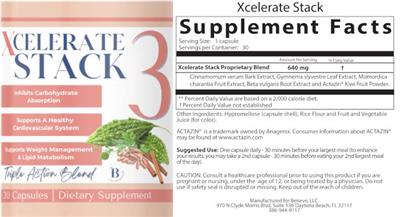
Supplement Facts
The label details for Xcelerate Stack 3 by Beneve, sourced from the NIH Dietary Supplement Label Database.
Supplement Facts
| Ingredient | Amount | % DV |
|---|---|---|
| Momordica charantia Fruit Extract | 0 NP | -- |
| Gymnema sylvestre Leaf Extract | 0 NP | -- |
| Xcelerate Stack Proprietary Blend | 640 mg | -- |
| Cinnamomum verum Bark Extract | 0 NP | -- |
| Beta vulgaris Root Extract | 0 NP | -- |
| Actazin | 0 NP | -- |
Other ingredients: Hypromellose, Rice Flour, Fruit Juice, Vegetable Juice
Tap any ingredient to jump to its full detail below.
These statements are the manufacturer’s wording, reproduced from the product label — the label is saying it, not HelloPharmacist. We don’t verify or endorse them.
Formulation
Inhibits carbohydrate absorption Supports a healthy cardiovascular system Supports weight management & lipid metabolism Triple action blend
FDA Statement of Identity
Dietary Supplement
Brand IP Statement(s)
ACTAZIN is a trademark owned by Anagenix. Consumer information about ACTAZIN may be found at www.actazin.com
Suggested/Recommended/Usage/Directions
Suggested Use: One capsule daily - 30 minutes before your largest meal (to enhance your results, you may take a 2nd capsule - 30 minutes before eating your 2nd largest meal of the day).
Precautions
Caution: Consult a healthcare professional prior to using this product if you are pregnant or nursing, under the age of 12, or being treated by a physician.
Caution: Consult a healthcare professional prior to using this product if you are pregnant or nursing, under the age of 12, or being treated by a physician. Keep out of the reach of children.
Do not use if safety seal is disrupted or missing.
Is this label outdated? Report a formula or label change and our pharmacy team will review it.
Xcelerate Stack 3 by Beneve label
The label scan from the NIH Dietary Supplement Label Database. Tap to enlarge.
Label images are published by the NIH Dietary Supplement Label Database for the version of this product on file. Always read your actual product label.
View the full label (PDF)The Ingredients in Xcelerate Stack 3 by Beneve
These are the 5 active ingredients this product is made of. Select any to open its full monograph.
Serving size1 Capsule(s) Dosage formCapsule Servings per container30 Amounts shown are per serving.
Most supplement products combine several ingredients, and a medication can interact with the product through any one of them. Each ingredient below shows whether it has known drug interactions.
Xcelerate Stack Proprietary Blend
Other (inactive) ingredients: Hypromellose, Rice Flour, Fruit Juice, Vegetable Juice. These complete the product’s ingredient list but are not active constituents.
Xcelerate Stack 3 by Beneve Drug Interactions
HelloPharmacist Interaction Report
Xcelerate Stack 3 by Beneve contains five ingredients, four of which we've checked for interactions with medications.
Altogether, these interactions span 1,088 individual medications.
Read the full breakdown — every affected drug type, severity by severity
The most serious concern is with bitter melon (Momordica charantia). It can theoretically increase levels of certain cancer drugs like pazopanib, which is a Moderate-severity interaction.
More commonly, bitter melon may lower blood sugar, and when combined with diabetes medications, it raises the risk of low blood sugar (hypoglycemia).
Gymnema and beet also interact with several drug types. Both can affect how your liver processes certain medications (CYP1A2, CYP2C9, and CYP3A4 substrates), potentially changing drug levels in your blood.
Gymnema, like bitter melon, can enhance the blood-sugar-lowering effect of diabetes drugs. Beet's nitrates may theoretically lower blood pressure when you're already taking blood pressure medication.
Kiwi (Actazin) can thin your blood and may increase bleeding risk if you're on blood thinners or aspirin-like drugs; it may also lower blood pressure further if you're on hypertension medication.
Cinnamomum verum (cinnamon bark) couldn't be checked—we hold no interaction data for it. Use the medication checker below to look up your exact prescriptions and supplements before starting this product.
Check your own medications below · Editorial policy · How we use AI
Want to check YOUR meds against Xcelerate Stack 3?
Ask about interactions with your drugs in plain English — “Can I take it with lisinopril?” — and we find you the answer in seconds, ingredient by ingredient.
Go to the checkerIngredients driving the most interactions
Individual Drug Interactions
The ingredients in Xcelerate Stack 3 interact with 1,103 drugs. Click any drug to see the details.
5 of the 5 ingredients in Xcelerate Stack 3 interact with drugs. Each result below shows which ingredient is responsible. Beta vulgaris Root Extract Gymnema sylvestre Leaf Extract Actazin Momordica charantia Fruit Extract Cinnamomum verum Bark Extract
ApremilastOtezla
How Apremilast interacts with Xcelerate Stack 3 — through 2 ingredients. Tap an ingredient for the detail:
Beta Vulgaris Root ExtractCytochrome P450 3a4 (cyp3a4) Substrates Moderate
Interaction Summary
Theoretically, beet might increase the levels of CYP3A4 substrates.
Read the full Beta Vulgaris Root Extract + Apremilast interactionGymnema Sylvestre Leaf ExtractCytochrome P450 3a4 (cyp3a4) Substrates Minor
Interaction Summary
Theoretically, gymnema might increase levels of drugs metabolized by CYP3A4.
Read the full Gymnema Sylvestre Leaf Extract + Apremilast interactionAprepitantCinvanti, Emend
How Aprepitant interacts with Xcelerate Stack 3 — through 2 ingredients. Tap an ingredient for the detail:
Beta Vulgaris Root ExtractCytochrome P450 3a4 (cyp3a4) Substrates Moderate
Interaction Summary
Theoretically, beet might increase the levels of CYP3A4 substrates.
Read the full Beta Vulgaris Root Extract + Aprepitant interactionGymnema Sylvestre Leaf ExtractCytochrome P450 3a4 (cyp3a4) Substrates Minor
Interaction Summary
Theoretically, gymnema might increase levels of drugs metabolized by CYP3A4.
Read the full Gymnema Sylvestre Leaf Extract + Aprepitant interactionAprocitentanTryvio
How Aprocitentan interacts with Xcelerate Stack 3 — through 3 ingredients. Tap an ingredient for the detail:
ActazinAntihypertensive Drugs Moderate
Interaction Summary
Clinical research suggests that consuming kiwi reduces systolic and diastolic blood pressure in hypertensive individuals.
Read the full Actazin + Aprocitentan interactionCinnamomum Verum Bark ExtractAntihypertensive Drugs Moderate
Interaction Summary
Theoretically, Ceylon cinnamon might have additive effects with antihypertensive drugs and increase the risk of hypotension.
Read the full Cinnamomum Verum Bark Extract + Aprocitentan interactionBeta Vulgaris Root ExtractAntihypertensive Drugs Minor
Interaction Summary
Beet and beetroot contain nitrates, which can cause vasodilation, potentially leading to lower blood pressure.
Read the full Beta Vulgaris Root Extract + Aprocitentan interactionArgatrobanArgatroban
How Argatroban interacts with Xcelerate Stack 3 — through 1 ingredient. Tap an ingredient for the detail:
ActazinAnticoagulant/antiplatelet Drugs Moderate
Interaction Summary
Clinical research suggests that kiwi inhibits platelet aggregation.
Read the full Actazin + Argatroban interactionAripiprazoleAbilify, Abilify Maintena, Abilify Mycite
How Aripiprazole interacts with Xcelerate Stack 3 — through 2 ingredients. Tap an ingredient for the detail:
Beta Vulgaris Root ExtractCytochrome P450 3a4 (cyp3a4) Substrates Moderate
Interaction Summary
Theoretically, beet might increase the levels of CYP3A4 substrates.
Read the full Beta Vulgaris Root Extract + Aripiprazole interactionGymnema Sylvestre Leaf ExtractCytochrome P450 3a4 (cyp3a4) Substrates Minor
Interaction Summary
Theoretically, gymnema might increase levels of drugs metabolized by CYP3A4.
Read the full Gymnema Sylvestre Leaf Extract + Aripiprazole interactionAripiprazole LauroxilAristada, Aristada Initio Kit
How Aripiprazole Lauroxil interacts with Xcelerate Stack 3 — through 2 ingredients. Tap an ingredient for the detail:
Beta Vulgaris Root ExtractCytochrome P450 3a4 (cyp3a4) Substrates Moderate
Interaction Summary
Theoretically, beet might increase the levels of CYP3A4 substrates.
Read the full Beta Vulgaris Root Extract + Aripiprazole Lauroxil interactionGymnema Sylvestre Leaf ExtractCytochrome P450 3a4 (cyp3a4) Substrates Minor
Interaction Summary
Theoretically, gymnema might increase levels of drugs metabolized by CYP3A4.
Read the full Gymnema Sylvestre Leaf Extract + Aripiprazole Lauroxil interactionArmodafinilNuvigil
How Armodafinil interacts with Xcelerate Stack 3 — through 3 ingredients. Tap an ingredient for the detail:
Beta Vulgaris Root ExtractCytochrome P450 3a4 (cyp3a4) Substrates Moderate
Interaction Summary
Theoretically, beet might increase the levels of CYP3A4 substrates.
Read the full Beta Vulgaris Root Extract + Armodafinil interactionMomordica Charantia Fruit ExtractP-glycoprotein Substrates Moderate
Interaction Summary
Theoretically, bitter melon might increase levels of P-glycoprotein substrates.
Read the full Momordica Charantia Fruit Extract + Armodafinil interactionGymnema Sylvestre Leaf ExtractCytochrome P450 3a4 (cyp3a4) Substrates Minor
Interaction Summary
Theoretically, gymnema might increase levels of drugs metabolized by CYP3A4.
Read the full Gymnema Sylvestre Leaf Extract + Armodafinil interactionAsenapineSaphris, Secuado
How Asenapine interacts with Xcelerate Stack 3 — through 2 ingredients. Tap an ingredient for the detail:
Gymnema Sylvestre Leaf ExtractCytochrome P450 1a2 (cyp1a2) Substrates Moderate
Interaction Summary
Theoretically, gymnema might increase levels of drugs metabolized by CYP1A2.
Read the full Gymnema Sylvestre Leaf Extract + Asenapine interactionBeta Vulgaris Root ExtractCytochrome P450 1a2 (cyp1a2) Substrates Minor
Interaction Summary
Theoretically, beet might decrease the levels and clinical effects of CYP1A2 substrates.
Read the full Beta Vulgaris Root Extract + Asenapine interactionAspirinAngettes 75, ASA, Asaphen, Aspirin, Caprin, Cartia +8 more
How Aspirin interacts with Xcelerate Stack 3 — through 1 ingredient. Tap an ingredient for the detail:
ActazinAnticoagulant/antiplatelet Drugs Moderate
Interaction Summary
Clinical research suggests that kiwi inhibits platelet aggregation.
Read the full Actazin + Aspirin interactionAspirin, Aluminum Hydroxide, Codeine Phosphate, Magnesium HydroxideAscriptin Codeine #3
How Aspirin, Aluminum Hydroxide, Codeine Phosphate, Magnesium Hydroxide interacts with Xcelerate Stack 3 — through 1 ingredient. Tap an ingredient for the detail:
ActazinAnticoagulant/antiplatelet Drugs Moderate
Interaction Summary
Clinical research suggests that kiwi inhibits platelet aggregation.
Read the full Actazin + Aspirin, Aluminum Hydroxide, Codeine Phosphate, Magnesium Hydroxide interactionAspirin, ButalbitalAxotal
How Aspirin, Butalbital interacts with Xcelerate Stack 3 — through 1 ingredient. Tap an ingredient for the detail:
ActazinAnticoagulant/antiplatelet Drugs Moderate
Interaction Summary
Clinical research suggests that kiwi inhibits platelet aggregation.
Read the full Actazin + Aspirin, Butalbital interactionAspirin, Butalbital, CaffeineFiorinal
How Aspirin, Butalbital, Caffeine interacts with Xcelerate Stack 3 — through 3 ingredients. Tap an ingredient for the detail:
ActazinAnticoagulant/antiplatelet Drugs Moderate
Interaction Summary
Clinical research suggests that kiwi inhibits platelet aggregation.
Read the full Actazin + Aspirin, Butalbital, Caffeine interactionGymnema Sylvestre Leaf ExtractCytochrome P450 1a2 (cyp1a2) Substrates, Cytochrome P450 3a4 (cyp3a4) Substrates Moderate
Interaction Summary
Theoretically, gymnema might increase levels of drugs metabolized by CYP1A2.
Read the full Gymnema Sylvestre Leaf Extract + Aspirin, Butalbital, Caffeine interactionBeta Vulgaris Root ExtractCytochrome P450 1a2 (cyp1a2) Substrates, Cytochrome P450 3a4 (cyp3a4) Substrates Moderate
Interaction Summary
Theoretically, beet might decrease the levels and clinical effects of CYP1A2 substrates.
Read the full Beta Vulgaris Root Extract + Aspirin, Butalbital, Caffeine interactionAspirin, Butalbital, Caffeine, Codeine PhosphateFiorinal w/ Codeine
How Aspirin, Butalbital, Caffeine, Codeine Phosphate interacts with Xcelerate Stack 3 — through 3 ingredients. Tap an ingredient for the detail:
Gymnema Sylvestre Leaf ExtractCytochrome P450 3a4 (cyp3a4) Substrates, Cytochrome P450 1a2 (cyp1a2) Substrates Moderate
Interaction Summary
Theoretically, gymnema might increase levels of drugs metabolized by CYP3A4.
Read the full Gymnema Sylvestre Leaf Extract + Aspirin, Butalbital, Caffeine, Codeine Phosphate interactionActazinAnticoagulant/antiplatelet Drugs Moderate
Interaction Summary
Clinical research suggests that kiwi inhibits platelet aggregation.
Read the full Actazin + Aspirin, Butalbital, Caffeine, Codeine Phosphate interactionBeta Vulgaris Root ExtractCytochrome P450 1a2 (cyp1a2) Substrates, Cytochrome P450 3a4 (cyp3a4) Substrates Moderate
Interaction Summary
Theoretically, beet might decrease the levels and clinical effects of CYP1A2 substrates.
Read the full Beta Vulgaris Root Extract + Aspirin, Butalbital, Caffeine, Codeine Phosphate interactionAspirin, Butalbital, Caffeine, PhenacetinMarnal
How Aspirin, Butalbital, Caffeine, Phenacetin interacts with Xcelerate Stack 3 — through 3 ingredients. Tap an ingredient for the detail:
Gymnema Sylvestre Leaf ExtractCytochrome P450 1a2 (cyp1a2) Substrates, Cytochrome P450 3a4 (cyp3a4) Substrates +1 Moderate
Interaction Summary
Theoretically, gymnema might increase levels of drugs metabolized by CYP1A2.
Read the full Gymnema Sylvestre Leaf Extract + Aspirin, Butalbital, Caffeine, Phenacetin interactionBeta Vulgaris Root ExtractCytochrome P450 1a2 (cyp1a2) Substrates, Cytochrome P450 3a4 (cyp3a4) Substrates Moderate
Interaction Summary
Theoretically, beet might decrease the levels and clinical effects of CYP1A2 substrates.
Read the full Beta Vulgaris Root Extract + Aspirin, Butalbital, Caffeine, Phenacetin interactionActazinAnticoagulant/antiplatelet Drugs Moderate
Interaction Summary
Clinical research suggests that kiwi inhibits platelet aggregation.
Read the full Actazin + Aspirin, Butalbital, Caffeine, Phenacetin interactionAspirin, CaffeineAnacin
How Aspirin, Caffeine interacts with Xcelerate Stack 3 — through 3 ingredients. Tap an ingredient for the detail:
ActazinAnticoagulant/antiplatelet Drugs Moderate
Interaction Summary
Clinical research suggests that kiwi inhibits platelet aggregation.
Read the full Actazin + Aspirin, Caffeine interactionGymnema Sylvestre Leaf ExtractCytochrome P450 3a4 (cyp3a4) Substrates, Cytochrome P450 1a2 (cyp1a2) Substrates Moderate
Interaction Summary
Theoretically, gymnema might increase levels of drugs metabolized by CYP3A4.
Read the full Gymnema Sylvestre Leaf Extract + Aspirin, Caffeine interactionBeta Vulgaris Root ExtractCytochrome P450 3a4 (cyp3a4) Substrates, Cytochrome P450 1a2 (cyp1a2) Substrates Moderate
Interaction Summary
Theoretically, beet might increase the levels of CYP3A4 substrates.
Read the full Beta Vulgaris Root Extract + Aspirin, Caffeine interactionAspirin, Caffeine, Codeine PhosphateAnacin w/ Codeine
How Aspirin, Caffeine, Codeine Phosphate interacts with Xcelerate Stack 3 — through 3 ingredients. Tap an ingredient for the detail:
Gymnema Sylvestre Leaf ExtractCytochrome P450 3a4 (cyp3a4) Substrates, Cytochrome P450 1a2 (cyp1a2) Substrates Moderate
Interaction Summary
Theoretically, gymnema might increase levels of drugs metabolized by CYP3A4.
Read the full Gymnema Sylvestre Leaf Extract + Aspirin, Caffeine, Codeine Phosphate interactionActazinAnticoagulant/antiplatelet Drugs Moderate
Interaction Summary
Clinical research suggests that kiwi inhibits platelet aggregation.
Read the full Actazin + Aspirin, Caffeine, Codeine Phosphate interactionBeta Vulgaris Root ExtractCytochrome P450 1a2 (cyp1a2) Substrates, Cytochrome P450 3a4 (cyp3a4) Substrates Moderate
Interaction Summary
Theoretically, beet might decrease the levels and clinical effects of CYP1A2 substrates.
Read the full Beta Vulgaris Root Extract + Aspirin, Caffeine, Codeine Phosphate interactionAspirin, Caffeine, Dihydrocodeine BitartrateSynalgos DC
How Aspirin, Caffeine, Dihydrocodeine Bitartrate interacts with Xcelerate Stack 3 — through 3 ingredients. Tap an ingredient for the detail:
Gymnema Sylvestre Leaf ExtractCytochrome P450 1a2 (cyp1a2) Substrates, Cytochrome P450 3a4 (cyp3a4) Substrates Moderate
Interaction Summary
Theoretically, gymnema might increase levels of drugs metabolized by CYP1A2.
Read the full Gymnema Sylvestre Leaf Extract + Aspirin, Caffeine, Dihydrocodeine Bitartrate interactionBeta Vulgaris Root ExtractCytochrome P450 1a2 (cyp1a2) Substrates, Cytochrome P450 3a4 (cyp3a4) Substrates Moderate
Interaction Summary
Theoretically, beet might decrease the levels and clinical effects of CYP1A2 substrates.
Read the full Beta Vulgaris Root Extract + Aspirin, Caffeine, Dihydrocodeine Bitartrate interactionActazinAnticoagulant/antiplatelet Drugs Moderate
Interaction Summary
Clinical research suggests that kiwi inhibits platelet aggregation.
Read the full Actazin + Aspirin, Caffeine, Dihydrocodeine Bitartrate interactionAspirin, Caffeine, Dover's PwdAcedoval, Dovacet
How Aspirin, Caffeine, Dover's Pwd interacts with Xcelerate Stack 3 — through 3 ingredients. Tap an ingredient for the detail:
ActazinAnticoagulant/antiplatelet Drugs Moderate
Interaction Summary
Clinical research suggests that kiwi inhibits platelet aggregation.
Read the full Actazin + Aspirin, Caffeine, Dover's Pwd interactionGymnema Sylvestre Leaf ExtractCytochrome P450 1a2 (cyp1a2) Substrates, Cytochrome P450 3a4 (cyp3a4) Substrates Moderate
Interaction Summary
Theoretically, gymnema might increase levels of drugs metabolized by CYP1A2.
Read the full Gymnema Sylvestre Leaf Extract + Aspirin, Caffeine, Dover's Pwd interactionBeta Vulgaris Root ExtractCytochrome P450 3a4 (cyp3a4) Substrates, Cytochrome P450 1a2 (cyp1a2) Substrates Moderate
Interaction Summary
Theoretically, beet might increase the levels of CYP3A4 substrates.
Read the full Beta Vulgaris Root Extract + Aspirin, Caffeine, Dover's Pwd interactionAspirin, Caffeine, HydrocodoneDamason-P
How Aspirin, Caffeine, Hydrocodone interacts with Xcelerate Stack 3 — through 3 ingredients. Tap an ingredient for the detail:
Gymnema Sylvestre Leaf ExtractCytochrome P450 3a4 (cyp3a4) Substrates, Cytochrome P450 1a2 (cyp1a2) Substrates Moderate
Interaction Summary
Theoretically, gymnema might increase levels of drugs metabolized by CYP3A4.
Read the full Gymnema Sylvestre Leaf Extract + Aspirin, Caffeine, Hydrocodone interactionActazinAnticoagulant/antiplatelet Drugs Moderate
Interaction Summary
Clinical research suggests that kiwi inhibits platelet aggregation.
Read the full Actazin + Aspirin, Caffeine, Hydrocodone interactionBeta Vulgaris Root ExtractCytochrome P450 1a2 (cyp1a2) Substrates, Cytochrome P450 3a4 (cyp3a4) Substrates Moderate
Interaction Summary
Theoretically, beet might decrease the levels and clinical effects of CYP1A2 substrates.
Read the full Beta Vulgaris Root Extract + Aspirin, Caffeine, Hydrocodone interactionAspirin, Caffeine, Isobutylallylbarbituric Acid, PhenacetinLanorinal
How Aspirin, Caffeine, Isobutylallylbarbituric Acid, Phenacetin interacts with Xcelerate Stack 3 — through 3 ingredients. Tap an ingredient for the detail:
Beta Vulgaris Root ExtractCytochrome P450 3a4 (cyp3a4) Substrates, Cytochrome P450 1a2 (cyp1a2) Substrates Moderate
Interaction Summary
Theoretically, beet might increase the levels of CYP3A4 substrates.
Read the full Beta Vulgaris Root Extract + Aspirin, Caffeine, Isobutylallylbarbituric Acid, Phenacetin interactionGymnema Sylvestre Leaf ExtractCytochrome P450 1a2 (cyp1a2) Substrates, Cytochrome P450 3a4 (cyp3a4) Substrates +1 Moderate
Interaction Summary
Theoretically, gymnema might increase levels of drugs metabolized by CYP1A2.
Read the full Gymnema Sylvestre Leaf Extract + Aspirin, Caffeine, Isobutylallylbarbituric Acid, Phenacetin interactionActazinAnticoagulant/antiplatelet Drugs Moderate
Interaction Summary
Clinical research suggests that kiwi inhibits platelet aggregation.
Read the full Actazin + Aspirin, Caffeine, Isobutylallylbarbituric Acid, Phenacetin interactionAspirin, Caffeine, OrphenadrineInvagesic, Invagesic Forte, Norgesic, Norgesic Forte, Orphengesic, Orphengesic Forte
How Aspirin, Caffeine, Orphenadrine interacts with Xcelerate Stack 3 — through 3 ingredients. Tap an ingredient for the detail:
ActazinAnticoagulant/antiplatelet Drugs Moderate
Interaction Summary
Clinical research suggests that kiwi inhibits platelet aggregation.
Read the full Actazin + Aspirin, Caffeine, Orphenadrine interactionGymnema Sylvestre Leaf ExtractCytochrome P450 1a2 (cyp1a2) Substrates, Cytochrome P450 3a4 (cyp3a4) Substrates Moderate
Interaction Summary
Theoretically, gymnema might increase levels of drugs metabolized by CYP1A2.
Read the full Gymnema Sylvestre Leaf Extract + Aspirin, Caffeine, Orphenadrine interactionBeta Vulgaris Root ExtractCytochrome P450 1a2 (cyp1a2) Substrates, Cytochrome P450 3a4 (cyp3a4) Substrates Moderate
Interaction Summary
Theoretically, beet might decrease the levels and clinical effects of CYP1A2 substrates.
Read the full Beta Vulgaris Root Extract + Aspirin, Caffeine, Orphenadrine interactionAspirin, Caffeine, Phenacetin, PropoxypheneMargesic Comp. 65
How Aspirin, Caffeine, Phenacetin, Propoxyphene interacts with Xcelerate Stack 3 — through 3 ingredients. Tap an ingredient for the detail:
Beta Vulgaris Root ExtractCytochrome P450 1a2 (cyp1a2) Substrates, Cytochrome P450 3a4 (cyp3a4) Substrates Moderate
Interaction Summary
Theoretically, beet might decrease the levels and clinical effects of CYP1A2 substrates.
Read the full Beta Vulgaris Root Extract + Aspirin, Caffeine, Phenacetin, Propoxyphene interactionActazinAnticoagulant/antiplatelet Drugs Moderate
Interaction Summary
Clinical research suggests that kiwi inhibits platelet aggregation.
Read the full Actazin + Aspirin, Caffeine, Phenacetin, Propoxyphene interactionGymnema Sylvestre Leaf ExtractPhenacetin, Cytochrome P450 3a4 (cyp3a4) Substrates +1 Moderate
Interaction Summary
Theoretically, taking gymnema with phenacetin might increase the levels of phenacetin.
Read the full Gymnema Sylvestre Leaf Extract + Aspirin, Caffeine, Phenacetin, Propoxyphene interactionAspirin, Calcium Carbonate, Magnesium Carbonate, Magnesium OxideBufferin
How Aspirin, Calcium Carbonate, Magnesium Carbonate, Magnesium Oxide interacts with Xcelerate Stack 3 — through 1 ingredient. Tap an ingredient for the detail:
ActazinAnticoagulant/antiplatelet Drugs Moderate
Interaction Summary
Clinical research suggests that kiwi inhibits platelet aggregation.
Read the full Actazin + Aspirin, Calcium Carbonate, Magnesium Carbonate, Magnesium Oxide interactionAspirin, CarisoprodolSoma Compound
How Aspirin, Carisoprodol interacts with Xcelerate Stack 3 — through 1 ingredient. Tap an ingredient for the detail:
ActazinAnticoagulant/antiplatelet Drugs Moderate
Interaction Summary
Clinical research suggests that kiwi inhibits platelet aggregation.
Read the full Actazin + Aspirin, Carisoprodol interactionAspirin, Carisoprodol, Codeine PhosphateSoma Compound w/ Codeine
How Aspirin, Carisoprodol, Codeine Phosphate interacts with Xcelerate Stack 3 — through 1 ingredient. Tap an ingredient for the detail:
ActazinAnticoagulant/antiplatelet Drugs Moderate
Interaction Summary
Clinical research suggests that kiwi inhibits platelet aggregation.
Read the full Actazin + Aspirin, Carisoprodol, Codeine Phosphate interactionAspirin, Chlorpheniramine, PhenylpropanolamineAlka-Seltzer Plus Cold
How Aspirin, Chlorpheniramine, Phenylpropanolamine interacts with Xcelerate Stack 3 — through 3 ingredients. Tap an ingredient for the detail:
ActazinAnticoagulant/antiplatelet Drugs Moderate
Interaction Summary
Clinical research suggests that kiwi inhibits platelet aggregation.
Read the full Actazin + Aspirin, Chlorpheniramine, Phenylpropanolamine interactionBeta Vulgaris Root ExtractCytochrome P450 3a4 (cyp3a4) Substrates Moderate
Interaction Summary
Theoretically, beet might increase the levels of CYP3A4 substrates.
Read the full Beta Vulgaris Root Extract + Aspirin, Chlorpheniramine, Phenylpropanolamine interactionGymnema Sylvestre Leaf ExtractCytochrome P450 3a4 (cyp3a4) Substrates Minor
Interaction Summary
Theoretically, gymnema might increase levels of drugs metabolized by CYP3A4.
Read the full Gymnema Sylvestre Leaf Extract + Aspirin, Chlorpheniramine, Phenylpropanolamine interactionAspirin, Citric Acid, Sodium BicarbonateAlka-Seltzer Pain Reliever and Antacid
How Aspirin, Citric Acid, Sodium Bicarbonate interacts with Xcelerate Stack 3 — through 1 ingredient. Tap an ingredient for the detail:
ActazinAnticoagulant/antiplatelet Drugs Moderate
Interaction Summary
Clinical research suggests that kiwi inhibits platelet aggregation.
Read the full Actazin + Aspirin, Citric Acid, Sodium Bicarbonate interactionAspirin, Codeine PhosphateAspirin w/ Codeine
How Aspirin, Codeine Phosphate interacts with Xcelerate Stack 3 — through 1 ingredient. Tap an ingredient for the detail:
ActazinAnticoagulant/antiplatelet Drugs Moderate
Interaction Summary
Clinical research suggests that kiwi inhibits platelet aggregation.
Read the full Actazin + Aspirin, Codeine Phosphate interactionAspirin, Codeine Phosphate, MethocarbamolRobaxisal C
How Aspirin, Codeine Phosphate, Methocarbamol interacts with Xcelerate Stack 3 — through 1 ingredient. Tap an ingredient for the detail:
ActazinAnticoagulant/antiplatelet Drugs Moderate
Interaction Summary
Clinical research suggests that kiwi inhibits platelet aggregation.
Read the full Actazin + Aspirin, Codeine Phosphate, Methocarbamol interactionAspirin, Codeine Phosphate, PhenobarbitalPhenaphen
How Aspirin, Codeine Phosphate, Phenobarbital interacts with Xcelerate Stack 3 — through 1 ingredient. Tap an ingredient for the detail:
ActazinAnticoagulant/antiplatelet Drugs Moderate
Interaction Summary
Clinical research suggests that kiwi inhibits platelet aggregation.
Read the full Actazin + Aspirin, Codeine Phosphate, Phenobarbital interactionEach ingredient & the kinds of drugs it affects
For each ingredient in Xcelerate Stack 3 with known interactions, here are the types of medications they can affect. Open any type for the detail — or search your exact drug in the checker above.
Beta vulgaris Root Extract
Cytochrome P450 3A4 (Cyp3A4) Substrates
Theoretically, beet might increase the levels of CYP3A4 substrates.
In vitro research suggests that betanin, the major pigment in beet, competitively inhibits CYP3A4 in a dose-dependent manner similarly to strong CYP3A4 inhibitor ketoconazole.
Antihypertensive Drugs
Beet and beetroot contain nitrates, which can cause vasodilation, potentially leading to lower blood pressure. However, a study published in the European Journal of Clinical Nutrition using concentrated beetroot juice found no significant impact on blood pressure or heart rate in different age groups. Other small clinical studies suggest that while beet consumption might transiently lower blood pressure due to vessel dilation, there's no consistent evidence of a lasting effect. Overall, the theoretical risk of reduced blood pressure due to beet's nitrate content exists, but studies generally indicate a low and temporary impact rather than a sustained decrease.
Cytochrome P450 1A2 (Cyp1A2) Substrates
Theoretically, beet might decrease the levels and clinical effects of CYP1A2 substrates.
In vitro research suggests that beet induces CYP1A2 enzymes.
Gymnema sylvestre Leaf Extract
Antidiabetes Drugs
Theoretically, taking gymnema with antidiabetes drugs might increase the risk of hypoglycemia.
Gymnema reduces blood glucose levels in some human and animal research. In human studies, it has been shown to enhance the blood glucose lowering effects of hypoglycemic drugs. However, other research in adults with prediabetes or metabolic syndrome suggests that gymnema does not reduce fasting levels of blood glucose. Until more is known, monitor blood glucose levels closely.
Cytochrome P450 1A2 (Cyp1A2) Substrates
Theoretically, gymnema might increase levels of drugs metabolized by CYP1A2.
Animal and in vitro research shows that gymnema can inhibit the CYP1A2 enzyme. In one animal study, oral administration of gymnema for 7 days increased the plasma concentrations of phenacetin, a CYP1A2 substrate, by about 1.4-fold and reduced the clearance of phenacetin by about 29%.
Cytochrome P450 2C9 (Cyp2C9) Substrates
Theoretically, gymnema might increase or decrease levels of drugs metabolized by CYP2C9.
Animal research shows that gymnema can induce the CYP2C9 enzyme. In one animal study, gymnema caused a 2.4-fold increase in the clearance of tolbutamide, a CYP2C9 substrate, in rats. In vitro research also shows that gymnema can inhibit CYP2C9.
Phenacetin
Theoretically, taking gymnema with phenacetin might increase the levels of phenacetin.
Animal research shows that gymnema, administered orally for 7 days, decreases the clearance of phenacetin in a dose-dependent manner by about 21% to 29% and increases plasma levels about 1.3- to 1.4-fold when compared to control.
Tolbutamide (Orinase)
Theoretically, taking gymnema with tolbutamide might the decrease levels of tolbutamide.
Animal research shows that gymnema, administered orally for 7 days, increases the clearance of tolbutamide by 2.4-fold when compared to control.
Cytochrome P450 3A4 (Cyp3A4) Substrates
Theoretically, gymnema might increase levels of drugs metabolized by CYP3A4.
One in vitro study using rat liver microsomes shows that gymnema can modestly inhibit the CYP3A4 enzyme. However, other in vitro research using human liver microsomes shows that gymnema does not affect CYP3A4 activity. Animal research also shows that gymnema does not alter the function of CYP3A4. In one study in rats, oral administration of gymnema for 7 days did not alter the clearance of amlodipine, a CYP3A4 substrate.
Actazin
Anticoagulant/Antiplatelet Drugs
Clinical research suggests that kiwi inhibits platelet aggregation. Theoretically, kiwi might increase the risk of bleeding when used with antiplatelet or anticoagulant drugs. Some anticoagulant or antiplatelet drugs include aspirin, clopidogrel (Plavix), dalteparin (Fragmin), enoxaparin (Lovenox), heparin, ticlopidine (Ticlid), warfarin (Coumadin), and others.
Antihypertensive Drugs
Clinical research suggests that consuming kiwi reduces systolic and diastolic blood pressure in hypertensive individuals. Theoretically, concomitant use of kiwi and antihypertensive drugs may increase the risk of hypotension when used in combination with drugs that lower blood pressure. These include captopril (Capoten), enalapril (Vasotec), losartan (Cozaar), valsartan (Diovan), diltiazem (Cardizem), amlodipine (Norvasc), hydrochlorothiazide (HydroDiuril), furosemide (Lasix), and many others.
Momordica charantia Fruit Extract
Antidiabetes Drugs
Taking bitter melon with antidiabetes drugs might increase the risk of hypoglycemia.
Bitter melon can lower blood glucose levels and might have additive effects when used with antidiabetes drugs. This might increase the risk of hypoglycemia in some patients. Monitor blood glucose levels closely.
P-Glycoprotein Substrates
Theoretically, bitter melon might increase levels of P-glycoprotein substrates.
Bitter melon might inhibit the p-glycoprotein (P-gp) intestinal pump and increase intracellular levels of P-gp substrates. In vitro research in intestinal cells shows that 1-monopalmitin, a constituent of bitter melon, increases levels of daunomycin, a P-gp substrate. Additionally, drinking bitter melon juice has been associated with a case of acute pancreatitis in a patient who had been taking pazopanib, a P-gp substrate, for 8 years. Researchers theorize that inhibition of P-gp led to increased levels of pazopanib, resulting in pazopanib-induced pancreatitis.
Pazopanib (Votrient)
Theoretically, bitter melon might increase levels of pazopanib, potentially increasing the risk of adverse effects.
In one case, a 65-year-old patient taking pazopanib for 8 years for renal cell carcinoma experienced signs and symptoms consistent with acute pancreatitis 4 days after drinking bitter melon juice at a dose of 100-150 mL daily. The patient's symptoms, amylase levels, and lipase levels improved upon discontinuation of bitter melon and pazopanib. Pazopanib treatment was re-initiated with no further evidence of pancreatitis. Researchers theorize that inhibition of P-glycoprotein by bitter melon led to increased levels of pazopanib, a P-glycoprotein substrate, resulting in pazopanib-induced pancreatitis.
Cinnamomum verum Bark Extract
Antidiabetes Drugs
Theoretically, Ceylon cinnamon may have additive effects with antidiabetes drugs.
Ceylon cinnamon may lower blood glucose levels. Dose adjustments might be necessary.
Antihypertensive Drugs
Theoretically, Ceylon cinnamon might have additive effects with antihypertensive drugs and increase the risk of hypotension.
Animal research shows that Ceylon cinnamon extract has vasorelaxant properties and reduces blood pressure in rat models of hypertension, possibly via inhibition of calcium influx through L-type voltage-sensitive channels.
Brand information
Manufacturer and brand details for Xcelerate Stack 3, from the product label.
Beneve
See all Beneve products- Name
- Beneve, LLC
- Street Address
- 970 N Clyde Morris Blvd, Suite 136
- City
- Daytona Beach
- State
- FL
- ZipCode
- 32117
- Phone Number
- 386-944-9117
Xcelerate Stack 3 by Beneve: Common Questions
Does Xcelerate Stack 3 by Beneve interact with any medications?
How can one product interact with so many drugs?
Where does this information come from?
Will this help me control my blood sugar or lose weight?
Is it safe to take this while I'm pregnant?
Can I take this while breastfeeding?
What side effects should I watch for?
Why is there a warning about cancer drugs?
Does cinnamon in this product interact with medications?
Written and reviewed by the HelloPharmacist editorial staff. Our editorial policy
Not sure if Xcelerate Stack 3 is safe with your meds?
Our pharmacists answer your medication & supplement questions — free.
Label information is sourced from the NIH Dietary Supplement Label Database and reflects the product version on file; always read your actual product label. This page is for education only and is not a substitute for professional medical advice. Confirm with your pharmacist or doctor before combining supplements and medications.
The Full Monographs Behind Xcelerate Stack 3’s Ingredients
Every ingredient we hold a full HelloPharmacist monograph for — uses, evidence, safety, and the complete interaction list.
Bitter Melon
Interacts with 282 drugsBitter melon is a tropical fruit eaten as food and used in traditional medicine, most often for blood sugar control. While some small studies hint it may modestly lower blood sugar, the evid...
Read the full Bitter Melon monograph → Herb & supplement monographGymnema
Interacts with 851 drugsGymnema is an Ayurvedic herb best known for possibly helping lower blood sugar and reducing the taste of sweetness on the tongue. Some early human studies are encouraging for blood sugar sup...
Read the full Gymnema monograph → Herb & supplement monographCeylon Cinnamon
Interacts with 258 drugsCeylon cinnamon is the so-called 'true' cinnamon, valued as a spice and used in traditional medicine for blood sugar, cholesterol, and digestion. Evidence for most health benefits is limited...
Read the full Ceylon Cinnamon monograph → Herb & supplement monographBeet
Interacts with 861 drugsBeet, especially beetroot juice, is a nitrate-rich food that may modestly lower blood pressure and slightly improve exercise performance in some people. It is generally safe as a food, but s...
Read the full Beet monograph → Herb & supplement monographKiwi
Interacts with 289 drugsKiwi is a nutritious fruit that is rich in vitamin C, fiber, and antioxidants, and it is generally safe to eat as a food. The strongest evidence is for helping with constipation and overall...
Read the full Kiwi monograph →Sources & How We Checked
Xcelerate Stack 3's label data comes from the NIH Dietary Supplement Label Database; the ingredient interaction data is from the Natural Medicines database, reviewed by our pharmacists.
- NIH Dietary Supplement Label Database (DSLD) — The official product label on file for this supplement.
- Natural Medicines (Therapeutic Research Center) — Evidence-graded clinical reference behind the ingredient interaction data.
Content is written and reviewed by licensed HelloPharmacist pharmacists. See our data sources and editorial standards for how this information is built and checked.
The 98 references behind this product’s interaction data
Every citation that drives the interaction findings for this product’s ingredients, from the evidence-graded Natural Medicines (TRC Healthcare) database. Open an ingredient to browse its citations — links open the study on PubMed or the publisher’s site.
Bitter Melon 18 references
- Leatherdale B, Panesar RK, Singh G, et al. Improvement in glucose tolerance due to Momordica charantia. Br Med J (Clin Res Ed) 1981;282:1823-4.
- Welihinda J, et al. Effect of Momordica charantia on the glucose tolerance in maturity onset diabetes. J Ethnopharmacol 1986;17:277-82. PubMed
- Srivastava Y, Venkatakrishna-Bhatt H, Verma Y, et al. Antidiabetic and adaptogenic properties of Momordica charantia extract: An experimental and clinical evaluation. Phytother Res 1993;7:285-9.
- Baldwa VS, Bhandari CM, Pangaria A, Goyal RK. Clinical trial in patients with diabetes mellitus of an insulin-like compound obtained from plant sources. Ups J Med Sci 1977;82:39-41. PubMed
- Aslam M, Stockley IH. Interaction between curry ingredient (karela) and drug (chlorpropamide). Lancet 1979:1:607. PubMed
- Ahmad N, Hassan MR, Halder H, Bennoor KS. Effect of Momordica charantia (Karolla) extracts on fasting and postprandial serum glucose levels in NIDDM patients (abstract). Bangladesh Med Res Counc Bull 1999;25:11-3.
- Basch E, Gabardi S, Ulbricht C. Bitter melon (Momordica charantia): a review of efficacy and safety. Am J Health Syst Pharm 2003;60:356-9. PubMed
- Yin RV, Lee NC, Hirpara H, Phung OJ. T. The effect of bitter melon (Mormordica charantia) in patients with diabetes mellitus: s systematic review and meta-analysis. Nutr Diabetes. 2014;4:e145.
- Rahman IU, Khan RU, Rahman KU, Bashir M. Lower hypoglycemic but higher antiatherogenic effects of bitter melon than glibenclamide in type 2 diabetic patients. Nutr J. 2015;14:13. PubMed
- Alam MA, Uddin R, Subhan N, Rahman MM, Jain P, Reza HM. Beneficial role of bitter melon supplementation in obesity and related complications in metabolic syndrome. J Lipids. 2015;2015:496169. PubMed
- Konishi T, Satsu H, Hatsugai Y, et al. Inhibitory effect of a bitter melon extract on the P-glycoprotein activity in intestinal Caco-2 cells. Br J Pharmacol. 2004;143(3):379-87. PubMed
- Peter EL, Kasali FM, Deyno S, et al. Momordica charantia L. lowers elevated glycaemia in type 2 diabetes mellitus patients: Systematic review and meta-analysis. J Ethnopharmacol. 2019;231:311-24. doi: 10.1016/j.jep.2018.10.033. PubMed
- Cortez-Navarrete M, Martínez-Abundis E, Pérez-Rubio KG, González-Ortiz M, Méndez-Del Villar M. Momordica charantia administration improves insulin secretion in type 2 diabetes mellitus. J Med Food. 2018;21(7):672-7. doi: 10.108
- Kim SK, Jung J, Jung JH, et al. Hypoglycemic efficacy and safety of Momordica charantia (bitter melon) in patients with type 2 diabetes mellitus. Complement Ther Med. 2020 Aug;52:102524. doi: 10.1016/j.ctim.2020.102524. PubMed
- Unsal O, Sütcüoglu O, Yazici O. Dangerous interaction of bitter melon (Momordica charantia) with pazopanib: a case of acute pancreatitis. J Oncol Pharm Pract 2022;28(2):486-8.
- Bae W, Kim S, Choi J, et al. Acute interstitial nephritis associated with ingesting a Momordica charantia extract: a case report. Medicine (Baltimore) 2021;100(27):e26606. PubMed
- Chattopadhyay K, Wang H, Kaur J, et al. Effectiveness and Safety of Ayurvedic Medicines in Type 2 Diabetes Mellitus Management: A Systematic Review and Meta-Analysis. Front Pharmacol. 2022;13:821810. Published 2022 Jun 8. PubMed
- Kim B, Lee HS, Kim HJ, et al. Momordica charantia (bitter melon) efficacy and safety on glucose metabolism in Korean prediabetes participants: a 12-week, randomized clinical study. Food Sci Biotechnol 2022;32(5):697-704. PubMed
Gymnema 12 references
- Shanmugasundaram ER, Rajeswari G, Baskaran K, et al. Use of Gymnema sylvestre leaf extract in the control of blood glucose in insulin-dependent diabetes mellitus. J Ethnopharmacol 1990;30:281-94. PubMed
- Baskaran K, Kizar Ahamath B, Radha Shanmugasundaram K, Shanmugasundaram ER. Antidiabetic effect of leaf extract from Gymnema sylvestre in non-insulin-dependent diabetes mellitus patients. J Ethnopharmacol 1990;30:295-300.
- Kamble B, Gupta A, Moothedath I, Khatal L, Janrao S, Jadhav A, et al. Effects of Gymnema sylvestre extract on the pharmacokinetics and pharmacodynamics of glimepiride in streptozotocin induced diabetic rats. Chem Biol Interact. 2016;245:30-8. PubMed
- Tiwari P, Mishra BN, Sangwan NS. Phytochemical and pharmacological properties of Gymnema sylvestre: an important medicinal plant. Biomed Res Int. 2014; 2014:830285.
- Fabio GD, Romanucci V, De Marco A, Zarrelli A. Triterpenoids from Gymnema sylvestre and their pharmacological activities. Molecules. 2014;19(8):10956-81. PubMed
- Shiyovich A, Sztarkier I, Nesher L. Toxic hepatitis induced by Gymnema sylvestre, a natural remedy for type 2 diabetes mellitus. Am J Med Sci. 2010;340(6):514-7. PubMed
- Zuniga LY, Gonzalez-Ortiz M, Martinez-Abundis E. Effect of gymnema sylvestre administration on metabolic syndrome, insulin sensitivity, and insulin secretion. J Med Food. 2017 Aug;20(8):750-54.
- Rammohan B, Samit K, Chinmoy D, et al. Human cytochrome P450 enzyme modulation by gymnema sylvestre: a predictive safety evaluation by LC-MS/MS. Pharmacogn Mag. 2016 Jul;12(Suppl 4):S389-S394.
- Vaghela M, Sahu N, Kharkar P, Pandita N. In vivo pharmacokinetic interaction by ethanolic extract of gymnema sylvestre with CYP2C9 (tolbutamide), CYP3A4 (amlodipine) and CYP1A2 (phenacetin) in rats. Chem Biol Interact. 2017 Dec 25;278:141-151. PubMed
- Vaghela M, Iyer K, Pandita N. In vitro inhibitory effect of gymnema sylvestre extracts and total gymnemic acids fraction on select cytochrome P450 activities in rat liver microsomes. Eur J Drug Metab Pharmacokinet. 2017 Oct 10. PubMed
- Gaytán Martínez LA, Sánchez-Ruiz LA, Zuñiga LY, González-Ortiz M, Martínez-Abundis E. Effect of Gymnema sylvestre administration on glycemic control, insulin secretion, and insulin sensitivity in patients with impaired glucose tolerance. J Med Food. 2021;
- Philips CA, Theruvath AH, Ravindran R. Toxic hepatitis-associated aplastic anaemia after dual homeopathic remedies and Gymnema sylvestre use. BMJ Case Rep 2022;15(3):e247867. PubMed
Ceylon Cinnamon 22 references
- Newall CA, Anderson LA, Philpson JD. Herbal Medicine: A Guide for Healthcare Professionals. London, UK: The Pharmaceutical Press, 1996.
- McGuffin M, Hobbs C, Upton R, Goldberg A, eds. American Herbal Products Association's Botanical Safety Handbook. Boca Raton, FL: CRC Press, LLC 1997.
- Choi HK, Jung GW, Moon KH, et al. Clinical study of SS-Cream in patients with lifelong premature ejaculation. Urology 2000;55:257-61. PubMed
- Electronic Code of Federal Regulations. Title 21. Part 182 -- Substances Generally Recognized As Safe. Available at: https://www.accessdata.fda.gov/scripts/cdrh/cfdocs/cfcfr/CFRSearch.cfm?CFRPart=182
- Anderson RA, Broadhurst CL, Polansky MM, et al. Isolation and Characterization of Polyphenol Type-A Polymers from Cinnamon with Insulin-like Biological Activity. J Agric Food Chem 2004;52:65-70. PubMed
- Jarvill-Taylor KJ, Anderson RA, Graves DJ. A hydroxychalcone derived from cinnamon functions as a mimetic for insulin in 3T3-L1 adipocytes. J Am Coll Nutr 2001;20:327-36. PubMed
- Onderoglu S, Sozer S, Erbil KM, et al. The evaluation of long-term effcts of cinnamon bark and olive leaf on toxicity induced by streptozotocin administration to rats. J Pharm Pharmacol 1999;51:1305-12.
- Kanerva L, Estlander T, Jolanki R. Occupational allergic contact dermatitis from spices. Contact Dermatitis 1996;35:157-62. PubMed
- Ranasinghe P, Jayawardena R, Galappaththy P, et al. Response to Akilen et al. Efficacy and safety of 'true' cinnamon (Cinnamomum zeylanicum) as a pharmaceutical agent in diabetes: a systematic review and meta-analysis. Diabet Med 2013 Apr;30(4):506-7.
- Oliveira JdA, da Silva IC, Trindade LA, et al. Safety and tolerability of essential oil from Cinnamomum zeylanicum blume leaves with action on oral candidosis and its effect on the physical properties of the acylic resin. Evid Based Complement Alternat Me
- Ranasinghe P, Pigera S, Premakumara GA, et al. Medicinal properties of 'true' cinnamon (Cinnamomum zeylanicum): a systematic review. BMC Complement Altern Med 2013;13:275. PubMed
- Ranasinghe P, Galappaththy P. Health benefits of Ceylon cinnamon (Cinnamomum zeylanicum): a summary of the current evidence. Ceylon Med J 2016;61(1):1-5. PubMed
- Nyadjeu P, Dongmo A, Nguelefack TB, Kamanyi A. Antihypertensive and vasorelaxant effects of Cinnamomum zeylanicum stem bark aqueous extracts. J Complement Integr Med 2011;8.
- Wansi SL, Nyadjeu P, Ngamga D, et al. Blood pressure lowering effect of the ethanol extract from the stembark of Cinnamomum zeylanicum (lauraceae) in rats. Pharmacol online 2007;3:166-76.
- Admani S, Hill H, Jacob SE. Cinnamon Sugar Scrub Dermatitis: "Natural" Is Not Always Best. Pediatr Dermatol. 2017;34(1):e42-e43. PubMed
- Isaac-Renton M, Li MK, Parsons LM. Cinnamon spice and everything not nice: many features of intraoral allergy to cinnamic aldehyde. Dermatitis. 2015;26(3):116-21. PubMed
- Vandersall A, Katta R. Eyelid dermatitis as a manifestation of systemic contact dermatitis to cinnamon. Dermatitis. 2015 Jul-Aug;26(4):189. PubMed
- Brancheau D, Patel B, Zughaib M. Do cinnamon supplements cause acute hepatitis? Am J Case Rep 2015;16:250-4. PubMed
- Ranasinghe P, Jayawardena R, Pigera S, et al. Evaluation of pharmacodynamic properties and safety of Cinnamomum zeylanicum (Ceylon cinnamon) in healthy adults: a phase I clinical trial. BMC Complement Altern Med 2017;17(1):550. PubMed
- Zareie A, Sahebkar A, Khorvash F, Bagherniya M, Hasanzadeh A, Askari G. Effect of cinnamon on migraine attacks and inflammatory markers: A randomized double-blind placebo-controlled trial. Phytother Res 2020;34(11):2945-52. PubMed
- Zobeiri M, Parvizi F, Shahpiri Z, et al. Evaluation of the effectiveness of cinnamon oil soft capsule in patients with functional dyspepsia: A randomized double-blind placebo-controlled clinical trial. Evid Based Complement Alternat Med 2021;2021:6634115. PubMed
- Chase C, Doyle A, John SS, Laurent T, Griffith S. Post-operative haemorrhage secondary to cinnamon use. A case report. Int J Surg Case Rep 2022;95:107179. PubMed
Beet 14 references
- Gruenwald J, Brendler T, Jaenicke C. PDR for Herbal Medicines. 1st ed. Montvale, NJ: Medical Economics Company, Inc., 1998.
- Clifford T, Berntzen B, Davison GW, et al. Effects of beetroot juice on recovery of muscle function and performance between bouts of repeated sprint exercise. Nutrients 2016;8. pii: E506. PubMed
- Siervo M, Lara J, Ogbonmwan I, Mathers JC. Inorganic nitrate and beetroot juice supplementation reduces blood pressure in adults: a systematic review and meta-analysis. J Nutr 2013;143:818-26. PubMed
- Clifford T, Howatson G, West DJ, Stevenson EJ. Beetroot juice is more beneficial than sodium nitrate for attenuating muscle pain after strenuous eccentric-bias exercise. Appl Physiol Nutr Metab. 2017;42(11):1185-1191. PubMed
- Clifford T, Bell O, West DJ, Howatson G, Stevenson EJ. The effects of beetroot juice supplementation on indices of muscle damage following eccentric exercise. Eur J Appl Physiol. 2016;116(2):353-62. PubMed
- Wylie LJ, Kelly J, Bailey SJ, et al. Beetroot juice and exercise: pharmacodynamic and dose-response relationships. J Appl Physiol (1985). 2013;115(3):325-36. PubMed
- Garnacho-Castaño MV, Palau-Salvà G, Cuenca E, et al. Effects of a single dose of beetroot juice on cycling time trial performance at ventilatory thresholds intensity in male triathletes. J Int Soc Sports Nutr. 2018;15(1):49. PubMed
- Rasica L, Porcelli S, Marzorati M, et al. Ergogenic effects of beetroot juice supplementation during severe-intensity exercise in obese adolescents. Am J Physiol Regul Integr Comp Physiol. 2018;315(3):R453-R460. PubMed
- Henrohn D, Björkstrand K, Lundberg JO, et al. Effects of oral supplementation with nitrate-rich beetroot juice in patients with pulmonary arterial hypertension-results from BEET-PAH, an exploratory randomized, double-blind, placebo-controlled, crosso
- Serra-Payá N, Garnacho-Castaño MV, Sánchez-Nuño S, et al. The relationship between resistance exercise performance and ventilatory efficiency after beetroot juice intake in well-trained athletes. Nutrients 2021;13(4):1094. PubMed
- Haron MH, Dale O, Martin K, et al. Evaluation of the Herb-Drug Interaction Potential of Commonly Used Botanicals on the US Market with Regard to PXR- and AhR-Mediated Influences on CYP3A4 and CYP1A2. J Diet Suppl 2022. PubMed
- Hemmatinafar M, Zaremoayedi L, Koushkie Jahromi M, et al. Effect of Beetroot Juice Supplementation on Muscle Soreness and Performance Recovery after Exercise-Induced Muscle Damage in Female Volleyball Players. Nutrients 2023;15(17):3763. PubMed
- Lim SH, Bae S, Lee HS, Han HK, Choi CI. Effect of Betanin, the Major Pigment of Red Beetroot (Beta vulgaris L.), on the Activity of Recombinant Human Cytochrome P450 Enzymes. Pharmaceuticals (Basel) 2023;16(9):1224. PubMed
- Oscherwitz M, Tamayo RM, Heudebert A, Centor R. A Case of Pseudo-Hematochezia from Beet Supplement Ingestion. Am J Med 2023;136(9):e177-e178. PubMed
Kiwi 32 references
- The Review of Natural Products by Facts and Comparisons. St. Louis, MO: Wolters Kluwer Co., 1999.
- Diez-Gomez ML, Quirce S, Aragoneses E, Cuevas M. Asthma caused by Ficus benjamina latex: evidence of cross-reactivity with fig fruit and papain. Ann Allergy Asthma Immunol 1998;80:24-30.
- Forastiere F, Pistelli R, Sestini P, et al. Consumption of fresh fruit rich in vitamin C and wheezing symptoms in children. Thorax 2000;55:283-8. DOI
- Carey IM, Strachan DP, Cook DG. Effects of changes in fresh fruit consumption on ventilatory function in healthy British adults. Am J Respir Crit Care Med 1998;158:728-33. PubMed
- Schwartz J, Weiss ST. Relationship between dietary vitamin C intake and pulmonary function in the First National Health and Nutrition Examination Survey (NHANES I). Am J Clin Nutr 1994;59:110-4. PubMed
- Butland BK, Fehily AM, Elwood PC. Diet, lung function, and lung function decline in a cohort of 2512 middle aged men. Thorax 2000;55:102-8. PubMed
- Troisi RJ, Willett WC, Weiss ST, et al. A prospective study of diet and adult-onset asthma. Am J Respir Crit Care Med 1995;151:1401-8. PubMed
- Blanco C, Diaz-Perales A, Collada C, et al. Class I chitinases as potential panallergens involved in the latex-fruit syndrome. J Allergy Clin Immunol 1999;103(3 Pt 1):507-13. PubMed
- Diaz-Perales A, Collada C, Blanco C, et al. Cross-reactions in the latex-fruit syndrome: A relevant role of chitinases but not of complex asparagine-linked glycans. J Allergy Clin Immunol 1999;104:681-7. PubMed
- Rance, F. and Dutau, G. Labial food challenge in children with food allergy. Pediatr Allergy Immunol. 1997;8(1):41-44. PubMed
- Kim, K. T. and Hussain, H. Prevalence of food allergy in 137 latex-allergic patients. Allergy Asthma Proc 1999;20(2):95-97. PubMed
- Ishida, T., Murai, K., Yasuda, T., Satou, T., Sejima, T., and Kitamura, K. [Oral allergy syndrome in patients with Japanese cedar pollinosis]. Nippon Jibiinkoka Gakkai Kaiho 2000;103(3):199-205. PubMed
- Lucas, J. S., Lewis, S. A., and Hourihane, J. O. Kiwi fruit allergy: a review. Pediatr.Allergy Immunol. 2003;14(6):420-428. PubMed
- Eriksson, N. E., Moller, C., Werner, S., Magnusson, J., Bengtsson, U., and Zolubas, M. Self-reported food hypersensitivity in Sweden, Denmark, Estonia, Lithuania, and Russia. J Investig.Allergol.Clin Immunol. 2004;14(1):70-79.
- Lucas, J. S., Grimshaw, K. E., Collins, K., Warner, J. O., and Hourihane, J. O. Kiwi fruit is a significant allergen and is associated with differing patterns of reactivity in children and adults. Clin.Exp.Allergy 2004;34(7):1115-1121. PubMed
- Hemmer, W., Focke, M., Gotz, M., and Jarisch, R. Sensitization to Ficus benjamina: relationship to natural rubber latex allergy and identification of foods implicated in the Ficus-fruit syndrome. Clin.Exp.Allergy 2004;34(8):1251-1258.
- Duttaroy, A. K. and Jorgensen, A. Effects of kiwi fruit consumption on platelet aggregation and plasma lipids in healthy human volunteers. Platelets. 2004;15(5):287-292. PubMed
- Chan, A. O., Leung, G., Tong, T., and Wong, N. Y. Increasing dietary fiber intake in terms of kiwifruit improves constipation in Chinese patients. World J Gastroenterol. 9-21-2007;13(35):4771-4775. PubMed
- Chang, C. C., Lin, Y. T., Lu, Y. T., Liu, Y. S., and Liu, J. F. Kiwifruit improves bowel function in patients with irritable bowel syndrome with constipation. Asia Pac.J Clin.Nutr. 2010;19(4):451-457.
- Brevik, A., Gaivao, I., Medin, T., Jorgenesen, A., Piasek, A., Elilasson, J., Karlsen, A., Blomhoff, R., Veggan, T., Duttaroy, A. K., and Collins, A. R. Supplementation of a western diet with golden kiwifruits (Actinidia chinensis var.'Hort 16A':) effect
- Veraldi, S. and Schianchi-Veraldi, R. Contact urticaria from kiwi fruit. Contact Dermatitis 1990;22(4):244. PubMed
- Garcia, B. E., de la Cuesta, C. G., Santos, F., Feliu, X., and Cordoba, H. A rare case of food allergy: monosensitivity to kiwi (Actinidia chinensis). Allergol.Immunopathol.(Madr.) 1989;17(4):217-218.
- Falliers, C. J. Anaphylaxis to Kiwi fruit and related "exoti"" items. J.Asthma 1983;20(3):193-196.
- Shimizu, T. and Morikawa, A. Anaphylaxis to kiwi fruit in a 12-year-old boy. J.Asthma 1995;32(2):159-160. PubMed
- Novembre, E., Bernardini, R., Bertini, G., Massai, G., and Vierucci, A. Skin-prick-test-induced anaphylaxis. Allergy 1995;50(6):511-513. PubMed
- Castillo, R., Delgado, J., Quiralte, J., Blanco, C., and Carrillo, T. Food hypersensitivity among adult patients: epidemiological and clinical aspects. Allergol.Immunopathol.(Madr.) 1996;24(3):93-97.
- Rademaker, M. Allergic contact dermatitis from kiwi fruit vine (actinidia chinensis). Contact Dermatitis 1996;34(3):221-222. PubMed
- Gastaminza, G., Bernaola, G., and Camino, M. E. Acute pancreatitis caused by allergy to kiwi fruit. Allergy 1998;53(11):1104-1105. PubMed
- Svendsen, M., Klemsdal, T. O., Heggen, E., Holme, I., Pedersen, T. R., Seljeflot, I., Blomhoff, R., and Tonstad, S. Effect of Dietary Intake of Kiwi Fruit on 24-Hour Ambulatory Blood Pressure (Abstract 16175). Circulation 2011;
- Eady SL, Wallace AJ, Hedderley DI, Bentley-Hewitt KL, Butts CA. The effects on immune function and digestive health of consuming the skin and flesh of Zespri SunGold Kiwifruit (Actinidia Chinensis var. Chinensis 'Zesy002') in healthy and IBS-constipated i
- Gabrielli S, Clarke AE, Morris J, et al. Fruit-induced anaphylaxis: clinical presentation and management. J Allergy Clin Immunol Pract 2021;9(7):2825-30. PubMed
- Ukleja-Sokolowska N, Zacniewski R, Lis K, Zbikowska-Gotz M, Kuzminski A, Bartuzi Z. Exercise induced anaphylaxis in kiwi allergic patient: case report. Allergy Asthma Clin Immunol 2021;17(1):91. PubMed
Parts of this content are provided by the Therapeutic Research Center, LLC.
DISCLAIMER: Currently this does not check for drug-drug interactions. This is not an all-inclusive comprehensive list of potential interactions and is for informational purposes only. Not all interactions are known or well-reported in the scientific literature, and new interactions are continually being reported. Input is needed from a qualified healthcare provider including a pharmacist before starting any therapy. Application of clinical judgment is necessary.
© 2021 Therapeutic Research Center, LLC