
Black Ox Ingredients & Drug Interactions
by Enhanced
What is this page for?
First and foremost: checking Black Ox against your medications. The heart of this page is the interaction checker and the full interaction report — how this product’s ingredients may interact with prescription and over-the-counter medicines you may be taking.
Around that, we add a pharmacist’s high-level view of the product as a whole — what’s inside, the evidence for its stated use, how transparent the label is, and what safety data exists — so you can see the full picture in one place. It’s educational information from our licensed clinical databases and the clinical staff at HelloPharmacist — not medical advice — and we don’t sell or endorse products. Our editorial policy
Black Ox is a dietary supplement by Enhanced with 13 active ingredients. Its ingredients are commonly taken for bone health and osteoporosis prevention, dietary calcium deficiency, heartburn relief (calcium carbonate antacids).Based on those ingredients, 1,407 medications have a known interaction with it, the most serious rated major. The ingredients most likely to interact are Quercetin, Black Pepper Extract, Bulbine natalensis Root Extract. Use the checker below to test your specific medication, or read the full HelloPharmacist Interaction Report.
Check Your Meds Against Black Ox by Enhanced
Ask about any prescription or over-the-counter medication and we check it for interactions with Black Ox by Enhanced — and tell you which ingredient is responsible.
AI summaries are generated from our interaction database for education only — always confirm with your pharmacist. How we use AI
Ask the Pharmacist
A licensed pharmacist will answer your question by email — free, usually within 24 hours.
Got it — thank you!
A licensed pharmacist will answer within 24 hours. Keep an eye on your email (worth checking spam, just in case).
HelloPharmacist Scorecard of Black Ox by Enhanced
Our pharmacy team’s full take, with four database checks built into the cards below — a summary of what is known, not a grade of the product itself.
What’s inside
Full disclosure
Black Ox contains 13 active ingredients. Calcium D-Glucarate, the primary ingredient, is a form of calcium.
Pregnenolone and DHEA are hormonal precursors—your body can convert them into other hormones like estrogen and testosterone. Mucuna pruriens Seed Extract contains levodopa, the same active compound used in Parkinson's disease medications.
The product also includes Tongkat Ali Root Extract (also called Eurycoma longifolia), Black Pepper Extract (which contains piperine), Indole-3-Carbinol and Diindolylmethane (both sulfur compounds from cruciferous vegetables), Fenugreek Seed Extract, Quercetin (a plant flavonoid), Bulbine natalensis Root Extract, and Spanish Pellitory Root Extract. The capsule itself is made from hypromellose (a plant-based capsule material), with rice flour and calcium stearate as inactive ingredients.
Does it work?
Not established
The evidence for most of these ingredients is limited or absent in our data. Calcium D-Glucarate shows effectiveness ratings for kidney failure, indigestion (dyspepsia), low blood calcium (hypocalcemia), high potassium (hyperkalemia), and osteoporosis (rated likely effective for that one).
Pregnenolone, Indole-3-Carbinol, Black Pepper Extract, and Diindolylmethane all have insufficient evidence established for their claimed uses. Tongkat Ali Root Extract is rated possibly effective for sexual desire and possibly ineffective for athletic performance.
DHEA is rated possibly effective for vaginal atrophy, sexual and infertility issues, aging skin, and depression. Fenugreek Seed Extract is possibly effective for sexual dysfunction, sexual arousal, menstrual cramps (dysmenorrhea), and diabetes.
Quercetin is rated possibly ineffective for athletic performance, and Mucuna pruriens, Bulbine natalensis, Fadogia agrestis, and Spanish Pellitory Root Extract have no effectiveness data on file. For the ingredients without established evidence, we simply don't know whether they work for their intended purposes.
How safe is it?
Well-documented data
Calcium is generally well tolerated at recommended doses, though high doses can cause constipation, diarrhea, and stomach upset. There's some concern that very high calcium intake—over 1,500–2,000 mg daily—may increase prostate cancer risk and possibly cardiovascular risk, though research here is mixed.
Pregnenolone is a hormone with limited human safety data and should only be used under medical guidance; it commonly causes acne, hair loss, and skin reactions. Indole-3-Carbinol and Diindolylmethane may cause diarrhea, nausea, headache, and rash; indole-3-carbinol at higher doses has caused unsteadiness and imbalance.
Black Pepper Extract is well tolerated in food amounts but can cause burning aftertaste and indigestion at supplement doses. DHEA frequently causes acne, headache, insomnia, mood changes, and in women, signs of masculinization (voice deepening, increased hair, irregular periods).
Fenugreek commonly causes stomach pain, bloating, diarrhea, and flatulence, and rare severe allergic reactions (swelling, difficulty breathing) have occurred. Mucuna pruriens contains levodopa and requires careful dosing; adverse effects can include diarrhea, nausea, and insomnia.
Bulbine natalensis may contain high levels of aluminum and iron that could cause neurological harm or stomach damage at higher intakes. Quercetin in typical amounts may cause headache or tingling in the extremities.
Spanish Pellitory Root Extract and Fadogia agrestis have very limited safety data; Fadogia agrestis animal studies suggest possible testicular, liver, and kidney toxicity.
Meds to double-check
Major interaction found
Before taking Black Ox, double-check any medications you're on, especially: HIV integrase inhibitors (dolutegravir, elvitegravir), intravenous ceftriaxone, MAOIs and other antidepressants, blood thinners and antiplatelet drugs (warfarin, clopidogrel), thyroid hormone (levothyroxine), heart medications (diltiazem, sotalol, metoprolol), diabetes drugs, and levodopa itself. The calcium in this product can reduce absorption of several drugs, while the levodopa in Mucuna pruriens can cause dangerous blood pressure changes.
Your pharmacist can check each of your specific medications against the product's interactions.
The bottom line
Scorecard at a glanceFully disclosed formula with no established evidence rating for its marketed use. Major medication interactions have been identified, and safety information is well characterized.
This is a complex supplement with hormonal ingredients (pregnenolone and DHEA) and an active drug-like compound (levodopa from Mucuna pruriens), so it's not for everyone and requires careful review with your pharmacist or doctor, especially if you take any medications. The combination of calcium, hormone precursors, and enzyme-modifying plant extracts means real drug interactions are likely.
If you're on blood thinners, HIV drugs, thyroid medication, heart drugs, diabetes medications, or antidepressants, talk to your pharmacist before starting—your medications may need timing adjustments or dose changes.
Educational only — not medical advice; always confirm with your pharmacist. Our editorial policy · How we use AI
Assessment coverage: 13 of 13 active ingredients matched to our full ingredient reviews (monographs). Based on the product label dated Jan 23, 2025.
This Scorecard evaluates available label information, ingredient evidence, and known medication-safety considerations. It does not independently verify product identity, purity, potency, contamination, or manufacturing quality. How these ratings are computed
General information
Key facts about Black Ox, straight from the product label.
Everything in this section is reproduced from the manufacturer’s own product label — it’s the label speaking, not HelloPharmacist. We show it so you can see exactly what the maker states; we don’t verify or endorse those statements.
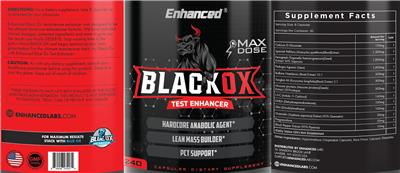
Supplement Facts
The label details for Black Ox by Enhanced, sourced from the NIH Dietary Supplement Label Database.
Supplement Facts
| Ingredient | Amount | % DV |
|---|---|---|
| Calcium D-Glucarate | 150 mg | -- |
| Pregnenolone | 50 mg | -- |
| Indole-3-Carbinol | 160 mg | -- |
| Black Pepper Extract | 10 mg | -- |
| Tongkat Ali Root Extract | 300 mg | -- |
| Dehydroepiandrosterone | 100 mg | -- |
| Fenugreek Seed Extract | 1000 mg | -- |
| Mucuna pruriens Seed Extract | 200 mg | -- |
| Quercetin | 50 mg | -- |
| Diindoly methane | 100 mg | -- |
| Spanish Pellitory Root Extract | 1500 mg | -- |
| Fadogia agrestis | 1000 mg | -- |
| Bulbine natalensis Root Extract | 500 mg | -- |
Other ingredients: Hypromellose, Rice Flour, Calcium Stearate
Tap any ingredient to jump to its full detail below.
These statements are the manufacturer’s wording, reproduced from the product label — the label is saying it, not HelloPharmacist. We don’t verify or endorse them.
Suggested/Recommended/Usage/Directions
Directions: As a dietary supplement, take 8 capsules or as directed by your physician.
For the ultimate testosterone stack, try Black Ox with Enhanced Blue Ox Test Enhancer.
For maximum results stack with Blue OX Test Enhancer
Formula
Enhanced Black Ox testosterone enhancer was designed to be the ultimate hardcore testosterone formula. We have included clinical dosages, patented ingredients and more to give you the results you finally DESERVE. Stop wasting time in the gym without BLACK OX and begin optimizing your lean gains today!
Precautions
Caution: As with any dietary supplement, consult your healthcare practitioner before using this product.
Keep out of reach of children.
Storage
Store in a cool dry place.
FDA Disclaimer Statement
These statements have not been evaluated by the Food and Drug Administration. This product is not intended to diagnose, treat, cure or prevent any disease.
Seals/Symbols
Made in USA with Global and Domestic Ingredients GMP Quality Good Manufacturing Practice Certification
Formulation
Test enhancer Hardcore Anabolic Agent Lean mass builder PCT support
FDA Statement of Identity
Dietary Supplement
General Statements
Max Dose
Is this label outdated? Report a formula or label change and our pharmacy team will review it.
Black Ox by Enhanced label
The label scan from the NIH Dietary Supplement Label Database. Tap to enlarge.
Label images are published by the NIH Dietary Supplement Label Database for the version of this product on file. Always read your actual product label.
View the full label (PDF)The Ingredients in Black Ox by Enhanced
These are the 13 active ingredients this product is made of. Select any to open its full monograph.
Serving size8 Capsule(s) Dosage formCapsule Servings per container30 Amounts shown are per serving.
Most supplement products combine several ingredients, and a medication can interact with the product through any one of them. Each ingredient below shows whether it has known drug interactions.
Calcium D-Glucarate
Interacts with168 drugs
Calcium is an essential mineral your body needs for strong bones, nerve signaling, and muscle function, and supplements can help fill gaps when diet f...
Calcium D-Glucarate monograph & interactionsPregnenolone
Interacts with82 drugs
Pregnenolone is a hormone your body makes naturally and a building block for other hormones like cortisol, DHEA, estrogen, and testosterone. It is sol...
Pregnenolone monograph & interactionsIndole-3-Carbinol
Interacts with294 drugs
Indole-3-carbinol (I3C) is a compound formed when you eat cruciferous vegetables like broccoli and cabbage, and it is sold as a supplement mainly for...
Indole-3-Carbinol monograph & interactionsBlack Pepper Extract
Interacts with1,019 drugs
Black pepper is a common kitchen spice that is generally safe in the amounts used in food. Its extract, piperine, is mostly added to supplements to he...
Black Pepper Extract monograph & interactionsTongkat Ali Root Extract
Interacts with248 drugs
Eurycoma longifolia (tongkat ali) is a Southeast Asian herb most popular for supporting testosterone, libido, and male fertility, with some small huma...
Tongkat Ali Root Extract monograph & interactionsDehydroepiandrosterone
Interacts with776 drugs
DHEA is a natural hormone that the body makes and that declines with age, and it is sold as a supplement claiming many benefits. The evidence is mixed...
Dehydroepiandrosterone monograph & interactionsFenugreek Seed Extract
Interacts with389 drugs
Fenugreek is a common kitchen spice that is also taken as a supplement, mainly for blood sugar, cholesterol, and to support breast milk production. So...
Fenugreek Seed Extract monograph & interactionsMucuna pruriens Seed Extract
Interacts with193 drugs
Cowhage (Mucuna pruriens) is a tropical legume best known as a natural source of L-dopa, the compound the body turns into dopamine. It is most studied...
Mucuna pruriens Seed Extract monograph & interactionsQuercetin
Interacts with1,169 drugs
Quercetin is a plant flavonoid with antioxidant and anti-inflammatory properties found in many common foods and sold as a supplement. While early rese...
Quercetin monograph & interactionsDiindoly methane
Interacts with269 drugs
Diindolylmethane (DIM) is a compound made when your body digests cruciferous vegetables, and it is sold as a supplement mainly for hormone balance and...
Diindoly methane monograph & interactionsSpanish Pellitory Root Extract
No knowninteractions
Pellitory-of-the-wall is a wild plant traditionally used as a diuretic and for urinary and kidney complaints, but modern human studies are very limite...
Spanish Pellitory Root Extract monograph & interactionsFadogia agrestis
No knowninteractions
Fadogia agrestis is a West African shrub marketed as a testosterone booster, but human evidence is essentially nonexistent and what we know comes most...
Fadogia agrestis monograph & interactionsBulbine natalensis Root Extract
Interacts with919 drugs
Bulbine natalensis is a South African plant marketed mainly as a testosterone-boosting and libido supplement, but the human evidence is essentially ab...
Bulbine natalensis Root Extract monograph & interactionsOther (inactive) ingredients: Hypromellose, Rice Flour, Calcium Stearate. These complete the product’s ingredient list but are not active constituents.
Black Ox by Enhanced Drug Interactions
HelloPharmacist Interaction Report
Black Ox by Enhanced contains 13 ingredients, several of which interact with medications.
The most serious interaction involves Mucuna pruriens Seed Extract, which contains levodopa and poses Major-severity risks with three drug types: it can cause dangerous drops in blood pressure (hypotension) when combined with methyldopa, can trigger a life-threatening spike in blood pressure (hypertensive crisis) with monoamine oxidase inhibitors (MAOIs), and significantly increases the risk of levodopa-related side effects when taken alongside levodopa itself.
Read the full breakdown — every affected drug type, severity by severity
Calcium D-Glucarate, the lead ingredient, carries Major-severity interactions with two HIV medications—dolutegravir and elvitegravir—by reducing their blood levels enough to compromise their effectiveness. It also poses a Major risk with the antibiotic ceftriaxone when given intravenously, as the combination can form dangerous deposits in the lungs and kidneys.
Moderate interactions from calcium affect thyroid hormone (levothyroxine), heart medications (sotalol, diltiazem), and others through absorption problems or chelation (binding).
Black Pepper Extract, Pregnenolone, Indole-3-Carbinol, DHEA, Fenugreek Seed Extract, Quercetin, Diindolylmethane, and Bulbine natalensis Root Extract each carry Moderate interactions across multiple drug categories—blood thinners, diabetes medications, antidepressants, hormone therapies, and cardiac drugs among them. Tongkat Ali Root Extract and Spanish Pellitory Root Extract have minimal or no documented interactions.
Altogether, these interactions span 1,388 individual medications.
Use the medication checker on this page to verify your exact prescriptions and over-the-counter drugs before starting this product.
Check your own medications below · Editorial policy · How we use AI
Want to check YOUR meds against Black Ox?
Ask about interactions with your drugs in plain English — “Can I take it with lisinopril?” — and we find you the answer in seconds, ingredient by ingredient.
Go to the checkerIngredients driving the most interactions
Individual Drug Interactions
The ingredients in Black Ox interact with 1,407 drugs. Click any drug to see the details.
11 of the 13 ingredients in Black Ox interact with drugs. Each result below shows which ingredient is responsible. Quercetin Black Pepper Extract Bulbine natalensis Root Extract Dehydroepiandrosterone Fenugreek Seed Extract Indole-3-Carbinol Diindoly methane Tongkat Ali Root Extract Mucuna pruriens Seed Extract Calcium D-Glucarate Pregnenolone
AmphetamineAdensys XR-ODT, Adzenys ER, Dyanavel XR, Mydayis
How Amphetamine interacts with Black Ox — through 3 ingredients. Tap an ingredient for the detail:
Mucuna Pruriens Seed ExtractMonoamine Oxidase Inhibitors (maois) Major
Interaction Summary
Theoretically, concomitant use of cowhage and non-selective MAOIs might increase the risk of hypertensive crisis.
Read the full Mucuna Pruriens Seed Extract + Amphetamine interactionBlack Pepper ExtractCytochrome P450 2d6 (cyp2d6) Substrates Moderate
Interaction Summary
Theoretically, black pepper might increase levels of drugs metabolized by CYP2D6.
Read the full Black Pepper Extract + Amphetamine interactionQuercetinCytochrome P450 2d6 (cyp2d6) Substrates Moderate
Interaction Summary
Theoretically, concomitant use might increase the levels and adverse effects of CYP2D6 substrates.
Read the full Quercetin + Amphetamine interactionBenserazide, LevodopaMadopar, Prolopa
How Benserazide, Levodopa interacts with Black Ox — through 1 ingredient. Tap an ingredient for the detail:
Mucuna Pruriens Seed ExtractLevodopa Major
Interaction Summary
Concomitant use can increase the risk of levodopa-related adverse effects.
Read the full Mucuna Pruriens Seed Extract + Benserazide, Levodopa interactionCarbidopa, LevodopaDhivy, Rytary, Sinemet, Sinemet CR
How Carbidopa, Levodopa interacts with Black Ox — through 1 ingredient. Tap an ingredient for the detail:
Mucuna Pruriens Seed ExtractLevodopa Major
Interaction Summary
Concomitant use can increase the risk of levodopa-related adverse effects.
Read the full Mucuna Pruriens Seed Extract + Carbidopa, Levodopa interactionCarbidopa, Levodopa, EntacaponeStalevo
How Carbidopa, Levodopa, Entacapone interacts with Black Ox — through 1 ingredient. Tap an ingredient for the detail:
Mucuna Pruriens Seed ExtractLevodopa Major
Interaction Summary
Concomitant use can increase the risk of levodopa-related adverse effects.
Read the full Mucuna Pruriens Seed Extract + Carbidopa, Levodopa, Entacapone interactionCeftriaxoneRocephin
How Ceftriaxone interacts with Black Ox — through 2 ingredients. Tap an ingredient for the detail:
Calcium D-glucarateCeftriaxone (rocephin) Major
Interaction Summary
Co-administration of intravenous calcium and ceftriaxone can result in precipitation of a ceftriaxone-calcium salt in the lungs and kidneys.
Read the full Calcium D-glucarate + Ceftriaxone interactionQuercetinOrganic Anion Transporter 3 (oat3) Substrates, Organic Anion Transporter 1 (oat1) Substrates Moderate
Interaction Summary
Theoretically, concomitant use might increase the effects and adverse effects of OAT3 substrates.
Read the full Quercetin + Ceftriaxone interactionChlorothiazide, MethyldopaAldochlor, Aldoclor 150, Aldoclor 250
How Chlorothiazide, Methyldopa interacts with Black Ox — through 5 ingredients. Tap an ingredient for the detail:
Mucuna Pruriens Seed ExtractMethyldopa (aldomet) Major
Interaction Summary
Theoretically, concomitant use of cowhage and methyldopa might increase the risk of hypotension.
Read the full Mucuna Pruriens Seed Extract + Chlorothiazide, Methyldopa interactionCalcium D-glucarateThiazide Diuretics Moderate
Interaction Summary
Taking calcium along with thiazides might increase the risk of hypercalcemia and renal failure.
Read the full Calcium D-glucarate + Chlorothiazide, Methyldopa interactionDiindoly MethaneDiuretic Drugs Moderate
Interaction Summary
Theoretically, diindolylmethane might increase the risk of hyponatremia if used with sodium-depleting diuretics.
Read the full Diindoly Methane + Chlorothiazide, Methyldopa interactionQuercetinAntihypertensive Drugs Moderate
Interaction Summary
Theoretically, taking quercetin with antihypertensive drugs might increase the risk of hypotension.
Read the full Quercetin + Chlorothiazide, Methyldopa interactionFenugreek Seed ExtractAntihypertensive Drugs Minor
Interaction Summary
Fenugreek may also have an additive effect on blood pressure-lowering medications.
Read the full Fenugreek Seed Extract + Chlorothiazide, Methyldopa interactionCobicistat, Elvitegravir, Emtricitabine, Tenofovir Alafenamide FumarateGenvoya
How Cobicistat, Elvitegravir, Emtricitabine, Tenofovir Alafenamide Fumarate interacts with Black Ox — through 5 ingredients. Tap an ingredient for the detail:
Calcium D-glucarateElvitegravir (vitekta), Bictegravir/emtricitabine/tenofovir Alafenamide (biktarvy) Major
Interaction Summary
Calcium seems to reduce levels of elvitegravir.
Read the full Calcium D-glucarate + Cobicistat, Elvitegravir, Emtricitabine, Tenofovir Alafenamide Fumarate interactionBlack Pepper ExtractP-glycoprotein Substrates, Cytochrome P450 3a4 (cyp3a4) Substrates Moderate
Interaction Summary
Theoretically, black pepper might increase levels of P-glycoprotein substrates.
Read the full Black Pepper Extract + Cobicistat, Elvitegravir, Emtricitabine, Tenofovir Alafenamide Fumarate interactionQuercetinP-glycoprotein Substrates, Cytochrome P450 3a4 (cyp3a4) Substrates Moderate
Interaction Summary
Theoretically, concomitant use might alter the effects and adverse effects of P-glycoprotein substrates.
Read the full Quercetin + Cobicistat, Elvitegravir, Emtricitabine, Tenofovir Alafenamide Fumarate interactionDehydroepiandrosteroneCytochrome P450 3a4 (cyp3a4) Substrates Moderate
Interaction Summary
Theoretically, DHEA might increase the levels of drugs metabolized by CYP3A4.
Read the full Dehydroepiandrosterone + Cobicistat, Elvitegravir, Emtricitabine, Tenofovir Alafenamide Fumarate interactionBulbine Natalensis Root ExtractP-glycoprotein Substrates, Cytochrome P450 3a4 (cyp3a4) Substrates Moderate
Interaction Summary
Theoretically, Bulbine natalensis stem might increase the levels and clinical effects of p-glycoprotein substrates.
Read the full Bulbine Natalensis Root Extract + Cobicistat, Elvitegravir, Emtricitabine, Tenofovir Alafenamide Fumarate interactionDolutegravirTivicay
How Dolutegravir interacts with Black Ox — through 4 ingredients. Tap an ingredient for the detail:
Calcium D-glucarateDolutegravir (tivicay) Major
Interaction Summary
Calcium seems to reduce levels of dolutegravir.
Read the full Calcium D-glucarate + Dolutegravir interactionQuercetinP-glycoprotein Substrates Moderate
Interaction Summary
Theoretically, concomitant use might alter the effects and adverse effects of P-glycoprotein substrates.
Read the full Quercetin + Dolutegravir interactionBulbine Natalensis Root ExtractP-glycoprotein Substrates Moderate
Interaction Summary
Theoretically, Bulbine natalensis stem might increase the levels and clinical effects of p-glycoprotein substrates.
Read the full Bulbine Natalensis Root Extract + Dolutegravir interactionBlack Pepper ExtractP-glycoprotein Substrates Moderate
Interaction Summary
Theoretically, black pepper might increase levels of P-glycoprotein substrates.
Read the full Black Pepper Extract + Dolutegravir interactionDolutegravir, Emtricitabine, Tenofovir AlafenamideDolutegravir, Emtricitabine, Tenofovir Alafenamide
How Dolutegravir, Emtricitabine, Tenofovir Alafenamide interacts with Black Ox — through 4 ingredients. Tap an ingredient for the detail:
Calcium D-glucarateDolutegravir (tivicay), Bictegravir/emtricitabine/tenofovir Alafenamide (biktarvy) Major
Interaction Summary
Calcium seems to reduce levels of dolutegravir.
Read the full Calcium D-glucarate + Dolutegravir, Emtricitabine, Tenofovir Alafenamide interactionBlack Pepper ExtractP-glycoprotein Substrates Moderate
Interaction Summary
Theoretically, black pepper might increase levels of P-glycoprotein substrates.
Read the full Black Pepper Extract + Dolutegravir, Emtricitabine, Tenofovir Alafenamide interactionBulbine Natalensis Root ExtractP-glycoprotein Substrates Moderate
Interaction Summary
Theoretically, Bulbine natalensis stem might increase the levels and clinical effects of p-glycoprotein substrates.
Read the full Bulbine Natalensis Root Extract + Dolutegravir, Emtricitabine, Tenofovir Alafenamide interactionQuercetinP-glycoprotein Substrates Moderate
Interaction Summary
Theoretically, concomitant use might alter the effects and adverse effects of P-glycoprotein substrates.
Read the full Quercetin + Dolutegravir, Emtricitabine, Tenofovir Alafenamide interactionDolutegravir, RilpivirineJuluca
How Dolutegravir, Rilpivirine interacts with Black Ox — through 5 ingredients. Tap an ingredient for the detail:
Calcium D-glucarateDolutegravir (tivicay) Major
Interaction Summary
Calcium seems to reduce levels of dolutegravir.
Read the full Calcium D-glucarate + Dolutegravir, Rilpivirine interactionQuercetinP-glycoprotein Substrates, Cytochrome P450 3a4 (cyp3a4) Substrates Moderate
Interaction Summary
Theoretically, concomitant use might alter the effects and adverse effects of P-glycoprotein substrates.
Read the full Quercetin + Dolutegravir, Rilpivirine interactionBulbine Natalensis Root ExtractP-glycoprotein Substrates, Cytochrome P450 3a4 (cyp3a4) Substrates Moderate
Interaction Summary
Theoretically, Bulbine natalensis stem might increase the levels and clinical effects of p-glycoprotein substrates.
Read the full Bulbine Natalensis Root Extract + Dolutegravir, Rilpivirine interactionBlack Pepper ExtractP-glycoprotein Substrates, Cytochrome P450 3a4 (cyp3a4) Substrates Moderate
Interaction Summary
Theoretically, black pepper might increase levels of P-glycoprotein substrates.
Read the full Black Pepper Extract + Dolutegravir, Rilpivirine interactionDehydroepiandrosteroneCytochrome P450 3a4 (cyp3a4) Substrates Moderate
Interaction Summary
Theoretically, DHEA might increase the levels of drugs metabolized by CYP3A4.
Read the full Dehydroepiandrosterone + Dolutegravir, Rilpivirine interactionElvitegravirVitekta
How Elvitegravir interacts with Black Ox — through 5 ingredients. Tap an ingredient for the detail:
Calcium D-glucarateElvitegravir (vitekta) Major
Interaction Summary
Calcium seems to reduce levels of elvitegravir.
Read the full Calcium D-glucarate + Elvitegravir interactionQuercetinCytochrome P450 3a4 (cyp3a4) Substrates Moderate
Interaction Summary
Theoretically, concomitant use might alter the effects and adverse effects of CYP3A4 substrates.
Read the full Quercetin + Elvitegravir interactionBulbine Natalensis Root ExtractCytochrome P450 3a4 (cyp3a4) Substrates Moderate
Interaction Summary
Theoretically, Bulbine natalensis stem might reduce the levels and clinical effects of CYP3A4 substrates.
Read the full Bulbine Natalensis Root Extract + Elvitegravir interactionBlack Pepper ExtractCytochrome P450 3a4 (cyp3a4) Substrates Moderate
Interaction Summary
Theoretically, black pepper might increase levels of drugs metabolized by CYP3A4.
Read the full Black Pepper Extract + Elvitegravir interactionDehydroepiandrosteroneCytochrome P450 3a4 (cyp3a4) Substrates Moderate
Interaction Summary
Theoretically, DHEA might increase the levels of drugs metabolized by CYP3A4.
Read the full Dehydroepiandrosterone + Elvitegravir interactionElvitegravir, Cobicistat, Emtricitabine, Tenofovir Disoproxil FumarateStribild
How Elvitegravir, Cobicistat, Emtricitabine, Tenofovir Disoproxil Fumarate interacts with Black Ox — through 5 ingredients. Tap an ingredient for the detail:
Calcium D-glucarateElvitegravir (vitekta), Bictegravir/emtricitabine/tenofovir Alafenamide (biktarvy) Major
Interaction Summary
Calcium seems to reduce levels of elvitegravir.
Read the full Calcium D-glucarate + Elvitegravir, Cobicistat, Emtricitabine, Tenofovir Disoproxil Fumarate interactionDehydroepiandrosteroneCytochrome P450 3a4 (cyp3a4) Substrates Moderate
Interaction Summary
Theoretically, DHEA might increase the levels of drugs metabolized by CYP3A4.
Read the full Dehydroepiandrosterone + Elvitegravir, Cobicistat, Emtricitabine, Tenofovir Disoproxil Fumarate interactionBulbine Natalensis Root ExtractCytochrome P450 3a4 (cyp3a4) Substrates Moderate
Interaction Summary
Theoretically, Bulbine natalensis stem might reduce the levels and clinical effects of CYP3A4 substrates.
Read the full Bulbine Natalensis Root Extract + Elvitegravir, Cobicistat, Emtricitabine, Tenofovir Disoproxil Fumarate interactionQuercetinCytochrome P450 3a4 (cyp3a4) Substrates Moderate
Interaction Summary
Theoretically, concomitant use might alter the effects and adverse effects of CYP3A4 substrates.
Read the full Quercetin + Elvitegravir, Cobicistat, Emtricitabine, Tenofovir Disoproxil Fumarate interactionBlack Pepper ExtractCytochrome P450 3a4 (cyp3a4) Substrates Moderate
Interaction Summary
Theoretically, black pepper might increase levels of drugs metabolized by CYP3A4.
Read the full Black Pepper Extract + Elvitegravir, Cobicistat, Emtricitabine, Tenofovir Disoproxil Fumarate interactionHydrochlorothiazide, MethyldopaAldoril 15, Aldoril 25, Aldoril D30, Methazide
How Hydrochlorothiazide, Methyldopa interacts with Black Ox — through 5 ingredients. Tap an ingredient for the detail:
Mucuna Pruriens Seed ExtractMethyldopa (aldomet) Major
Interaction Summary
Theoretically, concomitant use of cowhage and methyldopa might increase the risk of hypotension.
Read the full Mucuna Pruriens Seed Extract + Hydrochlorothiazide, Methyldopa interactionCalcium D-glucarateThiazide Diuretics Moderate
Interaction Summary
Taking calcium along with thiazides might increase the risk of hypercalcemia and renal failure.
Read the full Calcium D-glucarate + Hydrochlorothiazide, Methyldopa interactionQuercetinOrganic Anion Transporter 1 (oat1) Substrates, Organic Anion Transporter 3 (oat3) Substrates +1 Moderate
Interaction Summary
Theoretically, concomitant use might increase the effects and adverse effects of OAT1 substrates.
Read the full Quercetin + Hydrochlorothiazide, Methyldopa interactionDiindoly MethaneDiuretic Drugs Moderate
Interaction Summary
Theoretically, diindolylmethane might increase the risk of hyponatremia if used with sodium-depleting diuretics.
Read the full Diindoly Methane + Hydrochlorothiazide, Methyldopa interactionFenugreek Seed ExtractAntihypertensive Drugs Minor
Interaction Summary
Fenugreek may also have an additive effect on blood pressure-lowering medications.
Read the full Fenugreek Seed Extract + Hydrochlorothiazide, Methyldopa interactionIsocarboxazidMarplan
How Isocarboxazid interacts with Black Ox — through 2 ingredients. Tap an ingredient for the detail:
Mucuna Pruriens Seed ExtractMonoamine Oxidase Inhibitors (maois) Major
Interaction Summary
Theoretically, concomitant use of cowhage and non-selective MAOIs might increase the risk of hypertensive crisis.
Read the full Mucuna Pruriens Seed Extract + Isocarboxazid interactionDehydroepiandrosteroneAntidepressant Drugs Moderate
Interaction Summary
Theoretically, DHEA might increase the risk of psychiatric adverse events when used with antidepressants.
Read the full Dehydroepiandrosterone + Isocarboxazid interactionLevodopaInbrija, Larodopa
How Levodopa interacts with Black Ox — through 1 ingredient. Tap an ingredient for the detail:
Mucuna Pruriens Seed ExtractLevodopa Major
Interaction Summary
Concomitant use can increase the risk of levodopa-related adverse effects.
Read the full Mucuna Pruriens Seed Extract + Levodopa interactionLevodopa, CarbidopaDuodopa
How Levodopa, Carbidopa interacts with Black Ox — through 1 ingredient. Tap an ingredient for the detail:
Mucuna Pruriens Seed ExtractLevodopa Major
Interaction Summary
Concomitant use can increase the risk of levodopa-related adverse effects.
Read the full Mucuna Pruriens Seed Extract + Levodopa, Carbidopa interactionMethyldopaAldomet, Methyldopa
How Methyldopa interacts with Black Ox — through 3 ingredients. Tap an ingredient for the detail:
Mucuna Pruriens Seed ExtractMethyldopa (aldomet) Major
Interaction Summary
Theoretically, concomitant use of cowhage and methyldopa might increase the risk of hypotension.
Read the full Mucuna Pruriens Seed Extract + Methyldopa interactionQuercetinAntihypertensive Drugs Moderate
Interaction Summary
Theoretically, taking quercetin with antihypertensive drugs might increase the risk of hypotension.
Read the full Quercetin + Methyldopa interactionFenugreek Seed ExtractAntihypertensive Drugs Minor
Interaction Summary
Fenugreek may also have an additive effect on blood pressure-lowering medications.
Read the full Fenugreek Seed Extract + Methyldopa interactionMoclobemideManerix, Moclobemide
How Moclobemide interacts with Black Ox — through 3 ingredients. Tap an ingredient for the detail:
Mucuna Pruriens Seed ExtractMonoamine Oxidase Inhibitors (maois) Major
Interaction Summary
Theoretically, concomitant use of cowhage and non-selective MAOIs might increase the risk of hypertensive crisis.
Read the full Mucuna Pruriens Seed Extract + Moclobemide interactionDehydroepiandrosteroneAntidepressant Drugs Moderate
Interaction Summary
Theoretically, DHEA might increase the risk of psychiatric adverse events when used with antidepressants.
Read the full Dehydroepiandrosterone + Moclobemide interactionTongkat Ali Root ExtractCytochrome P450 2c19 (cyp2c19) Substrates Minor
Interaction Summary
Theoretically, Eurycoma longifolia might increase levels of CYP2C19 substrates.
Read the full Tongkat Ali Root Extract + Moclobemide interactionOzanimod HydrochlorideZeposia
How Ozanimod Hydrochloride interacts with Black Ox — through 2 ingredients. Tap an ingredient for the detail:
Mucuna Pruriens Seed ExtractMonoamine Oxidase Inhibitors (maois) Major
Interaction Summary
Theoretically, concomitant use of cowhage and non-selective MAOIs might increase the risk of hypertensive crisis.
Read the full Mucuna Pruriens Seed Extract + Ozanimod Hydrochloride interactionQuercetinCytochrome P450 2c8 (cyp2c8) Substrates Moderate
Interaction Summary
Theoretically, concomitant use might increase the levels and adverse effects of CYP2C8 substrates.
Read the full Quercetin + Ozanimod Hydrochloride interactionPhenelzine SulfateNardil
How Phenelzine Sulfate interacts with Black Ox — through 2 ingredients. Tap an ingredient for the detail:
Mucuna Pruriens Seed ExtractMonoamine Oxidase Inhibitors (maois) Major
Interaction Summary
Theoretically, concomitant use of cowhage and non-selective MAOIs might increase the risk of hypertensive crisis.
Read the full Mucuna Pruriens Seed Extract + Phenelzine Sulfate interactionDehydroepiandrosteroneAntidepressant Drugs Moderate
Interaction Summary
Theoretically, DHEA might increase the risk of psychiatric adverse events when used with antidepressants.
Read the full Dehydroepiandrosterone + Phenelzine Sulfate interactionRasagilineAzilect
How Rasagiline interacts with Black Ox — through 6 ingredients. Tap an ingredient for the detail:
Mucuna Pruriens Seed ExtractMonoamine Oxidase Inhibitors (maois) Major
Interaction Summary
Theoretically, concomitant use of cowhage and non-selective MAOIs might increase the risk of hypertensive crisis.
Read the full Mucuna Pruriens Seed Extract + Rasagiline interactionIndole-3-carbinolCytochrome P450 1a2 (cyp1a2) Substrates Moderate
Interaction Summary
Theoretically, indole-3-carbinol might increase the metabolism of CYP1A2 substrates and lower serum concentrations.
Read the full Indole-3-carbinol + Rasagiline interactionBulbine Natalensis Root ExtractCytochrome P450 1a2 (cyp1a2) Substrates Moderate
Interaction Summary
Theoretically, Bulbine natalensis stem might reduce the levels and clinical effects of CYP1A2 substrates.
Read the full Bulbine Natalensis Root Extract + Rasagiline interactionDiindoly MethaneCytochrome P450 1a2 (cyp1a2) Substrates Minor
Interaction Summary
Theoretically, diindolylmethane might lower serum levels of CYP1A2 substrates.
Read the full Diindoly Methane + Rasagiline interactionTongkat Ali Root ExtractCytochrome P450 1a2 (cyp1a2) Substrates Minor
Interaction Summary
Theoretically, Eurycoma longifolia might increase levels CYP1A2 substrates.
Read the full Tongkat Ali Root Extract + Rasagiline interactionBlack Pepper ExtractCytochrome P450 1a2 (cyp1a2) Substrates Minor
Interaction Summary
Theoretically, black pepper might decrease levels and clinical effects of drugs metabolized by CYP1A2.
Read the full Black Pepper Extract + Rasagiline interactionSafinamide MesylateXadago
How Safinamide Mesylate interacts with Black Ox — through 1 ingredient. Tap an ingredient for the detail:
Mucuna Pruriens Seed ExtractMonoamine Oxidase Inhibitors (maois) Major
Interaction Summary
Theoretically, concomitant use of cowhage and non-selective MAOIs might increase the risk of hypertensive crisis.
Read the full Mucuna Pruriens Seed Extract + Safinamide Mesylate interactionSelegilineCarbex, Eldepryl, Emsam, Zelapar
How Selegiline interacts with Black Ox — through 2 ingredients. Tap an ingredient for the detail:
Mucuna Pruriens Seed ExtractMonoamine Oxidase Inhibitors (maois) Major
Interaction Summary
Theoretically, concomitant use of cowhage and non-selective MAOIs might increase the risk of hypertensive crisis.
Read the full Mucuna Pruriens Seed Extract + Selegiline interactionDehydroepiandrosteroneAntidepressant Drugs Moderate
Interaction Summary
Theoretically, DHEA might increase the risk of psychiatric adverse events when used with antidepressants.
Read the full Dehydroepiandrosterone + Selegiline interactionTranylcypromineParnate
How Tranylcypromine interacts with Black Ox — through 2 ingredients. Tap an ingredient for the detail:
Mucuna Pruriens Seed ExtractMonoamine Oxidase Inhibitors (maois) Major
Interaction Summary
Theoretically, concomitant use of cowhage and non-selective MAOIs might increase the risk of hypertensive crisis.
Read the full Mucuna Pruriens Seed Extract + Tranylcypromine interactionDehydroepiandrosteroneAntidepressant Drugs Moderate
Interaction Summary
Theoretically, DHEA might increase the risk of psychiatric adverse events when used with antidepressants.
Read the full Dehydroepiandrosterone + Tranylcypromine interactionAdo-trastuzumab EmtansineKadcyla
How Ado-trastuzumab Emtansine interacts with Black Ox — through 4 ingredients. Tap an ingredient for the detail:
QuercetinCytochrome P450 3a4 (cyp3a4) Substrates Moderate
Interaction Summary
Theoretically, concomitant use might alter the effects and adverse effects of CYP3A4 substrates.
Read the full Quercetin + Ado-trastuzumab Emtansine interactionBulbine Natalensis Root ExtractCytochrome P450 3a4 (cyp3a4) Substrates Moderate
Interaction Summary
Theoretically, Bulbine natalensis stem might reduce the levels and clinical effects of CYP3A4 substrates.
Read the full Bulbine Natalensis Root Extract + Ado-trastuzumab Emtansine interactionBlack Pepper ExtractCytochrome P450 3a4 (cyp3a4) Substrates Moderate
Interaction Summary
Theoretically, black pepper might increase levels of drugs metabolized by CYP3A4.
Read the full Black Pepper Extract + Ado-trastuzumab Emtansine interactionDehydroepiandrosteroneCytochrome P450 3a4 (cyp3a4) Substrates Moderate
Interaction Summary
Theoretically, DHEA might increase the levels of drugs metabolized by CYP3A4.
Read the full Dehydroepiandrosterone + Ado-trastuzumab Emtansine interactionAbciximabReoPro
How Abciximab interacts with Black Ox — through 5 ingredients. Tap an ingredient for the detail:
Bulbine Natalensis Root ExtractAnticoagulant/antiplatelet Drugs Moderate
Interaction Summary
Theoretically, combining Bulbine natalensis leaf with drugs that have anticoagulant or antiplatelet activity might increase the risk of bruising and bleeding.
Read the full Bulbine Natalensis Root Extract + Abciximab interactionIndole-3-carbinolAnticoagulant/antiplatelet Drugs Moderate
Interaction Summary
Theoretically, indole-3-carbinol might increase the risk of bleeding when used with antiplatelet or anticoagulant drugs.
Read the full Indole-3-carbinol + Abciximab interactionBlack Pepper ExtractAnticoagulant/antiplatelet Drugs Moderate
Interaction Summary
Theoretically, black pepper might increase the risk of bleeding when taken with antiplatelet or anticoagulant drugs.
Read the full Black Pepper Extract + Abciximab interactionDehydroepiandrosteroneAnticoagulant/antiplatelet Drugs Moderate
Interaction Summary
Theoretically, DHEA might increase the risk of bleeding if used with anticoagulant or antiplatelet drugs.
Read the full Dehydroepiandrosterone + Abciximab interactionFenugreek Seed ExtractAnticoagulant/antiplatelet Drugs Moderate
Interaction Summary
Theoretically, fenugreek might have additive effects when used with anticoagulant or antiplatelet drugs.
Read the full Fenugreek Seed Extract + Abciximab interactionAbemaciclibVerzenio
How Abemaciclib interacts with Black Ox — through 4 ingredients. Tap an ingredient for the detail:
QuercetinCytochrome P450 3a4 (cyp3a4) Substrates Moderate
Interaction Summary
Theoretically, concomitant use might alter the effects and adverse effects of CYP3A4 substrates.
Read the full Quercetin + Abemaciclib interactionDehydroepiandrosteroneCytochrome P450 3a4 (cyp3a4) Substrates Moderate
Interaction Summary
Theoretically, DHEA might increase the levels of drugs metabolized by CYP3A4.
Read the full Dehydroepiandrosterone + Abemaciclib interactionBulbine Natalensis Root ExtractCytochrome P450 3a4 (cyp3a4) Substrates Moderate
Interaction Summary
Theoretically, Bulbine natalensis stem might reduce the levels and clinical effects of CYP3A4 substrates.
Read the full Bulbine Natalensis Root Extract + Abemaciclib interactionBlack Pepper ExtractCytochrome P450 3a4 (cyp3a4) Substrates Moderate
Interaction Summary
Theoretically, black pepper might increase levels of drugs metabolized by CYP3A4.
Read the full Black Pepper Extract + Abemaciclib interactionAbiraterone
How Abiraterone interacts with Black Ox — through 4 ingredients. Tap an ingredient for the detail:
Black Pepper ExtractCytochrome P450 3a4 (cyp3a4) Substrates Moderate
Interaction Summary
Theoretically, black pepper might increase levels of drugs metabolized by CYP3A4.
Read the full Black Pepper Extract + Abiraterone interactionDehydroepiandrosteroneCytochrome P450 3a4 (cyp3a4) Substrates Moderate
Interaction Summary
Theoretically, DHEA might increase the levels of drugs metabolized by CYP3A4.
Read the full Dehydroepiandrosterone + Abiraterone interactionQuercetinCytochrome P450 3a4 (cyp3a4) Substrates Moderate
Interaction Summary
Theoretically, concomitant use might alter the effects and adverse effects of CYP3A4 substrates.
Read the full Quercetin + Abiraterone interactionBulbine Natalensis Root ExtractCytochrome P450 3a4 (cyp3a4) Substrates Moderate
Interaction Summary
Theoretically, Bulbine natalensis stem might reduce the levels and clinical effects of CYP3A4 substrates.
Read the full Bulbine Natalensis Root Extract + Abiraterone interactionAbiraterone AcetateYonsa, Zytiga
How Abiraterone Acetate interacts with Black Ox — through 4 ingredients. Tap an ingredient for the detail:
Bulbine Natalensis Root ExtractCytochrome P450 3a4 (cyp3a4) Substrates Moderate
Interaction Summary
Theoretically, Bulbine natalensis stem might reduce the levels and clinical effects of CYP3A4 substrates.
Read the full Bulbine Natalensis Root Extract + Abiraterone Acetate interactionBlack Pepper ExtractCytochrome P450 3a4 (cyp3a4) Substrates Moderate
Interaction Summary
Theoretically, black pepper might increase levels of drugs metabolized by CYP3A4.
Read the full Black Pepper Extract + Abiraterone Acetate interactionQuercetinCytochrome P450 3a4 (cyp3a4) Substrates Moderate
Interaction Summary
Theoretically, concomitant use might alter the effects and adverse effects of CYP3A4 substrates.
Read the full Quercetin + Abiraterone Acetate interactionDehydroepiandrosteroneCytochrome P450 3a4 (cyp3a4) Substrates Moderate
Interaction Summary
Theoretically, DHEA might increase the levels of drugs metabolized by CYP3A4.
Read the full Dehydroepiandrosterone + Abiraterone Acetate interactionAbrocitinibCibinqo
How Abrocitinib interacts with Black Ox — through 7 ingredients. Tap an ingredient for the detail:
DehydroepiandrosteroneAnticoagulant/antiplatelet Drugs Moderate
Interaction Summary
Theoretically, DHEA might increase the risk of bleeding if used with anticoagulant or antiplatelet drugs.
Read the full Dehydroepiandrosterone + Abrocitinib interactionFenugreek Seed ExtractAnticoagulant/antiplatelet Drugs Moderate
Interaction Summary
Theoretically, fenugreek might have additive effects when used with anticoagulant or antiplatelet drugs.
Read the full Fenugreek Seed Extract + Abrocitinib interactionBulbine Natalensis Root ExtractAnticoagulant/antiplatelet Drugs, Cytochrome P450 2c9 (cyp2c9) Substrates Moderate
Interaction Summary
Theoretically, combining Bulbine natalensis leaf with drugs that have anticoagulant or antiplatelet activity might increase the risk of bruising and bleeding.
Read the full Bulbine Natalensis Root Extract + Abrocitinib interactionQuercetinCytochrome P450 2c9 (cyp2c9) Substrates Moderate
Interaction Summary
Theoretically, concomitant use might increase the levels and adverse effects of CYP2C9 substrates.
Read the full Quercetin + Abrocitinib interactionIndole-3-carbinolAnticoagulant/antiplatelet Drugs Moderate
Interaction Summary
Theoretically, indole-3-carbinol might increase the risk of bleeding when used with antiplatelet or anticoagulant drugs.
Read the full Indole-3-carbinol + Abrocitinib interactionBlack Pepper ExtractAnticoagulant/antiplatelet Drugs Moderate
Interaction Summary
Theoretically, black pepper might increase the risk of bleeding when taken with antiplatelet or anticoagulant drugs.
Read the full Black Pepper Extract + Abrocitinib interactionTongkat Ali Root ExtractCytochrome P450 2c19 (cyp2c19) Substrates Minor
Interaction Summary
Theoretically, Eurycoma longifolia might increase levels of CYP2C19 substrates.
Read the full Tongkat Ali Root Extract + Abrocitinib interactionEach ingredient & the kinds of drugs it affects
For each ingredient in Black Ox with known interactions, here are the types of medications they can affect. Open any type for the detail — or search your exact drug in the checker above.
Quercetin
Antidiabetes Drugs
Theoretically, concomitant use of quercetin and antidiabetes drugs might increase the risk of hypoglycemia.
Clinical research suggests that a combination of quercetin, myricetin, and chlorogenic acid reduce levels of fasting glucose in patients with type 2 diabetes, including those already taking antidiabetes agents. The effect of quercetin alone is unknown.
Antihypertensive Drugs
Theoretically, taking quercetin with antihypertensive drugs might increase the risk of hypotension.
Quercetin can modestly decrease blood pressure in people with mild hypertension. Theoretically, it might have additive blood pressure lowering effects when used with antihypertensive drugs.
Cyclosporine (Neoral, Sandimmune)
Theoretically, concomitant use might increase the levels and adverse effects of cyclosporine.
A small study in healthy volunteers shows that pretreatment with quercetin increases plasma levels and prolongs the half-life of a single dose of cyclosporine, possibly due to inhibition of p-glycoprotein or cytochrome P450 3A4 (CYP3A4), which metabolizes cyclosporin.
Cytochrome P450 2C8 (Cyp2C8) Substrates
Theoretically, concomitant use might increase the levels and adverse effects of CYP2C8 substrates.
In vitro research shows that quercetin inhibits CYP2C8. Inhibition of paclitaxel (Taxol) metabolism via CYP2C8 has been reported in vitro. However, a small study in humans found no effect of quercetin on rosiglitazone (Avandia), which is also a CYP2C8 substrate.
Cytochrome P450 2C9 (Cyp2C9) Substrates
Theoretically, concomitant use might increase the levels and adverse effects of CYP2C9 substrates.
A small clinical study in healthy volunteers shows that taking quercetin 500 mg twice daily for 10 days prior to taking diclofenac, a CYP2C9 substrate, increases diclofenac plasma levels by 75% and prolongs the half-life by 32.5%. Animal research also shows that pretreatment with quercetin increases plasma levels and prolongs the half-life of losartan (Cozaar), a substrate of CYP2C9. Furthermore, laboratory research shows that quercetin inhibits CYP2C9.
Cytochrome P450 2D6 (Cyp2D6) Substrates
Theoretically, concomitant use might increase the levels and adverse effects of CYP2D6 substrates.
In vitro research show that quercetin inhibits CYP2D6. This effect has not been reported in humans.
Cytochrome P450 3A4 (Cyp3A4) Substrates
Theoretically, concomitant use might alter the effects and adverse effects of CYP3A4 substrates.
A small clinical study in healthy volunteers shows that pretreatment with quercetin increases plasma levels and prolongs the half-life of a single dose of cyclosporine (Neoral, Sandimmune), a substrate of CYP3A4. Animal research also shows that pretreatment with quercetin increases plasma levels and prolongs the half-life of losartan (Cozaar) and quetiapine (Seroquel), substrates of CYP3A4. Other laboratory research also shows that quercetin inhibits CYP3A4. However, one clinical study shows that quercetin can increase the metabolism of midazolam, a substrate of CYP3A4, and decrease serum concentrations of midazolam by about 24% in some healthy individuals, suggesting possible induction of CYP3A4.
Diclofenac (Voltaren, Others)
Theoretically, concomitant use might increase the levels and adverse effects of diclofenac.
A small clinical study in healthy volunteers shows that taking quercetin 500 mg twice daily for 10 days prior to taking diclofenac increases diclofenac plasma levels by 75% and prolongs the half-life by 32.5%. This is thought to be due to inhibition of CYP2C9 by quercetin.
Losartan (Cozaar)
Theoretically, concomitant use might increase the effects and adverse effects of losartan and decrease the effects of its active metabolite.
Animal research shows that pretreatment with quercetin increases plasma levels and prolongs the half-life of losartan (Cozaar) while decreasing plasma levels of losartan's active metabolite. This metabolite, which is around 10-fold more potent than losartan, is the result of cytochrome P450 (CYP) 2C9- and CYP3A4-mediated transformation of losartan. Additionally, in vitro research shows that quercetin may inhibit P-glycoprotein-mediated efflux of losartan from the intestines, resulting in increased absorption of losartan. These results suggest that concomitant use of quercetin and losartan might increase systemic exposure to losartan while also decreasing plasma concentrations of losartan's active and more potent metabolite.
Midazolam (Versed)
Theoretically, concomitant use might decrease the levels and effects of midazolam.
A small clinical study in healthy volunteers shows that quercetin can increase the metabolism of midazolam, with a decrease in AUC of about 24%.
Mitoxantrone
Theoretically, quercetin might increase the effects and adverse effects of mitoxantrone.
In vitro research shows that quercetin increases the intracellular accumulation and cytotoxicity of mitoxantrone, possibly through inhibition of breast cancer resistance protein (BCRP), of which mitoxantrone is a substrate. So far, this interaction has not been reported in humans.
Organic Anion Transporter 1 (Oat1) Substrates
Theoretically, concomitant use might increase the effects and adverse effects of OAT1 substrates.
In vitro research shows that quercetin is a strong non-competitive inhibitor of OAT1, with half-maximal inhibitory concentration (IC50) values less than 10 mcM. So far, this interaction has not been reported in humans.
Organic Anion Transporter 3 (Oat3) Substrates
Theoretically, concomitant use might increase the effects and adverse effects of OAT3 substrates.
In vitro research shows that quercetin is a strong non-competitive inhibitor of OAT3, with half-maximal inhibitory concentration (IC50) values as low as 0.75 mcM. So far, this interaction has not been reported in humans.
Organic Anion-Transporting Polypeptide Substrates (Oatp)
Theoretically, concomitant use might increase the effects and adverse effects of OATP substrates.
In vitro evidence shows that quercetin can inhibit organic anion-transporting peptide (OATP) 1B1-mediated uptake of estrone-3-sulfate and pravastatin. Furthermore, clinical research in healthy males shows that intake of quercetin along with pravastatin increases the AUC of pravastatin by 24%, prolongs its half-life by 14%, and decreases its apparent clearance by 18%, suggesting that quercetin modestly inhibits the uptake of pravastatin in hepatic cells.
P-Glycoprotein Substrates
Theoretically, concomitant use might alter the effects and adverse effects of P-glycoprotein substrates.
There is preliminary evidence that quercetin inhibits the gastrointestinal P-glycoprotein efflux pump, which might increase the bioavailability and serum levels of drugs transported by the pump. A small study in healthy volunteers reported that pretreatment with quercetin increased bioavailability and plasma levels after a single dose of cyclosporine (Neoral, Sandimmune). Also, two small studies have shown that quercetin might decrease the absorption of talinolol, a substrate transported by the gastrointestinal P-glycoprotein efflux pump. However, in another small study, several days of quercetin treatment did not significantly affect the pharmacokinetics of saquinavir (Invirase). The reason for these discrepancies is not entirely clear. Until more is known, use quercetin cautiously in combination with P-glycoprotein substrates.
Pravastatin (Pravachol)
Theoretically, concomitant use might increase the effects and adverse effects of pravastatin.
In vitro evidence shows that quercetin can inhibit OATP 1B1-mediated uptake of pravastatin. Also, preliminary clinical research in healthy males shows that intake of quercetin along with pravastatin increases the maximum concentration of pravastatin by 24%, prolongs its half-life by 14%, and decreases its apparent clearance by 18%, suggesting that quercetin modestly inhibits the uptake of pravastatin in hepatic cells.
Prazosin (Minipress)
Theoretically, quercetin might increase the effects and adverse effects of prazosin.
In vitro research shows that quercetin inhibits the transcellular efflux of prazosin, possibly through inhibition of breast cancer resistance protein (BCRP), of which prazosin is a substrate. BCRP is an ATP-binding cassette efflux transporter in the intestines, kidneys, and liver. So far, this interaction has not been reported in humans.
Quetiapine (Seroquel)
Theoretically, concomitant use might increase the effects and adverse effects of quetiapine.
Animal research shows that pretreatment with quercetin can increase plasma levels of quetiapine and prolong its clearance, possibly due to inhibition of cytochrome P450 3A4 (CYP3A4) by quercetin. Additionally, the brain-to-plasma ratio of quetiapine concentrations increased, possibly due to inhibition of P-glycoprotein at the blood-brain barrier. This interaction has not been reported in humans.
Quinolone Antibiotics
Theoretically, concomitant use might inhibit the effects of quinolone antibiotics.
In vitro, quercetin binds to the DNA gyrase site on bacteria, which may interfere with the activity of quinolone antibiotics.
Sulfasalazine (Azulfidine)
Theoretically, quercetin might increase the effects and adverse effects of sulfasalazine.
Animal research shows that quercetin increases the maximum serum concentration (Cmax) and area under the curve (AUC) of sulfasalazine, possibly through inhibition of breast cancer resistance protein (BCRP), of which sulfasalazine is a substrate. So far, this interaction has not been reported in humans.
Warfarin (Coumadin)
Theoretically, quercetin may increase the risk of bleeding if used with warfarin.
Animal and in vitro studies show that quercetin might increase serum levels of warfarin. Quercetin and warfarin have the same human serum albumin (HSA) binding site, and in vitro research shows that quercetin has stronger affinity for the HSA binding site and can theoretically displace warfarin, causing higher serum levels of warfarin. Animal research shows that taking quercetin for 2 weeks before initiating warfarin increases the maximum serum level of warfarin by 30%, the half-life by 10%, and the overall exposure by 63% when compared with control. Concomitant administration of quercetin and warfarin, without quercetin pre-treatment, also increased these measures, but to a lesser degree. Researchers theorize that inhibition of CYP3A4 by quercetin may explain these effects. So far, this interaction has not been reported in humans.
Black Pepper Extract
Anticoagulant/Antiplatelet Drugs
Theoretically, black pepper might increase the risk of bleeding when taken with antiplatelet or anticoagulant drugs.
In vitro research shows that piperine, a constituent of black pepper, seems to inhibit platelet aggregation. This has not been reported in humans.
Antidiabetes Drugs
Theoretically, black pepper might increase the risk of hypoglycemia when taken with antidiabetes drugs.
Animal research shows that piperine, a constituent of black pepper, can reduce blood glucose levels. Monitor blood glucose levels closely. Dose adjustments might be necessary.
Atorvastatin (Lipitor)
Theoretically, black pepper might increase blood levels of atorvastatin.
Animal research shows that taking piperine, a constituent of black pepper, 35 mg/kg can increase the maximum serum concentration of atorvastatin three-fold. This has not been reported in humans.
Cyclosporine (Neoral, Sandimmune)
Theoretically, black pepper might increase the effects and side effects of cyclosporine.
In vitro research shows that piperine, a constituent of black pepper, increases the bioavailability of cyclosporine. This has not been reported in humans.
Cytochrome P450 2D6 (Cyp2D6) Substrates
Theoretically, black pepper might increase levels of drugs metabolized by CYP2D6.
In vitro research suggests that some constituents of black pepper inhibit CYP2D6. This has not been reported in humans.
Cytochrome P450 3A4 (Cyp3A4) Substrates
Theoretically, black pepper might increase levels of drugs metabolized by CYP3A4.
In vitro research and pharmacokinetic simulation data suggest that piperine, a constituent of black pepper, as well as the pepper fruit seem to inhibit CYP3A4. This has not been reported in humans.
Lithium
Theoretically, black pepper might increase blood levels of lithium due to its diuretic effects. The dose of lithium might need to be reduced.
Black pepper is thought to have diuretic properties.
Nevirapine (Viramune)
Black pepper might increase blood levels of nevirapine.
Clinical research shows that piperine, a constituent of black pepper, increases the plasma concentration of nevirapine. However, no adverse effects were observed in this study.
P-Glycoprotein Substrates
Theoretically, black pepper might increase levels of P-glycoprotein substrates.
In vitro research shows that piperine, a constituent of black pepper, seems to inhibit P-glycoprotein.
Pentobarbital (Nembutal)
Theoretically, black pepper might increase the sedative effects of pentobarbital.
Animal research shows that piperine, a constituent of black pepper, increases pentobarbital-induced sleeping time.
Phenytoin (Dilantin)
Black pepper might increase blood levels of phenytoin.
Clinical research shows that piperine, a constituent of black pepper, seems to increase absorption, slow elimination, and increase levels of phenytoin. Taking a single dose of black pepper 1 gram along with phenytoin seems to double the serum concentration of phenytoin. Consuming a soup with black pepper providing piperine 44 mg/200 mL of soup along with phenytoin also seems to increase phenytoin levels when compared with consuming the same soup without black pepper.
Propranolol (Inderal)
Black pepper might increase blood levels of propranolol.
Clinical research shows that piperine, a constituent of black pepper, seems to increase absorption and slow elimination of propranolol.
Rifampin (Rifadin)
Black pepper might increase blood levels of rifampin.
Clinical research shows that piperine, a constituent of black pepper, seems to increase absorption and serum levels of rifampin.
Theophylline
Black pepper might increase blood levels of theophylline.
Clinical research shows that piperine, a constituent of black pepper, seems to increase absorption and slow elimination of theophylline.
Amoxicillin (Amoxil, Trimox)
Theoretically, black pepper might increase the effects and side effects of amoxicillin.
Animal research shows that taking piperine, a constituent of black pepper, with amoxicillin increases plasma levels of amoxicillin. This has not been reported in humans.
Carbamazepine (Tegretol)
Theoretically, black pepper might increase blood levels of carbamazepine, potentially increasing the effects and side effects of carbamazepine.
One clinical study in patients taking carbamazepine 300 mg or 500 mg twice daily shows that taking a single 20 mg dose of purified piperine, a constituent of black pepper, increases carbamazepine levels. Piperine may increase carbamazepine absorption by increasing blood flow to the GI tract, increasing the surface area of the small intestine, or inhibiting cytochrome P450 3A4 (CYP3A4) in the gut wall. Absorption was significantly increased by 7-10 mcg/mL/hour. The time to eliminate carbamazepine was also increased by 4-8 hours. Although carbamazepine levels were increased, this did not appear to increase side effects. In vitro research also shows that piperine can increase carbamazepine levels by 11% in a time-dependent manner.
Cytochrome P450 1A2 (Cyp1A2) Substrates
Theoretically, black pepper might decrease levels and clinical effects of drugs metabolized by CYP1A2.
In vitro research suggests that black pepper induces CYP1A2. This has not been reported in humans.
Bulbine natalensis Root Extract
Anticoagulant/Antiplatelet Drugs
Theoretically, combining Bulbine natalensis leaf with drugs that have anticoagulant or antiplatelet activity might increase the risk of bruising and bleeding.
In vitro research shows that Bulbine natalensis ground leaf extract inhibits platelet aggregation.
Cytochrome P450 1A2 (Cyp1A2) Substrates
Theoretically, Bulbine natalensis stem might reduce the levels and clinical effects of CYP1A2 substrates.
In vitro research shows that Bulbine natalensis stem extract slightly induces CYP1A2 mRNA expression and enzyme activity. Theoretically, this may increase the metabolism of CYP1A2 substrates; however, this has not been studied in humans.
Cytochrome P450 2C9 (Cyp2C9) Substrates
Theoretically, Bulbine natalensis stem might reduce the levels and clinical effects of CYP2C9 substrates.
In vitro research shows that Bulbine natalensis stem extract induces CYP2C9 mRNA expression and enzyme activity. Theoretically, this may increase the metabolism of CYP2C9 substrates; however, this has not been studied in humans.
Cytochrome P450 3A4 (Cyp3A4) Substrates
Theoretically, Bulbine natalensis stem might reduce the levels and clinical effects of CYP3A4 substrates.
In vitro research shows that Bulbine natalensis stem extract induces CYP3A4 mRNA expression and enzyme activity. Theoretically, this may increase the metabolism of CYP3A4 substrates, but this has not been studied in humans.
Digoxin (Lanoxin)
Theoretically, Bulbine natalensis stem might increase the risk of adverse effects and toxicity when taken with digoxin.
Bulbine natalensis stem may contain cardiac glycosides, although it is unclear if these chemicals are present in clinically relevant concentrations.
P-Glycoprotein Substrates
Theoretically, Bulbine natalensis stem might increase the levels and clinical effects of p-glycoprotein substrates.
In vitro research shows that Bulbine natalensis stem extract induces p-glycoprotein mRNA expression; however, effects on transporter expression were not evaluated.
Testosterone
Theoretically, using Bulbine natalensis stem with testosterone replacement therapy might increase the risk of adverse effects.
Animal research shows that Bulbine natalensis stem can increase testosterone levels.
Dehydroepiandrosterone
Anticoagulant/Antiplatelet Drugs
Theoretically, DHEA might increase the risk of bleeding if used with anticoagulant or antiplatelet drugs.
Human and laboratory research show that DHEA and DHEA-S can inhibit platelet aggregation.
Antidepressant Drugs
Theoretically, DHEA might increase the risk of psychiatric adverse events when used with antidepressants.
In a human case report, the use of a selective serotonin reuptake inhibitor (SSRI) with DHEA caused a manic episode. Concern for this interaction may be greater in younger individuals with higher baseline DHEA levels.
Aromatase Inhibitors
Theoretically, DHEA might interfere with the clinical effects of aromatase inhibitors.
DHEA is a potent estrogen agonist, which may antagonize the anti-estrogen activity of aromatase inhibitors.
Cytochrome P450 3A4 (Cyp3A4) Substrates
Theoretically, DHEA might increase the levels of drugs metabolized by CYP3A4.
Some preliminary evidence shows that DHEA may inhibit CYP3A4; however, the clinical significance of this potential interaction is not known.
Fulvestrant (Faslodex)
Theoretically, DHEA might interfere with the anti-estrogen effects of fulvestrant.
DHEA is a potent estrogen agonist. Some research shows that it can overcome the estrogen receptor antagonist action of fulvestrant in estrogen-receptor positive cancer cells.
Tamoxifen (Nolvadex)
Theoretically, DHEA might interfere with the anti-estrogen effects of tamoxifen.
DHEA is a potent estrogen agonist. Some research shows that it can overcome the estrogen receptor antagonist activity of tamoxifen in estrogen-receptor positive cancer cells.
Triazolam (Halcion)
DHEA can increase blood levels of triazolam.
Administration of DHEA 200 mg daily for two weeks was shown to inhibit the cytochrome P450 3A4 (CYP3A4) metabolism of triazolam. This inhibition appears to be due to DHEA-S, rather than DHEA.
Tuberculosis Vaccine
DHEA might reduce the effectiveness of the tuberculosis vaccine.
Animal research shows that high doses of DHEA can reduce the efficacy of the Bacillus Calmette-Guérin (BCG) tuberculosis vaccine.
Estrogens
Theoretically, DHEA might increase the effects and adverse effects of estrogen therapy.
DHEA is a precursor to estrogen and androgen and is metabolized into those substances. In clinical research, DHEA supplements increase the levels of these hormones. Also, in clinical research, estrogen-progestin oral contraceptives and conjugated estrogens reduce blood levels of DHEA and DHEA-S. The clinical significance of these findings is unclear.
Testosterone
Theoretically, DHEA might increase the effects and side effects of testosterone therapy.
DHEA is a precursor to estrogen and androgen and is metabolized into those substances. In clinical research, DHEA supplements increase the levels of these hormones. The clinical significance of these findings is unclear.
Fenugreek Seed Extract
Anticoagulant/Antiplatelet Drugs
Theoretically, fenugreek might have additive effects when used with anticoagulant or antiplatelet drugs.
Some of the constituents in fenugreek have antiplatelet effects in animal and in vitro research. However, common fenugreek products might not contain sufficient concentrations of these constituents for clinical effects. A clinical study in patients with coronary artery disease or diabetes shows that taking fenugreek seed powder 2.5 grams twice daily for 3 months does not affect platelet aggregation, fibrinolytic activity, or fibrinogen levels .
Antidiabetes Drugs
Theoretically, fenugreek seed might have additive hypoglycemic effects when used with antidiabetes drugs.
Clinical research shows that fenugreek seed can reduce fasting blood glucose and 2-hour postprandial glucose levels in adults with type 2 diabetes.
Clopidogrel (Plavix)
Theoretically, fenugreek seed might alter the clinical effects of clopidogrel by inhibiting its conversion to the active form.
Animal research shows that fenugreek seed 200 mg/kg daily for 14 days increases the maximum serum concentration of clopidogrel by 21%. It is unclear how this affects the pharmacokinetics of the active metabolite of clopidogrel; however, this study found that concomitant use of fenugreek seed and clopidogrel prolonged bleeding time by an additional 11%.
Metoprolol (Toprol)
Theoretically, fenugreek seed might have additive hypotensive effects when used with metoprolol.
Animal research shows that fenugreek seed 300 mg/kg daily for 2 weeks decreases systolic and diastolic blood pressure by 9% and 11%, respectively, when administered alone, and by 15% and 22%, respectively, when given with metoprolol 10 mg/kg.
Phenytoin (Dilantin)
Theoretically, fenugreek might decrease plasma levels of phenytoin.
Animal research shows that taking fenugreek seeds for 1 week decreases maximum concentrations and the area under the curve of a single dose of phenytoin by 44% and 72%, respectively. This seems to be related to increased clearance. So far, this interaction has not been reported in humans.
Sildenafil (Viagra)
Theoretically, concurrent use of sildenafil and fenugreek might reduce levels and therapeutic effects of sildenafil.
Animal research shows that taking fenugreek seeds for 1 week reduces maximum concentrations and the area under the curve of a single dose of sildenafil by 27% and 48%, respectively. So far, this interaction has not been reported in humans.
Theophylline
Theoretically, fenugreek may reduce the levels and clinical effects of theophylline.
Animal research shows that fenugreek 50 grams daily for 7 days reduces the maximum serum concentration (Cmax) of theophylline by 28% and the area under the plasma drug concentration-time curve (AUC) by 22%.
Warfarin (Coumadin)
Theoretically, fenugreek might have additive effects with warfarin and increase the international normalized ratio (INR).
Some fenugreek constituents have antiplatelet effects, although these might not be present in concentrations that are clinically significant. In one case report, a patient taking warfarin experienced an increased INR when starting to take fenugreek in combination with boldo.
Antihypertensive Drugs
Fenugreek may also have an additive effect on blood pressure-lowering medications. Studies on animals have shown that fenugreek seed can decrease both systolic and diastolic blood pressure by up to 22% when combined with metoprolol. Therefore, it is essential to monitor your blood pressure regularly if you are taking fenugreek and metoprolol together or any other antihypertensive drugs.
Indole-3-Carbinol
Anticoagulant/Antiplatelet Drugs
Theoretically, indole-3-carbinol might increase the risk of bleeding when used with antiplatelet or anticoagulant drugs.
In vitro research shows that indole-3-carbinol inhibits platelet aggregation.
Cytochrome P450 1A2 (Cyp1A2) Substrates
Theoretically, indole-3-carbinol might increase the metabolism of CYP1A2 substrates and lower serum concentrations.
Animal research shows that indole-3-carbinol induces CYP1A2 enzymes.
Estrogens
Indole-3-carbinol might interfere with the effects of estrogen therapy.
Preliminary clinical and in vitro evidence shows that indole-3-carbinol has antiestrogenic activity.
Diindoly methane
Diuretic Drugs
Theoretically, diindolylmethane might increase the risk of hyponatremia if used with sodium-depleting diuretics.
Large doses of diindolylmethane (600 mg daily) have been associated with two cases of asymptomatic hyponatremia in clinical research.
Estrogens
Theoretically, diindolylmethane might increase or decrease the effects of estrogens.
Diindolylmethane might have mild estrogenic or antiestrogenic effects. Theoretically, large amounts of diindolylmethane might interfere with hormone replacement therapy.
Cytochrome P450 1A2 (Cyp1A2) Substrates
Theoretically, diindolylmethane might lower serum levels of CYP1A2 substrates.
In vitro evidence suggests that diindolylmethane can induce CYP1A2. Theoretically, it might increase metabolism of CYP1A2 substrates and lower serum concentrations. This interaction has not been reported in humans.
Tongkat Ali Root Extract
Propranolol (Inderal)
Eurycoma longifolia can reduce the levels and clinical effects of propranolol.
A small clinical study in healthy persons shows that taking a single dose of a water-based Eurycoma longifolia extract 200 mg, in combination with a single dose of propranolol 80 mg, reduces the propranolol area under the curve (AUC) by 29%, reduces the peak concentration by 42%, and increases time to peak concentration by 86% when compared with control. Since the elimination half-life of propranolol did not change, it seems that Eurycoma longifolia alters the kinetics of propranolol by decreasing its absorption in the gut, and not by altering its metabolism. It is not known if separating administration will prevent this interaction.
Cytochrome P450 1A2 (Cyp1A2) Substrates
Theoretically, Eurycoma longifolia might increase levels CYP1A2 substrates.
In vitro research suggests that methanolic Eurycoma longifolia root extract weakly inhibits CYP1A2 enzymes. This effect has not been reported in humans.
Cytochrome P450 2A6 (Cyp2A6) Substrates
Theoretically, Eurycoma longifolia might increase levels of CYP2A6 substrates.
In vitro research suggests that methanolic Eurycoma longifolia root extract weakly inhibits CYP2A6 enzymes. This effect has not been reported in humans.
Cytochrome P450 2C19 (Cyp2C19) Substrates
Theoretically, Eurycoma longifolia might increase levels of CYP2C19 substrates.
In vitro research suggests that methanolic Eurycoma longifolia root extract weakly inhibits CYP2C19 enzymes. This effect has not been reported in humans.
Testosterone
Theoretically, Eurycoma longifolia may further increase levels of testosterone.
A clinical study in aging males with testosterone levels below 300 ng/dL shows that taking a specific water extract of Eurycoma longifolia roots (Physta; Biotropics Malaysia) 100-200 mg daily with breakfast for 12 weeks increases total testosterone levels by 8% to 11% when compared with placebo. It is unclear whether this increase would occur in individuals with normal testosterone levels.
Mucuna pruriens Seed Extract
Levodopa
Concomitant use can increase the risk of levodopa-related adverse effects.
Cowhage contains levodopa. Some cowhage products have been standardized to contain 75-400 mg of levodopa per dose.
Methyldopa (Aldomet)
Theoretically, concomitant use of cowhage and methyldopa might increase the risk of hypotension.
Cowhage contains levodopa. Use of levodopa with methyldopa might cause additive hypotension. In addition, methyldopa may inhibit peripheral decarboxylation of levodopa and increase levodopa levels in the central nervous system; avoid using.
Monoamine Oxidase Inhibitors (Maois)
Theoretically, concomitant use of cowhage and non-selective MAOIs might increase the risk of hypertensive crisis.
Cowhage contains levodopa. Use of levodopa with non-selective MAOIs might cause hypertensive crisis. However, this interaction has not been reported with MAO-B selective inhibitors such as selegiline.
Anesthesia
Theoretically, concomitant use of cowhage and anesthesia might increase the risk of arrhythmias.
Cowhage contains levodopa. Use of levodopa with cyclopropane or halogenated hydrocarbon anesthesia has led to arrhythmias. Other anesthetics have not been implicated. Use other anesthetics in patients taking cowhage or tell patients to stop taking cowhage at least 2 weeks before surgery.
Antidiabetes Drugs
Theoretically, concomitant use of cowhage and antidiabetes drugs might increase the risk of hypoglycemia.
Animal research shows that cowhage might have hypoglycemic effects.
Antipsychotic Drugs
Theoretically, use of cowhage might decrease the clinical effects of antipsychotic drugs.
Cowhage contains levodopa. Use of levodopa might counteract the antidopaminergic effects of antipsychotic medications.
Guanethidine (Ismelin)
Theoretically, concomitant use of cowhage and guanethidine might increase the risk of hypotension.
Cowhage contains levodopa. Use of levodopa with guanethidine might cause additive hypotension; avoid using.
Tricyclic Antidepressants (Tcas)
Theoretically, use of TCAs might reduce the levels and clinical effects of cowhage.
Cowhage contains levodopa. Use of TCAs might reduce the absorption of levodopa. Some case reports describe patients that developed hypertension and dyskinesia when taking both levodopa and TCAs.
Calcium D-Glucarate
Ceftriaxone (Rocephin)
Co-administration of intravenous calcium and ceftriaxone can result in precipitation of a ceftriaxone-calcium salt in the lungs and kidneys.
Avoid administering intravenous calcium in any form, such as parenteral nutrition or Lactated Ringers, within 48 hours of intravenous ceftriaxone. Case reports in neonates show that administering intravenous ceftriaxone and calcium can result in precipitation of a ceftriaxone-calcium salt in the lungs and kidneys. In several cases, neonates have died as a result of this interaction. So far there are no reports in adults; however, there is still concern that this interaction might occur in adults.
Dolutegravir (Tivicay)
Calcium seems to reduce levels of dolutegravir.
Advise patients to take dolutegravir either 2 hours before or 6 hours after taking calcium supplements. Pharmacokinetic research suggests that taking calcium carbonate 1200 mg concomitantly with dolutegravir 50 mg reduces plasma levels of dolutegravir by almost 40%. Calcium appears to decrease levels of dolutegravir through chelation.
Elvitegravir (Vitekta)
Calcium seems to reduce levels of elvitegravir.
Advise patients to take elvitegravir either 2 hours before or 2 hours after taking calcium supplements. Pharmacokinetic research suggests that taking calcium along with elvitegravir can reduce blood levels of elvitegravir through chelation.
Aluminum
Calcium citrate might increase aluminum absorption and toxicity. Other types of calcium do not increase aluminum absorption.
Calcium citrate can increase the absorption of aluminum when taken with aluminum hydroxide. The increase in aluminum levels may become toxic, particularly in individuals with kidney disease. However, the effect of calcium citrate on aluminum absorption is due to the citrate anion rather than calcium cation. Calcium acetate does not appear to increase aluminum absorption.
Bictegravir/Emtricitabine/Tenofovir Alafenamide (Biktarvy)
Calcium might decrease levels of bictegravir/emtricitabine/tenofovir alafenamide by reducing its absorption when taken in a fasting state.
Advise patients that bictegravir/emtricitabine/tenofovir alafenamide and calcium can be taken together if taken with food. However, if taken on an empty stomach, bictegravir/emtricitabine/tenofovir alafenamide should not be taken with, or 2 hours after, calcium containing products.
Bisphosphonates
Calcium reduces the absorption of bisphosphonates.
Advise patients to take bisphosphonates at least 30 minutes before calcium, but preferably at a different time of day. Calcium supplements decrease absorption of bisphosphonates.
Calcipotriene (Dovonex)
Taking calcipotriene with calcium might increase the risk for hypercalcemia.
Calcipotriene is a vitamin D analog used topically for psoriasis. It can be absorbed in sufficient amounts to cause systemic effects, including hypercalcemia. Theoretically, combining calcipotriene with calcium supplements might increase the risk of hypercalcemia.
Digoxin (Lanoxin)
Using intravenous calcium with digoxin might increase the risk of fatal cardiac arrhythmias.
Hypercalcemia increases the risk of fatal cardiac arrhythmias with digoxin. However, one retrospective analysis of clinical data suggests that intravenous calcium does not increase the risk of dysrhythmias or mortality in patients receiving digoxin.
Diltiazem (Cardizem, Others)
Theoretically, calcium may reduce the therapeutic effects of diltiazem.
Hypercalcemia can reduce the effectiveness of verapamil in atrial fibrillation. Theoretically, calcium might increase this risk of hypercalcemia and reduce the effectiveness of diltiazem.
Levothyroxine (Synthroid, Others)
Calcium seems to reduce the absorption and effectiveness of levothyroxine.
Advise patients to take levothyroxine and calcium supplements at least 4 hours apart. Calcium reduces levothyroxine absorption, probably by forming insoluble complexes. Calcium carbonate supplements reduce effectiveness of levothyroxine in patients with hypothyroidism.
Lithium
Theoretically, concomitant use of calcium and lithium may increase this risk of hypercalcemia.
Clinical research suggests that long-term use of lithium may cause hypercalcemia in 10% to 60% of patients. Theoretically, concomitant use of lithium and calcium supplements may further increase this risk.
Quinolone Antibiotics
Calcium seems to reduce the absorption of quinolone antibiotics.
Advise patients to take oral quinolones at least 2 hours before or 4-6 hours after calcium supplements or calcium-fortified foods. Taking calcium at the same time as oral quinolones can reduce quinolone absorption. Calcium binds to quinolones in the gut.
Raltegravir (Isentress)
Calcium may reduce levels of raltegravir.
Pharmacokinetic research shows that taking a single dose of calcium carbonate 3000 mg along with raltegravir 400 mg twice daily modestly decreases the mean area under the curve of raltegravir, but the decrease does not necessitate a dose adjustment of raltegravir. However, a case of elevated HIV-1 RNA levels and documented resistance to raltegravir has been reported for a patient taking calcium carbonate 1 gram three times daily plus vitamin D3 (cholecalciferol) 400 IU three times daily in combination with raltegravir 400 mg twice daily for 11 months. It is thought that calcium reduced raltegravir levels by chelation, leading to treatment failure.
Sotalol (Betapace)
Calcium seems to reduce the absorption of sotalol.
Advise patients to separate doses by at least 2 hours before or 4-6 hours after calcium. Calcium appears to reduce the absorption of sotalol, probably by forming insoluble complexes.
Tetracycline Antibiotics
Calcium seems to reduce the absorption of tetracycline antibiotics.
Advise patients to take oral tetracyclines at least 2 hours before, or 4-6 hours after calcium supplements. Taking calcium at the same time as oral tetracyclines can reduce tetracycline absorption. Calcium binds to tetracyclines in the gut.
Thiazide Diuretics
Taking calcium along with thiazides might increase the risk of hypercalcemia and renal failure.
Thiazides reduce calcium excretion by the kidneys. Using thiazides along with moderately large amounts of calcium carbonate increases the risk of milk-alkali syndrome (hypercalcemia, metabolic alkalosis, renal failure). Patients may need to have their serum calcium levels and/or parathyroid function monitored regularly.
Verapamil (Calan, Others)
Theoretically, calcium may reduce the therapeutic effects of verapamil.
Hypercalcemia can reduce the effectiveness of verapamil in atrial fibrillation. Theoretically, use of calcium supplements may increase this risk of hypercalcemia and reduce the effectiveness of verapamil.
Calcium Channel Blockers
Intravenous calcium may decrease the effects of calcium channel blockers; oral calcium is unlikely to have this effect.
Intravenous calcium is used to decrease the effects of calcium channel blockers in the management of overdose. Intravenous calcium gluconate has been used before intravenous verapamil (Isoptin) to prevent or reduce the hypotensive effects without affecting the antiarrhythmic effects. But there is no evidence that dietary or supplemental calcium when taken orally interacts with calcium channel blockers.
Pregnenolone
Benzodiazepines
Concomitant use of pregnenolone may reduce the effects of benzodiazepines.
Very preliminary clinical research shows that chronic use of pregnenolone reduces sedative effects of diazepam when compared with chronic use of placebo. This effect may be related to the activity of pregnenolone at GABAA receptors.
Estrogens
Theoretically, taking pregnenolone might enhance the effects of estrogens.
Pregnenolone is a precursor for several steroid hormones, including estrogens.
Progesterone
Theoretically, taking pregnenolone might enhance the effects of progesterone.
In humans, some research shows that oral administration of pregnenolone can increase levels of progesterone. However, other research shows no effect on progesterone levels. It is possible the impact of pregnenolone on progesterone levels may be dose dependent.
Progestin
Theoretically, taking pregnenolone might enhance the effects of progestin.
Pregnenolone is a precursor for several steroid hormones, including progestin.
Testosterone
Theoretically, taking pregnenolone might enhance the effects of testosterone.
Pregnenolone is a precursor for several steroid hormones, including testosterone. However, preliminary clinical research shows that taking pregnenolone 30-500 mg orally daily for up to 8 weeks does not affect testosterone levels.
Brand information
Manufacturer and brand details for Black Ox, from the product label.
Enhanced
See all Enhanced products- Name
- Enhanced Labs
- Street Address
- 36 Shadow Brook Lane
- City
- Lander
- State
- WY
- ZipCode
- 82520
- Web Address
- EnhancedLabs.com
Black Ox by Enhanced: Common Questions
Does Black Ox by Enhanced interact with any medications?
How can one product interact with so many drugs?
Where does this information come from?
Can I take Black Ox if I'm pregnant or breastfeeding?
Does this contain any hormones?
What are the most common side effects I might experience?
Is Black Ox safe to take long-term?
Does Black Ox actually work?
Why does this product have so many different ingredients?
Written and reviewed by the HelloPharmacist editorial staff. Our editorial policy
Not sure if Black Ox is safe with your meds?
Our pharmacists answer your medication & supplement questions — free.
Label information is sourced from the NIH Dietary Supplement Label Database and reflects the product version on file; always read your actual product label. This page is for education only and is not a substitute for professional medical advice. Confirm with your pharmacist or doctor before combining supplements and medications.
The Full Monographs Behind Black Ox’s Ingredients
Every ingredient we hold a full HelloPharmacist monograph for — uses, evidence, safety, and the complete interaction list.
Calcium
Interacts with 168 drugsCalcium is an essential mineral your body needs for strong bones, nerve signaling, and muscle function, and supplements can help fill gaps when diet falls short. Most people do best getting...
Read the full Calcium monograph → Herb & supplement monographPregnenolone
Interacts with 82 drugsPregnenolone is a hormone your body makes naturally and a building block for other hormones like cortisol, DHEA, estrogen, and testosterone. It is sold as a supplement for memory, mood, and...
Read the full Pregnenolone monograph → Herb & supplement monographIndole-3-carbinol
Interacts with 294 drugsIndole-3-carbinol (I3C) is a compound formed when you eat cruciferous vegetables like broccoli and cabbage, and it is sold as a supplement mainly for hormone-related and cell-protective effe...
Read the full Indole-3-carbinol monograph → Herb & supplement monographBlack Pepper
Interacts with 1,019 drugsBlack pepper is a common kitchen spice that is generally safe in the amounts used in food. Its extract, piperine, is mostly added to supplements to help the body absorb other ingredients (li...
Read the full Black Pepper monograph → Herb & supplement monographEurycoma Longifolia
Interacts with 248 drugsEurycoma longifolia (tongkat ali) is a Southeast Asian herb most popular for supporting testosterone, libido, and male fertility, with some small human studies suggesting possible benefits....
Read the full Eurycoma Longifolia monograph → Herb & supplement monographDhea
Interacts with 776 drugsDHEA is a natural hormone that the body makes and that declines with age, and it is sold as a supplement claiming many benefits. The evidence is mixed and limited for most uses, and because...
Read the full Dhea monograph → Herb & supplement monographFenugreek
Interacts with 389 drugsFenugreek is a common kitchen spice that is also taken as a supplement, mainly for blood sugar, cholesterol, and to support breast milk production. Some early research is encouraging for blo...
Read the full Fenugreek monograph → Herb & supplement monographCowhage
Interacts with 193 drugsCowhage (Mucuna pruriens) is a tropical legume best known as a natural source of L-dopa, the compound the body turns into dopamine. It is most studied for Parkinson's disease symptoms and ma...
Read the full Cowhage monograph → Herb & supplement monographQuercetin
Interacts with 1,169 drugsQuercetin is a plant flavonoid with antioxidant and anti-inflammatory properties found in many common foods and sold as a supplement. While early research is interesting for allergies, blood...
Read the full Quercetin monograph → Herb & supplement monographDiindolylmethane
Interacts with 269 drugsDiindolylmethane (DIM) is a compound made when your body digests cruciferous vegetables, and it is sold as a supplement mainly for hormone balance and cancer prevention. Although early lab s...
Read the full Diindolylmethane monograph → Herb & supplement monographPellitory-of-the-wall
Pellitory-of-the-wall is a wild plant traditionally used as a diuretic and for urinary and kidney complaints, but modern human studies are very limited and do not confirm these uses. It is b...
Read the full Pellitory-of-the-wall monograph → Herb & supplement monographFadogia Agrestis
Fadogia agrestis is a West African shrub marketed as a testosterone booster, but human evidence is essentially nonexistent and what we know comes mostly from a few small rat studies. Animal...
Read the full Fadogia Agrestis monograph → Herb & supplement monographBulbine Natalensis
Interacts with 919 drugsBulbine natalensis is a South African plant marketed mainly as a testosterone-boosting and libido supplement, but the human evidence is essentially absent and most claims come from animal st...
Read the full Bulbine Natalensis monograph →Sources & How We Checked
Black Ox's label data comes from the NIH Dietary Supplement Label Database; the ingredient interaction data is from the Natural Medicines database, reviewed by our pharmacists.
- NIH Dietary Supplement Label Database (DSLD) — The official product label on file for this supplement.
- Natural Medicines (Therapeutic Research Center) — Evidence-graded clinical reference behind the ingredient interaction data.
Content is written and reviewed by licensed HelloPharmacist pharmacists. See our data sources and editorial standards for how this information is built and checked.
The 301 references behind this product’s interaction data
Every citation that drives the interaction findings for this product’s ingredients, from the evidence-graded Natural Medicines (TRC Healthcare) database. Open an ingredient to browse its citations — links open the study on PubMed or the publisher’s site.
Calcium 62 references
- Shils M, Olson A, Shike M. Modern Nutrition in Health and Disease. 8th ed. Philadelphia, PA: Lea and Febiger, 1994.
- Hernandez-Avila M, Gonzalez-Cossio T, Hernandez-Avila JE, et al. Dietary calcium supplements to lower blood lead levels in lactating women: a randomized placebo-controlled trial. Epidemiology 2003;14:206-12.. PubMed
- Thys-Jacobs S, Ceccarelli S, Bierman A, et al. Calcium supplementation in premenstrual syndrome: a randomized crossover trial. J Gen Intern Med 1989;4:183-9. PubMed
- Maton PN, Burton ME. Antacids revisited: a review of their clinical pharmacology and recommended therapeutic use. Drugs 1999;57:855-70.
- Clemens JD, Feinstein AR. Calcium carbonate and constipation: a historical review of medical mythopoeia. Gastroenterology 1977;72:957-61. DOI
- Saunders D, Sillery J, Chapman R. Effect of calcium carbonate and aluminum hydroxide on human intestinal function. Dig Dis Sci 1988;33:409-13. PubMed
- Friedman PA, Bushinsky DA. Diuretic effects on calcium metabolism. Semin Nephrol 1999;19:551-6.
- Koo WK, Walters JC, Esterlitz J, et al. Maternal calcium supplementation and fetal bone mineralization. Obstet Gynecol 1999;94:577-82. DOI
- Raman L, Rajalakshmi K, Krishnamachari KAVR, et al. Effect of calcium supplementation to undernourished mothers during pregnancy on the bone density of the neonates. Am J Clin Nutr 1978; 31:466-9. DOI
- Murry JJ, Healy MD. Drug-mineral interactions: a new responsibility for the hospital dietician. J Am Diet Assoc 1991;91:66-73.
- Chan JM, Giovannucci E, Andersson SO, et al. Dairy products, calcium, phosphorous, vitamin D, and risk of prostate cancer. Cancer Causes Control 1998;9:559-66.
- Butner LE, Fulco PP, Feldman G, et al. Calcium carbonate-induced hypothyroidism. Ann Intern Med 2000:132:595. PubMed
- Schneyer CR. Calcium carbonate and reduction of levothyroxine efficacy. JAMA 1998;279:750. PubMed
- Moser LR, Smythe MA, Tisdale JE. The use of calcium salts in the prevention and management of verapamil-induced hypotension. Ann Pharmacother 2000;34:622-9. PubMed
- Singh N, Singh PN, Hershman JM. Effect of calcium carbonate on the absorption of levothyroxine. JAMA 2000;283:2822-5. PubMed
- Kahela P, Anttila M, Tikkanen R, Sundquist H. Effect of food, food constituents and fluid volume on the bioavailability of sotalol. Acta Pharmacol Toxicol (Copenh) 1979;44:7-12.. PubMed
- Pletz MW, Petzold P, Allen A, et al. Effect of calcium carbonate on bioavailability of orally administered gemifloxacin. Antimicrob Agents Chemother 2003;47:2158-60.. PubMed
- Bar-Or D, Yoel G. Calcium and calciferol antagonize effect of verapamil in atrial fibrillation. Br Med J 1981;282:1585-6.
- Decktor DL, Robinson M, Maton PN, et al. Effects of aluminum/magnesium hydroxide and calcium carbonate on esophageal and gastric pH in subjects with heartburn. Am J Ther 1995;2:546-52. PubMed
- Simoneau G. Absence of rebound effect with calcium carbonate. Eur J Drug Metab Pharmacokinet 1996;21:351-7. PubMed
- Peters ML, Leonard M, Licata AA. Role of alendronate and risedronate in preventing and treating osteoporosis. Cleve Clin J Med 2001;68:945-51. PubMed
- Bourke JF, Mumford R, Whittaker P, et al. The effects of topical calcipotriol on systemic calcium homeostasis in patients with chronic plaque psoriasis. J Am Acad Dermatol 1997;37:929-34.
- Gueguen L, Pointillart A. The bioavailability of dietary calcium. J Am Coll Nutr 2000;19:119s-136s. PubMed
- Vella A, Gerber TC, Hayes DL, Reeder GS. Digoxin, hypercalcaemia, and cardiac conduction. Postgrad Med J 1999;75:554-6. PubMed
- Bania TC, Blaufeux B, Hughes S, et al. Calcium and digoxin vs. calcium alone for severe verapamil toxicity. Acad Emerg Med 2000;7:1089-96. PubMed
- Tseng M, Breslow RA, Graubard BI, Ziegler RG. Dairy, calcium, and vitamin D intakes and prostate cancer risk in the National Health and Nutrition Examination Epidemiologic Follow-up Study cohort. Am J Clin Nutr 2005;81:1147-54. PubMed
- Weingarten MA, Zalmanovici A, Yaphe J. Dietary calcium supplementation for preventing colorectal cancer and adenomatous polyps. Cochrane Database Syst Rev 2004;(1):CD003548. PubMed
- Tavani A, Bertuccio P, Bosetti C, et al. Dietary intake of calcium, vitamin D, phosphorus and the risk of prostate cancer. Eur Urol 2005;48:27-33. PubMed
- Giovannucci E, Liu Y, Stampfer MJ, Willett WC. A prospective study of calcium intake and incident and fatal prostate cancer. Cancer Epidemiol Biomarkers Prev 2006;15:203-10. PubMed
- Rocephin (ceftriaxone) and calcium interaction. Pharmacist's Letter / Prescriber's Letter 2007;23(10):231005.
- Bolland MJ, Barber PA, Doughty RN, et al. Vascular events in healthy older women receiving calcium supplementation: randomised control trial. BMJ 2008;336:262-6.
- Bolland MJ, Avenell A, Baron JA, et al. Effect of calcium supplements on risk of myocardial infarction and cardiovascular events: meta-analysis. BMJ 2010;341:c3691. PubMed
- Calcium supplementation and vascular events. Pharmacist's Letter / Prescriber's Letter 2008;24(3):240306.
- Dietary reference intakes for calcium and vitamin D. Institute of Medicine, November 30, 2010. Available at: http://www.iom.edu/~/media/Files/Report%20Files/2010/Dietary-Reference-Intakes-for-Calcium-and-Vitamin-D/Vitamin%20D%20and%20Calcium%202010%20Repo
- Coburn JW, Mischel MG, Goodman WG, et al. Calcium citrate markedly enhances aluminum absorption from aluminum hydroxide. Am J Kidney Dis. 1991;17(6):708-11. PubMed
- Bradley JS, Wassel RT, Lee L, et al. Intravenous ceftriaxone and calcium in the neonate: assessing the risk for cardiopulmonary adverse events. Pediatrics. 2009;123(4):e609-13. PubMed
- Kays MB, Overholser BR, Mueller BA, et al. Effects of sevelamer hydrochloride and calcium acetate on the oral bioavailability of ciprofloxacin. Am J Kidney Dis. 2003;42(6):1253-9. PubMed
- Neuhofel, A. L., Wilton, J. H., Victory, J. M., Hejmanowsk, L. G., and Amsden, G. W. Lack of bioequivalence of ciprofloxacin when administered with calcium-fortified orange juice: a new twist on an old interaction. J Clin Pharmacol. 2002;42(4):461-466. DOI
- Dickinson, H. O., Nicolson, D. J., Cook, J. V., Campbell, F., Beyer, F. R., Ford, G. A., and Mason, J. Calcium supplementation for the management of primary hypertension in adults. Cochrane.Database.Syst.Rev. 2006;(2):CD004639. PubMed
- Jones, B. J. and Twomey, P. J. Requesting patterns for serum calcium concentration in patients on long-term lithium therapy. Int J Clin Pract. 2009;63(1):170-172. PubMed
- Levine, M., Nikkanen, H., and Pallin, D. J. The effects of intravenous calcium in patients with digoxin toxicity. J Emerg.Med. 2011;40(1):41-46. PubMed
- Castelo-Branco, C., Ciria-Recasens, M., Cancelo-Hidalgo, M. J., Palacios, S., Haya-Palazuelos, J., Carbonell-Abello, J., Blanch-Rubio, J., Martinez-Zapata, M. J., Manasanch, J., and Perez-Edo, L. Efficacy of ossein-hydroxyapatite complex compared with ca
- Li K, Kaaks R, Linseisen J, Rohrmann S. Associations of dietary calcium intake and calcium supplementation with myocardial infarction and stroke risk and overall cardiovascular mortality in the Heidelberg cohort of the European Prospective Investigation i
- Chung M, Tang AM, Fu Z. Calcium Intake and Cardiovascular Disease Risk: An Updated Systematic Review and Meta-analysis. Ann Intern Med. 2016 Oct 25. PubMed
- Nolan CR, Califano JR, Butzin CA. Influence of calcium acetate or calcium citrate on intestinal aluminum absorption. Kidney Int. 1990;38(5):937-41. PubMed
- Lewis JR, Radavelli-Bagatini S, Rejnmark L, et al. The effects of calcium supplementation on verified coronary heart disease hospitalization and death in postmenopausal women: a collaborative meta-analysis of randomized controlled trials. J Bone Miner Res PubMed
- Jalloh MA, Gregory PJ, Hein D, et al. Dietary supplement interactions with antiretrovirals: a systematic review. Int J STD AIDS. 2017 Jan;28(1):4-15. PubMed
- Lappe J, Watson P, Travers-Gustafson D, Recker R, Garland C, Gorham E, Baggerly K, McDonnell SL. Effect of Vitamin D and Calcium Supplementation on Cancer Incidence in Older Women: A Randomized Clinical Trial. JAMA. 2017 Mar 28;317(12):1234-1243. PubMed
- Grove ML, Cook D. Calcium and heart attacks. Doesn't apply to most calcium prescriptions. BMJ. 2010;341:c5003. PubMed
- Insentress [package insert]. Whitehouse Station, NJ: Merck Sharp & Dohme Corp.; 2014.
- Roberts JL, Kiser JJ, Hindman JT, Meditz AL. Virologic failure with a raltegravir-containing antiretroviral regimen and concomitant calcium administration. Pharmacotherapy 2011;31(10):298e-302e. DOI
- Vitekta [package insert]. Foster City, CA: Gilead Sciences, Inc.; 2014.
- Storan ER, O'Gorman SM, Murphy A, Laing M. Case Report of Calciphylaxis Secondary to Calcium and Vitamin D<sub>3</sub> Supplementation. J Cutan Med Surg. 2017;21(2):162-163. DOI
- Jenkins DJA, Spence JD, Giovannucci EL, et al. Supplemental vitamins and minerals for CVD prevention and treatment. J Am Coll Cardiol 2018;71(22):2570-84. PubMed
- Borkenhagen JF, Connor EL, Stafstrom CE. Neonatal hypocalcemic seizures due to excessive maternal calcium ingestion. Pediatr Neurol 2013;48(6):469-71. PubMed
- WHO recommendations on antenatal care for a positive pregnancy experience. Geneva: World Health Organization; 2016 (http://www.who.int/reproductivehealth/publications/maternal_perinatal_health/ anc-positive-pregnancy-experience/en/).
- Aune D, Navarro Rosenblatt DA, Chan DS, et al. Dairy products, calcium, and prostate cancer risk: a systematic review and meta-analysis of cohort studies. Am J Clin Nutr. 2015;101(1):87-117. PubMed
- Lan T, Park Y, Colditz GA, et al. Adolescent dairy product and calcium intake in relation to later prostate cancer risk and mortality in the NIH-AARP Diet and Health Study. Cancer Causes Control. 2020;31(10):891-904. PubMed
- Zhang Y, Li Y, Liu J, et al. Association of Vitamin D or Calcium Supplementation with Cardiovascular Outcomes and Mortality: A Meta-Analysis with Trial Sequential Analysis. J Nutr Health Aging 2021;25(2):263-270. PubMed
- Myung SK, Kim HB, Lee YJ, Choi YJ, Oh SW. Calcium Supplements and Risk of Cardiovascular Disease: A Meta-Analysis of Clinical Trials. Nutrients 2021;13(2):368. PubMed
- Hetaimish B. Neonatal Calcinosis Cutis After Treatment of Hypocalcemia with Calcium Gluconate: A Report of 2 Cases. Am J Case Rep 2024;25:e943397. PubMed
- US Food and Drug Administration (FDA). Biktarvy Prescribing Information. October 2024. Available at: https://www.accessdata.fda.gov/drugsatfda_docs/label/2024/210251Orig1s020lbl.pdf. Accessed July 16, 2025.
Pregnenolone 6 references
- Devlin TM, ed. Textbook of Biochemistry With Clinical Correlations. third ed. New York: Wiley-Liss Inc., 1992.
- Fung LK, Libove RA, Phillips J, Haddad F, Hardan AY.Brief report: an open-label study of the neurosteroid pregnenolone in adults with autism spectrum disorder. J Autism Dev Disord 2014;44(11):2971-7. PubMed
- Brown ES, Park J, Marx CE, et al. A randomized, double-blind, placebo-controlled trial of pregnenolone for bipolar depression. Neuropsychopharmacology 2014;39(12):2867-73. PubMed
- Ritsner MS, Gibel A, Shleifer T, et al. Pregnenolone and dehydroepiandrosterone as an adjunctive treatment in schizophrenia and schizoaffective disorder: an 8-week, double-blind, randomized, controlled, 2-center, parallel-group trial. J Clin Psychiatry 20 PubMed
- Meieran SE, Reus VI, Webster R, Shafton R, Wolkowitz OM. Chronic pregnenolone effects in normal humans: attenuation of benzodiazepine-induced sedation. Psychoneuroendocrinology 2004;29(4):486-500. PubMed
- Marx CE, Keefe RS, Buchanan RW, et al. Proof-of-concept trial with the neurosteroid pregnenolone targeting cognitive and negative symptoms in schizophrenia. Neuropsychopharmacology 2009;34(8):1885-903. PubMed
Indole-3-carbinol 9 references
- Rosen CA, Woodson GE, Thompson JW, et al. Preliminary results of the use of indole-3-carbinol for recurrent respiratory papillomatosis. Otolaryngol Head Neck Surg 1998;118:810-5. PubMed
- Bell MC, Crowley-Nowick P, Bradlow HL, et al. Placebo-controlled trial of indole-3-carbinol in the treatment of CIN. Gynecol Oncol 2000;78:123-9. PubMed
- He YH, Friesen MD, Ruch RJ, Schut HA. Indole-3-carbinol as a chemopreventive agent in 2-amino-1-methyl-6-phenylimidazo[4,5-b]pyridine (PhIP) carcinogenesis: inhibition of PhIP-DNA adduct formation, acceleration of PhIP metabolism, and induction of cytoch
- Kim, Y. S. and Milner, J. A. Targets for indole-3-carbinol in cancer prevention. J.Nutr.Biochem. 2005;16(2):65-73. PubMed
- Anon. Indole-3-carbinol. Monograph. Alternative Medicine Review 2005;10(4):337-42.
- McAlindon TE, Gulin J, Chen T, et al. Indole-3-carbinol in women with SLE: effect on estrogen metabolism and disease activity. Lupus 2001;10:779-83. PubMed
- Reed GA, Peterson KS, Smith HJ, et al. A phase I study of indole-3-carbinol in women: tolerability and effects. Cancer Epidemiol Biomarkers Prev 2005;14:1953-60. PubMed
- Bradlow HL, Michnovicz JJ, Halper M, et al. Long-term responses of women to indole-3-carbinol or a high fiber diet. Cancer Epidemiol Biomarkers Prev 1994;3:591-5.
- Paliwal P, Chauhan G, Gautam D, Dash D, Patne SCU, Krishnamurthy S. Indole-3-carbinol improves neurobehavioral symptoms in a cerebral ischemic stroke model. Naunyn Schmiedebergs Arch Pharmacol. 2018;391(6):613-625. PubMed
Black Pepper 29 references
- Leung AY, Foster S. Encyclopedia of Common Natural Ingredients Used in Food, Drugs and Cosmetics. 2nd ed. New York, NY: John Wiley & Sons, 1996.
- Brinker F. Herb Contraindications and Drug Interactions. 2nd ed. Sandy, OR: Eclectic Medical Publications, 1998.
- Bano G, Amla V, Raina RK, et al. The effect of piperine on pharmacokinetics of phenytoin in healthy volunteers. Planta Med 1987;53:568-9. PubMed
- Bano G, et al. Effect of piperine on bioavailability and pharmacokinetics of propranolol and theophylline in healthy volunteers. Eur J Clin Pharmacol 1991;41;615-7. PubMed
- Cohle SD, Trestrail JD III, Graham MA, et al. Fatal pepper aspiration. Am J Dis Child 1988;142:633-6. PubMed
- Bhardwaj RK, Glaeser H, Becquemont L, et al. Piperine, a major constituent of black pepper, inhibits human P-glycoprotein and CYP3A4. J Pharmacol Exp Ther 2002;302:645-50. PubMed
- Velpandian T, Jasuja R, Bhardwaj RK, et al. Piperine in food: interference in the pharmacokinetics of phenytoin. Eur J Drug Metab Pharmacokinet 2001;26:241-7. PubMed
- Pattanaik S, Hota D, Prabhakar S, et al. Pharmacokinetic interaction of a single dose of piperine with steady-state carbamazepine in epilepsy patients. Phytother Res 2009;23:1281-6.
- Munakata, M., Kobayashi, K., Niisato-Nezu, J., Tanaka, S., Kakisaka, Y., Ebihara, T., Ebihara, S., Haginoya, K., Tsuchiya, S., and Onuma, A. Olfactory stimulation using black pepper oil facilitates oral feeding in pediatric patients receiving long-term en
- Myers, B. M., Smith, J. L., and Graham, D. Y. Effect of red pepper and black pepper on the stomach. Am J Gastroenterol 1987;82(3):211-214.
- Raghavendra, R. H. and Naidu, K. A. Spice active principles as the inhibitors of human platelet aggregation and thromboxane biosynthesis. Prostaglandins Leukot.Essent.Fatty Acids 2009;81(1):73-78. PubMed
- Subehan, Usia, T., Kadota, S., and Tezuka, Y. Mechanism-based inhibition of human liver microsomal cytochrome P450 2D6 (CYP2D6) by alkamides of Piper nigrum. Planta Med 2006;72(6):527-532.
- Kasibhatta, R. and Naidu, M. U. Influence of piperine on the pharmacokinetics of nevirapine under fasting conditions: a randomised, crossover, placebo-controlled study. Drugs R.D. 2007;8(6):383-391. PubMed
- Usia, T., Iwata, H., Hiratsuka, A., Watabe, T., Kadota, S., and Tezuka, Y. CYP3A4 and CYP2D6 inhibitory activities of Indonesian medicinal plants. Phytomedicine. 2006;13(1-2):67-73. PubMed
- Mujumdar, A. M., Dhuley, J. N., Deshmukh, V. K., Raman, P. H., Thorat, S. L., and Naik, S. R. Effect of piperine on pentobarbitone induced hypnosis in rats. Indian J Exp.Biol. 1990;28(5):486-487.
- Panda, S. and Kar, A. Piperine lowers the serum concentrations of thyroid hormones, glucose and hepatic 5'D activity in adult male mice. Horm.Metab Res. 2003;35(9):523-526. PubMed
- Lawless, H. and Stevens, D. A. Effects of oral chemical irritation on taste. Physiol Behav. 1984;32(6):995-998. PubMed
- Hiwale, A. R., Dhuley, J. N., and Naik, S. R. Effect of co-administration of piperine on pharmacokinetics of beta-lactam antibiotics in rats. Indian J Exp.Biol. 2002;40(3):277-281.
- Han, Y., Chin Tan, T. M., and Lim, L. Y. In vitro and in vivo evaluation of the effects of piperine on P-gp function and expression. Toxicol.Appl.Pharmacol. 8-1-2008;230(3):283-289. PubMed
- Sharma, P., Varma, M. V., Chawla, H. P., and Panchagnula, R. In situ and in vivo efficacy of peroral absorption enhancers in rats and correlation to in vitro mechanistic studies. Farmaco 2005;60(11-12):874-883. PubMed
- Aher, S., Biradar, S., Gopu, C. L., and Paradkar, A. Novel pepper extract for enhanced P-glycoprotein inhibition. J Pharm.Pharmacol. 2009;61(9):1179-1186. PubMed
- Zutshi, R. K., Singh, R., Zutshi, U., Johri, R. K., and Atal, C. K. Influence of piperine on rifampicin blood levels in patients of pulmonary tuberculosis. J Assoc.Physicians India 1985;33(3):223-224.
- Marotta, R. B. and Floch, M. H. Diet and nutrition in ulcer disease. Med Clin North Am 1991;75(4):967-979. PubMed
- Subehan, Usia, T., Iwata, H., Kadota, S., and Tezuka, Y. Mechanism-based inhibition of CYP3A4 and CYP2D6 by Indonesian medicinal plants. J Ethnopharmacol. 5-24-2006;105(3):449-455. PubMed
- Gimenez L, Zacharisen M. Severe pepper allergy in a young child. WMJ. 2011 Jun;110(3):138-9.
- Ren T, Yang M, Xiao M, Zhu J, Xie W, Zuo Z. Time-dependent inhibition of carbamazepine metabolism by piperine in anti-epileptic treatment. Life Sci. 2019;218:314-323. PubMed
- Thomas AB, Choudhary DC, Raje A, Nagrik SS. Pharmacokinetics and pharmacodynamic herb-drug interaction of piperine with atorvastatin in rats. J Chromatogr Sci 2021;59(4):371-80. PubMed
- Haron MH, Dale O, Martin K, et al. Evaluation of the Herb-Drug Interaction Potential of Commonly Used Botanicals on the US Market with Regard to PXR- and AhR-Mediated Influences on CYP3A4 and CYP1A2. J Diet Suppl 2022. PubMed
- Lin F, Hu Y, Zhang Y, Zhao L, Zhong D, Liu J. Predicting Food-Drug Interactions between Piperine and CYP3A4 Substrate Drugs Using PBPK Modeling. Int J Mol Sci 2024;25(20):10955. PubMed
Eurycoma Longifolia 4 references
- Salman SA, Amrah S, Wahab MS, et al. Modification of propranolol's bioavailability by Eurycoma longifolia water-based extract. J Clin Pharm Ther 2010;35:691-6. PubMed
- Tambi MI, Imran MK, Henkel RR. Standardised water-soluble extract of Eurycoma longifolia, Tongkat ali, as testosterone booster for managing men with late-onset hypogonadism? Andrologia 2011 Jun 15. doi: 10.1111/j.1439-0272.2011.01168.x. [Epub ahead of pri PubMed
- Han YM, Kim IS, Rehman SU, Choe K, Yoo HH. In vitro evaluation of the effects of Eurycoma longifolia extract on CYP-mediated drug metabolism. Evid Based Complement Alternat Med 2015;2015:631329.
- Chinnappan SM, George A, Pandey P, Narke G, Choudhary YK. Effect of Eurycoma longifolia standardised aqueous root extract-Physta ® on testosterone levels and quality of life in ageing male subjects: a randomised, double-blind, placebo-controlled multicent
Dhea 98 references
- Frye RF, Kroboth PD, Folan MM, et al. Effect of DHEA on CYP3A-mediated metabolism of triazolam. Clin Pharmacol Ther 2000;67:109 (abstract PI-82).
- Kuritzky L. DHEA: Science or wishful thinking? Hosp Pract 1998;33:85-6. PubMed
- Van Vollenhoven RF, Morabito LM, Engleman EG, et al. Treatment of systemic lupus erythematosus with dehydroepiandrosterone: 50 patients treated up to 12 months. J Rheumatol 1998;25:285-9.
- Van Vollenhoven RF, Engleman EG, McGurie JL. Dehydroepiandrosterone in Systemic Lupus Erythematosus. Arth Rheum 1995;38:1826-31. DOI
- Ebeling P, Koivisto VA. Physiological importance of dehydroepiandrosterone. Lancet 1994;343:1479-81. PubMed
- Yen SS, Morales AJ, Khorram O. Replacement of DHEA in aging men and women. Potential remedial effects. Ann N Y Acad Sci 1995;774:128-42. PubMed
- Labrie F, Diamond P, Cusan L, et al. Effect of 12 month dehydroepiandrosterone replacement therapy on bone, vagina, and endometrium in postmenopausal women. J Clin Endocrinol Metab 1997;82:3498-505. PubMed
- Casson PR, Faquin LC, Stentz FB. Replacement of dehydroepiandrosterone enhances T-lymphocyte insulin binding in postmenopausal women. (abstract) Fertil Steril 1995;63:1027-31. DOI
- Morales AJ, Haubrich RH, Hwang JY, et al. The effect of six months treatment with a 100 mg daily dose of dehydroepiandrosterone (DHEA) on circulating sex steroids, body composition and muscle strength in age-advanced men and women. Clin Endocrinol (Oxf)1 PubMed
- Arlt W, Justl H, Callies F, et al. Oral dehydroepiandrosterone for adrenal androgen replacement: pharmacokinetics and peripheral conversion to androgens and estrogens in young healthy females after dexamethasone suppression. [Abstract] J Clin Endocrinol PubMed
- Kline MD, Jaggers ED. Mania onset while using dehydroepiandrosterone (letter). Am J Psychiatry 1999;156:971. PubMed
- Callies F, Arlt W, Siekmann L, et al. Influence of oral dehydroepiandrosterone (DHEA) on urinary steroid metabolites in males and females. Steroids 2000;65:98-102. PubMed
- Markowitz JS, Carson WH, Jackson CW. Possible dihydroepiandrosterone-induced mania. Biol Psychiatry 1999;45:241-2. PubMed
- Stoll BA. Dietary supplements of dehydroepiandrosterone in relation to breast cancer risk. Eur J Clin Nutr 1999;53:771-5. PubMed
- Dean CE. Prasterone (DHEA) and mania. Ann Pharmacother 2000;34:1419-22. PubMed
- Himmel PB, Seligman TM. A Pilot Study Employing Dehydroepiandrosterone (DHEA) in the Treatment of Chronic Fatigue Syndrome. [Abstract]. J Clin Rheumatol 1999:5:56-9. PubMed
- Hunt PJ, Gurnell EM, Huppert FA, et al. Improvement in mood and fatigue after dehydroepiandrosterone replacement in Addison's disease in a randomized, double blind trial. J Clin Endocrinol Metab 2000;85:4650-6.. PubMed
- Johannsson G, Burman P, Wiren L, et al. Low dose dehydroepiandrosterone affects behavior in hypopituitary androgen-deficient women: a placebo-controlled trial. J Clin Endocrinol Metab 2002;87:2046-52. PubMed
- Calhoun KE, Pommier RF, Muller P, et al. Dehydroepiandrosterone sulfate causes proliferation of estrogen receptor-positive breast cancer cells despite treatment with fulvestrant. Arch Surg 2003;138:879-83.. PubMed
- Morris KT, Toth-Fejel S, Schmidt J, et al. High dehydroepiandrosterone-sulfate predicts breast cancer progression during new aromatase inhibitor therapy and stimulates breast cancer cell growth in tissue culture: a renewed role for adrenalectomy. Surgery PubMed
- Calhoun K, Pommier R, Cheek J, et al. The effect of high dehydroepiandrosterone sulfate levels on tamoxifen blockade and breast cancer progression. Am J Surg 2003;185:411-5.. PubMed
- Stomati M, Monteleone P, Casarosa E, et al. Six-month oral dehydroepiandrosterone supplementation in early and late postmenopause. Gynecol Endocrinol 2000;14:342-63.. PubMed
- Petri MA, Mease PJ, Merrill JT, et al. Effects of prasterone on disease activity and symptoms in women with active systemic lupus erythematosus. Arthritis Rheum 2004;50:2858-68. PubMed
- Villareal DT, Holloszy JO, Kohrt WM. Effects of DHEA replacement on bone mineral density and body composition in elderly women and men. Clin Endocrinol (Oxf) 2000;53:561-8. PubMed
- Acacio BD, Stanczyk FZ, Mullin P, et al. Pharmacokinetics of dehydroepiandrosterone and its metabolites after long-term daily oral administration to healthy young men. Fertil Steril 2004;81:595-604. PubMed
- Petri MA, Lahita RG, Van Vollenhoven RF, et al. Effects of prasterone on corticosteroid requirements of women with systemic lupus erythematosus: a double-blind, randomized, placebo-controlled trial. Arthritis Rheum 2002;46:1820-9. PubMed
- Pino JA, Marbot R. Volatile flavor constituents of acerola (Malpighia emarginata DC.) fruit. J Agric Food Chem 2001;49:5880-2.
- Nair KS, Rizza RA, O'Brien P, et al. DHEA in elderly women and DHEA or testosterone in elderly men. N Engl J Med 2006;355:1647-59. PubMed
- Alkatib AA, Cosma M, Elamin MB, et al. A systematic review and meta-analysis of randomized placebo-controlled trials of DHEA treatment effects on quality of life in women with adrenal insufficiency. J Clin Endocrinol Metab 2009;94:3676-81. PubMed
- Jesse, R. L., Loesser, K., Eich, D. M., Qian, Y. Z., Hess, M. L., Nestler, J. E. Dehydroepiandrosterone inhibits human platelet aggregation in vitro and in vivo. Ann N.Y.Acad Sci 1995;774:281-90.
- Bertoni, A., Rastoldo, A., Sarasso, C., Di Vito C., Sampietro, S., Nalin, M., Bagarotti, A., Sinigaglia, F. Dehydroepiandrosterone-sulfate inhibits thrombin-induced platelet aggregation. Steroids 2012;77(3):260-8. PubMed
- Cui, Y., Choi, I. S., Koh, Y. A., Lin, X. H., Cho, Y. B., Won, Y. H. Effects of combined BCG and DHEA treatment in preventing the development of asthma. Immunol Invest 2008;37(3):191-202. PubMed
- Aisaka, K., Mori, H., Ogawa, T., Kigawa, T. Effects of dehydroepiandrosterone-sulphate (DHEA-S) administration on puerperal lactation and maternal prolactin and estradiol levels. Nippon Sanka Fujinka Gakkai Zasshi 1984;36(10):1935-42.
- Lauritzen, C. [Therapeutic attempts with dehydroepiandrosterone sulfate in threatened pregnancies]. Arch Gynakol 1971;211(1):247-9.
- Mortola, J. F. Yen, S. S. The effects of oral dehydroepiandrosterone on endocrine-metabolic parameters in postmenopausal women. J Clin Endocrinol Metab 1990;71(3):696-704. PubMed
- Rabijewski, M., Zgliczynski, W. [Positive effects of DHEA therapy on insulin resistance and lipids in men with angiographically verified coronary heart disease--preliminary study]. Endokrynol Pol 2005;56(6):904-10.
- Weiss, E. P., Shah, K., Fontana, L., Lambert, C. P., Holloszy, J. O., Villareal, D. T. Dehydroepiandrosterone replacement therapy in older adults: 1- and 2-y effects on bone. Am J Clin Nutr 2009;89(5):1459-67. PubMed
- Jankowski, C. M., Gozansky, W. S., Kittelson, J. M., Van Pelt, R. E., Schwartz, R. S., Kohrt, W. M. Increases in bone mineral density in response to oral dehydroepiandrosterone replacement in older adults appear to be mediated by serum estrogens. J Clin E PubMed
- Poretsky, L., Song, L., Brillon, D. J., Ferrando, S., Chiu, J., McElhiney, M., Ferenczi, A., Sison, C., Haller, I., Rabkin, J. Metabolic and hormonal effects of oral DHEA in premenopausal women with HIV infection: a randomized, prospective, placebo-contro
- Libe, R., Barbetta, L., Dall'Asta, C., Salvaggio, F., Gala, C., Beck-Peccoz, P., Ambrosi, B. Effects of dehydroepiandrosterone (DHEA) supplementation on hormonal, metabolic and behavioral status in patients with hypoadrenalism. J Endocrinol Invest 2004;27 PubMed
- Genazzani, A. R., Inglese, S., Lombardi, I., Pieri, M., Bernardi, F., Genazzani, A. D., Rovati, L., Luisi, M. Long-term low-dose dehydroepiandrosterone replacement therapy in aging males with partial androgen deficiency. Aging Male 2004;7(2):133-43. PubMed
- von Muhlen D., Laughlin, G. A., Kritz-Silverstein, D., Bergstrom, J., Bettencourt, R. Effect of dehydroepiandrosterone supplementation on bone mineral density, bone markers, and body composition in older adults: the DAWN trial. Osteoporos Int 2008;19(5):
- Kritz-Silverstein, D., von, Muhlen D., Laughlin, G. A., Bettencourt, R. Effects of dehydroepiandrosterone supplementation on cognitive function and quality of life: the DHEA and Well-Ness (DAWN) Trial. J Am Geriatr Soc 2008;56(7):1292-8. PubMed
- Penisson-Besnier, I., Devillers, M., Porcher, R., Orlikowski, D., Doppler, V., Desnuelle, C., Ferrer, X., Bes, M. C., Bouhour, F., Tranchant, C., Lagrange, E., Vershueren, A., Uzenot, D., Cintas, P., Sole, G., Hogrel, J. Y., Laforet, P., Vial, C., Vila, A
- Casson, P. R., Santoro, N., Elkind-Hirsch, K., Carson, S. A., Hornsby, P. J., Abraham, G., Buster, J. E. Postmenopausal dehydroepiandrosterone administration increases free insulin-like growth factor-I and decreases high-density lipoprotein: a six-month t
- Araneo, B. Daynes, R. Dehydroepiandrosterone functions as more than an antiglucocorticoid in preserving immunocompetence after thermal injury. Endocrinology 1995;136(2):393-401. PubMed
- Nordmark, G., Bengtsson, C., Larsson, A., Karlsson, F. A., Sturfelt, G., Ronnblom, L. Effects of dehydroepiandrosterone supplement on health-related quality of life in glucocorticoid treated female patients with systemic lupus erythematosus. Autoimmunity PubMed
- Srinivasan, M., Irving, B. A., Frye, R. L., O'Brien, P., Hartman, S. J., McConnell, J. P., Nair, K. S. Effects on lipoprotein particles of long-term dehydroepiandrosterone in elderly men and women and testosterone in elderly men. J Clin Endocrinol Metab 2 PubMed
- Srinivasan, M., Irving, B. A., Dhatariya, K., Klaus, K. A., Hartman, S. J., McConnell, J. P., Nair, K. S. Effect of dehydroepiandrosterone replacement on lipoprotein profile in hypoadrenal women. J Clin Endocrinol Metab 2009;94(3):761-4. PubMed
- Jankowski, C. M., Gozansky, W. S., Van Pelt, R. E., Wolfe, P., Schwartz, R. S., Kohrt, W. M. Oral dehydroepiandrosterone replacement in older adults: effects on central adiposity, glucose metabolism and blood lipids. Clin Endocrinol (Oxf) 2011;75(4):456-6 PubMed
- McHenry, C. M., Bell, P. M., Hunter, S. J., Thompson, C. J., Courtney, C. H., Ennis, C. N., Sheridan, B., McCance, D. R., Mullan, K. R., Atkinson, A. B. Effects of dehydroepiandrosterone sulphate (DHEAS) replacement on insulin action and quality of life i
- Jankowski, C. M., Gozansky, W. S., Schwartz, R. S., Dahl, D. J., Kittelson, J. M., Scott, S. M., Van Pelt, R. E., Kohrt, W. M. Effects of dehydroepiandrosterone replacement therapy on bone mineral density in older adults: a randomized, controlled trial. J PubMed
- Forsblad-d'Elia, H., Carlsten, H., Labrie, F., Konttinen, Y. T., Ohlsson, C. Low serum levels of sex steroids are associated with disease characteristics in primary Sjogren's syndrome; supplementation with dehydroepiandrosterone restores the concentration
- Finckh, A., Berner, I. C., Aubry-Rozier, B., So, A. K. A randomized controlled trial of dehydroepiandrosterone in postmenopausal women with fibromyalgia. J Rheumatol 2005;32(7):1336-40.
- Gebre-Medhin, G., Husebye, E. S., Mallmin, H., Helstrom, L., Berne, C., Karlsson, F. A., Kampe, O. Oral dehydroepiandrosterone (DHEA) replacement therapy in women with Addison's disease. Clin Endocrinol (Oxf) 2000;52(6):775-80. PubMed
- Lovas, K., Gebre-Medhin, G., Trovik, T. S., Fougner, K. J., Uhlving, S., Nedrebo, B. G., Myking, O. L., Kampe, O., Husebye, E. S. Replacement of dehydroepiandrosterone in adrenal failure: no benefit for subjective health status and sexuality in a 9-month,
- Pillemer, S. R., Brennan, M. T., Sankar, V., Leakan, R. A., Smith, J. A., Grisius, M., Ligier, S., Radfar, L., Kok, M. R., Kingman, A., Fox, P. C. Pilot clinical trial of dehydroepiandrosterone (DHEA) versus placebo for Sjogren's syndrome. Arthritis Rheum
- Christiansen, J. J., Andersen, N. H., Sorensen, K. E., Pedersen, E. M., Bennett, P., Andersen, M., Christiansen, J. S., Jorgensen, J. O., Gravholt, C. H. Dehydroepiandrosterone substitution in female adrenal failure: no impact on endothelial function and
- Panjari, M., Bell, R. J., Jane, F., Wolfe, R., Adams, J., Morrow, C., Davis, S. R. A randomized trial of oral DHEA treatment for sexual function, well-being, and menopausal symptoms in postmenopausal women with low libido. J Sex Med 2009;6(9):2579-90. PubMed
- Mamas, L., Mamas, E. Dehydroepiandrosterone supplementation in assisted reproduction: rationale and results. Curr Opin Obstet Gynecol 2009;21(4):306-8. PubMed
- Hartkamp, A., Geenen, R., Godaert, G. L., Bootsma, H., Kruize, A. A., Bijlsma, J. W., Derksen, R. H. Effect of dehydroepiandrosterone administration on fatigue, well-being, and functioning in women with primary Sjogren syndrome: a randomised controlled tr
- Yeung, T. W., Li, R. H., Lee, V. C., Ho, P. C., Ng, E. H. A randomized double-blinded placebo-controlled trial on the effect of dehydroepiandrosterone for 16 weeks on ovarian response markers in women with primary ovarian insufficiency. J Clin Endocrinol PubMed
- Virkki, L. M., Porola, P., Forsblad-d'Elia, H., Valtysdottir, S., Solovieva, S. A., Konttinen, Y. T. Dehydroepiandrosterone (DHEA) substitution treatment for severe fatigue in DHEA-deficient patients with primary Sjogren's syndrome. Arthritis Care Res (Ho
- Binder, G., Weber, S., Ehrismann, M., Zaiser, N., Meisner, C., Ranke, M. B., Maier, L., Wudy, S. A., Hartmann, M. F., Heinrich, U., Bettendorf, M., Doerr, H. G., Pfaeffle, R. W., Keller, E. Effects of dehydroepiandrosterone therapy on pubic hair growth an
- Klove, K. L., Roy, S., Lobo, R. A. The effect of different contraceptive treatments on the serum concentration of dehydroepiandrosterone sulfate. Contraception 1984;29(4):319-24. PubMed
- Cibula, D., Fanta, M., Vrbikova, J., Stanicka, S., Dvorakova, K., Hill, M., Skrha, J., Zivny, J., Skrenkova, J. The effect of combination therapy with metformin and combined oral contraceptives (COC) versus COC alone on insulin sensitivity, hyperandrogena
- White, T., Jain, J. K., Stanczyk, F. Z. Effect of oral versus transdermal steroidal contraceptives on androgenic markers. Am J Obstet Gynecol 2005;192(6):2055-9. PubMed
- Vacheron-Trystram, M. N., Cheref, S., Gauillard, J., Plas, J. [A case report of mania precipitated by use of DHEA]. Encephale 2002;28(6 Pt 1):563-6.
- Gurnell, E. M., Hunt, P. J., Curran, S. E., Conway, C. L., Pullenayegum, E. M., Huppert, F. A., Compston, J. E., Herbert, J., Chatterjee, V. K. Long-term DHEA replacement in primary adrenal insufficiency: a randomized, controlled trial. J Clin Endocrinol PubMed
- Christiansen, J. J., Bruun, J. M., Christiansen, J. S., Jorgensen, J. O., Gravholt, C. H. Long-term DHEA substitution in female adrenocortical failure, body composition, muscle function, and bone metabolism: a randomized trial. Eur J Endocrinol 2011;165(2 PubMed
- Bloch, M., Ish-Shalom, S., Greenman, Y., Klein, E., Latzer, Y. Dehydroepiandrosterone treatment effects on weight, bone density, bone metabolism and mood in women suffering from anorexia nervosa-a pilot study. Psychiatry Res 2012;200(2-3):544-9. PubMed
- Merritt, P., Stangl, B., Hirshman, E., Verbalis, J. Administration of dehydroepiandrosterone (DHEA) increases serum levels of androgens and estrogens but does not enhance short-term memory in post-menopausal women. Brain Res 11-5-2012;1483:54-62. PubMed
- Stangl, B., Hirshman, E., and Verbalis, J. Administration of dehydroepiandrosterone (DHEA) enhances visual-spatial performance in postmenopausal women. Behav Neurosci 2011;125(5):742-52. PubMed
- Artini, P. G., Simi, G., Ruggiero, M., Pinelli, S., Di Berardino, O. M., Papini, F., Papini, S., Monteleone, P., Cela, V. DHEA supplementation improves follicular microenviroment in poor responder patients. Gynecol Endocrinol 2012;28(9):669-73. PubMed
- Genazzani, A. R., Stomati, M., Valentino, V., Pluchino, N., Pot, E., Casarosa, E., Merlini, S., Giannini, A., Luisi, M. Effect of 1-year, low-dose DHEA therapy on climacteric symptoms and female sexuality. Climacteric 2011;14(6):661-8. PubMed
- Dayal, M., Sammel, M. D., Zhao, J., Hummel, A. C., Vandenbourne, K., Barnhart, K. T. Supplementation with DHEA: effect on muscle size, strength, quality of life, and lipids. J Womens Health (Larchmt) 2005;14(5):391-400. PubMed
- Vogiatzi, M. G., Boeck, M. A., Vlachopapadopoulou, E., el-Rashid, R., New, M. I. Dehydroepiandrosterone in morbidly obese adolescents: effects on weight, body composition, lipids, and insulin resistance. Metabolism 1996;45(8):1011-5. PubMed
- Bernardi, F., Pieri, M., Stomati, M., Luisi, S., Palumbo, M., Pluchino, N., Ceccarelli, C., Genazzani, A. R. Effect of different hormonal replacement therapies on circulating allopregnanolone and dehydroepiandrosterone levels in postmenopausal women. Gyne DOI
- Schlegel, W., Petersdorf, L. I., Junker, R., Schulte, H., Ebert, C., Von Eckardstein, A. The effects of six months of treatment with a low-dose of conjugated oestrogens in menopausal women. Clin Endocrinol (Oxf) 1999;51(5):643-51. PubMed
- Rao, M. S., Subbarao, V., Yeldandi, A. V., and Reddy, J. K. Hepatocarcinogenicity of dehydroepiandrosterone in the rat. Cancer Res. 5-15-1992;52(10):2977-2979.
- Tagliaferro, A. R., Roebuck, B. D., Ronan, A. M., and Meeker, L. D. Enhancement of pancreatic carcinogenesis by dehydroepiandrosterone. Adv.Exp.Med Biol. 1992;322:119-129. PubMed
- Buster, J. E., Casson, P. R., Straughn, A. B., Dale, D., Umstot, E. S., Chiamori, N., and Abraham, G. E. Postmenopausal steroid replacement with micronized dehydroepiandrosterone: preliminary oral bioavailability and dose proportionality studies. Am J Ob
- Kocis, P. Prasterone. Am J Health Syst.Pharm. 11-15-2006;63(22):2201-2210.
- Karp, G., Bentov, Y., Masalha, R., and Ifergane, G. Onset of late posttraumatic seizure after dehydroepiandrosterone treatment. Fertil.Steril. 2009;91(3):931-932. PubMed
- Stanczyk, F. Z., Slater, C. C., Ramos, D. E., Azen, C., Cherala, G., Hakala, C., Abraham, G., and Roy, S. Pharmacokinetics of dehydroepiandrosterone and its metabolites after long-term oral dehydroepiandrosterone treatment in postmenopausal women. Menopa PubMed
- Rice, S. P., Agarwal, N., Bolusani, H., Newcombe, R., Scanlon, M. F., Ludgate, M., and Rees, D. A. Effects of dehydroepiandrosterone replacement on vascular function in primary and secondary adrenal insufficiency: a randomized crossover trial. J Clin End PubMed
- Mizokami, A., Koh, E., Izumi, K., Narimoto, K., Takeda, M., Honma, S., Dai, J., Keller, E. T., and Namiki, M. Prostate cancer stromal cells and LNCaP cells coordinately activate the androgen receptor through synthesis of testosterone and dihydrotestoster
- Liu, X., Arnold, J. T., and Blackman, M. R. Dehydroepiandrosterone administration or G{alpha}q overexpression induces {beta}-catenin/T-Cell factor signaling and growth via increasing association of estrogen receptor-{beta}/Dishevelled2 in androgen-indepe
- El-Alfy, M., Deloche, C., Azzi, L., Bernard, B. A., Bernerd, F., Coutet, J., Chaussade, V., Martel, C., Leclaire, J., and Labrie, F. Skin responses to topical dehydroepiandrosterone: implications in antiageing treatment? Br.J Dermatol. 2010;163(5):968-97 PubMed
- Chen, M. J., Chen, C. D., Yang, J. H., Chen, C. L., Ho, H. N., Yang, W. S., and Yang, Y. S. High serum dehydroepiandrosterone sulfate is associated with phenotypic acne and a reduced risk of abdominal obesity in women with polycystic ovary syndrome. Hum. PubMed
- Goldberg, M. Dehydroepiandrosterone, insulin-like growth factor-I, and prostate cancer. Ann Intern Med 10-1-1998;129(7):587-588. PubMed
- Sahelian, R. and Borken, S. Dehydroepiandrosterone and cardiac arrhythmia. Ann Intern.Med 10-1-1998;129(7):588. PubMed
- Liao YH, Liao KF, Kao CL, et al. Effect of dehydroepiandrosterone administration on recovery from mix-type exercise training-induced muscle damage. Eur J Appl Physiol 2013;113(1):99-107. PubMed
- Yeung TW, Chai J, Li RH, et al. A randomized, controlled, pilot trial on the effect of dehydroepiandrosterone on ovarian response markers, ovarian response, and in vitro fertilization outcomes in poor responders. Fertil Steril 2014;102(1):108-115.e1. PubMed
- Buisson C, Frelat C, Privat K, Martinat N, Audran M, Collomp K. Metabolic and isotopic signature of short-term DHEA administration in women: Comparison with findings in men. Drug Test Anal. 2018;10(11-12):1744-1754. PubMed
- Gravisse N, Vibarel-Rebot N, Labsy Z, et al. Short-term dehydroepiandrosterone intake and supramaximal exercise in young recreationally-trained women. Int J Sports Med. 2018;39(9):712-719. PubMed
- Chen SN, Tsui KH, Wang PH, Chern CU, Wen ZH, Lin LT. Dehydroepiandrosterone supplementation improves the outcomes of in vitro fertilization cycles in older patients with diminished ovarian reserve. Front Endocrinol (Lausanne). 2019;10:800. PubMed
- Li Y, Ren J, Li N, et al. A dose-response and meta-analysis of dehydroepiandrosterone (DHEA) supplementation on testosterone levels: perinatal prediction of randomized clinical trials. Exp Gerontol 2020;141:111110. Online ahead of print. PubMed
Fenugreek 30 references
- Madar Z, Thorne R. Dietary fiber. Prog Food Nutr Sci 1987;11:153-74.
- Sharma RD, Raghuram TC, Rao NS. Effect of fenugreek seeds on blood glucose and serum lipids in type I diabetes. Eur J Clin Nutr 1990;44:301-6.
- Patil SP, Niphadkar PV, Bapat MM. Allergy to fenugreek (Trigonella foenum graecum). Ann Allergy Asthma Immunol 1997;78:297-300. PubMed
- Lambert J, Cormier J. Potential interaction between warfarin and boldo-fenugreek. Pharmacotherapy 2001;21:509-12. PubMed
- Bordia A, Verma SK, Srivastava KC. Effect of ginger (Zingiber officinale Rosc.) and fenugreek (Trigonella foenumgraecum L.) on blood lipids, blood sugar and platelet aggregation in patients with coronary artery disease. Prostaglandins Leukot Essent Fatty PubMed
- Yalcin SS, Tekinalp G, Ozalp I. Peculiar odor of traditional food and maple syrup urine disease. Pediatr Int 1999;41:108-9. PubMed
- Sewell AC, Mosandl A, Bohles H. False diagnosis of maple syrup urine disease owing to ingestion of herbal tea. N Engl J Med 1999;341:769.. PubMed
- Abdo MS, al-Kafawi AA. Experimental studies on the effect of Trigonella foenum-graecum (abstract). Planta Med 1969;17:14-8.
- Gupta A, Gupta R, Lal B. Effect of Trigonella foenum-graecum (fenugreek) seeds on glycaemic control and insulin resistance in type 2 diabetes mellitus: a double blind placebo controlled study. J Assoc Physicians India 2001;49:1057-61.
- Gabay MP. Galactogogues: medications that induce lactation. J Hum Lact 2002;18:274-9. PubMed
- Chevassus H, Gaillard JB, Farret A, et al. A fenugreek seed extract selectively reduces spontaneous fat intake in overweight subjects. Eur J Clin Pharmacol 2010;66(5):449-55. PubMed
- Turkyilmaz C, Onal E, Hirfanoglu IM, et al. The effect of galactagogue herbal tea on breast milk production and short-term catch-up of birth weight in the first week of life. J Altern Complement Med 2011;17(2):139-42. PubMed
- Swafford S, Berens P. Effect of fenugreek on breast milk volume. Abstract presented at: 5th International Meeting of the Academy of Breastfeeding Medicine; September 11-13,2000, Tucson, Arizona.
- Abdel-Barry, J. A., Abdel-Hassan, I. A., Jawad, A. M., and al Hakiem, M. H. Hypoglycaemic effect of aqueous extract of the leaves of Trigonella foenum-graecum in healthy volunteers. East Mediterr.Health J 2000;6(1):83-88. DOI
- Parvizpur, A., Ahmadiani, A., and Kamalinejad, M. Probable role of spinal purinoceptors in the analgesic effect of Trigonella foenum (TFG) leaves extract. J Ethnopharmacol 3-8-2006;104(1-2):108-112. PubMed
- Mora, A., Herrrera, A., Lopez, C., Dahbi, G., Mamani, R., Pita, J. M., Alonso, M. P., Llovo, J., Bernardez, M. I., Blanco, J. E., Blanco, M., and Blanco, J. Characteristics of the Shiga-toxin-producing enteroaggregative Escherichia coli O104:H4 German ou
- Blanco, J. [Stx2a-producing enteroaggregative Escherichia coli O104:H4-ST678. Microbiological diagnostic already, for this and other STEC/VTEC serotypes!]. Enferm.Infecc.Microbiol.Clin. 2012;30(2):84-89.
- Beutin, L. and Martin, A. Outbreak of Shiga toxin-producing Escherichia coli (STEC) O104:H4 infection in Germany causes a paradigm shift with regard to human pathogenicity of STEC strains. J Food Prot. 2012;75(2):408-418. PubMed
- King LA, Nogareda F, Weill FX, Mariani-Kurkdjian P, Loukiadis E, Gault G, Jourdan-DaSilva N, Bingen E, Macé M, Thevenot D, Ong N, Castor C, Noël H, Van Cauteren D, Charron M, Vaillant V, Aldabe B, Goulet V, Delmas G, Couturier E, Le Strat Y, Combe C, Delm
- Reeder C, Legrand A, O'Connor-Von SK. The Effect of Fenugreek on Milk Production and Prolactin Levels in Mothers of Preterm Infants. Clinical Lactation 2013;4(4):159-165. DOI
- Al-Jenoobi FI, Ahad A, Mahrous GM, Al-Mohizea AM, AlKharfy KM, Al-Suwayeh SA. Effects of fenugreek, garden cress, and black seed on theophylline pharmacokinetics in beagle dogs. Pharm Biol 2015;53(2):296-300. PubMed
- Rao A, Steels E, Inder WJ, Abraham S, Vitetta L. Testofen, a specialised Trigonella foenum-graecum seed extract reduces age-related symptoms of androgen decrease, increases testosterone levels and improves sexual function in healthy aging males in a doubl
- Steels E, Rao A, Vitetta L. Physiological aspects of male libido enhanced by standardized Trigonella foenum-graecum extract and mineral formulation. Phytother Res. 2011 Sep;25(9):1294-300.
- Gong J, Fang K, Dong H, Wang D, Hu M, Lu F. Effect of fenugreek on hyperglycaemia and hyperlipidemia in diabetes and prediabetes: A meta-analysis. J Ethnopharmacol. 2016 Dec 24;194:260-268. PubMed
- Ouzir M, El Bairi K, Amzazi S. Toxicological properties of fenugreek (Trigonella foenum graecum). Food Chem Toxicol. 2016 Oct;96:145-54. PubMed
- Khodamoradi K, Khosropanah MH, Ayati Z, et al. The Effects of Fenugreek on Cardiometabolic Risk Factors in Adults: A Systematic Review and Meta-analysis. Complement Ther Med. 2020;52:102416. PubMed
- Alkharfy K, Jan B, Alotaibi K, et al. Clopidogrel-herb Interactions: A Pharmacokinetic and Pharmacodynamic Assessment in a Rat Model. Curr Drug Metab 2021;22(12):969-977. PubMed
- Bin Jardan YA, Ahad A, Raish M, Alam MA, Al-Mohizea AM, Al-Jenoobi FI. Effects of garden cress, fenugreek and black seed on the pharmacodynamics of metoprolol: an herb-drug interaction study in rats with hypertension. Pharm Biol 2021;59(1):1088-1097. PubMed
- Al-Mohizea AM, Ahad A, El-Maghraby GM, et al. Effects of Nigella sativa, Lepidium sativum and Trigonella foenum-graecum on sildenafil disposition in beagle dogs. Eur J Drug Metab Pharmacokinet. 2015;40(2):219-24. PubMed
- Alkharfy KM, Al-Jenoobi FI, Al-Mohizea AM, et al. Effects of Lepidium sativum, Nigella sativa and Trigonella foenum-graceum on phenytoin pharmacokinetics in beagle dogs. Phytother Res. 2013;27(12):1800-4.
Cowhage 12 references
- McEvoy GK, ed. AHFS Drug Information. Bethesda, MD: American Society of Health-System Pharmacists, 1998.
- Gruenwald J, Brendler T, Jaenicke C. PDR for Herbal Medicines. 1st ed. Montvale, NJ: Medical Economics Company, Inc., 1998.
- Anon. Epidemiological notes and reports: Mucuna pruriens-associated pruritus--New Jersey. MMWR Morb Mortal Wkly Rep 1985;34:732-3.
- HP-200 in Parkinson's Disease study group. An alternative medicine treatment for Parkinson's disease: Results of a multicenter clinical trial. J Alt Comp Med 1995;1:249-55. DOI
- Infante ME, Perez AM, Simao MR, et al. Outbreak of acute toxic psychosis attributed to Mucuna pruriens. Lancet 1990;336:1129. PubMed
- Vaidya AB, Rajagopalan TG, Mankodi NA, et al. Treatment of Parkinson's disease with the cowhage plant-Mucuna pruriens Bak. Neurol India 1978;26:171-6.
- Vadivel V, Janardhanan K. Nutritional and anti-nutritional composition of velvet bean: an under-utilized food legume in south India. Int J Food Sci Nutr 2000;51:279-87. PubMed
- Akhtar MS, Qureshi AQ, Iqbal J. Antidiabetic evaluation of Mucuna pruriens, Linn seeds. J Pak Med Assoc 1990;40:147-50.
- Prakash, D., Niranjan, A., and Tewari, S. K. Some nutritional properties of the seeds of three Mucuna species. Int.J.Food Sci.Nutr. 2001;52(1):79-82.
- Vadivel, V. and Janardhanan, K. Nutritional and antinutritional characteristics of seven South Indian wild legumes. Plant Foods Hum.Nutr 2005;60(2):69-75. PubMed
- Creapure (Creatine Monohydrate). Toxicological Datasheet. Degussa BioActives. Available at: https://www.fda.gov/ohrms/DOCKETS/.../95s-0316-rpt0154-54-Ref-50-vol112.pdf.
- Pulikkalpura H, Kurup R, Mathew PJ, Baby S. Levodopa in Mucuna pruriens and its degradation. Sci Rep 2015;5:11078. PubMed
Quercetin 26 references
- Shoskes DA, Zeitlin SI, Shahed A, Rajfer J. Quercetin in men with category III chronic prostatitis: A preliminary prospective, double-blind, placebo-controlled trial. Urol 1999;54:960-3. PubMed
- Starvic B. Quercetin in our diet: from potent mutagen to probable anticarcinogen. Clin Biochem 1994;27:245-8. PubMed
- Ferry DR, Smith A, Malkhandi J, et al. Phase I clinical trial of the flavonoid quercetin: Pharmacokinetics and evidence for in vivo tyrosine kinase inhibition. Clin Cancer Res 1996;2:659-67..
- Obach RS. Inhibition of human cytochrome P450 enzymes by constituents of St. John's wort, an herbal preparation used in the treatment of depression. J Pharmacol Exp Ther 2000;294:88-95. DOI
- Edwards RL, Lyon T, Litwin SE, et al. Quercetin reduces blood pressure in hypertensive subjects. J Nutr 2007;137:2405-11.
- Kim KA, Park PW, Kim HK, et al. Effect of quercetin on the pharmacokinetics of rosiglitazone, a CYP2C8 substrate, in healthy subjects. J Clin Pharmacol 2005;45:941-6. PubMed
- DiCenzo R, Frerichs V, Larppanichpoonphol P, et al. Effect of quercetin on the plasma and intracellular concentrations of saquinavir in healthy adults. Pharmacotherapy 2006;26:1255-61. PubMed
- Choi JS, Choi BC, Choi KE. Effect of quercetin on the pharmacokinetics of oral cyclosporine. Am J Health Syst Pharm 2004;61:2406-9. PubMed
- Choi JS, Jo BW, Kim YC. Enhanced paclitaxel bioavailability after oral administration of paclitaxel or prodrug to rats pretreated with quercetin. Eur J Pharm Biopharm 2004;57:313-8. PubMed
- Vaclavikova R, Horsky S, Simek P, Gut I. Paclitaxel metabolism in rat and human liver microsomes is inhibited by phenolic antioxidants. Naunyn Schmiedebergs Arch Pharmacol 2003;368:200-9. PubMed
- Di Bari L, Ripoli S, Pradhan S, Salvadori P. Interactions between quercetin and warfarin for albumin binding: A new eye on food/drug interference. Chirality 2010;22:593-6. PubMed
- Lamson, D. W. and Brignall, M. S. Antioxidants and cancer, part 3: quercetin. Altern.Med.Rev. 2000;5(3):196-208.
- Duan KM, Wang SY, Ouyang W, Mao YM, Yang LJ. Effect of quercetin on CYP3A activity in Chinese healthy participants. J Clin Pharmacol 2012;52(6):940-6. PubMed
- Wang SY, Duan KM, Li Y, et al. Effect of quercetin on P-glycoprotein transport ability in Chinese healthy subjects. Eur J Clin Nutr 2013;67(4):390-4. PubMed
- Nguyen MA, Staubach P, Wolffram S, Langguth P. Effect of single-dose and short-term administration of quercetin on the pharmacokinetics of talinolol in humans - Implications for the evaluation of transporter-mediated flavonoid-drug interactions. Eur J Pha PubMed
- Wu LX, Guo CX, Chen WQ, et al. Inhibition of the organic anion-transporting polypeptide 1B1 by quercetin: an in vitro and in vivo assessment. Br J Clin Pharmacol 2012;73(5):750-7.
- Ahrens MJ, Thompson DL. Effect of emulin on blood glucose in type 2 diabetics. J Med Food. 2013;16(3):211-5. PubMed
- Larson A, Witman MA, Guo Y, et al. Acute, quercetin-induced reductions in blood pressure in hypertensive individuals are not secondary to lower plasma angiotensin-converting enzyme activity or endothelin-1: nitric oxide. Nutr Res. 2012;32(8):557-64. PubMed
- Bedada SK, Neerati P. Evaluation of the effect of quercetin treatment on CYP2C9 enzyme activity of diclofenac in healthy human volunteers. Phytother Res. 2018 Feb;32(2):305-311. doi: 10.1002/ptr.5978. PubMed
- Zhao Q, Wei J, Zhang H. Effects of quercetin on the pharmacokinetics of losartan and its metabolite EXP3174 in rats. Xenobiotica 2019;49(5):563-8. PubMed
- Bhutani P, Rajanna PK, Paul AT. Impact of quercetin on pharmacokinetics of quetiapine: insights from in-vivo studies in wistar rats. Xenobiotica. 2020:1-7.
- Li C, Wang X, Bi Y, et al. Potent Inhibitors of Organic Anion Transporters 1 and 3 From Natural Compounds and Their Protective Effect on Aristolochic Acid Nephropathy. Toxicol Sci. 2020;175(2):279-291. PubMed
- Ni Y, Duan Z, Zhou D, et al. Identification of Structural Features for the Inhibition of OAT3-Mediated Uptake of Enalaprilat by Selected Drugs and Flavonoids. Front Pharmacol. 2020;11:802. PubMed
- Song YK, Yoon JH, Woo JK, et al. Quercetin is a flavonoid breast cancer resistance protein inhibitor with an impact on the oral pharmacokinetics of sulfasalazine in rats. Pharmaceutics 2020;12(5):397. PubMed
- Ahmad E, Jahangir M, Ismail MA, et al. Influence of quercetin pretreatment on pharmacokinetics of warfarin in rats. Curr Drug Saf 2022. PubMed
- Nambiar A, Kellogg D 3rd, Justice J, et al. Senolytics dasatinib and quercetin in idiopathic pulmonary fibrosis: results of a phase I, single-blind, single-center, randomized, placebo-controlled pilot trial on feasibility and tolerability. EBioMedicine 20 PubMed
Diindolylmethane 14 references
- Natl Inst Health, Natl Inst Environmental Health Sci. Indole-3-carbinol. Available at: http://ntp-server.niehs.nih.gov.
- Balk JL. Indole-3-carbinol for cancer prevention. Altern Med Alert 2000; 3:105-7.
- Riby JE, Chang GHF, Firestone GL, Bjeldanes LF. Ligand-independent activation of estrogen receptor function by 3,3'-diindolylmethane in human breast cancer cells. Biochem Pharmacol 2000;60:167-77. PubMed
- Lake BG, Tredger JM, Renwick AB, et al. 3'3-diindolylmethane induces CYP1A2 in cultured precision-cut human liver slices. Xenobiotica 1998;28:803-11. PubMed
- Dalessandri, K. M., Firestone, G. L., Fitch, M. D., Bradlow, H. L., and Bjeldanes, L. F. Pilot study: effect of 3,3'-diindolylmethane supplements on urinary hormone metabolites in postmenopausal women with a history of early-stage breast cancer. Nutr Canc PubMed
- Reed, G. A., Arneson, D. W., Putnam, W. C., Smith, H. J., Gray, J. C., Sullivan, D. K., Mayo, M. S., Crowell, J. A., and Hurwitz, A. Single-dose and multiple-dose administration of indole-3-carbinol to women: pharmacokinetics based on 3,3'-diindolylmetha
- Reed, G. A., Sunega, J. M., Sullivan, D. K., Gray, J. C., Mayo, M. S., Crowell, J. A., and Hurwitz, A. Single-dose pharmacokinetics and tolerability of absorption-enhanced 3,3'-diindolylmethane in healthy subjects. Cancer Epidemiol.Biomarkers Prev. 2008; PubMed
- Del Priore G., Gudipudi, D. K., Montemarano, N., Restivo, A. M., Malanowska-Stega, J., and Arslan, A. A. Oral diindolylmethane (DIM): pilot evaluation of a nonsurgical treatment for cervical dysplasia. Gynecol.Oncol. 2010;116(3):464-467. PubMed
- Heath, E. I., Heilbrun, L. K., Li, J., Vaishampayan, U., Harper, F., Pemberton, P., and Sarkar, F. H. A phase I dose-escalation study of oral BR-DIM (BioResponse 3,3'- Diindolylmethane) in castrate-resistant, non-metastatic prostate cancer. Am.J.Transl.R
- Jellinck, P. H., Forkert, P. G., Riddick, D. S., Okey, A. B., Michnovicz, J. J., and Bradlow, H. L. Ah receptor binding properties of indole carbinols and induction of hepatic estradiol hydroxylation. Biochem.Pharmacol. 3-9-1993;45(5):1129-1136. PubMed
- Bui PV, Moualla M, Upson DJ. A Possible Association of Diindolylmethane with Pulmonary Embolism and Deep Venous Thrombosis. Case Rep Med. 2016;2016:7527098. PubMed
- Castañon A, Tristram A, Mesher D, Powell N, Beer H, Ashman S, Rieck G, Fielder H, Fiander A, Sasieni P. Effect of diindolylmethane supplementation on low-grade cervical cytological abnormalities: double-blind, randomised, controlled trial. Br J Cancer. 20 PubMed
- Le TM, Sanders CJ, van de Corput L, van Erpecum KJ, Röckmann H. Drug rash with eosinophilia and systemic symptoms caused by the dietary supplement diindolylmethane. J Allergy Clin Immunol Pract. 2016 Jan-Feb;4(1):175-6. PubMed
- Pence ST, Mehta K, Crum-Bailey J. The Serious Side of Supplements: An Ischemic Stroke in a Healthy 38-year-old Female. Mil Med 2022. PubMed
Pellitory-of-the-wall 1 reference
- Chevallier A. Encyclopedia of Herbal Medicine. 2nd ed. New York, NY: DK Publ, Inc., 2000.
See these in context on the Pellitory-of-the-wall monograph →
Fadogia Agrestis 2 references
Bulbine Natalensis 8 references
- Afolayan AJ, Yakubu MT. Effect of Bulbine natalensis Baker Stem Extract on the Functional Indices and Histology of the Liver and Kidney of Male Wistar Rats. J Med Food. 2009;12(4):814-820.
- Mosa RA, Lazarus GG, Gwala PE, Oyedeji AO, Opoku AR. In Vitro Anti-platelet Aggregation, Antioxidant and Cytotoxic Activity of Extracts of Some Zulu Medicinal Plants. J Nat Prod. 2011;4(2011):136-146.
- Okem A, Southway C, Stirk WA, et al. Heavy metal contamination in South African medicinal plants: A cause for concern. South African J Bot. 2014;93(2014):125-130. DOI
- Yakubu MT, Afolayan AJ. Reproductive toxicologic evaluations of Bulbine natalensis Baker stem extract in albino rats. Theriogenology. 2009;72(3):322-32. PubMed
- Yakubu MT, Afolayan AJ. Effect of aqueous extract of Bulbine natalensis (Baker) stem on the sexual behaviour of male rats. Int J Androl. 2009;32(6):629-36.
- Yakubu MT, Afolayan AJ. Anabolic and androgenic activities of Bulbine natalensis stem in male Wistar rats. Pharm Biol. 2010;48(5):568-76.
- Husain I, Manda V, Alhusban M, et al. Modulation of CYP3A4 and CYP2C9 activity by Bulbine natalensis and its constituents: An assessment of HDI risk of B. natalensis containing supplements. Phytomedicine 2021;81:153416. PubMed
- Husain I, Dale OR, Manda V, et al. Bulbine natalensis (currently Bulbine latifolia) and select bulbine knipholones modulate the activity of AhR, CYP1A2, CYP2B6, and P-gp. Planta Med 2022;88(12):975-984. PubMed
Parts of this content are provided by the Therapeutic Research Center, LLC.
DISCLAIMER: Currently this does not check for drug-drug interactions. This is not an all-inclusive comprehensive list of potential interactions and is for informational purposes only. Not all interactions are known or well-reported in the scientific literature, and new interactions are continually being reported. Input is needed from a qualified healthcare provider including a pharmacist before starting any therapy. Application of clinical judgment is necessary.
© 2021 Therapeutic Research Center, LLC