
Heart Protector Ingredients & Drug Interactions
by Pure Synergy
What is this page for?
First and foremost: checking Heart Protector against your medications. The heart of this page is the interaction checker and the full interaction report — how this product’s ingredients may interact with prescription and over-the-counter medicines you may be taking.
Around that, we add a pharmacist’s high-level view of the product as a whole — what’s inside, the evidence for its stated use, how transparent the label is, and what safety data exists — so you can see the full picture in one place. It’s educational information from our licensed clinical databases and the clinical staff at HelloPharmacist — not medical advice — and we don’t sell or endorse products. Our editorial policy
Heart Protector is a dietary supplement by Pure Synergy with 11 active ingredients. Its ingredients are commonly taken for heart failure symptoms, high blood pressure, chest pain (angina).Based on those ingredients, 1,478 medications have a known interaction with it, the most serious rated major. The ingredients most likely to interact are Turmeric Rhizome Extract, Red Sage Root Extract, Pomegranate Whole Fruit Extract. Use the checker below to test your specific medication, or read the full HelloPharmacist Interaction Report.
Check Your Meds Against Heart Protector by Pure Synergy
Ask about any prescription or over-the-counter medication and we check it for interactions with Heart Protector by Pure Synergy — and tell you which ingredient is responsible.
AI summaries are generated from our interaction database for education only — always confirm with your pharmacist. How we use AI
Ask the Pharmacist
A licensed pharmacist will answer your question by email — free, usually within 24 hours.
Got it — thank you!
A licensed pharmacist will answer within 24 hours. Keep an eye on your email (worth checking spam, just in case).
HelloPharmacist Scorecard of Heart Protector by Pure Synergy
Our pharmacy team’s full take, with four database checks built into the cards below — a summary of what is known, not a grade of the product itself.
What’s inside
Partial disclosure
Heart Protector contains 13 ingredients, most of them plant extracts grouped into three proprietary blends labeled with cardiovascular benefits: a blood pressure protector blend, a circulation and cholesterol protector blend, and an artery and blood vessel protector blend. The one ingredient with its own monograph data is trans-resveratrol, a polyphenol from grapes and other plants.
The product also contains fermented natto (fermented soy) and fermented melon. The remaining actives—hawthorn berry, grape seed, olive fruit, Japanese knotweed root, turmeric, pomegranate, red sage root, and mandarin orange extracts—are listed as blends, meaning we cannot fully assess their interactions.
The only inactive ingredient listed is pullulan, a capsule binder.
Does it work?
Leans against
Resveratrol, one of the two ingredients we could fully evaluate, carries mixed ratings: possibly effective for obesity and hay fever (allergic rhinitis), but possibly ineffective for heart disease and high cholesterol. Fermented soy is rated possibly effective for diabetes, high cholesterol, osteoporosis, and high blood pressure, and possibly effective for diarrhea.
For the other 11 ingredients or blends, no effectiveness ratings are on file in our data.
How safe is it?
Well-documented data
Resveratrol is generally well tolerated at typical supplement doses, but high doses may cause digestive upset (diarrhea, loose stools, gastrointestinal discomfort); long-term safety is not fully known. There are rare reports of headache, fatigue, memory loss, and skin rash, though causality was not established in most cases.
The safety data advises against using resveratrol in concentrated supplement form during pregnancy, and against supplement use while breastfeeding. Fermented soy (natto) from foods is generally well tolerated, but concentrated isoflavone supplements deserve caution; the data advises avoiding high-dose supplements without medical advice during pregnancy and breastfeeding, though soy foods in normal dietary amounts are commonly eaten.
Common adverse effects include bloating, constipation, diarrhea, and nausea. Allergic reactions such as skin rash and itching can occur in sensitive individuals.
Meds to double-check
Major interaction found
Before taking Heart Protector, check with your pharmacist if you take monoamine oxidase inhibitors (MAOIs) — a Major-severity interaction with the fermented soy in this product. Also verify your use of blood pressure medications, diabetes drugs, diuretics, estrogen replacement, levothyroxine (thyroid medication), warfarin or other blood thinners, or caffeine-containing products, all of which carry Moderate-severity interactions with soy.
Finally, if you take any drugs metabolized by your liver's cytochrome P450 enzymes (CYP2C19, CYP1A2, CYP3A4, or CYP2E1) or antiplatelet drugs like aspirin, discuss resveratrol's theoretical effects with your pharmacist.
The bottom line
Scorecard at a glancePartially disclosed formula with graded evidence leaning against its stated purpose. Major medication interactions have been identified, and safety information is well characterized.
Heart Protector is a multi-ingredient formula with one heavily studied component (resveratrol) and one with established drug interactions (fermented soy). If you take blood pressure medications, diabetes drugs, warfarin, thyroid medication, or an MAOI antidepressant, check this product with your exact medication list before starting.
If you tolerate the individual ingredients well and your pharmacist clears it, the resveratrol and soy components carry ratings suggesting possible benefit for cholesterol and blood pressure, though evidence for the other plant extracts is not on file here.
Educational only — not medical advice; always confirm with your pharmacist. Our editorial policy · How we use AI
Assessment coverage: 3 of 13 active ingredients matched to our full ingredient reviews (monographs). Based on the product label dated May 23, 2024.
This Scorecard evaluates available label information, ingredient evidence, and known medication-safety considerations. It does not independently verify product identity, purity, potency, contamination, or manufacturing quality. How these ratings are computed
General information
Key facts about Heart Protector, straight from the product label.
| Brand | Pure Synergy |
|---|---|
| Barcode (UPC) | 852971004651 |
| Net contents | 60 Capsule(s) |
| Market status | On market |
| Date entered into DSLD | May 23, 2024 |
| DSLD ID | 314753 |
| Product type | Other Combinations |
| Supplement form | Capsule |
| Dietary claims / uses | All Other, Structure/Function |
| Intended target group(s) | Adult (18 - 50 Years), Organic, Gluten Free, Dairy Free |
Everything in this section is reproduced from the manufacturer’s own product label — it’s the label speaking, not HelloPharmacist. We show it so you can see exactly what the maker states; we don’t verify or endorse those statements.
Supplement Facts
The label details for Heart Protector by Pure Synergy, sourced from the NIH Dietary Supplement Label Database.
Supplement Facts
| Ingredient | Amount | % DV |
|---|---|---|
| Hawthorn Berry Extract | 0 NP | -- |
| Grape Seed Extract | 0 NP | -- |
| Bioflavonoids | 10 mg | -- |
| Polysaccharides | 2 mg | -- |
| Trans-Resveratrol | 70 mg | -- |
| Olive Fruit Extract | 0 NP | -- |
| Japanese Knotweed Root Extract | 0 NP | -- |
| Curcuminoids | 65 mg | -- |
| Turmeric Rhizome Extract | 0 NP | -- |
| Punicalagins | 15 mg | -- |
| Proanthocyanidins | 100 mg | -- |
| SuperPure Healthy Blood Pressure Protectors | 700 mg | -- |
| Bioflavonoids/Quercetin | 30 mg | -- |
| Total Polyphenol content | 150 NP | -- |
| SuperPure Healthy Circulation & Cholesterol Protectors | 500 mg | -- |
| Hydroxytyrosol/Tyrosol | 6 mg | -- |
| Hibiscus Acids | 20 mg | -- |
| SuperPure Healthy Artery & Blood Vessel Protectors | 55 mg | -- |
| Pomegranate Whole Fruit Extract | 0 NP | -- |
| Red Sage Root Extract | 0 NP | -- |
| Mandarin Orange Extract | 0 NP | -- |
| Tumerones/Essential Oils | 10 mg | -- |
| Natto, Fermented | 0 NP | -- |
| Melon, Fermented | 70 IU | -- |
Other ingredients: Pullulan
Tap any ingredient to jump to its full detail below.
These statements are the manufacturer’s wording, reproduced from the product label — the label is saying it, not HelloPharmacist. We don’t verify or endorse them.
Formulation
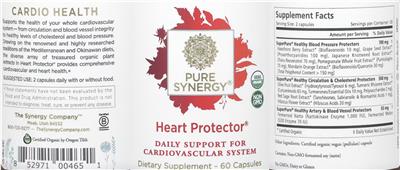
Cardio health Supports the health of your whole cardiovascular system - from circulation and blood vessel integrity to healthy levels of cholesterol and blood pressure. Drawing on the renowned and highly researched traditions of the Mediterranean and Okinawan diets, the diverse array of treasured organic plant extracts in Heart Protector provides comprehensive cardiovascular and heart health.
Certified organic by Oregon Tilth
Daily support for cardiovascular system
No GMOs, Dairy or Gluten
100% satisfaction guaranteed
Suggested/Recommended/Usage/Directions
Suggested use: 2 capsules daily with or without food.
FDA Disclaimer Statement
These statements have not been evaluated by the Food and Drug Administration. This product is not intended to diagnose, treat, cure, or prevent any disease.
Seals/Symbols
Certified B Corporation
Oregon Tilth Certified Organic (OTCO)
USDA Organic
FDA Statement of Identity
Dietary Supplement
Precautions
Contains: Non-GMO fermented soy (natto)
General Statements
Please recycle
Is this label outdated? Report a formula or label change and our pharmacy team will review it.
Heart Protector by Pure Synergy label
The label scan from the NIH Dietary Supplement Label Database. Tap to enlarge.
Label images are published by the NIH Dietary Supplement Label Database for the version of this product on file. Always read your actual product label.
View the full label (PDF)The Ingredients in Heart Protector by Pure Synergy
These are the 11 active ingredients this product is made of. Select any to open its full monograph.
Serving size2 Capsule(s) Dosage formCapsule Servings per container30 Amounts shown are per serving.
Most supplement products combine several ingredients, and a medication can interact with the product through any one of them. Each ingredient below shows whether it has known drug interactions.
SuperPure Healthy Blood Pressure Protectors
- › Hawthorn Berry Extract
- › Grape Seed Extract
- › Japanese Knotweed Root Extract
- › Total Polyphenol content
- › Pomegranate Whole Fruit Extract
- › Mandarin Orange Extract
SuperPure Healthy Circulation & Cholesterol Protectors
SuperPure Healthy Artery & Blood Vessel Protectors
- › Natto, Fermented
- › Melon, Fermented
Other (inactive) ingredients: Pullulan. These complete the product’s ingredient list but are not active constituents.
Heart Protector by Pure Synergy Drug Interactions
HelloPharmacist Interaction Report
Heart Protector by Pure Synergy contains two ingredients with documented interactions: resveratrol and fermented soy (natto).
The most serious concern is with blood pressure medications (antihypertensives). Fermented soy may add to their blood-pressure-lowering effect, potentially causing excessively low blood pressure (hypotension).
Resveratrol may also theoretically add to the blood-pressure-lowering effect, though clinical evidence on this is limited.
Read the full breakdown — every affected drug type, severity by severity
Resveratrol can theoretically increase blood levels of several medication types metabolized by your liver's cytochrome P450 enzymes (CYP2C19, CYP1A2, CYP3A4, and CYP2E1), though human studies of CYP3A4 substrates showed no dose adjustment was needed at very high resveratrol doses. Resveratrol may also thin the blood, so it warrants caution with anticoagulants or antiplatelet drugs like warfarin or aspirin.
Fermented soy carries a Major-severity interaction with monoamine oxidase inhibitors (MAOIs) — older antidepressants and some other drugs — because soy's naturally occurring tyramine can spike blood pressure dangerously when combined with these medications. Fermented soy also interacts moderately with diabetes medications, diuretics (water pills), estrogen replacement, caffeine, warfarin, and thyroid replacement (levothyroxine).
Several ingredients we could not check include bioflavonoids, polysaccharides, curcuminoids, punicalagins, proanthocyanidins, quercetin, hydroxytyrosol/tyrosol, hibiscus acids, tumerones, and fermented melon. Altogether, these interactions span 1,220 individual medications.
Use the interaction checker on this page with your exact medication list.
Check your own medications below · Editorial policy · How we use AI
Want to check YOUR meds against Heart Protector?
Ask about interactions with your drugs in plain English — “Can I take it with lisinopril?” — and we find you the answer in seconds, ingredient by ingredient.
Go to the checkerIngredients driving the most interactions
Individual Drug Interactions
The ingredients in Heart Protector interact with 1,478 drugs. Click any drug to see the details.
7 of the 11 ingredients in Heart Protector interact with drugs. Each result below shows which ingredient is responsible. Turmeric Rhizome Extract Red Sage Root Extract Pomegranate Whole Fruit Extract Grape Seed Extract Japanese Knotweed Root Extract Natto, Fermented Hawthorn Berry Extract
AbciximabReoPro
How Abciximab interacts with Heart Protector — through 6 ingredients. Tap an ingredient for the detail:
Red Sage Root ExtractAnticoagulant/antiplatelet Drugs Major
Interaction Summary
Theoretically, danshen may increase the risk of bleeding if used with anticoagulant or antiplatelet drugs.
Read the full Red Sage Root Extract + Abciximab interactionHawthorn Berry ExtractAnticoagulant/antiplatelet Drugs Moderate
Interaction Summary
Theoretically, hawthorn may increase the risk of bleeding if used with anticoagulant or antiplatelet drugs.
Read the full Hawthorn Berry Extract + Abciximab interactionGrape Seed ExtractAnticoagulant/antiplatelet Drugs Moderate
Interaction Summary
Theoretically, grape extracts may have antiplatelet effects and may increase the risk of bleeding if used with anticoagulant or antiplatelet drugs.
Read the full Grape Seed Extract + Abciximab interactionTurmeric Rhizome ExtractAnticoagulant/antiplatelet Drugs Moderate
Interaction Summary
Turmeric may have antiplatelet effects and may increase the risk of bleeding if used with anticoagulant or antiplatelet drugs.
Read the full Turmeric Rhizome Extract + Abciximab interactionJapanese Knotweed Root ExtractAnticoagulant/antiplatelet Drugs Moderate
Interaction Summary
Theoretically, hu zhang might increase the risk of bleeding when taken with anticoagulant or antiplatelet drugs.
Read the full Japanese Knotweed Root Extract + Abciximab interactionTrans-resveratrolAnticoagulant/antiplatelet Drugs Moderate
Interaction Summary
Resveratrol may have antiplatelet effects and may increase the risk of bleeding if used with anticoagulant or antiplatelet drugs.
Read the full Trans-resveratrol + Abciximab interactionAbrocitinibCibinqo
How Abrocitinib interacts with Heart Protector — through 8 ingredients. Tap an ingredient for the detail:
Red Sage Root ExtractAnticoagulant/antiplatelet Drugs, Cytochrome P450 2c9 (cyp2c9) Substrates Major
Interaction Summary
Theoretically, danshen may increase the risk of bleeding if used with anticoagulant or antiplatelet drugs.
Read the full Red Sage Root Extract + Abrocitinib interactionTurmeric Rhizome ExtractAnticoagulant/antiplatelet Drugs Moderate
Interaction Summary
Turmeric may have antiplatelet effects and may increase the risk of bleeding if used with anticoagulant or antiplatelet drugs.
Read the full Turmeric Rhizome Extract + Abrocitinib interactionGrape Seed ExtractAnticoagulant/antiplatelet Drugs, Cytochrome P450 2c9 (cyp2c9) Substrates Moderate
Interaction Summary
Theoretically, grape extracts may have antiplatelet effects and may increase the risk of bleeding if used with anticoagulant or antiplatelet drugs.
Read the full Grape Seed Extract + Abrocitinib interactionHawthorn Berry ExtractAnticoagulant/antiplatelet Drugs Moderate
Interaction Summary
Theoretically, hawthorn may increase the risk of bleeding if used with anticoagulant or antiplatelet drugs.
Read the full Hawthorn Berry Extract + Abrocitinib interactionTrans-resveratrolAnticoagulant/antiplatelet Drugs, Cytochrome P450 2c19 (cyp2c19) Substrates Moderate
Interaction Summary
Resveratrol may have antiplatelet effects and may increase the risk of bleeding if used with anticoagulant or antiplatelet drugs.
Read the full Trans-resveratrol + Abrocitinib interactionJapanese Knotweed Root ExtractAnticoagulant/antiplatelet Drugs, Cytochrome P450 2c19 (cyp2c19) Substrates Moderate
Interaction Summary
Theoretically, hu zhang might increase the risk of bleeding when taken with anticoagulant or antiplatelet drugs.
Read the full Japanese Knotweed Root Extract + Abrocitinib interactionNatto, FermentedCytochrome P450 2c9 (cyp2c9) Substrates Minor
Interaction Summary
Soy might modestly induce CYP2C9 enzymes.
Read the full Natto, Fermented + Abrocitinib interactionPomegranate Whole Fruit ExtractCytochrome P450 2c9 (cyp2c9) Substrates Minor
Interaction Summary
Theoretically, pomegranate might increase levels of drugs metabolized by CYP2C9.
Read the full Pomegranate Whole Fruit Extract + Abrocitinib interactionAcenocoumarolSintrom
How Acenocoumarol interacts with Heart Protector — through 6 ingredients. Tap an ingredient for the detail:
Red Sage Root ExtractAnticoagulant/antiplatelet Drugs Major
Interaction Summary
Theoretically, danshen may increase the risk of bleeding if used with anticoagulant or antiplatelet drugs.
Read the full Red Sage Root Extract + Acenocoumarol interactionHawthorn Berry ExtractAnticoagulant/antiplatelet Drugs Moderate
Interaction Summary
Theoretically, hawthorn may increase the risk of bleeding if used with anticoagulant or antiplatelet drugs.
Read the full Hawthorn Berry Extract + Acenocoumarol interactionGrape Seed ExtractAnticoagulant/antiplatelet Drugs Moderate
Interaction Summary
Theoretically, grape extracts may have antiplatelet effects and may increase the risk of bleeding if used with anticoagulant or antiplatelet drugs.
Read the full Grape Seed Extract + Acenocoumarol interactionTurmeric Rhizome ExtractAnticoagulant/antiplatelet Drugs Moderate
Interaction Summary
Turmeric may have antiplatelet effects and may increase the risk of bleeding if used with anticoagulant or antiplatelet drugs.
Read the full Turmeric Rhizome Extract + Acenocoumarol interactionTrans-resveratrolAnticoagulant/antiplatelet Drugs Moderate
Interaction Summary
Resveratrol may have antiplatelet effects and may increase the risk of bleeding if used with anticoagulant or antiplatelet drugs.
Read the full Trans-resveratrol + Acenocoumarol interactionJapanese Knotweed Root ExtractAnticoagulant/antiplatelet Drugs Moderate
Interaction Summary
Theoretically, hu zhang might increase the risk of bleeding when taken with anticoagulant or antiplatelet drugs.
Read the full Japanese Knotweed Root Extract + Acenocoumarol interactionAcetaminophen, AspirinGemnisyn
How Acetaminophen, Aspirin interacts with Heart Protector — through 6 ingredients. Tap an ingredient for the detail:
Red Sage Root ExtractCytochrome P450 1a2 (cyp1a2) Substrates, Cytochrome P450 2e1 (cyp2e1) Substrates +3 Major
Interaction Summary
Theoretically, danshen may increase the levels and clinical effects of drugs metabolized by CYP1A2.
Read the full Red Sage Root Extract + Acetaminophen, Aspirin interactionTurmeric Rhizome ExtractAnticoagulant/antiplatelet Drugs, Cytochrome P450 1a2 (cyp1a2) Substrates +1 Moderate
Interaction Summary
Turmeric may have antiplatelet effects and may increase the risk of bleeding if used with anticoagulant or antiplatelet drugs.
Read the full Turmeric Rhizome Extract + Acetaminophen, Aspirin interactionGrape Seed ExtractCytochrome P450 1a2 (cyp1a2) Substrates, Anticoagulant/antiplatelet Drugs +1 Moderate
Interaction Summary
Theoretically, grape juice might reduce the levels of CYP1A2 substrates.
Read the full Grape Seed Extract + Acetaminophen, Aspirin interactionJapanese Knotweed Root ExtractCytochrome P450 1a2 (cyp1a2) Substrates, Anticoagulant/antiplatelet Drugs +1 Moderate
Interaction Summary
Theoretically, hu zhang might increase levels of drugs metabolized by CYP1A2.
Read the full Japanese Knotweed Root Extract + Acetaminophen, Aspirin interactionTrans-resveratrolCytochrome P450 1a2 (cyp1a2) Substrates, Anticoagulant/antiplatelet Drugs +1 Moderate
Interaction Summary
Theoretically, resveratrol might increase levels of drugs metabolized by CYP1A2.
Read the full Trans-resveratrol + Acetaminophen, Aspirin interactionHawthorn Berry ExtractAnticoagulant/antiplatelet Drugs Moderate
Interaction Summary
Theoretically, hawthorn may increase the risk of bleeding if used with anticoagulant or antiplatelet drugs.
Read the full Hawthorn Berry Extract + Acetaminophen, Aspirin interactionAcetaminophen, Aspirin, CaffeineExcedrin, Excedrin Extra Strength, Excedrin Migraine
How Acetaminophen, Aspirin, Caffeine interacts with Heart Protector — through 8 ingredients. Tap an ingredient for the detail:
Red Sage Root ExtractCytochrome P450 1a2 (cyp1a2) Substrates, Cytochrome P450 3a4 (cyp3a4) Substrates +4 Major
Interaction Summary
Theoretically, danshen may increase the levels and clinical effects of drugs metabolized by CYP1A2.
Read the full Red Sage Root Extract + Acetaminophen, Aspirin, Caffeine interactionGrape Seed ExtractAnticoagulant/antiplatelet Drugs, Cytochrome P450 2e1 (cyp2e1) Substrates +2 Moderate
Interaction Summary
Theoretically, grape extracts may have antiplatelet effects and may increase the risk of bleeding if used with anticoagulant or antiplatelet drugs.
Read the full Grape Seed Extract + Acetaminophen, Aspirin, Caffeine interactionTurmeric Rhizome ExtractCytochrome P450 3a4 (cyp3a4) Substrates, Cytochrome P450 1a2 (cyp1a2) Substrates +2 Moderate
Interaction Summary
Turmeric might increase or decrease levels of drugs metabolized by CYP3A4.
Read the full Turmeric Rhizome Extract + Acetaminophen, Aspirin, Caffeine interactionHawthorn Berry ExtractAnticoagulant/antiplatelet Drugs Moderate
Interaction Summary
Theoretically, hawthorn may increase the risk of bleeding if used with anticoagulant or antiplatelet drugs.
Read the full Hawthorn Berry Extract + Acetaminophen, Aspirin, Caffeine interactionJapanese Knotweed Root ExtractCytochrome P450 2e1 (cyp2e1) Substrates, Cytochrome P450 1a2 (cyp1a2) Substrates +2 Moderate
Interaction Summary
Theoretically, hu zhang might increase levels of drugs metabolized by CYP2E1.
Read the full Japanese Knotweed Root Extract + Acetaminophen, Aspirin, Caffeine interactionTrans-resveratrolAnticoagulant/antiplatelet Drugs, Cytochrome P450 2e1 (cyp2e1) Substrates +2 Moderate
Interaction Summary
Resveratrol may have antiplatelet effects and may increase the risk of bleeding if used with anticoagulant or antiplatelet drugs.
Read the full Trans-resveratrol + Acetaminophen, Aspirin, Caffeine interactionNatto, FermentedCaffeine Moderate
Interaction Summary
Theoretically, soy might reduce the clearance of caffeine.
Read the full Natto, Fermented + Acetaminophen, Aspirin, Caffeine interactionPomegranate Whole Fruit ExtractCytochrome P450 3a4 (cyp3a4) Substrates Minor
Interaction Summary
Theoretically, pomegranate might increase levels of drugs metabolized by CYP3A4, but most research suggests this interaction is unlikely to be clinically significant.
Read the full Pomegranate Whole Fruit Extract + Acetaminophen, Aspirin, Caffeine interactionAcetaminophen, IbuprofenCombogesic
How Acetaminophen, Ibuprofen interacts with Heart Protector — through 8 ingredients. Tap an ingredient for the detail:
Red Sage Root ExtractCytochrome P450 2e1 (cyp2e1) Substrates, Anticoagulant/antiplatelet Drugs +3 Major
Interaction Summary
Theoretically, danshen may increase the levels and clinical effects of drugs metabolized by CYP2E1.
Read the full Red Sage Root Extract + Acetaminophen, Ibuprofen interactionTurmeric Rhizome ExtractAnticoagulant/antiplatelet Drugs, Hepatotoxic Drugs +1 Moderate
Interaction Summary
Turmeric may have antiplatelet effects and may increase the risk of bleeding if used with anticoagulant or antiplatelet drugs.
Read the full Turmeric Rhizome Extract + Acetaminophen, Ibuprofen interactionGrape Seed ExtractAnticoagulant/antiplatelet Drugs, Cytochrome P450 2e1 (cyp2e1) Substrates +2 Moderate
Interaction Summary
Theoretically, grape extracts may have antiplatelet effects and may increase the risk of bleeding if used with anticoagulant or antiplatelet drugs.
Read the full Grape Seed Extract + Acetaminophen, Ibuprofen interactionHawthorn Berry ExtractAnticoagulant/antiplatelet Drugs Moderate
Interaction Summary
Theoretically, hawthorn may increase the risk of bleeding if used with anticoagulant or antiplatelet drugs.
Read the full Hawthorn Berry Extract + Acetaminophen, Ibuprofen interactionJapanese Knotweed Root ExtractAnticoagulant/antiplatelet Drugs, Cytochrome P450 2e1 (cyp2e1) Substrates +1 Moderate
Interaction Summary
Theoretically, hu zhang might increase the risk of bleeding when taken with anticoagulant or antiplatelet drugs.
Read the full Japanese Knotweed Root Extract + Acetaminophen, Ibuprofen interactionTrans-resveratrolCytochrome P450 1a2 (cyp1a2) Substrates, Anticoagulant/antiplatelet Drugs +1 Moderate
Interaction Summary
Theoretically, resveratrol might increase levels of drugs metabolized by CYP1A2.
Read the full Trans-resveratrol + Acetaminophen, Ibuprofen interactionNatto, FermentedCytochrome P450 2c9 (cyp2c9) Substrates Minor
Interaction Summary
Soy might modestly induce CYP2C9 enzymes.
Read the full Natto, Fermented + Acetaminophen, Ibuprofen interactionPomegranate Whole Fruit ExtractCytochrome P450 2c9 (cyp2c9) Substrates Minor
Interaction Summary
Theoretically, pomegranate might increase levels of drugs metabolized by CYP2C9.
Read the full Pomegranate Whole Fruit Extract + Acetaminophen, Ibuprofen interactionAcetylsalicylic AcidEntrophen
How Acetylsalicylic Acid interacts with Heart Protector — through 6 ingredients. Tap an ingredient for the detail:
Red Sage Root ExtractAspirin, Anticoagulant/antiplatelet Drugs Major
Interaction Summary
Theoretically, danshen may increase the levels of aspirin and the risk of bleeding.
Read the full Red Sage Root Extract + Acetylsalicylic Acid interactionTurmeric Rhizome ExtractAnticoagulant/antiplatelet Drugs Moderate
Interaction Summary
Turmeric may have antiplatelet effects and may increase the risk of bleeding if used with anticoagulant or antiplatelet drugs.
Read the full Turmeric Rhizome Extract + Acetylsalicylic Acid interactionTrans-resveratrolAnticoagulant/antiplatelet Drugs Moderate
Interaction Summary
Resveratrol may have antiplatelet effects and may increase the risk of bleeding if used with anticoagulant or antiplatelet drugs.
Read the full Trans-resveratrol + Acetylsalicylic Acid interactionJapanese Knotweed Root ExtractAnticoagulant/antiplatelet Drugs Moderate
Interaction Summary
Theoretically, hu zhang might increase the risk of bleeding when taken with anticoagulant or antiplatelet drugs.
Read the full Japanese Knotweed Root Extract + Acetylsalicylic Acid interactionGrape Seed ExtractAnticoagulant/antiplatelet Drugs Moderate
Interaction Summary
Theoretically, grape extracts may have antiplatelet effects and may increase the risk of bleeding if used with anticoagulant or antiplatelet drugs.
Read the full Grape Seed Extract + Acetylsalicylic Acid interactionHawthorn Berry ExtractAnticoagulant/antiplatelet Drugs Moderate
Interaction Summary
Theoretically, hawthorn may increase the risk of bleeding if used with anticoagulant or antiplatelet drugs.
Read the full Hawthorn Berry Extract + Acetylsalicylic Acid interactionAlteplase, TpaActilyse, Activase
How Alteplase, Tpa interacts with Heart Protector — through 6 ingredients. Tap an ingredient for the detail:
Red Sage Root ExtractAnticoagulant/antiplatelet Drugs Major
Interaction Summary
Theoretically, danshen may increase the risk of bleeding if used with anticoagulant or antiplatelet drugs.
Read the full Red Sage Root Extract + Alteplase, Tpa interactionTrans-resveratrolAnticoagulant/antiplatelet Drugs Moderate
Interaction Summary
Resveratrol may have antiplatelet effects and may increase the risk of bleeding if used with anticoagulant or antiplatelet drugs.
Read the full Trans-resveratrol + Alteplase, Tpa interactionHawthorn Berry ExtractAnticoagulant/antiplatelet Drugs Moderate
Interaction Summary
Theoretically, hawthorn may increase the risk of bleeding if used with anticoagulant or antiplatelet drugs.
Read the full Hawthorn Berry Extract + Alteplase, Tpa interactionGrape Seed ExtractAnticoagulant/antiplatelet Drugs Moderate
Interaction Summary
Theoretically, grape extracts may have antiplatelet effects and may increase the risk of bleeding if used with anticoagulant or antiplatelet drugs.
Read the full Grape Seed Extract + Alteplase, Tpa interactionTurmeric Rhizome ExtractAnticoagulant/antiplatelet Drugs Moderate
Interaction Summary
Turmeric may have antiplatelet effects and may increase the risk of bleeding if used with anticoagulant or antiplatelet drugs.
Read the full Turmeric Rhizome Extract + Alteplase, Tpa interactionJapanese Knotweed Root ExtractAnticoagulant/antiplatelet Drugs Moderate
Interaction Summary
Theoretically, hu zhang might increase the risk of bleeding when taken with anticoagulant or antiplatelet drugs.
Read the full Japanese Knotweed Root Extract + Alteplase, Tpa interactionAluminum Hydroxide, Aspirin, Codeine Phosphate, Magnesium HydroxideAscriptin Codeine #2
How Aluminum Hydroxide, Aspirin, Codeine Phosphate, Magnesium Hydroxide interacts with Heart Protector — through 7 ingredients. Tap an ingredient for the detail:
Red Sage Root ExtractAnticoagulant/antiplatelet Drugs, Aspirin Major
Interaction Summary
Theoretically, danshen may increase the risk of bleeding if used with anticoagulant or antiplatelet drugs.
Read the full Red Sage Root Extract + Aluminum Hydroxide, Aspirin, Codeine Phosphate, Magnesium Hydroxide interactionTurmeric Rhizome ExtractAnticoagulant/antiplatelet Drugs Moderate
Interaction Summary
Turmeric may have antiplatelet effects and may increase the risk of bleeding if used with anticoagulant or antiplatelet drugs.
Read the full Turmeric Rhizome Extract + Aluminum Hydroxide, Aspirin, Codeine Phosphate, Magnesium Hydroxide interactionGrape Seed ExtractAnticoagulant/antiplatelet Drugs, Cytochrome P450 2d6 (cyp2d6) Substrates Moderate
Interaction Summary
Theoretically, grape extracts may have antiplatelet effects and may increase the risk of bleeding if used with anticoagulant or antiplatelet drugs.
Read the full Grape Seed Extract + Aluminum Hydroxide, Aspirin, Codeine Phosphate, Magnesium Hydroxide interactionHawthorn Berry ExtractAnticoagulant/antiplatelet Drugs Moderate
Interaction Summary
Theoretically, hawthorn may increase the risk of bleeding if used with anticoagulant or antiplatelet drugs.
Read the full Hawthorn Berry Extract + Aluminum Hydroxide, Aspirin, Codeine Phosphate, Magnesium Hydroxide interactionTrans-resveratrolAnticoagulant/antiplatelet Drugs Moderate
Interaction Summary
Resveratrol may have antiplatelet effects and may increase the risk of bleeding if used with anticoagulant or antiplatelet drugs.
Read the full Trans-resveratrol + Aluminum Hydroxide, Aspirin, Codeine Phosphate, Magnesium Hydroxide interactionPomegranate Whole Fruit ExtractCytochrome P450 2d6 (cyp2d6) Substrates Moderate
Interaction Summary
Theoretically, pomegranate might increase levels of drugs metabolized by CYP2D6.
Read the full Pomegranate Whole Fruit Extract + Aluminum Hydroxide, Aspirin, Codeine Phosphate, Magnesium Hydroxide interactionJapanese Knotweed Root ExtractAnticoagulant/antiplatelet Drugs Moderate
Interaction Summary
Theoretically, hu zhang might increase the risk of bleeding when taken with anticoagulant or antiplatelet drugs.
Read the full Japanese Knotweed Root Extract + Aluminum Hydroxide, Aspirin, Codeine Phosphate, Magnesium Hydroxide interactionAluminum Hydroxide, Aspirin, Magnesium HydroxideAscriptin
How Aluminum Hydroxide, Aspirin, Magnesium Hydroxide interacts with Heart Protector — through 6 ingredients. Tap an ingredient for the detail:
Red Sage Root ExtractAspirin, Anticoagulant/antiplatelet Drugs Major
Interaction Summary
Theoretically, danshen may increase the levels of aspirin and the risk of bleeding.
Read the full Red Sage Root Extract + Aluminum Hydroxide, Aspirin, Magnesium Hydroxide interactionTrans-resveratrolAnticoagulant/antiplatelet Drugs Moderate
Interaction Summary
Resveratrol may have antiplatelet effects and may increase the risk of bleeding if used with anticoagulant or antiplatelet drugs.
Read the full Trans-resveratrol + Aluminum Hydroxide, Aspirin, Magnesium Hydroxide interactionTurmeric Rhizome ExtractAnticoagulant/antiplatelet Drugs Moderate
Interaction Summary
Turmeric may have antiplatelet effects and may increase the risk of bleeding if used with anticoagulant or antiplatelet drugs.
Read the full Turmeric Rhizome Extract + Aluminum Hydroxide, Aspirin, Magnesium Hydroxide interactionHawthorn Berry ExtractAnticoagulant/antiplatelet Drugs Moderate
Interaction Summary
Theoretically, hawthorn may increase the risk of bleeding if used with anticoagulant or antiplatelet drugs.
Read the full Hawthorn Berry Extract + Aluminum Hydroxide, Aspirin, Magnesium Hydroxide interactionGrape Seed ExtractAnticoagulant/antiplatelet Drugs Moderate
Interaction Summary
Theoretically, grape extracts may have antiplatelet effects and may increase the risk of bleeding if used with anticoagulant or antiplatelet drugs.
Read the full Grape Seed Extract + Aluminum Hydroxide, Aspirin, Magnesium Hydroxide interactionJapanese Knotweed Root ExtractAnticoagulant/antiplatelet Drugs Moderate
Interaction Summary
Theoretically, hu zhang might increase the risk of bleeding when taken with anticoagulant or antiplatelet drugs.
Read the full Japanese Knotweed Root Extract + Aluminum Hydroxide, Aspirin, Magnesium Hydroxide interactionAmphetamineAdensys XR-ODT, Adzenys ER, Dyanavel XR, Mydayis
How Amphetamine interacts with Heart Protector — through 3 ingredients. Tap an ingredient for the detail:
Natto, FermentedMonoamine Oxidase Inhibitors (maois) Major
Interaction Summary
Taking soy products containing high amounts of tyramine along with MAOIs can increase the risk of hypertensive crisis.
Read the full Natto, Fermented + Amphetamine interactionGrape Seed ExtractCytochrome P450 2d6 (cyp2d6) Substrates Moderate
Interaction Summary
Theoretically, grape seed extract may increase the levels of CYP2D6 substrates.
Read the full Grape Seed Extract + Amphetamine interactionPomegranate Whole Fruit ExtractCytochrome P450 2d6 (cyp2d6) Substrates Moderate
Interaction Summary
Theoretically, pomegranate might increase levels of drugs metabolized by CYP2D6.
Read the full Pomegranate Whole Fruit Extract + Amphetamine interactionAnacaulase-bcdbNexoBrid
How Anacaulase-bcdb interacts with Heart Protector — through 6 ingredients. Tap an ingredient for the detail:
Red Sage Root ExtractAnticoagulant/antiplatelet Drugs Major
Interaction Summary
Theoretically, danshen may increase the risk of bleeding if used with anticoagulant or antiplatelet drugs.
Read the full Red Sage Root Extract + Anacaulase-bcdb interactionJapanese Knotweed Root ExtractAnticoagulant/antiplatelet Drugs Moderate
Interaction Summary
Theoretically, hu zhang might increase the risk of bleeding when taken with anticoagulant or antiplatelet drugs.
Read the full Japanese Knotweed Root Extract + Anacaulase-bcdb interactionGrape Seed ExtractAnticoagulant/antiplatelet Drugs Moderate
Interaction Summary
Theoretically, grape extracts may have antiplatelet effects and may increase the risk of bleeding if used with anticoagulant or antiplatelet drugs.
Read the full Grape Seed Extract + Anacaulase-bcdb interactionHawthorn Berry ExtractAnticoagulant/antiplatelet Drugs Moderate
Interaction Summary
Theoretically, hawthorn may increase the risk of bleeding if used with anticoagulant or antiplatelet drugs.
Read the full Hawthorn Berry Extract + Anacaulase-bcdb interactionTurmeric Rhizome ExtractAnticoagulant/antiplatelet Drugs Moderate
Interaction Summary
Turmeric may have antiplatelet effects and may increase the risk of bleeding if used with anticoagulant or antiplatelet drugs.
Read the full Turmeric Rhizome Extract + Anacaulase-bcdb interactionTrans-resveratrolAnticoagulant/antiplatelet Drugs Moderate
Interaction Summary
Resveratrol may have antiplatelet effects and may increase the risk of bleeding if used with anticoagulant or antiplatelet drugs.
Read the full Trans-resveratrol + Anacaulase-bcdb interactionAnagrelideAgrylin
How Anagrelide interacts with Heart Protector — through 6 ingredients. Tap an ingredient for the detail:
Red Sage Root ExtractAnticoagulant/antiplatelet Drugs, Cytochrome P450 1a2 (cyp1a2) Substrates Major
Interaction Summary
Theoretically, danshen may increase the risk of bleeding if used with anticoagulant or antiplatelet drugs.
Read the full Red Sage Root Extract + Anagrelide interactionTrans-resveratrolAnticoagulant/antiplatelet Drugs, Cytochrome P450 1a2 (cyp1a2) Substrates Moderate
Interaction Summary
Resveratrol may have antiplatelet effects and may increase the risk of bleeding if used with anticoagulant or antiplatelet drugs.
Read the full Trans-resveratrol + Anagrelide interactionGrape Seed ExtractCytochrome P450 1a2 (cyp1a2) Substrates, Anticoagulant/antiplatelet Drugs Moderate
Interaction Summary
Theoretically, grape juice might reduce the levels of CYP1A2 substrates.
Read the full Grape Seed Extract + Anagrelide interactionJapanese Knotweed Root ExtractAnticoagulant/antiplatelet Drugs, Cytochrome P450 1a2 (cyp1a2) Substrates Moderate
Interaction Summary
Theoretically, hu zhang might increase the risk of bleeding when taken with anticoagulant or antiplatelet drugs.
Read the full Japanese Knotweed Root Extract + Anagrelide interactionTurmeric Rhizome ExtractAnticoagulant/antiplatelet Drugs, Cytochrome P450 1a2 (cyp1a2) Substrates Moderate
Interaction Summary
Turmeric may have antiplatelet effects and may increase the risk of bleeding if used with anticoagulant or antiplatelet drugs.
Read the full Turmeric Rhizome Extract + Anagrelide interactionHawthorn Berry ExtractAnticoagulant/antiplatelet Drugs Moderate
Interaction Summary
Theoretically, hawthorn may increase the risk of bleeding if used with anticoagulant or antiplatelet drugs.
Read the full Hawthorn Berry Extract + Anagrelide interactionAnisindioneMiradon
How Anisindione interacts with Heart Protector — through 6 ingredients. Tap an ingredient for the detail:
Red Sage Root ExtractAnticoagulant/antiplatelet Drugs Major
Interaction Summary
Theoretically, danshen may increase the risk of bleeding if used with anticoagulant or antiplatelet drugs.
Read the full Red Sage Root Extract + Anisindione interactionHawthorn Berry ExtractAnticoagulant/antiplatelet Drugs Moderate
Interaction Summary
Theoretically, hawthorn may increase the risk of bleeding if used with anticoagulant or antiplatelet drugs.
Read the full Hawthorn Berry Extract + Anisindione interactionGrape Seed ExtractAnticoagulant/antiplatelet Drugs Moderate
Interaction Summary
Theoretically, grape extracts may have antiplatelet effects and may increase the risk of bleeding if used with anticoagulant or antiplatelet drugs.
Read the full Grape Seed Extract + Anisindione interactionTrans-resveratrolAnticoagulant/antiplatelet Drugs Moderate
Interaction Summary
Resveratrol may have antiplatelet effects and may increase the risk of bleeding if used with anticoagulant or antiplatelet drugs.
Read the full Trans-resveratrol + Anisindione interactionTurmeric Rhizome ExtractAnticoagulant/antiplatelet Drugs Moderate
Interaction Summary
Turmeric may have antiplatelet effects and may increase the risk of bleeding if used with anticoagulant or antiplatelet drugs.
Read the full Turmeric Rhizome Extract + Anisindione interactionJapanese Knotweed Root ExtractAnticoagulant/antiplatelet Drugs Moderate
Interaction Summary
Theoretically, hu zhang might increase the risk of bleeding when taken with anticoagulant or antiplatelet drugs.
Read the full Japanese Knotweed Root Extract + Anisindione interactionAntithrombin IiiThrombate III
How Antithrombin Iii interacts with Heart Protector — through 6 ingredients. Tap an ingredient for the detail:
Red Sage Root ExtractAnticoagulant/antiplatelet Drugs Major
Interaction Summary
Theoretically, danshen may increase the risk of bleeding if used with anticoagulant or antiplatelet drugs.
Read the full Red Sage Root Extract + Antithrombin Iii interactionTurmeric Rhizome ExtractAnticoagulant/antiplatelet Drugs Moderate
Interaction Summary
Turmeric may have antiplatelet effects and may increase the risk of bleeding if used with anticoagulant or antiplatelet drugs.
Read the full Turmeric Rhizome Extract + Antithrombin Iii interactionTrans-resveratrolAnticoagulant/antiplatelet Drugs Moderate
Interaction Summary
Resveratrol may have antiplatelet effects and may increase the risk of bleeding if used with anticoagulant or antiplatelet drugs.
Read the full Trans-resveratrol + Antithrombin Iii interactionJapanese Knotweed Root ExtractAnticoagulant/antiplatelet Drugs Moderate
Interaction Summary
Theoretically, hu zhang might increase the risk of bleeding when taken with anticoagulant or antiplatelet drugs.
Read the full Japanese Knotweed Root Extract + Antithrombin Iii interactionHawthorn Berry ExtractAnticoagulant/antiplatelet Drugs Moderate
Interaction Summary
Theoretically, hawthorn may increase the risk of bleeding if used with anticoagulant or antiplatelet drugs.
Read the full Hawthorn Berry Extract + Antithrombin Iii interactionGrape Seed ExtractAnticoagulant/antiplatelet Drugs Moderate
Interaction Summary
Theoretically, grape extracts may have antiplatelet effects and may increase the risk of bleeding if used with anticoagulant or antiplatelet drugs.
Read the full Grape Seed Extract + Antithrombin Iii interactionApixabanEliquis
How Apixaban interacts with Heart Protector — through 7 ingredients. Tap an ingredient for the detail:
Red Sage Root ExtractCytochrome P450 3a4 (cyp3a4) Substrates, Anticoagulant/antiplatelet Drugs +1 Major
Interaction Summary
Danshen might alter the levels and clinical effects of drugs metabolized by CYP3A4.
Read the full Red Sage Root Extract + Apixaban interactionJapanese Knotweed Root ExtractCytochrome P450 3a4 (cyp3a4) Substrates, Anticoagulant/antiplatelet Drugs Moderate
Interaction Summary
Theoretically, hu zhang might increase levels of drugs metabolized by CYP3A4.
Read the full Japanese Knotweed Root Extract + Apixaban interactionGrape Seed ExtractCytochrome P450 3a4 (cyp3a4) Substrates, Anticoagulant/antiplatelet Drugs Moderate
Interaction Summary
It is unclear if grape seed extract inhibits or induces CYP3A4; research is conflicting.
Read the full Grape Seed Extract + Apixaban interactionTurmeric Rhizome ExtractCytochrome P450 3a4 (cyp3a4) Substrates, P-glycoprotein Substrates +1 Moderate
Interaction Summary
Turmeric might increase or decrease levels of drugs metabolized by CYP3A4.
Read the full Turmeric Rhizome Extract + Apixaban interactionHawthorn Berry ExtractAnticoagulant/antiplatelet Drugs Moderate
Interaction Summary
Theoretically, hawthorn may increase the risk of bleeding if used with anticoagulant or antiplatelet drugs.
Read the full Hawthorn Berry Extract + Apixaban interactionTrans-resveratrolCytochrome P450 3a4 (cyp3a4) Substrates, Anticoagulant/antiplatelet Drugs Moderate
Interaction Summary
Theoretically, resveratrol might increase levels of drugs metabolized by CYP3A4.
Read the full Trans-resveratrol + Apixaban interactionPomegranate Whole Fruit ExtractCytochrome P450 3a4 (cyp3a4) Substrates Minor
Interaction Summary
Theoretically, pomegranate might increase levels of drugs metabolized by CYP3A4, but most research suggests this interaction is unlikely to be clinically significant.
Read the full Pomegranate Whole Fruit Extract + Apixaban interactionArgatrobanArgatroban
How Argatroban interacts with Heart Protector — through 6 ingredients. Tap an ingredient for the detail:
Red Sage Root ExtractAnticoagulant/antiplatelet Drugs Major
Interaction Summary
Theoretically, danshen may increase the risk of bleeding if used with anticoagulant or antiplatelet drugs.
Read the full Red Sage Root Extract + Argatroban interactionHawthorn Berry ExtractAnticoagulant/antiplatelet Drugs Moderate
Interaction Summary
Theoretically, hawthorn may increase the risk of bleeding if used with anticoagulant or antiplatelet drugs.
Read the full Hawthorn Berry Extract + Argatroban interactionGrape Seed ExtractAnticoagulant/antiplatelet Drugs Moderate
Interaction Summary
Theoretically, grape extracts may have antiplatelet effects and may increase the risk of bleeding if used with anticoagulant or antiplatelet drugs.
Read the full Grape Seed Extract + Argatroban interactionTrans-resveratrolAnticoagulant/antiplatelet Drugs Moderate
Interaction Summary
Resveratrol may have antiplatelet effects and may increase the risk of bleeding if used with anticoagulant or antiplatelet drugs.
Read the full Trans-resveratrol + Argatroban interactionJapanese Knotweed Root ExtractAnticoagulant/antiplatelet Drugs Moderate
Interaction Summary
Theoretically, hu zhang might increase the risk of bleeding when taken with anticoagulant or antiplatelet drugs.
Read the full Japanese Knotweed Root Extract + Argatroban interactionTurmeric Rhizome ExtractAnticoagulant/antiplatelet Drugs Moderate
Interaction Summary
Turmeric may have antiplatelet effects and may increase the risk of bleeding if used with anticoagulant or antiplatelet drugs.
Read the full Turmeric Rhizome Extract + Argatroban interactionAspirinAngettes 75, ASA, Asaphen, Aspirin, Caprin, Cartia +8 more
How Aspirin interacts with Heart Protector — through 6 ingredients. Tap an ingredient for the detail:
Red Sage Root ExtractAnticoagulant/antiplatelet Drugs, Aspirin Major
Interaction Summary
Theoretically, danshen may increase the risk of bleeding if used with anticoagulant or antiplatelet drugs.
Read the full Red Sage Root Extract + Aspirin interactionGrape Seed ExtractAnticoagulant/antiplatelet Drugs Moderate
Interaction Summary
Theoretically, grape extracts may have antiplatelet effects and may increase the risk of bleeding if used with anticoagulant or antiplatelet drugs.
Read the full Grape Seed Extract + Aspirin interactionHawthorn Berry ExtractAnticoagulant/antiplatelet Drugs Moderate
Interaction Summary
Theoretically, hawthorn may increase the risk of bleeding if used with anticoagulant or antiplatelet drugs.
Read the full Hawthorn Berry Extract + Aspirin interactionTrans-resveratrolAnticoagulant/antiplatelet Drugs Moderate
Interaction Summary
Resveratrol may have antiplatelet effects and may increase the risk of bleeding if used with anticoagulant or antiplatelet drugs.
Read the full Trans-resveratrol + Aspirin interactionJapanese Knotweed Root ExtractAnticoagulant/antiplatelet Drugs Moderate
Interaction Summary
Theoretically, hu zhang might increase the risk of bleeding when taken with anticoagulant or antiplatelet drugs.
Read the full Japanese Knotweed Root Extract + Aspirin interactionTurmeric Rhizome ExtractAnticoagulant/antiplatelet Drugs Moderate
Interaction Summary
Turmeric may have antiplatelet effects and may increase the risk of bleeding if used with anticoagulant or antiplatelet drugs.
Read the full Turmeric Rhizome Extract + Aspirin interactionAspirin, Aluminum Hydroxide, Codeine Phosphate, Magnesium HydroxideAscriptin Codeine #3
How Aspirin, Aluminum Hydroxide, Codeine Phosphate, Magnesium Hydroxide interacts with Heart Protector — through 7 ingredients. Tap an ingredient for the detail:
Red Sage Root ExtractAspirin, Anticoagulant/antiplatelet Drugs Major
Interaction Summary
Theoretically, danshen may increase the levels of aspirin and the risk of bleeding.
Read the full Red Sage Root Extract + Aspirin, Aluminum Hydroxide, Codeine Phosphate, Magnesium Hydroxide interactionTrans-resveratrolAnticoagulant/antiplatelet Drugs Moderate
Interaction Summary
Resveratrol may have antiplatelet effects and may increase the risk of bleeding if used with anticoagulant or antiplatelet drugs.
Read the full Trans-resveratrol + Aspirin, Aluminum Hydroxide, Codeine Phosphate, Magnesium Hydroxide interactionPomegranate Whole Fruit ExtractCytochrome P450 2d6 (cyp2d6) Substrates Moderate
Interaction Summary
Theoretically, pomegranate might increase levels of drugs metabolized by CYP2D6.
Read the full Pomegranate Whole Fruit Extract + Aspirin, Aluminum Hydroxide, Codeine Phosphate, Magnesium Hydroxide interactionGrape Seed ExtractCytochrome P450 2d6 (cyp2d6) Substrates, Anticoagulant/antiplatelet Drugs Moderate
Interaction Summary
Theoretically, grape seed extract may increase the levels of CYP2D6 substrates.
Read the full Grape Seed Extract + Aspirin, Aluminum Hydroxide, Codeine Phosphate, Magnesium Hydroxide interactionHawthorn Berry ExtractAnticoagulant/antiplatelet Drugs Moderate
Interaction Summary
Theoretically, hawthorn may increase the risk of bleeding if used with anticoagulant or antiplatelet drugs.
Read the full Hawthorn Berry Extract + Aspirin, Aluminum Hydroxide, Codeine Phosphate, Magnesium Hydroxide interactionTurmeric Rhizome ExtractAnticoagulant/antiplatelet Drugs Moderate
Interaction Summary
Turmeric may have antiplatelet effects and may increase the risk of bleeding if used with anticoagulant or antiplatelet drugs.
Read the full Turmeric Rhizome Extract + Aspirin, Aluminum Hydroxide, Codeine Phosphate, Magnesium Hydroxide interactionJapanese Knotweed Root ExtractAnticoagulant/antiplatelet Drugs Moderate
Interaction Summary
Theoretically, hu zhang might increase the risk of bleeding when taken with anticoagulant or antiplatelet drugs.
Read the full Japanese Knotweed Root Extract + Aspirin, Aluminum Hydroxide, Codeine Phosphate, Magnesium Hydroxide interactionAspirin, ButalbitalAxotal
How Aspirin, Butalbital interacts with Heart Protector — through 6 ingredients. Tap an ingredient for the detail:
Red Sage Root ExtractAnticoagulant/antiplatelet Drugs, Aspirin Major
Interaction Summary
Theoretically, danshen may increase the risk of bleeding if used with anticoagulant or antiplatelet drugs.
Read the full Red Sage Root Extract + Aspirin, Butalbital interactionJapanese Knotweed Root ExtractAnticoagulant/antiplatelet Drugs Moderate
Interaction Summary
Theoretically, hu zhang might increase the risk of bleeding when taken with anticoagulant or antiplatelet drugs.
Read the full Japanese Knotweed Root Extract + Aspirin, Butalbital interactionTrans-resveratrolAnticoagulant/antiplatelet Drugs Moderate
Interaction Summary
Resveratrol may have antiplatelet effects and may increase the risk of bleeding if used with anticoagulant or antiplatelet drugs.
Read the full Trans-resveratrol + Aspirin, Butalbital interactionTurmeric Rhizome ExtractAnticoagulant/antiplatelet Drugs Moderate
Interaction Summary
Turmeric may have antiplatelet effects and may increase the risk of bleeding if used with anticoagulant or antiplatelet drugs.
Read the full Turmeric Rhizome Extract + Aspirin, Butalbital interactionGrape Seed ExtractAnticoagulant/antiplatelet Drugs Moderate
Interaction Summary
Theoretically, grape extracts may have antiplatelet effects and may increase the risk of bleeding if used with anticoagulant or antiplatelet drugs.
Read the full Grape Seed Extract + Aspirin, Butalbital interactionHawthorn Berry ExtractAnticoagulant/antiplatelet Drugs Moderate
Interaction Summary
Theoretically, hawthorn may increase the risk of bleeding if used with anticoagulant or antiplatelet drugs.
Read the full Hawthorn Berry Extract + Aspirin, Butalbital interactionAspirin, Butalbital, CaffeineFiorinal
How Aspirin, Butalbital, Caffeine interacts with Heart Protector — through 8 ingredients. Tap an ingredient for the detail:
Red Sage Root ExtractAspirin, Anticoagulant/antiplatelet Drugs +2 Major
Interaction Summary
Theoretically, danshen may increase the levels of aspirin and the risk of bleeding.
Read the full Red Sage Root Extract + Aspirin, Butalbital, Caffeine interactionHawthorn Berry ExtractAnticoagulant/antiplatelet Drugs Moderate
Interaction Summary
Theoretically, hawthorn may increase the risk of bleeding if used with anticoagulant or antiplatelet drugs.
Read the full Hawthorn Berry Extract + Aspirin, Butalbital, Caffeine interactionTurmeric Rhizome ExtractCytochrome P450 3a4 (cyp3a4) Substrates, Cytochrome P450 1a2 (cyp1a2) Substrates +1 Moderate
Interaction Summary
Turmeric might increase or decrease levels of drugs metabolized by CYP3A4.
Read the full Turmeric Rhizome Extract + Aspirin, Butalbital, Caffeine interactionGrape Seed ExtractAnticoagulant/antiplatelet Drugs, Cytochrome P450 1a2 (cyp1a2) Substrates +1 Moderate
Interaction Summary
Theoretically, grape extracts may have antiplatelet effects and may increase the risk of bleeding if used with anticoagulant or antiplatelet drugs.
Read the full Grape Seed Extract + Aspirin, Butalbital, Caffeine interactionJapanese Knotweed Root ExtractAnticoagulant/antiplatelet Drugs, Cytochrome P450 1a2 (cyp1a2) Substrates +1 Moderate
Interaction Summary
Theoretically, hu zhang might increase the risk of bleeding when taken with anticoagulant or antiplatelet drugs.
Read the full Japanese Knotweed Root Extract + Aspirin, Butalbital, Caffeine interactionNatto, FermentedCaffeine Moderate
Interaction Summary
Theoretically, soy might reduce the clearance of caffeine.
Read the full Natto, Fermented + Aspirin, Butalbital, Caffeine interactionTrans-resveratrolAnticoagulant/antiplatelet Drugs, Cytochrome P450 3a4 (cyp3a4) Substrates +1 Moderate
Interaction Summary
Resveratrol may have antiplatelet effects and may increase the risk of bleeding if used with anticoagulant or antiplatelet drugs.
Read the full Trans-resveratrol + Aspirin, Butalbital, Caffeine interactionPomegranate Whole Fruit ExtractCytochrome P450 3a4 (cyp3a4) Substrates Minor
Interaction Summary
Theoretically, pomegranate might increase levels of drugs metabolized by CYP3A4, but most research suggests this interaction is unlikely to be clinically significant.
Read the full Pomegranate Whole Fruit Extract + Aspirin, Butalbital, Caffeine interactionAspirin, Butalbital, Caffeine, Codeine PhosphateFiorinal w/ Codeine
How Aspirin, Butalbital, Caffeine, Codeine Phosphate interacts with Heart Protector — through 8 ingredients. Tap an ingredient for the detail:
Red Sage Root ExtractAnticoagulant/antiplatelet Drugs, Aspirin +2 Major
Interaction Summary
Theoretically, danshen may increase the risk of bleeding if used with anticoagulant or antiplatelet drugs.
Read the full Red Sage Root Extract + Aspirin, Butalbital, Caffeine, Codeine Phosphate interactionTrans-resveratrolCytochrome P450 1a2 (cyp1a2) Substrates, Anticoagulant/antiplatelet Drugs +1 Moderate
Interaction Summary
Theoretically, resveratrol might increase levels of drugs metabolized by CYP1A2.
Read the full Trans-resveratrol + Aspirin, Butalbital, Caffeine, Codeine Phosphate interactionPomegranate Whole Fruit ExtractCytochrome P450 2d6 (cyp2d6) Substrates, Cytochrome P450 3a4 (cyp3a4) Substrates Moderate
Interaction Summary
Theoretically, pomegranate might increase levels of drugs metabolized by CYP2D6.
Read the full Pomegranate Whole Fruit Extract + Aspirin, Butalbital, Caffeine, Codeine Phosphate interactionGrape Seed ExtractCytochrome P450 1a2 (cyp1a2) Substrates, Cytochrome P450 2d6 (cyp2d6) Substrates +2 Moderate
Interaction Summary
Theoretically, grape juice might reduce the levels of CYP1A2 substrates.
Read the full Grape Seed Extract + Aspirin, Butalbital, Caffeine, Codeine Phosphate interactionTurmeric Rhizome ExtractCytochrome P450 1a2 (cyp1a2) Substrates, Cytochrome P450 3a4 (cyp3a4) Substrates +1 Moderate
Interaction Summary
Theoretically, turmeric might increase levels of drugs metabolized by CYP1A2.
Read the full Turmeric Rhizome Extract + Aspirin, Butalbital, Caffeine, Codeine Phosphate interactionHawthorn Berry ExtractAnticoagulant/antiplatelet Drugs Moderate
Interaction Summary
Theoretically, hawthorn may increase the risk of bleeding if used with anticoagulant or antiplatelet drugs.
Read the full Hawthorn Berry Extract + Aspirin, Butalbital, Caffeine, Codeine Phosphate interactionJapanese Knotweed Root ExtractCytochrome P450 3a4 (cyp3a4) Substrates, Cytochrome P450 1a2 (cyp1a2) Substrates +1 Moderate
Interaction Summary
Theoretically, hu zhang might increase levels of drugs metabolized by CYP3A4.
Read the full Japanese Knotweed Root Extract + Aspirin, Butalbital, Caffeine, Codeine Phosphate interactionNatto, FermentedCaffeine Moderate
Interaction Summary
Theoretically, soy might reduce the clearance of caffeine.
Read the full Natto, Fermented + Aspirin, Butalbital, Caffeine, Codeine Phosphate interactionAspirin, Butalbital, Caffeine, PhenacetinMarnal
How Aspirin, Butalbital, Caffeine, Phenacetin interacts with Heart Protector — through 8 ingredients. Tap an ingredient for the detail:
Red Sage Root ExtractCytochrome P450 1a2 (cyp1a2) Substrates, Cytochrome P450 3a4 (cyp3a4) Substrates +2 Major
Interaction Summary
Theoretically, danshen may increase the levels and clinical effects of drugs metabolized by CYP1A2.
Read the full Red Sage Root Extract + Aspirin, Butalbital, Caffeine, Phenacetin interactionJapanese Knotweed Root ExtractAnticoagulant/antiplatelet Drugs, Cytochrome P450 1a2 (cyp1a2) Substrates +1 Moderate
Interaction Summary
Theoretically, hu zhang might increase the risk of bleeding when taken with anticoagulant or antiplatelet drugs.
Read the full Japanese Knotweed Root Extract + Aspirin, Butalbital, Caffeine, Phenacetin interactionNatto, FermentedCaffeine Moderate
Interaction Summary
Theoretically, soy might reduce the clearance of caffeine.
Read the full Natto, Fermented + Aspirin, Butalbital, Caffeine, Phenacetin interactionTurmeric Rhizome ExtractCytochrome P450 3a4 (cyp3a4) Substrates, Cytochrome P450 1a2 (cyp1a2) Substrates +1 Moderate
Interaction Summary
Turmeric might increase or decrease levels of drugs metabolized by CYP3A4.
Read the full Turmeric Rhizome Extract + Aspirin, Butalbital, Caffeine, Phenacetin interactionGrape Seed ExtractAnticoagulant/antiplatelet Drugs, Phenacetin +2 Moderate
Interaction Summary
Theoretically, grape extracts may have antiplatelet effects and may increase the risk of bleeding if used with anticoagulant or antiplatelet drugs.
Read the full Grape Seed Extract + Aspirin, Butalbital, Caffeine, Phenacetin interactionHawthorn Berry ExtractAnticoagulant/antiplatelet Drugs Moderate
Interaction Summary
Theoretically, hawthorn may increase the risk of bleeding if used with anticoagulant or antiplatelet drugs.
Read the full Hawthorn Berry Extract + Aspirin, Butalbital, Caffeine, Phenacetin interactionTrans-resveratrolCytochrome P450 1a2 (cyp1a2) Substrates, Cytochrome P450 3a4 (cyp3a4) Substrates +1 Moderate
Interaction Summary
Theoretically, resveratrol might increase levels of drugs metabolized by CYP1A2.
Read the full Trans-resveratrol + Aspirin, Butalbital, Caffeine, Phenacetin interactionPomegranate Whole Fruit ExtractCytochrome P450 3a4 (cyp3a4) Substrates Minor
Interaction Summary
Theoretically, pomegranate might increase levels of drugs metabolized by CYP3A4, but most research suggests this interaction is unlikely to be clinically significant.
Read the full Pomegranate Whole Fruit Extract + Aspirin, Butalbital, Caffeine, Phenacetin interactionAspirin, CaffeineAnacin
How Aspirin, Caffeine interacts with Heart Protector — through 8 ingredients. Tap an ingredient for the detail:
Red Sage Root ExtractAnticoagulant/antiplatelet Drugs, Aspirin +2 Major
Interaction Summary
Theoretically, danshen may increase the risk of bleeding if used with anticoagulant or antiplatelet drugs.
Read the full Red Sage Root Extract + Aspirin, Caffeine interactionTrans-resveratrolAnticoagulant/antiplatelet Drugs, Cytochrome P450 3a4 (cyp3a4) Substrates +1 Moderate
Interaction Summary
Resveratrol may have antiplatelet effects and may increase the risk of bleeding if used with anticoagulant or antiplatelet drugs.
Read the full Trans-resveratrol + Aspirin, Caffeine interactionJapanese Knotweed Root ExtractCytochrome P450 3a4 (cyp3a4) Substrates, Cytochrome P450 1a2 (cyp1a2) Substrates +1 Moderate
Interaction Summary
Theoretically, hu zhang might increase levels of drugs metabolized by CYP3A4.
Read the full Japanese Knotweed Root Extract + Aspirin, Caffeine interactionNatto, FermentedCaffeine Moderate
Interaction Summary
Theoretically, soy might reduce the clearance of caffeine.
Read the full Natto, Fermented + Aspirin, Caffeine interactionHawthorn Berry ExtractAnticoagulant/antiplatelet Drugs Moderate
Interaction Summary
Theoretically, hawthorn may increase the risk of bleeding if used with anticoagulant or antiplatelet drugs.
Read the full Hawthorn Berry Extract + Aspirin, Caffeine interactionTurmeric Rhizome ExtractCytochrome P450 3a4 (cyp3a4) Substrates, Cytochrome P450 1a2 (cyp1a2) Substrates +1 Moderate
Interaction Summary
Turmeric might increase or decrease levels of drugs metabolized by CYP3A4.
Read the full Turmeric Rhizome Extract + Aspirin, Caffeine interactionGrape Seed ExtractAnticoagulant/antiplatelet Drugs, Cytochrome P450 1a2 (cyp1a2) Substrates +1 Moderate
Interaction Summary
Theoretically, grape extracts may have antiplatelet effects and may increase the risk of bleeding if used with anticoagulant or antiplatelet drugs.
Read the full Grape Seed Extract + Aspirin, Caffeine interactionPomegranate Whole Fruit ExtractCytochrome P450 3a4 (cyp3a4) Substrates Minor
Interaction Summary
Theoretically, pomegranate might increase levels of drugs metabolized by CYP3A4, but most research suggests this interaction is unlikely to be clinically significant.
Read the full Pomegranate Whole Fruit Extract + Aspirin, Caffeine interactionAspirin, Caffeine, Codeine PhosphateAnacin w/ Codeine
How Aspirin, Caffeine, Codeine Phosphate interacts with Heart Protector — through 8 ingredients. Tap an ingredient for the detail:
Red Sage Root ExtractAspirin, Anticoagulant/antiplatelet Drugs +2 Major
Interaction Summary
Theoretically, danshen may increase the levels of aspirin and the risk of bleeding.
Read the full Red Sage Root Extract + Aspirin, Caffeine, Codeine Phosphate interactionGrape Seed ExtractCytochrome P450 3a4 (cyp3a4) Substrates, Cytochrome P450 1a2 (cyp1a2) Substrates +2 Moderate
Interaction Summary
It is unclear if grape seed extract inhibits or induces CYP3A4; research is conflicting.
Read the full Grape Seed Extract + Aspirin, Caffeine, Codeine Phosphate interactionPomegranate Whole Fruit ExtractCytochrome P450 3a4 (cyp3a4) Substrates, Cytochrome P450 2d6 (cyp2d6) Substrates Moderate
Interaction Summary
Theoretically, pomegranate might increase levels of drugs metabolized by CYP3A4, but most research suggests this interaction is unlikely to be clinically significant.
Read the full Pomegranate Whole Fruit Extract + Aspirin, Caffeine, Codeine Phosphate interactionJapanese Knotweed Root ExtractAnticoagulant/antiplatelet Drugs, Cytochrome P450 1a2 (cyp1a2) Substrates +1 Moderate
Interaction Summary
Theoretically, hu zhang might increase the risk of bleeding when taken with anticoagulant or antiplatelet drugs.
Read the full Japanese Knotweed Root Extract + Aspirin, Caffeine, Codeine Phosphate interactionNatto, FermentedCaffeine Moderate
Interaction Summary
Theoretically, soy might reduce the clearance of caffeine.
Read the full Natto, Fermented + Aspirin, Caffeine, Codeine Phosphate interactionTrans-resveratrolCytochrome P450 1a2 (cyp1a2) Substrates, Cytochrome P450 3a4 (cyp3a4) Substrates +1 Moderate
Interaction Summary
Theoretically, resveratrol might increase levels of drugs metabolized by CYP1A2.
Read the full Trans-resveratrol + Aspirin, Caffeine, Codeine Phosphate interactionTurmeric Rhizome ExtractAnticoagulant/antiplatelet Drugs, Cytochrome P450 1a2 (cyp1a2) Substrates +1 Moderate
Interaction Summary
Turmeric may have antiplatelet effects and may increase the risk of bleeding if used with anticoagulant or antiplatelet drugs.
Read the full Turmeric Rhizome Extract + Aspirin, Caffeine, Codeine Phosphate interactionHawthorn Berry ExtractAnticoagulant/antiplatelet Drugs Moderate
Interaction Summary
Theoretically, hawthorn may increase the risk of bleeding if used with anticoagulant or antiplatelet drugs.
Read the full Hawthorn Berry Extract + Aspirin, Caffeine, Codeine Phosphate interactionAspirin, Caffeine, Dihydrocodeine BitartrateSynalgos DC
How Aspirin, Caffeine, Dihydrocodeine Bitartrate interacts with Heart Protector — through 8 ingredients. Tap an ingredient for the detail:
Red Sage Root ExtractAnticoagulant/antiplatelet Drugs, Aspirin +2 Major
Interaction Summary
Theoretically, danshen may increase the risk of bleeding if used with anticoagulant or antiplatelet drugs.
Read the full Red Sage Root Extract + Aspirin, Caffeine, Dihydrocodeine Bitartrate interactionTurmeric Rhizome ExtractCytochrome P450 3a4 (cyp3a4) Substrates, Cytochrome P450 1a2 (cyp1a2) Substrates +1 Moderate
Interaction Summary
Turmeric might increase or decrease levels of drugs metabolized by CYP3A4.
Read the full Turmeric Rhizome Extract + Aspirin, Caffeine, Dihydrocodeine Bitartrate interactionGrape Seed ExtractAnticoagulant/antiplatelet Drugs, Cytochrome P450 2d6 (cyp2d6) Substrates +2 Moderate
Interaction Summary
Theoretically, grape extracts may have antiplatelet effects and may increase the risk of bleeding if used with anticoagulant or antiplatelet drugs.
Read the full Grape Seed Extract + Aspirin, Caffeine, Dihydrocodeine Bitartrate interactionHawthorn Berry ExtractAnticoagulant/antiplatelet Drugs Moderate
Interaction Summary
Theoretically, hawthorn may increase the risk of bleeding if used with anticoagulant or antiplatelet drugs.
Read the full Hawthorn Berry Extract + Aspirin, Caffeine, Dihydrocodeine Bitartrate interactionPomegranate Whole Fruit ExtractCytochrome P450 3a4 (cyp3a4) Substrates, Cytochrome P450 2d6 (cyp2d6) Substrates Moderate
Interaction Summary
Theoretically, pomegranate might increase levels of drugs metabolized by CYP3A4, but most research suggests this interaction is unlikely to be clinically significant.
Read the full Pomegranate Whole Fruit Extract + Aspirin, Caffeine, Dihydrocodeine Bitartrate interactionJapanese Knotweed Root ExtractCytochrome P450 3a4 (cyp3a4) Substrates, Cytochrome P450 1a2 (cyp1a2) Substrates +1 Moderate
Interaction Summary
Theoretically, hu zhang might increase levels of drugs metabolized by CYP3A4.
Read the full Japanese Knotweed Root Extract + Aspirin, Caffeine, Dihydrocodeine Bitartrate interactionNatto, FermentedCaffeine Moderate
Interaction Summary
Theoretically, soy might reduce the clearance of caffeine.
Read the full Natto, Fermented + Aspirin, Caffeine, Dihydrocodeine Bitartrate interactionTrans-resveratrolAnticoagulant/antiplatelet Drugs, Cytochrome P450 1a2 (cyp1a2) Substrates +1 Moderate
Interaction Summary
Resveratrol may have antiplatelet effects and may increase the risk of bleeding if used with anticoagulant or antiplatelet drugs.
Read the full Trans-resveratrol + Aspirin, Caffeine, Dihydrocodeine Bitartrate interactionAspirin, Caffeine, Dover's PwdAcedoval, Dovacet
How Aspirin, Caffeine, Dover's Pwd interacts with Heart Protector — through 8 ingredients. Tap an ingredient for the detail:
Red Sage Root ExtractAspirin, Anticoagulant/antiplatelet Drugs +2 Major
Interaction Summary
Theoretically, danshen may increase the levels of aspirin and the risk of bleeding.
Read the full Red Sage Root Extract + Aspirin, Caffeine, Dover's Pwd interactionTrans-resveratrolAnticoagulant/antiplatelet Drugs, Cytochrome P450 3a4 (cyp3a4) Substrates +1 Moderate
Interaction Summary
Resveratrol may have antiplatelet effects and may increase the risk of bleeding if used with anticoagulant or antiplatelet drugs.
Read the full Trans-resveratrol + Aspirin, Caffeine, Dover's Pwd interactionGrape Seed ExtractCytochrome P450 1a2 (cyp1a2) Substrates, Cytochrome P450 3a4 (cyp3a4) Substrates +1 Moderate
Interaction Summary
Theoretically, grape juice might reduce the levels of CYP1A2 substrates.
Read the full Grape Seed Extract + Aspirin, Caffeine, Dover's Pwd interactionHawthorn Berry ExtractAnticoagulant/antiplatelet Drugs Moderate
Interaction Summary
Theoretically, hawthorn may increase the risk of bleeding if used with anticoagulant or antiplatelet drugs.
Read the full Hawthorn Berry Extract + Aspirin, Caffeine, Dover's Pwd interactionTurmeric Rhizome ExtractCytochrome P450 3a4 (cyp3a4) Substrates, Cytochrome P450 1a2 (cyp1a2) Substrates +1 Moderate
Interaction Summary
Turmeric might increase or decrease levels of drugs metabolized by CYP3A4.
Read the full Turmeric Rhizome Extract + Aspirin, Caffeine, Dover's Pwd interactionJapanese Knotweed Root ExtractAnticoagulant/antiplatelet Drugs, Cytochrome P450 1a2 (cyp1a2) Substrates +1 Moderate
Interaction Summary
Theoretically, hu zhang might increase the risk of bleeding when taken with anticoagulant or antiplatelet drugs.
Read the full Japanese Knotweed Root Extract + Aspirin, Caffeine, Dover's Pwd interactionNatto, FermentedCaffeine Moderate
Interaction Summary
Theoretically, soy might reduce the clearance of caffeine.
Read the full Natto, Fermented + Aspirin, Caffeine, Dover's Pwd interactionPomegranate Whole Fruit ExtractCytochrome P450 3a4 (cyp3a4) Substrates Minor
Interaction Summary
Theoretically, pomegranate might increase levels of drugs metabolized by CYP3A4, but most research suggests this interaction is unlikely to be clinically significant.
Read the full Pomegranate Whole Fruit Extract + Aspirin, Caffeine, Dover's Pwd interactionAspirin, Caffeine, HydrocodoneDamason-P
How Aspirin, Caffeine, Hydrocodone interacts with Heart Protector — through 8 ingredients. Tap an ingredient for the detail:
Red Sage Root ExtractCytochrome P450 1a2 (cyp1a2) Substrates, Cytochrome P450 3a4 (cyp3a4) Substrates +2 Major
Interaction Summary
Theoretically, danshen may increase the levels and clinical effects of drugs metabolized by CYP1A2.
Read the full Red Sage Root Extract + Aspirin, Caffeine, Hydrocodone interactionNatto, FermentedCaffeine Moderate
Interaction Summary
Theoretically, soy might reduce the clearance of caffeine.
Read the full Natto, Fermented + Aspirin, Caffeine, Hydrocodone interactionJapanese Knotweed Root ExtractCytochrome P450 1a2 (cyp1a2) Substrates, Anticoagulant/antiplatelet Drugs +1 Moderate
Interaction Summary
Theoretically, hu zhang might increase levels of drugs metabolized by CYP1A2.
Read the full Japanese Knotweed Root Extract + Aspirin, Caffeine, Hydrocodone interactionTurmeric Rhizome ExtractCytochrome P450 1a2 (cyp1a2) Substrates, Cytochrome P450 3a4 (cyp3a4) Substrates +1 Moderate
Interaction Summary
Theoretically, turmeric might increase levels of drugs metabolized by CYP1A2.
Read the full Turmeric Rhizome Extract + Aspirin, Caffeine, Hydrocodone interactionHawthorn Berry ExtractAnticoagulant/antiplatelet Drugs Moderate
Interaction Summary
Theoretically, hawthorn may increase the risk of bleeding if used with anticoagulant or antiplatelet drugs.
Read the full Hawthorn Berry Extract + Aspirin, Caffeine, Hydrocodone interactionGrape Seed ExtractAnticoagulant/antiplatelet Drugs, Cytochrome P450 3a4 (cyp3a4) Substrates +2 Moderate
Interaction Summary
Theoretically, grape extracts may have antiplatelet effects and may increase the risk of bleeding if used with anticoagulant or antiplatelet drugs.
Read the full Grape Seed Extract + Aspirin, Caffeine, Hydrocodone interactionTrans-resveratrolCytochrome P450 1a2 (cyp1a2) Substrates, Cytochrome P450 3a4 (cyp3a4) Substrates +1 Moderate
Interaction Summary
Theoretically, resveratrol might increase levels of drugs metabolized by CYP1A2.
Read the full Trans-resveratrol + Aspirin, Caffeine, Hydrocodone interactionPomegranate Whole Fruit ExtractCytochrome P450 2d6 (cyp2d6) Substrates, Cytochrome P450 3a4 (cyp3a4) Substrates Moderate
Interaction Summary
Theoretically, pomegranate might increase levels of drugs metabolized by CYP2D6.
Read the full Pomegranate Whole Fruit Extract + Aspirin, Caffeine, Hydrocodone interactionAspirin, Caffeine, Isobutylallylbarbituric Acid, PhenacetinLanorinal
How Aspirin, Caffeine, Isobutylallylbarbituric Acid, Phenacetin interacts with Heart Protector — through 8 ingredients. Tap an ingredient for the detail:
Red Sage Root ExtractAnticoagulant/antiplatelet Drugs, Cytochrome P450 3a4 (cyp3a4) Substrates +2 Major
Interaction Summary
Theoretically, danshen may increase the risk of bleeding if used with anticoagulant or antiplatelet drugs.
Read the full Red Sage Root Extract + Aspirin, Caffeine, Isobutylallylbarbituric Acid, Phenacetin interactionTrans-resveratrolAnticoagulant/antiplatelet Drugs, Cytochrome P450 1a2 (cyp1a2) Substrates +1 Moderate
Interaction Summary
Resveratrol may have antiplatelet effects and may increase the risk of bleeding if used with anticoagulant or antiplatelet drugs.
Read the full Trans-resveratrol + Aspirin, Caffeine, Isobutylallylbarbituric Acid, Phenacetin interactionJapanese Knotweed Root ExtractCytochrome P450 3a4 (cyp3a4) Substrates, Cytochrome P450 1a2 (cyp1a2) Substrates +1 Moderate
Interaction Summary
Theoretically, hu zhang might increase levels of drugs metabolized by CYP3A4.
Read the full Japanese Knotweed Root Extract + Aspirin, Caffeine, Isobutylallylbarbituric Acid, Phenacetin interactionNatto, FermentedCaffeine Moderate
Interaction Summary
Theoretically, soy might reduce the clearance of caffeine.
Read the full Natto, Fermented + Aspirin, Caffeine, Isobutylallylbarbituric Acid, Phenacetin interactionGrape Seed ExtractAnticoagulant/antiplatelet Drugs, Phenacetin +2 Moderate
Interaction Summary
Theoretically, grape extracts may have antiplatelet effects and may increase the risk of bleeding if used with anticoagulant or antiplatelet drugs.
Read the full Grape Seed Extract + Aspirin, Caffeine, Isobutylallylbarbituric Acid, Phenacetin interactionHawthorn Berry ExtractAnticoagulant/antiplatelet Drugs Moderate
Interaction Summary
Theoretically, hawthorn may increase the risk of bleeding if used with anticoagulant or antiplatelet drugs.
Read the full Hawthorn Berry Extract + Aspirin, Caffeine, Isobutylallylbarbituric Acid, Phenacetin interactionTurmeric Rhizome ExtractCytochrome P450 1a2 (cyp1a2) Substrates, Cytochrome P450 3a4 (cyp3a4) Substrates +1 Moderate
Interaction Summary
Theoretically, turmeric might increase levels of drugs metabolized by CYP1A2.
Read the full Turmeric Rhizome Extract + Aspirin, Caffeine, Isobutylallylbarbituric Acid, Phenacetin interactionPomegranate Whole Fruit ExtractCytochrome P450 3a4 (cyp3a4) Substrates Minor
Interaction Summary
Theoretically, pomegranate might increase levels of drugs metabolized by CYP3A4, but most research suggests this interaction is unlikely to be clinically significant.
Read the full Pomegranate Whole Fruit Extract + Aspirin, Caffeine, Isobutylallylbarbituric Acid, Phenacetin interactionAspirin, Caffeine, OrphenadrineInvagesic, Invagesic Forte, Norgesic, Norgesic Forte, Orphengesic, Orphengesic Forte
How Aspirin, Caffeine, Orphenadrine interacts with Heart Protector — through 8 ingredients. Tap an ingredient for the detail:
Red Sage Root ExtractAspirin, Anticoagulant/antiplatelet Drugs +2 Major
Interaction Summary
Theoretically, danshen may increase the levels of aspirin and the risk of bleeding.
Read the full Red Sage Root Extract + Aspirin, Caffeine, Orphenadrine interactionGrape Seed ExtractCytochrome P450 1a2 (cyp1a2) Substrates, Cytochrome P450 3a4 (cyp3a4) Substrates +1 Moderate
Interaction Summary
Theoretically, grape juice might reduce the levels of CYP1A2 substrates.
Read the full Grape Seed Extract + Aspirin, Caffeine, Orphenadrine interactionJapanese Knotweed Root ExtractAnticoagulant/antiplatelet Drugs, Cytochrome P450 3a4 (cyp3a4) Substrates +1 Moderate
Interaction Summary
Theoretically, hu zhang might increase the risk of bleeding when taken with anticoagulant or antiplatelet drugs.
Read the full Japanese Knotweed Root Extract + Aspirin, Caffeine, Orphenadrine interactionNatto, FermentedCaffeine Moderate
Interaction Summary
Theoretically, soy might reduce the clearance of caffeine.
Read the full Natto, Fermented + Aspirin, Caffeine, Orphenadrine interactionTrans-resveratrolCytochrome P450 3a4 (cyp3a4) Substrates, Anticoagulant/antiplatelet Drugs +1 Moderate
Interaction Summary
Theoretically, resveratrol might increase levels of drugs metabolized by CYP3A4.
Read the full Trans-resveratrol + Aspirin, Caffeine, Orphenadrine interactionTurmeric Rhizome ExtractAnticoagulant/antiplatelet Drugs, Cytochrome P450 1a2 (cyp1a2) Substrates +1 Moderate
Interaction Summary
Turmeric may have antiplatelet effects and may increase the risk of bleeding if used with anticoagulant or antiplatelet drugs.
Read the full Turmeric Rhizome Extract + Aspirin, Caffeine, Orphenadrine interactionHawthorn Berry ExtractAnticoagulant/antiplatelet Drugs Moderate
Interaction Summary
Theoretically, hawthorn may increase the risk of bleeding if used with anticoagulant or antiplatelet drugs.
Read the full Hawthorn Berry Extract + Aspirin, Caffeine, Orphenadrine interactionPomegranate Whole Fruit ExtractCytochrome P450 3a4 (cyp3a4) Substrates Minor
Interaction Summary
Theoretically, pomegranate might increase levels of drugs metabolized by CYP3A4, but most research suggests this interaction is unlikely to be clinically significant.
Read the full Pomegranate Whole Fruit Extract + Aspirin, Caffeine, Orphenadrine interactionEach ingredient & the kinds of drugs it affects
For each ingredient in Heart Protector with known interactions, here are the types of medications they can affect. Open any type for the detail — or search your exact drug in the checker above.
Turmeric Rhizome Extract
Alkylating Agents
Turmeric has antioxidant effects. Theoretically, this may reduce the activity of chemotherapy drugs that generate free radicals. However, research is conflicting.
In vitro research suggests that curcumin, a constituent of turmeric, inhibits mechlorethamine-induced apoptosis of breast cancer cells by up to 70%. Also, animal research shows that curcumin inhibits cyclophosphamide-induced tumor regression. However, some in vitro research shows that curcumin does not affect the apoptosis capacity of etoposide. Also, other laboratory research suggests that curcumin might augment the cytotoxic effects of alkylating agents. Reasons for the discrepancies may relate to the dose of curcumin and the specific chemotherapeutic agent. Lower doses of curcumin might have antioxidant effects while higher doses might have pro-oxidant effects. More evidence is needed to determine what effect, if any, turmeric might have on alkylating agents.
Amlodipine (Norvasc)
Taking turmeric with amlodipine may increase levels of amlodipine.
Animal research shows that giving amlodipine 1 mg/kg as a single dose following the use of turmeric extract 200 mg/kg daily for 2 weeks increases the maximum concentration and area under the curve by 53% and 56%, respectively, when compared with amlodipine alone. Additional animal research shows that taking amlodipine 1 mg/kg with a curcumin 2 mg/kg pretreatment for 10 days increases the maximum concentration and area under the curve by about 2-fold when compared with amlodipine alone.
Anticoagulant/Antiplatelet Drugs
Turmeric may have antiplatelet effects and may increase the risk of bleeding if used with anticoagulant or antiplatelet drugs. However, research is conflicting.
Curcumin, a constituent of turmeric, has demonstrated antiplatelet effects in vitro. Furthermore, two case reports have found that taking turmeric along with warfarin or fluindione was associated with an increased international normalized ratio (INR). However, one clinical study in healthy volunteers shows that taking curcumin 500 mg daily for 3 weeks, alone or with aspirin 100 mg, does not increase antiplatelet effects or bleeding risk. It is possible that the dose of turmeric used in this study was too low to produce a notable effect.
Antidiabetes Drugs
Theoretically, taking turmeric with antidiabetes drugs might increase the risk of hypoglycemia.
Animal research and case reports suggest that curcumin, a turmeric constituent, can reduce blood glucose levels in patients with diabetes. Furthermore, clinical research in adults with type 2 diabetes shows that taking curcumin 475 mg daily for 10 days prior to taking glyburide 5 mg decreased postprandial glucose levels for up to 24 hours when compared with glyburide alone, despite the lack of a significant pharmacokinetic interaction. Other clinical studies in patients with diabetes show that taking curcumin daily can reduce blood glucose levels when compared with placebo.
Antitumor Antibiotics
Turmeric has antioxidant effects. Theoretically, this may reduce the activity of chemotherapy drugs that generate free radicals. However, research is conflicting.
In vitro and animal research shows that curcumin, a constituent of turmeric, inhibits doxorubicin-induced apoptosis of breast cancer cells by up to 65%. However, curcumin does not seem to affect the apoptosis capacity of daunorubicin. In fact, some research shows that curcumin might augment the cytotoxic effects of antitumor antibiotics, increasing their effectiveness. Reasons for the discrepancies may relate to the dose of curcumin and the chemotherapeutic agent. Lower doses of curcumin might have antioxidant effects while higher doses might have pro-oxidant effects. More evidence is needed to determine what effects, if any, antioxidants such as turmeric have on antitumor antibiotics.
Cytochrome P450 3A4 (Cyp3A4) Substrates
Turmeric might increase or decrease levels of drugs metabolized by CYP3A4.
In vitro and animal research show that turmeric and its constituents curcumin and curcuminoids inhibit CYP3A4. Also, 8 case reports from the World Health Organization (WHO) adverse drug reaction database describe increased toxicity in patients taking turmeric and cancer medications that are CYP3A4 substrates, including everolimus, ruxolitinib, ibrutinib, and palbociclib, and bortezomib. In another case report, a transplant patient presented with acute nephrotoxicity and elevated tacrolimus levels after consuming turmeric powder at a dose of 15 or more spoonfuls daily for ten days prior. It was thought that turmeric increased levels of tacrolimus due to CYP3A4 inhibition.
Conversely, other in vitro research suggests that turmeric induces CYP3A4 activity, leading to reduced levels of CYP3A4 substrates. An animal model suggests that induction of CYP3A4 occurs after daily curcumin use for 1 week. However, the induction of CYP3A4 by turmeric has not been reported in humans.
Hepatotoxic Drugs
Theoretically, turmeric might increase the risk of liver damage when taken with hepatotoxic drugs.
There is concern that turmeric might cause hepatotoxicity, especially when highly bioavailable formulations are used in high doses.
Methotrexate (Trexall, Others)
Theoretically, turmeric might have additive effects when used with hepatotoxic drugs such as methotrexate.
In one case report, a 39-year-old female taking methotrexate, turmeric, and linseed oil developed hepatotoxicity.
Organic Anion-Transporting Polypeptide Substrates (Oatp)
Theoretically, turmeric might increase blood levels of OATP4C1 substrates.
In vitro research shows that the turmeric constituent curcumin competitively inhibits OATP4C1 transport. This transporter is expressed in the kidney and facilitates the renal excretion of certain drugs. Theoretically, taking turmeric might decrease renal excretion of OATP substrates.
Sulfasalazine (Azulfidine)
Turmeric might increase the effects and adverse effects of sulfasalazine.
Clinical research shows that taking the turmeric constituent, curcumin, can increase blood levels of sulfasalazine by 3.2-fold.
Tacrolimus (Prograf)
Turmeric might increase the effects and adverse effects of tacrolimus.
In one case report, a transplant patient presented with acute nephrotoxicity and elevated tacrolimus levels of 29 ng/mL. The patient previously had tacrolimus levels within the therapeutic range at 9.7 ng/mL. Ten days prior to presenting at the emergency room the patient started consumption of turmeric powder at a dose of 15 or more spoonfuls daily. It was thought that turmeric increased levels of tacrolimus due to cytochrome P450 3A4 (CYP3A4) inhibition. In vitro and animal research show that turmeric and its constituent curcumin inhibit CYP3A4.
Talinolol
Turmeric may reduce the absorption of talinolol in some situations.
Clinical research shows that taking curcumin for 6 days decreases the bioavailability of talinolol when taken together on the seventh day. The clinical significance of this effect is unclear.
Tamoxifen (Nolvadex)
Theoretically, turmeric might reduce the levels and clinical effects of tamoxifen.
In a small clinical trial in patients with breast cancer taking tamoxifen 20-30 mg daily, adding curcumin 1200 mg plus piperine 10 mg three times daily reduces the 24-hour area under the curve of tamoxifen and the active metabolite endoxifen by 12.8% and 12.4%, respectively, as well as the maximum concentrations of tamoxifen, when compared with tamoxifen alone. However, in the absence of piperine, the area under the curve for endoxifen and the maximum concentration of tamoxifen were not significantly reduced. Effects were most pronounced in patients who were extensive cytochrome P450 (CYP) 2D6 metabolizers.
Topoisomerase I Inhibitors
Turmeric has antioxidant effects. There is some concern that this may reduce the activity of chemotherapy drugs that generate free radicals. However, research is conflicting.
In vitro research shows that curcumin, a constituent of turmeric, inhibits camptothecin-induced apoptosis of breast cancer cells by up to 71%. However, other in vitro research shows that curcumin augments the cytotoxic effects of camptothecin. Reasons for the discrepancies may relate to the dose of curcumin and the chemotherapeutic agents. Lower doses of curcumin might have antioxidant effects while higher doses might have pro-oxidant effects. More evidence is needed to determine what effect, if any, turmeric might have.
Tramadol (Ultram)
Theoretically, turmeric might increase or decrease levels of tramadol.
Animal research suggests that a single dose of curcumin, a constituent of turmeric, may increase tramadol's maximum concentration (Cmax) by inhibiting metabolism, while continued daily use for 7 days may reduce the area under the curve (AUC) due to the induction of drug-metabolizing enzymes such as cytochrome P450 3A4 (CYP3A4). However, this interaction has not been reported in humans.
Warfarin (Coumadin)
Turmeric might increase the risk of bleeding with warfarin.
One case of increased international normalized ratio (INR) has been reported for a patient taking warfarin who began taking turmeric. Prior to taking turmeric, the patient had stable INR measurements. Within a few weeks of starting turmeric supplementation, the patient's INR increased to 10. Additionally, curcumin, the active constituent in turmeric, has demonstrated antiplatelet effects in vitro, which may produce additive effects when taken with warfarin.
Cytochrome P450 1A2 (Cyp1A2) Substrates
Theoretically, turmeric might increase levels of drugs metabolized by CYP1A2. However, research is conflicting.
In vitro and animal research show that the turmeric constituent, curcumin, inhibits CYP1A2. However, other in vitro research suggests that curcumin does not significantly affect CYP1A2.
Docetaxel (Taxotere)
Theoretically, turmeric might increase blood levels of oral docetaxel.
Animal research suggests that the turmeric constituent, curcumin, enhances the oral bioavailability of docetaxel. However, the significance of this interaction is unclear, as this drug is typically administered intravenously in clinical settings.
Estrogens
Theoretically, large amounts of turmeric might interfere with hormone replacement therapy through competition for estrogen receptors.
In vitro research shows that curcumin, a constituent of turmeric, displaces the binding of estrogen to its receptors.
Glyburide (Diabeta, Others)
Theoretically, taking turmeric and glyburide in combination might increase the risk of hypoglycemia.
Clinical research shows that taking curcumin 475 mg daily for 10 days prior to taking glyburide 5 mg increases blood levels of glyburide by 12% at 2 hours after the dose in patients with type 2 diabetes. While maximal blood concentrations of glyburide were not affected, turmeric modestly decreased postprandial glucose levels for up to 24 hours when compared to glyburide alone, possibly due to the hypoglycemic effect of turmeric demonstrated in animal research.
Losartan (Cozaar)
Theoretically, turmeric might increase the effects of losartan.
Research in hypertensive rats shows that taking turmeric can increase the hypotensive effects of losartan.
Norfloxacin (Noroxin)
Theoretically, turmeric might increase the effects and adverse effects of norfloxacin.
Animal research shows that taking curcumin, a turmeric constituent, can increase blood levels of orally administered norfloxacin.
P-Glycoprotein Substrates
Theoretically, turmeric might increase the absorption of P-glycoprotein substrates.
In vitro and animal research shows that curcuminoids and other constituents found in turmeric can inhibit P-glycoprotein expression and activity.
Paclitaxel (Abraxane, Onxol)
Theoretically, turmeric might alter blood levels of paclitaxel, although any effect may not be clinically relevant.
Clinical research in adults with breast cancer receiving intravenous paclitaxel suggests that taking turmeric may modestly alter paclitaxel pharmacokinetics. Patients received paclitaxel on day 1, followed by either no treatment or turmeric 2 grams daily from days 2-22. Pharmacokinetic modeling suggests that turmeric reduces the maximum concentration and area under the curve of paclitaxel by 12.1% and 7.7%, respectively. However, these changes are not likely to be considered clinically relevant. Conversely, animal research suggests that curcumin, a constituent of turmeric, enhances the oral bioavailability of paclitaxel. However, the significance of this interaction is unclear, as this drug is typically administered intravenously in clinical settings.
Red Sage Root Extract
Anticoagulant/Antiplatelet Drugs
Theoretically, danshen may increase the risk of bleeding if used with anticoagulant or antiplatelet drugs.
Danshen has been reported to have antithrombotic effects. Animal research also suggests that taking a danshen combination formula with clopidogrel exhibits a synergistic increase in antiplatelet aggregation and prolongation of coagulation time when compared with either taken alone.
Digoxin (Lanoxin)
Theoretically, using danshen with digoxin might increase the risk of adverse effects.
Danshen has structural and pharmacological similarities to cardiac glycosides.
Amlodipine (Norvasc)
Theoretically, taking danshen in combination with amlodipine may decrease the clinical effects of amlodipine.
In animal research, taking danshen orally in combination with amlodipine reduced blood levels of amlodipine by about 52%. This may have been due to induction of cytochrome P450 3A4 (CYP3A4) by danshen, which has been demonstrated in vitro. So far, this interaction has not been reported in humans.
Antihypertensive Drugs
Theoretically, taking danshen with antihypertensive drugs might increase the risk of hypotension.
Animal research suggests that danshen can produce dose-dependent hypotensive effects. Furthermore, concomitant use with captopril appears to potentiate this effect.
Aspirin
Theoretically, danshen may increase the levels of aspirin and the risk of bleeding.
Research in healthy adult males shows that taking a combination of danshen and kudzu with aspirin increases plasma aspirin area under the curve by approximately 3.4-fold. Animal research also shows that taking a combination of danshen and kudzu (danshen-gegen formula) with aspirin increases maximal blood levels of aspirin and salicylic acid by approximately 4-fold and 3.7-fold, respectively, without impacting blood loss. Taking danshen increases the antiplatelet activity of aspirin and might increase the side effects of aspirin.
Clopidogrel (Plavix)
Theoretically, danshen may increase the risk of bleeding if taken with clopidogrel.
Clopidogrel is an antiplatelet prodrug that is metabolized by carboxyl esterase 1 (CES1) to an inactive metabolite. Animal research shows that a danshen combination formula decreases the activity of CES1, decreasing levels of the inactive metabolite in the blood and possibly increasing levels of the active metabolite. Animal research also suggests that taking a danshen combination formula with clopidogrel exhibits a synergistic increase in antiplatelet aggregation and prolongation of coagulation time when compared with either taken alone.
Cytochrome P450 1A2 (Cyp1A2) Substrates
Theoretically, danshen may increase the levels and clinical effects of drugs metabolized by CYP1A2.
In vitro research shows that danshen tincture and various constituents of danshen inhibit the activity of CYP1A2. However, this activity has not been shown in humans when theophylline, a CYP1A2 substrate, was used as a target drug.
Cytochrome P450 2C9 (Cyp2C9) Substrates
Theoretically, danshen may increase the levels and clinical effects of drugs metabolized by CYP2C9.
In vitro research shows that various constituents of danshen inhibit the activity of CYP2C9. So far, this interaction has not been reported in humans.
Cytochrome P450 2E1 (Cyp2E1) Substrates
Theoretically, danshen may increase the levels and clinical effects of drugs metabolized by CYP2E1.
In vitro research shows that various constituents of danshen inhibit the activity of CYP2E1. So far, this interaction has not been reported in humans.
Cytochrome P450 3A4 (Cyp3A4) Substrates
Danshen might alter the levels and clinical effects of drugs metabolized by CYP3A4.
Preliminary clinical research in healthy males shows that the administration of danshen for 10-14 days induces intestinal CYP3A4 and increases the clearance of midazolam, a CYP3A4 substrate. The maximum concentration of midazolam was decreased by 31% to 67%, and drug levels were decreased by 27% to 80%. However, a single dose of danshen has the opposite effect, increasing maximum concentrations of midazolam by 87%.
Fexofenadine (Allegra)
Danshen might increase the levels and clinical effects of fexofenadine.
Pharmacokinetic research in healthy volunteers shows that taking danshen extract 1 gram three times daily for 10 days prior to receiving fexofenadine 60 mg increases peak levels of fexofenadine, a p-glycoprotein substrate, by 27.4% and area under the curve (AUC) by 37.2%.
Glucuronidated Drugs
Theoretically, danshen might affect the levels and clinical effects of drugs requiring glucuronidation.
In vitro research shows that danshen induces the expression of glucuronosyltransferases. However, it also inhibits the activity of glucuronosyltransferases, including various members of the 1A and 2B families. The extent of inhibition of a specific glucuronosyltransferase seems to be dependent on whether or not the danshen is processed via 'sweating'. This type of processing may affect the levels of constituents in danshen that alter glucuronosyltransferase activity. So far, this interaction has not been reported in humans.
Midazolam (Versed)
Danshen might alter the levels and clinical effects of midazolam.
Preliminary clinical research in healthy males shows that the administration of danshen for 10-14 days induces intestinal CYP3A4 and increases midazolam clearance. The maximum concentration was decreased by 31% to 67%, and drug levels were decreased by 27% to 80%. However, a single dose of danshen has the opposite effect, increasing maximum concentrations of midazolam by 87%.
P-Glycoprotein Substrates
Danshen might alter the levels of drugs cleared by p-glycoprotein.
Pharmacokinetic research in healthy volunteers suggests that danshen might affect p-glycoprotein activity. Taking danshen extract 1 gram three times daily for 10 days prior to receiving fexofenadine 60 mg increases peak levels of fexofenadine, a p-glycoprotein substrate, by 27.4% and area under the curve (AUC) by 37.2%.
Rosuvastatin (Crestor)
Theoretically, danshen might increase the levels and clinical effects of rosuvastatin.
Animal research shows that a single dose of danshen increases levels of rosuvastatin at least 2-fold, possibly by increasing absorption and/or decreasing elimination. So far, this interaction has not been reported in humans.
Warfarin (Coumadin)
Theoretically, danshen may increase the risk of bleeding if used with warfarin.
There have been several case reports of increased international normalized ratio (INR) after concomitant use of danshen and warfarin. Elevations in INR have occurred as early as 3-5 days after start of danshen. However, a clinical trial in adults taking warfarin with stable INR found that the addition of compound danshen dripping pills, containing danshen extract, Panax notoginseng, and borneol, 270 mg three times daily for 4 weeks did not alter INR levels or the average required warfarin dose when compared to baseline. These findings are consistent with animal research, which found no change in warfarin pharmacokinetics with the use of danshen. Other research in healthy adult males also shows that taking a combination of danshen and kudzu with warfarin does not increases plasma warfarin area under the curve, but may reduce plasma soluble thrombomodulin levels. However, other research shows that danshen might increase the rate of absorption and decrease the elimination rate of warfarin. Also, research in healthy adult males shows that taking a combination of danshen and kudzu with warfarin increases plasma area under the curve of danshensu, a constituent of danshen, by approximately 29.5-fold. Danshen should be used cautiously in patients taking warfarin.
Pomegranate Whole Fruit Extract
Ace Inhibitors (Aceis)
Theoretically, taking pomegranate with ACEIs might increase the risk of adverse effects.
Pomegranate juice is thought to have ACE inhibitor-like effects.
Antihypertensive Drugs
Theoretically, taking pomegranate with antihypertensive drugs might increase the risk of hypotension.
Consuming pomegranate juice can modestly lower blood pressure.
Cytochrome P450 2D6 (Cyp2D6) Substrates
Theoretically, pomegranate might increase levels of drugs metabolized by CYP2D6.
In vitro, pomegranate juice inhibits CYP2D6. However, the clinical significance of this potential interaction in humans is not known.
Rosuvastatin (Crestor)
Theoretically, taking pomegranate with rosuvastatin might increase the risk of adverse effects.
In one case, a patient taking rosuvastatin 5 mg every other day in combination with ezetimibe 10 mg daily developed rhabdomyolysis after drinking pomegranate juice 200 mL twice weekly for 3 weeks. This patient had a history of elevated creatine kinase levels while not receiving any statin treatment. This suggests a possible underlying myopathy and predisposition to rhabdomyolysis.
Warfarin (Coumadin)
Theoretically, pomegranate might increase warfarin levels and increase the risk of bleeding. Also, discontinuing regular consumption of pomegranate juice might decrease warfarin levels.
In one case report, a patient had a stable, therapeutic bleeding time, as measured by international normalized ratio (INR), while taking warfarin in combination with pomegranate juice 2-3 times per week. The patient became subtherapeutic within about 10 days after discontinuing pomegranate juice, which required a warfarin dose increase. In another case report, a patient with a stable INR for over one year presented with an INR of 14. The patient noted no changes to medications or diet but did report consuming around 3 liters of pomegranate juice over the previous week. The patient's INR stabilized upon moderation of pomegranate juice consumption. The mechanism of this potential interaction is unclear.
Carbamazepine (Tegretol)
Theoretically, taking pomegranate with carbamazepine might increase the risk of adverse effects, although research suggests this interaction is unlikely to be clinically significant.
Animal research shows that pomegranate juice may inhibit cytochrome P450 3A4 (CYP3A4) metabolism of carbamazepine and increase levels of carbamazepine by 1.5 times without prolonging the elimination half-life. This suggests that pomegranate juice inhibits intestinal CYP3A4, but might not inhibit hepatic CYP3A4. However, some human research suggests that pomegranate does not significantly inhibit CYP3A4 drug metabolism in humans.
Cytochrome P450 2C9 (Cyp2C9) Substrates
Theoretically, pomegranate might increase levels of drugs metabolized by CYP2C9.
Some animal and in vitro research shows that pomegranate juice inhibits intestinal, but not hepatic, CYP2C9 isoenzyme activity. However, clinical research shows that neither pomegranate juice nor pomegranate extract have a significant effect on CYP2C9 activity in humans.
Cytochrome P450 3A4 (Cyp3A4) Substrates
Theoretically, pomegranate might increase levels of drugs metabolized by CYP3A4, but most research suggests this interaction is unlikely to be clinically significant.
Pomegranate contains several polyphenols that have individually been shown to inhibit CYP3A4. However, there is contradictory evidence about the effect of whole pomegranate juice on CYP3A4 activity. In vitro, pomegranate juice significantly inhibits the CYP3A4 enzyme, with comparable inhibition to grapefruit juice. In an animal model, pomegranate juice inhibits CYP3A4 metabolism of carbamazepine and increases levels of carbamazepine by 1.5 times; however, in human volunteers, drinking a single glass of pomegranate juice 240 mL or taking 200 mL daily for 2 weeks does not significantly affect levels of the CYP3A4 substrate midazolam after oral or intravenous administration. Another study in healthy volunteers shows that consuming pomegranate juice 300 mL three times daily for three days also does not significantly affect levels of simvastatin, a CYP3A4 substrate This suggests that pomegranate is unlikely to significantly affect levels of CYP3A4 substrates in humans.
Tolbutamide (Orinase)
Theoretically, pomegranate might increase levels of tolbutamide, although research suggests this interaction is unlikely to be clinically significant.
Animal research shows that pomegranate juice inhibits the cytochrome P450 2C9 (CYP2C9) metabolism of tolbutamide. Pomegranate juice increased tolbutamide levels by 1.2 times without prolonging the elimination half-life. This suggests that pomegranate juice inhibits intestinal CYP2C9, but might not inhibit hepatic CYP2C9. Despite this evidence, clinical research shows that neither pomegranate juice nor pomegranate extract have a significant effect on CYP2C9 activity in humans. This interaction does not appear to be clinically significant in humans.
Grape Seed Extract
Anticoagulant/Antiplatelet Drugs
Theoretically, grape extracts may have antiplatelet effects and may increase the risk of bleeding if used with anticoagulant or antiplatelet drugs.
In vitro evidence suggests that grape extracts might decrease platelet aggregation.
Cyclosporine (Neoral, Sandimmune)
Ingesting grape juice with cyclosporine can reduce cyclosporine absorption.
A small pharmacokinetic study in healthy young adults shows that intake of purple grape juice 200 mL along with cyclosporine can decrease the absorption of cyclosporine by up to 30% when compared with water. Separate doses of grape juice and cyclosporine by at least 2 hours to avoid this interaction.
Cytochrome P450 1A2 (Cyp1A2) Substrates
Theoretically, grape juice might reduce the levels of CYP1A2 substrates.
A small pharmacokinetic study in healthy adults shows that ingestion of 200 mL of grape juice decreases phenacetin plasma levels. This is thought to be due to induction of CYP1A2.
Cytochrome P450 2D6 (Cyp2D6) Substrates
Theoretically, grape seed extract may increase the levels of CYP2D6 substrates.
In vitro evidence suggests that grape seed extract might inhibit CYP2D6 enzymes. However, this interaction has not been reported in humans.
Cytochrome P450 2E1 (Cyp2E1) Substrates
Theoretically, grape seed extract might increase the levels of CYP2E1 substrates.
In vitro and animal research suggests that grape seed proanthocyanidin extract inhibits CYP2E1 enzymes. However, this interaction has not been reported in humans.
Cytochrome P450 3A4 (Cyp3A4) Substrates
It is unclear if grape seed extract inhibits or induces CYP3A4; research is conflicting.
In vitro evidence suggests that grape seed extract might inhibit CYP3A4 enzymes. However, evidence from animal research shows that grape seed extract may induce CYP3A4 in the liver. So far, these interactions have not been reported in humans.
Midazolam (Versed)
Theoretically, long-term intake of grape seed extract might decrease the effects of midazolam.
Animal research shows that subchronic ingestions of grape seed extract can increase the elimination of intravenous midazolam by increasing hepatic CYP3A4 activity. Single doses of grape seed extract do not appear to affect midazolam elimination.
Phenacetin
Grape juice might decrease phenacetin absorption.
A small pharmacokinetic study in healthy adults shows that ingestion of 200 mL of grape juice decreases phenacetin plasma levels. This is thought to be due to induction of cytochrome P450 1A2 (CYP1A2).
Cytochrome P450 2C9 (Cyp2C9) Substrates
It is unclear if grape juice or grape seed extract inhibits CYP2C9; research is conflicting.
In vitro evidence shows that grape seed extract or grape juice might inhibit CYP2C9 enzymes. However, a small pharmacokinetic study in healthy adults shows that drinking 8 ounces of grape juice once does not affect the clearance of flurbiprofen, a probe-drug for CYP2C9 metabolism. The effects of continued grape juice consumption are unclear.
Japanese Knotweed Root Extract
Anticoagulant/Antiplatelet Drugs
Theoretically, hu zhang might increase the risk of bleeding when taken with anticoagulant or antiplatelet drugs.
Hu zhang contains the constituent resveratrol. Resveratrol seems to have antiplatelet effects.
Cytochrome P450 1A2 (Cyp1A2) Substrates
Theoretically, hu zhang might increase levels of drugs metabolized by CYP1A2.
Hu zhang contains the constituent resveratrol. In vitro research shows that resveratrol might inhibit the CYP1A2 enzyme. This interaction has not been reported in humans.
Cytochrome P450 2C19 (Cyp2C19) Substrates
Theoretically, hu zhang might increase levels of drugs metabolized by CYP2C19.
Hu zhang contains the constituent resveratrol. In vitro research shows that resveratrol might inhibit the CYP2C19 enzyme. This interaction has not been reported in humans.
Cytochrome P450 2E1 (Cyp2E1) Substrates
Theoretically, hu zhang might increase levels of drugs metabolized by CYP2E1.
Hu zhang contains the constituent resveratrol. In vitro research shows that resveratrol might inhibit the CYP2E1 enzyme. Also, a pharmacokinetic study shows that taking resveratrol 500 mg daily for 10 days prior to taking a single dose of chlorzoxazone 250 mg increases the maximum concentration of chlorzoxazone by about 54%, the area under the curve of chlorzoxazone by about 72%, and the half-life of chlorzoxazone by about 35%. Chlorzoxazone is used as a probe drug for CYP2E1.
Cytochrome P450 3A4 (Cyp3A4) Substrates
Theoretically, hu zhang might increase levels of drugs metabolized by CYP3A4.
Hu zhang contains the constituent resveratrol. In vitro research shows that resveratrol might inhibit the CYP3A4 enzyme. However, a clinical study in adults with NAFLD found that adding resveratrol 3000 mg daily for 8 weeks did not necessitate dose adjustments to any established medications metabolized by CYP3A4.
Estrogens
Theoretically, hu zhang might competitively inhibit the effects of estrogen replacement therapy.
In vitro research shows that hu zhang might have estrogenic activity.
Carbamazepine (Tegretol)
Theoretically, hu zhang might increase the effects and adverse effects of carbamazepine.
In animals, blood and tissue levels of carbamazepine were increased when given in combination with hu zhang. It is thought that increased levels of carbamazepine are due to cytochrome P450 3A4 (CYP3A4) inhibition. This interaction has not been reported in humans.
Natto, Fermented
Monoamine Oxidase Inhibitors (Maois)
Taking soy products containing high amounts of tyramine along with MAOIs can increase the risk of hypertensive crisis.
Fermented soy products such as tofu and soy sauce contain tyramine, a naturally occurring chemical that affects blood pressure regulation. The metabolism of tyramine is decreased by MAOIs. Consuming more than 6 mg of tyramine while taking an MAOI can increase the risk of hypertensive crisis. The amount of tyramine in fermented soy products is usually less than 0.6 mg per serving; however, there can be significant variation depending on the specific product used, storage conditions, and length of storage. Storing one brand of tofu for a week can increase tyramine content from 0.23 mg to 4.8 mg per serving. Advise patients taking MAOIs to avoid fermented soy products that contain high amounts of tyramine.
Antidiabetes Drugs
Soy can lower blood glucose and have additive effects with antidiabetes drugs.
Clinical research shows that whole soy diets and soy-based meals reduce fasting glucose levels in diabetic and non-diabetic individuals. Also, individuals following a soy-based meal replacement plan seem to require lower doses of sulfonylureas and metformin to manage blood glucose levels when compared with individuals following a diet plan recommended by the American Diabetes Association.
Antihypertensive Drugs
Theoretically soy protein may have additive effects with antihypertensive drugs and increase the risk of hypotension.
Although some contradictory research exists, most clinical evidence suggests that consuming soy protein modestly reduces systolic and diastolic blood pressure in individuals with prehypertension or hypertension.
Caffeine
Theoretically, soy might reduce the clearance of caffeine.
Soy contains genistein. Taking genistein 1 gram daily for 14 days seems to inhibit caffeine clearance and metabolism in healthy females. This effect has been attributed to inhibition of the cytochrome P450 1A2 (CYP1A2) enzyme, which is involved in caffeine metabolism. It is unclear if this effect occurs with the lower amounts of genistein found in soy.
Diuretic Drugs
Theoretically, soy might have additive effects when used with diuretic drugs.
Animal research suggests that genistein, a soy isoflavone, increases diuresis within 6 hours of subcutaneous administration in rats. The effects seem to be similar to those of furosemide. This effect has not been reported in humans.
Estrogens
Theoretically, soy might competitively inhibit the effects of estrogen replacement therapy.
Soy contains phytoestrogens and has been shown to have estrogenic activity in some patients. Although this has not been demonstrated in humans, theoretically, concomitant use of soy with estrogen replacement therapy might reduce the effects of the estrogen replacement therapy.
Levothyroxine (Synthroid, Others)
Soy products might reduce the absorption of levothyroxine in some patients.
Preliminary clinical research and a case report suggest that soy-based formulas inhibit the absorption of levothyroxine in infants with congenital hypothyroidism. A levothyroxine dosage increase may be needed for infants with congenital hypothyroidism while using soy-based formulas, and the dose may need to be reduced when soy-based formulas are no longer administered. However, in postmenopausal adults, clinical research shows that taking a single dose of soy extract containing isoflavones 60 mg along with levothyroxine does not affect the oral bioavailability of levothyroxine.
Progesterone
Theoretically, combining soy isoflavones with transdermal progesterone may worsen bone density.
Clinical research suggests that significant bone loss may occur in females with osteoporosis who receive a combination of transdermal progesterone with soy milk containing isoflavones when compared with placebo, soy milk alone, or progesterone alone.
Tamoxifen (Nolvadex)
Theoretically, estrogenic soy isoflavones might alter the effects of tamoxifen.
Laboratory research suggests that genistein and daidzen, isoflavones from soy, can antagonize the antitumor effects of tamoxifen under some circumstances; however, soy isoflavones might have different effects when used at different doses. A relatively low in vitro concentration of soy isoflavones such as 1 microM/L seems to interfere with tamoxifen, whereas high in vitro concentrations such as those >10 microM/L might actually enhance tamoxifen effects. People on a high-soy diet have soy isoflavones levels ranging from 0.1-6 microM/L. Until more is known, advise patients taking tamoxifen to avoid therapeutic use of soy products.
Warfarin (Coumadin)
Theoretically, soy might interfere with the effects of warfarin.
Soy milk has been reported to decrease the international normalized ratio (INR) in a patient taking warfarin. The mechanism of this interaction is not known. However, animal and in vitro research suggests that soy may also inhibit platelet aggregation. Dosing adjustments for warfarin may be necessary.
Antibiotic Drugs
Theoretically, antibiotics may decrease the activity of soy isoflavones.
Intestinal bacteria are responsible in part for converting soy isoflavones into their active forms. Antibiotics may decrease the amount of intestinal bacteria and decrease its ability to convert isoflavones.
Cytochrome P450 2C9 (Cyp2C9) Substrates
Soy might modestly induce CYP2C9 enzymes. However, this effect does not seem to be clinically significant.
In vitro research suggests that an unhydrolyzed soy extract might induce CYP2C9. However, the significance of this interaction is likely minimal. In healthy females taking a specific extract of soy (Genistein Soy Complex, Source Naturals), blood levels of losartan, a CYP2C9 substrate, were not significantly affected.
Hawthorn Berry Extract
Nitrates
Theoretically, concomitant use might cause additive coronary vasodilatory effects.
Some evidence shows that hawthorn might lower blood pressure due to vasodilatory effects.
Phosphodiesterase-5 Inhibitors
Theoretically, concomitant use might result in additive vasodilation and hypotension.
Hawthorn might inhibit PDE-5 and cause vasodilation.
Anticoagulant/Antiplatelet Drugs
Theoretically, hawthorn may increase the risk of bleeding if used with anticoagulant or antiplatelet drugs.
In vitro and animal research shows that hawthorn can inhibit platelet aggregation. However, its effect in humans is unclear. One observational study shows that patients taking hawthorn shortly before undergoing coronary artery bypass graft (CABG) surgery or valve replacement surgery have a 10% incidence of postoperative bleeding, compared with 1% in those who never consumed hawthorn extract. However, clinical research shows that taking a specific preparation of dried hawthorn leaves and flowers (Crataesor, Soria Natural Lab) 800 mg three times daily for 15 days does not affect platelet aggregation or levels of thromboxane B2, the metabolite of thromboxane A2, in healthy humans.
Beta-Blockers
Theoretically, concomitant use might cause additive effects on blood pressure and heart rate.
Some evidence shows that hawthorn might lower blood pressure and heart rate.
Calcium Channel Blockers
Theoretically, concomitant use might cause additive coronary vasodilation and hypotensive effects.
Some evidence shows that hawthorn might lower blood pressure due to vasodilatory effects.
Digoxin (Lanoxin)
Theoretically, hawthorn might potentiate the effects and adverse effects of digoxin.
Hawthorn appears to improve cardiac output; however, hawthorn does not appear to affect digoxin pharmacokinetics. Case reports suggest that at least one species of hawthorn root extract (Crataegus mexicana) may produce adverse effects similar to digoxin and can cross-react with digoxin assays, leading to falsely elevated plasma digoxin levels.
Brand information
Manufacturer and brand details for Heart Protector, from the product label.
Pure Synergy
See all Pure Synergy products- Name
- The Synergy Company
- City
- Moab
- State
- Utah
- ZipCode
- 84532
- Phone Number
- 800-723-0277
- Web Address
- thesynergycompany.com
Heart Protector by Pure Synergy: Common Questions
Does Heart Protector by Pure Synergy interact with any medications?
How can one product interact with so many drugs?
Where does this information come from?
Will this help my blood pressure or cholesterol?
Is it safe to use while I'm pregnant or breastfeeding?
What side effects does resveratrol cause?
What about the soy in this product—is it safe?
How many active ingredients are in this product?
What does each of these ingredients do?
Written and reviewed by the HelloPharmacist editorial staff. Our editorial policy
Not sure if Heart Protector is safe with your meds?
Our pharmacists answer your medication & supplement questions — free.
Label information is sourced from the NIH Dietary Supplement Label Database and reflects the product version on file; always read your actual product label. This page is for education only and is not a substitute for professional medical advice. Confirm with your pharmacist or doctor before combining supplements and medications.
The Full Monographs Behind Heart Protector’s Ingredients
Every ingredient we hold a full HelloPharmacist monograph for — uses, evidence, safety, and the complete interaction list.
Hawthorn
Interacts with 191 drugsHawthorn is a plant traditionally used for heart-related complaints, and some studies suggest it may modestly help symptoms of mild heart failure when added to standard care. However, the ev...
Read the full Hawthorn monograph → Herb & supplement monographGrape
Interacts with 910 drugsGrapes and grape products like grape seed extract contain antioxidant compounds such as resveratrol and proanthocyanidins that may support heart and blood vessel health. While the food is he...
Read the full Grape monograph → Herb & supplement monographHu Zhang
Interacts with 826 drugsHu Zhang (Japanese knotweed root) is a traditional Chinese herb that is one of the richest natural sources of resveratrol and emodin. Some lab and early human research looks interesting for...
Read the full Hu Zhang monograph → Herb & supplement monographPomegranate
Interacts with 922 drugsPomegranate is a nutrient-rich fruit that is high in antioxidants and is widely enjoyed as food and juice. Early research suggests it may support heart health and blood pressure, but the evi...
Read the full Pomegranate monograph → Herb & supplement monographOlive
Olive comes from the same tree that gives us olives and olive oil, and its leaf and fruit contain antioxidant compounds like oleuropein and hydroxytyrosol. Olive oil as part of a Mediterrane...
Read the full Olive monograph → Herb & supplement monographTurmeric
Interacts with 1,133 drugsTurmeric is a popular spice whose main active compounds, curcuminoids, are studied mostly for inflammation and joint pain. Some research is promising, but quality is mixed and curcumin is po...
Read the full Turmeric monograph → Herb & supplement monographDanshen
Interacts with 1,059 drugsDanshen is a root used in traditional Chinese medicine, mainly for heart and circulation problems. Some early research is promising, but the evidence is not strong enough to confirm it works...
Read the full Danshen monograph → Herb & supplement monographSoy
Interacts with 611 drugsSoy is a nutritious bean that is a staple food and a popular source of plant protein and isoflavones. Eating soy foods as part of a balanced diet is generally considered safe for most people...
Read the full Soy monograph →Sources & How We Checked
Heart Protector's label data comes from the NIH Dietary Supplement Label Database; the ingredient interaction data is from the Natural Medicines database, reviewed by our pharmacists.
- NIH Dietary Supplement Label Database (DSLD) — The official product label on file for this supplement.
- Natural Medicines (Therapeutic Research Center) — Evidence-graded clinical reference behind the ingredient interaction data.
Content is written and reviewed by licensed HelloPharmacist pharmacists. See our data sources and editorial standards for how this information is built and checked.
The 349 references behind this product’s interaction data
Every citation that drives the interaction findings for this product’s ingredients, from the evidence-graded Natural Medicines (TRC Healthcare) database. Open an ingredient to browse its citations — links open the study on PubMed or the publisher’s site.
Hawthorn 25 references
- Tauchert M. Efficacy and safety of crataegus extract WS 1442 in comparison with placebo in patients with chronic stable New York Heart Association class-III heart failure. Am Heart J 2002;143:910-5. PubMed
- Pittler MH, Schmidt K, Ernst E. Hawthorn extract for treating chronic heart failure: meta-analysis of randomized trials. Am J Med 2003;114:665-74.. PubMed
- Chang Q, Zuo Z, Harrison F, Chow MS. Hawthorn. J Clin Pharmacol 2002;42:605-12.
- Holubarsch CJ, Colucci WS, Meinertz T, et al. The efficacy and safety of Crataegus extract WS 1442 in patients with heart failure: the SPICE trial. Eur J Heart Fail 2008;10:1255-63. PubMed
- Pittler MH, Guo R, and Ernst E. Hawthorn extract for treating chronic heart failure. Cochrane.Database.Syst Rev 2008:CD005312. PubMed
- Zick SM, Vautaw BM, Gillespie B, Aaronson KD. Hawthorn Extract Randomized Blinded Chronic Heart Failure (HERB CHF) trial. Eur J Heart Fail. 2009;11:990-99. PubMed
- Werner NS, Duschek S, and Schandry R. D-camphor-crataegus berry extract combination increases blood pressure and cognitive functioning in the elderly - a randomized, placebo controlled double blind study. Phytomedicine. 2009;16:1077-82. PubMed
- Dalli E, Colomer E, Tormos MC, et al. Crataegus laevigata decreases neutrophil elastase and has hypolipidemic effect: a randomized, double-blind, placebo-controlled trial. Phytomedicine. 6-15-2011;18:769-75. PubMed
- Maek-a-nantawat W, Phonrat B, Dhitavat J, et al. Safety and efficacy of CKBM-A01, a Chinese herbal medicine, among asymptomatic HIV patients. Southeast Asian J Trop.Med Public Health 2009;40:494-501.
- Asher GN, Viera AJ, Weaver MA, et al. Effect of hawthorn standardized extract on flow mediated dilation in prehypertensive and mildly hypertensive adults: a randomized, controlled cross-over trial. BMC.Complement Altern.Med 2012;12:26. PubMed
- Walker AF, Marakis G, Simpson E, et al. Hypotensive effects of hawthorn for patients with diabetes taking prescription drugs: a randomised controlled trial. Br J Gen.Pract 2006;56:437-43.
- Daniele C, Mazzanti G, Pittler MH, et al. Adverse-event profile of Crataegus spp.: a systematic review. Drug Saf 2006;29:523-35. PubMed
- Tankanow R, Tamer HR, Streetman DS, et al. Interaction study between digoxin and a preparation of hawthorn (Crataegus oxyacantha). J.Clin.Pharmacol. 2003;43:637-42. DOI
- Tauchert, M., Gildor, A., and Lipinski, J. [High-dose Crataegus extract WS 1442 in the treatment of NYHA stage II heart failure]. Herz 1999;24(6):465-474.
- Horoz, M., Gok, E., Genctoy, G., Ozcan, T., Olmaz, R., Akca, M., Kiykim, A., and Gurses, I. Crataegus orientalis associated multiorgan hypersensitivity reaction and acute renal failure. Intern.Med 2008;47(23):2039-2042. PubMed
- Dalli, E., Valles, J., Cosin-Sales, J., Santos, M. T., Moscardo, A., Milara, J., and Sotillo, J. F. Effects of hawthorn (Crataegus laevigata) on platelet aggregation in healthy volunteers. Thromb.Res 2011;128(4):398-400. PubMed
- Rogov VD. [Toxiderma due to the fruits of the hawthorn]. Vestn Dermatol Venerol 1984;7(7):46-47.
- Loew D, Albrecht M, and Podzuweit H. Efficacy and tolerability of a Hawthorn preparation in patients with heart failure Stage I and II according to NYHA - a surveillance study. Phytomedicine 1996;3(Suppl 1):92.
- Rababa'h AM, Altarabsheh SE, Haddad O, Deo SV, Obeidat Y, Al-Azzam S. Hawthorn Herb Increases the Risk of Bleeding after Cardiac Surgery: An Evidence-Based Approach. Heart Surg Forum 2016;19(4):E175-9. PubMed
- Shatoor AS, Soliman H, Al-Hashem F, Gamal BE, Othman A, El-Menshaw N. Effect of hawthorn (Crataegus aronia syn. Azarolus (L)) on platelet function in albino wistar rats. Thromb Res 2012;130(1):75-80. PubMed
- Vibes J, Lasserre B, Gleye J, Declume C. Inhibition of thromboxane A2 biosynthesis in vitro by the main components of Crataegus oxyacantha (hawthorn) flower heads. Prostaglandins Leukot Essent Fatty Acids 1994;50(4):173-5. PubMed
- Rogers KL, Grice ID, Griffiths LR. Inhibition of platelet aggregation and 5-HT release by extracts of Australian plants used traditionally as headache treatments. Eur J Pharm Sci 2000;9(4):355-63. PubMed
- Zhou CC, Huang XX, Gao PY, et al. Two new compounds from Crataegus pinnatifida and their antithrombotic activities. J Asian Nat Prod Res 2014;16(2):169-74.
- Palmer KG, Lebin JA, Cronin MT, Mazor SS, Burns RA. Crataegus mexicana (Tejocote) Exposure Associated with Cardiotoxicity and a Falsely Elevated Digoxin Level. J Med Toxicol. 2019;15(4):295-298. PubMed
- Espinosa J, Bassett R, Lucerna A, Finn D. Hawthorne root (Crataegus mexicana) toxicity. Am J Emerg Med. 2024;78:242.e5-242.e6. PubMed
Grape 34 references
- Kiesewetter H, Koscielny J, Kalus U, et al. Efficacy of orally administered extract of red vine leaf AS 195 (folia vitis viniferae) in chronic venous insufficiency (stages I-II). A randomized, double-blind, placebo-controlled trial. Arzneimittelforschung
- Xiao Dong S, Zhi Ping Z, Zhong Xiao W, et al. Possible enhancement of the first-pass metabolism of phenacetin by ingestion of grape juice in Chinese subjects. Br J Clin Pharmacol 1999;48:638-40. PubMed
- Vaswani SK, Hamilton RG, Carey RN, et al. Anaphylaxis recurrent urticaria and angioedema from grape hypersensitivity. J Allergy Clin Immunol 1998;101:S31.
- Chevallier A. The Encyclopedia of Medicinal Plants. London, UK: Dorling Kindersley, Ltd., 1996.
- Bernstein DI, Bernstein CK, Deng C, et al. Evaluation of the clinical efficacy and safety of grapeseed extract in the treatment of fall seasonal allergic rhinitis: a pilot study. Ann Allergy Asthma Immunol 2002;88:272-8.. PubMed
- Greenblatt DJ, von Moltke LL, Perloff ES, et al. Interaction of flurbiprofen with cranberry juice, grape juice, tea, and fluconazole: in vitro and clinical studies. Clin Pharmacol Ther 2006;79:125-33. PubMed
- Ward NC, Hodgson JM, Croft KD, et al. The combination of vitamin C and grape-seed polyphenols increases blood pressure: a randomized, double-blind, placebo-controlled trial. J Hypertens 2005;23:427-34.. PubMed
- Ray, S. D., Parikh, H., Hickey, E., Bagchi, M., and Bagchi, D. Differential effects of IH636 grape seed proanthocyanidin extract and a DNA repair modulator 4-aminobenzamide on liver microsomal cytochrome 4502E1-dependent aniline hydroxylation. Mol Cell B PubMed
- O'Byrne, D. J., Devaraj, S., Grundy, S. M., and Jialal, I. Comparison of the antioxidant effects of Concord grape juice flavonoids alpha-tocopherol on markers of oxidative stress in healthy adults. Am J Clin.Nutr. 2002;76(6):1367-1374.
- Schaefer, E., Peil, H., Ambrosetti, L., and Petrini, O. Oedema protective properties of the red vine leaf extract AS 195 (Folia vitis viniferae) in the treatment of chronic venous insufficiency. A 6-week observational clinical trial. Arzneimittelforschun PubMed
- Nishikawa, M., Ariyoshi, N., Kotani, A., Ishii, I., Nakamura, H., Nakasa, H., Ida, M., Nakamura, H., Kimura, N., Kimura, M., Hasegawa, A., Kusu, F., Ohmori, S., Nakazawa, K., and Kitada, M. Effects of continuous ingestion of green tea or grape seed extra
- de Lange, D. W., Scholman, W. L., Kraaijenhagen, R. J., Akkerman, J. W., and van de Wiel, A. Alcohol and polyphenolic grape extract inhibit platelet adhesion in flowing blood. Eur.J Clin.Invest 2004;34(12):818-824. PubMed
- Samet, J. M. and Coultas, D. B. Reduced forced vital capacity in California grape workers. What does it mean? Am Rev.Respir.Dis 1992;145(2 Pt 1):255-256. PubMed
- Gamsky, T. E., McCurdy, S. A., Samuels, S. J., and Schenker, M. B. Reduced FVC among California grape workers. Am Rev.Respir.Dis 1992;145(2 Pt 1):257-262. PubMed
- de Lange, D. W., Verhoef, S., Gorter, G., Kraaijenhagen, R. J., van de Wiel, A., and Akkerman, J. W. Polyphenolic grape extract inhibits platelet activation through PECAM-1: an explanation for the French paradox. Alcohol Clin.Exp.Res 2007;31(8):1308-1314 PubMed
- Etheridge, A. S., Black, S. R., Patel, P. R., So, J., and Mathews, J. M. An in vitro evaluation of cytochrome P450 inhibition and P-glycoprotein interaction with goldenseal, Ginkgo biloba, grape seed, milk thistle, and ginseng extracts and their constitu
- Krikorian, R., Nash, T. A., Shidler, M. D., Shukitt-Hale, B., and Joseph, J. A. Concord grape juice supplementation improves memory function in older adults with mild cognitive impairment. Br J Nutr. 2010;103(5):730-734. PubMed
- Ingersoll, G. L., Wasilewski, A., Haller, M., Pandya, K., Bennett, J., He, H., Hoffmire, C., and Berry, C. Effect of concord grape juice on chemotherapy-induced nausea and vomiting: results of a pilot study. Oncol.Nurs.Forum 2010;37(2):213-221. PubMed
- Oliveira-Freitas, V. L., Dalla, Costa T., Manfro, R. C., Cruz, L. B., and Schwartsmann, G. Influence of purple grape juice in cyclosporine bioavailability. J Ren Nutr. 2010;20(5):309-313. PubMed
- Hollis, J. H., Houchins, J. A., Blumberg, J. B., and Mattes, R. D. Effects of concord grape juice on appetite, diet, body weight, lipid profile, and antioxidant status of adults. J Am Coll.Nutr. 2009;28(5):574-582. PubMed
- Dohadwala, M. M., Hamburg, N. M., Holbrook, M., Kim, B. H., Duess, M. A., Levit, A., Titas, M., Chung, W. B., Vincent, F. B., Caiano, T. L., Frame, A. A., Keaney, J. F., Jr., and Vita, J. A. Effects of Concord grape juice on ambulatory blood pressure in
- Rabe, E., Stucker, M., Esperester, A., Schafer, E., and Ottillinger, B. Efficacy and tolerability of a red-vine-leaf extract in patients suffering from chronic venous insufficiency--results of a double-blind placebo-controlled study. Eur.J Vasc.Endovasc. PubMed
- Trotta, M., Cesaretti, M., Conzi, R., Derchi, L. E., and Borgonovo, G. Elderly male with mesogastric pain. Small bowel obstruction caused by an intact fresh grape. Ann.Emerg.Med 2011;58(4):e1-e2. PubMed
- McCurdy, S. A., Wiggins, P., Schenker, M. B., Munn, S., Shaieb, A. M., Weinbaum, Z., Goldsmith, D., McGillis, S. T., Berman, B., and Samuels, S. Assessing dermatitis in epidemiologic studies: occupational skin disease among California grape and tomato ha
- Winter, C. K. and Kurtz, P. H. Factors influencing grape worker susceptibility to skin rashes. Bull.Environ.Contam Toxicol. 1985;35(3):418-426. PubMed
- Yamasaki, R., Dekio, S., and Jidoi, J. Contact dermatitis from grape bud. Contact Dermatitis 1985;12(4):226-227. PubMed
- Cox, J. and Grigg, M. Small bowel obstruction by an intact grape. J Am Geriatr.Soc 1986;34(7):550. PubMed
- Faircloth, D. E. and Robison, W. J. Obstruction of the sigmoid colon by grape seeds. JAMA 11-27-1981;246(21):2430. PubMed
- Marguerie, C. and Drouet, M. [Occupational eosinophilic lung in a grape grower: role of sulfites]. Allerg.Immunol.(Paris) 1995;27(5):163-167.
- Brito, FF., Martinez, A., Palacios, R., Mur, P., Gomez, E., Galindo, P. A., Borja, J., and Martinez, J. Rhinoconjunctivitis and asthma caused by vine pollen: a case report. J Allergy Clin Immunol 1999;103(2 Pt 1):262-266. PubMed
- Ras RT, Zock PL, Zebregs YE, et al. Effect of polyphenol-rich grape seed extract on ambulatory blood pressure in subjects with pre- and stage I hypertension. Br J Nutr 2013;110(12):2234-41. PubMed
- Berry AC, Nakshabendi R, Abidali H, et al. Adverse effects of grape seed extract supplement: A clinical case and long-term follow-up. J Diet Suppl. 2016;13(2):232-5. PubMed
- Martínez-Maqueda D, Zapatera B, Gallego-Narbón A, Vaquero MP, Saura-Calixto F, Pérez-Jiménez J. A 6-week supplementation with grape pomace to subjects at cardiometabolic risk ameliorates insulin sensitivity, without affecting other metabolic syndrome mark
- Moon SW, Shin YU, Cho H, Bae SH, Kim HK; and for the Mogen Study Group. Effect of grape seed proanthocyanidin extract on hard exudates in patients with non-proliferative diabetic retinopathy. Medicine (Baltimore) 2019;98(21):e15515. PubMed
Resveratrol 24 references
- Soleas GJ, Diamandis EP, Goldberg DM. Resveratrol: a molecule whose time has come? And gone? Clin Biochem 1997;30:91-113.
- Pace-Asciak CR, Rounova O, Hahn SE, et al. Wines and grape juices as modulators of platelet aggregation in healthy human subjects. Clin Chim Acta 1996;246:163-82. PubMed
- Bertelli AA, Giovannini L, Bernini W, et al. Antiplatelet activity of cis-resveratrol. Drugs Exp Clin Res 1996;22:61-3.
- Pace-Asciak CR, Hahn S, Diamandis EP, et al. The red wine phenolics trans-resveratrol and quercetin block human platelet aggregation and eicosanoid synthesis: implications for protection against coronary heart disease. Clin Chim Acta 1995;235:207-19.
- Bertelli A, Bertelli AA, Gozzini A, Giovannini L. Plasma and tissue resveratrol concentrations and pharmacological activity. Drugs Exp Clin Res 1998;24:133-8.
- Bertelli AA, Giovannini L, Giannessi D, et al. Antiplatelet activity of synthetic and natural resveratrol in red wine. Int J Tissue React 1995;17:1-3.
- Piver B, Berthou F, Dreano Y, Lucas D. Inhibition of CYP3A, CYP1A and CYP2E1 activities by resveratrol and other non volatile red wine components. Toxicol Lett 2001;125:83-91. PubMed
- Chang, T. K., Chen, J., and Lee, W. B. Differential inhibition and inactivation of human CYP1 enzymes by trans-resveratrol: evidence for mechanism-based inactivation of CYP1A2. J.Pharmacol.Exp.Ther. 2001;299(3):874-882.
- Dobrydneva, Y., Williams, R. L., and Blackmore, P. F. trans-Resveratrol inhibits calcium influx in thrombin-stimulated human platelets. Br.J.Pharmacol. 1999;128(1):149-157.
- Kirk, R. I., Deitch, J. A., Wu, J. M., and Lerea, K. M. Resveratrol decreases early signaling events in washed platelets but has little effect on platalet in whole food. Blood Cells Mol.Dis. 2000;26(2):144-150.
- Zbikowska, H. M. and Olas, B. Antioxidants with carcinostatic activity (resveratrol, vitamin E and selenium) in modulation of blood platelet adhesion. J Physiol Pharmacol. 2000;51(3):513-520.
- Olas, B., Wachowicz, B., Saluk-Juszczak, J., and Zielinski, T. Effect of resveratrol, a natural polyphenolic compound, on platelet activation induced by endotoxin or thrombin. Thromb.Res 8-15-2002;107(3-4):141-145. PubMed
- Yu, C., Shin, Y. G., Kosmeder, J. W., Pezzuto, J. M., and van Breemen, R. B. Liquid chromatography/tandem mass spectrometric determination of inhibition of human cytochrome P450 isozymes by resveratrol and resveratrol-3-sulfate. Rapid Commun.Mass Spectro PubMed
- Ma, Z. H. and Ma, Q. Y. Resveratrol: a medical drug for acute pancreatitis. World J Gastroenterol. 6-7-2005;11(21):3171-3174. PubMed
- la, Porte C., Voduc, N., Zhang, G., Seguin, I., Tardiff, D., Singhal, N., and Cameron, D. W. Steady-State pharmacokinetics and tolerability of trans-resveratrol 2000 mg twice daily with food, quercetin and alcohol (ethanol) in healthy human subjects. Cli PubMed
- Brown, V. A., Patel, K. R., Viskaduraki, M., Crowell, J. A., Perloff, M., Booth, T. D., Vasilinin, G., Sen, A., Schinas, A. M., Piccirilli, G., Brown, K., Steward, W. P., Gescher, A. J., and Brenner, D. E. Repeat dose study of the cancer chemopreventive
- Pendurthi, U. R., Williams, J. T., and Rao, L. V. Resveratrol, a polyphenolic compound found in wine, inhibits tissue factor expression in vascular cells : A possible mechanism for the cardiovascular benefits associated with moderate consumption of wine. PubMed
- Chachay VS, Macdonald GA, Martin JH, Whitehead JP, O'Moore-Sullivan TM, Lee P, Franklin M, Klein K, Taylor PJ, Ferguson M, Coombes JS, Thomas GP, Cowin GJ, Kirkpatrick CM, Prins JB, Hickman IJ. Resveratrol does not benefit patients with nonalcoholic fatty
- Bedada SK, Neerati P. Resveratrol Pretreatment Affects CYP2E1 Activity of Chlorzoxazone in Healthy Human Volunteers. Phytother Res. 2016;30(3):463-8. PubMed
- Lin CT, Sun XY, Lin AX. Supplementation with high-dose trans-resveratrol improves ultrafiltration in peritoneal dialysis patients: a prospective, randomized, double-blind study. Ren Fail. 2016;38(2):214-21. PubMed
- Li Q, Yang G, Xu H, Tang S, Lee WY. Effects of resveratrol supplementation on bone quality: a systematic review and meta-analysis of randomized controlled trials. BMC Complement Med Ther 2021;21(1):214. PubMed
- McCreary MR, Schnell PM, Rhoda DA. Randomized double-blind placebo-controlled proof-of-concept trial of resveratrol for outpatient treatment of mild coronavirus disease (COVID-19). Sci Rep 2022;12(1):10978. PubMed
- Abdelhaleem IA, Brakat AM, Adayel HM, Asla MM, Rizk MA, Aboalfetoh AY. The effects of resveratrol on glycemic control and cardiometabolic parameters in patients with T2DM: A systematic review and meta-analysis. Med Clin (Barc) 2022;158(12):576-585. PubMed
- Badaoui A. Allergic contact dermatitis to resveratrol and Scutellaria baicalensis root extract in a cosmetic product. Contact Dermatitis 2022.
Olive 2 references
- Liccardi G, D'Amato M, D'Amato G. Oleaceae pollinosis: a review. Int Arch Allergy Immunol 1996;111:210-7. PubMed
- Somerville V, Moore R, Braakhuis A. The effect of olive leaf extract on upper respiratory illness in high school athletes: A randomised control trial. Nutrients. 2019;11(2). pii: E358. PubMed
Hu Zhang 19 references
- Pace-Asciak CR, Rounova O, Hahn SE, et al. Wines and grape juices as modulators of platelet aggregation in healthy human subjects. Clin Chim Acta 1996;246:163-82. PubMed
- Bertelli AA, Giovannini L, Bernini W, et al. Antiplatelet activity of cis-resveratrol. Drugs Exp Clin Res 1996;22:61-3.
- Pace-Asciak CR, Hahn S, Diamandis EP, et al. The red wine phenolics trans-resveratrol and quercetin block human platelet aggregation and eicosanoid synthesis: implications for protection against coronary heart disease. Clin Chim Acta 1995;235:207-19.
- Bertelli A, Bertelli AA, Gozzini A, Giovannini L. Plasma and tissue resveratrol concentrations and pharmacological activity. Drugs Exp Clin Res 1998;24:133-8.
- Bertelli AA, Giovannini L, Giannessi D, et al. Antiplatelet activity of synthetic and natural resveratrol in red wine. Int J Tissue React 1995;17:1-3.
- Piver B, Berthou F, Dreano Y, Lucas D. Inhibition of CYP3A, CYP1A and CYP2E1 activities by resveratrol and other non volatile red wine components. Toxicol Lett 2001;125:83-91. PubMed
- Matsuda H, Shimoda H, Morikawa T, Yoshikawa M. Phytoestrogens from the roots of Polygonum cuspidatum (Polygonaceae): structure-requirement of hydroxyanthraquinones for estrogenic activity. Bioorg Med Chem Lett 2001;11:1839-42. PubMed
- Zhang CZ, Wang SX, Zhang Y, et al. In vitro estrogenic activities of Chinese medicinal plants traditionally used for the management of menopausal symptoms. J Ethnopharmacol 2005;98:295-300. PubMed
- Chang, T. K., Chen, J., and Lee, W. B. Differential inhibition and inactivation of human CYP1 enzymes by trans-resveratrol: evidence for mechanism-based inactivation of CYP1A2. J.Pharmacol.Exp.Ther. 2001;299(3):874-882.
- Dobrydneva, Y., Williams, R. L., and Blackmore, P. F. trans-Resveratrol inhibits calcium influx in thrombin-stimulated human platelets. Br.J.Pharmacol. 1999;128(1):149-157.
- Kirk, R. I., Deitch, J. A., Wu, J. M., and Lerea, K. M. Resveratrol decreases early signaling events in washed platelets but has little effect on platalet in whole food. Blood Cells Mol.Dis. 2000;26(2):144-150.
- Zbikowska, H. M. and Olas, B. Antioxidants with carcinostatic activity (resveratrol, vitamin E and selenium) in modulation of blood platelet adhesion. J Physiol Pharmacol. 2000;51(3):513-520.
- Olas, B., Wachowicz, B., Saluk-Juszczak, J., and Zielinski, T. Effect of resveratrol, a natural polyphenolic compound, on platelet activation induced by endotoxin or thrombin. Thromb.Res 8-15-2002;107(3-4):141-145. PubMed
- Yu, C., Shin, Y. G., Kosmeder, J. W., Pezzuto, J. M., and van Breemen, R. B. Liquid chromatography/tandem mass spectrometric determination of inhibition of human cytochrome P450 isozymes by resveratrol and resveratrol-3-sulfate. Rapid Commun.Mass Spectro PubMed
- Ma, Z. H. and Ma, Q. Y. Resveratrol: a medical drug for acute pancreatitis. World J Gastroenterol. 6-7-2005;11(21):3171-3174. PubMed
- Pendurthi, U. R., Williams, J. T., and Rao, L. V. Resveratrol, a polyphenolic compound found in wine, inhibits tissue factor expression in vascular cells : A possible mechanism for the cardiovascular benefits associated with moderate consumption of wine. PubMed
- Chachay VS, Macdonald GA, Martin JH, Whitehead JP, O'Moore-Sullivan TM, Lee P, Franklin M, Klein K, Taylor PJ, Ferguson M, Coombes JS, Thomas GP, Cowin GJ, Kirkpatrick CM, Prins JB, Hickman IJ. Resveratrol does not benefit patients with nonalcoholic fatty
- Bedada SK, Neerati P. Resveratrol Pretreatment Affects CYP2E1 Activity of Chlorzoxazone in Healthy Human Volunteers. Phytother Res. 2016;30(3):463-8. PubMed
- Chi YC, Lin SP, Hou YC. A new herb-drug interaction of Polygonum cuspidatum, a resveratrol-rich nutraceutical, with carbamazepine in rats. Toxicol Appl Pharmacol 2012;263(3):315-22. PubMed
Turmeric 102 references
- McGuffin M, Hobbs C, Upton R, Goldberg A, eds. American Herbal Products Association's Botanical Safety Handbook. Boca Raton, FL: CRC Press, LLC 1997.
- Sharma RA, McLelland HR, Hill KA, et al. Pharmacodynamic and pharmacokinetic study of oral Curcuma extract in patients with colorectal cancer. Clin Cancer Res 2001;7:1894-900..
- Shah BH, Nawaz Z, Pertani SA. Inhibitory effect of curcumin, a food spice from turmeric, on platelet-activating factor- and arachidonic acid-mediated platelet aggregation through inhibition of thromboxane formation and Ca2+ signaling. Biochem Pharmacol 1 PubMed
- Hata M, Sasaki E, Ota M, et al . Allergic contact dermatitis from curcumin (turmeric). Contact Dermatitis 1997;36:107-8. PubMed
- Kuttan R, Sudheeran PC, Josph CD. Turmeric and curcumin as topical agents in cancer therapy. Tumori 1987;73:29-31.. PubMed
- Thapliyal R, Deshpande SS, Maru GB. Mechanism(s) of turmeric-mediated protective effects against benzo(a)pyrene-derived DNA adducts. Cancer Lett 2002;175:79-88. PubMed
- Lee SW, Nah SS, Byon JS, et al. Transient complete atrioventricular block associated with curcumin intake. Int J Cardiol 2011;150:e50-2. PubMed
- Kuptniratsaikul V, Thanakhumtorn S, Chinswangwatanakul P, et al. Efficacy and safety of Curcuma domestica extracts in patients with knee osteoarthritis. J Altern Complement Med 2009;15:891-7.
- Carroll RE, Benya RV, Turgeon DK, et al. Phase IIa clinical trial of curcumin for the prevention of colorectal neoplasia. Cancer Prev Res (Phila) 2011;4:354-64. PubMed
- Junyaprasert, V. B., Soonthornchareonnon, N., Thongpraditchote, S., Murakami, T., and Takano, M. Inhibitory effect of Thai plant extracts on P-glycoprotein mediated efflux. Phytother.Res 2006;20(1):79-81. PubMed
- Ampasavate, C., Sotanaphun, U., Phattanawasin, P., and Piyapolrungroj, N. Effects of Curcuma spp. on P-glycoprotein function. Phytomedicine. 2010;17(7):506-512. PubMed
- Hou, X. L., Takahashi, K., Tanaka, K., Tougou, K., Qiu, F., Komatsu, K., Takahashi, K., and Azuma, J. Curcuma drugs and curcumin regulate the expression and function of P-gp in Caco-2 cells in completely opposite ways. Int.J Pharm 6-24-2008;358(1-2):224-2 PubMed
- Choi, B. H., Kim, C. G., Lim, Y., Shin, S. Y., and Lee, Y. H. Curcumin down-regulates the multidrug-resistance mdr1b gene by inhibiting the PI3K/Akt/NF kappa B pathway. Cancer Lett. 1-18-2008;259(1):111-118.
- Zhang, W., Tan, T. M., and Lim, L. Y. Impact of curcumin-induced changes in P-glycoprotein and CYP3A expression on the pharmacokinetics of peroral celiprolol and midazolam in rats. Drug Metab Dispos. 2007;35(1):110-115. PubMed
- Limtrakul, P., Chearwae, W., Shukla, S., Phisalphong, C., and Ambudkar, S. V. Modulation of function of three ABC drug transporters, P-glycoprotein (ABCB1), mitoxantrone resistance protein (ABCG2) and multidrug resistance protein 1 (ABCC1) by tetrahydrocu
- Holland, M. L., Panetta, J. A., Hoskins, J. M., Bebawy, M., Roufogalis, B. D., Allen, J. D., and Arnold, J. C. The effects of cannabinoids on P-glycoprotein transport and expression in multidrug resistant cells. Biochem.Pharmacol 4-14-2006;71(8):1146-1154 PubMed
- Tang, X. Q., Bi, H., Feng, J. Q., and Cao, J. G. Effect of curcumin on multidrug resistance in resistant human gastric carcinoma cell line SGC7901/VCR. Acta Pharmacol Sin. 2005;26(8):1009-1016. PubMed
- Nabekura, T., Kamiyama, S., and Kitagawa, S. Effects of dietary chemopreventive phytochemicals on P-glycoprotein function. Biochem.Biophys.Res Commun. 2-18-2005;327(3):866-870. PubMed
- Romiti, N., Tongiani, R., Cervelli, F., and Chieli, E. Effects of curcumin on P-glycoprotein in primary cultures of rat hepatocytes. Life Sci. 1998;62(25):2349-2358. PubMed
- Yue, G. G., Cheng, S. W., Yu, H., Xu, Z. S., Lee, J. K., Hon, P. M., Lee, M. Y., Kennelly, E. J., Deng, G., Yeung, S. K., Cassileth, B. R., Fung, K. P., Leung, P. C., and Lau, C. B. The role of turmerones on curcumin transportation and P-glycoprotein acti
- Shenouda, N. S., Zhou, C., Browning, J. D., Ansell, P. J., Sakla, M. S., Lubahn, D. B., and MacDonald, R. S. Phytoestrogens in common herbs regulate prostate cancer cell growth in vitro. Nutr.Cancer 2004;49(2):200-208. PubMed
- Appiah-Opong, R., Commandeur, J. N., Vugt-Lussenburg, B., and Vermeulen, N. P. Inhibition of human recombinant cytochrome P450s by curcumin and curcumin decomposition products. Toxicology 6-3-2007;235(1-2):83-91. PubMed
- Hou, X. L., Takahashi, K., Kinoshita, N., Qiu, F., Tanaka, K., Komatsu, K., Takahashi, K., and Azuma, J. Possible inhibitory mechanism of Curcuma drugs on CYP3A4 in 1alpha,25 dihydroxyvitamin D3 treated Caco-2 cells. Int.J Pharm 6-7-2007;337(1-2):169-177.
- Valentine, S. P., Le Nedelec, M. J., Menzies, A. R., Scandlyn, M. J., Goodin, M. G., and Rosengren, R. J. Curcumin modulates drug metabolizing enzymes in the female Swiss Webster mouse. Life Sci. 4-11-2006;78(20):2391-2398. PubMed
- Price, R. J., Scott, M. P., Giddings, A. M., Walters, D. G., Stierum, R. H., Meredith, C., and Lake, B. G. Effect of butylated hydroxytoluene, curcumin, propyl gallate and thiabendazole on cytochrome P450 forms in cultured human hepatocytes. Xenobiotica 2 PubMed
- Ganta, S., Devalapally, H., and Amiji, M. Curcumin enhances oral bioavailability and anti-tumor therapeutic efficacy of paclitaxel upon administration in nanoemulsion formulation. J Pharm Sci 2010;99(11):4630-4641. PubMed
- Lamb, S. R. and Wilkinson, S. M. Contact allergy to tetrahydrocurcumin. Contact Dermatitis 2003;48(4):227. PubMed
- Joshi, J., Ghaisas, S., Vaidya, A., Vaidya, R., Kamat, D. V., Bhagwat, A. N., and Bhide, S. Early human safety study of turmeric oil (Curcuma longa oil) administered orally in healthy volunteers. J Assoc.Physicians India 2003;51:1055-1060.
- Mahesh, T., Balasubashini, M. S., and Menon, V. P. Effect of photo-irradiated curcumin treatment against oxidative stress in streptozotocin-induced diabetic rats. J Med.Food 2005;8(2):251-255. PubMed
- Thompson, D. A. and Tan, B. B. Tetrahydracurcumin-related allergic contact dermatitis. Contact Dermatitis 2006;55(4):254-255. PubMed
- Patumraj, S., Wongeakin, N., Sridulyakul, P., Jariyapongskul, A., Futrakul, N., and Bunnag, S. Combined effects of curcumin and vitamin C to protect endothelial dysfunction in the iris tissue of STZ-induced diabetic rats. Clin Hemorheol.Microcirc. 2006;3
- Liddle, M., Hull, C., Liu, C., and Powell, D. Contact urticaria from curcumin. Dermatitis 2006;17(4):196-197. PubMed
- Juan, H., Terhaag, B., Cong, Z., Bi-Kui, Z., Rong-Hua, Z., Feng, W., Fen-Li, S., Juan, S., Jing, T., and Wen-Xing, P. Unexpected effect of concomitantly administered curcumin on the pharmacokinetics of talinolol in healthy Chinese volunteers. Eur.J Clin PubMed
- Murugan, P. and Pari, L. Influence of tetrahydrocurcumin on erythrocyte membrane bound enzymes and antioxidant status in experimental type 2 diabetic rats. J Ethnopharmacol. 9-25-2007;113(3):479-486. PubMed
- Seo, K. I., Choi, M. S., Jung, U. J., Kim, H. J., Yeo, J., Jeon, S. M., and Lee, M. K. Effect of curcumin supplementation on blood glucose, plasma insulin, and glucose homeostasis related enzyme activities in diabetic db/db mice. Mol.Nutr.Food Res 2008;5
- Weisberg, S. P., Leibel, R., and Tortoriello, D. V. Dietary curcumin significantly improves obesity-associated inflammation and diabetes in mouse models of diabesity. Endocrinology 2008;149(7):3549-3558. PubMed
- Jain, S. K., Rains, J., Croad, J., Larson, B., and Jones, K. Curcumin supplementation lowers TNF-alpha, IL-6, IL-8, and MCP-1 secretion in high glucose-treated cultured monocytes and blood levels of TNF-alpha, IL-6, MCP-1, glucose, and glycosylated hemog
- Yu, Y., Hu, S. K., and Yan, H. [The study of insulin resistance and leptin resistance on the model of simplicity obesity rats by curcumin]. Zhonghua Yu Fang Yi.Xue.Za Zhi. 2008;42(11):818-822.
- Pavithra, B. H., Prakash, N., and Jayakumar, K. Modification of pharmacokinetics of norfloxacin following oral administration of curcumin in rabbits. J Vet.Sci. 2009;10(4):293-297. PubMed
- Yan, Y. D., Kim, D. H., Sung, J. H., Yong, C. S., and Choi, H. G. Enhanced oral bioavailability of docetaxel in rats by four consecutive days of pre-treatment with curcumin. Int J Pharm 10-31-2010;399(1-2):116-120. PubMed
- Epelbaum, R., Schaffer, M., Vizel, B., Badmaev, V., and Bar-Sela, G. Curcumin and gemcitabine in patients with advanced pancreatic cancer. Nutr Cancer 2010;62(8):1137-1141. PubMed
- Madkor, H. R., Mansour, S. W., and Ramadan, G. Modulatory effects of garlic, ginger, turmeric and their mixture on hyperglycaemia, dyslipidaemia and oxidative stress in streptozotocin-nicotinamide diabetic rats. Br J Nutr 2011;105(8):1210-1217. PubMed
- Pungcharoenkul, K. and Thongnopnua, P. Effect of different curcuminoid supplement dosages on total in vivo antioxidant capacity and cholesterol levels of healthy human subjects. Phytother Res 2011;25(11):1721-1726.
- Kusuhara, H., Furuie, H., Inano, A., Sunagawa, A., Yamada, S., Wu, C., Fukizawa, S., Morimoto, N., Ieiri, I., Morishita, M., Sumita, K., Mayahara, H., Fujita, T., Maeda, K., and Sugiyama, Y. Pharmacokinetic interaction study of sulphasalazine in healthy
- Mohammadi, A., Sahebkar, A., Iranshahi, M., Amini, M., Khojasteh, R., Ghayour-Mobarhan, M., and Ferns, G. A. Effects of supplementation with curcuminoids on dyslipidemia in obese patients: a randomized crossover trial. Phytother Res 2013;27(3):374-379. PubMed
- Chuengsamarn, S., Rattanamongkolgul, S., Luechapudiporn, R., Phisalaphong, C., and Jirawatnotai, S. Curcumin extract for prevention of type 2 diabetes. Diabetes Care 2012;35(11):2121-2127. PubMed
- Goh, C. L. and Ng, S. K. Allergic contact dermatitis to Curcuma longa (turmeric). Contact Dermatitis 1987;17(3):186. PubMed
- Srivastava, R., Puri, V., Srimal, R. C., and Dhawan, B. N. Effect of curcumin on platelet aggregation and vascular prostacyclin synthesis. Arzneimittelforschung. 1986;36(4):715-717.
- Srinivasan, M. Effect of curcumin on blood sugar as seen in a diabetic subject. Indian J Med Sci 1972;26(4):269-270.
- Srivastava, K. C., Bordia, A., and Verma, S. K. Curcumin, a major component of food spice turmeric (Curcuma longa) inhibits aggregation and alters eicosanoid metabolism in human blood platelets. Prostaglandins Leukot.Essent.Fatty Acids 1995;52(4):223-227 PubMed
- Oetari, S., Sudibyo, M., Commandeur, J. N., Samhoedi, R., and Vermeulen, N. P. Effects of curcumin on cytochrome P450 and glutathione S-transferase activities in rat liver. Biochem Pharmacol 1-12-1996;51(1):39-45. PubMed
- Kiec-Swierczynska, M. and Krecisz, B. Occupational allergic contact dermatitis due to curcumin food colour in a pasta factory worker. Contact Dermatitis 1998;39(1):30-31. PubMed
- Van Dau N, Ngoc Ham N, Huy Khac D, and et al. The effects of a traditional drug, tumeric (Curcuma longa), and placebo on the healing of duodenal ulcer. Phytomed 1998;5(1):29-34.
- Daveluy A, Géniaux H, Thibaud L, Mallaret M, Miremont-Salamé G, Haramburu F. Probable interaction between an oral vitamin K antagonist and turmeric (Curcuma longa). Therapie. 2014 Nov-Dec;69(6):519-20. PubMed
- Kuptniratsaikul V, Dajpratham P, Taechaarpornkul W, Buntragulpoontawee M, Lukkanapichonchut P, Chootip C, Saengsuwan J, Tantayakom K, Laongpech S. Efficacy and safety of Curcuma domestica extracts compared with ibuprofen in patients with knee osteoarthrit
- Madhu K, Chanda K, Saji MJ. Safety and efficacy of Curcuma longa extract in the treatment of painful knee osteoarthritis: a randomized placebo-controlled trial. Inflammopharmacology 2013;21(2):129-36. PubMed
- Mali AM, Behal R, Gilda SS. Comparative evaluation of 0.1% turmeric mouthwash with 0.2% chlorhexidine gluconate in prevention of plaque and gingivitis: A clinical and microbiological study. J Indian Soc Periodontol 2012;16(3):386-91. PubMed
- Sanmukhani J, Satodia V, Trivedi J, Patel T, Tiwari D, Panchal B, Goel A, Tripathi CB. Efficacy and safety of curcumin in major depressive disorder: a randomized controlled trial. Phytother Res 2014;28(4):579-85. PubMed
- Nayeri A, Wu S, Adams E, et al. Acute Calcineurin Inhibitor Nephrotoxicity Secondary to Turmeric Intake: A Case Report. Transplant Proc. 2017;49(1):198-200. PubMed
- Mitchell TM. Correspondence re: Somasundaram et al., Dietary curcumin inhibits chemotherapy-induced apoptosis in models of human breast cancer. Cancer Res. 2003;63(16):5165-6; author reply 5166-7.
- Somasundaram S, Edmund NA, Moore DT, Small GW, Shi YY, Orlowski RZ. Dietary curcumin inhibits chemotherapy-induced apoptosis in models of human breast cancer. Cancer Res. 2002;62(13):3868-75.
- Haroyan A, Mukuchyan V, Mkrtchyan N, et al. Efficacy and safety of curcumin and its combination with boswellic acid in osteoarthritis: a comparative, randomized, double-blind, placebo-controlled study. BMC Complement Altern Med. 2018;18(1):7. PubMed
- Al-Karawi D, Al Mamoori DA, Tayyar Y. The role of curcumin administration in patients with major depressive disorder: Mini meta-analysis of clinical trials. Phytother Res. 2016;30(2):175-83. PubMed
- Neerati P, Devde R, Gangi AK. Evaluation of the effect of curcumin capsules on glyburide therapy in patients with type-2 diabetes mellitus. Phytother Res. 2014;28(12):1796-800. PubMed
- Simental-Mendía LE, Pirro M, Gotto AM Jr, et al. Lipid-modifying activity of curcuminoids: A systematic review and meta-analysis of randomized controlled trials. Crit Rev Food Sci Nutr. 2017:1-10. PubMed
- Fung FY, Wong WH, Ang SK, et al. A randomized, double-blind, placebo- controlled study on the anti-haemostatic effects of Curcuma longa, Angelica sinensis and Panax ginseng. Phytomedicine. 2017;32:88-96. PubMed
- Small GW, Siddarth P, Li Z, et al. Memory and brain amyloid and tau effects of a bioavailable form of curcumin in non-demented adults: A double-blind, placebo-controlled 18-month trial. Am J Geriatr Psychiatry. 2018;26(3):266-277.
- Cruz-Correa M, Hylind LM, Marrero JH, et al. Efficacy and safety of curcumin in treatment of intestinal adenomas in patients with familial adenomatous polyposis. Gastroenterology. 2018 May 23. Pii:S0016-5085(18)34564-5. [Epub ahead of print] PubMed
- Rahmani S, Asgary S, Askari G, et al. Treatment of non-alcoholic fatty liver disease with curcumin: a randomized placebo-controlled trial. Phytother Res. 2016 Sep;30(9):1540-8. PubMed
- Lopez-Villafuerte L, CLores KH. Contact dermatitis caused by turmeric in a massage oil. Contact Dermatitis. 2016 Jul;75(1):52-3. PubMed
- Lukefahr AL, McEvoy S, Alfafara C, Funk JL. Drug-induced autoimmune hepatitis associated with turmeric dietary supplement use. BMJ Case Rep. 2018. pii: bcr-2018-224611. PubMed
- Medsafe Safety Communication- Turmeric/Curcumin Interaction with Warfarin. April 30, 2018. Accessed at: https://medsafe.govt.nz/safety/EWS/2018/Turmeric.asp.
- Imam Z, Khasawneh M, Jomaa D, Iftikhar H, Sayedahmad Z. Drug induced liver injury attributed to a curcumin supplement. Case Rep Gastrointest Med 2019 Oct 20;2019:6029403. doi: 10.1155/2019/6029403. PubMed
- Chand S, Hair C, Beswick L. A rare case of turmeric-induced hepatotoxicity. Intern Med J. 2020;50(2):258-259. PubMed
- Jiang N, Zhang M, Meng X, Sun B. Effects of Curcumin on the Pharmacokinetics of Amlodipine in Rats and Its Potential Mechanism. Pharm Biol. 2020;58(1):465-468. PubMed
- Lee BS, Bhatia T, Chaya CT, Wen R, Taira MT, Lim BS. Autoimmune Hepatitis Associated With Turmeric Consumption. ACG Case Rep J. 2020;7(3):e00320. PubMed
- Lombardi N, Crescioli G, Maggini V, et al. Acute liver injury following turmeric use in Tuscany: an analysis of the Italian Phytovigilance database and systematic review of case reports. Br J Clin Pharmacol. 2020. PubMed
- Suhail FK, Masood U, Sharma A, John S, Dhamoon A. Turmeric supplement induced hepatotoxicity: a rare complication of a poorly regulated substance. Clin Toxicol (Phila). 2020;58(3):216-217. PubMed
- Nakagawa Y, Mukai S, Yamada S, et al. The efficacy and safety of highly-bioavailable curcumin for treating knee osteoarthritis: a 6-month open-labeled prospective study. Clin Med Insights Arthritis Musculoskelet Disord. 2020;13:1179544120948471. PubMed
- Shafabakhsh R, Asemi Z, Reiner Z, Soleimani A, Aghadavod E, Bahmani F. The effects of nano-curcumin on metabolic status in patients with diabetes on hemodialysis, a randomized, double blind, placebo-controlled trial. Iran J Kidney Dis. 2020;14(4):290-9.
- Allegri P, Rosa R, Masala A, et al. Clinical effectiveness of a new oral curcumin formulation in acute non-infectious uveitic macular edema: a 12-month observational study. Eur Rev Med Pharmacol Sci 2022;26(1):46-53.
- Tsai IC, Hsu CW, Chang CH, Tseng PT, Chang KV. The effect of curcumin differs on individual cognitive domains across different patient populations: A systematic review and meta-analysis. Pharmaceuticals (Basel) 2021;14(12):1235. PubMed
- Alam MA, Bin Jardan YA, Raish M, Al-Mohizea AM, Ahad A, Al-Jenoobi FI. Herb-drug interaction: Pharmacokinetics and pharmacodynamics of anti-hypertensive drug amlodipine besylate in presence of lepidium sativum and curcuma longa. Xenobiotica 2022;1-9.
- Sohal A, Alhankawi D, Sandhu S, Chintanaboina J. Turmeric-induced hepatotoxicity: Report of 2 cases. Int Med Case Rep J 2021;14:849-852. PubMed
- Hussaarts KGAM, Hurkmans DP, Oomen-de Hoop E, et al. Impact of curcumin (with or without piperine) on the pharmacokinetics of tamoxifen. Cancers (Basel). 2019;11(3):403. PubMed
- Kalluru H, Mallayasamy SR, Kondaveeti SS, Chandrasekhar V, Kalachaveedu M. Effect of turmeric supplementation on the pharmacokinetics of paclitaxel in breast cancer patients: A study with population pharmacokinetics approach. Phytother Res 2022;36(4):1761 PubMed
- 109288 Halegoua-DeMarzio D, Navarro V, Ahmad J, et al. Liver injury associated with turmeric-A growing problem: Ten cases from the drug-induced liver injury network [DILIN]. Am J Med. 2022:S0002-9343(22)00740-9. PubMed
- Arzallus T, Izagirre A, Castiella A, Torrente S, Garmendia M, Zapata EM. Drug induced autoimmune hepatitis after turmeric intake. Gastroenterol Hepatol 2023. PubMed
- Gilad O, Rosner G, Ivancovsky-Wajcman D, et al. Efficacy of wholistic turmeric supplement on adenomatous polyps in patients with familial adenomatous polyposis-A randomized, double-blinded, placebo-controlled study. Genes (Basel) 2022;13(12):2182. PubMed
- Ahad A, Raish M, Abdelrahman IA, et al. Changes in pharmacokinetics and pharmacodynamics of losartan in experimental diseased rats treated with Curcuma longa and Lepidium sativum. Pharmaceuticals (Basel) 2022;16(1):33. PubMed
- Haron MH, Dale O, Martin K, et al. Evaluation of the Herb-Drug Interaction Potential of Commonly Used Botanicals on the US Market with Regard to PXR- and AhR-Mediated Influences on CYP3A4 and CYP1A2. J Diet Suppl 2022. PubMed
- Pochet S, Lechon AS, Lescrainier C, et al. Herb-anticancer drug interactions in real life based on VigiBase, the WHO global database. Sci Rep 2022;12(1):14178. PubMed
- Kou H, Huang L, Jin M, He Q, Zhang R, Ma J. Effect of curcumin on rheumatoid arthritis: a systematic review and meta-analysis. Front Immunol 2023;14:1121655. PubMed
- Qiu L, Gao C, Wang H, et al. Effects of dietary polyphenol curcumin supplementation on metabolic, inflammatory, and oxidative stress indices in patients with metabolic syndrome: a systematic review and meta-analysis of randomized controlled trials. Front PubMed
- Sato T, Yagi A, Yamauchi M, et al. The use of an antioxidant enables accurate evaluation of the interaction of curcumin on organic anion-transporting polypeptides 4C1 by preventing auto-oxidation. Int J Mol Sci 2024;25(2):991. PubMed
- Washington O, Robinson E, Simh D, et al. Oxalate nephropathy and chronic turmeric supplementation: a case report. J Bras Nefrol 2024;46(1):99-106. PubMed
- Munshi R, Karande-Patil S, Kumbhar D, Deshmukh A, Hingorani L. A randomized, controlled, comparative, proof-of-concept study to evaluate the efficacy and safety of Nisha-Amalaki capsules in prediabetic patients for preventing progression to diabetes. J Ay PubMed
- Sharifi Razavi A, Mohajerani F, Niksolat F, Karimi N. Efficacy of topical curcumin on mild to moderate carpal tunnel syndrome: a randomized double-blind, placebo-controlled clinical trial. Pain Med 2024;25(5):327-333. PubMed
- Yaikwawong M, Jansarikit L, Jirawatnotai S, Chuengsamarn S. Curcumin Reduces Depression in Obese Patients with Type 2 Diabetes: A Randomized Controlled Trial. Nutrients 2024;16(15):2414. PubMed
- Tehrani SD, Hosseini A, Shahzamani M, et al. Evaluation of the effectiveness of curcumin and piperine co-supplementation on inflammatory factors, cardiac biomarkers, atrial fibrillation, and clinical outcomes after coronary artery bypass graft surgery. Cl PubMed
- Yaikwawong M, Jansarikit L, Jirawatnotai S, Chuengsamarn S. The Effect of Curcumin on Reducing Atherogenic Risks in Obese Patients with Type 2 Diabetes: A Randomized Controlled Trial. Nutrients 2024;16(15):2441. PubMed
- Dibaei M, Hosseini A, Lavasani H, Kiani-Dehkordi B, Rouini M. Assessment of metabolic interaction between curcumin and tramadol using the isolated perfused rat liver. Heliyon 2024;10(15):e35070. PubMed
Pomegranate 27 references
- Igea JM, Cuesta J, Cuevas M, et al. Adverse reaction to pomegranate ingestion. Allergy 1991;46:472-4. DOI
- Gaig P, Bartolome B, Lleonart R, et al. Allergy to pomegranate (Punica granatum). Allergy 1999;54:287-8.
- Aviram M, Dornfeld L. Pomegranate juice consumption inhibits serum angiotensin converting enzyme activity and reduces systolic blood pressure. Atherosclerosis 2001;158:195-8. PubMed
- Valsecchi R, Reseghetti A, Leghissa P, et al. Immediate contact hypersensitivity to pomegranate. Contact Dermatitis 1998;38:44-5. PubMed
- Esmaillzadeh A, Tahbaz F, Gaieni I, et al. Concentrated pomegranate juice improves lipid profiles in diabetic patients with hyperlipidemia. J Med Food 2004;7:305-8. PubMed
- Aviram M, Rosenblat M, Gaitini D, et al. Pomegranate juice consumption for 3 years by patients with carotid artery stenosis reduces common carotid intima-media thickness, blood pressure and LDL oxidation. Clin Nutr 2004;23:423-33. DOI
- Hidaka M, Okumura M, Fujita K, et al. Effects of pomegranate juice on human cytochrome p450 3A (CYP3A) and carbamazepine pharmacokinetics in rats. Drug Metab Dispos 2005;33:644-8. PubMed
- Loren DJ, Seeram NP, Schulman RN, Holtzman DM. Maternal dietary supplementation with pomegranate juice is neuroprotective in an animal model of neonatal hypoxic-ischemic brain injury. Pediatr Res 2005;57:858-64. PubMed
- Kim ND, Mehta R, Yu W, et al. Chemopreventive and adjuvant therapeutic potential of pomegranate (Punica granatum) for human breast cancer. Breast Cancer Res Treat 2002;71:203-17. PubMed
- Sorokin AV, Duncan B, Panetta R, Thompson PD. Rhabdomyolysis associated with pomegranate juice consumption. Am J Cardiol 2006;98:705-6. PubMed
- Farkas D, Oleson LE, Zhao Y, et al. Pomegranate juice does not impair clearance of oral or intravenous midazolam, a probe for cytochrome P450-3A activity: comparison with grapefruit juice. J Clin Pharmacol 2007;47:286-94. PubMed
- Yeo C, Shon J, Liu K, et al. The effects of pomegranate juice on the pharmacokinetics of simvastatin in healthy Korean subjects (PI-63). Clin Pharmacol Ther 2006;79:23.
- Farkas D, Greenblatt DJ. Influence of fruit juices on drug disposition: discrepancies between in vitro and clinical studies. Expert Opin Drug Metab Toxicol 2008;4:381-93.
- Nagata M, Hidaka M, Sekiya H, et al. Effects of pomegranate juice on human cytochrome P450 2C9 and tolbutamide pharmacokinetics in rats. Drug Metab Dispos 2007;35:302-5. PubMed
- Komperda KE. Potential interaction between pomegranate juice and warfarin. Pharmacotherapy 2009;29:1002-6. PubMed
- Gangemi S, Mistrello G, Roncarolo D, et al. Pomegranate-dependent exercise-induced anaphylaxis. J Investig Allergol Clin Immunol 2008;18:491-2.
- Misaka S, Nakamura R, Uchida S, et al. Effect of 2 weeks' consumption of pomegranate juice on the pharmacokinetics of a single dose of midazolam: an open-label, randomized, single-center, 2-period crossover study in healthy Japanese volunteers. Clin Ther PubMed
- Jarvis S, Li C, Bogle RG. Possible interaction between pomegranate juice and warfarin. Emerg Med J 2010;27:74-5. PubMed
- Esmaillzadeh, A., Tahbaz, F., Gaieni, I., Alavi-Majd, H., and Azadbakht, L. Cholesterol-lowering effect of concentrated pomegranate juice consumption in type II diabetic patients with hyperlipidemia. Int J Vitam.Nutr Res 2006;76(3):147-151. PubMed
- Forest, C. P., Padma-Nathan, H., and Liker, H. R. Efficacy and safety of pomegranate juice on improvement of erectile dysfunction in male patients with mild to moderate erectile dysfunction: a randomized, placebo-controlled, double-blind, crossover study PubMed
- Wright, H. and Pipkin F. B. Pomegranates (Punica granatum), kiwifruit (Actinidia deliciosa) and blood pressure: a pilot study. Proceedings of the Nutrition Society 2008;67(8):1.
- Sohrab G, Sotoodeh G, Siasi F, et al. Effect of pomegranate juice consumption on blood pressure in type 2 diabetic patients. Iranian Journal of Endocrinology and Metabolism 2008;9:399-405, 470.
- Enrique E, Utz M, De Mateo JA, et al. Allergy to lipid transfer proteins: cross-reactivity among pomegranate, hazelnut, and peanut. Ann Allergy Asthma Immunol 2006;96(1):122-3. PubMed
- Hanley MJ, Masse G, Harmatz JS, et al. Pomegranate juice and pomegranate extract do not impair oral clearance of flurbiprofen in human volunteers: divergence from in vitro results. Clin Pharmacol Ther 2012;92(5):651-7. PubMed
- Paller CJ, Ye X, Wozniak PJ, et al. A randomized phase II study of pomegranate extract for men with rising PSA following initial therapy for localized prostate cancer. Prostate Cancer Prostatic Dis 2013;16(1):50-5. PubMed
- Park SJ, Yeo CW, Shim EJ, et al. Pomegranate juice does not affect the disposition of simvastatin in healthy subjects. Eur J Drug Metab Pharmacokinet 2016;41(4):339-44. PubMed
- Ross MM, Cherkerzian S, Mikulis ND, et al. A randomized controlled trial investigating the impact of maternal dietary supplementation with pomegranate juice on brain injury in infants with IUGR. Sci Rep. 2021;11(1):3569. PubMed
Danshen 28 references
- McGuffin M, Hobbs C, Upton R, Goldberg A, eds. American Herbal Products Association's Botanical Safety Handbook. Boca Raton, FL: CRC Press, LLC 1997.
- Yu CM, Chan JC, Sanderson JE. Chinese herbs and warfarin potentiation by danshen. J Intern Med 1997;241:337-9. PubMed
- Tam LS, et al. Warfarin interacions with Chinese traditional medicines: danshen and methyl salicylate medicated oil. Aust N Z J Med 1995;25:258.
- Chan TY. Interaction between warfarin and danshen (Salvia miltiorrhiza). Ann Pharmacother 2001;35:501-4. DOI
- Chan TY. Drug interactions as a cause of overanticoagulation and bleedings in Chinese patients receiving warfarin. Int J Clin Pharmacol Ther 1998;36:403-5.
- Izzat MB, Yim APC, El-Zufari MH. A taste of Chinese medicine! Ann Thorac Surg 1998;66:941-2. PubMed
- Heck AM, DeWitt BA, Lukes AL. Potential interactions between alternative therapies and warfarin. Am J Health Syst Pharm 2000;57:1221-7. DOI
- Wahed A, Dasgupta A. Positive and negative in vitro interference of Chinese medicine dan shen in serum digoxin measurement. Elimination of interference by monitoring free digoxin concentration. Am J Clin Pathol 2001;116:403-408. PubMed
- Wu B, Liu M, Zhang S. Dan Shen agents for acute ischaemic stroke. Cochrane Database Syst Rev 2007;(2):CD004295. PubMed
- Qiu F, Wang G, Zhang R, Sun J, et al. Effect of danshen extract on the activity of CYP3A4 in healthy volunteers. Br J Clin Pharmacol 2010;69:656-62. PubMed
- Li CP, Yung KH, and Chiu KW. Hypotensive action of Salvia miltiorrhiza cell culture extract. American Journal of Chinese Medicine 1990;18(3-4):157-166.
- Chu Y, Zhang L, Wang XY, Guo JH, Guo ZX, Ma XH. The effect of Compound Danshen Dripping Pills, a Chinese herb medicine, on the pharmacokinetics and pharmacodynamics of warfarin in rats. J Ethnopharmacol. 2011 Oct 11;137(3):1457-61. PubMed
- Ma S, Ju W, Dai G, Zhao W, Cheng X, Fang Z, Tan H, Wang X. Synergistic effects of clopidogrel and fufang danshen dripping pills by modulation of the metabolism target and pharmacokinetics. Evid Based Complement Alternat Med. 2014;2014:789142. PubMed
- Qiu F, Jiang J, Ma Y, Wang G, Gao C, Zhang X, Zhang L, Liu S, He M, Zhu L, Ye Y, Li Q, Miao P. Opposite Effects of Single-Dose and Multidose Administration of the Ethanol Extract of Danshen on CYP3A in Healthy Volunteers. Evid Based Complement Alternat Me PubMed
- Qiu F, Zeng J, Liu S, He M, Zhu L, Ye Y, Miao P, Shen S, Jiang J. Effects of danshen ethanol extract on the pharmacokinetics of fexofenadine in healthy volunteers. Evid Based Complement Alternat Med. 2014;2014:473213. PubMed
- Wang X, Cheung CM, Lee WY, Or PM, Yeung JH. Major tanshinones of Danshen (Salvia miltiorrhiza) exhibit different modes of inhibition on human CYP1A2, CYP2C9, CYP2E1 and CYP3A4 activities in vitro. Phytomedicine. 2010 Sep;17(11):868-75. PubMed
- Wang X, Yeung JH. Investigation of cytochrome P450 1A2 and 3A inhibitory properties of Danshen tincture. Phytomedicine. 2012 Feb 15;19(3-4):348-54. PubMed
- Wen JH, Xiong YQ. The effect of herbal medicine danshensu and ursolic acid on pharmacokinetics of rosuvastatin in rats. Eur J Drug Metab Pharmacokinet. 2011 Dec;36(4):205-11. PubMed
- Zhang Z, Ge B, Zhou L, Lam TN, Zuo Z. Induction of liver cytochrome P450s by Danshen-Gegen formula is the leading cause for its pharmacokinetic interactions with warfarin. J Ethnopharmacol. 2014 Jul 3;154(3):672-86. PubMed
- Zhou X, Chan K, Yeung JH. Herb-drug interactions with Danshen (Salvia miltiorrhiza): a review on the role of cytochrome P450 enzymes. Drug Metabol Drug Interact. 2012 Mar 2;27(1):9-18.
- Zhou L, Wang S, Zhang Z, Lau BS, Fung KP, Leung PC, Zuo Z. Pharmacokinetic and pharmacodynamic interaction of Danshen-Gegen extract with warfarin and aspirin. J Ethnopharmacol. 2012 Sep 28;143(2):648-55. PubMed
- Lv C, Liu C, Yao Z, et al. The clinical pharmacokinetics and pharmacodynamics of warfarin when combined with compound danshen: a case study for combined treatment of coronary heart diseases with atrial fibrillation. Front Pharmacol. 2017 Nov 21;8:826. PubMed
- Yin QS, Chen L, Mi RH, Ai H, Yin JJ, Liu XJ, Wei XD. Efficacy and safety of danshen compound tablets in preventing thalidomide-associated thromboembolism in patients with multiple myeloma: a multicenter retrospective study. Med Sci Monit. 2016 Oct 20;22:3 PubMed
- Zhang H, Han X, Li Y, Li H, Guo X. Effects of danshen tablets on pharmacokinetics of amlodipine in rats. Pharm Biol. 2019;57(1):306-309. PubMed
- Zhang Y, Yang M, Ho NJ, et al. Is it safe to take Radix Salvia Miltiorrhiza - Radix Pueraria Lobate product with warfarin and aspirin? A pilot study in healthy human subjects. J Ethnopharmacol. 2020 Nov 15;262:113151. PubMed
- Ma XJ, Duan WH, Zhang Y, et al. Combination of activating blood circulation and detoxifying Chinese medicines played an anti-inflammatory role in unstable angina patients after percutaneous coronary intervention: A multicenter, open-labeled, randomized co
- Liu J, Shi Y, Wu C, et al. Comparison of sweated and non-sweated ethanol extracts of Salvia miltiorrhiza Bge. (Danshen) effects on human and rat hepatic UDP-glucuronosyltransferase and preclinic herb-drug interaction potential evaluation. Curr Drug Metab
- Zheng D, Zhang W, Hou M, et al. Evaluation of herb-drug interactions between compound Danshen dripping pills and clopidogrel based on the pharmacokinetics and pharmacodynamics in rats. Biomed Chromatogr. 2023;37(9):e5684. PubMed
Soy 88 references
- Franke AA, Custer LJ, Tanaka Y. Isoflavones in human breast milk and other biological fluids. Am J Clin Nutr 1998;68:1466-73. PubMed
- Albertazzi P, Pansini F, Bonaccorsi G, et al. The effect of dietary soy supplementation on hot flushes. Obstet Gynecol 1998;91:6-11. PubMed
- Lu LJ, Anderson KE, Grady JJ, et al. Decreased ovarian hormones during a soya diet: implications for breast cancer prevention. Cancer Res 2000;60:4112-21.
- Pino AM, Valladares LE, Palma MA, et al. Dietary isoflavones affect sex hormone-binding globulin levels in postmenopausal women. J Clin Endocrinol Metab 2000;85:2797-800. DOI
- Nisley N, Klepser T. Phytoestrogens for the prevention and treatment of osteoporosis. Alt Med Alert 1999 Dec;138-42.
- McMichael-Phillips DF, Harding C, Morton M, et al. Effects of soy-protein supplementation on epithelial proliferation in the histologically normal human breast. Am J Clin Nutr 1998;68:1431S-5S. PubMed
- Petrakis NL, Barnes S, King EB, et al. Stimulatory influence of soy protein isolate on breast secretion in pre- and postmenopausal women. Cancer Epidemiol Biomarkers Prev 1996;5:785-94.
- Baird DD, Umbach DM, Lansdell L, et al. Dietary intervention study to assess estrogenicity of dietary soy among postmenopausal women. J Clin Endocrinol Metab 1995;80:1685-90. DOI
- Duncan AM, Underhill KE, Xu X, et al. Modest hormonal effects of soy isoflavones in postmenopausal women. J Clin Endocrinol Metab 1999;84:3479-84. PubMed
- Ginsburg J, Prelevic GM. Lack of significant hormonal effects and controlled trials of phyto-oestrogens. Lancet 2000;355:163-4. PubMed
- Anthony MS. Soy and cardiovascular disease: Cholesterol lowering and beyond. J Nutr 2000;130:662S-3S. PubMed
- Hargreaves DF, Potten CS, Harding C, et al. Two-week dietary soy supplementation has an estrogenic effect on normal premenopausal breast. J Clin Endocrinol Metab 1999;84:4017-24. DOI
- Lamartiniere CA. Protection against breast cancer with genistein: a component of soy. Am J Clin Nutr 2000;71:1705S-7S. PubMed
- Electronic Code of Federal Regulations. Title 21. Part 182 -- Substances Generally Recognized As Safe. Available at: https://www.accessdata.fda.gov/scripts/cdrh/cfdocs/cfcfr/CFRSearch.cfm?CFRPart=182
- Codina R, Ardusso L, Lockey RF, et al. Sensitization to soybean hull allergens in subjects exposed to different levels of soybean dust inhalation in Argentina. J Allergy Clin Immunol 2000;105:570-6. PubMed
- Anto JM, Sunyer J, Rodriguez-Roisin R, et al. Community outbreaks of asthma associated with inhalation of soybean dust. Toxicoepidemiological Committee. N Engl J Med 1989;320:1097-1102. PubMed
- White MC, Etzel RA, Olson DR, Goldstein IF. Re-examination of epidemic asthma in New Orleans, Louisianna, in relation to the presence of soy at the harbor. Am J Epidemiol 1997;145:432-8.
- Murkies A, Dalais FS, Briganti EM, et al. Phytoestrogens and breast cancer in postmenopausal women: a case control study. Menopause 2000;7:289-96. PubMed
- Setchell KD, Cassidy A. Dietary isoflavones: biological effects and relevance to human health. J Nutr 1999;129:758S-67S. PubMed
- Teixeira SR, Potter SM, Weigel R, et al. Effects of feeding 4 levels of soy protein for 3 and 6 wk on blood lipids and apolipoproteins in moderately hypercholesterolemic men. Am J Clin Nutr 2000;71:1077-84. PubMed
- White LR, Petrovitch H, Ross GW, et al. Brain aging and midlife tofu consumption. J Am Coll Nutr 2000;19:242-55. PubMed
- Grodstein F, Mayeux R, Stampfer MJ. Tofu and cognitive function: food for thought. J Am Coll Nutr 2000;19:207-9. PubMed
- Divi RL, Chang HC, Doerge DR. Anti-thyroid isoflavones from soybean: isolation, characterization, and mechanisms of action. Biochem Pharmacol 1997;54:1087-96. PubMed
- de Lemos ML. Effects of soy phytoestrogens genistein and daidzein on breast cancer growth. Ann Pharmacother 2001;35:1118-21. PubMed
- Strom BL, Schinnar R, Ziegler EE, et al. Exposure to soy-based formula in infancy and endocrinological and reproductive outcomes in young adulthood. JAMA 2001;286:807-14. PubMed
- Goodman MT, Wilkens LR, Hankin JH, et al. Association of soy and fiber consumption with the risk of endometrial cancer. Am J Epidemiol 1997;146:294-306. PubMed
- Wu AH, Yang D, Pike MC. A meta-analysis of soyfoods and risk of stomach cancer: the problem of potential confounders. Cancer Epidemiol Biomarkers Prev 2000;9:1051-8.
- Ji BT, Chow WH, Yang G, et al. Correspondence re: AH Wu et al, A meta-analysis of soyfoods and risk of stomach cancer: the problem of potential confounders. Cancer Epidemiol Biomarkers Prev 2001;10:570.
- Foth D, Cline JM. Effects of mammalian and plant estrogens on mammary glands and uteri of macaques. Am J Clin Nutr 1998;68:1413S-7S. PubMed
- Duncan AM, Merz BE, Xu X, et al. Soy isoflavones exert modest hormonal effects in premenopausal women. J Clin Endocrinol Metab 1999;84:192-7. DOI
- Morito K, Hirose T, Kinjo J, et al. Interaction of phytoestrogens with estrogen receptors alpha and beta. Biol Pharm Bull 2001;24:351-6. PubMed
- Persky VW, Turyk ME, Wang L, et al. Effect of soy protein on endogenous hormones in postmenopausal women. Am J Clin Nutr 2002;75:145-53. PubMed
- Ju YH, Doerge DR, Allred KF, et al. Dietary Genistein Negates the Inhibitory Effect of Tamoxifen on Growth of Estrogen-dependent Human Breast Cancer (MCF-7) Cells Implanted in Athymic Mice. Cancer Res 2002;62:2474-7 .
- Cambria-Kiely JA. Effect of soy milk on warfarin efficacy. Ann Pharmacother 2002;36:1893-6.. PubMed
- Ziegler RG, Hoover RN, Pike MC, et al. Migration patterns and breast cancer risk in Asian-American women. J Natl Cancer Inst 1993;85:1819-27.. PubMed
- Brown BD, Thomas W, Hutchins A, et al. Types of dietary fat and soy minimally affect hormones and biomarkers associated with breast cancer risk in premenopausal women. Nutr Cancer 2002;43:22-30.. PubMed
- Sun CL, Yuan JM, Arakawa K, et al. Dietary soy and increased risk of bladder cancer: the Singapore Chinese Health Study. Cancer Epidemiol Biomarkers Prev 2002;11:1674-7.
- Balk JL, Whiteside DA, Naus G, et al. A pilot study of the effects of phytoestrogen supplementation on postmenopausal endometrium. J Soc Gynecol Investig 2002;9:238-42.. DOI
- Horn-Ross PL, John EM, Canchola AJ, et al. Phytoestrogen intake and endometrial cancer risk. J Natl Cancer Inst 2003;95:1158-64.. PubMed
- Kumar NB, Cantor A, Allen K et al. The specific role of isoflavones in reducing prostate cancer risk. Prostate 2004;59:141-7. PubMed
- Chen A, Rogan WJ. Isoflavones in soy infant formula: a review of evidence for endocrine and other activity in infants. Annu Rev Nutr 2004;24:33-54. PubMed
- Chen YM, Ho SC, Lam SS, et al. Soy isoflavones have a favorable effect on bone loss in Chinese postmenopausal women with lower bone mass: a double-blind, randomized, controlled trial. J Clin Endocrinol Metab 2003;88:4740-7. PubMed
- Unfer V, Casini ML, Costabile L, et al. Endometrial effects of long-term treatment with phytoestrogens: a randomized, double-blind, placebo-controlled study. Fertil Steril 2004;82:145-8. PubMed
- Bruce B, Messina M, Spiller G. Isoflavone supplements do not affect thyroid function in iodine-replete postmemopausal women. J Med Food 2003;6:309-16.
- He J, Gu D, Wu X, et al. Effect of soybean protein on blood pressure: A randomized, controlled trial. Ann Intern Med 2005;143:1-9. PubMed
- Kaari C, Haidar MA, Junior JMS, et al. Randomized clinical trial comparing conjugated equine estrogens and isoflavones in postmenopausal women: a pilot study. Maturitas 2006;53:49-58. PubMed
- Sacks FM, Lichtenstein A, Van Horn L, et al. Soy protein, isoflavones, and cardiovascular health. An American Heart Association Science Advisory for Professionals from the Nutrition Committee. Circulation 2006;113:1034-44. PubMed
- Jones JL, Daley BJ, Enderson BL, et al. Genistein inhibits tamoxifen effects on cell proliferation and cell cycle arrest in T47D breast cancer cells. Am Surg 2002;68:575-7. DOI
- Shulman KI, Walker SE. Refining the MAOI diet: tyramine content of pizzas and soy products. J Clin Psychiatry 1999;60:191-3. DOI
- Gardner DM, Shulman KI, Walker SE, Tailor SA. The making of a user friendly MAOI diet. J Clin Psychiatry 1996;57:99-104.
- Walker SE, Shulman KI, Tailor SA, Gardner D. Tyramine content of previously restricted foods in monoamine oxidase inhibitor diets. J Clin Psychopharmacol 1996;16:383-8. PubMed
- Krebs EE, Ensrud KE, MacDonald R, Wilt TJ. Phytoestrogens for treatment of menopausal symptoms: a systematic review. Obstet Gynecol 2004;104:824-36. PubMed
- Wang G, Xiao CQ, Li Z, et al. Effect of soy extract administration on losartan pharmacokinetics in healthy female volunteers. Ann Pharmacother 2009;43:1045-9. PubMed
- Jabbar MA, Larrea J, Shaw RA. Abnormal thyroid function tests in infants with congenital hypothyroidism: the influence of soy-based formula. J Am Coll Nutr. 1997;16(3):280-2. PubMed
- Conrad SC, Chiu H, Silverman BL. Soy formula complicates management of congenital hypothyroidism. Arch Dis Child. 2004;89(1):37-40. PubMed
- Chen, Y., Xiao, C. Q., He, Y. J., Chen, B. L., Wang, G., Zhou, G., Zhang, W., Tan, Z. R., Cao, S., Wang, L. P., and Zhou, H. H. Genistein alters caffeine exposure in healthy female volunteers. Eur.J Clin.Pharmacol. 2011;67(4):347-353. PubMed
- Whelan, A. M., Jurgens, T. M., and Naylor, H. Herbs, vitamins and minerals in the treatment of premenstrual syndrome: a systematic review. Can.J.Clin.Pharmacol. 2009;16(3):e407-e429.
- Lydeking-Olsen, E., Beck-Jensen, J. E., Setchell, K. D., and Holm-Jensen, T. Soymilk or progesterone for prevention of bone loss--a 2 year randomized, placebo-controlled trial. Eur.J Nutr. 2004;43(4):246-257. PubMed
- Hill, D. J., Heine, R. G., Cameron, D. J., Francis, D. E., and Bines, J. E. The natural history of intolerance to soy and extensively hydrolyzed formula in infants with multiple food protein intolerance. J.Pediatr. 1999;135(1):118-121. PubMed
- Fitzpatrick, M. Soy formulas and the effects of isoflavones on the thyroid. N.Z.Med J 2-11-2000;113(1103):24-26.
- Li, Z., Hong, K., Saltsman, P., DeShields, S., Bellman, M., Thames, G., Liu, Y., Wang, H. J., Elashoff, R., and Heber, D. Long-term efficacy of soy-based meal replacements vs an individualized diet plan in obese type II DM patients: relative effects on w
- Post-Skagegard, M., Vessby, B., and Karlstrom, B. Glucose and insulin responses in healthy women after intake of composite meals containing cod-, milk-, and soy protein. Eur J Clin Nutr 2006;60(8):949-954. PubMed
- Mclachlan, J. A., Simpson, E., and Martin, M. Endocrine disrupters and female reproductive health. Best.Pract Res Clin Endocrinol.Metab 2006;20(1):63-75. PubMed
- Messina, M. and Redmond, G. Effects of soy protein and soybean isoflavones on thyroid function in healthy adults and hypothyroid patients: a review of the relevant literature. Thyroid 2006;16(3):249-258. PubMed
- Rozman, K. K., Bhatia, J., Calafat, A. M., Chambers, C., Culty, M., Etzel, R. A., Flaws, J. A., Hansen, D. K., Hoyer, P. B., Jeffery, E. H., Kesner, J. S., Marty, S., Thomas, J. A., and Umbach, D. NTP-CERHR expert panel report on the reproductive and dev
- Azadbakht, L., Kimiagar, M., Mehrabi, Y., Esmaillzadeh, A., Padyab, M., Hu, F. B., and Willett, W. C. Soy inclusion in the diet improves features of the metabolic syndrome: a randomized crossover study in postmenopausal women. Am J Clin Nutr 2007;85(3):7 PubMed
- Berseth, C. L., Johnston, W. H., Stolz, S. I., Harris, C. L., and Mitmesser, S. H. Clinical response to 2 commonly used switch formulas occurs within 1 day. Clin.Pediatr.(Phila) 2009;48(1):58-65. PubMed
- Altorf-van der Kuil, W., Engberink, M. F., Brink, E. J., van Baak, M. A., Bakker, S. J., Navis, G., van, 't, V, and Geleijnse, J. M. Dietary protein and blood pressure: a systematic review. PLoS.One. 2010;5(8):e12102. PubMed
- Clement, Y. N., Onakpoya, I., Hung, S. K., and Ernst, E. Effects of herbal and dietary supplements on cognition in menopause: a systematic review. Maturitas 2011;68(3):256-263. PubMed
- Liu, Z. M., Chen, Y. M., and Ho, S. C. Effects of soy intake on glycemic control: a meta-analysis of randomized controlled trials. Am.J.Clin.Nutr. 2011;93(5):1092-1101. PubMed
- Iyngkaran, N., Yadav, M., Looi, L. M., Boey, C. G., Lam, K. L., Balabaskaran, S., and Puthucheary, S. D. Effect of soy protein on the small bowel mucosa of young infants recovering from acute gastroenteritis. J Pediatr.Gastroenterol.Nutr 1988;7(1):68-75. DOI
- Freni-Titulaer, L. W., Cordero, J. F., Haddock, L., Lebron, G., Martinez, R., and Mills, J. L. Premature thelarche in Puerto Rico. A search for environmental factors. Am.J Dis.Child 1986;140(12):1263-1267. PubMed
- Halpin, T. C., Byrne, W. J., and Ament, M. E. Colitis, persistent diarrhea, and soy protein intolerance. J Pediatr. 1977;91(3):404-407. PubMed
- Chorazy, P. A., Himelhoch, S., Hopwood, N. J., Greger, N. G., and Postellon, D. C. Persistent hypothyroidism in an infant receiving a soy formula: case report and review of the literature. Pediatrics 1995;96(1 Pt 1):148-150. DOI
- Gimenez, I., Martinez, R. M., Lou, M., Mayoral, J. A., Garay, R. P., and Alda, J. O. Salidiuretic action by genistein in the isolated, perfused rat kidney. Hypertension 1998;31(2):706-711. PubMed
- Van Wyk JJ, Arnold MB, Wynn J, and et al. The effects of a soybean product on thyroid function in humans. Pediatrics 1959;24:752-760. DOI
- Fruzza AG, Demeterco-Berggren C, Jones KL. Unawareness of the effects of soy intake on the management of congenital hypothyroidism. Pediatrics. 2012;130(3):e699-702. PubMed
- EFSA Panel on Food Additives and Nutrient Sources added to Food (ANS). Risk assessment for peri- and post-menopausal women taking food supplements containing isolated isoflavones. EFSA J. 2015;13(10):4246. DOI
- Vitolins MZ, Griffin L, Tomlinson WV, et al. Randomized trial to assess the impact of venlafaxine and soy protein on hot flashes and quality of life in men with prostate cancer. J Clin Oncol. 2013;31(32):4092-8. PubMed
- Persiani S, Sala F, Manzotti C, et al. Evaluation of levothyroxine bioavailability after oral administration of a fixed combination of soy isoflavones in post-menopausal female volunteers. Drug Res (Stuttg). 2016;66(3):136-40. PubMed
- Wu AH, Spicer D, Garcia A, et al. Double-blind randomized 12-month soy intervention had no effects on breast MRI fibroglandular tissue density or mammographic density. Cancer Prev Res (Phila). 2015;8(10):942-51. PubMed
- Yagami A, Suzuki K, Nakamura M, et al. Case of anaphylactic reaction to soy following percutaneous sensitization by soy-based ingredients in cosmetic products. J Dermatol. 2015;42(9):917-8. PubMed
- Zhang XM, Zhang YB, Chi MH. Soy protein supplementation reduces clinical indices in type 2 diabetes and metabolic syndrome. Yonsei Med J. 2016;57(3):681-9. PubMed
- Barni S, Mori F, Pantano S, Novembre E. Adverse reaction to benzathine benzylpenicillin due to soy allergy: a case report. J Med Case Rep. 2015;9:134. PubMed
- Gao M, Wang H. Frequent milk and soybean consumption are high risks for uterine leiomyoma: A prospective cohort study. Medicine (Baltimore). 2018;97(41):e12009. PubMed
- Upson K, Sathyanarayana S, Scholes D, Holt VL. Early-life factors and endometriosis risk. Fertil Steril. 2015;104(4):964-971.e5. PubMed
- Mumford SL, Weck J, Kannan K, Buck Louis GM. Urinary phytoestrogen concentrations are not associated with incident endometriosis in premenopausal women. J Nutr. 2017;147(2):227-234. PubMed
- Yamagiwa Y, Sawada N, Shimazu T, et al. Soy Food Intake and Pancreatic Cancer Risk: The Japan Public Health Center-based Prospective Study. Cancer Epidemiol Biomarkers Prev. 2020;29(6):1214-1221. PubMed
Parts of this content are provided by the Therapeutic Research Center, LLC.
DISCLAIMER: Currently this does not check for drug-drug interactions. This is not an all-inclusive comprehensive list of potential interactions and is for informational purposes only. Not all interactions are known or well-reported in the scientific literature, and new interactions are continually being reported. Input is needed from a qualified healthcare provider including a pharmacist before starting any therapy. Application of clinical judgment is necessary.
© 2021 Therapeutic Research Center, LLC