
Turmeric Sport Ingredients & Drug Interactions
What is this page for?
First and foremost: checking Turmeric Sport against your medications. The heart of this page is the interaction checker and the full interaction report — how this product’s ingredients may interact with prescription and over-the-counter medicines you may be taking.
Around that, we add a pharmacist’s high-level view of the product as a whole — what’s inside, the evidence for its stated use, how transparent the label is, and what safety data exists — so you can see the full picture in one place. It’s educational information from our licensed clinical databases and the clinical staff at HelloPharmacist — not medical advice — and we don’t sell or endorse products. Our editorial policy
Turmeric Sport is a dietary supplement by GNC Herbal Plus with 4 active ingredients. Its ingredients are commonly taken for vitamin c source, digestive upset, stress and relaxation (aromatherapy).Based on those ingredients, 1,545 medications have a known interaction with it, the most serious rated major. The ingredients most likely to interact are Joint Comfort Proprietary Blend (Herb/Botanical), Turmeric root extract (Curcuma longa) Blend, Red Orange Complex. Use the checker below to test your specific medication, or read the full HelloPharmacist Interaction Report.
Check Your Meds Against Turmeric Sport by GNC Herbal Plus
Ask about any prescription or over-the-counter medication and we check it for interactions with Turmeric Sport by GNC Herbal Plus — and tell you which ingredient is responsible.
AI summaries are generated from our interaction database for education only — always confirm with your pharmacist. How we use AI
Ask the Pharmacist
A licensed pharmacist will answer your question by email — free, usually within 24 hours.
Got it — thank you!
A licensed pharmacist will answer within 24 hours. Keep an eye on your email (worth checking spam, just in case).
HelloPharmacist Scorecard of Turmeric Sport by GNC Herbal Plus
Our pharmacy team’s full take, with four database checks built into the cards below — a summary of what is known, not a grade of the product itself.
What’s inside
Partial disclosure
This product has 5 ingredients total. The active ones are Cutch Tree wood and bark extract (catechu), Chinese Skullcap root extract (Baikal skullcap), Red Orange Complex (sweet orange), and Turmeric root extract.
These are combined in a proprietary blend for joint support. The remaining ingredient, Palmitic Acid Monoethanolamide, we cannot evaluate — we hold no data for it.
The product is filled out with inactive ingredients (cellulose, vegetable cellulose capsule, magnesium stearate, and silica).
Does it work?
Not established
For the ingredients we checked, the evidence is mixed and mostly limited. Turmeric shows some promise — it's rated Possibly Effective for depression, high cholesterol, hay fever, and indigestion based on the data we hold.
For catechu and Baikal skullcap, the evidence for joint soreness, exercise recovery, and bone health is rated Insufficient — meaning research hasn't established whether they work for those purposes. Sweet orange extract also has Insufficient evidence for the conditions listed in our data.
Overall, this product's effectiveness for joint and exercise support isn't firmly established in the studies we reviewed.
How safe is it?
Well-documented data
Turmeric is generally well tolerated when taken by mouth, though it can cause constipation, indigestion, diarrhea, nausea, and vomiting in some people. There are rare reports of liver damage with turmeric supplements after 2 or more weeks of use — most cases resolved when the supplement was stopped.
Baikal skullcap is also usually well tolerated orally, with the most common side effects being abdominal pain, constipation, diarrhea, nausea, and vomiting; however, a combination product containing Baikal skullcap has been linked to serious lung and liver injury, which led to an FDA recall in 2017. Catechu safety in concentrated supplement form is limited, though it's used in small amounts in foods.
Sweet orange as a fruit or juice is safe, but concentrated extracts have less safety data. During pregnancy, turmeric food amounts are likely safe, but medicinal doses may not be — catechu and Baikal skullcap should be avoided in pregnancy due to insufficient safety data.
While breastfeeding, turmeric and sweet orange are likely safe, but catechu and Baikal skullcap lack enough information — talk with your doctor or pharmacist before using this product if you're pregnant or nursing.
Meds to double-check
Major interaction found
Before you take Turmeric Sport, check with your pharmacist if you use: blood pressure medications (especially celiprolol), cholesterol drugs like pravastatin, blood thinners or antiplatelet drugs, diabetes medications, theophylline, any antihistamine (especially fexofenadine), antiparasitic drugs like ivermectin, antithyroid medications, lithium, tacrolimus or other immune-suppressing drugs, methotrexate or chemotherapy, or tamoxifen. The red orange extract alone creates Major-severity risks with four specific drugs; the other ingredients add Moderate interactions across many more categories.
The bottom line
Scorecard at a glancePartially disclosed formula with no established evidence rating for its marketed use. Major medication interactions have been identified, and safety information is well characterized.
Turmeric Sport is a multi-ingredient supplement aimed at joint and exercise recovery, but the evidence that it works for those goals isn't established. More importantly, it carries significant interactions with blood pressure, cholesterol, diabetes, blood-thinning, and cancer medications, as well as certain antibiotics and antihistamines.
If you take any prescription medication — especially for blood pressure, cholesterol, diabetes, immune suppression, or cancer — check with your pharmacist before starting this product.
Educational only — not medical advice; always confirm with your pharmacist. Our editorial policy · How we use AI
Assessment coverage: 4 of 5 active ingredients matched to our full ingredient reviews (monographs). Based on the product label dated Jun 23, 2017.
This Scorecard evaluates available label information, ingredient evidence, and known medication-safety considerations. It does not independently verify product identity, purity, potency, contamination, or manufacturing quality. How these ratings are computed
General information
Key facts about Turmeric Sport, straight from the product label.
| Brand | GNC Herbal Plus |
|---|---|
| Barcode (UPC) | 048107155681 |
| Net contents | 60 Capsule(s) |
| Market status | On market |
| Date entered into DSLD | Jun 23, 2017 |
| DSLD ID | 74547 |
| Product type | Other Combinations |
| Supplement form | Capsule |
| Dietary claims / uses | All Other, Structure/Function |
| Intended target group(s) | Vegetarian, Adult (18 - 50 Years), Gluten Free, Dairy Free, Sugar Free |
Everything in this section is reproduced from the manufacturer’s own product label — it’s the label speaking, not HelloPharmacist. We show it so you can see exactly what the maker states; we don’t verify or endorse those statements.
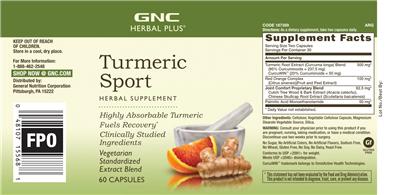
Supplement Facts
The label details for Turmeric Sport by GNC Herbal Plus, sourced from the NIH Dietary Supplement Label Database.
Supplement Facts
| Ingredient | Amount | % DV |
|---|---|---|
| Palmitic Acid Monoethanolamide | 50 mg | -- |
| Cutch Tree wood & bark extract | 0 NP | -- |
| Chinese Skullcap root extract | 0 NP | -- |
| Red Orange Complex | 100 mg | -- |
| Joint Comfort Proprietary Blend (Herb/Botanical) | 62.5 mg | -- |
| Turmeric root extract (Curcuma longa) Blend | 500 mg | -- |
Other ingredients: Cellulose, Vegetable Cellulose Capsule, Magnesium Stearate, Silica
Tap any ingredient to jump to its full detail below.
These statements are the manufacturer’s wording, reproduced from the product label — the label is saying it, not HelloPharmacist. We don’t verify or endorse them.
Precautions
Keep out of reach of children.
Warning: Consult your physician prior to using this product if you are pregnant, nursing, taking medication, or have a medical condition.
Discontinue use two weeks prior to surgery.
Storage
Store in a cool, dry place.
FDA Statement of Identity
Herbal Supplement
General Statements
Highly absorbable Turmeric
Fuels recovery
Clinically studied ingredients
Standardized extract blend
Conforms to USP <2091> for weight. Meets USP <2040> disintegration.
Formulation
Vegetarian
No sugar, no artificial colors, no artificial flavors, sodium free, no wheat, gluten free, no soy, no dairy, yeast free.
General
CODE 187359 ARG
Suggested/Recommended/Usage/Directions
Directions: As a dietary supplement, take two capsules daily.
Brand IP Statement(s)
CurcuWIN trademark belongs to OmniActive Health Technologies.
Seals/Symbols
GF Gluten free
FDA Disclaimer Statement
This statement has not been evaluated by the Food and Drug Administration. This product is not intended to diagnose, treat, cure, or prevent any disease.
Is this label outdated? Report a formula or label change and our pharmacy team will review it.
Turmeric Sport by GNC Herbal Plus label
The label scan from the NIH Dietary Supplement Label Database. Tap to enlarge.
Label images are published by the NIH Dietary Supplement Label Database for the version of this product on file. Always read your actual product label.
View the full label (PDF)The Ingredients in Turmeric Sport by GNC Herbal Plus
These are the 4 active ingredients this product is made of. Select any to open its full monograph.
Serving size2 Capsule(s) Dosage formCapsule Servings per container30 Amounts shown are per serving.
Most supplement products combine several ingredients, and a medication can interact with the product through any one of them. Each ingredient below shows whether it has known drug interactions.
Palmitic Acid Monoethanolamide
Red Orange Complex
Interacts with247 drugs
Sweet orange is a common citrus fruit that is a good source of vitamin C, fiber, and antioxidants, and is enjoyed as a food worldwide. Its peel and es...
Red Orange Complex monograph & interactionsJoint Comfort Proprietary Blend (Herb/Botanical)
Interacts with1,137 drugs
Cannabis contains many active compounds, mainly THC (which causes a 'high') and CBD (which does not). Some uses, such as chemotherapy-related nausea,...
Joint Comfort Proprietary Blend (Herb/Botanical) monograph & interactionsTurmeric root extract (Curcuma longa) Blend
Interacts with1,134 drugs
Turmeric is a popular spice whose main active compounds, curcuminoids, are studied mostly for inflammation and joint pain. Some research is promising,...
Turmeric root extract (Curcuma longa) Blend monograph & interactionsOther (inactive) ingredients: Cellulose, Vegetable Cellulose Capsule, Magnesium Stearate, Silica. These complete the product’s ingredient list but are not active constituents.
Turmeric Sport by GNC Herbal Plus Drug Interactions
HelloPharmacist Interaction Report
GNC Herbal Plus Turmeric Sport contains five ingredients, three of which we can check for interactions.
The most serious concern is the Red Orange Complex (sweet orange extract), which carries Major-severity interactions with four drug types: it can significantly decrease absorption of celiprolol (a blood pressure medication), ivermectin (an antiparasitic), and fexofenadine (an antihistamine), while it can substantially increase absorption of pravastatin (a cholesterol drug). Altogether, these interactions span 1,433 individual medications.
Read the full breakdown — every affected drug type, severity by severity
The Cutch Tree extract and Chinese Skullcap root extract both have Moderate-severity interactions across multiple drug categories. Catechu may raise blood levels of theophylline and other drugs metabolized by the CYP1A2 enzyme, interfere with immune-suppressing medications, and theoretically lower blood pressure further if you're already on blood pressure drugs.
Chinese Skullcap similarly interacts with blood pressure medications, diabetes drugs, blood thinners (anticoagulants), lithium, and drugs for overactive thyroid, plus several enzyme-metabolized medications.
Turmeric itself carries Moderate interactions with chemotherapy drugs, the immunosuppressant tacrolimus, tamoxifen (a breast cancer drug), sulfasalazine (an anti-inflammatory), and methotrexate (a rheumatoid arthritis and cancer drug), among others. It may also increase levels of certain kidney-filtered medications.
We cannot check Palmitic Acid Monoethanolamide — we hold no data for it. Before you take this product, use the medication checker on this page with your exact prescriptions, especially if you take any blood pressure medication, cholesterol drug, antihistamine, antiparasitic, diabetes medication, blood thinner, or chemotherapy agent.
Check your own medications below · Editorial policy · How we use AI
Want to check YOUR meds against Turmeric Sport?
Ask about interactions with your drugs in plain English — “Can I take it with lisinopril?” — and we find you the answer in seconds, ingredient by ingredient.
Go to the checkerIngredients driving the most interactions
Individual Drug Interactions
The ingredients in Turmeric Sport interact with 1,545 drugs. Click any drug to see the details.
3 of the 4 ingredients in Turmeric Sport interact with drugs. Each result below shows which ingredient is responsible. Joint Comfort Proprietary Blend (Herb/Botanical) Turmeric root extract (Curcuma longa) Blend Red Orange Complex
AtorvastatinAtorvaliq
How Atorvastatin interacts with Turmeric Sport — through 4 ingredients. Tap an ingredient for the detail:
Red Orange ComplexOrganic Anion-transporting Polypeptide Substrates (oatp) Major
Interaction Summary
Consuming sweet orange juice can decrease oral absorption of OATP substrates.
Read the full Red Orange Complex + Atorvastatin interactionJoint Comfort Proprietary Blend (herb/botanical)Cytochrome P450 3a4 (cyp3a4) Substrates Moderate
Interaction Summary
Theoretically, cannabis may increase the levels and adverse effects of CYP3A4 substrates.
Read the full Joint Comfort Proprietary Blend (herb/botanical) + Atorvastatin interactionTurmeric Root Extract (curcuma Longa) BlendCytochrome P450 3a4 (cyp3a4) Substrates, Organic Anion-transporting Polypeptide Substrates (oatp) +1 Moderate
Interaction Summary
Turmeric might increase or decrease levels of drugs metabolized by CYP3A4.
Read the full Turmeric Root Extract (curcuma Longa) Blend + Atorvastatin interactionChinese Skullcap Root ExtractOrganic Anion-transporting Polypeptide Substrates (oatp) Minor
Interaction Summary
Theoretically, Baikal skullcap might alter the levels and clinical effects of OATP substrates.
Read the full Chinese Skullcap Root Extract + Atorvastatin interactionAtorvastatin CalciumLipitor
How Atorvastatin Calcium interacts with Turmeric Sport — through 4 ingredients. Tap an ingredient for the detail:
Red Orange ComplexOrganic Anion-transporting Polypeptide Substrates (oatp) Major
Interaction Summary
Consuming sweet orange juice can decrease oral absorption of OATP substrates.
Read the full Red Orange Complex + Atorvastatin Calcium interactionJoint Comfort Proprietary Blend (herb/botanical)Cytochrome P450 3a4 (cyp3a4) Substrates Moderate
Interaction Summary
Theoretically, cannabis may increase the levels and adverse effects of CYP3A4 substrates.
Read the full Joint Comfort Proprietary Blend (herb/botanical) + Atorvastatin Calcium interactionTurmeric Root Extract (curcuma Longa) BlendOrganic Anion-transporting Polypeptide Substrates (oatp), Cytochrome P450 3a4 (cyp3a4) Substrates +1 Moderate
Interaction Summary
Theoretically, turmeric might increase blood levels of OATP4C1 substrates.
Read the full Turmeric Root Extract (curcuma Longa) Blend + Atorvastatin Calcium interactionChinese Skullcap Root ExtractOrganic Anion-transporting Polypeptide Substrates (oatp) Minor
Interaction Summary
Theoretically, Baikal skullcap might alter the levels and clinical effects of OATP substrates.
Read the full Chinese Skullcap Root Extract + Atorvastatin Calcium interactionBosentanTracleer
How Bosentan interacts with Turmeric Sport — through 5 ingredients. Tap an ingredient for the detail:
Red Orange ComplexOrganic Anion-transporting Polypeptide Substrates (oatp) Major
Interaction Summary
Consuming sweet orange juice can decrease oral absorption of OATP substrates.
Read the full Red Orange Complex + Bosentan interactionTurmeric Root Extract (curcuma Longa) BlendHepatotoxic Drugs, Cytochrome P450 3a4 (cyp3a4) Substrates +1 Moderate
Interaction Summary
Theoretically, turmeric might increase the risk of liver damage when taken with hepatotoxic drugs.
Read the full Turmeric Root Extract (curcuma Longa) Blend + Bosentan interactionCutch Tree Wood & Bark ExtractAntihypertensive Drugs Moderate
Interaction Summary
Theoretically, concomitant use with antihypertensive drugs might increase the risk of hypotension.
Read the full Cutch Tree Wood & Bark Extract + Bosentan interactionChinese Skullcap Root ExtractAntihypertensive Drugs, Organic Anion-transporting Polypeptide Substrates (oatp) Moderate
Interaction Summary
Theoretically, concomitant use of Baikal skullcap with antihypertensive drugs might have additive effects and increase the risk of hypotension.
Read the full Chinese Skullcap Root Extract + Bosentan interactionJoint Comfort Proprietary Blend (herb/botanical)Cytochrome P450 2c9 (cyp2c9) Substrates, Cytochrome P450 3a4 (cyp3a4) Substrates Moderate
Interaction Summary
Theoretically, cannabis might increase the levels and adverse effects of CYP2C9 substrates.
Read the full Joint Comfort Proprietary Blend (herb/botanical) + Bosentan interactionBrincidofovirTembexa
How Brincidofovir interacts with Turmeric Sport — through 3 ingredients. Tap an ingredient for the detail:
Red Orange ComplexOrganic Anion-transporting Polypeptide Substrates (oatp) Major
Interaction Summary
Consuming sweet orange juice can decrease oral absorption of OATP substrates.
Read the full Red Orange Complex + Brincidofovir interactionTurmeric Root Extract (curcuma Longa) BlendOrganic Anion-transporting Polypeptide Substrates (oatp) Moderate
Interaction Summary
Theoretically, turmeric might increase blood levels of OATP4C1 substrates.
Read the full Turmeric Root Extract (curcuma Longa) Blend + Brincidofovir interactionChinese Skullcap Root ExtractOrganic Anion-transporting Polypeptide Substrates (oatp) Minor
Interaction Summary
Theoretically, Baikal skullcap might alter the levels and clinical effects of OATP substrates.
Read the full Chinese Skullcap Root Extract + Brincidofovir interactionCeliprololCelicard
How Celiprolol interacts with Turmeric Sport — through 5 ingredients. Tap an ingredient for the detail:
Red Orange ComplexP-glycoprotein Substrates, Organic Anion-transporting Polypeptide Substrates (oatp) +1 Major
Interaction Summary
Sweet orange juice seems to modulate P-glycoprotein (P-gp), which might affect the blood levels of P-gp substrates.
Read the full Red Orange Complex + Celiprolol interactionTurmeric Root Extract (curcuma Longa) BlendP-glycoprotein Substrates, Organic Anion-transporting Polypeptide Substrates (oatp) Moderate
Interaction Summary
Theoretically, turmeric might increase the absorption of P-glycoprotein substrates.
Read the full Turmeric Root Extract (curcuma Longa) Blend + Celiprolol interactionChinese Skullcap Root ExtractAntihypertensive Drugs, P-glycoprotein Substrates +1 Moderate
Interaction Summary
Theoretically, concomitant use of Baikal skullcap with antihypertensive drugs might have additive effects and increase the risk of hypotension.
Read the full Chinese Skullcap Root Extract + Celiprolol interactionCutch Tree Wood & Bark ExtractAntihypertensive Drugs Moderate
Interaction Summary
Theoretically, concomitant use with antihypertensive drugs might increase the risk of hypotension.
Read the full Cutch Tree Wood & Bark Extract + Celiprolol interactionJoint Comfort Proprietary Blend (herb/botanical)P-glycoprotein Substrates Moderate
Interaction Summary
Theoretically, cannabis might alter levels of drugs that are substrates of P-glycoprotein (P-gp).
Read the full Joint Comfort Proprietary Blend (herb/botanical) + Celiprolol interactionCerivastatin SodiumBaycol
How Cerivastatin Sodium interacts with Turmeric Sport — through 3 ingredients. Tap an ingredient for the detail:
Red Orange ComplexOrganic Anion-transporting Polypeptide Substrates (oatp) Major
Interaction Summary
Consuming sweet orange juice can decrease oral absorption of OATP substrates.
Read the full Red Orange Complex + Cerivastatin Sodium interactionTurmeric Root Extract (curcuma Longa) BlendHepatotoxic Drugs, Organic Anion-transporting Polypeptide Substrates (oatp) Moderate
Interaction Summary
Theoretically, turmeric might increase the risk of liver damage when taken with hepatotoxic drugs.
Read the full Turmeric Root Extract (curcuma Longa) Blend + Cerivastatin Sodium interactionChinese Skullcap Root ExtractOrganic Anion-transporting Polypeptide Substrates (oatp) Minor
Interaction Summary
Theoretically, Baikal skullcap might alter the levels and clinical effects of OATP substrates.
Read the full Chinese Skullcap Root Extract + Cerivastatin Sodium interactionCinoxacinCinobac
How Cinoxacin interacts with Turmeric Sport — through 3 ingredients. Tap an ingredient for the detail:
Red Orange ComplexOrganic Anion-transporting Polypeptide Substrates (oatp), Quinolone Antibiotics Major
Interaction Summary
Consuming sweet orange juice can decrease oral absorption of OATP substrates.
Read the full Red Orange Complex + Cinoxacin interactionTurmeric Root Extract (curcuma Longa) BlendHepatotoxic Drugs, Organic Anion-transporting Polypeptide Substrates (oatp) Moderate
Interaction Summary
Theoretically, turmeric might increase the risk of liver damage when taken with hepatotoxic drugs.
Read the full Turmeric Root Extract (curcuma Longa) Blend + Cinoxacin interactionChinese Skullcap Root ExtractOrganic Anion-transporting Polypeptide Substrates (oatp) Minor
Interaction Summary
Theoretically, Baikal skullcap might alter the levels and clinical effects of OATP substrates.
Read the full Chinese Skullcap Root Extract + Cinoxacin interactionCiprofloxacinCiloxan, Cipro, Cipro IV, Cipro XR, Ciprobay, Otiprio
How Ciprofloxacin interacts with Turmeric Sport — through 4 ingredients. Tap an ingredient for the detail:
Red Orange ComplexOrganic Anion-transporting Polypeptide Substrates (oatp), Quinolone Antibiotics Major
Interaction Summary
Consuming sweet orange juice can decrease oral absorption of OATP substrates.
Read the full Red Orange Complex + Ciprofloxacin interactionTurmeric Root Extract (curcuma Longa) BlendOrganic Anion-transporting Polypeptide Substrates (oatp), Hepatotoxic Drugs Moderate
Interaction Summary
Theoretically, turmeric might increase blood levels of OATP4C1 substrates.
Read the full Turmeric Root Extract (curcuma Longa) Blend + Ciprofloxacin interactionJoint Comfort Proprietary Blend (herb/botanical)Cytochrome P450 3a4 (cyp3a4) Inhibitors Moderate
Interaction Summary
Theoretically, CYP3A4 inhibitors might increase the levels and adverse effects of cannabis.
Read the full Joint Comfort Proprietary Blend (herb/botanical) + Ciprofloxacin interactionChinese Skullcap Root ExtractOrganic Anion-transporting Polypeptide Substrates (oatp) Minor
Interaction Summary
Theoretically, Baikal skullcap might alter the levels and clinical effects of OATP substrates.
Read the full Chinese Skullcap Root Extract + Ciprofloxacin interactionCiprofloxacin, HydrocortisoneCipro HC Otic
How Ciprofloxacin, Hydrocortisone interacts with Turmeric Sport — through 3 ingredients. Tap an ingredient for the detail:
Red Orange ComplexOrganic Anion-transporting Polypeptide Substrates (oatp) Major
Interaction Summary
Consuming sweet orange juice can decrease oral absorption of OATP substrates.
Read the full Red Orange Complex + Ciprofloxacin, Hydrocortisone interactionTurmeric Root Extract (curcuma Longa) BlendOrganic Anion-transporting Polypeptide Substrates (oatp) Moderate
Interaction Summary
Theoretically, turmeric might increase blood levels of OATP4C1 substrates.
Read the full Turmeric Root Extract (curcuma Longa) Blend + Ciprofloxacin, Hydrocortisone interactionChinese Skullcap Root ExtractOrganic Anion-transporting Polypeptide Substrates (oatp) Minor
Interaction Summary
Theoretically, Baikal skullcap might alter the levels and clinical effects of OATP substrates.
Read the full Chinese Skullcap Root Extract + Ciprofloxacin, Hydrocortisone interactionClinafloxacinClinafloxacin
How Clinafloxacin interacts with Turmeric Sport — through 3 ingredients. Tap an ingredient for the detail:
Red Orange ComplexOrganic Anion-transporting Polypeptide Substrates (oatp), Quinolone Antibiotics Major
Interaction Summary
Consuming sweet orange juice can decrease oral absorption of OATP substrates.
Read the full Red Orange Complex + Clinafloxacin interactionTurmeric Root Extract (curcuma Longa) BlendOrganic Anion-transporting Polypeptide Substrates (oatp) Moderate
Interaction Summary
Theoretically, turmeric might increase blood levels of OATP4C1 substrates.
Read the full Turmeric Root Extract (curcuma Longa) Blend + Clinafloxacin interactionChinese Skullcap Root ExtractOrganic Anion-transporting Polypeptide Substrates (oatp) Minor
Interaction Summary
Theoretically, Baikal skullcap might alter the levels and clinical effects of OATP substrates.
Read the full Chinese Skullcap Root Extract + Clinafloxacin interactionEnoxacinPenetrex
How Enoxacin interacts with Turmeric Sport — through 3 ingredients. Tap an ingredient for the detail:
Red Orange ComplexOrganic Anion-transporting Polypeptide Substrates (oatp), Quinolone Antibiotics Major
Interaction Summary
Consuming sweet orange juice can decrease oral absorption of OATP substrates.
Read the full Red Orange Complex + Enoxacin interactionTurmeric Root Extract (curcuma Longa) BlendOrganic Anion-transporting Polypeptide Substrates (oatp) Moderate
Interaction Summary
Theoretically, turmeric might increase blood levels of OATP4C1 substrates.
Read the full Turmeric Root Extract (curcuma Longa) Blend + Enoxacin interactionChinese Skullcap Root ExtractOrganic Anion-transporting Polypeptide Substrates (oatp) Minor
Interaction Summary
Theoretically, Baikal skullcap might alter the levels and clinical effects of OATP substrates.
Read the full Chinese Skullcap Root Extract + Enoxacin interactionEtoposideEtopophos, VePesid, VP16
How Etoposide interacts with Turmeric Sport — through 4 ingredients. Tap an ingredient for the detail:
Red Orange ComplexP-glycoprotein Substrates, Organic Anion-transporting Polypeptide Substrates (oatp) Major
Interaction Summary
Sweet orange juice seems to modulate P-glycoprotein (P-gp), which might affect the blood levels of P-gp substrates.
Read the full Red Orange Complex + Etoposide interactionTurmeric Root Extract (curcuma Longa) BlendOrganic Anion-transporting Polypeptide Substrates (oatp), P-glycoprotein Substrates +1 Moderate
Interaction Summary
Theoretically, turmeric might increase blood levels of OATP4C1 substrates.
Read the full Turmeric Root Extract (curcuma Longa) Blend + Etoposide interactionJoint Comfort Proprietary Blend (herb/botanical)Cytochrome P450 3a4 (cyp3a4) Substrates, P-glycoprotein Substrates Moderate
Interaction Summary
Theoretically, cannabis may increase the levels and adverse effects of CYP3A4 substrates.
Read the full Joint Comfort Proprietary Blend (herb/botanical) + Etoposide interactionChinese Skullcap Root ExtractP-glycoprotein Substrates, Organic Anion-transporting Polypeptide Substrates (oatp) Minor
Interaction Summary
Theoretically, Baikal skullcap might increase levels of drugs transported by P-glycoprotein.
Read the full Chinese Skullcap Root Extract + Etoposide interactionEzetimibe, AtorvastatinLiptruzet
How Ezetimibe, Atorvastatin interacts with Turmeric Sport — through 4 ingredients. Tap an ingredient for the detail:
Red Orange ComplexOrganic Anion-transporting Polypeptide Substrates (oatp) Major
Interaction Summary
Consuming sweet orange juice can decrease oral absorption of OATP substrates.
Read the full Red Orange Complex + Ezetimibe, Atorvastatin interactionJoint Comfort Proprietary Blend (herb/botanical)Cytochrome P450 3a4 (cyp3a4) Substrates Moderate
Interaction Summary
Theoretically, cannabis may increase the levels and adverse effects of CYP3A4 substrates.
Read the full Joint Comfort Proprietary Blend (herb/botanical) + Ezetimibe, Atorvastatin interactionTurmeric Root Extract (curcuma Longa) BlendOrganic Anion-transporting Polypeptide Substrates (oatp), Hepatotoxic Drugs +1 Moderate
Interaction Summary
Theoretically, turmeric might increase blood levels of OATP4C1 substrates.
Read the full Turmeric Root Extract (curcuma Longa) Blend + Ezetimibe, Atorvastatin interactionChinese Skullcap Root ExtractOrganic Anion-transporting Polypeptide Substrates (oatp) Minor
Interaction Summary
Theoretically, Baikal skullcap might alter the levels and clinical effects of OATP substrates.
Read the full Chinese Skullcap Root Extract + Ezetimibe, Atorvastatin interactionFexofenadineAllegra
How Fexofenadine interacts with Turmeric Sport — through 4 ingredients. Tap an ingredient for the detail:
Red Orange ComplexP-glycoprotein Substrates, Organic Anion-transporting Polypeptide Substrates (oatp) +1 Major
Interaction Summary
Sweet orange juice seems to modulate P-glycoprotein (P-gp), which might affect the blood levels of P-gp substrates.
Read the full Red Orange Complex + Fexofenadine interactionTurmeric Root Extract (curcuma Longa) BlendP-glycoprotein Substrates, Organic Anion-transporting Polypeptide Substrates (oatp) +1 Moderate
Interaction Summary
Theoretically, turmeric might increase the absorption of P-glycoprotein substrates.
Read the full Turmeric Root Extract (curcuma Longa) Blend + Fexofenadine interactionJoint Comfort Proprietary Blend (herb/botanical)Cytochrome P450 3a4 (cyp3a4) Substrates, P-glycoprotein Substrates Moderate
Interaction Summary
Theoretically, cannabis may increase the levels and adverse effects of CYP3A4 substrates.
Read the full Joint Comfort Proprietary Blend (herb/botanical) + Fexofenadine interactionChinese Skullcap Root ExtractP-glycoprotein Substrates, Organic Anion-transporting Polypeptide Substrates (oatp) Minor
Interaction Summary
Theoretically, Baikal skullcap might increase levels of drugs transported by P-glycoprotein.
Read the full Chinese Skullcap Root Extract + Fexofenadine interactionFexofenadine, PseudoephedrineAllegra D
How Fexofenadine, Pseudoephedrine interacts with Turmeric Sport — through 4 ingredients. Tap an ingredient for the detail:
Red Orange ComplexOrganic Anion-transporting Polypeptide Substrates (oatp), Fexofenadine (allegra) +1 Major
Interaction Summary
Consuming sweet orange juice can decrease oral absorption of OATP substrates.
Read the full Red Orange Complex + Fexofenadine, Pseudoephedrine interactionJoint Comfort Proprietary Blend (herb/botanical)P-glycoprotein Substrates, Cytochrome P450 3a4 (cyp3a4) Substrates Moderate
Interaction Summary
Theoretically, cannabis might alter levels of drugs that are substrates of P-glycoprotein (P-gp).
Read the full Joint Comfort Proprietary Blend (herb/botanical) + Fexofenadine, Pseudoephedrine interactionTurmeric Root Extract (curcuma Longa) BlendP-glycoprotein Substrates, Organic Anion-transporting Polypeptide Substrates (oatp) +1 Moderate
Interaction Summary
Theoretically, turmeric might increase the absorption of P-glycoprotein substrates.
Read the full Turmeric Root Extract (curcuma Longa) Blend + Fexofenadine, Pseudoephedrine interactionChinese Skullcap Root ExtractOrganic Anion-transporting Polypeptide Substrates (oatp), P-glycoprotein Substrates Minor
Interaction Summary
Theoretically, Baikal skullcap might alter the levels and clinical effects of OATP substrates.
Read the full Chinese Skullcap Root Extract + Fexofenadine, Pseudoephedrine interactionFluvastatinLescol, Lescol XL
How Fluvastatin interacts with Turmeric Sport — through 4 ingredients. Tap an ingredient for the detail:
Red Orange ComplexOrganic Anion-transporting Polypeptide Substrates (oatp) Major
Interaction Summary
Consuming sweet orange juice can decrease oral absorption of OATP substrates.
Read the full Red Orange Complex + Fluvastatin interactionTurmeric Root Extract (curcuma Longa) BlendHepatotoxic Drugs, Organic Anion-transporting Polypeptide Substrates (oatp) Moderate
Interaction Summary
Theoretically, turmeric might increase the risk of liver damage when taken with hepatotoxic drugs.
Read the full Turmeric Root Extract (curcuma Longa) Blend + Fluvastatin interactionJoint Comfort Proprietary Blend (herb/botanical)Cytochrome P450 2c9 (cyp2c9) Substrates, Cytochrome P450 2c9 (cyp2c9) Inhibitors Moderate
Interaction Summary
Theoretically, cannabis might increase the levels and adverse effects of CYP2C9 substrates.
Read the full Joint Comfort Proprietary Blend (herb/botanical) + Fluvastatin interactionChinese Skullcap Root ExtractOrganic Anion-transporting Polypeptide Substrates (oatp) Minor
Interaction Summary
Theoretically, Baikal skullcap might alter the levels and clinical effects of OATP substrates.
Read the full Chinese Skullcap Root Extract + Fluvastatin interactionGatifloxacinTequin, Tequin Injection
How Gatifloxacin interacts with Turmeric Sport — through 3 ingredients. Tap an ingredient for the detail:
Red Orange ComplexOrganic Anion-transporting Polypeptide Substrates (oatp), Quinolone Antibiotics Major
Interaction Summary
Consuming sweet orange juice can decrease oral absorption of OATP substrates.
Read the full Red Orange Complex + Gatifloxacin interactionTurmeric Root Extract (curcuma Longa) BlendOrganic Anion-transporting Polypeptide Substrates (oatp), Hepatotoxic Drugs Moderate
Interaction Summary
Theoretically, turmeric might increase blood levels of OATP4C1 substrates.
Read the full Turmeric Root Extract (curcuma Longa) Blend + Gatifloxacin interactionChinese Skullcap Root ExtractOrganic Anion-transporting Polypeptide Substrates (oatp) Minor
Interaction Summary
Theoretically, Baikal skullcap might alter the levels and clinical effects of OATP substrates.
Read the full Chinese Skullcap Root Extract + Gatifloxacin interactionGemifloxacinFactive
How Gemifloxacin interacts with Turmeric Sport — through 3 ingredients. Tap an ingredient for the detail:
Red Orange ComplexOrganic Anion-transporting Polypeptide Substrates (oatp), Quinolone Antibiotics Major
Interaction Summary
Consuming sweet orange juice can decrease oral absorption of OATP substrates.
Read the full Red Orange Complex + Gemifloxacin interactionTurmeric Root Extract (curcuma Longa) BlendOrganic Anion-transporting Polypeptide Substrates (oatp) Moderate
Interaction Summary
Theoretically, turmeric might increase blood levels of OATP4C1 substrates.
Read the full Turmeric Root Extract (curcuma Longa) Blend + Gemifloxacin interactionChinese Skullcap Root ExtractOrganic Anion-transporting Polypeptide Substrates (oatp) Minor
Interaction Summary
Theoretically, Baikal skullcap might alter the levels and clinical effects of OATP substrates.
Read the full Chinese Skullcap Root Extract + Gemifloxacin interactionGlyburideAlbert Glyburide, Diabeta, Glycron, Glynase, Glynase PresTab, Micronase +1 more
How Glyburide interacts with Turmeric Sport — through 4 ingredients. Tap an ingredient for the detail:
Red Orange ComplexOrganic Anion-transporting Polypeptide Substrates (oatp) Major
Interaction Summary
Consuming sweet orange juice can decrease oral absorption of OATP substrates.
Read the full Red Orange Complex + Glyburide interactionJoint Comfort Proprietary Blend (herb/botanical)Cytochrome P450 2c9 (cyp2c9) Substrates Moderate
Interaction Summary
Theoretically, cannabis might increase the levels and adverse effects of CYP2C9 substrates.
Read the full Joint Comfort Proprietary Blend (herb/botanical) + Glyburide interactionChinese Skullcap Root ExtractAntidiabetes Drugs, Organic Anion-transporting Polypeptide Substrates (oatp) Moderate
Interaction Summary
Theoretically, concomitant use of Baikal skullcap with antidiabetes drugs might enhance blood glucose lowering effects.
Read the full Chinese Skullcap Root Extract + Glyburide interactionTurmeric Root Extract (curcuma Longa) BlendAntidiabetes Drugs, Glyburide (diabeta, Others) +2 Moderate
Interaction Summary
Theoretically, taking turmeric with antidiabetes drugs might increase the risk of hypoglycemia.
Read the full Turmeric Root Extract (curcuma Longa) Blend + Glyburide interactionGlyburide, MetforminGlucovance
How Glyburide, Metformin interacts with Turmeric Sport — through 4 ingredients. Tap an ingredient for the detail:
Red Orange ComplexOrganic Anion-transporting Polypeptide Substrates (oatp) Major
Interaction Summary
Consuming sweet orange juice can decrease oral absorption of OATP substrates.
Read the full Red Orange Complex + Glyburide, Metformin interactionTurmeric Root Extract (curcuma Longa) BlendHepatotoxic Drugs, Antidiabetes Drugs +2 Moderate
Interaction Summary
Theoretically, turmeric might increase the risk of liver damage when taken with hepatotoxic drugs.
Read the full Turmeric Root Extract (curcuma Longa) Blend + Glyburide, Metformin interactionChinese Skullcap Root ExtractOrganic Anion-transporting Polypeptide Substrates (oatp), Antidiabetes Drugs Moderate
Interaction Summary
Theoretically, Baikal skullcap might alter the levels and clinical effects of OATP substrates.
Read the full Chinese Skullcap Root Extract + Glyburide, Metformin interactionJoint Comfort Proprietary Blend (herb/botanical)Cytochrome P450 2c9 (cyp2c9) Substrates Moderate
Interaction Summary
Theoretically, cannabis might increase the levels and adverse effects of CYP2C9 substrates.
Read the full Joint Comfort Proprietary Blend (herb/botanical) + Glyburide, Metformin interactionGrepafloxacinRaxar
How Grepafloxacin interacts with Turmeric Sport — through 4 ingredients. Tap an ingredient for the detail:
Red Orange ComplexOrganic Anion-transporting Polypeptide Substrates (oatp), Quinolone Antibiotics Major
Interaction Summary
Consuming sweet orange juice can decrease oral absorption of OATP substrates.
Read the full Red Orange Complex + Grepafloxacin interactionCutch Tree Wood & Bark ExtractCytochrome P450 1a2 (cyp1a2) Substrates Moderate
Interaction Summary
Theoretically, black catechu may increase the levels and clinical effects of CYP1A2 substrates.
Read the full Cutch Tree Wood & Bark Extract + Grepafloxacin interactionTurmeric Root Extract (curcuma Longa) BlendCytochrome P450 1a2 (cyp1a2) Substrates, Organic Anion-transporting Polypeptide Substrates (oatp) Moderate
Interaction Summary
Theoretically, turmeric might increase levels of drugs metabolized by CYP1A2.
Read the full Turmeric Root Extract (curcuma Longa) Blend + Grepafloxacin interactionChinese Skullcap Root ExtractCytochrome P450 1a2 (cyp1a2) Substrates, Organic Anion-transporting Polypeptide Substrates (oatp) Moderate
Interaction Summary
Theoretically, Baikal skullcap may increase levels of drugs metabolized by CYP1A2 enzymes.
Read the full Chinese Skullcap Root Extract + Grepafloxacin interactionIrinotecanCamptosar, Onivyde
How Irinotecan interacts with Turmeric Sport — through 4 ingredients. Tap an ingredient for the detail:
Red Orange ComplexOrganic Anion-transporting Polypeptide Substrates (oatp) Major
Interaction Summary
Consuming sweet orange juice can decrease oral absorption of OATP substrates.
Read the full Red Orange Complex + Irinotecan interactionTurmeric Root Extract (curcuma Longa) BlendCytochrome P450 3a4 (cyp3a4) Substrates, Topoisomerase I Inhibitors +1 Moderate
Interaction Summary
Turmeric might increase or decrease levels of drugs metabolized by CYP3A4.
Read the full Turmeric Root Extract (curcuma Longa) Blend + Irinotecan interactionJoint Comfort Proprietary Blend (herb/botanical)Cytochrome P450 3a4 (cyp3a4) Substrates Moderate
Interaction Summary
Theoretically, cannabis may increase the levels and adverse effects of CYP3A4 substrates.
Read the full Joint Comfort Proprietary Blend (herb/botanical) + Irinotecan interactionChinese Skullcap Root ExtractOrganic Anion-transporting Polypeptide Substrates (oatp) Minor
Interaction Summary
Theoretically, Baikal skullcap might alter the levels and clinical effects of OATP substrates.
Read the full Chinese Skullcap Root Extract + Irinotecan interactionIrinotecan Hydrochloride
How Irinotecan Hydrochloride interacts with Turmeric Sport — through 4 ingredients. Tap an ingredient for the detail:
Red Orange ComplexOrganic Anion-transporting Polypeptide Substrates (oatp) Major
Interaction Summary
Consuming sweet orange juice can decrease oral absorption of OATP substrates.
Read the full Red Orange Complex + Irinotecan Hydrochloride interactionJoint Comfort Proprietary Blend (herb/botanical)Cytochrome P450 3a4 (cyp3a4) Substrates Moderate
Interaction Summary
Theoretically, cannabis may increase the levels and adverse effects of CYP3A4 substrates.
Read the full Joint Comfort Proprietary Blend (herb/botanical) + Irinotecan Hydrochloride interactionTurmeric Root Extract (curcuma Longa) BlendTopoisomerase I Inhibitors, Organic Anion-transporting Polypeptide Substrates (oatp) +1 Moderate
Interaction Summary
Turmeric has antioxidant effects.
Read the full Turmeric Root Extract (curcuma Longa) Blend + Irinotecan Hydrochloride interactionChinese Skullcap Root ExtractOrganic Anion-transporting Polypeptide Substrates (oatp) Minor
Interaction Summary
Theoretically, Baikal skullcap might alter the levels and clinical effects of OATP substrates.
Read the full Chinese Skullcap Root Extract + Irinotecan Hydrochloride interactionIsoniazid, Pyrazinamide, RifampinRifater
How Isoniazid, Pyrazinamide, Rifampin interacts with Turmeric Sport — through 4 ingredients. Tap an ingredient for the detail:
Red Orange ComplexOrganic Anion-transporting Polypeptide Substrates (oatp) Major
Interaction Summary
Consuming sweet orange juice can decrease oral absorption of OATP substrates.
Read the full Red Orange Complex + Isoniazid, Pyrazinamide, Rifampin interactionJoint Comfort Proprietary Blend (herb/botanical)Cytochrome P450 2c9 (cyp2c9) Inhibitors, Cytochrome P450 3a4 (cyp3a4) Inhibitors +2 Moderate
Interaction Summary
Theoretically, drugs that are CYP2C9 inhibitors might increase the adverse effects of cannabis.
Read the full Joint Comfort Proprietary Blend (herb/botanical) + Isoniazid, Pyrazinamide, Rifampin interactionTurmeric Root Extract (curcuma Longa) BlendOrganic Anion-transporting Polypeptide Substrates (oatp), Hepatotoxic Drugs Moderate
Interaction Summary
Theoretically, turmeric might increase blood levels of OATP4C1 substrates.
Read the full Turmeric Root Extract (curcuma Longa) Blend + Isoniazid, Pyrazinamide, Rifampin interactionChinese Skullcap Root ExtractOrganic Anion-transporting Polypeptide Substrates (oatp) Minor
Interaction Summary
Theoretically, Baikal skullcap might alter the levels and clinical effects of OATP substrates.
Read the full Chinese Skullcap Root Extract + Isoniazid, Pyrazinamide, Rifampin interactionIsoniazid, RifampinRifamate
How Isoniazid, Rifampin interacts with Turmeric Sport — through 4 ingredients. Tap an ingredient for the detail:
Red Orange ComplexOrganic Anion-transporting Polypeptide Substrates (oatp) Major
Interaction Summary
Consuming sweet orange juice can decrease oral absorption of OATP substrates.
Read the full Red Orange Complex + Isoniazid, Rifampin interactionTurmeric Root Extract (curcuma Longa) BlendHepatotoxic Drugs, Organic Anion-transporting Polypeptide Substrates (oatp) Moderate
Interaction Summary
Theoretically, turmeric might increase the risk of liver damage when taken with hepatotoxic drugs.
Read the full Turmeric Root Extract (curcuma Longa) Blend + Isoniazid, Rifampin interactionJoint Comfort Proprietary Blend (herb/botanical)Cytochrome P450 3a4 (cyp3a4) Inducers, Cytochrome P450 2c9 (cyp2c9) Inducers +2 Moderate
Interaction Summary
Theoretically, CYP3A4 inducers might reduce the levels and clinical effects of cannabis.
Read the full Joint Comfort Proprietary Blend (herb/botanical) + Isoniazid, Rifampin interactionChinese Skullcap Root ExtractOrganic Anion-transporting Polypeptide Substrates (oatp) Minor
Interaction Summary
Theoretically, Baikal skullcap might alter the levels and clinical effects of OATP substrates.
Read the full Chinese Skullcap Root Extract + Isoniazid, Rifampin interactionIvermectinMectizan, Sklice, Soolantra, Stromectol
How Ivermectin interacts with Turmeric Sport — through 4 ingredients. Tap an ingredient for the detail:
Red Orange ComplexIvermectin (stromectol, Others), P-glycoprotein Substrates Major
Interaction Summary
Consuming sweet orange juice with ivermectin can decrease the oral absorption of ivermectin.
Read the full Red Orange Complex + Ivermectin interactionJoint Comfort Proprietary Blend (herb/botanical)P-glycoprotein Substrates Moderate
Interaction Summary
Theoretically, cannabis might alter levels of drugs that are substrates of P-glycoprotein (P-gp).
Read the full Joint Comfort Proprietary Blend (herb/botanical) + Ivermectin interactionTurmeric Root Extract (curcuma Longa) BlendP-glycoprotein Substrates Minor
Interaction Summary
Theoretically, turmeric might increase the absorption of P-glycoprotein substrates.
Read the full Turmeric Root Extract (curcuma Longa) Blend + Ivermectin interactionChinese Skullcap Root ExtractP-glycoprotein Substrates Minor
Interaction Summary
Theoretically, Baikal skullcap might increase levels of drugs transported by P-glycoprotein.
Read the full Chinese Skullcap Root Extract + Ivermectin interactionLevofloxacinLeva-pak, Levaquin, Levaquin Injection
How Levofloxacin interacts with Turmeric Sport — through 3 ingredients. Tap an ingredient for the detail:
Red Orange ComplexOrganic Anion-transporting Polypeptide Substrates (oatp), Quinolone Antibiotics Major
Interaction Summary
Consuming sweet orange juice can decrease oral absorption of OATP substrates.
Read the full Red Orange Complex + Levofloxacin interactionTurmeric Root Extract (curcuma Longa) BlendOrganic Anion-transporting Polypeptide Substrates (oatp), Hepatotoxic Drugs Moderate
Interaction Summary
Theoretically, turmeric might increase blood levels of OATP4C1 substrates.
Read the full Turmeric Root Extract (curcuma Longa) Blend + Levofloxacin interactionChinese Skullcap Root ExtractOrganic Anion-transporting Polypeptide Substrates (oatp) Minor
Interaction Summary
Theoretically, Baikal skullcap might alter the levels and clinical effects of OATP substrates.
Read the full Chinese Skullcap Root Extract + Levofloxacin interactionLevofloxacin (ophthalmic)Levofloxacin
How Levofloxacin (ophthalmic) interacts with Turmeric Sport — through 3 ingredients. Tap an ingredient for the detail:
Red Orange ComplexOrganic Anion-transporting Polypeptide Substrates (oatp), Quinolone Antibiotics Major
Interaction Summary
Consuming sweet orange juice can decrease oral absorption of OATP substrates.
Read the full Red Orange Complex + Levofloxacin (ophthalmic) interactionTurmeric Root Extract (curcuma Longa) BlendOrganic Anion-transporting Polypeptide Substrates (oatp) Moderate
Interaction Summary
Theoretically, turmeric might increase blood levels of OATP4C1 substrates.
Read the full Turmeric Root Extract (curcuma Longa) Blend + Levofloxacin (ophthalmic) interactionChinese Skullcap Root ExtractOrganic Anion-transporting Polypeptide Substrates (oatp) Minor
Interaction Summary
Theoretically, Baikal skullcap might alter the levels and clinical effects of OATP substrates.
Read the full Chinese Skullcap Root Extract + Levofloxacin (ophthalmic) interactionLomefloxacinMaxaquin
How Lomefloxacin interacts with Turmeric Sport — through 3 ingredients. Tap an ingredient for the detail:
Red Orange ComplexOrganic Anion-transporting Polypeptide Substrates (oatp), Quinolone Antibiotics Major
Interaction Summary
Consuming sweet orange juice can decrease oral absorption of OATP substrates.
Read the full Red Orange Complex + Lomefloxacin interactionTurmeric Root Extract (curcuma Longa) BlendHepatotoxic Drugs, Organic Anion-transporting Polypeptide Substrates (oatp) Moderate
Interaction Summary
Theoretically, turmeric might increase the risk of liver damage when taken with hepatotoxic drugs.
Read the full Turmeric Root Extract (curcuma Longa) Blend + Lomefloxacin interactionChinese Skullcap Root ExtractOrganic Anion-transporting Polypeptide Substrates (oatp) Minor
Interaction Summary
Theoretically, Baikal skullcap might alter the levels and clinical effects of OATP substrates.
Read the full Chinese Skullcap Root Extract + Lomefloxacin interactionLovastatinAltocor, Mevacor
How Lovastatin interacts with Turmeric Sport — through 4 ingredients. Tap an ingredient for the detail:
Red Orange ComplexOrganic Anion-transporting Polypeptide Substrates (oatp) Major
Interaction Summary
Consuming sweet orange juice can decrease oral absorption of OATP substrates.
Read the full Red Orange Complex + Lovastatin interactionJoint Comfort Proprietary Blend (herb/botanical)Cytochrome P450 2c9 (cyp2c9) Inhibitors, Cytochrome P450 3a4 (cyp3a4) Substrates Moderate
Interaction Summary
Theoretically, drugs that are CYP2C9 inhibitors might increase the adverse effects of cannabis.
Read the full Joint Comfort Proprietary Blend (herb/botanical) + Lovastatin interactionTurmeric Root Extract (curcuma Longa) BlendOrganic Anion-transporting Polypeptide Substrates (oatp), Cytochrome P450 3a4 (cyp3a4) Substrates +1 Moderate
Interaction Summary
Theoretically, turmeric might increase blood levels of OATP4C1 substrates.
Read the full Turmeric Root Extract (curcuma Longa) Blend + Lovastatin interactionChinese Skullcap Root ExtractOrganic Anion-transporting Polypeptide Substrates (oatp) Minor
Interaction Summary
Theoretically, Baikal skullcap might alter the levels and clinical effects of OATP substrates.
Read the full Chinese Skullcap Root Extract + Lovastatin interactionEach ingredient & the kinds of drugs it affects
For each ingredient in Turmeric Sport with known interactions, here are the types of medications they can affect. Open any type for the detail — or search your exact drug in the checker above.
Joint Comfort Proprietary Blend (Herb/Botanical)
Warfarin (Coumadin)
Concomitant use with cannabis seems to increase the levels and clinical effects of warfarin.
In vitro research shows that the cannabis constituents delta-9-tetrahydrocannabinol (THC), cannabidiol (CBD), and cannabinol inhibit the cytochrome P450 2C9 (CYP2C9)-mediated 7-hydroxylation of S-warfarin in a concentration-dependent manner.
Additionally, there are multiple case reports of patients chronically taking warfarin that developed a spike in international normalized ratio (INR) after using cannabis in various forms, including smoking cannabis, taking medical cannabis orally, or drinking water infused with cannabis flower. One patient smoked 2-2.5 grams in one week and another patient had doubled the amount of THC consumed from 7.5 mg to 14.7 mg daily for one week.
Alcohol (Ethanol)
Theoretically, cannabis might have additive effects when used with alcohol.
Cannabis can have CNS depressant effects, similar to synthetic delta-9-tetrahydrocannabinol (THC). Theoretically, concomitant use of alcohol with cannabis can have additive effects including psychomotor impairment, sedation, and changes in mood and behavior.
Anesthesia
Cannabis use might alter the safety and clinical effects of various forms of anesthesia.
A small clinical study shows that higher doses of propofol may be needed to achieve relaxation and loss of consciousness in chronic cannabis users compared with nonusers. Another small clinical study shows that use of cannabis within 72 hours prior to undergoing surgery requiring atropine anesthesia may increase the risk of sustained postoperative tachycardia. The exact mechanisms of these interactions are unclear. Obtain a patient's history of cannabis use preoperatively and advise patients to discontinue cannabis use for at least 2 weeks prior to undergoing surgery.
Anticoagulant/Antiplatelet Drugs
Theoretically, cannabis might increase the risk of bleeding when used concomitantly with anticoagulant/antiplatelet drugs.
In vitro research shows that the cannabis constituents delta-9-tetrahydrocannabinol (THC) and cannabidiol (CBD) inhibit platelet aggregation.
Barbiturates
Theoretically, cannabis might increase the levels and adverse effects of barbiturates.
Some research shows that synthetic delta-9-tetrahydrocannabinol (THC) increases the elimination half-life of pentobarbital by 4 hours when dosed concomitantly.
Cns Depressants
Theoretically, cannabis might have additive effects if used with other CNS depressants.
Cannabis can have CNS depressant effects. Combining cannabis with other CNS depressants might result in additive or synergistic effects. A small clinical trial in healthy adults shows that inhaling a high-grade cannabis (Bedrocan International B.V., Veendam, The Netherlands) 100 mg, containing delta-9-tetrahydrocannabinol 21.8% and cannabinol 0.1%, modestly increases subjective feelings of sedation when compared with cannabis alone.
Cytochrome P450 2C19 (Cyp2C19) Substrates
Cannabis may increase levels of drugs metabolized by CYP2C19.
Research shows that cannabidiol (CBD), a constituent of cannabis, inhibits CYP2C19. In clinical studies and case reports, cannabidiol use resulted in significant increases in the serum levels of topiramate, methadone, citalopram, omeprazole, and N-desmethylclobazam, the primary active metabolite of clobazam. These chemicals are metabolized by CYP2C19. Concomitant use of cannabis with CYP2C19 substrates may increase the risk for adverse effects from these substrates.
Cytochrome P450 2C9 (Cyp2C9) Inducers
Theoretically, drugs that are CYP2C9 inducers might decrease the effects of cannabis.
Delta-9-tetrahydrocannabinol (THC), an active constituent of cannabis, is a substrate of CYP2C9 enzymes.
Cytochrome P450 2C9 (Cyp2C9) Inhibitors
Theoretically, drugs that are CYP2C9 inhibitors might increase the adverse effects of cannabis.
Delta-9-tetrahydrocannabinol (THC), an active constituent of cannabis, is a substrate of CYP2C9 enzymes.
Cytochrome P450 2C9 (Cyp2C9) Substrates
Theoretically, cannabis might increase the levels and adverse effects of CYP2C9 substrates.
In vitro research shows that the cannabis constituents delta-9-tetrahydrocannabinol (THC), cannabidiol (CBD), and cannabinol moderately inhibit the CYP2C9-mediated 7-hydroxylation of S-warfarin in a concentration-dependent manner. In vitro research also shows that cannabis extracts modestly inhibit the CYP2C9 metabolism of tolbutamide; extracts providing the specific cannabinoids CBD and cannabigerol (CBG) had stronger inhibitory effects than extracts containing THC and CBD.
Cytochrome P450 2E1 (Cyp2E1) Substrates
Theoretically, cannabis might decrease the levels and clinical effects of CYP2E1 substrates.
In vitro research shows that cannabis can induce the activity of CYP2E1, which might increase the metabolism of CYP2E1 substrates.
Cytochrome P450 3A4 (Cyp3A4) Inducers
Theoretically, CYP3A4 inducers might reduce the levels and clinical effects of cannabis.
Delta-9-tetrahydrocannabinol (THC), an active constituent of cannabis, is a substrate of CYP3A4 enzymes.
Cytochrome P450 3A4 (Cyp3A4) Inhibitors
Theoretically, CYP3A4 inhibitors might increase the levels and adverse effects of cannabis.
Delta-9-tetrahydrocannabinol (THC), an active constituent of cannabis, is a substrate of CYP3A4 enzymes.
Cytochrome P450 3A4 (Cyp3A4) Substrates
Theoretically, cannabis may increase the levels and adverse effects of CYP3A4 substrates.
In vitro research shows that cannabis can inhibit the activity of CYP3A4 enzymes, which might decrease the metabolism of CYP3A4 substrates. In vitro research also shows that cannabis extracts modestly inhibit the CYP3A4 metabolism of testosterone; extracts providing the specific cannabinoids CBD and cannabigerol (CBG) had stronger inhibitory effects than extracts containing THC and CBD.
P-Glycoprotein Substrates
Theoretically, cannabis might alter levels of drugs that are substrates of P-glycoprotein (P-gp).
Most in vitro research suggests that constituents of cannabis, including cannabidiol (CBD) and delta-9-tetrahydrocannabinol (THC), can inhibit P-gp and increase the accumulation of probe compounds by reducing P-gp mediated drug efflux. In vitro studies in kidney cell lines show that a 1-hour exposure to CBD and THC inhibits P-gp. Cannabis may also alter the expression of P-gp, although this effect appears to vary based on duration of exposure. Some in vitro research in lymphoblastoid leukemia cell lines indicates that a 1-hour exposure to cannabinoids does not affect P-gp expression, while a prolonged 72-hour exposure decreases P-gp expression. Other in vitro research in these cell lines shows that a 4-hour exposure to THC and CBD induces P-gp gene expression, while exposure for longer than 4 hours and up to 48 hours does not induce P-gp gene expression.
Theophylline
Smoking cannabis while taking theophylline might reduce the levels and clinical effects of theophylline.
Similar to smoking tobacco, smoking cannabis seems to increase the metabolism of theophylline.
Thrombolytic Drugs
Cannabis might augment the effects of thrombolytic drugs and increase the risk of severe bleeding.
A case of cerebral hemorrhage has been reported for a 51-year-old female and chronic cannabis user who had consumed a large amount of cannabis prior to receiving recombinant tissue plasminogen activator (rtPA) for ischemic stroke. Hemorrhage had been ruled out prior to providing the rtPA. The exact mechanism of this interaction is unclear.
Antipsychotic Drugs
Cannabis does not seem to affect blood levels or effects of some antipsychotic drugs.
Human research shows that cannabis use does not affect blood levels or clinical effects of amisulpride, aripiprazole, or olanzapine in patients with schizophrenia and related disorders.
Turmeric root extract (Curcuma longa) Blend
Alkylating Agents
Turmeric has antioxidant effects. Theoretically, this may reduce the activity of chemotherapy drugs that generate free radicals. However, research is conflicting.
In vitro research suggests that curcumin, a constituent of turmeric, inhibits mechlorethamine-induced apoptosis of breast cancer cells by up to 70%. Also, animal research shows that curcumin inhibits cyclophosphamide-induced tumor regression. However, some in vitro research shows that curcumin does not affect the apoptosis capacity of etoposide. Also, other laboratory research suggests that curcumin might augment the cytotoxic effects of alkylating agents. Reasons for the discrepancies may relate to the dose of curcumin and the specific chemotherapeutic agent. Lower doses of curcumin might have antioxidant effects while higher doses might have pro-oxidant effects. More evidence is needed to determine what effect, if any, turmeric might have on alkylating agents.
Amlodipine (Norvasc)
Taking turmeric with amlodipine may increase levels of amlodipine.
Animal research shows that giving amlodipine 1 mg/kg as a single dose following the use of turmeric extract 200 mg/kg daily for 2 weeks increases the maximum concentration and area under the curve by 53% and 56%, respectively, when compared with amlodipine alone. Additional animal research shows that taking amlodipine 1 mg/kg with a curcumin 2 mg/kg pretreatment for 10 days increases the maximum concentration and area under the curve by about 2-fold when compared with amlodipine alone.
Anticoagulant/Antiplatelet Drugs
Turmeric may have antiplatelet effects and may increase the risk of bleeding if used with anticoagulant or antiplatelet drugs. However, research is conflicting.
Curcumin, a constituent of turmeric, has demonstrated antiplatelet effects in vitro. Furthermore, two case reports have found that taking turmeric along with warfarin or fluindione was associated with an increased international normalized ratio (INR). However, one clinical study in healthy volunteers shows that taking curcumin 500 mg daily for 3 weeks, alone or with aspirin 100 mg, does not increase antiplatelet effects or bleeding risk. It is possible that the dose of turmeric used in this study was too low to produce a notable effect.
Antidiabetes Drugs
Theoretically, taking turmeric with antidiabetes drugs might increase the risk of hypoglycemia.
Animal research and case reports suggest that curcumin, a turmeric constituent, can reduce blood glucose levels in patients with diabetes. Furthermore, clinical research in adults with type 2 diabetes shows that taking curcumin 475 mg daily for 10 days prior to taking glyburide 5 mg decreased postprandial glucose levels for up to 24 hours when compared with glyburide alone, despite the lack of a significant pharmacokinetic interaction. Other clinical studies in patients with diabetes show that taking curcumin daily can reduce blood glucose levels when compared with placebo.
Antitumor Antibiotics
Turmeric has antioxidant effects. Theoretically, this may reduce the activity of chemotherapy drugs that generate free radicals. However, research is conflicting.
In vitro and animal research shows that curcumin, a constituent of turmeric, inhibits doxorubicin-induced apoptosis of breast cancer cells by up to 65%. However, curcumin does not seem to affect the apoptosis capacity of daunorubicin. In fact, some research shows that curcumin might augment the cytotoxic effects of antitumor antibiotics, increasing their effectiveness. Reasons for the discrepancies may relate to the dose of curcumin and the chemotherapeutic agent. Lower doses of curcumin might have antioxidant effects while higher doses might have pro-oxidant effects. More evidence is needed to determine what effects, if any, antioxidants such as turmeric have on antitumor antibiotics.
Cytochrome P450 3A4 (Cyp3A4) Substrates
Turmeric might increase or decrease levels of drugs metabolized by CYP3A4.
In vitro and animal research show that turmeric and its constituents curcumin and curcuminoids inhibit CYP3A4. Also, 8 case reports from the World Health Organization (WHO) adverse drug reaction database describe increased toxicity in patients taking turmeric and cancer medications that are CYP3A4 substrates, including everolimus, ruxolitinib, ibrutinib, and palbociclib, and bortezomib. In another case report, a transplant patient presented with acute nephrotoxicity and elevated tacrolimus levels after consuming turmeric powder at a dose of 15 or more spoonfuls daily for ten days prior. It was thought that turmeric increased levels of tacrolimus due to CYP3A4 inhibition.
Conversely, other in vitro research suggests that turmeric induces CYP3A4 activity, leading to reduced levels of CYP3A4 substrates. An animal model suggests that induction of CYP3A4 occurs after daily curcumin use for 1 week. However, the induction of CYP3A4 by turmeric has not been reported in humans.
Hepatotoxic Drugs
Theoretically, turmeric might increase the risk of liver damage when taken with hepatotoxic drugs.
There is concern that turmeric might cause hepatotoxicity, especially when highly bioavailable formulations are used in high doses.
Methotrexate (Trexall, Others)
Theoretically, turmeric might have additive effects when used with hepatotoxic drugs such as methotrexate.
In one case report, a 39-year-old female taking methotrexate, turmeric, and linseed oil developed hepatotoxicity.
Organic Anion-Transporting Polypeptide Substrates (Oatp)
Theoretically, turmeric might increase blood levels of OATP4C1 substrates.
In vitro research shows that the turmeric constituent curcumin competitively inhibits OATP4C1 transport. This transporter is expressed in the kidney and facilitates the renal excretion of certain drugs. Theoretically, taking turmeric might decrease renal excretion of OATP substrates.
Sulfasalazine (Azulfidine)
Turmeric might increase the effects and adverse effects of sulfasalazine.
Clinical research shows that taking the turmeric constituent, curcumin, can increase blood levels of sulfasalazine by 3.2-fold.
Tacrolimus (Prograf)
Turmeric might increase the effects and adverse effects of tacrolimus.
In one case report, a transplant patient presented with acute nephrotoxicity and elevated tacrolimus levels of 29 ng/mL. The patient previously had tacrolimus levels within the therapeutic range at 9.7 ng/mL. Ten days prior to presenting at the emergency room the patient started consumption of turmeric powder at a dose of 15 or more spoonfuls daily. It was thought that turmeric increased levels of tacrolimus due to cytochrome P450 3A4 (CYP3A4) inhibition. In vitro and animal research show that turmeric and its constituent curcumin inhibit CYP3A4.
Talinolol
Turmeric may reduce the absorption of talinolol in some situations.
Clinical research shows that taking curcumin for 6 days decreases the bioavailability of talinolol when taken together on the seventh day. The clinical significance of this effect is unclear.
Tamoxifen (Nolvadex)
Theoretically, turmeric might reduce the levels and clinical effects of tamoxifen.
In a small clinical trial in patients with breast cancer taking tamoxifen 20-30 mg daily, adding curcumin 1200 mg plus piperine 10 mg three times daily reduces the 24-hour area under the curve of tamoxifen and the active metabolite endoxifen by 12.8% and 12.4%, respectively, as well as the maximum concentrations of tamoxifen, when compared with tamoxifen alone. However, in the absence of piperine, the area under the curve for endoxifen and the maximum concentration of tamoxifen were not significantly reduced. Effects were most pronounced in patients who were extensive cytochrome P450 (CYP) 2D6 metabolizers.
Topoisomerase I Inhibitors
Turmeric has antioxidant effects. There is some concern that this may reduce the activity of chemotherapy drugs that generate free radicals. However, research is conflicting.
In vitro research shows that curcumin, a constituent of turmeric, inhibits camptothecin-induced apoptosis of breast cancer cells by up to 71%. However, other in vitro research shows that curcumin augments the cytotoxic effects of camptothecin. Reasons for the discrepancies may relate to the dose of curcumin and the chemotherapeutic agents. Lower doses of curcumin might have antioxidant effects while higher doses might have pro-oxidant effects. More evidence is needed to determine what effect, if any, turmeric might have.
Tramadol (Ultram)
Theoretically, turmeric might increase or decrease levels of tramadol.
Animal research suggests that a single dose of curcumin, a constituent of turmeric, may increase tramadol's maximum concentration (Cmax) by inhibiting metabolism, while continued daily use for 7 days may reduce the area under the curve (AUC) due to the induction of drug-metabolizing enzymes such as cytochrome P450 3A4 (CYP3A4). However, this interaction has not been reported in humans.
Warfarin (Coumadin)
Turmeric might increase the risk of bleeding with warfarin.
One case of increased international normalized ratio (INR) has been reported for a patient taking warfarin who began taking turmeric. Prior to taking turmeric, the patient had stable INR measurements. Within a few weeks of starting turmeric supplementation, the patient's INR increased to 10. Additionally, curcumin, the active constituent in turmeric, has demonstrated antiplatelet effects in vitro, which may produce additive effects when taken with warfarin.
Cytochrome P450 1A2 (Cyp1A2) Substrates
Theoretically, turmeric might increase levels of drugs metabolized by CYP1A2. However, research is conflicting.
In vitro and animal research show that the turmeric constituent, curcumin, inhibits CYP1A2. However, other in vitro research suggests that curcumin does not significantly affect CYP1A2.
Docetaxel (Taxotere)
Theoretically, turmeric might increase blood levels of oral docetaxel.
Animal research suggests that the turmeric constituent, curcumin, enhances the oral bioavailability of docetaxel. However, the significance of this interaction is unclear, as this drug is typically administered intravenously in clinical settings.
Estrogens
Theoretically, large amounts of turmeric might interfere with hormone replacement therapy through competition for estrogen receptors.
In vitro research shows that curcumin, a constituent of turmeric, displaces the binding of estrogen to its receptors.
Glyburide (Diabeta, Others)
Theoretically, taking turmeric and glyburide in combination might increase the risk of hypoglycemia.
Clinical research shows that taking curcumin 475 mg daily for 10 days prior to taking glyburide 5 mg increases blood levels of glyburide by 12% at 2 hours after the dose in patients with type 2 diabetes. While maximal blood concentrations of glyburide were not affected, turmeric modestly decreased postprandial glucose levels for up to 24 hours when compared to glyburide alone, possibly due to the hypoglycemic effect of turmeric demonstrated in animal research.
Losartan (Cozaar)
Theoretically, turmeric might increase the effects of losartan.
Research in hypertensive rats shows that taking turmeric can increase the hypotensive effects of losartan.
Norfloxacin (Noroxin)
Theoretically, turmeric might increase the effects and adverse effects of norfloxacin.
Animal research shows that taking curcumin, a turmeric constituent, can increase blood levels of orally administered norfloxacin.
P-Glycoprotein Substrates
Theoretically, turmeric might increase the absorption of P-glycoprotein substrates.
In vitro and animal research shows that curcuminoids and other constituents found in turmeric can inhibit P-glycoprotein expression and activity.
Paclitaxel (Abraxane, Onxol)
Theoretically, turmeric might alter blood levels of paclitaxel, although any effect may not be clinically relevant.
Clinical research in adults with breast cancer receiving intravenous paclitaxel suggests that taking turmeric may modestly alter paclitaxel pharmacokinetics. Patients received paclitaxel on day 1, followed by either no treatment or turmeric 2 grams daily from days 2-22. Pharmacokinetic modeling suggests that turmeric reduces the maximum concentration and area under the curve of paclitaxel by 12.1% and 7.7%, respectively. However, these changes are not likely to be considered clinically relevant. Conversely, animal research suggests that curcumin, a constituent of turmeric, enhances the oral bioavailability of paclitaxel. However, the significance of this interaction is unclear, as this drug is typically administered intravenously in clinical settings.
Red Orange Complex
Celiprolol (Celicard)
Consuming sweet orange with celiprolol can decrease oral absorption of celiprolol.
A pharmacokinetic study in healthy volunteers shows that celiprolol levels, after a single dose of 100 mg, are decreased by up to 90% in people who drink sweet orange juice 200 mL three times daily. It's not known if lower consumption of sweet orange juice will have the same effect. Theoretically, this occurs due to short-term inhibition of organic anion transporting polypeptide (OATP). Recommend separating drug administration and consumption of sweet orange by at least 4 hours.
Ivermectin (Stromectol, Others)
Consuming sweet orange juice with ivermectin can decrease the oral absorption of ivermectin.
A pharmacokinetic study in healthy volunteers shows that taking ivermectin orally with sweet orange juice 750 mL over 4 hours reduces the bioavailability of ivermectin. This effect does not seem to be related to effects on P-glycoprotein. The effect on ivermectin is more pronounced in males compared to females.
Organic Anion-Transporting Polypeptide Substrates (Oatp)
Consuming sweet orange juice can decrease oral absorption of OATP substrates. Separate administration by at least 4 hours.
Clinical research shows that consuming sweet orange juice inhibits OATP, which reduces bioavailability of oral drugs that are substrates of OATP. For example, sweet orange juice decreases bioavailability of fexofenadine, a substrate of OATP, by about 72% and of celiprolol, another OATP substrate, by up to 90%. Since sweet orange juice seems to affect OATP for a short time, recommend separating drug administration and consumption of sweet orange juice by at least 4 hours.
Pravastatin (Pravachol)
Consuming sweet orange juice with pravastatin can increase the absorption of pravastatin.
A small pharmacokinetic study in healthy volunteers shows that consuming sweet orange juice 800 mL over 3 hours, including before, during, and after taking pravastatin 10 mg, increases pravastatin levels by about 149%, without affecting pravastatin elimination. Theoretically this effect might be due to modulation of organic anion transporting polypeptides (OATPs) by sweet orange juice. Sweet orange juice does not seem to affect simvastatin levels, but it is not known if sweet orange affects any of the other statins.
Fexofenadine (Allegra)
Consuming sweet orange juice with fexofenadine can decrease oral absorption of fexofenadine.
Clinical research shows that coadministration of sweet orange juice 1200 mL decreases bioavailability of fexofenadine by about 72%. In an animal model, sweet orange juice decreased bioavailability of fexofenadine by 31%. Fexofenadine manufacturer data indicates that concomitant administration of sweet orange juice and fexofenadine results in larger wheal and flare sizes in research models. This suggests that sweet orange reduces the clinical response to fexofenadine. Theoretically, this occurs due to short-term inhibition of organic anion transporting polypeptide (OATP). Recommend separating drug administration and consumption of sweet orange by at least 4 hours.
P-Glycoprotein Substrates
Sweet orange juice seems to modulate P-glycoprotein (P-gp), which might affect the blood levels of P-gp substrates.
Animal and in vitro research suggest that orange juice extract inhibits drug efflux by P-gp, increasing absorption and levels of P-gp substrates. In contrast, pharmacokinetic research in humans shows that drinking large amounts of sweet orange juice decreases absorption and levels of the P-gp substrate celiprolol. This suggests that orange juice actually induces drug efflux by P-gp or affects drug levels by another mechanism such as inhibiting the gut drug transporter called organic anion transporting polypeptide (OATP). Until more is known, sweet orange juice should be used cautiously in people taking P-gp substrates.
Quinolone Antibiotics
Calcium-fortified sweet orange juice might reduce quinolone absorption.
Calcium binds to quinolones in the gut. Theoretically, the calcium in certain fortified orange juices can also bind to quinolone antibiotics and reduce their absorption and levels.
Brand information
Manufacturer and brand details for Turmeric Sport, from the product label.
GNC Herbal Plus
See all GNC Herbal Plus products- Name
- General Nutrition Corporation
- City
- Pittsburgh
- State
- PA
- ZipCode
- 15222
- Phone Number
- 1-888-462-2548
- Web Address
- www.gnc.com
Turmeric Sport by GNC Herbal Plus: Common Questions
Does Turmeric Sport by GNC Herbal Plus interact with any medications?
How can one product interact with so many drugs?
Where does this information come from?
Can I take this if I'm on a blood pressure medication?
Does turmeric in this product actually help with joint pain or exercise soreness?
What side effects should I watch for?
Is it safe to take while I'm pregnant or breastfeeding?
What is catechu and why is it in a turmeric product?
Why does the red orange extract matter if it's just vitamin C?
Written and reviewed by the HelloPharmacist editorial staff. Our editorial policy
Not sure if Turmeric Sport is safe with your meds?
Our pharmacists answer your medication & supplement questions — free.
Label information is sourced from the NIH Dietary Supplement Label Database and reflects the product version on file; always read your actual product label. This page is for education only and is not a substitute for professional medical advice. Confirm with your pharmacist or doctor before combining supplements and medications.
The Full Monographs Behind Turmeric Sport’s Ingredients
Every ingredient we hold a full HelloPharmacist monograph for — uses, evidence, safety, and the complete interaction list.
Sweet Orange
Interacts with 247 drugsSweet orange is a common citrus fruit that is a good source of vitamin C, fiber, and antioxidants, and is enjoyed as a food worldwide. Its peel and essential oil are used in aromatherapy and...
Read the full Sweet Orange monograph → Herb & supplement monographCannabis
Interacts with 1,137 drugsCannabis contains many active compounds, mainly THC (which causes a 'high') and CBD (which does not). Some uses, such as chemotherapy-related nausea, certain seizure disorders, and muscle sp...
Read the full Cannabis monograph → Herb & supplement monographCatechu
Interacts with 475 drugsCatechu is an astringent extract made from the heartwood of the Acacia (Senegalia) catechu tree, used traditionally for mouth sores, sore throat, diarrhea, and minor skin problems. Strong hu...
Read the full Catechu monograph → Herb & supplement monographBaikal Skullcap
Interacts with 948 drugsBaikal skullcap is a traditional Chinese herb (Huang Qin) used for inflammation, allergies, and infections, with active compounds like baicalin and baicalein studied mostly in the lab. Human...
Read the full Baikal Skullcap monograph → Herb & supplement monographTurmeric
Interacts with 1,134 drugsTurmeric is a popular spice whose main active compounds, curcuminoids, are studied mostly for inflammation and joint pain. Some research is promising, but quality is mixed and curcumin is po...
Read the full Turmeric monograph →Sources & How We Checked
Turmeric Sport's label data comes from the NIH Dietary Supplement Label Database; the ingredient interaction data is from the Natural Medicines database, reviewed by our pharmacists.
- NIH Dietary Supplement Label Database (DSLD) — The official product label on file for this supplement.
- Natural Medicines (Therapeutic Research Center) — Evidence-graded clinical reference behind the ingredient interaction data.
Content is written and reviewed by licensed HelloPharmacist pharmacists. See our data sources and editorial standards for how this information is built and checked.
The 423 references behind this product’s interaction data
Every citation that drives the interaction findings for this product’s ingredients, from the evidence-graded Natural Medicines (TRC Healthcare) database. Open an ingredient to browse its citations — links open the study on PubMed or the publisher’s site.
Catechu 9 references
- Electronic Code of Federal Regulations. Title 21. Part 182 -- Substances Generally Recognized As Safe. Available at: https://www.accessdata.fda.gov/scripts/cdrh/cfdocs/cfcfr/CFRSearch.cfm?CFRPart=182
- Sham JS, Chiu KW, Pang PK. Hypotensive action of Acacia catechu. Planta Med 1984;50:177-80.
- Chalasani N, Vuppalanchi R, Navarro V, et al. Acute liver injury due to flavocoxid (Limbrel), a medical food for osteoarthritis: a case series. Ann Intern Med 2012;156:857-60. PubMed
- Reichenbach S, Juni P. Medical food and food supplements: not always as safe as generally assumed. Ann Intern Med 2012;156:894-5. PubMed
- PL-Detail Document, Liver Toxicity and Limbrel. Pharmacist's Letter/Prescriber's Letter. September 2012.
- Al-Mohizea AM, Raish M, Ahad A, et al. Pharmacokinetic interaction of Acacia catechu with CYP1A substrate theophylline in rabbits. J Tradit Chin Med 2015;35(5):588-93. PubMed
- Papafragkakis C, Ona MA, Reddy M, et al. Acute hepatitis after ingestion of a preparation of chinese skullcap and black catechu for joint pain. Case Reports Hepatol 2016;2016:4356749. PubMed
- Sunil MA, Sunitha VS, Ashitha A, et al. Catechin rich butanol fraction extracted from Acacia catechu L. (a thirst quencher) exhibits immunostimulatory potential. J Food Drug Anal. 2019;27(1):195-207. PubMed
- US Food and Drug Administration (FDA). FDA Alerts Consumers About Potentially Life-Threatening Health Problems Linked to Limbrel. December 19, 2017. Available at: https://www.fda.gov/food/alerts-advisories-safety-information/fda-alerts-consumers-about-pot
Baikal Skullcap 34 references
- Huang KC. The pharmacology of Chinese herbs. 2nd ed. New York, NY: CRC Press LLC. 1999;385-6, 400-1.
- Hui KM, Wang XH, Xue H. Interaction of flavones from the roots of Scutellaria baicalensis with the benzodiazepine site. Planta Med 2000;66:91-3.
- Liao JF, Wang HH, Chen MC, et al. Benzodiazepine binding site-interactive flavones from Scutellaria baicalensis root. Planta Med 1998;64:571-2.
- Nishioka T, Kawabata J, Aoyama Y. Baicalein, an alpha-glucosidase inhibitor from Scutellaria baicalensis. J Nat Prod 1998;61:1413-5.
- Zhang CZ, Wang SX, Zhang Y, et al. In vitro estrogenic activities of Chinese medicinal plants traditionally used for the management of menopausal symptoms. J Ethnopharmacol 2005;98:295-300. PubMed
- Fan L, Zhang W, Guo D, et al. The effect of herbal medicine baicalin on pharmacokinetics of rosuvastatin, substrate of organic anion-transporting polypeptide 1B1. Clin Pharmacol Ther 2007;83:471-6. PubMed
- Chen C, Mireles RJ, Campbell SD, et al. Differential interaction of 3-hydroxy-3-methylglutaryl-CoA reductase inhibitors with ABCB1, ABCC2, and OATP1B1. Drug Metab Dispos 2005;33:537-46. PubMed
- Pasanen MK, Fredrikson H, Neuvonen PJ, Niemi M. Different effects of SLCO1B1 polymorphism on the pharmacokinetics of atorvastatin and rosuvastatin. Clin Pharmacol Ther 2007;82:726-33. PubMed
- Konig J, Seithel A, Gradhand U, Fromm MF. Pharmacogenomics of human OATP transporters. Naunyn-Schmiedeberg Arch Pharmacol 2006;372:432-43. PubMed
- Chalasani N, Vuppalanchi R, Navarro V, et al. Acute liver injury due to flavocoxid (Limbrel), a medical food for osteoarthritis: a case series. Ann Intern Med 2012;156:857-60. PubMed
- Reichenbach S, Juni P. Medical food and food supplements: not always as safe as generally assumed. Ann Intern Med 2012;156:894-5. PubMed
- Huang, W. M., Yan, J., and Xu, J. [Clinical and experimental study on inhibitory effect of sanhuang mixture on platelet aggregation]. Zhongguo Zhong.Xi.Yi.Jie.He.Za Zhi. 1995;15(8):465-467.
- Kim, B. R., Kim, D. H., Park, R., Kwon, K. B., Ryu, D. G., Kim, Y. C., Kim, N. Y., Jeong, S., Kang, B. K., and Kim, K. S. Effect of an extract of the root of Scutellaria baicalensis and its flavonoids on aflatoxin B1 oxidizing cytochrome P450 enzymes. Pl PubMed
- Lee, Y., Yeo, H., Liu, S. H., Jiang, Z., Savizky, R. M., Austin, D. J., and Cheng, Y. C. Increased anti-P-glycoprotein activity of baicalein by alkylation on the A ring. J Med Chem 10-21-2004;47(22):5555-5566. PubMed
- Huang, Y., Tsang, S. Y., Yao, X., and Chen, Z. Y. Biological properties of baicalein in cardiovascular system. Curr Drug Targets.Cardiovasc.Haematol.Disord 2005;5(2):177-184. PubMed
- Lee, E., Enomoto, R., Suzuki, C., Ohno, M., Ohashi, T., Miyauchi, A., Tanimoto, E., Maeda, K., Hirano, H., Yokoi, T., and Sugahara, C. Wogonin, a plant flavone, potentiates etoposide-induced apoptosis in cancer cells. Ann N Y Acad Sci 2007;1095:521-526. PubMed
- Waisundara, V. Y., Hsu, A., Huang, D., and Tan, B. K. Scutellaria baicalensis enhances the anti-diabetic activity of metformin in streptozotocin-induced diabetic Wistar rats. Am J Chin Med 2008;36(3):517-540.
- Go, W. J., Ryu, J. H., Qiang, F., and Han, H. K. Evaluation of the flavonoid oroxylin A as an inhibitor of P-glycoprotein-mediated cellular efflux. J Nat Prod 2009;72(9):1616-1619. PubMed
- Linnebur, S. A., Rapacchietta, O. C., and Vejar, M. Hepatotoxicity associated with chinese skullcap contained in Move Free Advanced dietary supplement: two case reports and review of the literature. Pharmacotherapy 2010;30(7):750, 258e-750, 262e. PubMed
- Enomoto, R., Koshiba, C., Suzuki, C., and Lee, E. Wogonin potentiates the antitumor action of etoposide and ameliorates its adverse effects. Cancer Chemother.Pharmacol 2011;67(5):1063-1072. PubMed
- Chang, H. H., Yi, P. L., Cheng, C. H., Lu, C. Y., Hsiao, Y. T., Tsai, Y. F., Li, C. L., and Chang, F. C. Biphasic effects of baicalin, an active constituent of Scutellaria baicalensis Georgi, in the spontaneous sleep-wake regulation. J Ethnopharmacol. 5- PubMed
- Li, T., Li, N., Guo, Q., Ji, H., Zhao, D., Xie, S., Li, X., Qiu, Z., Han, D., Chen, X., and You, Q. Inhibitory effects of wogonin on catalytic activity of cytochrome P450 enzyme in human liver microsomes. Eur J Drug Metab Pharmacokinet. 6-29-2011; PubMed
- Lin H, Zhou J, Lin K, et al. Efficacy of Scutellaria baicalensis for the treatment of hand, foot, and mouth disease associated with encephalitis in patients infected with EV71: a multicenter, retrospective analysis. Biomed Res Int 2016;2016:5697571.
- Papafragkakis C, Ona MA, Reddy M, Anand S. Acute hepatitis after ingestion of a preparation of Chinese skullcap and black catechu for joint pain. Case Reports Heptal 2016;2016:4356749. PubMed
- Kim M, Lee BC. Therapeutic effect of Scutellaria baicalensis on L-thyroxine-induced hyperthyroidism rats. Evid Based Complement Alternat Med. 2019;2019:3239649.
- Braude MR, Bassily R. Drug-induced liver injury secondary to Scutellaria baicalensis (Chinese skullcap). Intern Med J. 2019;49(4):544-546. PubMed
- Shin NR, Gu N, Choi HS, Kim H. Combined effects of Scutellaria baicalensis with metformin on glucose tolerance of patients with type 2 diabetes via gut microbiota modulation. Am J Physiol Endocrinol Metab. 2020;318(1):E52-E61.
- Li WJ, Bao J, Zheng DC, et al. Treatments of Peyronie's disease with Scutellaria baicalensis and surgery according to the disease course: a single-center retrospective study of 261 patients. Ann Palliat Med. 2021 Mar;10(3):2979-2989. PubMed
- Adam T, Bursztejn AC, Schmutz JL. Facial eczema from a sunscreen: Scutellaria baicalensis, a novel allergen beginning to attract attention. Contact Dermatitis. 2020 Apr;82(4):253-254.
- Luna-Bastante L, Gatica-Ortega ME, Pastor-Nieto MA, et al. Allergic contact dermatitis to Tinosorb S, Scutellaria baicalensis, and other emerging allergens in cosmetics. Contact Dermatitis. 2020 May;82(5):307-309.
- US Food and Drug Administration (FDA). FDA Alerts Consumers About Potentially Life-Threatening Health Problems Linked to Limbrel. December 19, 2017. Available at: https://www.fda.gov/food/alerts-advisories-safety-information/fda-alerts-consumers-about-pot
- Li L, Gao H, Lou K, et al. Safety, tolerability, and pharmacokinetics of oral baicalein tablets in healthy Chinese subjects: A single-center, randomized, double-blind, placebo-controlled multiple-ascending-dose study. Clin Transl Sci 2021;14(5):2017-2024. PubMed
- Badaoui A. Allergic contact dermatitis to resveratrol and Scutellaria baicalensis root extract in a cosmetic product. Contact Dermatitis 2022.
- Nogami T, Arai M. Incidence of Herb-induced Liver Injury Caused by Kampo Formulae Containing Scutellariae Radix. Tokai J Exp Clin Med 2022;47(3):94-98.
Sweet Orange 17 references
- Leung AY, Foster S. Encyclopedia of Common Natural Ingredients Used in Food, Drugs and Cosmetics. 2nd ed. New York, NY: John Wiley & Sons, 1996.
- FDA, CFSAN. FDA-approved potassium health claim notification for potassium containing foods. 2000. Available at: www.cfsan.fda.gov/~dms/hclm-k.html.
- Kurowska EM, Spence JD, Jordan J, et al. HDL-cholesterol-raising effect of orange juice in subjects with hypercholesterolemia. Am J Clin Nutr 2000;72:1095-100. PubMed
- Murry JJ, Healy MD. Drug-mineral interactions: a new responsibility for the hospital dietician. J Am Diet Assoc 1991;91:66-73.
- Bailey DG, Dresser GK, Munoz C, et al. Reduction of fexofenadine bioavailability by fruit juices. Clin Pharmacol Ther 2001;69:P21.
- Pletz MW, Petzold P, Allen A, et al. Effect of calcium carbonate on bioavailability of orally administered gemifloxacin. Antimicrob Agents Chemother 2003;47:2158-60.. PubMed
- Lilja JJ, Juntti-Patinen L, Neuvonen PJ. Orange juice substantially reduces the bioavailability of the beta-adrenergic-blocking agent celiprolol. Clin Pharmacol Ther 2004;75:184-90.
- Tian R, Koyabu N, Takanaga H, et al. Effects of grapefruit juice and orange juice on the intestinal efflux of P-glycoprotein substrates. Pharm Res 2002;19:802-9. PubMed
- Vanapalli SR, Chen Y, Ellingrod VL, et al. Orange juice decreases the oral bioavailability of ivermectin in health volunteers. Clin Pharmacol Ther 2003;73 (Abstract PDII-A-10):P94.
- Huang SM, Lesko LJ. Drug-drug, drug-dietary supplement, and drug-citrus fruit and other food interactions: what have we learned? J Clin Pharmacol 2004;44:559-69. PubMed
- Koitabashi Y, Kumai T, Matsumoto N, et al. Orange juice increased the bioavailability of pravastatin, 3-hydroxy-3-methylglutaryl CoA reductase inhibitor, in rats and healthy human subjects. Life Sci 2006;78:2852-9. PubMed
- Takanaga H, Ohnishi A, Yamada S, et al. Polymethoxylated flavones in orange juice are inhibitors of P-glycoprotein but not cytochrome P450 3A4. J Pharmacol Exp Ther 2000;293:230-6. DOI
- Greenblatt DJ. Analysis of drug interactions involving fruit beverages and organic anion-transporting polypeptides. J Clin Pharmacol 2009;49:1403-7. PubMed
- Bailey DG. Fruit juice inhibition of uptake transport: a new type of food-drug interaction. Br J Clin Pharmacol 2010;70:645-55. PubMed
- Kamath AV, Yao M, Zhang Y, Chong S. Effect of fruit juices on the oral bioavailability of fexofenadine in rats. J Pharm Sci 2005;94:233-9. PubMed
- Kays MB, Overholser BR, Mueller BA, et al. Effects of sevelamer hydrochloride and calcium acetate on the oral bioavailability of ciprofloxacin. Am J Kidney Dis. 2003;42(6):1253-9. PubMed
- Neuhofel, A. L., Wilton, J. H., Victory, J. M., Hejmanowsk, L. G., and Amsden, G. W. Lack of bioequivalence of ciprofloxacin when administered with calcium-fortified orange juice: a new twist on an old interaction. J Clin Pharmacol. 2002;42(4):461-466. DOI
Cannabis 261 references
- Robbers JE, Speedie MK, Tyler VE. Pharmacognosy and Pharmacobiotechnology. Baltimore, MD: Williams & Wilkins, 1996.
- Gruenwald J, Brendler T, Jaenicke C. PDR for Herbal Medicines. 1st ed. Montvale, NJ: Medical Economics Company, Inc., 1998.
- Johnson MA, Robin P, Smith RP, Morrisona D, et al. Large lung bullae in marijuana smokers. Thorax 2000;55:340-2.. PubMed
- Hebel SK, ed. Drug Facts and Comparisons. 52nd ed. St. Louis: Facts and Comparisons, 1998.
- Tyrey L. Delta 9-Tetrahydrocannabinol: a potent inhibitor of episodic luteinizing hormone secretion. J Pharmacol Exp Ther 1980;213:306-8. DOI
- Briggs GB, Freeman RK, Yaffe SJ. Drugs in Pregnancy and Lactation. 5th ed. Philadelphia, PA: Lippincott Williams & Wilkins; 1998.
- Solowij N, Stephens RS, Roffman RA, et al. Cognitive functioning of long-term heavy cannabis users seeking treatment. JAMA 2002;287:1123-31.. PubMed
- Marinol Prescribing Information. Solvay Pharmaceuticals, Rev March 2008. Available at: http://www.solvaypharmaceuticals-us.com/static/wma/pdf/1/3/2/5/0/004InsertText500012RevMar2008.pdf (Accessed 2 July 2009).
- Yamreudeewong W, Wong HK, Brausch LM, Pulley KR. Probable interaction between warfarin and marijuana smoking. Ann Pharmacother 2009;43:1347-53. PubMed
- Ware MA, Wang T, Shapiro S, et al. Smoked cannabis for chronic neuropathic pain: a randomized controlled trial. CMAJ 2010;182:e694-e701. PubMed
- Pellinen, P., Honkakoski, P., Stenback, F., Niemitz, M., Alhava, E., Pelkonen, O., Lang, M. A., and Pasanen, M. Cocaine N-demethylation and the metabolism-related hepatotoxicity can be prevented by cytochrome P450 3A inhibitors. Eur.J Pharmacol 1-3-1994;2 PubMed
- Johnson, E. M. Substance abuse and women's health. Public Health Rep. 1987;102(4 Suppl):42-48.
- Astley, S. J. and Little, R. E. Maternal marijuana use during lactation and infant development at one year. Neurotoxicol.Teratol. 1990;12(2):161-168. PubMed
- Levy, R., Schurr, A., Nathan, I., Dvilanski, A., and Livne, A. Impairment of ADP-induced platelet aggregation by hashish components. Thromb.Haemost. 12-31-1976;36(3):634-640. DOI
- Payne, R. J. and Brand, S. N. The toxicity of intravenously used marihuana. JAMA 7-28-1975;233(4):351-354. DOI
- Sheweita, S. A. Narcotic drugs change the expression of cytochrome P450 2E1 and 2C6 and other activities of carcinogen-metabolizing enzymes in the liver of male mice. Toxicology 9-30-2003;191(2-3):133-142. PubMed
- Rog, D. J., Nurmikko, T. J., Friede, T., and Young, C. A. Randomized, controlled trial of cannabis-based medicine in central pain in multiple sclerosis. Neurology 9-27-2005;65(6):812-819. PubMed
- Perras, C. Sativex for the management of multiple sclerosis symptoms. Issues Emerg.Health Technol. 2005;(72):1-4.
- Zhu, H. J., Wang, J. S., Markowitz, J. S., Donovan, J. L., Gibson, B. B., Gefroh, H. A., and Devane, C. L. Characterization of P-glycoprotein inhibition by major cannabinoids from marijuana. J Pharmacol Exp.Ther. 2006;317(2):850-857. PubMed
- Holland, M. L., Panetta, J. A., Hoskins, J. M., Bebawy, M., Roufogalis, B. D., Allen, J. D., and Arnold, J. C. The effects of cannabinoids on P-glycoprotein transport and expression in multidrug resistant cells. Biochem.Pharmacol 4-14-2006;71(8):1146-115 PubMed
- Tetrault, J. M., Crothers, K., Moore, B. A., Mehra, R., Concato, J., and Fiellin, D. A. Effects of marijuana smoking on pulmonary function and respiratory complications: a systematic review. Arch.Intern.Med. 2-12-2007;167(3):221-228. PubMed
- Moore, T. H., Zammit, S., Lingford-Hughes, A., Barnes, T. R., Jones, P. B., Burke, M., and Lewis, G. Cannabis use and risk of psychotic or affective mental health outcomes: a systematic review. Lancet 7-28-2007;370(9584):319-328. PubMed
- Aldington, S., Williams, M., Nowitz, M., Weatherall, M., Pritchard, A., McNaughton, A., Robinson, G., and Beasley, R. Effects of cannabis on pulmonary structure, function and symptoms. Thorax 2007;62(12):1058-1063. PubMed
- Ben Amar, M. and Potvin, S. Cannabis and psychosis: what is the link? J Psychoactive Drugs 2007;39(2):131-142. PubMed
- Vidal, C., Fuente, R., Iglesias, A., and Saez, A. Bronchial asthma due to Cannabis sativa seed. Allergy 1991;46(8):647-649.
- Beshay, M., Kaiser, H., Niedhart, D., Reymond, M. A., and Schmid, R. A. Emphysema and secondary pneumothorax in young adults smoking cannabis. Eur.J Cardiothorac.Surg. 2007;32(6):834-838. PubMed
- Rog, D. J., Nurmikko, T. J., and Young, C. A. Oromucosal delta9-tetrahydrocannabinol/cannabidiol for neuropathic pain associated with multiple sclerosis: an uncontrolled, open-label, 2-year extension trial. Clin Ther. 2007;29(9):2068-2079.
- Aldington, S., Harwood, M., Cox, B., Weatherall, M., Beckert, L., Hansell, A., Pritchard, A., Robinson, G., and Beasley, R. Cannabis use and risk of lung cancer: a case-control study. Eur.Respir.J 2008;31(2):280-286. PubMed
- Noel, B., Ruf, I., and Panizzon, R. G. Cannabis arteritis. J Am.Acad.Dermatol. 2008;58(5 Suppl 1):S65-S67.
- Cappelli, F., Lazzeri, C., Gensini, G. F., and Valente, S. Cannabis: a trigger for acute myocardial infarction? A case report. J Cardiovasc.Med.(Hagerstown.) 2008;9(7):725-728. PubMed
- Indlekofer, F., Piechatzek, M., Daamen, M., Glasmacher, C., Lieb, R., Pfister, H., Tucha, O., Lange, K. W., Wittchen, H. U., and Schutz, C. G. Reduced memory and attention performance in a population-based sample of young adults with a moderate lifetime
- Mushtaq, F., Mondelli, V., and Pariante, C. M. The metabolic implications of long term cannabis use in patients with psychosis. Epidemiol.Psichiatr.Soc. 2008;17(3):221-226. PubMed
- Zammit, S., Moore, T. H., Lingford-Hughes, A., Barnes, T. R., Jones, P. B., Burke, M., and Lewis, G. Effects of cannabis use on outcomes of psychotic disorders: systematic review. Br.J Psychiatry 2008;193(5):357-363. PubMed
- Tucker, P. Substance misuse and early psychosis. Australas.Psychiatry 2009;17(4):291-294. PubMed
- Reece, A. S. Chronic toxicology of cannabis. Clin Toxicol.(Phila) 2009;47(6):517-524. PubMed
- Grotenhermen, F. Cannabis-associated arteritis. Vasa 2010;39(1):43-53. PubMed
- McGrath, J., Welham, J., Scott, J., Varghese, D., Degenhardt, L., Hayatbakhsh, M. R., Alati, R., Williams, G. M., Bor, W., and Najman, J. M. Association between cannabis use and psychosis-related outcomes using sibling pair analysis in a cohort of young
- Genetic Risk and Outcome in Psychosis (GROUP) Investigators. Evidence that familial liability for psychosis is expressed as differential sensitivity to cannabis: an analysis of patient-sibling and sibling-control pairs. Arch.Gen.Psychiatry 2011;68(2):138 PubMed
- Le Guen, P. Y., Gestin, S., Plat, E., Quehe, P., and Bressollette, L. [Renal and spleen infarction after massive consumption of cannabis and cocaine in a young man]. J.Mal Vasc. 2011;36(1):41-44.
- Large, M., Sharma, S., Compton, M. T., Slade, T., and Nielssen, O. Cannabis use and earlier onset of psychosis: a systematic meta-analysis. Arch.Gen.Psychiatry 2011;68(6):555-561. PubMed
- Lynch, M. E. and Campbell, F. Cannabinoids for treatment of chronic non-cancer pain; a systematic review of randomized trials. Br.J.Clin.Pharmacol. 2011;72(5):735-744. PubMed
- Li, M. C., Brady, J. E., DiMaggio, C. J., Lusardi, A. R., Tzong, K. Y., and Li, G. Marijuana use and motor vehicle crashes. Epidemiol.Rev. 2012;34(1):65-72. PubMed
- Richards, B. L., Whittle, S. L., and Buchbinder, R. Neuromodulators for pain management in rheumatoid arthritis. Cochrane.Database.Syst.Rev. 2012;1:CD008921. PubMed
- Asbridge, M., Hayden, J. A., and Cartwright, J. L. Acute cannabis consumption and motor vehicle collision risk: systematic review of observational studies and meta-analysis. BMJ 2012;344:e536. PubMed
- Fajardo, L. L. Association of spontaneous pneumomediastinum with substance abuse. West J Med 1990;152(3):301-304.
- Formukong, E. A., Evans, A. T., and Evans, F. J. The inhibitory effects of cannabinoids, the active constituents of Cannabis sativa L. on human and rabbit platelet aggregation. J.Pharm.Pharmacol. 1989;41(10):705-709.
- Hollister, L. E. Interactions of cannabis with other drugs in man. NIDA Res.Monogr 1986;68:110-116. DOI
- Harvey DJ. Absorption, distribution, and biotransformation of the cannabinoids. Marijuana and Medicine. 1999;91-103. DOI
- Bornheim LM, Everhart ET, Li J, Correia MA. Characterization of cannabidiol-mediated cytochrome P450 inactivation. Biochem Pharmacol 1993;45(6):1323-31. PubMed
- Mittleman MA, Lewis RA, Maclure M, Sherwood JB, Muller JE. Triggering myocardial infarction by marijuana. Circulation. 2001;103(23):2805-9. PubMed
- Combemale P, Consort T, Denis-Thelis L, et al. Cannabis arteritis. Br J Dermatol. 2005;152(1):166-9.
- Gibbs M, Winsper C, Marwaha S, et al. Cannabis use and mania symptoms: a systematic review and meta-analysis. J Affect Disord. 2015;171:39-47. PubMed
- Hackam DG. Cannabis and stroke: systematic appraisal of case reports. Stroke. 2015;46(3):852-6.
- Hancock-Allen JB, Barker L, VanDyke M, Holmes DB. Notes from the Field: Death Following Ingestion of an Edible Marijuana Product--Colorado, March 2014. MMWR Morb Mortal Wkly Rep. 2015;64(28):771-2. PubMed
- Ince B, Benbir G, Yuksel O, et al. Both hemorrhagic and ischemic stroke following high doses of cannabis consumption. Presse Med. 2015;44(1):106-7. PubMed
- Lev-Ran S, Roerecke M, Le Foll B, et al. The association between cannabis use and depression: a systematic review and meta-analysis of longitudinal studies. Psychol Med. 2014;44(4):797-810. PubMed
- Ozyurt S, Muderrisoglu F, Ermete M, Afsar F. Cannabis-induced erythema multiforme-like recurrent drug eruption. Int J Dermatol. 2014;53(1):e22-3. PubMed
- Jouanjus E, Lapeyre-Mestre M, Micallef J; French Association of the Regional Abuse and Dependence Monitoring Centres (CEIP-A) Working Group on Cannabis Complications. Cannabis use: signal of increasing risk of serious cardiovascular disorders. J Am Heart PubMed
- Westover AN, McBride S, Haley RW. Stroke in young adults who abuse amphetamines or cocaine: a population-based study of hospitalized patients. Arch Gen Psychiatry. 2007 Apr;64(4):495-502. PubMed
- Barber PA, Pridmore HM, Krishnamurthy V, et al. Cannabis, ischemic stroke, and transient ischemic attack: a case-control study. Stroke. 2013 Aug;44(8):2327-9. PubMed
- Clark SC, Greene C, Karr GW, MacCannell KL, Milstein SL. Cardiovascular effects of marihuana in man. Can J Physiol Pharmacol. 1974 Jun;52(3):706-19. PubMed
- Beaconsfield P, Ginsburg J, Rainsbury R. Marihuana smoking. Cardiovascular effects in man and possible mechanisms. N Engl J Med. 1972 Aug 3;287(5):209-12.
- Clark SC. Marihuana and the cardiovascular system. Pharmacol Biochem Behavior. 1975;3(2):299-306. PubMed
- Sidney S. Cardiovascular Consequences of Marijuana Use. J Clin Pharmacol. 2002;42(11 Suppl):64S-70S. PubMed
- Greenberg I, Kuehnle J, Mendelson JH, Bernstein JG. Effects of Marihuana use on body weight and caloric intake in humans. Psychopharmacol. 1976;49:79-84. PubMed
- Sansone RA, Sansone LA. Marijuana and body weight. Innov Clin Neurosci. 2014;11(7-8):50-4.
- Reece AS. Severe multisystem dysfunction in a case of high level exposure to smoked cannabis. BMJ Case Rep. 2009;2009. pii: bcr08.2008.0798. PubMed
- Huson HB, Granados TM, Rasko Y. Surgical considerations of marijuana use in elective procedures. Heliyon. 2018;4(9):e00779. PubMed
- Goyal H, Awad HH, Ghali JK. Role of cannabis in cardiovascular disorders. J Thorac Dis. 2017;9(7):2079-2092. PubMed
- Wilsey B, Marcotte TD, Deutsch R, Zhao H, Prasad H, Phan A. An exploratory human laboratory experiment evaluating vaporized cannabis in the treatment of neuropathic pain from spinal cord injury and disease. J Pain. 2016;17(9):982-1000. PubMed
- Gunn JK, Rosales CB, Center KE, et al. Prenatal exposure to cannabis and maternal and child health outcomes: a systematic review and meta-analysis. BMJ Open. 2016;6(4):e009986. PubMed
- Marconi A, Di Forti M, Lewis CM, Murray RM, Vassos E. Meta-analysis of the association between the level of cannabis use and risk of psychosis. Schizophr Bull. 2016;42(5):1262-9. PubMed
- Schoeler T, Monk A, Sami MB, et al. Continued versus discontinued cannabis use in patients with psychosis: a systematic review and meta-analysis. Lancet Psychiatry. 2016;3(3):215-25. PubMed
- Whiting PF, Wolff RF, Deshpande S, et al. Cannabinoids for medical use: A systematic review and meta-analysis. JAMA. 2015;313(24):2456-73. PubMed
- Kedzior KK, Laeber LT. A positive association between anxiety disorders and cannabis use or cannabis use disorders in the general population--a meta-analysis of 31 studies. BMC Psychiatry. 2014;14:136. PubMed
- Ocampo TL, Rans TS. Cannabis sativa: the unconventional "weed" allergen. Ann Allergy Asthma Immunol. 2015;114(3):187-92. PubMed
- Shere A, Goyal H. Cannabis can augment thrombolytic properties of rtPA: Intracranial hemorrhage in a heavy cannabis user. Am J Emerg Med. 2017;35(12):1988.e1-1988.e2. PubMed
- Atchaneeyasakul K, Torres LF, Malik AM. Large amount of cannabis ingestion resulting in spontaneous intracerebral hemorrhage: A case report. J Stroke Cerebrovasc Dis. 2017;26(7):e138-e139. PubMed
- Lotan I, Treves TA, Roditi Y, Djaldetti R. Cannabis (medical marijuana) treatment for motor and non-motor symptoms of Parkinson disease: an open-label observational study. Clin Neuropharmacol. 2014;37(2):41-4. PubMed
- Duran M, Pérez E, Abanades S, et al. Preliminary efficacy and safety of an oromucosal standardized cannabis extract in chemotherapy-induced nausea and vomiting. Br J Clin Pharmacol. 2010;70(5):656-63. PubMed
- Gaston TE, Bebin EM, Cutter GR, Liu Y, Szaflarski JP; UAB CBD Program. Interactions between cannabidiol and commonly used antiepileptic drugs. Epilepsia. 2017 Sep;58(9):1586-92. PubMed
- Devinsky O, Marsh E, Friedman D, et la. Cannabidiol in patients with treatment-resistant epilepsy: an open-label interventional trial. Lancet Neurol. 2016 Mar;15(3):270-8.
- Geffrey AL, Pollack SF, Bruno PL, Thiele EA. Drug-drug interaction between clobazam and cannabidiol in children with refractory epilepsy. Epilepsia. 2015 Aug;56(8):1246-51. PubMed
- Akturk HK, Taylor DD, Camsari UM, Rewers A, Kinney GL, Shah VN. Association Between Cannabis Use and Risk for Diabetic Ketoacidosis in Adults With Type 1 Diabetes. JAMA Intern Med. 2018. PubMed
- Bahorik AL, Sterling SA, Campbell CI, Weisner C, Ramo D, Satre DD. Medical and non-medical marijuana use in depression: Longitudinal associations with suicidal ideation, everyday functioning, and psychiatry service utilization. J Affect Disord. 2018;241:8 PubMed
- Bonnet U, Preuss UW. The cannabis withdrawal syndrome: current insights. Subst Abuse Rehabil. 2017;8:9-37. PubMed
- Cadman PE. Hypophosphatemia in Users of Cannabis. Am J Kidney Dis. 2017;69(1):152-155. PubMed
- Damkier P, Lassen D, Christensen MMH, Madsen KG, Hellfritzsch M, Pottegård A. Interaction between warfarin and cannabis. Basic Clin Pharmacol Toxicol. 2019;124(1):28-31. PubMed
- Fogang YF, Camara M, Mbonda PC, Toffa D, Touré K. Late onset epilepsy associated with marijuana abuse: a case report with MRI findings. Pan Afr Med J. 2014;17:158. PubMed
- Ghasemiesfe M, Ravi D, Vali M, et al. Marijuana Use, Respiratory Symptoms, and Pulmonary Function: A Systematic Review and Meta-analysis. Ann Intern Med. 2018;169(2):106-115. PubMed
- Howaizi M, Chahine M, Haydar F, Jemaa Y, Lapoile E. Cannabis-induced recurrent acute pancreatitis. Acta Gastroenterol Belg. 2012;75(4):446-7.
- Lawn W, Freeman TP, Pope RA, et al. Acute and chronic effects of cannabinoids on effort-related decision-making and reward learning: an evaluation of the cannabis 'amotivational' hypotheses. Psychopharmacology (Berl). 2016;233(19-20):3537-52. PubMed
- Matta A, Tandra PK, Berim L. Priapism in a patient with sickle cell trait using marijuana. BMJ Case Rep. 2014;2014. PubMed
- Nourbakhsh M, Miller A, Gofton J, Jones G, Adeagbo B. Cannabinoid Hyperemesis Syndrome: Reports of Fatal Cases. J Forensic Sci. 2019;64(1):270-274. PubMed
- Toce MS, Farias M, Powell AJ, Daly KP, Vargas SO, Burns MM. Myocardial Infarct After Marijuana Inhalation in a 16-year-old Adolescent Boy. Pediatr Dev Pathol. 2019;22(1):80-86. PubMed
- Zhang LR, Morgenstern H, Greenland S, et al. Cannabis smoking and lung cancer risk: Pooled analysis in the International Lung Cancer Consortium. Int J Cancer. 2015;136(4):894-903.
- Product information for Marinol. AbbVie. North Chicago, IL 60064. August 2017. Available at: https://www.accessdata.fda.gov/drugsatfda_docs/label/2017/018651s029lbl.pdf.
- Hogendorf AM, Fendler W, Sieroslawski J, et al. Breaking the Taboo: Illicit Drug Use among Adolescents with Type 1 Diabetes Mellitus. J Diabetes Res. 2016;2016:4153278. Epub 2015 Dec 29. PubMed
- Lee P, Greenfield JR, Gilbert K, Campbell LV. Recreational drug use in type 1 diabetes: an invisible accomplice to poor glycaemic control? Intern Med J. 2012 Feb;42(2):198-202. PubMed
- Winhusen T, Theobald J, Kaelber D, Tlimat A, Lewis D. Using big data to evaluate the association between substance use disorders (SUDS) and T2DM-complications. Journal of General Internal Medicine. 2018;33(2):S382. Abstract Only.
- Thurheimer-Cacciotti JL, Sereika SM, Schmitt P, et al. The effect of risk-taking behaviors on hemoglobin A1c in women with type 1 diabetes. Diabetes. 2017;66:A226. Abstract Only.
- van de Donk T, Niesters M, Kowal MA, Olofsen E, Dahan A, van Velzen M. An experimental randomized study on the analgesic effects of pharmaceutical-grade cannabis in chronic pain patients with fibromyalgia. Pain. 2019 Apr;160(4):860-869. PubMed
- Chocron Y, Zuber JP, Vaucher J. Cannabinoid hyperemesis syndrome. BMJ. 2019 Jul 19;366:l4336. PubMed
- Kheifets M, Karniel E, Landa D, Vons SA, Meridor K, Charach G. Resolution of Cannabinoid Hyperemesis Syndrome with Benzodiazepines: A Case Series. Isr Med Assoc J. 2019 Jun;21(6):404-407.
- Corsi DJ, Walsh L, Weiss D, et al. Association Between Self-reported Prenatal Cannabis Use and Maternal, Perinatal, and Neonatal Outcomes. JAMA. 2019 Jul 9;322(2):145-152. PubMed
- Di Forti M, Quattrone D, Freeman TP, et al. The contribution of cannabis use to variation in the incidence of psychotic disorder across Europe (EU-GEI): a multicentre case-control study. Lancet Psychiatry. 2019 May;6(5):427-436.
- Ogeil RP, Cheetham A, Mooney A, et al. Early adolescent drinking and cannabis use predicts later sleep-quality problems. Psychol Addict Behav. 2019 May;33(3):266-273. PubMed
- Ghasemiesfe M, Barrow B, Leonard S, Keyhani S, Korenstein D. Association between marijuana use and risk of cancer: a systematic review and meta-analysis. JAMA Netw Open. 2019 Nov 1;2(11):e1916318. PubMed
- Rodriguez CE, Sheeder J, Allshouse AA, et al. Marijuana use in young mothers and adverse pregnancy outcomes: a retrospective cohort study. BJOG. 2019 Nov;126(12):1491-1497. PubMed
- Smid MC. Marijuana use among young pregnant women: more common and more harmful than we think. BJOG. 2019 Nov;126(12):1498. PubMed
- Brar BK, Patil PS, Jackson DN, Gardner MO, Alexander JM, Doyle NM. Effect of intrauterine marijuana exposure on fetal growth patterns and placental vascular resistance. J Matern Fetal Neonatal Med. 2019 Nov 11:1-5. PubMed
- Adejumo AC, Flanagan R, Kuo B, Staller K. Relationship Between Recreational Marijuana Use and Bowel Function in a Nationwide Cohort Study. Am J Gastroenterol. 2019 Nov 22. PubMed
- Qian ZJ, Alyono JC. An association between marijuana use and tinnitus. Am J Otolaryngol. 2020 Jan - Feb;41(1):102314. PubMed
- Lovell ME, Akhurst J, Padgett C, Garry MI, Matthews A. Cognitive outcomes associated with long-term, regular, recreational cannabis use in adults: A meta-analysis. Exp Clin Psychopharmacol. 2019 Oct 31. PubMed
- Alshaarawy O, Anthony JC. Are cannabis users less likely to gain weight? Results from a national 3-year prospective study. Int J Epidemiol. 2019 Oct 1;48(5):1695-1700. PubMed
- Budney AJ, Roffman R, Stephens R, Walker D. Marijuana dependence and its treatment. Addict Sci Clin Pract. 2007;4(1):4-16. PubMed
- Zehra A, Burns J, Liu CK, et al. Cannabis Addiction and the Brain: a Review. J Neuroimmune Pharmacol. 2018;13(4):438-52. PubMed
- Bahji A, Stephenson C, Tyo R, Hawken ER, Seitz DP. Prevalence of Cannabis Withdrawal Symptoms Among People With Regular or Dependent Use of Cannabinoids: A Systematic Review and Meta-analysis. JAMA Netw Open. 2020;3(4):e202370. PubMed
- Madden K, Tanco K, Bruera E. Clinically Significant Drug-Drug Interaction Between Methadone and Cannabidiol. Pediatrics. 2020;e20193256. PubMed
- Baltz JW, Le LT. Serotonin Syndrome versus Cannabis Toxicity in the Emergency Department. Clin Pract Cases Emerg Med. 2020;4(2):171-173. PubMed
- Bucchino L, Monzani A, Fracon S, Genoni G, Cena T, Bellone S. Cannabis-Related Diffuse Alveolar Hemorrhage in a 16-Year-Old Patient: A Case Report. Front Pediatr. 2019;7:468. PubMed
- Hindley G, Beck K, Borgan F, et al. Psychiatric symptoms caused by cannabis constituents: a systematic review and meta-analysis. Lancet Psychiatry. 2020;7(4):344-353. PubMed
- Santaella-Tenorio J, Wheeler-Martin K, DiMaggio CJ, et al. Association of Recreational Cannabis Laws in Colorado and Washington State With Changes in Traffic Fatalities, 2005-2017. JAMA Intern Med. 2020. PubMed
- Kloft L, Otgaar H, Blokland A, Garbaciak A, Monds LA, Ramaekers JG. False memory formation in cannabis users: a field study. Psychopharmacology (Berl). 2019;236(12):3439-3450. PubMed
- Rosekind MR, Ehsani JP, Michael JP. Reducing Impaired Driving Fatalities: Data Need to Drive Testing, Enforcement, and Policy. JAMA Intern Med. 2020. PubMed
- Parekh T, Pemmasani S, Desai R. Marijuana Use Among Young Adults (18-44 Years of Age) and Risk of Stroke: A Behavioral Risk Factor Surveillance System Survey Analysis. Stroke. 2020;51(1):308-310. PubMed
- Ramphul K, Joynauth J. Cardiac Arrhythmias Among Teenagers Using Cannabis in the United States. Am J Cardiol. 2019;124(12):1966. PubMed
- Kamer RS, Warshafsky S, Kamer GC. Change in Traffic Fatality Rates in the First 4 States to Legalize Recreational Marijuana. JAMA Intern Med. 2020. PubMed
- Zaidi SR, Khan ZH, Mukhtar K, Ahmed MM, Syed SH. A Case of Intussusception in a Patient with Marijuana Use: Coincidence or Possible Correlation? Cureus. 2020;12(3):e7493. PubMed
- Paul SP, Hatoum AS, Fine JD, et al. Associations between prenatal cannabis exposure and childhood outcomes: results from the ABCD Study. JAMA Psychiatry. 2020;e202902. PubMed
- Ammerman SD, Ryan SA, Adelman WP, et al. The impact of marijuana policies on youth: clinical, research, and legal update. Pediatrics. 2015;135(3):584-7. DOI
- Emoto J, Weeks K, Kallail KJ. Accidental Acute Cannabis Intoxication Presenting as Seizure in Pediatrics Patients. Kans J Med. 2020;13: 129-130. DOI
- Hines LA, Freeman TP, Gage SH, et al. Association of High-Potency Cannabis Use With Mental Health and Substance Use in Adolescence. JAMA Psychiatry. 2020;77(10):1044-1051. PubMed
- Monte AA, K Shelton SK, Mills E., Acute Illness Associated With Cannabis Use, by Route of Exposure: An Observational Study. Ann Intern Med. 2019 Apr 16;170(8):531-537. PubMed
- San Luis CV, Nobleza COS, Shekhar S, et al. Association between recent cannabinoid use and acute ischemic stroke. Neurol Clin Pract. 2020;10(4):333-339. PubMed
- Arkell TR, Vinckenbosch F, Kevin RC, Theunissen EL, McGregor IS, Ramaekers JG. Effect of Cannabidiol and ?9-Tetrahydrocannabinol on Driving Performance: A Randomized Clinical Trial. JAMA. 2020;324(21):2177-2186.
- Brown GW, Bellnier TJ, Janda M, Miskowitz K. ?-9-tetrahydrocannabinol dose increase leads to warfarin drug interaction and elevated INR. J Am Pharm Assoc (2003). 2021;61(1):e57-e60. PubMed
- Cole TB, Saitz R. Cannabis and Impaired Driving. JAMA. 2020;324(21):2163-2164. PubMed
- Corsi DJ, Donelle J, Sucha E, et al. Maternal cannabis use in pregnancy and child neurodevelopmental outcomes. Nat Med. 2020;26(10):1536-1540. PubMed
- Dellazizzo L, Potvin S, Dou BY, et al. Association Between the Use of Cannabis and Physical Violence in Youths: A Meta-Analytical Investigation. Am J Psychiatry. 2020;177(7):619-626. PubMed
- Faustino ISP, González-Arriagada WA, Cordero-Torres K, Lopes MA. Candidiasis of the tongue in cannabis users: a report of 2 cases. Gen Dent. 2020;68(5):66-68.
- Gorfinkel LR, Stohl M, Hasin D. Association of Depression With Past-Month Cannabis Use Among US Adults Aged 20 to 59 Years, 2005 to 2016. JAMA Netw Open. 2020;3(8):e2013802. PubMed
- Grzeskowiak LE, Grieger JA, Andraweera P, et al. The deleterious effects of cannabis during pregnancy on neonatal outcomes. Med J Aust. 2020;212(11):519-524. PubMed
- Lawin D, Lawrenz T, Tego A, Stellbrink C. Cannabis-induced recurrent myocardial infarction in a 21-year-old man: a case report. Eur Heart J Case Rep. 2020;4(3):1-5. PubMed
- Lewis B, Fleeger T, Judge B, Riley B, Jones JS. Acute toxicity associated with cannabis edibles following decriminalization of marijuana in Michigan. Am J Emerg Med. 2020:S0735-6757(20)30872-X. PubMed
- Manning T, Bartow C, McNaughton M, Reynolds E, Chen Z. Vaping Cannabis Oil: A Case of Catatonia Associated With Use of High-Potency Cannabis. Psychosomatics. 2020;61(6):745-751. PubMed
- Mekala H, Malik Z, Lone J, Shah K, Ishaq M. Cannabis-Induced Catatonia: A Case Series. Cureus. 2020;12(6):e8603. PubMed
- Tournier N, Lucie Chevillard L, Megarbane B, et al. Interaction of drugs of abuse and maintenance treatments with human P-glycoprotein (ABCB1) and breast cancer resistance protein (ABCG2). Int J Neuropsychopharmacol. 2010;13(7):905-15. PubMed
- Arnold JC, Hone P, Holland ML, Allen JD. CB2 and TRPV1 receptors mediate cannabinoid actions on MDR1 expression in multidrug resistant cells. Pharmacol Rep. 2012;64(3):751-7. PubMed
- Wymore EM, Palmer C, Wang GS, et al. Persistence of ?-9-Tetrahydrocannabinol in Human Breast Milk JAMA Pediatr. 2021. doi: 10.1001/jamapediatrics.2020.6098. PubMed
- Anderson LL, Doohan PT, Oldfield L, et al. Citalopram and Cannabidiol: In Vitro and In Vivo Evidence of Pharmacokinetic Interactions Relevant to the Treatment of Anxiety Disorders in Young People. J Clin Psychopharmacol. 2021. PubMed
- Nasrin S, Watson CJW, Perez-Paramo YX, Lazarus P. Cannabinoid Metabolites as Inhibitors of Major Hepatic CYP450 Enzymes, with Implications for Cannabis-Drug Interactions. Drug Metab Dispos 2021;49(12):1070-1080. PubMed
- Noori A, Miroshnychenko A, Shergill Y, et al. Opioid-sparing effects of medical cannabis or cannabinoids for chronic pain: a systematic review and meta-analysis of randomised and observational studies. BMJ Open 2021;11(7):e047717. PubMed
- Puri C, Rhee K, Harish VK, Slack D. Marijuana induced spontaneous pneumomediastinum. J Community Hosp Intern Med Perspect 2021;11(4):516-517. PubMed
- Rao SJ, Kirse DJ, Shetty AK. Cannabis induced thermal epiglottitis in a pediatric patient. Am J Emerg Med 2021;49:114-116. PubMed
- Sheikh B, Hirachan T, Gandhi K, Desai S, Arif R, Isakov O. Cannabis-Induced Malignant Catatonia: A Medical Emergency and Review of Prior Case Series. Cureus 2021;13(8):e17490. PubMed
- Malviya A, Khan SA, Gupta A, Mishra A. Chronic Marijuana Consumption Leading to High-Grade Atrioventricular Block in a Young Male. Cureus 2021;13(7):e16202. PubMed
- Sly M, Clark K, Karaghossian G, Narang VK, Gill M, Ragland AS. Cannabis-Induced Pancreatitis in a Young Adult Male. J Investig Med High Impact Case Rep 2021;9:23247096211035238. PubMed
- Kiburi SK, Molebatsi K, Ntlantsana V, Lynskey MT. Cannabis use in adolescence and risk of psychosis: Are there factors that moderate this relationship? A systematic review and meta-analysis. Subst Abus 2021;42(4):527-542. PubMed
- Kasuda S, Kondo T, Terazawa I, Morimoto M, Yuui K, Kudo R. Cardiac sudden death in a young cannabis user. Leg Med (Tokyo) 2021;53:101955. PubMed
- Singh BO, Panda PK, Walia R. Recreational cannabis use causing non-ischaemic cardiomyopathy and cardioembolism in a young adult. BMJ Case Rep 2021;14(6):e243193. PubMed
- Matta A, Elenizi K, Elbaz M, Roncalli J. Left main coronary artery thrombus after cannabis consumption: a case report. Eur Heart J Case Rep 2021;5(6):ytab179. PubMed
- Onorato A, Shapiro J, Griffin L, Aldulescu M, Arva NC, Shah A. Chronic cough and weight loss in an adolescent marijuana smoker. SAGE Open Med Case Rep 2022;10:2050313X221085779. PubMed
- Farouji I, Chan KH, Battah A, et al. A rare case of marijuana associated with ascending aorta thrombosis complicated with stroke and bilateral renal infarcts. Radiol Case Rep 2021;17(1):119-123. PubMed
- Banana Y, Bashir H, Boukabous S, Rezziki A, Benzirar A, El Mahi O. Cannabis arteritis: A case report and brief review of the literature. Ann Med Surg (Lond) 2022;76:103523. PubMed
- Busse JW, Vankrunkelsven P, Zeng L, et al. Medical cannabis or cannabinoids for chronic pain: a clinical practice guideline. BMJ 2021;374:n2040. PubMed
- Marchand G, Masoud AT, Govindan M, et al. Birth Outcomes of Neonates Exposed to Marijuana in Utero: A Systematic Review and Meta-analysis. JAMA Netw Open 2022;5(1):e2145653. PubMed
- Ramos B, Santos Martins AF, Lima Osório ES. Psychotic cannabis withdrawal: A clinical case. Cureus 2022;14(11):e31465. PubMed
- Robinson T, Ali MU, Easterbrook B, et al. Identifying risk-thresholds for the association between frequency of cannabis use and development of cannabis use disorder: A systematic review and meta-analysis. Drug Alcohol Depend 2022;238:109582. PubMed
- Fresán A, Dionisio-García DM, González-Castro TB, et al. Cannabis smoking increases the risk of suicide ideation and suicide attempt in young individuals of 11-21 years: A systematic review and meta-analysis. J Psychiatr Res 2022;153:90-98. PubMed
- Maharaj N, Swarath S, Seecheran R, Seecheran V, Seecheran NA. Suspected cannabis vaping-induced pericardial effusion. J Investig Med High Impact Case Rep 2022;10:23247096221140251. PubMed
- Alirezaei T, Mohammadi MKA, Irilouzadian R, Zarinparsa H. Marijuana-induced myocarditis in a 24-year-old man. Arch Clin Cases 2022;9(2):69-74. PubMed
- Kothadia JP, Dash A, Verma R, Kreitman K, Snell PD, Ismail MK. Adult intussusception in chronic marijuana users. Gastroenterology Res 2022;15(5):278-283. PubMed
- Abosheaishaa H, Nassar M, Haseeb Ul Rasool M, Makhoul K, Abdelwahed M. Marijuana-induced acute hepatitis: A case report. Cureus 2022;14(10):e30273. PubMed
- Jain A, Ashiq A, Ahmed R, Rane RP, Hussain KM. A case of pneumothorax secondary to marijuana use disorder. Cureus 2022;14(7):e26634. PubMed
- Prota C, Ravera A, Caleo O, Campanile A. Marijuana-induced toxic myocarditis: a case report and a review of the literature. J Cardiovasc Med (Hagerstown) 2022;23(12):814-818. PubMed
- Idris I, Diez JR, Assoku BA, Beker S. Accidental ingestion of tetrahydrocannabinol-laced gummies causing bradycardia and first-degree atrioventricular block in a pediatric patient: A case report. Cureus 2022;14(7):e26826. PubMed
- Simonsen SK, Rittig NF, Poulsen PL, Svart MV. Hypokalemic paresis in a 26-year-old man after recreational cannabis use. Am J Case Rep 2022;23:e936008. PubMed
- Chabot C, Gouat F. Rare finding of acute eosinophilic pneumonia associated with heavy cannabis use: A case-report. Radiol Case Rep 2022;17(9):3040-3042. PubMed
- Gayá García-Manso I, Martínez García MÁ, Pérez Pérez JL. Acute eosinophilic pneumonia associated with marijuana smoking for chronic pain management. Med Clin (Barc) 2022;159(6):e41-e42. DOI
- Englund A, Oliver D, Chesney E, et al. Does cannabidiol make cannabis safer? A randomised, double-blind, cross-over trial of cannabis with four different CBD:THC ratios. Neuropsychopharmacology 2022. PubMed
- Hutten NRPW, Arkell TR, Vinckenbosch F, et al. Cannabis containing equivalent concentrations of delta-9-tetrahydrocannabinol (THC) and cannabidiol (CBD) induces less state anxiety than THC-dominant cannabis. Psychopharmacology (Berl) 2022;239(11):3731-374 PubMed
- Bell AD, MacCallum C, Margolese S, et al. Clinical Practice Guidelines for cannabis and cannabinoid-based medicines in the management of chronic pain and co-occurring conditions. Cannabis Cannabinoid Res. 2023. PubMed
- Graves JM, Dilley JA, Klein T, Liebelt E. Suspected suicidal cannabis exposures reported to US Poison Centers, 2009-2021. JAMA Netw Open. 2023;6(4):e239044. PubMed
- Moussa MK, Hall MAK, Akwe J. Cannabis-induced acute encephalopathy in a 94-year-old woman due to family administration of cannabidiol (CBD) products: A case report. Cureus 2023;15(4):e37927.
- Le Q, Dangol G, Bhandari A. A rare case of diffuse alveolar hemorrhage caused by fentanyl-laced marijuana. Cureus 2023;15(5):e38523. PubMed
- Mankgele M, Hlawe D, Tsabedze N. Cannabis-associated myocardial infarction with non-obstructive coronary arteries in a young patient with underlying myocardial bridge. Am J Case Rep 2023;24:e938175. PubMed
- Khan MA, Khan FH, Khan HB, Brabham D. Marijuana as a cause of diffuse coronary vasospasm leading to cardiac arrest. Cureus 2023;15(4):e38026. PubMed
- Alisauskiene R, Johnsen E, Gjestad R, et al. Does drug use affect the efficacy of amisulpride, aripiprazole and olanzapine in patients with schizophrenia spectrum disorders? Results from a pragmatic, randomised study. Gen Hosp Psychiatry 2023;83:185-193. PubMed
- Nana Sede Mbakop R, Kesiena O, Greene TE, Amakye D. Cannabinoid hyperemesis syndrome in a 23-year-old woman with uncontrolled type 1 diabetes mellitus. Am J Case Rep 2023;24:e938418. PubMed
- Johnson GA, Guerra L, Oxner A. A case of panic attacks developing after 10 years of chronic cannabis use in a patient with no prior psychiatric history. Cureus 2023;15(1):e34197. PubMed
- Li J, Miller M, Abu Khalaf S, Nelson TB. Weeding out the culprit: Cannabinoid-associated Stevens-Johnson Syndrome. Cureus 2023;15(5):e39454. PubMed
- Osagie E, Mirza O. Recurrent severe burns due to cannabinoid hyperemesis syndrome. Cureus 2023;15(2):e34552. PubMed
- Ploucher S, Koilpillai S, Iyyani M, Carlan S. A case of near-fatal bradycardia caused by accidental cannabis intoxication. Cureus 2023;15(4):e37430. PubMed
- Gauthier T, Prakash PB, Keopple D, Vardis R. Cannabis-induced catatonia in a 15-year-old male: A case report. WMJ 2023;122(2):131-133.
- Pilitsi E, Kennamer B, Trepanowski N, et al. Cannabis arteritis presenting with Raynaud's and digital ulcerations: a case-based review of a controversial thromboangiitis obliterans-like condition. Clin Rheumatol 2023;42(7):1981-1985. PubMed
- Luke ND, Vefali B, Chow P, Miller R. Acute recreational cannabis-induced hypersensitivity pneumonitis: A case report. Cureus 2023;15(4):e37312. PubMed
- Rahman A, Alqaisi S. Myopericarditis associated with marijuana intake: A case report and literature review. Cureus 2023;15(5):e39413. PubMed
- Patel M, Sathiya Narayanan R, Peela AS. A case of a patient with cannabis hyperemesis syndrome along with recurrent nephrolithiasis. Cureus 2023;15(4):e37182. PubMed
- Zamarripa CA, Spindle TR, Surujunarain R, et al. Assessment of orally administered ?9-tetrahydrocannabinol when coadministered with cannabidiol on ?9-tetrahydrocannabinol pharmacokinetics and pharmacodynamics in healthy adults: A randomized clinical trial PubMed
- Phan AT, Hu J, Ghantarchyan HH, Nguyen VP, Hasan M. Marijuana-induced lung injury: A case report and a review of the literature. Cureus 2023;15(2):e34635. PubMed
- van Dam CJ, van der Schrier R, van Velzen M, et al. Inhaled Delta(9)-tetrahydrocannabinol does not enhance oxycodone-induced respiratory depression: randomised controlled trial in healthy volunteers. Br J Anaesth 2023;130(4):485-493.
- Hjorthøj C, Compton W, Starzer M, et al. Association between cannabis use disorder and schizophrenia stronger in young males than in females. Psychol Med. 2023;1-7. PubMed
- Treyer A, Reinhardt JK, Eigenmann DE, Oufir M, Hamburger M. Phytochemical comparison of medicinal cannabis extracts and study of their CYP-mediated interactions with coumarinic oral anticoagulants. Med Cannabis Cannabinoids. 2023;6(1):21-31. PubMed
- Nadeem Z, Wu C, Burke S, Parker S. Serotonin syndrome and cannabis: A case report. Australas Psychiatry. 2024;32(1):100-101. PubMed
- Arshad H, Mousa A, Oudah B, Kakhktsyan T, Abu-Abaa M, Kass R. Cannabis-Induced ST-Segment Elevation Myocardial Infarction With Possible Coronary Artery Dissection: A Case Report. Cureus. 2023;15(5):e39594. PubMed
- Licciardi M, Utzeri E, Marchetti MF, Nissardi V, Cecchetto G, Montisci M, Montisci R. Syncope and Cannabis: hypervagotonia from chronic abuse? A case report and literature review. BMC Cardiovasc Disord. 2023;23(1):518. PubMed
- Oudah B, Al-Ameri N, Mousa A, Arshad H, Abu-Abaa M, Park S. Variant Angina and Cannabis-Induced Myocarditis: A Rare Presentation of Myocardial Inflammation. Cureus. 2023;15(6):e41196. PubMed
- Fontane Hoyos CN, Boos J, Goldminz AM. Airborne allergic contact dermatitis to medical marijuana. Contact Dermatitis. 2024;90(1):89-91. PubMed
- Alduraibi RK, Altowayan YF, AlMharwal BT. Unexpected cause of recurrent diabetic ketoacidosis in type 1 diabetes: a case report. BMC Endocr Disord. 2023;23(1):137. PubMed
- Singh A, Apostolatos A, Iyer A, Bescobedo B, Middlemas M. Cannabis Use: An Uncommon Cause of Hypokalemia-Induced Acute Paralysis. Cureus. 2023;15(8):e44393. PubMed
- Moshfeghinia R, Oji B, Hosseinzadeh M, Pourfridoni M, Ahmadi J. Early onset frontotemporal dementia following cannabis abuse: a case report. BMC Psychiatry. 2023;23(1):484. PubMed
- Sharma A, Sharma V. A Case of Cannabis-Induced Catatonia and Management With Electroconvulsive Therapy. Cureus. 2023;15(8):e43478. PubMed
- Leczycki M, Zaki P, Espiridion ED. Moon Rock Cannabis-Induced Psychosis and New-Onset Seizures in a 20-Year-Old Male. Cureus. 2023;15(7):e42752. PubMed
- Ahmad Z, Mukherjee A, Garcia A, Asif H. Spontaneous Pneumomediastinum in Marijuana Users. Cureus. 2023;15(9):e45033. PubMed
- Oladunjoye AF, Li E, Aneni K, Onigu-Otite E. Cannabis use disorder, suicide attempts, and self-harm among adolescents: A national inpatient study across the United States. PLoS One. 2023;18(10):e0292922. Erratum in: PLoS One. 2023 Nov 30;18(11):e0294303. PubMed
- Chhabra M, Ben-Eltriki M, Paul A, Lê ML, Herbert A, Oberoi S, Bradford N, Bowers A, Rassekh SR, Kelly LE. Cannabinoids for symptom management in children with cancer: A systematic review and meta-analysis. Cancer. 2023 Nov 15;129(22):3656-3670. doi: 10.10 PubMed
- Delker E, Hayes S, Kelly AE, Jones KL, Chambers C, Bandoli G. Prenatal Exposure to Cannabis and Risk of Major Structural Birth Defects: A Systematic Review and Meta-analysis. Obstet Gynecol. 2023;142(2):269-283. PubMed
- Reis MG, Ferreira AJF, Sohouli MH, Taimeirão DR, Vieira RAL, Guimarães NS. Effect of cannabis and subproducts on anthropometric measures: a systematic review and meta-analysis. Int J Obes (Lond). 2024;48(1):44-54. PubMed
- Bansal S, Zamarripa CA, Spindle TR, et al. Evaluation of Cytochrome P450-Mediated Cannabinoid-Drug Interactions in Healthy Adult Participants. Clin Pharmacol Ther 2023.
- Jeffers AM, Glantz S, Byers AL, Keyhani S. Association of Cannabis Use With Cardiovascular Outcomes Among US Adults. J Am Heart Assoc. 2024 Mar 5;13(5):e030178. PubMed
- Elnagar A, Kgomo M, Mokone M, Yousif B. Cannabinoid hyperemesis syndrome. BMJ Case Rep 2024;17(4):e256921. PubMed
- Braun IM, Bohlke K, Abrams DI, et al. Cannabis and Cannabinoids in Adults With Cancer: ASCO Guideline. J Clin Oncol 2024;42(13):1575-1593. PubMed
- Mensah DN, Livingston J, Maddukuri V. Cannabis-Associated Pneumothorax: A Case Report. Cureus 2023;15(12):e50825. PubMed
- Crichton M, Dissanayaka T, Marx W, et al. Does medicinal cannabis affect depression, anxiety, and stress in people with cancer? A systematic review and meta-analysis of intervention studies. Maturitas 2024;184:107941. PubMed
- Tadesse AW, Dachew BA, Ayano G, Betts K, Alati R. Prenatal cannabis use and the risk of attention deficit hyperactivity disorder and autism spectrum disorder in offspring: A systematic review and meta-analysis. J Psychiatr Res 2024;171:142-151. PubMed
- Oliveira Gracini CL, Nascimento GG, Vidigal MTC, et al. Suicide ideation and psychotropic recreational drug use by adolescents: a systematic review and meta-analysis. Sao Paulo Med J 2024;142(4):e2022641. PubMed
- Tadesse AW, Ayano G, Dachew BA, et al. The association between prenatal cannabis use and congenital birth defects in offspring: A cumulative meta-analysis. Neurotoxicol Teratol 2024;102:107340. PubMed
- Lowe DJE, Sorkhou M, George TP. Cannabis use in adolescents and anxiety symptoms and disorders: a systematic review and meta-analysis. Am J Drug Alcohol Abuse 2024;50(2):150-161. PubMed
- Dawson D, Stjepanovic D, Lorenzetti V, Cheung C, Hall W, Leung J. The prevalence of cannabis use disorders in people who use medicinal cannabis: A systematic review and meta-analysis. Drug Alcohol Depend 2024;257:111263. PubMed
- Shukla R, Shukla N. Cannabis-induced obsessive-compulsive disorder: Is it a paradox?. Indian J Psychiatry 2023;65(11):1200-1201. PubMed
- Hutchinson J, Sall S, Stevens L. The Effect of Cannabis Use on Depression. Cureus 2024;16(1):e51803. PubMed
- Yang G, Li F, Wang Q, Liu Y, Guo J, Yue C. Association between history of cannabis use and outcomes after total hip or knee arthroplasty: a systematic review and meta-analysis. Front Public Health 2024;12:1377688. PubMed
- Moshfeghinia R, Hosseinzadeh M, Mostafavi S, et al. Recurrent cannabis-induced catatonia: a case report and comprehensive systematic literature review. Front Psychiatry 2024;15:1332310. PubMed
- Zafrullah F, Raheela F, Ali F, et al. Spontaneous Coronary Artery Dissection in the Setting of Marijuana: A Case Report. Cureus 2024;16(4):e59284. PubMed
- Shehataa MS, Abdelfattah AH, Selim AN. A Case Report of Acute Respiratory Distress Syndrome From Cannabis and Amphetamine Use. Cureus 2023;15(12):e50003. PubMed
- Khalili MR, Hosseini S, Shirvani M. Bilateral Optic Neuropathy Associated with Acute Inhaled Marijuana Use: Case Report and Review of the Literature. Neuroophthalmology 2024;48(3):186-192. PubMed
- Kaplan EF, Link CN, Schmalzried S, Rosenblatt A, Kellams A, Holland E. Association of Cannabis with Apneic Episodes in a Breastfed Infant: A Case Study. Breastfeed Med 2024;19(6):490-493. PubMed
- Solanki NN, Thill CA, Chaker M, Messina Alvarez AA, Manasrah N, Chaudhary AJ. Recurrent Spontaneous Pneumothorax Secondary to Marijuana and Tobacco Abuse. Cureus 2024;16(1):e52391. PubMed
- Velez Oquendo G, Balaji N, Ignatowicz A, Qutob H. Vanishing Lung Syndrome in a Young Male With Chronic Marijuana Use: A Case Report. Cureus 2023;15(12):e51223. PubMed
- Heyne S, Steininger J, Bauer A. Occupational allergic contact dermatitis to marijuana. Contact Dermatitis 2024. PubMed
- Acharya P, Mishra A, Kuikel S, et al. Severe and rapidly changing hypophosphatemia in cannabinoid hyperemesis syndrome: a case report. Oxf Med Case Reports 2024;2024(6):omae055. PubMed
- Moy M, Truonghuynh A, Villarreal E, Neal D. Antepartum Psychosis in the Setting of Preeclampsia With Severe Features: A Case Report. Cureus 2023;15(11):e49678. PubMed
- Park JB, Lee D, Adebagbo OD, et al. Impact of marijuana on masculinization top surgery postoperative complications: Single-surgeon single-institutional experience. J Plast Reconstr Aesthet Surg 2024;93:302-304. PubMed
- Zebbakh H, Imrani K, Benbrahim F, Moatassim Billah N, Nassar I. Acute toxic hippocampal encephalopathy in heavy cannabis users: A case report. Radiol Case Rep 2024;19(5):1913-1916. PubMed
- Bhana M, Perner Y. Can cannabinoids contribute to cholecystitis - a case of gangrenous acalculous cholecystitis. S Afr J Surg 2024;62(2):71. DOI
- Salmerón S, Ochandiano I, Andreu H, et al. Cannabis withdrawal and manic episodes: Three cases of an unknown trigger for bipolar disorder. Bipolar Disord 2024;26(3):296-299. PubMed
- Colling M, Souri Y, Reifsnyder T. Tetrahydrocannabinol vape-associated cannabis arteritis in a patient with minimal tobacco exposure. J Vasc Surg Cases Innov Tech 2024;11(1):101673. PubMed
- Bennasser A, Oudrhiri Safiani M, El Mostarchid A, Zhim M, Jiddane M, Touarsa F. Posterior reversible encephalopathy syndrome (PRES) following cannabis consumption: A rare association. Radiol Case Rep 2024;20(1):59-63. PubMed
- de Andrade Silva S, Velozo C, de Almeida Souto Montenegro L, et al. Effect of Preoperative Oral Cannabidiol-Rich Cannabis Extract on Anxiety and Postoperative Pain after Endodontic Treatment: A Double-Blind Randomized Clinical Trial. J Endod 2024;50(12):1 PubMed
- Ricci V, De Berardis D, Martinotti G, Maina G. New insight in psychotic cannabis withdrawal: case series and brief overview. Riv Psichiatr 2024;59(6):316-321. PubMed
- Grimison P, Mersiades A, Kirby A, et al. Oral Cannabis Extract for Secondary Prevention of Chemotherapy-Induced Nausea and Vomiting: Final Results of a Randomized, Placebo-Controlled, Phase II/III Trial. J Clin Oncol 2024;42(34):4040-4050. PubMed
- Udomuksorn W, Saowaneepitak N, Dolthammasiri P, et al. Unveiling the impact of water-boiled cannabis on warfarin: A case report of atrial fibrillation patients after cannabis legalization in Thailand. Toxicol Rep 2024;13:101838. PubMed
- Munroe M, Shah Z, Setya A. Wernicke encephalopathy in a pediatric patient with cannabinoid hyperemesis: A novel case report. JPGN Rep 2024;5(3):411-413. PubMed
- Storck W, Elbaz M, Vindis C, et al. Cardiovascular risk associated with the use of cannabis and cannabinoids: a systematic review and meta-analysis. Heart. 2025:heartjnl-2024-325429. PubMed
- Dogra R, Dogra V, Badyal H, Avasthi S. Hot Dab Associated Pneumonitis - a case report. BMC Pulm Med 2024;24(1):449. PubMed
- Ei Sherif Y, Gouher S, Abualhab MM, El-Khoury J. Cannabis Hyperemesis Syndrome in a Recently Abstinent Chronic User: Assessment and Intervention. Consort Psychiatr 2024;5(1):27-32. PubMed
- Knight HE, Singla A, Smerina M, et al. A Rare Complication of Cannabinoid Hyperemesis Syndrome. Am J Case Rep 2024;25:e945106. PubMed
- Wasik J, Likonska A, Kurowski M. IgE-Mediated Allergy and Asymptomatic Sensitization to Cannabis Allergens-Review of Current Knowledge and Presentation of Six Cases. Medicina (Kaunas) 2024;60(6):954. PubMed
- Strickler L, Baker A, DeGonza H, Alkhouri R. Intussusception in an Infant Chronically Ingesting Marijuana Via Breastfeeding. Breastfeed Med. 2025;20(6):450-452. PubMed
- Daoudi I, Mabchour A, Rasquin F, Van Bol L, Demols P. Retinal arterial macroaneurysm rupture in a 17-year-old: Could cannabis consumption be a risk factor? J Fr Ophtalmol. 2025:S0181-5512(25)00141-X. PubMed
Turmeric 102 references
- McGuffin M, Hobbs C, Upton R, Goldberg A, eds. American Herbal Products Association's Botanical Safety Handbook. Boca Raton, FL: CRC Press, LLC 1997.
- Sharma RA, McLelland HR, Hill KA, et al. Pharmacodynamic and pharmacokinetic study of oral Curcuma extract in patients with colorectal cancer. Clin Cancer Res 2001;7:1894-900..
- Shah BH, Nawaz Z, Pertani SA. Inhibitory effect of curcumin, a food spice from turmeric, on platelet-activating factor- and arachidonic acid-mediated platelet aggregation through inhibition of thromboxane formation and Ca2+ signaling. Biochem Pharmacol 1 PubMed
- Hata M, Sasaki E, Ota M, et al . Allergic contact dermatitis from curcumin (turmeric). Contact Dermatitis 1997;36:107-8. PubMed
- Kuttan R, Sudheeran PC, Josph CD. Turmeric and curcumin as topical agents in cancer therapy. Tumori 1987;73:29-31.. PubMed
- Thapliyal R, Deshpande SS, Maru GB. Mechanism(s) of turmeric-mediated protective effects against benzo(a)pyrene-derived DNA adducts. Cancer Lett 2002;175:79-88. PubMed
- Lee SW, Nah SS, Byon JS, et al. Transient complete atrioventricular block associated with curcumin intake. Int J Cardiol 2011;150:e50-2. PubMed
- Kuptniratsaikul V, Thanakhumtorn S, Chinswangwatanakul P, et al. Efficacy and safety of Curcuma domestica extracts in patients with knee osteoarthritis. J Altern Complement Med 2009;15:891-7.
- Carroll RE, Benya RV, Turgeon DK, et al. Phase IIa clinical trial of curcumin for the prevention of colorectal neoplasia. Cancer Prev Res (Phila) 2011;4:354-64. PubMed
- Junyaprasert, V. B., Soonthornchareonnon, N., Thongpraditchote, S., Murakami, T., and Takano, M. Inhibitory effect of Thai plant extracts on P-glycoprotein mediated efflux. Phytother.Res 2006;20(1):79-81. PubMed
- Ampasavate, C., Sotanaphun, U., Phattanawasin, P., and Piyapolrungroj, N. Effects of Curcuma spp. on P-glycoprotein function. Phytomedicine. 2010;17(7):506-512. PubMed
- Hou, X. L., Takahashi, K., Tanaka, K., Tougou, K., Qiu, F., Komatsu, K., Takahashi, K., and Azuma, J. Curcuma drugs and curcumin regulate the expression and function of P-gp in Caco-2 cells in completely opposite ways. Int.J Pharm 6-24-2008;358(1-2):224-2 PubMed
- Choi, B. H., Kim, C. G., Lim, Y., Shin, S. Y., and Lee, Y. H. Curcumin down-regulates the multidrug-resistance mdr1b gene by inhibiting the PI3K/Akt/NF kappa B pathway. Cancer Lett. 1-18-2008;259(1):111-118.
- Zhang, W., Tan, T. M., and Lim, L. Y. Impact of curcumin-induced changes in P-glycoprotein and CYP3A expression on the pharmacokinetics of peroral celiprolol and midazolam in rats. Drug Metab Dispos. 2007;35(1):110-115. PubMed
- Limtrakul, P., Chearwae, W., Shukla, S., Phisalphong, C., and Ambudkar, S. V. Modulation of function of three ABC drug transporters, P-glycoprotein (ABCB1), mitoxantrone resistance protein (ABCG2) and multidrug resistance protein 1 (ABCC1) by tetrahydrocu
- Holland, M. L., Panetta, J. A., Hoskins, J. M., Bebawy, M., Roufogalis, B. D., Allen, J. D., and Arnold, J. C. The effects of cannabinoids on P-glycoprotein transport and expression in multidrug resistant cells. Biochem.Pharmacol 4-14-2006;71(8):1146-1154 PubMed
- Tang, X. Q., Bi, H., Feng, J. Q., and Cao, J. G. Effect of curcumin on multidrug resistance in resistant human gastric carcinoma cell line SGC7901/VCR. Acta Pharmacol Sin. 2005;26(8):1009-1016. PubMed
- Nabekura, T., Kamiyama, S., and Kitagawa, S. Effects of dietary chemopreventive phytochemicals on P-glycoprotein function. Biochem.Biophys.Res Commun. 2-18-2005;327(3):866-870. PubMed
- Romiti, N., Tongiani, R., Cervelli, F., and Chieli, E. Effects of curcumin on P-glycoprotein in primary cultures of rat hepatocytes. Life Sci. 1998;62(25):2349-2358. PubMed
- Yue, G. G., Cheng, S. W., Yu, H., Xu, Z. S., Lee, J. K., Hon, P. M., Lee, M. Y., Kennelly, E. J., Deng, G., Yeung, S. K., Cassileth, B. R., Fung, K. P., Leung, P. C., and Lau, C. B. The role of turmerones on curcumin transportation and P-glycoprotein acti
- Shenouda, N. S., Zhou, C., Browning, J. D., Ansell, P. J., Sakla, M. S., Lubahn, D. B., and MacDonald, R. S. Phytoestrogens in common herbs regulate prostate cancer cell growth in vitro. Nutr.Cancer 2004;49(2):200-208. PubMed
- Appiah-Opong, R., Commandeur, J. N., Vugt-Lussenburg, B., and Vermeulen, N. P. Inhibition of human recombinant cytochrome P450s by curcumin and curcumin decomposition products. Toxicology 6-3-2007;235(1-2):83-91. PubMed
- Hou, X. L., Takahashi, K., Kinoshita, N., Qiu, F., Tanaka, K., Komatsu, K., Takahashi, K., and Azuma, J. Possible inhibitory mechanism of Curcuma drugs on CYP3A4 in 1alpha,25 dihydroxyvitamin D3 treated Caco-2 cells. Int.J Pharm 6-7-2007;337(1-2):169-177.
- Valentine, S. P., Le Nedelec, M. J., Menzies, A. R., Scandlyn, M. J., Goodin, M. G., and Rosengren, R. J. Curcumin modulates drug metabolizing enzymes in the female Swiss Webster mouse. Life Sci. 4-11-2006;78(20):2391-2398. PubMed
- Price, R. J., Scott, M. P., Giddings, A. M., Walters, D. G., Stierum, R. H., Meredith, C., and Lake, B. G. Effect of butylated hydroxytoluene, curcumin, propyl gallate and thiabendazole on cytochrome P450 forms in cultured human hepatocytes. Xenobiotica 2 PubMed
- Ganta, S., Devalapally, H., and Amiji, M. Curcumin enhances oral bioavailability and anti-tumor therapeutic efficacy of paclitaxel upon administration in nanoemulsion formulation. J Pharm Sci 2010;99(11):4630-4641. PubMed
- Lamb, S. R. and Wilkinson, S. M. Contact allergy to tetrahydrocurcumin. Contact Dermatitis 2003;48(4):227. PubMed
- Joshi, J., Ghaisas, S., Vaidya, A., Vaidya, R., Kamat, D. V., Bhagwat, A. N., and Bhide, S. Early human safety study of turmeric oil (Curcuma longa oil) administered orally in healthy volunteers. J Assoc.Physicians India 2003;51:1055-1060.
- Mahesh, T., Balasubashini, M. S., and Menon, V. P. Effect of photo-irradiated curcumin treatment against oxidative stress in streptozotocin-induced diabetic rats. J Med.Food 2005;8(2):251-255. PubMed
- Thompson, D. A. and Tan, B. B. Tetrahydracurcumin-related allergic contact dermatitis. Contact Dermatitis 2006;55(4):254-255. PubMed
- Patumraj, S., Wongeakin, N., Sridulyakul, P., Jariyapongskul, A., Futrakul, N., and Bunnag, S. Combined effects of curcumin and vitamin C to protect endothelial dysfunction in the iris tissue of STZ-induced diabetic rats. Clin Hemorheol.Microcirc. 2006;3
- Liddle, M., Hull, C., Liu, C., and Powell, D. Contact urticaria from curcumin. Dermatitis 2006;17(4):196-197. PubMed
- Juan, H., Terhaag, B., Cong, Z., Bi-Kui, Z., Rong-Hua, Z., Feng, W., Fen-Li, S., Juan, S., Jing, T., and Wen-Xing, P. Unexpected effect of concomitantly administered curcumin on the pharmacokinetics of talinolol in healthy Chinese volunteers. Eur.J Clin PubMed
- Murugan, P. and Pari, L. Influence of tetrahydrocurcumin on erythrocyte membrane bound enzymes and antioxidant status in experimental type 2 diabetic rats. J Ethnopharmacol. 9-25-2007;113(3):479-486. PubMed
- Seo, K. I., Choi, M. S., Jung, U. J., Kim, H. J., Yeo, J., Jeon, S. M., and Lee, M. K. Effect of curcumin supplementation on blood glucose, plasma insulin, and glucose homeostasis related enzyme activities in diabetic db/db mice. Mol.Nutr.Food Res 2008;5
- Weisberg, S. P., Leibel, R., and Tortoriello, D. V. Dietary curcumin significantly improves obesity-associated inflammation and diabetes in mouse models of diabesity. Endocrinology 2008;149(7):3549-3558. PubMed
- Jain, S. K., Rains, J., Croad, J., Larson, B., and Jones, K. Curcumin supplementation lowers TNF-alpha, IL-6, IL-8, and MCP-1 secretion in high glucose-treated cultured monocytes and blood levels of TNF-alpha, IL-6, MCP-1, glucose, and glycosylated hemog
- Yu, Y., Hu, S. K., and Yan, H. [The study of insulin resistance and leptin resistance on the model of simplicity obesity rats by curcumin]. Zhonghua Yu Fang Yi.Xue.Za Zhi. 2008;42(11):818-822.
- Pavithra, B. H., Prakash, N., and Jayakumar, K. Modification of pharmacokinetics of norfloxacin following oral administration of curcumin in rabbits. J Vet.Sci. 2009;10(4):293-297. PubMed
- Yan, Y. D., Kim, D. H., Sung, J. H., Yong, C. S., and Choi, H. G. Enhanced oral bioavailability of docetaxel in rats by four consecutive days of pre-treatment with curcumin. Int J Pharm 10-31-2010;399(1-2):116-120. PubMed
- Epelbaum, R., Schaffer, M., Vizel, B., Badmaev, V., and Bar-Sela, G. Curcumin and gemcitabine in patients with advanced pancreatic cancer. Nutr Cancer 2010;62(8):1137-1141. PubMed
- Madkor, H. R., Mansour, S. W., and Ramadan, G. Modulatory effects of garlic, ginger, turmeric and their mixture on hyperglycaemia, dyslipidaemia and oxidative stress in streptozotocin-nicotinamide diabetic rats. Br J Nutr 2011;105(8):1210-1217. PubMed
- Pungcharoenkul, K. and Thongnopnua, P. Effect of different curcuminoid supplement dosages on total in vivo antioxidant capacity and cholesterol levels of healthy human subjects. Phytother Res 2011;25(11):1721-1726.
- Kusuhara, H., Furuie, H., Inano, A., Sunagawa, A., Yamada, S., Wu, C., Fukizawa, S., Morimoto, N., Ieiri, I., Morishita, M., Sumita, K., Mayahara, H., Fujita, T., Maeda, K., and Sugiyama, Y. Pharmacokinetic interaction study of sulphasalazine in healthy
- Mohammadi, A., Sahebkar, A., Iranshahi, M., Amini, M., Khojasteh, R., Ghayour-Mobarhan, M., and Ferns, G. A. Effects of supplementation with curcuminoids on dyslipidemia in obese patients: a randomized crossover trial. Phytother Res 2013;27(3):374-379. PubMed
- Chuengsamarn, S., Rattanamongkolgul, S., Luechapudiporn, R., Phisalaphong, C., and Jirawatnotai, S. Curcumin extract for prevention of type 2 diabetes. Diabetes Care 2012;35(11):2121-2127. PubMed
- Goh, C. L. and Ng, S. K. Allergic contact dermatitis to Curcuma longa (turmeric). Contact Dermatitis 1987;17(3):186. PubMed
- Srivastava, R., Puri, V., Srimal, R. C., and Dhawan, B. N. Effect of curcumin on platelet aggregation and vascular prostacyclin synthesis. Arzneimittelforschung. 1986;36(4):715-717.
- Srinivasan, M. Effect of curcumin on blood sugar as seen in a diabetic subject. Indian J Med Sci 1972;26(4):269-270.
- Srivastava, K. C., Bordia, A., and Verma, S. K. Curcumin, a major component of food spice turmeric (Curcuma longa) inhibits aggregation and alters eicosanoid metabolism in human blood platelets. Prostaglandins Leukot.Essent.Fatty Acids 1995;52(4):223-227 PubMed
- Oetari, S., Sudibyo, M., Commandeur, J. N., Samhoedi, R., and Vermeulen, N. P. Effects of curcumin on cytochrome P450 and glutathione S-transferase activities in rat liver. Biochem Pharmacol 1-12-1996;51(1):39-45. PubMed
- Kiec-Swierczynska, M. and Krecisz, B. Occupational allergic contact dermatitis due to curcumin food colour in a pasta factory worker. Contact Dermatitis 1998;39(1):30-31. PubMed
- Van Dau N, Ngoc Ham N, Huy Khac D, and et al. The effects of a traditional drug, tumeric (Curcuma longa), and placebo on the healing of duodenal ulcer. Phytomed 1998;5(1):29-34.
- Daveluy A, Géniaux H, Thibaud L, Mallaret M, Miremont-Salamé G, Haramburu F. Probable interaction between an oral vitamin K antagonist and turmeric (Curcuma longa). Therapie. 2014 Nov-Dec;69(6):519-20. PubMed
- Kuptniratsaikul V, Dajpratham P, Taechaarpornkul W, Buntragulpoontawee M, Lukkanapichonchut P, Chootip C, Saengsuwan J, Tantayakom K, Laongpech S. Efficacy and safety of Curcuma domestica extracts compared with ibuprofen in patients with knee osteoarthrit
- Madhu K, Chanda K, Saji MJ. Safety and efficacy of Curcuma longa extract in the treatment of painful knee osteoarthritis: a randomized placebo-controlled trial. Inflammopharmacology 2013;21(2):129-36. PubMed
- Mali AM, Behal R, Gilda SS. Comparative evaluation of 0.1% turmeric mouthwash with 0.2% chlorhexidine gluconate in prevention of plaque and gingivitis: A clinical and microbiological study. J Indian Soc Periodontol 2012;16(3):386-91. PubMed
- Sanmukhani J, Satodia V, Trivedi J, Patel T, Tiwari D, Panchal B, Goel A, Tripathi CB. Efficacy and safety of curcumin in major depressive disorder: a randomized controlled trial. Phytother Res 2014;28(4):579-85. PubMed
- Nayeri A, Wu S, Adams E, et al. Acute Calcineurin Inhibitor Nephrotoxicity Secondary to Turmeric Intake: A Case Report. Transplant Proc. 2017;49(1):198-200. PubMed
- Mitchell TM. Correspondence re: Somasundaram et al., Dietary curcumin inhibits chemotherapy-induced apoptosis in models of human breast cancer. Cancer Res. 2003;63(16):5165-6; author reply 5166-7.
- Somasundaram S, Edmund NA, Moore DT, Small GW, Shi YY, Orlowski RZ. Dietary curcumin inhibits chemotherapy-induced apoptosis in models of human breast cancer. Cancer Res. 2002;62(13):3868-75.
- Haroyan A, Mukuchyan V, Mkrtchyan N, et al. Efficacy and safety of curcumin and its combination with boswellic acid in osteoarthritis: a comparative, randomized, double-blind, placebo-controlled study. BMC Complement Altern Med. 2018;18(1):7. PubMed
- Al-Karawi D, Al Mamoori DA, Tayyar Y. The role of curcumin administration in patients with major depressive disorder: Mini meta-analysis of clinical trials. Phytother Res. 2016;30(2):175-83. PubMed
- Neerati P, Devde R, Gangi AK. Evaluation of the effect of curcumin capsules on glyburide therapy in patients with type-2 diabetes mellitus. Phytother Res. 2014;28(12):1796-800. PubMed
- Simental-Mendía LE, Pirro M, Gotto AM Jr, et al. Lipid-modifying activity of curcuminoids: A systematic review and meta-analysis of randomized controlled trials. Crit Rev Food Sci Nutr. 2017:1-10. PubMed
- Fung FY, Wong WH, Ang SK, et al. A randomized, double-blind, placebo- controlled study on the anti-haemostatic effects of Curcuma longa, Angelica sinensis and Panax ginseng. Phytomedicine. 2017;32:88-96. PubMed
- Small GW, Siddarth P, Li Z, et al. Memory and brain amyloid and tau effects of a bioavailable form of curcumin in non-demented adults: A double-blind, placebo-controlled 18-month trial. Am J Geriatr Psychiatry. 2018;26(3):266-277.
- Cruz-Correa M, Hylind LM, Marrero JH, et al. Efficacy and safety of curcumin in treatment of intestinal adenomas in patients with familial adenomatous polyposis. Gastroenterology. 2018 May 23. Pii:S0016-5085(18)34564-5. [Epub ahead of print] PubMed
- Rahmani S, Asgary S, Askari G, et al. Treatment of non-alcoholic fatty liver disease with curcumin: a randomized placebo-controlled trial. Phytother Res. 2016 Sep;30(9):1540-8. PubMed
- Lopez-Villafuerte L, CLores KH. Contact dermatitis caused by turmeric in a massage oil. Contact Dermatitis. 2016 Jul;75(1):52-3. PubMed
- Lukefahr AL, McEvoy S, Alfafara C, Funk JL. Drug-induced autoimmune hepatitis associated with turmeric dietary supplement use. BMJ Case Rep. 2018. pii: bcr-2018-224611. PubMed
- Medsafe Safety Communication- Turmeric/Curcumin Interaction with Warfarin. April 30, 2018. Accessed at: https://medsafe.govt.nz/safety/EWS/2018/Turmeric.asp.
- Imam Z, Khasawneh M, Jomaa D, Iftikhar H, Sayedahmad Z. Drug induced liver injury attributed to a curcumin supplement. Case Rep Gastrointest Med 2019 Oct 20;2019:6029403. doi: 10.1155/2019/6029403. PubMed
- Chand S, Hair C, Beswick L. A rare case of turmeric-induced hepatotoxicity. Intern Med J. 2020;50(2):258-259. PubMed
- Jiang N, Zhang M, Meng X, Sun B. Effects of Curcumin on the Pharmacokinetics of Amlodipine in Rats and Its Potential Mechanism. Pharm Biol. 2020;58(1):465-468. PubMed
- Lee BS, Bhatia T, Chaya CT, Wen R, Taira MT, Lim BS. Autoimmune Hepatitis Associated With Turmeric Consumption. ACG Case Rep J. 2020;7(3):e00320. PubMed
- Lombardi N, Crescioli G, Maggini V, et al. Acute liver injury following turmeric use in Tuscany: an analysis of the Italian Phytovigilance database and systematic review of case reports. Br J Clin Pharmacol. 2020. PubMed
- Suhail FK, Masood U, Sharma A, John S, Dhamoon A. Turmeric supplement induced hepatotoxicity: a rare complication of a poorly regulated substance. Clin Toxicol (Phila). 2020;58(3):216-217. PubMed
- Nakagawa Y, Mukai S, Yamada S, et al. The efficacy and safety of highly-bioavailable curcumin for treating knee osteoarthritis: a 6-month open-labeled prospective study. Clin Med Insights Arthritis Musculoskelet Disord. 2020;13:1179544120948471. PubMed
- Shafabakhsh R, Asemi Z, Reiner Z, Soleimani A, Aghadavod E, Bahmani F. The effects of nano-curcumin on metabolic status in patients with diabetes on hemodialysis, a randomized, double blind, placebo-controlled trial. Iran J Kidney Dis. 2020;14(4):290-9.
- Allegri P, Rosa R, Masala A, et al. Clinical effectiveness of a new oral curcumin formulation in acute non-infectious uveitic macular edema: a 12-month observational study. Eur Rev Med Pharmacol Sci 2022;26(1):46-53.
- Tsai IC, Hsu CW, Chang CH, Tseng PT, Chang KV. The effect of curcumin differs on individual cognitive domains across different patient populations: A systematic review and meta-analysis. Pharmaceuticals (Basel) 2021;14(12):1235. PubMed
- Alam MA, Bin Jardan YA, Raish M, Al-Mohizea AM, Ahad A, Al-Jenoobi FI. Herb-drug interaction: Pharmacokinetics and pharmacodynamics of anti-hypertensive drug amlodipine besylate in presence of lepidium sativum and curcuma longa. Xenobiotica 2022;1-9.
- Sohal A, Alhankawi D, Sandhu S, Chintanaboina J. Turmeric-induced hepatotoxicity: Report of 2 cases. Int Med Case Rep J 2021;14:849-852. PubMed
- Hussaarts KGAM, Hurkmans DP, Oomen-de Hoop E, et al. Impact of curcumin (with or without piperine) on the pharmacokinetics of tamoxifen. Cancers (Basel). 2019;11(3):403. PubMed
- Kalluru H, Mallayasamy SR, Kondaveeti SS, Chandrasekhar V, Kalachaveedu M. Effect of turmeric supplementation on the pharmacokinetics of paclitaxel in breast cancer patients: A study with population pharmacokinetics approach. Phytother Res 2022;36(4):1761 PubMed
- 109288 Halegoua-DeMarzio D, Navarro V, Ahmad J, et al. Liver injury associated with turmeric-A growing problem: Ten cases from the drug-induced liver injury network [DILIN]. Am J Med. 2022:S0002-9343(22)00740-9. PubMed
- Arzallus T, Izagirre A, Castiella A, Torrente S, Garmendia M, Zapata EM. Drug induced autoimmune hepatitis after turmeric intake. Gastroenterol Hepatol 2023. PubMed
- Gilad O, Rosner G, Ivancovsky-Wajcman D, et al. Efficacy of wholistic turmeric supplement on adenomatous polyps in patients with familial adenomatous polyposis-A randomized, double-blinded, placebo-controlled study. Genes (Basel) 2022;13(12):2182. PubMed
- Ahad A, Raish M, Abdelrahman IA, et al. Changes in pharmacokinetics and pharmacodynamics of losartan in experimental diseased rats treated with Curcuma longa and Lepidium sativum. Pharmaceuticals (Basel) 2022;16(1):33. PubMed
- Haron MH, Dale O, Martin K, et al. Evaluation of the Herb-Drug Interaction Potential of Commonly Used Botanicals on the US Market with Regard to PXR- and AhR-Mediated Influences on CYP3A4 and CYP1A2. J Diet Suppl 2022. PubMed
- Pochet S, Lechon AS, Lescrainier C, et al. Herb-anticancer drug interactions in real life based on VigiBase, the WHO global database. Sci Rep 2022;12(1):14178. PubMed
- Kou H, Huang L, Jin M, He Q, Zhang R, Ma J. Effect of curcumin on rheumatoid arthritis: a systematic review and meta-analysis. Front Immunol 2023;14:1121655. PubMed
- Qiu L, Gao C, Wang H, et al. Effects of dietary polyphenol curcumin supplementation on metabolic, inflammatory, and oxidative stress indices in patients with metabolic syndrome: a systematic review and meta-analysis of randomized controlled trials. Front PubMed
- Sato T, Yagi A, Yamauchi M, et al. The use of an antioxidant enables accurate evaluation of the interaction of curcumin on organic anion-transporting polypeptides 4C1 by preventing auto-oxidation. Int J Mol Sci 2024;25(2):991. PubMed
- Washington O, Robinson E, Simh D, et al. Oxalate nephropathy and chronic turmeric supplementation: a case report. J Bras Nefrol 2024;46(1):99-106. PubMed
- Munshi R, Karande-Patil S, Kumbhar D, Deshmukh A, Hingorani L. A randomized, controlled, comparative, proof-of-concept study to evaluate the efficacy and safety of Nisha-Amalaki capsules in prediabetic patients for preventing progression to diabetes. J Ay PubMed
- Sharifi Razavi A, Mohajerani F, Niksolat F, Karimi N. Efficacy of topical curcumin on mild to moderate carpal tunnel syndrome: a randomized double-blind, placebo-controlled clinical trial. Pain Med 2024;25(5):327-333. PubMed
- Yaikwawong M, Jansarikit L, Jirawatnotai S, Chuengsamarn S. Curcumin Reduces Depression in Obese Patients with Type 2 Diabetes: A Randomized Controlled Trial. Nutrients 2024;16(15):2414. PubMed
- Tehrani SD, Hosseini A, Shahzamani M, et al. Evaluation of the effectiveness of curcumin and piperine co-supplementation on inflammatory factors, cardiac biomarkers, atrial fibrillation, and clinical outcomes after coronary artery bypass graft surgery. Cl PubMed
- Yaikwawong M, Jansarikit L, Jirawatnotai S, Chuengsamarn S. The Effect of Curcumin on Reducing Atherogenic Risks in Obese Patients with Type 2 Diabetes: A Randomized Controlled Trial. Nutrients 2024;16(15):2441. PubMed
- Dibaei M, Hosseini A, Lavasani H, Kiani-Dehkordi B, Rouini M. Assessment of metabolic interaction between curcumin and tramadol using the isolated perfused rat liver. Heliyon 2024;10(15):e35070. PubMed
Parts of this content are provided by the Therapeutic Research Center, LLC.
DISCLAIMER: Currently this does not check for drug-drug interactions. This is not an all-inclusive comprehensive list of potential interactions and is for informational purposes only. Not all interactions are known or well-reported in the scientific literature, and new interactions are continually being reported. Input is needed from a qualified healthcare provider including a pharmacist before starting any therapy. Application of clinical judgment is necessary.
© 2021 Therapeutic Research Center, LLC