
3-Day Colon Cleanse Ingredients & Drug Interactions
by BIOHM
What is this page for?
First and foremost: checking 3-Day Colon Cleanse against your medications. The heart of this page is the interaction checker and the full interaction report — how this product’s ingredients may interact with prescription and over-the-counter medicines you may be taking.
Around that, we add a pharmacist’s high-level view of the product as a whole — what’s inside, the evidence for its stated use, how transparent the label is, and what safety data exists — so you can see the full picture in one place. It’s educational information from our licensed clinical databases and the clinical staff at HelloPharmacist — not medical advice — and we don’t sell or endorse products. Our editorial policy
3-Day Colon Cleanse is a dietary supplement by BIOHM with 8 active ingredients. Its ingredients are commonly taken for constipation, bowel cleansing before procedures, hemorrhoids.Based on those ingredients, 2,189 medications have a known interaction with it, the most serious rated major. The ingredients most likely to interact are Charcoal, Activated, Cascara sagrada Bark Extract, Plus SD. Use the checker below to test your specific medication, or read the full HelloPharmacist Interaction Report.
Check Your Meds Against 3-Day Colon Cleanse by BIOHM
Ask about any prescription or over-the-counter medication and we check it for interactions with 3-Day Colon Cleanse by BIOHM — and tell you which ingredient is responsible.
AI summaries are generated from our interaction database for education only — always confirm with your pharmacist. How we use AI
Ask the Pharmacist
A licensed pharmacist will answer your question by email — free, usually within 24 hours.
Got it — thank you!
A licensed pharmacist will answer within 24 hours. Keep an eye on your email (worth checking spam, just in case).
HelloPharmacist Scorecard of 3-Day Colon Cleanse by BIOHM
Our pharmacy team’s full take, with four database checks built into the cards below — a summary of what is known, not a grade of the product itself.
What’s inside
Low disclosure
This 8-ingredient product combines two classes of active ingredients: bowel movers and gut-friendly bacteria. Cascara sagrada bark extract and aloe (in the Plus SD ingredient) are stimulant laxatives—they work by triggering intestinal muscle contractions to promote bowel movements.
Activated charcoal is a processed form of carbon that binds to substances in your digestive tract. The four probiotic strains—Lactobacillus acidophilus, Saccharomyces boulardii, Lacticaseibacillus rhamnosus, and Bifidobacterium breve—are live microorganisms thought to support healthy gut bacteria.
Amylase is an enzyme. The product also contains inactive ingredients: cellulose and stearic acid.
Does it work?
Moderate evidence
The evidence for this product's ingredients is mixed. Cascara sagrada has insufficient evidence to rate for constipation, and is rated possibly ineffective for bowel preparation.
Aloe is rated possibly effective for constipation. Activated charcoal is rated possibly effective for poisoning but has insufficient evidence for other uses like dyspepsia or wound healing.
The probiotics show the strongest evidence: Lactobacillus acidophilus is possibly effective for irritable bowel syndrome, antibiotic-associated diarrhea, and bacterial vaginosis. Saccharomyces boulardii is possibly effective for travelers' diarrhea, antibiotic-associated diarrhea, and Clostridioides difficile infection.
Lacticaseibacillus rhamnosus is possibly effective for atopic dermatitis and antibiotic-associated diarrhea. Bifidobacterium breve has insufficient evidence for most uses.
Overall, the bowel-cleansing claims rest on limited evidence.
How safe is it?
Well-documented data
Cascara sagrada is generally well tolerated for short-term use, causing only mild abdominal cramps and discomfort in most people. However, long-term use carries real risks: it can lead to potassium loss (hypokalemia), muscle weakness, weight loss, and kidney damage (albuminuria and hematuria).
The safety data advises against use during pregnancy and breastfeeding because active compounds pass into breast milk. Activated charcoal is generally well tolerated short-term but can cause constipation, black stools, bloating, and gas; rare serious effects include bowel obstruction.
It is not well studied in pregnancy, so use only under medical guidance. The probiotics are generally well tolerated in healthy adults and can cause uncommon gas, bloating, or mild abdominal discomfort.
However, in critically ill or severely immunocompromised patients, these live organisms have rarely caused serious infections. Aloe latex (oral) can cause abdominal pain, cramps, and diarrhea; long-term use risks the same potassium loss and organ damage as cascara.
Avoid aloe by mouth during pregnancy and breastfeeding.
Meds to double-check
Major interaction found
Before you take this, double-check with your pharmacist if you use any of these: digoxin or other heart medications (especially high risk), blood thinners like warfarin, corticosteroids, water pills (diuretics), other laxatives, blood sugar medications, oral contraceptives, antibiotics, antifungal drugs, or other oral medications in general. Activated charcoal can interfere with the absorption of many drugs, so time matters—separate doses by at least 2 hours.
The bottom line
Scorecard at a glanceFormula with limited ingredient disclosure with some supporting evidence for its stated purpose. Major medication interactions have been identified, and safety information is well characterized.
This product combines laxatives, charcoal, and probiotics for short-term bowel support, but it's not a quick fix and carries real risks with long-term use—especially potassium loss and interactions with common heart and blood-pressure medications. If you take any prescription drugs, warfarin, digoxin, water pills, steroids, antibiotics, antifungals, or blood sugar medications, talk to your pharmacist before starting it.
Healthy adults using it briefly and carefully may tolerate it, but it's not appropriate for pregnant or nursing people, the critically ill, or anyone on interacting medications.
Educational only — not medical advice; always confirm with your pharmacist. Our editorial policy · How we use AI
Assessment coverage: 7 of 8 active ingredients matched to our full ingredient reviews (monographs). Based on the product label dated Dec 21, 2024.
This Scorecard evaluates available label information, ingredient evidence, and known medication-safety considerations. It does not independently verify product identity, purity, potency, contamination, or manufacturing quality. How these ratings are computed
General information
Key facts about 3-Day Colon Cleanse, straight from the product label.
| Brand | BIOHM |
|---|---|
| Barcode (UPC) | 852131008499 |
| Net contents | 6 Capsule(s) |
| Market status | On market |
| Date entered into DSLD | Dec 21, 2024 |
| DSLD ID | 319943 |
| Product type | Other Combinations |
| Supplement form | Capsule |
| Dietary claims / uses | All Other, Structure/Function |
| Intended target group(s) | Vegetarian, Adult (18 - 50 Years), Gluten Free |
Everything in this section is reproduced from the manufacturer’s own product label — it’s the label speaking, not HelloPharmacist. We show it so you can see exactly what the maker states; we don’t verify or endorse those statements.
Supplement Facts
The label details for 3-Day Colon Cleanse by BIOHM, sourced from the NIH Dietary Supplement Label Database.
Supplement Facts
| Ingredient | Amount | % DV |
|---|---|---|
| Cascara sagrada Bark Extract | 400 mg | -- |
| Charcoal, Activated | 500 mg | -- |
| Lactobacillus acidophilus 16axg | 0 NP | -- |
| Saccharomyces boulardii 16mxg | 0 NP | -- |
| Lacticaseibacillus rhamnosus 18fx | 0 NP | -- |
| Bifidobacterium breve 19bx | 0 NP | -- |
| BIOHM FX Probiotic Blend | 22 mg | -- |
| Amylase | 0 NP | -- |
| Plus SD | 5 mg | -- |
Other ingredients: Cellulose, Stearic Acid
Tap any ingredient to jump to its full detail below.
These statements are the manufacturer’s wording, reproduced from the product label — the label is saying it, not HelloPharmacist. We don’t verify or endorse them.
Formula
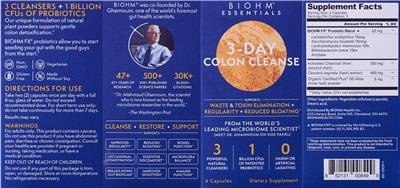
3 Cleansers + 1 billion CFUs of probiotics
3 powerful natural cleansers 1 Billion CFUs of patented probiotics
Formulation
Our unique formulation of natural plant powders supports gentle colon detoxification.
BIOHM FX probiotics allow you to start seeding your gut with the good guys from the start.
Non-GMO Gluten free Made without soy
Vegetarian
Cleanse Restore Support Supports: Improved regularity Reduced bloating Bowel Function Occasional Constipation Digestive Discomfort Microflora Blanace Breaks down Gut Biofilms Improved Digestion Immune Function
Supports Waste & toxin elimination + regularity + reduced bloating
0 harsh or artificial laxatives
Suggested/Recommended/Usage/Directions
Directions for use Take two (2) capsules once per day with a full 8 oz. glass of water.
Precautions
Do not exceed recommended dose. For short term use only; do not take continuously for more than 7 days.
Warnings For adults only.
This product contains cascara. Do not use this product if you have abdominal pain, diarrhea or chronic constipation.
Consult your healthcare provider if pregnant or nursing, taking medication, or have a medical condition.
Keep out of reach of children.
Do not use if any part of this package is torn, open, or damaged.
General Statements
Results may vary.
BIOHM was co-founded by Dr. Ghannoum, one of the world's foremost gut health scientists. 47+ years of research 500+ published science papers 30,000+ Citations Dr. Mahmoud Ghannoum, the scientist who is now known as the leading microbiome researcher in the world. - The Washington Post
From the world's leading microbiome scientist (meet Dr. Ghannoum on side panel)
Storage
Store at room temperature. No refrigeration necessary.
FDA Statement of Identity
Dietary Supplement
Brand IP Statement(s)
BIOHM FX is covered by the following U.S. patent number: US 11,304,985 B2.
FDA Disclaimer Statement
These statements have not been evaluated by the Food and Drug Administration. This product is not intended to diagnose, treat, cure, or prevent any disease.
Is this label outdated? Report a formula or label change and our pharmacy team will review it.
3-Day Colon Cleanse by BIOHM label
The label scan from the NIH Dietary Supplement Label Database. Tap to enlarge.
Label images are published by the NIH Dietary Supplement Label Database for the version of this product on file. Always read your actual product label.
View the full label (PDF)The Ingredients in 3-Day Colon Cleanse by BIOHM
These are the 8 active ingredients this product is made of. Select any to open its full monograph.
Serving size2 Capsule(s) Dosage formCapsule Servings per container3 Amounts shown are per serving.
Most supplement products combine several ingredients, and a medication can interact with the product through any one of them. Each ingredient below shows whether it has known drug interactions.
Cascara sagrada Bark Extract
Interacts with747 drugs
Cascara sagrada is a stimulant laxative made from the aged bark of a Pacific Northwest tree, used mainly for short-term relief of constipation. Becaus...
Cascara sagrada Bark Extract monograph & interactionsCharcoal, Activated
Interacts with2,027 drugs
Activated charcoal is a highly porous form of carbon that can bind certain substances in the gut, and it is used in hospitals to treat some poisonings...
Charcoal, Activated monograph & interactionsBIOHM FX Probiotic Blend
Plus SD
Interacts with461 drugs
Aloe vera gel is widely used on the skin for minor burns and irritation, and some research suggests it may help. Aloe latex (the yellow part) is a str...
Plus SD monograph & interactionsOther (inactive) ingredients: Cellulose, Stearic Acid. These complete the product’s ingredient list but are not active constituents.
3-Day Colon Cleanse by BIOHM Drug Interactions
HelloPharmacist Interaction Report
BIOHM's 3-Day Colon Cleanse contains several ingredients that interact with medications, and the most serious concern is with the aloe in Plus SD, which carries a Major interaction with digoxin (Lanoxin), a heart medication.
Aloe can worsen digoxin's effects by causing potassium loss, raising the risk of heart rhythm problems and toxicity.
Read the full breakdown — every affected drug type, severity by severity
Cascara sagrada bark extract (a stimulant laxative) has Moderate interactions with blood thinners like warfarin, heart medications like digoxin, corticosteroids, water pills (diuretics), and other stimulant laxatives. Its laxative action can trigger diarrhea, which boosts warfarin's effects and bleeding risk, or cause potassium loss that worsens digoxin toxicity.
The aloe in Plus SD adds Moderate interactions with blood thinners, blood sugar medications, water pills, and other stimulant laxatives—and can also lower blood sugar levels. Activated charcoal carries a Major interaction with oral drugs in general: it binds to many medications and can significantly reduce their absorption and effectiveness, including blood thinners and birth control.
It also has Moderate interactions with oral contraceptives and alcohol.
The probiotics in this product—Lactobacillus acidophilus, Saccharomyces boulardii, Lacticaseibacillus rhamnosus, and Bifidobacterium breve—each have Moderate interactions with antibiotics, which can kill off the live organisms and render them ineffective. Saccharomyces boulardii also has a Minor interaction with antifungal drugs.
We could not check Amylase for interactions. Altogether, these interactions span 2,170 individual medications.
Before starting this product, use the medication checker below to search your exact prescriptions and over-the-counter drugs.
Check your own medications below · Editorial policy · How we use AI
Want to check YOUR meds against 3-Day Colon Cleanse?
Ask about interactions with your drugs in plain English — “Can I take it with lisinopril?” — and we find you the answer in seconds, ingredient by ingredient.
Go to the checkerIngredients driving the most interactions
Individual Drug Interactions
The ingredients in 3-Day Colon Cleanse interact with 2,189 drugs. Click any drug to see the details.
7 of the 8 ingredients in 3-Day Colon Cleanse interact with drugs. Each result below shows which ingredient is responsible. Charcoal, Activated Cascara sagrada Bark Extract Plus SD Lactobacillus acidophilus 16axg Lacticaseibacillus rhamnosus 18fx Bifidobacterium breve 19bx Saccharomyces boulardii 16mxg
"phentolamineOraVerse, Rogitine, Ryzumvi
How "phentolamine interacts with 3-Day Colon Cleanse — through 1 ingredient. Tap an ingredient for the detail:
Charcoal, ActivatedOral Drugs Major
Interaction Summary
Activated charcoal reduces systemic exposure to many drugs, including those that undergo enterohepatic recirculation, regardless of the route of administration.
Read the full Charcoal, Activated + "phentolamine interaction6-mercaptopurinePurinethol
How 6-mercaptopurine interacts with 3-Day Colon Cleanse — through 1 ingredient. Tap an ingredient for the detail:
Charcoal, ActivatedOral Drugs Major
Interaction Summary
Activated charcoal reduces systemic exposure to many drugs, including those that undergo enterohepatic recirculation, regardless of the route of administration.
Read the full Charcoal, Activated + 6-mercaptopurine interactionAbacavirZiagen
How Abacavir interacts with 3-Day Colon Cleanse — through 1 ingredient. Tap an ingredient for the detail:
Charcoal, ActivatedOral Drugs Major
Interaction Summary
Activated charcoal reduces systemic exposure to many drugs, including those that undergo enterohepatic recirculation, regardless of the route of administration.
Read the full Charcoal, Activated + Abacavir interactionAbacavir Sulfate, Dolutegravir, LamivudineTriumeq
How Abacavir Sulfate, Dolutegravir, Lamivudine interacts with 3-Day Colon Cleanse — through 1 ingredient. Tap an ingredient for the detail:
Charcoal, ActivatedOral Drugs Major
Interaction Summary
Activated charcoal reduces systemic exposure to many drugs, including those that undergo enterohepatic recirculation, regardless of the route of administration.
Read the full Charcoal, Activated + Abacavir Sulfate, Dolutegravir, Lamivudine interactionAbacavir, LamivudineEpzicom
How Abacavir, Lamivudine interacts with 3-Day Colon Cleanse — through 1 ingredient. Tap an ingredient for the detail:
Charcoal, ActivatedOral Drugs Major
Interaction Summary
Activated charcoal reduces systemic exposure to many drugs, including those that undergo enterohepatic recirculation, regardless of the route of administration.
Read the full Charcoal, Activated + Abacavir, Lamivudine interactionAbciximabReoPro
How Abciximab interacts with 3-Day Colon Cleanse — through 2 ingredients. Tap an ingredient for the detail:
Charcoal, ActivatedOral Drugs Major
Interaction Summary
Activated charcoal reduces systemic exposure to many drugs, including those that undergo enterohepatic recirculation, regardless of the route of administration.
Read the full Charcoal, Activated + Abciximab interactionPlus SdAnticoagulant/antiplatelet Drugs Moderate
Interaction Summary
Theoretically, aloe gel might increase the risk of bleeding when taken with anticoagulant or antiplatelet drugs.
Read the full Plus Sd + Abciximab interactionAbemaciclibVerzenio
How Abemaciclib interacts with 3-Day Colon Cleanse — through 2 ingredients. Tap an ingredient for the detail:
Charcoal, ActivatedOral Drugs Major
Interaction Summary
Activated charcoal reduces systemic exposure to many drugs, including those that undergo enterohepatic recirculation, regardless of the route of administration.
Read the full Charcoal, Activated + Abemaciclib interactionCascara Sagrada Bark ExtractCytochrome P450 3a4 (cyp3a4) Substrates Minor
Interaction Summary
Theoretically, cascara sagrada might decrease the effects of CYP3A4 substrates.
Read the full Cascara Sagrada Bark Extract + Abemaciclib interactionAbiraterone
How Abiraterone interacts with 3-Day Colon Cleanse — through 2 ingredients. Tap an ingredient for the detail:
Charcoal, ActivatedOral Drugs Major
Interaction Summary
Activated charcoal reduces systemic exposure to many drugs, including those that undergo enterohepatic recirculation, regardless of the route of administration.
Read the full Charcoal, Activated + Abiraterone interactionCascara Sagrada Bark ExtractCytochrome P450 3a4 (cyp3a4) Substrates Minor
Interaction Summary
Theoretically, cascara sagrada might decrease the effects of CYP3A4 substrates.
Read the full Cascara Sagrada Bark Extract + Abiraterone interactionAbiraterone AcetateYonsa, Zytiga
How Abiraterone Acetate interacts with 3-Day Colon Cleanse — through 2 ingredients. Tap an ingredient for the detail:
Charcoal, ActivatedOral Drugs Major
Interaction Summary
Activated charcoal reduces systemic exposure to many drugs, including those that undergo enterohepatic recirculation, regardless of the route of administration.
Read the full Charcoal, Activated + Abiraterone Acetate interactionCascara Sagrada Bark ExtractCytochrome P450 3a4 (cyp3a4) Substrates Minor
Interaction Summary
Theoretically, cascara sagrada might decrease the effects of CYP3A4 substrates.
Read the full Cascara Sagrada Bark Extract + Abiraterone Acetate interactionAbrocitinibCibinqo
How Abrocitinib interacts with 3-Day Colon Cleanse — through 2 ingredients. Tap an ingredient for the detail:
Charcoal, ActivatedOral Drugs Major
Interaction Summary
Activated charcoal reduces systemic exposure to many drugs, including those that undergo enterohepatic recirculation, regardless of the route of administration.
Read the full Charcoal, Activated + Abrocitinib interactionPlus SdAnticoagulant/antiplatelet Drugs Moderate
Interaction Summary
Theoretically, aloe gel might increase the risk of bleeding when taken with anticoagulant or antiplatelet drugs.
Read the full Plus Sd + Abrocitinib interactionAcalabrutinibCalquence
How Acalabrutinib interacts with 3-Day Colon Cleanse — through 2 ingredients. Tap an ingredient for the detail:
Charcoal, ActivatedOral Drugs Major
Interaction Summary
Activated charcoal reduces systemic exposure to many drugs, including those that undergo enterohepatic recirculation, regardless of the route of administration.
Read the full Charcoal, Activated + Acalabrutinib interactionCascara Sagrada Bark ExtractCytochrome P450 3a4 (cyp3a4) Substrates Minor
Interaction Summary
Theoretically, cascara sagrada might decrease the effects of CYP3A4 substrates.
Read the full Cascara Sagrada Bark Extract + Acalabrutinib interactionAcamprosateCampral
How Acamprosate interacts with 3-Day Colon Cleanse — through 1 ingredient. Tap an ingredient for the detail:
Charcoal, ActivatedOral Drugs Major
Interaction Summary
Activated charcoal reduces systemic exposure to many drugs, including those that undergo enterohepatic recirculation, regardless of the route of administration.
Read the full Charcoal, Activated + Acamprosate interactionAcarboseGlucobay, Prandase, Precose
How Acarbose interacts with 3-Day Colon Cleanse — through 2 ingredients. Tap an ingredient for the detail:
Charcoal, ActivatedOral Drugs Major
Interaction Summary
Activated charcoal reduces systemic exposure to many drugs, including those that undergo enterohepatic recirculation, regardless of the route of administration.
Read the full Charcoal, Activated + Acarbose interactionPlus SdAntidiabetes Drugs Moderate
Interaction Summary
Aloe might increase the risk of hypoglycemia when taken with antidiabetes drugs.
Read the full Plus Sd + Acarbose interactionAcebutololRhotral, Sectral
How Acebutolol interacts with 3-Day Colon Cleanse — through 1 ingredient. Tap an ingredient for the detail:
Charcoal, ActivatedOral Drugs Major
Interaction Summary
Activated charcoal reduces systemic exposure to many drugs, including those that undergo enterohepatic recirculation, regardless of the route of administration.
Read the full Charcoal, Activated + Acebutolol interactionAcenocoumarolSintrom
How Acenocoumarol interacts with 3-Day Colon Cleanse — through 2 ingredients. Tap an ingredient for the detail:
Charcoal, ActivatedOral Drugs Major
Interaction Summary
Activated charcoal reduces systemic exposure to many drugs, including those that undergo enterohepatic recirculation, regardless of the route of administration.
Read the full Charcoal, Activated + Acenocoumarol interactionPlus SdAnticoagulant/antiplatelet Drugs Moderate
Interaction Summary
Theoretically, aloe gel might increase the risk of bleeding when taken with anticoagulant or antiplatelet drugs.
Read the full Plus Sd + Acenocoumarol interactionAcepromazineAtravet
How Acepromazine interacts with 3-Day Colon Cleanse — through 1 ingredient. Tap an ingredient for the detail:
Charcoal, ActivatedOral Drugs Major
Interaction Summary
Activated charcoal reduces systemic exposure to many drugs, including those that undergo enterohepatic recirculation, regardless of the route of administration.
Read the full Charcoal, Activated + Acepromazine interactionAcetaminophenChildren's Tylenol, Children's Tylenol Meltaways, Tylenol, Tylenol Ex Strength
How Acetaminophen interacts with 3-Day Colon Cleanse — through 2 ingredients. Tap an ingredient for the detail:
Charcoal, ActivatedOral Drugs Major
Interaction Summary
Activated charcoal reduces systemic exposure to many drugs, including those that undergo enterohepatic recirculation, regardless of the route of administration.
Read the full Charcoal, Activated + Acetaminophen interactionPlus SdCytochrome P450 1a2 (cyp1a2) Substrates Minor
Interaction Summary
Theoretically, aloe might decrease the levels and clinical effects of CYP1A2 substrates.
Read the full Plus Sd + Acetaminophen interactionAcetaminophen, AspirinGemnisyn
How Acetaminophen, Aspirin interacts with 3-Day Colon Cleanse — through 2 ingredients. Tap an ingredient for the detail:
Charcoal, ActivatedOral Drugs Major
Interaction Summary
Activated charcoal reduces systemic exposure to many drugs, including those that undergo enterohepatic recirculation, regardless of the route of administration.
Read the full Charcoal, Activated + Acetaminophen, Aspirin interactionPlus SdCytochrome P450 1a2 (cyp1a2) Substrates, Anticoagulant/antiplatelet Drugs Moderate
Interaction Summary
Theoretically, aloe might decrease the levels and clinical effects of CYP1A2 substrates.
Read the full Plus Sd + Acetaminophen, Aspirin interactionAcetaminophen, Aspirin, CaffeineExcedrin, Excedrin Extra Strength, Excedrin Migraine
How Acetaminophen, Aspirin, Caffeine interacts with 3-Day Colon Cleanse — through 3 ingredients. Tap an ingredient for the detail:
Charcoal, ActivatedOral Drugs Major
Interaction Summary
Activated charcoal reduces systemic exposure to many drugs, including those that undergo enterohepatic recirculation, regardless of the route of administration.
Read the full Charcoal, Activated + Acetaminophen, Aspirin, Caffeine interactionPlus SdAnticoagulant/antiplatelet Drugs, Cytochrome P450 1a2 (cyp1a2) Substrates Moderate
Interaction Summary
Theoretically, aloe gel might increase the risk of bleeding when taken with anticoagulant or antiplatelet drugs.
Read the full Plus Sd + Acetaminophen, Aspirin, Caffeine interactionCascara Sagrada Bark ExtractCytochrome P450 3a4 (cyp3a4) Substrates Minor
Interaction Summary
Theoretically, cascara sagrada might decrease the effects of CYP3A4 substrates.
Read the full Cascara Sagrada Bark Extract + Acetaminophen, Aspirin, Caffeine interactionAcetaminophen, Brompheniramine, PhenylpropanolamineDimetapp Cold and Flu
How Acetaminophen, Brompheniramine, Phenylpropanolamine interacts with 3-Day Colon Cleanse — through 2 ingredients. Tap an ingredient for the detail:
Charcoal, ActivatedOral Drugs Major
Interaction Summary
Activated charcoal reduces systemic exposure to many drugs, including those that undergo enterohepatic recirculation, regardless of the route of administration.
Read the full Charcoal, Activated + Acetaminophen, Brompheniramine, Phenylpropanolamine interactionPlus SdCytochrome P450 1a2 (cyp1a2) Substrates Minor
Interaction Summary
Theoretically, aloe might decrease the levels and clinical effects of CYP1A2 substrates.
Read the full Plus Sd + Acetaminophen, Brompheniramine, Phenylpropanolamine interactionAcetaminophen, ButalbitalAxocet, Bancap, Bucet, Butex Forte, Esgic CF, Orbivan CF +5 more
How Acetaminophen, Butalbital interacts with 3-Day Colon Cleanse — through 2 ingredients. Tap an ingredient for the detail:
Charcoal, ActivatedOral Drugs Major
Interaction Summary
Activated charcoal reduces systemic exposure to many drugs, including those that undergo enterohepatic recirculation, regardless of the route of administration.
Read the full Charcoal, Activated + Acetaminophen, Butalbital interactionPlus SdCytochrome P450 1a2 (cyp1a2) Substrates Minor
Interaction Summary
Theoretically, aloe might decrease the levels and clinical effects of CYP1A2 substrates.
Read the full Plus Sd + Acetaminophen, Butalbital interactionAcetaminophen, Butalbital, CaffeineEsgic, Esgic Plus, Fiogesic, Fioricet, Repan, Tecnal +1 more
How Acetaminophen, Butalbital, Caffeine interacts with 3-Day Colon Cleanse — through 3 ingredients. Tap an ingredient for the detail:
Charcoal, ActivatedOral Drugs Major
Interaction Summary
Activated charcoal reduces systemic exposure to many drugs, including those that undergo enterohepatic recirculation, regardless of the route of administration.
Read the full Charcoal, Activated + Acetaminophen, Butalbital, Caffeine interactionPlus SdCytochrome P450 1a2 (cyp1a2) Substrates Minor
Interaction Summary
Theoretically, aloe might decrease the levels and clinical effects of CYP1A2 substrates.
Read the full Plus Sd + Acetaminophen, Butalbital, Caffeine interactionCascara Sagrada Bark ExtractCytochrome P450 3a4 (cyp3a4) Substrates Minor
Interaction Summary
Theoretically, cascara sagrada might decrease the effects of CYP3A4 substrates.
Read the full Cascara Sagrada Bark Extract + Acetaminophen, Butalbital, Caffeine interactionAcetaminophen, Butalbital, Caffeine, CodeineEsgic with Codeine, Fioricet w/ Codeine
How Acetaminophen, Butalbital, Caffeine, Codeine interacts with 3-Day Colon Cleanse — through 3 ingredients. Tap an ingredient for the detail:
Charcoal, ActivatedOral Drugs Major
Interaction Summary
Activated charcoal reduces systemic exposure to many drugs, including those that undergo enterohepatic recirculation, regardless of the route of administration.
Read the full Charcoal, Activated + Acetaminophen, Butalbital, Caffeine, Codeine interactionCascara Sagrada Bark ExtractCytochrome P450 3a4 (cyp3a4) Substrates Minor
Interaction Summary
Theoretically, cascara sagrada might decrease the effects of CYP3A4 substrates.
Read the full Cascara Sagrada Bark Extract + Acetaminophen, Butalbital, Caffeine, Codeine interactionPlus SdCytochrome P450 1a2 (cyp1a2) Substrates Minor
Interaction Summary
Theoretically, aloe might decrease the levels and clinical effects of CYP1A2 substrates.
Read the full Plus Sd + Acetaminophen, Butalbital, Caffeine, Codeine interactionAcetaminophen, Butalbital, CodeineBancap w/ Codeine
How Acetaminophen, Butalbital, Codeine interacts with 3-Day Colon Cleanse — through 2 ingredients. Tap an ingredient for the detail:
Charcoal, ActivatedOral Drugs Major
Interaction Summary
Activated charcoal reduces systemic exposure to many drugs, including those that undergo enterohepatic recirculation, regardless of the route of administration.
Read the full Charcoal, Activated + Acetaminophen, Butalbital, Codeine interactionPlus SdCytochrome P450 1a2 (cyp1a2) Substrates Minor
Interaction Summary
Theoretically, aloe might decrease the levels and clinical effects of CYP1A2 substrates.
Read the full Plus Sd + Acetaminophen, Butalbital, Codeine interactionAcetaminophen, Butalbital, Codeine PhosphatePhrenilin #3
How Acetaminophen, Butalbital, Codeine Phosphate interacts with 3-Day Colon Cleanse — through 2 ingredients. Tap an ingredient for the detail:
Charcoal, ActivatedOral Drugs Major
Interaction Summary
Activated charcoal reduces systemic exposure to many drugs, including those that undergo enterohepatic recirculation, regardless of the route of administration.
Read the full Charcoal, Activated + Acetaminophen, Butalbital, Codeine Phosphate interactionPlus SdCytochrome P450 1a2 (cyp1a2) Substrates Minor
Interaction Summary
Theoretically, aloe might decrease the levels and clinical effects of CYP1A2 substrates.
Read the full Plus Sd + Acetaminophen, Butalbital, Codeine Phosphate interactionAcetaminophen, Caffeine, Chlorpheniramine, Hydrocodone, PhenylephrineHycomine Compound
How Acetaminophen, Caffeine, Chlorpheniramine, Hydrocodone, Phenylephrine interacts with 3-Day Colon Cleanse — through 3 ingredients. Tap an ingredient for the detail:
Charcoal, ActivatedOral Drugs Major
Interaction Summary
Activated charcoal reduces systemic exposure to many drugs, including those that undergo enterohepatic recirculation, regardless of the route of administration.
Read the full Charcoal, Activated + Acetaminophen, Caffeine, Chlorpheniramine, Hydrocodone, Phenylephrine interactionPlus SdCytochrome P450 1a2 (cyp1a2) Substrates Minor
Interaction Summary
Theoretically, aloe might decrease the levels and clinical effects of CYP1A2 substrates.
Read the full Plus Sd + Acetaminophen, Caffeine, Chlorpheniramine, Hydrocodone, Phenylephrine interactionCascara Sagrada Bark ExtractCytochrome P450 3a4 (cyp3a4) Substrates Minor
Interaction Summary
Theoretically, cascara sagrada might decrease the effects of CYP3A4 substrates.
Read the full Cascara Sagrada Bark Extract + Acetaminophen, Caffeine, Chlorpheniramine, Hydrocodone, Phenylephrine interactionAcetaminophen, Caffeine, CodeineGesic C15, Gesic C30, Gesic C8, Lenoltec 1, Lenoltec 2, Lenoltec 3 +1 more
How Acetaminophen, Caffeine, Codeine interacts with 3-Day Colon Cleanse — through 3 ingredients. Tap an ingredient for the detail:
Charcoal, ActivatedOral Drugs Major
Interaction Summary
Activated charcoal reduces systemic exposure to many drugs, including those that undergo enterohepatic recirculation, regardless of the route of administration.
Read the full Charcoal, Activated + Acetaminophen, Caffeine, Codeine interactionCascara Sagrada Bark ExtractCytochrome P450 3a4 (cyp3a4) Substrates Minor
Interaction Summary
Theoretically, cascara sagrada might decrease the effects of CYP3A4 substrates.
Read the full Cascara Sagrada Bark Extract + Acetaminophen, Caffeine, Codeine interactionPlus SdCytochrome P450 1a2 (cyp1a2) Substrates Minor
Interaction Summary
Theoretically, aloe might decrease the levels and clinical effects of CYP1A2 substrates.
Read the full Plus Sd + Acetaminophen, Caffeine, Codeine interactionAcetaminophen, Caffeine, Codeine, SalicylamideCodalan No.1, Codalan No.2, Codalan No.3
How Acetaminophen, Caffeine, Codeine, Salicylamide interacts with 3-Day Colon Cleanse — through 3 ingredients. Tap an ingredient for the detail:
Charcoal, ActivatedOral Drugs Major
Interaction Summary
Activated charcoal reduces systemic exposure to many drugs, including those that undergo enterohepatic recirculation, regardless of the route of administration.
Read the full Charcoal, Activated + Acetaminophen, Caffeine, Codeine, Salicylamide interactionPlus SdCytochrome P450 1a2 (cyp1a2) Substrates Minor
Interaction Summary
Theoretically, aloe might decrease the levels and clinical effects of CYP1A2 substrates.
Read the full Plus Sd + Acetaminophen, Caffeine, Codeine, Salicylamide interactionCascara Sagrada Bark ExtractCytochrome P450 3a4 (cyp3a4) Substrates Minor
Interaction Summary
Theoretically, cascara sagrada might decrease the effects of CYP3A4 substrates.
Read the full Cascara Sagrada Bark Extract + Acetaminophen, Caffeine, Codeine, Salicylamide interactionAcetaminophen, Caffeine, DihydrocodeineDHC Plus, Panlor DC, Panlor SS
How Acetaminophen, Caffeine, Dihydrocodeine interacts with 3-Day Colon Cleanse — through 3 ingredients. Tap an ingredient for the detail:
Charcoal, ActivatedOral Drugs Major
Interaction Summary
Activated charcoal reduces systemic exposure to many drugs, including those that undergo enterohepatic recirculation, regardless of the route of administration.
Read the full Charcoal, Activated + Acetaminophen, Caffeine, Dihydrocodeine interactionCascara Sagrada Bark ExtractCytochrome P450 3a4 (cyp3a4) Substrates Minor
Interaction Summary
Theoretically, cascara sagrada might decrease the effects of CYP3A4 substrates.
Read the full Cascara Sagrada Bark Extract + Acetaminophen, Caffeine, Dihydrocodeine interactionPlus SdCytochrome P450 1a2 (cyp1a2) Substrates Minor
Interaction Summary
Theoretically, aloe might decrease the levels and clinical effects of CYP1A2 substrates.
Read the full Plus Sd + Acetaminophen, Caffeine, Dihydrocodeine interactionAcetaminophen, Caffeine, IsomethepteneMigralam
How Acetaminophen, Caffeine, Isometheptene interacts with 3-Day Colon Cleanse — through 3 ingredients. Tap an ingredient for the detail:
Charcoal, ActivatedOral Drugs Major
Interaction Summary
Activated charcoal reduces systemic exposure to many drugs, including those that undergo enterohepatic recirculation, regardless of the route of administration.
Read the full Charcoal, Activated + Acetaminophen, Caffeine, Isometheptene interactionPlus SdCytochrome P450 1a2 (cyp1a2) Substrates Minor
Interaction Summary
Theoretically, aloe might decrease the levels and clinical effects of CYP1A2 substrates.
Read the full Plus Sd + Acetaminophen, Caffeine, Isometheptene interactionCascara Sagrada Bark ExtractCytochrome P450 3a4 (cyp3a4) Substrates Minor
Interaction Summary
Theoretically, cascara sagrada might decrease the effects of CYP3A4 substrates.
Read the full Cascara Sagrada Bark Extract + Acetaminophen, Caffeine, Isometheptene interactionEach ingredient & the kinds of drugs it affects
For each ingredient in 3-Day Colon Cleanse with known interactions, here are the types of medications they can affect. Open any type for the detail — or search your exact drug in the checker above.
Charcoal, Activated
Oral Drugs
Activated charcoal reduces systemic exposure to many drugs, including those that undergo enterohepatic recirculation, regardless of the route of administration.
Activated charcoal adsorbs various drugs and may reduce their absorption and/or half-life. Examples of affected drugs include acetaminophen, aminophylline, amiodarone, atenolol, carbamazepine, dapsone, digoxin, disopyramide, fluoxetine, indomethacin, moxifloxacin, nadolol, phenytoin, phenobarbital, piroxicam, quinine, sotalol, theophylline, tricyclic antidepressants, valproate, and verapamil. Avoid co-administration, except after drug overdose.
Alcohol (Ethanol)
The binding action of activated charcoal may be reduced by alcohol.
Alcohol may lower the adsorptive capacity of activated charcoal.
Contraceptive Drugs
Activated charcoal may reduce the clinical effects of oral contraceptives.
Activated charcoal, taken in a dose of 5 grams four times daily for 3 days, may bind to, and reduce the absorption of, oral contraceptives, thereby limiting their effectiveness and increasing the risk of contraceptive failure. However, some clinical research shows that the risk for this interaction is minimal when activated charcoal is taken either 3 hours after or at least 12 hours before oral contraceptives.
Cascara sagrada Bark Extract
Corticosteroids
Theoretically, cascara sagrada might increase the risk of hypokalemia when taken with corticosteroids.
Cascara sagrada has stimulant laxative effects, and long-term use has been associated with hypokalemia.
Digoxin (Lanoxin)
Theoretically, cascara sagrada might cause hypokalemia, potentially increasing the risk of digoxin toxicity.
Cascara sagrada has stimulant laxative effects, and long-term use has been associated with hypokalemia.
Diuretic Drugs
Theoretically, cascara sagrada might increase the risk of hypokalemia when taken with diuretic drugs.
Cascara sagrada has stimulant laxative effects, and long-term use has been associated with hypokalemia.
Stimulant Laxatives
Theoretically, cascara sagrada might have additive adverse effects when taken with stimulant laxatives.
Cascara sagrada has stimulant laxative effects and might compound fluid and electrolyte losses when taken with stimulant laxatives.
Warfarin (Coumadin)
Theoretically, cascara sagrada might increase the risk of bleeding when taken with warfarin.
Cascara sagrada has stimulant laxative effects. In some people, cascara sagrada can cause diarrhea. Diarrhea can increase the effects of warfarin, increase international normalized ratio (INR), and increase the risk of bleeding.
Cytochrome P450 3A4 (Cyp3A4) Substrates
Theoretically, cascara sagrada might decrease the effects of CYP3A4 substrates.
In vitro research suggests that cascara sagrada can induce CYP3A4 enzymes, albeit to a much lower degree than rifampin, a known CYP3A4 inducer.
Plus SD
Digoxin (Lanoxin)
Theoretically, aloe latex might increase the risk of adverse effects when taken with cardiac glycosides.
Overuse of aloe latex can increase the risk of adverse effects from cardiac glycoside drugs, such as digoxin, due to potassium depletion. Overuse of aloe, along with cardiac glycoside drugs, can increase the risk of toxicity.
Anticoagulant/Antiplatelet Drugs
Theoretically, aloe gel might increase the risk of bleeding when taken with anticoagulant or antiplatelet drugs.
In vitro research shows that aloe gel can inhibit platelet aggregation. This inhibition was greater than that seen with celecoxib, but less than that seen with aspirin.
Antidiabetes Drugs
Aloe might increase the risk of hypoglycemia when taken with antidiabetes drugs.
Preliminary clinical research suggests aloe gel might lower blood glucose levels and have additive effects when used with antidiabetes drugs. Monitor blood glucose levels closely.
Diuretic Drugs
Theoretically, aloe latex might increase the risk of hypokalemia when taken with diuretic drugs.
Overuse of aloe latex might compound diuretic-induced potassium loss, increasing the risk of hypokalemia.
Stimulant Laxatives
Theoretically, aloe latex might increase the risk for fluid and electrolyte loss when taken with stimulant laxatives.
Due to cathartic laxative effects of aloe latex, concomitant use with other stimulant laxatives might compound fluid and electrolyte loss.
Warfarin (Coumadin)
Theoretically, aloe latex might increase the risk of bleeding when taken with warfarin.
Aloe latex has stimulant laxative effects. In some people aloe latex can cause diarrhea. Diarrhea can increase the effects of warfarin, increase international normalized ratio (INR), and increase the risk of bleeding. Advise patients who take warfarin not to take excessive amounts of aloe vera.
Cytochrome P450 1A2 (Cyp1A2) Substrates
Theoretically, aloe might decrease the levels and clinical effects of CYP1A2 substrates.
In vitro research shows that aloe extract induces CYP1A2 enzymes.
Lactobacillus acidophilus 16axg
Antibiotic Drugs
Theoretically, taking Lactobacillus acidophilus with antibiotic drugs might decrease the effectiveness of L. acidophilus.
L. acidophilus preparations usually contain live and active organisms. Therefore, simultaneously taking antibiotics might kill a significant number of the organisms. Tell patients to separate administration of antibiotics and L. acidophilus preparations by at least two hours.
Lacticaseibacillus rhamnosus 18fx
Antibiotic Drugs
Theoretically, taking Lacticaseibacillus rhamnosus with antibiotic drugs might decrease the effectiveness of L. rhamnosus.
L. rhamnosus preparations usually contain live and active organisms. Therefore, simultaneously taking antibiotics might kill a significant number of the organisms. Tell patients to separate administration of antibiotics and L. rhamnosus preparations by at least two hours.
Bifidobacterium breve 19bx
Antibiotic Drugs
Theoretically, taking Bifidobacterium breve with antibiotic drugs might decrease the effectiveness of B. breve.
Since B. breve preparations usually contain live and active organisms, simultaneously taking antibiotics might kill a significant number of the organisms. Tell patients to separate administration of antibiotics and B. breve preparations by at least 2 hours.
Saccharomyces boulardii 16mxg
Antifungals
Theoretically, taking antifungals with Saccharomyces boulardii might decrease the effectiveness of Saccharomyces boulardii.
S. boulardii is a live yeast. Therefore, simultaneously taking antifungals might kill a significant number of the organisms.
Brand information
Manufacturer and brand details for 3-Day Colon Cleanse, from the product label.
BIOHM
See all BIOHM products- Name
- BIOHM Health Inc.
- Street Address
- 425 Literary Road, Suite 100
- City
- Cleveland
- State
- OH
- ZipCode
- 44113
- Web Address
- BIOHMHEALTH.COM
3-Day Colon Cleanse by BIOHM: Common Questions
Does 3-Day Colon Cleanse by BIOHM interact with any medications?
How can one product interact with so many drugs?
Where does this information come from?
Can I take this if I'm on antibiotics?
Will this help with my constipation?
Is it safe to take this while pregnant?
What does activated charcoal do in this product?
Can I use this long-term?
What are the probiotics supposed to do?
Written and reviewed by the HelloPharmacist editorial staff. Our editorial policy
Not sure if 3-Day Colon Cleanse is safe with your meds?
Our pharmacists answer your medication & supplement questions — free.
Label information is sourced from the NIH Dietary Supplement Label Database and reflects the product version on file; always read your actual product label. This page is for education only and is not a substitute for professional medical advice. Confirm with your pharmacist or doctor before combining supplements and medications.
The Full Monographs Behind 3-Day Colon Cleanse’s Ingredients
Every ingredient we hold a full HelloPharmacist monograph for — uses, evidence, safety, and the complete interaction list.
Cascara Sagrada
Interacts with 747 drugsCascara sagrada is a stimulant laxative made from the aged bark of a Pacific Northwest tree, used mainly for short-term relief of constipation. Because it can cause cramping, dehydration, an...
Read the full Cascara Sagrada monograph → Herb & supplement monographActivated Charcoal
Interacts with 2,027 drugsActivated charcoal is a highly porous form of carbon that can bind certain substances in the gut, and it is used in hospitals to treat some poisonings and overdoses. For everyday uses like g...
Read the full Activated Charcoal monograph → Herb & supplement monographLactobacillus Acidophilus
Interacts with 182 drugsLactobacillus acidophilus is a 'friendly' bacterium used as a probiotic to support gut and vaginal health. It is generally well tolerated in healthy people, and there is reasonable evidence...
Read the full Lactobacillus Acidophilus monograph → Herb & supplement monographSaccharomyces Boulardii
Interacts with 40 drugsSaccharomyces boulardii is a beneficial yeast used as a probiotic, with the strongest evidence for preventing and treating certain types of diarrhea, including antibiotic-associated diarrhea...
Read the full Saccharomyces Boulardii monograph → Herb & supplement monographLacticaseibacillus Rhamnosus
Interacts with 182 drugsLacticaseibacillus rhamnosus (often labeled L. rhamnosus GG) is a well-studied probiotic bacterium used mainly for diarrhea and general gut health. It is considered safe for most healthy peo...
Read the full Lacticaseibacillus Rhamnosus monograph → Herb & supplement monographBifidobacterium Breve
Interacts with 182 drugsBifidobacterium breve is a 'friendly' gut bacterium taken as a probiotic, most often to support digestion and balance the gut microbiome. Some studies suggest possible benefits for certain d...
Read the full Bifidobacterium Breve monograph → Herb & supplement monographAloe
Interacts with 461 drugsAloe vera gel is widely used on the skin for minor burns and irritation, and some research suggests it may help. Aloe latex (the yellow part) is a strong laxative that can cause cramping and...
Read the full Aloe monograph →Sources & How We Checked
3-Day Colon Cleanse's label data comes from the NIH Dietary Supplement Label Database; the ingredient interaction data is from the Natural Medicines database, reviewed by our pharmacists.
- NIH Dietary Supplement Label Database (DSLD) — The official product label on file for this supplement.
- Natural Medicines (Therapeutic Research Center) — Evidence-graded clinical reference behind the ingredient interaction data.
Content is written and reviewed by licensed HelloPharmacist pharmacists. See our data sources and editorial standards for how this information is built and checked.
The 148 references behind this product’s interaction data
Every citation that drives the interaction findings for this product’s ingredients, from the evidence-graded Natural Medicines (TRC Healthcare) database. Open an ingredient to browse its citations — links open the study on PubMed or the publisher’s site.
Cascara Sagrada 9 references
- Blumenthal M, ed. The Complete German Commission E Monographs: Therapeutic Guide to Herbal Medicines. Trans. S. Klein. Boston, MA: American Botanical Council, 1998.
- Newall CA, Anderson LA, Philpson JD. Herbal Medicine: A Guide for Healthcare Professionals. London, UK: The Pharmaceutical Press, 1996.
- Brinker F. Herb Contraindications and Drug Interactions. 2nd ed. Sandy, OR: Eclectic Medical Publications, 1998.
- Covington TR, et al. Handbook of Nonprescription Drugs. 11th ed. Washington, DC: American Pharmaceutical Association, 1996.
- Nusko G, Schneider B, Schneider I, et al. Anthranoid laxative use is not a risk factor for colorectal neoplasia: results of a prospective case control study. Gut 2000;46:651-5. PubMed
- Nadir A, Reddy D, Van Thiel DH. Cascara-sagrada induced intrahepatic cholestasis causing portal hypertension: case report and review of herbal hepatotoxicity. Am J Gastroenterol 2000;95:3634-7. PubMed
- Nakasone ES, Tokeshi J. A serendipitous find: a case of cholangiocarcinoma identified incidentally after acute liver injury due to cascara sagrada ingestion. Hawaii J Med Public Health 2015;74(6):200-2.
- Cirillo C, Capasso R. Constipation and botanical medicines: an overview. Phytother Res 2015;29(10):1488-93. PubMed
- Mazzari ALDA, Lacerda MG, Milton FA, et al. In vitro effects of European and Latin-American medicinal plants in CYP3A4 gene expression, glutathione levels, and P-glycoprotein activity. Front Pharmacol 2022;13:826395. PubMed
Activated Charcoal 14 references
- Kaaja RJ, Kontula KK, Raiha A, Laatikainen T. Treatment of cholestasis of pregnancy with peroral activated charcoal. A preliminary study. Scand J Gastroenterol 1994;29:178-81.
- Anon. Position statement and practice guidelines on the use of multi-dose activated charcoal in the treatment of acute poisoning. American Academy of Clinical Toxicology; European Association of Poisons Centres and Clinical Toxicologists. J Toxicol Clin T
- Park GD, Spector R, Kitt TM. Superactivated charcoal versus cholestyramine for cholesterol lowering: a randomized cross-over trial. J Clin Pharmacol 1988;28:416-9. PubMed
- Hoegberg LC, Angelo HR, Christophersen AB, Christensen HR. Effect of ethanol and pH on the adsorption of acetaminophen (paracetamol) to high surface activated charcoal, in vitro studies. J Toxicol Clin Toxicol 2002;40:59-67. PubMed
- Brahmi N, Kouraichi N, Thabet H, Amamou M. Influence of activated charcoal on the pharmacokinetics and the clinical features of carbamazepine poisoning. Am J Emerg Med 2006;24(4):440-3. PubMed
- Gude AB, Hoegberg LC, Angelo HR, Christensen HR. Dose-dependent adsorptive capacity of activated charcoal for gastrointestinal decontamination of a simulated paracetamol overdose in human volunteers. Basic Clin Pharmacol Toxicol 2010;106(5)406-10. PubMed
- Wananukul W, Klaikleun S, Sriapha C, Tongpoo A. Effect of activated charcoal in reducing paracetamol absorption at supra-therapeutic dose. J Med Assoc Thai 2010;93(10):1145-9.
- Wang Z, Cui M, Tang L, et al. Oral activated charcoal suppresses hyperphosphataemia in haemodialysis patients. Nephrology (Carlton) 2012;17(7):616-20. PubMed
- Wang X, Mondal S, Wang J, et al. Effect of activated charcoal on apixaban pharmacokinetics in healthy subjects. Am J Cardiovasc Drugs 2014;14(2):147-54. PubMed
- Chyka PA, Seger D, Krenzelok EP, et al. Position paper: single-dose activated charcoal. Clin Toxicol (Phila) 2005;43(2):61-87. PubMed
- Chiew AL, Gluud C, Brok J, Buckley NA. Interventions for paracetamol (acetaminophen) overdose. Cochrane Database Syst Rev 2018;2:CD003328. PubMed
- Elomaa K, Ranta S, Tuominen J, Lähteenmäki P. Charcoal treatment and risk of escape ovulation in oral contraceptive users. Hum Reprod. 2001;16(1):76-81. PubMed
- Gao Y, Wang G, Li Y, Lv C, Wang Z. Effects of oral activated charcoal on hyperphosphatemia and vascular calcification in Chinese patients with stage 3-4 chronic kidney disease. J Nephrol. 2019;32(2):265-72. PubMed
- Skov K, Graudal NA, Jürgens G. The effect of activated charcoal on drug exposure following intravenous administration: A meta-analysis. Basic Clin Pharmacol Toxicol 2021;128(4):568-578. PubMed
Lactobacillus Acidophilus 15 references
- Pierce A. The American Pharmaceutical Association Practical Guide to Natural Medicines. New York: The Stonesong Press, 1999:19.
- Begtrup LM, de Muckadell OB, Kjeldsen J, Christensen RD, Jarbøl DE. Long-term treatment with probiotics in primary care patients with irritable bowel syndrome--a randomised, double-blind, placebo controlled trial. Scand J Gastroenterol 2013;48(10):1127-35 PubMed
- Chatterjee S, Kar P, Das T, Ray S, Gangulyt S, Rajendiran C, Mitra M. Randomised placebo-controlled double blind multicentric trial on efficacy and safety of Lactobacillus acidophilus LA-5 and Bifidobacterium BB-12 for prevention of antibiotic-associated
- Shavakhi A, Tabesh E, Yaghoutkar A, Hashemi H, Tabesh F, Khodadoostan M,Minakari M, Shavakhi S, Gholamrezaei A. The effects of multistrain probiotic compound on bismuth-containing quadruple therapy for Helicobacter pylori infection: a randomized placebo-c
- Karamali M, Dadkhah F, Sadrkhanlou M, et al. Effects of probiotic supplementation on glycaemic control and lipid profiles in gestational diabetes: a randomized, double-blind, placebo-controlled trial. Diabetes Metab 2016;42(4):234-41. PubMed
- Badehnoosh B, Karamali M, Zarrati M, et al. The effects of probiotic supplementation on biomarkers of inflammation, oxidative stress and pregnancy outcomes in gestational diabetes. J Matern Fetal Neonatal Med. 2018 May;31(9):1128-1136.
- Kumar S, Kumar R, Rohilla L, Jacob N, Yadav J, Sachdeva N. A high potency multi-strain probiotic improves glycemic control in children with new-onset type 1 diabetes mellitus: A randomized, double-blind, and placebo-controlled pilot study. Pediatr Diabete
- Shahriari A, Karimi E, Shahriari M, Aslani N, Khooshideh M, Arab A. The effect of probiotic supplementation on the risk of gestational diabetes mellitus among high-risk pregnant women: A parallel double-blind, randomized, placebo-controlled clinical trial PubMed
- Xiao SD, Zhang DZ, Lu H, et al. Multicenter, randomized, controlled trial of heat-killed Lactobacillus acidophilus LB in patients with chronic diarrhea. Adv Ther. 2003;20(5):253-60.
- Rossi F, Amadoro C, Gasperi M, Colavita G. Lactobacilli infection case reports in the last three years and safety implications. Nutrients. 2022;14(6):1178. PubMed
- Ozer M, Goksu SY, Shahverdiani A, Mustafa M. Lactobacillus acidophilus-induced endocarditis and associated splenic abscess. Case Rep Infect Dis 2020;2020:1382709.
- Sadrin S, Sennoune S, Gout B, et al. A 2-strain mixture of Lactobacillus acidophilus in the treatment of irritable bowel syndrome: A placebo-controlled randomized clinical trial. Dig Liver Dis 2020;52(5):534-540. PubMed
- Stoffer JN, Slingsby TJ, Giuliari GP. Lactobacillus acidophilus endophthalmitis after intravitreal bevacizumab injection requiring intraocular lens explantation. Can J Ophthalmol 2022;57(1):e21-e22. PubMed
- Cukovic-Cavka S, Likic R, Francetic I, Rustemovic N, Opacic M, Vucelic B. Lactobacillus acidophilus as a cause of liver abscess in a NOD2/CARD15-positive patient with Crohn's disease. Digestion 2006;73(2-3):107-10.
- Hui J, Ren Y, Wang Y, Han Q. Lactobacillus acidophilus endophthalmitis postcataract operation: A case report with a literature review. Ocul Immunol Inflamm 2023.
See these in context on the Lactobacillus Acidophilus monograph →
Saccharomyces Boulardii 26 references
- Niault M, Thomas F, Prost J, et al. Fungemia due to Saccharomyces species in a patient treated with enteral Saccharomyces boulardii. Clin Infect Dis 1999;28:930.
- Pletinex M, Legein J, Vandenplas Y. Fungemia with Saccharomyces boulardii in a 1-year-old girl with protracted diarrhea. J Pediatr Gastroenterol Nutr 1995;21:113-5. DOI
- Fredenucci I, Chomarat M, Boucaud C, et al. Saccharomyces boulardii fungemia in a patient receiving ultra-levure therapy. Clin Infect Dis 1998;27:222-3.
- Elmer GW, McFarland LV, Surawicz CM, et al. Behaviour of Saccharomyces boulardii in recurrent Clostridium difficile disease patients. Aliment Pharmacol Ther 1999;13:1663-8.
- Lewis SJ, Freedman AR. Review article: the use of biotherapeutic agents in the prevention and treatment of gastrointestinal disease. Aliment Pharmacol Ther 1998;12:807-22. PubMed
- Cesaro S, Chinello P, Rossi L, Zanesco L. Saccharomyces cerevisiae fungemia in a neutropenic patient treated with Saccharomyces boulardii. Support Care Cancer 2000;8:504-5. PubMed
- Hennequin C, Thierry A, Richard GF, et al. Microsatellite typing as a new tool for identification of Saccharomyces cerevisiae strains. J Clin Microbiol 2001;39:551-9.
- Plein K, Hotz J. Therapeutic effects of Saccharomyces boulardii on mild residual symptoms in a stable phase of Crohn's disease with special respect to chronic diarrhea - a pilot study. Z Gastroenterol 1993;31:129-34.
- Borriello SP, Hammes WP, Holzapfel W, et al. Safety of probiotics that contain lactobacilli or bifidobacteria. Clin Infect Dis 2003;36:775-80. PubMed
- Marteau P, Seksik P. Tolerance of probiotics and prebiotics. J Clin Gastroenterol 2004;38:S67-9. PubMed
- Munoz P, Bouza E, Cuenca-Estrella M, et al. Saccharomyces cerevisiae fungemia: an emerging infectious disease. Clin Infect Dis 2005;40:1625-34. PubMed
- Lherm, T., Monet, C., Nougiere, B., Soulier, M., Larbi, D., Le Gall, C., Caen, D., and Malbrunot, C. Seven cases of fungemia with Saccharomyces boulardii in critically ill patients. Intensive Care Med 2002;28(6):797-801. PubMed
- Riquelme, A. J., Calvo, M. A., Guzman, A. M., Depix, M. S., Garcia, P., Perez, C., Arrese, M., and Labarca, J. A. Saccharomyces cerevisiae fungemia after Saccharomyces boulardii treatment in immunocompromised patients. J Clin.Gastroenterol. 2003;36(1):41- PubMed
- Cherifi, S., Robberecht, J., and Miendje, Y. Saccharomyces cerevisiae fungemia in an elderly patient with Clostridium difficile colitis. Acta Clin Belg. 2004;59(4):223-224. PubMed
- Ellouze O, Berthoud V, Mervant M, Parthiot JP, Girard C. Septic shock due to Sacccaromyces boulardii. Med Mal Infect. 2016;46(2):104-105.
- Appel-da-Silva MC, Narvaez GA, Perez LRR, Drehmer L, Lewgoy J. Saccharomyces cerevisiae var. boulardii fungemia following probiotic treatment. Med Mycol Case Rep. 2017;18:15-7. PubMed
- Atici S, Soysal A, Karadeniz Cerit K, et al. Catheter-related Saccharomyces cerevisiae Fungemia Following Saccharomyces boulardii Probiotic Treatment: In a child in intensive care unit and review of the literature. Med Mycol Case Rep. 2017;15:33-35. PubMed
- Martin IW, Tonner R, Trivedi J, et al. Saccharomyces boulardii probiotic-associated fungemia: questioning the safety of this preventive probiotic's use. Diagn Microbiol Infect Dis. 2017;87(3):286-8. PubMed
- Romanio MR, Coraine LA, Maielo VP, Abramczyc ML, Souza RL, Oliveira NF. Saccharomyces cerevisiae fungemia in a pediatric patient after treatment with probiotics. Rev Paul Pediatr 2017;35(3):361-4.
- Roy U, Jessani LG, Rudramurthy SM, et al. Seven cases of Saccharomyces fungaemia related to use of probiotics. Mycoses 2017;60(6):375-380.
- Romanio MR, Coraine LA, Maielo VP, Abramczyc ML, Souza RL, Oliveira NF. Saccharomyces cerevisiae fungemia in a pediatric patient after treatment with probiotics. Rev Paul Pediatr. 2017 Jul-Sep;35(3):361-364. doi: 10.1590/1984-0462/;2017;35;3;00014.
- Flatley EA, Wilde AM, Nailor MD. Saccharomyces boulardii for the prevention of hospital onset Clostridium difficile infection. J Gastrointestin Liver Dis. 2015;24(1):21-4. PubMed
- Ventoulis I, Sarmourli T, Amoiridou P, et al. Bloodstream infection by Saccharomyces cerevisiae in two COVID-19 patients after receiving supplementation of Saccharomyces in the ICU. J Fungi (Basel). 2020;6(3):98. PubMed
- Wombwell E, Bransteitter B, Gillen LR. Incidence of Saccharomyces cerevisiae fungemia in hospitalised patients administered Saccharomyces boulardii probiotic. Mycoses 2021;64(12):1521-1526.
- Rannikko J, Holmberg V, Karppelin M, et al. Fungemia and Other Fungal Infections Associated with Use of Saccharomyces boulardii Probiotic Supplements. Emerg Infect Dis 2021;27(8):2090-6.
- Awoyemi A, Mayerhofer C, Felix AS, et al. Rifaximin or Saccharomyces boulardii in heart failure with reduced ejection fraction: Results from the randomized GutHeart trial. EBioMedicine 2021;70:103511. PubMed
See these in context on the Saccharomyces Boulardii monograph →
Lacticaseibacillus Rhamnosus 34 references
- Pierce A. The American Pharmaceutical Association Practical Guide to Natural Medicines. New York: The Stonesong Press, 1999:19.
- Saxelin M, Chuang NH, Chassy B, et al. Lactobacilli and bacteremia in southern Finland 1989-1992. Clin Infect Dis 1996;22:564-6. PubMed
- Klein G, Zill E, Schindler R, et al. Peritonitis associated with vancomycin-resistant Lactobacillus rhamnosus in a continuous ambulatory peritoneal dialysis patient; organism identification, antibiotic therapy, and case report. J Clin Microbiol 1998;36:
- Kalima P, Masterton RG, Roddie PH, et al. Lactobacillus rhamnosus infection in a child following bone marrow transplant. J Infect 1996;32:165-7. PubMed
- Rautio M, Jousimies-Somer H, Kauma H, et al. Liver abscess due to Lactobacillus rhamnosus strain indistinguishable from L. rhamnosus strain GG. Clin Infect Dis 1999;28:1159-60.
- Rautava S, Kalliomaki M, Isolauri E. Probiotics during pregnancy and breast-feeding might confer immunomodulatory protection against atopic disease in the infant. J Allergy Clin Immunol 2002;109:119-21. PubMed
- Kalliomaki M, Salminen S, Arvilommi H et al. Probiotics in primary prevention of atopic disease: a randomised placebo-controlled trial. Lancet 2001;357:1076-1079. PubMed
- MacGregor G, Smith AJ, Thakker B, Kinsella J. Yoghurt biotherapy: contraindicated in immunosuppressed patients? Postgrad Med J 2002;78:366-7. PubMed
- Land MH, Rouster-Stevens K, Woods CR, et al. Lactobacillus sepsis associated with probiotic therapy. Pediatrics 2005;115:178-81.
- De Groote MA, Frank DN, Dowell E, et al. Lactobacillus rhamnosus GG bacteremia associated with probiotic use in a child with short gut syndrome. Pediatr Infect Dis J 2005;24:278-80. PubMed
- Beerepoot MA, ter Riet G, Nys S, van der Wal WM, de Borgie CA, de Reijke TM,Prins JM, Koeijers J, Verbon A, Stobberingh E, Geerlings SE. Lactobacilli vs antibiotics to prevent urinary tract infections: a randomized, double-blind, noninferiority trial in p DOI
- Rautava S, Kainonen E, Salminen S, Isolauri E. Maternal probiotic supplementation during pregnancy and breast-feeding reduces the risk of eczema in the infant. J Allergy Clin Immunol. 2012;130(6):1355-60. PubMed
- Vahabnezhad E, Mochon AB, Wozniak LJ, Ziring DA. Lactobacillus bacteremia associated with probiotic use in a pediatric patient with ulcerative colitis. J Clin Gastroenterol. 2013;47(5):437-9. PubMed
- Wickens KL, Barthow CA, Murphy R, et al. Early pregnancy probiotic supplementation with Lactobacillus rhamnosus HN001 may reduce the prevalence of gestational diabetes mellitus: a randomised controlled trial. Br J Nutr. 2017;117(6):804-813.
- Topcuoglu S, Gursoy T, Ovali F, Serce O, Karatekin G. A new risk factor for neonatal vancomycin-resistant Enterococcus colonisation: bacterial probiotics. J Matern Fetal Neonatal Med. 2015;28(12):1491-4. PubMed
- Wickens K, Barthow C, Mitchell EA, et al. Maternal supplementation alone with Lactobacillus rhamnosus HN001 during pregnancy and breastfeeding does not reduce infant eczema. Pediatr Allergy Immunol. 2018 May;29(3):296-302.
- Husain S, Allotey J, Drymoussi Z, et al. Effects of oral probiotic supplements on vaginal microbiota during pregnancy: a randomised, double-blind, placebo-controlled trial with microbiome analysis. BJOG. 2020;127(2):275-284. PubMed
- Sendil S, Shrimanker I, Mansoora Q, Goldman J, Nookala VK. Lactobacillus rhamnosus bacteremia in an immunocompromised renal transplant patient. Cureus. 2020;12(2):e6887. PubMed
- Pellonperä O, Vahlberg T, Mokkala K, et al. Weight gain and body composition during pregnancy: a randomised pilot trial with probiotics and/or fish oil. Br J Nutr. 2020 Nov 4:1-11. PubMed
- Farr A, Sustr V, Kiss H, et al. Oral probiotics to reduce vaginal group B streptococcal colonization in late pregnancy. Sci Rep. 2020;10(1):19745. PubMed
- Albarillo FS, Shah U, Joyce C, Slade D. Lactobacillus rhamnosus Infection: A single-center 4-year descriptive analysis. J Glob Infect Dis. 2020;12(3):119-123. PubMed
- Pasala S, Singer L, Arshad T, Roach K. Lactobacillus endocarditis in a healthy patient with probiotic use. IDCases. 2020;22:e00915. PubMed
- Antoun M, Hattab Y, Akhrass FA, Hamilton LD. Uncommon pathogen, Lactobacillus, causing infective endocarditis: Case report and review. Case Rep Infect Dis. 2020;2020:8833948. PubMed
- Pellonperä O, Mokkala K, Houttu N, et al. Efficacy of fish oil and/or probiotic intervention on the incidence of gestational diabetes mellitus in an at-risk group of overweight and obese women: A randomized, placebo-controlled, double-blind clinical trial PubMed
- Davidson SJ, Barrett HL, Price SA, Callaway LK, Dekker Nitert M. Probiotics for preventing gestational diabetes. Cochrane Database Syst Rev. 2021;4(4):CD009951. PubMed
- Kirjavainen PV, Salminen SJ, Isolauri E. Probiotic bacteria in the management of atopic disease: underscoring the importance of viability. J Pediatr Gastroenterol Nutr. 2003;36(2):223-7. DOI
- Rossi F, Amadoro C, Gasperi M, Colavita G. Lactobacilli infection case reports in the last three years and safety implications. Nutrients. 2022;14(6):1178. PubMed
- Yefet E, Colodner R, Strauss M, Gam Ze Letova Y, Nachum Z. A randomized controlled open label crossover trial to study vaginal colonization of orally administered Lactobacillus reuteri RC-14 and rhamnosus GR-1 in pregnant women at high risk for preterm la
- Dani C, Coviello C C, Corsini I I, Arena F, Antonelli A, Rossolini GM. Lactobacillus Sepsis and Probiotic Therapy in Newborns: Two New Cases and Literature Review. AJP Rep. 2016;6(1):e25-9. PubMed
- Rubin IMC, Stevnsborg L, Mollerup S, Petersen AM, Pinholt M. Bacteraemia caused by Lactobacillus rhamnosus given as a probiotic in a patient with a central venous catheter: a WGS case report. Infect Prev Pract 2022;4(1):100200. PubMed
- Karime C, Barrios MS, Wiest NE, Stancampiano F. Lactobacillus rhamnosus sepsis, endocarditis and septic emboli in a patient with ulcerative colitis taking probiotics. BMJ Case Rep 2022;15(6):e249020.
- Ishihara Y, Kanda J, Tanaka K, et al. Severe oral infection due to Lactobacillus rhamnosus during induction chemotherapy for acute myeloid leukemia. Int J Hematol 2014;100(6):607-10. PubMed
- Sadowska-Krawczenko I, Paprzycka M, Korbal P, et al. Lactobacillus rhamnosus GG suspected infection in a newborn with intrauterine growth restriction. Benef Microbes. 2014;5(4):397-402. PubMed
- Kunz AN, Noel JM, Fairchok MP. Two cases of Lactobacillus bacteremia during probiotic treatment of short gut syndrome. J Pediatr Gastroenterol Nutr. 2004;38(4):457-8.
See these in context on the Lacticaseibacillus Rhamnosus monograph →
Bifidobacterium Breve 9 references
- Pierce A. The American Pharmaceutical Association Practical Guide to Natural Medicines. New York: The Stonesong Press, 1999:19.
- Xiao JZ, Takahashi S, Odamaki T, et al. Antibiotic susceptibility of bifidobacterial strains distributed in the Japanese market. Biosci Biotechnol Biochem. 2010;74(2):336-42. PubMed
- Pruccoli G, Silvestro E, Pace Napoleone C, Aidala E, Garazzino S, Scolfaro C. Are probiotics safe? Bifidobacterium bacteremia in a child with severe heart failure. Infez Med. 2019;27(2):175-178.
- Ohishi A, Takahashi S, Ito Y, et al. Bifidobacterium septicemia associated with postoperative probiotic therapy in a neonate with omphalocele. J Pediatr. 2010;156(4):679-81. PubMed
- Sakurai Y, Watanabe T, Miura Y, et al. Clinical and bacteriologic characteristics of six cases of Bifidobacterium breve bacteremia due to probiotic administration in the neonatal intensive care unit. Pediatr Infect Dis J 2022;41(1):62-65. PubMed
- Esaiassen E, Hjerde E, Cavanagh JP, Simonsen GS, Klingenberg C; Norwegian Study Group on Invasive Bifidobacterial Infections. Bifidobacterium bacteremia: Clinical characteristics and a genomic approach to assess pathogenicity. J Clin Microbiol. 2017;55(7) PubMed
- Wakabayashi Y, Nakayama S, Yamamoto A, et al. First case of necrotizing fasciitis and bacteremia caused by Bifidobacteriumbreve. Anaerobe 2022;76:102613.
- Takeda Y, Ota K, Kondo A, et al. A case of necrotizing fasciitis caused by Bifidobacterium breve. IDCases 2022;31:e01667. PubMed
- Suwantarat N, Romagnoli M, Wakefield T, Carroll KC. Ventriculoperitoneal shunt infection caused by Bifidobacterium breve. Anaerobe 2014;28:1-3. PubMed
See these in context on the Bifidobacterium Breve monograph →
Aloe 41 references
- Newall CA, Anderson LA, Philpson JD. Herbal Medicine: A Guide for Healthcare Professionals. London, UK: The Pharmaceutical Press, 1996.
- Wichtl MW. Herbal Drugs and Phytopharmaceuticals. Ed. N.M. Bisset. Stuttgart: Medpharm GmbH Scientific Publishers, 1994.
- Brinker F. Herb Contraindications and Drug Interactions. 2nd ed. Sandy, OR: Eclectic Medical Publications, 1998.
- Nusko G, Schneider B, Schneider I, et al. Anthranoid laxative use is not a risk factor for colorectal neoplasia: results of a prospective case control study. Gut 2000;46:651-5. PubMed
- Luyckx VA, Ballantine R, Claeys M, et al. Herbal remedy-associated acute renal failure secondary to Cape aloes. Am J Kidney Dis 2002;39:E13. PubMed
- Rajasekaran S, Sivagnanam K, Ravi K, Subramanian S. Hypoglycemic effect of Aloe vera gel on streptozotocin-induced diabetes in experimental rats. J Med Food 2004;7:61-6.
- Williams MS, Burk M, Loprinzi CL, et al. Phase III double-blind evaluation of an aloe vera gel as a prophylactic agent for radiation-induced skin toxicity. Int J Radiat Oncol Biol Phys 1996;36:345-9. PubMed
- Vogler BK, Ernst E. Aloe vera: a systematic review of its clinical effectiveness. Br J Gen Pract 1999;49:823-8.
- Bottenberg MM, Wall GC, Harvey RL, Habib S. Oral aloe vera-induced hepatitis. Ann Pharmacother 2007;41:1740-3. PubMed
- Rabe C, Musch A, Schirmacher P, et al. Acute hepatitis induced by an Aloe vera preparation: a case report. World J Gastroenterol 2005;11:303-4. PubMed
- Kanat O, Ozet A, Ataergin S. Aloe vera-induced acute toxic hepatitis in a healthy young man. Eur J Int Med 2006;17:589. PubMed
- Mueller SO, Stopper H. Characterization of the genotoxicity of anthraquinones in mammalian cells. Biochim Biophys Acta 1999;1428:406-14. PubMed
- Schorkhuber M, Richter M, Dutter A, et al. Effect of anthraquinone laxatives on the proliferation and urokinase secretion of normal, premalignant and malignant colonic epithelial cells. Eur J Cancer 1998;34:1091-8. PubMed
- Yang HN, Kim DJ, Kim YM, et al. Aloe-induced toxic hepatitis. J Korean Med Sci 2010;25:492-5. PubMed
- Choonhakarn C, Busaracome P, Sripanidkulchai B, et al. A prospective, randomized clinical trial comparing topical aloe vera with 0.1% triamcinolone acetonide in mild to moderate plaque psoriasis. J.Eur.Acad.Dermatol.Venereol. 2010;24:168-72. PubMed
- Ishii Y, Tanizawa H, Takino Y. Studies of aloe. IV. Mechanism of cathartic effect. (3). Biol Pharm Bull. 1994;17:495-7. PubMed
- Ishii Y, Tanizawa H, Takino Y. Studies of aloe. V. Mechanism of cathartic effect. (4). Biol Pharm Bull. 1994;17:651-3. PubMed
- Nelemans FA. Clinical and toxicological aspects of anthraquinone laxatives. Pharmacology. 1976;14 Suppl 1:73-7. PubMed
- Paulsen E, Korsholm L, Brandrup F. A double-blind, placebo-controlled study of a commercial Aloe vera gel in the treatment of slight to moderate psoriasis vulgaris. J Eur Acad Dermatol Venereol. 2005;19:326-31.
- Huseini HF, Kianbakht S, Hajiaghaee R, et al. Anti-hyperglycemic and anti-hypercholesterolemic effects of Aloe vera leaf gel in hyperlipidemic type 2 diabetic patients: a randomized double-blind placebo-controlled clinical trial. Planta Med. 2012;78:311-6
- Ferreira, M., Teixeira, M., Silva, E., and Selores, M. Allergic contact dermatitis to Aloe vera. Contact Dermatitis 2007;57(4):278-279.
- Choonhakarn, C., Busaracome, P., Sripanidkulchai, B., and Sarakarn, P. The efficacy of aloe vera gel in the treatment of oral lichen planus: a randomized controlled trial. Br J Dermatol 2008;158(3):573-577. PubMed
- Baretta, Z., Ghiotto, C., Marino, D., and Jirillo, A. Aloe-induced hypokalemia in a patient with breast cancer during chemotherapy. Ann.Oncol. 2009;20(8):1445-1446. PubMed
- Hunter, D. and Frumkin, A. Adverse reactions to vitamin E and aloe vera preparations after dermabrasion and chemical peel. Cutis 1991;47(3):193-196.
- Alvarez-Perea, A., Garcia, A. P., Hernandez, A. L., de, Barrio M., and Baeza, M. L. Urticaria due to aloe vera: a new sensitizer? Ann.Allergy Asthma Immunol. 2010;105(5):404-405. PubMed
- Hogan, D. J. Widespread dermatitis after topical treatment of chronic leg ulcers and stasis dermatitis. CMAJ. 2-15-1988;138(4):336-338.
- Savchak VI. Acute bullous allergic dermatitis due to local application of aloe leaves. Vestnik Dermatologii i Venerologii 1977;12:44-45.
- Nakamura, T. and Kotajima, S. Contact dermatitis from aloe arborescens. Contact Dermatitis 1984;11(1):51. PubMed
- Shoji, A. Contact dermatitis to Aloe arborescens. Contact Dermatitis 1982;8(3):164-167. PubMed
- Morrow, D. M., Rapaport, M. J., and Strick, R. A. Hypersensitivity to aloe. Arch Dermatol. 1980;116(9):1064-1065. DOI
- Cosmetic Ingredient Review Expert Panel. Final report on the safety assessment of AloeAndongensis Extract, Aloe Andongensis Leaf Juice,aloe Arborescens Leaf Extract, Aloe Arborescens Leaf Juice, Aloe Arborescens Leaf Protoplasts, Aloe Barbadensis Flower E
- Bhalang K, Thunyakitpisal P, Rungsirisatean N. Acemannan, a polysaccharide extracted from Aloe vera, is effective in the treatment of oral aphthous ulceration. J Altern Complement Med 2013;19(5):429-34.
- Hajheydari Z, Saeedi M, Morteza-Semnani K, Soltani A. Effect of Aloe vera topical gel combined with tretinoin in treatment of mild and moderate acne vulgaris: a randomized, double-blind, prospective trial. J Dermatolog Treat 2014;25(2):123-9.
- Jiménez-Encarnación E, Ríos G, Muñoz-Mirabal A, Vilá LM. Euforia-induced acute hepatitis in a patient with scleroderma. BMJ Case Rep 2012;2012. PubMed
- Lee J, Lee MS, Nam KW. Acute toxic hepatitis caused by an aloe vera preparation in a young patient: a case report with a literature review. Korean J Gastroenterol 2014;64(1):54-8. PubMed
- Guo X, Mei N. Aloe Vera - A Review of Toxicity and Adverse Clinical Effects. J Environ Sci Health C Environ Carcinog Ecotoxicol Rev 2016;34(2):77-96.
- Hoogenboom TCH, Patel N, Cook NA, Williams R, Taylor-Robinson SD, Lim AKP. The effect of Aloe vera juice on liver enzymes and hepatic structure in a healthy population. Integr Med (Encinitas) 2020;19(3):30-4.
- Mushtaq S, Mushtaq Z, Sarfraz J, et al. Comparison of effect of aloe vera gel with aspirin and celecoxib on platelet aggregation. Professional Med J. 2020; 27(5):973-978. DOI
- Haron MH, Dale O, Martin K, et al. Evaluation of the Herb-Drug Interaction Potential of Commonly Used Botanicals on the US Market with Regard to PXR- and AhR-Mediated Influences on CYP3A4 and CYP1A2. J Diet Suppl 2022. PubMed
- Sabbaghzadegan S, Soltani MH, Kamalinejad M, Bahrami M, Kabir A, Dadmehr M. The effect of a standardized capsule of Aloe vera gel on the quality of life in patients with systolic heart failure: A randomized double-blind placebo-controlled clinical trial.
- Lewis ED, Crowley DC, Guthrie N, Evans M. Healthy adults supplemented with a nutraceutical formulation containing Aloe vera gel, rosemary and Poria cocos enhances the effect of influenza vaccination in a randomized, triple-blind, placebo-controlled trial. PubMed
Parts of this content are provided by the Therapeutic Research Center, LLC.
DISCLAIMER: Currently this does not check for drug-drug interactions. This is not an all-inclusive comprehensive list of potential interactions and is for informational purposes only. Not all interactions are known or well-reported in the scientific literature, and new interactions are continually being reported. Input is needed from a qualified healthcare provider including a pharmacist before starting any therapy. Application of clinical judgment is necessary.
© 2021 Therapeutic Research Center, LLC