
Go Keto by Justified Laboratories Ingredients, Side Effects and Drug Interactions
Dietary Supplement Gummy or Jelly Botanical With Nutrients
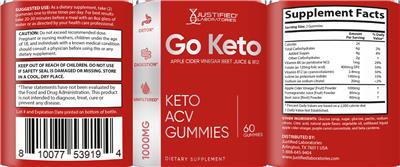
UPC 8 10077 53919 4 Match it to the barcode on your bottle

Medically reviewed by Dr. Brian Staiger, PharmD, BCPS
Also reviewed by the HelloPharmacist Editorial Team
Updated Details about this page
- Label on file from the NIH Dietary Supplement Label Database, dated Aug 22, 2024.
- The interaction, evidence and safety records come from the Natural Medicines database, which we license, read against this label by our own system; the pharmacy team’s sections are written from those records.
- Dr. Brian Staiger, PharmD, BCPS, is a clinical pharmacist and pharmacotherapy specialist.
- Editorial policy Our sources
AI is used only to summarize verified clinical information, never the open internet. Our AI policy
Summary: The HelloPharmacist Team’s Take
- Form
- Gummy or Jelly
- Serving Size
- 2 Gummy(ies)
- Servings
- 30 per container
- Container Holds
- 60 Gummy(ies)
What’s in it, whether it interacts with your drugs, its side effects, whether it works, and what our pharmacists would want you to know before you start it.
- What is Go Keto?A supplement from Justified Laboratories with nine active ingredients, in gummy form.
- Active Ingredients 3 vitamins, 2 minerals, 3 plant ingredients and 1 other: Other Carbohydrates 2 gVitamin B6 1 mgFolate 400 mcg DFEVitamin B12 2.4 mcgIodine 100 mcgSodium 20 mgApple Cider Vinegar, Powder 1000 mgPomegranate Fruit Juice, Powder 80 mcgBeet Root Juice, Powder 80 mcg Nine active ingredients. Each one can interact with drugs or cause side effects on its own, so we check every one. The full Supplement Facts
- Drug Interactions 1,116 drugs have a documented interaction with this supplement; the most serious is rated moderate. Of those, 717 are single drugs and 399 are combination products (two or more drugs in one), each listed under its own name. Based on the 8 of its 9 ingredients we could check. Ask your pharmacist first if you take a drug in any of these categories, the most serious of the 32 on record:
- Moderate · 645 drugs
- Moderate · 193 drugs
- Moderate · 172 drugs
- Moderate · 75 drugs
- Possible Side EffectsNausea 4 ingredientsStomach upset 3 ingredientsDiarrhea 2 ingredientsGas 2 ingredientsHeadache 2 ingredientsHeartburn 2 ingredients +25 moreReported for six of its nine active ingredients. Not studied in this exact product.
- Well documented Why
Does Go Keto work?
Moderate This product doesn't appear to be marketed for a specific use, so we graded its ingredients' overall clinical evidence instead.It is not marketed for one specific use, so this is what its ingredients have been studied for, strongest research first:
- Vitamin B6 deficiency Vitamin B6
- Folate deficiency Folic Acid
- Vitamin B12
- Radiation exposure Iodine
- Hyperhomocysteinemia Vitamin B6
- Neural tube birth defects Folic Acid
These grades are for each ingredient, not this exact product, and never a promise it will work for you.
And 14 more graded uses, in what the research says- Full Why
- AllergensNone of its ingredient names point to a major food allergen, and the label text we have carries no allergen statement
- Barcode (UPC)8 10077 53919 4Match it to the barcode on your bottle to be sure this is your product. Not your product? Search for it here
Who Might Consider It
- People who want it for vitamin B6 deficiency, folate deficiency, vitamin B12 deficiency, radiation exposure or another graded use: the uses with research behind them. See each grade
Who Should Be Careful
- Go Keto may be worth discussing with your doctor if you are looking for vitamin B12 or folic acid support, or if you have a documented iodine deficiency.
- People taking blood thinners, blood pressure medicines, thyroid medicines, seizure medicines, lithium, or diabetes medicines should be especially careful.
- Talk it over with your own doctor or pharmacist before starting, and tell them about every supplement you take.
More Before You Take It Show both answersHide Pregnancy and Breastfeeding The Label’s Directions
-
Pregnant or breastfeeding?
- Pregnancy Vitamin B6
- ! When used orally in excessive doses.
- Breastfeeding Vitamin B6
- When used orally in doses not exceeding the tolerable upper intake level (UL) of vitamin B6 in the form of pyridoxine 80 mg daily for those aged 14-18 years and 100 mg daily for those 19 years and older.
- Pregnancy and Breastfeeding Iodine
- ! When used orally in doses exceeding the UL.
- Pregnancy and Breastfeeding Sodium
- ! When used orally in higher doses.
-
How does the label say to take it?
“Suggested use: As a dietary supplement, take (2) gummies one to three times per day. For best results take 20-30 minutes before a meal with an 8 oz glass of water or as directed by your health care professional.”
The maker’s words. Your pharmacist or doctor may advise differently.
Everything the label says
From the label dated Aug 22, 2024: 8 of its 9 active ingredients were checked against our records; the other one is not in them yet. A summary of what is known, not a grade or a test of the product. How these ratings are computed
Ask Anything About This Supplement
Name a drug you take, or ask about side effects, ingredients or pregnancy.
AI answers come from this label and our own records, never the open internet. AI can make mistakes, so always check with your doctor or pharmacist. How we use AI
Ask the Pharmacist
A licensed pharmacist will answer your question by email — free, usually within 24 hours.
Got it — thank you!
A licensed pharmacist will answer within 24 hours. Keep an eye on your email (worth checking spam, just in case).
What’s Inside Go Keto by Justified Laboratories
Nine Active Ingredients, Each Checked on Its Own
A supplement is often several ingredients in one bottle, and each one can interact with drugs or cause side effects on its own. We check every one of them against our records.
- Other CarbohydratesNot in our interaction records yet
- Vitamin B6Drug interactions on record, most serious: Moderate
- FolateDrug interactions on record, most serious: Moderate
- Vitamin B12No drug interactions on record
- IodineDrug interactions on record, most serious: Moderate
- SodiumDrug interactions on record, most serious: Moderate
- Apple Cider Vinegar, PowderDrug interactions on record, most serious: Moderate
- Pomegranate Fruit Juice, PowderDrug interactions on record, most serious: Moderate
And 1 more, each with its own card below.
Why this rating?
The label gives an exact amount for every one of its nine active ingredients, so you know how much of each you get in each serving. This rates what the label tells you, not the quality of the product.
Supplement Facts
| Amount Per Serving | % Daily Value | |
|---|---|---|
| Calories | 24 Calories | † |
| Total Carbohydrates | 6 g | 2% |
| Added Sugars | 4 g | 4% |
| Other Carbohydrates | 2 g | † |
| Vitamin B6 | 1 mg | 29% |
| Folate | 400 mcg DFE | 50% |
| Folic Acid | 120 mg | † |
| Vitamin B12 | 2.4 mcg | 50% |
| Iodine | 100 mcg | 33% |
| Sodium | 20 mg | 2% |
| Apple Cider Vinegar, Powder | 1000 mg | † |
| Pomegranate Fruit Juice, Powder | 80 mcg | † |
| Beet Root Juice, Powder | 80 mcg | † |
Other ingredients: Glucose Syrup, Sugar, Glucose, Pectin, Sodium Citrate, Citric Acid, Apple Flavor, Natural, Vegetable Oil, Apple Cider Vinegar, Liquid, Unfiltered, Purple Carrot Concentrate, Beta-Carotene
† Daily Value not established.
Daily Values for adults and children 4 or more years of age.
As the label prints it, from the NIH Dietary Supplement Label Database.
Each Ingredient and Its Drug Interactions
Tap one for more about it and its full guide. A drug can interact with this supplement through any one of them.
The active ingredients are vitamin B6 (pyridoxine), folic acid, vitamin B12, folate (listed as a blend, with its components listed individually), iodine, other carbohydrates, beet root juice powder, sodium, apple cider vinegar powder, and pomegranate fruit juice powder.
- Vitamin B6 and B12 are vitamins involved in nerve function and red blood cell formation, folic acid supports red blood cell formation, and iodine is a building block of thyroid hormone.
-
Other Carbohydrates 2 g We know this ingredient, but hold no drug interaction record for it yet, so it was not checked
-
Vitamin B6 1 mg Interacts with 210 drugs
Form on the label: Pyridoxine Hydrochloride
Vitamin B6 (pyridoxine) is an essential water-soluble vitamin that your body needs for metabolism, brain function, and making red blood cells.
- It is best known for helping with pregnancy-related nausea and may help some people with PMS, but taking very high doses for long periods can cause nerve damage.
- Get most of your B6 from food, and check with a pharmacist or doctor before taking high-dose supplements.
The full Vitamin B6 guide: uses, dosage and safety Every Vitamin B6 drug interaction
-
Folate 400 mcg DFE Interacts with 40 drugs
Folic acid is the man-made form of vitamin B9 and is one of the most well-studied supplements, especially for preventing serious birth defects when taken before and during early pregnancy.
- It is widely available, inexpensive, and generally safe at recommended doses, but you should still check with your pharmacist or doctor about the right amount for you.
The full Folic Acid guide: uses, dosage and safety Every Folic Acid drug interaction
- Folic Acid 120 mg 40 drugs
-
Vitamin B12 2.4 mcg Interacts with 20 drugs
Form on the label: Cyanocobalamin
Vitamin B12 (cobalamin) is an essential nutrient your body needs to make red blood cells, keep nerves healthy, and support DNA.
- Supplements are very helpful for people who are deficient — such as vegans, older adults, and those with absorption problems — but taking extra B12 when you are not deficient is unlikely to boost energy or health.
- Talk to your pharmacist or doctor if you think you may be low.
The full Vitamin B12 guide: uses, dosage and safety Every Vitamin B12 drug interaction
-
Iodine 100 mcg Interacts with 23 drugs
Form on the label: Potassium Iodide
Iodine is an essential mineral your body needs to make thyroid hormones, and most people get enough from iodized salt, dairy, and seafood.
- Supplements help when you are truly deficient, but taking too much can harm the thyroid, so high-dose products should only be used under medical supervision.
The full Iodine guide: uses, dosage and safety Every Iodine drug interaction
-
Sodium 20 mg Interacts with 205 drugs
Form on the label: Sodium Citrate
Sodium is an essential mineral and electrolyte your body needs to balance fluids, support nerves, and help muscles work.
- Most people in modern diets get more than enough—often too much—from food, so supplements are rarely needed except for specific medical reasons like dehydration or low blood sodium.
- Talk to your doctor or pharmacist before deliberately adding sodium, especially if you have high blood pressure, heart, or kidney problems.
The full Sodium guide: uses, dosage and safety Every Sodium drug interaction
-
Apple Cider Vinegar, Powder 1000 mg Interacts with 162 drugs
Apple cider vinegar is a fermented apple product that many people use hoping to help with blood sugar, weight, or digestion.
- The evidence for most of these uses is limited and mixed, and the modest effects seen in small studies are not a substitute for proven treatments.
- When diluted and used in small amounts it is generally safe for most people, but undiluted vinegar can harm teeth and the throat.
The full Apple Cider Vinegar guide: uses, dosage and safety Every Apple Cider Vinegar drug interaction
-
Pomegranate Fruit Juice, Powder 80 mcg Interacts with 924 drugs
Pomegranate is a nutrient-rich fruit that is high in antioxidants and is widely enjoyed as food and juice.
- Early research suggests it may support heart health and blood pressure, but the evidence is still limited and not strong enough to call it a proven treatment.
- As a food it is generally safe, but talk to your pharmacist or doctor before using concentrated extracts, especially if you are pregnant, breastfeeding, or take medications.
The full Pomegranate guide: uses, dosage and safety Every Pomegranate drug interaction
-
Beet Root Juice, Powder 80 mcg Interacts with 863 drugs
Beet, especially beetroot juice, is a nitrate-rich food that may modestly lower blood pressure and slightly improve exercise performance in some people.
- It is generally safe as a food, but supplement effects are modest and not a substitute for prescribed treatment, so talk with your pharmacist or doctor before relying on it.
The full Beet guide: uses, dosage and safety Every Beet drug interaction
Other Ingredients (Inactive)
The capsule or tablet itself, fillers, coatings and flavors. Not part of the drug interaction check; the allergen check below reads them.
- Glucose Syrup
- Sugar
- Glucose
- Pectin
- Sodium Citrate
- Citric Acid
- Apple Flavor, Natural
- Vegetable Oil
- Apple Cider Vinegar, Liquid, Unfiltered
- Purple Carrot Concentrate
- Beta-Carotene
Allergens in Go Keto
None of its ingredient names point to a major food allergen, and the label text we have carries no allergen statement.
Not named in the ingredients
- Milk
- Egg
- Fish
- Shellfish
- Tree nuts
- Peanuts
- Wheat or other gluten grains
- Soy
- Sesame
From the label text and ingredient names on file; we do not test products. With a serious allergy, check your bottle and ask the maker or your pharmacist.
What the Label Says
The maker’s own words, from the label. We do not verify or endorse them.
- Storage
-
“Store in a cool, dry place.”
- Formulation
-
“Detox Digestion Unfiltered”
“Apple cider vinegar beet juice & B12 1000mg Keto ACV gummies”
- FDA Statement of Identity
-
“Dietary Supplement”
The Go Keto Label on File
The label scan on file at the NIH Dietary Supplement Label Database, dated August 2024. Always read the label on the bottle you have.
Product Facts
- Brand
- Justified Laboratories
- Barcode (UPC)
- 810077539194
- Net contents
- 60 Gummy(ies)
- Market status
- On market
- Date entered into DSLD
- Aug 22, 2024
- DSLD ID
- 315927
- Product type
- Botanical With Nutrients
- Supplement form
- Gummy or Jelly
- Dietary claims / uses
- Nutrient, All Other, Structure/Function
- Intended target group(s)
- Adult (18 - 50 Years)
Is this label outdated? Report a formula or label change and our pharmacy team will review it.
Go Keto by Justified Laboratories Side Effects
Why this rating?
We look for three kinds of safety information on each ingredient: side effects reported in studies, a pregnancy and breastfeeding rating, and a safety write-up from our pharmacy team. All three are on file for each of the eight ingredients we could check.
So this rates how much is known, not whether Go Keto is right for you.
Reported with eight of its ingredients
- Most often
- Nausea, stomach upset, diarrhea, gas, headache and heartburn
- !Rare but serious
- Sensory neuropathy (high doses), liver cirrhosis and cancer (long-term use) See details
HelloPharmacist Team Summary of Side Effects
Go Keto is generally well tolerated in the amounts found in food, but as a gummy with several concentrated powders, you may notice mild stomach effects.
- The side effects most likely to show up are stomach upset, nausea, and bloating, mostly from the folic acid, and a metallic taste or headache from the iodine.
- Beet can turn your urine pink and your stools red, which is harmless.
- Serious allergic reactions are rare but possible, and if you notice swelling or trouble breathing, get emergency care right away and call your doctor.
- Talk with your own doctor or pharmacist before starting, especially if you are pregnant, breastfeeding, or have a thyroid condition or kidney problem.
Side Effects, Ingredient by Ingredient
A supplement’s side effects come from its ingredients. Here is what is reported with each one.
Vitamin B6
Most reported
- Abdominal pain
- Allergic reactions
- Headache
- Heartburn
- Loss of appetite
- Nausea
- Somnolence
- Vomiting
From the Natural Medicines database, which we license.
Every reported effect, in the Vitamin B6 guideFolic Acid
Most reported
- Stomach upset
- Nausea
- Bloating
- Gas
Iodine
Most reported
- Metallic taste in the mouth
- Stomach upset, nausea, or diarrhea
- Burning in the mouth, throat, or stomach with strong liquid forms
- Headache
Apple Cider Vinegar
Most reported
- Tooth enamel erosion and tooth sensitivity
- Throat or mouth irritation and a burning feeling
- Upset stomach, nausea, or worse heartburn
Pomegranate
Most reported
- Diarrhea
- Flatulence
From the Natural Medicines database, which we license.
Every reported effect, in the Pomegranate guideBeet
Most reported
- Pink urine
- Sometimes red stools after eating beets
Vitamin B12 and Sodium have side-effect reports on file, but no list of the most common ones. Read them in each guide: Vitamin B12, Sodium.
Go Keto Warnings: Who Should Be Careful
Go Keto has nine active ingredients, and each can carry warnings of its own. We checked the eight in our ingredient guides, and each warning below names the ingredient it comes from. Other Carbohydrates is not in our guides yet, so ask your pharmacist about it. If any of these apply to you, talk to your doctor or pharmacist before you start it.
- Vitamin B62 warnings below
- Folic Acid2 warnings below
- Vitamin B121 warning below
- Iodine2 warnings below
- Sodium3 warnings below
- Apple Cider Vinegar3 warnings below
- Pomegranate3 warnings below
- Beet2 warnings below
- Other CarbohydratesNot in our guides yet
-
Bleeding Problems or Surgery
- Vitamin B12Older adults, people with stomach or bowel conditions, those who have had weight-loss or stomach surgery, and people on long-term acid-reducing medicines may absorb B12 poorly and should ask about testing.
-
Diabetes or Low Blood Sugar
- Apple Cider VinegarPeople with diabetes should talk to their doctor before using ACV regularly, since it may affect blood sugar.
-
Blood Pressure
- SodiumYou should be especially cautious with added sodium if you have high blood pressure, heart failure, kidney disease, or liver disease, or if your doctor has told you to follow a low-salt diet.
- BeetPeople with low blood pressure should be aware that beets may lower it further.
- Iodine can cause thyroid problems at high doses, and sodium is linked to high blood pressure and heart strain when intake is high.
-
Kidney Disease or Kidney Stones
- Vitamin B6People with kidney problems or other chronic conditions should talk to a clinician before using supplements.
- Apple Cider VinegarPeople with certain conditions should be cautious, including those with acid reflux or ulcers, low potassium, kidney problems, or gastroparesis (slow stomach emptying).
- BeetPeople with a history of kidney stones may want to be careful, because beets contain oxalates, which can contribute to certain types of stones.
-
Thyroid Conditions
- IodinePeople with existing thyroid conditions such as Hashimoto's disease, Graves' disease, thyroid nodules, or thyroid cancer should be especially careful and only take iodine under a doctor's guidance.
- IodineAlways talk to a pharmacist or doctor before starting an iodine supplement, especially if you take high doses or have a thyroid condition.
-
Allergies
- PomegranatePeople with allergies to pomegranate should avoid it.
-
Iron Deficiency or Anemia
- Folic AcidAnyone with a history of anemia should have the cause checked rather than just taking folic acid on their own.
-
If You Take Other Drugs
- PomegranateIf you have a chronic health condition or take prescription medications, talk with your pharmacist or doctor before using pomegranate supplements.
-
Other Cautions
- Vitamin B6Avoid high doses.
- Folic AcidOne important caution: high doses of folic acid can mask a vitamin B12 deficiency.
- Apple Cider VinegarTo be safe, avoid large or supplement-level amounts unless your doctor approves.
- PomegranateThese parts should not be used in concentrated forms without professional guidance.
- Vitamin B6 carries a caution about high doses over time, which can harm nerves, and folic acid is rated generally fine at recommended doses.
-
What the Label Warns
- “Caution: Do not exceed recommended dose. Do not use if safety seal is damaged or missing.”
- “Pregnant or nursing mothers, children under the age of 18, and individuals with a known medical condition should consult a physician before using this or any dietary supplement.”
- “Pregnant or nursing mothers, children under the age of 18, and individuals with a known medical condition should consult a physician before using this or any dietary supplement. Keep out of reach of children.”
The maker’s wording, from the product label.
-
Pregnant or Breastfeeding
Each ingredient’s rating for pregnancy and for breastfeeding, and what it covers.
Pregnancy
-
When used orally and appropriately.
A special sustained-release product providing vitamin B6 (pyridoxine) 75 mg daily is FDA-approved for use in pregnancy.
3 more points on this rating
- Vitamin B6 (pyridoxine) is also considered a first-line treatment for nausea and vomiting in pregnancy by the American College of Obstetrics and Gynecology.
- However, it should not be used long-term or without medical supervision and close monitoring.
- The tolerable upper intake level (UL) refers to vitamin B6 in the form of pyridoxine and is 80 mg daily for those aged 14-18 years and 100 mg daily for 19 years and older.
-
When used orally in excessive doses.
There is some concern that high-dose maternal vitamin B6 (pyridoxine) can cause neonatal seizures.
Breastfeeding
-
When used orally in doses not exceeding the tolerable upper intake level (UL) of vitamin B6 in the form of pyridoxine 80 mg daily for those aged 14-18 years and 100 mg daily for those 19 years and older.
The recommended dietary allowance (RDA) in lactating women is 2 mg daily.
There is insufficient reliable information available about the safety of vitamin B6 when used in higher doses in breast-feeding women.
Pregnancy and Breastfeeding The record rates both the same
-
When used orally and appropriately.
Iodine is safe in amounts that do not exceed the tolerable upper intake level (UL) of 1100 mcg daily in those 18 years and older or 900 mcg daily in those 14-18 years of age.
Iodine needs increase during pregnancy and lactation and adequate intakes should begin as soon as a patient is aware of the pregnancy, or earlier in areas of potential deficiency.
-
When used orally in doses exceeding the UL.
Higher intake can cause thyroid dysfunction.
2 more points on this rating
- Also, higher intakes during pregnancy cause increased iodine levels in breast milk and infant blood samples.
- Higher iodine intake during pregnancy has also been associated with an increased risk of congenital hypothyroidism and reduced mental and physical development in the offspring.
1 more rating for Iodine used another way
This supplement is taken by mouth. This rating is for Iodine given another way.
-
When used topically as a 2% solution.
Iodine is an FDA-approved prescription product.
Show 6 more ingredients
Pregnancy and Breastfeeding The record rates both the same
-
When used orally and appropriately.
Sodium is safe in amounts that do not exceed the CDRR intake level of 2.3 grams daily.
-
When used orally in higher doses.
Higher intake can cause hypertension.
Also, both the highest and the lowest pre-pregnancy sodium quintile intakes are associated with an increased risk of hypertensive disorders of pregnancy, including gestational hypertension and pre-eclampsia, and the delivery of small for gestational age (SGA) infants when compared to the middle intake quintile.
Pregnancy
-
Beet as a food is fine, but concentrated supplements lack safety data, so use caution.
Breastfeeding
-
There is insufficient reliable information available about the safety of beets used medicinally during pregnancy and breast-feeding.
Pregnancy and Breastfeeding The record rates both the same
-
Insufficient reliable information available; avoid using.
Pregnancy and Breastfeeding The record rates both the same
-
When used orally and appropriately.
Folic acid 300-400 mcg is commonly used during pregnancy for prevention of neural tube defects.
3 more points on this rating
- Miscarriage rates and negative impacts on fetal growth have not been shown to increase with peri-conception supplemental folic acid intakes of 4 mg per day.
- However, other research shows that taking more than 5 mg per day during pregnancy may reduce development of cognitive, emotional, and motor skills in infants.
- Also, the tolerable upper intake level (UL) of folic acid for pregnant or lactating women is 800 mcg daily for those 14-18 years of age and 1000 mcg daily for those 19 years and older.
-
When L-5-methyltetrahydrofolate (L-5-MTHF), the reduced form of folate, is used orally and appropriately, short-term.
L-5-MTHF has been used with apparent safety at a dose of 416 mcg daily for 16 weeks during lactation.
Compared to folic acid, this form seems to further increase the folate concentration of red blood cells, but not breast milk.
Pregnancy
-
When used orally in amounts that do not exceed the recommended dietary allowance (RDA).
The RDA for vitamin B12 during pregnancy is 2.6 mcg daily.
There is insufficient reliable information available about the safety of larger amounts of vitamin B12 during pregnancy.
Breastfeeding
-
When used orally in amounts that do not exceed the recommended dietary allowance (RDA).
The RDA of vitamin B12 during lactation is 2.8 mcg daily.
There is insufficient reliable information available about the safety of larger amounts of vitamin B12 while breastfeeding.
Pregnancy and Breastfeeding The record rates both the same
-
When the fruit or fruit juice is consumed orally and appropriately.
There is insufficient reliable information available regarding the safety of using other forms of pomegranate or other parts of the plant during pregnancy or lactation; avoid using.
Ratings and the words beside them are from the Natural Medicines database, which we license. Where it has no rating, the rating and note are our pharmacy team’s.
-
Rare but Serious Side Effects
-
!
Vitamin B6
Orally or by injection: Sensory neuropathy (high doses).
Orally: Liver cirrhosis, hepatocellular carcinoma (high doses of pyridoxal-5'-phosphate).
-
!
Folic Acid
Allergic reactions are uncommon but possible.
Orally: Cancer (long-term use), cardiovascular complications, liver injury, seizures.
Allergic reactions such as bronchospasm and anaphylactic shock.
-
!
Vitamin B12
Serious allergic reactions are rare but possible; signs include rash, swelling, or trouble breathing, which need emergency care.
-
!
Iodine
More serious effects from too much iodine include thyroid problems (either overactive or underactive thyroid), thyroid swelling, and rarely allergic reactions.
Hypersensitivity reactions such as anaphylaxis and angioedema.
-
!
Sodium
Rarely, a sudden large intake of salt—or a rapid change in blood sodium during treatment—can be very serious and even life-threatening.
Orally: Worsened cardiovascular disease, hypertension, kidney disease.
-
!
Apple Cider Vinegar
Rare but more serious problems have been linked to drinking large amounts over time, including low potassium levels and possible effects on bone health.
Orally: Hypokalemia, hyperreninemia, and osteoporosis have been reported with long-term use.
-
!
Pomegranate
Allergic reactions are uncommon but can happen and may include itching, swelling, hives, or trouble breathing.
-
!
Beet
Orally: Hypocalcemia and kidney damage when ingested in large amounts.
When to get help: a serious allergic reaction, with trouble breathing or swelling of the face, lips or throat, needs emergency care: call 911. For any other side effect that worries you, call your doctor or pharmacist.
These reports describe each ingredient, not studies of this exact product. Not medical advice: a side effect you notice after starting a supplement is worth a word with your pharmacist or doctor.
Go Keto by Justified Laboratories Drug Interactions
We checked all nine active ingredients in this supplement against every drug in our records. A drug can interact with it through any one of them. Other Carbohydrates is not in our interaction records yet.
A moderate interaction on record
2 of 3, on a scale from Minor or none to Major.Why this rating?
We rate this by the most serious interaction on record, not by how many there are. For Iodine, Beet, Pomegranate, Apple Cider Vinegar and Vitamin B12, the most serious is rated moderate, which means it calls for caution, and sometimes monitoring or a change in timing or dose. Some involve kinds of drugs where a small change can matter, such as blood thinners, diabetes drugs and heart-rhythm drugs.
1,117 drugs are on the full list. What matters is whether one you take is on it, so check yours with the interaction checker on this page.
Eight of its nine active ingredients have drug interactions on record. The ones below matter most. We have no interaction records for Other Carbohydrates.
- Interacts with
- 924 drugs
- Most serious
- Moderate
- The single most serious interaction we list is pomegranate with warfarin (a blood thinner).
- Pomegranate may raise warfarin levels and increase the risk of bleeding.
- Interacts with
- 863 drugs
- Most serious
- Moderate
- Most of its records involve Cytochrome P450 3A4 (CYP3A4) Substrates, Cytochrome P450 1A2 (CYP1A2) Substrates and Antihypertensive Drugs.
- Interacts with
- 210 drugs
- Most serious
- Moderate
- Most of its records involve Antihypertensive Drugs, Phenobarbital (Luminal) and Phenytoin (Dilantin).
Show three more ingredients
- Interacts with
- 205 drugs
- Most serious
- Moderate
- Most of its records involve Antihypertensive Drugs, Corticosteroids and Sodium-containing Drugs.
- Interacts with
- 162 drugs
- Most serious
- Moderate
- Most of its records involve Antidiabetes Drugs, Diuretic Drugs and Insulin.
- Interacts with
- 40 drugs
- Most serious
- Moderate
- Most of its records involve Phenobarbital (Luminal), Phenytoin (Dilantin) and 5-Fluorouracil.
And two more ingredients with records, each in the cards below.
From the HelloPharmacist Team
The big picture, once every ingredient is counted together.
- Go Keto by Justified Laboratories does interact with some medications, through its vitamin B6, folic acid, vitamin B12, iodine, beet root, sodium, apple cider vinegar, and pomegranate content.
- This is rated Moderate, the highest severity.
- Other Moderate interactions involve antihypertensives (blood pressure medicines), amiodarone (a heart rhythm medicine), phenobarbital, phenytoin, and primidone (seizure medicines), lithium, thyroid hormone and antithyroid drugs, digoxin, insulin, diuretics (water pills), ACE inhibitors, rosuvastatin, corticosteroids, and several cancer and antiparasitic drugs.
Summarized by the HelloPharmacist pharmacy team from the interaction records below. How it is written How we use AI
Why Go Keto Interacts, Ingredient by Ingredient
A product interacts through its ingredients. Each card: how many drugs, the most serious rating, and the kinds of drugs it affects most (tap a kind for what it means).
The ingredients driving the most interactions
-
Pomegranate Fruit Juice, Powder 924 drugs
Most serious: Moderate9 interaction records on file
The kinds of drugs it affects most
- 645 drugs
- 193 drugs
- 172 drugs
- 112 drugs
Every Pomegranate drug interaction, 9 records The Pomegranate records cite 27 references, listed in the Pomegranate guide.
-
Beet Root Juice, Powder 863 drugs
Most serious: Moderate3 interaction records on file
The kinds of drugs it affects most
- 645 drugs
- 186 drugs
- 172 drugs
Every Beet drug interaction, 3 records The Beet records cite 11 references, listed in the Beet guide.
-
Vitamin B6 210 drugs
Most serious: Moderate5 interaction records on file
The kinds of drugs it affects most
- 172 drugs
- Phenobarbital (Luminal) 28 drugs
- Phenytoin (Dilantin) 5 drugs
- 5 drugs
Every Vitamin B6 drug interaction, 5 records The Vitamin B6 records cite 33 references, listed in the Vitamin B6 guide.
-
Sodium 205 drugs
Most serious: Moderate7 interaction records on file
The kinds of drugs it affects most
- 172 drugs
- 23 drugs
- Sodium-containing Drugs 7 drugs
- Sodium Phosphates 2 drugs
Every Sodium drug interaction, 7 records The Sodium records cite 43 references, listed in the Sodium guide.
-
Apple Cider Vinegar, Powder 162 drugs
Most serious: Moderate4 interaction records on file
The kinds of drugs it affects most
- 86 drugs
- 75 drugs
- 13 drugs
- 1 drug
Every Apple Cider Vinegar drug interaction, 4 records The Apple Cider Vinegar records cite 11 references, listed in the Apple Cider Vinegar guide.
-
Folate 40 drugs
Most serious: Moderate7 interaction records on file
The kinds of drugs it affects most
- Phenobarbital (Luminal) 28 drugs
- Phenytoin (Dilantin) 5 drugs
- 5-Fluorouracil 2 drugs
- 2 drugs
Every Folic Acid drug interaction, 7 records The Folic Acid records cite 56 references, listed in the Folic Acid guide.
-
Iodine 23 drugs
Most serious: Moderate4 interaction records on file
The kinds of drugs it affects most
- 16 drugs
- Antithyroid Drugs 5 drugs
- Amiodarone (Cordarone) 1 drug
- 1 drug
Every Iodine drug interaction, 4 records The Iodine records cite 29 references, listed in the Iodine guide.
-
Vitamin B12 20 drugs
Most serious: Minor1 interaction record on file
The kinds of drugs it affects most
- 20 drugs
Every Vitamin B12 drug interaction, 1 record The Vitamin B12 records cite 34 references, listed in the Vitamin B12 guide.
The Breakdown by Severity
Each drug counted once, at its most serious rating. Tap a tile to list those drugs.
Find Your Drug
Type a drug or brand name to see whether it is on the list.
- Only drugs with a documented interaction are listed, the most serious first.
- A drug with no known interaction is not listed, but searching its name tells you so.
- Open a drug to see which ingredient is responsible. Of those, 717 are single drugs and 399 are combination products (two or more drugs in one), each listed under its own name.
-
ApixabanEliquis Moderate
The 2 ingredients responsible:
-
Beet Root Juice, Powder Moderate Apixaban is in the Cytochrome P450 3A4 (CYP3A4) Substrates category.
Theoretically, beet might increase the levels of CYP3A4 substrates.
The full Beet Root Juice, Powder + Apixaban interaction -
Pomegranate Fruit Juice, Powder Minor Apixaban is in the Cytochrome P450 3A4 (CYP3A4) Substrates category.
Theoretically, pomegranate might increase levels of drugs metabolized by CYP3A4, but most research suggests this interaction is unlikely to be clinically significant.
The full Pomegranate Fruit Juice, Powder + Apixaban interaction
-
-
LevothyroxineEltroxin, Estre, Euthyrox, Levo-T, Levolet and 6 more Moderate
The ingredient responsible:
-
Iodine Moderate Levothyroxine is in the Thyroid Hormone category.
Iodine might alter the effects of thyroid hormone.
The full Iodine + Levothyroxine interaction
-
-
WarfarinWarfarin Moderate
The 2 ingredients responsible:
-
Pomegranate Fruit Juice, Powder Moderate Warfarin is in these Cytochrome P450 2C9 (CYP2C9) Substrates, Cytochrome P450 3A4 (CYP3A4) Substrates categories.
Theoretically, pomegranate might increase warfarin levels and increase the risk of bleeding.
The full Pomegranate Fruit Juice, Powder + Warfarin interaction -
Beet Root Juice, Powder Moderate Warfarin is in these Cytochrome P450 3A4 (CYP3A4) Substrates, Cytochrome P450 1A2 (CYP1A2) Substrates categories.
Theoretically, beet might increase the levels of CYP3A4 substrates.
The full Beet Root Juice, Powder + Warfarin interaction
-
-
AmlodipineNorliqva Moderate
The 4 ingredients responsible:
-
Pomegranate Fruit Juice, Powder Moderate Amlodipine is in these Cytochrome P450 3A4 (CYP3A4) Substrates, Antihypertensive Drugs categories.
Theoretically, pomegranate might increase levels of drugs metabolized by CYP3A4, but most research suggests this interaction is unlikely to be clinically significant.
The full Pomegranate Fruit Juice, Powder + Amlodipine interaction -
Sodium Moderate Amlodipine is in the Antihypertensive Drugs category.
Theoretically, a high intake of dietary sodium might reduce the effectiveness of antihypertensive drugs.
The full Sodium + Amlodipine interaction -
Beet Root Juice, Powder Moderate Amlodipine is in these Antihypertensive Drugs, Cytochrome P450 3A4 (CYP3A4) Substrates categories.
Beet and beetroot contain nitrates, which can cause vasodilation, potentially leading to lower blood pressure.
The full Beet Root Juice, Powder + Amlodipine interaction -
Vitamin B6 Moderate Amlodipine is in the Antihypertensive Drugs category.
Theoretically, vitamin B6 may have additive effects when used with antihypertensive drugs.
The full Vitamin B6 + Amlodipine interaction
-
-
SertralineZoloft Moderate
The 2 ingredients responsible:
-
Beet Root Juice, Powder Moderate Sertraline is in the Cytochrome P450 3A4 (CYP3A4) Substrates category.
Theoretically, beet might increase the levels of CYP3A4 substrates.
The full Beet Root Juice, Powder + Sertraline interaction -
Pomegranate Fruit Juice, Powder Minor Sertraline is in the Cytochrome P450 3A4 (CYP3A4) Substrates category.
Theoretically, pomegranate might increase levels of drugs metabolized by CYP3A4, but most research suggests this interaction is unlikely to be clinically significant.
The full Pomegranate Fruit Juice, Powder + Sertraline interaction
-
-
ClopidogrelPlavix Moderate
The 2 ingredients responsible:
-
Beet Root Juice, Powder Moderate Clopidogrel is in these Cytochrome P450 3A4 (CYP3A4) Substrates, Cytochrome P450 1A2 (CYP1A2) Substrates categories.
Theoretically, beet might increase the levels of CYP3A4 substrates.
The full Beet Root Juice, Powder + Clopidogrel interaction -
Pomegranate Fruit Juice, Powder Minor Clopidogrel is in these Cytochrome P450 3A4 (CYP3A4) Substrates, Cytochrome P450 2C9 (CYP2C9) Substrates categories.
Theoretically, pomegranate might increase levels of drugs metabolized by CYP3A4, but most research suggests this interaction is unlikely to be clinically significant.
The full Pomegranate Fruit Juice, Powder + Clopidogrel interaction
-
-
RosuvastatinCrestor, Ezallor Moderate
The ingredient responsible:
-
Pomegranate Fruit Juice, Powder Moderate
Theoretically, taking pomegranate with rosuvastatin might increase the risk of adverse effects.
The full Pomegranate Fruit Juice, Powder + Rosuvastatin interaction
-
-
EscitalopramLexapro Moderate
The 2 ingredients responsible:
-
Beet Root Juice, Powder Moderate Escitalopram is in the Cytochrome P450 3A4 (CYP3A4) Substrates category.
Theoretically, beet might increase the levels of CYP3A4 substrates.
The full Beet Root Juice, Powder + Escitalopram interaction -
Pomegranate Fruit Juice, Powder Minor Escitalopram is in the Cytochrome P450 3A4 (CYP3A4) Substrates category.
Theoretically, pomegranate might increase levels of drugs metabolized by CYP3A4, but most research suggests this interaction is unlikely to be clinically significant.
The full Pomegranate Fruit Juice, Powder + Escitalopram interaction
-
-
Losartan PotassiumCozaar Moderate
The 4 ingredients responsible:
-
Beet Root Juice, Powder Moderate Losartan Potassium is in these Cytochrome P450 3A4 (CYP3A4) Substrates, Antihypertensive Drugs categories.
Theoretically, beet might increase the levels of CYP3A4 substrates.
The full Beet Root Juice, Powder + Losartan Potassium interaction -
Vitamin B6 Moderate Losartan Potassium is in the Antihypertensive Drugs category.
Theoretically, vitamin B6 may have additive effects when used with antihypertensive drugs.
The full Vitamin B6 + Losartan Potassium interaction -
Pomegranate Fruit Juice, Powder Moderate Losartan Potassium is in these Cytochrome P450 3A4 (CYP3A4) Substrates, Antihypertensive Drugs, Cytochrome P450 2C9 (CYP2C9) Substrates categories.
Theoretically, pomegranate might increase levels of drugs metabolized by CYP3A4, but most research suggests this interaction is unlikely to be clinically significant.
The full Pomegranate Fruit Juice, Powder + Losartan Potassium interaction -
Sodium Moderate Losartan Potassium is in the Antihypertensive Drugs category.
Theoretically, a high intake of dietary sodium might reduce the effectiveness of antihypertensive drugs.
The full Sodium + Losartan Potassium interaction
-
-
AtorvastatinAtorvaliq Moderate
The 2 ingredients responsible:
-
Beet Root Juice, Powder Moderate Atorvastatin is in the Cytochrome P450 3A4 (CYP3A4) Substrates category.
Theoretically, beet might increase the levels of CYP3A4 substrates.
The full Beet Root Juice, Powder + Atorvastatin interaction -
Pomegranate Fruit Juice, Powder Minor Atorvastatin is in the Cytochrome P450 3A4 (CYP3A4) Substrates category.
Theoretically, pomegranate might increase levels of drugs metabolized by CYP3A4, but most research suggests this interaction is unlikely to be clinically significant.
The full Pomegranate Fruit Juice, Powder + Atorvastatin interaction
-
-
RivaroxabanXarelto Moderate
The 2 ingredients responsible:
-
Beet Root Juice, Powder Moderate Rivaroxaban is in the Cytochrome P450 3A4 (CYP3A4) Substrates category.
Theoretically, beet might increase the levels of CYP3A4 substrates.
The full Beet Root Juice, Powder + Rivaroxaban interaction -
Pomegranate Fruit Juice, Powder Minor Rivaroxaban is in the Cytochrome P450 3A4 (CYP3A4) Substrates category.
Theoretically, pomegranate might increase levels of drugs metabolized by CYP3A4, but most research suggests this interaction is unlikely to be clinically significant.
The full Pomegranate Fruit Juice, Powder + Rivaroxaban interaction
-
-
Warfarin SodiumCoumadin, Panwarfin, Sofarin Moderate
The 2 ingredients responsible:
-
Beet Root Juice, Powder Moderate Warfarin Sodium is in these Cytochrome P450 1A2 (CYP1A2) Substrates, Cytochrome P450 3A4 (CYP3A4) Substrates categories.
Theoretically, beet might decrease the levels and clinical effects of CYP1A2 substrates.
The full Beet Root Juice, Powder + Warfarin Sodium interaction -
Pomegranate Fruit Juice, Powder Moderate Warfarin Sodium is in these Cytochrome P450 2C9 (CYP2C9) Substrates, Cytochrome P450 3A4 (CYP3A4) Substrates categories.
Theoretically, pomegranate might increase levels of drugs metabolized by CYP2C9.
The full Pomegranate Fruit Juice, Powder + Warfarin Sodium interaction
-
-
MetoprololLopressor, Toprol XL Moderate
The 4 ingredients responsible:
-
Vitamin B6 Moderate Metoprolol is in the Antihypertensive Drugs category.
Theoretically, vitamin B6 may have additive effects when used with antihypertensive drugs.
The full Vitamin B6 + Metoprolol interaction -
Pomegranate Fruit Juice, Powder Moderate Metoprolol is in these Antihypertensive Drugs, Cytochrome P450 2D6 (CYP2D6) Substrates categories.
Theoretically, taking pomegranate with antihypertensive drugs might increase the risk of hypotension.
The full Pomegranate Fruit Juice, Powder + Metoprolol interaction -
Sodium Moderate Metoprolol is in the Antihypertensive Drugs category.
Theoretically, a high intake of dietary sodium might reduce the effectiveness of antihypertensive drugs.
The full Sodium + Metoprolol interaction -
Beet Root Juice, Powder Minor Metoprolol is in the Antihypertensive Drugs category.
Beet and beetroot contain nitrates, which can cause vasodilation, potentially leading to lower blood pressure.
The full Beet Root Juice, Powder + Metoprolol interaction
-
-
TadalafilCialis, Tadliq Moderate
The 2 ingredients responsible:
-
Beet Root Juice, Powder Moderate Tadalafil is in the Cytochrome P450 3A4 (CYP3A4) Substrates category.
Theoretically, beet might increase the levels of CYP3A4 substrates.
The full Beet Root Juice, Powder + Tadalafil interaction -
Pomegranate Fruit Juice, Powder Minor Tadalafil is in the Cytochrome P450 3A4 (CYP3A4) Substrates category.
Theoretically, pomegranate might increase levels of drugs metabolized by CYP3A4, but most research suggests this interaction is unlikely to be clinically significant.
The full Pomegranate Fruit Juice, Powder + Tadalafil interaction
-
-
TestosteroneAndrogel, Andropatch, Delatestryl, Intrinsa, Natesto and 4 more Moderate
The 2 ingredients responsible:
-
Beet Root Juice, Powder Moderate Testosterone is in the Cytochrome P450 3A4 (CYP3A4) Substrates category.
Theoretically, beet might increase the levels of CYP3A4 substrates.
The full Beet Root Juice, Powder + Testosterone interaction -
Pomegranate Fruit Juice, Powder Minor Testosterone is in the Cytochrome P450 3A4 (CYP3A4) Substrates category.
Theoretically, pomegranate might increase levels of drugs metabolized by CYP3A4, but most research suggests this interaction is unlikely to be clinically significant.
The full Pomegranate Fruit Juice, Powder + Testosterone interaction
-
-
PrednisoneCortan, Deltasone, Meticorten, Orasone, Prednicen-M and 3 more Moderate
The 3 ingredients responsible:
-
Sodium Moderate Prednisone is in the Corticosteroids category.
Concomitant use of mineralocorticoids and some glucocorticoids with sodium supplements might increase the risk of hypernatremia.
The full Sodium + Prednisone interaction -
Beet Root Juice, Powder Moderate Prednisone is in the Cytochrome P450 3A4 (CYP3A4) Substrates category.
Theoretically, beet might increase the levels of CYP3A4 substrates.
The full Beet Root Juice, Powder + Prednisone interaction -
Pomegranate Fruit Juice, Powder Minor Prednisone is in the Cytochrome P450 3A4 (CYP3A4) Substrates category.
Theoretically, pomegranate might increase levels of drugs metabolized by CYP3A4, but most research suggests this interaction is unlikely to be clinically significant.
The full Pomegranate Fruit Juice, Powder + Prednisone interaction
-
-
FluoxetineProzac, Sarafem Moderate
The ingredient responsible:
-
Pomegranate Fruit Juice, Powder Moderate Fluoxetine is in these Cytochrome P450 2D6 (CYP2D6) Substrates, Cytochrome P450 2C9 (CYP2C9) Substrates categories.
Theoretically, pomegranate might increase levels of drugs metabolized by CYP2D6.
The full Pomegranate Fruit Juice, Powder + Fluoxetine interaction
-
-
AmphetamineAdensys XR-ODT, Adzenys ER, Dyanavel XR, Mydayis Moderate
The ingredient responsible:
-
Pomegranate Fruit Juice, Powder Moderate Amphetamine is in the Cytochrome P450 2D6 (CYP2D6) Substrates category.
Theoretically, pomegranate might increase levels of drugs metabolized by CYP2D6.
The full Pomegranate Fruit Juice, Powder + Amphetamine interaction
-
-
LisdexamfetamineVyvanse Moderate
The ingredient responsible:
-
Pomegranate Fruit Juice, Powder Moderate Lisdexamfetamine is in the Cytochrome P450 2D6 (CYP2D6) Substrates category.
Theoretically, pomegranate might increase levels of drugs metabolized by CYP2D6.
The full Pomegranate Fruit Juice, Powder + Lisdexamfetamine interaction
-
-
AbemaciclibVerzenio Moderate
The 2 ingredients responsible:
-
Beet Root Juice, Powder Moderate Abemaciclib is in the Cytochrome P450 3A4 (CYP3A4) Substrates category.
Theoretically, beet might increase the levels of CYP3A4 substrates.
The full Beet Root Juice, Powder + Abemaciclib interaction -
Pomegranate Fruit Juice, Powder Minor Abemaciclib is in the Cytochrome P450 3A4 (CYP3A4) Substrates category.
Theoretically, pomegranate might increase levels of drugs metabolized by CYP3A4, but most research suggests this interaction is unlikely to be clinically significant.
The full Pomegranate Fruit Juice, Powder + Abemaciclib interaction
-
-
MethotrexateOtrexup, Rasuvo, Reditrex, Rheumatrex Moderate
The ingredient responsible:
-
Folic Acid Moderate
Folic acid might reduce the efficacy of methotrexate as a cancer treatment when given concurrently.
The full Folic Acid + Methotrexate interaction
-
-
PropranololAngilol, Bedranol SR, Beta Prograne, Half Beta Prograne, Half-Inderal LA and 7 more Moderate
The 4 ingredients responsible:
-
Pomegranate Fruit Juice, Powder Moderate Propranolol is in these Cytochrome P450 2D6 (CYP2D6) Substrates, Antihypertensive Drugs categories.
Theoretically, pomegranate might increase levels of drugs metabolized by CYP2D6.
The full Pomegranate Fruit Juice, Powder + Propranolol interaction -
Sodium Moderate Propranolol is in the Antihypertensive Drugs category.
Theoretically, a high intake of dietary sodium might reduce the effectiveness of antihypertensive drugs.
The full Sodium + Propranolol interaction -
Vitamin B6 Moderate Propranolol is in the Antihypertensive Drugs category.
Theoretically, vitamin B6 may have additive effects when used with antihypertensive drugs.
The full Vitamin B6 + Propranolol interaction -
Beet Root Juice, Powder Minor Propranolol is in these Antihypertensive Drugs, Cytochrome P450 1A2 (CYP1A2) Substrates categories.
Beet and beetroot contain nitrates, which can cause vasodilation, potentially leading to lower blood pressure.
The full Beet Root Juice, Powder + Propranolol interaction
-
-
LetrozoleFemara Moderate
The 2 ingredients responsible:
-
Beet Root Juice, Powder Moderate Letrozole is in the Cytochrome P450 3A4 (CYP3A4) Substrates category.
Theoretically, beet might increase the levels of CYP3A4 substrates.
The full Beet Root Juice, Powder + Letrozole interaction -
Pomegranate Fruit Juice, Powder Minor Letrozole is in the Cytochrome P450 3A4 (CYP3A4) Substrates category.
Theoretically, pomegranate might increase levels of drugs metabolized by CYP3A4, but most research suggests this interaction is unlikely to be clinically significant.
The full Pomegranate Fruit Juice, Powder + Letrozole interaction
-
-
LisinoprilPrinivil, Qbrelis, Zestril Moderate
The 4 ingredients responsible:
-
Vitamin B6 Moderate Lisinopril is in the Antihypertensive Drugs category.
Theoretically, vitamin B6 may have additive effects when used with antihypertensive drugs.
The full Vitamin B6 + Lisinopril interaction -
Sodium Moderate Lisinopril is in the Antihypertensive Drugs category.
Theoretically, a high intake of dietary sodium might reduce the effectiveness of antihypertensive drugs.
The full Sodium + Lisinopril interaction -
Pomegranate Fruit Juice, Powder Moderate Lisinopril is in these ACE Inhibitors (ACEIs), Antihypertensive Drugs categories.
Theoretically, taking pomegranate with ACEIs might increase the risk of adverse effects.
The full Pomegranate Fruit Juice, Powder + Lisinopril interaction -
Beet Root Juice, Powder Minor Lisinopril is in the Antihypertensive Drugs category.
Beet and beetroot contain nitrates, which can cause vasodilation, potentially leading to lower blood pressure.
The full Beet Root Juice, Powder + Lisinopril interaction
-
-
ClonazepamCeberclon, Klonopin, Rivotril Moderate
The 2 ingredients responsible:
-
Beet Root Juice, Powder Moderate Clonazepam is in the Cytochrome P450 3A4 (CYP3A4) Substrates category.
Theoretically, beet might increase the levels of CYP3A4 substrates.
The full Beet Root Juice, Powder + Clonazepam interaction -
Pomegranate Fruit Juice, Powder Minor Clonazepam is in the Cytochrome P450 3A4 (CYP3A4) Substrates category.
Theoretically, pomegranate might increase levels of drugs metabolized by CYP3A4, but most research suggests this interaction is unlikely to be clinically significant.
The full Pomegranate Fruit Juice, Powder + Clonazepam interaction
-
-
AmitriptylineElavil Moderate
The 2 ingredients responsible:
-
Pomegranate Fruit Juice, Powder Moderate Amitriptyline is in these Cytochrome P450 2C9 (CYP2C9) Substrates, Cytochrome P450 3A4 (CYP3A4) Substrates, Cytochrome P450 2D6 (CYP2D6) Substrates categories.
Theoretically, pomegranate might increase levels of drugs metabolized by CYP2C9.
The full Pomegranate Fruit Juice, Powder + Amitriptyline interaction -
Beet Root Juice, Powder Moderate Amitriptyline is in these Cytochrome P450 1A2 (CYP1A2) Substrates, Cytochrome P450 3A4 (CYP3A4) Substrates categories.
Theoretically, beet might decrease the levels and clinical effects of CYP1A2 substrates.
The full Beet Root Juice, Powder + Amitriptyline interaction
-
-
CitalopramCelexa Moderate
The 2 ingredients responsible:
-
Beet Root Juice, Powder Moderate Citalopram is in the Cytochrome P450 3A4 (CYP3A4) Substrates category.
Theoretically, beet might increase the levels of CYP3A4 substrates.
The full Beet Root Juice, Powder + Citalopram interaction -
Pomegranate Fruit Juice, Powder Minor Citalopram is in the Cytochrome P450 3A4 (CYP3A4) Substrates category.
Theoretically, pomegranate might increase levels of drugs metabolized by CYP3A4, but most research suggests this interaction is unlikely to be clinically significant.
The full Pomegranate Fruit Juice, Powder + Citalopram interaction
-
-
BuspironeBuSpar Moderate
The 2 ingredients responsible:
-
Beet Root Juice, Powder Moderate Buspirone is in the Cytochrome P450 3A4 (CYP3A4) Substrates category.
Theoretically, beet might increase the levels of CYP3A4 substrates.
The full Beet Root Juice, Powder + Buspirone interaction -
Pomegranate Fruit Juice, Powder Minor Buspirone is in the Cytochrome P450 3A4 (CYP3A4) Substrates category.
Theoretically, pomegranate might increase levels of drugs metabolized by CYP3A4, but most research suggests this interaction is unlikely to be clinically significant.
The full Pomegranate Fruit Juice, Powder + Buspirone interaction
-
-
OmeprazoleLosec, Prilosec, Zegerid Moderate
The 2 ingredients responsible:
-
Beet Root Juice, Powder Moderate Omeprazole is in the Cytochrome P450 3A4 (CYP3A4) Substrates category.
Theoretically, beet might increase the levels of CYP3A4 substrates.
The full Beet Root Juice, Powder + Omeprazole interaction -
Pomegranate Fruit Juice, Powder Minor Omeprazole is in these Cytochrome P450 2C9 (CYP2C9) Substrates, Cytochrome P450 3A4 (CYP3A4) Substrates categories.
Theoretically, pomegranate might increase levels of drugs metabolized by CYP2C9.
The full Pomegranate Fruit Juice, Powder + Omeprazole interaction
-
-
QuetiapineDopaquel, Seroquel Moderate
The 2 ingredients responsible:
-
Pomegranate Fruit Juice, Powder Moderate Quetiapine is in these Cytochrome P450 3A4 (CYP3A4) Substrates, Cytochrome P450 2D6 (CYP2D6) Substrates categories.
Theoretically, pomegranate might increase levels of drugs metabolized by CYP3A4, but most research suggests this interaction is unlikely to be clinically significant.
The full Pomegranate Fruit Juice, Powder + Quetiapine interaction -
Beet Root Juice, Powder Moderate Quetiapine is in the Cytochrome P450 3A4 (CYP3A4) Substrates category.
Theoretically, beet might increase the levels of CYP3A4 substrates.
The full Beet Root Juice, Powder + Quetiapine interaction
-
Does It Work? Go Keto by Justified Laboratories
How it rates in the research so far, then each ingredient on its own. A grade is the research so far, never an endorsement.
This product doesn't appear to be marketed for a specific use, so we graded its ingredients' overall clinical evidence instead.
Why this rating?
It is not marketed for one specific use, so we looked at what its ingredients have been studied for instead.
The strongest: Vitamin B6 is graded “Likely Effective” for hyperhomocysteinemia. That means good studies support it.
We did not count sideroblastic anemia and methotrexate toxicity: they are treated by a doctor or in a hospital. Nor pyridoxine-dependent epilepsy and imerslund-Grasbeck disease: the research there is for the ingredient used a different way than this product, such as by injection.
Our pharmacy team’s notes on this supplement
- Other ratings are weaker.
The Evidence, Ingredient by Ingredient
Each card holds our notes on one ingredient, then its uses graded effective, likely effective or possibly effective.
Vitamin B6
From our Vitamin B6 guide
- Morning sickness (nausea and vomiting in pregnancy): This is one of the better-supported uses.
- Vitamin B6 is commonly recommended by doctors, sometimes combined with the medication doxylamine, to help reduce nausea.
Research suggests a benefit for
- Vitamin B6 deficiency
- Hyperhomocysteinemia
- Premenstrual syndrome (PMS), kidney stones (nephrolithiasis), pregnancy-induced nausea and vomiting and antipsychotic-induced hyperprolactinemia
Not counted here: one graded use is for Vitamin B6 injected or put on the skin (pyridoxine-dependent epilepsy), not for a product like this one. One more is for a condition treated by a doctor or in a hospital (sideroblastic anemia).
Every graded use, in the Vitamin B6 guideFolic Acid
From our Folic Acid guide
- The strongest and most accepted use of folic acid is preventing neural tube defects (such as spina bifida) when taken before conception and during early pregnancy.
- The evidence here is very strong, and this is why folic acid is recommended for people who can become pregnant.
Research suggests a benefit for
- Folate deficiency
- Neural tube birth defects
- Depression, vitiligo and oral clefts
Not counted here: one graded use is for Folic Acid injected or put on the skin (phenytoin-induced gingival hyperplasia), not for a product like this one. Four more are for conditions treated by a doctor or in a hospital (congenital heart disease, methotrexate toxicity, kidney failure and others).
Every graded use, in the Folic Acid guideVitamin B12
From our Vitamin B12 guide
- The strongest and clearest use of B12 is to treat and prevent B12 deficiency.
- When a person is truly low, replacing B12 can correct anemia, reverse certain nerve symptoms (like tingling or numbness), and improve fatigue caused by the deficiency.
Research suggests a benefit for
- Vitamin B12 deficiency
- Canker sores and hyperhomocysteinemia
Not counted here: three graded uses are for Vitamin B12 injected or put on the skin (imerslund-Grasbeck disease, cyanide poisoning and postherpetic neuralgia), not for a product like this one.
Every graded use, in the Vitamin B12 guideIodine
From our Iodine guide
- The strongest and best-proven use of iodine is to prevent and treat iodine deficiency.
- When people do not get enough iodine, supplements clearly help restore healthy thyroid function and support normal brain development in children.
Research suggests a benefit for
- Radiation exposure and iodine deficiency
- Periodontitis, fibrocystic breast disease, thyroid nodules and thyroid storm
Not counted here: four graded uses are for Iodine injected or put on the skin (venous leg ulcers, diabetic foot ulcers, conjunctivitis and others), not for a product like this one. One more is for a condition treated by a doctor or in a hospital (postoperative infection).
Every graded use, in the Iodine guideSodium
From our Sodium guide
- Sodium is genuinely needed for normal body function, so the question is usually about how much, not whether it works.
Research suggests a benefit for
- Amphotericin B nephrotoxicity
Not counted here: one graded use is for Sodium injected or put on the skin (cystic fibrosis), not for a product like this one.
Every graded use, in the Sodium guideApple Cider Vinegar
From our Apple Cider Vinegar guide
- People use apple cider vinegar for many reasons, but the science behind most of these uses is limited and the studies are often small.
No use is graded effective, likely effective or possibly effective for it yet.
Every graded use, in the Apple Cider Vinegar guidePomegranate
Our pharmacy team’s notes on Pomegranate
- Pomegranate is possibly effective for hypertension but possibly ineffective for hyperlipidemia and diabetes.
Research suggests a benefit for
- Hypertension
Beet
From our Beet guide
- Blood pressure: This is the most studied use.
- Some research suggests that beetroot juice may cause a small, short-term drop in blood pressure, likely from its nitrate content.
Research suggests a benefit for
- Athletic performance and exercise-induced muscle soreness
The grades are the Natural Medicines database’s, which we license; tap a grade for what it means. They are about each ingredient, not this exact product.
About Justified Laboratories
Manufacturer and brand details for Go Keto, from the product label.
Justified Laboratories has 325 products in our supplement database, all of them on the market, with labels on file since 2022. Our database is built from the NIH’s Dietary Supplement Label Database and our pharmacy team’s own additions, so it covers the labels filed there, not every product the brand sells.
- Name
- Justified Laboratories
- City
- Arlington
- State
- TX
- ZipCode
- 76011
- Phone Number
- 1-888-645-9404
- Web Address
- www.justifiedlaboratories.com
Go Keto by Justified Laboratories: Common Questions
Does Go Keto by Justified Laboratories interact with any drugs?
What are the side effects of Go Keto by Justified Laboratories?
Who should be careful taking Go Keto by Justified Laboratories?
Can Go Keto by Justified Laboratories affect the liver?
Can Go Keto by Justified Laboratories affect the kidneys?
How can Go Keto by Justified Laboratories interact with so many drugs?
Where does the information about Go Keto by Justified Laboratories come from?
Is Go Keto by Justified Laboratories okay to take during pregnancy?
What is apple cider vinegar in Go Keto by Justified Laboratories supposed to do?
What is iodine in Go Keto by Justified Laboratories for?
Written and reviewed by the HelloPharmacist Editorial Team. Our editorial policy
Still Have a Question About Go Keto?
Our pharmacists answer drug and supplement questions, free, by email.
Label information is sourced from the NIH Dietary Supplement Label Database and reflects the product version on file; always read your actual product label. This page is for education only and is not a substitute for professional medical advice. Confirm with your pharmacist or doctor before combining supplements and drugs.
Who Reviews This Page
The pharmacist behind it, and how it is checked.
Dr. Brian Staiger, PharmD, BCPS
Clinical pharmacist and founder of HelloPharmacist
A licensed pharmacist for more than 13 years, he built the system behind this page: it reads the label on file, matches each active ingredient to its record in the Natural Medicines database, checks those records against every drug we cover, and our pharmacy team writes the take and the interaction summary from those records.
- 13+ Years in PharmacyRetail and clinical pharmacy, medication safety and healthcare administration.
- Board Certified (BCPS)A pharmacotherapy specialist, certified by the Board of Pharmacy Specialties.
- Herbalist TrainingCertificates in medical ethnobotany, for the herbs and supplements people take.
Where This Page Comes From
Go Keto’s label data comes from the NIH Dietary Supplement Label Database; the ingredient interaction data is from the Natural Medicines database, reviewed by our pharmacists.
- NIH Dietary Supplement Label Database (DSLD)
- The official product label on file for this supplement.
- Natural Medicines (Therapeutic Research Center)
- The evidence-graded clinical reference behind the ingredient interaction, evidence and safety records, which we license.
- HelloPharmacist Editorial Team
- Content is reviewed by the HelloPharmacist Editorial Team, the pharmacists on our staff and those we contract. See our data sources and editorial standards for how this information is built and checked.
- The Pharmacy Team’s Take and Summaries
- Generated from HelloPharmacist’s pharmacist-curated databases and editorial rules. Clinical methodology reviewed by Dr. Brian Staiger, PharmD, BCPS. Last generated Oct 30, 2026. How we use AI
- The ratings in the Quick Summary
- They summarize available label information, ingredient evidence and known drug-safety records: a summary of what is known, not a grade of the product itself. They do not verify product identity, purity, potency, contamination or manufacturing quality. How these ratings are computed
The References Behind the Interaction Records
Every citation the ingredients’ records rest on is listed in that ingredient’s guide, in context: Vitamin B6, 33 references; Folic Acid, 56 references; Vitamin B12, 34 references; Iodine, 29 references; Sodium, 43 references; Apple Cider Vinegar, 11 references; Pomegranate, 27 references; Beet, 11 references .
Parts of this content are provided by the Therapeutic Research Center, LLC.
DISCLAIMER: Currently this does not check for drug-drug interactions. This is not an all-inclusive comprehensive list of potential interactions and is for informational purposes only. Not all interactions are known or well-reported in the scientific literature, and new interactions are continually being reported. Input is needed from a qualified healthcare provider including a pharmacist before starting any therapy. Application of clinical judgment is necessary.
© 2021 Therapeutic Research Center, LLC
Keep Exploring
- Supplement interaction checkerCheck any supplement or product against your drugs
- Drug–drug interactionsCheck two or more of your drugs against each other
- Browse drugs A to ZEvery drug we have checked against herbs and supplements
- NDC and pricing lookupFind a drug’s NDCs, packaging and costs
- Ask a pharmacistA free, personal answer from our licensed team