
Lvr-Spl by Loomis Enzymes Ingredients, Side Effects and Drug Interactions
Dietary Supplement Capsule Other Combinations
Lvr-Spl by Loomis Enzymes is a dietary supplement with 37 active ingredients: 1 mineral, 10 plant ingredients such as Beet, Acerola and Rose Hip, 10 enzymes, 11 amino acids, 2 fats and oils and 3 others. It is marketed for pH balancing system.
UPC 6 97706 01750 2 Match it to the barcode on your bottle

Medically reviewed by Dr. Brian Staiger, PharmD, BCPS
Also reviewed by the HelloPharmacist Editorial Team
Updated Details about this page
- Label on file from the NIH Dietary Supplement Label Database, dated Feb 23, 2025.
- The interaction, evidence and safety records come from the Natural Medicines database, which we license, read against this label by our own system; the pharmacy team’s sections are written from those records.
- Dr. Brian Staiger, PharmD, BCPS, is a clinical pharmacist and pharmacotherapy specialist.
- Editorial policy Our sources
AI is used only to summarize verified clinical information, never the open internet. Our AI policy
Summary: The HelloPharmacist Team’s Take
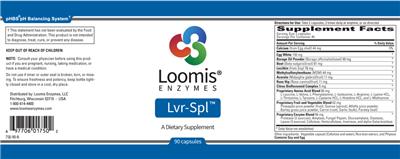
This summary is for Lvr-Spl by Loomis Enzymes
- Form
- Capsule
- Serving Size
- 2 Capsules
- Servings
- 45 per container
- Container Holds
- 90 Capsules
- What is Lvr-Spl?A supplement from Loomis Enzymes with 37 active ingredients, in capsule form.
- Active Ingredients 1 mineral, 10 plant ingredients such as Beet, Acerola and Rose Hip, 10 enzymes, 11 amino acids, 2 fats and oils and 3 others: Calcium 44 mgEgg White 150 mgBorage Oil, Powder 90 mgBeet 81 mgLecithin 78 mgMethylsulfonylmethane 44 mgAcerola 11 mgRose Hip 11 mgCitrus Bioflavonoid Complex 5 mgL-LeucineL-ValineL-Phenylalanine 37 active ingredients. Each one can interact with drugs or cause side effects on its own, so we check every one. And 25 more, in the Supplement Facts
- Drug Interactions 1,569 drugs have a documented interaction with this supplement; the most serious is rated major. Of those, 1,105 are single drugs and 464 are combination products (two or more drugs in one), each listed under its own name. Based on the 25 of its 37 ingredients we could check. Ask your pharmacist first if you take a drug in any of these categories, the most serious of the 74 on record:
- Major · 5 drugs
- Dolutegravir (Tivicay)Major · 3 drugs
- Elvitegravir (Vitekta)Major · 3 drugs
- Nmda AntagonistsMajor · 3 drugs
- Possible Side EffectsUpset stomach 15 ingredientsNausea 13 ingredientsDiarrhea 10 ingredientsBloating 7 ingredientsHeadache 6 ingredientsGas 5 ingredients +35 moreCombined from 23 of its 37 active ingredients. Not studied in this exact product.
- Well documented Why
Does Lvr-Spl work?
What It Is Marketed For
PH balancing system
From the claims on the product’s label.
There is no graded research for that use. What it does grade for its ingredients, strongest first:
- Calcium
- Calcium
- Calcium
- Methylsulfonylmethane (MSM)
- Rose Hip
- Beet
These grades are for each ingredient, not this exact product, and never a promise it will work for you.
And 4 more graded uses, in what the research says- AllergensThe label says it contains egg and soy. Its ingredient list also names wheat or other gluten grains
- Barcode (UPC)6 97706 01750 2Match it to the barcode on your bottle to be sure this is your product. Not your product? Search for it here
Who Might Consider It
- People looking for pH balancing system, which is what it is marketed for. There is no graded research for that use.
- People who want it for dyspepsia, osteoporosis, premenstrual syndrome (PMS), osteoarthritis or another graded use: the uses with research behind them. See each grade
Who Should Be Careful
- Lvr-Spl may be worth considering if you have a specific goal and no relevant medication or health condition.
- If you take levodopa, blood thinners, blood pressure medicines, diabetes drugs, or have PKU, heart disease, or low blood pressure, be careful.
- Talk it over with your own doctor or pharmacist before starting.
More Before You Take It Show both answersHide Pregnancy and Breastfeeding The Label’s Directions
-
Pregnant or breastfeeding?
- Pregnancy and Breastfeeding Borage
- ! When products containing hepatotoxic pyrrolizidine alkaloids (PA) are used orally.
- Pregnancy Phenylalanine
- ! When L-phenylalanine is consumed in amounts typically found in foods by pregnant patients with high serum phenylalanine concentrations, such as those with phenylketonuria (PKU).
- Breastfeeding Phenylalanine
- When L-phenylalanine is consumed in amounts typically found in foods by breast-feeding patients with normal phenylalanine metabolism.
- Pregnancy Parsley
- ! When used orally in medicinal amounts.
- Breastfeeding Parsley
- Insufficient reliable information available; avoid using.
-
How does the label say to take it?
“Directions for use: Take 2 capsules, 2 times daily at anytime, or as directed.”
The maker’s words. Your pharmacist or doctor may advise differently.
Everything the label says
From the label dated Feb 23, 2025: 25 of its 37 active ingredients were checked against our records; the other twelve are not in them yet. A summary of what is known, not a grade or a test of the product. How these ratings are computed
Ask Anything About This Supplement
Name a drug you take, or ask about side effects, ingredients or pregnancy.
There’s a lot of information about this supplement on this page! Ask anything in plain English for a quick answer drawn from it.
AI answers come from this label and our own records, never the open internet. AI can make mistakes, so always check with your doctor or pharmacist. How we use AI
Ask the Pharmacist
A licensed pharmacist will answer your question by email — free, as soon as they can.
Got it — thank you!
A licensed pharmacist will answer as soon as they can. Keep an eye on your email (worth checking spam, just in case).
What’s Inside Lvr-Spl by Loomis Enzymes
37 Active Ingredients
In the order the label lists them, each with its own card below.
- Calcium
- Egg White
- Borage Oil, Powder
- Beet
- Lecithin
- Methylsulfonylmethane
- Acerola
- Rose Hip
- Citrus Bioflavonoid Complex
- L-Leucine
- L-Valine
- L-Phenylalanine
And 25 more, each with its own card below.
The label gives an exact amount for 9 of its 37 active ingredients. The other 28 are inside three proprietary blends, and the label gives one total for each, not how much of each ingredient is in it.
- 9 state an exact amount
- 28 have no amount of their own
- Proprietary Amino Acid Blend 80 mg in total · 11 ingredients, no amount for each
- Proprietary Fruit and Vegetable Blend 62 mg in total · 7 ingredients, no amount for each
- Proprietary Enzyme Blend 66 mg in total · 10 ingredients, no amount for each
This rates what the label tells you, not the quality of the product.
Supplement Facts
| Amount Per Serving | % Daily Value | |
|---|---|---|
| Calcium | 44 mg | 3% |
| Egg White | 150 mg | † |
| Borage Oil, Powder | 90 mg | † |
| Beet | 81 mg | † |
| Lecithin | 78 mg | † |
| Methylsulfonylmethane | 44 mg | † |
| Acerola | 11 mg | † |
| Rose Hip | 11 mg | † |
| Citrus Bioflavonoid Complex | 5 mg | † |
| Proprietary Amino Acid Blend | 80 mg | † |
| L-Leucine | † | |
| L-Valine | † | |
| L-Phenylalanine | † | |
| L-Isoleucine | † | |
| L-Arginine | † | |
| L-Lysine Hydrochloride | † | |
| L-Threonine | † | |
| L-Tyrosine | † | |
| L-Cysteine Hydrochloride | † | |
| L-Histidine Hydrochloride | † | |
| L-Methionine | † | |
| Proprietary Fruit and Vegetable Blend | 62 mg | † |
| Pineapple Juice, Powder | † | |
| Quinoa | † | |
| Alfalfa Juice, Powder | † | |
| Barley Grass Juice, Powder | † | |
| Carrot | † | |
| Garlic | † | |
| Parsley | † | |
| Proprietary Enzyme Blend | 66 mg | † |
| Protease | † | |
| Amylase | † | |
| Pepsin, Fungal | † | |
| Glucoamylase | † | |
| Diastase | † | |
| Lipase | † | |
| Cellulase | † | |
| Hemicellulase | † | |
| Invertase | † | |
| Alpha-Galactosidase | † | |
Other ingredients: Cellulose, Water, Rice Bran Extract, Phytase
† Daily Value not established.
Daily Values for adults and children 4 or more years of age.
As the label prints it, from the NIH Dietary Supplement Label Database.
Each Ingredient and Its Drug Interactions
Tap one for more about it and its full guide. A drug can interact with this supplement through any one of them.
Lvr-Spl contains 37 active ingredients.
- Most are amino acids, the building blocks of protein, including L-arginine, L-methionine, L-lysine, L-tyrosine, L-phenylalanine, L-histidine, and L-threonine.
- It also includes enzymes such as protease, lipase, and amylase, plus plant ingredients including garlic, parsley, and carrot.
Show 1 more point
- These are non-active components that do not provide the product's effects, and they are listed separately from the active ingredients.
-
Calcium 44 mg Interacts with 168 drugs
Form on the label: Eggshell
Calcium is an essential mineral your body needs for strong bones, nerve signaling, and muscle function, and supplements can help fill gaps when diet falls short.
- Most people do best getting calcium from food, and supplements should be used at the lowest dose needed.
- Talk to your pharmacist or doctor before starting, especially if you have kidney problems or take other medicines.
The full Calcium guide: uses, dosage and safety Every Calcium drug interaction
-
Egg White 150 mg We know this ingredient, but hold no drug interaction record for it yet, so it was not checked
-
Borage Oil, Powder 90 mg Interacts with 226 drugs
Borage is a Mediterranean herb whose seed oil is rich in gamma-linolenic acid (GLA), an omega-6 fatty acid studied mostly for skin conditions and arthritis with mixed results.
- The plant's leaves and flowers can contain liver-toxic pyrrolizidine alkaloids, so only use products clearly labeled 'PA-free' and talk to your pharmacist or doctor before taking it.
The full Borage guide: uses, dosage and safety Every Borage drug interaction
-
Beet 81 mg Interacts with 863 drugs
Beet, especially beetroot juice, is a nitrate-rich food that may modestly lower blood pressure and slightly improve exercise performance in some people.
- It is generally safe as a food, but supplement effects are modest and not a substitute for prescribed treatment, so talk with your pharmacist or doctor before relying on it.
The full Beet guide: uses, dosage and safety Every Beet drug interaction
-
Lecithin 78 mg No known drug interactions
Form on the label: Soy
Lecithin is a natural fatty substance found in foods and made by the body that is widely used as a supplement and food emulsifier.
- Evidence supporting most of its health claims is limited, though it is generally considered safe for most people when taken in normal amounts.
- Talk to your pharmacist or doctor before starting it, especially if you have allergies to soy or egg.
-
Methylsulfonylmethane 44 mg No known drug interactions
Methylsulfonylmethane (MSM) is a natural sulfur compound that people most often take for joint pain and exercise recovery.
- Some early research suggests it may modestly help osteoarthritis symptoms, but the evidence is limited and more study is needed.
- It appears generally well tolerated in the short term, but talk with your pharmacist or doctor before starting it.
The full Methylsulfonylmethane (MSM) guide: uses, dosage and safety
-
Acerola 11 mg Interacts with 128 drugs
Form on the label: Malpighia glabra
Acerola is a small tropical fruit prized for its very high natural vitamin C content, and it is mostly used as a food-based source of vitamin C and antioxidants.
- While vitamin C itself has well-known roles in the body, strong human studies showing that acerola specifically treats or prevents disease are limited.
- It is generally considered safe in food amounts, but check with your pharmacist or doctor before using concentrated supplements.
The full Acerola guide: uses, dosage and safety Every Acerola drug interaction
-
Rose Hip 11 mg Interacts with 213 drugs
Form on the label: Rosa canina
Rose hip is the vitamin C–rich fruit of the wild rose, used traditionally for colds and joint pain.
- A standardized rose hip powder has some research support for easing osteoarthritis symptoms, but evidence for most other uses is limited.
- It is generally well tolerated as a food, but talk with your pharmacist or doctor before using it as a supplement.
The full Rose Hip guide: uses, dosage and safety Every Rose Hip drug interaction
-
Citrus Bioflavonoid Complex 5 mg Interacts with 1,172 drugs
Quercetin is a plant flavonoid with antioxidant and anti-inflammatory properties found in many common foods and sold as a supplement.
- While early research is interesting for allergies, blood pressure, and inflammation, strong human evidence is limited for most uses.
- It is generally well tolerated in food amounts, but talk to your pharmacist or doctor before taking high-dose supplements.
The full Quercetin guide: uses, dosage and safety Every Quercetin drug interaction
-
Proprietary Amino Acid Blend 80 mg Eleven ingredients inside it, each checked on its own
- L-Leucine
- L-Valine
- L-Phenylalanine 16 drugs
- L-Isoleucine
- L-Arginine 403 drugs
- L-Lysine Hydrochloride 1 drug
- L-Threonine 3 drugs
- L-Tyrosine 21 drugs
- L-Cysteine Hydrochloride 86 drugs
- L-Histidine Hydrochloride
- L-Methionine
-
Proprietary Fruit and Vegetable Blend 62 mg Seven ingredients inside it, each checked on its own
- Pineapple Juice, Powder
- Quinoa
- Alfalfa Juice, Powder 583 drugs
- Barley Grass Juice, Powder 1 drug
- Carrot
- Garlic 991 drugs
- Parsley 443 drugs
-
Proprietary Enzyme Blend 66 mg Ten ingredients inside it, each checked on its own
- Protease
- Amylase
- Pepsin, Fungal
- Glucoamylase
- Diastase
- Lipase
- Cellulase
- Hemicellulase
- Invertase
- Alpha-Galactosidase
Other Ingredients (Inactive)
The capsule or tablet itself, fillers, coatings and flavors. Not part of the drug interaction check; the allergen check below reads them.
- Cellulose
- Water
- Rice Bran Extract
- Phytase
Allergens in Lvr-Spl
The label says it contains egg and soy. Its ingredient list also names wheat or other gluten grains.
Named on this label
- EggThe label says it contains it; in the ingredients: Calcium (Eggshell), Egg White
- Wheat or other gluten grainsIn the ingredients: Barley Grass Juice, Powder
- SoyThe label says it contains it; in the ingredients: Lecithin (Soy)
Not named in the ingredients
- Milk
- Fish
- Shellfish
- Tree nuts
- Peanuts
- Sesame
- The label’s allergen statement“Contains soy and egg”
From the label text and ingredient names on file; we do not test products. With a serious allergy, check your bottle and ask the maker or your pharmacist.
What the Label Says
The maker’s own words, from the label. We do not verify or endorse them.
- Formulation
-
“pHBS pH Balancing System”
- Storage
-
“To ensure freshness and potency, keep bottle tightly closed and store in a cool, dry place.”
- FDA Statement of Identity
-
“A Dietary Supplement”
The Lvr-Spl Label on File
The label scan on file at the NIH Dietary Supplement Label Database, dated February 2025. Always read the label on the bottle you have.
Product Facts
- Brand
- Loomis Enzymes
- Barcode (UPC)
- 697706017502
- Net contents
- 90 Capsules
- Market status
- On market
- Date entered into DSLD
- Feb 23, 2025
- DSLD ID
- 327436
- Product type
- Other Combinations
- Supplement form
- Capsule
- Dietary claims / uses
- All Other, Structure/Function
- Intended target group(s)
- Adult (18 - 50 Years)
Is this label outdated? Report a formula or label change and our pharmacy team will review it.
HelloPharmacist Score Lvr-Spl by Loomis Enzymes
Up to 10 points for research, amount, label and outside testing. Not a safety rating. How this one adds up
for what it is marketed for
It is marketed for pH balancing system, but we found no graded research on any of its ingredients for that.
- Research0 of 5 points
- Amount2 of 2 points
- Label0 of 2 points
- Outside testing0 of 1 point
Major drug interactions. The score does not count drug interactions. Check them against any drugs you take. See them
How It Earns Its 2
Score: 2 out of 10. Unproven for what it is marketed for.
Amount
We compared 8 of its ingredients with other products in our database: 7 of the 8 hold a normal amount. At least half hold a normal amount, so it earns both points.
- Calcium 44 mg: a normal amount (most hold 27 mg to 500 mg)
- Borage 90 mg: a normal amount (most hold 50 mg to 1,200 mg)
- Beet 81 mg: a normal amount (most hold 0.08 mg to 1,000 mg)
- Lecithin 78 mg: a normal amount (most hold 25 mg to 1,500 mg)
- Methylsulfonylmethane (MSM) 44 mg: a normal amount (most hold 25 mg to 1,000 mg)
- Acerola 11 mg: a normal amount (most hold 5 mg to 450 mg)
- Rose hip 11 mg: a normal amount (most hold 4 mg to 1,000 mg)
- Quercetin 5 mg: less than most products (most hold 15 mg to 500 mg)
2 of 2 points
Label
It states the amount of nine of its 37 active ingredients; 28 are inside blends that give only a total.
0 of 2 points
Outside testing
We found no mark from an outside testing program, such as USP Verified or NSF Certified, on the label we have on file.
0 of 1 point
Lvr-Spl by Loomis Enzymes Side Effects
Why this rating?
We look for three kinds of safety information on each ingredient: side effects reported in studies, a pregnancy and breastfeeding rating, and a safety write-up from our pharmacy team. Of the 24 ingredients we could check, 22 have side-effect reports, all 24 have a pregnancy rating and all 24 have a safety write-up.
So this rates how much is known, not whether Lvr-Spl is right for you.
Reported with 24 of its ingredients
- Most often
- Upset stomach, nausea, diarrhea, bloating, headache and gas
- !Rare but serious
- Hypocalcemia, cerebral edema and hepatic encephalopathy See details
HelloPharmacist Team Summary: Lvr-Spl by Loomis Enzymes Side Effects
Lvr-Spl is generally well tolerated by many people, though its amino acids and enzymes can cause digestive upset.
- The side effects you are most likely to notice are stomach upset, nausea, and diarrhea, which several ingredients can cause.
- Drowsiness has been reported with L-methionine, so see how it affects you before driving.
- The rare but serious reaction to know about is an allergic reaction; if you notice swelling, trouble breathing, or a severe rash, call your doctor right away.
- If you have PKU, heart disease, low blood pressure, are pregnant or breastfeeding, or take medicines, talk with your own doctor or pharmacist before starting.
Side Effects, Ingredient by Ingredient
A supplement’s side effects come from its ingredients. Here is what is reported with each one.
Calcium
Most reported
- Constipation
- Gas
- Bloating
Borage
Most reported
- Upset stomach
- Nausea
- Bloating
- Soft stools
Beet
Most reported
- Pink urine
- Sometimes red stools after eating beets
Lecithin
Most reported
- Upset stomach or stomach pain
- Diarrhea or loose stools
- Nausea
- Feeling full or bloated
Methylsulfonylmethane (MSM)
Most reported
- Nausea
- Bloating
- Diarrhea
- Stomach upset
Acerola
Most reported
- Stomach upset
- Nausea
- Diarrhea
- Cramping
Rose Hip
Most reported
- Stomach upset
- Nausea
- Diarrhea
- Heartburn
Quercetin
Most reported
- Headache
- Upset stomach
- Tingling sensations
Phenylalanine
Most reported
- Nausea
- Heartburn
- Headache
- Anxiety
L-Arginine
Most reported
- Stomach upset
- Bloating
- Nausea
- Diarrhea
Lysine
Most reported
- Stomach pain
- Nausea
- Diarrhea
Threonine
Most reported
- Nausea
- Upset stomach
- Headache
Tyrosine
Most reported
- Nausea
- Upset stomach
- Headache
- Fatigue
L-Cysteine
Most reported
- Nausea or upset stomach
- Diarrhea or other digestive discomfort
- Headache
Histidine
Most reported
- Stomach upset
- Nausea
- Headache
Methionine
Most reported
- Nausea
- Vomiting
- Drowsiness
- Irritability
Quinoa
Most reported
- Gas
- Bloating
- Stomach discomfort
Alfalfa
Most reported
- Abdominal discomfort
- Diarrhea
- Flatulence
From the Natural Medicines database, which we license.
Every reported effect, in the Alfalfa guideBarley
Most reported
- Gas
- Bloating
- Changes in bowel habits
Garlic
Most reported
- Bad breath
- Body odor
- Heartburn
- Upset stomach
Parsley
Most reported
- Stomach upset
- Increased urination
Proteolytic Enzymes (Proteases)
Most reported
- Nausea
- Stomach upset
- Diarrhea
- Bloating
Lipase
Most reported
- Nausea or stomach upset
- Cramping or abdominal discomfort
- Diarrhea or changes in bowel habits
- Bloating or gas
Carrot has side-effect reports, but no list of the most common ones. Read them in the Carrot guide
Lvr-Spl Warnings: Who Should Be Careful
Lvr-Spl has 37 active ingredients, and each can carry warnings of its own. We checked the 25 in our ingredient guides, and each warning below names the ingredient it comes from. Egg White, L-Leucine and L-Valine and nine more are not in our guides yet, so ask your pharmacist about them. If any of these apply to you, talk to your doctor or pharmacist before you start it.
- Calcium3 warnings below
- Borage2 warnings below
- Beet2 warnings below
- Lecithin3 warnings below
- Methylsulfonylmethane (MSM)2 warnings below
- Acerola3 warnings below
- Rose Hip2 warnings below
- Quercetin2 warnings below
- Phenylalanine3 warnings below
- L-Arginine4 warnings below
- Lysine3 warnings below
- Threonine2 warnings below
- Tyrosine2 warnings below
- L-Cysteine3 warnings below
- Histidine2 warnings below
- Methionine3 warnings below
- Quinoa2 warnings below
- Alfalfa3 warnings below
- Barley3 warnings below
- Carrot2 warnings below
- Garlic3 warnings below
- Parsley2 warnings below
- Proteolytic Enzymes (Proteases)3 warnings below
- Lipase3 warnings below
- Egg WhiteNot in our guides yet
- L-LeucineNot in our guides yet
- L-ValineNot in our guides yet
- L-IsoleucineNot in our guides yet
- Pineapple Juice, PowderNot in our guides yet
- AmylaseNot in our guides yet
- GlucoamylaseNot in our guides yet
- DiastaseNot in our guides yet
- CellulaseNot in our guides yet
- HemicellulaseNot in our guides yet
- InvertaseNot in our guides yet
- Alpha-GalactosidaseNot in our guides yet
-
Bleeding Problems or Surgery
- QuercetinIf you have a medical condition, take prescription medicines, or are scheduled for surgery, check with your pharmacist or doctor before starting quercetin.
- GarlicBecause garlic may slow blood clotting, use caution if you have a bleeding disorder or are scheduled for surgery.
- GarlicIf you are taking blood thinners or other medicines, check with your pharmacist before starting a garlic supplement.
- Proteolytic Enzymes (Proteases)Use caution if you have a bleeding disorder, are scheduled for surgery, or have stomach ulcers, since enzymes may irritate the gut or affect clotting.
-
Diabetes or Low Blood Sugar
- BarleyBecause barley fiber can lower blood sugar, people with diabetes should monitor their levels.
-
Blood Pressure
- BeetPeople with low blood pressure should be aware that beets may lower it further.
- PhenylalanineAnyone with high blood pressure should also use caution.
- L-ArginineBecause L-arginine can widen blood vessels and lower blood pressure, use caution if you already have low blood pressure.
- L-ArginineL-arginine is generally well tolerated orally, but it can lower blood pressure, so use caution if your blood pressure is already low.
-
Liver Disease
- BoragePeople with liver disease should be especially cautious or avoid borage entirely.
- Methylsulfonylmethane (MSM)People with kidney or liver problems, or any chronic health condition, should check with a doctor or pharmacist before using MSM.
- LysinePeople with kidney disease or liver disease should be cautious and talk to their doctor before using amino acid supplements, since these organs help process them.
- ThreoninePeople with kidney or liver disease should be cautious, because these organs process amino acids, and high amino acid loads may be harder for them to handle.
Show 2 more
- HistidinePeople with certain rare metabolic disorders, kidney disease, or liver disease should be especially careful and only use amino acid supplements under medical supervision.
- MethionineThose with liver or kidney disease should also be careful and check with a doctor first.
-
Kidney Disease or Kidney Stones
- CalciumTaking very high amounts over a long time can raise the risk of kidney stones in some people and may cause too much calcium in the blood.
- CalciumPeople with kidney disease, kidney stones, parathyroid problems, or high blood calcium should talk with a doctor before taking calcium supplements.
- BeetPeople with a history of kidney stones may want to be careful, because beets contain oxalates, which can contribute to certain types of stones.
- AcerolaVery large amounts of vitamin C can cause stomach upset and, in some people, may increase the risk of kidney stones.
Show 7 more
- AcerolaPeople with a history of kidney stones, kidney disease, or conditions involving iron overload (such as hemochromatosis) should be cautious, since high vitamin C can affect these conditions.
- Rose HipPeople with a history of kidney stones may want to be cautious, since vitamin C can increase oxalate levels in some individuals.
- QuercetinVery high amounts taken over long periods have raised concerns about possible effects on the kidneys, so people with kidney problems should be especially cautious and talk to a doctor first.
- L-CysteinePeople with cystinuria (a condition causing cysteine-containing kidney stones) should be cautious, as extra cysteine intake could be a concern.
- L-CysteineThose with kidney problems, a history of kidney stones, or any chronic medical condition should check with a doctor first.
- ParsleyPeople with kidney disease should be cautious because of parsley's potential diuretic effect and its content of oxalates, which may matter for those prone to kidney stones.
- LipaseIf you have gout or kidney problems, ask your doctor before using pancreatic enzymes, as they may affect uric acid levels.
-
Heart Conditions
- CalciumSome research has raised questions about whether high-dose calcium supplements could affect heart health, so it is wise to avoid taking more than you need and to favor calcium from food when possible.
- L-ArgininePeople with heart disease, especially those who have recently had a heart attack, should avoid using it unless a doctor recommends it, since some research suggested possible harm in that group.
- Heart disease patients, especially after a recent heart attack, should avoid it unless a doctor recommends it.
-
Stomach or Bowel Problems
- GarlicPeople with stomach or digestive problems may find garlic irritating.
- LipaseHowever, if you have a known digestive or pancreatic condition, you should use lipase only under the guidance of a doctor, since the type and dose matter a great deal.
-
Thyroid Conditions
- TyrosineBe extra cautious if you have a thyroid condition (such as overactive thyroid or Graves' disease), because tyrosine is used to make thyroid hormones and could in theory affect thyroid levels.
-
Autoimmune Conditions
- AlfalfaPeople with autoimmune diseases such as lupus should avoid alfalfa supplements.
-
Hormone-Sensitive Conditions
- AlfalfaBecause of its phytoestrogens, people with hormone-sensitive conditions (such as certain breast, uterine, or ovarian conditions) should be cautious and talk to their doctor first.
-
Mental Health Conditions
- PhenylalaninePeople with certain mental health conditions, including schizophrenia or a history of mania, should be cautious because phenylalanine affects brain chemistry.
-
Allergies
- LecithinPeople with soy or egg allergies should choose a product made from a source they can tolerate, such as sunflower lecithin, or avoid it altogether.
- Rose HipPeople who are sensitive or allergic to roses or related plants should also be careful.
- BarleyPeople with celiac disease, gluten sensitivity, or a wheat/barley allergy should avoid it.
- CarrotPeople who are allergic to plants in the carrot family (such as celery, parsley, or mugwort pollen) may also react to carrots.
Show 2 more
- Proteolytic Enzymes (Proteases)People with allergies to pineapple, papaya, or pork should avoid the related enzymes, and those with latex allergy may react to papaya-based products.
- LipasePeople who are allergic to pork should be cautious with animal-derived (pancreatic) enzyme products, and may prefer fungal or plant-based versions.
-
If You Take Other Drugs
- LecithinAs with any supplement, talk to your pharmacist or doctor before taking lecithin, especially if you have a medical condition or take other medicines.
- Methylsulfonylmethane (MSM)If you have a known sulfa or sulfur sensitivity, talk to a healthcare provider first, though MSM is chemically different from sulfa drugs.
- TyrosinePeople with a history of migraines or those taking medications that affect brain chemicals should also check with a professional first.
- L-CysteineAlways talk with a pharmacist or doctor before starting L-cysteine, especially if you take medicines or have a health condition.
Show 2 more
- HistidineAs with any supplement, talk with your pharmacist or doctor before starting, especially if you have a health condition or take other medicines.
- MethionineAlways talk with a pharmacist or doctor before starting methionine, especially if you take other medicines or have a health condition.
-
Other Cautions
- AcerolaIf you have these issues, talk to your doctor first.
- PhenylalaninePeople with phenylketonuria (PKU) must avoid phenylalanine.
- L-ArgininePeople with herpes (cold sores or genital herpes) sometimes worry that arginine may trigger outbreaks; this is not well proven but worth discussing with your provider.
- LysineTo be safe, avoid supplemental lysine unless your doctor recommends it.
Show 6 more
- ThreonineIf you have any chronic health condition, check with your doctor or pharmacist before starting.
- MethioninePeople with certain inherited disorders that affect how the body handles amino acids (such as homocystinuria) should avoid methionine supplements.
- QuinoaPeople who are new to high-fiber foods may want to add quinoa to their diet gradually to avoid bloating or gas.
- QuinoaThere is not enough information on concentrated quinoa extracts or supplements, so it is best to stick to food and check with your doctor or pharmacist if you have questions.
- AlfalfaPeople who are immunosuppressed should also avoid alfalfa.
- Proteolytic Enzymes (Proteases)Still, some people should be more careful.
-
What the Label Warns
- “Keep out of reach of children”
- “Note: Consult your physician before using this product if you are pregnant, nursing, taking medication, or have a medical condition.”
- “Do not use if inner or outer seal is broken, torn, or missing.”
The maker’s wording, from the product label.
-
Pregnant or Breastfeeding
Each ingredient’s rating for pregnancy and for breastfeeding, and what it covers.
Pregnancy and Breastfeeding The record rates both the same
-
When products containing hepatotoxic pyrrolizidine alkaloids (PA) are used orally.
Borage plant parts, such as the leaf, flower, and seed, can contain hepatotoxic PAs.
5 more points on this rating
- Repeated exposure to low concentrations of hepatotoxic PAs can cause severe veno-occlusive disease.
- Hepatotoxic PAs might also be carcinogenic, mutagenic, and teratogenic.
- These constituents are also excreted in breast milk.
- Tell patients to avoid borage preparations that are not certified and labeled as hepatotoxic PA-free.
- There is insufficient reliable information available about the safety of borage seed oil when used orally or topically during pregnancy or lactation.
Pregnancy
-
When L-phenylalanine is consumed in amounts typically found in foods by pregnant patients with normal phenylalanine metabolism.
-
When L-phenylalanine is consumed in amounts typically found in foods by pregnant patients with high serum phenylalanine concentrations, such as those with phenylketonuria (PKU).
Serum levels of phenylalanine greater than 360 micromol/L increase the risk of birth defects.
3 more points on this rating
- Experts recommend that patients with high phenylalanine serum concentrations follow a low phenylalanine diet for at least 20 weeks prior to conception to decrease the risk for birth defects.
- There is insufficient reliable information available about the safety of L-phenylalanine when taken by mouth in large doses during pregnancy; avoid using.
- There is insufficient reliable information available about the safety of oral D-phenylalanine during pregnancy; avoid using.
Breastfeeding
-
When L-phenylalanine is consumed in amounts typically found in foods by breast-feeding patients with normal phenylalanine metabolism.
There is insufficient reliable information available about the safety of L-phenylalanine when taken by mouth in medicinal amounts during lactation; avoid using.
There is insufficient reliable information available about the safety of oral D-phenylalanine during lactation; avoid using.
Show 22 more ingredients
Pregnancy
-
When used orally in medicinal amounts.
Parsley has been used orally as an abortifacient and to stimulate menstrual flow.
Population evidence suggests that maternal intake of An-Tai-Yin, an herbal combination product containing parsley and dong quai, during the first trimester increases the risk of congenital malformations of the musculoskeletal system, connective tissue, and eyes.
Breastfeeding
-
Insufficient reliable information available; avoid using.
Pregnancy and Breastfeeding The record rates both the same
-
When used orally and appropriately.
The World Health Organization (WHO) recommends prescribing oral calcium supplementation 1.5-2 grams daily during pregnancy to those with low dietary calcium intake to prevent pre-eclampsia.
-
When used orally in excessive doses.
The Institute of Medicine sets the same daily tolerable upper intake level (UL) for calcium according to age independent of pregnancy status: 9-18 years, 3000 mg; 19-50 years, 2500 mg.
2 more points on this rating
- Doses over these amounts might increase the risk of neonatal hypocalcemia-induced seizures possibly caused by transient neonatal hypoparathyroidism in the setting of excessive calcium supplementation during pregnancy, especially during the third trimester.
- Neonatal hypocalcemia is a risk factor for neonatal seizures.
Pregnancy
-
Beet as a food is fine, but concentrated supplements lack safety data, so use caution.
Breastfeeding
-
There is insufficient reliable information available about the safety of beets used medicinally during pregnancy and breast-feeding.
Pregnancy and Breastfeeding The record rates both the same
-
When used orally in medicinal amounts.
Alfalfa contains constituents with possible estrogenic activity.
Pregnancy
-
When used orally in amounts commonly found in foods.
-
When barley sprouts are consumed in relatively high doses.
Excessive amounts of barley sprouts should not be consumed during pregnancy.
Breastfeeding
-
Insufficient reliable information available; avoid using.
Pregnancy
-
When used orally in amounts commonly found in foods.
-
When used orally in medicinal amounts.
Garlic is reported to have abortifacient activity.
4 more points on this rating
- One study also suggests that garlic constituents are distributed to the amniotic fluid after a single dose of garlic.
- However, there are no published reports of garlic adversely affecting pregnancy.
- In clinical research, garlic 800 mg daily was used during the third trimester of pregnancy with no reported adverse outcomes.
- There is insufficient reliable information available about the safety of topical garlic during pregnancy.
Breastfeeding
-
When used orally in amounts commonly found in foods.
-
When used orally in amounts greater than those found in foods.
Several small studies suggest that garlic constituents are secreted in breast milk, and that nursing infants of mothers consuming garlic are prone to extended nursing.
There is insufficient reliable information available about the safety of topical garlic during lactation.
Pregnancy and Breastfeeding The record rates both the same
-
Insufficient reliable information available; avoid using.
Pregnancy and Breastfeeding The record rates both the same
-
Insufficient reliable information available; avoid using in amounts greater than found in foods.
Pregnancy and Breastfeeding The record rates both the same
-
There is insufficient reliable information available about the safety of rose hip when used orally or topically in medicinal amounts; avoid using in amounts greater than those found in foods.
Pregnancy and Breastfeeding The record rates both the same
-
Insufficient reliable information available; avoid using.
Pregnancy
-
When used orally and appropriately, short-term.
L-arginine 12 grams daily for 2 days has been used with apparent safety in pregnancy during the third trimester.
L-arginine 3 grams daily has been taken safely during the second and/or third trimesters.
1 more rating for L-Arginine used another way
This supplement is taken by mouth. This rating is for L-Arginine given another way.
-
When used intravenously and appropriately, short-term.
Intravenous L-arginine 20-30 grams daily has been used safely in pregnancy for up to 5 days.
Breastfeeding
-
Insufficient reliable information available; avoid using.
Pregnancy and Breastfeeding The record rates both the same
-
Insufficient reliable information available; avoid using.
Pregnancy and Breastfeeding The record rates both the same
-
Insufficient reliable information available; avoid using.
Pregnancy and Breastfeeding The record rates both the same
-
There is insufficient reliable information available about the safety of tyrosine during pregnancy and lactation when used in medicinal amounts.
Some pharmacokinetic research shows that taking a single dose of tyrosine 2-10 grams orally can modestly increase levels of free tyrosine in breast milk.
2 more points on this rating
- However, total levels are not affected, and levels remain within the range found in infant formulas.
- Therefore, it is not clear if the increase in free tyrosine is a concern.
Proteolytic Enzymes (Proteases)
Pregnancy and Breastfeeding The record rates both the same
-
Insufficient reliable information available; avoid using.
Pregnancy and Breastfeeding The record rates both the same
-
Insufficient reliable information available; avoid using.
Pregnancy and Breastfeeding The record rates both the same
-
When used orally in food amounts.
Lecithin has Generally Recognized As Safe (GRAS) status in the US.
There is insufficient reliable information available about the safety of medicinal amounts of lecithin during pregnancy or lactation; avoid using.
Pregnancy and Breastfeeding The record rates both the same
-
When used orally in amounts found in foods.
There is insufficient reliable information available about the safety of amounts greater than those found in foods; avoid use.
2 more points on this rating
- Some research suggests that taking L-cysteine during lactation increases levels of free L-cysteine in breastmilk.
- However, these levels are lower than those found in some commercial hydrolyzed protein infant formulas.
Pregnancy and Breastfeeding The record rates both the same
-
When used orally in the amounts found in foods.
There is insufficient reliable information available about the safety of histidine when used in larger amounts during pregnancy or lactation.
Pregnancy and Breastfeeding The record rates both the same
-
When used orally in amounts commonly found in food.
There is insufficient reliable information available about the safety of methionine in medical doses during pregnancy and lactation; avoid using.
Pregnancy and Breastfeeding The record rates both the same
-
When used orally in food amounts.
There is insufficient reliable information available about the safety of quinoa in medicinal amounts; avoid using.
Pregnancy and Breastfeeding The record rates both the same
-
When used orally in amounts commonly found in food.
Carrot essential oil, extracts, and food additives have Generally Recognized as Safe (GRAS) status in the US.
There is insufficient reliable information available about the safety of carrot when used in medicinal amounts during pregnancy and lactation.
Our pharmacy team’s notes
- ParsleyParsley's pregnancy rating is Likely Unsafe, and our pharmacists advise against medicinal or large amounts.
- For L-phenylalanine, our pharmacists advise avoiding supplement doses during pregnancy and while breastfeeding, and people with PKU must avoid phenylalanine.
Ratings and the words beside them are from the Natural Medicines database, which we license. Where it has no rating, the rating and note are our pharmacy team’s.
-
Rare but Serious Side Effects
-
!
Calcium
Taking too much calcium can lead to more serious problems such as kidney stones or high blood calcium (hypercalcemia), which can cause nausea, confusion, excessive thirst, frequent urination, and an irregular heartbeat.
Orally: Case reports have raised concerns about calciphylaxis and kidney stones.
-
!
Borage
More serious concerns come from products that are not PA-free, which could cause liver damage with long-term use.
Orally: Borage plant parts that contain PA constituents can be hepatotoxic.
-
!
Beet
Orally: Hypocalcemia and kidney damage when ingested in large amounts.
-
!
Lecithin
Allergic reactions are possible, particularly in people sensitive to soy or eggs.
-
!
Methylsulfonylmethane (MSM)
Serious reactions appear to be rare, but allergic reactions are always possible.
-
!
Rose Hip
Allergic reactions are uncommon but possible.
-
!
Quercetin
Higher doses taken by injection (not the usual supplement form) have been linked in some reports to more serious effects, which is one reason very high doses are not recommended.
-
!
Phenylalanine
Buildup can cause serious harm, including brain damage.
-
!
L-Arginine
Allergic reactions are possible but uncommon.
-
!
Threonine
Serious side effects are not well documented, but because high-dose, long-term use has not been carefully studied, unexpected effects are possible.
-
!
Tyrosine
Serious side effects are uncommon at typical supplement doses.
-
!
Methionine
Cerebral edema, hepatic encephalopathy. In infants, intravenous methionine has been linked to liver toxicity.
-
!
Quinoa
Allergic reactions are uncommon but possible.
-
!
Alfalfa
More serious concerns are mostly tied to supplements or large amounts.
Orally: Lupus-like syndrome after chronic ingestion of alfalfa.
-
!
Barley
Seek emergency care for any signs of a serious allergic reaction.
-
!
Carrot
Some people may have an allergic reaction, especially those sensitive to related plants or certain pollens.
-
!
Garlic
Some people develop skin irritation or a rash when handling raw garlic, and allergic reactions are possible.
Orally: Some case reports raise concerns about increased risk of bleeding with garlic.
-
!
Parsley
Some people can have allergic reactions, and parsley may make the skin more sensitive to sunlight (photosensitivity), leading to rashes after sun exposure.
Orally, Hallucinations, hemolytic anemia, hypotension, hepatic impairment, kidney impairment, nephrotic syndrome, paralysis, and thrombocytopenia purpura when taken in very high doses (200 grams parsley oil or 10 grams or more of parsley's apiole or myristicin constituents).
-
!
Proteolytic Enzymes (Proteases)
Allergic reactions can happen, especially in people sensitive to pineapple, papaya, or animal-source products.
-
!
Lipase
Rarely, people may have an allergic reaction, especially to animal-derived products.
Orally: Gastrointestinal adverse effects, such as necrotizing enterocolitis, when recombinant human bile salt-stimulated lipase is used in premature infants.
When to get help: a serious allergic reaction, with trouble breathing or swelling of the face, lips or throat, needs emergency care: call 911. For any other side effect that worries you, call your doctor or pharmacist.
These reports describe each ingredient, not studies of this exact product. Not medical advice: a side effect you notice after starting a supplement is worth a word with your pharmacist or doctor.
Lvr-Spl by Loomis Enzymes Drug Interactions
We checked all 37 active ingredients in this supplement against every drug in our records. A drug can interact with it through any one of them. Twelve of them are not in our interaction records yet.
A major interaction on record
3 of 3, on a scale from Minor or none to Major.Why this rating?
We rate this by the most serious interaction on record, not by how many there are. For Alfalfa, Lysine, Quercetin, Garlic and Beet, the most serious is rated major, which means the combination is best avoided, or used only under close supervision. Some involve kinds of drugs where a small change can matter, such as blood thinners, transplant drugs and cancer treatments.
1,570 drugs are on the full list. What matters is whether one you take is on it, so check yours with the interaction checker on this page.
From the HelloPharmacist Team
A few things worth knowing about the supplement as a whole.
- Lvr-Spl from Loomis Enzymes can interact with several medications, through its L-arginine, L-lysine, L-tyrosine, L-phenylalanine, L-threonine, L-cysteine, garlic, and parsley content.
- Moderate interactions cover blood thinners (anticoagulants and antiplatelet drugs), including warfarin; blood pressure medicines, including ACE inhibitors, angiotensin receptor blockers, and diuretics; diabetes drugs; and sildenafil.
- Minor interactions involve 5-HT4 agonists (through L-lysine) and aspirin (through parsley).
16 of its 37 active ingredients have drug interactions on record. The ones below matter most.
- Interacts with
- 16 drugs
- Most serious
- Major
- The most serious interaction is rated Major: L-phenylalanine may reduce how well levodopa (a Parkinson's medication) works, which can worsen tremor, rigidity, and 'on-off' episodes.
- Interacts with
- 3 drugs
- Most serious
- Major
- L-threonine also carries a Major interaction, since it may decrease the effects of NMDA antagonists (a class of drugs that act on brain signaling).
- Interacts with
- 21 drugs
- Most serious
- Moderate
- Also Moderate are isoproterenol, MAO inhibitors, baclofen, thyroid hormone, tyrosine's interaction with levodopa, pentobarbital, sirolimus, tacrolimus, protease inhibitors, and several drugs cleared by liver enzymes.
Show three more ingredients
- Interacts with
- 1,172 drugs
- Most serious
- Moderate
- Most of its records involve Cytochrome P450 3A4 (CYP3A4) Substrates, P-glycoprotein Substrates and Cytochrome P450 2D6 (CYP2D6) Substrates.
- Interacts with
- 991 drugs
- Most serious
- Moderate
- Most of its records involve Cytochrome P450 3A4 (CYP3A4) Substrates, Antihypertensive Drugs and Anticoagulant/Antiplatelet Drugs.
- Interacts with
- 863 drugs
- Most serious
- Moderate
- Most of its records involve Cytochrome P450 3A4 (CYP3A4) Substrates, Cytochrome P450 1A2 (CYP1A2) Substrates and Antihypertensive Drugs.
And ten more ingredients with records, each in the cards below.
Summarized by the HelloPharmacist pharmacy team from the interaction records below. How it is written How we use AI
Why Lvr-Spl Interacts, Ingredient by Ingredient
A product interacts through its ingredients. Each card: how many drugs, the most serious rating, and the kinds of drugs it affects most (tap a kind for what it means).
The ingredients driving the most interactions
-
Citrus Bioflavonoid Complex 1,172 drugs
Most serious: Moderate23 interaction records on file
The kinds of drugs it affects most
- 645 drugs
- 202 drugs
- 193 drugs
- 172 drugs
Every Quercetin drug interaction, 23 records The Quercetin records cite 30 references, listed in the Quercetin guide.
-
Garlic 991 drugs
Most serious: Moderate12 interaction records on file
The kinds of drugs it affects most
- 645 drugs
- 172 drugs
- 122 drugs
- 86 drugs
Every Garlic drug interaction, 12 records The Garlic records cite 155 references, listed in the Garlic guide.
-
Beet 863 drugs
Most serious: Moderate3 interaction records on file
The kinds of drugs it affects most
- 645 drugs
- 186 drugs
- 172 drugs
Every Beet drug interaction, 3 records The Beet records cite 11 references, listed in the Beet guide.
-
Alfalfa Juice, Powder 583 drugs
Most serious: Major6 interaction records on file
The kinds of drugs it affects most
- 335 drugs
- 121 drugs
- 86 drugs
- 41 drugs
Every Alfalfa drug interaction, 6 records The Alfalfa records cite 32 references, listed in the Alfalfa guide.
-
Parsley 443 drugs
Most serious: Moderate8 interaction records on file
The kinds of drugs it affects most
- 186 drugs
- 122 drugs
- 86 drugs
- 75 drugs
Every Parsley drug interaction, 8 records The Parsley records cite 21 references, listed in the Parsley guide.
-
L-Arginine 403 drugs
Most serious: Moderate9 interaction records on file
The kinds of drugs it affects most
- 172 drugs
- 122 drugs
- 86 drugs
- 23 drugs
Every L-Arginine drug interaction, 9 records The L-Arginine records cite 66 references, listed in the L-Arginine guide.
-
Borage Oil, Powder 226 drugs
Most serious: Moderate3 interaction records on file
The kinds of drugs it affects most
- 122 drugs
- 87 drugs
- Phenothiazines 18 drugs
Every Borage drug interaction, 3 records The Borage records cite 11 references, listed in the Borage guide.
-
Rose Hip 213 drugs
Most serious: Moderate8 interaction records on file
The kinds of drugs it affects most
- 122 drugs
- 41 drugs
- 35 drugs
- 24 drugs
Every Rose Hip drug interaction, 8 records The Rose Hip records cite 24 references, listed in the Rose Hip guide.
-
Calcium 168 drugs
Most serious: Major18 interaction records on file
The kinds of drugs it affects most
- 56 drugs
- 22 drugs
- 21 drugs
- 20 drugs
Every Calcium drug interaction, 18 records The Calcium records cite 62 references, listed in the Calcium guide.
-
Acerola 128 drugs
Most serious: Moderate6 interaction records on file
The kinds of drugs it affects most
- 41 drugs
- 35 drugs
- 24 drugs
- Antitumor Antibiotics 15 drugs
Every Acerola drug interaction, 6 records The Acerola records cite 20 references, listed in the Acerola guide.
-
L-Cysteine Hydrochloride 86 drugs
Most serious: Moderate1 interaction record on file
The kinds of drugs it affects most
- 86 drugs
Every L-Cysteine drug interaction, 1 record The L-Cysteine records cite 2 references, listed in the L-Cysteine guide.
-
L-Tyrosine 21 drugs
Most serious: Moderate2 interaction records on file
The kinds of drugs it affects most
- 16 drugs
- 5 drugs
Every Tyrosine drug interaction, 2 records The Tyrosine records cite 4 references, listed in the Tyrosine guide.
-
L-Phenylalanine 16 drugs
Most serious: Major3 interaction records on file
The kinds of drugs it affects most
- 9 drugs
- 5 drugs
- Baclofen 2 drugs
Every Phenylalanine drug interaction, 3 records The Phenylalanine records cite 23 references, listed in the Phenylalanine guide.
-
L-Threonine 3 drugs
Most serious: Major1 interaction record on file
The kinds of drugs it affects most
- Nmda Antagonists 3 drugs
Every Threonine drug interaction, 1 record The Threonine records cite 4 references, listed in the Threonine guide.
-
L-Lysine Hydrochloride 1 drug
Most serious: Minor1 interaction record on file
The kinds of drugs it affects most
- 5-HT4 Agonists 1 drug
Every Lysine drug interaction, 1 record The Lysine records cite 7 references, listed in the Lysine guide.
-
Barley Grass Juice, Powder 1 drug
Most serious: Moderate1 interaction record on file
The kinds of drugs it affects most
- Triclabendazole (Egaten) 1 drug
Every Barley drug interaction, 1 record The Barley records cite 15 references, listed in the Barley guide.
The Breakdown by Severity
Each drug counted once, at its most serious rating. Tap a tile to list those drugs.
Find Your Drug
Type a drug or brand name to see whether it is on the list.
- Only drugs with a documented interaction are listed, the most serious first.
- A drug with no known interaction is not listed, but searching its name tells you so.
- Open a drug to see which ingredient is responsible. Of those, 1,105 are single drugs and 464 are combination products (two or more drugs in one), each listed under its own name.
-
WarfarinWarfarin Major
The 9 ingredients responsible:
-
Alfalfa Juice, Powder Major
Theoretically, alfalfa might reduce the anticoagulant activity of warfarin.
The full Alfalfa Juice, Powder + Warfarin interaction -
Garlic Moderate Warfarin is in these Anticoagulant/Antiplatelet Drugs, Cytochrome P450 3A4 (CYP3A4) Substrates categories.
Garlic may have antiplatelet effects and may increase the risk of bleeding if used with anticoagulant or antiplatelet drugs.
The full Garlic + Warfarin interaction -
Borage Oil, Powder Moderate Warfarin is in the Anticoagulant/Antiplatelet Drugs category.
Theoretically, borage seed oil may increase the risk of bleeding if used with anticoagulant or antiplatelet drugs.
The full Borage Oil, Powder + Warfarin interaction -
Beet Moderate Warfarin is in these Cytochrome P450 3A4 (CYP3A4) Substrates, Cytochrome P450 1A2 (CYP1A2) Substrates categories.
Theoretically, beet might increase the levels of CYP3A4 substrates.
The full Beet + Warfarin interaction -
Citrus Bioflavonoid Complex Moderate Warfarin is in these Cytochrome P450 2C8 (CYP2C8) Substrates, Cytochrome P450 3A4 (CYP3A4) Substrates, Cytochrome P450 2C9 (CYP2C9) Substrates categories.
Theoretically, concomitant use might increase the levels and adverse effects of CYP2C8 substrates.
The full Citrus Bioflavonoid Complex + Warfarin interaction -
Parsley Moderate Warfarin is in these Cytochrome P450 1A2 (CYP1A2) Substrates, Anticoagulant/Antiplatelet Drugs categories.
Theoretically, large amounts of parsley leaf and root might decrease the effects of warfarin.
The full Parsley + Warfarin interaction -
Rose Hip Moderate Warfarin is in the Anticoagulant/Antiplatelet Drugs category.
Theoretically, rose hip might reduce the effectiveness of anticoagulant or antiplatelet drugs.
The full Rose Hip + Warfarin interaction -
L-Arginine Moderate Warfarin is in the Anticoagulant/Antiplatelet Drugs category.
Theoretically, concomitant use of L-arginine with anticoagulant and antiplatelet drugs might have additive effects and increase the risk of bleeding.
The full L-Arginine + Warfarin interaction
And through 1 more ingredient, each with its own page:
- Acerola Minor
-
-
Warfarin SodiumCoumadin, Panwarfin, Sofarin Major
The 9 ingredients responsible:
-
Alfalfa Juice, Powder Major
Theoretically, alfalfa might reduce the anticoagulant activity of warfarin.
The full Alfalfa Juice, Powder + Warfarin Sodium interaction -
Rose Hip Moderate Warfarin Sodium is in the Anticoagulant/Antiplatelet Drugs category.
Theoretically, rose hip might reduce the effectiveness of warfarin; however, its vitamin C content is likely too low to produce clinically significant effects.
The full Rose Hip + Warfarin Sodium interaction -
Parsley Moderate Warfarin Sodium is in these Cytochrome P450 1A2 (CYP1A2) Substrates, Anticoagulant/Antiplatelet Drugs categories.
Theoretically, parsley might increase serum levels of CYP1A2 substrates.
The full Parsley + Warfarin Sodium interaction -
L-Arginine Moderate Warfarin Sodium is in the Anticoagulant/Antiplatelet Drugs category.
Theoretically, concomitant use of L-arginine with anticoagulant and antiplatelet drugs might have additive effects and increase the risk of bleeding.
The full L-Arginine + Warfarin Sodium interaction -
Citrus Bioflavonoid Complex Moderate Warfarin Sodium is in these Cytochrome P450 3A4 (CYP3A4) Substrates, Cytochrome P450 2C8 (CYP2C8) Substrates, Cytochrome P450 2C9 (CYP2C9) Substrates categories.
Theoretically, concomitant use might alter the effects and adverse effects of CYP3A4 substrates.
The full Citrus Bioflavonoid Complex + Warfarin Sodium interaction -
Garlic Moderate Warfarin Sodium is in these Cytochrome P450 3A4 (CYP3A4) Substrates, Anticoagulant/Antiplatelet Drugs categories.
Theoretically, garlic products containing allicin might induce intestinal CYP3A4 and inhibit hepatic CYP3A4.
The full Garlic + Warfarin Sodium interaction -
Beet Moderate Warfarin Sodium is in these Cytochrome P450 3A4 (CYP3A4) Substrates, Cytochrome P450 1A2 (CYP1A2) Substrates categories.
Theoretically, beet might increase the levels of CYP3A4 substrates.
The full Beet + Warfarin Sodium interaction -
Borage Oil, Powder Moderate Warfarin Sodium is in the Anticoagulant/Antiplatelet Drugs category.
Theoretically, borage seed oil may increase the risk of bleeding if used with anticoagulant or antiplatelet drugs.
The full Borage Oil, Powder + Warfarin Sodium interaction
And through 1 more ingredient, each with its own page:
- Acerola Minor
-
-
LevodopaInbrija, Larodopa Major
The 2 ingredients responsible:
-
L-Phenylalanine Major
Phenylalanine, especially in high doses, can reduce the effectiveness of levodopa.
The full L-Phenylalanine + Levodopa interaction -
L-Tyrosine Moderate
Theoretically, tyrosine might decrease the effectiveness of levodopa.
The full L-Tyrosine + Levodopa interaction
-
-
MemantineEbixa Major
The ingredient responsible:
-
L-Threonine Major Memantine is in the Nmda Antagonists category.
Theoretically, threonine might decrease the effects of NMDA antagonists.
The full L-Threonine + Memantine interaction
-
-
CeftriaxoneRocephin Major
The 2 ingredients responsible:
-
Calcium Major
Co-administration of intravenous calcium and ceftriaxone can result in precipitation of a ceftriaxone-calcium salt in the lungs and kidneys.
The full Calcium + Ceftriaxone interaction -
Citrus Bioflavonoid Complex Moderate Ceftriaxone is in these Organic Anion Transporter 3 (OAT3) Substrates, Organic Anion Transporter 1 (OAT1) Substrates categories.
Theoretically, concomitant use might increase the effects and adverse effects of OAT3 substrates.
The full Citrus Bioflavonoid Complex + Ceftriaxone interaction
-
-
DolutegravirTivicay Major
The 2 ingredients responsible:
-
Calcium Major
Calcium seems to reduce levels of dolutegravir.
The full Calcium + Dolutegravir interaction -
Citrus Bioflavonoid Complex Moderate Dolutegravir is in the P-glycoprotein Substrates category.
Theoretically, concomitant use might alter the effects and adverse effects of P-glycoprotein substrates.
The full Citrus Bioflavonoid Complex + Dolutegravir interaction
-
-
ElvitegravirVitekta Major
The 4 ingredients responsible:
-
Calcium Major
Calcium seems to reduce levels of elvitegravir.
The full Calcium + Elvitegravir interaction -
Beet Moderate Elvitegravir is in the Cytochrome P450 3A4 (CYP3A4) Substrates category.
Theoretically, beet might increase the levels of CYP3A4 substrates.
The full Beet + Elvitegravir interaction -
Garlic Moderate Elvitegravir is in the Cytochrome P450 3A4 (CYP3A4) Substrates category.
Theoretically, garlic products containing allicin might induce intestinal CYP3A4 and inhibit hepatic CYP3A4.
The full Garlic + Elvitegravir interaction -
Citrus Bioflavonoid Complex Moderate Elvitegravir is in the Cytochrome P450 3A4 (CYP3A4) Substrates category.
Theoretically, concomitant use might alter the effects and adverse effects of CYP3A4 substrates.
The full Citrus Bioflavonoid Complex + Elvitegravir interaction
-
-
Memantine HydrochlorideNamenda Major
The ingredient responsible:
-
L-Threonine Major Memantine Hydrochloride is in the Nmda Antagonists category.
Theoretically, threonine might decrease the effects of NMDA antagonists.
The full L-Threonine + Memantine Hydrochloride interaction
-
-
Carbidopa and LevodopaDhivy, Rytary, Sinemet, Sinemet CR Major
The 2 ingredients responsible:
-
L-Phenylalanine Major Carbidopa and Levodopa is in the Levodopa category.
Phenylalanine, especially in high doses, can reduce the effectiveness of levodopa.
The full L-Phenylalanine + Carbidopa and Levodopa interaction -
L-Tyrosine Moderate Carbidopa and Levodopa is in the Levodopa category.
Theoretically, tyrosine might decrease the effectiveness of levodopa.
The full L-Tyrosine + Carbidopa and Levodopa interaction
-
-
Cobicistat, Elvitegravir, Emtricitabine, and Tenofovir Alafenamide FumarateGenvoya Major
The 4 ingredients responsible:
-
Calcium Major It contains elvitegravir, the drug this record is about.
Calcium seems to reduce levels of elvitegravir.
The full Calcium + Cobicistat, Elvitegravir, Emtricitabine, and Tenofovir Alafenamide Fumarate interaction -
Beet Moderate Cobicistat, Elvitegravir, Emtricitabine, and Tenofovir Alafenamide Fumarate is in the Cytochrome P450 3A4 (CYP3A4) Substrates category.
Theoretically, beet might increase the levels of CYP3A4 substrates.
The full Beet + Cobicistat, Elvitegravir, Emtricitabine, and Tenofovir Alafenamide Fumarate interaction -
Citrus Bioflavonoid Complex Moderate Cobicistat, Elvitegravir, Emtricitabine, and Tenofovir Alafenamide Fumarate is in these P-glycoprotein Substrates, Cytochrome P450 3A4 (CYP3A4) Substrates categories.
Theoretically, concomitant use might alter the effects and adverse effects of P-glycoprotein substrates.
The full Citrus Bioflavonoid Complex + Cobicistat, Elvitegravir, Emtricitabine, and Tenofovir Alafenamide Fumarate interaction -
Garlic Moderate Cobicistat, Elvitegravir, Emtricitabine, and Tenofovir Alafenamide Fumarate is in the Cytochrome P450 3A4 (CYP3A4) Substrates category.
Theoretically, garlic products containing allicin might induce intestinal CYP3A4 and inhibit hepatic CYP3A4.
The full Garlic + Cobicistat, Elvitegravir, Emtricitabine, and Tenofovir Alafenamide Fumarate interaction
-
-
Benserazide and LevodopaMadopar, Prolopa Major
The 2 ingredients responsible:
-
L-Phenylalanine Major Benserazide and Levodopa is in the Levodopa category.
Phenylalanine, especially in high doses, can reduce the effectiveness of levodopa.
The full L-Phenylalanine + Benserazide and Levodopa interaction -
L-Tyrosine Moderate Benserazide and Levodopa is in the Levodopa category.
Theoretically, tyrosine might decrease the effectiveness of levodopa.
The full L-Tyrosine + Benserazide and Levodopa interaction
-
-
Elvitegravir, Cobicistat, Emtricitabine, and Tenofovir Disoproxil FumarateStribild Major
The 4 ingredients responsible:
-
Calcium Major It contains elvitegravir, the drug this record is about.
Calcium seems to reduce levels of elvitegravir.
The full Calcium + Elvitegravir, Cobicistat, Emtricitabine, and Tenofovir Disoproxil Fumarate interaction -
Citrus Bioflavonoid Complex Moderate Elvitegravir, Cobicistat, Emtricitabine, and Tenofovir Disoproxil Fumarate is in the Cytochrome P450 3A4 (CYP3A4) Substrates category.
Theoretically, concomitant use might alter the effects and adverse effects of CYP3A4 substrates.
The full Citrus Bioflavonoid Complex + Elvitegravir, Cobicistat, Emtricitabine, and Tenofovir Disoproxil Fumarate interaction -
Garlic Moderate Elvitegravir, Cobicistat, Emtricitabine, and Tenofovir Disoproxil Fumarate is in the Cytochrome P450 3A4 (CYP3A4) Substrates category.
Theoretically, garlic products containing allicin might induce intestinal CYP3A4 and inhibit hepatic CYP3A4.
The full Garlic + Elvitegravir, Cobicistat, Emtricitabine, and Tenofovir Disoproxil Fumarate interaction -
Beet Moderate Elvitegravir, Cobicistat, Emtricitabine, and Tenofovir Disoproxil Fumarate is in the Cytochrome P450 3A4 (CYP3A4) Substrates category.
Theoretically, beet might increase the levels of CYP3A4 substrates.
The full Beet + Elvitegravir, Cobicistat, Emtricitabine, and Tenofovir Disoproxil Fumarate interaction
-
-
Dolutegravir and RilpivirineJuluca Major
The 4 ingredients responsible:
-
Calcium Major
Calcium seems to reduce levels of dolutegravir.
The full Calcium + Dolutegravir and Rilpivirine interaction -
Citrus Bioflavonoid Complex Moderate Dolutegravir and Rilpivirine is in these Cytochrome P450 3A4 (CYP3A4) Substrates, P-glycoprotein Substrates categories.
Theoretically, concomitant use might alter the effects and adverse effects of CYP3A4 substrates.
The full Citrus Bioflavonoid Complex + Dolutegravir and Rilpivirine interaction -
Garlic Moderate Dolutegravir and Rilpivirine is in the Cytochrome P450 3A4 (CYP3A4) Substrates category.
Theoretically, garlic products containing allicin might induce intestinal CYP3A4 and inhibit hepatic CYP3A4.
The full Garlic + Dolutegravir and Rilpivirine interaction -
Beet Moderate Dolutegravir and Rilpivirine is in the Cytochrome P450 3A4 (CYP3A4) Substrates category.
Theoretically, beet might increase the levels of CYP3A4 substrates.
The full Beet + Dolutegravir and Rilpivirine interaction
-
-
Carbidopa, Levodopa, and EntacaponeStalevo Major
The 2 ingredients responsible:
-
L-Phenylalanine Major Carbidopa, Levodopa, and Entacapone is in the Levodopa category.
Phenylalanine, especially in high doses, can reduce the effectiveness of levodopa.
The full L-Phenylalanine + Carbidopa, Levodopa, and Entacapone interaction -
L-Tyrosine Moderate Carbidopa, Levodopa, and Entacapone is in the Levodopa category.
Theoretically, tyrosine might decrease the effectiveness of levodopa.
The full L-Tyrosine + Carbidopa, Levodopa, and Entacapone interaction
-
-
Levodopa and CarbidopaDuodopa Major
The 2 ingredients responsible:
-
L-Phenylalanine Major
Phenylalanine, especially in high doses, can reduce the effectiveness of levodopa.
The full L-Phenylalanine + Levodopa and Carbidopa interaction -
L-Tyrosine Moderate
Theoretically, tyrosine might decrease the effectiveness of levodopa.
The full L-Tyrosine + Levodopa and Carbidopa interaction
-
-
Memantine and DonepezilNamzaric Major
The 4 ingredients responsible:
-
L-Threonine Major Memantine and Donepezil is in the Nmda Antagonists category.
Theoretically, threonine might decrease the effects of NMDA antagonists.
The full L-Threonine + Memantine and Donepezil interaction -
Beet Moderate Memantine and Donepezil is in the Cytochrome P450 3A4 (CYP3A4) Substrates category.
Theoretically, beet might increase the levels of CYP3A4 substrates.
The full Beet + Memantine and Donepezil interaction -
Citrus Bioflavonoid Complex Moderate Memantine and Donepezil is in these Cytochrome P450 3A4 (CYP3A4) Substrates, Cytochrome P450 2D6 (CYP2D6) Substrates categories.
Theoretically, concomitant use might alter the effects and adverse effects of CYP3A4 substrates.
The full Citrus Bioflavonoid Complex + Memantine and Donepezil interaction -
Garlic Moderate Memantine and Donepezil is in the Cytochrome P450 3A4 (CYP3A4) Substrates category.
Theoretically, garlic products containing allicin might induce intestinal CYP3A4 and inhibit hepatic CYP3A4.
The full Garlic + Memantine and Donepezil interaction
-
-
Dolutegravir, Emtricitabine, and Tenofovir AlafenamideDolutegravir, Emtricitabine, Tenofovir Alafenamide Major
The 2 ingredients responsible:
-
Calcium Major It contains dolutegravir, the drug this record is about.
Calcium seems to reduce levels of dolutegravir.
The full Calcium + Dolutegravir, Emtricitabine, and Tenofovir Alafenamide interaction -
Citrus Bioflavonoid Complex Moderate Dolutegravir, Emtricitabine, and Tenofovir Alafenamide is in the P-glycoprotein Substrates category.
Theoretically, concomitant use might alter the effects and adverse effects of P-glycoprotein substrates.
The full Citrus Bioflavonoid Complex + Dolutegravir, Emtricitabine, and Tenofovir Alafenamide interaction
-
-
ApixabanEliquis Moderate
The 7 ingredients responsible:
-
Beet Moderate Apixaban is in the Cytochrome P450 3A4 (CYP3A4) Substrates category.
Theoretically, beet might increase the levels of CYP3A4 substrates.
The full Beet + Apixaban interaction -
Garlic Moderate Apixaban is in these Anticoagulant/Antiplatelet Drugs, Cytochrome P450 3A4 (CYP3A4) Substrates categories.
Garlic may have antiplatelet effects and may increase the risk of bleeding if used with anticoagulant or antiplatelet drugs.
The full Garlic + Apixaban interaction -
Borage Oil, Powder Moderate Apixaban is in the Anticoagulant/Antiplatelet Drugs category.
Theoretically, borage seed oil may increase the risk of bleeding if used with anticoagulant or antiplatelet drugs.
The full Borage Oil, Powder + Apixaban interaction -
L-Arginine Moderate Apixaban is in the Anticoagulant/Antiplatelet Drugs category.
Theoretically, concomitant use of L-arginine with anticoagulant and antiplatelet drugs might have additive effects and increase the risk of bleeding.
The full L-Arginine + Apixaban interaction -
Rose Hip Moderate Apixaban is in the Anticoagulant/Antiplatelet Drugs category.
Theoretically, rose hip might reduce the effectiveness of anticoagulant or antiplatelet drugs.
The full Rose Hip + Apixaban interaction -
Parsley Moderate Apixaban is in the Anticoagulant/Antiplatelet Drugs category.
Theoretically, parsley might increase the risk of bleeding when taken with anticoagulant or antiplatelet drugs.
The full Parsley + Apixaban interaction -
Citrus Bioflavonoid Complex Moderate Apixaban is in these P-glycoprotein Substrates, Cytochrome P450 3A4 (CYP3A4) Substrates categories.
Theoretically, concomitant use might alter the effects and adverse effects of P-glycoprotein substrates.
The full Citrus Bioflavonoid Complex + Apixaban interaction
-
-
LevothyroxineEltroxin, Estre, Euthyrox, Levo-T, Levolet and 6 more Moderate
The 2 ingredients responsible:
-
Calcium Moderate
Calcium seems to reduce the absorption and effectiveness of levothyroxine.
The full Calcium + Levothyroxine interaction -
L-Tyrosine Moderate Levothyroxine is in the Thyroid Hormone category.
Theoretically, tyrosine might have additive effects with thyroid hormone medications.
The full L-Tyrosine + Levothyroxine interaction
-
-
AmlodipineNorliqva Moderate
The 5 ingredients responsible:
-
Garlic Moderate Amlodipine is in these Antihypertensive Drugs, Cytochrome P450 3A4 (CYP3A4) Substrates categories.
Theoretically, taking garlic with antihypertensive drugs might increase the risk of hypotension.
The full Garlic + Amlodipine interaction -
Citrus Bioflavonoid Complex Moderate Amlodipine is in these Cytochrome P450 3A4 (CYP3A4) Substrates, Antihypertensive Drugs categories.
Theoretically, concomitant use might alter the effects and adverse effects of CYP3A4 substrates.
The full Citrus Bioflavonoid Complex + Amlodipine interaction -
Beet Moderate Amlodipine is in these Cytochrome P450 3A4 (CYP3A4) Substrates, Antihypertensive Drugs categories.
Theoretically, beet might increase the levels of CYP3A4 substrates.
The full Beet + Amlodipine interaction -
L-Arginine Moderate Amlodipine is in the Antihypertensive Drugs category.
Theoretically, concomitant use of L-arginine and antihypertensive drugs may increase the risk of hypotension.
The full L-Arginine + Amlodipine interaction -
Calcium Minor Amlodipine is in the Calcium Channel Blockers category.
Intravenous calcium may decrease the effects of calcium channel blockers; oral calcium is unlikely to have this effect.
The full Calcium + Amlodipine interaction
-
-
SertralineZoloft Moderate
The 4 ingredients responsible:
-
Garlic Moderate Sertraline is in the Cytochrome P450 3A4 (CYP3A4) Substrates category.
Theoretically, garlic products containing allicin might induce intestinal CYP3A4 and inhibit hepatic CYP3A4.
The full Garlic + Sertraline interaction -
Citrus Bioflavonoid Complex Moderate Sertraline is in the Cytochrome P450 3A4 (CYP3A4) Substrates category.
Theoretically, concomitant use might alter the effects and adverse effects of CYP3A4 substrates.
The full Citrus Bioflavonoid Complex + Sertraline interaction -
Beet Moderate Sertraline is in the Cytochrome P450 3A4 (CYP3A4) Substrates category.
Theoretically, beet might increase the levels of CYP3A4 substrates.
The full Beet + Sertraline interaction -
Alfalfa Juice, Powder Moderate Sertraline is in the Photosensitizing Drugs category.
Theoretically, concomitant use of alfalfa with photosensitizing drugs might have additive effects.
The full Alfalfa Juice, Powder + Sertraline interaction
-
-
ClopidogrelPlavix Moderate
The 7 ingredients responsible:
-
Parsley Moderate Clopidogrel is in these Cytochrome P450 1A2 (CYP1A2) Substrates, Anticoagulant/Antiplatelet Drugs categories.
Theoretically, parsley might increase serum levels of CYP1A2 substrates.
The full Parsley + Clopidogrel interaction -
L-Arginine Moderate Clopidogrel is in the Anticoagulant/Antiplatelet Drugs category.
Theoretically, concomitant use of L-arginine with anticoagulant and antiplatelet drugs might have additive effects and increase the risk of bleeding.
The full L-Arginine + Clopidogrel interaction -
Rose Hip Moderate Clopidogrel is in the Anticoagulant/Antiplatelet Drugs category.
Theoretically, rose hip might reduce the effectiveness of anticoagulant or antiplatelet drugs.
The full Rose Hip + Clopidogrel interaction -
Beet Moderate Clopidogrel is in these Cytochrome P450 3A4 (CYP3A4) Substrates, Cytochrome P450 1A2 (CYP1A2) Substrates categories.
Theoretically, beet might increase the levels of CYP3A4 substrates.
The full Beet + Clopidogrel interaction -
Garlic Moderate Clopidogrel is in these Anticoagulant/Antiplatelet Drugs, Cytochrome P450 3A4 (CYP3A4) Substrates categories.
Garlic may have antiplatelet effects and may increase the risk of bleeding if used with anticoagulant or antiplatelet drugs.
The full Garlic + Clopidogrel interaction -
Borage Oil, Powder Moderate Clopidogrel is in the Anticoagulant/Antiplatelet Drugs category.
Theoretically, borage seed oil may increase the risk of bleeding if used with anticoagulant or antiplatelet drugs.
The full Borage Oil, Powder + Clopidogrel interaction -
Citrus Bioflavonoid Complex Moderate Clopidogrel is in these Cytochrome P450 3A4 (CYP3A4) Substrates, Cytochrome P450 2C9 (CYP2C9) Substrates categories.
Theoretically, concomitant use might alter the effects and adverse effects of CYP3A4 substrates.
The full Citrus Bioflavonoid Complex + Clopidogrel interaction
-
-
RosuvastatinCrestor, Ezallor Moderate
The ingredient responsible:
-
Citrus Bioflavonoid Complex Moderate
Theoretically, concomitant use might increase the effects and adverse effects of rosuvastatin.
The full Citrus Bioflavonoid Complex + Rosuvastatin interaction
-
-
Losartan PotassiumCozaar Moderate
The 5 ingredients responsible:
-
L-Arginine Moderate Losartan Potassium is in these Antihypertensive Drugs, Angiotensin Receptor Blockers (ARBs) categories.
Theoretically, concomitant use of L-arginine and antihypertensive drugs may increase the risk of hypotension.
The full L-Arginine + Losartan Potassium interaction -
Beet Moderate Losartan Potassium is in these Cytochrome P450 3A4 (CYP3A4) Substrates, Antihypertensive Drugs categories.
Theoretically, beet might increase the levels of CYP3A4 substrates.
The full Beet + Losartan Potassium interaction -
Citrus Bioflavonoid Complex Moderate Losartan Potassium is in these Antihypertensive Drugs, Cytochrome P450 2C9 (CYP2C9) Substrates, Cytochrome P450 3A4 (CYP3A4) Substrates categories.
Theoretically, taking quercetin with antihypertensive drugs might increase the risk of hypotension.
The full Citrus Bioflavonoid Complex + Losartan Potassium interaction -
Alfalfa Juice, Powder Moderate Losartan Potassium is in the Photosensitizing Drugs category.
Theoretically, concomitant use of alfalfa with photosensitizing drugs might have additive effects.
The full Alfalfa Juice, Powder + Losartan Potassium interaction -
Garlic Moderate Losartan Potassium is in these Cytochrome P450 3A4 (CYP3A4) Substrates, Antihypertensive Drugs categories.
Theoretically, garlic products containing allicin might induce intestinal CYP3A4 and inhibit hepatic CYP3A4.
The full Garlic + Losartan Potassium interaction
-
-
AtorvastatinAtorvaliq Moderate
The 3 ingredients responsible:
-
Citrus Bioflavonoid Complex Moderate Atorvastatin is in these Cytochrome P450 3A4 (CYP3A4) Substrates, Organic Anion-transporting Polypeptide Substrates (OATP) categories.
Theoretically, concomitant use might alter the effects and adverse effects of CYP3A4 substrates.
The full Citrus Bioflavonoid Complex + Atorvastatin interaction -
Beet Moderate Atorvastatin is in the Cytochrome P450 3A4 (CYP3A4) Substrates category.
Theoretically, beet might increase the levels of CYP3A4 substrates.
The full Beet + Atorvastatin interaction -
Garlic Moderate Atorvastatin is in the Cytochrome P450 3A4 (CYP3A4) Substrates category.
Theoretically, garlic products containing allicin might induce intestinal CYP3A4 and inhibit hepatic CYP3A4.
The full Garlic + Atorvastatin interaction
-
-
AspirinAngettes 75, ASA, Asaphen, Aspirin, Caprin and 9 more Moderate
The 7 ingredients responsible:
-
Garlic Moderate Aspirin is in the Anticoagulant/Antiplatelet Drugs category.
Garlic may have antiplatelet effects and may increase the risk of bleeding if used with anticoagulant or antiplatelet drugs.
The full Garlic + Aspirin interaction -
Borage Oil, Powder Moderate Aspirin is in the Anticoagulant/Antiplatelet Drugs category.
Theoretically, borage seed oil may increase the risk of bleeding if used with anticoagulant or antiplatelet drugs.
The full Borage Oil, Powder + Aspirin interaction -
Parsley Moderate Aspirin is in the Anticoagulant/Antiplatelet Drugs category.
Theoretically, parsley might increase the risk of bleeding when taken with anticoagulant or antiplatelet drugs.
The full Parsley + Aspirin interaction -
Rose Hip Moderate Aspirin is in the Anticoagulant/Antiplatelet Drugs category.
Theoretically, rose hip might reduce the effectiveness of anticoagulant or antiplatelet drugs.
The full Rose Hip + Aspirin interaction -
L-Arginine Moderate Aspirin is in the Anticoagulant/Antiplatelet Drugs category.
Theoretically, concomitant use of L-arginine with anticoagulant and antiplatelet drugs might have additive effects and increase the risk of bleeding.
The full L-Arginine + Aspirin interaction -
Citrus Bioflavonoid Complex Moderate Aspirin is in these Organic Anion Transporter 3 (OAT3) Substrates, Organic Anion Transporter 1 (OAT1) Substrates categories.
Theoretically, concomitant use might increase the effects and adverse effects of OAT3 substrates.
The full Citrus Bioflavonoid Complex + Aspirin interaction -
Acerola Minor
Theoretically, acerola might reduce the clearance of aspirin; however, its vitamin C content is likely too low to produce clinically significant effects.
The full Acerola + Aspirin interaction
-
-
EscitalopramLexapro Moderate
The 3 ingredients responsible:
-
Citrus Bioflavonoid Complex Moderate Escitalopram is in the Cytochrome P450 3A4 (CYP3A4) Substrates category.
Theoretically, concomitant use might alter the effects and adverse effects of CYP3A4 substrates.
The full Citrus Bioflavonoid Complex + Escitalopram interaction -
Beet Moderate Escitalopram is in the Cytochrome P450 3A4 (CYP3A4) Substrates category.
Theoretically, beet might increase the levels of CYP3A4 substrates.
The full Beet + Escitalopram interaction -
Garlic Moderate Escitalopram is in the Cytochrome P450 3A4 (CYP3A4) Substrates category.
Theoretically, garlic products containing allicin might induce intestinal CYP3A4 and inhibit hepatic CYP3A4.
The full Garlic + Escitalopram interaction
-
-
RivaroxabanXarelto Moderate
The 7 ingredients responsible:
-
Citrus Bioflavonoid Complex Moderate Rivaroxaban is in these P-glycoprotein Substrates, Cytochrome P450 3A4 (CYP3A4) Substrates categories.
Theoretically, concomitant use might alter the effects and adverse effects of P-glycoprotein substrates.
The full Citrus Bioflavonoid Complex + Rivaroxaban interaction -
Garlic Moderate Rivaroxaban is in these Cytochrome P450 3A4 (CYP3A4) Substrates, Anticoagulant/Antiplatelet Drugs categories.
Theoretically, garlic products containing allicin might induce intestinal CYP3A4 and inhibit hepatic CYP3A4.
The full Garlic + Rivaroxaban interaction -
L-Arginine Moderate Rivaroxaban is in the Anticoagulant/Antiplatelet Drugs category.
Theoretically, concomitant use of L-arginine with anticoagulant and antiplatelet drugs might have additive effects and increase the risk of bleeding.
The full L-Arginine + Rivaroxaban interaction -
Parsley Moderate Rivaroxaban is in the Anticoagulant/Antiplatelet Drugs category.
Theoretically, parsley might increase the risk of bleeding when taken with anticoagulant or antiplatelet drugs.
The full Parsley + Rivaroxaban interaction -
Rose Hip Moderate Rivaroxaban is in the Anticoagulant/Antiplatelet Drugs category.
Theoretically, rose hip might reduce the effectiveness of anticoagulant or antiplatelet drugs.
The full Rose Hip + Rivaroxaban interaction -
Borage Oil, Powder Moderate Rivaroxaban is in the Anticoagulant/Antiplatelet Drugs category.
Theoretically, borage seed oil may increase the risk of bleeding if used with anticoagulant or antiplatelet drugs.
The full Borage Oil, Powder + Rivaroxaban interaction -
Beet Moderate Rivaroxaban is in the Cytochrome P450 3A4 (CYP3A4) Substrates category.
Theoretically, beet might increase the levels of CYP3A4 substrates.
The full Beet + Rivaroxaban interaction
-
-
MetforminGlucophage, Metformin Moderate
The 6 ingredients responsible:
-
Garlic Moderate Metformin is in the Antidiabetes Drugs category.
Theoretically, taking garlic with antidiabetes drugs might increase the risk of hypoglycemia.
The full Garlic + Metformin interaction -
Citrus Bioflavonoid Complex Moderate Metformin is in the Antidiabetes Drugs category.
Theoretically, concomitant use of quercetin and antidiabetes drugs might increase the risk of hypoglycemia.
The full Citrus Bioflavonoid Complex + Metformin interaction -
L-Cysteine Hydrochloride Moderate Metformin is in the Antidiabetes Drugs category.
Theoretically, taking L-cysteine supplements with antidiabetes drugs might increase the risk of hypoglycemia.
The full L-Cysteine Hydrochloride + Metformin interaction -
L-Arginine Moderate Metformin is in the Antidiabetes Drugs category.
Theoretically, concomitant use of L-arginine might have additive effects with antidiabetes drugs.
The full L-Arginine + Metformin interaction -
Parsley Moderate Metformin is in the Antidiabetes Drugs category.
Theoretically, parsley might increase the risk of hypoglycemia when taken with antidiabetes drugs.
The full Parsley + Metformin interaction -
Alfalfa Juice, Powder Moderate Metformin is in the Antidiabetes Drugs category.
Theoretically, alfalfa might increase the risk of hypoglycemia when taken with antidiabetes drugs.
The full Alfalfa Juice, Powder + Metformin interaction
-
-
MetoprololLopressor, Toprol XL Moderate
The 4 ingredients responsible:
-
L-Arginine Moderate Metoprolol is in the Antihypertensive Drugs category.
Theoretically, concomitant use of L-arginine and antihypertensive drugs may increase the risk of hypotension.
The full L-Arginine + Metoprolol interaction -
Citrus Bioflavonoid Complex Moderate Metoprolol is in these Cytochrome P450 2D6 (CYP2D6) Substrates, Antihypertensive Drugs categories.
Theoretically, concomitant use might increase the levels and adverse effects of CYP2D6 substrates.
The full Citrus Bioflavonoid Complex + Metoprolol interaction -
Garlic Moderate Metoprolol is in the Antihypertensive Drugs category.
Theoretically, taking garlic with antihypertensive drugs might increase the risk of hypotension.
The full Garlic + Metoprolol interaction -
Beet Minor Metoprolol is in the Antihypertensive Drugs category.
Beet and beetroot contain nitrates, which can cause vasodilation, potentially leading to lower blood pressure.
The full Beet + Metoprolol interaction
-
Does It Work? Lvr-Spl by Loomis Enzymes
What its ingredients have research behind, strongest first, then each ingredient on its own. A grade is the research so far, never an endorsement.
What the Research Supports
Each use one or more of its ingredients is graded for, strongest research first.
- Calcium
- Phenylketonuria (PKU) Tyrosine
- Calcium
- Calcium
- Corticosteroid-induced osteoporosis Calcium
- Barley
- Barley
- Methylsulfonylmethane (MSM) and Rose Hip
- Tooth retention Calcium
- Fetal bone mineralization Calcium
- Beet
- Exercise-induced muscle soreness Beet
- Phenylalanine
- L-Arginine
- L-Arginine
- Lysine
- Tyrosine
- Tyrosine
- Cholera Histidine
- Neural tube birth defects Methionine
- Garlic
- Garlic
- Metabolic dysfunction-associated steatotic liver disease (MASLD) Garlic
- Garlic
- Garlic
- Endometriosis Garlic
HelloPharmacist Team Summary: Does Lvr-Spl by Loomis Enzymes Work?
Our ratings for individual ingredients vary.
- Garlic is rated possibly effective for periodontitis, MASLD, diabetes, hypertension, and atherosclerosis.
- L-tyrosine is rated effective for phenylketonuria (PKU) and possibly effective for cognitive function and memory, but possibly ineffective for athletic performance.
- L-phenylalanine is rated possibly effective for vitiligo but possibly ineffective for ADHD.
Show three more notes
- L-threonine is rated possibly ineffective for ALS.
- L-lysine is rated possibly effective for cold sores, and carrot is rated possibly effective for vitamin A deficiency.
- Many other uses carry insufficient reliable evidence to rate, meaning the evidence isn't established.
The Evidence, Ingredient by Ingredient
The detail behind the list above: our notes on each ingredient and its graded uses.
Calcium
From our Calcium guide
- Calcium is most strongly supported for preventing and treating calcium deficiency and for supporting bone health.
- Getting enough calcium, often along with vitamin D, is widely recommended to help maintain bone strength and lower the risk of bone thinning (osteoporosis), especially in older adults and postmenopausal women.
Research suggests a benefit for
- Dyspepsia
- Osteoporosis, premenstrual syndrome (PMS) and corticosteroid-induced osteoporosis
- Rickets, osteomalacia, tooth retention and fetal bone mineralization
Not counted here: one graded use is for Calcium injected or put on the skin (hyperkalemia), not for a product like this one. Six more are for conditions treated by a doctor or in a hospital (colorectal cancer, hyperparathyroidism, pregnancy-induced hypertension and others).
Every graded use, in the Calcium guideBorage
From our Borage guide
- Borage is popularly used for several conditions, but solid scientific proof is limited for most of them.
No use is graded effective, likely effective or possibly effective for it yet.
Every graded use, in the Borage guideBeet
From our Beet guide
- Blood pressure: This is the most studied use.
- Some research suggests that beetroot juice may cause a small, short-term drop in blood pressure, likely from its nitrate content.
Research suggests a benefit for
- Athletic performance and exercise-induced muscle soreness
Lecithin
From our Lecithin guide
- People take lecithin for many reasons, but the scientific evidence behind most of these uses is limited or mixed.
No use is graded effective, likely effective or possibly effective for it yet.
Every graded use, in the Lecithin guideMethylsulfonylmethane (MSM)
From our Methylsulfonylmethane (MSM) guide
- The most studied use of MSM is for osteoarthritis, a common type of joint wear-and-tear.
- Some small studies suggest MSM may slightly reduce joint pain and stiffness, but the studies are short, small, and not all of high quality.
Research suggests a benefit for
- Osteoarthritis
Acerola
From our Acerola guide
- Acerola is most popular as a natural source of vitamin C.
- Vitamin C plays well-established roles in the body, such as supporting the immune system, helping make collagen, and acting as an antioxidant.
Research suggests a benefit for
- Vitamin C deficiency
Rose Hip
From our Rose Hip guide
- The strongest evidence is for osteoarthritis.
- Several studies of a specific standardized rose hip powder suggest it may modestly reduce joint pain and stiffness in some people.
Research suggests a benefit for
- Osteoarthritis
Not counted here: one graded use is for a condition treated by a doctor or in a hospital (postoperative pain).
Every graded use, in the Rose Hip guideQuercetin
From our Quercetin guide
- Quercetin has been studied for many conditions, but for most of them the evidence in humans is limited or preliminary.
- Much of the excitement comes from laboratory and animal research, which does not always translate into real benefits for people.
No use is graded effective, likely effective or possibly effective for it yet.
Every graded use, in the Quercetin guidePhenylalanine
From our Phenylalanine guide
- For most uses, the scientific evidence is limited, mixed, or preliminary.
- More high-quality research is needed before phenylalanine can be recommended for any specific condition.
Research suggests a benefit for
- Vitiligo
L-Arginine
From our L-Arginine guide
- People take L-arginine for many reasons, but the strength of the evidence varies a lot depending on the use.
Research suggests a benefit for
- Erectile dysfunction (ED) and peripheral arterial disease (PAD)
Not counted here: two graded uses are for L-Arginine injected or put on the skin (pre-eclampsia and pregnancy-induced hypertension), not for a product like this one. Two more are for conditions treated by a doctor or in a hospital (angina and necrotizing enterocolitis (NEC)).
Every graded use, in the L-Arginine guideLysine
From our Lysine guide
- The most popular reason people use lysine is for cold sores and other herpes outbreaks.
- Some small studies suggest lysine might help reduce how often outbreaks happen or how long they last, but the results are inconsistent.
Research suggests a benefit for
- Herpes labialis (cold sores)
Threonine
From our Threonine guide
- As a nutrient, threonine is clearly important — a true deficiency can harm growth, the immune system, and tissue health.
- But deficiency is rare in people who eat enough protein.
No use is graded effective, likely effective or possibly effective for it yet.
Every graded use, in the Threonine guideTyrosine
From our Tyrosine guide
- People commonly take tyrosine for mental sharpness, focus, mood, and stress.
- The most promising research looks at situations where the brain is under physical or mental strain, such as sleep deprivation, cold exposure, or demanding multitasking.
Research suggests a benefit for
- Phenylketonuria (PKU)
- Cognitive function and memory
L-Cysteine
From our L-Cysteine guide
- L-cysteine is marketed for several purposes, but high-quality human evidence specifically for the plain L-cysteine supplement is limited for most of these uses.
No use is graded effective, likely effective or possibly effective for it yet.
Every graded use, in the L-Cysteine guideHistidine
From our Histidine guide
- Histidine is studied and used for several conditions, but the evidence for most uses is limited or preliminary.
Research suggests a benefit for
- Cholera
Methionine
From our Methionine guide
- People take methionine for several reasons, but the strength of the evidence varies a lot depending on the use.
Research suggests a benefit for
- Neural tube birth defects
Quinoa
From our Quinoa guide
- Quinoa is mainly valued as a nutritious food rather than as a supplement or herbal remedy.
- It is a good source of plant protein, fiber, and minerals such as magnesium, iron, and zinc, and it naturally contains no gluten.
No use is graded effective, likely effective or possibly effective for it yet.
Every graded use, in the Quinoa guideAlfalfa
From our Alfalfa guide
- Overall, the human evidence for alfalfa is limited.
- Most claims come from traditional use, laboratory studies, or small or older studies that are not strong enough to draw firm conclusions.
No use is graded effective, likely effective or possibly effective for it yet.
Every graded use, in the Alfalfa guideBarley
From our Barley guide
- The strongest evidence for barley is for lowering cholesterol.
- The soluble fiber (beta-glucan) in barley can modestly reduce total and LDL ('bad') cholesterol when eaten regularly as part of a healthy diet.
Research suggests a benefit for
- Hypercholesterolemia and coronary heart disease (CHD)
Carrot
From our Carrot guide
- The strongest reason to eat carrots is simply good nutrition.
- They reliably provide beta-carotene, fiber, potassium, and other nutrients as part of a healthy diet.
No use is graded effective, likely effective or possibly effective for it yet.
Every graded use, in the Carrot guideGarlic
From our Garlic guide
- Garlic is one of the most studied herbal supplements, but the results are mixed and most benefits appear modest.
No use is graded effective, likely effective or possibly effective for it yet.
Every graded use, in the Garlic guideParsley
From our Parsley guide
- Parsley is popularly used as a natural diuretic (a "water pill") to ease bloating and fluid retention, and for urinary or bladder discomfort.
- It is also used for upset stomach, gas, and to freshen breath.
No use is graded effective, likely effective or possibly effective for it yet.
Every graded use, in the Parsley guideProteolytic Enzymes (Proteases)
From our Proteolytic Enzymes (Proteases) guide
- The strongest, most accepted use is for people who cannot make enough of their own digestive enzymes.
- For example, pancreatic enzyme replacement (a prescription product) is well established for conditions like cystic fibrosis and chronic pancreatitis.
No use is graded effective, likely effective or possibly effective for it yet.
Every graded use, in the Proteolytic Enzymes (Proteases) guideLipase
From our Lipase guide
- The strongest evidence for lipase is as part of prescription pancreatic enzyme replacement therapy.
- People with conditions like cystic fibrosis, chronic pancreatitis, or pancreatic cancer may not make enough digestive enzymes.
No use is graded effective, likely effective or possibly effective for it yet.
Every graded use, in the Lipase guideThe grades are the Natural Medicines database’s, which we license; tap a grade for what it means. They are about each ingredient, not this exact product.
About Loomis Enzymes
Manufacturer and brand details for Lvr-Spl, from the product label.
Loomis Enzymes has 63 products in our supplement database, all of them on the market, with labels on file since 2018. Our database is built from the NIH’s Dietary Supplement Label Database and our pharmacy team’s own additions, so it covers the labels filed there, not every product the brand sells.
- Name
- Loomis Enzymes, LLC
- City
- Fitchburg
- State
- Wisconsin
- ZipCode
- 53719
- Phone Number
- 1-800-614-4400
- Web Address
- www.loomisenzymes.com
Lvr-Spl by Loomis Enzymes: Common Questions
Does Lvr-Spl by Loomis Enzymes interact with any drugs?
What are the side effects of Lvr-Spl by Loomis Enzymes?
Who should be careful taking Lvr-Spl by Loomis Enzymes?
Can Lvr-Spl by Loomis Enzymes affect the liver?
Can Lvr-Spl by Loomis Enzymes affect the kidneys?
Does Lvr-Spl by Loomis Enzymes contain any common allergens?
How can Lvr-Spl by Loomis Enzymes interact with so many drugs?
Where does the information about Lvr-Spl by Loomis Enzymes come from?
Is Lvr-Spl by Loomis Enzymes safe during pregnancy?
Does L-arginine work for angina?
Can people with PKU take Lvr-Spl by Loomis Enzymes?
What is garlic in Lvr-Spl by Loomis Enzymes for?
Written and reviewed by the HelloPharmacist Editorial Team. Our editorial policy
Still Have a Question About Lvr-Spl?
Our pharmacists answer drug and supplement questions, free, by email.
Label information is sourced from the NIH Dietary Supplement Label Database and reflects the product version on file; always read your actual product label. This page is for education only and is not a substitute for professional medical advice. Confirm with your pharmacist or doctor before combining supplements and drugs.
Who Reviews This Page
The pharmacist behind it, and how it is checked.
Dr. Brian Staiger, PharmD, BCPS
Clinical pharmacist and founder of HelloPharmacist
A licensed pharmacist for more than 13 years, he built the system behind this page: it reads the label on file, matches each active ingredient to its record in the Natural Medicines database, checks those records against every drug we cover, and our pharmacy team writes the take and the interaction summary from those records.
- 13+ Years in PharmacyRetail and clinical pharmacy, medication safety and healthcare administration.
- Board Certified (BCPS)A pharmacotherapy specialist, certified by the Board of Pharmacy Specialties.
- Herbalist TrainingCertificates in medical ethnobotany, for the herbs and supplements people take.
Where This Page Comes From
Lvr-Spl’s label data comes from the NIH Dietary Supplement Label Database; the ingredient interaction data is from the Natural Medicines database, reviewed by our pharmacists.
- NIH Dietary Supplement Label Database (DSLD)
- The official product label on file for this supplement.
- Natural Medicines (Therapeutic Research Center)
- The evidence-graded clinical reference behind the ingredient interaction, evidence and safety records, which we license.
- HelloPharmacist Editorial Team
- Content is reviewed by the HelloPharmacist Editorial Team, the pharmacists on our staff and those we contract. See our data sources and editorial standards for how this information is built and checked.
- The Pharmacy Team’s Take and Summaries
- Generated from HelloPharmacist’s pharmacist-curated databases and editorial rules. Clinical methodology reviewed by Dr. Brian Staiger, PharmD, BCPS. Last generated Oct 31, 2026. How we use AI
- The ratings in the Quick Summary
- They summarize available label information, ingredient evidence and known drug-safety records: a summary of what is known, not a grade of the product itself. They do not verify product identity, purity, potency, contamination or manufacturing quality. How these ratings are computed
The References Behind the Interaction Records
Every citation the ingredients’ records rest on is listed in that ingredient’s guide, in context: Calcium, 62 references; Borage, 11 references; Beet, 11 references; Lecithin, 9 references; Methylsulfonylmethane (MSM), 4 references; Acerola, 20 references; Rose Hip, 24 references; Quercetin, 30 references; Phenylalanine, 23 references; L-Arginine, 66 references; Lysine, 7 references; Threonine, 4 references; Tyrosine, 4 references; L-Cysteine, 2 references; Histidine, 3 references; Methionine, 12 references; Quinoa, 5 references; Alfalfa, 32 references; Barley, 15 references; Carrot, 14 references; Garlic, 155 references; Parsley, 21 references; Proteolytic Enzymes (Proteases), 3 references; Lipase, 1 reference .
Parts of this content are provided by the Therapeutic Research Center, LLC.
DISCLAIMER: Currently this does not check for drug-drug interactions. This is not an all-inclusive comprehensive list of potential interactions and is for informational purposes only. Not all interactions are known or well-reported in the scientific literature, and new interactions are continually being reported. Input is needed from a qualified healthcare provider including a pharmacist before starting any therapy. Application of clinical judgment is necessary.
© 2021 Therapeutic Research Center, LLC
Keep Exploring
- Supplement interaction checkerCheck any supplement or product against your drugs
- Drug–drug interactionsCheck two or more of your drugs against each other
- Browse drugs A to ZEvery drug we have checked against herbs and supplements
- NDC and pricing lookupFind a drug’s NDCs, packaging and costs
- Ask a pharmacistA free, personal answer from our licensed team