
Vitamin B12 Ingredients & Drug Interactions
by Natures Plus Source of Life Garden
What is this page for?
First and foremost: checking Vitamin B12 against your medications. The heart of this page is the interaction checker and the full interaction report — how this product’s ingredients may interact with prescription and over-the-counter medicines you may be taking.
Around that, we add a pharmacist’s high-level view of the product as a whole — what’s inside, the evidence for its stated use, how transparent the label is, and what safety data exists — so you can see the full picture in one place. It’s educational information from our licensed clinical databases and the clinical staff at HelloPharmacist — not medical advice — and we don’t sell or endorse products. Our editorial policy
Vitamin B12 is a dietary supplement by Natures Plus Source of Life Garden with 35 active ingredients. Its ingredients are commonly taken for hair growth and thinning hair, brittle nails, skin health.Based on those ingredients, 1,354 medications have a known interaction with it, the most serious rated major. The ingredients most likely to interact are Pomegranate, Grape, Beet. Use the checker below to test your specific medication, or read the full HelloPharmacist Interaction Report.
Check Your Meds Against Vitamin B12 by Natures Plus Source of Life Garden
Ask about any prescription or over-the-counter medication and we check it for interactions with Vitamin B12 by Natures Plus Source of Life Garden — and tell you which ingredient is responsible.
AI summaries are generated from our interaction database for education only — always confirm with your pharmacist. How we use AI
Ask the Pharmacist
A licensed pharmacist will answer your question by email — free, usually within 24 hours.
Got it — thank you!
A licensed pharmacist will answer within 24 hours. Keep an eye on your email (worth checking spam, just in case).
HelloPharmacist Scorecard of Vitamin B12 by Natures Plus Source of Life Garden
Our pharmacy team’s full take, with four database checks built into the cards below — a summary of what is known, not a grade of the product itself.
What’s inside
Low disclosure
This product contains 35 active ingredients centered on vitamin B12 plus a mix of B vitamins and whole-food extracts. The main players are vitamin B12 itself (for energy and nerve health), biotin (for hair and skin), niacin and pantothenic acid (for energy metabolism), and a "Certified Organic Whole Food Blend" of vegetables and fruits—broccoli, spinach, kale, apple, grape, pomegranate, cranberry, papaya, raspberry, cherry, orange, mango, lemon, strawberry, cucumber, red bell pepper, black currant, and holy basil.
The inactive ingredients are pullulan, rice protein, potato starch, and rice maltodextrin—standard capsule fillers and binders.
Does it work?
Moderate evidence
Vitamin B12 itself is effective for B12 deficiency and related conditions like Imerslund-Grasbeck disease, and is likely effective for cyanide poisoning and possibly effective for canker sores and nerve pain. Biotin is likely effective for biotin deficiency.
For the other ingredients—niacin is possibly effective for certain lipid disorders, and grape is possibly effective for chronic venous insufficiency—the rest show either insufficient evidence to rate or "possibly ineffective" ratings for their proposed uses. The evidence isn't established in our data for most of the whole-food extracts in their typical supplement doses.
How safe is it?
Well-documented data
Vitamin B12 is very safe with no upper limit, and it's considered safe and needed in pregnancy and breastfeeding at normal amounts. Biotin is generally well tolerated even at high doses; high-dose supplementation should be discussed with your doctor, though food amounts and prenatal vitamins are fine.
Most of the whole-food ingredients—brown rice, kale, broccoli, spinach, apples, lemon, cinnamon—are safe as foods in normal amounts. However, several ingredients carry cautions in concentrated supplement form: concentrated grape, red bell pepper, papaya, and holy basil are not well studied in pregnancy or breastfeeding, so discuss them with your provider.
Holy basil specifically is rated possibly unsafe in pregnancy. Niacin at high supplemental doses can cause flushing, liver issues, and other effects, though food amounts are safe.
Pantothenic acid is generally well tolerated. Adverse effects from the whole foods are rare but may include mild gastrointestinal symptoms like diarrhea, nausea, or bloating at higher doses.
Meds to double-check
Major interaction found
Before taking this product, double-check with a pharmacist if you take blood thinners or antiplatelet drugs like warfarin or aspirin (moderate risk of increased bleeding), diabetes medications (several ingredients may lower blood sugar), blood pressure drugs (apple and pomegranate may interfere), or medications processed by liver enzymes like certain statins or immunosuppressants (grape, pomegranate, broccoli, and cranberry may alter how your body handles them). Also watch if you take theophylline, niacin with other lipid-lowering drugs, or thyroid medication.
The bottom line
Scorecard at a glanceFormula with limited ingredient disclosure with some supporting evidence for its stated purpose. Major medication interactions have been identified, and safety information is well characterized.
This is a B-vitamin complex with added whole-food nutrients—good for B12 deficiency and general energy if you're deficient. If you take any blood thinners, diabetes drugs, blood pressure medications, or medications metabolized by the liver, check your specific medications against our tool first.
Talk to your pharmacist before starting, especially if you're pregnant, breastfeeding, or take warfarin or other sensitive drugs.
Educational only — not medical advice; always confirm with your pharmacist. Our editorial policy · How we use AI
Assessment coverage: 30 of 35 active ingredients matched to our full ingredient reviews (monographs). Based on the product label dated Jan 23, 2025.
This Scorecard evaluates available label information, ingredient evidence, and known medication-safety considerations. It does not independently verify product identity, purity, potency, contamination, or manufacturing quality. How these ratings are computed
General information
Key facts about Vitamin B12, straight from the product label.
| Brand | Natures Plus Source of Life Garden |
|---|---|
| Barcode (UPC) | 097467307346 |
| Net contents | 60 Vegan Capsule(s) |
| Market status | On market |
| Date entered into DSLD | Jan 23, 2025 |
| DSLD ID | 320548 |
| Product type | Botanical With Nutrients |
| Supplement form | Capsule |
| Dietary claims / uses | Nutrient, All Other, Structure/Function |
| Intended target group(s) | Adult (18 - 50 Years), Organic, No Allergies, Gluten Free, Dairy Free |
Everything in this section is reproduced from the manufacturer’s own product label — it’s the label speaking, not HelloPharmacist. We show it so you can see exactly what the maker states; we don’t verify or endorse those statements.
Supplement Facts
The label details for Vitamin B12 by Natures Plus Source of Life Garden, sourced from the NIH Dietary Supplement Label Database.
Supplement Facts
| Ingredient | Amount | % DV |
|---|---|---|
| Biotin | 60 mcg | 20% |
| Vitamin B12 | 1000 mcg | 41667% |
| Grape | 0 NP | -- |
| Brown Rice | 0 NP | -- |
| Red Bell Pepper | 0 NP | -- |
| Cucumber | 0 NP | -- |
| Strawberry | 0 NP | -- |
| Raspberry | 0 NP | -- |
| Pomegranate | 0 NP | -- |
| Cranberry | 0 NP | -- |
| Broccoli | 0 NP | -- |
| Spinach | 0 NP | -- |
| Kale | 0 NP | -- |
| Cherry | 0 NP | -- |
| Orange | 0 NP | -- |
| Lemon | 0 NP | -- |
| Apple | 0 NP | -- |
| Mango | 0 NP | -- |
| Holy Basil | 0 NP | -- |
| Black Currant | 0 NP | -- |
| Papaya | 0 NP | -- |
| Certified Organic Whole Food Blend | 450 mg | -- |
| Niacin | 2.5 mg NE | 16% |
| Pantothenic Acid | 1.8 mg | 36% |
| Cinnamon | 0 NP | -- |
| Beet | 0 NP | -- |
| Sweet Potato | 0 NP | -- |
| Carrot Juice | 0 NP | -- |
| Blueberry | 0 NP | -- |
| Bilberry | 0 NP | -- |
| Guava | 0 NP | -- |
| Blackberry | 0 NP | -- |
| Riboflavin | 0.9 mg | 69% |
| Vitamin B6 | 1 mg | 59% |
| Thiamine | 1 mg | 83% |
| Folate | 133 mcg DFE | 33% |
Other ingredients: Pullulan, Rice Protein, Potato Starch, Rice Maltodextrin
Tap any ingredient to jump to its full detail below.
These statements are the manufacturer’s wording, reproduced from the product label — the label is saying it, not HelloPharmacist. We don’t verify or endorse them.
Seals/Symbols
Certified NON-GMO ECOCERT USDA Organic
Formulation
Certified NON-GMO Gluten Free Yeast free
Certified Organic ECOCERT USDA Organic Certified Organic by ECOCERT SA
Whole food grown
Nutritional support for energy and vitality, cardiovascular health and overall well-being.
Does Not Contain: Magnesium stearate, stearic acid, titanium dioxide, carnauba wax, talc, yeast, hexane or artificial: flavoring, sweeteners or preservatives. Free from synthetic: Colors, preservatives. Free from milk, egg, fish, crustacean shellfish, tree nuts, peanut, wheat, soy and sesame.
Vegan
Certified organic USDA Organic- USDA NOP Organic Certification guarantees the pure and wholesome status of this formula, made without synthetic/chemical pesticides or artificial fertilizers
Certified Non-GMO - Tested and independently certified to be free from genetically modified materials and materials associated with GM organisms Gluten Free - Made without wheat, barley, or any gluten contributors, and independently assayed and verified to meet all gluten-free standards Yeast free - Designed and produced without any yeast or yeast by-products and therefore free from the many ptoential side effects of yeast
Environmentally responsible - Guaranteed to be manufactured using the most ecologically friendly and environmentally responsible methods available Independently GMP certified - Manufacturing facility independently certified to meet stricter, more comprehensive Good Manufacturing Practices (GMPs) than U.S. law requires
Vegan - Made without animal-derived ingredients
Formula
NaturesPlus Source of Life Garden Vitamin B12 with Organic Gold Standard Nutrients is the first certified organic supplement to provide energy- and vitality-boosting Vitamin B12 in convenient organic capsules. This high-potency B12 supplement features the highly effective methylcobalamin form of essential vitamin plus certified organic whole foods rich in cofactors for synergistic activity. Certified organic, NaturesPlus Source of Life Garden Vitamin B12 delivers superior-quality nutrition for a difference you can feel.
Source of Life Garden B12 features: Superior-quality Methylcobalamin form of Vitamin B12 Certified Organic Blend of Guava, Holy Basil and Lemon extract-supplying synergistic whole food cofactors Certified Organic Whole Foods-more than 20 colorful fruits, vegetables and botanicals for optimal support
FDA Statement of Identity
Dietary Supplement
Brand IP Statement(s)
Copyright Natural Organics
Source of Life is a registered trademark of Natural Organics, Inc. in the US and other countries. Orgen brands is a trademark of Orgenetics, Inc.
Suggested/Recommended/Usage/Directions
Directions: As a dietary supplement, take two capsules daily.
Storage
Keep tightly closed in a cool, dry place.
Precautions
Keep out of reach of children
FDA Disclaimer Statement
This statement has not been evaluated by the Food and Drug Administration. This product is not intended to diagnose, treat, cure or prevent any disease.
General Statements
Recyclable - Organic wholesome ingredients and recyclable packaging materials ensure sustainability throughout the product's life cycle
Is this label outdated? Report a formula or label change and our pharmacy team will review it.
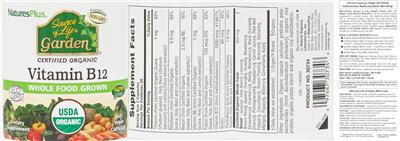
Vitamin B12 by Natures Plus Source of Life Garden label
The label scan from the NIH Dietary Supplement Label Database. Tap to enlarge.
Label images are published by the NIH Dietary Supplement Label Database for the version of this product on file. Always read your actual product label.
View the full label (PDF)The Ingredients in Vitamin B12 by Natures Plus Source of Life Garden
These are the 35 active ingredients this product is made of. Select any to open its full monograph.
Serving size2 Capsule(s) Dosage formCapsule Servings per container30 Amounts shown are per serving.
Most supplement products combine several ingredients, and a medication can interact with the product through any one of them. Each ingredient below shows whether it has known drug interactions.
Biotin
No knowninteractions
Biotin (vitamin B7) is a water-soluble vitamin your body needs to turn food into energy and to support healthy hair, skin, and nails. Most people get...
Biotin monograph & interactionsVitamin B12
Interacts with20 drugs
Vitamin B12 (cobalamin) is an essential nutrient your body needs to make red blood cells, keep nerves healthy, and support DNA. Supplements are very h...
Vitamin B12 monograph & interactionsCertified Organic Whole Food Blend
- › Grape
- › Brown Rice
- › Red Bell Pepper
- › Cucumber
- › Strawberry
- › Raspberry
- › Pomegranate
- › Cranberry
- › Broccoli
- › Spinach
- › Kale
- › Cherry
- › Orange
- › Lemon
- › Apple
- › Mango
- › Holy Basil
- › Black Currant
- › Papaya
- › Cinnamon
- › Beet
- › Sweet Potato
- › Carrot Juice
- › Blueberry
- › Bilberry
- › Guava
- › Blackberry
Niacin
Interacts with727 drugs
Niacin (vitamin B3) is an essential nutrient your body needs for energy and metabolism, and deficiency is uncommon in most developed countries. Prescr...
Niacin monograph & interactionsPantothenic Acid
No knowninteractions
Pantothenic acid is vitamin B5, an essential nutrient your body uses to turn food into energy. True deficiency is very rare because it is found in nea...
Pantothenic Acid monograph & interactionsRiboflavin
Interacts with20 drugs
Riboflavin (vitamin B2) is an essential nutrient your body needs to turn food into energy and to keep skin, eyes, and nerves healthy. It is generally...
Riboflavin monograph & interactionsVitamin B6
Interacts with210 drugs
Vitamin B6 (pyridoxine) is an essential water-soluble vitamin that your body needs for metabolism, brain function, and making red blood cells. It is b...
Vitamin B6 monograph & interactionsThiamine
Interacts with3 drugs
Thiamine (vitamin B1) is an essential nutrient your body needs to turn food into energy and to keep your nerves and heart healthy. Most people get eno...
Thiamine monograph & interactionsFolate
Other (inactive) ingredients: Pullulan, Rice Protein, Potato Starch, Rice Maltodextrin. These complete the product’s ingredient list but are not active constituents.
Vitamin B12 by Natures Plus Source of Life Garden Drug Interactions
HelloPharmacist Interaction Report
Natures Plus Source of Life Garden Vitamin B12 contains 35 ingredients, several of which interact with medications.
The most serious interaction we've documented is with apple juice and organic anion-transporting polypeptide (OATP) substrates—a Major severity finding. Apple juice can significantly reduce how your body absorbs certain blood pressure and allergy medications, making them less effective.
Read the full breakdown — every affected drug type, severity by severity
Beyond that, you'll want to watch for Moderate interactions with blood thinners (anticoagulants) and antiplatelet drugs like aspirin or warfarin, because grape, red bell pepper, strawberry, and holy basil may increase bleeding risk. Several ingredients—grape, red bell pepper, and pomegranate among them—can also affect how your body processes certain medications through liver enzymes, potentially changing drug levels.
Niacin in the product may interfere with blood pressure control, diabetes medications, and cholesterol drugs.
Additionally, if you take diabetes medications, pay attention: red bell pepper, cucumber, spinach, papaya, and holy basil all have theoretical effects on blood sugar. Pomegranate and cranberry contain compounds that may interact with warfarin specifically.
Broccoli and spinach affect liver enzyme activity in ways that could reduce effectiveness of several drug classes.
Altogether, these interactions span 1,331 individual medications. Biotin, pantothenic acid, brown rice, kale, and a few others we could not fully check hold no documented interactions in our data, but that's not a guarantee none exist.
Run your exact medications through the interaction checker on this page before you start.
Check your own medications below · Editorial policy · How we use AI
Want to check YOUR meds against Vitamin B12?
Ask about interactions with your drugs in plain English — “Can I take it with lisinopril?” — and we find you the answer in seconds, ingredient by ingredient.
Go to the checkerIngredients driving the most interactions
Individual Drug Interactions
The ingredients in Vitamin B12 interact with 1,354 drugs. Click any drug to see the details.
24 of the 35 ingredients in Vitamin B12 interact with drugs. Each result below shows which ingredient is responsible. Pomegranate Grape Beet Niacin Cranberry Cinnamon Strawberry Apple Bilberry Orange Red Bell Pepper Holy Basil Vitamin B6 Broccoli Black Currant Papaya Spinach Blueberry Cucumber Guava Vitamin B12 Riboflavin Thiamine Lemon
AtorvastatinAtorvaliq
How Atorvastatin interacts with Vitamin B12 — through 8 ingredients. Tap an ingredient for the detail:
AppleOrganic Anion-transporting Polypeptide Substrates (oatp) Major
Interaction Summary
Concomitant consumption of apple juice can significantly decrease oral absorption and blood levels of OATP substrates.
Read the full Apple + Atorvastatin interactionOrangeOrganic Anion-transporting Polypeptide Substrates (oatp) Major
Interaction Summary
Consuming sweet orange juice can decrease oral absorption of OATP substrates.
Read the full Orange + Atorvastatin interactionGrapeCytochrome P450 3a4 (cyp3a4) Substrates Moderate
Interaction Summary
It is unclear if grape seed extract inhibits or induces CYP3A4; research is conflicting.
Read the full Grape + Atorvastatin interactionBeetCytochrome P450 3a4 (cyp3a4) Substrates Moderate
Interaction Summary
Theoretically, beet might increase the levels of CYP3A4 substrates.
Read the full Beet + Atorvastatin interactionNiacinHmg-coa Reductase Inhibitors ("statins"), Hepatotoxic Drugs Moderate
Interaction Summary
Theoretically, concomitant use of niacin and statins might increase the risk of myopathy and rhabdomyolysis in some patients.
Read the full Niacin + Atorvastatin interactionCranberryCytochrome P450 3a4 (cyp3a4) Substrates, Atorvastatin (lipitor) Moderate
Interaction Summary
Theoretically, cranberry might increase the levels and adverse effects of CYP3A4 substrates.
Read the full Cranberry + Atorvastatin interactionCinnamonHepatotoxic Drugs Moderate
Interaction Summary
Theoretically, large doses of cassia cinnamon might cause additive effects when used with hepatotoxic drugs.
Read the full Cinnamon + Atorvastatin interactionPomegranateCytochrome P450 3a4 (cyp3a4) Substrates Minor
Interaction Summary
Theoretically, pomegranate might increase levels of drugs metabolized by CYP3A4, but most research suggests this interaction is unlikely to be clinically significant.
Read the full Pomegranate + Atorvastatin interactionAtorvastatin CalciumLipitor
How Atorvastatin Calcium interacts with Vitamin B12 — through 8 ingredients. Tap an ingredient for the detail:
OrangeOrganic Anion-transporting Polypeptide Substrates (oatp) Major
Interaction Summary
Consuming sweet orange juice can decrease oral absorption of OATP substrates.
Read the full Orange + Atorvastatin Calcium interactionAppleOrganic Anion-transporting Polypeptide Substrates (oatp) Major
Interaction Summary
Concomitant consumption of apple juice can significantly decrease oral absorption and blood levels of OATP substrates.
Read the full Apple + Atorvastatin Calcium interactionNiacinHmg-coa Reductase Inhibitors ("statins"), Hepatotoxic Drugs Moderate
Interaction Summary
Theoretically, concomitant use of niacin and statins might increase the risk of myopathy and rhabdomyolysis in some patients.
Read the full Niacin + Atorvastatin Calcium interactionGrapeCytochrome P450 3a4 (cyp3a4) Substrates Moderate
Interaction Summary
It is unclear if grape seed extract inhibits or induces CYP3A4; research is conflicting.
Read the full Grape + Atorvastatin Calcium interactionBeetCytochrome P450 3a4 (cyp3a4) Substrates Moderate
Interaction Summary
Theoretically, beet might increase the levels of CYP3A4 substrates.
Read the full Beet + Atorvastatin Calcium interactionCranberryAtorvastatin (lipitor), Cytochrome P450 3a4 (cyp3a4) Substrates Moderate
Interaction Summary
Theoretically, cranberry might increase levels and adverse effects of atorvastatin.
Read the full Cranberry + Atorvastatin Calcium interactionCinnamonHepatotoxic Drugs Moderate
Interaction Summary
Theoretically, large doses of cassia cinnamon might cause additive effects when used with hepatotoxic drugs.
Read the full Cinnamon + Atorvastatin Calcium interactionPomegranateCytochrome P450 3a4 (cyp3a4) Substrates Minor
Interaction Summary
Theoretically, pomegranate might increase levels of drugs metabolized by CYP3A4, but most research suggests this interaction is unlikely to be clinically significant.
Read the full Pomegranate + Atorvastatin Calcium interactionBosentanTracleer
How Bosentan interacts with Vitamin B12 — through 9 ingredients. Tap an ingredient for the detail:
OrangeOrganic Anion-transporting Polypeptide Substrates (oatp) Major
Interaction Summary
Consuming sweet orange juice can decrease oral absorption of OATP substrates.
Read the full Orange + Bosentan interactionAppleAntihypertensive Drugs, Organic Anion-transporting Polypeptide Substrates (oatp) Major
Interaction Summary
Consuming apple juice with antihypertensive drugs might interfere with blood pressure control.
Read the full Apple + Bosentan interactionNiacinHepatotoxic Drugs, Antihypertensive Drugs Moderate
Interaction Summary
Theoretically, concomitant use of niacin and hepatotoxic drugs might increase the risk of hepatotoxicity.
Read the full Niacin + Bosentan interactionCranberryCytochrome P450 2c9 (cyp2c9) Substrates, Cytochrome P450 3a4 (cyp3a4) Substrates Moderate
Interaction Summary
Theoretically, cranberry might increase the levels and adverse effects of CYP2C9 substrates.
Read the full Cranberry + Bosentan interactionVitamin B6Antihypertensive Drugs Moderate
Interaction Summary
Theoretically, vitamin B6 may have additive effects when used with antihypertensive drugs.
Read the full Vitamin B6 + Bosentan interactionCinnamonHepatotoxic Drugs Moderate
Interaction Summary
Theoretically, large doses of cassia cinnamon might cause additive effects when used with hepatotoxic drugs.
Read the full Cinnamon + Bosentan interactionGrapeCytochrome P450 2c9 (cyp2c9) Substrates, Cytochrome P450 3a4 (cyp3a4) Substrates Moderate
Interaction Summary
It is unclear if grape juice or grape seed extract inhibits CYP2C9; research is conflicting.
Read the full Grape + Bosentan interactionPomegranateCytochrome P450 3a4 (cyp3a4) Substrates, Antihypertensive Drugs +1 Moderate
Interaction Summary
Theoretically, pomegranate might increase levels of drugs metabolized by CYP3A4, but most research suggests this interaction is unlikely to be clinically significant.
Read the full Pomegranate + Bosentan interactionBeetCytochrome P450 3a4 (cyp3a4) Substrates, Antihypertensive Drugs Moderate
Interaction Summary
Theoretically, beet might increase the levels of CYP3A4 substrates.
Read the full Beet + Bosentan interactionBrincidofovirTembexa
How Brincidofovir interacts with Vitamin B12 — through 2 ingredients. Tap an ingredient for the detail:
AppleOrganic Anion-transporting Polypeptide Substrates (oatp) Major
Interaction Summary
Concomitant consumption of apple juice can significantly decrease oral absorption and blood levels of OATP substrates.
Read the full Apple + Brincidofovir interactionOrangeOrganic Anion-transporting Polypeptide Substrates (oatp) Major
Interaction Summary
Consuming sweet orange juice can decrease oral absorption of OATP substrates.
Read the full Orange + Brincidofovir interactionCeliprololCelicard
How Celiprolol interacts with Vitamin B12 — through 7 ingredients. Tap an ingredient for the detail:
OrangeOrganic Anion-transporting Polypeptide Substrates (oatp), Celiprolol (celicard) +1 Major
Interaction Summary
Consuming sweet orange juice can decrease oral absorption of OATP substrates.
Read the full Orange + Celiprolol interactionAppleAntihypertensive Drugs, Organic Anion-transporting Polypeptide Substrates (oatp) Major
Interaction Summary
Consuming apple juice with antihypertensive drugs might interfere with blood pressure control.
Read the full Apple + Celiprolol interactionVitamin B6Antihypertensive Drugs Moderate
Interaction Summary
Theoretically, vitamin B6 may have additive effects when used with antihypertensive drugs.
Read the full Vitamin B6 + Celiprolol interactionNiacinAntihypertensive Drugs Moderate
Interaction Summary
Theoretically, niacin may increase the risk of hypotension when used with antihypertensive drugs.
Read the full Niacin + Celiprolol interactionPomegranateAntihypertensive Drugs Moderate
Interaction Summary
Theoretically, taking pomegranate with antihypertensive drugs might increase the risk of hypotension.
Read the full Pomegranate + Celiprolol interactionStrawberryP-glycoprotein Substrates Moderate
Interaction Summary
In vitro research suggests that strawberry extract can inhibit p-glycoprotein efflux.
Read the full Strawberry + Celiprolol interactionBeetAntihypertensive Drugs Minor
Interaction Summary
Beet and beetroot contain nitrates, which can cause vasodilation, potentially leading to lower blood pressure.
Read the full Beet + Celiprolol interactionCerivastatin SodiumBaycol
How Cerivastatin Sodium interacts with Vitamin B12 — through 4 ingredients. Tap an ingredient for the detail:
OrangeOrganic Anion-transporting Polypeptide Substrates (oatp) Major
Interaction Summary
Consuming sweet orange juice can decrease oral absorption of OATP substrates.
Read the full Orange + Cerivastatin Sodium interactionAppleOrganic Anion-transporting Polypeptide Substrates (oatp) Major
Interaction Summary
Concomitant consumption of apple juice can significantly decrease oral absorption and blood levels of OATP substrates.
Read the full Apple + Cerivastatin Sodium interactionNiacinHepatotoxic Drugs, Hmg-coa Reductase Inhibitors ("statins") Moderate
Interaction Summary
Theoretically, concomitant use of niacin and hepatotoxic drugs might increase the risk of hepatotoxicity.
Read the full Niacin + Cerivastatin Sodium interactionCinnamonHepatotoxic Drugs Moderate
Interaction Summary
Theoretically, large doses of cassia cinnamon might cause additive effects when used with hepatotoxic drugs.
Read the full Cinnamon + Cerivastatin Sodium interactionCinoxacinCinobac
How Cinoxacin interacts with Vitamin B12 — through 4 ingredients. Tap an ingredient for the detail:
AppleOrganic Anion-transporting Polypeptide Substrates (oatp) Major
Interaction Summary
Concomitant consumption of apple juice can significantly decrease oral absorption and blood levels of OATP substrates.
Read the full Apple + Cinoxacin interactionOrangeOrganic Anion-transporting Polypeptide Substrates (oatp), Quinolone Antibiotics Major
Interaction Summary
Consuming sweet orange juice can decrease oral absorption of OATP substrates.
Read the full Orange + Cinoxacin interactionNiacinHepatotoxic Drugs Moderate
Interaction Summary
Theoretically, concomitant use of niacin and hepatotoxic drugs might increase the risk of hepatotoxicity.
Read the full Niacin + Cinoxacin interactionCinnamonHepatotoxic Drugs Moderate
Interaction Summary
Theoretically, large doses of cassia cinnamon might cause additive effects when used with hepatotoxic drugs.
Read the full Cinnamon + Cinoxacin interactionCiprofloxacinCiloxan, Cipro, Cipro IV, Cipro XR, Ciprobay, Otiprio
How Ciprofloxacin interacts with Vitamin B12 — through 5 ingredients. Tap an ingredient for the detail:
AppleOrganic Anion-transporting Polypeptide Substrates (oatp) Major
Interaction Summary
Concomitant consumption of apple juice can significantly decrease oral absorption and blood levels of OATP substrates.
Read the full Apple + Ciprofloxacin interactionOrangeOrganic Anion-transporting Polypeptide Substrates (oatp), Quinolone Antibiotics Major
Interaction Summary
Consuming sweet orange juice can decrease oral absorption of OATP substrates.
Read the full Orange + Ciprofloxacin interactionCinnamonHepatotoxic Drugs Moderate
Interaction Summary
Theoretically, large doses of cassia cinnamon might cause additive effects when used with hepatotoxic drugs.
Read the full Cinnamon + Ciprofloxacin interactionNiacinHepatotoxic Drugs Moderate
Interaction Summary
Theoretically, concomitant use of niacin and hepatotoxic drugs might increase the risk of hepatotoxicity.
Read the full Niacin + Ciprofloxacin interactionRed Bell PepperCiprofloxacin (cipro) Minor
Interaction Summary
Theoretically, taking capsicum with ciprofloxacin might increase levels and adverse effects of ciprofloxacin.
Read the full Red Bell Pepper + Ciprofloxacin interactionCiprofloxacin, HydrocortisoneCipro HC Otic
How Ciprofloxacin, Hydrocortisone interacts with Vitamin B12 — through 2 ingredients. Tap an ingredient for the detail:
OrangeOrganic Anion-transporting Polypeptide Substrates (oatp) Major
Interaction Summary
Consuming sweet orange juice can decrease oral absorption of OATP substrates.
Read the full Orange + Ciprofloxacin, Hydrocortisone interactionAppleOrganic Anion-transporting Polypeptide Substrates (oatp) Major
Interaction Summary
Concomitant consumption of apple juice can significantly decrease oral absorption and blood levels of OATP substrates.
Read the full Apple + Ciprofloxacin, Hydrocortisone interactionClinafloxacinClinafloxacin
How Clinafloxacin interacts with Vitamin B12 — through 2 ingredients. Tap an ingredient for the detail:
OrangeOrganic Anion-transporting Polypeptide Substrates (oatp), Quinolone Antibiotics Major
Interaction Summary
Consuming sweet orange juice can decrease oral absorption of OATP substrates.
Read the full Orange + Clinafloxacin interactionAppleOrganic Anion-transporting Polypeptide Substrates (oatp) Major
Interaction Summary
Concomitant consumption of apple juice can significantly decrease oral absorption and blood levels of OATP substrates.
Read the full Apple + Clinafloxacin interactionEnoxacinPenetrex
How Enoxacin interacts with Vitamin B12 — through 2 ingredients. Tap an ingredient for the detail:
OrangeOrganic Anion-transporting Polypeptide Substrates (oatp), Quinolone Antibiotics Major
Interaction Summary
Consuming sweet orange juice can decrease oral absorption of OATP substrates.
Read the full Orange + Enoxacin interactionAppleOrganic Anion-transporting Polypeptide Substrates (oatp) Major
Interaction Summary
Concomitant consumption of apple juice can significantly decrease oral absorption and blood levels of OATP substrates.
Read the full Apple + Enoxacin interactionEtoposideEtopophos, VePesid, VP16
How Etoposide interacts with Vitamin B12 — through 7 ingredients. Tap an ingredient for the detail:
OrangeP-glycoprotein Substrates, Organic Anion-transporting Polypeptide Substrates (oatp) Major
Interaction Summary
Sweet orange juice seems to modulate P-glycoprotein (P-gp), which might affect the blood levels of P-gp substrates.
Read the full Orange + Etoposide interactionAppleOrganic Anion-transporting Polypeptide Substrates (oatp) Major
Interaction Summary
Concomitant consumption of apple juice can significantly decrease oral absorption and blood levels of OATP substrates.
Read the full Apple + Etoposide interactionGrapeCytochrome P450 3a4 (cyp3a4) Substrates Moderate
Interaction Summary
It is unclear if grape seed extract inhibits or induces CYP3A4; research is conflicting.
Read the full Grape + Etoposide interactionStrawberryP-glycoprotein Substrates Moderate
Interaction Summary
In vitro research suggests that strawberry extract can inhibit p-glycoprotein efflux.
Read the full Strawberry + Etoposide interactionCranberryCytochrome P450 3a4 (cyp3a4) Substrates Moderate
Interaction Summary
Theoretically, cranberry might increase the levels and adverse effects of CYP3A4 substrates.
Read the full Cranberry + Etoposide interactionBeetCytochrome P450 3a4 (cyp3a4) Substrates Moderate
Interaction Summary
Theoretically, beet might increase the levels of CYP3A4 substrates.
Read the full Beet + Etoposide interactionPomegranateCytochrome P450 3a4 (cyp3a4) Substrates Minor
Interaction Summary
Theoretically, pomegranate might increase levels of drugs metabolized by CYP3A4, but most research suggests this interaction is unlikely to be clinically significant.
Read the full Pomegranate + Etoposide interactionEzetimibe, AtorvastatinLiptruzet
How Ezetimibe, Atorvastatin interacts with Vitamin B12 — through 8 ingredients. Tap an ingredient for the detail:
OrangeOrganic Anion-transporting Polypeptide Substrates (oatp) Major
Interaction Summary
Consuming sweet orange juice can decrease oral absorption of OATP substrates.
Read the full Orange + Ezetimibe, Atorvastatin interactionAppleOrganic Anion-transporting Polypeptide Substrates (oatp) Major
Interaction Summary
Concomitant consumption of apple juice can significantly decrease oral absorption and blood levels of OATP substrates.
Read the full Apple + Ezetimibe, Atorvastatin interactionNiacinHmg-coa Reductase Inhibitors ("statins"), Hepatotoxic Drugs Moderate
Interaction Summary
Theoretically, concomitant use of niacin and statins might increase the risk of myopathy and rhabdomyolysis in some patients.
Read the full Niacin + Ezetimibe, Atorvastatin interactionBeetCytochrome P450 3a4 (cyp3a4) Substrates Moderate
Interaction Summary
Theoretically, beet might increase the levels of CYP3A4 substrates.
Read the full Beet + Ezetimibe, Atorvastatin interactionGrapeCytochrome P450 3a4 (cyp3a4) Substrates Moderate
Interaction Summary
It is unclear if grape seed extract inhibits or induces CYP3A4; research is conflicting.
Read the full Grape + Ezetimibe, Atorvastatin interactionCranberryCytochrome P450 3a4 (cyp3a4) Substrates, Atorvastatin (lipitor) Moderate
Interaction Summary
Theoretically, cranberry might increase the levels and adverse effects of CYP3A4 substrates.
Read the full Cranberry + Ezetimibe, Atorvastatin interactionCinnamonHepatotoxic Drugs Moderate
Interaction Summary
Theoretically, large doses of cassia cinnamon might cause additive effects when used with hepatotoxic drugs.
Read the full Cinnamon + Ezetimibe, Atorvastatin interactionPomegranateCytochrome P450 3a4 (cyp3a4) Substrates Minor
Interaction Summary
Theoretically, pomegranate might increase levels of drugs metabolized by CYP3A4, but most research suggests this interaction is unlikely to be clinically significant.
Read the full Pomegranate + Ezetimibe, Atorvastatin interactionFexofenadineAllegra
How Fexofenadine interacts with Vitamin B12 — through 7 ingredients. Tap an ingredient for the detail:
AppleOrganic Anion-transporting Polypeptide Substrates (oatp), Fexofenadine (allegra) Major
Interaction Summary
Concomitant consumption of apple juice can significantly decrease oral absorption and blood levels of OATP substrates.
Read the full Apple + Fexofenadine interactionOrangeOrganic Anion-transporting Polypeptide Substrates (oatp), Fexofenadine (allegra) +1 Major
Interaction Summary
Consuming sweet orange juice can decrease oral absorption of OATP substrates.
Read the full Orange + Fexofenadine interactionBeetCytochrome P450 3a4 (cyp3a4) Substrates Moderate
Interaction Summary
Theoretically, beet might increase the levels of CYP3A4 substrates.
Read the full Beet + Fexofenadine interactionCranberryCytochrome P450 3a4 (cyp3a4) Substrates Moderate
Interaction Summary
Theoretically, cranberry might increase the levels and adverse effects of CYP3A4 substrates.
Read the full Cranberry + Fexofenadine interactionStrawberryP-glycoprotein Substrates Moderate
Interaction Summary
In vitro research suggests that strawberry extract can inhibit p-glycoprotein efflux.
Read the full Strawberry + Fexofenadine interactionGrapeCytochrome P450 3a4 (cyp3a4) Substrates Moderate
Interaction Summary
It is unclear if grape seed extract inhibits or induces CYP3A4; research is conflicting.
Read the full Grape + Fexofenadine interactionPomegranateCytochrome P450 3a4 (cyp3a4) Substrates Minor
Interaction Summary
Theoretically, pomegranate might increase levels of drugs metabolized by CYP3A4, but most research suggests this interaction is unlikely to be clinically significant.
Read the full Pomegranate + Fexofenadine interactionFexofenadine, PseudoephedrineAllegra D
How Fexofenadine, Pseudoephedrine interacts with Vitamin B12 — through 7 ingredients. Tap an ingredient for the detail:
OrangeP-glycoprotein Substrates, Organic Anion-transporting Polypeptide Substrates (oatp) +1 Major
Interaction Summary
Sweet orange juice seems to modulate P-glycoprotein (P-gp), which might affect the blood levels of P-gp substrates.
Read the full Orange + Fexofenadine, Pseudoephedrine interactionAppleOrganic Anion-transporting Polypeptide Substrates (oatp), Fexofenadine (allegra) Major
Interaction Summary
Concomitant consumption of apple juice can significantly decrease oral absorption and blood levels of OATP substrates.
Read the full Apple + Fexofenadine, Pseudoephedrine interactionGrapeCytochrome P450 3a4 (cyp3a4) Substrates Moderate
Interaction Summary
It is unclear if grape seed extract inhibits or induces CYP3A4; research is conflicting.
Read the full Grape + Fexofenadine, Pseudoephedrine interactionBeetCytochrome P450 3a4 (cyp3a4) Substrates Moderate
Interaction Summary
Theoretically, beet might increase the levels of CYP3A4 substrates.
Read the full Beet + Fexofenadine, Pseudoephedrine interactionCranberryCytochrome P450 3a4 (cyp3a4) Substrates Moderate
Interaction Summary
Theoretically, cranberry might increase the levels and adverse effects of CYP3A4 substrates.
Read the full Cranberry + Fexofenadine, Pseudoephedrine interactionStrawberryP-glycoprotein Substrates Moderate
Interaction Summary
In vitro research suggests that strawberry extract can inhibit p-glycoprotein efflux.
Read the full Strawberry + Fexofenadine, Pseudoephedrine interactionPomegranateCytochrome P450 3a4 (cyp3a4) Substrates Minor
Interaction Summary
Theoretically, pomegranate might increase levels of drugs metabolized by CYP3A4, but most research suggests this interaction is unlikely to be clinically significant.
Read the full Pomegranate + Fexofenadine, Pseudoephedrine interactionFluvastatinLescol, Lescol XL
How Fluvastatin interacts with Vitamin B12 — through 7 ingredients. Tap an ingredient for the detail:
AppleOrganic Anion-transporting Polypeptide Substrates (oatp) Major
Interaction Summary
Concomitant consumption of apple juice can significantly decrease oral absorption and blood levels of OATP substrates.
Read the full Apple + Fluvastatin interactionOrangeOrganic Anion-transporting Polypeptide Substrates (oatp) Major
Interaction Summary
Consuming sweet orange juice can decrease oral absorption of OATP substrates.
Read the full Orange + Fluvastatin interactionCinnamonHepatotoxic Drugs Moderate
Interaction Summary
Theoretically, large doses of cassia cinnamon might cause additive effects when used with hepatotoxic drugs.
Read the full Cinnamon + Fluvastatin interactionNiacinHepatotoxic Drugs, Hmg-coa Reductase Inhibitors ("statins") Moderate
Interaction Summary
Theoretically, concomitant use of niacin and hepatotoxic drugs might increase the risk of hepatotoxicity.
Read the full Niacin + Fluvastatin interactionPomegranateCytochrome P450 2c9 (cyp2c9) Substrates Minor
Interaction Summary
Theoretically, pomegranate might increase levels of drugs metabolized by CYP2C9.
Read the full Pomegranate + Fluvastatin interactionGrapeCytochrome P450 2c9 (cyp2c9) Substrates Minor
Interaction Summary
It is unclear if grape juice or grape seed extract inhibits CYP2C9; research is conflicting.
Read the full Grape + Fluvastatin interactionCranberryCytochrome P450 2c9 (cyp2c9) Substrates Minor
Interaction Summary
Theoretically, cranberry might increase the levels and adverse effects of CYP2C9 substrates.
Read the full Cranberry + Fluvastatin interactionGatifloxacinTequin, Tequin Injection
How Gatifloxacin interacts with Vitamin B12 — through 4 ingredients. Tap an ingredient for the detail:
AppleOrganic Anion-transporting Polypeptide Substrates (oatp) Major
Interaction Summary
Concomitant consumption of apple juice can significantly decrease oral absorption and blood levels of OATP substrates.
Read the full Apple + Gatifloxacin interactionOrangeOrganic Anion-transporting Polypeptide Substrates (oatp), Quinolone Antibiotics Major
Interaction Summary
Consuming sweet orange juice can decrease oral absorption of OATP substrates.
Read the full Orange + Gatifloxacin interactionNiacinHepatotoxic Drugs Moderate
Interaction Summary
Theoretically, concomitant use of niacin and hepatotoxic drugs might increase the risk of hepatotoxicity.
Read the full Niacin + Gatifloxacin interactionCinnamonHepatotoxic Drugs Moderate
Interaction Summary
Theoretically, large doses of cassia cinnamon might cause additive effects when used with hepatotoxic drugs.
Read the full Cinnamon + Gatifloxacin interactionGemifloxacinFactive
How Gemifloxacin interacts with Vitamin B12 — through 2 ingredients. Tap an ingredient for the detail:
OrangeOrganic Anion-transporting Polypeptide Substrates (oatp), Quinolone Antibiotics Major
Interaction Summary
Consuming sweet orange juice can decrease oral absorption of OATP substrates.
Read the full Orange + Gemifloxacin interactionAppleOrganic Anion-transporting Polypeptide Substrates (oatp) Major
Interaction Summary
Concomitant consumption of apple juice can significantly decrease oral absorption and blood levels of OATP substrates.
Read the full Apple + Gemifloxacin interactionGlyburideAlbert Glyburide, Diabeta, Glycron, Glynase, Glynase PresTab, Micronase +1 more
How Glyburide interacts with Vitamin B12 — through 15 ingredients. Tap an ingredient for the detail:
AppleAntidiabetes Drugs, Organic Anion-transporting Polypeptide Substrates (oatp) Major
Interaction Summary
Theoretically, consuming apple juice with antidiabetes drugs might interfere with blood glucose control.
Read the full Apple + Glyburide interactionOrangeOrganic Anion-transporting Polypeptide Substrates (oatp) Major
Interaction Summary
Consuming sweet orange juice can decrease oral absorption of OATP substrates.
Read the full Orange + Glyburide interactionHoly BasilAntidiabetes Drugs Moderate
Interaction Summary
Theoretically, holy basil might increase the risk of hypoglycemia when taken with antidiabetes drugs.
Read the full Holy Basil + Glyburide interactionGuavaAntidiabetes Drugs Moderate
Interaction Summary
Theoretically, concomitant use with antidiabetes drugs might have additive effects and increase the risk of hypoglycemia.
Read the full Guava + Glyburide interactionCinnamonHepatotoxic Drugs, Antidiabetes Drugs Moderate
Interaction Summary
Theoretically, large doses of cassia cinnamon might cause additive effects when used with hepatotoxic drugs.
Read the full Cinnamon + Glyburide interactionCucumberAntidiabetes Drugs Moderate
Interaction Summary
Theoretically, cucumber seed might have additive effects with antidiabetes drugs and may increase the risk of hypoglycemia.
Read the full Cucumber + Glyburide interactionBilberryAntidiabetes Drugs Moderate
Interaction Summary
Theoretically, bilberry leaf or fruit extract may increase the risk of hypoglycemia when taken with antidiabetes drugs.
Read the full Bilberry + Glyburide interactionSpinachAntidiabetes Drugs Moderate
Interaction Summary
There are claims that spinach leaves have hypoglycemic effects.
Read the full Spinach + Glyburide interactionRed Bell PepperAntidiabetes Drugs Moderate
Interaction Summary
Theoretically, taking capsicum with antidiabetes drugs might increase the risk of hypoglycemia.
Read the full Red Bell Pepper + Glyburide interactionNiacinHepatotoxic Drugs, Antidiabetes Drugs Moderate
Interaction Summary
Theoretically, concomitant use of niacin and hepatotoxic drugs might increase the risk of hepatotoxicity.
Read the full Niacin + Glyburide interactionPapayaAntidiabetes Drugs Moderate
Interaction Summary
Concomitant use of antidiabetic drugs with fermented papaya can produce additive effects.
Read the full Papaya + Glyburide interactionBlueberryAntidiabetes Drugs Minor
Interaction Summary
Theoretically, blueberries or blueberry leaf extracts might increase the risk of hypoglycemia when taken with antidiabetes drugs.
Read the full Blueberry + Glyburide interactionPomegranateCytochrome P450 2c9 (cyp2c9) Substrates Minor
Interaction Summary
Theoretically, pomegranate might increase levels of drugs metabolized by CYP2C9.
Read the full Pomegranate + Glyburide interactionCranberryCytochrome P450 2c9 (cyp2c9) Substrates Minor
Interaction Summary
Theoretically, cranberry might increase the levels and adverse effects of CYP2C9 substrates.
Read the full Cranberry + Glyburide interactionGrapeCytochrome P450 2c9 (cyp2c9) Substrates Minor
Interaction Summary
It is unclear if grape juice or grape seed extract inhibits CYP2C9; research is conflicting.
Read the full Grape + Glyburide interactionGlyburide, MetforminGlucovance
How Glyburide, Metformin interacts with Vitamin B12 — through 16 ingredients. Tap an ingredient for the detail:
AppleAntidiabetes Drugs, Organic Anion-transporting Polypeptide Substrates (oatp) Major
Interaction Summary
Theoretically, consuming apple juice with antidiabetes drugs might interfere with blood glucose control.
Read the full Apple + Glyburide, Metformin interactionOrangeOrganic Anion-transporting Polypeptide Substrates (oatp) Major
Interaction Summary
Consuming sweet orange juice can decrease oral absorption of OATP substrates.
Read the full Orange + Glyburide, Metformin interactionPapayaAntidiabetes Drugs Moderate
Interaction Summary
Concomitant use of antidiabetic drugs with fermented papaya can produce additive effects.
Read the full Papaya + Glyburide, Metformin interactionSpinachAntidiabetes Drugs Moderate
Interaction Summary
There are claims that spinach leaves have hypoglycemic effects.
Read the full Spinach + Glyburide, Metformin interactionCucumberAntidiabetes Drugs Moderate
Interaction Summary
Theoretically, cucumber seed might have additive effects with antidiabetes drugs and may increase the risk of hypoglycemia.
Read the full Cucumber + Glyburide, Metformin interactionHoly BasilAntidiabetes Drugs Moderate
Interaction Summary
Theoretically, holy basil might increase the risk of hypoglycemia when taken with antidiabetes drugs.
Read the full Holy Basil + Glyburide, Metformin interactionGuavaAntidiabetes Drugs Moderate
Interaction Summary
Theoretically, concomitant use with antidiabetes drugs might have additive effects and increase the risk of hypoglycemia.
Read the full Guava + Glyburide, Metformin interactionCinnamonAntidiabetes Drugs, Hepatotoxic Drugs Moderate
Interaction Summary
Theoretically, cassia cinnamon may have additive effects with antidiabetes drugs.
Read the full Cinnamon + Glyburide, Metformin interactionBilberryAntidiabetes Drugs Moderate
Interaction Summary
Theoretically, bilberry leaf or fruit extract may increase the risk of hypoglycemia when taken with antidiabetes drugs.
Read the full Bilberry + Glyburide, Metformin interactionRed Bell PepperAntidiabetes Drugs Moderate
Interaction Summary
Theoretically, taking capsicum with antidiabetes drugs might increase the risk of hypoglycemia.
Read the full Red Bell Pepper + Glyburide, Metformin interactionNiacinAntidiabetes Drugs, Hepatotoxic Drugs Moderate
Interaction Summary
Niacin can increase blood glucose levels and may diminish the effects of antidiabetes drugs.
Read the full Niacin + Glyburide, Metformin interactionGrapeCytochrome P450 2c9 (cyp2c9) Substrates Minor
Interaction Summary
It is unclear if grape juice or grape seed extract inhibits CYP2C9; research is conflicting.
Read the full Grape + Glyburide, Metformin interactionPomegranateCytochrome P450 2c9 (cyp2c9) Substrates Minor
Interaction Summary
Theoretically, pomegranate might increase levels of drugs metabolized by CYP2C9.
Read the full Pomegranate + Glyburide, Metformin interactionBlueberryAntidiabetes Drugs Minor
Interaction Summary
Theoretically, blueberries or blueberry leaf extracts might increase the risk of hypoglycemia when taken with antidiabetes drugs.
Read the full Blueberry + Glyburide, Metformin interactionCranberryCytochrome P450 2c9 (cyp2c9) Substrates Minor
Interaction Summary
Theoretically, cranberry might increase the levels and adverse effects of CYP2C9 substrates.
Read the full Cranberry + Glyburide, Metformin interactionVitamin B12Metformin (glucophage) Minor
Interaction Summary
Metformin, a common medication used to manage type 2 diabetes, has been associated with lower vitamin B12 levels in some individuals.
Read the full Vitamin B12 + Glyburide, Metformin interactionGrepafloxacinRaxar
How Grepafloxacin interacts with Vitamin B12 — through 5 ingredients. Tap an ingredient for the detail:
AppleOrganic Anion-transporting Polypeptide Substrates (oatp) Major
Interaction Summary
Concomitant consumption of apple juice can significantly decrease oral absorption and blood levels of OATP substrates.
Read the full Apple + Grepafloxacin interactionOrangeOrganic Anion-transporting Polypeptide Substrates (oatp), Quinolone Antibiotics Major
Interaction Summary
Consuming sweet orange juice can decrease oral absorption of OATP substrates.
Read the full Orange + Grepafloxacin interactionGrapeCytochrome P450 1a2 (cyp1a2) Substrates Moderate
Interaction Summary
Theoretically, grape juice might reduce the levels of CYP1A2 substrates.
Read the full Grape + Grepafloxacin interactionBroccoliCytochrome P450 1a2 (cyp1a2) Substrates Moderate
Interaction Summary
Theoretically, broccoli might reduce the levels and effects of drugs metabolized by CYP1A2.
Read the full Broccoli + Grepafloxacin interactionBeetCytochrome P450 1a2 (cyp1a2) Substrates Minor
Interaction Summary
Theoretically, beet might decrease the levels and clinical effects of CYP1A2 substrates.
Read the full Beet + Grepafloxacin interactionIrinotecanCamptosar, Onivyde
How Irinotecan interacts with Vitamin B12 — through 6 ingredients. Tap an ingredient for the detail:
AppleOrganic Anion-transporting Polypeptide Substrates (oatp) Major
Interaction Summary
Concomitant consumption of apple juice can significantly decrease oral absorption and blood levels of OATP substrates.
Read the full Apple + Irinotecan interactionOrangeOrganic Anion-transporting Polypeptide Substrates (oatp) Major
Interaction Summary
Consuming sweet orange juice can decrease oral absorption of OATP substrates.
Read the full Orange + Irinotecan interactionBeetCytochrome P450 3a4 (cyp3a4) Substrates Moderate
Interaction Summary
Theoretically, beet might increase the levels of CYP3A4 substrates.
Read the full Beet + Irinotecan interactionCranberryCytochrome P450 3a4 (cyp3a4) Substrates Moderate
Interaction Summary
Theoretically, cranberry might increase the levels and adverse effects of CYP3A4 substrates.
Read the full Cranberry + Irinotecan interactionGrapeCytochrome P450 3a4 (cyp3a4) Substrates Moderate
Interaction Summary
It is unclear if grape seed extract inhibits or induces CYP3A4; research is conflicting.
Read the full Grape + Irinotecan interactionPomegranateCytochrome P450 3a4 (cyp3a4) Substrates Minor
Interaction Summary
Theoretically, pomegranate might increase levels of drugs metabolized by CYP3A4, but most research suggests this interaction is unlikely to be clinically significant.
Read the full Pomegranate + Irinotecan interactionIrinotecan Hydrochloride
How Irinotecan Hydrochloride interacts with Vitamin B12 — through 6 ingredients. Tap an ingredient for the detail:
OrangeOrganic Anion-transporting Polypeptide Substrates (oatp) Major
Interaction Summary
Consuming sweet orange juice can decrease oral absorption of OATP substrates.
Read the full Orange + Irinotecan Hydrochloride interactionAppleOrganic Anion-transporting Polypeptide Substrates (oatp) Major
Interaction Summary
Concomitant consumption of apple juice can significantly decrease oral absorption and blood levels of OATP substrates.
Read the full Apple + Irinotecan Hydrochloride interactionCranberryCytochrome P450 3a4 (cyp3a4) Substrates Moderate
Interaction Summary
Theoretically, cranberry might increase the levels and adverse effects of CYP3A4 substrates.
Read the full Cranberry + Irinotecan Hydrochloride interactionBeetCytochrome P450 3a4 (cyp3a4) Substrates Moderate
Interaction Summary
Theoretically, beet might increase the levels of CYP3A4 substrates.
Read the full Beet + Irinotecan Hydrochloride interactionGrapeCytochrome P450 3a4 (cyp3a4) Substrates Moderate
Interaction Summary
It is unclear if grape seed extract inhibits or induces CYP3A4; research is conflicting.
Read the full Grape + Irinotecan Hydrochloride interactionPomegranateCytochrome P450 3a4 (cyp3a4) Substrates Minor
Interaction Summary
Theoretically, pomegranate might increase levels of drugs metabolized by CYP3A4, but most research suggests this interaction is unlikely to be clinically significant.
Read the full Pomegranate + Irinotecan Hydrochloride interactionIsoniazid, Pyrazinamide, RifampinRifater
How Isoniazid, Pyrazinamide, Rifampin interacts with Vitamin B12 — through 4 ingredients. Tap an ingredient for the detail:
OrangeOrganic Anion-transporting Polypeptide Substrates (oatp) Major
Interaction Summary
Consuming sweet orange juice can decrease oral absorption of OATP substrates.
Read the full Orange + Isoniazid, Pyrazinamide, Rifampin interactionAppleOrganic Anion-transporting Polypeptide Substrates (oatp) Major
Interaction Summary
Concomitant consumption of apple juice can significantly decrease oral absorption and blood levels of OATP substrates.
Read the full Apple + Isoniazid, Pyrazinamide, Rifampin interactionCinnamonHepatotoxic Drugs Moderate
Interaction Summary
Theoretically, large doses of cassia cinnamon might cause additive effects when used with hepatotoxic drugs.
Read the full Cinnamon + Isoniazid, Pyrazinamide, Rifampin interactionNiacinHepatotoxic Drugs Moderate
Interaction Summary
Theoretically, concomitant use of niacin and hepatotoxic drugs might increase the risk of hepatotoxicity.
Read the full Niacin + Isoniazid, Pyrazinamide, Rifampin interactionIsoniazid, RifampinRifamate
How Isoniazid, Rifampin interacts with Vitamin B12 — through 4 ingredients. Tap an ingredient for the detail:
AppleOrganic Anion-transporting Polypeptide Substrates (oatp) Major
Interaction Summary
Concomitant consumption of apple juice can significantly decrease oral absorption and blood levels of OATP substrates.
Read the full Apple + Isoniazid, Rifampin interactionOrangeOrganic Anion-transporting Polypeptide Substrates (oatp) Major
Interaction Summary
Consuming sweet orange juice can decrease oral absorption of OATP substrates.
Read the full Orange + Isoniazid, Rifampin interactionNiacinHepatotoxic Drugs Moderate
Interaction Summary
Theoretically, concomitant use of niacin and hepatotoxic drugs might increase the risk of hepatotoxicity.
Read the full Niacin + Isoniazid, Rifampin interactionCinnamonHepatotoxic Drugs Moderate
Interaction Summary
Theoretically, large doses of cassia cinnamon might cause additive effects when used with hepatotoxic drugs.
Read the full Cinnamon + Isoniazid, Rifampin interactionIvermectinMectizan, Sklice, Soolantra, Stromectol
How Ivermectin interacts with Vitamin B12 — through 2 ingredients. Tap an ingredient for the detail:
OrangeP-glycoprotein Substrates, Ivermectin (stromectol, Others) Major
Interaction Summary
Sweet orange juice seems to modulate P-glycoprotein (P-gp), which might affect the blood levels of P-gp substrates.
Read the full Orange + Ivermectin interactionStrawberryP-glycoprotein Substrates Moderate
Interaction Summary
In vitro research suggests that strawberry extract can inhibit p-glycoprotein efflux.
Read the full Strawberry + Ivermectin interactionLevofloxacinLeva-pak, Levaquin, Levaquin Injection
How Levofloxacin interacts with Vitamin B12 — through 4 ingredients. Tap an ingredient for the detail:
OrangeOrganic Anion-transporting Polypeptide Substrates (oatp), Quinolone Antibiotics Major
Interaction Summary
Consuming sweet orange juice can decrease oral absorption of OATP substrates.
Read the full Orange + Levofloxacin interactionAppleOrganic Anion-transporting Polypeptide Substrates (oatp) Major
Interaction Summary
Concomitant consumption of apple juice can significantly decrease oral absorption and blood levels of OATP substrates.
Read the full Apple + Levofloxacin interactionNiacinHepatotoxic Drugs Moderate
Interaction Summary
Theoretically, concomitant use of niacin and hepatotoxic drugs might increase the risk of hepatotoxicity.
Read the full Niacin + Levofloxacin interactionCinnamonHepatotoxic Drugs Moderate
Interaction Summary
Theoretically, large doses of cassia cinnamon might cause additive effects when used with hepatotoxic drugs.
Read the full Cinnamon + Levofloxacin interactionLevofloxacin (ophthalmic)Levofloxacin
How Levofloxacin (ophthalmic) interacts with Vitamin B12 — through 2 ingredients. Tap an ingredient for the detail:
OrangeOrganic Anion-transporting Polypeptide Substrates (oatp), Quinolone Antibiotics Major
Interaction Summary
Consuming sweet orange juice can decrease oral absorption of OATP substrates.
Read the full Orange + Levofloxacin (ophthalmic) interactionAppleOrganic Anion-transporting Polypeptide Substrates (oatp) Major
Interaction Summary
Concomitant consumption of apple juice can significantly decrease oral absorption and blood levels of OATP substrates.
Read the full Apple + Levofloxacin (ophthalmic) interactionLomefloxacinMaxaquin
How Lomefloxacin interacts with Vitamin B12 — through 4 ingredients. Tap an ingredient for the detail:
AppleOrganic Anion-transporting Polypeptide Substrates (oatp) Major
Interaction Summary
Concomitant consumption of apple juice can significantly decrease oral absorption and blood levels of OATP substrates.
Read the full Apple + Lomefloxacin interactionOrangeOrganic Anion-transporting Polypeptide Substrates (oatp), Quinolone Antibiotics Major
Interaction Summary
Consuming sweet orange juice can decrease oral absorption of OATP substrates.
Read the full Orange + Lomefloxacin interactionCinnamonHepatotoxic Drugs Moderate
Interaction Summary
Theoretically, large doses of cassia cinnamon might cause additive effects when used with hepatotoxic drugs.
Read the full Cinnamon + Lomefloxacin interactionNiacinHepatotoxic Drugs Moderate
Interaction Summary
Theoretically, concomitant use of niacin and hepatotoxic drugs might increase the risk of hepatotoxicity.
Read the full Niacin + Lomefloxacin interactionLovastatinAltocor, Mevacor
How Lovastatin interacts with Vitamin B12 — through 8 ingredients. Tap an ingredient for the detail:
OrangeOrganic Anion-transporting Polypeptide Substrates (oatp) Major
Interaction Summary
Consuming sweet orange juice can decrease oral absorption of OATP substrates.
Read the full Orange + Lovastatin interactionAppleOrganic Anion-transporting Polypeptide Substrates (oatp) Major
Interaction Summary
Concomitant consumption of apple juice can significantly decrease oral absorption and blood levels of OATP substrates.
Read the full Apple + Lovastatin interactionNiacinHmg-coa Reductase Inhibitors ("statins"), Hepatotoxic Drugs Moderate
Interaction Summary
Theoretically, concomitant use of niacin and statins might increase the risk of myopathy and rhabdomyolysis in some patients.
Read the full Niacin + Lovastatin interactionBeetCytochrome P450 3a4 (cyp3a4) Substrates Moderate
Interaction Summary
Theoretically, beet might increase the levels of CYP3A4 substrates.
Read the full Beet + Lovastatin interactionGrapeCytochrome P450 3a4 (cyp3a4) Substrates Moderate
Interaction Summary
It is unclear if grape seed extract inhibits or induces CYP3A4; research is conflicting.
Read the full Grape + Lovastatin interactionCranberryCytochrome P450 3a4 (cyp3a4) Substrates Moderate
Interaction Summary
Theoretically, cranberry might increase the levels and adverse effects of CYP3A4 substrates.
Read the full Cranberry + Lovastatin interactionCinnamonHepatotoxic Drugs Moderate
Interaction Summary
Theoretically, large doses of cassia cinnamon might cause additive effects when used with hepatotoxic drugs.
Read the full Cinnamon + Lovastatin interactionPomegranateCytochrome P450 3a4 (cyp3a4) Substrates Minor
Interaction Summary
Theoretically, pomegranate might increase levels of drugs metabolized by CYP3A4, but most research suggests this interaction is unlikely to be clinically significant.
Read the full Pomegranate + Lovastatin interactionEach ingredient & the kinds of drugs it affects
For each ingredient in Vitamin B12 with known interactions, here are the types of medications they can affect. Open any type for the detail — or search your exact drug in the checker above.
Pomegranate
Ace Inhibitors (Aceis)
Theoretically, taking pomegranate with ACEIs might increase the risk of adverse effects.
Pomegranate juice is thought to have ACE inhibitor-like effects.
Antihypertensive Drugs
Theoretically, taking pomegranate with antihypertensive drugs might increase the risk of hypotension.
Consuming pomegranate juice can modestly lower blood pressure.
Cytochrome P450 2D6 (Cyp2D6) Substrates
Theoretically, pomegranate might increase levels of drugs metabolized by CYP2D6.
In vitro, pomegranate juice inhibits CYP2D6. However, the clinical significance of this potential interaction in humans is not known.
Rosuvastatin (Crestor)
Theoretically, taking pomegranate with rosuvastatin might increase the risk of adverse effects.
In one case, a patient taking rosuvastatin 5 mg every other day in combination with ezetimibe 10 mg daily developed rhabdomyolysis after drinking pomegranate juice 200 mL twice weekly for 3 weeks. This patient had a history of elevated creatine kinase levels while not receiving any statin treatment. This suggests a possible underlying myopathy and predisposition to rhabdomyolysis.
Warfarin (Coumadin)
Theoretically, pomegranate might increase warfarin levels and increase the risk of bleeding. Also, discontinuing regular consumption of pomegranate juice might decrease warfarin levels.
In one case report, a patient had a stable, therapeutic bleeding time, as measured by international normalized ratio (INR), while taking warfarin in combination with pomegranate juice 2-3 times per week. The patient became subtherapeutic within about 10 days after discontinuing pomegranate juice, which required a warfarin dose increase. In another case report, a patient with a stable INR for over one year presented with an INR of 14. The patient noted no changes to medications or diet but did report consuming around 3 liters of pomegranate juice over the previous week. The patient's INR stabilized upon moderation of pomegranate juice consumption. The mechanism of this potential interaction is unclear.
Carbamazepine (Tegretol)
Theoretically, taking pomegranate with carbamazepine might increase the risk of adverse effects, although research suggests this interaction is unlikely to be clinically significant.
Animal research shows that pomegranate juice may inhibit cytochrome P450 3A4 (CYP3A4) metabolism of carbamazepine and increase levels of carbamazepine by 1.5 times without prolonging the elimination half-life. This suggests that pomegranate juice inhibits intestinal CYP3A4, but might not inhibit hepatic CYP3A4. However, some human research suggests that pomegranate does not significantly inhibit CYP3A4 drug metabolism in humans.
Cytochrome P450 2C9 (Cyp2C9) Substrates
Theoretically, pomegranate might increase levels of drugs metabolized by CYP2C9.
Some animal and in vitro research shows that pomegranate juice inhibits intestinal, but not hepatic, CYP2C9 isoenzyme activity. However, clinical research shows that neither pomegranate juice nor pomegranate extract have a significant effect on CYP2C9 activity in humans.
Cytochrome P450 3A4 (Cyp3A4) Substrates
Theoretically, pomegranate might increase levels of drugs metabolized by CYP3A4, but most research suggests this interaction is unlikely to be clinically significant.
Pomegranate contains several polyphenols that have individually been shown to inhibit CYP3A4. However, there is contradictory evidence about the effect of whole pomegranate juice on CYP3A4 activity. In vitro, pomegranate juice significantly inhibits the CYP3A4 enzyme, with comparable inhibition to grapefruit juice. In an animal model, pomegranate juice inhibits CYP3A4 metabolism of carbamazepine and increases levels of carbamazepine by 1.5 times; however, in human volunteers, drinking a single glass of pomegranate juice 240 mL or taking 200 mL daily for 2 weeks does not significantly affect levels of the CYP3A4 substrate midazolam after oral or intravenous administration. Another study in healthy volunteers shows that consuming pomegranate juice 300 mL three times daily for three days also does not significantly affect levels of simvastatin, a CYP3A4 substrate This suggests that pomegranate is unlikely to significantly affect levels of CYP3A4 substrates in humans.
Tolbutamide (Orinase)
Theoretically, pomegranate might increase levels of tolbutamide, although research suggests this interaction is unlikely to be clinically significant.
Animal research shows that pomegranate juice inhibits the cytochrome P450 2C9 (CYP2C9) metabolism of tolbutamide. Pomegranate juice increased tolbutamide levels by 1.2 times without prolonging the elimination half-life. This suggests that pomegranate juice inhibits intestinal CYP2C9, but might not inhibit hepatic CYP2C9. Despite this evidence, clinical research shows that neither pomegranate juice nor pomegranate extract have a significant effect on CYP2C9 activity in humans. This interaction does not appear to be clinically significant in humans.
Grape
Anticoagulant/Antiplatelet Drugs
Theoretically, grape extracts may have antiplatelet effects and may increase the risk of bleeding if used with anticoagulant or antiplatelet drugs.
In vitro evidence suggests that grape extracts might decrease platelet aggregation.
Cyclosporine (Neoral, Sandimmune)
Ingesting grape juice with cyclosporine can reduce cyclosporine absorption.
A small pharmacokinetic study in healthy young adults shows that intake of purple grape juice 200 mL along with cyclosporine can decrease the absorption of cyclosporine by up to 30% when compared with water. Separate doses of grape juice and cyclosporine by at least 2 hours to avoid this interaction.
Cytochrome P450 1A2 (Cyp1A2) Substrates
Theoretically, grape juice might reduce the levels of CYP1A2 substrates.
A small pharmacokinetic study in healthy adults shows that ingestion of 200 mL of grape juice decreases phenacetin plasma levels. This is thought to be due to induction of CYP1A2.
Cytochrome P450 2D6 (Cyp2D6) Substrates
Theoretically, grape seed extract may increase the levels of CYP2D6 substrates.
In vitro evidence suggests that grape seed extract might inhibit CYP2D6 enzymes. However, this interaction has not been reported in humans.
Cytochrome P450 2E1 (Cyp2E1) Substrates
Theoretically, grape seed extract might increase the levels of CYP2E1 substrates.
In vitro and animal research suggests that grape seed proanthocyanidin extract inhibits CYP2E1 enzymes. However, this interaction has not been reported in humans.
Cytochrome P450 3A4 (Cyp3A4) Substrates
It is unclear if grape seed extract inhibits or induces CYP3A4; research is conflicting.
In vitro evidence suggests that grape seed extract might inhibit CYP3A4 enzymes. However, evidence from animal research shows that grape seed extract may induce CYP3A4 in the liver. So far, these interactions have not been reported in humans.
Midazolam (Versed)
Theoretically, long-term intake of grape seed extract might decrease the effects of midazolam.
Animal research shows that subchronic ingestions of grape seed extract can increase the elimination of intravenous midazolam by increasing hepatic CYP3A4 activity. Single doses of grape seed extract do not appear to affect midazolam elimination.
Phenacetin
Grape juice might decrease phenacetin absorption.
A small pharmacokinetic study in healthy adults shows that ingestion of 200 mL of grape juice decreases phenacetin plasma levels. This is thought to be due to induction of cytochrome P450 1A2 (CYP1A2).
Cytochrome P450 2C9 (Cyp2C9) Substrates
It is unclear if grape juice or grape seed extract inhibits CYP2C9; research is conflicting.
In vitro evidence shows that grape seed extract or grape juice might inhibit CYP2C9 enzymes. However, a small pharmacokinetic study in healthy adults shows that drinking 8 ounces of grape juice once does not affect the clearance of flurbiprofen, a probe-drug for CYP2C9 metabolism. The effects of continued grape juice consumption are unclear.
Beet
Cytochrome P450 3A4 (Cyp3A4) Substrates
Theoretically, beet might increase the levels of CYP3A4 substrates.
In vitro research suggests that betanin, the major pigment in beet, competitively inhibits CYP3A4 in a dose-dependent manner similarly to strong CYP3A4 inhibitor ketoconazole.
Antihypertensive Drugs
Beet and beetroot contain nitrates, which can cause vasodilation, potentially leading to lower blood pressure. However, a study published in the European Journal of Clinical Nutrition using concentrated beetroot juice found no significant impact on blood pressure or heart rate in different age groups. Other small clinical studies suggest that while beet consumption might transiently lower blood pressure due to vessel dilation, there's no consistent evidence of a lasting effect. Overall, the theoretical risk of reduced blood pressure due to beet's nitrate content exists, but studies generally indicate a low and temporary impact rather than a sustained decrease.
Cytochrome P450 1A2 (Cyp1A2) Substrates
Theoretically, beet might decrease the levels and clinical effects of CYP1A2 substrates.
In vitro research suggests that beet induces CYP1A2 enzymes.
Niacin
Alcohol (Ethanol)
Concomitant use of alcohol and niacin might increase the risk of flushing and hepatotoxicity.
Alcohol can exacerbate the flushing and pruritus associated with niacin. Large doses of niacin might also exacerbate liver dysfunction associated with chronic alcohol use. A case report describes delirium and lactic acidosis in a patient taking niacin 3 grams daily who ingested 1 liter of wine. Advise patients to avoid large amounts of alcohol while taking niacin.
Allopurinol (Zyloprim)
Theoretically, niacin might antagonize the therapeutic effects of uricosurics such as allopurinol.
Large doses of niacin can reduce urinary excretion of uric acid, potentially resulting in hyperuricemia. Doses of uricosurics such as allopurinol might need to be increased to maintain control of gout in patients who start taking niacin. People who have frequent attacks of gout despite uricosuric therapy should avoid niacin.
Anticoagulant/Antiplatelet Drugs
Theoretically, niacin may have additive effects when used with anticoagulant or antiplatelet drugs.
Several cases of clotting factor synthesis deficiency and coagulopathy have been reported in patients taking sustained-release niacin. Also, thrombocytopenia has been reported in patients treated with niacin or niacin plus lovastatin.
Antidiabetes Drugs
Niacin can increase blood glucose levels and may diminish the effects of antidiabetes drugs.
Niacin impairs glucose tolerance in a dose-dependent manner, probably by causing or aggravating insulin resistance and increasing hepatic production of glucose. In diabetes patients, niacin 4.5 grams daily for 5 weeks can increase plasma glucose by an average of 16% and glycated hemoglobin (HbA1c) by 21%. However, lower doses of 1.5 grams daily or less appear to have minimal effects on blood glucose. In some patients, glucose levels increase when niacin is started, but then return to baseline when a stable dose is reached. Up to 35% of patients with diabetes may need adjustments in hypoglycemic therapy when niacin is added.
Antihypertensive Drugs
Theoretically, niacin may increase the risk of hypotension when used with antihypertensive drugs.
The vasodilating effects of niacin can cause hypotension. Furthermore, some clinical evidence suggests that a one-hour infusion of niacin can reduce systolic, diastolic, and mean blood pressure in hypertensive patients. This effect is not observed in normotensive patients.
Bile Acid Sequestrants
Bile acid sequestrants can bind niacin and decrease absorption. Separate administration by 4-6 hours to avoid an interaction.
In vitro studies show that colestipol (Colestid) binds about 98% of available niacin and cholestyramine (Questran) binds 10% to 30%.
Gemfibrozil (Lopid)
Theoretically, concomitant use of niacin and gemfibrozil might increase the risk of myopathy in some patients.
A case of myopathy from concomitant use of niacin and gemfibrozil has been reported. Niacin alone has also been associated with cases of myopathy. Using gemfibrozil with niacin might further increase the risk of developing myopathy.
Hepatotoxic Drugs
Theoretically, concomitant use of niacin and hepatotoxic drugs might increase the risk of hepatotoxicity.
Niacin has been associated with cases of liver toxicity, especially when used in pharmacologic doses. Sustained-release niacin preparations appear to be associated with a higher risk of hepatotoxicity than immediate-release niacin.
Hmg-Coa Reductase Inhibitors ("Statins")
Theoretically, concomitant use of niacin and statins might increase the risk of myopathy and rhabdomyolysis in some patients.
Some case reports have raised concerns that niacin might increase the risk of myopathy and rhabdomyolysis when combined with statins. However, a significantly increased risk of myopathy has not been demonstrated in clinical trials, including those using an FDA-approved combination of lovastatin and niacin (Advicor).
Probenecid (Benemid)
Theoretically, niacin might antagonize the therapeutic effects of uricosurics such as probenecid.
Large doses of niacin reduce urinary excretion of uric acid, potentially causing hyperuricemia. Doses of uricosurics such as probenecid might need to be increased to maintain control of gout in patients who start taking niacin. People who have frequent attacks of gout despite uricosuric therapy should avoid niacin.
Sulfinpyrazone (Anturane)
Theoretically, niacin might antagonize the therapeutic effects of uricosurics such as sulfinpyrazone.
Large doses of niacin reduce urinary excretion of uric acid, potentially causing hyperuricemia. Doses of uricosurics such as sulfinpyrazone might need to be increased to maintain control of gout in patients who start taking niacin. People who have frequent attacks of gout despite uricosuric therapy should avoid niacin.
Thyroid Hormone
Theoretically, niacin might antagonize the therapeutic effects of thyroid hormones.
Clinical research and case reports suggests that taking niacin can reduce serum levels of thyroxine-binding globulin by up to 25% and moderately reduce levels of thyroxine (T4). Patients taking thyroid hormone for hypothyroidism might need dose adjustments when using niacin.
Transdermal Nicotine (Nicoderm)
Theoretically, concomitant use of niacin and transdermal nicotine might increase the risk of flushing and dizziness.
Niacin and nicotine can both cause flushing and dizziness.
Warfarin (Coumadin)
There is limited evidence that niacin may increase the anticoagulant effects of warfarin.
In a case report, a patient on warfarin developed an elevated international normalized ratio (INR) of 3.9 after taking niacin for two weeks. The patient's INR was previously stable, ranging between 2 and 3 in recent months, and no other medication changes were identified. The elevated INR returned to therapeutic range within 4 days following the discontinuation of niacin.
Aspirin
Large doses of aspirin might alter the clearance of niacin.
Aspirin is often used with niacin to reduce niacin-induced flushing. Doses of 80-975 mg aspirin have been used, but 325 mg appears to be optimal. Aspirin also seems to reduce the clearance of niacin by competing for glycine conjugation. Taking aspirin 1 gram seems to reduce niacin clearance by 45%. This is probably a dose-related effect and not clinically significant with the more common aspirin dose of 325 mg.
Cranberry
Atorvastatin (Lipitor)
Theoretically, cranberry might increase levels and adverse effects of atorvastatin.
In one case report, a patient taking atorvastatin experienced upper back pain, rhabdomyolysis, and abnormal liver function after drinking cranberry juice 16 ounces daily for 2 weeks. Theoretically, this may have been caused by inhibition of cytochrome P450 3A4 (CYP3A4) enzymes by cranberry juice, as atorvastatin is a CYP3A4 substrate. Creatinine kinase and liver enzymes normalized within 2 weeks of stopping cranberry juice. Patients taking atorvastatin should avoid large quantities of cranberry juice.
Cytochrome P450 3A4 (Cyp3A4) Substrates
Theoretically, cranberry might increase the levels and adverse effects of CYP3A4 substrates.
A case of upper back pain, rhabdomyolysis, and abnormal liver function has been reported for a patient taking atorvastatin, a CYP3A4 substrate, in combination with cranberry juice 16 ounces daily for 2 weeks. Creatinine kinase and liver enzymes normalized within 2 weeks of stopping cranberry juice. Also, animal research suggests that cranberry juice, administered intraduodenally 30 minutes prior to nifedipine, a CYP3A4 substrate, inhibits nifedipine metabolism and increases the area under the concentration-time curve by 1.6-fold compared to control.
Nifedipine (Procardia)
Theoretically, cranberry might increase the levels and adverse effects of nifedipine.
Animal research suggests that cranberry juice, administered intraduodenally 30 minutes prior to nifedipine treatment, inhibits nifedipine metabolism and increases the area under the concentration-time curve by 1.6-fold compared to control. This interaction has not been reported in humans.
Warfarin (Coumadin)
Theoretically, cranberry might increase the levels and adverse effects of warfarin. However, research is conflicting.
There is contradictory evidence about the effect of cranberry juice on warfarin. Case reports have linked cranberry juice consumption to increases in the international normalized ratio (INR) in patients taking warfarin, resulting in severe spontaneous bleeding and excessive postoperative bleeding. Daily consumption of cranberry sauce for one week has also been linked to an increase in INR in one case report. In a small study in healthy young males, taking a high dose of 3 grams of cranberry juice concentrate capsules, equivalent to 57 grams of fruit daily, for 2 weeks produced a 30% increase in the area under the INR-time curve after a single 25-mg dose of warfarin. However, 3 very small clinical studies in patients stabilized on warfarin reported that cranberry juice 250 mL once or twice daily for 7 days (27% cranberry juice or pure cranberry juice) or 240 mL once daily for 14 days does not significantly increase INR or affect plasma warfarin levels. The reasons for these discrepant findings are unclear. It is possible that the form and dose of cranberry may play a role, as cranberry extracts and juices contain different constituents. Additionally, an in vitro study evaluating 5 different cranberry juices found varying effects, with only a cranberry concentrate, and not diluted cranberry juices, inhibiting CYP2C9. However, this concentrate did not inhibit CYP2C9 activity in humans.
Cytochrome P450 2C9 (Cyp2C9) Substrates
Theoretically, cranberry might increase the levels and adverse effects of CYP2C9 substrates. However, research is conflicting.
There is contradictory evidence about the effect of cranberry on CYP2C9 enzymes. In vitro evidence suggests that flavonoids in cranberry inhibit CYP2C9 enzymes. However, clinical research shows that cranberry juice does not significantly affect the levels, metabolism, or elimination of the CYP2C9 substrates flurbiprofen or diclofenac. Also, in patients stabilized on warfarin, drinking cranberry juice 250 mL daily for 7 days does not significantly increase the anticoagulant activity of warfarin, a CYP2C9 substrate. Additional pharmacokinetic research shows that cranberry juice does not increase peak plasma concentrations or area under the concentration-time curve of warfarin.
Diclofenac (Voltaren, Others)
Theoretically, cranberry might modestly increase the levels and adverse effects of diclofenac.
In vitro evidence suggests that cranberry juice inhibits diclofenac metabolism by human liver microsomes. However, drinking cranberry juice does not seem to affect diclofenac metabolism in humans.
Cinnamon
Antidiabetes Drugs
Theoretically, cassia cinnamon may have additive effects with antidiabetes drugs.
Cassia cinnamon may lower blood glucose levels, and have additive effects in patients treated with antidiabetic agents. Dose adjustments to diabetes medications might be necessary.
Hepatotoxic Drugs
Theoretically, large doses of cassia cinnamon might cause additive effects when used with hepatotoxic drugs.
There is some concern that ingesting large amounts of cassia cinnamon for an extended duration might cause hepatotoxicity in some people. Cassia cinnamon contains coumarin, which can cause hepatotoxicity in animal models. In humans, very high doses of coumarin from 50-7000 mg/day can result in hepatotoxicity that resolves when coumarin use is discontinued. Lower amounts might also cause liver problems in sensitive people, such as those with liver disease or those taking potentially hepatotoxic agents.
Strawberry
Anticoagulant/Antiplatelet Drugs
In vitro and animal research suggests that strawberry extract can inhibit platelet aggregation due to its phenolic content. Theoretically, strawberry might increase the risk of bleeding when used with antiplatelet or anticoagulant drugs.
Some anticoagulant or antiplatelet drugs include aspirin, clopidogrel (Plavix), dalteparin (Fragmin), enoxaparin (Lovenox), heparin, ticlopidine (Ticlid), warfarin (Coumadin), and others.
P-Glycoprotein Substrates
In vitro research suggests that strawberry extract can inhibit p-glycoprotein efflux. Theoretically, strawberry might inhibit p-glycoprotein mediated drug efflux and potentially increase levels of drugs that are substrates of p-glycoprotein. Until more is known, strawberry should be used cautiously in people taking p-glycoprotein substrates.
Drugs that might be affected include some chemotherapeutic agents (etoposide, paclitaxel, vinblastine, vincristine, vindesine), antifungals (ketoconazole, itraconazole), protease inhibitors (amprenavir, indinavir, nelfinavir, saquinavir), H2 antagonists (cimetidine, ranitidine), some calcium channel blockers (diltiazem, verapamil), corticosteroids, erythromycin, cisapride (Propulsid), fexofenadine (Allegra), cyclosporine, loperamide (Imodium), quinidine, and others.
Apple
Organic Anion-Transporting Polypeptide Substrates (Oatp)
Concomitant consumption of apple juice can significantly decrease oral absorption and blood levels of OATP substrates.
Research shows that consuming apple juice inhibits OATP, which reduces bioavailability of oral drugs that are substrates of OATP. Fexofenadine, atenolol, and aliskiren are substrates of OATP. Clinical research shows that coadministration of apple juice decreases bioavailability of fexofenadine by up to 78%, aliskiren by 63%, and atenolol by up to 82%. These effects appear to increase with larger quantities of apple juice. It is thought that apple juice might affect OATP for only a short time. Therefore, separating drug administration and consumption of apple juice by at least 4 hours might avoid this interaction.
Aliskiren (Tekturna, Rasilez)
Concomitant consumption of apple juice can significantly decrease oral absorption and blood levels of aliskiren.
Pharmacokinetic research shows that coadministration of apple juice 200 mL along with aliskiren 150 mg decreases the bioavailability of aliskiren by 63%. Apple juice seems to inhibit organic anion transporting polypeptide (OATP), which is involved in drug uptake in the gut, liver, and kidney. It is thought that apple juice might affect OATP for only a short time. Therefore, separating drug administration and consumption of apple juice by at least 4 hours might avoid this interaction.
Antidiabetes Drugs
Theoretically, consuming apple juice with antidiabetes drugs might interfere with blood glucose control.
Clinical research suggests that consuming apples or drinking apple juice can raise blood glucose levels, with the effects of drinking apple juice being more significant than consuming apples.
Antihypertensive Drugs
Consuming apple juice with antihypertensive drugs might interfere with blood pressure control.
Some clinical evidence suggests that consuming apple and cherry juice can increase blood pressure in elderly patients.
Atenolol (Tenormin)
Concomitant consumption of apple juice can significantly decrease oral absorption and blood levels of atenolol.
Pharmacokinetic research shows that coadministration of apple juice 600-1200 mL decreases levels of atenolol by 58% to 82% in a dose-dependent manner. Apple juice seems to inhibit organic anion transporting polypeptide (OATP), which is involved in drug uptake in the gut, liver, and kidney. It is thought that apple juice might affect OATP for only a short time. Therefore, separating drug administration and consumption of apple juice by at least 4 hours might avoid this interaction.
Fexofenadine (Allegra)
Concomitant consumption of apple juice can significantly decrease oral absorption and blood levels of fexofenadine.
Pharmacokinetic research shows that coadministration of apple juice 400-1200 mL along with fexofenadine 60-120 mg decreases bioavailability of fexofenadine by up to 78%. Coadministration with smaller quantities of apple juice (150 mL or less) does not appear to affect the bioavailability of fexofenadine. Apple juice seems to inhibit organic anion transporting polypeptide (OATP), which is involved in drug uptake in the gut, liver, and kidney. It is thought that apple juice might affect OATP for only a short time. Therefore, separating drug administration and consumption of apple juice by at least 4 hours might avoid this interaction.
Lithium
There is some concern that concomitant consumption of apple juice might decrease oral absorption and blood levels of lithium.
In one case report, a patient had an undetectable serum lithium level when lithium citrate was administered with apple juice. When lithium was administered with an alternative beverage, the lithium level became detectable and the patient demonstrated clinical improvement.
Bilberry
Anticoagulant/Antiplatelet Drugs
Theoretically, bilberry fruit extract might increase the risk of bleeding when taken with anticoagulant or antiplatelet drugs.
In vitro, animal, and clinical research suggest that anthocyanidin extracts from bilberry can inhibit platelet aggregation.
Antidiabetes Drugs
Theoretically, bilberry leaf or fruit extract may increase the risk of hypoglycemia when taken with antidiabetes drugs.
Animal research suggests that bilberry leaf extract might have blood glucose-lowering activity. Also, one small clinical trial in patients with type 2 diabetes shows that taking bilberry fruit extract 470 mg as a single dose prior to an oral glucose tolerance test lowers plasma glucose levels when compared with placebo.
Cytochrome P450 2E1 (Cyp2E1) Substrates
Theoretically, bilberry fruit extract might decrease levels of drugs metabolized by CYP2E1.
Animal research shows that exposure to small concentrations of bilberry extract in drinking water for around one month increased CYP2E1 activity by 31%. However, exposure over a 2-month period did not increase CYP2E1 activity. This effect has not been reported in humans.
Erlotinib (Tarceva)
Theoretically, bilberry fruit extract might reduce the efficacy of erlotinib.
In vitro research suggests that bilberry fruit extract and its constituents, delphinidin and delphinidin-3-O-glucoside, inhibit the activity of erlotinib. This interaction has not been reported in humans.
Orange
Celiprolol (Celicard)
Consuming sweet orange with celiprolol can decrease oral absorption of celiprolol.
A pharmacokinetic study in healthy volunteers shows that celiprolol levels, after a single dose of 100 mg, are decreased by up to 90% in people who drink sweet orange juice 200 mL three times daily. It's not known if lower consumption of sweet orange juice will have the same effect. Theoretically, this occurs due to short-term inhibition of organic anion transporting polypeptide (OATP). Recommend separating drug administration and consumption of sweet orange by at least 4 hours.
Ivermectin (Stromectol, Others)
Consuming sweet orange juice with ivermectin can decrease the oral absorption of ivermectin.
A pharmacokinetic study in healthy volunteers shows that taking ivermectin orally with sweet orange juice 750 mL over 4 hours reduces the bioavailability of ivermectin. This effect does not seem to be related to effects on P-glycoprotein. The effect on ivermectin is more pronounced in males compared to females.
Organic Anion-Transporting Polypeptide Substrates (Oatp)
Consuming sweet orange juice can decrease oral absorption of OATP substrates. Separate administration by at least 4 hours.
Clinical research shows that consuming sweet orange juice inhibits OATP, which reduces bioavailability of oral drugs that are substrates of OATP. For example, sweet orange juice decreases bioavailability of fexofenadine, a substrate of OATP, by about 72% and of celiprolol, another OATP substrate, by up to 90%. Since sweet orange juice seems to affect OATP for a short time, recommend separating drug administration and consumption of sweet orange juice by at least 4 hours.
Pravastatin (Pravachol)
Consuming sweet orange juice with pravastatin can increase the absorption of pravastatin.
A small pharmacokinetic study in healthy volunteers shows that consuming sweet orange juice 800 mL over 3 hours, including before, during, and after taking pravastatin 10 mg, increases pravastatin levels by about 149%, without affecting pravastatin elimination. Theoretically this effect might be due to modulation of organic anion transporting polypeptides (OATPs) by sweet orange juice. Sweet orange juice does not seem to affect simvastatin levels, but it is not known if sweet orange affects any of the other statins.
Fexofenadine (Allegra)
Consuming sweet orange juice with fexofenadine can decrease oral absorption of fexofenadine.
Clinical research shows that coadministration of sweet orange juice 1200 mL decreases bioavailability of fexofenadine by about 72%. In an animal model, sweet orange juice decreased bioavailability of fexofenadine by 31%. Fexofenadine manufacturer data indicates that concomitant administration of sweet orange juice and fexofenadine results in larger wheal and flare sizes in research models. This suggests that sweet orange reduces the clinical response to fexofenadine. Theoretically, this occurs due to short-term inhibition of organic anion transporting polypeptide (OATP). Recommend separating drug administration and consumption of sweet orange by at least 4 hours.
P-Glycoprotein Substrates
Sweet orange juice seems to modulate P-glycoprotein (P-gp), which might affect the blood levels of P-gp substrates.
Animal and in vitro research suggest that orange juice extract inhibits drug efflux by P-gp, increasing absorption and levels of P-gp substrates. In contrast, pharmacokinetic research in humans shows that drinking large amounts of sweet orange juice decreases absorption and levels of the P-gp substrate celiprolol. This suggests that orange juice actually induces drug efflux by P-gp or affects drug levels by another mechanism such as inhibiting the gut drug transporter called organic anion transporting polypeptide (OATP). Until more is known, sweet orange juice should be used cautiously in people taking P-gp substrates.
Quinolone Antibiotics
Calcium-fortified sweet orange juice might reduce quinolone absorption.
Calcium binds to quinolones in the gut. Theoretically, the calcium in certain fortified orange juices can also bind to quinolone antibiotics and reduce their absorption and levels.
Red Bell Pepper
Anticoagulant/Antiplatelet Drugs
Theoretically, capsicum may increase the risk of bleeding if used with anticoagulant or antiplatelet drugs.
In vitro research shows that capsicum might increase the effects of antiplatelet drugs. Also, population research shows that capsicum is associated with an increased risk of self-reported bleeding in patients taking warfarin. However, clinical research shows that taking a single dose of capsaicin (Asian Herbex Ltd.), the active ingredient in capsicum, 400-800 mcg orally in combination with aspirin 500 mg does not decrease platelet aggregation when compared with taking aspirin 500 mg alone. Also, there was no notable effect on measures of platelet aggregation with capsaicin. It is unclear whether capsaicin must be used in more than a single dose to affect platelet aggregation.
Antidiabetes Drugs
Theoretically, taking capsicum with antidiabetes drugs might increase the risk of hypoglycemia.
Preliminary clinical research shows that consuming capsicum 5 grams along with a glucose drink attenuates the rise in plasma glucose after 30 minutes by 21%, decreases the 2-hour postprandial area under the curve of plasma glucose by 11%, and increases the 2-hour postprandial area under the curve of plasma insulin by 58% in healthy individuals when compared with placebo. Other clinical research shows that taking capsicum 5 mg daily for 28 days significantly reduces postprandial blood glucose and insulin levels, but not fasting blood glucose and insulin levels, in patients with gestational diabetes.
Aspirin
Theoretically, taking capsicum with aspirin might reduce the bioavailability of aspirin.
Animal research shows that acute or chronic intake of capsicum pepper reduces oral aspirin bioavailability. This has not been shown in humans.
Theophylline
Theoretically, taking capsicum with theophylline might increase the levels and adverse effects of theophylline.
In animal research, oral administration of capsicum reduced excretion of theophylline. However, capsicum does not seem to affect the pharmacokinetics of theophylline when administered intravenously.
Ace Inhibitors (Aceis)
Theoretically, using topical capsaicin may increase the risk of ACE inhibitor-induced cough.
There is one case report of a topically applied capsaicin cream contributing to the cough reflex in a patient using an ACEI. However, it is unclear if this interaction is clinically significant.
Ciprofloxacin (Cipro)
Theoretically, taking capsicum with ciprofloxacin might increase levels and adverse effects of ciprofloxacin.
Animal research shows that concomitant use of capsaicin, the active constituent of capsicum, and ciprofloxacin increases the bioavailability of ciprofloxacin by up to 70%.
Holy Basil
Anticoagulant/Antiplatelet Drugs
Theoretically, holy basil seed oil might increase the risk of bleeding when used with anticoagulant or antiplatelet drugs.
Animal research shows that holy basil seed oil can prolong bleeding time, possibly due to inhibition of platelet aggregation. However, it is not known if this occurs in humans.
Antidiabetes Drugs
Theoretically, holy basil might increase the risk of hypoglycemia when taken with antidiabetes drugs.
Small clinical studies show that taking holy basil can decrease fasting blood glucose and other measures of glycemic control in patients with type 2 diabetes.
Pentobarbital (Nembutal)
Theoretically, holy basil seed oil might increase the sedative effects of pentobarbital.
Animal research shows that holy basil seed oil increases pentobarbitone-induced sleeping time. However, it is not known if this occurs in humans or if this applies to other barbiturates or sedatives.
Vitamin B6
Amiodarone (Cordarone)
Theoretically, vitamin B6 might increase the photosensitivity caused by amiodarone.
Despite initial case reports suggesting that pyridoxine may have a protective effect against amiodarone-induced photosensitivity, preliminary clinical research suggests that pyridoxine may actually exacerbate this adverse effect.
Antihypertensive Drugs
Theoretically, vitamin B6 may have additive effects when used with antihypertensive drugs.
Research in hypertensive rats shows that vitamin B6 can decrease systolic blood pressure. Similarly, clinical research in patients with hypertension shows that taking high doses of vitamin B6 may reduce systolic and diastolic blood pressure, possibly by reducing plasma levels of epinephrine and norepinephrine.
Phenobarbital (Luminal)
High doses of vitamin B6 may reduce the levels and clinical effects of phenobarbital.
Preliminary clinical evidence suggests that vitamin B6 200 mg daily can reduce plasma levels of phenobarbital, possibly by increasing metabolism. It is not known whether lower doses have any effect. Advise people taking phenobarbital to avoid high doses of vitamin B6.
Phenytoin (Dilantin)
High doses of vitamin B6 may reduce the levels and clinical effects of phenytoin.
Preliminary clinical evidence suggests that vitamin B6 200 mg daily can reduce plasma levels of phenytoin, possibly by increasing metabolism. It is not known whether lower doses have any effect. Advise people taking phenytoin to avoid high doses of vitamin B6.
Levodopa
Vitamin B6 may increase the metabolism of levodopa when taken alone, but not when taken in conjunction with carbidopa.
Vitamin B6 (pyridoxine) enhances the metabolism of levodopa, reducing its clinical effects. However, this interaction does not occur when carbidopa is used concurrently with levodopa (Sinemet). Therefore, it is not likely to be a problem in most people.
Broccoli
Cytochrome P450 1A2 (Cyp1A2) Substrates
Theoretically, broccoli might reduce the levels and effects of drugs metabolized by CYP1A2.
Pharmacokinetic research in humans shows that eating 500 grams of fresh broccoli daily for 6-12 days can increase CYP1A2 activity by 10% to 200%. Induction of CYP1A2 activity by broccoli is attributed to its glucosinolate constituents.
Cytochrome P450 2A6 (Cyp2A6) Substrates
Theoretically, broccoli might reduce the levels and effects of drugs metabolized by CYP2A6.
Pharmacokinetic research in humans shows that eating 500 grams of broccoli daily for 6 days increases CYP2A6 activity by 135% to 550%. Induction of CYP2A6 activity is attributed to its glucosinolate constituents.
Black Currant
Anticoagulant/Antiplatelet Drugs
Theoretically, black currant seed oil might increase the risk of bleeding if used in combination with anticoagulant or antiplatelet drugs.
Gamma-linolenic acid (GLA), a constituent of black currant seed oil, appears to have antiplatelet effects.
Phenothiazines
Theoretically, black currant seed oil might increase the risk of seizure in patients receiving phenothiazines.
Black currant seed oil contains gamma-linolenic acid (GLA). There is some concern that taking supplements containing GLA might cause seizures, or lower the seizure threshold, when taken with phenothiazines, although there is no evidence that black currant seed oil causes seizures. In one report, three patients with schizophrenia who had received phenothiazines developed EEG changes suggestive of temporal lobe epilepsy after starting treatment with GLA, although none experienced an actual seizure. In another report, two patients with schizophrenia who were stabilized on phenothiazines developed seizures when evening primrose 4 grams daily, which contains GLA, was added. One of these patients had a prior history of seizures.
Papaya
Amiodarone (Cordarone)
Theoretically, papaya extract may increase the levels and clinical effects of amiodarone.
Animal research in rats shows that a single oral dose of papaya extract, as well as multiple doses of papaya extract daily over 14 days, prior to a single dose of amiodarone delays the time to maximum amiodarone concentration. However, only the 14-day papaya extract regimen increases systemic amiodarone exposure by 60% to 70%. This interaction has not been reported in humans.
Antidiabetes Drugs
Concomitant use of antidiabetic drugs with fermented papaya can produce additive effects. It is unclear if other forms of papaya have the same effect.
A small low-quality clinical study in patients with type 2 diabetes who are taking glibenclamide shows that taking a fermented papaya preparation 3 grams daily for 2 months decreases fasting and postprandial blood glucose levels when compared to baseline. Additionally, of the 25 patients in the study, 9 required a reduction in glibenclamide dose.
Levothyroxine (Synthroid, Others)
Theoretically, consuming large quantities of papaya fruit can reduce the clinical effects of levothyroxine.
In one case-report, a 37-year-old male with a history of thyroidectomy who was stabilized on levothyroxine for 5 years presented with hypothyroidism after consuming 5-6 papaya fruits daily for 14 days during vacation. In a controlled re-challenge test involving 5-6 papayas daily, the patient remained euthyroid for 7 days, but developed mild hypothyroidism after 14 days. Both times, thyroid levels normalized 40-45 days after discontinuing papaya.
Warfarin (Coumadin)
Theoretically, concomitant use of warfarin with papain-containing papaya extract might increase the effects and side effects of warfarin.
In one case report, a patient previously stable on warfarin was found to have an international normalization ratio (INR) of 7.4, which was attributed to ingestion of a supplement containing papain from papaya extract.
Spinach
Antidiabetes Drugs
There are claims that spinach leaves have hypoglycemic effects. Evidence from clinical research suggests that consumption of a spinach-rich meal reduces post-meal blood glucose levels. Theoretically, spinach might have additive effects with antidiabetes drugs and increase the risk of hypoglycemia. Monitor blood glucose levels closely. Dose adjustments might be necessary. Some antidiabetes drugs include glimepiride (Amaryl), glyburide (DiaBeta, Glynase PresTab, Micronase), insulin, pioglitazone (Actos), rosiglitazone (Avandia), and others.
Warfarin (Coumadin)
Spinach contains vitamin K, which can interfere with the activity of warfarin.
In human research, although eating spinach with one meal does not result in coagulation test results outside the therapeutic range, daily consumption for one week necessitates dose adjustment of warfarin. Individuals using anticoagulants should consume a consistent daily amount of spinach to maintain the effect of anticoagulant therapy.
Blueberry
Antidiabetes Drugs
Theoretically, blueberries or blueberry leaf extracts might increase the risk of hypoglycemia when taken with antidiabetes drugs.
Animal and in vitro research suggests that blueberry and/or blueberry leaf extracts can lower blood glucose levels.
Buspirone (Buspar)
Theoretically, blueberry juice might increase blood levels of buspirone.
In vitro research shows that blueberry juice can inhibit the metabolism of buspirone, possibly by inhibiting cytochrome P450 3A (CYP3A) enzymes. However, pharmacokinetic research in humans shows that drinking 300 mL of blueberry juice 30 minutes before taking buspirone hydrochloride 10 mg does not significantly affect the concentration or clearance of buspirone.
Flurbiprofen (Ansaid, Others)
Theoretically, blueberry juice might increase blood levels of flurbiprofen.
In vitro research shows that blueberry juice can inhibit the metabolism of flurbiprofen, possibly by inhibiting cytochrome P450 2C9 (CYP2C9) enzymes. However, pharmacokinetic research in humans shows that drinking 300 mL of blueberry juice 30 minutes before taking flurbiprofen 100 mg does not significantly affect the concentration or clearance of flurbiprofen.
Cucumber
Antidiabetes Drugs
Theoretically, cucumber seed might have additive effects with antidiabetes drugs and may increase the risk of hypoglycemia.
Animal research shows that cucumber seed extract can decrease blood glucose levels. Monitor blood glucose levels closely.
Guava
Antidiabetes Drugs
Theoretically, concomitant use with antidiabetes drugs might have additive effects and increase the risk of hypoglycemia. Animal research shows that guava leaf extract or guava fruit can have hypoglycemic effects. Monitor blood glucose levels closely. Medication dose adjustments may be necessary. Some antidiabetes drugs include glimepiride (Amaryl), glyburide (Diabeta, Glynase PresTab, Micronase), insulin, metformin, pioglitazone (Actos), rosiglitazone (Avandia), and others.
Vitamin B12
Metformin (Glucophage)
Metformin, a common medication used to manage type 2 diabetes, has been associated with lower vitamin B12 levels in some individuals. Prolonged use of metformin can interfere with the absorption of B12 in the digestive system, potentially leading to a deficiency in this essential vitamin.
Riboflavin
Tetracycline Antibiotics
Theoretically, taking riboflavin with tetracycline antibiotics may decrease the potency of these antibiotics.
In vitro research suggests that riboflavin may inhibit the potency of tetracycline antibiotics. It is not clear if this effect is clinically significant, as this interaction has not been reported in humans.
Thiamine
Trimethoprim (Proloprim)
Trimethoprim might increase blood levels of thiamine.
In vitro, animal, and clinical research suggest that trimethoprim inhibits intestinal thiamine transporter ThTR-2, hepatic transporter OCT1, and renal transporters OCT2, MATE1, and MATE2, resulting in paradoxically increased thiamine plasma concentrations.
Lemon
Itraconazole (Sporanox)
Theoretically, taking itraconazole capsules or tablets with a beverage containing lemon might increase the levels and clinical effects of itraconazole.
In one case report, dissolving itraconazole tablets in a small amount of specific beverages containing lemon prior to administration increased the level of itraconazole in a lung transplant patient. In this case, the increased bioavailability was desirable and was likely due to improved tablet dissolution in the acidic beverage.
Brand information
Manufacturer and brand details for Vitamin B12, from the product label.
Natures Plus Source of Life Garden
See all Natures Plus Source of Life Garden products- Name
- Natural Organics Laboratories, Inc. makers of Nature's Plus
- Street Address
- 9500 New Horizons Blvd.
- City
- Amityville
- State
- New York
- ZipCode
- 11701
- Web Address
- www.naturesplus.com
Vitamin B12 by Natures Plus Source of Life Garden: Common Questions
Does Vitamin B12 by Natures Plus Source of Life Garden interact with any medications?
How can one product interact with so many drugs?
Where does this information come from?
Is it safe to take this if I'm on warfarin?
Can I take this with my diabetes medication?
Is this safe during pregnancy?
Will this help my energy if I'm not B12 deficient?
What are the most common side effects?
Should I separate this from my other medications?
Written and reviewed by the HelloPharmacist editorial staff. Our editorial policy
Not sure if Vitamin B12 is safe with your meds?
Our pharmacists answer your medication & supplement questions — free.
Label information is sourced from the NIH Dietary Supplement Label Database and reflects the product version on file; always read your actual product label. This page is for education only and is not a substitute for professional medical advice. Confirm with your pharmacist or doctor before combining supplements and medications.
The Full Monographs Behind Vitamin B12’s Ingredients
Every ingredient we hold a full HelloPharmacist monograph for — uses, evidence, safety, and the complete interaction list.
Biotin
Biotin (vitamin B7) is a water-soluble vitamin your body needs to turn food into energy and to support healthy hair, skin, and nails. Most people get plenty from a normal diet, and true defi...
Read the full Biotin monograph → Herb & supplement monographVitamin B12
Interacts with 20 drugsVitamin B12 (cobalamin) is an essential nutrient your body needs to make red blood cells, keep nerves healthy, and support DNA. Supplements are very helpful for people who are deficient — su...
Read the full Vitamin B12 monograph → Herb & supplement monographGrape
Interacts with 910 drugsGrapes and grape products like grape seed extract contain antioxidant compounds such as resveratrol and proanthocyanidins that may support heart and blood vessel health. While the food is he...
Read the full Grape monograph → Herb & supplement monographBrown Rice
Brown rice is a whole grain that keeps its fiber-rich bran and nutrient-packed germ, making it more nutritious than white rice. As part of a balanced diet, it may support heart health, diges...
Read the full Brown Rice monograph → Herb & supplement monographCapsicum
Interacts with 239 drugsCapsicum (chili pepper) contains capsaicin, which is best known and best studied as a topical treatment for certain types of pain. Topical capsaicin products are supported by reasonable evid...
Read the full Capsicum monograph → Herb & supplement monographCucumber
Interacts with 86 drugsCucumber is a common food vegetable that is mostly water and is generally safe to eat. As a supplement or skincare ingredient it is popular for hydration and soothing the skin, but solid hum...
Read the full Cucumber monograph → Herb & supplement monographStrawberry
Interacts with 316 drugsStrawberry is a popular, nutrient-rich fruit that supplies vitamin C, fiber, and antioxidant plant compounds. Eating strawberries as part of a balanced diet is healthy for most people, but c...
Read the full Strawberry monograph → Herb & supplement monographPomegranate
Interacts with 922 drugsPomegranate is a nutrient-rich fruit that is high in antioxidants and is widely enjoyed as food and juice. Early research suggests it may support heart health and blood pressure, but the evi...
Read the full Pomegranate monograph → Herb & supplement monographCranberry
Interacts with 712 drugsCranberry is best known for helping to prevent repeated urinary tract infections (UTIs) in some people, and the evidence here is moderate but mixed. It is not a reliable treatment for an act...
Read the full Cranberry monograph → Herb & supplement monographBroccoli
Interacts with 187 drugsBroccoli is a nutritious cruciferous vegetable rich in fiber, vitamins, and plant compounds like sulforaphane that have drawn scientific interest for health benefits. Eating broccoli as food...
Read the full Broccoli monograph → Herb & supplement monographSpinach
Interacts with 88 drugsSpinach is a nutrient-dense leafy green that is a healthy part of a balanced diet, providing vitamins, minerals, fiber, and antioxidants. While it is very safe as a food, concentrated supple...
Read the full Spinach monograph → Herb & supplement monographKale
Kale is a nutrient-dense leafy green vegetable that is rich in vitamins, minerals, fiber, and antioxidants. Eaten as a normal food it is very healthy for most people, but it is a whole food...
Read the full Kale monograph → Herb & supplement monographSweet Orange
Interacts with 246 drugsSweet orange is a common citrus fruit that is a good source of vitamin C, fiber, and antioxidants, and is enjoyed as a food worldwide. Its peel and essential oil are used in aromatherapy and...
Read the full Sweet Orange monograph → Herb & supplement monographLemon
Interacts with 1 drugLemon is a common citrus fruit that is a good source of vitamin C and citric acid, and it is widely used in food, drinks, and home remedies. While it can support hydration and a healthy diet...
Read the full Lemon monograph → Herb & supplement monographApple
Interacts with 300 drugsApples are a nutritious whole food that provides fiber, vitamins, and antioxidant plant compounds, and eating them regularly fits well into a healthy diet. While research suggests apples may...
Read the full Apple monograph → Herb & supplement monographHoly Basil
Interacts with 212 drugsHoly basil (tulsi) is a traditional Ayurvedic herb most often used today for stress and general wellness, but the human evidence is mostly small and preliminary. It is generally well tolerat...
Read the full Holy Basil monograph → Herb & supplement monographBlack Currant
Interacts with 140 drugsBlack currant is a nutritious berry that is rich in vitamin C and antioxidants, and its seed oil contains the omega-6 fatty acid GLA. While it is enjoyed safely as a food and is popular as a...
Read the full Black Currant monograph → Herb & supplement monographPapaya
Interacts with 92 drugsPapaya is a tropical fruit that is nutritious and generally safe to eat as food, and it contains an enzyme called papain used as a digestive aid and meat tenderizer. Papaya leaf extract is b...
Read the full Papaya monograph → Herb & supplement monographCassia Cinnamon
Interacts with 442 drugsCassia cinnamon is the common, inexpensive cinnamon used in cooking, and it is also taken as a supplement, most often for blood sugar support. The evidence for its health benefits is mixed a...
Read the full Cassia Cinnamon monograph → Herb & supplement monographBeet
Interacts with 861 drugsBeet, especially beetroot juice, is a nitrate-rich food that may modestly lower blood pressure and slightly improve exercise performance in some people. It is generally safe as a food, but s...
Read the full Beet monograph → Herb & supplement monographCarrot
Carrot is a common food vegetable that is a rich source of beta-carotene (which the body turns into vitamin A) and other nutrients. Eating carrots is safe and nutritious for most people, but...
Read the full Carrot monograph → Herb & supplement monographBlueberry
Interacts with 88 drugsBlueberries are a nutritious fruit rich in antioxidants called anthocyanins, and eating them as part of a balanced diet is healthy and safe for most people. Concentrated supplements are mark...
Read the full Blueberry monograph → Herb & supplement monographBilberry
Interacts with 275 drugsBilberry is a blueberry-like fruit rich in antioxidant plant compounds called anthocyanins, and it has a long history of traditional use for eye health, circulation, and mild diarrhea. While...
Read the full Bilberry monograph → Herb & supplement monographGuava
Interacts with 86 drugsGuava is a tropical fruit tree whose leaves and fruit have a long history of folk use for diarrhea, blood sugar, and general wellness. The fruit is a nutritious food rich in vitamin C, but e...
Read the full Guava monograph → Herb & supplement monographBlackberry
Blackberry is a common edible berry that is safe and nutritious as a food, rich in vitamin C, fiber, and antioxidant plant compounds. The leaves and root have a long history of traditional u...
Read the full Blackberry monograph → Herb & supplement monographNiacin
Interacts with 727 drugsNiacin (vitamin B3) is an essential nutrient your body needs for energy and metabolism, and deficiency is uncommon in most developed countries. Prescription-strength niacin has been used to...
Read the full Niacin monograph → Herb & supplement monographPantothenic Acid
Pantothenic acid is vitamin B5, an essential nutrient your body uses to turn food into energy. True deficiency is very rare because it is found in nearly all foods, and most people meet thei...
Read the full Pantothenic Acid monograph → Herb & supplement monographRiboflavin
Interacts with 20 drugsRiboflavin (vitamin B2) is an essential nutrient your body needs to turn food into energy and to keep skin, eyes, and nerves healthy. It is generally very safe at typical doses, and the stro...
Read the full Riboflavin monograph → Herb & supplement monographVitamin B6
Interacts with 210 drugsVitamin B6 (pyridoxine) is an essential water-soluble vitamin that your body needs for metabolism, brain function, and making red blood cells. It is best known for helping with pregnancy-rel...
Read the full Vitamin B6 monograph → Herb & supplement monographThiamine
Interacts with 3 drugsThiamine (vitamin B1) is an essential nutrient your body needs to turn food into energy and to keep your nerves and heart healthy. Most people get enough from food, but supplements are clear...
Read the full Thiamine monograph →Sources & How We Checked
Vitamin B12's label data comes from the NIH Dietary Supplement Label Database; the ingredient interaction data is from the Natural Medicines database, reviewed by our pharmacists.
- NIH Dietary Supplement Label Database (DSLD) — The official product label on file for this supplement.
- Natural Medicines (Therapeutic Research Center) — Evidence-graded clinical reference behind the ingredient interaction data.
Content is written and reviewed by licensed HelloPharmacist pharmacists. See our data sources and editorial standards for how this information is built and checked.
The 514 references behind this product’s interaction data
Every citation that drives the interaction findings for this product’s ingredients, from the evidence-graded Natural Medicines (TRC Healthcare) database. Open an ingredient to browse its citations — links open the study on PubMed or the publisher’s site.
Biotin 4 references
- Debourdeau PM, Djezzar S, Estival JL, et al. Life-threatening eosinophilic pleuropericardial effusion related to vitamins B5 and H. Ann Pharmacother 2001;35:424-6. DOI
- Food and Nutrition Board, Institute of Medicine. Dietary Reference Intakes for Thiamin, Riboflavin, Niacin, Vitamin B6, Folate, Vitamin B12, Pantothenic Acid, Biotin, and Choline (2000). Washington, DC: National Academy Press, 2000. Available at: http://b
- Mock DM, Quirk JG, Mock NI. Marginal biotin deficiency during normal pregnancy. Am J Clin Nutr 2002;75:295-9. PubMed
- Sedel F, Papeix C, Bellanger A, Touitou V, Lebrun-Frenay C, Galanaud D, et al. High doses of biotin in chronic progressive multiple sclerosis: a pilot study.Mult Scler Relat Disord. 2015;4(2):159-69. doi: 10.1016/j.msard.2015.01.005. PubMed
Vitamin B12 30 references
- Food and Nutrition Board, Institute of Medicine. Dietary Reference Intakes for Thiamin, Riboflavin, Niacin, Vitamin B6, Folate, Vitamin B12, Pantothenic Acid, Biotin, and Choline (2000). Washington, DC: National Academy Press, 2000. Available at: http://b
- Hartman TJ, Woodson K, Stolzenberg-Solomon R, et al. Association of the B-vitamins pyridoxal 5'-phosphate (B6), B12, and folate with lung cancer risk in older men. Am J Epidemiol 2001;153:688-94.. DOI
- Jansen T, Romiti R, Kreuter A, Altmeyer P. Rosacea fulminans triggered by high-dose vitamins B6 and B12. J Eur Acad Dermatol Venereol 2001;15:484-5..
- Lange H, Suryapranata H, De Luca G, et al. Folate therapy and in-stent restenosis after coronary stenting. N Engl J Med 2004;350:2673-81. PubMed
- Collin, S. M., Metcalfe, C., Refsum, H., Lewis, S. J., Zuccolo, L., Smith, G. D., Chen, L., Harris, R., Davis, M., Marsden, G., Johnston, C., Lane, J. A., Ebbing, M., Bonaa, K. H., Nygard, O., Ueland, P. M., Grau, M. V., Baron, J. A., Donovan, J. L., Nea
- Geissbuhler, P., Mermillod, B., and Rapin, C. H. Elevated serum vitamin B12 levels associated with CRP as a predictive factor of mortality in palliative care cancer patients: a prospective study over five years. J.Pain Symptom.Manage. 2000;20(2):93-103. PubMed
- Salles, N., Herrmann, F., Sakbani, K., Rapin, C. H., and Sieber, C. High vitamin B12 level: a strong predictor of mortality in elderly inpatients. J Am Geriatr.Soc 2005;53(5):917-918.
- Looker, H. C., Fagot-Campagna, A., Gunter, E. W., Pfeiffer, C. M., Sievers, M. L., Bennett, P. H., Nelson, R. G., Hanson, R. L., and Knowler, W. C. Homocysteine and vitamin B(12) concentrations and mortality rates in type 2 diabetes. Diabetes Metab Res R
- Uhl, W., Nolting, A., Golor, G., Rost, K. L., and Kovar, A. Safety of hydroxocobalamin in healthy volunteers in a randomized, placebo-controlled study. Clin Toxicol (Phila) 2006;44 Suppl 1:17-28. PubMed
- Borron, S. W., Baud, F. J., Barriot, P., Imbert, M., and Bismuth, C. Prospective study of hydroxocobalamin for acute cyanide poisoning in smoke inhalation. Ann Emerg.Med 2007;49(6):794-801, 801. PubMed
- Borron, S. W., Baud, F. J., Megarbane, B., and Bismuth, C. Hydroxocobalamin for severe acute cyanide poisoning by ingestion or inhalation. Am J Emerg.Med 2007;25(5):551-558. PubMed
- Lewis, J. G. Gout, Steatorrhoea, and Megaloblastic Anaemia. Ann Rheum.Dis 1962;21(3):284-286. PubMed
- Tal, S., Shavit, Y., Stern, F., and Malnick, S. Association between vitamin B12 levels and mortality in hospitalized older adults. J Am Geriatr.Soc 2010;58(3):523-526. PubMed
- Baztan, J. J., Gavidia, J. J., Gomez-Pavon, J., Esteve, A., and Ruiperez, I. High vitamin B12 levels and in-hospital mortality. J Am Geriatr.Soc 2010;58(11):2237-2238. PubMed
- Omboni, E., Checchini, M., and Longoni, F. [Hypopotassemia and megaloblastic anemia. Presentation of a case]. Minerva Med 8-31-1987;78(16):1255-1257.
- Aalfs As, Scholvinck LH, Horvath B. Acneiform eruption in a 5-year old due to vitamin B12 supplementation. Eur J Dermatol 2013;23(5):726-7. PubMed
- Balta I, Ozuguz P. Vitamin B12-induced acneiform eruption. Cutan Ocul Toxicol 2014;33(2):94-5. PubMed
- Carman KB, Belgemen T, Yis U. Involuntary movements misdiagnosed as seizure during vitamin B12 treatment. Pediatr Emerg Care 2013;29(11):1223-4. PubMed
- Djuric V, Bogic M, Popadic AP, et al. Anaphylactic reaction to hydroxycobalamin with tolerance to cyanocobalamin. Ann Allergy Asthma Immunol 2012;108(3):207-8. PubMed
- Kartel O, Gulec M, Demirel F, et al. Vitamin B12 allergy and successful desensitization with cyanocobalamin: A case report. Allergol Immunopath (Madr) 2012;40(5):324-5.
- Patiroglu T, Unal E, Yildirim S. Infantile tremor syndrome associated with cobalamin therapy: A case report. Clin Neurol Neurosurg 2013;115(9):1903-5. PubMed
- Schulte S, Barkema LW, Kardaun SH. Long-lasting atypical acneiform eruption with prominent comedones induced by hydroxocobalamin (vitamin B12). J Dtsch Dermatol Ges 2014;12(6):502-3.
- Zanus C, Alberini E, Costa P, et al. Involuntary movements after correction of vitamin B12 deficiency: A video-case report. Epileptic Disord 2012;14(2):174-80. PubMed
- Fanidi A, Carreras-Torres R, Larose TL, et al. Is high vitamin B12 status a cause of lung cancer? Int J Cancer. 2019 Sep 15;145(6):1499-1503. PubMed
- Fujita Y, Mizukami T, Maya Y, et al. Vitamin B12 allergy manifesting as lymphomatoid contact dermatitis. Eur J Dermatol. 2020;30(3):304-305. PubMed
- Dépret F, Hoffmann C, Daoud L, et al. Association between hydroxocobalamin administration and acute kidney injury after smoke inhalation: a multicenter retrospective study. Crit Care. 2019;23(1):421. PubMed
- Khairan P, Sobue T, Eshak ES, et al. Association of dietary intakes of vitamin B12, vitamin B6, folate, and methionine with the risk of esophageal cancer: the Japan Public Health Center-based (JPHC) prospective study. BMC Cancer 2021;21(1):982. PubMed
- Evans J, Pandya A, Ding Y, Qunibi WY. Hydroxocobalamin-Induced Oxalate Nephropathy in a Patient With Smoke Inhalation. Kidney Int Rep 2021;6(8):2228-2231. PubMed
- Lacombe V, Chabrun F, Lacout C, et al. Persistent elevation of plasma vitamin B12 is strongly associated with solid cancer. Sci Rep 2021;11(1):13361. PubMed
- Pegalajar-García MD, Cebolla-Verdugo M, Prados-Carmona Á, Llamas-Segura C, Navarro-Triviño FJ. Systemic allergic dermatitis to cobalt present in cyanocobalamin supplementation. Contact Dermatitis 2023;89(3):203-205. PubMed
Grape 34 references
- Kiesewetter H, Koscielny J, Kalus U, et al. Efficacy of orally administered extract of red vine leaf AS 195 (folia vitis viniferae) in chronic venous insufficiency (stages I-II). A randomized, double-blind, placebo-controlled trial. Arzneimittelforschung
- Xiao Dong S, Zhi Ping Z, Zhong Xiao W, et al. Possible enhancement of the first-pass metabolism of phenacetin by ingestion of grape juice in Chinese subjects. Br J Clin Pharmacol 1999;48:638-40. PubMed
- Vaswani SK, Hamilton RG, Carey RN, et al. Anaphylaxis recurrent urticaria and angioedema from grape hypersensitivity. J Allergy Clin Immunol 1998;101:S31.
- Chevallier A. The Encyclopedia of Medicinal Plants. London, UK: Dorling Kindersley, Ltd., 1996.
- Bernstein DI, Bernstein CK, Deng C, et al. Evaluation of the clinical efficacy and safety of grapeseed extract in the treatment of fall seasonal allergic rhinitis: a pilot study. Ann Allergy Asthma Immunol 2002;88:272-8.. PubMed
- Greenblatt DJ, von Moltke LL, Perloff ES, et al. Interaction of flurbiprofen with cranberry juice, grape juice, tea, and fluconazole: in vitro and clinical studies. Clin Pharmacol Ther 2006;79:125-33. PubMed
- Ward NC, Hodgson JM, Croft KD, et al. The combination of vitamin C and grape-seed polyphenols increases blood pressure: a randomized, double-blind, placebo-controlled trial. J Hypertens 2005;23:427-34.. PubMed
- Ray, S. D., Parikh, H., Hickey, E., Bagchi, M., and Bagchi, D. Differential effects of IH636 grape seed proanthocyanidin extract and a DNA repair modulator 4-aminobenzamide on liver microsomal cytochrome 4502E1-dependent aniline hydroxylation. Mol Cell B PubMed
- O'Byrne, D. J., Devaraj, S., Grundy, S. M., and Jialal, I. Comparison of the antioxidant effects of Concord grape juice flavonoids alpha-tocopherol on markers of oxidative stress in healthy adults. Am J Clin.Nutr. 2002;76(6):1367-1374.
- Schaefer, E., Peil, H., Ambrosetti, L., and Petrini, O. Oedema protective properties of the red vine leaf extract AS 195 (Folia vitis viniferae) in the treatment of chronic venous insufficiency. A 6-week observational clinical trial. Arzneimittelforschun PubMed
- Nishikawa, M., Ariyoshi, N., Kotani, A., Ishii, I., Nakamura, H., Nakasa, H., Ida, M., Nakamura, H., Kimura, N., Kimura, M., Hasegawa, A., Kusu, F., Ohmori, S., Nakazawa, K., and Kitada, M. Effects of continuous ingestion of green tea or grape seed extra
- de Lange, D. W., Scholman, W. L., Kraaijenhagen, R. J., Akkerman, J. W., and van de Wiel, A. Alcohol and polyphenolic grape extract inhibit platelet adhesion in flowing blood. Eur.J Clin.Invest 2004;34(12):818-824. PubMed
- Samet, J. M. and Coultas, D. B. Reduced forced vital capacity in California grape workers. What does it mean? Am Rev.Respir.Dis 1992;145(2 Pt 1):255-256. PubMed
- Gamsky, T. E., McCurdy, S. A., Samuels, S. J., and Schenker, M. B. Reduced FVC among California grape workers. Am Rev.Respir.Dis 1992;145(2 Pt 1):257-262. PubMed
- de Lange, D. W., Verhoef, S., Gorter, G., Kraaijenhagen, R. J., van de Wiel, A., and Akkerman, J. W. Polyphenolic grape extract inhibits platelet activation through PECAM-1: an explanation for the French paradox. Alcohol Clin.Exp.Res 2007;31(8):1308-1314 PubMed
- Etheridge, A. S., Black, S. R., Patel, P. R., So, J., and Mathews, J. M. An in vitro evaluation of cytochrome P450 inhibition and P-glycoprotein interaction with goldenseal, Ginkgo biloba, grape seed, milk thistle, and ginseng extracts and their constitu
- Krikorian, R., Nash, T. A., Shidler, M. D., Shukitt-Hale, B., and Joseph, J. A. Concord grape juice supplementation improves memory function in older adults with mild cognitive impairment. Br J Nutr. 2010;103(5):730-734. PubMed
- Ingersoll, G. L., Wasilewski, A., Haller, M., Pandya, K., Bennett, J., He, H., Hoffmire, C., and Berry, C. Effect of concord grape juice on chemotherapy-induced nausea and vomiting: results of a pilot study. Oncol.Nurs.Forum 2010;37(2):213-221. PubMed
- Oliveira-Freitas, V. L., Dalla, Costa T., Manfro, R. C., Cruz, L. B., and Schwartsmann, G. Influence of purple grape juice in cyclosporine bioavailability. J Ren Nutr. 2010;20(5):309-313. PubMed
- Hollis, J. H., Houchins, J. A., Blumberg, J. B., and Mattes, R. D. Effects of concord grape juice on appetite, diet, body weight, lipid profile, and antioxidant status of adults. J Am Coll.Nutr. 2009;28(5):574-582. PubMed
- Dohadwala, M. M., Hamburg, N. M., Holbrook, M., Kim, B. H., Duess, M. A., Levit, A., Titas, M., Chung, W. B., Vincent, F. B., Caiano, T. L., Frame, A. A., Keaney, J. F., Jr., and Vita, J. A. Effects of Concord grape juice on ambulatory blood pressure in
- Rabe, E., Stucker, M., Esperester, A., Schafer, E., and Ottillinger, B. Efficacy and tolerability of a red-vine-leaf extract in patients suffering from chronic venous insufficiency--results of a double-blind placebo-controlled study. Eur.J Vasc.Endovasc. PubMed
- Trotta, M., Cesaretti, M., Conzi, R., Derchi, L. E., and Borgonovo, G. Elderly male with mesogastric pain. Small bowel obstruction caused by an intact fresh grape. Ann.Emerg.Med 2011;58(4):e1-e2. PubMed
- McCurdy, S. A., Wiggins, P., Schenker, M. B., Munn, S., Shaieb, A. M., Weinbaum, Z., Goldsmith, D., McGillis, S. T., Berman, B., and Samuels, S. Assessing dermatitis in epidemiologic studies: occupational skin disease among California grape and tomato ha
- Winter, C. K. and Kurtz, P. H. Factors influencing grape worker susceptibility to skin rashes. Bull.Environ.Contam Toxicol. 1985;35(3):418-426. PubMed
- Yamasaki, R., Dekio, S., and Jidoi, J. Contact dermatitis from grape bud. Contact Dermatitis 1985;12(4):226-227. PubMed
- Cox, J. and Grigg, M. Small bowel obstruction by an intact grape. J Am Geriatr.Soc 1986;34(7):550. PubMed
- Faircloth, D. E. and Robison, W. J. Obstruction of the sigmoid colon by grape seeds. JAMA 11-27-1981;246(21):2430. PubMed
- Marguerie, C. and Drouet, M. [Occupational eosinophilic lung in a grape grower: role of sulfites]. Allerg.Immunol.(Paris) 1995;27(5):163-167.
- Brito, FF., Martinez, A., Palacios, R., Mur, P., Gomez, E., Galindo, P. A., Borja, J., and Martinez, J. Rhinoconjunctivitis and asthma caused by vine pollen: a case report. J Allergy Clin Immunol 1999;103(2 Pt 1):262-266. PubMed
- Ras RT, Zock PL, Zebregs YE, et al. Effect of polyphenol-rich grape seed extract on ambulatory blood pressure in subjects with pre- and stage I hypertension. Br J Nutr 2013;110(12):2234-41. PubMed
- Berry AC, Nakshabendi R, Abidali H, et al. Adverse effects of grape seed extract supplement: A clinical case and long-term follow-up. J Diet Suppl. 2016;13(2):232-5. PubMed
- Martínez-Maqueda D, Zapatera B, Gallego-Narbón A, Vaquero MP, Saura-Calixto F, Pérez-Jiménez J. A 6-week supplementation with grape pomace to subjects at cardiometabolic risk ameliorates insulin sensitivity, without affecting other metabolic syndrome mark
- Moon SW, Shin YU, Cho H, Bae SH, Kim HK; and for the Mogen Study Group. Effect of grape seed proanthocyanidin extract on hard exudates in patients with non-proliferative diabetic retinopathy. Medicine (Baltimore) 2019;98(21):e15515. PubMed
Brown Rice 1 reference
- FDA, Center for Food Safety and Applied Nutrition, Office of Premarket Approval, EAFUS: A food additive database. Website: vm.cfsan.fda.gov/~dms/eafus.html (Accessed 23 February 2006).
Capsicum 89 references
- Covington TR, et al. Handbook of Nonprescription Drugs. 11th ed. Washington, DC: American Pharmaceutical Association, 1996.
- Cooper RL, Cooper MM. Red pepper-induced dermatitis in breast-fed infants. Dermatol 1996;93:61-2. PubMed
- Millqvist E. Cough provocation with capsaicin is an objective way to test sensory hyperreactivity in patients with asthma-like symptoms. Allergy 2000;55:546-50. DOI
- Locock RA. Capsicum. Can Pharm J 1985;118:517-9.
- Mason L, Moore RA, Derry S, et al. Systematic review of topical capsaicin for the treatment of chronic pain. BMJ 2004;328:991. PubMed
- Schmulson MJ, Valdovinos MA, Milke P. Chili pepper and rectal hyperalgesia in irritable bowel syndrome. Am J Gastroenterol 2003;98:1214-5. PubMed
- Surh YJ, Lee SS. Capsaicin in hot chili pepper: carcinogen, co-carcinogen or anticarcinogen? Food Chem Toxicol 1996;34:313-6. PubMed
- Bouraoui A, Brazier JL, Zouaghi H, Rousseau M. Theophylline pharmacokinetics and metabolism in rabbits following single and repeated administration of Capsicum fruit. Eur J Drug Metab Pharmacokinet 1995;20:173-8.
- Hogaboam CM, Wallace JL. Inhibition of platelet aggregation by capsaicin. An effect unrelated to actions on sensory afferent neurons. Eur J Pharmacol 1991;202:129-31. PubMed
- Wang JP, Hsu MF, Teng CM. Antiplatelet effect of capsaicin. Thromb Res 1984;36:497-507. PubMed
- Williams SR, Clark RF, Dunford JV. Contact dermatitis associated with capsaicin: Hunan hand syndrome. Ann Emerg Med 1995;25:713-5. PubMed
- Zollman TM, Bragg RM, Harrison DA. Clinical effects of oleoresin capsicum (pepper spray) on the human cornea and conjunctiva. Ophthalmology 2000;107:2186-9. PubMed
- Bortolotti M, Coccia G, Grossi G, Miglioli M. The treatment of functional dyspepsia with red pepper. Aliment Pharmacol Ther 2002;16:1075-82. PubMed
- Hakas JF Jr. Topical capsaicin induces cough in patient receiving ACE inhibitor. Ann Allergy 1990;65:322-3.
- Rapoport AM, Bigal ME, Tepper SJ, Sheftell FD. Intranasal medications for the treatment of migraine and cluster headache. CNS Drugs 2004;18:671-85. PubMed
- Stjarne P, Rinder J, Heden-Blomquist E, et al. Capsaicin desensitization of the nasal mucosa reduces symptoms upon allergen challenge in patients with allergic rhinitis. Acta Otolaryngol 1998;118:235-9. PubMed
- Levy RL. Intranasal capsaicin for acute abortive treatment of migraine without aura. Headache 1995;35:277.
- Fusco BM, Marabini S, Maggi CA, et al. Preventative effect of repeated nasal applications of capsaicin in cluster headache. Pain 1994;59:321-5. PubMed
- Sicuteri F, Fusco BM, Marabini S, et al. Beneficial effect of capsaicin application to the nasal mucosa in cluster headache. Clin J Pain 1989;5:49-53. PubMed
- Marabini S, Ciabatti PG, Polli G, et al. Beneficial effects of intranasal applications of capsaicin in patients with vasomotor rhinitis. Eur Arch Otorhinolaryngol 1991;248:191-4. PubMed
- Frerick H, Keitel W, Kuhn U, et al. Topical treatment of chronic low back pain with a capsicum plaster. Pain 2003;106:59-64. PubMed
- Keitel W, Frerick H, Kuhn U, et al. Capsicum pain plaster in chronic non-specific low back pain. Arzneimittelforschung 2001;51:896-903. PubMed
- Shalansky S, Lynd L, Richardson K, et al. Risk of warfarin-related bleeding events and supratherapeutic international normalized ratios associated with complementary and alternative medicine: a longitudinal analysis. Pharmacotherapy. 2007;27:1237-47. PubMed
- Sumano-López H, Gutiérrez-Olvera L, Aguilera-Jiménez R, et al. Administration of ciprofloxacin and capsaicin in rats to achieve higher maximal serum concentrations. Arzneimittelforschung. 2007;57(5):286-90. PubMed
- Wanwimolruk S, Nyika S, Kepple M, et al. Effects of capsaicin on the pharmacokinetics of antipyrine, theophylline and quinine in rats. J Pharm Pharmacol. 1993;45(7):618-21. PubMed
- Cruz L, Castañeda-Hernández G, Navarrete A. Ingestion of chilli pepper (Capsicum annuum) reduces salicylate bioavailability after oral asprin administration in the rat. Can J Physiol Pharmacol.
- Rodriguez-Stanley, S., Collings, K. L., Robinson, M., Owen, W., and Miner, P. B., Jr. The effects of capsaicin on reflux, gastric emptying and dyspepsia. Aliment.Pharmacol.Ther. 2000;14(1):129-134. PubMed
- Brown, L., Takeuchi, D., and Challoner, K. Corneal abrasions associated with pepper spray exposure. Am.J.Emerg.Med. 2000;18(3):271-272. PubMed
- Vesaluoma, M., Muller, L., Gallar, J., Lambiase, A., Moilanen, J., Hack, T., Belmonte, C., and Tervo, T. Effects of oleoresin capsicum pepper spray on human corneal morphology and sensitivity. Invest Ophthalmol.Vis.Sci. 2000;41(8):2138-2147.
- Stam, C., Bonnet, M. S., and van Haselen, R. A. The efficacy and safety of a homeopathic gel in the treatment of acute low back pain: a multi-centre, randomised, double-blind comparative clinical trial. Br Homeopath J 2001;90(1):21-28. PubMed
- Olajos, E. J. and Salem, H. Riot control agents: pharmacology, toxicology, biochemistry and chemistry. J.Appl.Toxicol. 2001;21(5):355-391. PubMed
- Fett, D. D. Botanical briefs: Capsicum peppers. Cutis 2003;72(1):21-23.
- McCarthy, G. M. and McCarty, D. J. Effect of topical capsaicin in the therapy of painful osteoarthritis of the hands. J.Rheumatol. 1992;19(4):604-607.
- Chaiyata, P., Puttadechakum, S., and Komindr, S. Effect of chili pepper (Capsicum frutescens) ingestion on plasma glucose response and metabolic rate in Thai women. J.Med.Assoc.Thai. 2003;86(9):854-860.
- Petruzzi, M., Lauritano, D., De Benedittis, M., Baldoni, M., and Serpico, R. Systemic capsaicin for burning mouth syndrome: short-term results of a pilot study. J.Oral Pathol.Med. 2004;33(2):111-114. PubMed
- Misra, M. N., Pullani, A. J., and Mohamed, Z. U. Prevention of PONV by acustimulation with capsicum plaster is comparable to ondansetron after middle ear surgery: [La prevention des NVPO par acustimulation avec un emplatre de Capsicum est comparable a ce PubMed
- Milke, P., Diaz, A., Valdovinos, M. A., and Moran, S. Gastroesophageal reflux in healthy subjects induced by two different species of chilli (Capsicum annum). Dig.Dis. 2006;24(1-2):184-188.
- de Jong, N. W., van der Steen, J. J., Smeekens, C. C., Blacquiere, T., Mulder, P. G., van Wijk, R. G., and de Groot, H. Honeybee interference as a novel aid to reduce pollen exposure and nasal symptoms among greenhouse workers allergic to sweet bell pepp
- Final report on the safety assessment of capsicum annuum extract, capsicum annuum fruit extract, capsicum annuum resin, capsicum annuum fruit powder, capsicum frutescens fruit, capsicum frutescens fruit extract, capsicum frutescens resin, and capsaicin.
- Tandan, R., Lewis, G. A., Krusinski, P. B., Badger, G. B., and Fries, T. J. Topical capsaicin in painful diabetic neuropathy. Controlled study with long-term follow-up. Diabetes Care 1992;15(1):8-14. PubMed
- Gupta, P. J. Red hot chilli consumption is harmful in patients operated for anal fissure - a randomized, double-blind, controlled study. Dig.Surg. 2007;24(5):354-357. PubMed
- Patane, S., Marte, F., Di Bella, G., Cerrito, M., and Coglitore, S. Capsaicin, arterial hypertensive crisis and acute myocardial infarction associated with high levels of thyroid stimulating hormone. Int.J Cardiol. 5-1-2009;134(1):130-132. PubMed
- Gupta, P. J. Consumption of red-hot chili pepper increases symptoms in patients with acute anal fissures. A prospective, randomized, placebo-controlled, double blind, crossover trial. Arq Gastroenterol. 2008;45(2):124-127. PubMed
- Gupta, P. J. Consumption of red-hot chili pepper increases symptoms in patients with acute anal fissures. Ann.Ital.Chir 2008;79(5):347-351.
- Patane, S., Marte, F., La Rosa, F. C., and La, Rocca R. Capsaicin and arterial hypertensive crisis. Int J Cardiol. 10-8-2010;144(2):e26-e27. PubMed
- Chaiyasit, K., Khovidhunkit, W., and Wittayalertpanya, S. Pharmacokinetic and the effect of capsaicin in Capsicum frutescens on decreasing plasma glucose level. J Med.Assoc.Thai. 2009;92(1):108-113.
- Blanc, P., Liu, D., Juarez, C., and Boushey, H. A. Cough in hot pepper workers. Chest 1991;99(1):27-32. PubMed
- Akcay, A. B., Ozcan, T., Seyis, S., and Acele, A. Coronary vasospasm and acute myocardial infarction induced by a topical capsaicin patch. Turk.Kardiyol.Dern.Ars 2009;37(7):497-500.
- van Boxel, O. S., ter Linde, J. J., Siersema, P. D., and Smout, A. J. Role of chemical stimulation of the duodenum in dyspeptic symptom generation. Am J Gastroenterol. 2010;105(4):803-811. PubMed
- Niemcunowicz-Janica, A., Ptaszynska-Sarosiek, I., and Wardaszka, Z. [Sudden death caused by an oleoresin capsicum spray]. Arch.Med.Sadowej.Kryminol. 2009;59(3):252-254.
- Reuter, J., Merfort, I., and Schempp, C. M. Botanicals in dermatology: an evidence-based review. Am J Clin Dermatol 2010;11(4):247-267. PubMed
- McCormack, P. L. Capsaicin dermal patch: in non-diabetic peripheral neuropathic pain. Drugs 10-1-2010;70(14):1831-1842. PubMed
- Bortolotti, M. and Porta, S. Effect of red pepper on symptoms of irritable bowel syndrome: preliminary study. Dig.Dis.Sci 2011;56(11):3288-3295. PubMed
- Webster, L. R., Peppin, J. F., Murphy, F. T., Lu, B., Tobias, J. K., and Vanhove, G. F. Efficacy, safety, and tolerability of NGX-4010, capsaicin 8% patch, in an open-label study of patients with peripheral neuropathic pain. Diabetes Res Clin Pract. 2011 PubMed
- Gerber, S., Frueh, B. E., and Tappeiner, C. Conjunctival proliferation after a mild pepper spray injury in a young child. Cornea 2011;30(9):1042-1044. PubMed
- Lim, L. G., Tay, H., and Ho, K. Y. Curry induces acid reflux and symptoms in gastroesophageal reflux disease. Dig.Dis.Sci 2011;56(12):3546-3550. PubMed
- Ludy, M. J., Moore, G. E., and Mattes, R. D. The effects of capsaicin and capsiate on energy balance: critical review and meta-analyses of studies in humans. Chem Senses 2012;37(2):103-121. PubMed
- Sayin, M. R., Karabag, T., Dogan, S. M., Akpinar, I., and Aydin, M. A case of acute myocardial infarction due to the use of cayenne pepper pills. Wien.Klin.Wochenschr. 2012;124(7-8):285-287. PubMed
- Bley, K., Boorman, G., Mohammad, B., McKenzie, D., and Babbar, S. A comprehensive review of the carcinogenic and anticarcinogenic potential of capsaicin. Toxicol.Pathol. 2012;40(6):847-873. PubMed
- Derry, S. and Moore, R. A. Topical capsaicin (low concentration) for chronic neuropathic pain in adults. Cochrane.Database.Syst.Rev. 2012;9:CD010111. PubMed
- Tominack, R. L. and Spyker, D. A. Capsicum and capsaicin--a review: case report of the use of hot peppers in child abuse. J.Toxicol.Clin.Toxicol. 1987;25(7):591-601. PubMed
- Schuurs, A. H., Abraham-Inpijn, L., van Straalen, J. P., and Sastrowijoto, S. H. An unusual case of black teeth. Oral Surg.Oral Med.Oral Pathol. 1987;64(4):427-431. PubMed
- Kumar, N., Vij, J. C., Sarin, S. K., and Anand, B. S. Do chillies influence healing of duodenal ulcer? Br.Med.J.(Clin.Res.Ed) 6-16-1984;288(6433):1803-1804. PubMed
- Steffee, C. H., Lantz, P. E., Flannagan, L. M., Thompson, R. L., and Jason, D. R. Oleoresin capsicum (pepper) spray and "in-custody deaths". Am.J.Forensic Med.Pathol. 1995;16(3):185-192. PubMed
- Knight, T. E. and Hayashi, T. Solar (brachioradial) pruritus--response to capsaicin cream. Int.J.Dermatol. 1994;33(3):206-209. DOI
- Watson, W. A., Stremel, K. R., and Westdorp, E. J. Oleoresin capsicum (Cap-Stun) toxicity from aerosol exposure. Ann.Pharmacother. 1996;30(7-8):733-735. PubMed
- Busker, R. W. and van Helden, H. P. Toxicologic evaluation of pepper spray as a possible weapon for the Dutch police force: risk assessment and efficacy. Am.J.Forensic Med.Pathol. 1998;19(4):309-316. PubMed
- Sausenthaler, S., Koletzko, S., Schaaf, B., Lehmann, I., Borte, M., Herbarth, O., von Berg, A., Wichmann, H. E., and Heinrich, J. Maternal diet during pregnancy in relation to eczema and allergic sensitization in the offspring at 2 y of age. Am J Clin Nu PubMed
- Bleuel I, Zinkernagel M, Tschopp M, Tappeiner C. Association of bilateral acute anterior uveitis with a capsaicin patch. Ocul Immunol Inflamm 2013;21(5):394-5. PubMed
- Casanueva B, Rodero B, Quintial C, Llorca J, González-Gay MA. Short-term efficacy of topical capsaicin therapy in severely affected fibromyalgia patients. Rheumatol Int 2013;33(10):2665-70. PubMed
- Copeland S, Nugent K. Persistent respiratory symptoms following prolonged capsaicin exposure. Int J Occup Environ Med. 2013;4(4):211-5.
- García-Menaya JM, Cordobés -Durán C, Bobadilla-González P, et al. Anaphylactic reaction to bell pepper (Capsicum annuum) in a patient with a latex-fruit syndrome. Allergol Immunopathol (Madr). 2014;42(3):263-5. PubMed
- Kim DH, Yoon KB, Park S, et al. Comparison of NSAID patch given as monotherapy and NSAID patch in combination with transcutaneous electric nerve stimulation, a heating pad, or topical capsaicin in the treatment of patients with myofascial pain syndrome o
- Kulkantrakorn K, Lorsuwansiri C, Meesawatsom P. 0.025% capsaicin gel for the treatment of painful diabetic neuropathy: a randomized, double-blind, crossover, placebo-controlled trial. Pain Pract. 2013;13(6):497-503. PubMed
- Pabalan N, Jarjanazi H, Ozcelik H. The impact of capsaicin intake on risk of developing gastric cancers: a meta-analysis. J Gastrointest Cancer. 2014;45(3):334-41. PubMed
- Sandor B, Papp J, Mozsik G, et al. Orally given gastroprotective capsaicin does not modify aspirin-induced platelet aggregation in healthy male volunteers (human phase I examination). Acta Physiol Hung. 2014 Dec;101(4):429-37. PubMed
- Van Nooten F, Treur M, Pantiri K, Stoker M, Charokopou M. Capsaicin 8% patch versus oral neuropathic pain medications for the treatment of painful diabetic peripheral neuropathy: a systematic literature review and network meta-analysis. Clin Ther. 2017 Ap PubMed
- Simpson DM, Robinson-Papp J, Van J, et al. Capsaicin 8% patch in painful diabetic peripheral neuropathy: a randomized, double-blind, placebo-controlled study. J Pain. 2017 Jan;18(1):42-53. PubMed
- Campbell CM, Diamond E, Schmidt WK, et al. A randomized, double-blind, placebo-controlled trial of injected capsaicin for pain in Morton's neuroma. Pain. 2016 Jun;157(6):1297-304. PubMed
- Jorgensen MR, Pedersen AM. Analgesic effect of topical oral capsaicin gel in burning mouth syndrome. Acta Odontol Scand. 2017 Mar;75(2):130-6.
- Yuan LJ, Qin Y, Wang L, et al. Capsaicin-containing chili improved postprandial hyperglycemia, hyperinsulinemia, and fasting lipid disorders in women with gestational diabetes mellitus and lowered the incidence of large-for-gestational-age newborns. Clin PubMed
- Dean DJ, Sabagha N, Rose K, et al. A pilot trial of topical capsaicin cream for treatment of cannabinoid hyperemesis syndrome. Acad Emerg Med. 2020;27(11):1166-1172. PubMed
- Jang HH, Lee J, Lee SH, Lee YM. Effects of Capsicum annuum supplementation on the components of metabolic syndrome: a systematic review and meta-analysis. Sci Rep. 2020;10(1):20912. PubMed
- Joseph MSc A, John PhD F, Thomas MSc JV, Sivadasan SDP, Maliakel PhD B, Mohan PhD R, I M K. Influence of a novel food-grade formulation of red chili extract (Capsicum annum) on overweight subjects: Randomized, double-blinded, placebo-controlled study. J D
- Kocak AO, Dogruyol S, Akbas I, et al. Comparison of topical capsaicin and topical piroxicam in the treatment of acute trauma-induced pain: A randomized double-blind trial. Am J Emerg Med. 2020;38(9):1767-1771. PubMed
- Lassen CL, Meyer K, Bredthauer A, Klier TW. Facial and oral cross-contamination of a 3-year-old child with high concentration capsaicin: A case report. A A Pract. 2020;14(9):e01258. PubMed
- Predel HG, Ebel-Bitoun C, Peil B, Weiser TW, Lange R. Efficacy and safety of diclofenac?+?capsaicin gel in patients with acute back/neck pain: A multicenter randomized controlled study. Pain Ther. 2020;9(1):279-296. PubMed
- Umigai N, Kozai Y, Saito T, Takara T. Effects of paprika carotenoid supplementation on bone turnover in postmenopausal women: a randomized, double-blind, placebo-controlled, parallel-group comparison study. Food Nutr Res. 2020;64. PubMed
- Trin K, Perino J, Allouchery M, Géniaux H, Miremont G, Salvo F. Second-degree burn induced by high-concentration topical capsaicin with mobility sequelae: A case report. Pain Pract 2023;23(2):216-219. PubMed
Cucumber 4 references
- Fiume MM, Bergfeld WF, Belsito DV, et al. Safety assessment of Cucumis sativus (cucumber)-derived ingredients as used in cosmetics. Int J Toxicol. 2014;33(2 suppl):47S-64S.
- Vlaicu PC, Rusu LC, Ledesma A, et al. Cucumber anaphylaxis in a latex-sensitized patient. J Investig Allergol Clin Immunol. 2011;21(3):236-9.
- Minaiyan M, Zolfaghari B, Kamal A. Effect of hydroalcoholic and buthanolic extract of Cucumis sativus seeds on blood glucose level of normal and streptozotocin-induced diabetic rats. Iran J Basic Med Sci. 2011;14(5):436-42.
- Zachariae CO. Cucumber contact dermatitis. Contact Dermatitis. 2000;43(4):240-1. DOI
Strawberry 18 references
- Grattan CE, Harman RR. Contact urticaria to strawberry. Contact Dermatitis 1985;13:191-2. . PubMed
- Dutta-Roy, A. K., Crosbie, L., and Gordon, M. J. Effects of tomato extract on human platelet aggregation in vitro. Platelets. 2001;12(4):218-227. PubMed
- Van Gelder, J., Deferme, S., Naesens, L., De Clercq, E., van den, Mooter G., Kinget, R., and Augustijns, P. Intestinal absorption enhancement of the ester prodrug tenofovir disoproxil fumarate through modulation of the biochemical barrier by defined este
- Deferme, S., Van Gelder, J., and Augustijns, P. Inhibitory effect of fruit extracts on P-glycoprotein-related efflux carriers: an in-vitro screening. J Pharm Pharmacol 2002;54(9):1213-1219.
- Naemura, A., Mitani, T., Ijiri, Y., Tamura, Y., Yamashita, T., Okimura, M., and Yamamoto, J. Anti-thrombotic effect of strawberries. Blood Coagul.Fibrinolysis 2005;16(7):501-509. PubMed
- Basu A, Betts NM, Nguyen A, Newman ED, Fu D, Lyons TJ. Freeze-dried strawberries lower serum cholesterol and lipid peroxidation in adults with abdominal adiposity and elevated serum lipids. J Nutr. 2014;144(6):830-7. PubMed
- Feresin RG, Johnson SA, Pourafshar S, et al. Impact of daily strawberry consumption on blood pressure and arterial stiffness in pre- and stage 1-hypertensive postmenopausal women: a randomized controlled trial. Food Funct. 2017;8(11):4139-4149. PubMed
- Moazen S, Amani R, Homayouni Rad A, Shahbazian H, Ahmadi K, Taha Jalali M. Effects of freeze-dried strawberry supplementation on metabolic biomarkers of atherosclerosis in subjects with type 2 diabetes: a randomized double-blind controlled trial. Ann Nutr PubMed
- Schell J, Scofield RH, Barrett JR, et al. Strawberries improve pain and inflammation in obese adults with radiographic evidence of knee osteoarthritis. Nutrients. 2017;9(9):949. PubMed
- Zunino SJ, Parelman MA, Freytag TL, et al. Effects of dietary strawberry powder on blood lipids and inflammatory markers in obese human subjects. Br J Nutr. 2012;108(5):900-9. PubMed
- Amani R, Moazen S, Shahbazian H, Ahmadi K, Jalali MT. Flavonoid-rich beverage effects on lipid profile and blood pressure in diabetic patients. World J Diabetes. 2014;5(6):962-8. PubMed
- Cabrera-Freitag P, Bermejo Becerro A, Abreu Ramírez MG, et al. Allergy to strawberry in children from the Mediterranean area: is it really allergy? J Investig Allergol Clin Immunol 2020;30(4):283-5. PubMed
- Hadi A, Askarpour M, Miraghajani M, Symonds ME, Sheikhi A, Ghaedi E. Effects of strawberry supplementation on cardiovascular risk factors: a comprehensive systematic review and meta-analysis of randomized controlled trials. Food Funct 2019;10(11):6987-98. PubMed
- Gao Q, Qin LQ, Arafa A, Eshak ES, Dong JY. Effects of strawberry intervention on cardiovascular risk factors: a meta-analysis of randomised controlled trials. Br J Nutr 2020;124(3):241-6. PubMed
- Basu A, Izuora K, Hooyman A, Scofield HR, Ebersole JL. Dietary Strawberries Improve Serum Metabolites of Cardiometabolic Risks in Adults with Features of the Metabolic Syndrome in a Randomized Controlled Crossover Trial. Int J Mol Sci 2023;24(3):2051. PubMed
- Huang L, Xiao D, Zhang X, et al. Strawberry Consumption, Cardiometabolic Risk Factors, and Vascular Function: A Randomized Controlled Trial in Adults with Moderate Hypercholesterolemia. J Nutr 2021;151(6):1517-1526. PubMed
- Basu A, Izuora K, Betts NM, et al. Dietary Strawberries Improve Cardiometabolic Risks in Adults with Obesity and Elevated Serum LDL Cholesterol in a Randomized Controlled Crossover Trial. Nutrients 2021;13(5):1421. PubMed
- Wilken MR, Lambert MNT, Christensen CB, Jeppesen PB. Effects of Anthocyanin-rich Berries on the Risk of Metabolic Syndrome: A Systematic Review and Meta-analysis. Rev Diabet Stud 2022;18(1):42-57. PubMed
Pomegranate 27 references
- Igea JM, Cuesta J, Cuevas M, et al. Adverse reaction to pomegranate ingestion. Allergy 1991;46:472-4. DOI
- Gaig P, Bartolome B, Lleonart R, et al. Allergy to pomegranate (Punica granatum). Allergy 1999;54:287-8.
- Aviram M, Dornfeld L. Pomegranate juice consumption inhibits serum angiotensin converting enzyme activity and reduces systolic blood pressure. Atherosclerosis 2001;158:195-8. PubMed
- Valsecchi R, Reseghetti A, Leghissa P, et al. Immediate contact hypersensitivity to pomegranate. Contact Dermatitis 1998;38:44-5. PubMed
- Esmaillzadeh A, Tahbaz F, Gaieni I, et al. Concentrated pomegranate juice improves lipid profiles in diabetic patients with hyperlipidemia. J Med Food 2004;7:305-8. PubMed
- Aviram M, Rosenblat M, Gaitini D, et al. Pomegranate juice consumption for 3 years by patients with carotid artery stenosis reduces common carotid intima-media thickness, blood pressure and LDL oxidation. Clin Nutr 2004;23:423-33. DOI
- Hidaka M, Okumura M, Fujita K, et al. Effects of pomegranate juice on human cytochrome p450 3A (CYP3A) and carbamazepine pharmacokinetics in rats. Drug Metab Dispos 2005;33:644-8. PubMed
- Loren DJ, Seeram NP, Schulman RN, Holtzman DM. Maternal dietary supplementation with pomegranate juice is neuroprotective in an animal model of neonatal hypoxic-ischemic brain injury. Pediatr Res 2005;57:858-64. PubMed
- Kim ND, Mehta R, Yu W, et al. Chemopreventive and adjuvant therapeutic potential of pomegranate (Punica granatum) for human breast cancer. Breast Cancer Res Treat 2002;71:203-17. PubMed
- Sorokin AV, Duncan B, Panetta R, Thompson PD. Rhabdomyolysis associated with pomegranate juice consumption. Am J Cardiol 2006;98:705-6. PubMed
- Farkas D, Oleson LE, Zhao Y, et al. Pomegranate juice does not impair clearance of oral or intravenous midazolam, a probe for cytochrome P450-3A activity: comparison with grapefruit juice. J Clin Pharmacol 2007;47:286-94. PubMed
- Yeo C, Shon J, Liu K, et al. The effects of pomegranate juice on the pharmacokinetics of simvastatin in healthy Korean subjects (PI-63). Clin Pharmacol Ther 2006;79:23.
- Farkas D, Greenblatt DJ. Influence of fruit juices on drug disposition: discrepancies between in vitro and clinical studies. Expert Opin Drug Metab Toxicol 2008;4:381-93.
- Nagata M, Hidaka M, Sekiya H, et al. Effects of pomegranate juice on human cytochrome P450 2C9 and tolbutamide pharmacokinetics in rats. Drug Metab Dispos 2007;35:302-5. PubMed
- Komperda KE. Potential interaction between pomegranate juice and warfarin. Pharmacotherapy 2009;29:1002-6. PubMed
- Gangemi S, Mistrello G, Roncarolo D, et al. Pomegranate-dependent exercise-induced anaphylaxis. J Investig Allergol Clin Immunol 2008;18:491-2.
- Misaka S, Nakamura R, Uchida S, et al. Effect of 2 weeks' consumption of pomegranate juice on the pharmacokinetics of a single dose of midazolam: an open-label, randomized, single-center, 2-period crossover study in healthy Japanese volunteers. Clin Ther PubMed
- Jarvis S, Li C, Bogle RG. Possible interaction between pomegranate juice and warfarin. Emerg Med J 2010;27:74-5. PubMed
- Esmaillzadeh, A., Tahbaz, F., Gaieni, I., Alavi-Majd, H., and Azadbakht, L. Cholesterol-lowering effect of concentrated pomegranate juice consumption in type II diabetic patients with hyperlipidemia. Int J Vitam.Nutr Res 2006;76(3):147-151. PubMed
- Forest, C. P., Padma-Nathan, H., and Liker, H. R. Efficacy and safety of pomegranate juice on improvement of erectile dysfunction in male patients with mild to moderate erectile dysfunction: a randomized, placebo-controlled, double-blind, crossover study PubMed
- Wright, H. and Pipkin F. B. Pomegranates (Punica granatum), kiwifruit (Actinidia deliciosa) and blood pressure: a pilot study. Proceedings of the Nutrition Society 2008;67(8):1.
- Sohrab G, Sotoodeh G, Siasi F, et al. Effect of pomegranate juice consumption on blood pressure in type 2 diabetic patients. Iranian Journal of Endocrinology and Metabolism 2008;9:399-405, 470.
- Enrique E, Utz M, De Mateo JA, et al. Allergy to lipid transfer proteins: cross-reactivity among pomegranate, hazelnut, and peanut. Ann Allergy Asthma Immunol 2006;96(1):122-3. PubMed
- Hanley MJ, Masse G, Harmatz JS, et al. Pomegranate juice and pomegranate extract do not impair oral clearance of flurbiprofen in human volunteers: divergence from in vitro results. Clin Pharmacol Ther 2012;92(5):651-7. PubMed
- Paller CJ, Ye X, Wozniak PJ, et al. A randomized phase II study of pomegranate extract for men with rising PSA following initial therapy for localized prostate cancer. Prostate Cancer Prostatic Dis 2013;16(1):50-5. PubMed
- Park SJ, Yeo CW, Shim EJ, et al. Pomegranate juice does not affect the disposition of simvastatin in healthy subjects. Eur J Drug Metab Pharmacokinet 2016;41(4):339-44. PubMed
- Ross MM, Cherkerzian S, Mikulis ND, et al. A randomized controlled trial investigating the impact of maternal dietary supplementation with pomegranate juice on brain injury in infants with IUGR. Sci Rep. 2021;11(1):3569. PubMed
Cranberry 33 references
- Anon. Possible interaction between warfarin and cranberry juice. Current Problems in Pharmacovigilance 2003;29:8. PubMed
- Greenblatt DJ, von Moltke LL, Perloff ES, et al. Interaction of flurbiprofen with cranberry juice, grape juice, tea, and fluconazole: in vitro and clinical studies. Clin Pharmacol Ther 2006;79:125-33. PubMed
- Hodek P, Trefil P, Stiborova M. Flavonoids-potent and versatile biologically active compounds interacting with cytochromes P450. Chem Biol Interact 2002;139:1-21.. PubMed
- Grant P. Warfarin and cranberry juice: An interaction? J Heart Valve Dis 2004;13:25-6.
- Suvarna R, Pirmohamed M, Henderson L. Possible interaction between warfarin and cranberry juice. BMJ 2003;327:1454. PubMed
- Li Z, Seeram NP, Carpenter CL, et al. Cranberry does not affect prothrombin time in male subjects on warfarin. J Am Diet Assoc 2006;106:2057-61. PubMed
- Lilja JJ, Backman JT, Neuvonen PJ. Effects of daily ingestion of cranberry juice on the pharmacokinetics of warfarin, tizanidine, and midazolam - probes of CYP2C9, CYP1A2 and CYP3A4. Clin Pharmacol The 2007:81:833-9. PubMed
- Wing DA, Rumney PJ, Preslicka CW, Chung JH. Daily cranberry juice for the prevention of asymptomatic bacteriuria in pregnancy: a randomized, controlled pilot study. J Urol 2008;180:1367-72. PubMed
- Mohammed Abdul MI, Jiang X, Williams KM, et al. Pharmacodynamic interaction of warfarin with cranberry but not with garlic in healthy subjects. Br J Pharmacol 2008;154:1691-700. PubMed
- McMurdo MET, Argo I, Phillips G, et al. Cranberry or trimethoprim for the prevention of recurrently urinary tract infections? A randomized controlled trial in older women. J Antimicrob Chemother 2009;63:389-95.
- Mergenhagen KA, Sherman O. Elevated International Normalized Ratio after concurrent ingestion of cranberry sauce and warfarin. Am J Health-Syst Pharm 2008;65:2113-6. PubMed
- Ansell J, McDonough M, Zhao Y, et al. The absence of an interaction between warfarin and cranberry juice: a randomized, double-blind trial. J Clin Pharmacol 2009;49:824-30. PubMed
- Haber SL, Cauthon KA, Raney EC. Cranberry and warfarin interaction: a case report and review of the literature. Consult Pharm 2012;27:58-65. PubMed
- Hamann GL, Campbell JD, George CM. Warfarin-cranberry juice interaction. Ann Pharmacother 2011;45:e17. PubMed
- Roberts D, Flanagan P. Case report: Cranberry juice and warfarin. Home Healthc Nurse 2011;29:92-7.
- Garcia-Calatayud, S., Larreina Cordoba, J. J., and Lozano De La Torre MJ. [Severe cranberry juice poisoning]. An.Esp.Pediatr. 2002;56(1):72-73.
- Patel, D. A., Gillespie, B., Sobel, J. D., Leaman, D., Nyirjesy, P., Weitz, M. V., and Foxman, B. Risk factors for recurrent vulvovaginal candidiasis in women receiving maintenance antifungal therapy: results of a prospective cohort study. Am J Obstet.Gy PubMed
- Isele, H. [Fatal bleeding under warfarin plus cranberry juice. Is it due to salicylic acid?]. MMW.Fortschr.Med 3-11-2004;146(11):13.
- Linsenmeyer, T. A., Harrison, B., Oakley, A., Kirshblum, S., Stock, J. A., and Millis, S. R. Evaluation of cranberry supplement for reduction of urinary tract infections in individuals with neurogenic bladders secondary to spinal cord injury. A prospecti
- McMurdo, M. E., Bissett, L. Y., Price, R. J., Phillips, G., and Crombie, I. K. Does ingestion of cranberry juice reduce symptomatic urinary tract infections in older people in hospital? A double-blind, placebo-controlled trial. Age Ageing 2005;34(3):256- PubMed
- Sylvan, L. and Justice, N. P. Possible interaction between warfarin and cranberry juice. Am Fam.Physician 9-15-2005;72(6):1000.
- Niklasson, A. and Andren, L. [Interaction between Waran and cranberry juice]. Lakartidningen 3-15-2006;103(11):853-854.
- Rindone, J. P. and Murphy, T. W. Warfarin-cranberry juice interaction resulting in profound hypoprothrombinemia and bleeding. Am J Ther 2006;13(3):283-284. PubMed
- Uesawa, Y. and Mohri, K. Effects of cranberry juice on nifedipine pharmacokinetics in rats. J Pharm Pharmacol 2006;58(8):1067-1072. PubMed
- Valentova, K., Stejskal, D., Bednar, P., Vostalova, J., Cihalik, C., Vecerova, R., Koukalova, D., Kolar, M., Reichenbach, R., Sknouril, L., Ulrichova, J., and Simanek, V. Biosafety, antioxidant status, and metabolites in urine after consumption of dried
- Royer, D. J., George, J. N., and Terrell, D. R. Thrombocytopenia as an adverse effect of complementary and alternative medicines, herbal remedies, nutritional supplements, foods, and beverages. Eur J Haematol 2010;84(5):421-429. PubMed
- Stapleton, A. E., Dziura, J., Hooton, T. M., Cox, M. E., Yarova-Yarovaya, Y., Chen, S., and Gupta, K. Recurrent urinary tract infection and urinary Escherichia coli in women ingesting cranberry juice daily: a randomized controlled trial. Mayo.Clin.Proc. PubMed
- Doad GJ, Kabange W. Cranberry juice, atorvastatin and back pain. J Med Assoc Ga 2014;103(1):14.
- Griffiths AP, Beddall A, Pegler S. Fatal haemopericardium and gastrointestinal haemorrhage due to possible interaction of cranberry juice with warfarin. J R Soc Promot Health 2008;128(6):324-6. PubMed
- Mellen CK, Ford M, Rindone JP. Effect of high-dose cranberry juice on the pharmacodynamics of warfarin in patients. Br J Clin Pharmacol 2010;70(1):139-42. PubMed
- Ushijima K, Tsuruoka S, Tsuda H, Hasegawa G, Obi Y, Kaneda T, Takahashi M, Maekawa T, Sasaki T, Koshimizu TA, Fujimura A. Cranberry juice suppressed the diclofenac metabolism by human liver microsomes, but not in healthy human subjects. Br J Clin Pharmaco PubMed
- Ngo N, Brantley SJ, Carrizosa DR, et al. The warfarin-cranberry juice interaction revisited: A systematic in vitro-in vivo evaluation. J Exp Pharmacol. 2010;2010(2):83-91.
- Williams G, Stothart CI, Hahn D, Stephens JH, Craig JC, Hodson EM. Cranberries for preventing urinary tract infections. Cochrane Database Syst Rev 2023;11(11):CD001321. PubMed
Broccoli 5 references
- Kristal AR, Lampe JW. Brassica vegetables and prostate cancer risk: a review of the epidemiological evidence. Nutr Cancer 2002;42:1-9. PubMed
- Chakrabarti A, Prais L, Foulds IS. Allergic contact dermatitis to broccoli. Br J Dermatol 2003;148:172-3. PubMed
- Hakooz, N. and Hamdan, I. Effects of dietary broccoli on human in vivo caffeine metabolism: a pilot study on a group of Jordanian volunteers. Curr Drug Metab 2007;8(1):9-15. PubMed
- Kall MA, Vang O, Clausen J. Effects of dietary broccoli on human drug metabolising activity. Cancer Lett. 1997;114(1-2):169-70. PubMed
- Bauman JE, Hsu CH, Centuori S, et al. Randomized Crossover Trial Evaluating Detoxification of Tobacco Carcinogens by Broccoli Seed and Sprout Extract in Current Smokers. Cancers (Basel). 2022;14(9):2129. Published 2022 Apr 24. PubMed
Spinach 6 references
- Brinker F. Herb Contraindications and Drug Interactions. 2nd ed. Sandy, OR: Eclectic Medical Publications, 1998.
- Karlson, B., Leijd, B., and Hellstrom, K. On the influence of vitamin K-rich vegetables and wine on the effectiveness of warfarin treatment. Acta Med Scand. 1986;220(4):347-350. PubMed
- Roller, E., Meller, S., Homey, B., Ruzicka, T., and Neumann, N. J. [Contact dermatitis caused by spinach, hedge mustard and chives]. Hautarzt 2003;54(4):374-375.
- Schuller, A., Morisset, M., Maadi, F., Kolopp Sarda, M. N., Fremont, S., Parisot, L., Kanny, G., and Moneret-Vautrin, D. A. Occupational asthma due to allergy to spinach powder in a pasta factory. Allergy 2005;60(3):408-409. PubMed
- Gustafsson, K., Asp, N. G., Hagander, B., and Nyman, M. Satiety effects of spinach in mixed meals: comparison with other vegetables. Int.J.Food Sci.Nutr. 1995;46(4):327-334. PubMed
- Schreiber, J., Muller, E., Becker, W. M., Zabel, P., Schlaak, M., and Amthor, M. [Spinach powder-induced exogenous allergic alveolitis]. Pneumologie 1998;52(1):61-65.
Kale 2 references
Sweet Orange 17 references
- Leung AY, Foster S. Encyclopedia of Common Natural Ingredients Used in Food, Drugs and Cosmetics. 2nd ed. New York, NY: John Wiley & Sons, 1996.
- FDA, CFSAN. FDA-approved potassium health claim notification for potassium containing foods. 2000. Available at: www.cfsan.fda.gov/~dms/hclm-k.html.
- Kurowska EM, Spence JD, Jordan J, et al. HDL-cholesterol-raising effect of orange juice in subjects with hypercholesterolemia. Am J Clin Nutr 2000;72:1095-100. PubMed
- Murry JJ, Healy MD. Drug-mineral interactions: a new responsibility for the hospital dietician. J Am Diet Assoc 1991;91:66-73.
- Bailey DG, Dresser GK, Munoz C, et al. Reduction of fexofenadine bioavailability by fruit juices. Clin Pharmacol Ther 2001;69:P21.
- Pletz MW, Petzold P, Allen A, et al. Effect of calcium carbonate on bioavailability of orally administered gemifloxacin. Antimicrob Agents Chemother 2003;47:2158-60.. PubMed
- Lilja JJ, Juntti-Patinen L, Neuvonen PJ. Orange juice substantially reduces the bioavailability of the beta-adrenergic-blocking agent celiprolol. Clin Pharmacol Ther 2004;75:184-90.
- Tian R, Koyabu N, Takanaga H, et al. Effects of grapefruit juice and orange juice on the intestinal efflux of P-glycoprotein substrates. Pharm Res 2002;19:802-9. PubMed
- Vanapalli SR, Chen Y, Ellingrod VL, et al. Orange juice decreases the oral bioavailability of ivermectin in health volunteers. Clin Pharmacol Ther 2003;73 (Abstract PDII-A-10):P94.
- Huang SM, Lesko LJ. Drug-drug, drug-dietary supplement, and drug-citrus fruit and other food interactions: what have we learned? J Clin Pharmacol 2004;44:559-69. PubMed
- Koitabashi Y, Kumai T, Matsumoto N, et al. Orange juice increased the bioavailability of pravastatin, 3-hydroxy-3-methylglutaryl CoA reductase inhibitor, in rats and healthy human subjects. Life Sci 2006;78:2852-9. PubMed
- Takanaga H, Ohnishi A, Yamada S, et al. Polymethoxylated flavones in orange juice are inhibitors of P-glycoprotein but not cytochrome P450 3A4. J Pharmacol Exp Ther 2000;293:230-6. DOI
- Greenblatt DJ. Analysis of drug interactions involving fruit beverages and organic anion-transporting polypeptides. J Clin Pharmacol 2009;49:1403-7. PubMed
- Bailey DG. Fruit juice inhibition of uptake transport: a new type of food-drug interaction. Br J Clin Pharmacol 2010;70:645-55. PubMed
- Kamath AV, Yao M, Zhang Y, Chong S. Effect of fruit juices on the oral bioavailability of fexofenadine in rats. J Pharm Sci 2005;94:233-9. PubMed
- Kays MB, Overholser BR, Mueller BA, et al. Effects of sevelamer hydrochloride and calcium acetate on the oral bioavailability of ciprofloxacin. Am J Kidney Dis. 2003;42(6):1253-9. PubMed
- Neuhofel, A. L., Wilton, J. H., Victory, J. M., Hejmanowsk, L. G., and Amsden, G. W. Lack of bioequivalence of ciprofloxacin when administered with calcium-fortified orange juice: a new twist on an old interaction. J Clin Pharmacol. 2002;42(4):461-466. DOI
Lemon 2 references
- Ruggenenti P, Caruso MR, Cortinovis M, et al. Fresh lemon juice supplementation for the prevention of recurrent stones in calcium oxalate nephrolithiasis: A pragmatic, prospective, randomised, open, blinded endpoint (PROBE) trial. EClinicalMedicine 2021;4 PubMed
- Umemura K, Katada Y, Nakagawa S, et al. Improved absorption of itraconazole tablet by co-administration with lemon beverages in a lung transplant recipient: A case report. J Infect Chemother 2022;28(8):1203-1207. PubMed
Apple 16 references
- The Review of Natural Products by Facts and Comparisons. St. Louis, MO: Wolters Kluwer Co., 1999.
- Bailey DG, Dresser GK, Munoz C, et al. Reduction of fexofenadine bioavailability by fruit juices. Clin Pharmacol Ther 2001;69:P21.
- Rodriguez J, Crespo JF, Lopez-Rubio A, et al. Clinical cross-reactivity among foods of the Rosaceae family. J Allergy Clin Immunol 2000;106:183-189. PubMed
- Greenblatt DJ. Analysis of drug interactions involving fruit beverages and organic anion-transporting polypeptides. J Clin Pharmacol 2009;49:1403-7. PubMed
- Bailey DG. Fruit juice inhibition of uptake transport: a new type of food-drug interaction. Br J Clin Pharmacol 2010;70:645-55. PubMed
- Kamath AV, Yao M, Zhang Y, Chong S. Effect of fruit juices on the oral bioavailability of fexofenadine in rats. J Pharm Sci 2005;94:233-9. PubMed
- Tapaninen T, Neuvonen PJ, Niemi M. Orange and apple juice greatly reduce the plasma concentrations of the OATP2B1 substrate aliskiren. Br J Clin Pharmacol 2011;71:718-26. PubMed
- Jeon H, Jang IJ, Lee S, et al. Apple juice greatly reduces systemic exposure to atenolol. Br J Clin Pharmacol 2012 May 11. doi: 10.1111/j.1365-2125.2012.04324.x. [Epub ahead of print]. PubMed
- Visvanathan, R., Chen, R., Horowitz, M., and Chapman, I. Blood pressure responses in healthy older people to 50 g carbohydrate drinks with differing glycaemic effects. Br J Nutr 2004;92(2):335-340. PubMed
- Asp, N. G., Agardh, C. D., Ahren, B., Dencker, I., Johansson, C. G., Lundquist, I., Nyman, M., Sartor, G., and Schersten, B. Dietary fibre in type II diabetes. Acta Med Scand Suppl 1981;656:47-50. PubMed
- Akamine Y, Miura M, Komori H, et al. Effects of one-time apple juice ingestion on the pharmacokinetics of fexofenadine enantiomers. Eur J Clin Pharmacol. 2014 Sep;70(9):1087-95. PubMed
- Luo J, Imai H, Ohyama T, et al. The Pharmacokinetic Exposure to Fexofenadine is Volume-Dependently Reduced in Healthy Subjects Following Oral Administration With Apple Juice. Clin Transl Sci. 2016 Aug;9(4):201-6. PubMed
- Tsiougkos N, Vovolis V. Repeated anaphylactic episodes to orange and apple. Eur Ann Allergy Clin Immunol. 2013 May;45(3):113-5.
- Rubido S, García-Caballero L, Abeleira MT, Limeres J, García M, Diz P. Effect of chewing an apple on dental plaque removal and on salivary bacterial viability. PLoS One. 2018;13(7):e0199812. PubMed
- Krishnasamy S, Lomer MCE, Marciani L, et al. Processing apples to puree or juice speeds gastric emptying and reduces postprandial intestinal volumes and satiety in healthy adults. J Nutr 2020;150(11):2890-9. PubMed
- Awan S, Abelleira A, Khehra L, Hieber R. Undetectable serum lithium concentrations after coadministration of liquid lithium citrate and apple juice: A case report. Ment Health Clin. 2021;11(1):27-30. PubMed
Holy Basil 8 references
- Agrawal P, Rai V, Singh RB. Randomized placebo-controlled, single blind trial of holy basil leaves in patients with noninsulin-dependent diabetes mellitus. Int J Clin Pharmacol Ther 1996;34:406-9.
- Sakina MR, Dandiya PC, Hamdard ME, Hameed A. Preliminary psychopharmacological evaluation of Ocimum sanctum leaf extract. J Ethnopharmacol 1990;28:143-50. PubMed
- Singh S, Rehan HM, Majumdar DK. Effect of Ocimum sanctum fixed oil on blood pressure, blood clotting time and pentobarbitone-induced sleeping time. J Ethnopharmacol 2001;78:139-43. PubMed
- Mondal, S., Varma, S., Bamola, V. D., Naik, S. N., Mirdha, B. R., Padhi, M. M., Mehta, N., and Mahapatra, S. C. Double-blinded randomized controlled trial for immunomodulatory effects of Tulsi (Ocimum sanctum Linn.) leaf extract on healthy volunteers. J PubMed
- Agarwal, P. and Nagesh, L. Comparative evaluation of efficacy of 0.2% Chlorhexidine, Listerine and Tulsi extract mouth rinses on salivary Streptococcus mutans count of high school children--RCT. Contemp.Clin Trials 2011;32(6):802-808. PubMed
- Vohora, S. B., Garg, S. K., and Chaudhury, R. R. Antifertility screening of plants. 3. Effect of six indigenous plants on early pregnancy in albino rats. Indian J Med Res 1969;57(5):893-899.
- Khanna S, Gupta SR, Grover JK. Effect of long term feeding of tulsi (Ocimum sanctum Linn) on reproductive performance of adult albino rats. Indian J Exp Biol 1986;24(5):302-4.
- Somasundaram G, Manimekalai K, Salwe KJ, Pandiamunian J. Evaluation of the antidiabetic effect of Ocimum sanctum in type 2 diabetes patients. Int J Life Sci Pharma Res 2012;2(3):75-81.
Black Currant 6 references
- Guivernau M, Meza N, Barja P, Roman O. Clinical and experimental study on the long-term effect of dietary gamma-linolenic acid on plasma lipids, platelet aggregation, thromboxane formation, and prostacyclin production. Prostaglandins Leukot Essent Fatty A PubMed
- Fa-lin Z, Zhen-yu W, Yan H, et al. Efficacy of blackcurrant oil soft capsule, a Chinese herbal drug, in hyperlipidemia treatment. Phytother Res 2010;24 Suppl 2:S209-13. PubMed
- Holman CP and Bell AF. A trial of evening primrose oil in the treatment of chronic schizophrenia. J Orhtomolecular Psych 1983;12:302-304.
- Vaddadi KS. The use of gamma-linolenic acid and linoleic acid to differentiate between temporal lobe epilepsy and schizophrenia. Prostaglandins Med 1981;6(4):375-379. PubMed
- Norred, C. L. and Brinker, F. Potential coagulation effects of preoperative complementary and alternative medicines. Alt Ther 2001;7(6):58-67.
- Puri BK. The safety of evening primrose oil in epilepsy. Prostaglandins Leukotrienes Essential Fatty Acids 2007;77:101-3. PubMed
Papaya 14 references
- The Review of Natural Products by Facts and Comparisons. St. Louis, MO: Wolters Kluwer Co., 1999.
- Leung AY, Foster S. Encyclopedia of Common Natural Ingredients Used in Food, Drugs and Cosmetics. 2nd ed. New York, NY: John Wiley & Sons, 1996.
- Shaw D, Leon C, Kolev S, Murray V. Traditional remedies and food supplements: a 5-year toxicological study (1991-1995). Drug Saf 1997;17:342-56.
- Mansfield LE, Ting S, Haverly RW, Yoo TJ. The incidence and clinical implications of hypersensitivity to papain in an allergic population, confirmed by blinded oral challenge. Ann Allergy 1985;55:541-3.
- Blanco C, Diaz-Perales A, Collada C, et al. Class I chitinases as potential panallergens involved in the latex-fruit syndrome. J Allergy Clin Immunol 1999;103(3 Pt 1):507-13. PubMed
- Diaz-Perales A, Collada C, Blanco C, et al. Cross-reactions in the latex-fruit syndrome: A relevant role of chitinases but not of complex asparagine-linked glycans. J Allergy Clin Immunol 1999;104:681-7. PubMed
- Castillo, R., Delgado, J., Quiralte, J., Blanco, C., and Carrillo, T. Food hypersensitivity among adult patients: epidemiological and clinical aspects. Allergol.Immunopathol.(Madr.) 1996;24(3):93-97.
- Oderinde, O., Noronha, C., Oremosu, A., Kusemiju, T., and Okanlawon, O. A. Abortifacient properties of aqueous extract of Carica papaya (Linn) seeds on female Sprague-Dawley rats. Niger.Postgrad.Med J 2002;9(2):95-98. DOI
- Danese, C., Esposito, D., D'Alfonso, V., Cirene, M., Ambrosino, M., and Colotto, M. Plasma glucose level decreases as collateral effect of fermented papaya preparation use. Clin Ter. 2006;157(3):195-198.
- Iliev, D. and Elsner, P. Generalized drug reaction due to papaya juice in throat lozenges. Dermatology 1997;194(4):364-366. PubMed
- Andersen HA, Bernatz PE, Grindlay JH. Perforation of the esophagus after use of a digestant agent: report of case and experimental study. Ann Otol Rhinol Laryngol 1959;68:890-6. PubMed
- Deiana L, Marini S, Mariotti S. Ingestion of large amounts of papaya fruit and impaired effectiveness of levothyroxine therapy. Endocr Pract 2012;18(1):98-100. PubMed
- Rodrigues M, Alves G, Francisco J, Fortuna A, Falcão A. Herb-drug pharmacokinetic interaction between Carica papaya extract and amiodarone in rats. J Pharm Pharm Sci 2014;17(3):302-15. PubMed
- Rajapakse S, de Silva NL, Weeratunga P, Rodrigo C, Sigera C, Fernando SD. Carica papaya extract in dengue: a systematic review and meta-analysis. BMC Complement Altern Med. 2019;19(1):265. PubMed
Niacin 66 references
- Garg R, Malinow MR, Pettinger M, et al. Niacin treatment increases plasma homocysteine levels. Am Heart J 1999;138:1082-7.
- Anon. Inositol hexaniacinate. Altern Med Rev 1998;3:222-3.
- Knodel LC, Talbert RL. Adverse effects of hypolipidaemic drugs. Med Toxicol 1987;2:10-32. PubMed
- Guyton JR, Blazing MA, Hagar J, et al. Extended-release niacin vs gemfibrozil for the treatment of low levels of high-density lipoprotein cholesterol. Niaspan-Gemfibrozil Study Group. Arch Intern Med 2000;160:1177-84. PubMed
- Gibbons LW, Gonzalez V, Gordon N, Grundy S. The prevalence of side effects with regular and sustained-release nicotinic acid. Am J Med 1995;99:378-85. PubMed
- Whelan AM, Price SO, Fowler SF, Hainer BL. The effect of aspirin on niacin-induced cutaneous reactions. J Fam Pract 1992;34:165-8.
- Jungnickel PW, Maloley PA, Vander Tuin EL, et al. Effect of two aspirin pretreatment regimens on niacin-induced cutaneous reactions. J Gen Intern Med 1997;12:591-6. PubMed
- Capuzzi DM, Guyton JR, Morgan JM, et al. Efficacy and safety of an extended-release niacin (Niaspan): a long-term study. Am J Cardiol 1998;82:74-81;disc. 85U-6U. PubMed
- Gray DR, Morgan T, Chretien SD, Kashyap ML. Efficacy and safety of controlled-release niacin in dyslipoproteinemic veterans. Ann Intern Med 1994;121:252-8. PubMed
- McKenney JM, Proctor JD, Harris S, Chinchili VM. A comparison of the efficacy and toxic effects of sustained- vs immediate-release niacin in hypercholesterolemic patients. JAMA 1994;271:672-7. DOI
- Knopp RH, Alagona P, Davidson M, et al. Equivalent efficacy of a time-release form of niacin (Niaspan) given once-a-night versus plain niacin in the management of hyperlipidemia. Metabolism 1998;47:1097-104. PubMed
- Knopp RH. Clinical profiles of plain versus sustained-release niacin (Niaspan) and the physiologic rationale for nighttime dosing. Am J Cardiol 1998;82:24U-28U;discussion 39U-41U. PubMed
- Garg A, Grundy SM. Nicotinic acid as therapy for dyslipidemia in non-insulin-dependent diabetes mellitus. JAMA 1990;264:723-6. DOI
- Leighton RF, Gordon NF, Small GS, et al. Dental and gingival pain as side effects of niacin therapy. Chest 1998;114:1472-4. PubMed
- American Society of Health-System Pharmacists. ASHP Therapeutic Position Statement on the safe use of niacin in the management of dyslipidemias. Am J Health Syst Pharm 1997;54:2815-9. DOI
- Vega GL, Grundy SM. Lipoprotein responses to treatment with lovastatin, gemfibrozil, and nicotinic acid in normolipidemic patients with hypoalphalipoproteinemia. Arch Intern Med 1994;154:73-82. DOI
- Guyton JR, Goldberg AC, Kreisberg RA, et al. Effectiveness of once-nightly dosing of extended-release niacin alone and in combination for hypercholesterolemia. Am J Cardiol 1998;82:737-43.
- Food and Nutrition Board, Institute of Medicine. Dietary Reference Intakes for Thiamin, Riboflavin, Niacin, Vitamin B6, Folate, Vitamin B12, Pantothenic Acid, Biotin, and Choline (2000). Washington, DC: National Academy Press, 2000. Available at: http://b
- Brown BG, Zhao XQ, Chait A, et al. Simvastatin and niacin, antioxidant vitamins, or the combination for the prevention of coronary disease. N Engl J Med 2001;345:1583-93. DOI
- Bays HE, Dujovne CA. Drug interactions of lipid-altering drugs. Drug Saf 1998;19:355-71. PubMed
- Rader JI, Calvert RJ, Hathcock JN. Hepatic toxicity of unmodified and time-release preparations of niacin. Am J Med 1992;92:77-81. PubMed
- Kahn SE, Beard JC, Schwartz MW, et al. Increased B-cell secretory capacity as mechanism for islet adaptation to nicotinic acid-induced insulin resistance. Diabetes 1989;38:562-8.
- Schwartz ML. Severe reversible hyperglycemia as a consequence of niacin therapy. Arch Int Med 1993;153:2050-2. DOI
- Raising HDL and Niacin Use. Pharmacist's Letter/Prescriber's Letter 2004;20(5):200504.
- McKenney J. New perspectives on the use of niacin in the treatment of lipid disorders. Arch Intern Med 2004;164:697-705. PubMed
- Reaven P, Witztum JL. Lovastatin, nicotinic acid and rhabdomyolysis (letter). Ann Int Med 1988;109:597-8. PubMed
- Ito MK. Advances in the understanding and management of dyslipidemia: using niacin-based therapies. Am J Health-Syst Pharm 2003;60(suppl 2):s15-21. PubMed
- Schwab RA, Bachhuber BH. Delirium and lactic acidosis caused by ethanol and niacin coingestion. Am J Emerg Med 1991;9:363-5. PubMed
- Product information: Niaspan. Kos Pharmaceuticals. Cranbury, NJ. 2005. Available at www.niaspan.com/professional/content/pdfs/productinfo.pdf. (Accessed 3 March 2006).
- Ding RW, Kolbe K, Merz B, et al. Pharmacokinetics of nicotinic acid-salicylic acid interaction. Clin Pharmacol Ther 1989;46:642-7. PubMed
- NIH News. NIH stops clinical trial on combination cholesterol treatment. May 26, 2011. http://www.nih.gov/news/health/may2011/nhlbi-26.htm. (Accessed 3 June 2011).
- Dearing BD, Lavie CJ, Lohmann TP, Genton E. Niacin-induced clotting factor synthesis deficiency with coagulopathy. Arch Intern Med. 1992;152(4):861-3. DOI
- O'Brien T, Silverberg JD, Nguyen TT. Nicotinic acid-induced toxicity associated with cytopenia and decreased levels of thyroxine-binding globulin. Mayo Clin Proc. 1992;67(5):465-8. PubMed
- Gadegbeku CA, Dhandayuthapani A, Shrayyef MZ, Egan BM. Hemodynamic effects of nicotinic acid infusion in normotensive and hypertensive subjects. Am J Hypertens. 2003;16(1):67-71. PubMed
- Garnett WR. Interactions with hydroxymethylglutaryl-coenzyme A reductase inhibitors. Am J Health Syst Pharm. 1995;52(15):1639-45. PubMed
- Litin SC, Anderson CF. Nicotinic acid-associated myopathy: a report of three cases. Am J Med. 1989;86(4):481-3. PubMed
- Dunn RT, Ford MA, Rindone JP, Kwiecinski FA. Low-Dose Aspirin and Ibuprofen Reduce the Cutaneous Reactions Following Niacin Administration. Am J Ther. 1995;2(7):478-480. PubMed
- Cashin-Hemphill L, Spencer CA, Nicoloff JT, et al. Alterations in serum thyroid hormonal indices with colestipol-niacin therapy. Ann Intern Med. 1987;107(3):324-9. PubMed
- Drinka PJ. Alterations in thyroid and hepatic function tests associated with preparations of sustained-release niacin. Mayo Clin Proc. 1992;67(12):1206. PubMed
- Shakir KM, Kroll S, Aprill BS, Drake AJ 3rd, Eisold JF. Nicotinic acid decreases serum thyroid hormone levels while maintaining a euthyroid state. Mayo Clin Proc. 1995;70(6):556-8. PubMed
- Etchason JA, Miller TD, Squires RW, et al. Niacin-induced hepatitis: a potential side effect with low-dose time-release niacin. Mayo Clin Proc. 1991;66(1):23-8. PubMed
- Henkin Y, Johnson KC, Segrest JP. Rechallenge with crystalline niacin after drug-induced hepatitis from sustained-release niacin. JAMA. 1990;264(2):241-3. DOI
- Henkin Y, Oberman A, Hurst DC, Segrest JP. Niacin revisited: clinical observations on an important but underutilized drug. Am J Med. 1991;91(3):239-46. PubMed
- Brown BG, Bardsley J, Poulin D, et al. Moderate dose, three-drug therapy with niacin, lovastatin, and colestipol to reduce low-density lipoprotein cholesterol <100 mg/dl in patients with hyperlipidemia and coronary artery disease. Am J Cardiol. 1997;80(2)
- Goldberg A, Alagona P Jr, Capuzzi DM, et al. Multiple-dose efficacy and safety of an extended-release form of niacin in the management of hyperlipidemia. Am J Cardiol. 2000;85(9):1100-5. PubMed
- Aronov DM, Keenan JM, Akhmedzhanov NM, et al. Clinical trial of wax-matrix sustained-release niacin in a Russian population with hypercholesterolemia. Arch Fam Med. 1996;5(10):567-75. PubMed
- Morgan JM, Capuzzi DM, Guyton JR, et al. Treatment Effect of Niaspan, a Controlled-release Niacin, in Patients With Hypercholesterolemia: A Placebo-controlled Trial. J Cardiovasc Pharmacol Ther. 1996;1(3):195-202. PubMed
- Andersson RG, Aberg G, Brattsand R, Ericsson E, Lundholm L. Studies on the mechanism of flush induced by nicotinic acid. Acta Pharmacol Toxicol (Copenh). 1977 Jul;41(1):1-10. PubMed
- Brown WV. Niacin for lipid disorders. Indications, effectiveness, and safety. Postgrad Med. 1995 Aug;98(2):185-9, 192-3. PubMed
- O'REILLY PO, CALLBECK MJ, HOFFER A. Sustained-release nicotinic acid (nicospan); effect on (1) cholesterol levels and (2) leukocytes. Can Med Assoc J. 1959;80(5):359-62.
- Gharavi AG, Diamond JA, Smith DA, Phillips RA. Niacin-induced myopathy. Am J Cardiol. 1994;74(8):841-2. PubMed
- Litin SC, Anderson CF. Nicotinic acid-associated myopathy: a report of three cases. Am J Med. 1989;86(4):481-3. PubMed
- Fraunfelder FW, Fraunfelder FT, Illingworth DR. Adverse ocular effects associated with niacin therapy. Br J Ophthalmol 1995;79:54-56. PubMed
- Ali EH, McJunkin B, Jubelirer S, Hood W. Niacin induced coagulopathy as a manifestation of occult liver injury. W V Med J. 2013 Jan-Feb;109(1):12-4
- Aramwit P, Srisawadwong R, Supasyndh O. Effectiveness and safety of extended-release nicotinic acid for reducing serum phosphorus in hemodialysis patients. J Nephrol. 2012 May-Jun;25(3):354-62. PubMed
- Bassan M. A case for immediate-release niacin. Heart Lung. 2012 Jan-Feb;41(1):95-8. PubMed
- Davidson MH, Rooney M, Pollock E, Drucker J, Choy Y. Effect of colesevelam and niacin on low-density lipoprotein cholesterol and glycemic control in subjects with dyslipidemia and impaired fasting glucose. J Clin Lipidol. 2013 Sep-Oct;7(5):423-32. PubMed
- Guyton JR, Fazio S, Adewale AJ, Jensen E, Tomassini JE, Shah A, Tershakovec AM. Effect of extended-release niacin on new-onset diabetes among hyperlipidemic patients treated with ezetimibe/simvastatin in a randomized controlled trial. Diabetes Care. 2012 PubMed
- Loebl T, Raskin S. A novel case report: acute manic psychotic episode after treatment with niacin. J Neuropsychiatry Clin Neurosci. 2013 Fall;25(4):E14. PubMed
- Teo KK, Goldstein LB, Chaitman BR, Grant S, Weintraub WS, Anderson DC, Sila CA, Cruz-Flores S, Padley RJ, Kostuk WJ, Boden WE; AIM-HIGH Investigators. Extended-release niacin therapy and risk of ischemic stroke in patients with cardiovascular disease: the
- Goldie C, Taylor AJ, Nguyen P, McCoy C, Zhao XQ, Preiss D. Niacin therapy and the risk of new-onset diabetes: a meta-analysis of randomized controlled trials. Heart. 2016 Feb;102(3):198-203.
- Schandelmaier S, Briel M, Saccilotto R, Olu KK, Arpagaus A, Hemkens LG, Nordmann AJ. Niacin for primary and secondary prevention of cardiovascular events. Cochrane Database Syst Rev. 2017 Jun 14;6:CD009744. PubMed
- Jenkins DJA, Spence JD, Giovannucci EL, et al. Supplemental vitamins and minerals for CVD prevention and treatment. J Am Coll Cardiol 2018;71(22):2570-84. PubMed
- Song S, Lee CJ, Oh J, Park S, Kang SM, Lee SH. Effect of Niacin on Carotid Atherosclerosis in Patients at Low-Density Lipoprotein-Cholesterol Goal but High Lipoprotein (a) Level: a 2-Year Follow-Up Study. J Lipid Atheroscler. 2019;8(1):58-66. PubMed
- Kimura H, Umemori Y, Yuki D. Anaphylactic shock-like symptoms due to niacin overdose: A case report. J Dermatol 2022;49(8):e287-e288. PubMed
- Nawaz N, Mistretta T, Karime C, Lewis J, Wolf E. Cholestatic Drug-Induced Liver Injury in a Patient Taking High-Dose Niacin for Hyperlipidemia. J Investig Med High Impact Case Rep 2024;12:23247096231224349. PubMed
Pantothenic Acid 11 references
- McEvoy GK, ed. AHFS Drug Information. Bethesda, MD: American Society of Health-System Pharmacists, 1998.
- Yates AA, Schlicker SA, Suitor CW. Dietary reference intakes: The new basis for recommendations for calcium and related nutrients, B vitamins, and choline. J Am Diet Assoc 1998;98:699-706. PubMed
- Debourdeau PM, Djezzar S, Estival JL, et al. Life-threatening eosinophilic pleuropericardial effusion related to vitamins B5 and H. Ann Pharmacother 2001;35:424-6. DOI
- Schmuth, M., Wimmer, M. A., Hofer, S., Sztankay, A., Weinlich, G., Linder, D. M., Elias, P. M., Fritsch, P. O., and Fritsch, E. Topical corticosteroid therapy for acute radiation dermatitis: a prospective, randomized, double-blind study. Br.J.Dermatol. 2 PubMed
- Schreck, U., Paulsen, F., Bamberg, M., and Budach, W. Intraindividual comparison of two different skin care conceptions in patients undergoing radiotherapy of the head-and-neck region. Creme or powder? Strahlenther.Onkol. 2002;178(6):321-329. PubMed
- Herbst, R. A., Uter, W., Pirker, C., Geier, J., and Frosch, P. J. Allergic and non-allergic periorbital dermatitis: patch test results of the Information Network of the Departments of Dermatology during a 5-year period. Contact Dermatitis 2004;51(1):13-1 PubMed
- Champault, G. and Patel, J. C. [Treatment of constipation with Bepanthene]. Med.Chir Dig. 1977;6(1):57-59.
- Scott LN, Fiume M, Bergfeld WF, et al. Safety Assessment of Panthenol, Pantothenic Acid, and Derivatives as Used in Cosmetics. Int J Toxicol 2022;41(3_suppl):77-128. PubMed
- Han J, Warshaw EM. Allergic Contact Dermatitis to Panthenol in "Hypoallergenic" Products. Dermatitis 2023;34(1):62-63. PubMed
- Blanchard G, Kerre S, Walker A, et al. Allergic contact dermatitis from pantolactone and dexpanthenol in wound healing creams. Contact Dermatitis 2022;87(5):468-471. PubMed
- Peltier E, Trapp S, de Salvo R, et al. A new dexpanthenol-containing liquid cleanser for atopic-prone skin: Results from two prospective clinical studies evaluating cutaneous tolerability, moisturization potential, and effects on barrier function. J Cosme PubMed
Cassia Cinnamon 20 references
- Electronic Code of Federal Regulations. Title 21. Part 182 -- Substances Generally Recognized As Safe. Available at: https://www.accessdata.fda.gov/scripts/cdrh/cfdocs/cfcfr/CFRSearch.cfm?CFRPart=182
- Khan A, Safdar M, Ali Khan M, et al. Cinnamon improves glucose and lipids of people with type 2 diabetes. Diabetes Care 2003;26:3215-8. PubMed
- De Benito V, Alzaga R. Occupational allergic contact dermatitis from cassia (Chinese cinnamon) as a flavouring agent in coffee. Contact Dermatitis 1999;40:165. PubMed
- Drake TE, Maibach HI. Allergic contact dermatitis and stomatitis caused by a cinnamic aldehyde-flavored toothpaste. Arch Dermatol 1976;112:202-3.
- Press release. Cinnamon capsules to reduce blood sugar are medicinal products! Efficacy has not been scientifically proven - some products contain high levels of coumarin. Federal Institute of Risk Assessment (BfM), Germany, November 11, 2006. Available a
- Felter SP, Vassallo JD, Carlton BD, Daston GP. A safety assessment of coumarin taking into account species-specificity of toxicokinetics. Food Chem Toxicol 2006;44:462-75. PubMed
- Crawford P. Effectiveness of cinnamon for lowering hemoglobin A1C in patients with type 2 diabetes: a randomized, controlled trial. J Am Board Fam Med 2009;22:507-12. PubMed
- Akilen, R., Tsiami, A., Devendra, D., and Robinson, N. Glycated haemoglobin and blood pressure-lowering effect of cinnamon in multi-ethnic Type 2 diabetic patients in the UK: a randomized, placebo-controlled, double-blind clinical trial. Diabet.Med. 2010; PubMed
- Lu T, Sheng H Wu J Cheng Y Zhu J Chen Y. Cinnamon extract improves fasting blood glucose and glycosylated hemoglobin level in Chinese patients with type 2 diabetes. Nutr Res. 2012;32(6):408-412. PubMed
- Choi, J., Lee, K. T., Ka, H., Jung, W. T., Jung, H. J., and Park, H. J. Constituents of the essential oil of the Cinnamomum cassia stem bark and the biological properties. Arch Pharm Res 2001;24(5):418-423.
- Altschuler JA, Casella SJ, MacKenzie TA, Curtis KM. The effect of cinnamon on A1C among adolescents with type 1 diabetes. Diabetes Care 2007;30(4):813-6. PubMed
- Stoecker BR, Zhan Z, Luo R, et al. Cinnamon extract lowers blood glucose in hyperglycemic subjects. FASEB J. 2010;22:722.1 (Abstract only). DOI
- Admani S, Hill H, Jacob SE. Cinnamon Sugar Scrub Dermatitis: "Natural" Is Not Always Best. Pediatr Dermatol. 2017;34(1):e42-e43. PubMed
- Isaac-Renton M, Li MK, Parsons LM. Cinnamon spice and everything not nice: many features of intraoral allergy to cinnamic aldehyde. Dermatitis. 2015;26(3):116-21. PubMed
- Vandersall A, Katta R. Eyelid dermatitis as a manifestation of systemic contact dermatitis to cinnamon. Dermatitis. 2015 Jul-Aug;26(4):189. PubMed
- Wickenberg J, Lindstedt S, Nilsson J, Hlebowicz J. Cassia cinnamon does not change the insulin sensitivity or the liver enzymes in subjects with impaired glucose tolerance. Nutr J 2014 Sep 24;13:96. PubMed
- Brancheau D, Patel B, Zughaib M. Do cinnamon supplements cause acute hepatitis? Am J Case Rep 2015;16:250-4. PubMed
- Shekarchizadeh-Esfahani P, Heydarpour F, Izadi F, Jalili C. The effect of cinnamon supplementation on liver enzymes in adults: A systematic review and meta-analysis of randomized controlled trials. Complement Ther Med 2021;58:102699. PubMed
- Bernaola J, Valverde-Monge M, Otal-Buesa M, Cullen D, Heras-Mendaza F. Cinnamon allergic contact cheilitis. Contact Dermatitis 2023;88(5):418-419. PubMed
- Patel K, Howard M, Tate B. Cheilitis caused by allergic contact dermatitis to cinnamon in chai tea: A case report. Contact Dermatitis 2023;88(3):239-240. PubMed
Beet 14 references
- Gruenwald J, Brendler T, Jaenicke C. PDR for Herbal Medicines. 1st ed. Montvale, NJ: Medical Economics Company, Inc., 1998.
- Clifford T, Berntzen B, Davison GW, et al. Effects of beetroot juice on recovery of muscle function and performance between bouts of repeated sprint exercise. Nutrients 2016;8. pii: E506. PubMed
- Siervo M, Lara J, Ogbonmwan I, Mathers JC. Inorganic nitrate and beetroot juice supplementation reduces blood pressure in adults: a systematic review and meta-analysis. J Nutr 2013;143:818-26. PubMed
- Clifford T, Howatson G, West DJ, Stevenson EJ. Beetroot juice is more beneficial than sodium nitrate for attenuating muscle pain after strenuous eccentric-bias exercise. Appl Physiol Nutr Metab. 2017;42(11):1185-1191. PubMed
- Clifford T, Bell O, West DJ, Howatson G, Stevenson EJ. The effects of beetroot juice supplementation on indices of muscle damage following eccentric exercise. Eur J Appl Physiol. 2016;116(2):353-62. PubMed
- Wylie LJ, Kelly J, Bailey SJ, et al. Beetroot juice and exercise: pharmacodynamic and dose-response relationships. J Appl Physiol (1985). 2013;115(3):325-36. PubMed
- Garnacho-Castaño MV, Palau-Salvà G, Cuenca E, et al. Effects of a single dose of beetroot juice on cycling time trial performance at ventilatory thresholds intensity in male triathletes. J Int Soc Sports Nutr. 2018;15(1):49. PubMed
- Rasica L, Porcelli S, Marzorati M, et al. Ergogenic effects of beetroot juice supplementation during severe-intensity exercise in obese adolescents. Am J Physiol Regul Integr Comp Physiol. 2018;315(3):R453-R460. PubMed
- Henrohn D, Björkstrand K, Lundberg JO, et al. Effects of oral supplementation with nitrate-rich beetroot juice in patients with pulmonary arterial hypertension-results from BEET-PAH, an exploratory randomized, double-blind, placebo-controlled, crosso
- Serra-Payá N, Garnacho-Castaño MV, Sánchez-Nuño S, et al. The relationship between resistance exercise performance and ventilatory efficiency after beetroot juice intake in well-trained athletes. Nutrients 2021;13(4):1094. PubMed
- Haron MH, Dale O, Martin K, et al. Evaluation of the Herb-Drug Interaction Potential of Commonly Used Botanicals on the US Market with Regard to PXR- and AhR-Mediated Influences on CYP3A4 and CYP1A2. J Diet Suppl 2022. PubMed
- Hemmatinafar M, Zaremoayedi L, Koushkie Jahromi M, et al. Effect of Beetroot Juice Supplementation on Muscle Soreness and Performance Recovery after Exercise-Induced Muscle Damage in Female Volleyball Players. Nutrients 2023;15(17):3763. PubMed
- Lim SH, Bae S, Lee HS, Han HK, Choi CI. Effect of Betanin, the Major Pigment of Red Beetroot (Beta vulgaris L.), on the Activity of Recombinant Human Cytochrome P450 Enzymes. Pharmaceuticals (Basel) 2023;16(9):1224. PubMed
- Oscherwitz M, Tamayo RM, Heudebert A, Centor R. A Case of Pseudo-Hematochezia from Beet Supplement Ingestion. Am J Med 2023;136(9):e177-e178. PubMed
Carrot 14 references
- Electronic Code of Federal Regulations. Title 21. Part 182 -- Substances Generally Recognized As Safe. Available at: https://www.accessdata.fda.gov/scripts/cdrh/cfdocs/cfcfr/CFRSearch.cfm?CFRPart=182
- Wetzel WE, Lehn W, Grieb A. [Carotene jaundice in infants with "sugar nursing bottle syndrome"]. Monatsschr Kinderheilkd 1989;137(10):659-61.
- el-Arab AE, Khalil F, Hussein L. Vitamin A deficiency among preschool children in a rural area of Egypt: the results of dietary assessment and biochemical assay. Int J Food Sci Nutr 2002;53(6):465-74. PubMed
- Helbling A. [Food allergy]. Ther Umsch 1994;51(1):31-7.
- Kaplan R. Carrot addiction. Aust N Z J Psychiatry 1996;30(5):698-700.
- Ncube, T. N., Greiner, T., Malaba, L. C., and Gebre-Medhin, M. Supplementing lactating women with puréed papaya and grated carrots improved vitamin A status in a placebo-controlled trial. J Nutr 2001;131(5):1497-1502. PubMed
- Mullins M, Froelke BR, Rivera MR. Effect of delayed activated charcoal on acetaminophen concentration after simulated overdose of oxycodone and acetaminophen. Clin Toxicol (Phila) 2009;47(2):112-5. PubMed
- Kawai M, Tamagawa-Mineoka R, Hagura A, Masuda K, Katoh N. Allergic contact dermatitis due to carrots. J Dermatol 2014;41(8):753-4. PubMed
- Xu X, Cheng Y, Li S, et al. Dietary carrot consumption and the risk of prostate cancer. Eur J Nutr 2014;53(8):1615-23. PubMed
- Donaldson MS, Speight N, Loomis S. Fibromyalgia syndrome improved using a mostly raw vegetarian diet: an observational study. BMC Complement Altern Med. 2001;1:7. PubMed
- Chen H, Shao F, Zhang F, Miao Q. Association between dietary carrot intake and breast cancer: A meta-analysis. Medicine (Baltimore). 2018;97(37):e12164. PubMed
- Bosanac SS, Clark AK, Sivamani RK. Phytophotodermatitis related to carrot extract-containing sunscreen. Dermatol Online J. 2018;24(1). pii: 13030/qt2nv2d1n0. DOI
- Deding U, Baatrup G, Christensen LP, Kobaek-Larsen M. Carrot Intake and Risk of Colorectal Cancer: A Prospective Cohort Study of 57,053 Danes. Nutrients 2020;12(2):332. PubMed
- Sánchez-Guerrero IM, Nieto A, Meseguer J, et al. Occupational Rhinoconjunctivitis Induced by Unusual Allergens of Carrot. J Investig Allergol Clin Immunol 2020;30(3):204-206. PubMed
Blueberry 7 references
- Cignarella A, Nastasi M, Cavalli E, Puglisi L. Novel lipid-lowering properties of Vaccinium myrtillus L. leaves, a traditional antidiabetic treatment, in several models of rat dyslipidaemia: a comparison with ciprofibrate. Thromb Res 1996;84:311-22. PubMed
- Wang SY, Lin HS. Antioxidant activity in fruits and leaves of blackberry, raspberry, and strawberry varies with cultivar and developmental stage. J Agric Food Chem 2000;48:140-6.. PubMed
- Martineau, L. C., Couture, A., Spoor, D., Benhaddou-Andaloussi, A., Harris, C., Meddah, B., Leduc, C., Burt, A., Vuong, T., Mai, Le P., Prentki, M., Bennett, S. A., Arnason, J. T., and Haddad, P. S. Anti-diabetic properties of the Canadian lowbush bluebe
- Vuong, T., Martineau, L. C., Ramassamy, C., Matar, C., and Haddad, P. S. Fermented Canadian lowbush blueberry juice stimulates glucose uptake and AMP-activated protein kinase in insulin-sensitive cultured muscle cells and adipocytes. Can J Physiol Pharma
- Hanley MJ, Masse G, Harmatz JS, Cancalon PF, Dolnikowski GG, Court MH, Greenblatt DJ. Effect of blueberry juice on clearance of buspirone and flurbiprofen in human volunteers. Br J Clin Pharmacol. 2013 Apr;75(4):1041-52. PubMed
- Basu A, Du M, Leyva MJ, et al. Blueberries decrease cardiovascular risk factors in obese men and women with metabolic syndrome. J Nutr 2010;140(9):1582-7. PubMed
- Basu A, Feng D, Planinic P, Ebersole JL, Lyons TJ, Alexander JM. Dietary blueberry and soluble fiber supplementation reduces risk of gestational diabetes in women with obesity in a randomized controlled trial. J Nutr 2021;151(5):1128-38. PubMed
Bilberry 14 references
- Cignarella A, Nastasi M, Cavalli E, Puglisi L. Novel lipid-lowering properties of Vaccinium myrtillus L. leaves, a traditional antidiabetic treatment, in several models of rat dyslipidaemia: a comparison with ciprofibrate. Thromb Res 1996;84:311-22. PubMed
- Morazzoni P, Magistretti MJ. Activity of Myrtocyan, an anthosyanoside complex from Vaccinium myrtillus (VMA), on platelet aggregation and adhesiveness. Fitoterapia 1990;61:13-21.
- Erlund, I., Koli, R., Alfthan, G., Marniemi, J., Puukka, P., Mustonen, P., Mattila, P., and Jula, A. Favorable effects of berry consumption on platelet function, blood pressure, and HDL cholesterol. Am J Clin Nutr 2008;87(2):323-331. PubMed
- Hawrelak, J. A. and Myers, S. P. Effects of two natural medicine formulations on irritable bowel syndrome symptoms: a pilot study. J Altern Complement Med 2010;16(10):1065-1071. PubMed
- Morazzoni P and Magistretti MJ. Effects of Vaccinium myrtillus anthocyanosides on prostacyclin-like activity in rat arterial issue. Fitoterapia 1986;57:11-14.
- Pulliero G, Montin S, Bettini V, and et al. Ex vivo study of the inhibitory effects of Vaccinium myrtillus anthocyanosides on human platelet aggregation. Fitoterapia 1989;60:69-75.
- Bottecchia D. Preliminary report on the inhibitory effect of vaccinium myrtillus anthocyanosides on platelet aggregation and clot retraction. Fitoterapia 1987;48:3-8.
- Fdez, M., Zaragoza, F., and Alvarez, P. In vitro platelet aggregation effects of anthocyanosides of vaccinium myrtilus L. Anales de la Real Academia de Farmacia 1983;49:79-90.
- Biedermann L, Mwinyi J, Scharl M, Frei P, Zeitz J, Kullak-Ublick GA, et al. Bilberry ingestion improves disease activity in mild to moderate ulcerative colitis-an open pilot study. 2013 May;7(4):271-9. PubMed
- Hoggard N, Cruickshank M, Moar KM, Bestwick C, Holst J, Russell W, et al. A single supplement of a standardized bilberry (Vaccinium myrtillus L.) extract (36% wet weight anthocyanins) modifies glycaemic response in individuals with type 2 diabetes control
- Aichinger G, Pahlke G, Nagel LJ, Berger W, Marko D. Bilberry extract, its major phenolic compounds, and soy isoflavone genistein antagonize the cytostatic drug erlotinib in human epithelial cells. Food Funct 2016;7(8):3628-36.
- Prokop J, Lněničková K, Cibicek N, et al. Effect of bilberry extract (Vaccinium myrtillus L.) on drug-metabolizing enzymes in rats. Food Chem Toxicol 2019;129:382-90. PubMed
- Chan SW, Chu TTW, Choi SW, Benzie IFF, Tomlinson B. Impact of short-term bilberry supplementation on glycemic control, cardiovascular disease risk factors, and antioxidant status in Chinese patients with type 2 diabetes. Phytother Res 2021. Online ahead o PubMed
- Bøhn SK, Myhrstad MCW, Thoresen M, et al. Bilberry/red grape juice decreases plasma biomarkers of inflammation and tissue damage in aged men with subjective memory impairment -a randomized clinical trial. BMC Nutr 2021;7(1):75. PubMed
Guava 7 references
- Lozoya, X., Reyes-Morales, H., Chavez-Soto, M. A., Martinez-Garcia, Mdel C., Soto-Gonzalez, Y., and Doubova, S. V. Intestinal anti-spasmodic effect of a phytodrug of Psidium guajava folia in the treatment of acute diarrheic disease. J Ethnopharmacol 2002 PubMed
- Obi M, Miyazaki Y, Yokozeki H, Nishioka K. Allergic contact dermatitis due to guava tea. Contact Dermatitis. 2001;44(2):116-7. PubMed
- Singh RB, Rastogi SS, Singh R, Ghosh S, Niaz MA. Effects of guava intake on serum total and high-density lipoprotein cholesterol levels and on systemic blood pressure. Am J Cardiol. 1992;70(15):1287-91. PubMed
- Nayak N, Varghese J, Shetty S, et al. Evaluation of a mouthrinse containing guava leaf extract as part of comprehensive oral care regimen- a randomized placebo-controlled clinical trial. BMC Complement Altern Med. 2019;19(1):327. PubMed
- Kakuo S, Fushimi T, Kawasaki K, Nakamura J, Ota N. Effects of Psidium guajava Linn. Leaf extract in Japanese subjects with knee pain: a randomized, double-blind, placebo-controlled, parallel pilot study. Aging Clin Exp Res. 2018;30(11):1391-1398. PubMed
- Gutiérrez RM, Mitchell S, Solis RV. Psidium guajava: a review of its traditional uses, phytochemistry and pharmacology. J Ethnopharmacol. 2008;117(1):1-27. PubMed
- Doubova SV, Morales HR, Hernández SF, et al. Effect of a Psidii guajavae folium extract in the treatment of primary dysmenorrhea: a randomized clinical trial. J Ethnopharmacol. 2007;110(2):305-10. PubMed
Blackberry 1 reference
- Antioxidants: In Depth — NIH NCCIH Source
Riboflavin 5 references
- Schoenen J, Jacquy J, Lenaerts M. Effectiveness of high-dose riboflavin in migraine prophylaxis. A randomized controlled trial. Neurology 1998;50:466-70. PubMed
- Yates AA, Schlicker SA, Suitor CW. Dietary reference intakes: The new basis for recommendations for calcium and related nutrients, B vitamins, and choline. J Am Diet Assoc 1998;98:699-706. PubMed
- Leeson LJ, Weidenheimer JF. Stability of tetracycline and riboflavin. J Pharm Sci. 1969;58(3):355-7. PubMed
- MacLennan, S. C., Wade, F. M., Forrest, K. M., Ratanayake, P. D., Fagan, E., and Antony, J. High-dose riboflavin for migraine prophylaxis in children: a double-blind, randomized, placebo-controlled trial. J Child Neurol. 2008;23(11):1300-1304.
- Dietary reference intakes (DRIs): estimated average requirements. Food and Nutrition Board, Institute of Medicine, National Academics. https://www.nal.usda.gov/sites/default/files/fnic_uploads//recommended_intakes_individuals.pdf Accessed July 24, 2017.
Vitamin B6 32 references
- Hansten PD, Horn JR. Drug Interactions Analysis and Management. Vancouver, WA: Applied Therapeutics Inc., 1997 and updates.
- Yates AA, Schlicker SA, Suitor CW. Dietary reference intakes: The new basis for recommendations for calcium and related nutrients, B vitamins, and choline. J Am Diet Assoc 1998;98:699-706. PubMed
- Geerling BJ, Dagnelie PC, Badart-Smook A, et al. Diet as a risk factor for the development of ulcerative colitis. Am J Gastroenterol 2000;95:1008-13. PubMed
- South M. Neonatal seizures after pyridoxine use -- reply. Lancet 1999;354:2083. PubMed
- Food and Nutrition Board, Institute of Medicine. Dietary Reference Intakes for Thiamin, Riboflavin, Niacin, Vitamin B6, Folate, Vitamin B12, Pantothenic Acid, Biotin, and Choline (2000). Washington, DC: National Academy Press, 2000. Available at: http://b
- Baxter P, Aicardi J. Neonatal seizures after pyridoxine use. Lancet 1999;354:2082-3. PubMed
- Bendich A, Cohen M. Vitamin B6 safety issues. Ann N Y Acad Sci 1990;585:321-30.
- Schaumburg H, Kaplan J, Windebank A. Sensory neuropathy from pyridoxine abuse. A new megavitamin syndrome. N Engl J Med 1983;309:445-8. PubMed
- Gordon N. Pyridoxine dependency: an update. Dev Med Child Neurol 1997;39:63-5. PubMed
- Lewis PJ. Pain in the hand and wrist. Pyridoxine supplements may help patients with carpal tunnel syndrome. BMJ 1995;310:1534. PubMed
- Kaufman G. Pyridoxine against amiodarone-induced photosensitivity (letter). Lancet 1984;1:51-2. PubMed
- Mulrow JP, Mulrow CD, McKenna WJ. Pyridoxine and amiodarone-induced photosensitivity. Ann Intern Med 1985;103:68-9. PubMed
- Kawada A, Kashima A, Shiraishi H, et al. Pyridoxine-induced photosensitivity and hypophosphatasia. Dermatology 2000;201:356-60.. PubMed
- Vasile A, Goldberg R, Kornberg B. Pyridoxine toxicity: report of a case. J Am Osteopath Assoc 1984;83:790-1. DOI
- Hansson O, Sillanpaa M. Pyridoxine and serum concentration of phenytoin and phenobarbitone. Lancet 1976;1:256. DOI
- Jansen T, Romiti R, Kreuter A, Altmeyer P. Rosacea fulminans triggered by high-dose vitamins B6 and B12. J Eur Acad Dermatol Venereol 2001;15:484-5..
- Chittumma P, Kaewkiattikun K, Wiriyasiriwach B. Comparison of the effectiveness of ginger and vitamin B6 for treatment of nausea and vomiting in early pregnancy: a randomized double-blind controlled trial. J Med Assoc Thai 2007;90:15-20.
- Hatzitolios, A., Iliadis, F., Katsiki, N., and Baltatzi, M. Is the anti-hypertensive effect of dietary supplements via aldehydes reduction evidence based? A systematic review. Clin Exp.Hypertens. 2008;30(7):628-639. PubMed
- Vasdev, S., Ford, C. A., Parai, S., Longerich, L., and Gadag, V. Dietary vitamin B6 supplementation attenuates hypertension in spontaneously hypertensive rats. Mol.Cell Biochem. 1999;200(1-2):155-162.
- de, Vogel S., Dindore, V., van, Engeland M., Goldbohm, R. A., van den Brandt, P. A., and Weijenberg, M. P. Dietary folate, methionine, riboflavin, and vitamin B-6 and risk of sporadic colorectal cancer. J Nutr 2008;138(12):2372-2378. PubMed
- Hagen, I., Nesheim, B. I., and Tuntland, T. No effect of vitamin B-6 against premenstrual tension. A controlled clinical study. Acta Obstet.Gynecol.Scand. 1985;64(8):667-670. PubMed
- Aybak, M., Sermet, A., Ayyildiz, M. O., and Karakilcik, A. Z. Effect of oral pyridoxine hydrochloride supplementation on arterial blood pressure in patients with essential hypertension. Arzneimittelforschung. 1995;45(12):1271-1273.
- Lal, K. J., Dakshinamurti, K., and Thliveris, J. The effect of vitamin B6 on the systolic blood pressure of rats in various animal models of hypertension. J Hypertens. 1996;14(3):355-363. PubMed
- Lauritzen CH, Reuter HD, Repges R, Bohnert K, and Schmidt U. Treatment of premenstrual tension syndrome with Vitex agnus castus. Controlled, double-blind study versus pyridoxine. Phytomed 1997;4(3):183-189. PubMed
- Fonseca VA, Lavery LA, Thethi TK, et al. Metanx in type 2 diabetes with peripheral neuropathy: A randomized trial. Am J Med 2013;126(2):141-9. PubMed
- Hankey GJ, Eikelboom JW, Yi Q, et al. Treatment with B vitamins and incidence of cancer in patients with previous stroke or transient ischemic attack: Results of a randomized placebo-controlled trial. Stroke 2012;43(6):1572-7. PubMed
- Hoyer-Kuhn H, Kohbrok S, Volland R, Franklin J, Hero B, Beck BB, Hoppe B. Vitamin B6 in primary hyperoxaluria I: first prospective trial after 40 years of practice. Clin J Am Soc Nephrol. 2014 Mar;9(3):468-77. PubMed
- Mahmoud A, Tabassum S, Al Enazi S, et al. Amelioration of levetiracetam-induced behavioral side effects by pyridoxine. A randomized double blind controlled study. Pediatr Neurol 2021;119:15-21. PubMed
- Gupta M, Gallante B, Bamberger JN, et al. Prospective randomized evaluation of idiopathic hyperoxaluria treatments. J Endourol 2021;35(12):1844-1851. PubMed
- Li H, Chen M, Liang S, et al. Excessive vitamin B6 during treatment is related to poor prognosis of patients with nasopharyngeal carcinoma: A U-shaped distribution suggests low dose supplement. Clin Nutr 2021;40(4):2293-2300. PubMed
- Tanigawa J, Nabatame S, Tominaga K, et al. High-dose pyridoxine treatment for inherited glycosylphosphatidylinositol deficiency. Brain Dev 2021;43(6):680-687. PubMed
- Committee on Practice Bulletins-Obstetrics. ACOG Practice Bulletin No. 189: Nausea And Vomiting Of Pregnancy. Obstet Gynecol. 2018;131(1):e15-e30. PubMed
Thiamine 7 references
- McEvoy GK, ed. AHFS Drug Information. Bethesda, MD: American Society of Health-System Pharmacists, 1998.
- Yates AA, Schlicker SA, Suitor CW. Dietary reference intakes: The new basis for recommendations for calcium and related nutrients, B vitamins, and choline. J Am Diet Assoc 1998;98:699-706. PubMed
- Food and Nutrition Board, Institute of Medicine. Dietary Reference Intakes for Thiamin, Riboflavin, Niacin, Vitamin B6, Folate, Vitamin B12, Pantothenic Acid, Biotin, and Choline (2000). Washington, DC: National Academy Press, 2000. Available at: http://b
- Rogovik, A. L., Vohra, S., and Goldman, R. D. Safety considerations and potential interactions of vitamins: should vitamins be considered drugs? Ann.Pharmacother. 2010;44(2):311-324. PubMed
- Arruti N, Bernedo N, Audicana MT, Villarreal O, Uriel O, Muñoz D. Systemic allergic dermatitis caused by thiamine after iontophoresis. Contact Dermatitis. 2013 Dec;69(6):375-6. PubMed
- Thiamine hydrochloride injection package insert. Lake Zurich, IL: Fresenius Kabi, LLC; September 2019.
- Vora B, Wen A, Yee SW, et al. The Effect of Trimethoprim on Thiamine Absorption: A Transporter-Mediated Drug-Nutrient Interaction. Clin Pharmacol Ther 2023;114(2):381-392.
Parts of this content are provided by the Therapeutic Research Center, LLC.
DISCLAIMER: Currently this does not check for drug-drug interactions. This is not an all-inclusive comprehensive list of potential interactions and is for informational purposes only. Not all interactions are known or well-reported in the scientific literature, and new interactions are continually being reported. Input is needed from a qualified healthcare provider including a pharmacist before starting any therapy. Application of clinical judgment is necessary.
© 2021 Therapeutic Research Center, LLC